Jason Schwartz is the co-chair of SABR’s Baseball Cards Research Committee, and a collectibles expert whose research and writing can be found on the SABR Baseball Cards blog, at Hobby News Daily, at 1939Bruins.com, and at Sports Illustrated. He is the founder and artist behind the card creations at Heavy J Studios. During our conversation, he referenced a handful of things and people upon which you may want to do more research. Consider this page to be your “liner notes” for the episode so you can follow along.
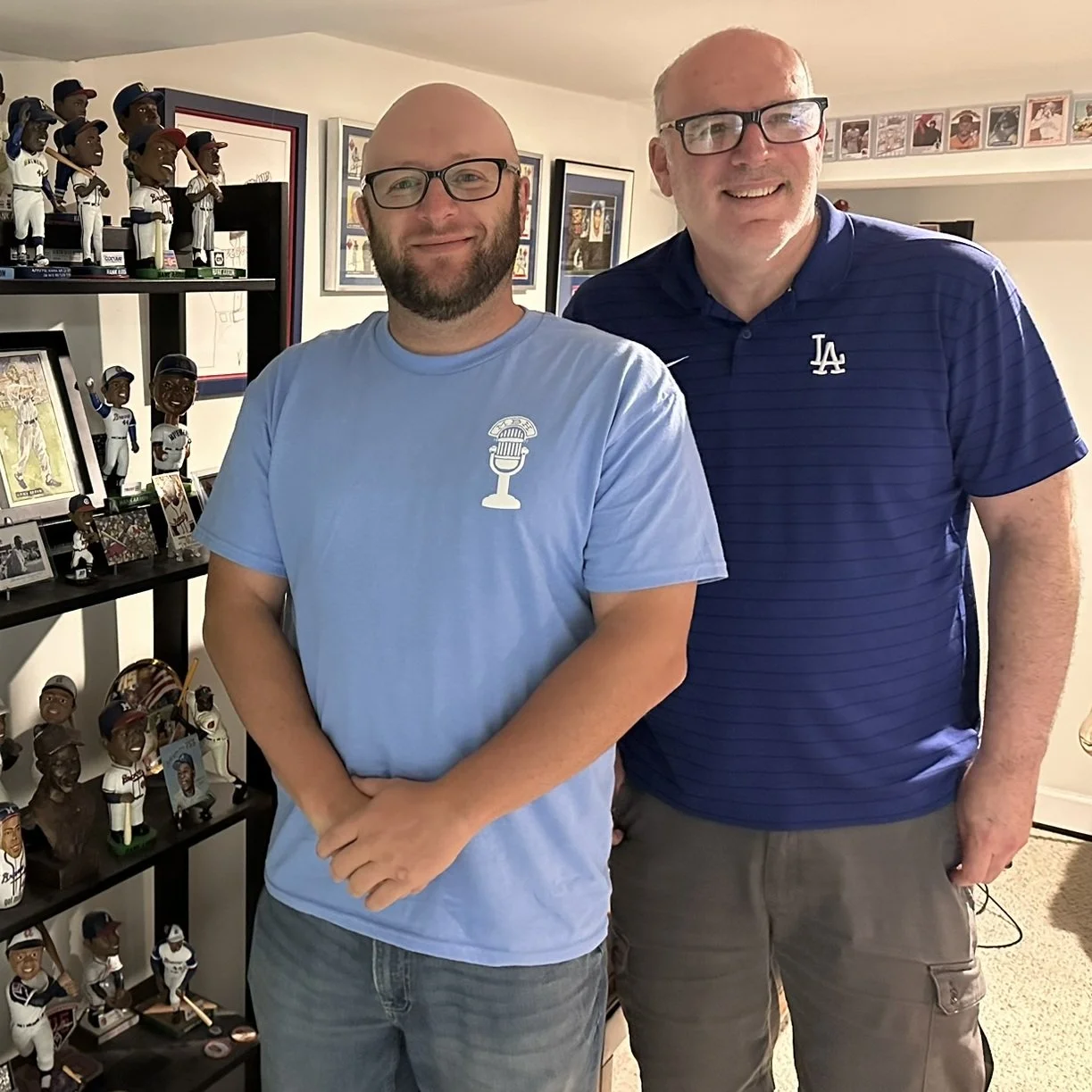
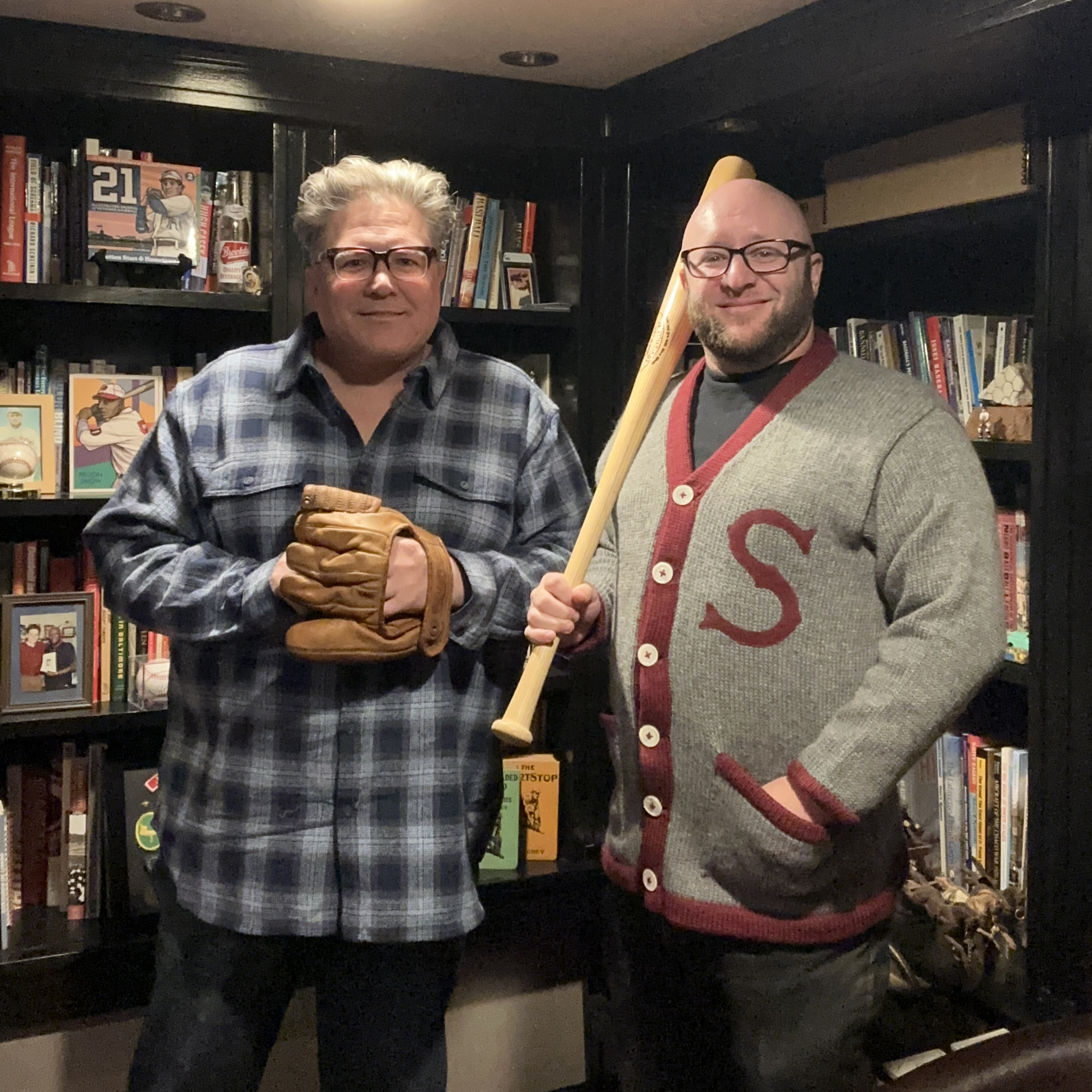
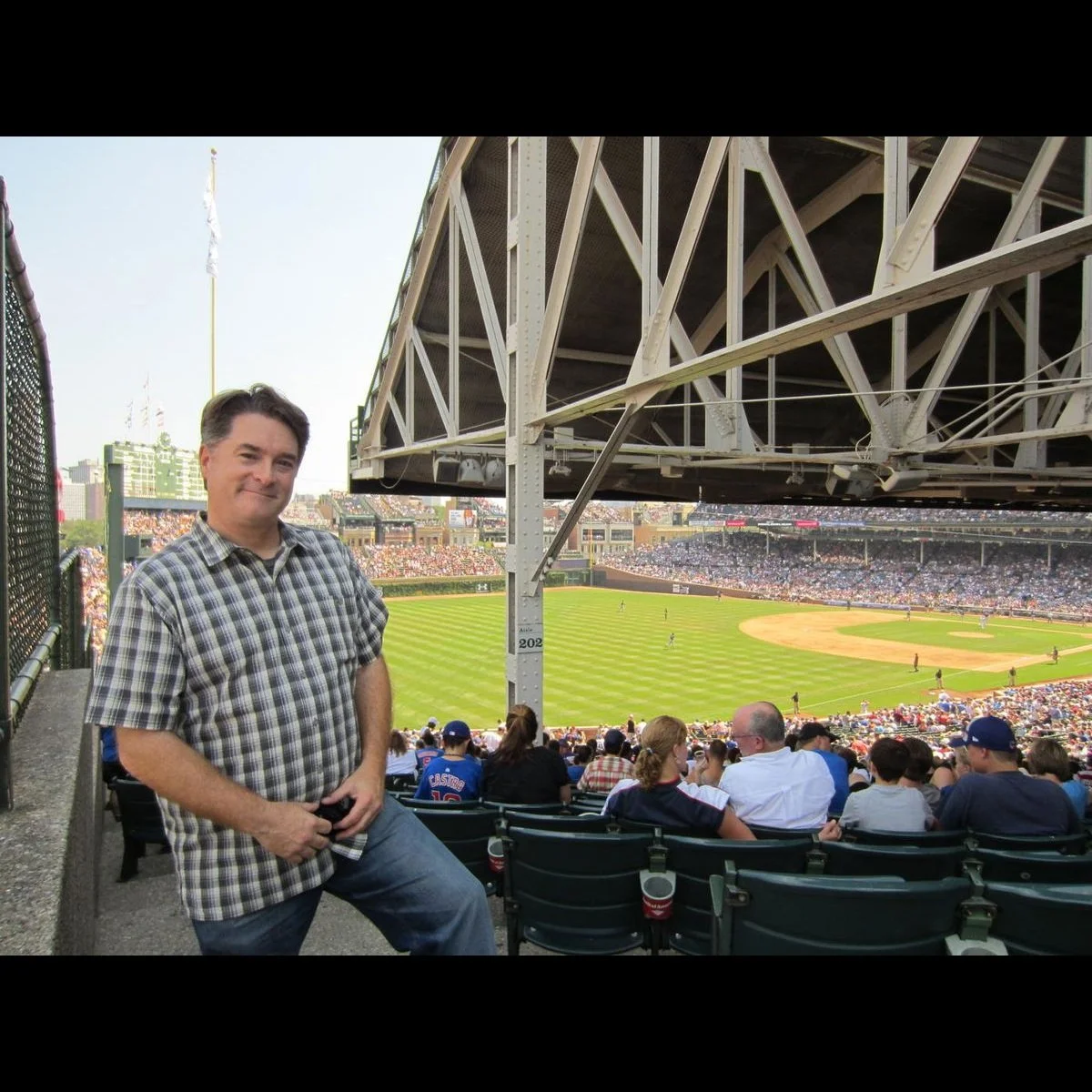
Me and Jason Schwartz after recording our interview at his home in Chicago
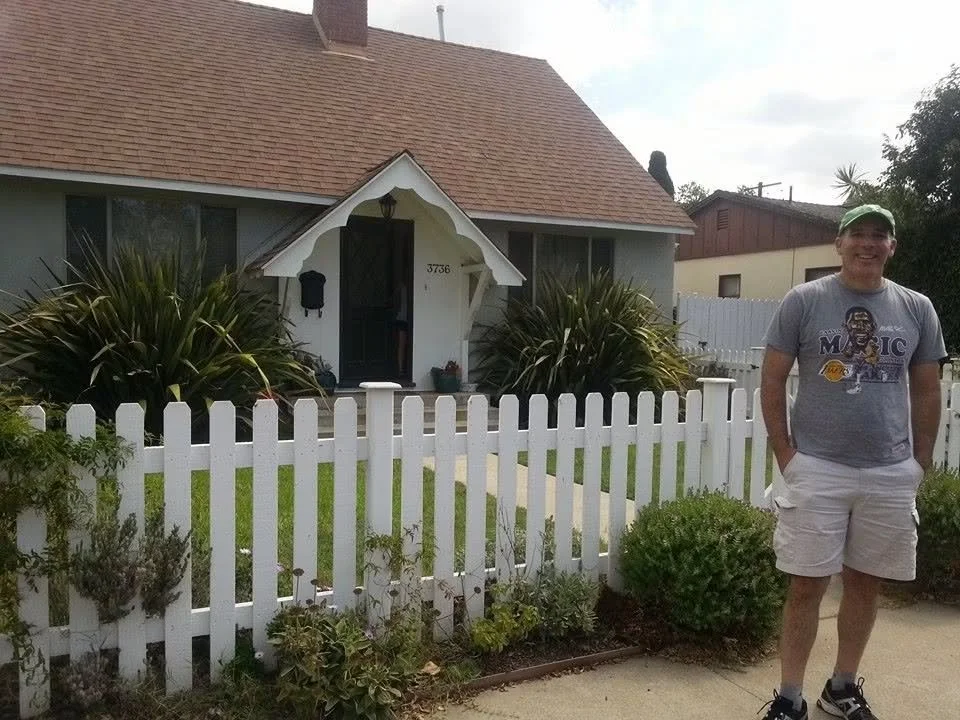
Los Angeles
Jason lives in Chicago, but originally hails from Los Angeles, which has obviously influenced his fandom and collecting habits over the course of his life. Here, Jason is pictured standing in front of his childhood home.
Mathematician
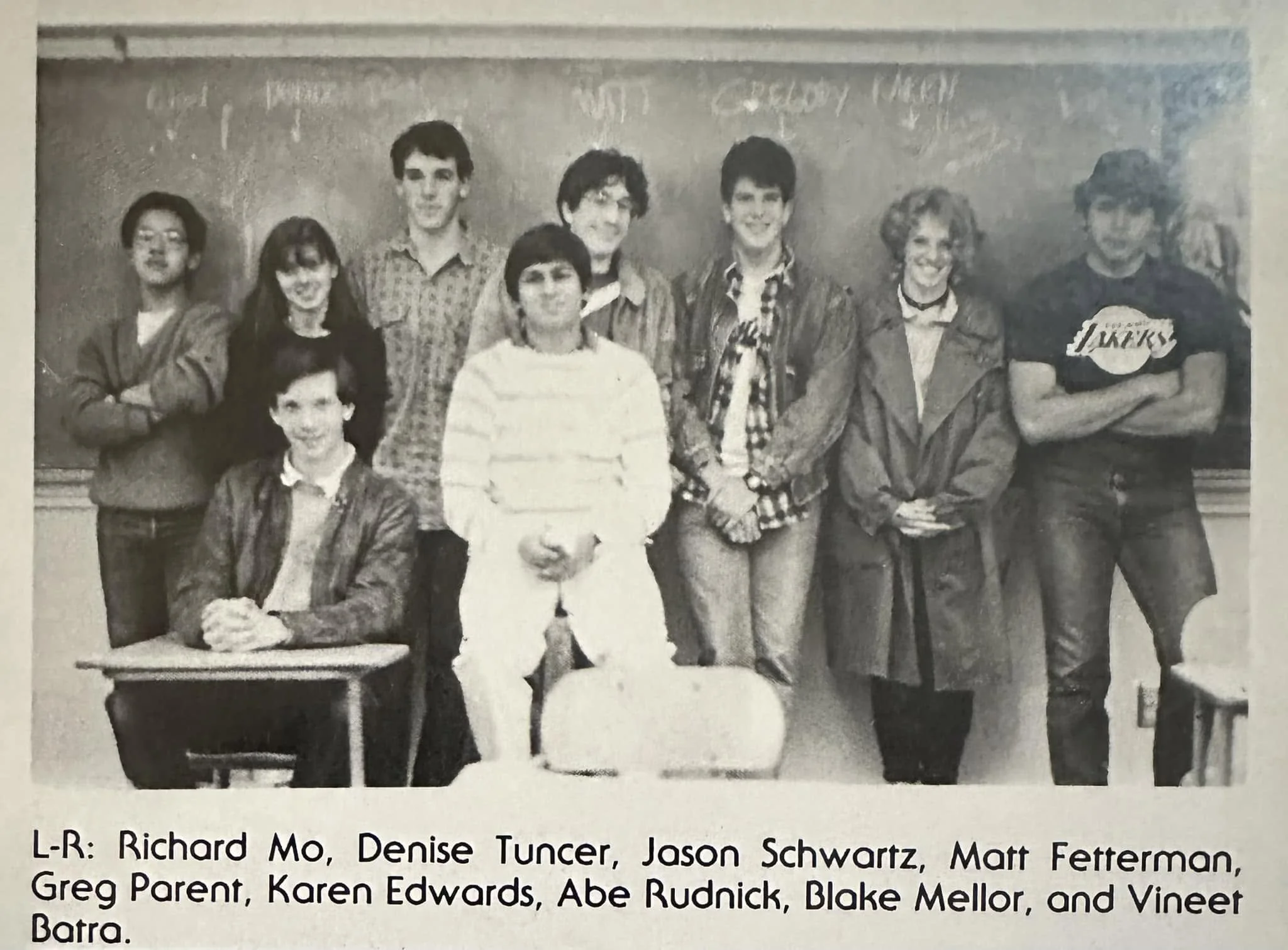
Jason graduated from UC Berkeley with a degree in Mathematics. Pictured here is the 1987 Palisades High School math team, with Jason standing in the back row, third from the left.
University of Oregon
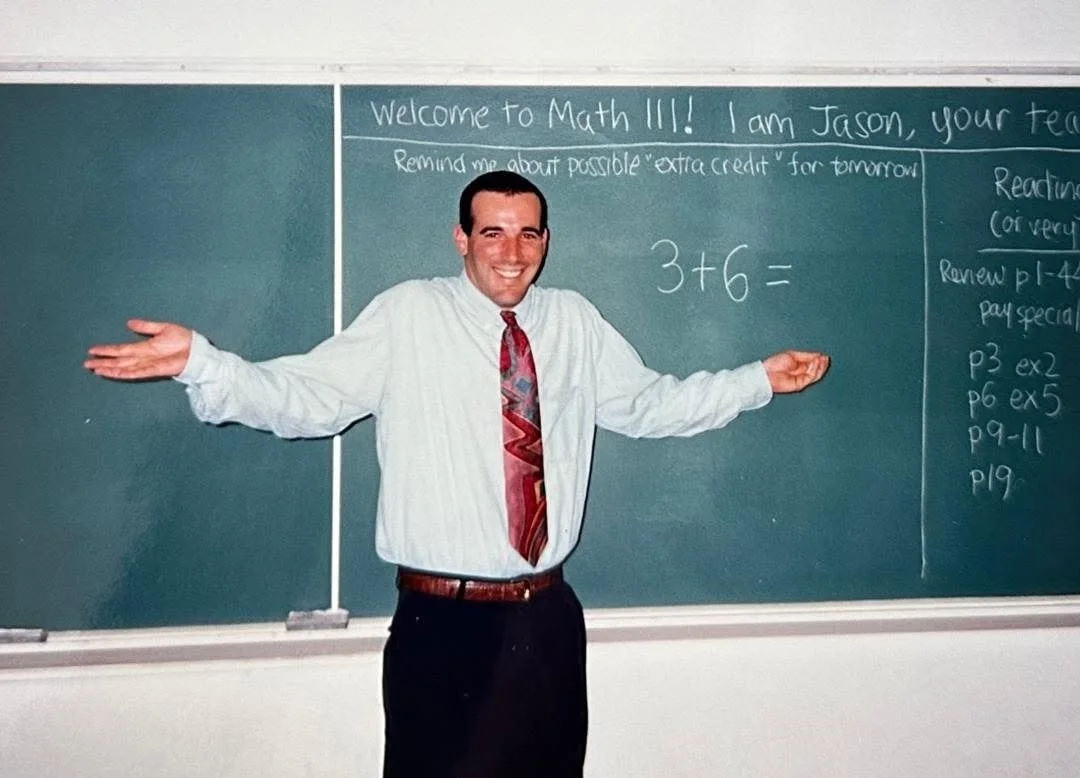
After graduating from UC Berkeley, Jason continued on to the University of Oregon where he got his Masters in Mathematics. Here he is on his first day at Oregon.
Helping His Research
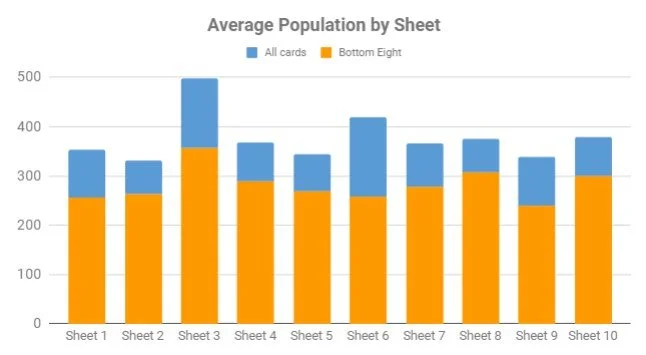
Jason’s deep mathematical knowledge also helps him with the writing and research he does.
Doug Pappas Award Winner
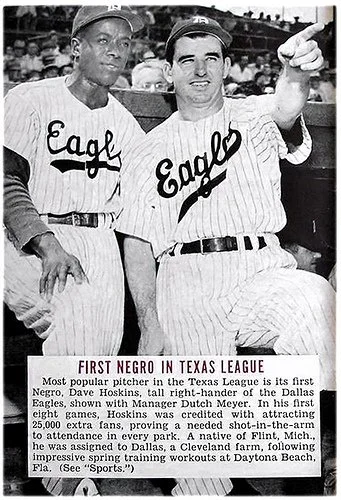
Jason won the Doug Pappas Award for the best oral research presentation at the 53rd SABR Convention in 2025 for his presentation, “The ‘Savior’ Does Not Answer Letters: Dave Hoskins and the Uneven, Unheralded, and Unfinished Integration of the Texas League.”
Audio: Click here to listen to Jason’s presentation (MP3; 24:43)
Slides: Click here to download Jason’s PowerPoint slides (.pptx)
Read more: Read Jason A. Schwartz’s companion article on Dave Hoskins in The National Pastime
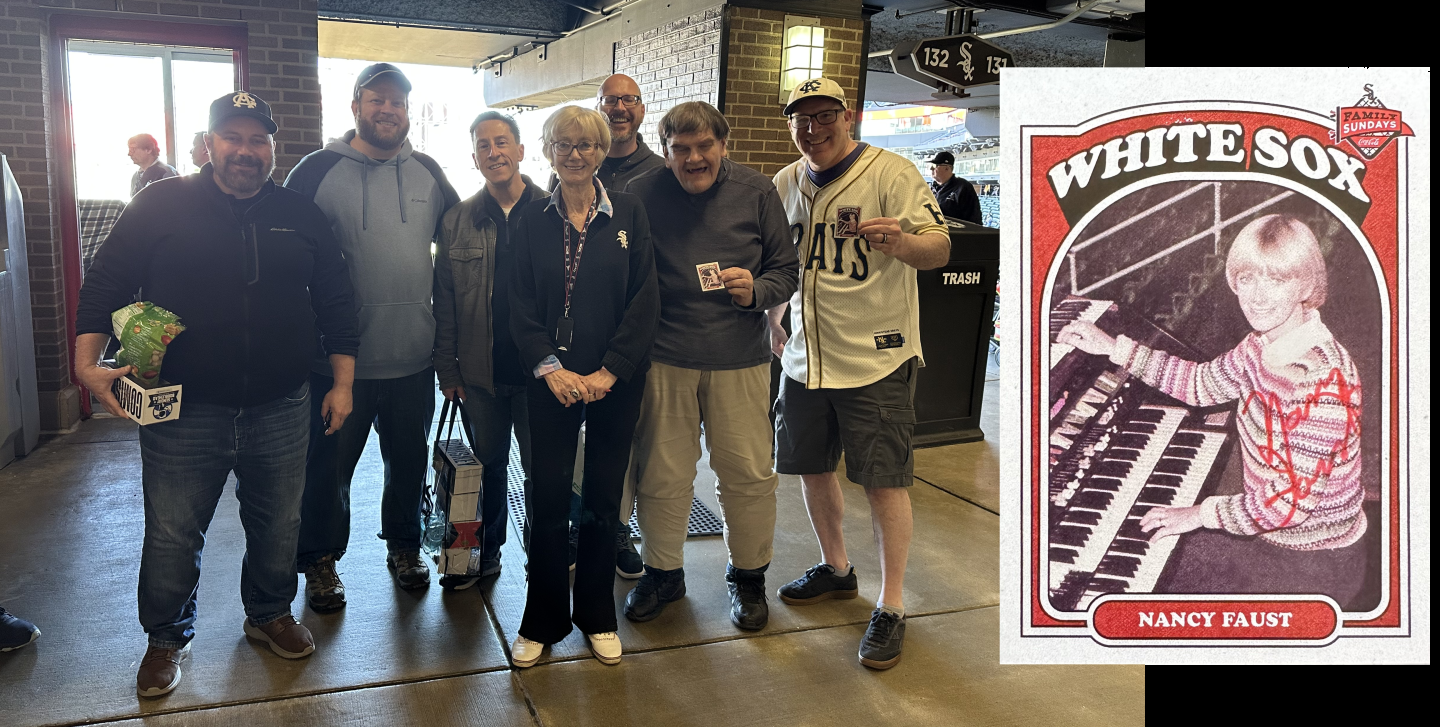
Jason has been a member of the Society for American Baseball Research’s Chicago Chapter since 2019 and he was named the co-chair of the Baseball Cards Research Committee in May of that year.
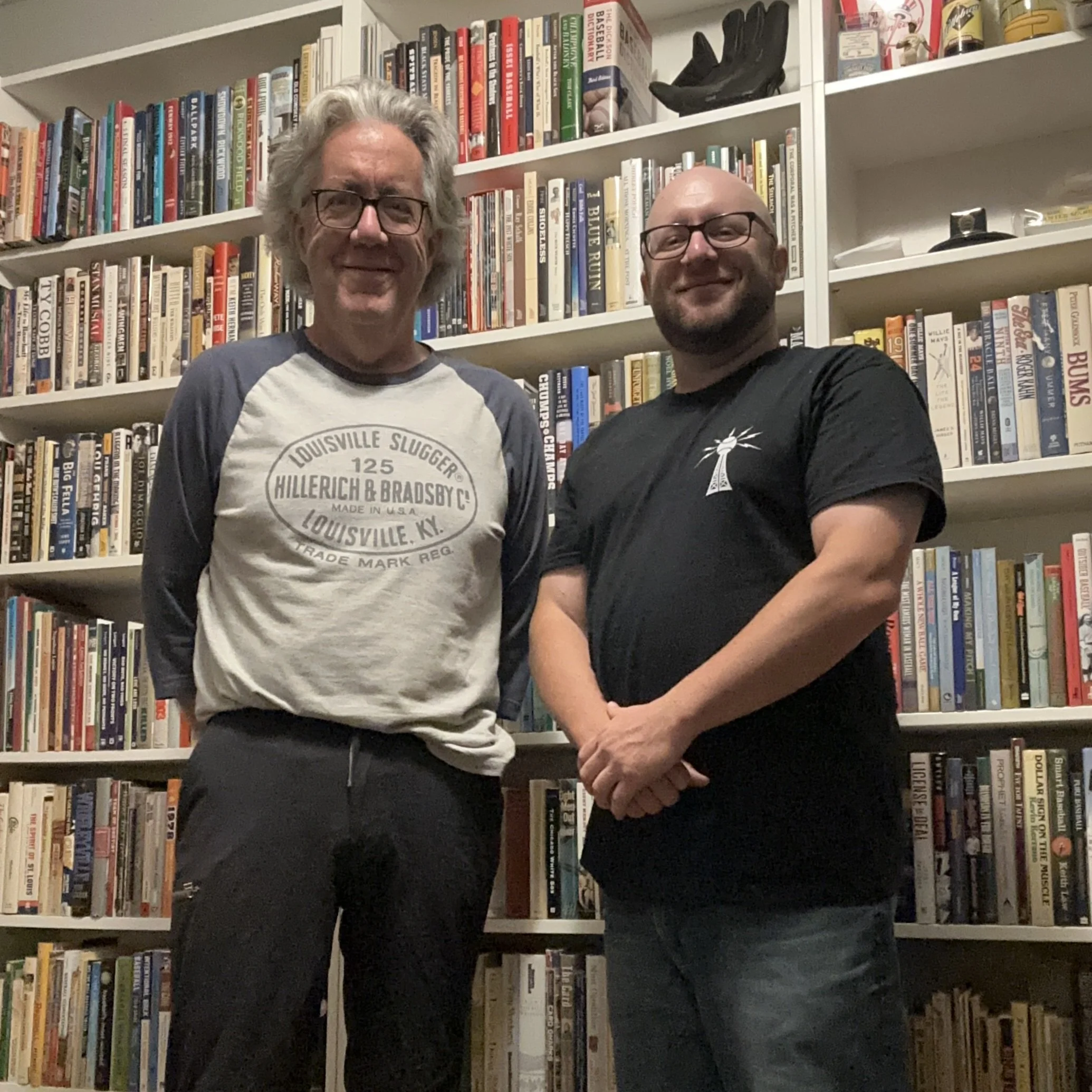
Mark Armour
In 2002, Mark Armour became the founder of SABR’s Baseball Biography Project, and he was its director through 2016. That year, he and Chris Dial resurrected SABR’s Baseball Cards Research Committee.
Mark was our guest for Episode 1 of Season 6, during which we spoke about his latest research effort, The Satchel Paige Project, where he is attempting to document every baseball game Satchel Paige ever pitched in his life. You can listen to that episode HERE.
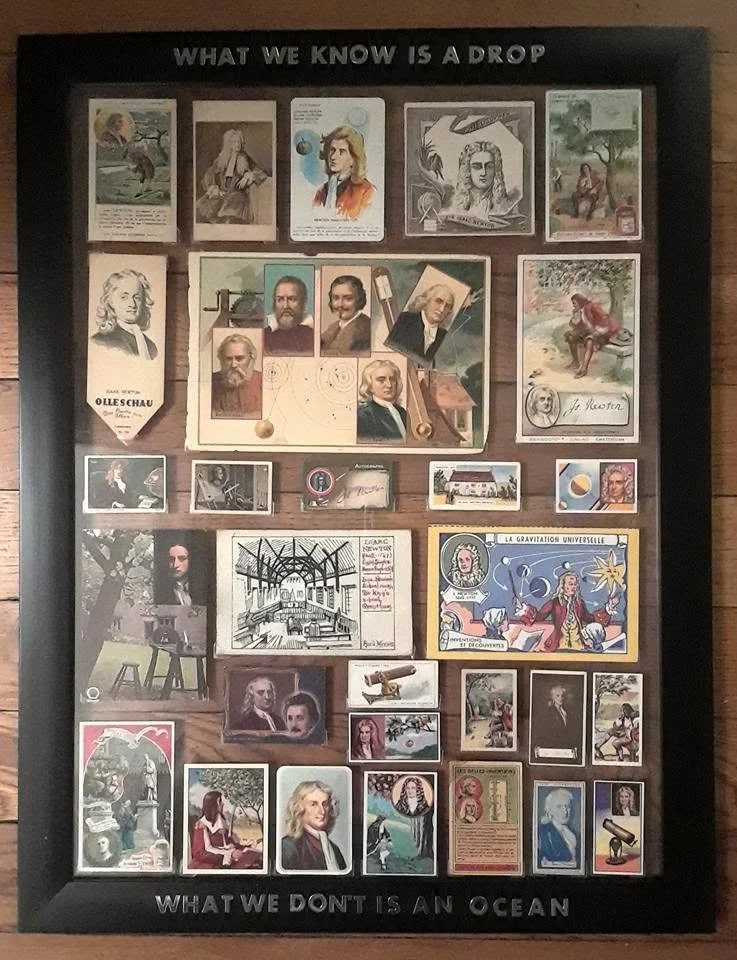
Jason’s Collecting Interests
Jason is a lifelong baseball fan whose collecting interests include Roy Campanella, Steve Garvey, Dwight Gooden, Carl Hubbell, Sir Isaac Newton, and any Dodgers-related cards.
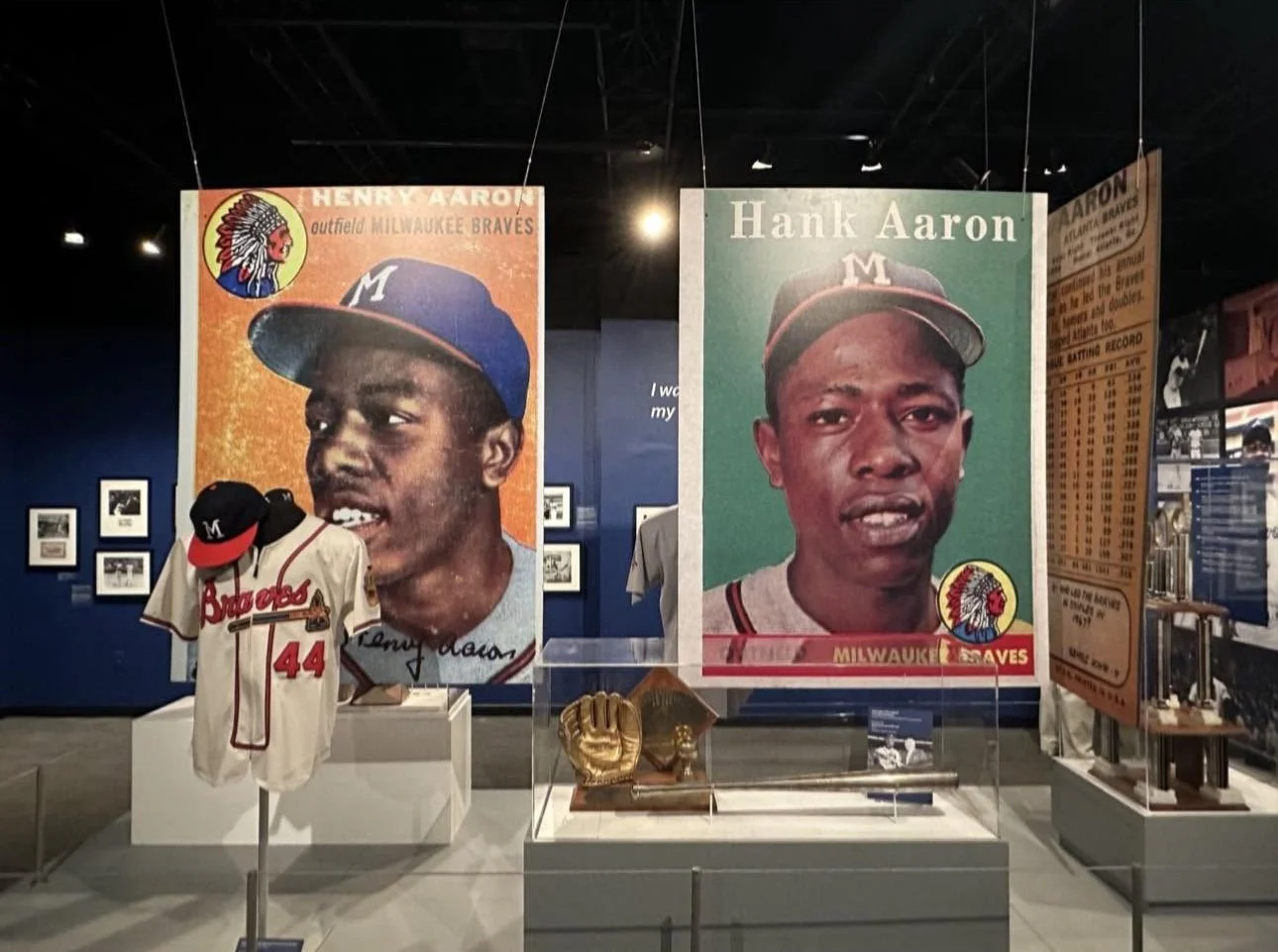
Henry Aaron Collection
From April of 2024 through September of 2025, his collection of Henry Aaron baseball cards took up residence in the Atlanta History Center’s “More Than Brave” exhibition, along with many of his magazines, home run certificates, and other assorted knick-knacks of Hammerin’ Hank.
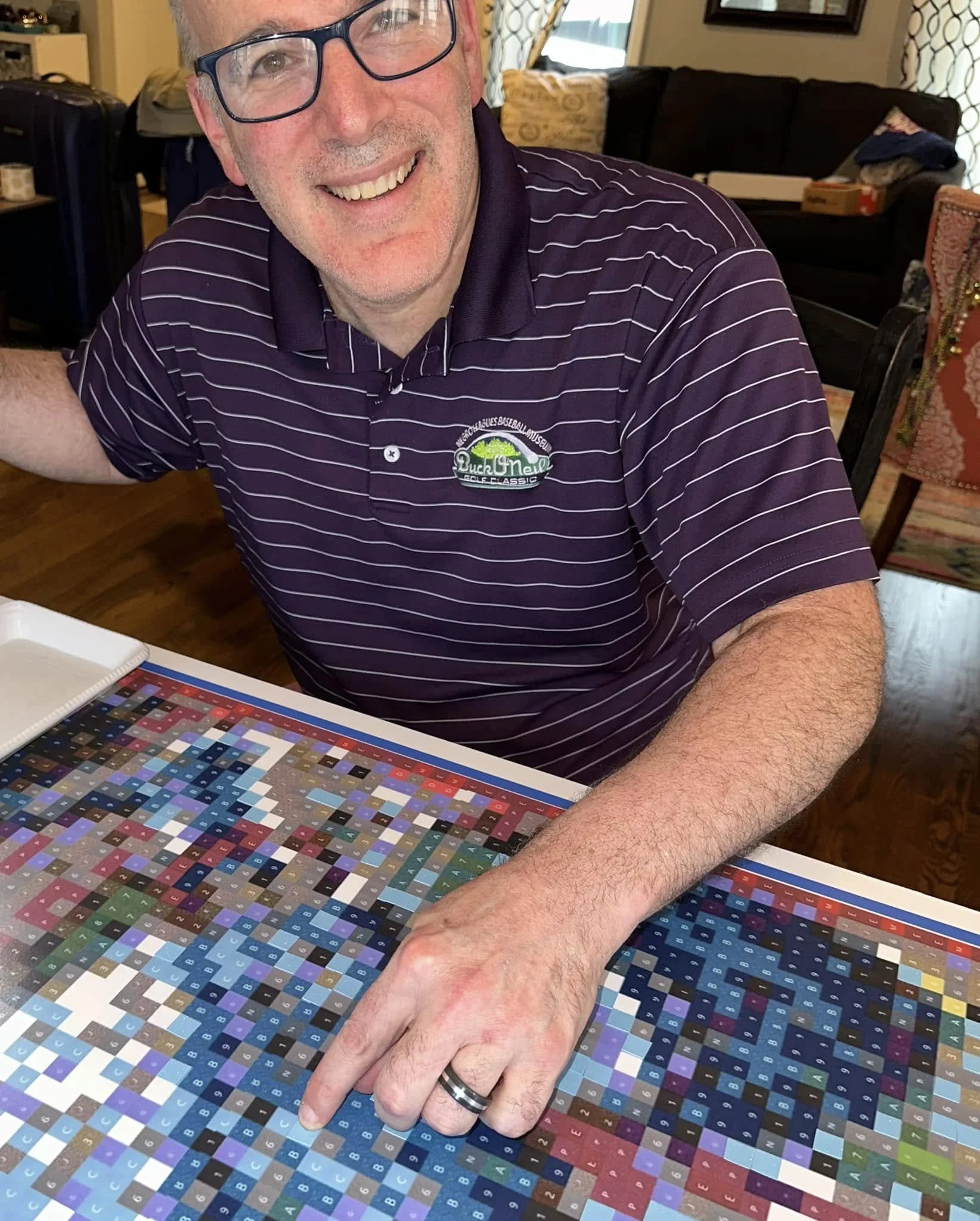
Heavy J Studios
Jason is also a renowned “card artist” whose work under the name Heavy J Studios has raised more than $20,000 for charity since the start of the pandemic.
His baseball card-inspired artwork has been featured in The Sporting News, and can be found at PNC Park and the Honus Wagner Museum.
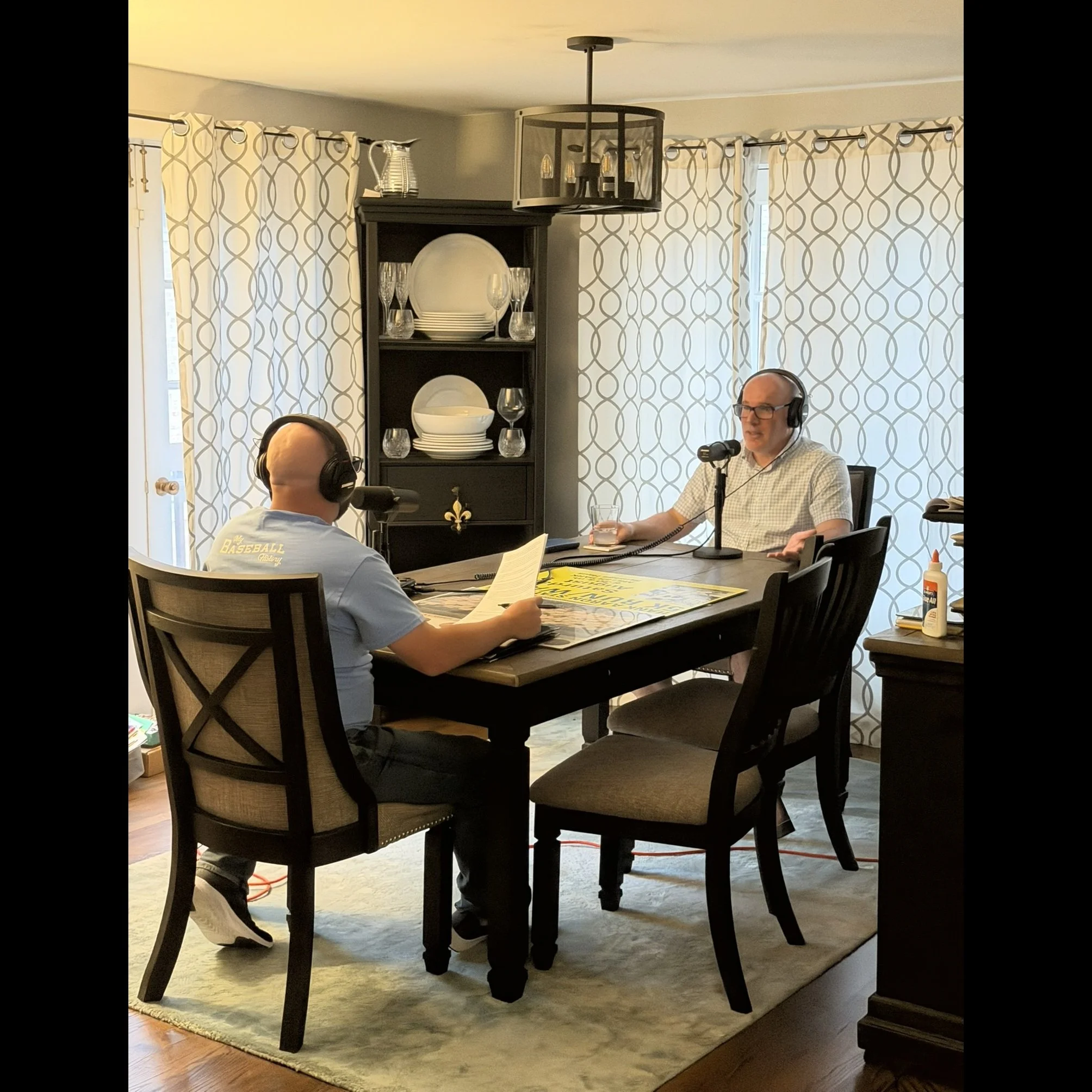
A Friend
Above all else, though, Jason is a friend. I think that will be very evident as you listen to our conversation.
Photo courtesy of Jodee Elliot Schwartz
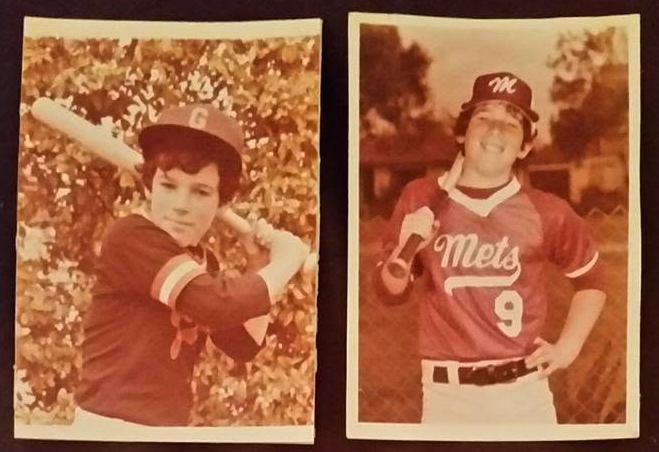
Little (League) Jason
Jason grew up in Los Angeles in the 1970s, so it was almost an predetermined that his favorite player be Steve Garvey.
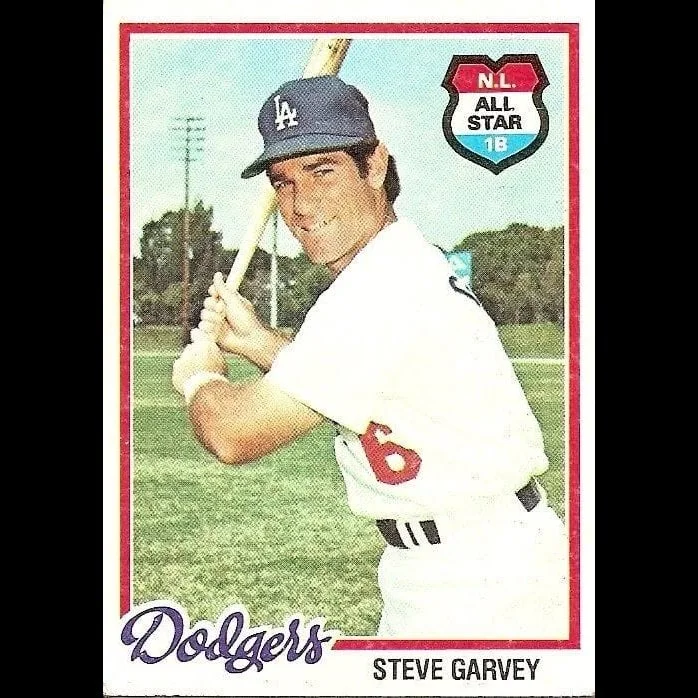
1978 Topps Steve Garvey
From 1974-1981, Steve Garvey batted .309, collecting 1,530 hits in 1,237 games for the Dodgers. He averaged 31 doubles, 21 home runs, and 99 runs batted in per season, accumulating 30.8 WAR.
He was an All-Star every season, winning four Gold Glove Awards, and finishing in the Top 6 in MVP voting six times, winning the award in 1974. He was the All-Star Game MVP in 1974 and 1978, the NLCS MVP in 1978 (he’d win it again in 1984), and led the Dodgers to a World Series championship in 1981.
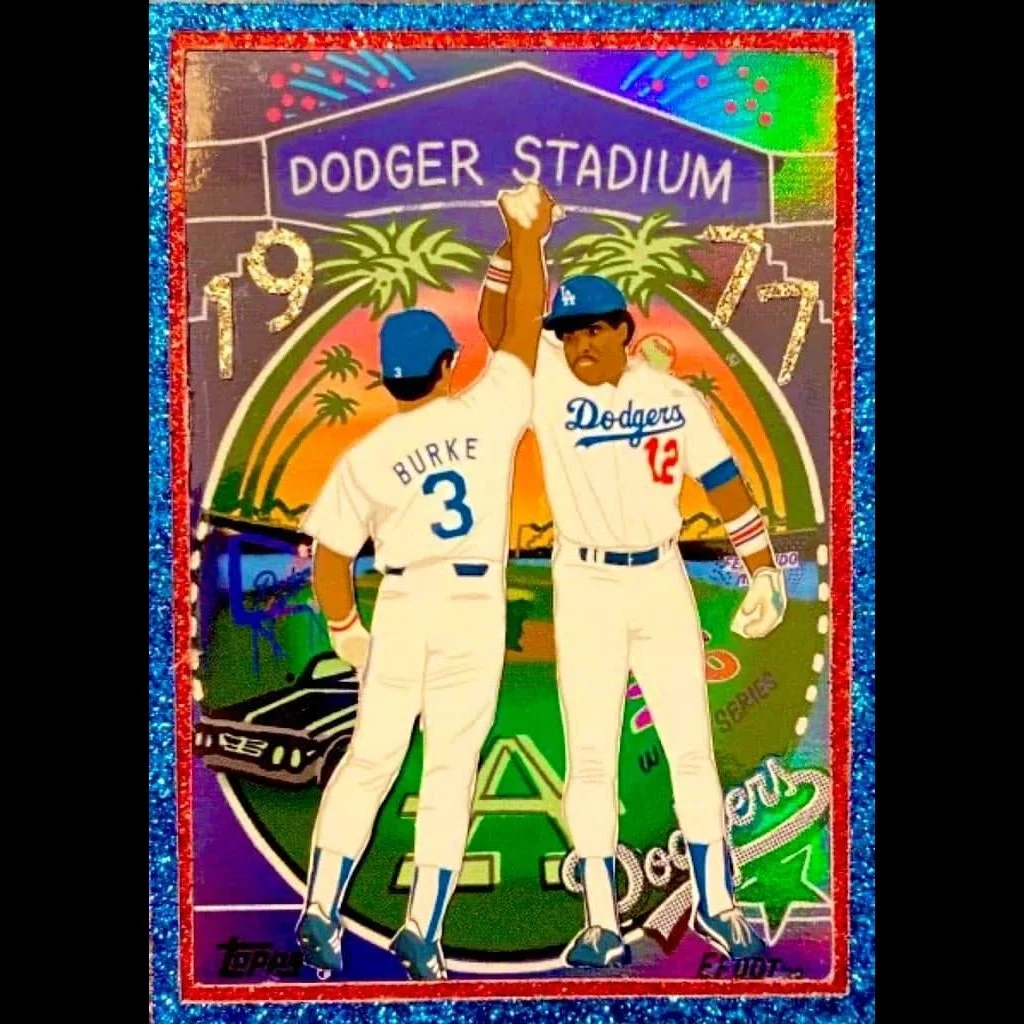
Dusty Baker
Jason’s other favorite player growing up was Dusty Baker. Here is one of Jason’s Heavy J Studios card creations featuring an image of Dusty Baker inventing the High Five with Glenn Burke.
John Racanelli
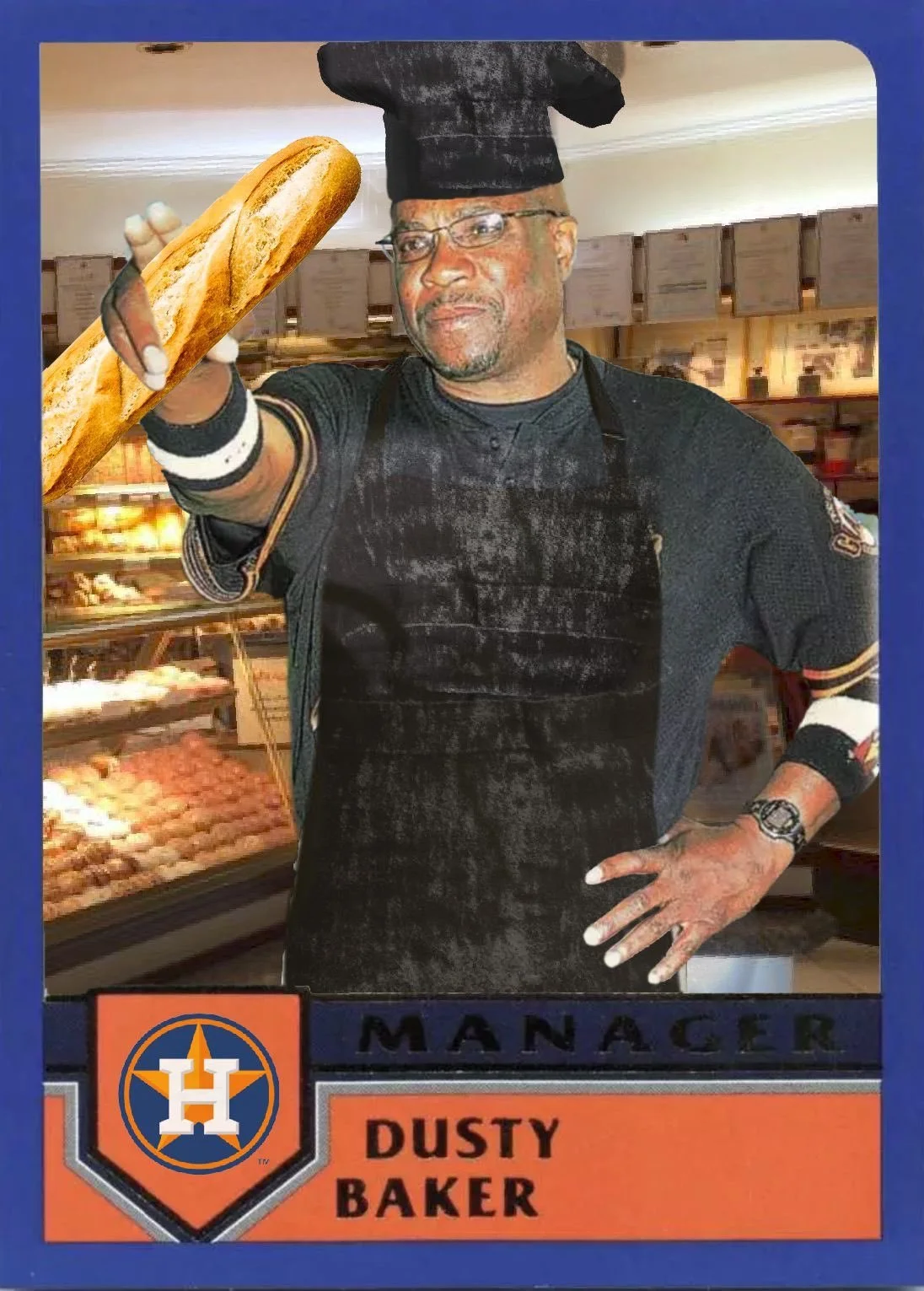
John Racanelli is a Chicago lawyer with an insatiable interest in baseball-related litigation. He is probably the world’s foremost photographer of triple peanuts found at ballgames and likes to think he has one of the most complete collections of vintage handheld electronic baseball games known to exist.
John is Vice Chair for the Emil Rothe (Chicago) SABR Chapter, founder and Co-Chair of the SABR Baseball Landmarks Research Committee, and a regular contributor to the SABR Baseball Cards Research Committee blog.
His “Literal Series” of baseball cards features the likes of Vance Law (fittingly), Chris Archer, Tim Wallach, Wade Boggs, and Dusty Baker, seen here.
Michael Aronstein
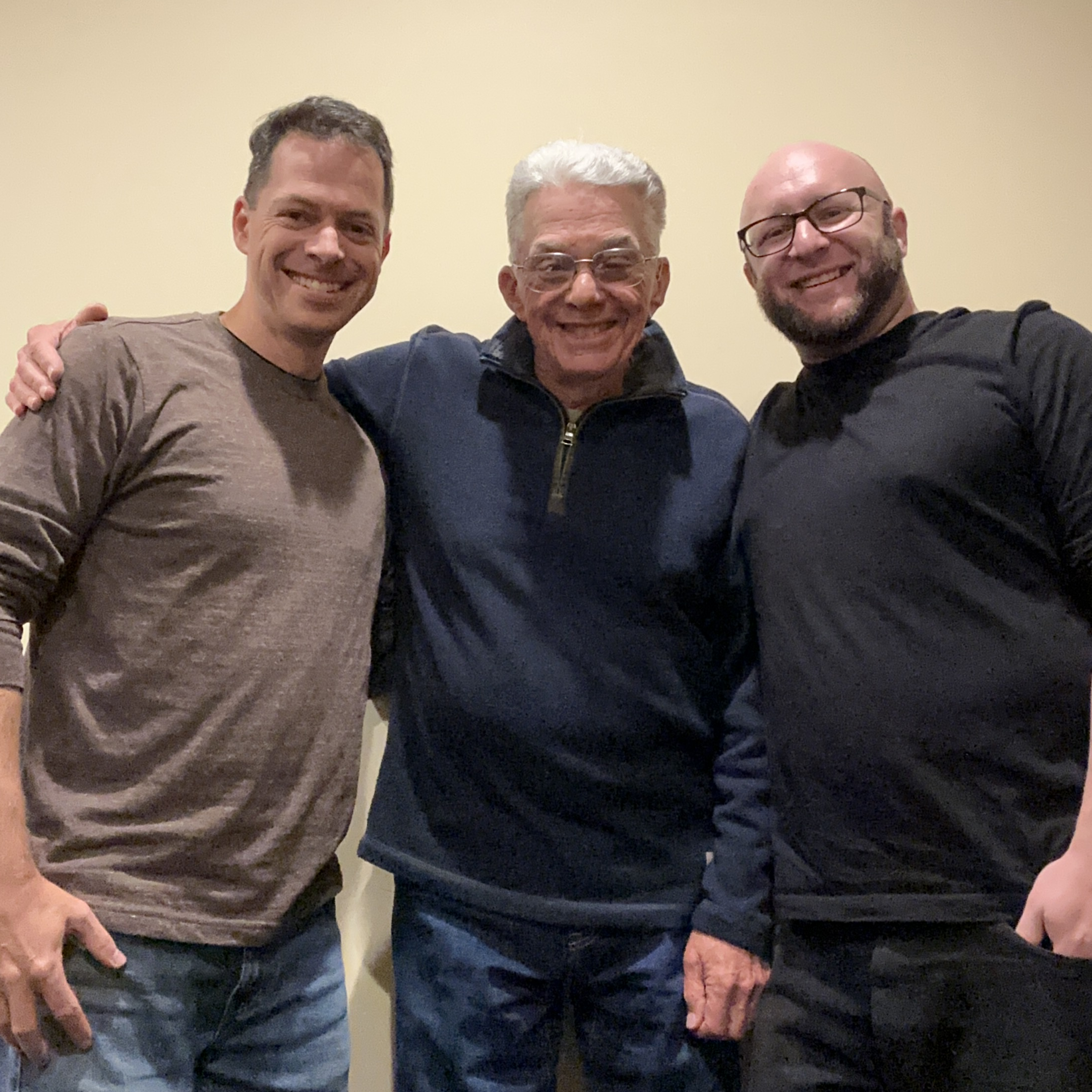
Michael Aronstein (center) was the co-founder of TCMA baseball cards, the founder of Photo File, and the inaugural recipient of SABR’s 2020 Jefferson Burdick Award, which is given annually to individuals who have made significant contributions to the baseball card hobby.
He and his son, Andrew (left), were our guests for Episode 4 of Season 4. You can listen to that episode HERE.
Candy Stores
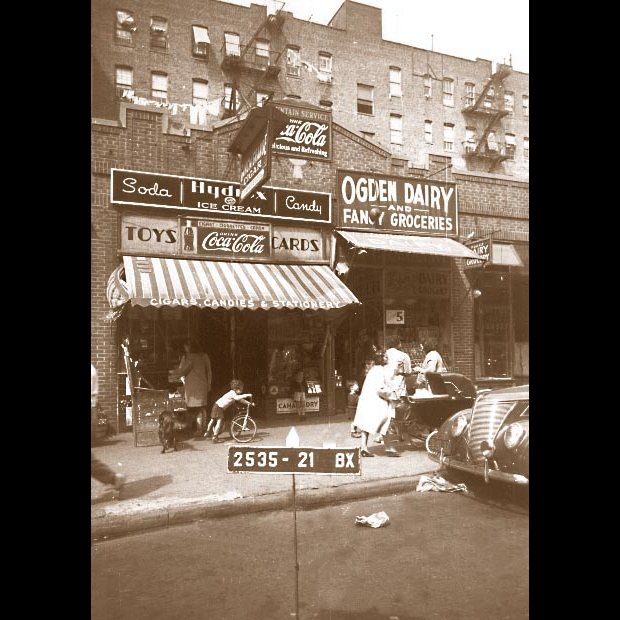
Michael Aronstein grew up in the Bronx in the 1950s. He remembered the 1951 Bowman set being released in series of 36 cards, and having to buy a box for each series as they came out.
Kids would go to the candy store closest to their school once classes let out. It’s where Michael would hang out, offering to buy, sell, or trade his baseball cards from his classmates so he could complete his sets.
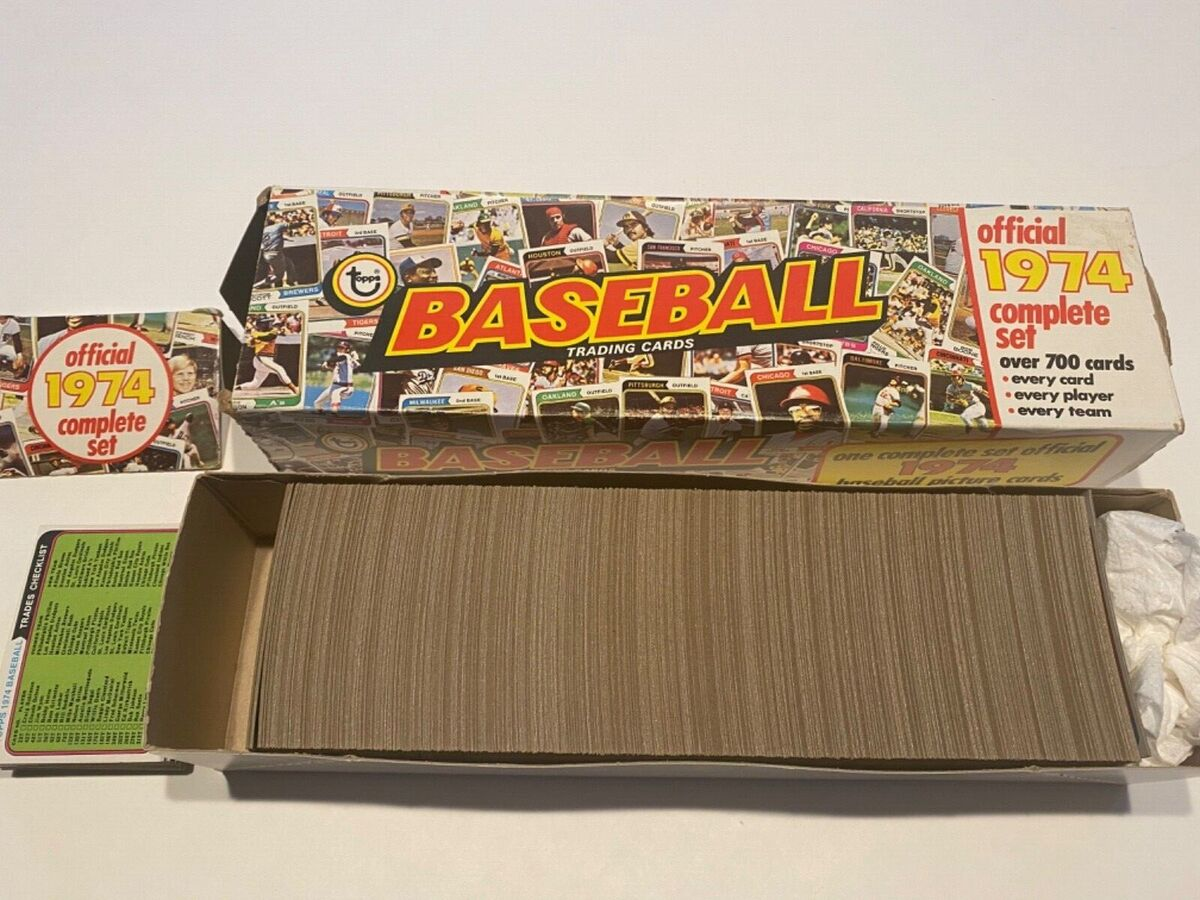
‘74 Topps Factory Set
Topps became the first card company to offer collectors the ability to just buy the entire complete set of cards for a year in one shot when they offered their 1974 factory set through a JC Penney catalog. They didn't get great results with that strategy, so Topps didn't offer another factory set until 1985.
Michael Aronstein’s company, SSPC, offered one in 1975/76, so while they technically weren't the first company to try it, they were very early.
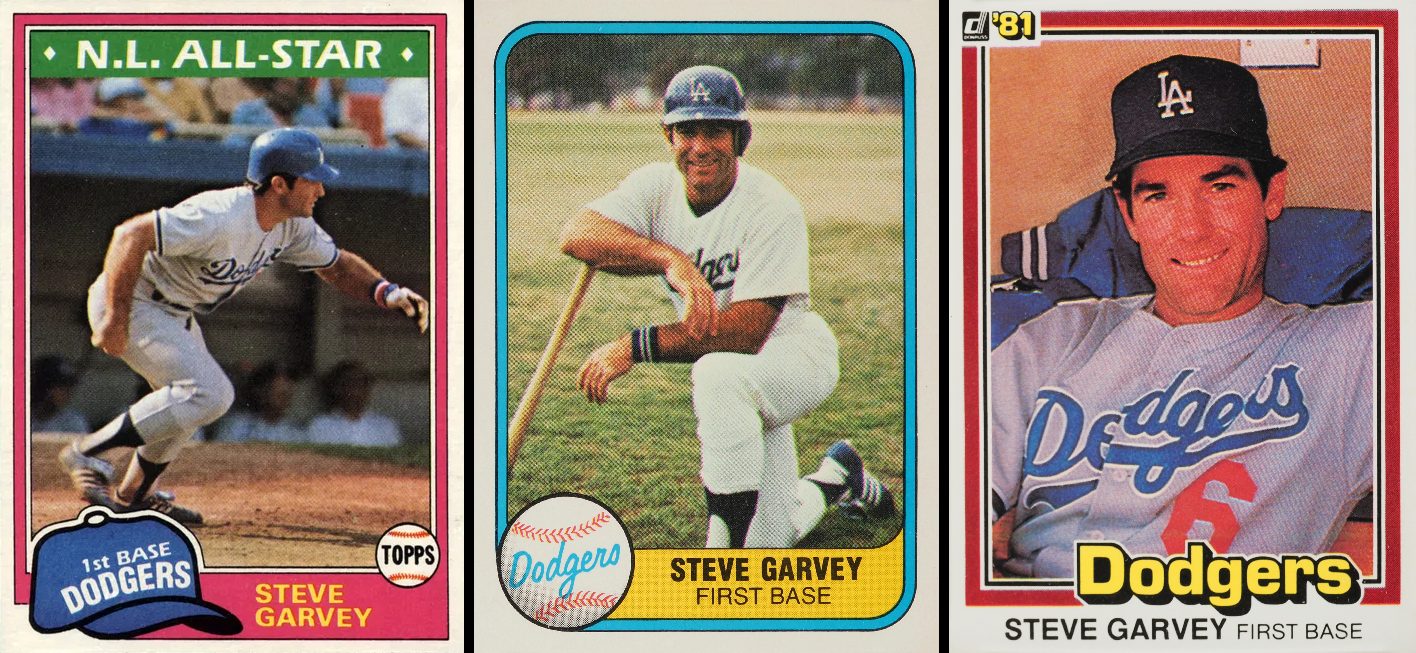
Like any smart consumer, Jason decided where he would spend his money based on multiple factors, including which store gave him the most options. While the 7-Eleven a few blocks from his house sold Topps baseball cards, the liquor store around the corner sold (seen here, left to right) Topps, Fleer, and Donruss starting in 1981, meaning Jason started spending more of his time and money there.
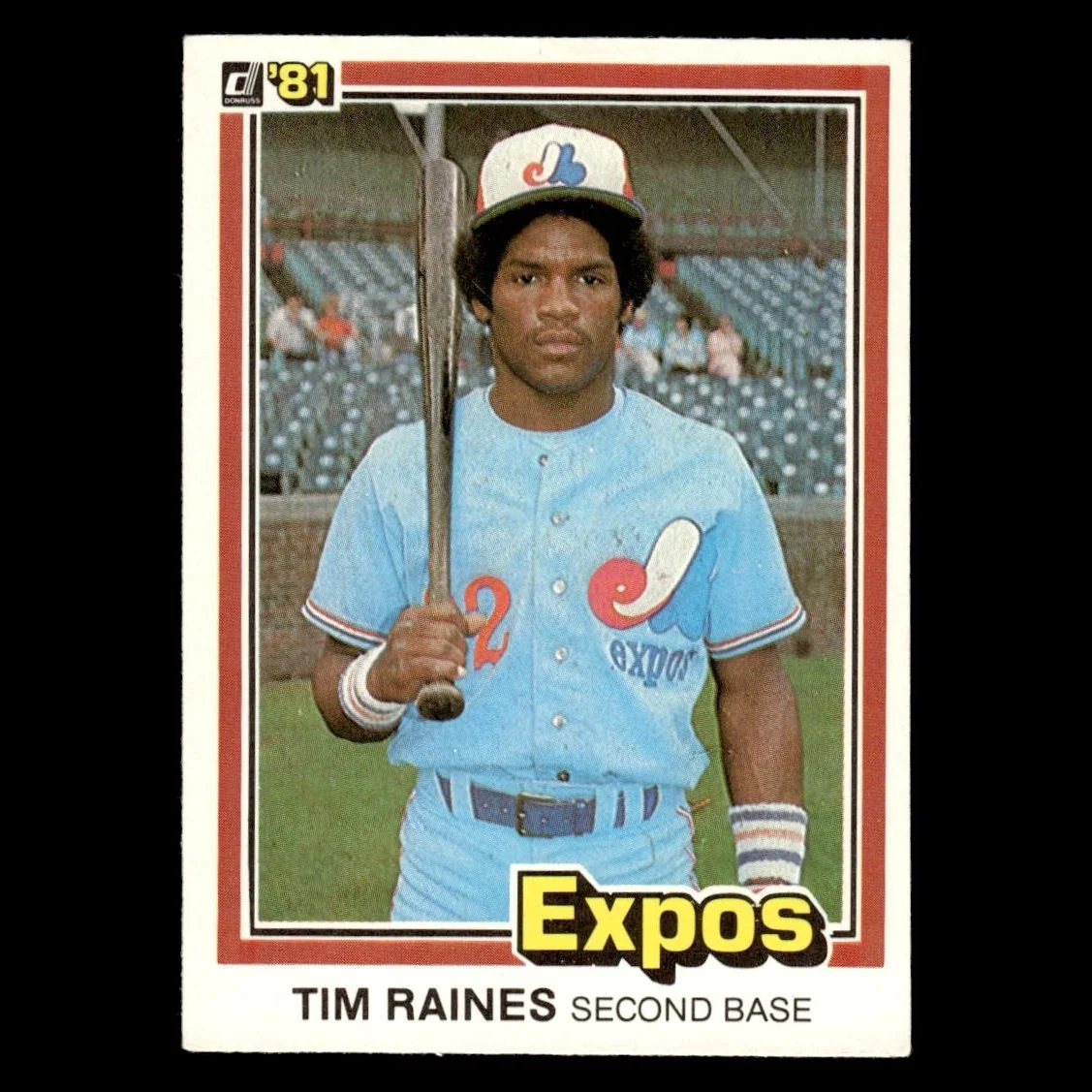
1981 Donruss
According to Jason:
“Personally, my own pack opening experience with 1981 Donruss (some as recently as last year) was that I still managed to open a great many packs with runs of 10-12 of the 18 cards spread across only two teams (e.g., Expos/Red Sox only). While this undoubtedly reflects poor collation, the fact is it could have been even worse. Had Donruss grouped entire team rosters together, those same packs might have yielded all Expos or all Red Sox.”
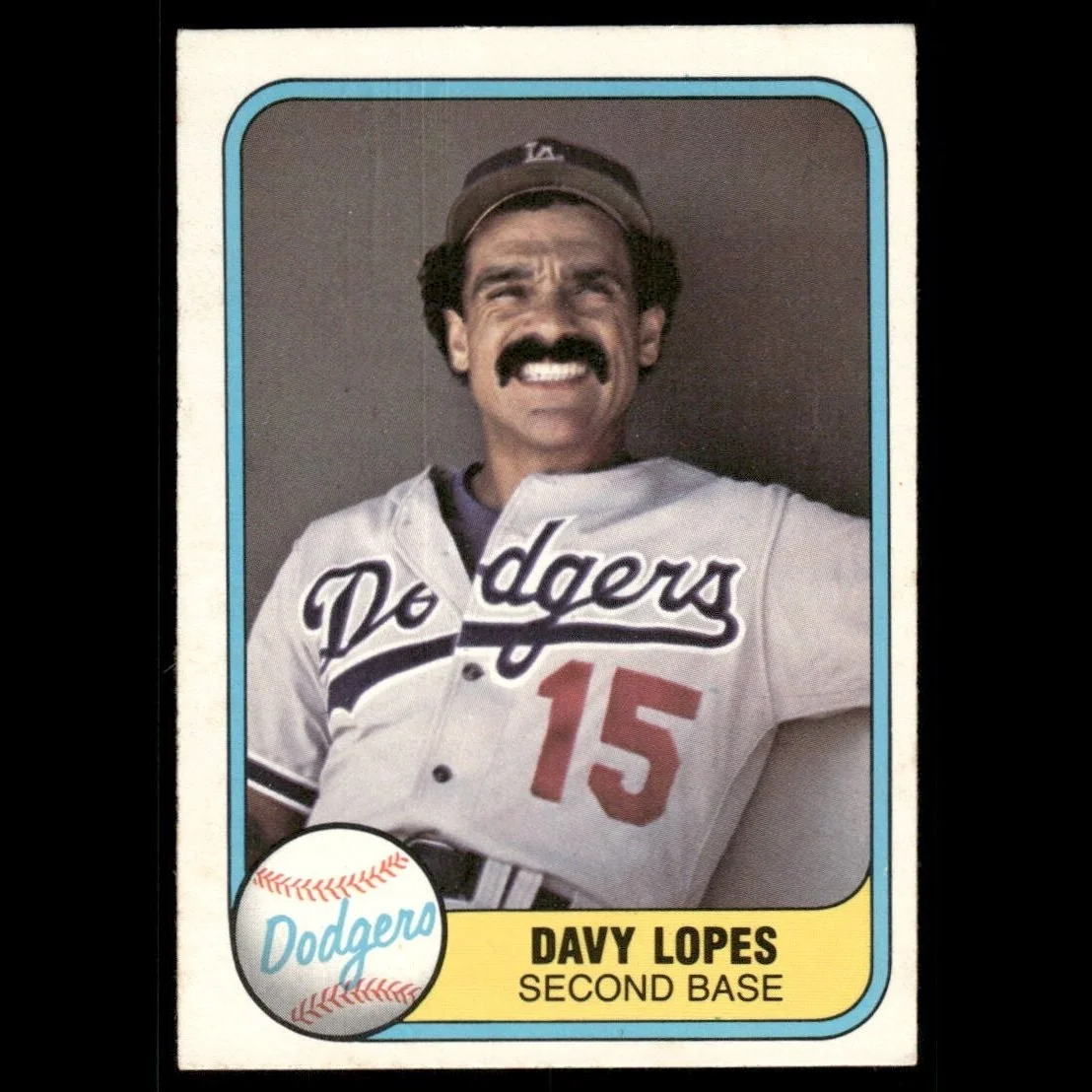
1981 Fleer Cards and Stickers
While the 1981 Fleer card set is famous for its many errors and variations, the sticker set has no known variations and only one recognized uncorrected error (UER): the misspelling of Davey (or Dave) Lopes as Davy. The same UER occurs in the card set.
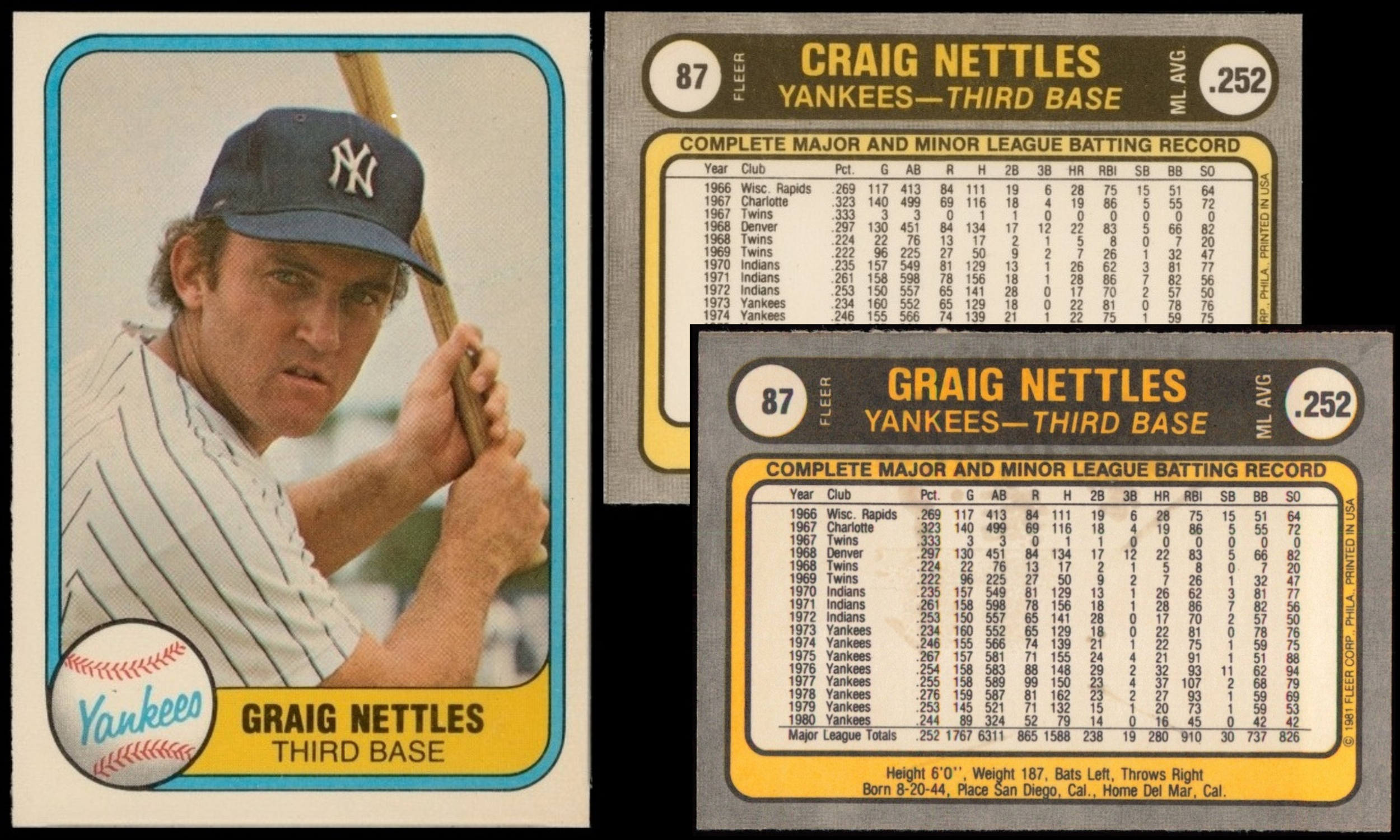
When Jason pulled the 1981 Fleer Graig Nettles error card, he was so excited that he literally fainted.
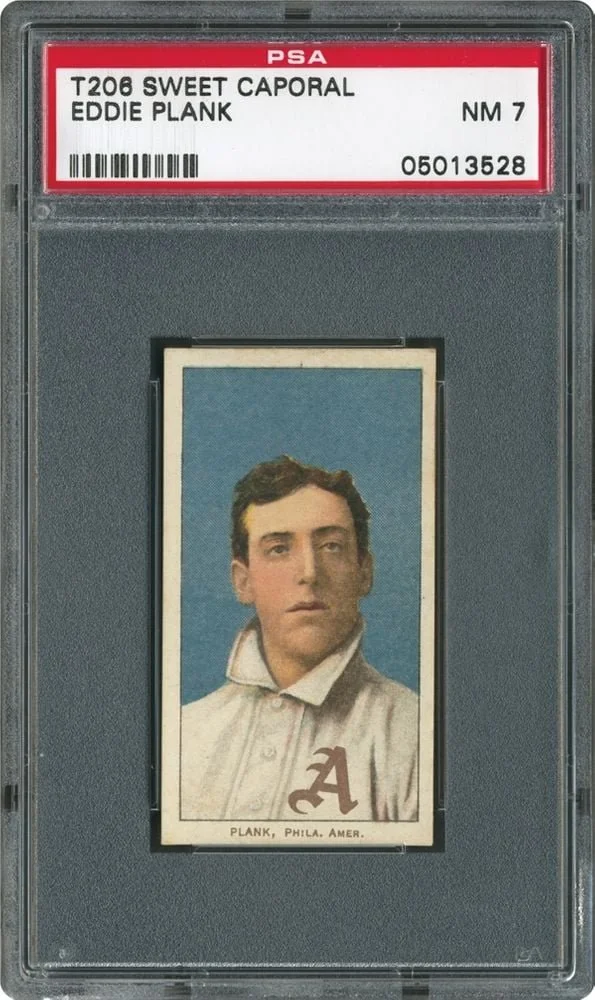
T206 Eddie Plank
The Eddie Plank card is the second most desirable card in the famed T206 set, and the only pose of the HOF pitcher.
To this day, there is no clear explanation for the rarity of this card, a card that is nearly as tough as the Honus Wagner from the same set. The most prevalent theory is that the card suffered from a poor printing plate, resulting in many of the cards being destroyed since they could not pass quality control. In addition, many of the known examples are found with poor centering from top to bottom. The centering can be so severe that it will cut into the text along the bottom.
Eddie Plank, a master of off-speed pitches, was one of the greatest left-handed pitchers in the game. Plank amassed 327 career wins and he remained the all-time leader in wins for a left-hander until Warren Spahn eclipsed the mark about 50 years later in the early 1960's.
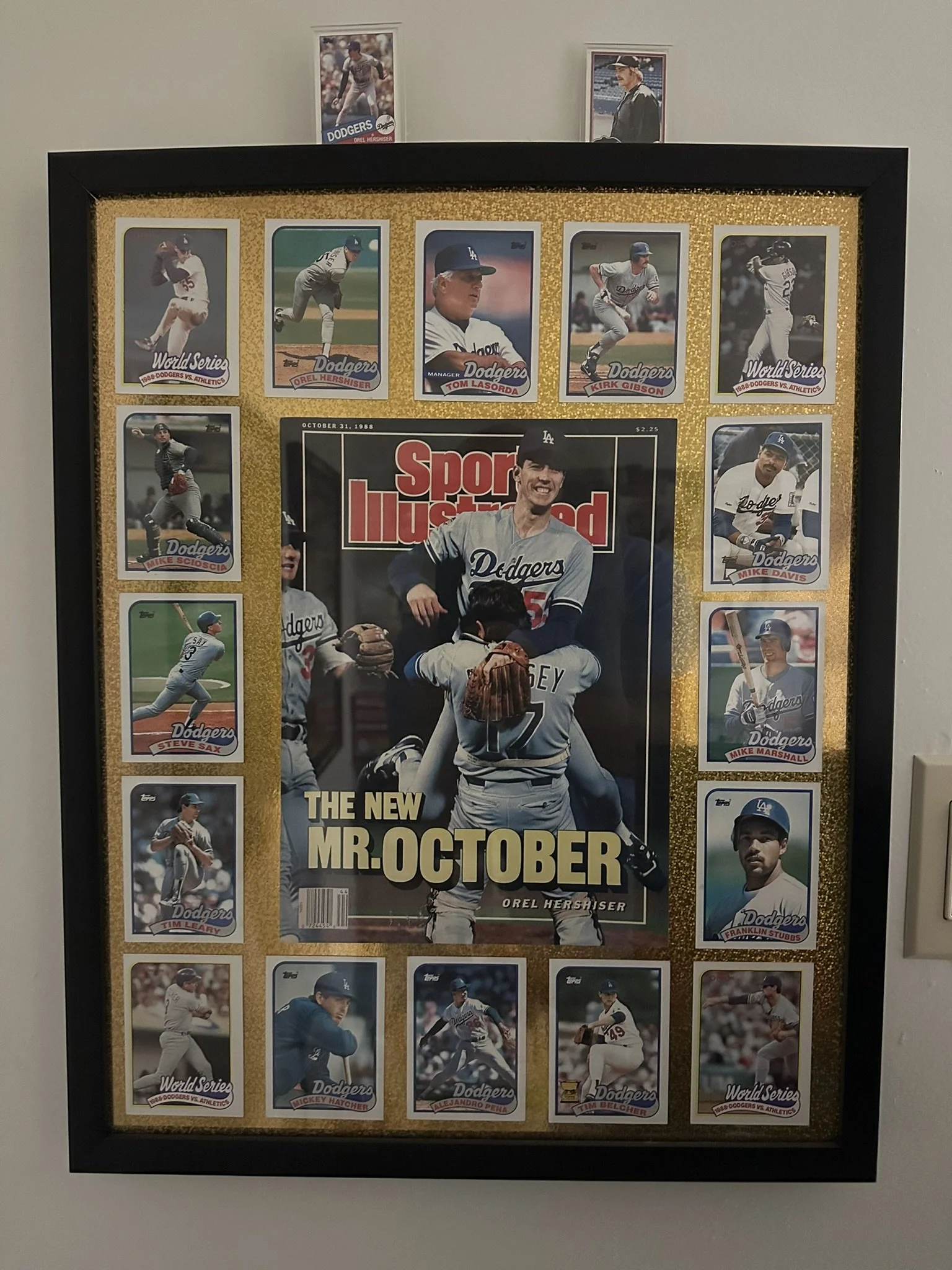
1989 Topps Dodgers Team Set
In late 2019, Jason framed his 1989 Topps Dodgers team set, which featured many of the players who had helped Los Angeles win the 1988 World Series the year before.
It was this custom frame job which would eventually spark the idea for Heavy J Studios, which was how Jason and I really got to know each other.
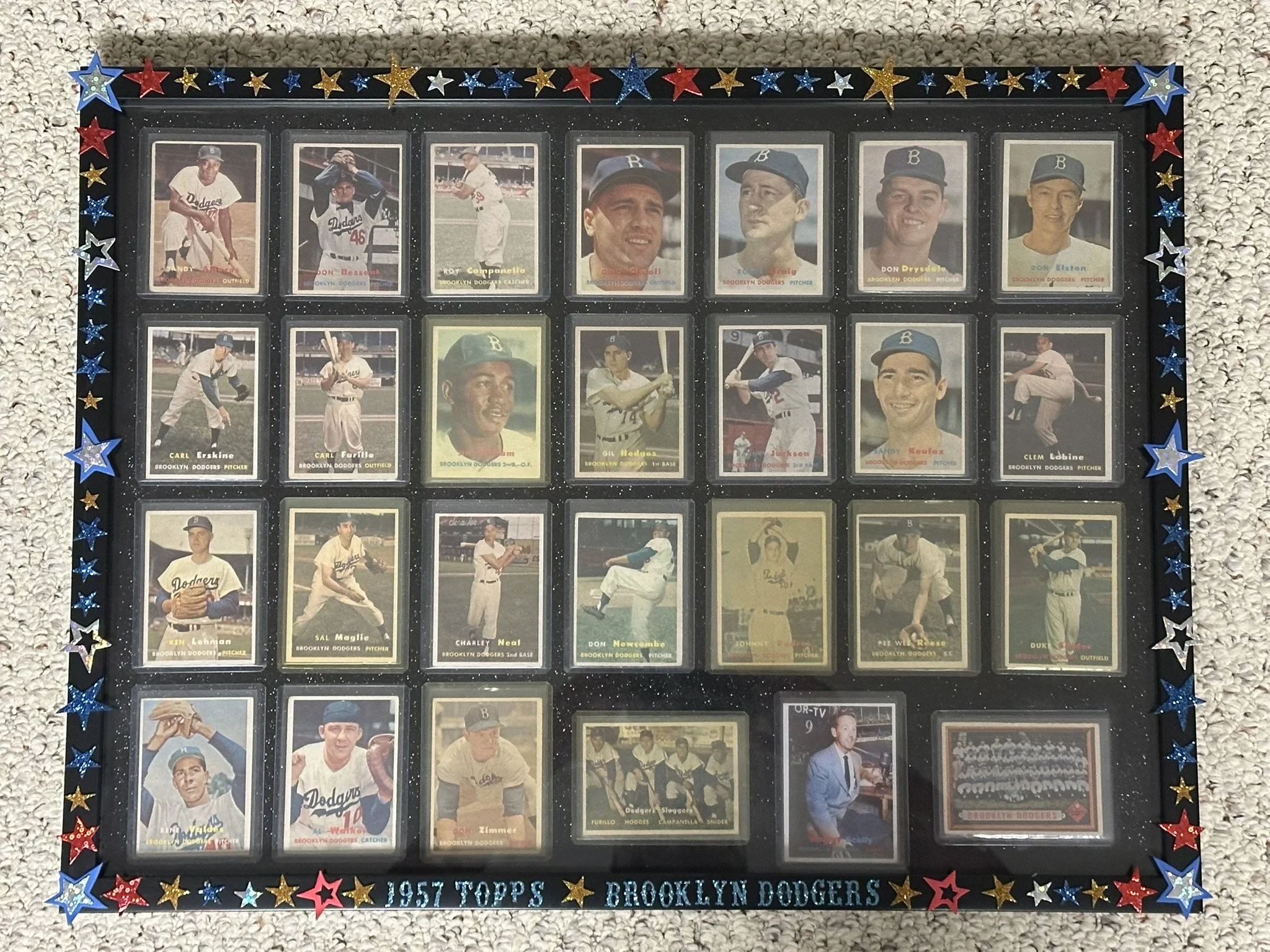
By the time Jason returned to the hobby in 2014 after a long hiatus, it was much easier to look up checklists for certain sets. It was at this time when he realized he was missing the Don Elston card from his otherwise-completed 1957 Dodgers team set.
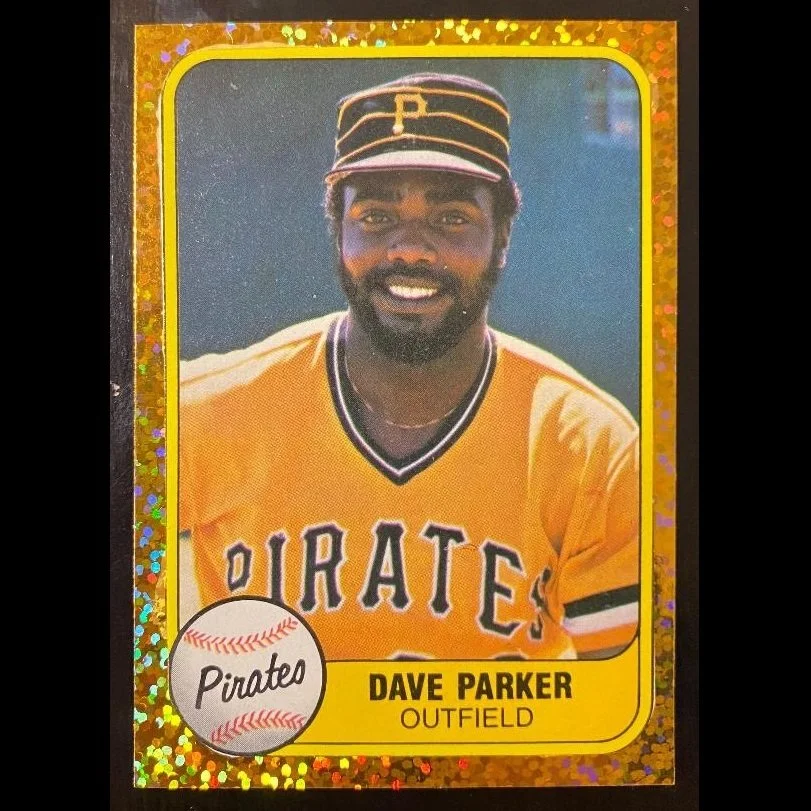
Dave Parker
This is the first ever Heavy J Studios card… maybe.
Jason actually made two copies exactly like this Dave Parker creation. He has one, and his buddy John has one, but neither of them are sure which one was actually the first one, and which one was the replicated version.
Unfortunately for Jason, if a legal battle ever ensues, John is a lawyer…
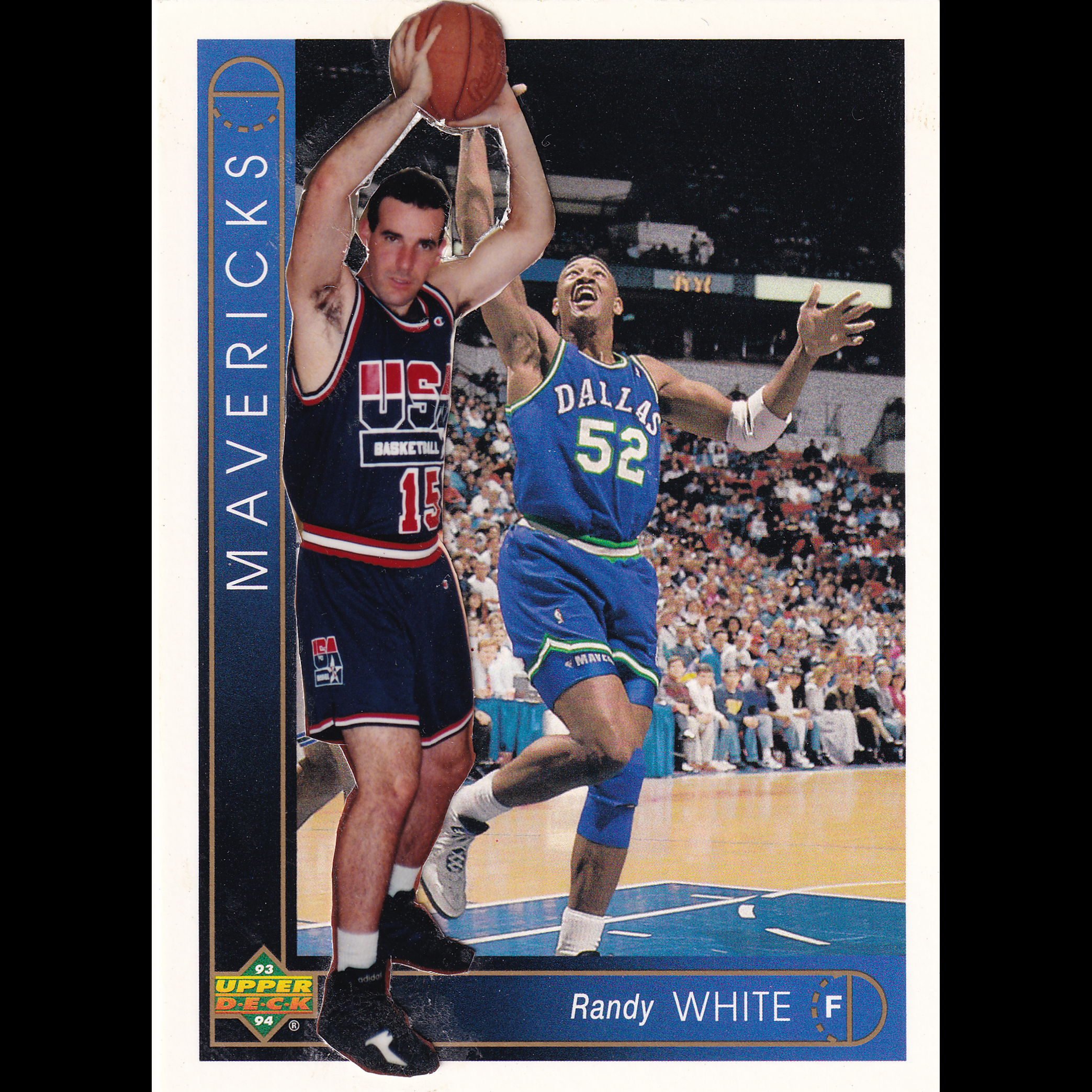
Jason’s First Card Ever
Long before Heavy J Studios was a glimmer in Jason’s eye, he took this photo of himself wearing a Magic Johnson Dream Team jersey, cut it out, and put it on this 1993-94 Upper Deck Randy White Dallas Mavericks card.
Minus adding a glitter paper border, these are the same skills Jason would eventually employ to create his Heavy J Studios cards.
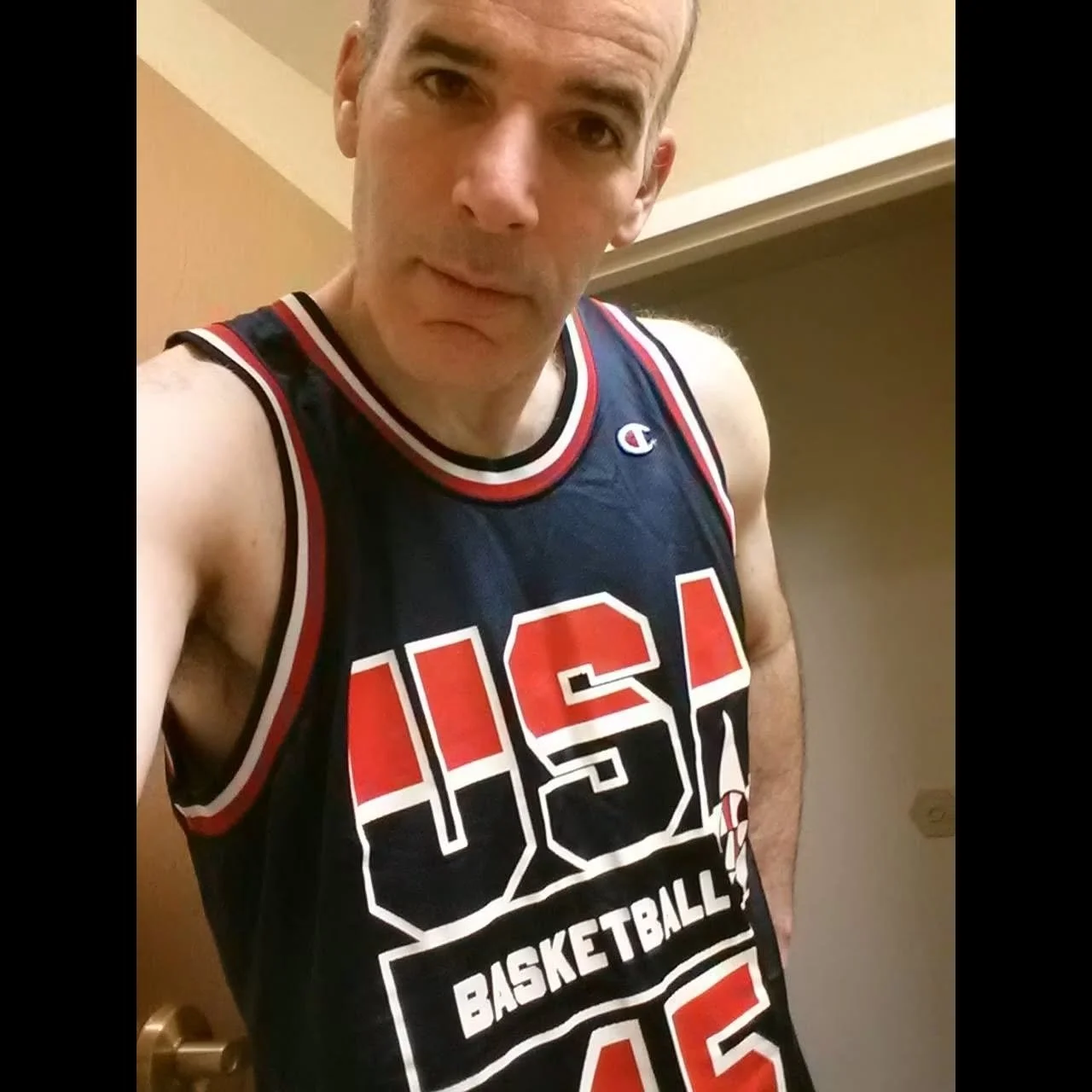
Dream Team Jersey
Jason must not have prayed hard enough, because not only was I able to track down the card, I found another photo of him wearing the same jersey.
When people ask me how I am able to find all of the images I do for these liner notes, or dig up such old information to ask the questions I do during these interviews, my answer is the same as what Jason would say if somebody asked him whose Dream Team jersey he was wearing: “Magic.”
Halloween, 1977
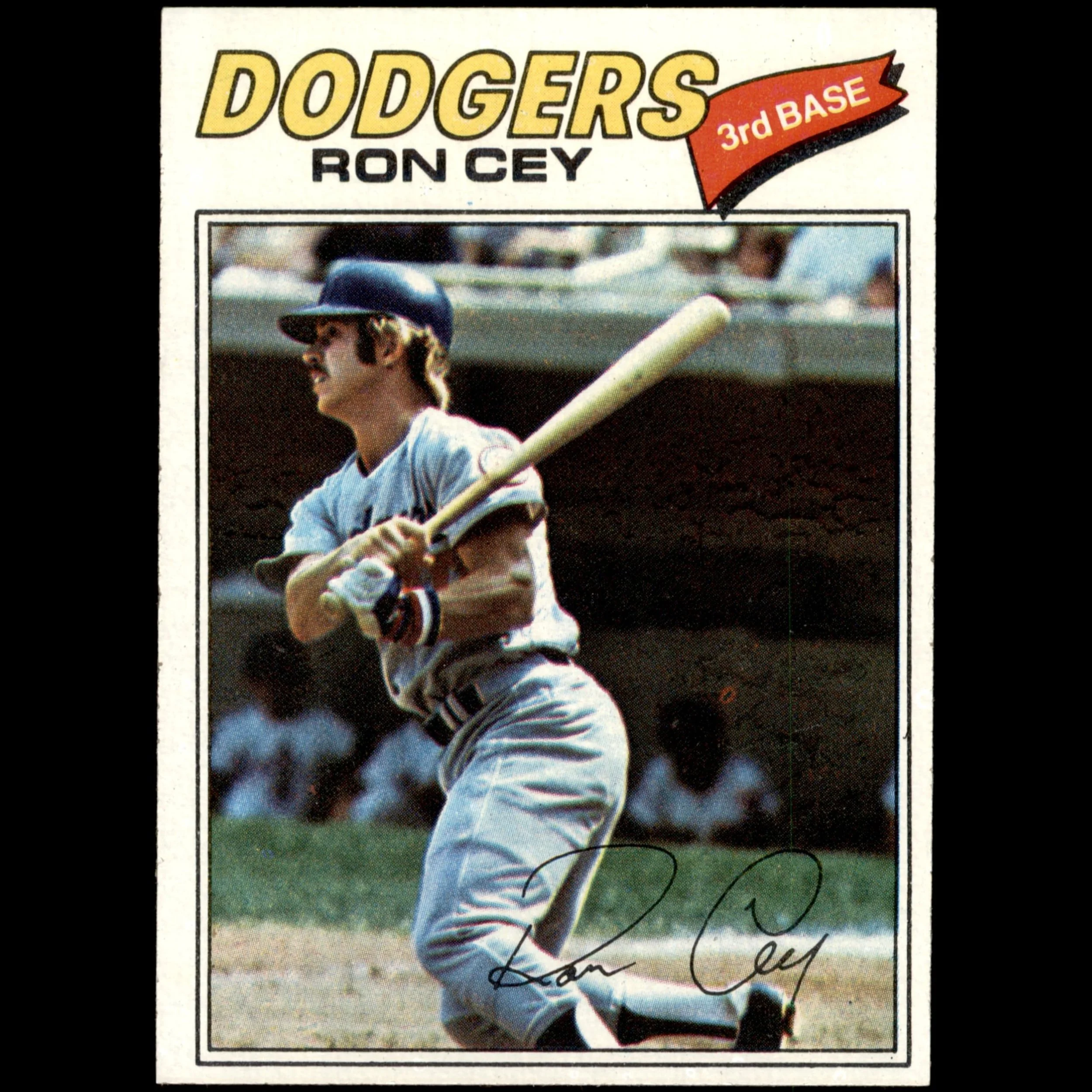
Quite possibly the very first attempt at an art card in Jason’s life was his Halloween costume in 1977 when he recreated this Ron Cey card to wear around town asking strangers for candy.
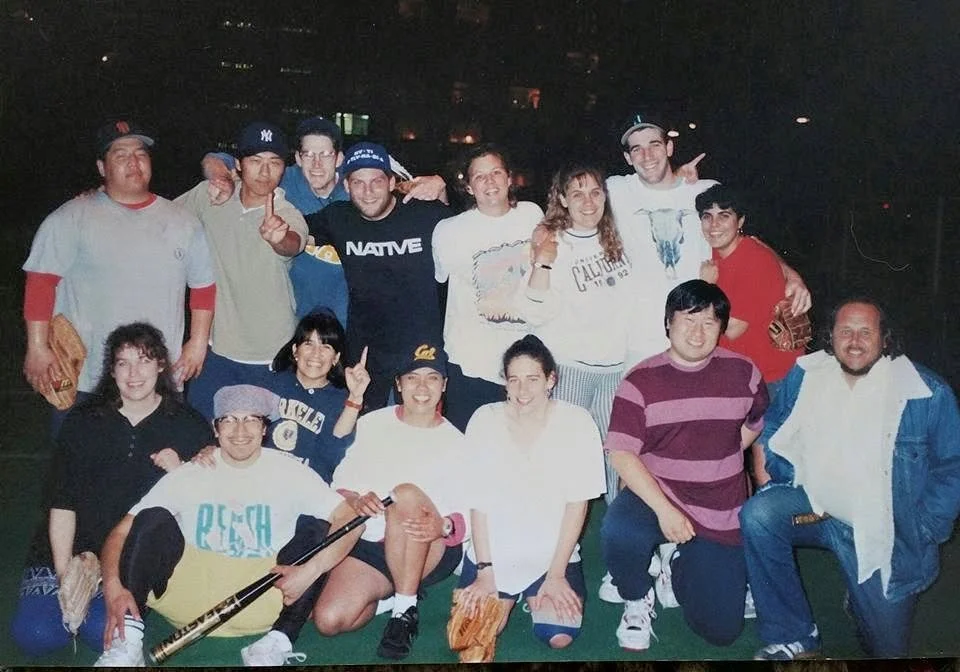
Jason got his nickname, “Heavy J”, while playing for the Glory Seekers, a co-ed softball team in college.
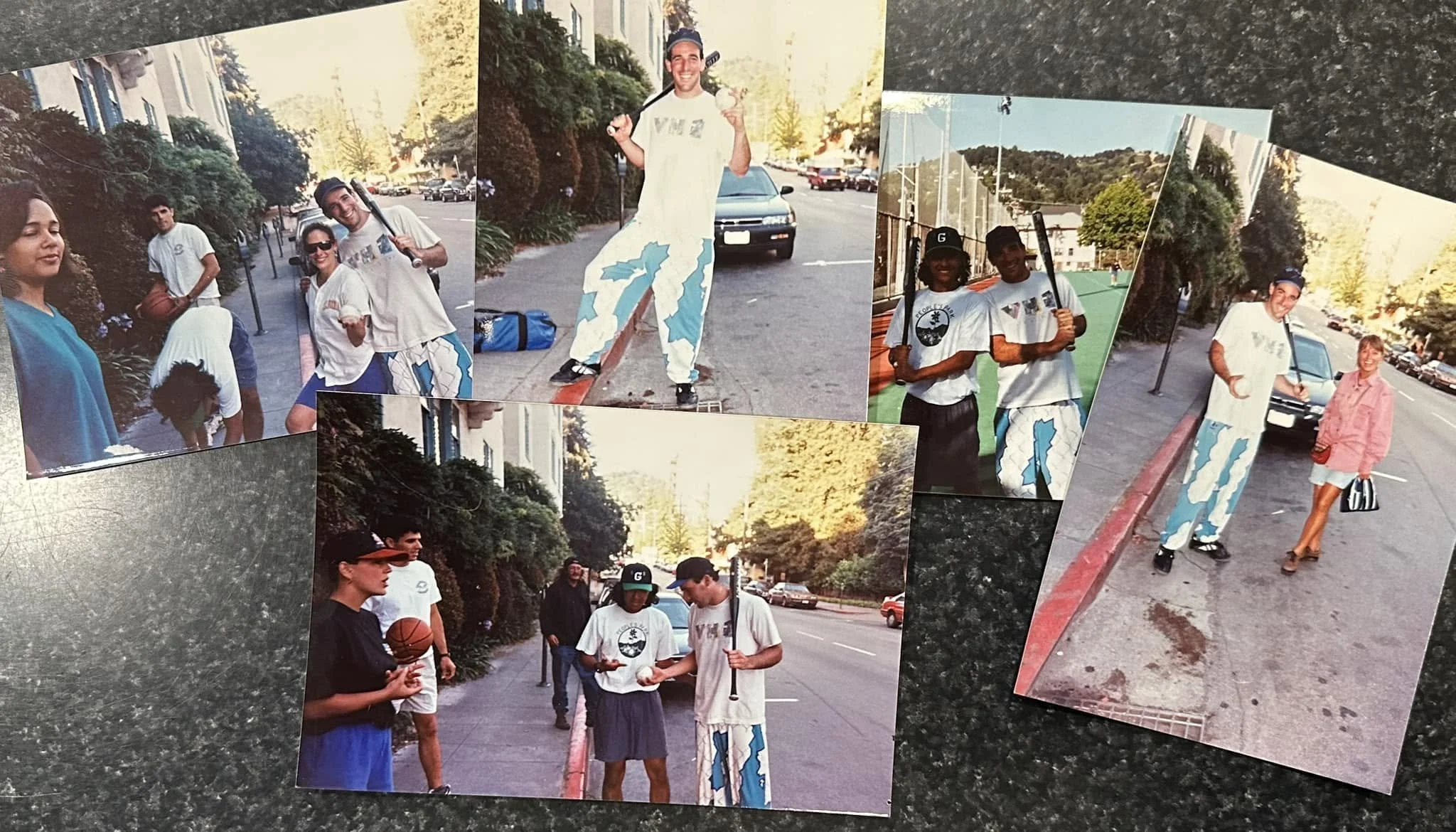
Jason’s teammate, Kevin, suggested that Jason adopt a nickname similar to the stage names used by rappers at the time. Taking inspiration from Heavy D & The Boyz, Jason’s new name became Heavy J. It stuck.
Baseball Cards
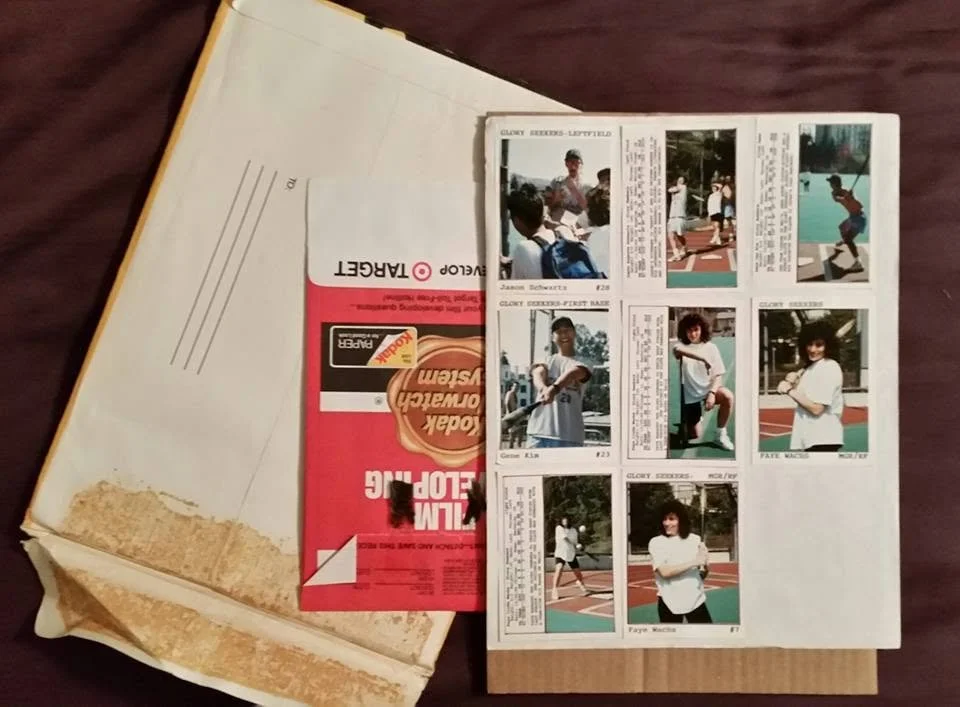
If Jason didn’t make a baseball card for it, did it really even happen? Why take the chance?
Here are some prototype cards Jason created for the Glory Seekers. His own card is in the top left corner.
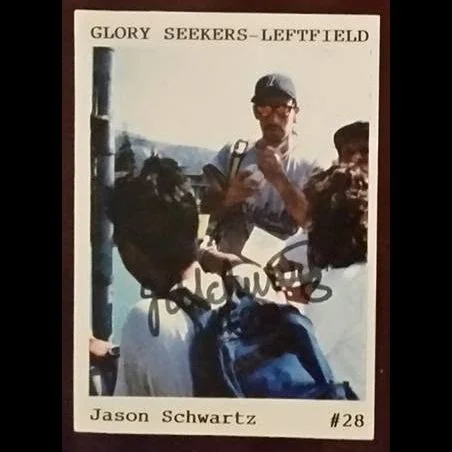
Left Field - #28
Oh, come on, you didn’t think I was going to make you squint, did you? Give me more credit than that!
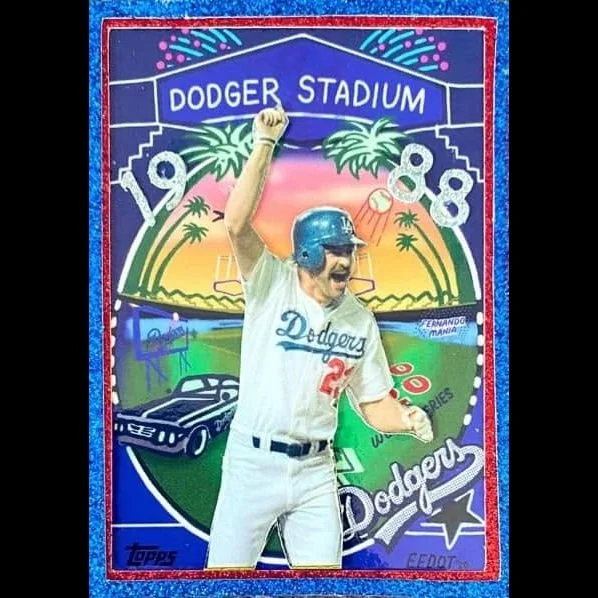
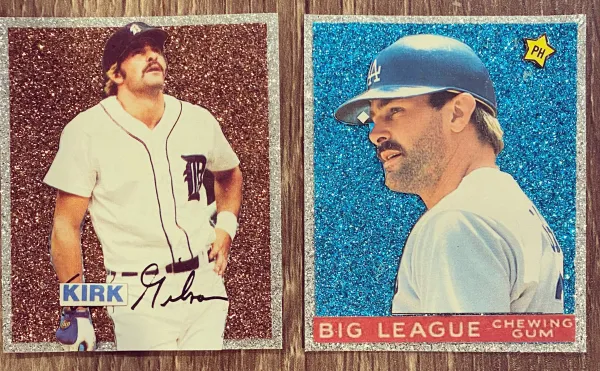
Kirk Gibson
One of the two causes Jason set out to help with his Heavy J Studios work was the Kirk Gibson Foundation.
Other than when the Glory Seekers won their championship, Kirk Gibson’s World Series home run may have been the best moment in Jason’s life, to that point.
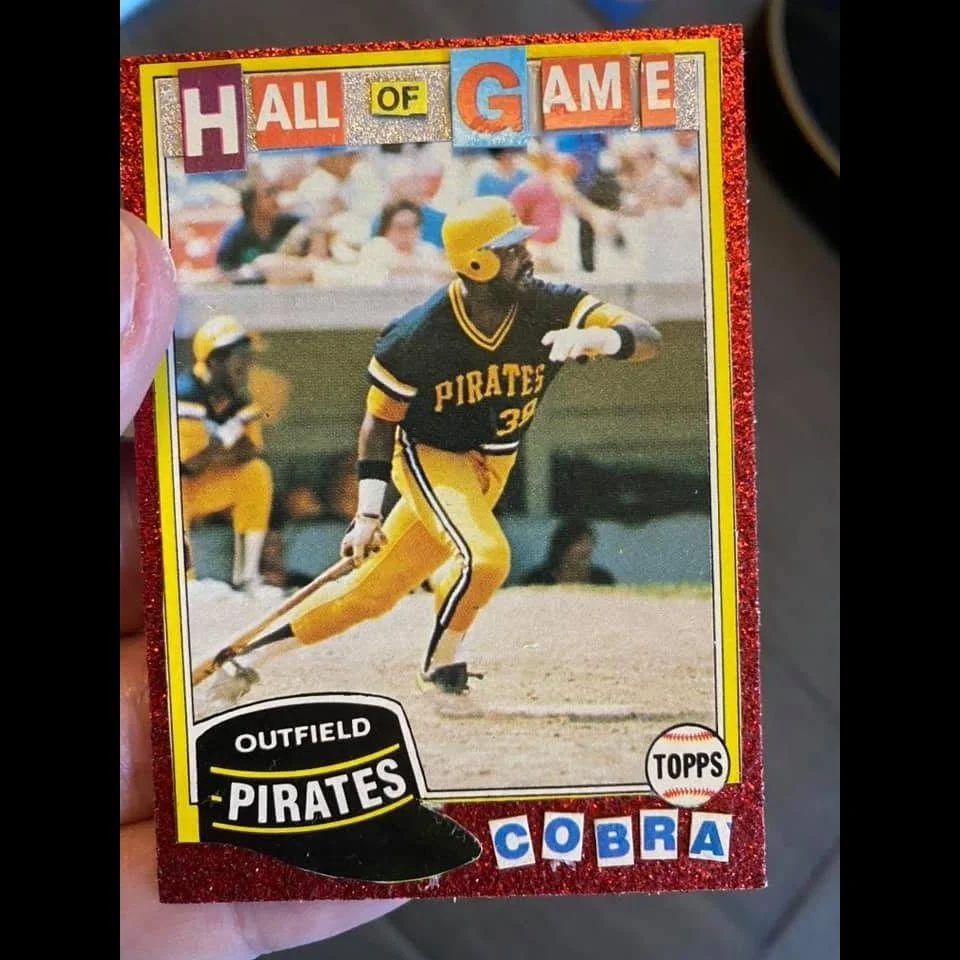
Dave Parker
The second cause Jason felt strongly about when he began Heavy J Studios was the Dave Parker Foundation, in part because he was in attendance at the Cobra’s Hall of Game induction ceremony at the Negro Leagues Baseball Museum in Kansas City. The other inductees in the Class of 2019 were Fred McGriff, Eric Davis and Dave Stewart.
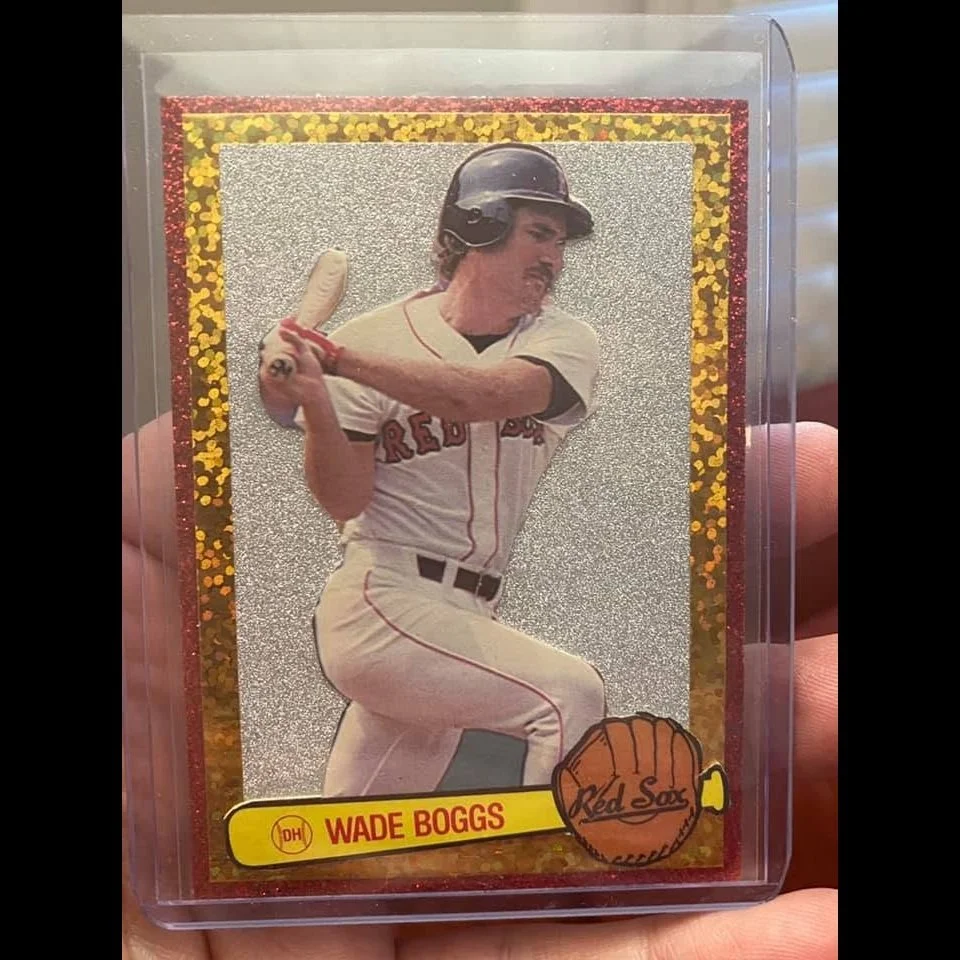
Wade Boggs
The first time Jason ever tried to sell one of his Heavy J Studios cards, it was of this 1983 Donruss rookie card of Wade Boggs. He donated the money raised to the Negro Leagues Baseball Museum, which gave him the idea to support other causes through his artwork, as well.
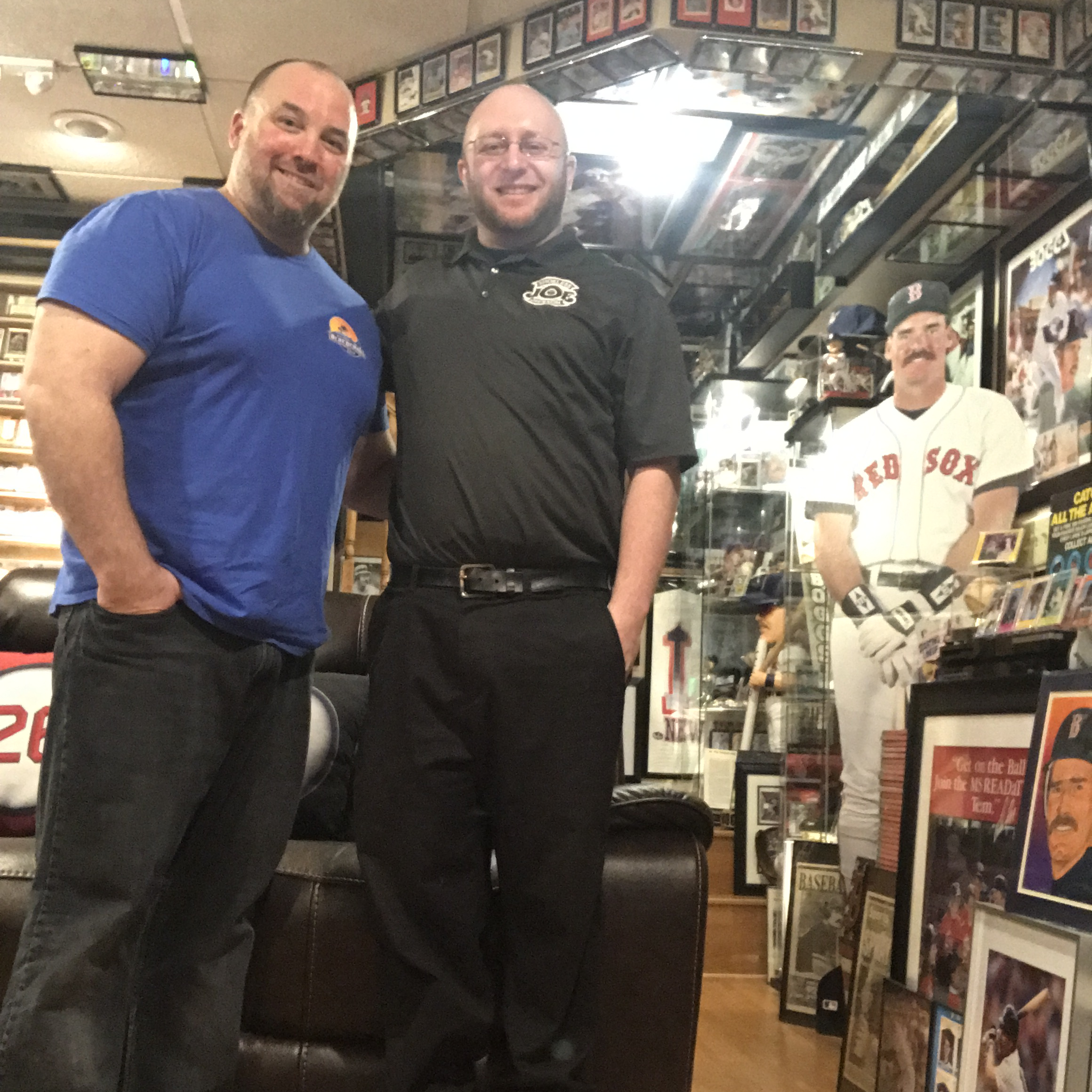
Richard Davis
Richard Davis is a Wade Boggs Super Collector whose Boggs Tavern houses one of the biggest Wade Boggs collections in the world.
Richard was our guest for Episode 7 of Season 2. You can listen to that episode HERE.
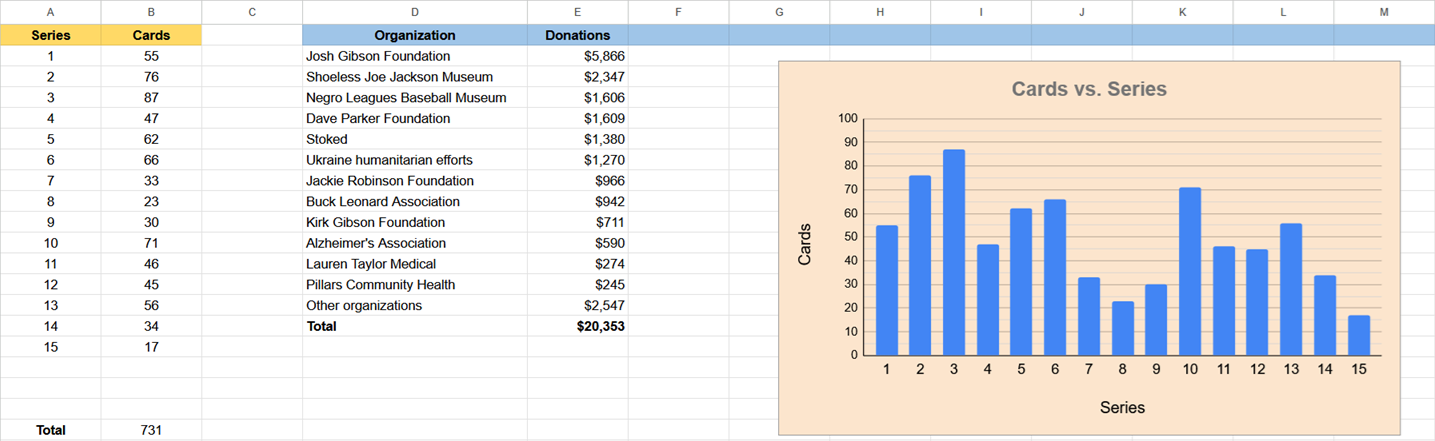
Jason has raised more than $20,000 for various causes through his Heavy J Studios creations.
Keeping That Same Energy
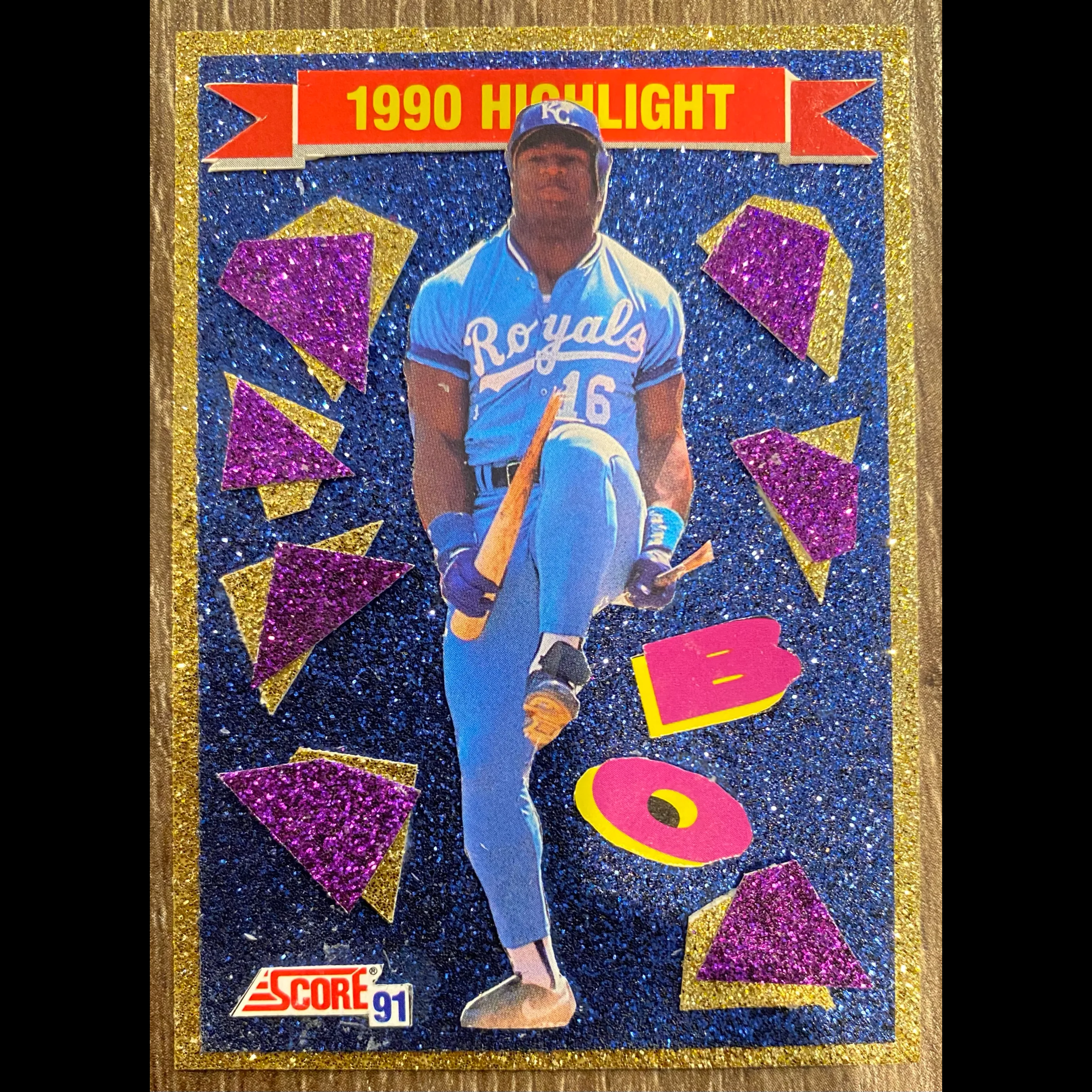
To date, Jason has made in the neighborhood of 800 Heavy J Studios creations. He tried to keep the same energy for card number 800 as he had for card number 1, making each individual card in the HJS universe something unique and cool. He definitely succeeded with this Bo Jackson masterpiece.
You can check out a nearly-but-not-perfectly up-to-date registry of the Heavy J Studios cards if you CLICK HERE.
Pandemic Project
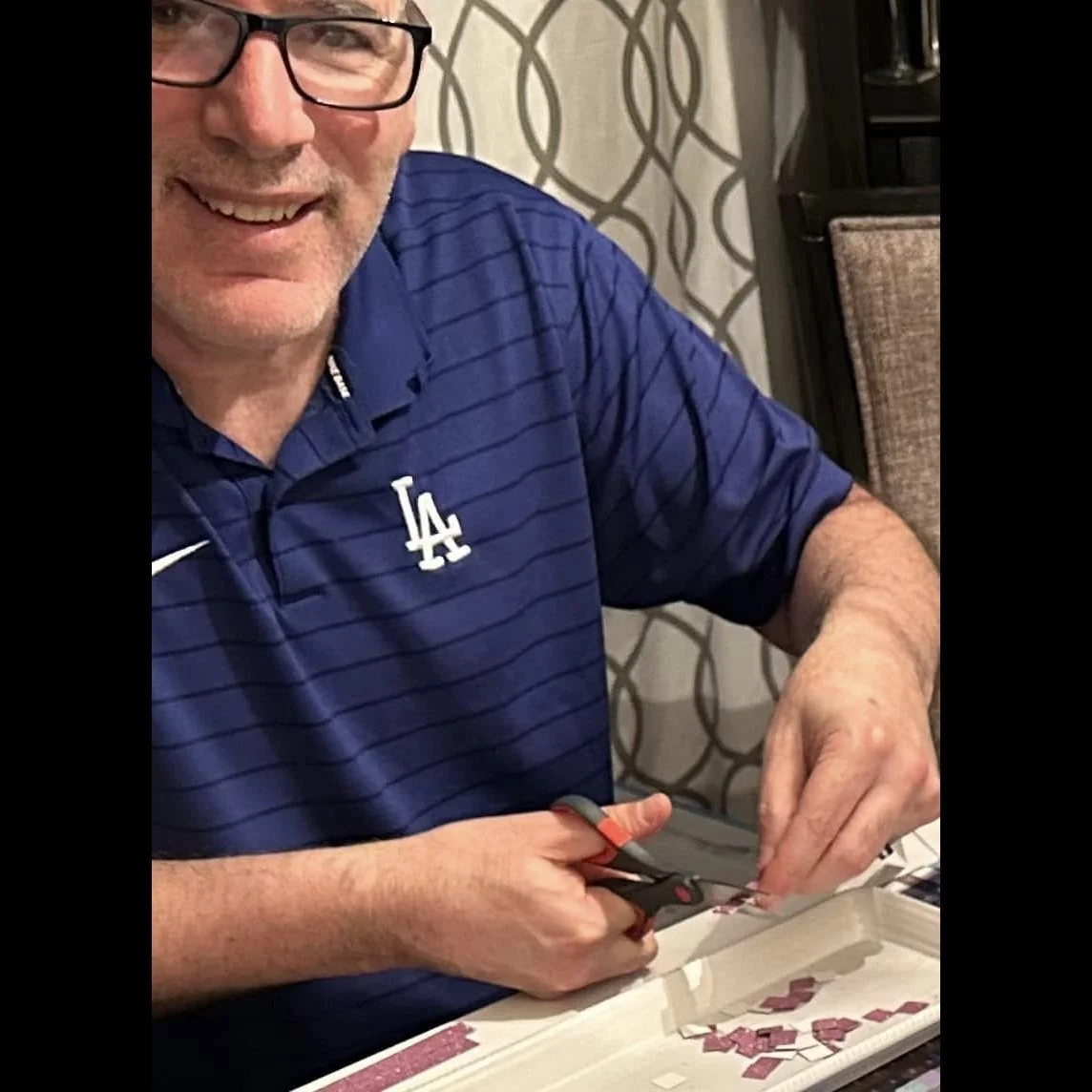
While Jason has kept Heavy J Studios as an ongoing project (especially for the right cause), the vast majority of his creations were produced during the pandemic when he had much more time on his hands.
Genuinely Difficult Work
Not just because of the precision needed to make some of the more intricate cuts, but also the physical toll it takes on your eyes, your hands, your back, and your neck to be sitting at a table using scissors and an X-Acto knife for hours on end, day after day.
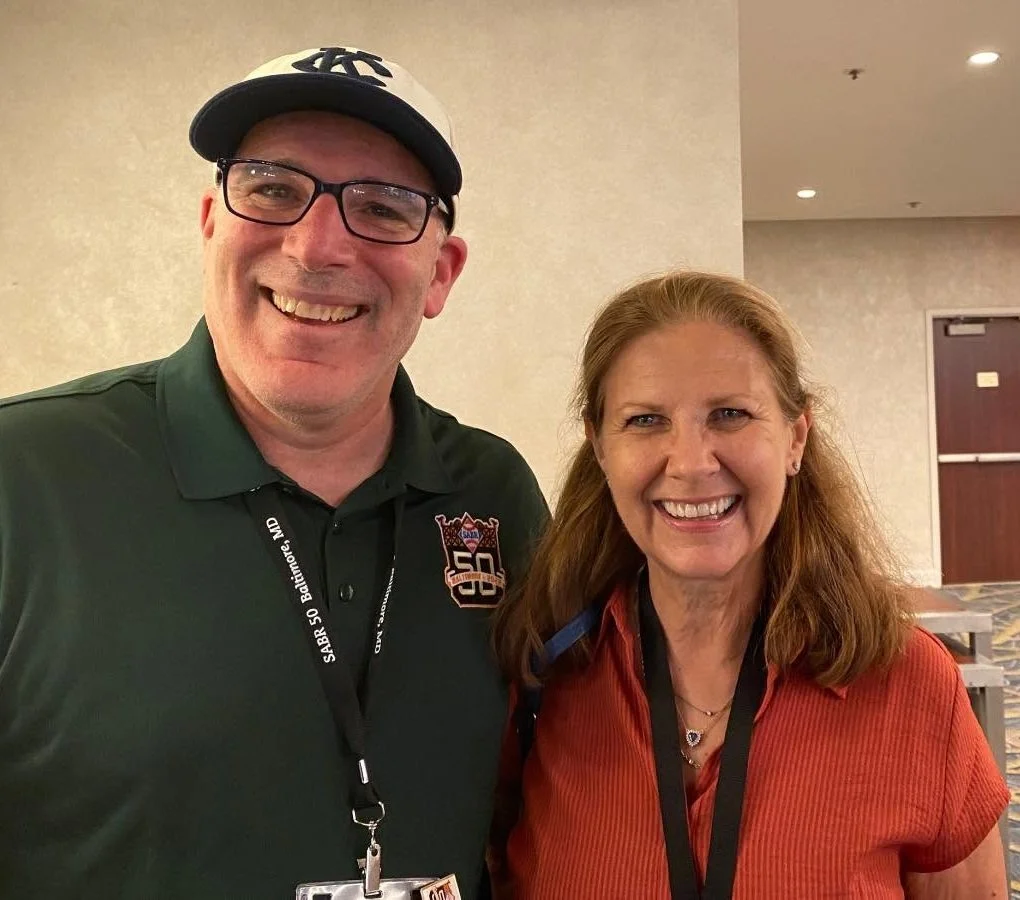
Janet Marie Smith
From modernizing the stadium to incorporating the club’s rich history into the ballpark experience, Janet Marie Smith’s fan-friendly touches have helped keep Dodger Stadium - the third-oldest ballpark in MLB - one of the premier venues in all of sports.
Smith is well known in baseball for her work on Oriole Park at Camden Yards, which set the standard for a new wave of ballparks after its opening in 1992. From 2002-2009, Smith served as senior vice president of planning and development for the Boston Red Sox, overseeing the preservation and expansion of Fenway Park.
Summer of Josh
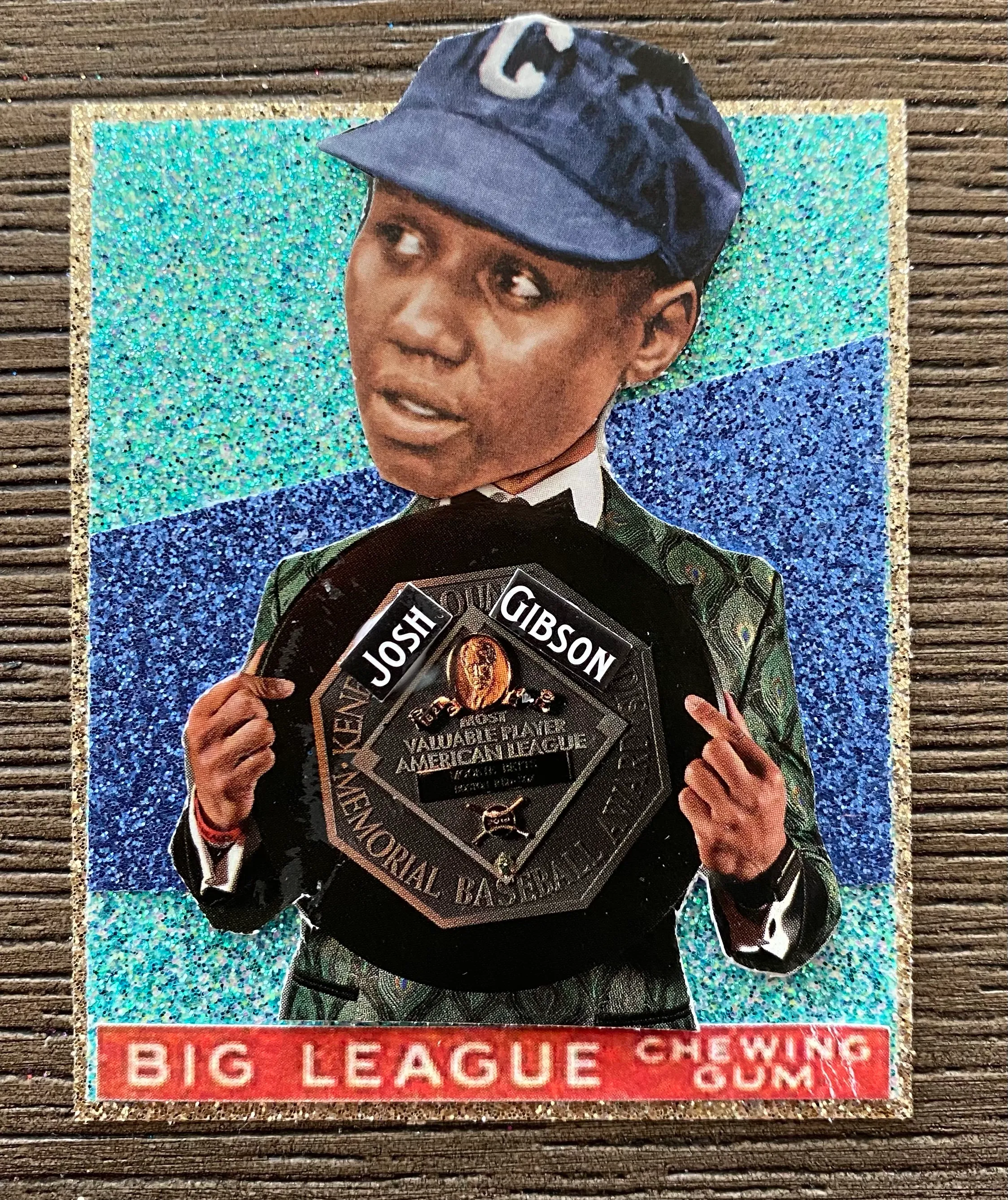
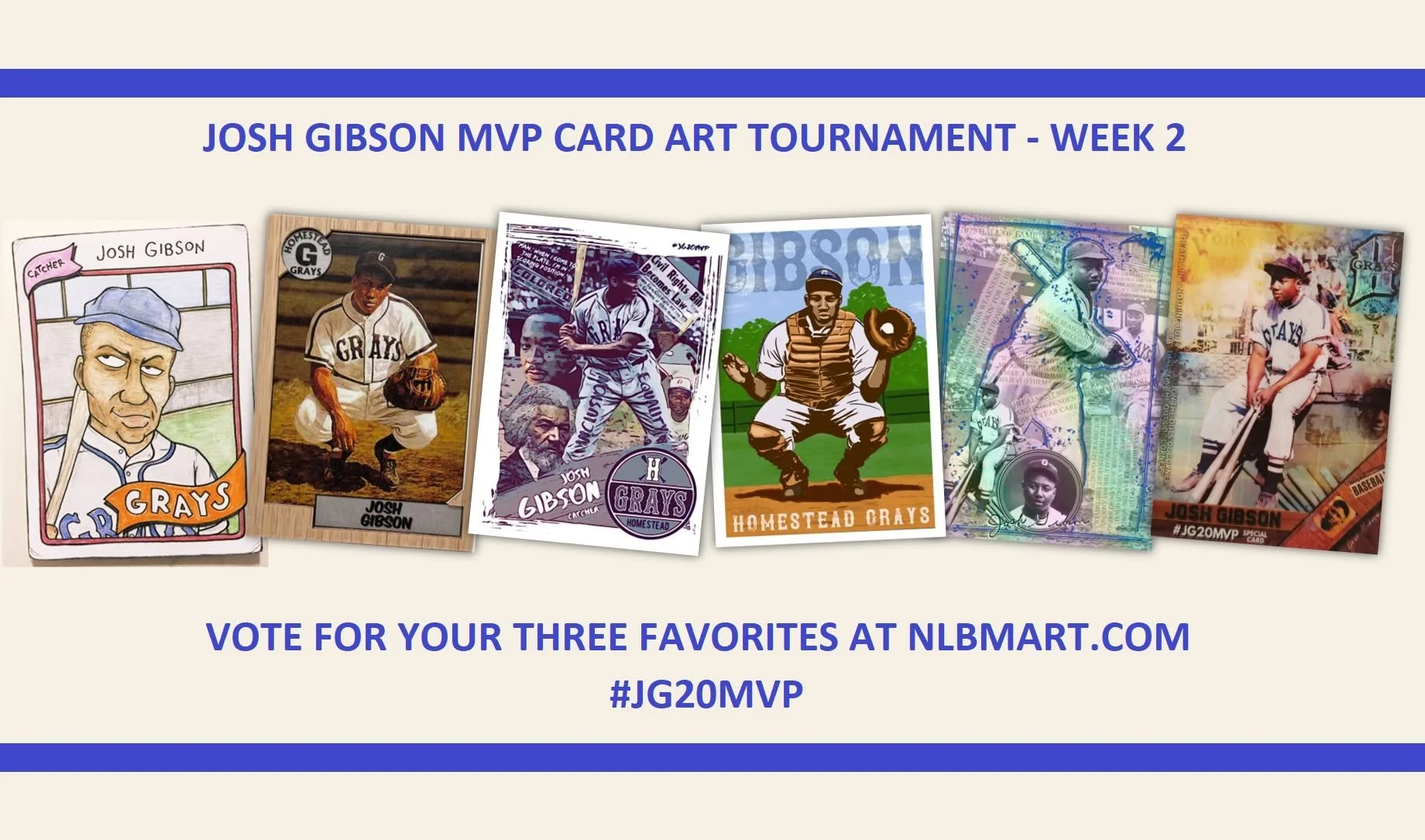
With the blessing of the Josh Gibson Foundation, in the summer of 2021, more than 60 baseball card artists from the Negro Leagues Baseball Marketplace created cards of Josh Gibson that doubled as entries in a nine-week tournament, with cards advancing based on social media engagement (likes, retweets), fan voting, and–once they reached the Final Four–the votes of a celebrity panel.
“How Many MVPs Would Josh Gibson Have Won?” by Jason Schwartz
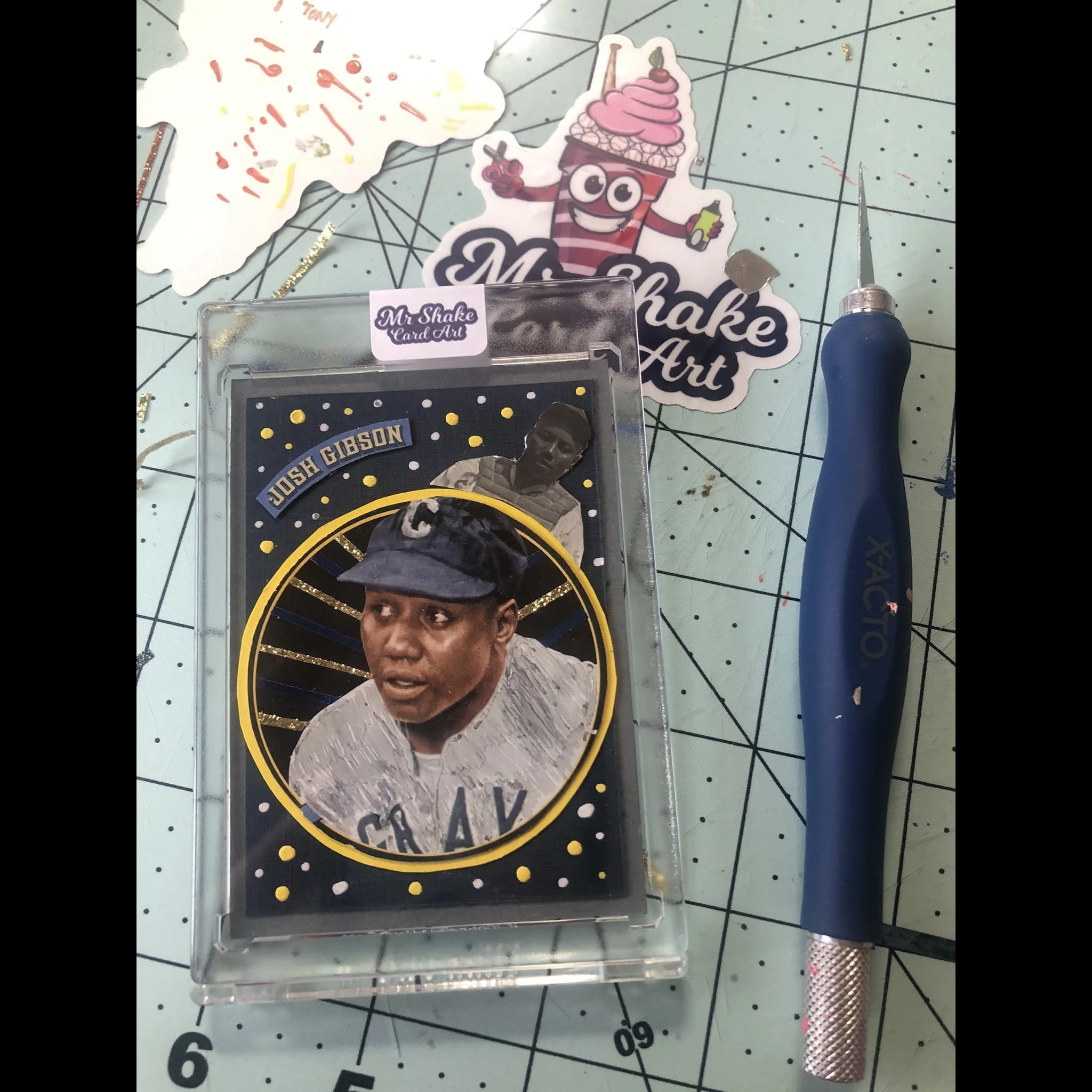
Mr. Shake Card Art
Another card artist named Mr. Shake, in conjunction with Sean Gibson and the Josh Gibson Foundation, organized a card art tournament with entries from more than 60 artists from all over the world.
Sean Gibson
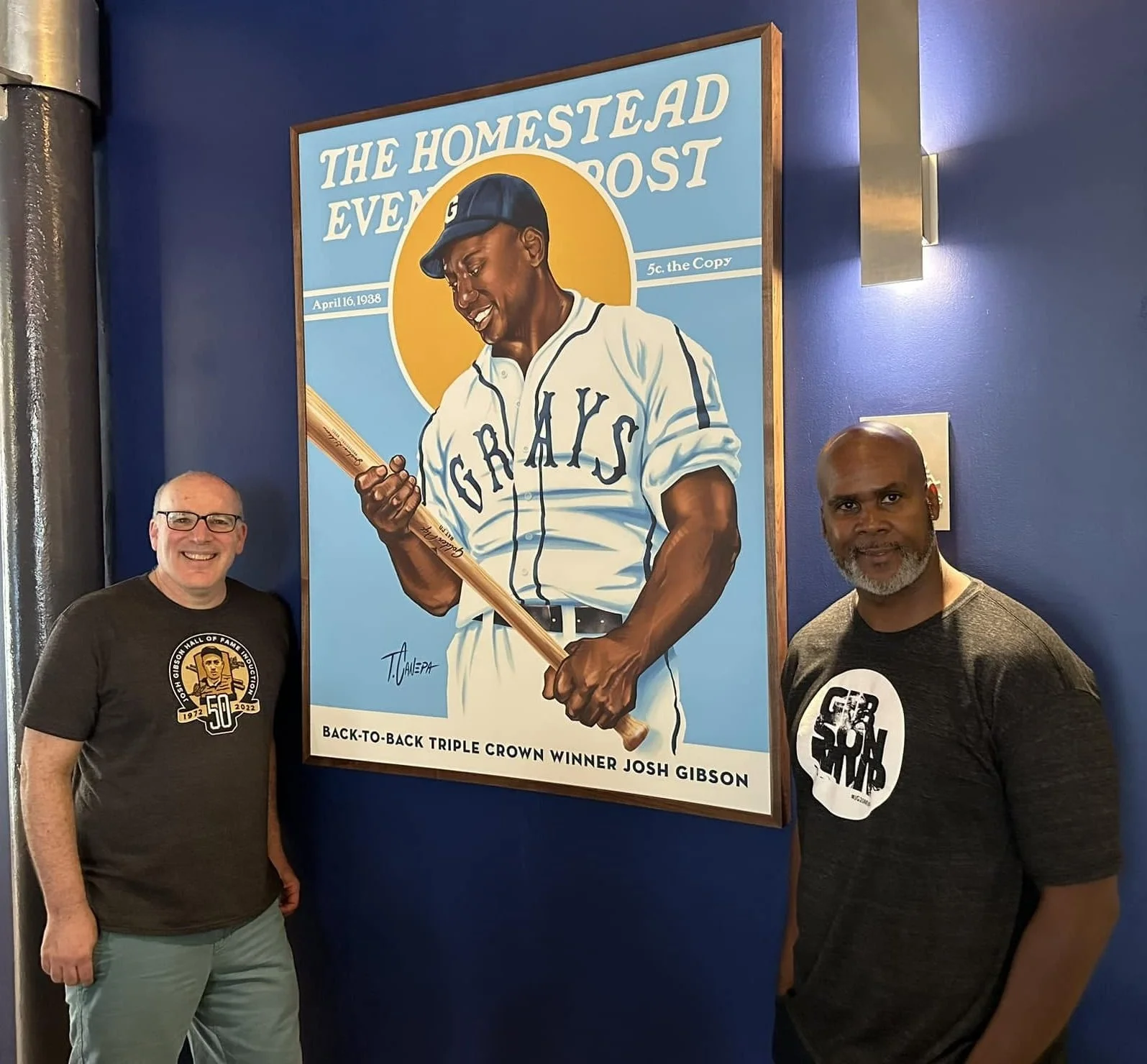
Sean Gibson is the great-grandson of Baseball Hall of Fame Negro League legend Josh Gibson. He serves as the Executive Director of the Josh Gibson Foundation, working to preserve his great-grandfather's legacy, run youth athletic and academic programs in Pittsburgh, and advocate for Negro League statistics and recognition in Major League Baseball.
Fred Claire
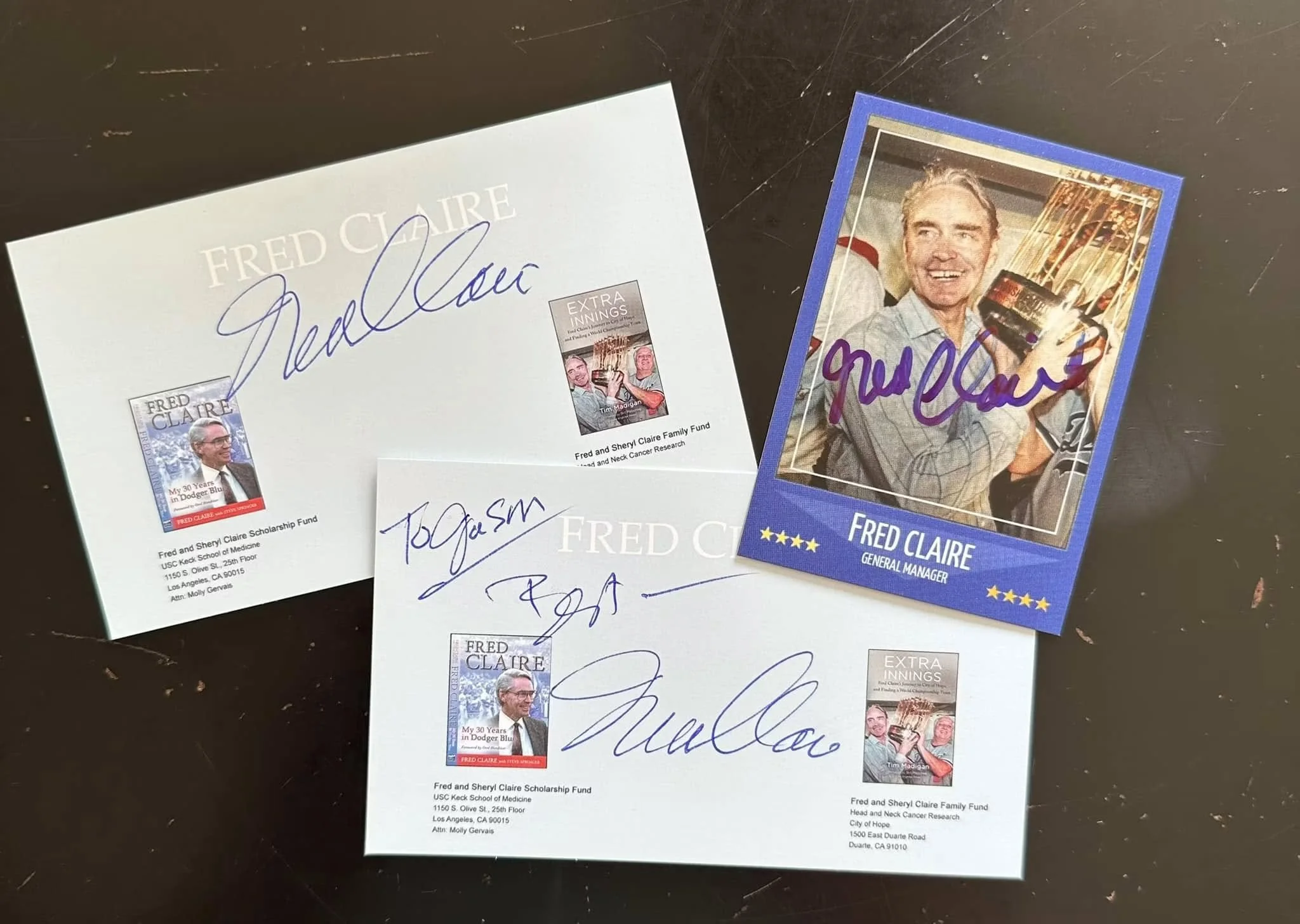
Fred Claire served in numerous roles for the Los Angeles Dodgers from 1969 to 1998 including the role of general manager from 1987 to 1998.
Buy a copy of Fred’s book My 30 Years In Dodger Blue by clicking HERE.
Pirates Fan
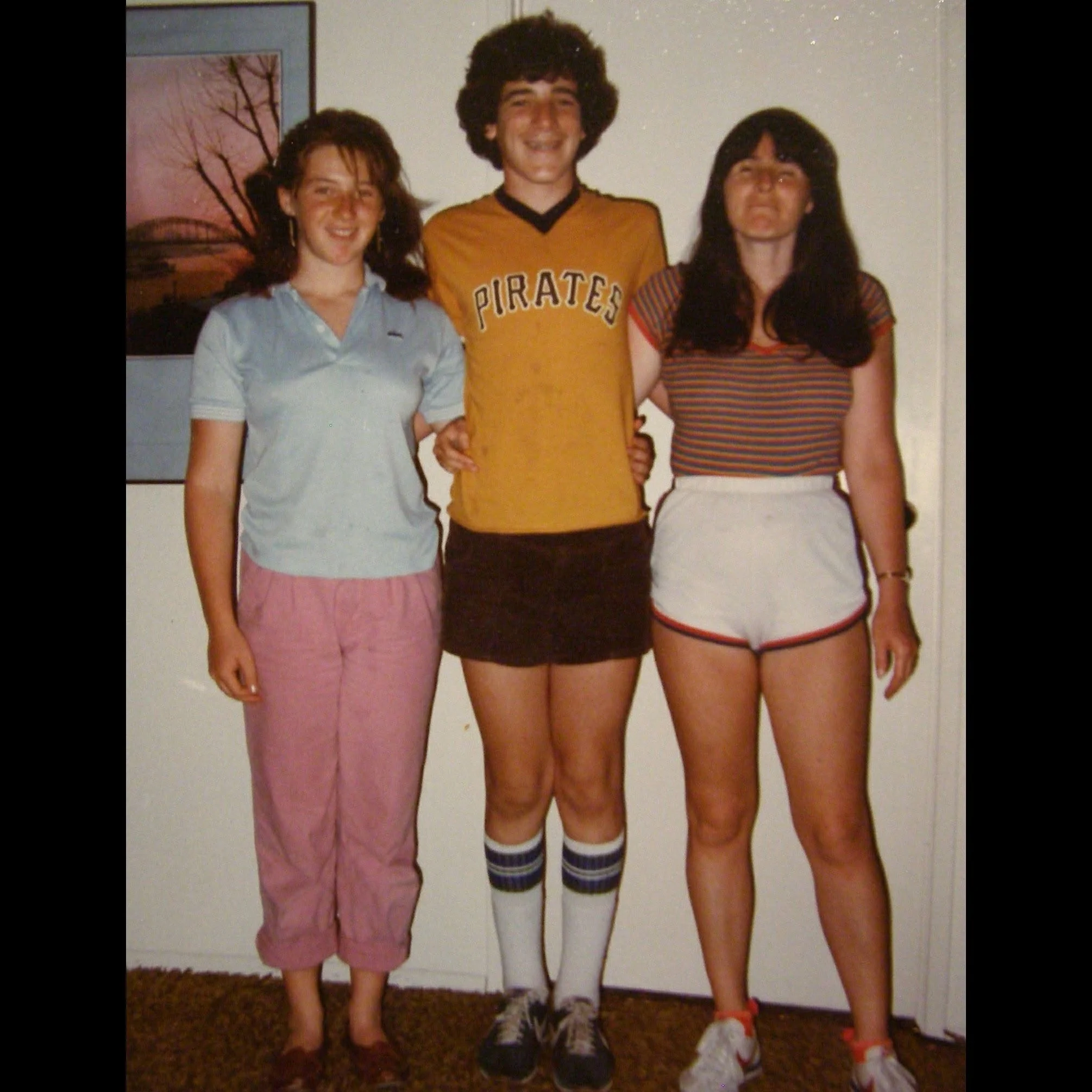
While the Dodgers have always been and will always be Jason’s number one team, in 1979, he - along with seemingly half of LA - adopted the Pirates as his second favorite team. Here is Jason in 1982, rocking a Pirates shirt.
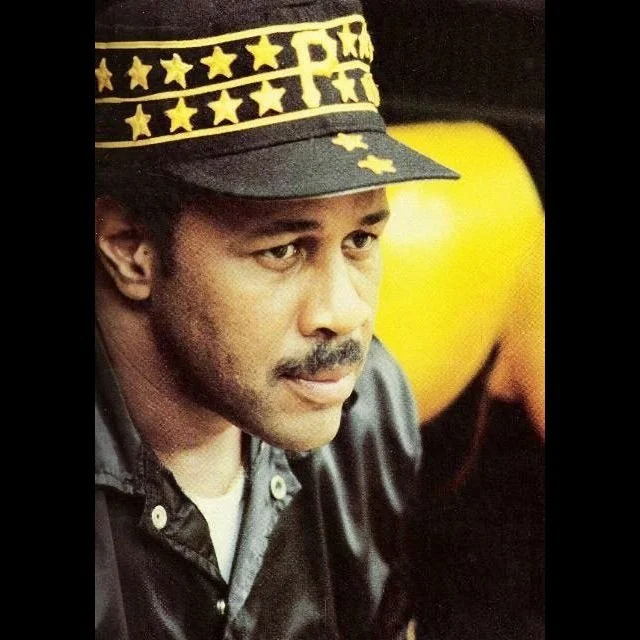
Stargell Stars
Stargell Stars were embroidered gold star badgers which Pittsburgh Pirates OF/1B Willie "Pops" Stargell originally handed out to his teammates during the 1978 and 1979 seasons.
The Hall of Fame slugger handed them out to recognize players for great plays, clutch performances, and team-first contributions.
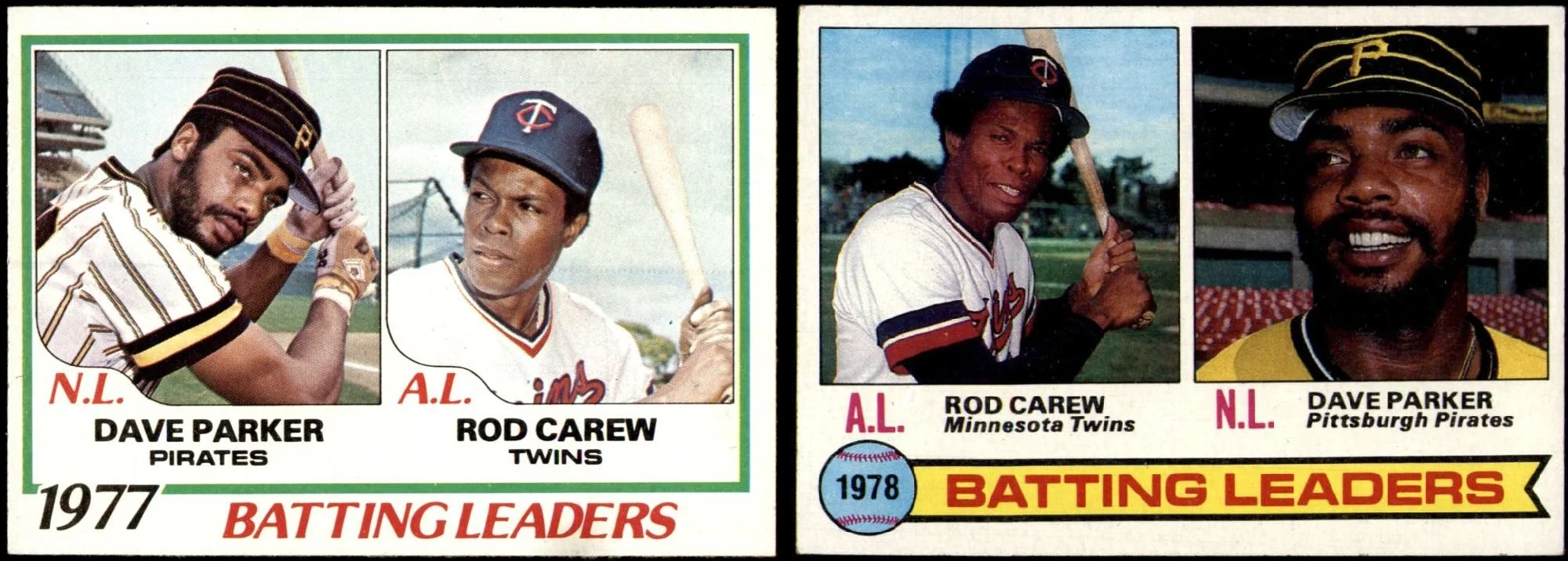
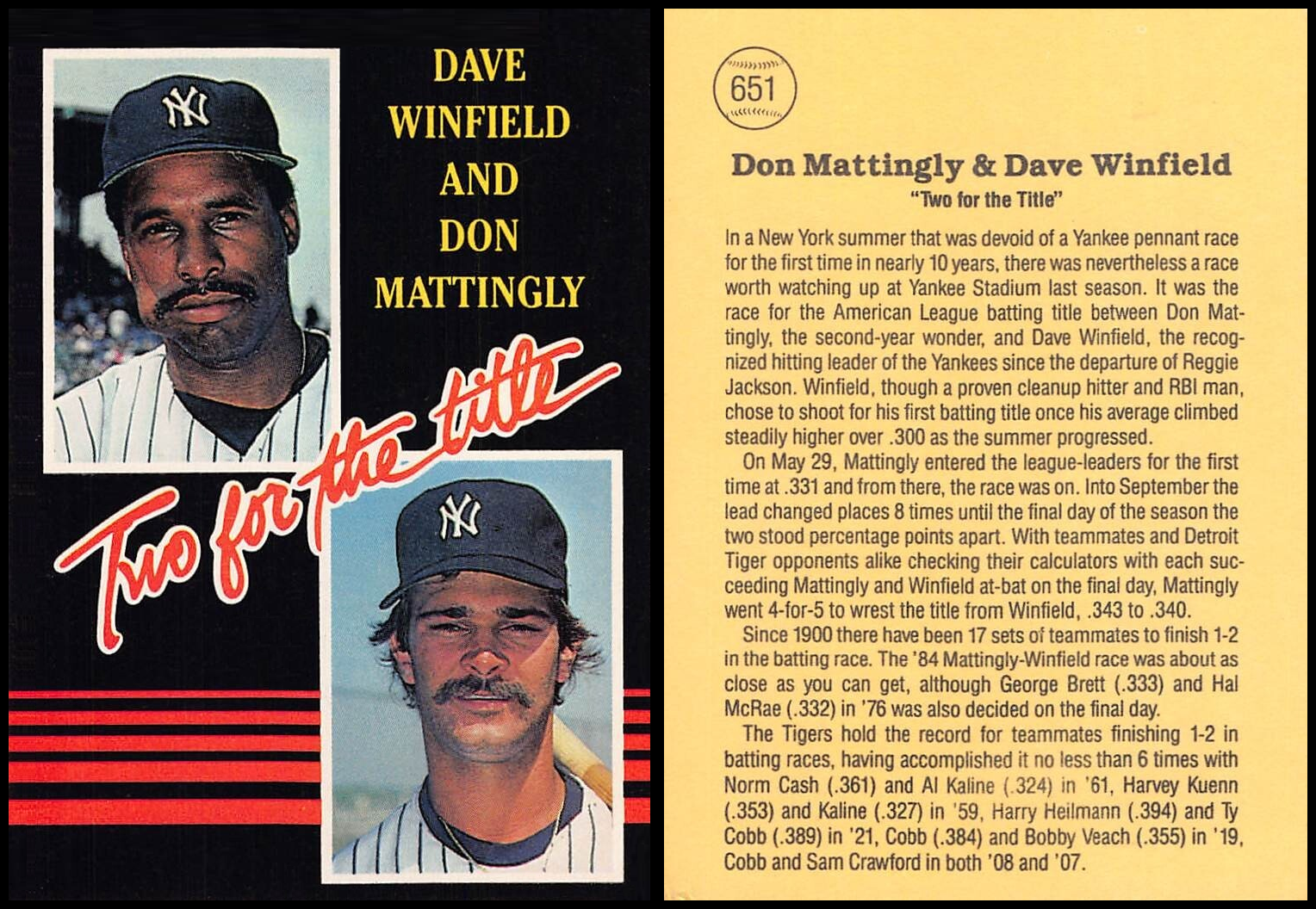
Dave Parker won the 1977 NL batting title with a .338 average, so he was featured on the 1978 Topps card (pictured, left) along with Rod Carew, who won the AL batting title in 1977. When Parker batted .334 to win the NL batting title again in 1978 along with the NL MVP Award, he was featured on the 1979 Topps card (pictured, right) along with - you guessed it - Rod Carew, who had just won his sixth AL batting title in seven years.
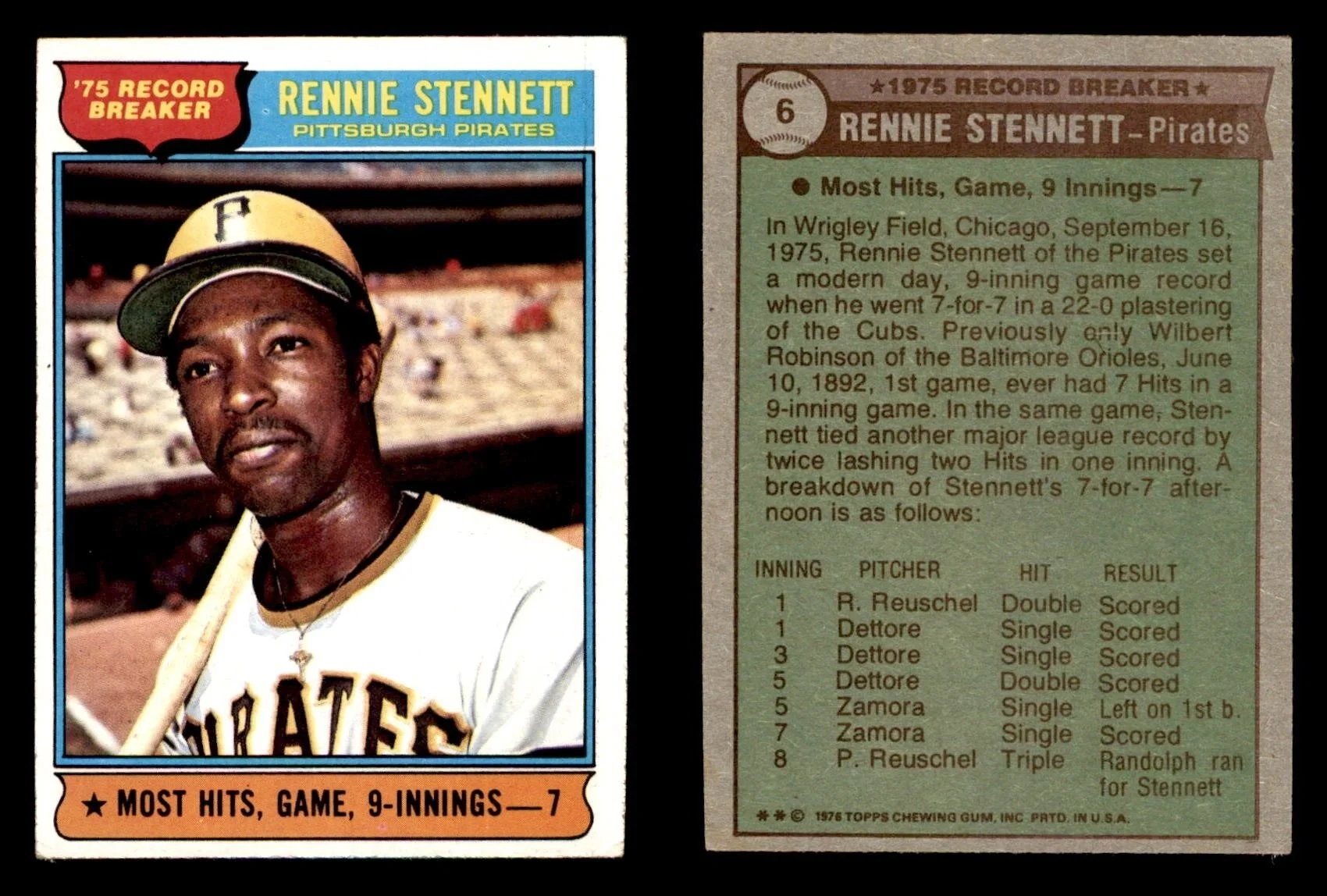
Jason was enthralled by this 1976 Topps card featuring Rennie Stennett’s record-breaking performance from 1975 in which he recorded 7 hits in a 9-inning game.
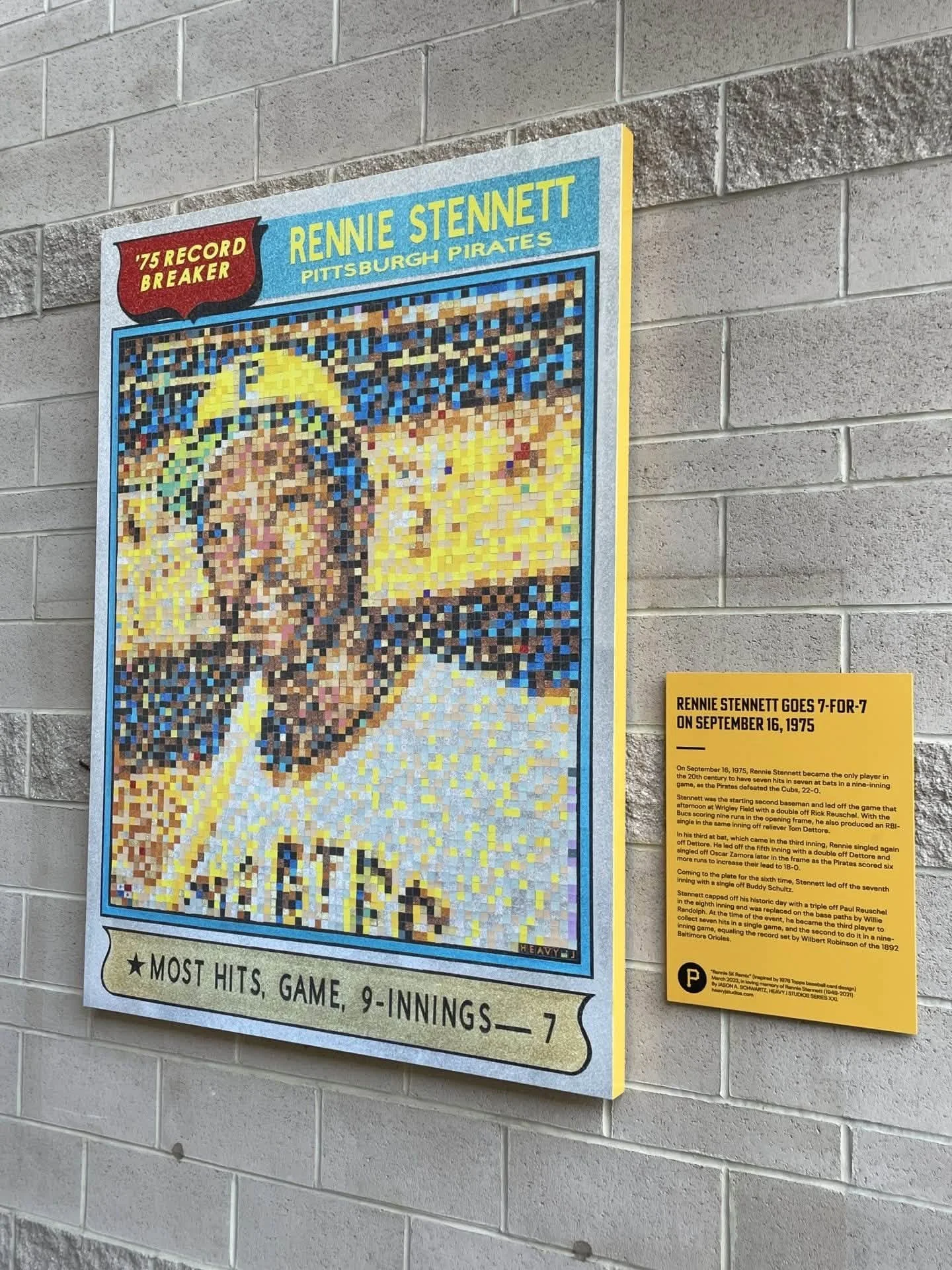
Heavy J Studios Version
Jason’s large format version of the Rennie Stennett ‘75 Record Breaker card is on display at PNC Park in Pittsburgh.
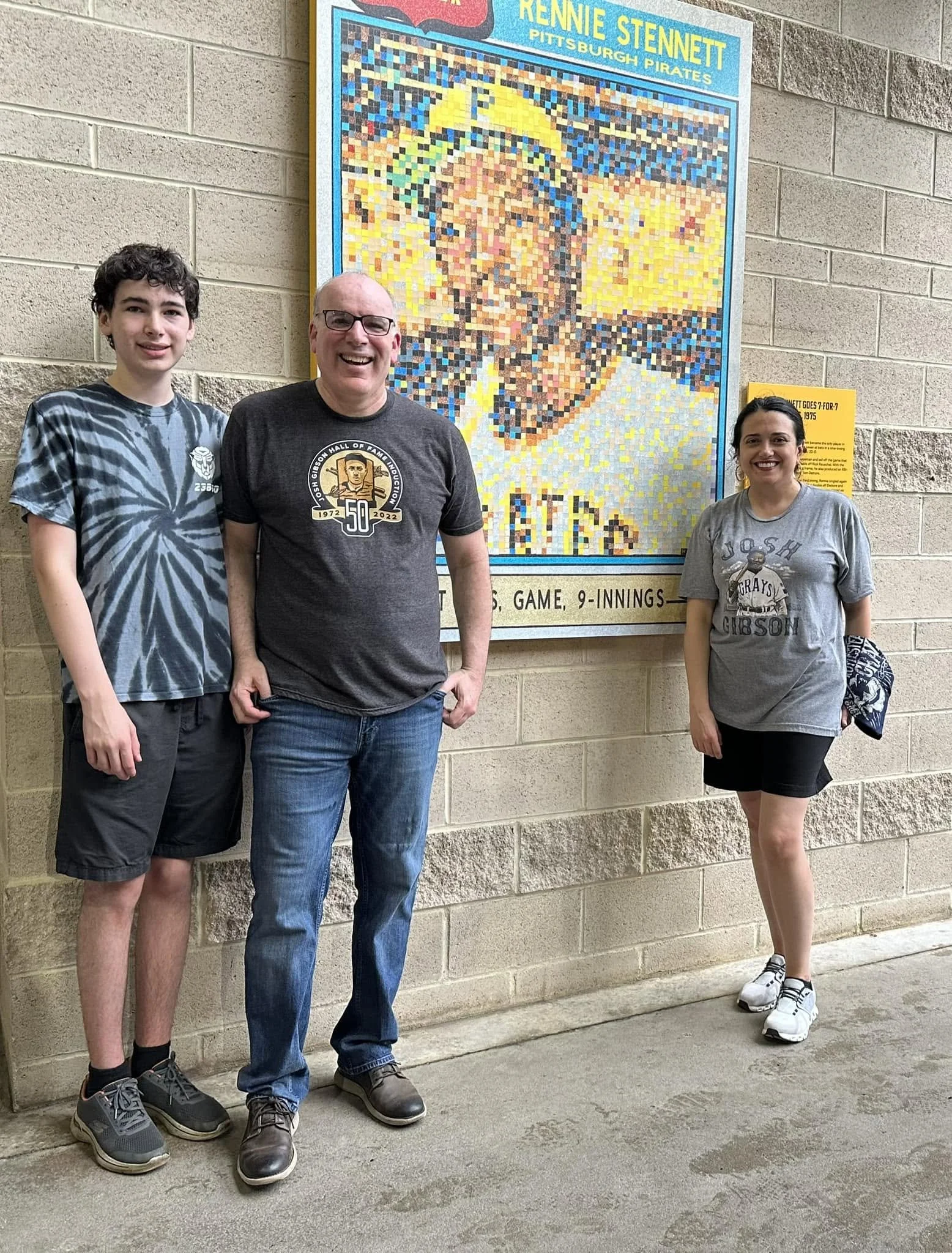
A Proud Artist
Here, Jason and his family proudly stand next to the largest Heavy J Studios creation, to date.
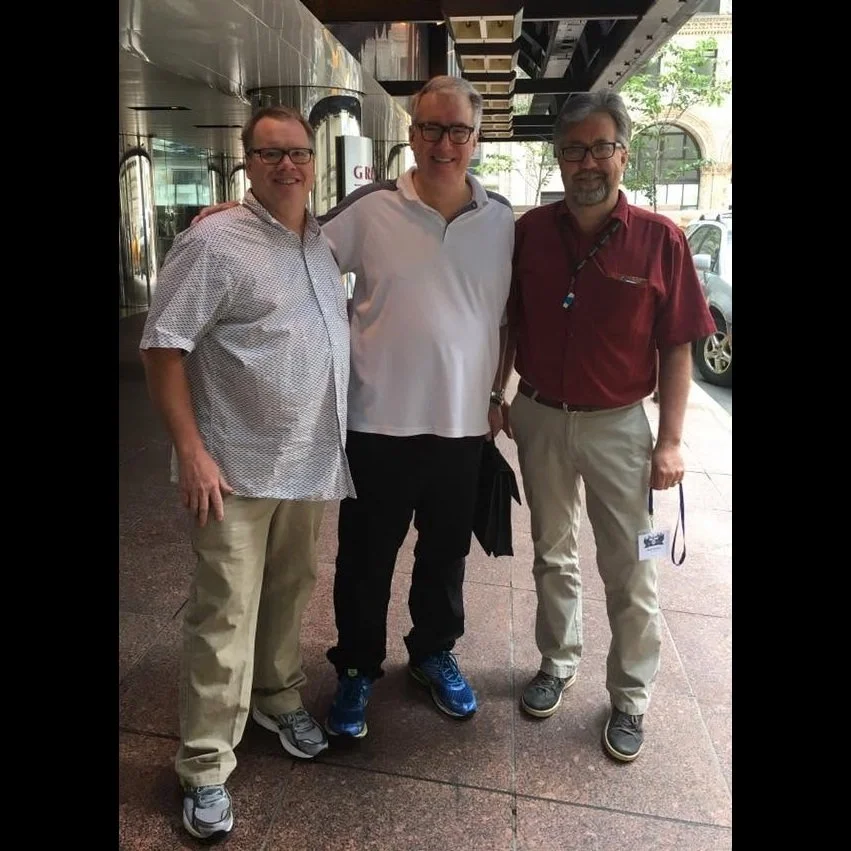
SABR Baseball Card Research Committee
In 2002, Mark Armour became the founder of SABR’s Baseball Biography Project, and he was its director through 2016. That year, he and Chris Dial resurrected SABR’s Baseball Card Research Committee.
In May of 2019, they handed the keys over to Jason and Nick Vossbrink to become the new co-chairs of the committee.
Pictured here are Chris Dial (left), fellow baseball card historian, Keith Olbermann (center), and Mark Armour (right).
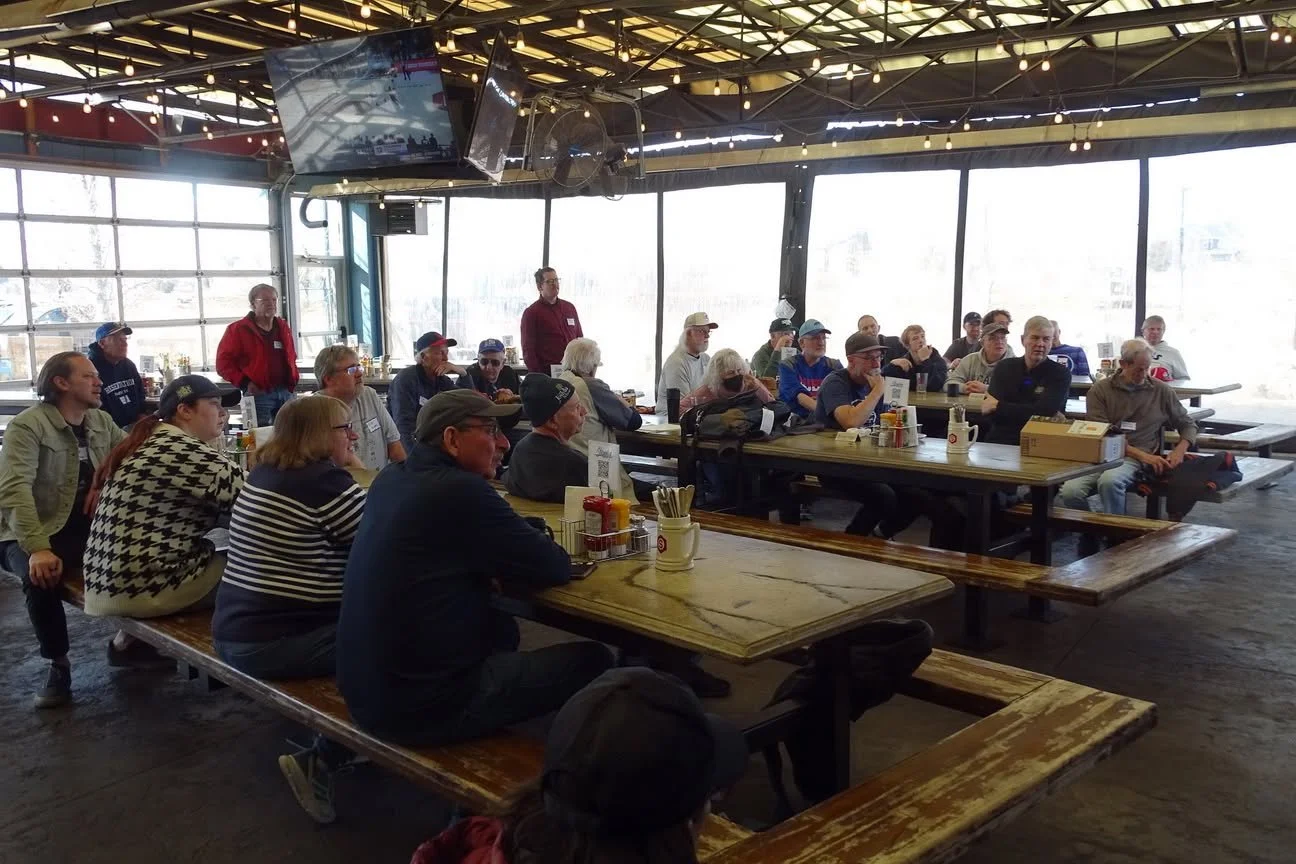
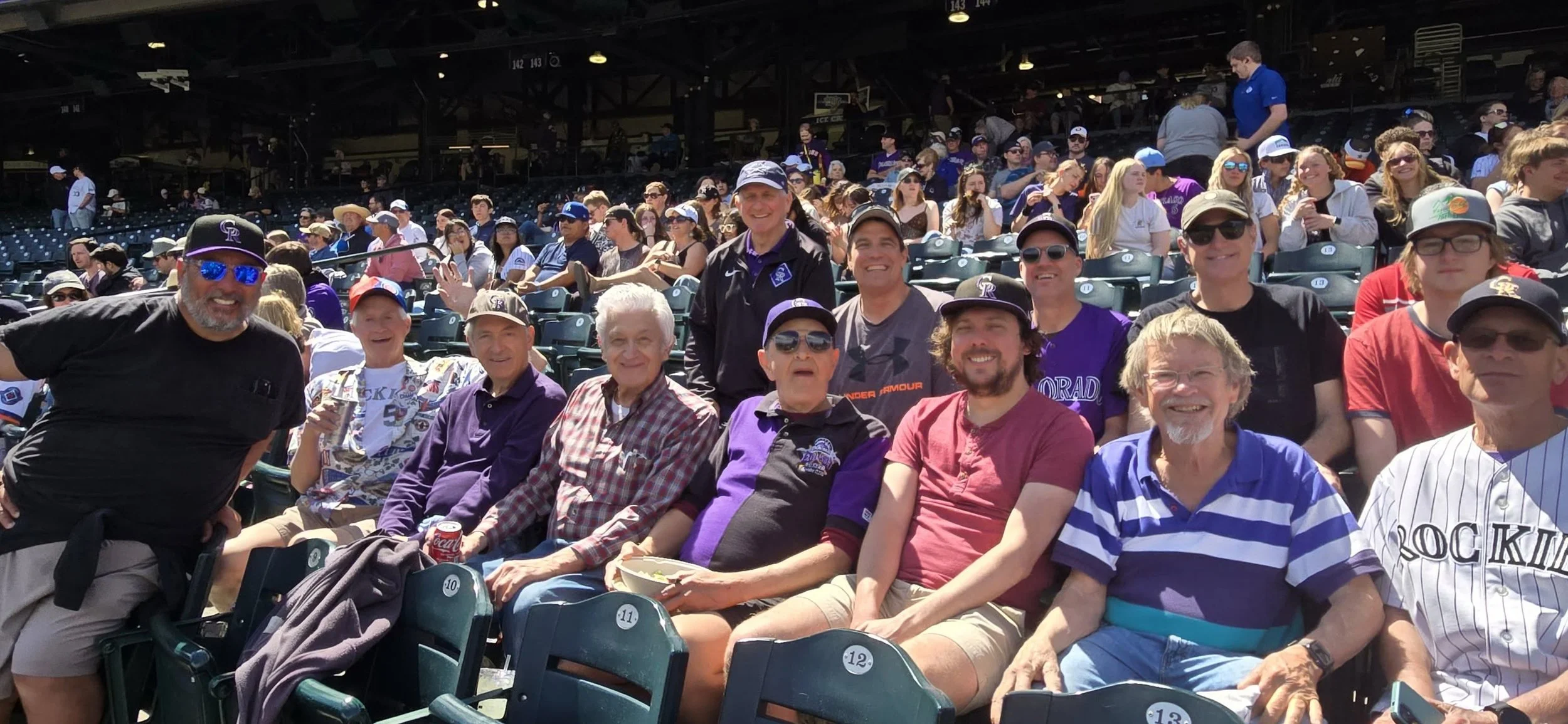
… sometimes it’s going to a Colorado Rockies game at Coors Field.
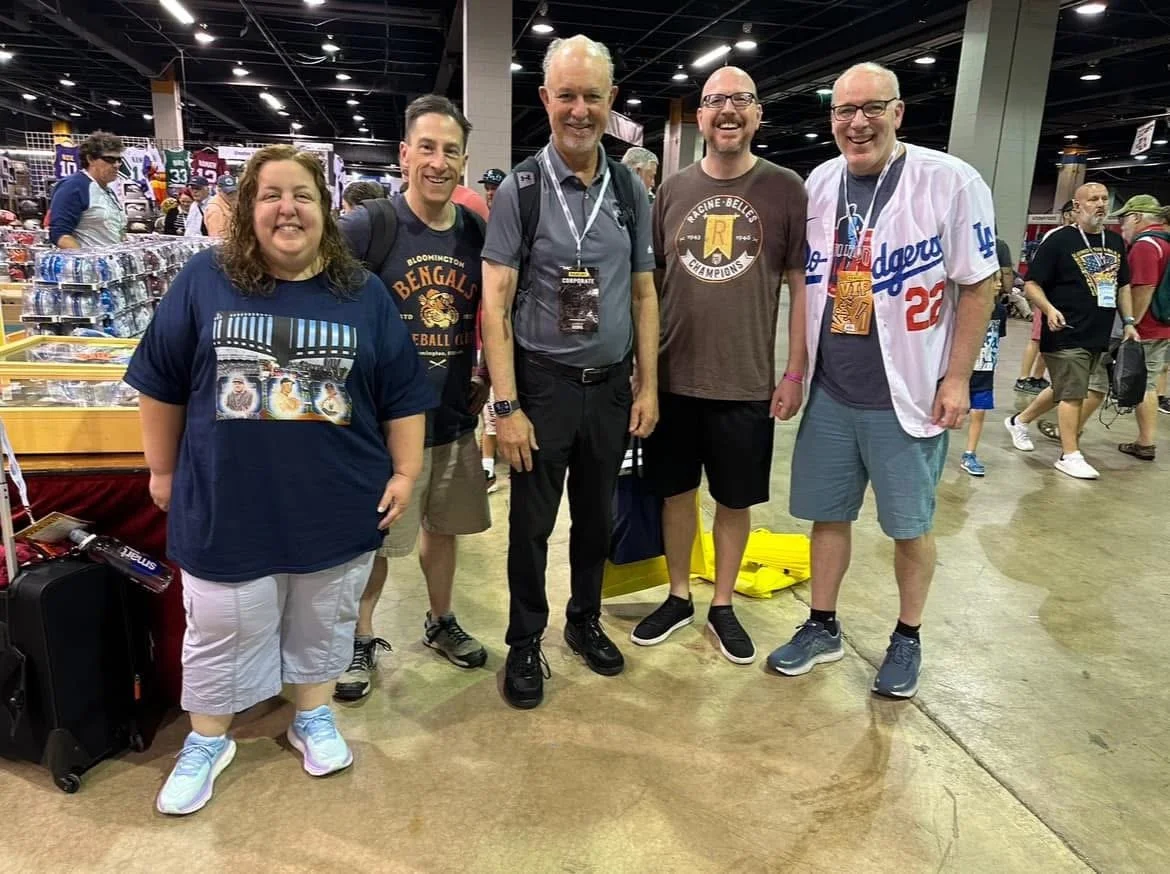
The National
The National Sports Collectors Convention, commonly referred to as “The National”, is an enormous annual convention attended by tens of thousands of card and memorabilia collectors.
Dealers have everything from vintage baseball cards to modern Pokémon, and everything in between. All sorts of ephemera trades hands that week: pennants, scorecards, programs, autographs, postcards, you name it.
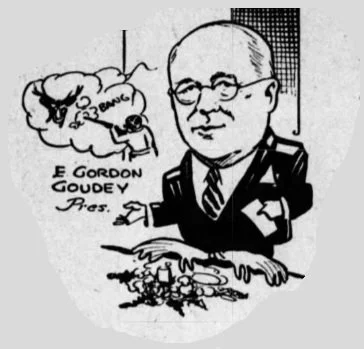
Enos Gordon Goudey
Prior to 1920, company founder Enos Gordon Goudey (or E. Gordon Goudey for short) appeared in the papers several times as a socialite and member of the Canadian Club of Boston, and the gum company itself was founded in 1919.
Today, the Goudey name is mainly associated with its collectible baseball cards which were introduced in 1933. Goudey was the first American company to issue baseball cards with each stick of gum (they had been available with cigarettes, tobacco, and certain lines of candy for many years).
National Chicle
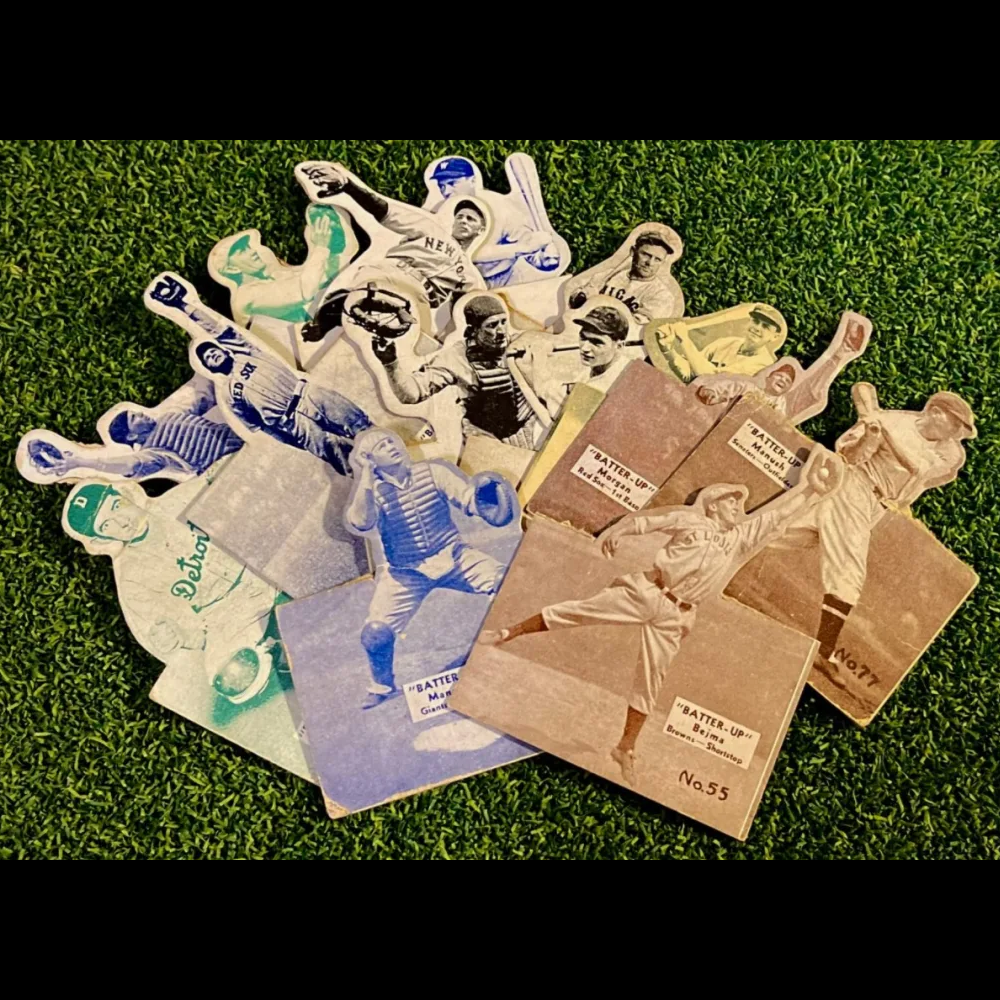
National Chicle debuted two significant multi-year sets in 1934. One was the 80-card Batter Up set, seen here. Series two of Batter Up, which Jason places entirely in 1936, had 112 cards in the set.
The Batter Up set consisted entirely of baseball subjects. The most distinct feature of the set is the die cut around the player’s upper body, which allows for turning each card into a self-standing version of itself.
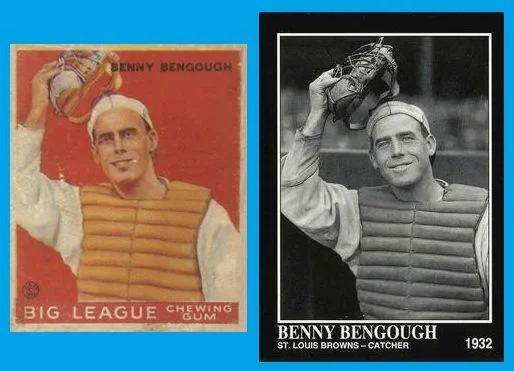
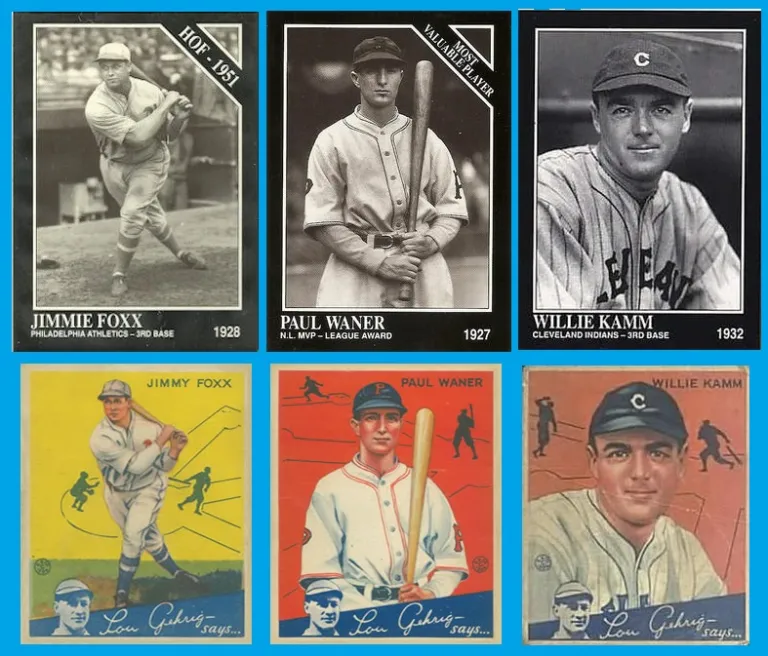
Jason’s Cardboard Crosswalk article about the Goudey set is a look at the crossover between images used as the source photo of the cards in that set, and photographs taken by Charles M. Conlon. Jason has another article in the same Cardboard Crosswalk series which discusses the four players who appear in both the 1933 Goudey and the 1952 Topps sets.
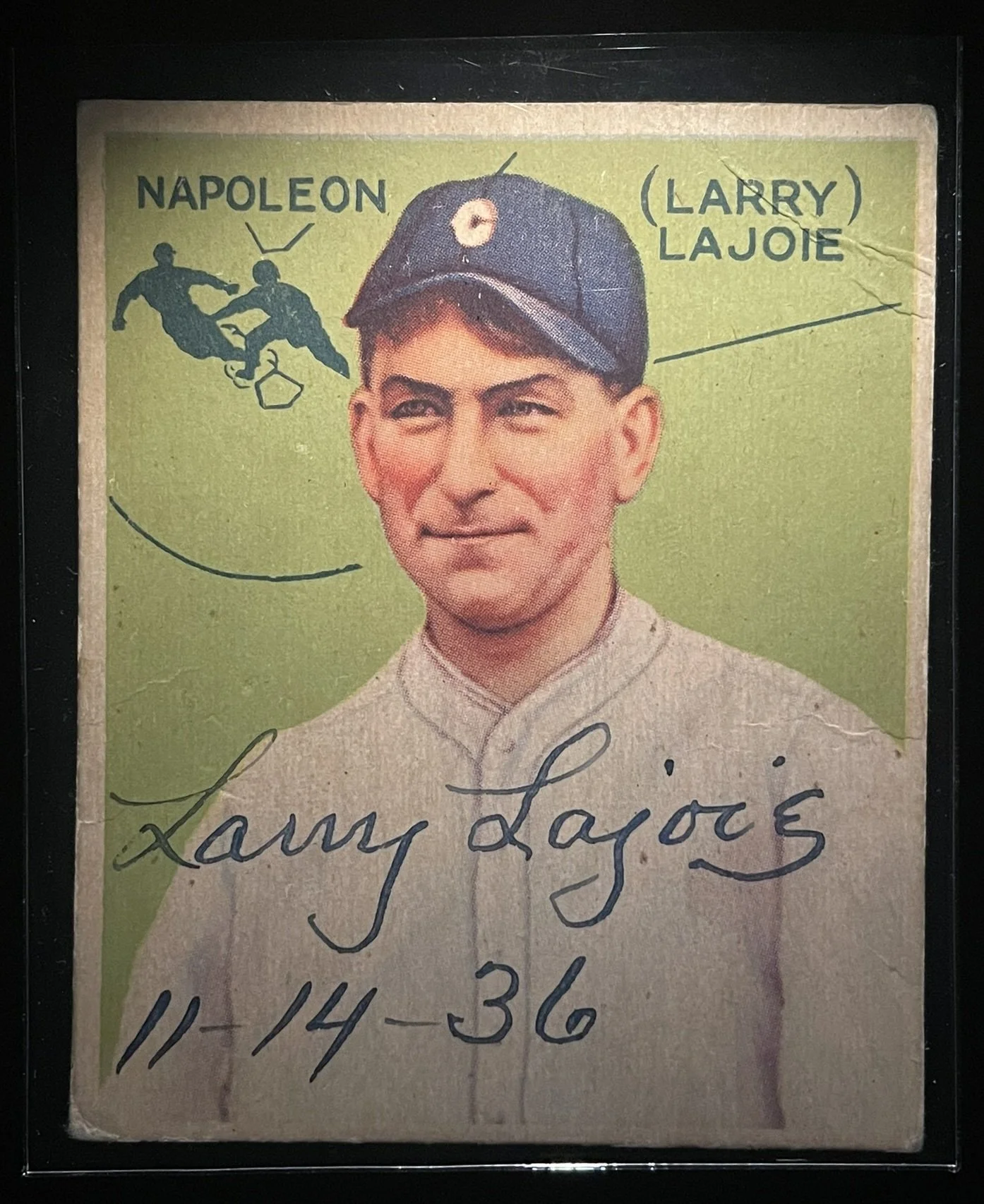
1933 Nap Lajoie Goudey
Jason has also done a significant amount of research and writing about the Napoleon Lajoie card in the 1933 Goudey set.
You can read Jason’s article on the most beautiful cards within the Goudey set if you CLICK HERE.
You can read Jason’s article on the minor leaguers included in the 1933 Goudey set if you CLICK HERE.
You can read Jason’s article on the Canadian version of the Goudey set if you CLICK HERE.
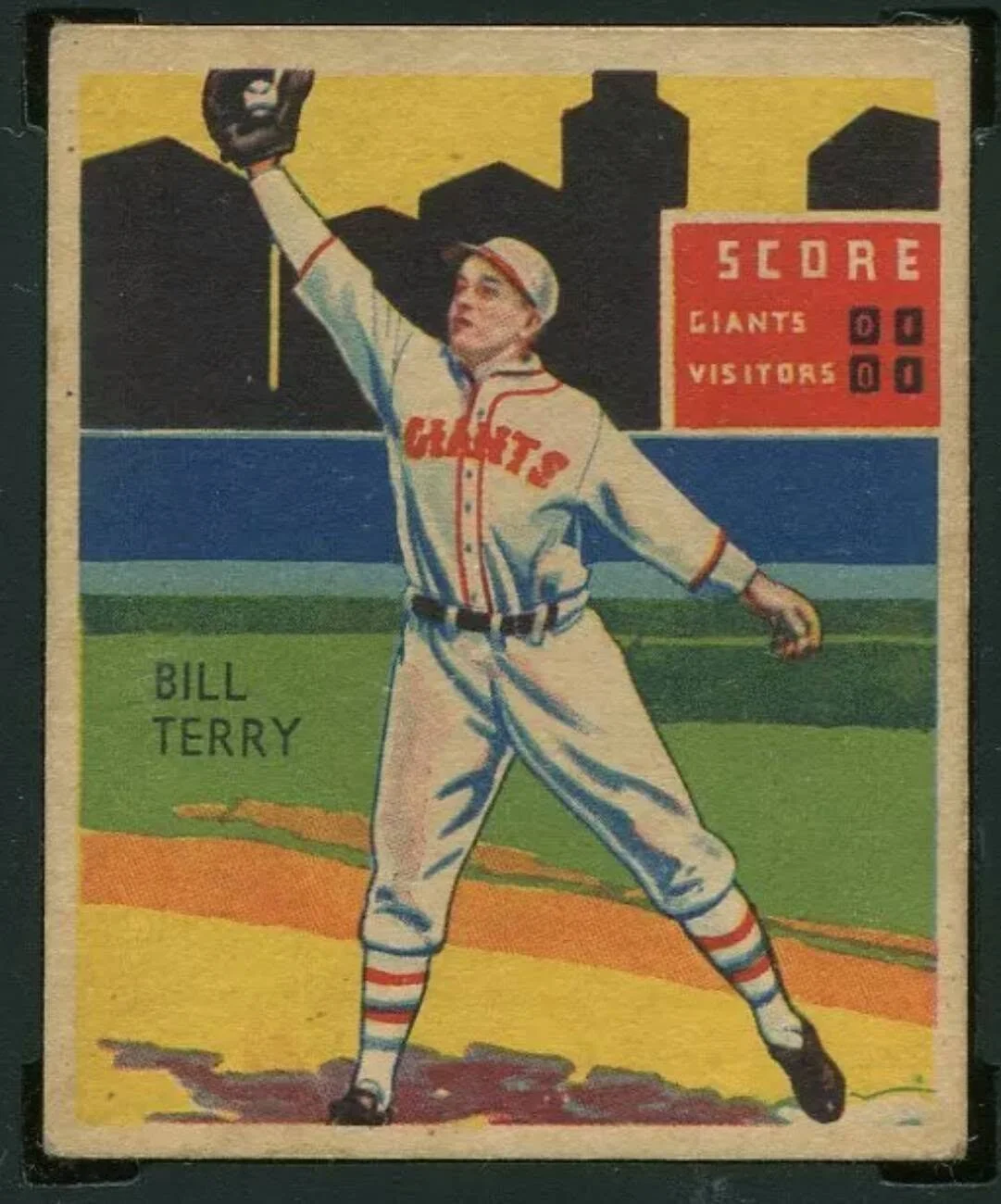
1934-36 Diamond Stars
Though the 1934-36 Diamond Stars checklist is stacked with Hall of Fame talent, the set does not include the era’s two biggest stars, Babe Ruth and Lou Gehrig. Other notable absences include Dizzy Dean and Chuck Klein.
Jason has written a number of articles about the various years of Diamond Stars cards, which you can read by clicking the following links:
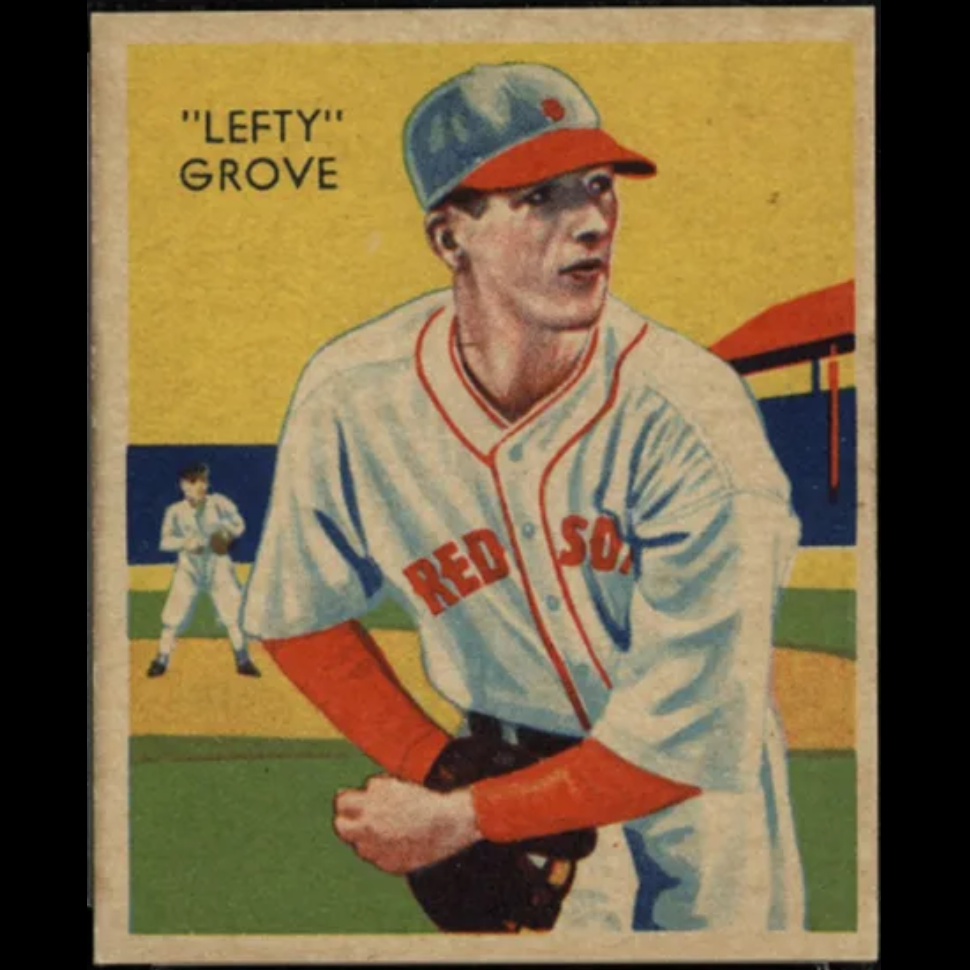
Lefty Grove
While the omissions of the game’s greatest stars detract from the set in the eyes of many collectors, there are still plenty of great players included in the Diamond Stars series, such as Lefty Grove, who is card #1 in the set.
Besides, the omissions of players like Babe Ruth and Lou Gehrig may prove a blessing in disguise to set collectors on more modest budgets.
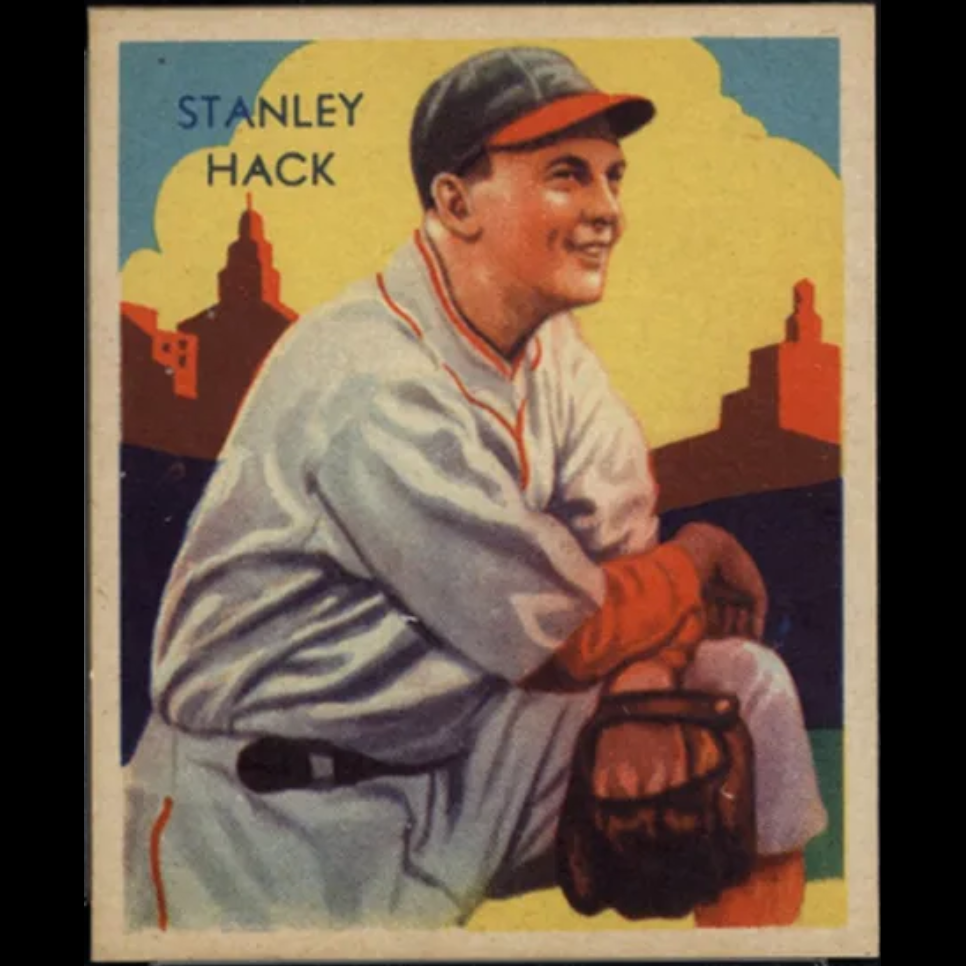
Stan Hack
“Smiling Stan” Hack had an outstanding 16-year career with a lifetime batting average of .301, accumulating 2,193 hits. His 1,092 walks ranked fourth in National League history when he retired, which remains a Cubs franchise record.
Stan Hack was a 2-time National League Stolen Base leader and a 5-time All-Star. His .394 career On-Base Percentage was the highest by a 20th-century third baseman up until 1982. It was the top National League mark until 2001.
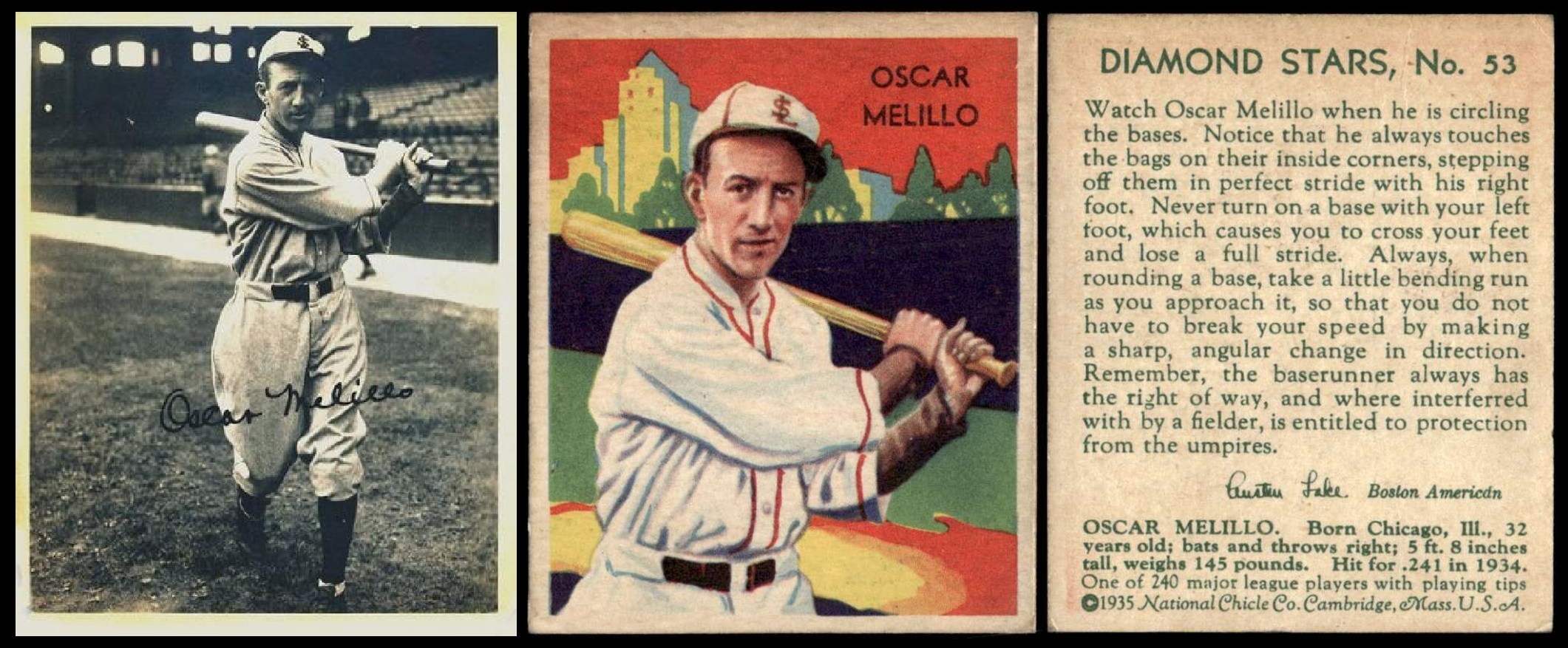
Jason’s examinations of the source photos from the Diamond Stars set compared to the finished cards with their colorful backgrounds resulted in another interesting article which you can read if you CLICK HERE.
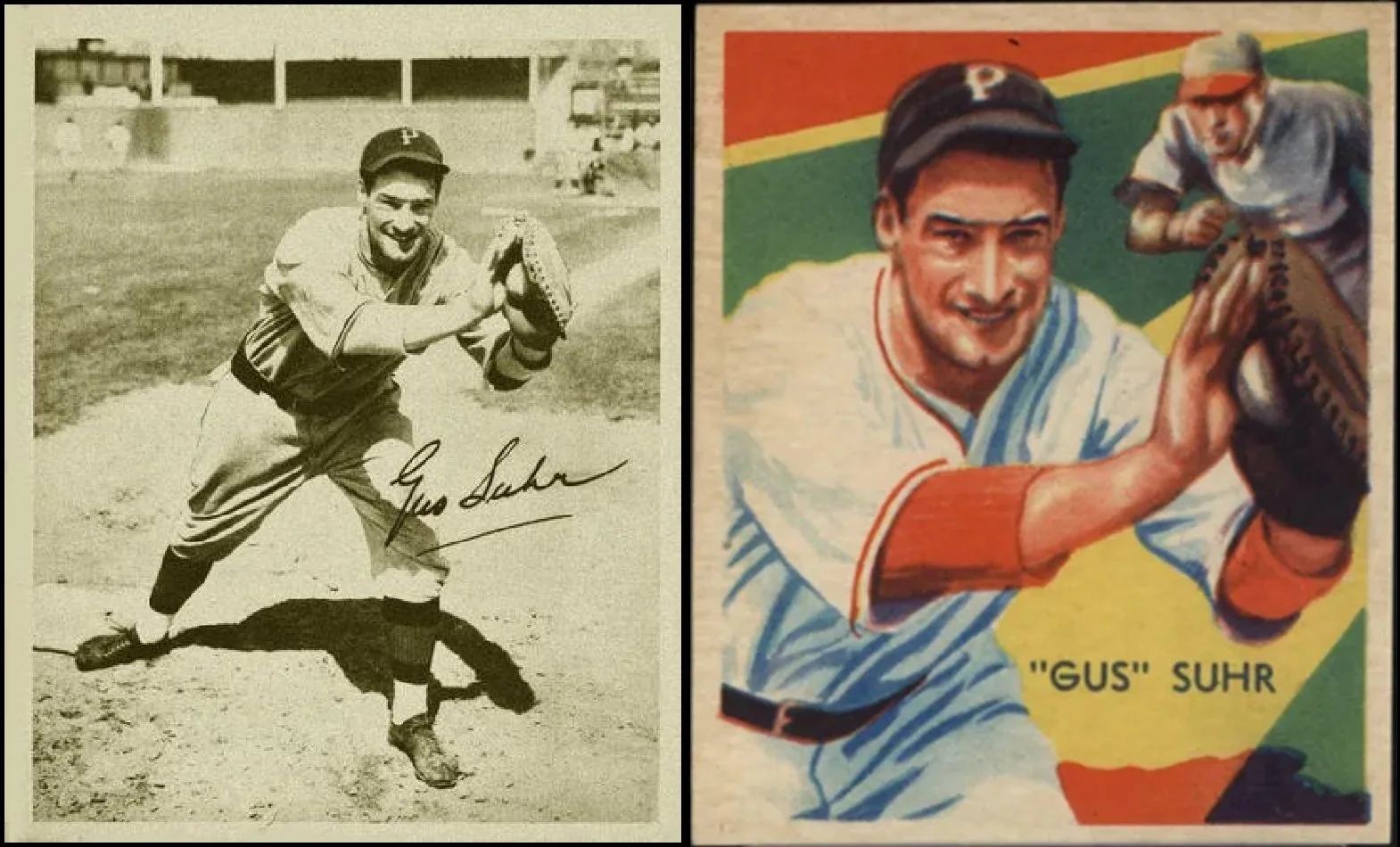
The 1934-36 Diamond Stars set is one of Jason’s favorite vintage card sets.
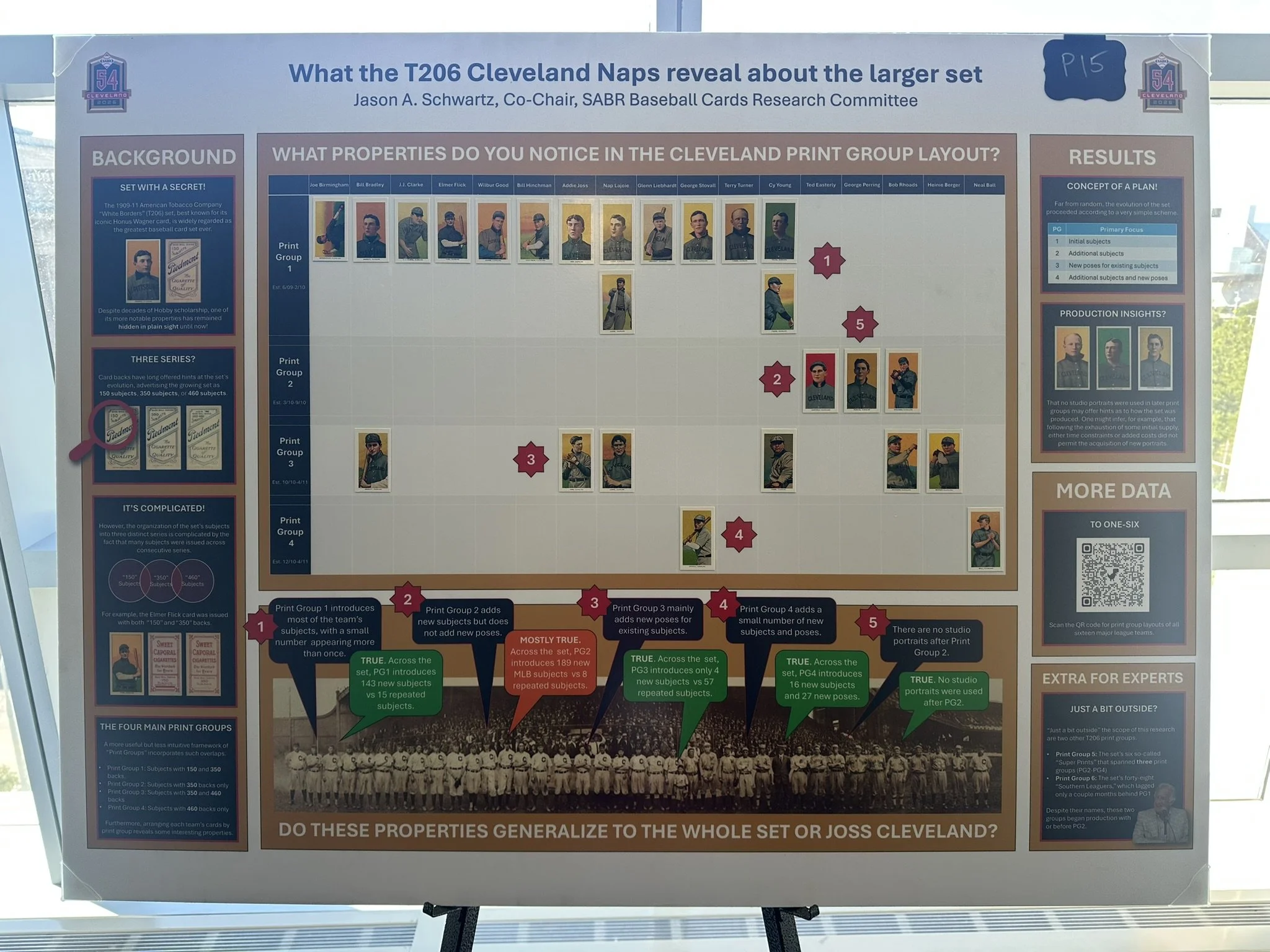
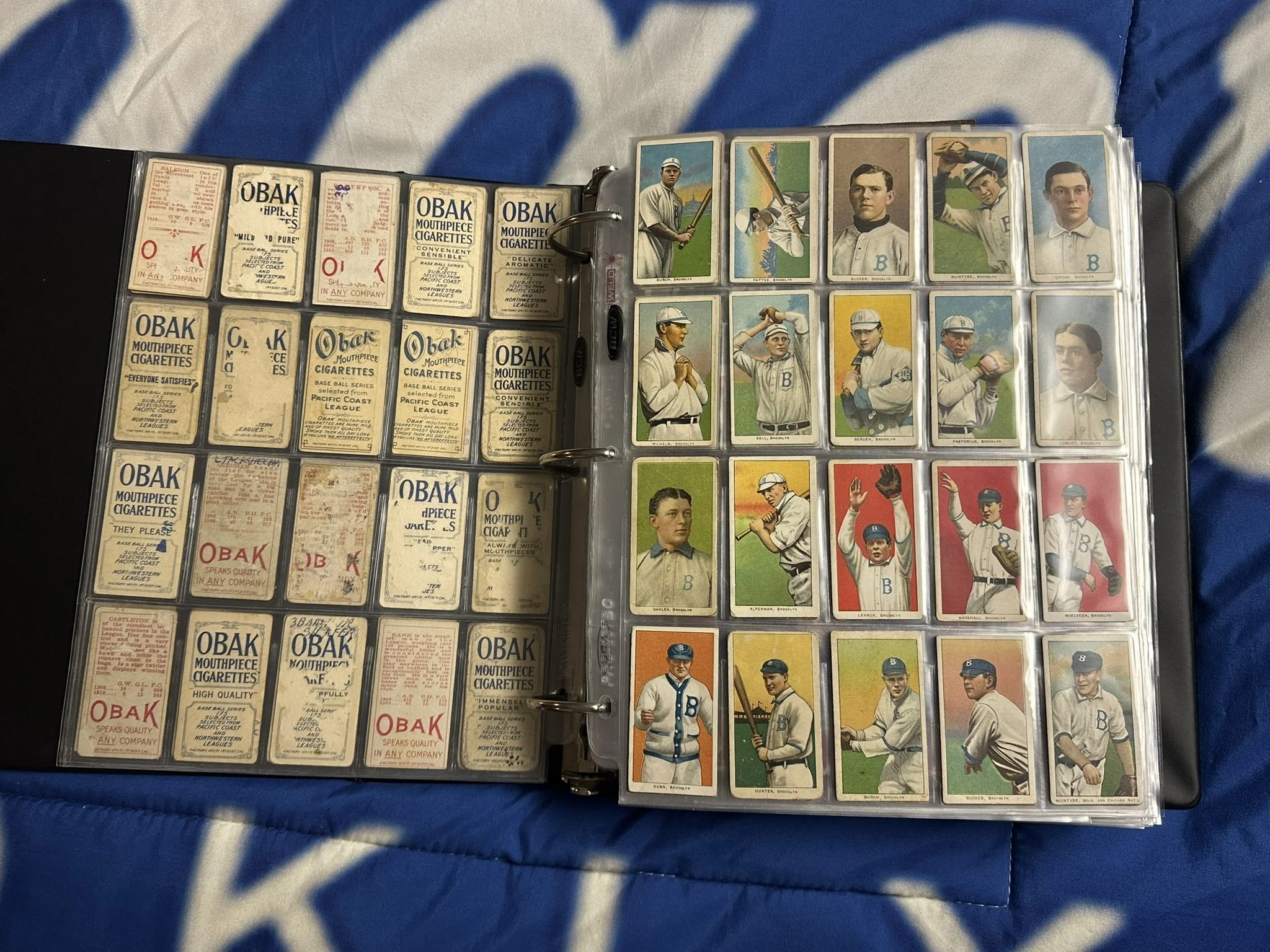
Jason’s Dodgers T206 Collection
After some polite encouragement from our mutual friend, Andrew Aronstein, Jason bought his first T206 card “just to have one” in his collection. Before he knew it, he had completed his 27-card Dodgers (aka Superbas) team set from the T206 issue.
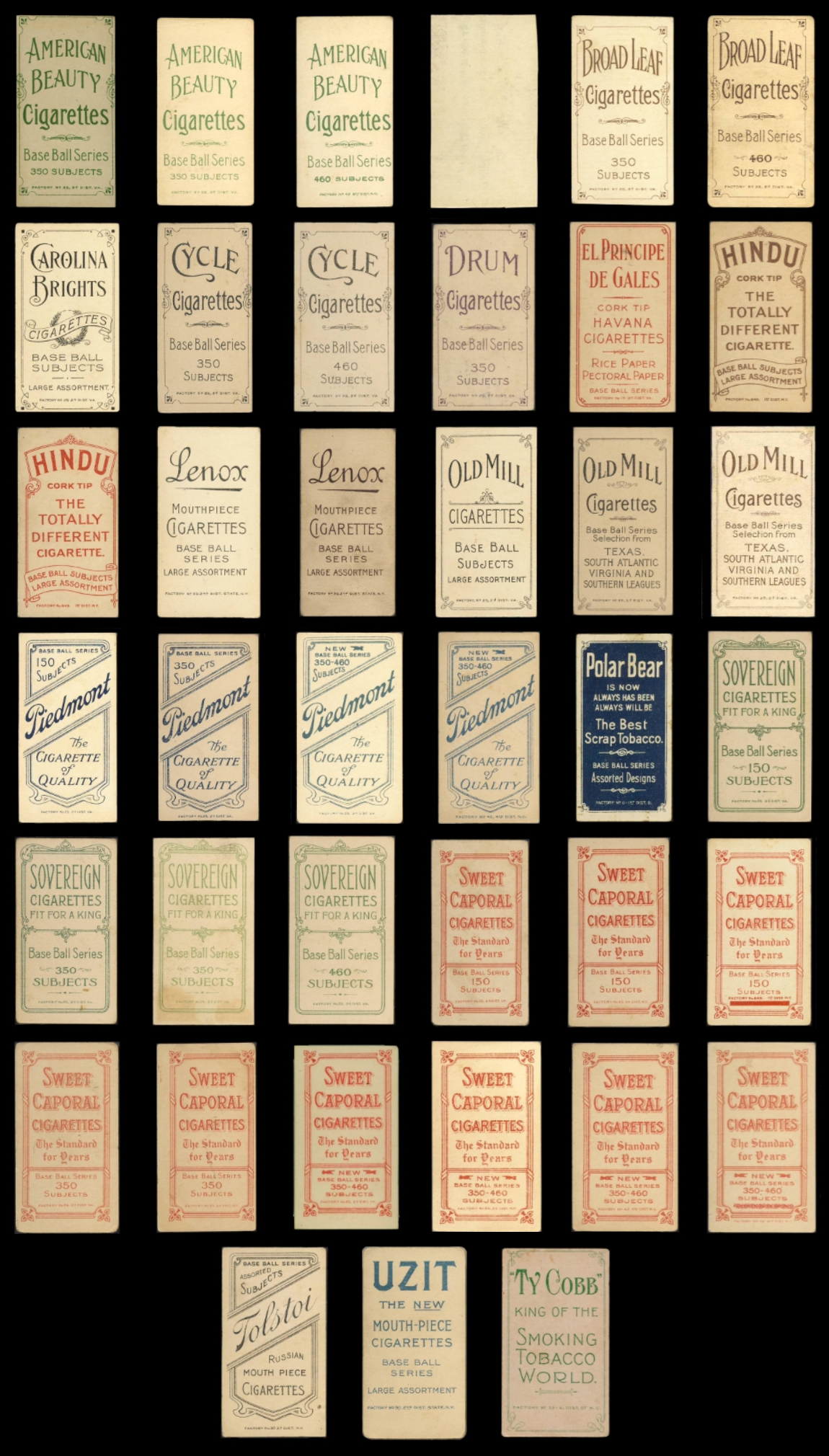
T206 Backs
The T206 set has beautiful logos on the back. Many modern collectors go crazy over trying to find them all. Entire websites are dedicated to determining the rarity of certain backs, like T206resource.com.
Jason has done some research and writing about the T206 set, as well:
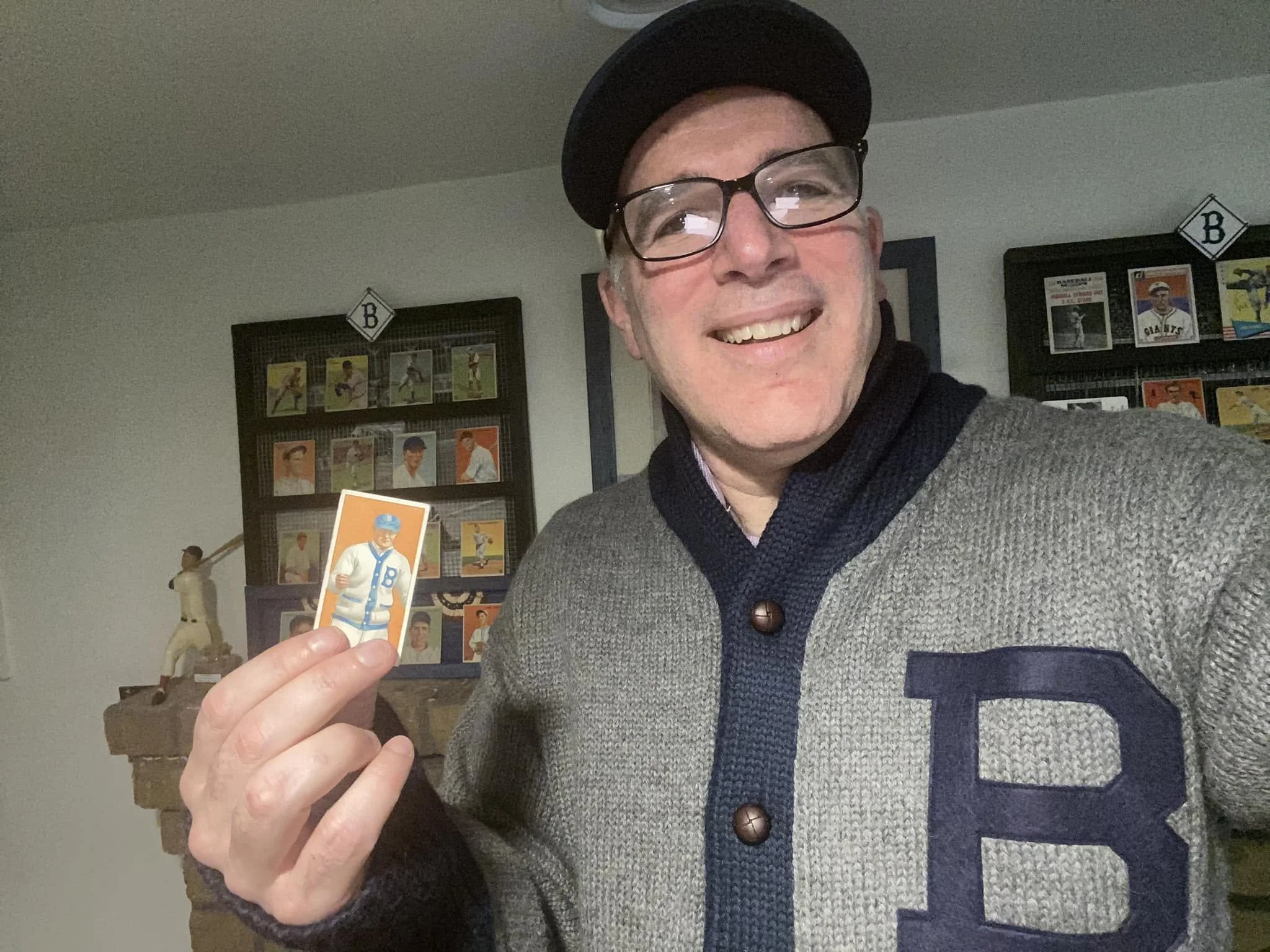
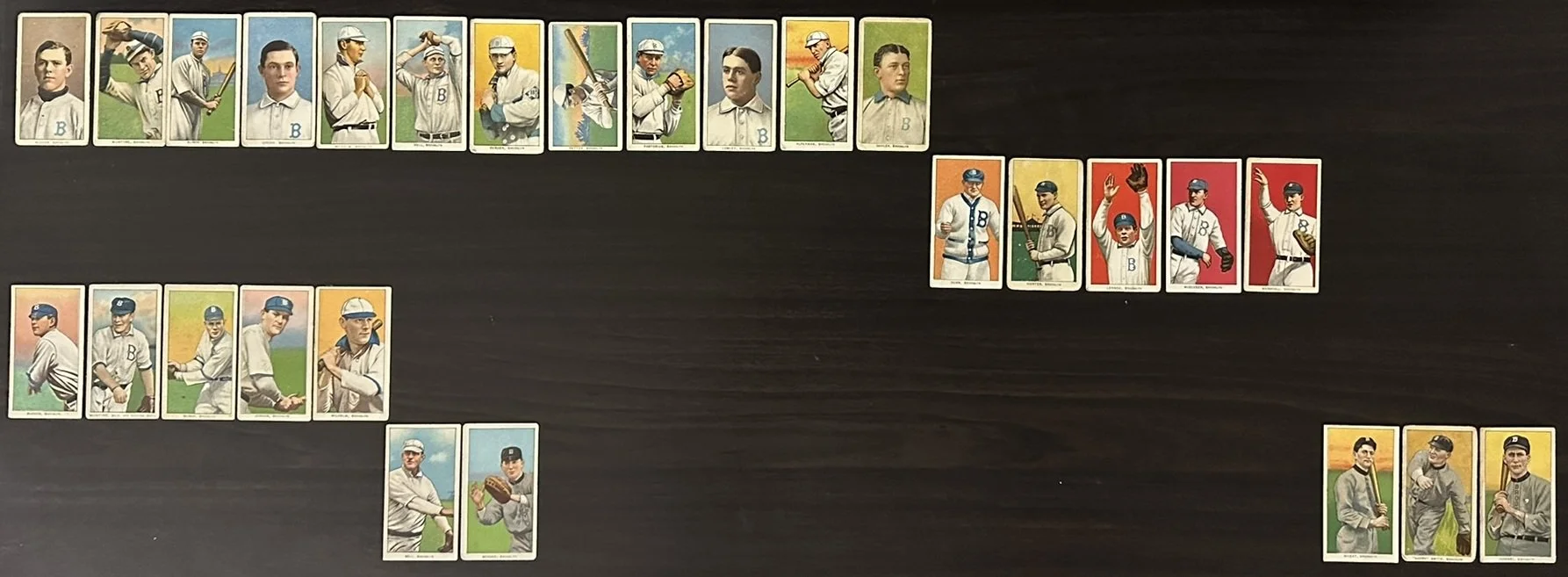
After Jason read up about the concept of different “print groups” at T206Resource.com, he laid out his Dodgers cards to see if he could notice any patterns. Eventually, the layout seen here is what Jason decided was a reasonable estimation of the different print groups.
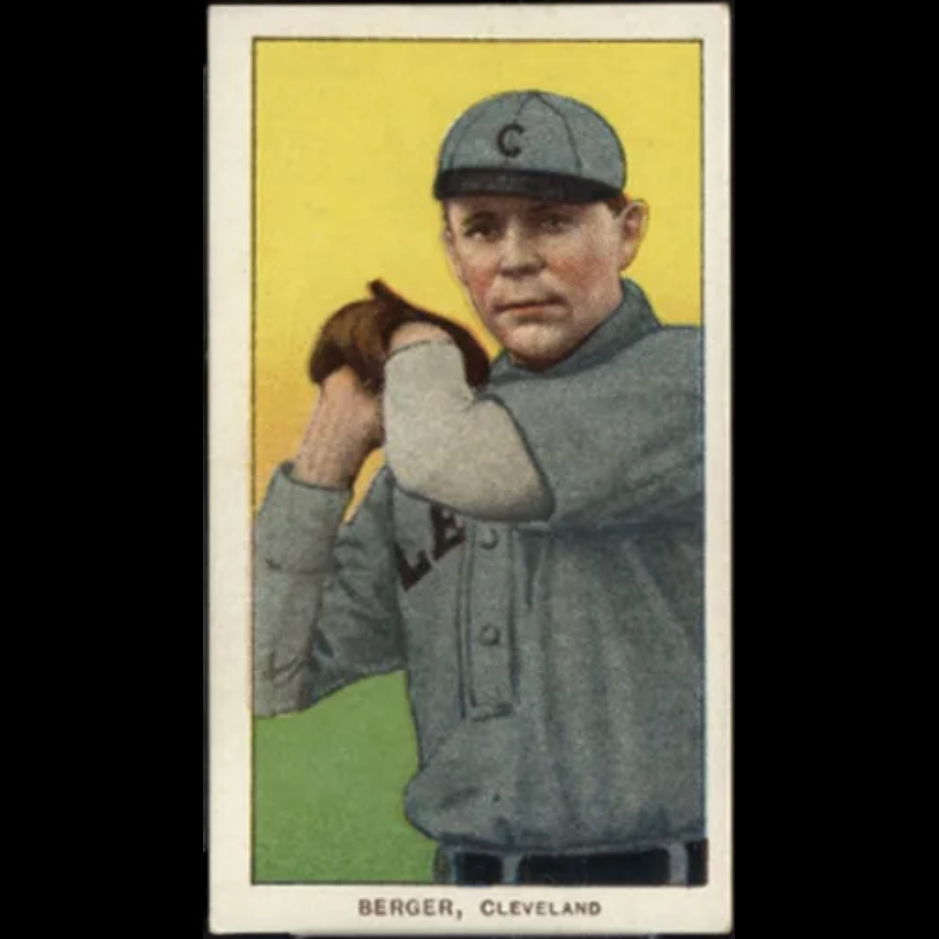
Heinie Berger
Heinie Berger’s Cleveland Naps T206 card was printed in the 350-460 series, known with 10 tobacco-brand backs.
Berger spent his entire big-league career with the Cleveland Naps, debuting May 6, 1907 and pitching four seasons through July 22, 1910. His finest years came in 1908 and 1909, winning 13 games each season; in 1909 he led the American League in strikeouts per nine innings (5.90), fanned 162 batters (third in the league), and also led the AL in wild pitches.
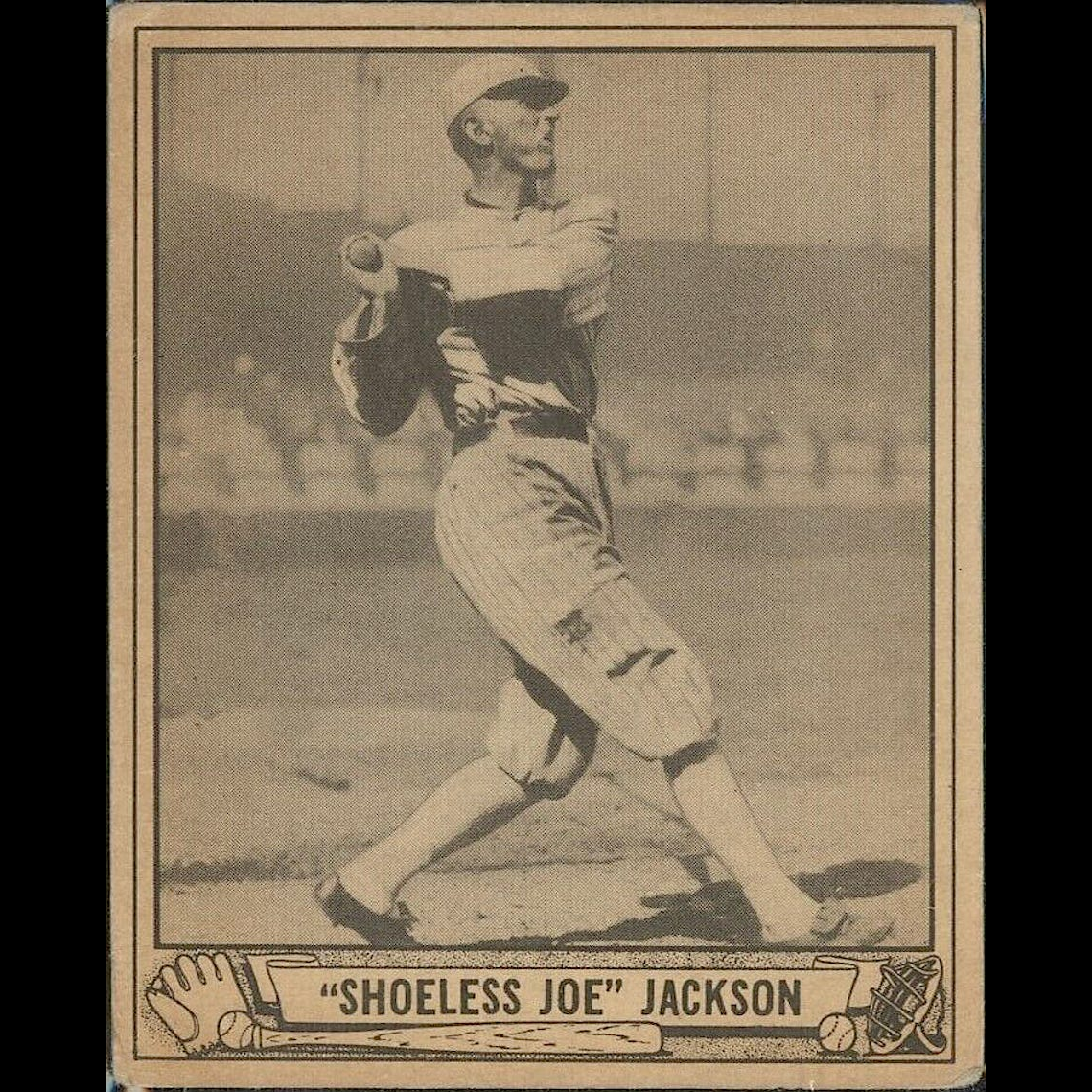
1940 Play Ball Joe Jackson
The front of the card features a photograph of Joe Jackson in a post-swing pose. The back of the card gives us a quick biography, but doesn’t mention the Black Sox scandal.
Interestingly, his bio is full of completely incorrect personal information. He is listed as 6-foot, 175 pounds and as having been born in Brandon Mills, N.C. on June 19, 1888. Not a single piece of that information is correct. Joe was 6’1”, 200 pounds, born in Pickens County, South Carolina, on July 16, 1887. But hey, who can keep track of stuff like that?
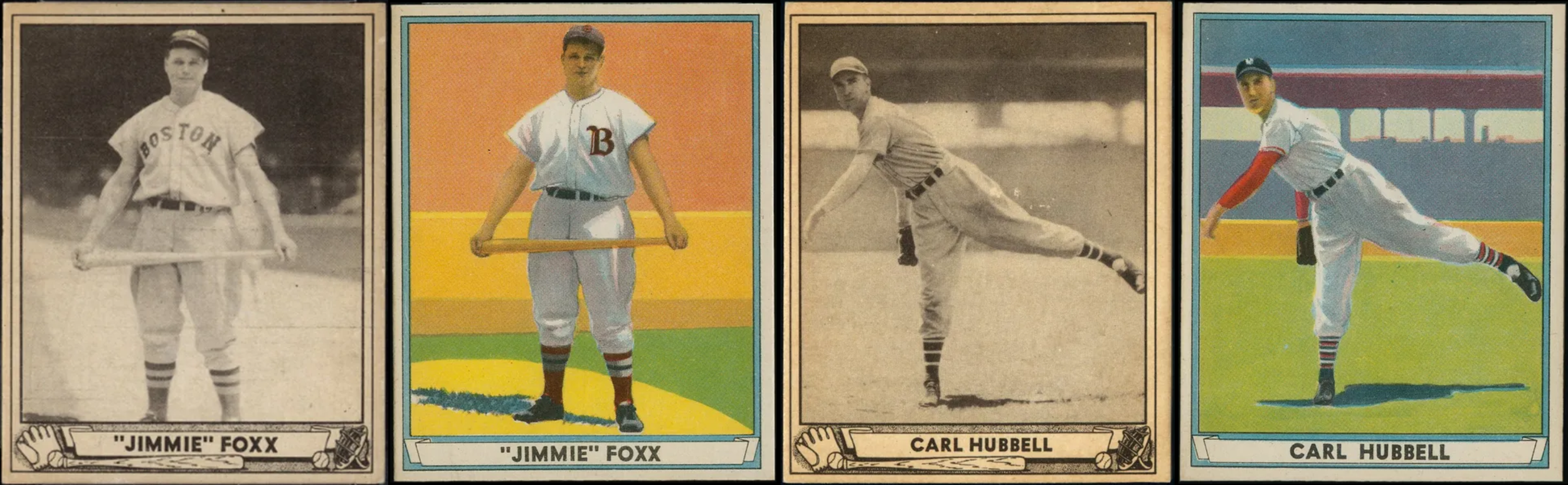
A handful of players who had cards in the 1940 Play Ball set also had cards in the 1941 set which used the exact same image. The 1941 image was just a colorized, illustrated version of the original source photograph which appeared in the 1940 set.
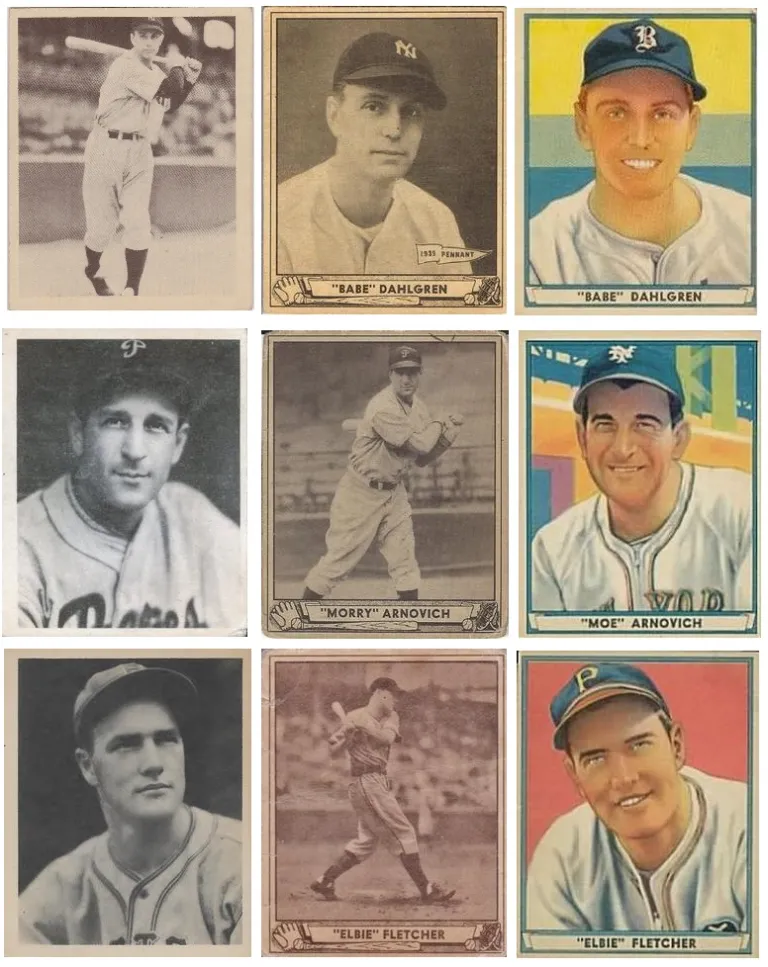
All Three Sets
Very few players had a card in each of the three Play Ball sets of 1939, 1940, and 1941. Babe Dahlgren was one of the fortunate ones appearing in each set.
1939 & 1940 Play Ball
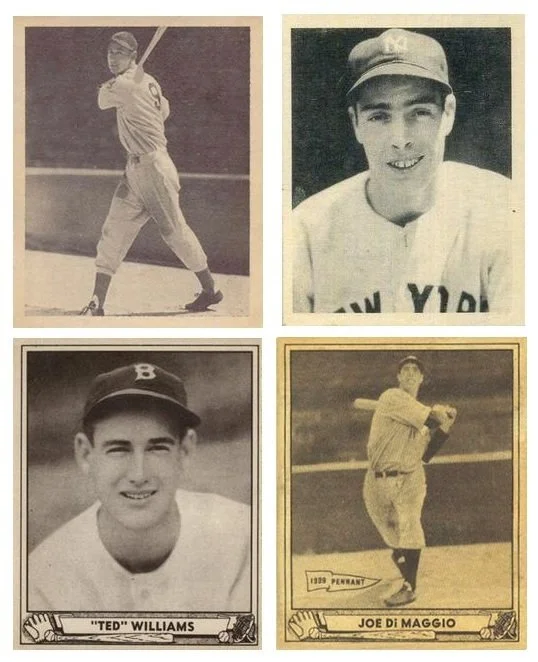
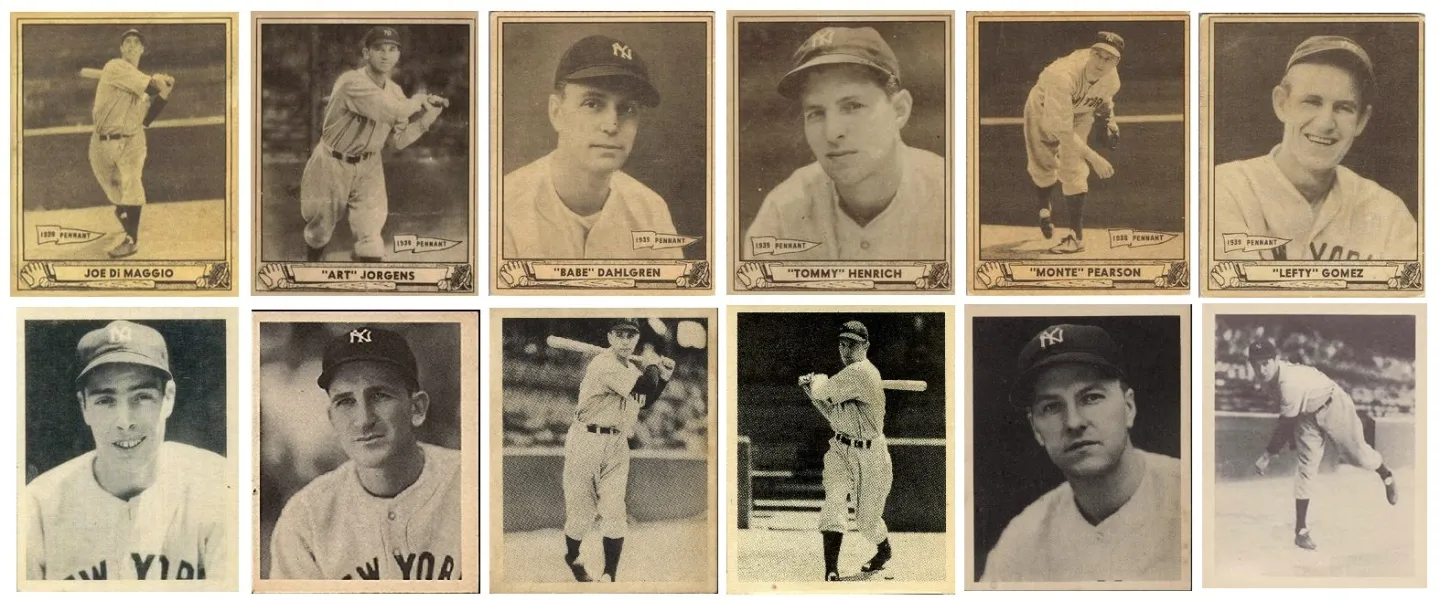
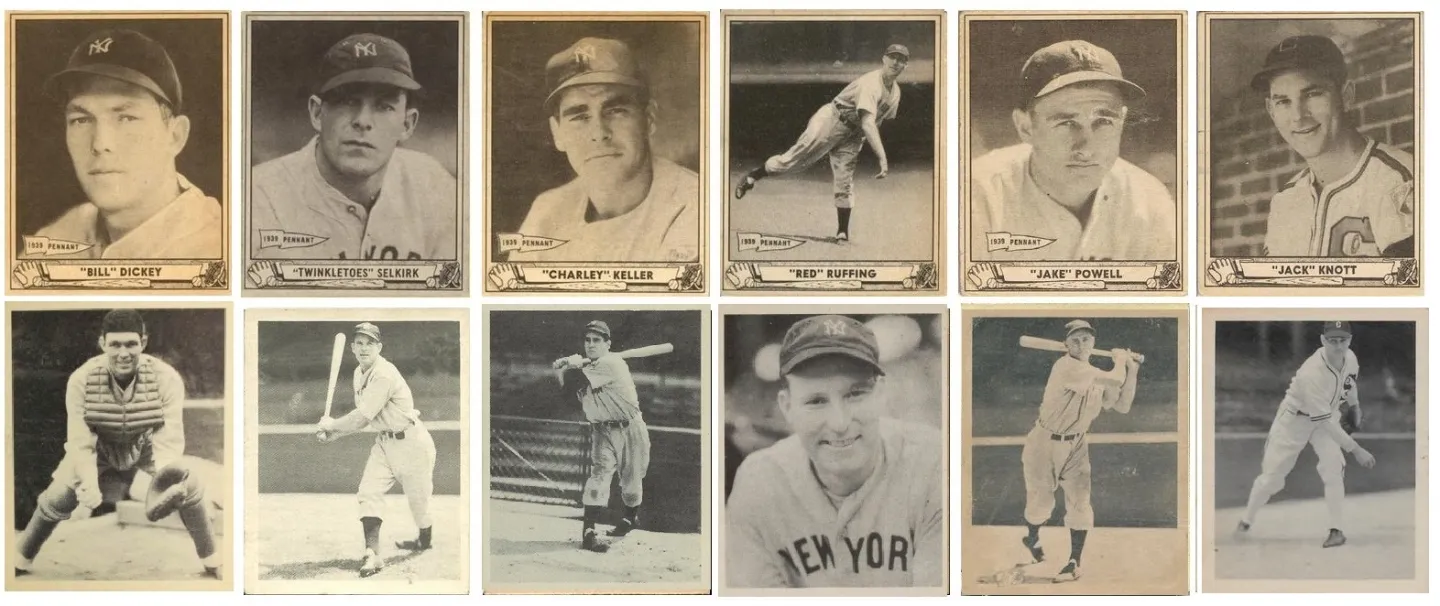
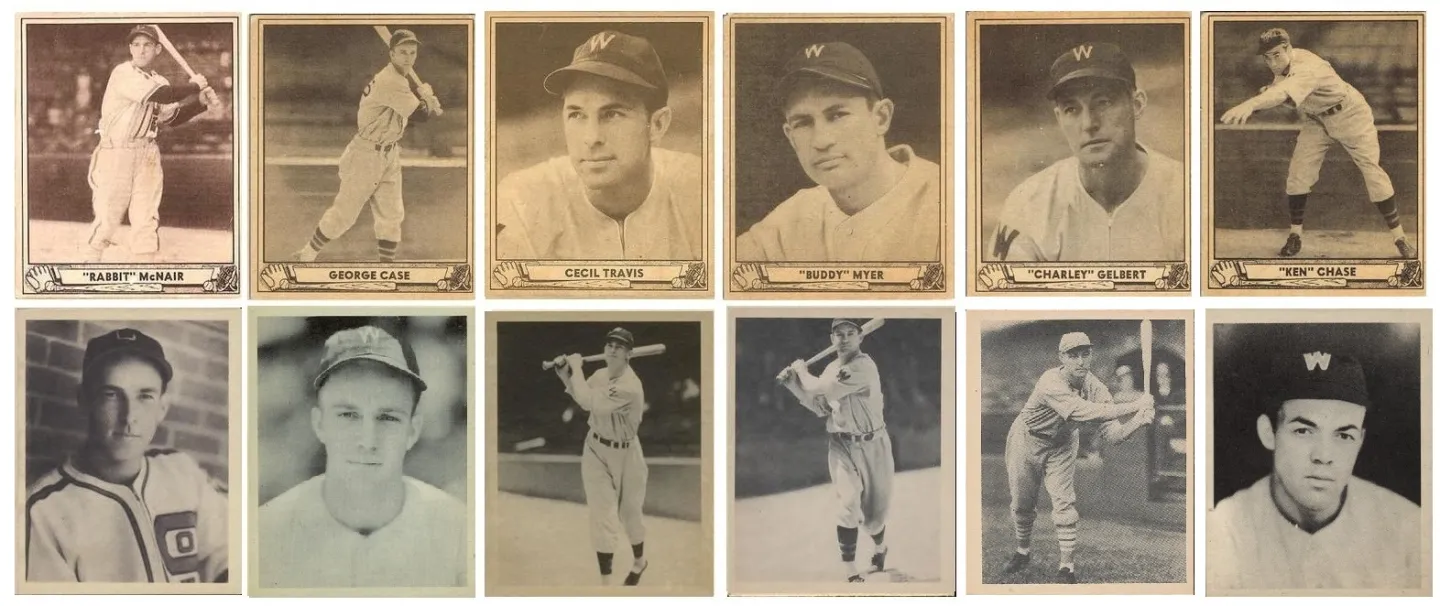
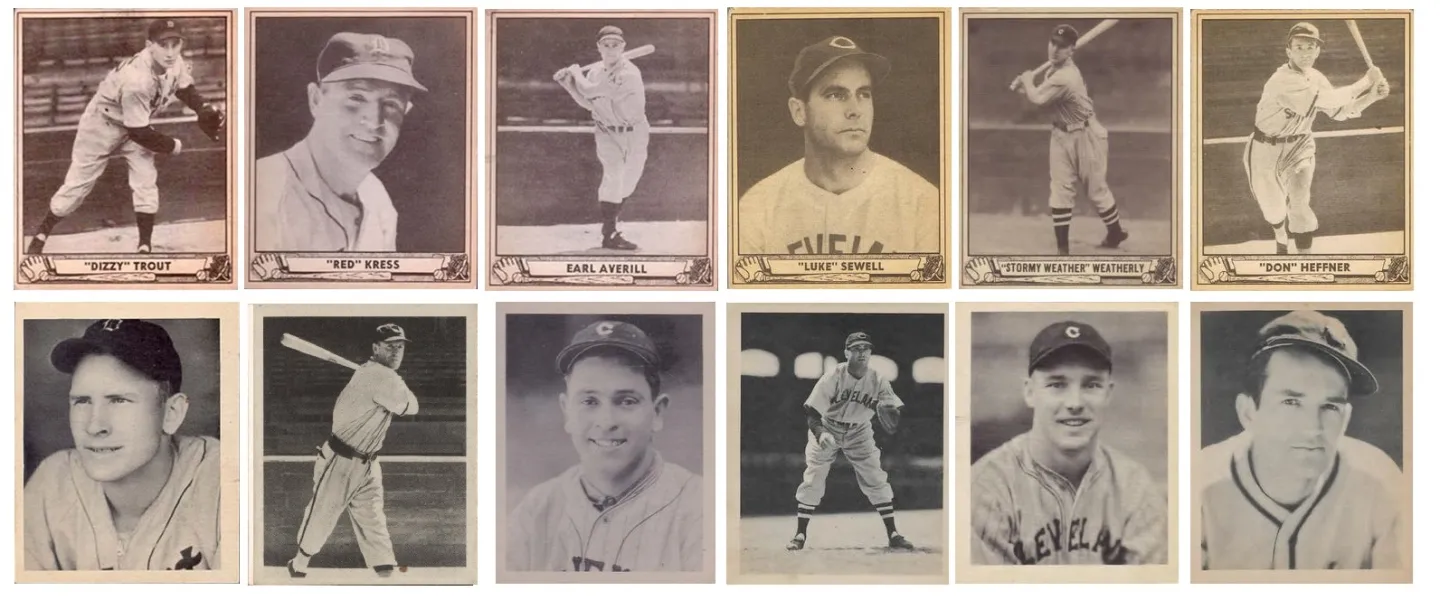
Jason thinks he’s cracked the case when it comes to how photos were utilized among players appearing in both the 1939 Play Ball set (pictured in the top row) and also in the 1940 Play Ball set (pictured in the bottom row).
If a player had an action shot in the 1939 set, they almost always had a portrait in the 1940 set. If they had a portrait in the 1939 set, they almost always had an action shot in the 1940 set.
The Ted Williams and Joe DiMaggio cards fit this pattern perfectly, with each player having the inverse photo pattern as the other in this example.
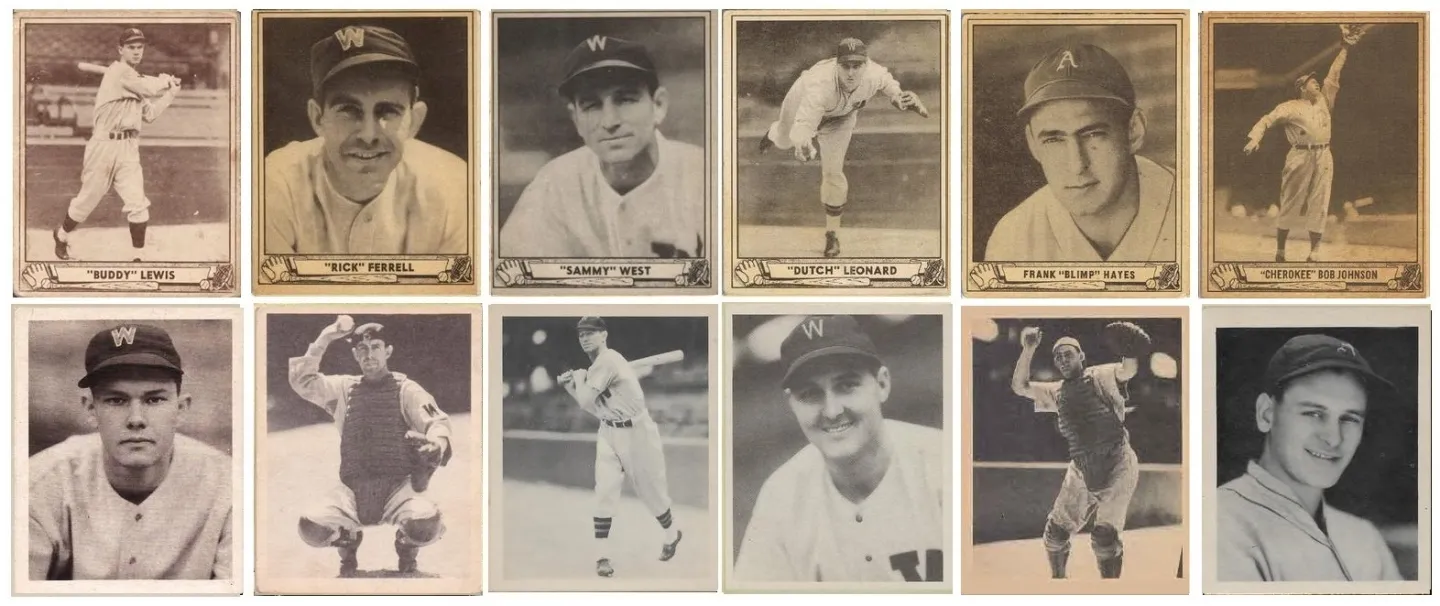
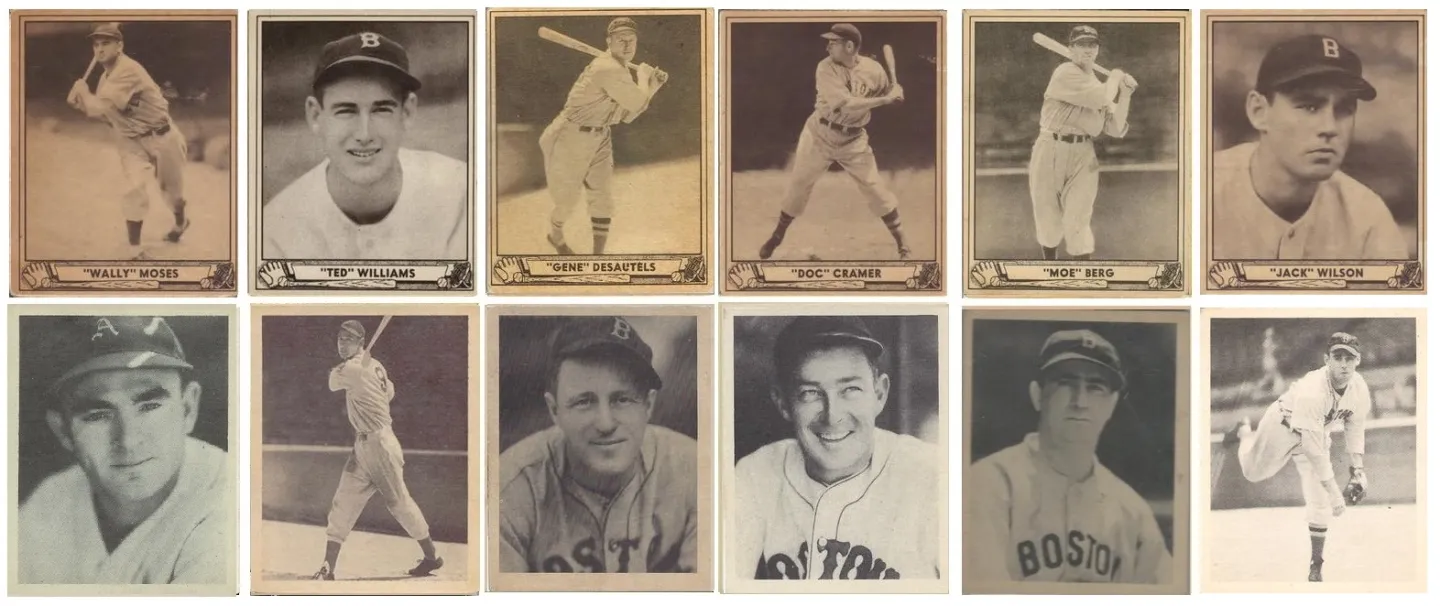
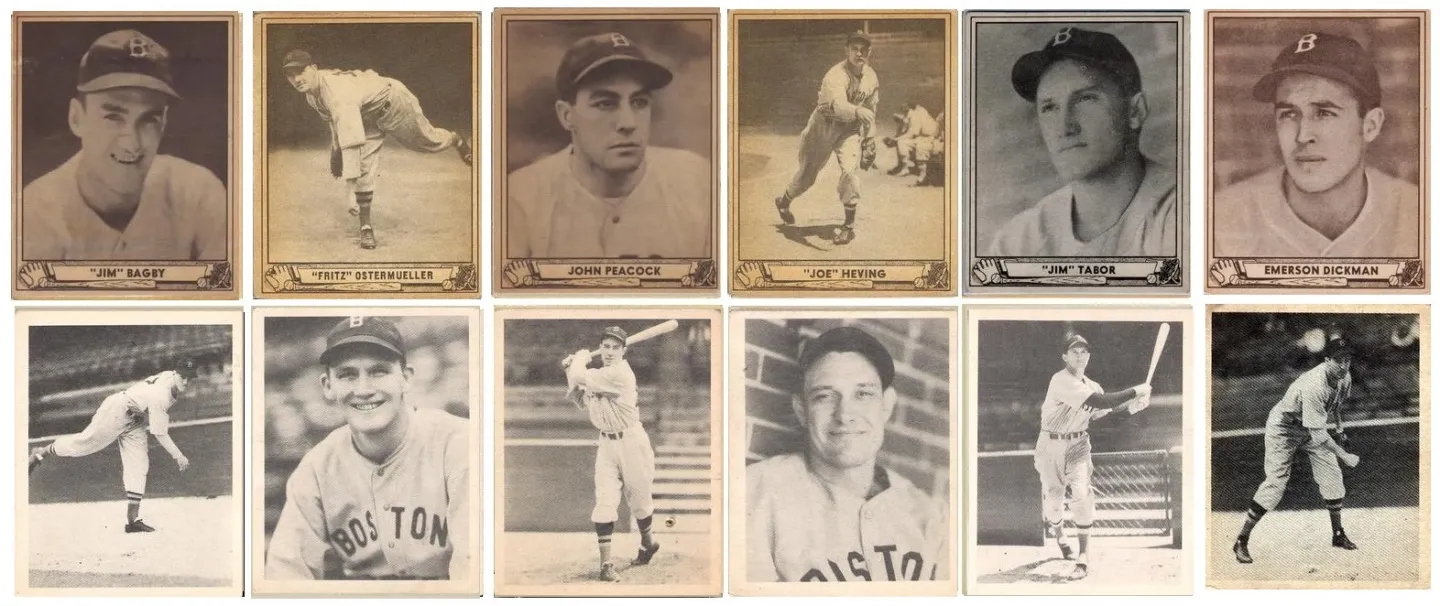
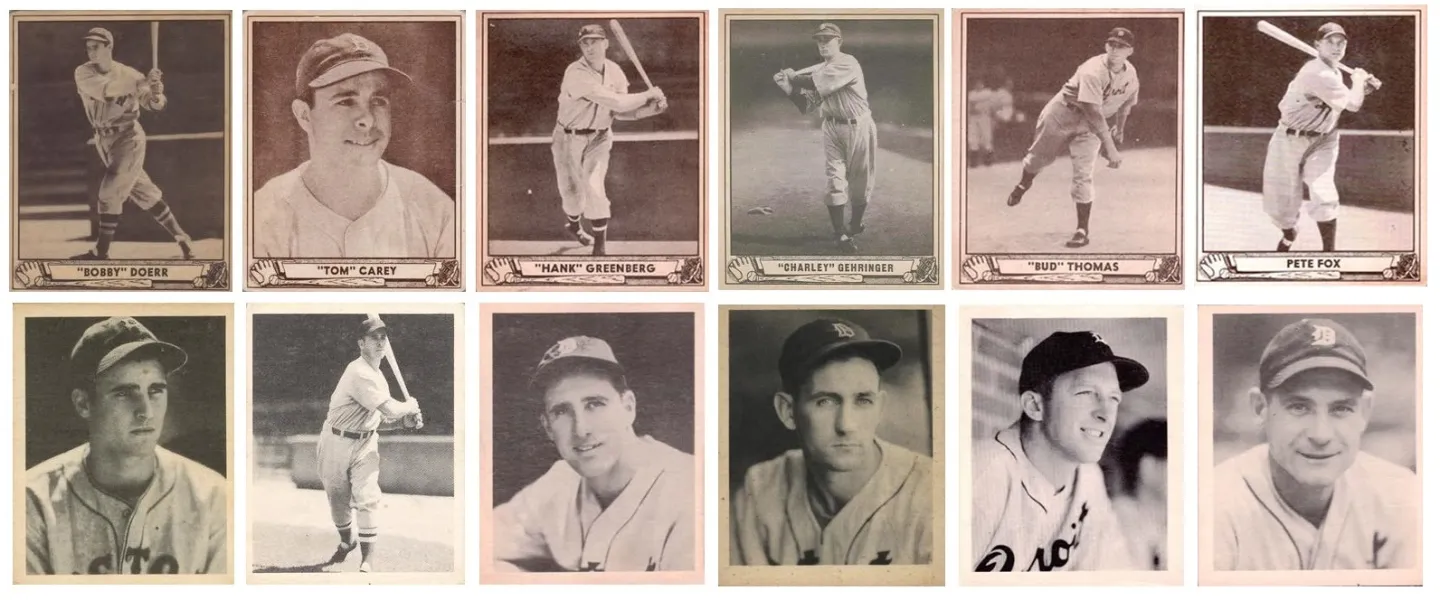
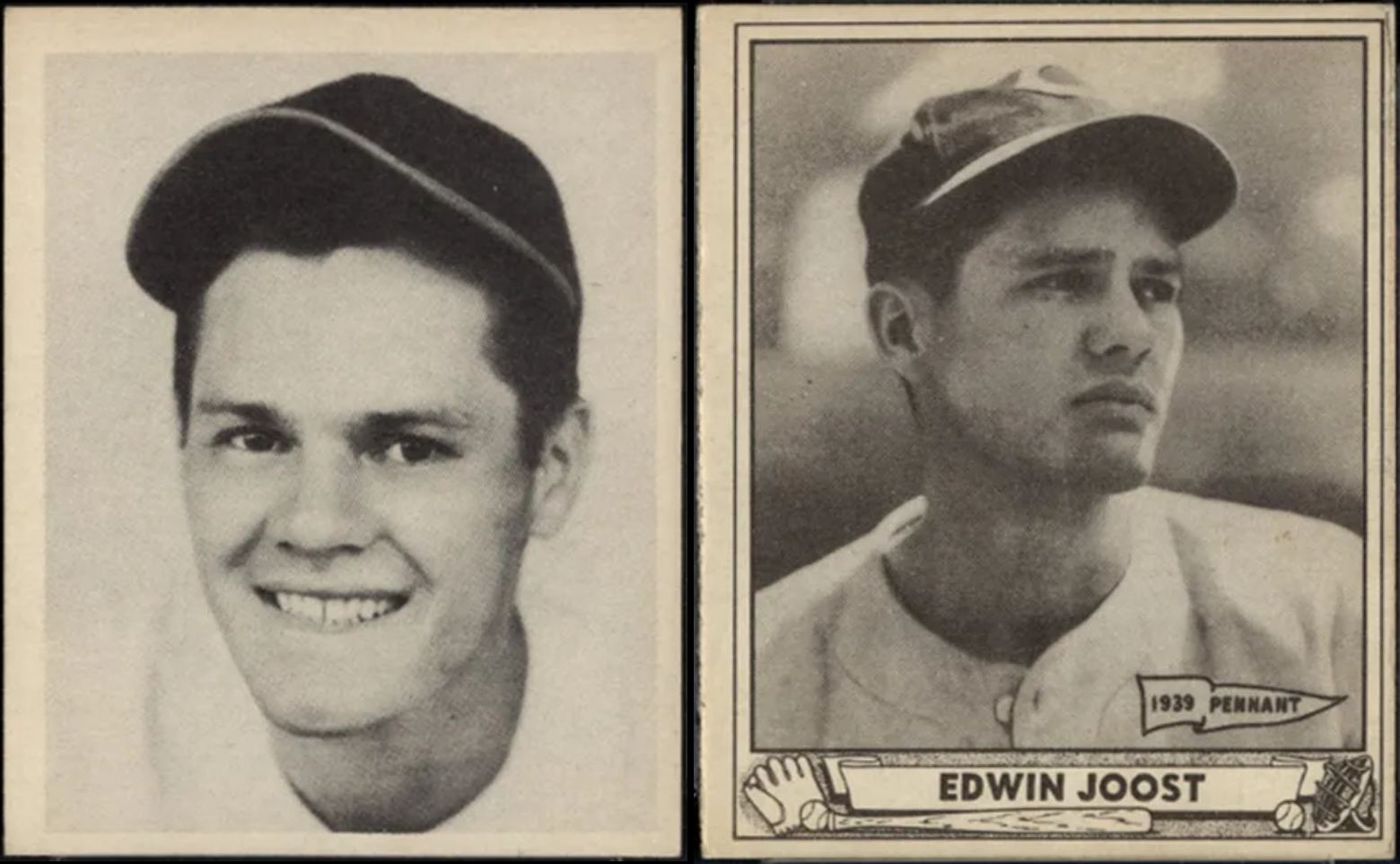
Eddie Joost
Eddie Joost was the only person Jason could think of who didn’t fit that pattern among players who had an appearance in both the 1939 and 1940 Play Ball sets.
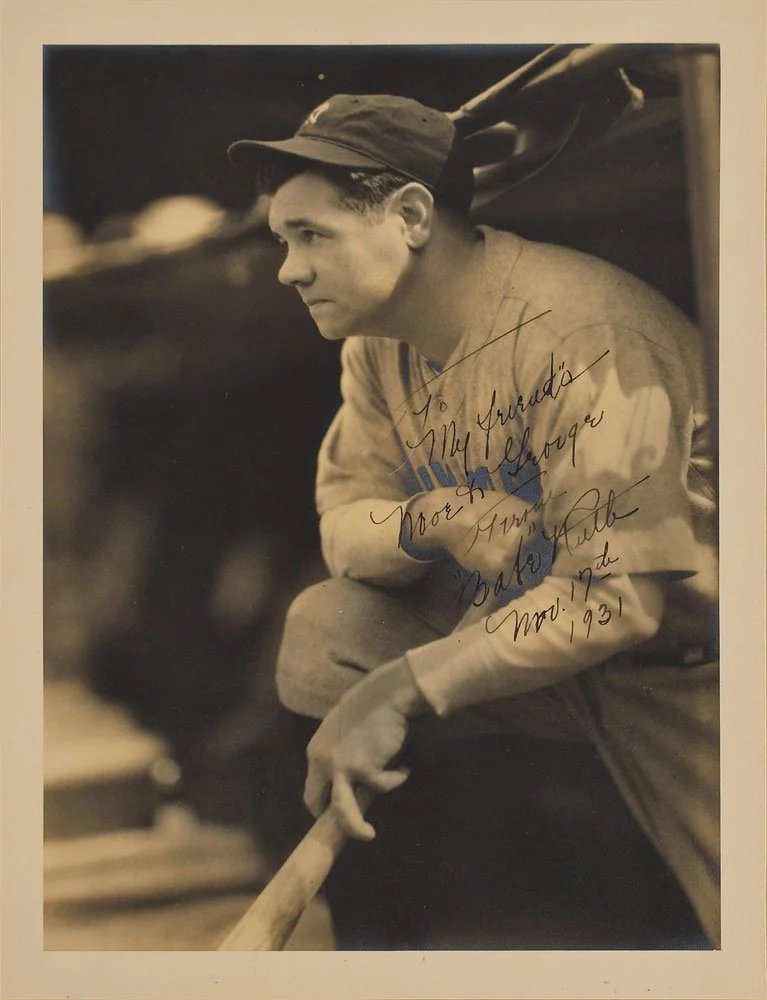
George Burke
More than 60 years after his death, George Burke remains one of the most famous and collected baseball photographers. Burke was the official photographer for several teams and provided the photos for the Goudey and Play Ball baseball card sets.
Based out of Chicago, Burke shot some of the iconic images of the days’ stars including Lou Gehrig, Jimmy Foxx, Dizzy Dean and Joe DiMaggio.
Babe Ruth once called Burke his favorite photographer, and he and numerous other stars bought his photographs to fulfill their autograph requests.
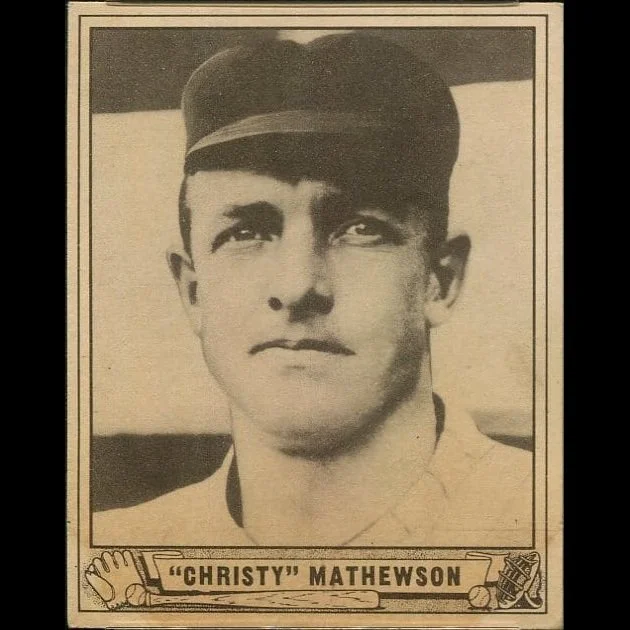
Retired Greats In A Baseball Card Set
The 1940 Play Ball set did something that was at the time most unusual if not unprecedented. More than an eighth of the cards (31 out of 240) on the 1940 Play Ball checklist featured retired all-time greats.
Christy Mathewson was one of the 26 members of the National Baseball Hall of Fame at that point, which means that the set also included several players not yet (or ever?) enshrined in Cooperstown, most notably Shoeless Joe Jackson.
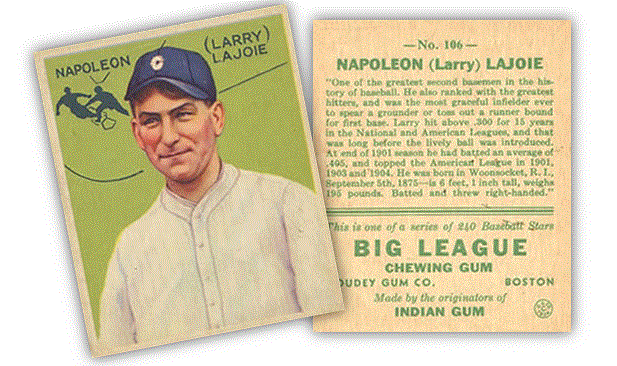
While it wasn’t completely unheard of for a baseball card set to include a retired great within the checklist (the 1933 Goudey set including Nap Lajoie may have been a special circumstance, but it happened, nonetheless), the 1950 Callahan set was the first set ever to include a card of every Hall of Famer at the point of its production.
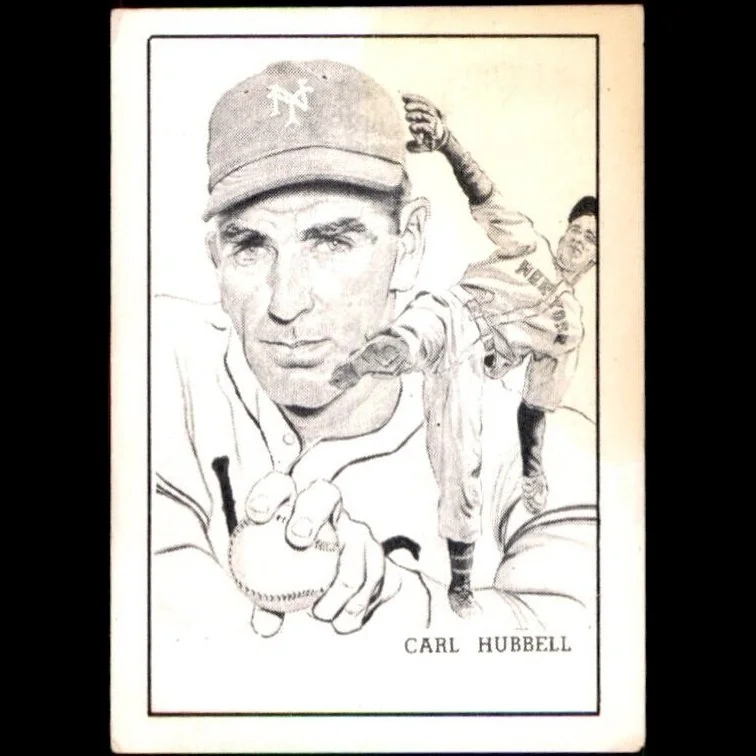
1950 Callahan Set
In 1950, Chicago-based publisher B.E. Callahan released a box set that consisted all 60 Hall of Famers to that point (plus two cards of the building itself). According to the Standard Catalog, the box set and supplemental cards were sold at the Hall of Fame itself and major league ballparks.
The set was updated annually to remain current through 1956, providing collectors with cards of baseball’s first 80 Hall of Famers.
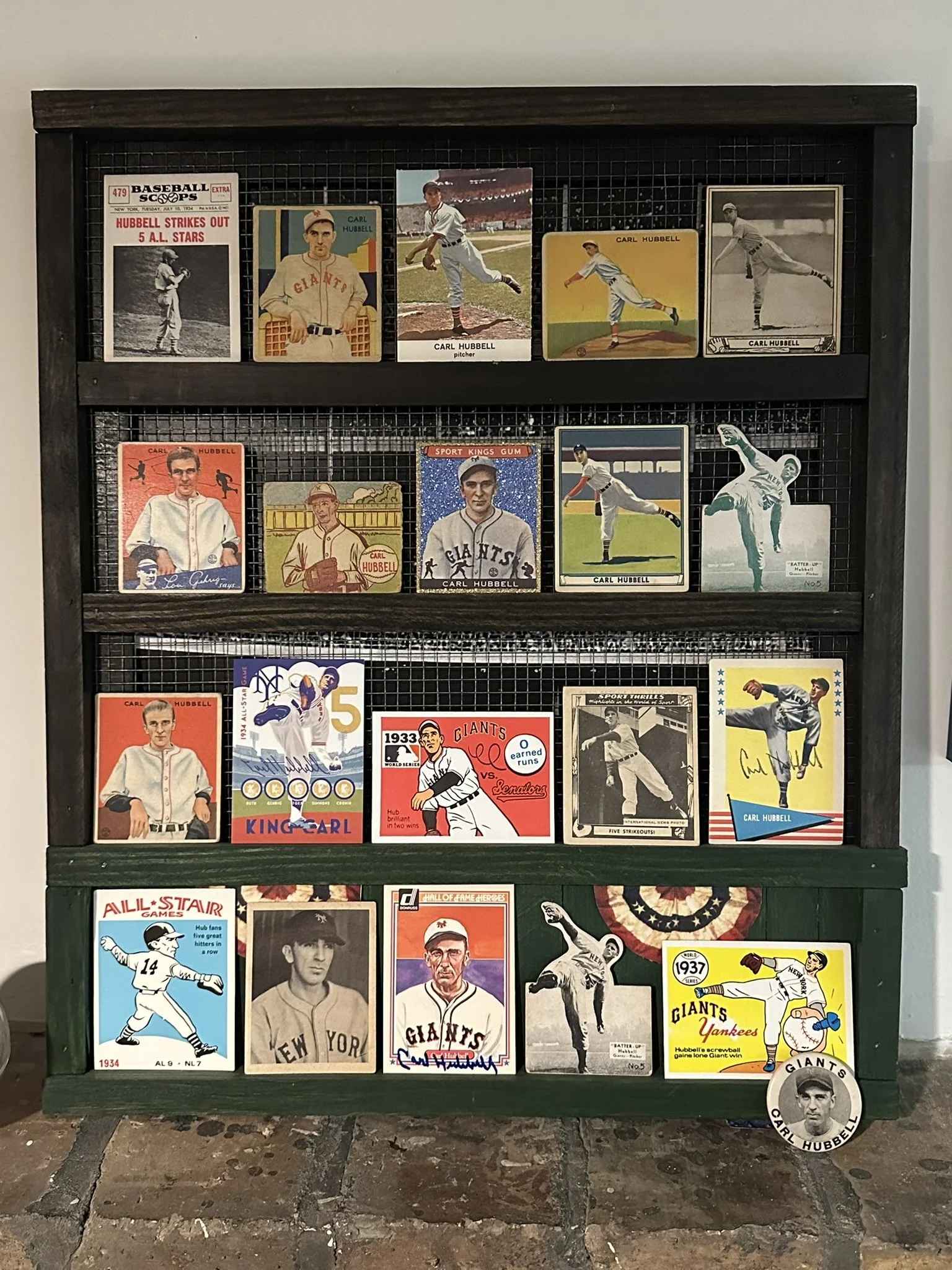
Carl Hubbell
Carl Hubbell is one of Jason’s collecting interests, as you can see here. Jason has also written a handful of articles about Hubbell, and his place in the hobby, which you can read if you click the links below:
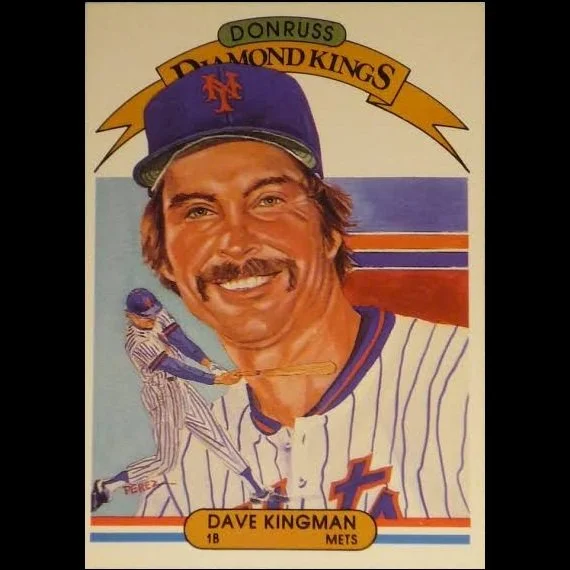
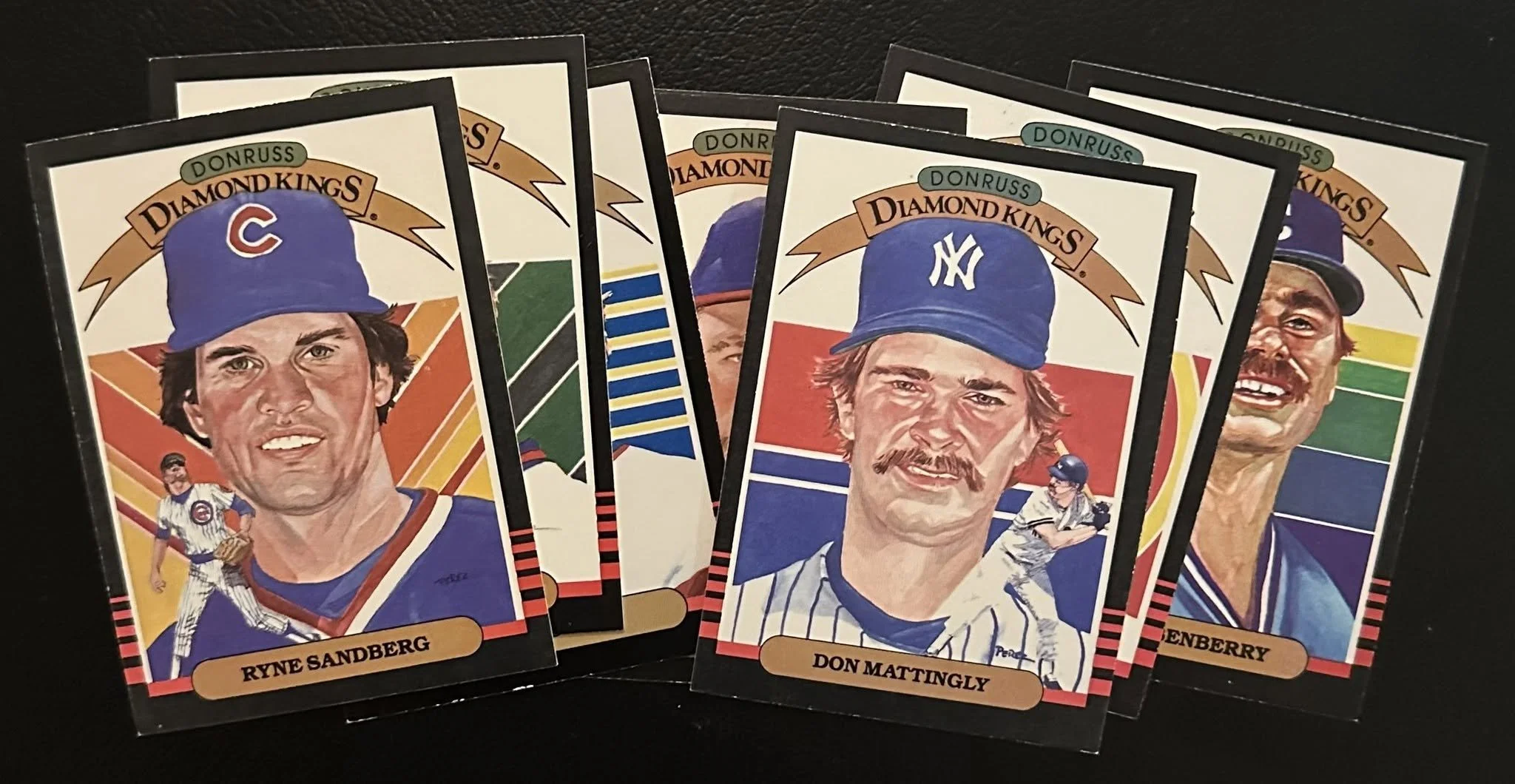
Donruss Diamond Kings
In 1982, artist Dick Perez produced his first series of painted cards, “Diamond Kings,” which he continued for 15 years.
In 1983, Donruss cards were packaged not with bubble gum but with puzzle pieces, in line with a court ruling that Topps had, via its inclusion of barely chewable gum, unfairly cornered the market.
Diamond Kings connected the game’s past with its present, giving younger fans and collectors a vivid appreciation of how the game’s history infuses every current moment.
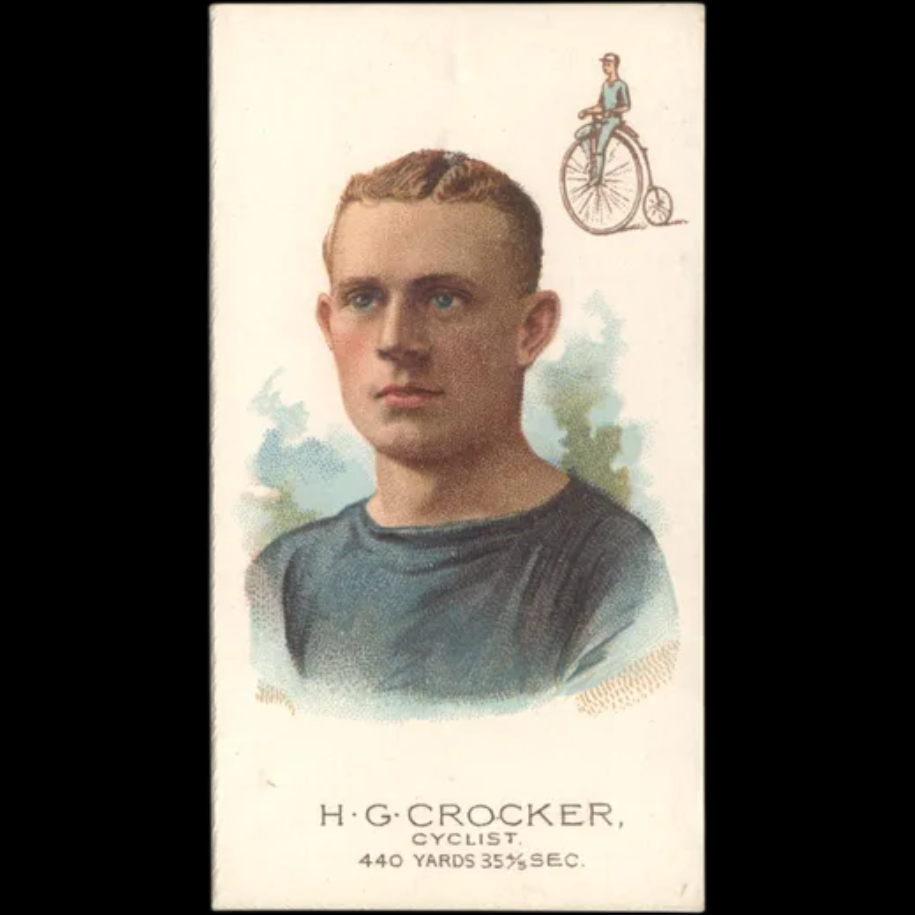
Allen & Ginter N29
Dick Perez drew inspiration from old card sets like the Allen & Ginter N29 set from 1888.
The World Champions set consists of 50 cards, each measuring 1-1/2" by 2-3/4", and were inserted in cigarette boxes manufactured by the Richmond, Virginia company. Released shortly after the N-28 set, the cards were similar in almost every regard: unnumbered, but printed on the reverse each piece was a checklist identifying all 50 cards.
The series features those who excelled in swimming, pole vaulting, running, cycling, and other sports, but is anchored by its six baseball players.
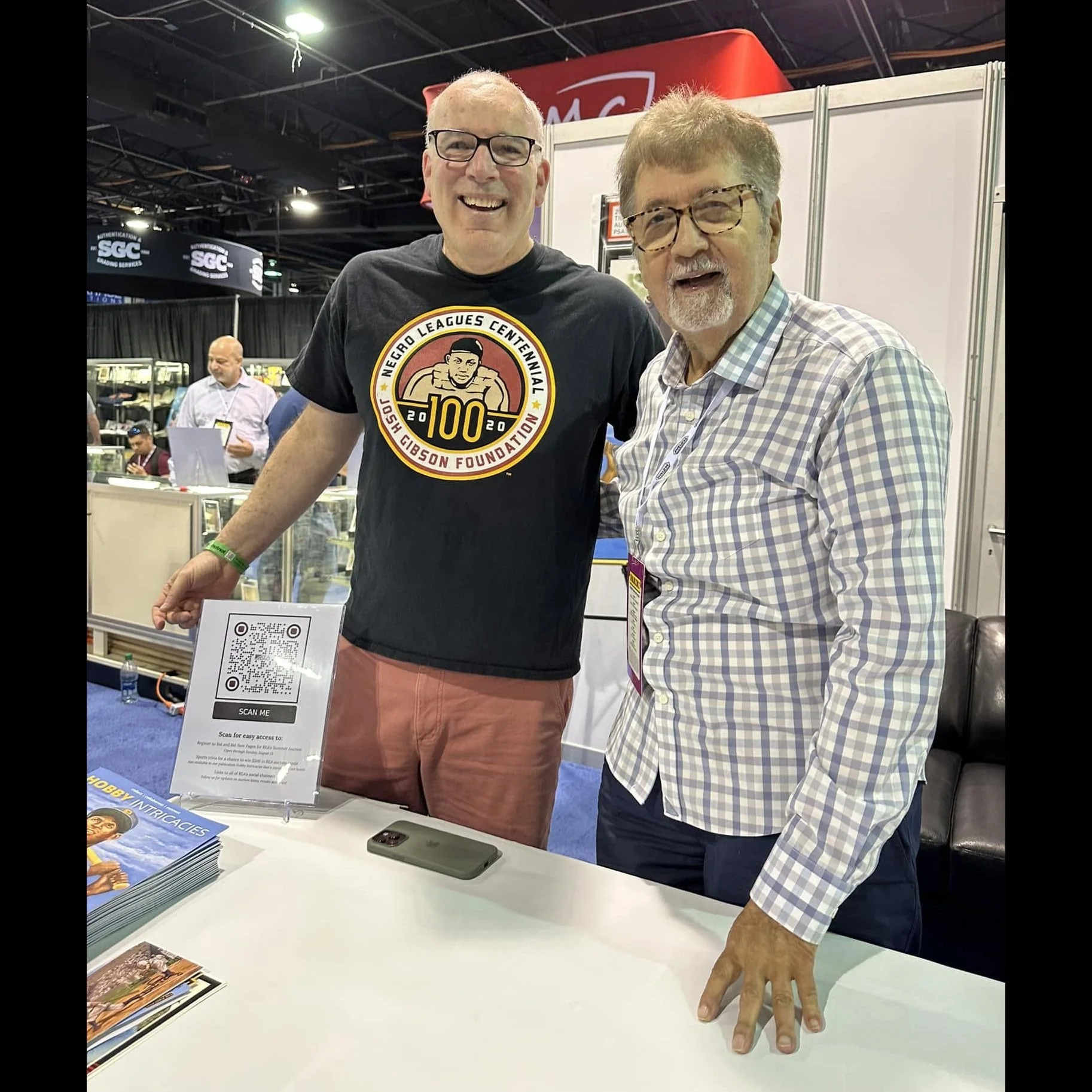
Jason and Dick Perez
Jason with legendary card artist Dick Perez.
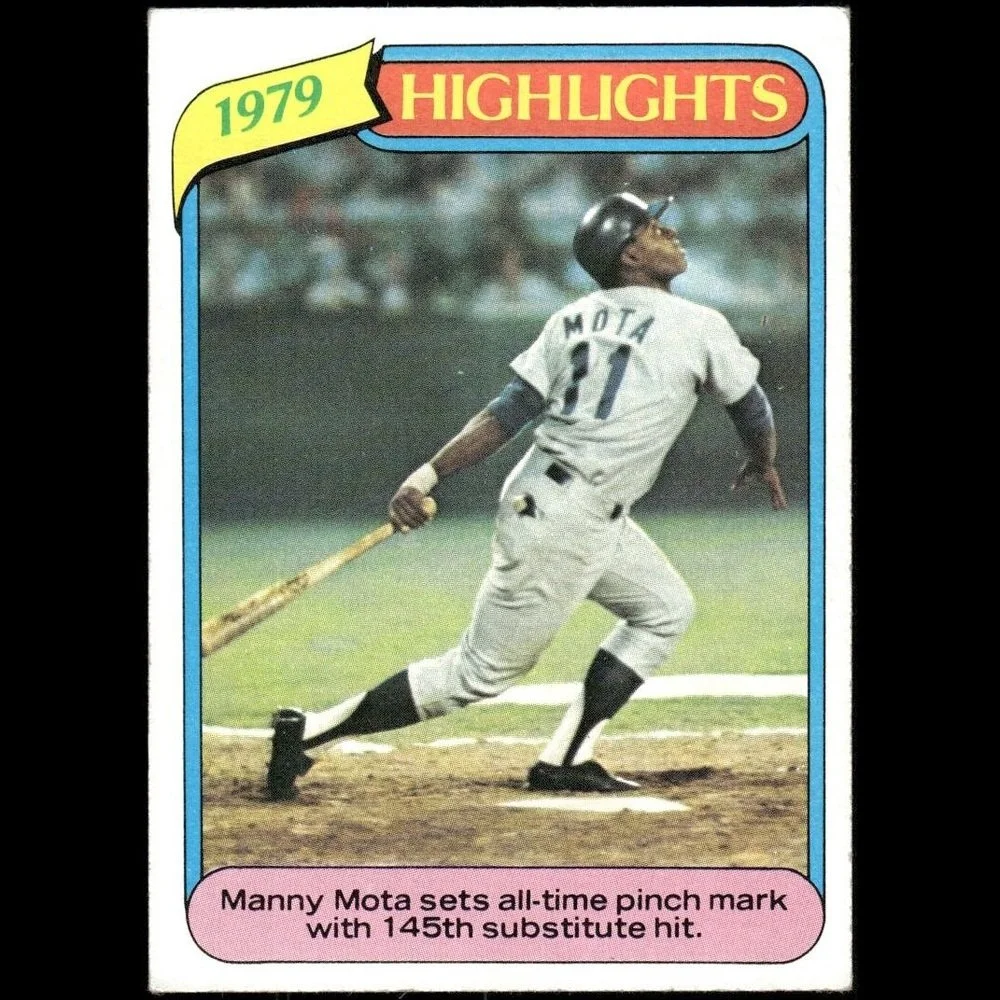
My Favorite Common
Not every single article written for the SABR Baseball Cards Research Committee blog needs to be, as Jason puts it, “Capital R ‘Research’.”
An article which many first-time writers enjoy whetting their whistle with is something Jason calls “My Favorite Common” wherein the author writes from the heart about their favorite baseball card which has minimal monetary value.
You can read Jason’s My Favorite Common article about the 1980 Topps Record Breaker Manny Mota card if you CLICK HERE.
Two Sides of the Same Coin
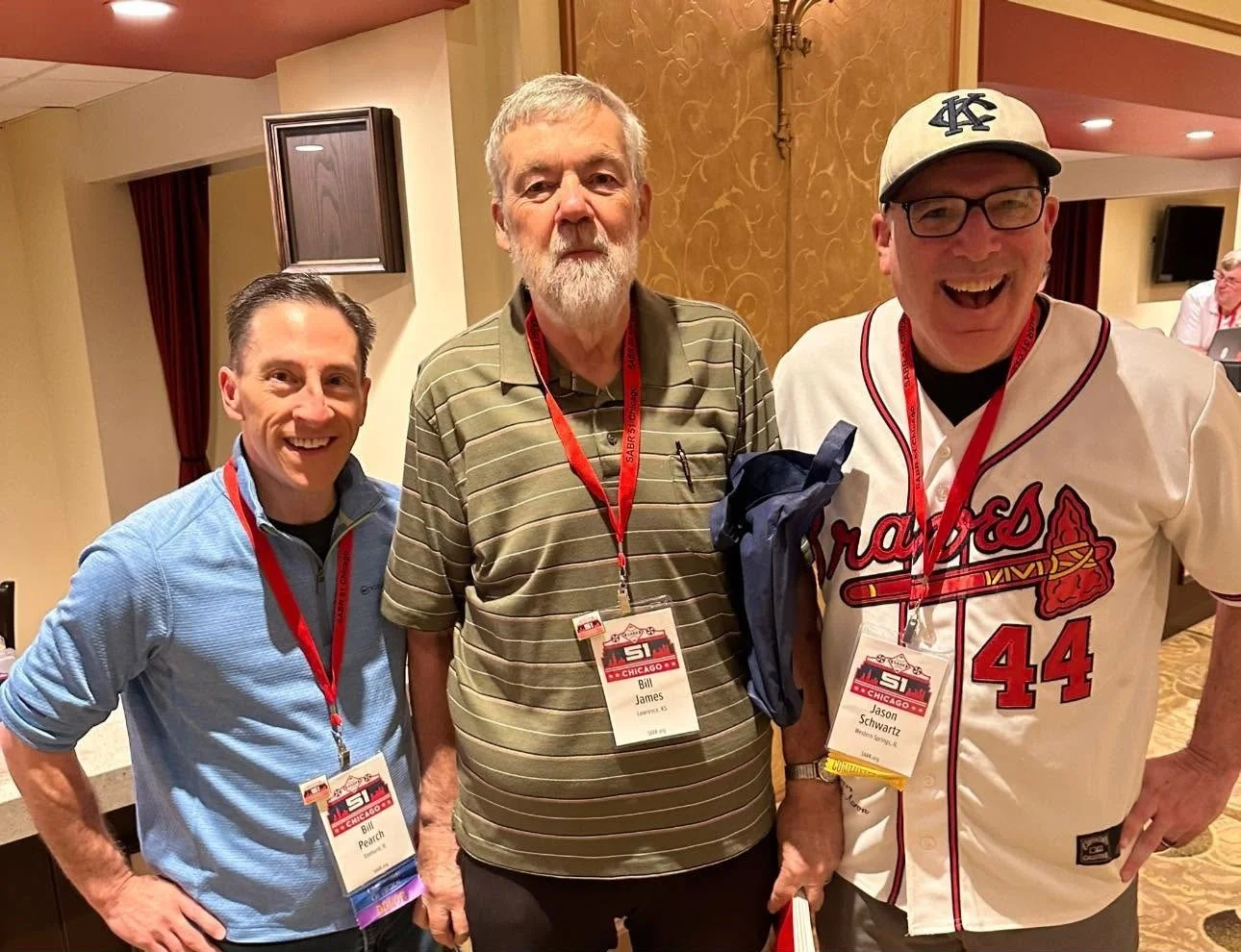
While the Society for American Baseball Research absolutely does have a number of brilliant researchers and writers who are members (like the legendary Bill James, seen here, center), people like Jason and his Chicago friend Bill Pearch (seen here, left) do their best to make sure things remain fun, and that, at the end of the day, we all remember why we’re here in the first place: we love baseball.
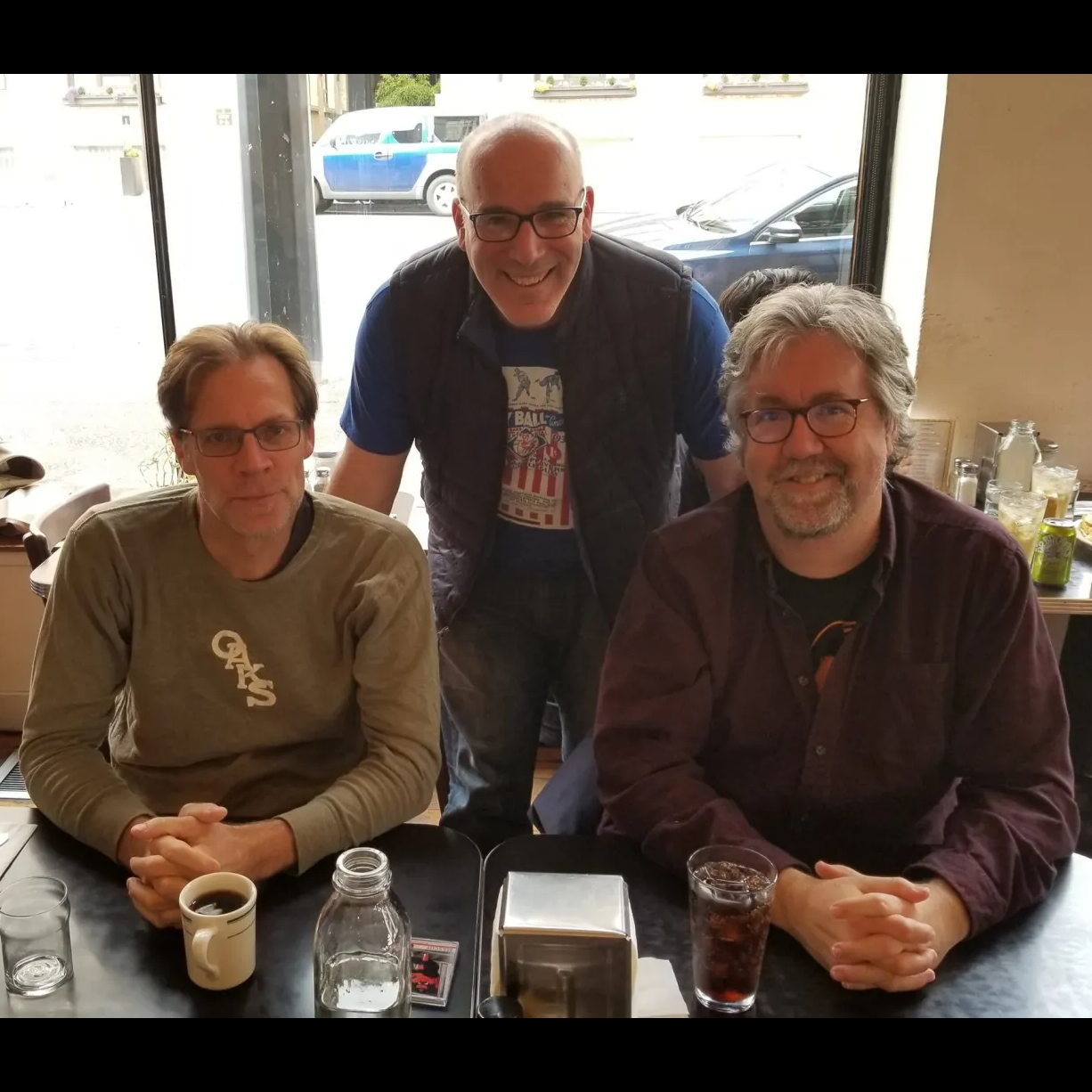
Brilliant Writers and Researchers
Rob Neyer (left) is a baseball writer known especially for his facility with modern analysis and sabermetrics. Growing up near Kansas City, Rob was a devoted Royals fan. He caught his break when he was hired as a research assistant by Bill James.
Mark Armour (right) was the recipient of SABR’s highest honor, the Bob Davids Award, in 2008 and the Henry Chadwick Award, honoring baseball’s greatest researchers, in 2014. He was elected as the President of SABR’s Board of Directors in 2019.
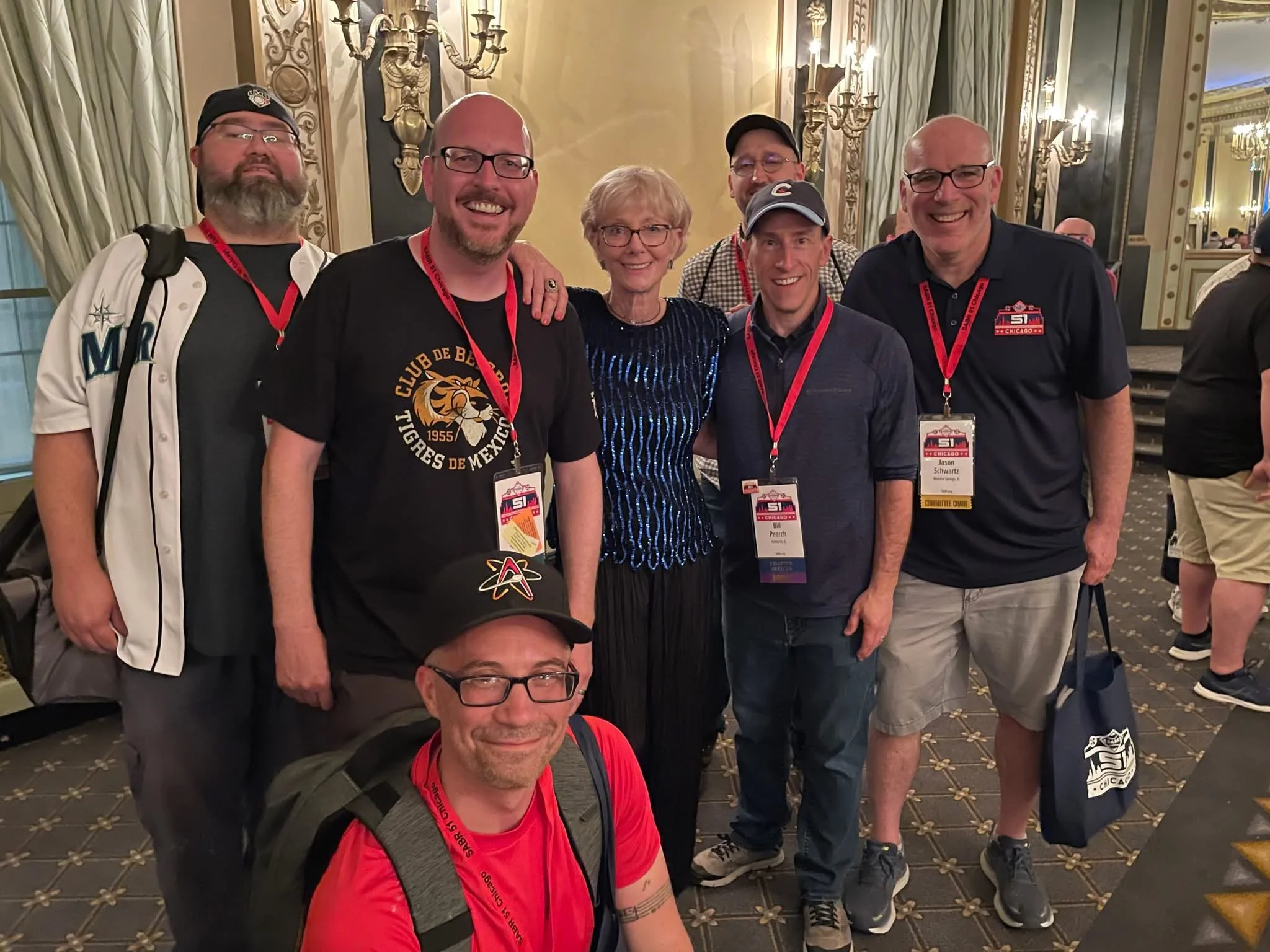
Some of Jason’s closest friendships have transcended SABR, even if that may be how those friendships began in the first place. Pictured here are some of the members of the Chicago crew, and a couple friends from other cities, too. Back row: Andy Terrick. Standing (left to right): Christopher Kamka, Sean Kolodziej, Nancy Faust, Bill Pearch, Jason Schwartz. Front row: Ralph Carhart.
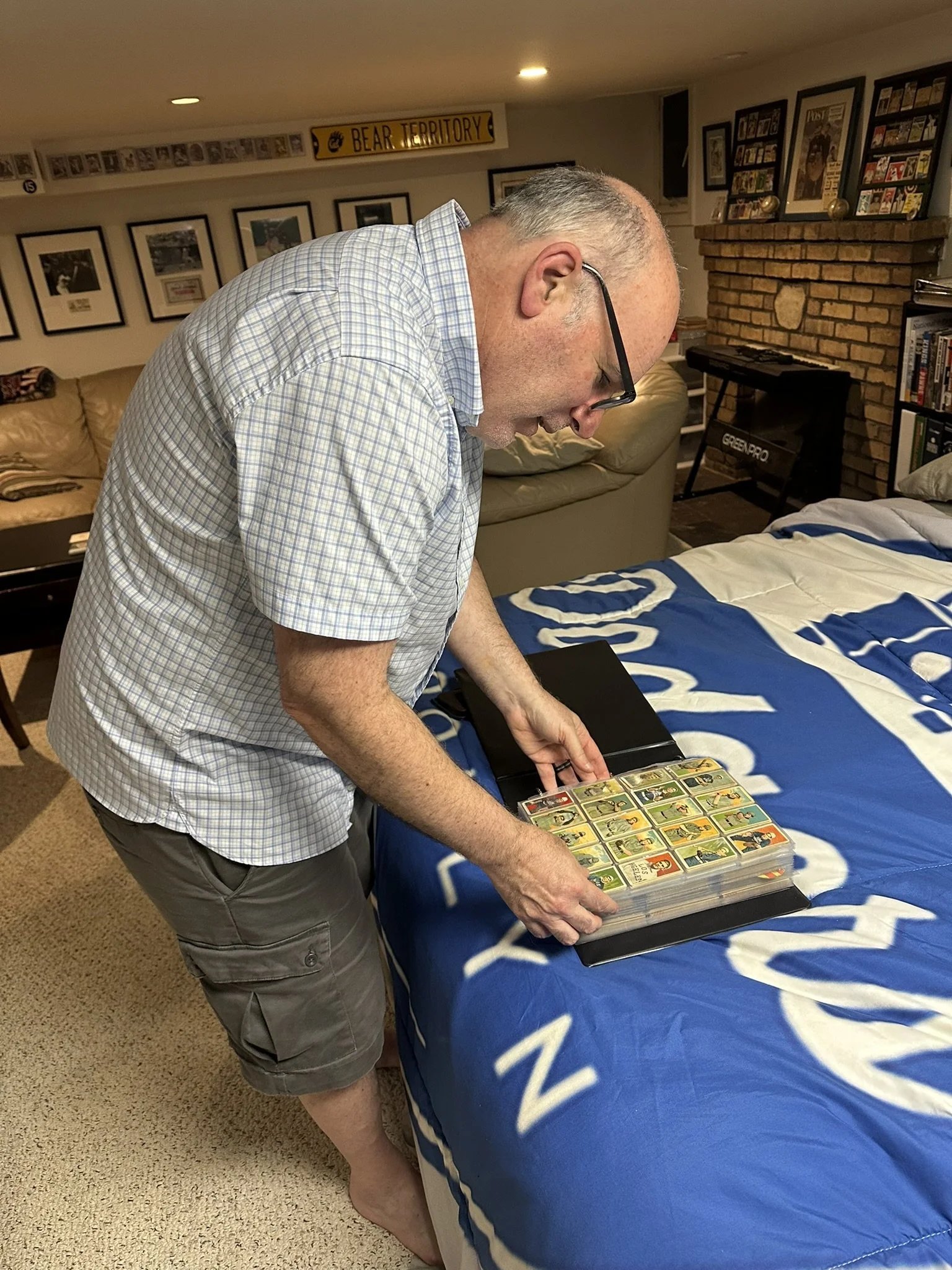
Show & Tell
I had already been to Jason’s house a handful of times and seen lots of the cards in his collection before our interview, but after we got done recording, he basically gave me a curated show & tell presentation of his collection with a special focus on all of the different cards and players we spoke about during our conversation.
If I hadn’t already been his friend before that presentation, I’d have definitely wanted to be after it.
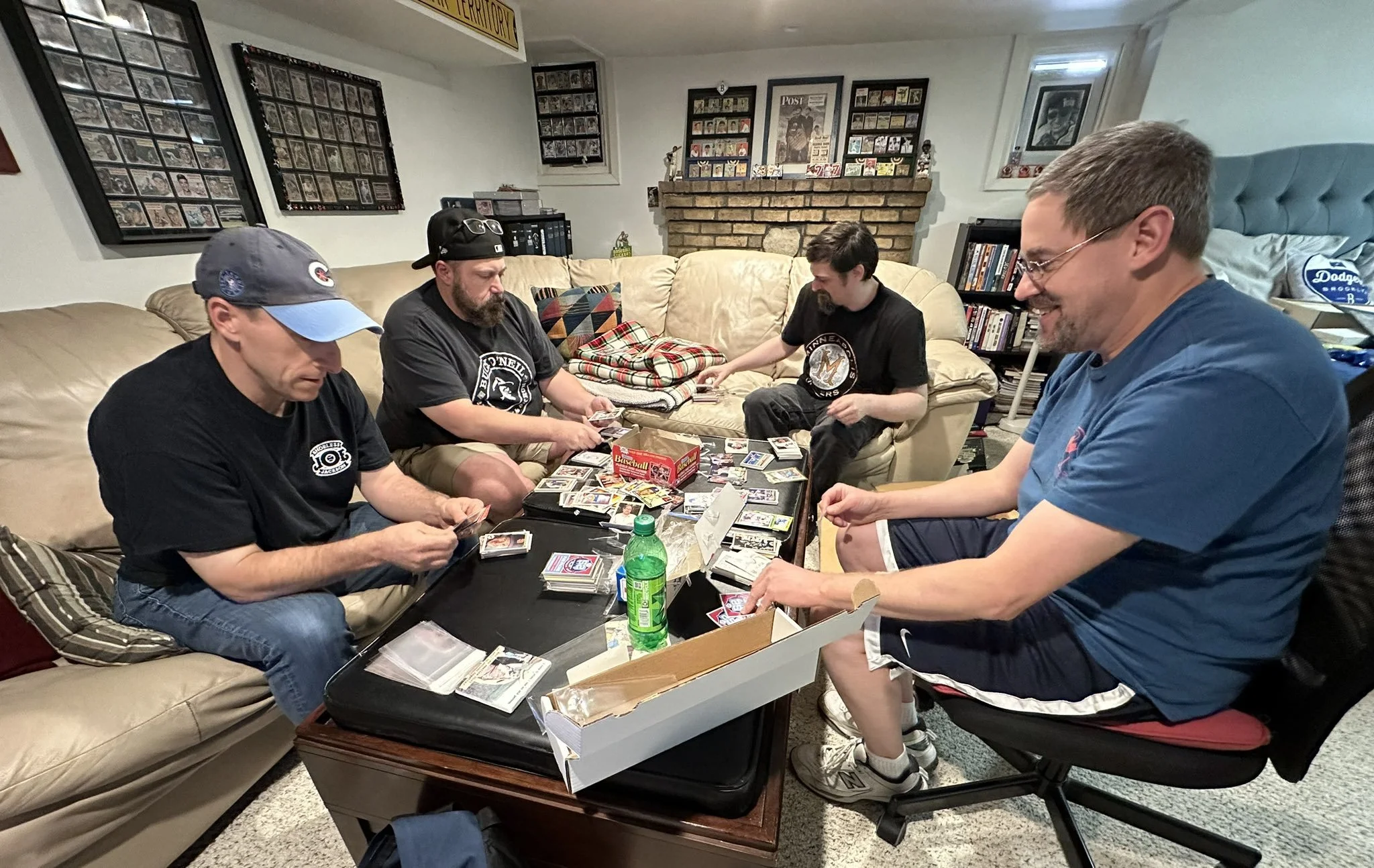
The Chicago Crew
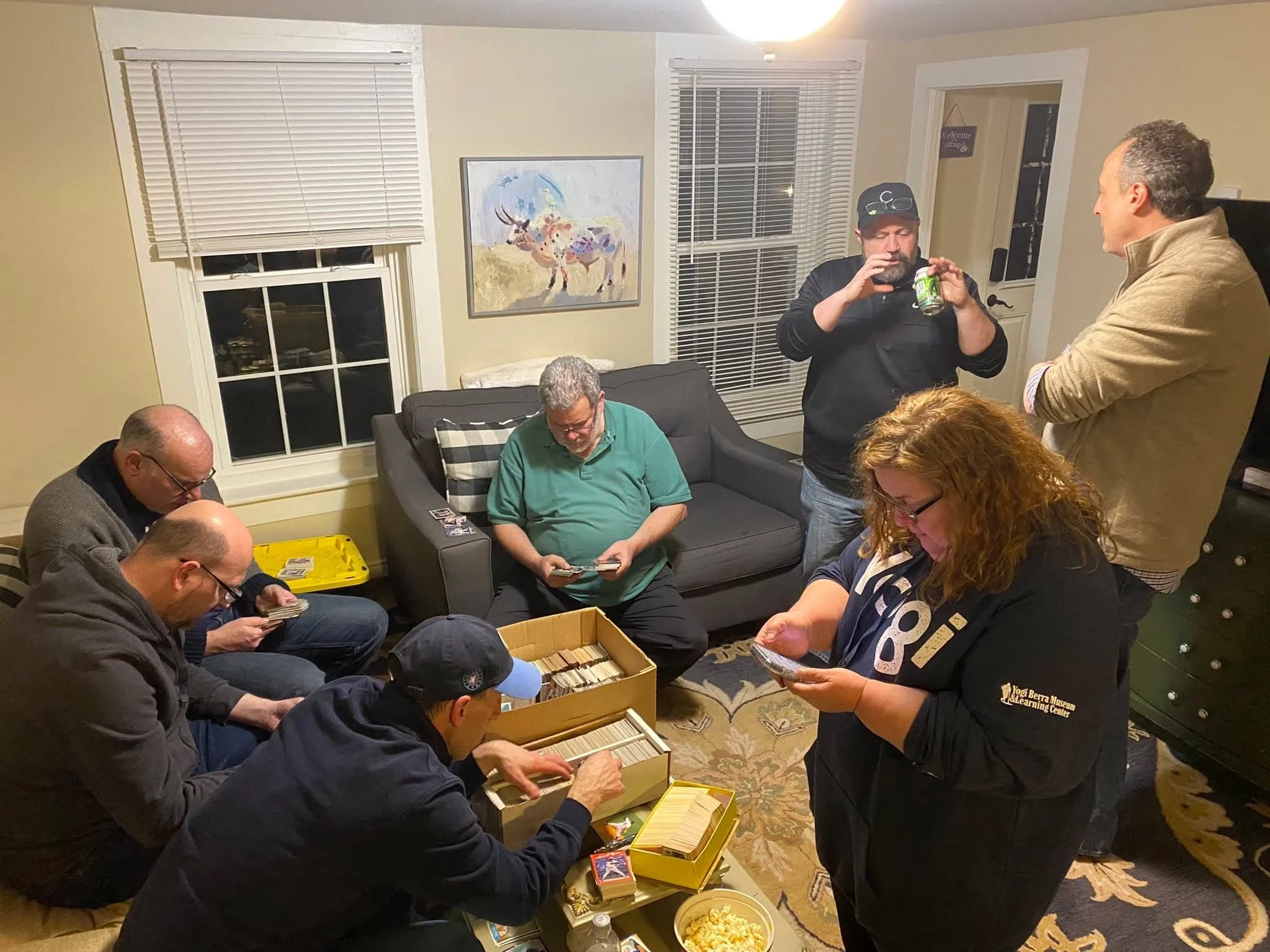
It’s hard to get them all in the same room at the same time, but this particular pack rip night in Jason’s basement came close. Clockwise, left to right: Bill Pearch, John Racanelli, Cary Smith, Twitterless Rich
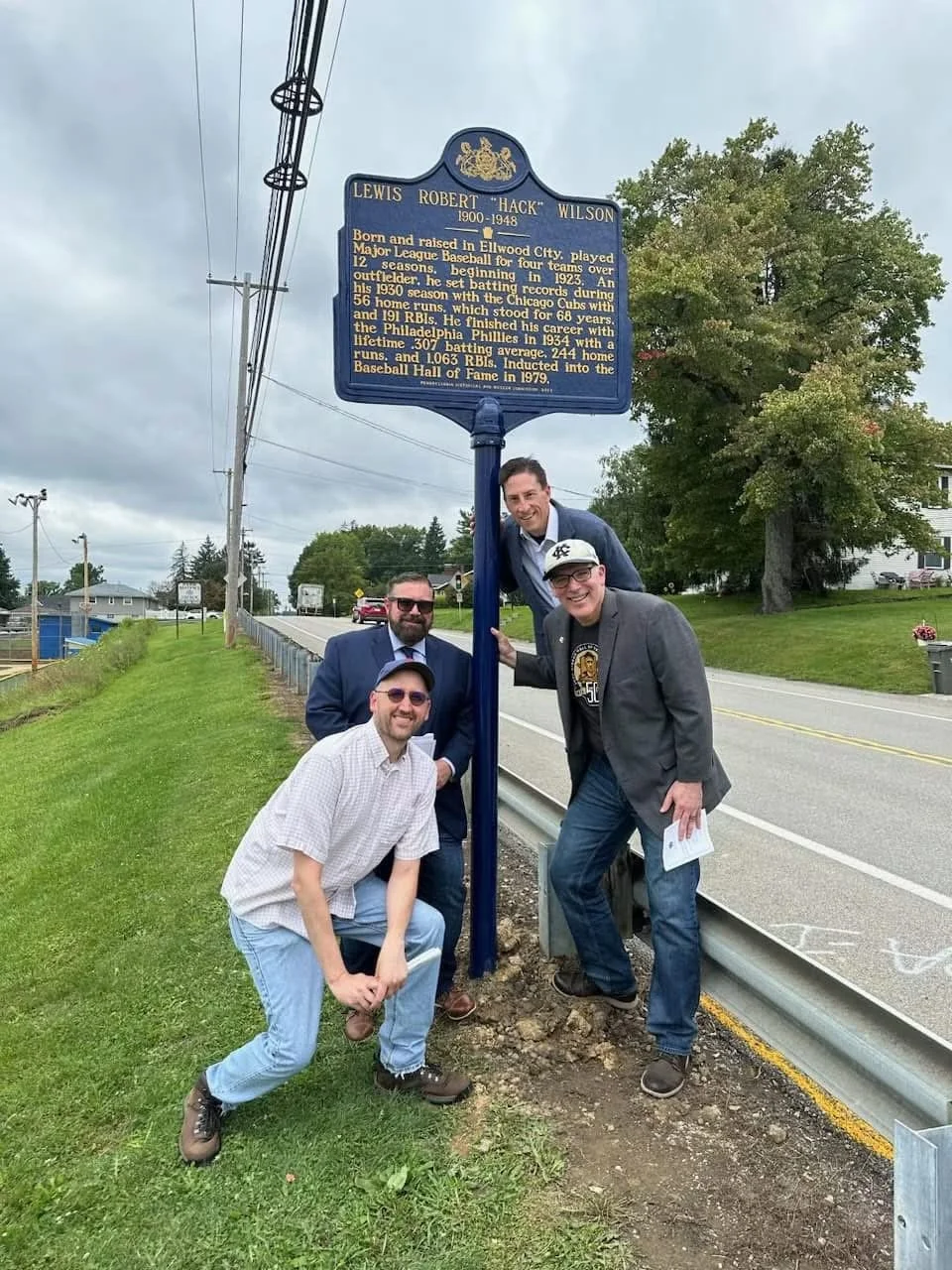
A Supportive Group
Jason and Bill (who live in Chicago) and Andy (who lives in Pittsburgh) drove out to rural Pennsylvania in support of their friend (and probably the world’s foremost Hack Wilson expert), John Racanelli, as he gave a speech at the dedication ceremony of this historic marker which was placed by the Ellwood City Area Historical Society to honor one of Ellwood’s favorite sons on August 25, 2023 — the 89th anniversary of the legendary slugger’s final Major League at-bat at Pittsburgh’s Forbes Field.
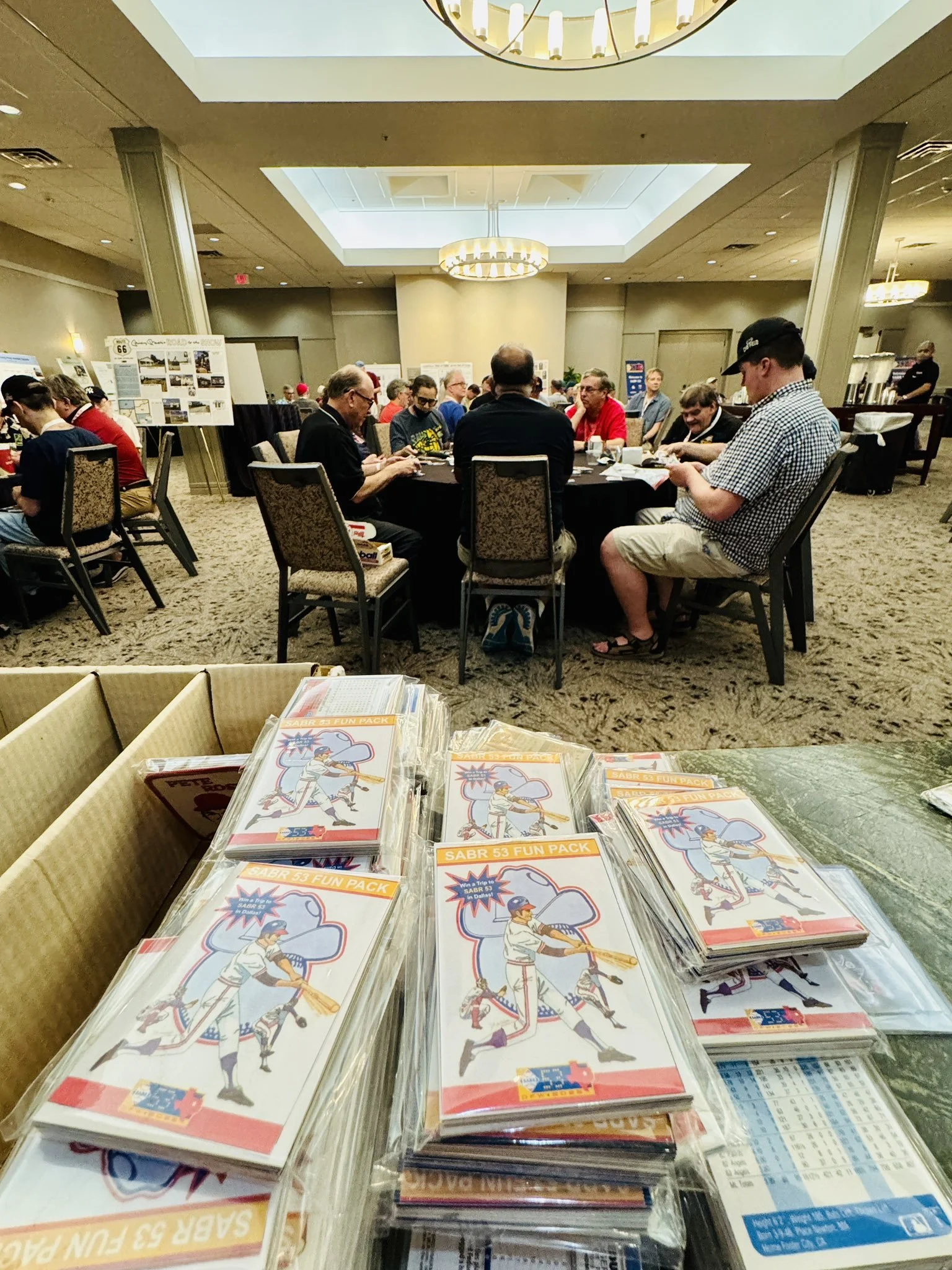
Pack Rip Night
One of my favorite events at the SABR convention every year is the Pack Rip Night, which is hosted by Jason. It started with the idea that he and his Chicago Crew buddies had, just opening packs of cards in Jason’s basement, and has evolved into an event with dozens of attendees.
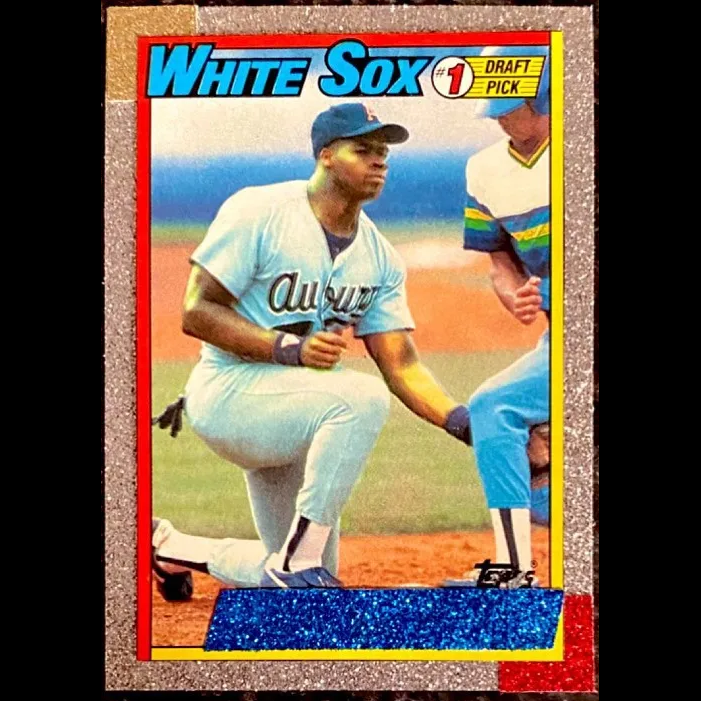
Frank Thomas
I must have thought Jason and I were better friends than he thinks we are, because apparently, if he pulls a Frank Thomas card at Pack Rip Night, he’s keeping it to make a Heavy J Studios card, instead of giving it to me, his White Sox fan friend.
Strange, because I would give Jason all my Dodgers cards. Sometimes it’s nice to learn where you stand with people.
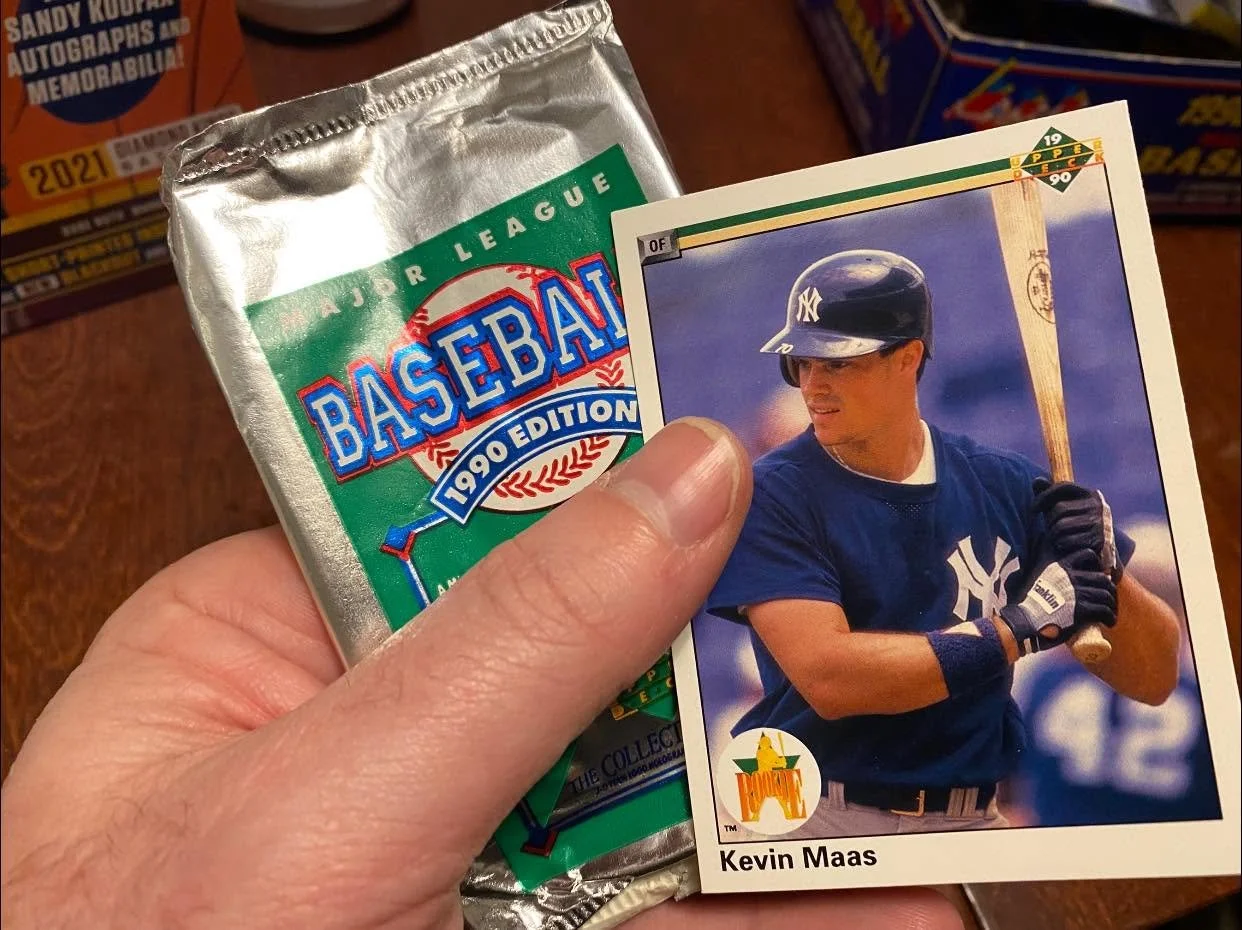
Since none of the packs we rip at Pack Rip Night have any real monetary value, the point of the event isn’t to pull “good” cards; the point is to hang out with your buddies and relive your youth. Since that’s the case, the cards which always get the biggest reaction when someone pulls them from a pack are the prospect cards we were all chasing in the late 1980s and early 1990s, when we thought those cards actually were going to be worth some money. (Spoiler alert: we were wrong.)
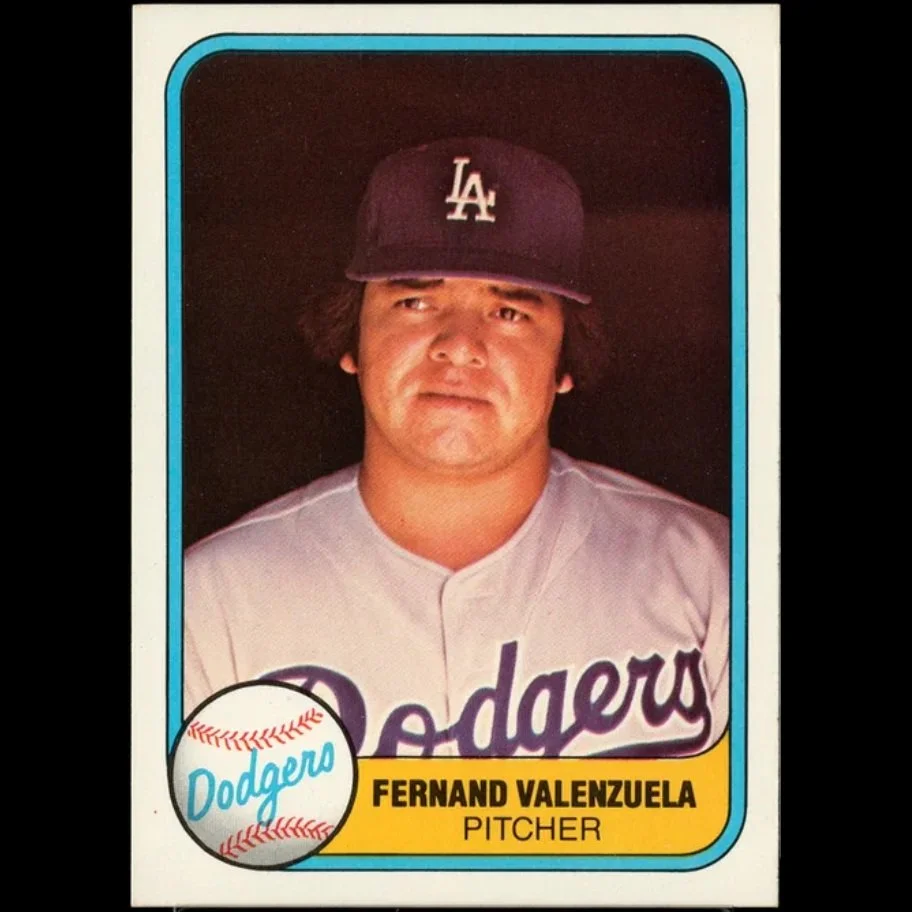
Fernando Valenzuela
If you pulled his rookie card from a 1981 Fleer pack, you might know him as “Fernand” Valenzuela, but even after all these years, you haven’t forgotten the way you felt when you were watching Fernando Valenzuela pitch in 1981. Or the way it felt to pull his card from a pack back then.
One of the best parts about these Pack Rip nights is that those feelings come flooding back, whether you’re expecting them to or not.
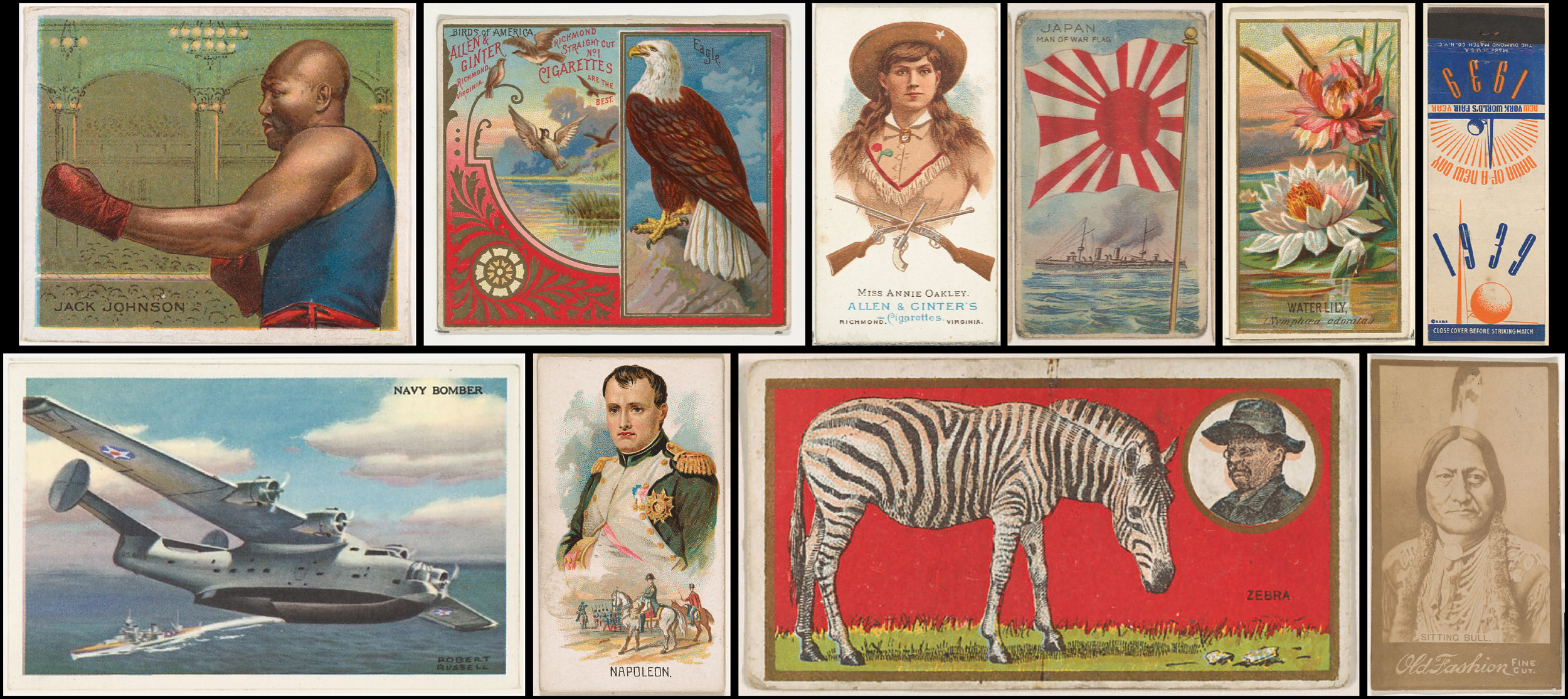
Cards have always been so much more than just baseball players. They used to almost act as a makeshift encyclopedia, teaching both children and adults about everything from plants and animals, to the flags of the world, vacation spots, modes of transportation, political leaders, and popular culture. All of the above examples are included in the more than 300,000 subjects he graciously donated to the Metropolitan Museum of Art, which they keep in a constant rotation to this day.
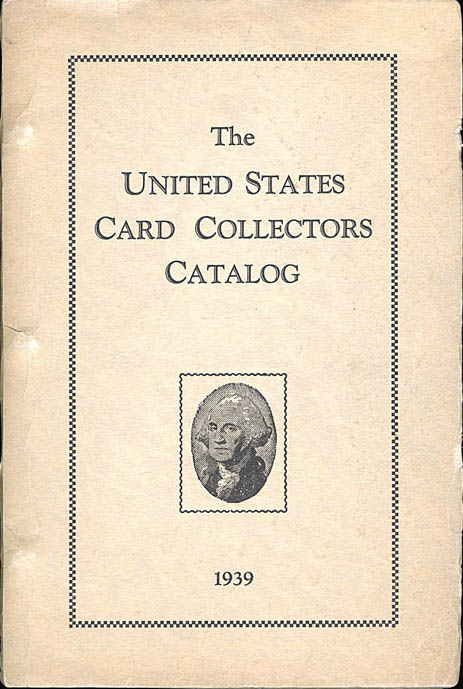
Jefferson Burdick’s American Card Catalog
The classifications set up by Jefferson Burdick were essential to early collectors and are still used to this day. The reason is because there were so many cards out there that collectors needed a way to classify them and keep them organized.
Jefferson Burdick sorted cards by how they were distributed or what they were. For example, cards placed inside of tobacco products were given a T-Card (for tobacco) designation. Miniature blanket cards were called B-Cards. Cards distributed by magazines or publications were called M-Cards.
Sports card collectors know him for his work with, primarily, baseball cards. However, the American Card Catalog goes far beyond that scope and includes not only other sports cards but all kinds of non-sports issues.
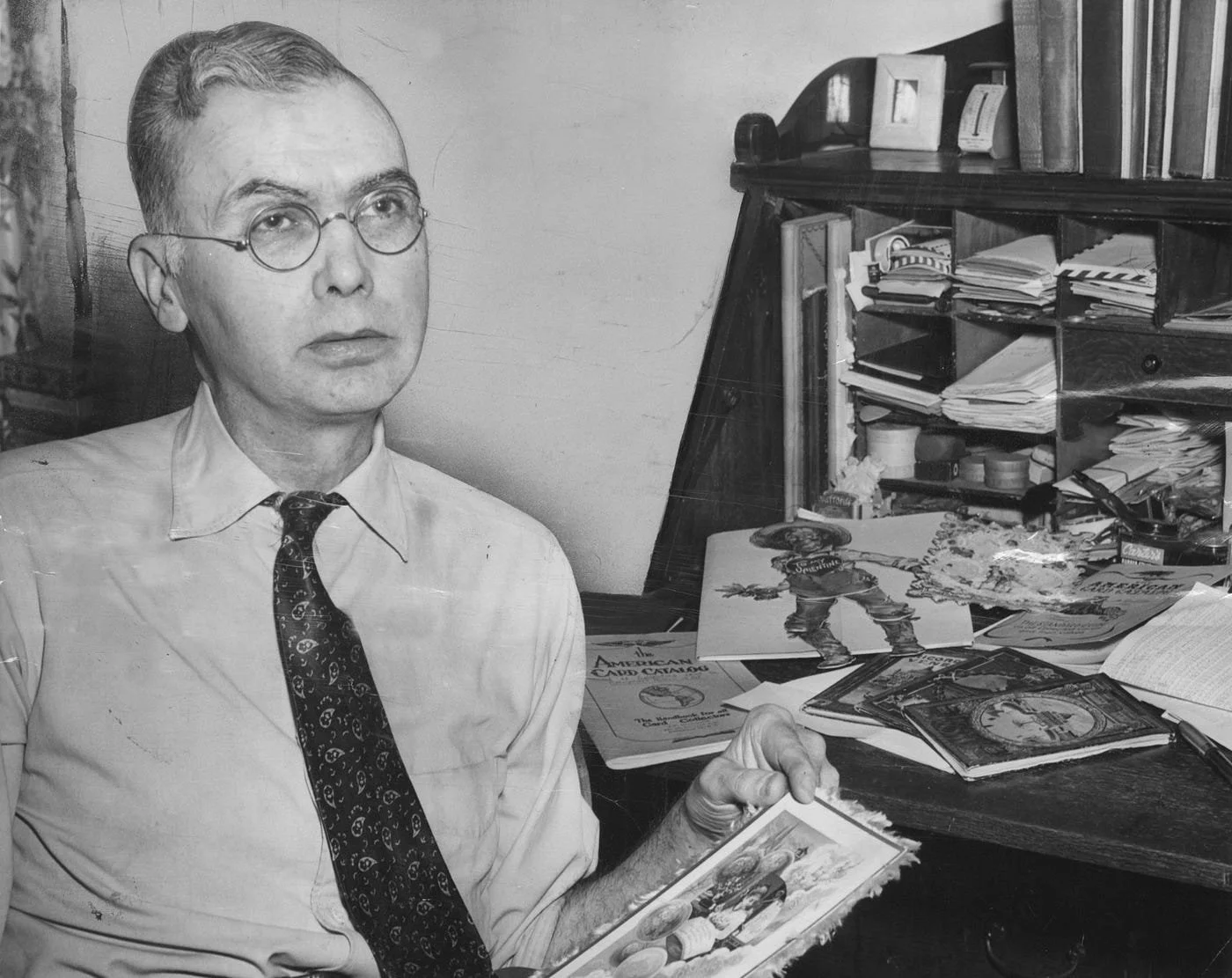
Jefferson Burdick
Jefferson Burdick remains a hero to a hobby he may be said to have created. The Society for American Baseball Research’s Baseball Cards Research Committee honors one individual each year with its Jefferson Burdick Award, honoring individuals who have made significant contributions to the baseball card hobby. That award was Jason’s idea.
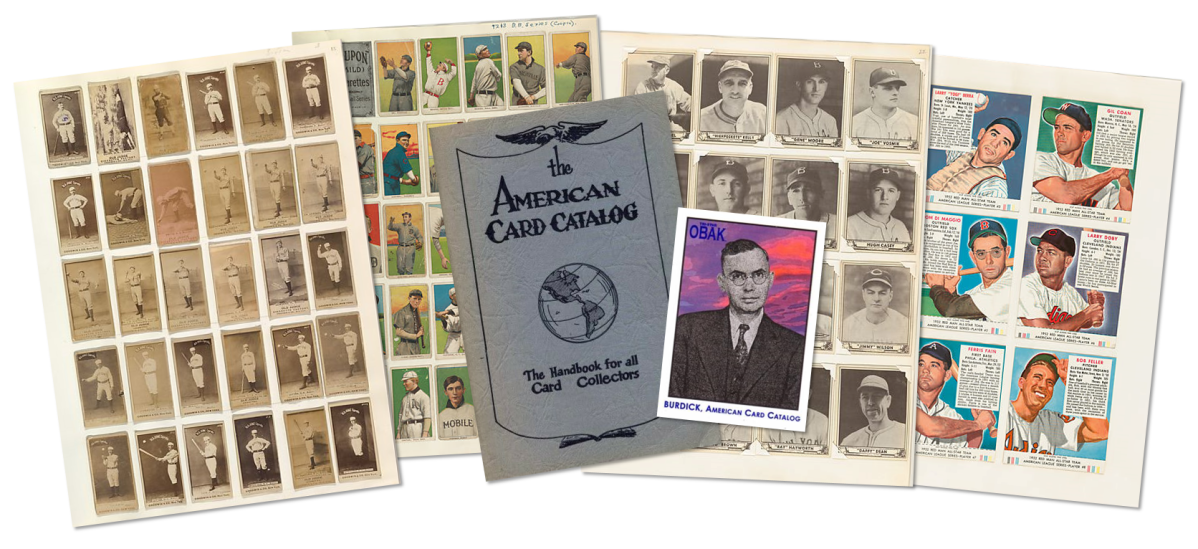
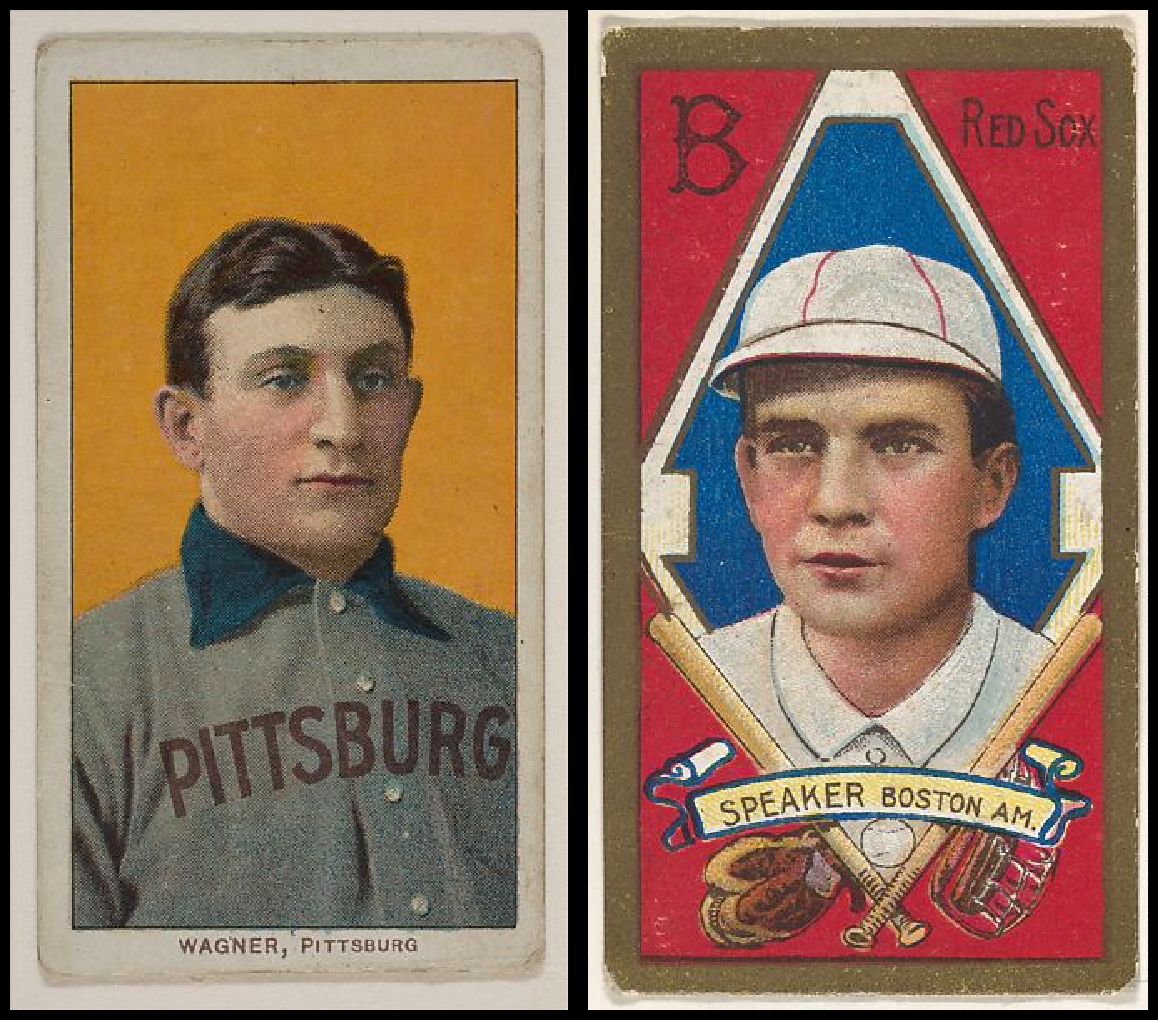
Chronological Order?
Beginner collectors are often confused by the numerical order Burdick assigned to the card sets as he catalogued them. For example, the T206 set (exemplified by the famous Honus Wagner card, seen here, left) was issued between 1909-1911.
The T205 set (exemplified by the Tris Speaker card, seen here, right) was issued in 1911 only. If Burdick were to issue the numerical assignments in chronological order relating to how the cards were initially issued, T205 should come "before” T206. But that is clearly not the case, for reasons we may never know.
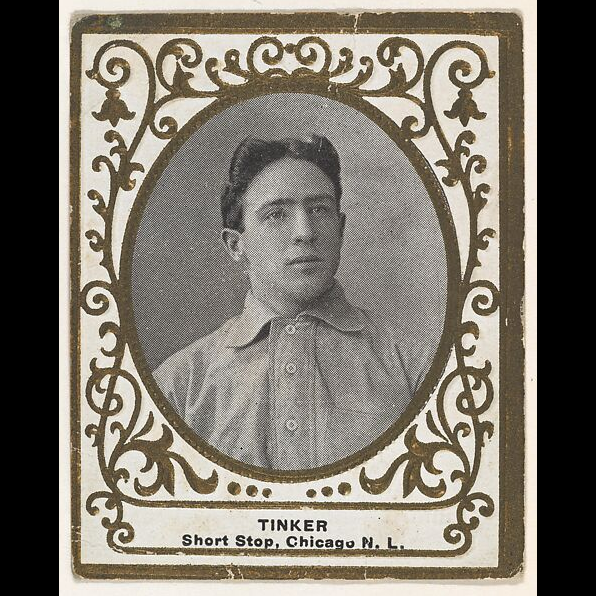
T204 Set
A criminally underrated set in baseball card history is the T204 set, commonly referred to as “Ramlys” by collectors. These cards were issued in 1909 by Mentor Company to promote their Ramly and T.T.T. cigarette brands.
The fronts have this same intricate gold design, which is extremely prone to fading and chipping, so to find a copy today with its gold fully in tact is a chore. Each card verso carried an advertisement for either Ramly Cigarettes or T.T.T. Cigarettes, although the Ramly cards are much more common.
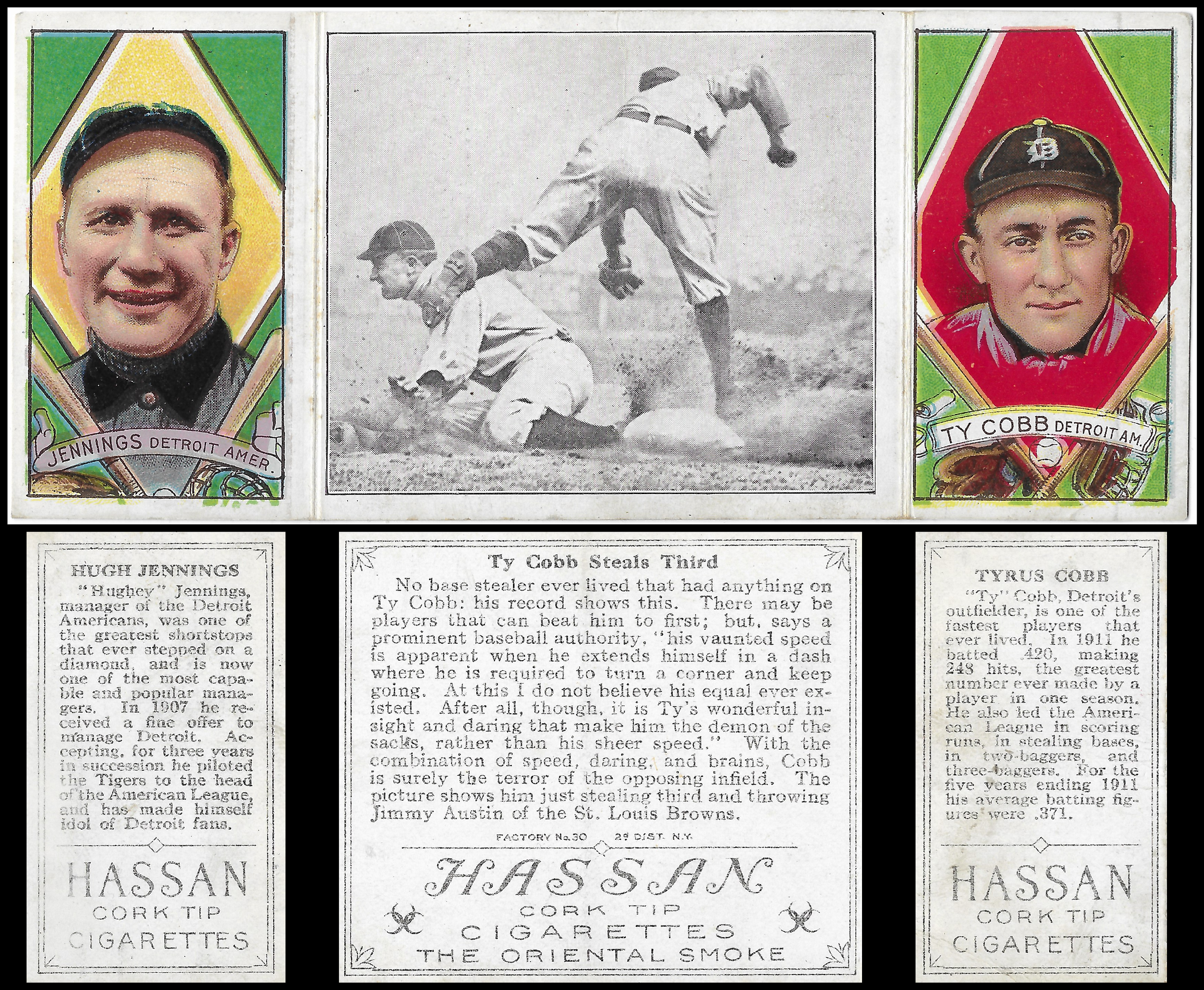
T202 Set
Phil Rosenzweig is an award-winning author and one of the world’s foremost experts on the T202 set, which was issued in 1912. His book, One Splendid Season: Baseball and America in 1912, Told with the Words and Images of the Hassan Triplefolder Set, was a finalist for the 2025 Casey Award, which is an annual literary award that has been given to the best baseball book of the year since 1983.
Phil was our guest for Episode 3 of Season 5. You can listen to that episode HERE.
Buy a copy of Phil’s book HERE.
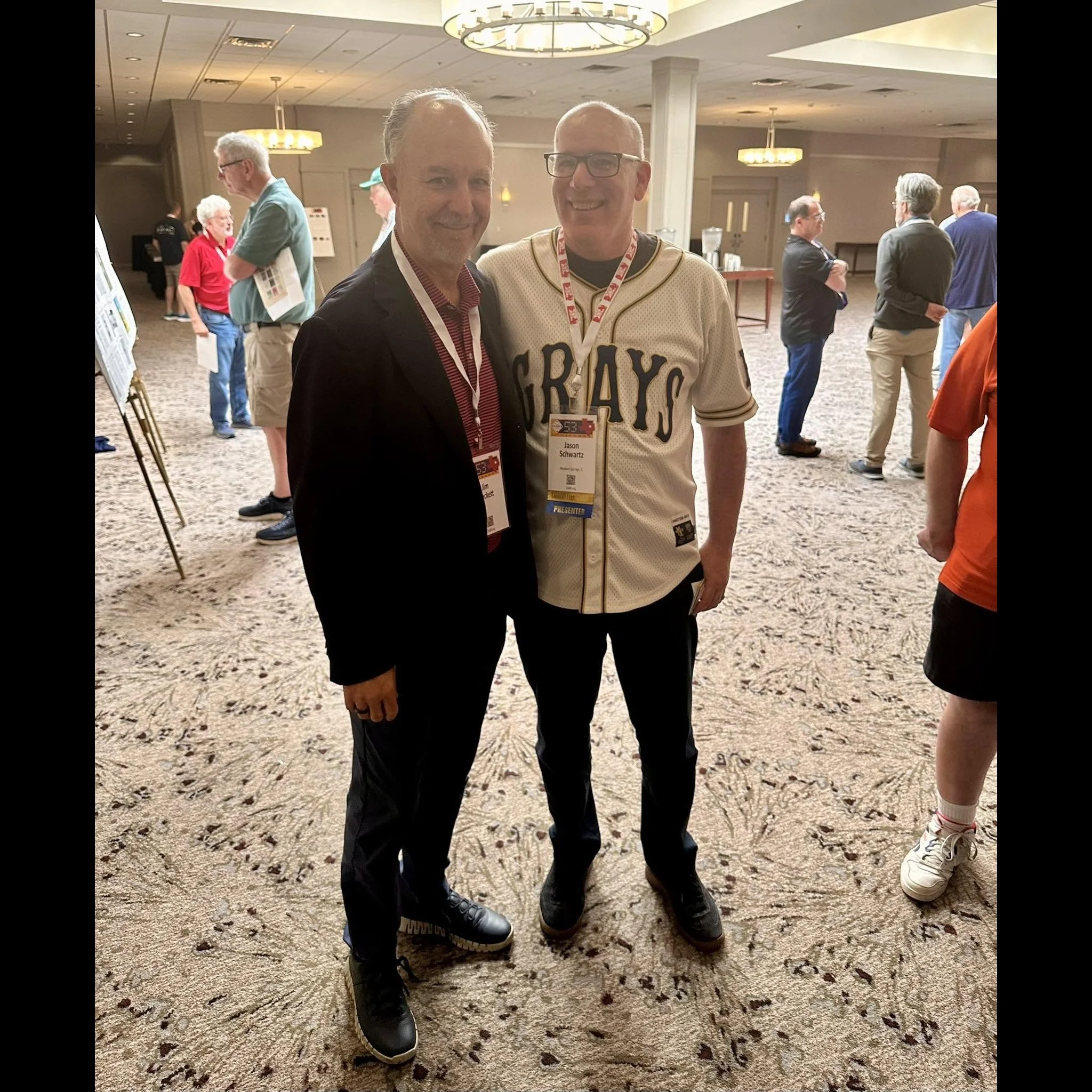
Dr. James Beckett
Dr. Jim Beckett (seen here, with Jason) first began publishing baseball card price guides in 1979, then in November of 1984, he began publishing Beckett Baseball Card Monthly.
Jason calls Dr. Beckett “a popularizer and disseminator of checklists like nobody ever before.” When Jason bought The Sport Americana Baseball Card Price Guide Number 2 in 1980, it opened up an entire world of possibilities for him as a collector.
Dr. Beckett won the 2022 Jefferson Burdick Award.
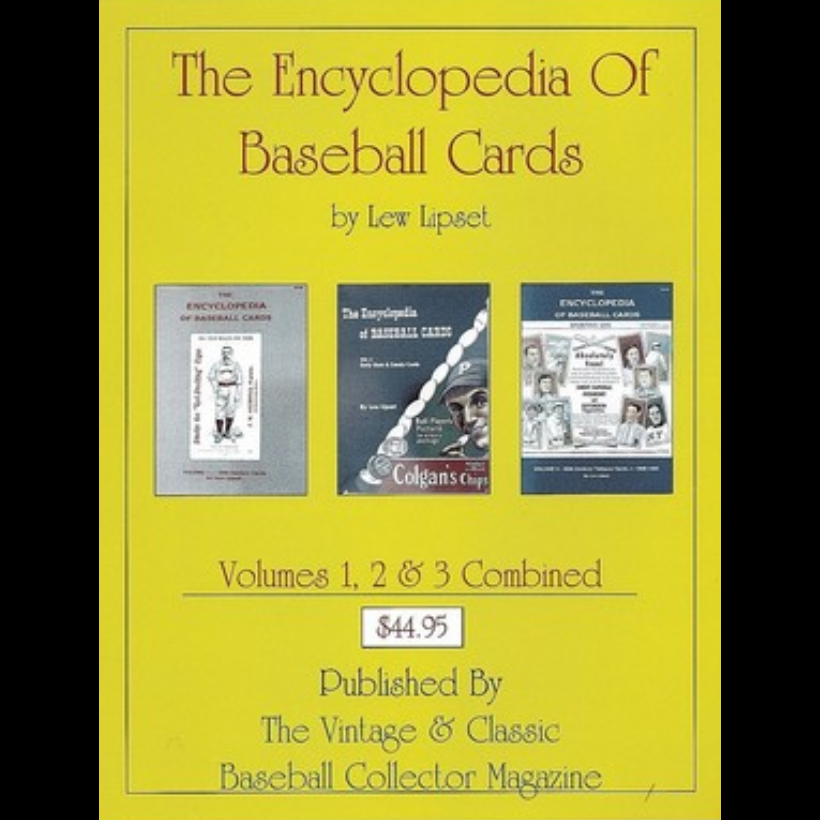
Lew Lipset
Lew Lipset is the author of a three-volume set of books titled The Encyclopedia Of Baseball Cards.
Volume 1 - 19th Century Cards
Volume 2 - Early Gum and Candy Cards
Volume 3 - 20th Century Tobacco Cards (1909-1932)
He also wrote books about the New York Clipper Wood Cuts of 1879-1880, the first four years of the Old Judge card set, and others.
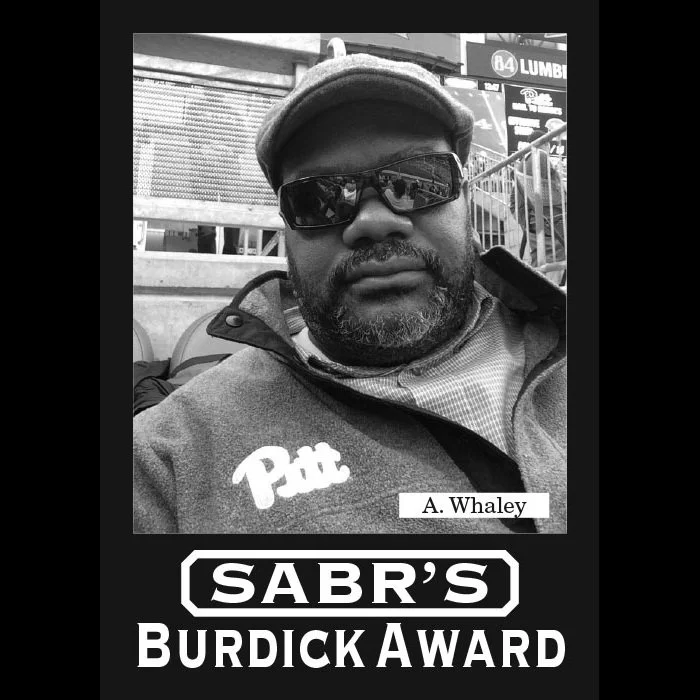
Anson Whaley
Anson Whaley was the winner of the 2025 Jefferson Burdick Award. Anson is known to many of us as @prewarcards on Twitter as well as @prewarcards.bsky.social on Blue Sky where he shares, educates, and inspires with his enthusiasm about pre-war card collecting.
Anson’s website prewarcards.com became the go-to source for checklists and information about pre-war card sets of all types.
His new website prewarcollector.com is much more consistent with his role as a guide where he highlights the things he loves and has been picking up.
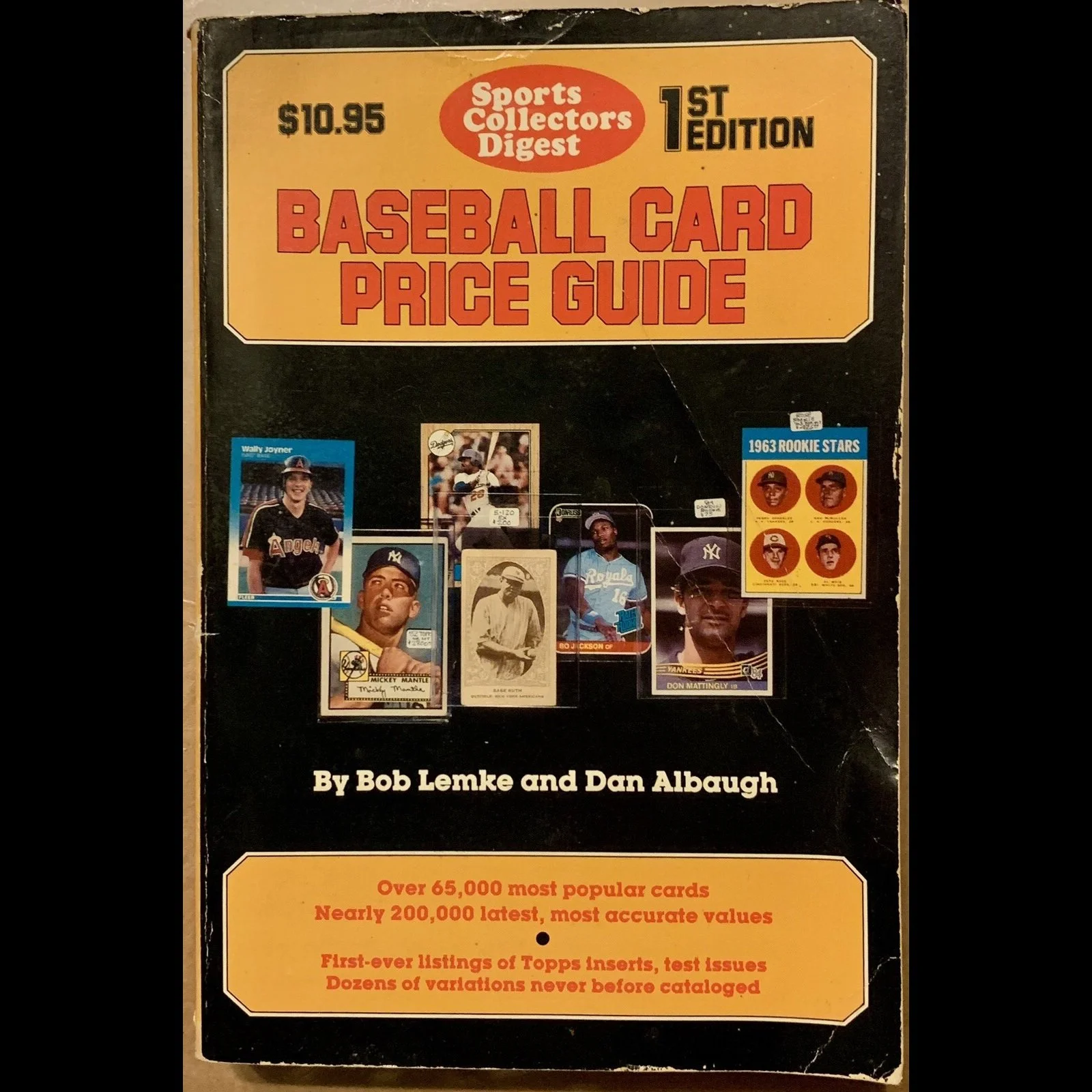
Bob Lemke
The Sports Collectors Digest Baseball Card Price Guide was a must-have for any baseball card collector from the vintage era. Originally published in 1987, the guidebook covered the key aspects of baseball cards including pricing, types, and publishers.
It was later renamed The Standard Catalog of Vintage Baseball Cards, but once its editor, Bob Lemke, passed away, it essentially ceased to be published.
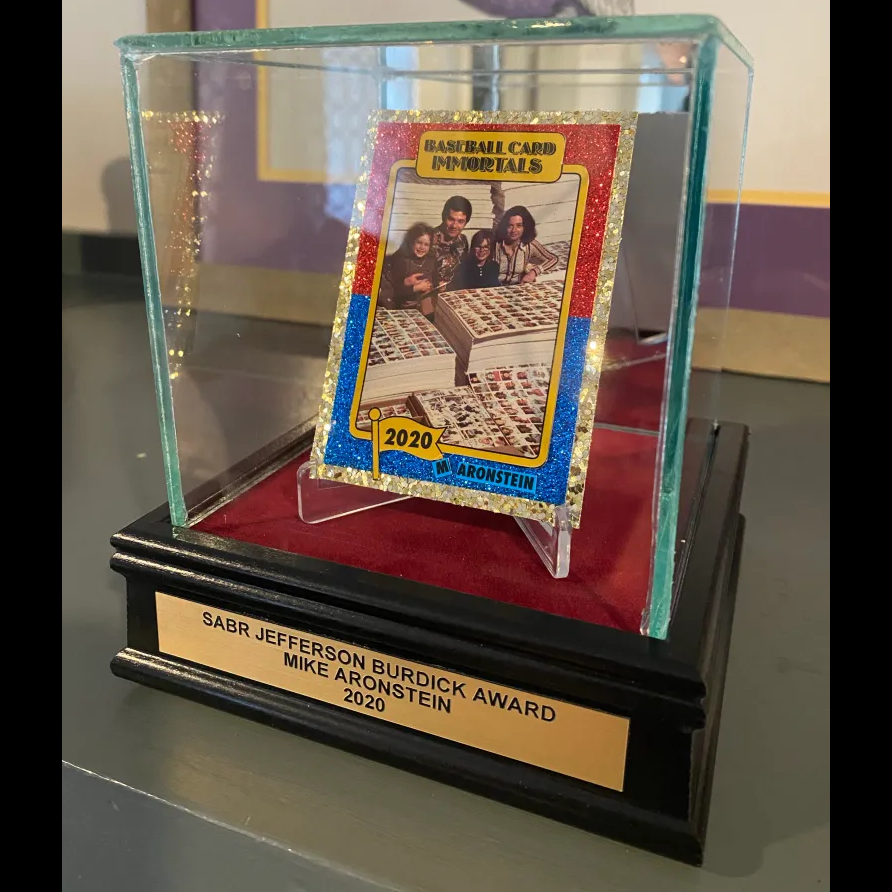
The Jefferson Burdick Award
Eligible candidates include anyone who has made significant contributions to the hobby in such areas as baseball card research/scholarship; baseball card creation/production/innovation; developing/maintaining resources (e.g., publications, websites, communities, events) for collectors; and increasing access, knowledge, or enjoyment of the hobby.
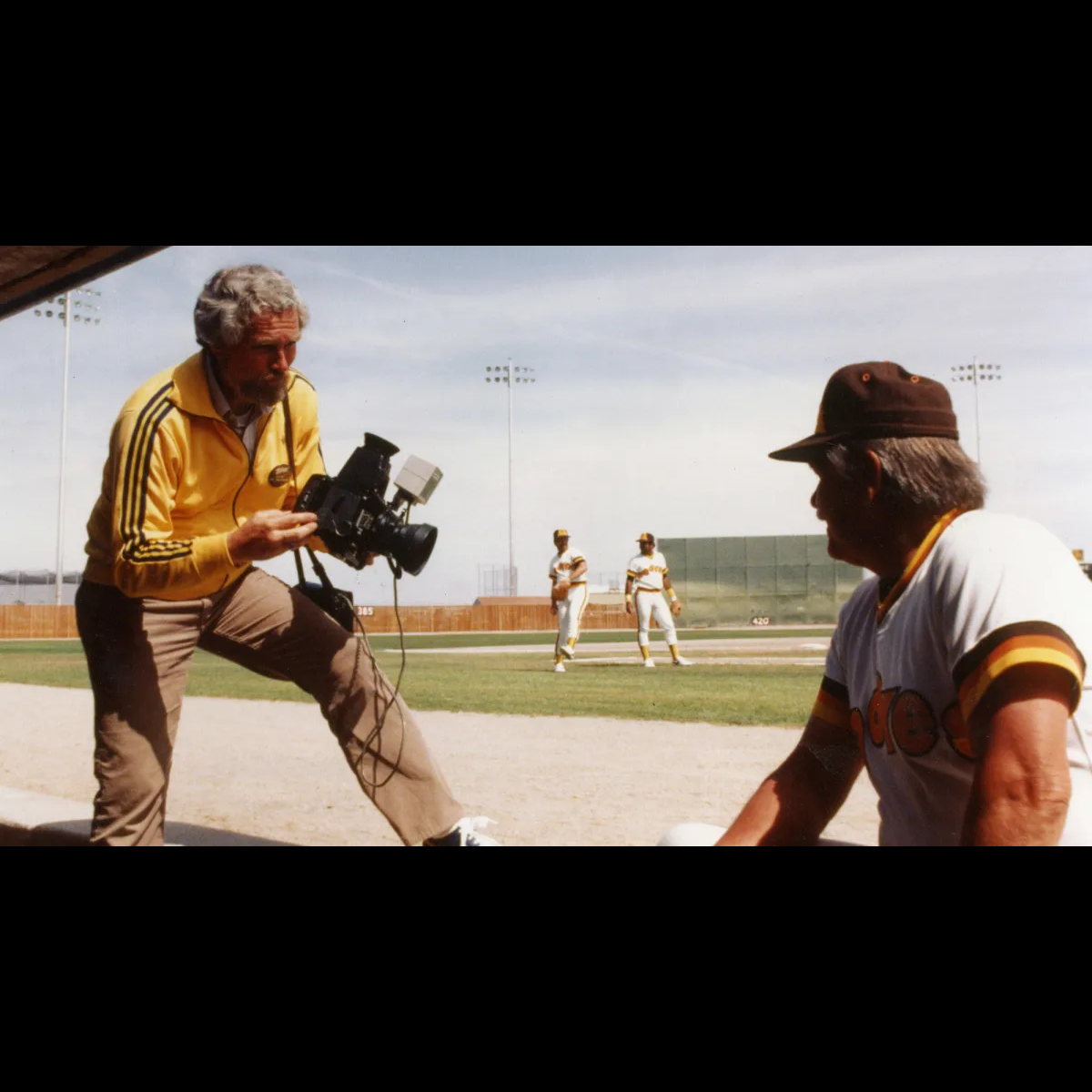
Doug McWilliams
Baseball card photographer Doug McWilliams was the winner of the 2021 Jefferson Burdick Award.
Doug McWilliams was a photographer for The Topps Company from 1971 to 1994, and his images graced thousands of baseball cards throughout an era of monumental changes in the hobby.
He donated 10,000 negatives to the Hall of Fame,* creating a huge digital collection of color images of all kinds of players from the 60s, 70s, and 80s.
*Why yes, you can search his archives there.
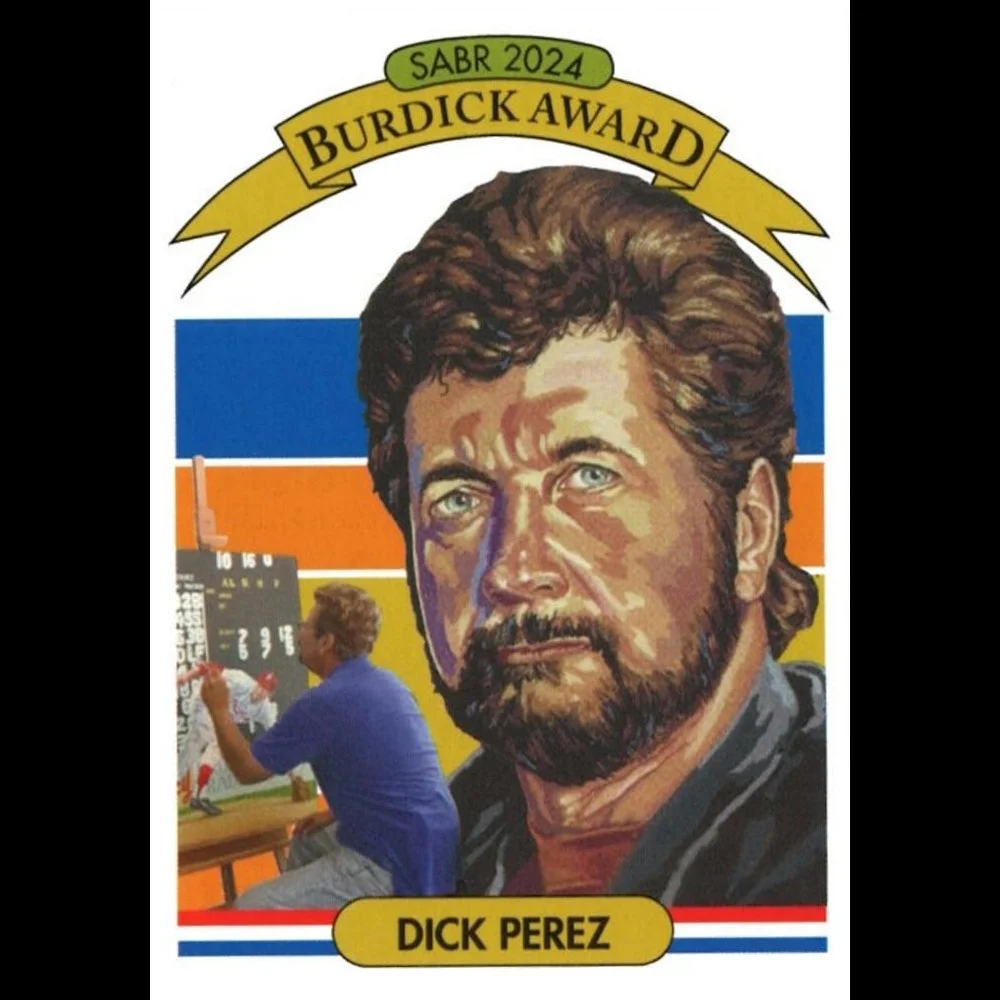
Dick Perez
Acclaimed artist Dick Perez was the winner of the 2024 Jefferson Burdick Award.
Dick Perez is a name most familiar to collectors of 1980s and ’90s Donruss baseball cards, synonymous with the sets’ most prized, anticipated, argued (and even sabermetrically analyzed!) subsets: the Diamond Kings. However, these cards only scratch the surface of Perez’s overall oeuvre, which also includes hundreds of Perez-Steele Hall of Fame postcards, other Donruss collaborations such as the 1983 Hall of Fame Heroes and 1984 Champions sets, later collaborations with Topps, and 2023’s independently produced Diamond Immortals set.
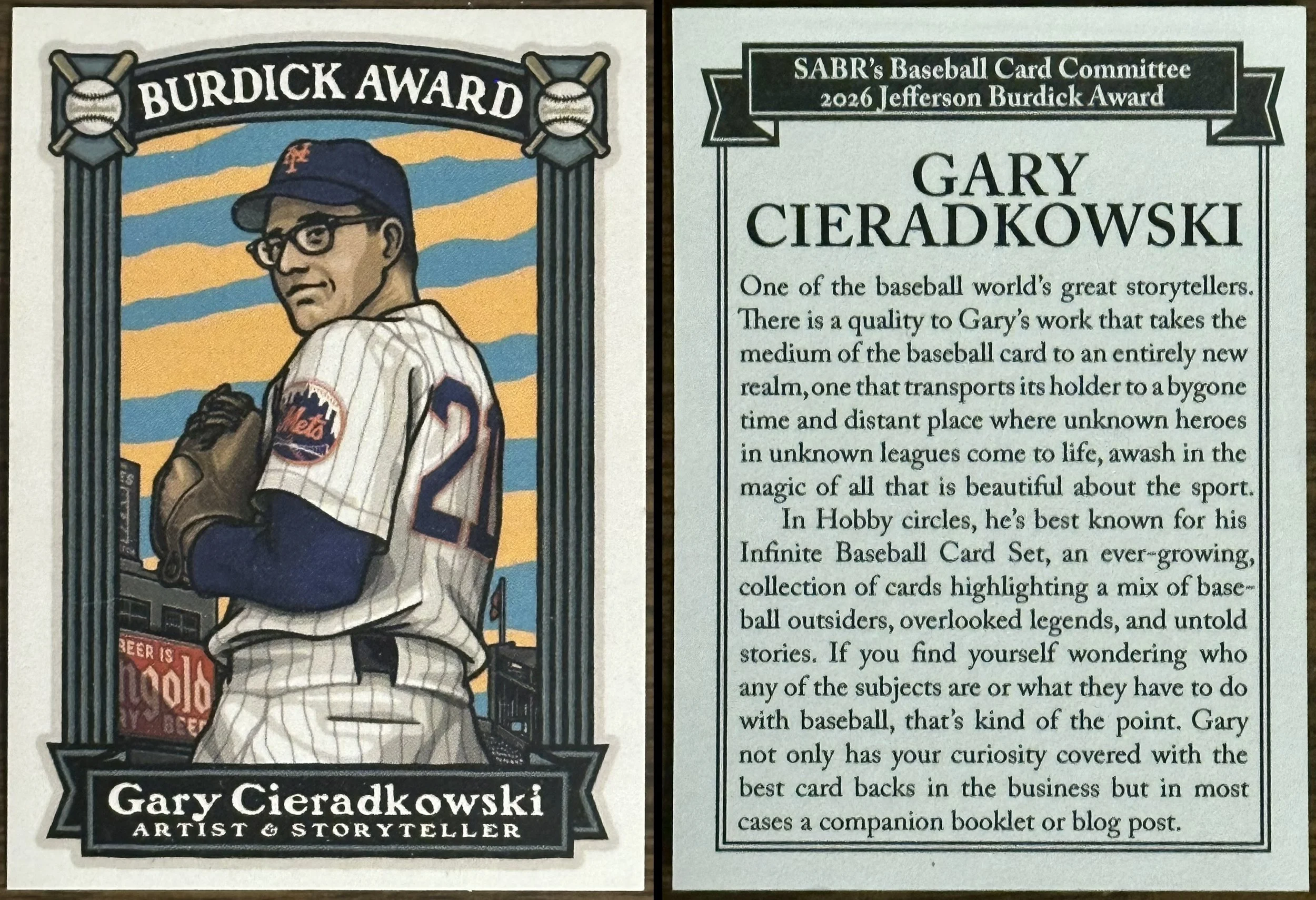
Gary Cieradkowski
Gary Cieradkowski was selected as the winner of the 2026 Jefferson Burdick Award.
Gary Cieradkowski is best known within the card industry for his Infinite Baseball Card Set, an ever-growing, independently produced collection of cards highlighting a mix of baseball outsiders, overlooked legends, and untold stories.
He was our guest for for Episode 4 of Season 5. You can listen to that episode HERE.
Read Gary’s thoughts about winning the Burdick Award HERE.
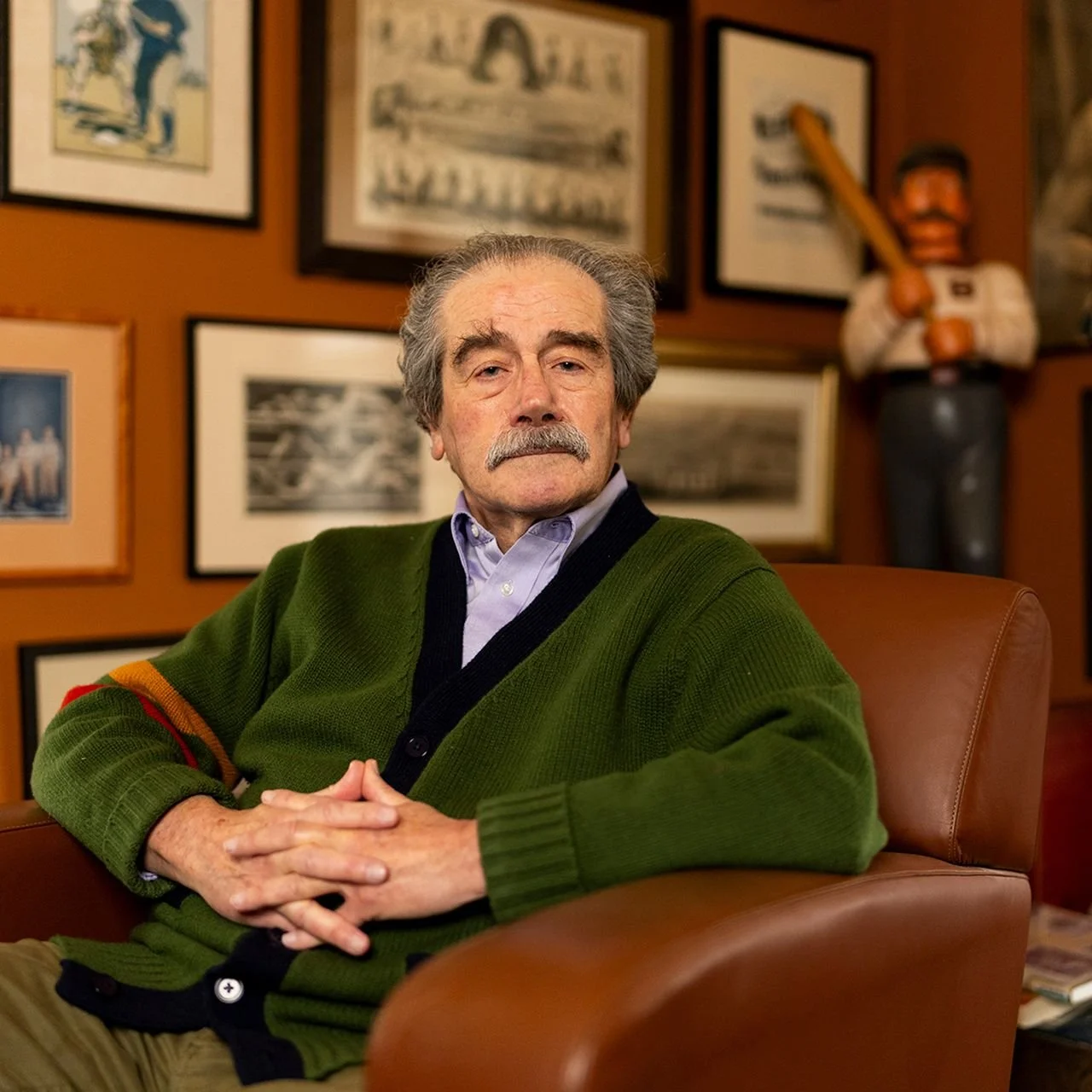
John Thorn
John Thorn is the Official Historian of Major League Baseball. Apart from his creation, with Pete Palmer, of Total Baseball, his many baseball books over the past three decades also include Treasures of the Baseball Hall of Fame, The Game for All America, and Our Game, a history of the game which also supplies the title for his weekly blog at MLB.com.
In 2011, Simon & Schuster published his major work, Baseball in the Garden of Eden: A Secret History of the Early Game.
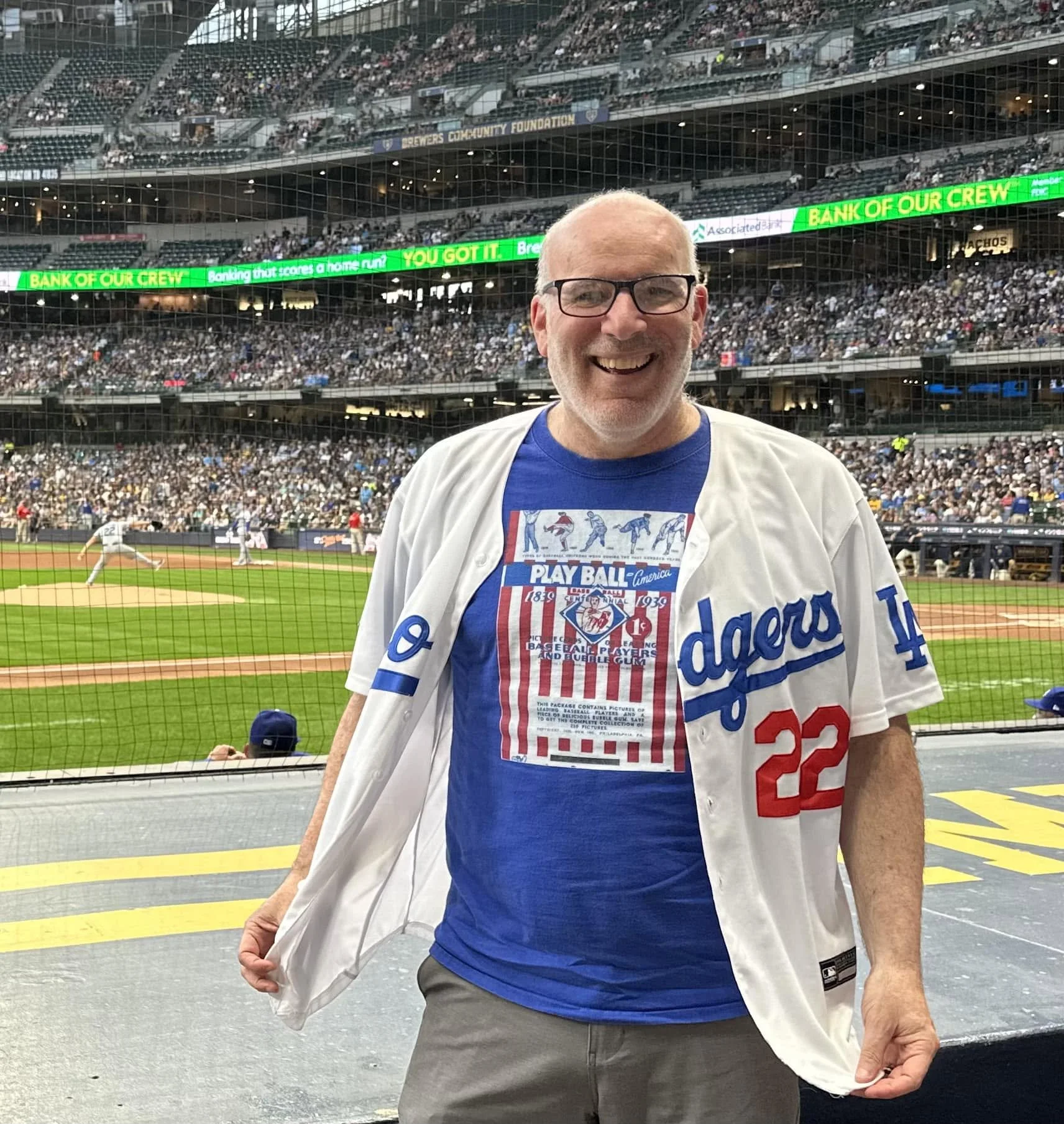
1939 Play Ball
Despite the fact that he thinks the creators of the 1939 and 1940 Play Ball cards didn’t put a ton of time or energy into the thought process behind choosing photos for the sets, Jason is still a supporter, as is evidenced by his stylish shirt here.
Jason posits that Gary Cieradkowski spends more Time Per Card than any card creator who has ever created cards, when you factor in the research, the writing, the artwork, and the physical production.
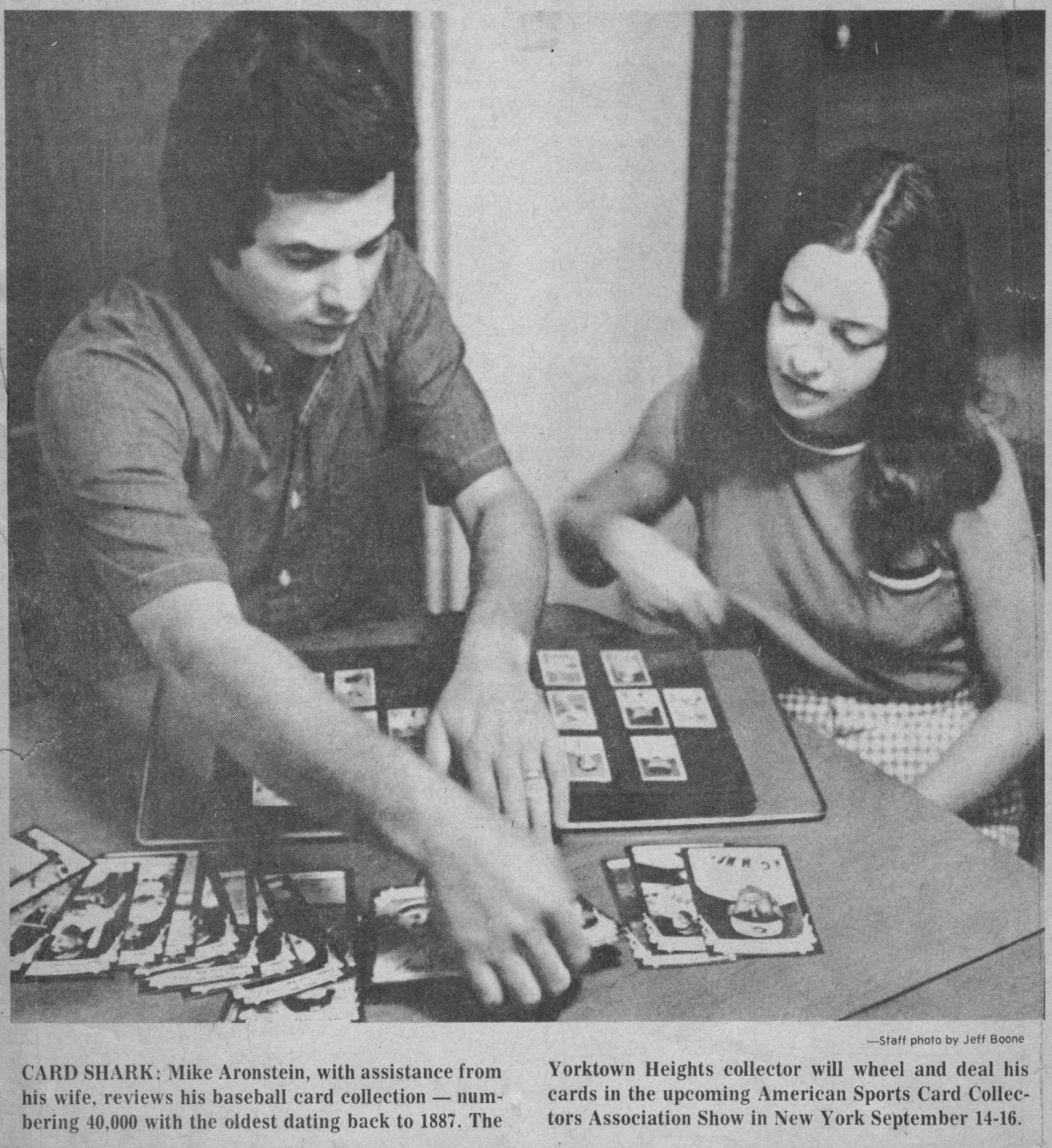
Michael Aronstein
TCMA founder Michael Aronstein was selected as the winner of the inaugural Jefferson Burdick Award.
Aronstein was one of the pioneers of the modern baseball card industry, arranging and hosting early conventions and co-organizing the American Sports Card Collectors Association shows in New York City. He published Collectors Quarterly magazine and was one of the hobby’s first full-time dealers, providing collectors with alternatives to mainstream sets along with collecting supplies such as plastic sheets before they were widely available.
TCMA produced hundreds of historical and minor-league team sets and challenged the Topps monopoly as a distributor in the 1970s and ’80s. He also founded Photo File, which supplied dealers with high quality 8×10 photos to be signed by athletes.
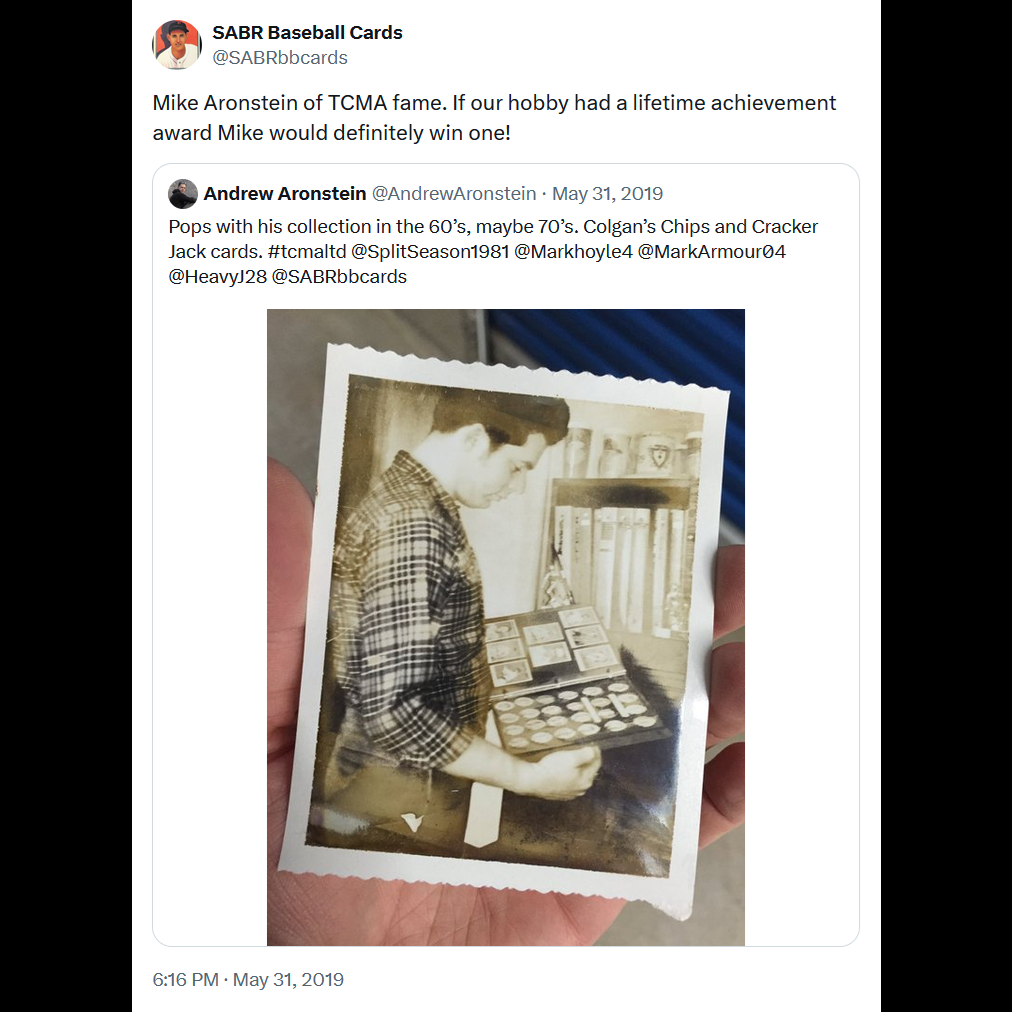
It’s Not What You Know…
…it’s who you know. And Jason knew the guy who could create an award for SABR’s Baseball Cards Research Committee: himself.
So that’s exactly what he did, all but assuring that the inaugural winner of the Jefferson Burdick Award would be Michael Aronstein, whose celebration prompted the idea in the first place.
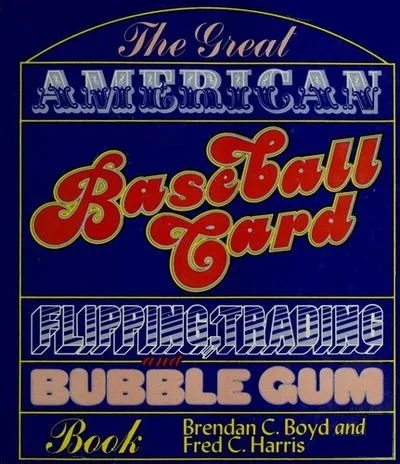
Brendan C. Boyd and Fred C. Harris
Brendan C. Boyd and Fred C. Harris, co-authors of The Great American Baseball Card Flipping, Trading and Bubble Gum Book, were selected as the winners of the 2023 Jefferson Burdick Award.
For young card collectors, the book had serious import. First of all, most of us had never seen these cards. This was the early years of card shows, there were a few dealers, and fewer checklist books.
Second, and maybe paramount, was that it gave real validation to our collecting passion.
Don’t Forget…
… it’s a huge help when you Rate and Review My Baseball History wherever you listen to the podcast.
5-Star ratings help our show get featured on more people’s suggested podcast pages, which means more people will have a chance to discover it. It just takes a couple seconds of your time, but it really helps us a lot. And of course, liking us on social media, interacting with our posts, and sharing things with your friends or family is great, too. Feel free to send this episode to anyone in your life who loves baseball, or someone who grew up collecting cards. But no matter how you choose to support us, even if it’s just by listening, we appreciate you being here.
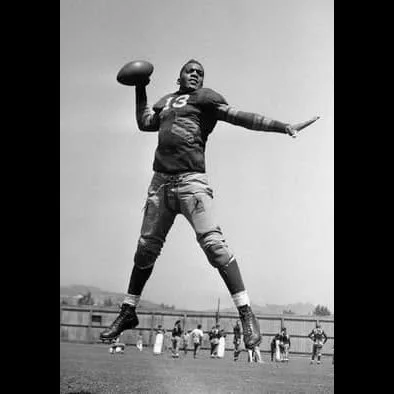
Kenny Washington
Kenny Washington was the first African American to sign a contract with a National Football League team in the modern (post-World War II) era. He played college football and baseball for the UCLA Bruins, and was teammates on each of those teams with Jackie Robinson.
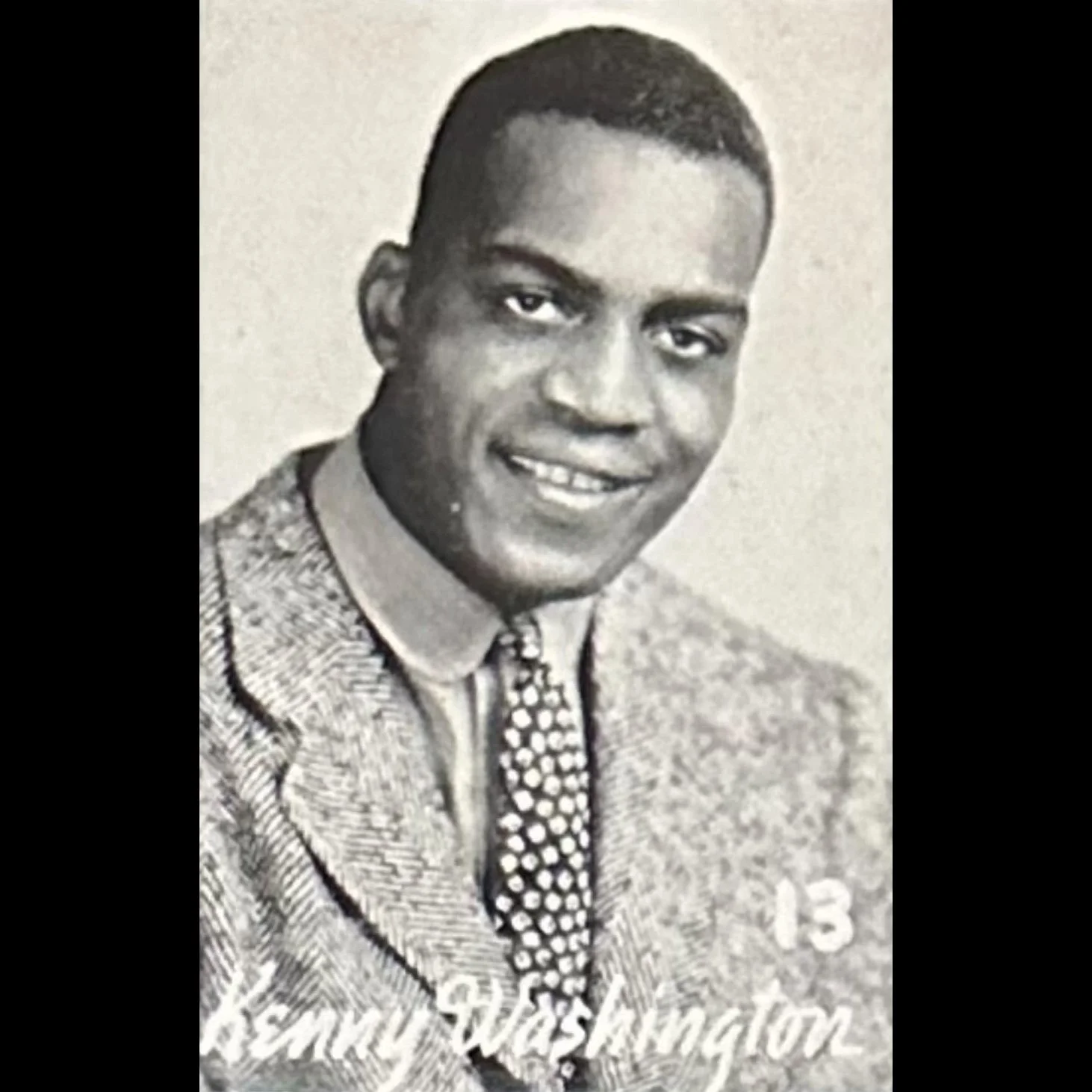
The Best Athlete To Ever Come Out Of LA?
Jason thinks so.
Kenny led his high school team to the Los Angeles city baseball championship and the city football championship in the same year.
Kenny batted .397 for the UCLA Bruins baseball team. In 1939, Kenny’s final season playing for the UCLA football team, he helped them achieve an undefeated record, finishing in second place in the Pacific Coast Conference. They went on to play #3-ranked USC to a scoreless tie, and were ranked #7 in the final AP Poll.
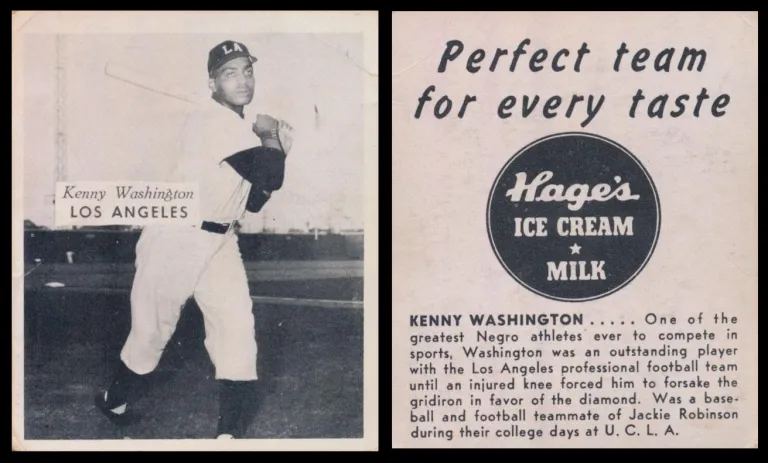
Kenny went to baseball Spring Training with the New York Giants in 1950, more than a decade after leaving UCLA, and seven years since the last time he’d played competitive baseball. Having sustained injuries during his professional football career, he was absolutely not in his prime physical condition anymore, Washington would compete for the final spot on the Giants’ roster - the starting Right Fielder - with Monte Irvin, Don Mueller, and Pete Milne. In the Giants’ first intra-squad game, Washington clubbed a long home run off Dave Koslo, but he wouldn’t make the team. Instead, Leo Durocher recommended that Washington join the Los Angeles Angels of the Pacific Coast League, which he did.
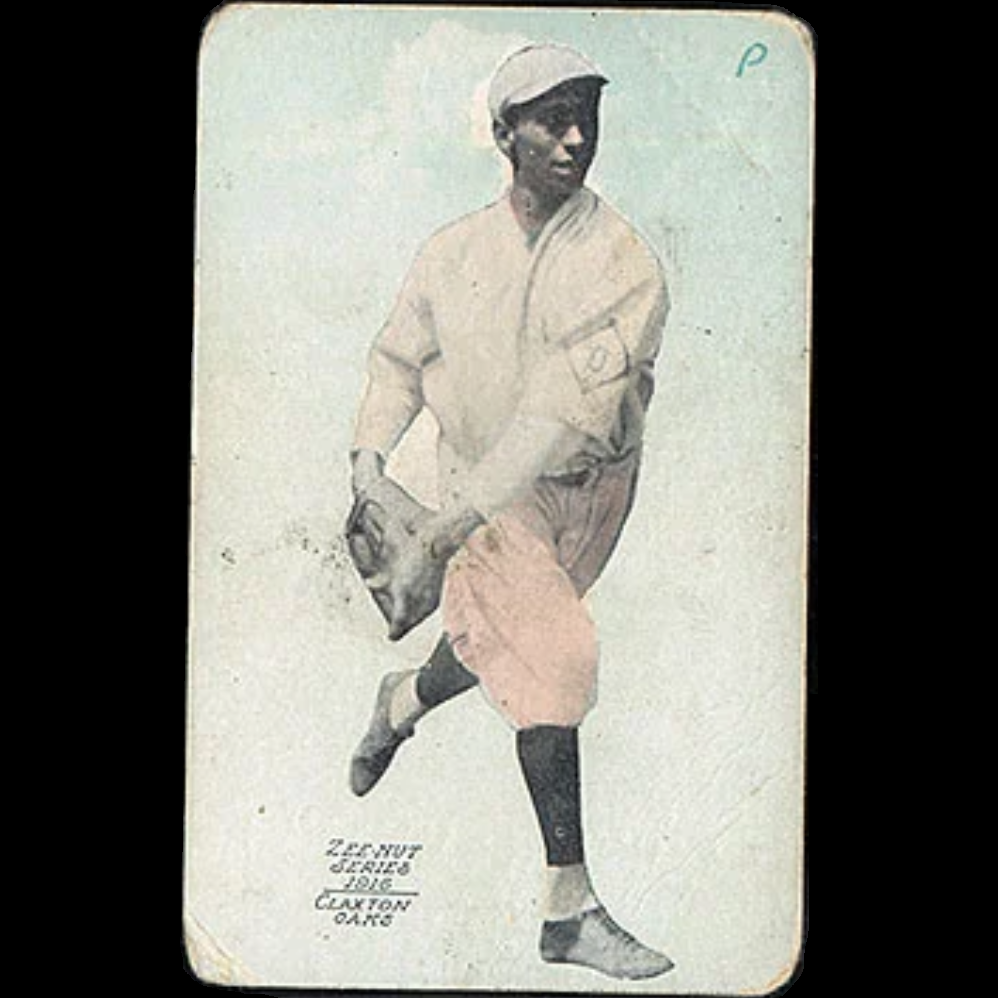
Jimmy Claxton
Sometimes, timing is everything.
Jimmy Claxton made his debut with the last-place Oakland Oaks of the Pacific Coast League on May 28, 1916, facing visiting Los Angeles in the first game of a doubleheader. As it turns out, Claxton's debut also was his swan song. He was released by Oaks skipper Rowdy Elliot on June 3 without appearing in another contest.
During Claxton’s short tenure with the Oaks, a photographer from the Collins-McCarthy Candy Company snapped a photo of him for a set of cards. The Claxton card, included in Zee-nuts candy, is the first American baseball card to feature a Black baseball player.
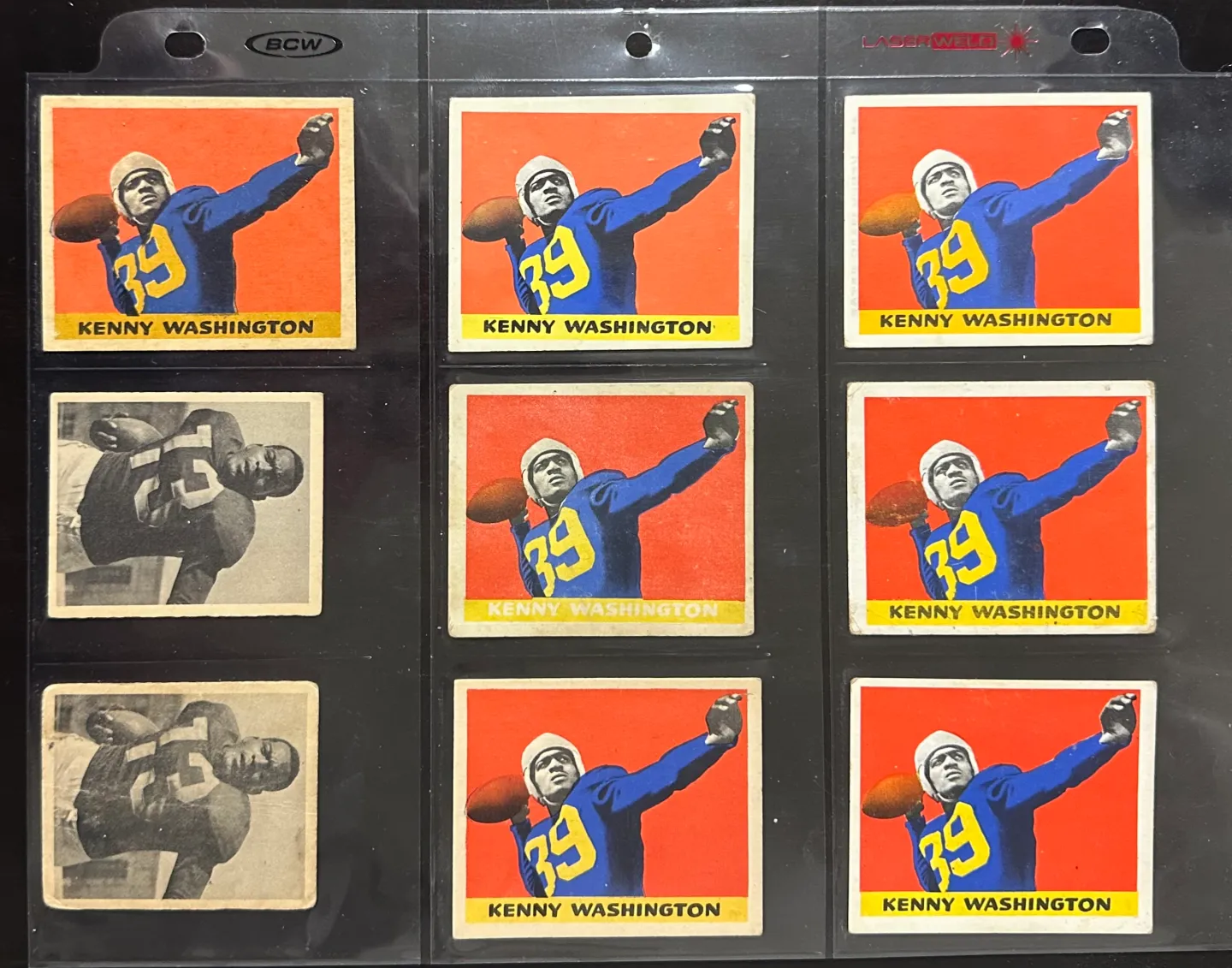
Kenny Washington’s rookie card from the 1948 Leaf football card set has the red background and a number of variations. His 1948 Bowman football rookie card is the black and white card taking up the other two slots in this sleeve of cards.
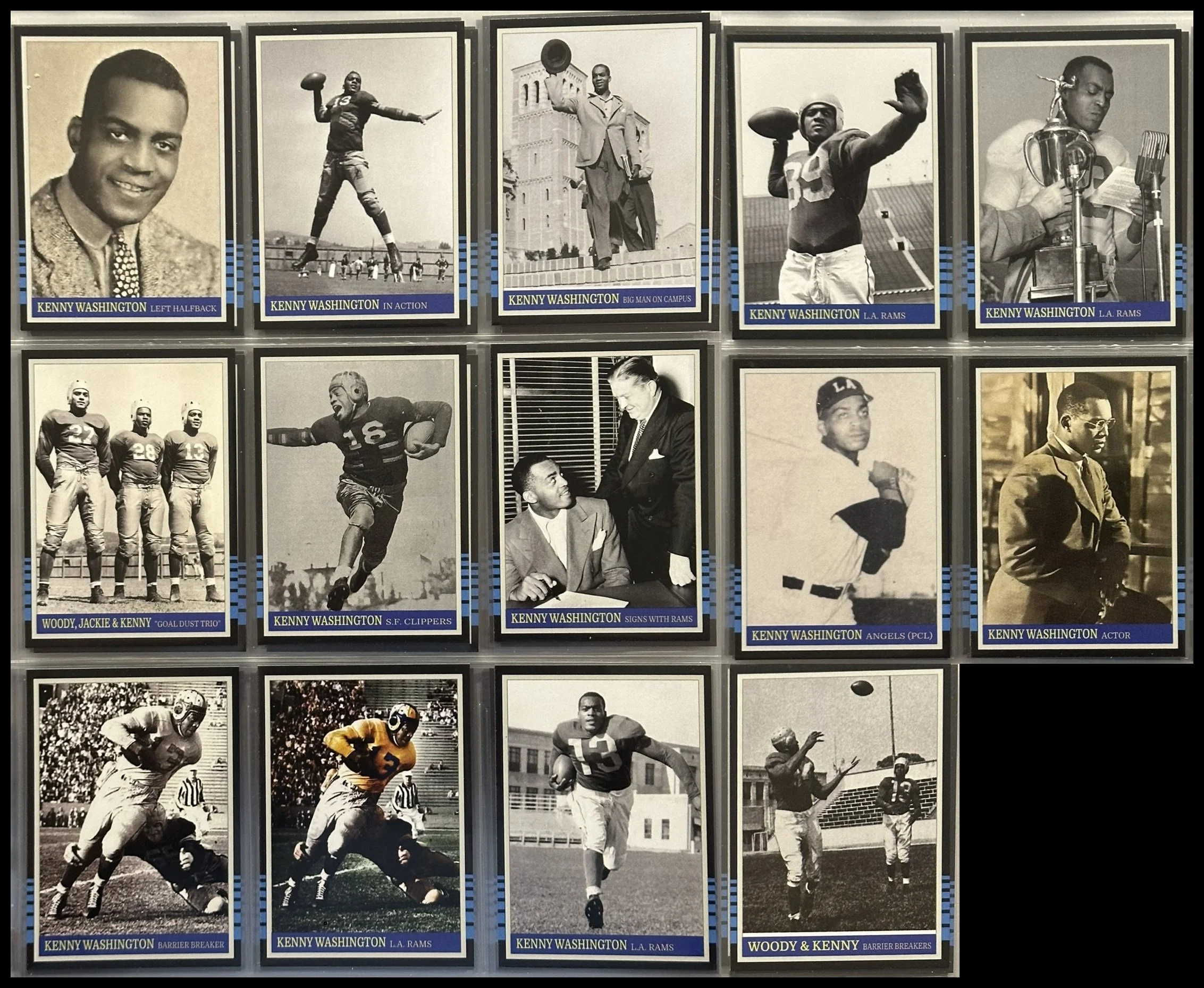
When the major card companies wouldn’t make Kenny Washington an officially licensed football card, Jason had to resort to making his own custom set of Kenny Washington cards, which he gave to Kenny’s family.
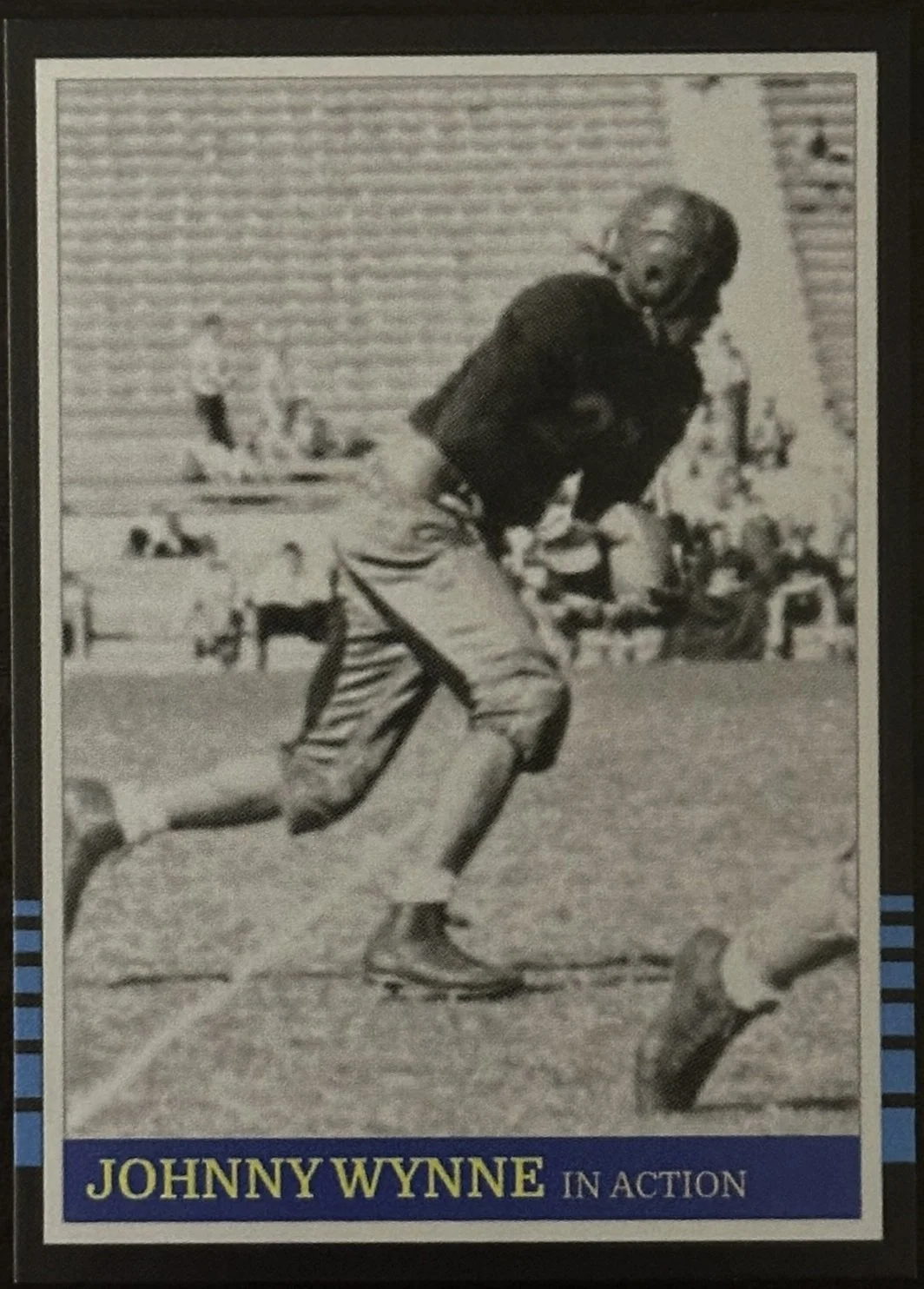
Johnny Wynne
Apart from Historically Black Colleges and Universities, it was unheard of for a school to field two Black players, much less three or four. The 1939 UCLA Bruins fielded five.
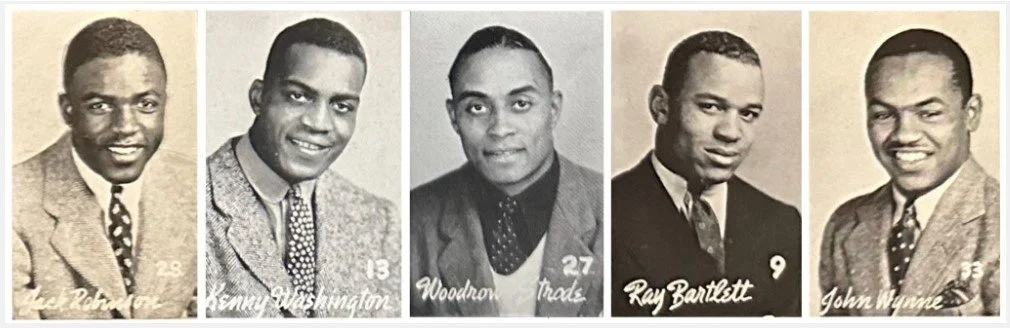
Four of the five “Black Bruins”—Jackie Robinson, Kenny Washington, Woody Strode, and Ray Bartlett—have rightly been celebrated for their accomplishments not only on the field but off.
Much less ink, however, has been dedicated to Johnny Wynne, the fifth Black player on the team. So little, in fact, that most publications erase him from the team’s history altogether.
The NCAA website, for example, notes Robinson as “one of four African American players for the Bruins.” The College Football Hall of Fame similarly states that Robinson was “one of four black players on the 1939 UCLA football team.”
But not Jason. He writes about Johnny Wynne HERE.
The Black Bruins
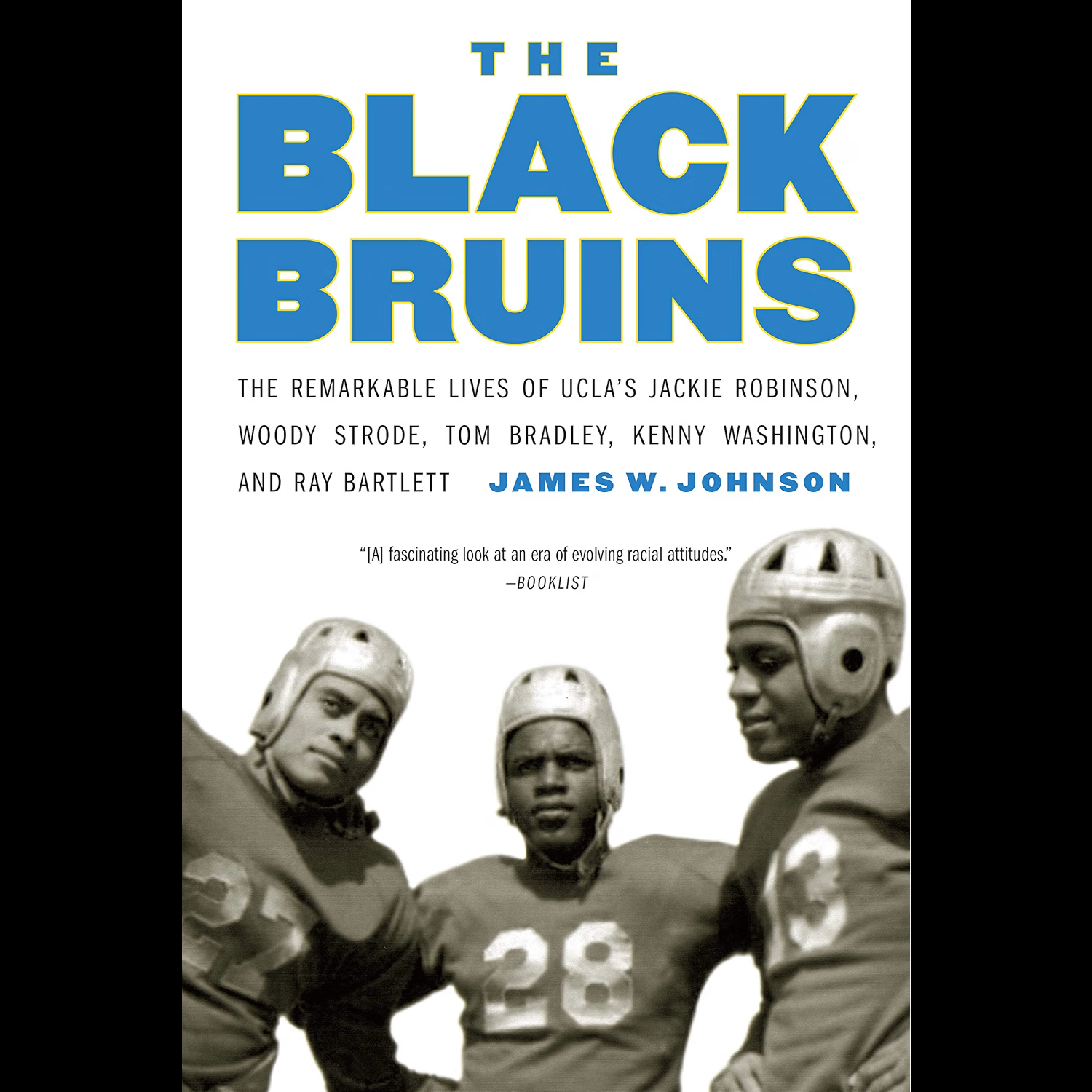
The Black Bruins chronicles the inspirational lives of five African American athletes who faced racial discrimination as teammates at UCLA in the late 1930s. Best known among them was Jackie Robinson, a four‑star athlete for the Bruins who went on to break the color barrier in Major League Baseball and become a leader in the Civil Rights movement after his retirement. Joining him were Kenny Washington, Woody Strode, Ray Bartlett, and Tom Bradley—the four played starring roles in an era when fewer than a dozen major colleges had black players on their rosters.
Buy a copy of The Black Bruins by clicking HERE.
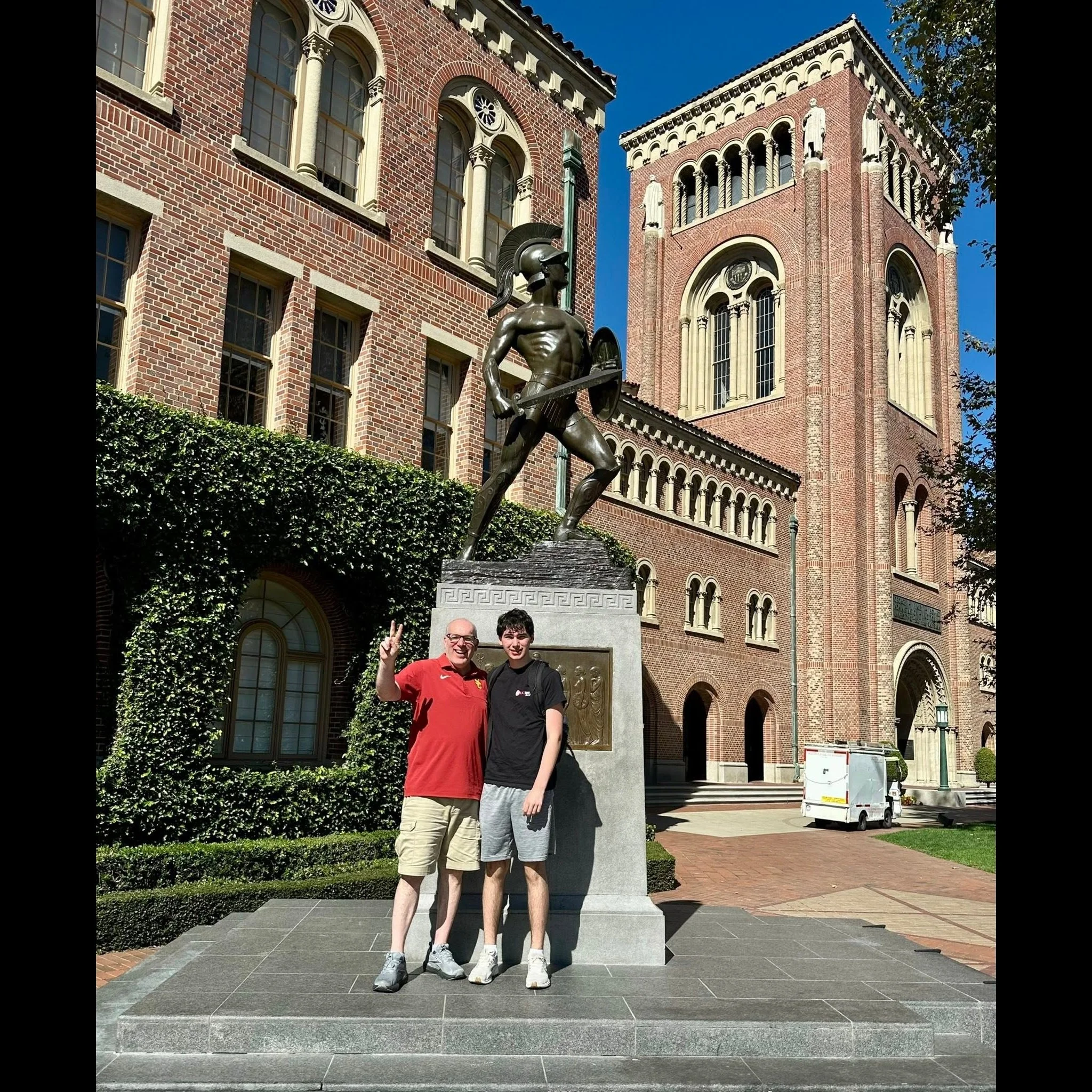
Allegiances Aside
Jason was able to enjoy reading The Black Bruins despite the fact that baseball is his main sport, and his son now goes to USC.
But some stories are bigger than sports and allegiances, and this was one of them.
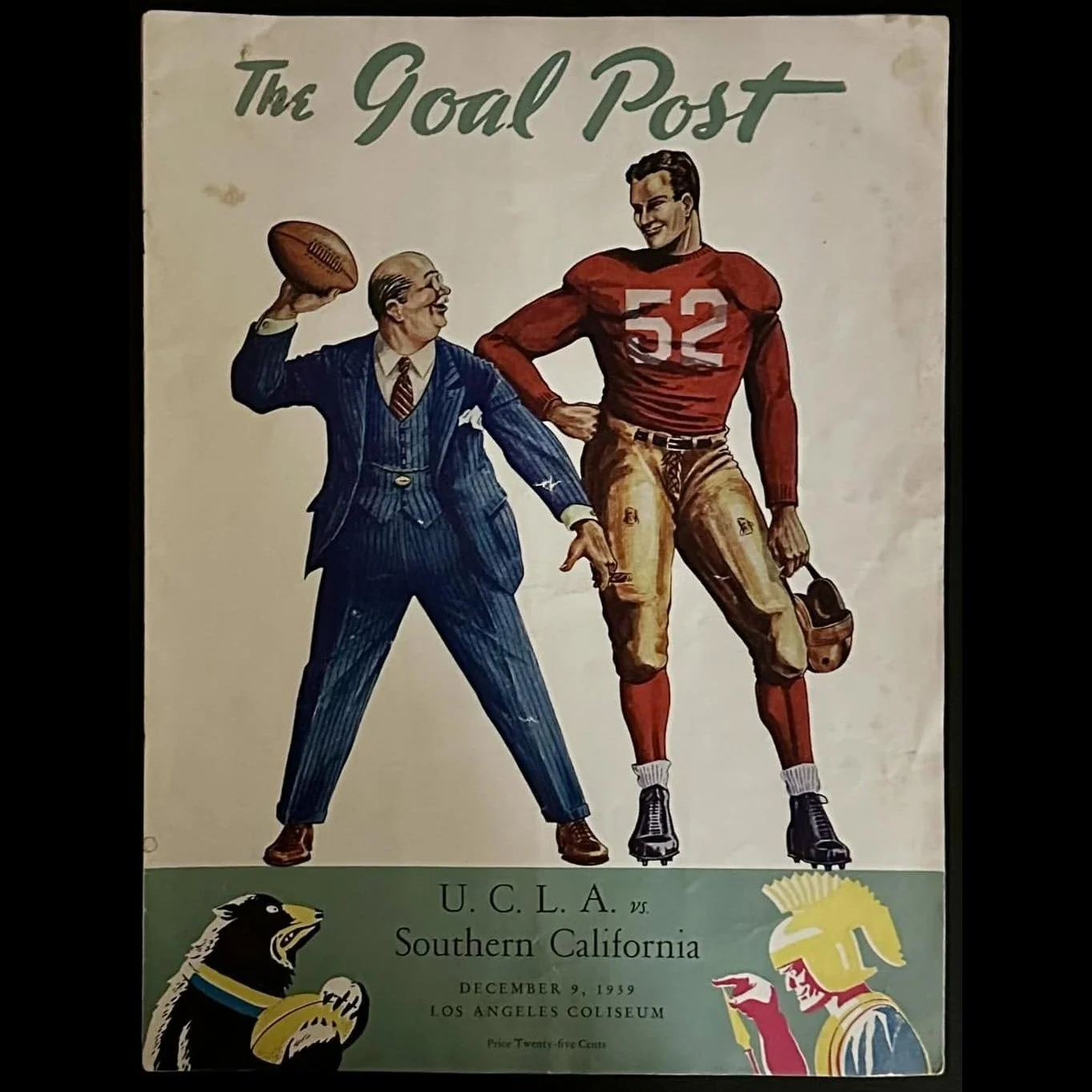
The Spark to Jason’s Research
It wasn’t until Jason bought this official game program from the December 9, 1939 contest between UCLA and USC that he realized there were actually five Black players on the Bruins that season, not four.
Flipping through the pictures of the rostered players was all he needed to have an entirely new research project on his hands.
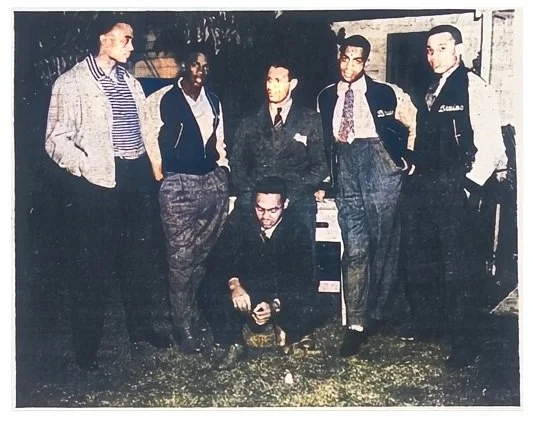
Five Black Bruins
Left to right: Woody Strode, Jackie Robinson, Johnny Wynne (kneeling, in front), Coach Babe Horrell, Kenny Washington, and Ray Bartlett
(Source: California Eagle, November 16, 1939, colorized by Jason Schwartz)
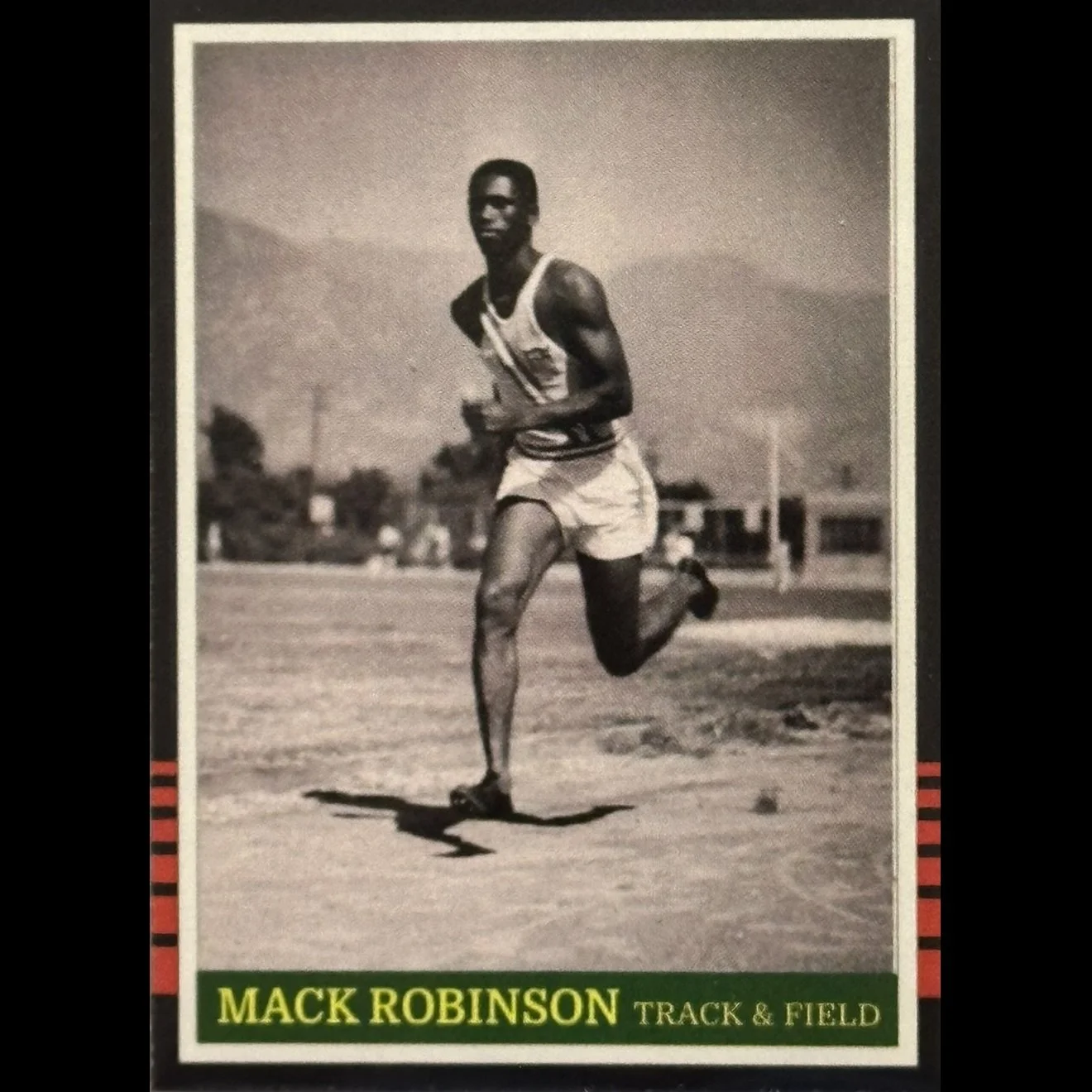
Mack Robinson
Though overshadowed by his brother, Jack, Matthew “Mack” Robinson was a phenomenal athlete who won numerous titles at Pasadena Junior College and the University of Oregon.
In 1936, he set an Olympic record in the 200-meter dash semifinals, only to see it eclipsed by Jesse Owens in the finals of the same event.
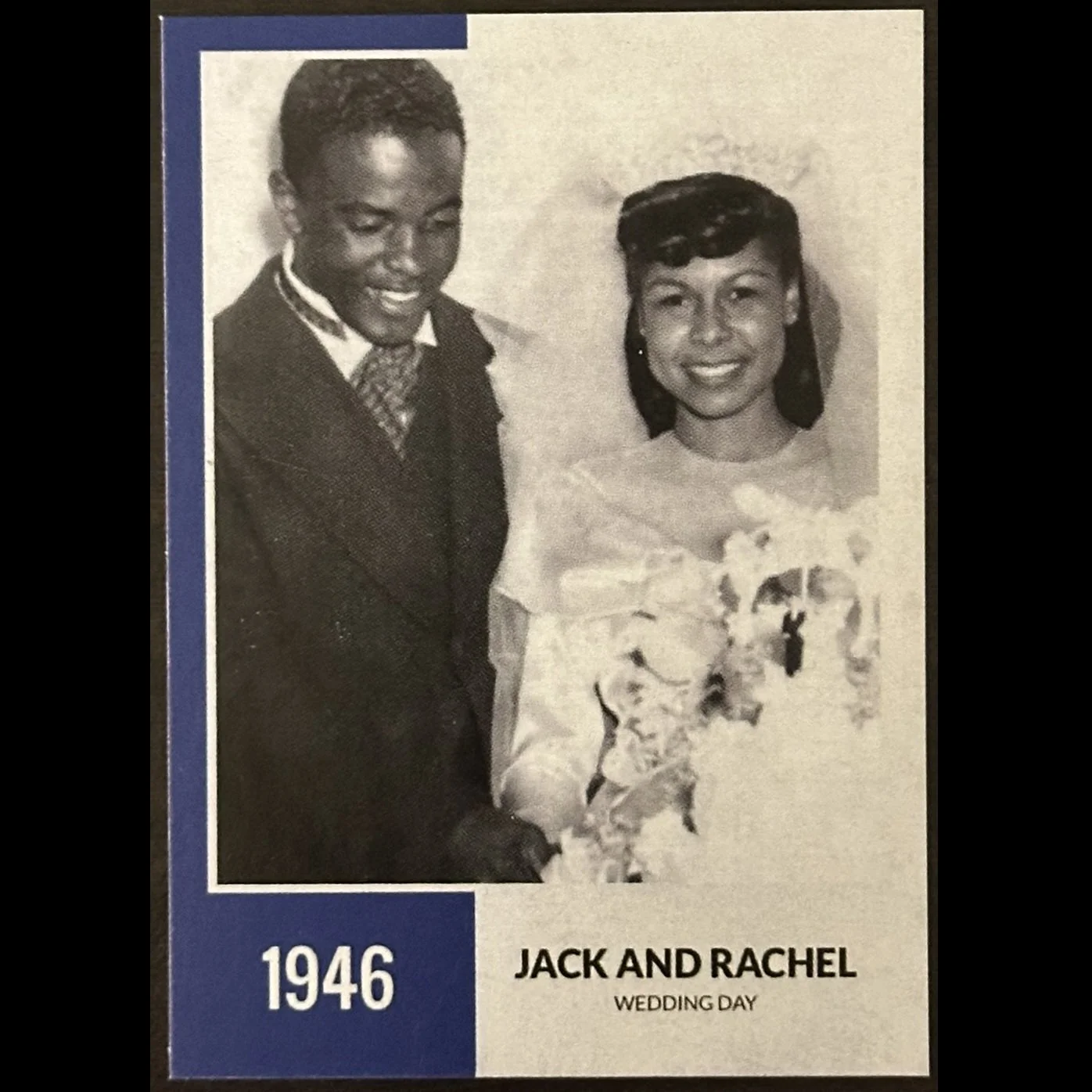
Rachel Isum
Jason has dedicated a great deal of time researching Rachel Robinson, specifically as it relates to her life before she met Jackie. He also made these cards of her, since so few cards of Rachel exist.
As is often the case while, finding one little bread crumb while researching one thing will often lead to an entirely new area of interest. That’s what happened with Jason, as he was trying to learn more about Johnny Wynne’s life.
Johnny had married the daughter of Rachel’s father’s best friend, so Rachel and Johnny actually knew each other before Rachel and Jackie knew each other.
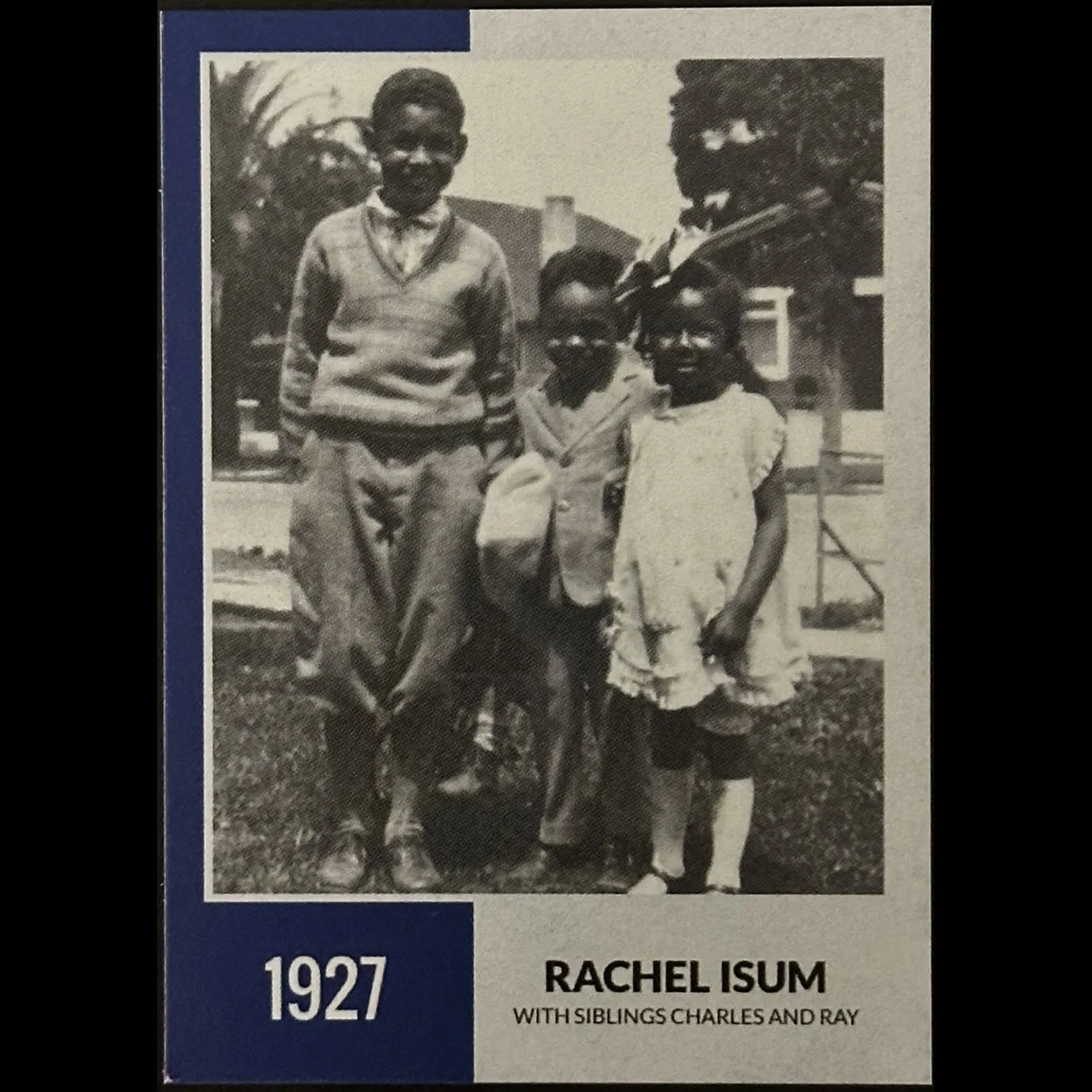
Before Jackie
Rachel had an older half-brother, Charles, and a younger brother named Charles Raymond, who went by “Ray”.
Rachel and Jack were married on February 10, 1946, at the Independent Church in Los Angeles by the Reverend Karl Downs.
For their honeymoon, the newlyweds headed to Spring Training in Daytona Beach. Unfortunately, racism marred what should have been a joyous occasion.
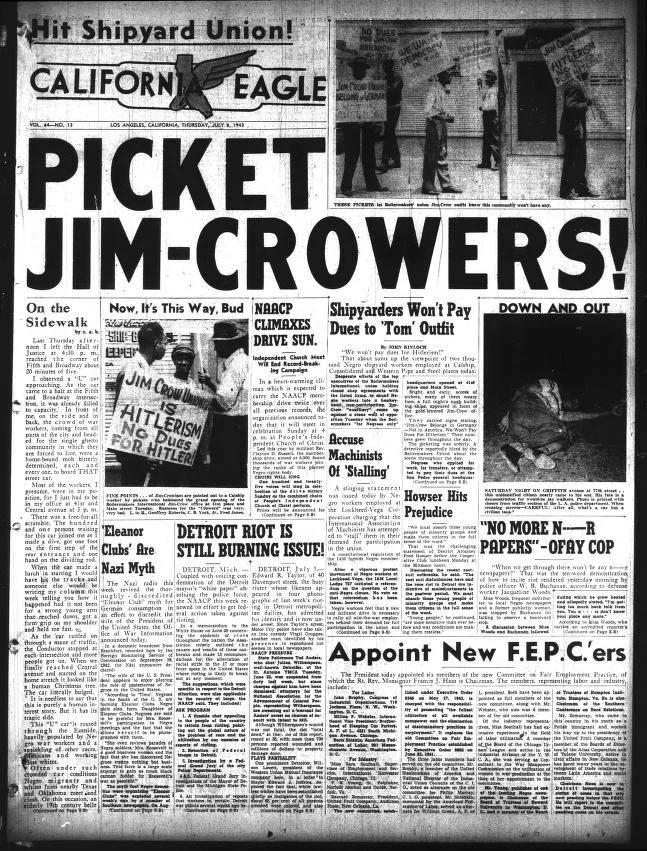
The California Eagle
The California Eagle was one of the oldest Black-owned newspapers in America.
It was founded as The Owl in 1879 by John James Neimore to serve new arrivals to Los Angeles during the Great Migration, when millions of African Americans left the Deep South.
The paper offered information on employment and housing opportunities, as well as news stories geared toward the newly arrived migrant population.
After Neimore died in 1912, Charlotta Bass bought the paper and renamed it California Eagle.
By 1925, the newspaper had a circulation of 60,000, California's largest African American newspaper. Publishers and editors were active in Civil Rights, beginning with campaigns for equitable hiring, patronizing Black businesses, and ending segregation in facilities and housing.
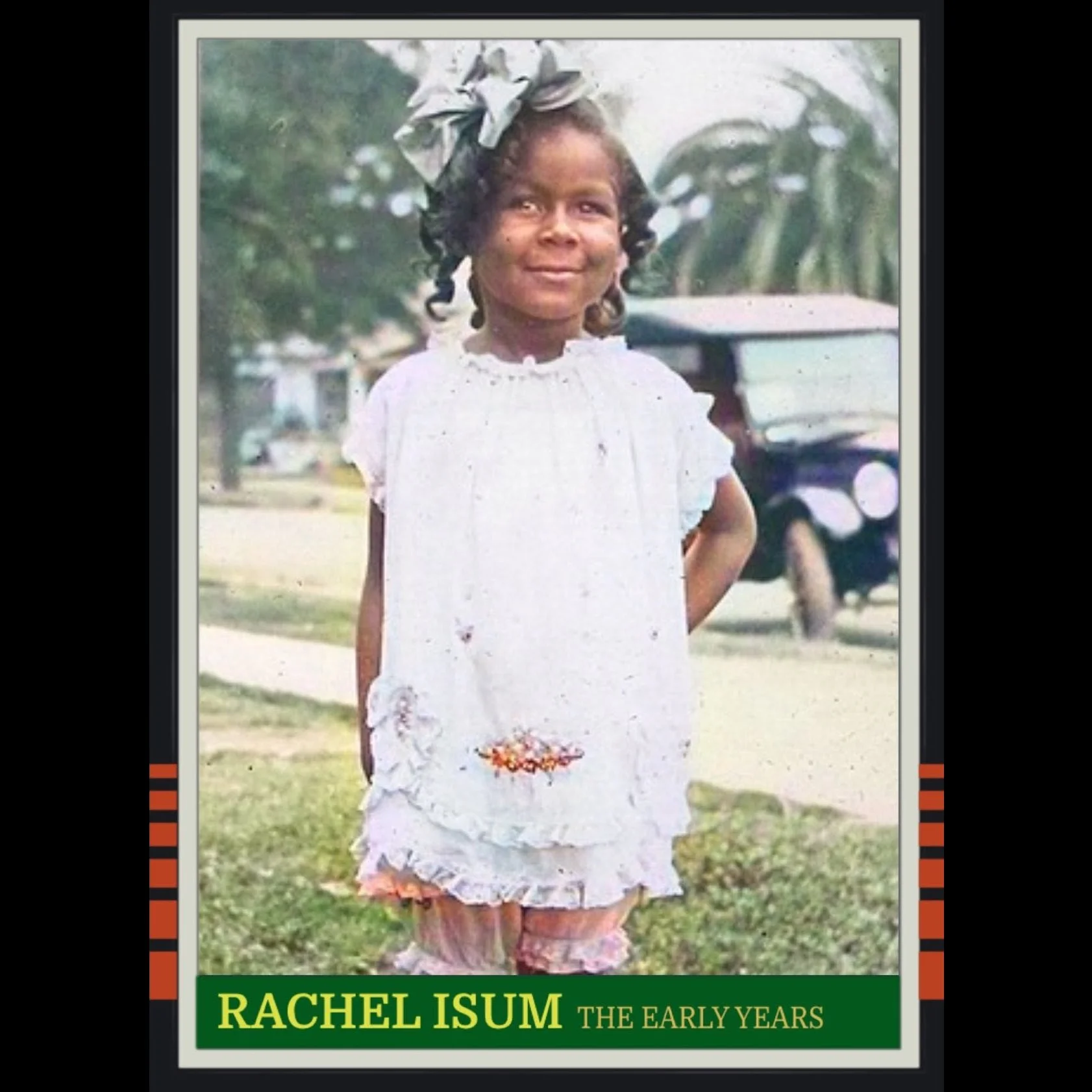
Rachel Isum
The California Eagle loved reporting on local news, such as the time an 8-year-old Rachel Isum played the violin at a quinceañera in Los Angeles.
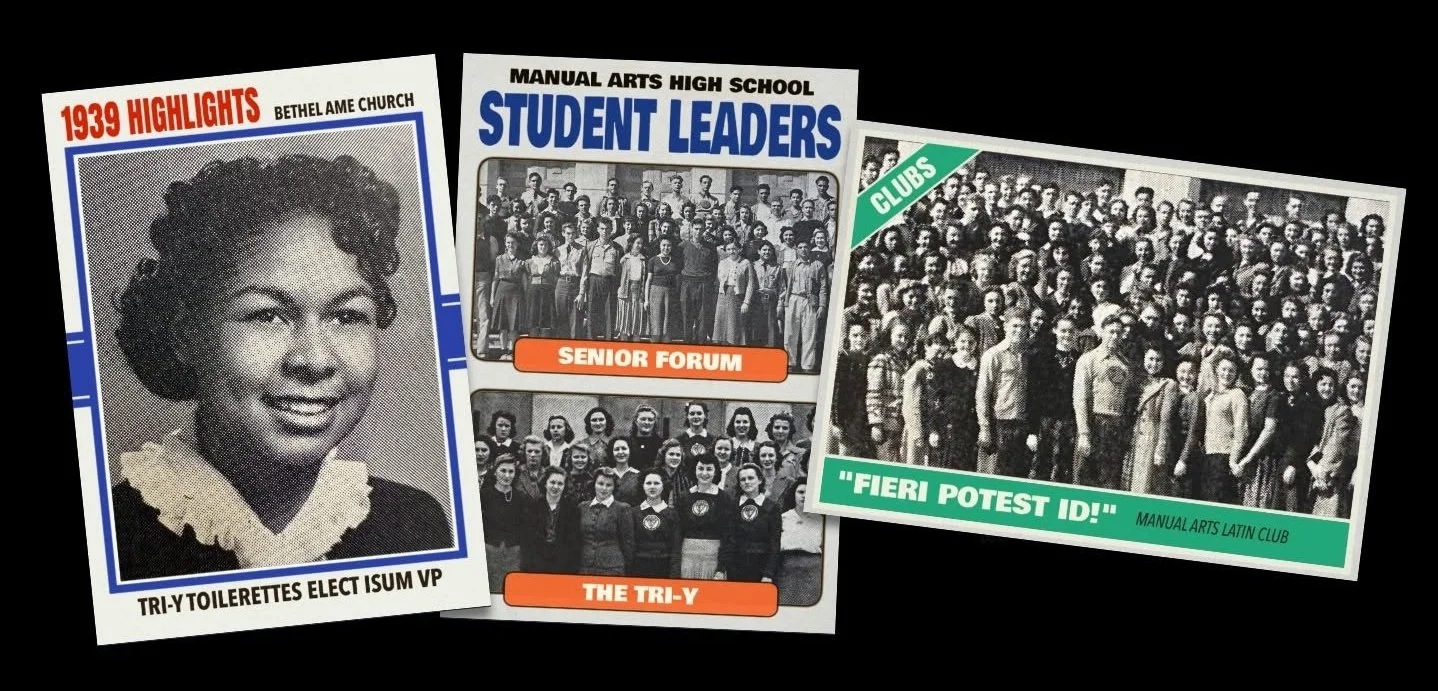
Jason is convinced that Rachel Isum would have gone on to great things in life, with or without Jackie Robinson.
Topps Rookie Cards
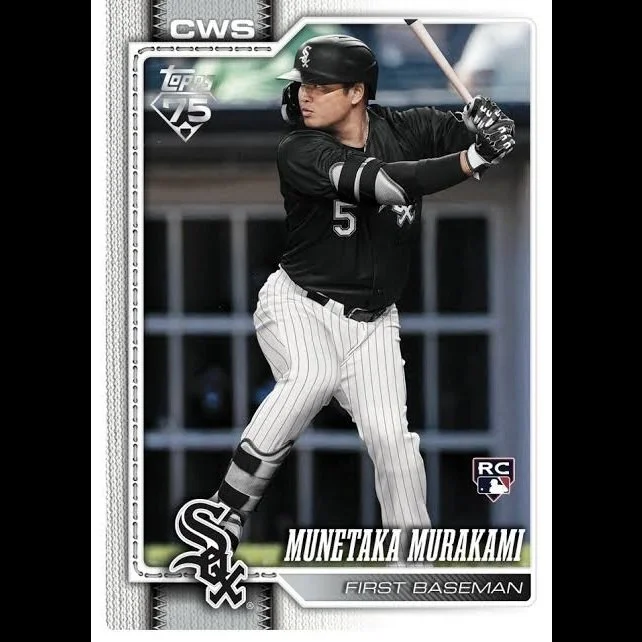
Modern Topps rookie cards are officially denoted with the “RC” logo you see in the lower right quadrant of this 2026 Munetaka Murakami card.
In the old days, it didn’t say “Rookie Card” or “RC” on anyone’s rookie card.
Steve Garvey
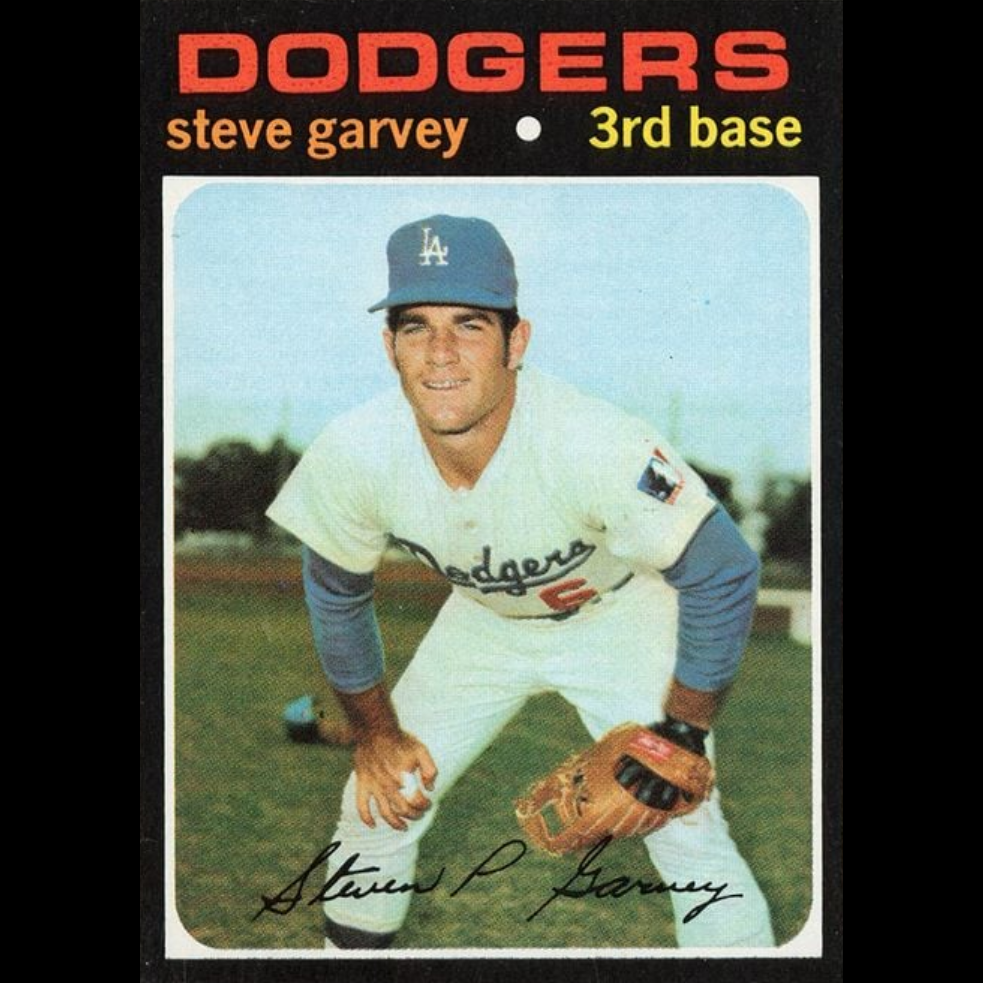
Even though Steve Garvey played games in Major League Baseball in 1969 and 1970, he did not have a baseball card in the Topps set in either of those years. His 1971 card (seen here) is agreed upon by the hobby to be his rookie card. No need for an RC notation.
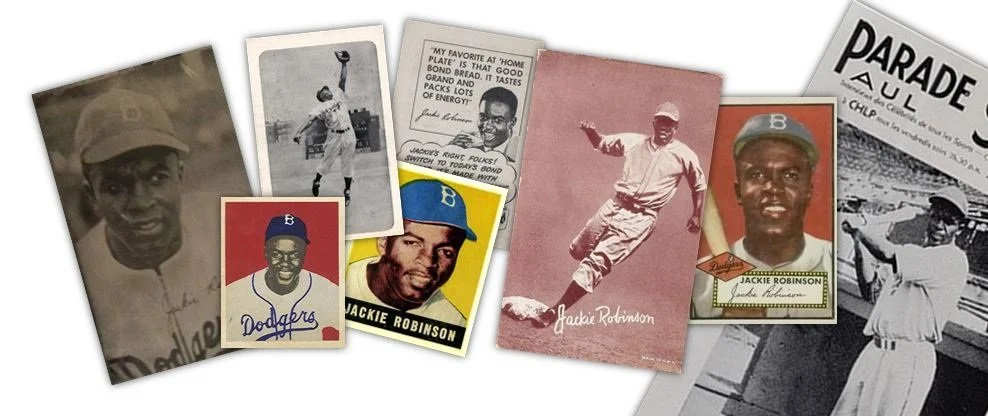
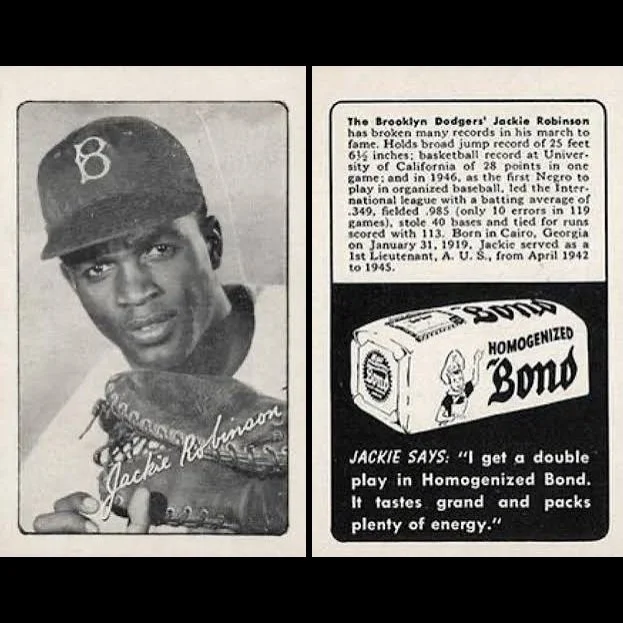
1947 Bond Bread
The 1947 Bond Bread baseball set consists of 13 cards featuring Jackie Robinson. Each card measures 2-1/4” by 3-1/2” and exhibits the Dodgers second baseman in various action and portrait poses. The unnumbered set displays three different backs, though each one features the Bond Bread advertising logo, along with a quote from the Hall of Famer. Though the majority of the set align vertically, with a black-and-white photo of Robinson leaping or in a portrait, four of them align horizontally, showing Jackie making a running catch or fielding.
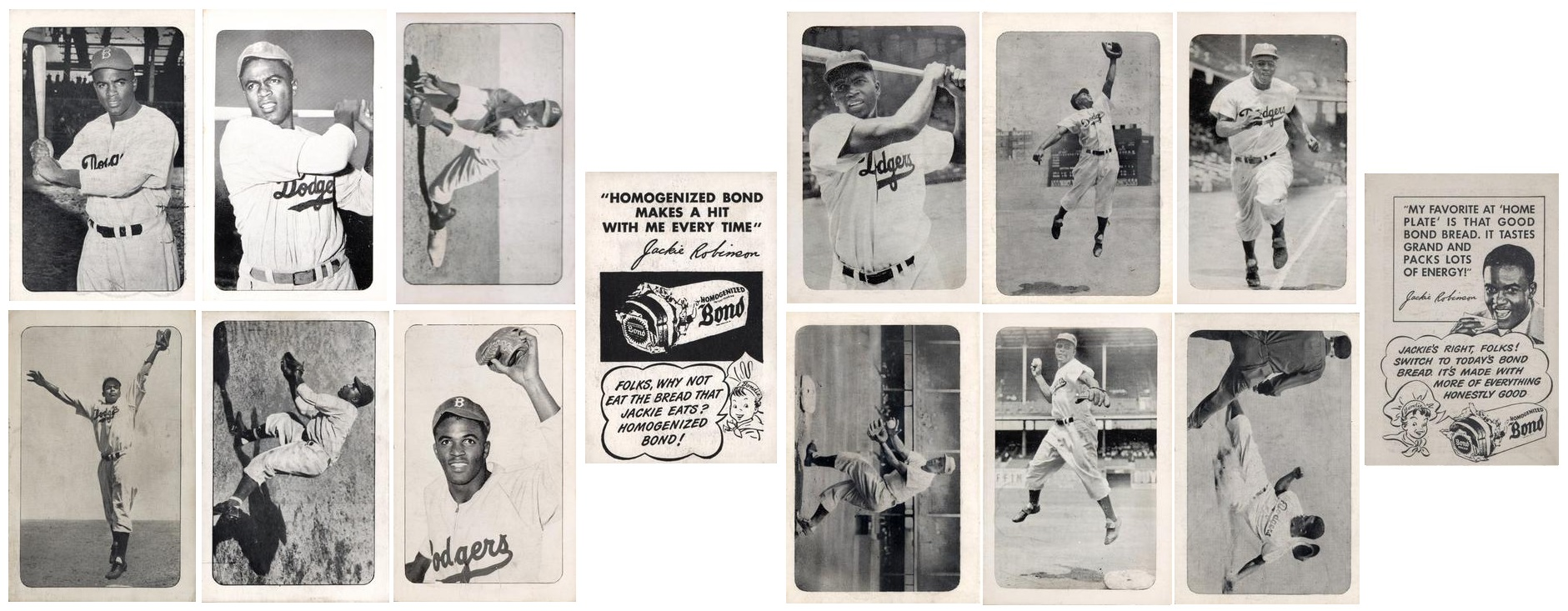
The rest of the cards from the 1947 Bond Bread set, featuring Jackie Robinson.
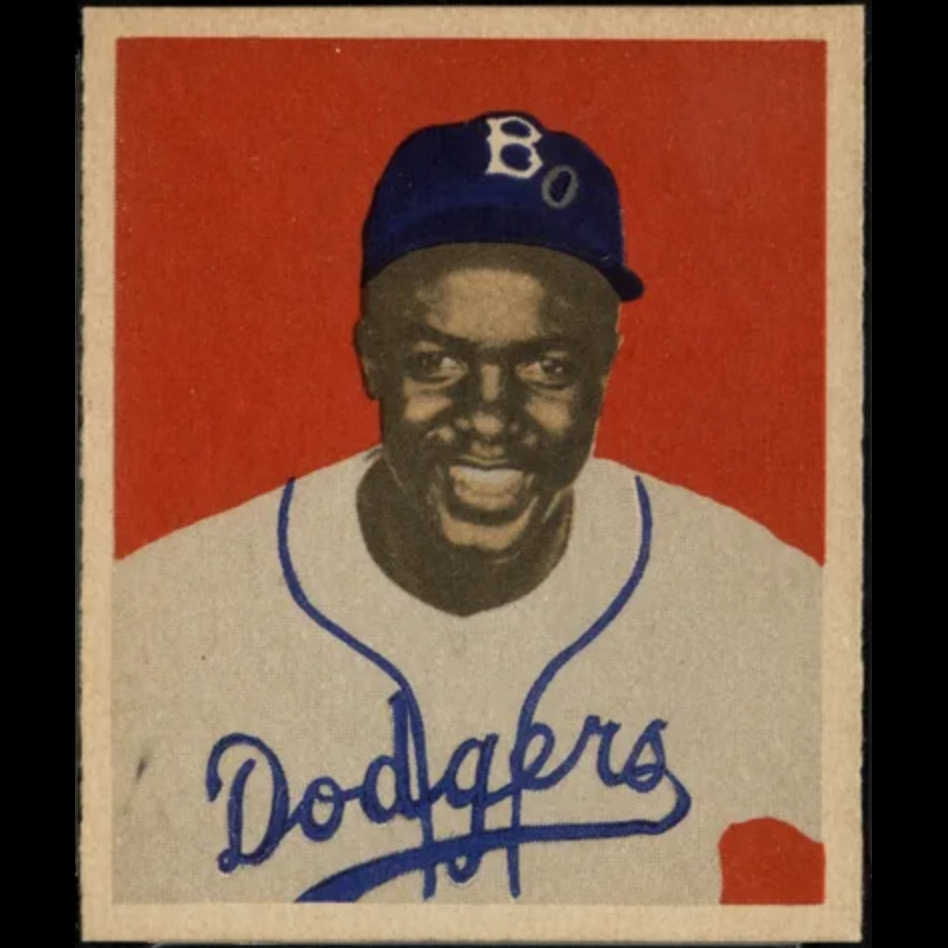
Does It Meet Modern Standards?
Some modern collectors might insist that, to be a true rookie card, you need to be from a major national issue, and some might even say that those cards need to be distributed in packs to be considered a true rookie card. Furthermore, some collectors insist on a true rookie card being licensed.
Jackie was not included in the very small 1948 Bowman set, but he was included in the 1949 Bowman set (seen here), which was absolutely a major, national release. These Bowman cards were licensed.
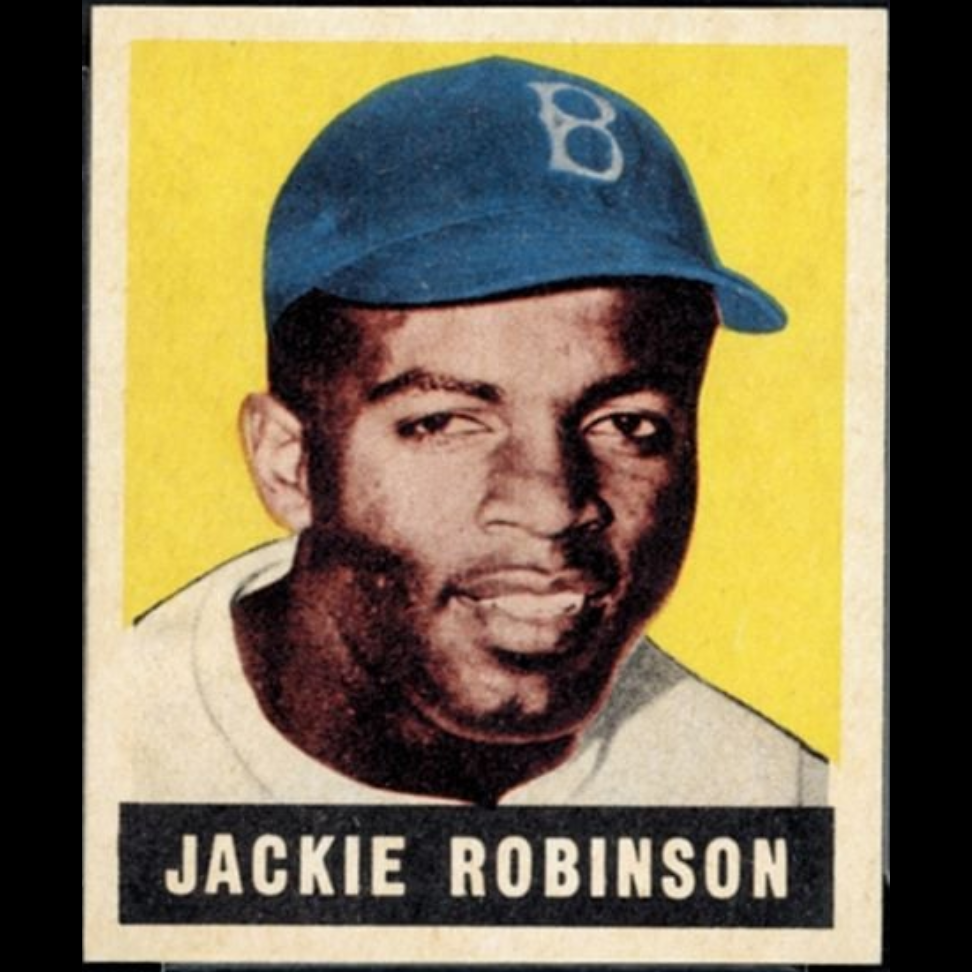
1949 Leaf
No, that is not a typo. While this card (and this Leaf set, in general) has been catalogued in the hobby as being released in 1948, all credible modern research points to it actually being issued in 1949.
While this Leaf set was a major, national release, none of the Leaf cards were licensed, which may disqualify what has been thought for years to be Jackie’s rookie card by many collectors.
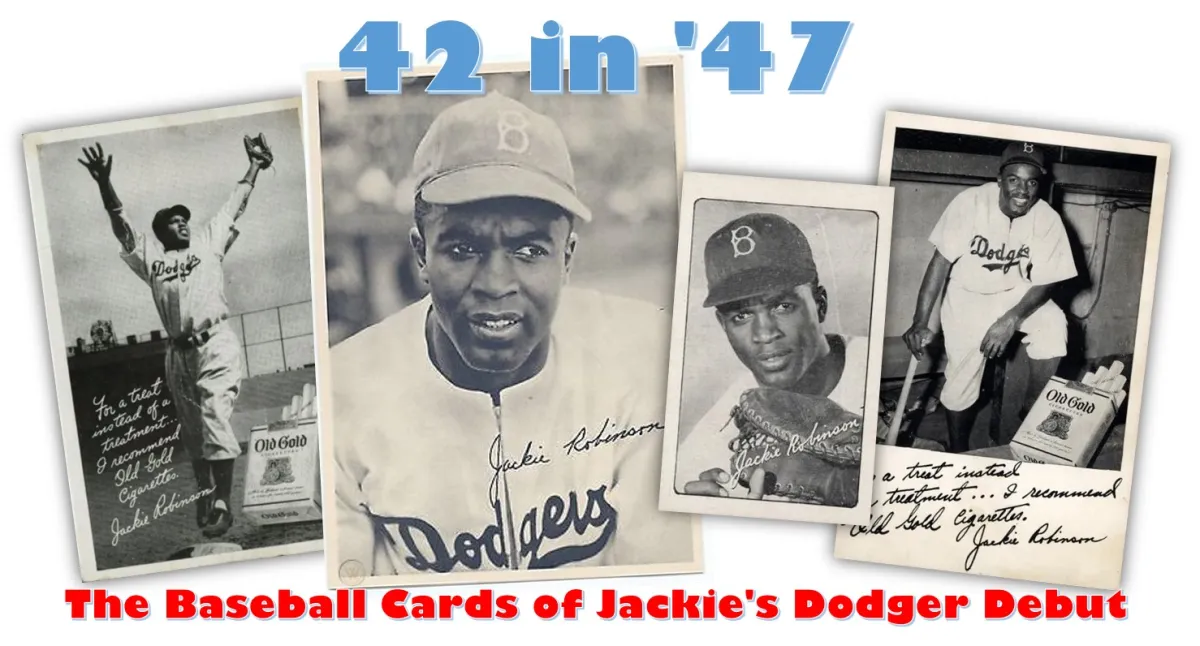
I personally think it’s silly to consider a card from a player’s third year in the American or National League as their “rookie card” even if it is the first card they have been featured on in their career. There’s no way we can’t progress past the point of calling something a rookie card when it is not from a player’s rookie season.
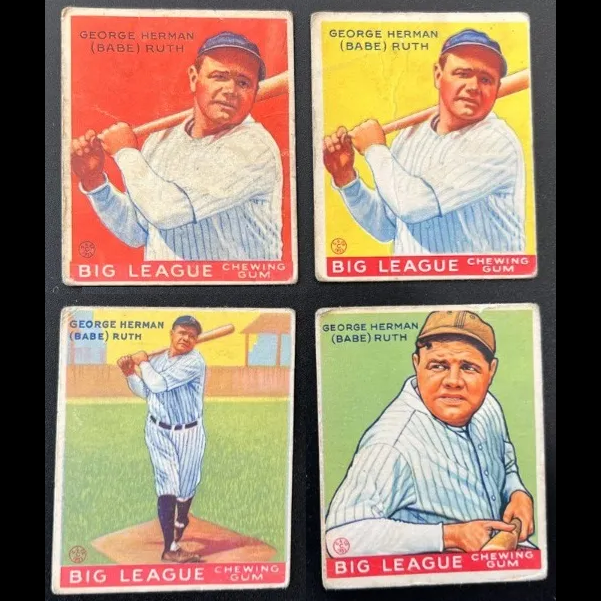
1933 Goudey Babe Ruths
Many collectors consider the Babe Ruth cards which appear in the 1933 Goudey set to be his “rookie” cards, despite the fact that he was in year 20 of a 22-year career, and that he had multiple baseball cards issued earlier in his career.
This is crazy. Words mean something!
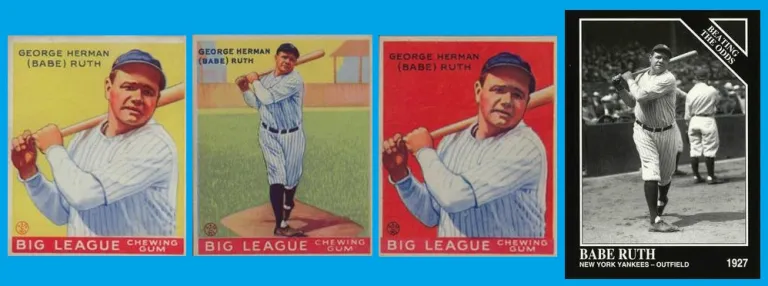
By the way, if you’re wondering if Jason found the source photo for these Ruth Goudeys in the Conlon Collection… he did.
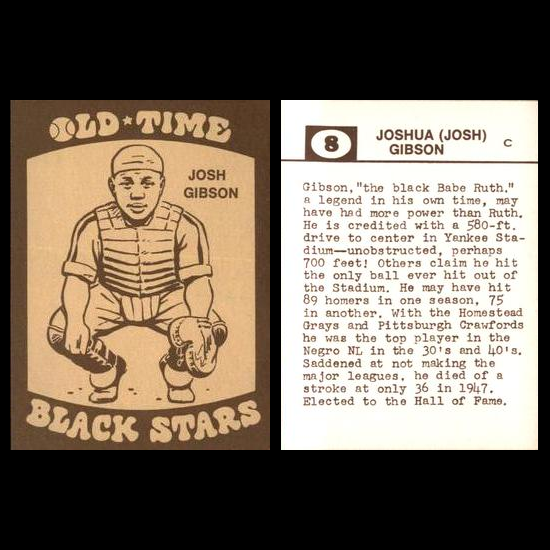
1974 Laughlin Josh Gibson
Many collectors consider this 1974 Laughlin card, which was issued more than 27 years after Josh Gibson’s death, to be his rookie card.
They are wrong.
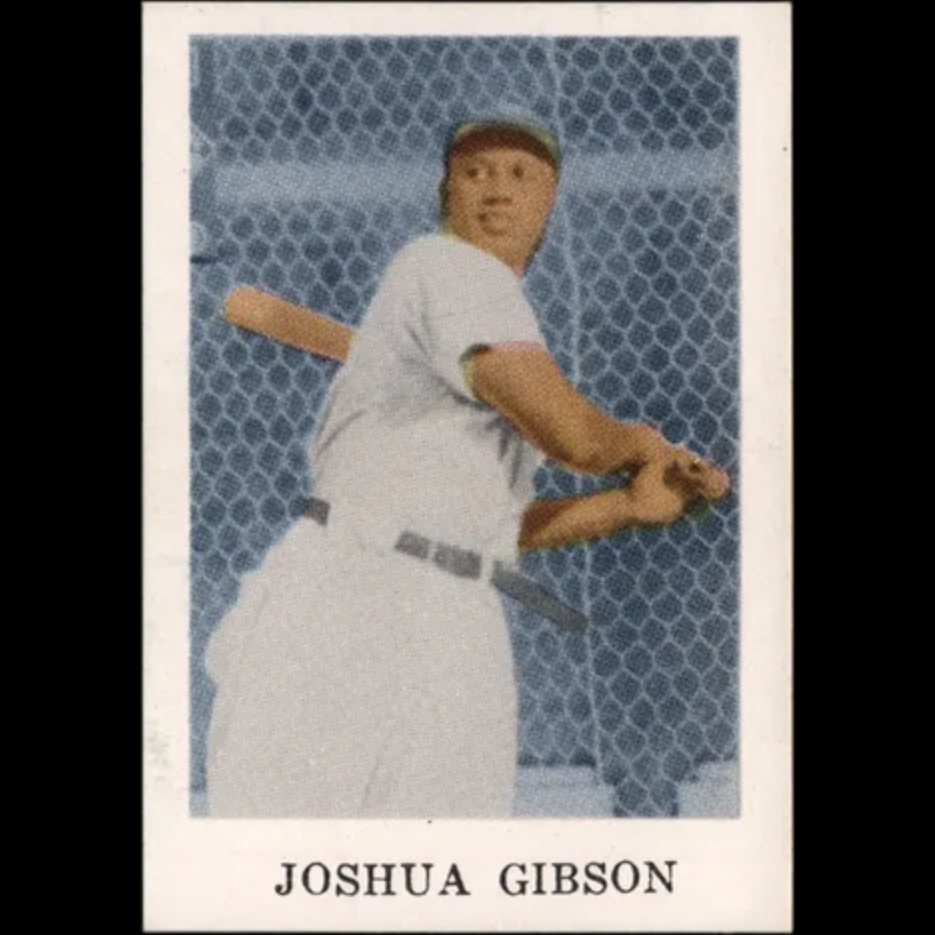
1950-51 Toleteros
This 1950-51 Toleteros is the only known vintage trading card to ever feature Negro League superstar Josh Gibson. This card is extremely scarce, with only about a dozen copies known at this point in time. The card measures approximately 1¾" by 2½".
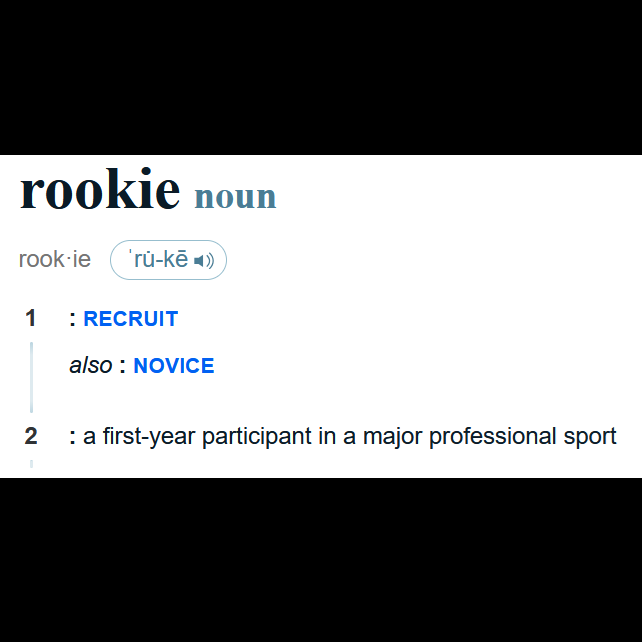
“Rookie” Means Something Specific
The hobby has come up with dozens of new card terms and categorizations in the past 30 years; it would be simple to call someone’s first card their “debut card” or simply their “first card” as opposed to misusing the word “rookie” which has a very specific definition, which is clearly not simply a synonym for the word “first.”
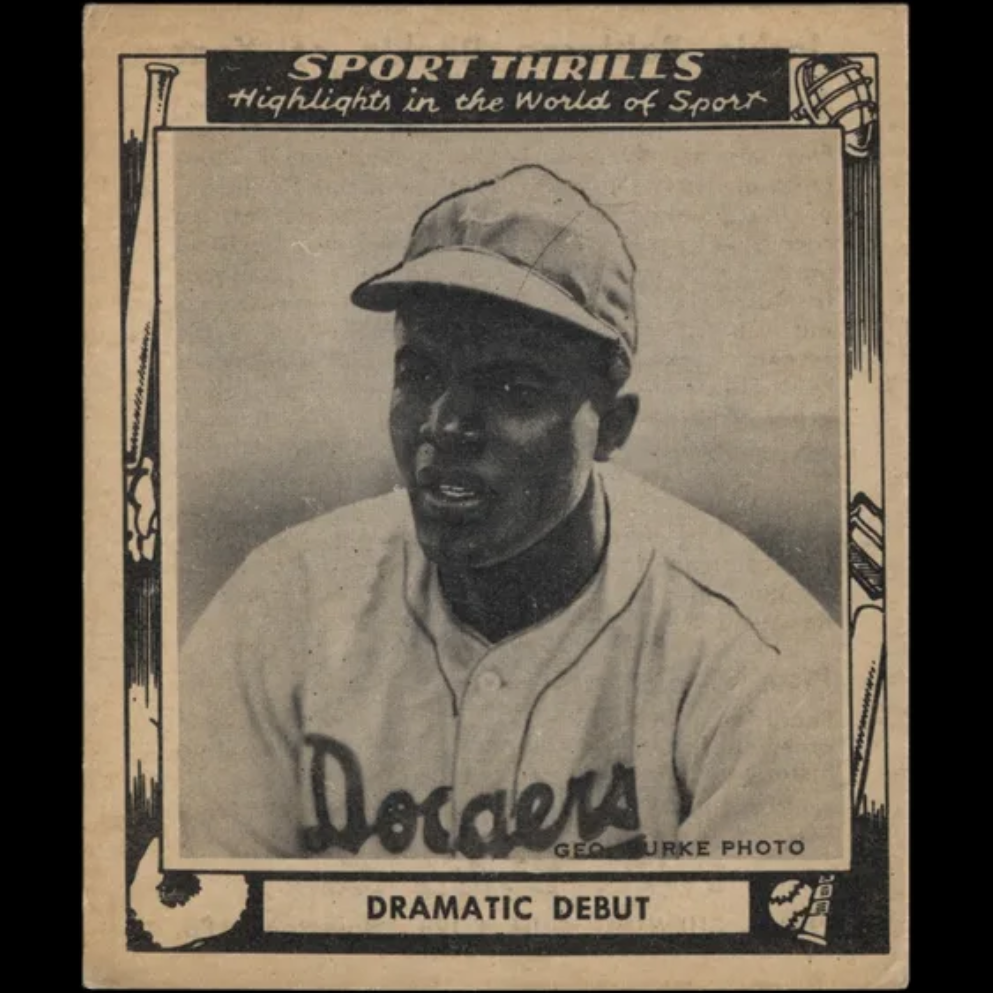
You Guys…
We are SO CLOSE to getting this right! The word “debut” has actually been used on cards for 80 years! It could all be so simple…
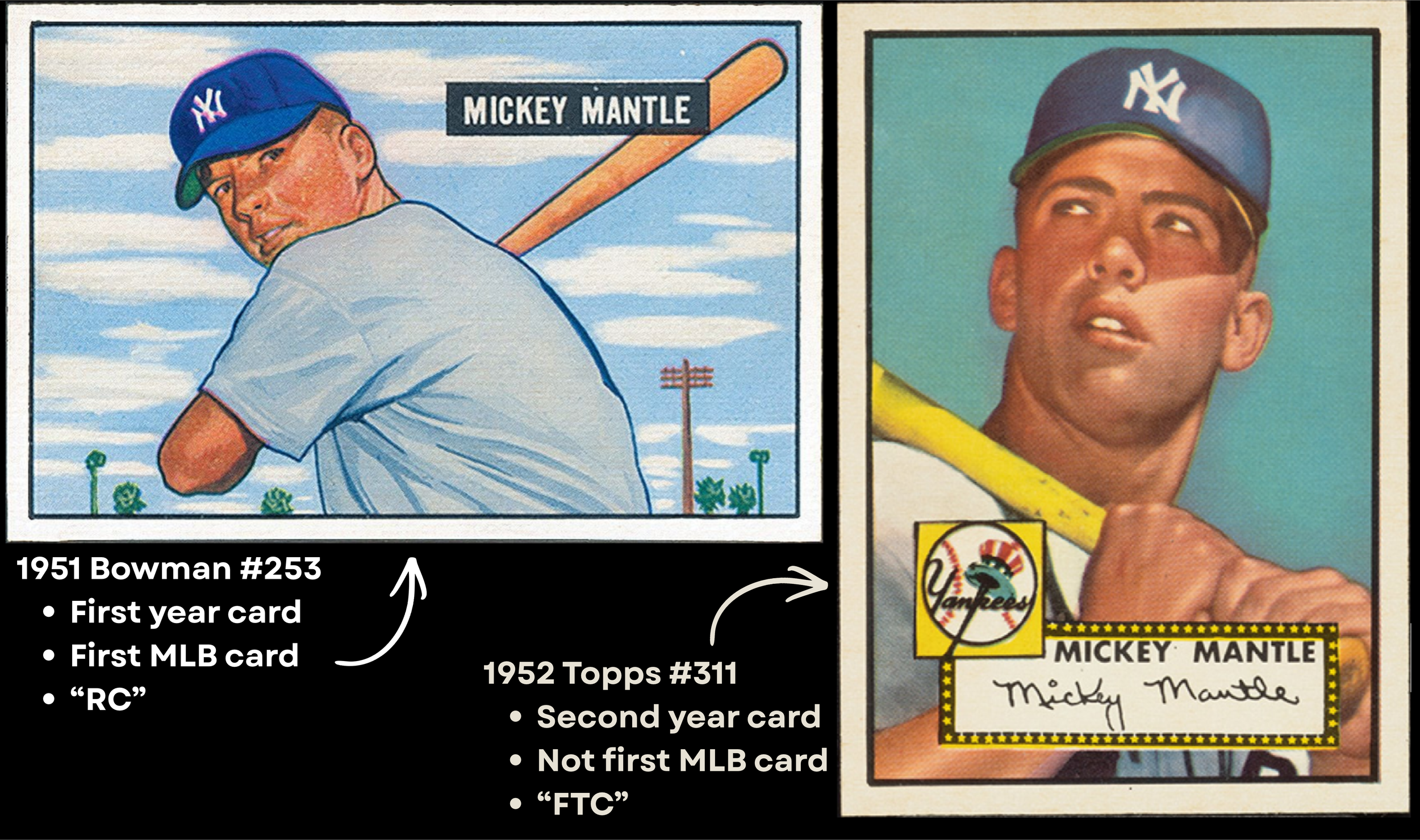
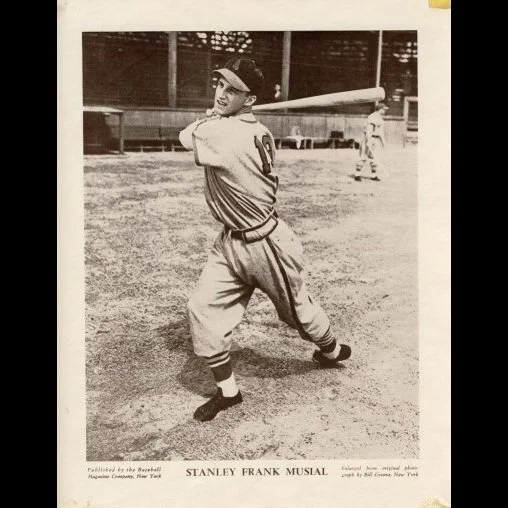
What Is Stan Musial’s Rookie Card?
It depends on how you define what a “rookie card” is, I guess.
The first baseball collectibles appearance for Stan Musial comes within the 1943 M114 Baseball Magazine Supplements series, seen here.
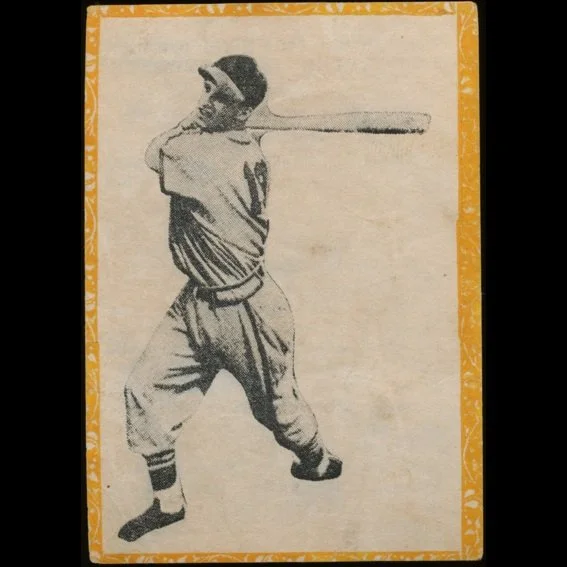
1946 Cards
Subsequently, a popular Cuban League card depicting Musial (seen here) was issued during the 1946-47 Winter League baseball season by Propagandas Montiel.
In addition, an extremely scarce card of Musial was included in the 1946 Sears St. Louis Cardinals Postcard set. Another popular, early issue picturing Musial hails from the 1946-49 W603 Sports Exchange series. Finally, another scarce Musial piece originates from the 1946-47 Sensacion Premiums set.
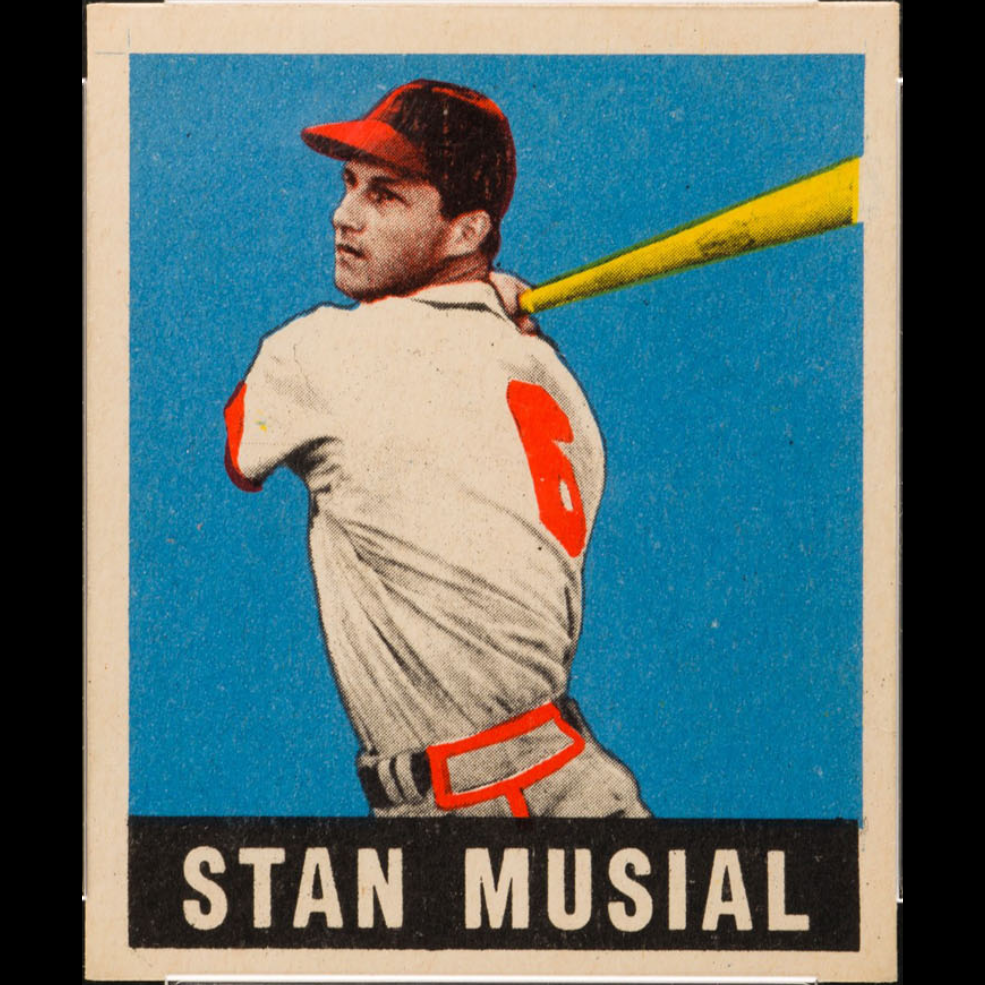
1949 Leaf
Many collectors regarded Stan the Man’s “1948” Leaf card as his earliest major issue. Now that the Leaf set has been properly re-categorized as a 1949 issue, however, the 1948 Bowman stands alone in the eyes of most modern collectors.
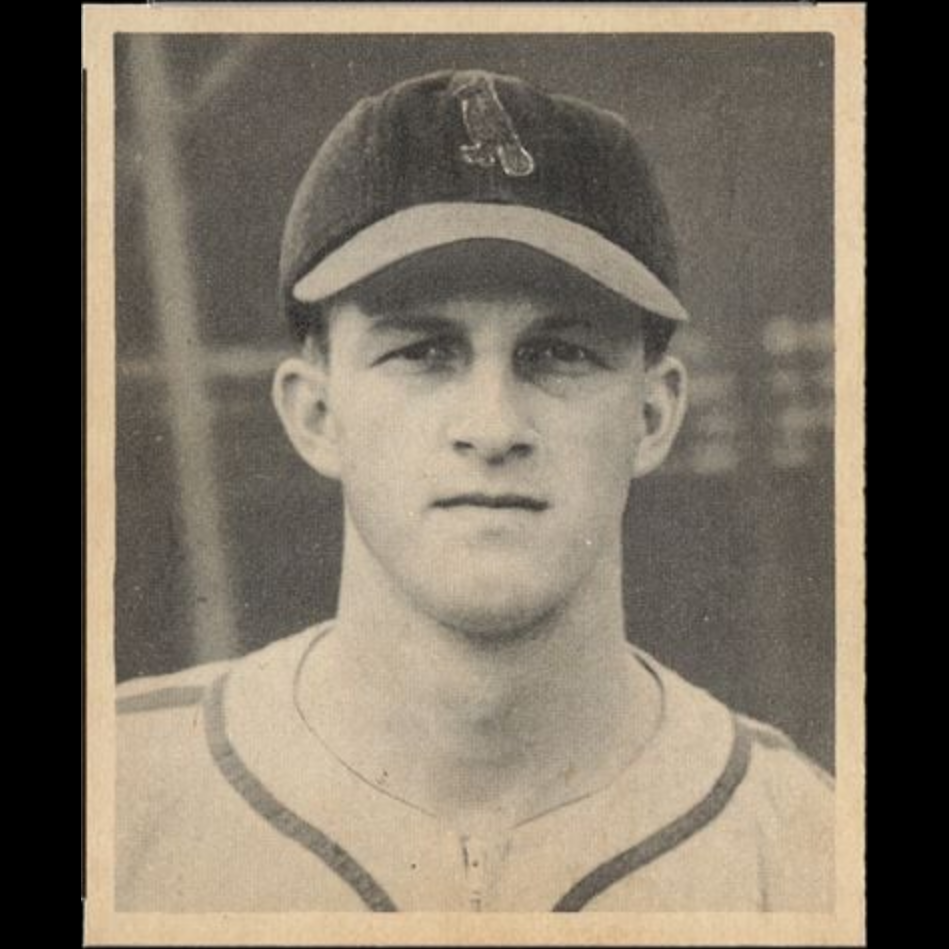
1948 Bowman
Despite debuting in the big leagues in 1941, Musial didn’t have a card in a major, national issue until 1948. His appearance on 1948 Bowman #36 Stan Musial is now considered by most to be his rookie card.
Okay… NOW What??
This conversation gets even more confusing when you start talking about international players who started their careers in foreign countries and had cards issued from those years before coming to the American or National League.
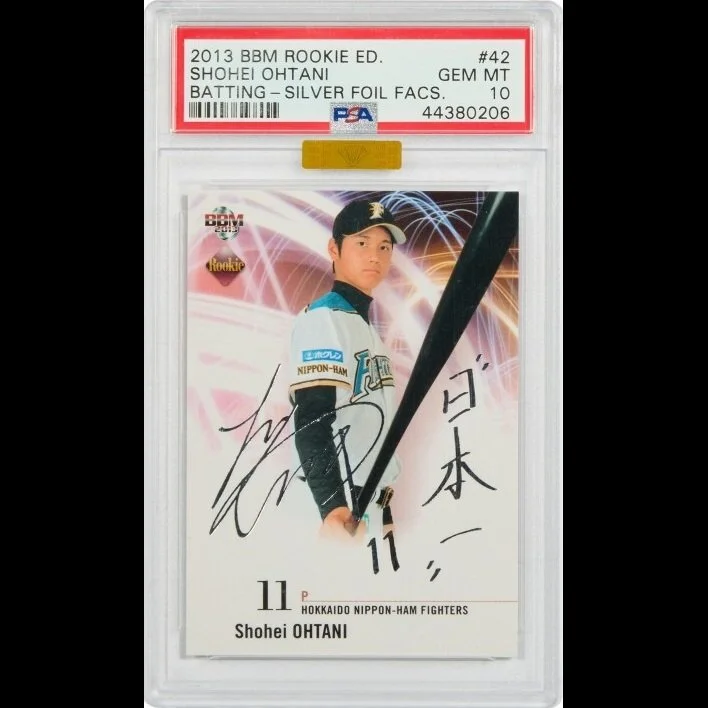
Is Shohei Ohtani’s rookie card something from 2018, his first season with the Angels, or is it this 2013 issue from Japan? I suppose that depends on what you want the answer to be.
This autographed Shohei rookie card was available for a significantly lower price in 2013 that it was available for in 2026.
A Need To Reframe?
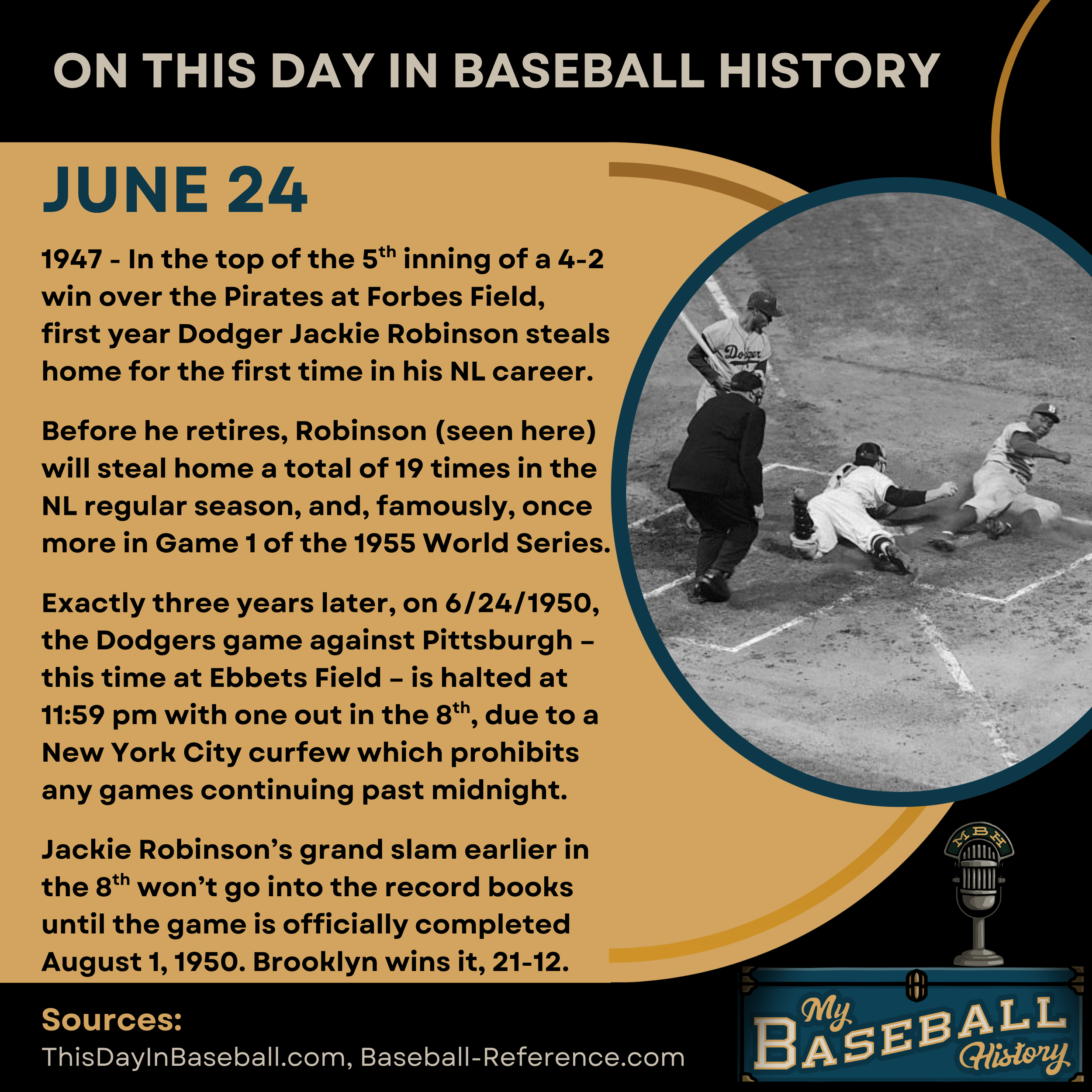
When I was making this graphic, it didn’t feel right calling Jackie Robinson a “rookie”, because it wasn’t his first year playing Major League baseball. He had already played major league ball with the Kansas City Monarchs in 1945.
Even the way I worded the accomplishment… originally, this feat was noted as being the first time Jackie stole home “in his major league career”, but I intentionally switched that to say in his National League career, because I don’t know if he stole home in the Negro Leagues. I’m assuming he did, to be honest.
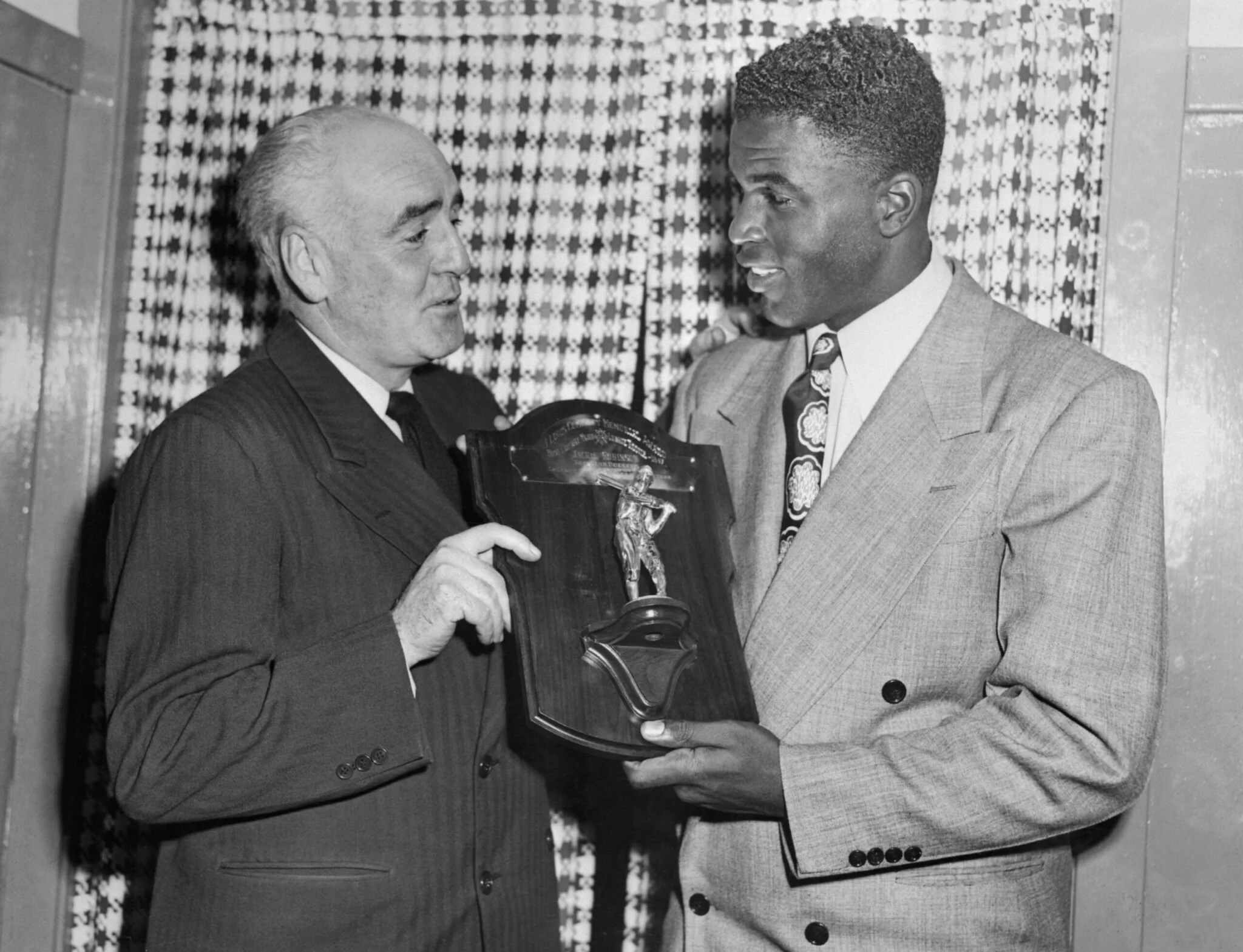
Jackie Robinson won the 1947 Rookie of the Year Award. Since Major League Baseball has so graciously decided to “elevate” the status of certain Negro Leagues to be considered “major” leagues now, Jackie’s 1945 season with the Kansas City Monarchs is considered to be a Major League season. That doesn’t mean we should retroactively strip Jackie of his 1947 Rookie of the Year Award, just because through the lenses of today, we consider 1947 to have been his second season in Major League Baseball, two years after he played his first season. It just means we should probably be more mindful of our wording, especially as we discuss players associated with the Negro Leagues.
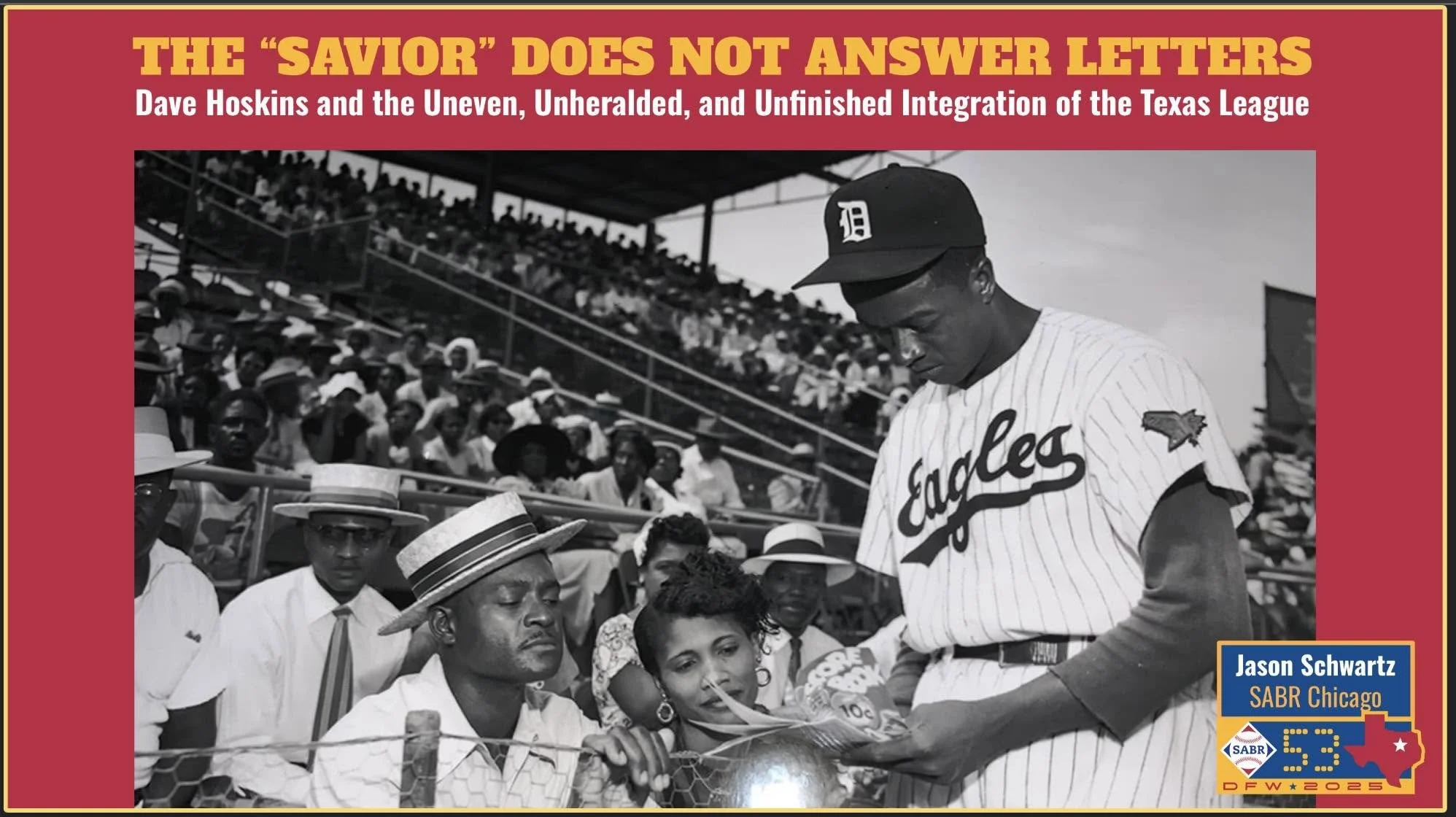
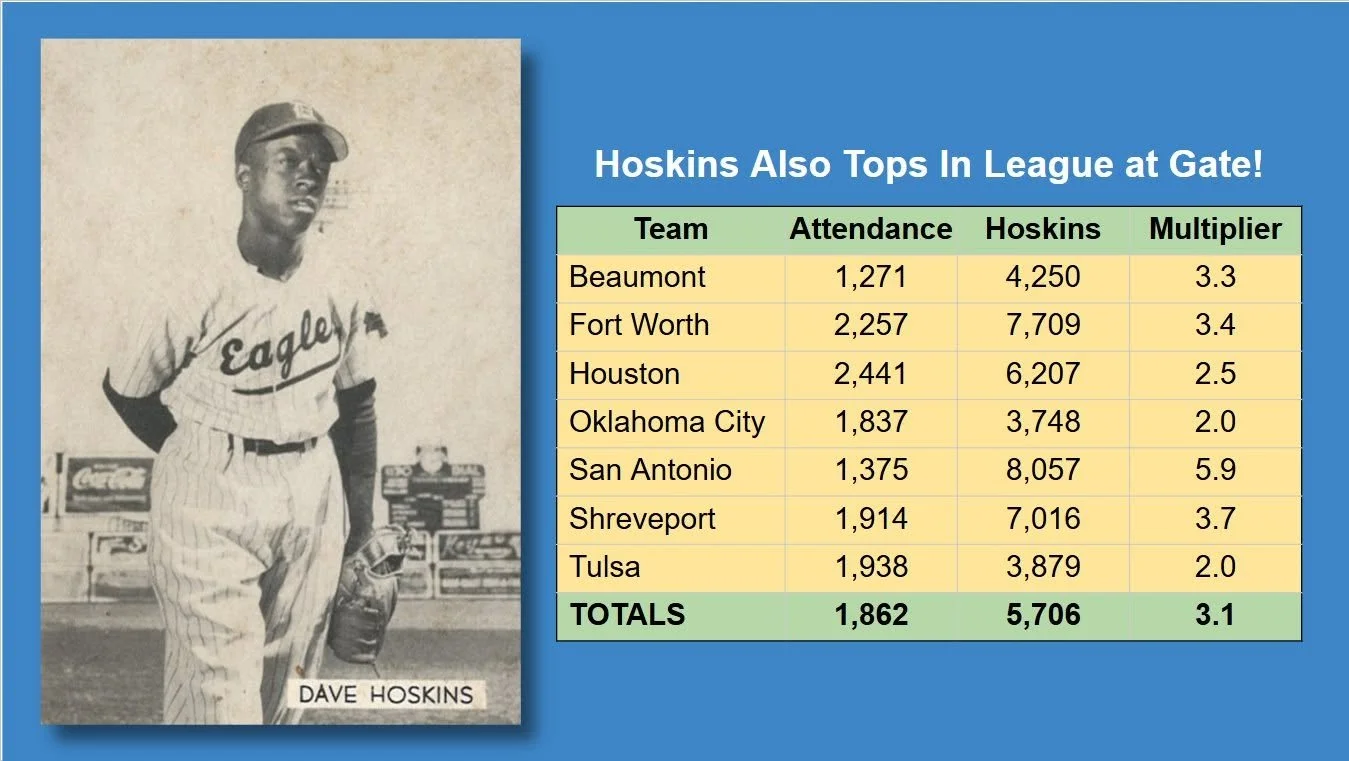
Jason won the Doug Pappas Award for the best oral research presentation at the 2025 SABR convention for “The ‘Savior’ Does Not Answer Letters: Dave Hoskins and the Uneven, Unheralded, and Unfinished Integration of the Texas League.”
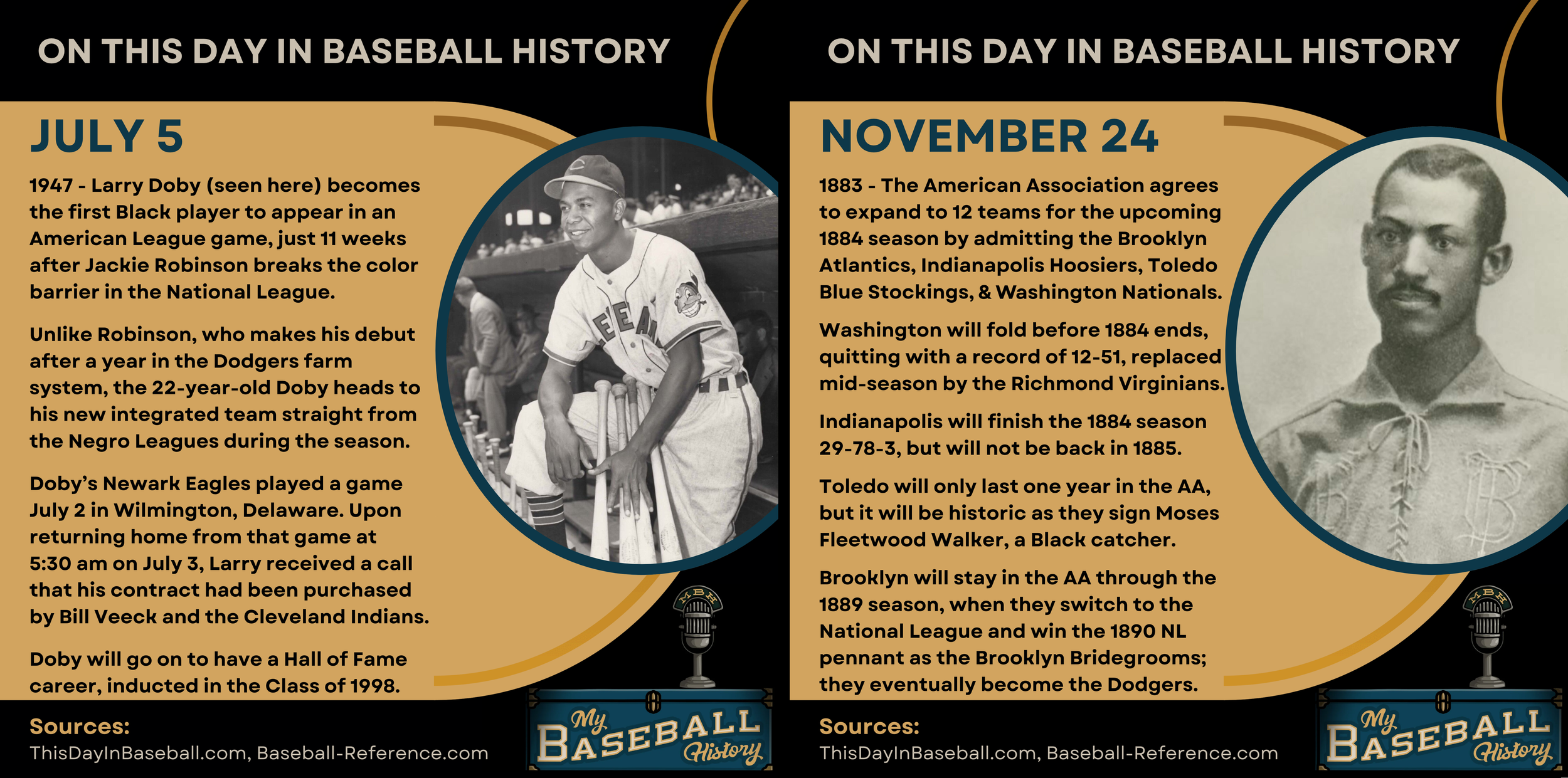
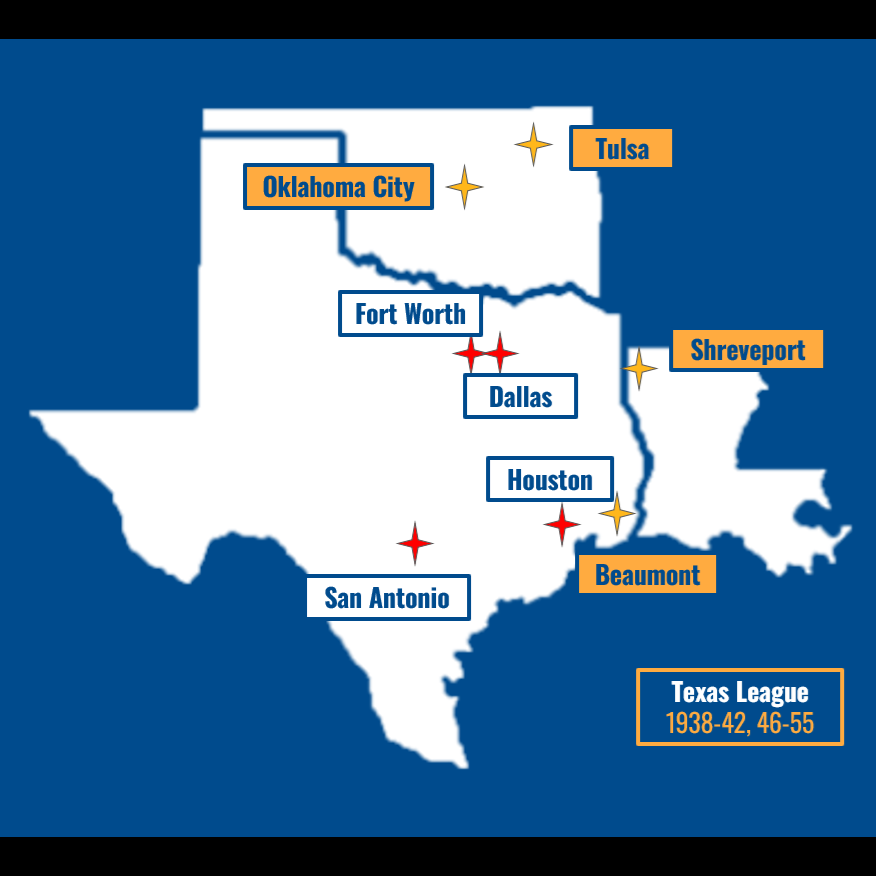
Jim Crow Texas
Dave Hoskins had to put up with treatment in Jim Crow Texas and throughout the South that Jackie Robinson didn’t quite get the brunt of while playing minor league ball in Montréal in 1946, or once he got to the Major Leagues and played in Brooklyn starting in 1947. That’s not to say Jackie didn’t face racism in his home cities, and it’s especially not to say Jackie didn’t face racism on the road (in cities like Philadelphia, St. Louis, even Chicago). But what Dave Hoskins must have gone through couldn’t have been easier.
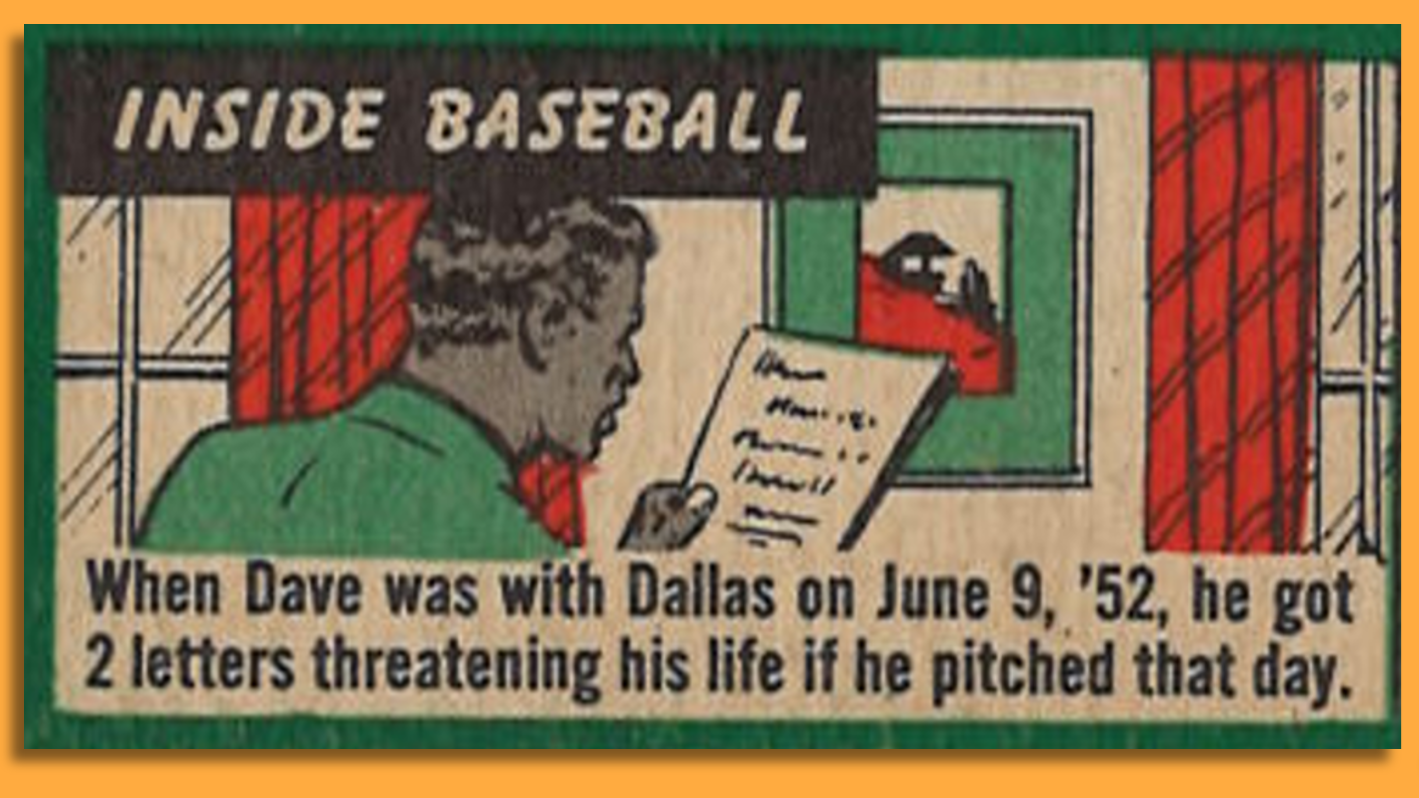
Click the comic above to see which card back it originally appeared on.
Integration Was Slow
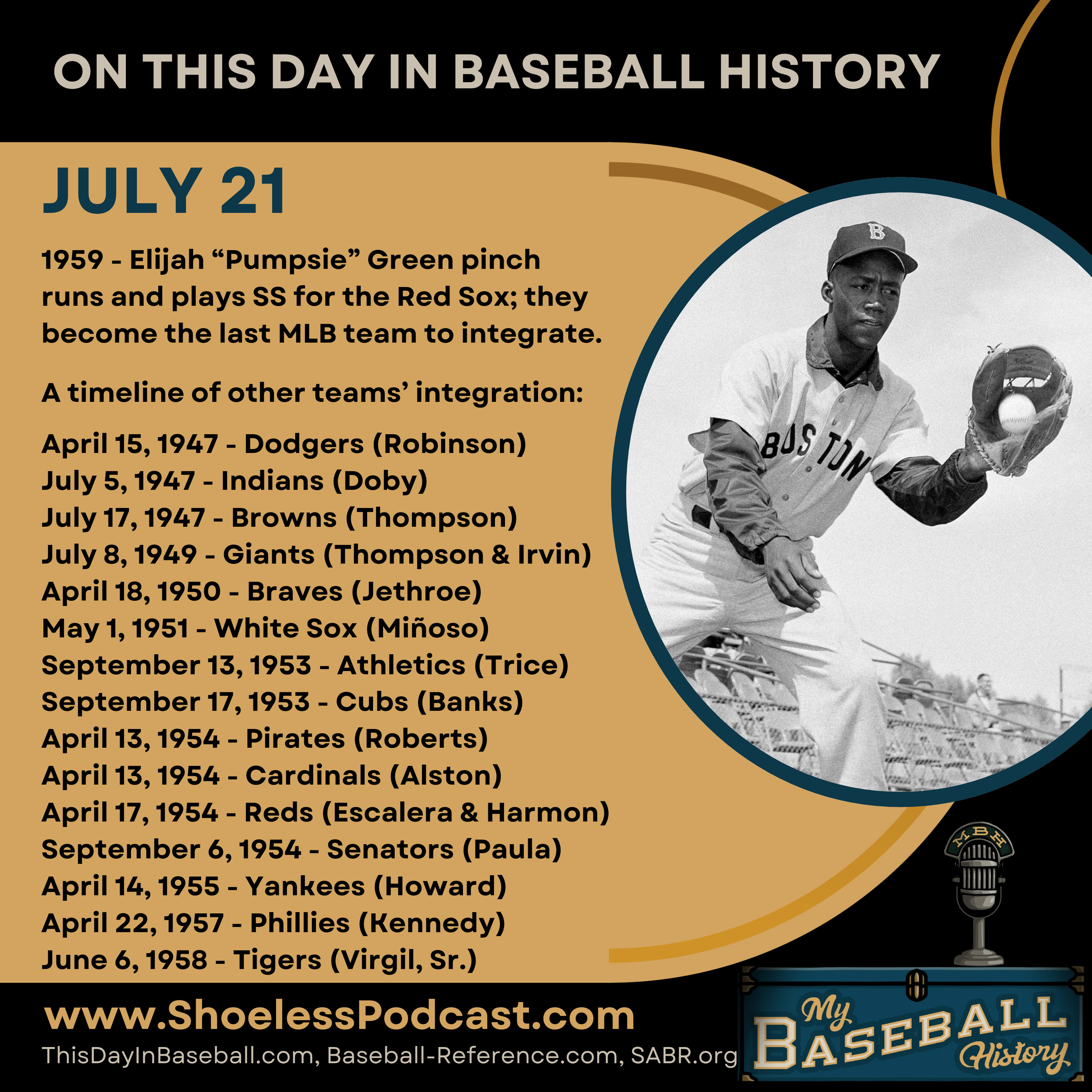
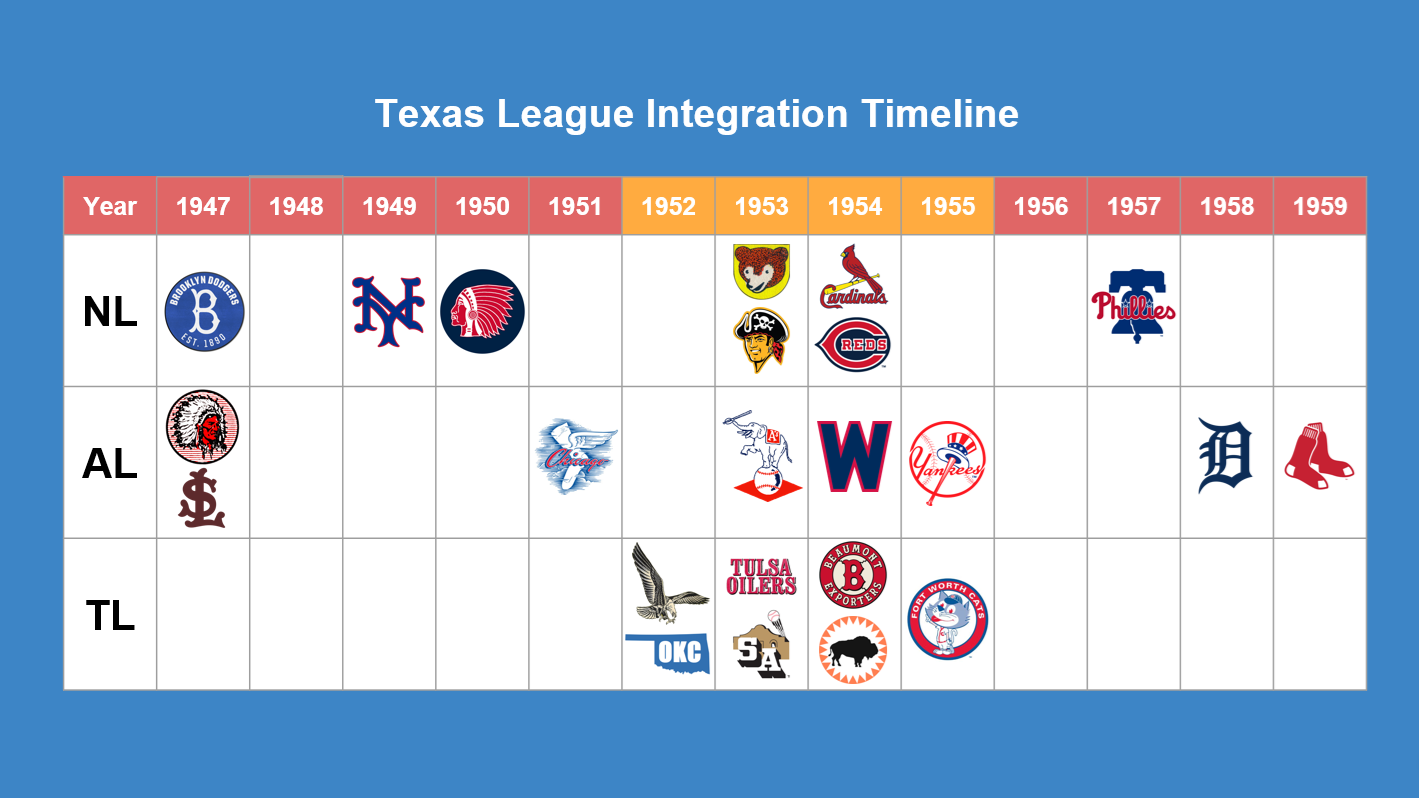
It was more than 12 full seasons after Jackie Robinson had broken the color barrier before every team in the American League and National League had fielded just one Black player.
But that doesn’t mean it only took 12 years for the two leagues to integrate.
The American League became a major league in 1901. It wasn’t until their 59th year that each team had fielded a Black player.
The National League was formed in 1876. It wasn’t until their 82nd season that they could say the same thing.
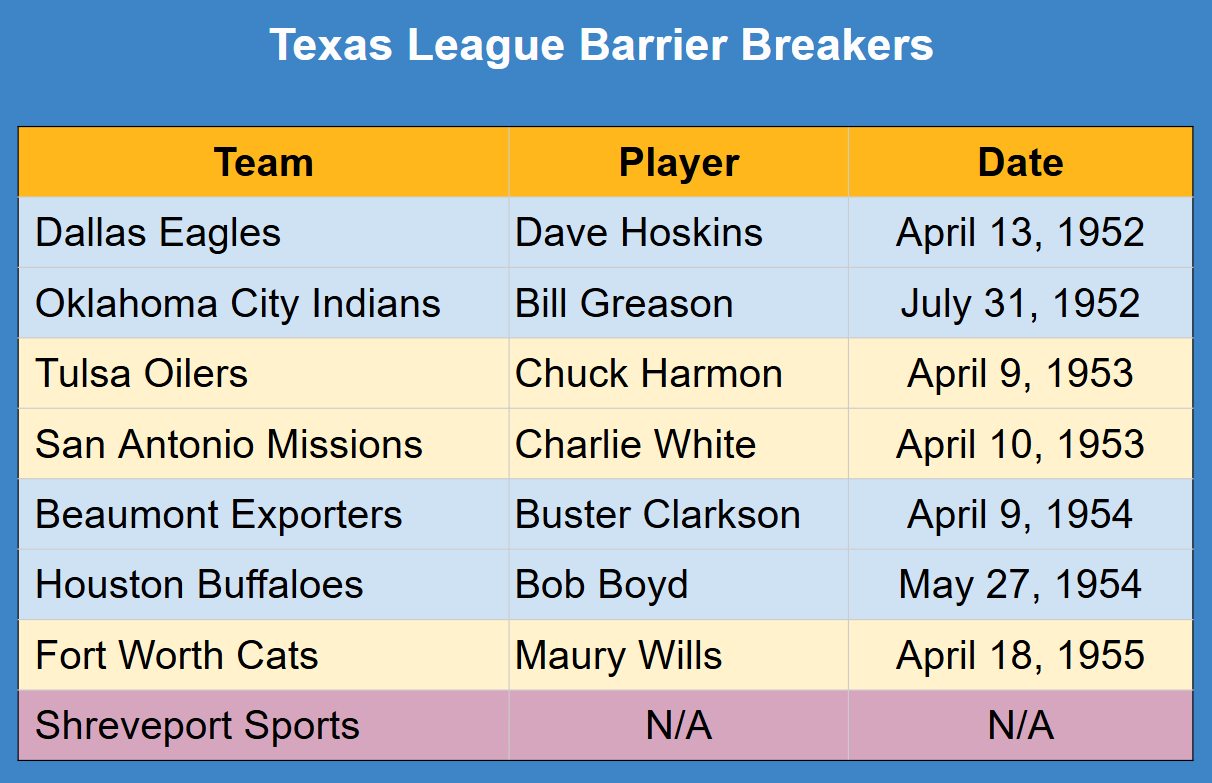
Click the table above to read more!
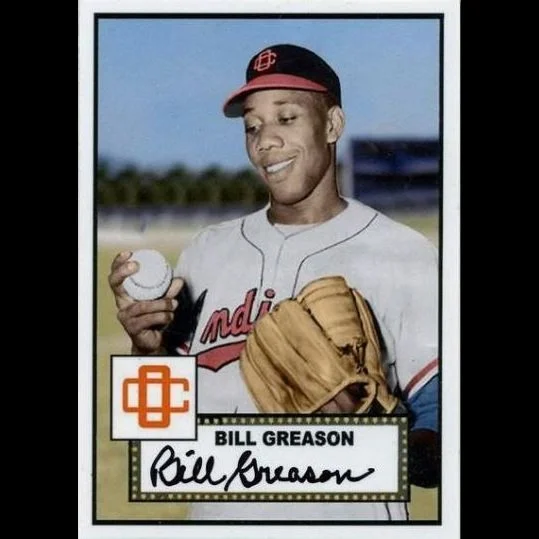
Bill Greason
Bill Greason was the first black minor-leaguer in the state of Oklahoma (in 1952) and the first black pitcher to play for the St. Louis Cardinals (in 1954).
Bill Greason’s NL career consisted of only three appearances, but his contributions to baseball history should not be underestimated. Before his time with the Oklahoma City Indians, he had earned the Birmingham Black Barons’ sole victory in their loss to the Homestead Grays in the 1948 Negro World Series. Greason played winter ball for Puerto Rico’s Santurce Cangrejeros in 1954-55, teaming with Willie Mays and Roberto Clemente to win the Caribbean Series championship. Another teammate, Don Zimmer, called it “probably the greatest winter league baseball club ever assembled.”
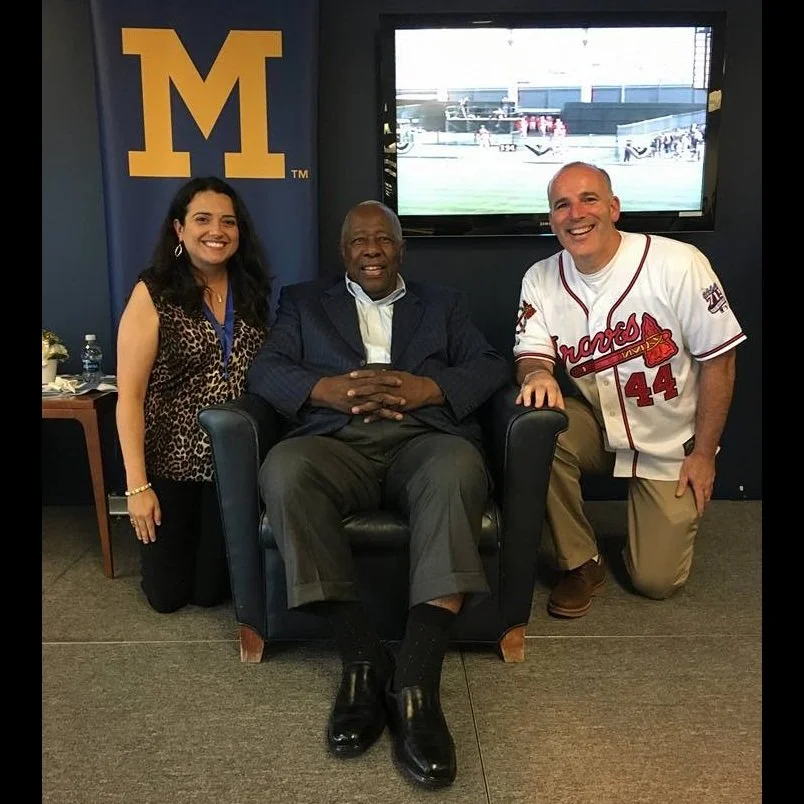
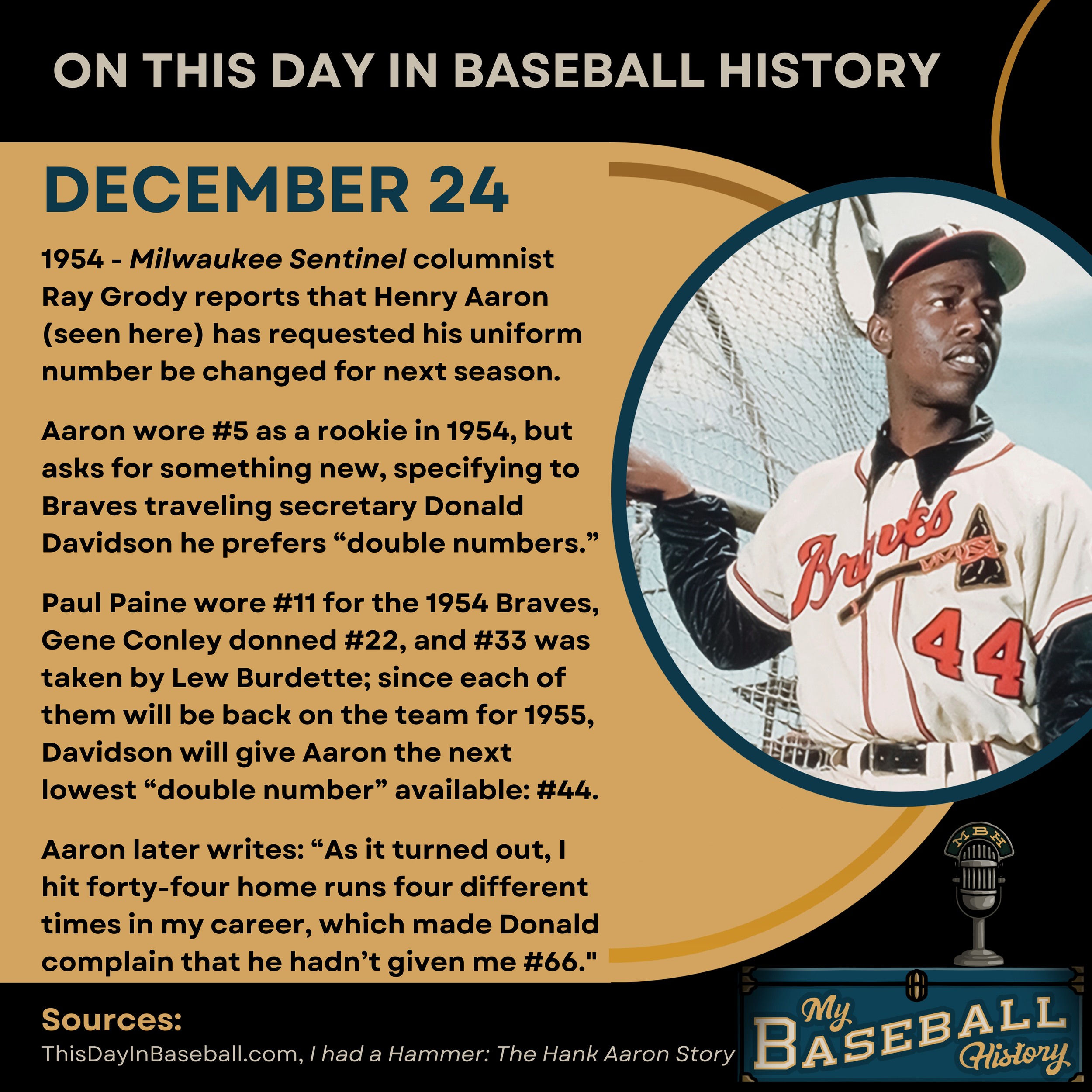
Hammerin’ … Henry?
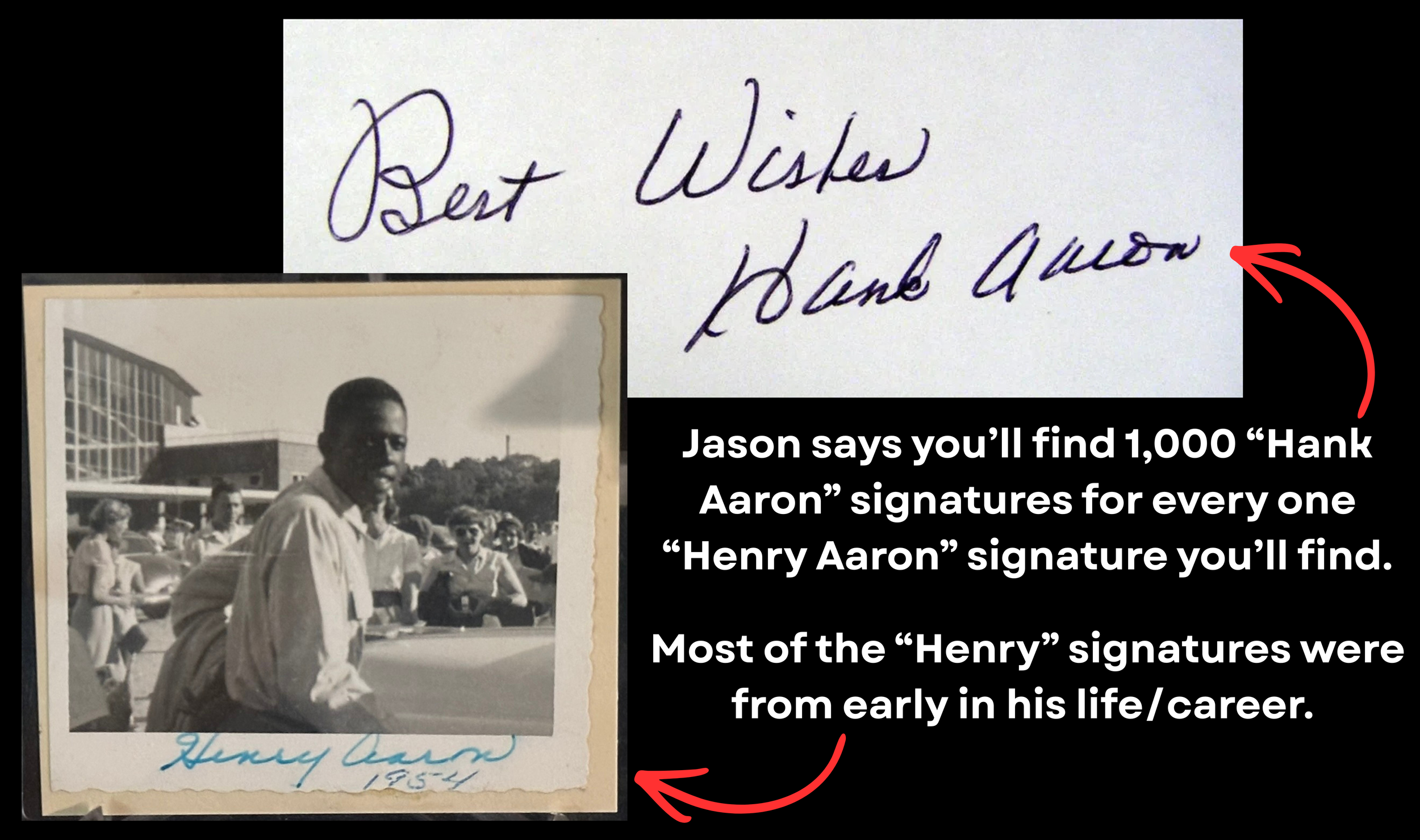
Within the past several years, this idea has become kind of prevalent that it’s disrespectful to call him “Hank” Aaron, and that he only liked being called Henry.
While it did take some time to override the wiring of my brain after years of having almost exclusively heard him referred to as Hank Aaron, I have made a conscious effort to only refer to him as Henry in everything I do.
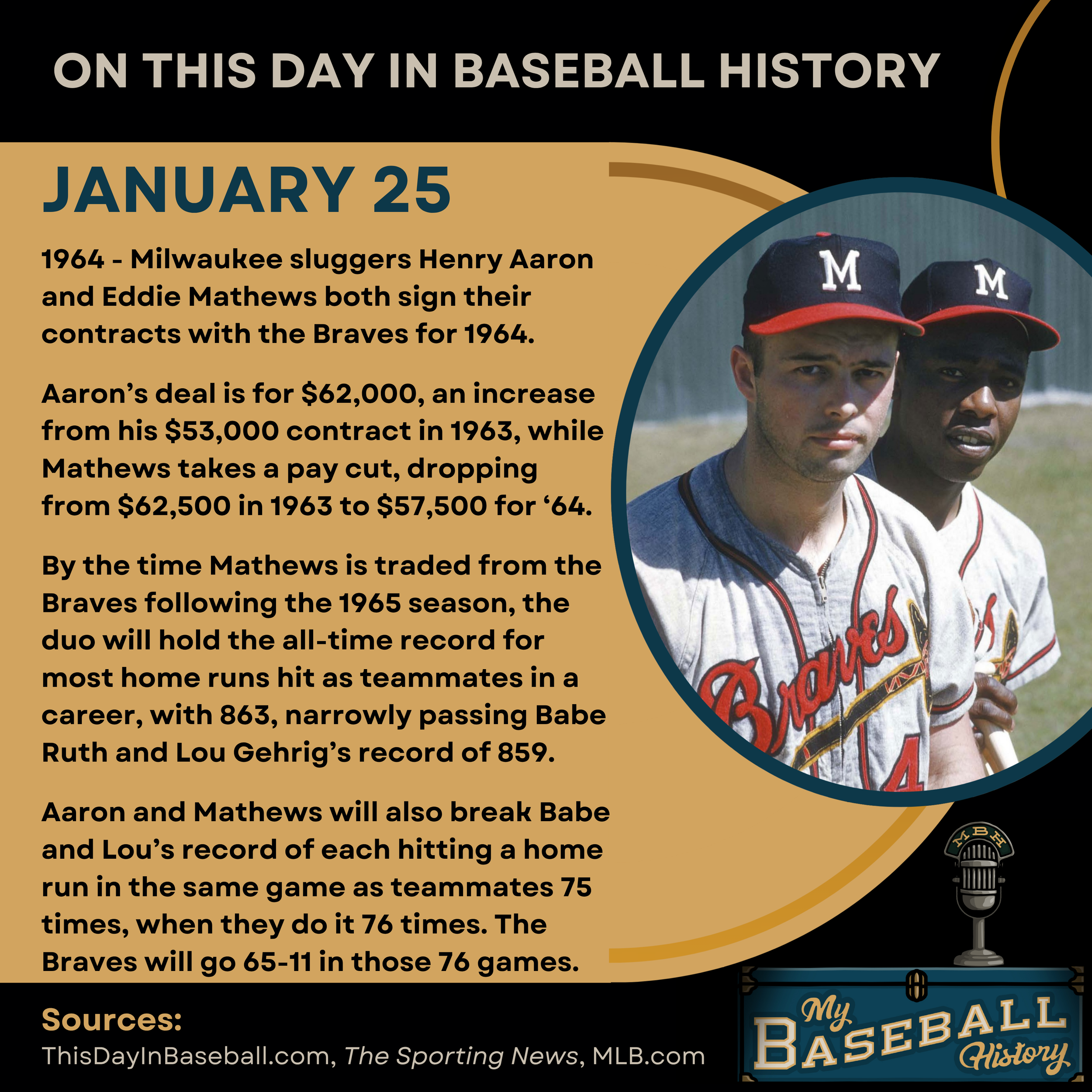
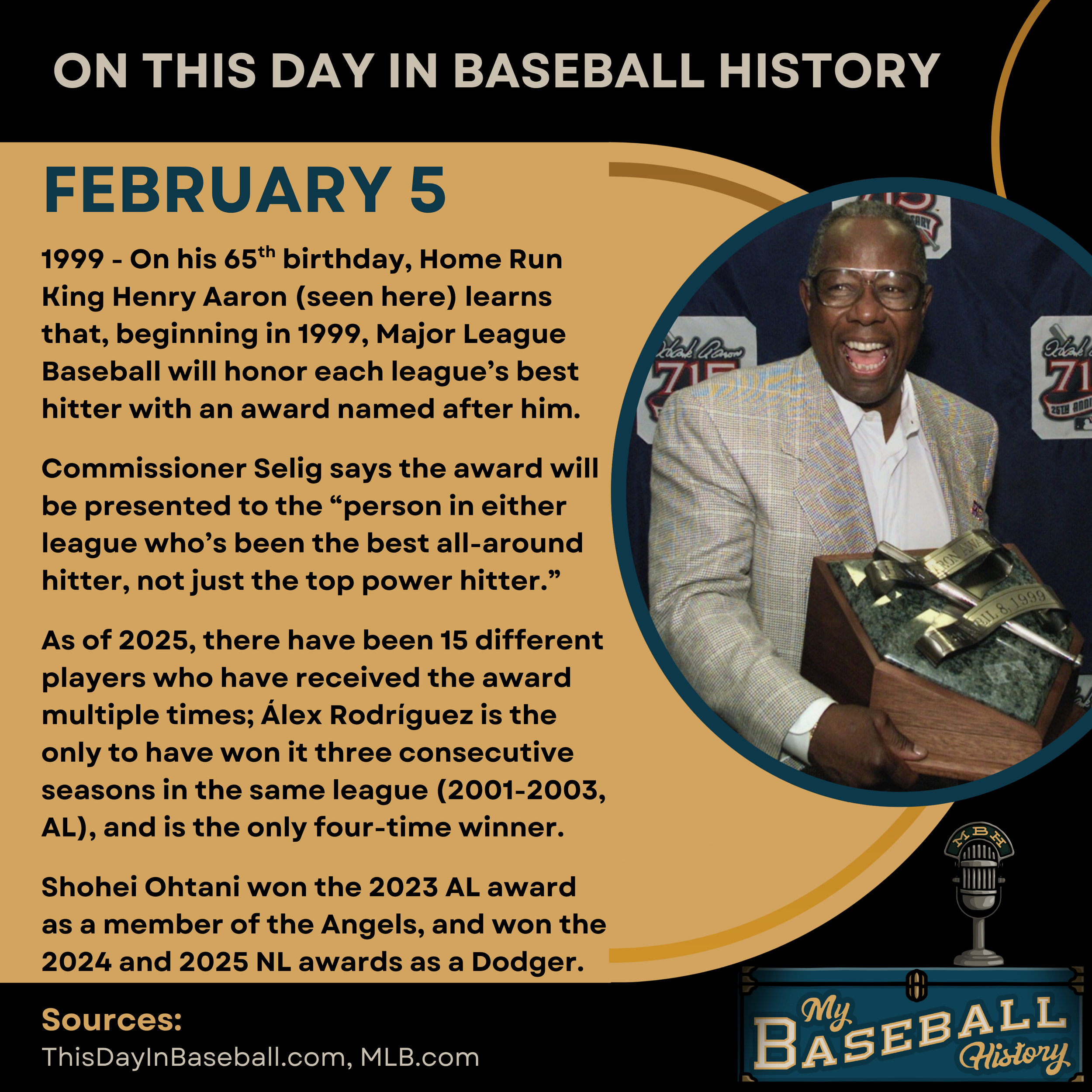
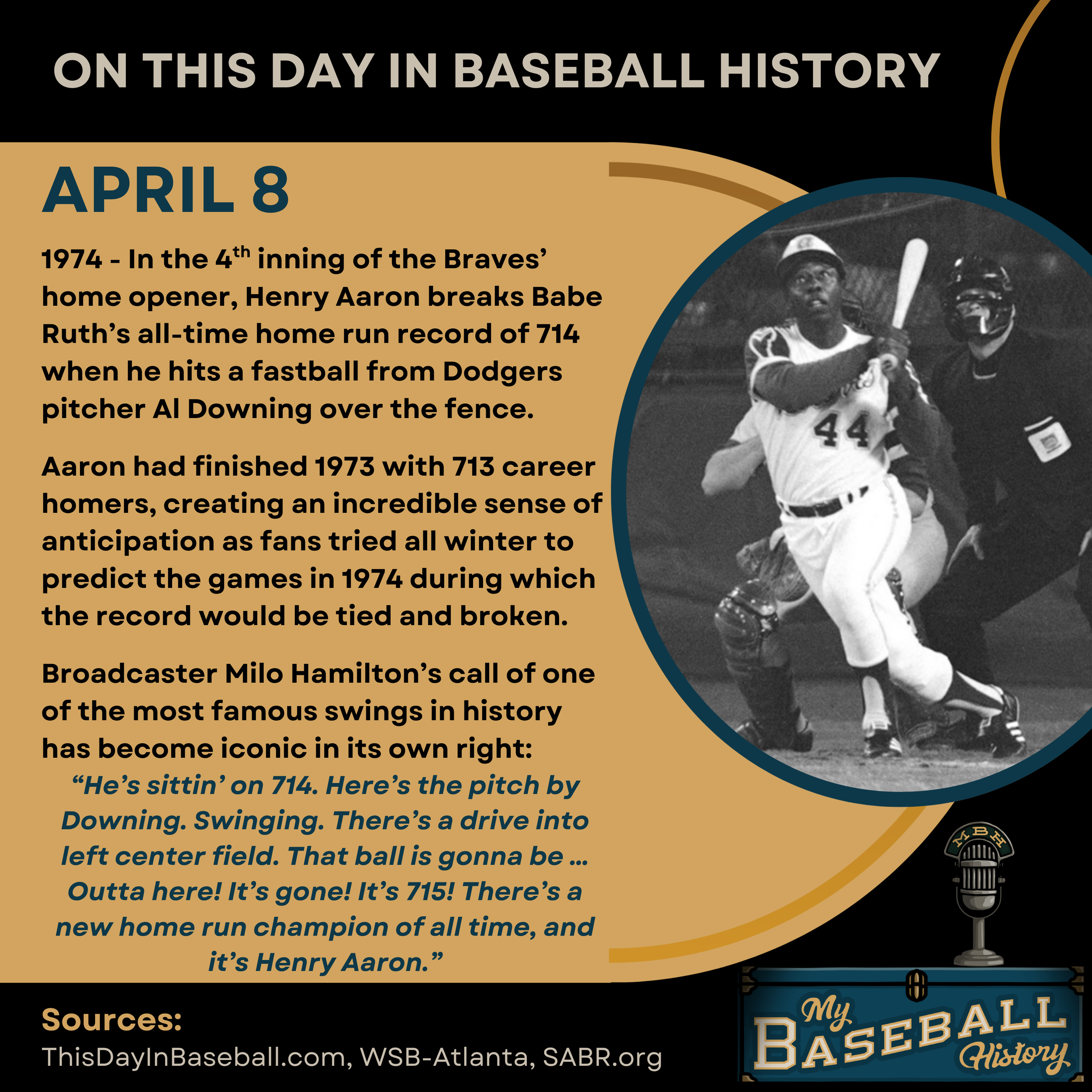
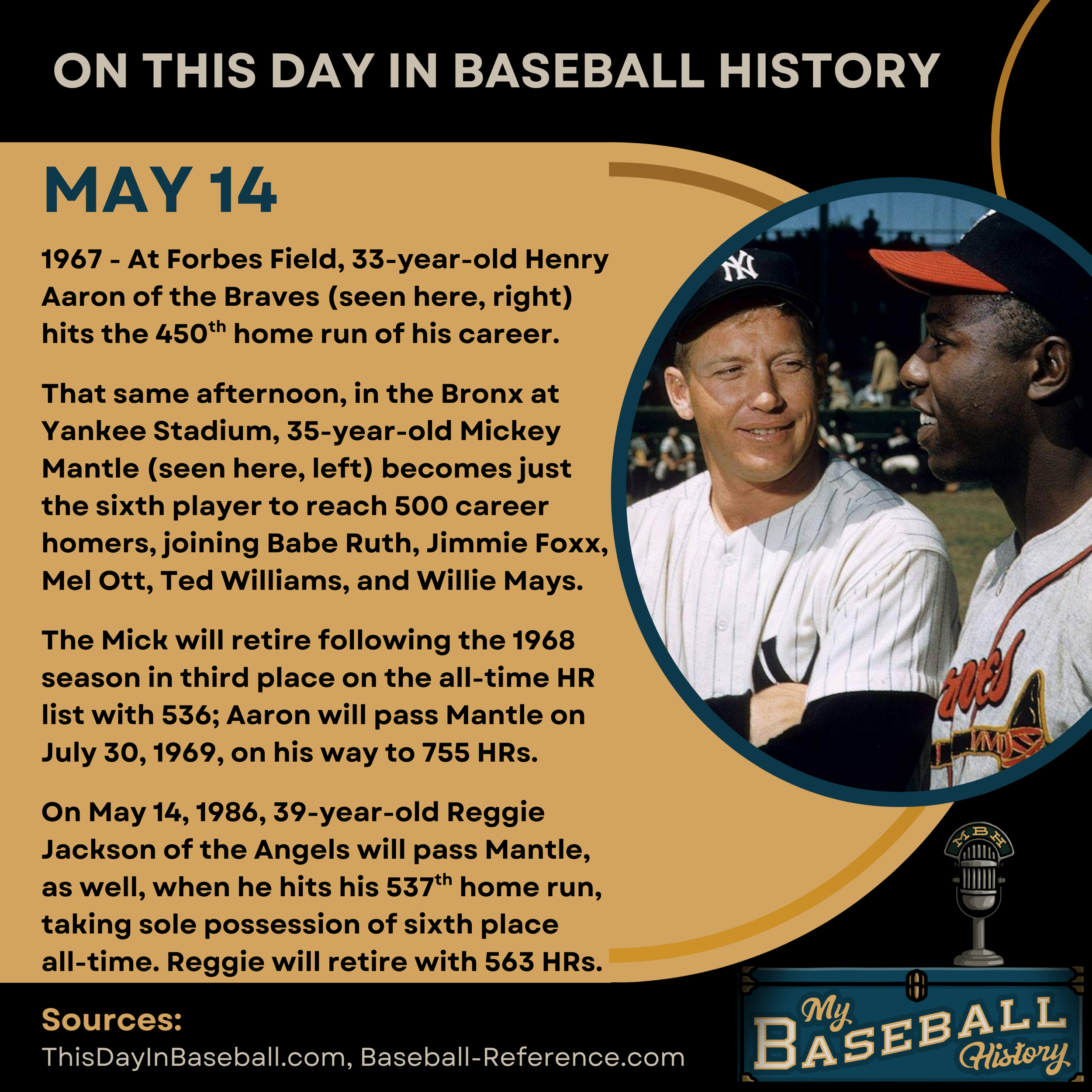
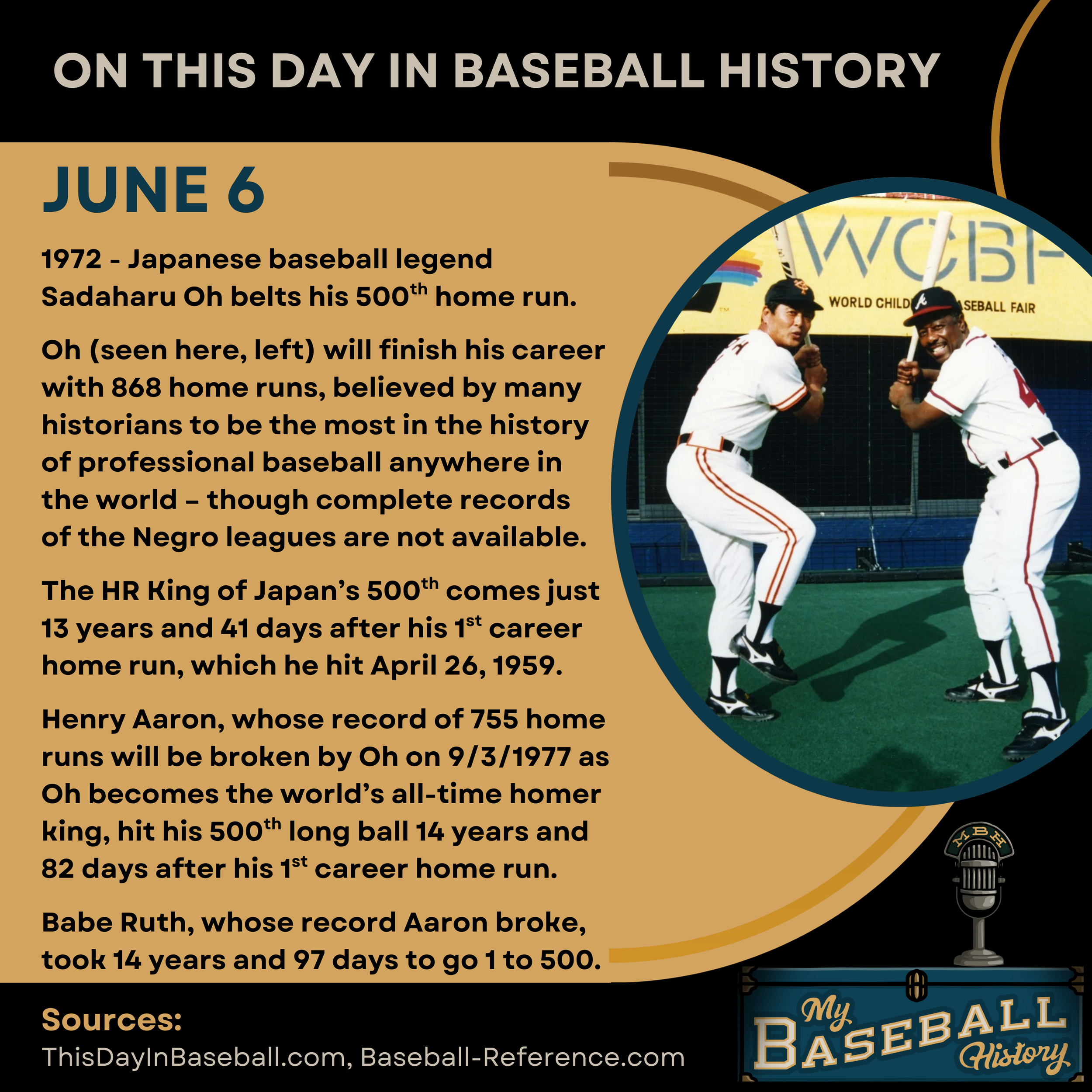
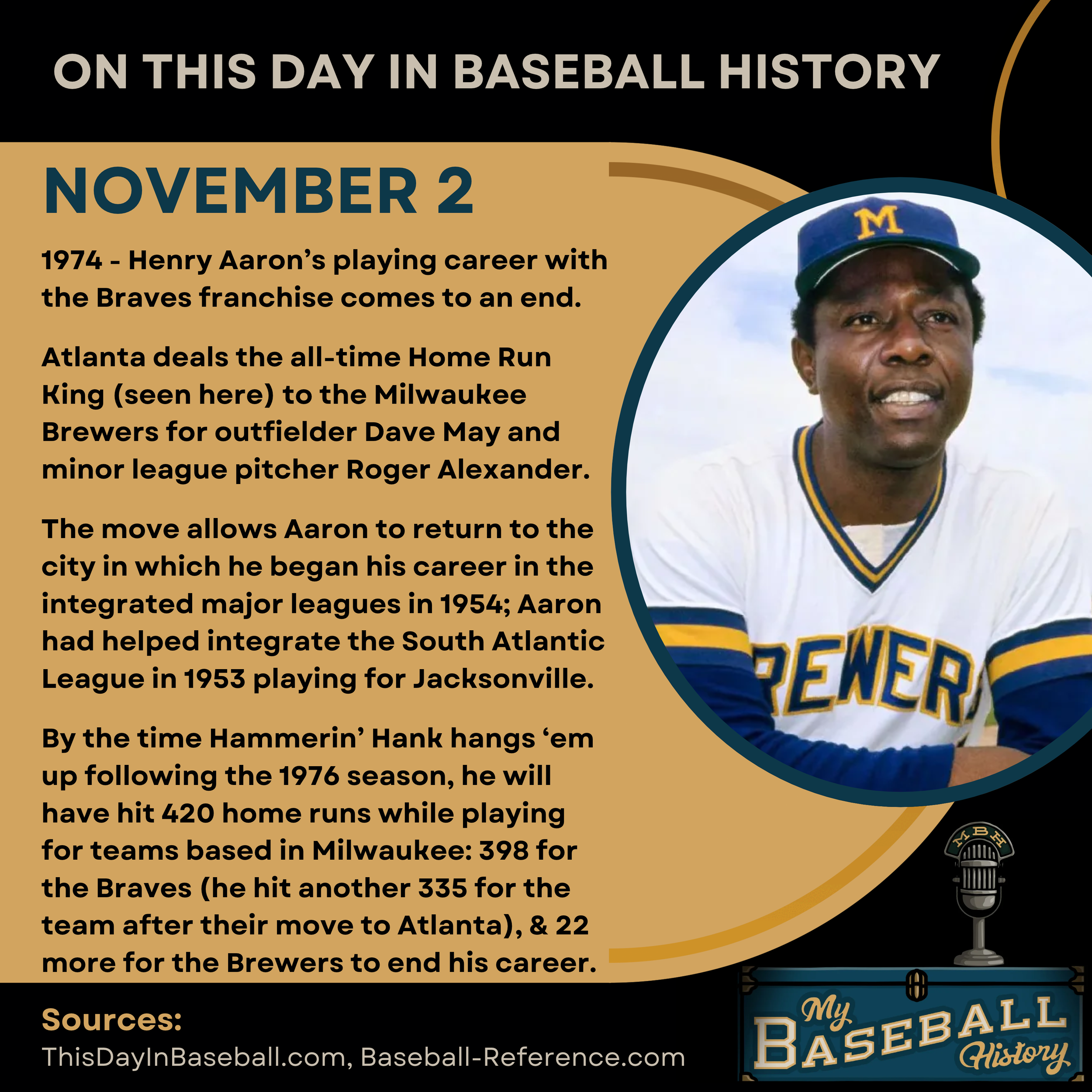
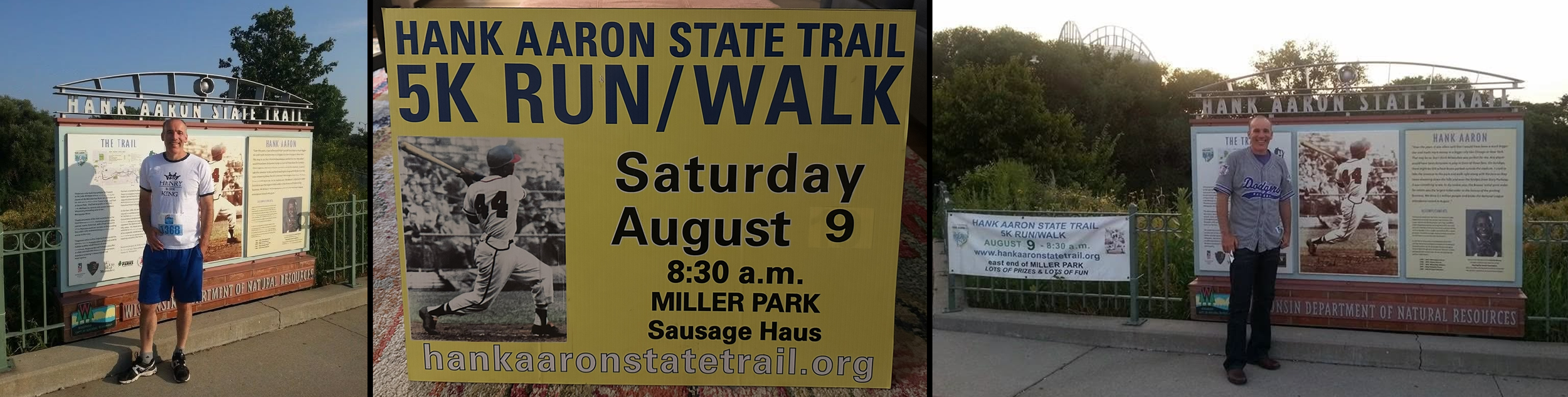
Jason has participated in a 5K on the “Hank Aaron State Trail” in Wisconsin. He’s got the sign and photos to prove it.
Jack vs. Jackie Robinson
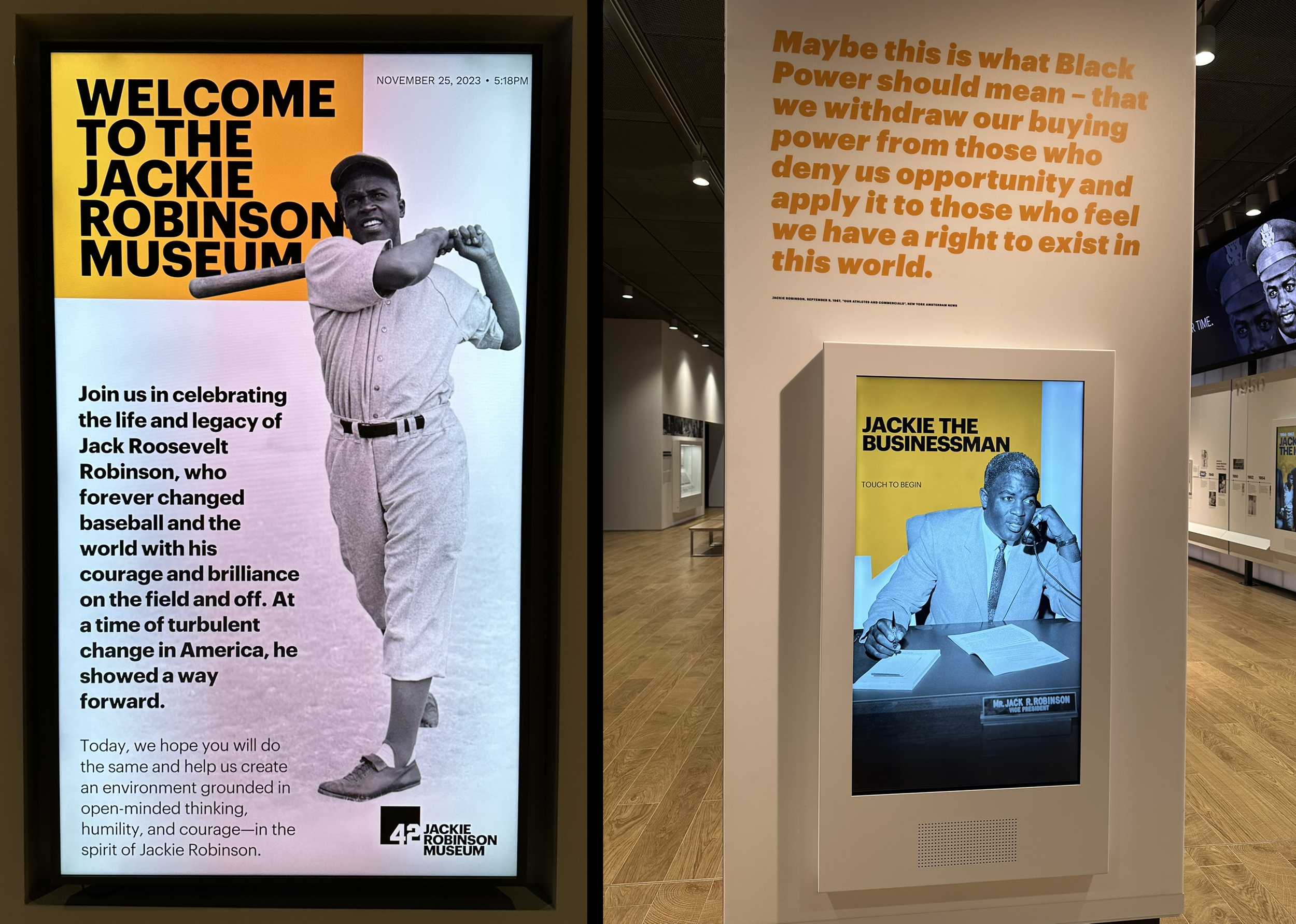
There are similar discussions surrounding what is the most appropriate name to call Jackie Robinson, as well. Jason’s feelings are that if Rachel felt comfortable naming it the Jackie Robinson Foundation, and the Jackie Robinson Museum, then it’s okay for us to call him Jackie, too.
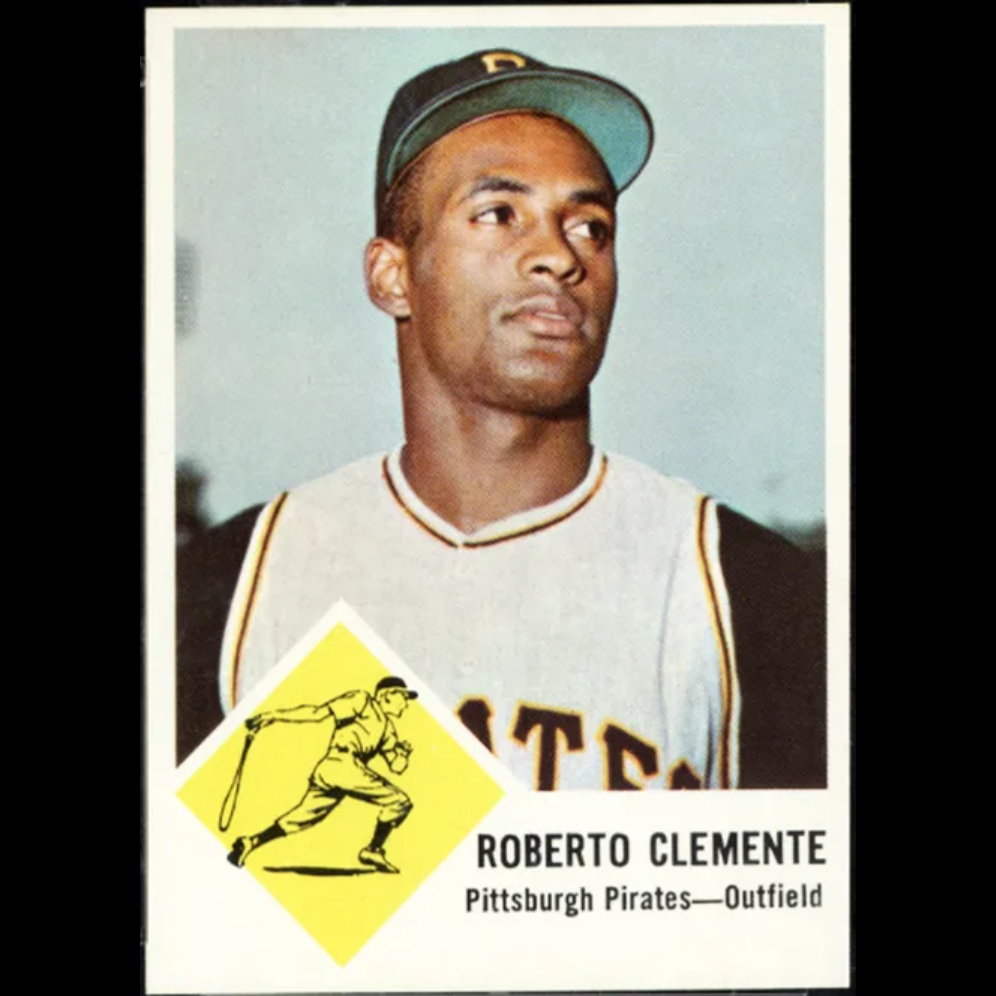
Bob vs. Roberto Clemente
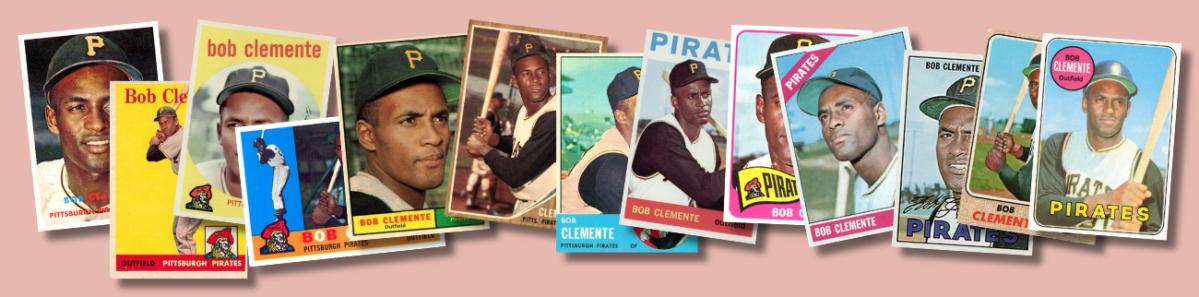
I do know for a fact that Roberto Clemente despised being called “Bob” and felt that it was offensive to Americanize his name, either out of laziness or xenophobia, so I have made it a point to only allow Clemente cards into my personal collection if they call him Roberto. This 1963 Fleer example is one such card which honors his wish.
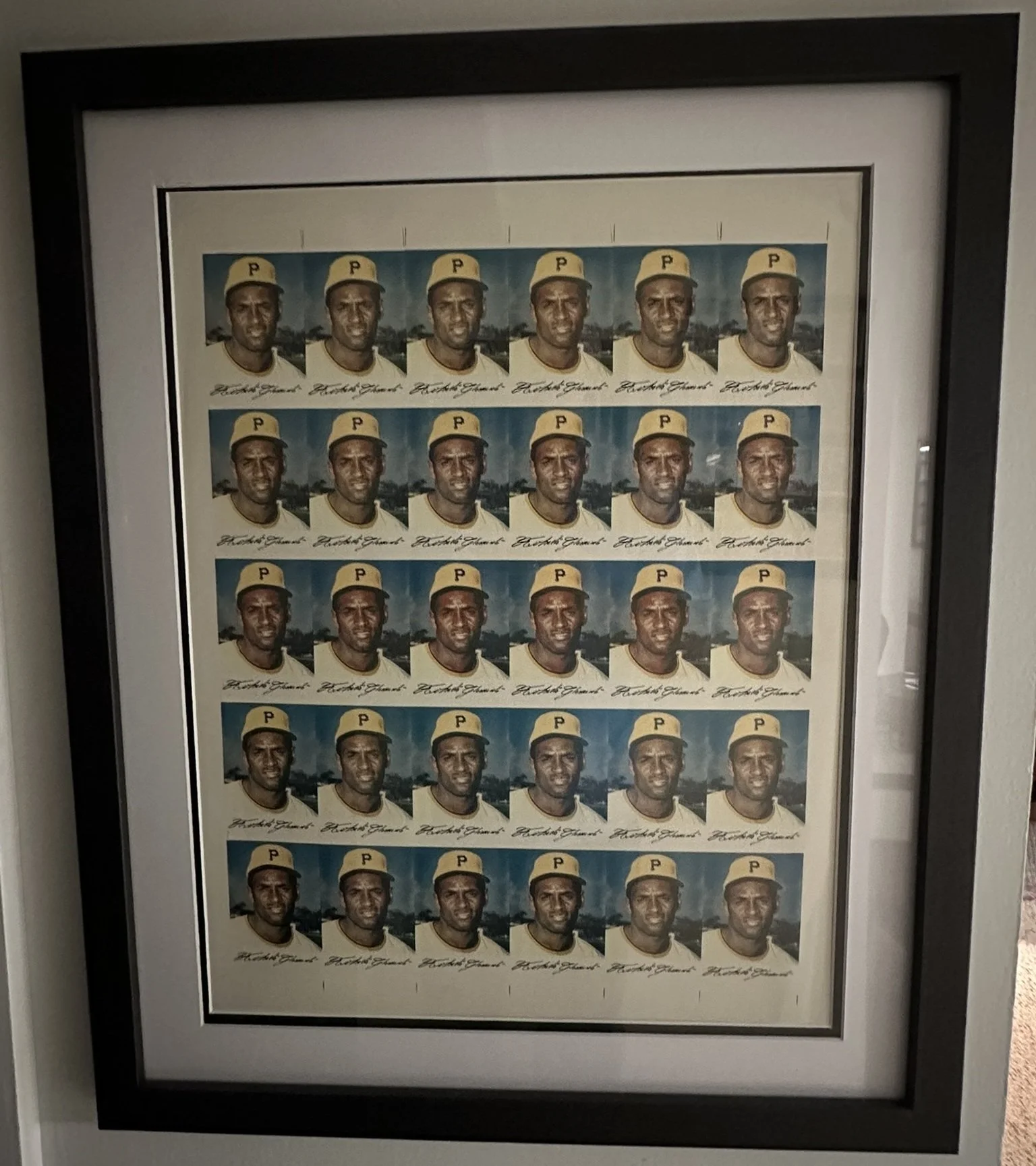
This interview with Billye Aaron is interesting in that she only calls her late husband one of two things: Mr. Aaron, or Henry. And she repeatedly calls him Henry.
He Called Himself “Hank”
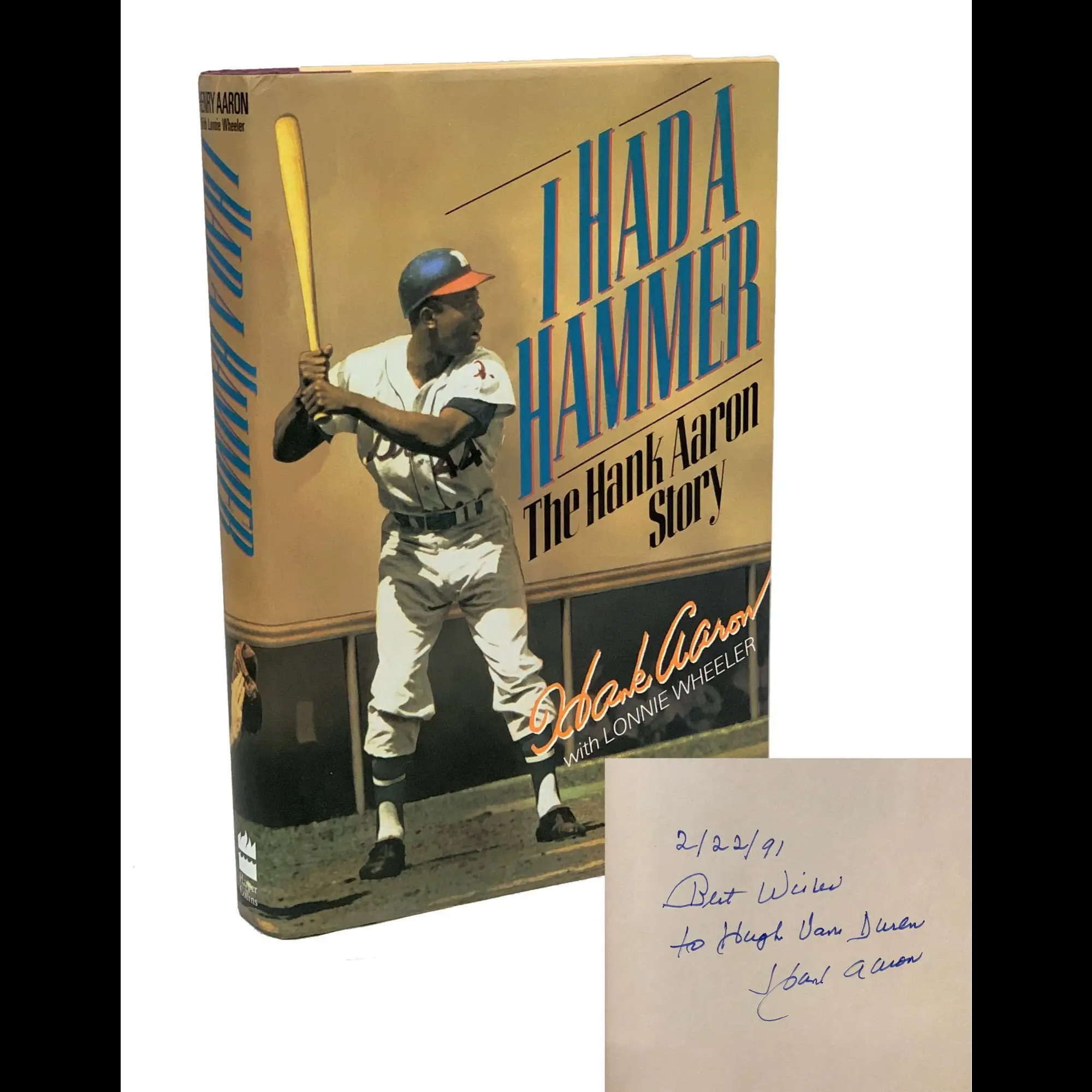
I’m not saying I’ve never heard him refer to himself as Henry, because I have. But I never once heard him correct someone who called him “Hank” to say “oh, actually, I prefer Henry” or anything like that.
His autobiography, I Had A Hammer, has the subtitle “The Hank Aaron Story” and he is credited as the co-author of the book under the name Hank Aaron. If he hated the name, he had the power to call this book anything he wanted, and write his name however he wanted. He chose Hank.
Buy a copy of I Had A Hammer by clicking HERE.
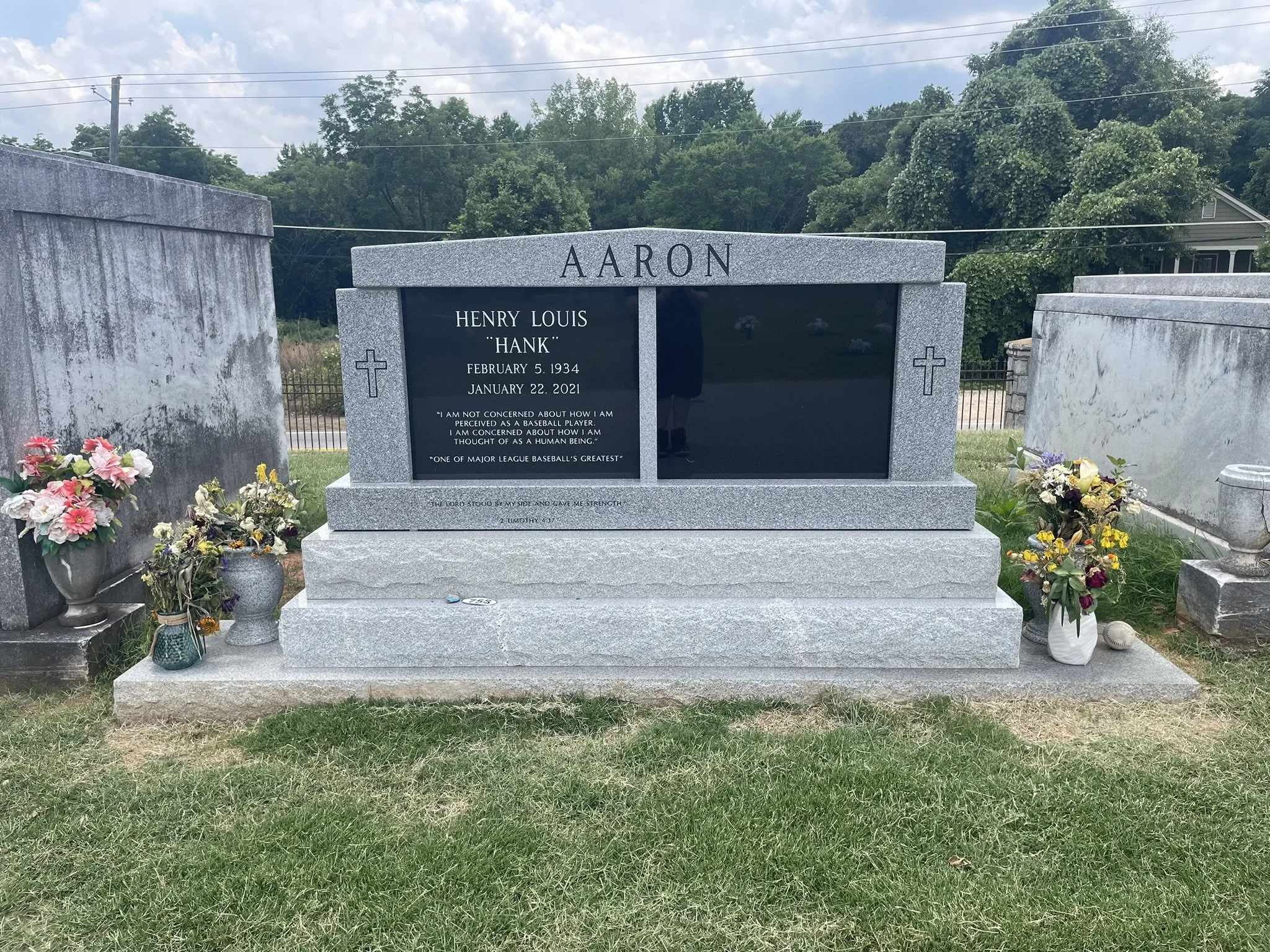
Same thing with his grave in Atlanta. If he truly hated the name Hank, it would have been incredibly easy to leave that off his headstone. The fact that it’s on there makes me think he was more okay with being called Hank than the recent stories to have come out about this topic would lead you to believe.
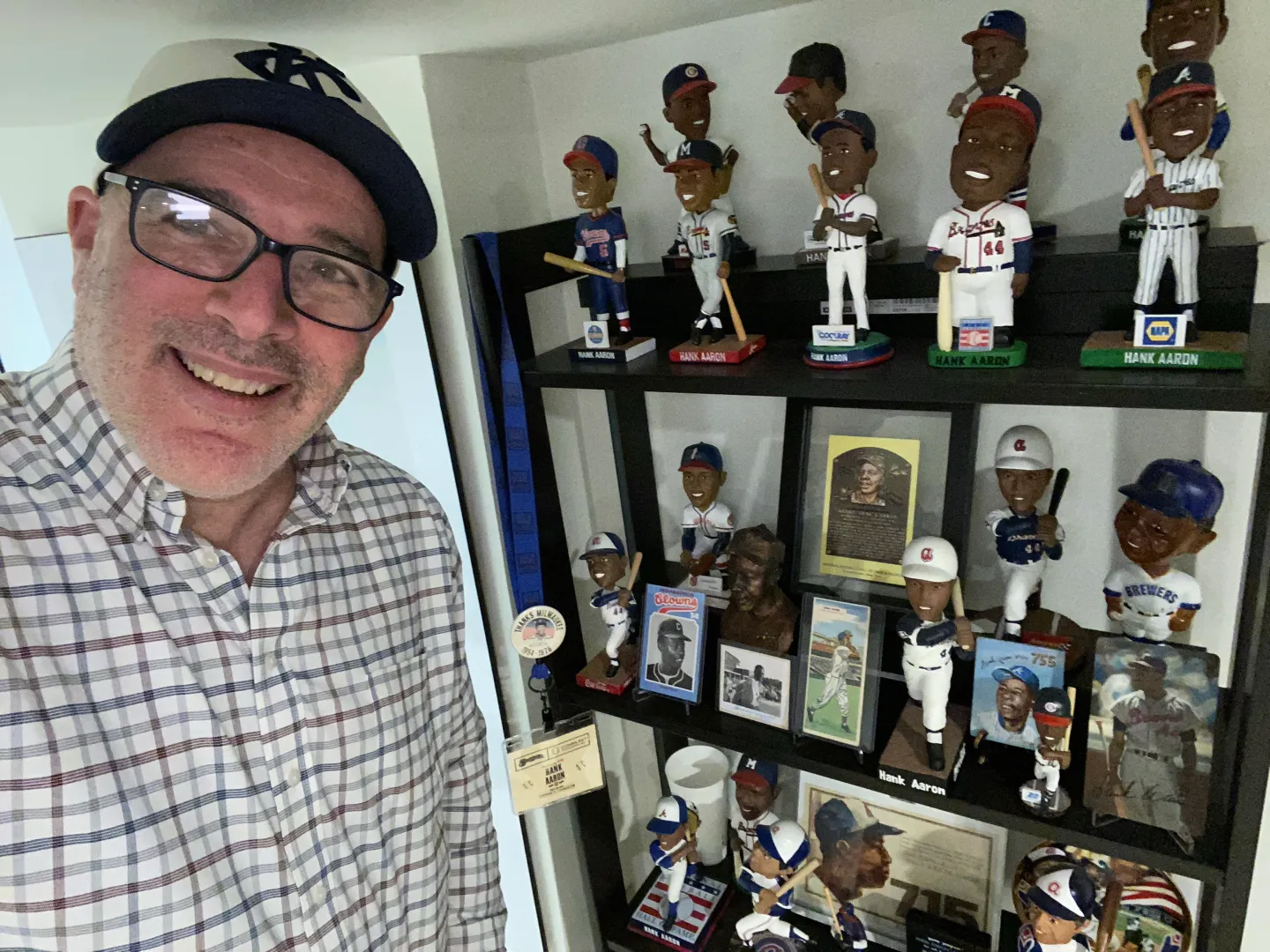
“I’m A Big Aaron Collector”
Maybe the understatement of the season on My Baseball History, but we’ll see how the rest of the episodes play out…
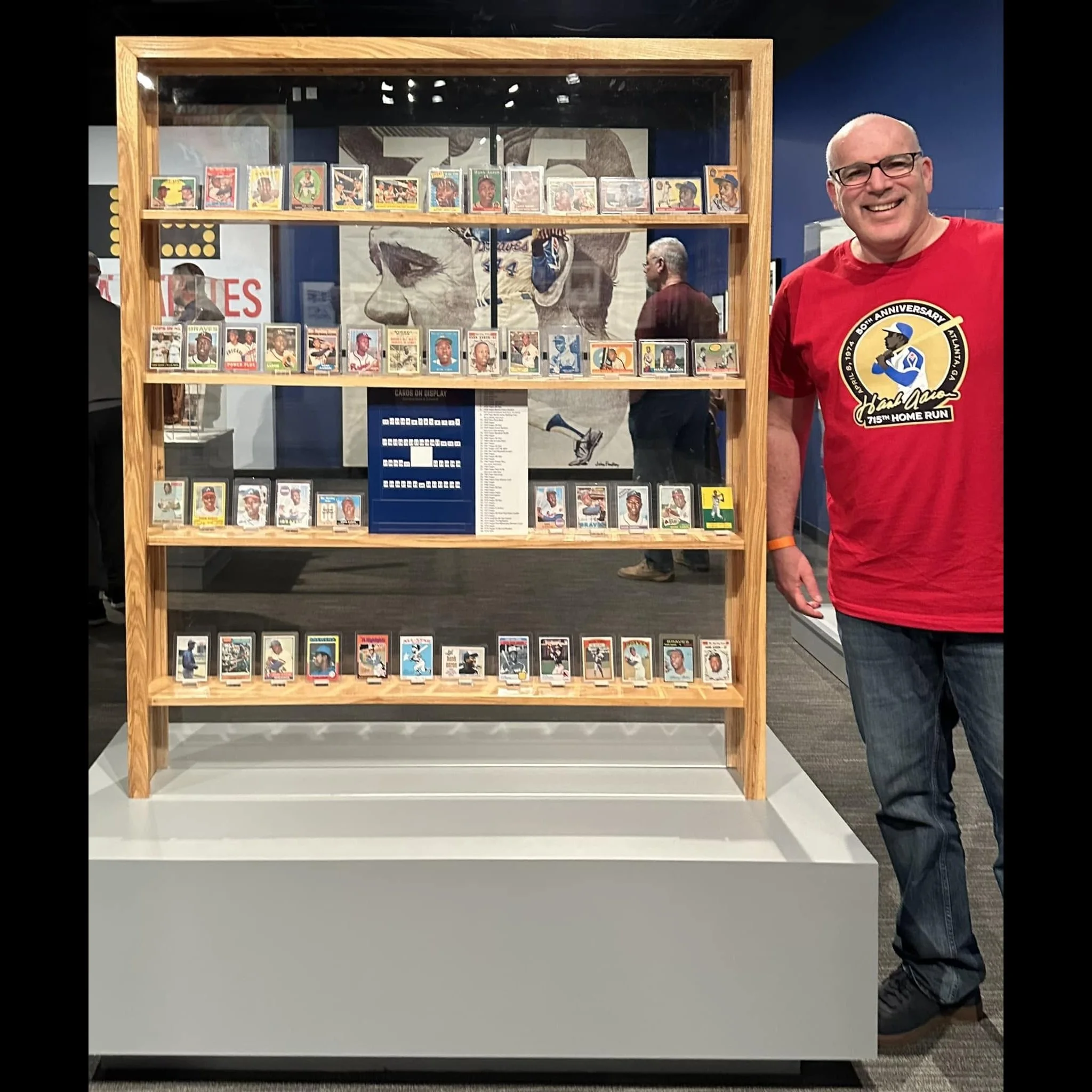
“I Know A Lot About His Collectibles”
Again, we are very aware!
Here, Jason stands with some of his Henry Aaron baseball cards while they were on display in Atlanta.
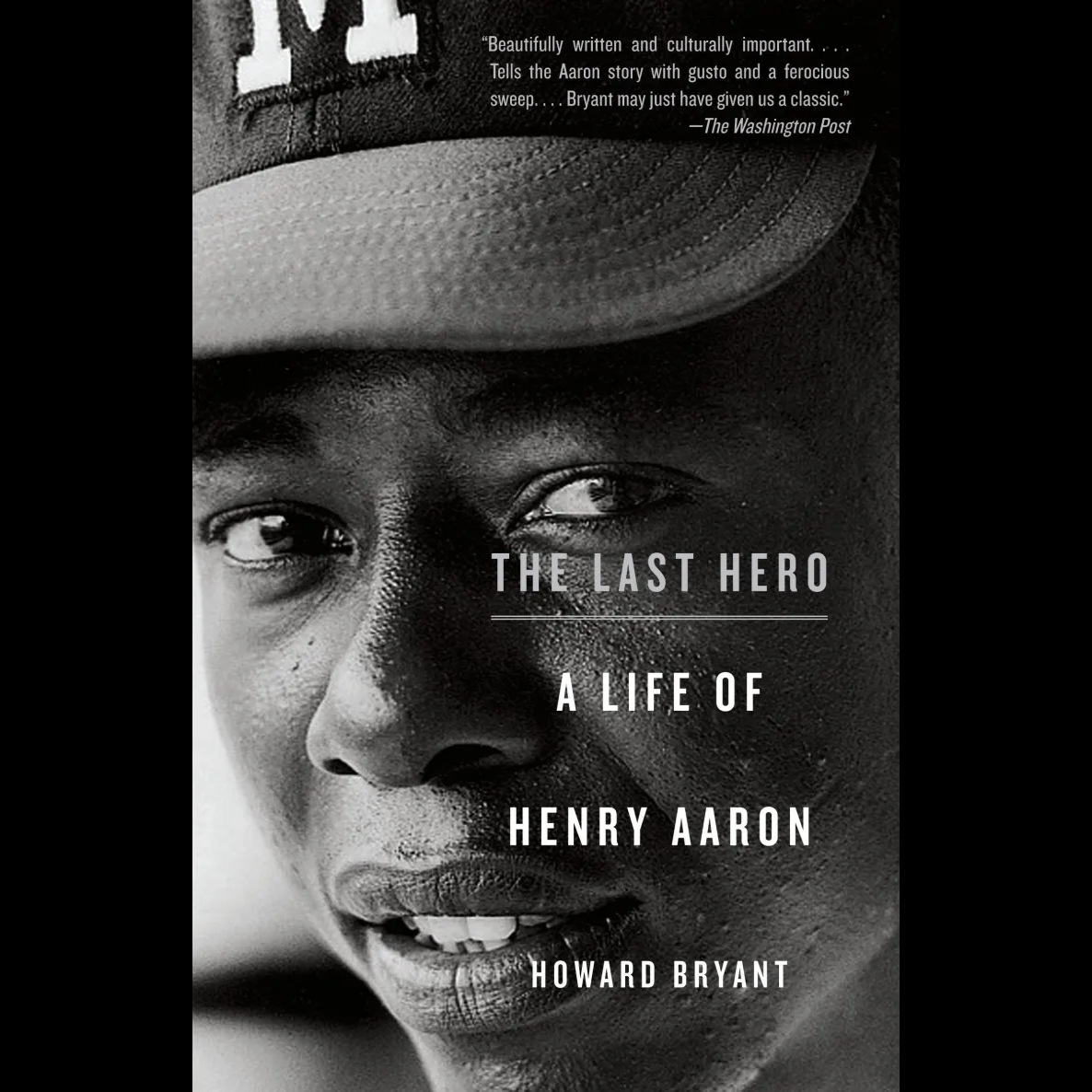
The Last Hero
In Howard Bryant’s fantastic biography of Henry Aaron, he spends a good deal within the introduction explaining how, to everyone who ever mattered to Aaron in his life, he was always called Henry. From his family and friends growing up, to his wives, to his close friends and ballplayers he respected.
If you called him “Hank” in public, he wouldn’t even hear you. But if you called him “Henry,” he knew you were a friend.
Buy Howard Bryant’s The Last Hero by clicking HERE
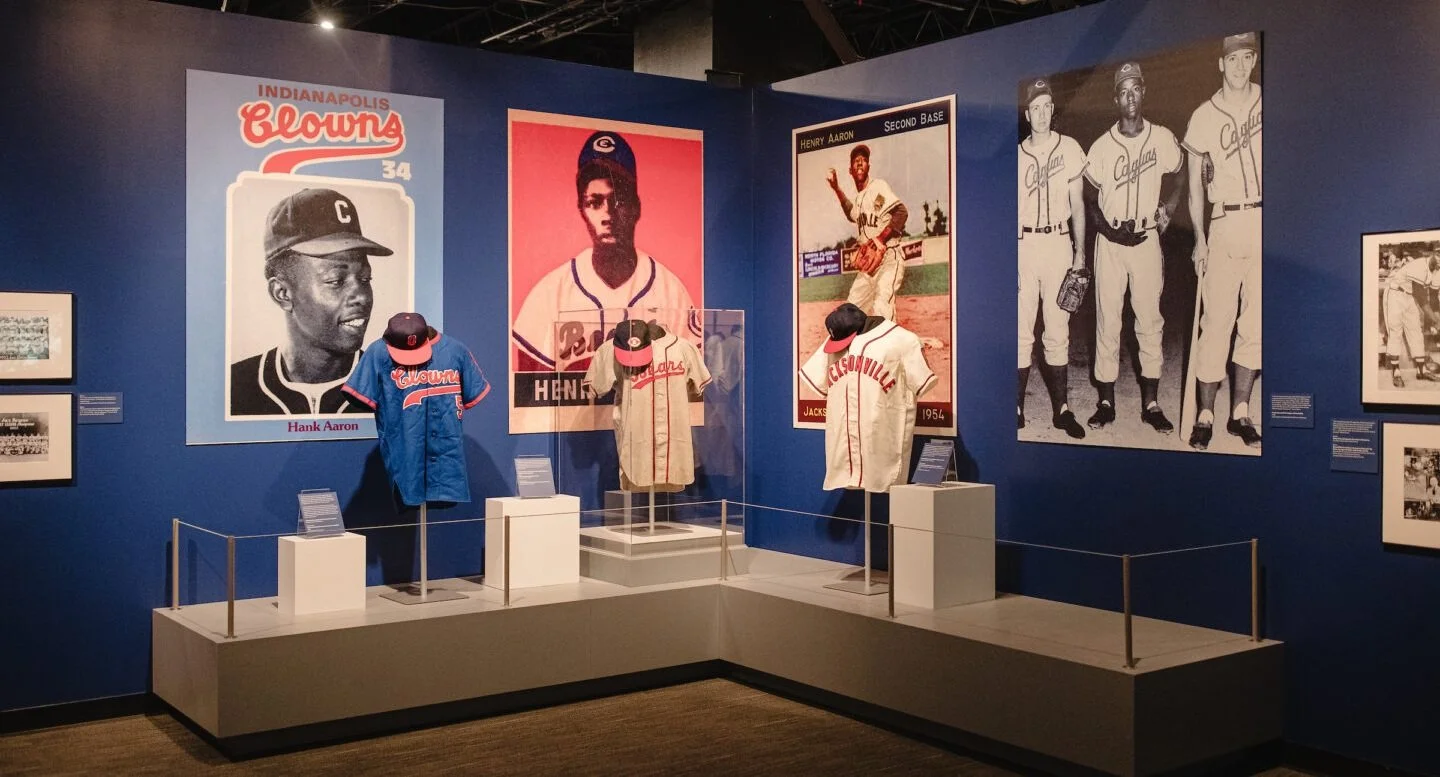
From April of 2024 through September of 2025, Jason’s collection of Henry Aaron baseball cards took up residence in the Atlanta History Center’s “More Than Brave” exhibition, along with many of his magazines, home run certificates, and other assorted knick-knacks of Hammerin’ Hank. Jason calls it “one of the miracles” of his life.
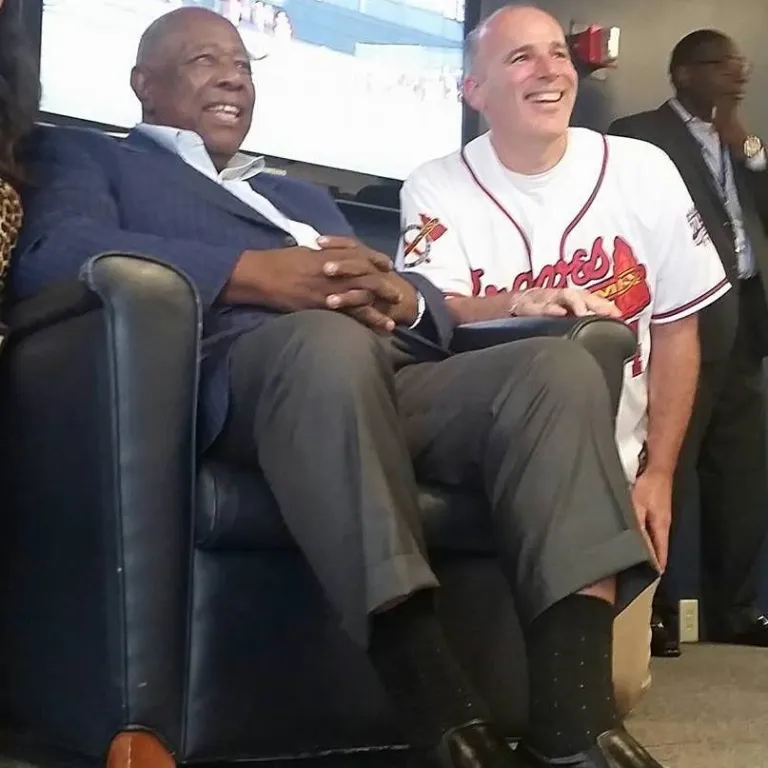
February 5, 1934 - January 22, 2021
When Henry Aaron passed away, Jason wrote a piece for the SABR Baseball Cards blog which was essentially a eulogy with kind of a collector focus, talking about what Henry Aaron and collecting Henry Aaron meant to Jason.
You can read that piece HERE.
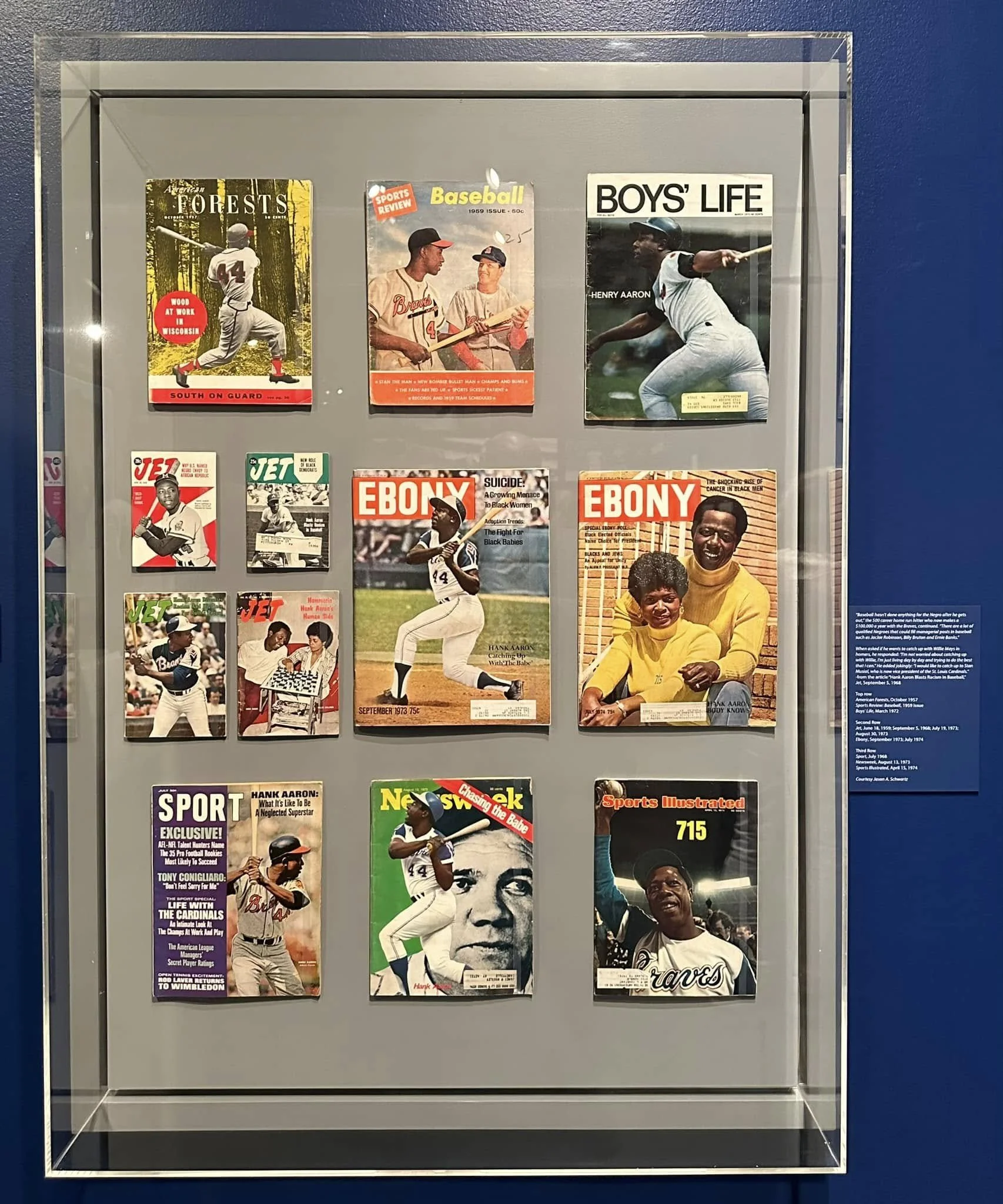
Magazines
Jason said the process of working with the curators at the Atlanta History Center was a lot of fun, because it gave him a chance to lay out his entire collection to take pictures, showing them what he has so they could decide which pieces to include, and how to group things so their displays told a story.
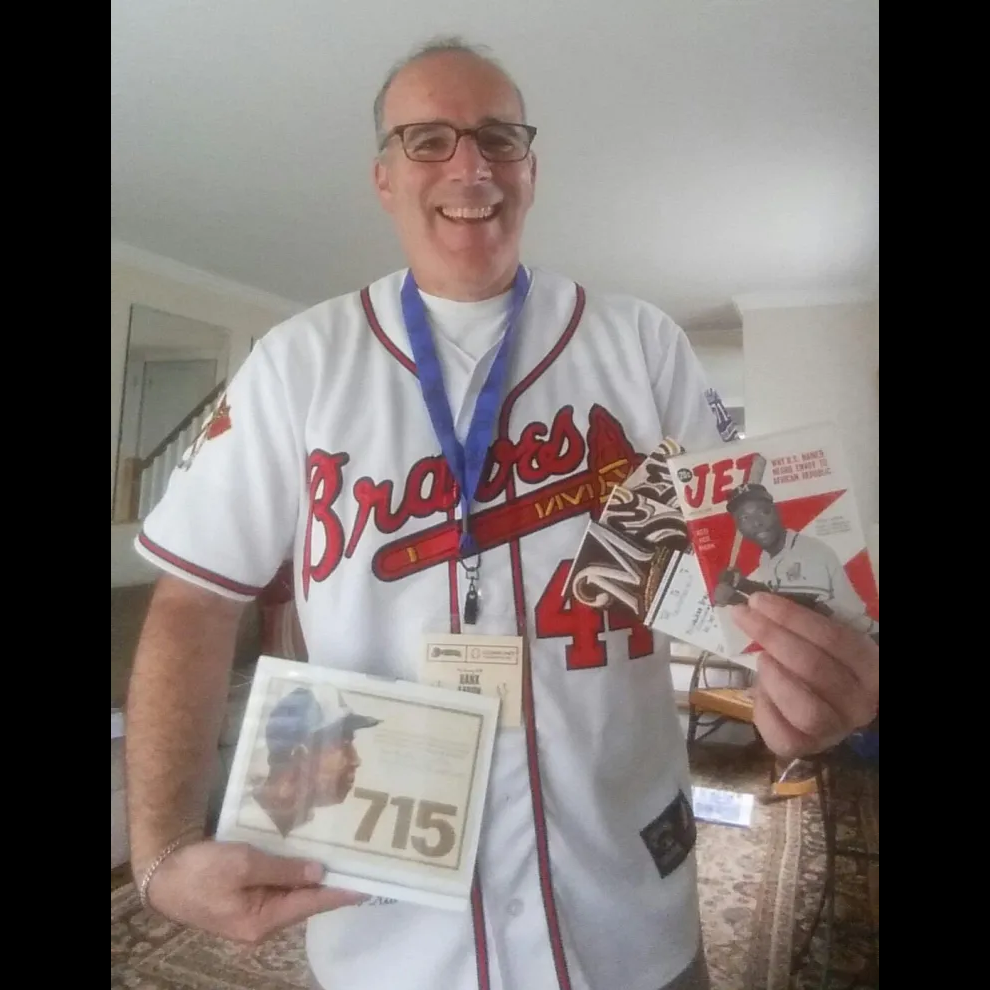
Jet
One of the magazines Jason loaned for the exhibition was this June, 1959 issue of Jet, which was Henry Aaron’s first solo magazine cover.
Jet magazine was founded in November of 1951 in Chicago, and was billed as "The Weekly Negro News Magazine" whose goal was to provide "news coverage on happenings among Negroes all over the U.S.—in entertainment, politics, sports, social events as well as features on unusual personalities, places and events."
The Johnson Publishing Company created Jet after noting an under-representation of African Americans in the general media. Redd Foxx called the magazine "the Negro bible".
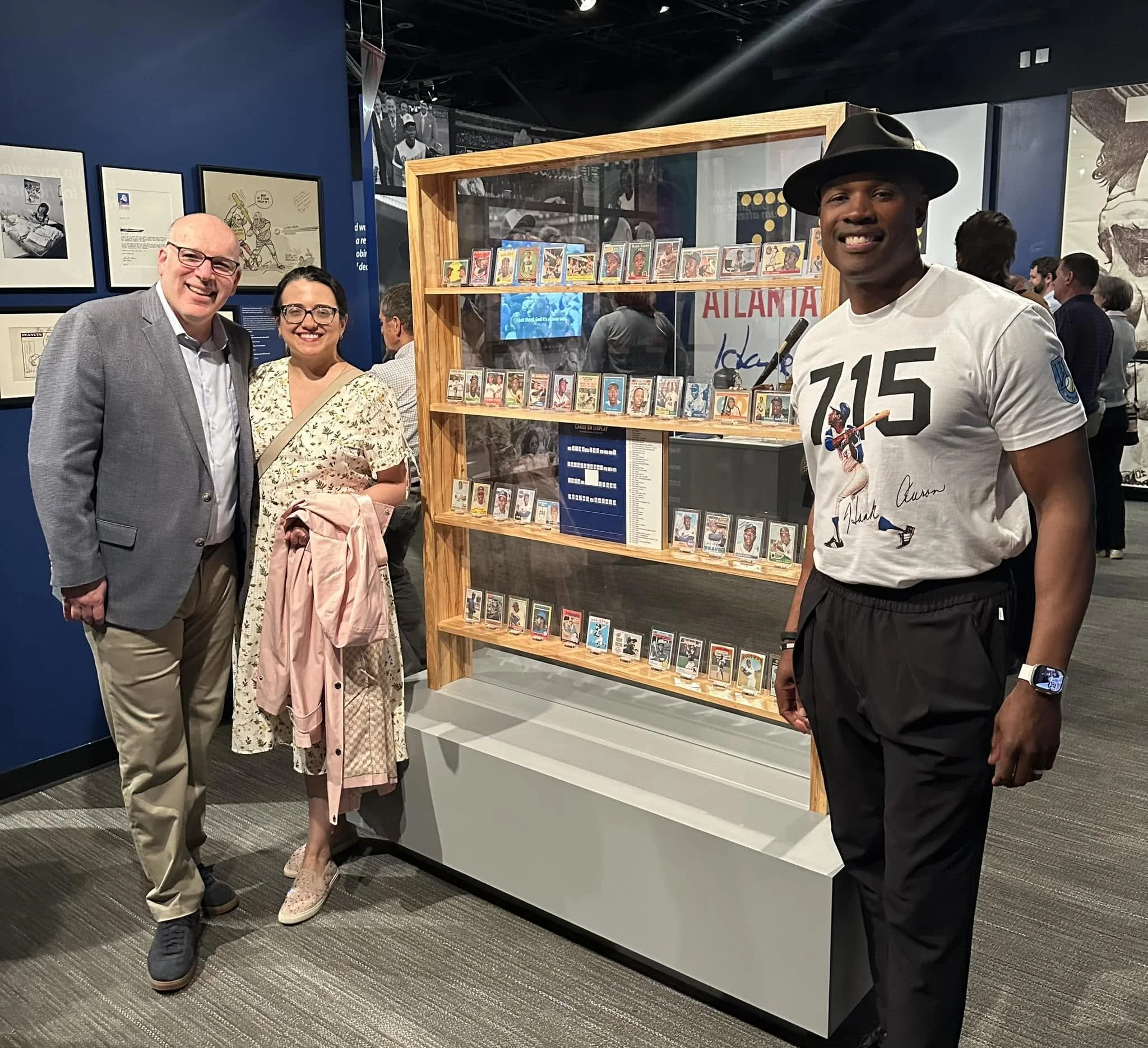
Baseball Cards
Jason and his wife, Jodee, stand next to a display of his collection of Henry Aaron baseball cards at the exhibit.
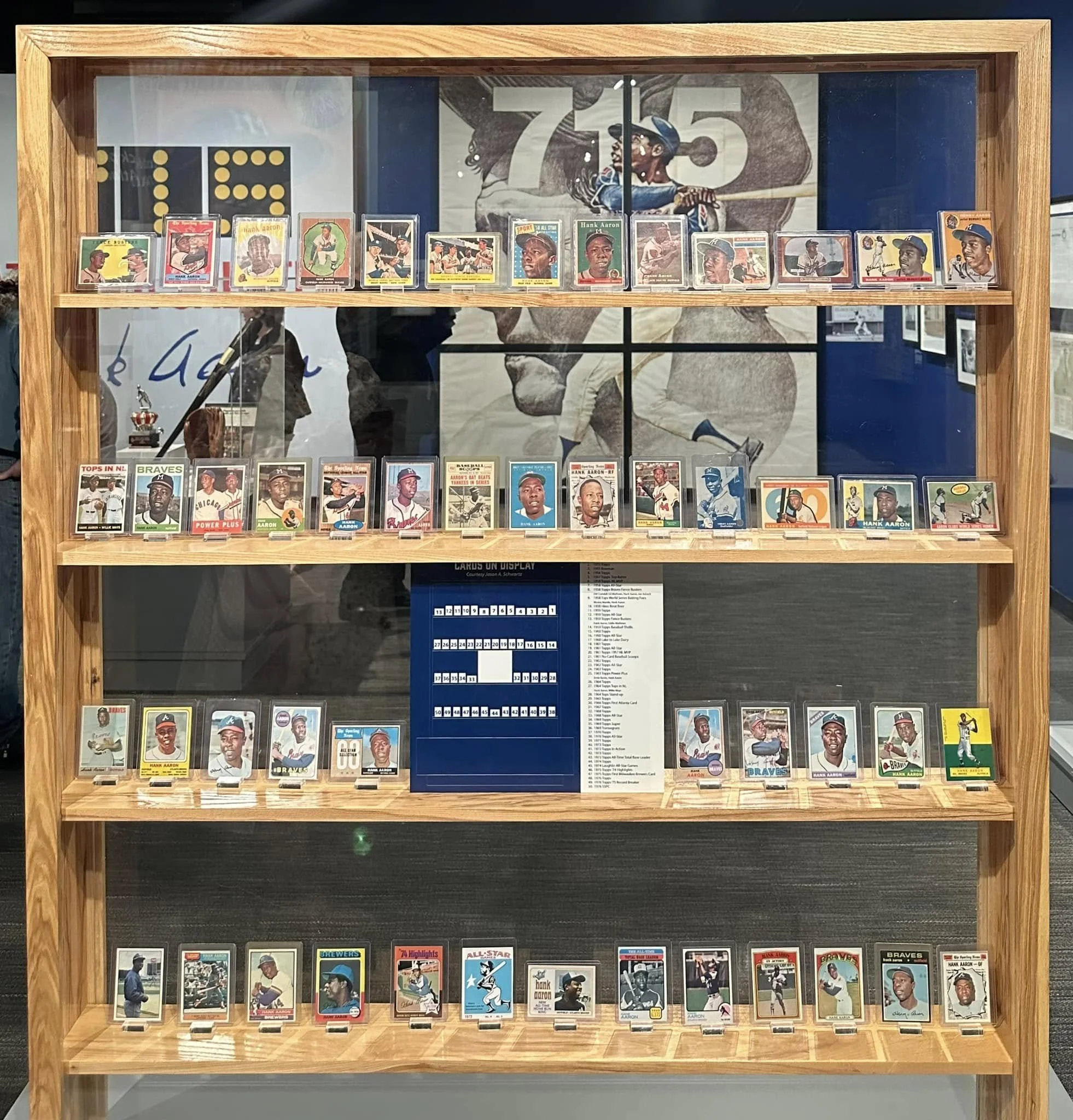
The full display. How many of these cards do you recognize? How many of them do you own?
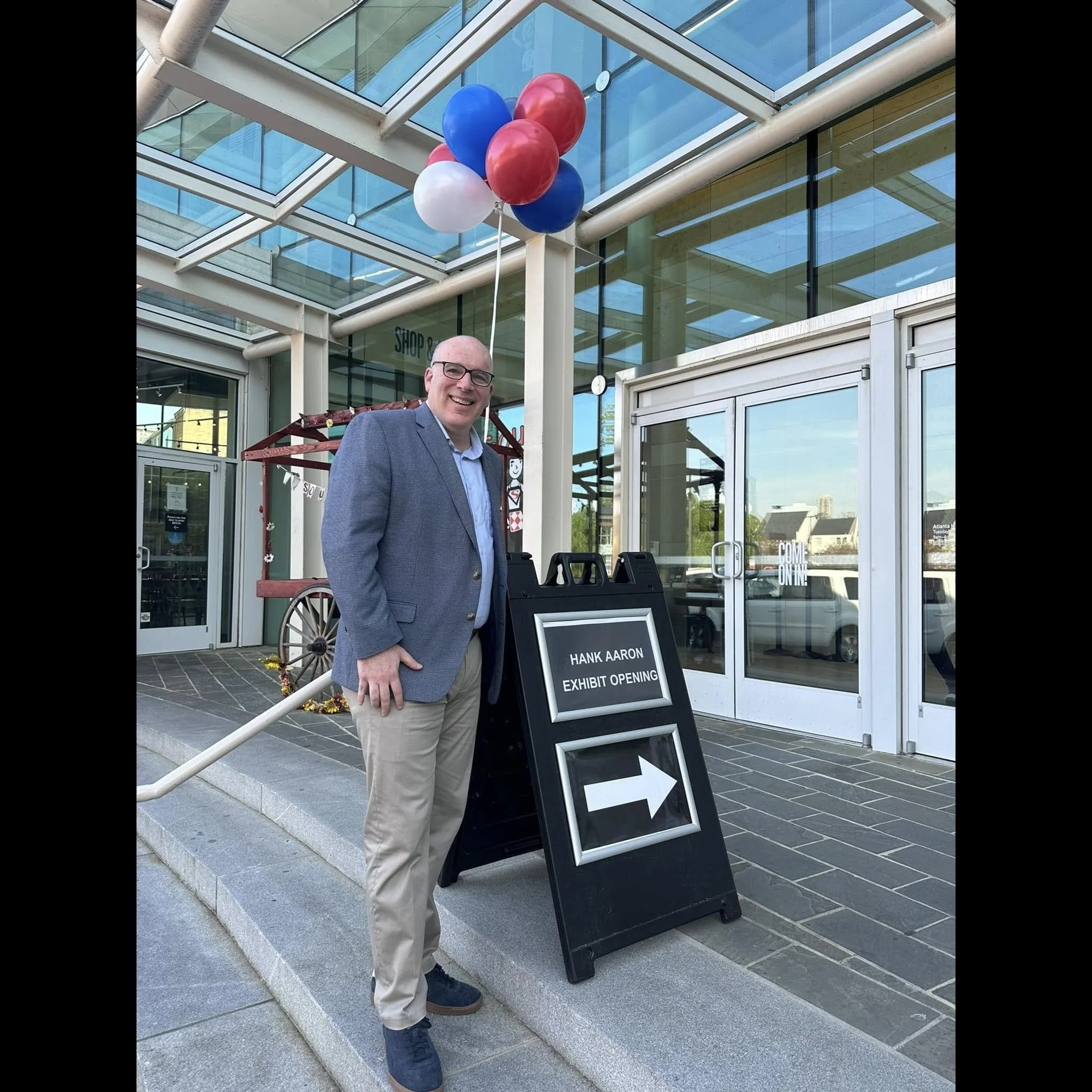
V.I.P.
Speaking from my own personal experiences, sometimes being an insane collector of something will allow you to live out some pretty wild moments.
No wonder Jason called this experience “one of the miracles” of his life.
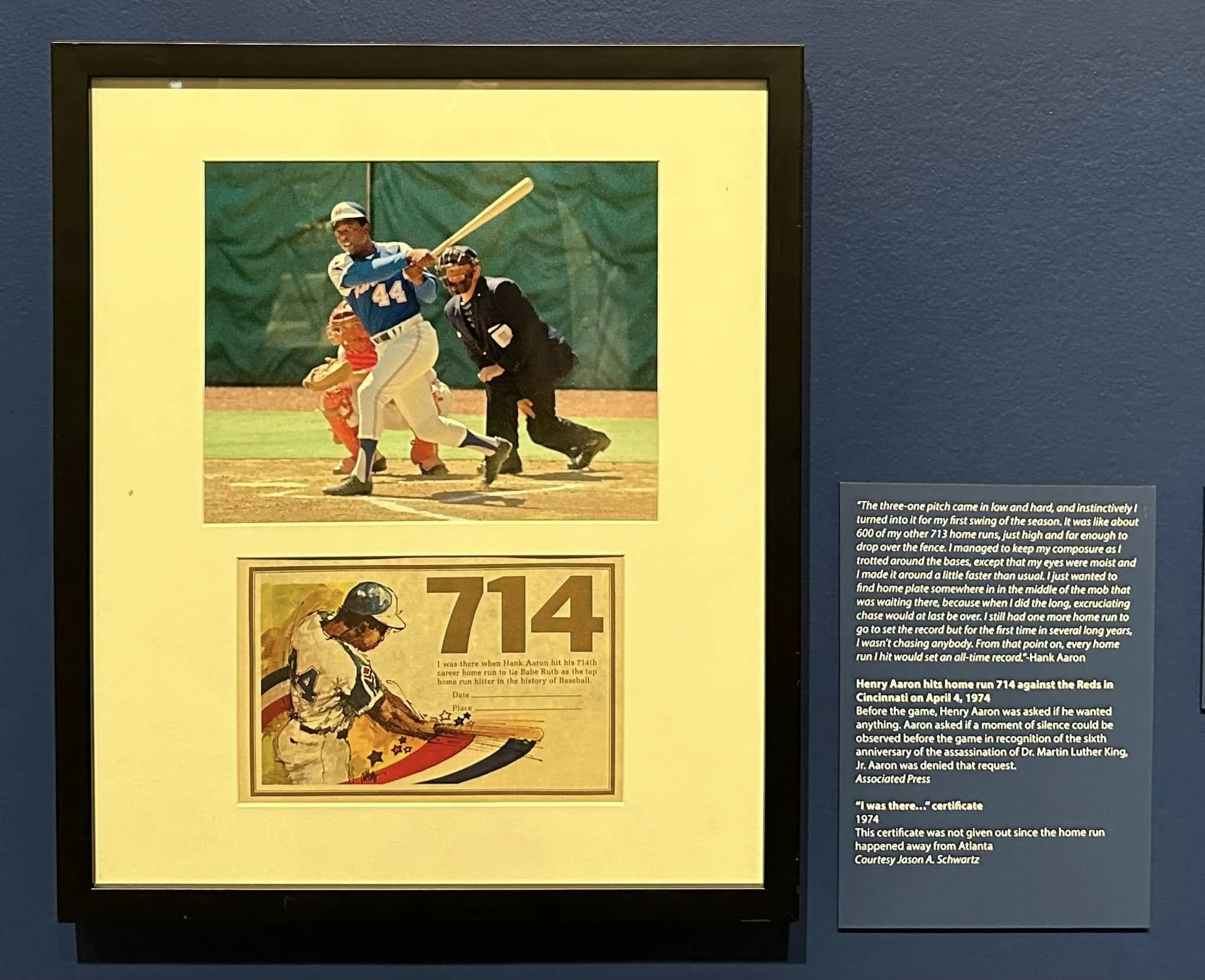
“Courtesy Jason A. Schwartz” and “Courtesy of Billye Aaron” were the two most frequently seen credit lines at the exhibit.
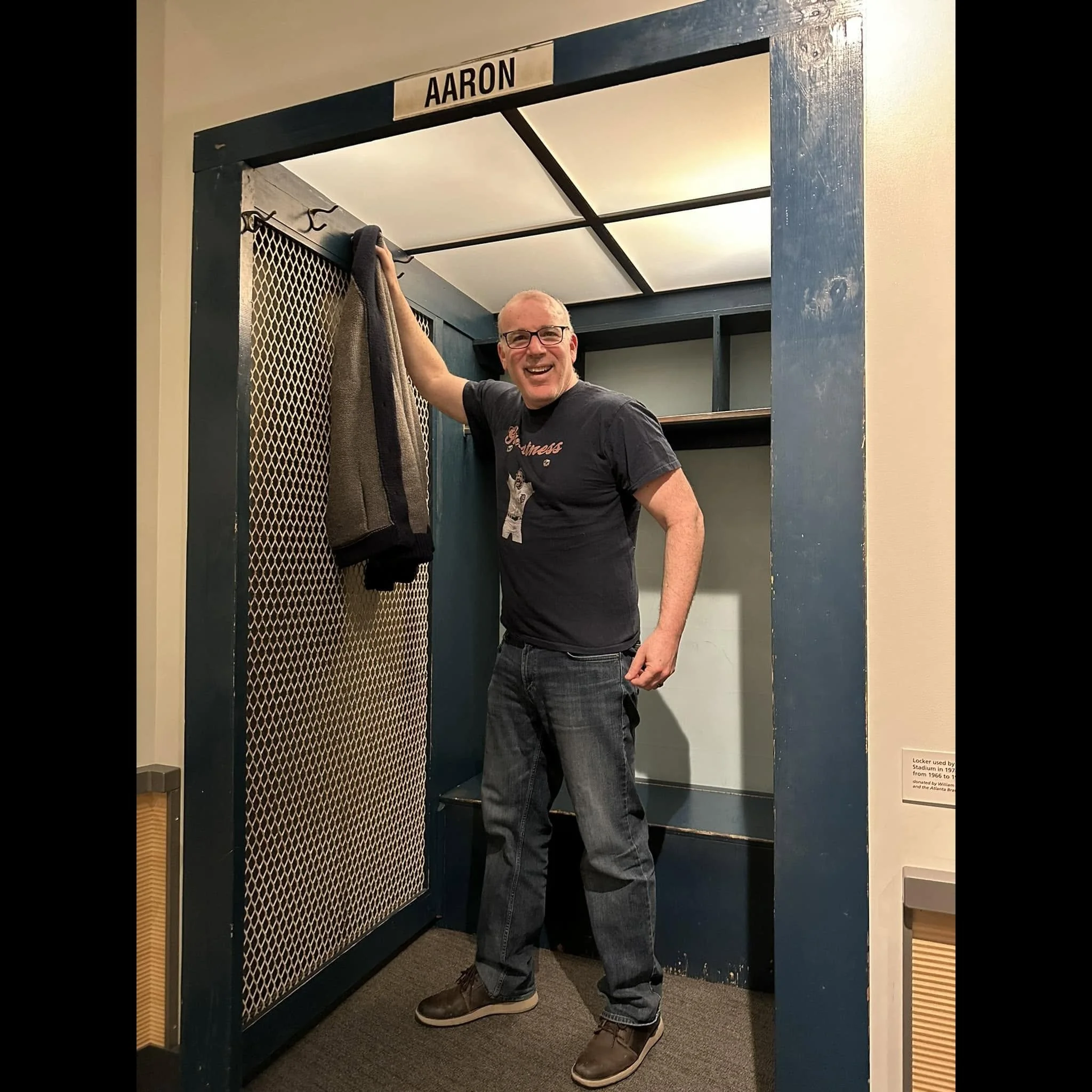
The National Baseball Hall of Fame
If you’ve never been to the Hall of Fame in Cooperstown, first of all, you have to go. If you’re this deep into these liner notes from this episode which you have now been listening to for two hours, fourteen minutes, and fifty-eight seconds, you clearly love baseball, and baseball history. You owe it to yourself to get to the Hall at least once in your life. You can see their incredible Henry Aaron collection, including the actual locker he used, in their exhibits.
Josh Rawitch is the President of the National Baseball Hall of Fame and Museum. He was our guest for Episode 9 of Season 4. You can listen to that episode HERE.
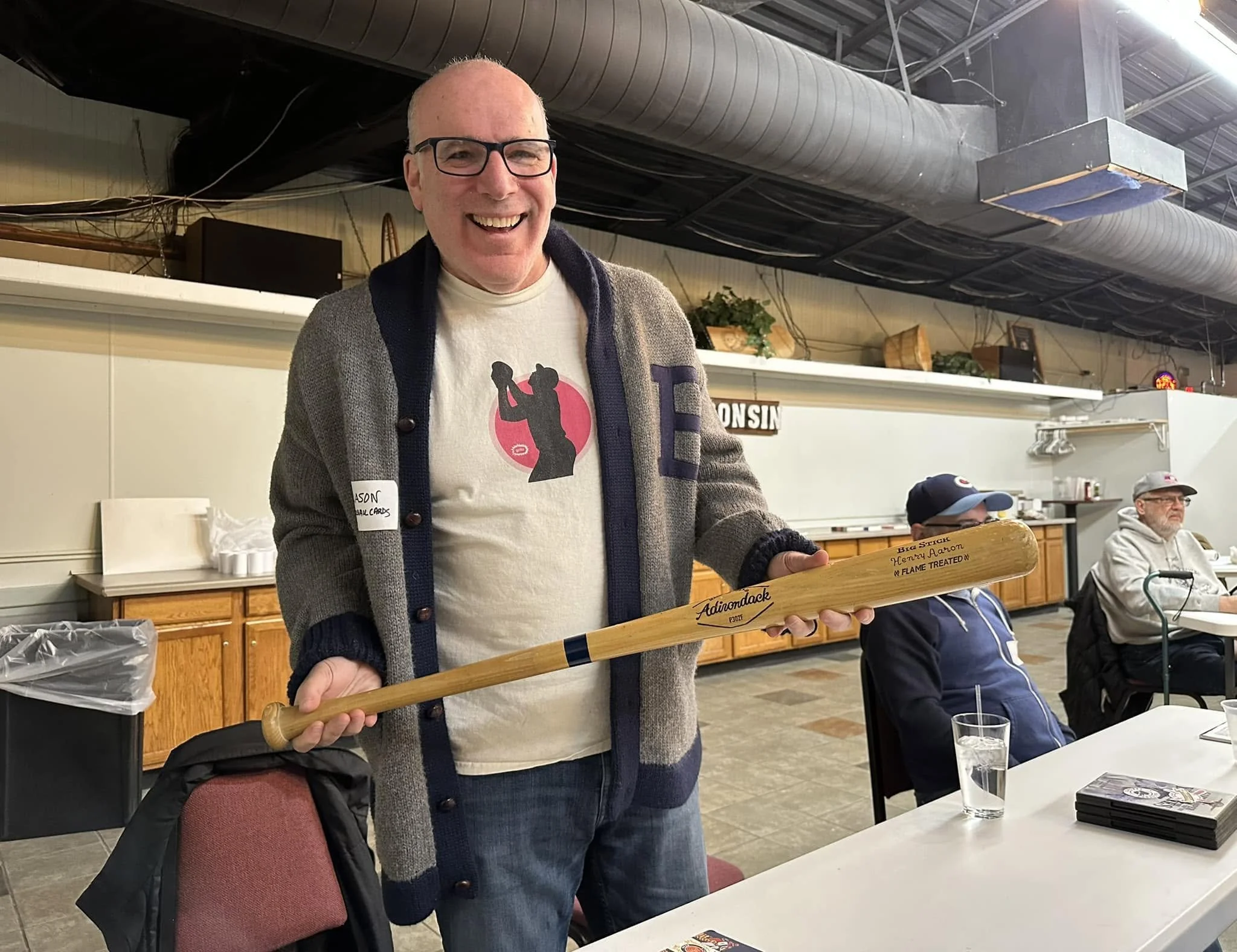
“All of the suffering I’ve ever had in the hobby, it was all worth it. It was just an incredible experience.”
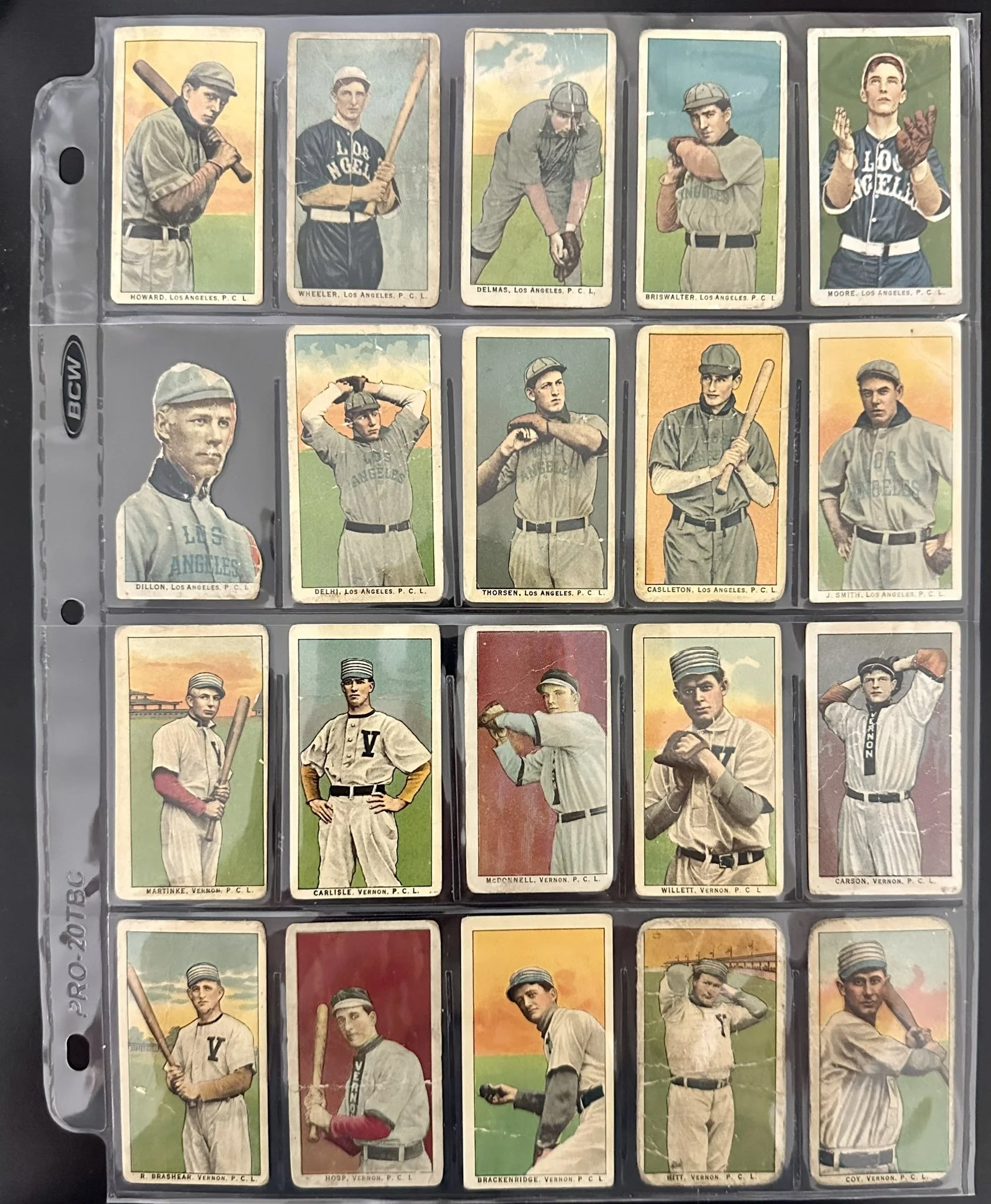
Some of the “Los Angeles” cards from Jason’s T212 Obak collection appear in this sleeve with other members of the Pacific Coast League. One of the things which made the T206 set so unique (and such a “Monster”) was that it included minor league players in addition to the hundreds of Major League examples within the set, but the Pacific Coast League was not one of them. While the cards from the T212 set look nearly identical to the T206 set, they are distinctly different sets. Issued by the Obak Tobacco Company, the T212 set is the West Coast equivalent to T206. It featured players from the Northwest League, as well.
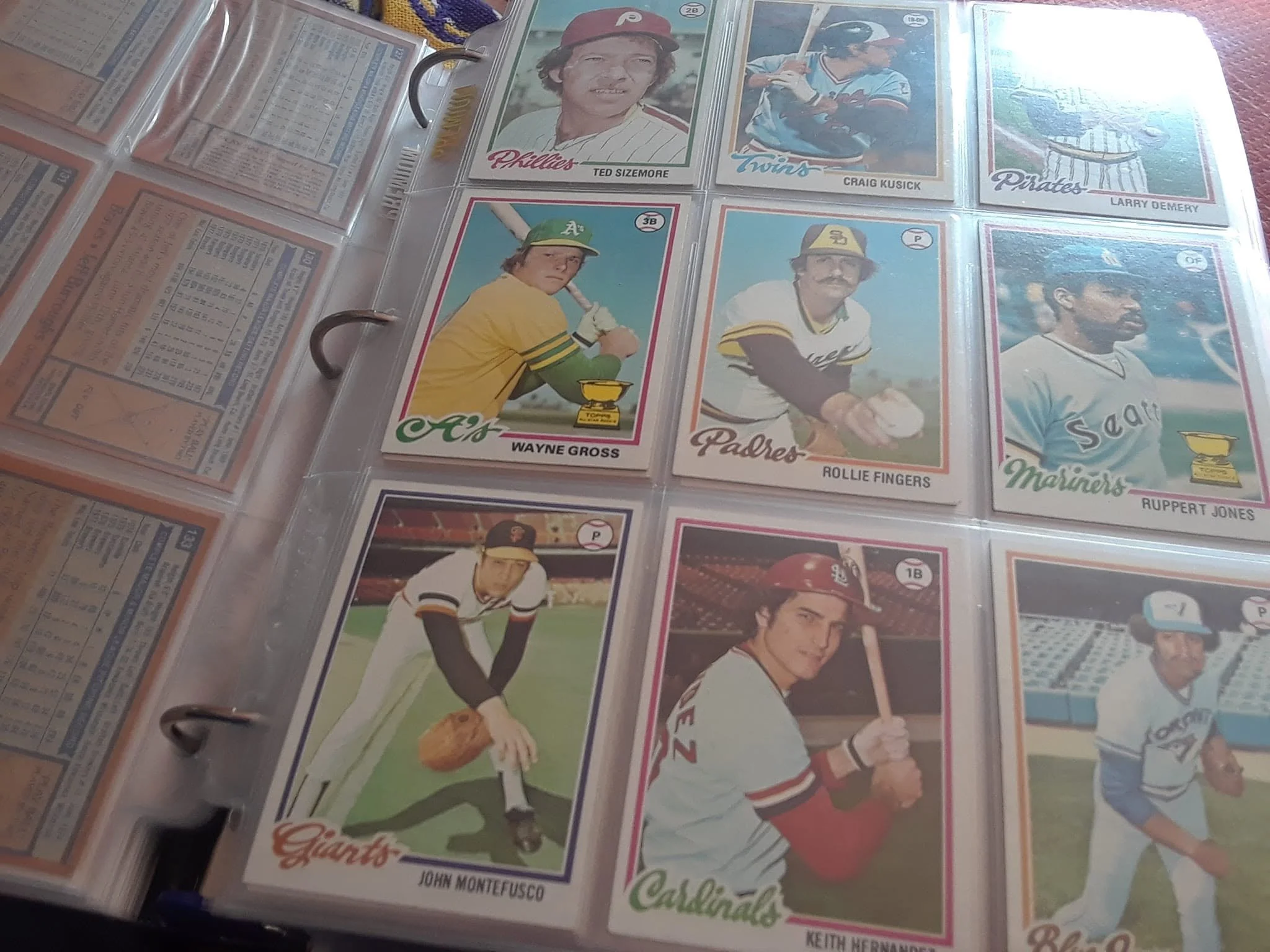
1978 Topps
Since it was the first year Jason started collecting cards, the 1978 Topps set has the most sentimental value for him.
If the house were burning down and Jason was forced to grab one binder, it would be his binder of 1978 Topps cards.
It may not be the most aesthetically pleasing, or have anywhere near the most monetary value, but that’s the great thing about collecting. Everyone has their thing.
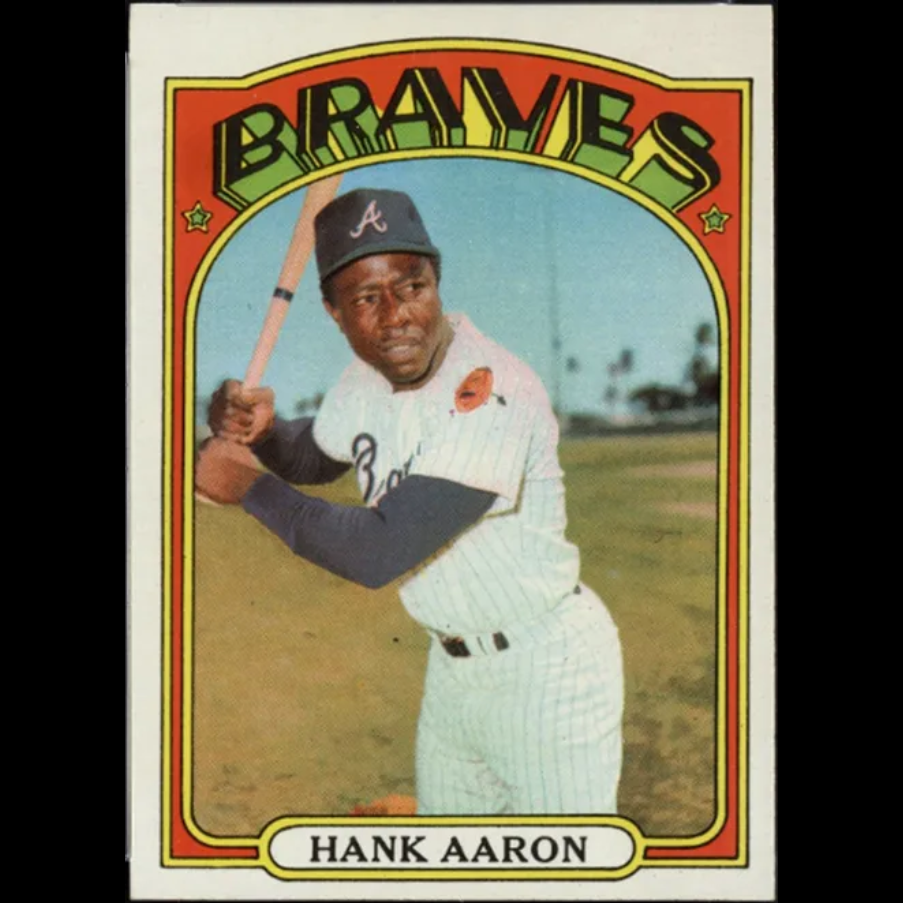
1972 Topps
The 1972 Topps Baseball set consists of 787 cards – the largest Topps issue of its time. Each 2-1/2" by 3-1/2" card boasts a vivid color photo in an arch shape and surrounded with a bi-color border, all of which is contained within the overall white border.
The set is anchored by stalwarts Hank Aaron, Roberto Clemente, Willie Mays, Pete Rose, and more than six dozen “In Action” examples featuring action shots of popular players. Notable rookies include Don Baylor, Cecil Cooper, Carlton Fisk, Dave Kingman, Darrell Porter and J. R. Richard.
Though no rarities per se, the “High-Numbers” (#526-787) are more difficult to obtain, particular the cards of Steve Garvey (#686) and Rod Carew (#695), and card #91 and card #162 both reveal photo errors.
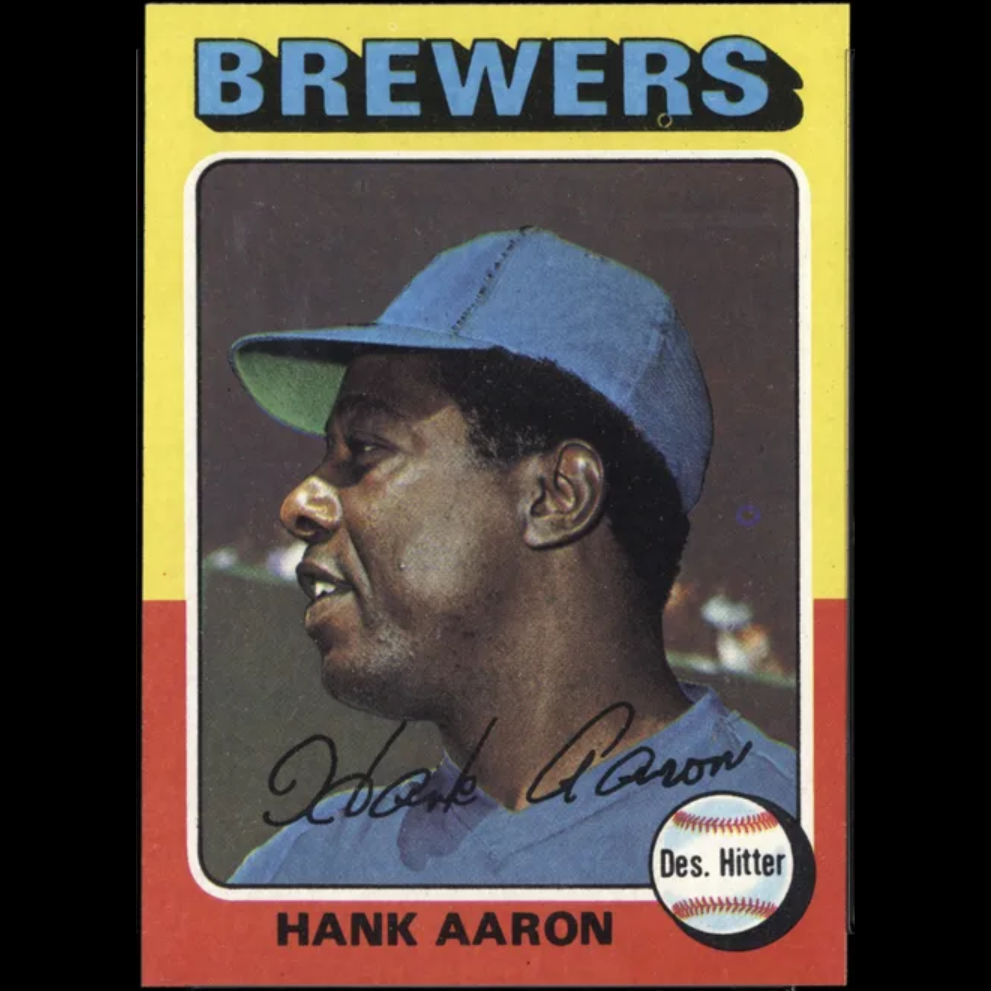
1975 Topps
The 1975 Topps Baseball set consists of 660 cards, each measuring a customary 2-1/2" by 3-1/2”. Their design borrowed various elements from past Topps sets including facsimile autographs on their cardfronts, and bright, full-bleed borders.
The set also boasted of "All 660 Cards in One Series!" – increasing the odds of obtaining a favorite player in the first pack. Highlights include Hank Aaron (featured on card #1, a 1974 Highlights commemorative, and card #660), as well as multiple new collectibles of recently retired legends Mickey Mantle and Willie Mays.
Numbers 614-624 were devoted to Rookies, grouped by position, and showing four players per card.
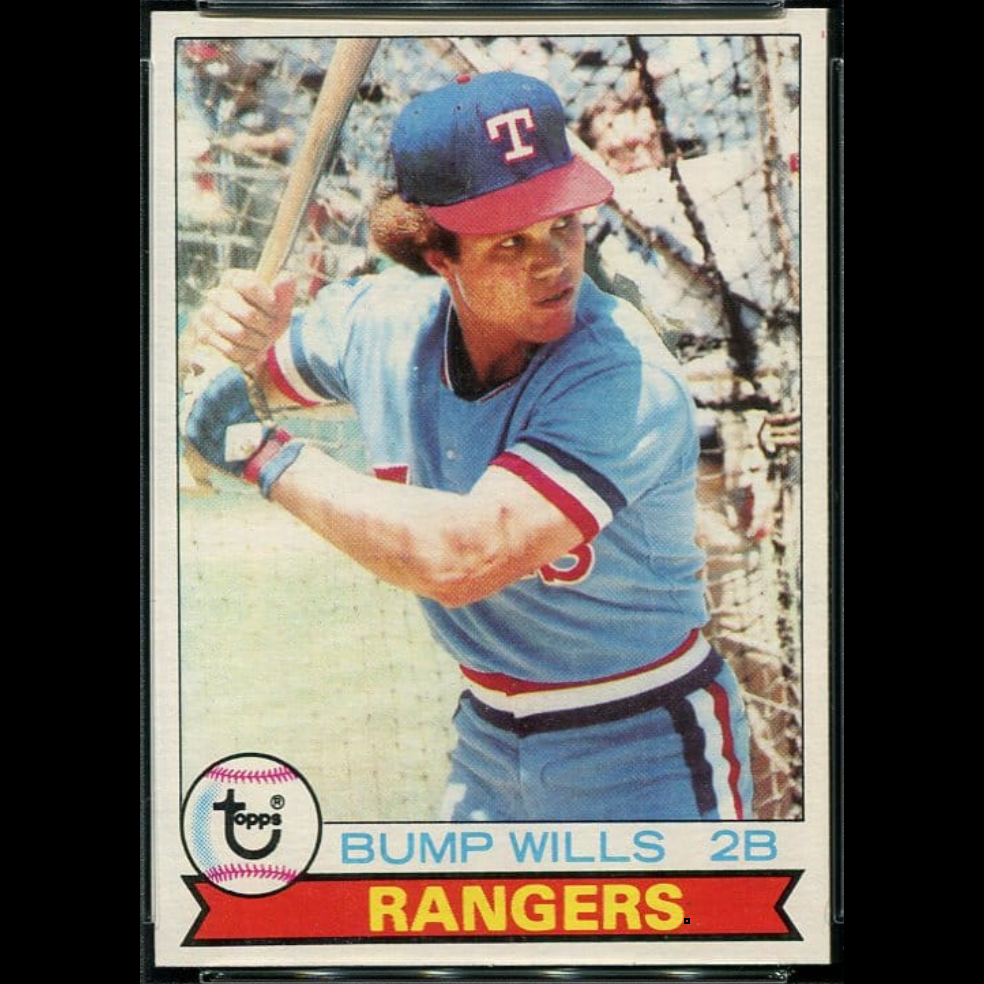
1979 Topps
Jason thinks the colors on the 1978 Topps set are much more vibrant than other sets from the 1970s, and is surprised that the 1979 Topps set pales in comparison (literally and figuratively) when printing technology should have been getting better every single year.
Take a look at this example of card #369 featuring Bump Wills of the Texas Rangers. Those uniforms should be beautiful, but the colors just don’t pop the same way they would have in the 1978 set.
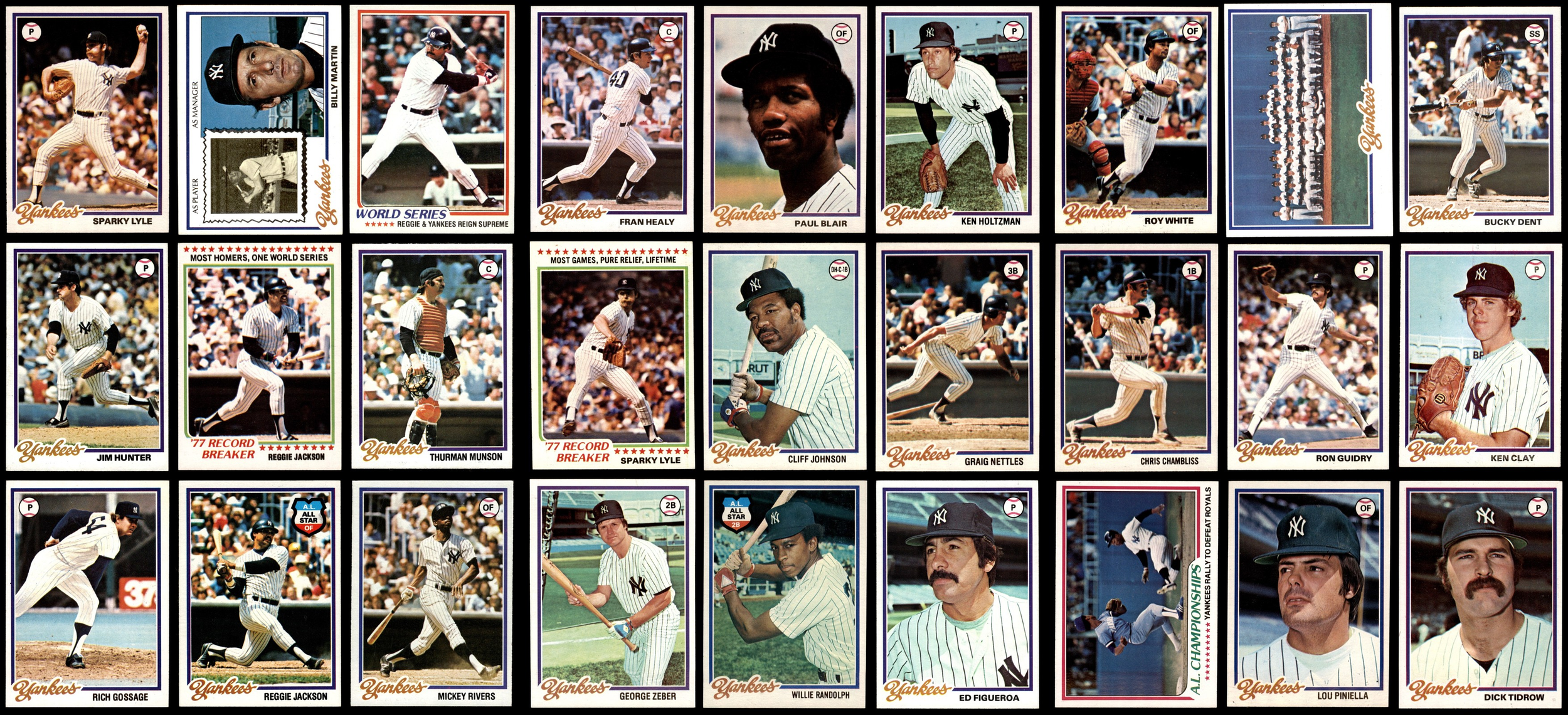
Look how much more vibrant the colors are on this 1978 Topps Yankees team set. How crisp the contrast is. Gorgeous.
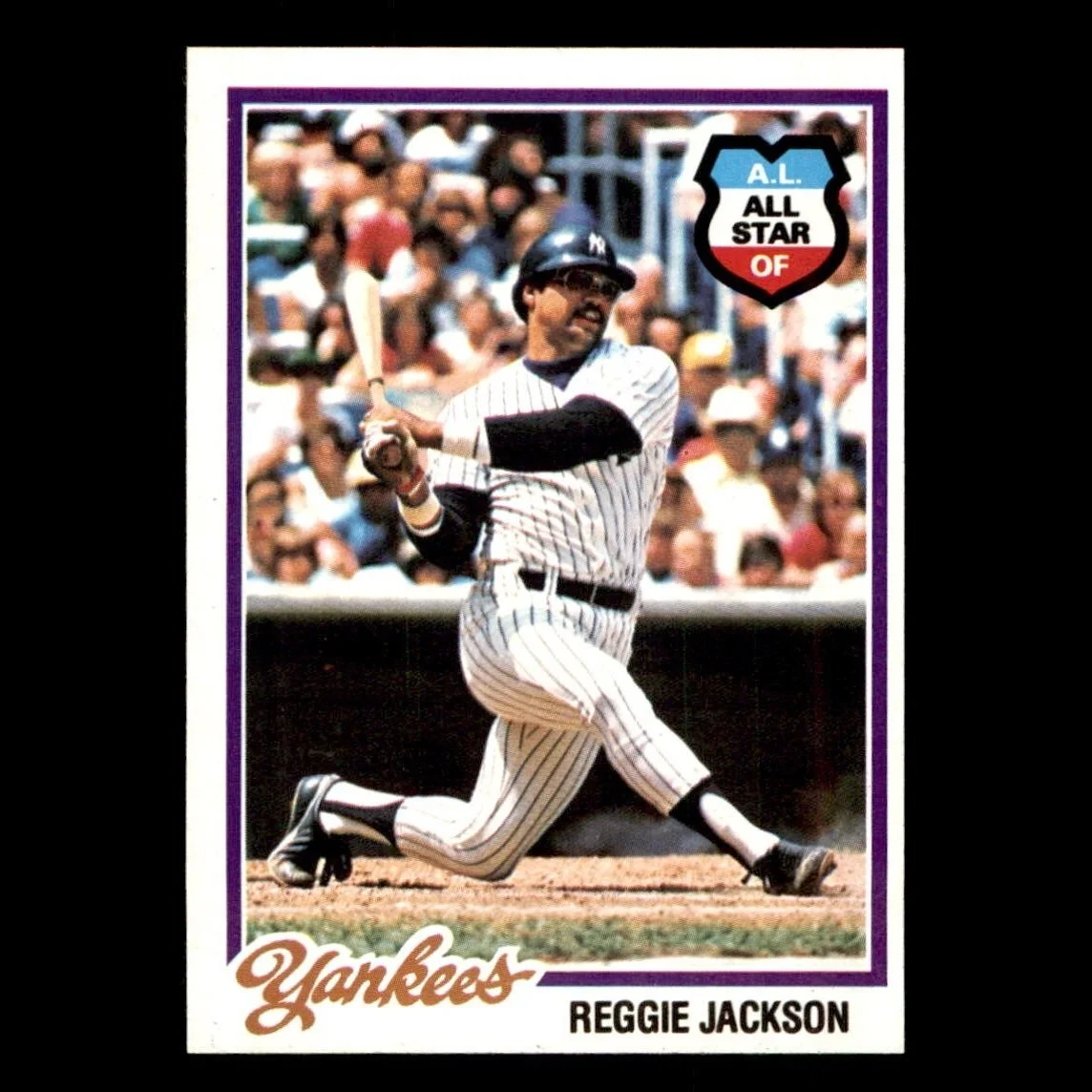
1978 Topps Reggie
I mean, come on. This thing is a work of art. Pictured above in the bottom row, second from the left, I felt like you needed to really be able to see this thing in all its glory. The colors are beautiful. This was back when Topps still cared about the images they used.
Reggie’s swing, and particularly his drop-to-a-knee follow-through were iconic. This photo depicts it perfectly. Even if I covered the names and any logos on the uniforms, there would be no mistaking who this image is. This is so undeniably Reggie Jackson, it’s perfect.
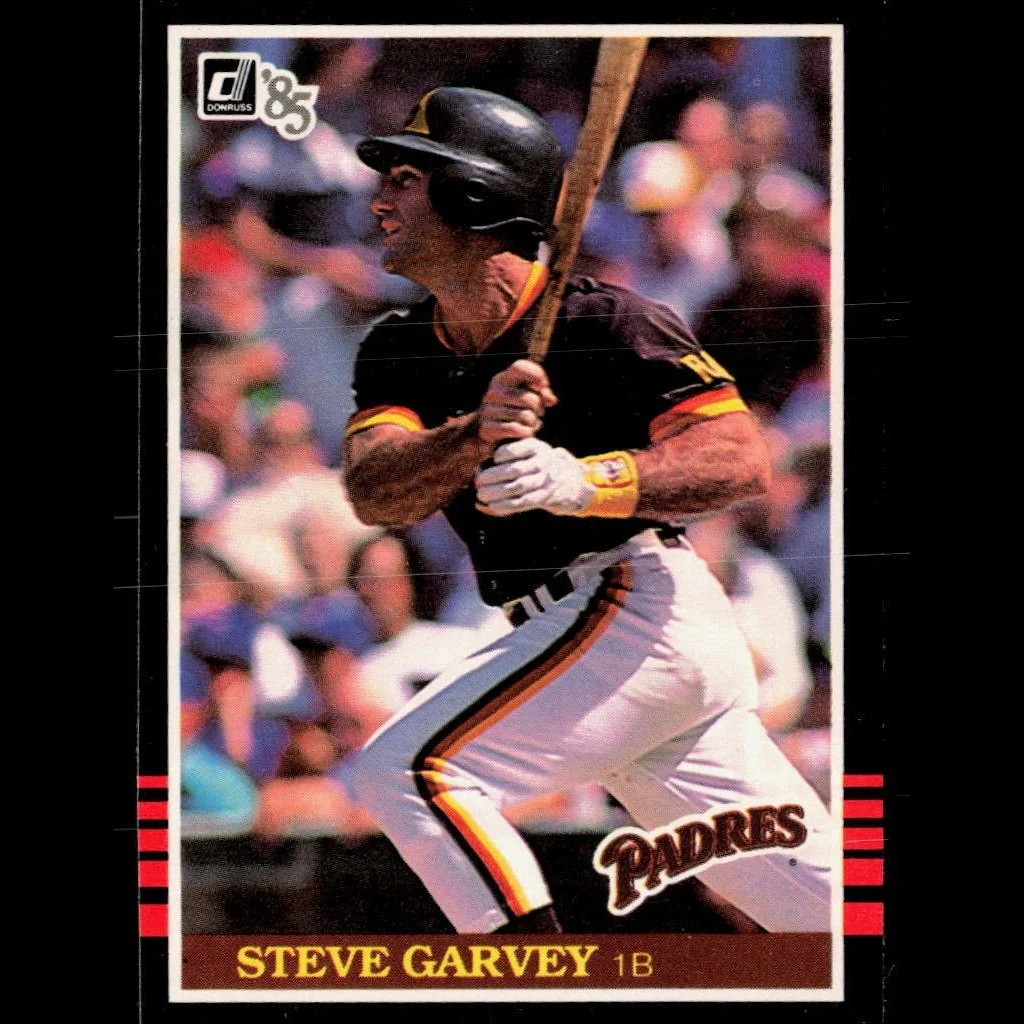
1985 Donruss
The 1985 Donruss Baseball set consists of 665 cards, each measuring 2-1/2" by 3-1/2”. On each item, a full-color image is framed by a rich black border, with the athlete’s name and position identified at the bottom border and the team logo imprinted at the corner. Card backs include the athlete’s name, position, and card number statistics. The card for Ernie Camacho (#129) incorrectly bears a photo of Rich Thompson. More egregious, however, is the card for Tom Seaver (#424) – which pictures fellow Chicago White Sox pitcher Floyd Bannister. The black borders of this set makes it very condition sensitive and difficult to assemble in high grade.
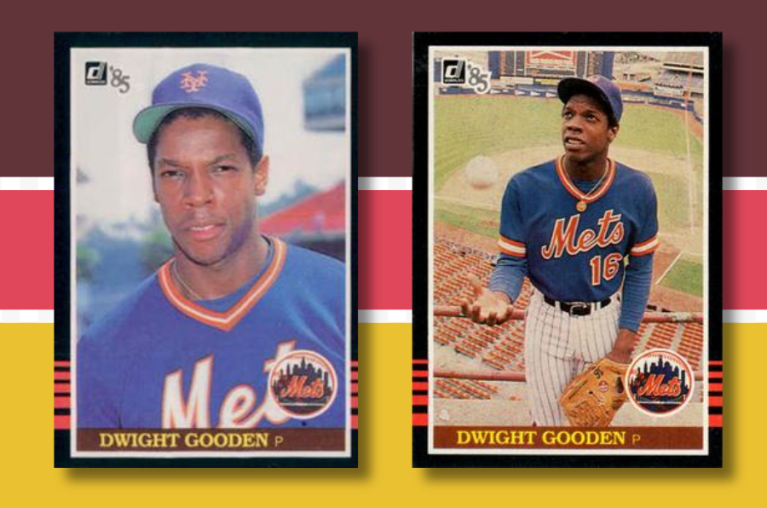
Jason’s other favorite set is the 1985 Donruss set. Rookie cards from the set include Dwight Gooden (#190), Roger Clemens (#273), Eric Davis (#325), Kirby Puckett (#438), and Orel Hershiser (#581).

This Is Gambling
If we need entire pages on our baseball card websites which list the odds of pulling specific cards from their different sets to legally cover the companies from lawsuits for false advertising, maybe it’s time to consider that we have possibly lost the plot on this being a hobby, and it has turned full-force into straight up gambling.
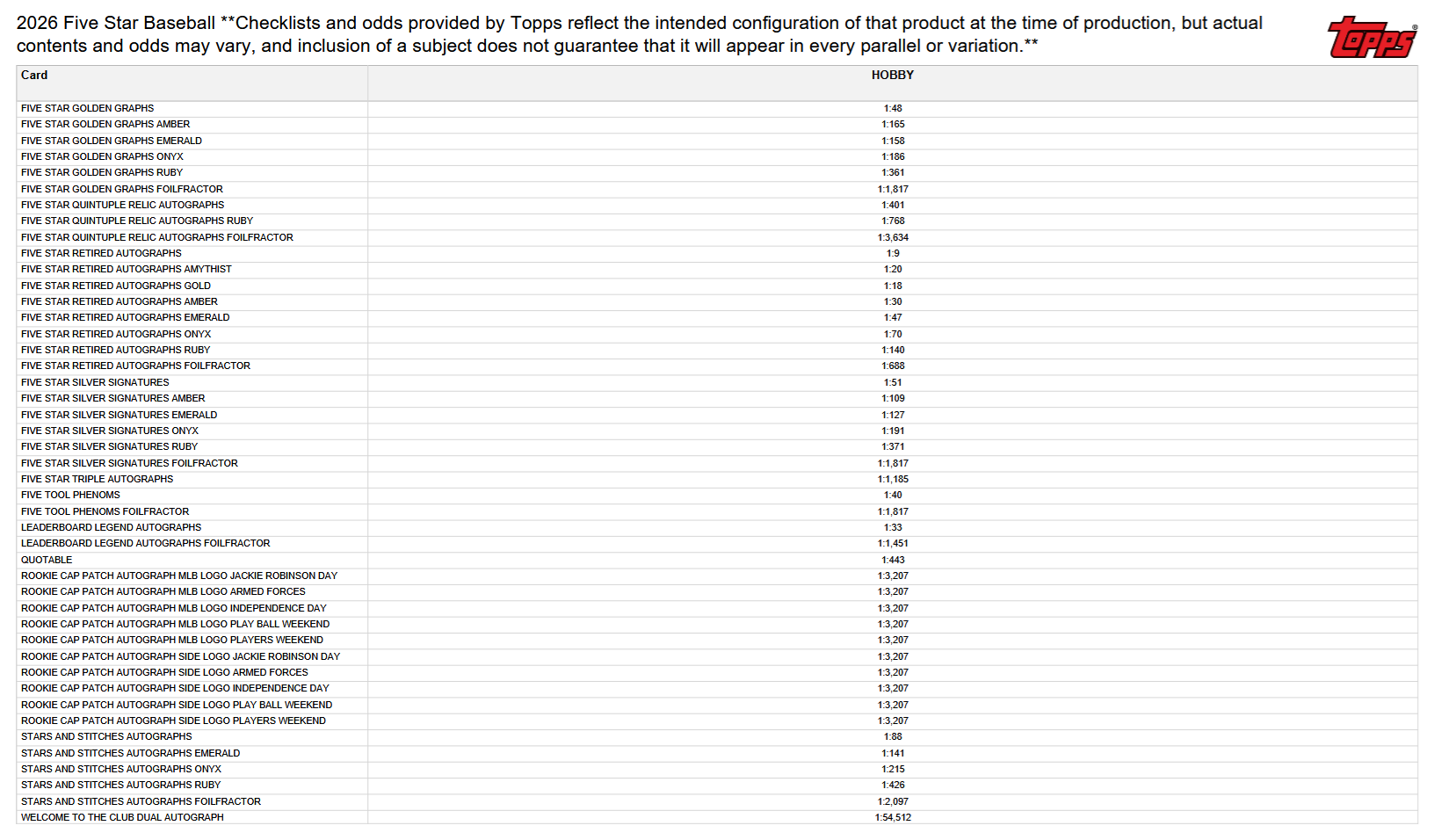
This is Page 2 of the .pdf of odds from the 2026 Topps Five Star Baseball set. You’re reading that last line correctly, by the way. Your odds of pulling one of those cards is 1 in 54,512.
We’ve had exposés for years about how casinos are targeting elderly people with slot machines. Maybe it’s time to take a look at card collecting (in addition to online sports books and gambling apps) as targeting young people in those same predatory ways.
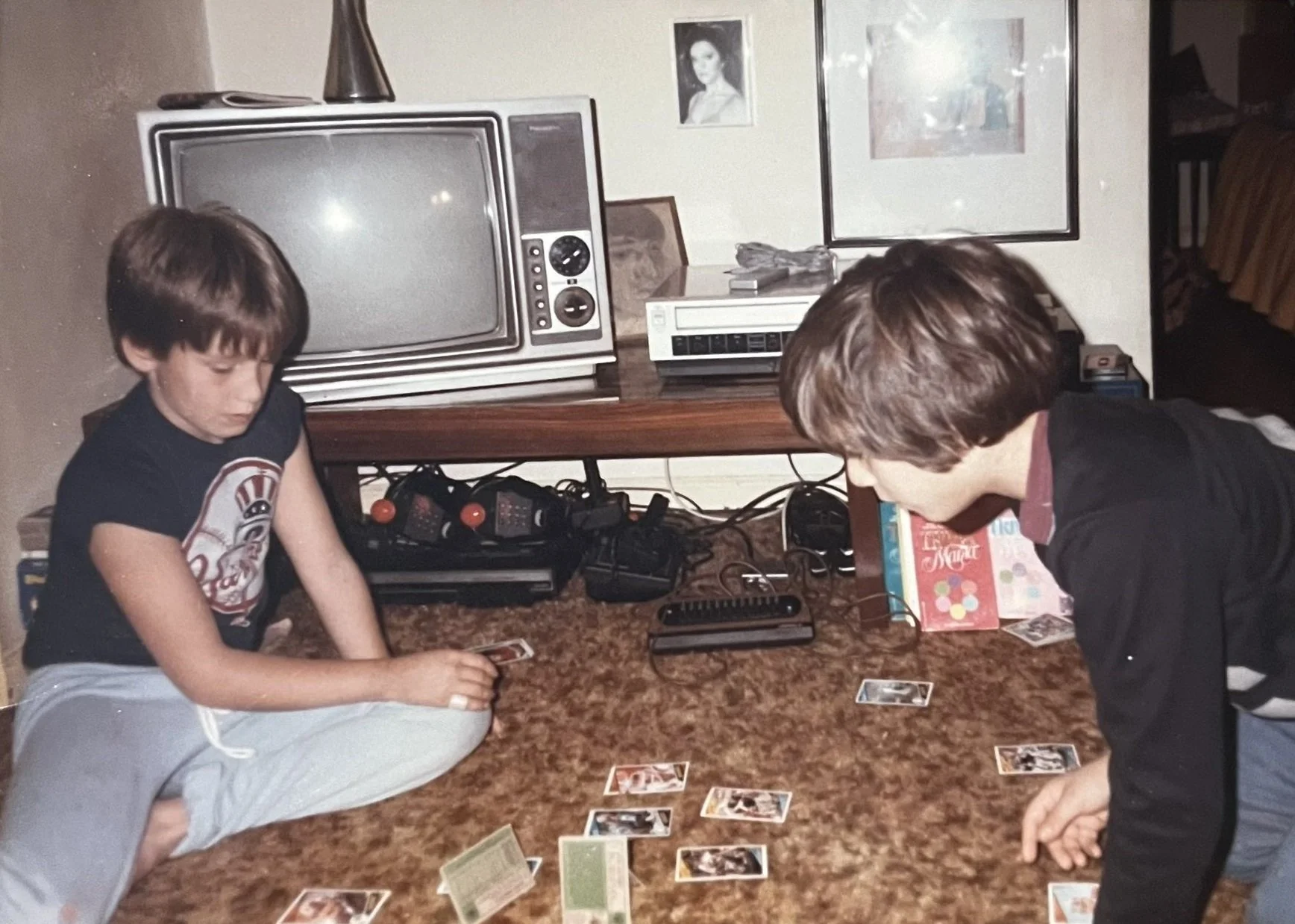
Flipping Cards
While it wasn’t necessarily the greatest way to keep your cards in pristine condition, flipping cards was a way kids could grow their collections by earning cards from their friends.
But that’s how cards used to be interacted with. That was the entire point. To handle them. To play with them. Not to immediately put them in penny sleeves and then plastic toploaders before sending them off to PSA to be graded and encased in tamper-proof slabs. Where is the fun in that?
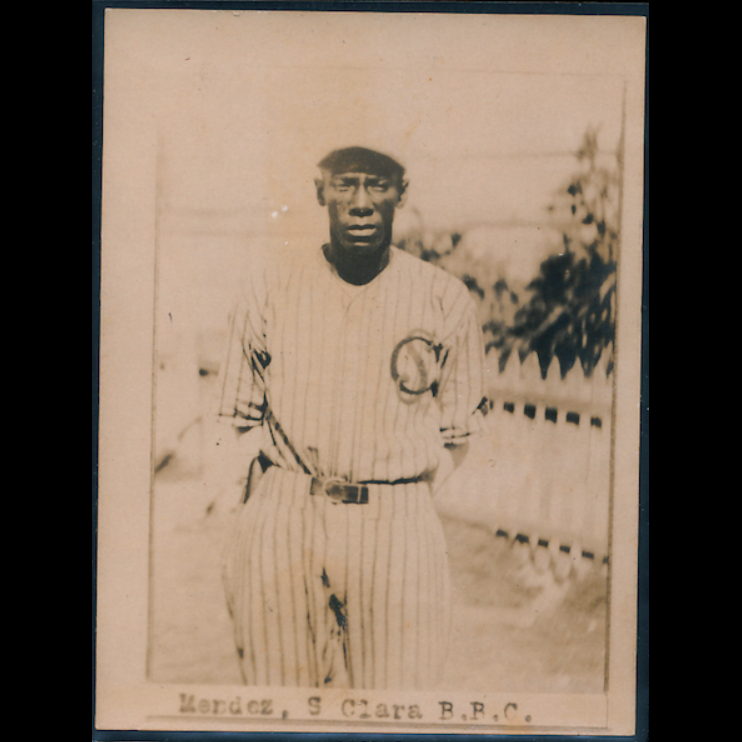
Negro League Cards
This 1923-24 Billiken card of Hall-of-Fame Negro Leaguer José Méndez is one of the key cards to one of the most popular and important Cuban baseball card sets ever produced. Méndez is considered by many to be the greatest pitcher in Cuban baseball history, and this is one of the very few official cards ever created during his playing days.
Learn more about Méndez and other Cuban baseball stars and their cards at Ryan Christoff’s wonderful website, www.CubanBaseballCards.com, or bid on his auctions at www.CubanBaseballAuctions.com.
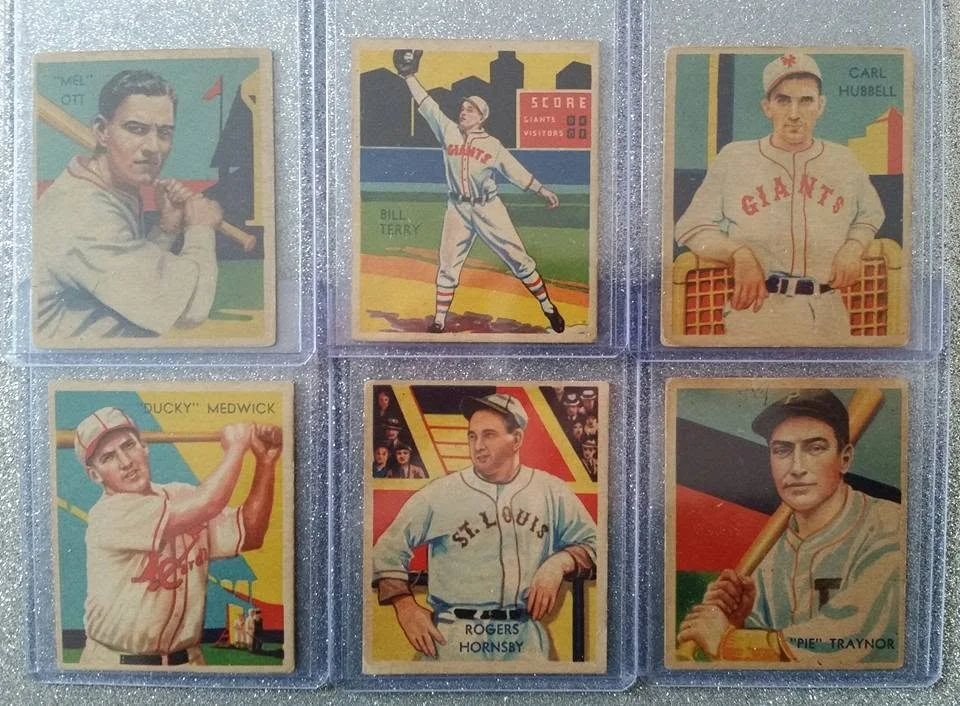
A Dream Scenario
Jason would love to wake up one morning and find out that his beloved 1934-36 Diamond Stars set also included Negro League players like Satchel Paige, Josh Gibson, and Buck Leonard, and we all just missed it. He wouldn’t even mind if they dabbled in some minor league cards, as well, to have been able to see a Joe DiMaggio card from his time with the San Francisco Seals of the Pacific Coast League.
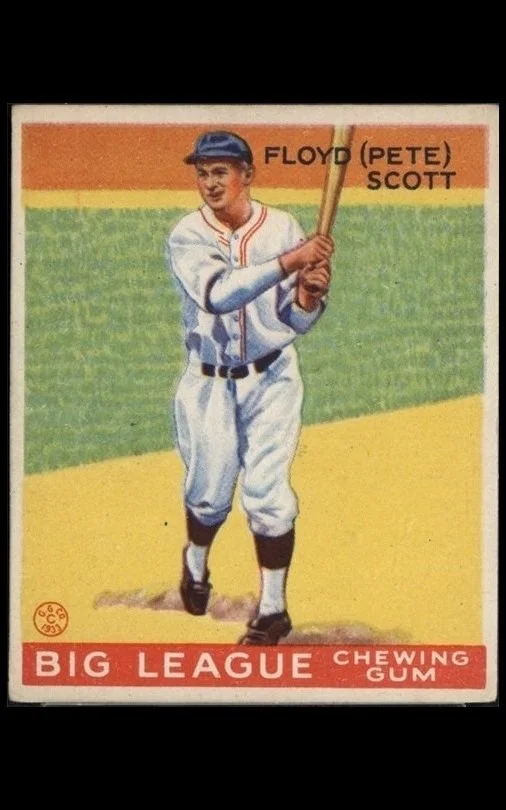
Not Unprecedented
It wouldn’t have been unprecedented for a card set in those years to include a minor leaguer. The 1933 Goudey did just that.
Floyd John "Pete" Scott broke into the majors with the Chicago Cubs in 1926 and spent two seasons in Chicago before being sent to the Pittsburgh Pirates that off-season in a notable trade: Scott and infielder Sparky Adams went to Pittsburgh in exchange for future Hall of Famer Kiki Cuyler.
His major-league career ended after 1928, but he kept playing on the West Coast, and by the time Goudey issued its 1933 set, he was patrolling the outfield for the Oakland Oaks of the Pacific Coast League, still regarded as one of that circuit's most dangerous hitters.
That reputation, rather than his short big-league résumé, earned him a spot in Goudey's minor-league subset - as the westernmost player included in the entire set.
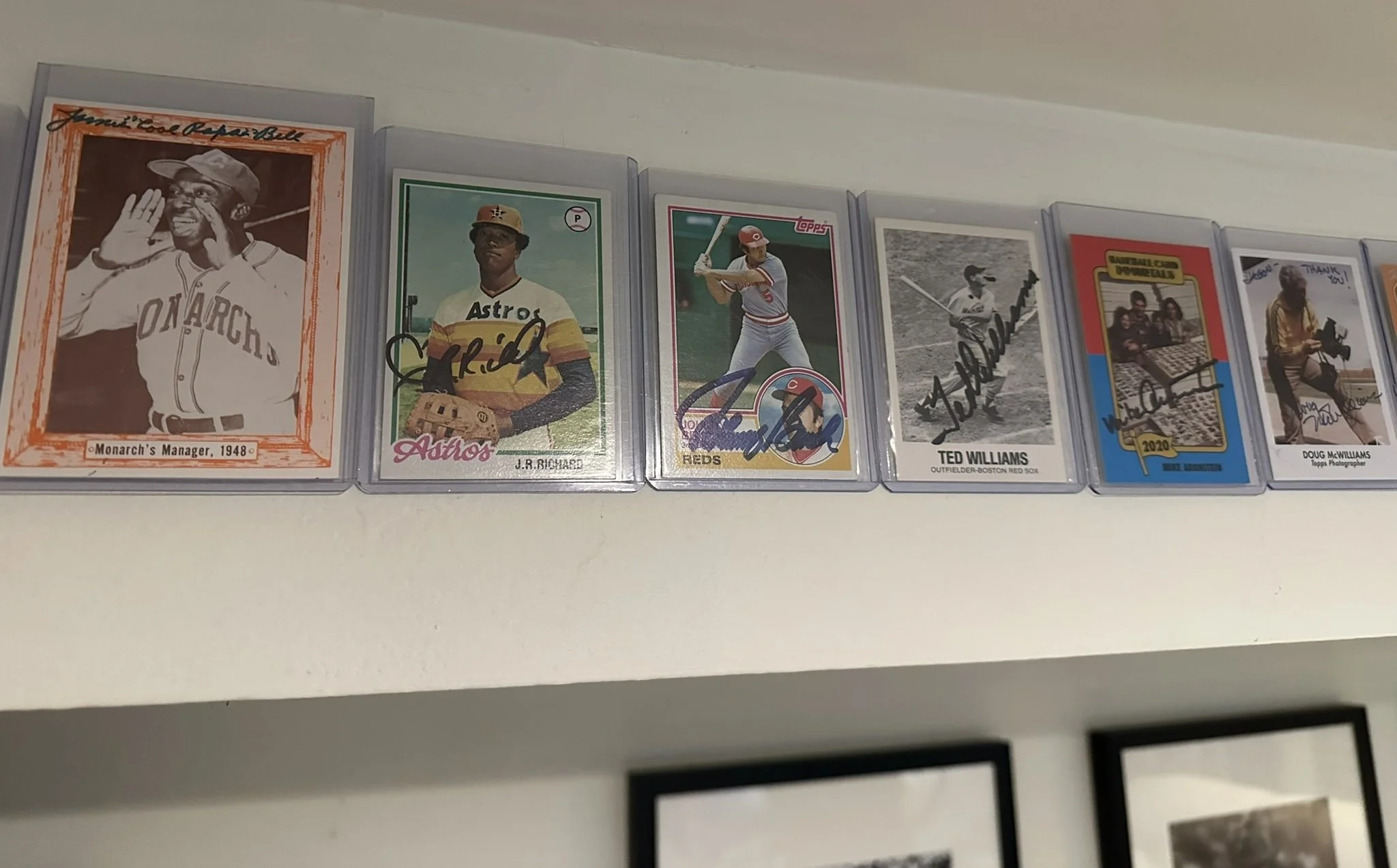
Jason has a really cool display of autographed baseball cards on the bulkhead/soffit in his basement.
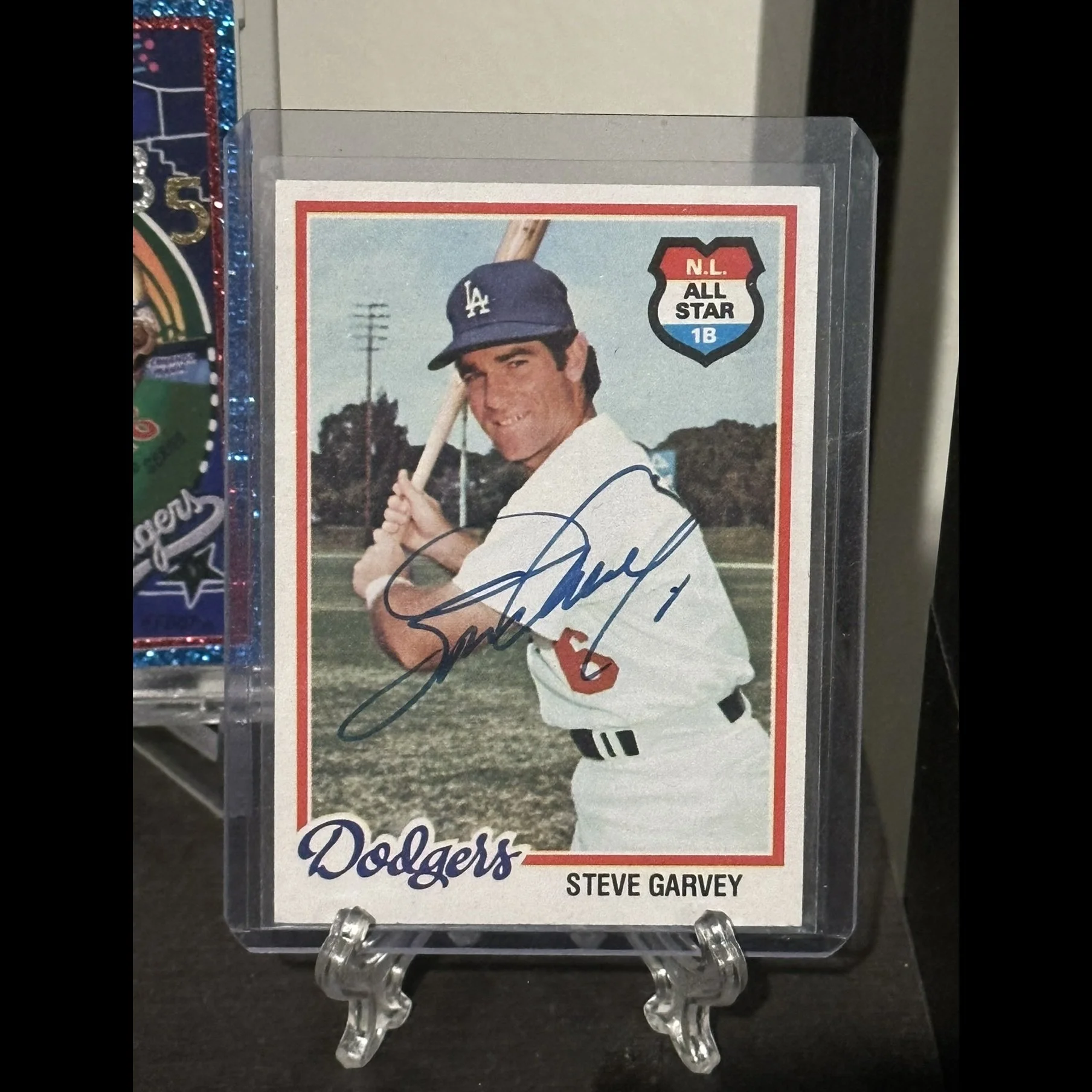
Autographed 1978 Topps Steve Garvey
While Jason has since acquired an autographed copy of his beloved 1978 Topps Steve Garvey card, it would have been a dream come true for Jason to have somehow bumped into Steve Garvey in real life in 1978 and had him autograph this card in person for Jason so he could bring it to school the next day.
“No card ever meant more to me than that card meant to me in 1978.”
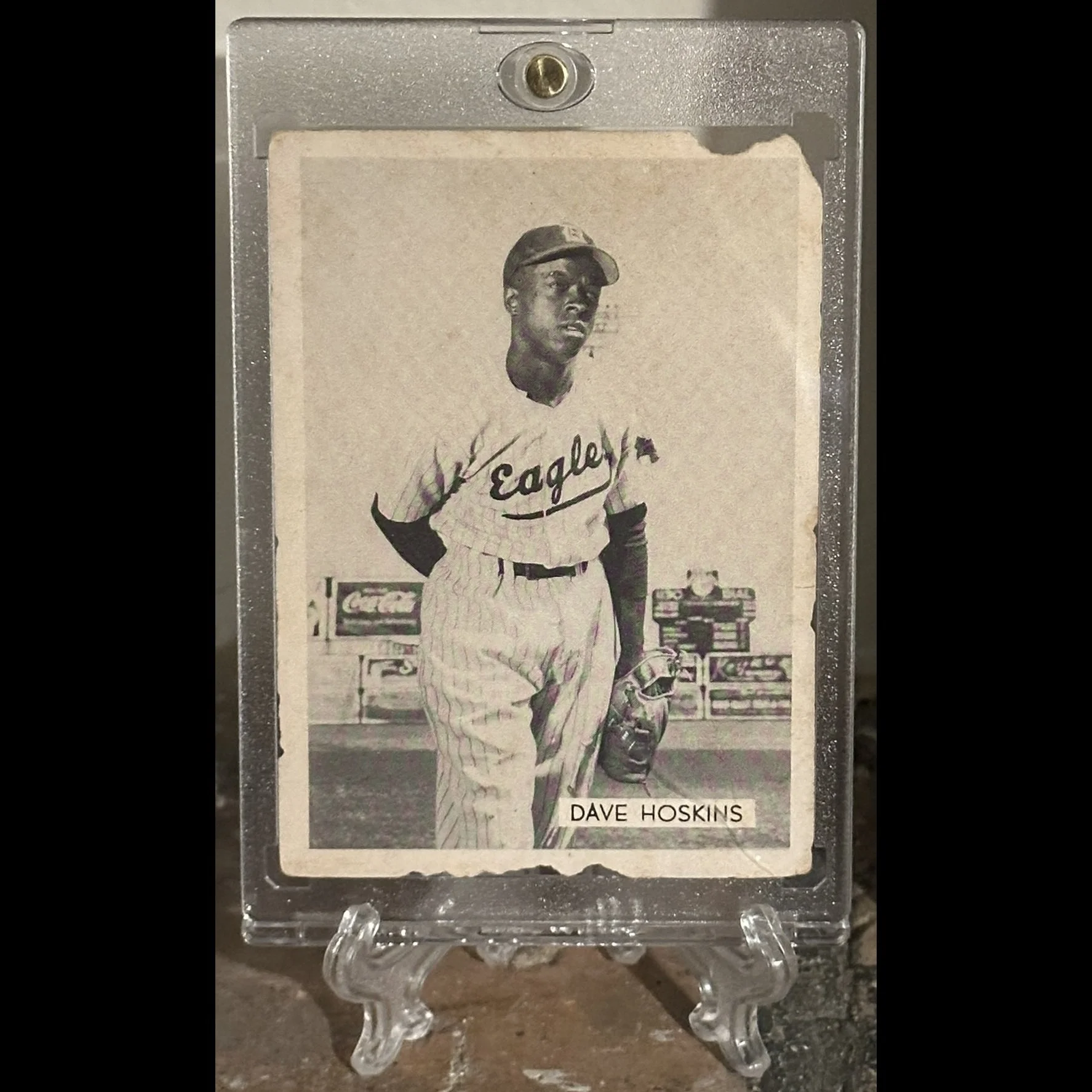
1952 Globe Printing Dave Hoskins
Another card Jason wouldn’t mind having an autographed version of would be his 1952 Dave Hoskins card, issued by Globe Printing, featuring the Texas League barrier breaker as a pitcher on the Dallas Eagles.
Jason isn’t as interested in the monetary value of an autographed version of this card as he is the value it would bring to the hobby for an autographed copy of this card to exist. No autographed copies are known to exist, and Jason believes there isn’t even a graded copy of this card out there - autographed or not.
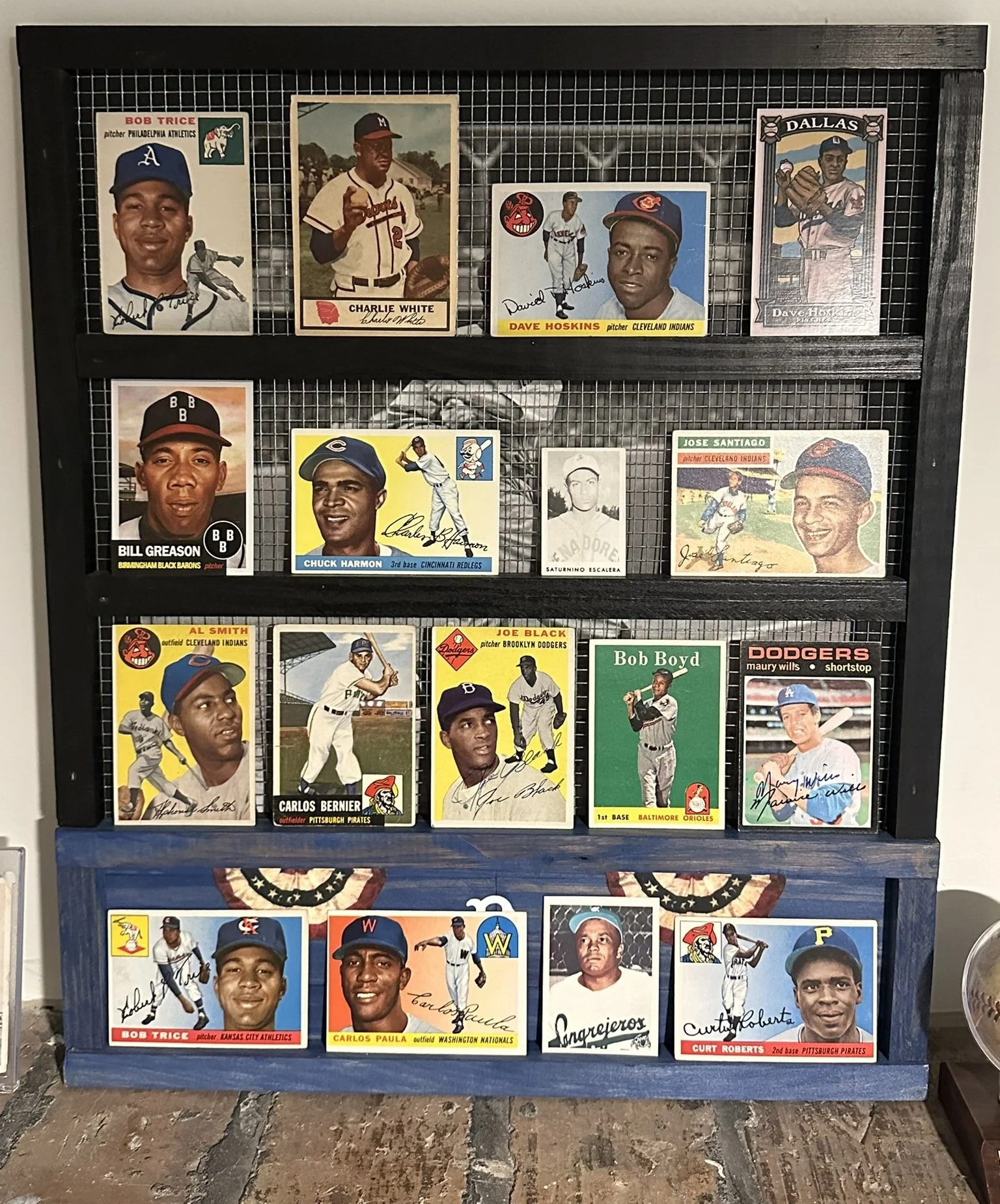
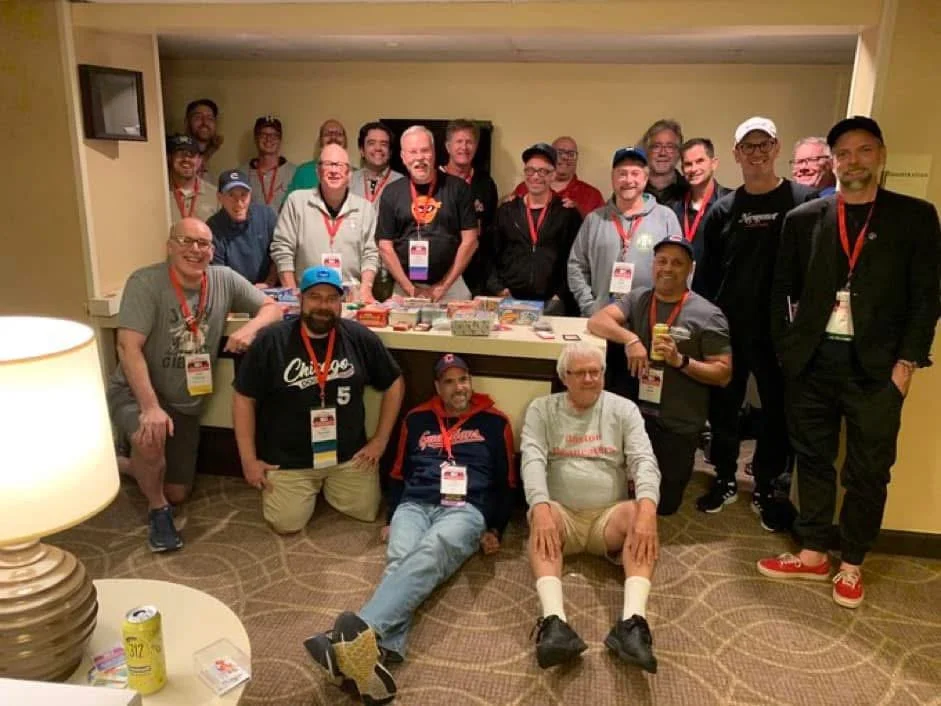
Jason is proud of all of the friendships he has made in the hobby.
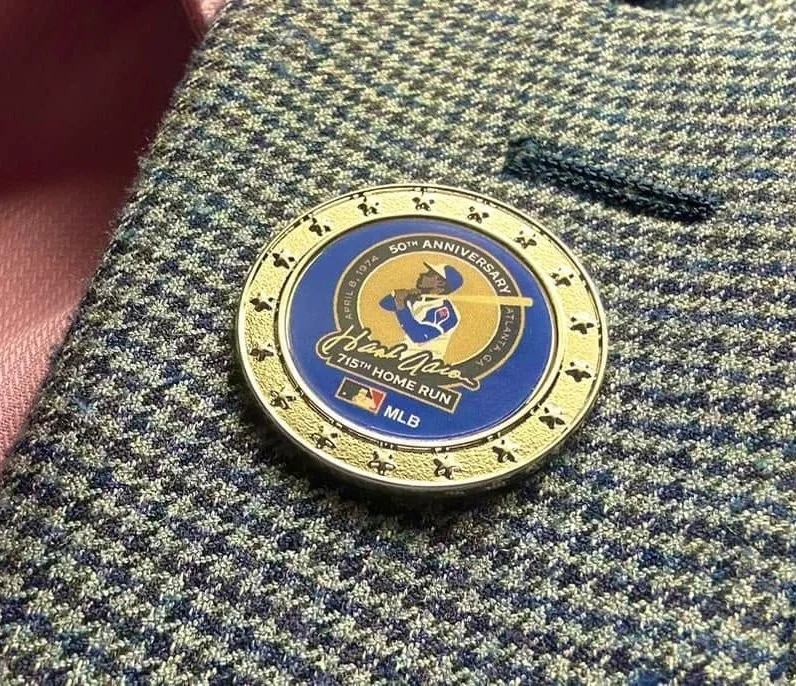
50th Anniversary
It meant a lot to Jason for him to be able to be a part of the 50th Anniversary celebration of what he thinks is the greatest record in all of sports.
It is one of Jason’s proudest hobby achievements.
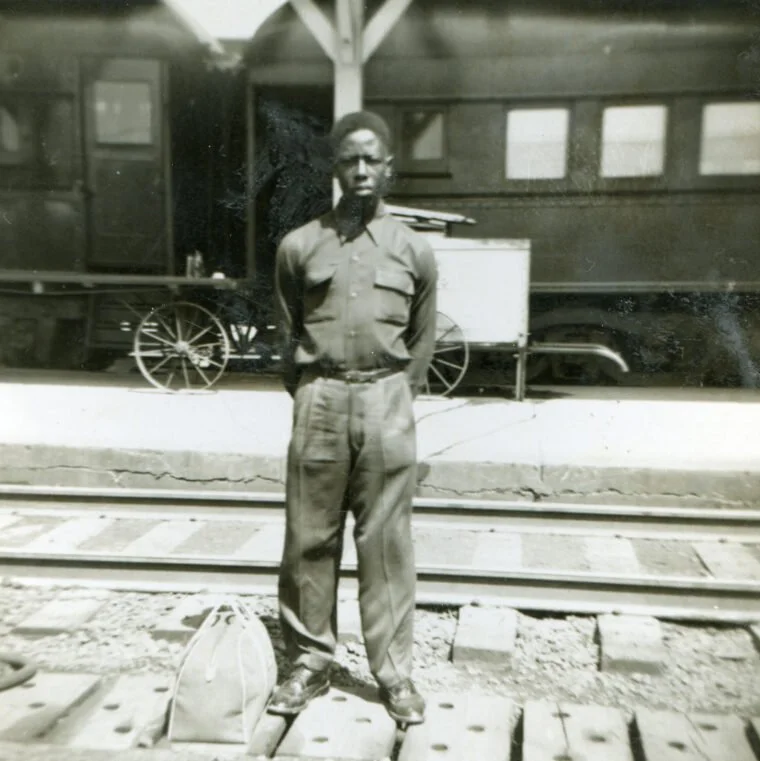
Henry Aaron, Age 18
Henry Aaron waiting for the train to take him to spring training with the Indianapolis Clowns.
This was Aaron’s first trip away from home. He carried $1.50 and two sandwiches.
Unknown Photographer, 1952.
How To Contribute To The SABR Baseball Cards Research Committee Blog
If you want to write for the blog the only requirement is that you be an active SABR member.
Contact the Baseball Cards Research Committee with your information to get started or read a bit more about what posting entails.

Join SABR
The only requirement to be able to contribute to the SABR Baseball Cards Research Committee is being a dues-paying member of SABR, the Society for American Baseball Research.
If you are not already a member of SABR, you can change that if you CLICK HERE.
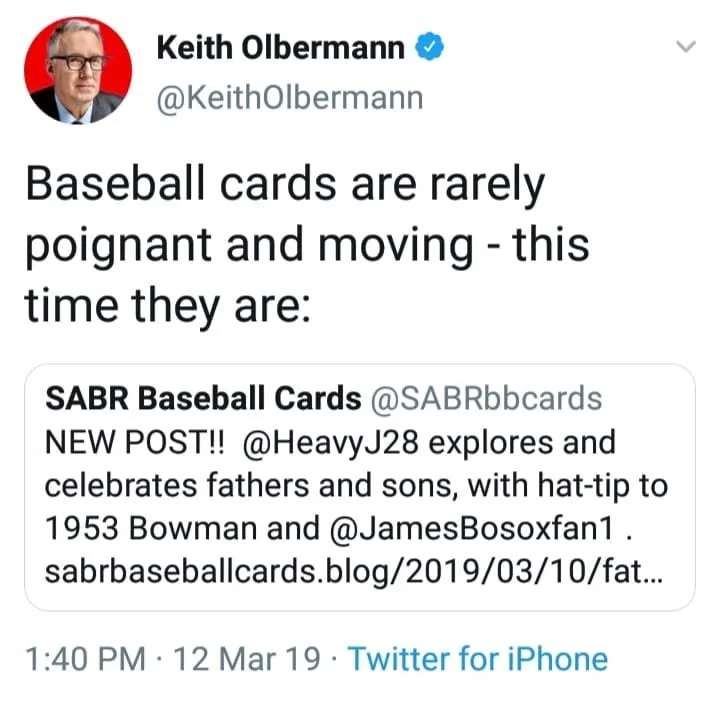
Write Something Of Your Own!
Before you know it, you can be writing articles LIKE THIS ONE and making people say things like this about your work.
To email Jason and get started, CLICK HERE.
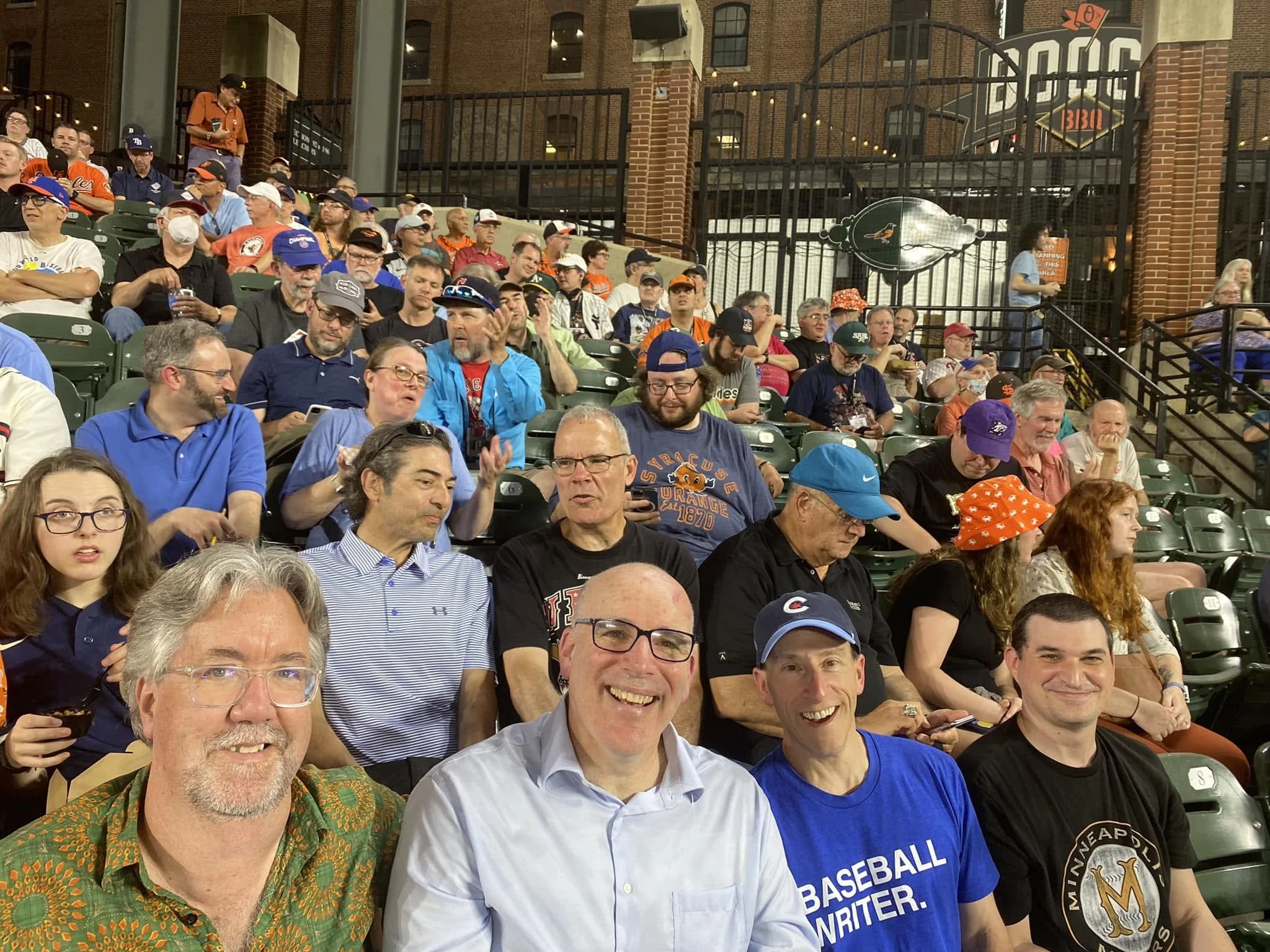
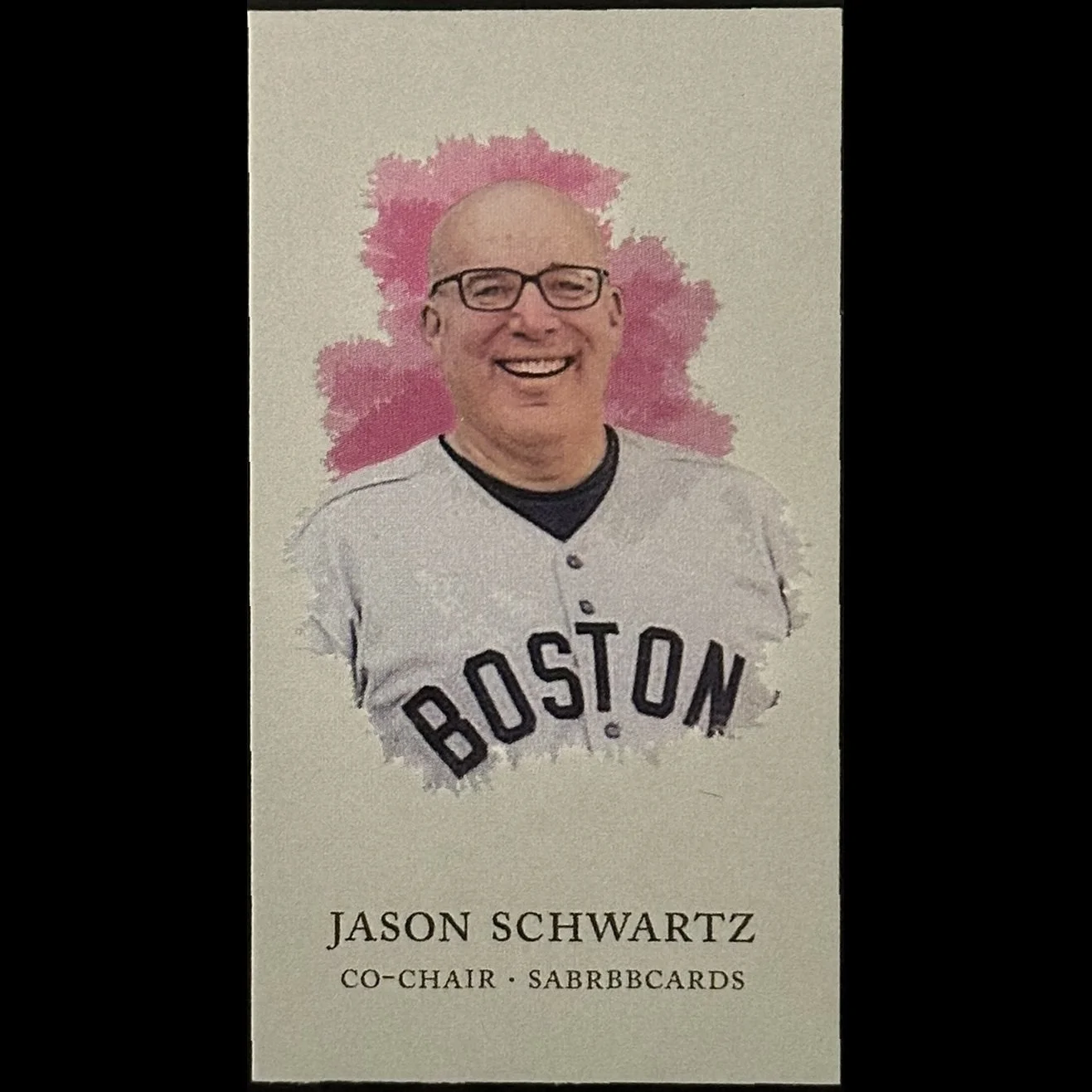
Follow The SABR Baseball Cards Research Committee Online
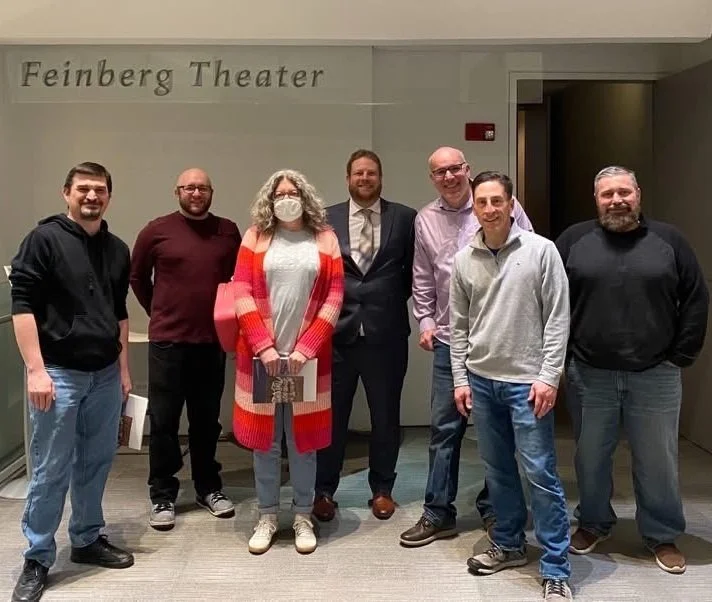
Constant Support
Jason is always there to hype people up and help them in any way that he can. He’s constantly showing up for the friends in his life. I consider myself lucky to be one of them.
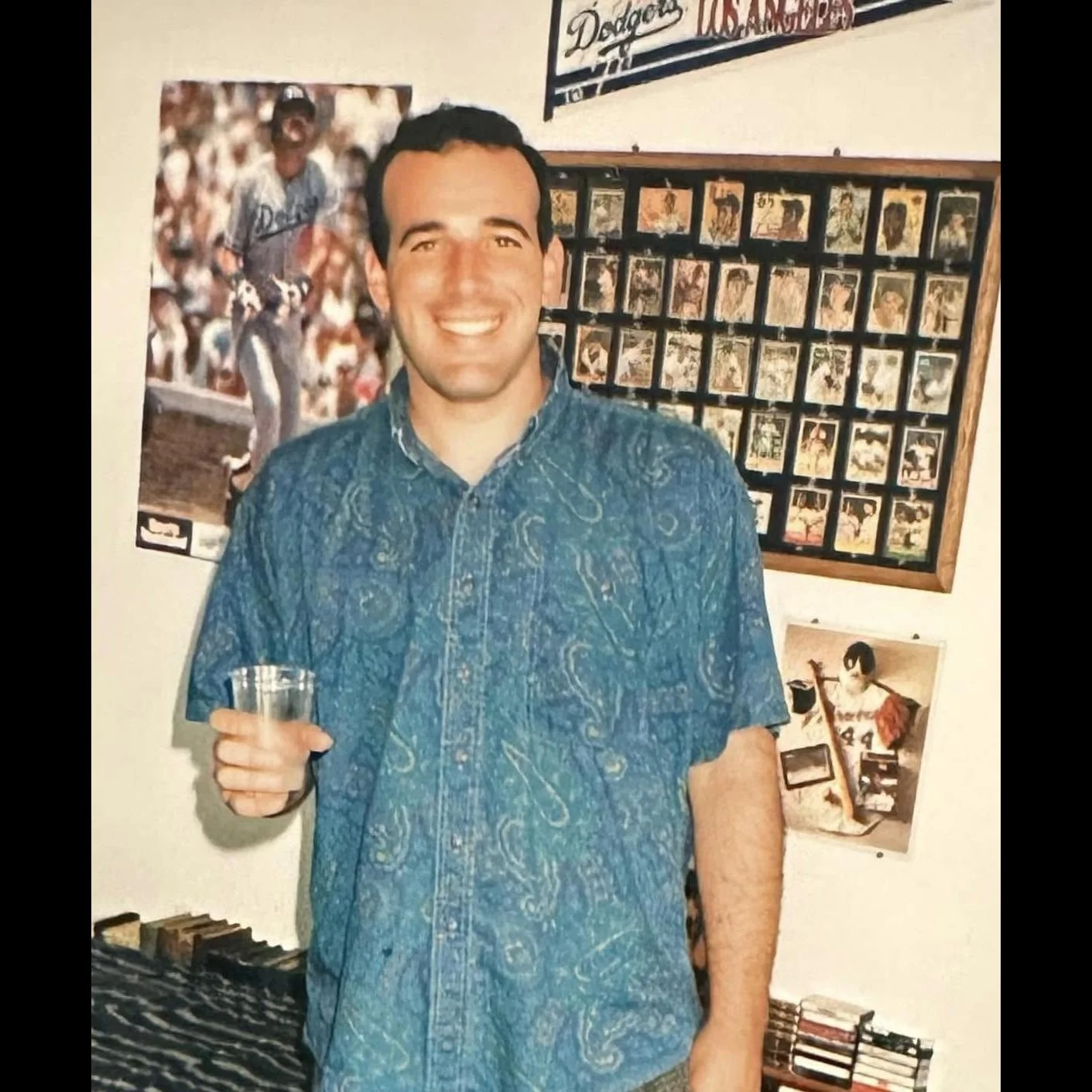
Be Careful What You Wish For…
… because if you give me the green light to remind you of things from earlier in your life that even you had forgotten about, I may turn up an old photo of you at the University of Oregon, like the one seen here.
Or I may have a picture of you dunking a basketball at UC Berkeley ([not pictured]…
But, hey! I’m glad you had fun :)
Support My Baseball History
If you don’t have PayPal and want to send a donation through Venmo, Zelle, Cash App, or any other platform, email me at shoelesspodcast@gmail.com and I’ll send you directions for whichever method you prefer, including a credit card or debit card, if that’s what works for you.
We appreciate you being here.
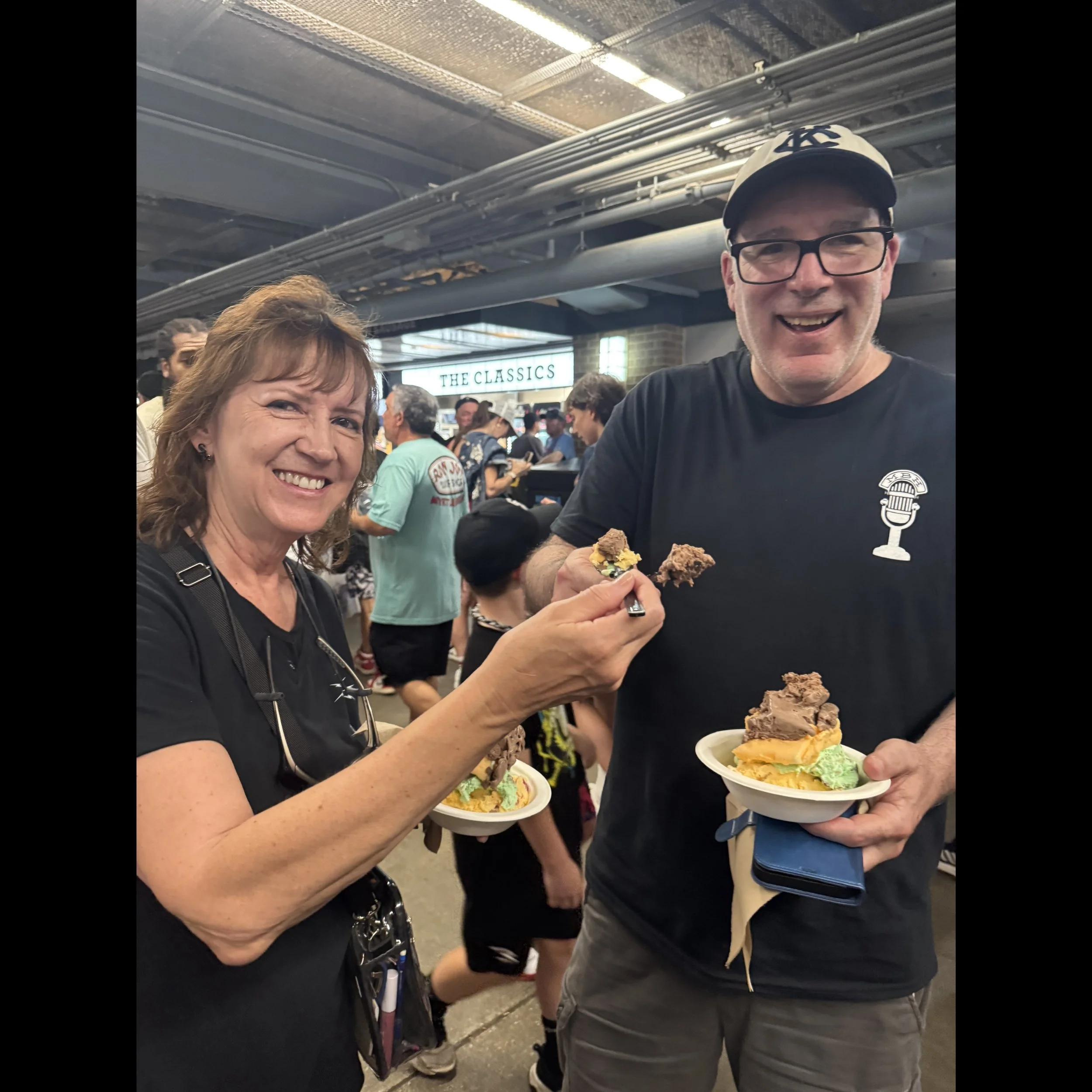
“One Of The Happiest People I’ve Ever Met”
And my mom’s met some pretty happy people.
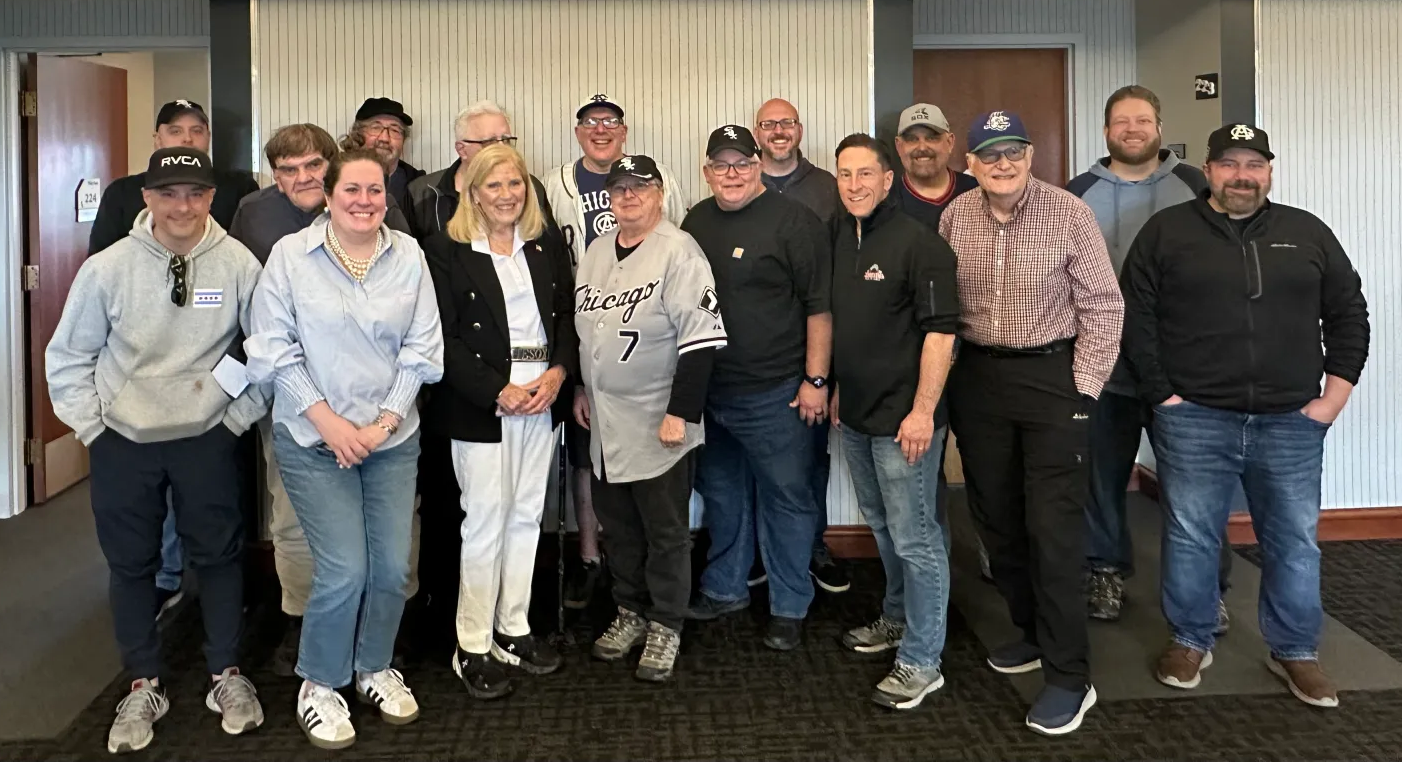
“People love variety, and people love belonging.”
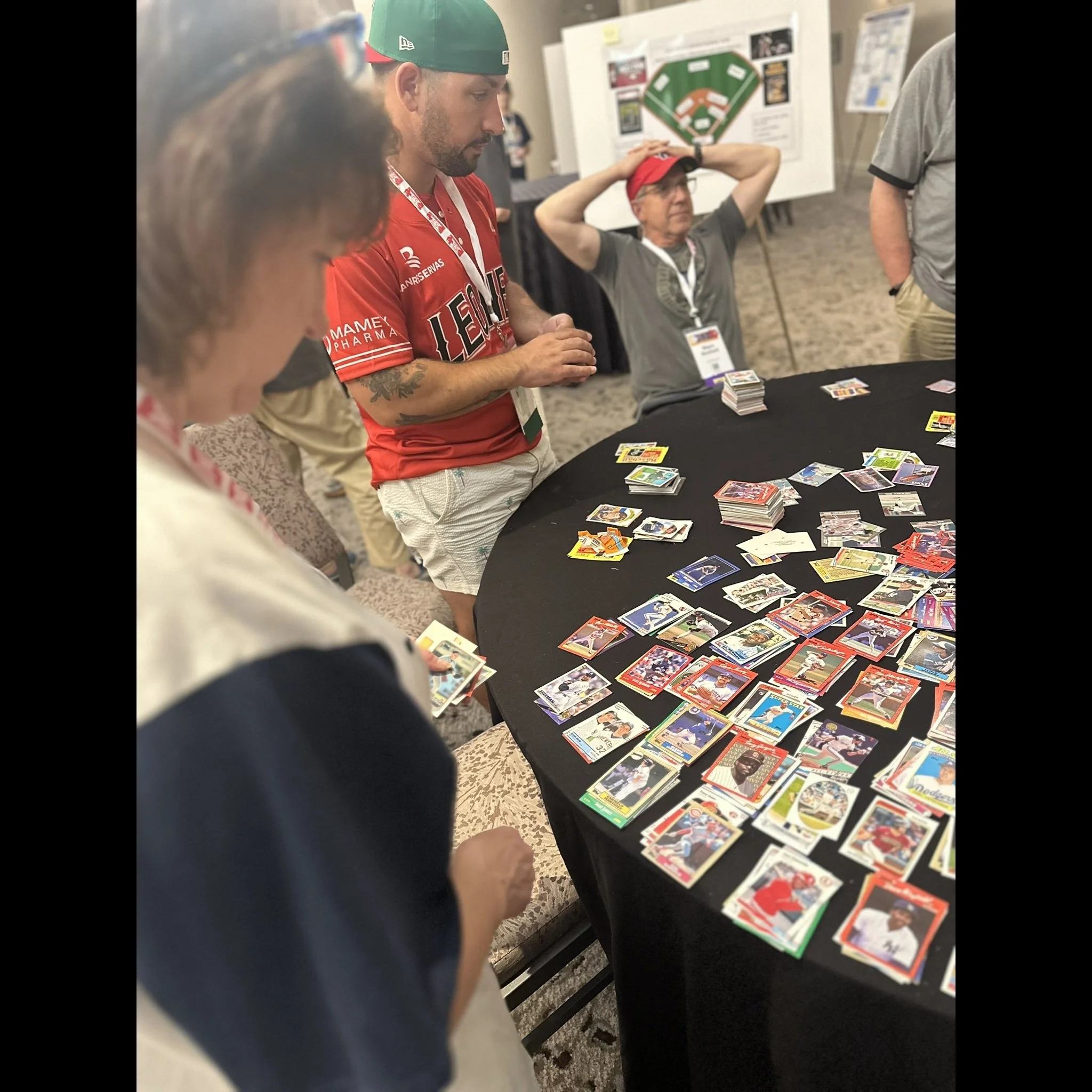
Pack Rip Night
My mom has now been to the Pack Rip Night at two different SABR conventions. Here she is contemplating some trades at the convention in Texas in 2025.
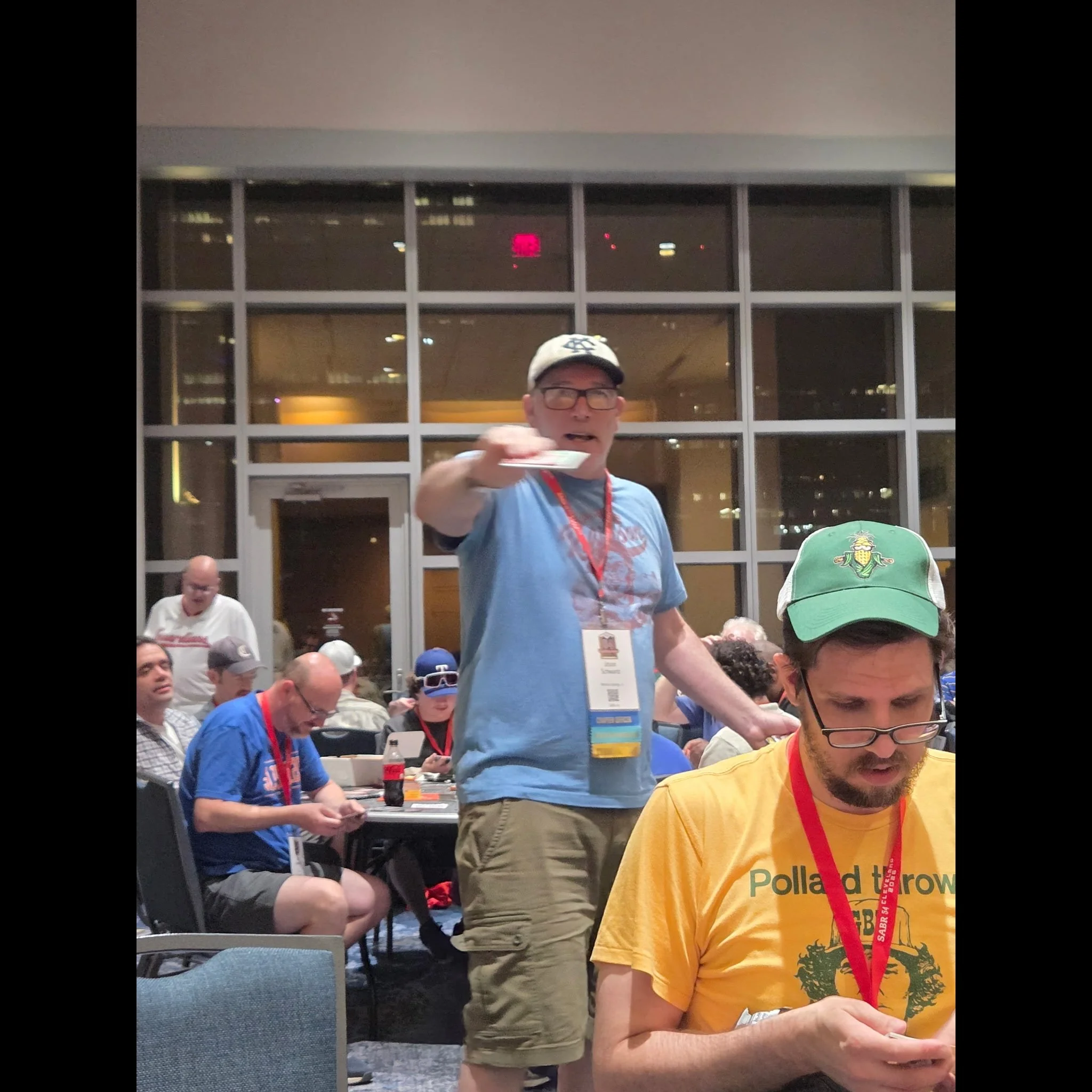
It’s A Blast!
And it’s a blast purely because of Jason. He puts so much time, effort, and energy into making those couple hours fun for everyone, and worth it for them to stay away late into the night so we can squeeze as much hang time with each other as possible.
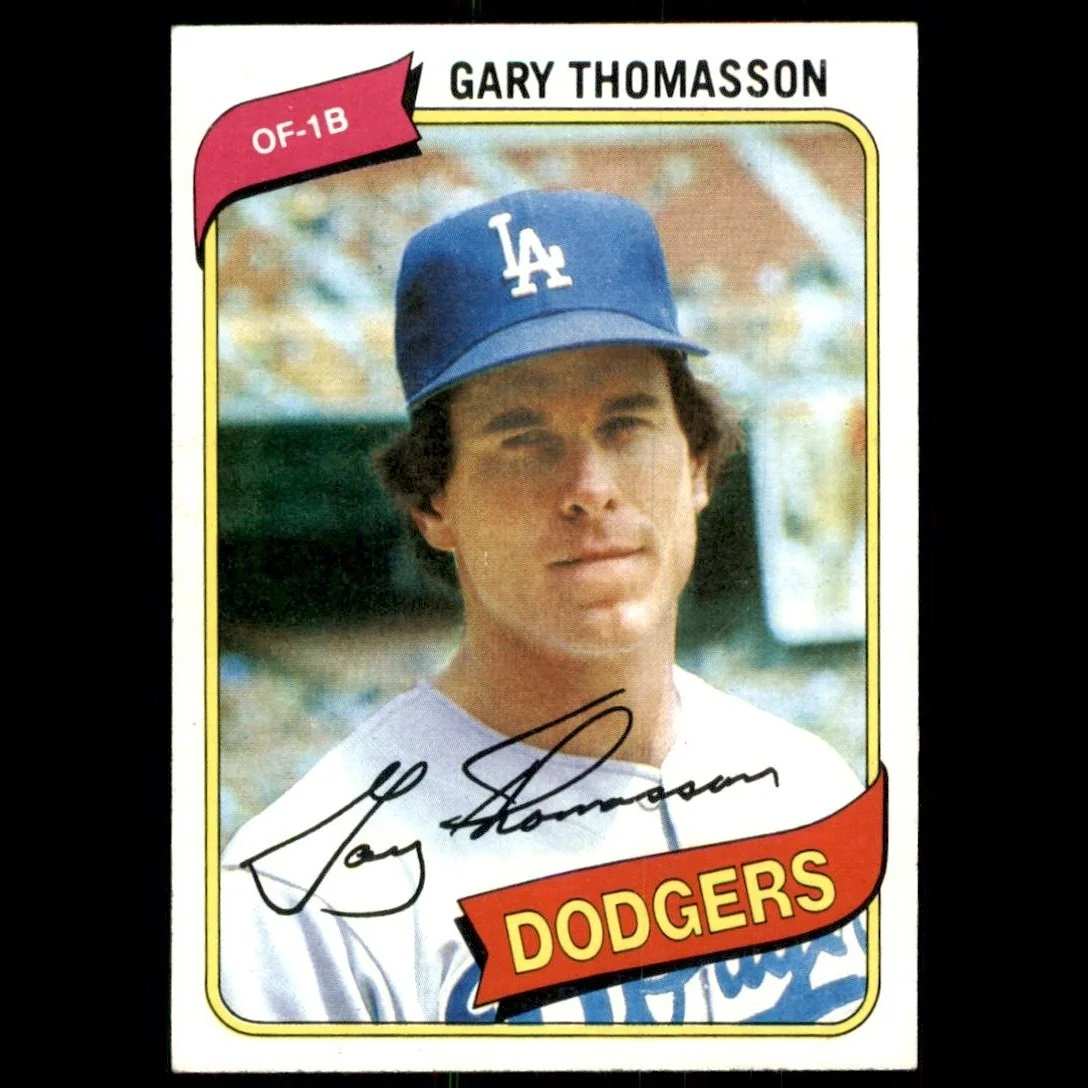
Gary Thomasson
Even though Gary Thomasson is predominantly known for his time with the Giants, it didn’t feel right showing a card of him as the Dodgers’ main rival when Jason is such a big Dodgers fan.
So, please do enjoy Gary Thomasson’s 1980 Topps card.
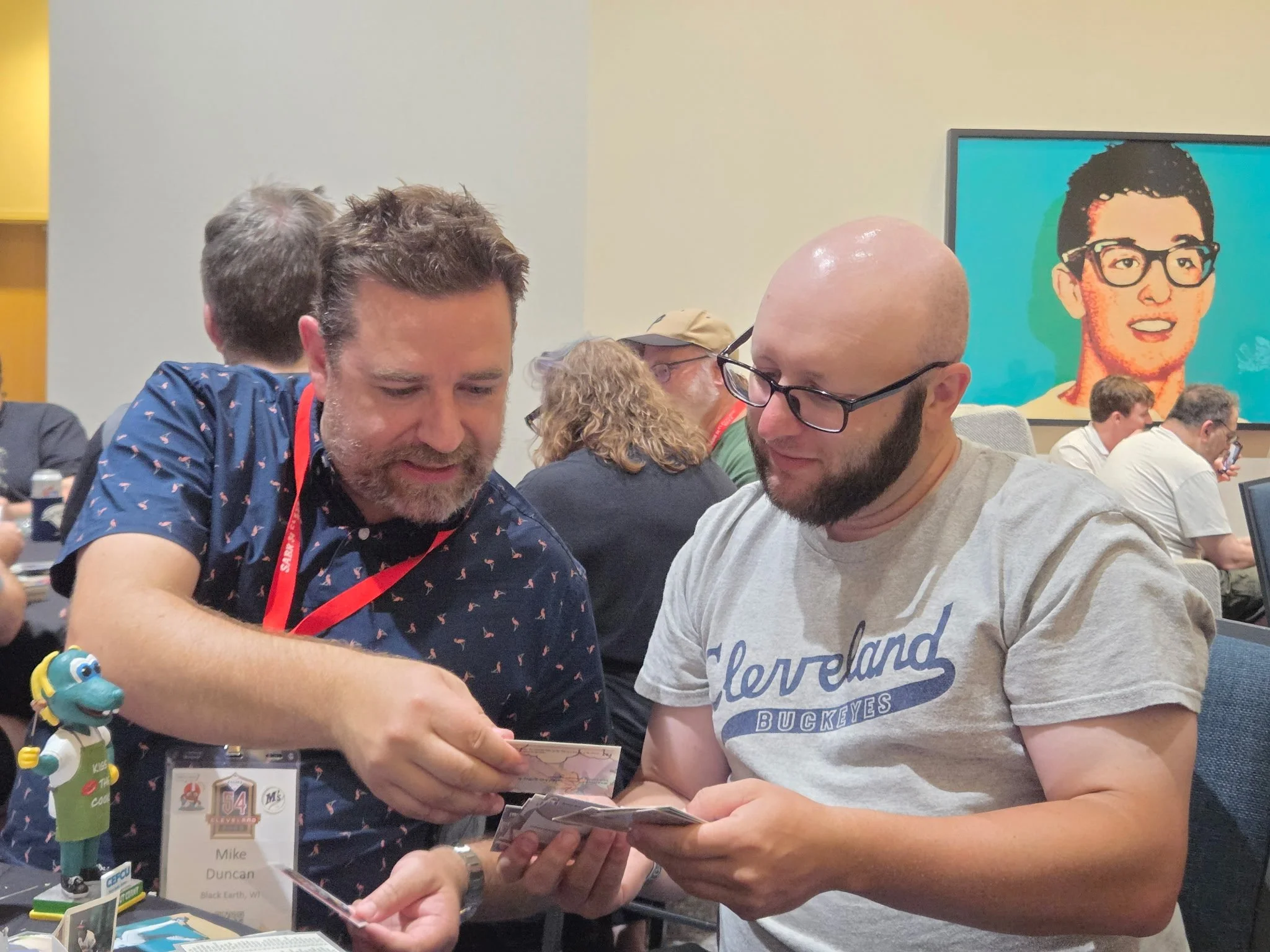
The Joy Of Sox
One of the best parts about events like Pack Rip Night is getting to know everyone, and learning who their favorite teams are. When they learn I’m from Chicago and a White Sox fan, they’ll think of me if they pull a Sox card. Or throughout the rest of the week (or the rest of the year, once we leave the convention), if they see something Sox-related, they know they will be able to start a meaningful conversation with me from that little breadcrumb.
Dan Evans
A former Los Angeles Dodgers General Manager, Dan Evans has been involved in decision-making roles with five MLB franchises spanning more than four decades. During his Chicago White Sox tenure, he was involved in the draft of Hall of Famer Frank Thomas and All-Star Mark Buehrle and the acquisition of Hall of Famer Tom Seaver, All-Stars Paul Konerko and Ozzie Guillen.
Evans’ winning percentage was the second-best mark for any GM in Los Angeles Dodgers history at the time of his departure.
Anyone Can Do This
While not everyone is going to be able to have the experience of ripping open packs sitting next to a former MLB GM, anyone can have a couple people over to their house and rip packs to relive their youth and reminisce about some of the old ballplayers they used to live when they were younger.
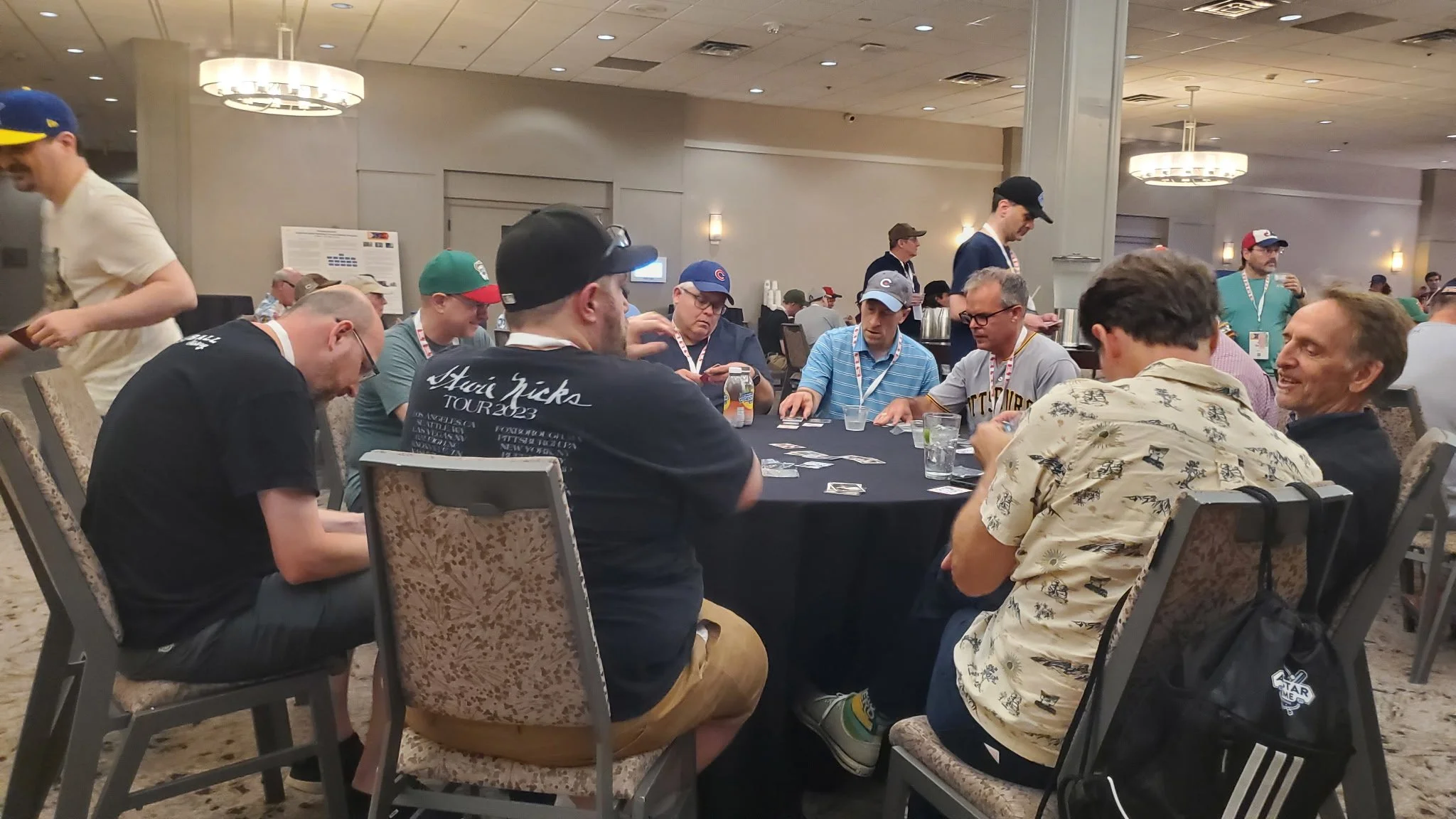
Boston
“A Walk In The Park” is certainly one way to describe this trip.
Not a way I would personally describe it. But it is a way, nonetheless.
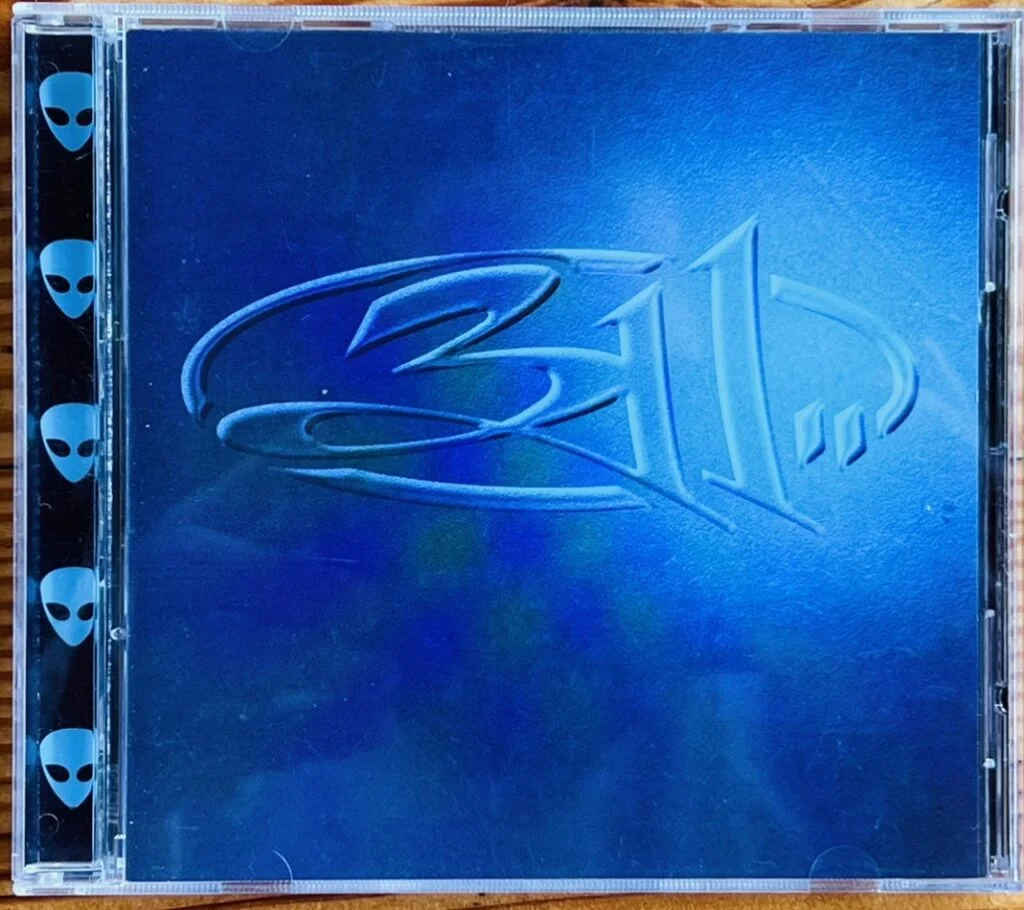
Something To Remember The Trip
Much to the chagrin of my history-loving mother, not only did I buy this 311 CD on our trip, but I still remember exactly when and where I bought it, all these years later.
In fact, this was the first CD I ever bought with my own money.
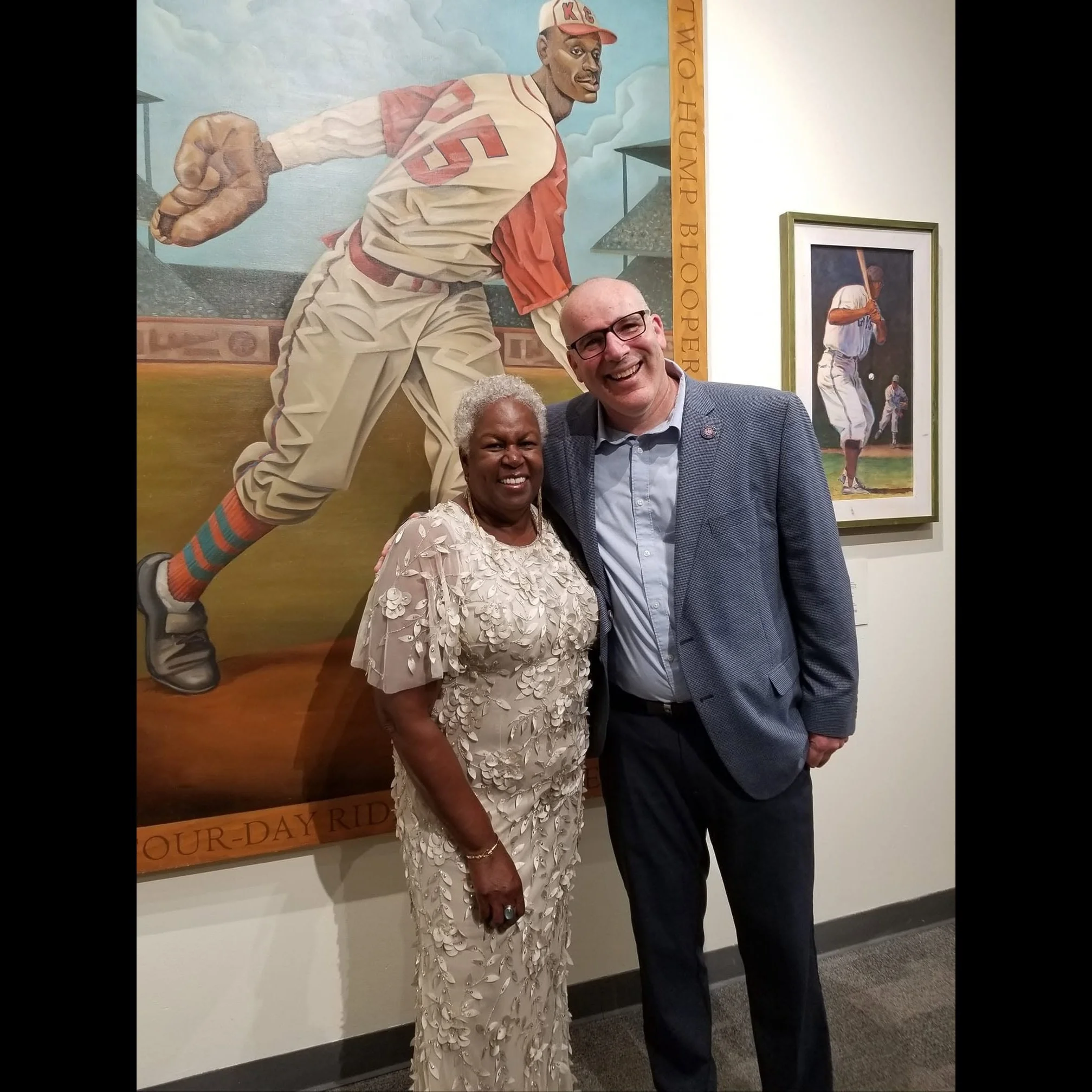
Sharon Robinson
Here is Jason with Sharon Robinson, Jackie and Rachel’s daughter.
Sharon is the educational consultant for Major League Baseball. She also manages Breaking Barriers: In Sports, In Life, which is a baseball-themed national character education curriculum that helps empower students to face obstacles in their lives.
Ms. Robinson is also the author of many works of fiction and nonfiction for children, and has written several widely praised books about her father.
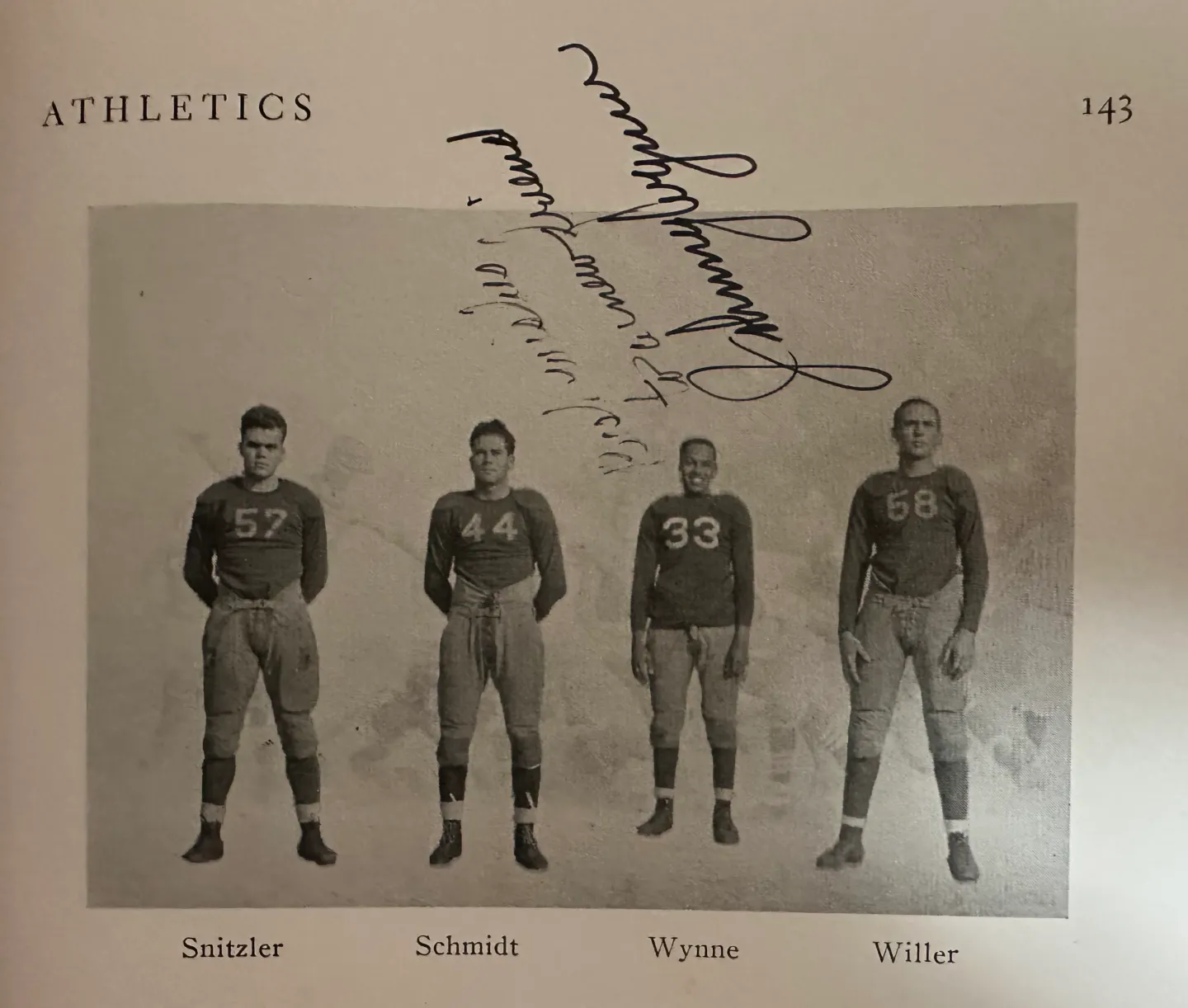
Jason’s Research
Jason has made significant contributions to the research community in a number of fields. His Johnny Wynne research is not just important for UCLA, but for college football and the NCAA as a whole, and the Civil Rights movement writ large.
Similarly, his Dave Hoskins research tells a fascinating story in an interesting, new way.
Neither of those have anything to do with baseball card research, which Jason has obviously greatly contributed to, as well.
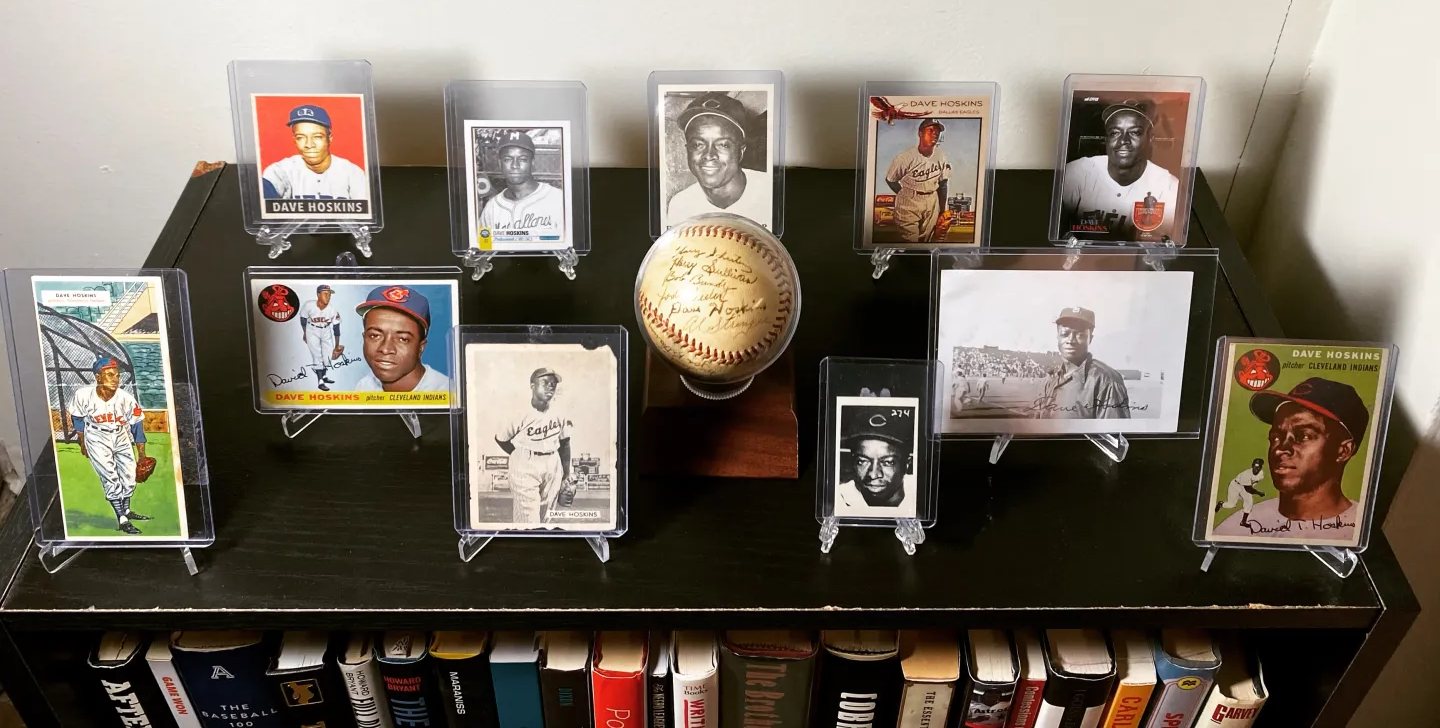
Some of the pieces in Jason’s Dave Hoskins collection.
Chiclets
The Chiclets name derives from the Mexican Spanish word chicle, from the Aztec Nahuatl word "chictli/tzictli", meaning "sticky stuff" and referring to a pre-Columbian chewing gum found throughout Mesoamerica. This pre-Columbian chewing gum was tapped as a sap from various trees.
This is the packaging I remember from my childhood, but the brand was introduced in 1900 by the American Chicle Company and has changed its look many times in the past 125+ years, so it’s very possible the Chiclets you’re thinking of looked different than what you see here.
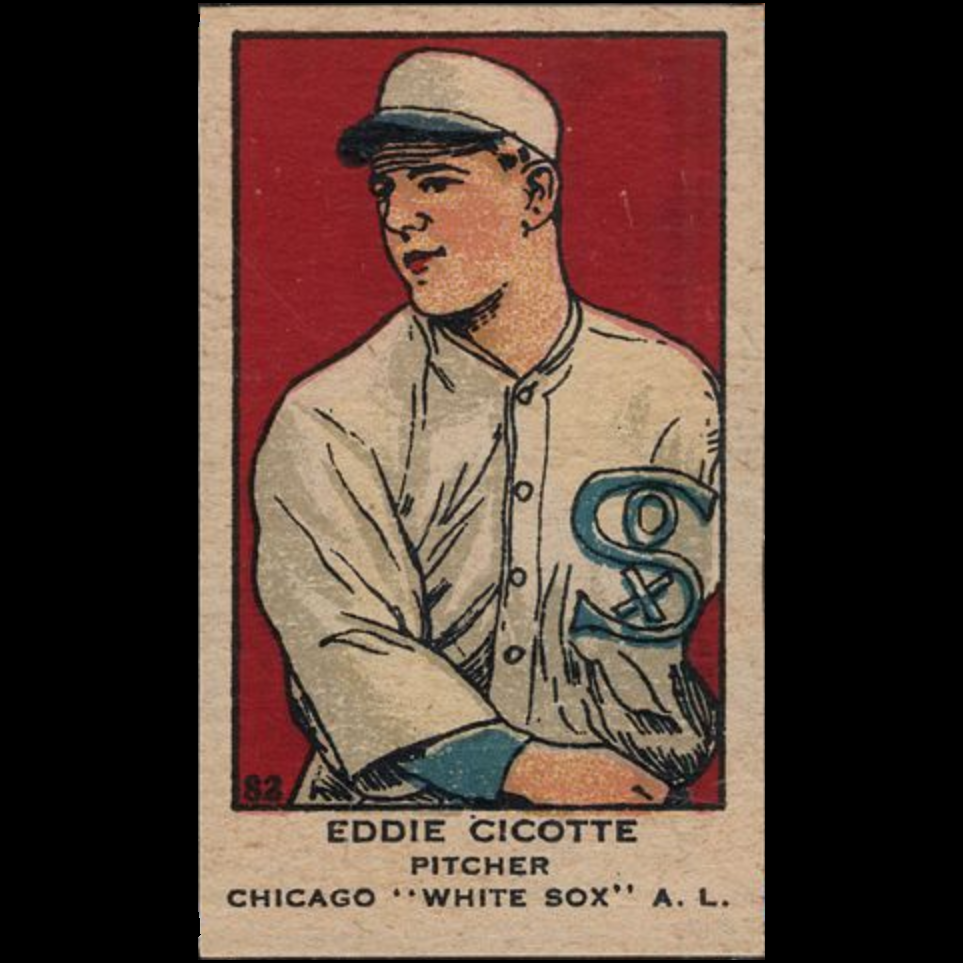
Eddie Cicotte
Though he didn’t invent the pitch, Eddie “Knuckles” Cicotte was perhaps the first major-league pitcher to master the knuckleball. According to one description, Cicotte gripped the knuckler by holding the ball “on the three fingers of a closed hand, with his thumb and forefinger to guide it, throwing it with an overhand motion, and sending it from his hand as one would snap a whip. The ball acts like a ‘spitter,’ but is a new-fangled thing.”
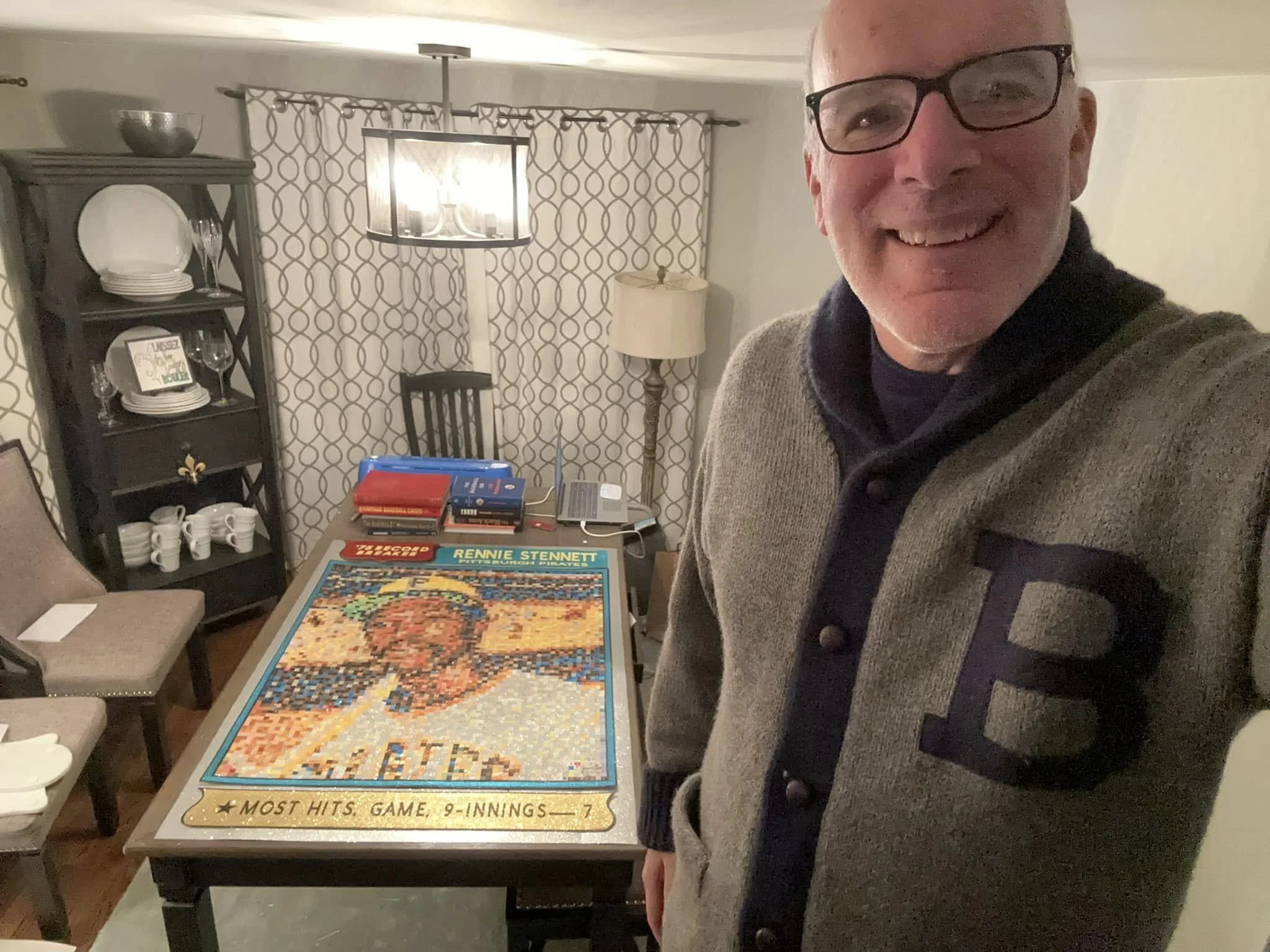
Jason with his biggest Heavy J Studios creation, to date. Of note: this is also the exact table and space where Jason and I recorded the interview you just listened to.
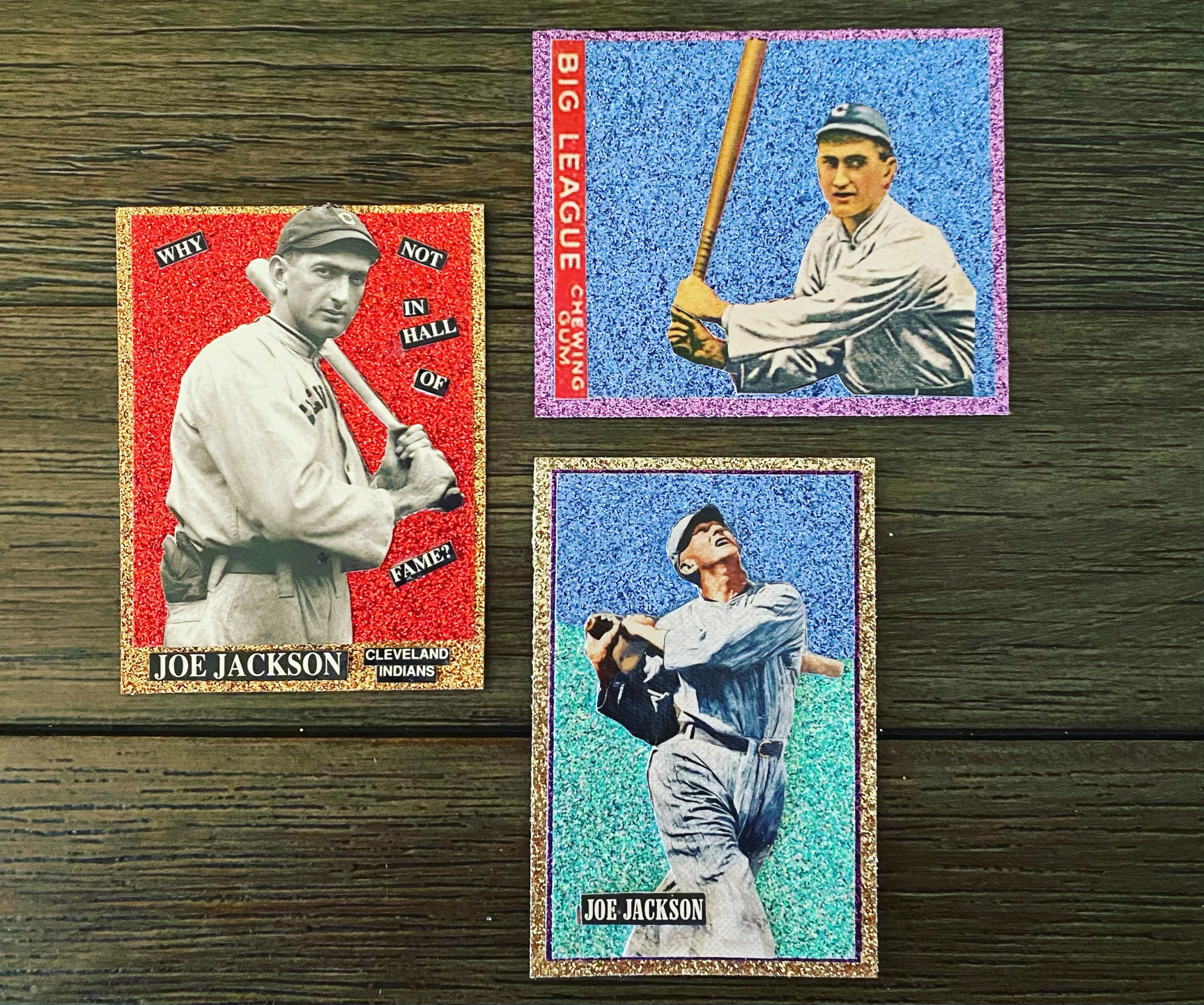
Jason’s Support
Whether he or anyone else had known this before this episode aired, Jason quite literally kept the Shoeless Joe Jackson Museum afloat during the pandemic with the money he directly and indirectly raised for us while I was there.
You can check out a breakdown of all of the causes Heavy J Studios supported if you CLICK HERE.
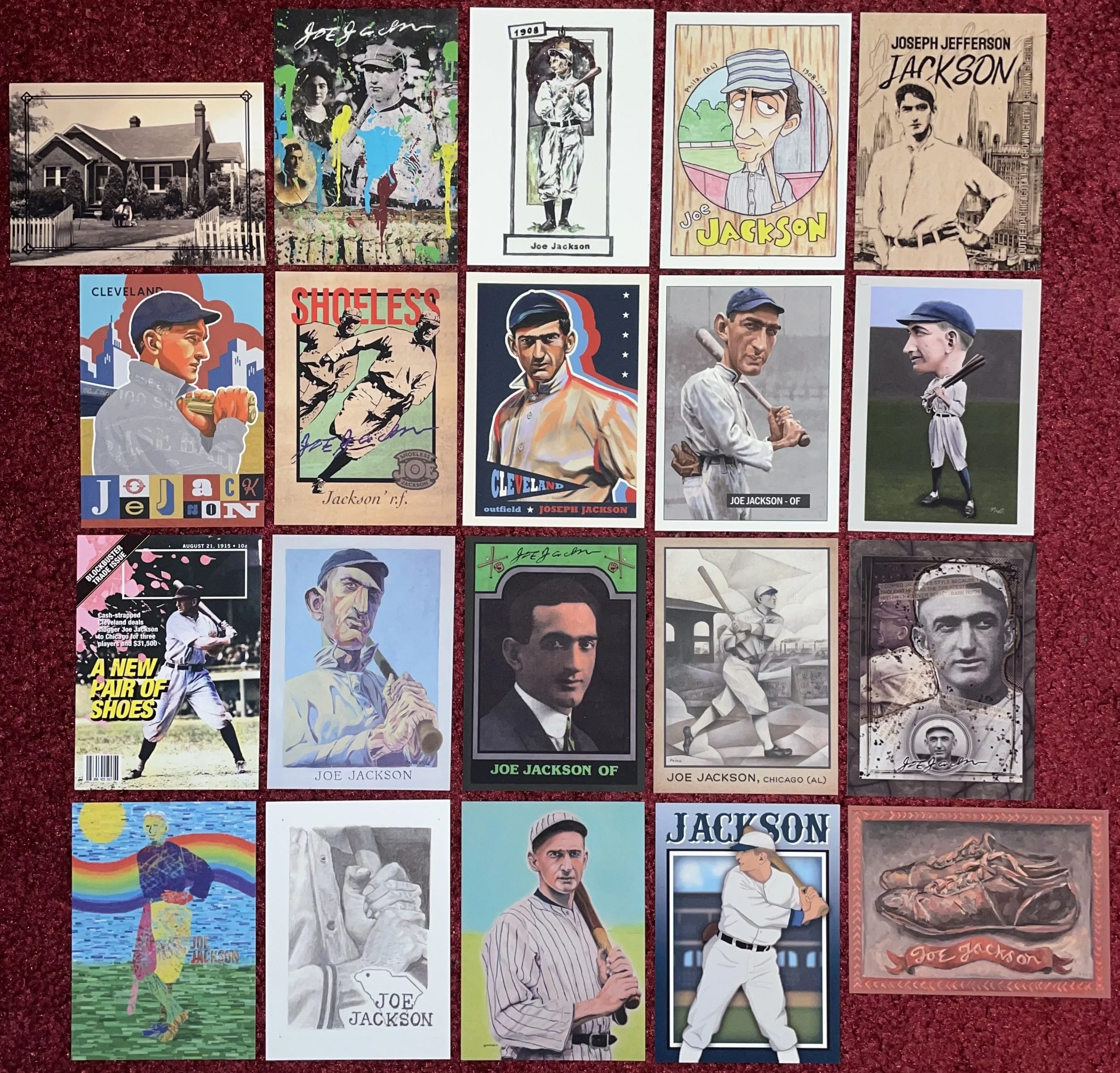
Joe Jackson Card Set
When I created this 20-card set about Joe Jackson’s life and career based on the 1959 Fleer Ted Williams set, Jason was a huge help.
Since he was more connected to the card art world than I was at the time, he helped me compile a list of artists to reach out to, and even put me in touch with some of them to solicit contributions for the set.
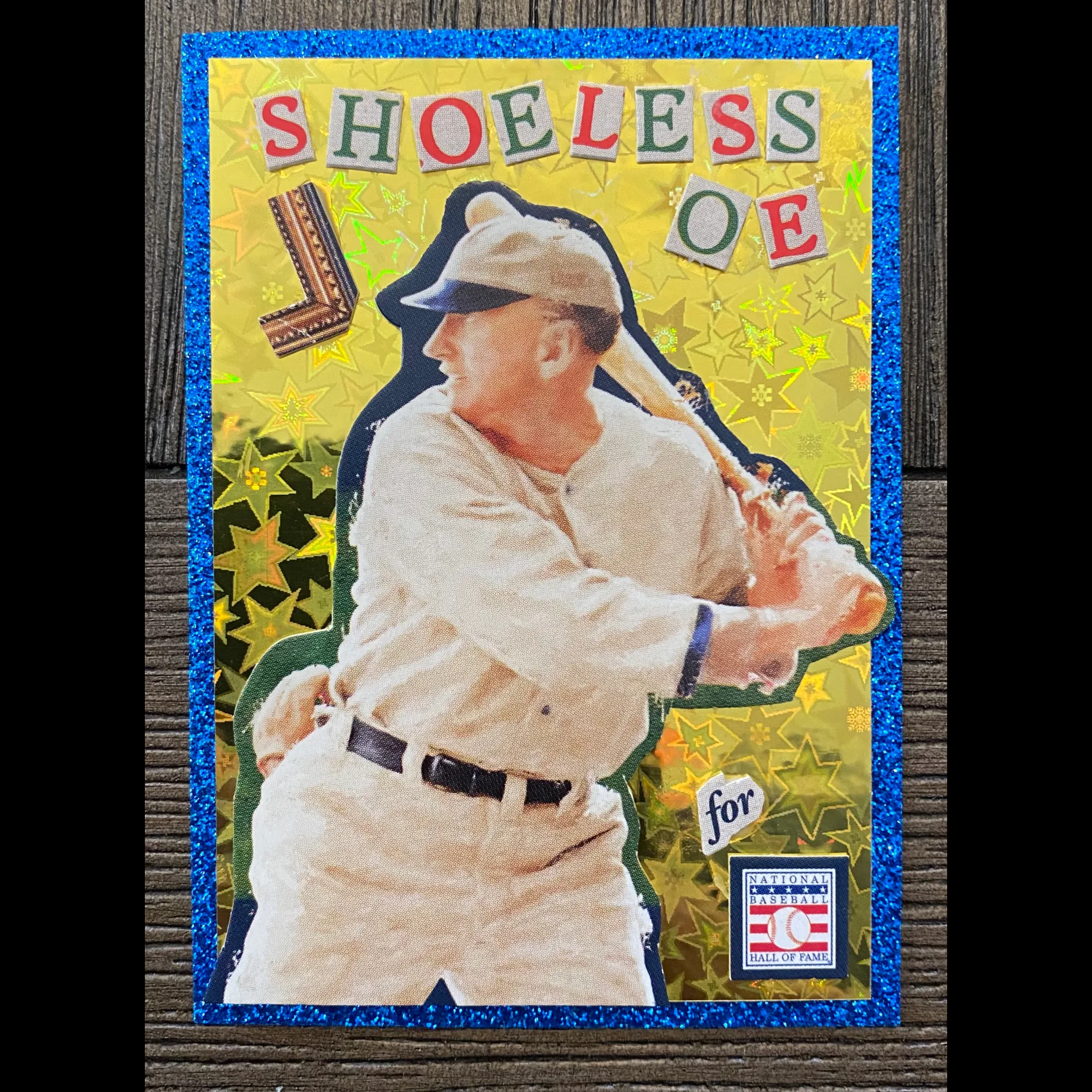
“Whatever You Need”
Though Jason’s style didn’t lend itself to mass producing cards the way he makes them for Heavy J Studios, he still contributed a handful of 1/1 chase cards to be included in random orders which were placed for the full set.
Any time I have ever asked Jason for something, no matter how big or small, the answer has never been “no.” He’ll always do what he can to figure out a way to help.
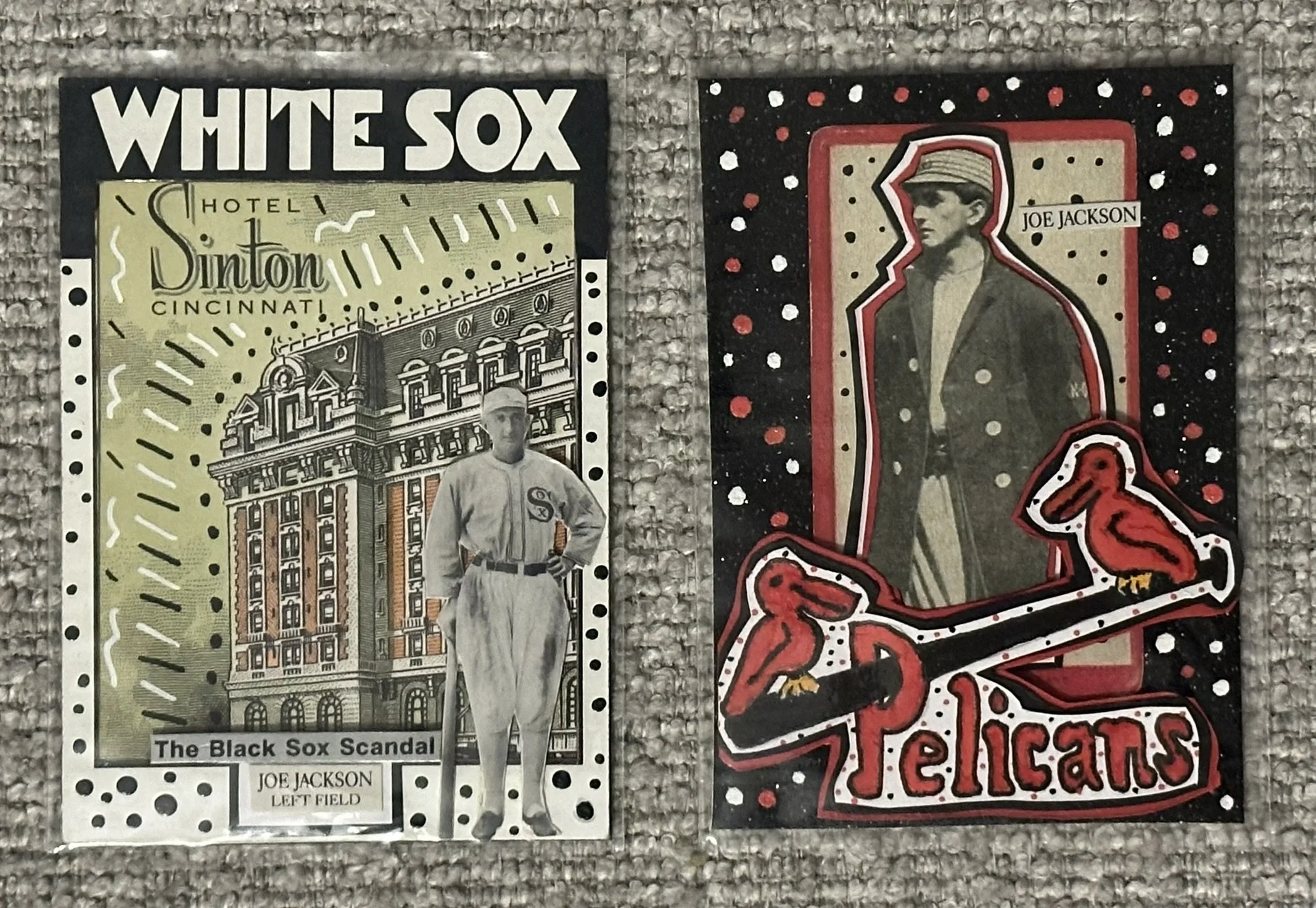
Mr. Shake
Jason even enlisted some of his card artist friends, like Mr. Shake, who also contributed some 1/1 chase cards. Here are the examples Mr. Shake sent in.
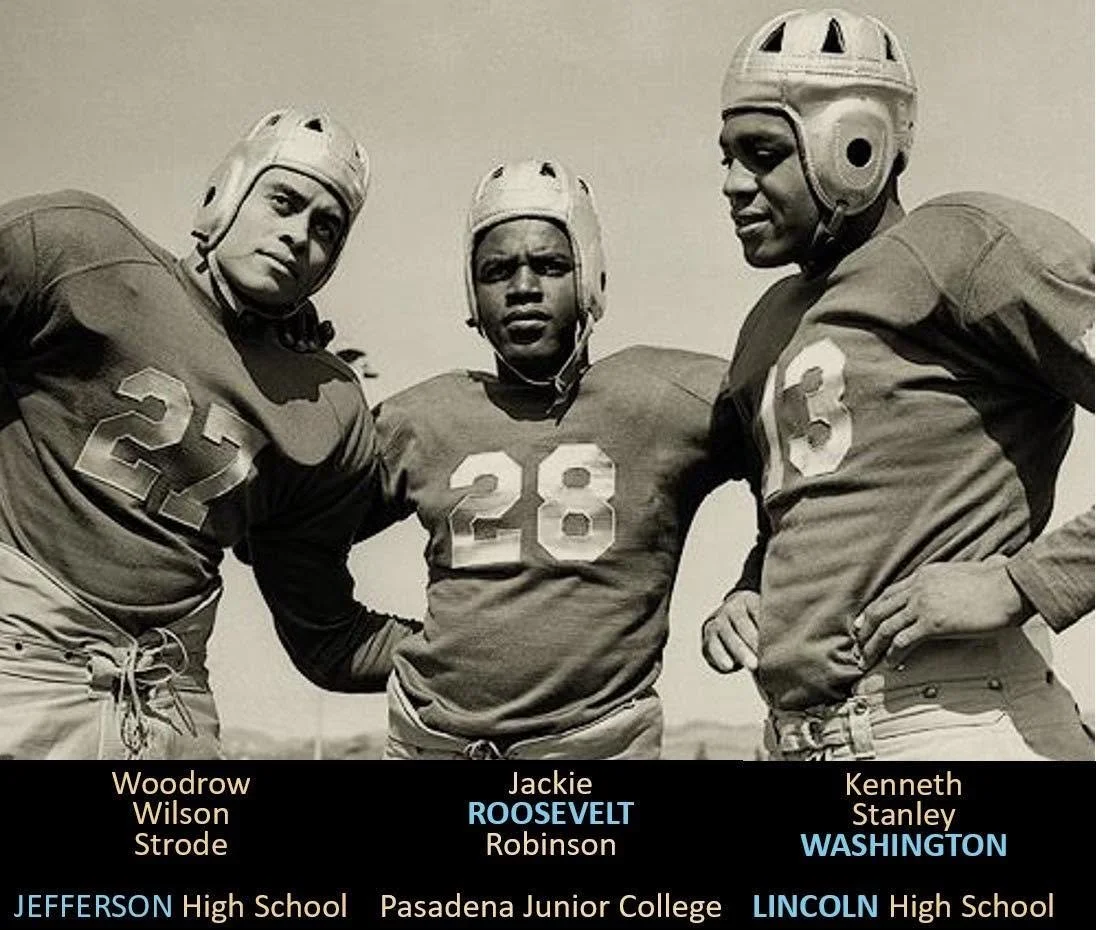
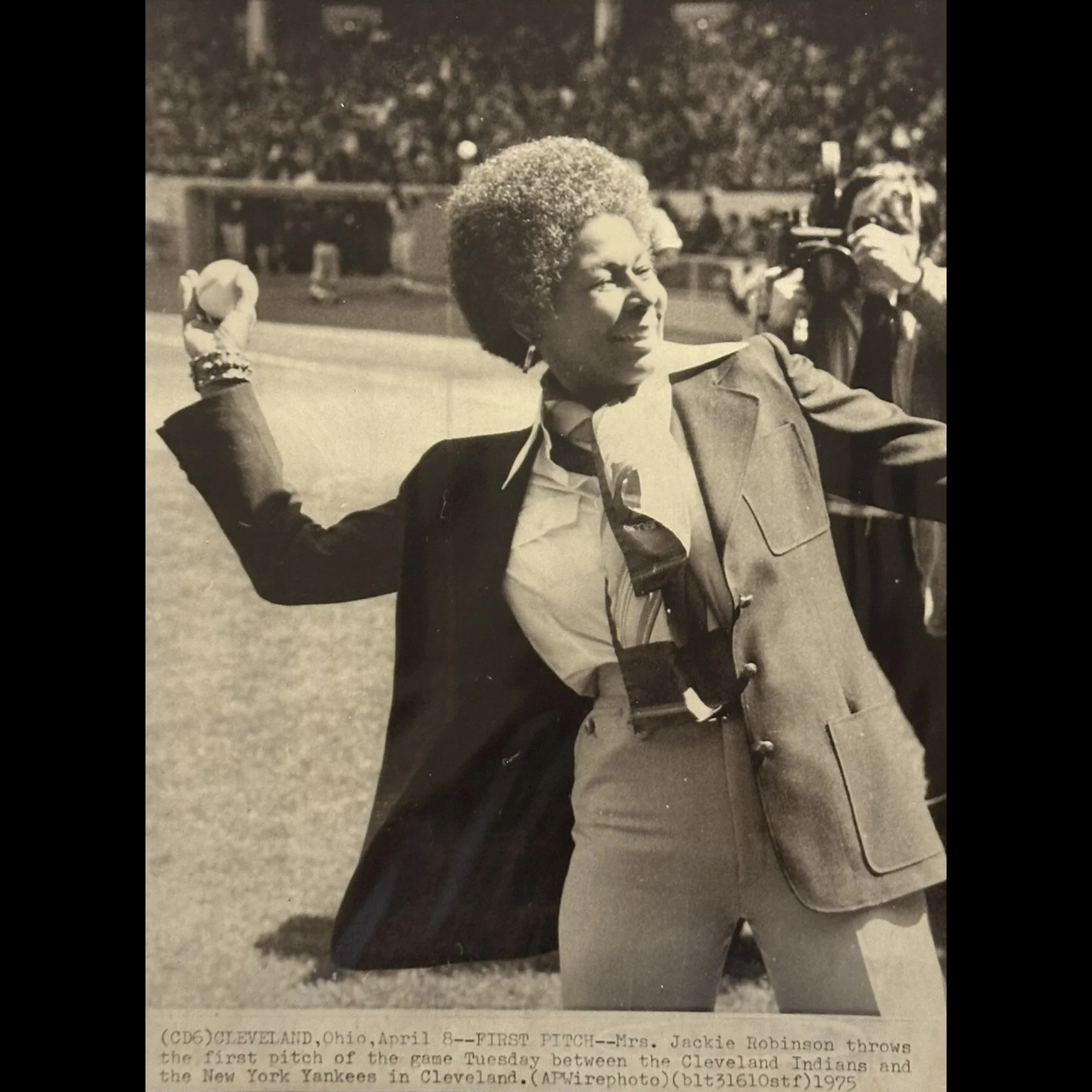
Rachel Robinson
Though Jackie had passed October 24, 1972, Rachel continued a relationship with Major League Baseball, and would still make appearances at special events.
Here she is, throwing out the first pitch at the Cleveland Indians game on April 8, 1975.
Why?
Because that was the game when Frank Robinson became the first Black manager in AL/NL history, breaking the managerial color barrier. What better person to throw out the first pitch at that game than Rachel Robinson?
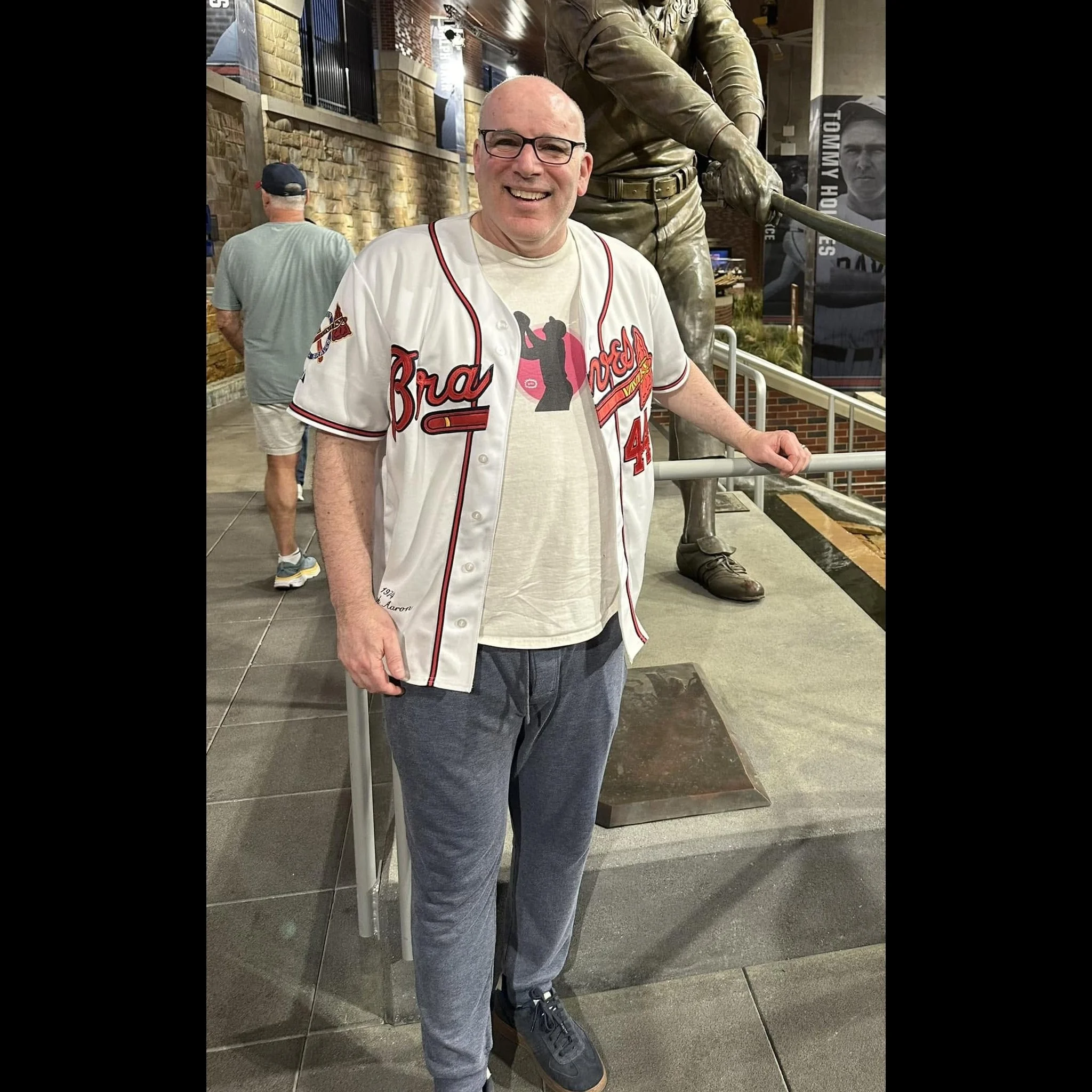
It Couldn’t Have Happened To A Nicer Guy
“I just enjoy being a collector every day.”
— Jason Schwartz
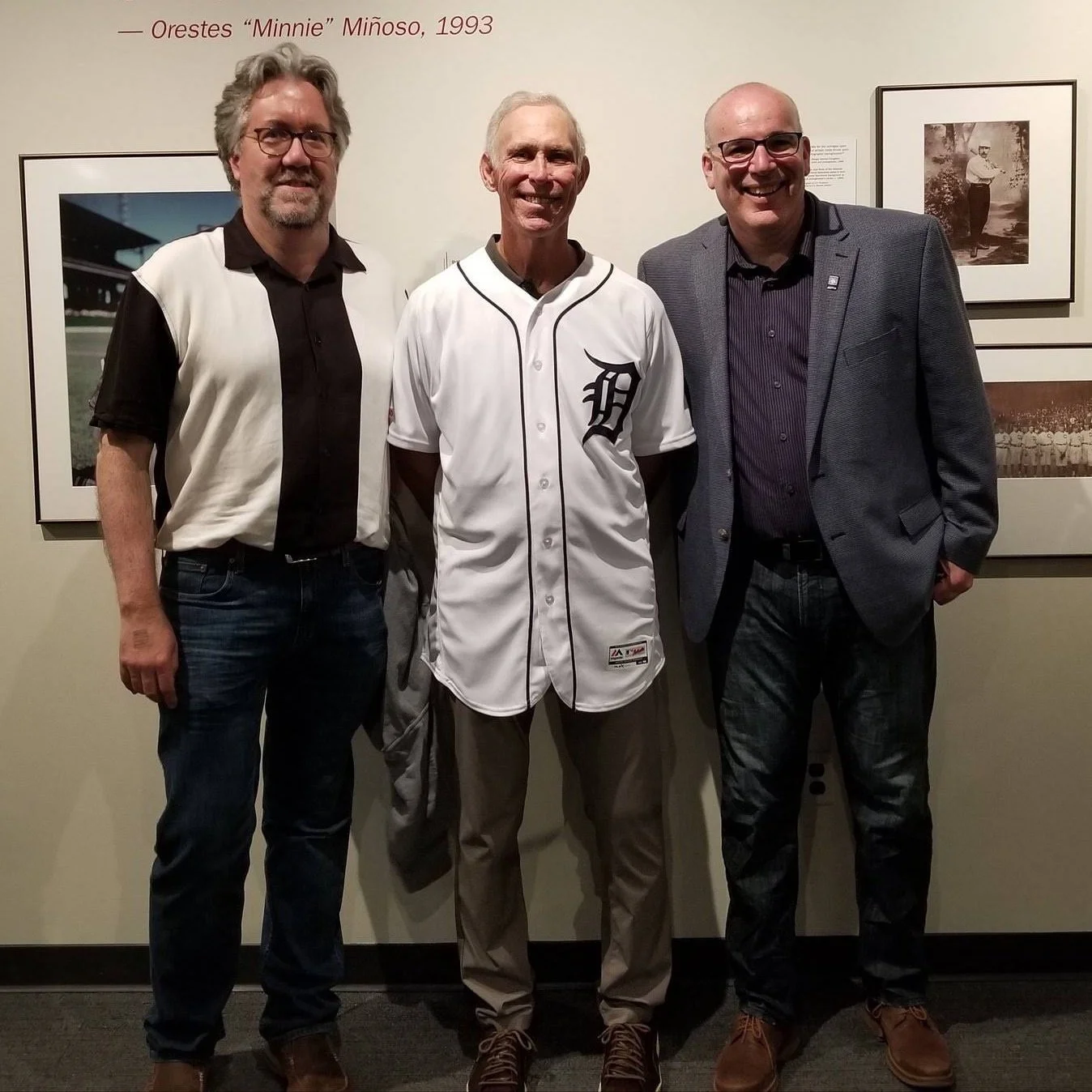
Mark Armour
Here is Mark Armour (left) with Jason (right) and their good buddy, Detroit Tigers shortstop, World Series champion, and Hall of Famer Alan Trammell.
“It’s hard to always say how Jason is helping you, but he’s kind of always convincing you that you’re awesome. Like, all the time. It seems like a small thing, and maybe I shouldn’t need to hear that, but I kind of do.”
Alan Trammell’s SABR Biography
Mark was our guest for Episode 1 of Season 6. You can listen to that episode HERE.
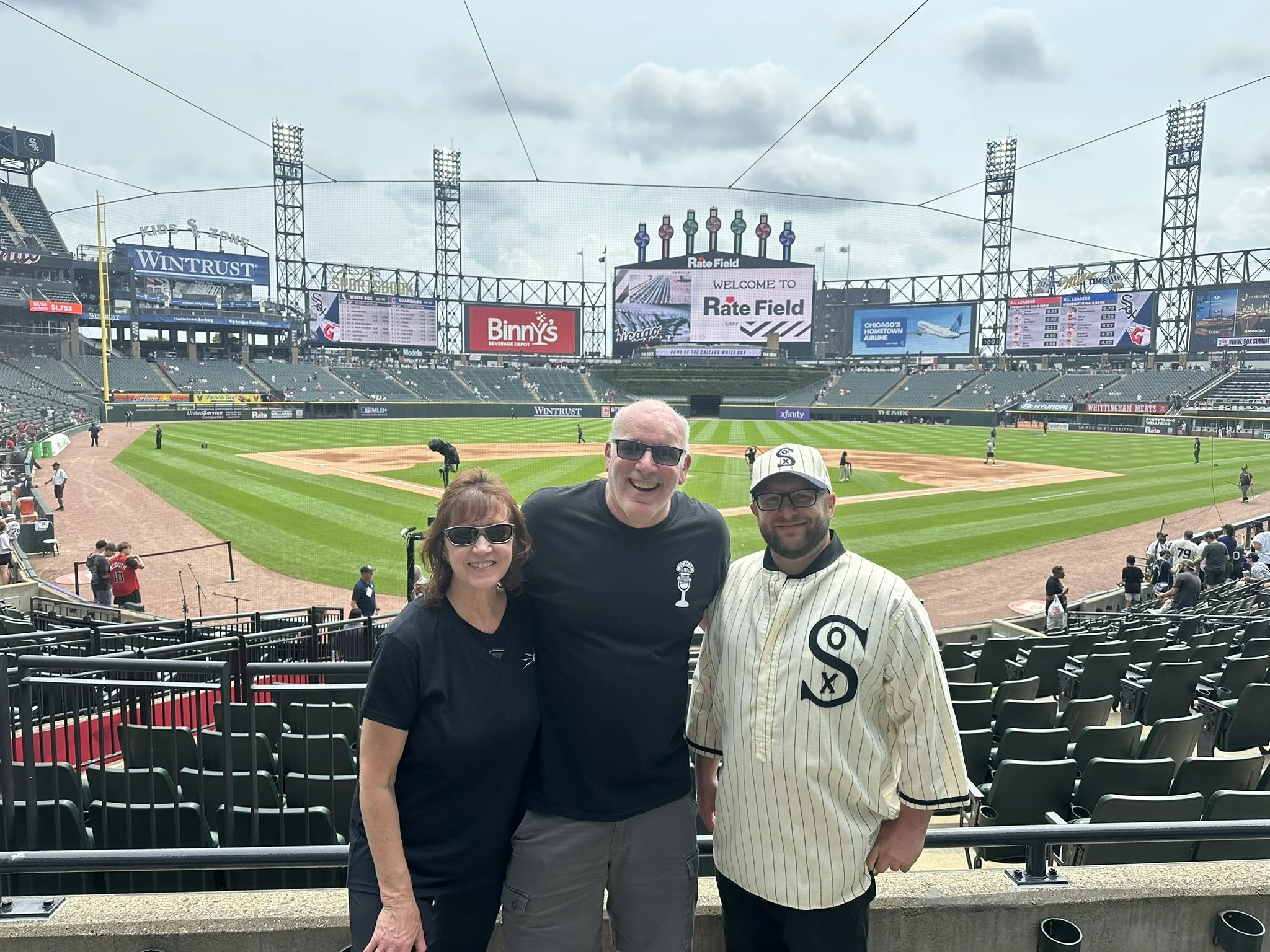
My mom and I went to a White Sox game with Jason on August 9, 2026, specifically so we could get the Shoeless Joe Jackson bobblehead giveaway and so we could hear friend of the show Nancy Faust play the organ at the stadium.
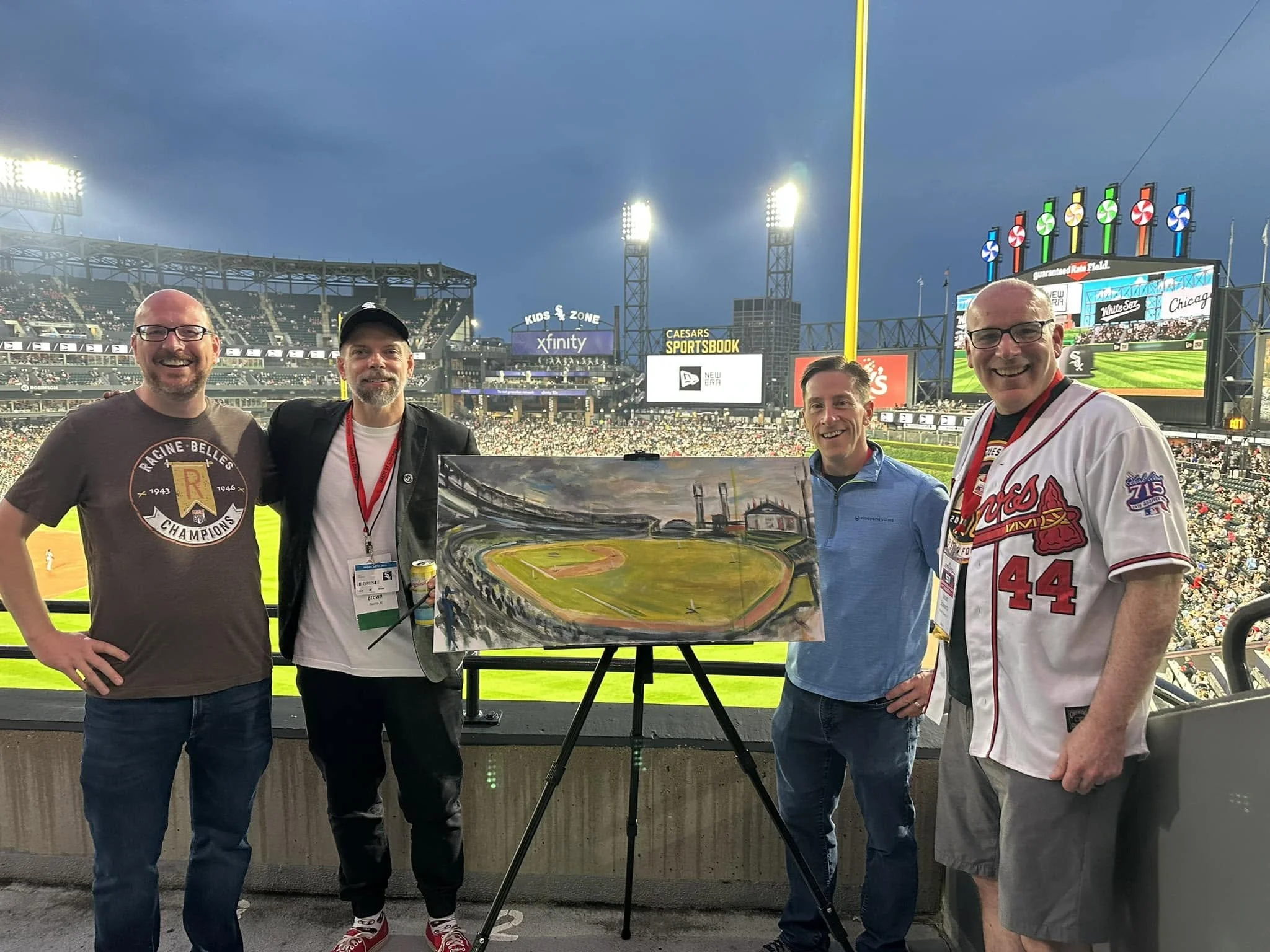
Always Doing Something
Jason and members of his Chicago crew always seem to be doing something together. Here they are at a White Sox game with British baseball artist Andy Brown, who was our guest for Episode 8 of Season 1. You can listen to that episode HERE.
Good Trouble
On April 30, 2026, the Joliet Slammers played a pre-season exhibition dubbed “The Big House Ballgame” at the Old Joliet Prison in Joliet, Illinois.
Jason and a couple members of his Chicago crew were at the historic contest.
Jacob Pomrenke
Jacob Pomrenke is the Director of Editorial Content at the Society For American Baseball Research, and the chairman of the Black Sox Scandal Research Committee. He also happens to be a close, personal friend.
Jacob was our guest for Episode 1 of Season 3. You can listen to that episode HERE.
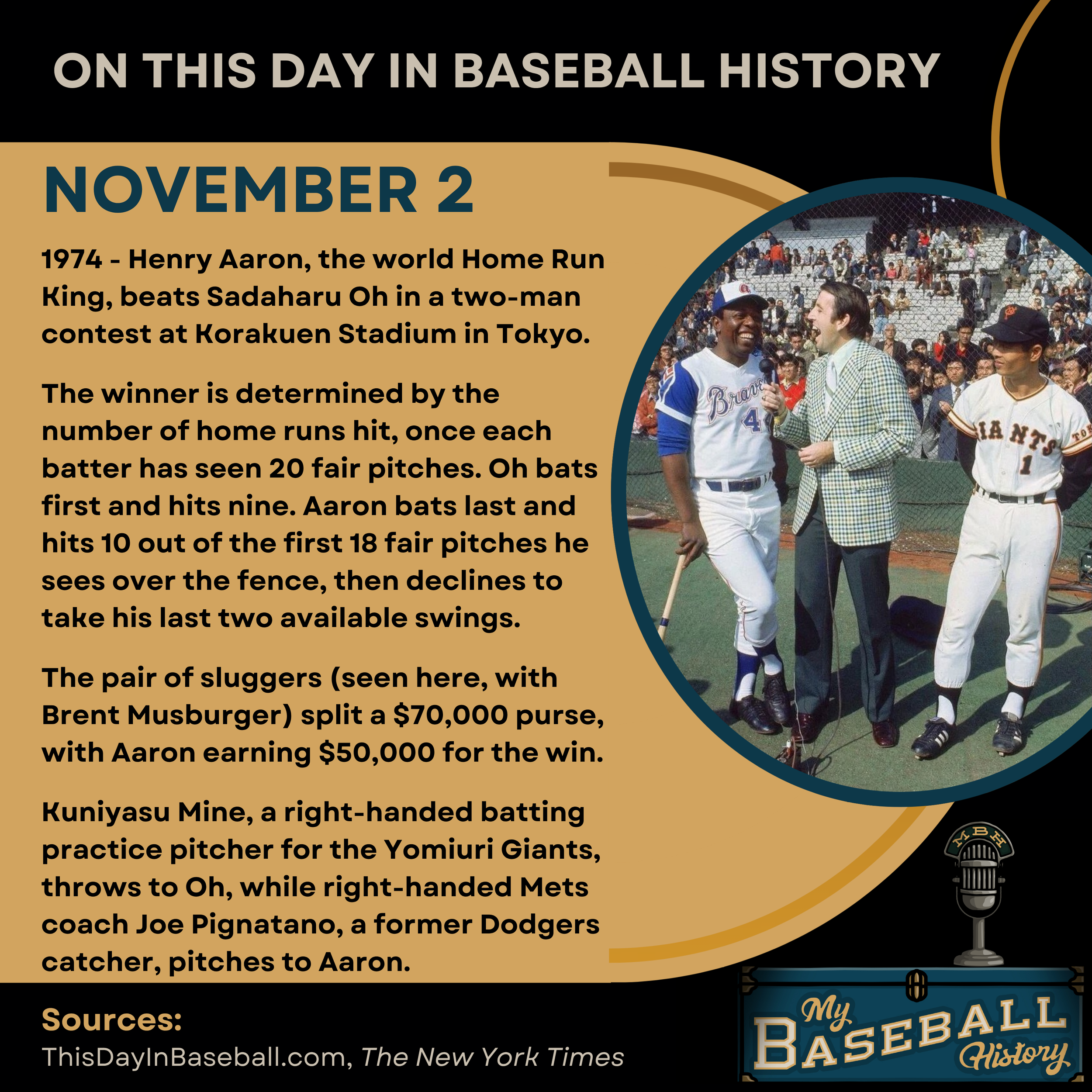
On This Day Posts
You’ve seen a handful of them throughout these liner notes, so you have an idea of the type of content you can expect every day if you aren’t already following The Shoeless Podcast Network on social media.
If you’d like to follow us on your favorite platform, click one of the following links and it will take you right to our profile.
Join Our Email Newsletter
It’s free, and it’ll give you some bonus content throughout the month that you won’t get from the podcast episodes or by following any of our other social media platforms.
We put out new issues on the second Friday and the fourth Friday of every month. No more, no less.
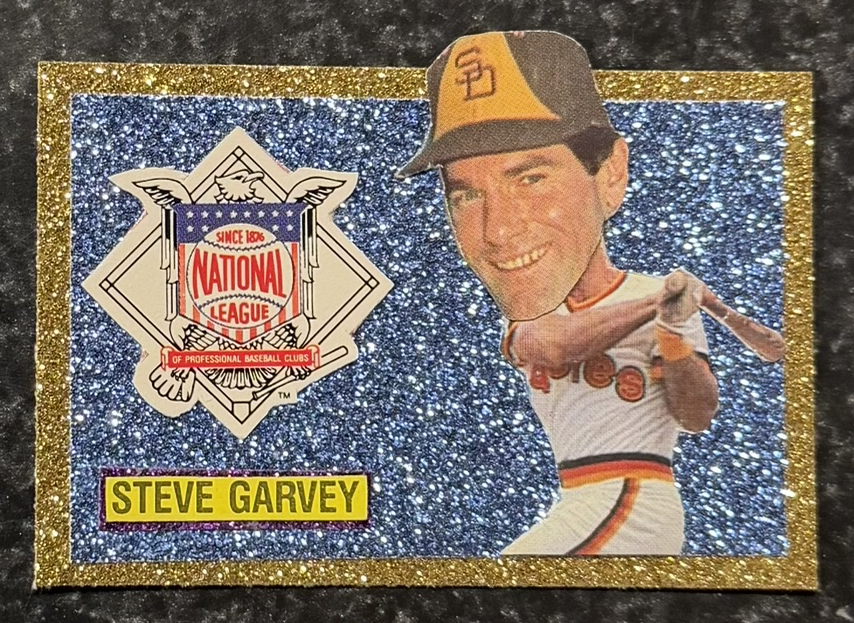
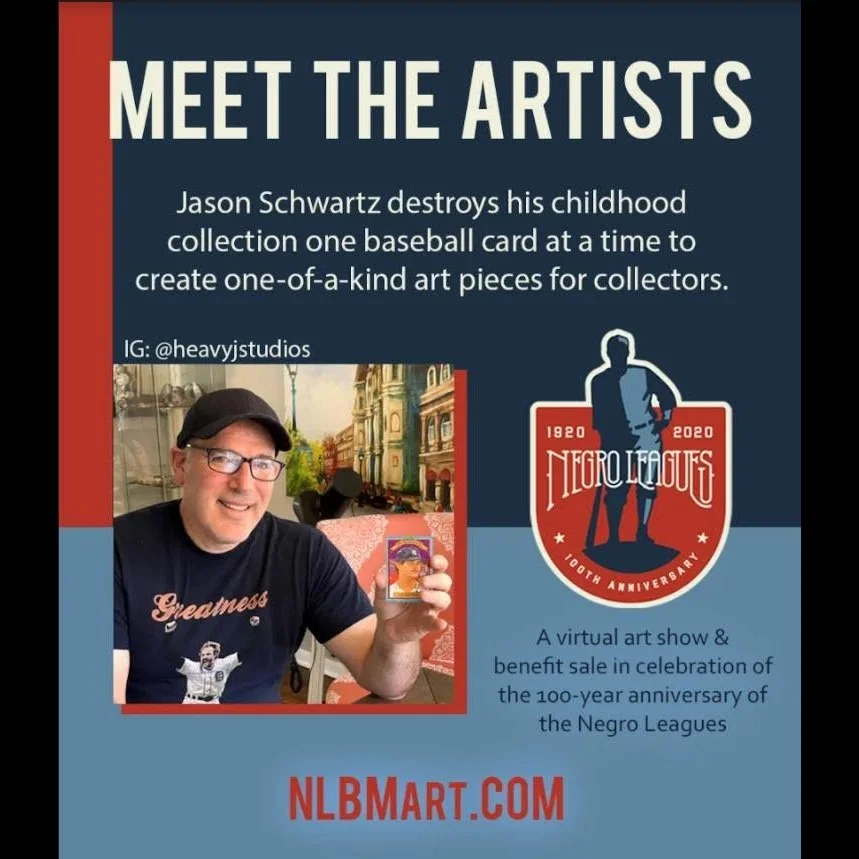
Destroying His Childhood Collection For A Good Cause
Jason began Heavy J Studios during the pandemic, and his efforts have raised more than $20,000 for the various causes and organizations he was hoping to support when he started the project.
Eight different organizations have each received $900 or more. Six have received $1,200 or more. Four received $1,600 or more.
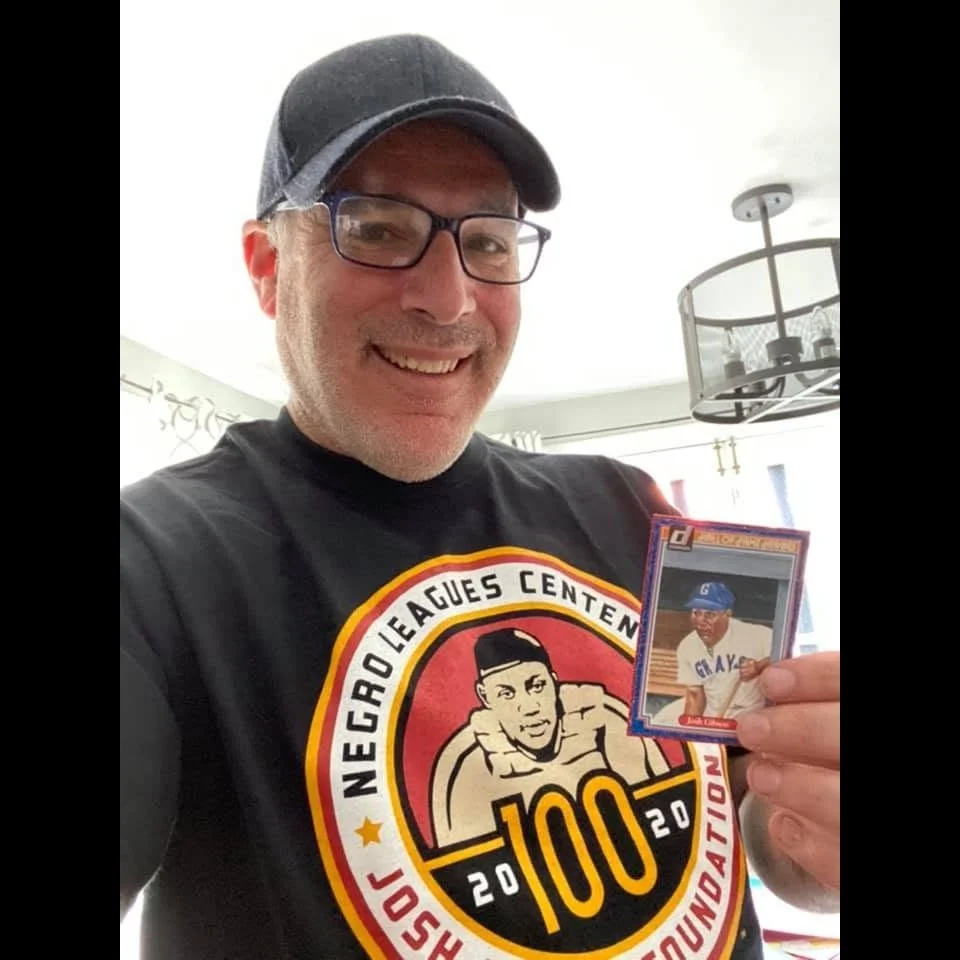
The Josh Gibson Foundation
Jason raised nearly $2,500 for the Shoeless Joe Jackson Museum, and nearly $6,000 for the Josh Gibson Foundation.
With more than 800 cards created, the average price per card was just about $25, but there have been 47 different individual cards to have sold for $100 or more.
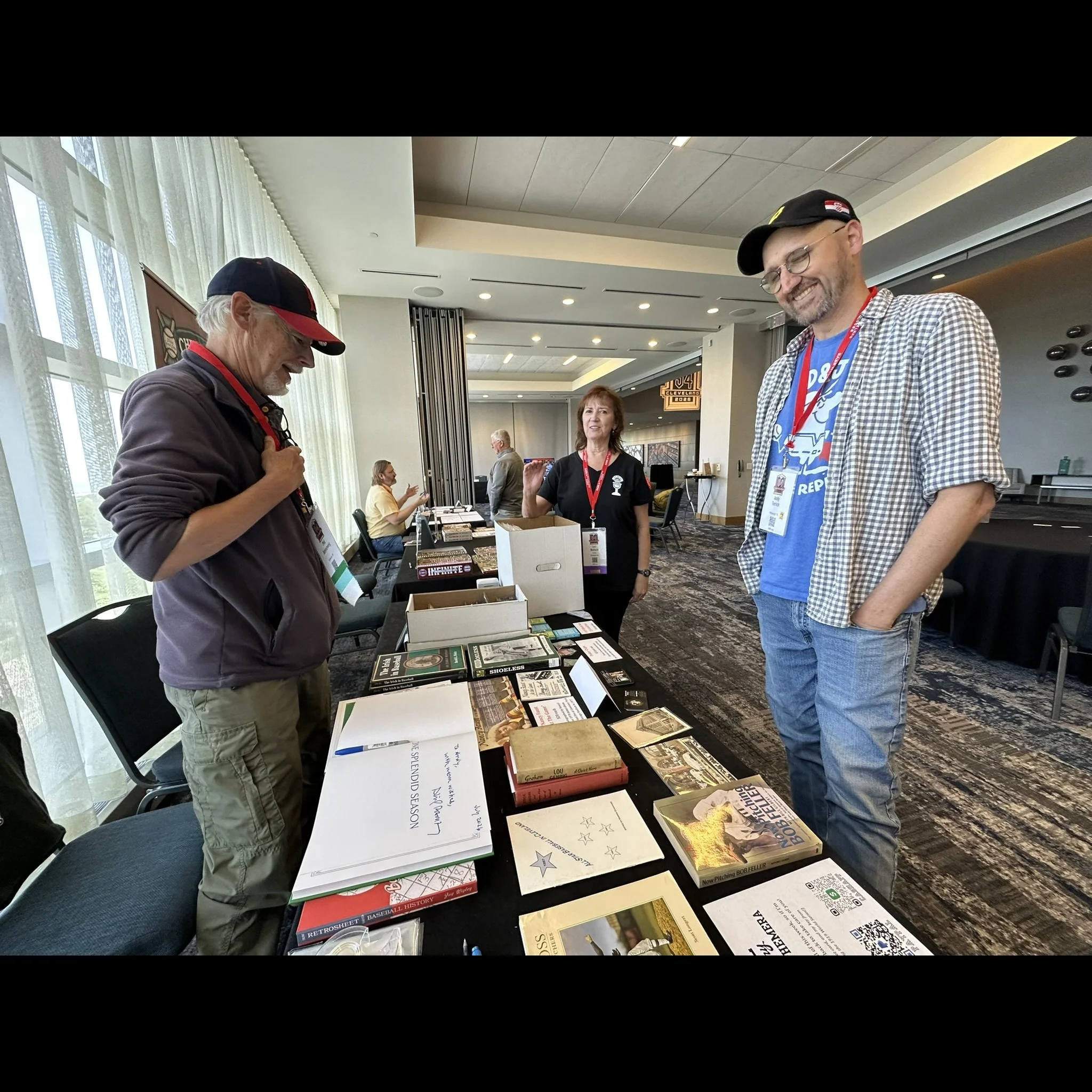
Andy Terrick
The person who has the largest collection of Heavy J Studios cards is Andy Terrick, who has been a supporter of this show since Day 1 and has become a good friend in real life, even though he lives in Pittsburgh.
As you may know if you’ve been listening to My Baseball History for a while, quite inconveniently for my friendship with Andy, I do not live in Pittsburgh.
Here he is (right) at my vendor’s table at the 2026 SABR convention in Cleveland with Phil Rosenzweig (left), who was our guest for Episode 3 of Season 5. You can listen to that episode HERE.
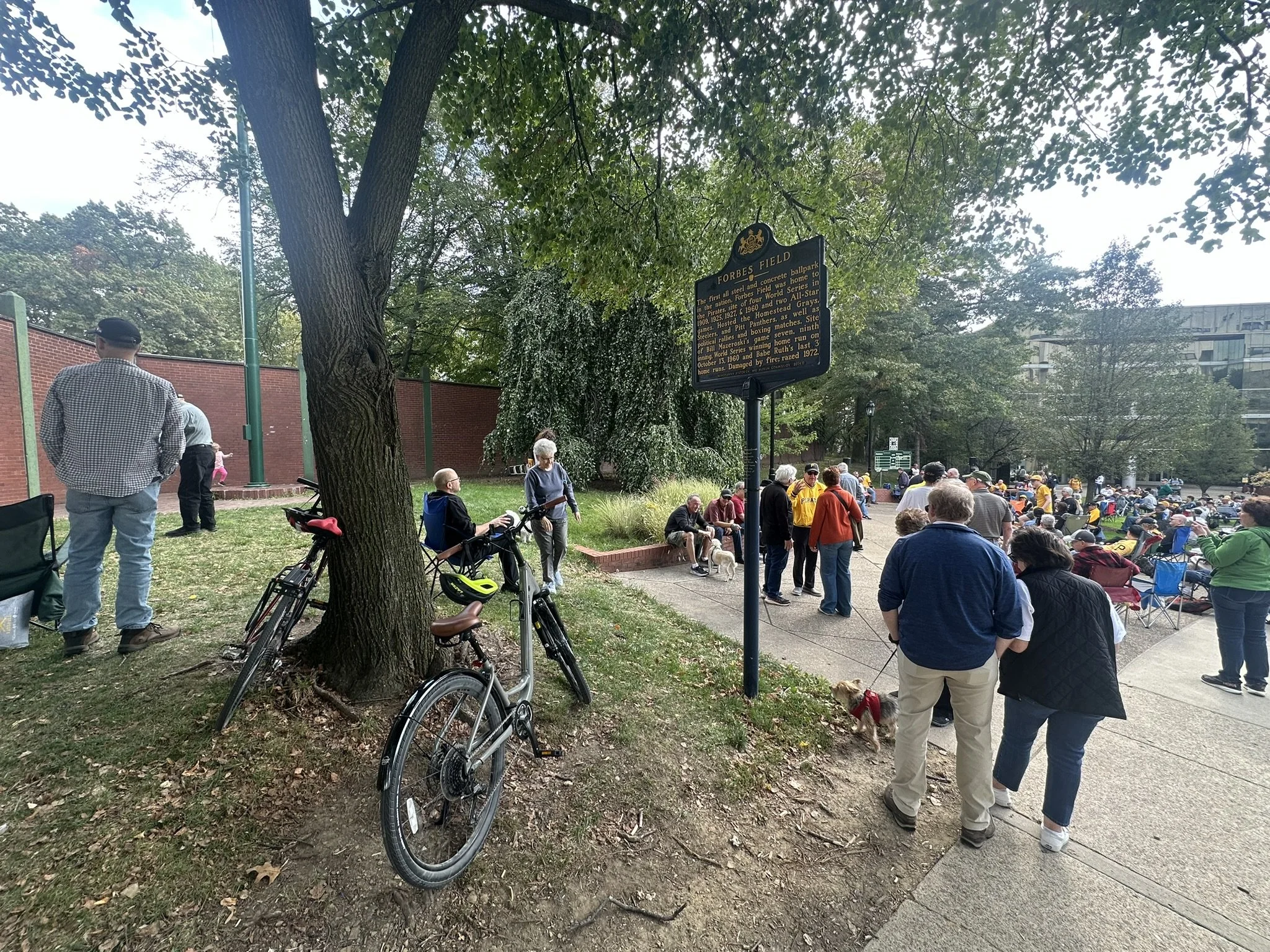
Even though we live in different cities, somehow Andy Terrick and I end up in the same place a couple times a year, whether that be at the SABR convention, or at a random baseball game, or at a listening party at the site of Forbes Field on the anniversary of Bill Mazeroski’s World Series-clinching home run, which is exactly happened in 2024. Andy was the recipient of at least 38 Heavy J Studios cards – that we know of – and his support benefited at least 10 different causes.
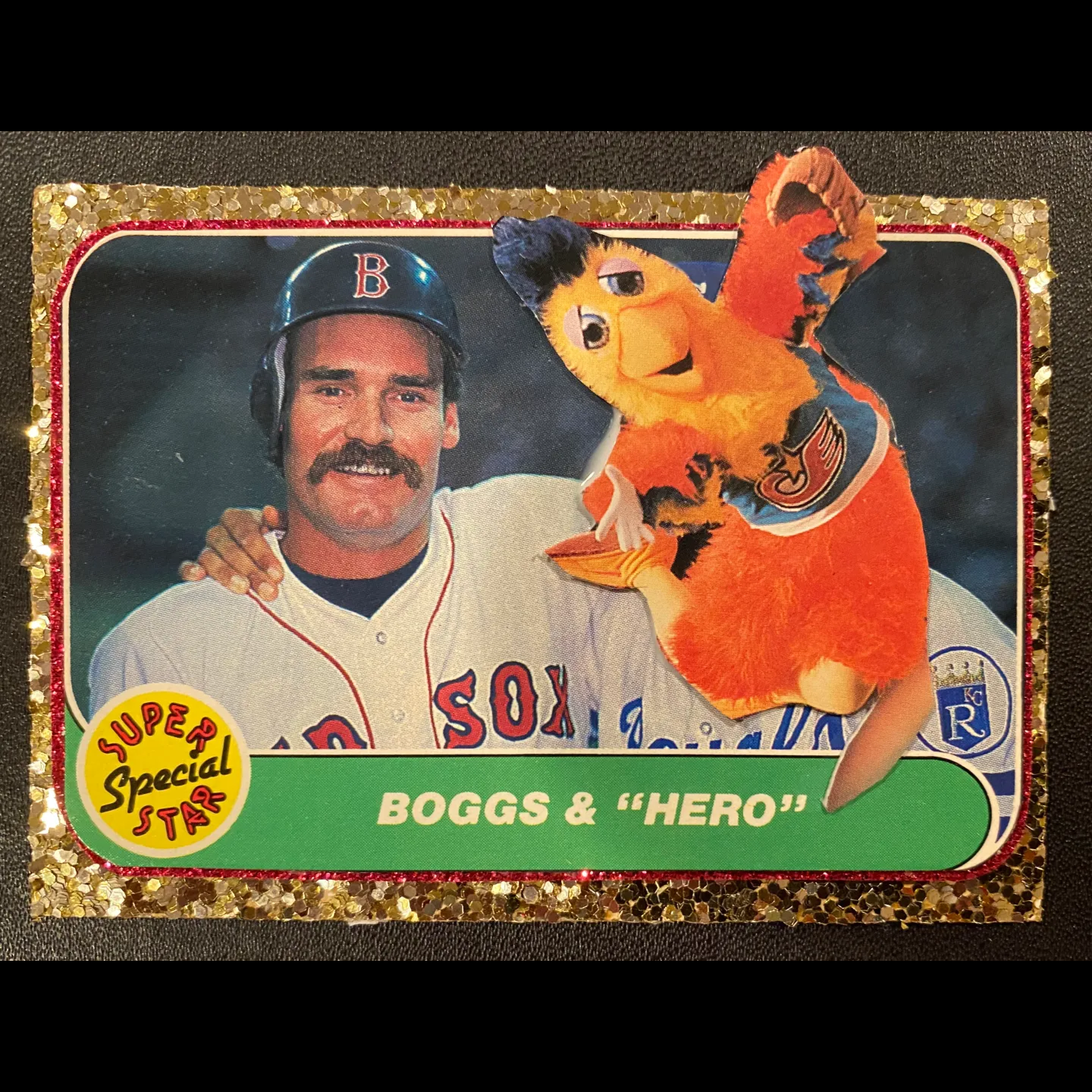
“We’re Not Dead, We Just Slowed Down A Bit.”
Heavy J Studios isn’t nearly as active today as it was during the pandemic, as Jason mentioned in our interview. In fact, Jason told me that their slogan is “We’re Not Dead, We Just Slowed Down A Bit.” Which, frankly, would be a good motto for my life, too. Jason made cards featuring everyone from Scott Brosius to Dolly Parton among the more than 800 creations he completed while he was more active. From The San Diego Chicken…
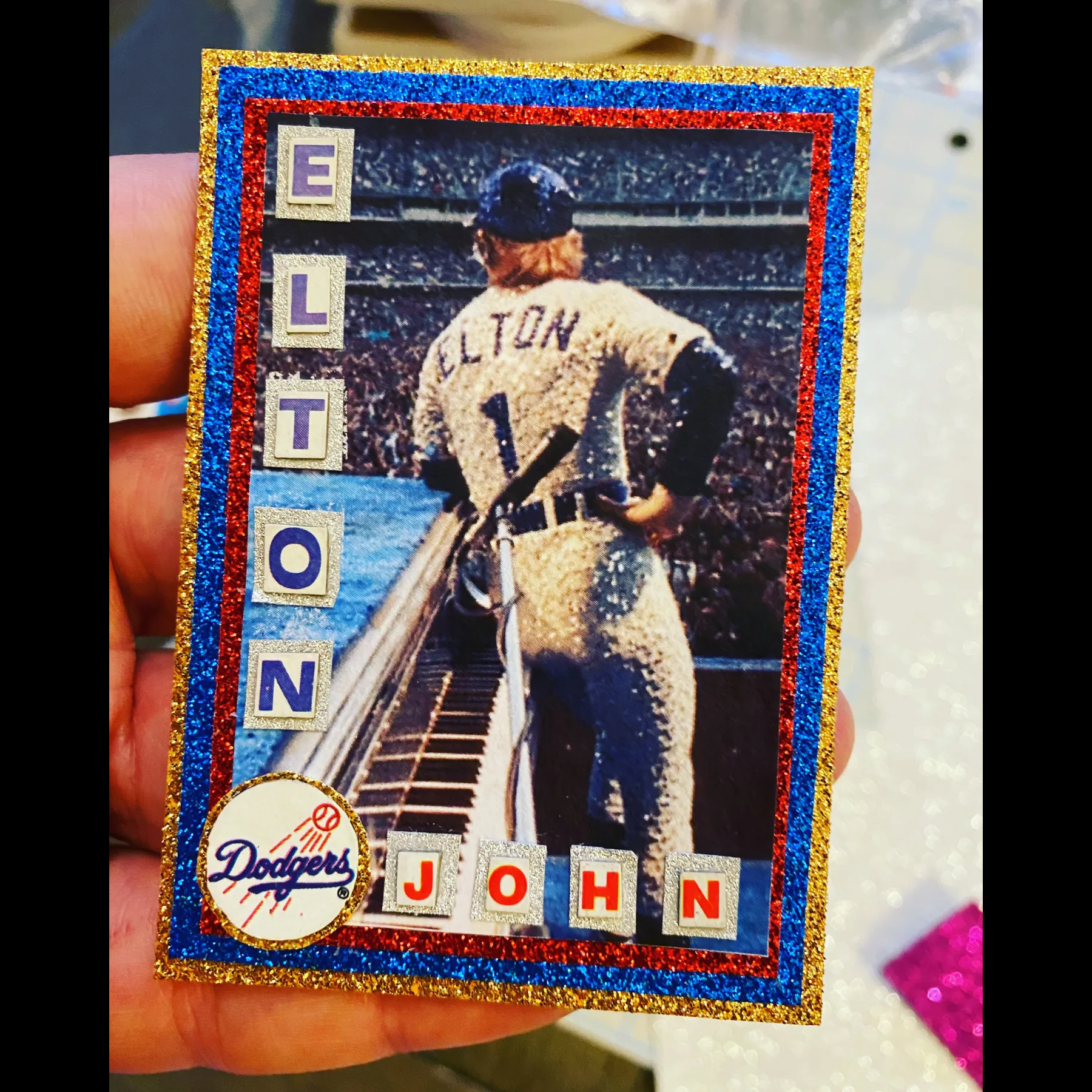
… to Elton John.
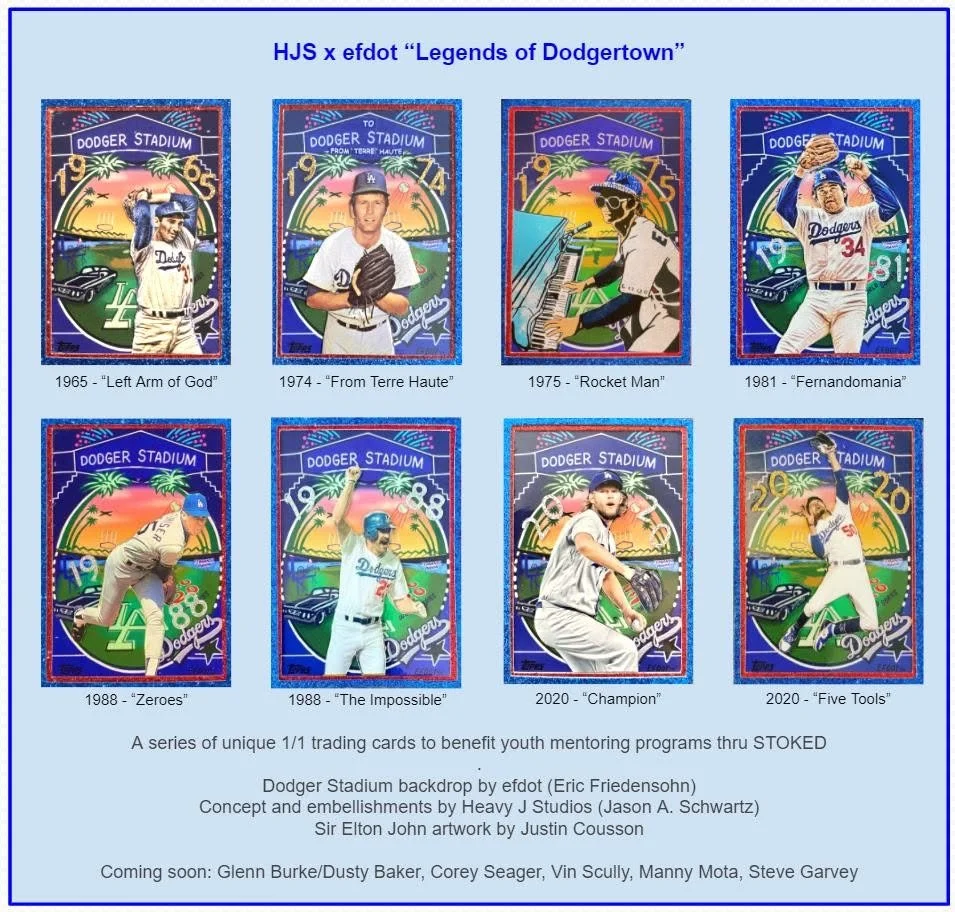
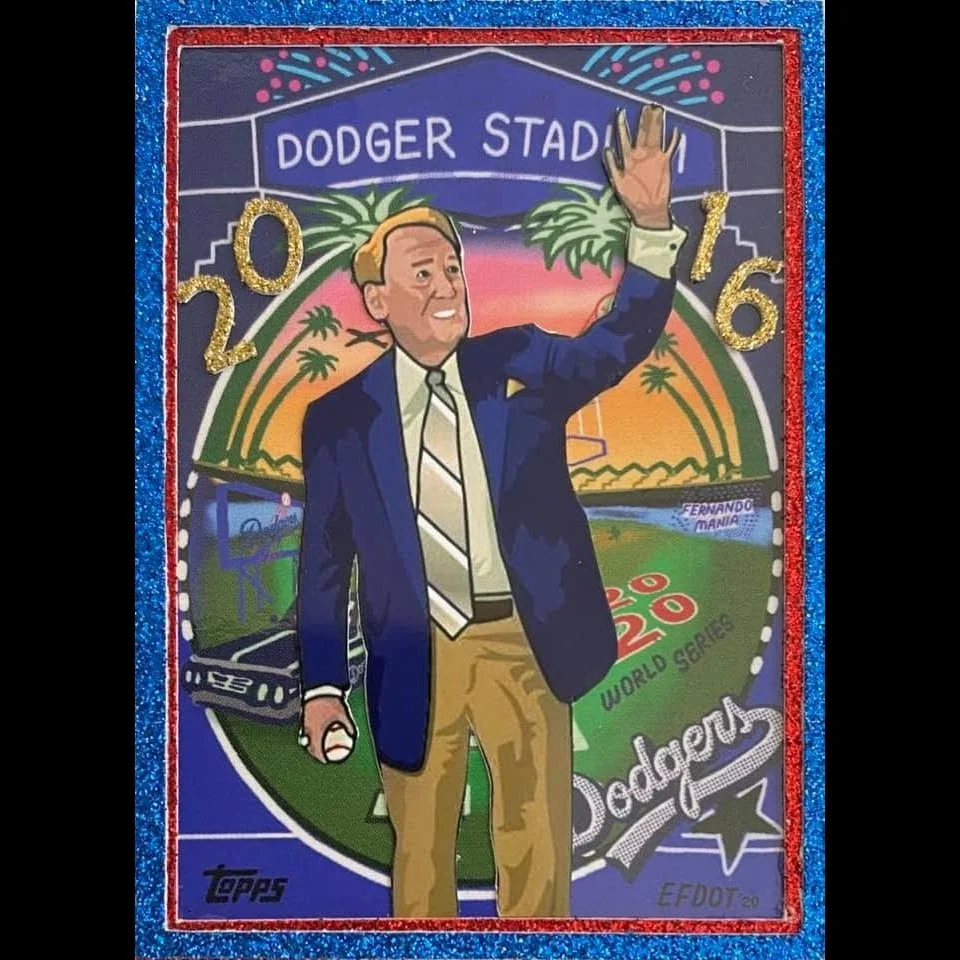
From Vin Scully …
… to Venus Williams.
And, Yes …
… because of course you know I was looking specifically for him, even one card of Michael Jordan.
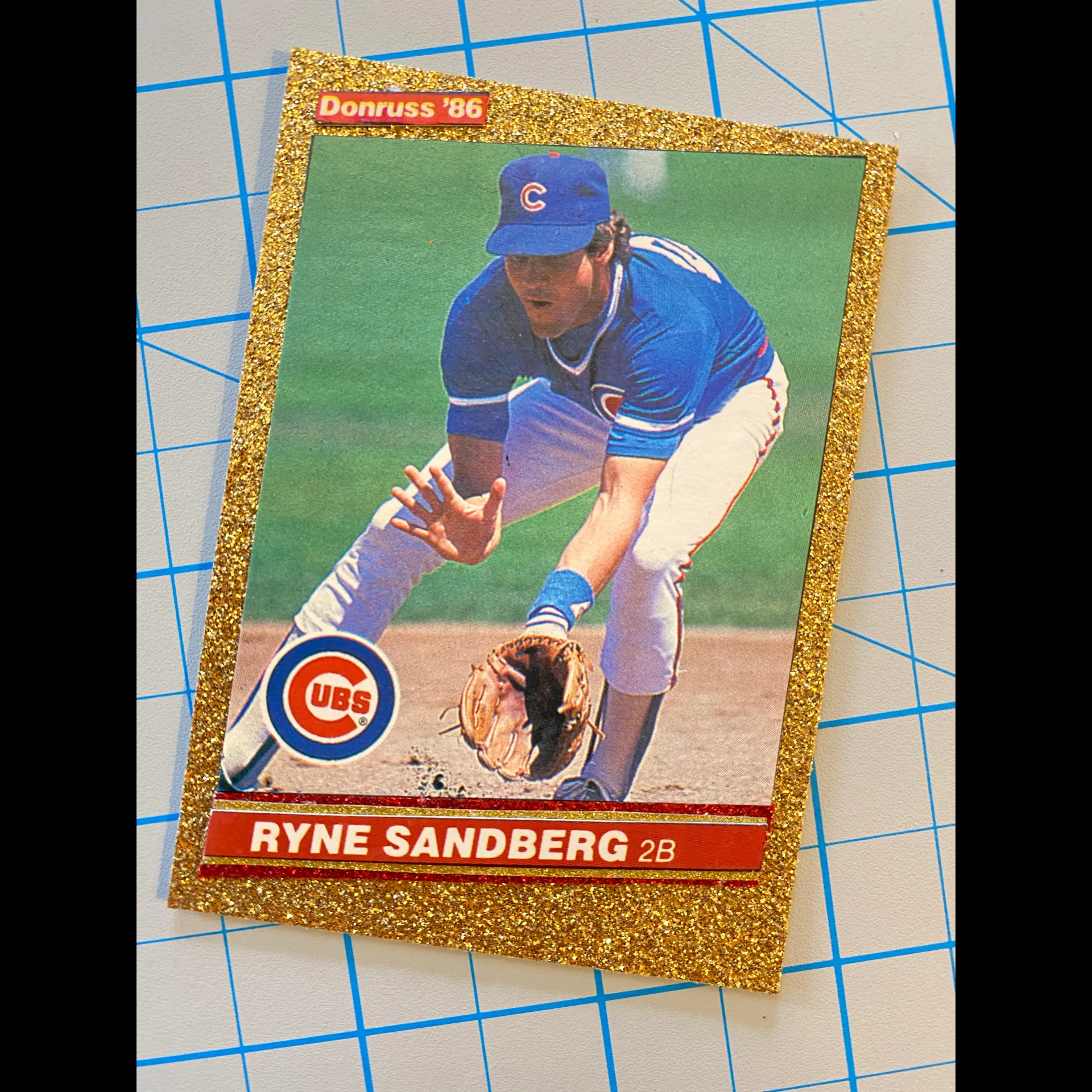
Most Common Subjects
You may be wondering who the most common subject of a completed Heavy J Studios card is. I know I was.
Well, I counted.
Of the more than 290 different subjects who graced the front of a Heavy J Studios card, there were 13 players who appeared on 10 or more cards.
Ryne Sandberg had 10 Heavy J Studios card appearances, 13th most of any subject.
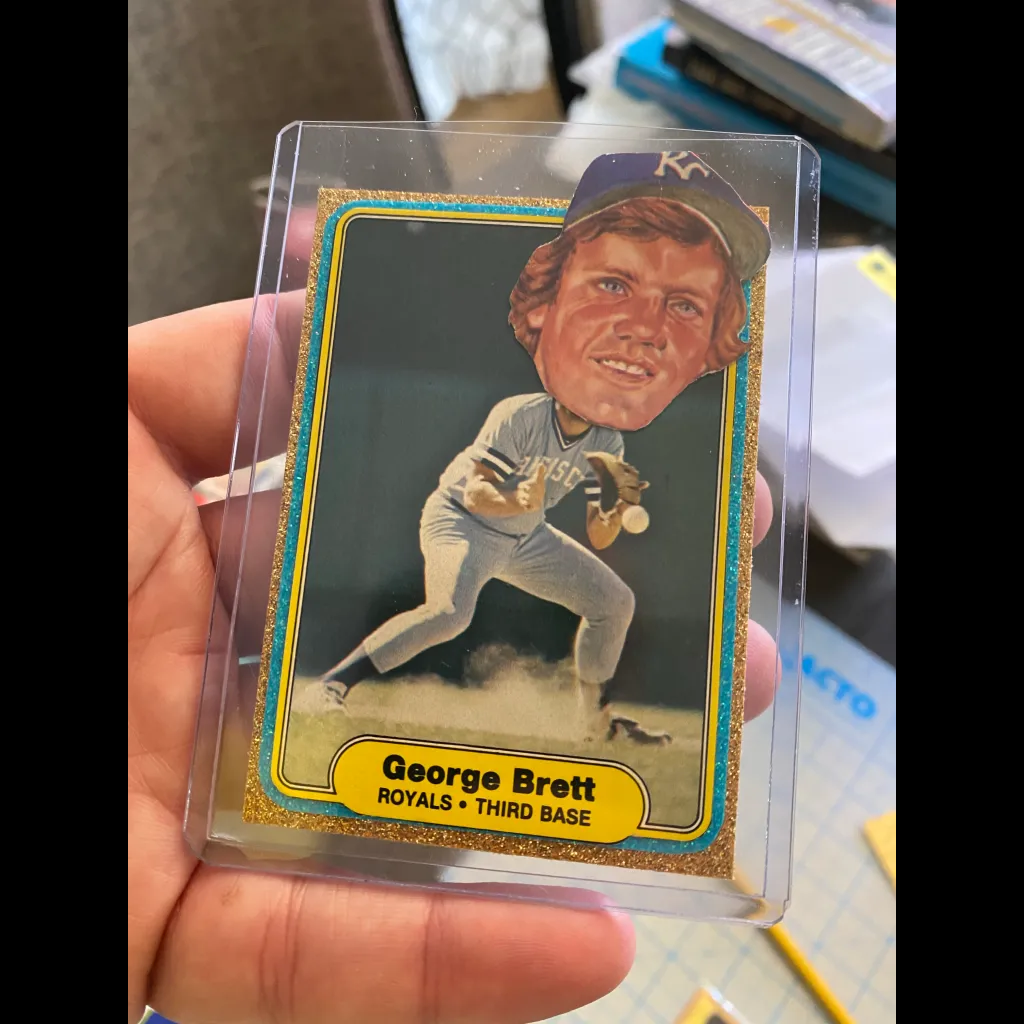
George Brett
11 Heavy J Studios card appearances, tied for 10th most of any subject.
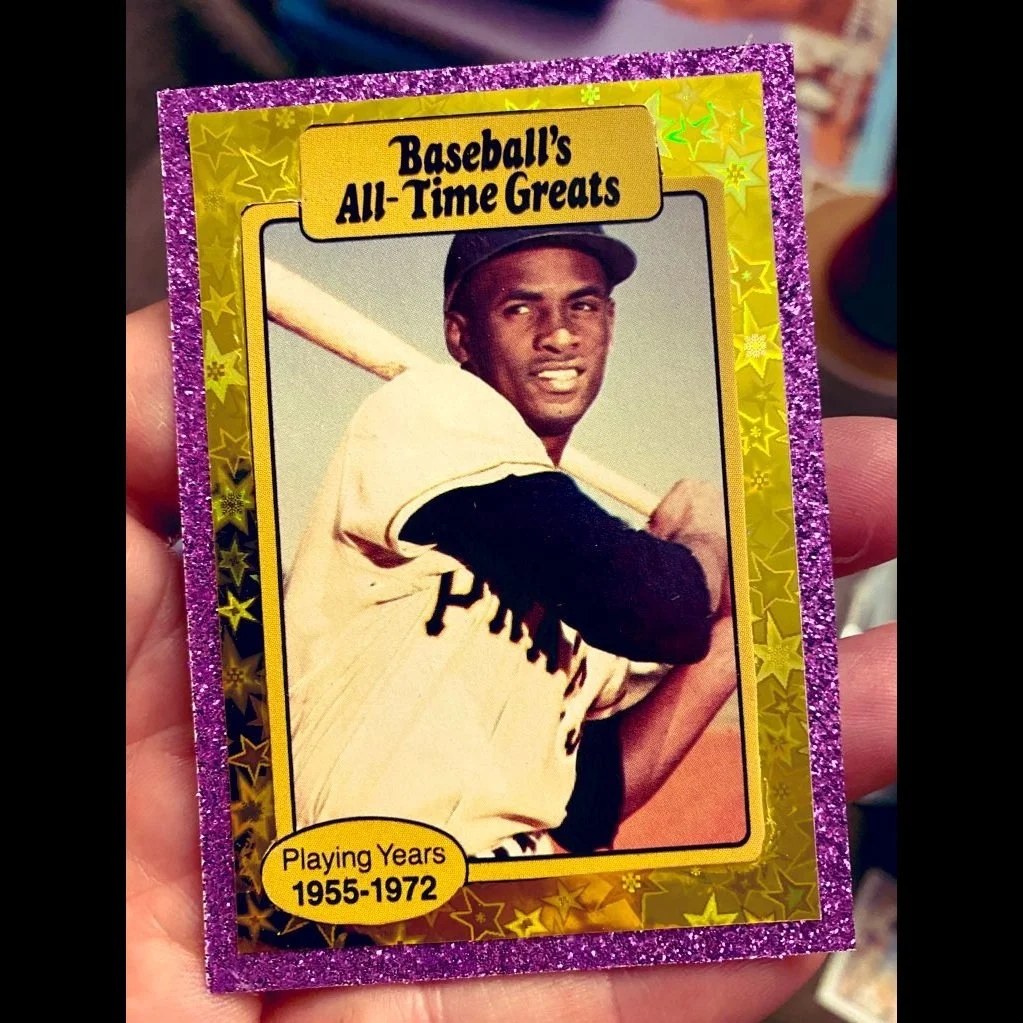
Roberto Clemente
11 Heavy J Studios card appearances, tied for 10th most of any subject.
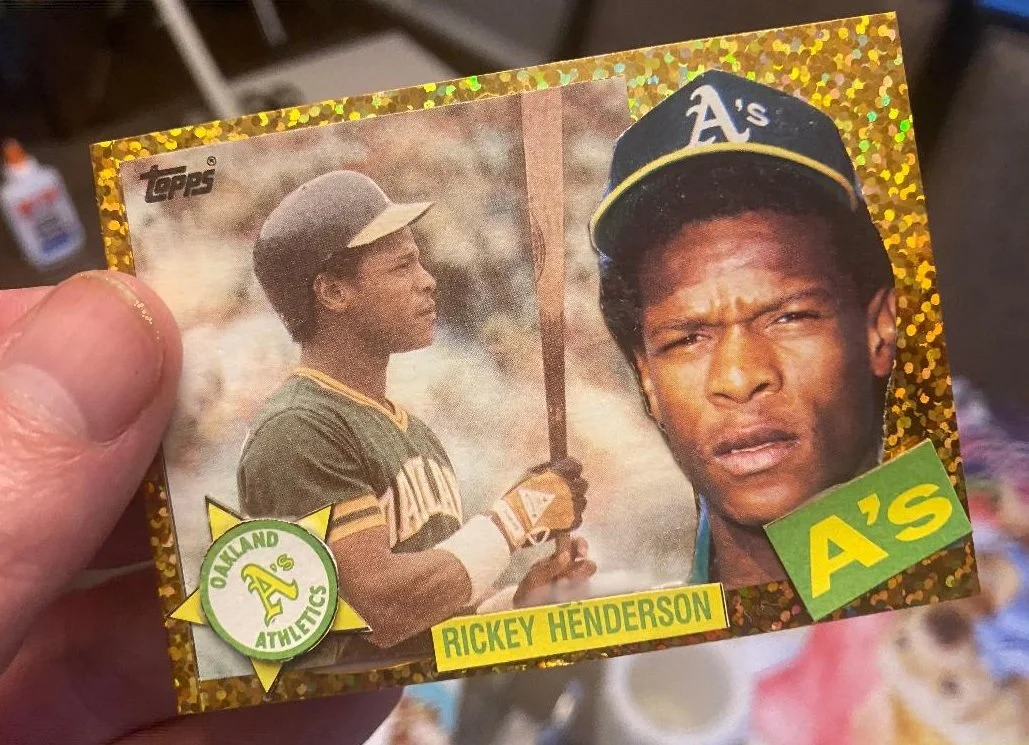
Rickey Henderson
11 Heavy J Studios card appearances, tied for 10th most of any subject.
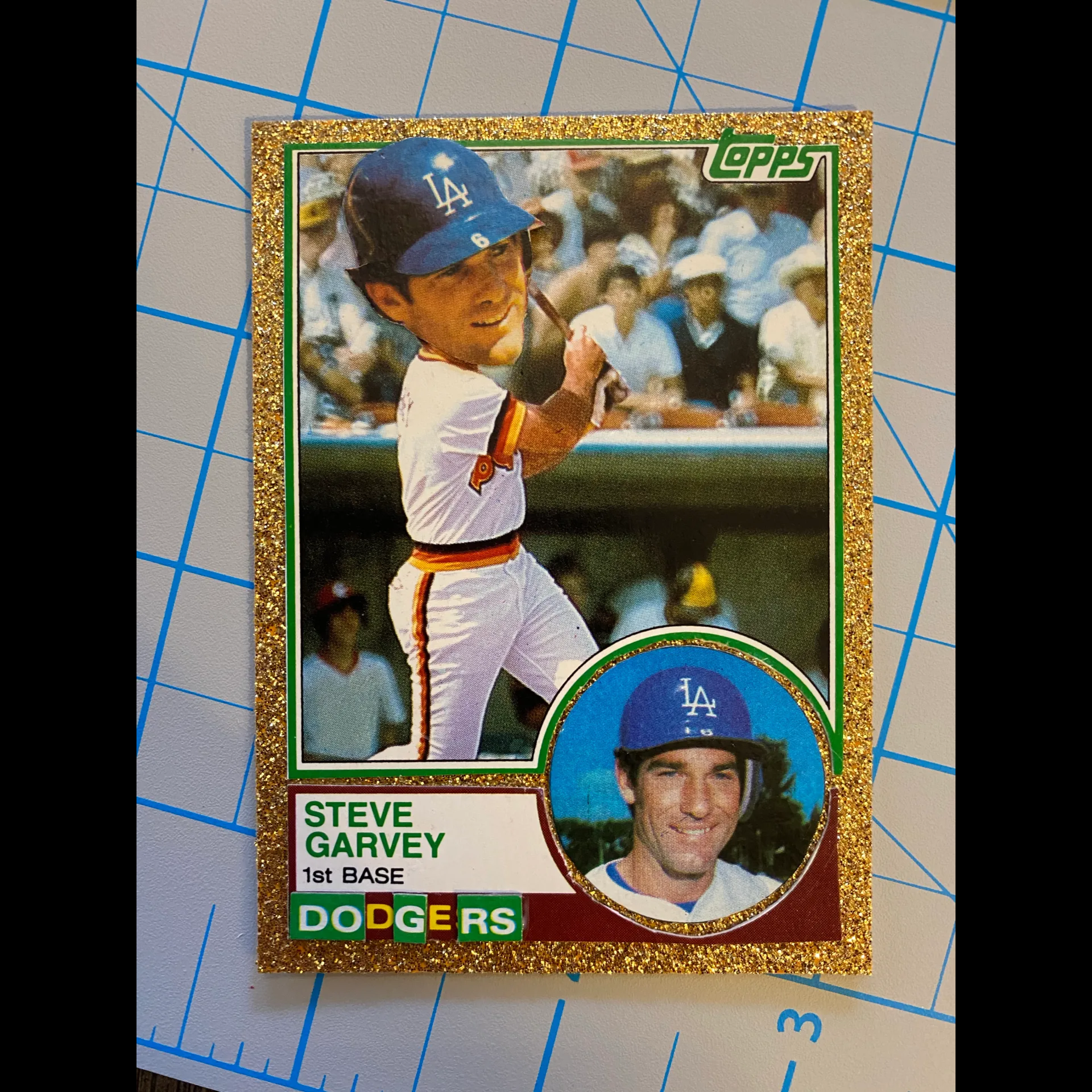
Steve Garvey
Some of Jason’s favorite players make up the next few spots.
Steve Garvey has 12 Heavy J Studios card appearances, which is 9th most of any subject.
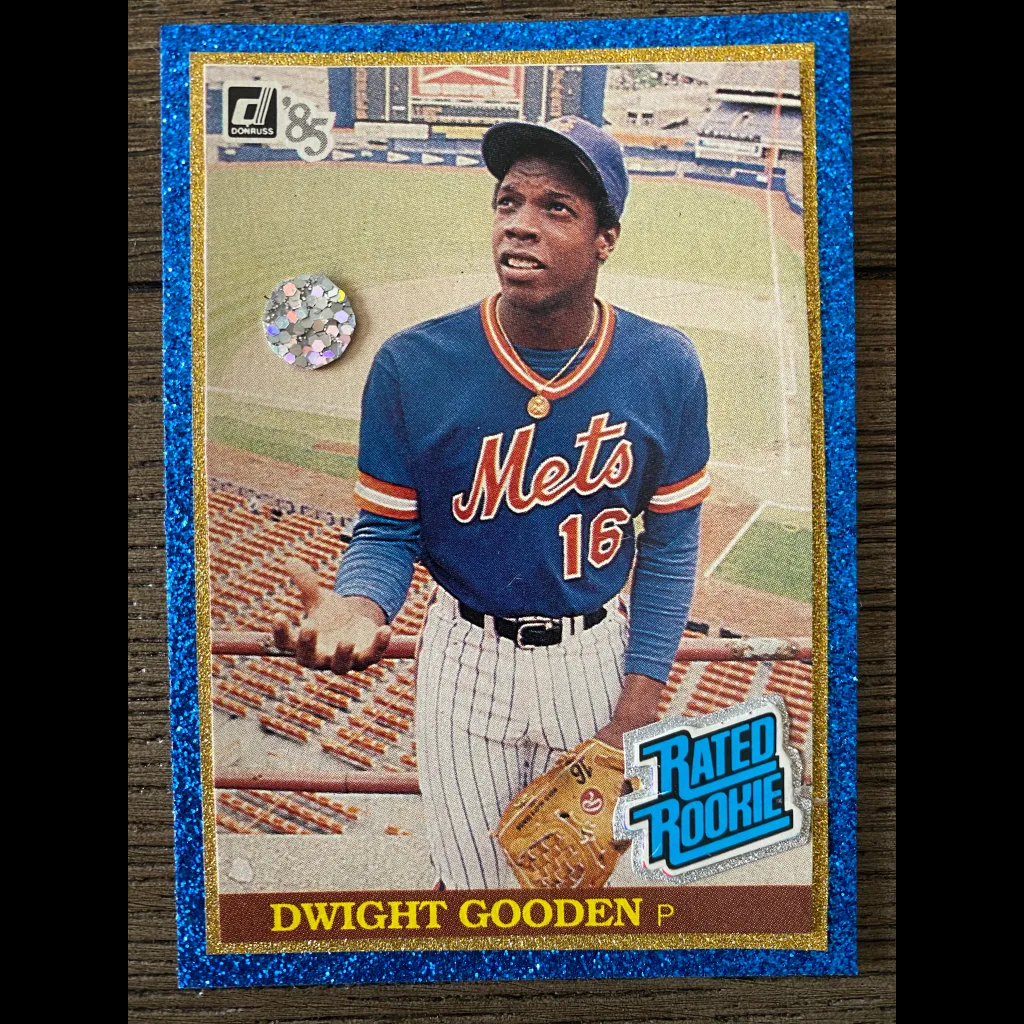
Dwight Gooden
14 Heavy J Studios card appearances, 8th most of any subject.
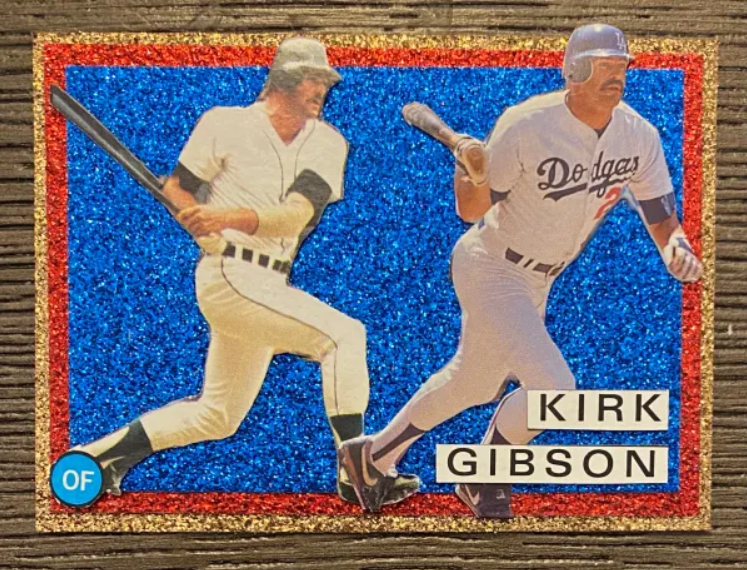
Kirk Gibson
16 Heavy J Studios card appearances, 7th most of any subject.
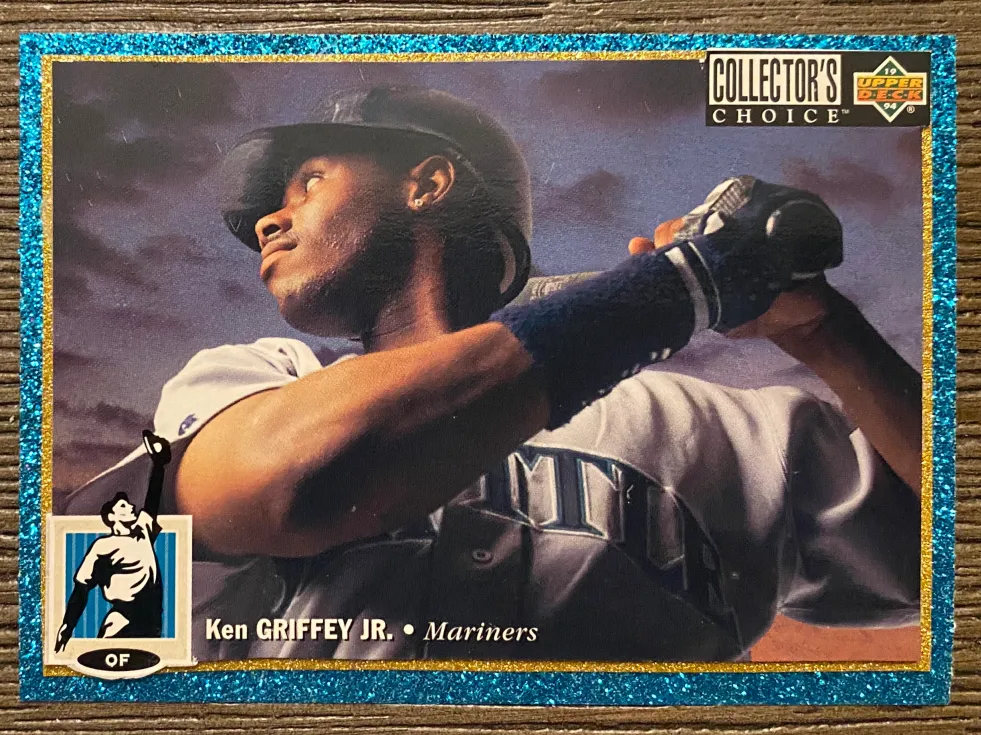
Ken Griffey, Jr.
18 Heavy J Studios card appearances, 6th most of any subject.
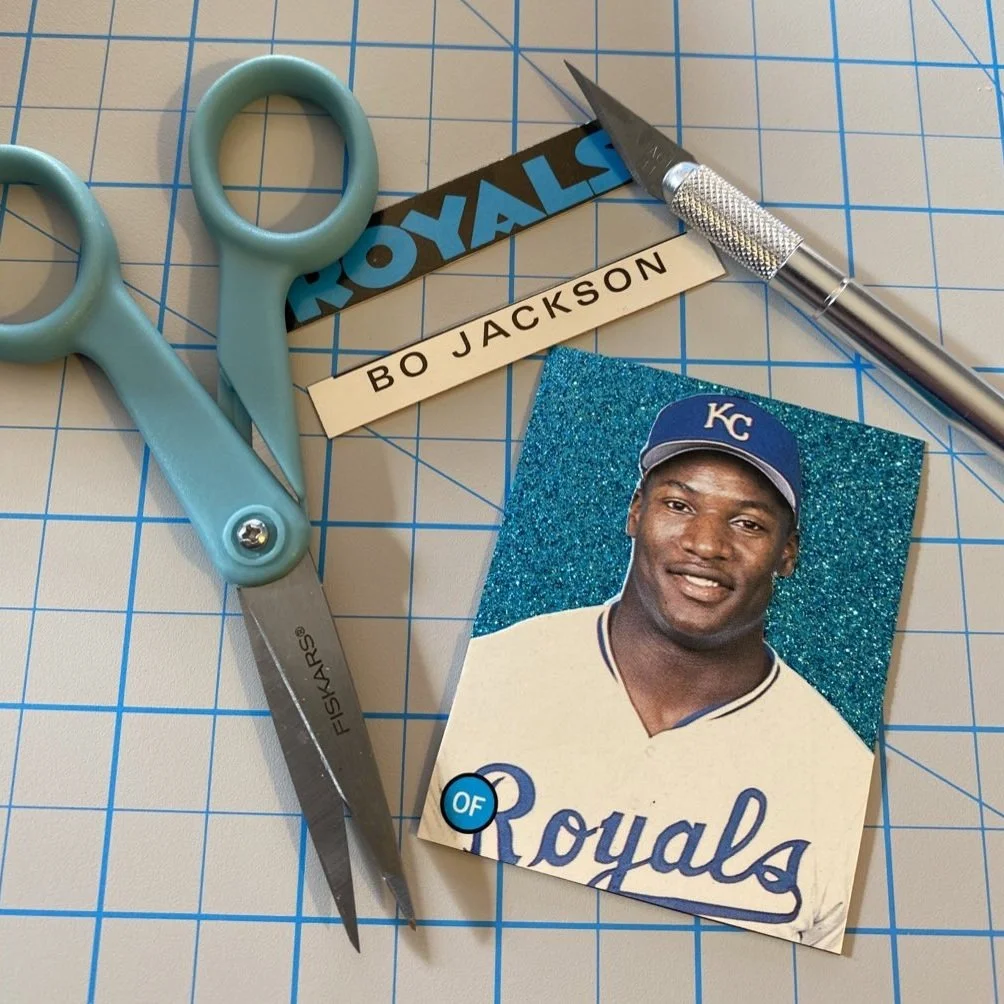
Bo Jackson
20 Heavy J Studios card appearances, tied for 4th most of any subject.
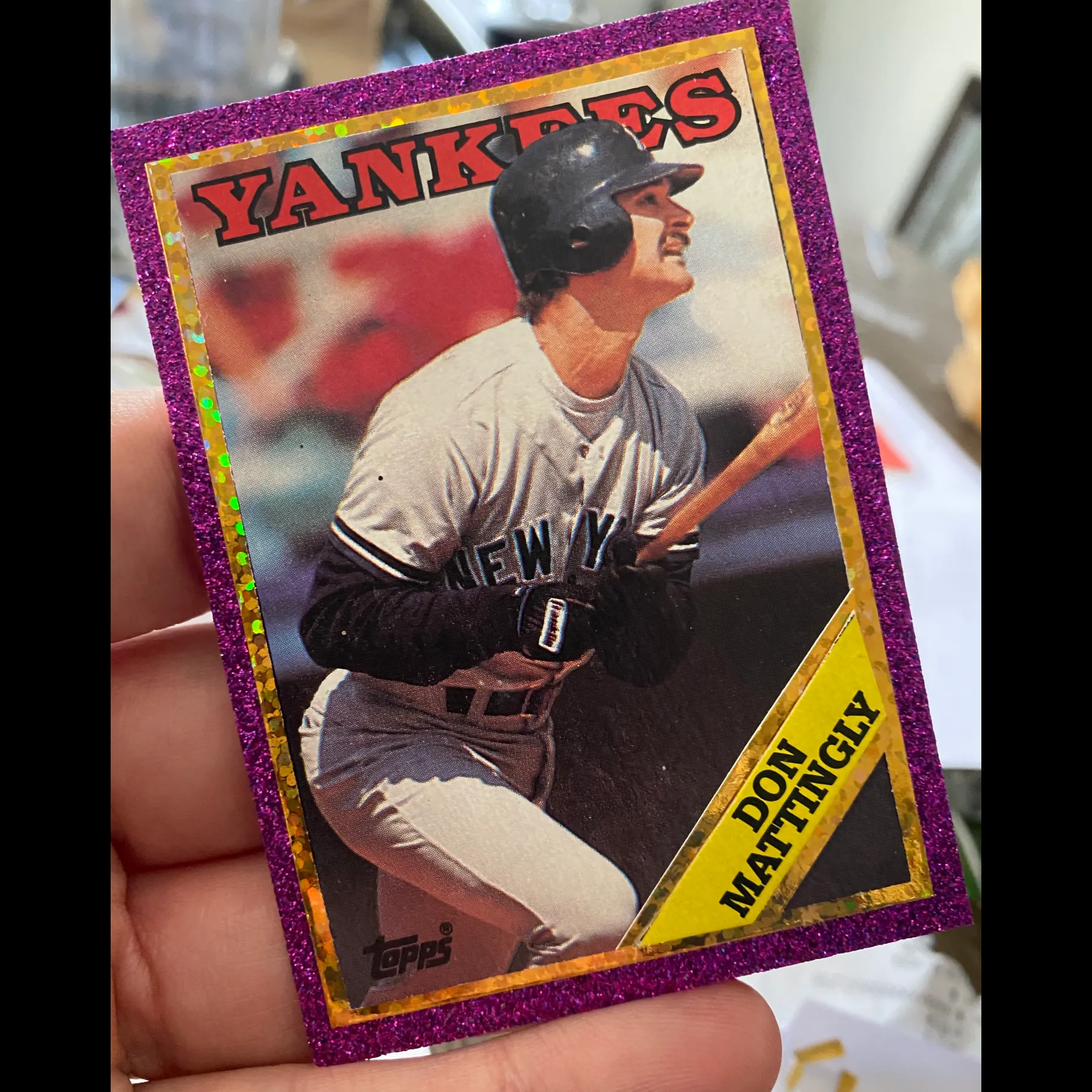
Don Mattingly
20 Heavy J Studios card appearances, tied for 4th most of any subject.
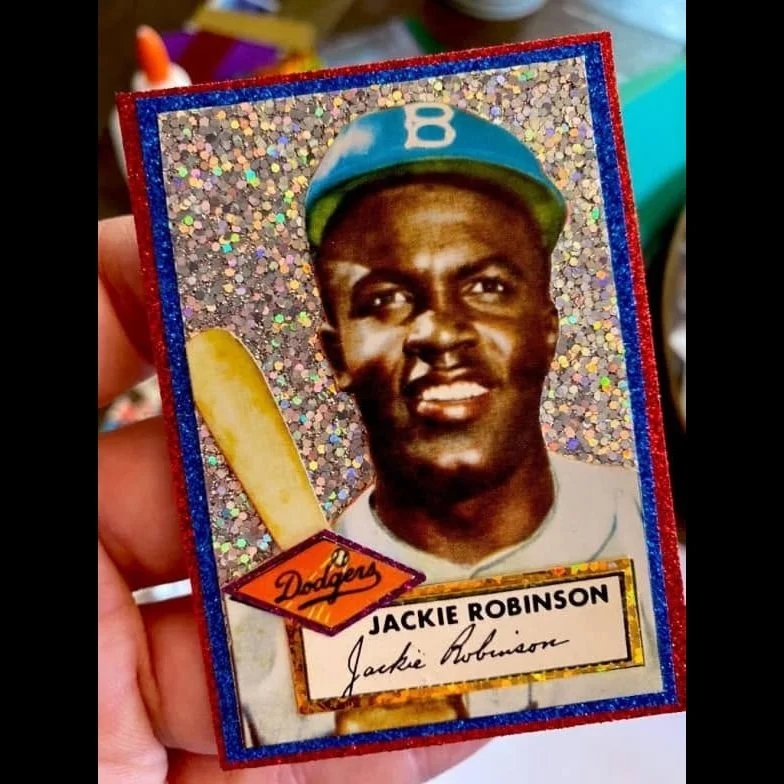
Jackie Robinson
21 Heavy J Studios card appearances, 3rd most of any subject.
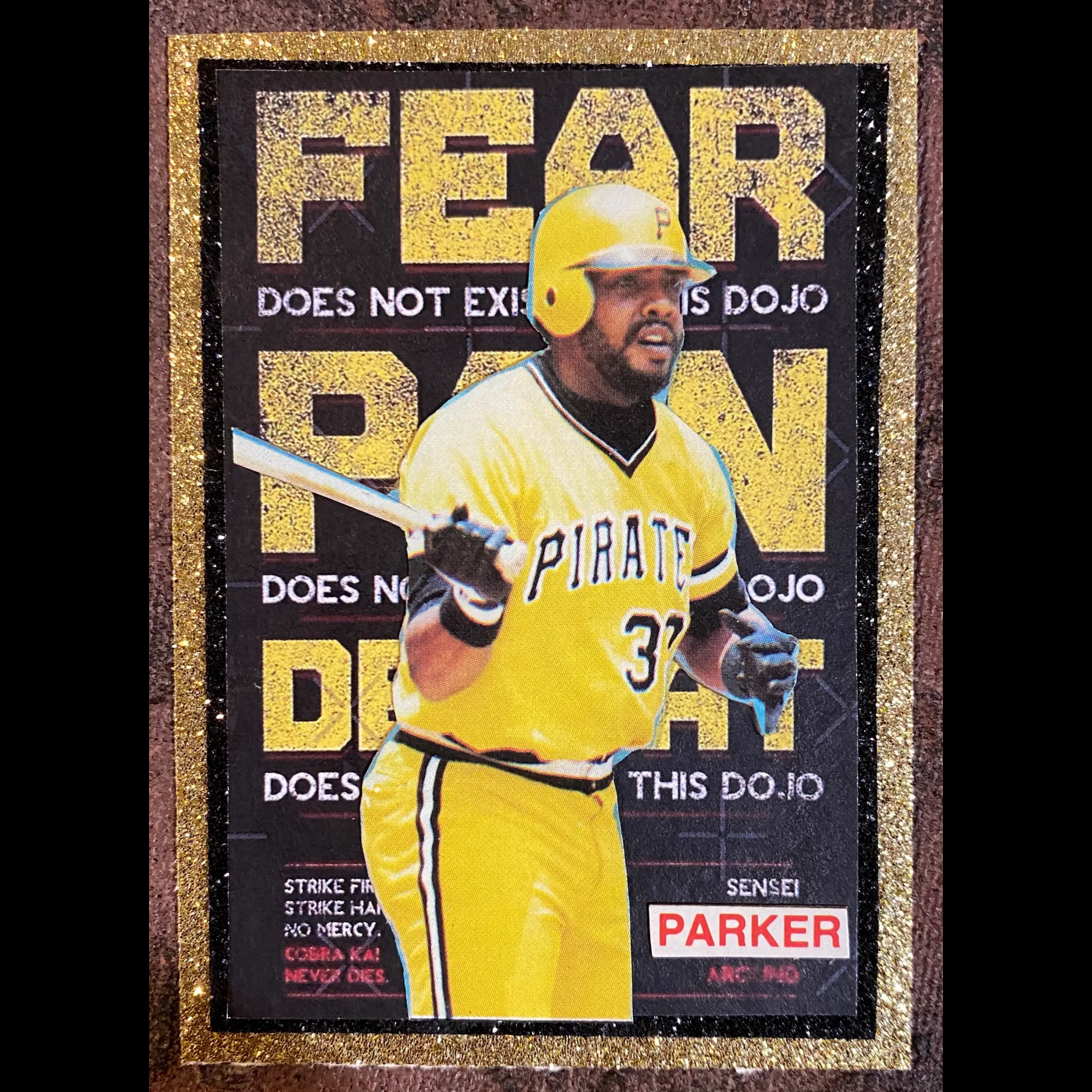
Dave Parker
26 Heavy J Studios card appearances, 2nd most of any subject.
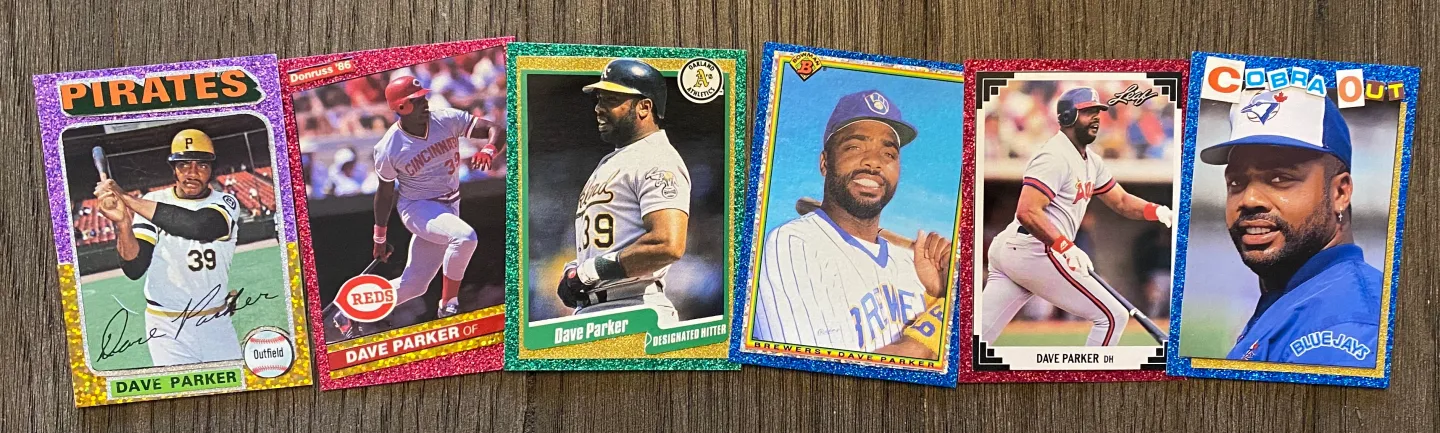
Even with 26 appearances, Dave Parker is a long way away from the top spot…
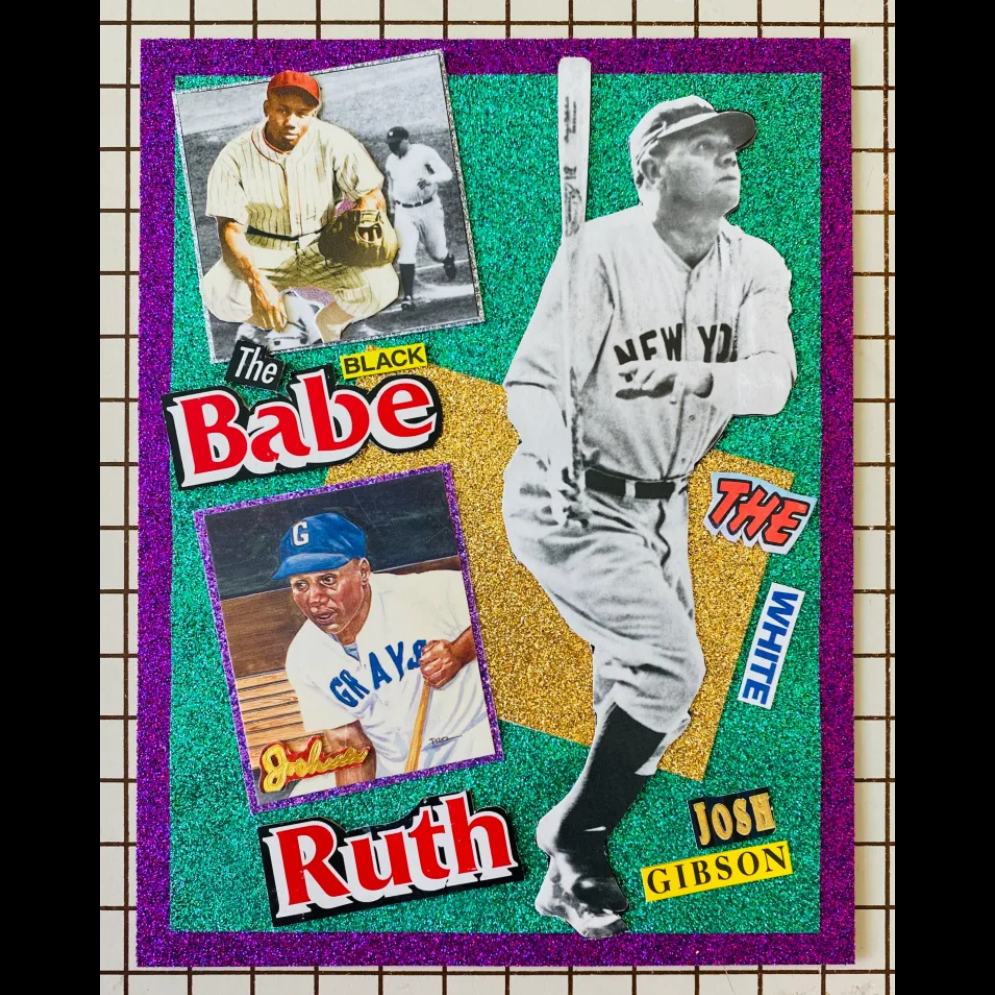
The Top Spot
Since you are reading these words right now, I can assume that you’ve scrolled through the liner notes of the whole episode up until this point.
If you did, then of course you would be able to guess that Josh Gibson is the subject who appeared on the most Heavy J Studios cards.
He was on 72 of them, to be exact.
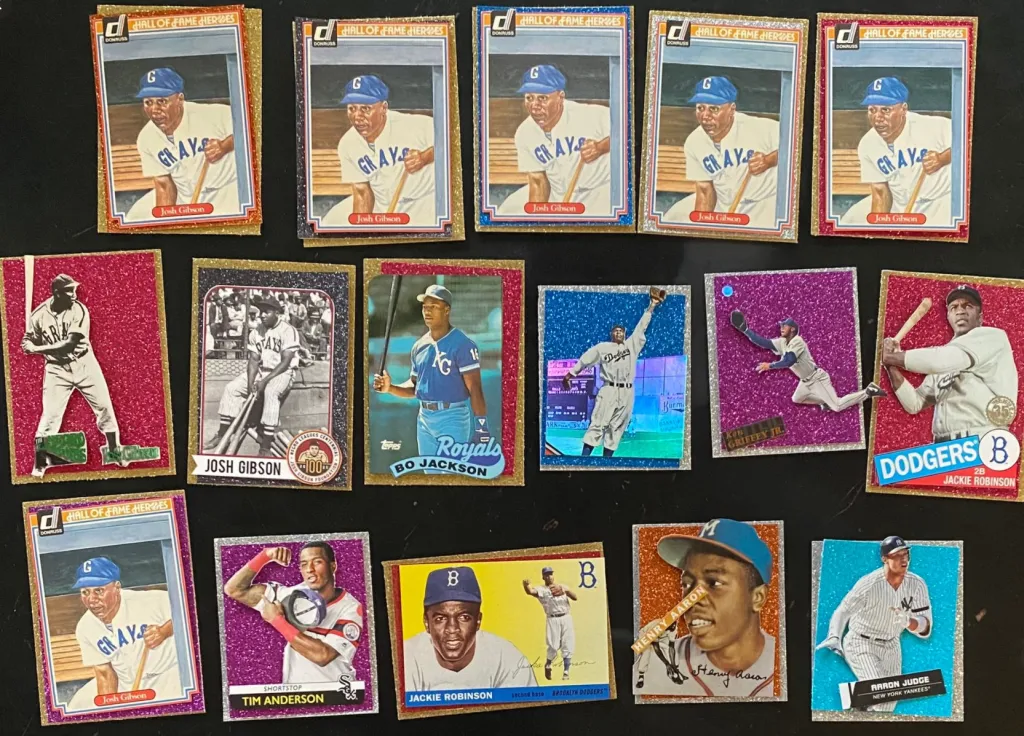
For what it’s worth, not one of those 72 cards Jason used to produce a Josh Gibson Heavy J Studios creation was his rookie card. However you want to define it.
Until Next Time…
I’m Dan Wallach, and this is My Baseball History.
Many of the photos used in these liner notes are courtesy of Heavy J Studios and/or the collection of Jason Schwartz. We can’t thank him enough for his generosity in making this episode and the accompanying liner notes happen.