
0503 - Phil Rosenzweig
Phil Rosenzweig is an award-winning author and one of the world’s foremost experts on the T202 Hassan Triplefolder baseball card set. During our conversation, he referenced a handful of things and people upon which you may want to do more research. Consider this page to be your “liner notes” for the episode so you can follow along.

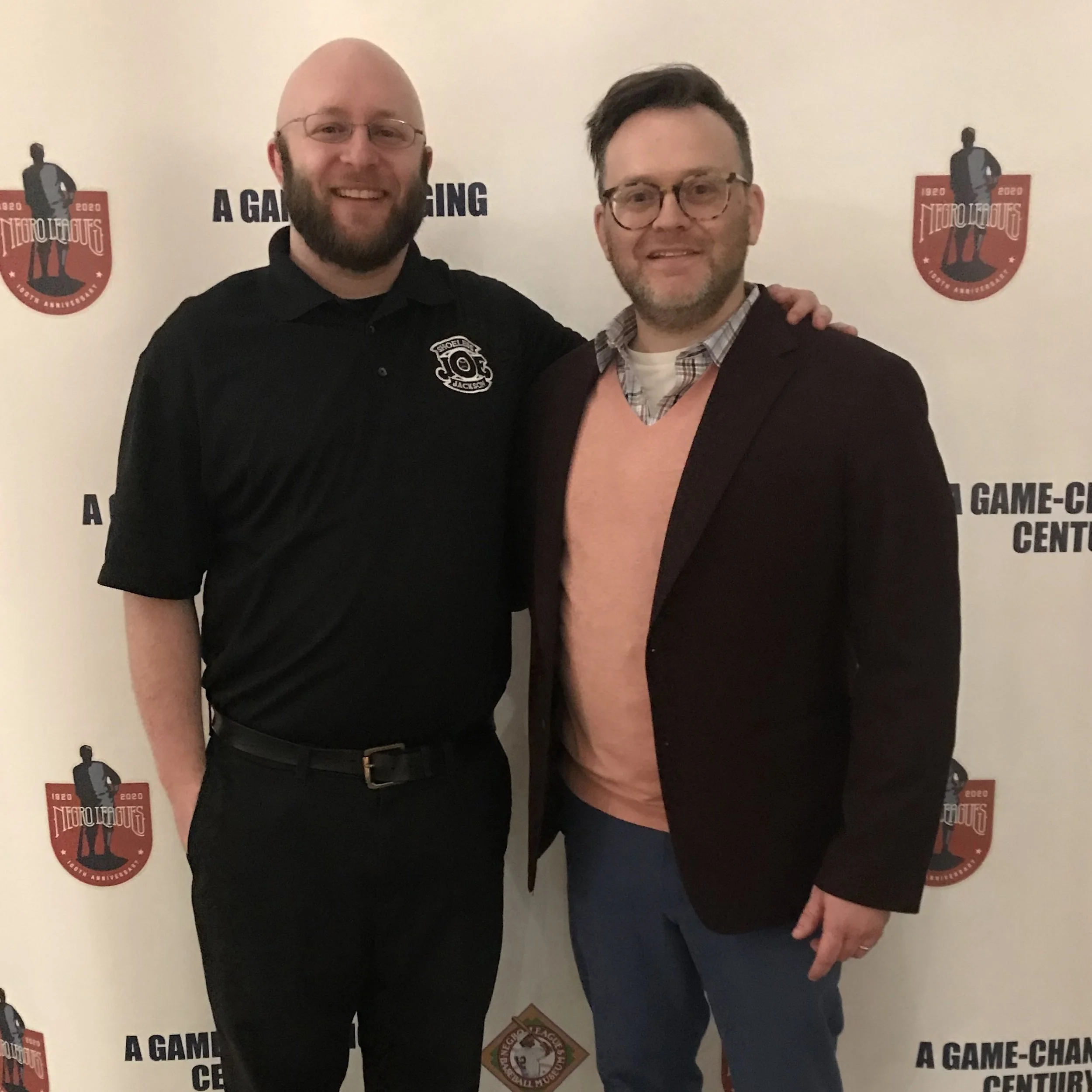
Me and Phil Rosenzweig after recording our interview in Narragansett, Rhode Island.

Phil Rosenzweig
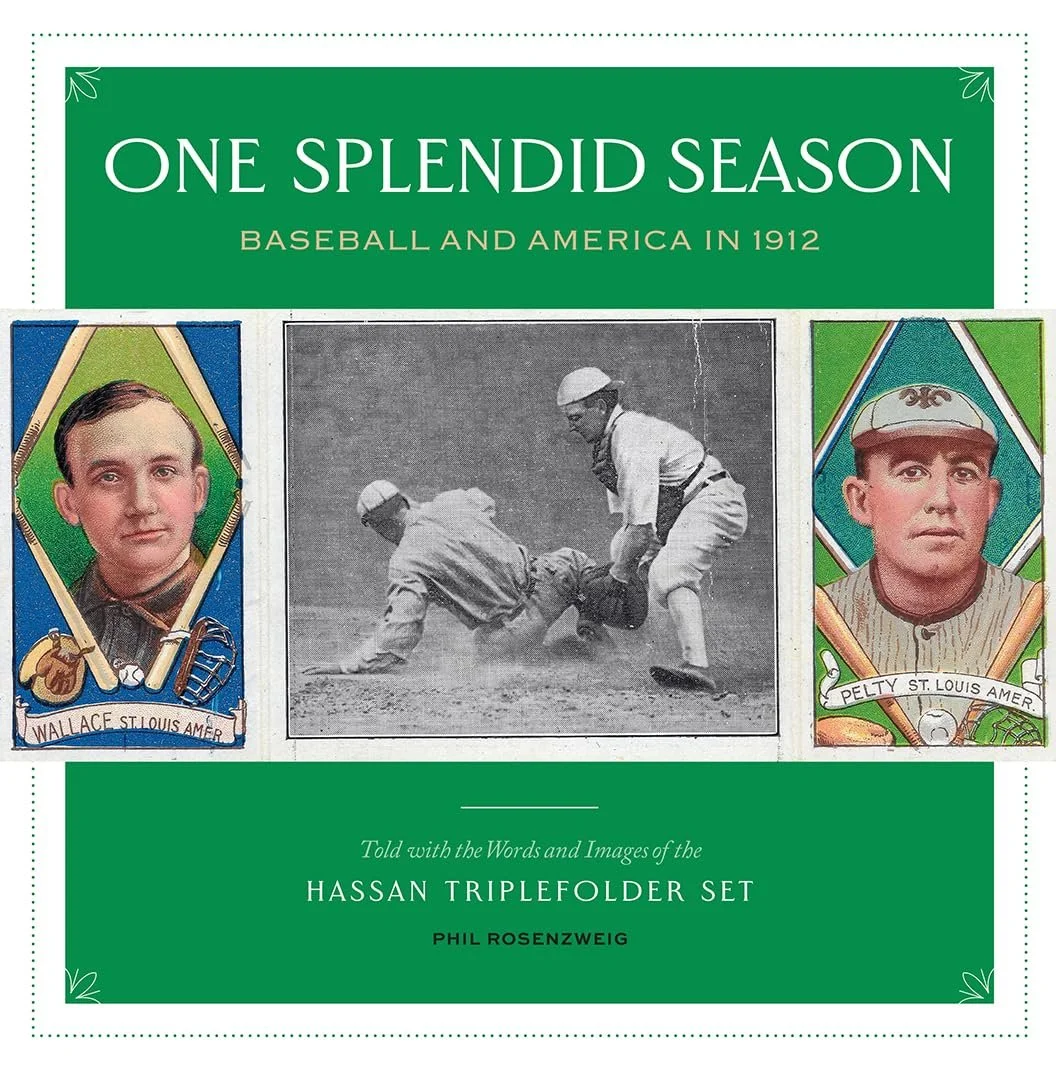
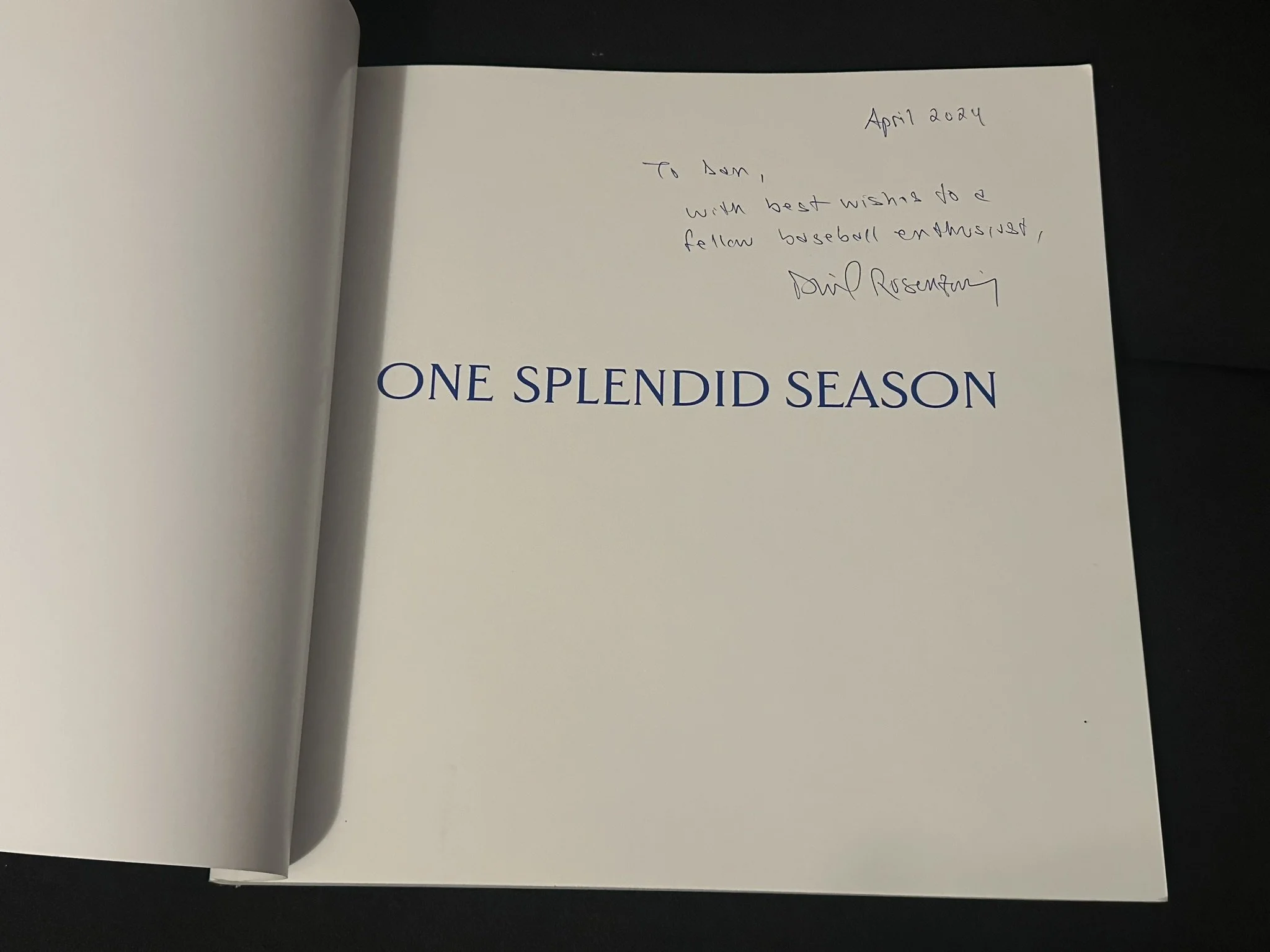
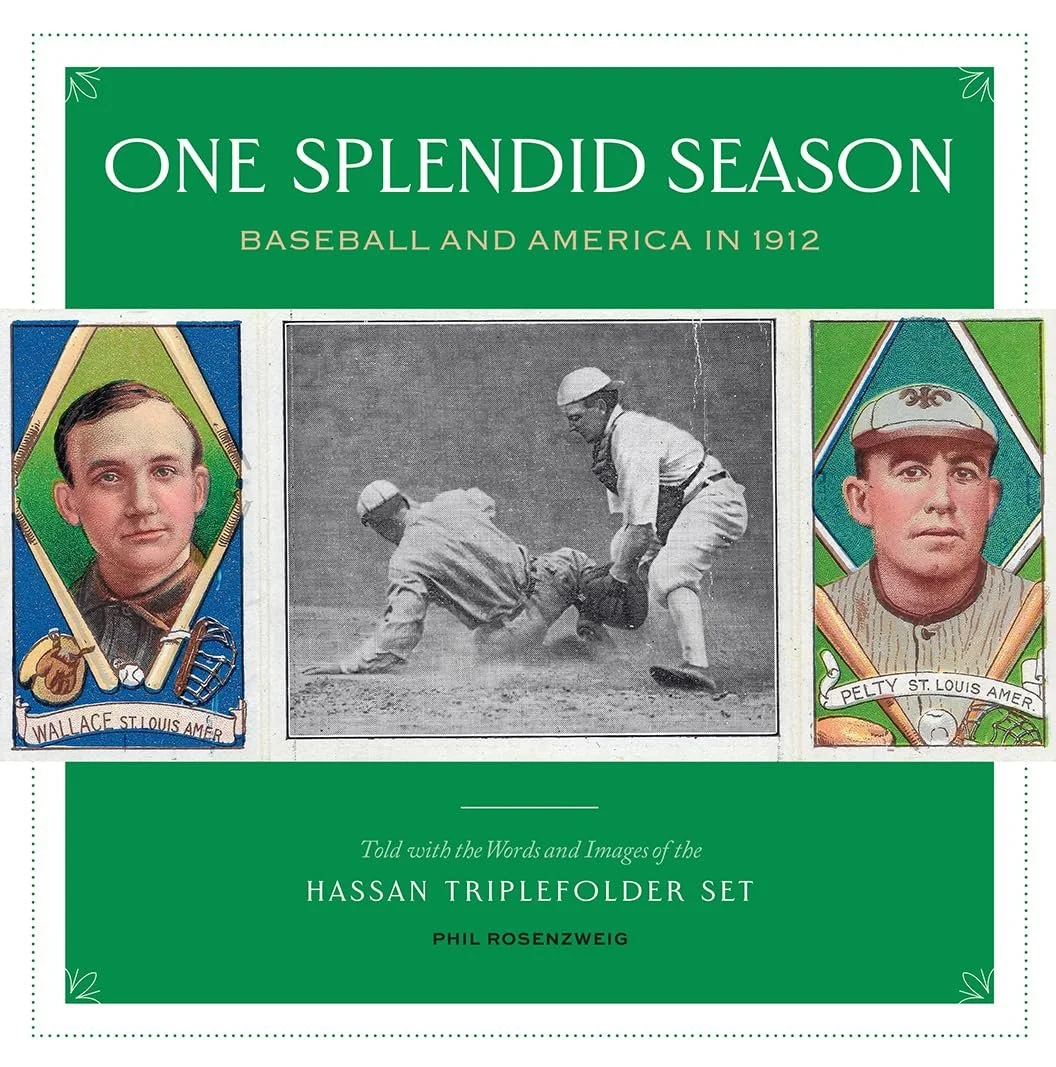
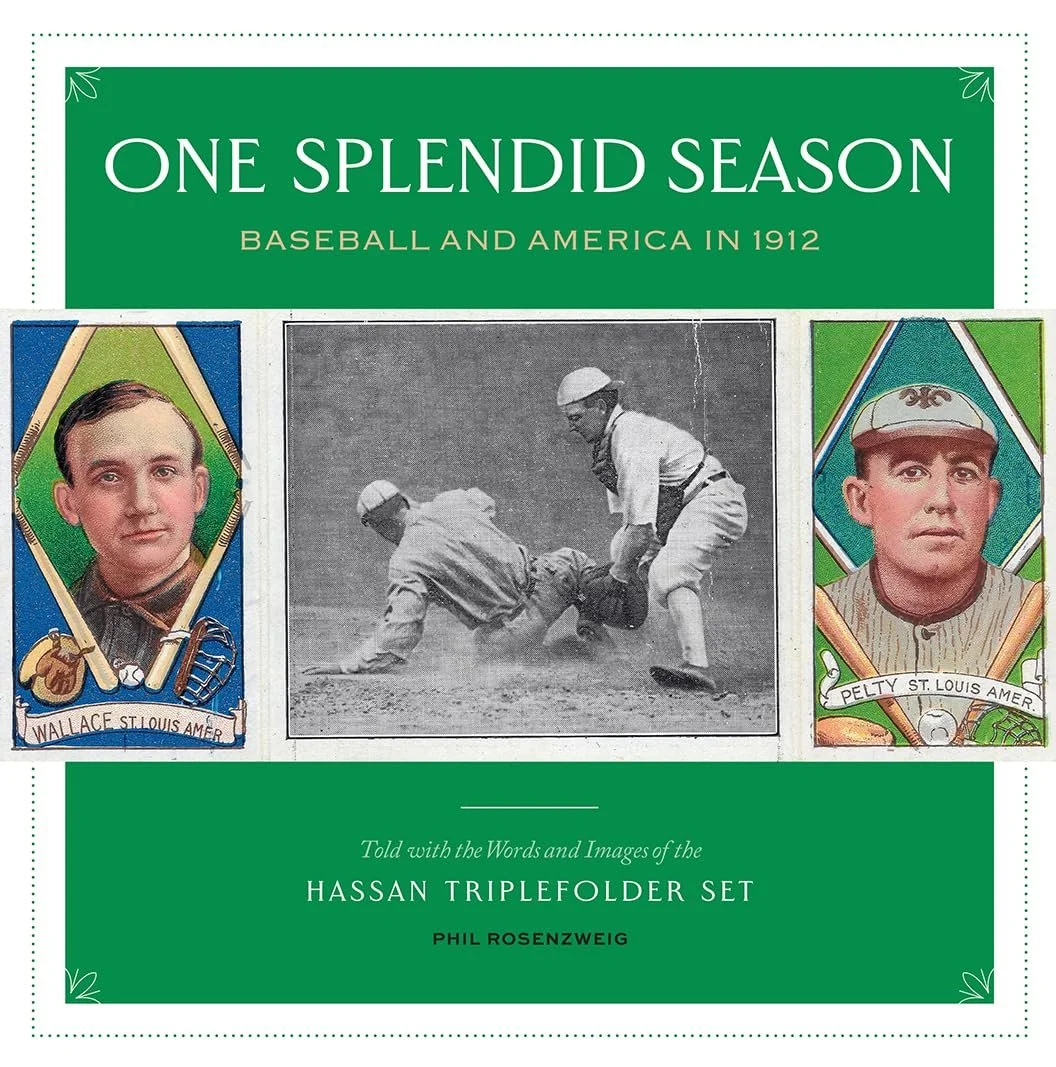
Phil Rosenzweig is the author of One Splendid Season: Baseball and America in 1912, Told with the Words and Images of the Hassan Triplefolder Set.

CASEY Award
Phil’s book is one of the ten finalists for the 2025 Casey Award, which is an annual literary award that has been given to the best baseball book of the year since 1983 and is considered to be the most prestigious award that can be given to a baseball book.
Check out the incredible list of past Casey Award nominees and winners HERE.
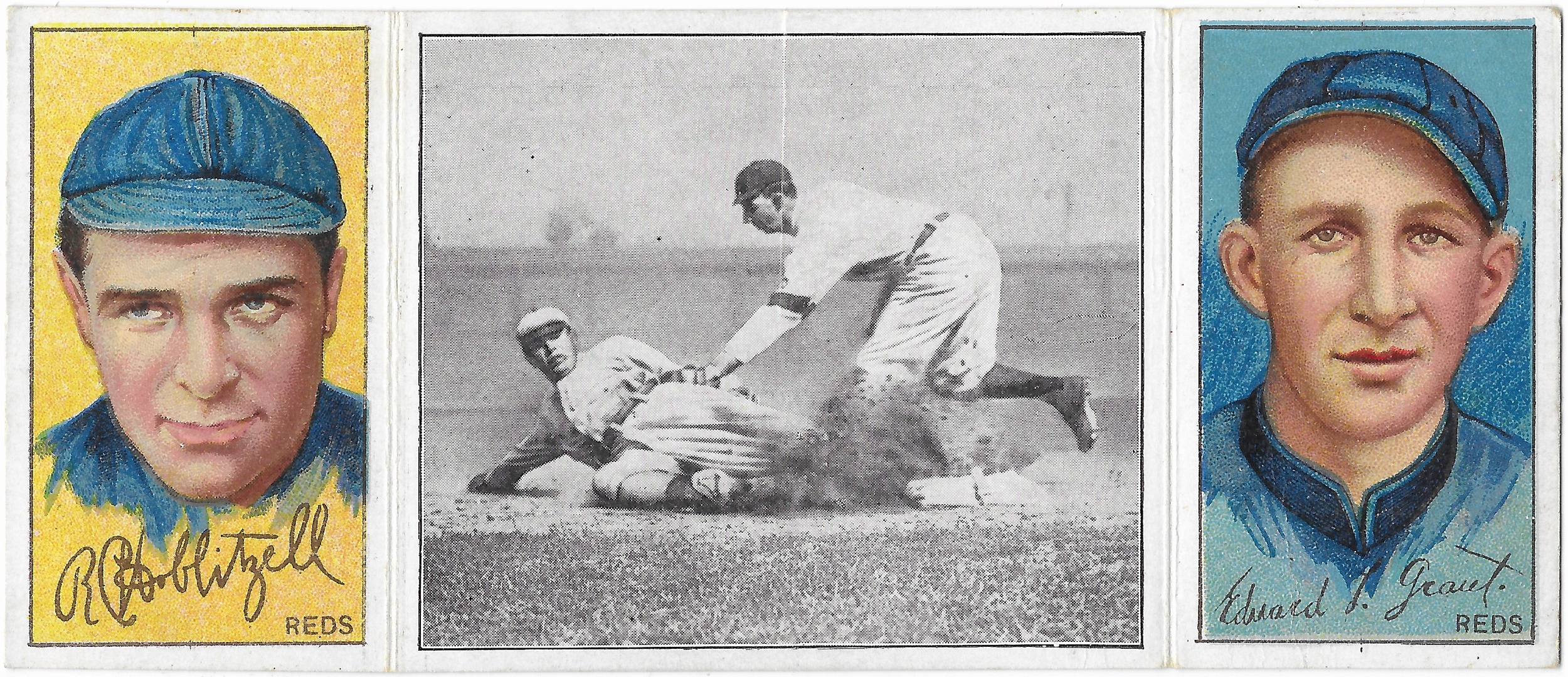
In 1912, the American Tobacco Company designed an innovative set that combined the end panels from the 1911 T205 set, with white borders instead of gold, and a center panel consisting of a black and white photograph.
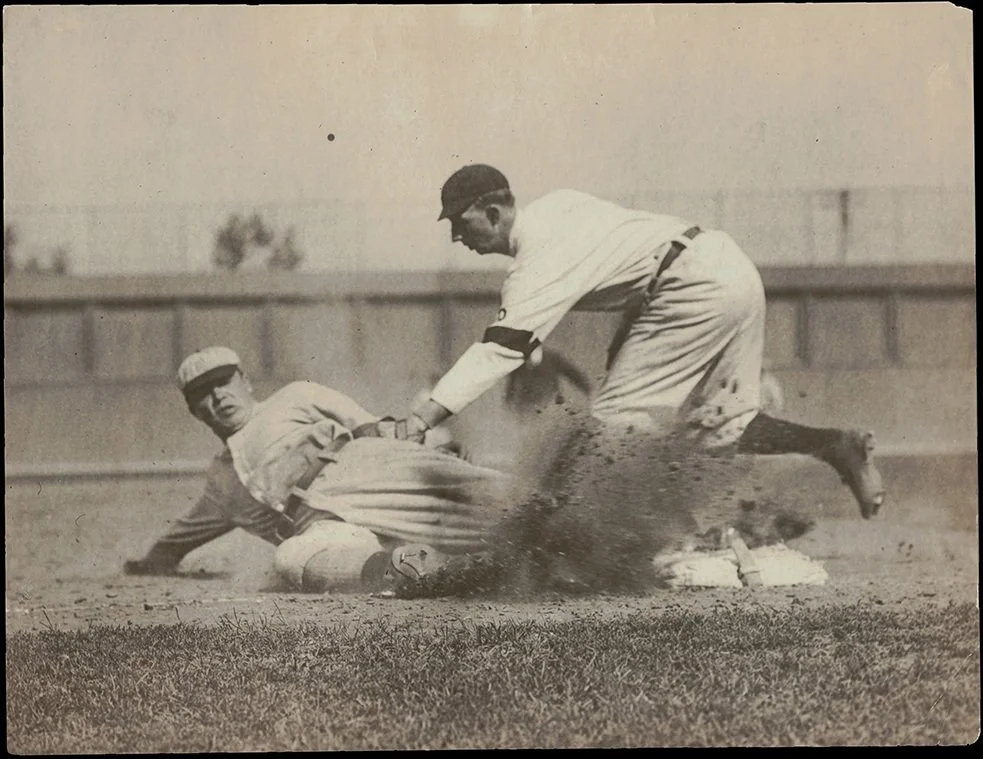
Fast-Shutter Photography
The center panels of the T202 set are the first examples of fast-shutter photography ever used as the images on baseball cards.
This photo, depicting Reds infielder Eddie Grant tagging out a runner at third, was used on card 40 in the set, which is pictured above.
One Splendid Season
One Splendid Season tells the story of the 1912 Major League Baseball season through the words and images of the Hassan Triplefolder tobacco card set. It offers a rich portrait of baseball and its place in American society in the Deadball Era, with photographs, postcards, and other memorabilia.
Buy it HERE directly from Phil.
Buy it HERE from Amazon.
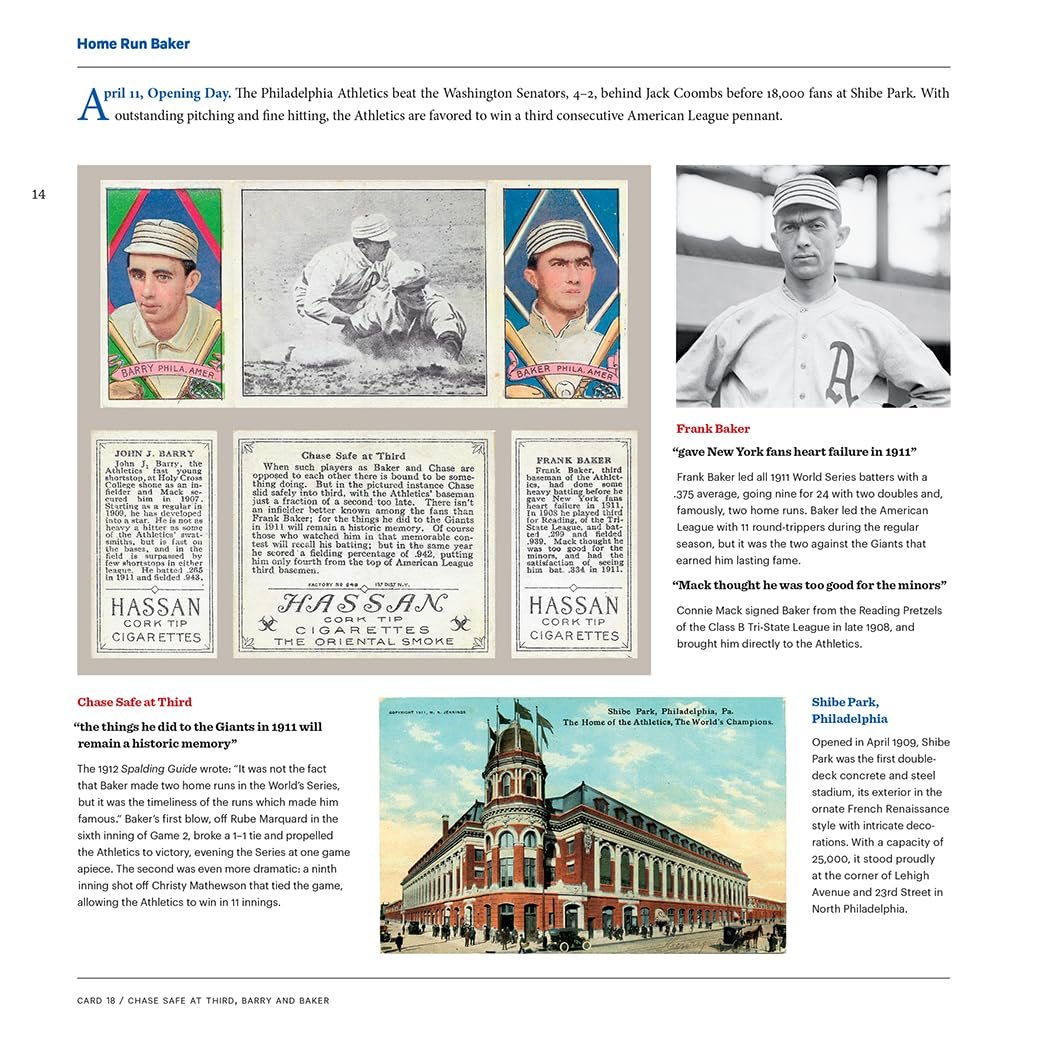
Every Panel is Presented
Every panel from the T202 set is presented in the book with a high-resolution scan, in vibrant color and outstanding detail, in its actual size.

14 Languages
Phil Rosenzweig was born and raised in Northern California. He is professor emeritus of business administration at the International Institute for Management Development in Lausanne, Switzerland, and is the author of numerous other books which have been translated into fourteen languages.

Phil Rosenzweig
For over 35 years now, Phil has been active as a teacher, researcher, and writer. He received his PhD from the Wharton School at the University of Pennsylvania in 1990. From 1990 to 1996, Phil was assistant professor at Harvard Business School in Boston.
From 1996 to 2021, Phil was a professor at IMD in Switzerland, which is one of the world’s leading business schools. While at IMD, Phil directed programs with many leading companies and led the EMBA for six years.
Prior to his career in academia, Phil got his BA in economics from UC Santa Barbara, an MBA from UCLA, and worked with Hewlett-Packard in California.
Today, Phil lives in the United Kingdom, which made scheduling this interview kind of tricky.
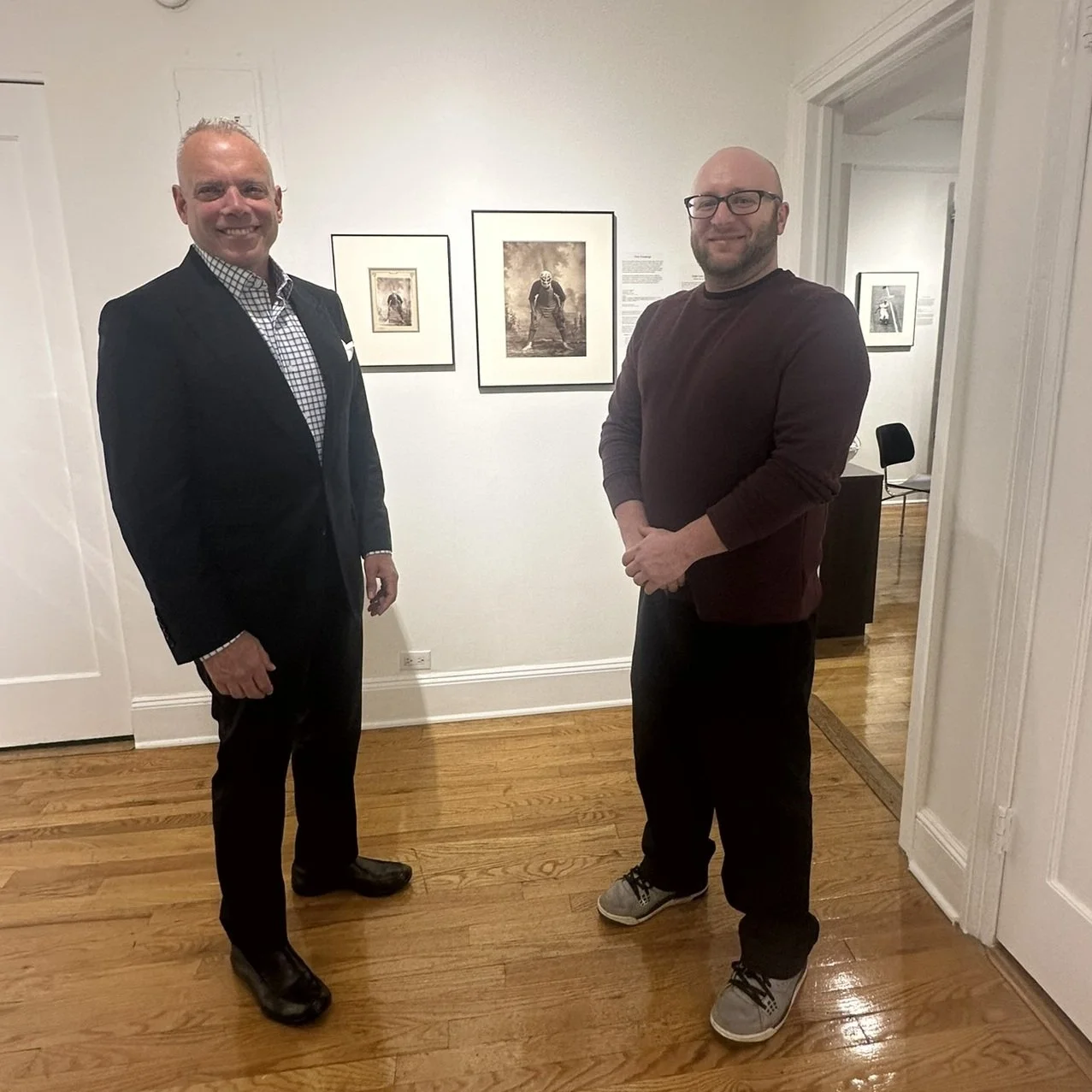
April 15, 2024
Phil and I met on April 15th, 2024, at Gitterman Gallery in New York City for the grand opening of Paul Reiferson’s incredible exhibition, Jackie Robinson and the Color Line.
Paul is a photography connoisseur who spent decades amassing the most complete Charles Conlon collection ever privately assembled.
He was our guest for Episode 5 of Season 3. You can listen to that episode HERE.
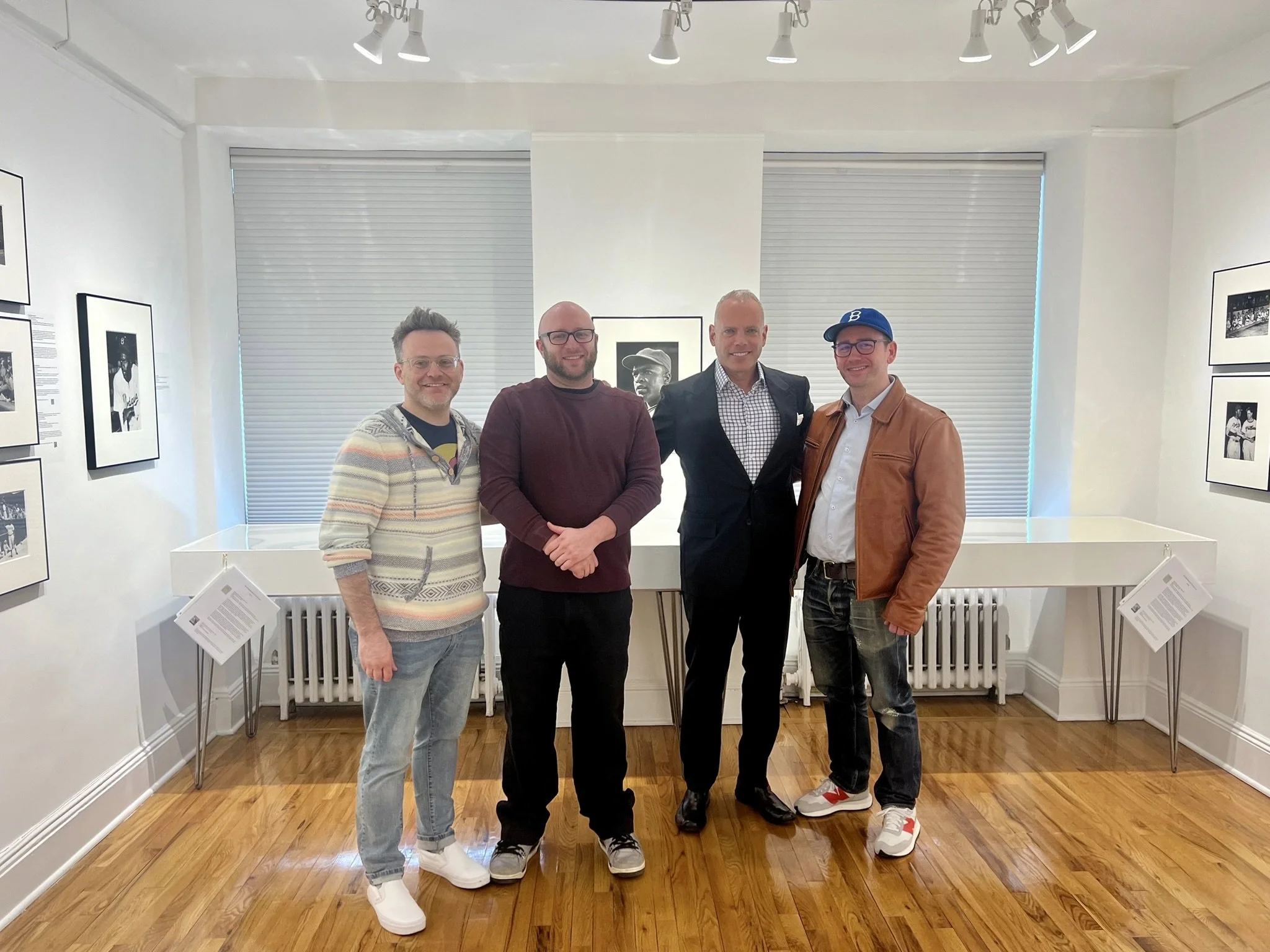
MBH Record-Setting Gathering
To the best of my knowledge, the crowd of people in the room that day is now officially the largest gathering of My Baseball History guests ever assembled in one place, with (from left to right) Graig Kreindler, myself, Paul Reiferson, William Peebles, and (not pictured) Phil Rosenzweig all in attendance.
Graig Kreindler
Graig Kreindler is a renowned baseball artist, historian, and researcher.
He was our guest for Episode 3 of Season 1. You can listen to that episode HERE.
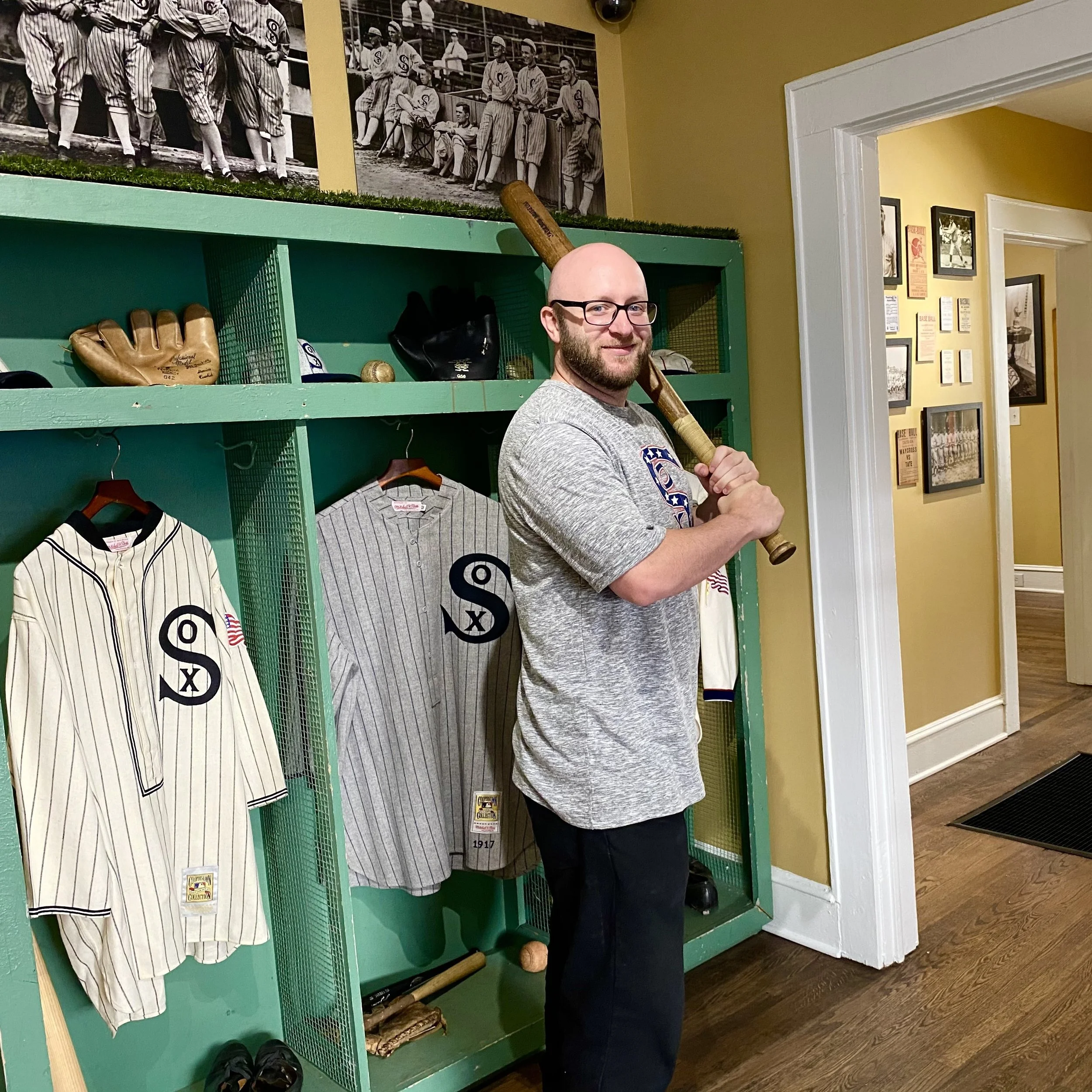
Dan Wallach
I am the host, writer, and producer of My Baseball History, and the former Executive Director of the Shoeless Joe Jackson Museum and Baseball Library in Greenville, South Carolina.
I was the subject of Episode 1 of Season 1. You can listen to that episode HERE.
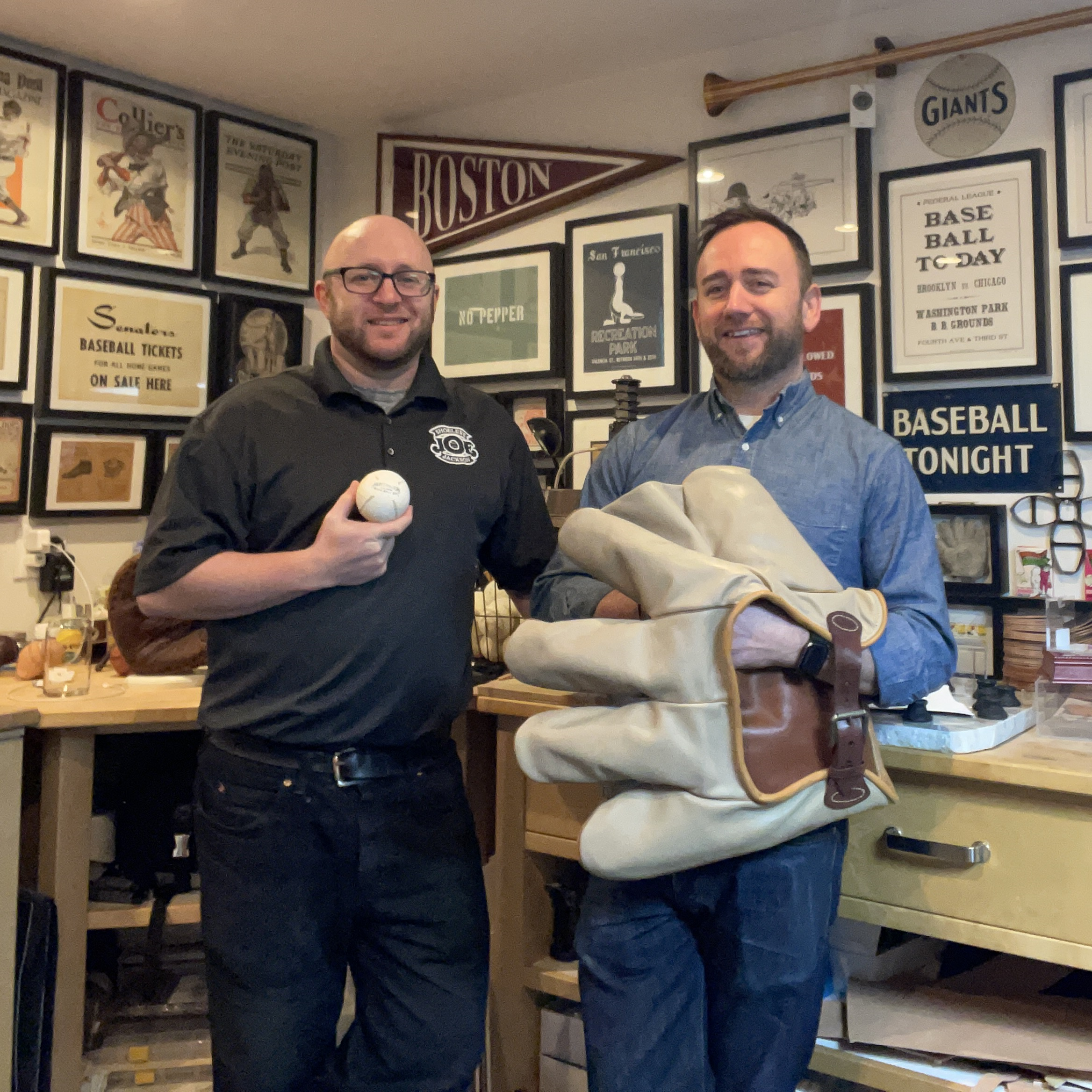
Paperback Writer
Phil’s love for photography was evident when we met each other at Gitterman Gallery for Paul’s exhibition opening, as was his love of baseball and history. Naturally, we hit it off.
When Phil got back to the UK, he sent me a copy of the paperback version of his book, which I fell in love with. I asked if he would be down to come on the podcast, with the caveat being that we would have to record the interview in person. He said yes, but then it took about a year for our schedules to line up.

In October of 2025, I planned a trip to meet Phil in Rhode Island so we could finally sit down for our interview. We were right on the Atlantic, and spent a great day together. We recorded our interview in the afternoon (in the building on the left of this photo), then had dinner and came back to watch some playoff baseball.

1962 World Series
Bobby Richardson is a Yankees legend who played 2B for the team from 1955-1966. He caught the final ball hit by Willie McCovey in the bottom of the 9th inning during Game 7 to clinch the 1962 World Series for the Yankees. Had Richardson not made the play, the hit by McCovey most likely would have scored two runs, which would have won the game and the Series for the Giants, instead.
Bobby Richardson was our guest for Episode 5 of Season 2. You can listen to that episode HERE.
Phil’s First Cards
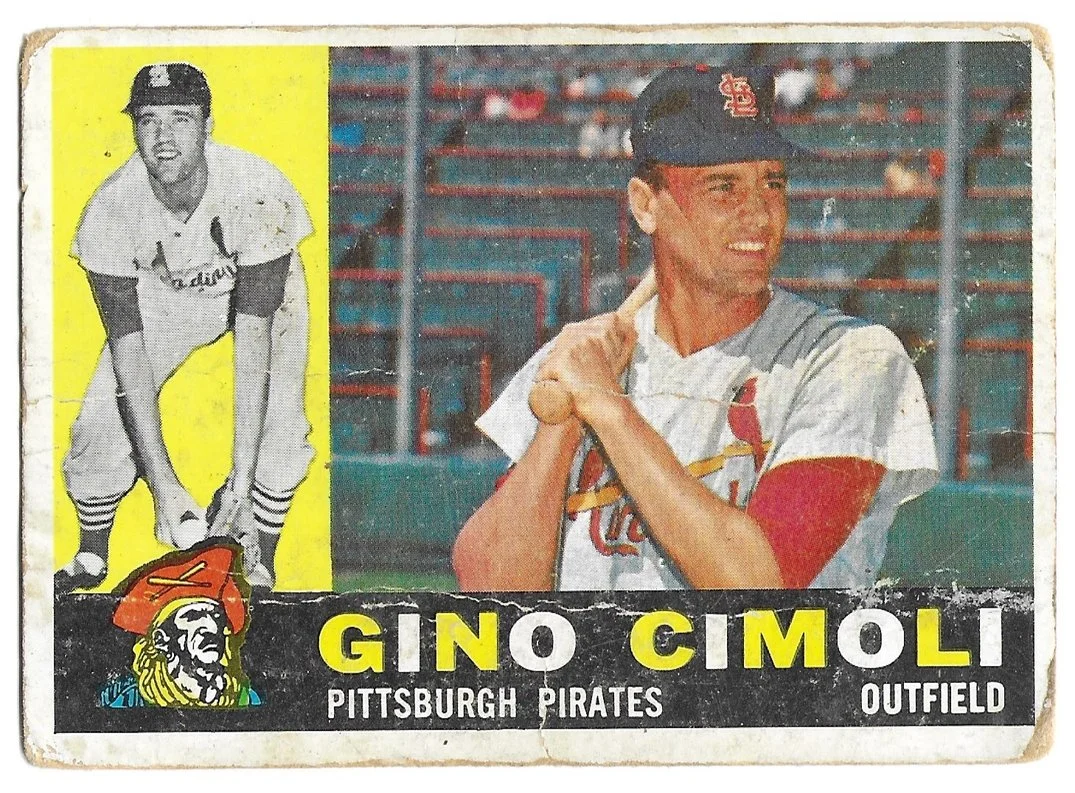
Phil’s dad bought him a pack of 1960 Topps baseball cards when Phil was 5 years old. This card of Pittsburgh Pirates outfielder Gino Cimoli, which depicts him wearing a Cardinals uniform since he played in St. Louis during the 1959 season, was one of the first Phil ever owned. He still has it, to this day.
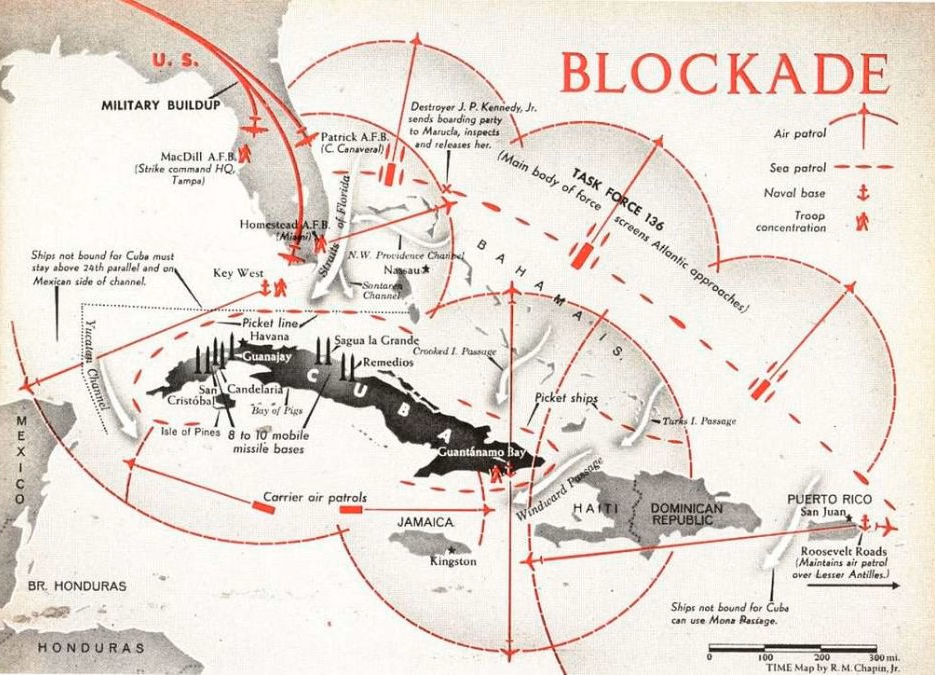
Cuban Missile Crisis
The Cuban Missile Crisis was a 13-day confrontation between the governments of the United States and the Soviet Union, when American deployments of nuclear missiles in the United Kingdom, Italy and Turkey were matched by Soviet deployments of nuclear missiles in Cuba.
The crisis began on October 16, 1962, the same day as Game 7 of the 1962 World Series, and lasted until October 28. The confrontation is widely considered the closest the Cold War came to escalating into full-scale nuclear war.
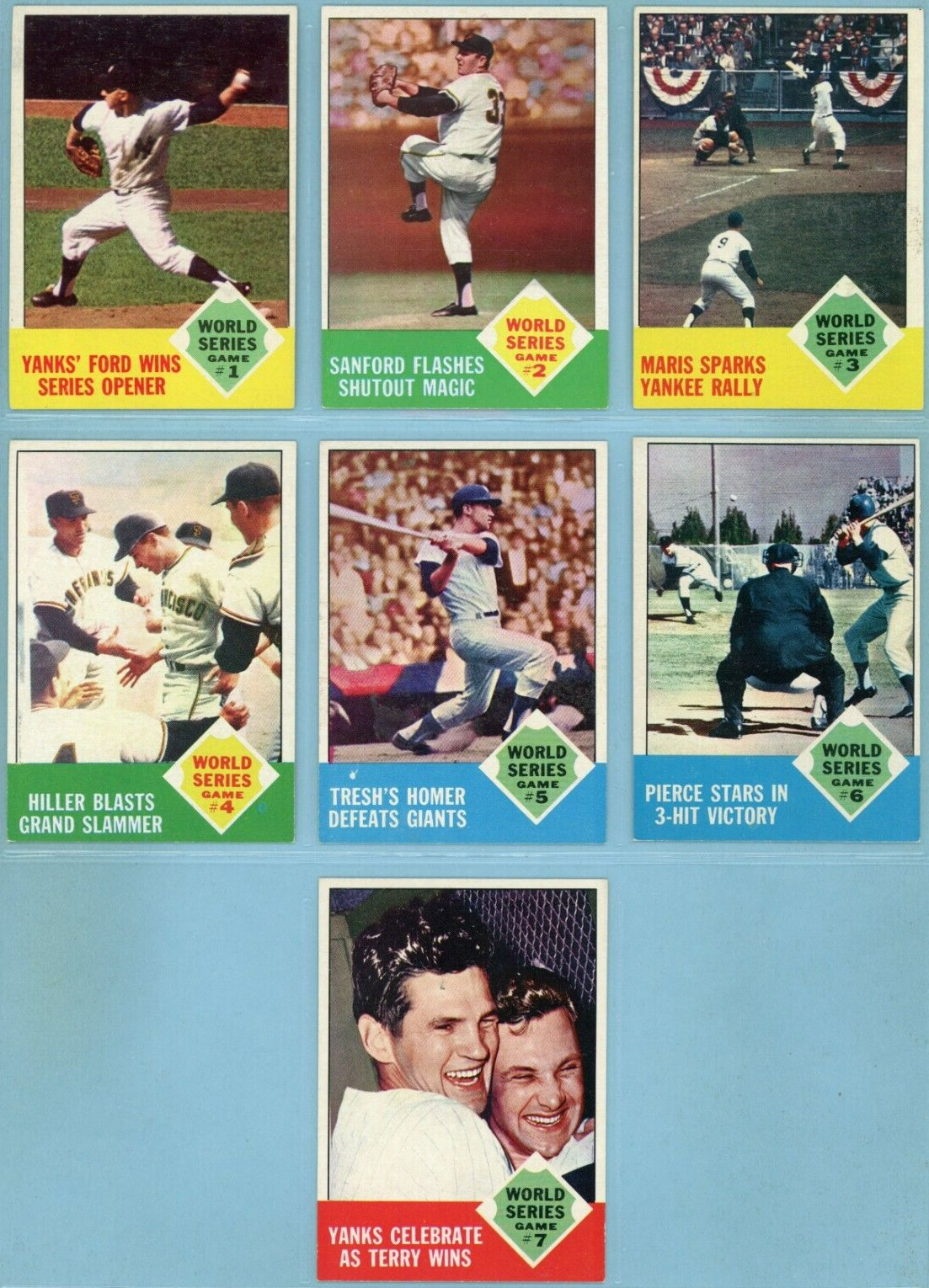
1963 Topps Baseball Cards
The 1963 Topps set had a 7-card subset dedicated to the games of the 1962 World Series.
Phil remembers collecting them all, and noticing that the Yankees had won Games 1, 3, 5, and 7 of the 1962 World Series, while the Giants had won Games 2, 4, and 6.
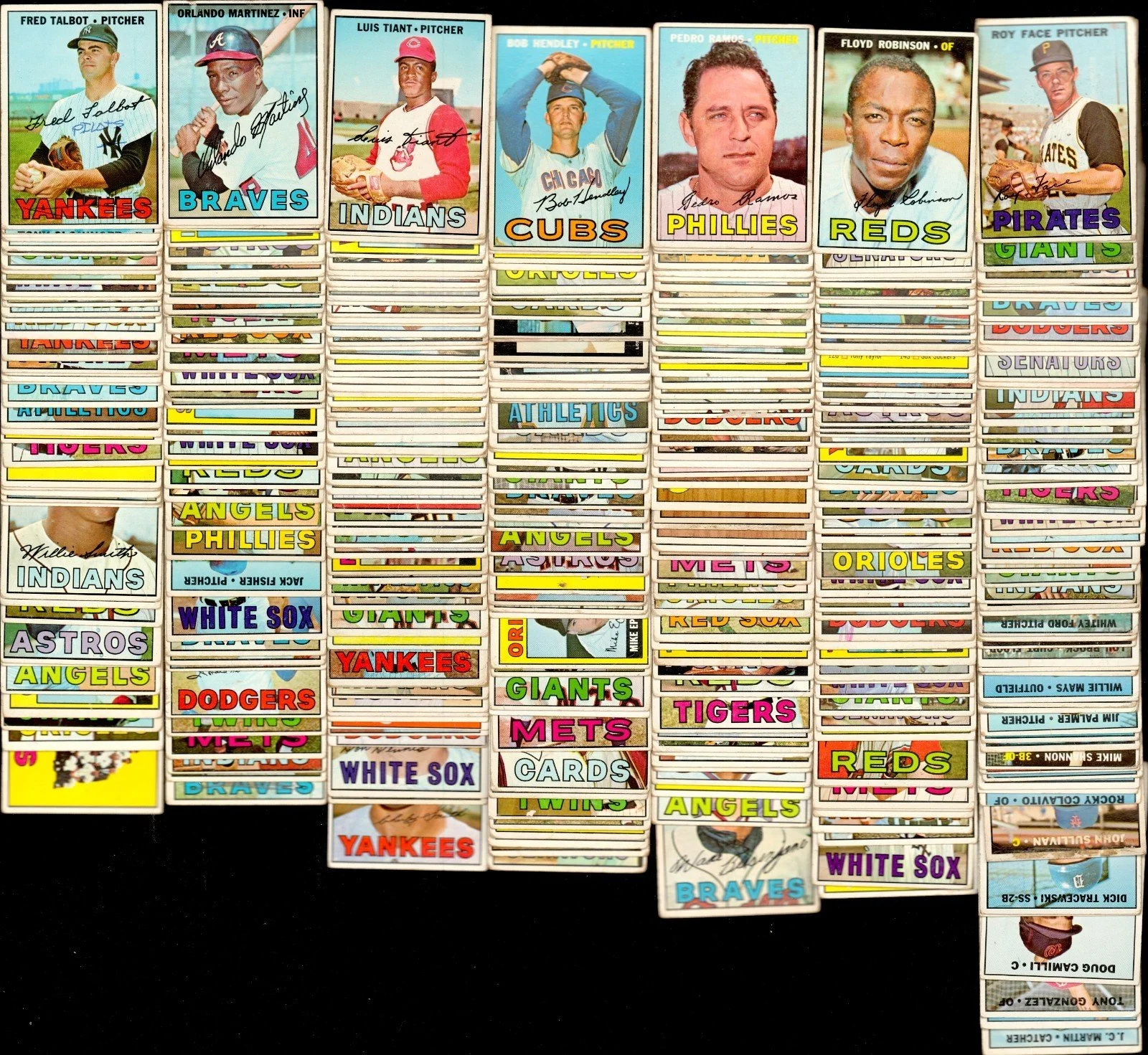
1967 Topps Complete Set
After one of his classmates mentioned that he was going to buy the complete set of 1967 Topps cards, instead of trying to piece it together by buying pack after pack after pack, Phil convinced his dad to let him do the same.
The $14.95 price tag was paid off with 25 cents a week of Phil’s allowance, but he still has the cards, which are significantly more valuable than $14.95 today. All in all, it was a very wise decision.
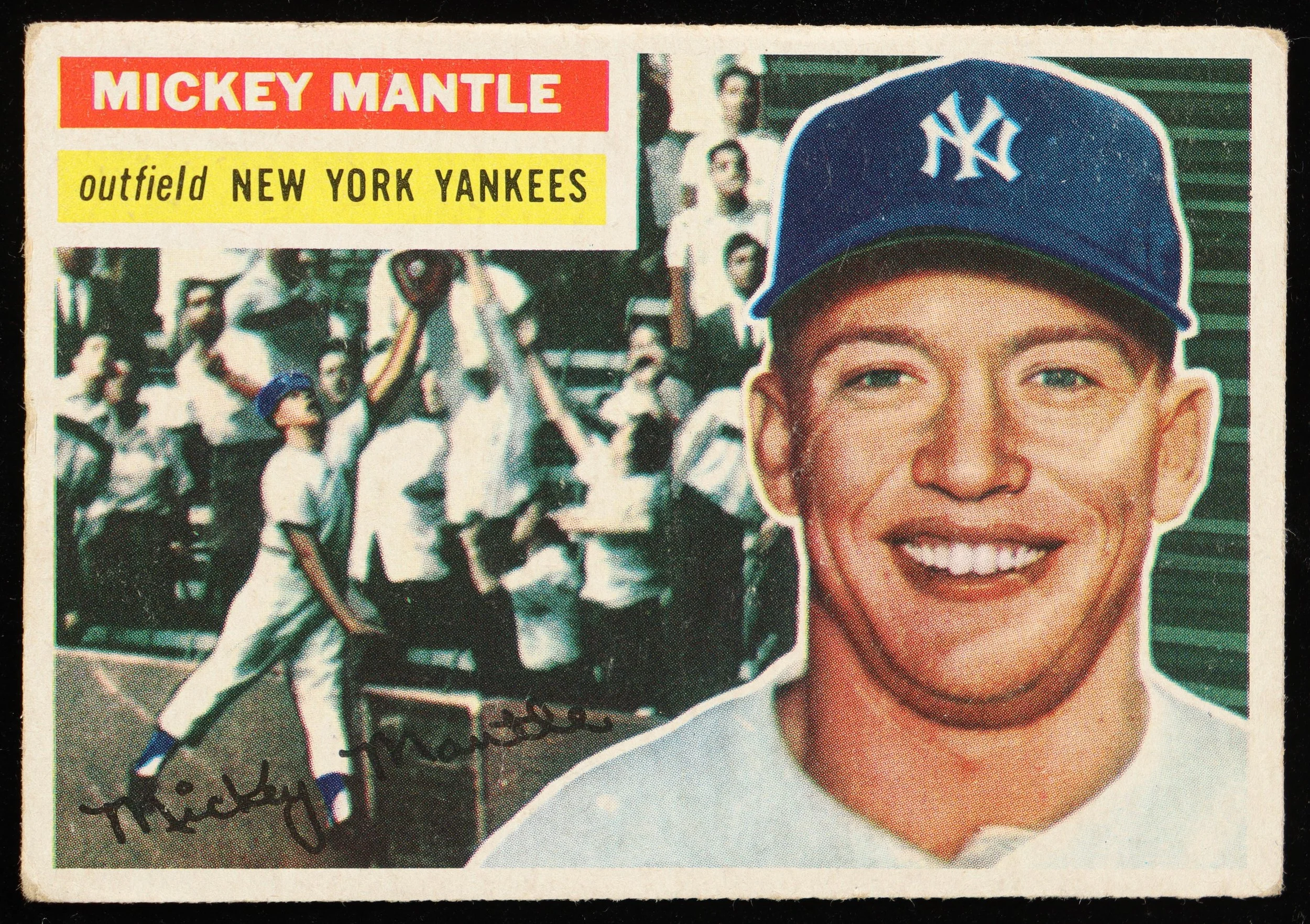
What Is A Vintage Card?
When Phil was 7 years old in 1962, this 1956 Topps set felt “vintage” to him.
New York Giants
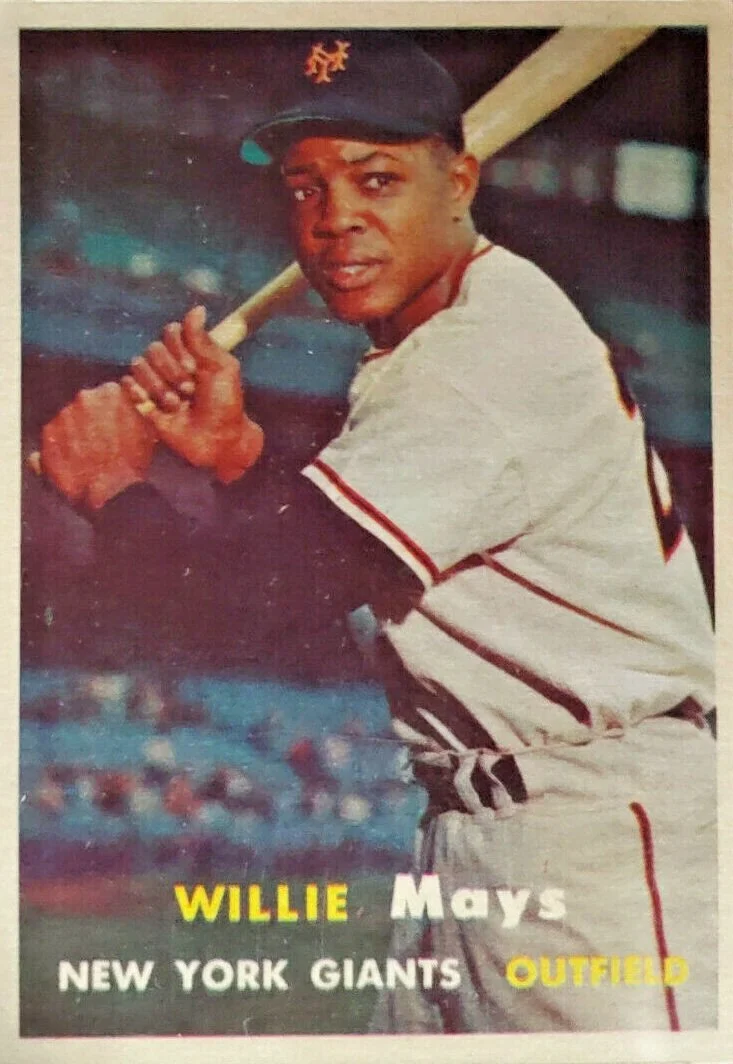
Even this 1957 Topps card, featuring Willie Mays of the … New York Giants??? … felt archaic to Phil, who had only grown up knowing them as the San Francisco Giants.
Little did Phil know at the time, but the Giants played in New York from 1885 to 1957 before moving to San Francisco to begin play in the 1958 season.
Tobacco Cards
Tobacco cards are trading cards issued by tobacco manufacturers to stiffen cigarette packaging and advertise cigarette brands.
Between 1875 and the 1940s, cigarette companies often included collectible cards with their packages of cigarettes. Cigarette card sets document popular culture from the turn of the century, often depicting the period's actresses, costumes, and sports, as well as offering insights into mainstream humor and cultural norms.
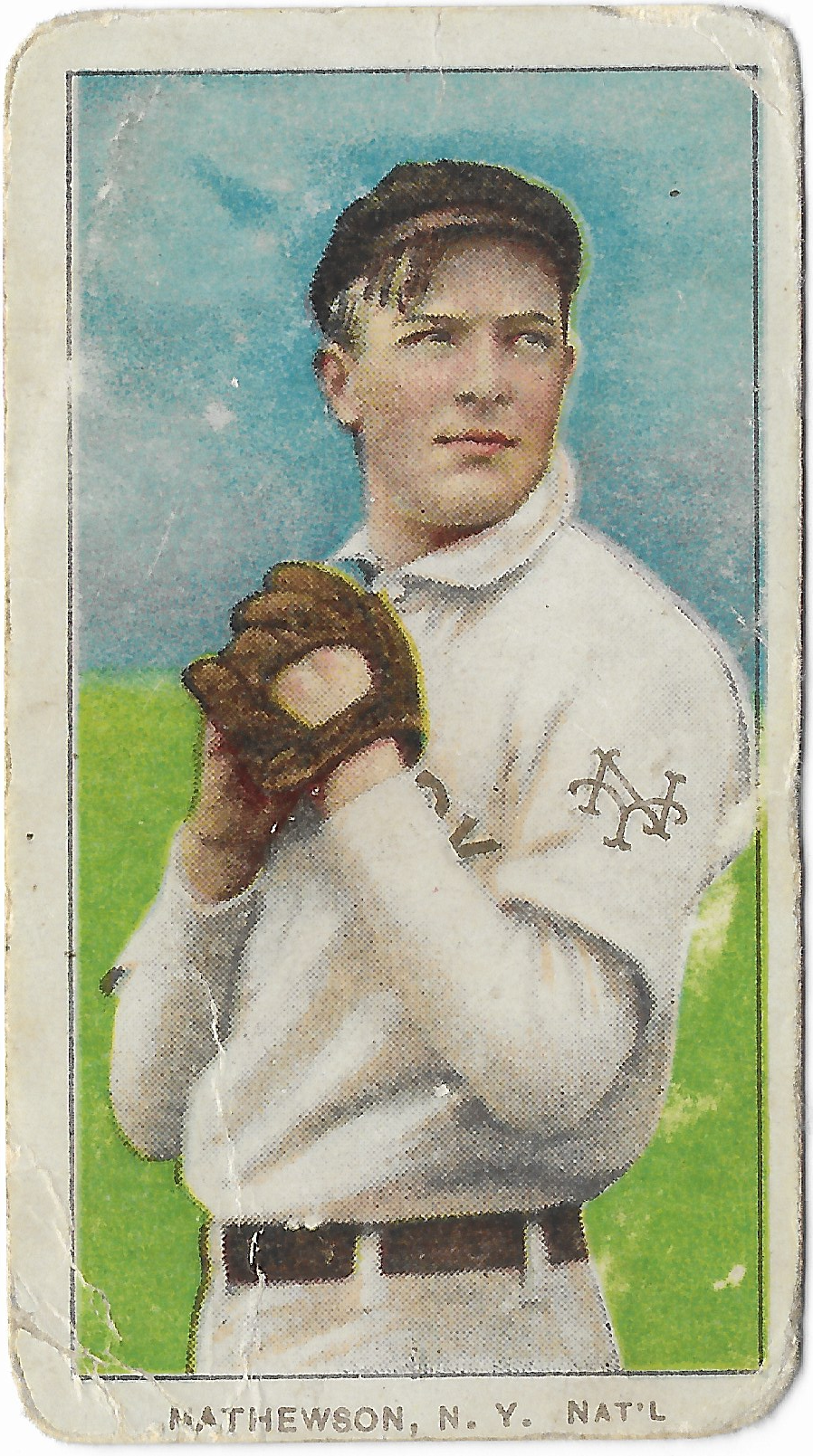
This example from Phil’s collection is a card from the T206 set which was released between 1909 and 1911. It is a landmark set in the history of baseball card collecting, due to its size and rarity, and the quality of its color lithographs.
It features New York Giants pitcher Christy Mathewson wearing a dark cap.
T205 set
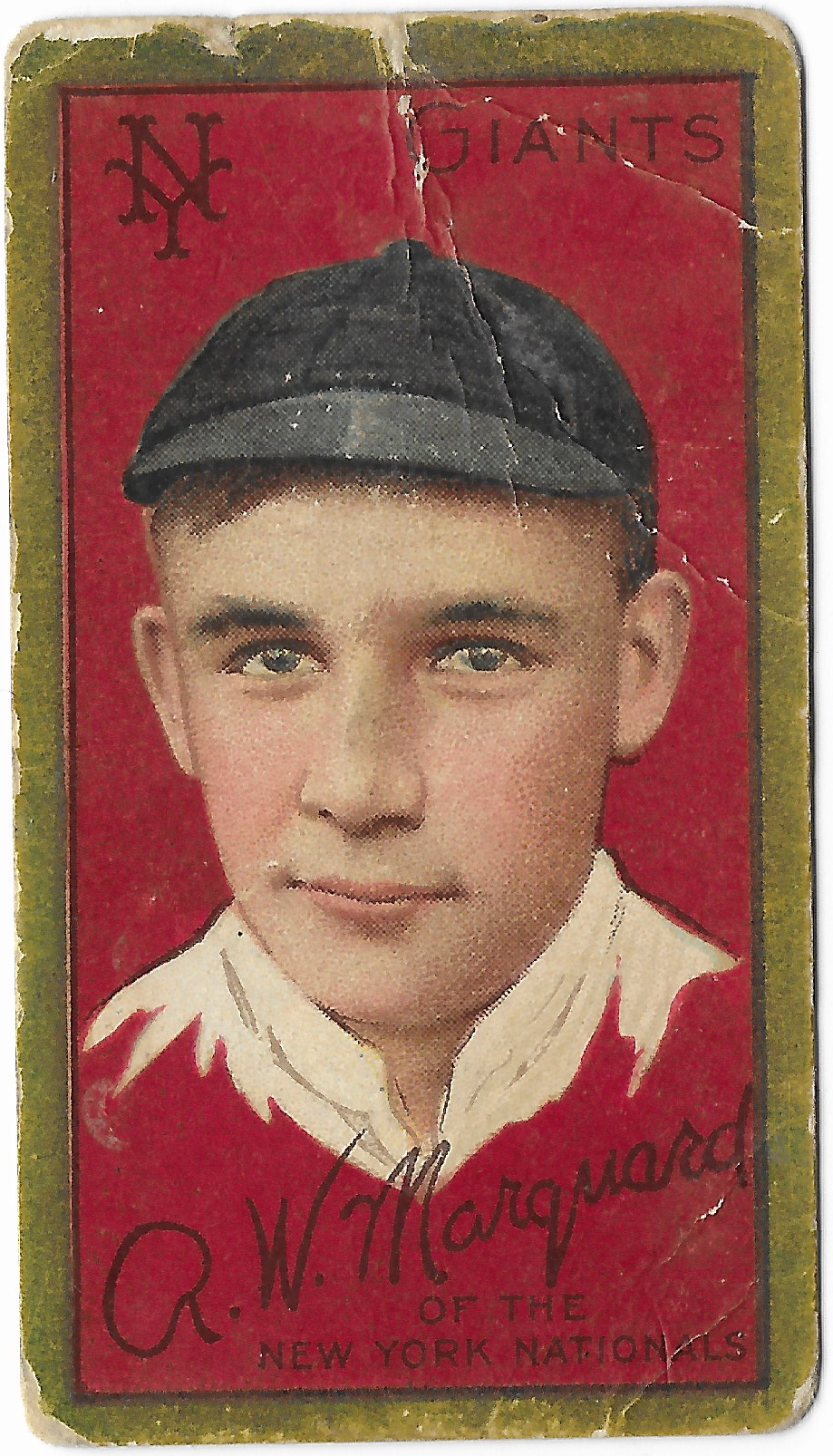
The T205 set was released in 1911 and is known informally as the "Gold Borders" set due to the distinctive gold borders surrounding the lithographs on each card.
The set consists of 221 cards, which include many variations and short prints, and features players from the American League, the National League, and Minor Leaguers.
American League cards can be identified by the baseball diamond surrounding the portrait of the player sporting their team logo near the top. National League cards display a simple colored background with the first-ever use of a facsimile autograph of the player. There are also 12 Minor League cards printed with noticeably different and more detailed borders.
This example from Phil’s collection features New York Giants pitcher Rube Marquard.
T202 set
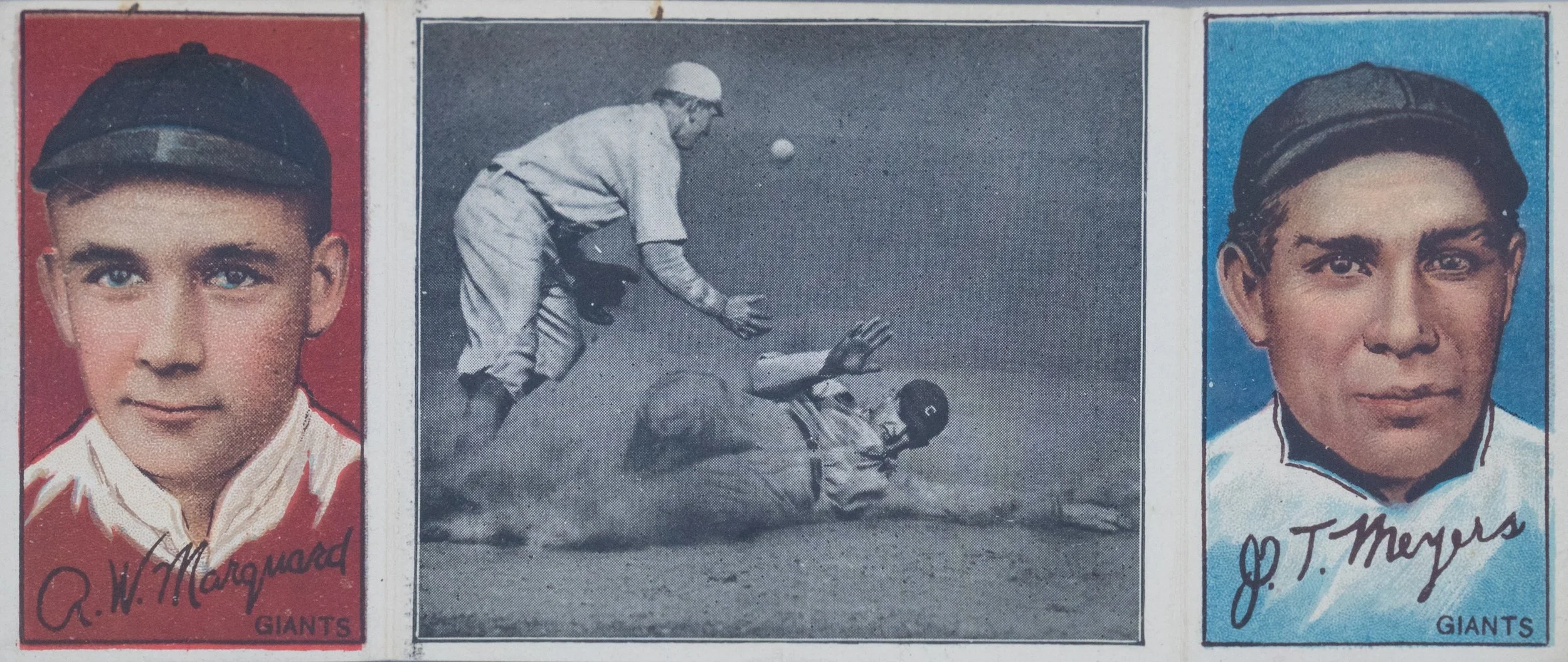
The T202 set consists of 132 cards, each measuring about 2-1/4” by 5-1/4”. Each card is designed with two full-color end panels (similar in appearance to a T205 card). Those bookend a black-and-white center panel picture which bears an action photo or portrait.
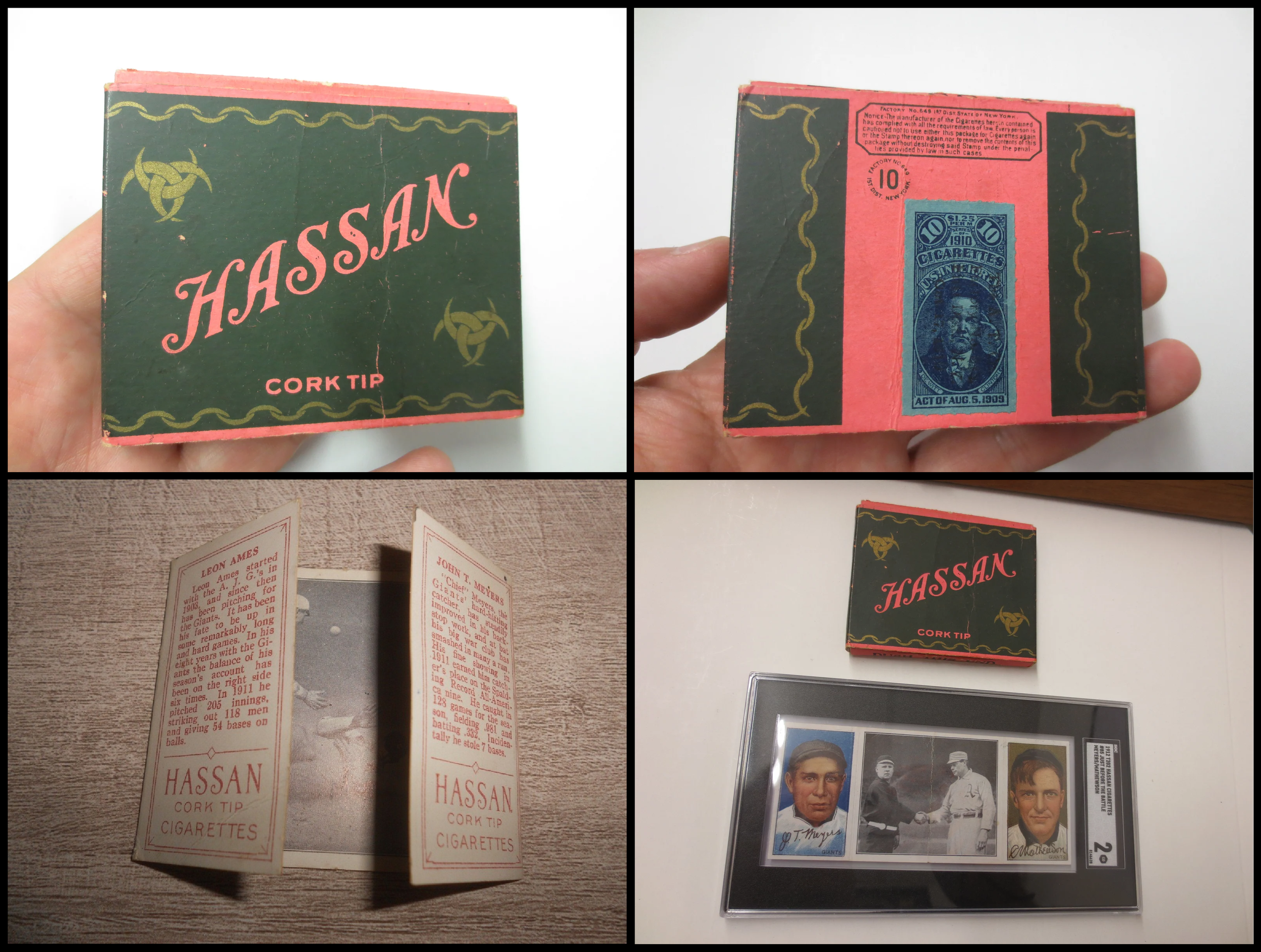
T202 cards came in packs of Hassan Cork Tip Cigarettes
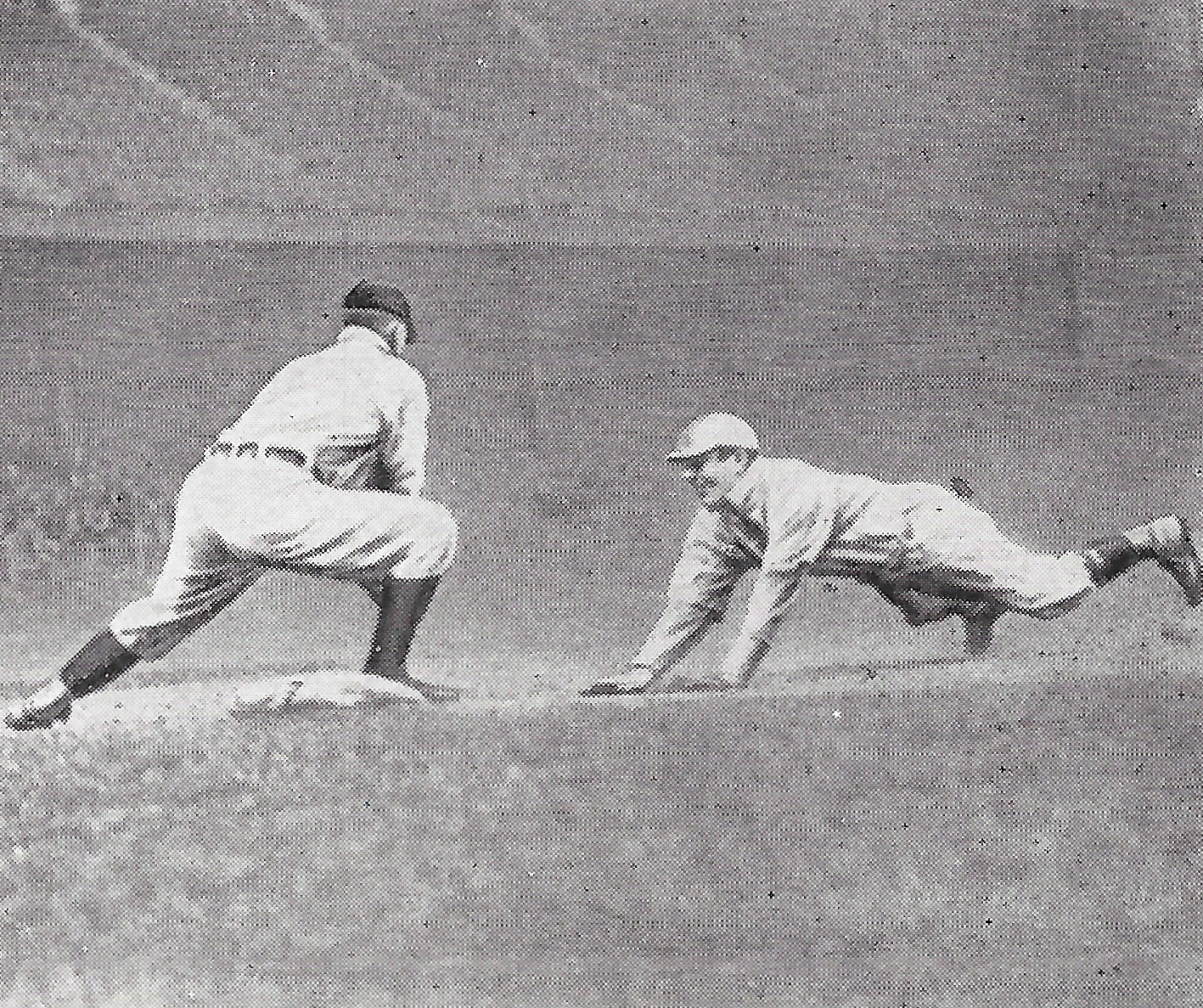
Fast Shutter Speed Photography
The T202 set has two things that most card sets don't have. The first is the center panel, which has a black and white photograph of fast shutter speed photography. This is possibly the first example of a card set using fast shutter speed photography, with shutter speeds up to 1/1,000th of a second. While cameras did have fast shutter speeds in those days, this was before a time when photographers had telephoto lenses.
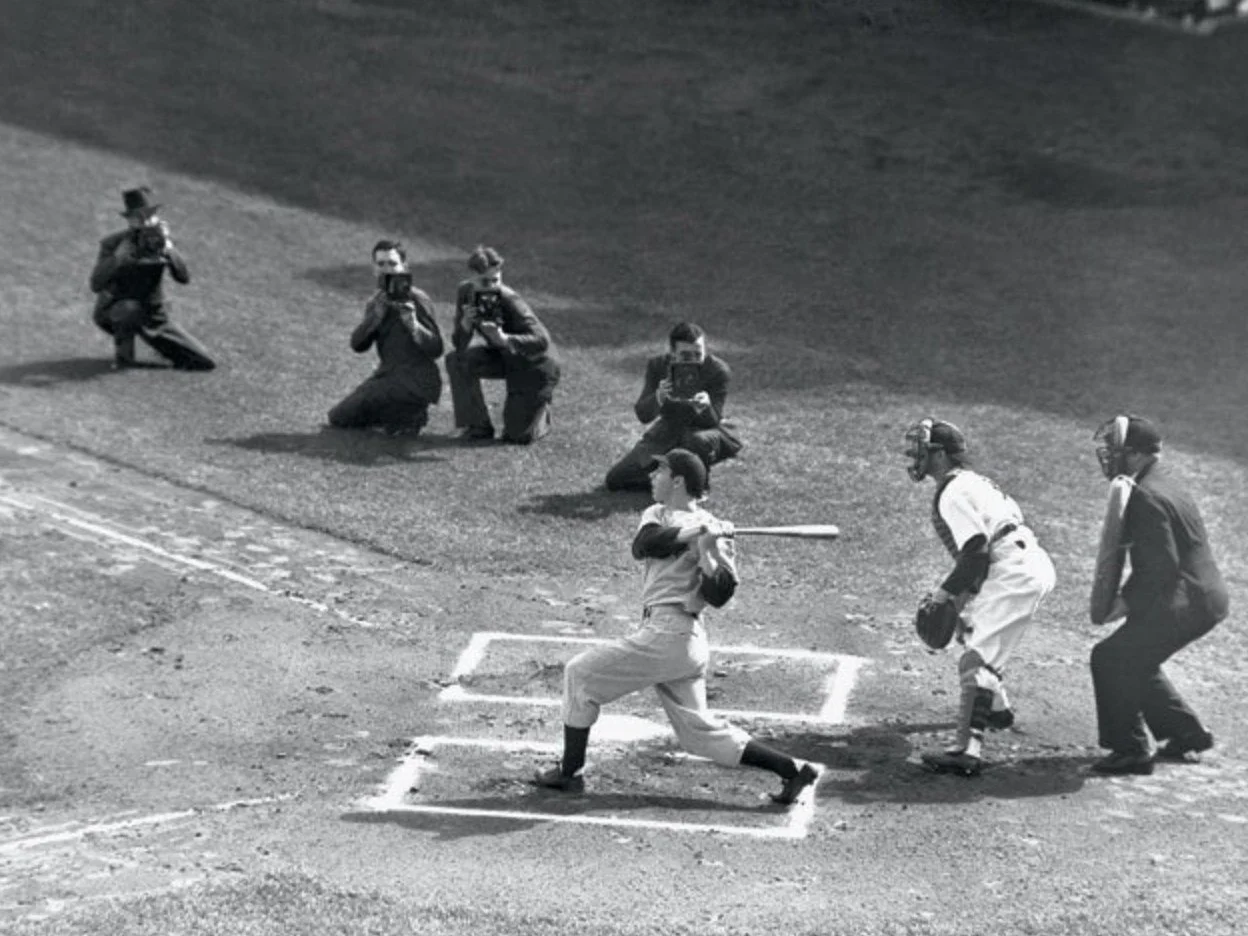
Photographers On The Field
While cameras had the ability to take fast shutter speed shots, there were no telephoto lenses in the early 1900s yet. This meant that the most logical places for photographers to stand so they could be close enough to the action to get clear shots, but without interfering with the game by being on the field of play, was near home plate, near the first base bag, or near the third base bag.
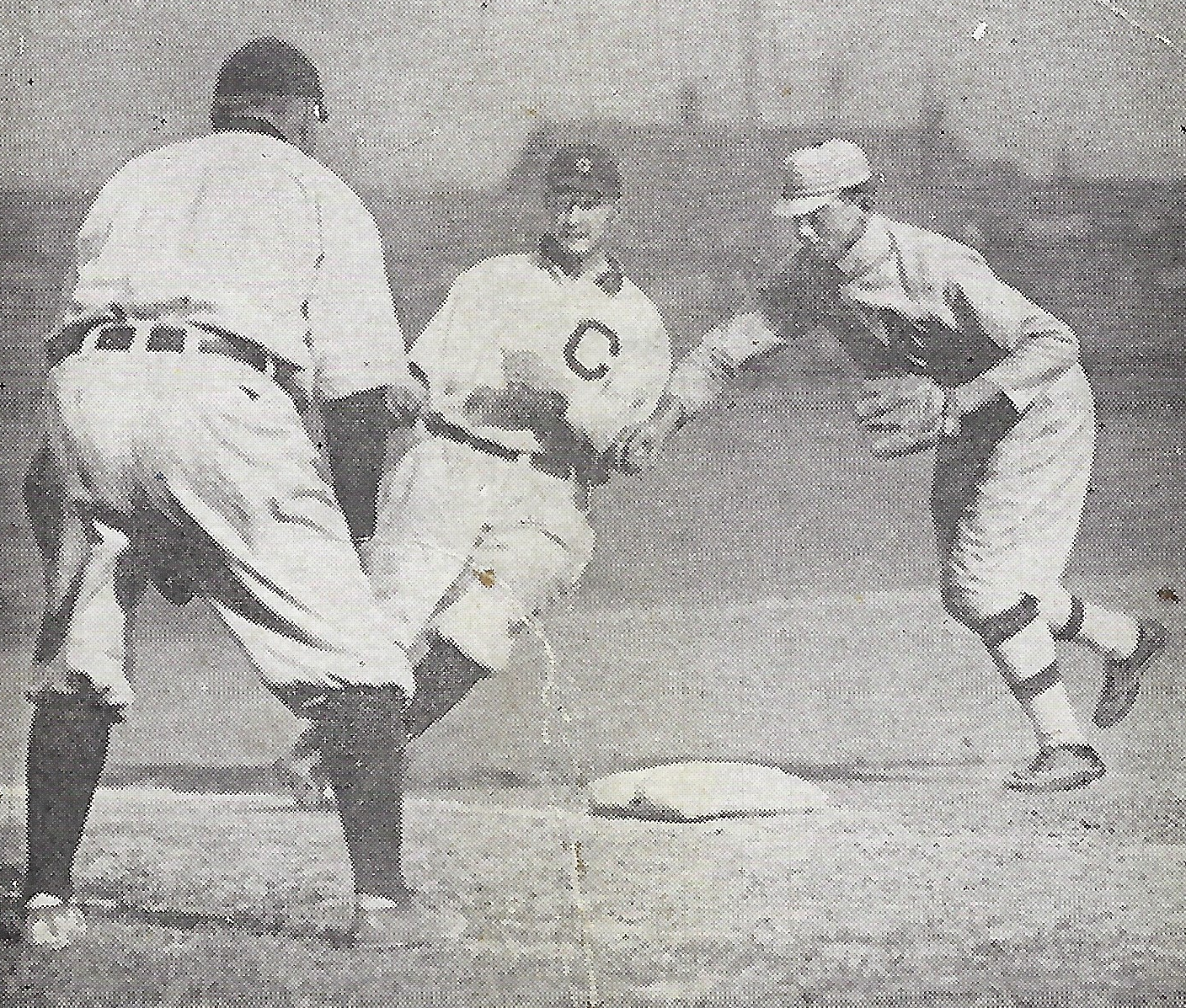
Which Shots Could They Get?
With their positioning being as it was, photographers mostly got shots of plays at first base, at third base, of hitters in the batter’s boxes, or plays at home plate. It also meant that you won't see many photos of shortstops going into the hole, or outfielders making a catch at the fence, or things like that, since the photographers were simply standing too far away from those players to get good shots of them.
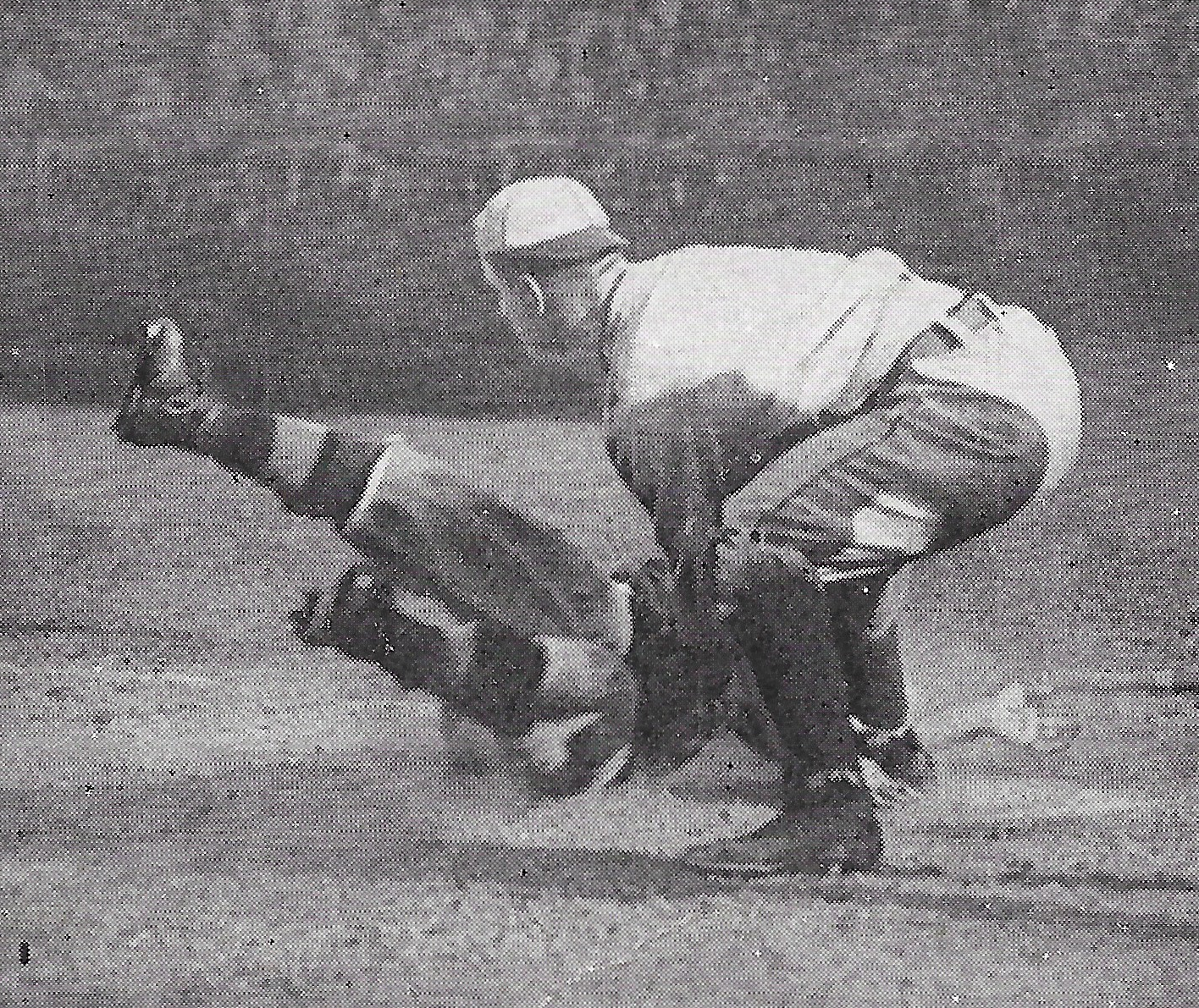
Play At The Plate
A photographer would have had to anticipate a play at the plate, get in position while the play was developing, and be ready to snap the photo to get the image seen here, which appears as a center panel on one of the cards in the T202 set.
This one shows New York catcher Ed Sweeney tagging out Big Ed Walsh of the White Sox at home plate.
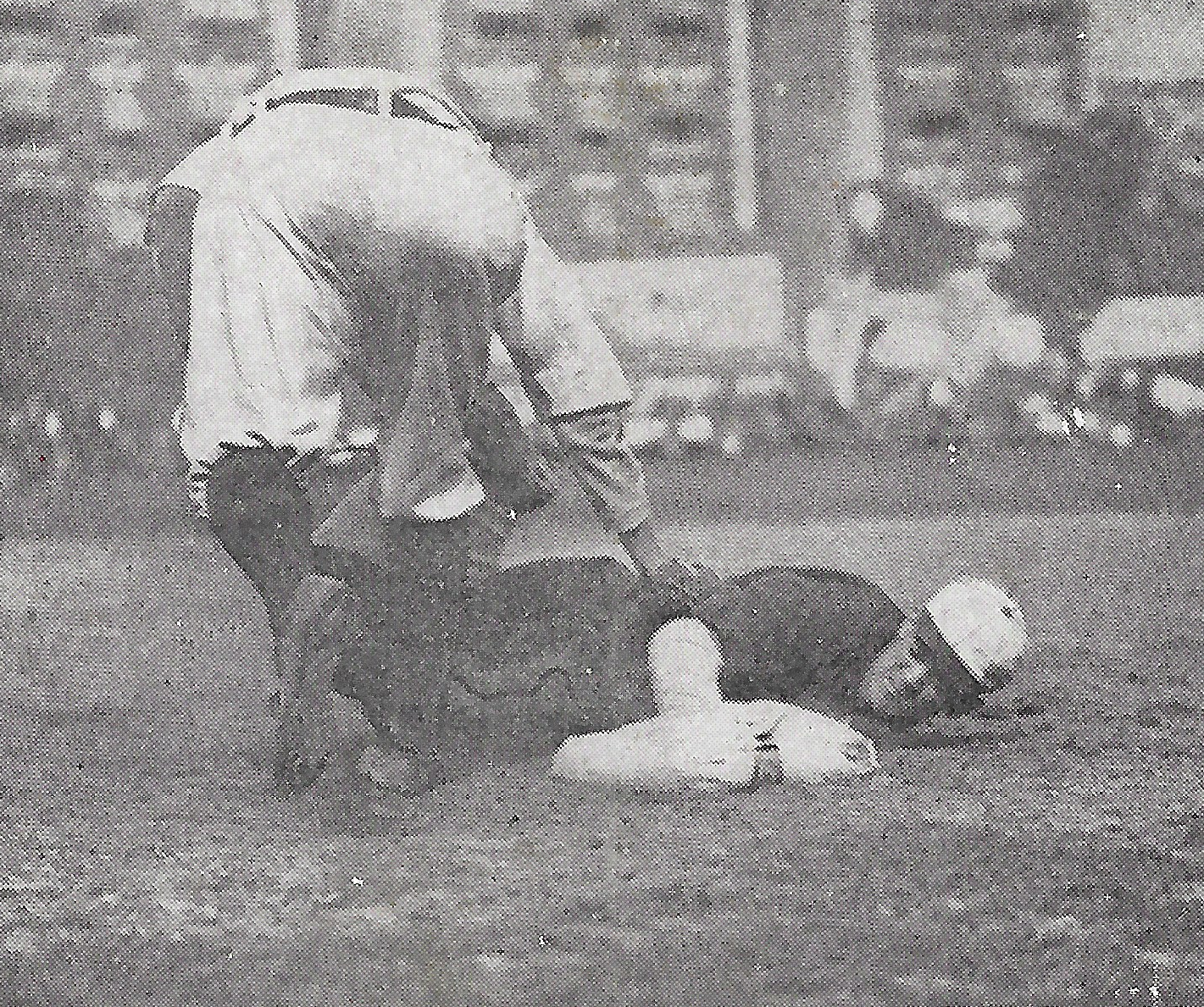
First Baseman Guarding First Base
This photo, which appears as a center panel on one of the cards in the T202 set, depicts Amby McConnell, the little second baseman of the Chicago Americans, sliding under the all but invincible Hal Chase and making the first base bag his own. A second sooner with the ball, and Chase would have had him.
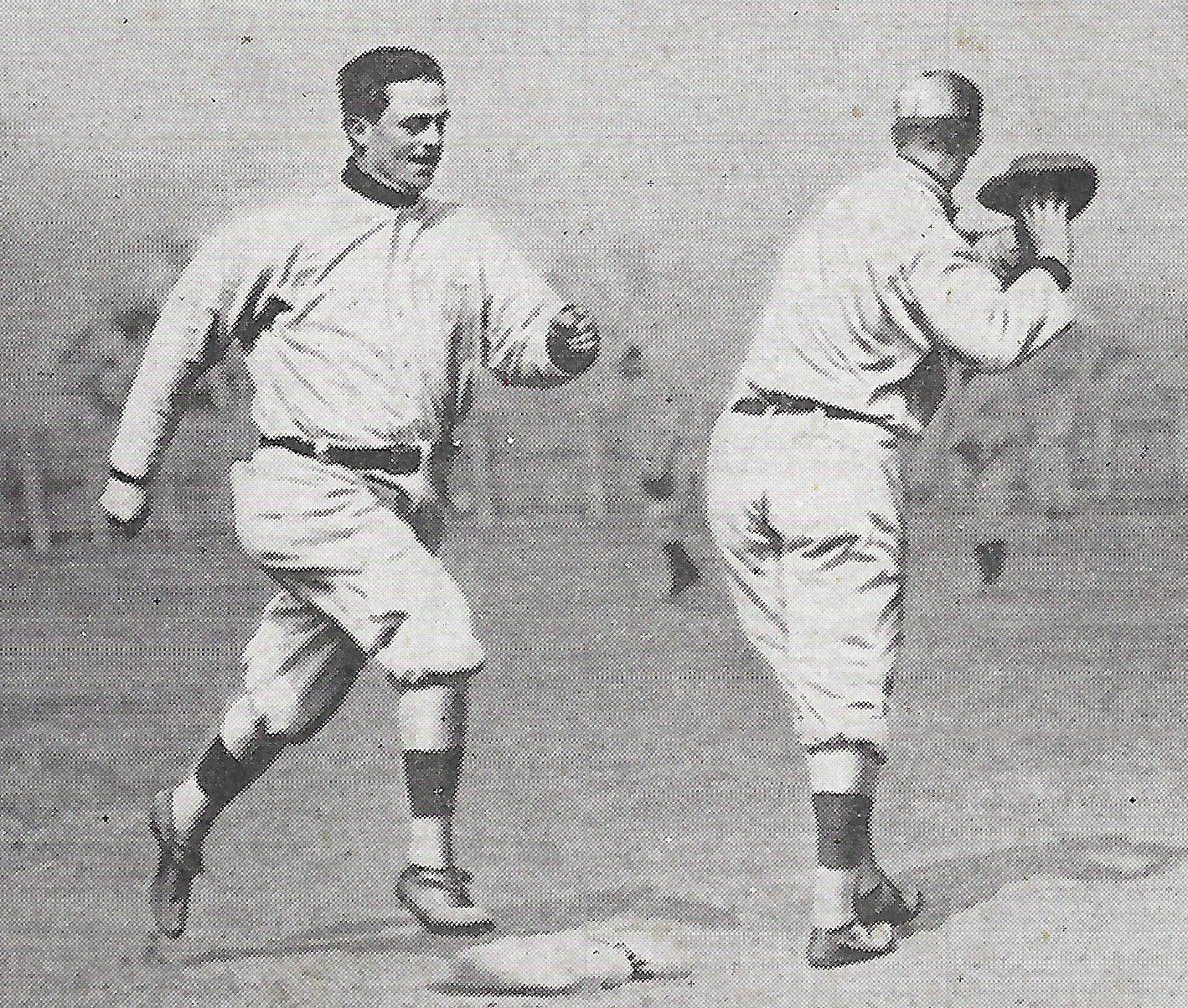
A Runner Passing The First Base Bag
This photo, which appears as a center panel on one of the cards in the T202 set, depicts Mike Donlin, who thought he had made a safe hit; but he failed to do so, as the first baseman had touched the base and was returning the ball to the pitcher even before the runner reached the bag.
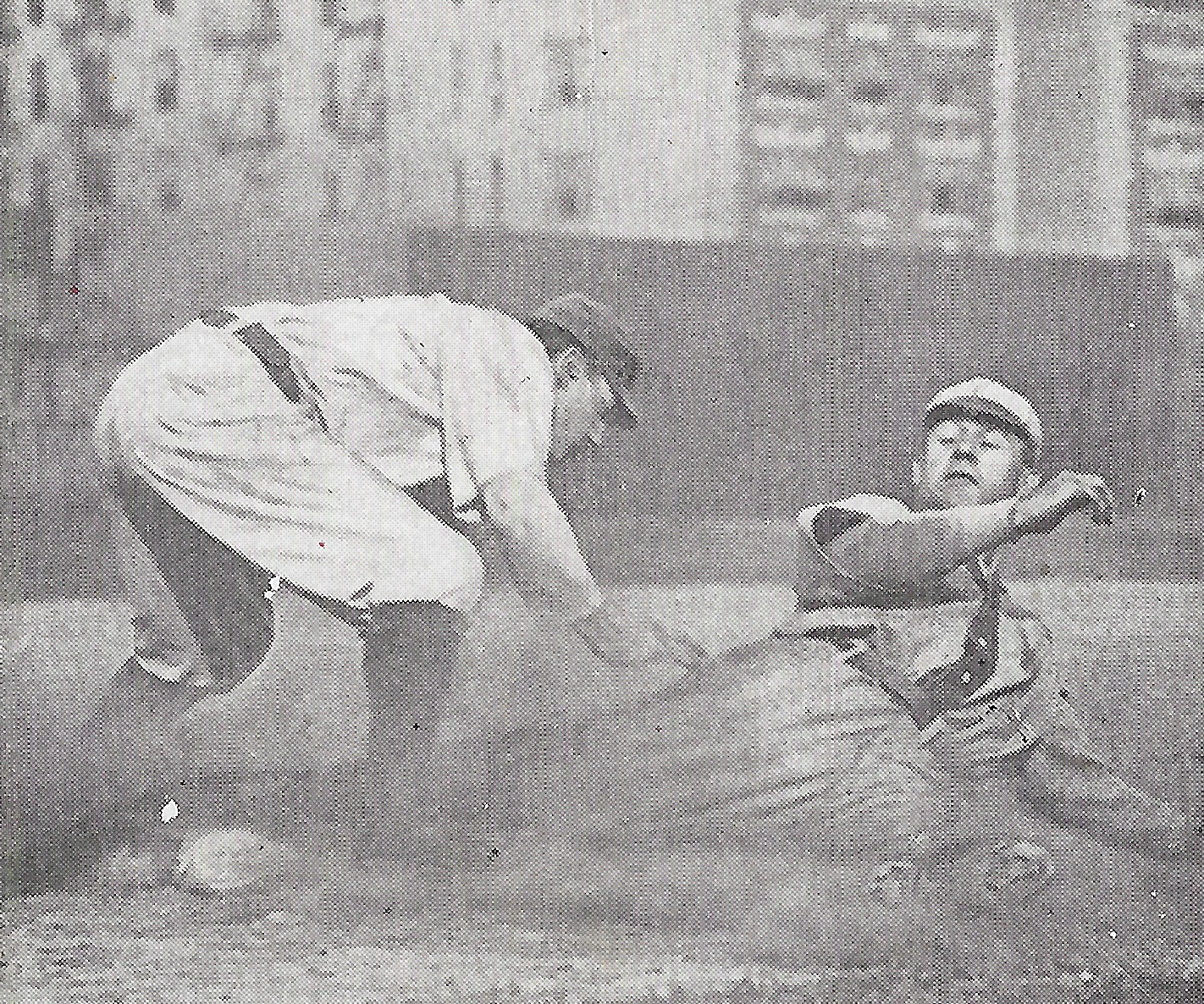
Plays At Third Base
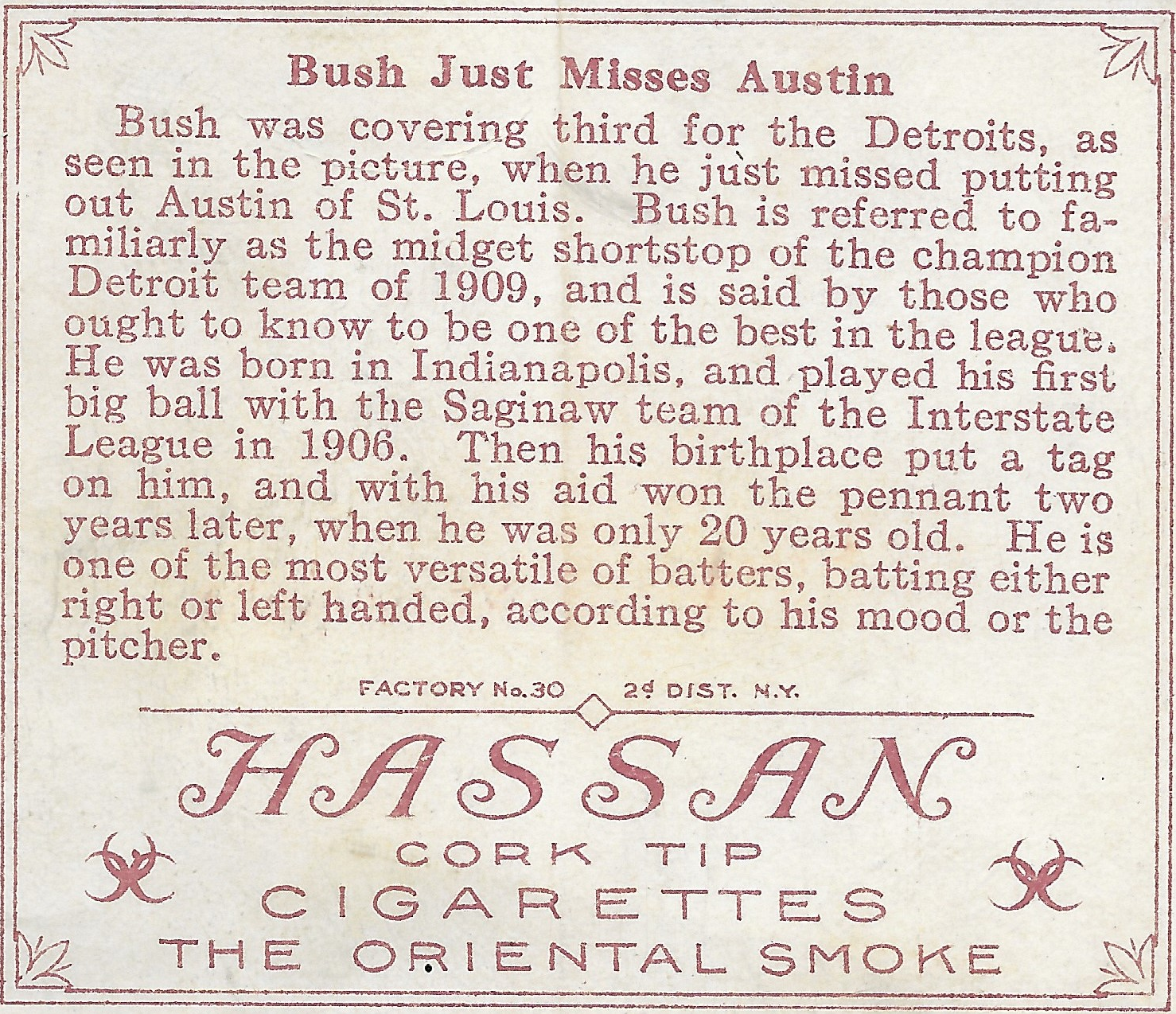
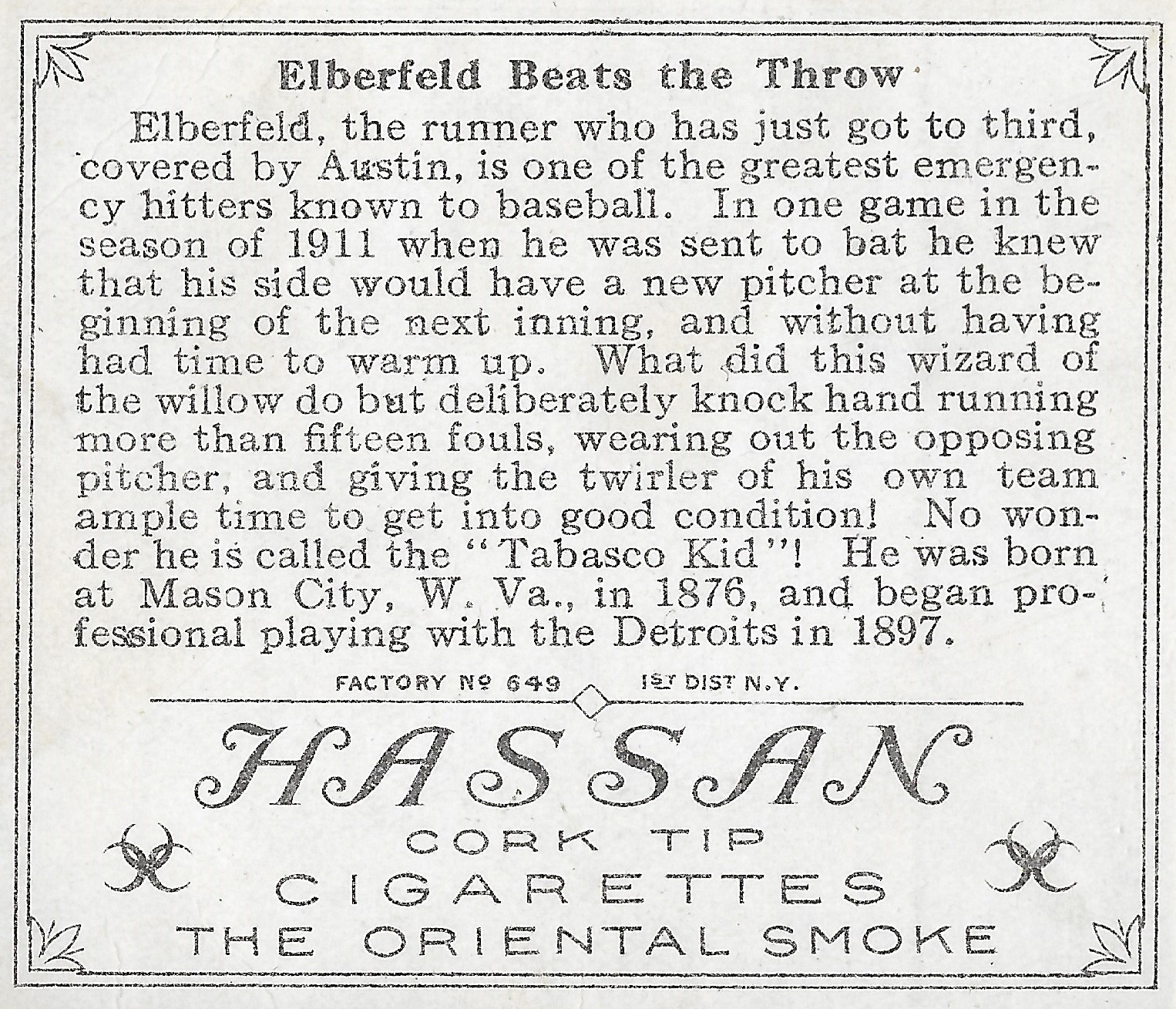
This photo, which appears as a center panel on one of the cards in the T202 set, depicts Kid Elberfeld, one of the greatest emergency hitters known to baseball, as the runner who has just gotten to third base, which is being covered by Jimmy Austin.
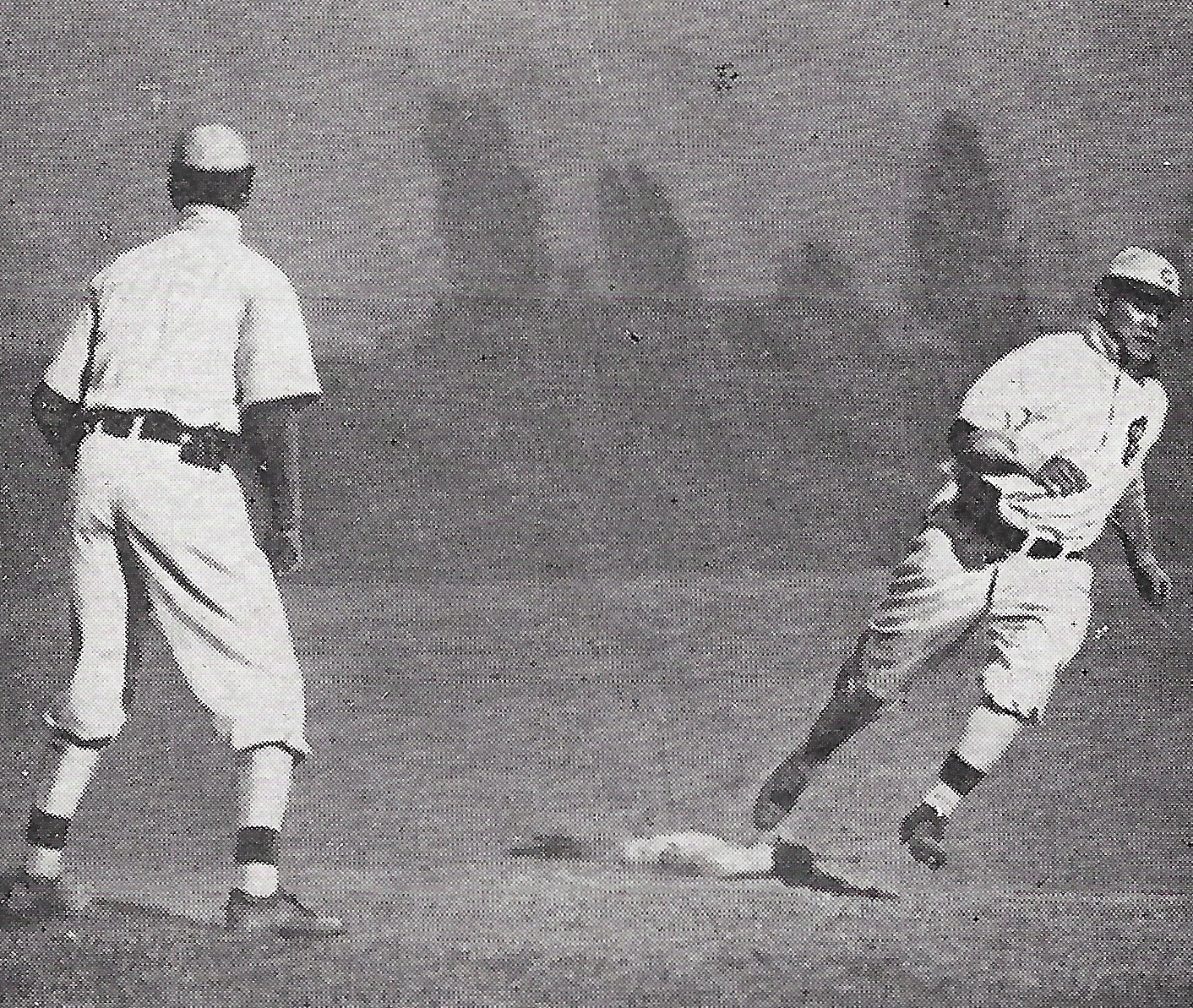
Passing Third Base On The Way To Home Plate
This photo, which appears as a center panel on one of the cards in the T202 set, depicts Jay Clarke (referred to as “Nig” Clarke on the card and in many contemporary accounts) unconcernedly continuing his hike around third for the home plate; he got there and added a run to the score.
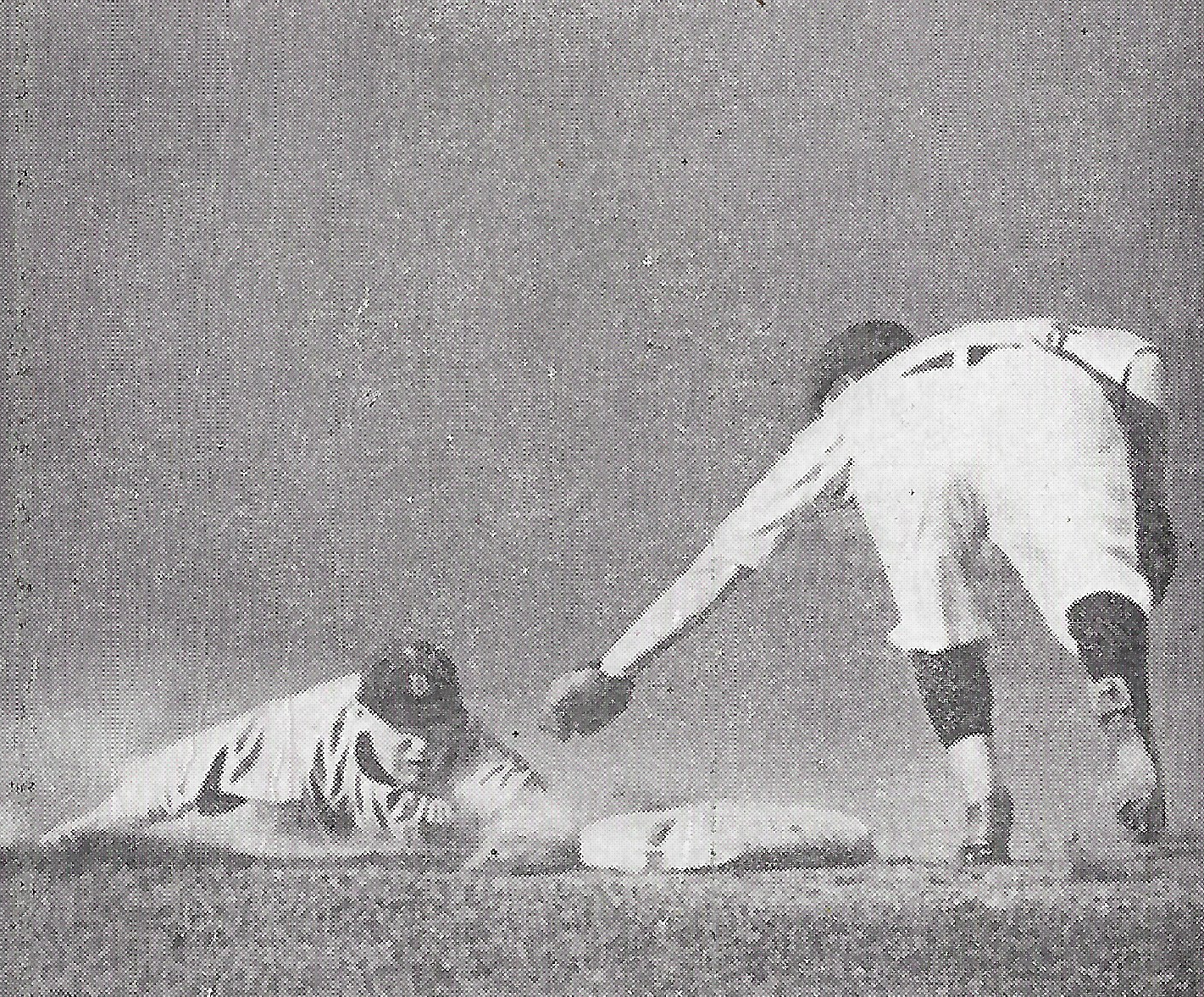
A Play At Second Base?
The back of this card reads “[Germany] Schaefer made a fine head-first slide into second, as illustrated on the other side of this card. He is one of the best known infielders of the American League, and an exceedingly versatile player.”
But Phil speculates that this photo is actually staged during Spring Training, and not really taken during live game action.
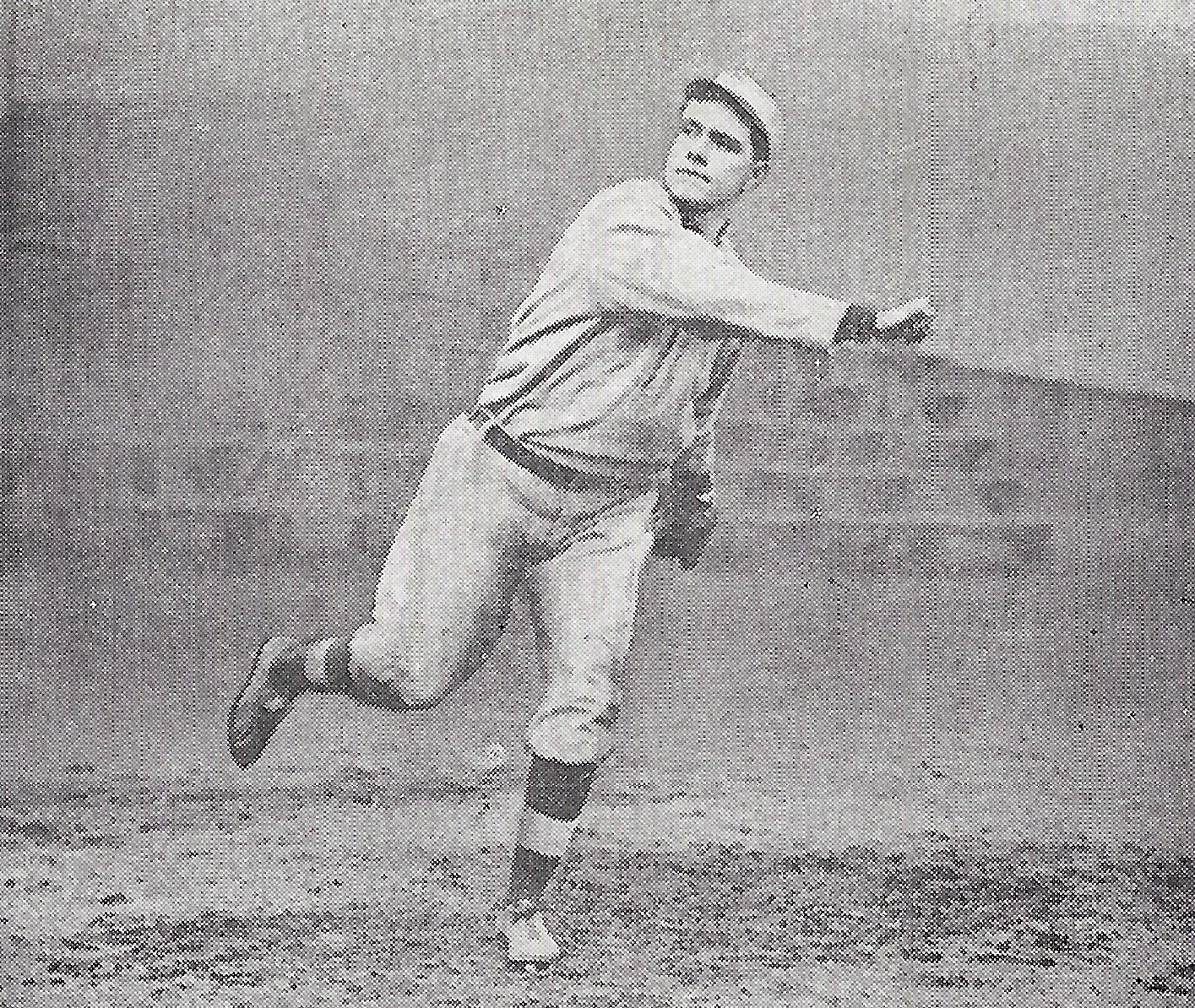
Taken On The Sidelines Before The Game
This photo, which appears as a center panel on one of the cards in the T202 set, depicts Russell Ford, who is a student of the game, and has evolved his own future. He took up the famous spitball where other pitchers had left off and improved upon it till he has become as nearly invincible as a pitcher can possibly be.
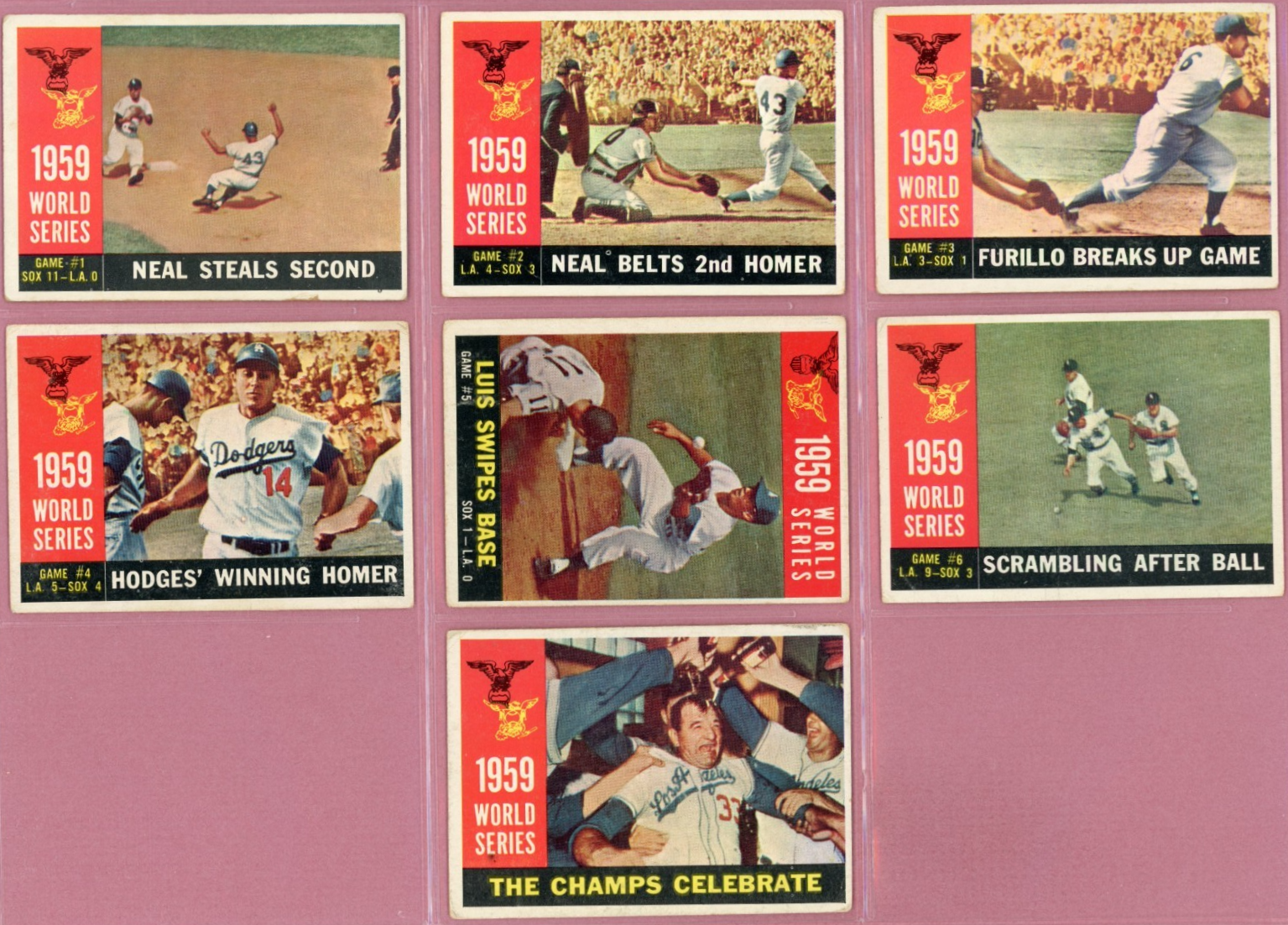
Years Ahead of Their Time
Topps had true game action in some of the World Series cards in the 1960s, with the 1960 Topps release marking the first year of an actual multi-card World Series subset, but Topps didn’t have true photographs of game action in true base cards until 1971.
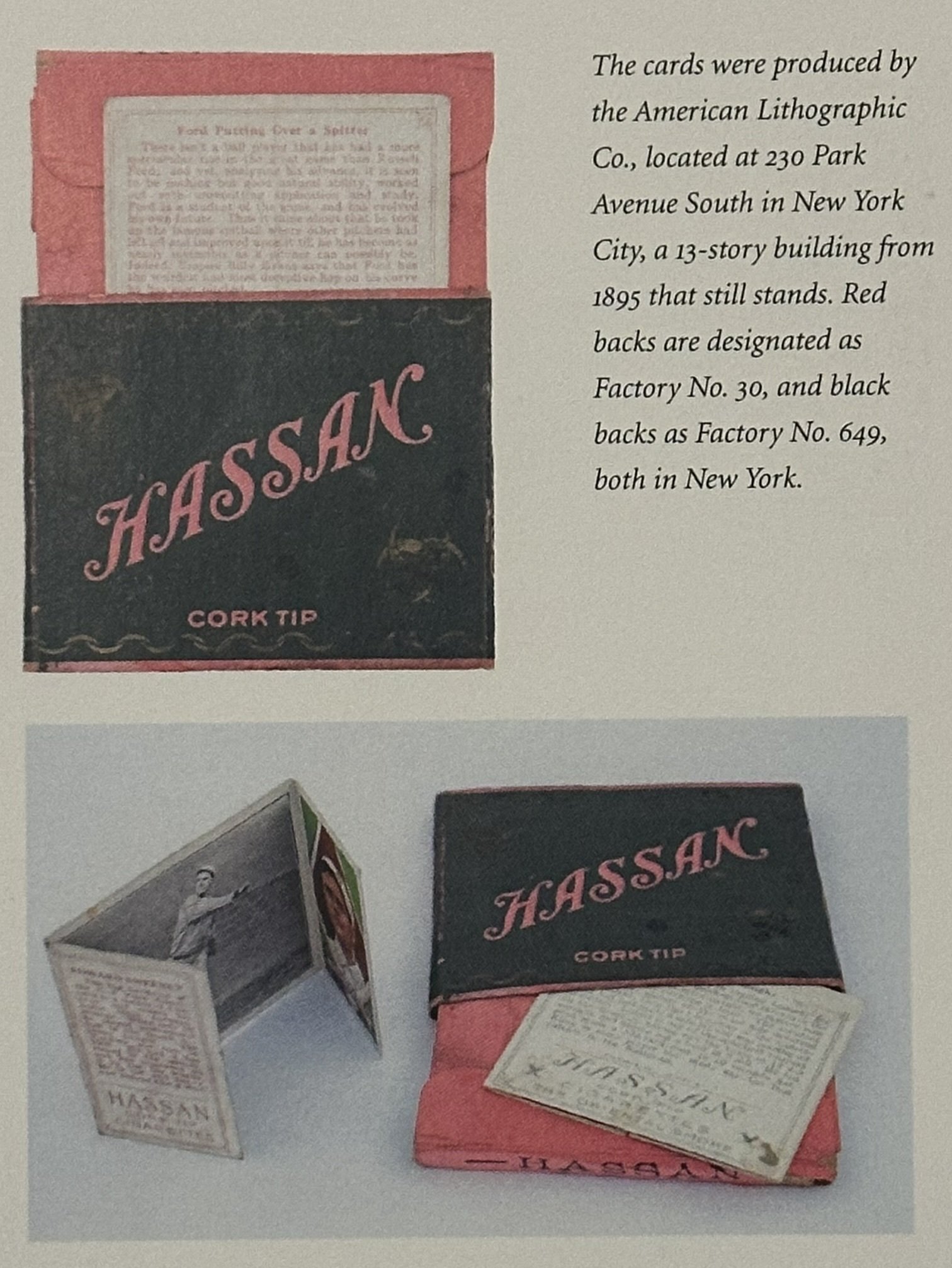
How The Cards Were Distributed
The cards came pre-folded so they could fit into packs of the Hassan Cork-Tipped Cigarettes, which means that the extreme corners of the cards were often protected from damage more than they would have been had the cards not come folded.
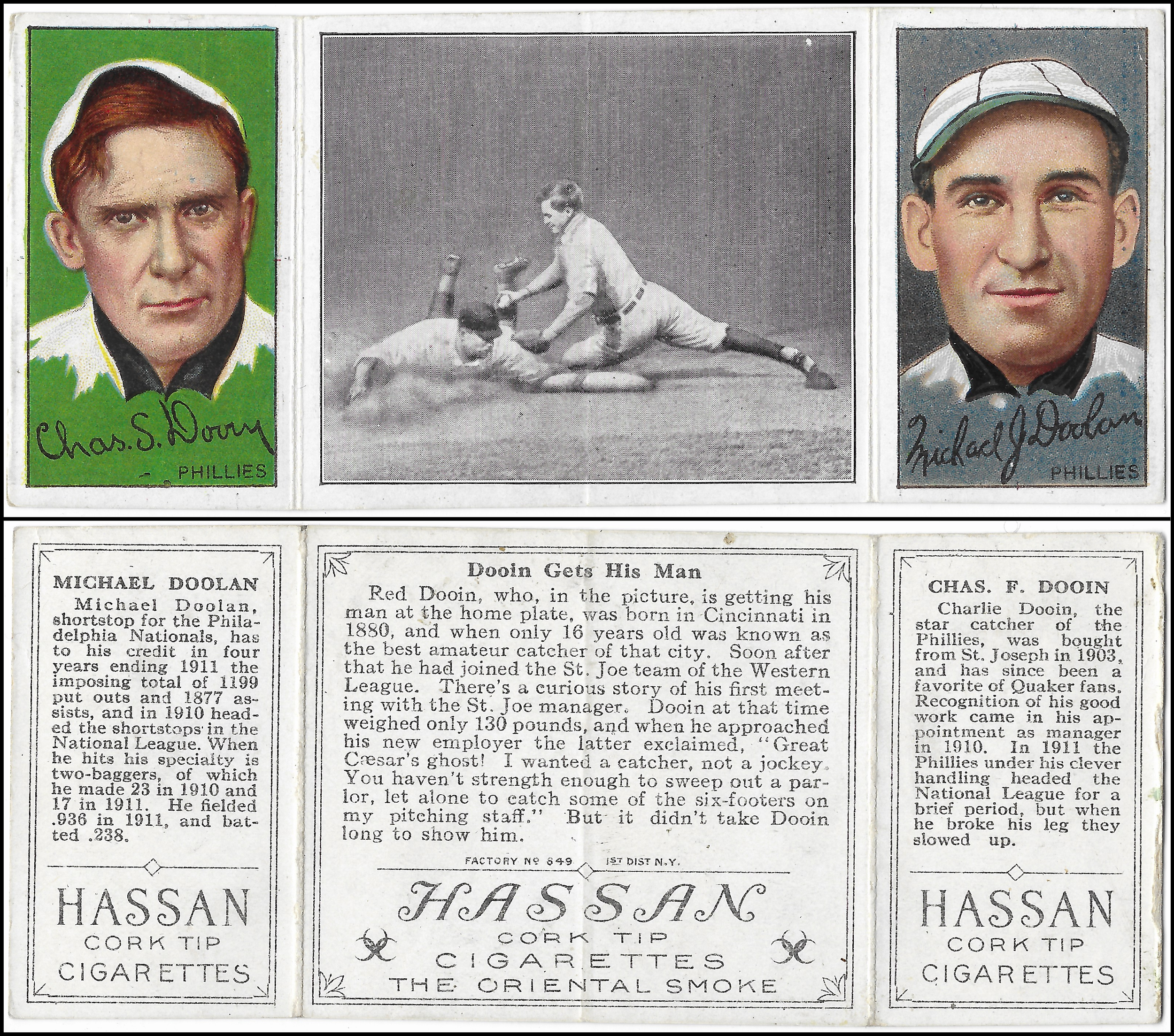
Sometimes, card owners would fold these cards down the middle of the center panel, as well, as can be seen in this example.
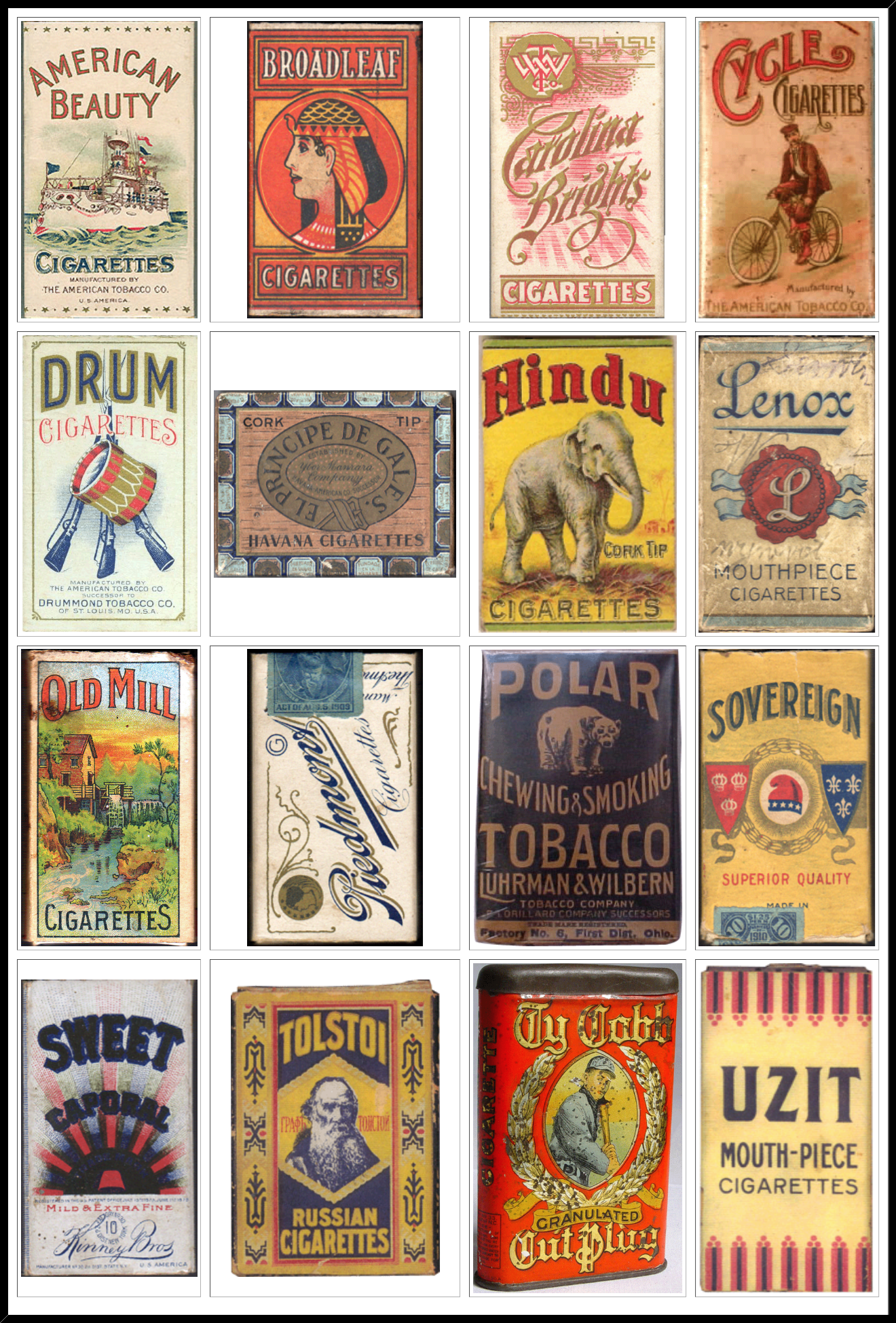
American Tobacco Company
Because of the fact that these cards came in packages of Hassan cigarettes, and that the cards folded, the T202 set is also known as the Hassan Triple Folders set. It has the T designation, as in T202, because it is one of a number of card sets which was available through the purchase of Tobacco products.
American Tobacco was formed by 5 companies: W. Duke & Sons, Allen & Ginter, W.S. Kimball & Company, Kinney Tobacco, and Goodwin & Company. It commercialized baseball cards through its brands Fatima, Hassan, Meca, Obak, and a handful of others.
Photo courtesy of BaseballAndTobacco.com
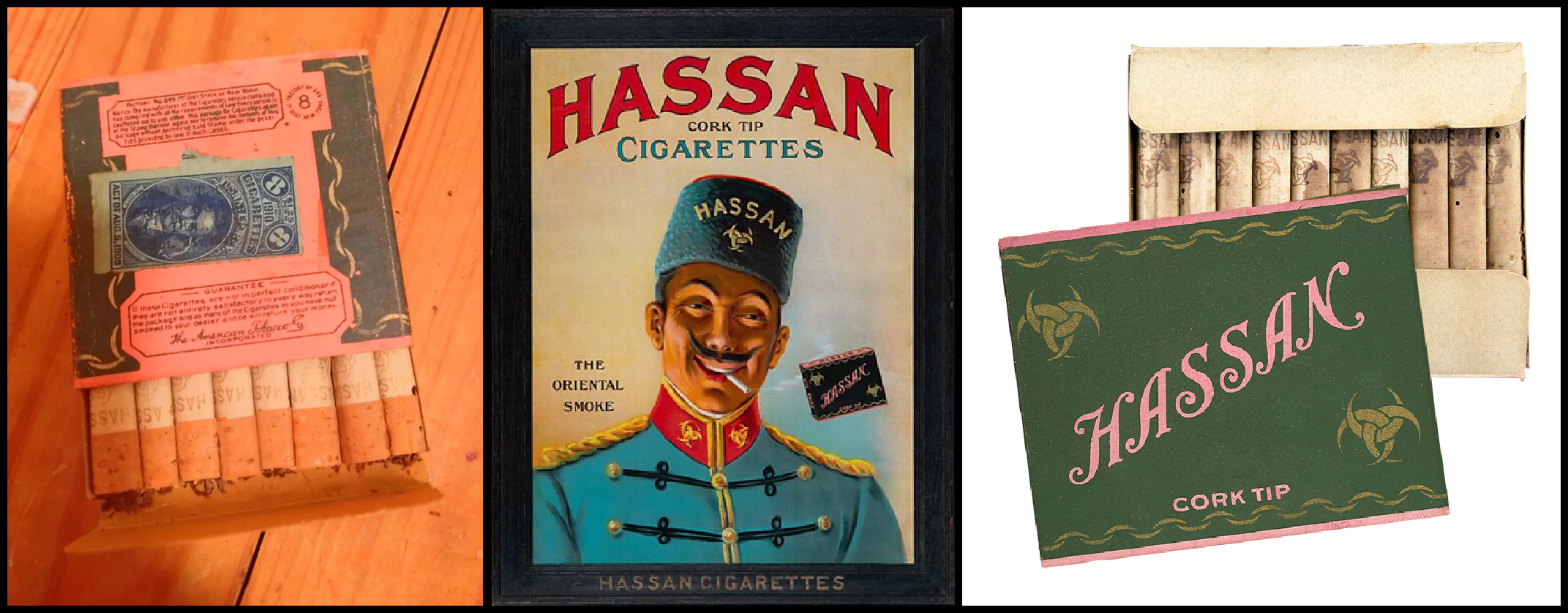
Around the turn of the 20th century, anybody could buy a 10-pack of Hassan Cork Tip Cigarettes for a nickel — one-quarter the cost of other Turkish-style brands.
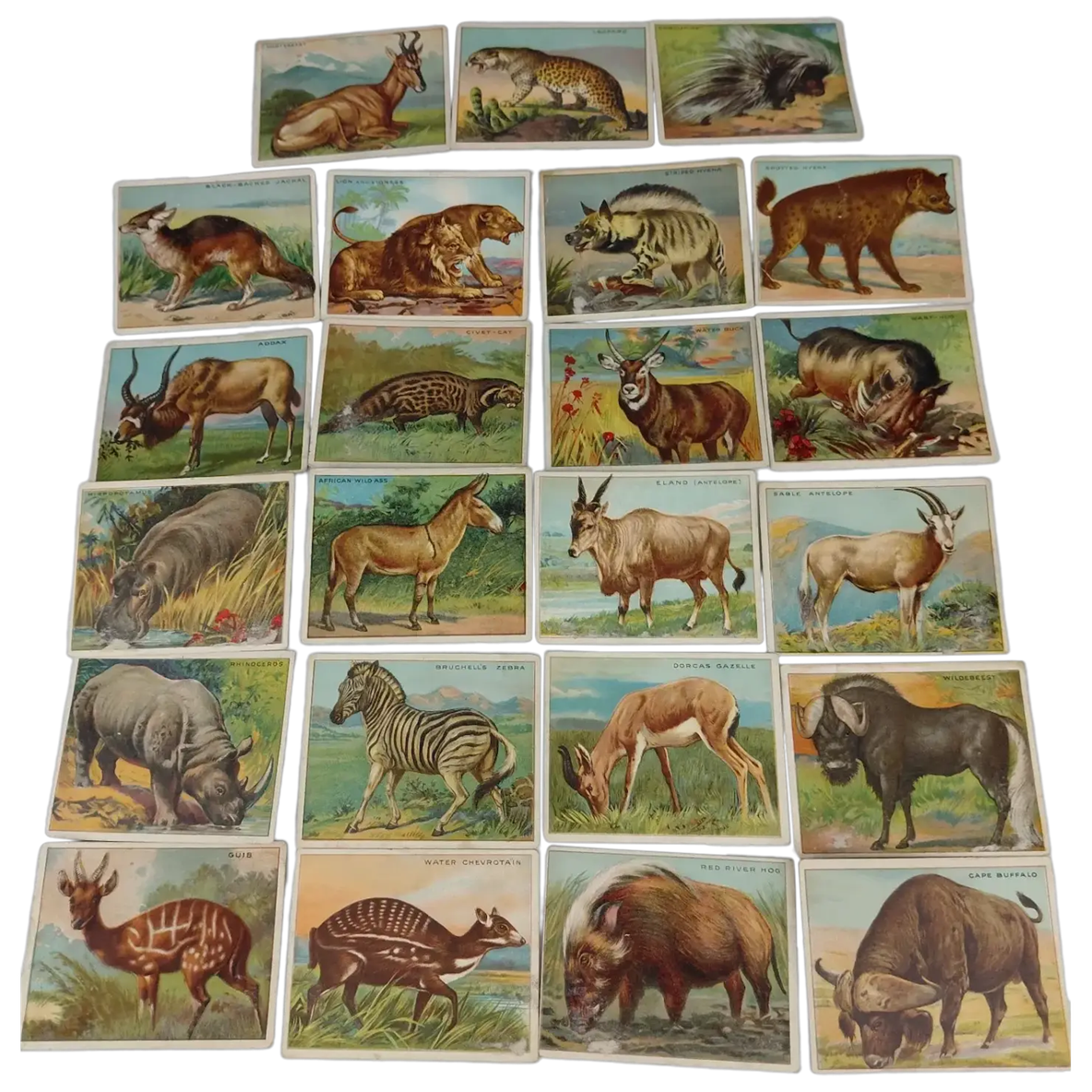
More Than Just Baseball Cards
For years cigarette makers had been inserting cardboard stiffeners into their flimsy paper packs. But with the introduction of chromolithography in 1875 Richmond-based Allen & Ginter transformed its blank stiffeners into colorful cards printed with images of baseball players, Indian chiefs and the like. Other firms followed suit, and the modern-day trading card was born.
Hassan produced cards featuring wildlife, Native Americans, cowboy life, flags of the world, lighthouses… all sorts of different subjects, so customers with all hobbies (and all ages) would be interested in buying their product.
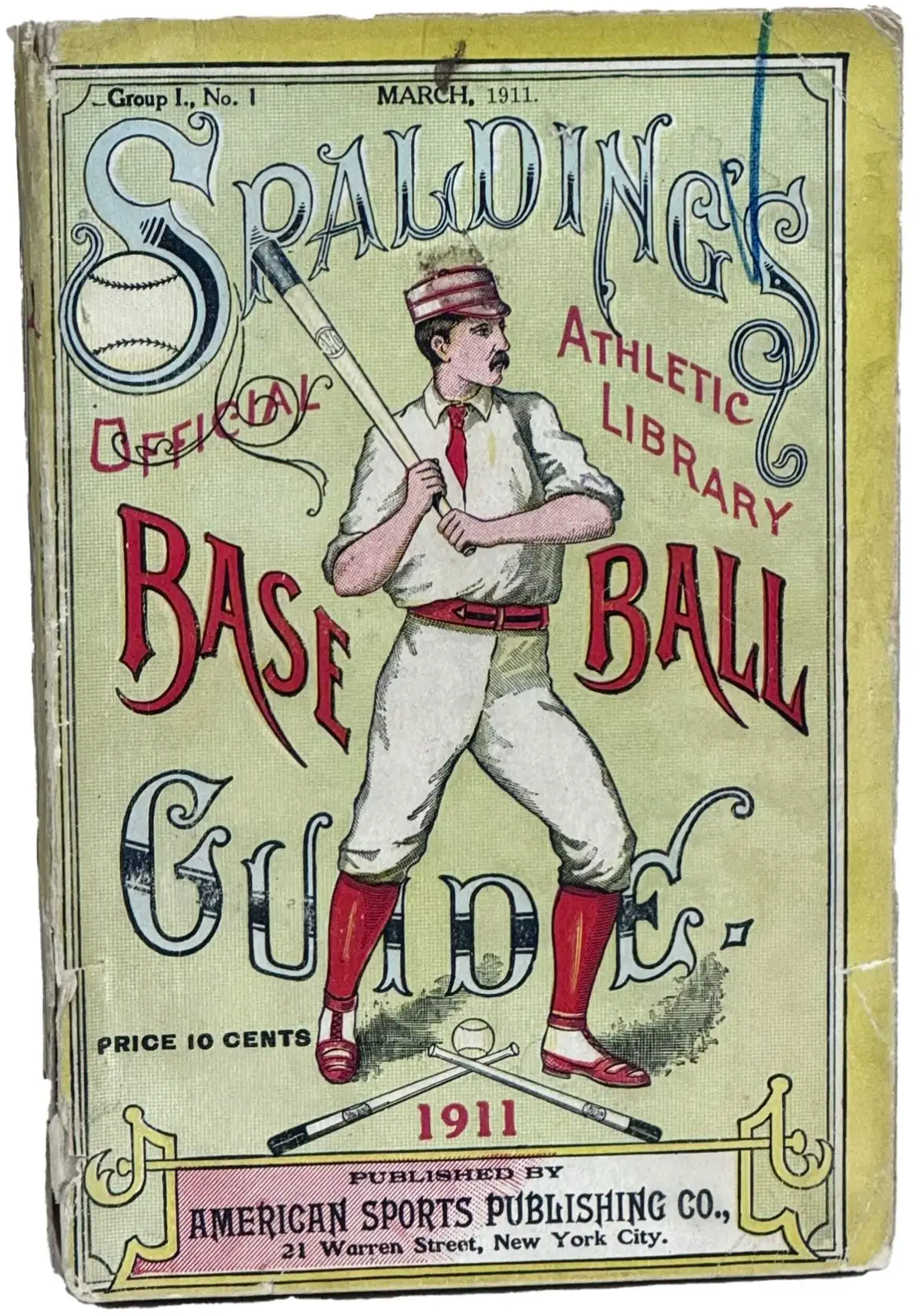
1911 Spalding Guide
In 1876, the first A.G. Spalding & Brothers sporting goods store opened in Chicago.
That same year, Spalding developed the first Major League Baseball to become the official baseball of the National League (1876-1976) and American League (1889-1973).
In addition to being a sporting goods company, Spalding also produced an annual guide, which published images of the players, as well as recaps of what had happened in Major and Minor League baseball the previous year.
The portraits which were used to create the side panels of the T202 set were used the year before, in 1911’s T205 set. But they were originally shot by the Paul Thompson agency for the 1911 Spalding Guide.
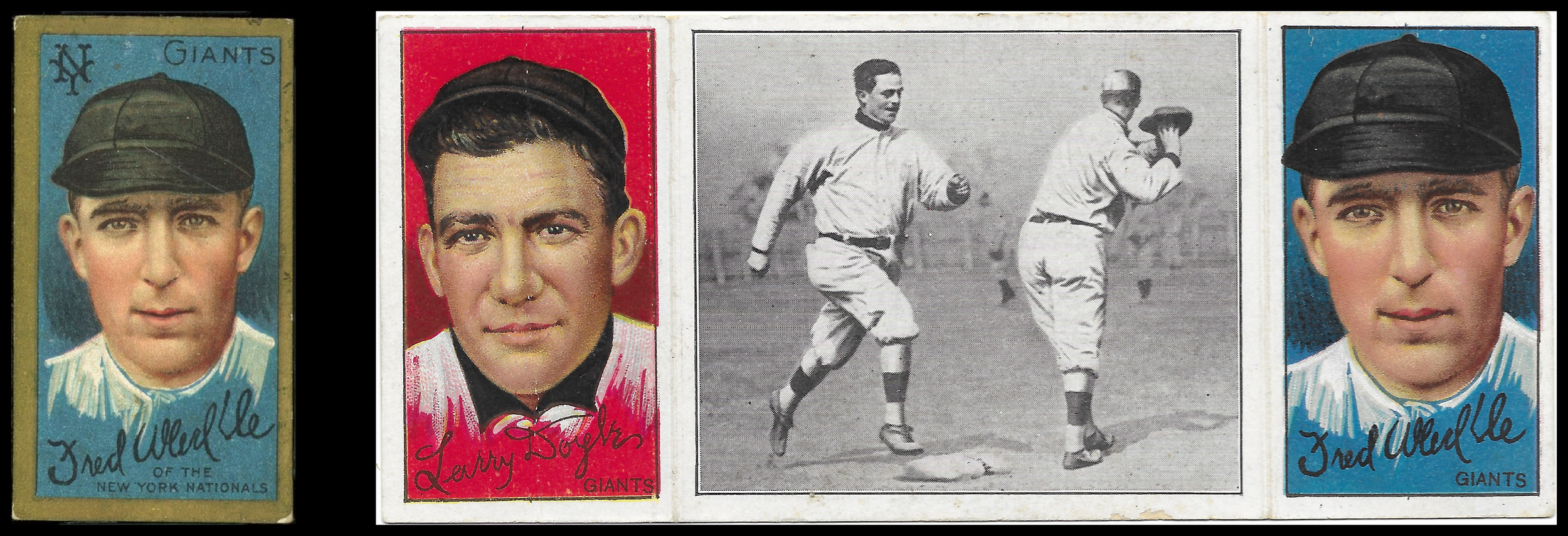
The end panels of the T202 set (of which there is a full, three-panel card, pictured above, on the right) were taken from the designs of the T205 gold border set which had come out the year before (pictured above, on the left). Notice that the Fred Merkle panel is nearly identical from the T205 set to the T202 set, which came out the following year.
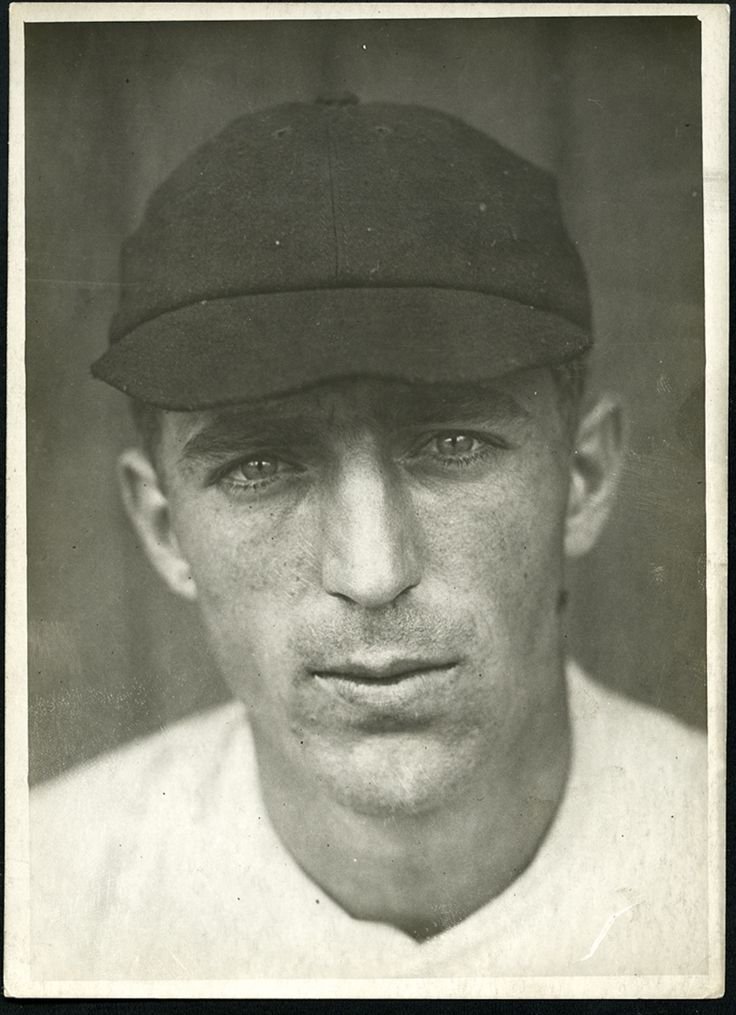
Paul Thompson Portraits
The portraits of the players which made up the images of the T205 set were originally taken to be included in the Spalding Guides.
While many believe (or want to believe) Paul Thompson was a photographer, he actually operated a photography news service which aggregated photos taken by a large network of photographers across the country and distributed those photos to publications which wanted to use them.
This portrait of Fred Merkle was taken by the Paul Thompson agency and became the basis for the Fred Merkle baseball card which appeared in the T205 set, and then subsequently in the T202 set.
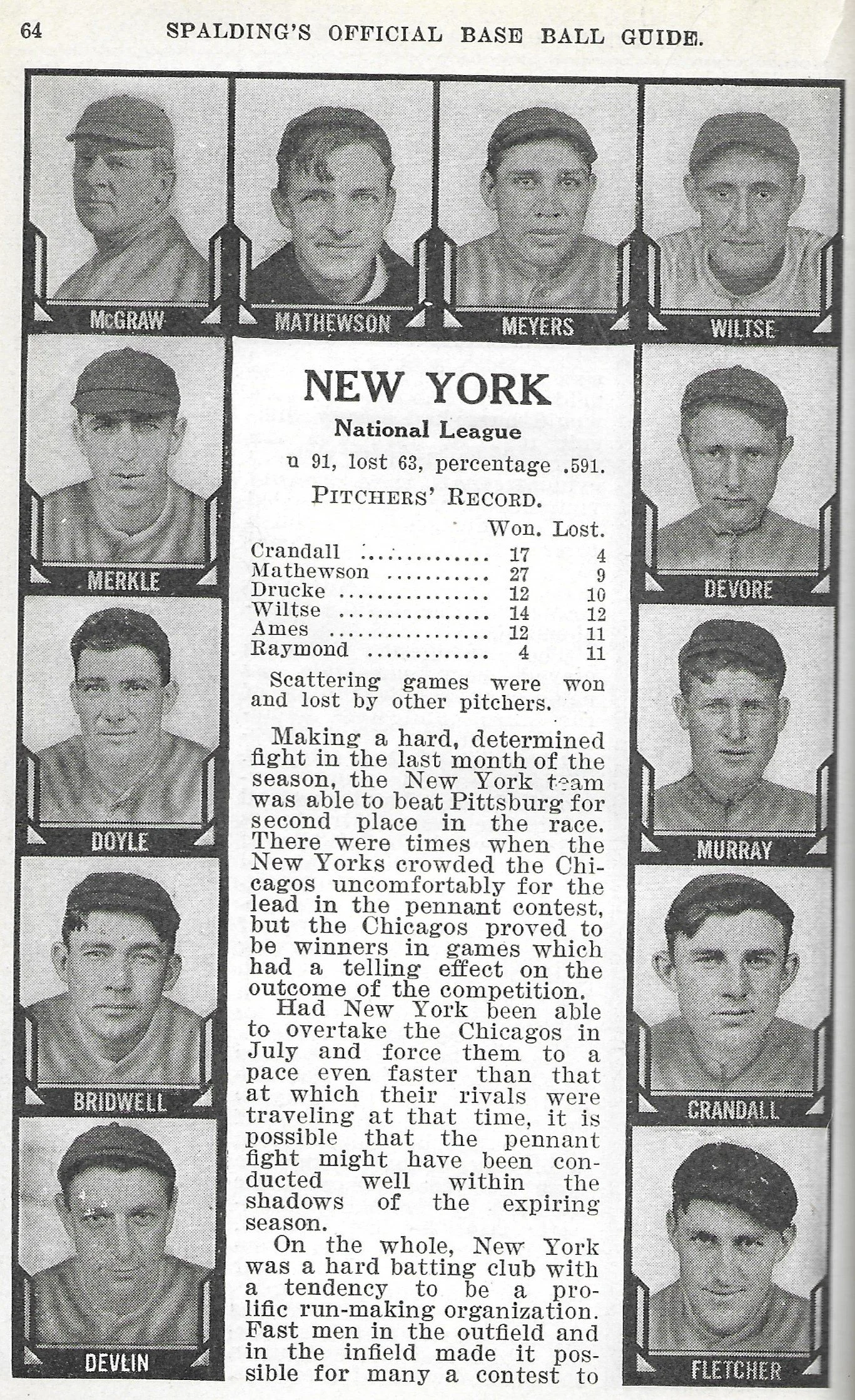
Portraits in the Spalding Guide
Here is how the portraits which were taken by the Paul Thompson agency would have appeared in the Spalding Guide. Notice the Fred Merkle portrait on the left side, second from the top.
These images were put to good, repeated use, since there were such a small amount of photos taken of most players, which is what made the portraits taken by the Paul Thompson agency so valuable - both monetarily, and culturally.
Without the massive undertaking which was snapping photos of every single Major League player, most fans from around the country would never see what players looked like, or be able to put a face to the name when they read it in the newspaper.
There was no tv, there was no internet, and not every team came to every city before interleague play. So, often times, a fan’s only chance to literally see the players who made up their favorite sport would have been in the annual Spalding Guide, or by collecting baseball cards.
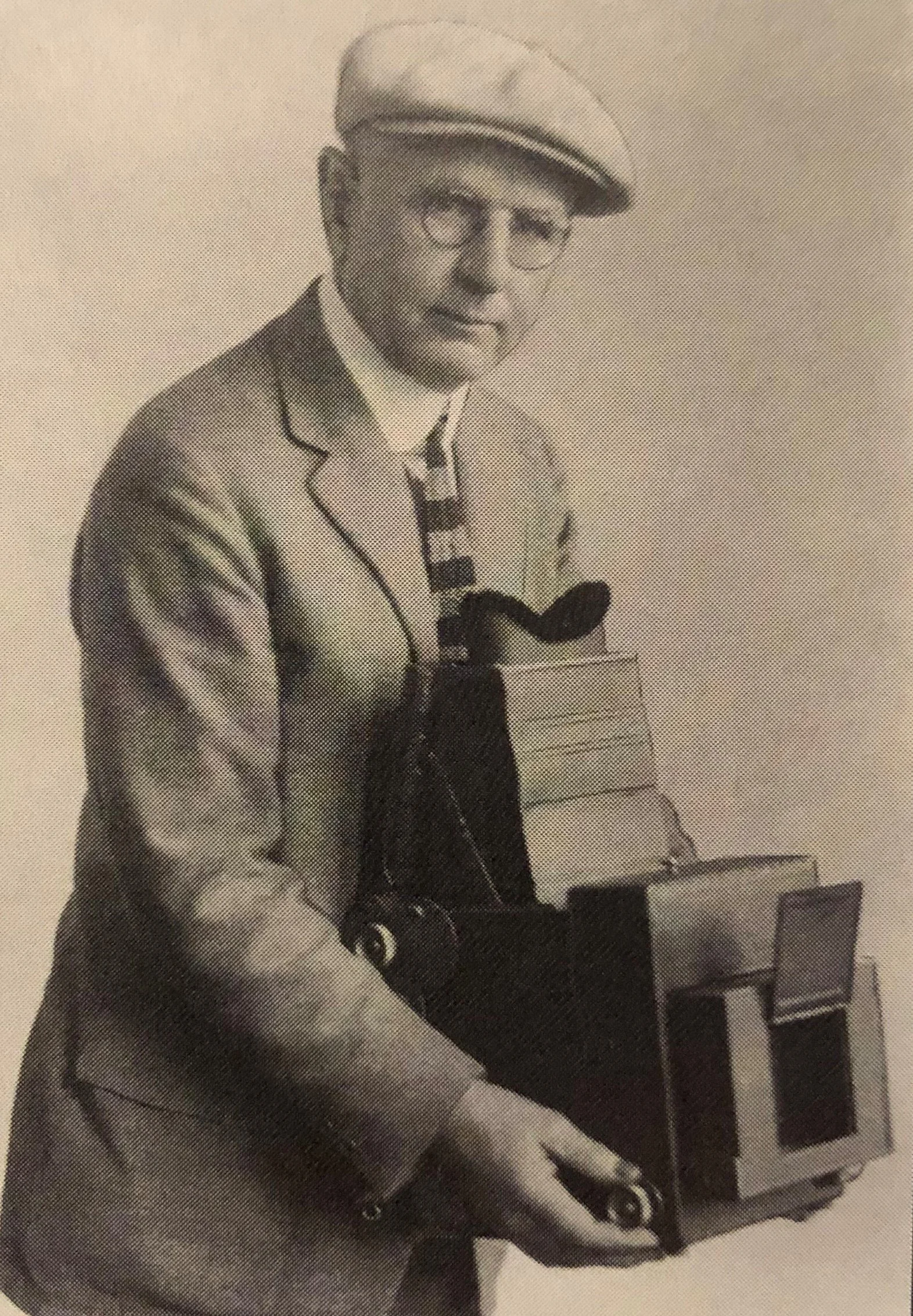
Louis Van Oeyen
Louis Van Oeyen (1865-1946) was the first photographer hired as staff on a Cleveland, Ohio, newspaper, and a pioneer in many techniques and activities of photojournalism.
Van Oeyen was hired as a Cleveland Press photographer in 1901, after his photographs of the water intake explosion disaster in Lake Erie, and the assassination of President William McKinley, were published in the Press.
During his career at the Press, he shot portraiture, politics, disaster, crime, scandal, and sports photographs. His greatest love was baseball, and he became official photographer for the American League in 1908, and for the World Series until 1922.
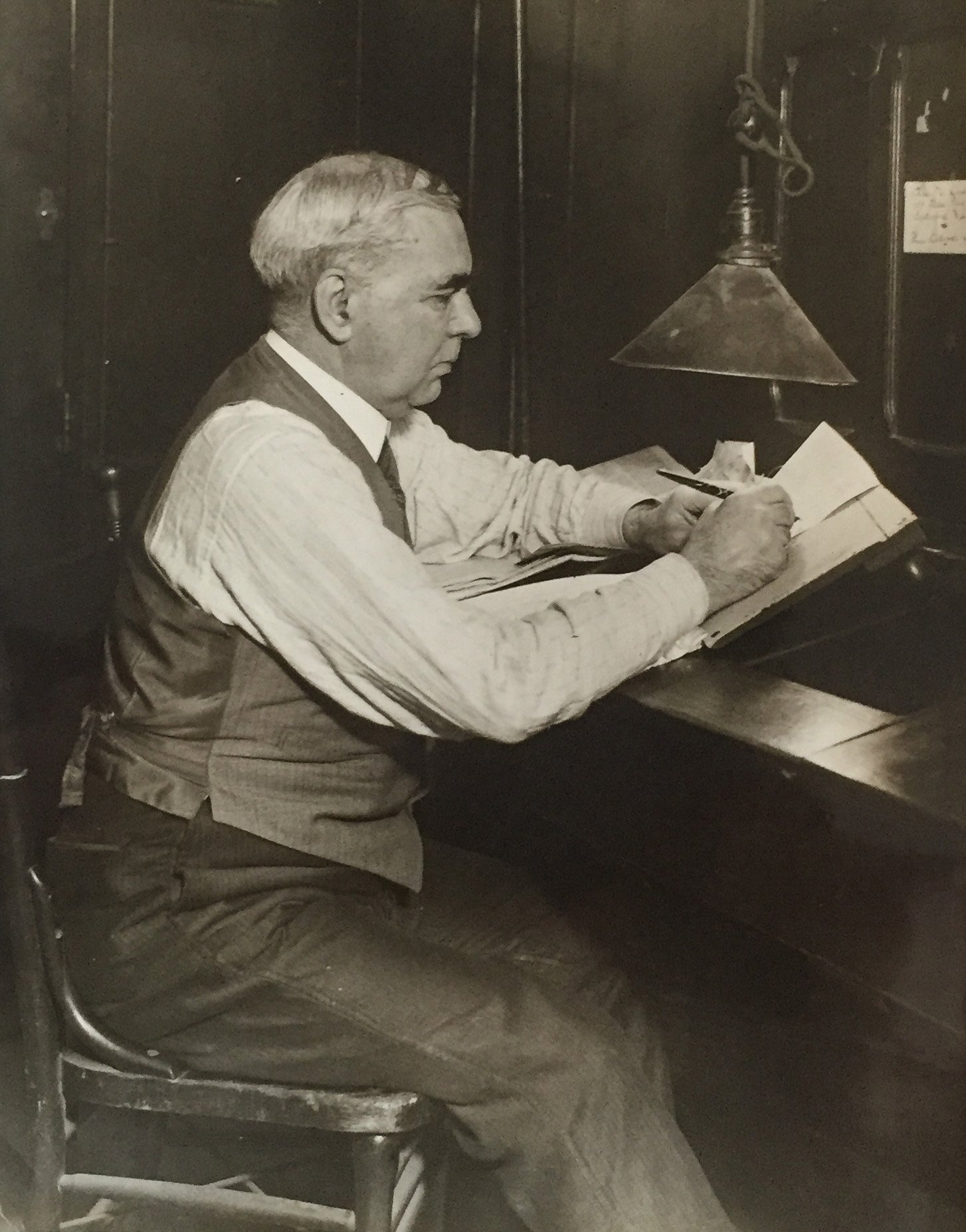
Charles M. Conlon
Charles Martin Conlon was born in Albany, New York and grew up in the neighboring city of Troy. He started his career working as a proof-reader for New York City newspapers in the early 1900s, and took up landscape photography as a hobby.
Conlon became a master photographer, and is known for his distinctive and poetic documentation of America’s favorite pastime. He is pictured here at his proofreader’s desk at the Evening Telegram in 1930.
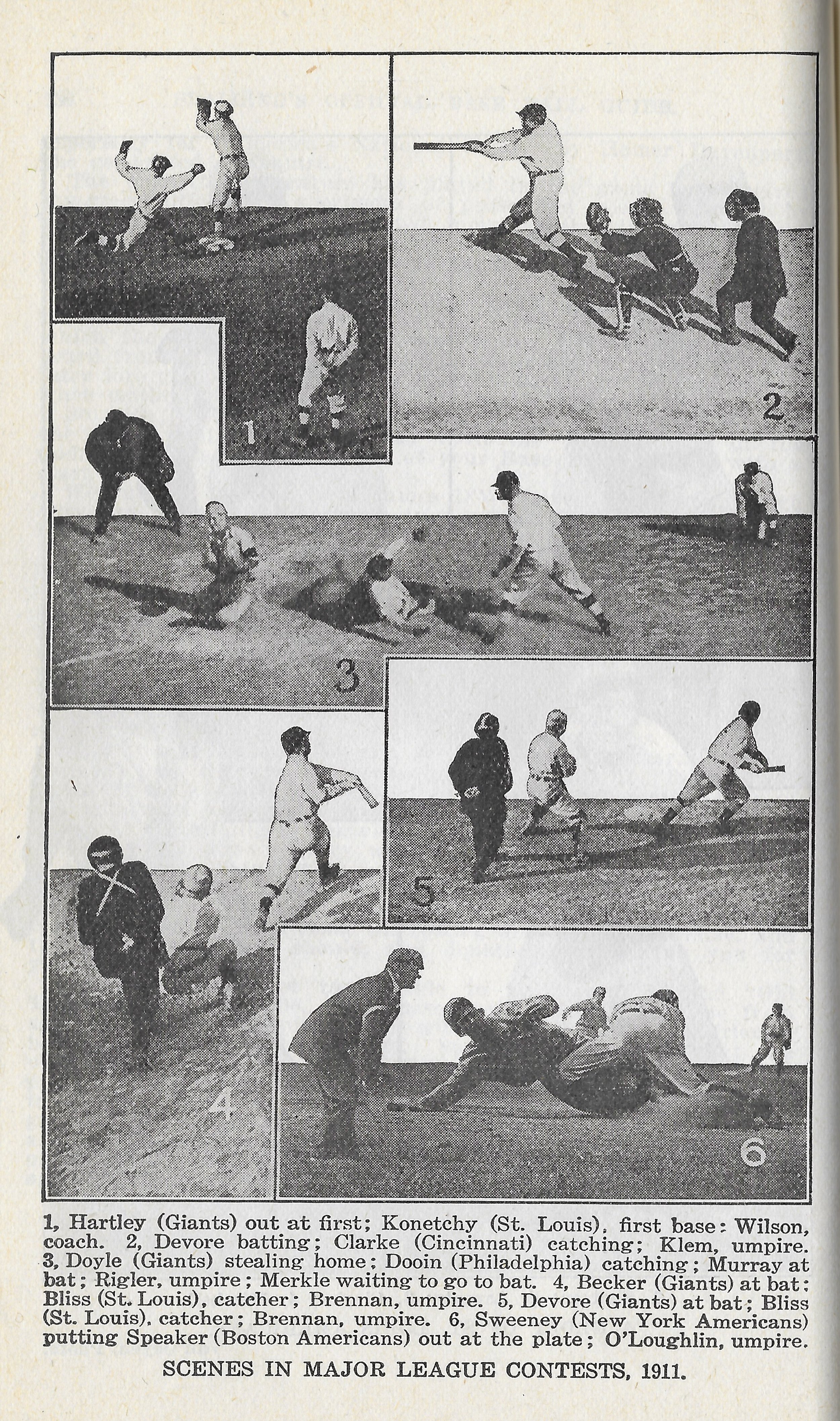
Spalding Guide Action Shots
A number of photos inside the Spalding Guide were taken by Louis Van Oeyen in Cleveland, or by Charles Conlon in New York.
The majority of the action shots which make up the center panels of the T202 set were taken by either Van Oeyen or Conlon, and had previously been published in Spalding Guides.
This is page 140 of the 1912 Spalding Guide.
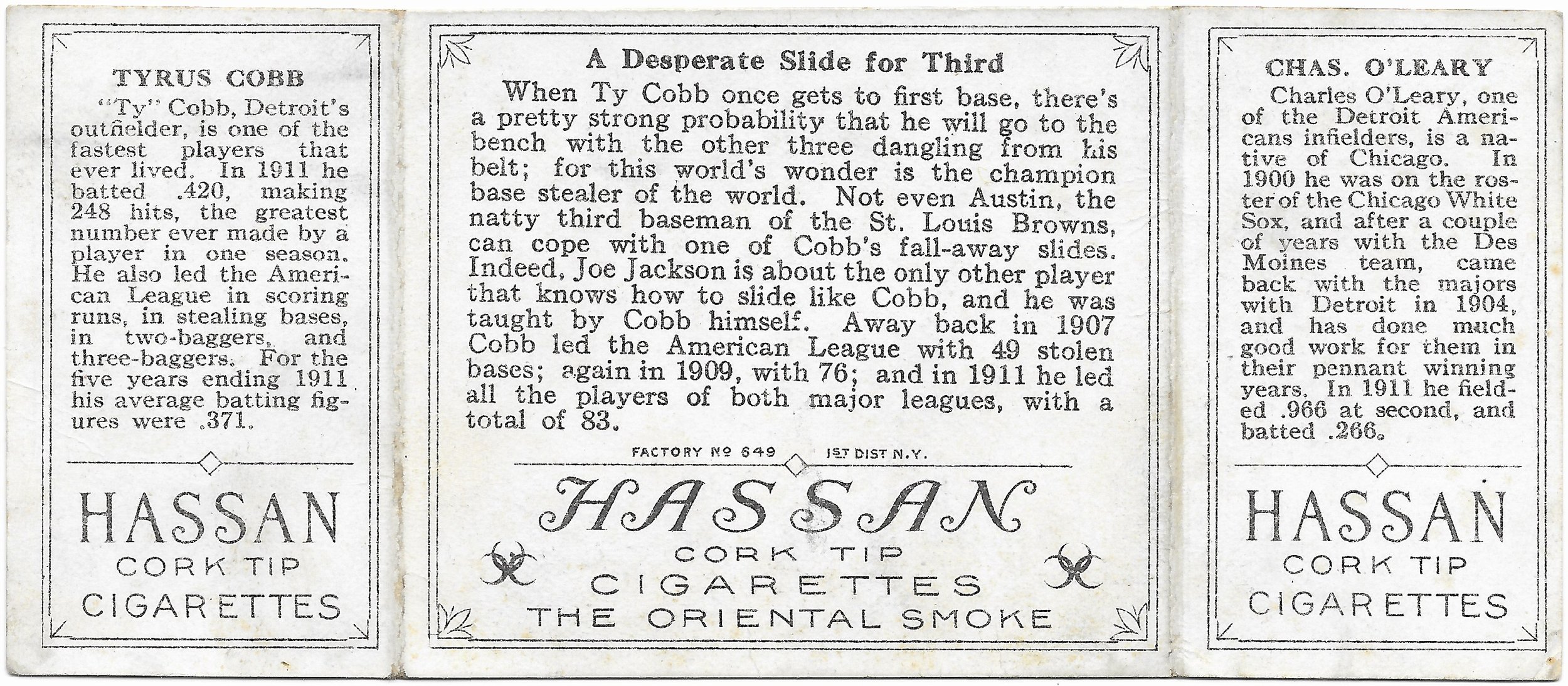
In addition to the photography and portraits which adorned the front of the cards of the T202 set, the backs of the cards were also provided by Spalding. Here, you can see exactly how the three panels were shown, with the fold lines separating the two end panels from the larger center panel.
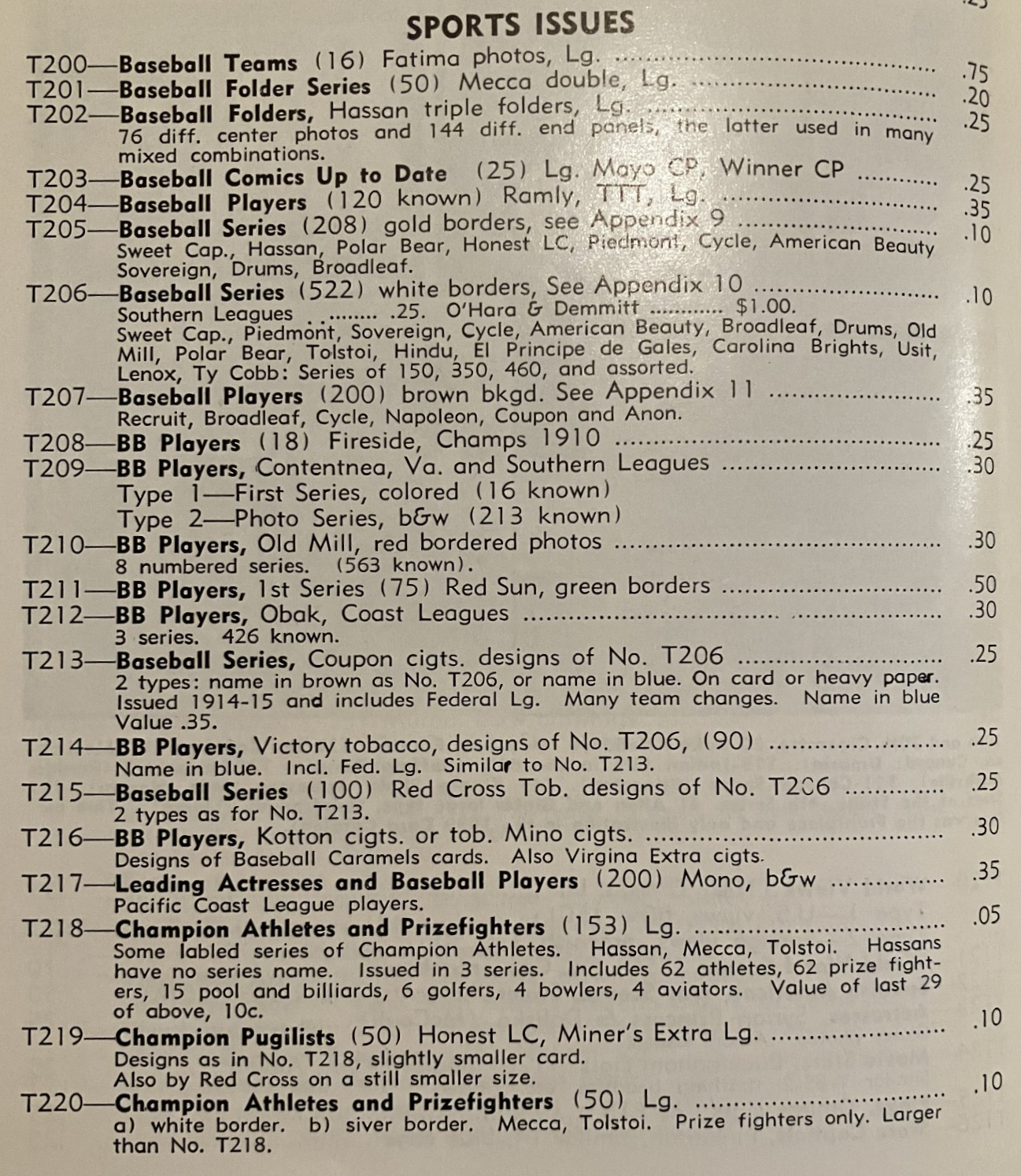
The “T” Designation
The classifications of cards set up by Jefferson Burdick were essential to early collectors and are still used to this day. The reason is because there were so many cards out there that collectors needed a way to classify them and keep them organized.
Jefferson Burdick sorted cards by how they were distributed or what they were. For example, cards placed inside of tobacco products were given a T-Card (for tobacco) designation.
Sports card collectors know him for his work with, primarily, baseball cards. However, the American Card Catalog goes far beyond that scope and includes not only other sports cards but all kinds of non-sports issues.
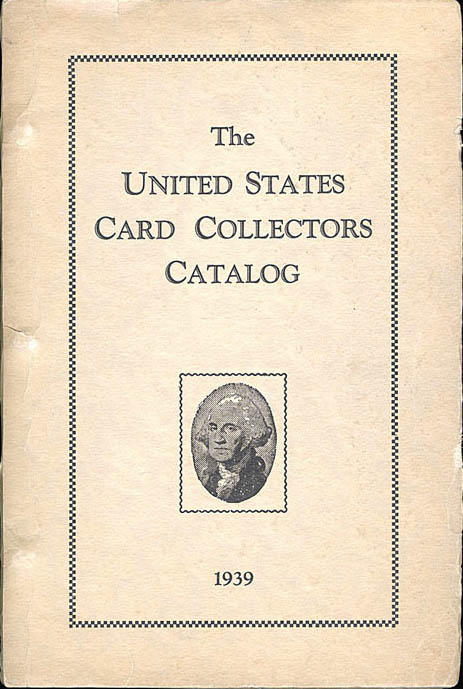
Jefferson Burdick’s American Card Catalog
Miniature blanket cards (often made of felt) were B-cards.
Cards distributed by bakeries or found in bread products were D-cards.
Cards found in caramels were E-cards.
Cards found in foods, particularly ice cream or dairy products, were F-cards.
Cards distributed by magazines or publications were M-cards.
Tobacco cards which came out in the 19th century were N-cards (as opposed to 20th century tobacco cards, which got the T-designation).
Cards found in gum were R-cards.
Strip cards and Exhibits were W-cards.
Game cards were WG-cards.
Cards which came out in other countries (often in Canada) were either V-cards or C-cards.
Click HERE for examples of specific sets.
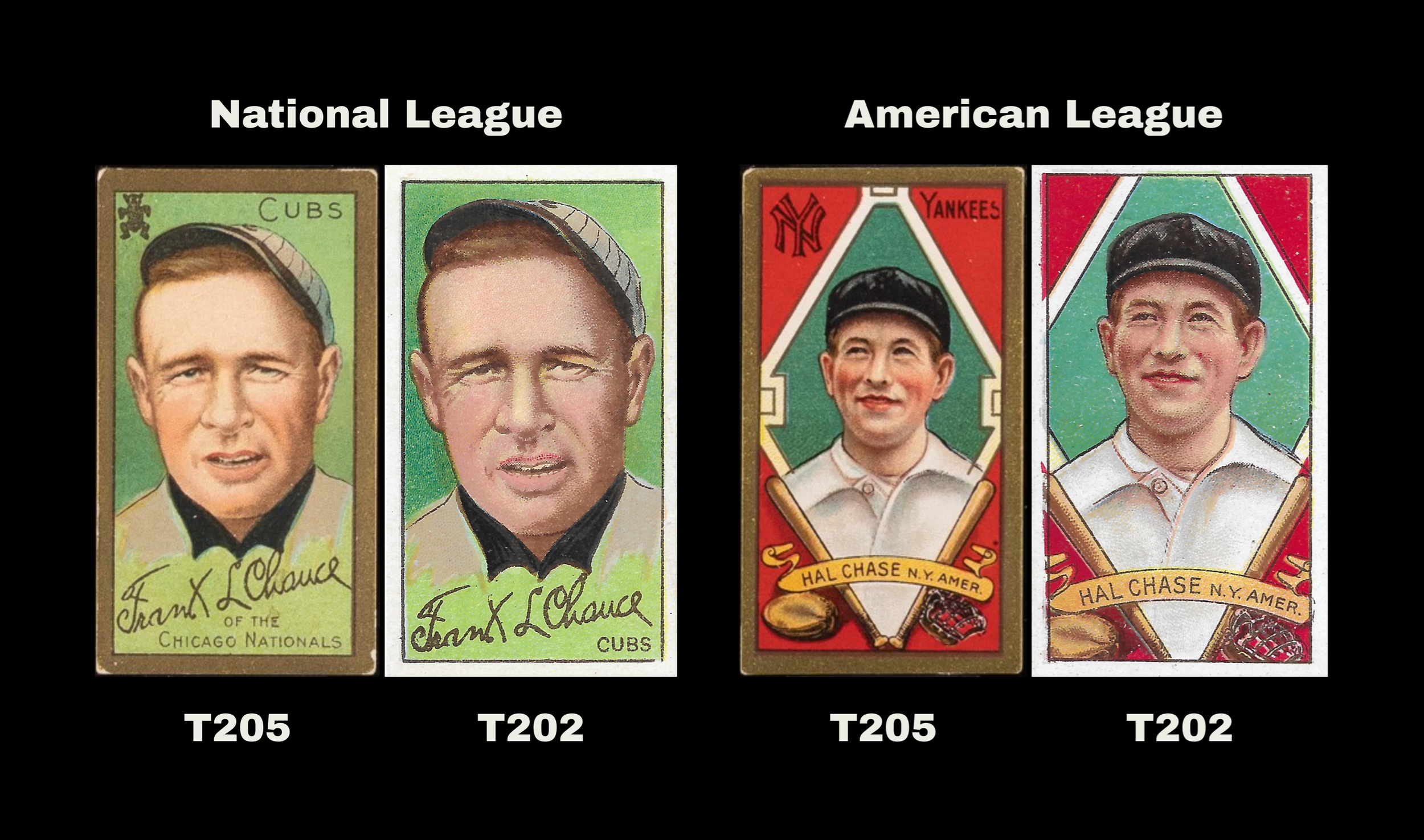
The images of National League players were larger and often times slightly more detailed than those of American League players in both the T205 and T202 sets. While the National League cards were mostly just the portrait, the American League cards also included the ornate decorations around the portrait, which forced the portraits on those cards to be smaller.
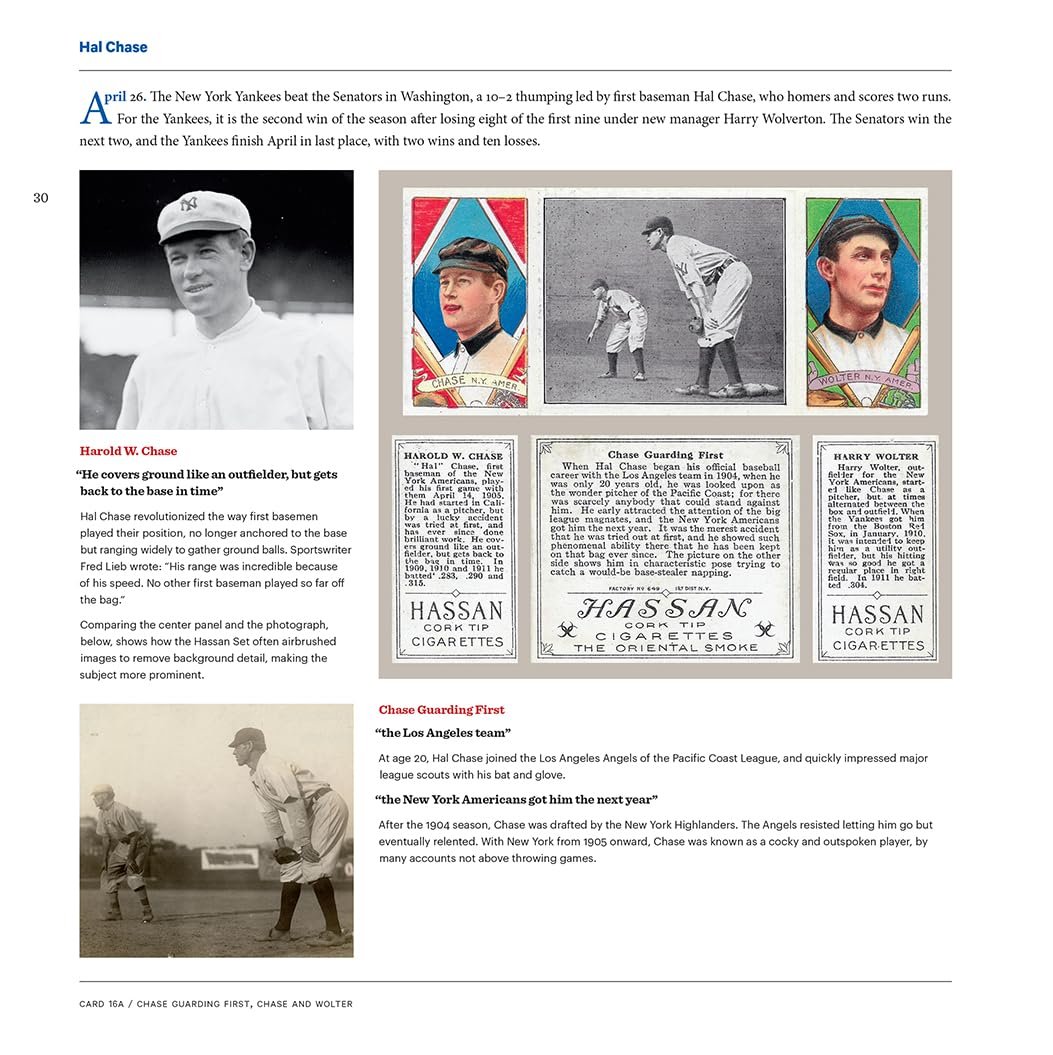
Phil has reproduced a number of the Paul Thompson portraits in his book, as can be seen above.
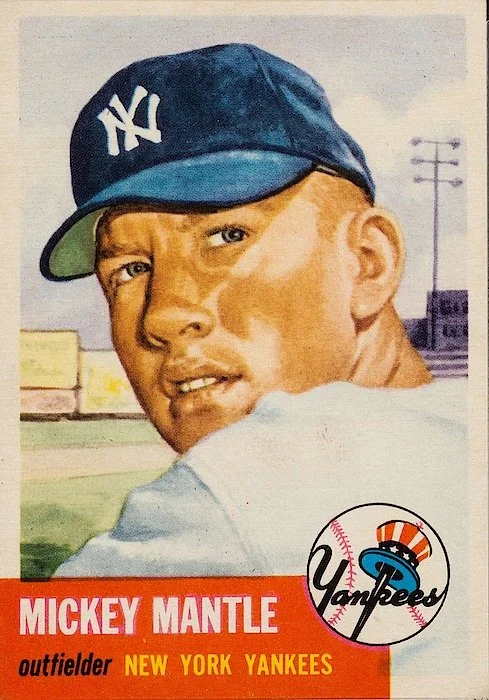
1953 Topps
The 1953 Topps set has long been a favorite of collectors because of its beautiful design and art work. Each card consists of a team logo in the bottom corner and and red or black banner (red for American League, black for National League) on the bottom encompassing the players name, position, and team.
The reverse of the cards contain a player biography, stats, and trivia. Topps originally planned the set to have 280 cards, but 6 contracts were lost to rival Bowman, leaving 274 cards in total.
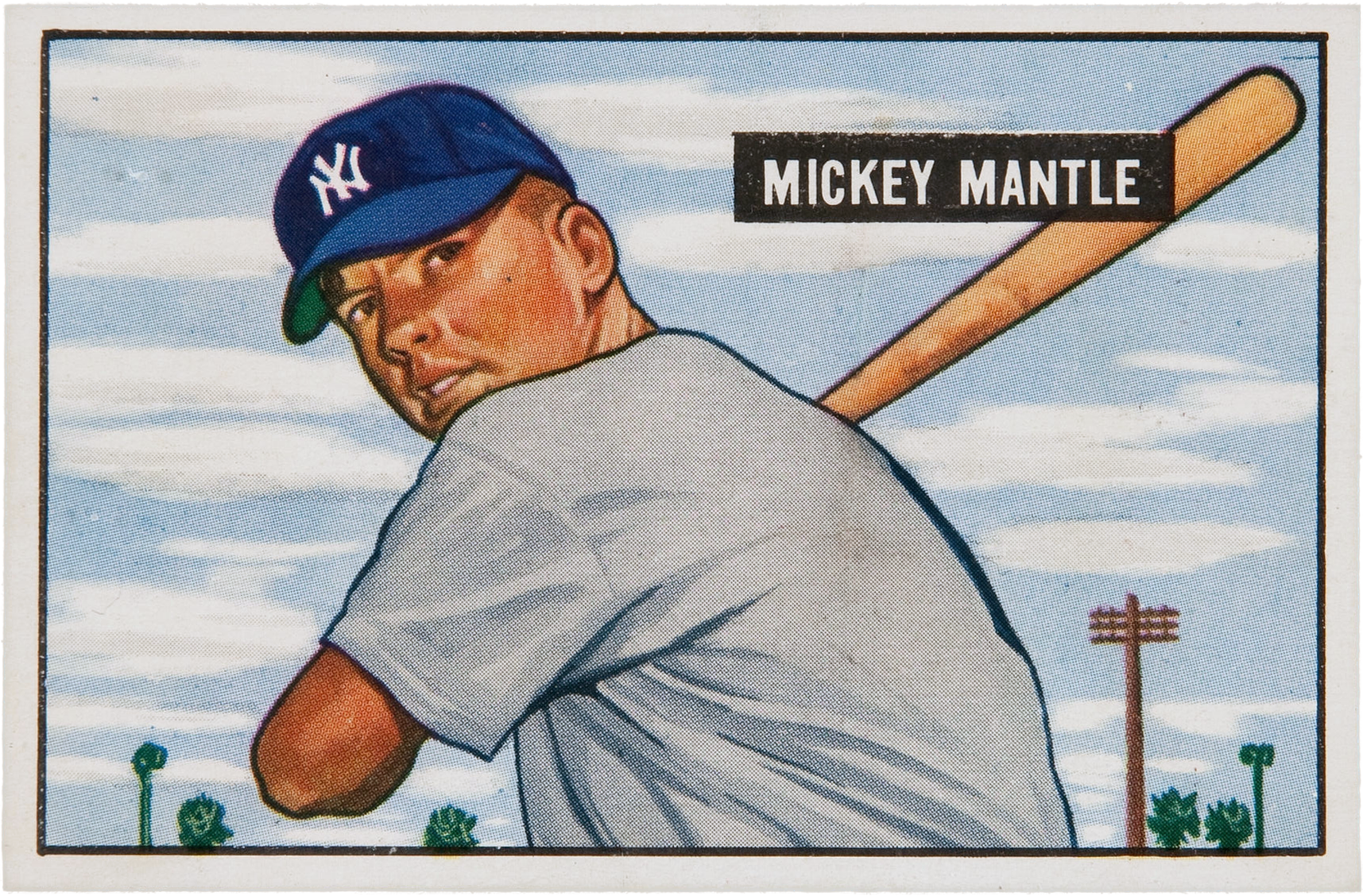
1951 Bowman
For 1951, Bowman increased the size of their set to 324 total cards. Included in this year were the true rookie cards of both Mickey Mantle and Willie Mays.
Bowman slightly increased the size of the card for the 1951 set, but kept the familiar color art reproduction of actual color photographs. The fronts finally included the player's name on them. Backs look similar to previous Bowman sets, with the player's name, team, and biography.
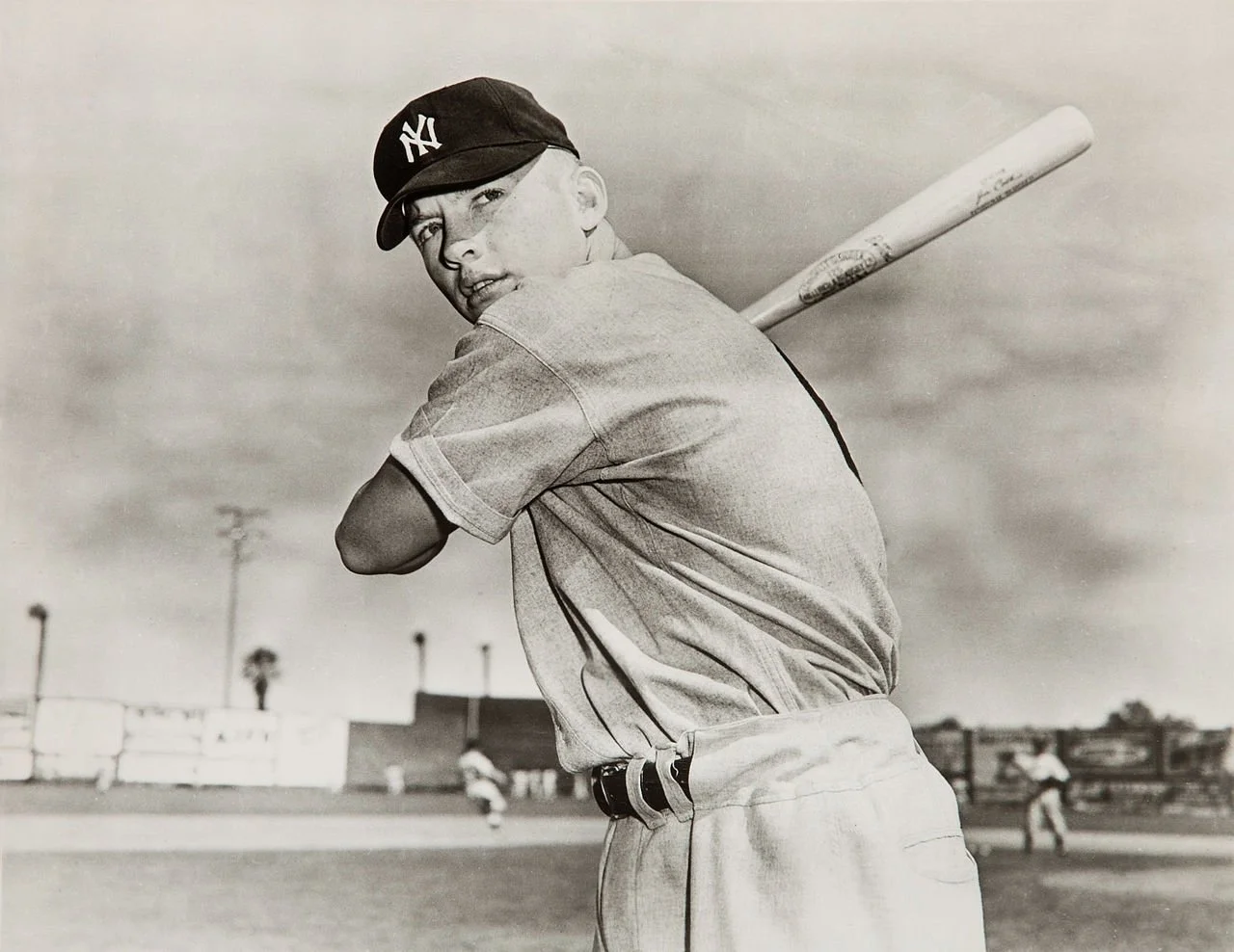
Original Photographs
The artwork in these sets from the 1950s was also based on actual photographs, as you can see here with this image of Mickey Mantle, which was artistically altered for his cards.
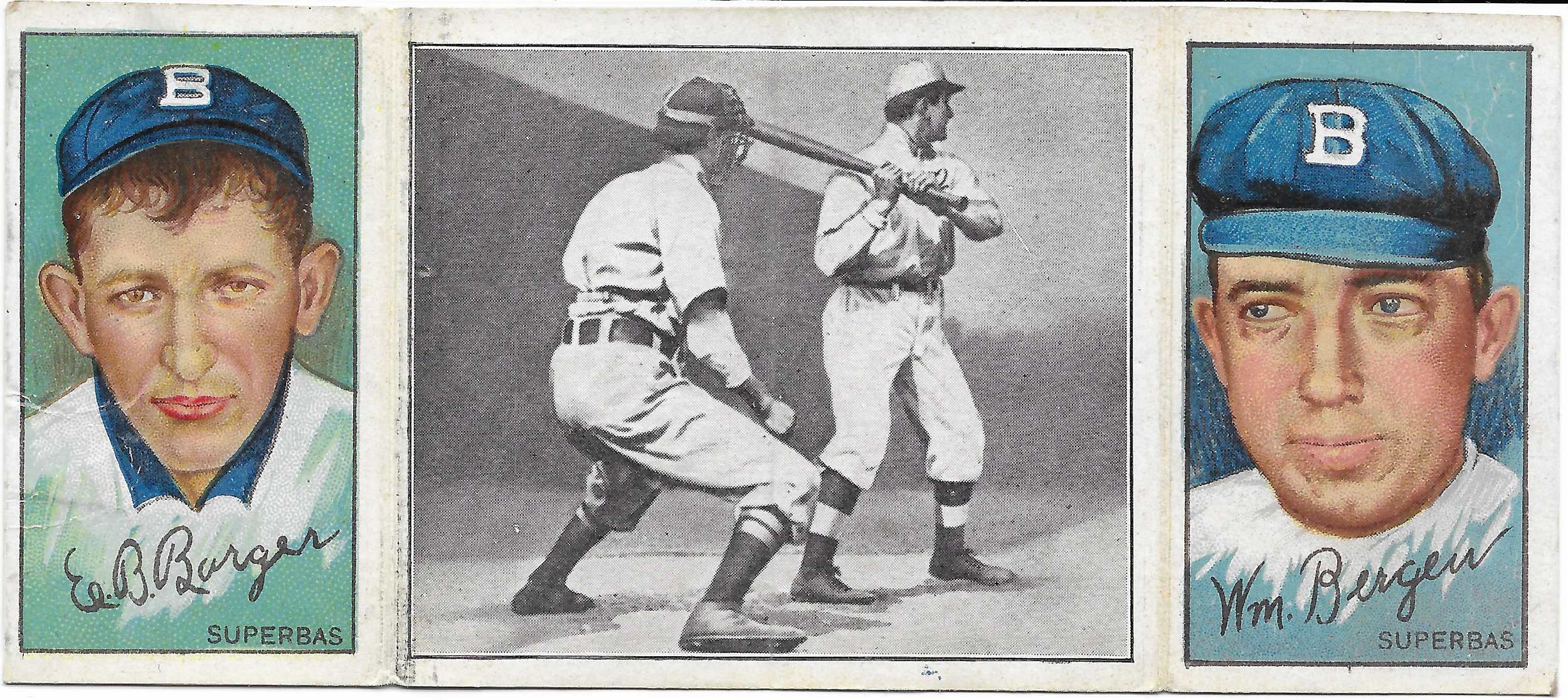
The T202 set has 144 different end panels, and 76 different center panels throughout the set.
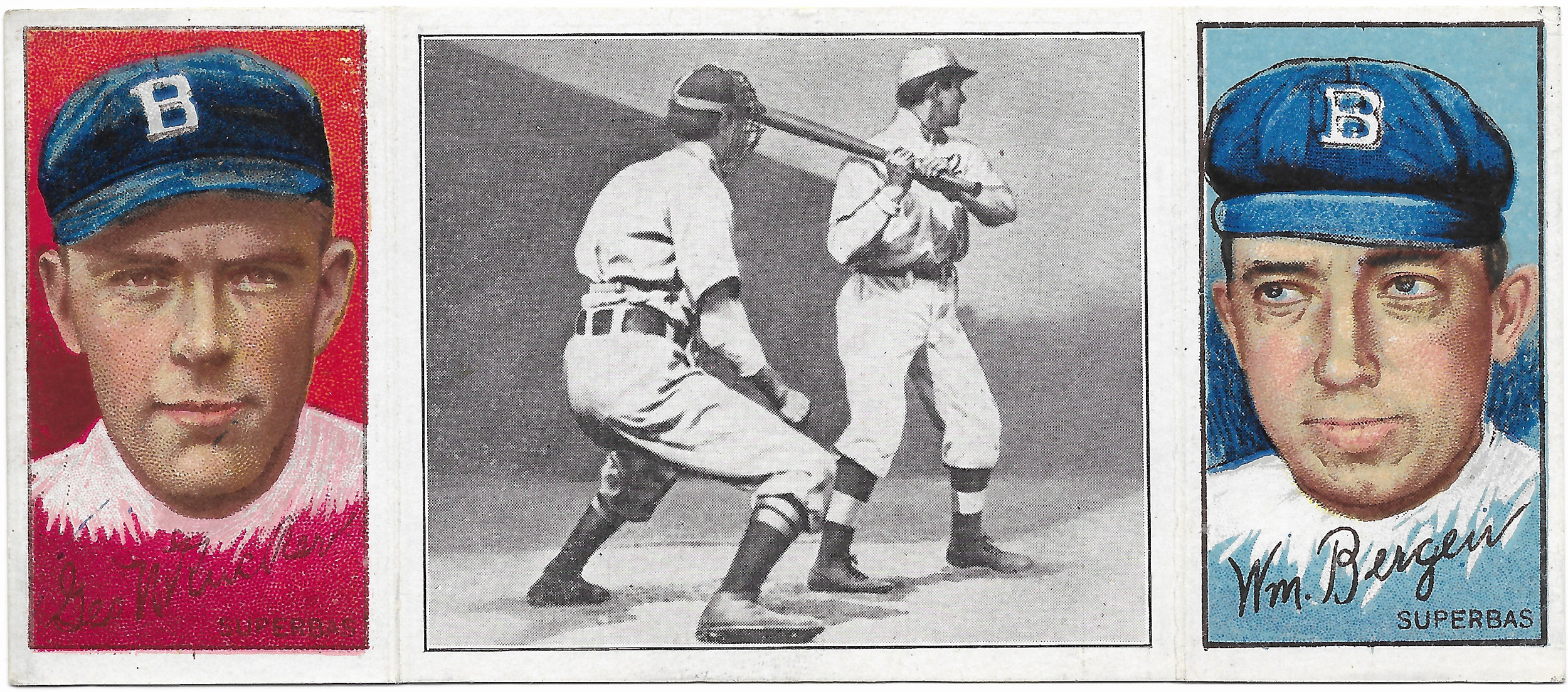
Some of these panels appear multiple times within the set, with numerous combinations of end cards.
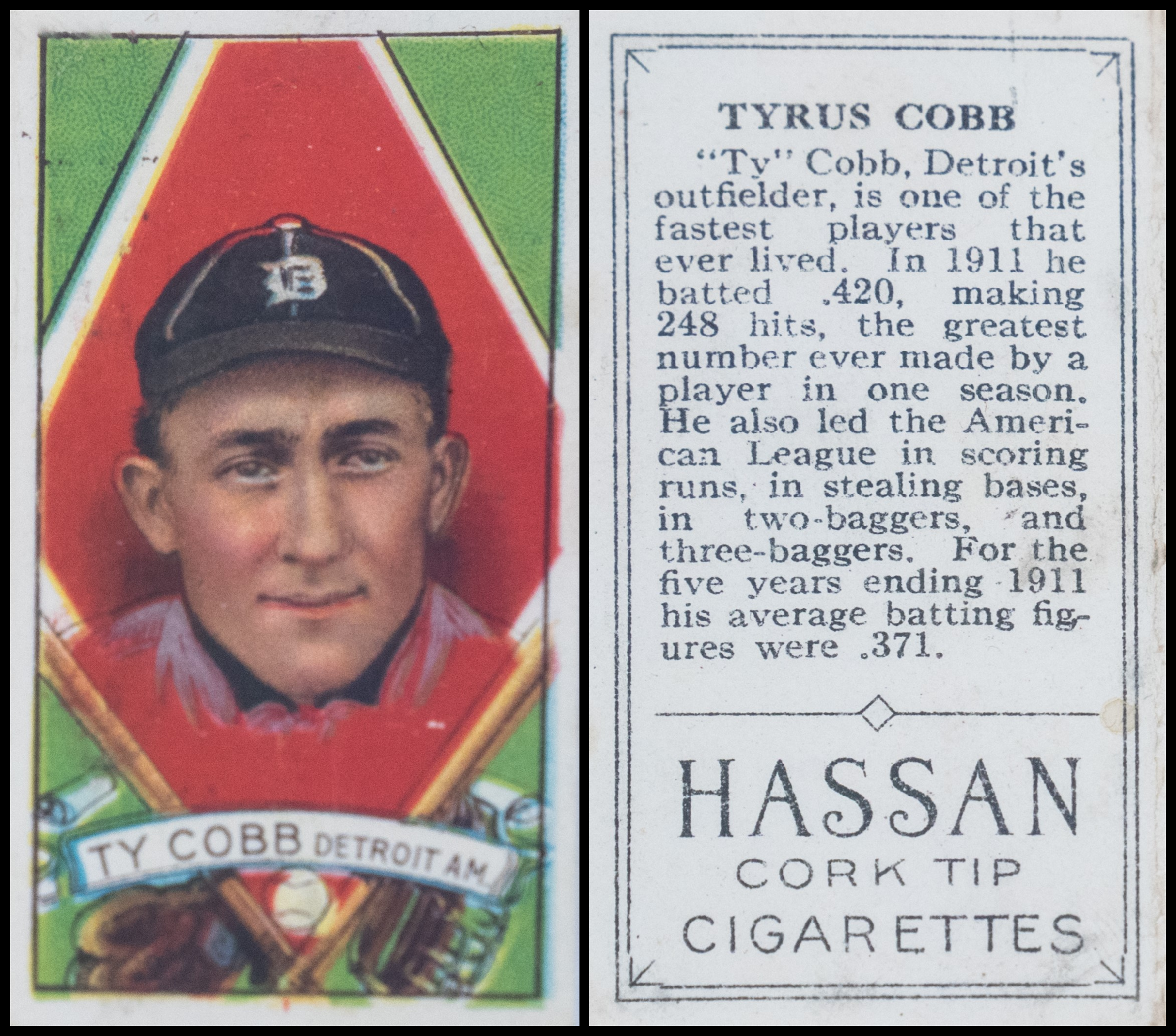
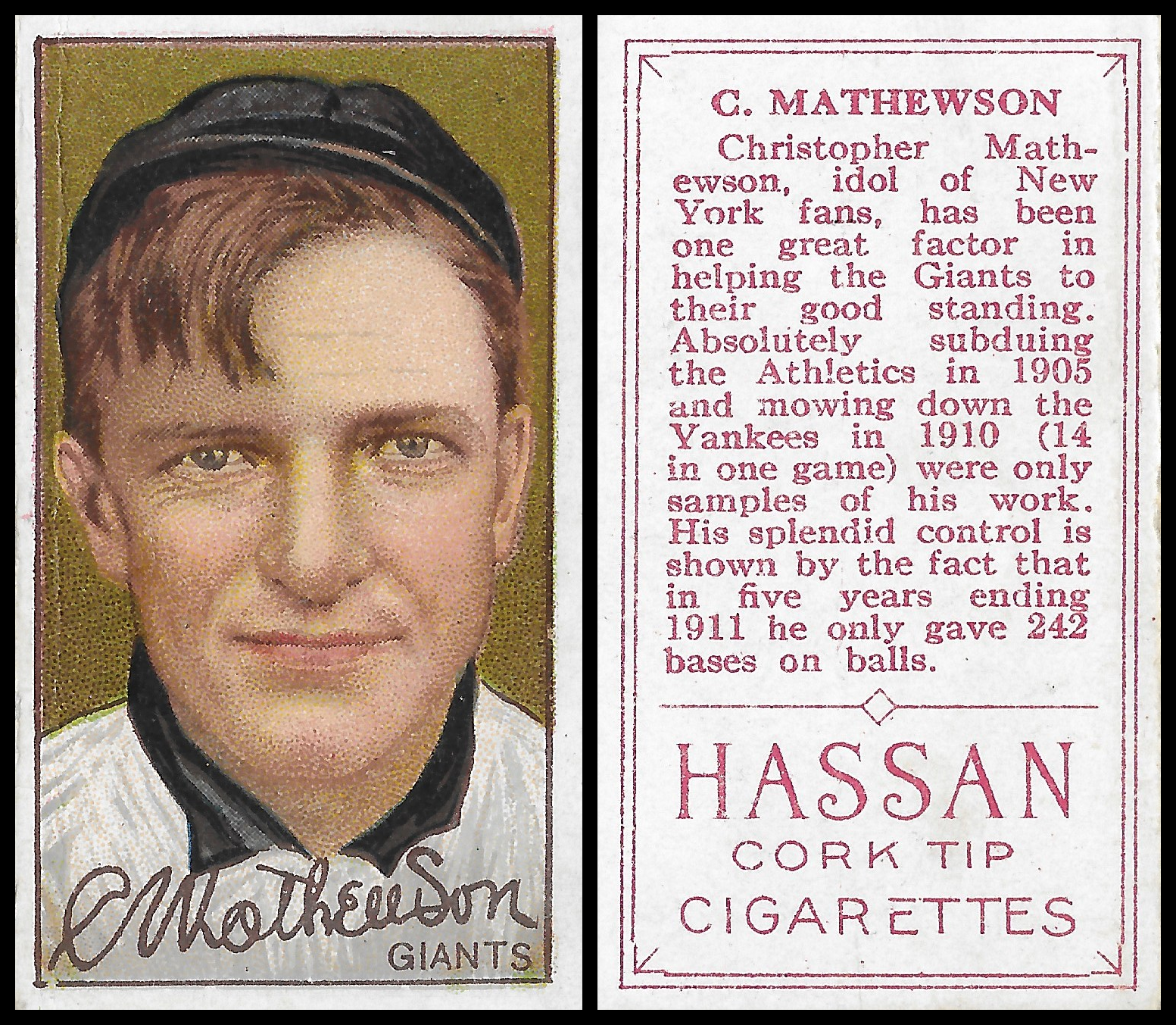

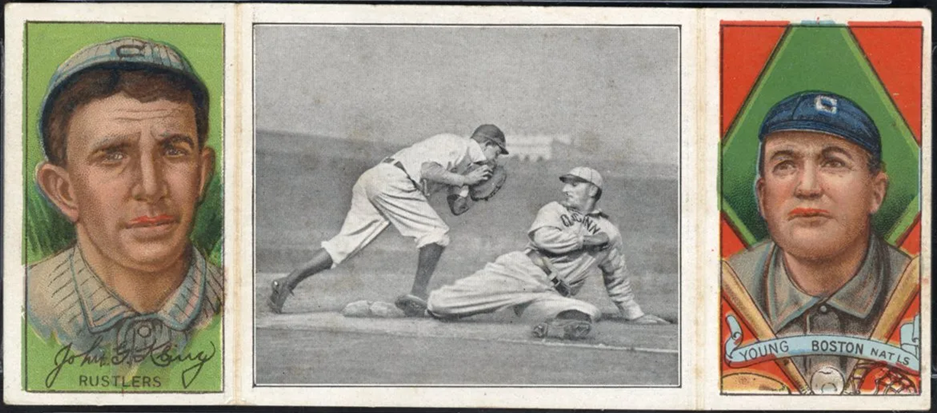
There are 137 different players represented in the set, including a large number of Hall of Famers, like Cy Young, who is represented on an end panel which serves as the last official baseball card he would appear on during his playing career.
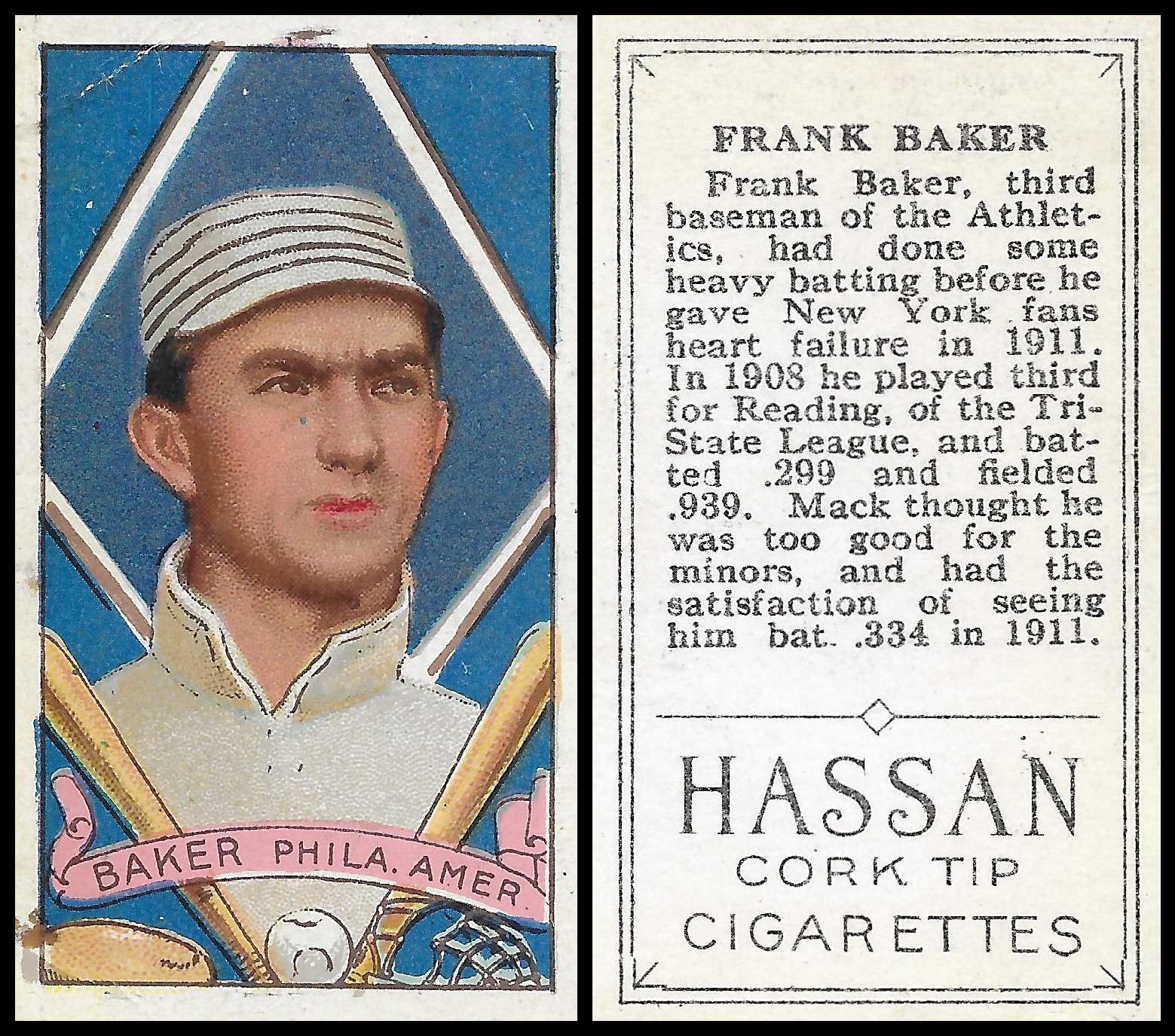

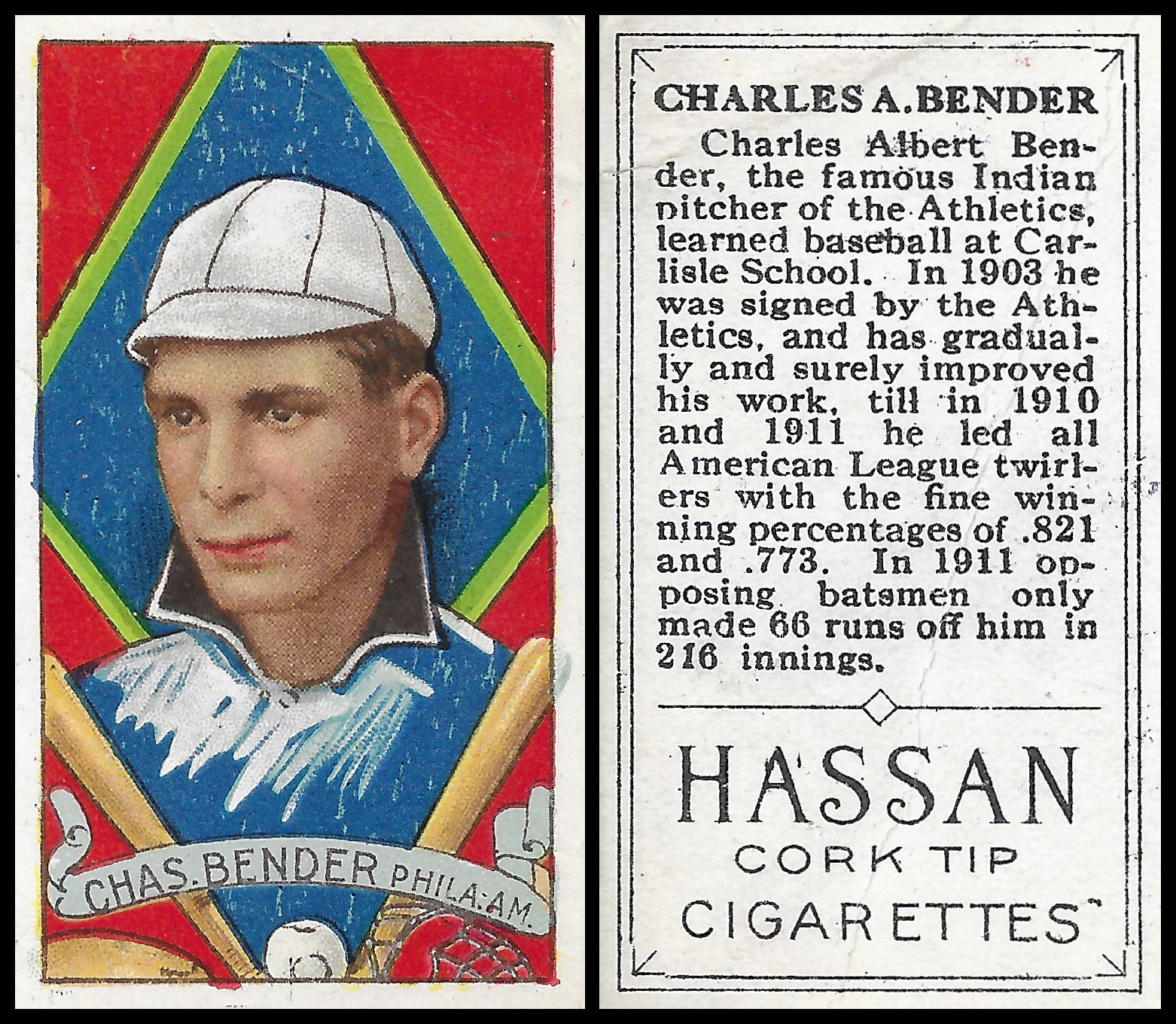
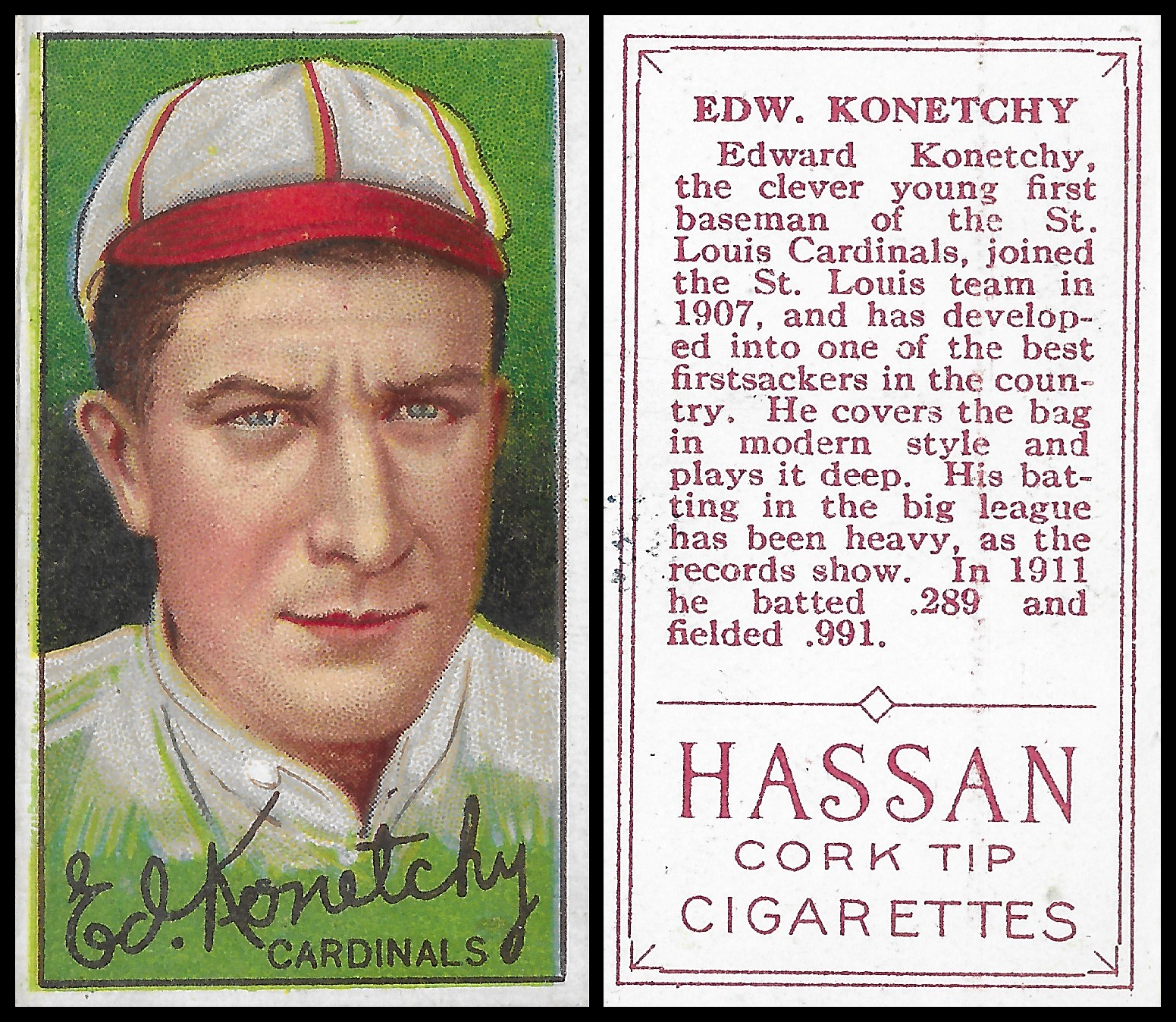
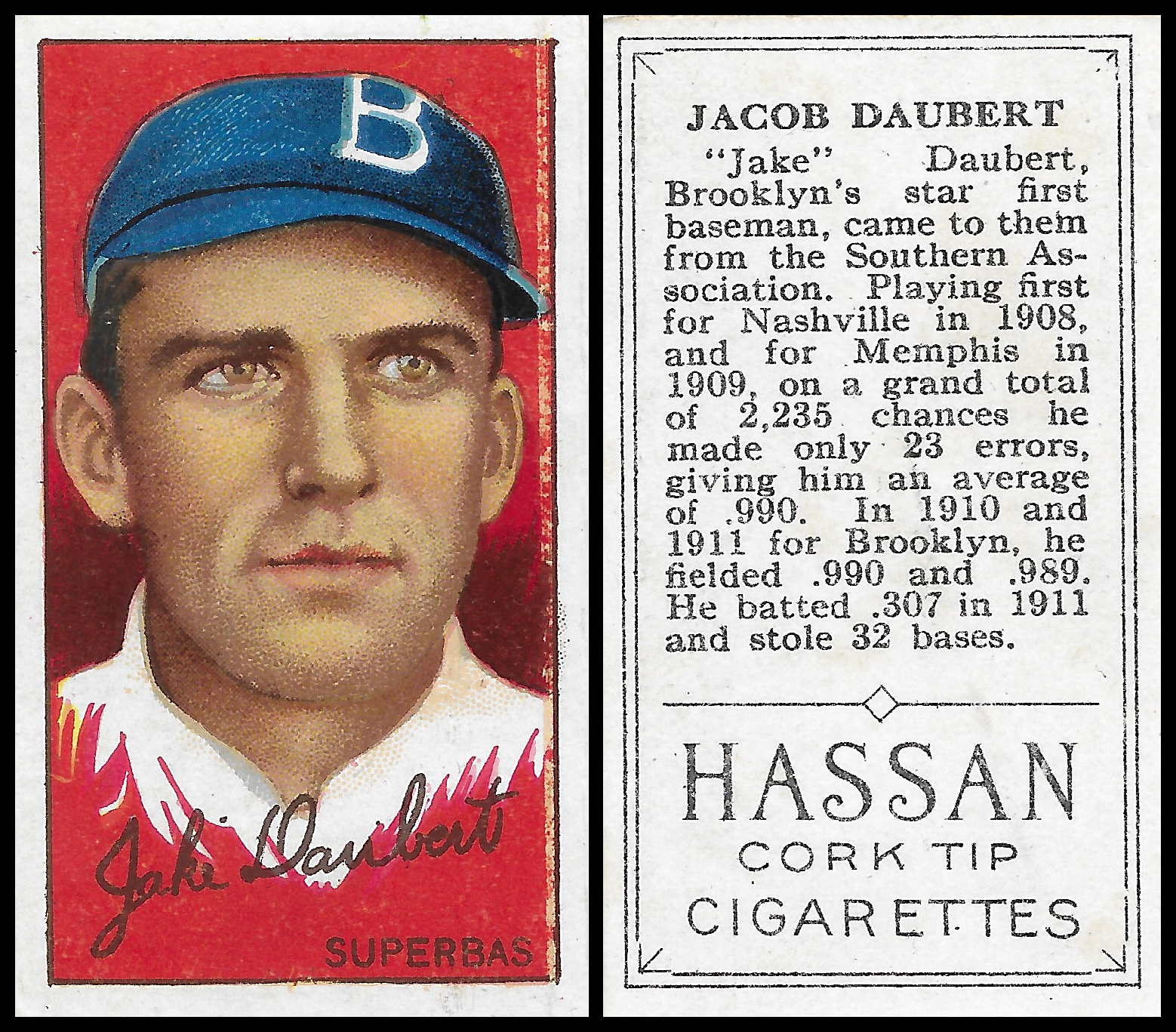
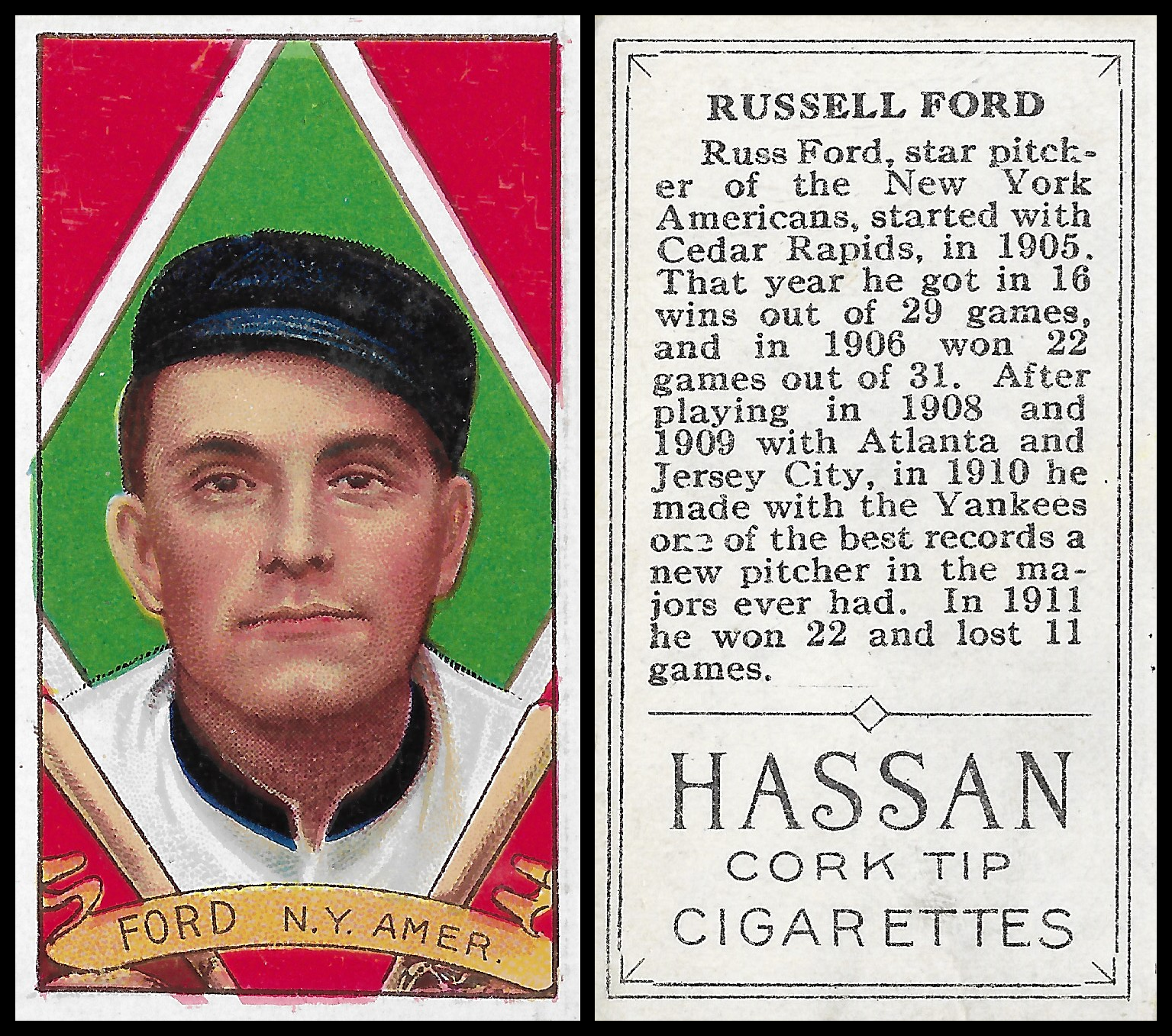
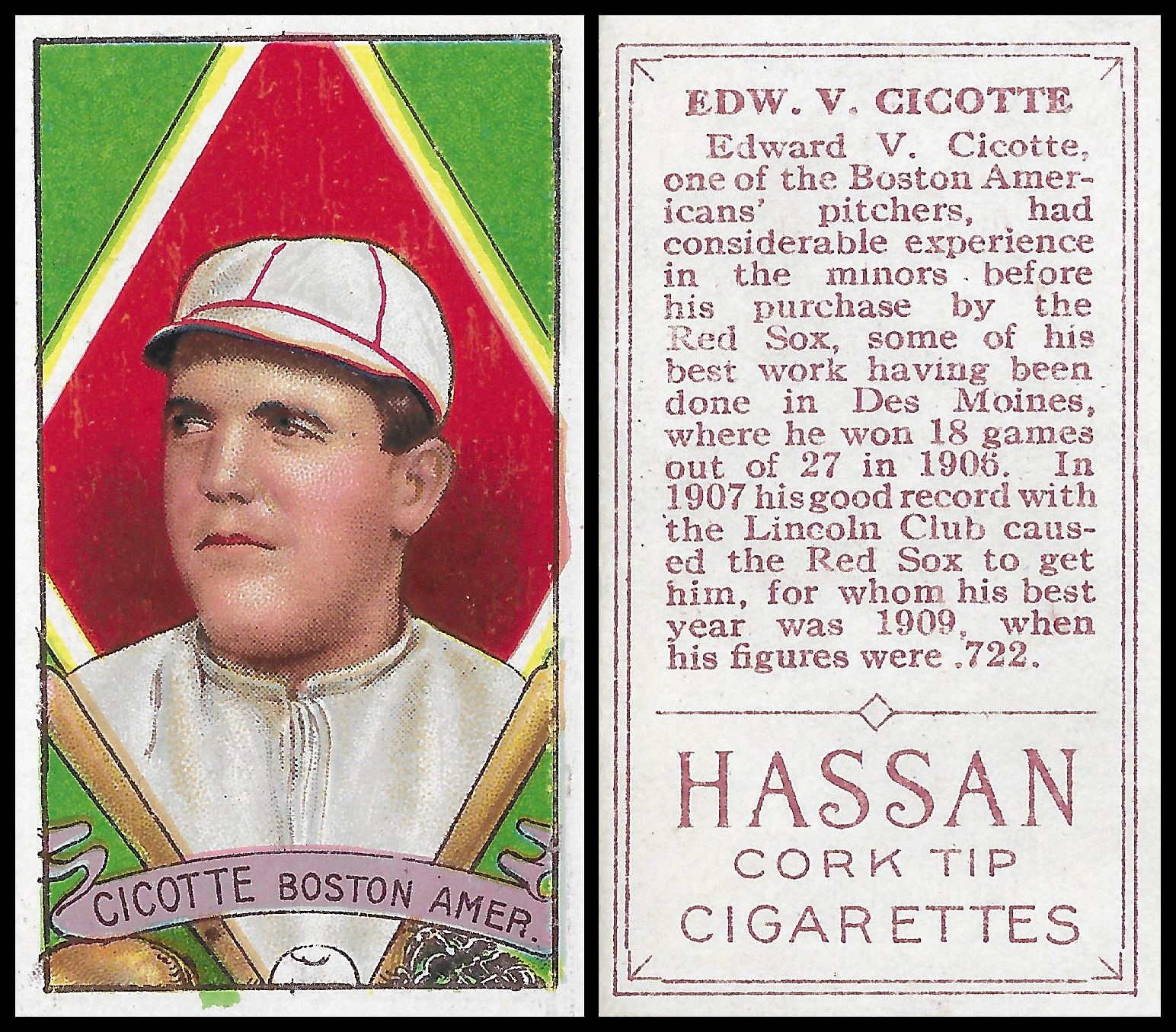
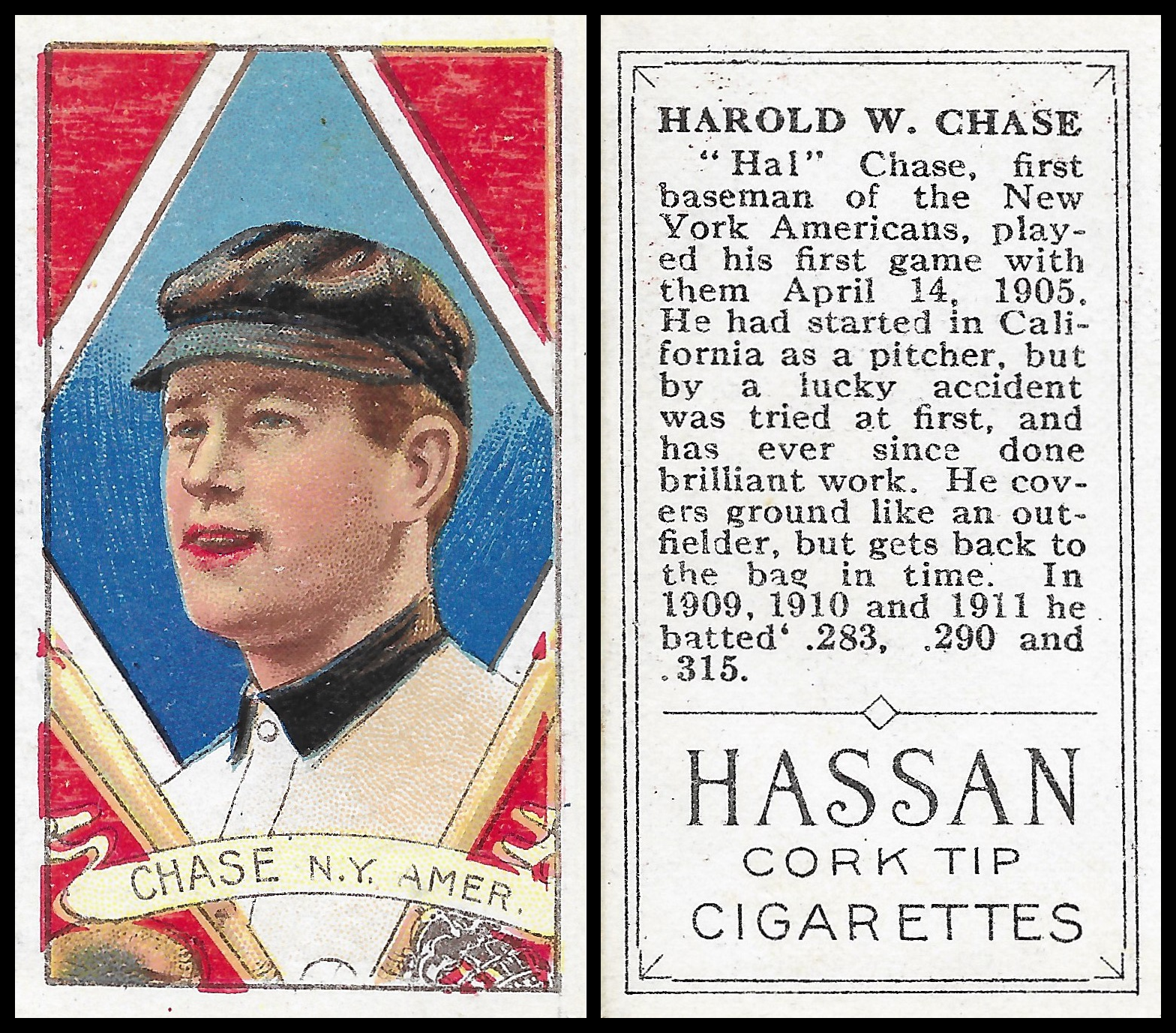
Hilltop Park
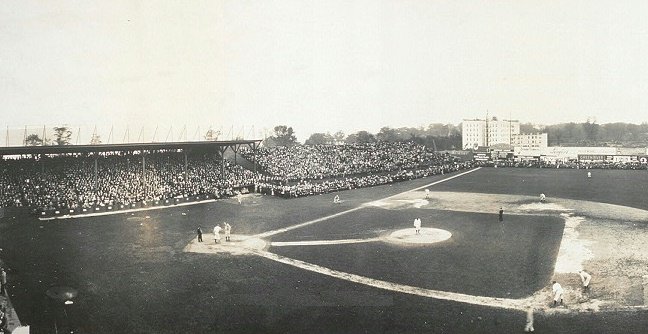
Hilltop Park was the home of the New York Yankees from 1903 to 1912 when they were known as the "Highlanders".
It was also the temporary home of the New York Giants during a two-month period in 1911 while the Polo Grounds was being rebuilt after a fire.
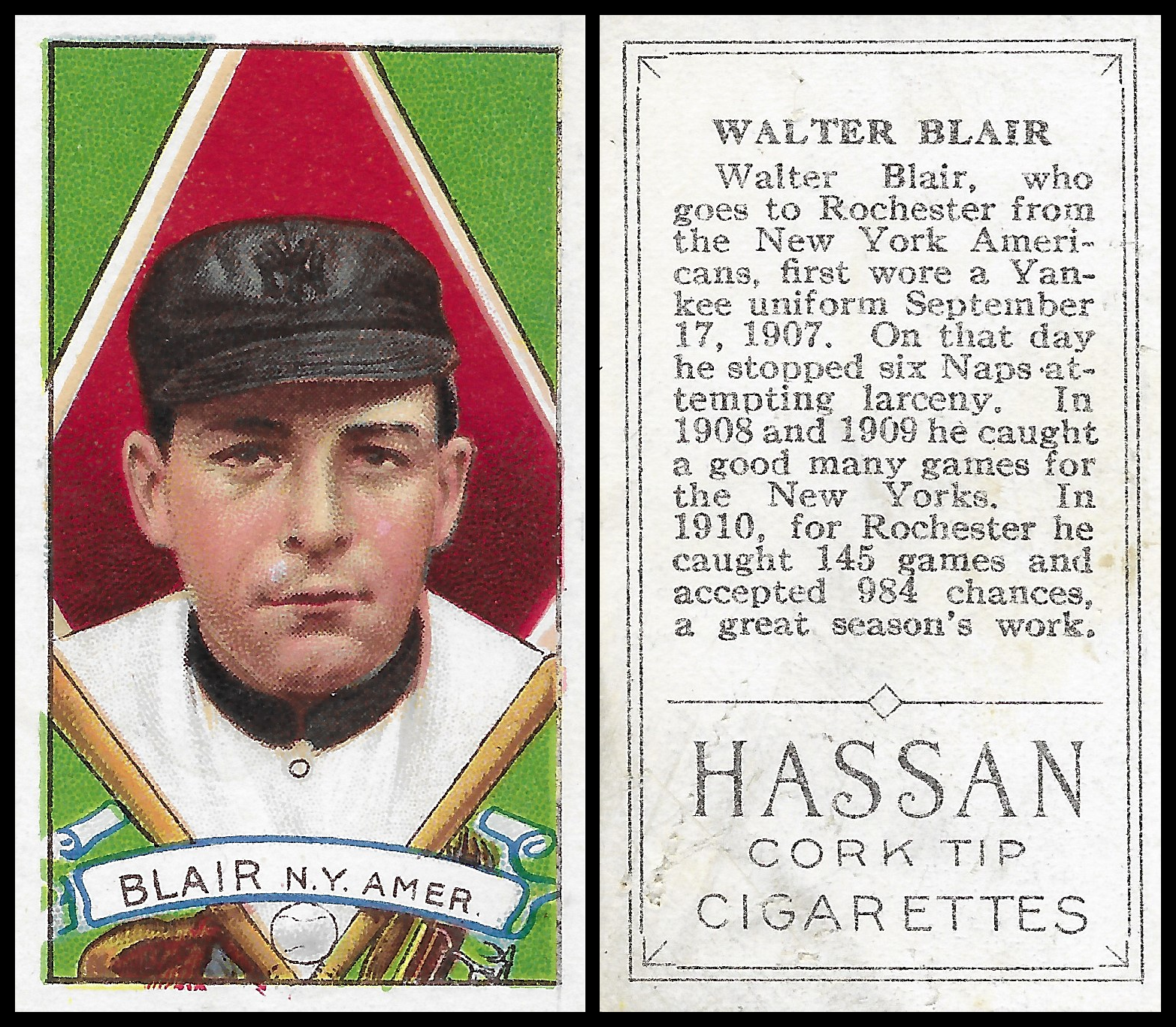
Walter Blair
Walter Blair’s career statistics via Baseball Reference
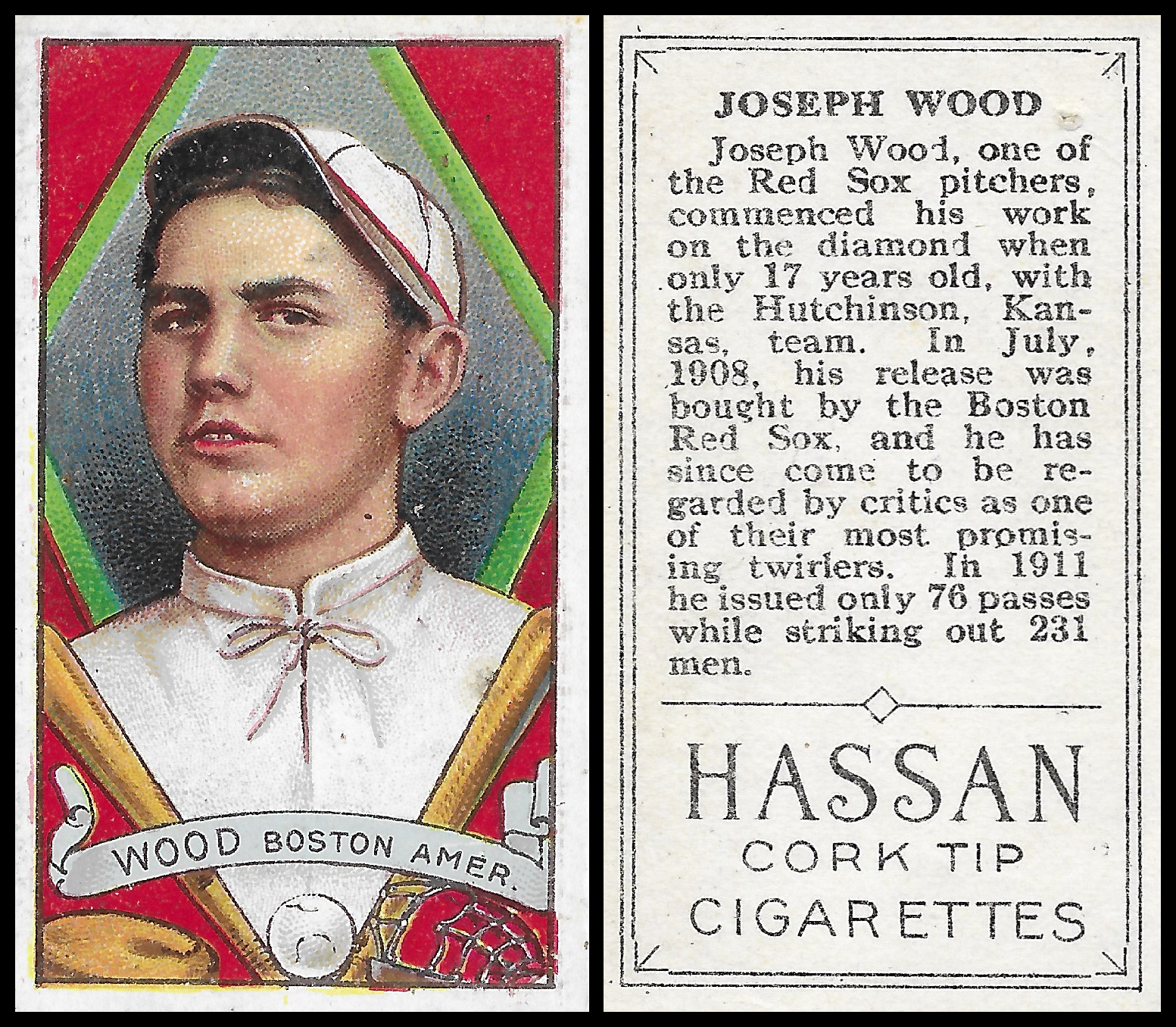
There are a number of theories as to why Blair was not included in the T205 set, but did sneak his way into the T202 set, along with Smoky Joe Wood.
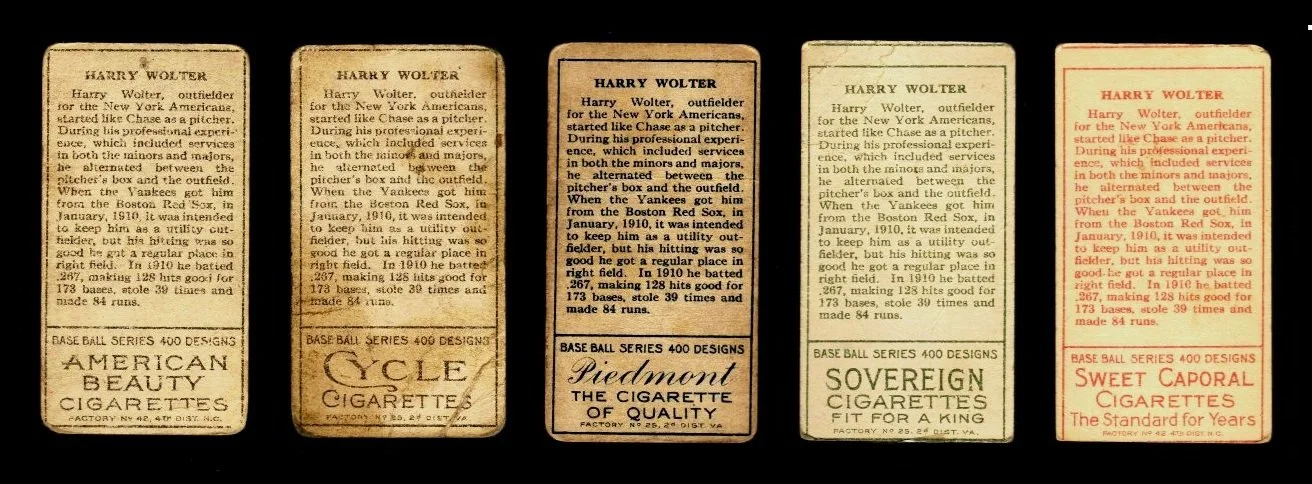
The backs of the T205 cards advertise that the set has "400 Designs" which, of course, is far greater than what was actually produced. There are many theories as to why this discrepancy exists.
Missing Stars?
There are a number of players who had cards in the T205 set, but did not appear on end panels of the T202 set, like Germany Schaefer.
Other players, such as Sam Crawford, Napoleon Lajoie, or Shoeless Joe Jackson, were not included in the T205 set, and also did not appear on end panels of the T202 set.
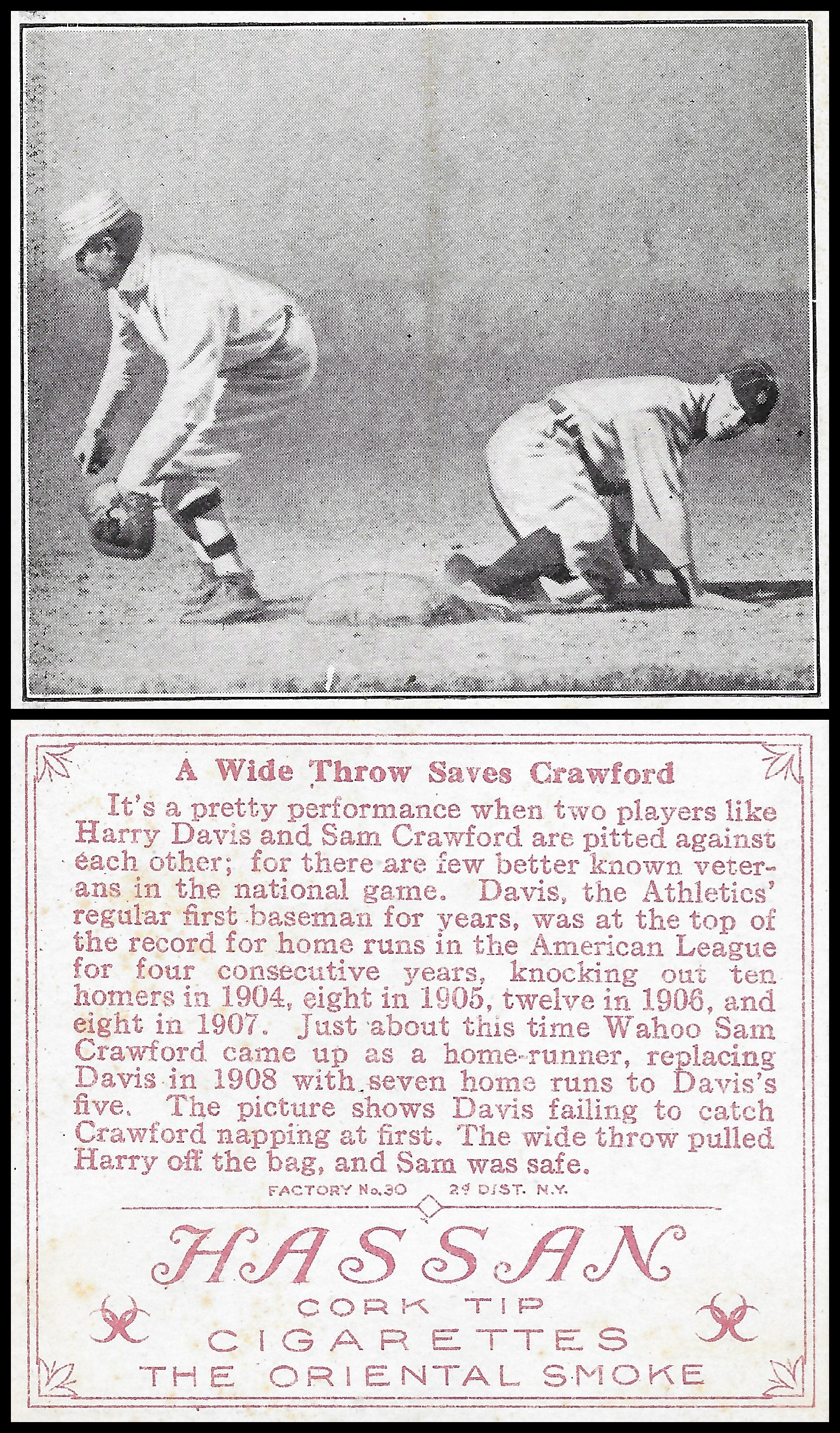
However, one way the T202 set found a way to include them was to feature these players in the center panels of some of the action shots in the set.
This center panel shows Athletics first baseman Harry Davis failing to catch “Wahoo Sam” Crawford napping at first. A wide throw pulled Davis off the bag, and Crawford was safe.
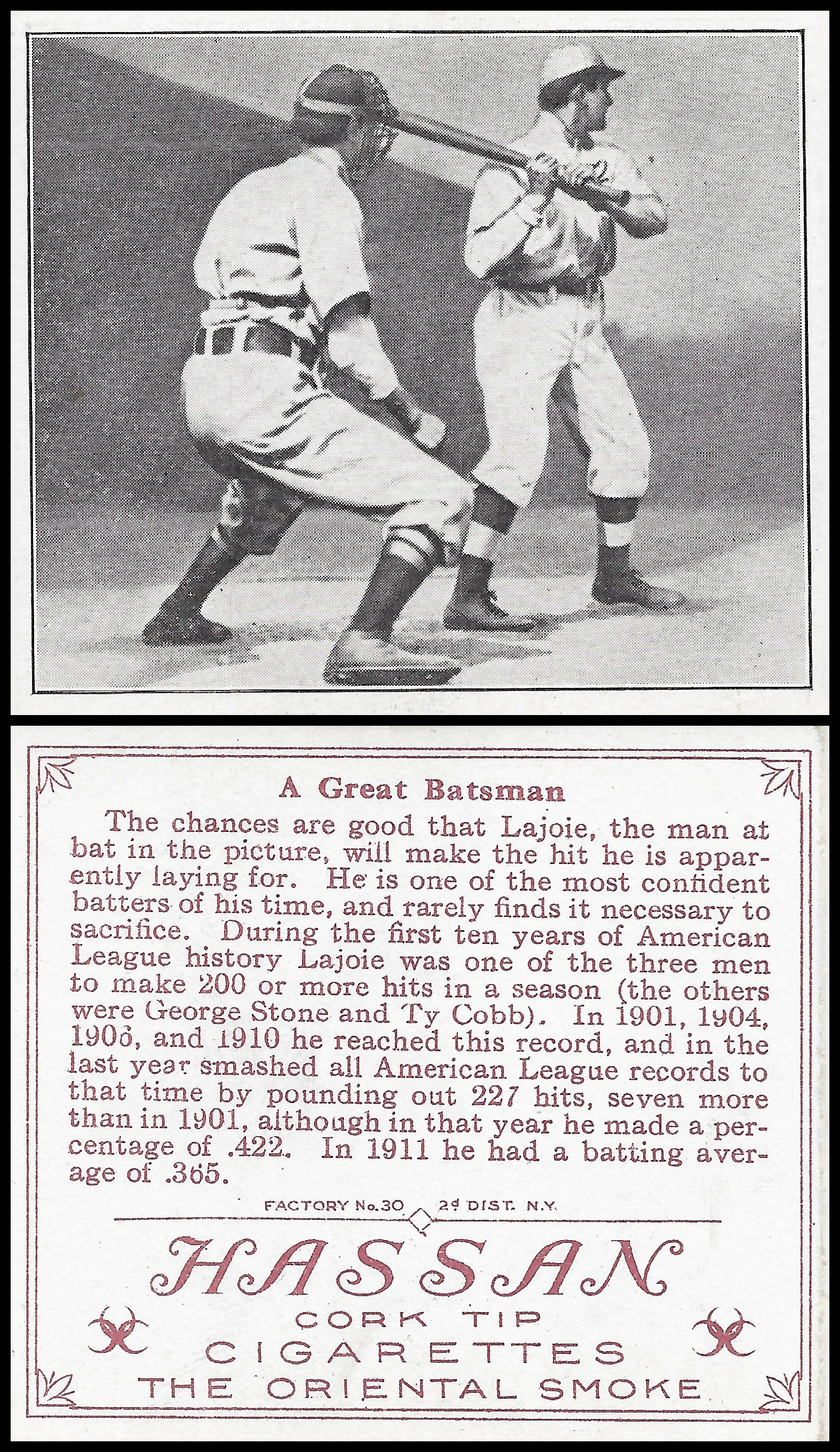
Napoleon Lajoie
It has always been strange to me that Napoleon Lajoie didn’t have an end panel within the T202 set. Not only was he one of the game’s biggest stars (he had 2,572 career hits entering the 1912 season, and would become just the third player in history to collect 3,000 hits before the 1914 season ended), but he also played in Cleveland, where many of the photos for this set were taken.
Louis Van Oeyen worked out of Cleveland, and took hundreds of photographs of this team. He was around them often, and knew how good Lajoie was. I mean, the team was called “The Cleveland Naps” after him! So, while I’m glad he was able to be featured on a center panel, I have always felt it was an odd oversight to leave him off of an end panel.
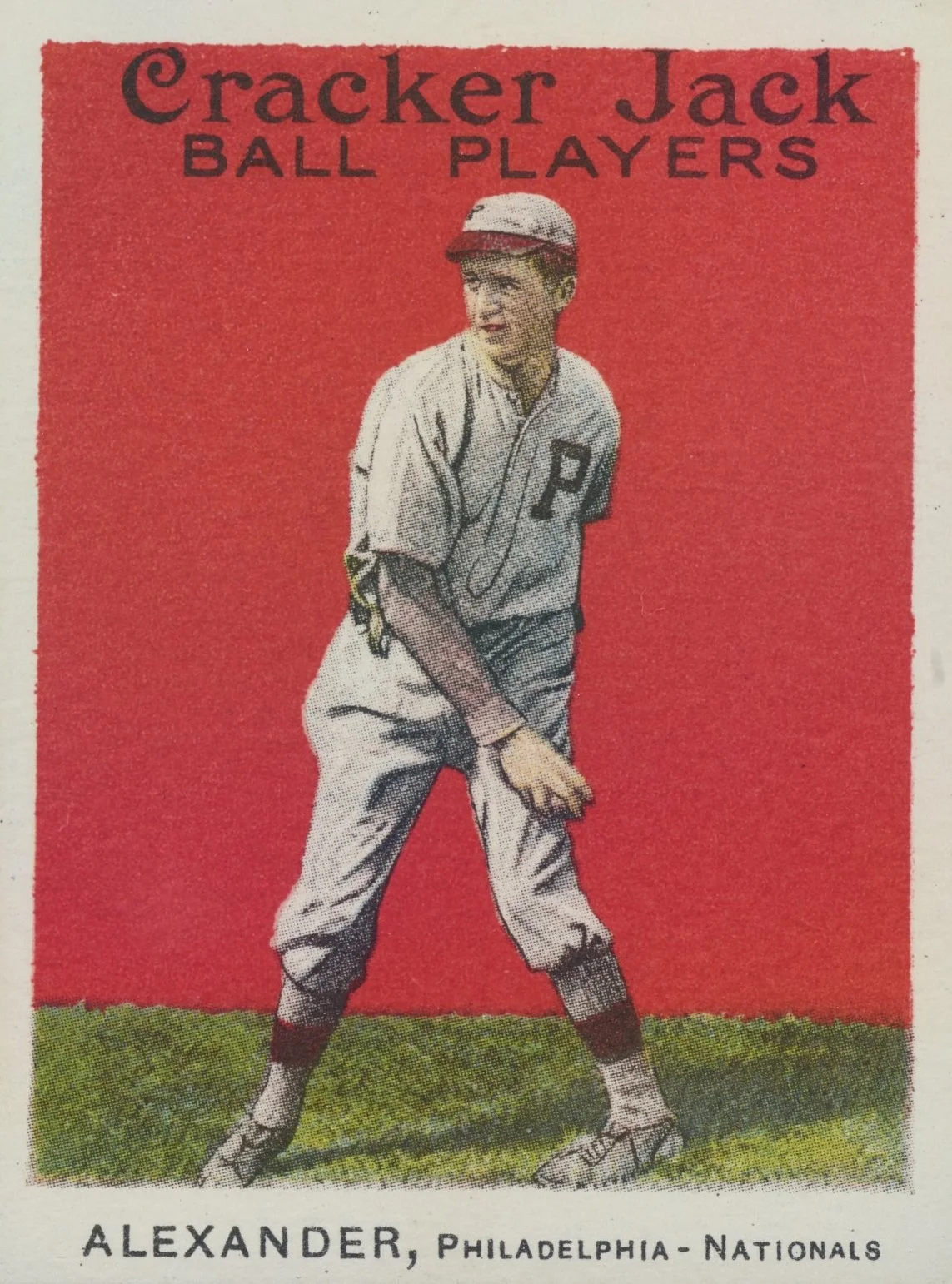
Grover Cleveland “Pete” Alexander
Alexander, unfortunately, did not appear on many baseball cards during his playing career. Despite having a fantastic rookie season in 1911 during which he led the Major Leagues with 28 wins, he wasn’t included in the T206, T205, or T202 sets.
His Cracker Jack card, shown here, is considered by many to be his rookie card.
Grover Cleveland “Pete” Alexander’s career statistics via Baseball Reference
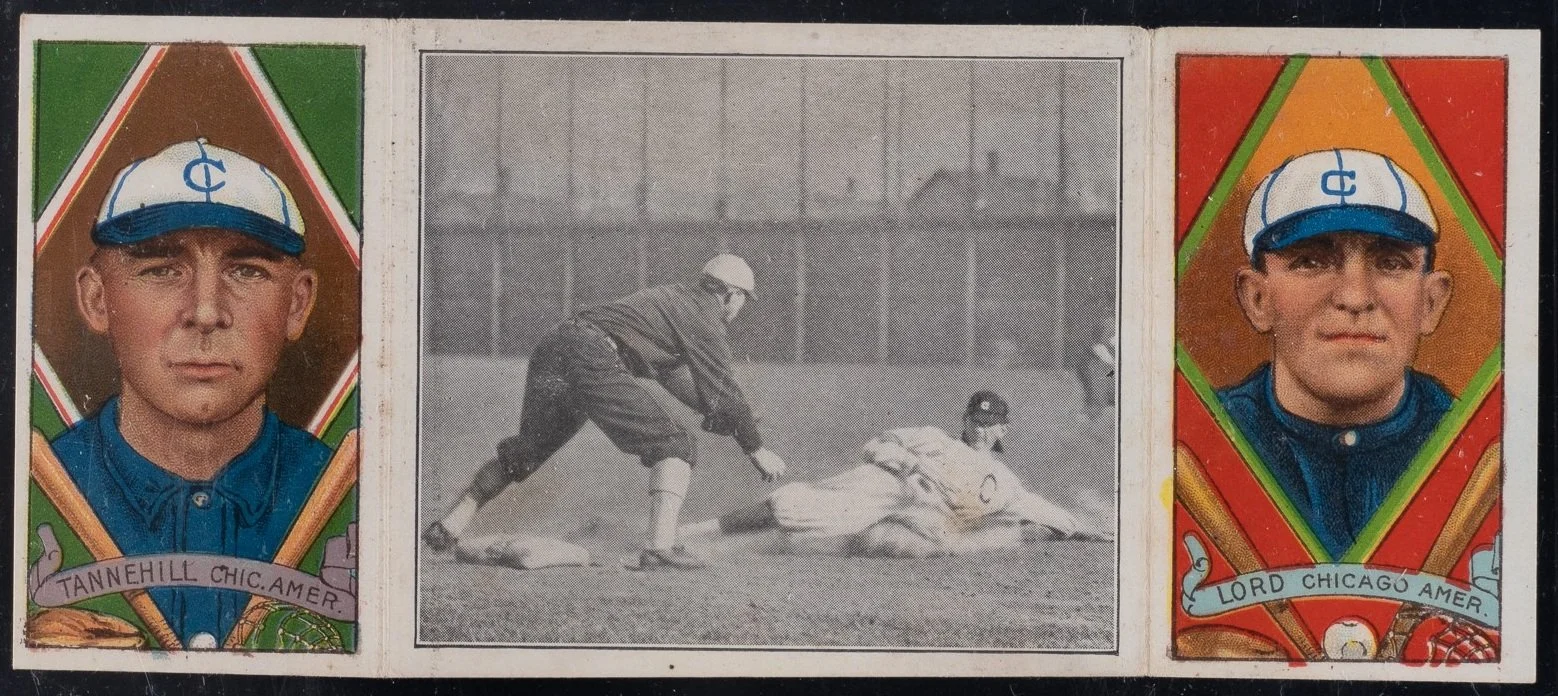
While Shoeless Joe Jackson doesn’t have an end panel in the T202 set, and isn’t named in the captions of any card within the set, he does appear on the center panel of this card featuring Lee Tannehill and Harry Lord of the Chicago White Sox.
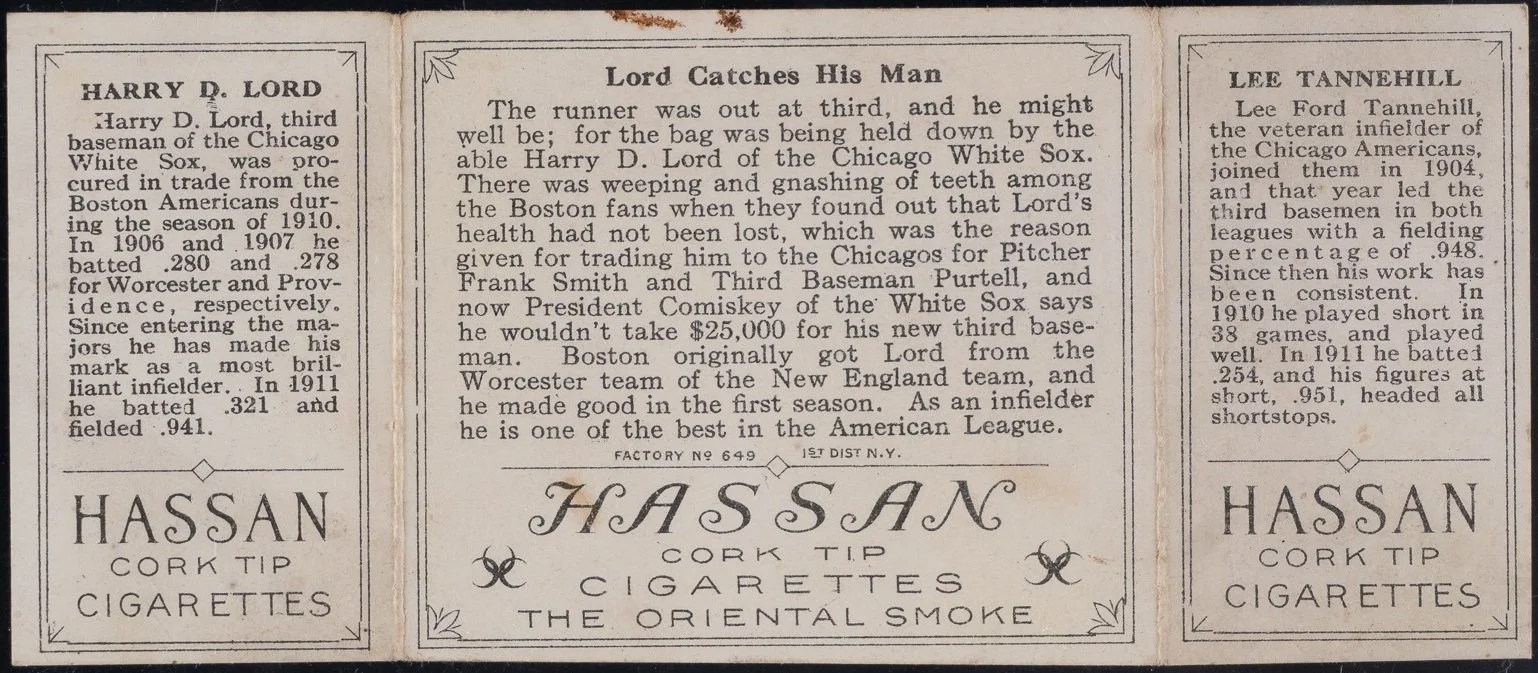
The large captions on the center panel, as well as on the side panels, on the backs of the cards are another thing which make the T202 set unique.
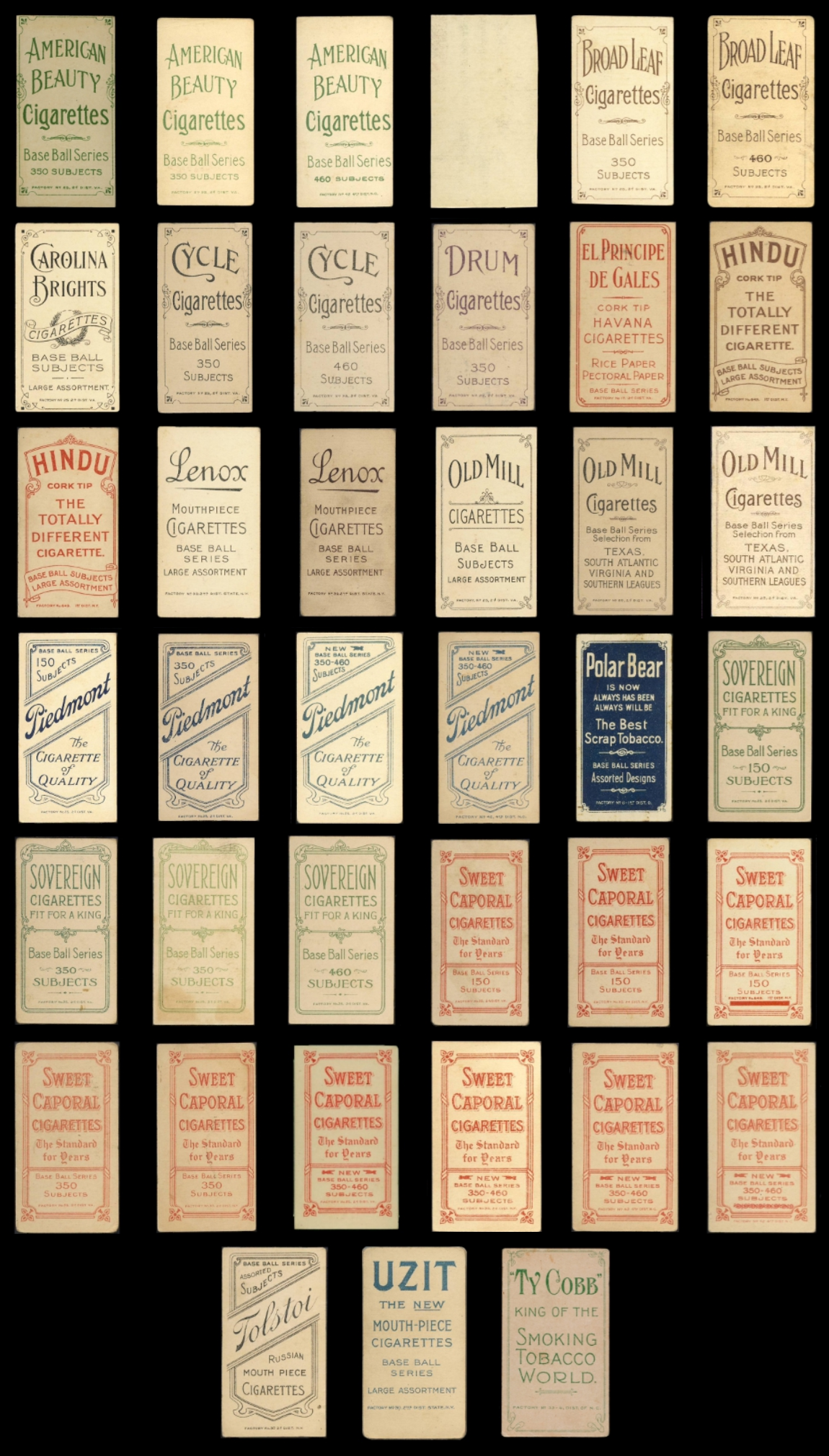
T206 Backs
The T206 set has beautiful logos on the back, but no captions. Many modern collectors go crazy over trying to find them all. Entire websites are dedicated to determining the rarity of certain backs, like T206resource.com.
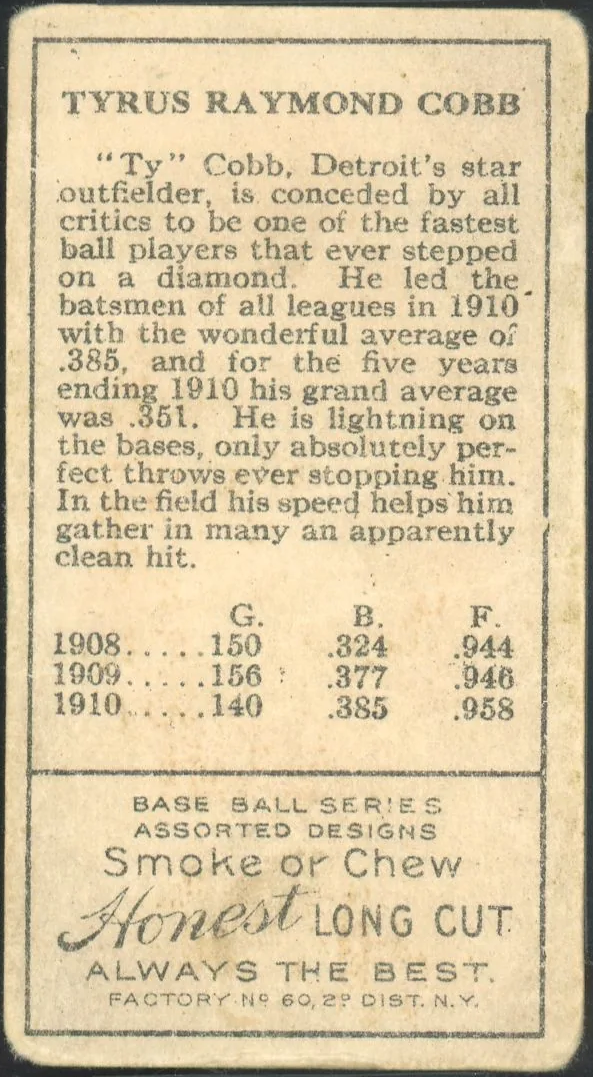
T205 Backs
The T205 set has small captions on the backs of the cards, but do not compare to the amount of information included on the backs of the T202 set.
In fact, if you take all of the text from all of the captions on all of the panels within the T202 set and transcribe them, you have a book that's about 50 pages in length.
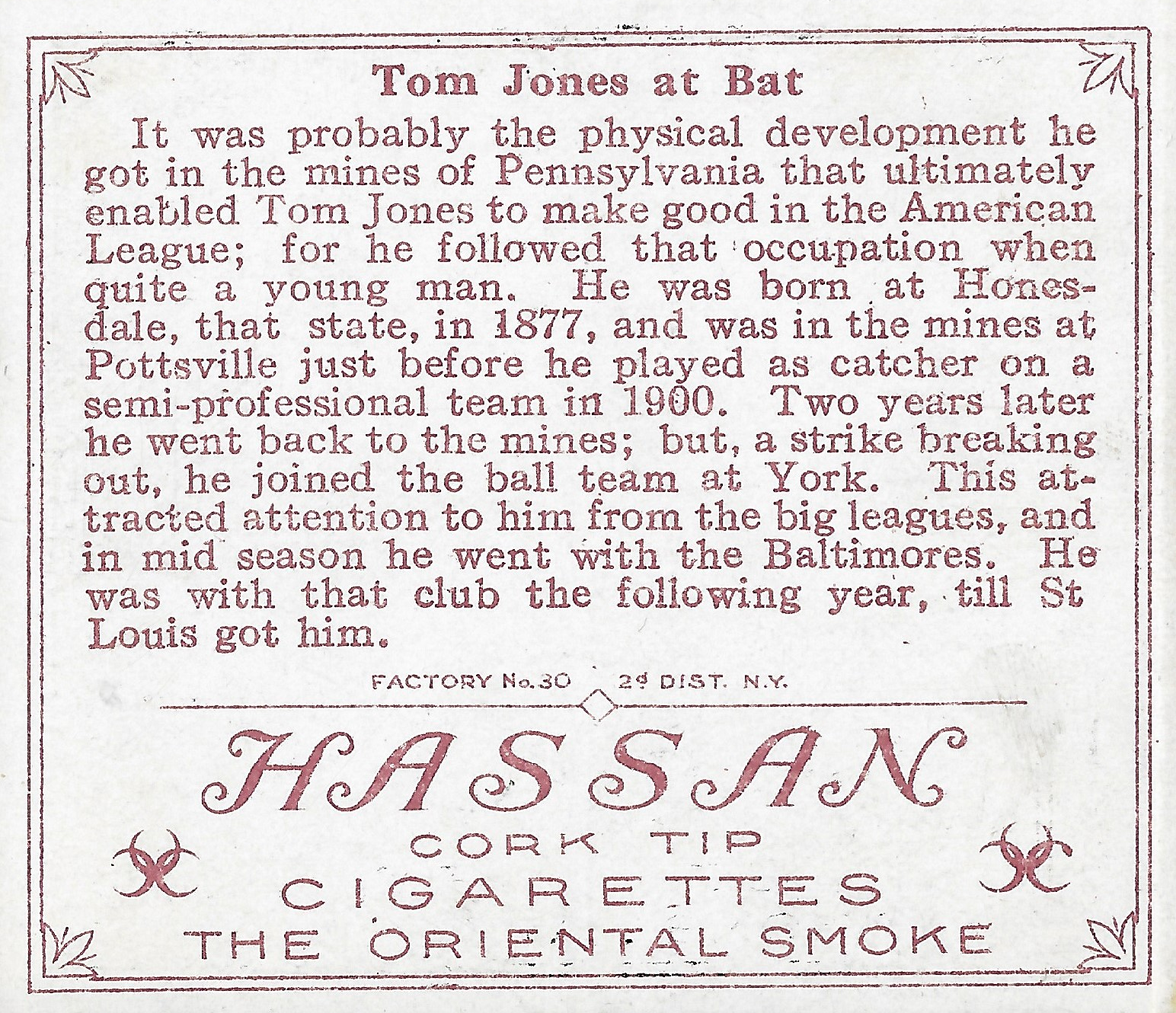
Working In The Mines
Tom Jones hadn’t played Major League baseball since the 1910 season, so it’s … unusual he was included in the T202 set, but I’m glad he was, otherwise we wouldn’t have gotten this incredible caption on the back of the center panel which depicts him.
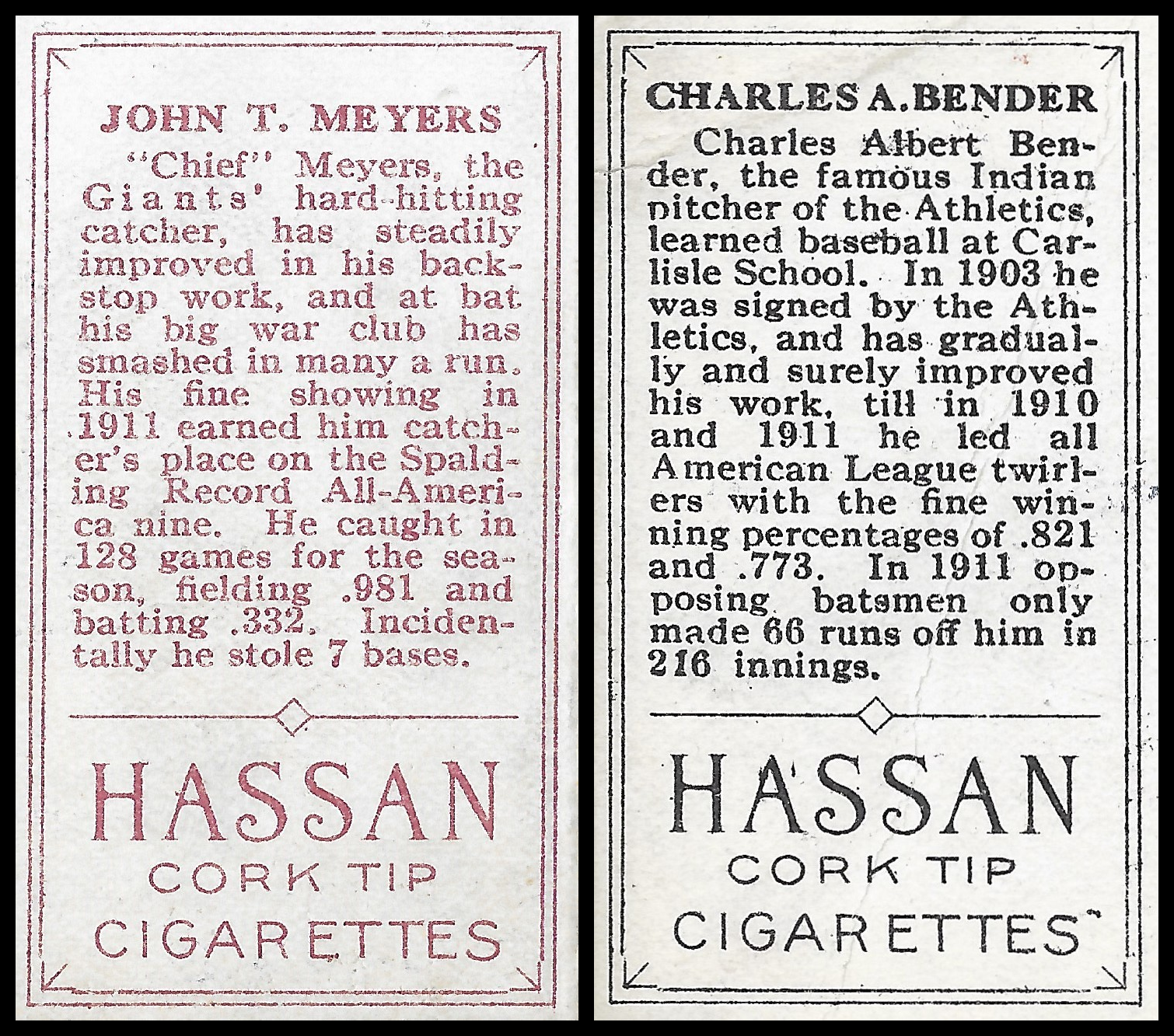
Statistics Which Did Not Exist Yet
The RBI statistic was tabulated - unofficially - from 1907 through 1919 by baseball writer Ernie Lanigan, but it didn’t become an official statistic until 1920.
Similarly, ERA wasn’t officially calculated for the first time until the 1912 season when the National League began keeping track of it. The American League followed the next year.
On the backs of the T202 cards, you’ll see the words reflect these holes in the official baseball language.
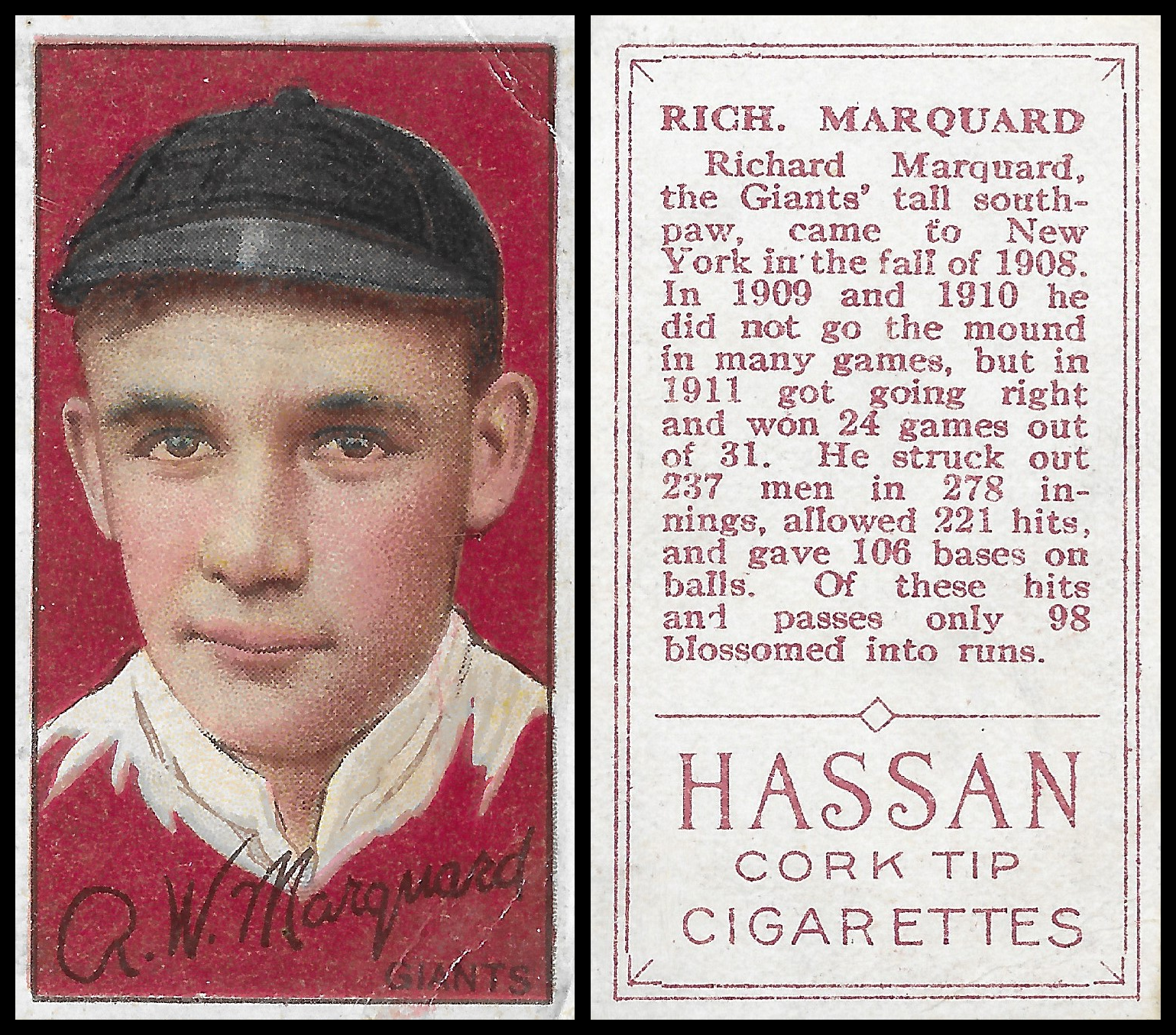
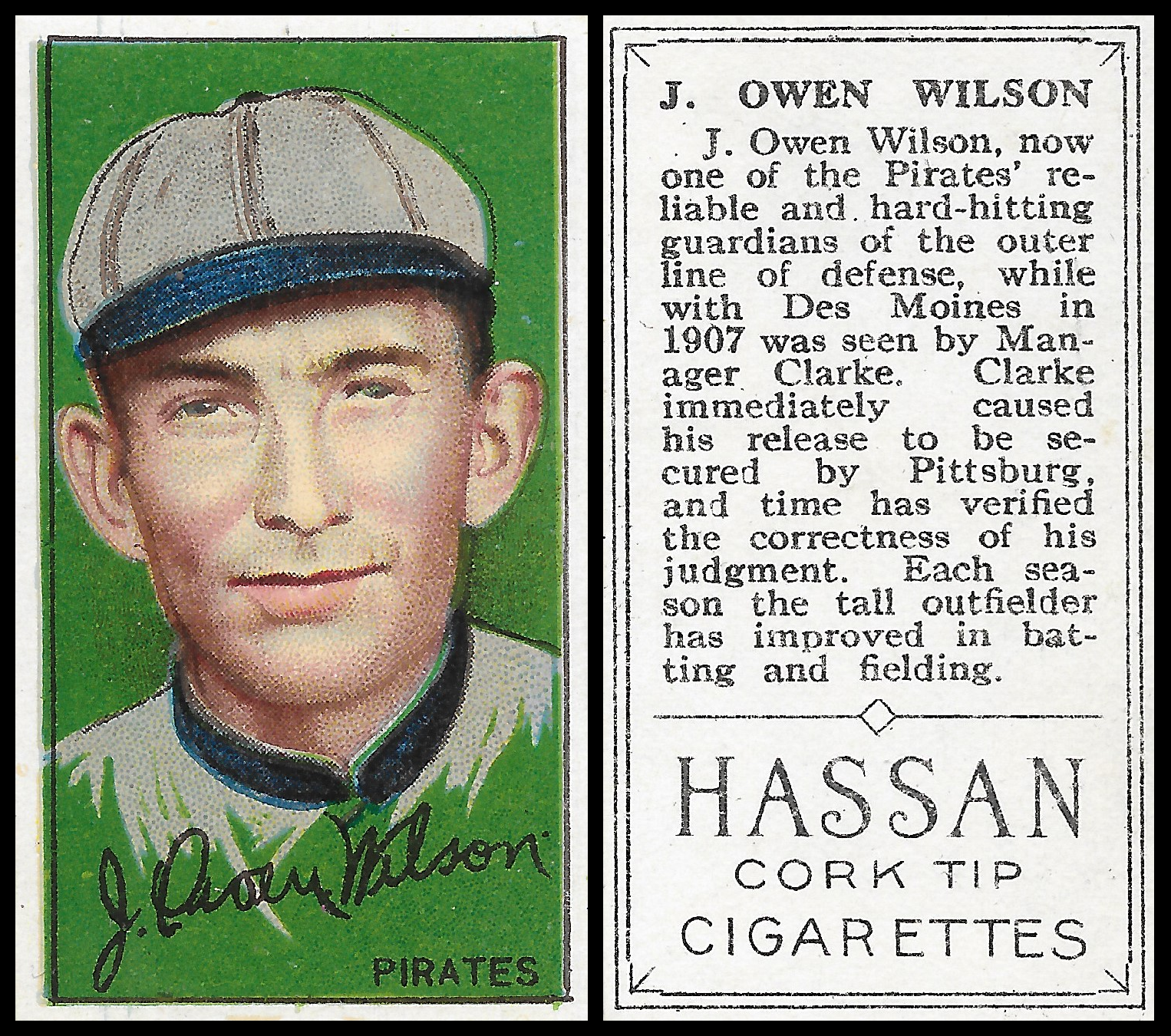
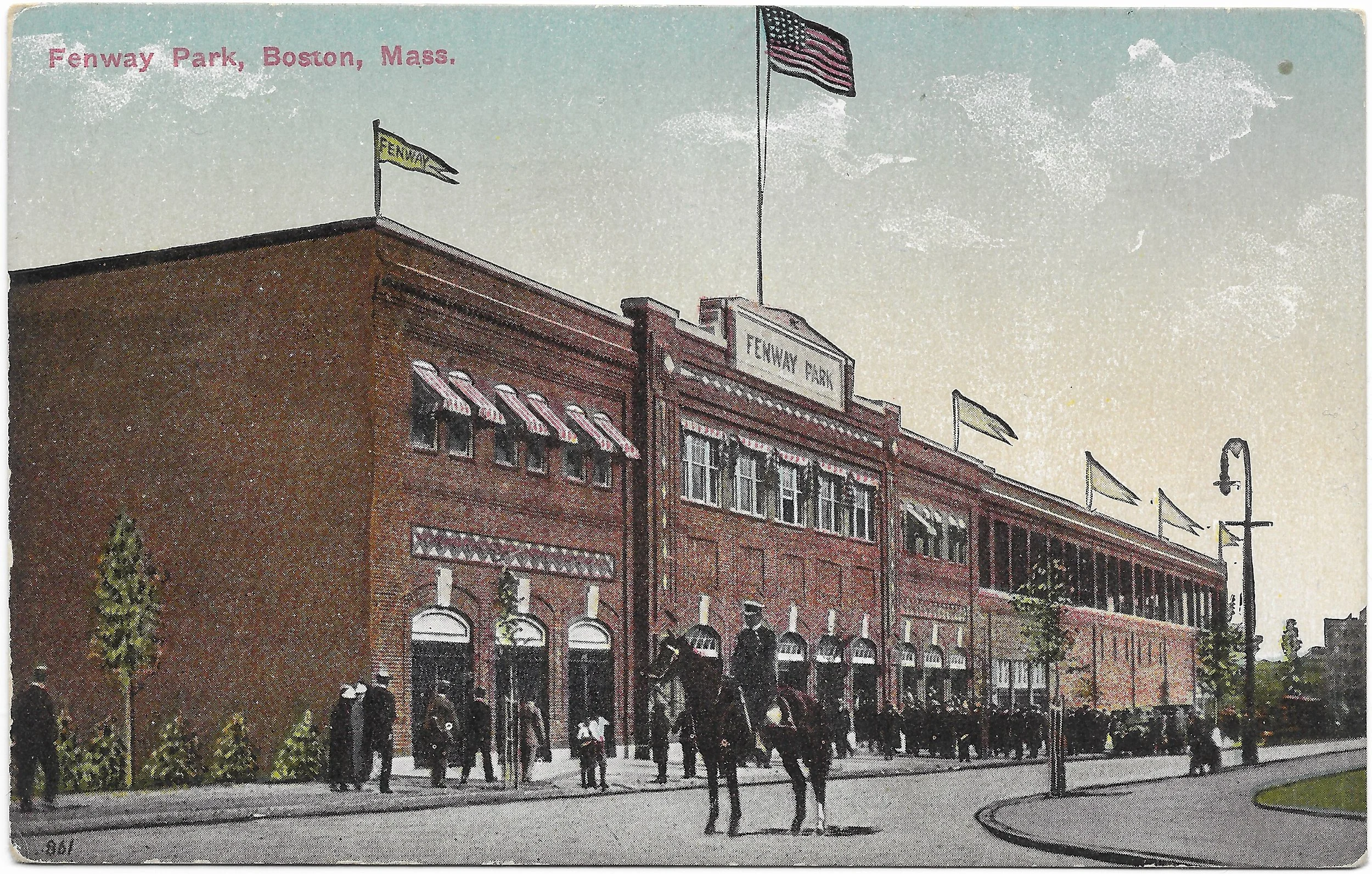
Fenway Park in Boston opened in 1912.
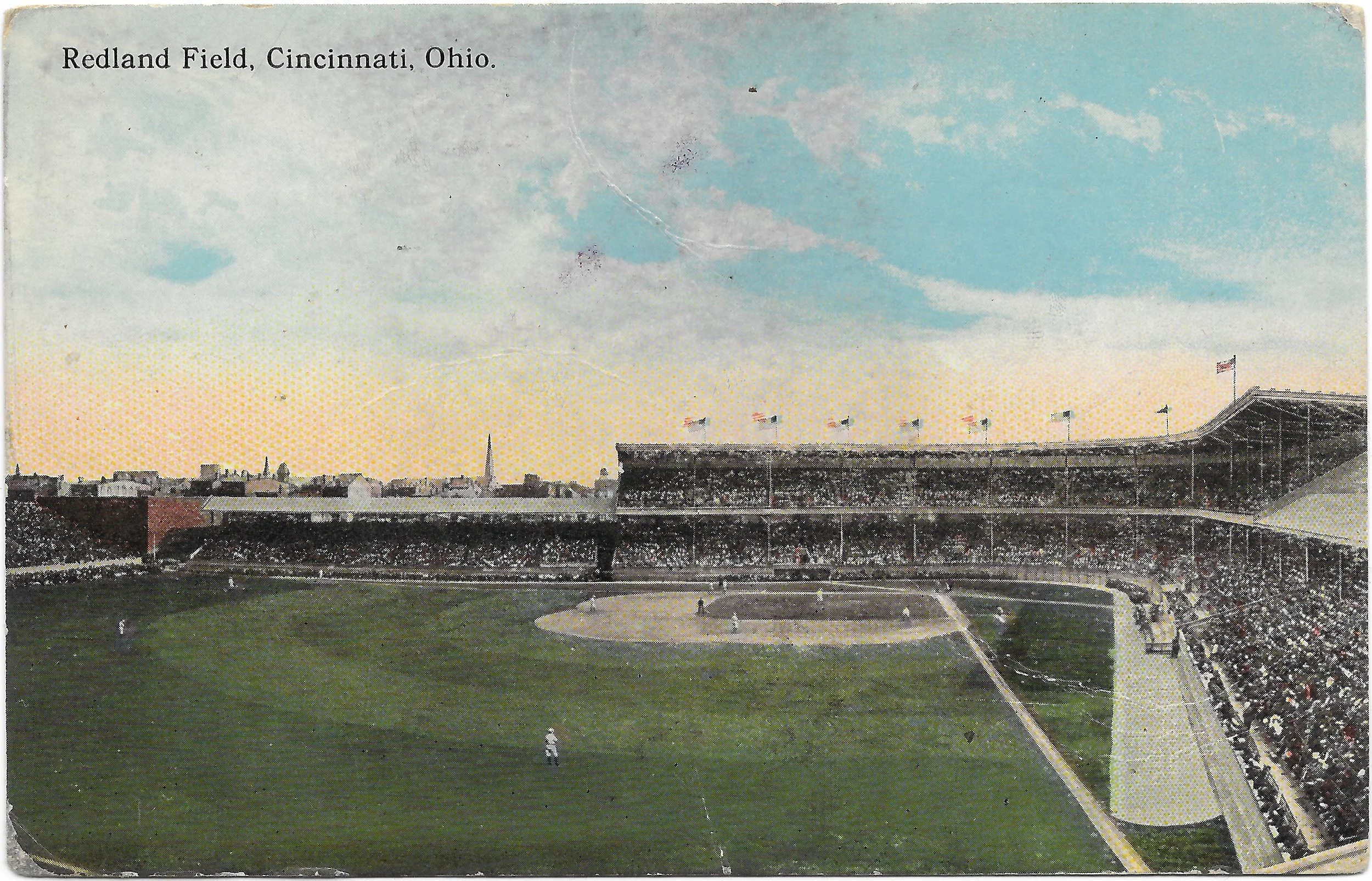
Redland Field (later Crosley Field) in Cincinnati opened in 1912.
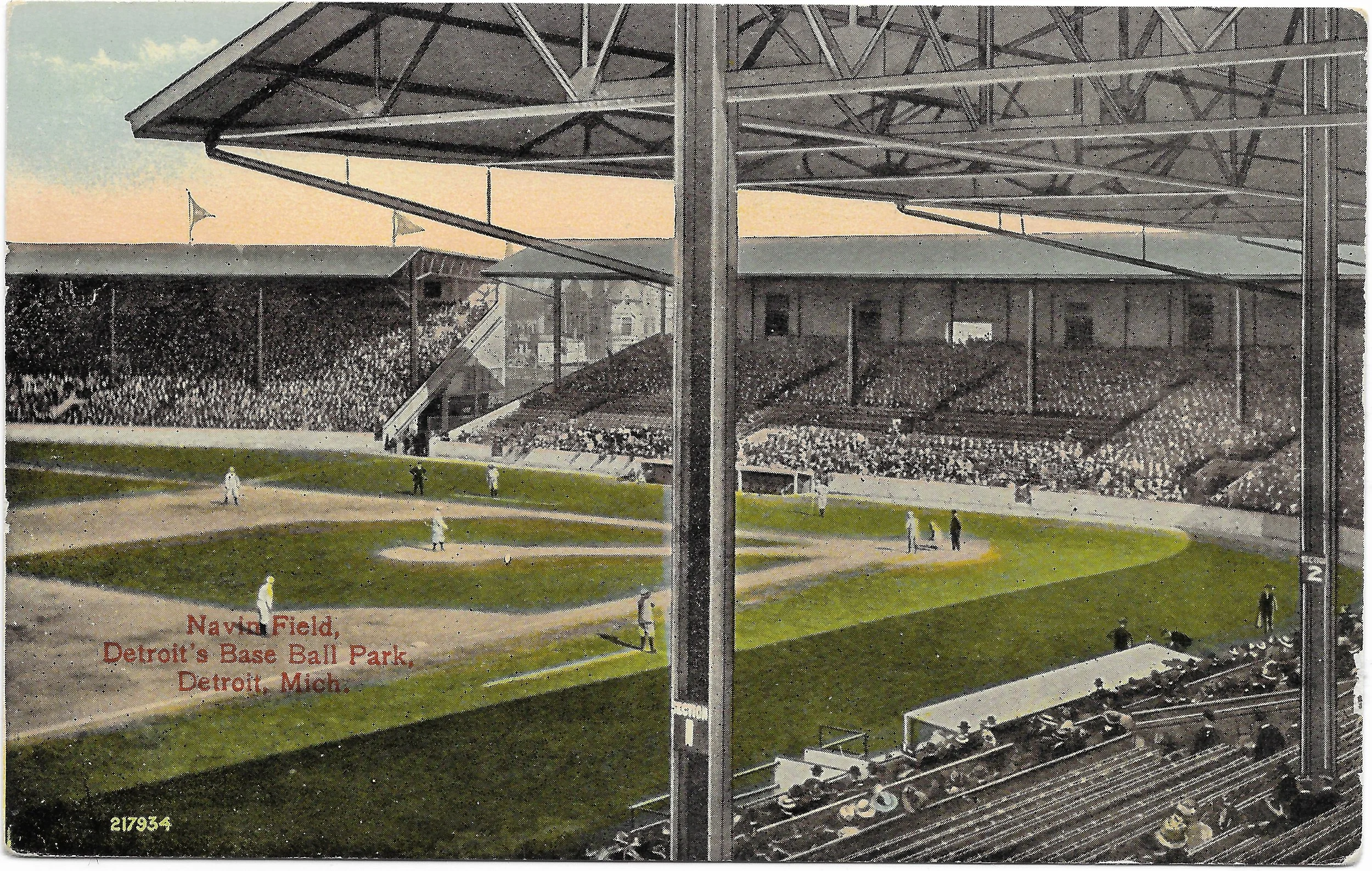
Navin Field (later Briggs Stadium, and even later Tiger Stadium) in Detroit opened in 1912.
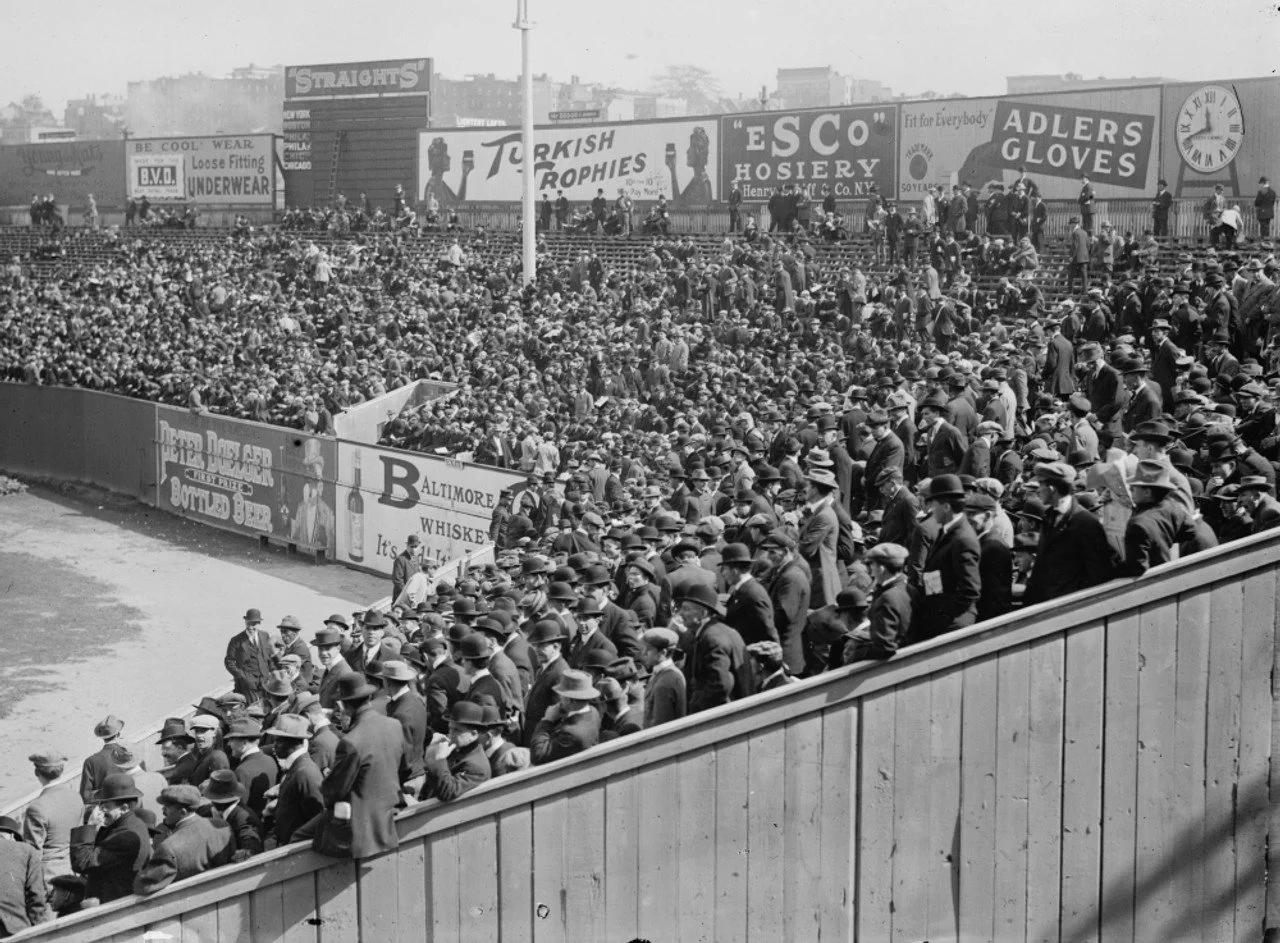
1912 World Series
The 1912 World Series went 8 games because of a tied game which was called due to darkness. The dramatic ending to the close series makes it one of the greatest World Series of all time, and one which many consider to be the first truly great World Series.
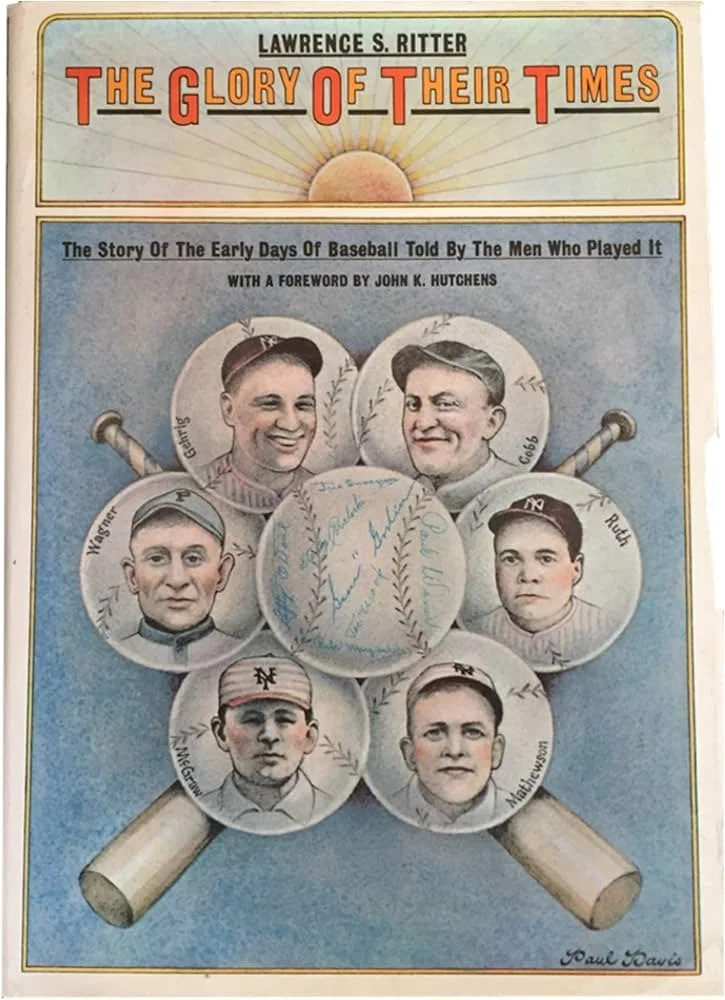
The Glory Of Their Times
The Glory of Their Times: The Story of Baseball Told By the Men Who Played It by Lawrence Ritter is an oral history of the game in the first two decades of the century. It sends out an impressive roster of players to tell their own stories, and what stories they tell.
Included are interviews from Rube Marquard, Babe Herman, Stan Coveleski, Smoky Joe Wood, and Wahoo Sam Crawford. A delight from cover to cover, reading the book is the next best thing to having been there in the days when the ball may have been dead, but the personalities were anything but.
Buy it HERE
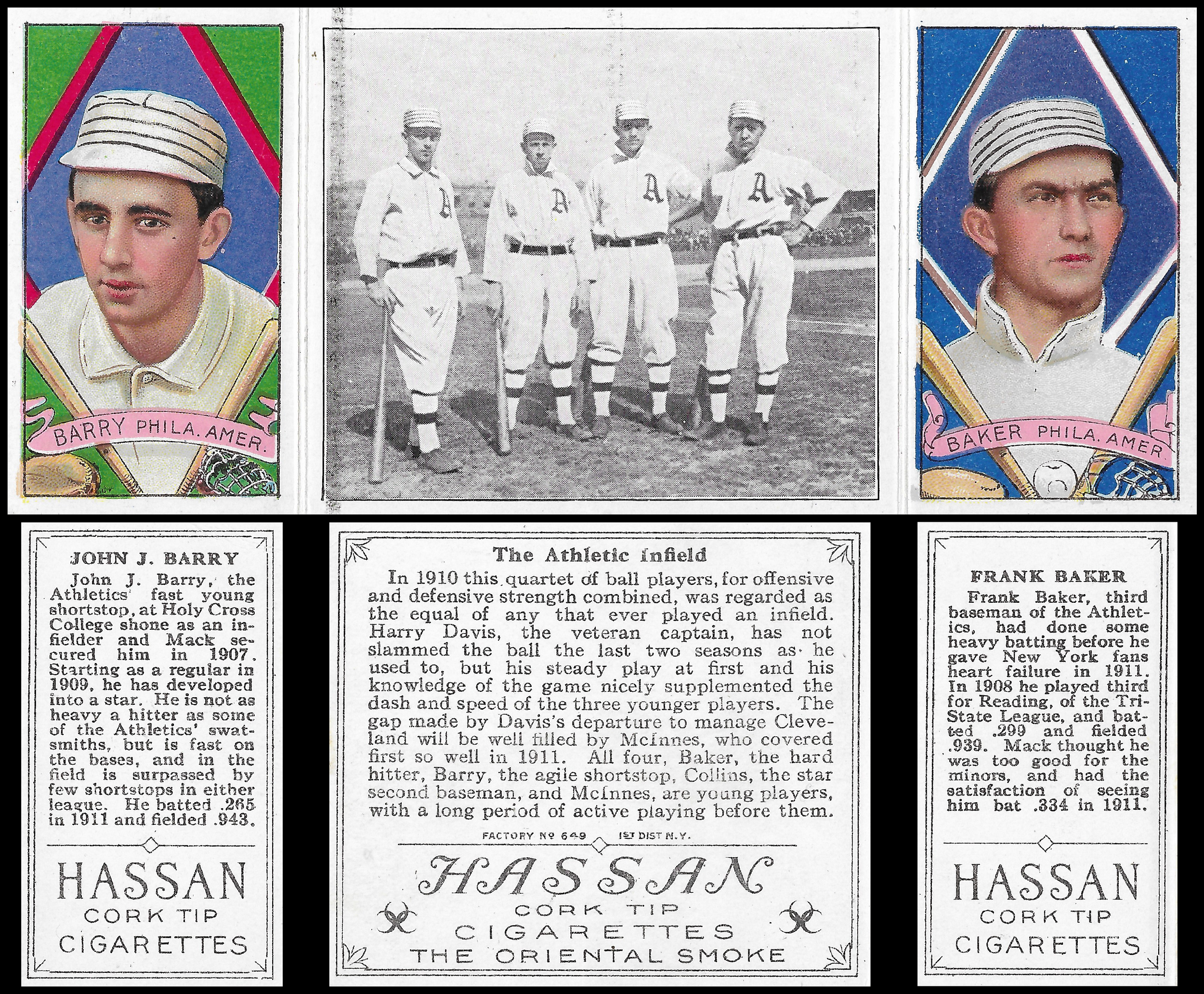
Behind the strength of Connie Mack’s $100,000 Infield, the Philadelphia Athletics won the 1910 and 1911 World Series, and would would win again in 1913. They returned to the World Series in 1914, but lost in a sweep to the Boston Braves, after which Mack immediately went about dismantling his dynasty.
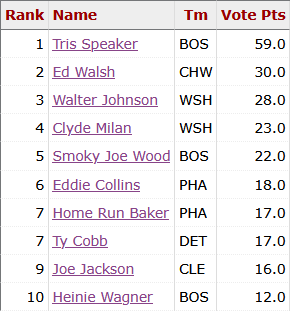
1912 AL MVP
Of the top seven players in the race for the 1912 American League MVP Award, four of them are from either the Washington Nationals or the Philadelphia Athletics.
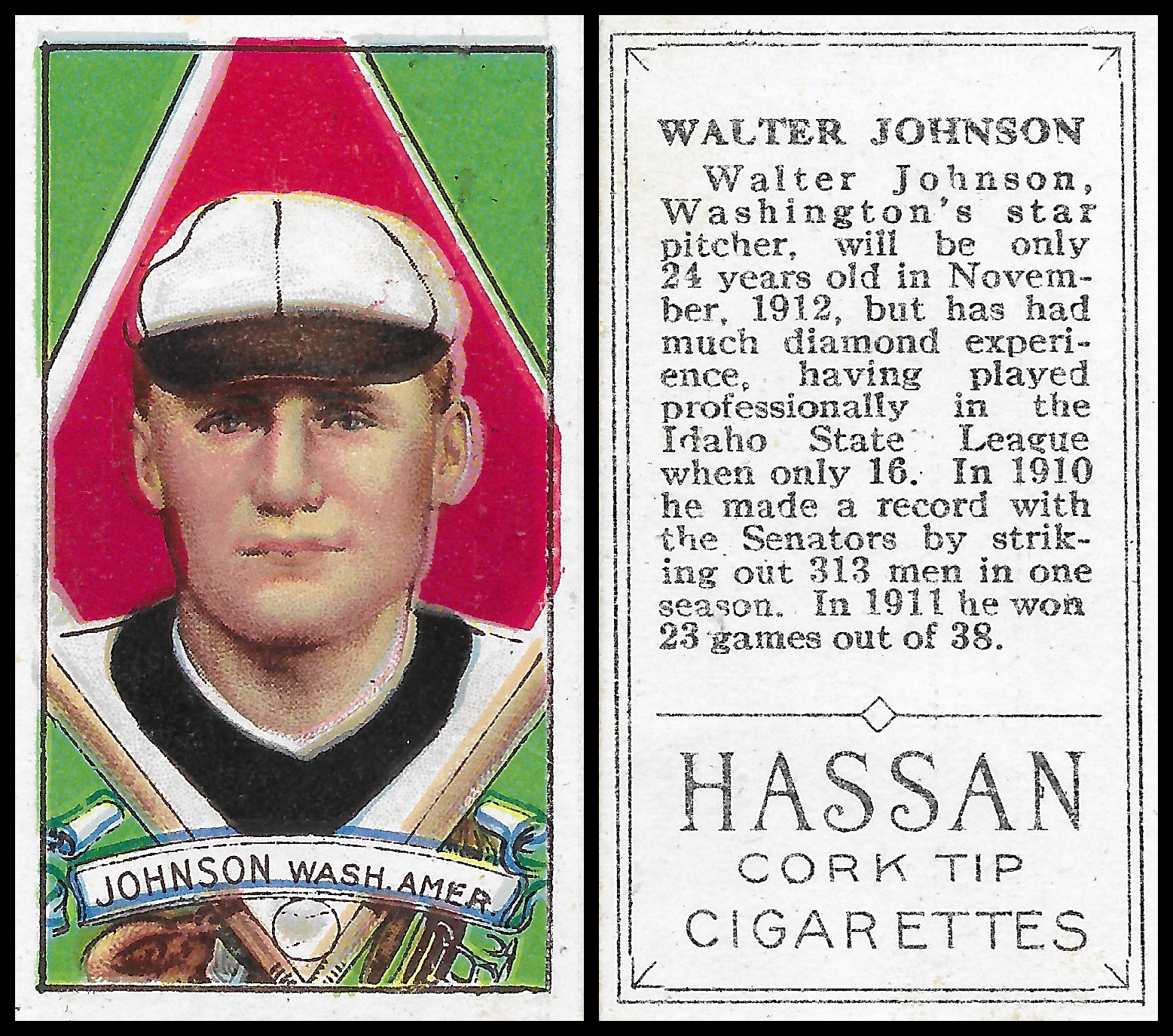
Walter Johnson
There have been 24 times in the history of baseball when an individual player had 13 or more Wins Above Replacement in a single season. Of those 24 individual seasons, only 5 of them happened after 1900. Of those 5, one of them was Babe Ruth in 1923, one of them was Doc Gooden in 1985, and the other three are Walter Johnson in 1912 (15.4 WAR), 1913 (16.6 WAR), and 1914 (13.0 WAR).
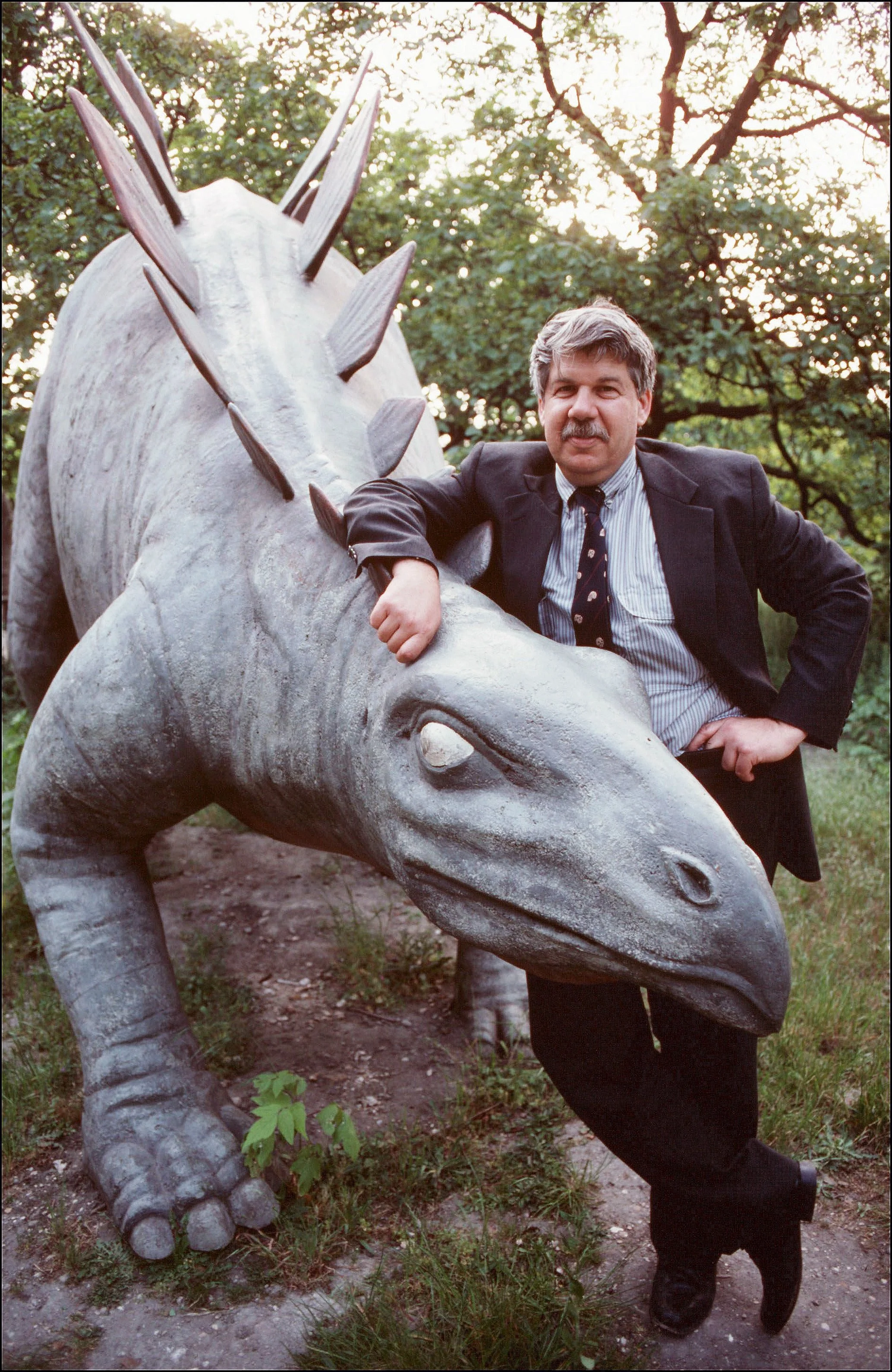
Stephen Jay Gould
In 1986, Stephen Jay Gould wrote a now-famous essay titled “Entropic Homogeneity Isn't Why No One Hits .400 Any More.” In it, he states “Declining variation becomes the key to our puzzle. Hitting .400 isn’t a thing in itself, but an extreme value in the distribution of batting averages … As variation shrinks around a constant mean batting average, .400 hitting disappears. It is, I think, as simple as that.”
This declining variation, he argues, is due to humans running up against the limits of their capacity. This is actually not a sign of decline, but rather improvement in overall play: “The extinction of .400 hitting is, paradoxically, a mark of increasingly better play.”
Gould uses batting average as the main statistic to demonstrate his argument.
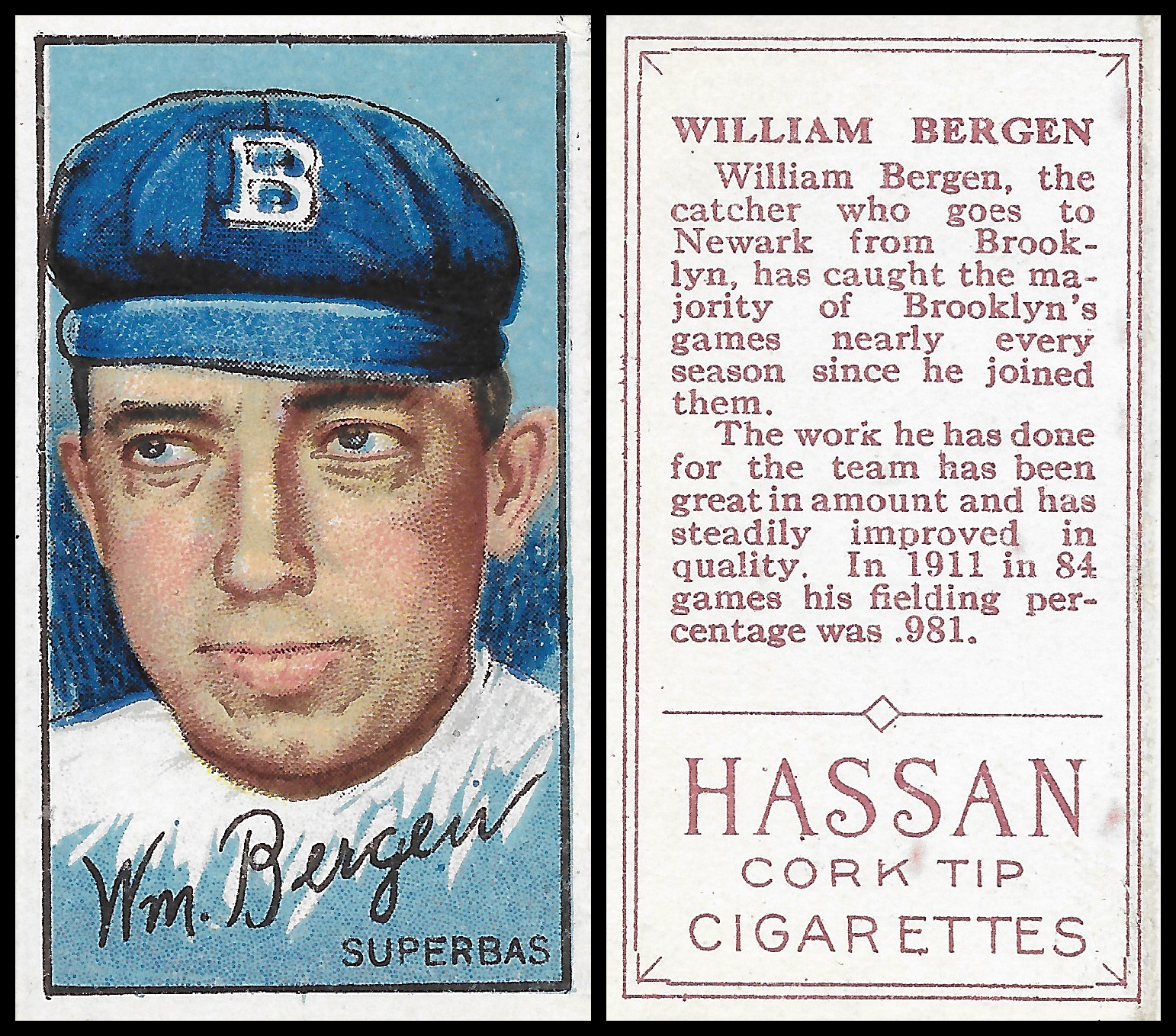
Bill Bergen
Across 3,028 career at bats, Bill Bergen had a .170 career batting average. 1908 was the only season in his career during which Bergen had a positive WAR, and even then, it was only 0.4 in 99 games played. In every other season of his 11-year career, he was worth negative WAR, totaling -6.9 WAR by the time he retired.
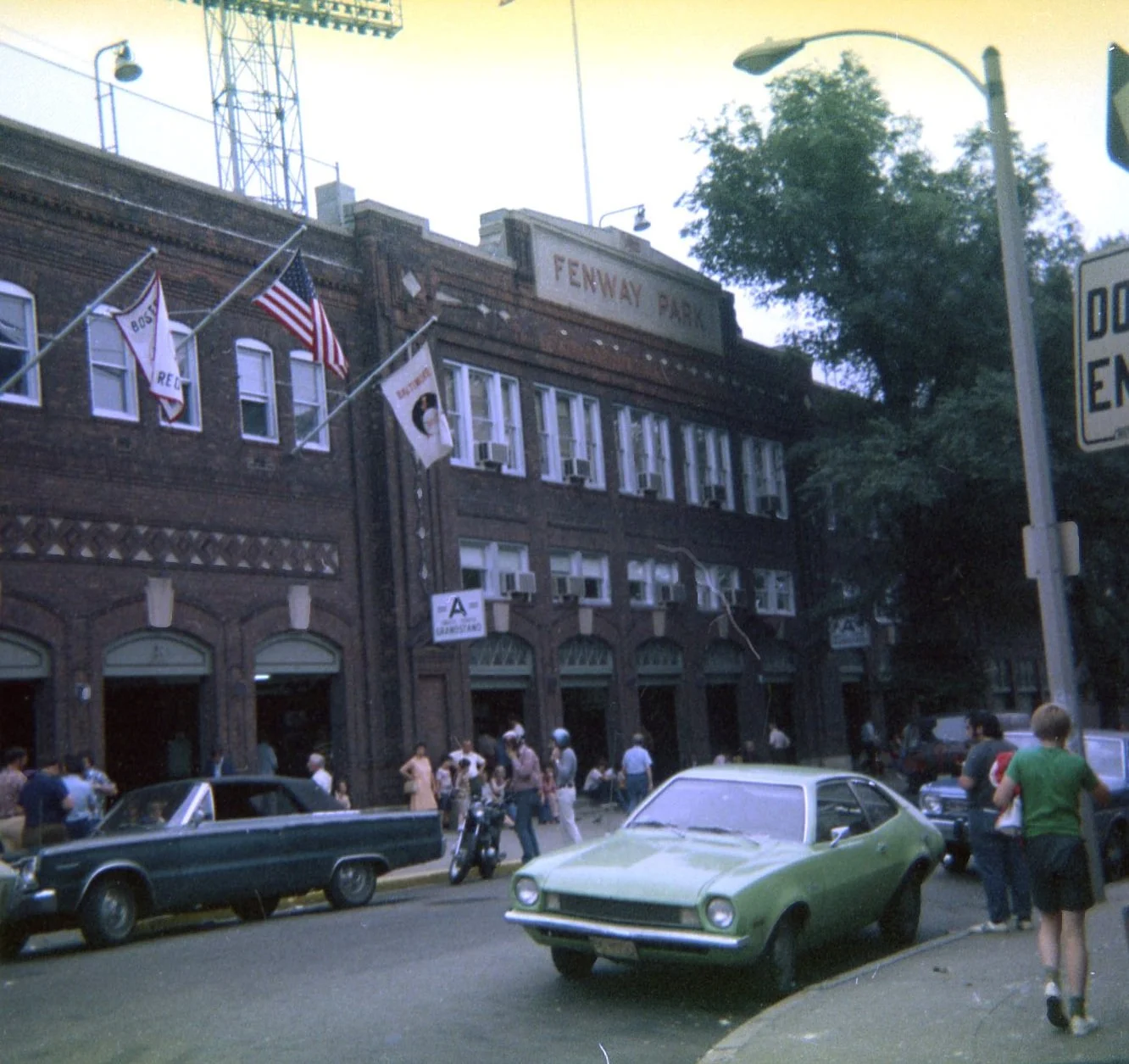
Fenway Park, 1973
On June 23, 1973, Phil took a trip to Boston to see a game at Fenway Park. Luckily for him, a rainout from a previous day meant he was actually able to see two games for the price of one.
This is one of the photos he took that day.
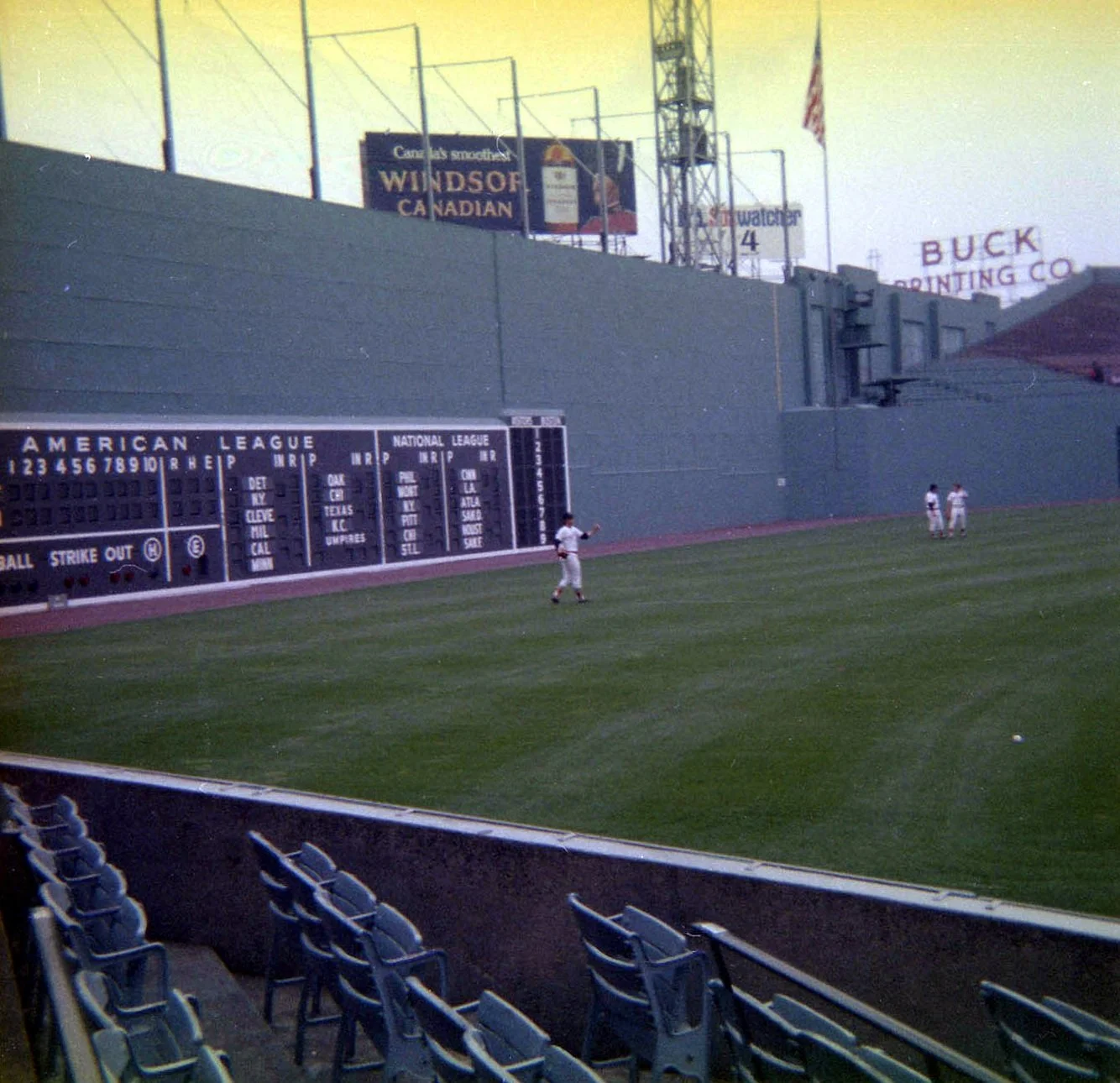
The Green Monster
Here is another one of the photos Phil took that day. He took the photos with a cheap instamatic camera, which was common in the 1960s and ‘70s. There is a bit of discoloration at the top, a sort of yellow tint that either was a problem with the film or processing.
Phil says the games were “well attended, very vocal crowd in a small venue, unlike what I was accustomed to in California.”
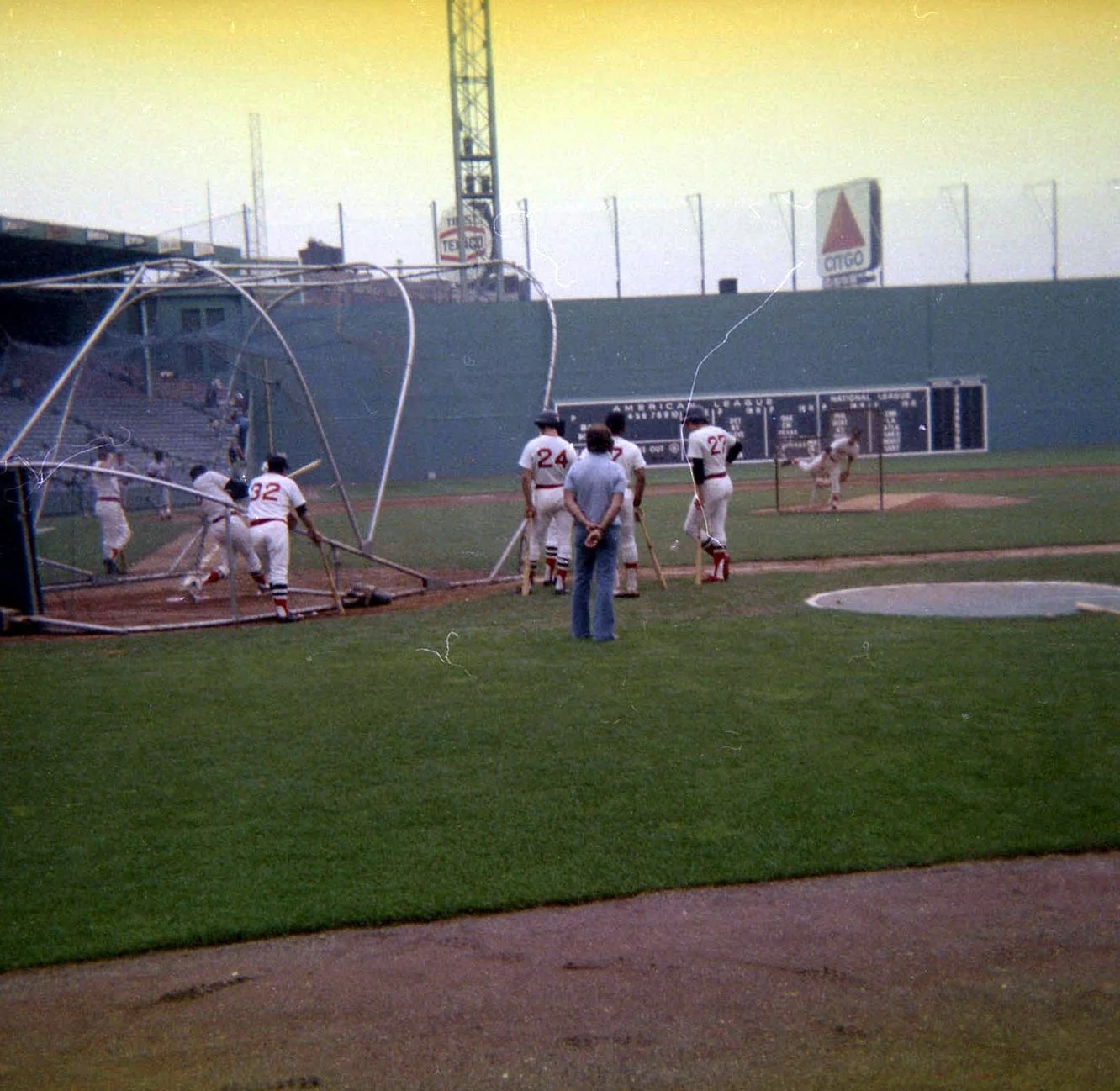
Batting Practice
Yet another photo taken by Phil at Fenway Park in 1973.
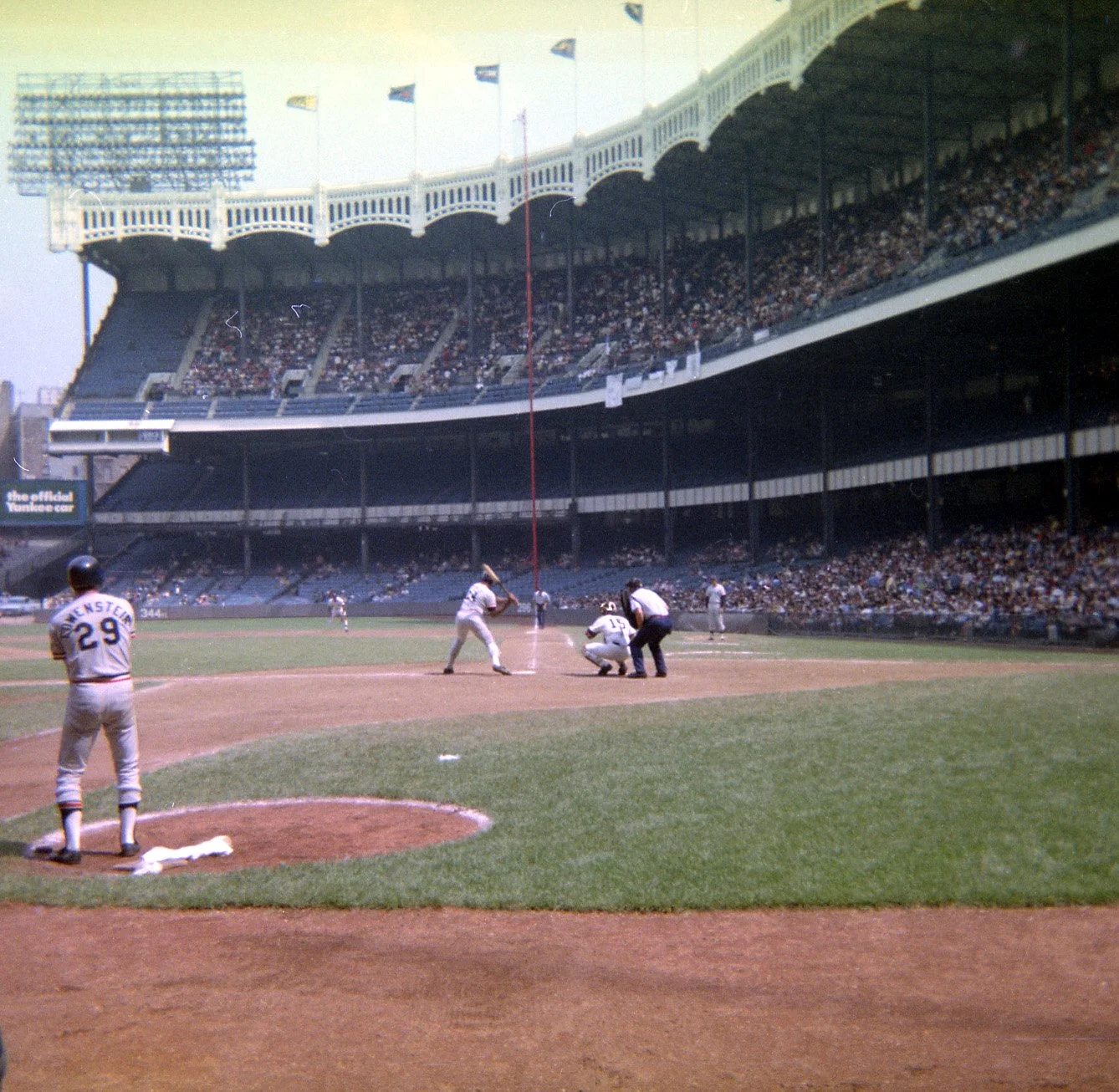
Yankee Stadium, 1973
Coincidentally, when Phil got back to school after his Fenway trip, a classmate asked if he’d like to join him on a trip to New York the following week. Phil said yes, and was able to see Old Yankee Stadium in its final year before the restorations.
This is a photo Phil took that day, June 30, 1973.
Box score and stats from that game
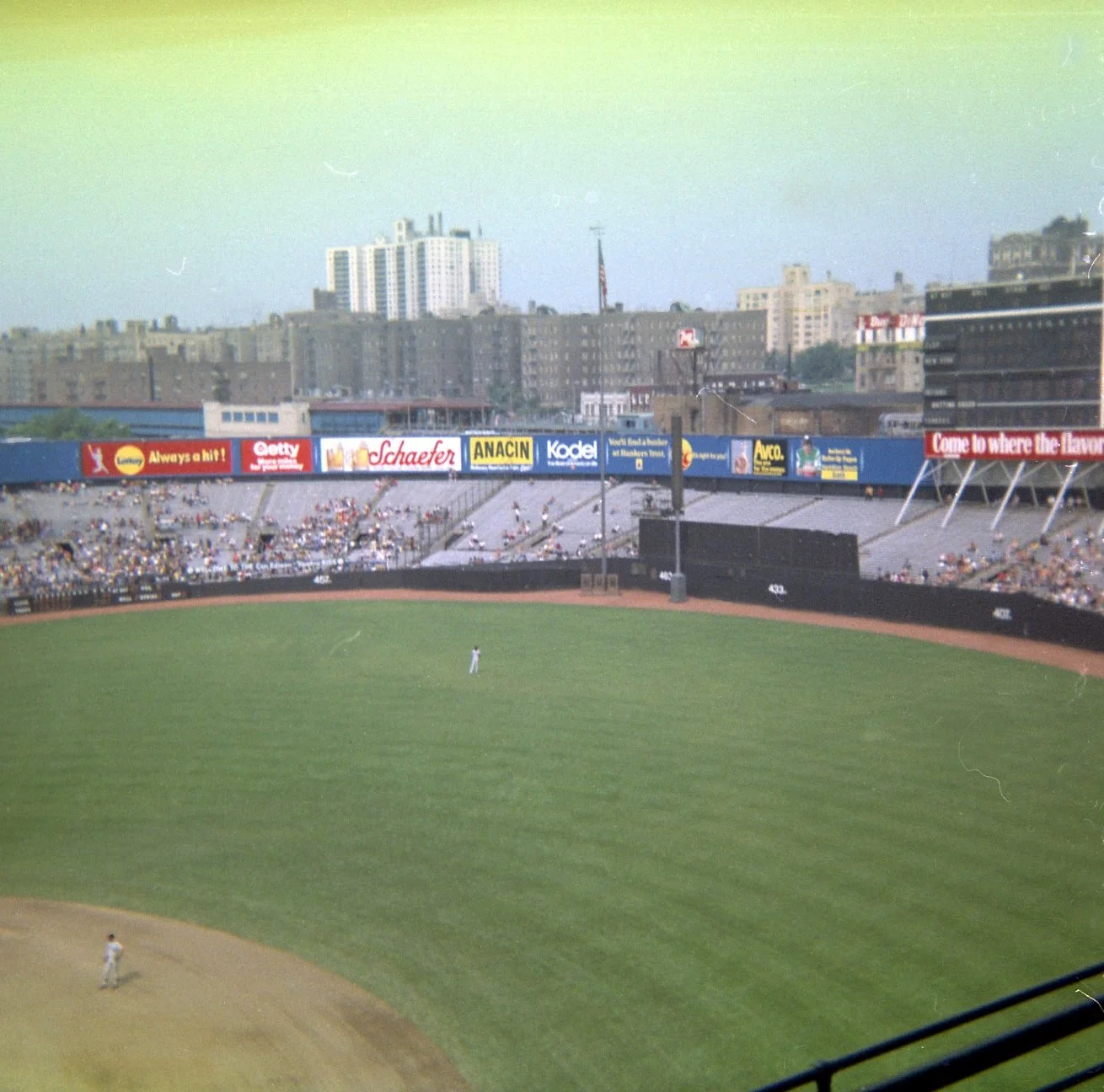
Monument Park
Here is another one of the photos Phil took that day. Notice the flag pole and the monuments in center field, which are actually on the field and in play.
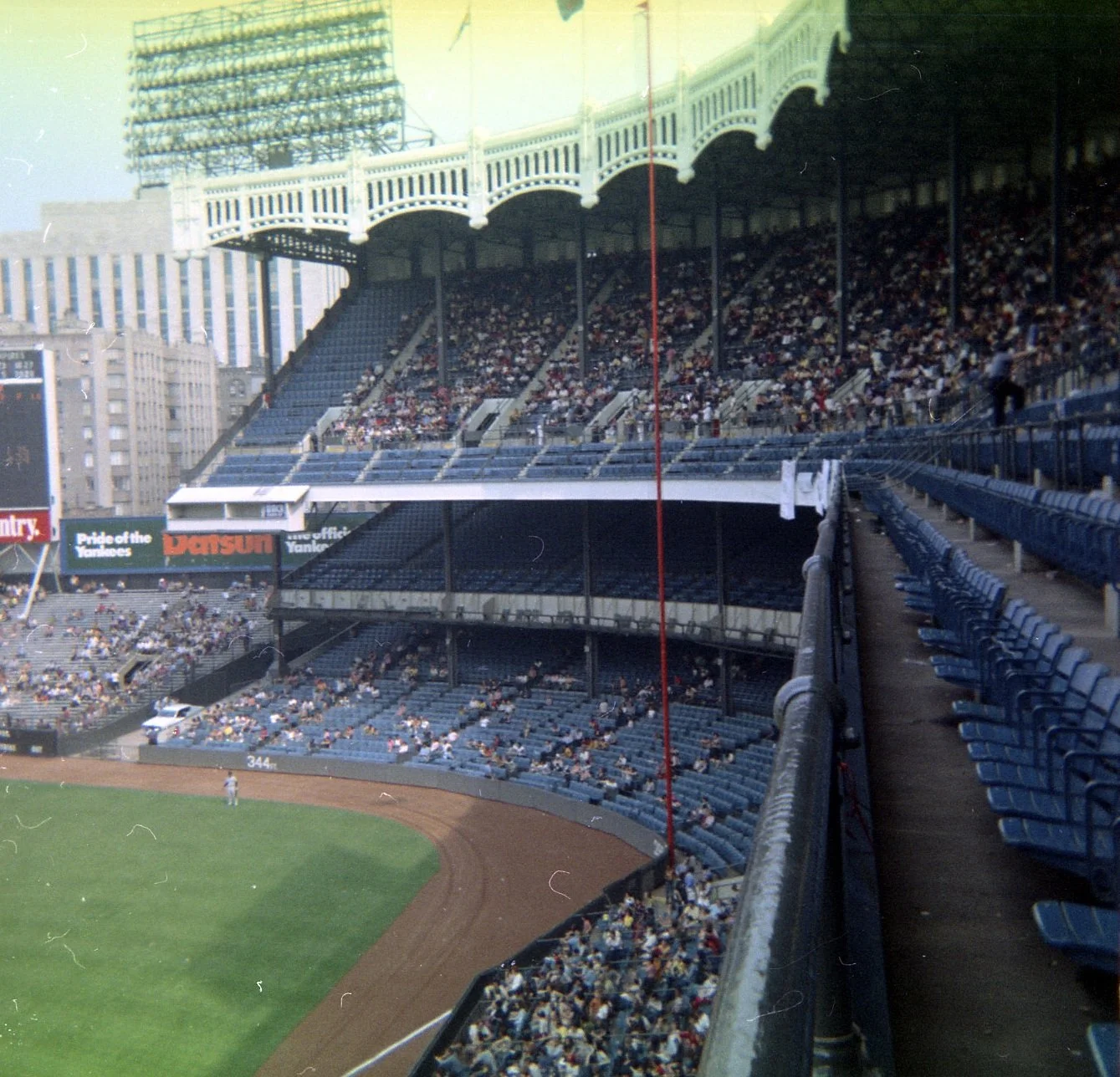
The Facade
Here is another one of the photos Phil took that day, prominently showing the iconic facade or frieze, as well as the short porch in right field. Also note the foul pole is painted red, not yellow.
Phil notes that the paid attendance at Yankee Stadium that day was about 10,000, and that the upper decks were filled with little leaguers, but they were kept away from the bottom few rows as a security measure. Hence the empty rows at the bottom of the upper deck.
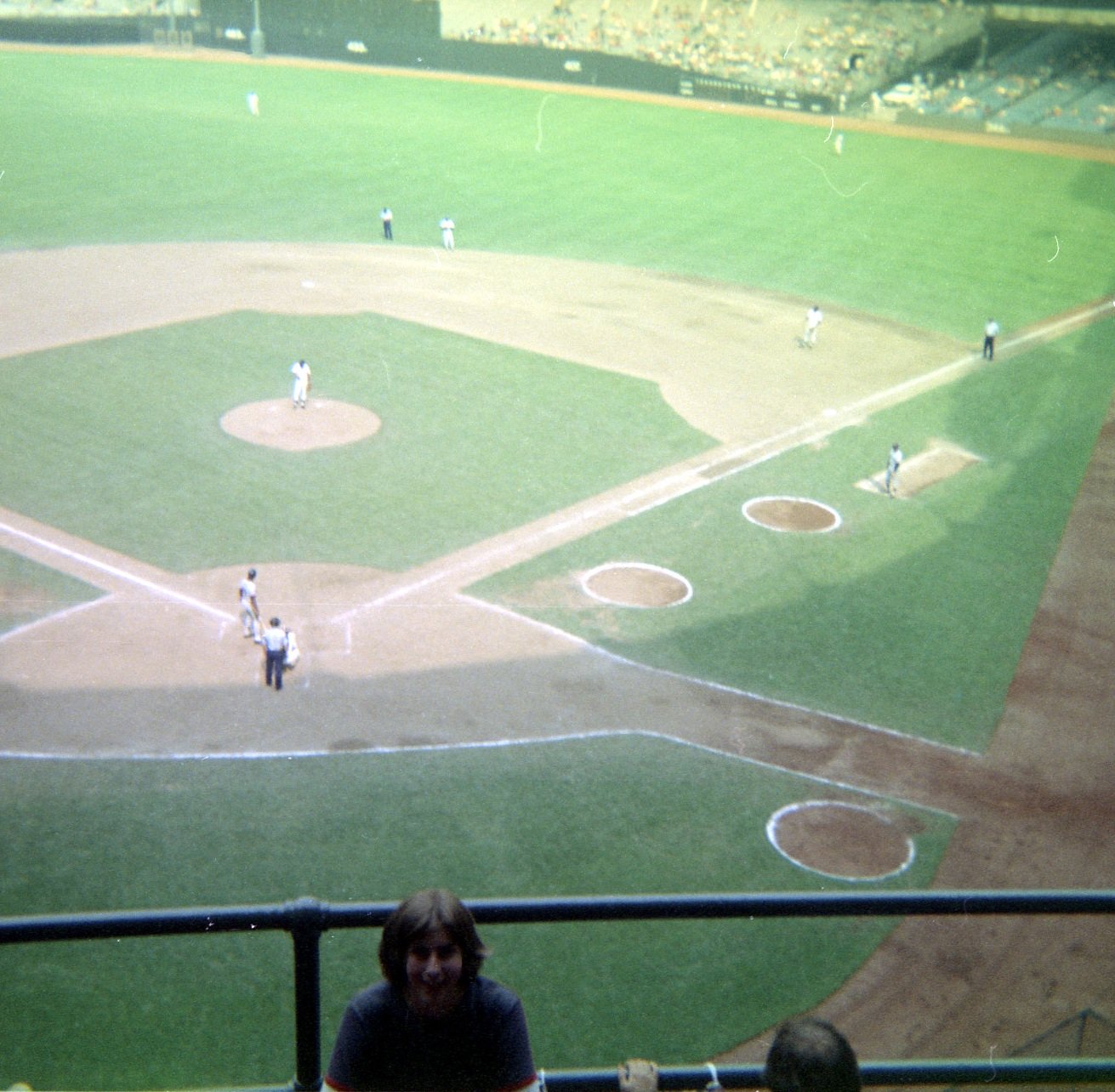
Phil at Yankee Stadium
Phil paid $4 for a box seat and could roam at will, including right up to the field level.
Here is another one of the photos taken that day, but this one wasn’t taken by Phil. An 18-year-old Phil asked an usher to take a photo of him, which you can see here.
Mel Stottlemyre is pitching for the Yankees.
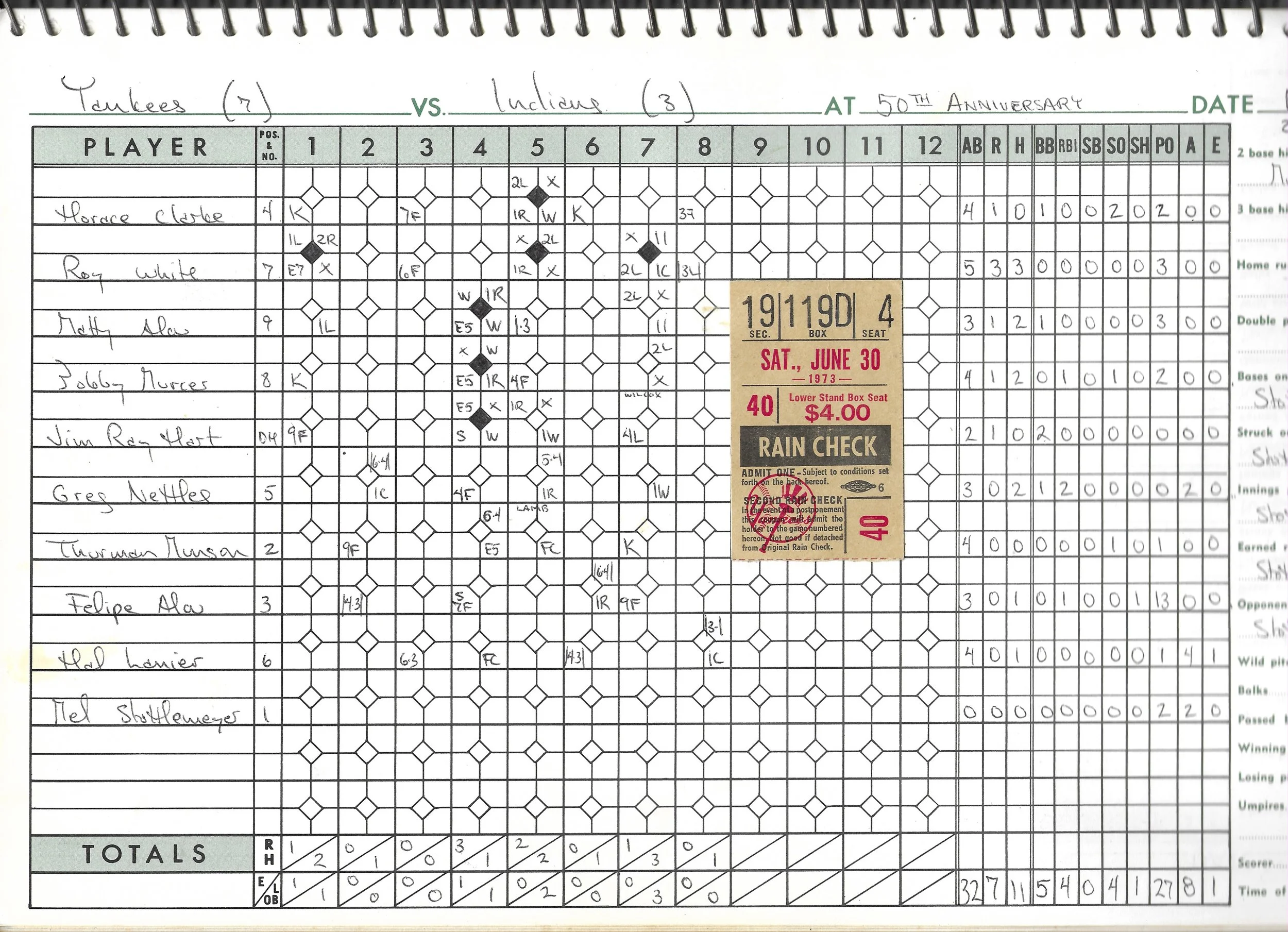
Phil’s scorecard and ticket stub from June 30, 1973 at Yankee Stadium.
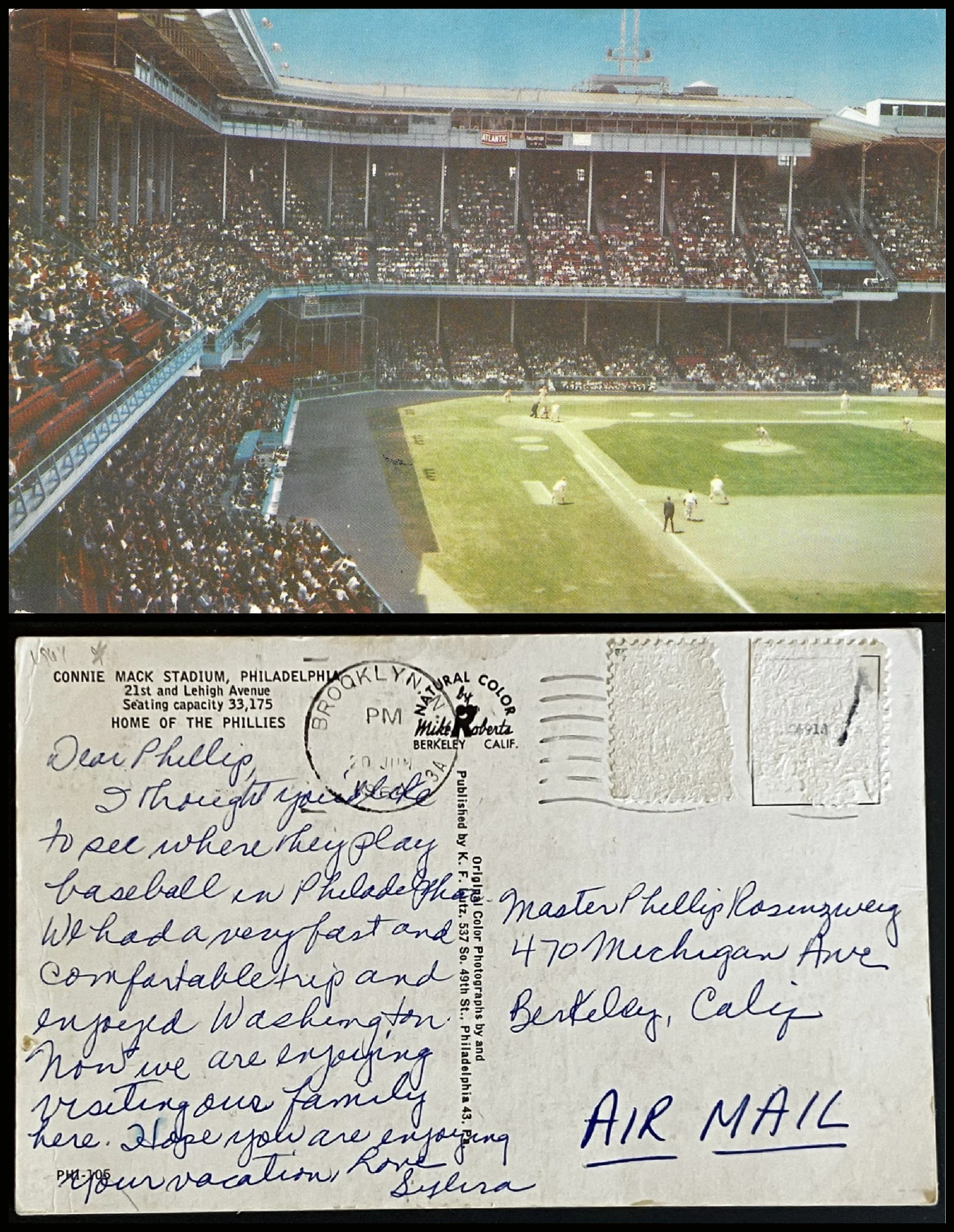
Phil’s love for (and collection of) baseball stadium postcards began in 1964 when a family friend sent him this example from Connie Mack Stadium in Philadelphia. Every time his dad went on a trip after that, Phil would ask him to send a baseball stadium postcard so he could add to his collection.
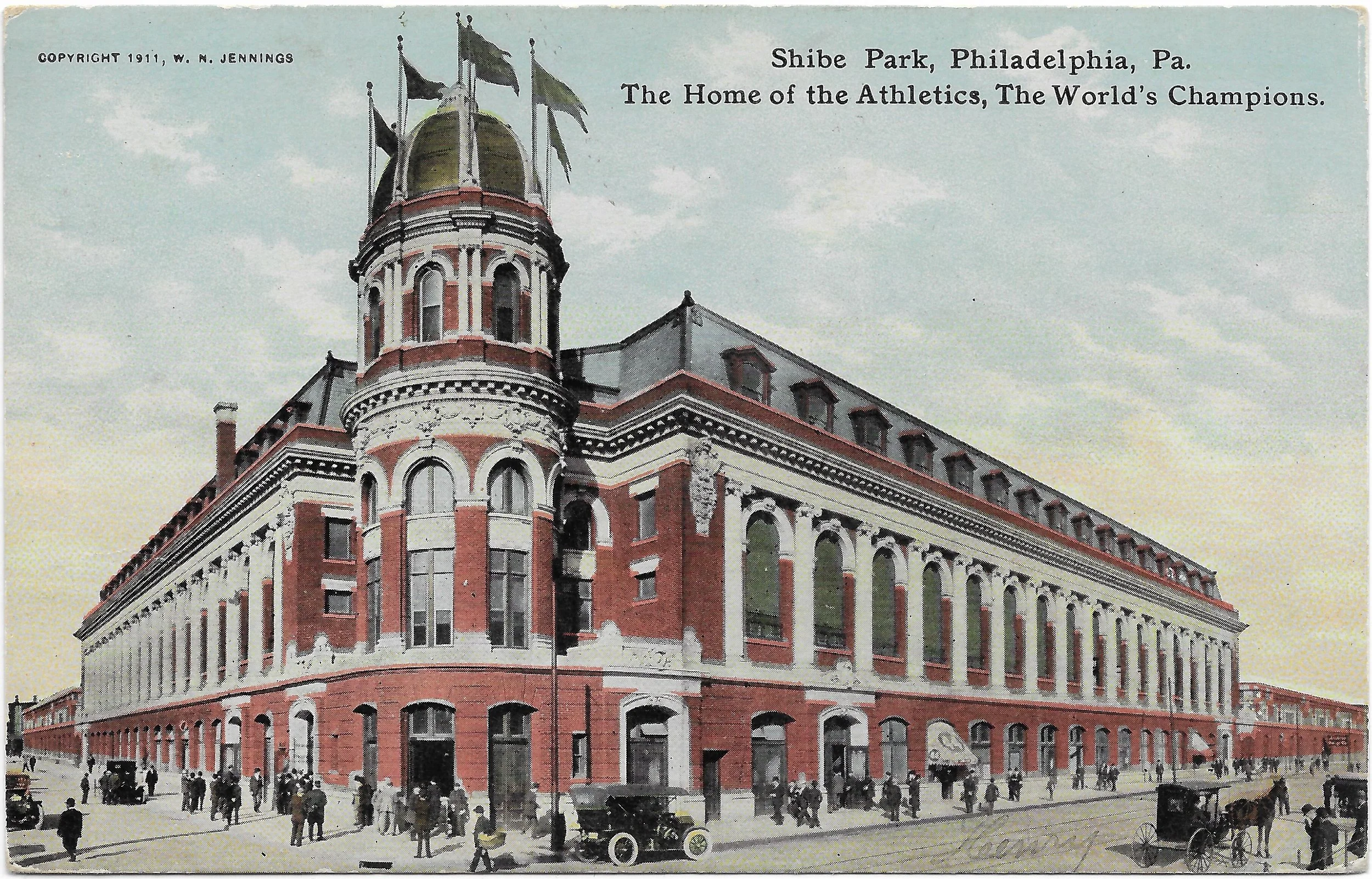
As gorgeous and unique as the inside of Shibe Park may have been, my favorite view of the first steel-and-concrete stadium in America has always been this one, an exterior view showing the cupola.
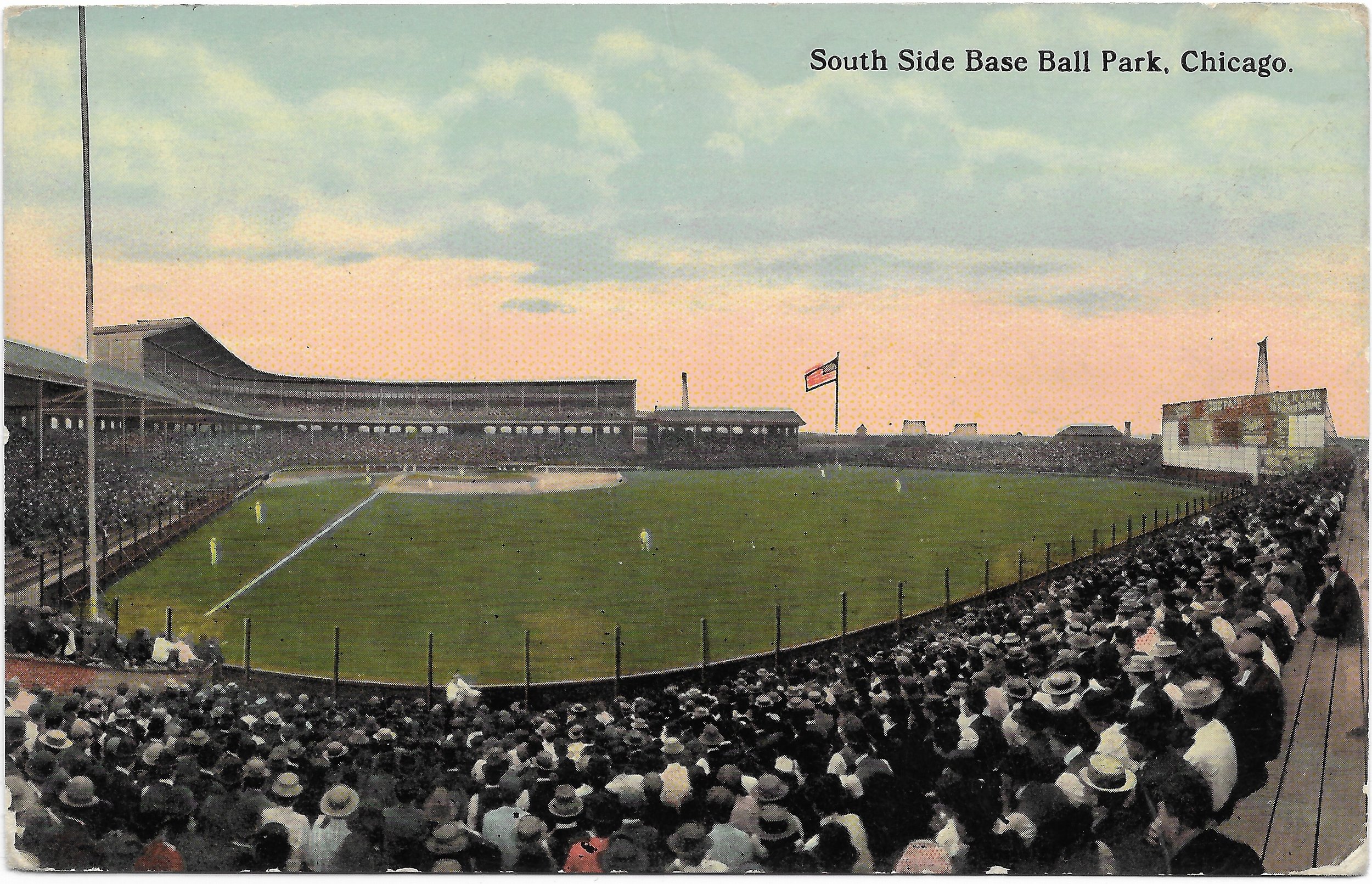
Comiskey Park in Chicago, home of the White Sox from 1910 through 1990.
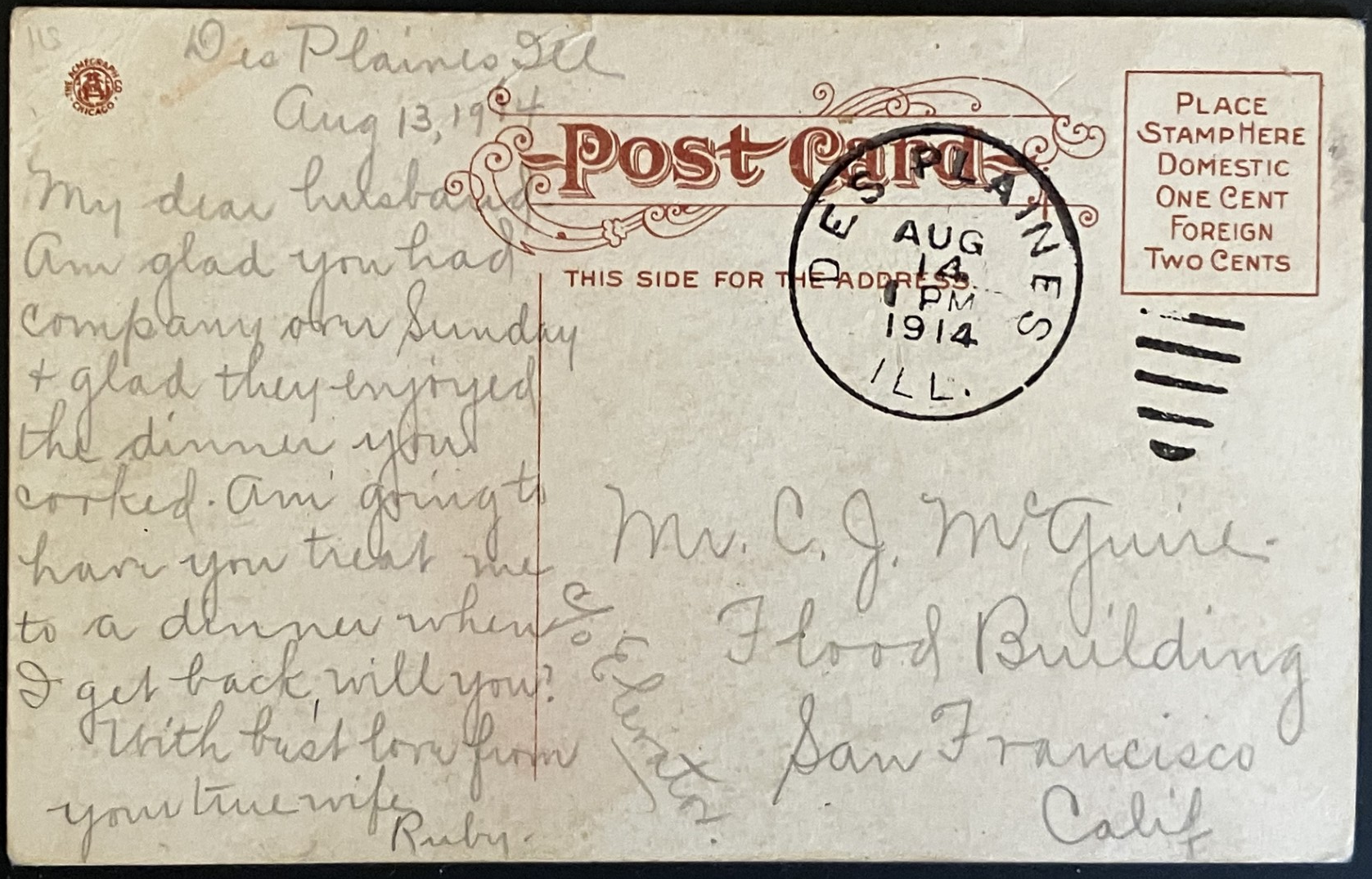
While the images on the front of the postcards are always most important to me, there are definitely times when you find some gems written on the back. Phil has one such example here.
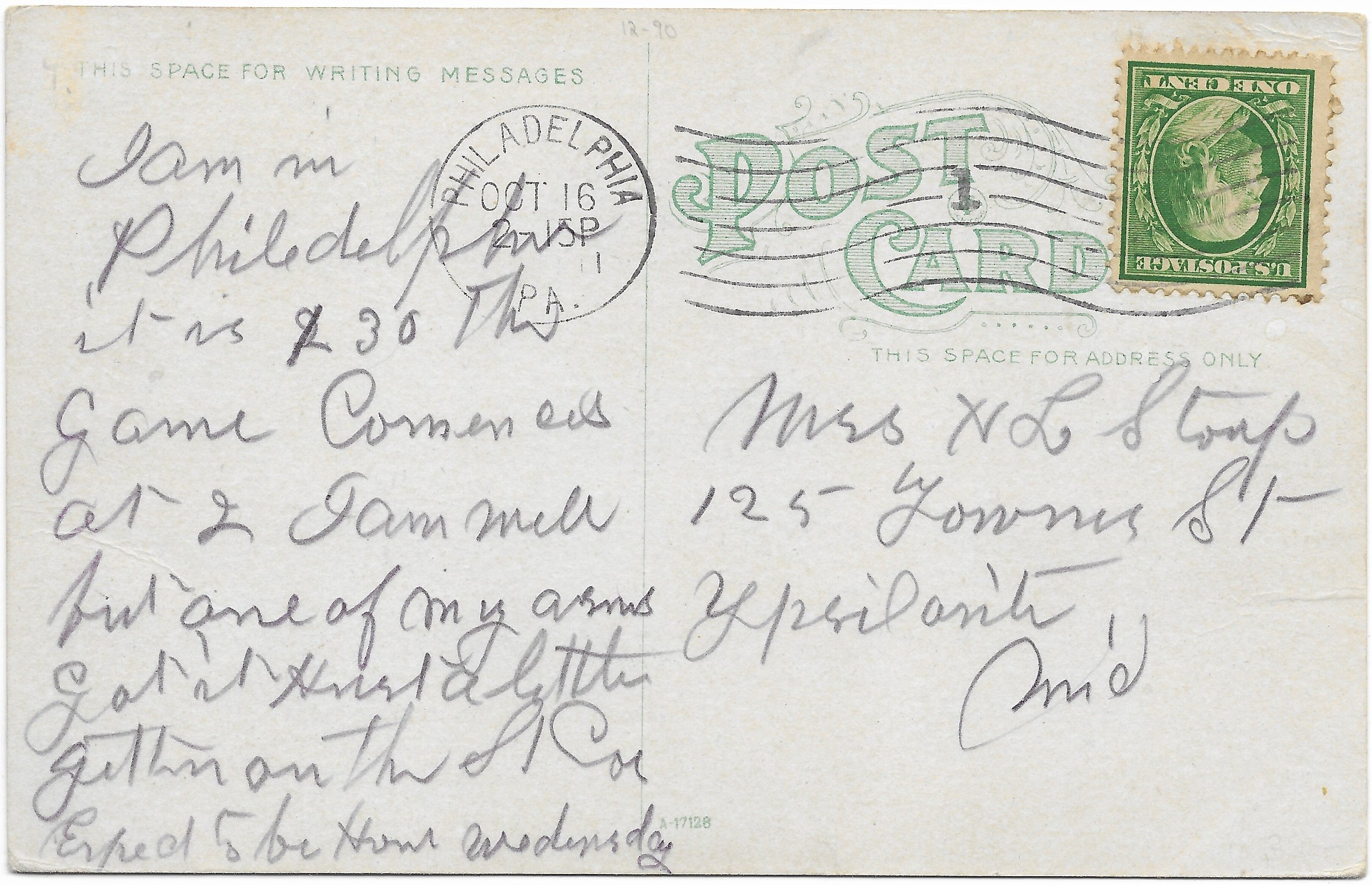
This postcard was written just as Game 2 of the 1911 World Series was about to begin. The Athletics beat the Giants 3-1 en route to a 4-2 Series victory, their second consecutive title.
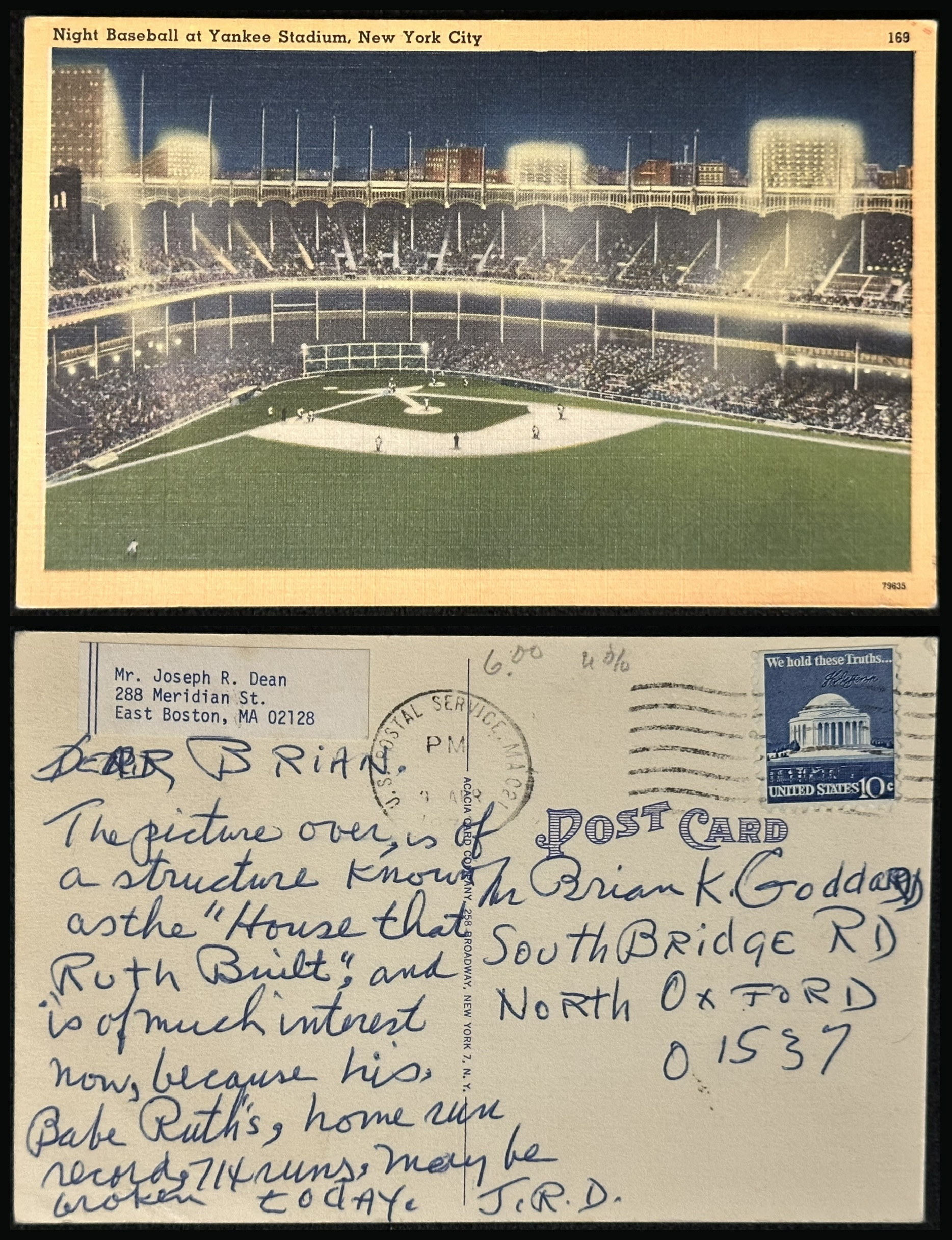
This one is from my personal collection. It was written on April 8, 1974, the day Henry Aaron broke Babe Ruth’s all-time home run record by hitting his 715th career home run.
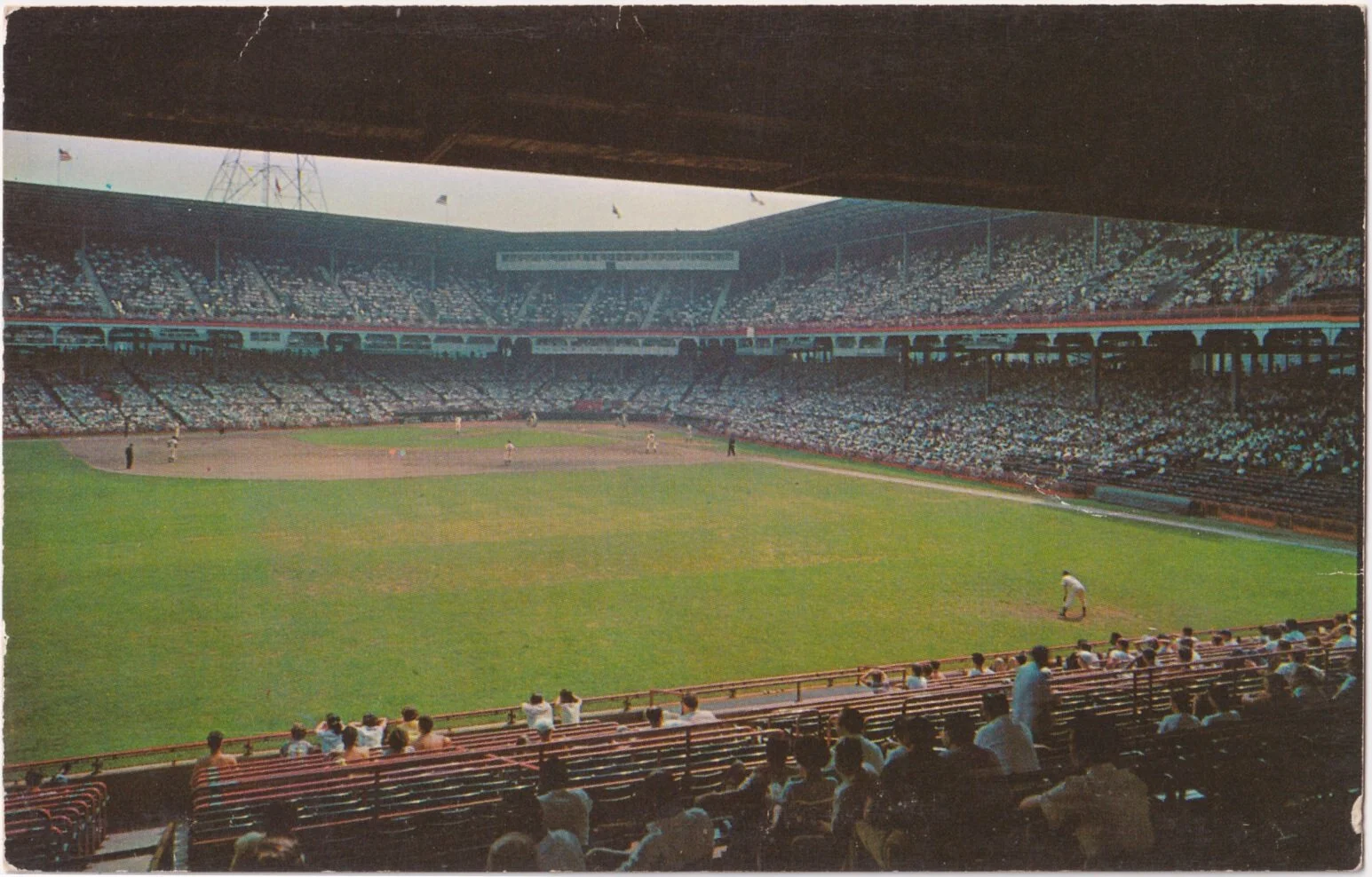
Not every stadium has a postcard (Griffith Stadium in Washington, D.C. didn’t have any commercial cards, for whatever reason), and not every stadium which had postcards would have photos from every angle, inside and out. Luckily, this postcard from Ebbets Field shows the view from center field, looking in toward home plate.
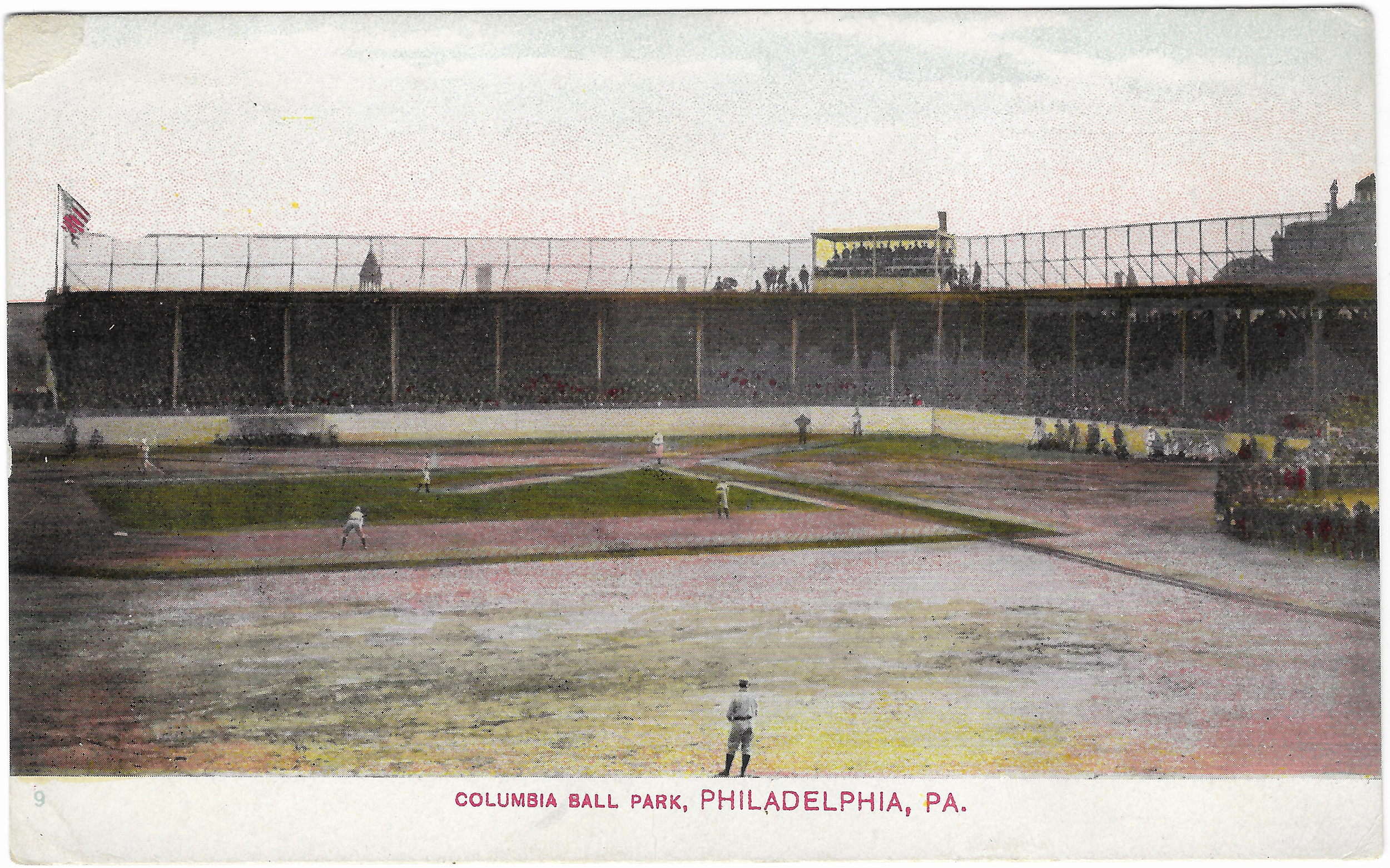
This postcard of Columbia Park in Philadelphia (which is where the Athletics played from 1901 through 1908, before Shibe Park was built to replace it) took me years to track down. I’m thrilled to have it in my collection, as this was the stadium where Shoeless Joe Jackson made his major league debut on August 25, 1908.
Make it stand out
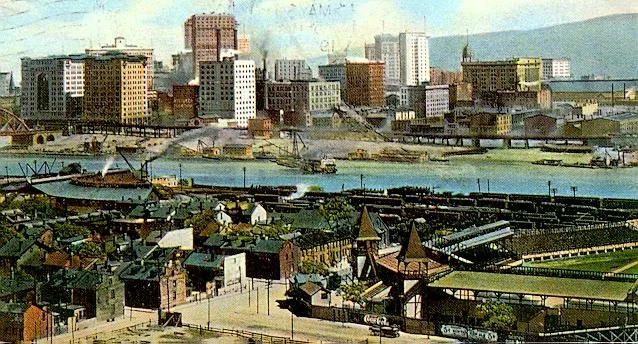
Exposition Park was the name given to three historic stadiums initially located on the north side of the Allegheny River in Allegheny, Pennsylvania. The city was annexed into Pittsburgh (then often spelled "Pittsburg") in 1907.
The fields were used mainly for professional baseball and football from c. 1879 to c. 1915. In 1903, the third incarnation of Exposition Park was the first National League ballpark to host a World Series game.
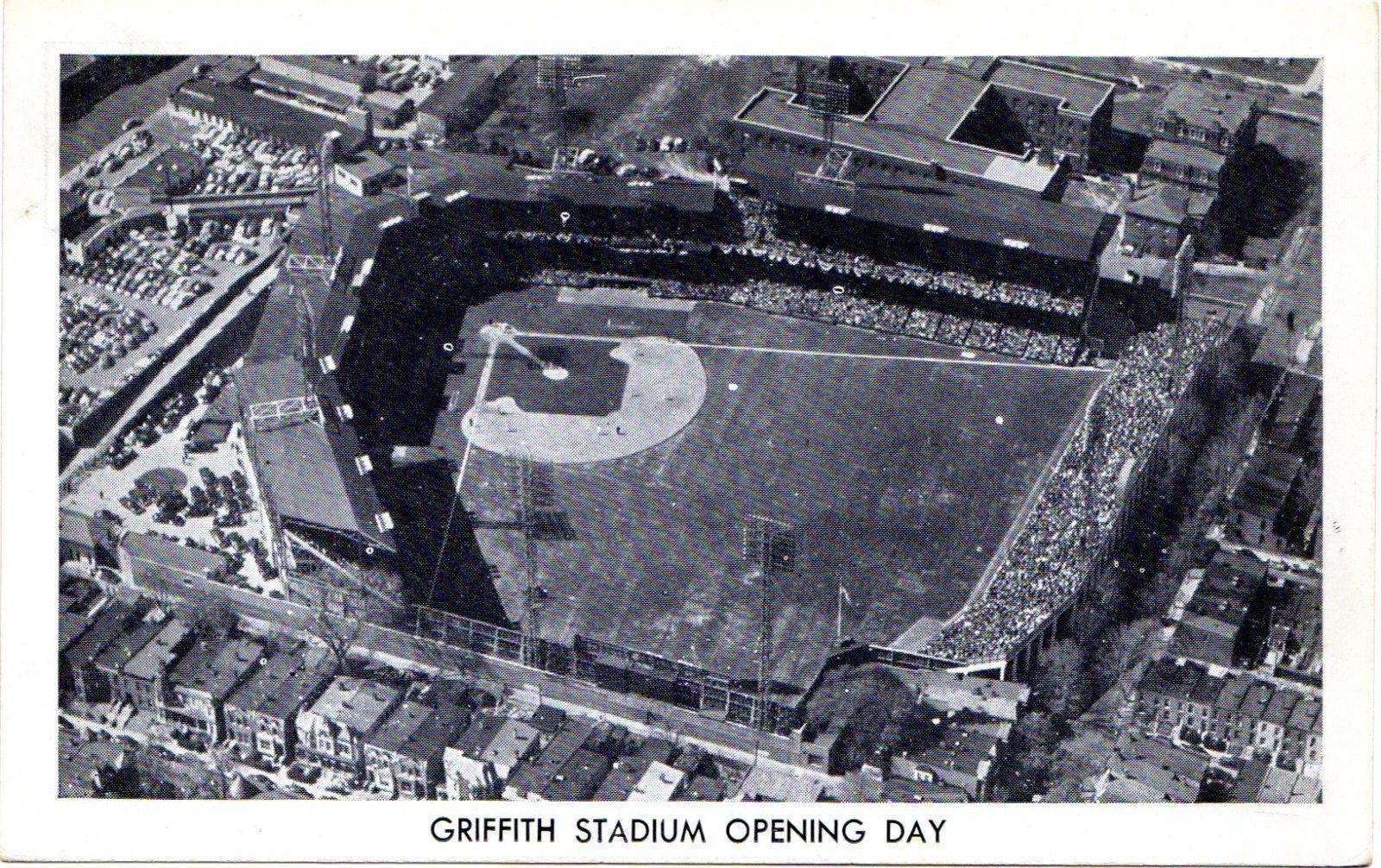
This 3 1/2" x 5 1/2" black and white postcard shows an aerial view of Griffith Stadium in Washington, D.C. on Opening Day, 1951. This is the only commercially produced postcard featuring Griffith Stadium in use as a baseball stadium, and was made by Eastern Air Lines Advertising Service.
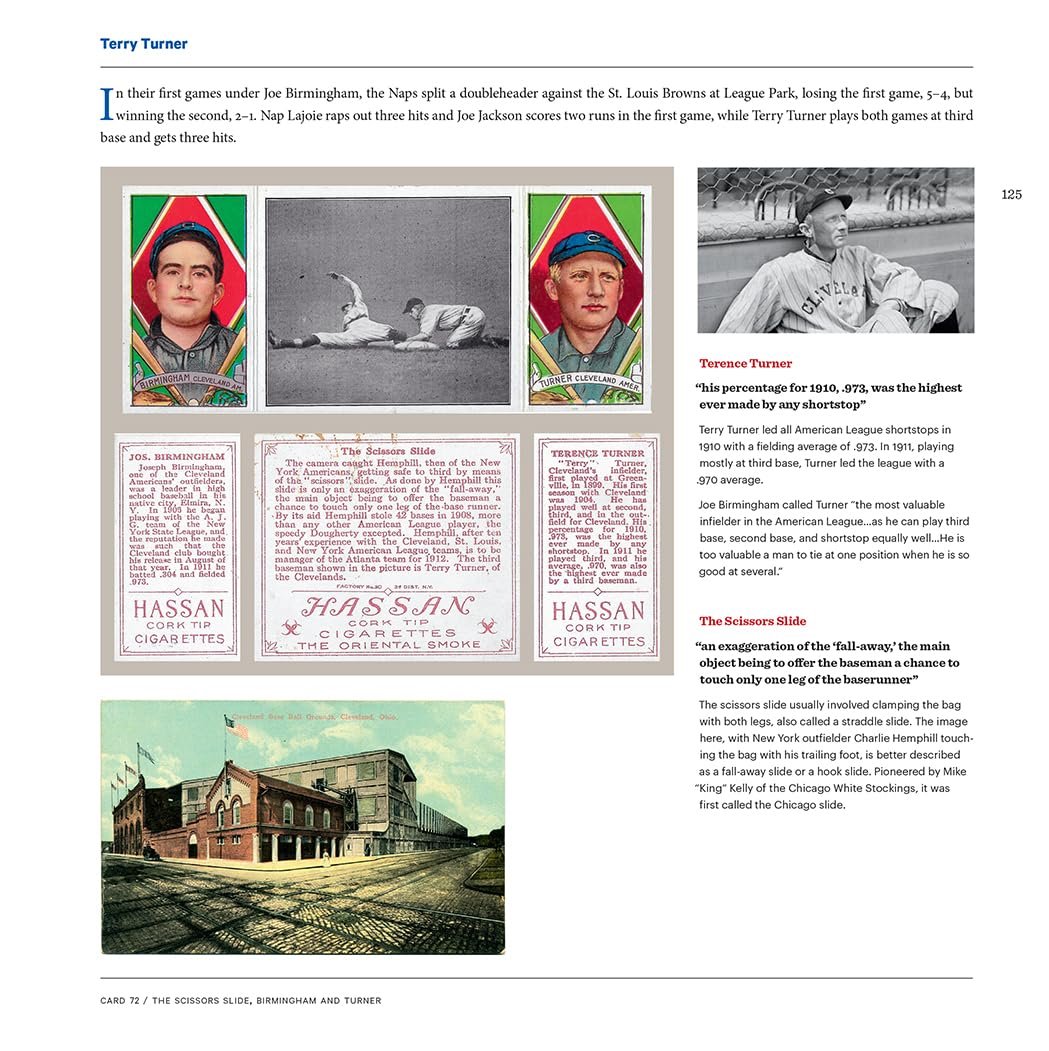
One Splendid Season is laid out so beautifully, and it tells the story of the 1912 season in such a compelling way.
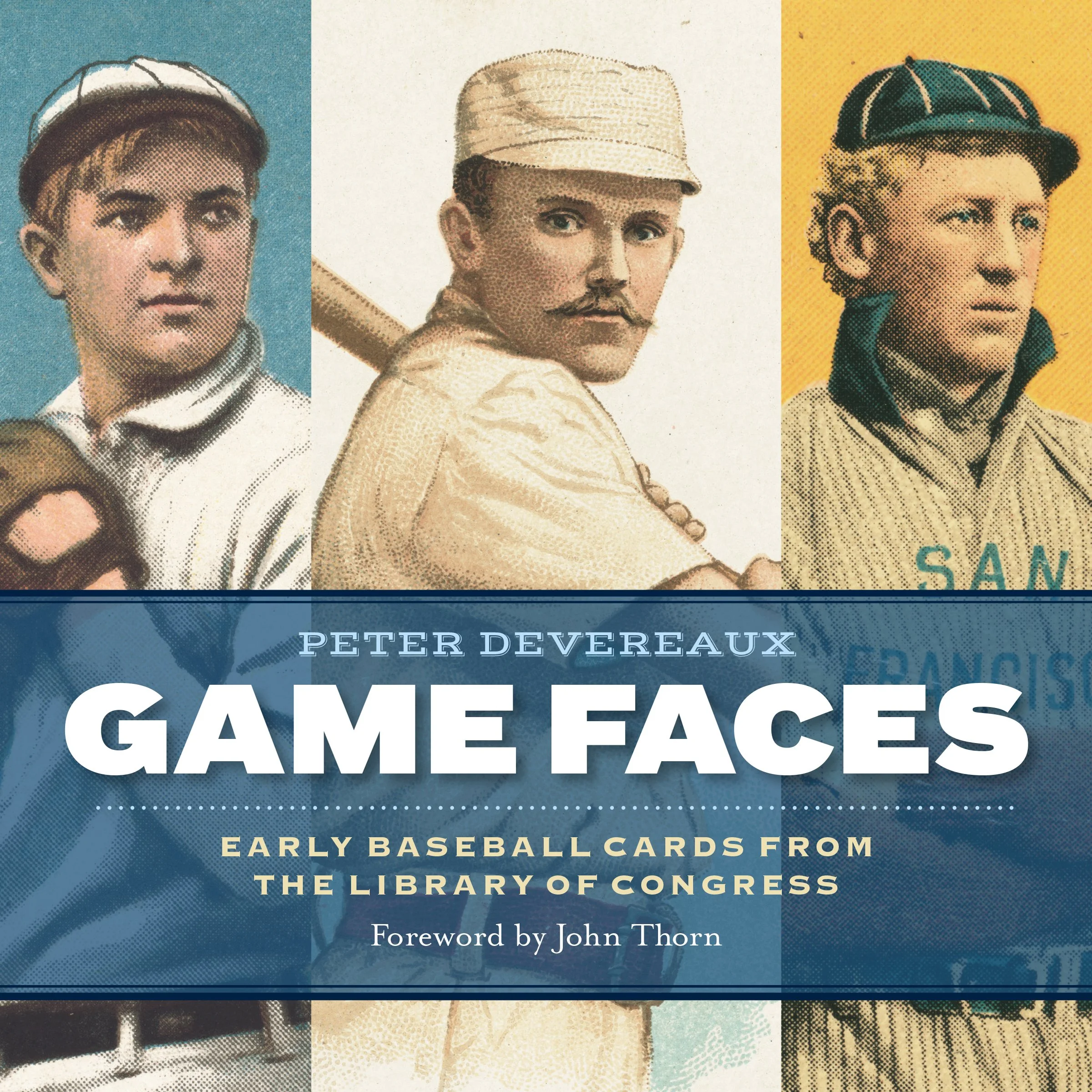
Game Faces
Peter Devereaux’s Game Faces: Early Baseball Cards From The Library Of Congress offers insight into the players and the game, giving readers a view of both baseball’s development and American culture at the turn of the 20th century.
Marrying gems from the Library of Congress’ Benjamin K. Edwards Collection of 2,100 baseball cards to images of American life from 1887 to 1914, the book was a huge inspiration for Phil when he was thinking about how he wanted his own book on the T202 set to look and feel.
Buy Game Faces HERE.

Antonio Alcalá
Antonio Alcalá of Studio A was the graphic designer Phil worked with to turn his vision into the beautiful book that is available now.
Antonio graduated from Yale University with a BA in history and from the Yale School of Art with an MFA in graphic design, opening Studio A in 1988. Since then, his studio has won awards of excellence in design from local, national, and international design institutions, including AIGA, Print, Communication Arts, and Graphis.
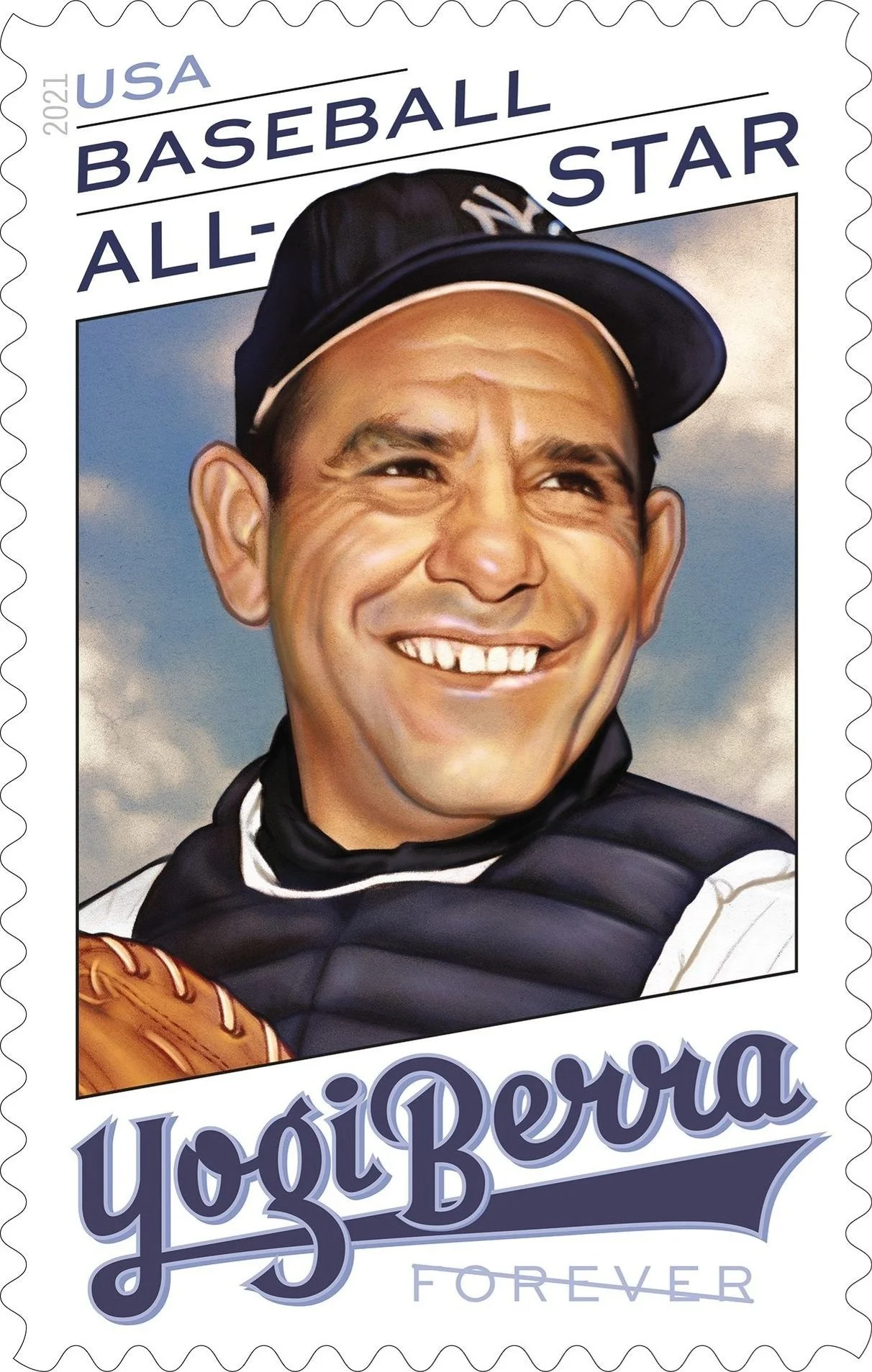
Yogi Berra Postage Stamp
The U.S. Postal Service issued a Yogi Berra stamp on June 24, 2021, which was designed by Antonio Alcalá. The Forever stamp was dedicated during a ceremony at the Yogi Berra Museum & Learning Center in Little Falls, New Jersey.
Antonio Alcalá served on the Postmaster General’s Citizens' Stamp Advisory Committee from 2010 until 2011, when he left to become an art director for the U.S. Postal Service's stamp development program.
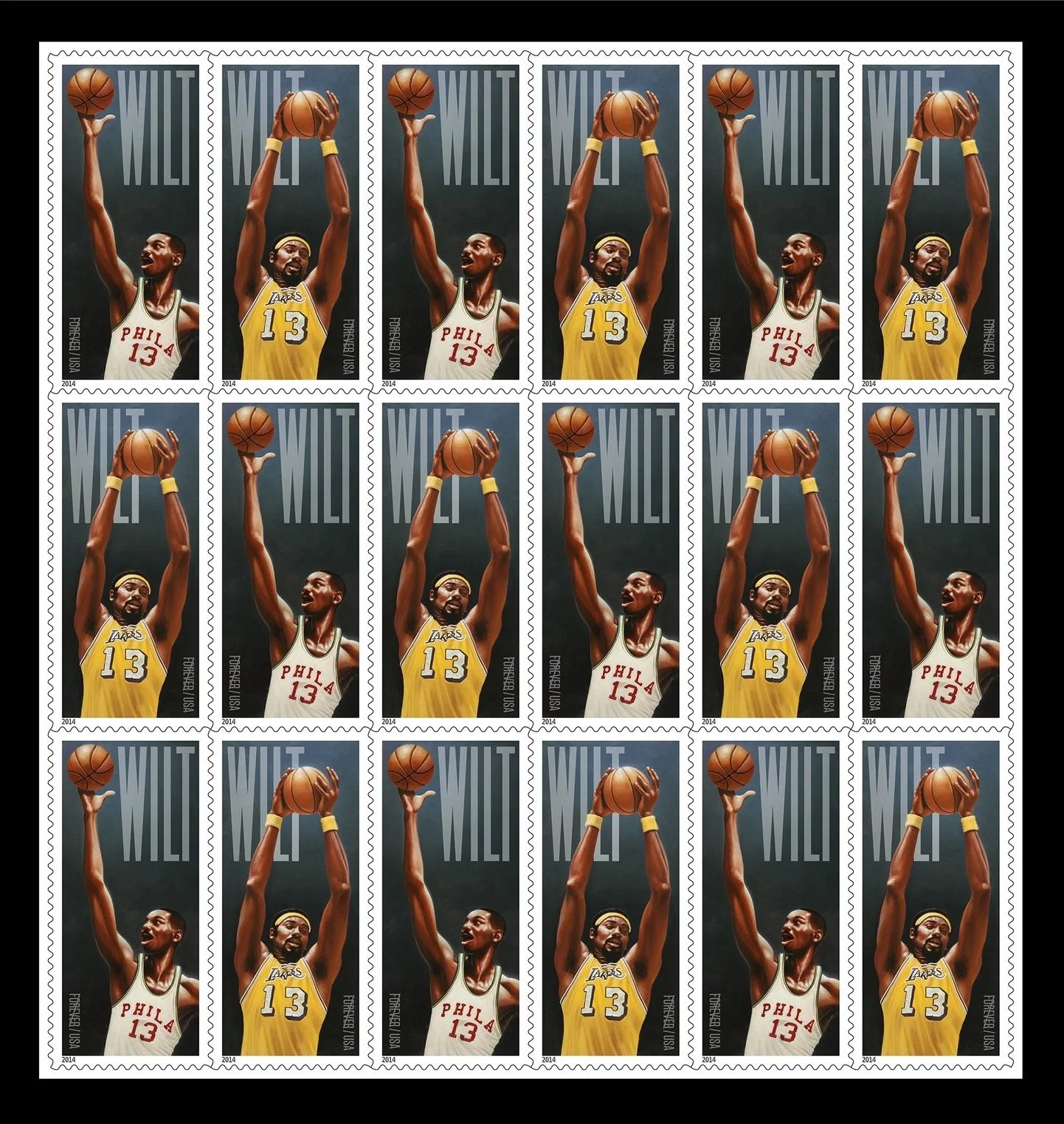
Wilt Chamberlain
These two Forever stamps which were first issued on December 5, 2014 in Philadelphia showcase artwork by Kadir Nelson, who created two portraits of Wilt Chamberlain. One is based on a photograph of Chamberlain in a Philadelphia Warriors uniform, the other based on an image of Chamberlain in a Los Angeles Lakers uniform. The word “Wilt” is featured in the top right or left corner of each stamp, along with the “Forever” denomination and “USA” in the bottom right or left corner of each stamp.
Wilt Chamberlain’s career statistics via Basketball Reference
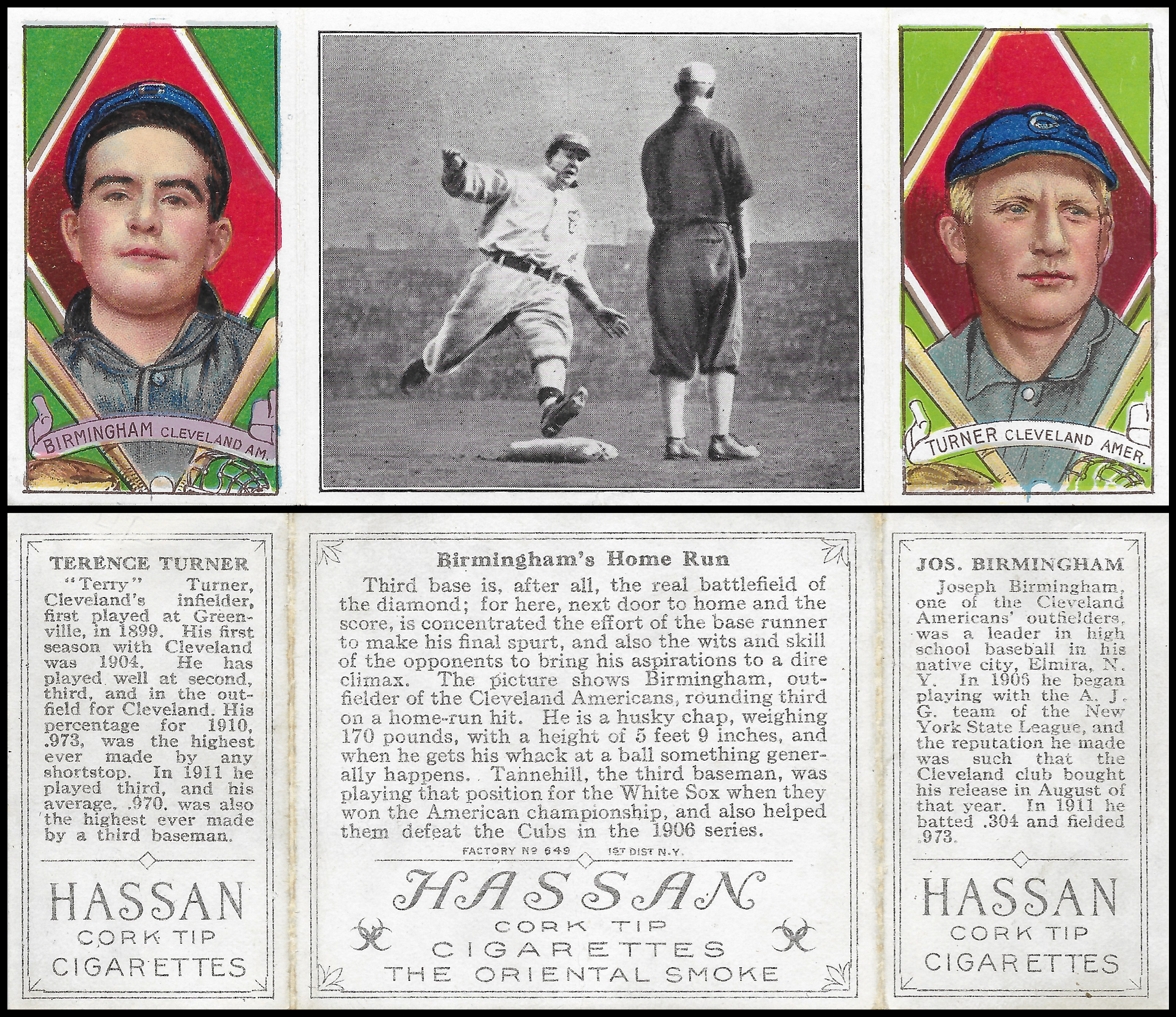
Laying out the book presented some logistical problems which Antonio helped Phil to solve. With each panel having its own caption, that meant simply flipping the card over and displaying a high-resolution scan exactly as it appeared would have been confusing to the reader. The photo on the left panel of the card’s front matches up with the caption on the right panel of card’s back, and vice versa. Figuring out an elegant and intuitive way to display both sides of every panel of the T202 set within the book was a challenge.
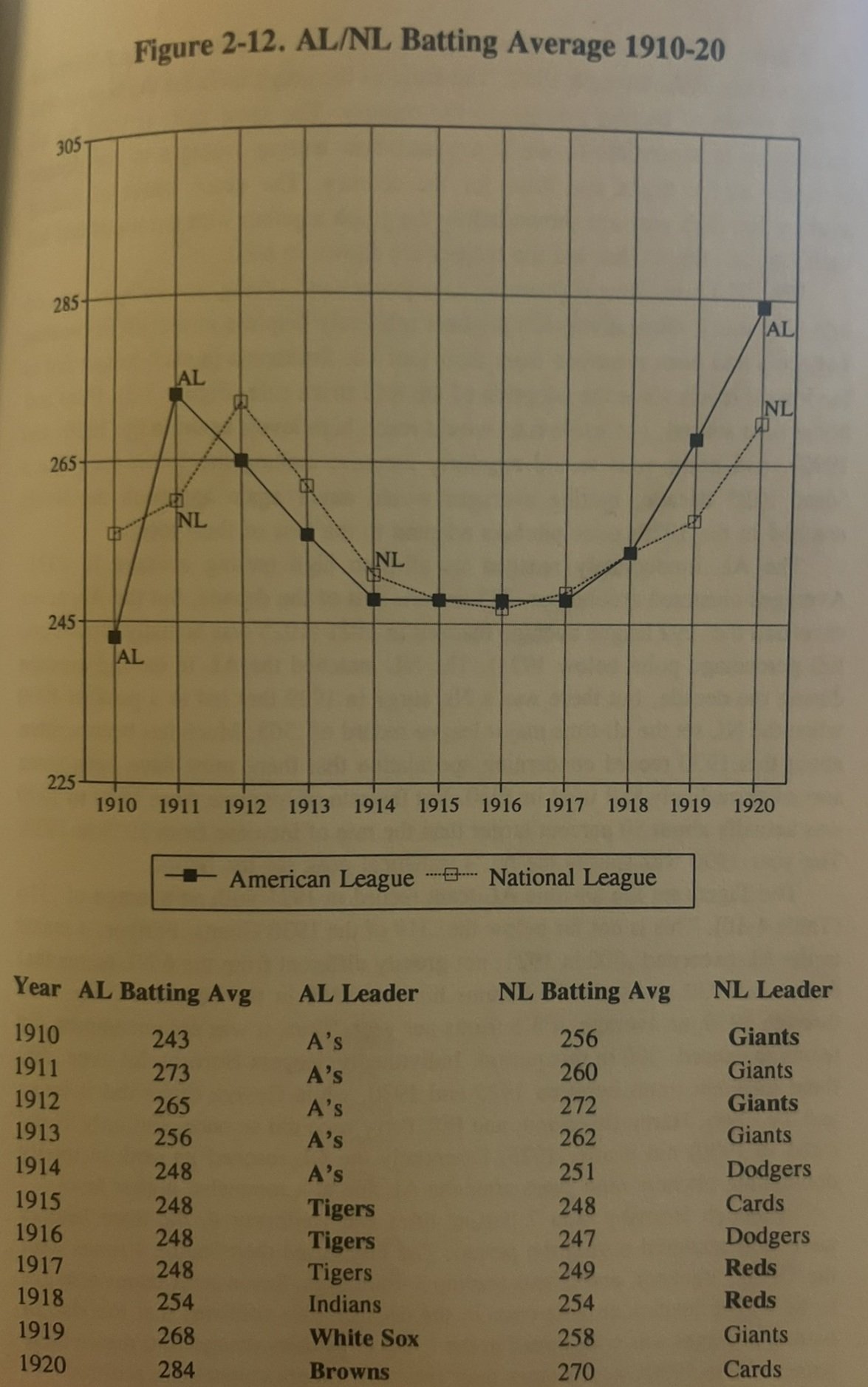
“Dead Ball” Era?
Paul Reiferson, who knows more about the history of the actual ball when it comes to baseball than almost anyone I know, has said “There was nothing dead about the ‘dead ball’ in 1911 and 1912.”
1911 is the height of the most elastic ball possible. They dialed the ball back for the 1912 season, but 1912 is still kind of a jackrabbit offensive season.
1912’s Offensive WAR Leaders:
1) 9.3 WAR - Tris Speaker (CF, Boston Red Sox)
2) 8.9 - Ty Cobb (CF, Detroit Tigers)
3) 8.9 - Shoeless Joe Jackson (RF, Cleveland Naps)
4) 8.3 - Frank “Home Run” Baker (3B, Philadelphia Athletics)
5) 8.2 - Eddie Collins (2B, Philadelphia Athletics)
6) 7.2 - Heinie Zimmerman (3B, Chicago Cubs)
7) 6.1 - Honus Wagner (SS, Pittsburgh Pirates)
8) 5.5 - Sam Crawford (RF, Detroit Tigers)
9) 5.2 - Bill Sweeney (2B, Boston Braves)
10) 5.1 - Napoleon Lajoie (2B, Cleveland Naps)
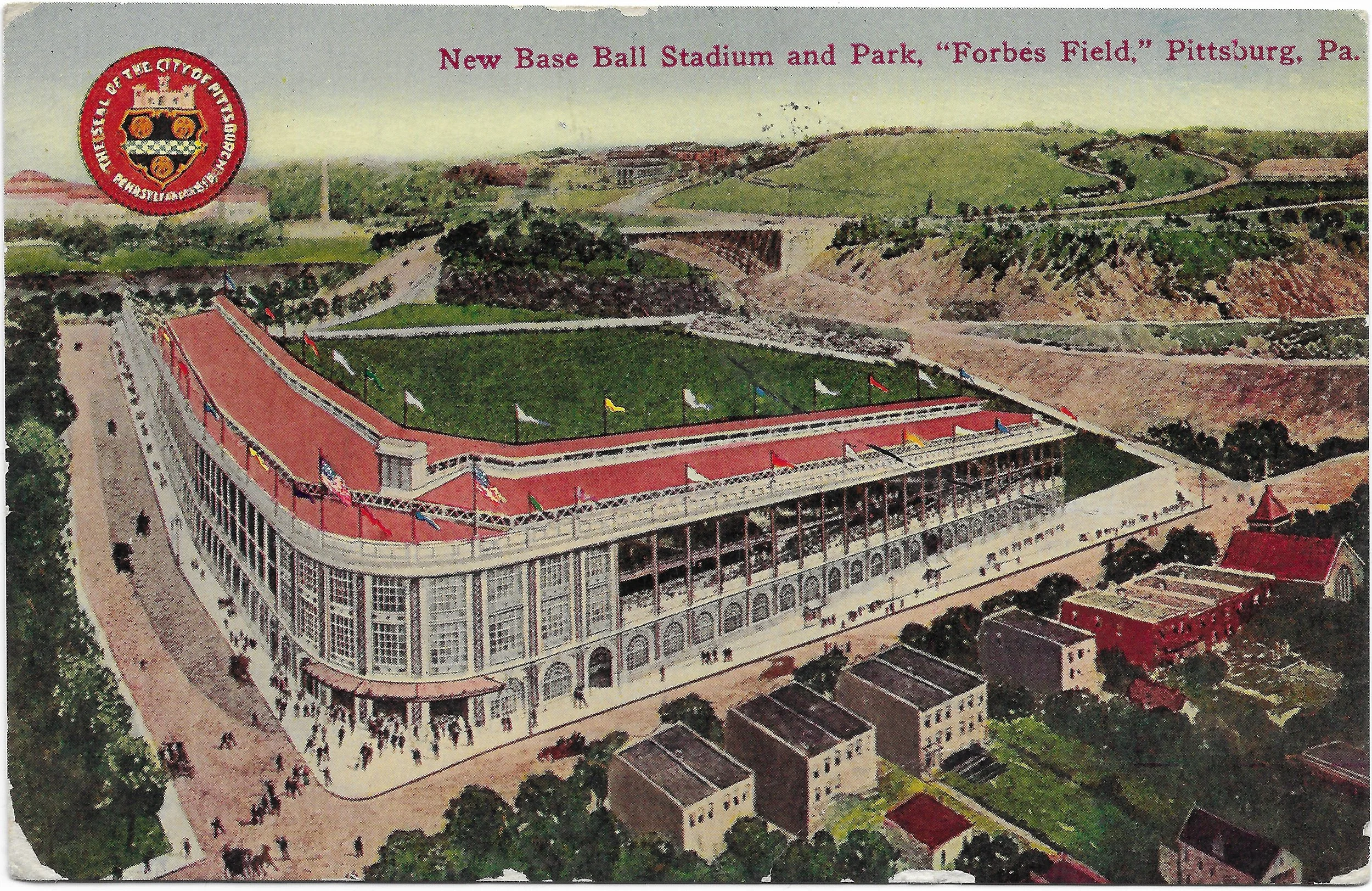
The stability of the state of Major League Baseball after the National Agreement allowed teams to start building stadiums out of steel and concrete, as opposed to wood. These more permanent structures were meant to stand the test of time, and were a statement that baseball was here to stay. Philadelphia’s Shibe Park started the trend, quickly followed by Forbes Field in Pittsburgh.
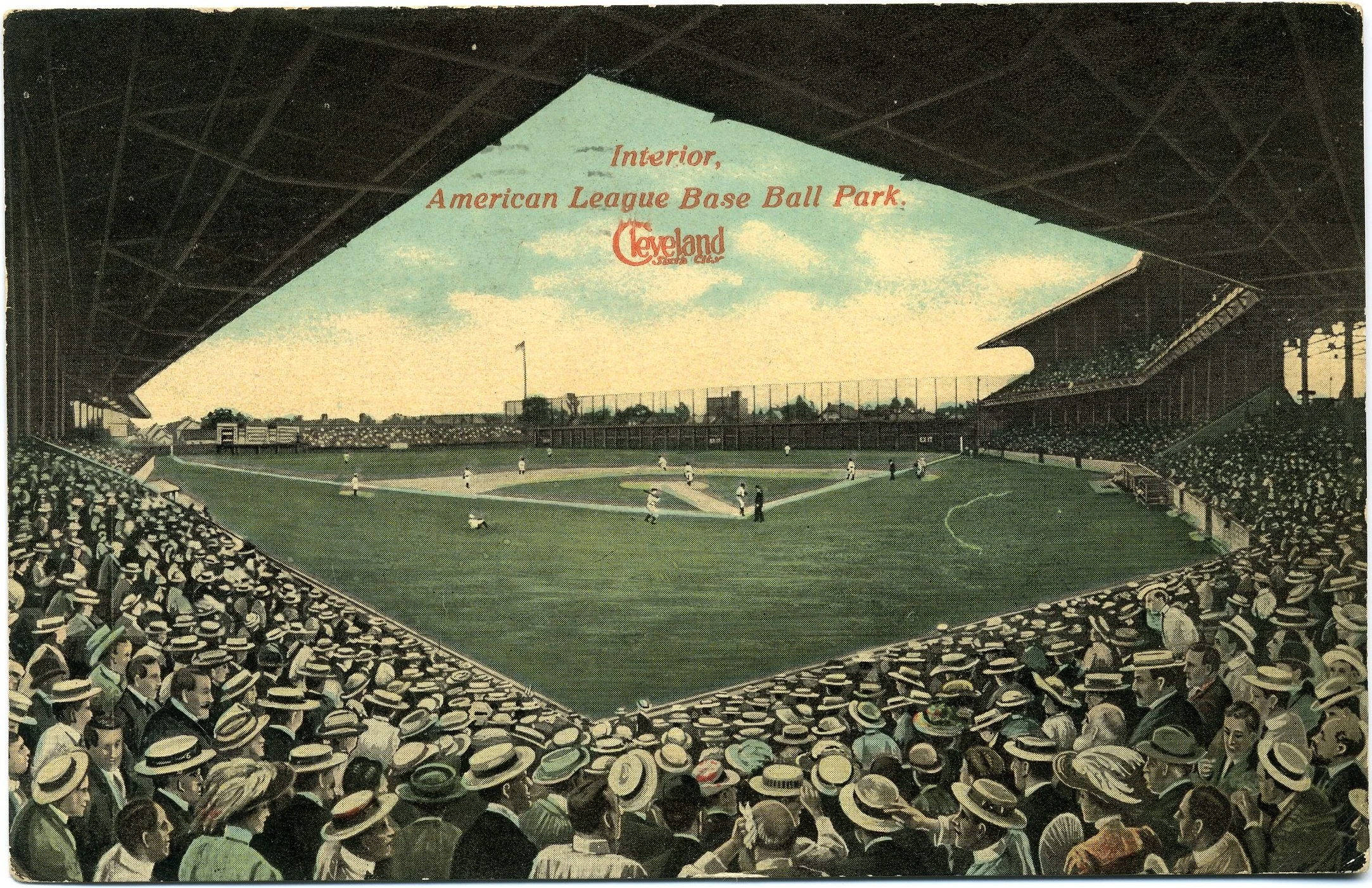
1910 saw the construction of even more steel and concrete stadiums, including League Park in Cleveland (pictured here), Comiskey Park in Chicago, and Rickwood Field in Birmingham, Alabama.
Federal League Cards?
The T202 set included cards featuring players from both the National League and the American League, as those were the only two recognized Major leagues at the time.
It would have been interesting had this set had come out two years later, however, because that would have allowed for the possibility of the inclusion of Federal League players and teams.
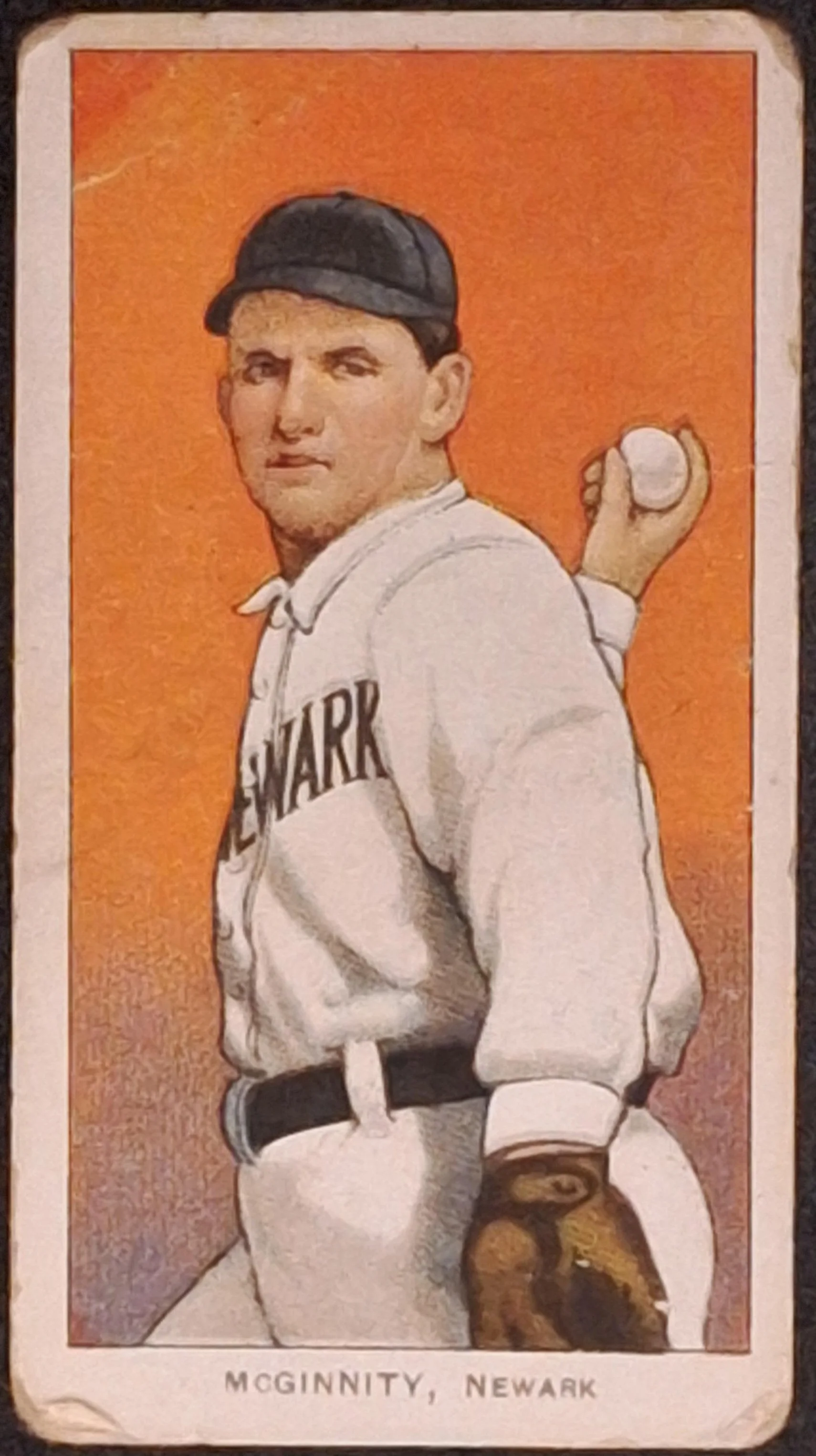
The T206 set included cards of Minor League players, like Joe McGinnity of the Eastern League’s Newark Indians, as well as many others.
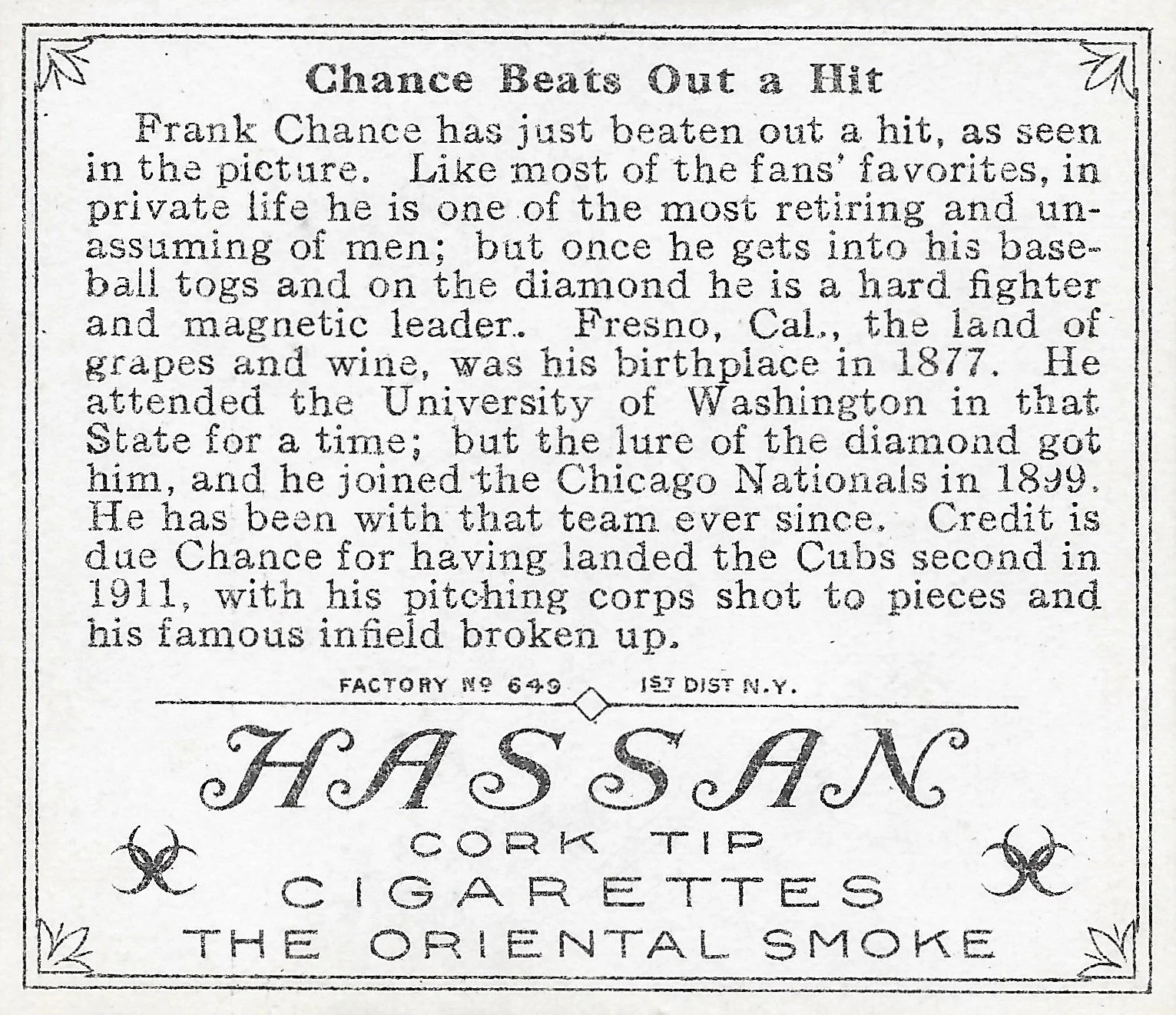
Beautiful Language
The backs of the cards often times make note of where a player is from. Some of the more exotic locations (basically anywhere west of the Mississippi, in 1912) would get an interesting description, like this one of Frank Chance’s birthplace.
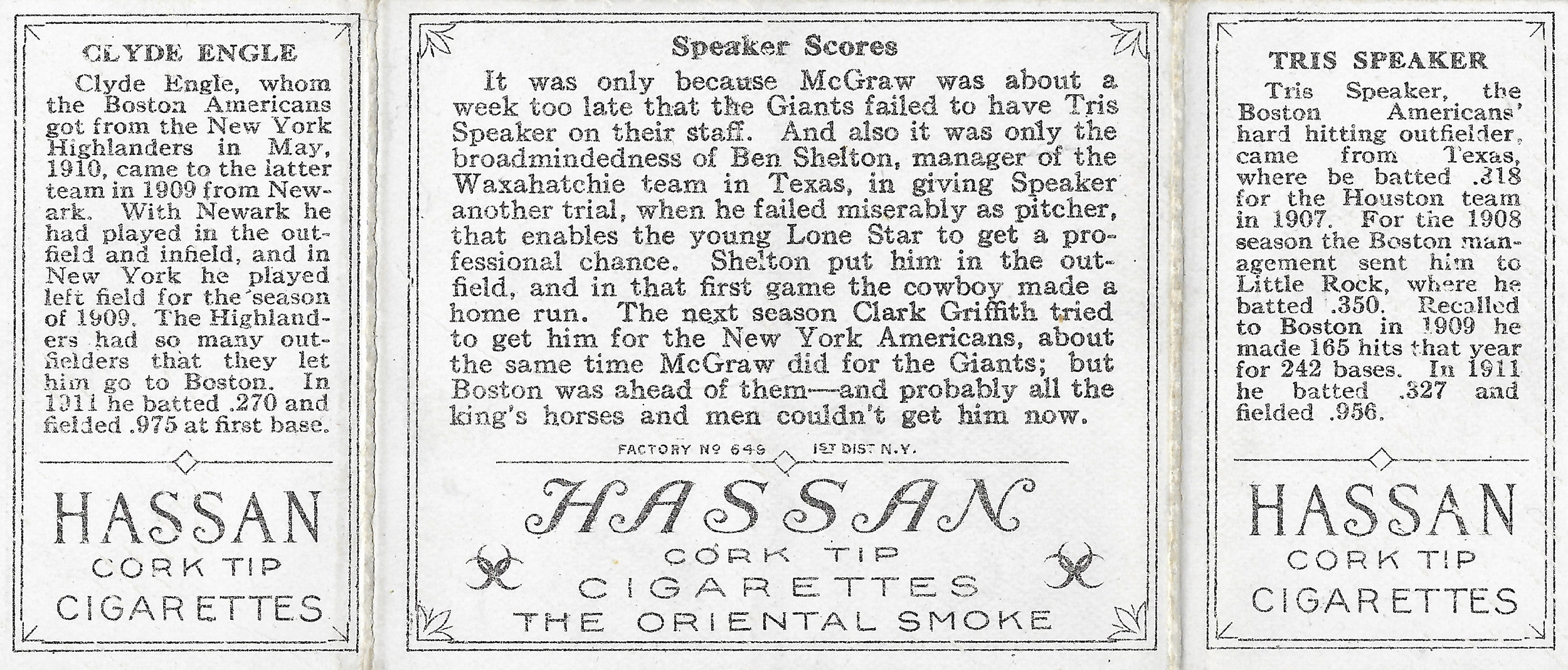
Tris Speaker was from Texas, so that must make him a cowboy, right? The writer of the back of this card sure thought so.
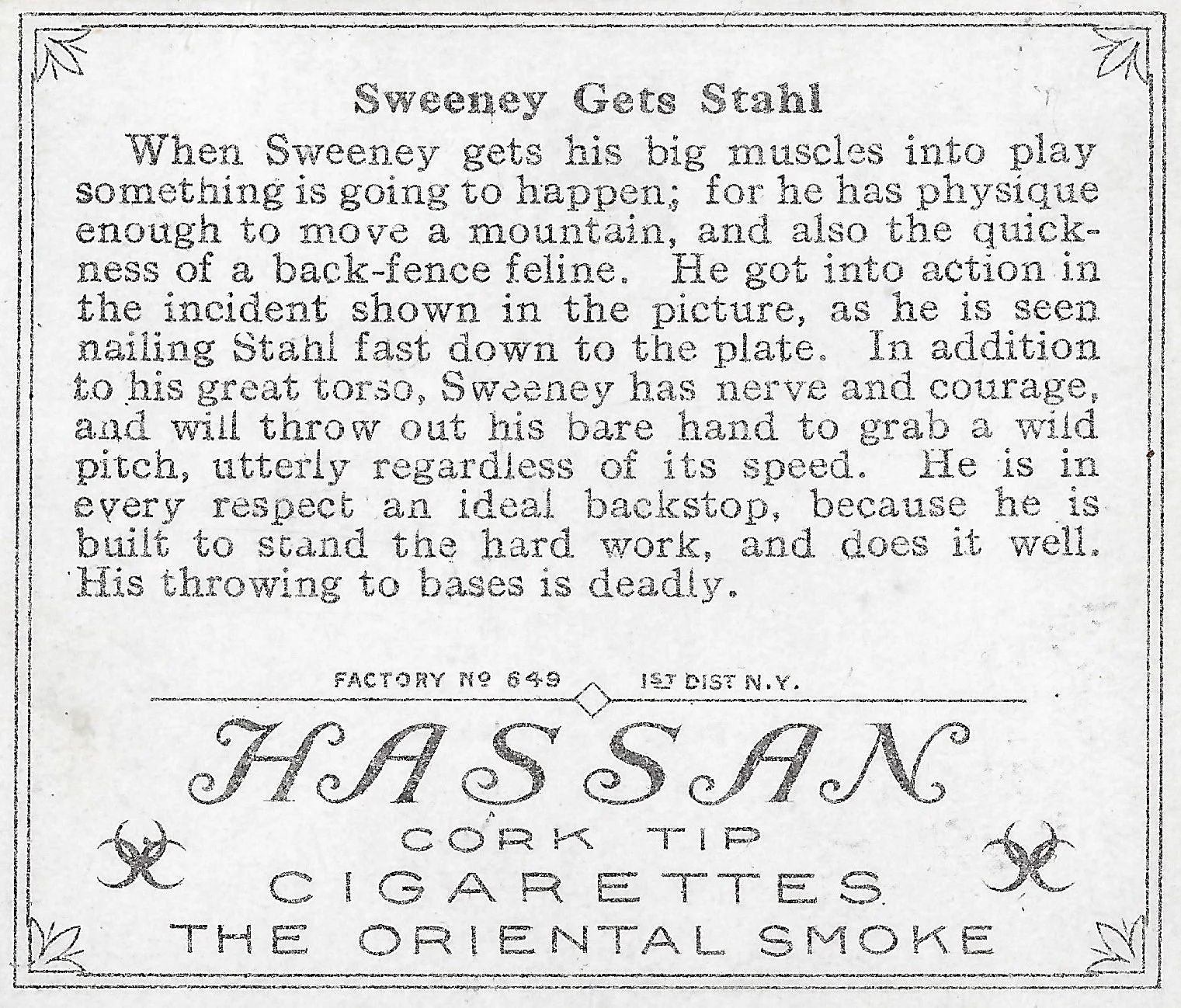
More Beautiful Language
This one is another favorite of mine, talking about catcher Ed Sweeney in a way modern writers just don’t do. While his full name was Edward Francis Sweeney, his nickname was Jeff, for some reason. I love old timey baseball.
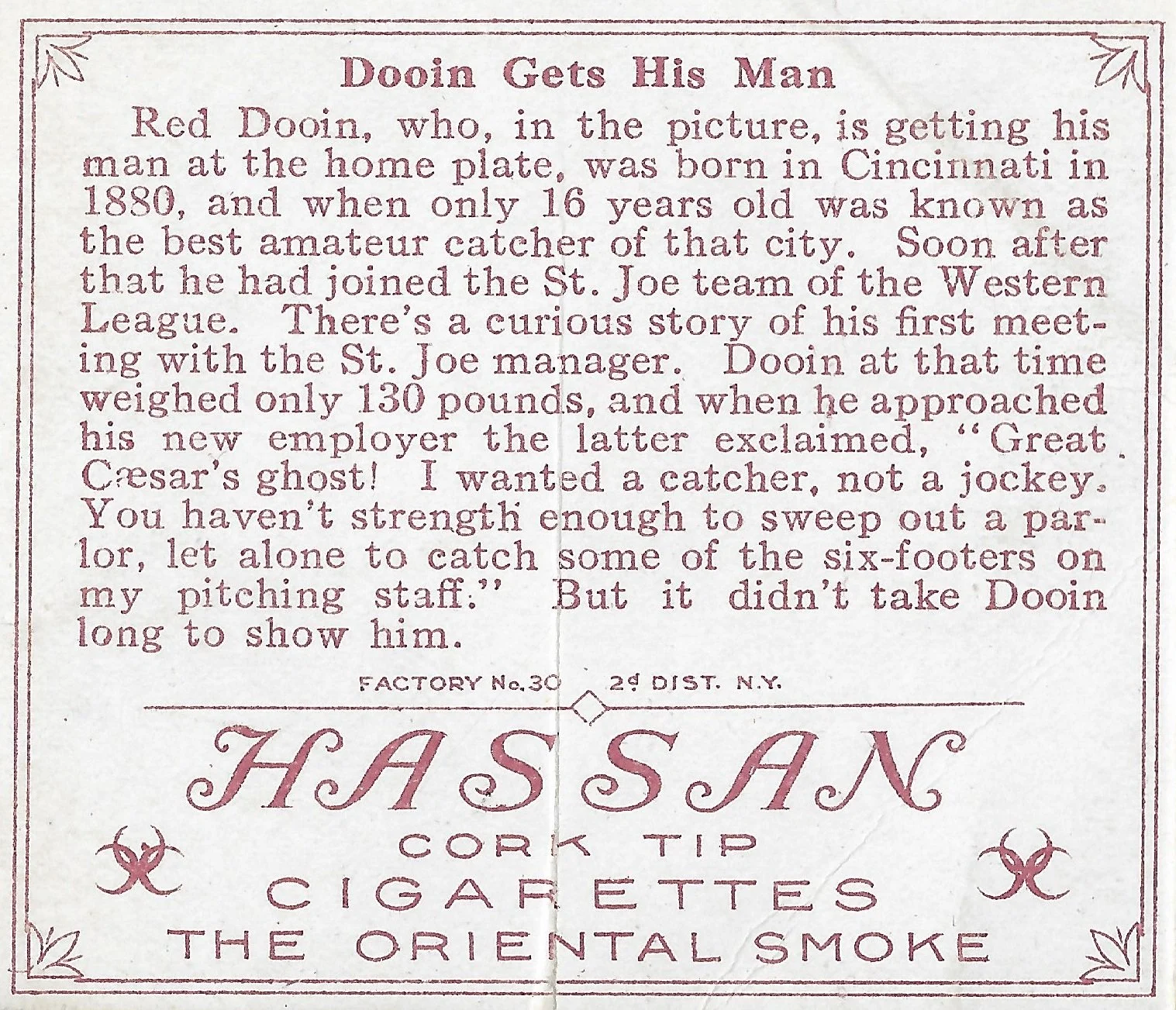
Great Caesar’s Ghost!
I mean, come on. How can you not love this?
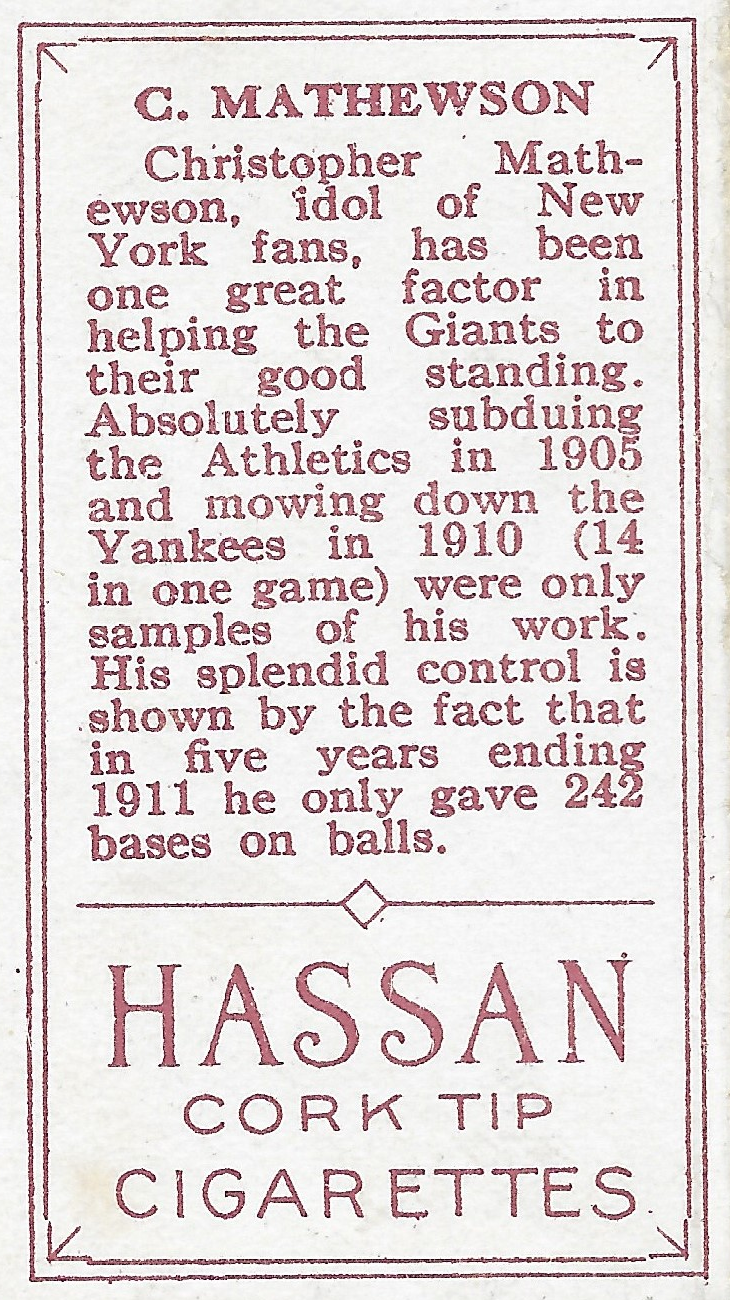
Christy Mathewson
There was no interleague play in 1910, and the Giants didn’t face the Yankees in the 1910 World Series, so what in the world is the back of this card talking about??
Christy Mathewson’s 1910 Game Logs
Christy Mathewson’s career statistics via Baseball Reference
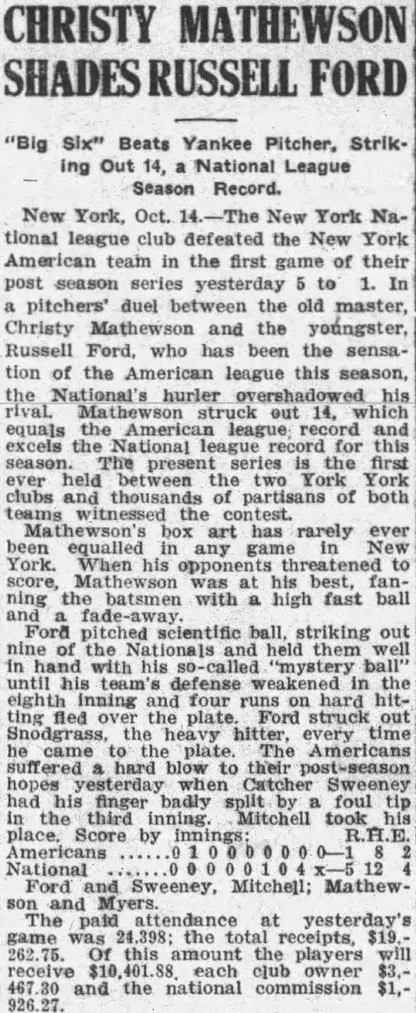
The 1910 City Series
Back in this era, when a city had two (or more) teams, at the end of the regular season, if neither team was in the World Series, oftentimes they would face each other in a City Series.
In the 1910 City Series between the Giants and the Yankees, Christy Mathewson faced off against the young Yankees pitcher Russ Ford, who had been the sensation of the American League that season.
Mathewson struck out 14, which would have equaled the American League record at the time, and would have also been the most strikeouts of any single game in the National League in 1910, as well.
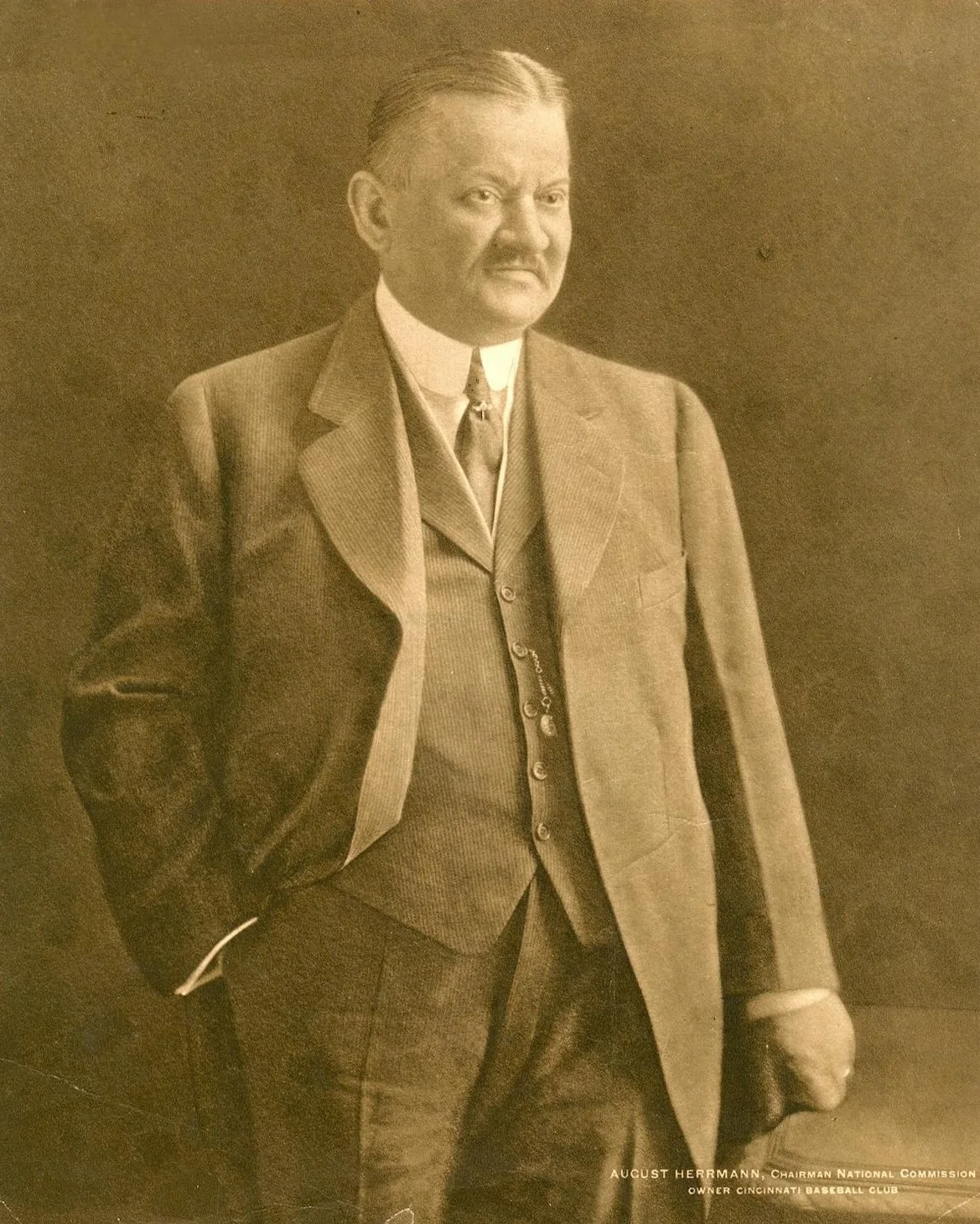
Garry Herrmann
August "Garry" Herrmann was an American political operative for Cincinnati political boss George B. Cox, an executive of the Cincinnati Reds, and president of National Baseball Commission. In 1946, he was named in the Honor Rolls of Baseball.
Herrmann served as president of the Cincinnati Reds of the National League from 1902 to 1927, and served as the president of National Baseball Commission from 1903 to 1920. Herrmann essentially filled the role of Commissioner of Baseball before that position was officially established in 1920. With two other Commission members, he established the annual nature of the World Series by 1905.
It was his idea to hold “Field Days” which were essentially skills competitions for the players to showcase their talents.
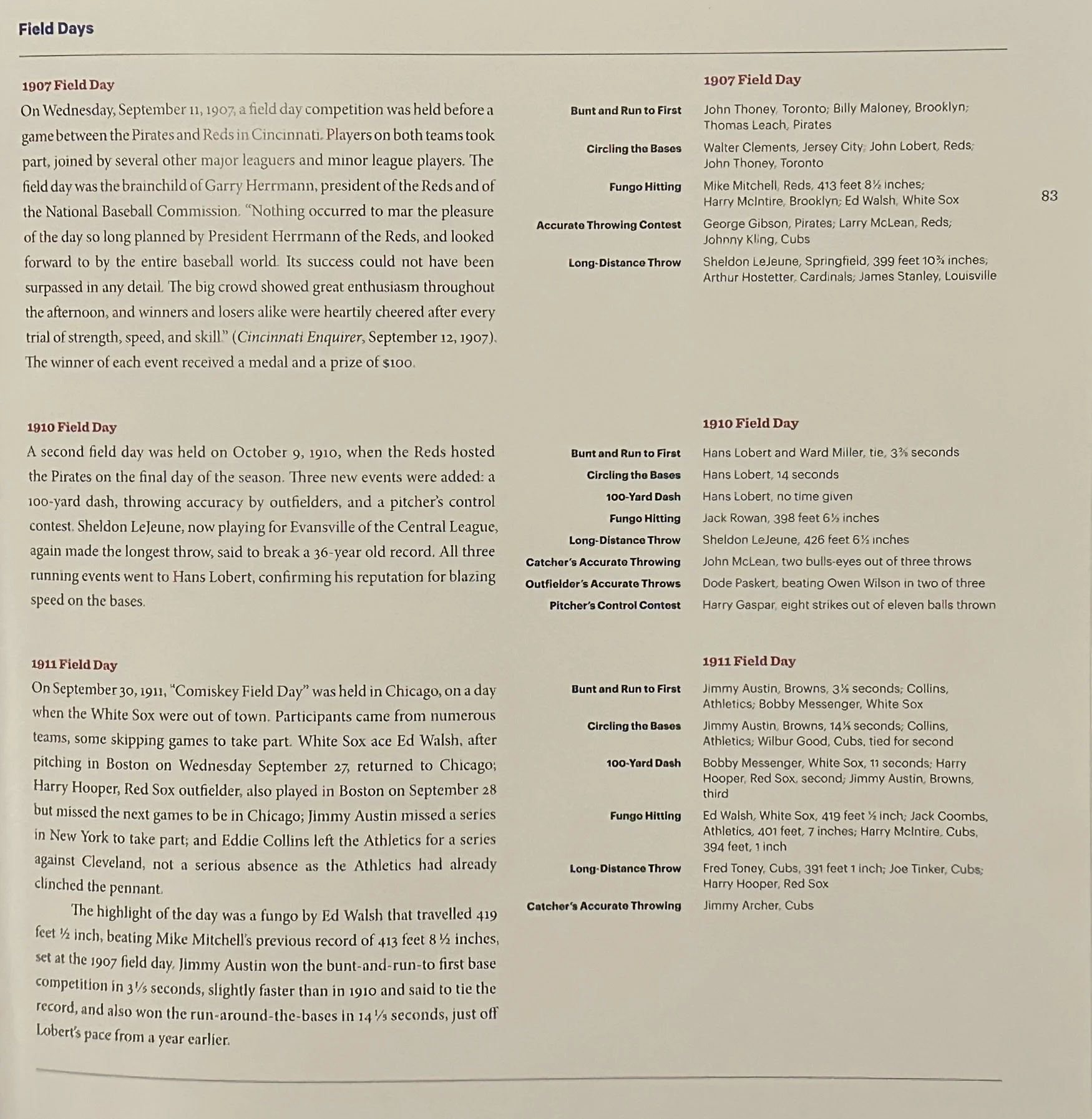
Phil discusses some of the Field Days of the time in his book.
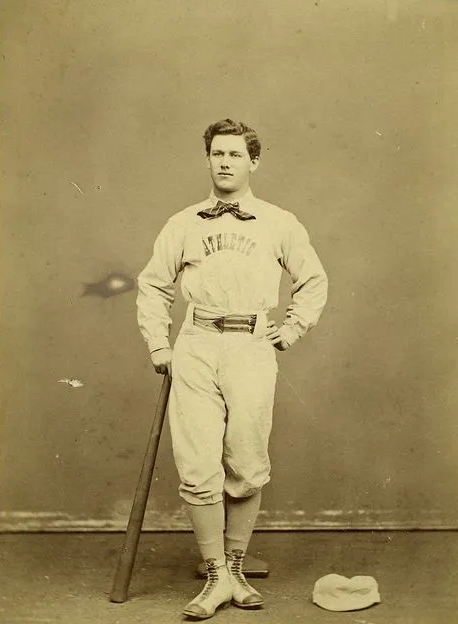
Tim Murnane
Tim Murnane had gotten his start in professional baseball as a member of the 1872 Middletown (CT) Mansfields before six seasons of service to the Major Leagues with the Philadelphia Athletics, the Philadelphia White Stockings, the Boston Red Caps, and the Providence Grays.
When Murnane suffered a fatal heart attack while attending an opera performance at Schubert Theater in Boston in February of 1917, it was learned that he had left only meager savings from his long baseball career to support his widow and four children from his second marriage.
A memorial fund was established, with the support of the American League and the Baseball Writers Association of America, and Murnane's good friend and former Red Sox team owner John I. Taylor began to orchestrate plans for a benefit game pitting his old club against a selection of Major League greats.

“The greatest array of players ever seen on one field” at Addie Joss’s benefit game, July 24, 1911.
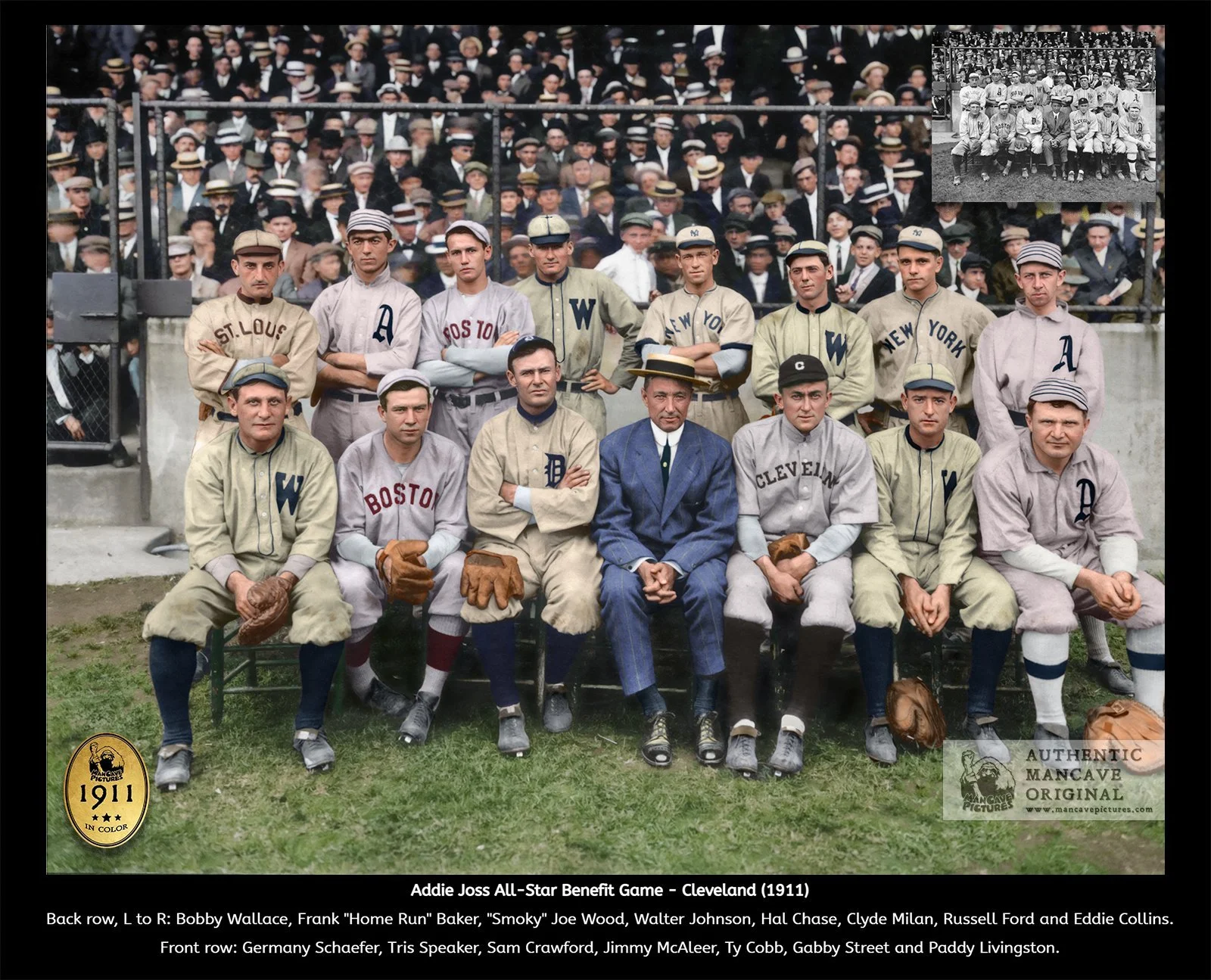
Addie Joss Benefit Game
To help raise money for Joss’ family after he passed away, the players organized the first ever gathering of All-Star players for a benefit game. It was essentially the first All-Star game in history, and it took place on July 24, 1911. The Cleveland Plain Dealer called it “The greatest array of players ever seen on one field.” The total raised was $12,931.60, the equivalent of more than $375,000 today.
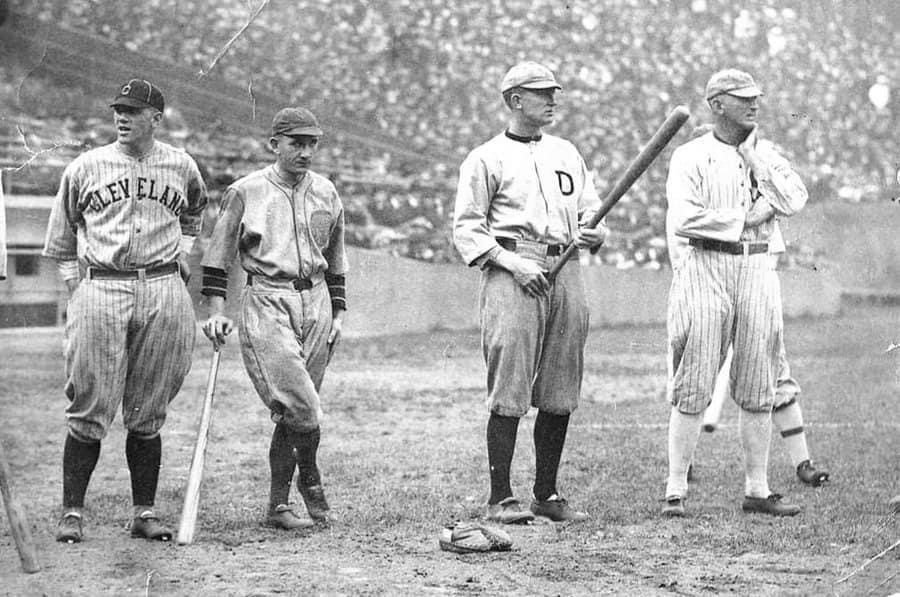
Tim Murnane Benefit Game
Before the Tim Murnane benefit game was played on September 27, 1917, multiple skills competitions were held. Ray Chapman (seen here, on the left) was the fastest player to round the bases.
He is pictured here on that day, also with (left to right) Rabbit Maranville, Ty Cobb, and Joe Jackson.
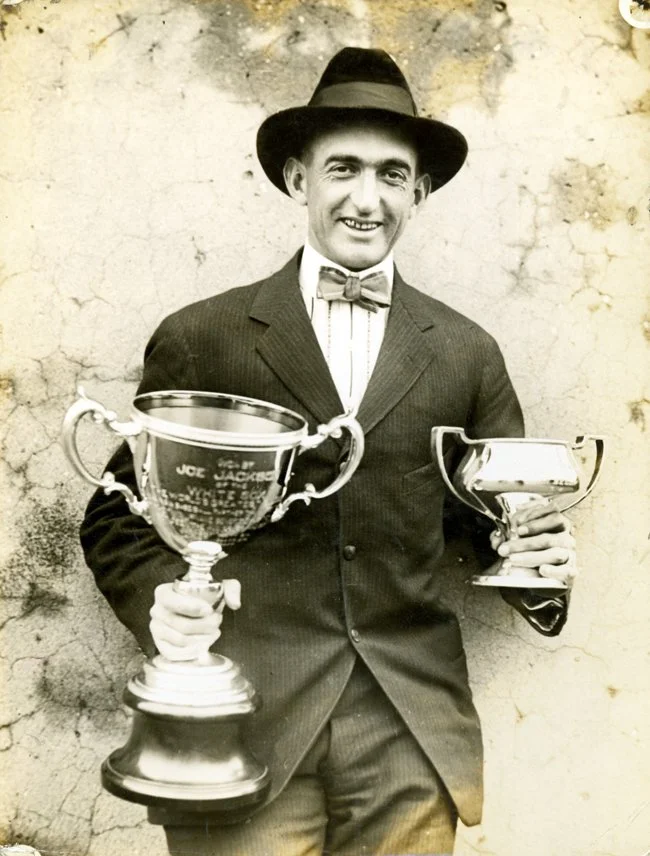
Joe With His Trophies
Babe Ruth may have won the fungo contest at the Tim Murnane Benefit Game, but Shoeless Joe Jackson won the contest for the longest throw, hurling a ball 396 feet 8 inches in the air. Joe was upset he hadn’t cracked 400 feet with the throw, which is something he routinely did in his earlier days as a ballplayer.
He won the large trophy he’s holding in this photo, thanks to that throw, and it became one of his most prized possessions because, in his eyes, that solidified the fact that he had the strongest arm in baseball.
The smaller trophy he’s holding was for having the better hitting series between he and Ty Cobb in 1914.
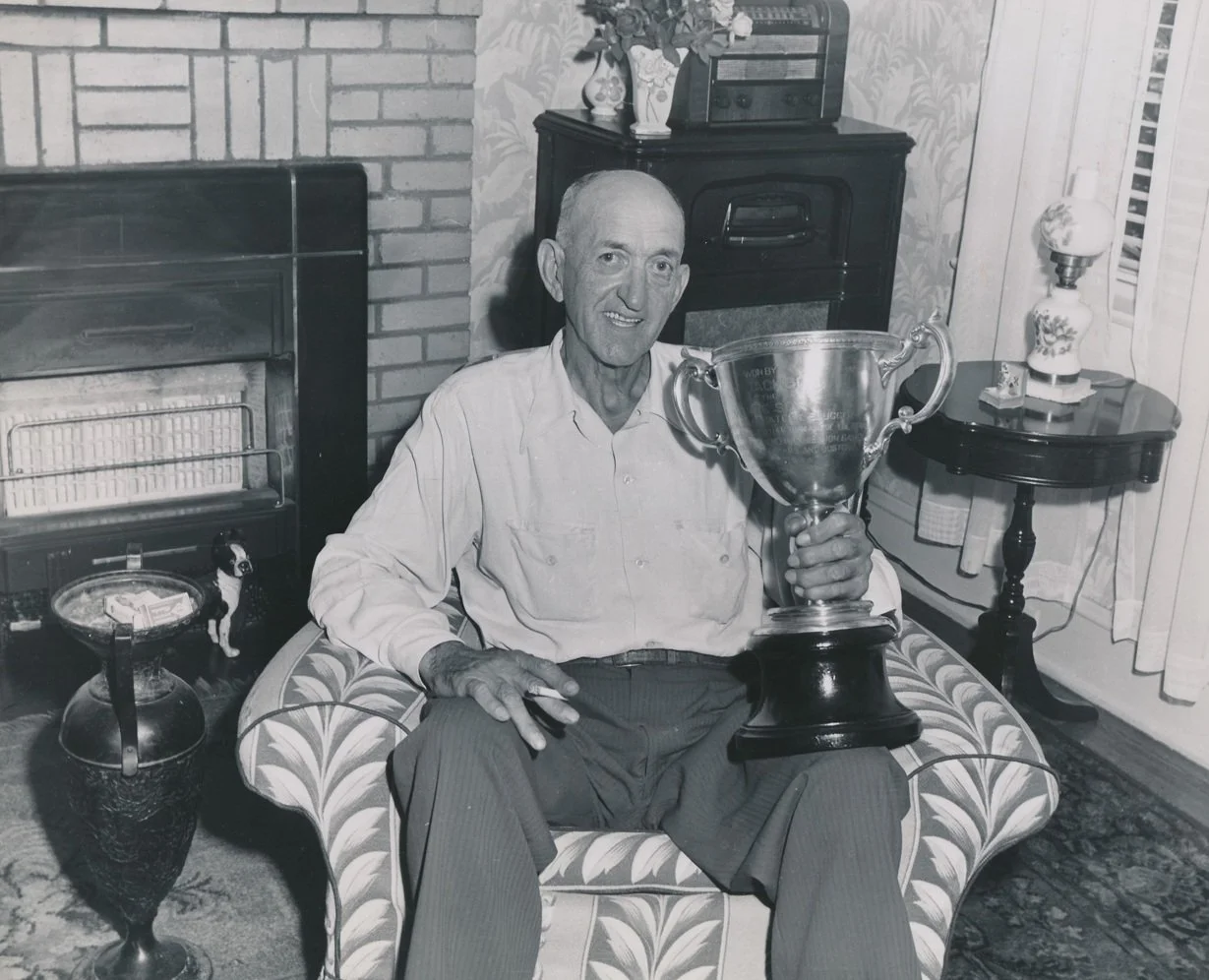
Prized Possession
This photo shows Joe Jackson sitting in his living room in Greenville, South Carolina circa 1949, proudly holding the trophy he won in the throwing contest at the 1917 Tim Murnane Benefit Game field day.
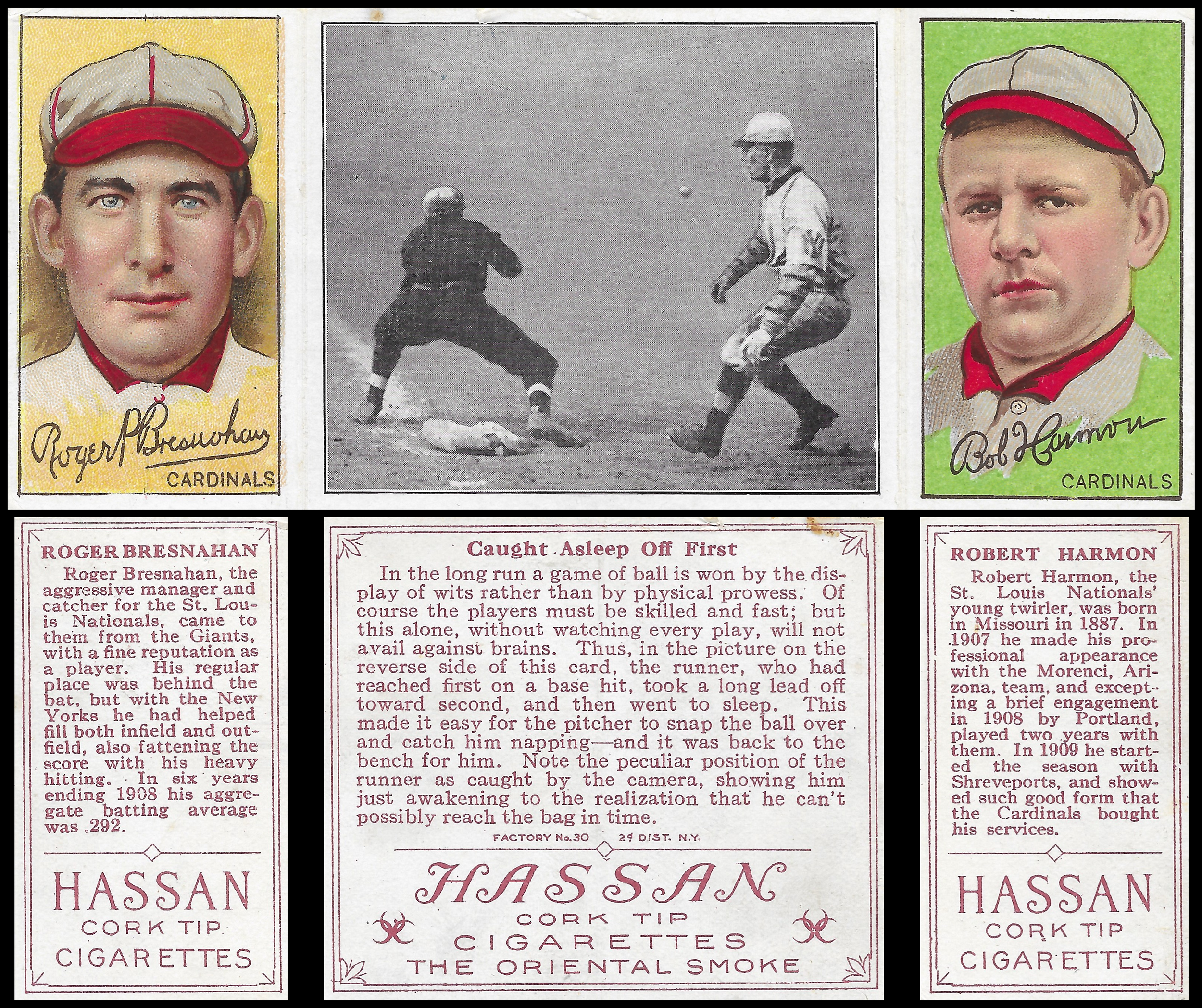
Caught Asleep At First is one of Phil’s favorite cards in the set.
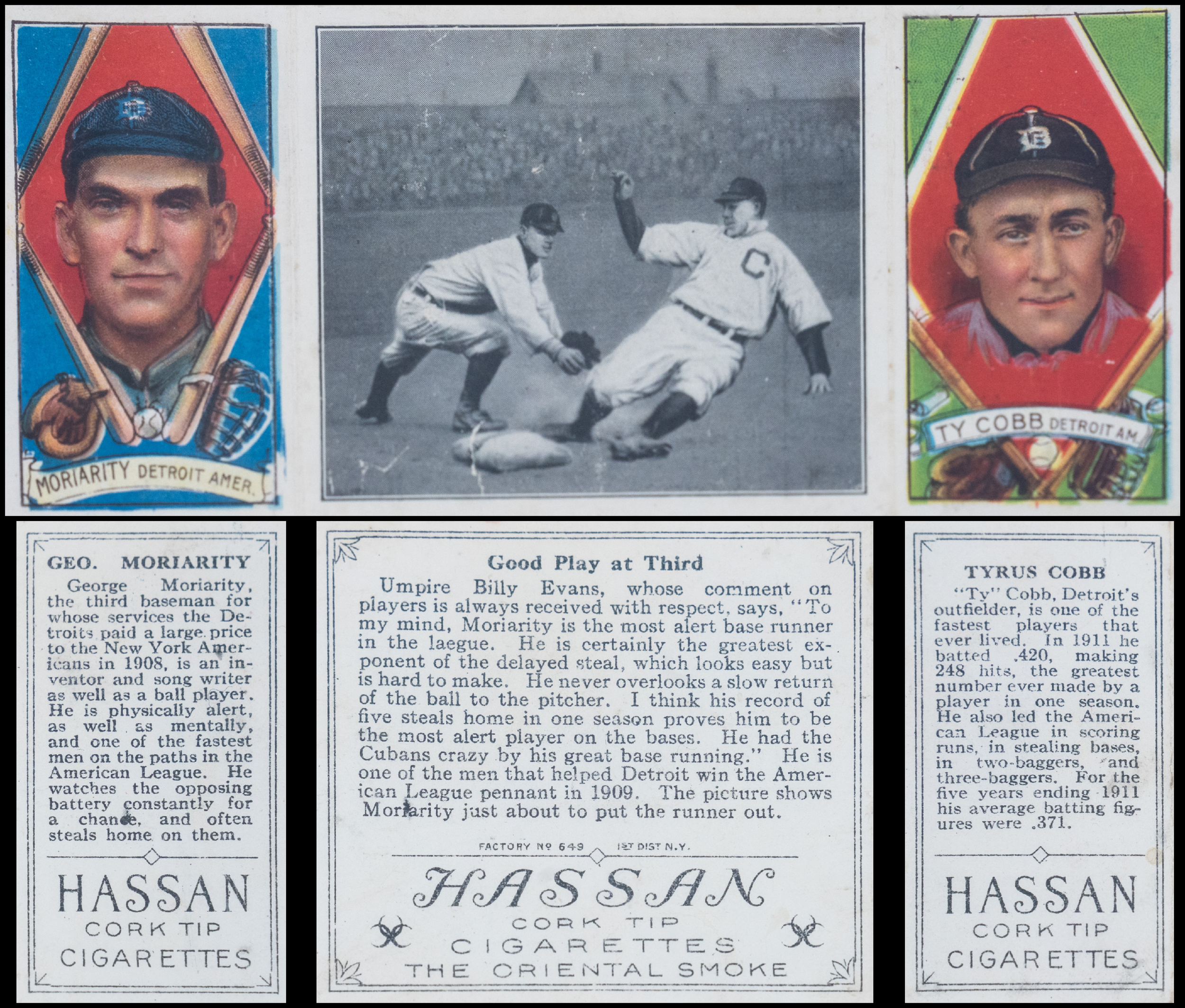
Good Play At Third is another one of Phil’s favorite cards in the set.
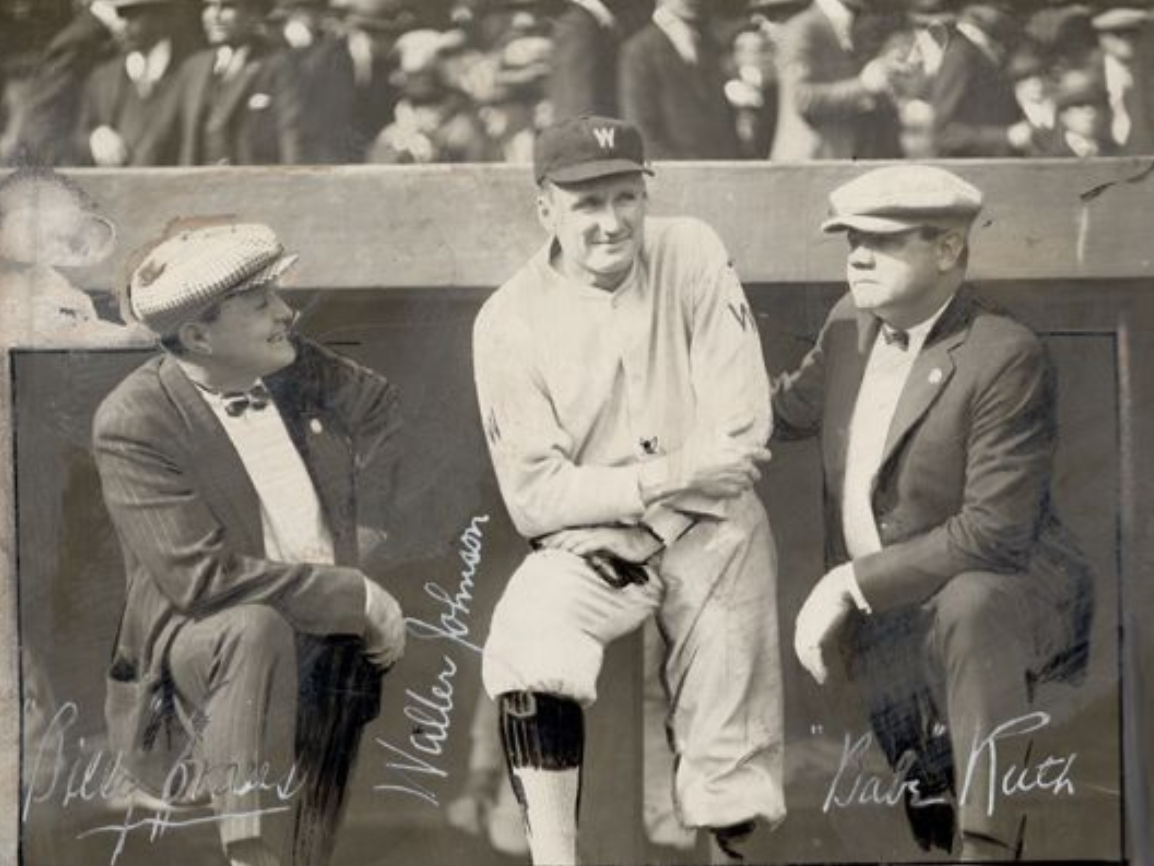
Billy Evans
At a remarkable 22 years of age, Evans became the youngest umpire in major league history and began a 22-year Hall of Fame career in which he worked six World Series.
He is pictured here, at left, with Walter Johnson in the center, and Babe Ruth on the right, at League Park in Cleveland.
Photo courtesy of the Cleveland Memory Project
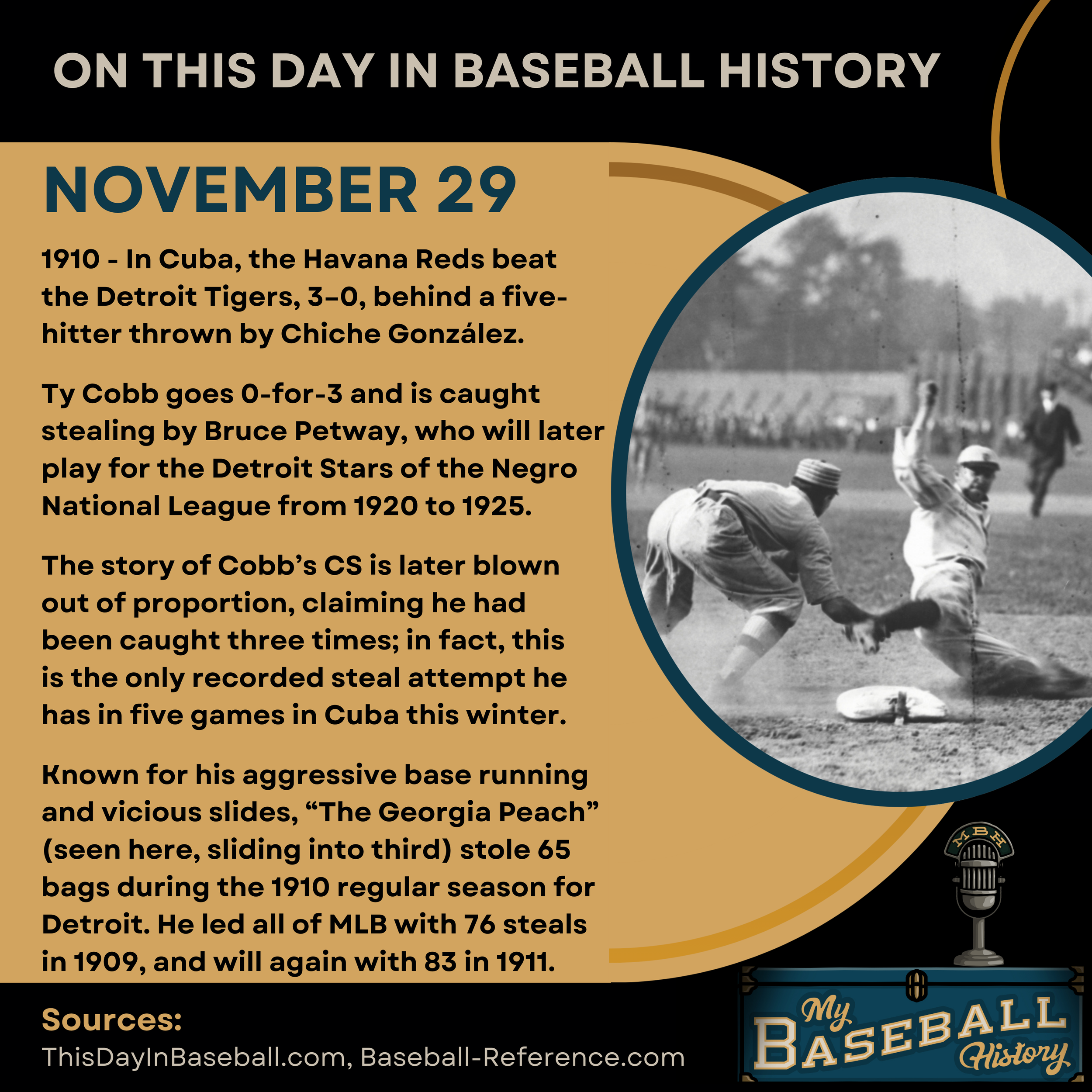
Tigers In Cuba
After the regular season concluded in 1910, Ty Cobb and the Detroit Tigers went on an exhibition barnstorming tour of Cuba.
If you want to see posts like these every day, follow My Baseball History on social media, where a new graphic gets posted daily to tell you what happened On This Day In Baseball History.
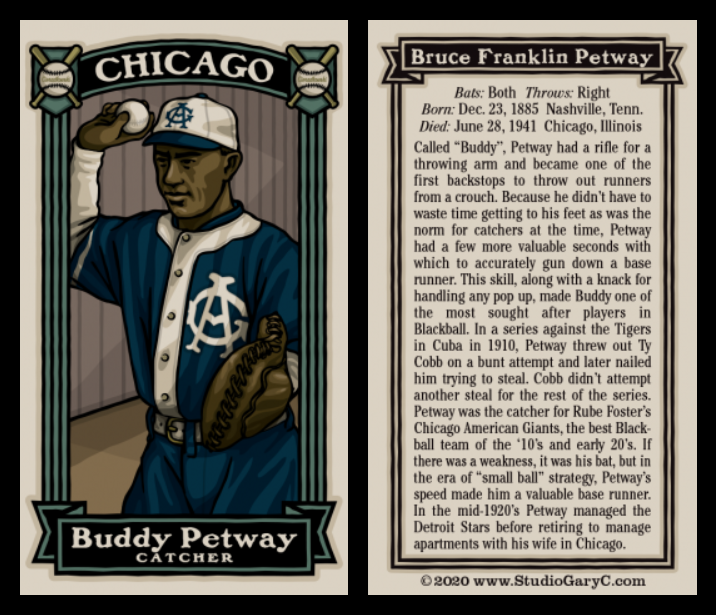
Bruce Petway
If this artwork style looks familiar to you, it’s because the artist is the incomparable Gary Cieradkowski, who created the artwork for My Baseball History.
Gary’s “Infinite Card Set” is the stuff of legend, and his research is second to none. To read what Gary was able to find on Bruce Petway, click HERE.
A Game Of Inches
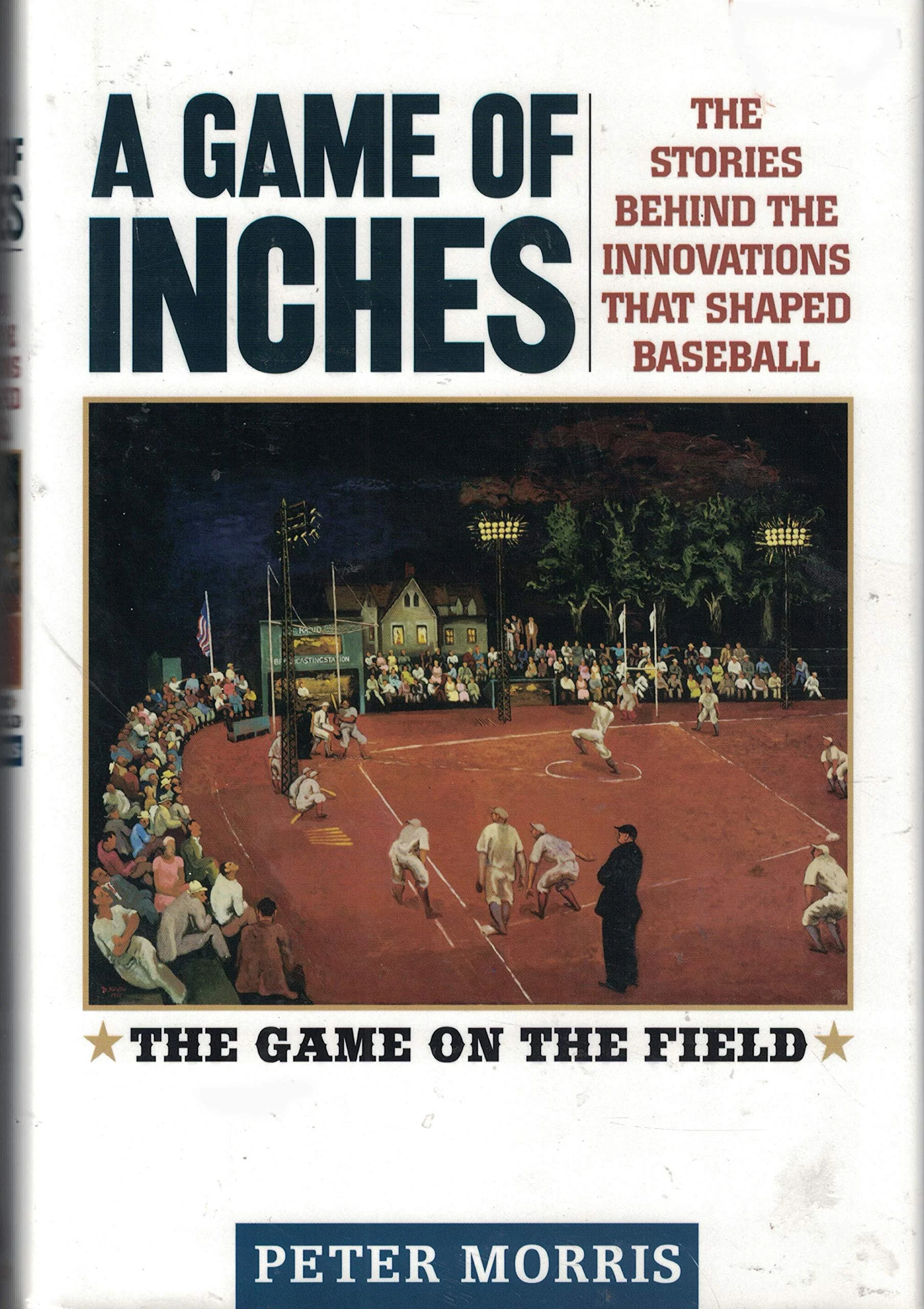
A Game of Inches: The Stories Behind the Innovations That Shaped Baseball: The Game on the Field by Peter Morris is the only book ever to win both the Seymour Medal and the Casey Award as the best baseball book of the year.
Peter Morris' magisterial encyclopedia of the national pastime will surprise, delight, and educate even the most knowledgeable fan. With its thousand-odd entries, A Game of Inches illuminates the origins of items ranging from catcher's masks to hook slides to intentional walks to baseball's reserve clause.
Buy it HERE
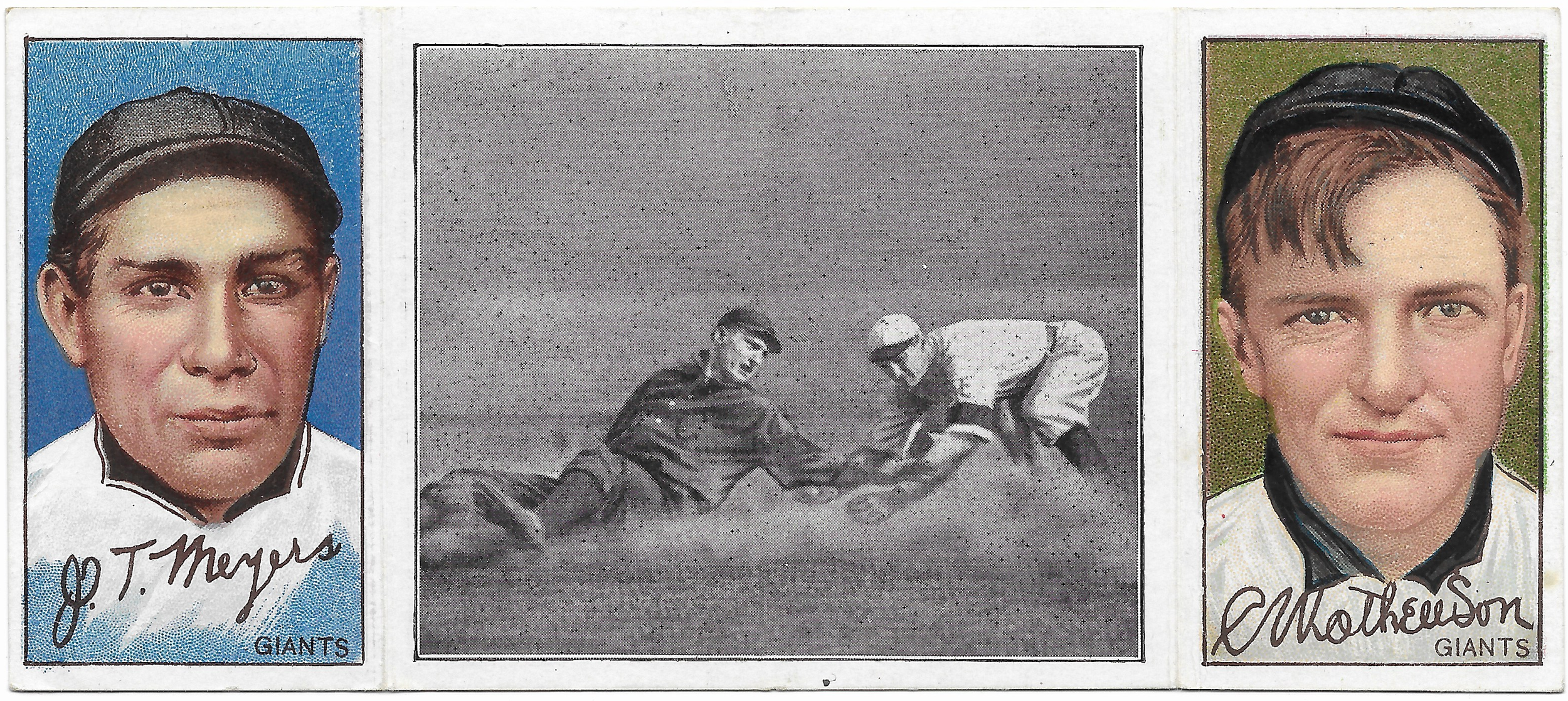
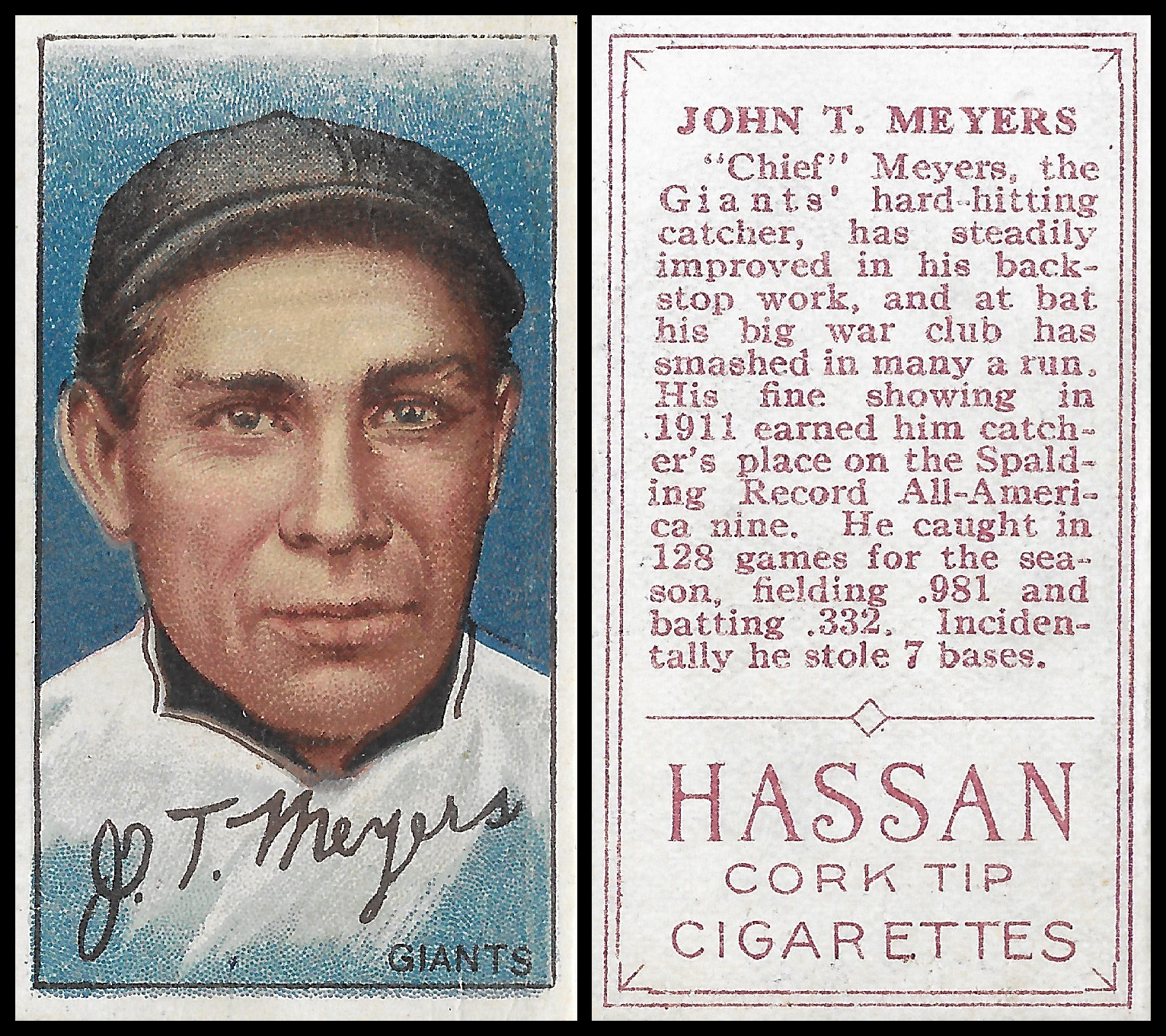
Let’s say you like to collect John Meyers pieces. Let’s see how many different cards from the T202 set you’d need to acquire, shall we?
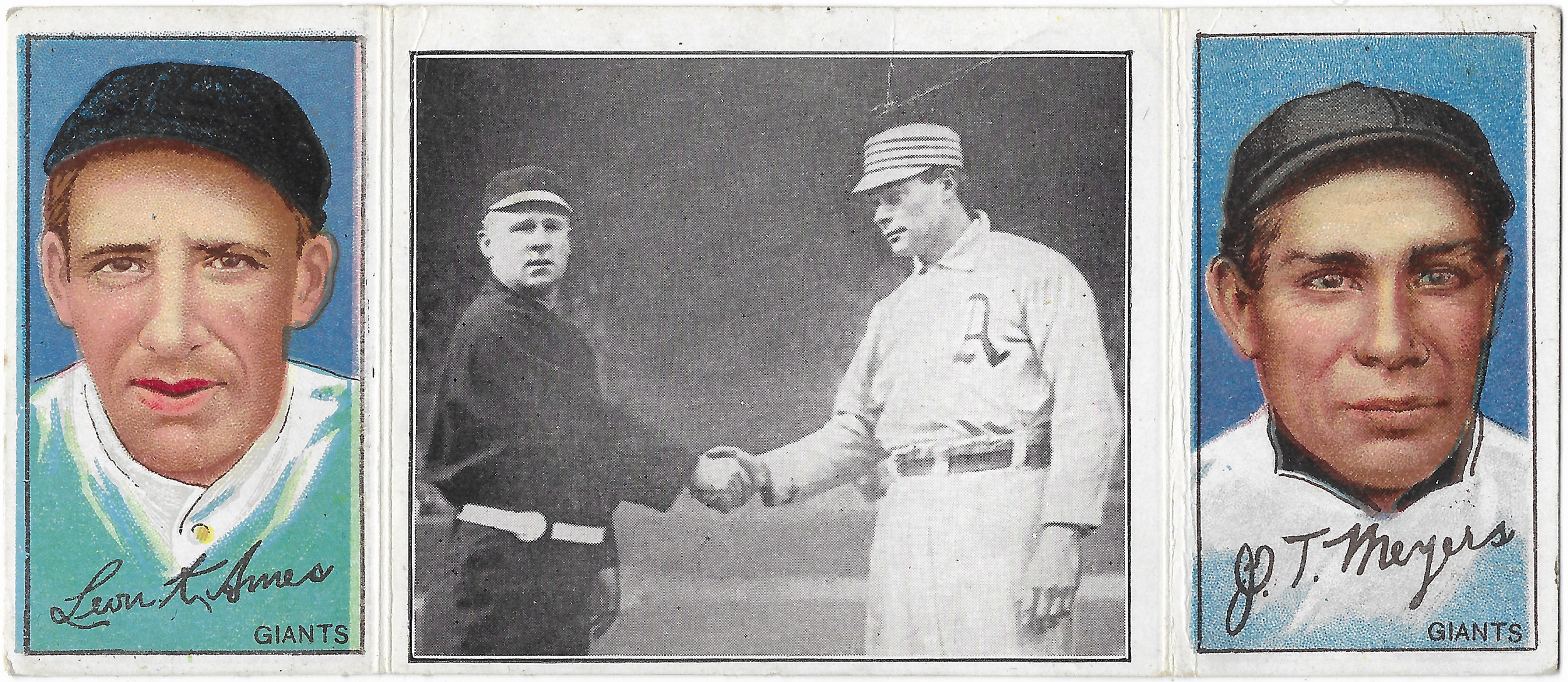
Two…
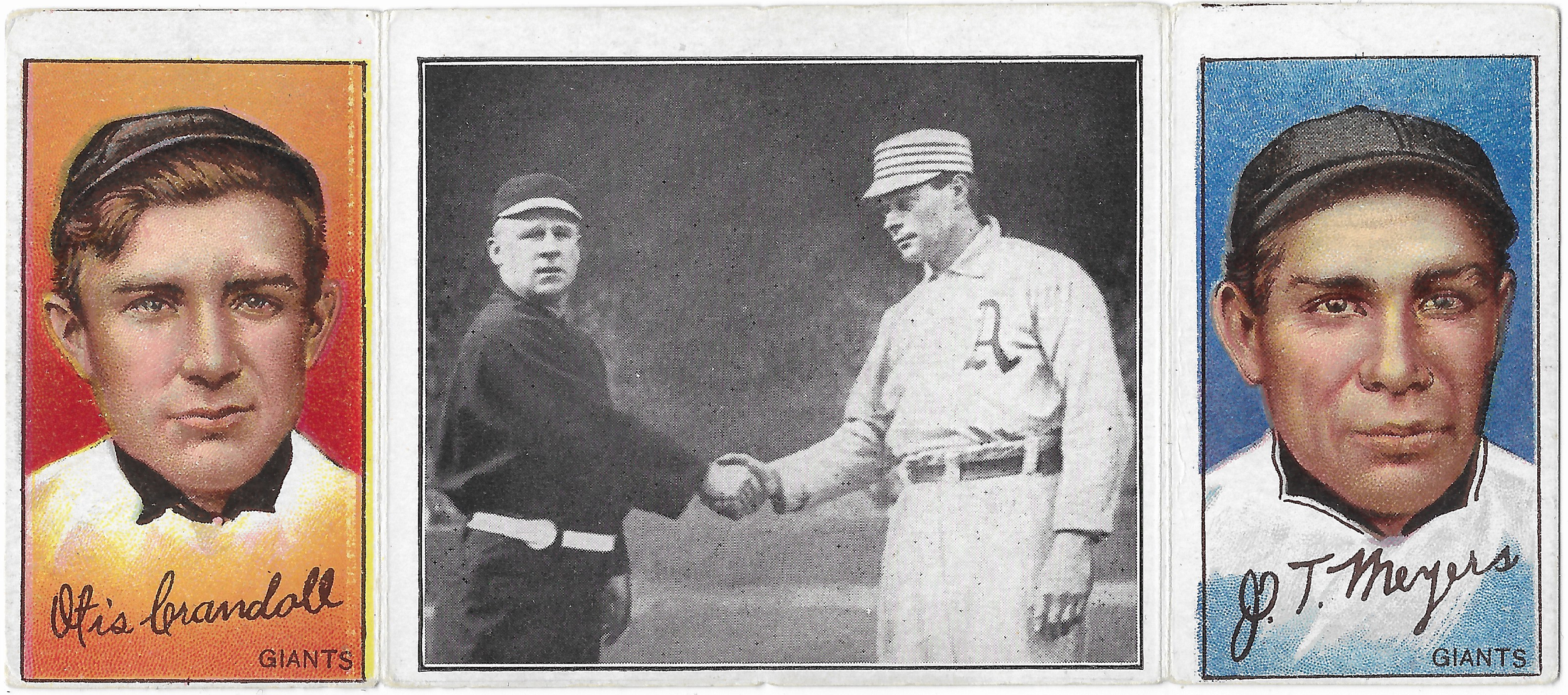
Three…
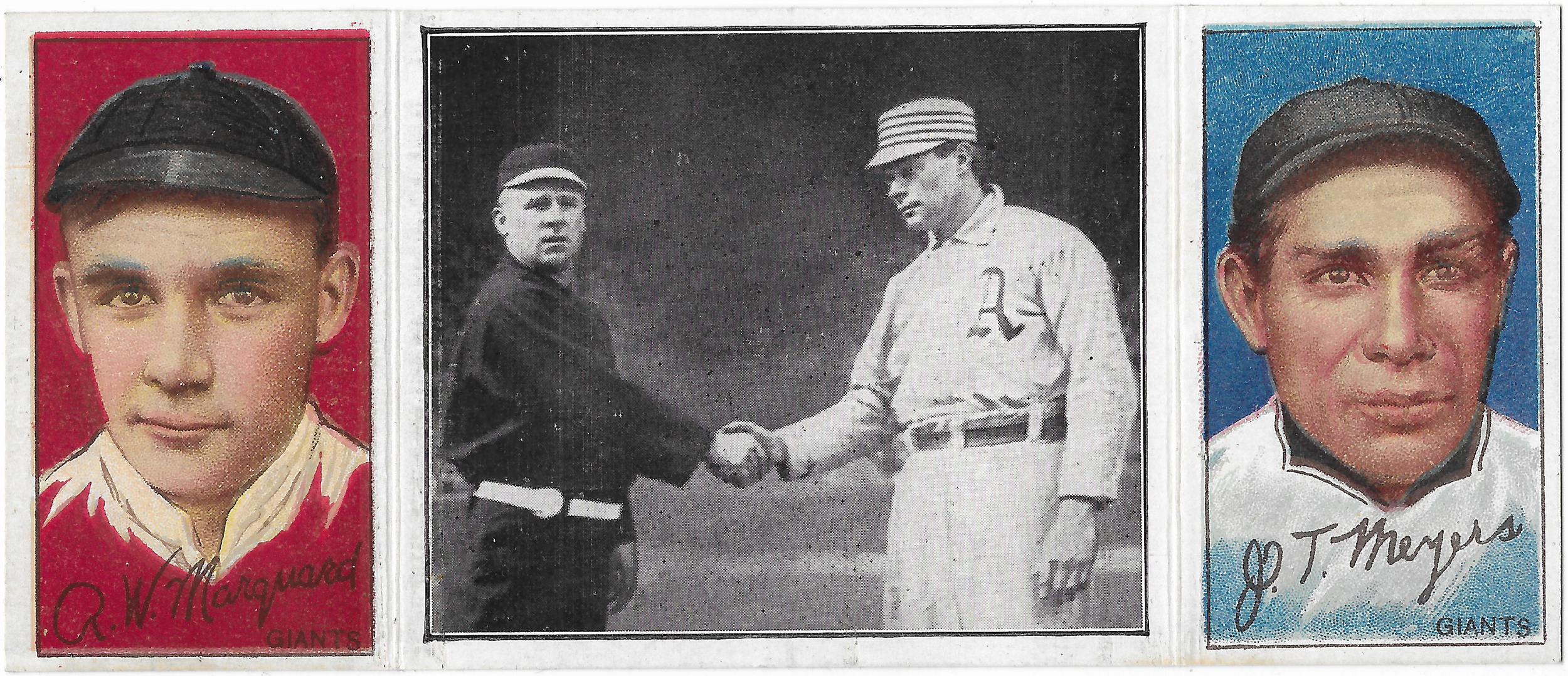
Four…

Five…
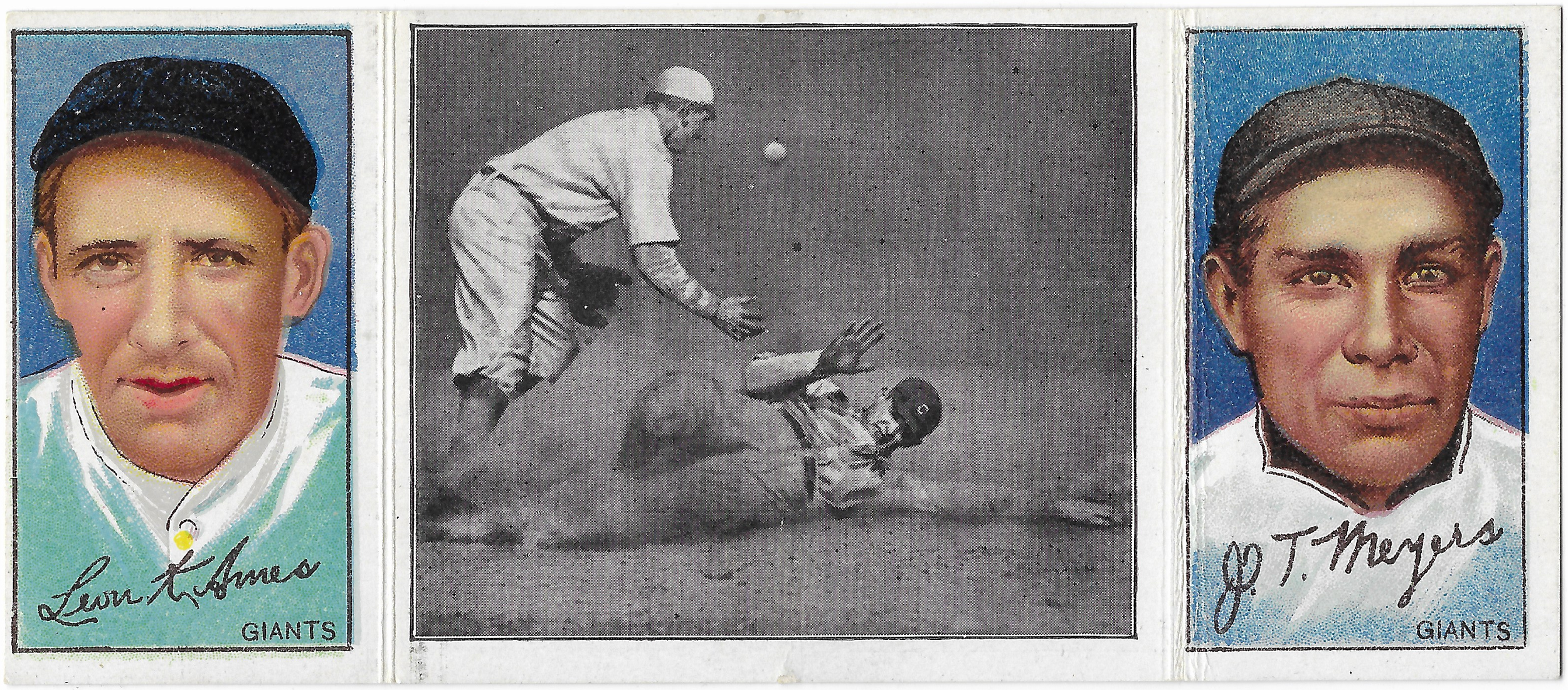
Six…
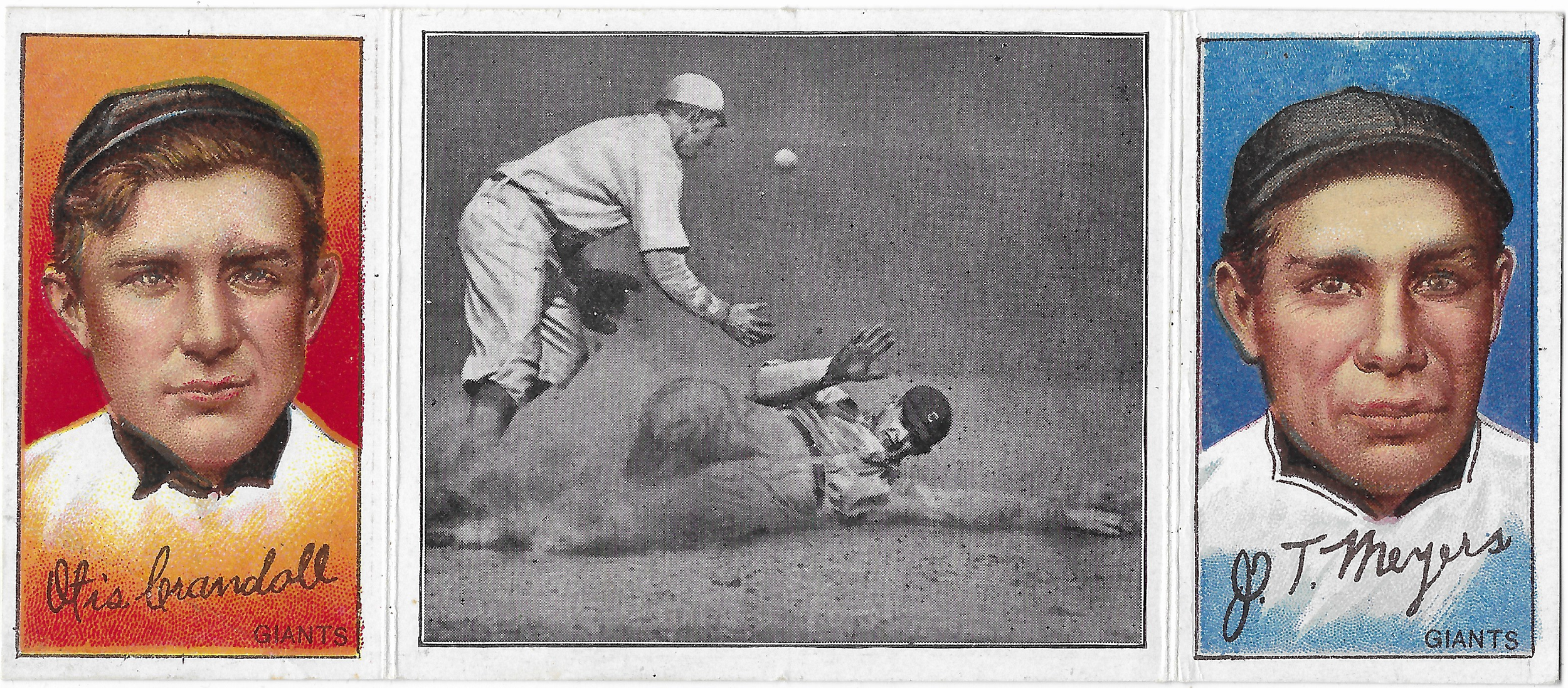
Seven…
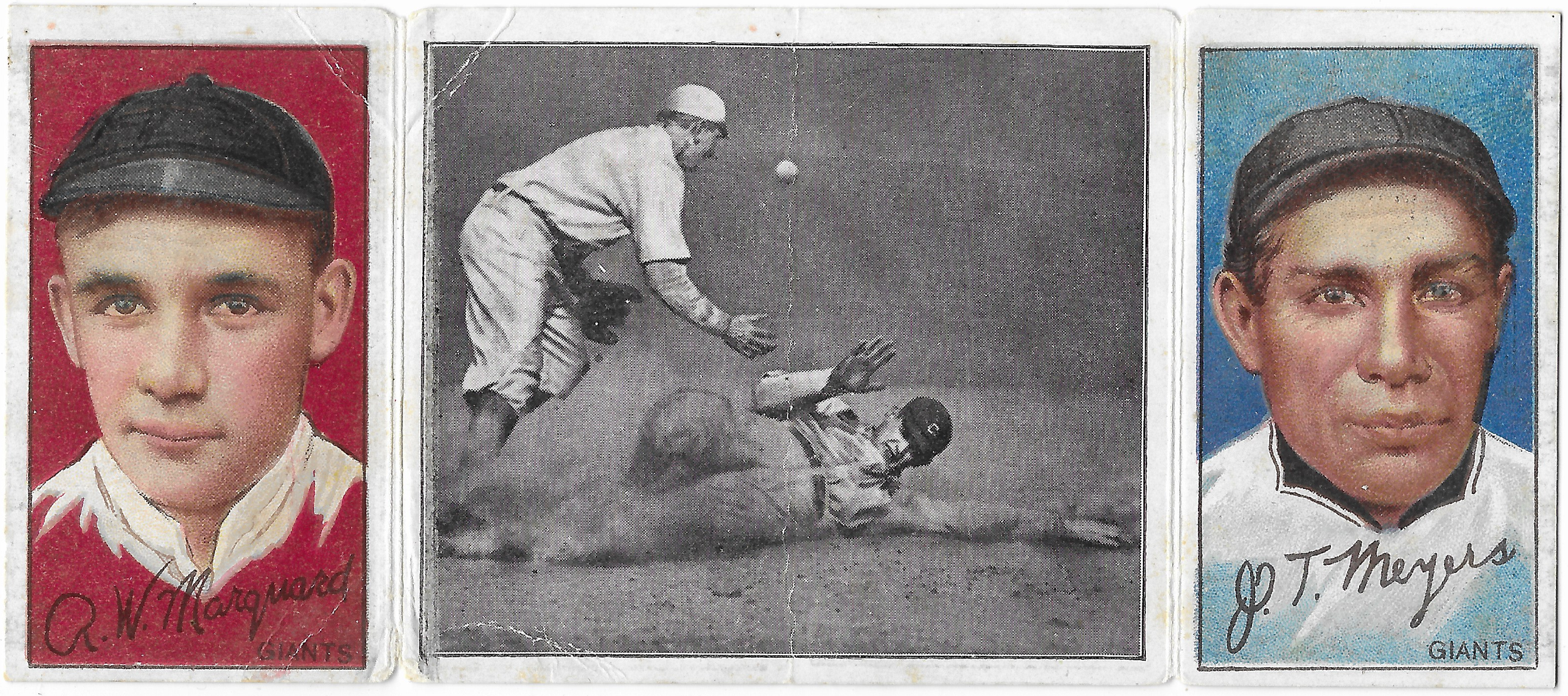
Eight…
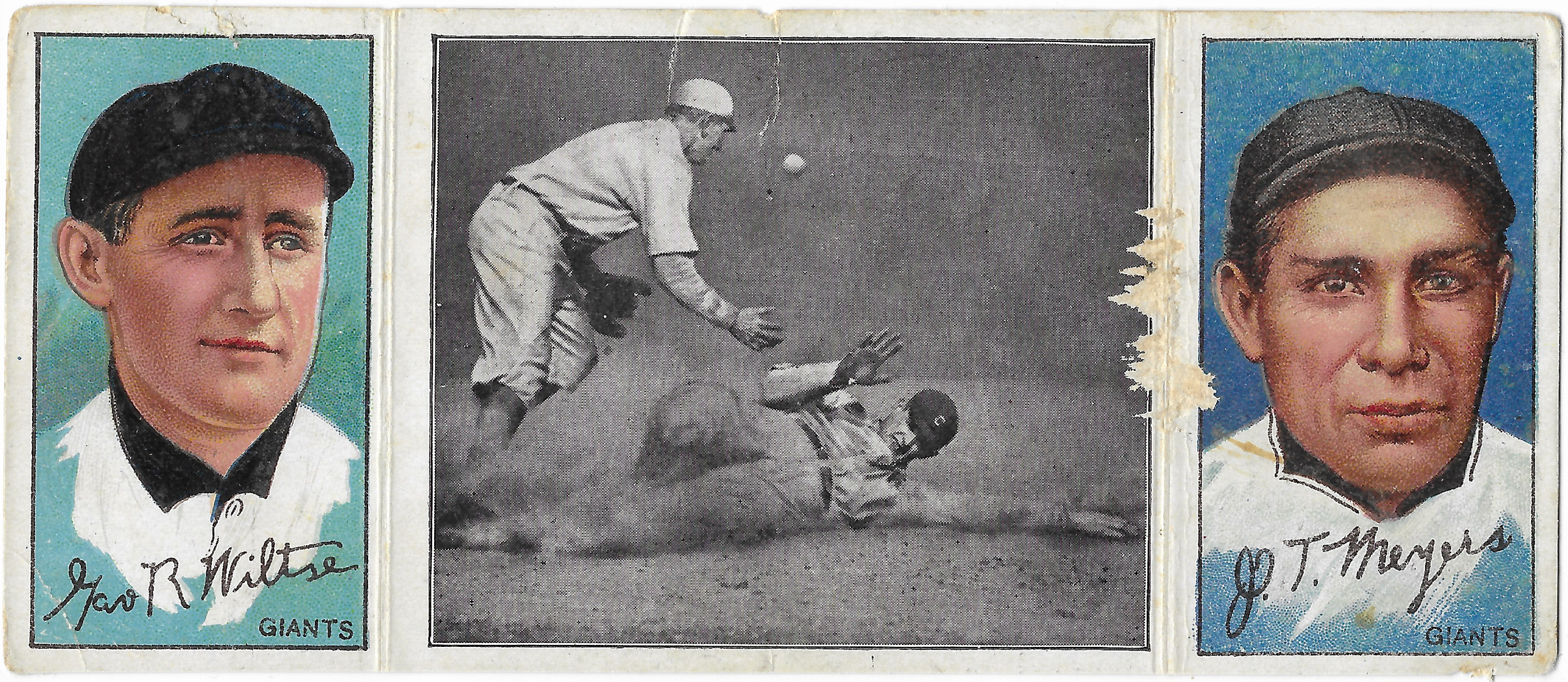
Nine… and this is just one player within the Hassan Triplefolders. Granted, he and Hal Chase have more panels than any other players in the T202 set, but still. The complexity of this set is mind-blowing.
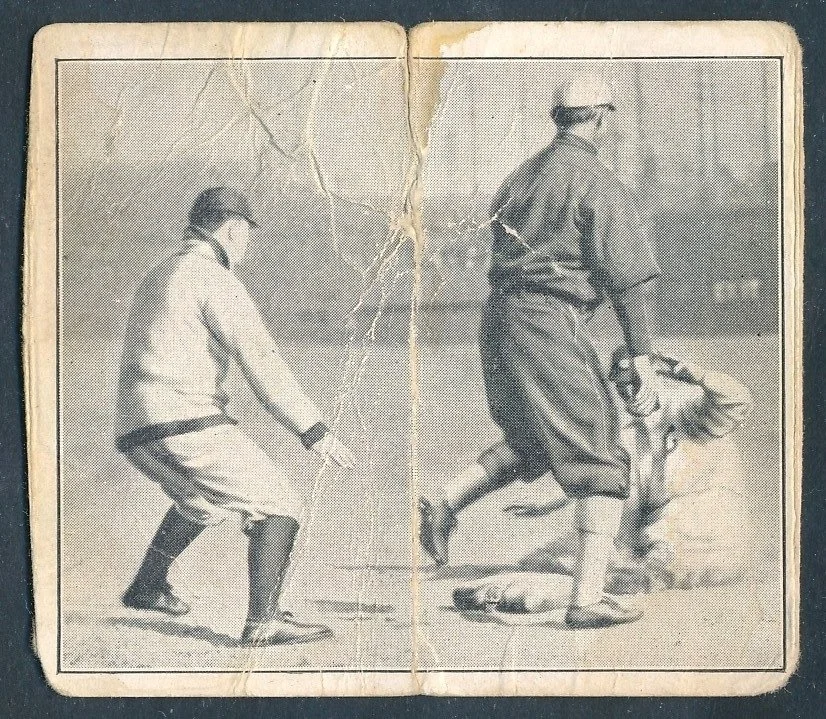
Dismembered
A quick eBay search for “T202 panel” yields nearly 75 results.
“T202 altered” yields more than 50.
While it may be abhorrent to some collectors to purposely go after amputated cards, the fact of the matter is that these cards exist on the market, and it may be the only chance someone has to own the panel that interests them, since a full card with that panel may not be in their budget.
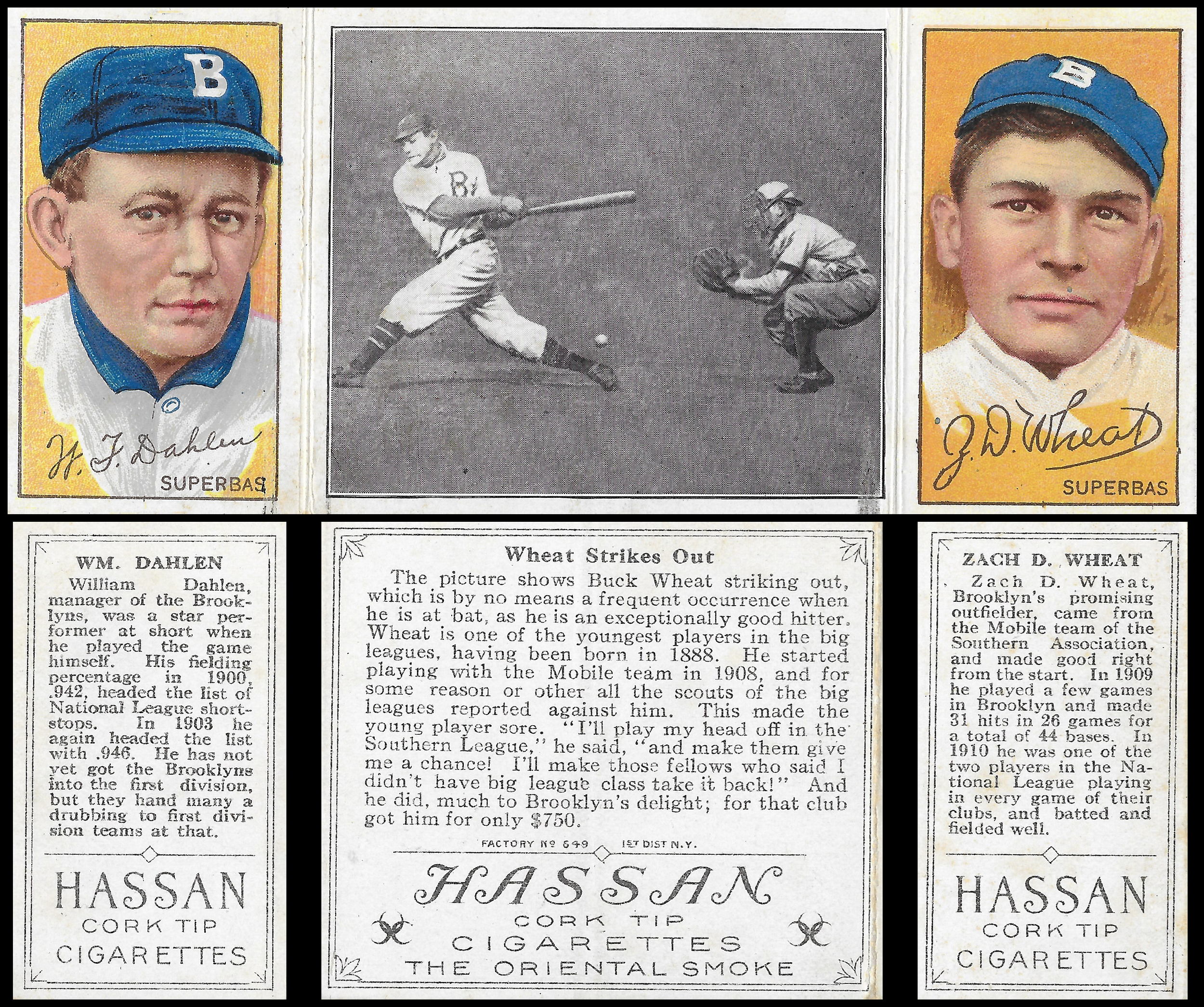
A raw card of this Dahlen/Wheat combination sold for $236.50 on November 7, 2025. Eight days earlier, on October 30, 2025, a dismembered center panel of “Wheat Strikes Out” sold for $6.50.
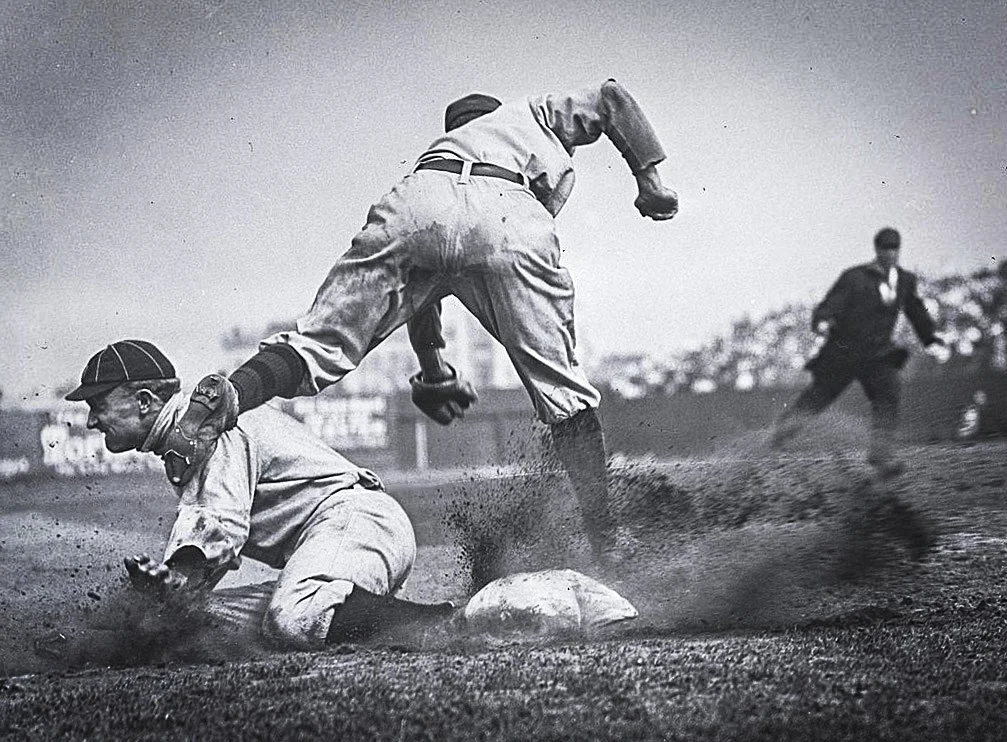
Charles Conlon’s Most Famous Photo
On July 23, 1910 at Hilltop Park in New York during a game between the Yankees and the visiting Detroit Tigers, Charles Conlon took what is considered by many to be the best baseball photograph ever captured.
In the image, Ty Cobb slides into third base, and into third baseman Jimmy Austin. This image is the star of the most desirable center panel in the T202 set.
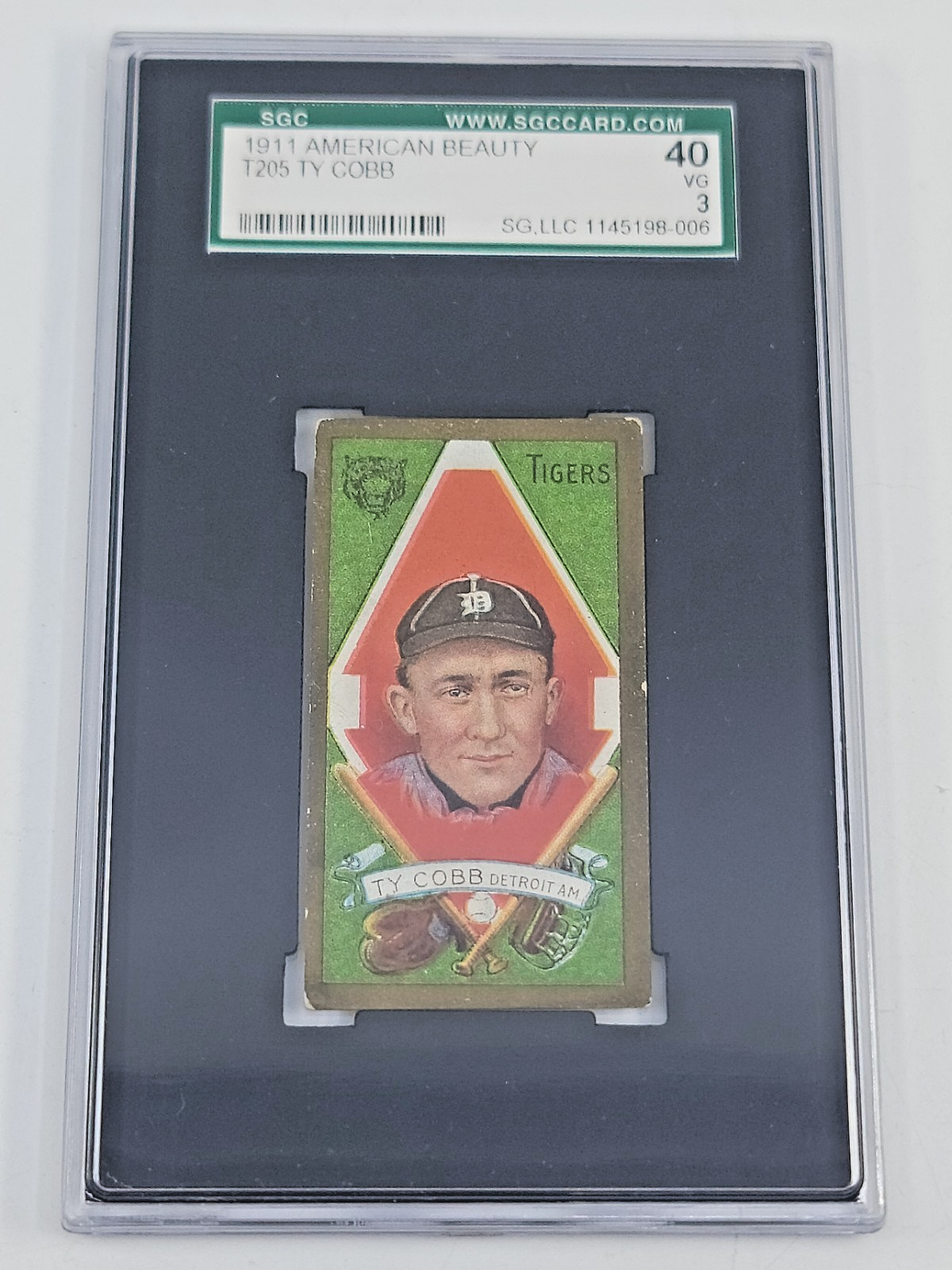
T205 Cobb
This exact copy of a Ty Cobb T205 card, graded SGC 3, sold for $7,499.99 on December 4, 2025.
The highest priced T202 Cobb variation to have sold in that same time frame was a PSA 6 graded copy of A Desperate Slide For Third, with a Charles O’Leary end panel, which sold for $5,624.35 on November 26, 2025, but a PSA 6 is nowhere near comparable to an SGC 3, especially when it comes to vintage cards.
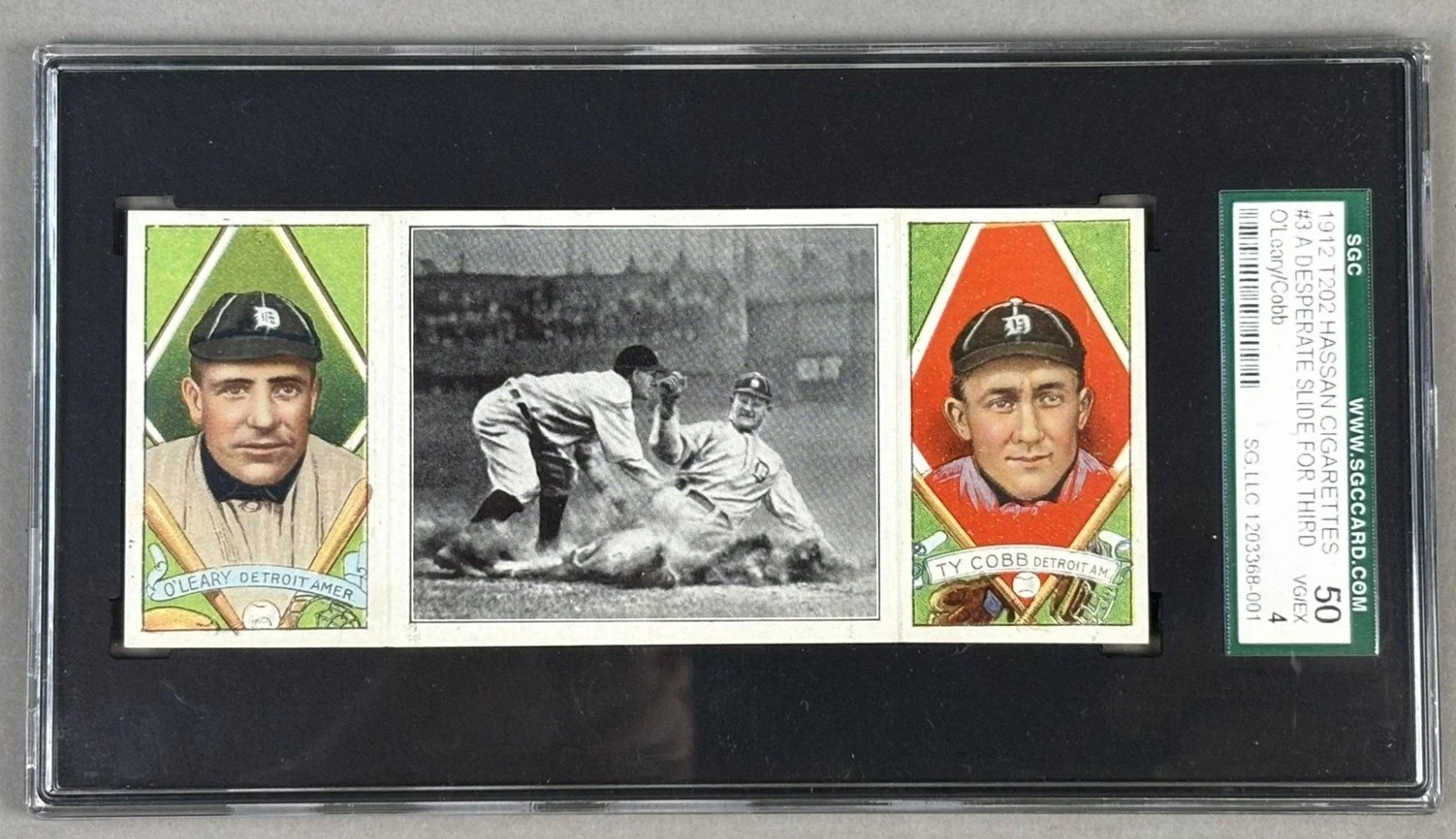
T202 Cobb
The closest comparably graded T202 Cobb card to have sold in that same time frame was this SGC 4 graded copy of A Desperate Slide For Third, with a Charles O’Leary end panel, which sold for just $2,291.00 on November 2, 2025.
The Pure Card
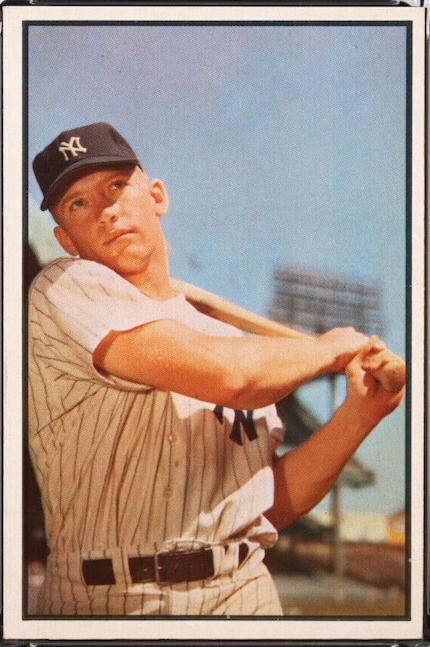
In a 1988 article for Baseball Cards magazine, hobby pioneer Michael Aronstein said "There was too much ‘gingerbread' on Topps cards.” Aronstein has been a dedicated Bowman fan and collector his entire life.
When you look at an image like this 1953 Bowman Color, one which Michael describes as “the pure card,” it’s easy to see what he sees in it.
Michael was the co-founder of TCMA baseball cards, the founder of Photo File, and the inaugural recipient of SABR’s 2020 Jefferson Burdick Award, which is given annually to individuals who have made significant contributions to the baseball card hobby.
He was our guest for Episode 4 of Season 4. You can listen to that episode HERE.
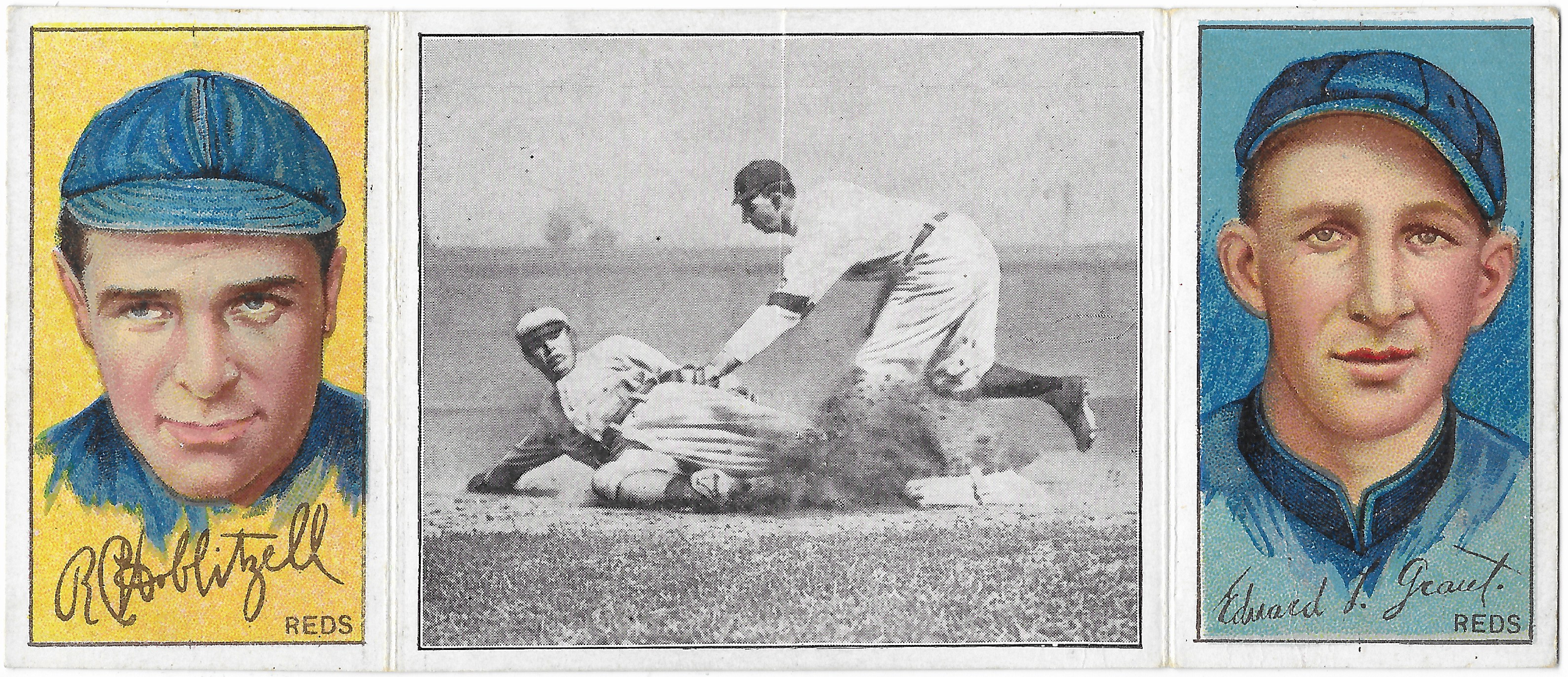
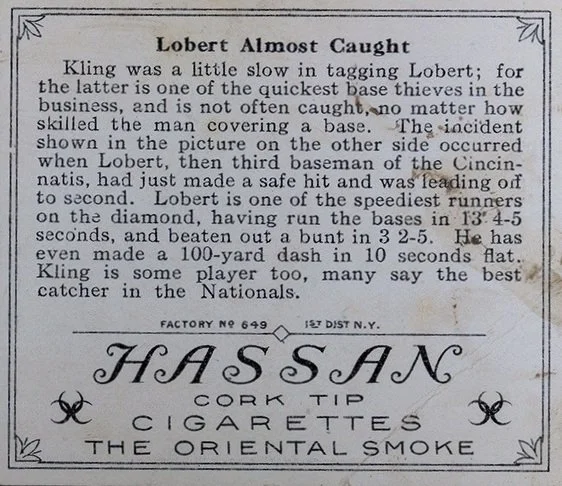
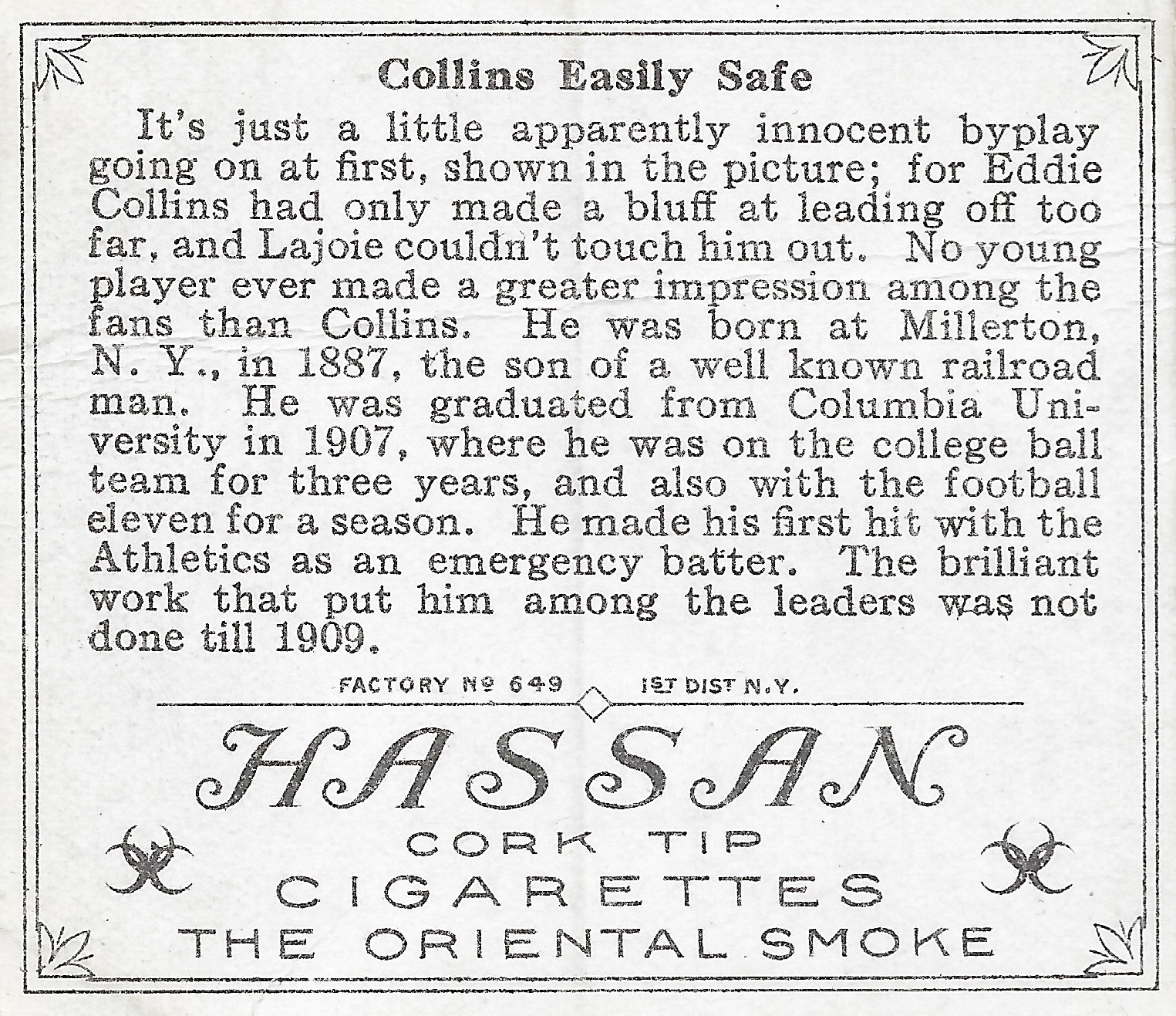
In “Grant Gets His Man,” Eddie Grant is the fielder in the center panel applying the tag, and he is one of the players featured on the end panels. When possible, the designers of the T202 set liked to have this arrangement.
Tom Lynch
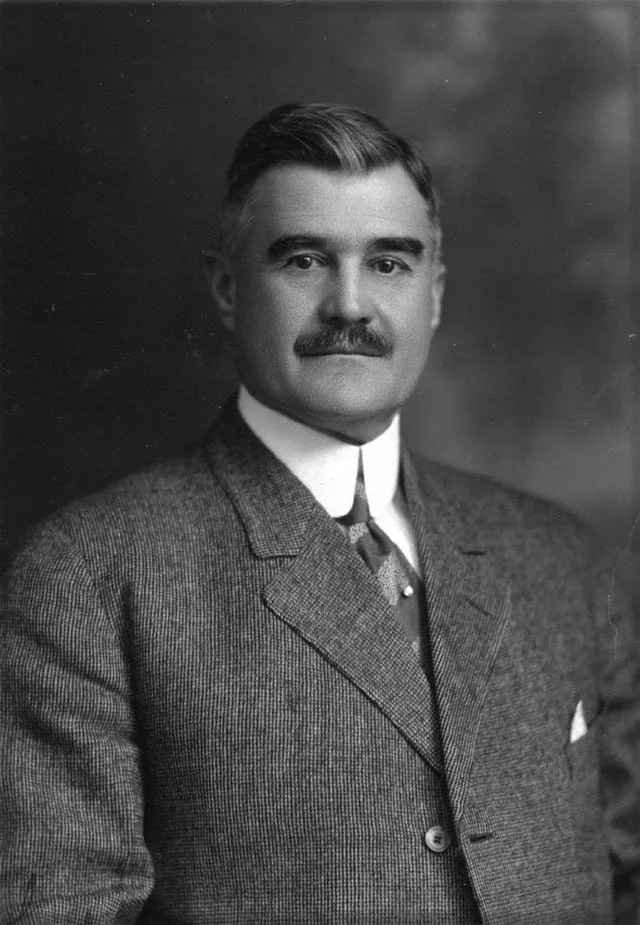
Thomas J. Lynch was a Major League umpire for 13 seasons, all of which were in the National League between the years of 1888 and 1902. Known as an honest, but sometimes brash ump, he later became NL president in 1910 as a compromise among the major league owners.
Although his time as league president was considered uneventful, he was replaced following the 1913 season.
Lynch was named to the Honor Rolls of Baseball by the National Baseball Hall of Fame in 1946.
No In-Game Photos Of The NL
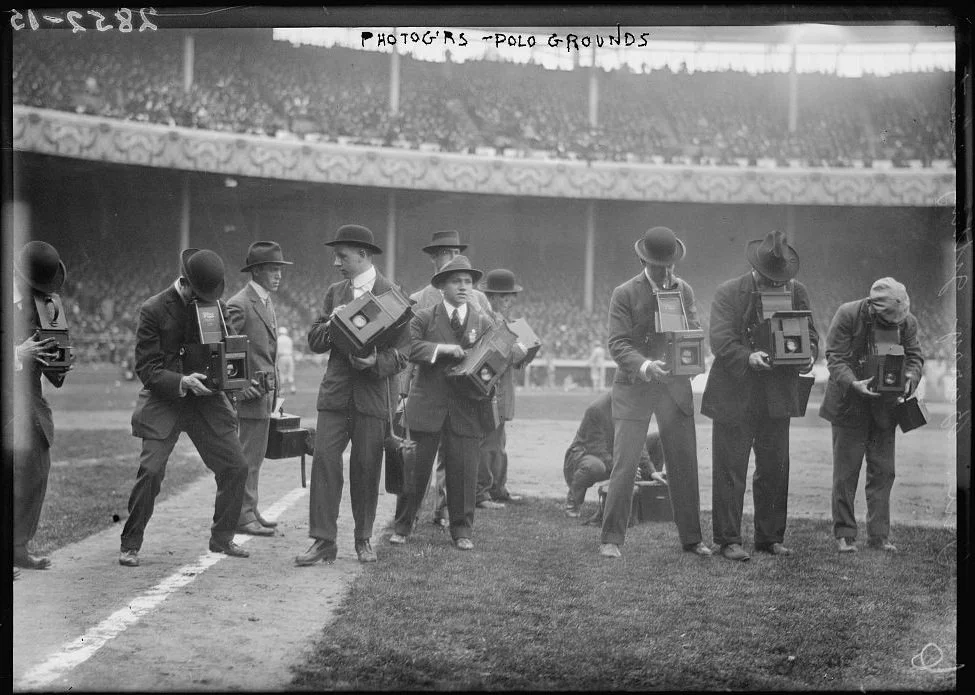
For some reason, Lynch decided that no photographers would be allowed to take photos of National League games, which means all of the in-game action shots in the T202 set are of American League players and teams.
This photo shows photographers at the Polo Grounds in 1914, on the field before a game.
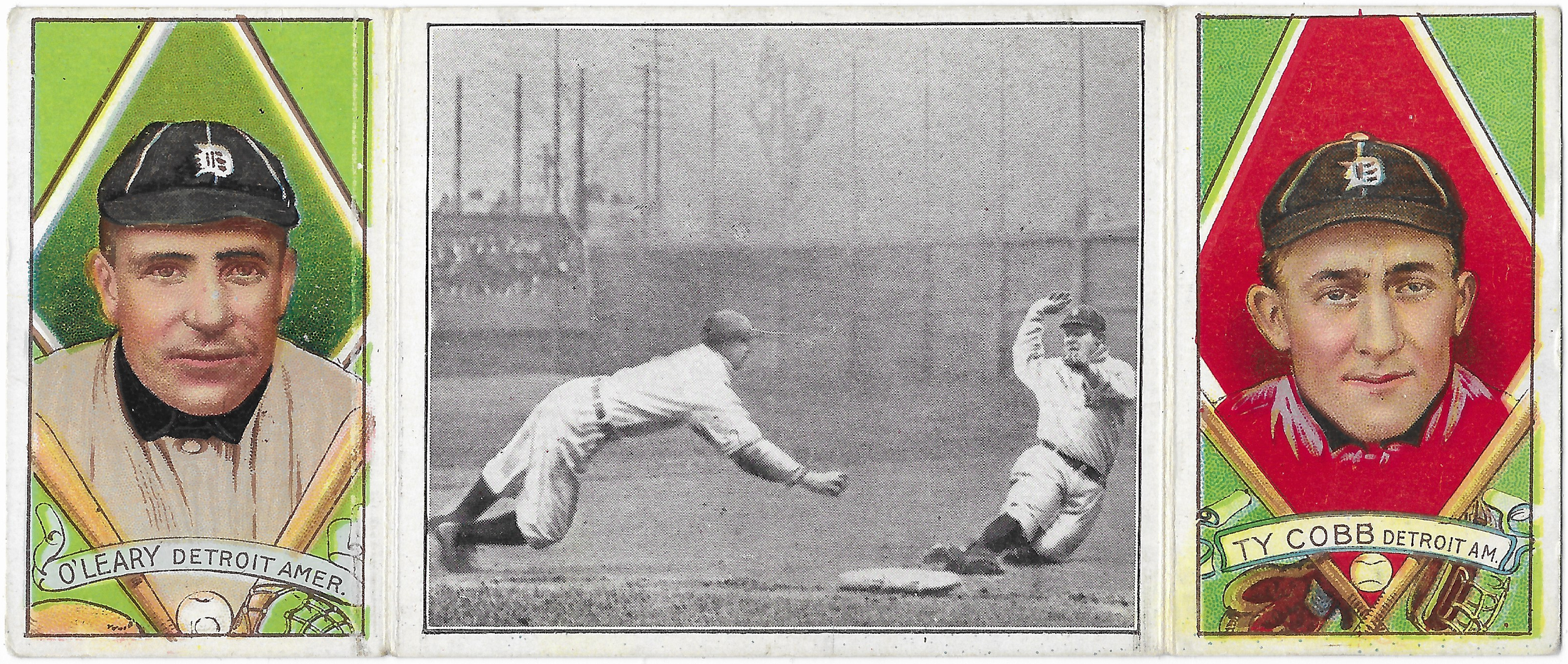
The action shot in the center panel of this Ty Cobb and Charley O’Leary card was taken at League Park in Cleveland, most likely by Louis Van Oeyen. Note the outrageously high outfield wall in the background, a trademark of League Park.
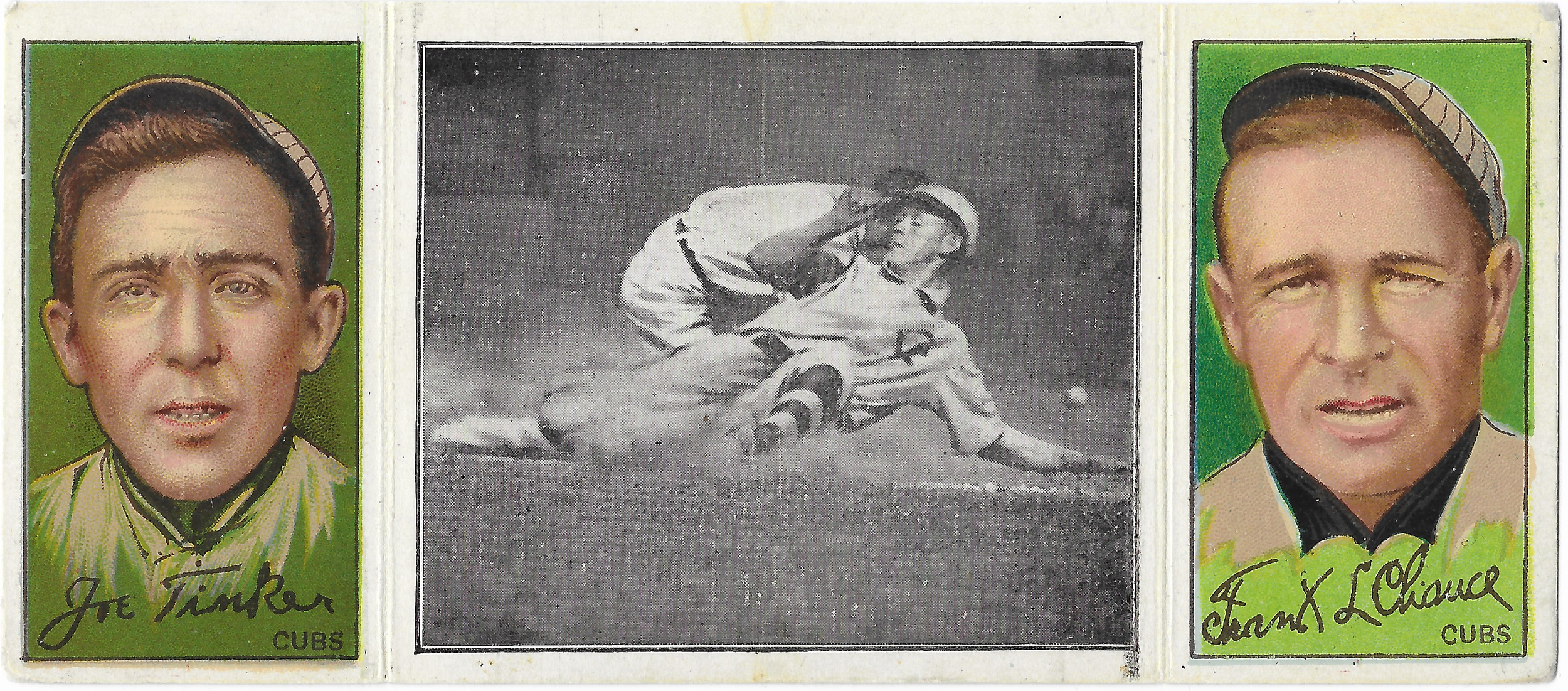
This card features three panels with famous Chicago Cubs: Joe Tinker on the left panel, Johnny Evers on the center panel, and Frank Chance on the right panel. “Evers Makes A Safe Slide” is the title of the action shot, which must have been taken before 1910, because of Tom Lynch’s rule. Based on the collar style of Evers’ uniform, the logo on his chest, and the color of his hat, we know this photo must have been taken during the 1908 season.
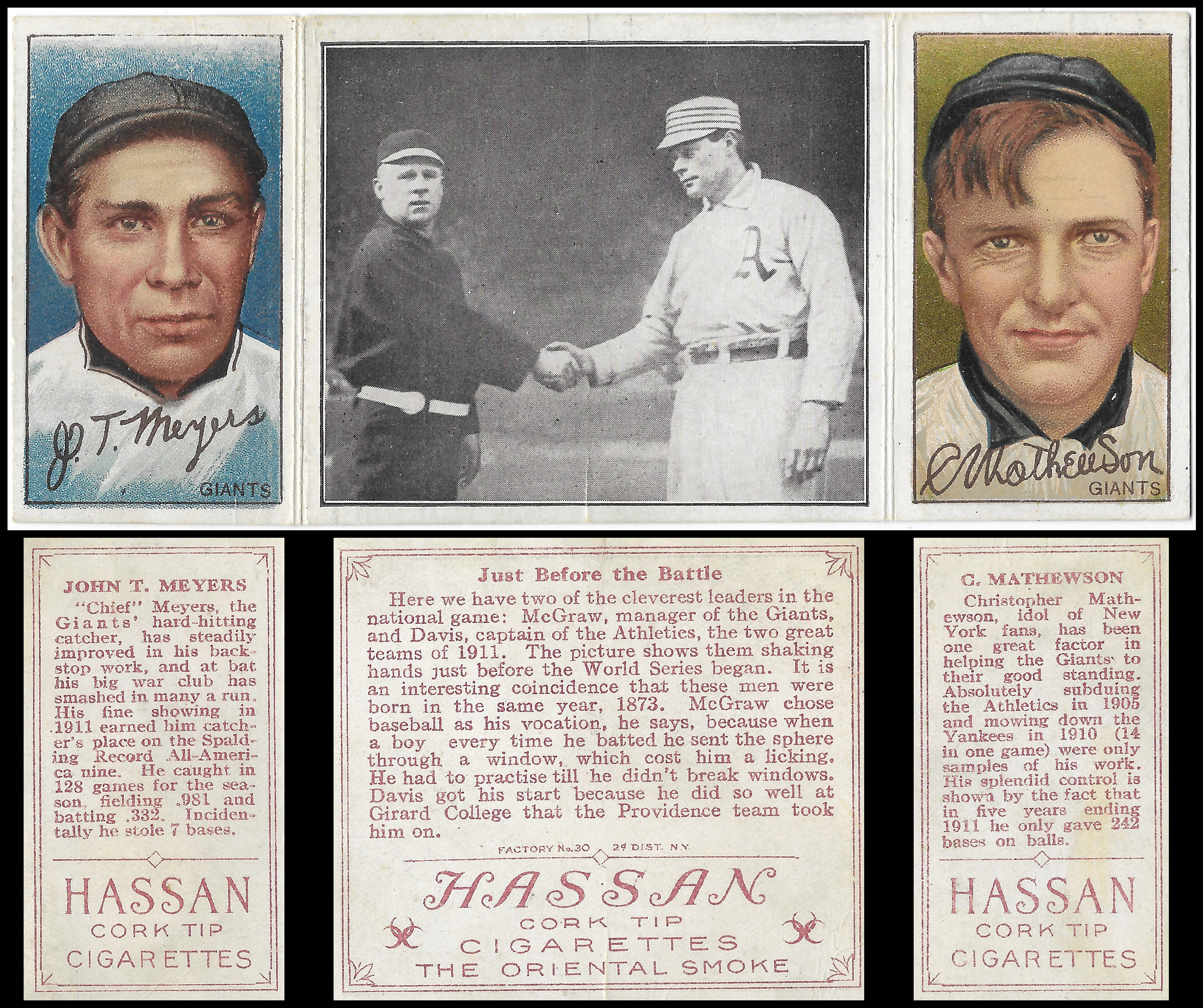
You didn’t really think I was done posting these earlier, did you? Ha! Of course I wasn’t. Do you think I’m done now…?
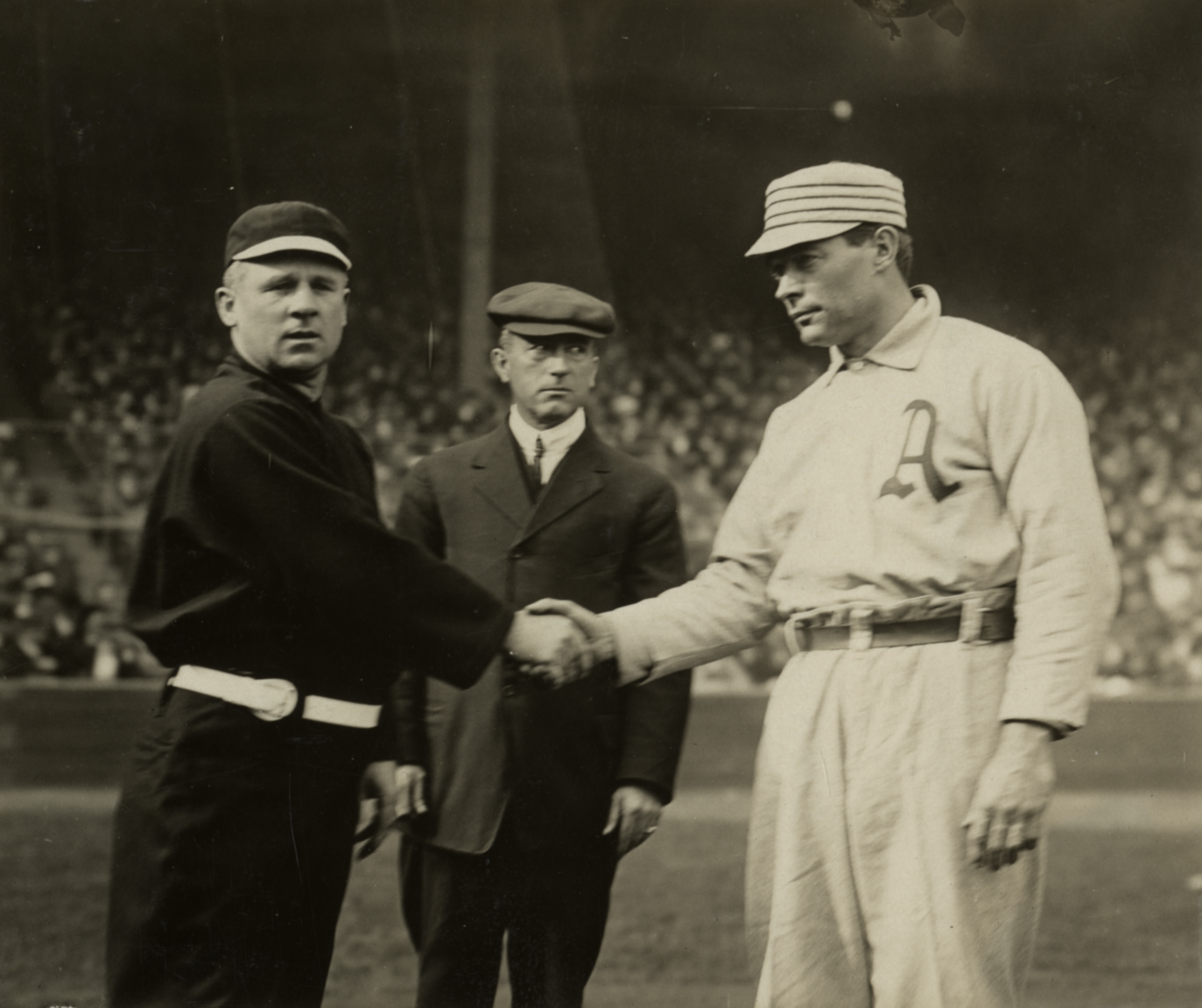
Original Photograph
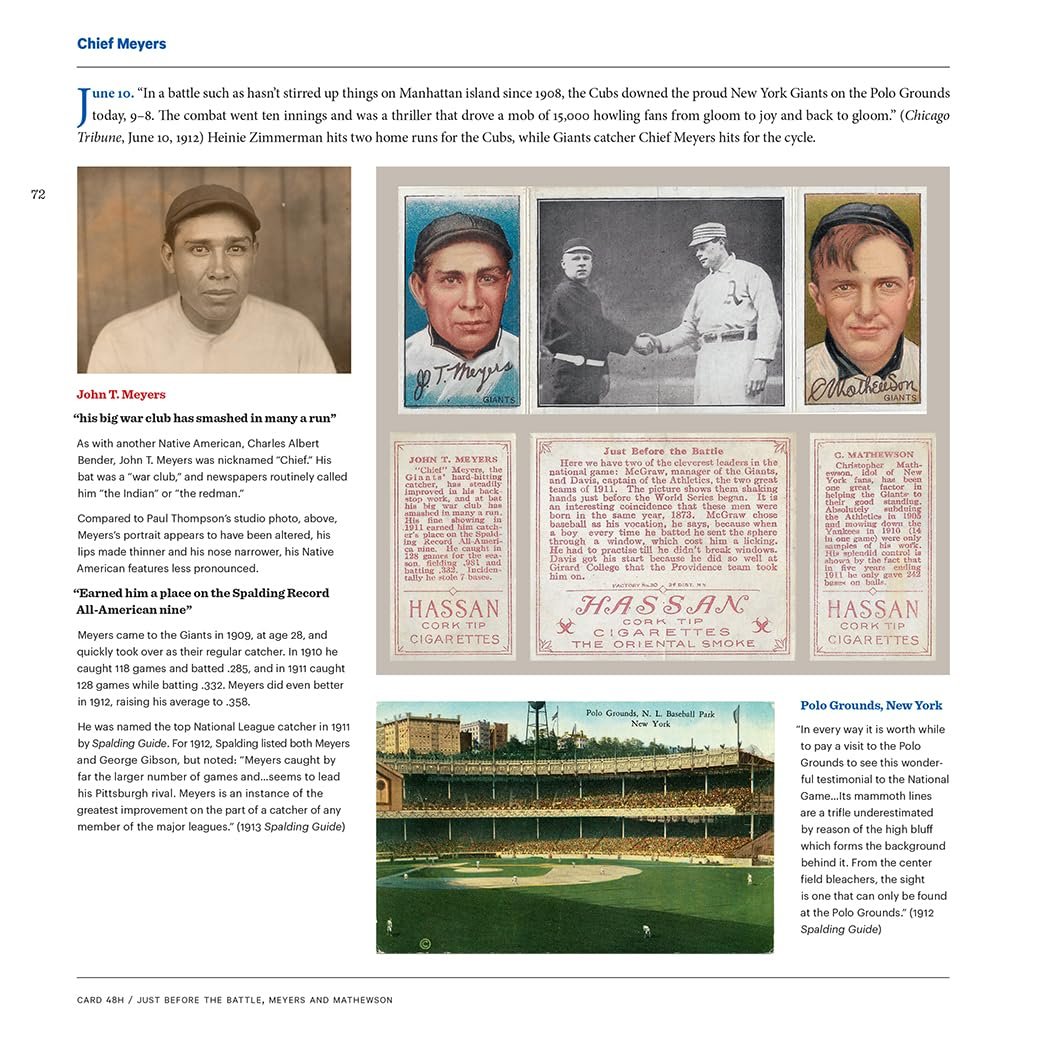
In the center panel of the T202 cards, this photo just shows Giants manager John McGraw (left) and Athletics first baseman Harry Davis shaking hands before the 1911 World Series.
The original photograph, taken by the George Grantham Bain News Service, also incluldes umpire Tom Connolly, seen here.
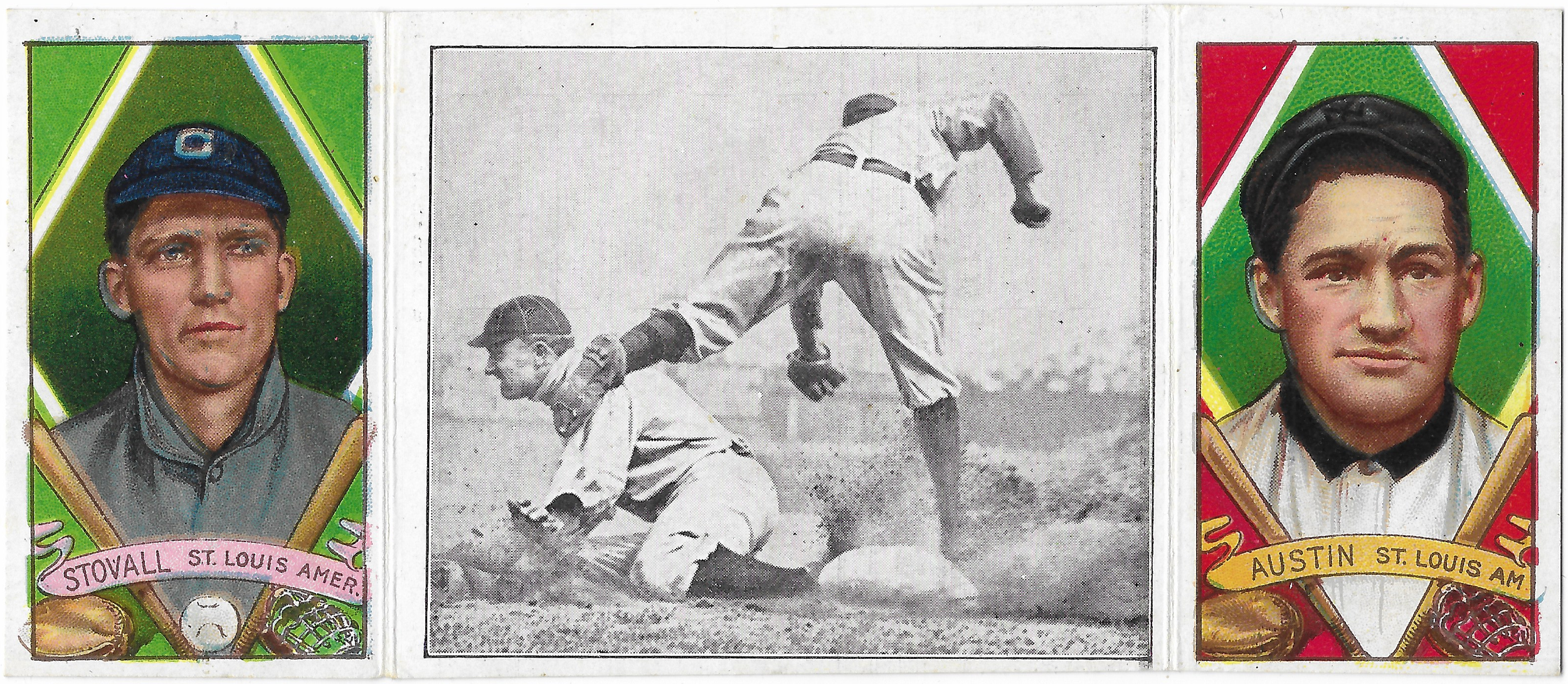
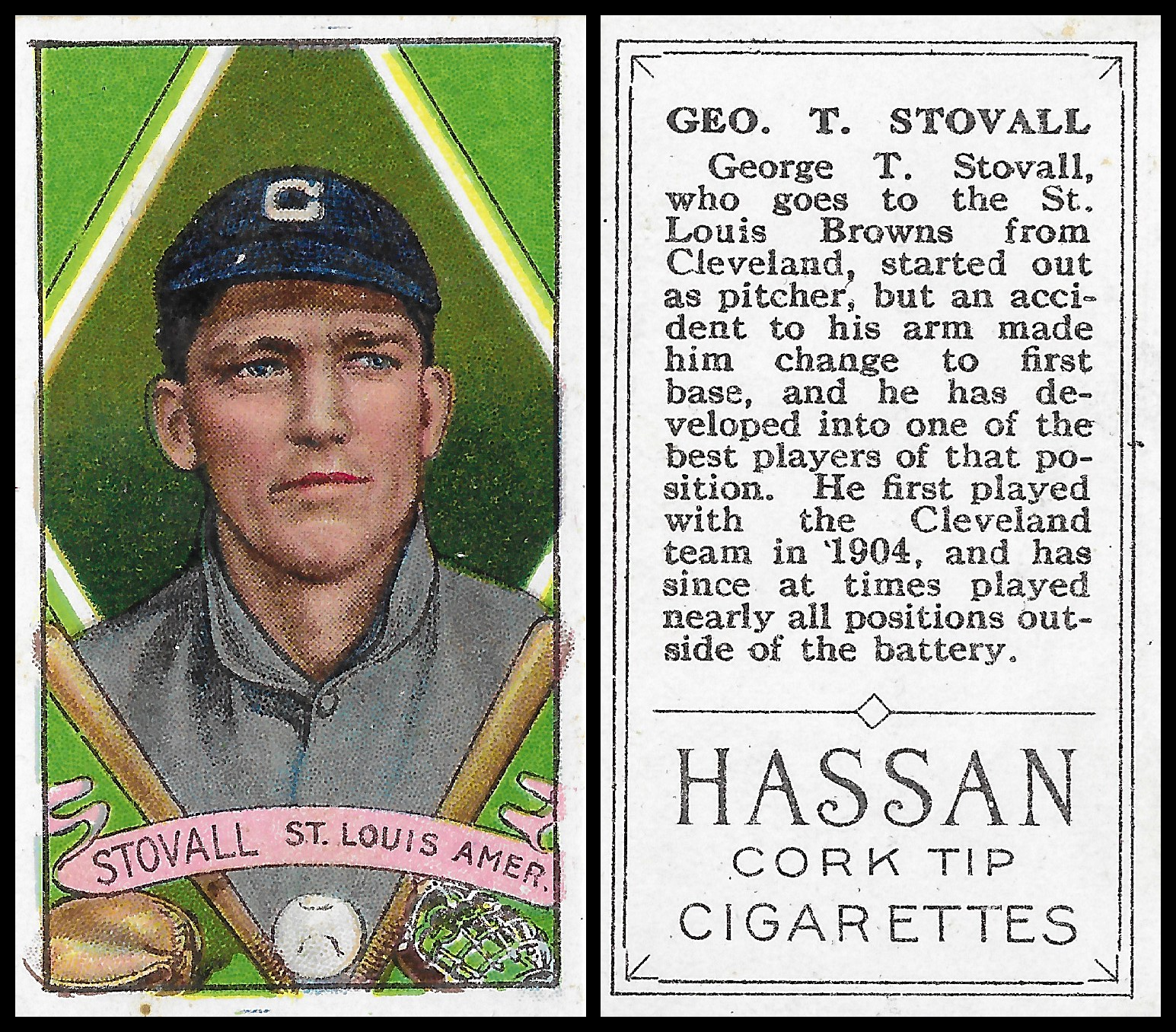
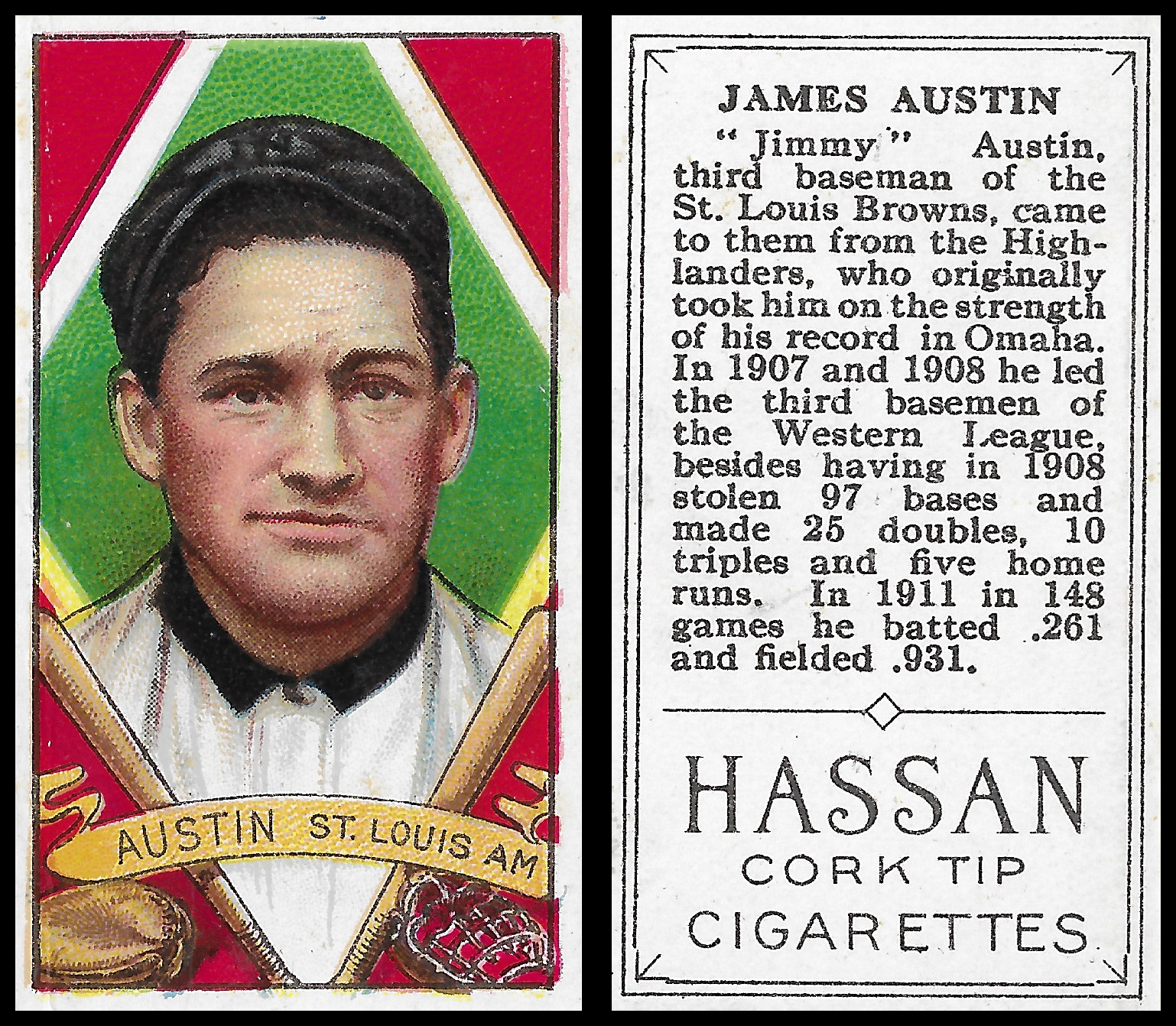
There are three different variations of the T202 card which has the Ty Cobb sliding center panel. The first features end panels of George Stovall and Jimmy Austin (who is attempting to apply the tag on Cobb).
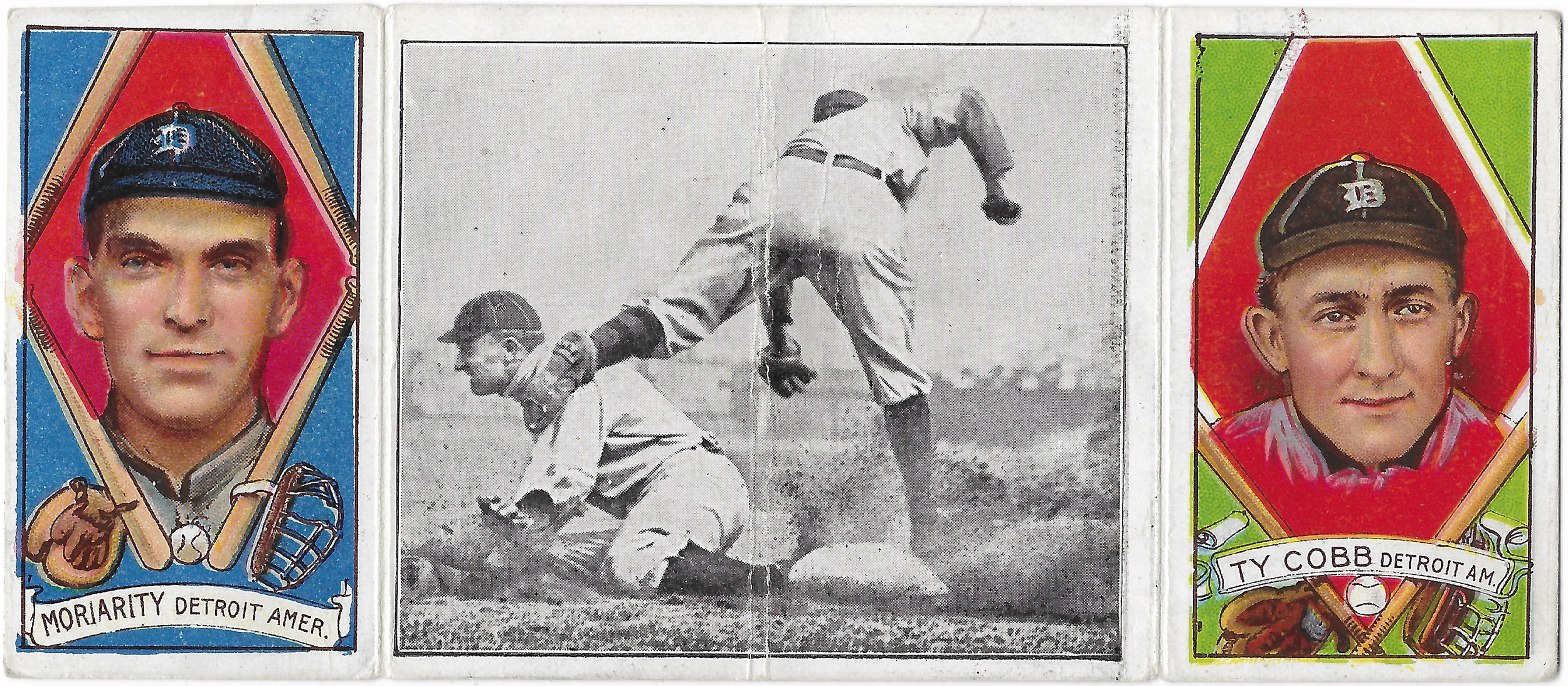
The second variation features end panels of George Moriarty and Ty Cobb.
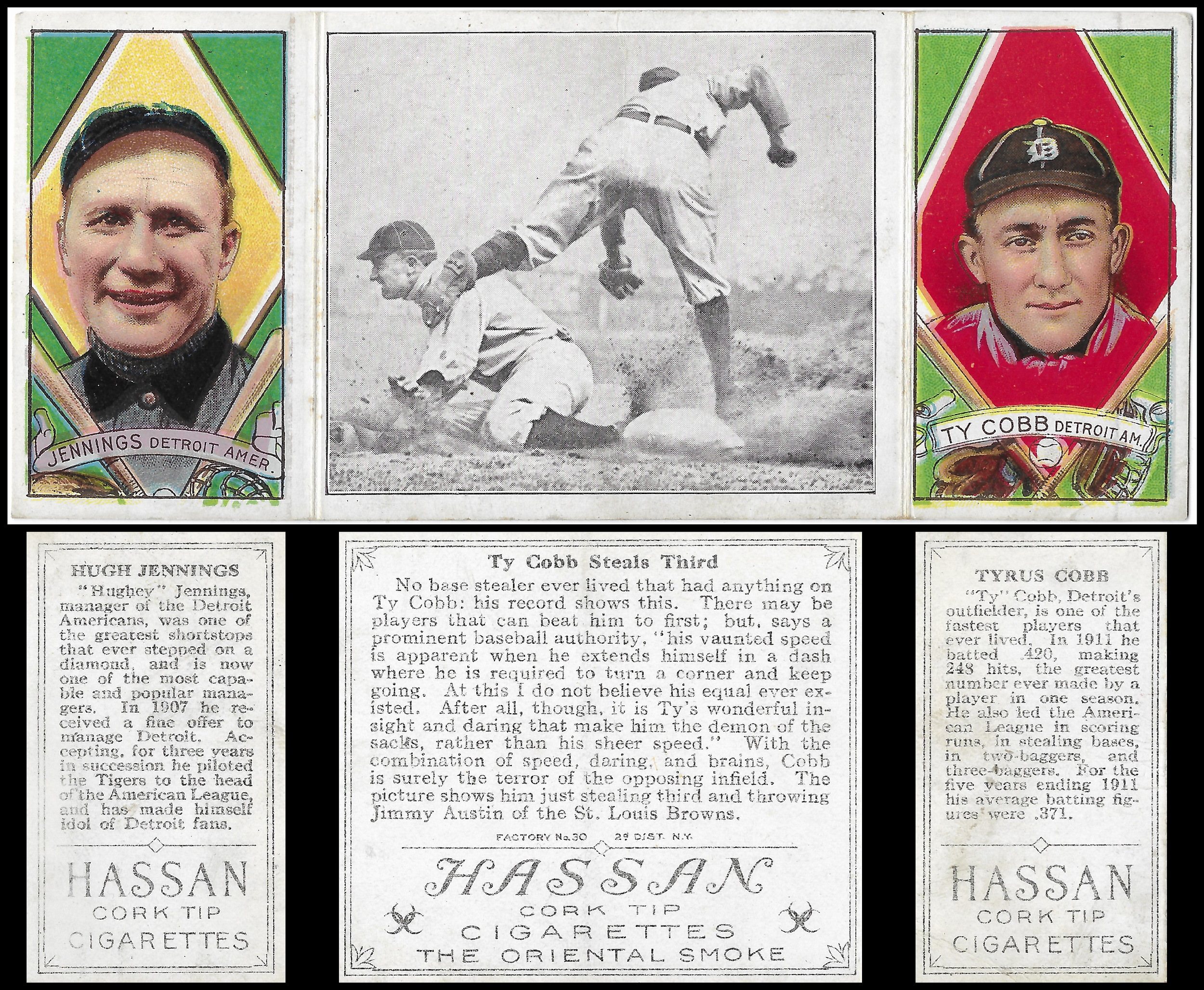
The third, and most desirable variation, features end panels of Tigers manager Hughie Jennings and Ty Cobb.
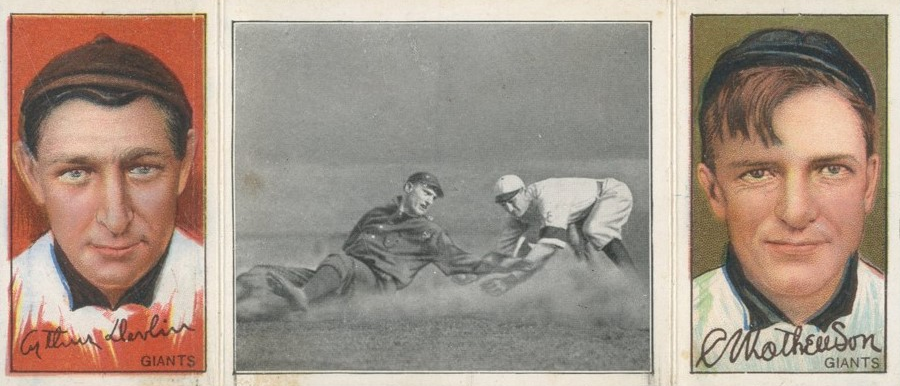
This card variation depicts Art Devlin as a member of the Giants, which is a rarity within the set.
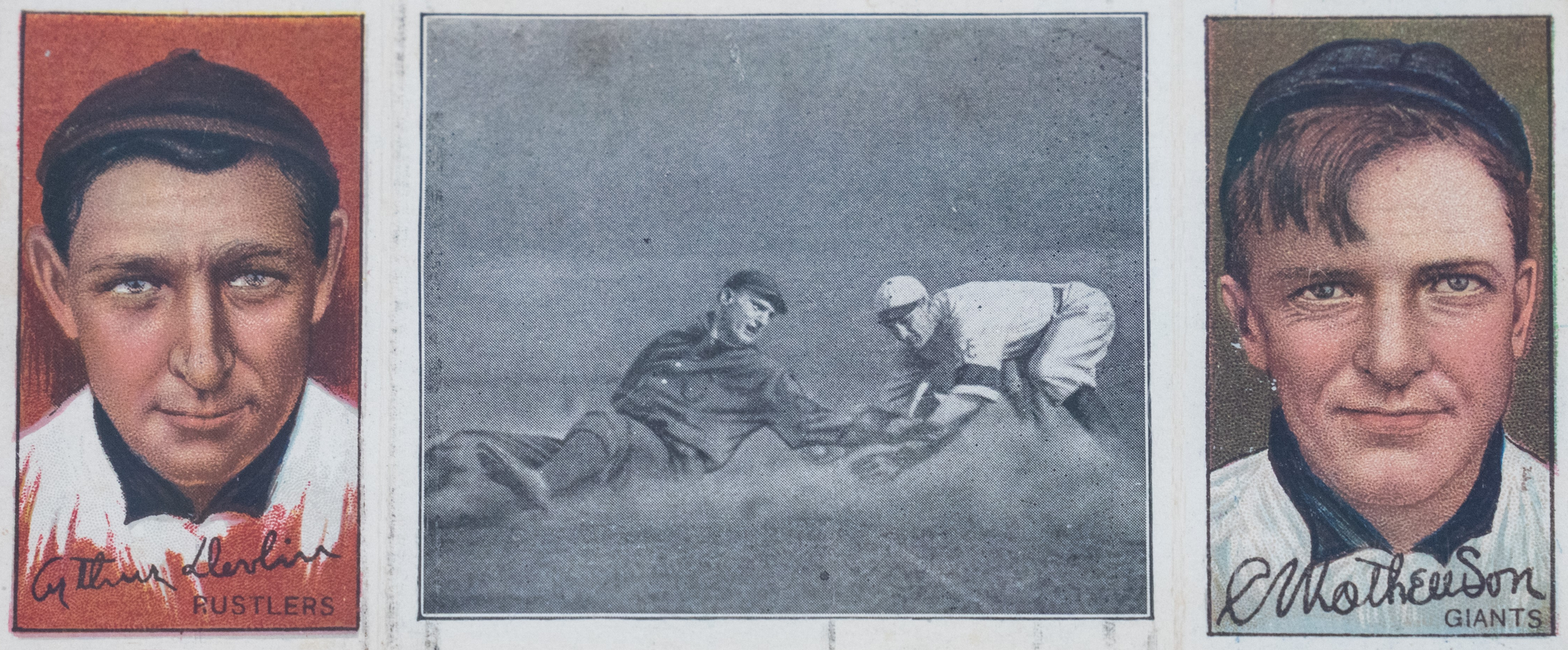
This card variation depicts Art Devlin as a member of the Rustlers (aka the Boston Braves) after he was traded to the team from the Giants. This card is a rarity within the set, but not as rare as the variation which depicts him as a member of the Giants.
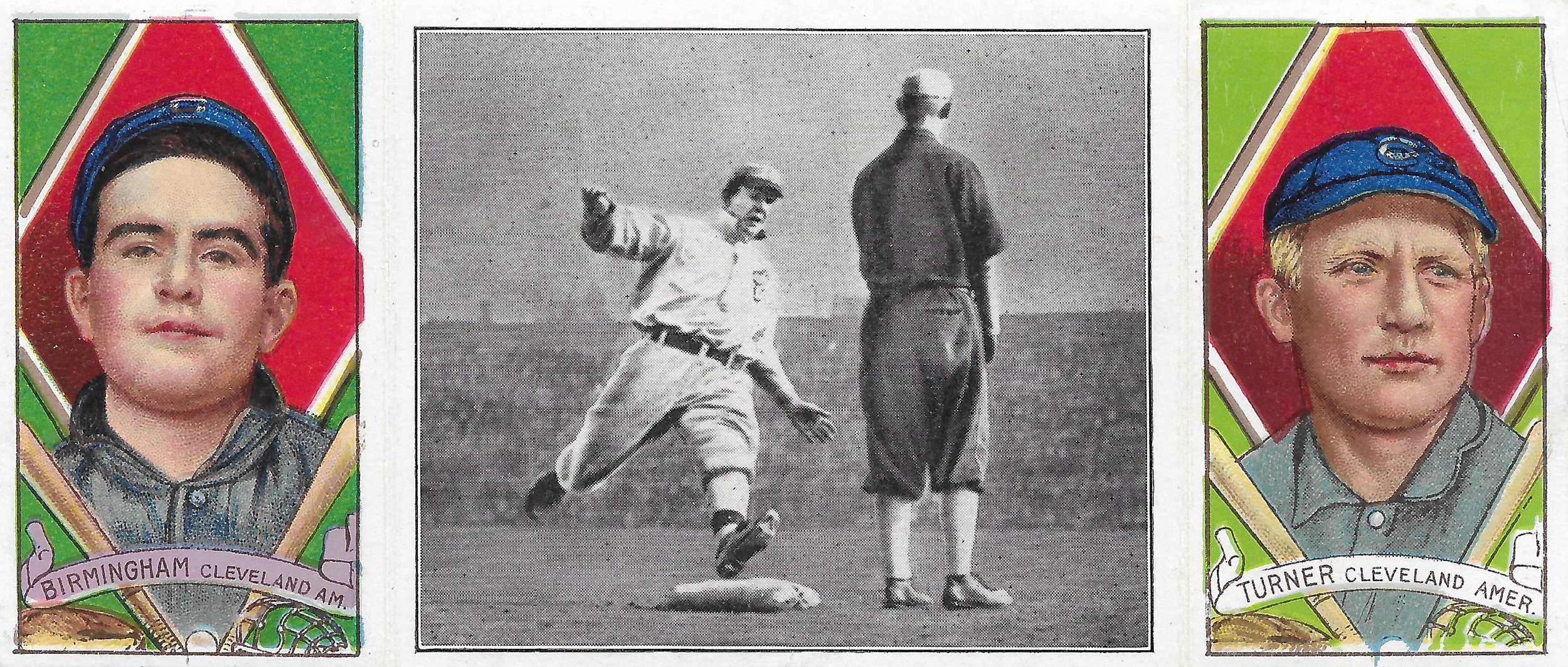
The PSA Pop Report for this card (Birmingham’s Home Run) would suggest that this is one of the more rare and valuable cards in the set, as well.
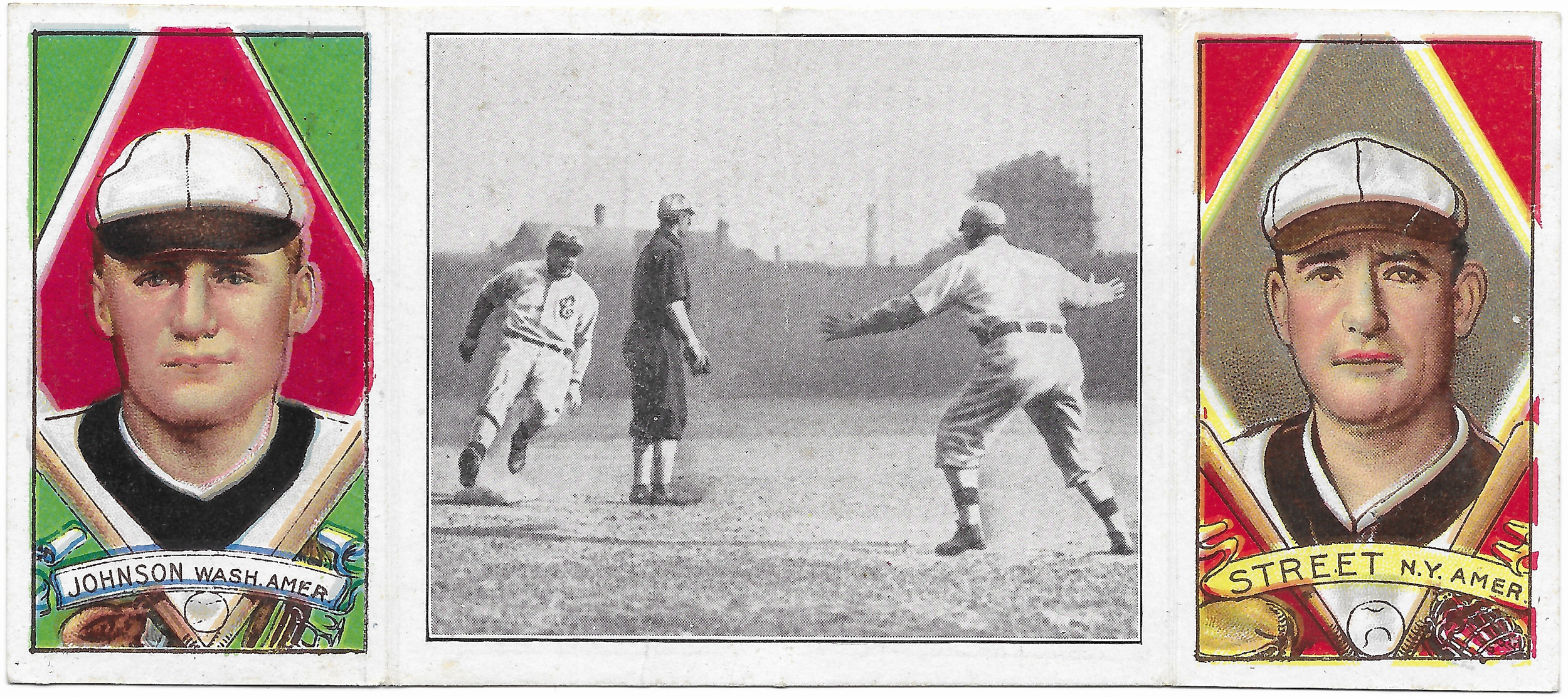
This card has end panels with Washington pitcher Walter Johnson and his catcher from 1908 through 1911, Gabby Street. Before the 1912 season began, Street was traded to New York, but the card makers still decided to pair the two together, despite no longer being teammates.
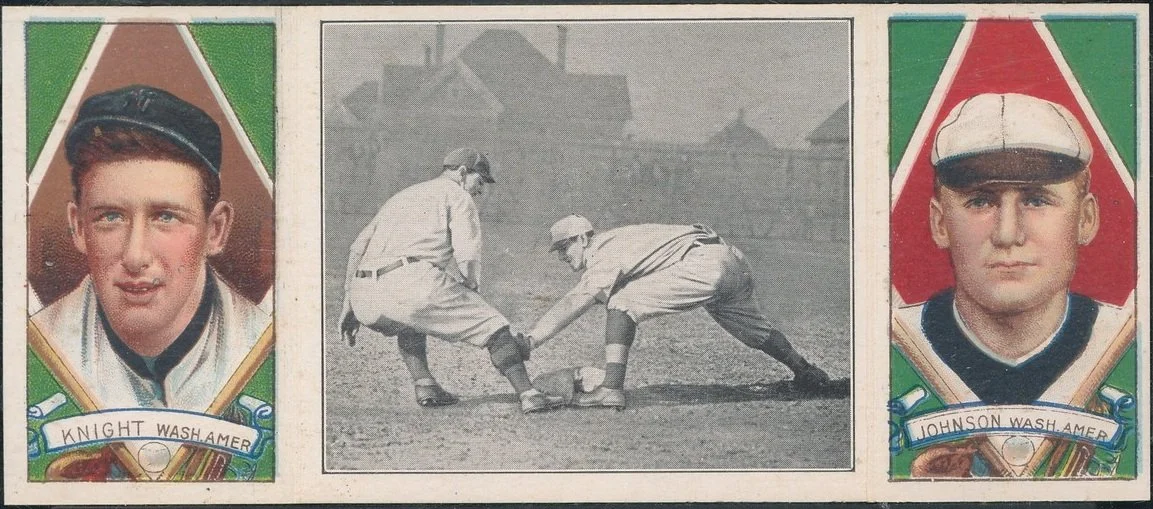
This card has end panels with Washington pitcher Walter Johnson and infielder John Knight, who Gabby Street was traded for in February of 1912, meaning this card must have been produced at some point after that.
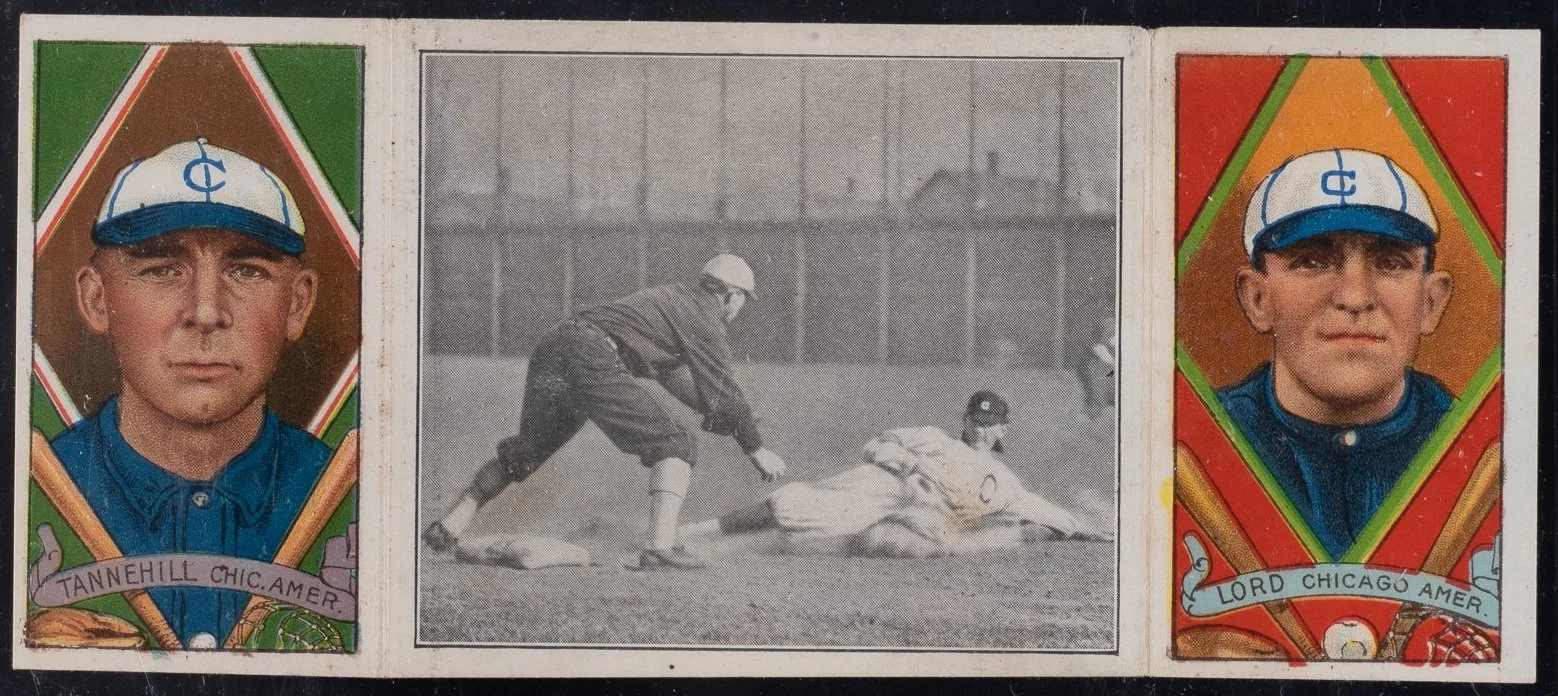
In May of 2010, a new poster to the Net54 message board introduced a theory that the T202 card featuring Chicago White Sox players Harry Lord and Lee Tannehill also featured a center panel action shot of Shoeless Joe Jackson sliding into third base. Fifteen years later, and it seems to be widely agreed upon by the hobby, which has caused the price of this otherwise common card to skyrocket.
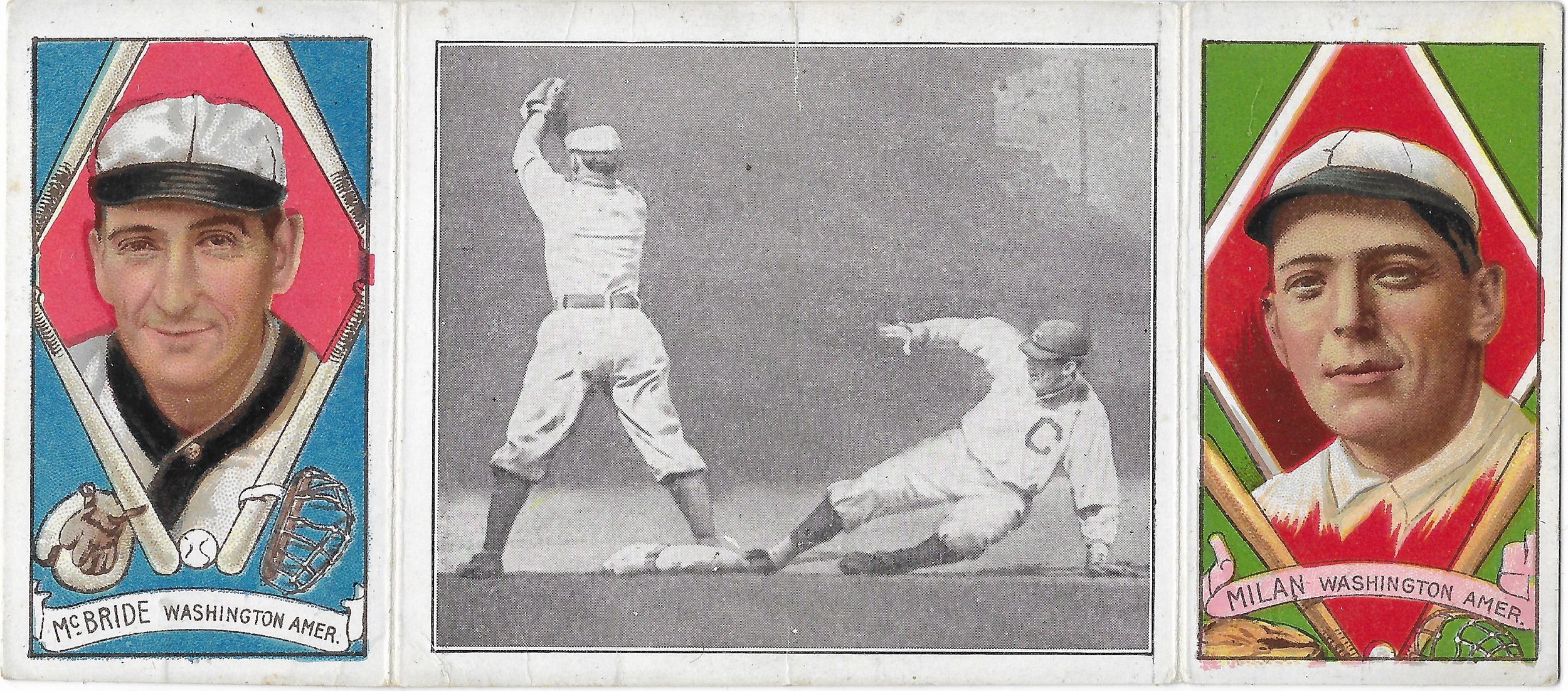
I personally believe that the player sliding into third base on THIS otherwise common card in the T202 set is also Shoeless Joe Jackson, though the hobby is not in agreement on that front (yet). And I won’t say which one, but I think there is a third center panel within the T202 set which depicts Shoeless Joe, as well.
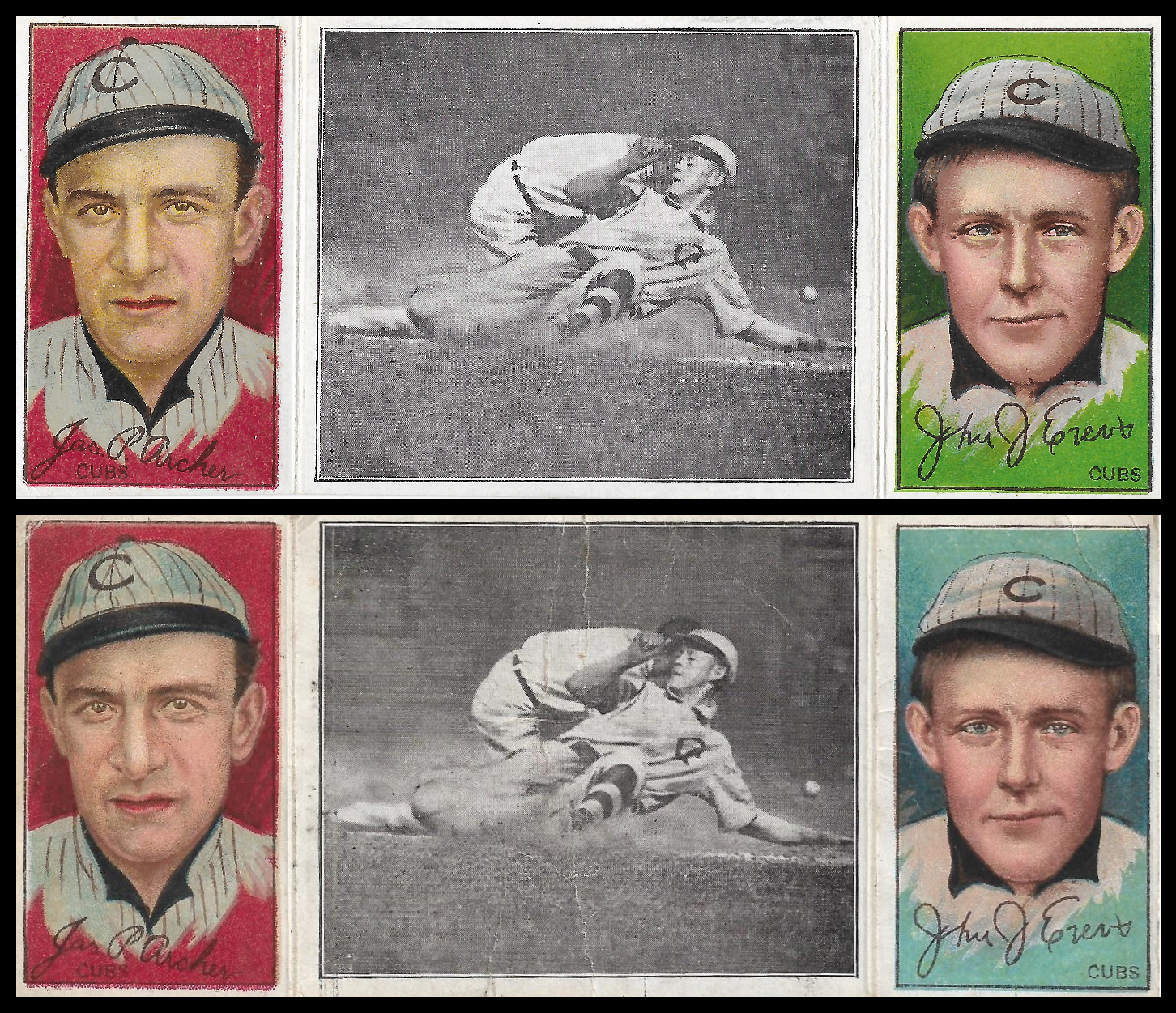
One card with a slight variation in the T202 set is this Johnny Evers end panel. The normal version (on top) has a green background, while the much more rare variation (on the bottom) has a lighter blue background.
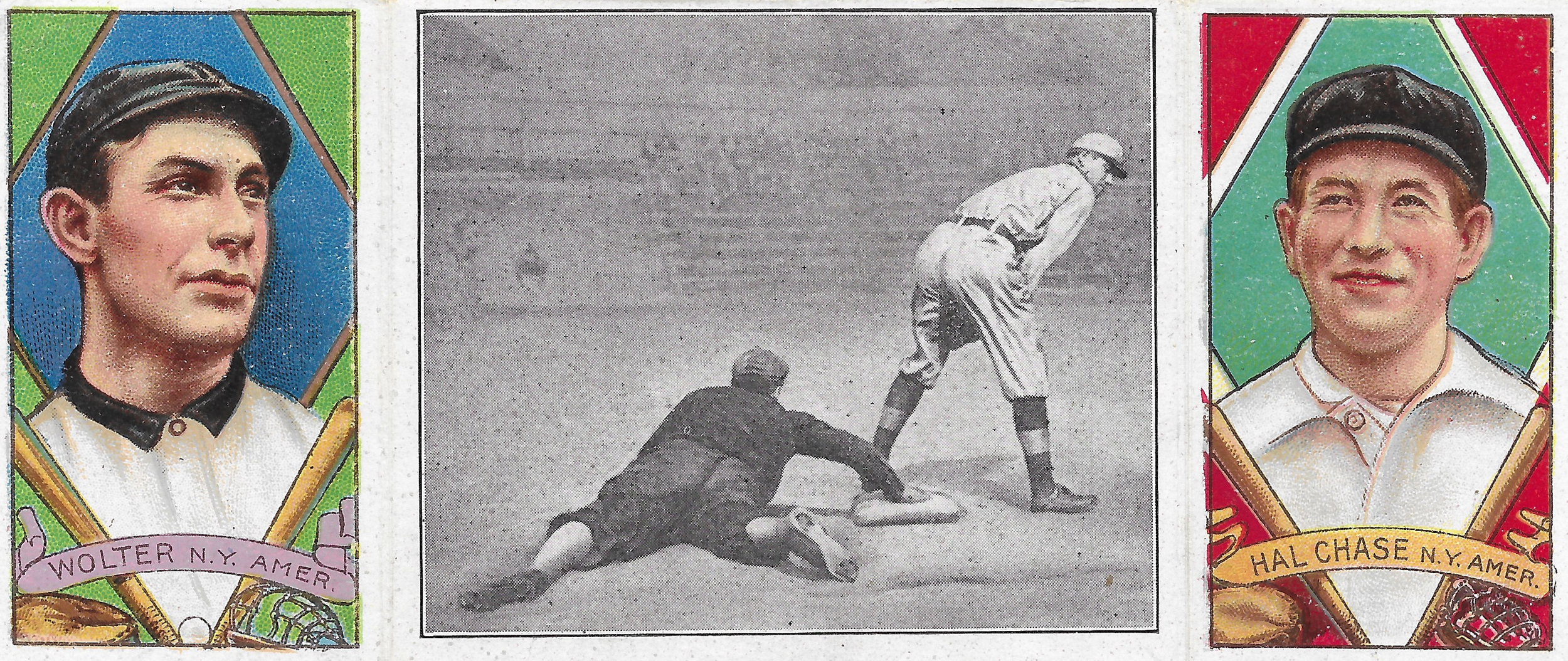
The center panel of this card, titled “Chase Gets Ball Too Late,” raised some questions when Phil was trying to determine where it was taken. Those stands in the background, and the uniform the runner is wearing, do not look like anything he’s been able to verify as belonging to a Major League club.

Athens, Georgia Spring Training
That’s because this photo was taken in Athens, Georgia, during Spring Training in 1909, and not during an actual Major League game. It wasn’t until the owner of this original photograph sent Phil this image with the writing on the back that Phil was able to verify when and where it was taken. That unlocked a handful of other images in the set he’d been stuck on pinpointing the locations of, as well.
The Key That Unlocked Multiple Doors
Once Phil knew what he was looking at, it immediately informed him on some of the other photos he had questions about.
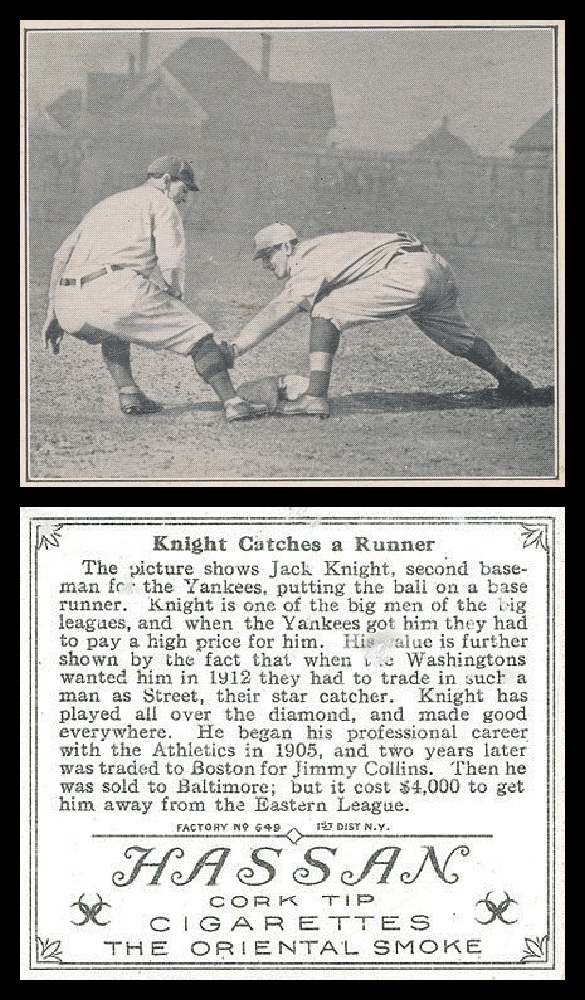
The mysterious houses in the background of this center panel, titled “Knight Catches a Runner”? Not so mysterious anymore! They’re perfect matches for the Spring Training site in Athens, Georgia.
Another Perfect Match
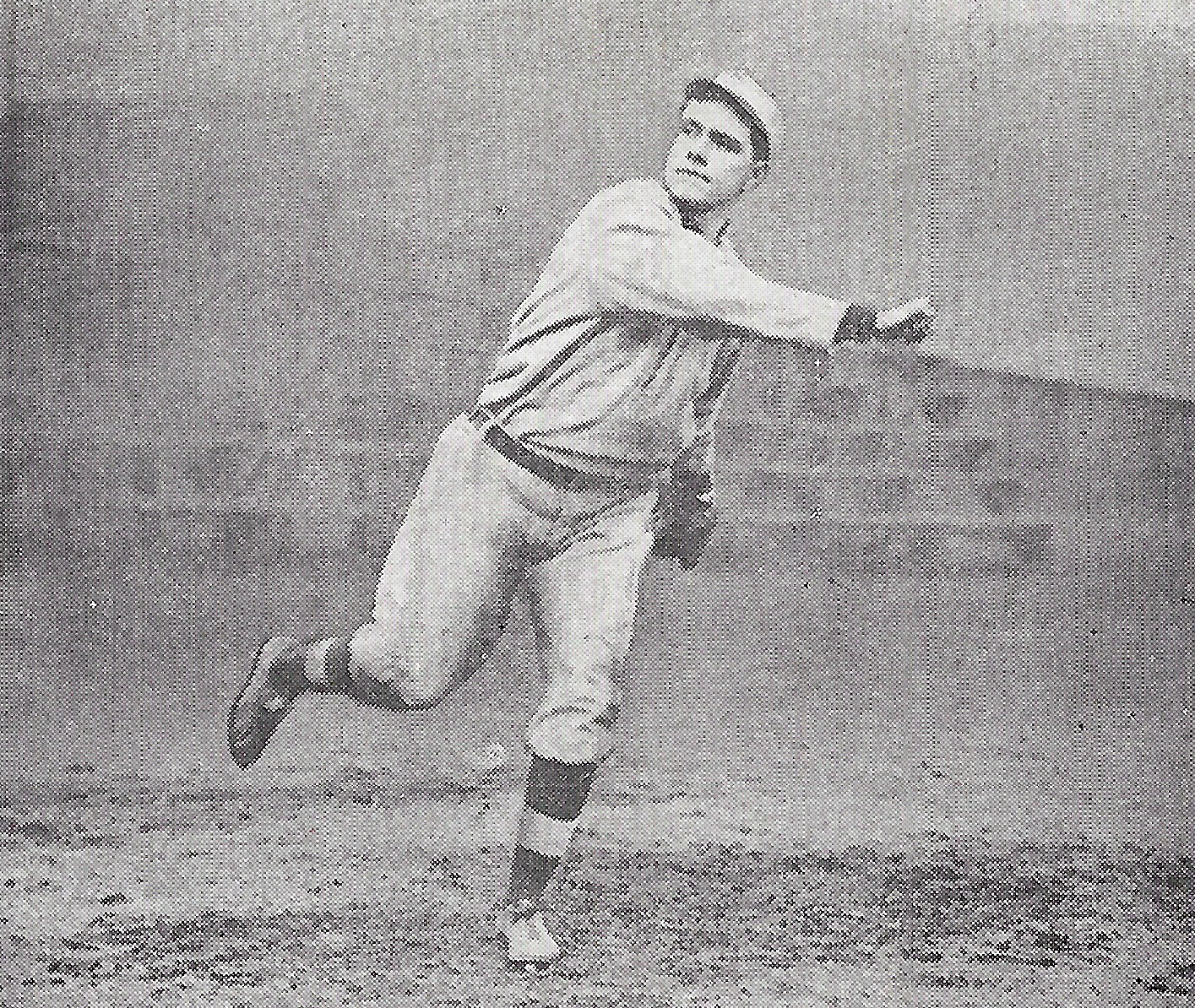
Those rickety bleachers in the background of this Russ Ford center panel, which previously made no sense? Another perfect match to the photo of the Spring Training site in Athens, Georgia.
1912 World Series
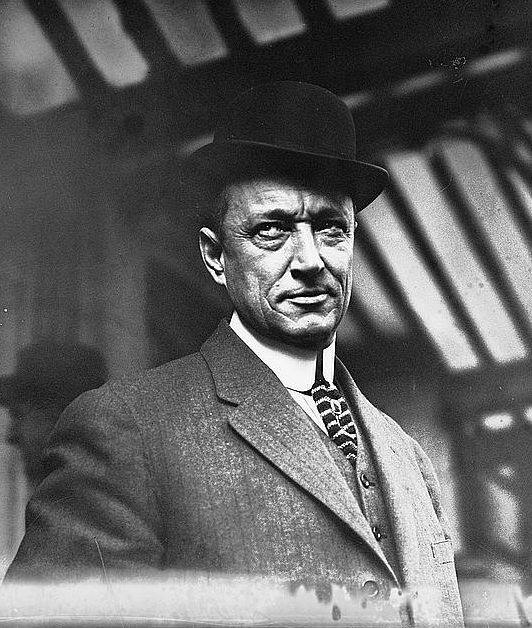
Before Game 6 of the 1912 World Series, Smoky Joe Wood advised his friends and family to bet on his Red Sox before his scheduled start, with Boston ahead three games to one. Wood was the American League’s top pitcher, had already beaten the Giants twice in the Series.
Instead of throwing Wood again, Boston manager Jake Stahl was ordered by owner James McAleer to start the unseasoned Buck O’Brien in Game 6.
The Red Sox lost that game and Wood, embarrassed and angered at having wrongly advised his friends, lost the next one, too.
Hugh Fullerton
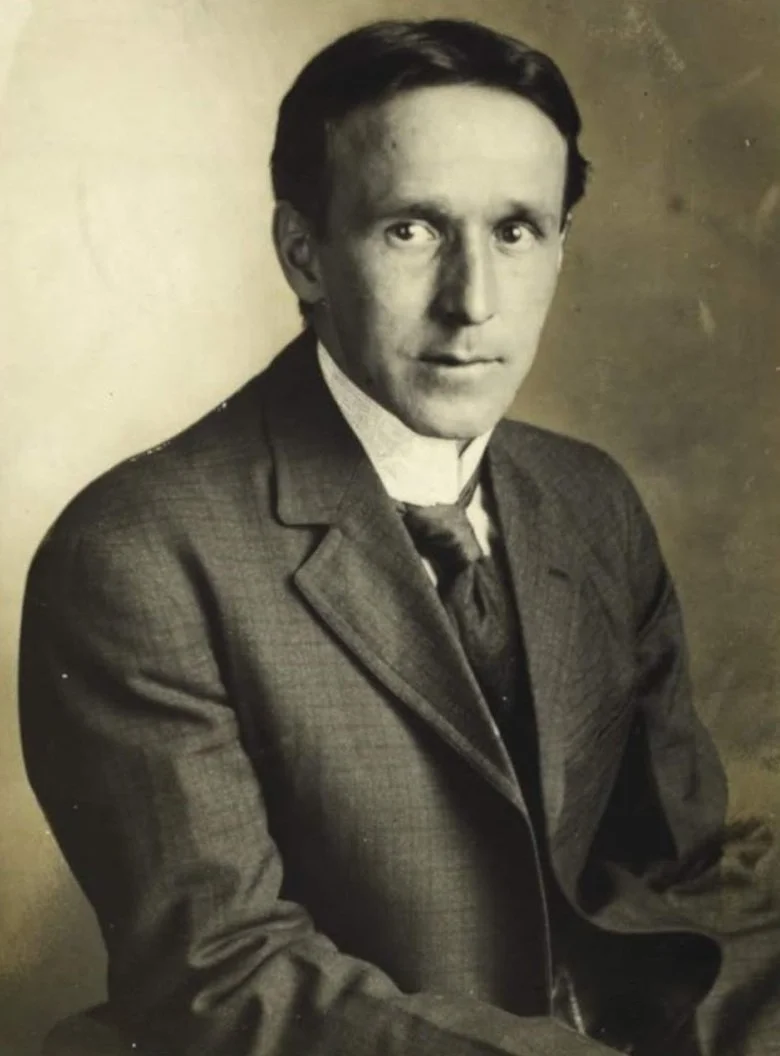
Smoky Joe Wood and the Boston Red Sox were caught up in a betting scandal during the 1912 World Series, prompting syndicated sports reporter Hugh Fullerton to warn fans about gambling’s growing influence in baseball:
“The muckerishness of the ‘fan’ is exceeding itself in muck this fall,” he wrote. “Boston howled that it was ‘all fixed’ then raved over the team when it won. [So] New York screamed that the Giants were throwing the series. For a comparatively trifling bet Wood risked Boston’s title and the wealth that accrued to the winners. Stamp out gambling and the end of talk of crookedness is at hand.”
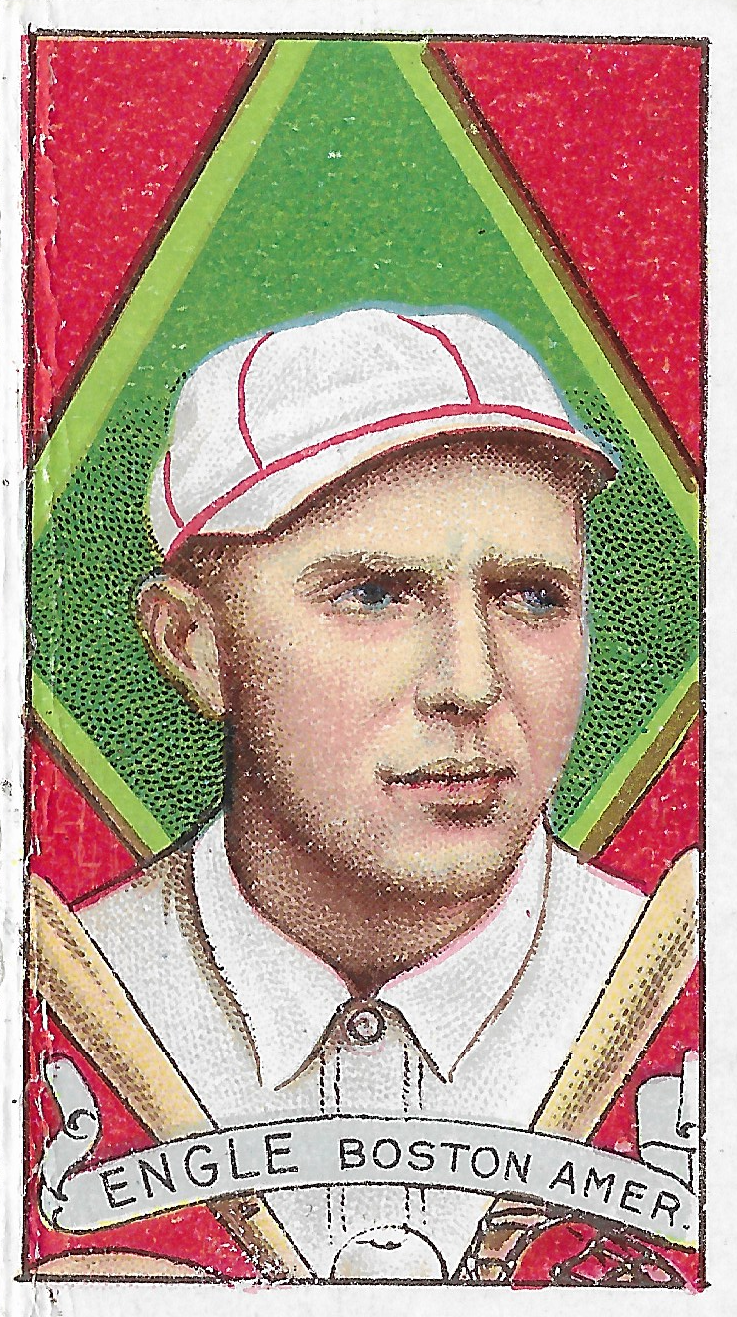
Clyde Engle
Smoky Joe Wood won 3 games for the Red Sox in the World Series, including the Series clincher in Game 8, which was one of the wildest winner-take-all games in baseball history. The game went into extra innings, tied at 1-1. The Giants scored in the top of the 10th, to make it 2-1.
Clyde Engle came to bat in the bottom of the 10th and cracked a long fly ball to center. Fred Snodgrass famously muffed it and let Engle land on second.
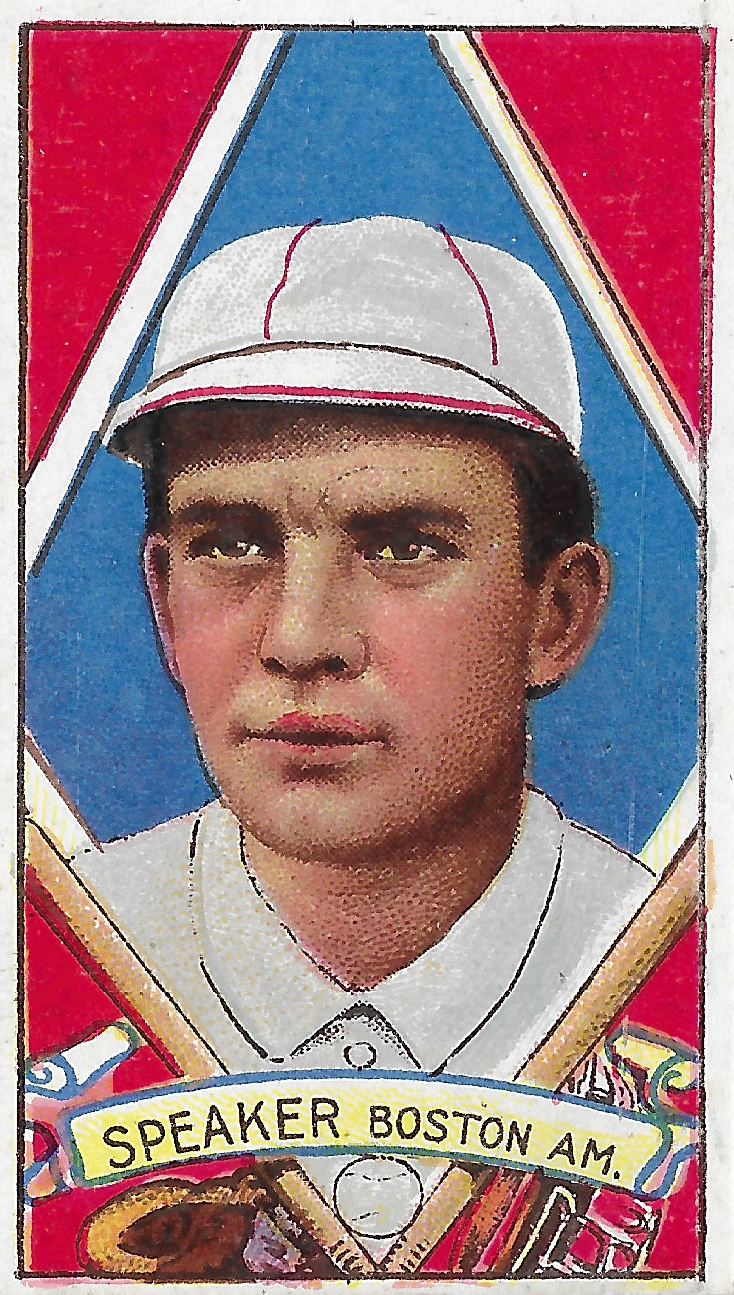
Tris Speaker
With one out, Christy Mathewson got Tris Speaker to pop one up in foul territory near Fred Merkle at first base. Merkle and Mathewson converged, along with catcher John Meyers (who was often called “Chief” Meyers back then, due to his Native American ancestry).
Out of thin air came the words, “Take it Chief, you take it!”—even though Meyers had the worst angle on the play. It was actually Tris Speaker who had yelled that as he was running down the line. Merkle and Mathewson froze, and Meyers couldn’t catch up to the ball, which landed on the ground, untouched.
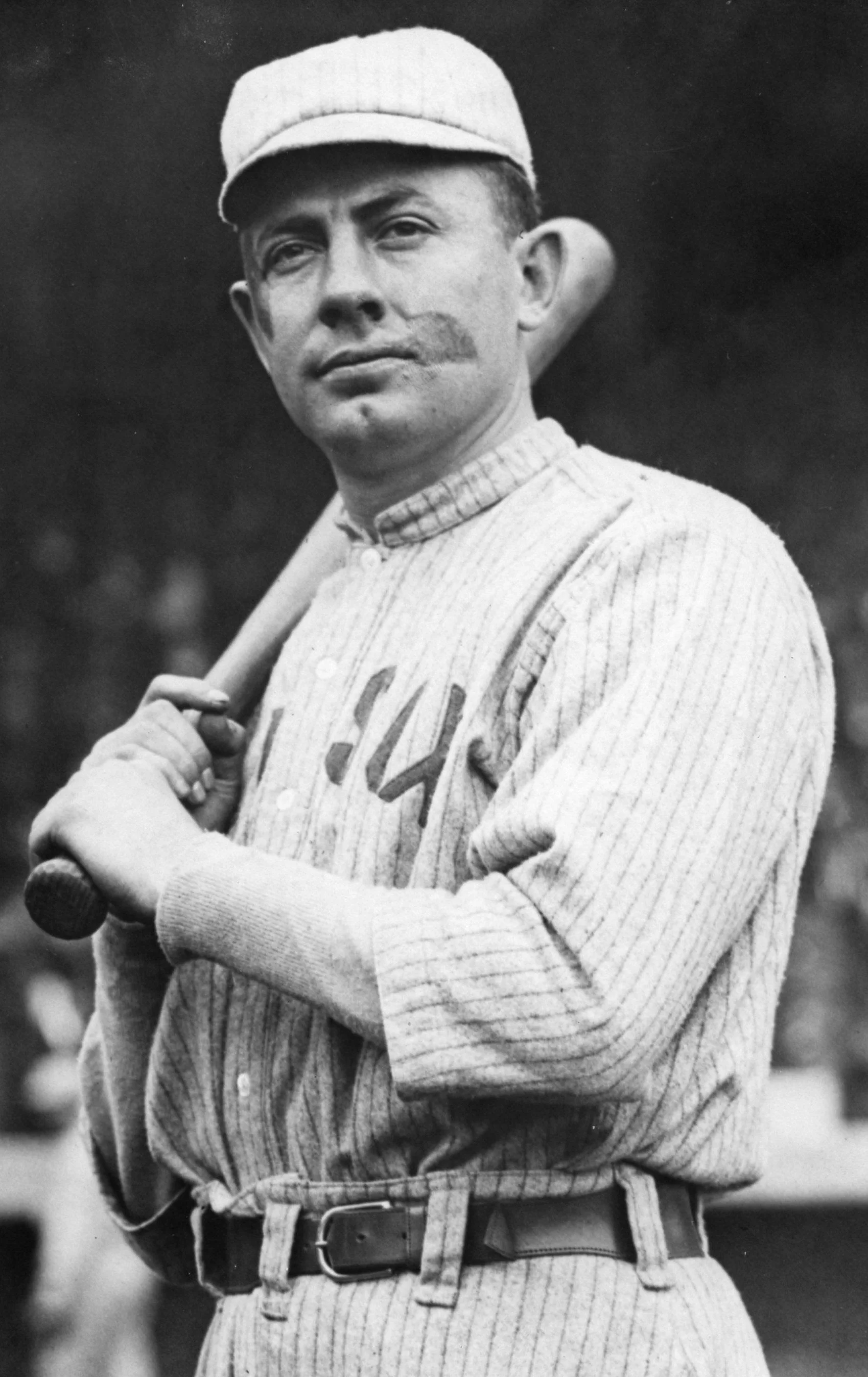
Steve Yerkes
Giving himself new life at the plate, Speaker promptly lined a single to score Clyde Engle as the game-tying run, and sending Steve Yerkes to third base as the potential game winner.
Two batters later, Larry Gardner launched a fly ball to deep right which was caught by Josh Devore—plenty far enough for Yerkes to score the Series-winning run after tagging up from third base.
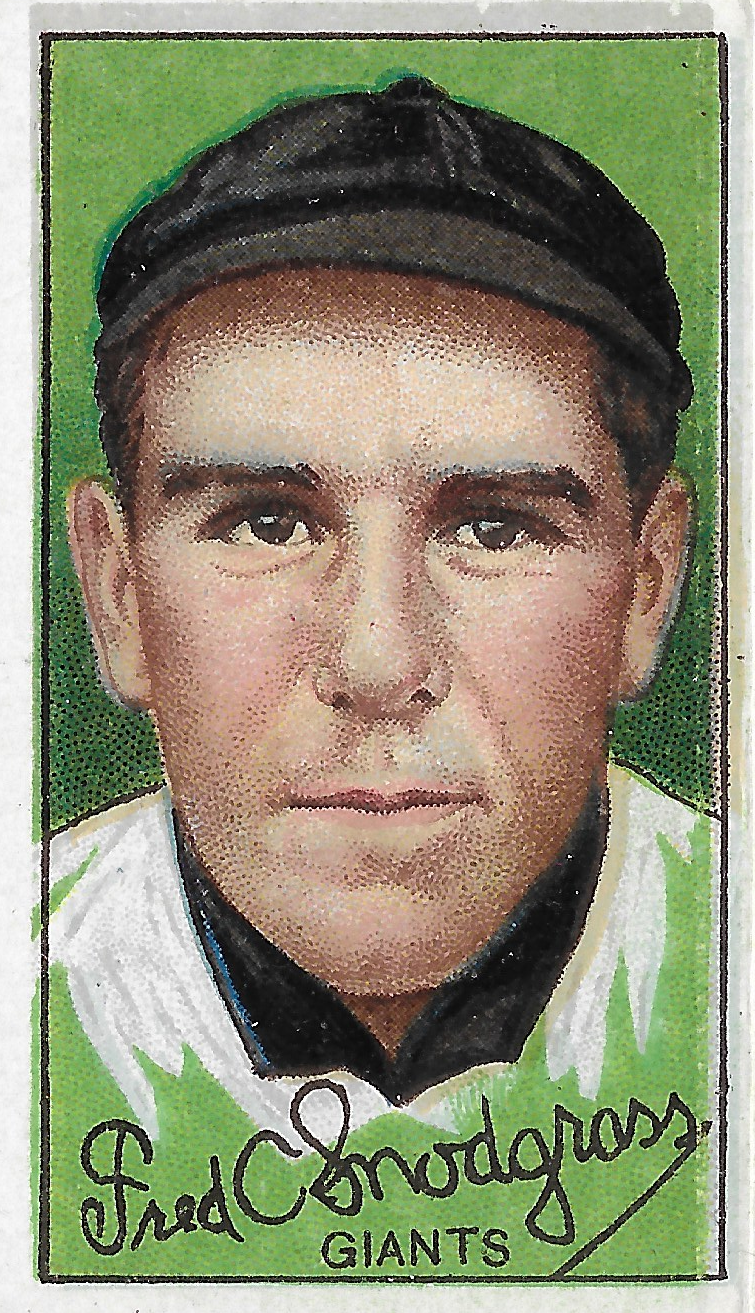
Fred Snodgrass
Fred Snodgrass took the brunt of the criticism for starting things off on the wrong foot defensively for New York. Though many would focus on Snodgrass and his “$30,000 Muff” — because that was the difference in the amount of money given to the winning and losing teams of the Series — there was plenty of blame to be shared among the Giants.
As a team, New York committed 17 errors in the Series, including 5 in the abandoned Game 2, which ended in a 6-6 tie. Mathewson, despite allowing just four earned runs over 28 innings, was tagged with eight additional unearned runs and won none of his three starts, stretching his World Series winless streak to five games.
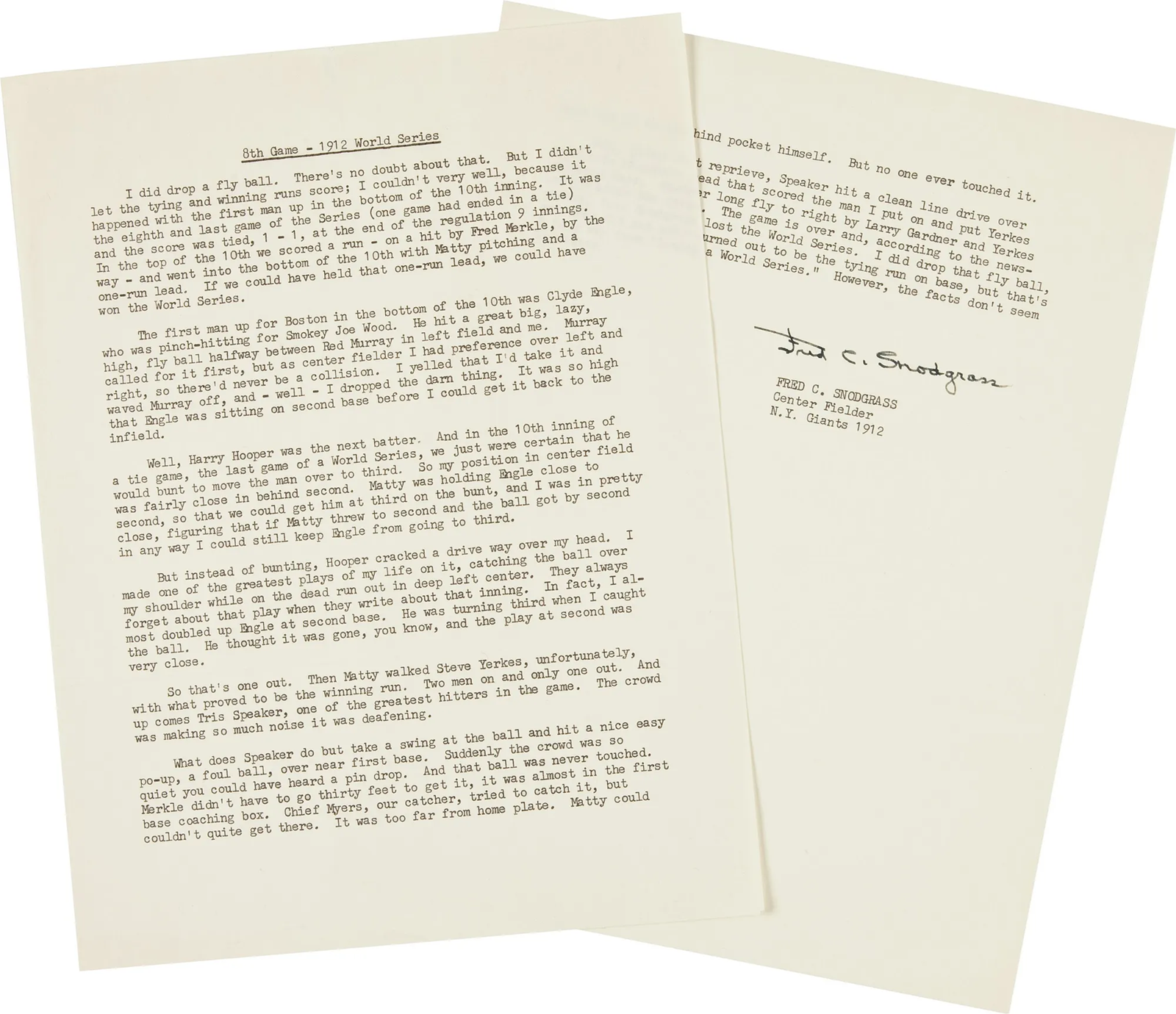
A letter written by Fred Snodgrass in which he discusses the 8th game of the 1912 World Series.

The Halo Effect
The Halo Effect criticizes pseudoscientific tendencies in the explanation of business performance. The book was named "Business Book of the Year" 2007 at the Frankfurt Book Fair.
Buy it HERE.
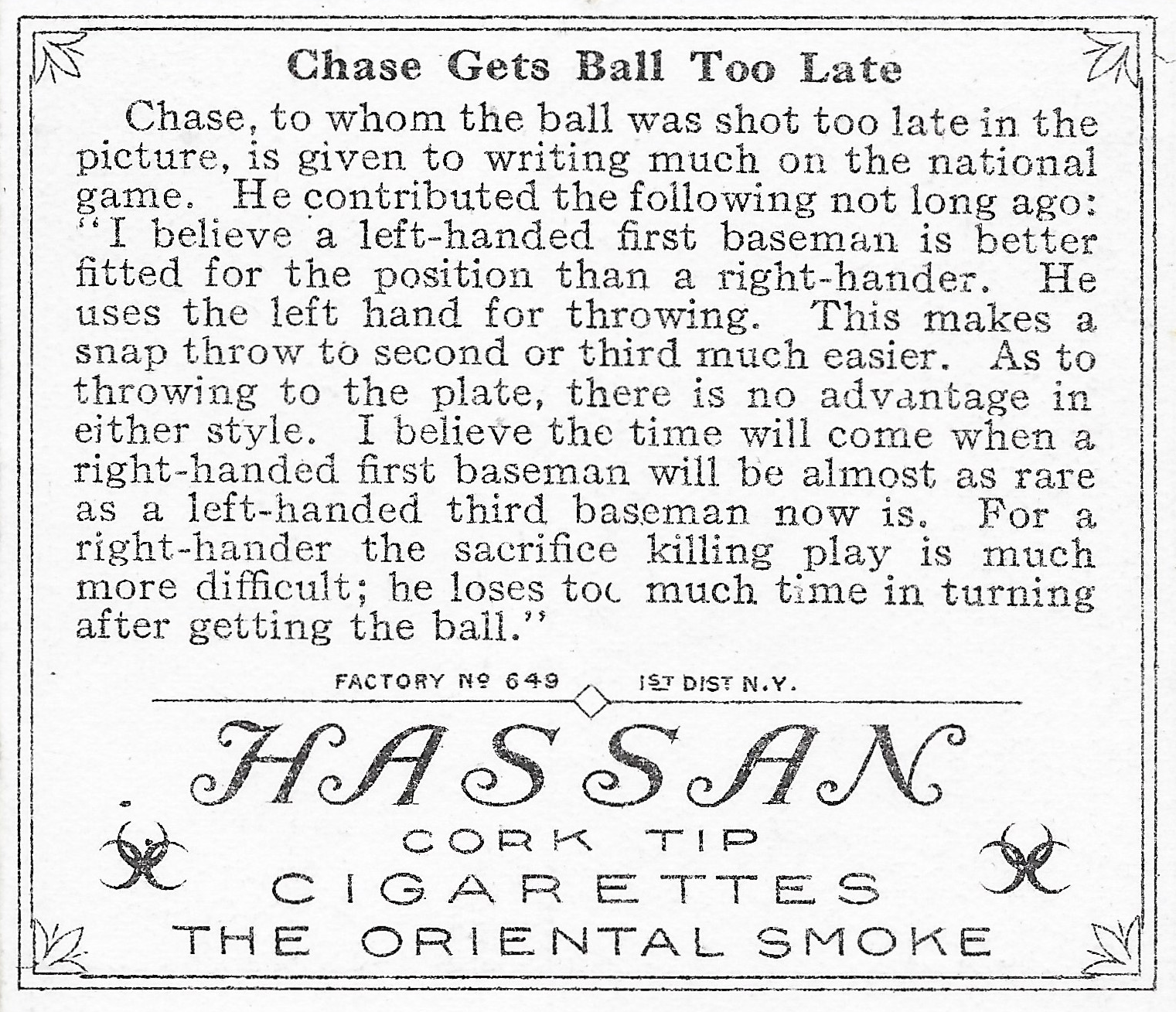
Left-Handed First Basemen
Hal Chase felt that the advantages gained by the angles and fluid fielding and throwing motions afforded to a first baseman who was left-handed compared to one who was right-handed would eventually become so obvious that it wouldn’t make sense to continue having right-handed throwing first basemen.
One Splendid Season
If you loved these liner notes (and I’m guessing you did, because you’re still reading this), trust me when I say you are going to LOVE the actual book.
Phil’s storytelling is wonderful, and the chronological order in which the book is written adds suspense and intrigue in a way that is truly admirable.
To buy it directly from Phil’s website, click HERE.
To buy it from amazon, click HERE.
What People Are Saying
“Truly one of the most creative ideas for a book I’ve ever seen, and the layout is beautiful”
- Dan McGowan, Boston Globe
“One Splendid Season is a kaleidoscope of a sport coming of age, with fascinating images of ballparks, uniforms, equipment and more that laid the foundation for the multi-billion dollar game we know today.”
- Tyler Kepner, Senior Baseball Writer for The Athletic
Read more HERE.

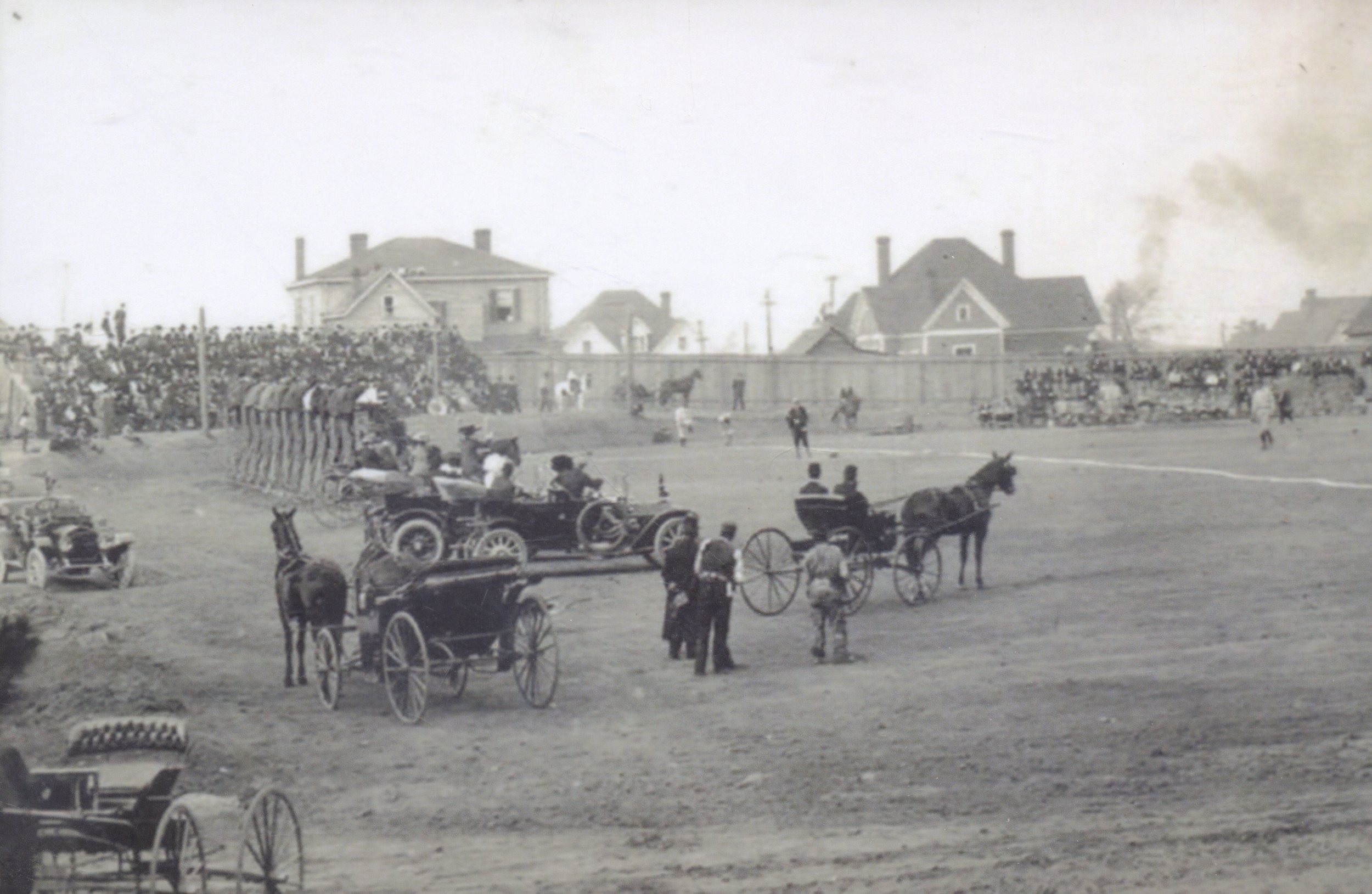
Sy Seidman
The six center panels in the T202 set which appear to show the New York Highlanders’ spring training site in Athens, Georgia were likely taken by a young photographer named Sy Seidman.
Isador Sy Seidman was a photographer and collector of old photographs who was born in 1891 in New York City. In 1921, he won the annual award of the New York Press Photographers Association for a distorted photo of the Statue of Liberty entitled ‘Liberty Enraged by Prohibition.'
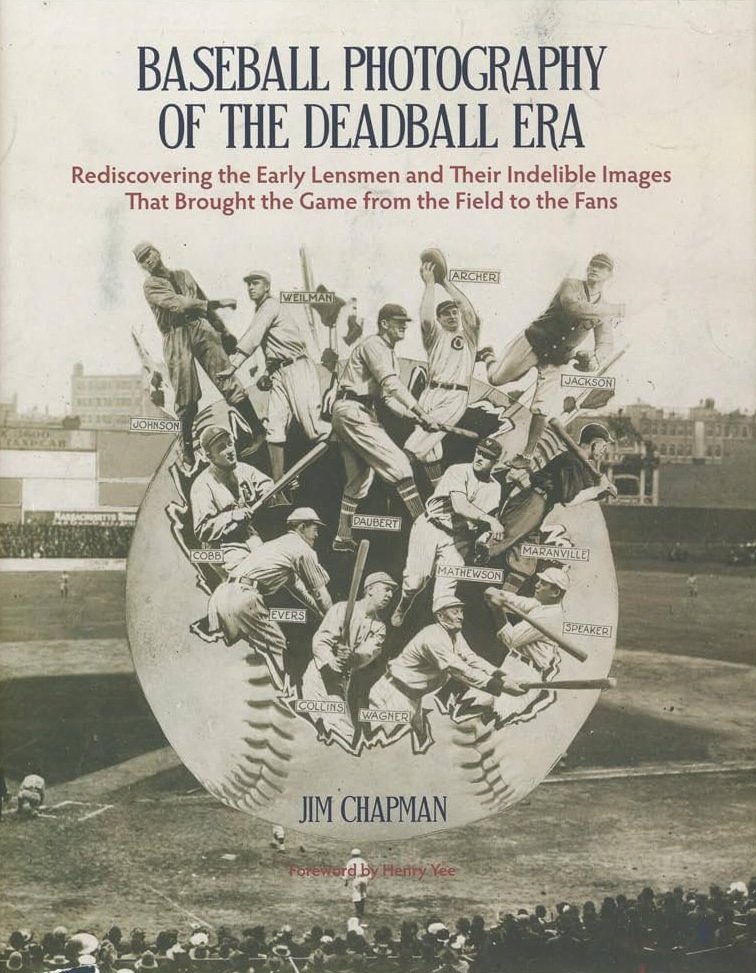
Baseball Photography of the Deadball Era
Jim Chapman’s book was the winner of the 2024 SABR Larry Ritter Book Award, which is granted annually by SABR’s Deadball Era Committee to the author of the best book about baseball between 1901 and 1919. The winner’s work must demonstrate original research or analysis, a fresh perspective, compelling thesis, impressive insight, accuracy, and clear, graceful prose.
"This is the book. I've been studying the 1900-1915 era since I was 10 years old and Chapman's huge, extraordinary, overflowing book has given me as much joy and insight as anything I've seen in all that time. BUY IT."
- Keith Olbermann
Follow Keith’s advice and buy it HERE.

Cemeteries
Nothing says “Mother’s Day” like taking a walk through a cemetery looking for graves of old architects in Chicago, am I right?
Well, that’s what my mom and I did in 2024.
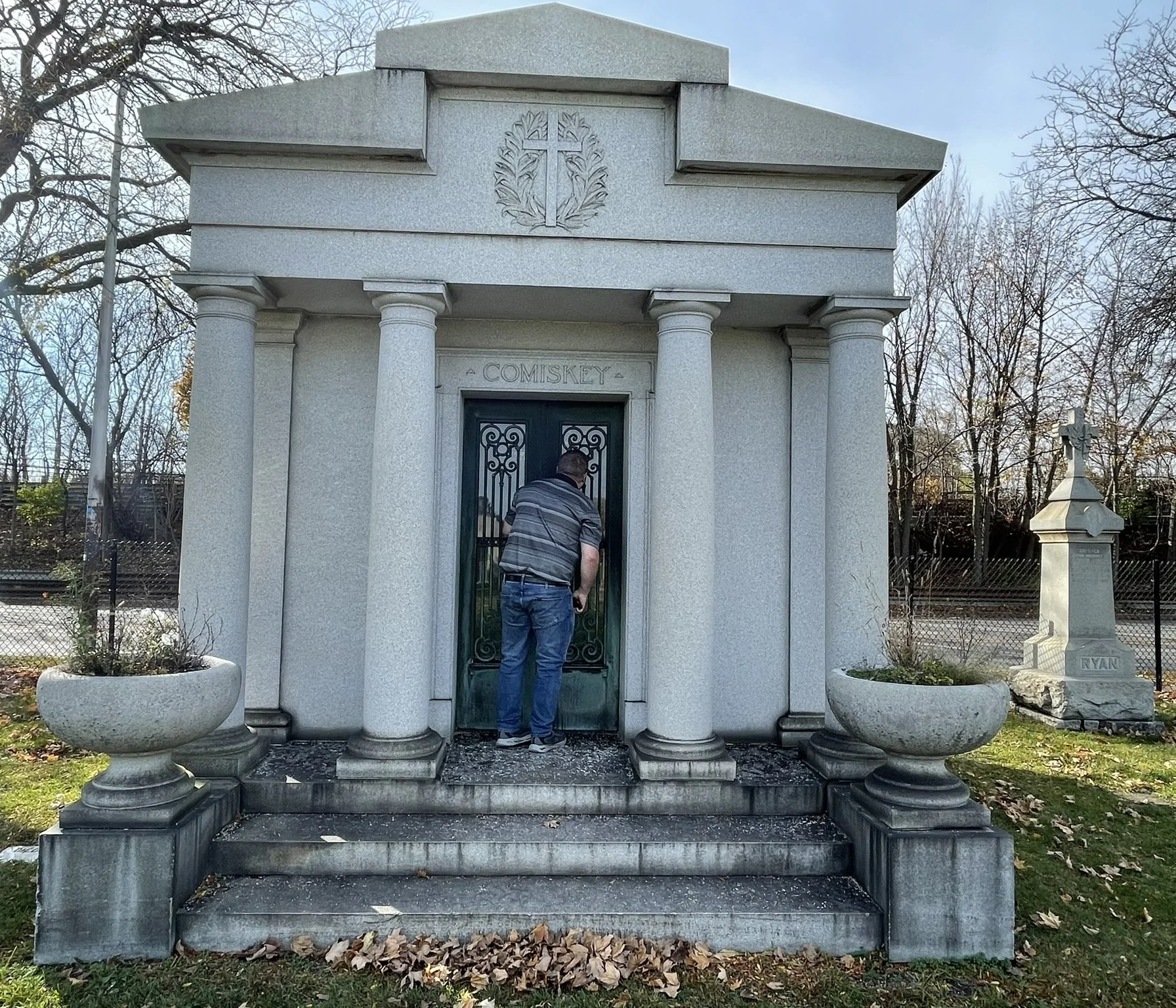
Jacob Pomrenke
I don’t make it a habit of hanging out in cemeteries, but the people I love do, so who am I to deny them of their happiness? Here is Jacob Pomrenke at Charles Comiskey’s grave.
Jacob is the Director of Editorial Content at the Society For American Baseball Research, and the chairman of the Black Sox Scandal Research Committee.
He was our guest for Episode 1 of Season 3. You can listen to that episode HERE.
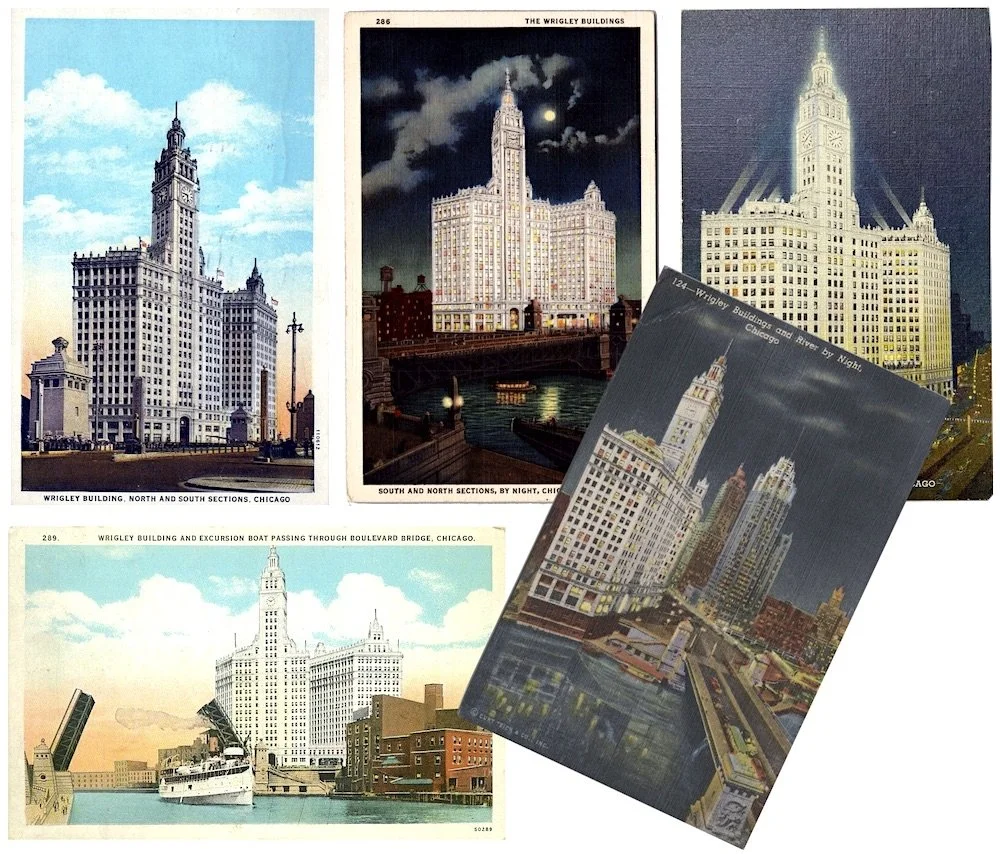
Curt Teich Postcard Archive
The Curt Teich Postcard Archives Collection is the nation’s largest public collection of postcards and related materials. The core collection in the Teich Archives is the industrial archives of the Curt Teich Company of Chicago, which operated from 1898 to 1978 as the world’s largest printer of view and advertising postcards.
The collection was acquired by the Lake County Discovery Museum in 1982 and subsequently transferred to the Newberry Library, an independent research library in downtown Chicago, in 2016.
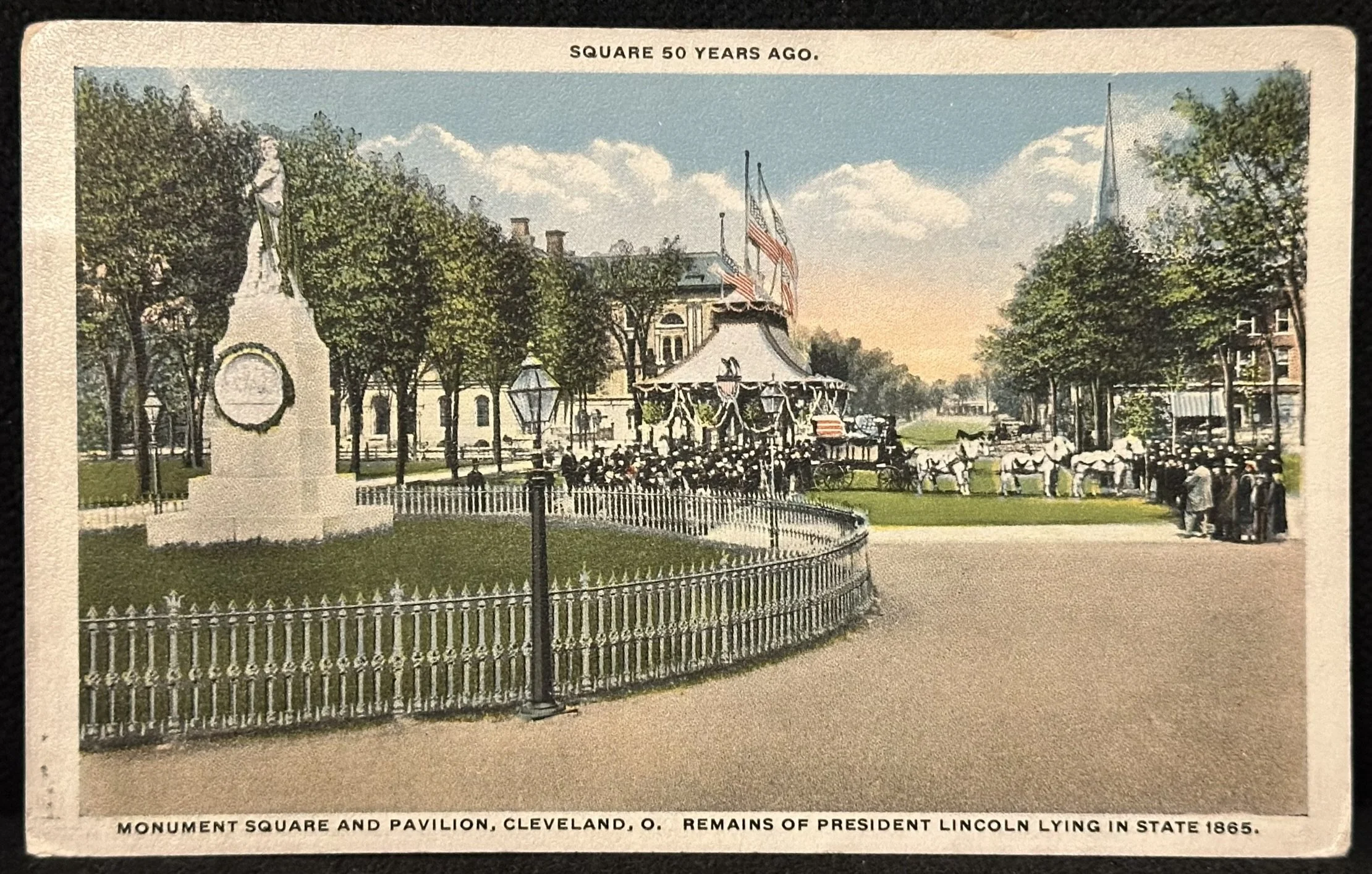
Not Just Baseball Postcards
One of my favorite ways to learn about the history of a city, particular the architectural history, is by looking at old postcards. One of the first things I did when I moved to Cleveland was buy a lot of 80+ historical Cleveland postcards on eBay, which have taught me so much that would have taken me years to discover on my own.
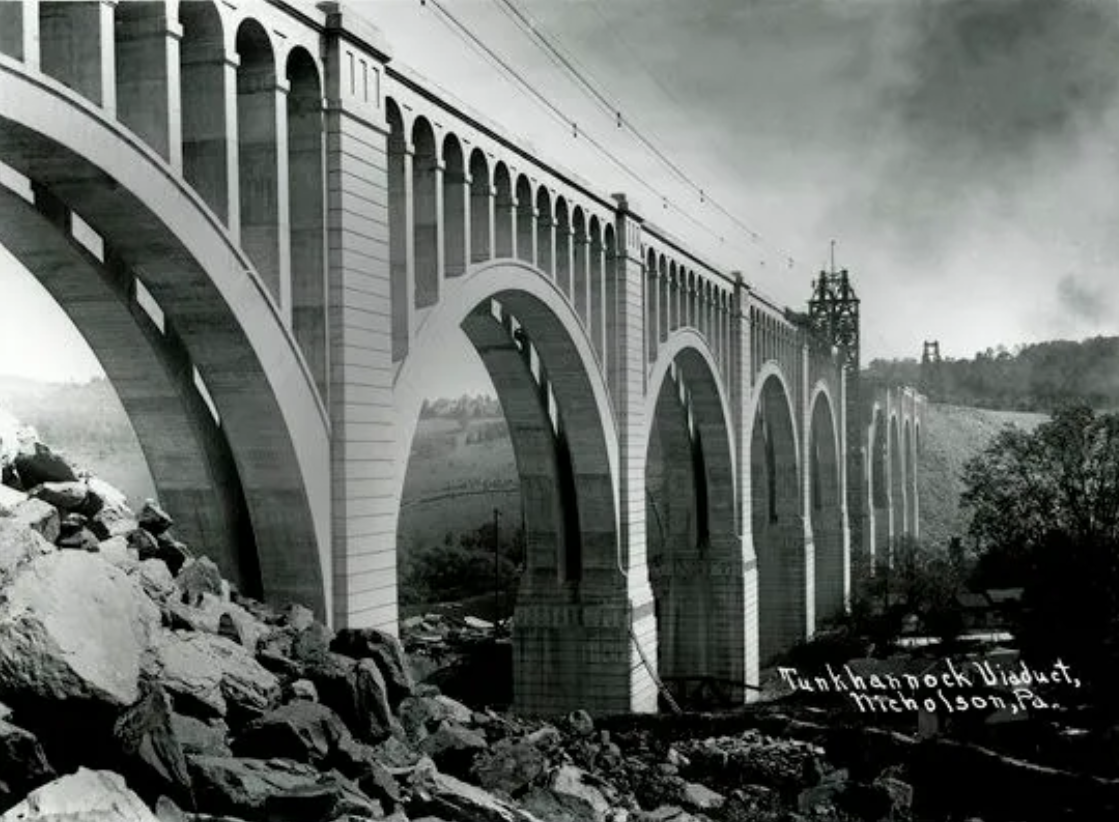
Nicholson Bridge
The Tunkhannock Viaduct, also known as Nicholson Bridge, was 240 feet high and a half-mile long, with piers 40 to 90 feet below ground, and a parapet 3 feet thick and 4 feet high to enclose the double tracks on the 34 feet wide deck. At the time, it was said to be the largest concrete structure in the world. The architects of Yankee Stadium are speculated to have been influenced by the bridge’s look when they designed the stadium’s iconic frieze, eight years after the bridge was completed.
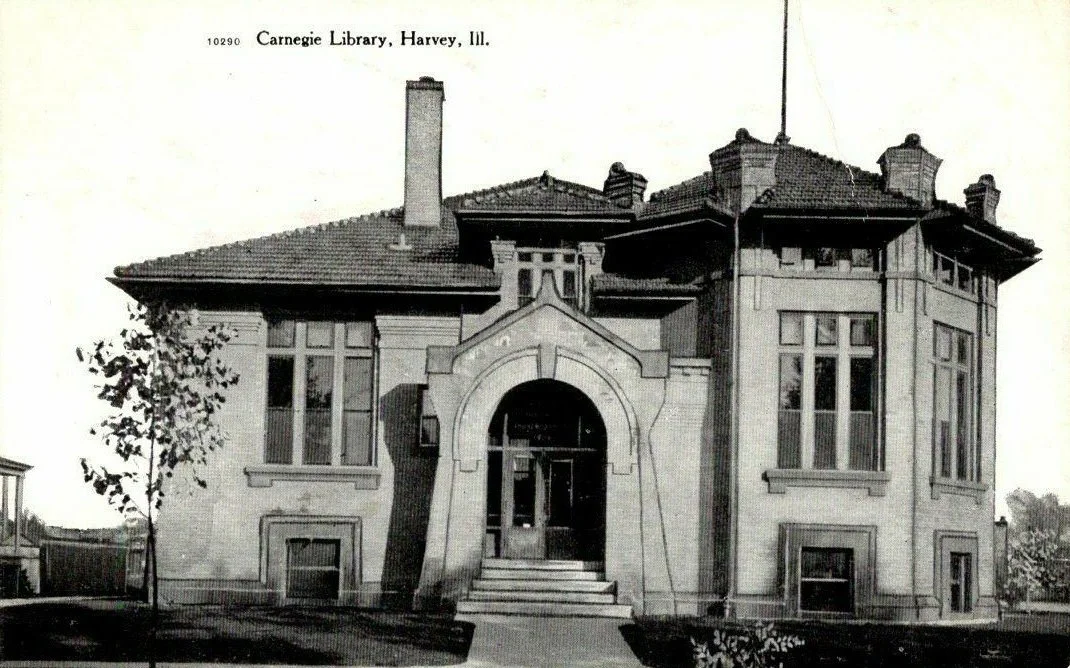
Carnegie Library in Harvey, IL
Harvey, Illinois had a very interesting Carnegie building with traces of Romanesque architecture which was built in 1905 and was open from 1906 through 1971.
And, it had ornaments. Big, honking, ornaments. Fall-off-the-roof-and-concuss-you ornaments. Architect Paul O. Moratz, of Bloomington, did not seem prone to such excess on his other buildings (Sycamore, Greenville, and Paxton).
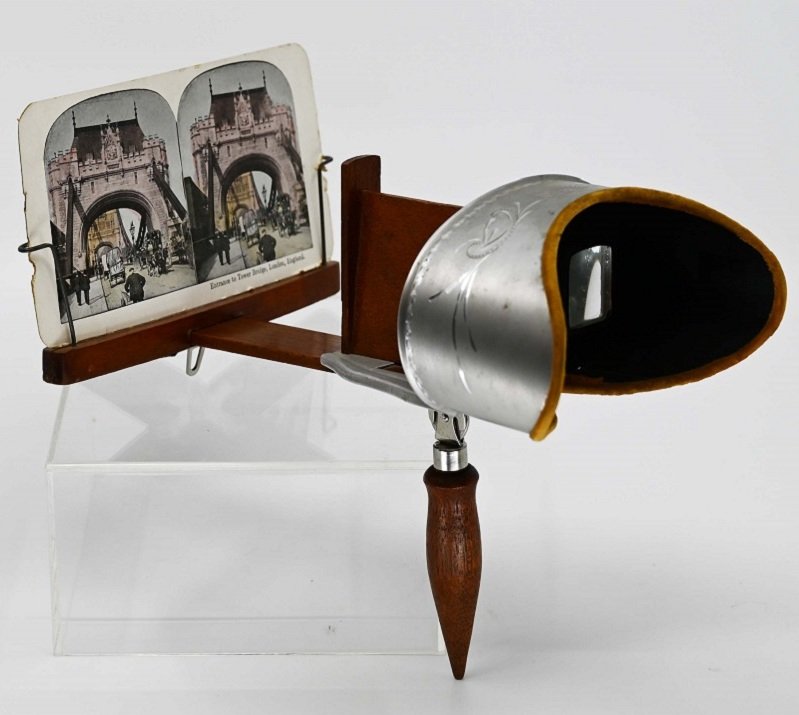
Stereoscopes
Invented by Charles Wheatstone in 1838, the stereoscope was originally designed to explore binocular vision and the way human eyes work together to create three-dimensional images.
By the 1850s, this fascinating device had become a popular form of Victorian parlor entertainment. Stereographs – the photographic cards designed for use with the stereoscope – featured a wide range of subjects, from famous landmarks to exotic wonders, offering viewers an immersive experience without leaving their homes.
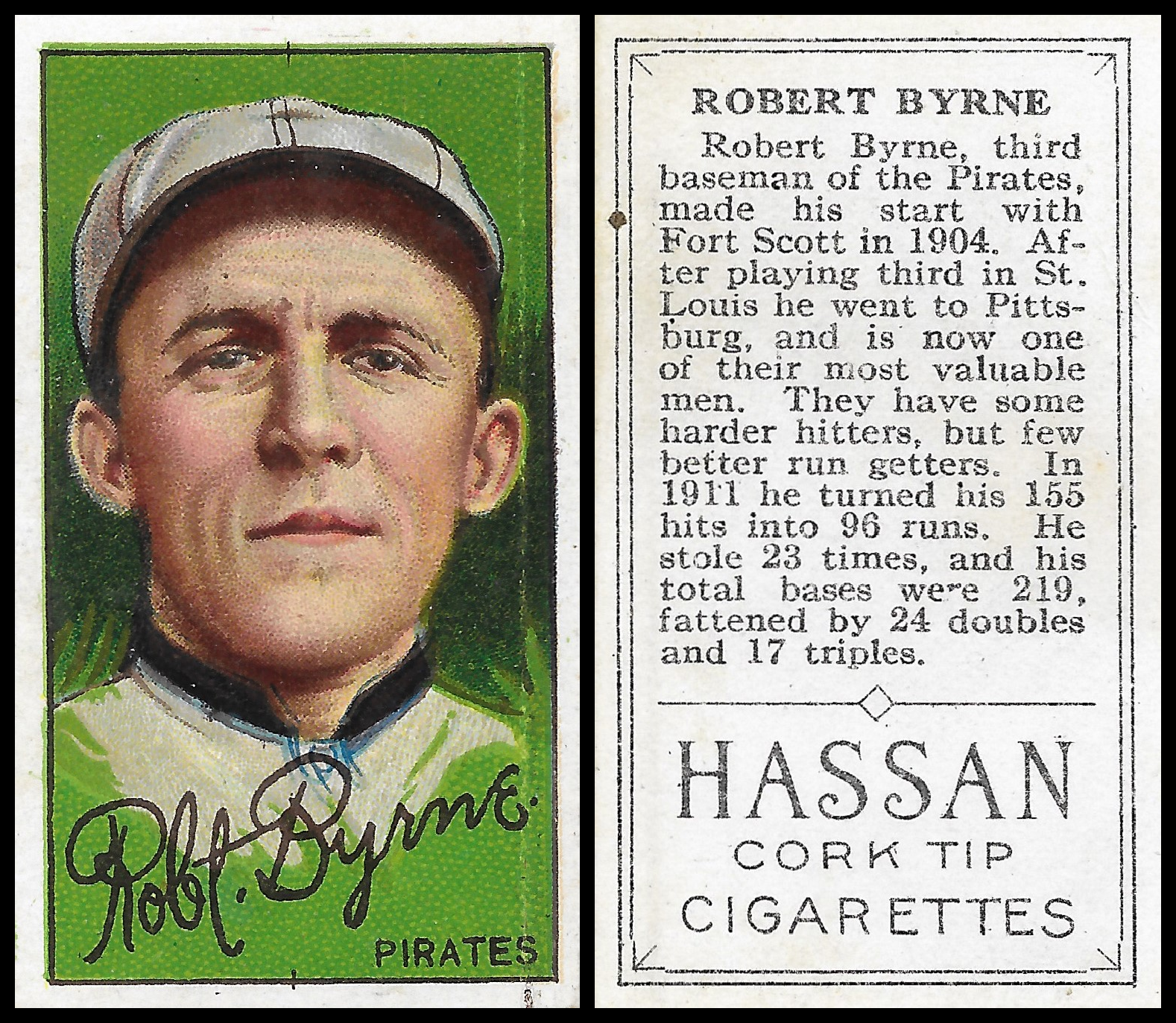
Quaint Language
I love that he is referred to here as a “run getter.”
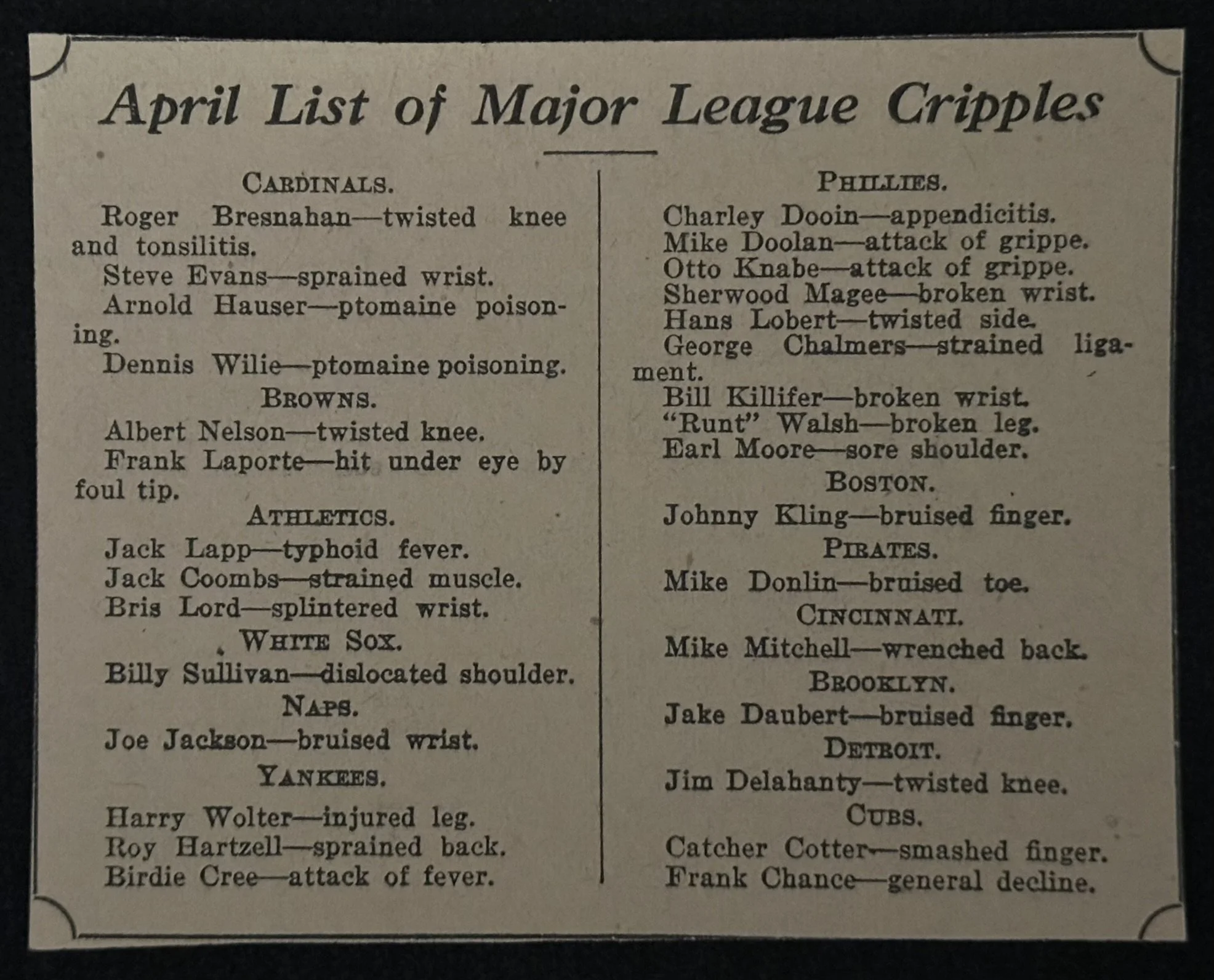
Dead Ball Ailments
This list of players dealing with injuries from April of 1912 is one of my favorite obscure things I own. The fact that the title of this blurb is “Major League Cripples” is quite the sign of the times, isn’t it?
Let’s also notice that there are NINE Philadelphia Phillies on this list?! Somehow, they were still able to finish the season with a 73-79 record, which was good enough for 5th place out of 8 teams in the National League that year, and just a game and a half back from 4th place Cincinnati.
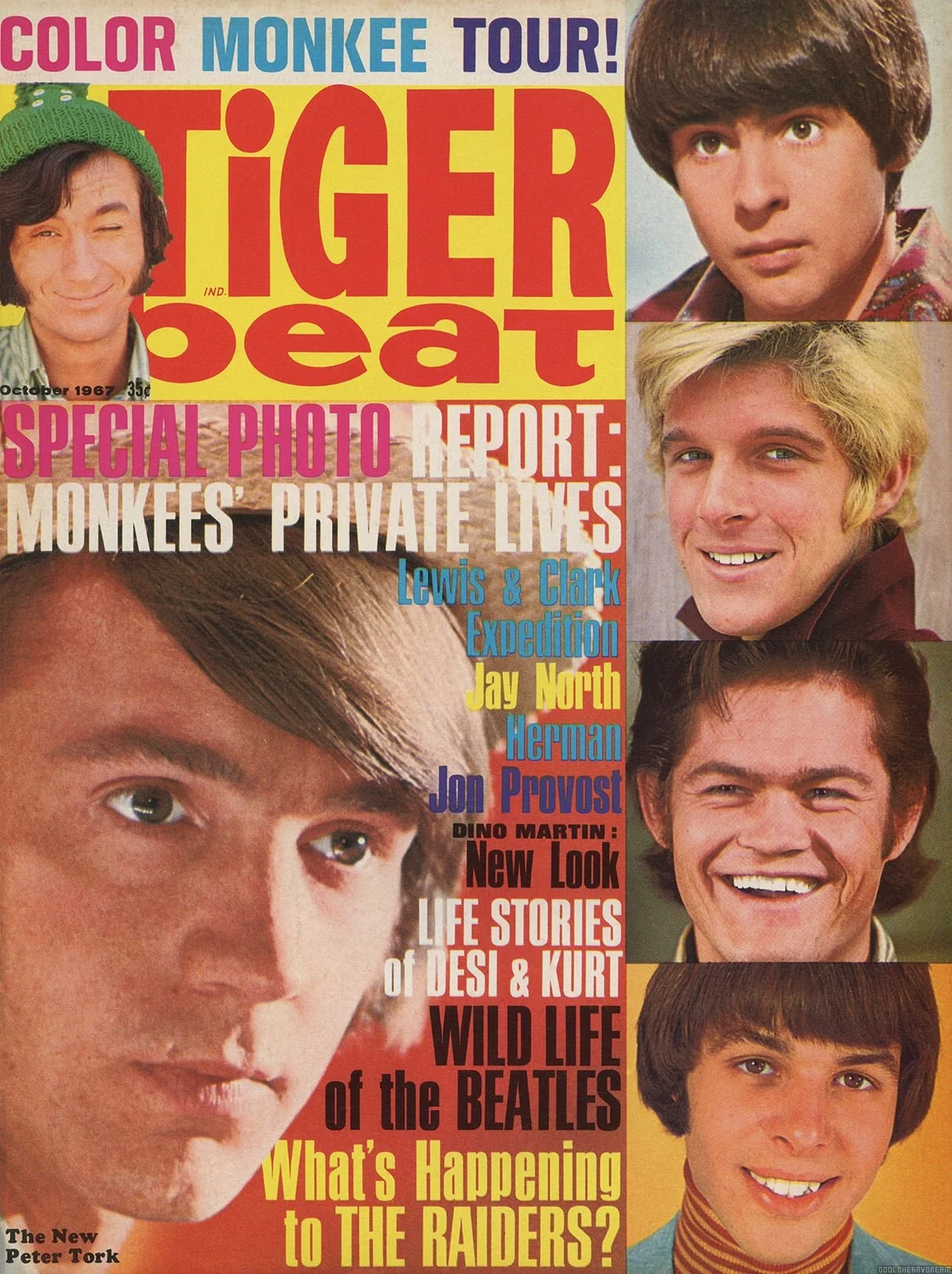
Tiger Beat
Tiger Beat was an American teen fan magazine published from 1965 to 2021, marketed primarily to adolescent girls. Tiger Beat was founded in September 1965 by Charles "Chuck" Laufer, his brother Ira Laufer, and television producer and host Lloyd Thaxton.
A distinctive element of Tiger Beat was its covers, which featured cut-and-paste collaged photos – primarily head shots – of current teen idols. For the first twelve issues, Thaxton's face appeared at the top corner of the cover (at first the magazine was titled Lloyd Thaxton's Tiger Beat), and he also contributed a column.
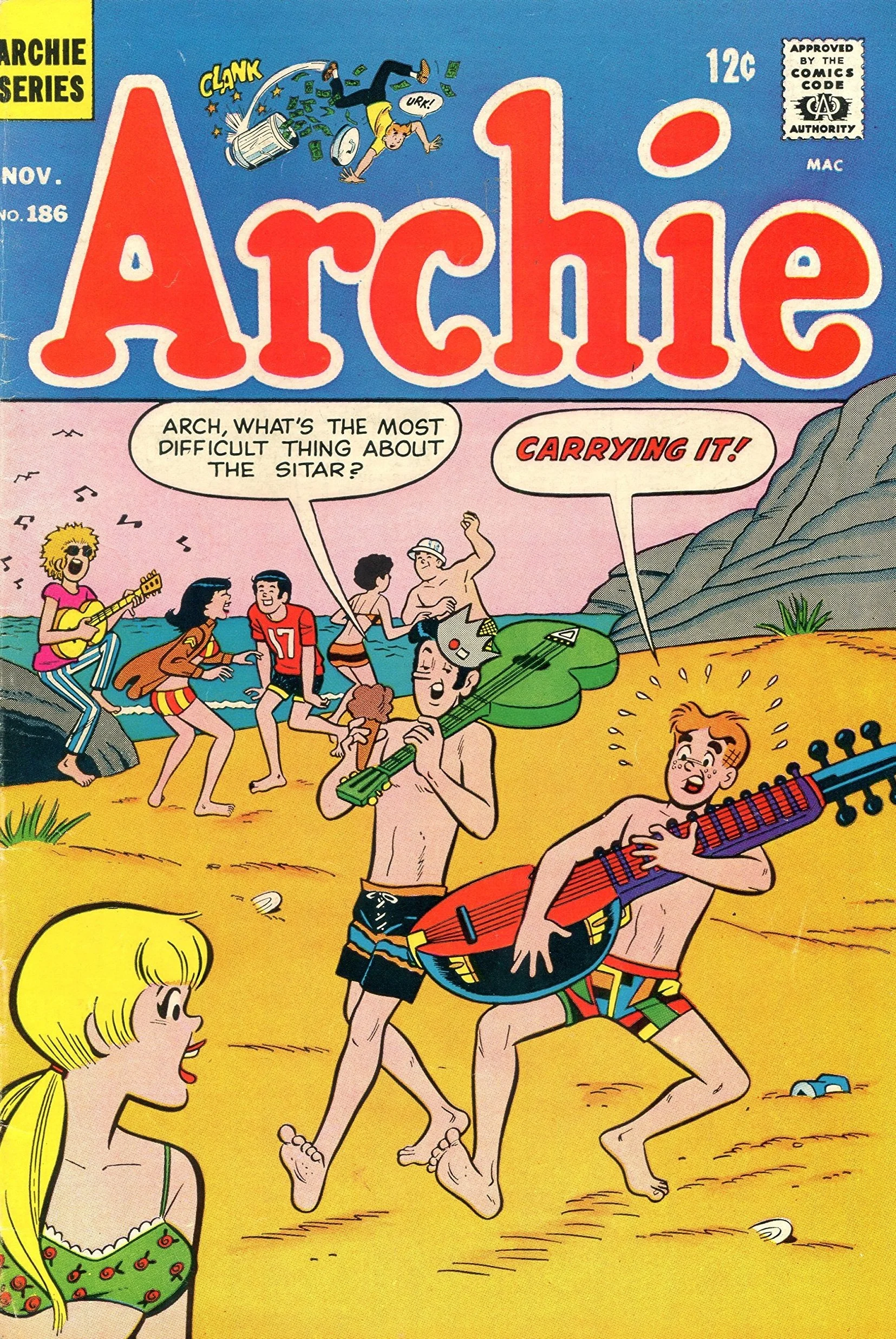
Archie Comics
Archie Comic Publications, Inc. (often referred to simply as Archie Comics) is a comic book publisher headquartered in the village of Pelham, New York. The company's many titles feature the fictional teenagers Archie Andrews, Jughead Jones, Betty Cooper, Veronica Lodge, Reggie Mantle, Sabrina Spellman, Josie and the Pussycats, and Katy Keene.
The initial Archie characters were created in 1941 by publisher John L. Goldwater and artist Bob Montana, in collaboration with writer Vic Bloom. They first appeared in Pep Comics #22 (cover-dated December, 1941). With the creation of Archie, Goldwater hoped to appeal to fans of the Andy Hardy films starring Mickey Rooney.
Archie Comics was also the title of the company's longest-running publication, the first issue appearing with a cover date of Winter 1942. Starting with issue #70, the title was shortened to simply Archie.
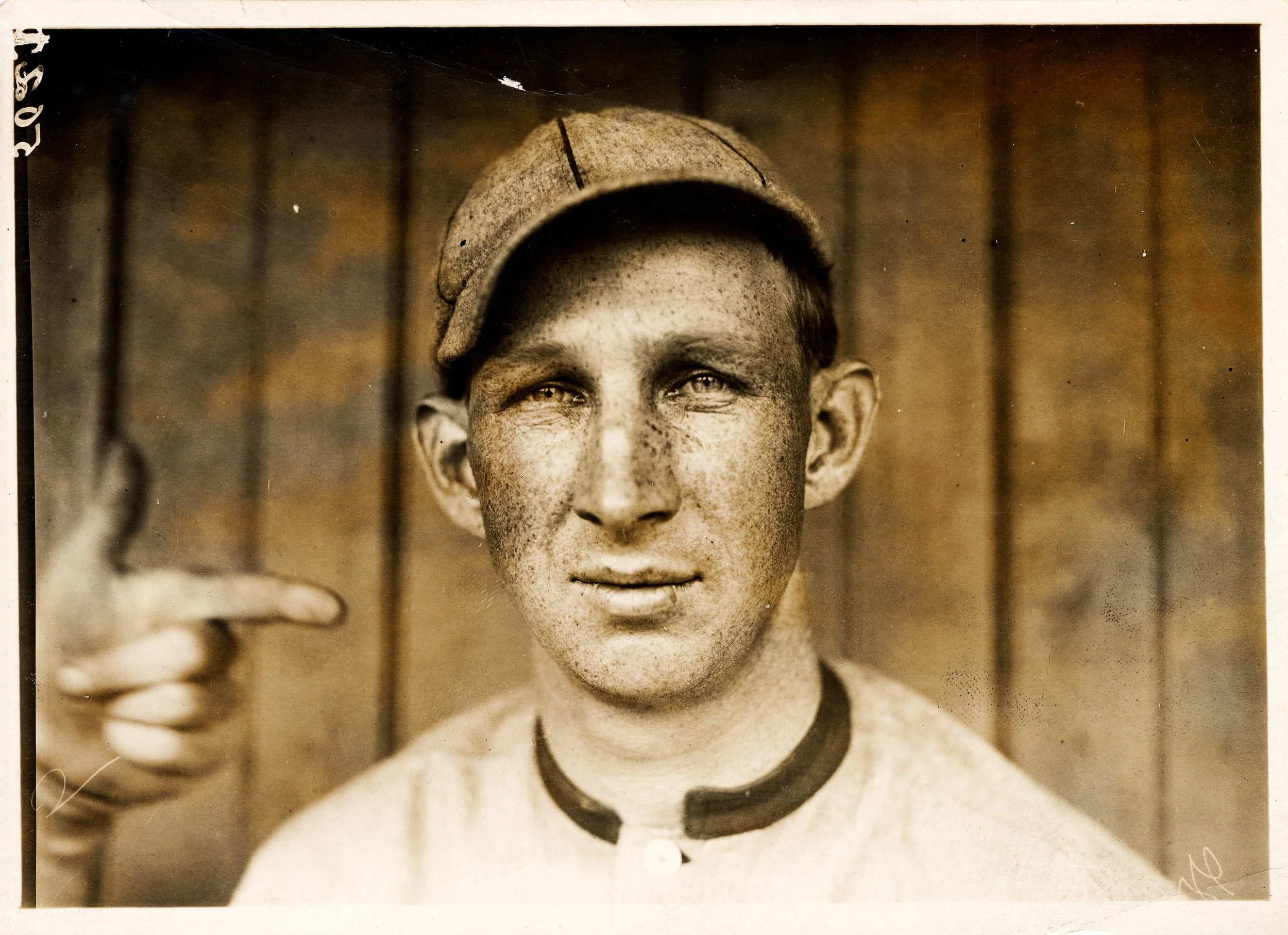
This portrait of Eddie Grant is stunning. Look at how many freckles he has.
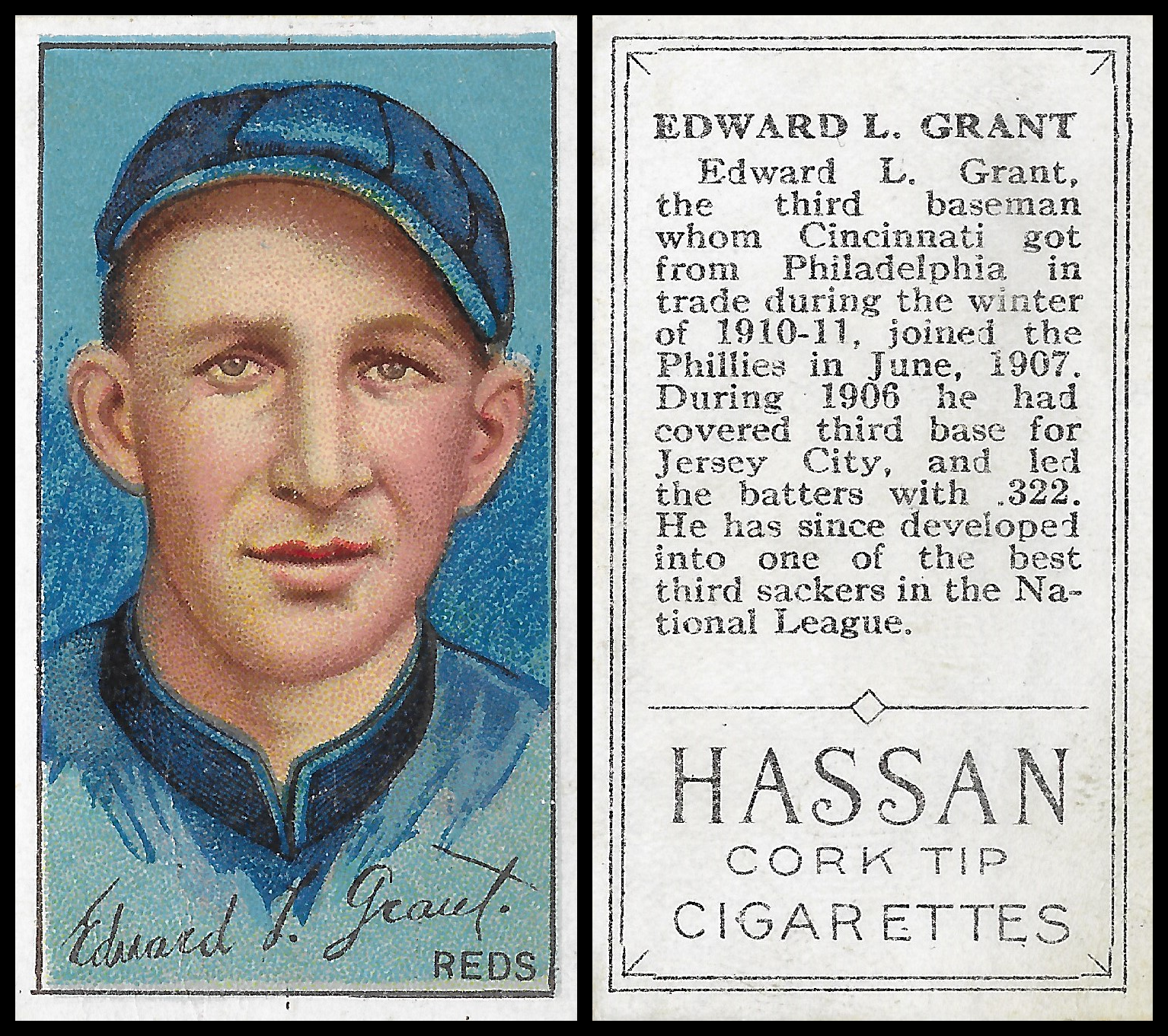
Eddie Grant
Okay, so maybe some artistic liberties were taken with this one…
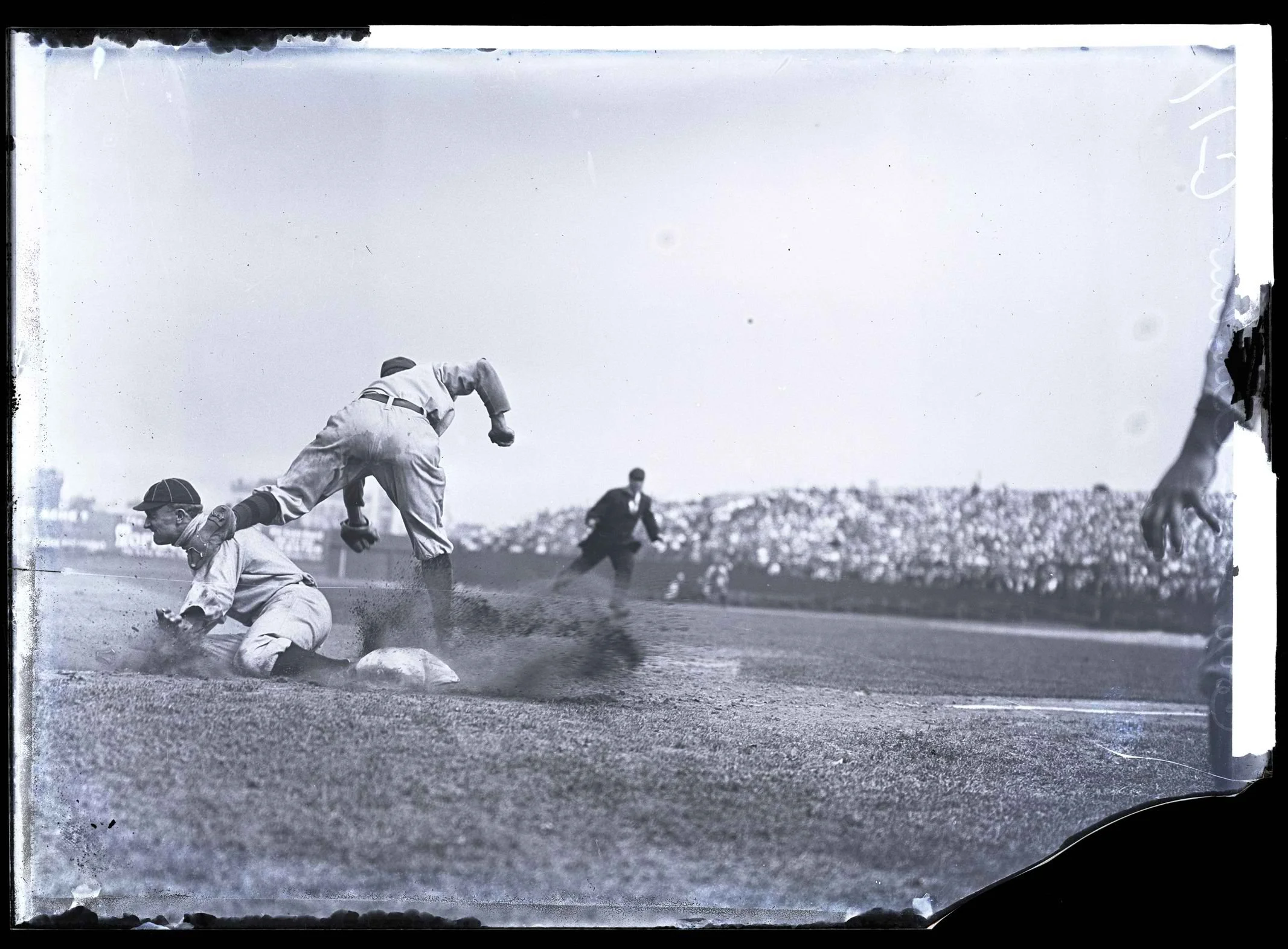
Usually when you see this image, it’s the cropped version which just shows Cobb and Austin, and the dirt flying up from Ty’s slide. But to see the full image as it appeared on the glass plate negative is truly something different, especially when you know the backstory of Charles Conlon not even being sure if he took the photo or not. It was just a reflex for him, and he was in the right place at the right time. That is evident when you see how the image isn’t framed the way a Conlon normally would be, and the angle of the camera is a little bit off, as well. One of the luckiest photos ever taken.
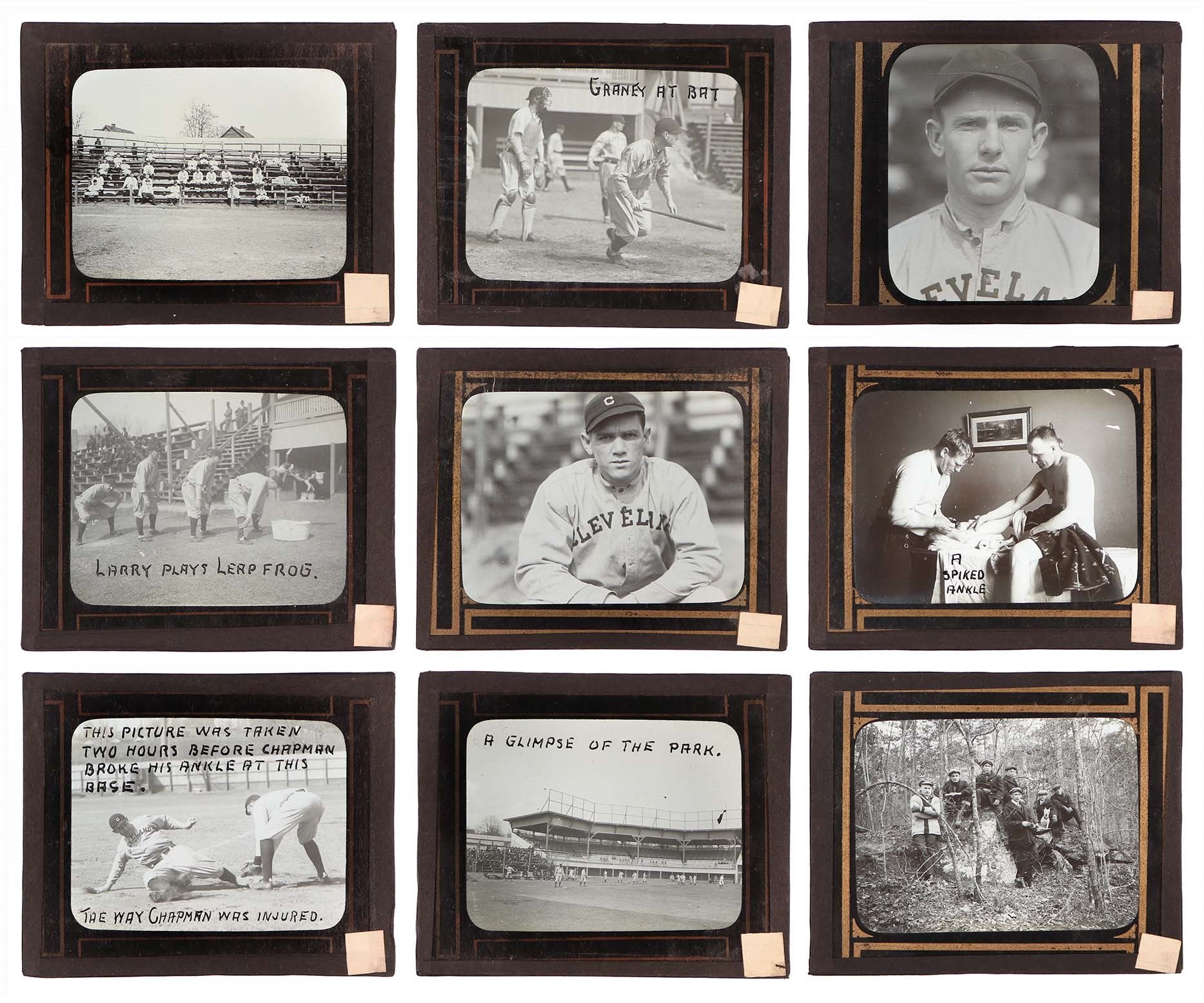
Images take on Magic Lantern Slides by Cleveland photographer Frank W. Smith in Athens, Georgia during Cleveland Naps Spring Training in 1914. Photos courtesy of Love Of The Game Auctions.
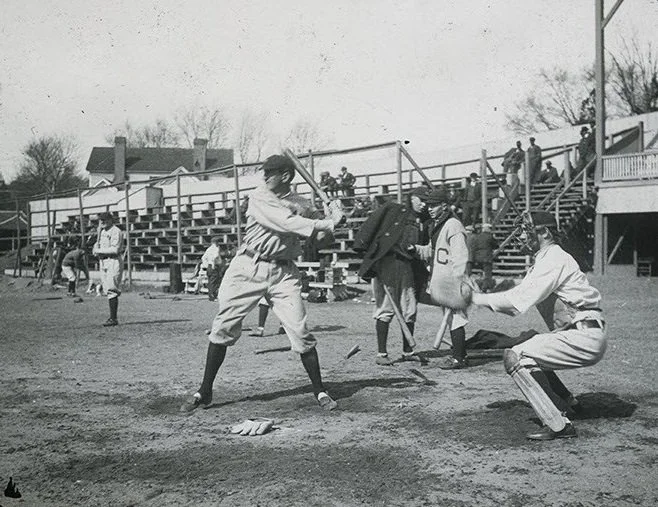
Joe in Athens
Note the same rickety bleachers in the background, which match up perfectly with the images in the T202 set.
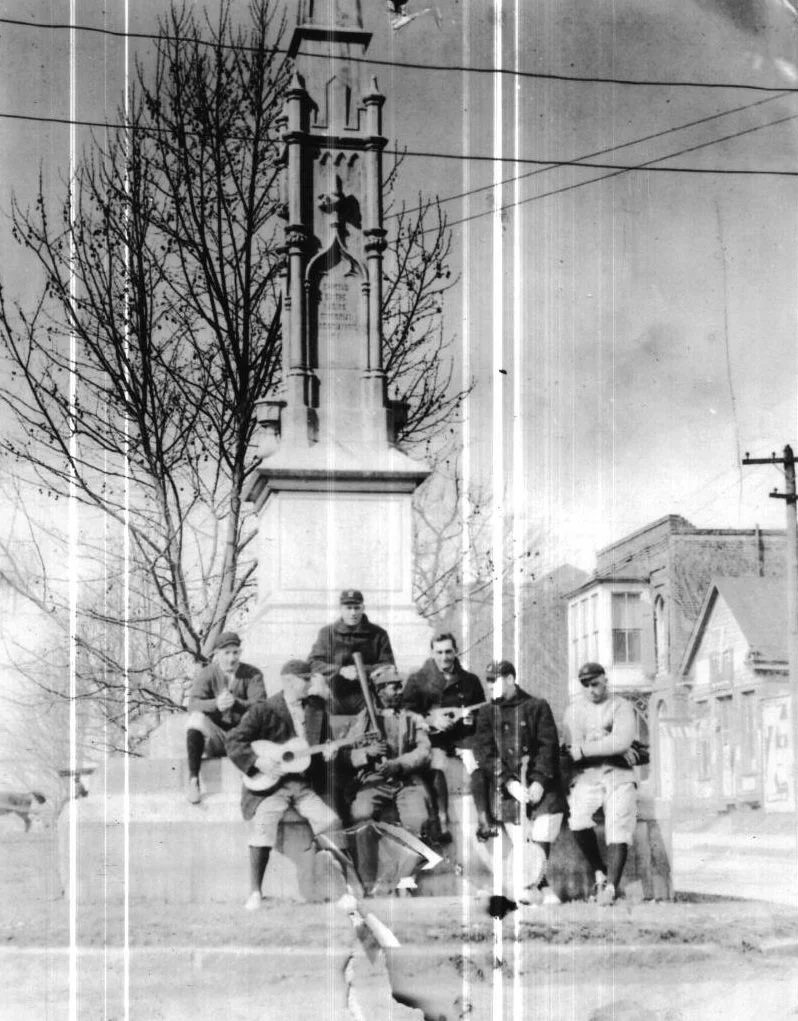
Around Town
This photo was taken during Cleveland Naps Spring Training in 1914. The monument in this picture is still standing at the corner of Broad Street and College Avenue in Athens, Georgia.
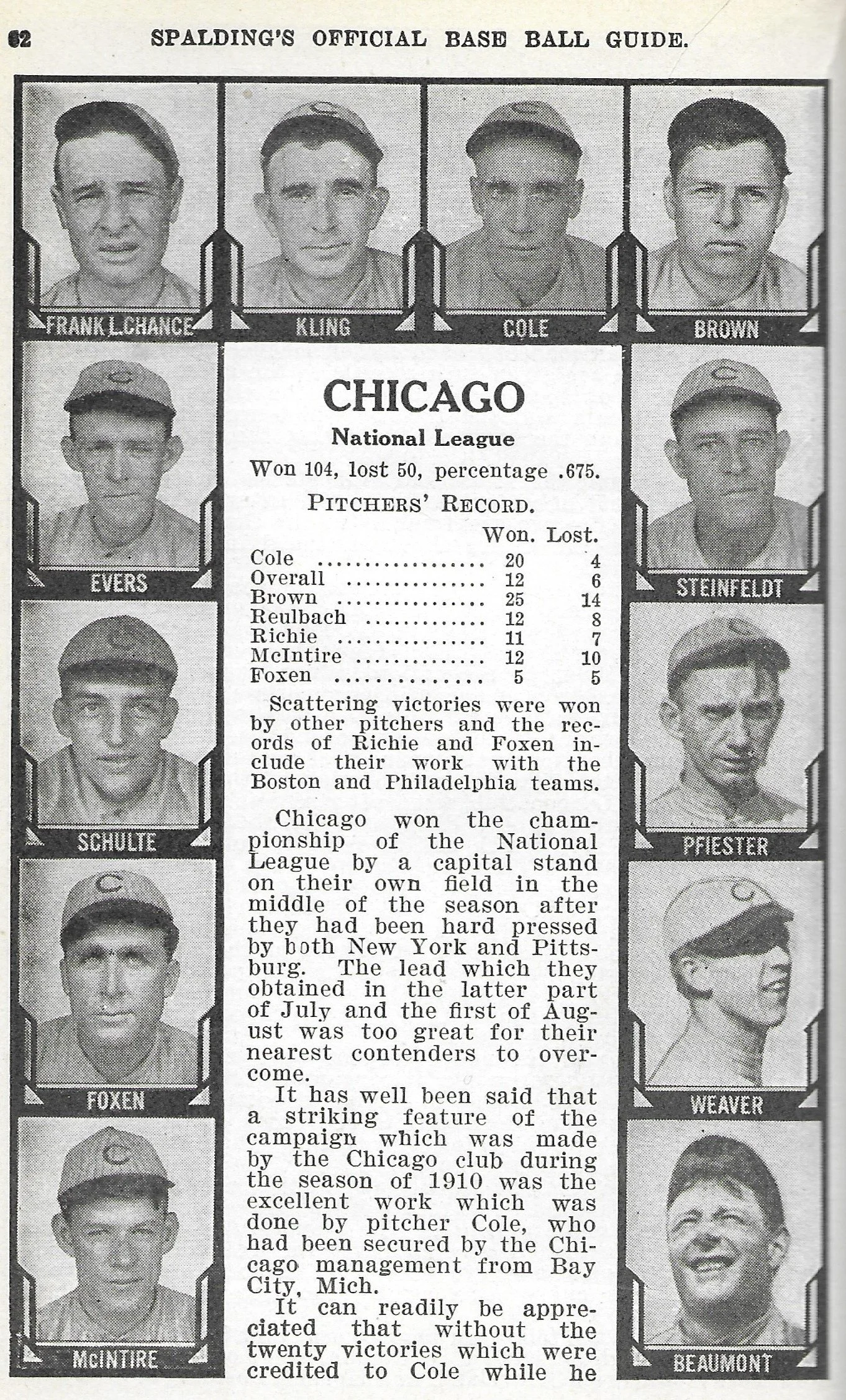
Spalding Guide
This page from the Spalding Guide shows the Chicago Cubs lineup, featuring the portraits taken by the Paul Thompson agency.
Do any of these images look familiar, now that you’ve seen some of the T202 cards?
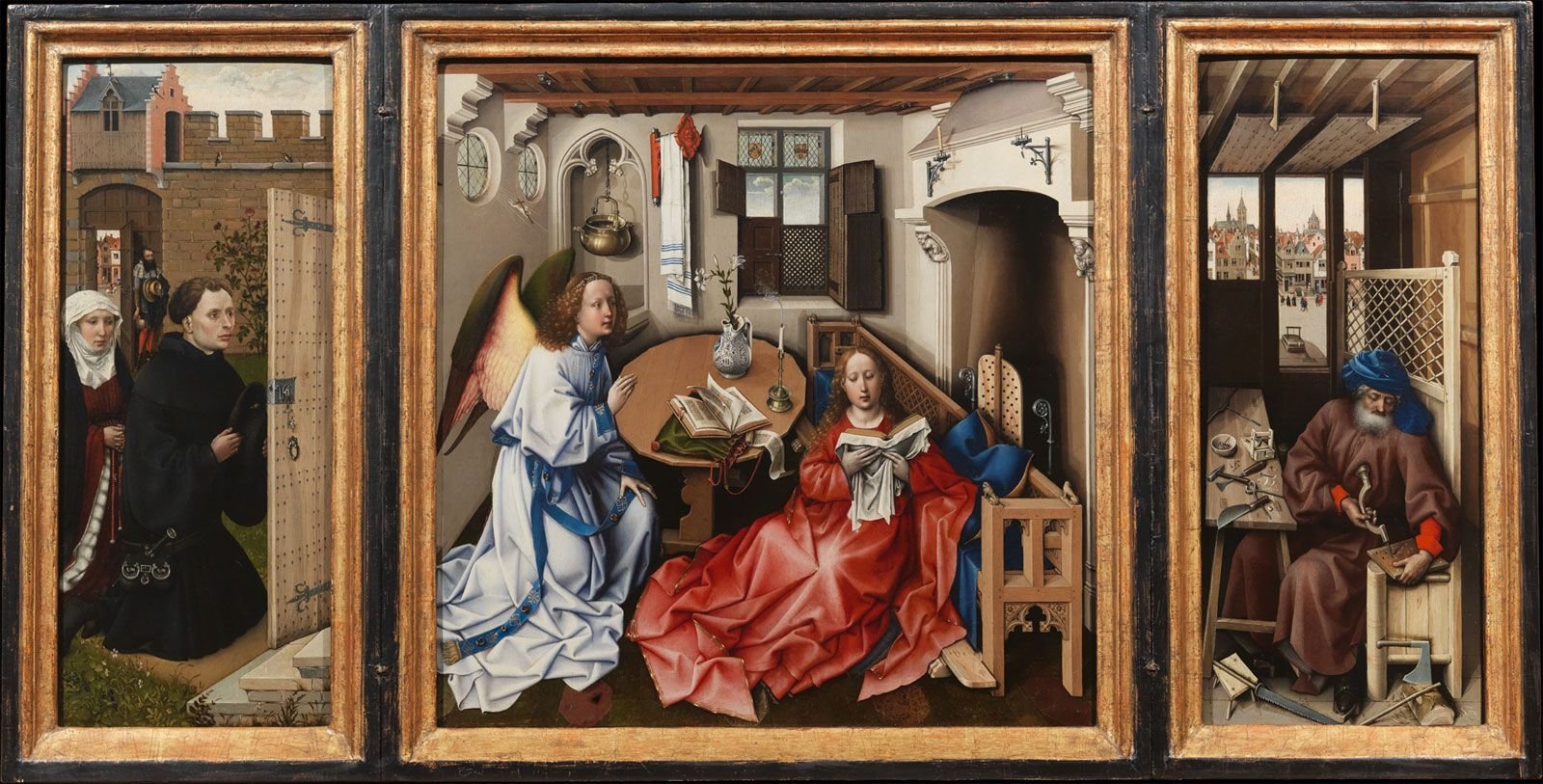
Annunciation Triptych (Merode Altarpiece), oil-on-oak-panel triptych by Robert Campin, c. 1427-32; in The Cloisters, New York.
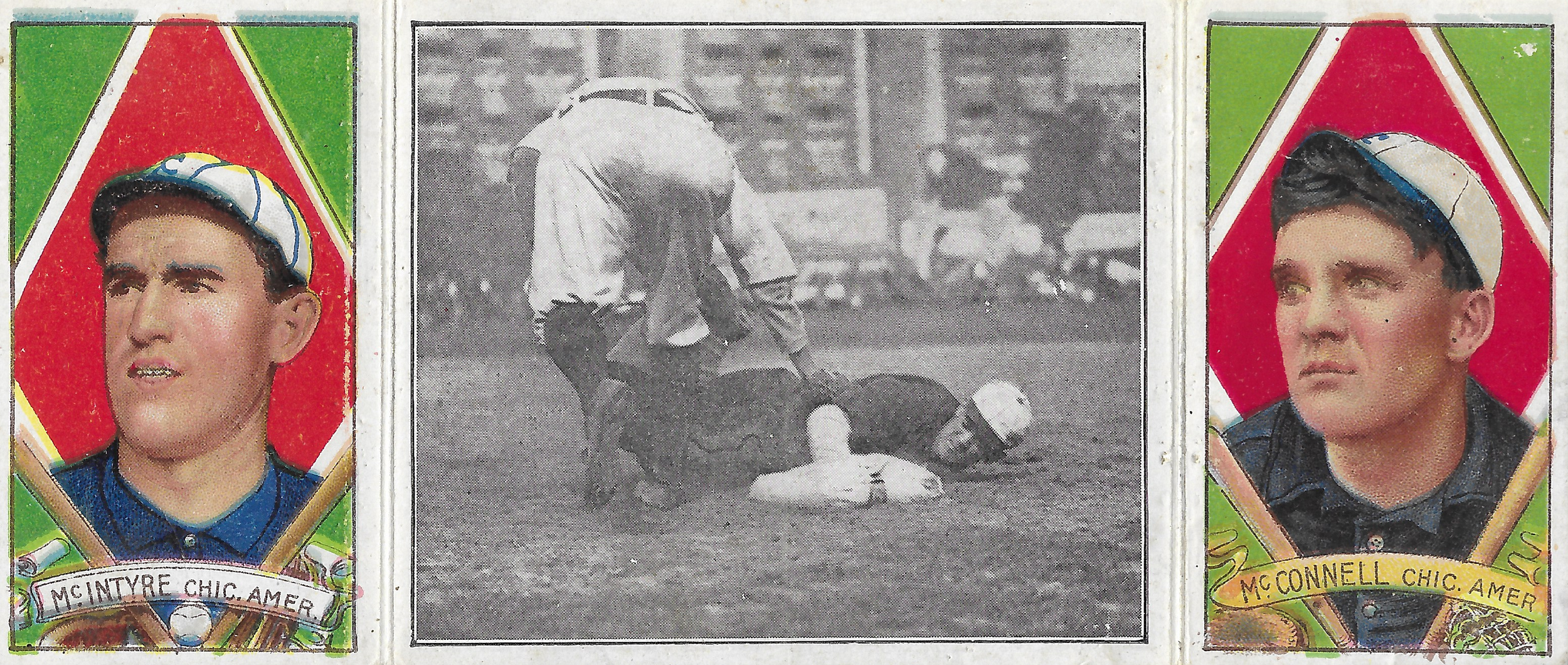
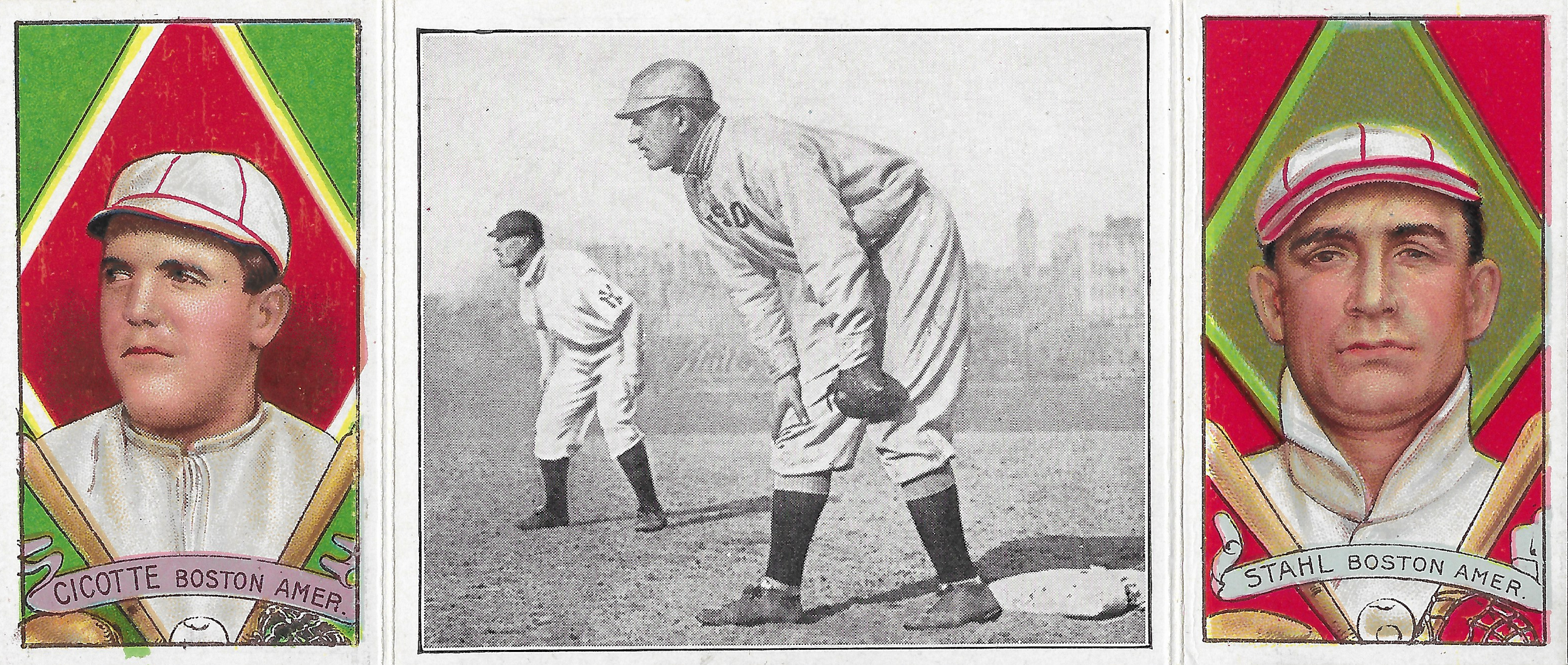
Hal Chase Too Late, ink on card stock triptych by Hassan Cork Tip Cigarettes, 1912; in the Collection of Phil Rosenzweig.
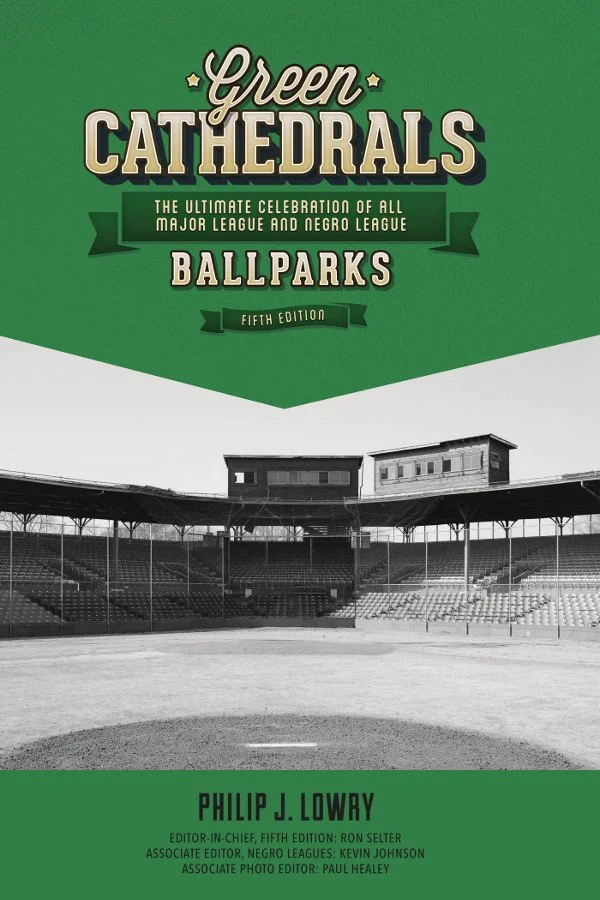
Green Cathedrals
Green Cathedrals is the “Bible of ballparks,” the reference that documents every ballpark that has ever played host to either the major leagues or the Negro leagues.
This fifth edition is the first update to Green Cathedrals since 2006, and it now includes 583 ballparks, with the addition in particular of many Negro leagues parks that have been documented in the intervening years.
From the 1870s to the present, from Akron to Zanesville, from the 23rd Street Grounds to Yankee Stadium, this volume is the authoritative and complete reference on ballparks.
Buy it HERE.
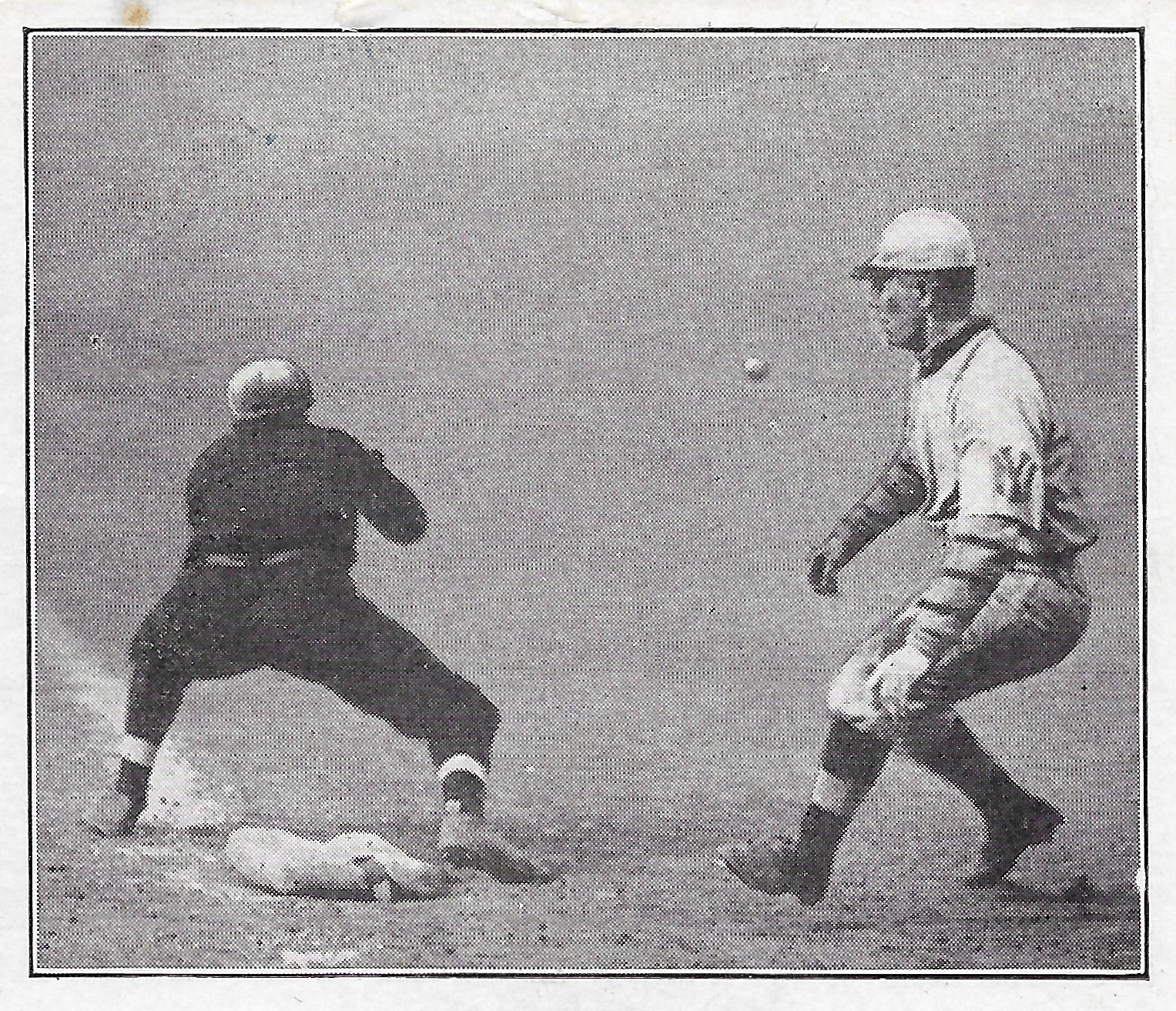
Caught Asleep at First
Being able to see the ball suspended in mid-air is something we take for granted today, but it was groundbreaking photography in 1912.
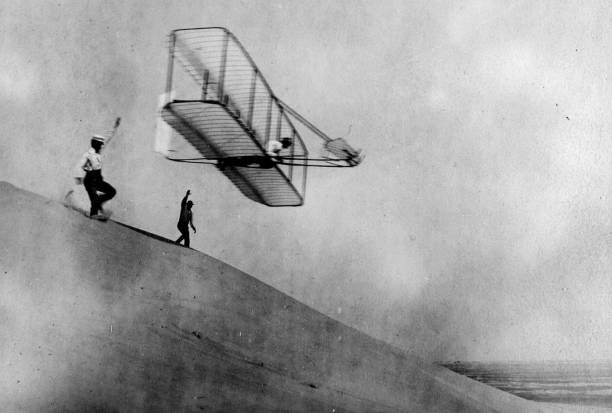
Wright Brothers
A glider test by the Wright Brothers, performed over the Kill Devil Hills, North Carolina. In 1901, two years before their first powered flight.
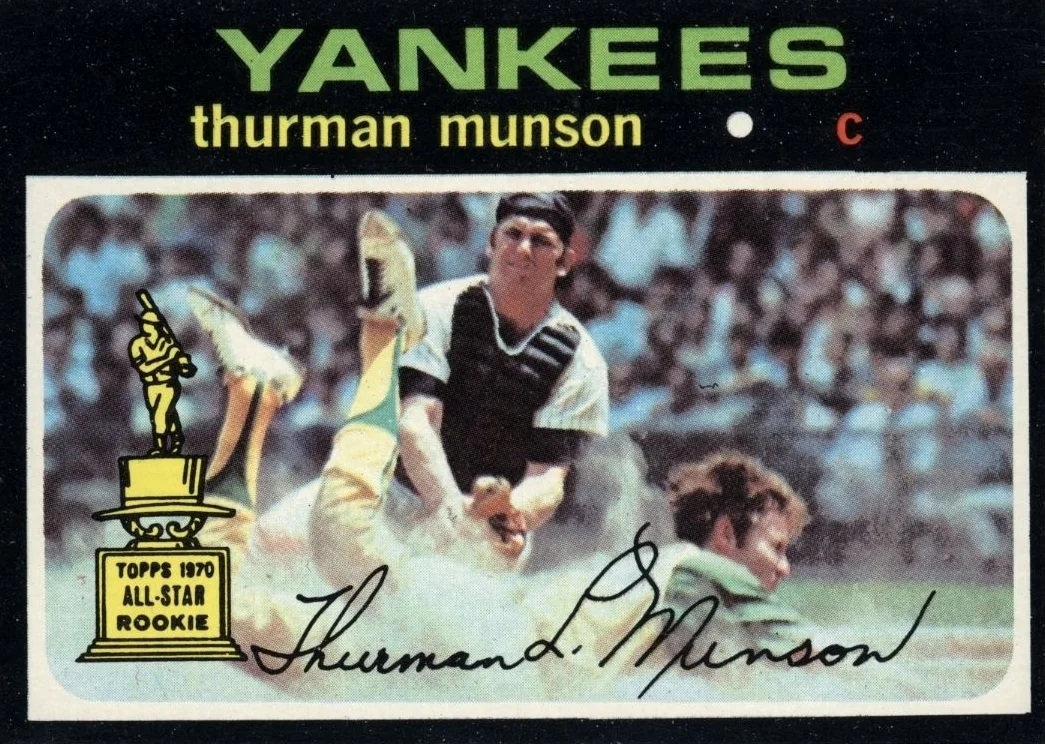
1971 Topps
Topps didn’t have actual photographs of game action in true base cards until their 1971 set, nearly 60 years after the T202 set was released in 1912.
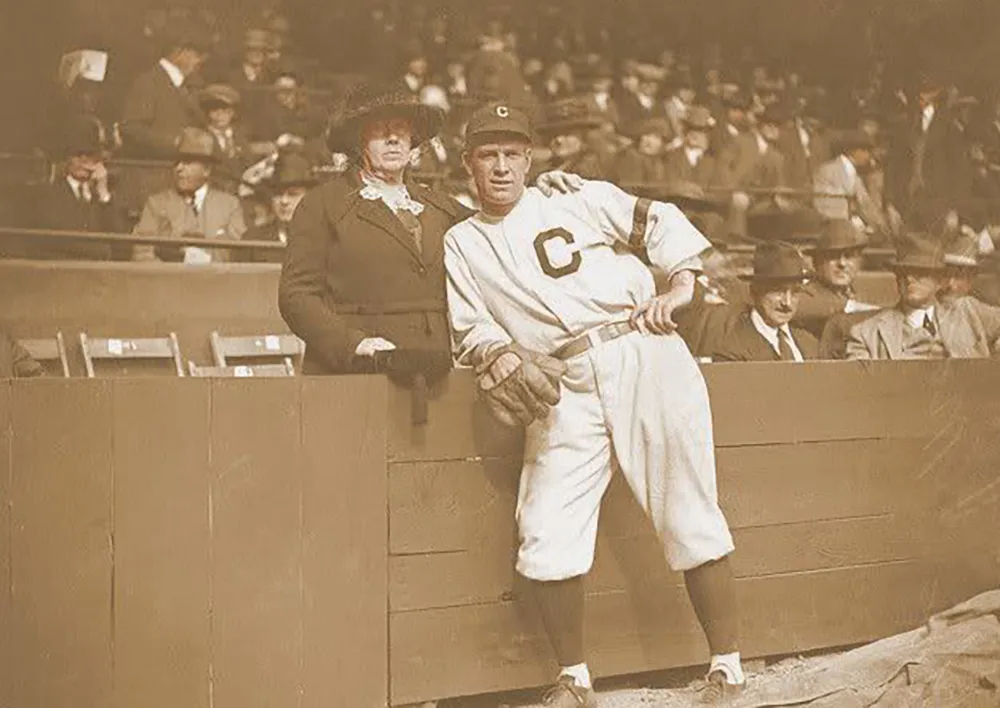
Tris Speaker
My mom fell in love with Tris Speaker after reading The Pitch That Killed by Mike Sowell.
You will, too.
Buy it HERE.
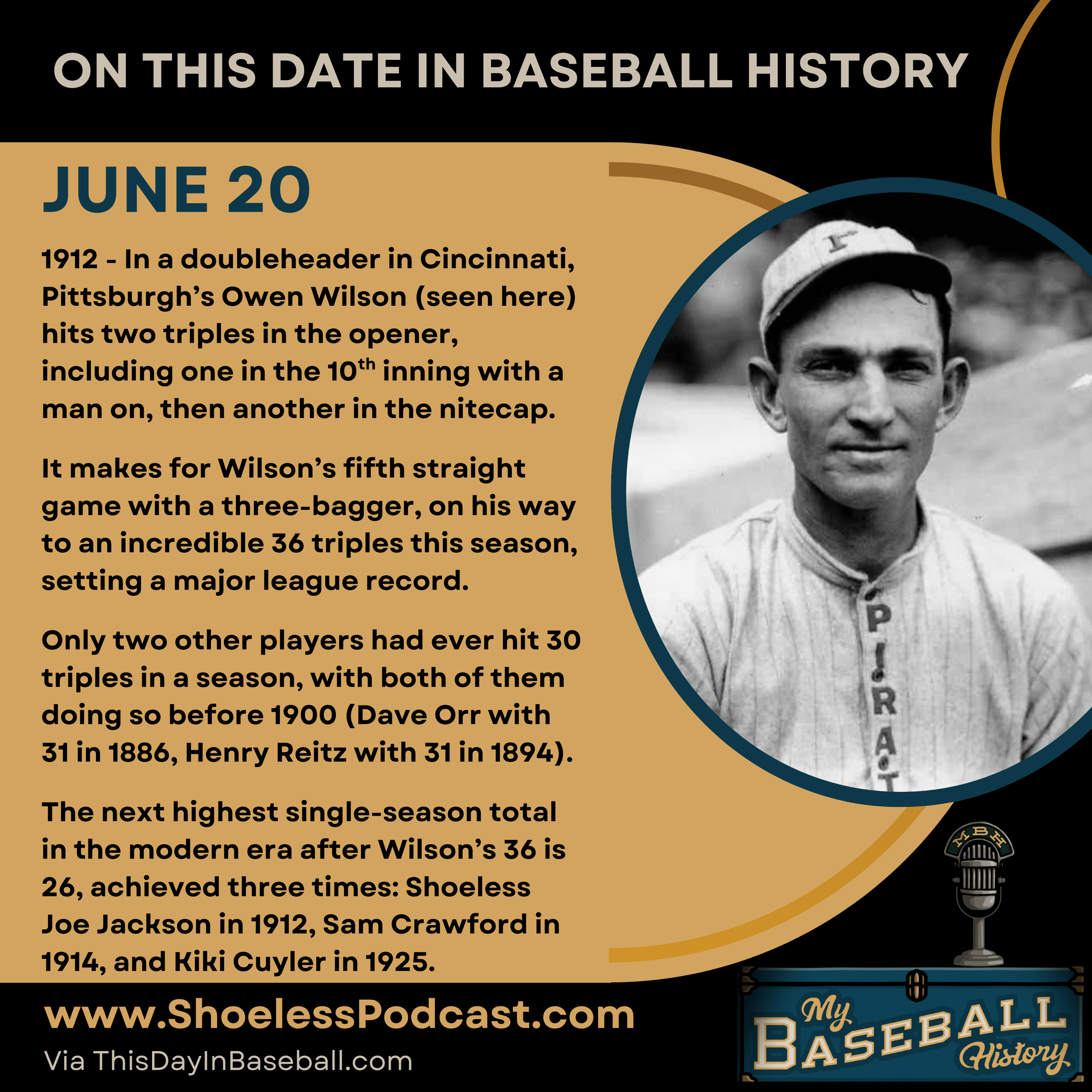
On This Date posts
You’ve seen a handful of them throughout these liner notes, so you have an idea of the type of content you can expect every day if you aren’t already following My Baseball History on social media.
If you’d like to follow the show on your favorite platform, click one of the following links and it will take you right to our profile.

Join Our Email Newsletter
It’s free, and it’ll give you some bonus content throughout the month that you won’t get from the podcast episodes or by following any of our other social media platforms.
We put out new issues on the second Friday and the fourth Friday of every month. No more, no less.
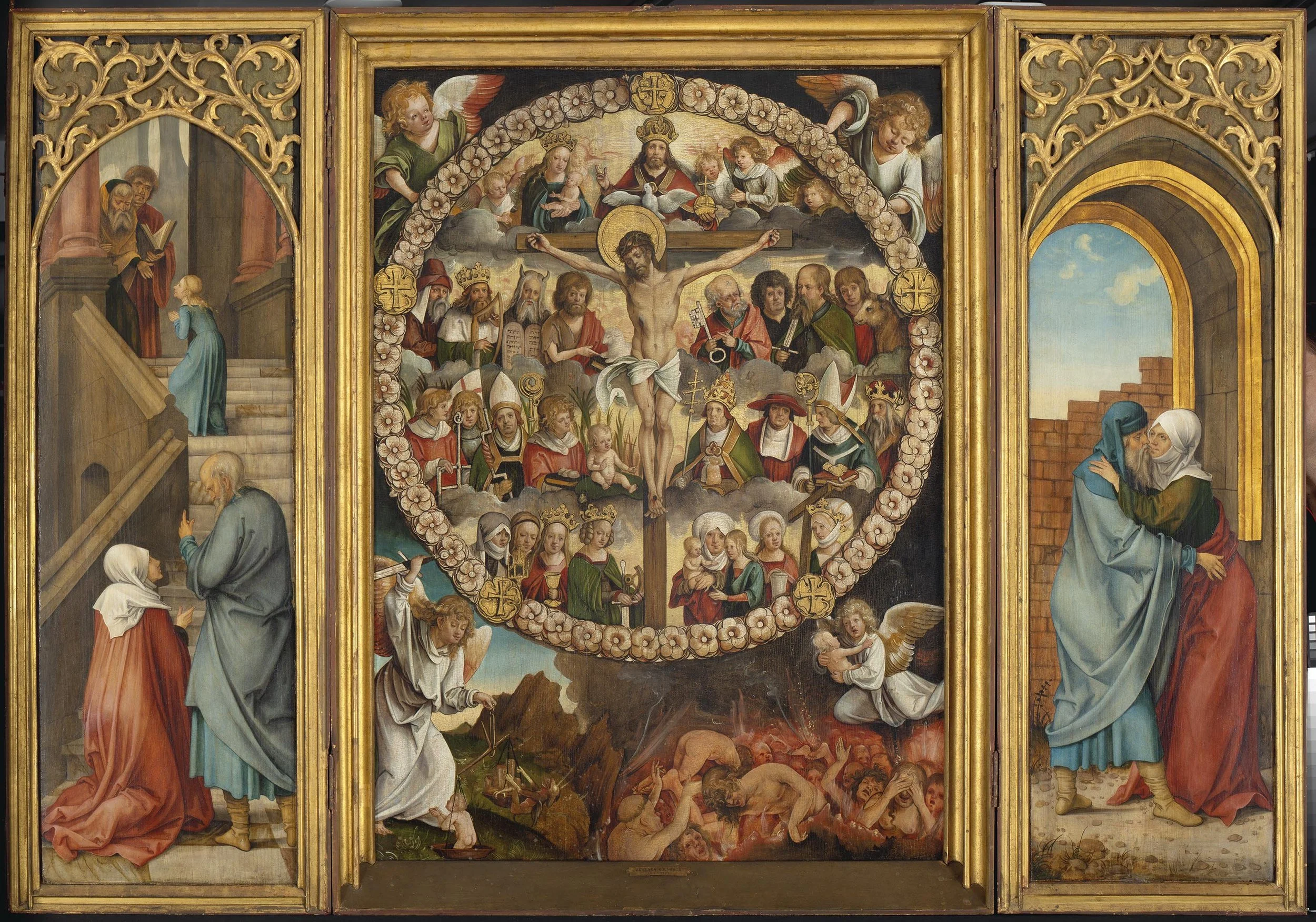
Triptychs
Triptychs grew out of the hinged diptychs which were used in Byzantine and medieval art, but they blossomed in the 15th and 16th centuries. The fact that they were three panels naturally evoked the Holy Trinity of Christian symbolism of the Father, the Son, and the Holy Spirit. The central panel is also the largest and most detailed, and, in religious triptychs, especially, usually holds the key sacred scene, showing the Virgin and Child, the Crucifixion, or another central mystery.
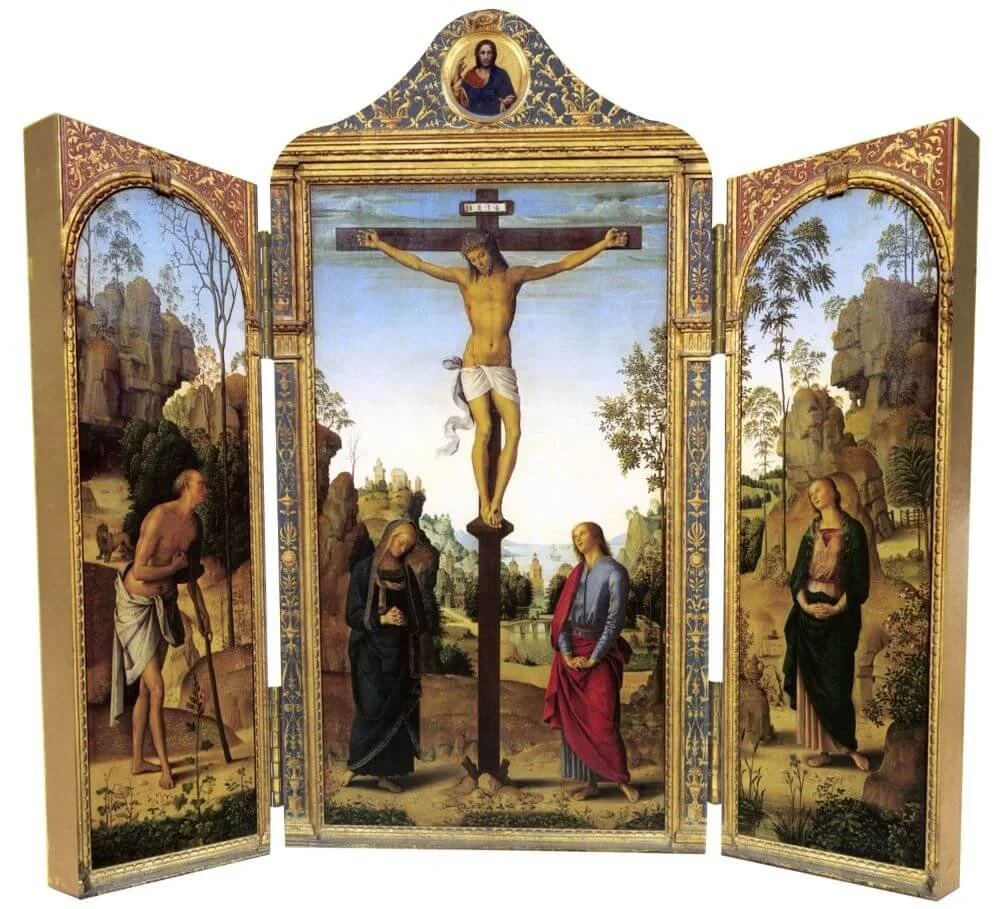
Triptychs
The side panels which flank that central panel contain subsidiary narratives, possibly saints who are important to the patron or local community, narrative episodes leading into or flowing out of the central mystery, or donor portraits, kneeling in prayer, presented by their patron saints.
Wealthy merchant families and guilds commissioned triptychs as statements of piety and social standing. Their own likenesses, often kneeling in the wings, made devotion visible and tied their salvation to their civic identity.
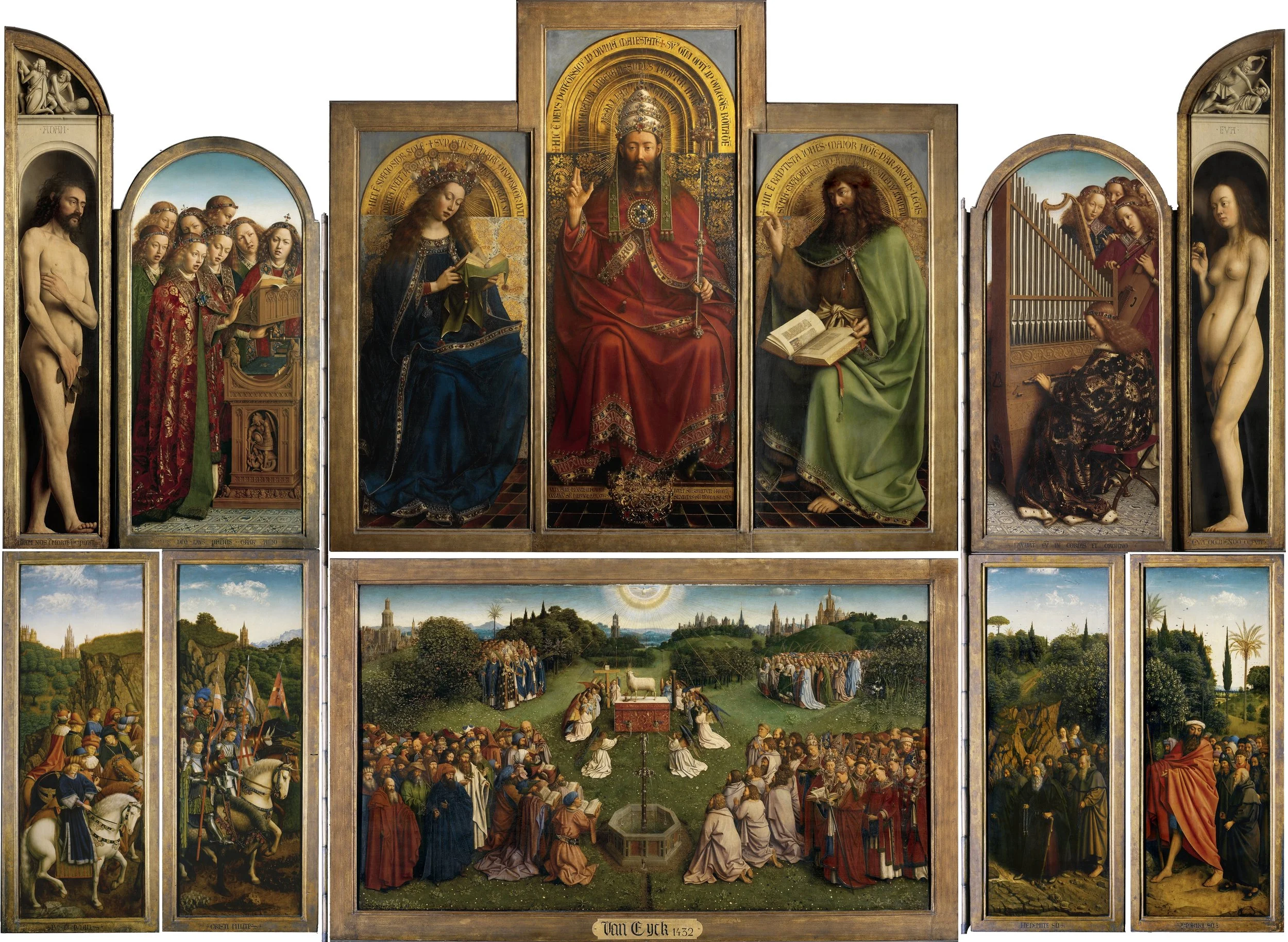
Some triptychs were large immovable altarpieces, like the Ghent Altarpiece (also known as the Adoration of the Mystic Lamb), seen here…
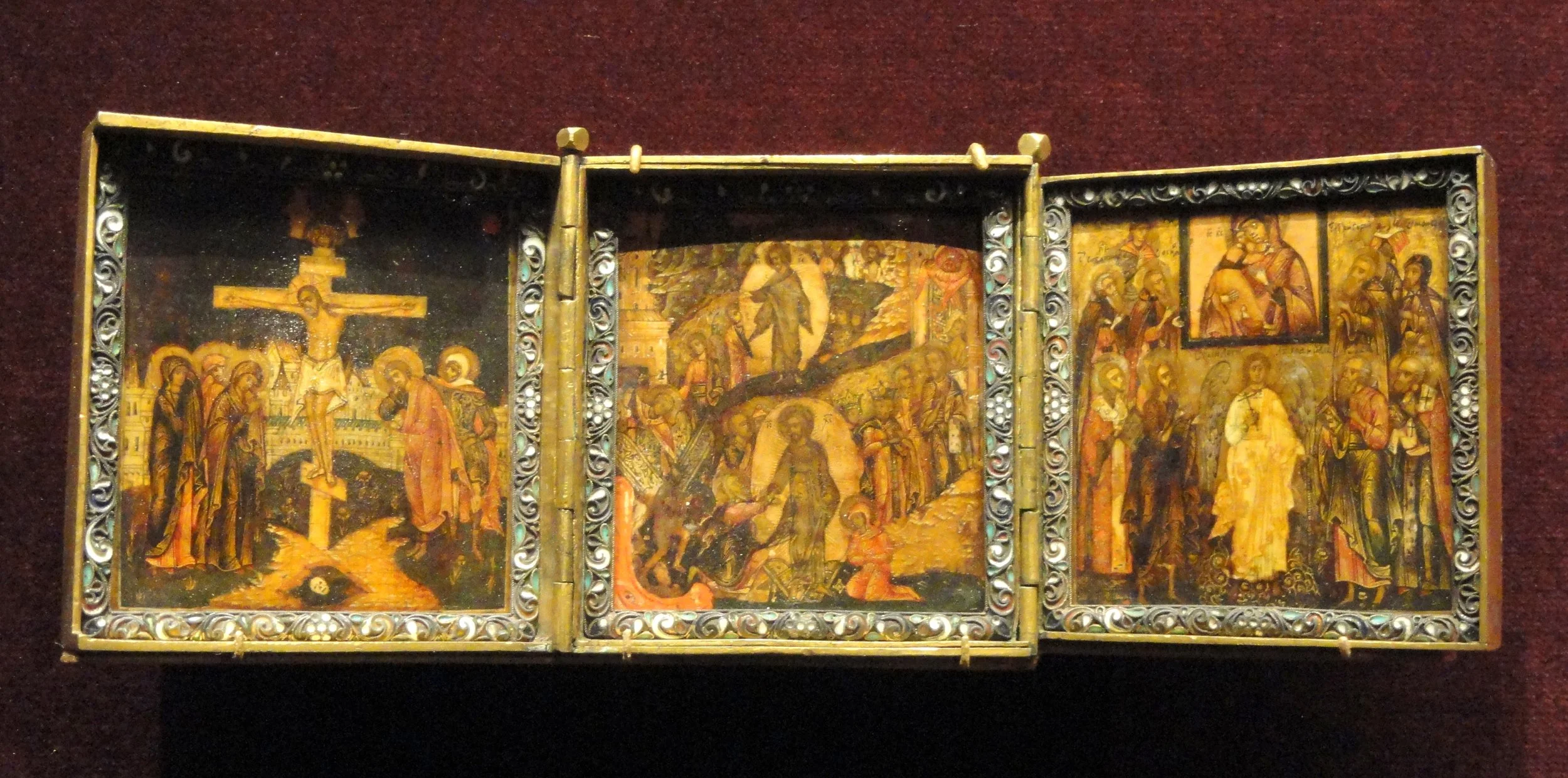
… while others were small, folding objects. These were meant to be carried with you for private devotion, a fusion of art and practical spiritual technology. The size of the cards allowed followers of all ages the ability to worship their idols wherever they wanted, since the small triptychs could be in their pockets with them at all times.
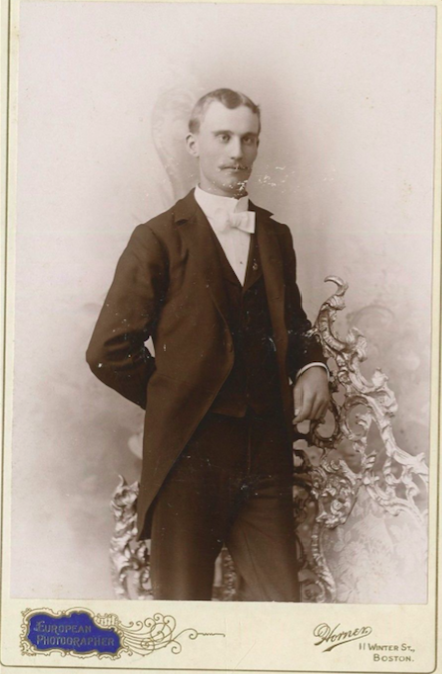
Carl J. Horner
We know, with certainty, that at least some of the people associated with the photography and design of baseball cards from the early 1900s were aware of European art history and procedures. Carl J. Horner was a studio photographer based in Boston who was recognized by Sporting Life in 1903 as the “official photographer” of the major leagues.
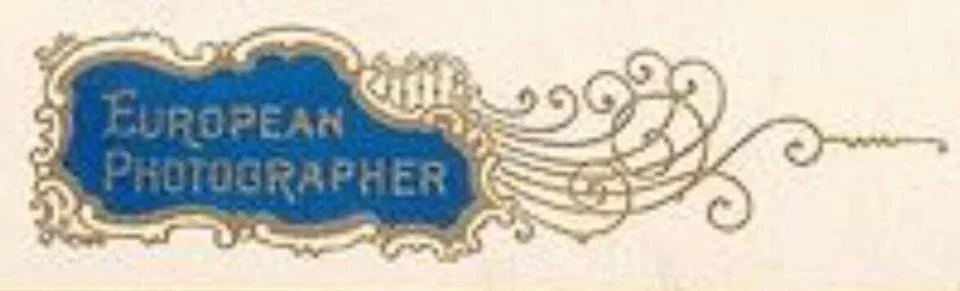
European Photographer
But Horner wasn’t born in Boston. He was born in Sweden, and even purposely advertised himself as a “European photographer” to indicate that he was artistic in a way in which American photographers were not.
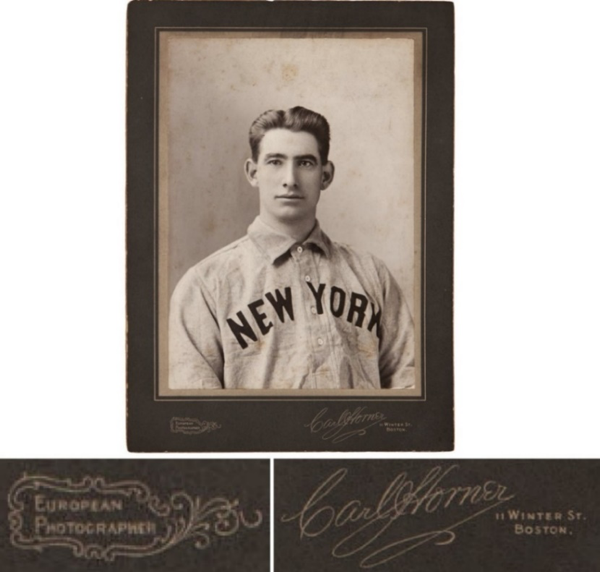
Carl J. Horner
Horner’s portraits appeared in prominent baseball annuals, like Spalding’s Official Base Ball Guide and Reach’s Official American League Base Ball Guide. He regularly photographed major-leaguers until 1909, including established veterans and rising stars, and obscure players who would have brief careers. His use of light in his studio was extremely reminiscent of the lighting used in the portraits that classic European painters used.
I’m not saying that Horner designed the baseball cards that his photographs appeared on, or even that he influenced the design. But he was clearly familiar with European art, and it is not far-fetched to imagine that other people who were responsible for designing cards were familiar with it, as well, and possibly drew inspiration for the cards they were designing from some of the pieces they had seen.
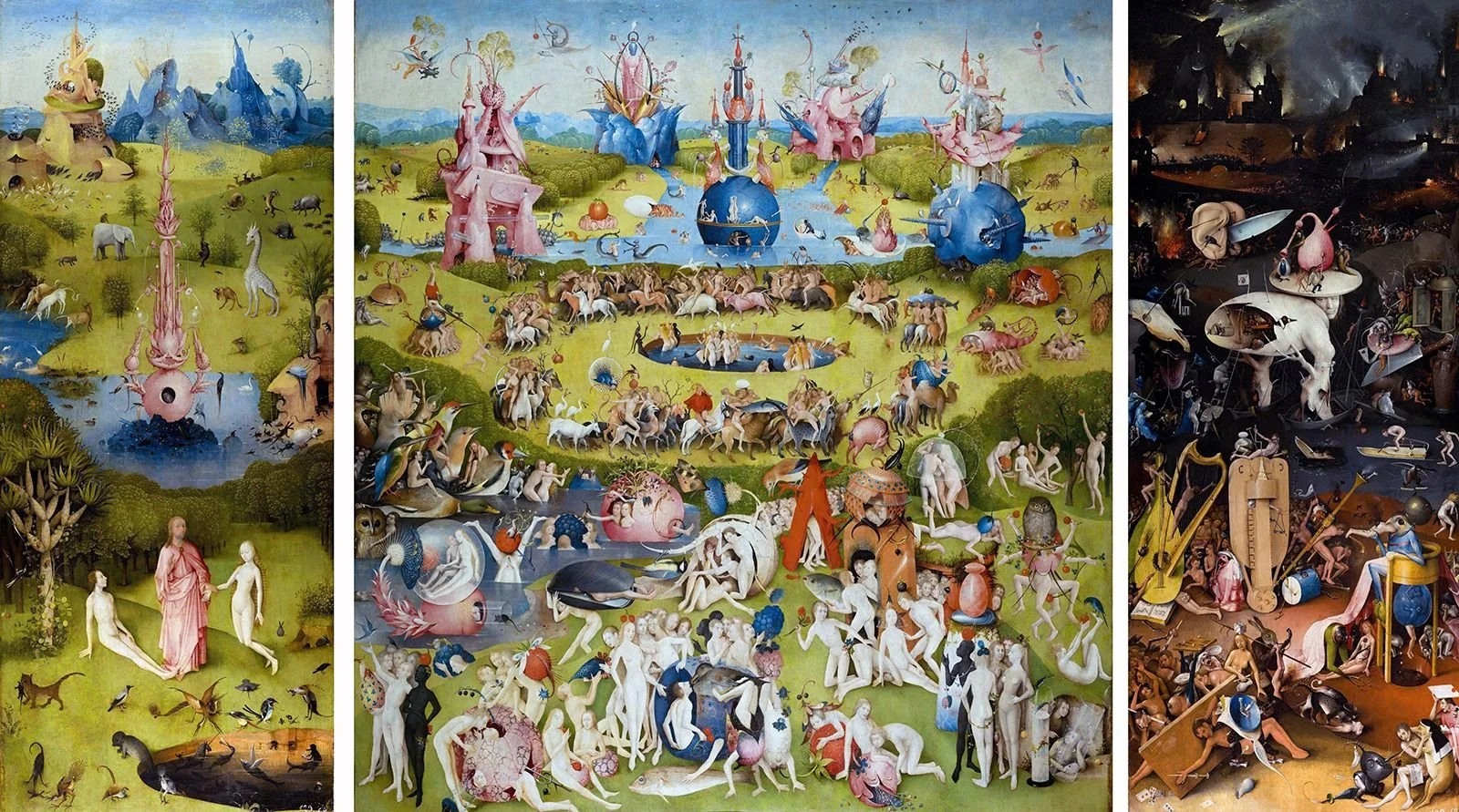
The Garden of Earthly Delights, oil-on-wood triptych by Hiëronymus Bosch, 1490–1500; in the Museo del Prado, Madrid.
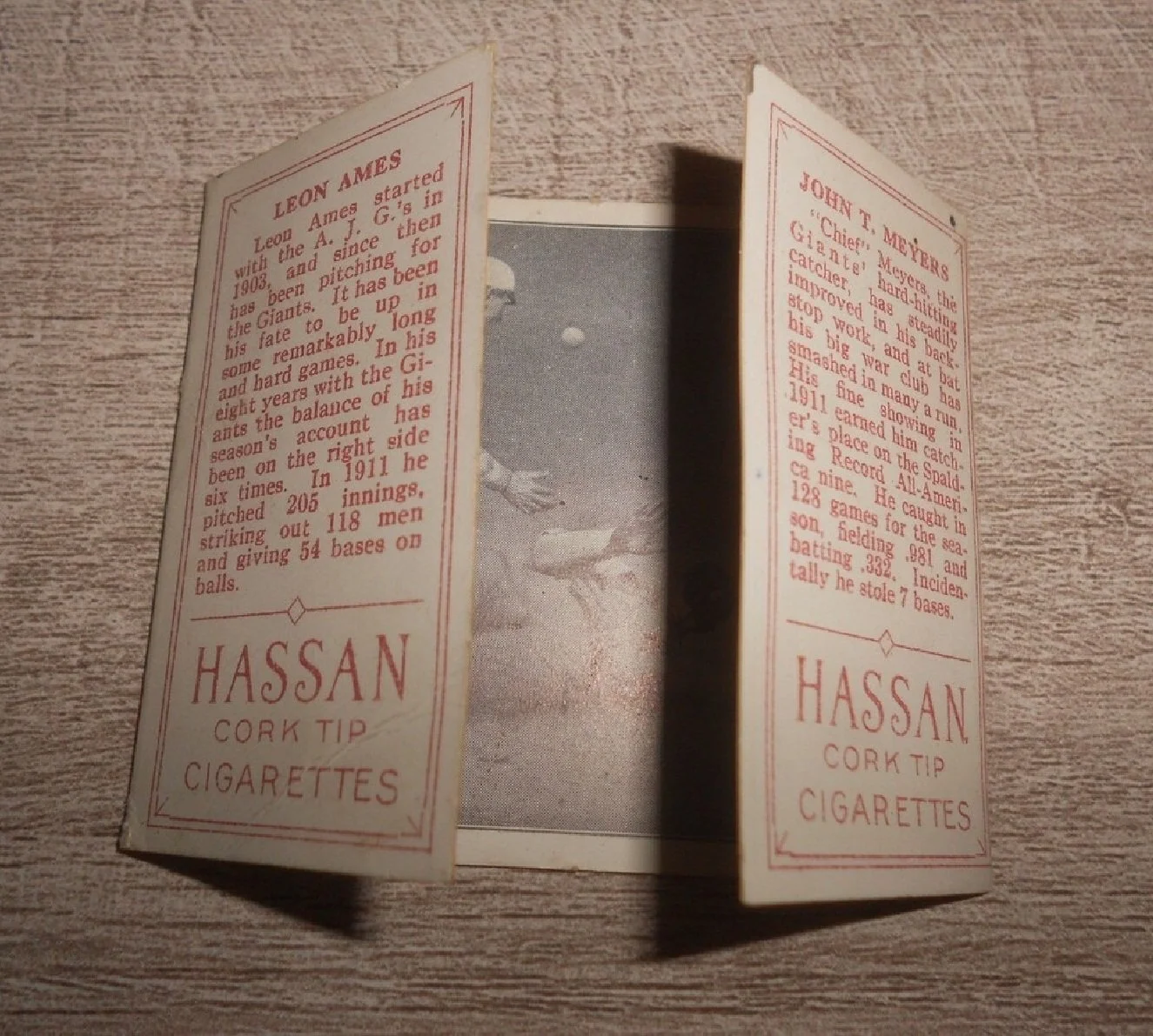
Triplefolders
Each triplefolder in the T202 set unfolds like a miniature altarpiece; a triptych lifted straight from the visual language of churches and medieval devotion.
At a time when baseball was taking root as America’s civic religion, the design on these cards echoed a form used for centuries to honor holy figures. While the manufacturers most likely chose the layout for practical reasons (you could fit in more pictures by folding the cards neatly into a cigarette package) the effect is unmistakable: a devotional object celebrating the idols of the diamond.
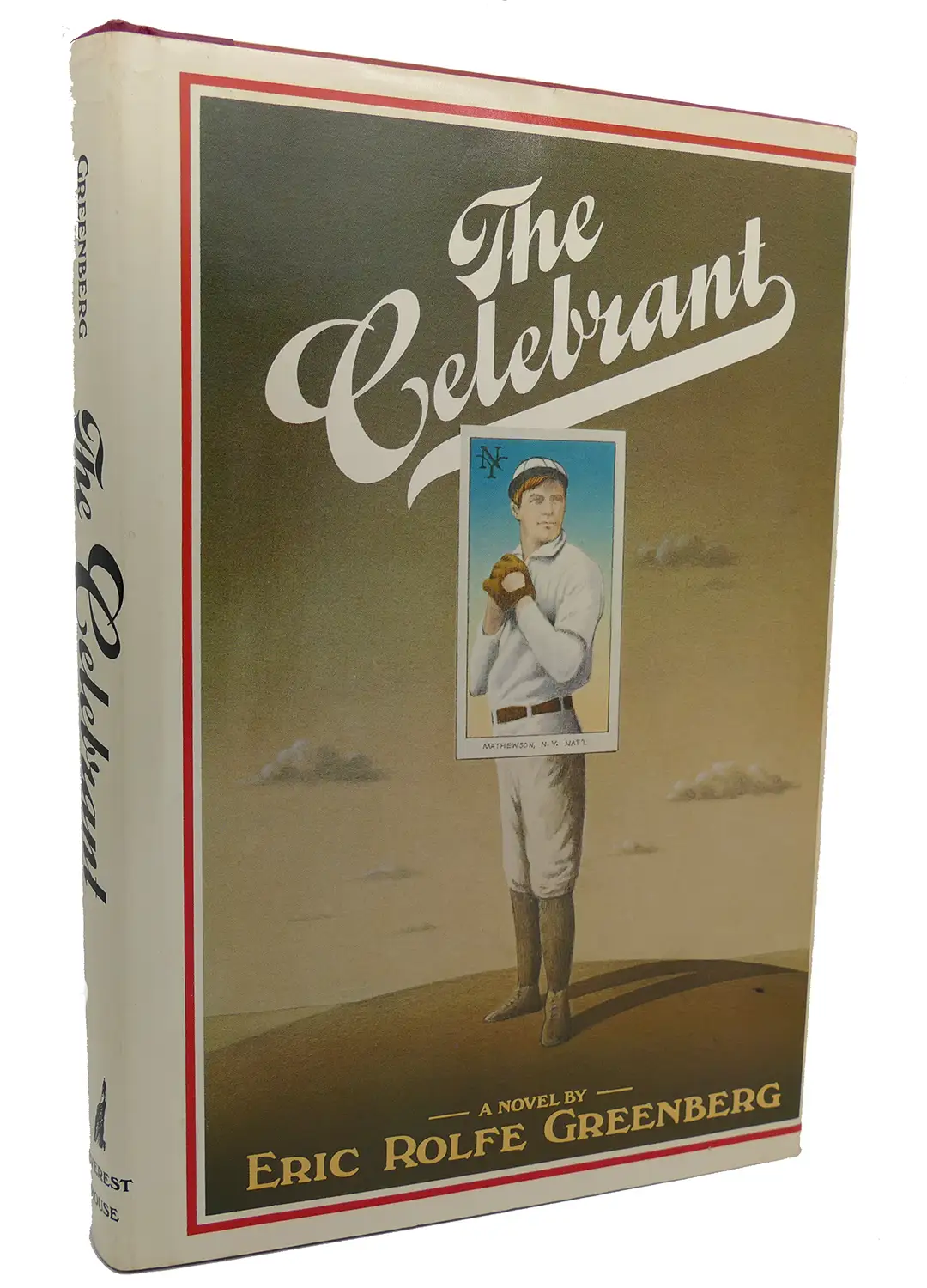
The Celebrant
This aesthetic connects beautifully with the themes found in The Celebrant, the novel by Eric Rolfe Greenberg, where fans elevate Christy Mathewson to near-mythic status, treating him as a kind of secular Christ whose grace transcends the ordinary game.
Even the novel’s title - The Celebrant - carries double meaning: a devout fan, but also the person who performs a rite, like a priest presiding at the Eucharist.
The Hassan triplefolders function the same way. They transform players into figures of quiet veneration, with the triptych format encouraging contemplation and a form of admiration that borders on devotion.
Buy The Celebrant HERE.
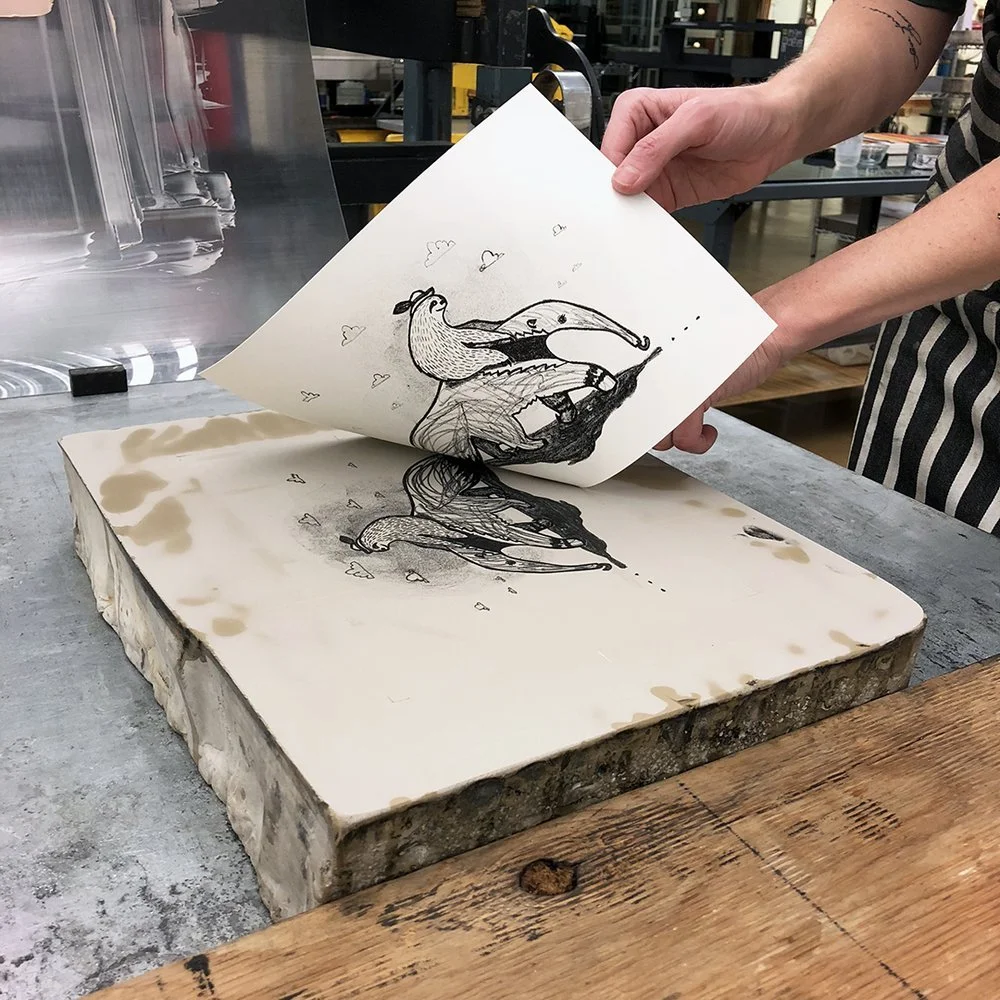
Stone Lithography
By the 1910s, lithographers weren’t limited to hand-drawn stone work like they had been in years past. In fact, the T206 cards – and possibly also the T205s – were created using a multi-layered lithographic printing process, which involved transferring images from stone or metal plates to paper. Those stones would have been huge slabs of specially prepared limestone, 2-4" thick.
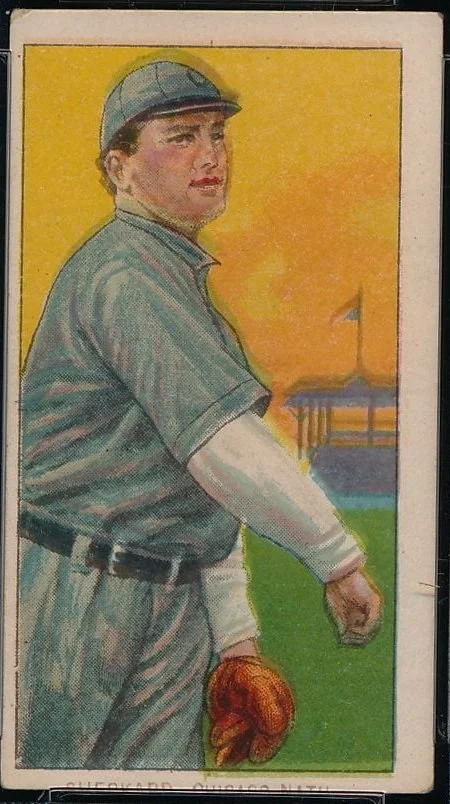
Off-Register
According to researcher Steve Birmingham on the Net54 message board, there is a bit of evidence that a two color press may have also been used for the T206 set. It's possible that a press that printed from a roll of cardstock rather than from individual sheets was used for some, and that probably would have been metal plates.
This technique allowed for the vivid, detailed portraits that define the set, but it also introduced challenges. Each card required multiple layers of ink - one for each color. If the plates were misaligned, it resulted in “off-register” cards, where colors overlapped incorrectly or left gaps in the design.
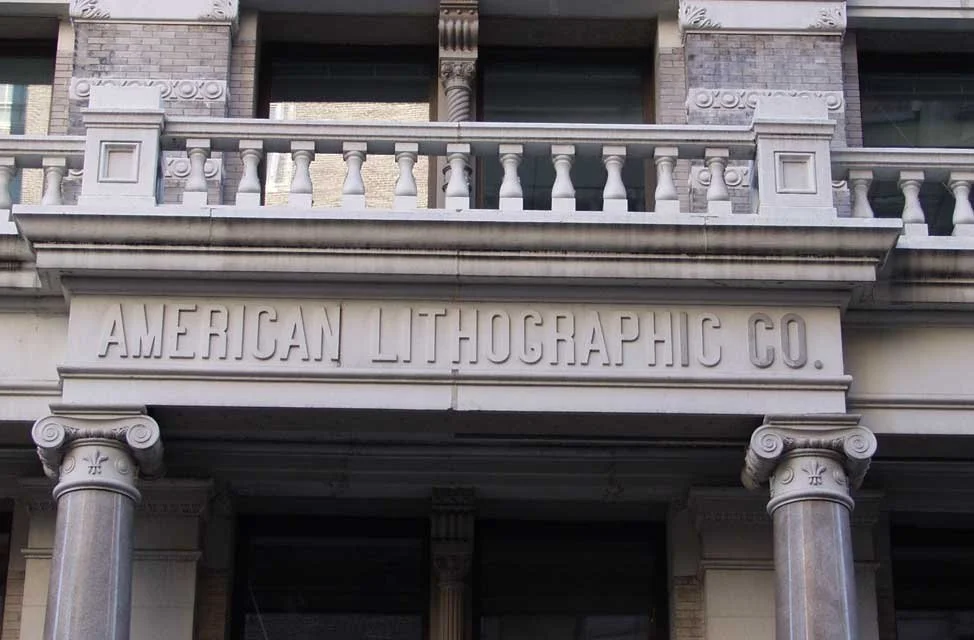
American Lithographic
The American Lithographic Building (which is potentially one of the buildings where T206 cards were printed) still stands in New York City at the corner of 19th Street and 5th Avenue.
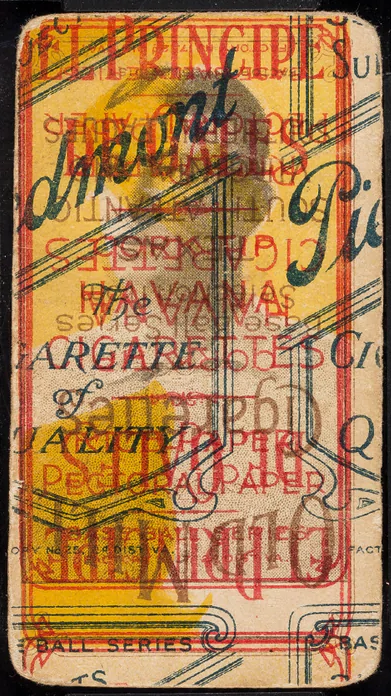
Inconsistencies
One of the most intriguing aspects of T206 cards is the variety of plate shifts and color inconsistencies. A slight movement of the printing plate during production could cause misaligned borders or skewed portraits. These “miscuts” are highly sought after by some collectors, as they offer a glimpse into the challenges faced by early printers.
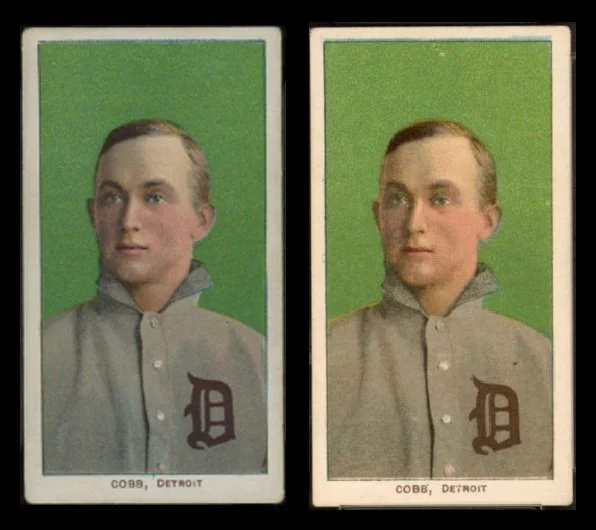
Color Variations
As we learn from the Anvil Card Company, color variations were another byproduct of the printing process. Differences in ink quality, humidity, and plate wear meant that even cards from the same production run could have subtle differences in hue. For example, Ty Cobb cards might feature a brighter green background in one batch and a darker, muted tone in another.
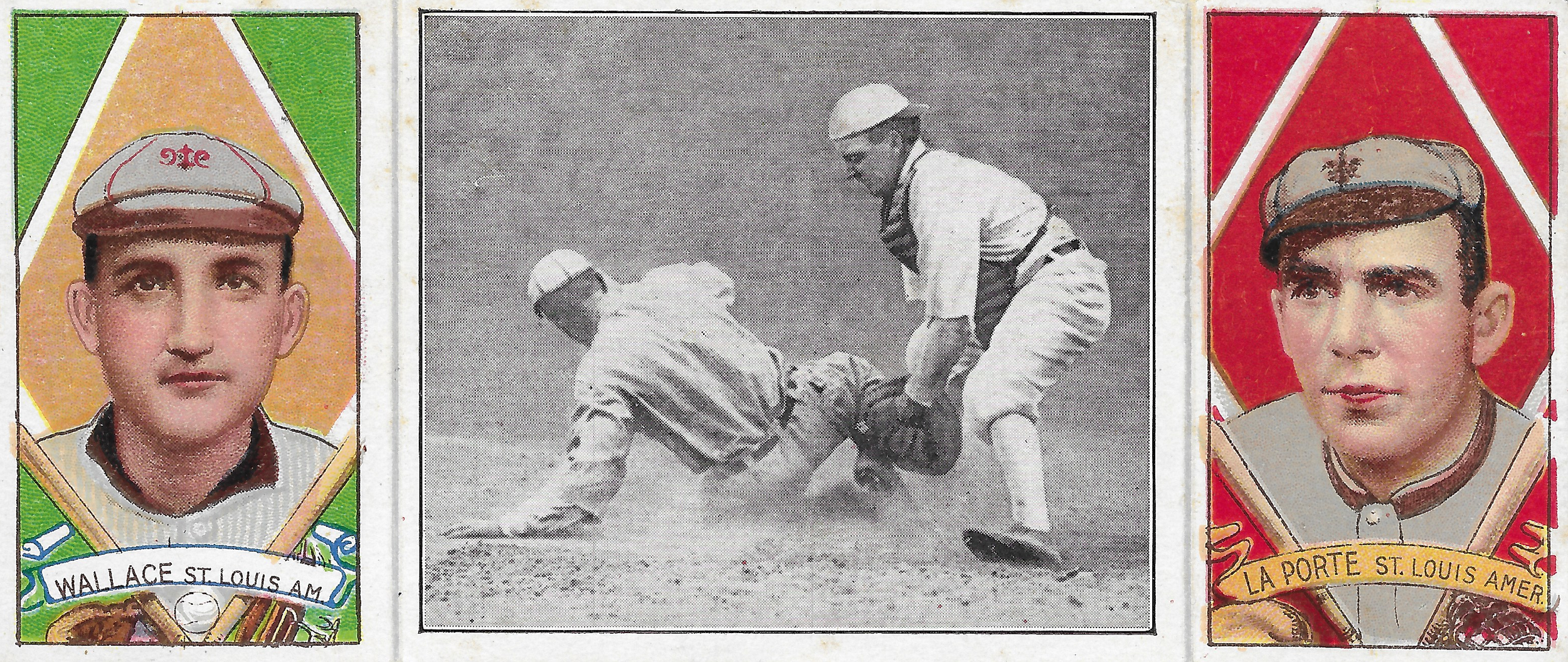
By 1912, printers could combine multi-color chromolithography (like the portraits seen in the T206 set) with halftone screens on the same lithographic plates. This meant a printer could render the side portraits in rich, layered colors, and drop in a black-and-white photographic panel in the middle — all in one pass, through the same lithographic process.
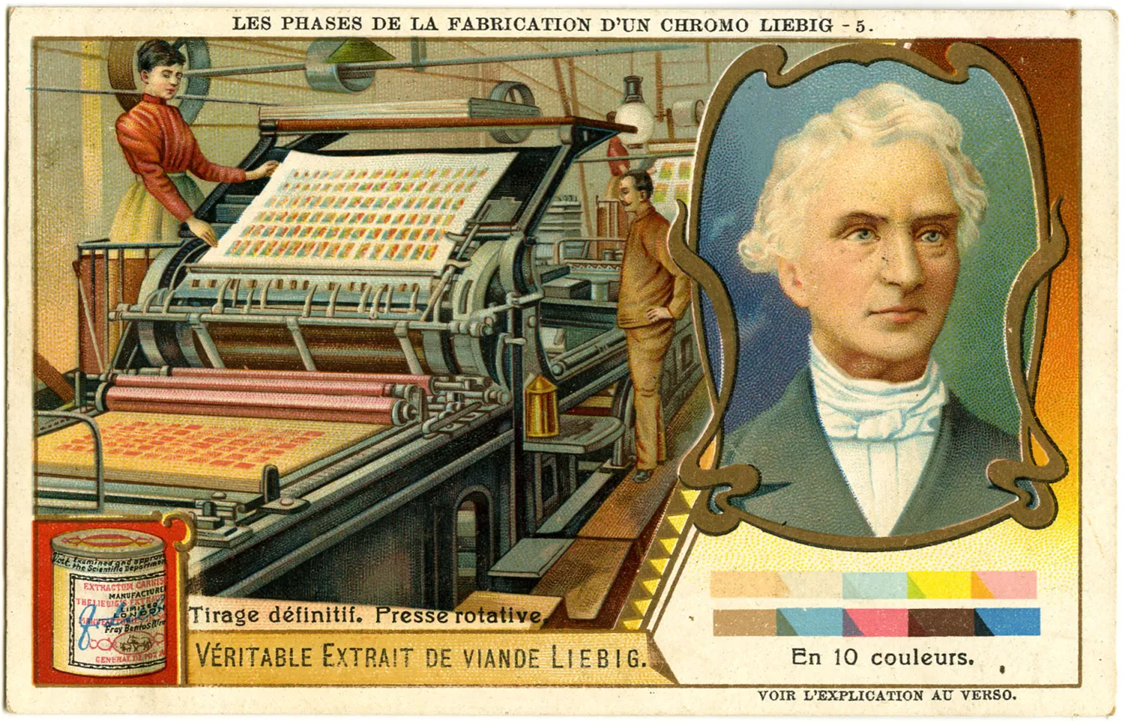
It Was All Lithography
The whole thing was one integrated sheet, folded and cut. Collectors of the T202 set often describe the center as “photographic” and the sides as “litho art,” which makes it sound like two different printing processes that have been spliced together. But in reality, it was all lithography. The distinction is in how the image was prepared for the lithographic plate.
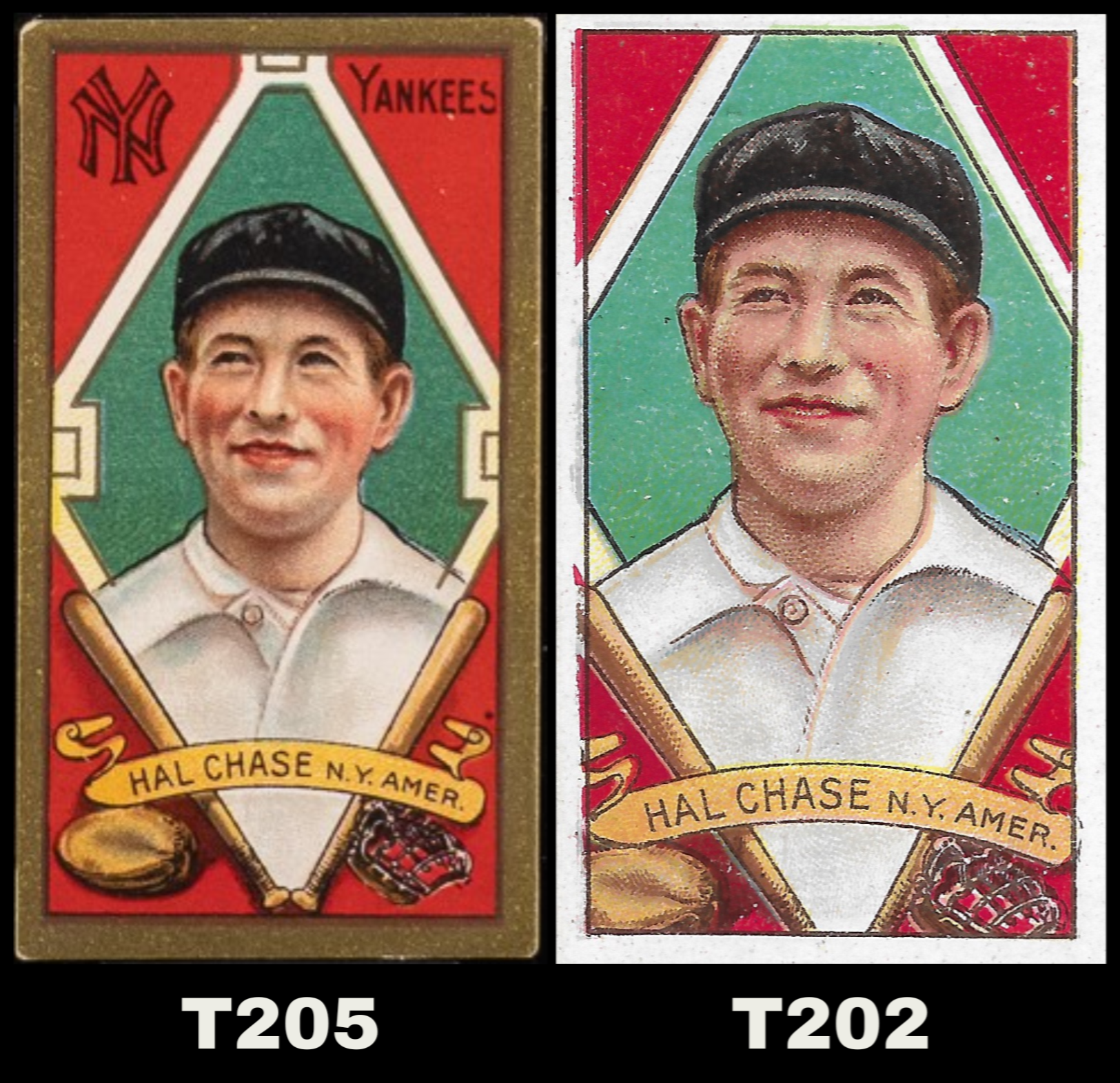
Same Panels
The end panels reused the same portrait artwork and plates from the T205 era, which we mentioned throughout the episode. Those were hand-drawn separations which were printed in multicolor chromo-lithography.
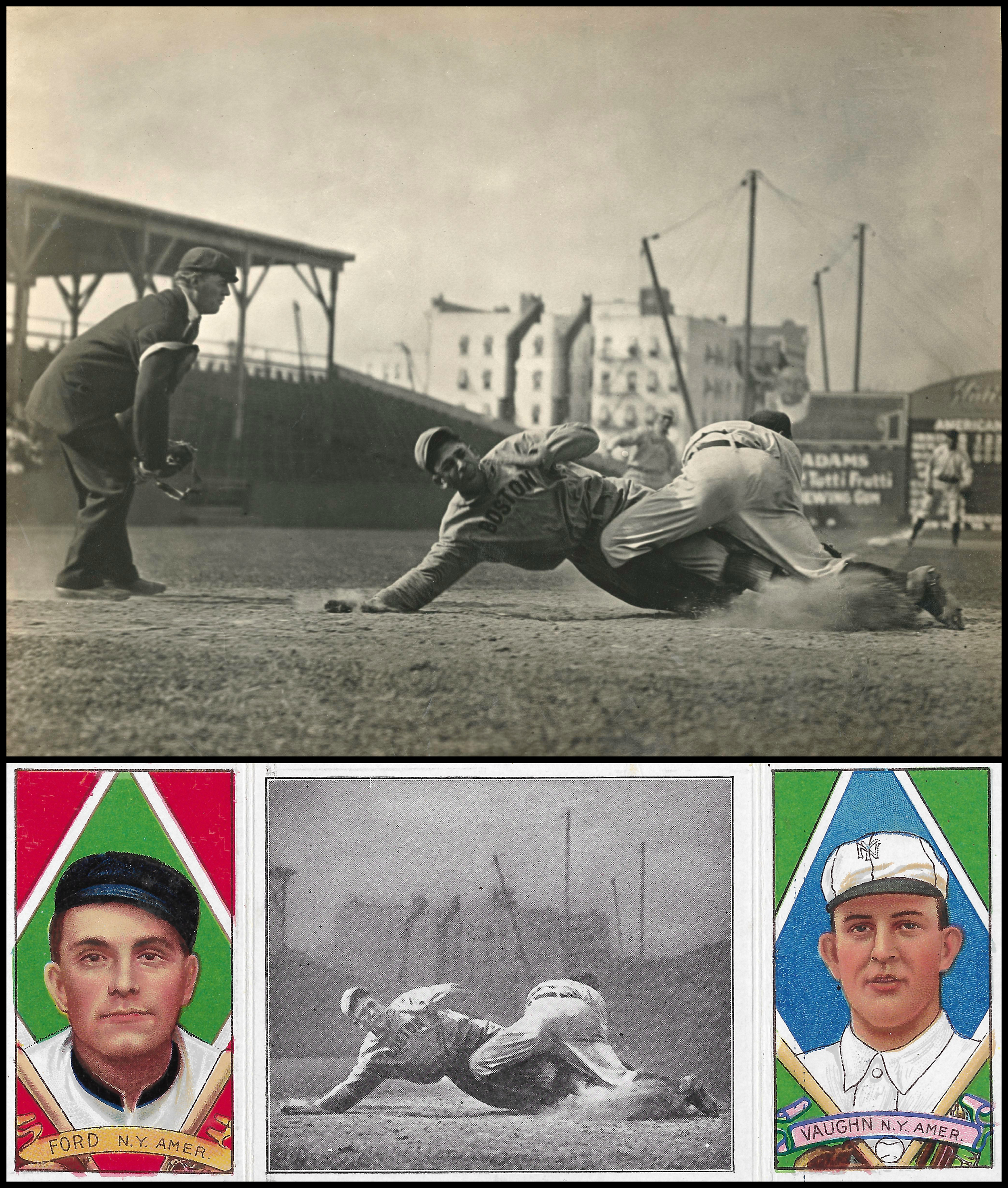
Actual Photographs
But the center panels were created from an actual photograph, converted into a halftone screen, and then transferred onto a litho plate. It looks different because it’s tonal, not drawn, but it’s still lithography — just photo-litho instead of hand-drawn chromo work. It’s one process, but two input styles, and yet another reason why this incredible card set was years ahead of its time.
Support My Baseball History
If you don’t have PayPal and want to send a donation through Venmo, Zelle, Cash App, or any other platform, email me at shoelesspodcast@gmail.com and I’ll send you directions for whichever method you prefer.
We appreciate you being here.
Special thanks to Phil Rosenzweig for allowing us to use the images from his amazing collection to illustrate the liner notes you just read. This page and this interview wouldn’t have been possible without his knowledge and generosity.