0504 - Gary Cieradkowski
Gary Cieradkowski is a renowned baseball historian, researcher, author, and artist. During our conversation, he referenced a handful of things and people upon which you may want to do more research. Consider this page to be your “liner notes” for the episode so you can follow along.
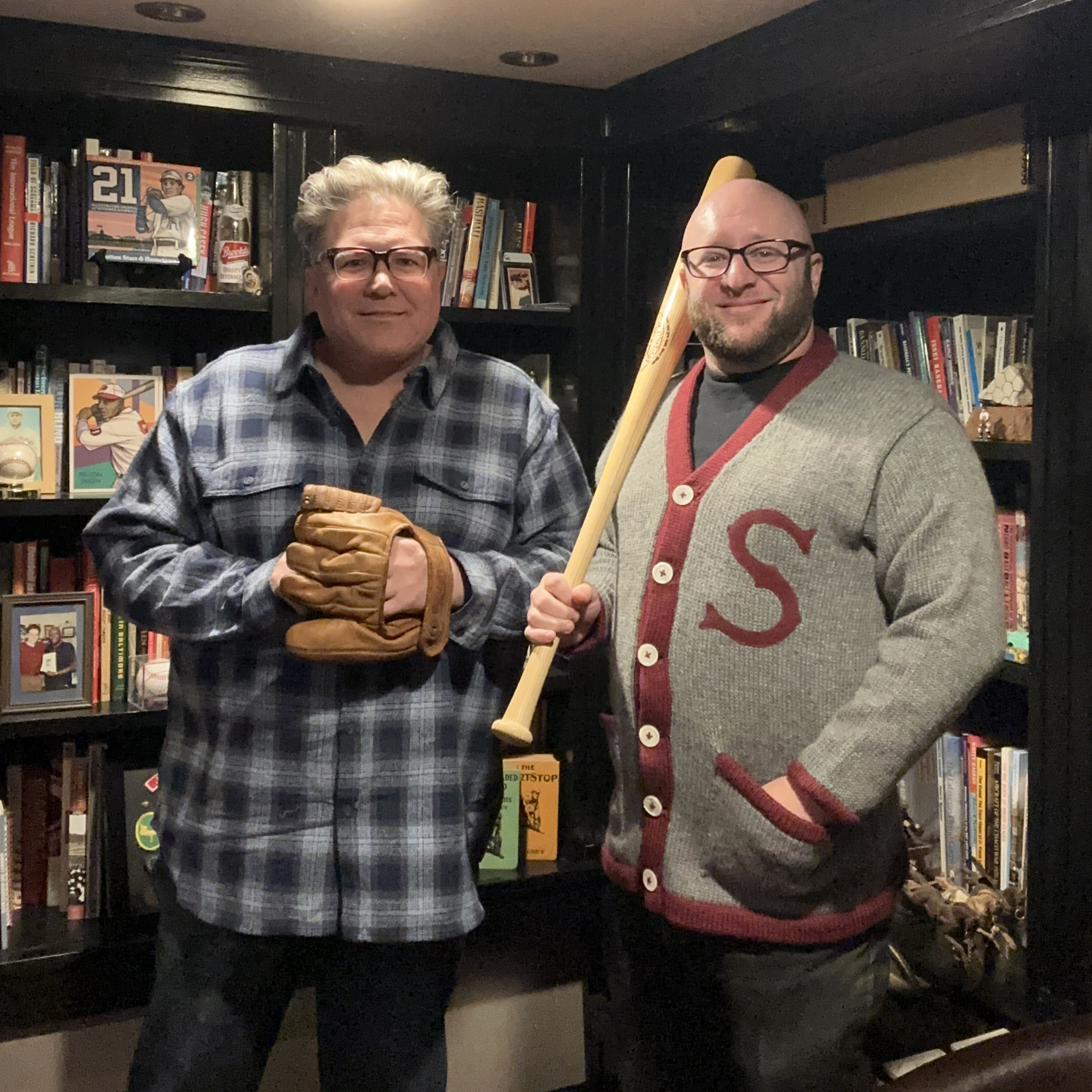
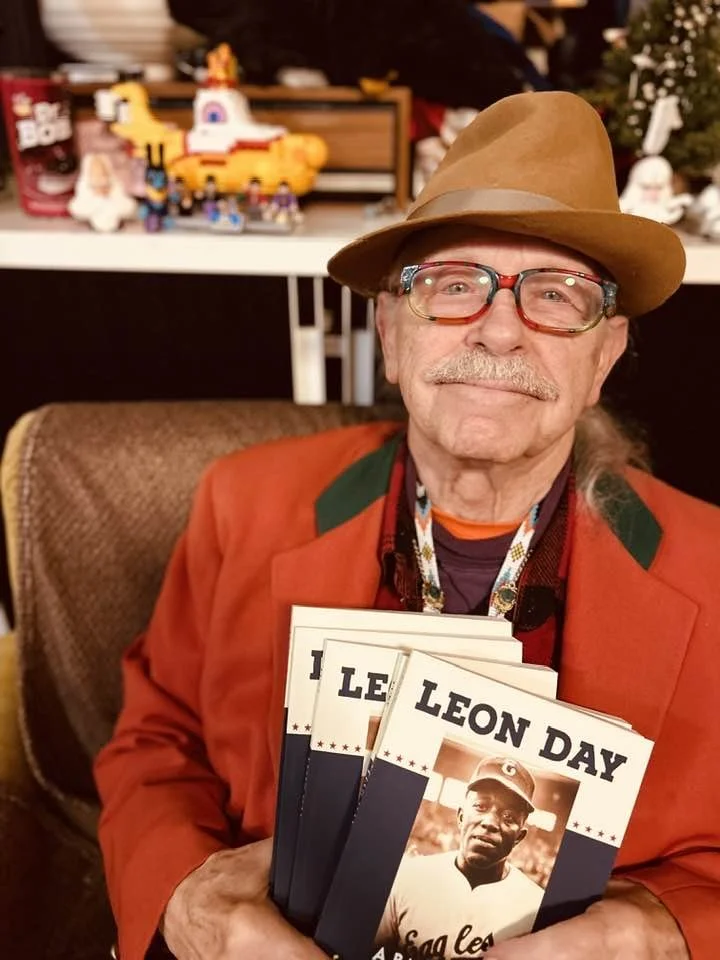
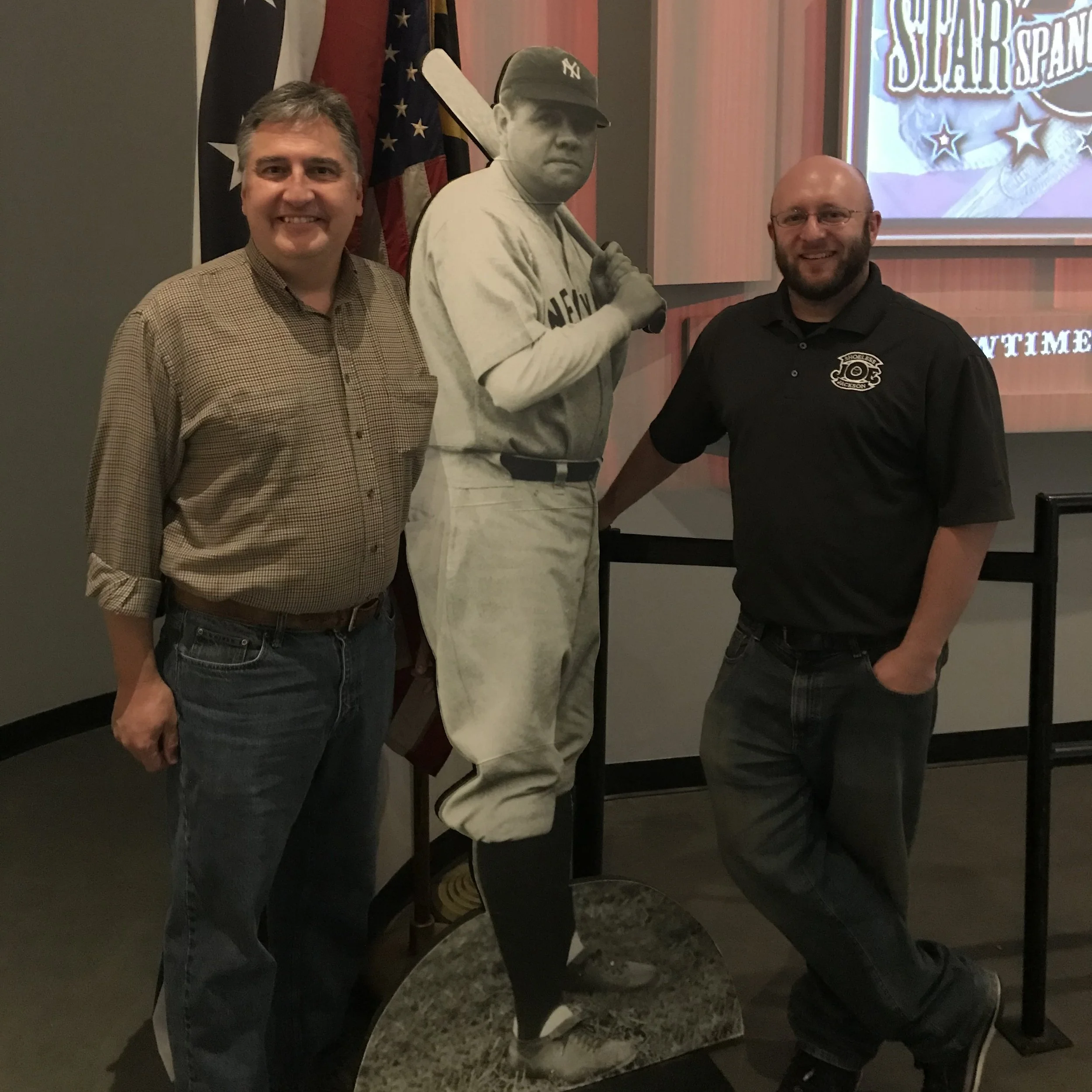
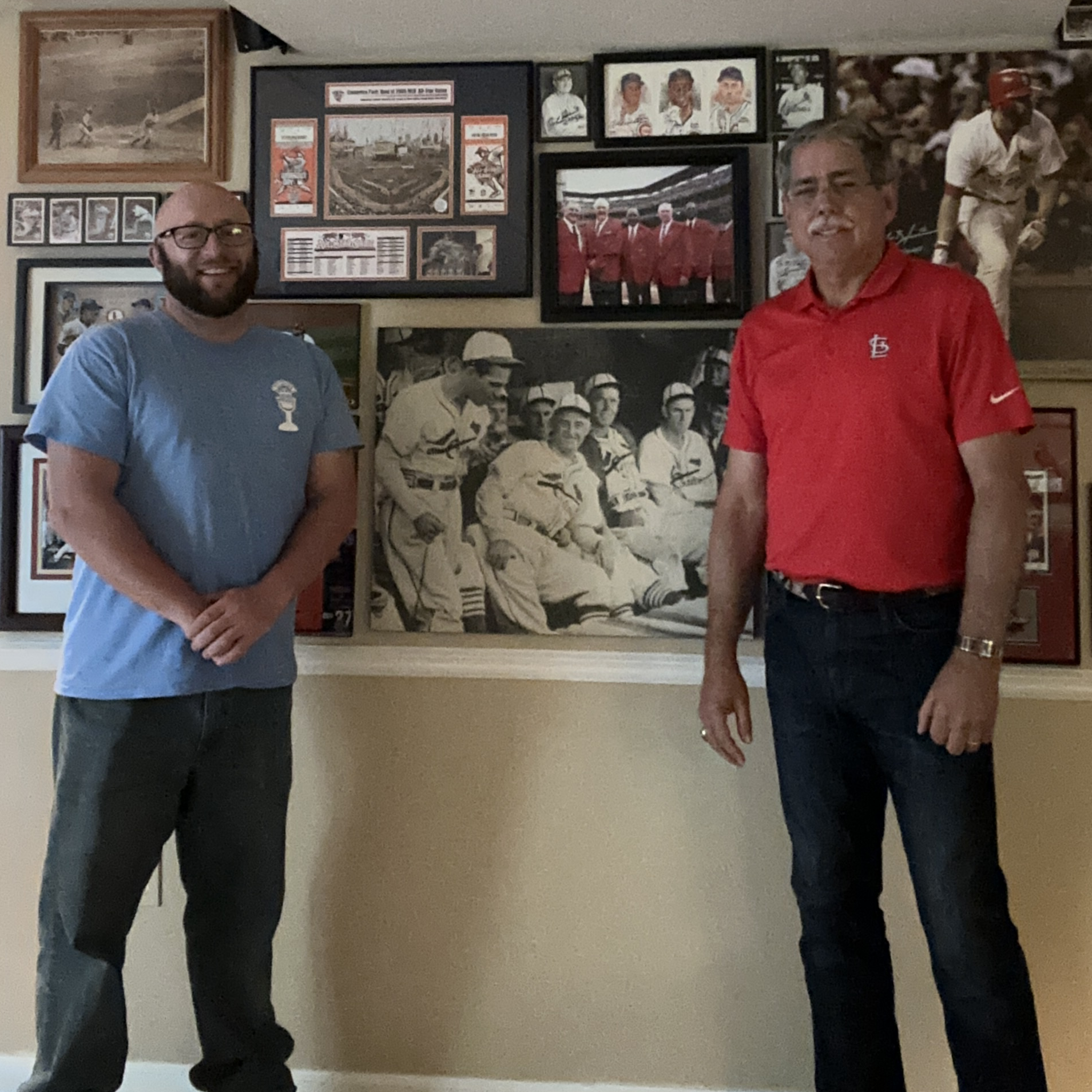
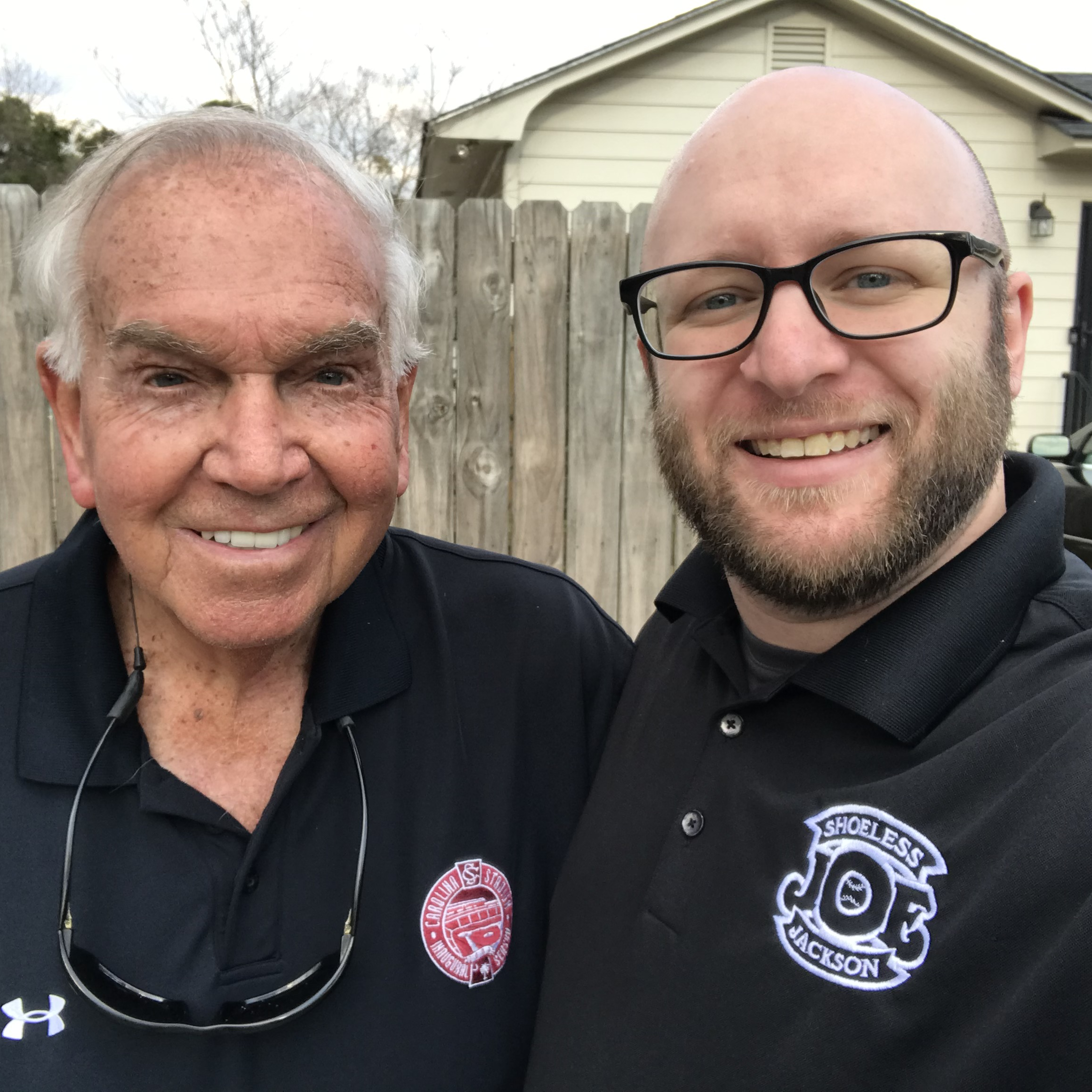
Gary Cieradkowski and me after recording our interview in his studio in his home in Fort Thomas, Kentucky.
Midnight Library of Baseball
This episode is brought to you by Ben Orlando’s amazing podcast Midnight Library of Baseball.
Follow Midnight Library of Baseball on social media:

Ben Orlando
Ben Orlando’s writing is one of the things that makes Midnight Library of Baseball so enjoyable.
If you’d like to check out some of his fiction work, you can buy a copy of Lost Journals of Sundown by clicking HERE.
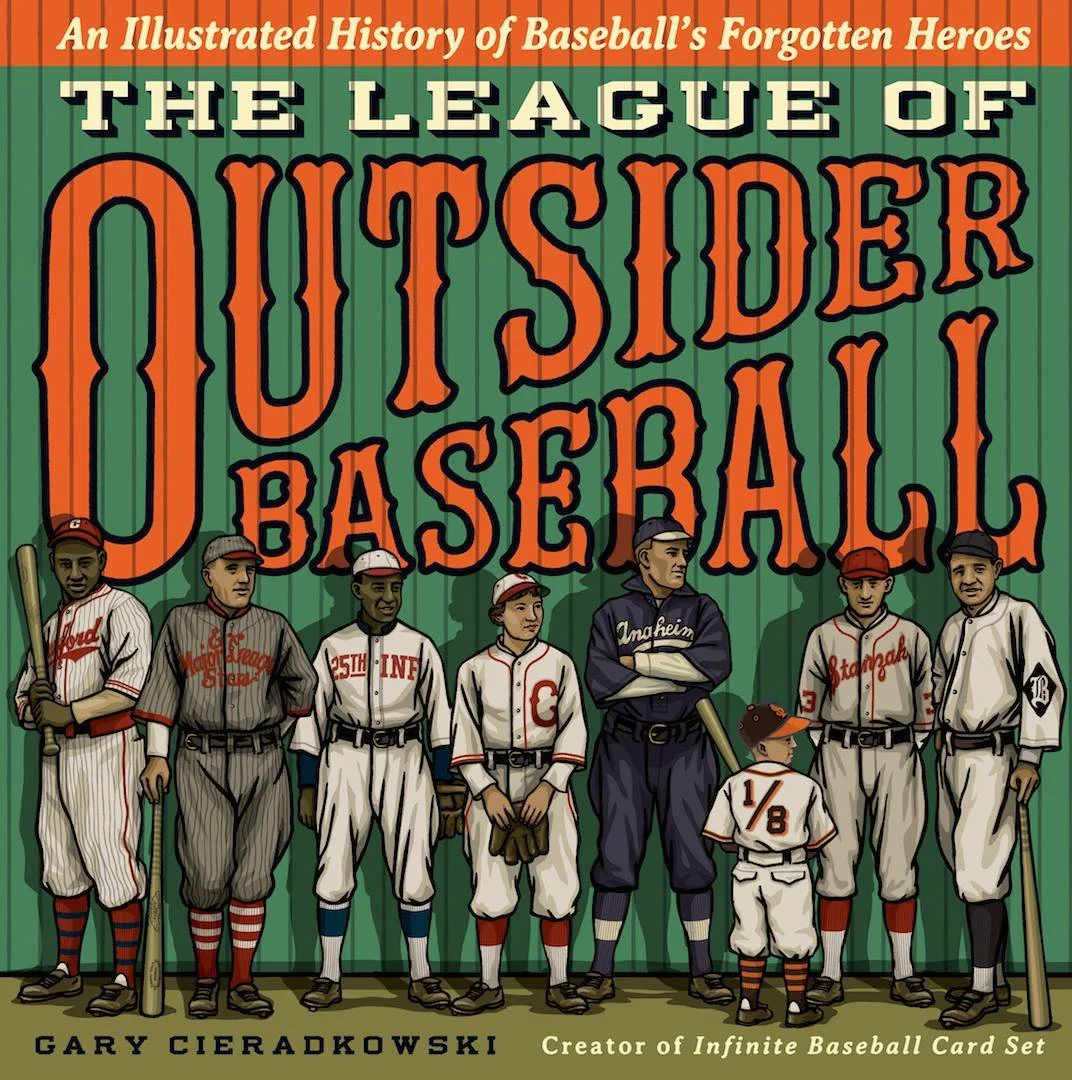
The League of Outsider Baseball
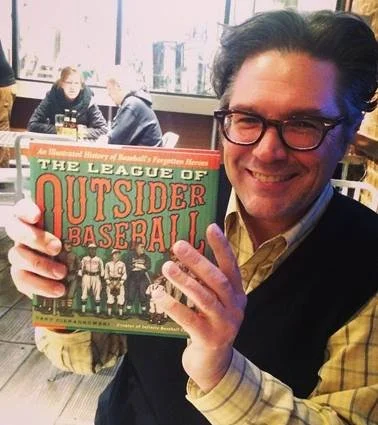
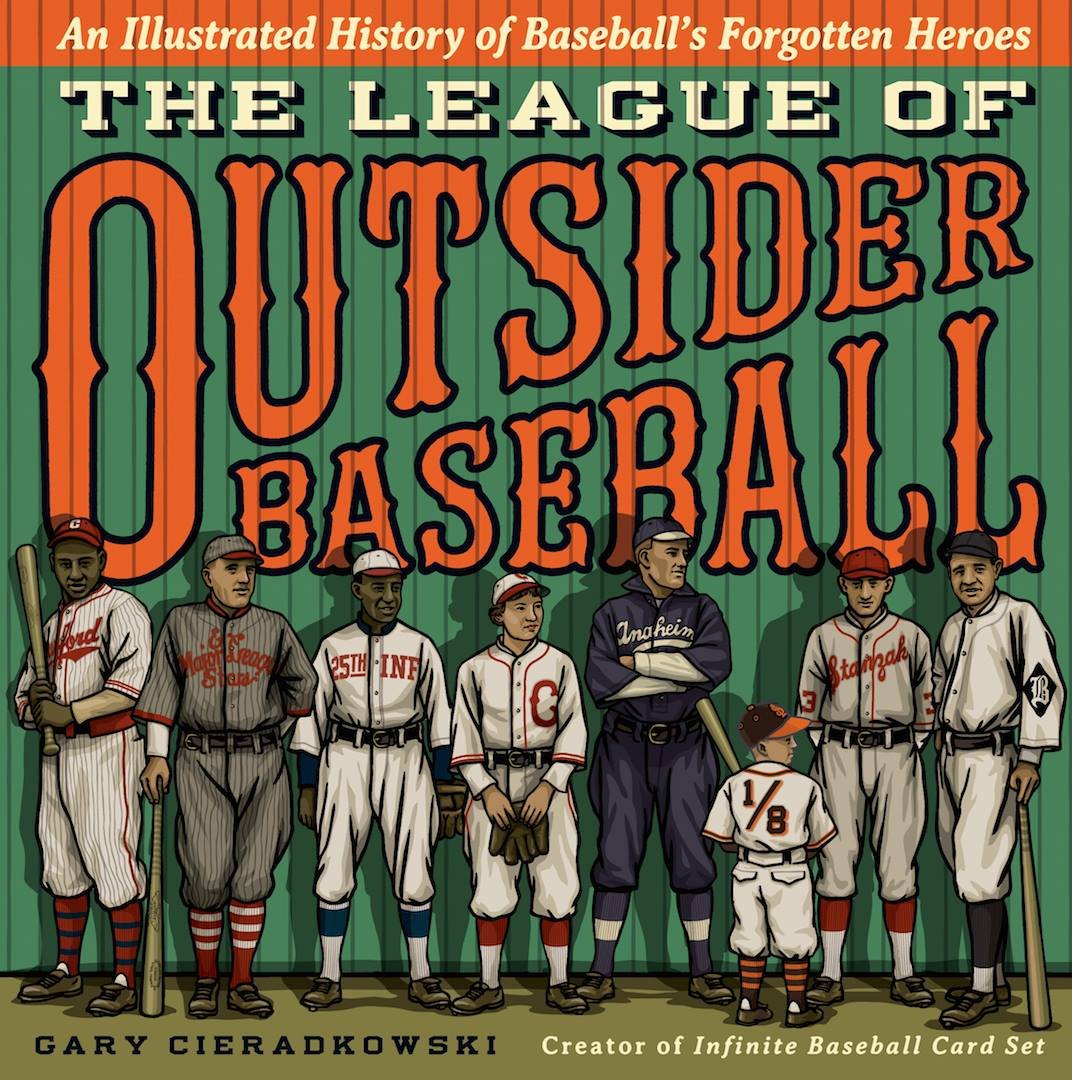
Gary’s book, The League of Outsider Baseball: An Illustrated History of Baseball’s Forgotten Heroes, which he wrote, illustrated and designed, was published in 2015 by Simon & Schuster.
Buy a copy HERE.
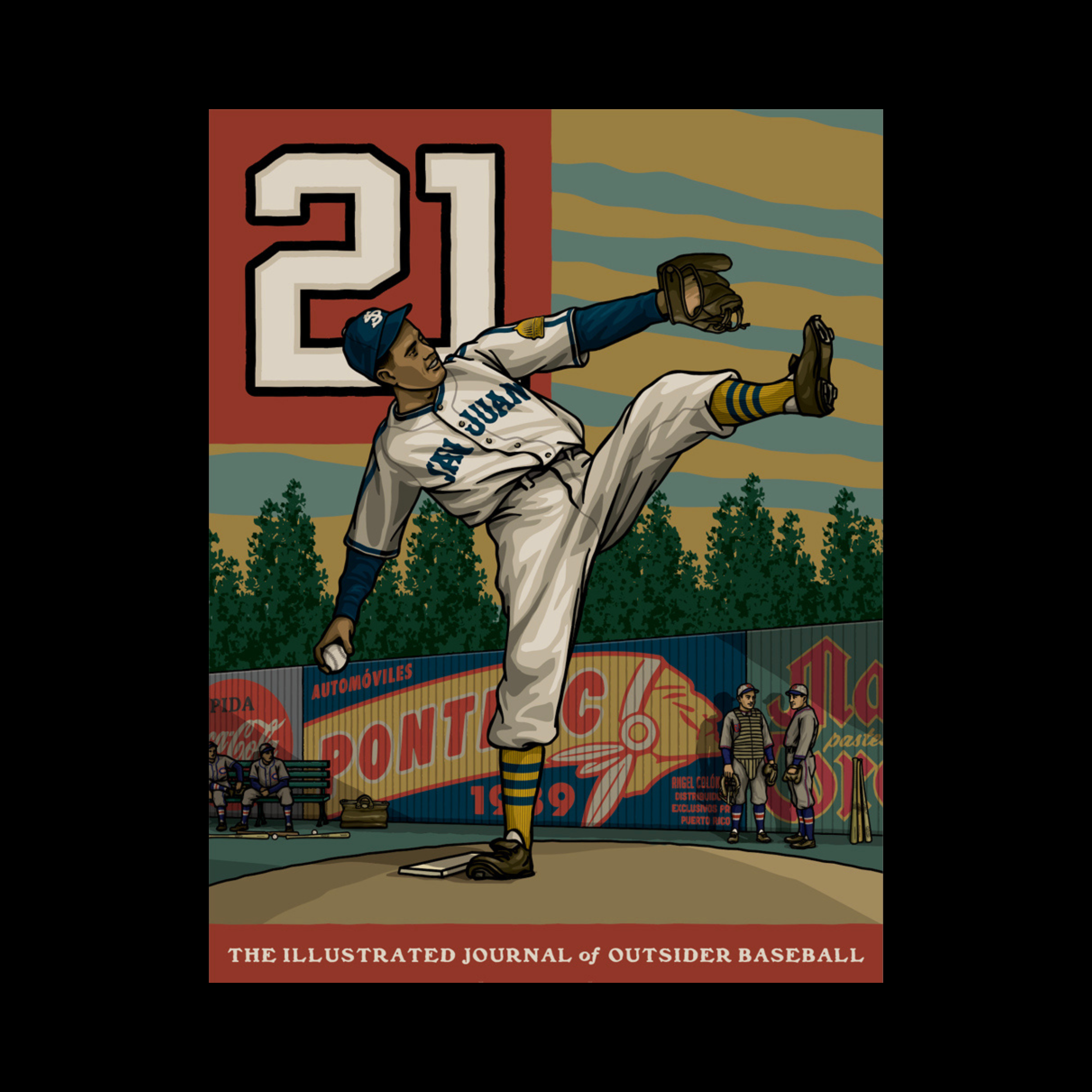

Gary is also the artist and writer behind The Infinite Baseball Card Set blog, which has been one of the best baseball things on the internet since February of 2010.
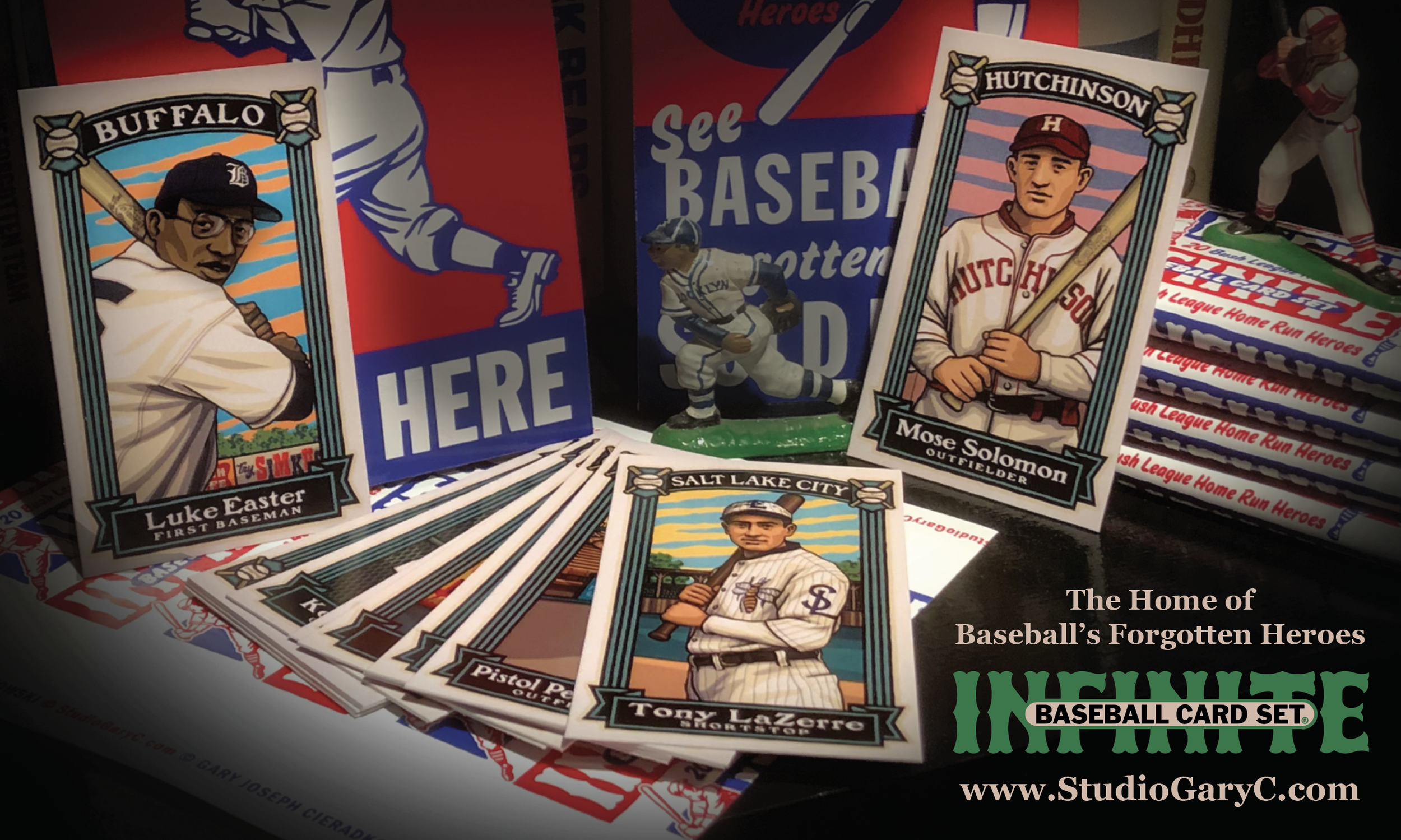
StudioGaryC.com
The full extent of what Gary Cieradkowski can offer can be found in the pages of his website, StudioGaryC.com, where you will also find prints of his award-winning posters for sale and his brilliant baseball history writing. While his last name may be a bit troublesome to say, his work speaks for itself.
Visit his online store HERE.
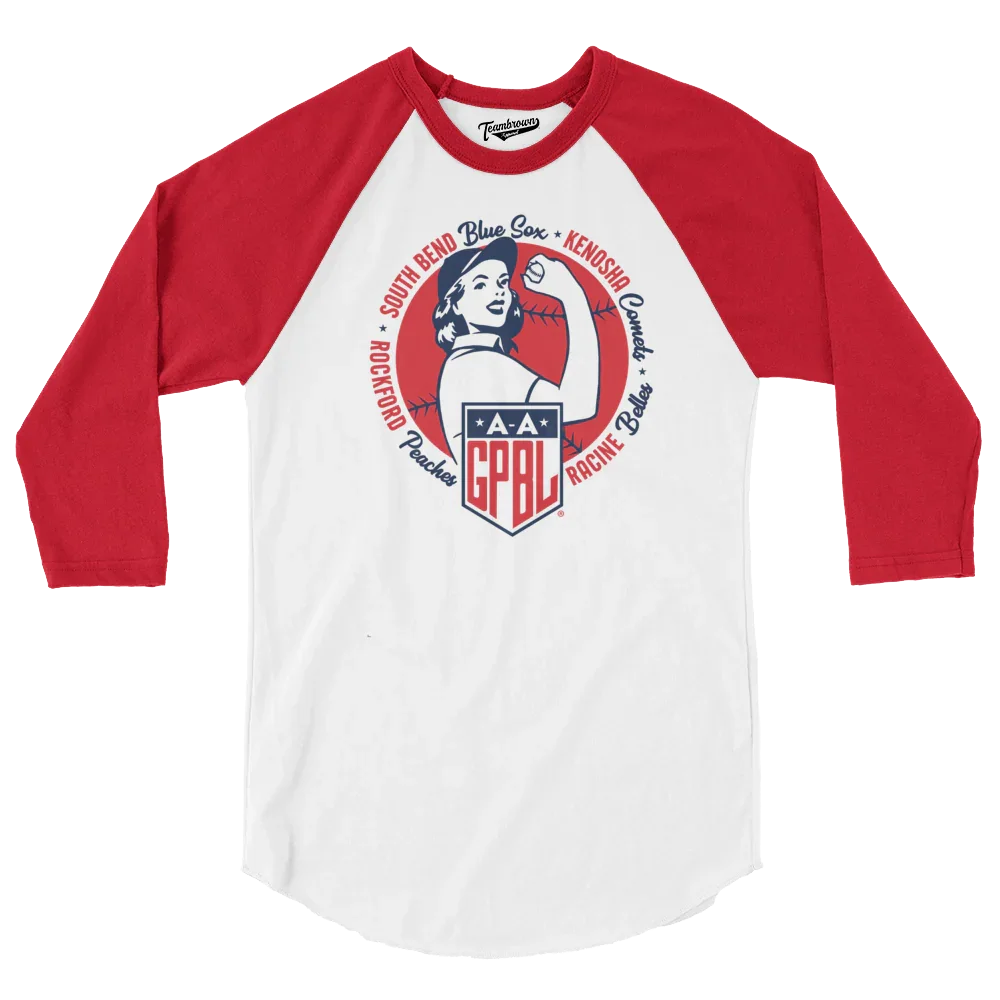
Team Brown Apparel
Gary’s artwork and designs are all over the Team Brown Apparel website and store.
Many of his Negro League and All-American Girls Professional Baseball League shirts are sold on their website, but they’re also available in the gift shop of the National Baseball Hall of Fame and in the Smithsonian.
Visit the Team Brown Apparel website HERE.
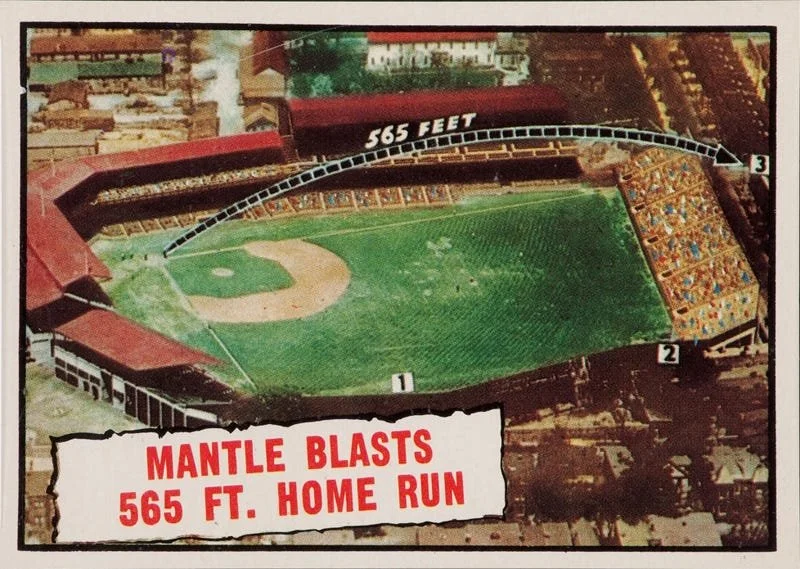
Finding The Untold Stories
When Gary writes about well-known players like Mickey Mantle, he’s not going to tell you the story of the time Mickey hit a 565-foot home run at Griffith Stadium in Washington.
The brilliance of Gary’s research and writing comes in finding the untold stories, even about famous players, and in his ability to talk about who these figures were as people.
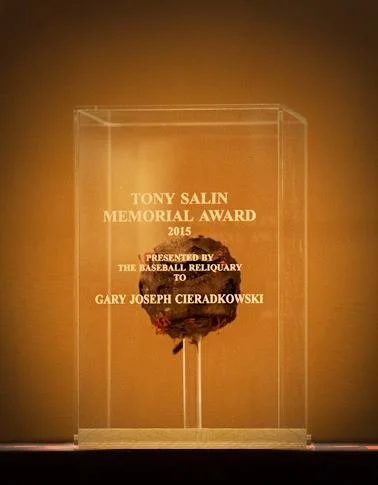
Tony Salin Award
Gary’s writing, art, and research was recognized by the Baseball Reliquary in 2015 when he was named the recipient of the Tony Salin Memorial Award for Contributions to Baseball History, the highest honor a baseball writer, historian and researcher can receive.
Ultimate Fantasy Draft
Gary and I are going to have an all-time fantasy team draft, picking one player we’d want on our team at each position from throughout the vast history of the game.
We discuss so many figures from throughout baseball history. Not just players in the American and National Leagues, but also minor leaguers, Negro Leaguers, All-American Girls Professional Baseball Leaguers, international ballplayers, managers, executives, entertainers, and more.
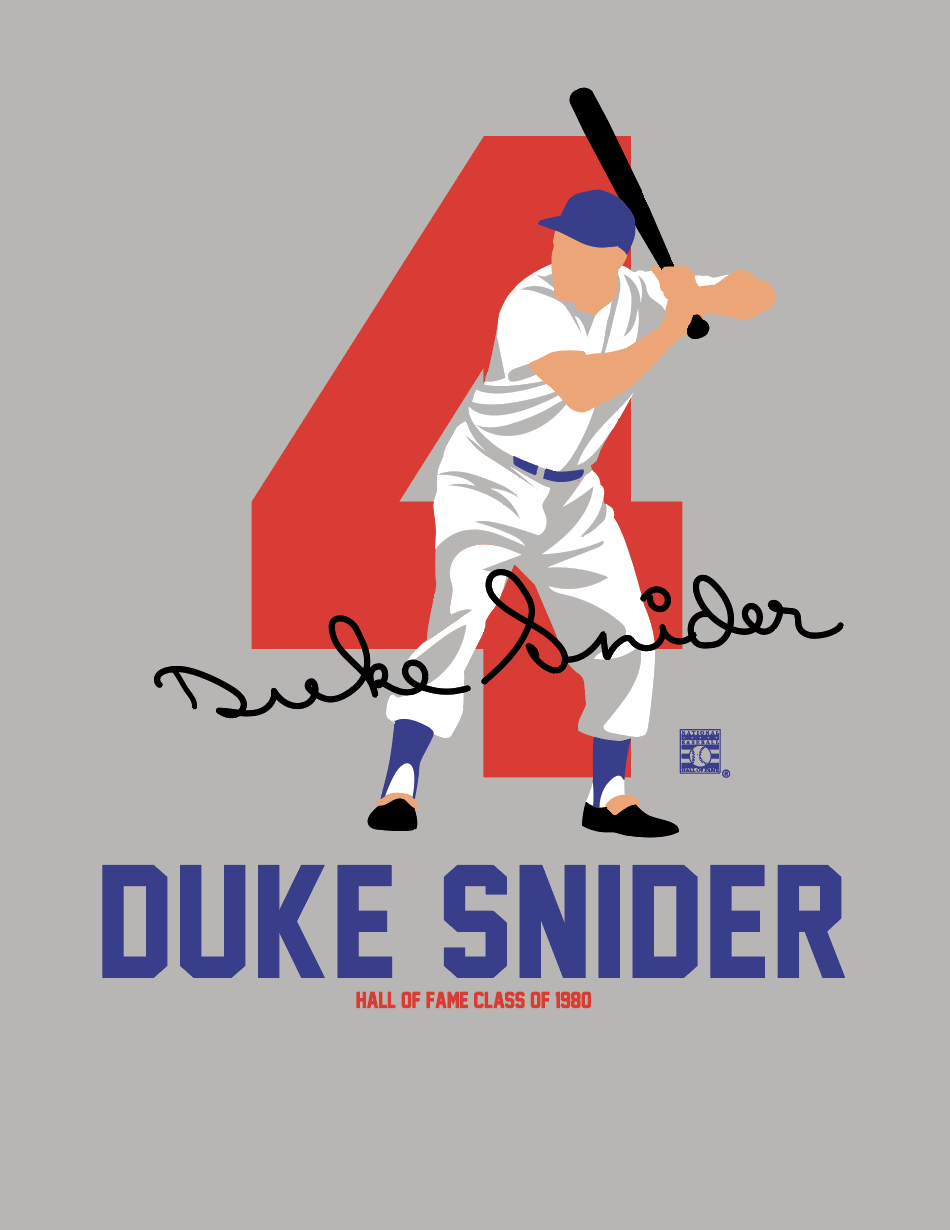
Duke Snider
Gary’s father grew up a Dodgers fan in the 1950s, so he would tell Gary about players like Duke Snider.
This illustration of Duke Snider is from an ongoing series by Gary.
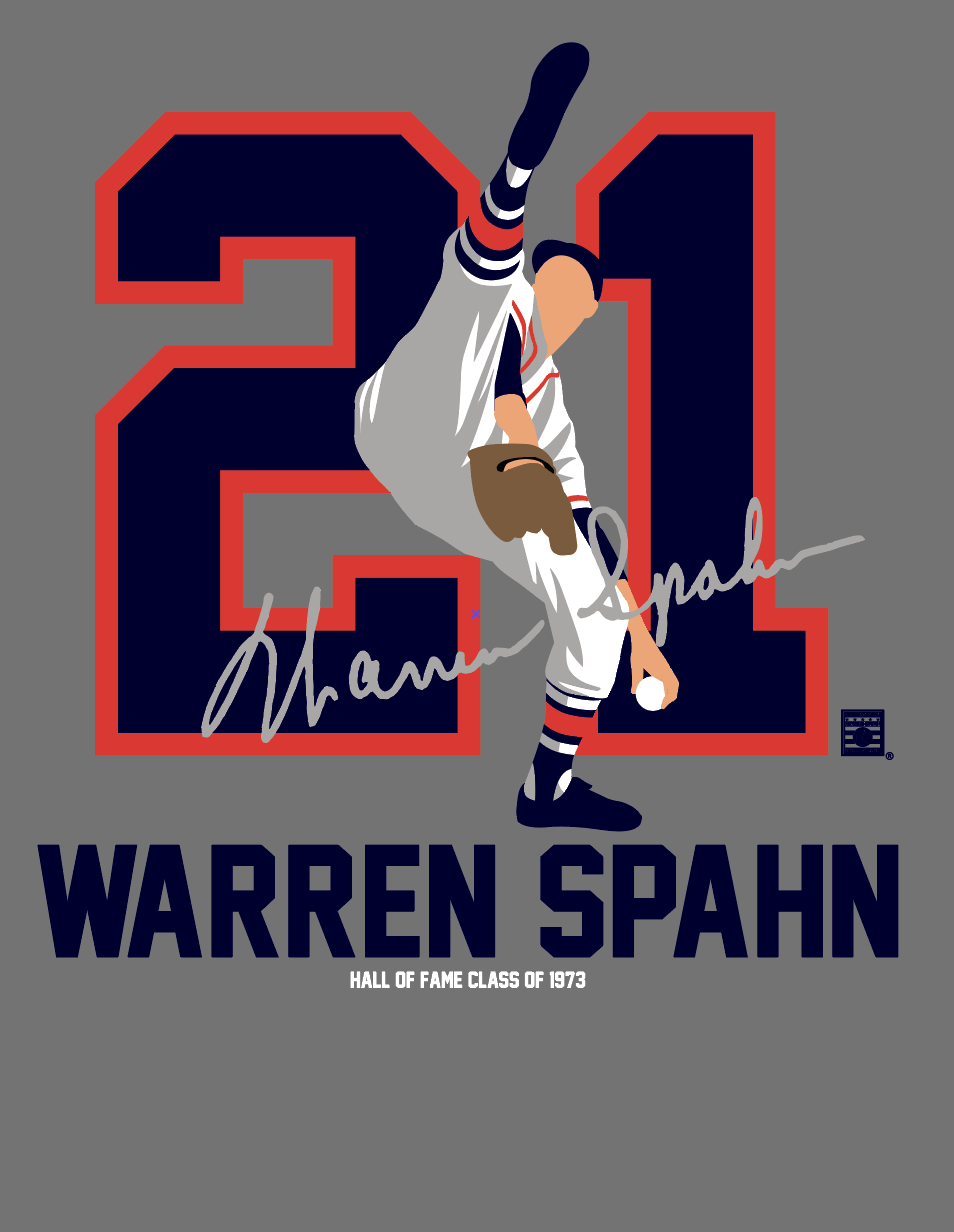
Warren Spahn
Gary’s father’s favorite player was Warren Spahn.
Here is another illustration from that ongoing series by Gary.
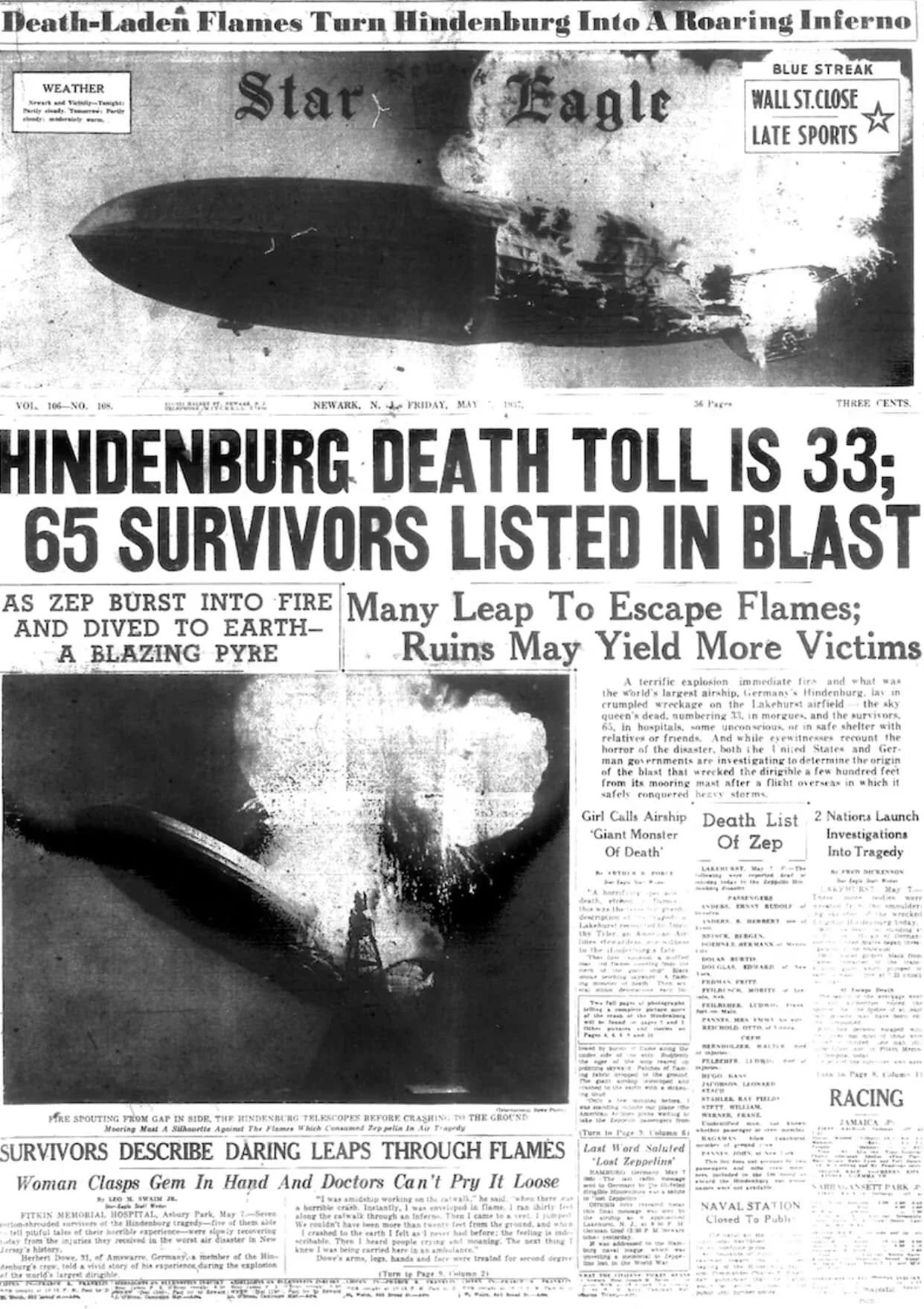
Researcher From An Early Age
By the time Gary was 11 years old, he was going to the public library on his own to research stories in the Newark Star-Ledger and other newspapers, trying to find stories about old baseball players and learning about the past.
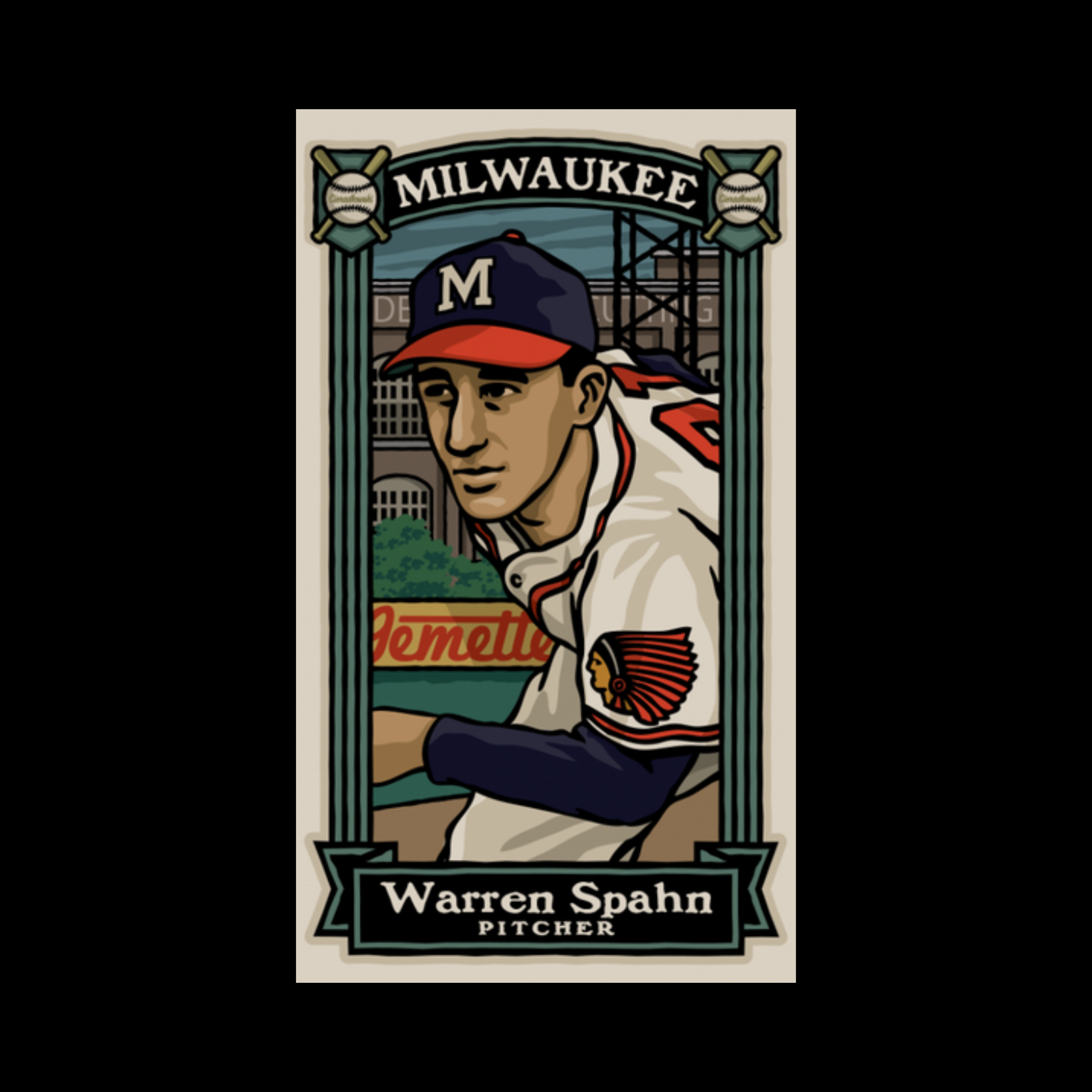
Warren Spahn
Gary’s dad’s favorite player being Warren Spahn didn’t make sense to me, considering he was a Dodgers fan. But when Gary explained that being a Dodgers fan made his dad despise the Yankees, and the Milwaukee Braves - led by Warren Spahn - defeated the Yankees in the 1957 World Series when Gary’s dad was just starting to fall in love with baseball, it all made sense.
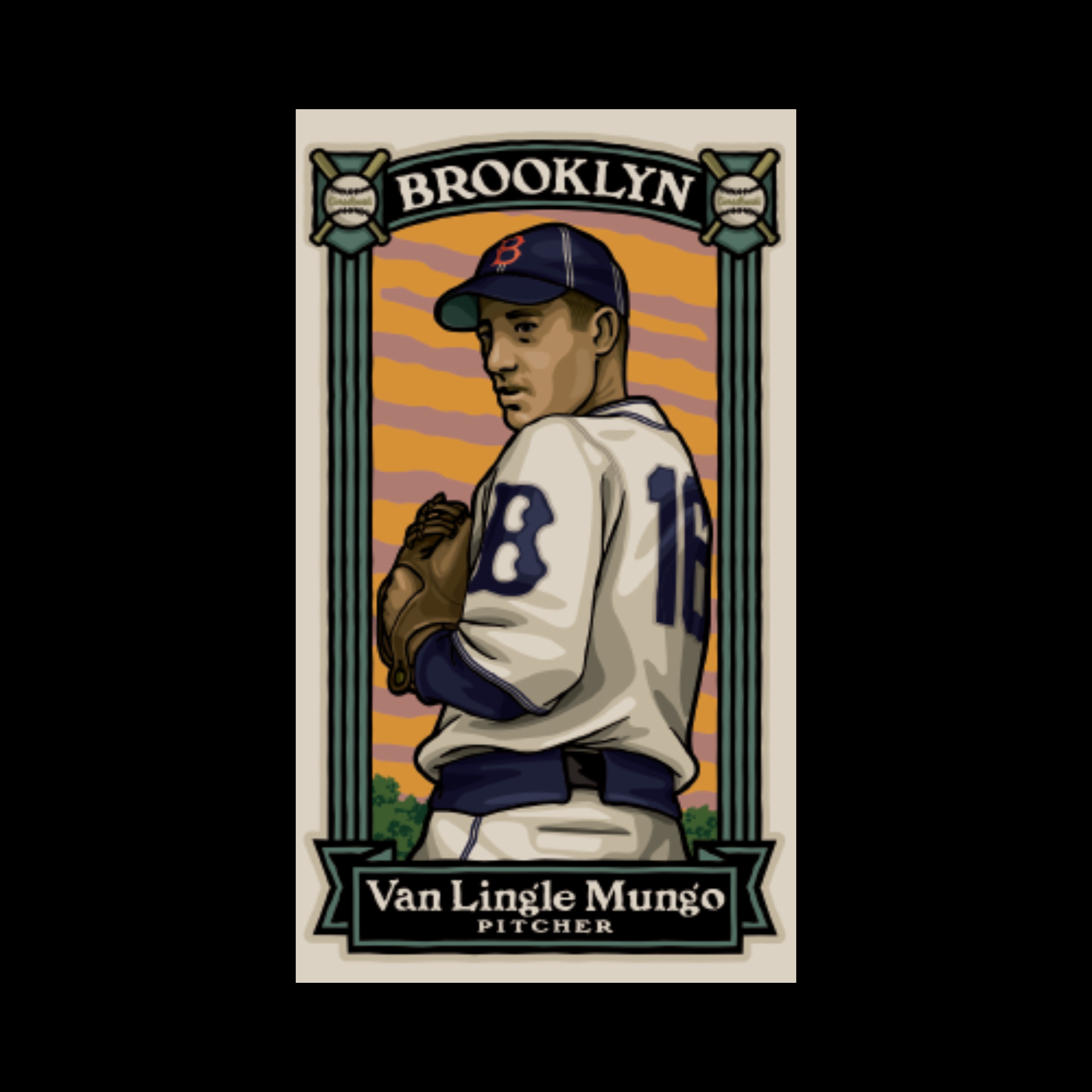
Van Lingle Mungo
Gary’s grandfather had been a Brooklyn Dodgers fan since the 1920s, so he would tell Gary stories about players like Jersey Joe Stripp and Van Lingle Mungo.
Gary’s blog post about Van Lingle Mungo
Van Lingle Mungo’s SABR Biography
Buy Gary’s Van Lingle Mungo card booklet HERE.
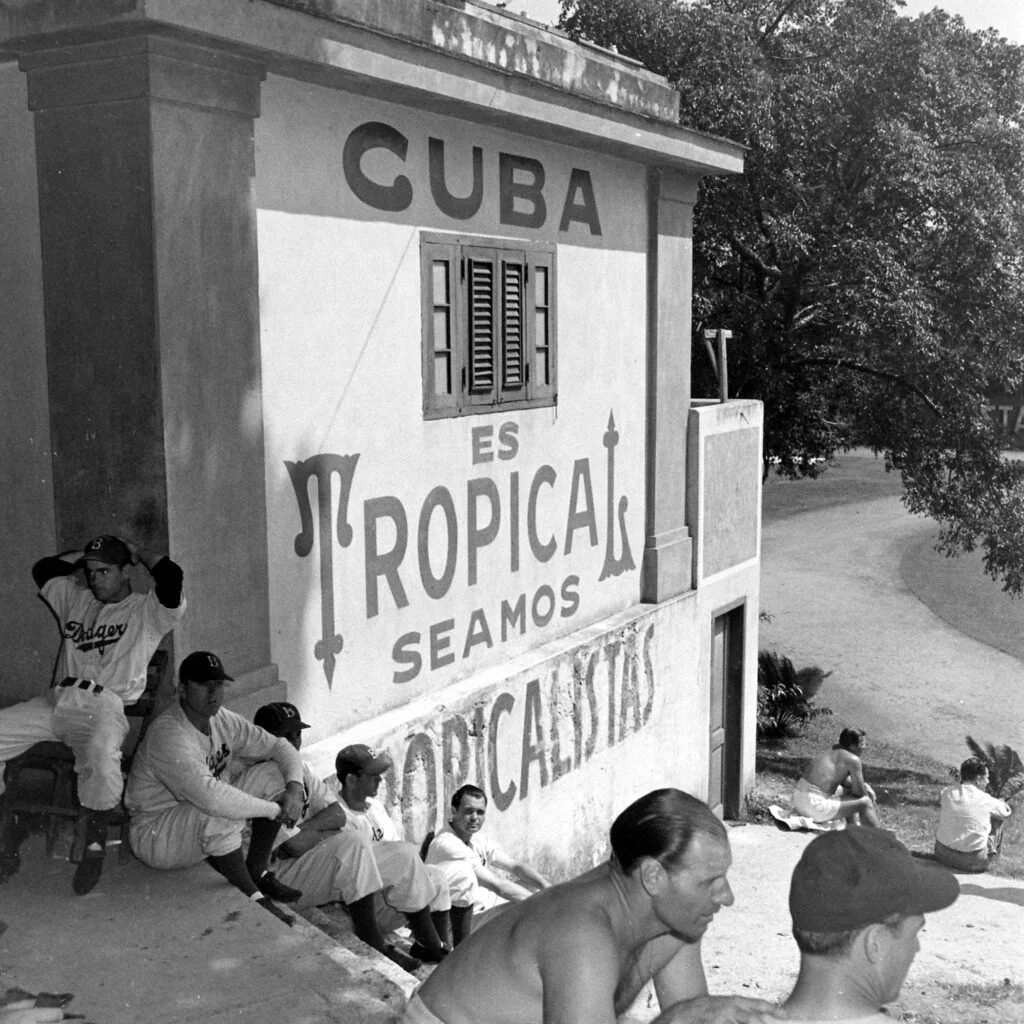
Leo Durocher
In the early 1940s, the Dodgers went to Havana, Cuba for Spring Training. Here, manager Leo Durocher and some of his players try to get out of the sun for a quick break.
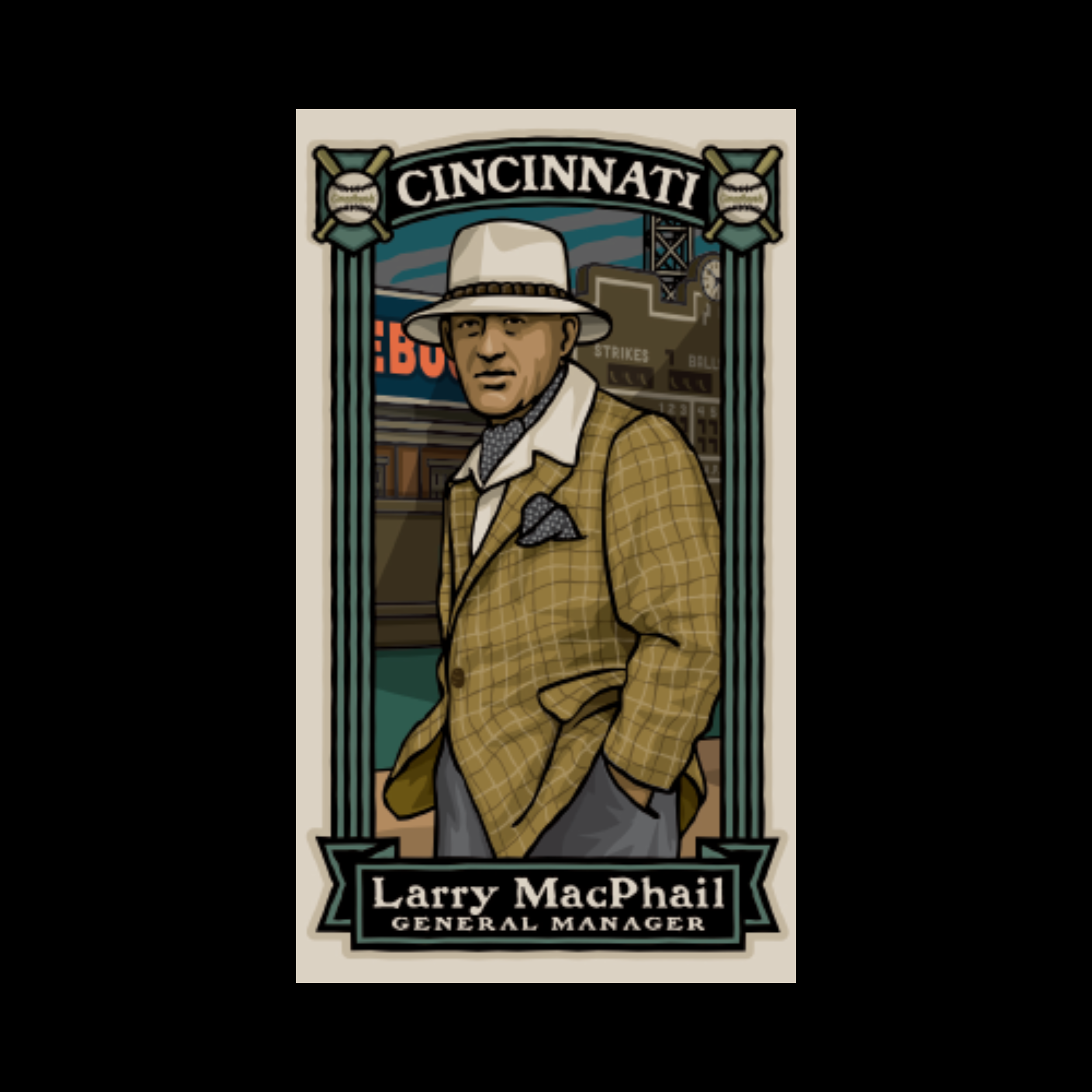
Larry MacPhail
Gary’s blog post about Larry MacPhail
Larry MacPhail’s SABR Biography
Buy Gary’s Larry MacPhail card booklet HERE.
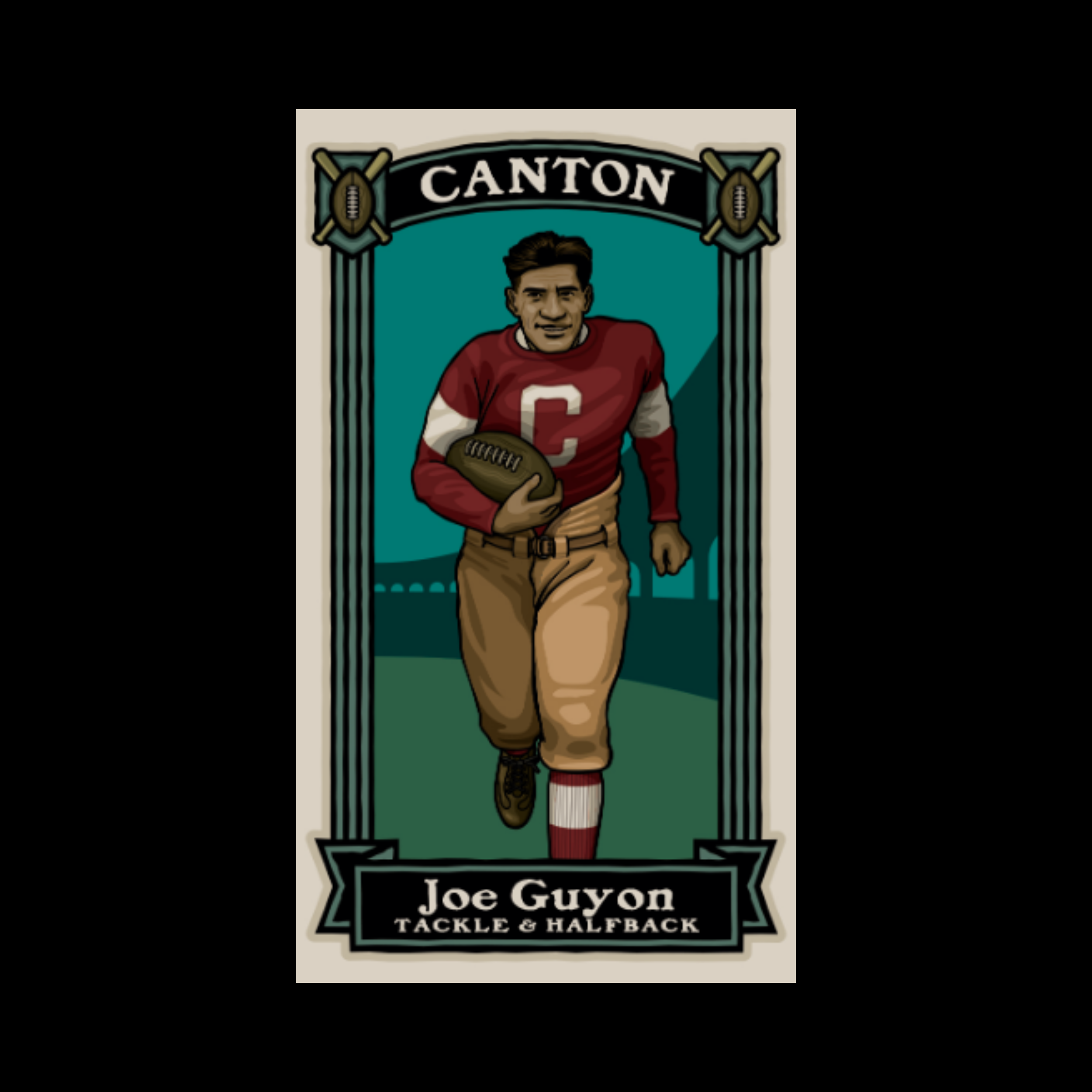
Football Cards
Gary remembers finding football cards in the attic when he was a kid, but not really baseball cards.
Gary’s blog post about Joe Guyon
Buy Gary’s Joe Guyon card booklet HERE.
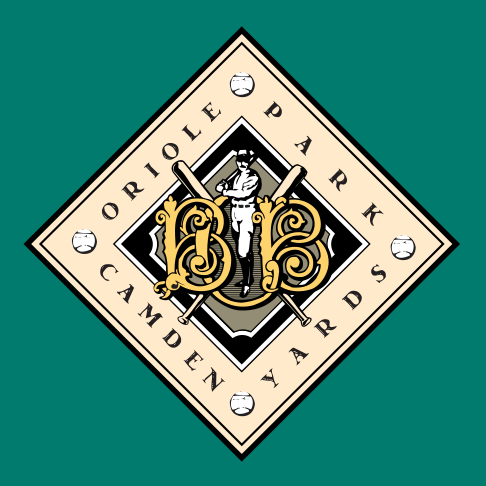
Oriole Park at Camden Yards
Still acknowledged as the best MLB ballpark by both players and fans, Oriole Park at Camden Yards was the first stadium that approached the graphics, both print and environmental, from a holistic standpoint.
All the pieces, from the tickets to the scoreboard, were designed with the same attention to detail and foresight. Gary used this philosophy back in 1991 when he designed Oriole Park with David Ashton and Company, and he still uses and believes in that philosophy today.

Janet Marie Smith
Janet Marie Smith stands in front of the B&O Warehouse overlooking Eutaw Street at Baltimore's Camden Yards, the first of several of her projects that have shaped the modern-day sports facility.
Janet and Gary had a shared love of baseball and baseball history, which made it easy for them to work together on designing Camden Yards.
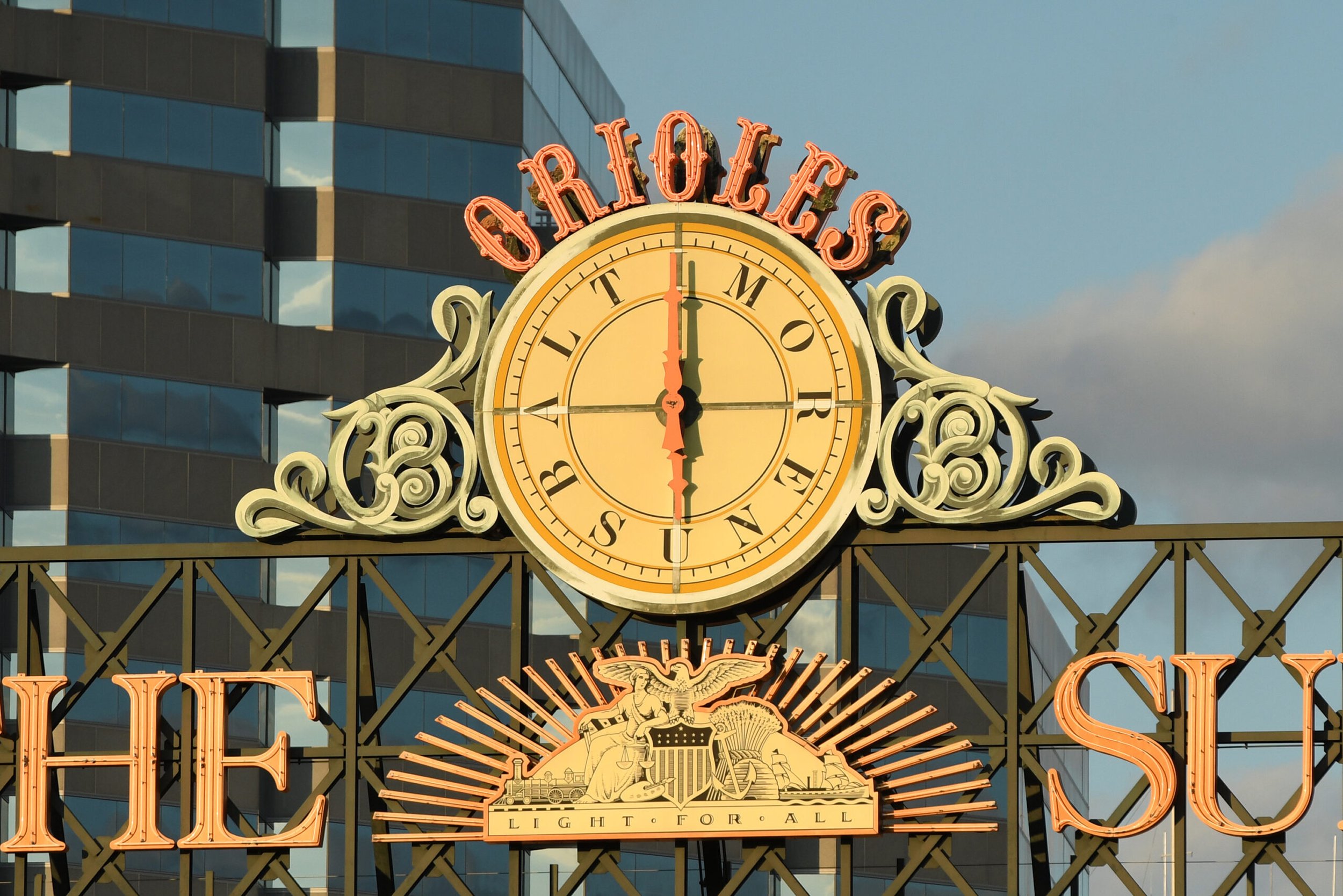
Best Sign Design 1992
Gary has received many awards for his design work over the years, but the most important to him was actually his first: he received the “Best Sign Design 1992” award for his design of the clock at Oriole Park at Camden Yards.
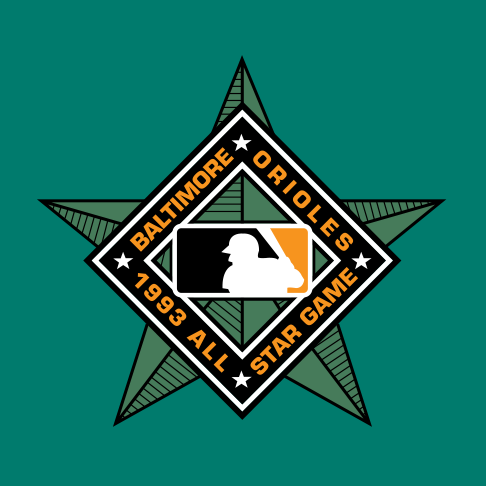
1993 MLB All-Star Game Logo
This logo for the 1993 Major League Baseball All-Star Game, which Gary designed, incorporated the classic design elements used in Oriole Park at Camden Yards with the modern Major League Baseball logo.
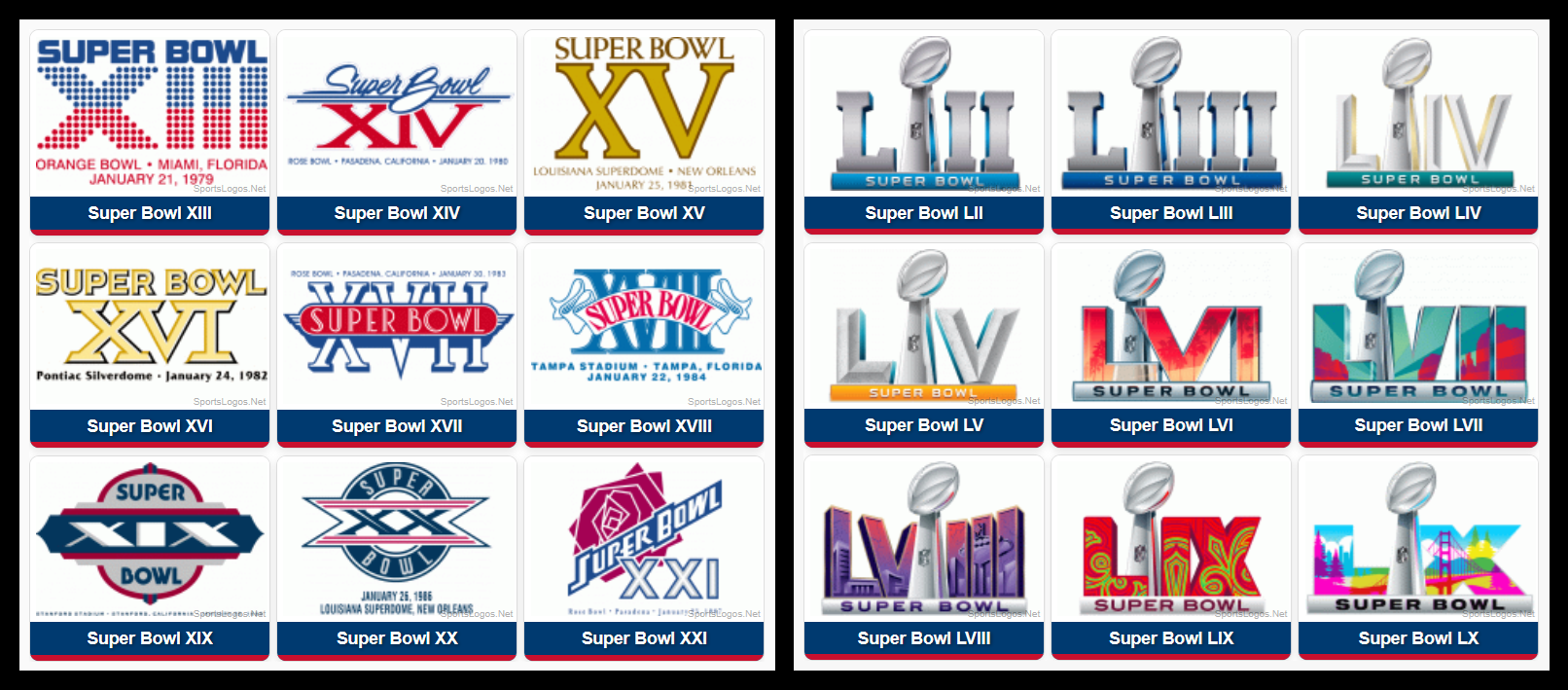
Look at the difference between the Super Bowl logos from 1979-1987 (left) and the logos from 2018-2026 (right), courtesy of SportsLogos.net
Dr. Bob Hieronimus
Dr. Bob Hieronimus is an educator, artist, author, activist and has been an acknowledged pioneer in the "New Paradigm" movement since 1971.
In the late 1960s Hieronimus traveled with Elektra Records and recording artists such as Jimi Hendrix, the Doors, and Janis Joplin to design posters and album covers and share info on esoterica.
Hieronimus has a long career as a muralist and painter. His occult and symbolic murals include the 2,700-square-foot prophetic Apocalypse completed during 1968–1969 at the Johns Hopkins University, which led to Hieronimus being called "one of this country's best muralists". The Historic Views of Baltimore 1752–1858 mural was completed in 1976 and is housed in the War Memorial Building Baltimore, Maryland.
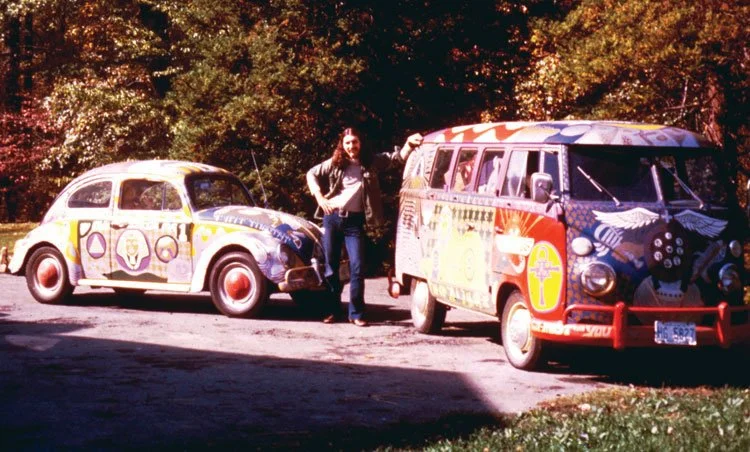
The Woodstock Bus
Hieronimus's most famous artcar, the Volkswagen bus "Light" (better known as "the Woodstock bus"), was photographed by the Associated Press and Rolling Stone at the original 1969 Woodstock, and is still seen today regularly reprinted in media all over the world.
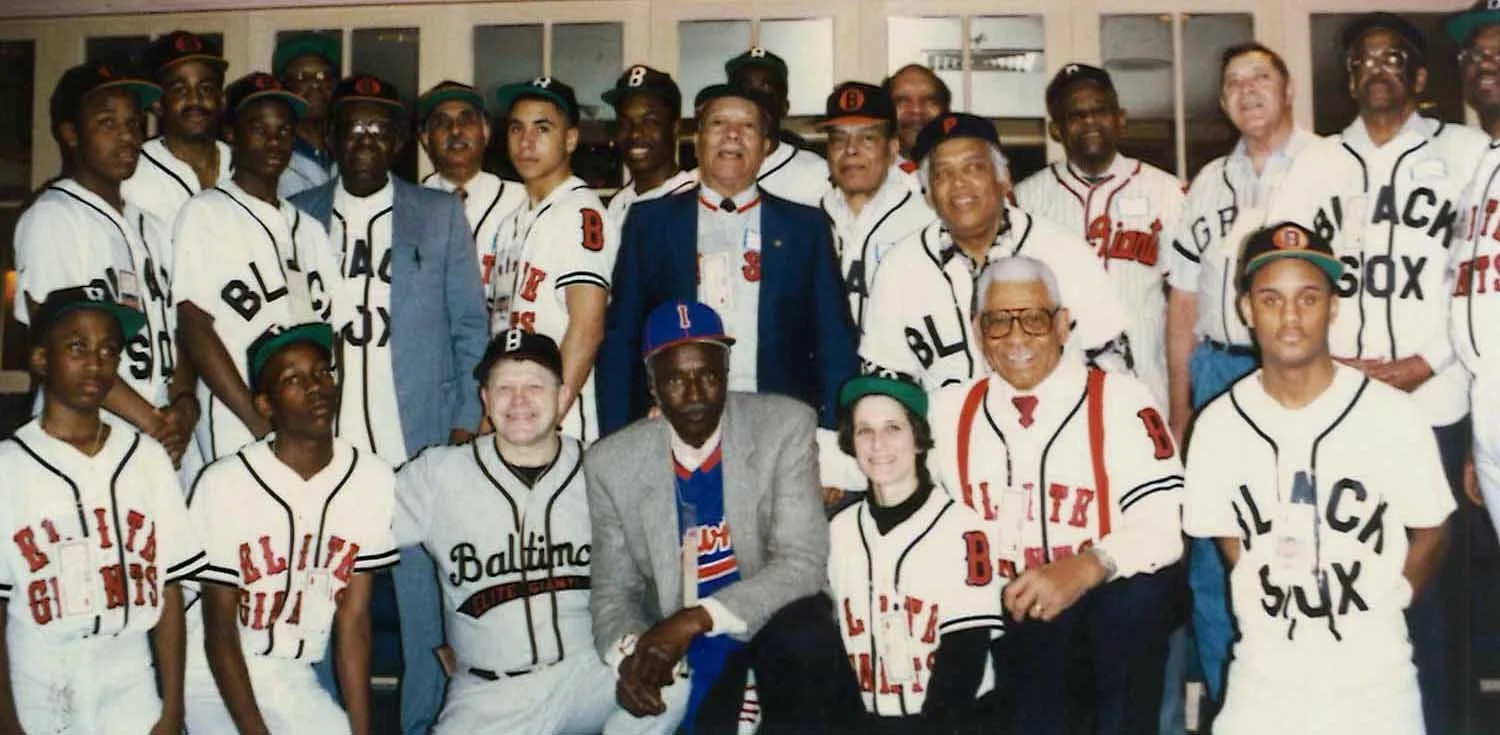
A shared love and passion for the Negro Leagues led Dr. Bob Hieronimus to introduce Gary to Leon Day, among others.
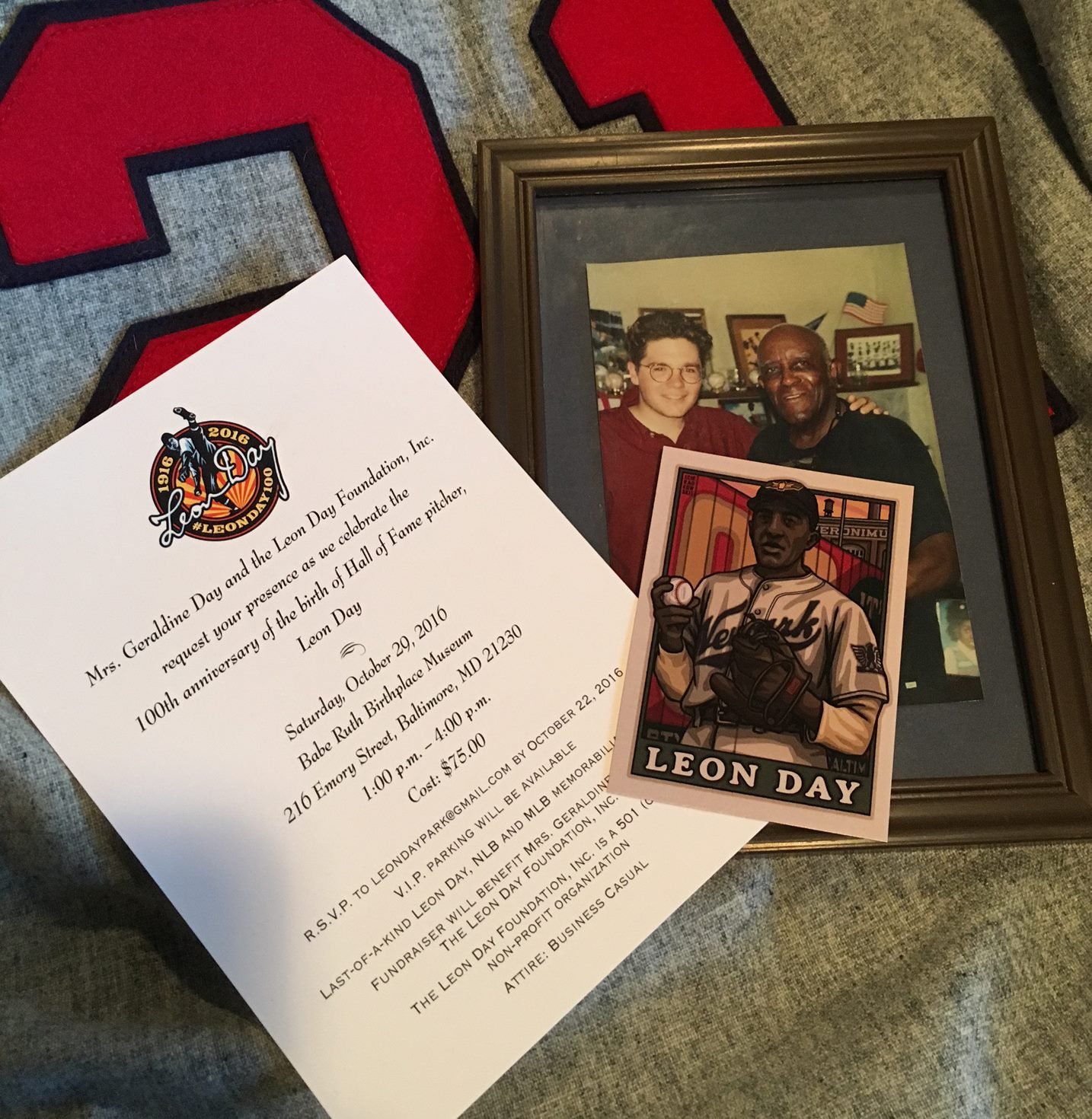
Leon Day
Gary struck up a friendship with Leon Day, who once threw an Opening Day No-Hitter in the Negro Leagues.
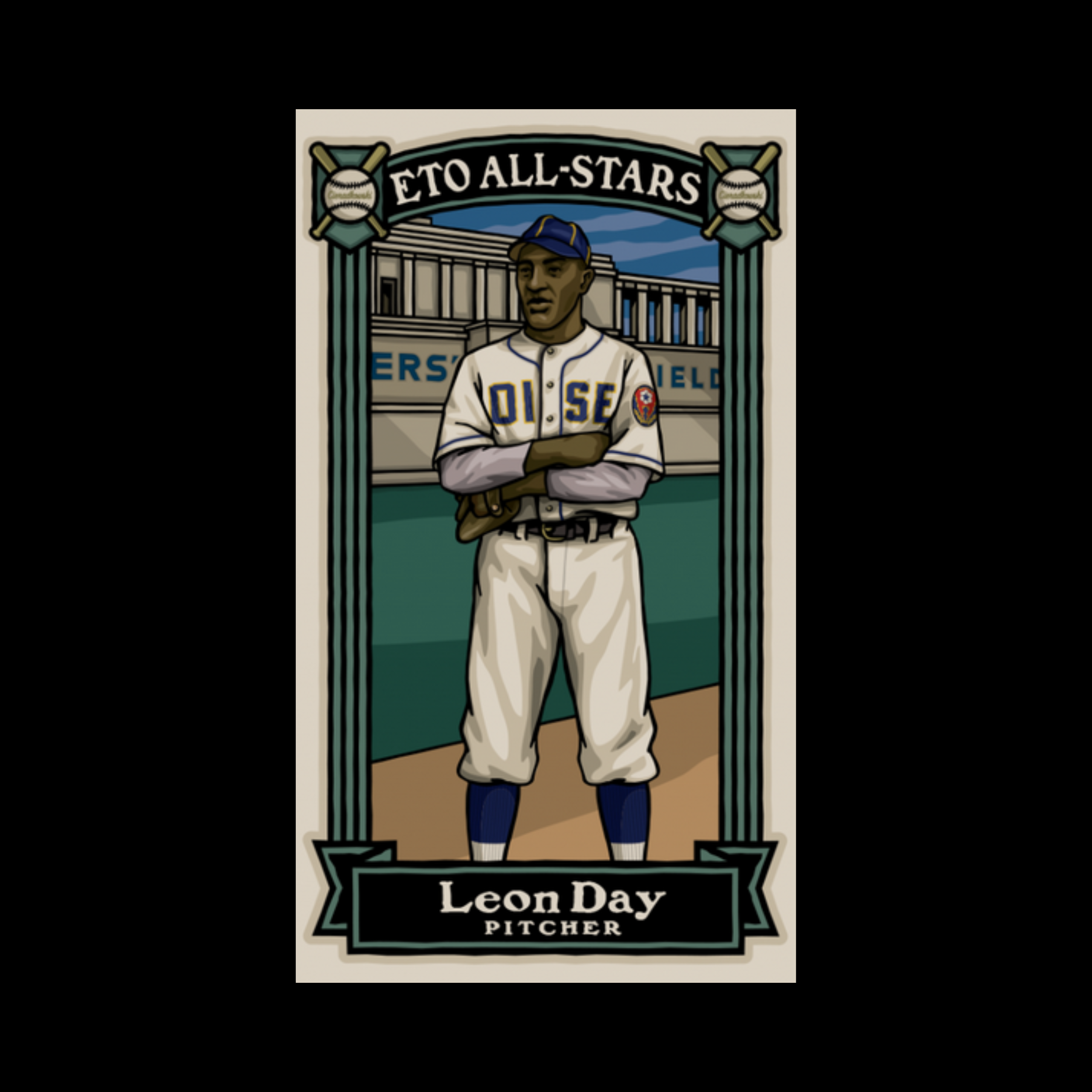
1945 G.I. World Series
The 1945 G.I. World Series was played at Stadion der Hitlerjugend, the Hitler Youth Stadium in Nuremberg. Leon Day pitched Game 2, which he said was the most memorable game of his career.
Gary’s blog post about the 1945 G.I. World Series
Buy Gary’s Leon Day card booklet HERE.
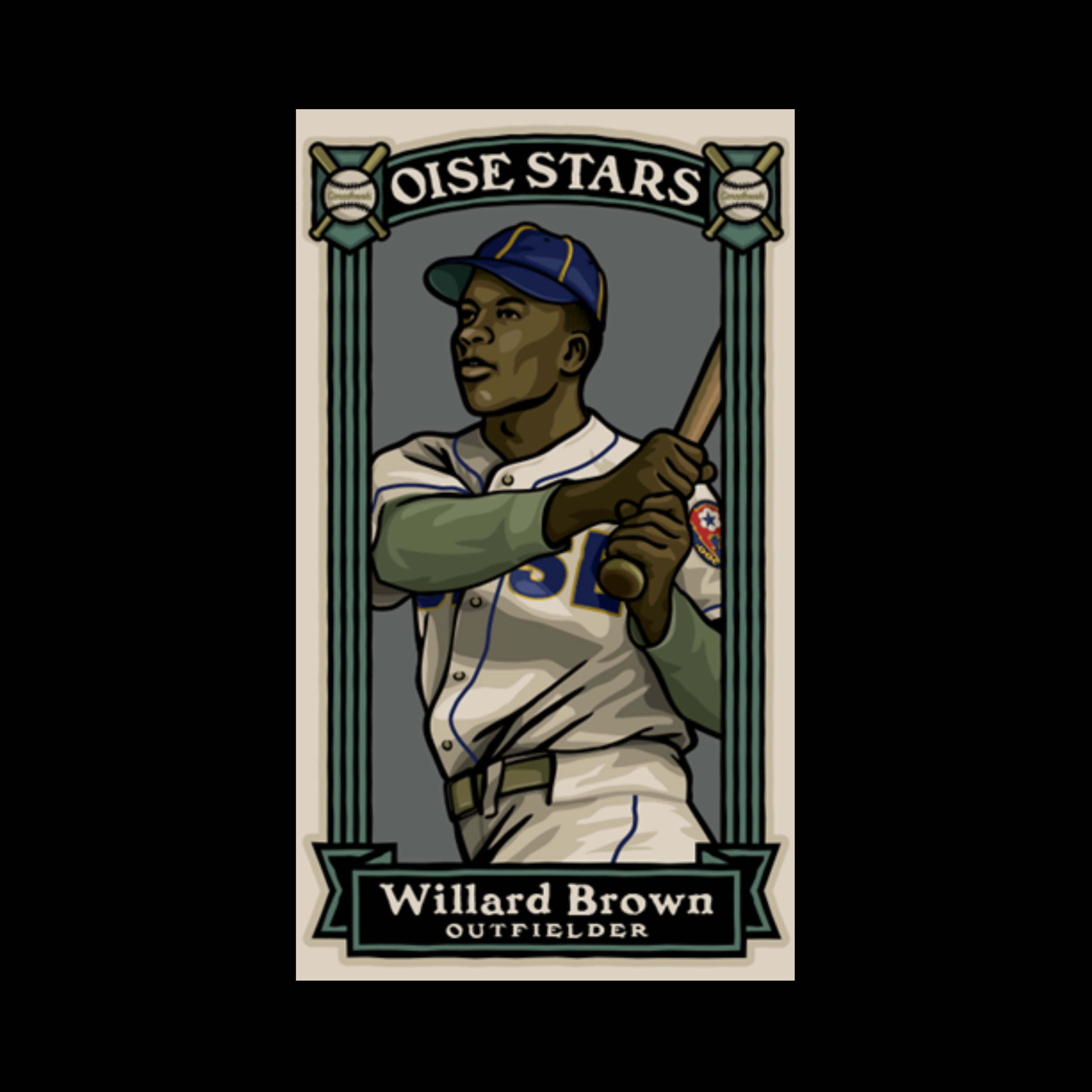
Willard “Home Run” Brown
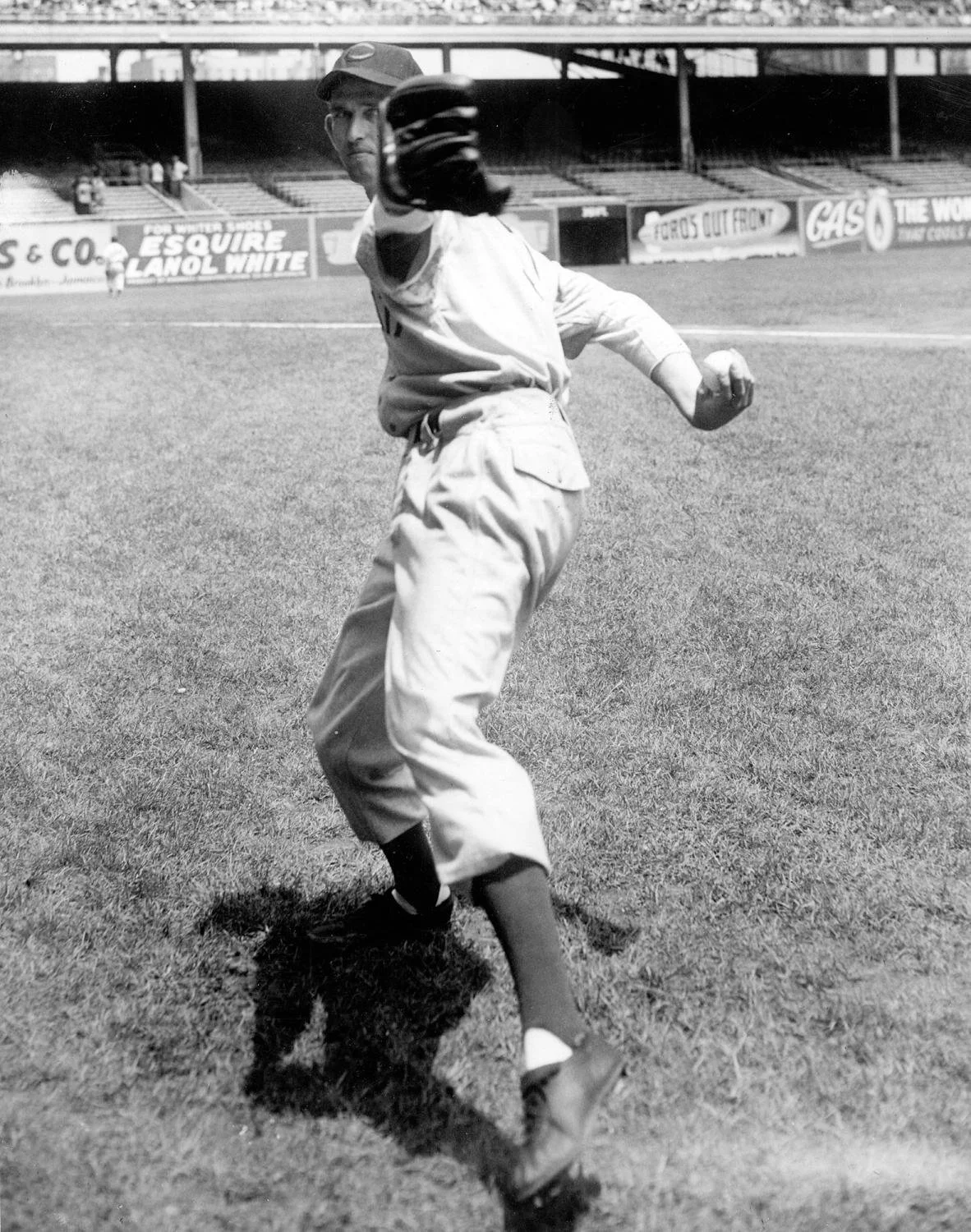
Ewell Blackwell
Cincinnati Reds' pitcher Ewell Blackwell had gone undefeated and thrown a no-hitter in the playoffs leading up to the 1945 G.I. World Series.
In front of 50,000 fans in the first game of the Series, "The Whip" baffled the OISE batters with his sidearm, buggy whip delivery, striking out nine for the win.
The Push For Leon
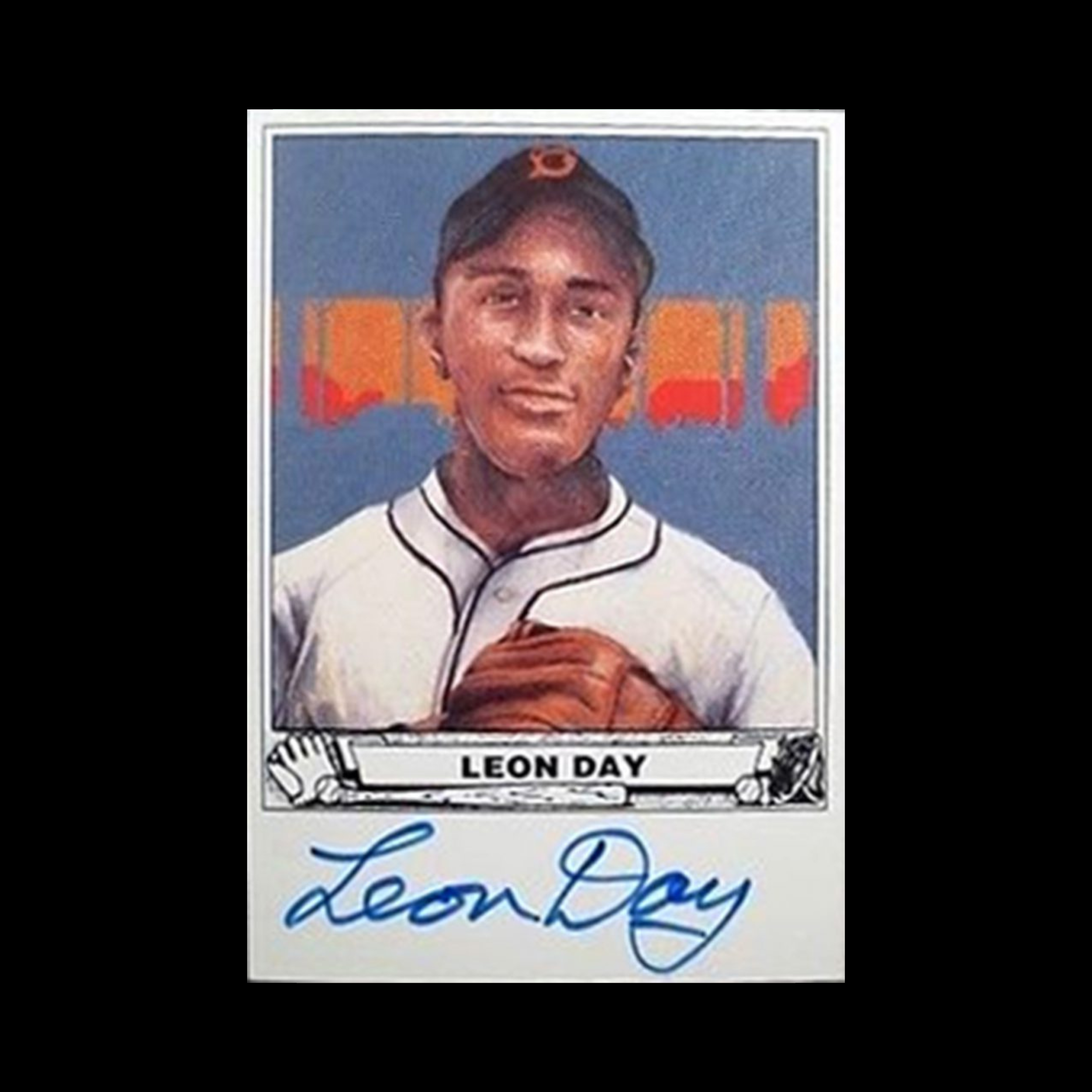
Dr. Bob Hieronimus was instrumental in getting Leon Day into the Hall of Fame, but he didn’t do it alone.
Gary helped by creating artwork to help with the PR push, such as this baseball card which was sent to local media outlets as part of Dr. Bob’s Hall of Fame campaign for Day.
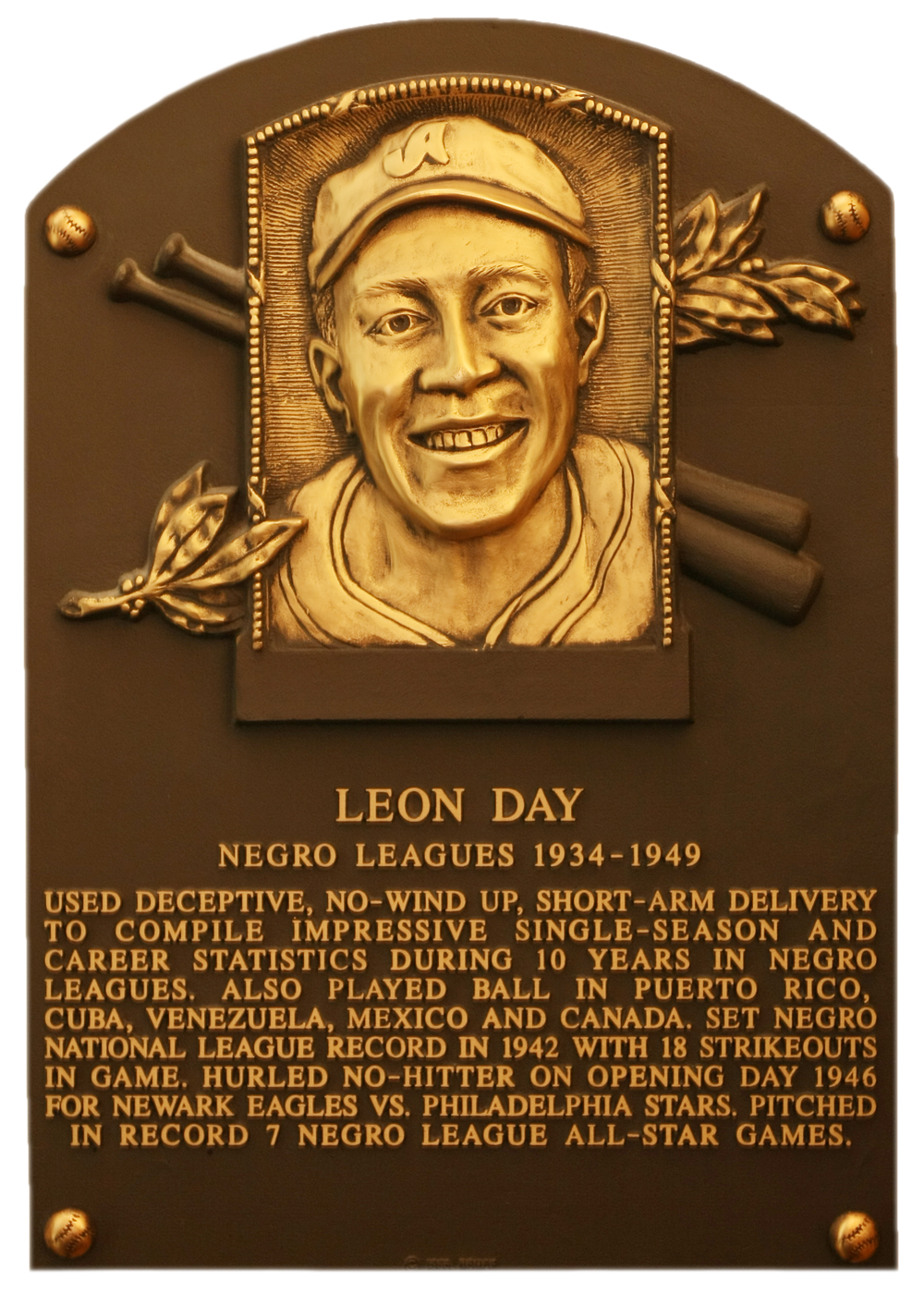
Hall of Famer, Leon Day
“People don't know what a great pitcher Leon Day was. He was as good or better than Bob Gibson. He was a better fielder, a better hitter, could run like a deer. When he pitched against Satchel, Satchel didn't have an edge. You thought Don Newcombe could pitch. You should have seen Day! One of the best complete athletes I've ever seen.”
– Monte Irvin
Leon Day was inducted into the National Baseball Hall of Fame as part of the Class of 1995.
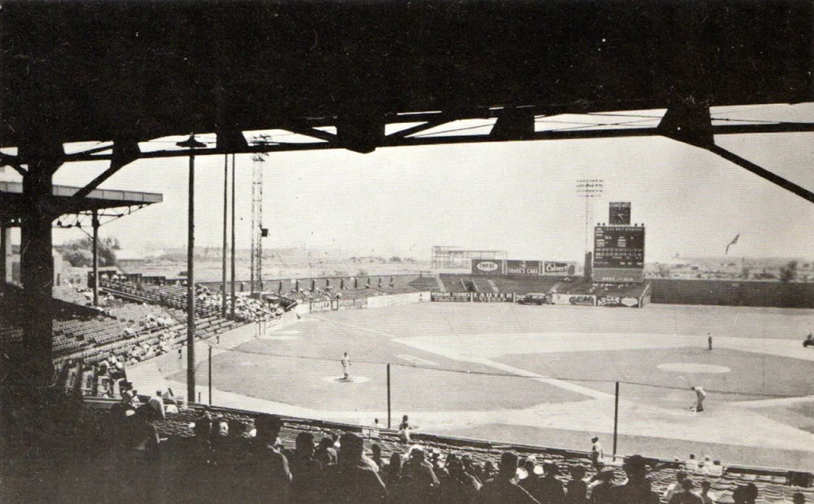
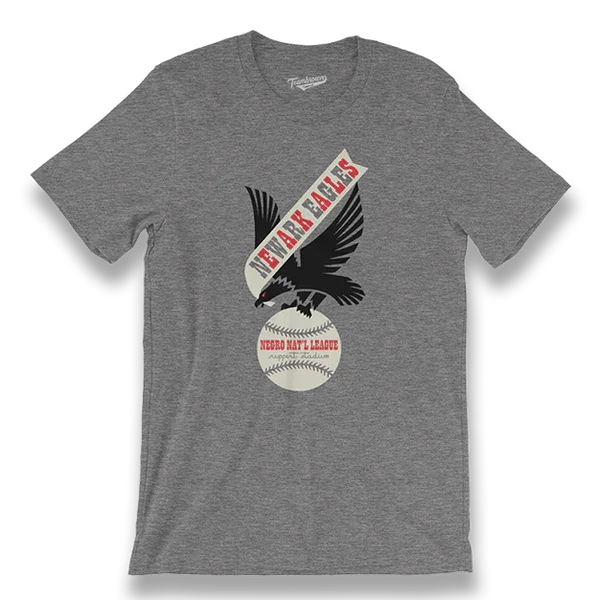
Newark Eagles
From 1936 to 1948, the Newark Eagles played in Ruppert Stadium in New Jersey, where both of Gary’s grandfathers routinely went to see games.
Originally named Davids' Stadium after Newark Bears owner Charles L. Davids, it was home to the minor league Newark Bears of the International League from 1926-49, and to the Newark Stars of the Eastern Colored League in 1926.
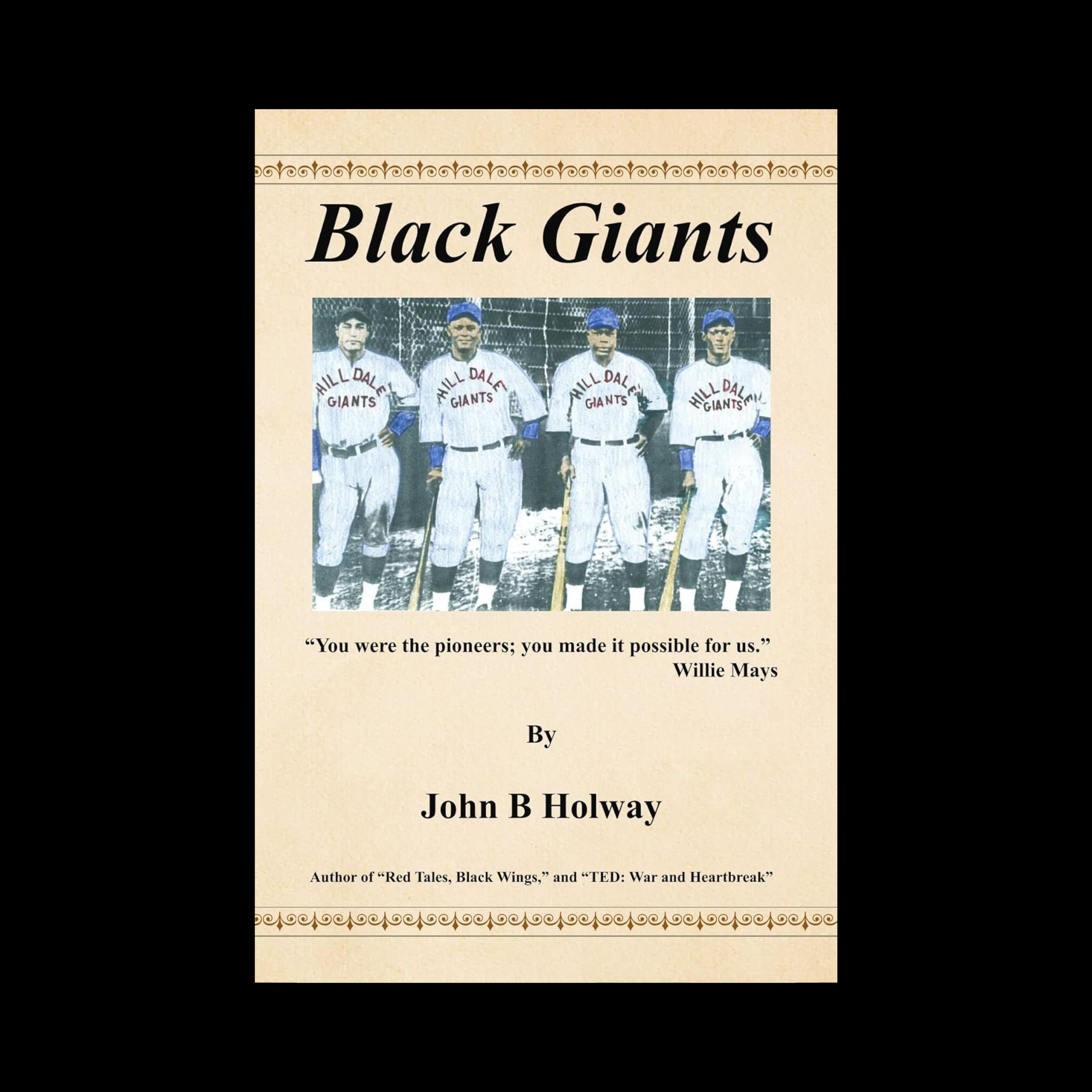
John B. Holway
John Holway’s contributions to Negro Leagues research were influential for generations of future scholars. His interest in Black baseball began in 1945, when as a teenager he attended a game between the Kansas City Monarchs and Homestead Grays at Griffith Stadium in Washington, DC, featuring two all-time greats, Satchel Paige and Josh Gibson.
Buy Black Giants by John Holway HERE.
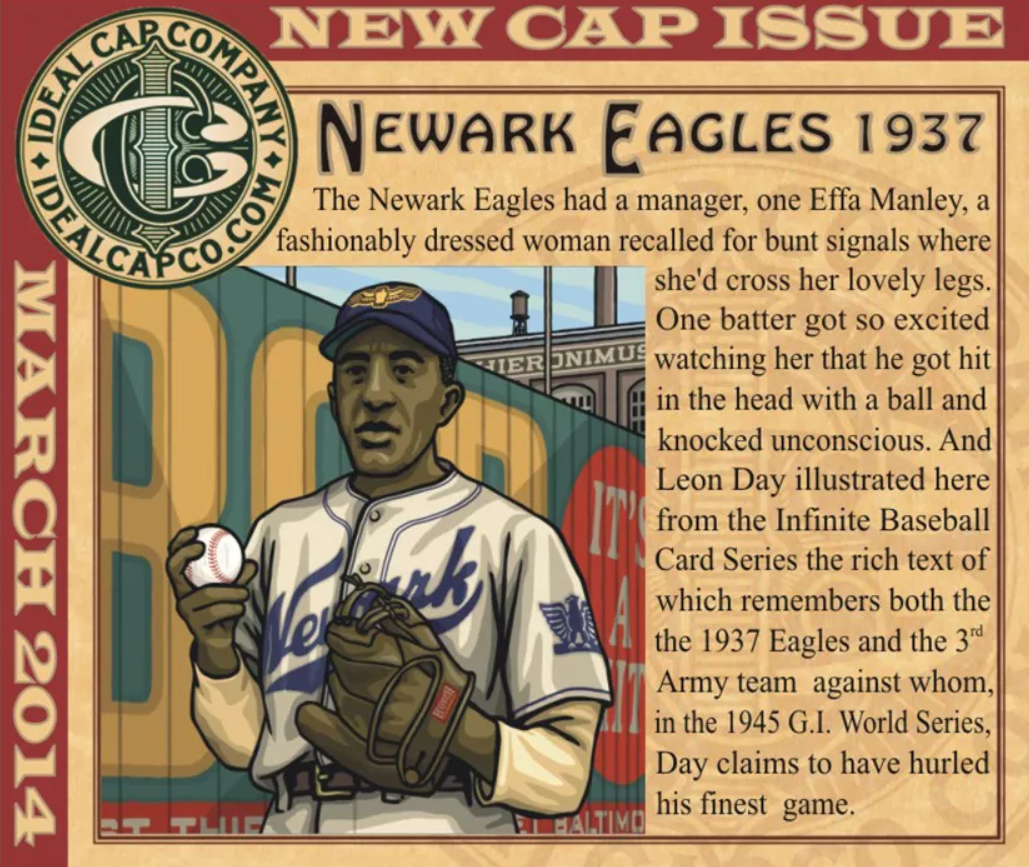
Ideal Cap Co.
Will Arlt of the Ideal Cap Co. in Cooperstown produced this 1937 Newark Eagles hat after seeing Gary’s illustration of Leon Day wearing it.
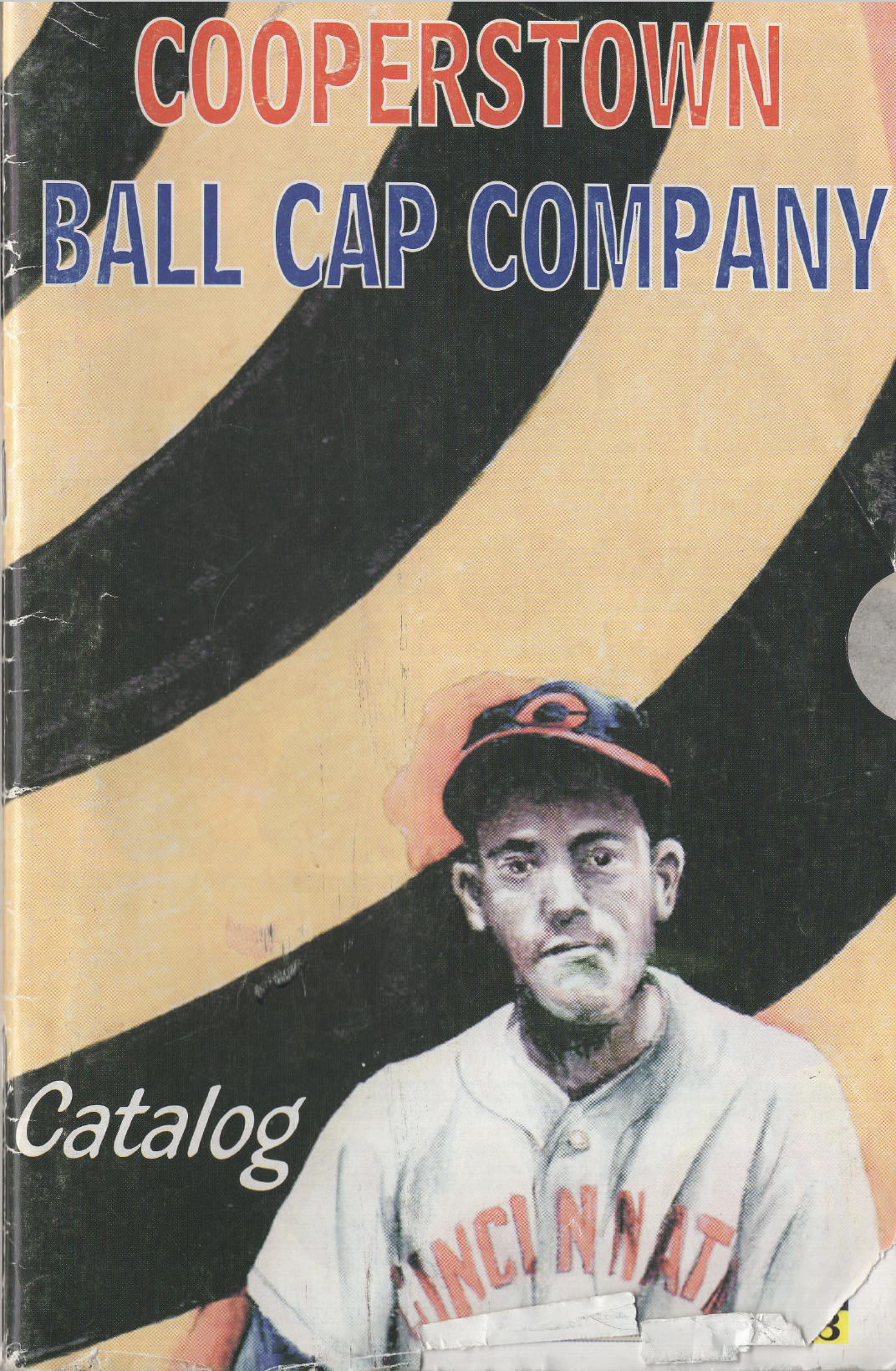
Gary’s First Client
Gary drew hundreds of illustrations of baseball caps for Will Arlt in exchange for the hats that Will was producing for the Ideal Cap Co.
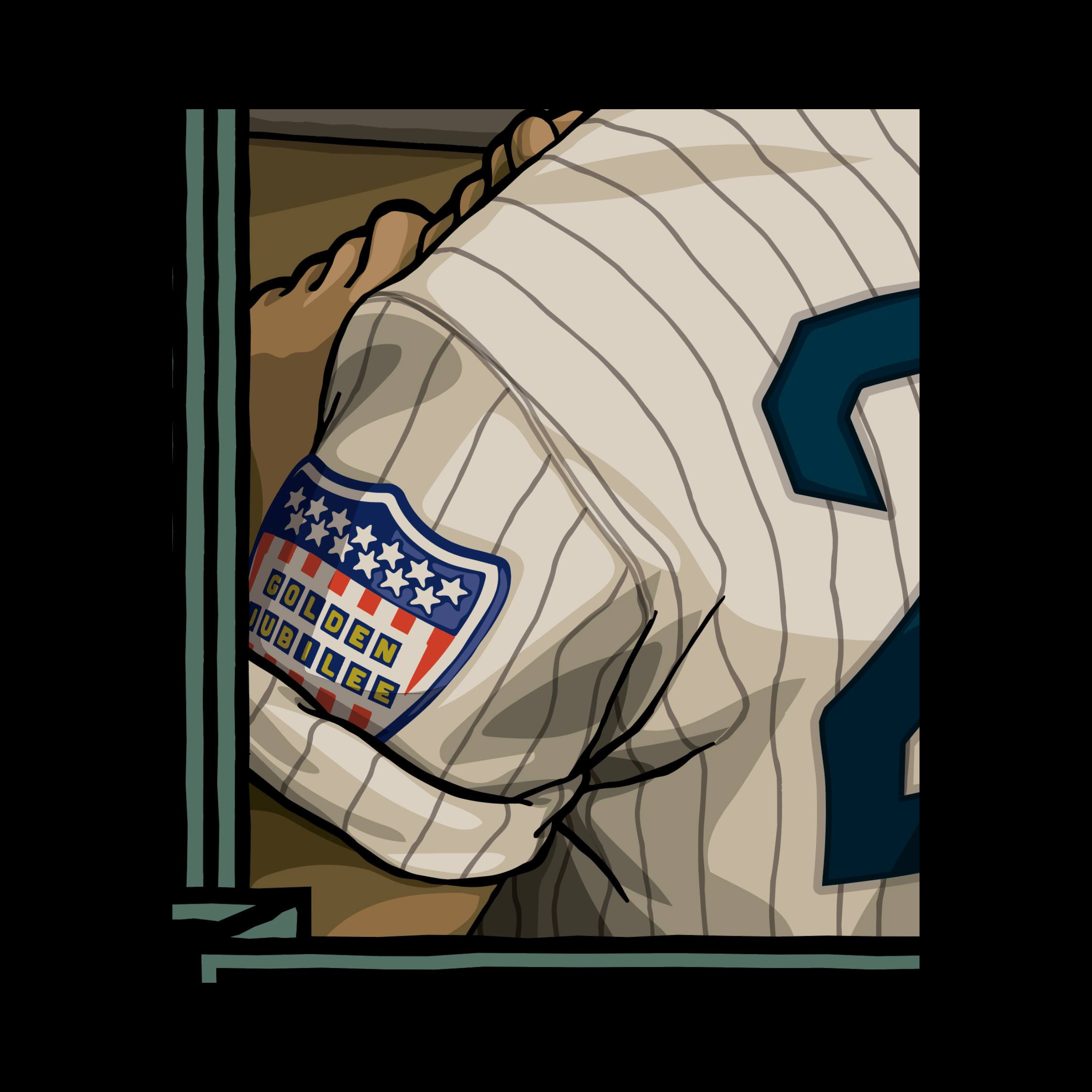
Patch Perfect
Gary’s attention to detail would make Will proud. He strives on getting colors right, as well as placing things accurately, thanks to his meticulous research.
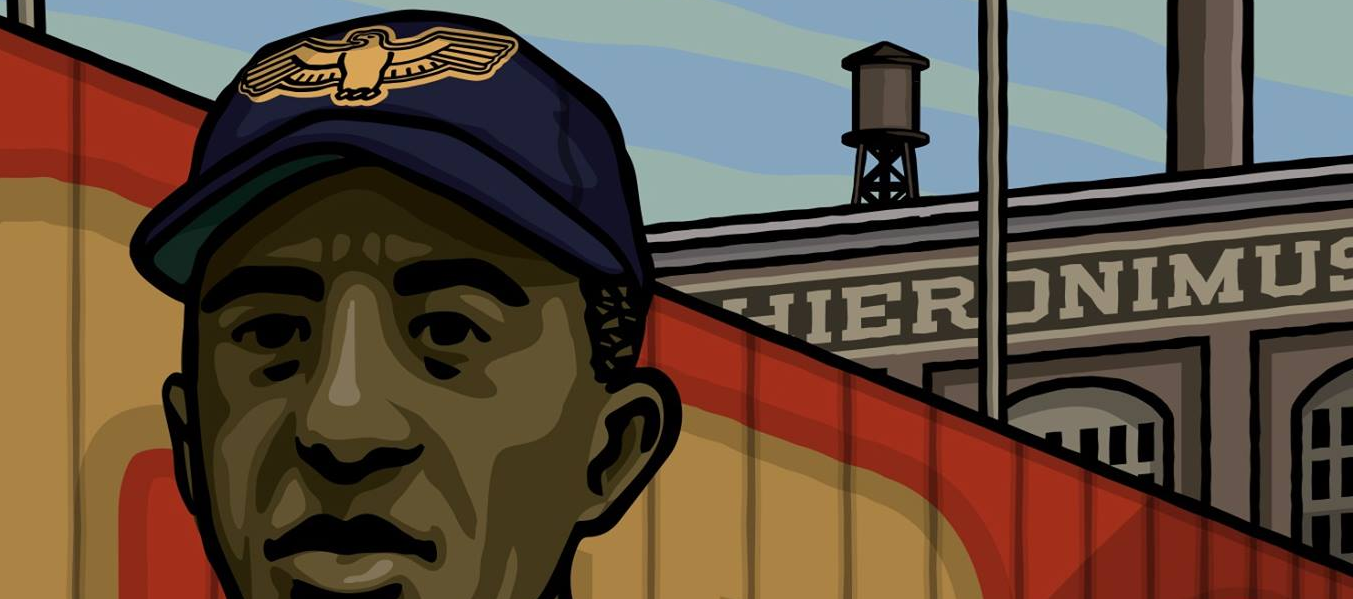
Easter Eggs
One of the best parts about seeing Gary’s larger pieces is being able to make out the signage in the backgrounds easier, since they often have hidden messages or nods to his friends or clients.
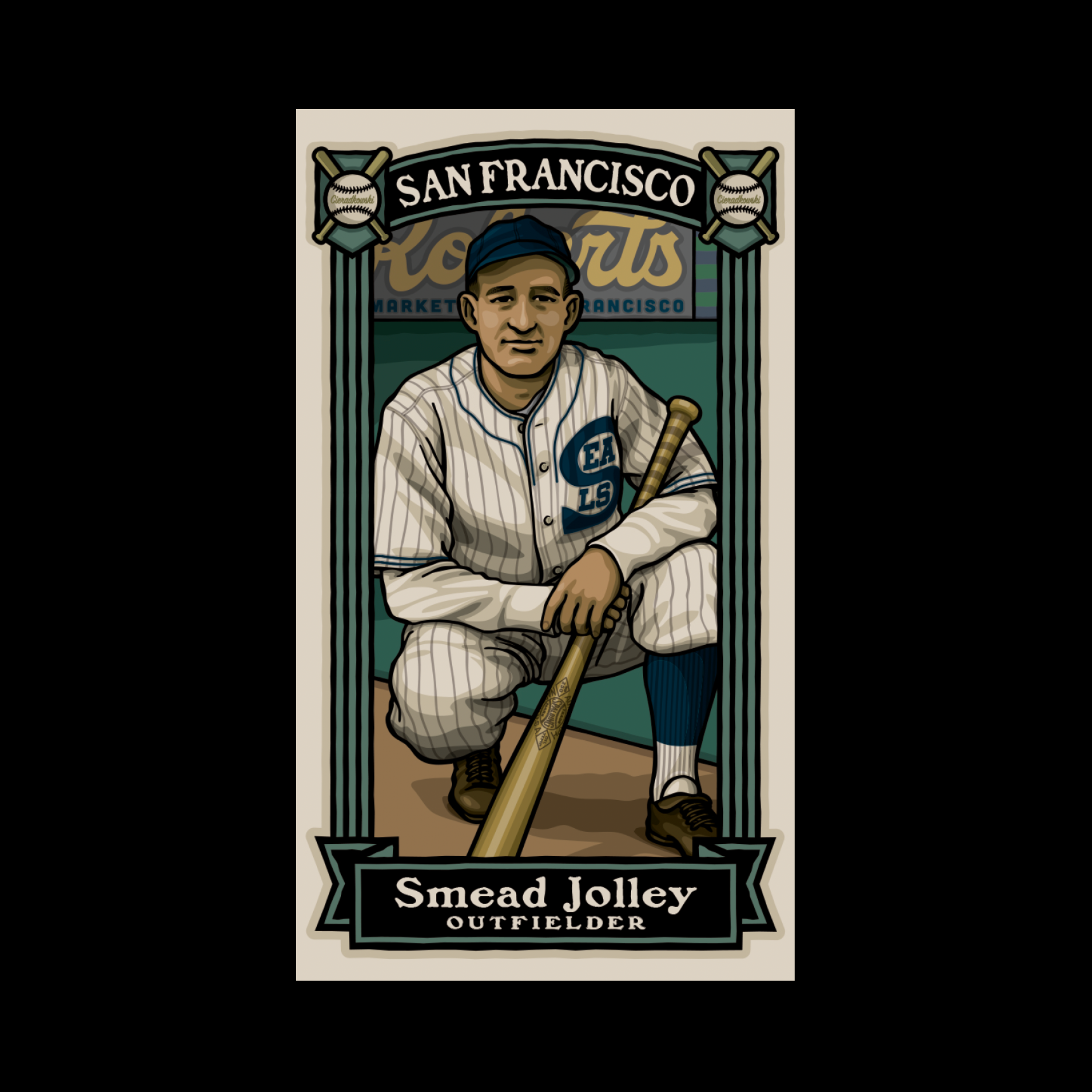
Smead Jolley
Gary’s blog post on Smead Jolley
Buy Gary’s Smead Jolley card booklet HERE.
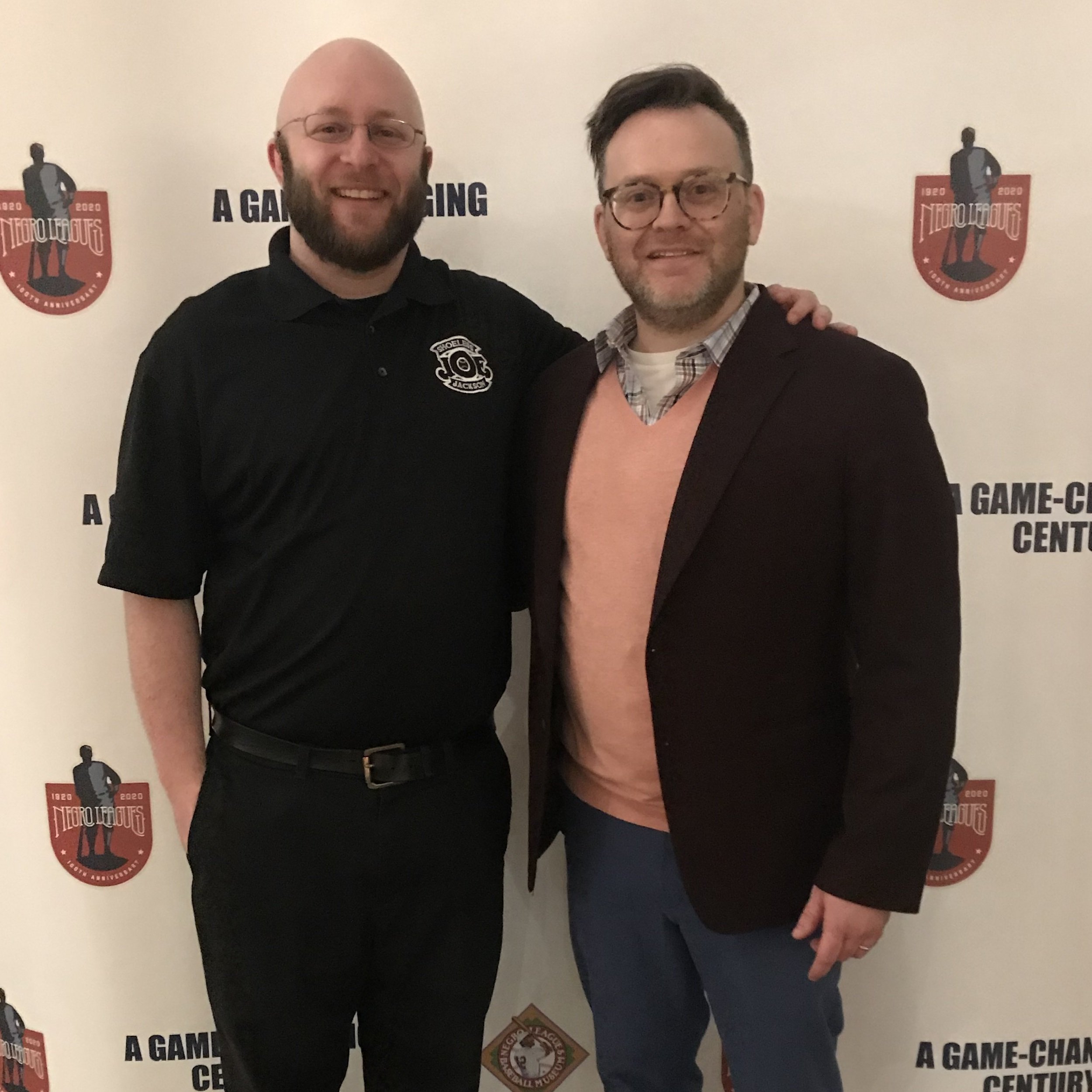
Graig Kreindler
Graig Kreindler is also a renowned baseball artist, historian, and researcher.
He was our guest for Episode 3 of Season 1. You can listen to that episode HERE.
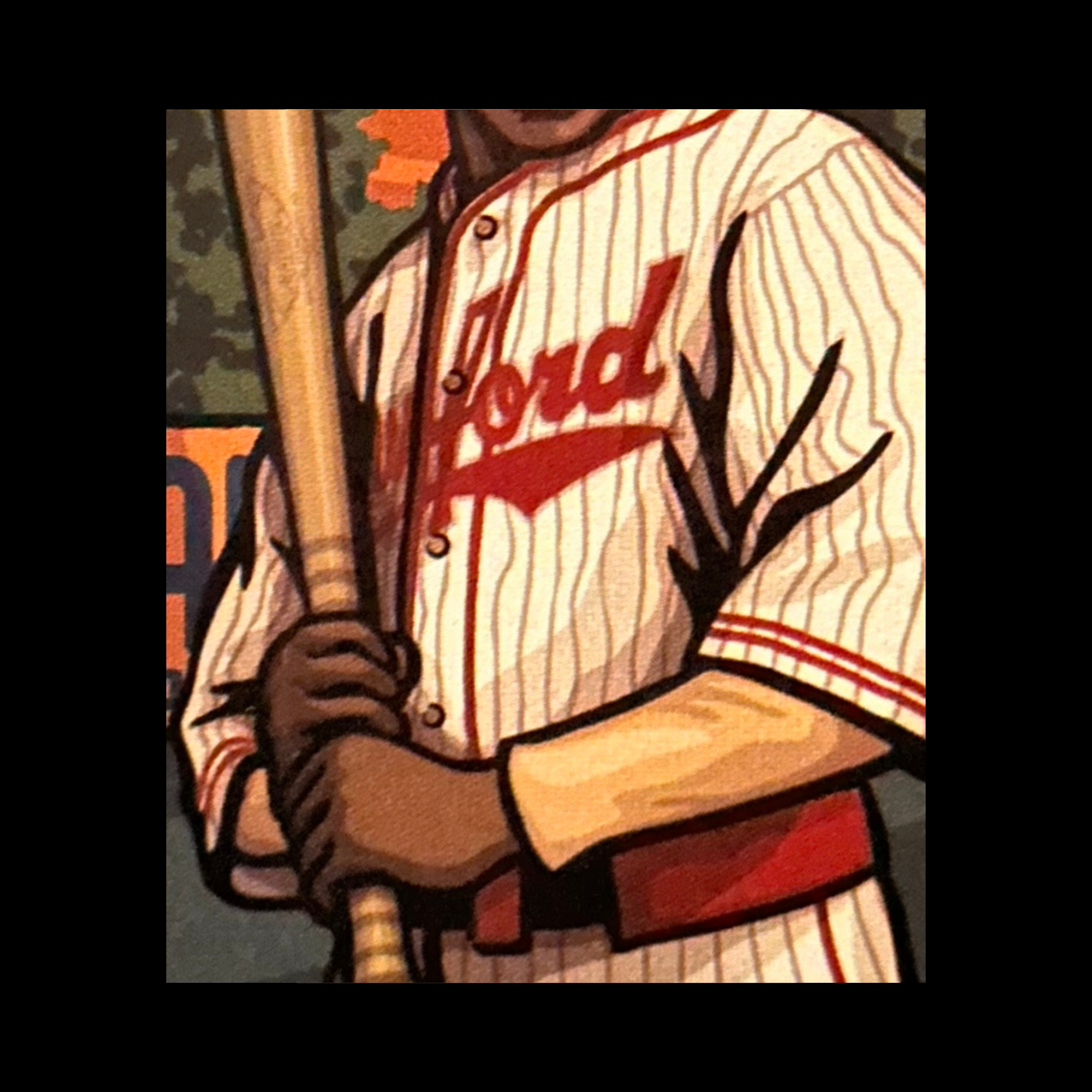
Pittsburgh Crawfords
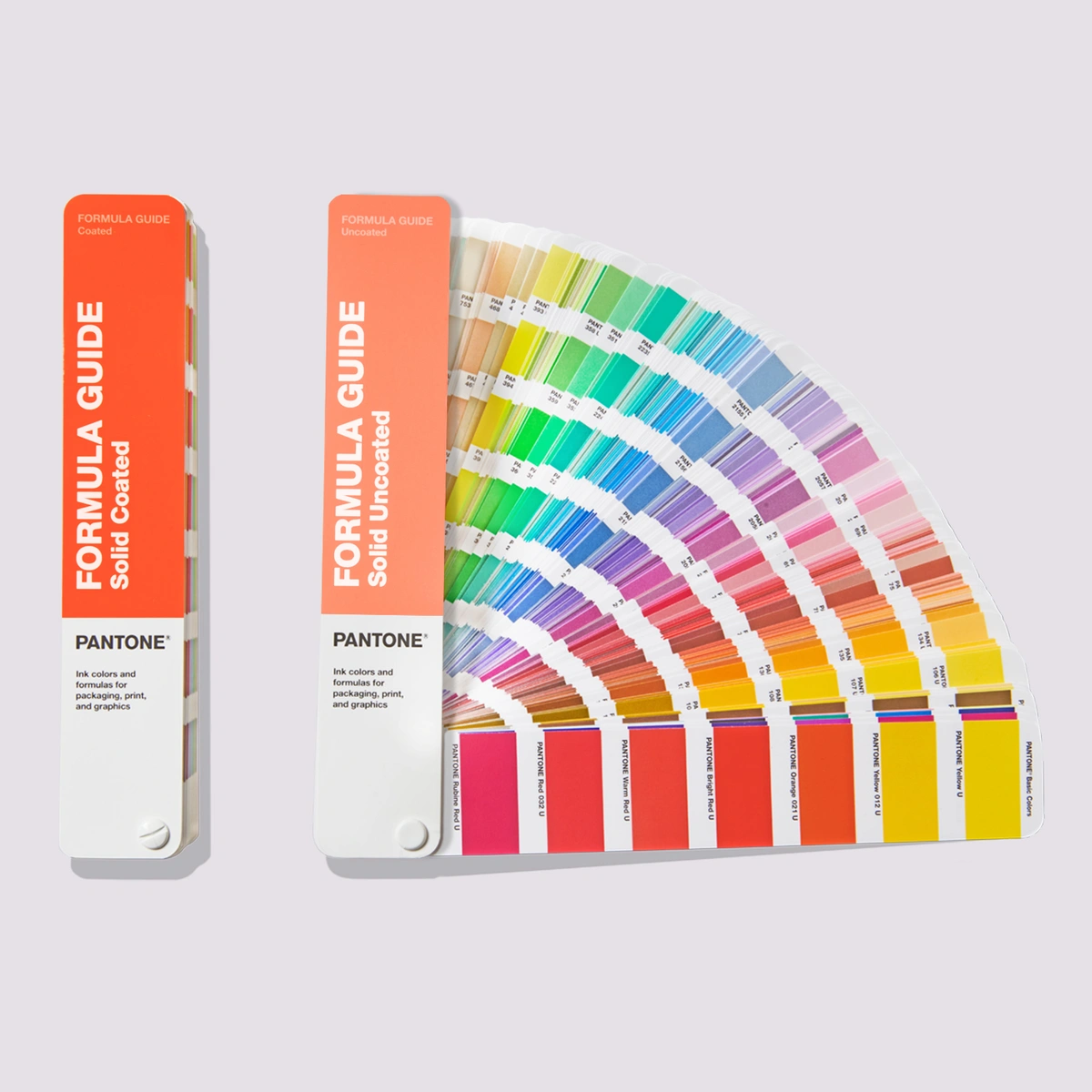
Pantone Color Book
Gary is colorblind, so when he was first starting his career, he memorized the entire Pantone color book, which has thousands of colors.
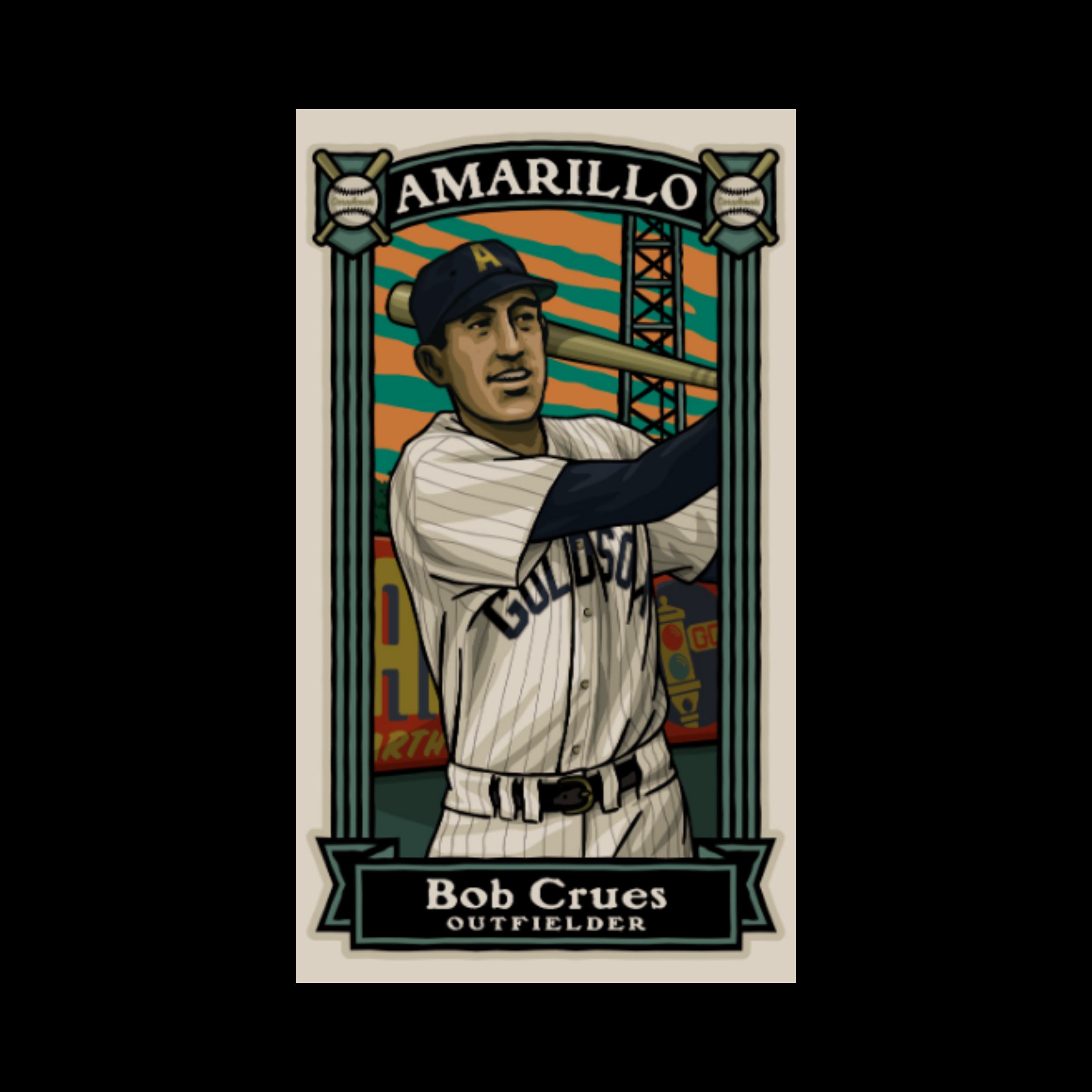
Colorful Skies
Colorful skies have become kind of a trademark in Gary’s cards.
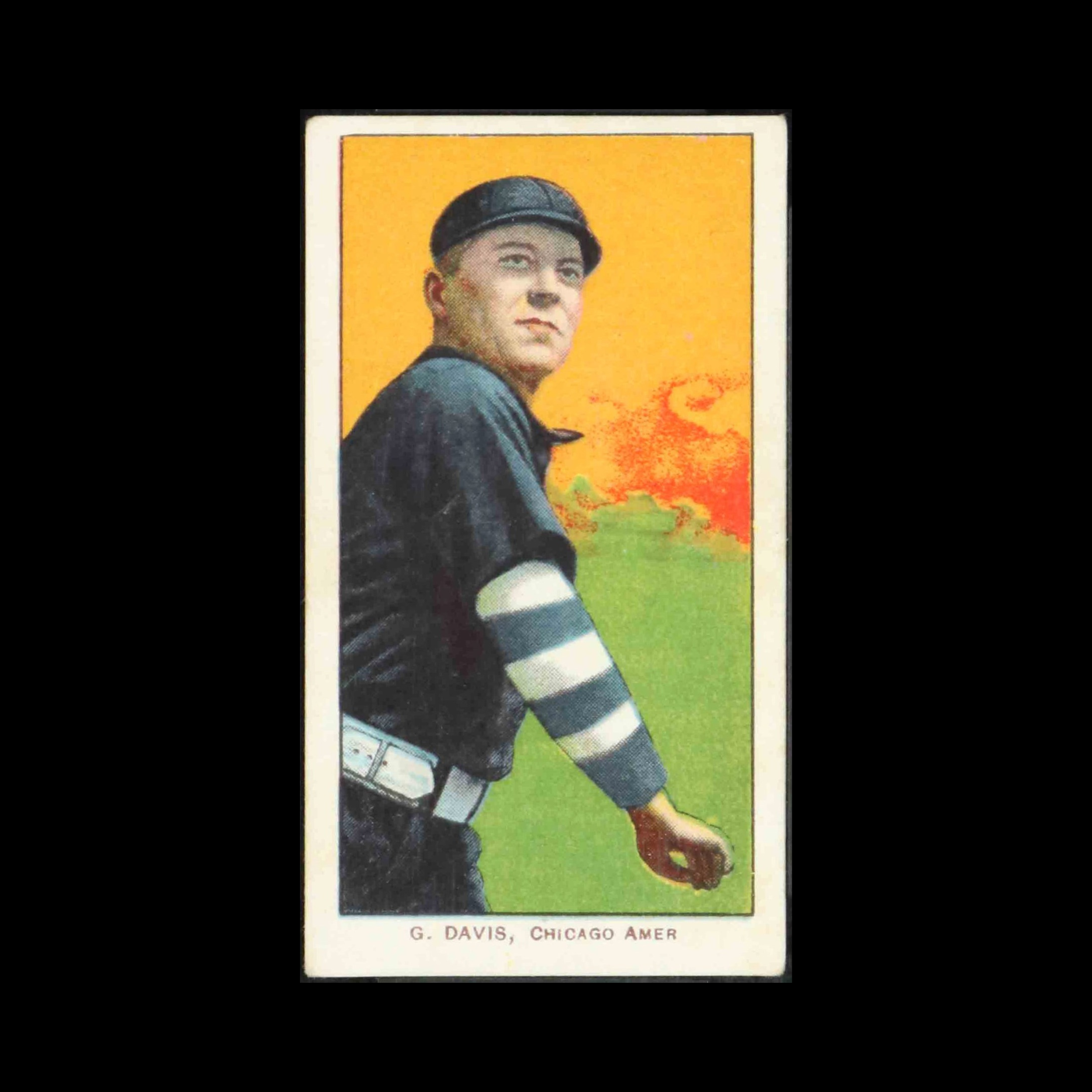
T206
Many of the cards in the T206 set have uniquely beautifully colored skies, so I always assumed Gary was just tipping his cap to those before I learned he was colorblind.
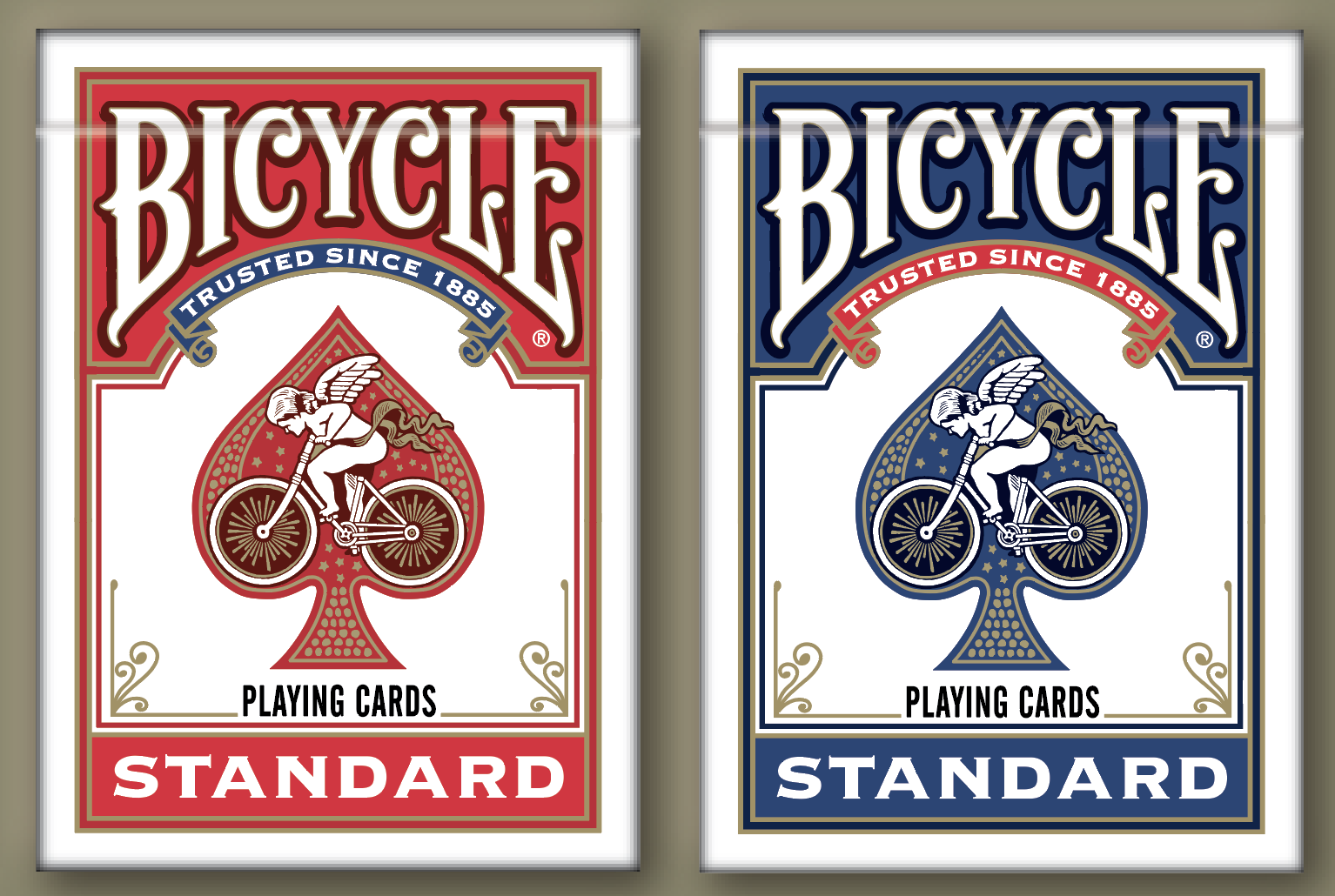
Bicycle Playing Cards
In addition to being an amazing baseball artist, Gary’s credits also include Barnes & Noble’s music department, the Folgers Coffee can, and a redesign of Bicycle playing cards.
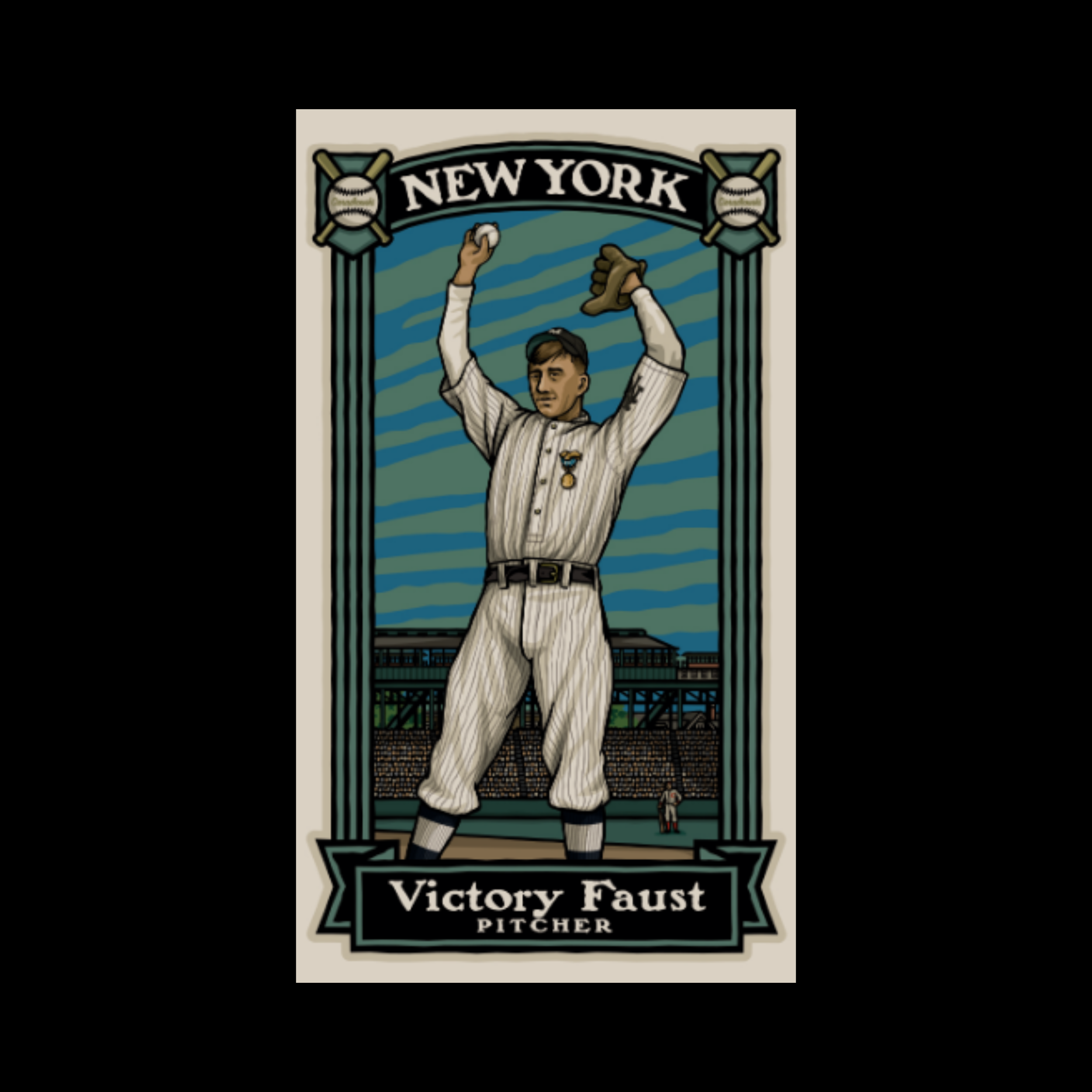
Victory Faust
Gary’s blog post on Charles “Victory” Faust
Victory Faust’s SABR Biography
Buy Gary’s Victory Faust card booklet HERE.
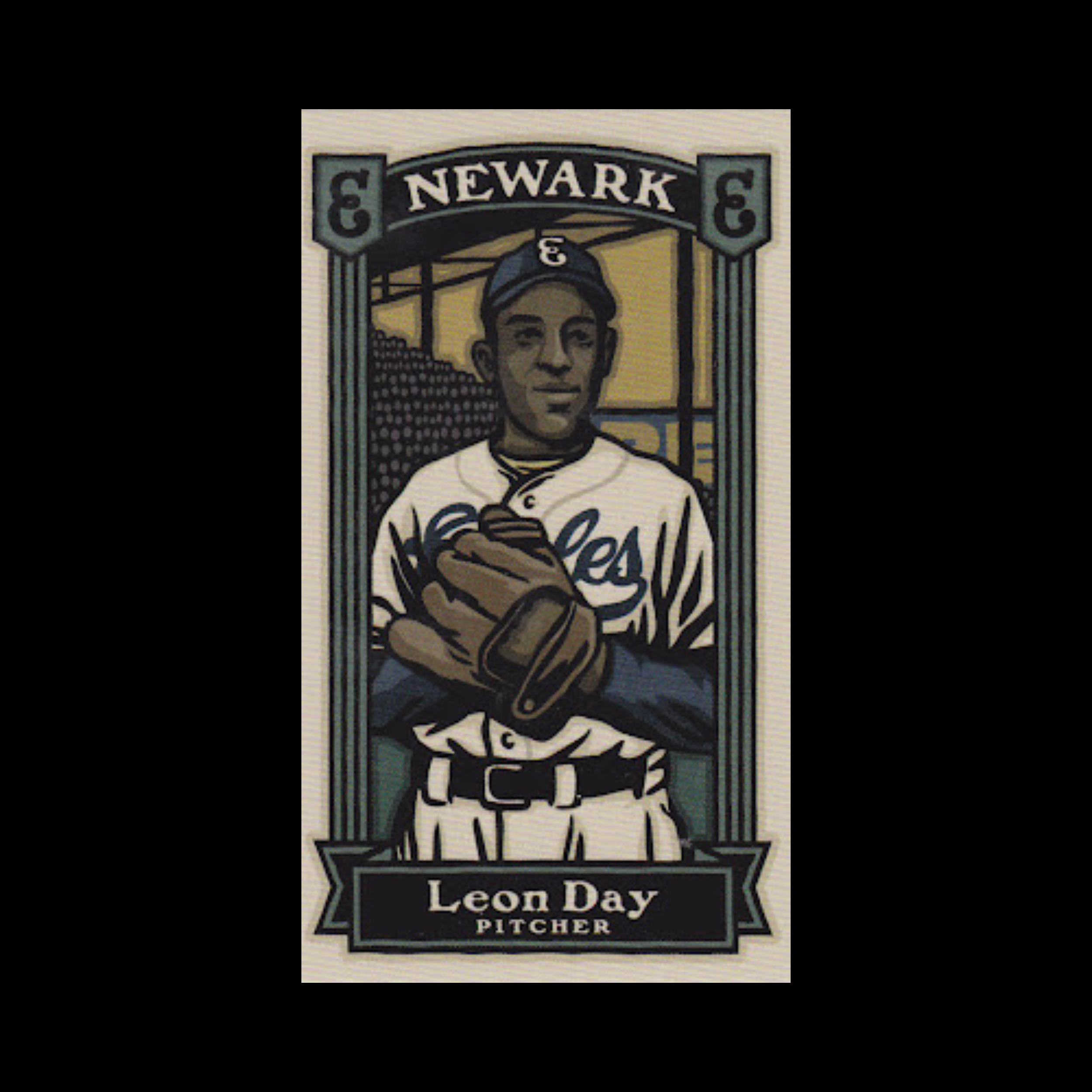
Gary’s First Card
The first card Gary ever created was of Leon Day, which he posted to his blog on Sunday, February 21, 2010.
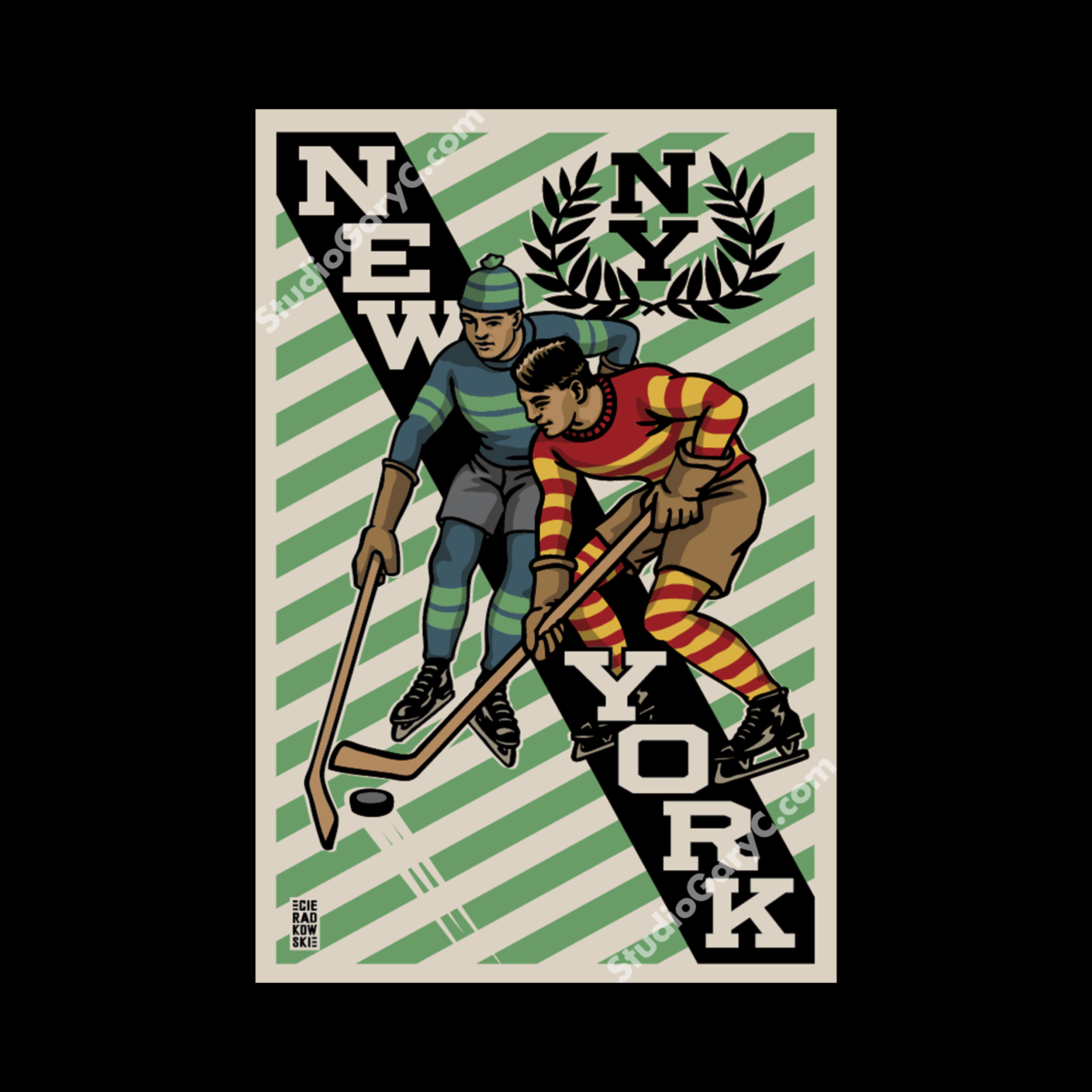
Not Just Baseball
As with many of Gary’s posters, this was originally designed by for a Hollywood prop house and may be seen in the background of movies, television shows and commercials.
If you want to own your own copy, you can buy one HERE.
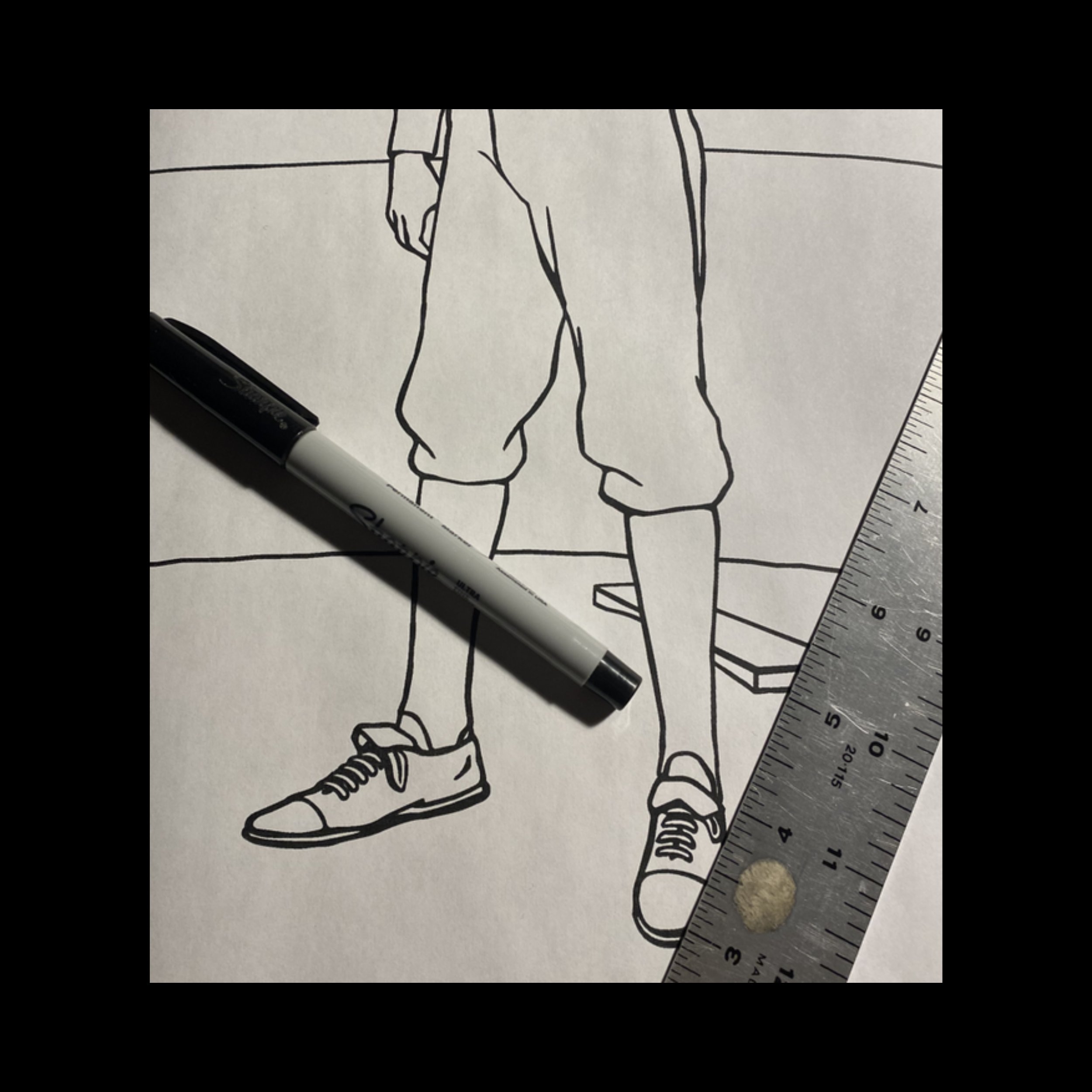
Gary C Coloring Books??
As amazing at this idea sounds, they don’t exist. This is just one step in the process of Gary taking an idea and turning it into a finished piece of art.
In October of 2024, Gary posted a five-part series of blogs detailing his process. You can read the entire thing below:
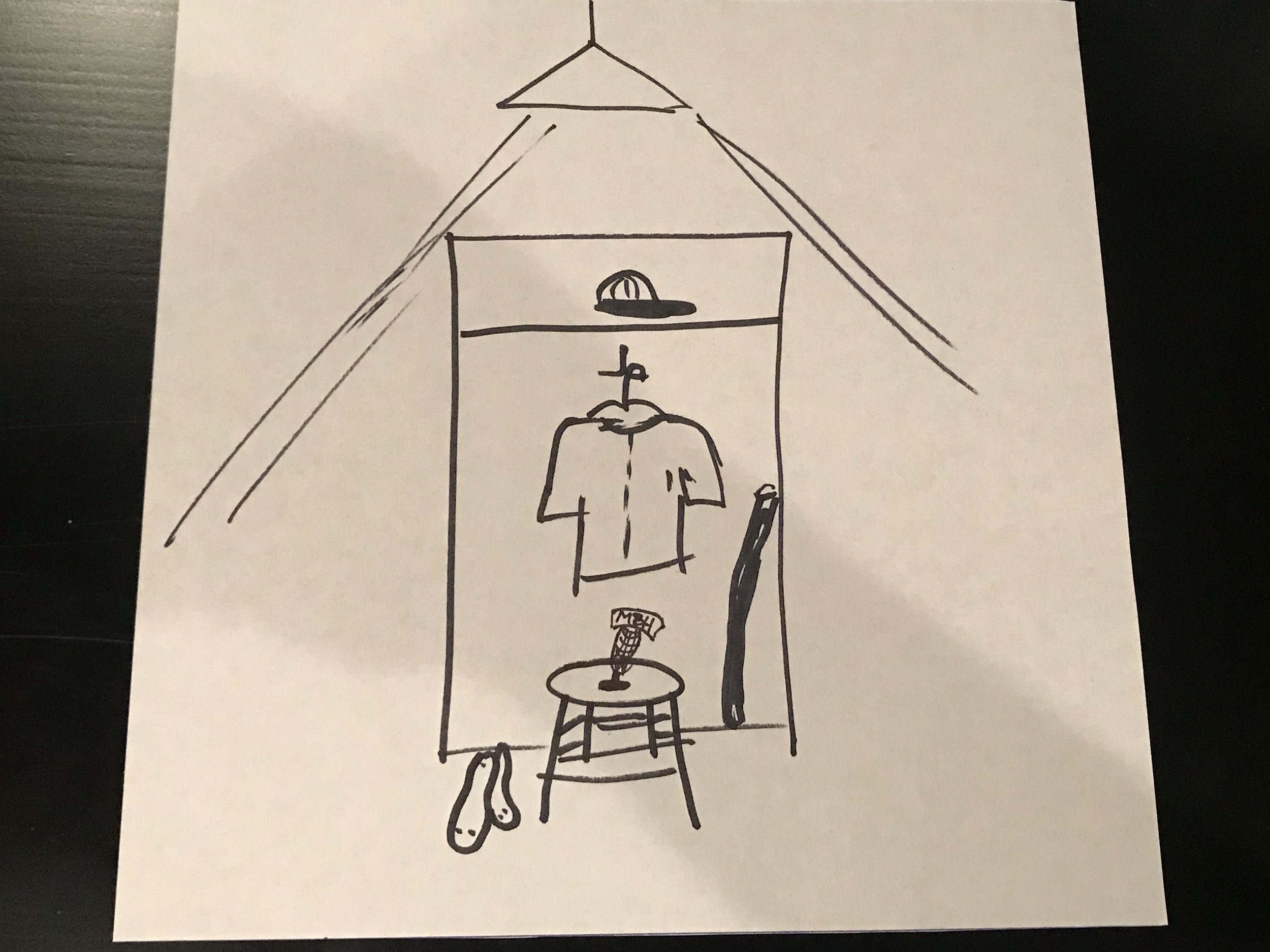
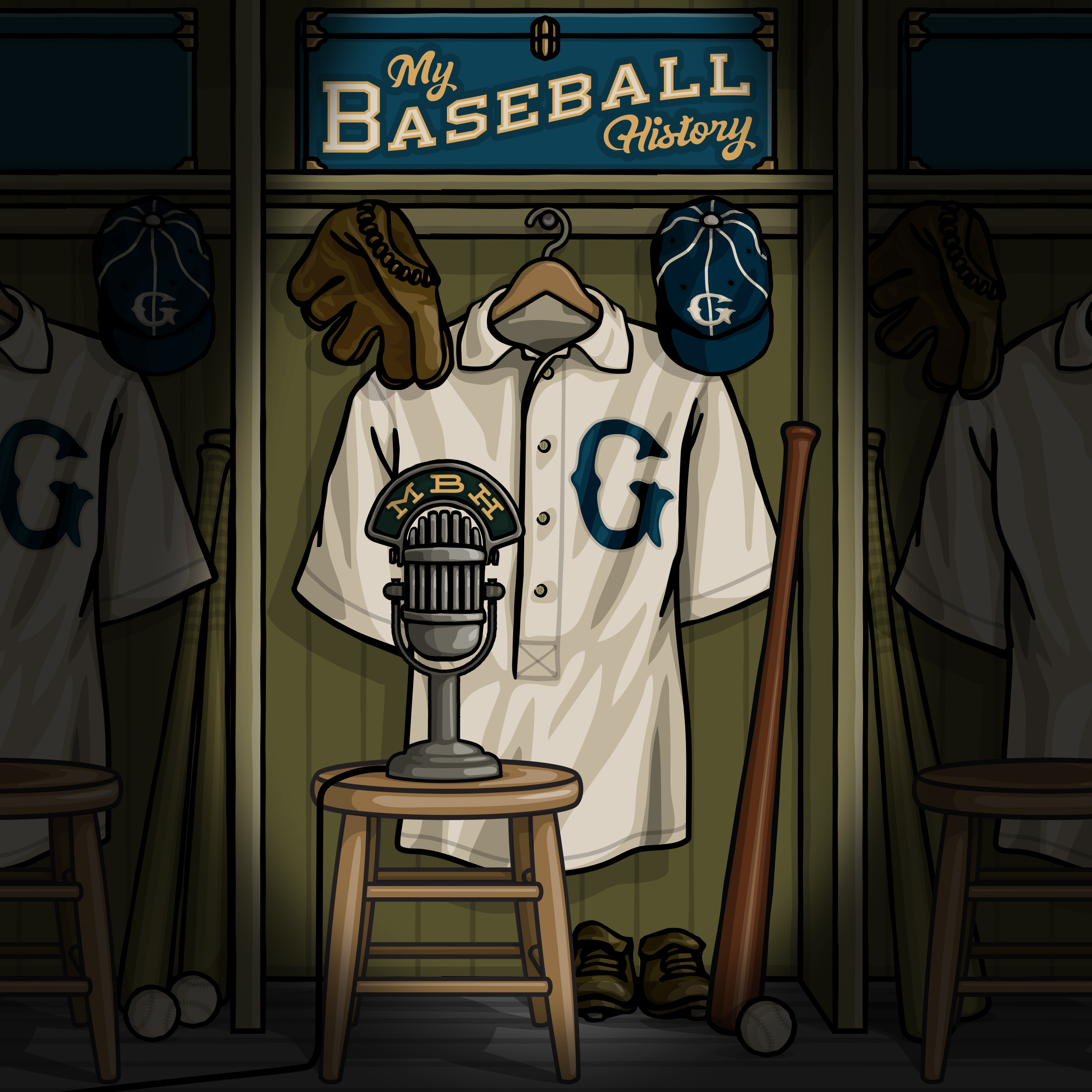
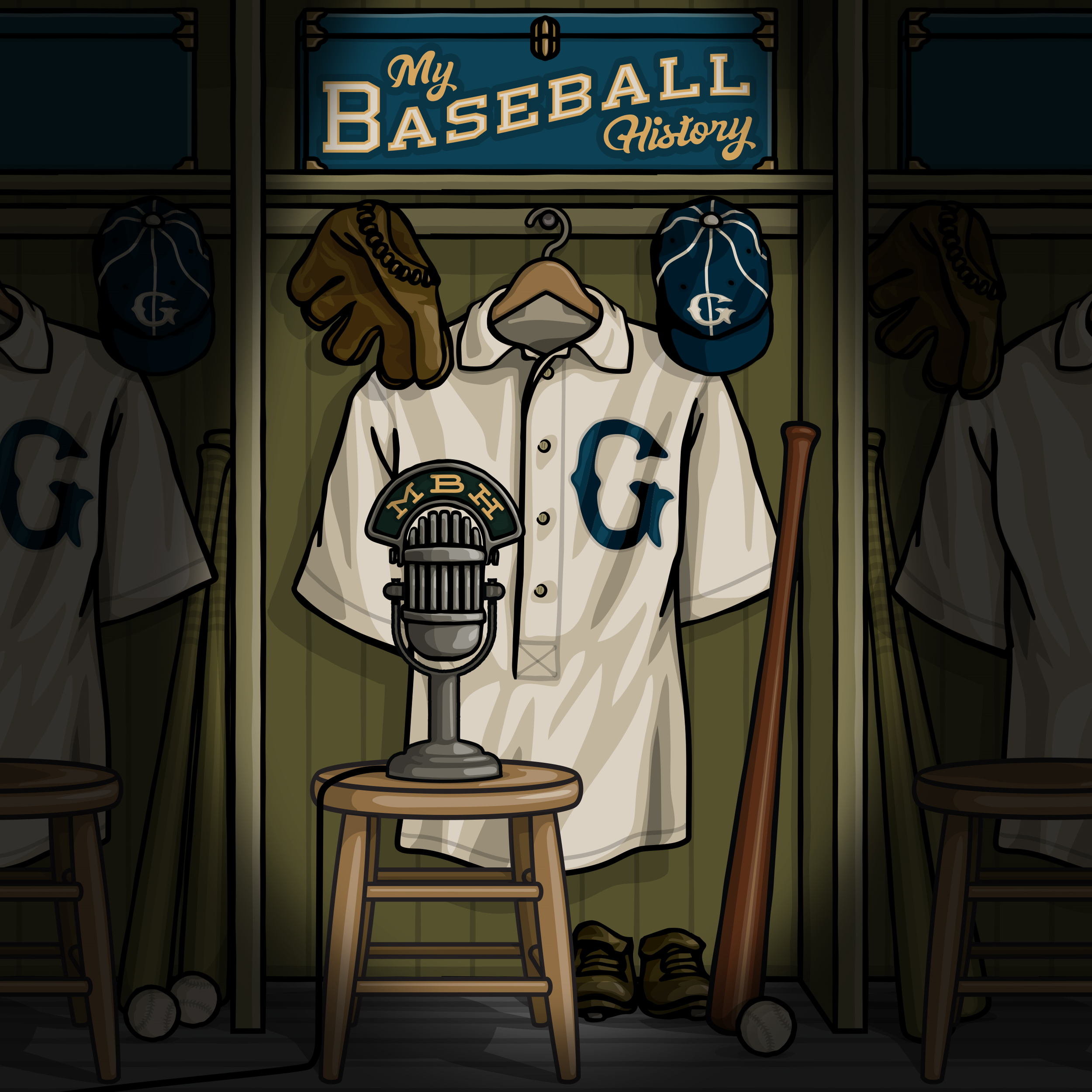
My Baseball History
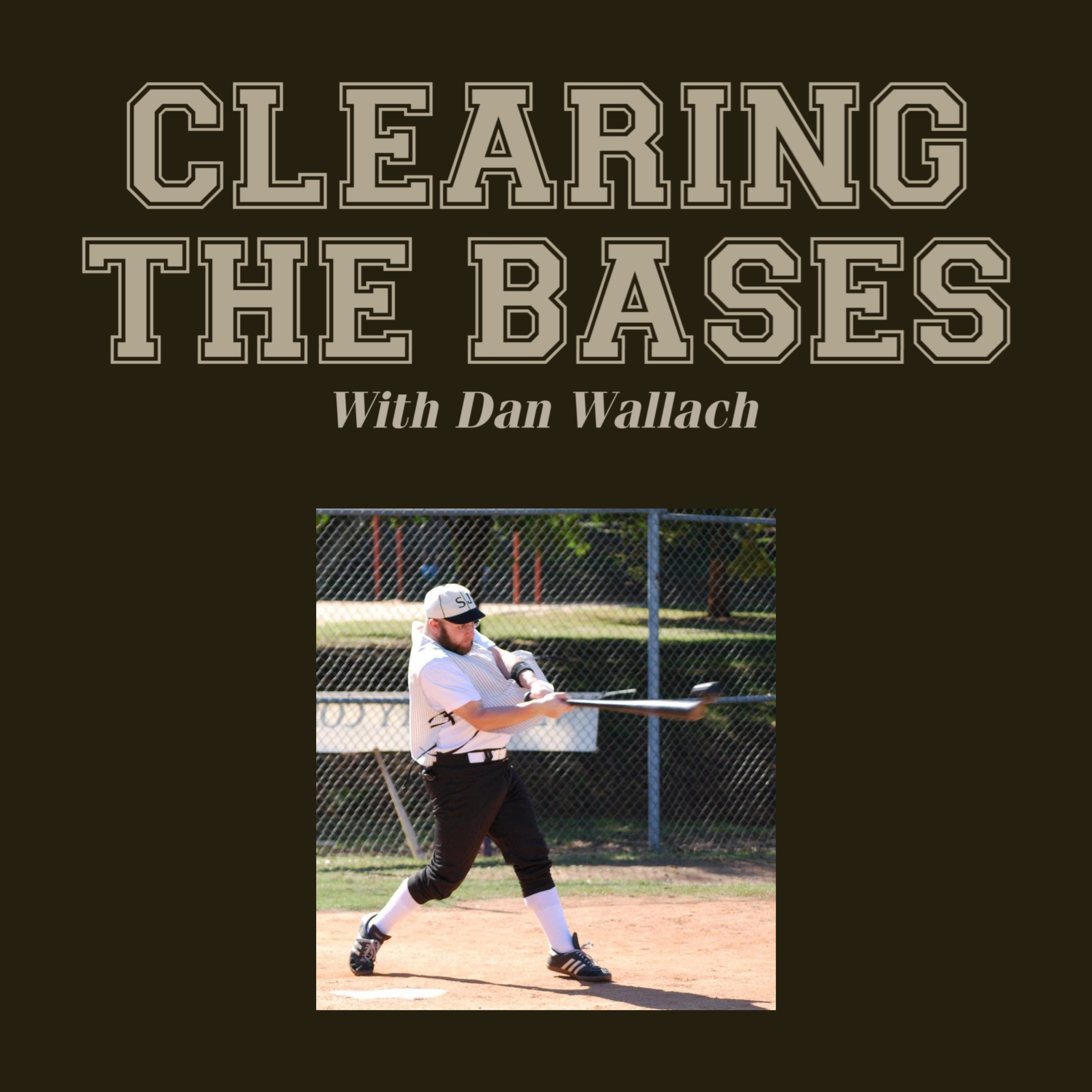
Gary created the artwork for this very podcast, as a matter of fact. He took the rough idea that I sent him…

Satchel Paige
If someone had never seen any of Gary’s work, this is the piece he would show them to be like “this is what I do.”
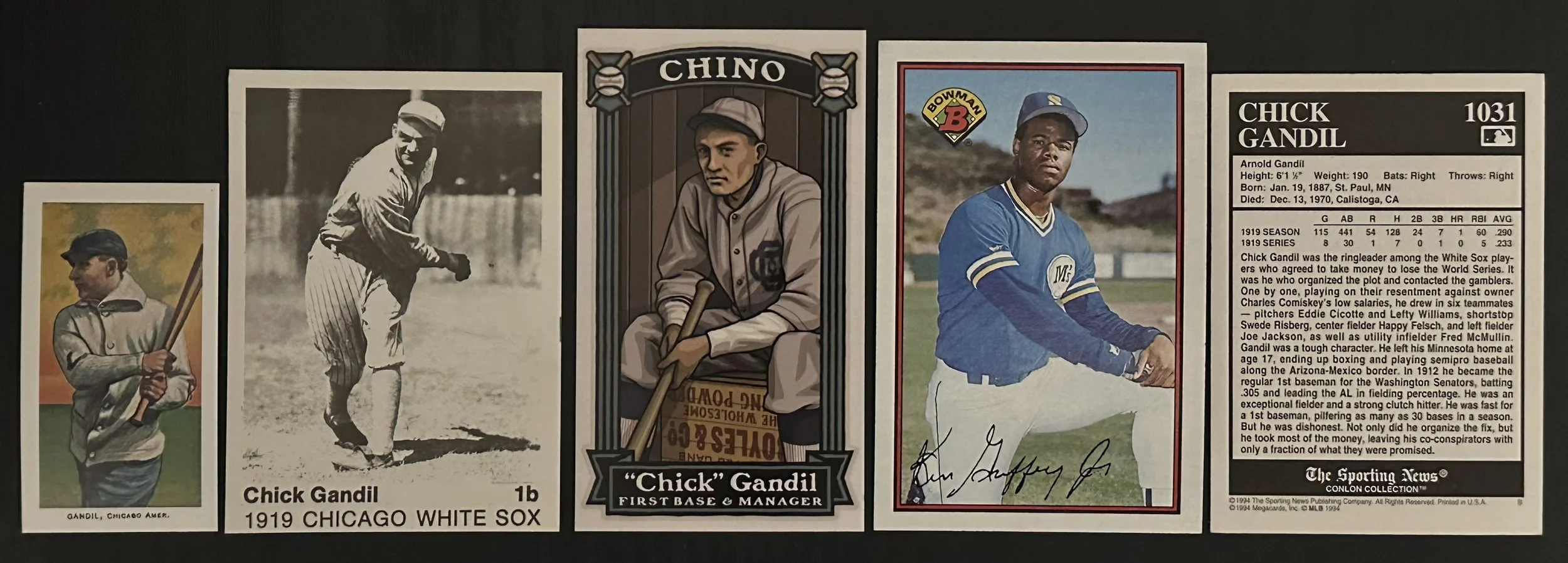
Relative Size Matters! Pictured here (left to right): T206, 1975 TCMA, Gary’s Infinite Card set, 1989 Bowman, 1994 The Sporting News Charles Conlon set
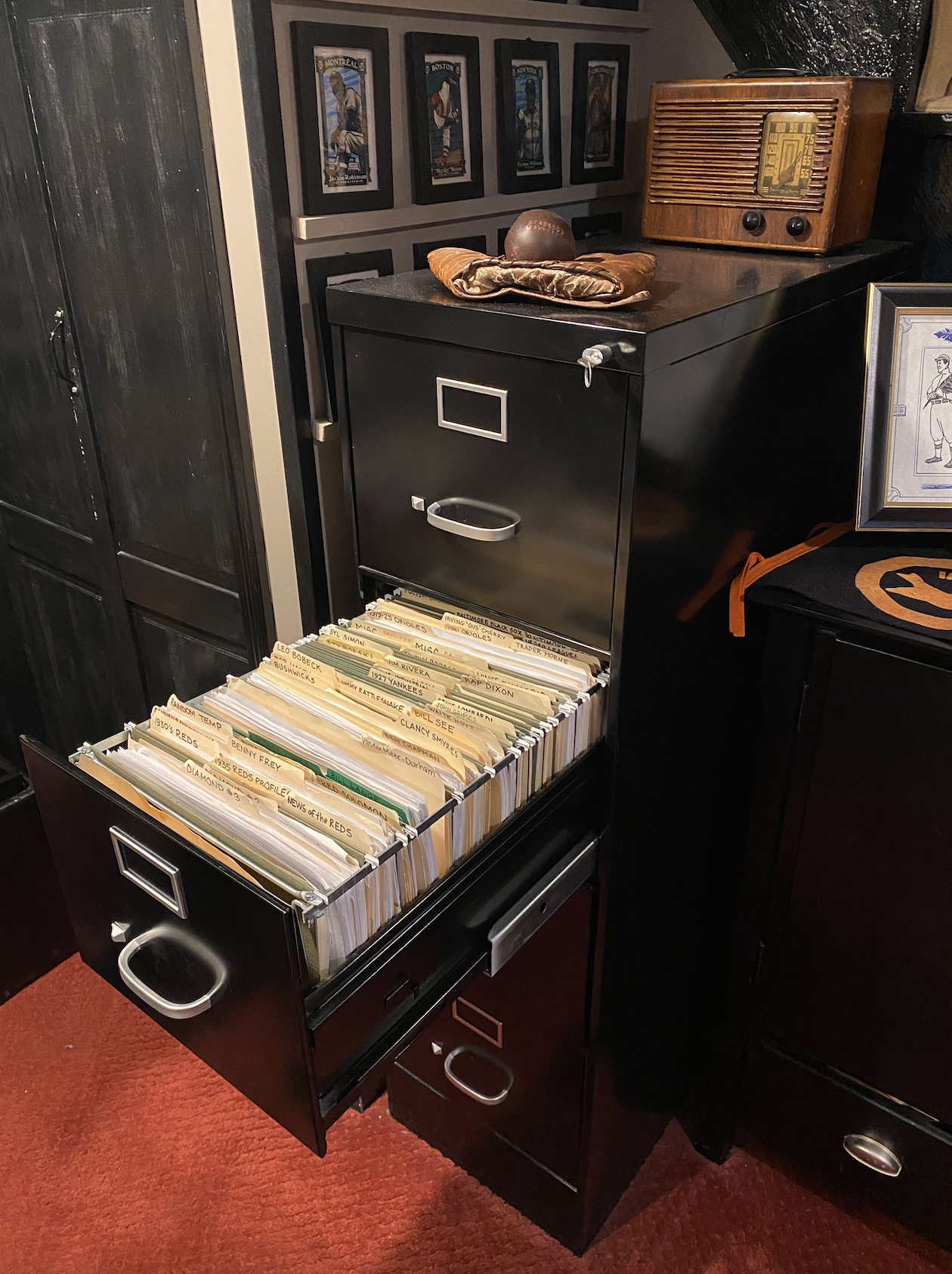
Research Takes Time
Gary’s file cabinet is full of potential stories. Some of them he’s only just recently started researching, some of them have been in the works for years.
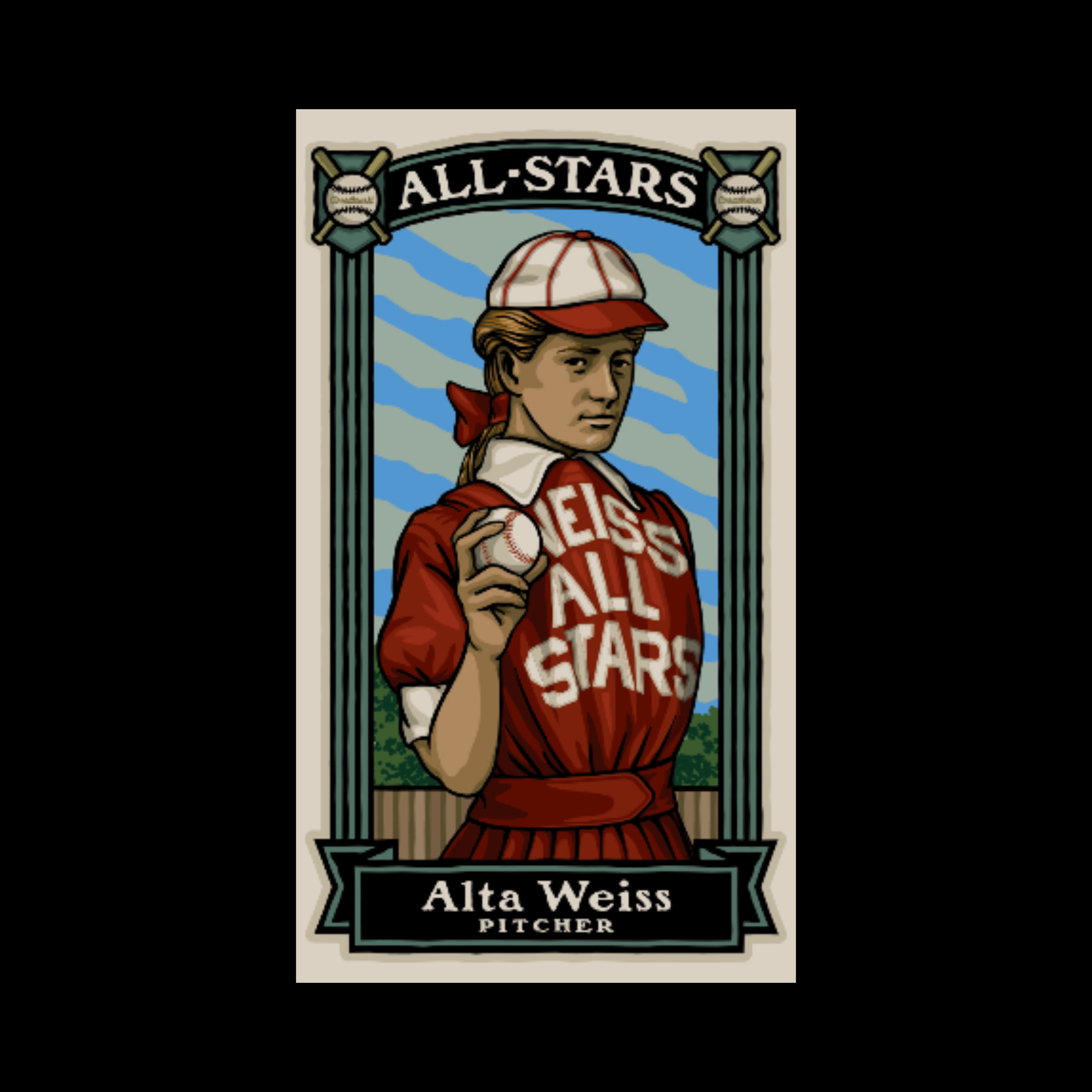
Whose Story Is One Worth Telling?
There have been somewhere in the neighborhood of 25,000 Major League players at this point, now that certain years of the Negro Leagues are considered Major Leagues. But add in to that all of the minor leaguers, or town ball players, or industrial leagues, or outlaw leagues, or women, and there are literally probably 100,000 or more people who have played baseball dating back to the 1800s who all have their own story.
Gary’s blog post on Alta Weiss
Buy Gary’s Alta Weiss card booklet HERE.
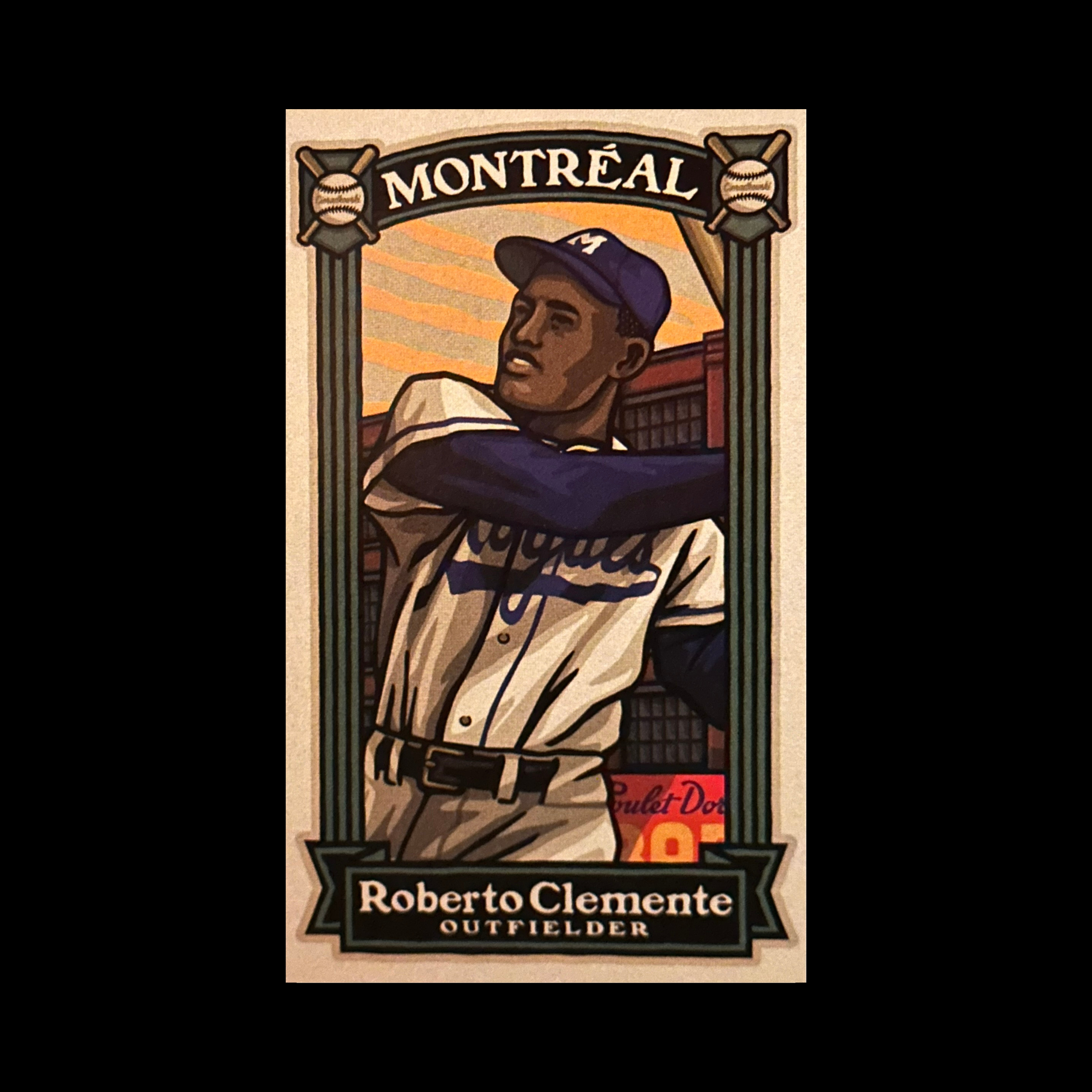
Roberto Clemente
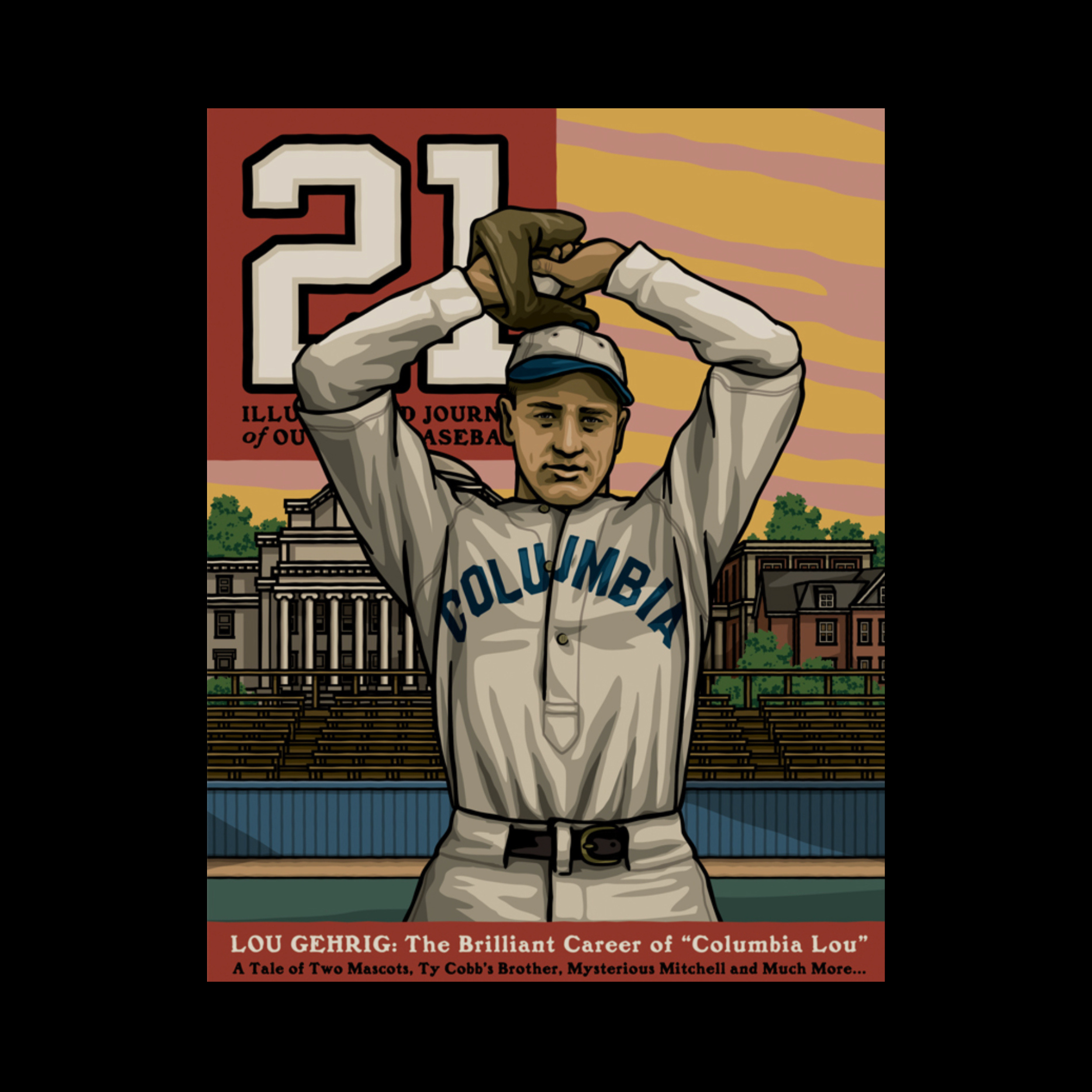
Lou Gehrig
Gary’s original 2018 blog post on Lou Gehrig
Buy Gary’s Lou Gehrig print HERE.
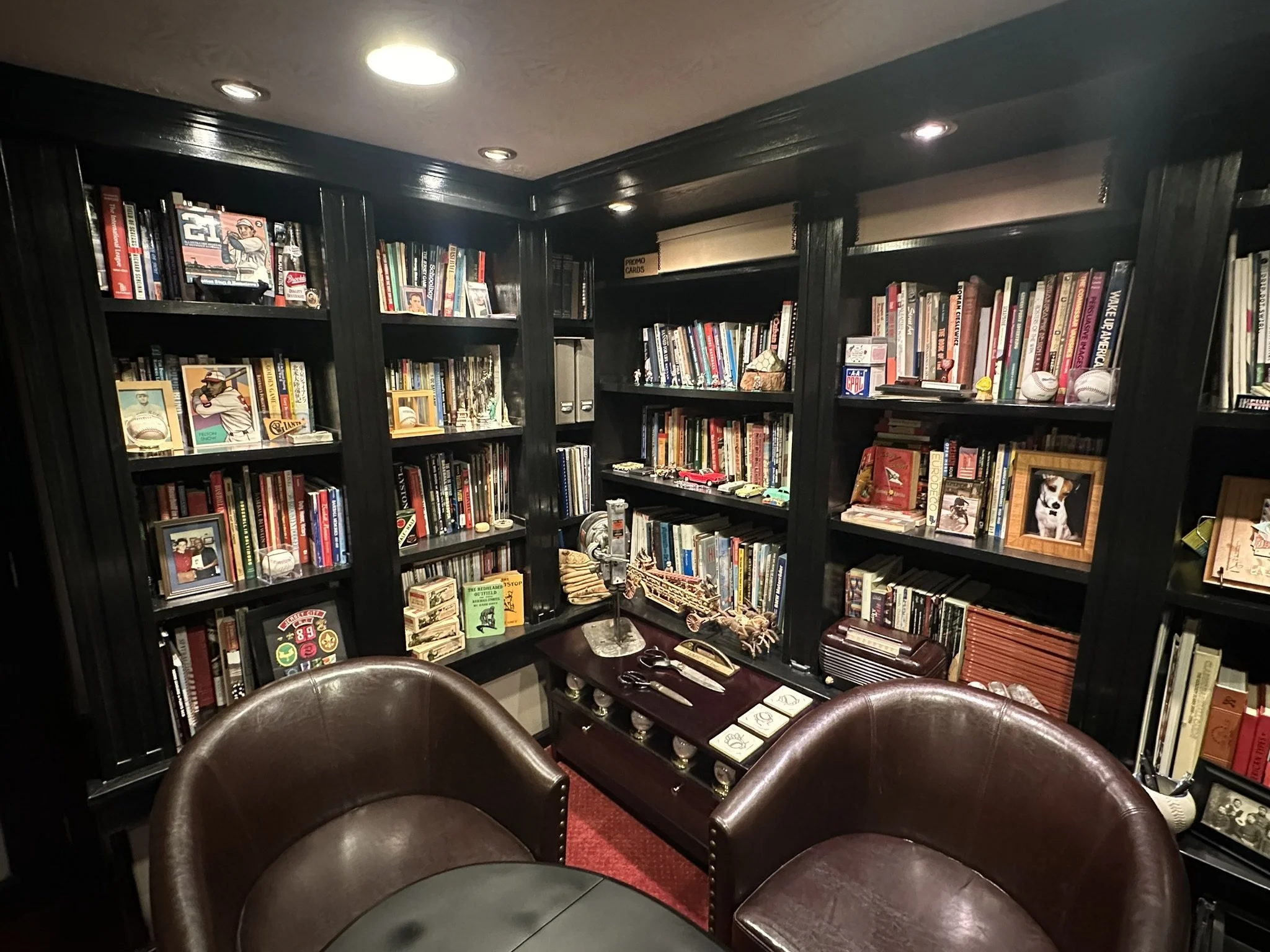
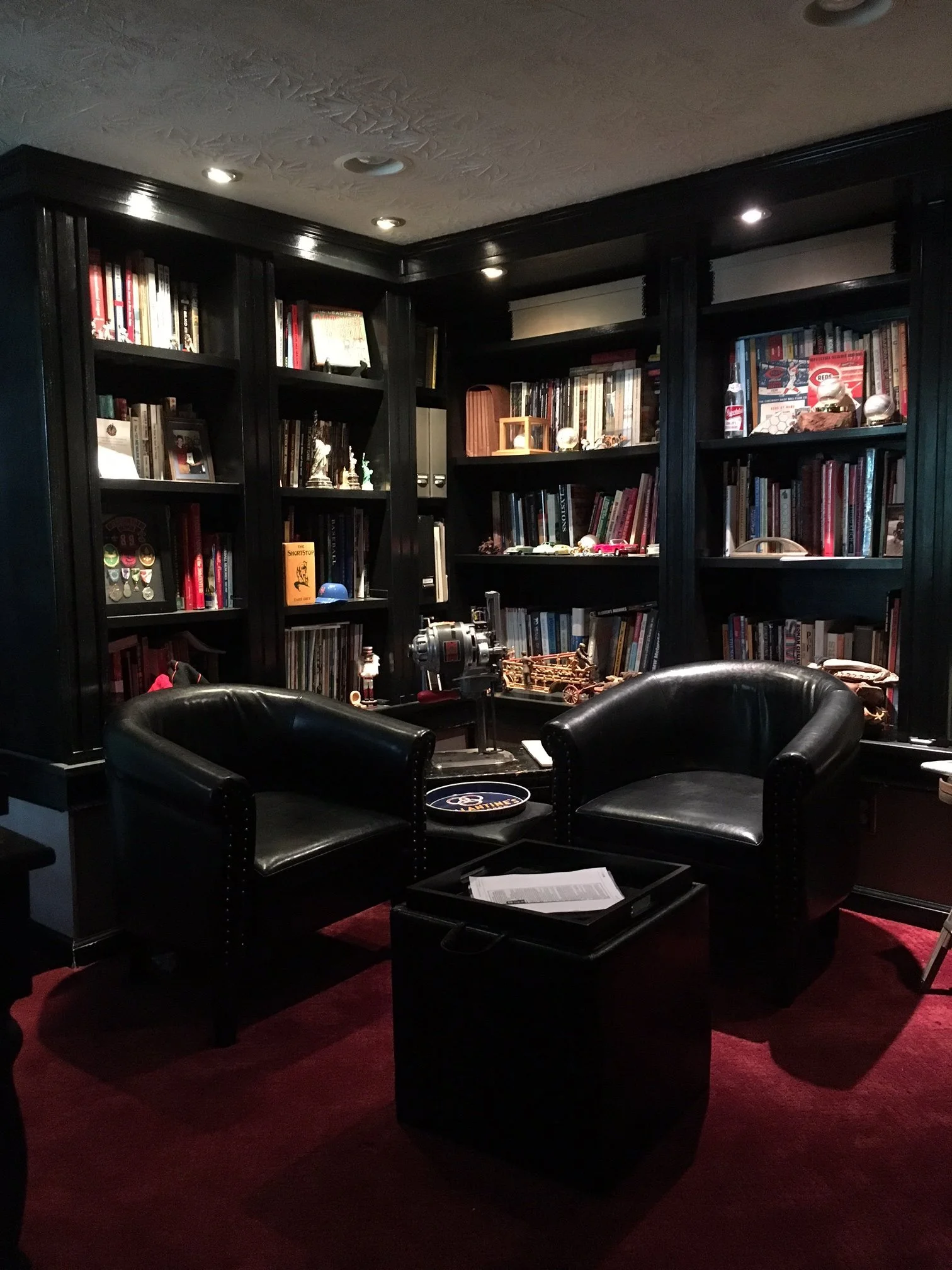
Voracious Reader
Most of the books in Gary’s library are baseball books, which is where he comes across names and stories to pique his interest for potential future articles or art pieces.
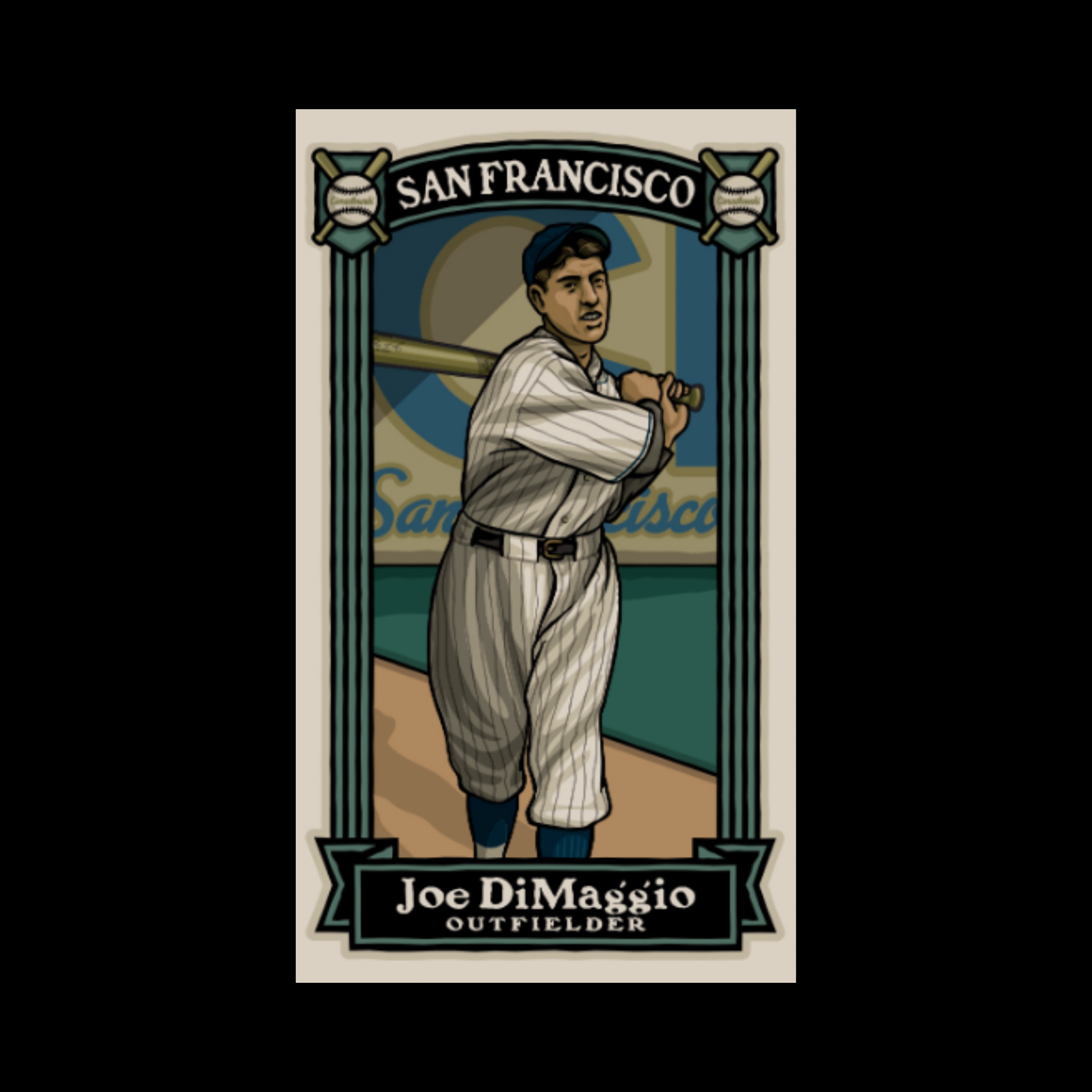
Joe DiMaggio
Gary says fans enjoy when he writes about well known players because it is “comfort reading” to them, and while he does take pride in his ability to uncover previously untold stories about the game’s greats, it seems like Gary is most interested researching obscure players.
Gary’s blog post on Joe DiMaggio
Buy Gary’s Joe DiMaggio card booklet HERE.
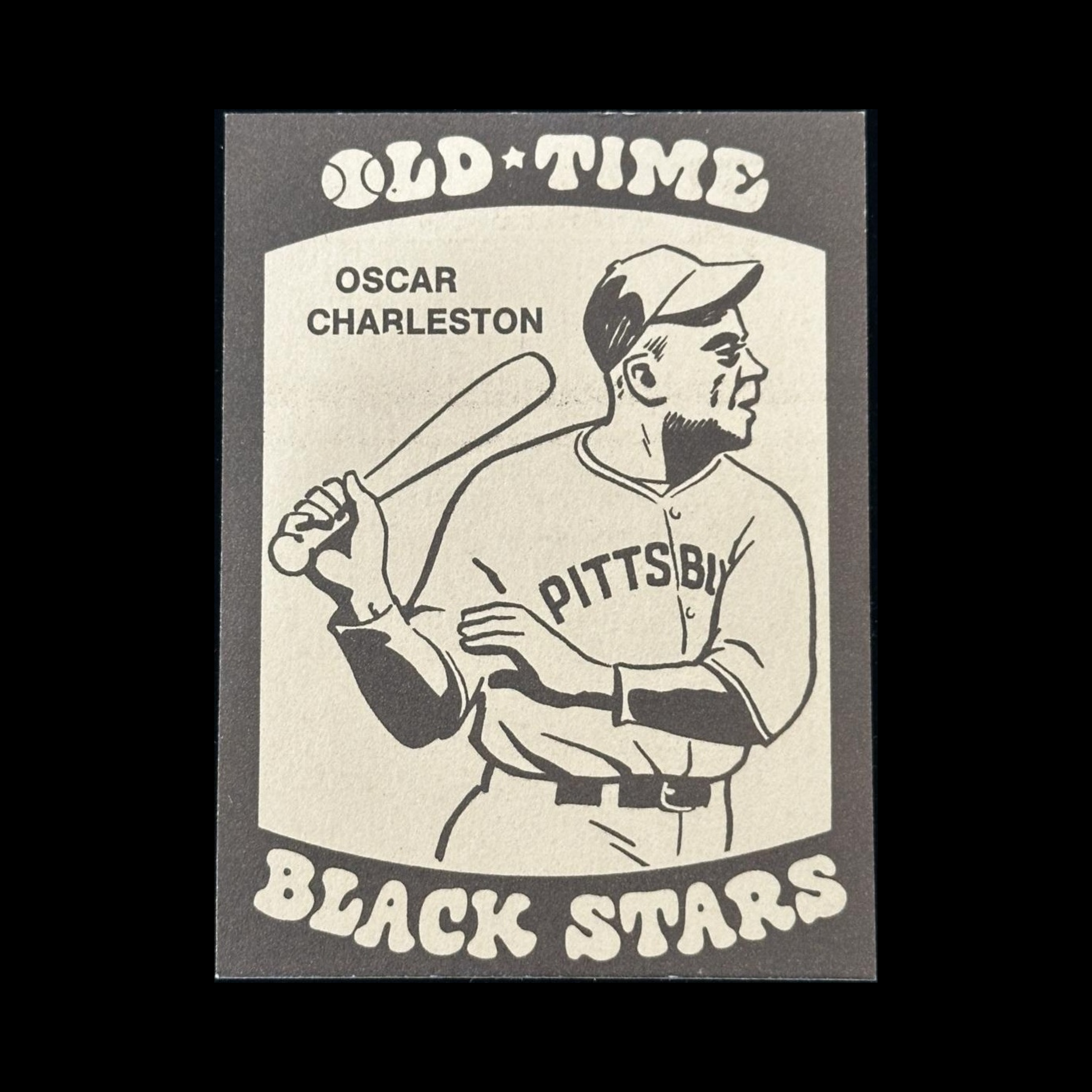
Bob Laughlin
Jason Schwartz has called Gary our generation’s Bob Laughlin, which is high praise.
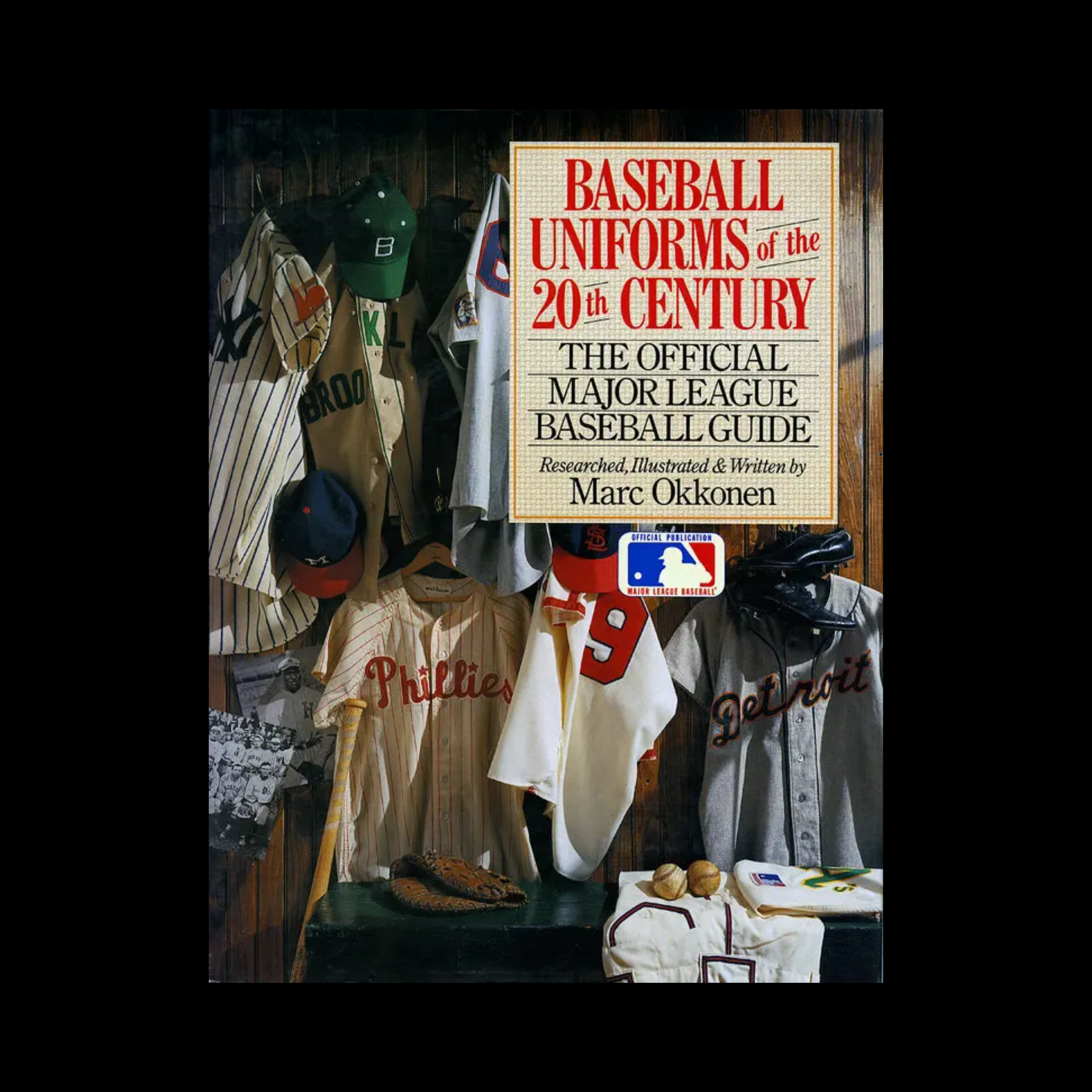
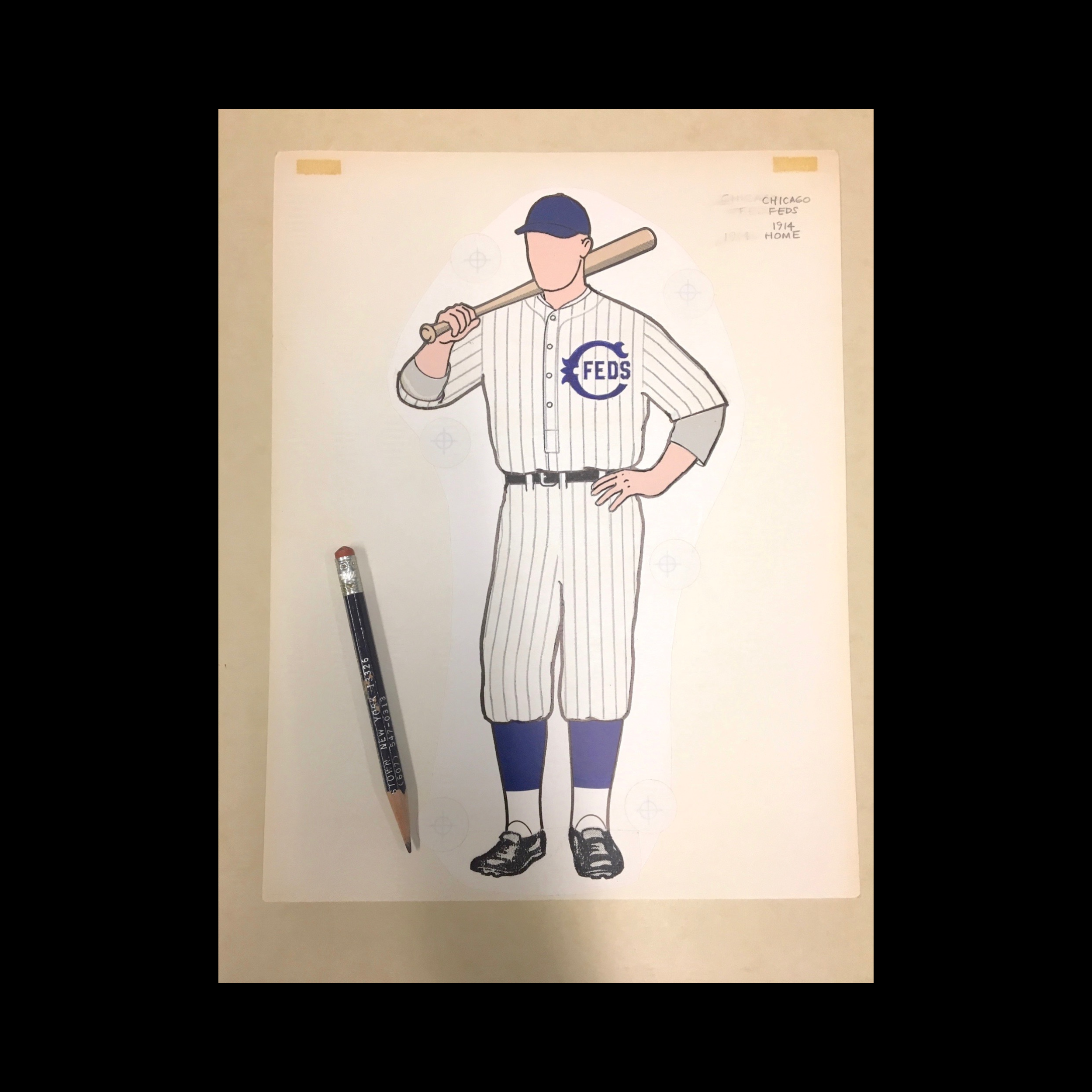
Dressed To The Nines
This is Marc Okkonen’s original sketch of the 1914 Chi Feds home uniform.
Check out the fruits of Marc’s labor with the Dressed To The Nines project HERE.
Photo taken by Tom Shieber, courtesy of the National Baseball Hall of Fame and Museum
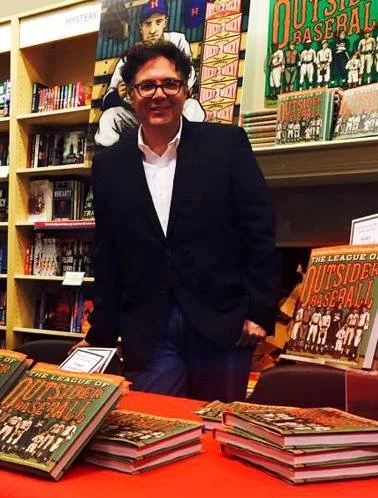
Gary’s Book
A younger Gary, signing a stack of copies of his wonderful book at a local store when it first came out.
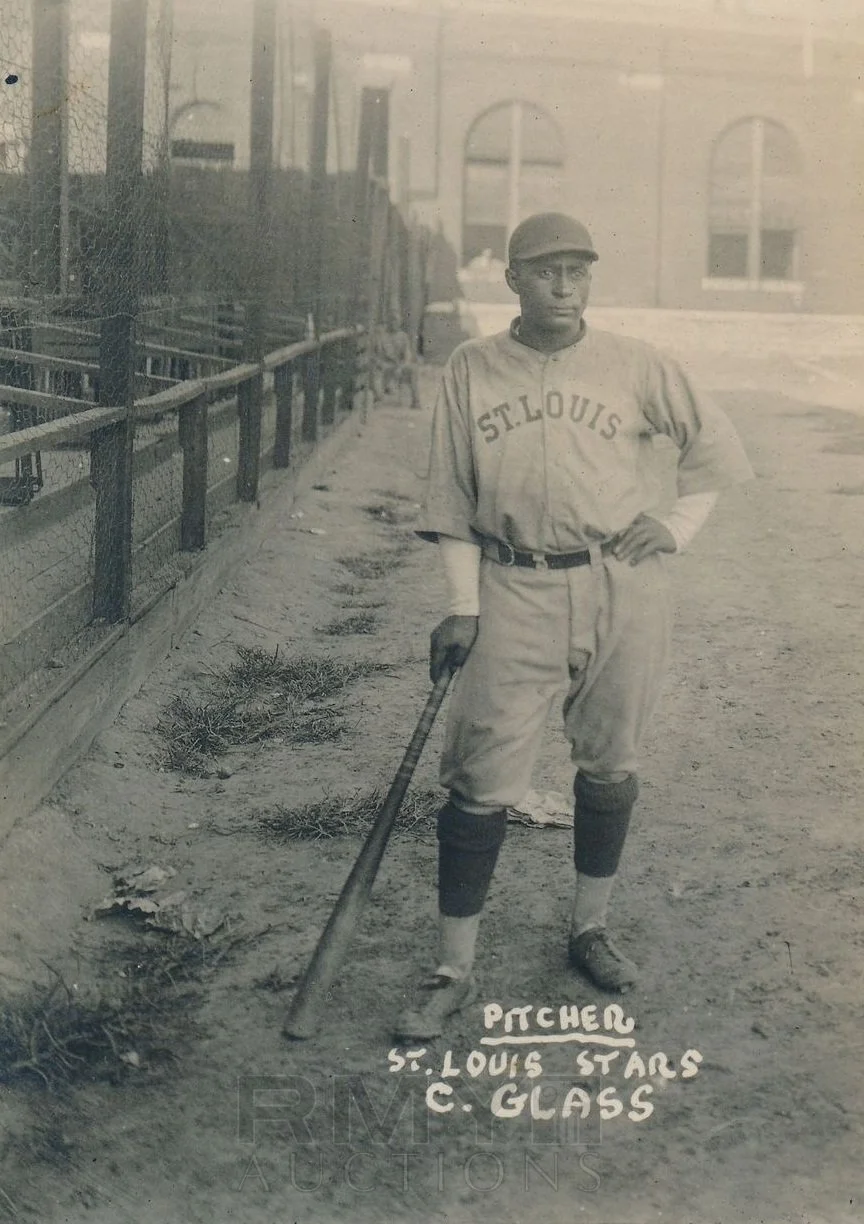
Carl “Butch” Glass
Gary is currently researching more about Carl “Butch” Glass, who played in the Negro Leagues in the 1920s and into the 1930s, as well as for military teams. Gary thinks Glass’ story is an interesting microcosm of American history.
Photo courtesy of RMY Auctions
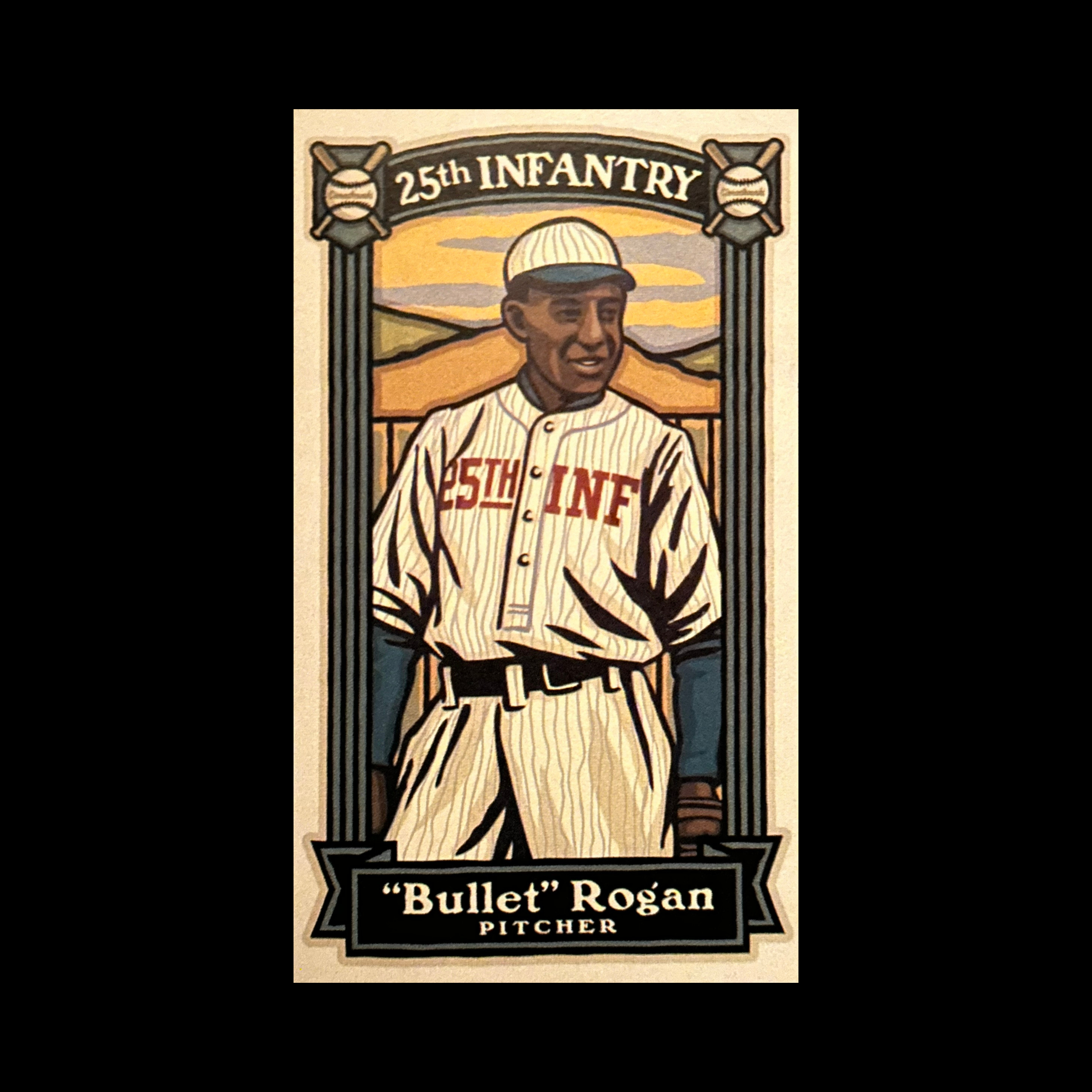
Bullet Rogan
Joe “Bullet” Rogan also played on military teams around the same time “Butch” Glass was playing for his.
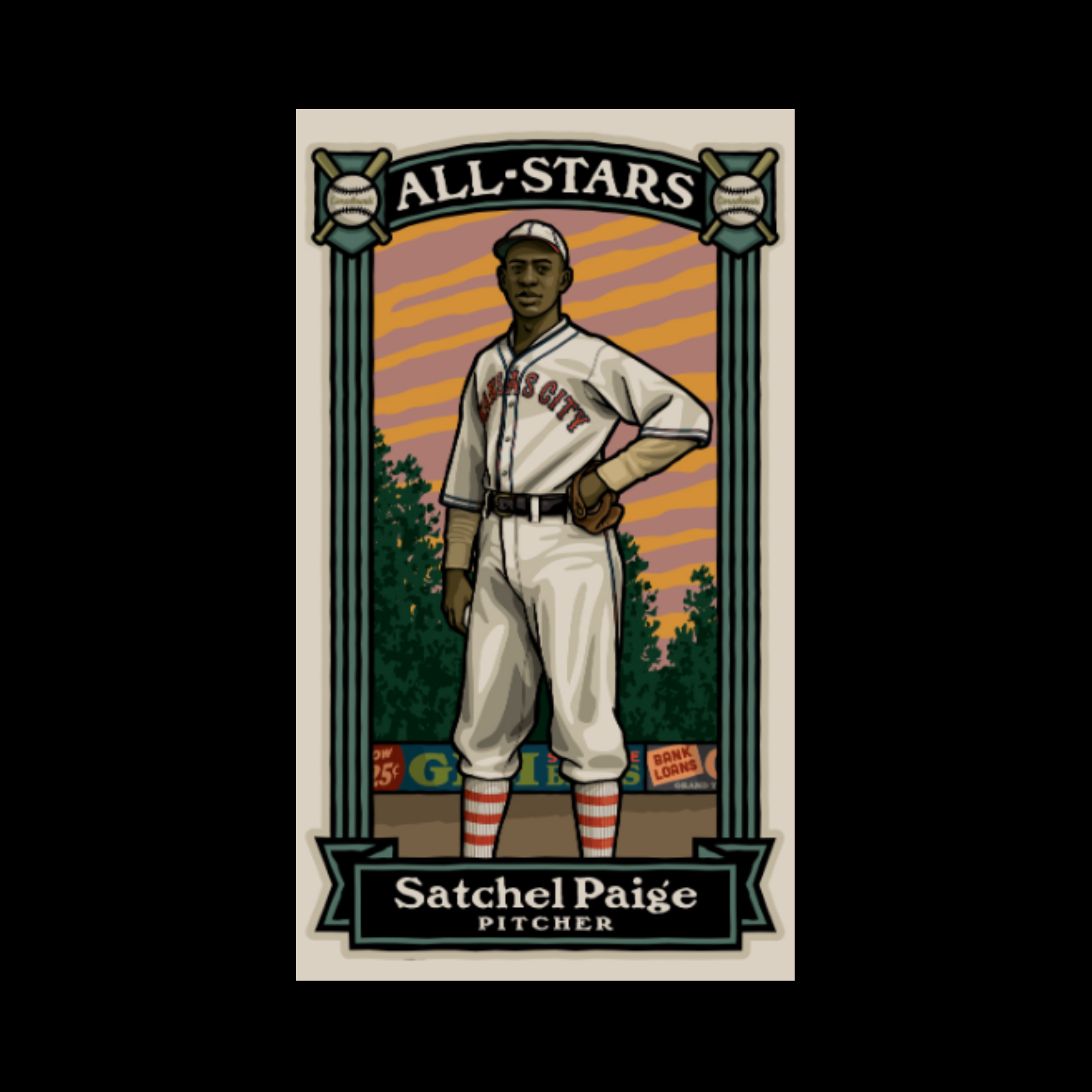
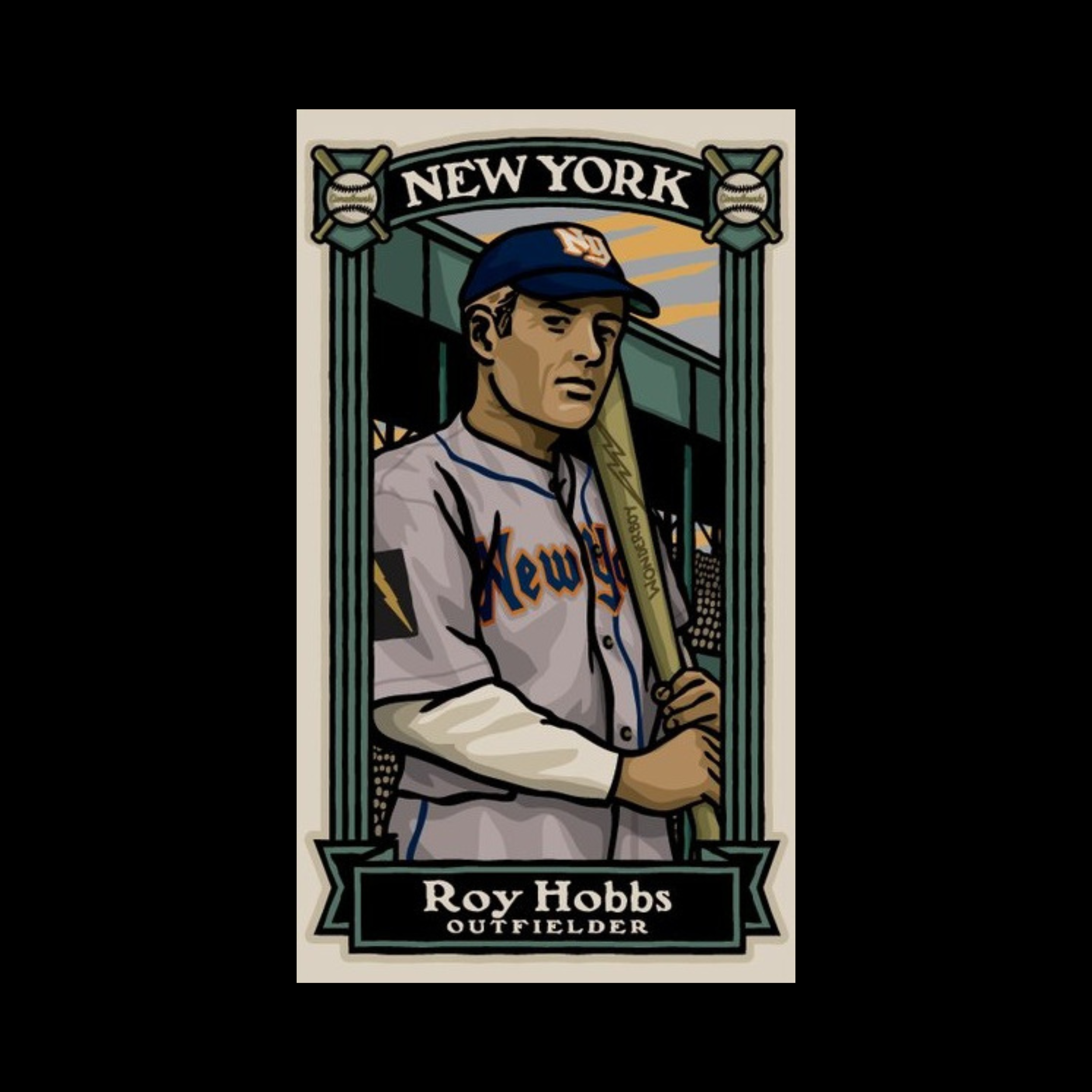
Roy Hobbs
Buy Gary’s Eddie Waitkus card booklet HERE.
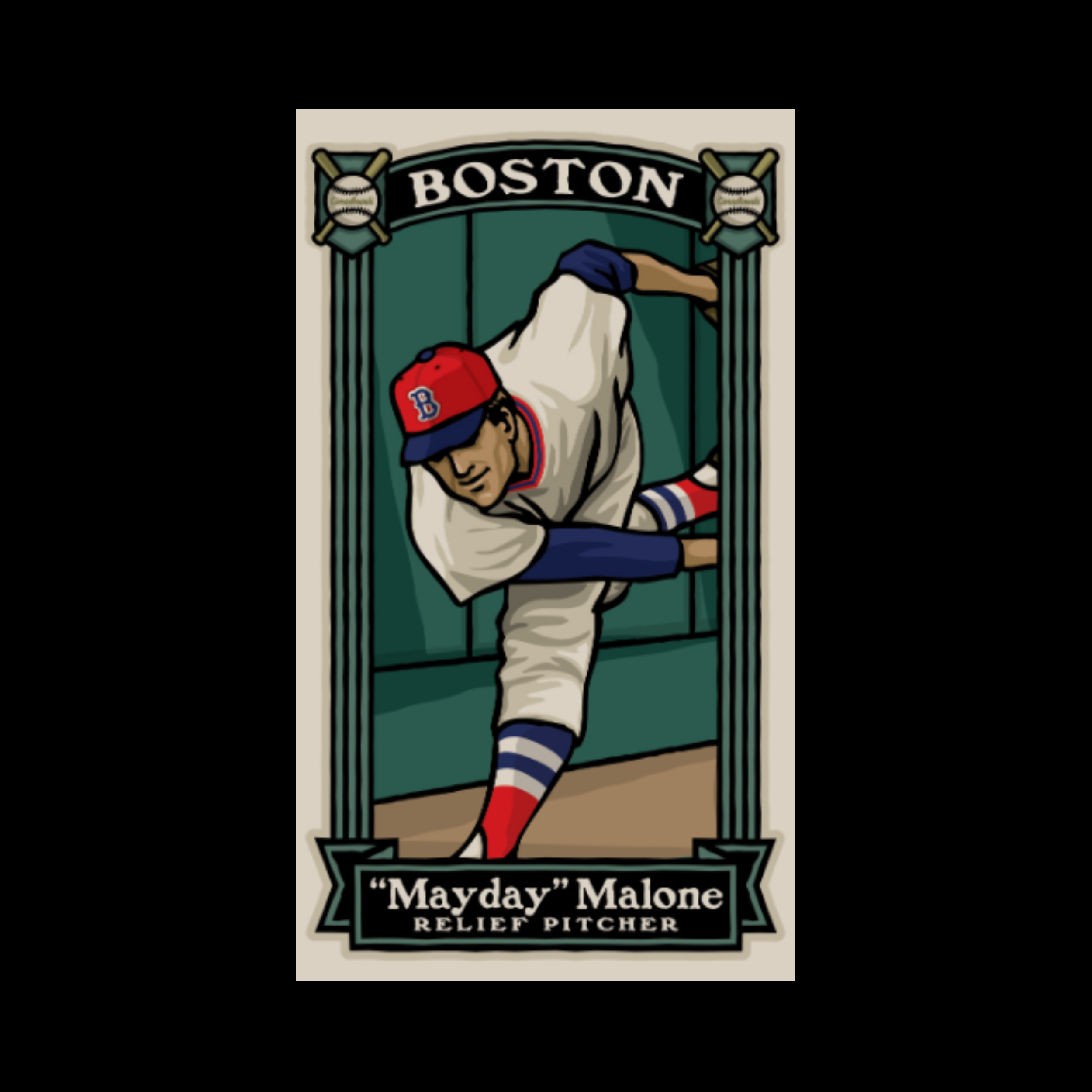
Sam “Mayday” Malone
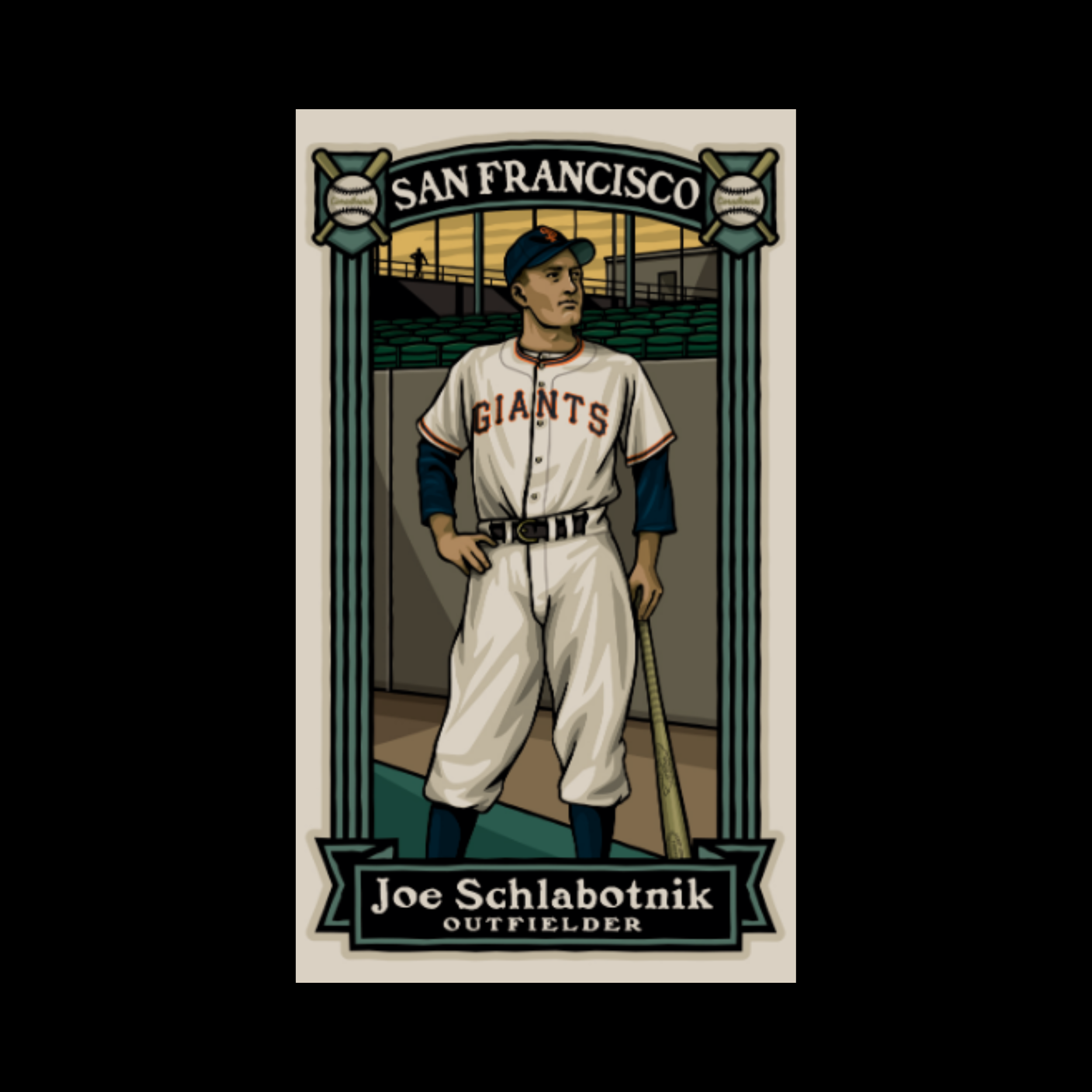
Joe Schlabotnik
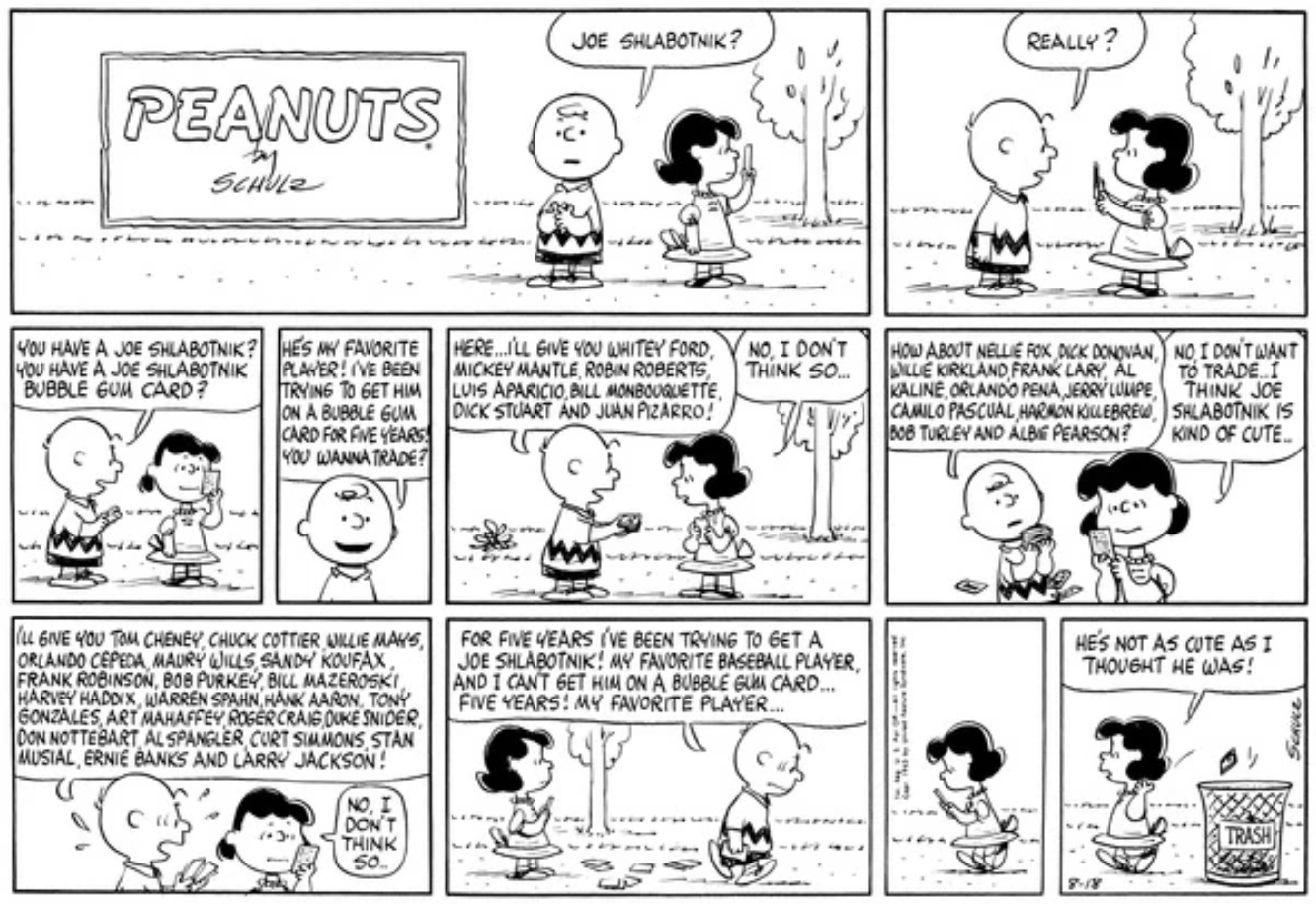
This is the Peanuts strip from August 18, 1963, which is the first reference Charles Schultz made to Joe Shlabotnik.
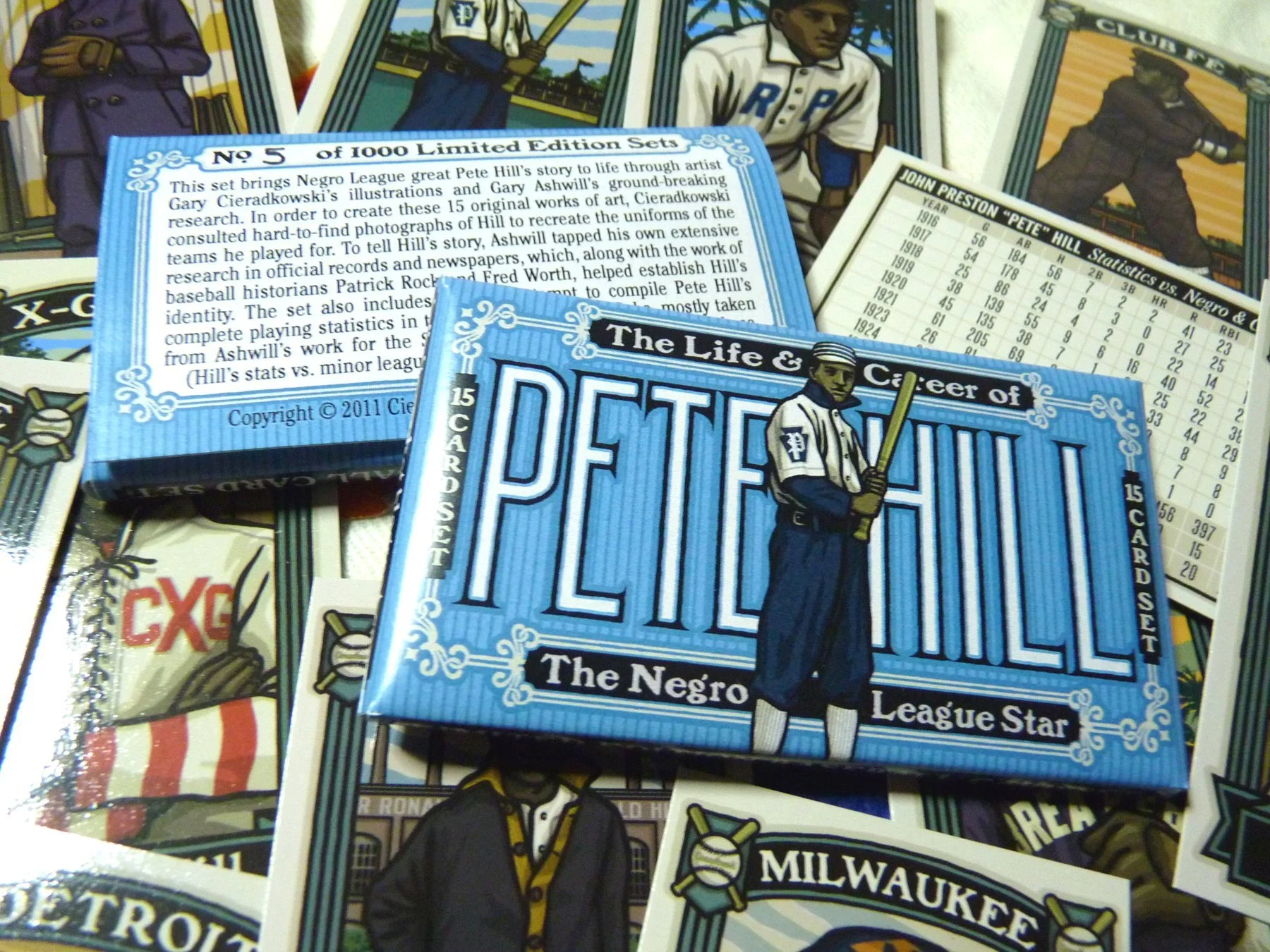
Pete Hill Card Set
Gary teamed with John “Preston” Pete Hill’s great-nephew, Major Ron Hill of Pittsburgh, and baseball researcher Gary Aswhill to create 15 original baseball cards detailing the Negro League standout’s long and varied career spanning the first quarter of the 20th century.
Gary’s blog post on the Pete Hill card set
Buy the Pete Hill card set HERE.
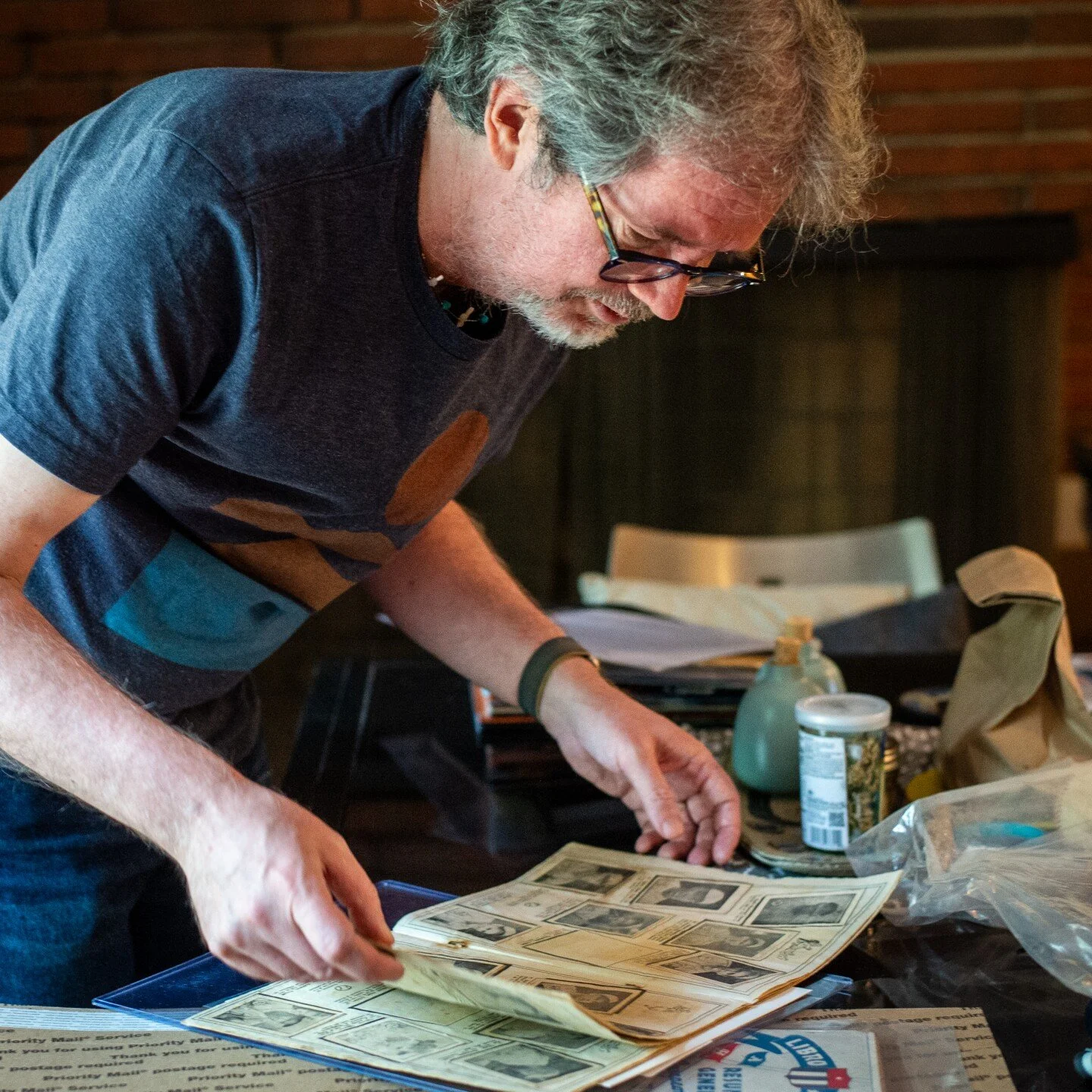
Gary Ashwill
Gary Ashwill researches and writes about Negro league and Latin American baseball. He is the founder and lead researcher of the Seamheads Negro Leagues Database, which is used by Major League Baseball, Baseball-Reference.com, the Society for American Baseball Research, and Fangraphs.
He has won SABR’s Henry Chadwick Award, and the John Coates Next Generation Award, the Fay Vincent Award, and the Tweed Webb Lifetime Achievement Award from SABR’s Jerry Malloy Negro League Conference.
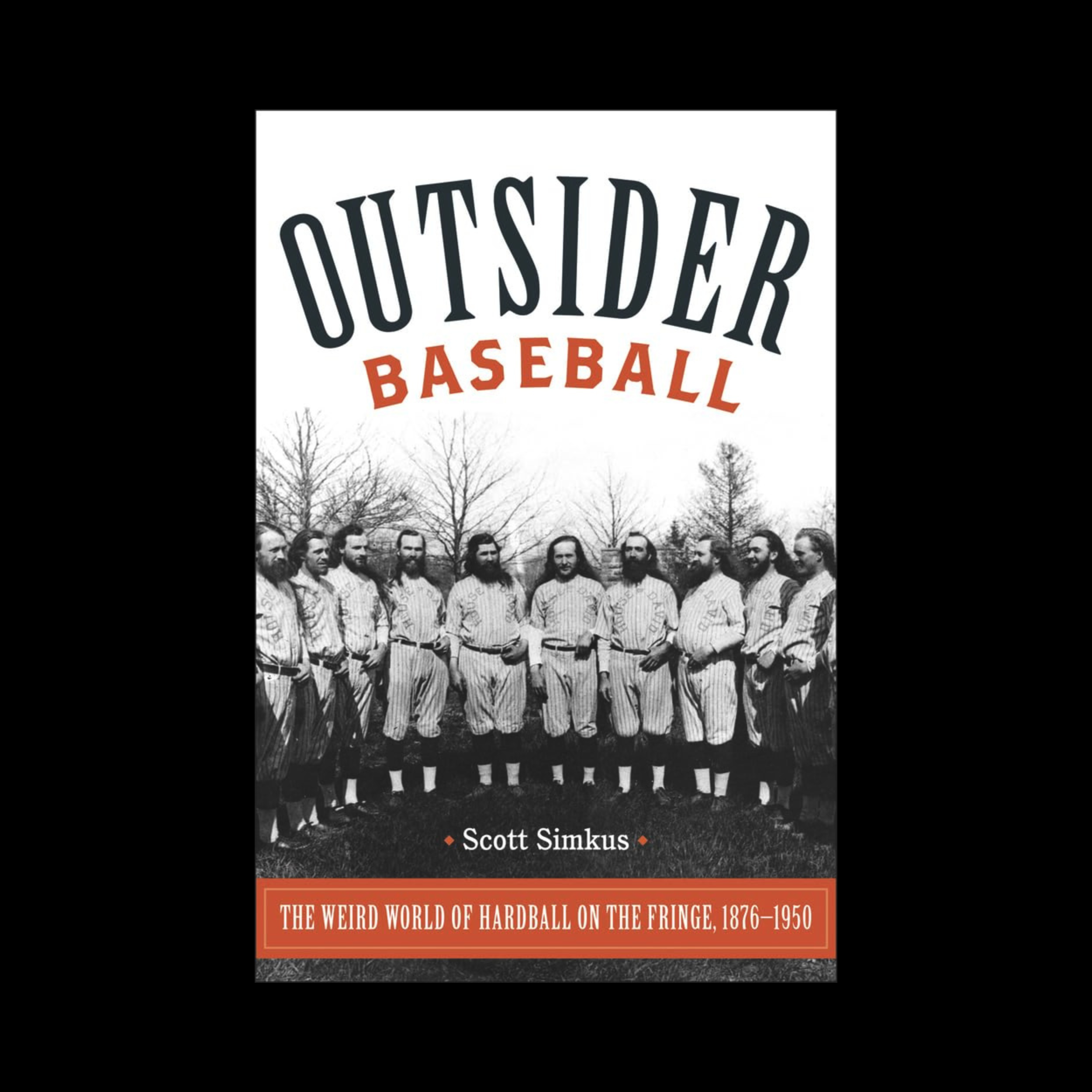
Scott Simkus
Scott Simkus created a Negro League card set for the Strat-O-Matic Game Company in 2009. He also wrote the short-lived Outsider Baseball Bulletin.
His first book, Outsider Baseball: The Weird World of Hardball on the Fringe, 1876-1950, was published in 2014. A member of the award-winning Seamheads Negro Leagues Database team, Simkus’s statistical research is now part of the official Major League record.
Buy his book Outsider Baseball: The Weird World of Hardball on the Fringe, 1876–1950 HERE.
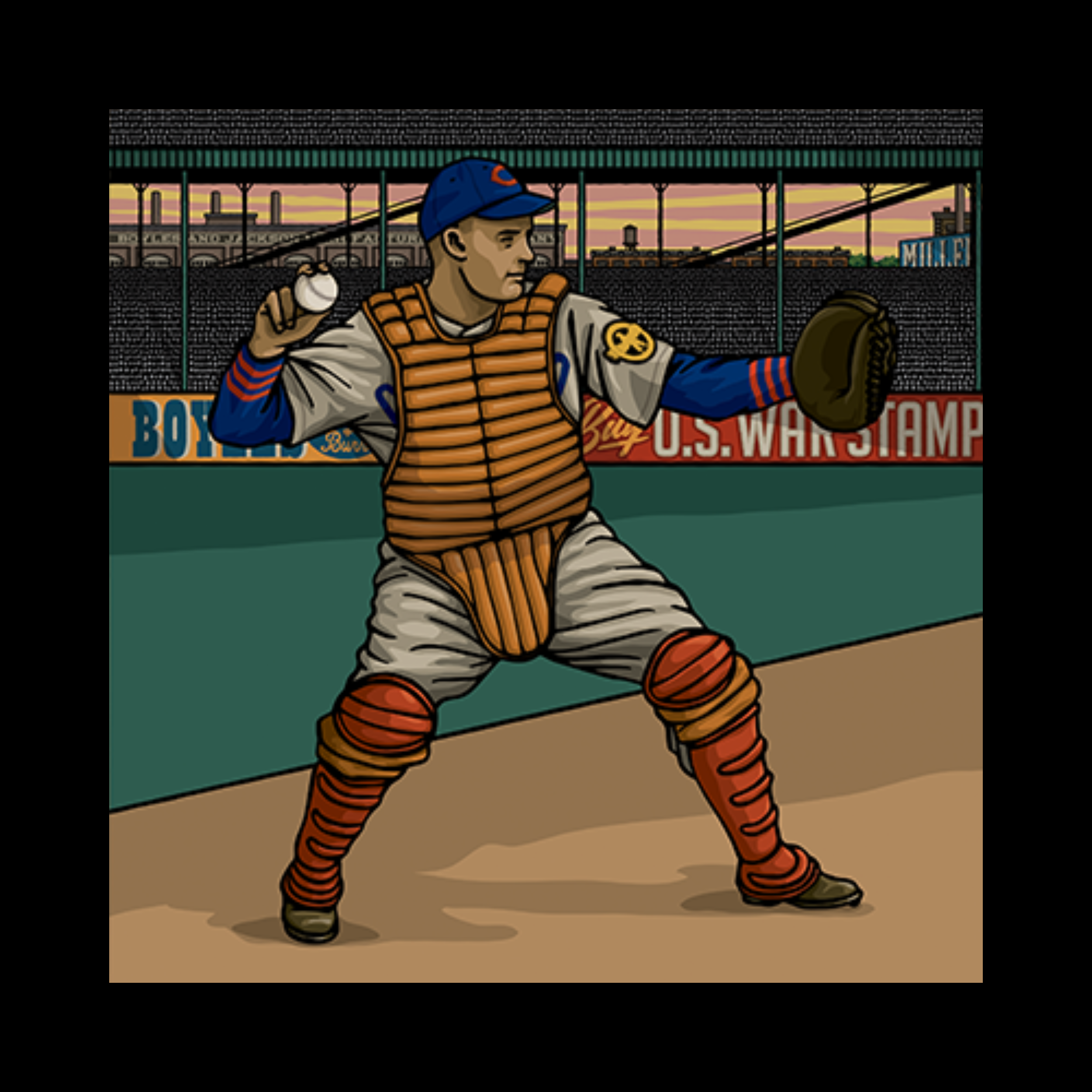
Paul Gillespie
Gary’s blog post on Paul Gillespie
Paul Gillespie’s SABR Biography
Buy Gary’s Paul Gillespie print HERE.
Gary created the logo for the Seamheads Negro Leagues Database
Gary also created the logo for the Seamheads Ballparks Database
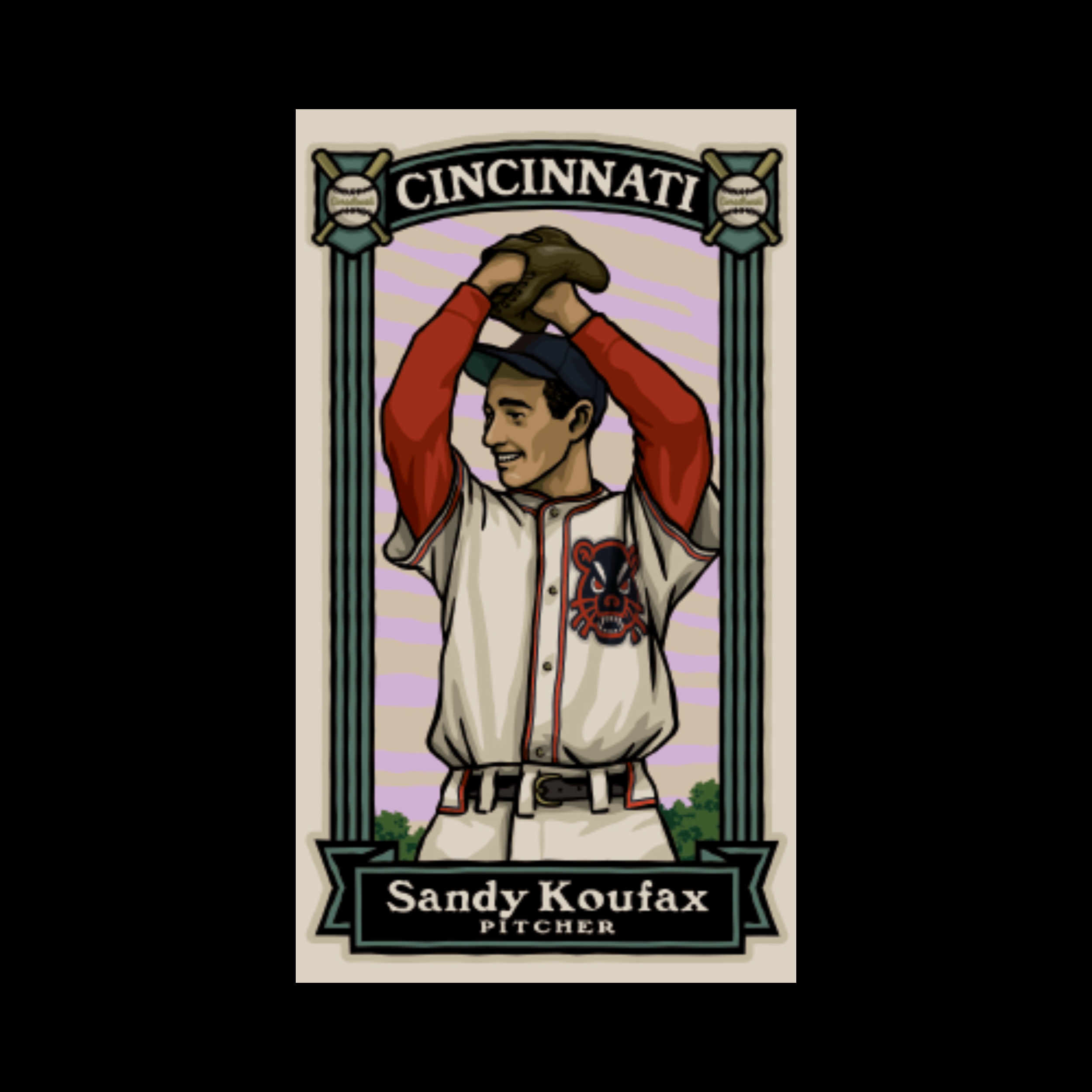
Sandy Koufax
Dan’s first starting pitcher
An excerpt from Gary’s book about Sandy Koufax
Buy Gary’s Sandy Koufax print HERE.
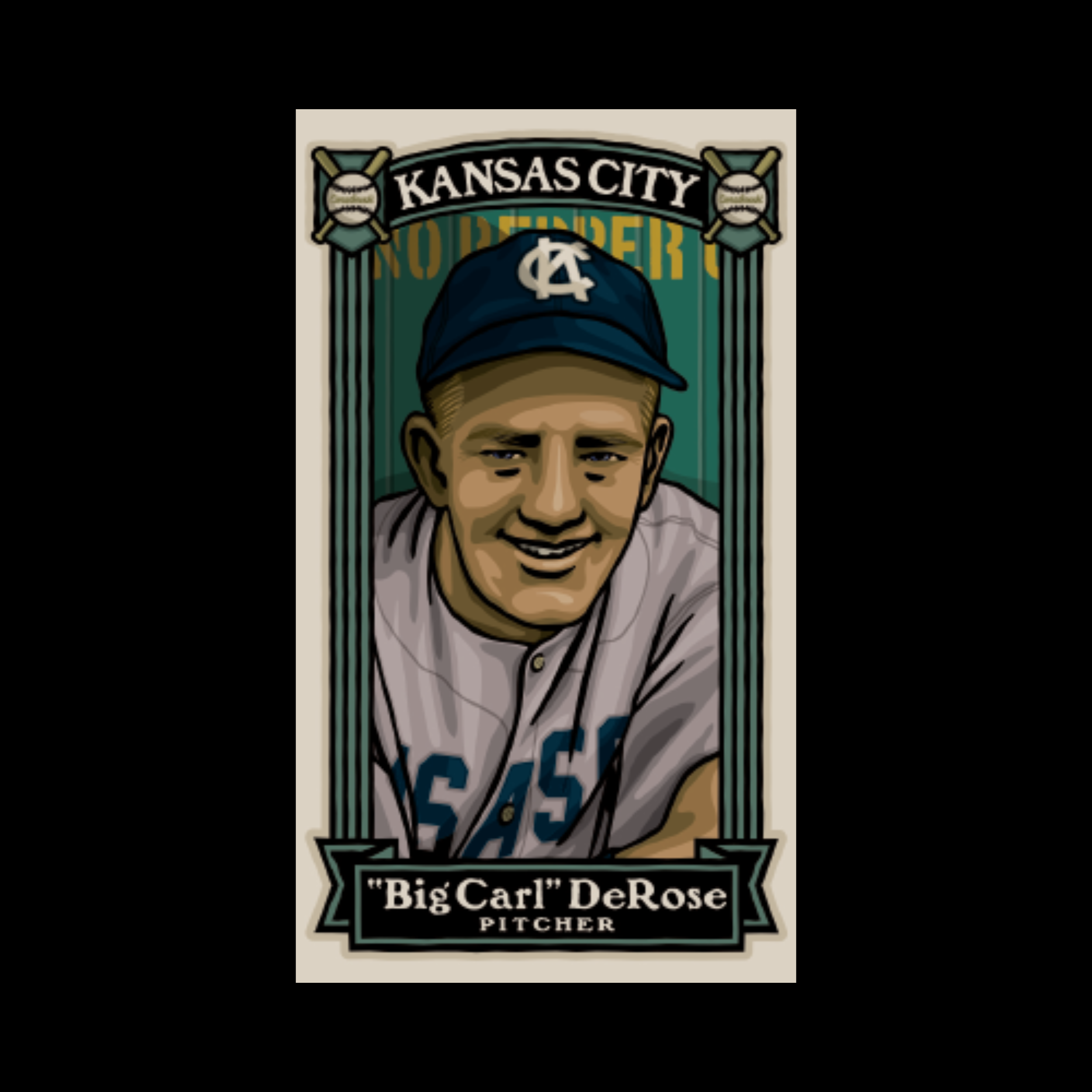
“Big Carl” DeRose
Gary’s first starting pitcher
Gary’s blog post on “Big Carl” DeRose
Buy Gary’s Carl DeRose card booklet HERE.
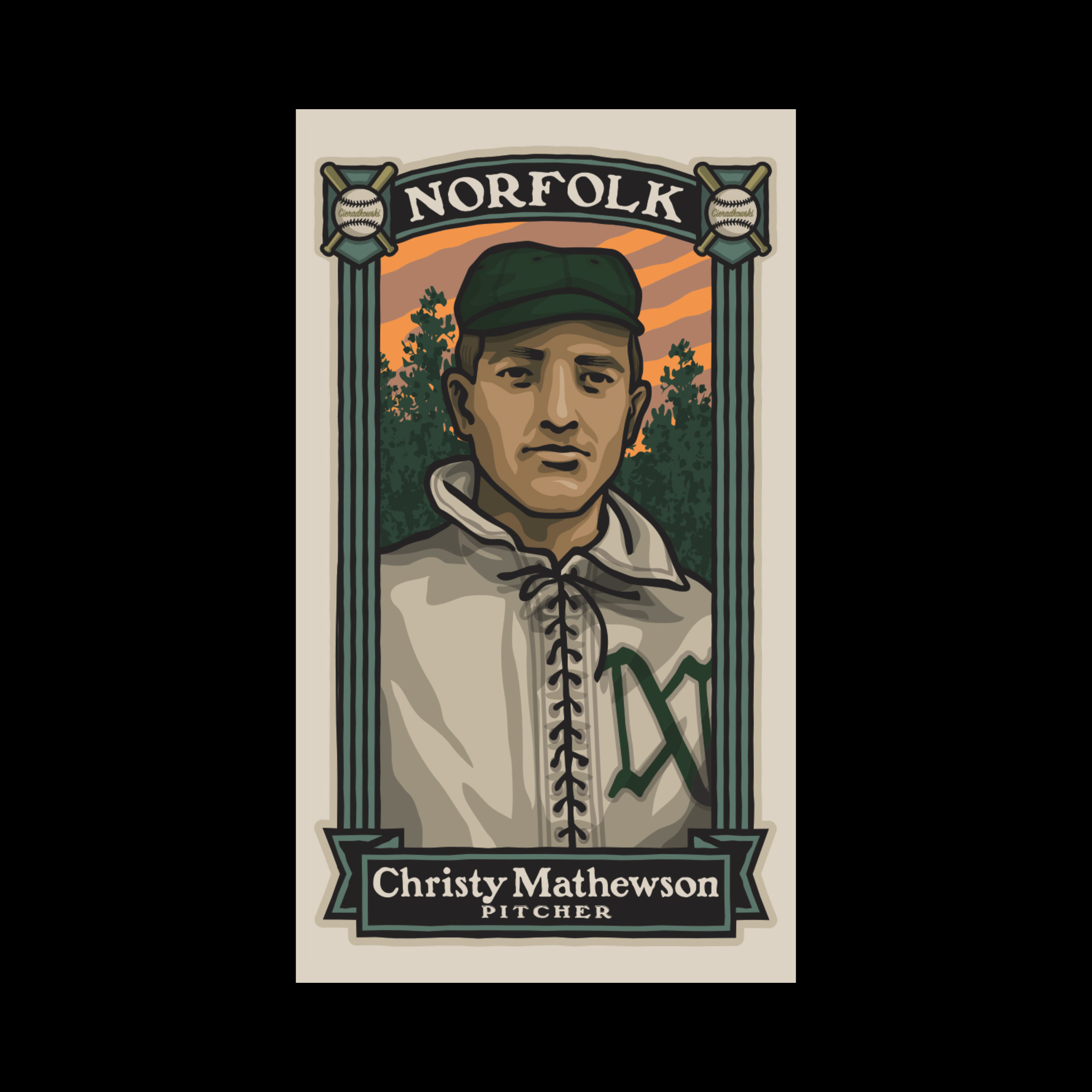
Christy Mathewson
Dan’s second starting pitcher
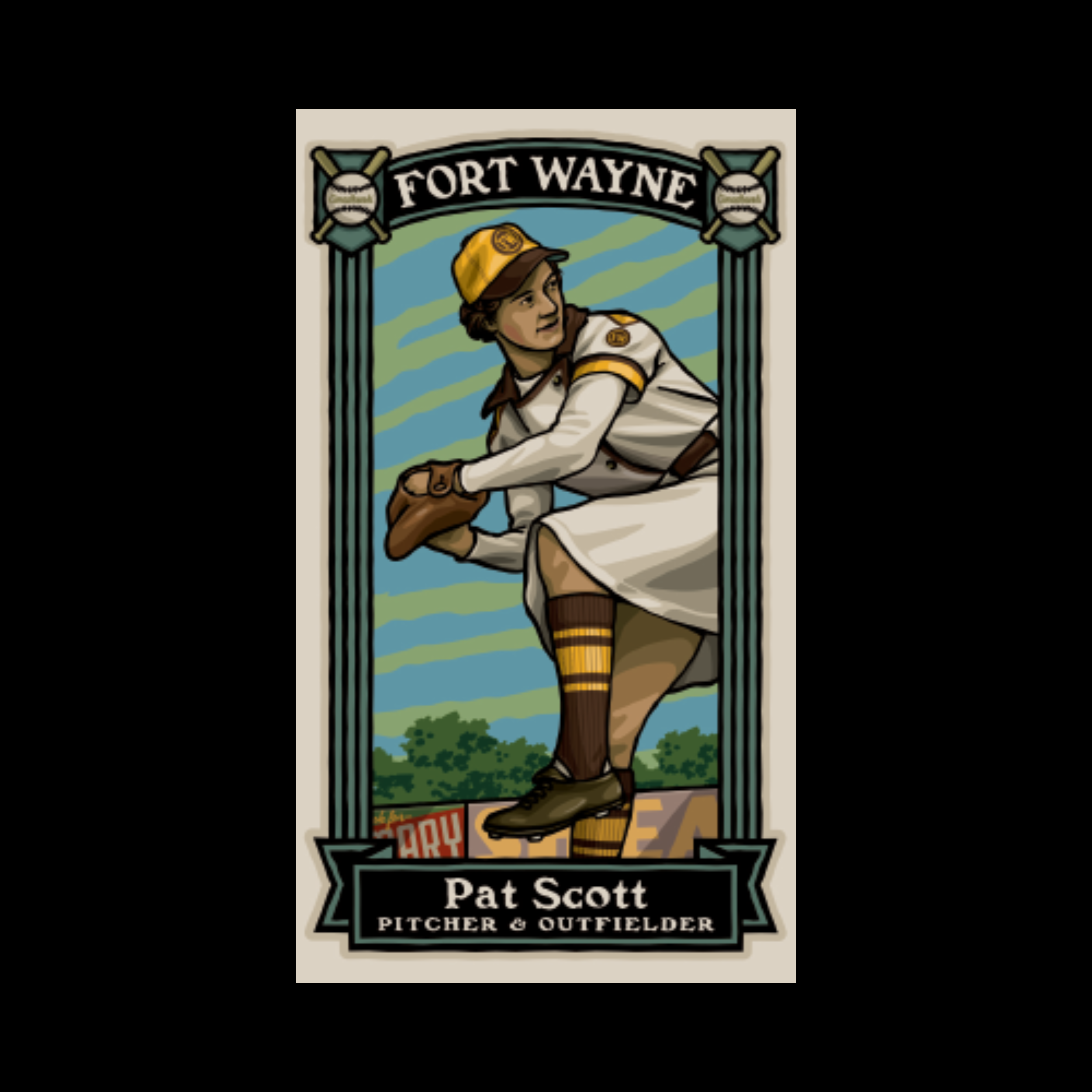
Pat Scott
Gary’s second starting pitcher
SABR Landmarks article on Pat Scott
Buy Gary’s Pat Scott card booklet HERE.
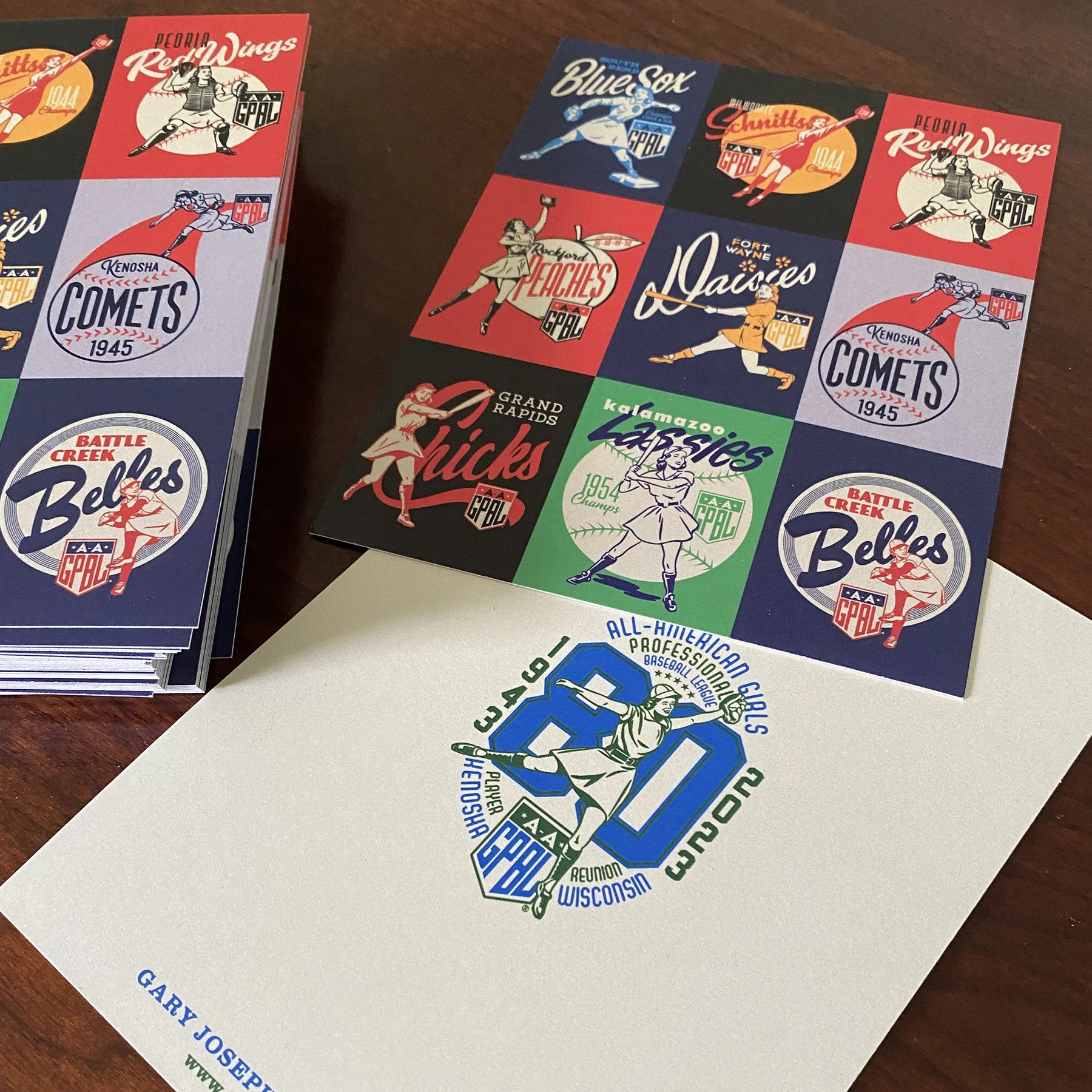
All-American Girls Professional Baseball League 80th Reunion
For the 80th anniversary of the AAGPBL, Gary re-imagined the logos for a number of the teams.
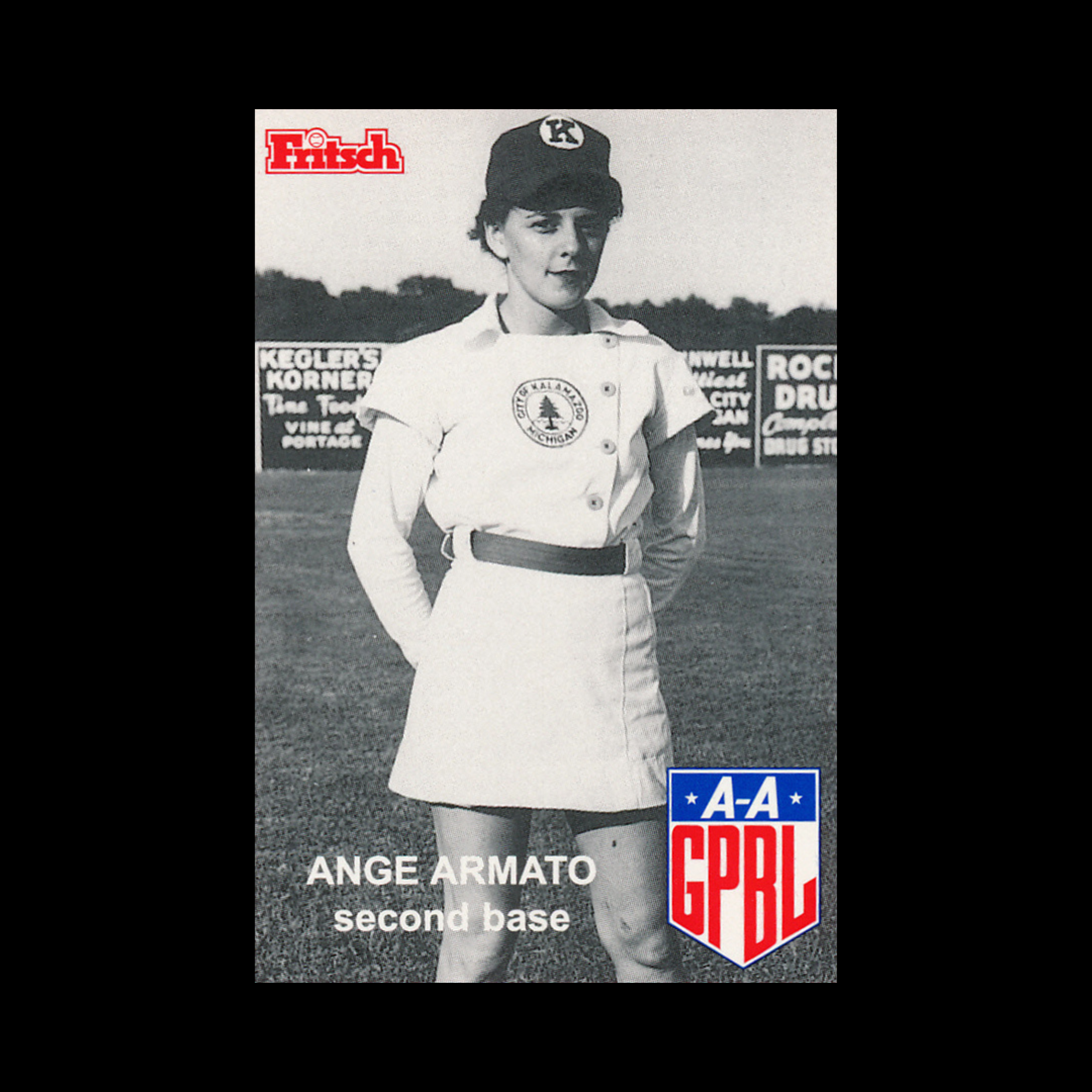
Boring Hats
Ange Armato is a former player in the All-American Girls Professional Baseball League who spent time playing with the Rockford Peaches and the Kalamazoo Lassies.
She was our guest for Episode 7 of Season 3. You can listen to that episode HERE.
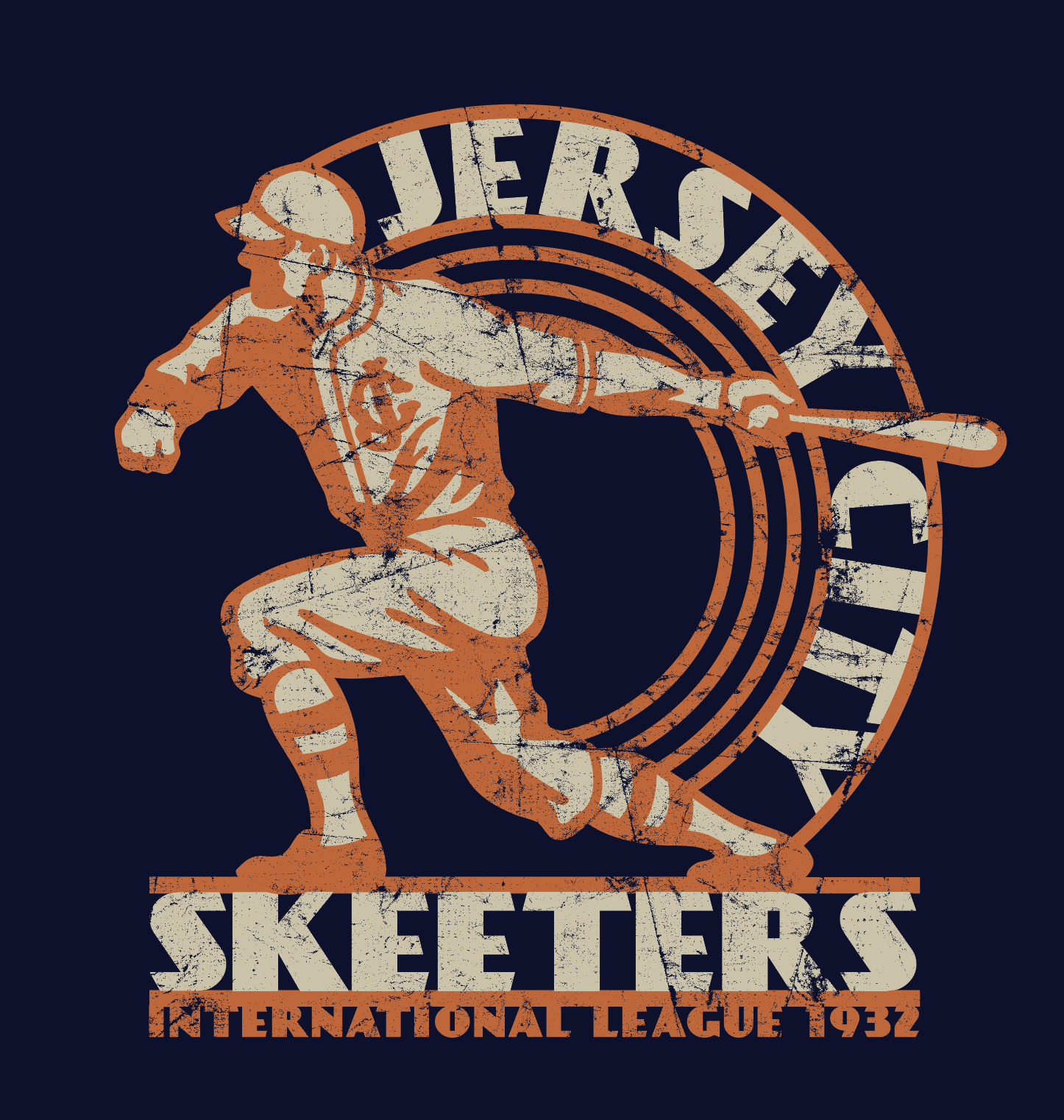
Ebbets Field Flannels
Gary used to do design work for Ebbets Field Flannels. This is one of his many previous designs for EFF.
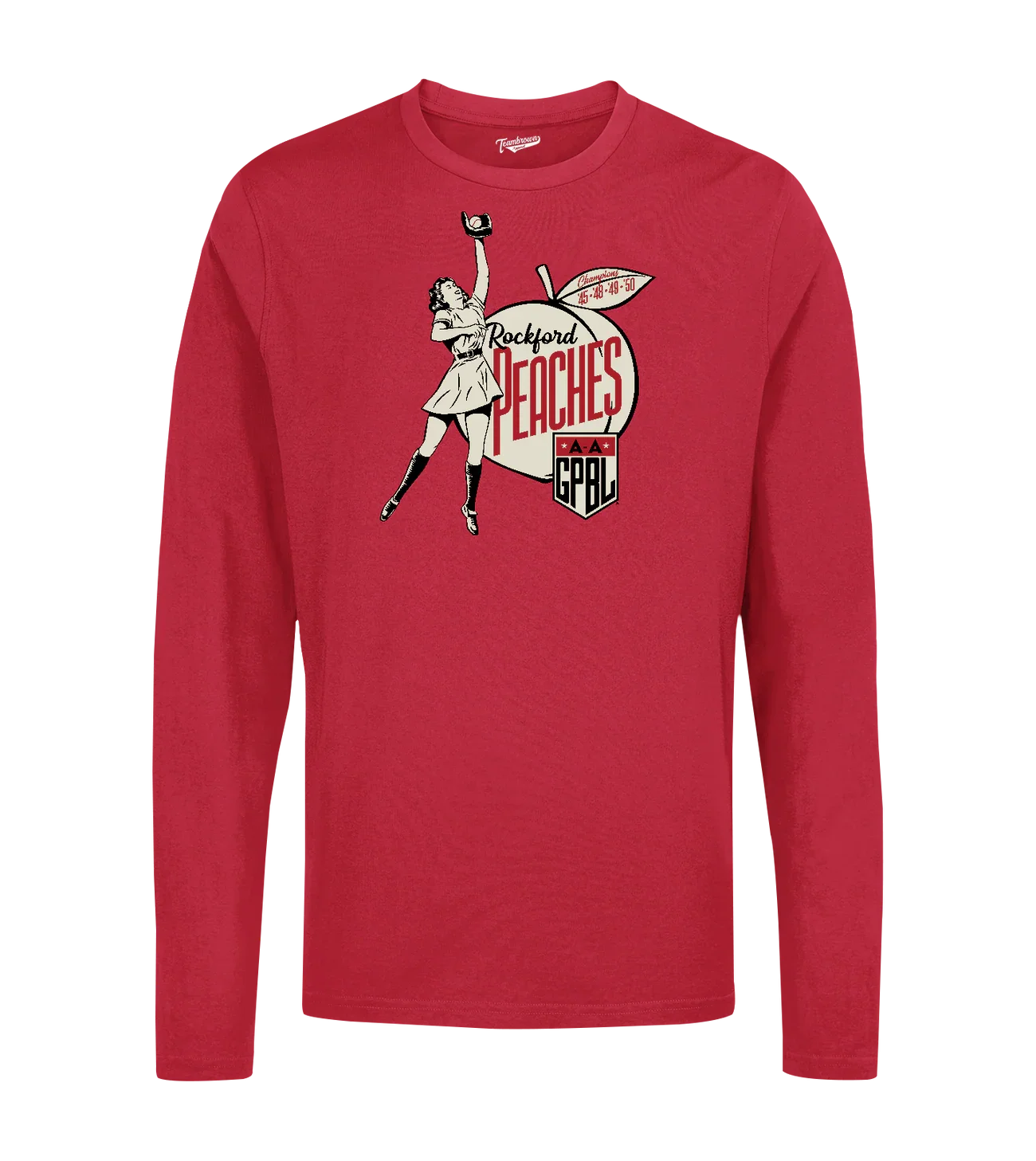
Team Brown Apparel
Now, Gary works with Team Brown Apparel, who owns the rights to the AAGPBL, which has given Gary the chance to create shirt designs like he thinks would have been available in the 1940s, had these teams sold merch.
Check out the AAGPBL gear that’s available from Team Brown Apparel, like this shirt Gary designed, HERE.
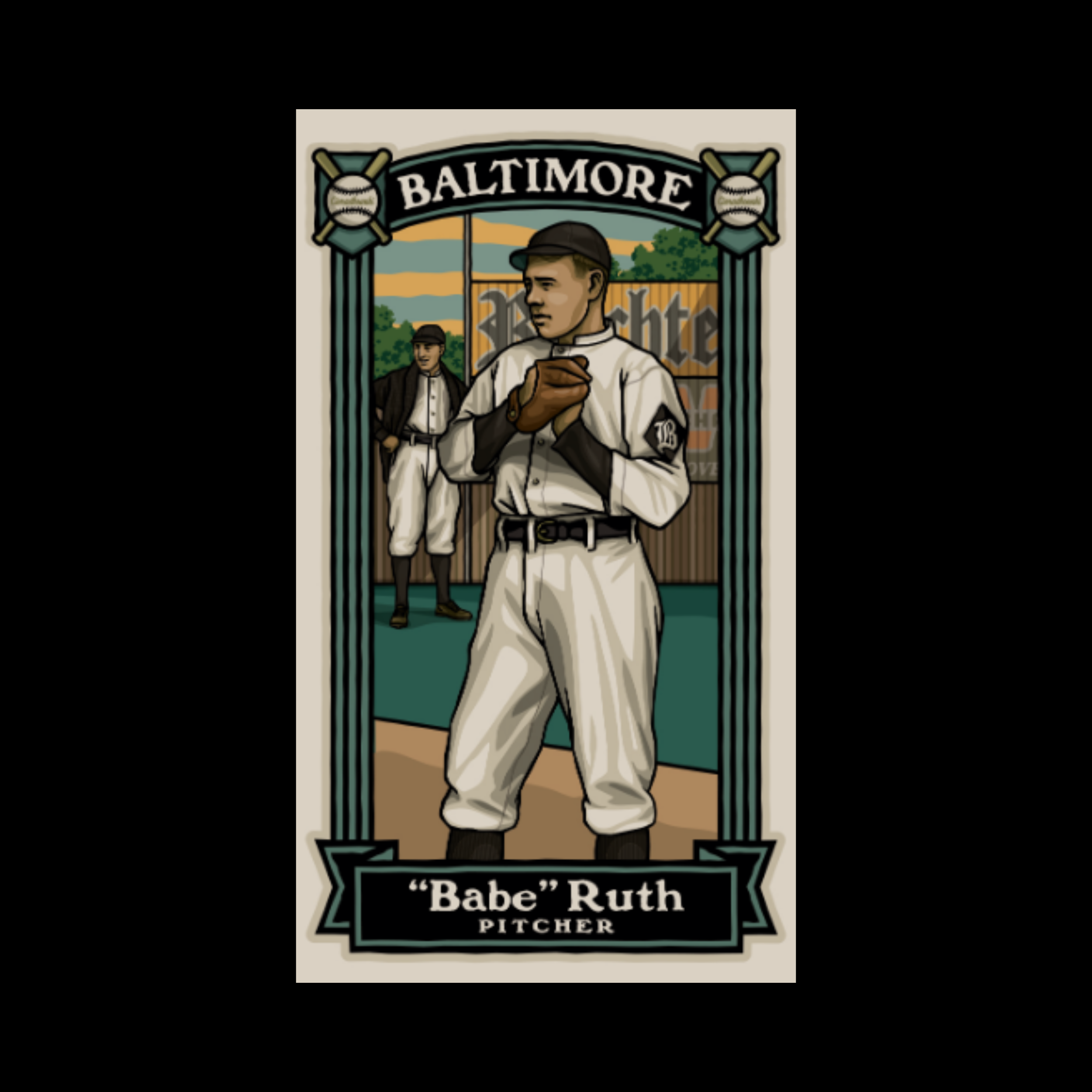
Babe Ruth
Babe Ruth Birthplace and Museum
Shawn Herne is the Executive Director of the Babe Ruth Birthplace and Museum in Baltimore, Maryland.
He was our guest for Episode 3 of Season 2. You can listen to that episode HERE.
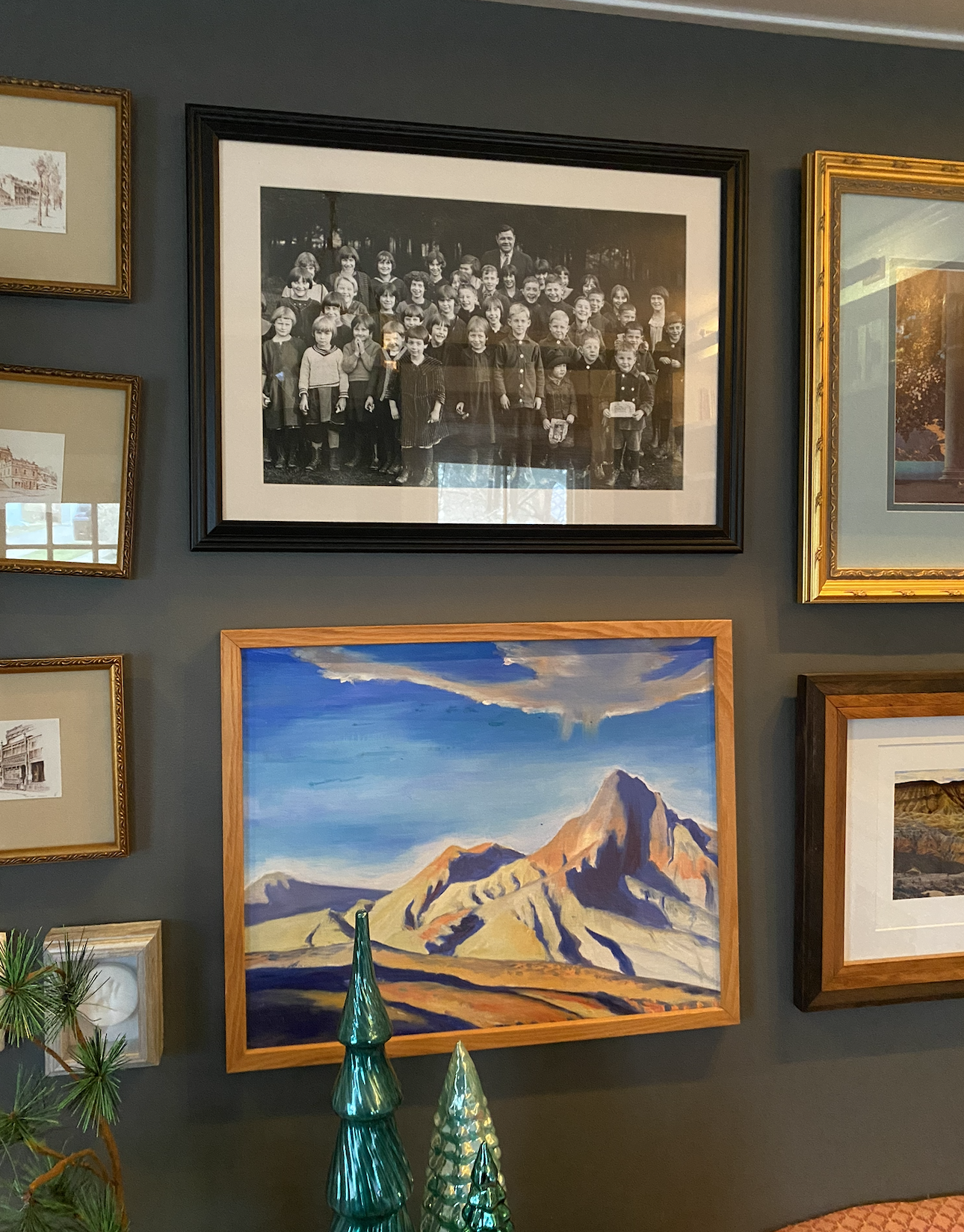
Gary’s Favorite Babe Ruth Photo
It’s one of the first things you see when you first walk into Gary’s house.
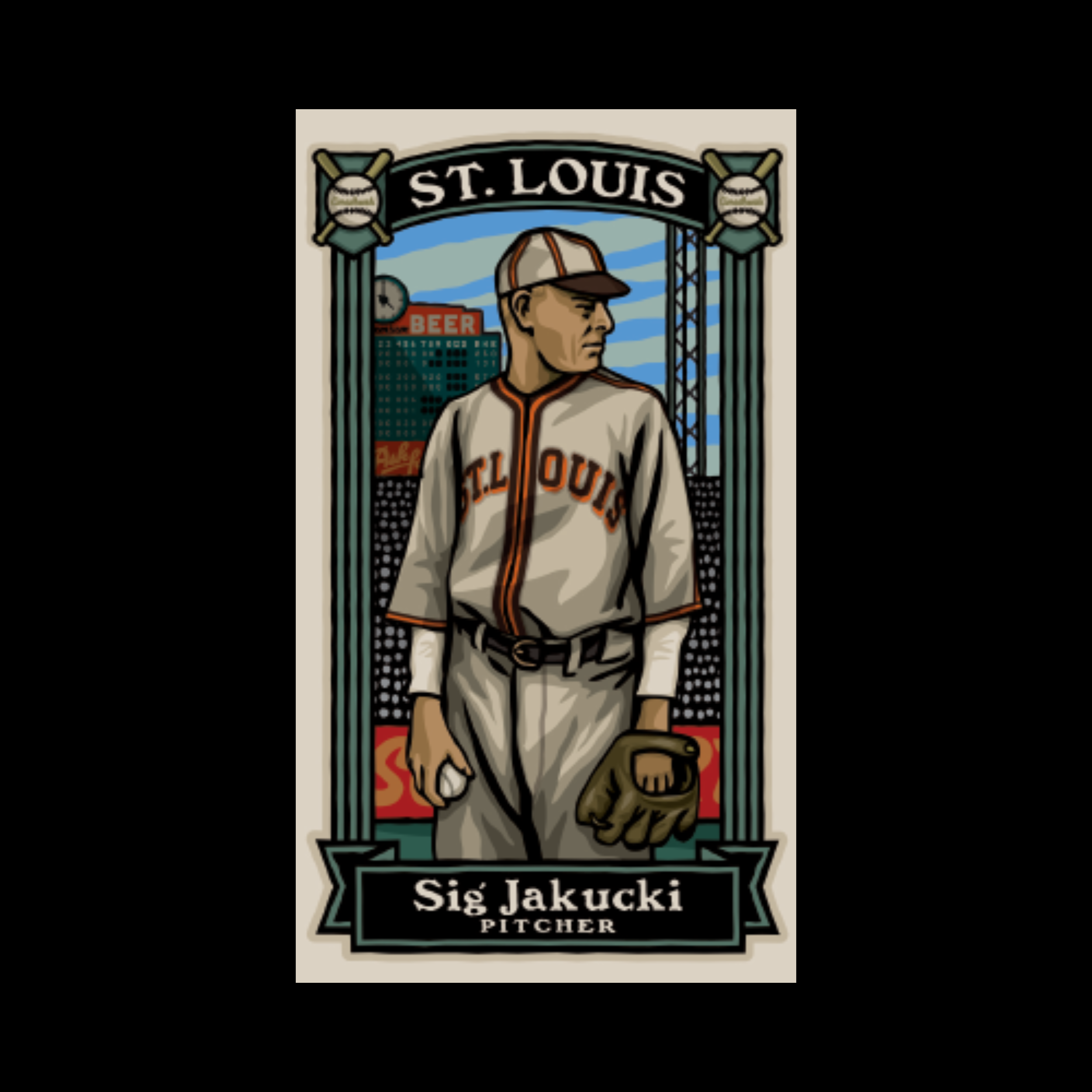
Sig Jakucki
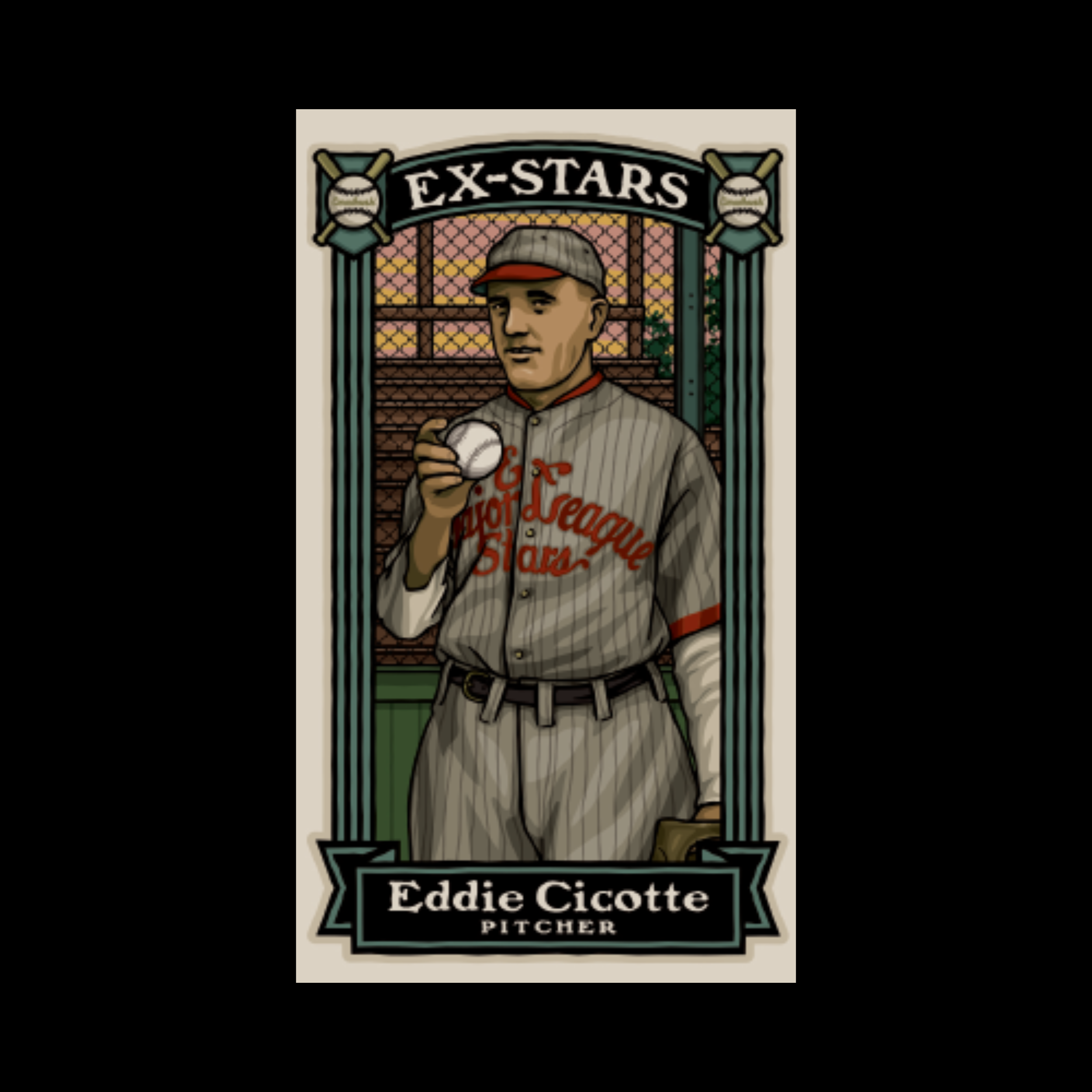
Eddie Cicotte
Dan’s fourth starting pitcher
Gary’s blog post on Eddie Cicotte
Eddie Cicotte’s SABR Biography
Buy Gary’s Eddie Cicotte print HERE.
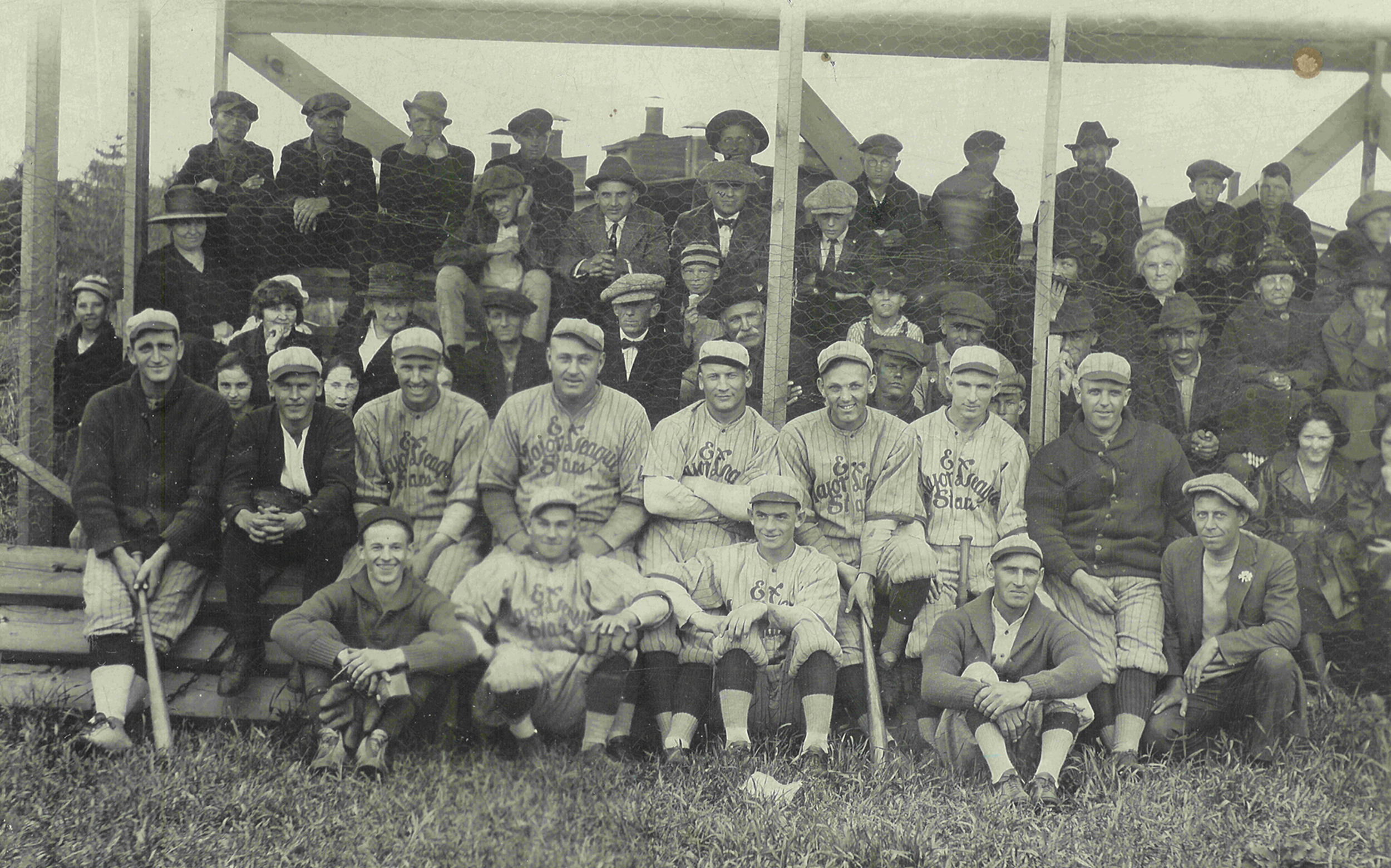
The Ex Major League Stars barnstorming team. Eddie Cicotte is in the back row of players, wearing a sweater on the far right.
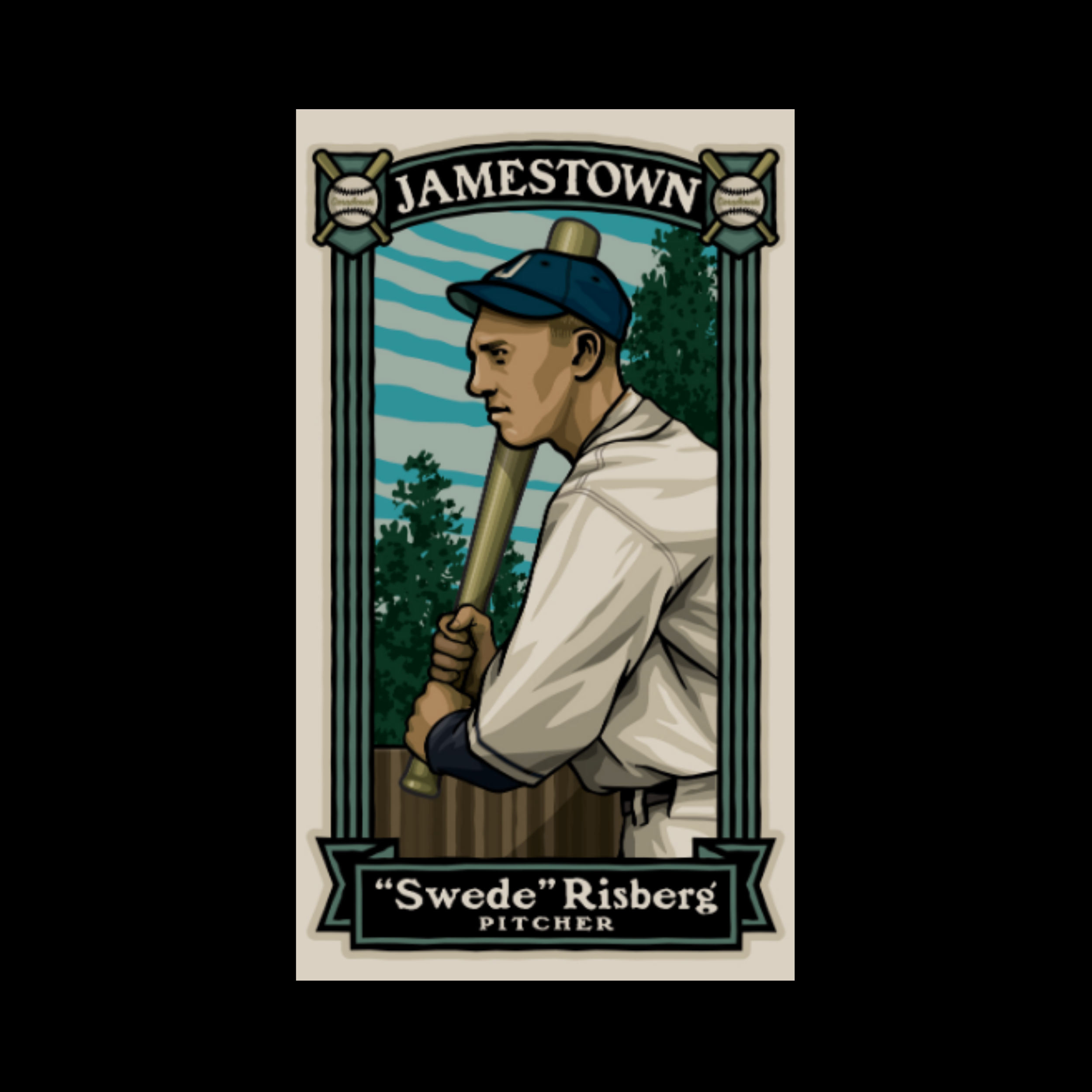
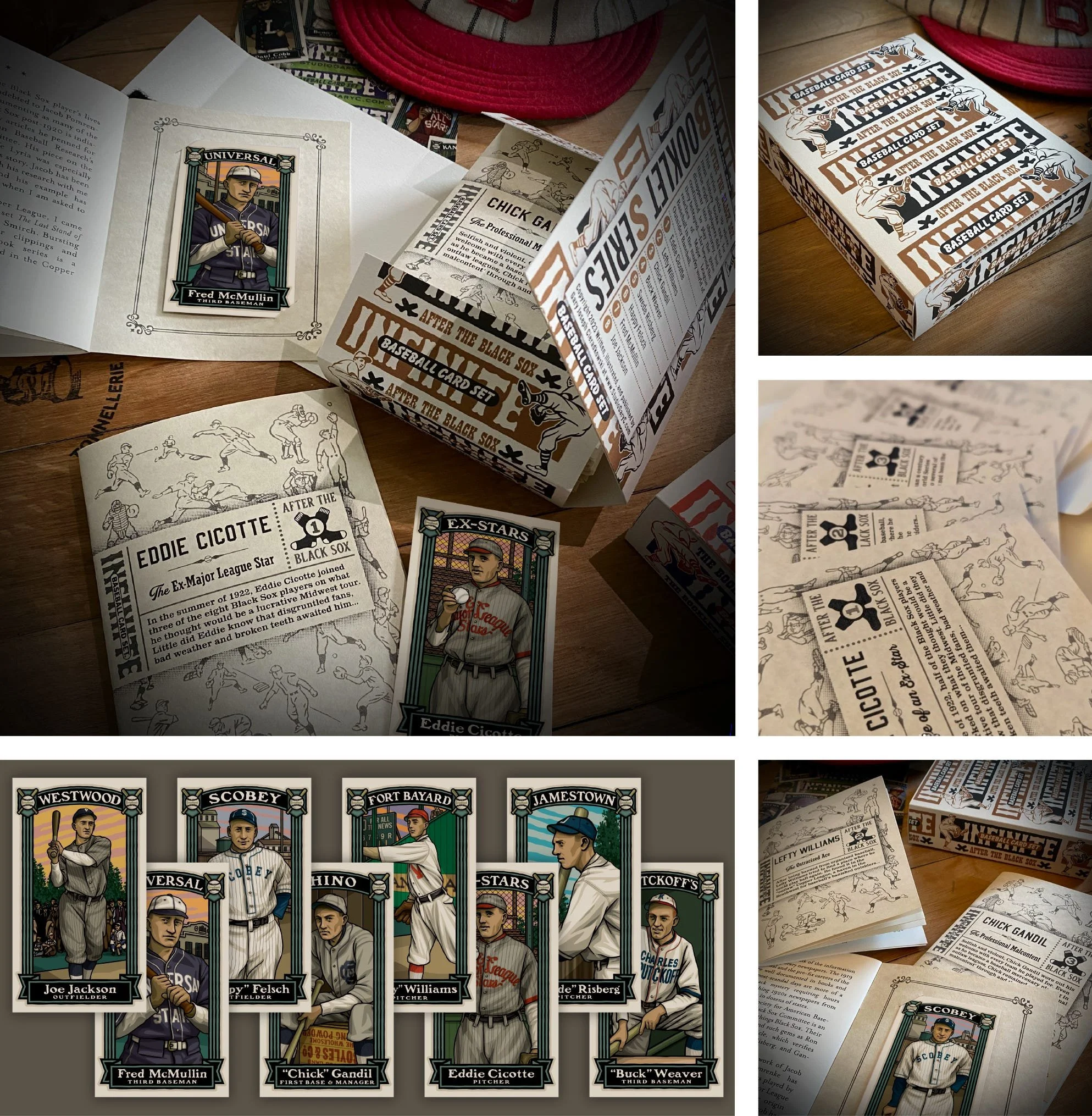
After The Black Sox card set
Eight Myths Out project by SABR
A great article about Gary’s After The Black Sox set
Buy Gary’s After The Black Sox card set HERE.
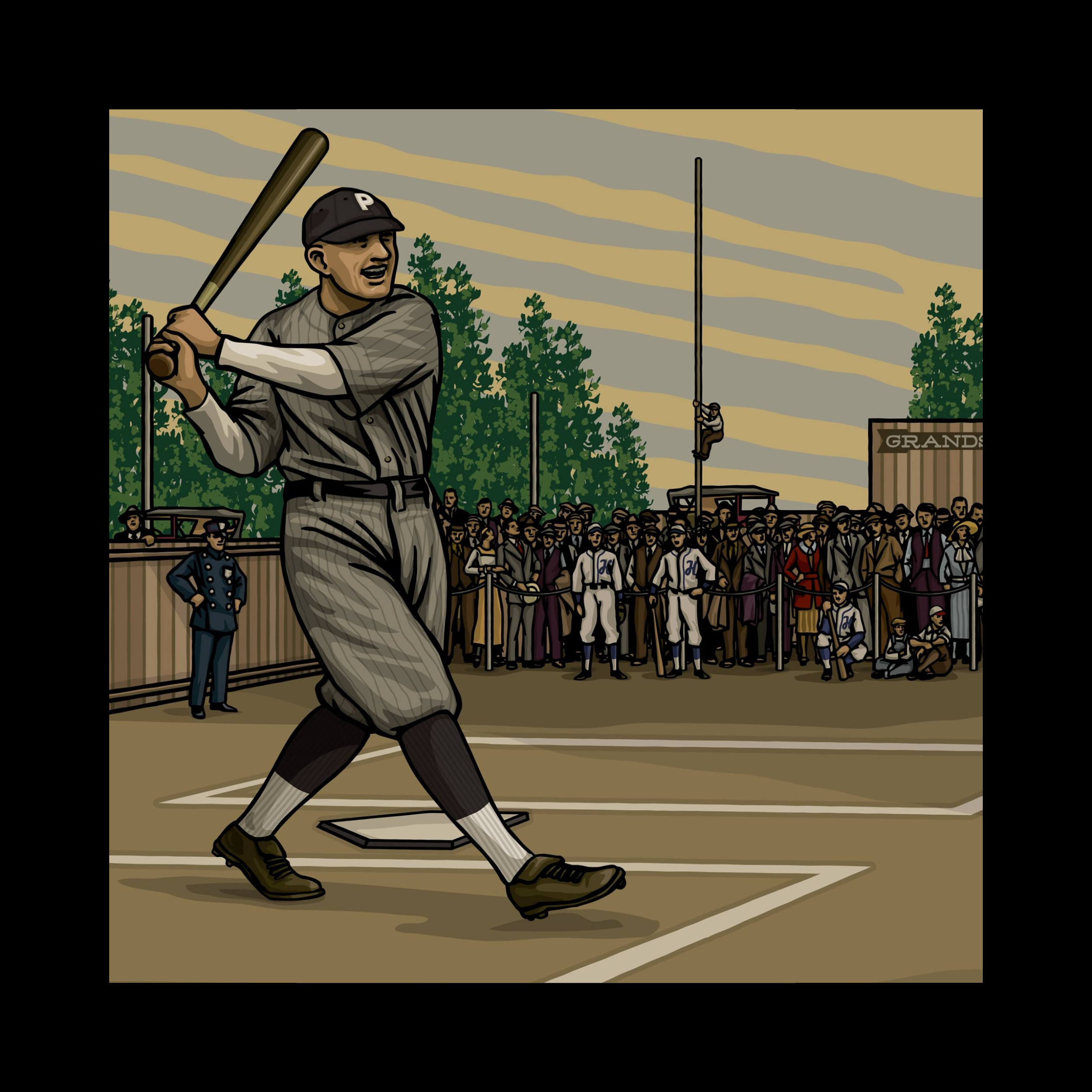
Shoeless Joe Jackson
During Gary’s research for the After The Black Sox Set, he discovered a number of previously-undocumented games that Joe Jackson had played in New Jersey.
Gary’s blog post about those games in North Jersey
Buy Gary’s Shoeless Joe Jackson print HERE.
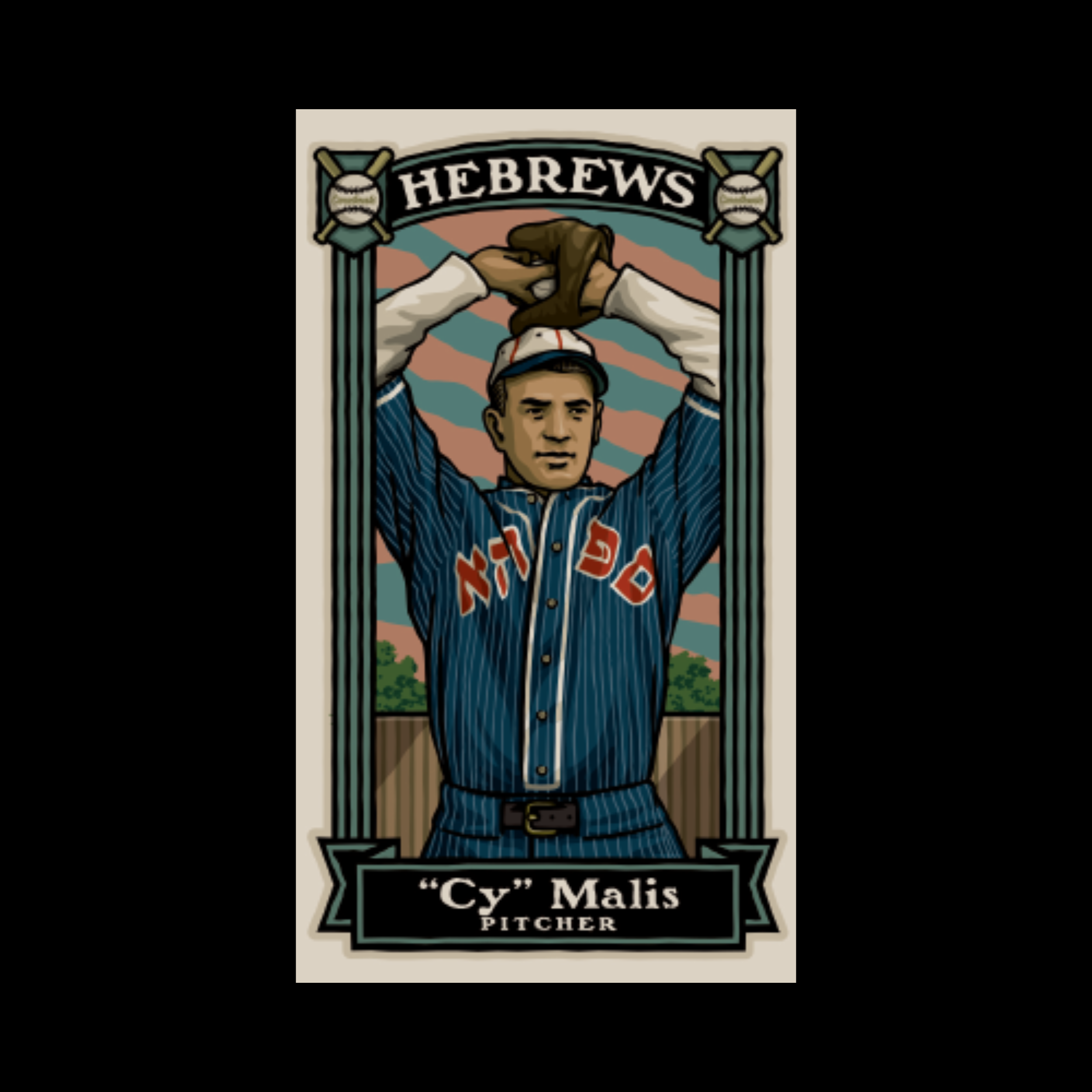
Cy Malis
Gary’s fourth starting pitcher
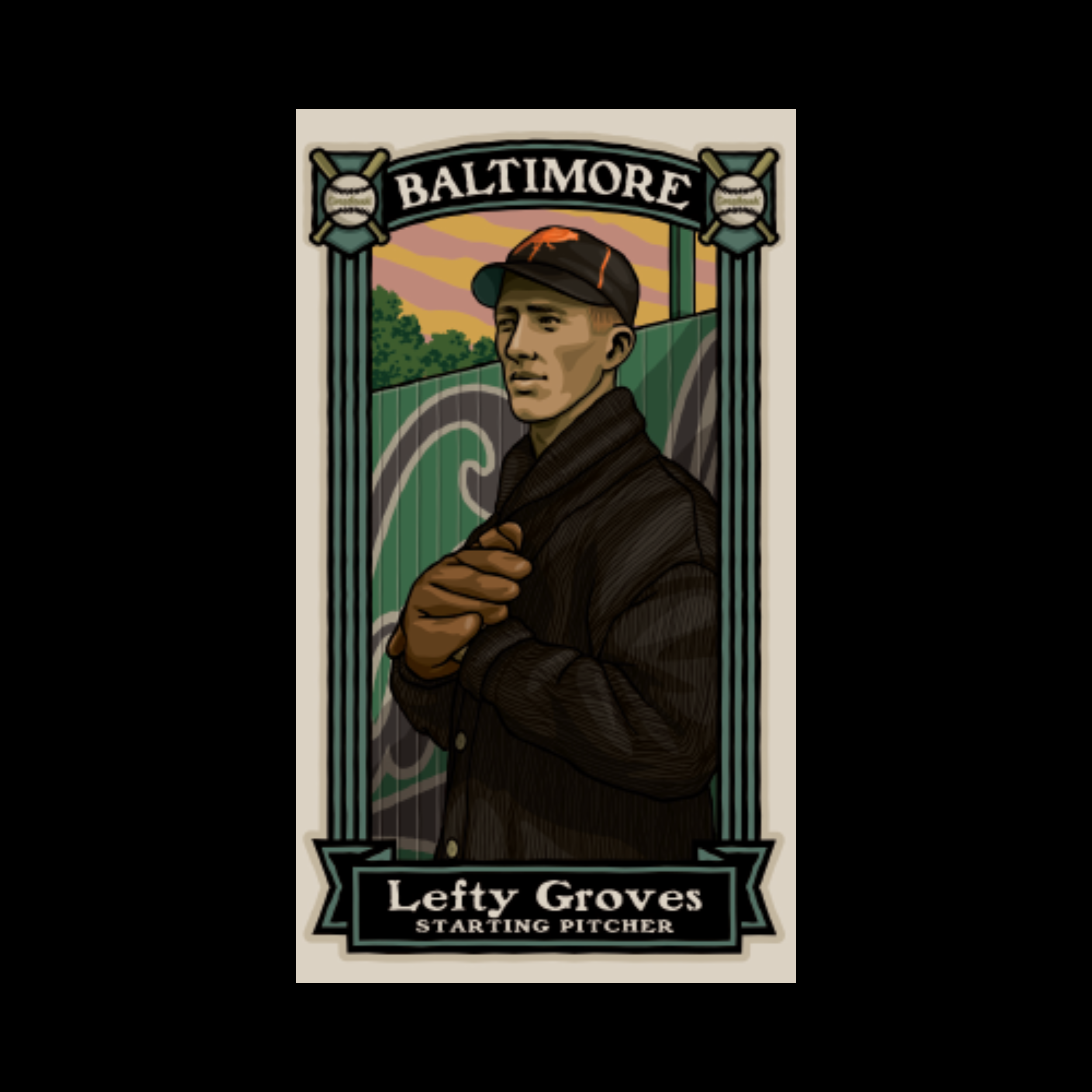
Lefty Grove
Dan’s fifth starting pitcher
Gary’s 2010 blog post on Lefty Grove
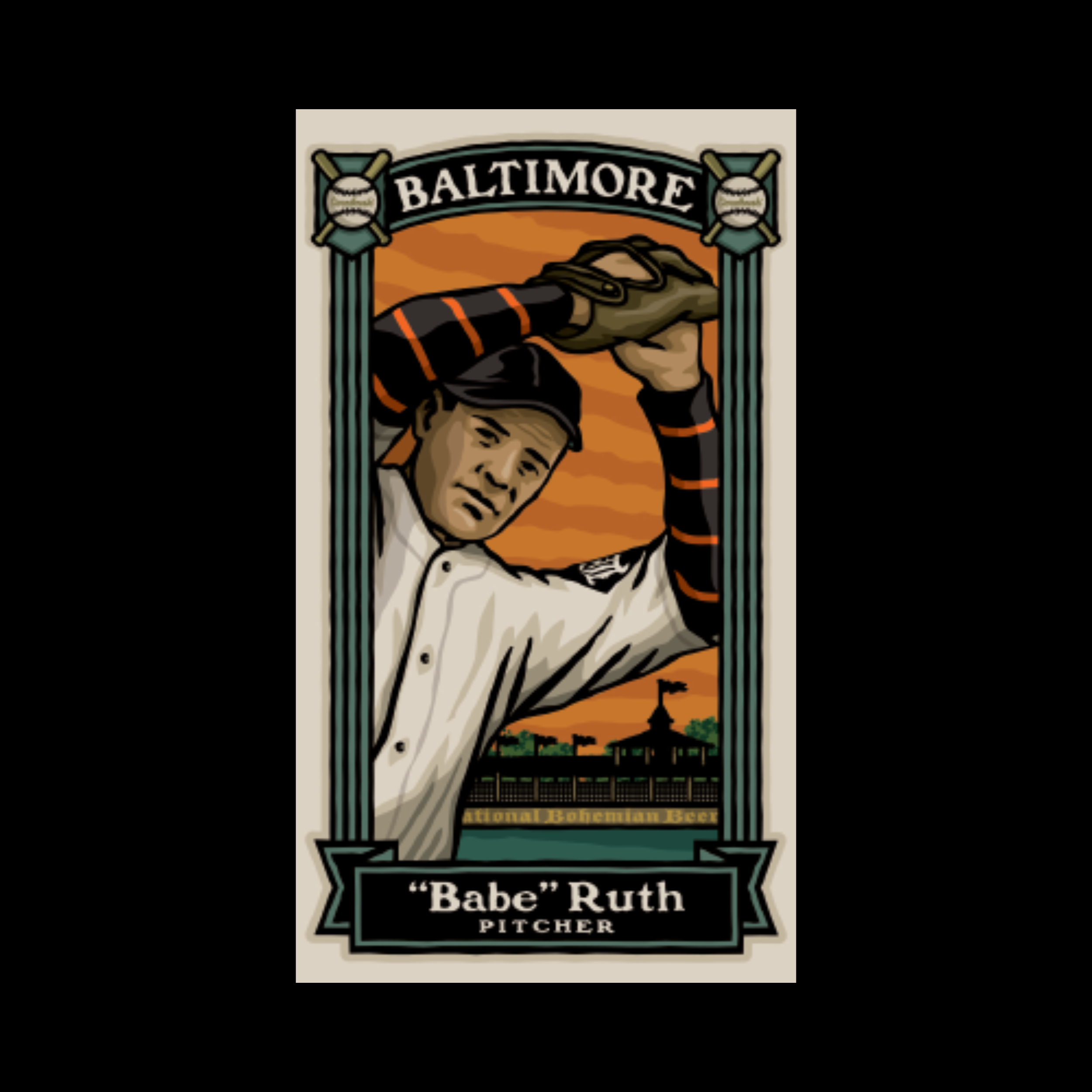
Babe Ruth
Babe Ruth’s professional baseball career began as a member of the International League’s Baltimore Orioles.
“Babe Ruth’s Half Season with the Baltimore Orioles in 1914” by Gary Sarnoff
Buy Gary’s Babe Ruth print HERE.
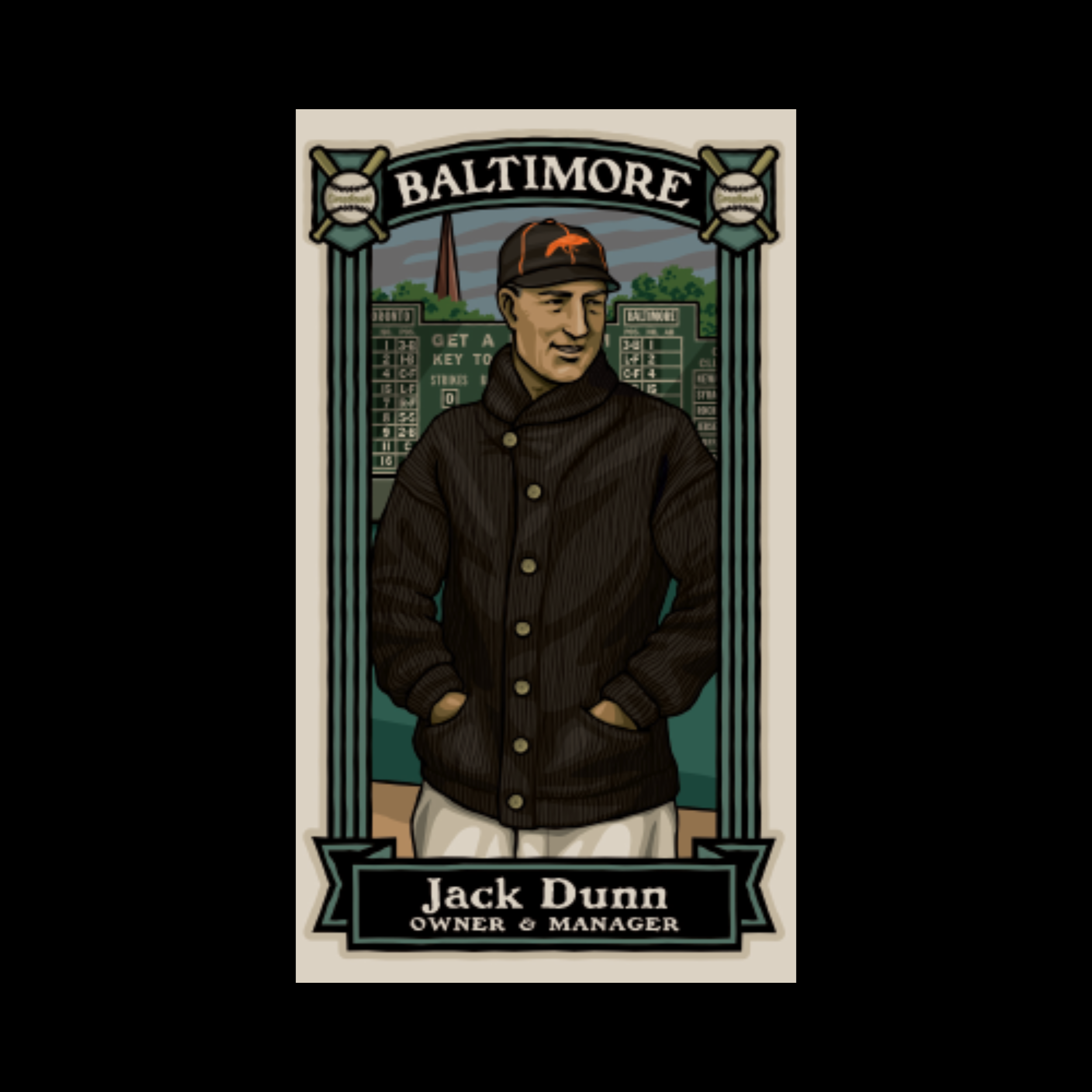
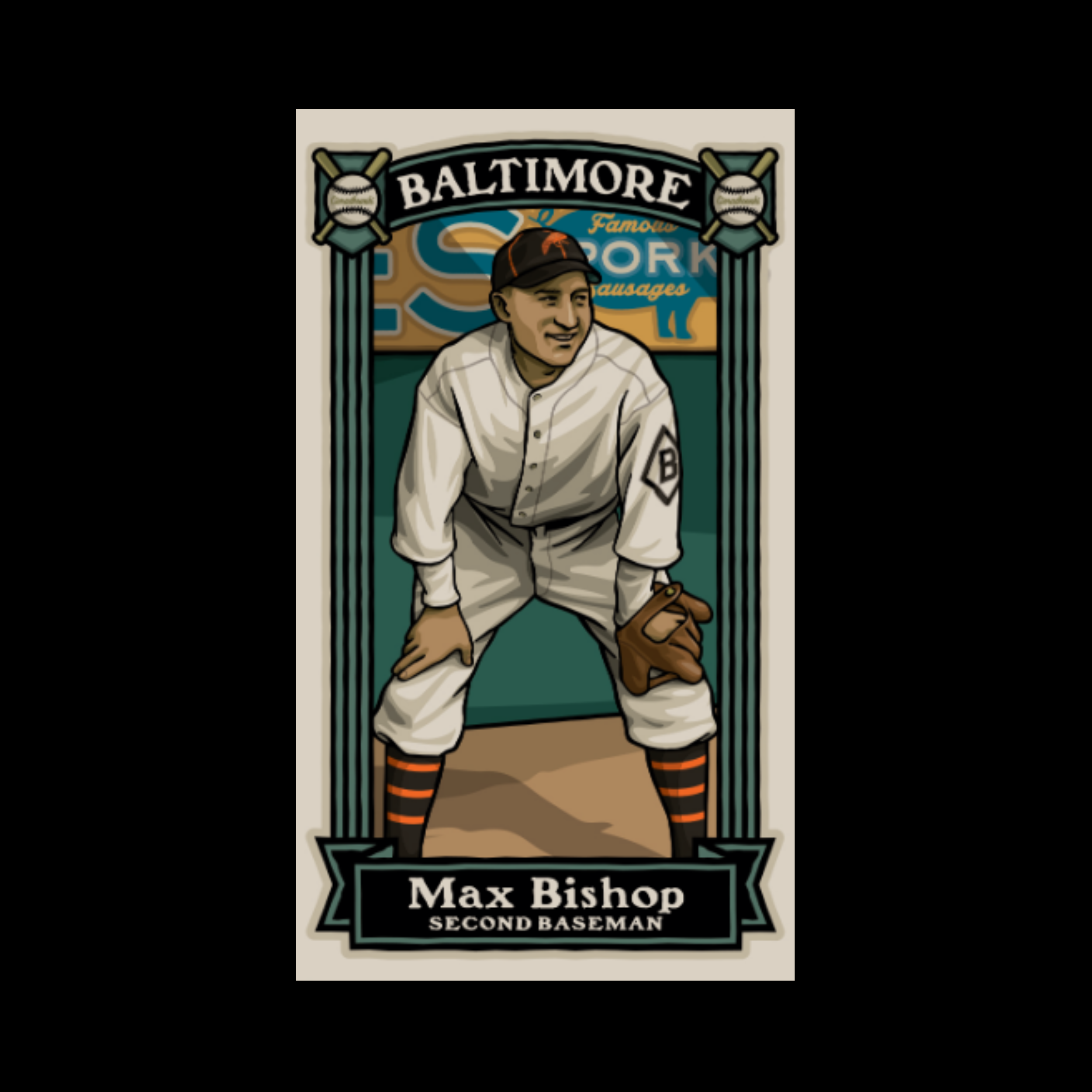
Max “Camera Eye” Bishop
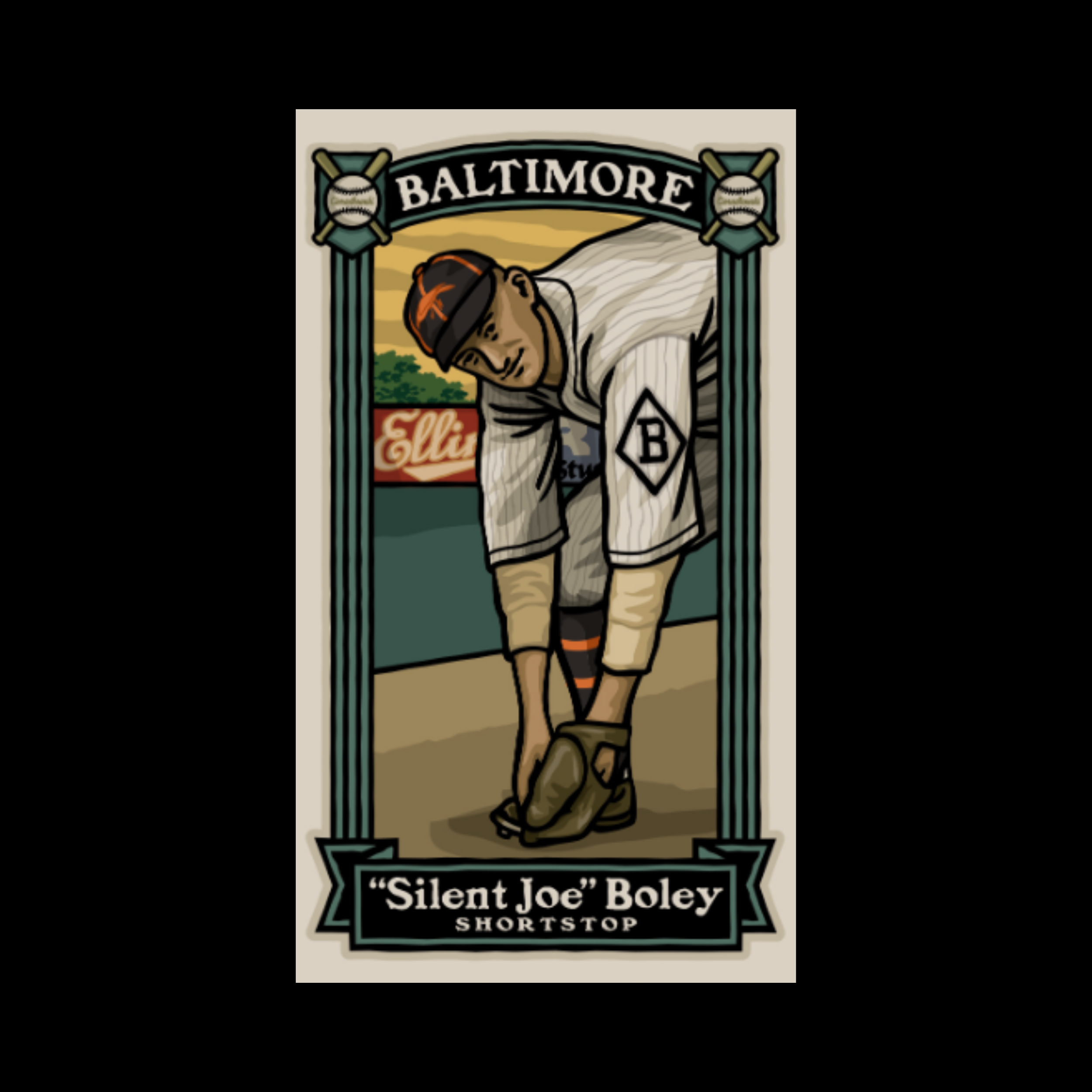
Joe Boley
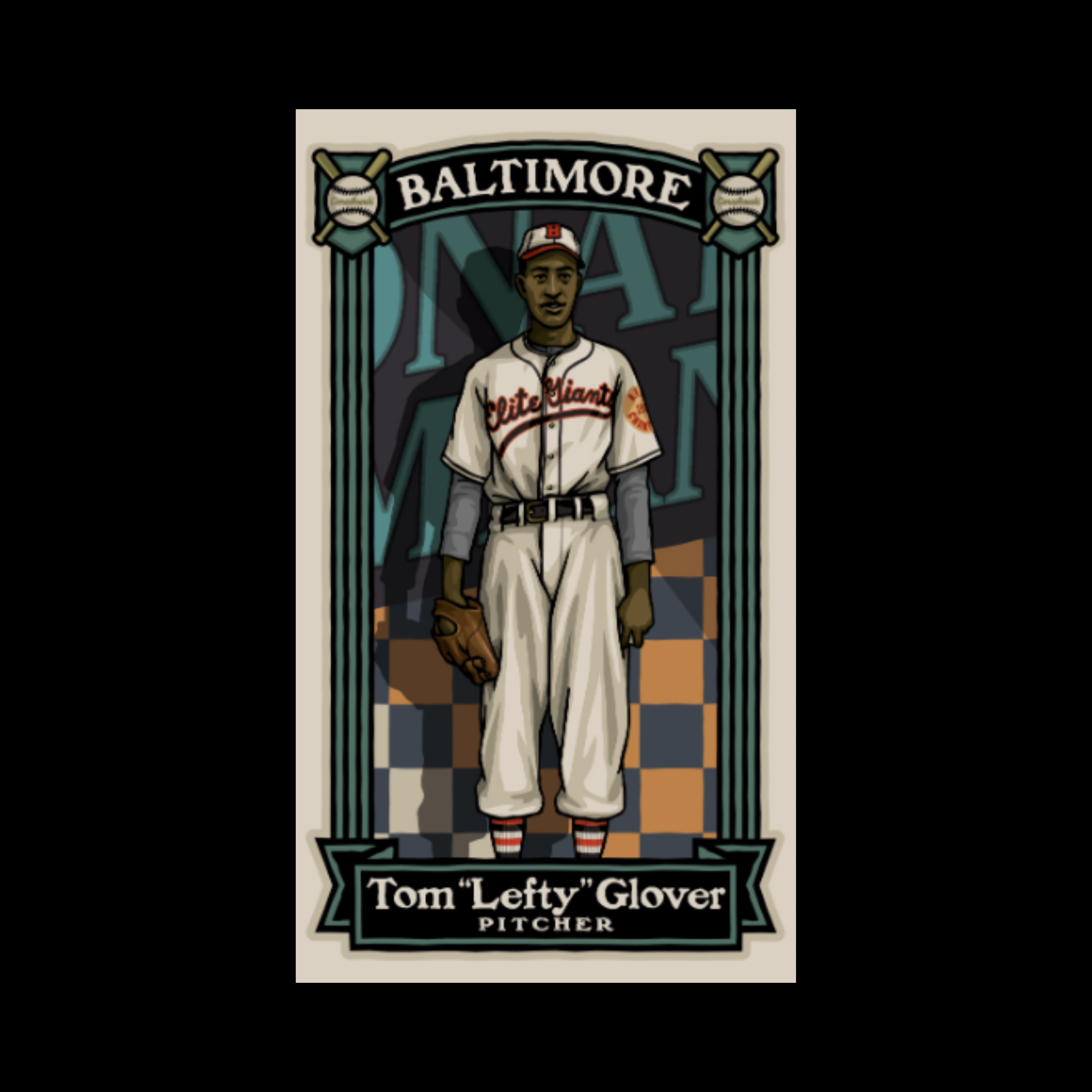
Tom “Lefty” Glover
Gary’s fifth starting pitcher
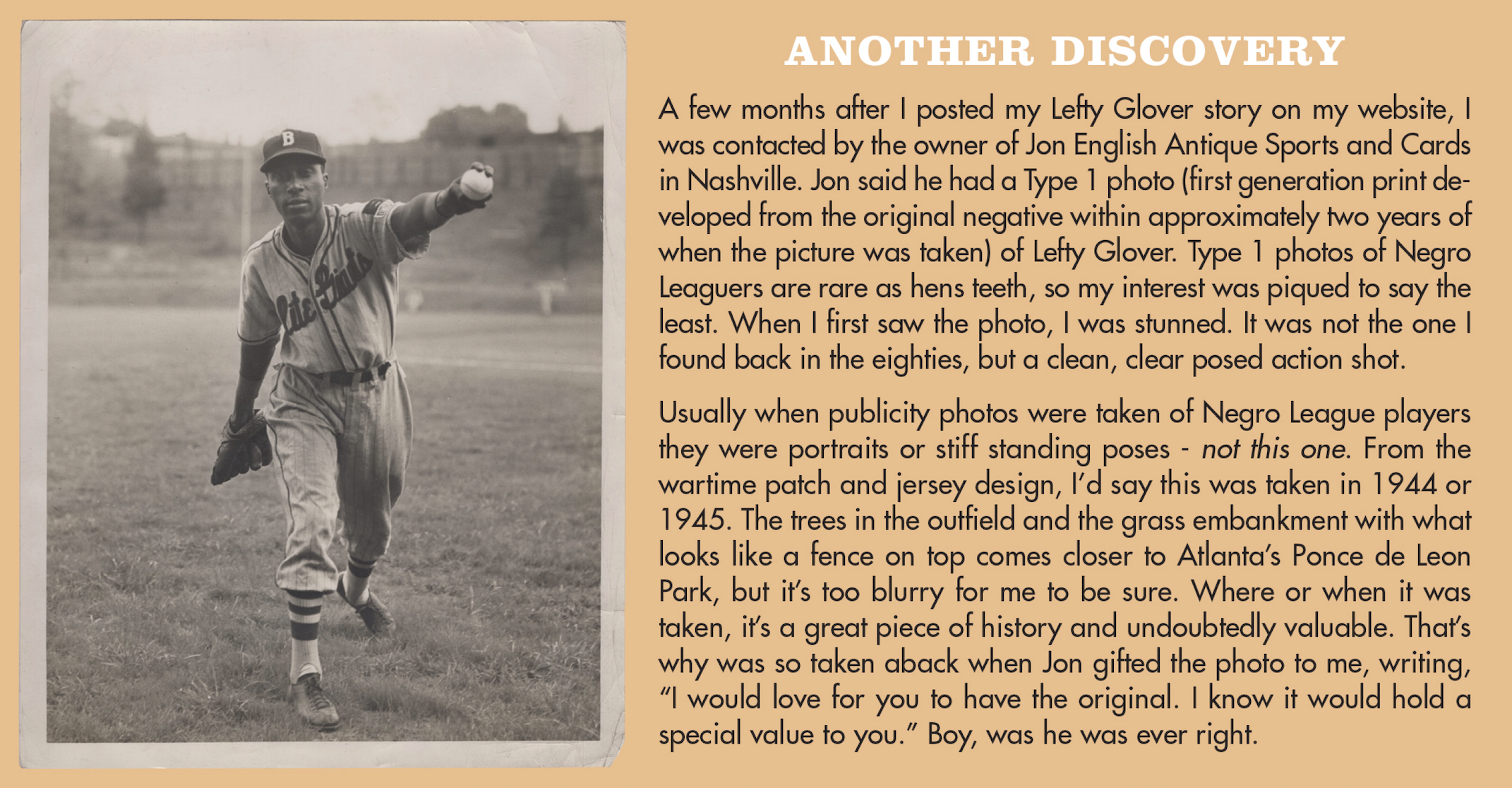
Gary’s blog post on Lefty Glover
Buy Gary’s Lefty Glover card booklet HERE.
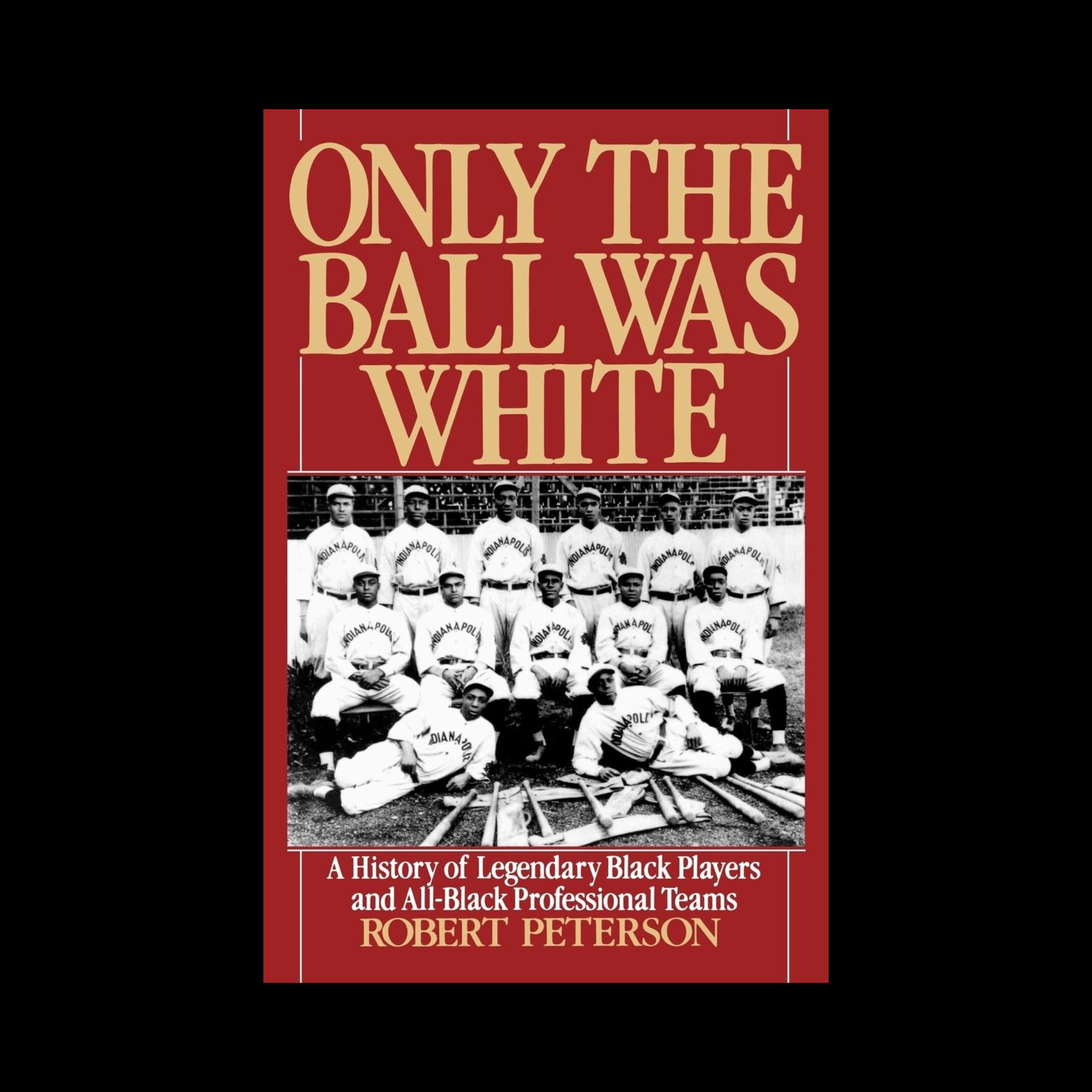
Only The Ball Was White
Buy Only the Ball Was White: A History of Legendary Black Players and All-Black Professional Teams by Robert Peterson HERE.
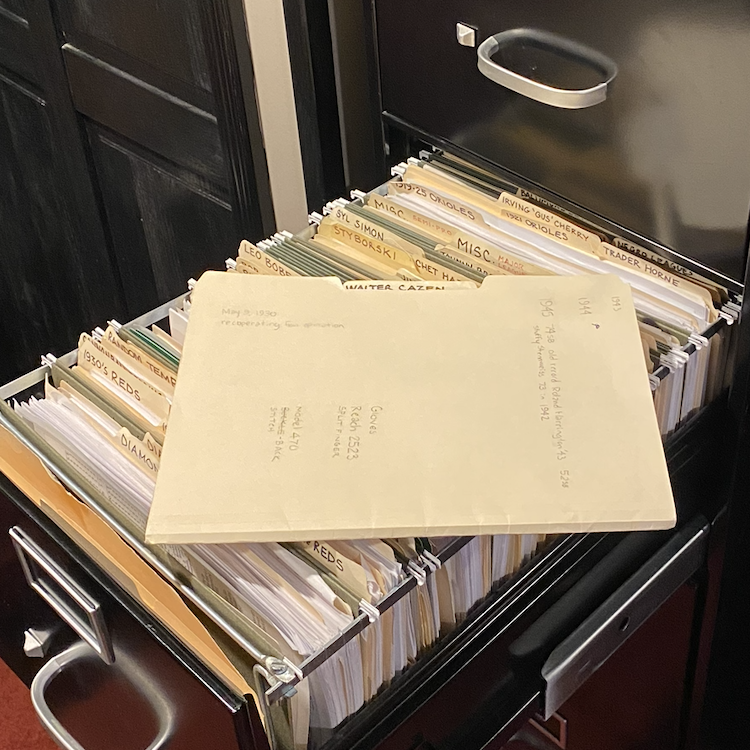
Gary’s Files
Gary has hundreds of these files, all full of stories just waiting to be written.
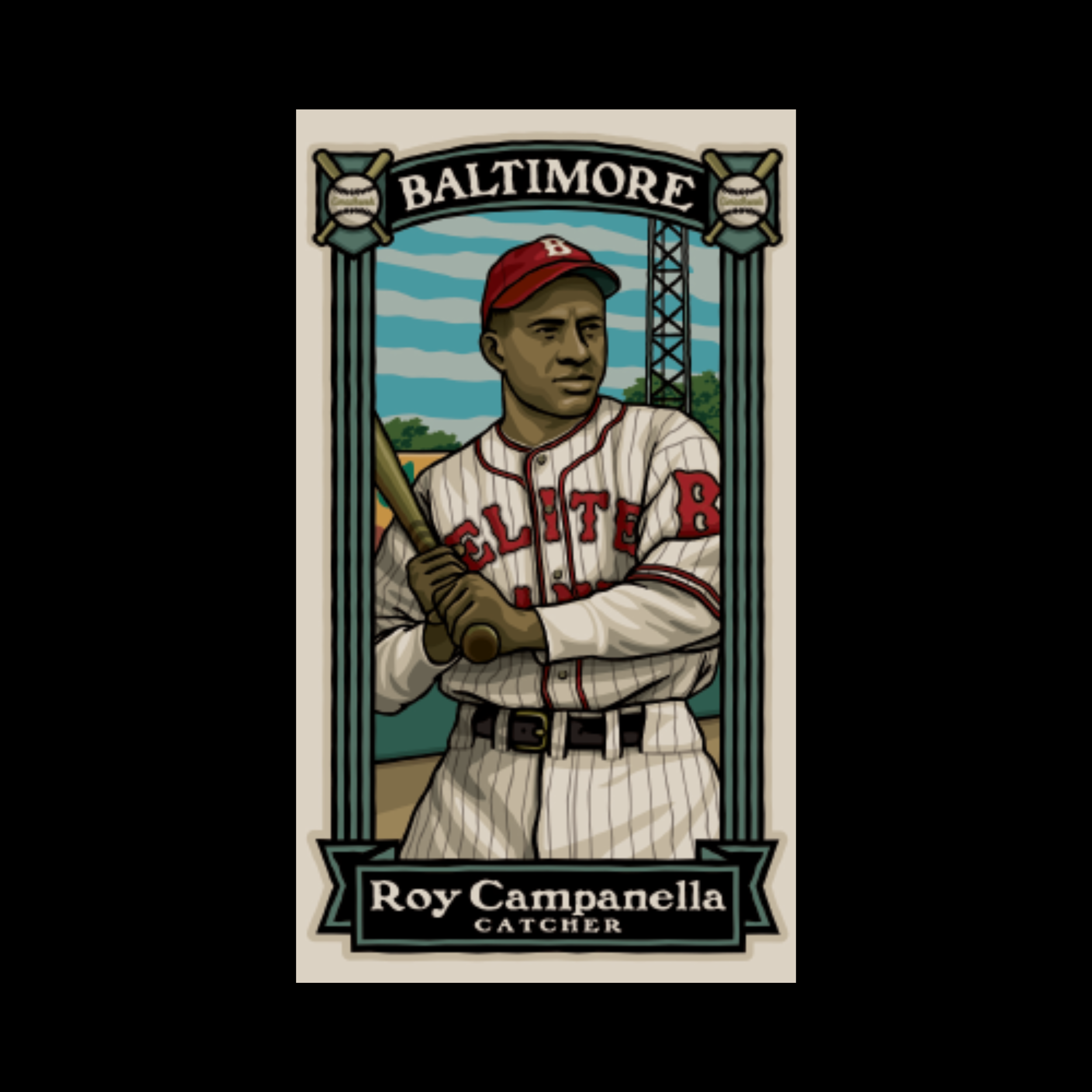
Roy Campanella
Dan’s catcher
Gary’s blog post on Roy Campanella
Roy Campanella’s SABR Biography
Buy Gary’s Roy Campanella card booklet HERE.
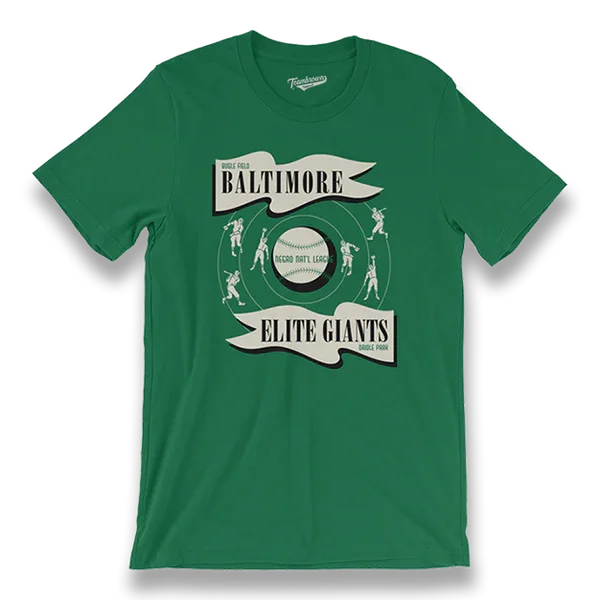
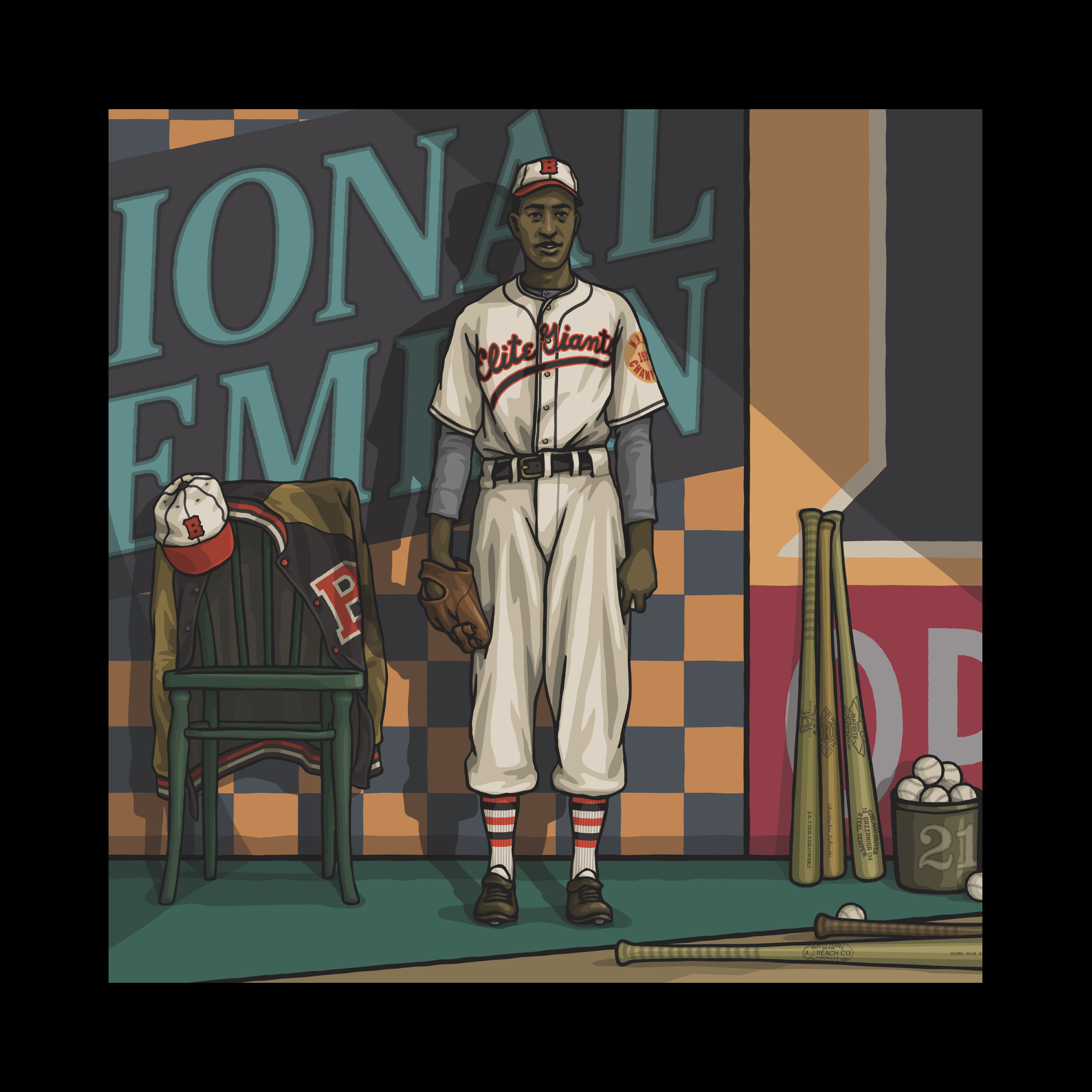
Baltimore E-lite Giants
The “Elite” in Baltimore Elite Giants is not pronounced the way you’d think.
Check out the Elite Giants gear that’s available from Team Brown Apparel, like this shirt Gary designed, HERE.
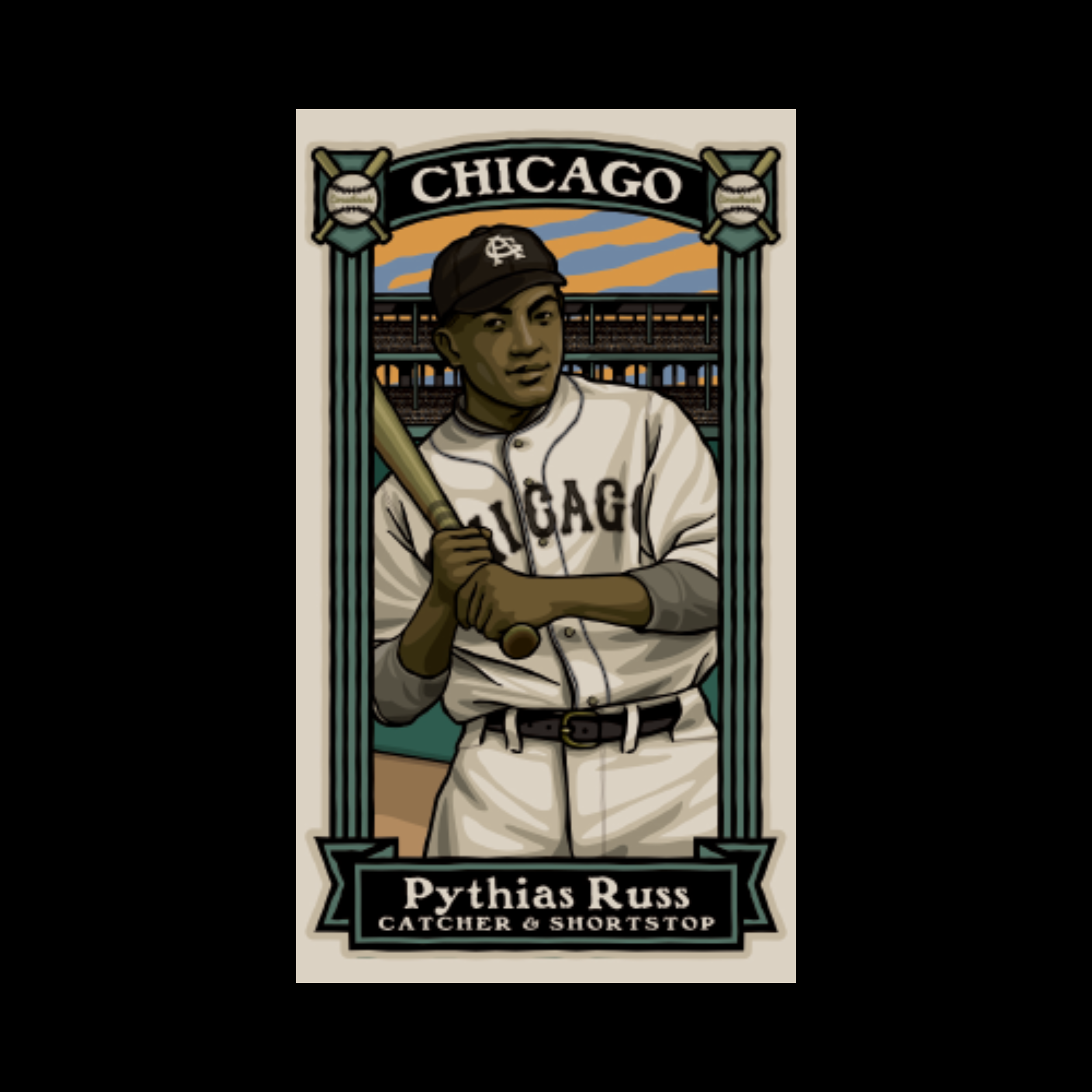
Pythias Russ
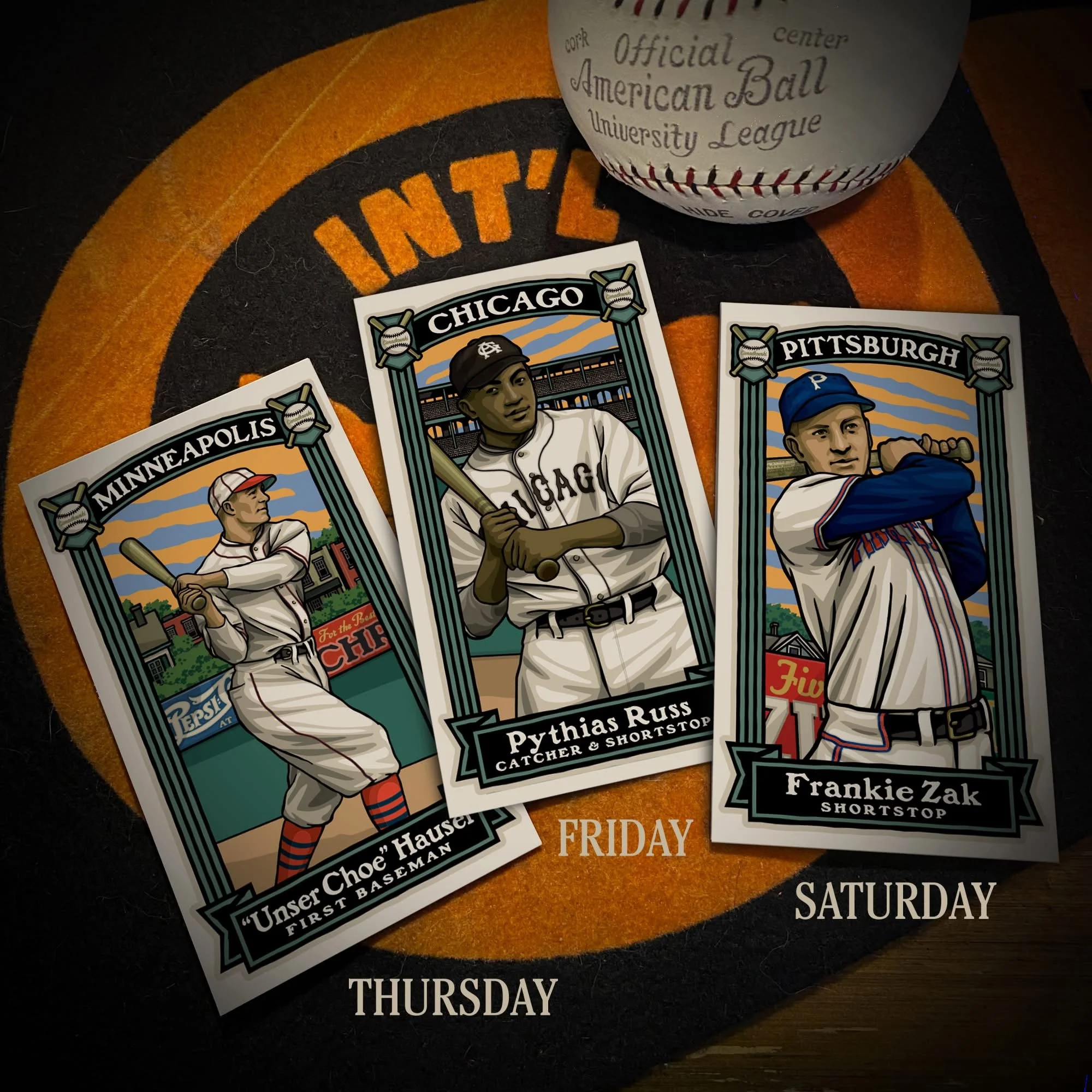
SABR Convention Giveaways
Gary gave these cards away during the 2024 SABR Convention in Minneapolis.
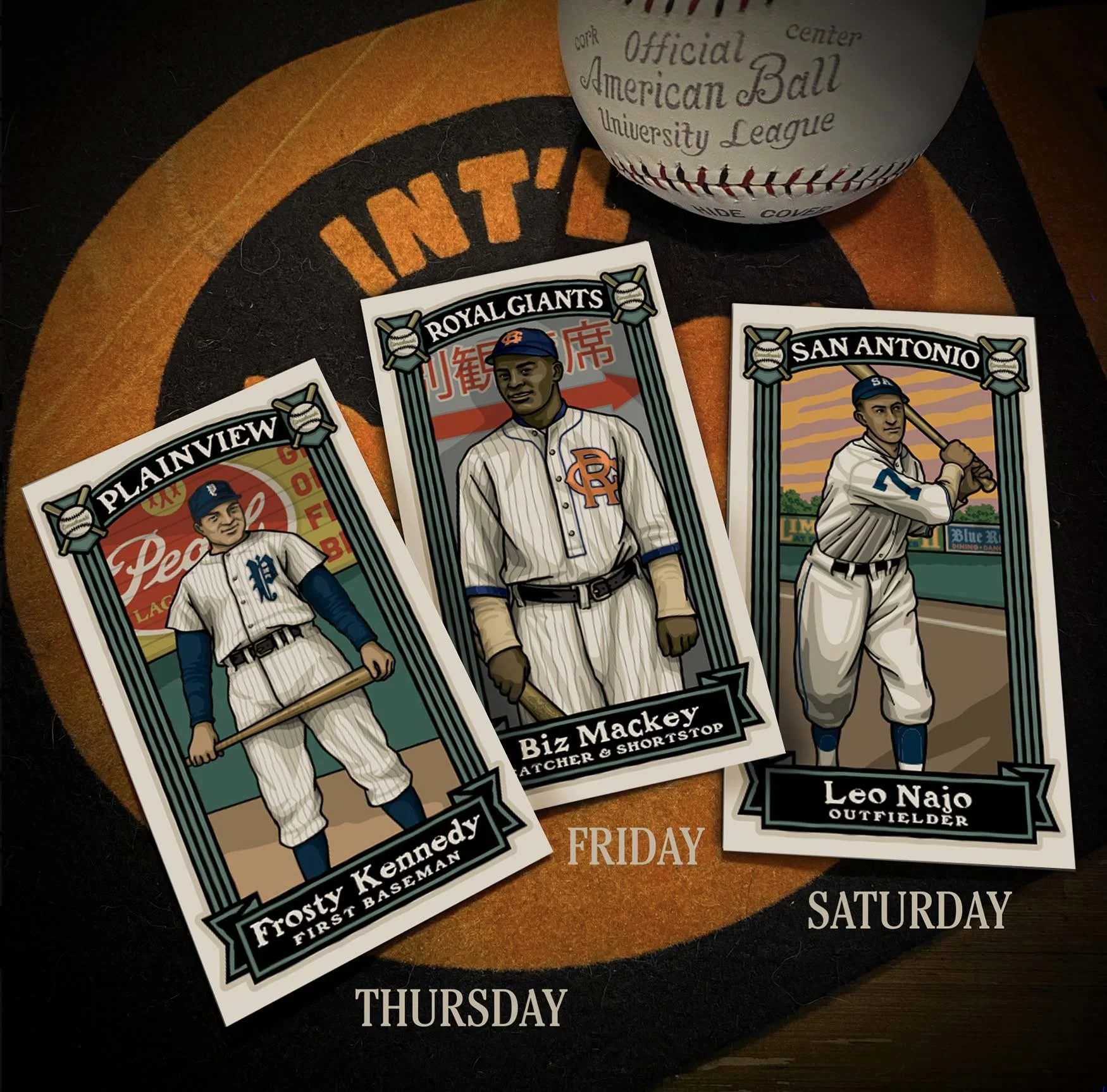
2025 Giveaways
Gary liked it so much in 2024 that he did it again with these three new cards at the SABR Convention in Texas.
Lou Gehrig
Dan’s first baseman
Gary’s updated blog post on Lou Gehrig
Buy Gary’s Lou Gehrig card booklet HERE.
Buy Gary’s Lou Gehrig print HERE.
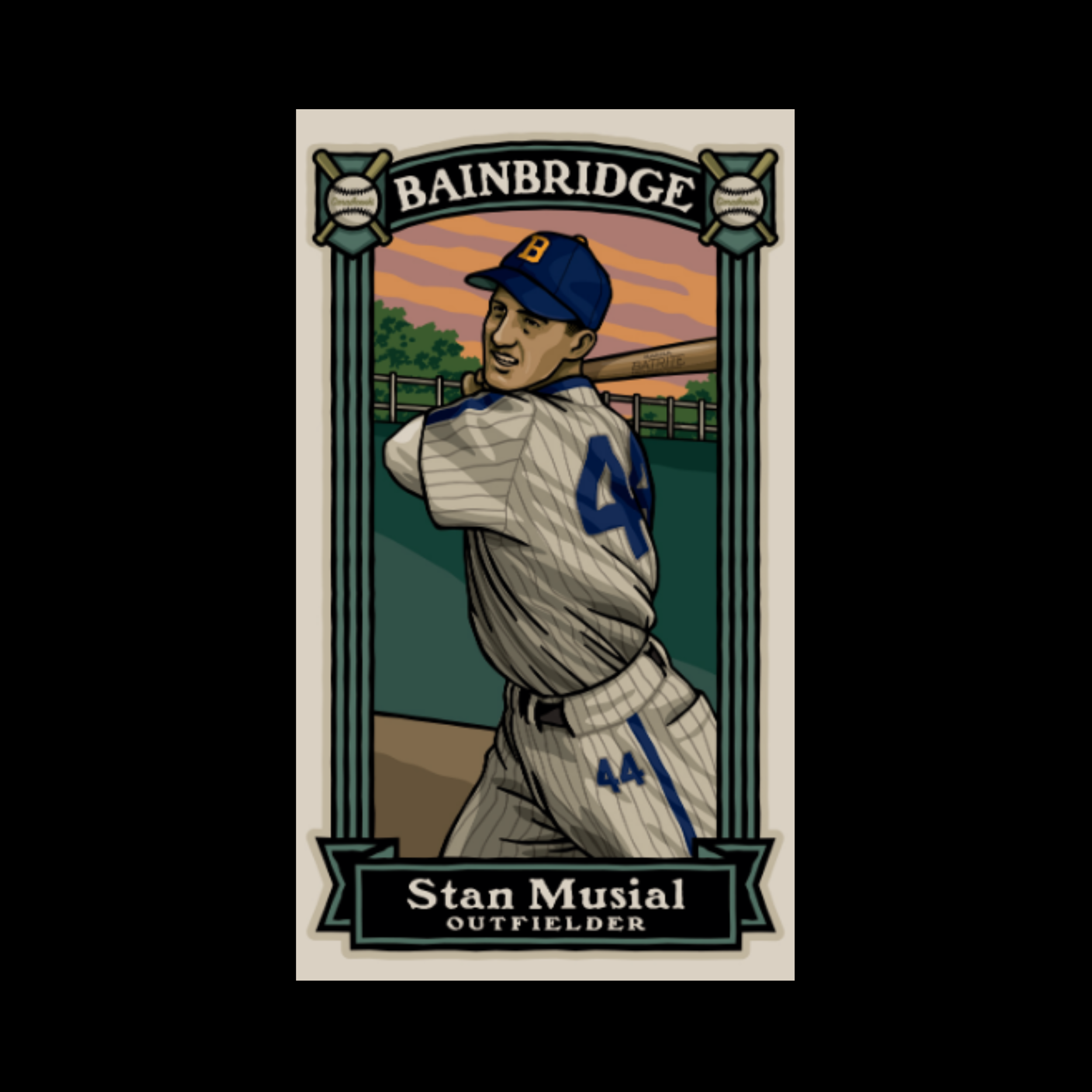
Stan Musial
Gary’s blog post about Stan Musial
Buy Gary’s Stan Musial card booklet HERE.
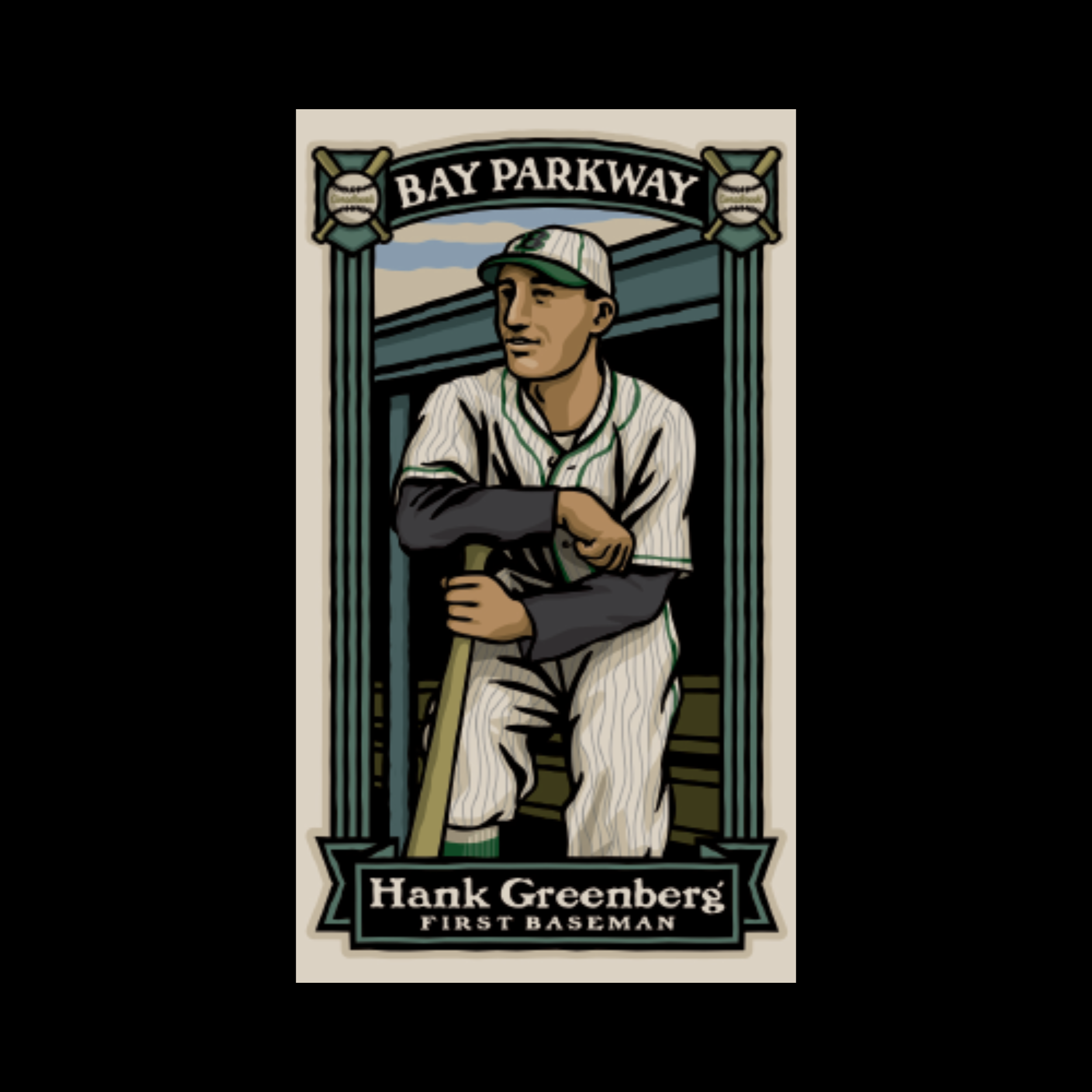
Hank Greenberg
Gary’s blog post on Hank Greenberg
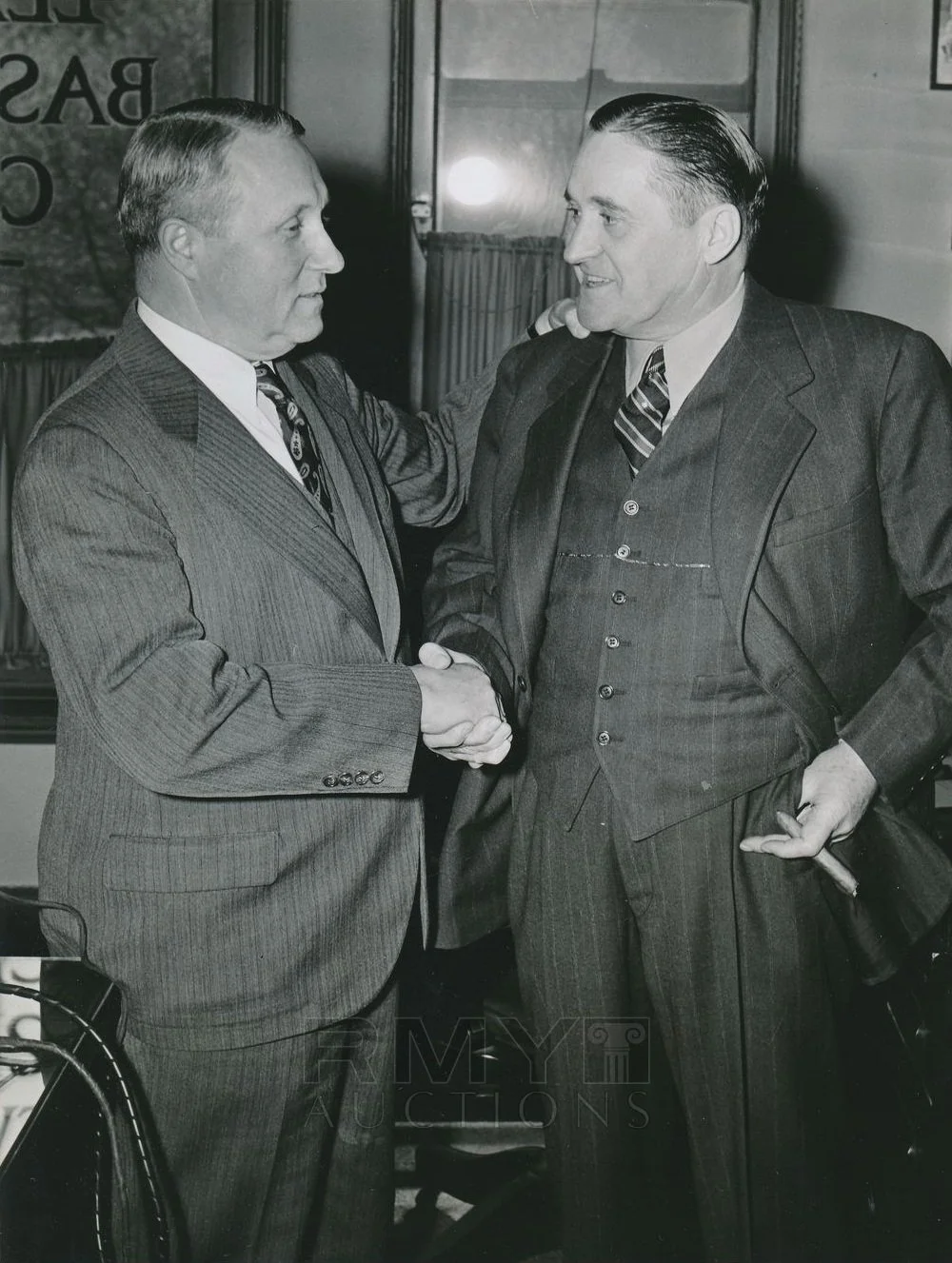
Paul Krichell
Paul Krichell was a French catcher, best known for being the head scout for the New York Yankees for 37 years until his death.
Krichell's talent evaluations and signings played a key role in building up the Yankees' run of success from the Murderers' Row teams of the 1920s to the 1950s teams led by Casey Stengel.
He is shown here (left) with Yankees manager Joe McCarthy.
Paul Krichell’s SABR Biography
Photo courtesy of RMY Auctions
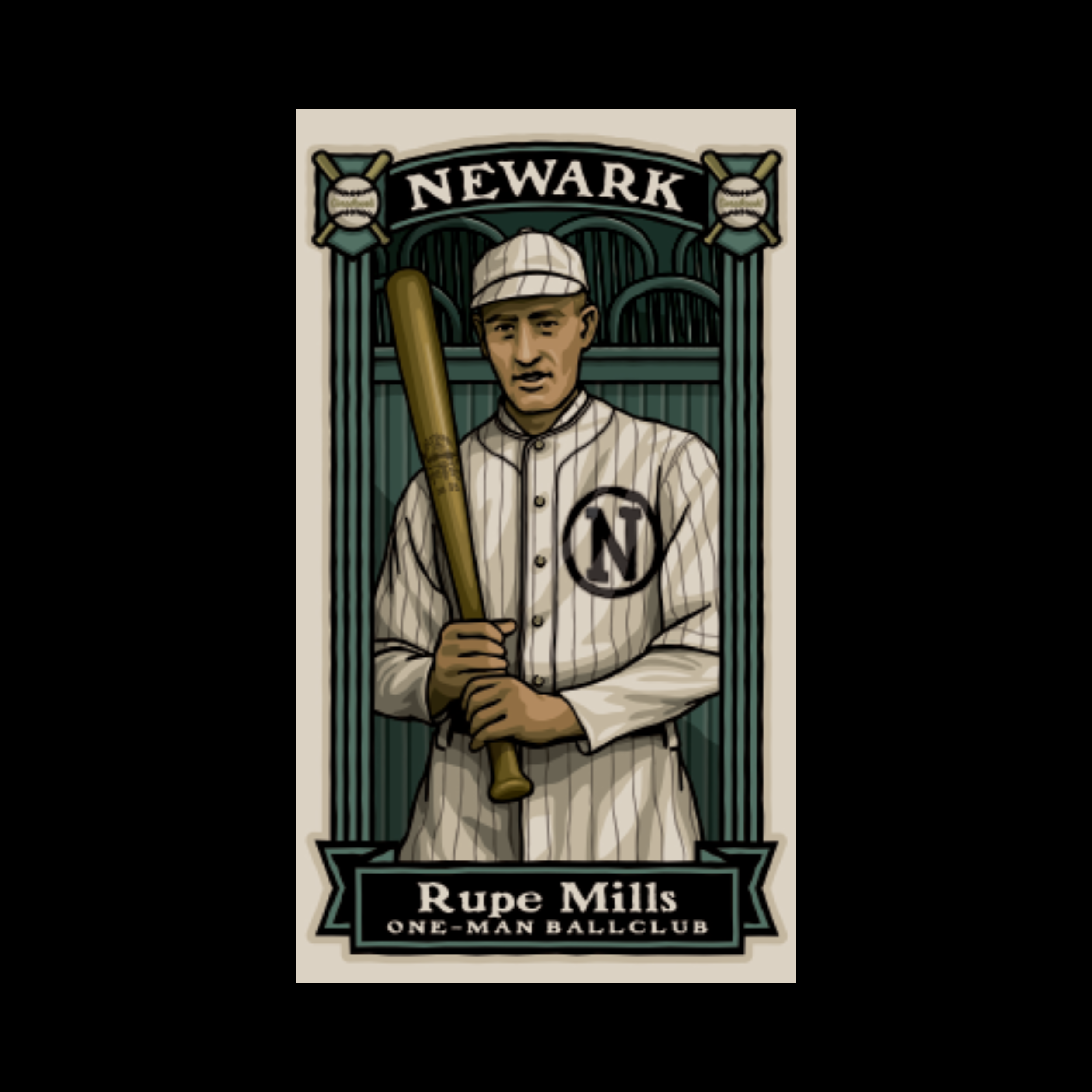
Rupe Mills
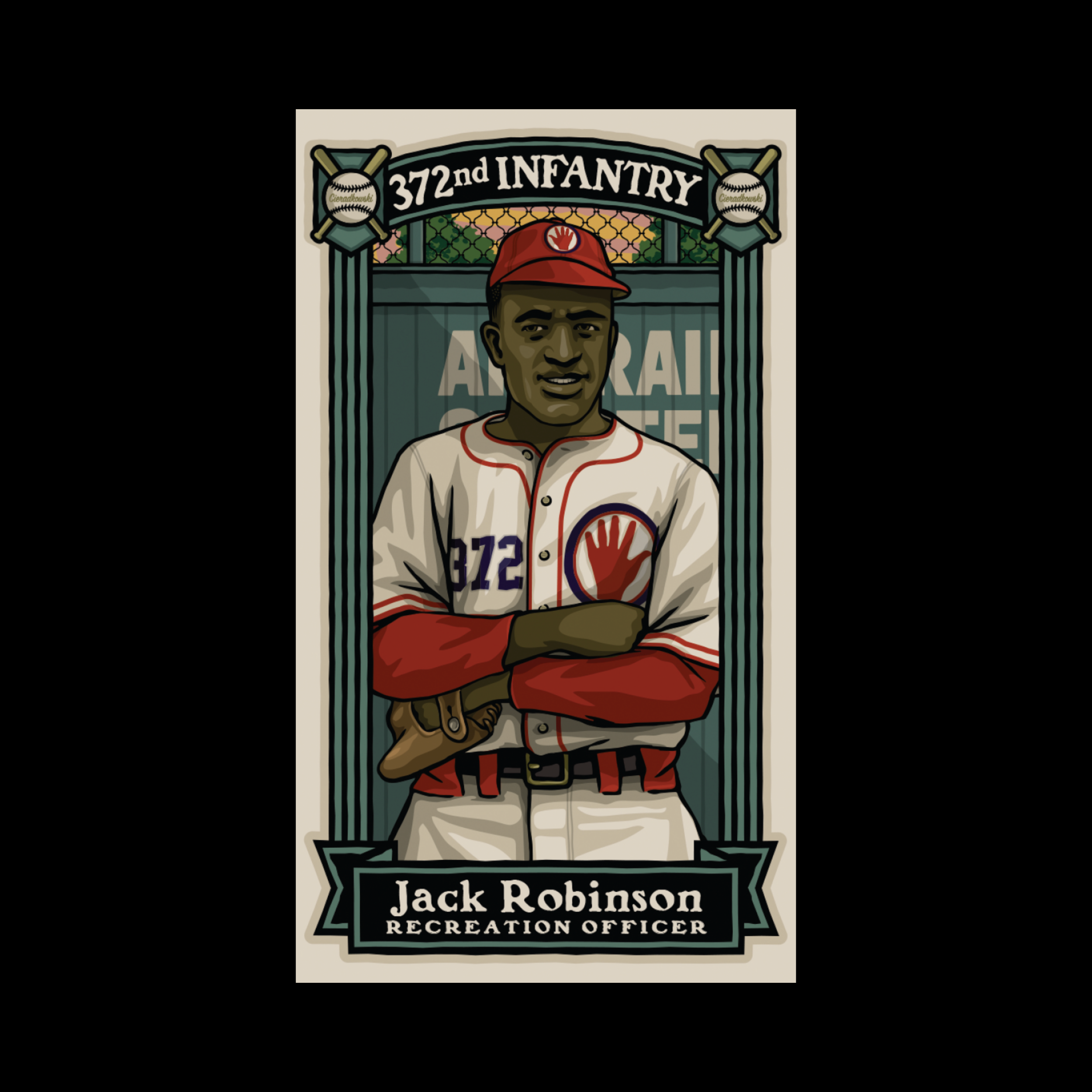
Jackie Robinson
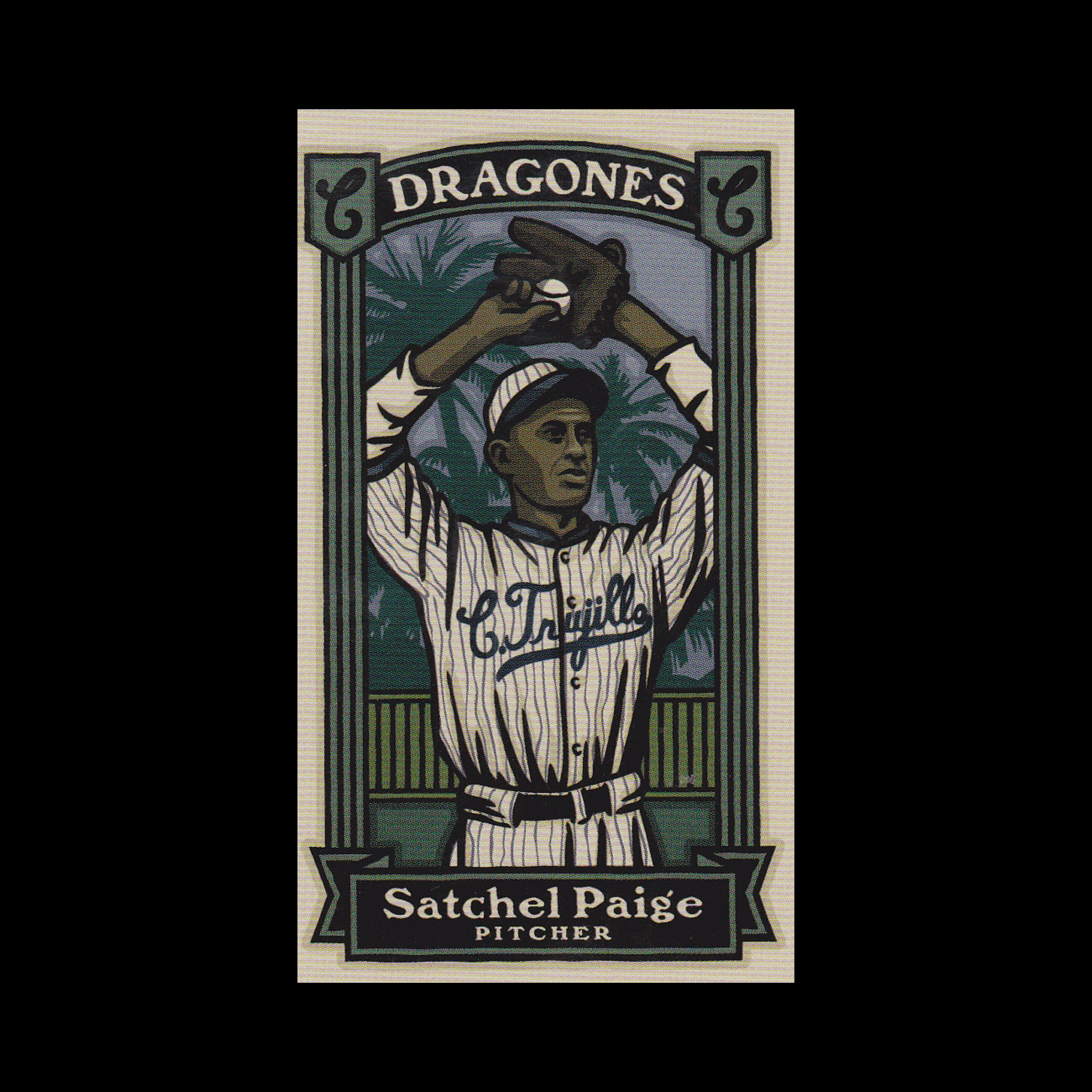
Satchel Paige
Gary’s blog post on Satchel Paige
“Satchel Paige and Trujillo, the Dominican Dictator” by Joe Guzzardi
Buy Gary’s Satchel Paige print HERE.
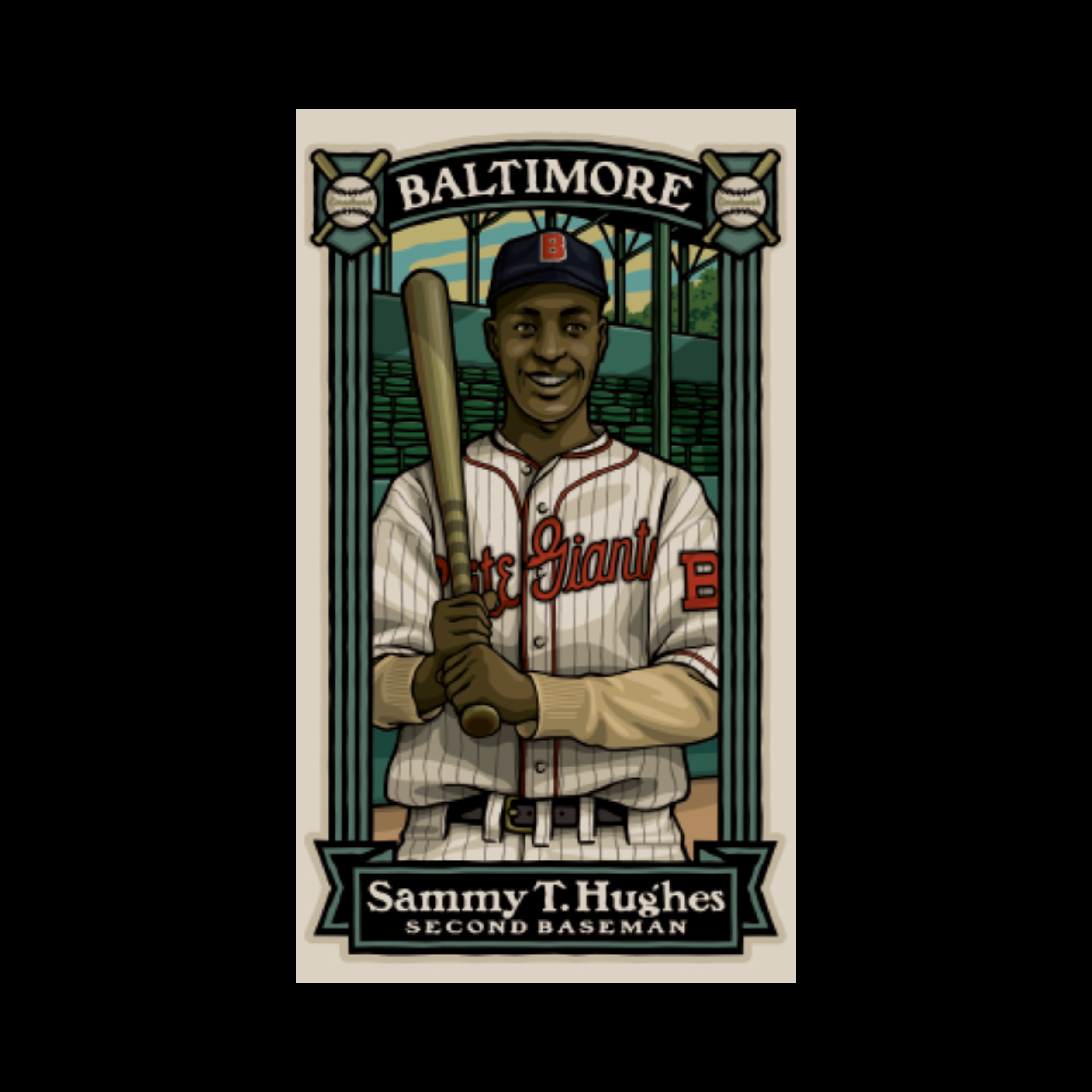
Sammy T. Hughes
Gary’s second baseman
Gary’s blog post on Sammy T. Hughes
Sammy T. Hughes’ SABR Biography
Buy Gary’s Sammy T. Hughes card booklet HERE.
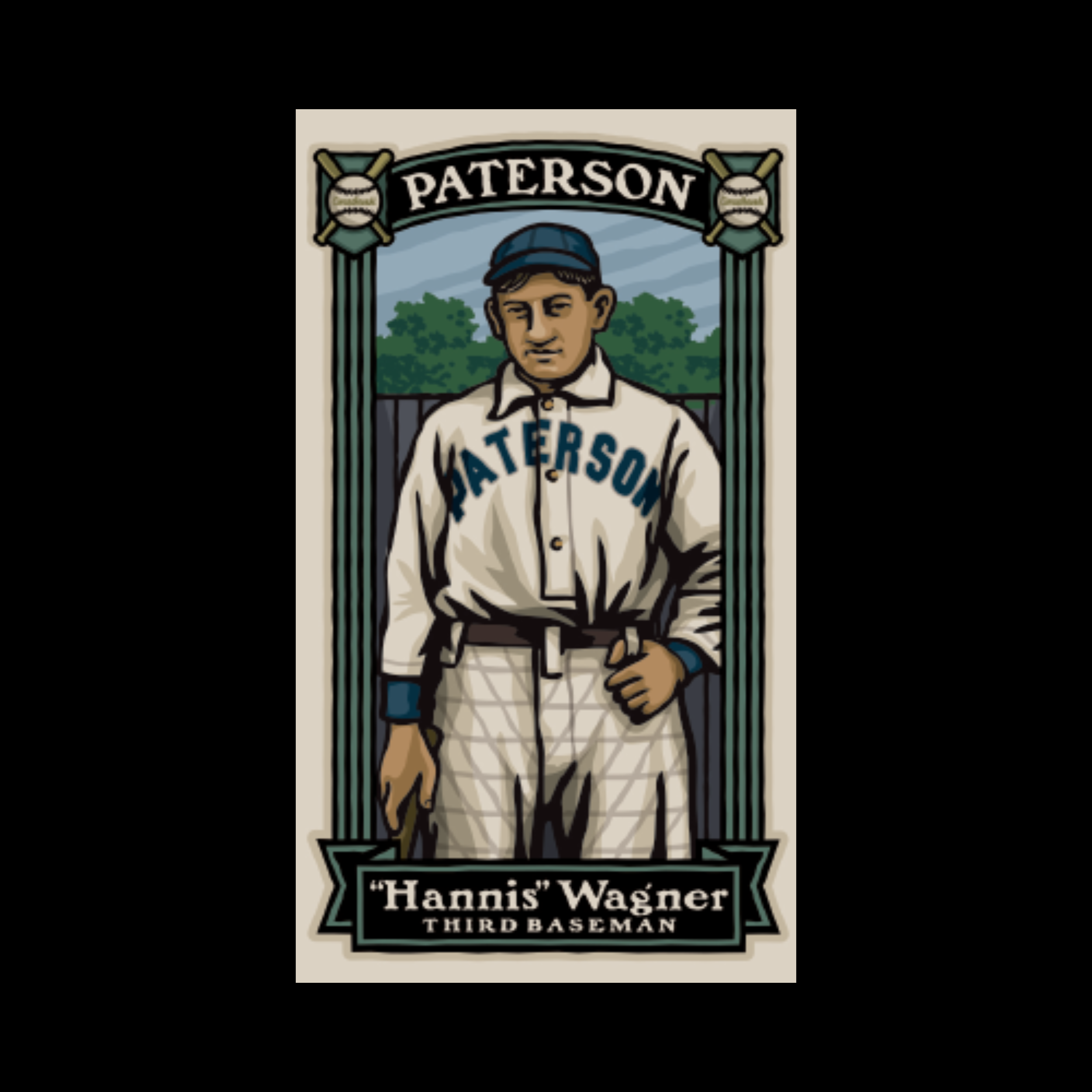
Honus Wagner
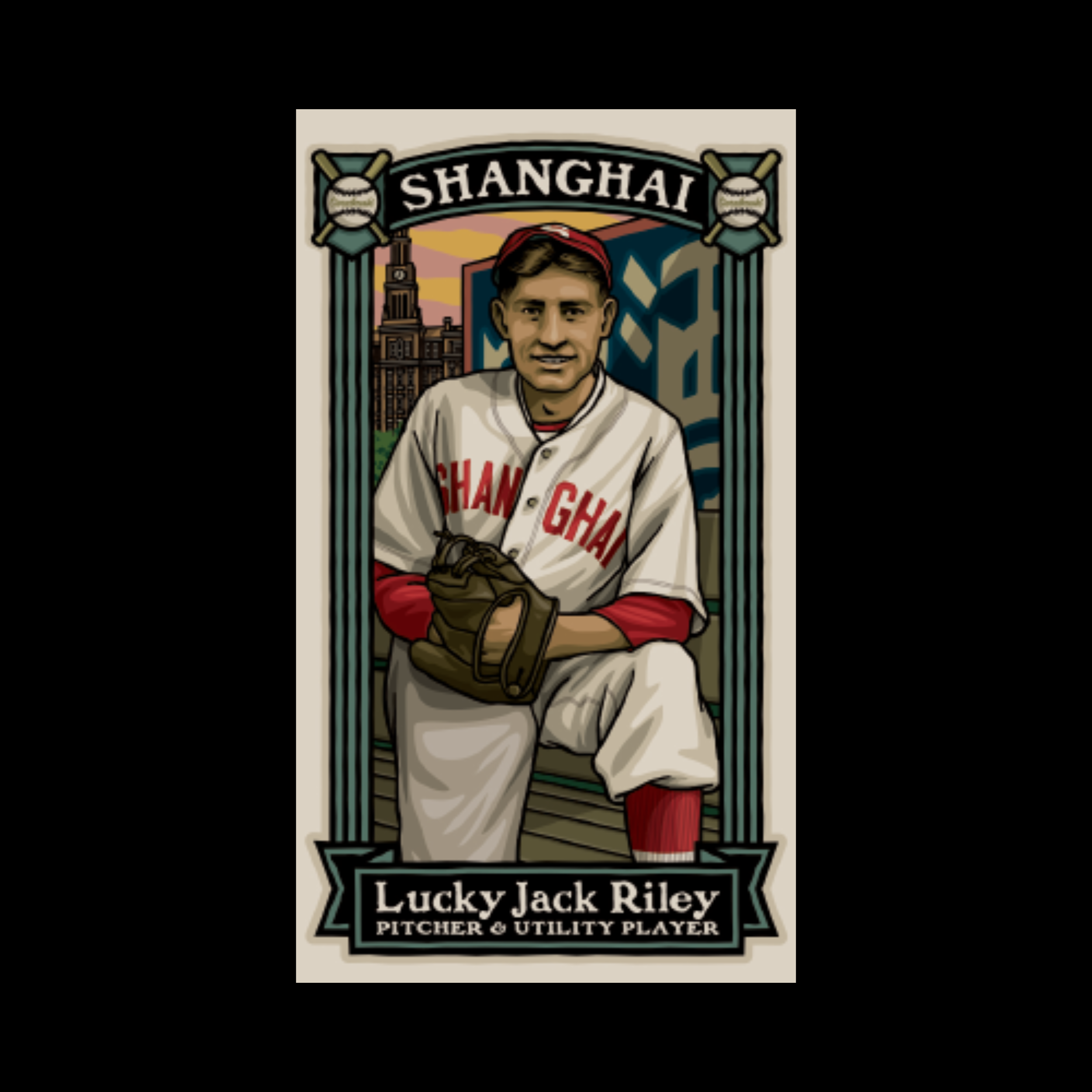
Lucky Jack Riley
Gary’s shortstop
Gary’s blog post on Lucky Jack Riley
“The Fate of Jack Riley, Shanghai's Notorious Slot Machine King”
Buy Gary’s Lucky Jack Riley card booklet HERE.
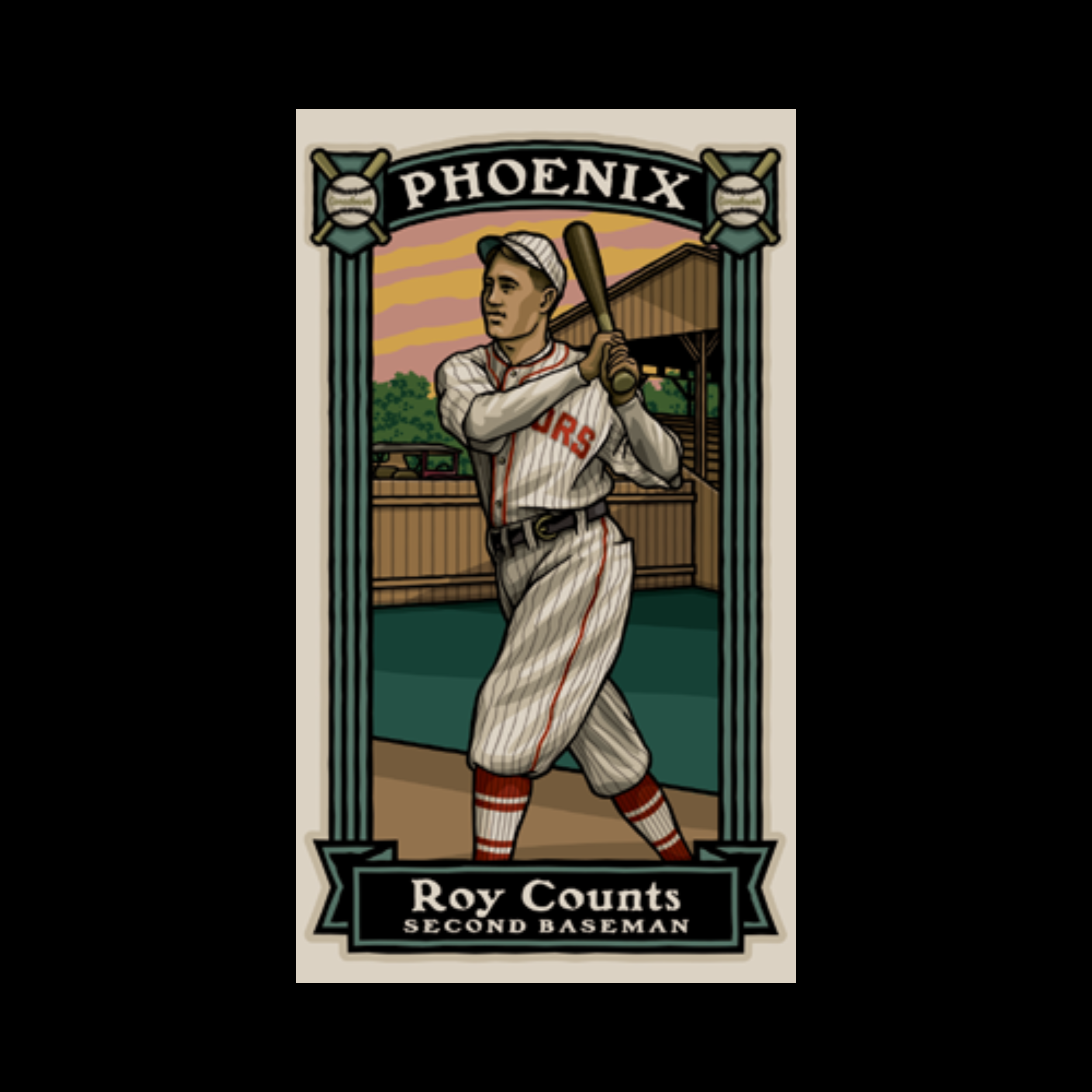
Roy Counts
Gary’s blog post on Roy Counts
Buy Gary’s Roy Counts card booklet HERE.
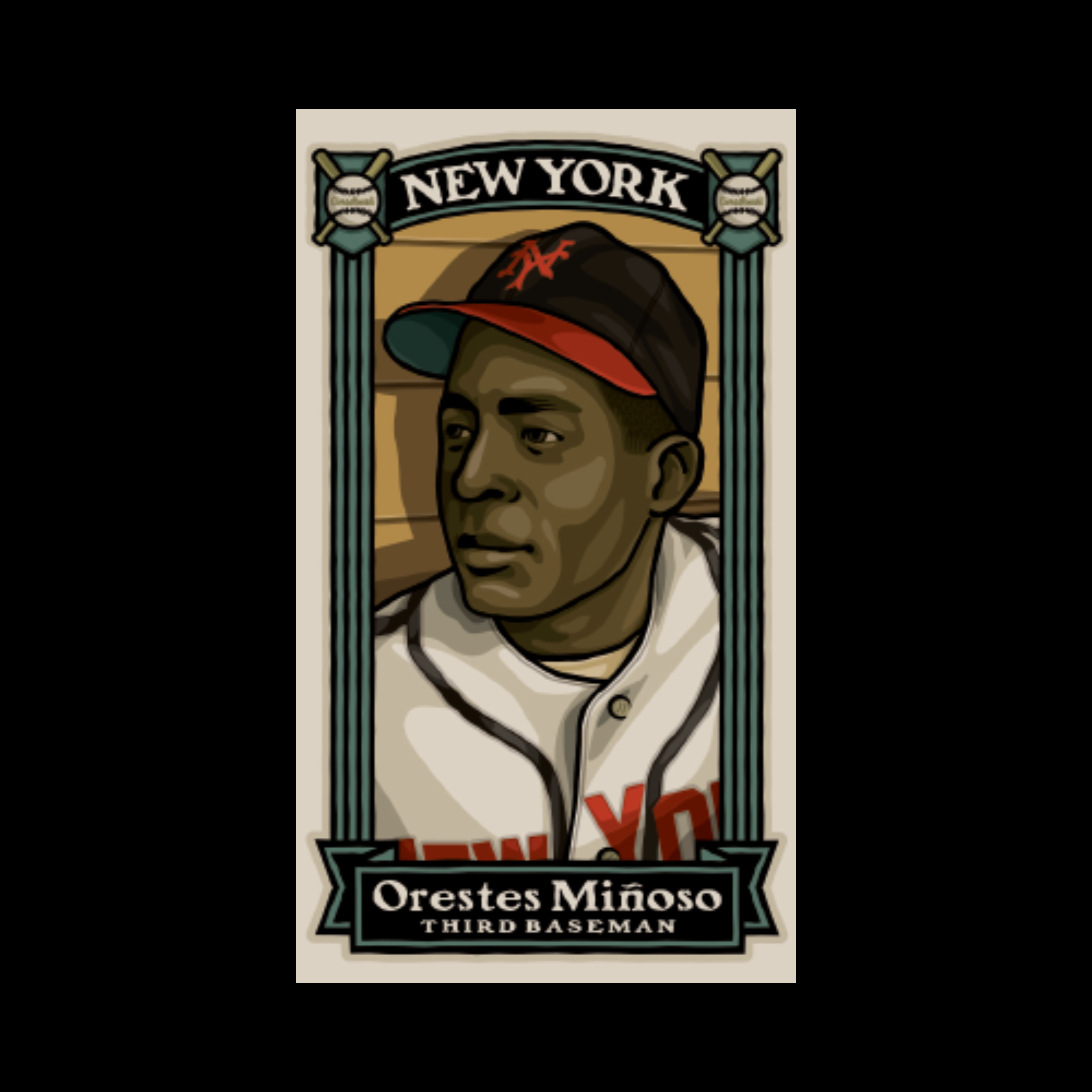
Minnie Miñoso
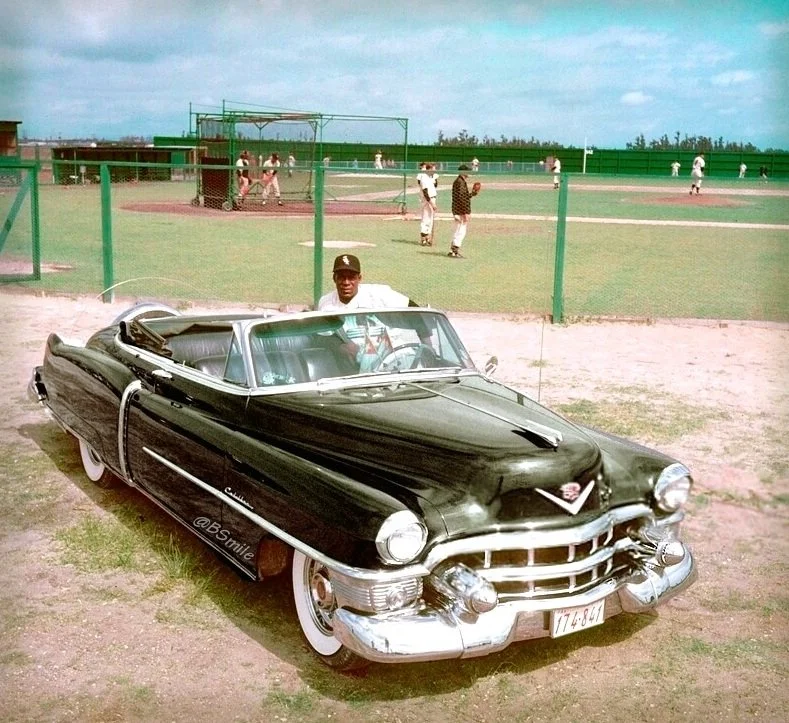
Fashion Plate
Buy Gary’s Minnie Miñoso card booklet HERE.
Photo courtesy of Baseball By BSmile
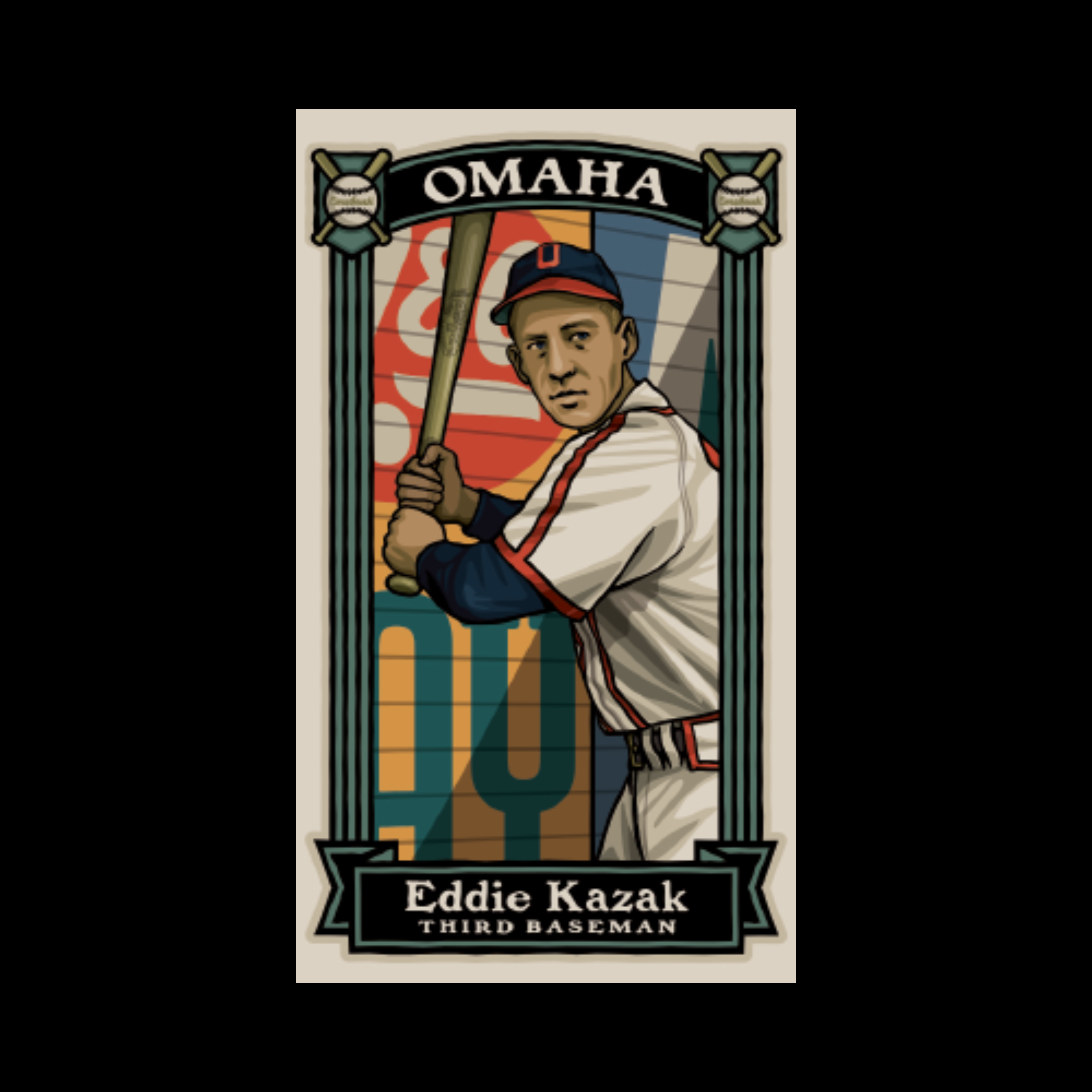
Eddie Kazak
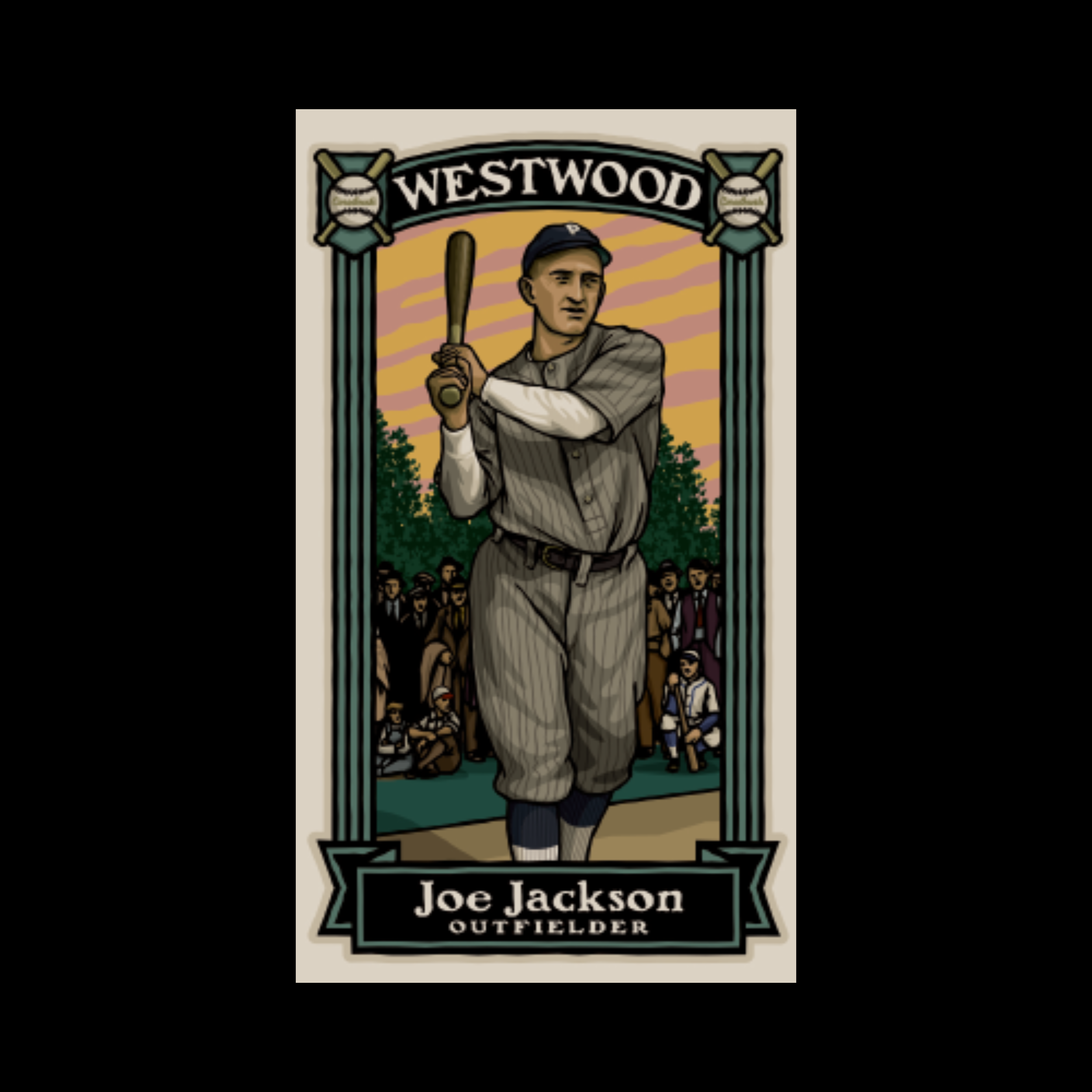
Shoeless Joe Jackson
Dan’s left fielder
Gary’s blog post on Shoeless Joe Jackson
Shoeless Joe Jackson’s SABR Biography
Buy Gary’s After The Black Sox card set HERE.
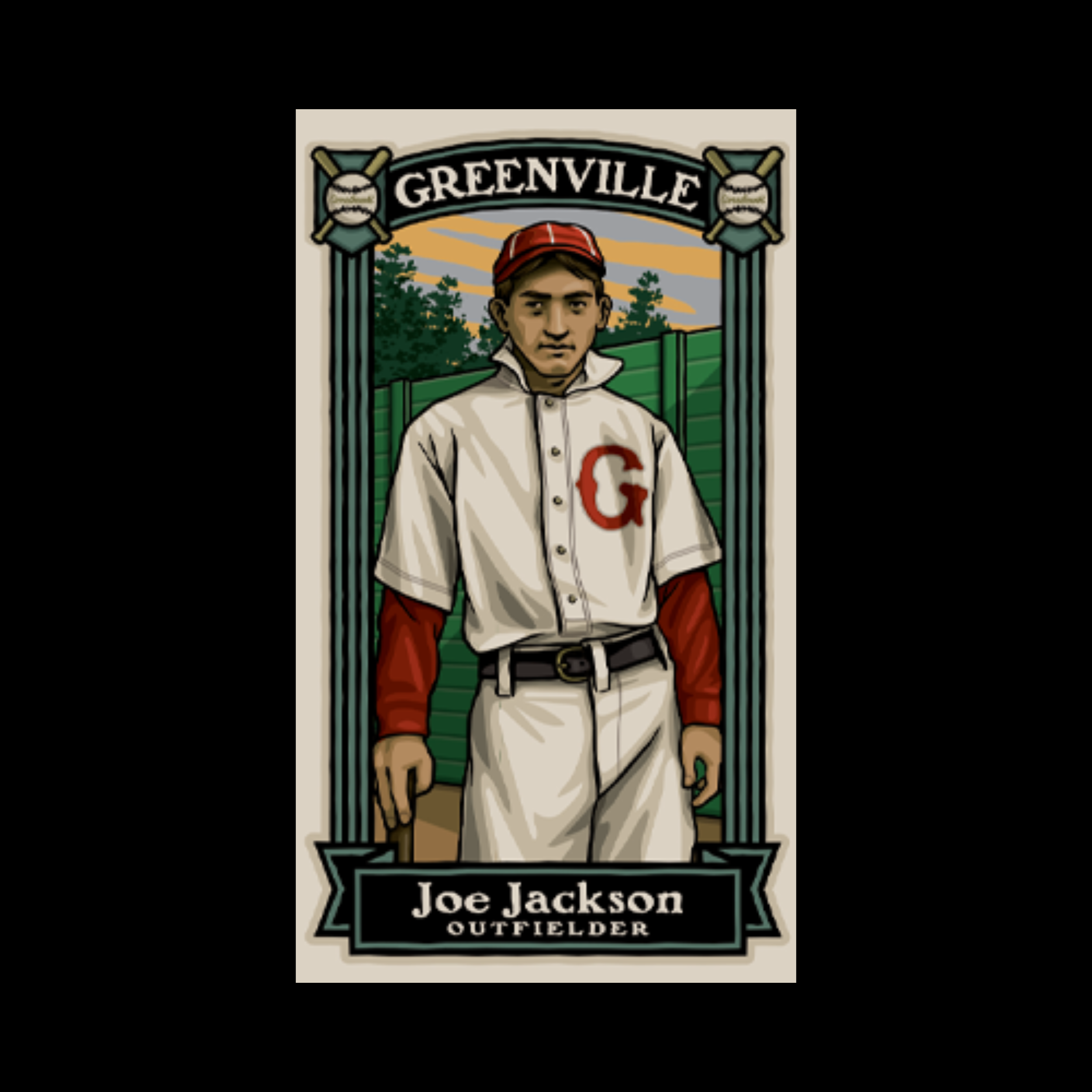
Greenville Spinners
Gary’s blog post on Shoeless Joe’s Greenville Spinners days
Buy Gary’s Shoeless Joe card booklet HERE.
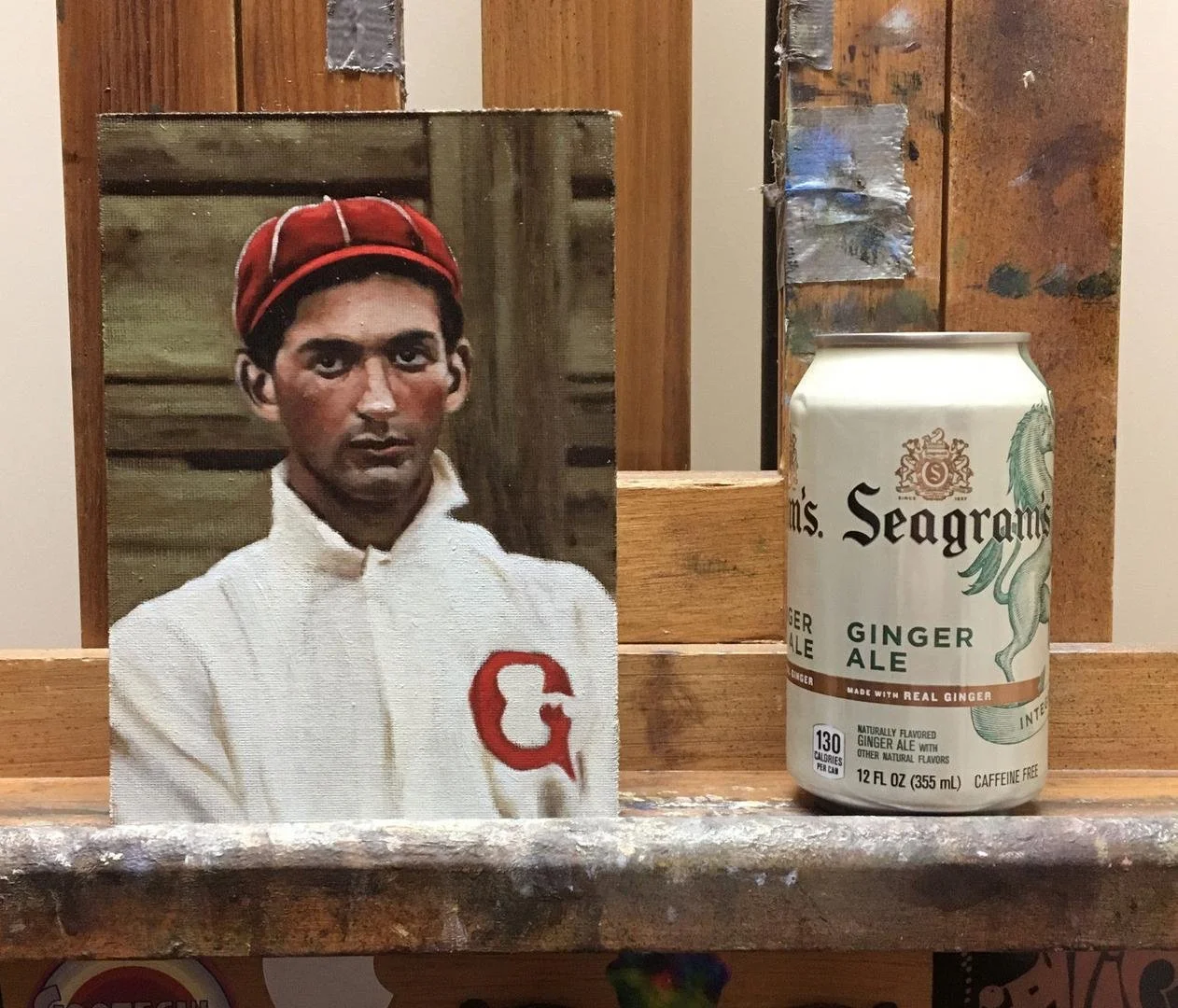
Graig Kreindler’s Painting
Graig also chose to make Joe’s Greenville Spinners uniform accented with red.
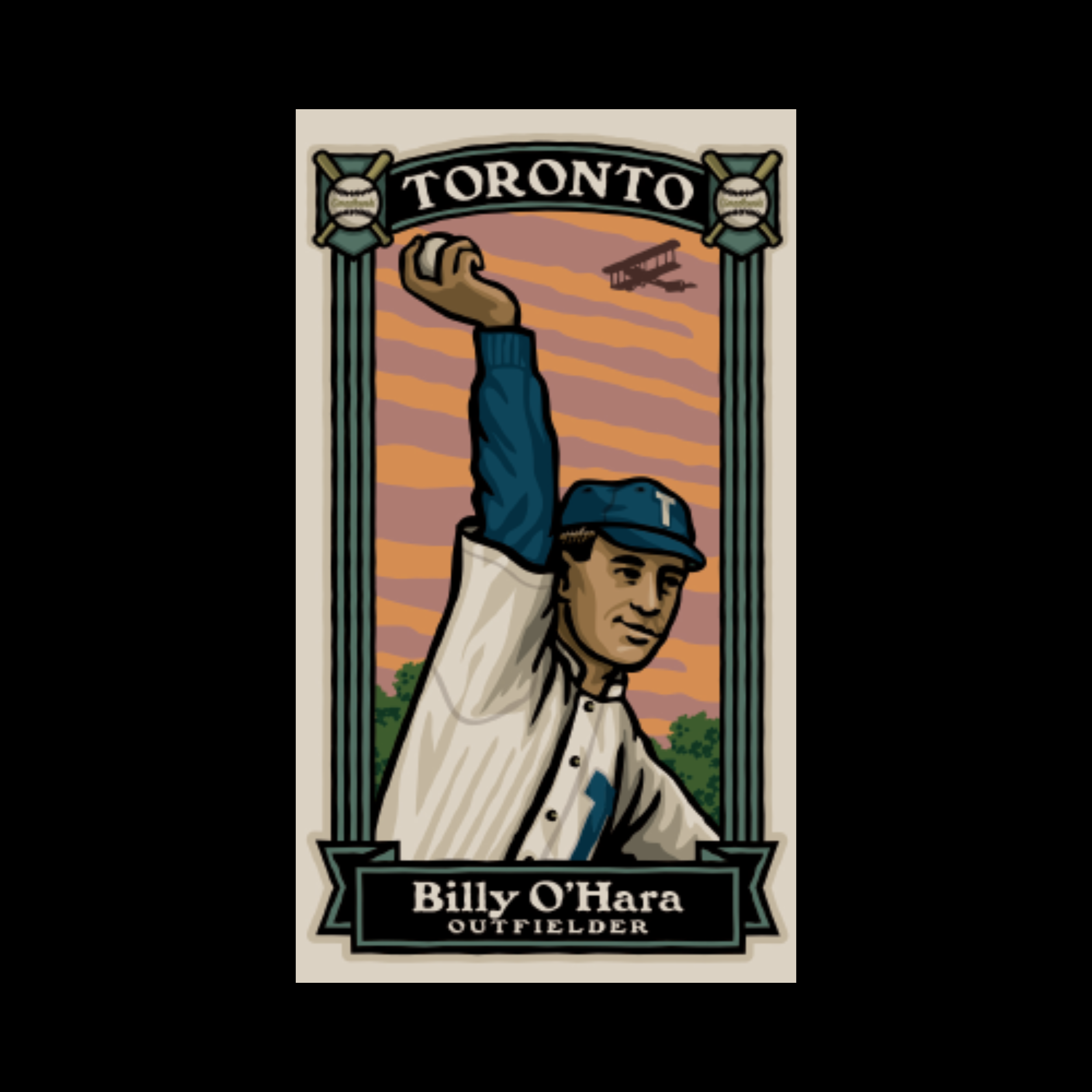
Billy O’Hara
Gary’s left fielder
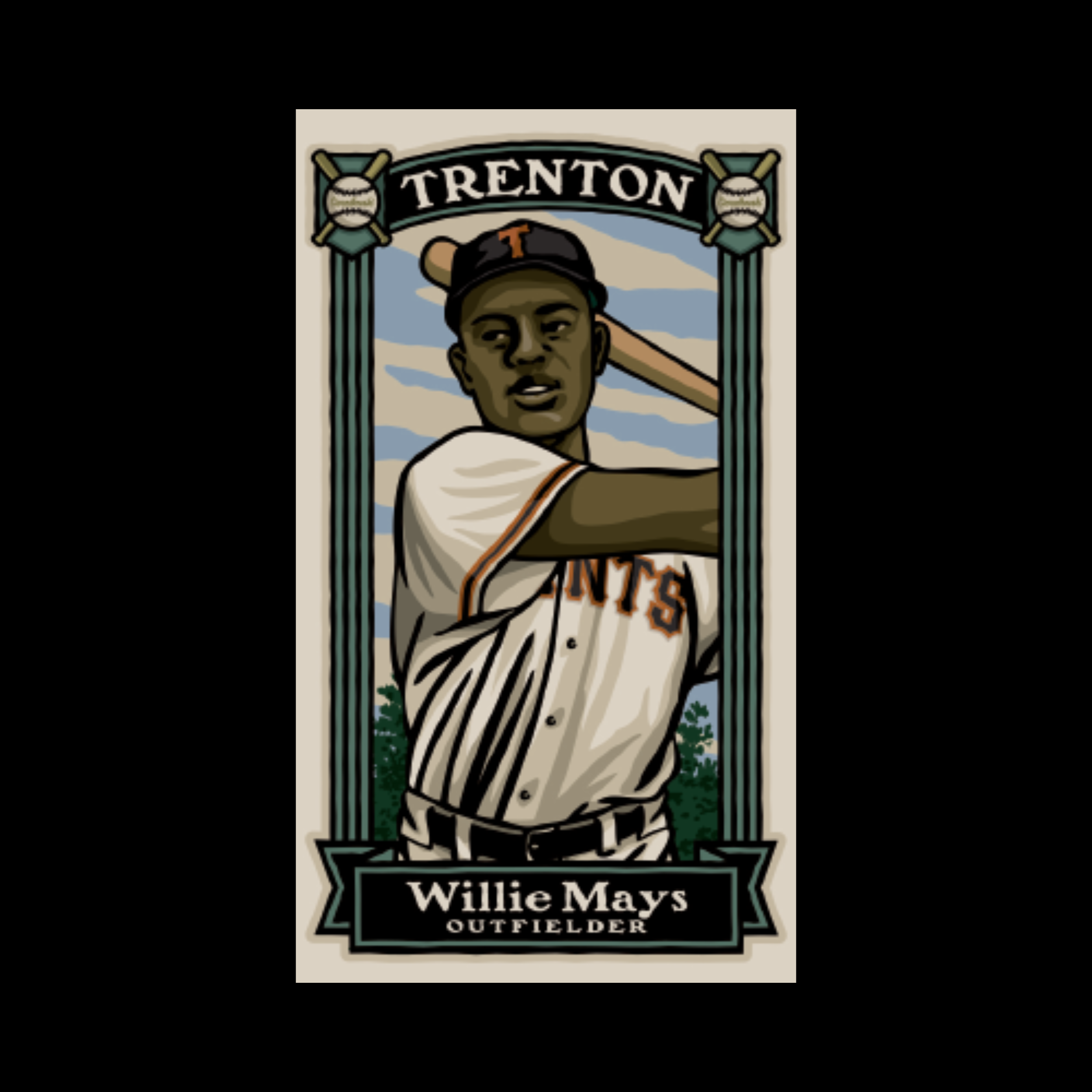
Willie Mays
Dan’s center fielder

Joe Press
Joe Press wrote this letter in 1949, chewing out the Yankees for refusing to sign Black players, such as Willie Mays.
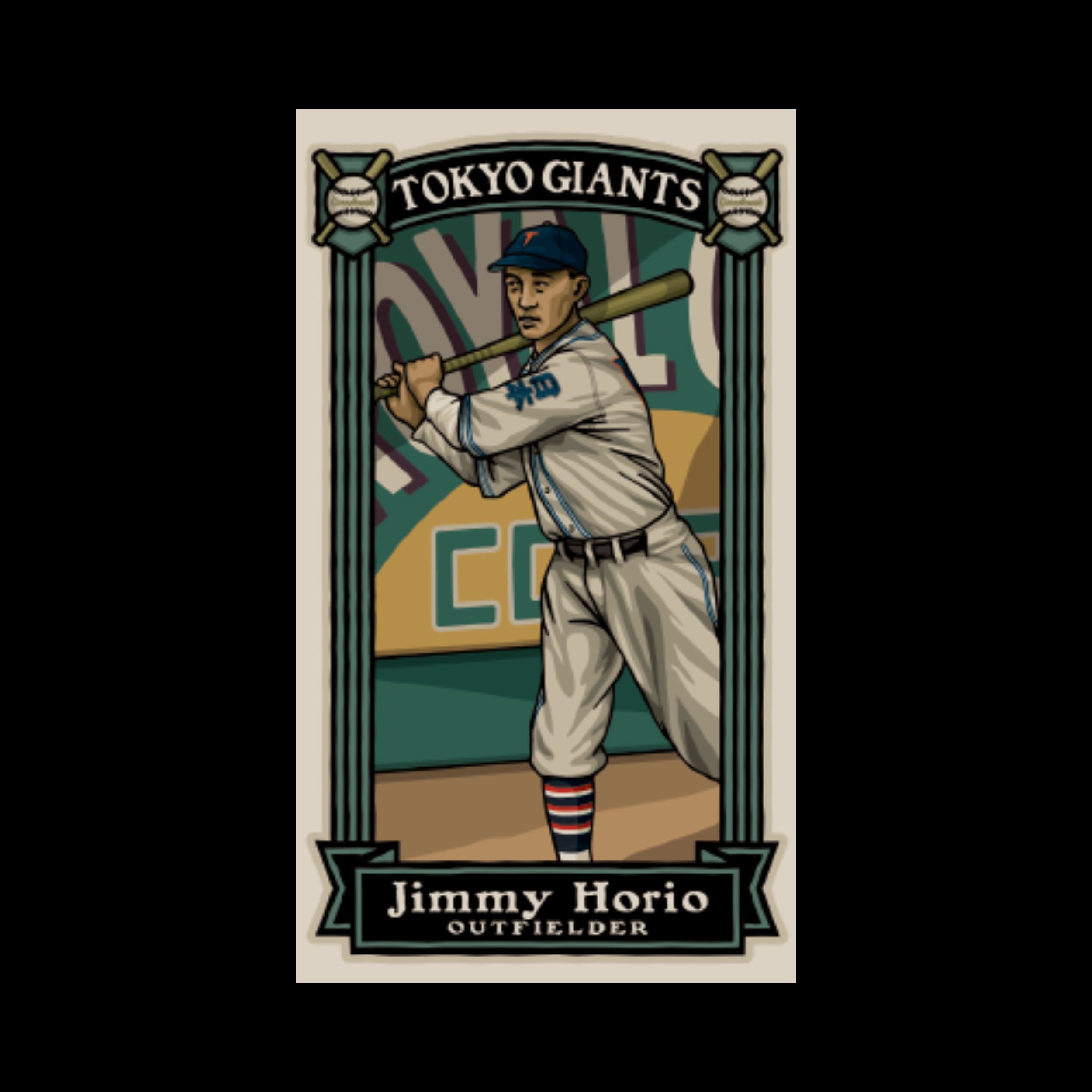
Jimmy Horio
Gary’s center fielder
Gary’s 2010 blog post on Jimmy Horio
Gary’s 2013 blog post on Jimmy Horio
Gary’s 2019 blog post on Jimmy Horio
Buy Gary’s Jimmy Horio card booklet HERE.
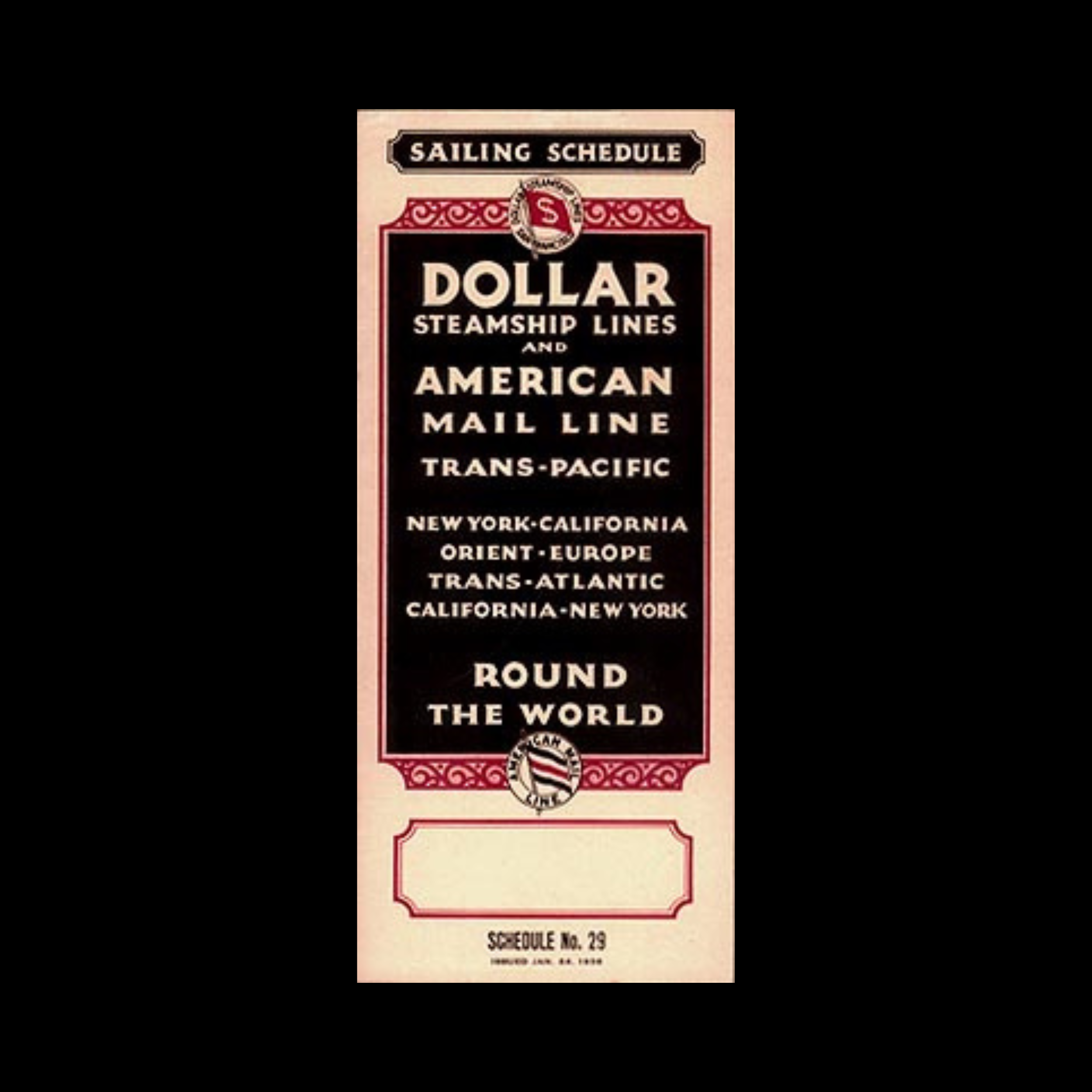
Steamboat To Japan
A "late thirties" passage from Yokohama to San Francisco on NYK cost $190 2nd Class, $315 1st Class. With a stop in Honolulu it took 9 days.
$190 in 1938 would be roughly $4,365 in 2026.
$315 in 1938 would be roughly $7,240 in 2026.
“Murder, Espionage, and Baseball: The 1934 All-American Tour of Japan” by Rob Fitts
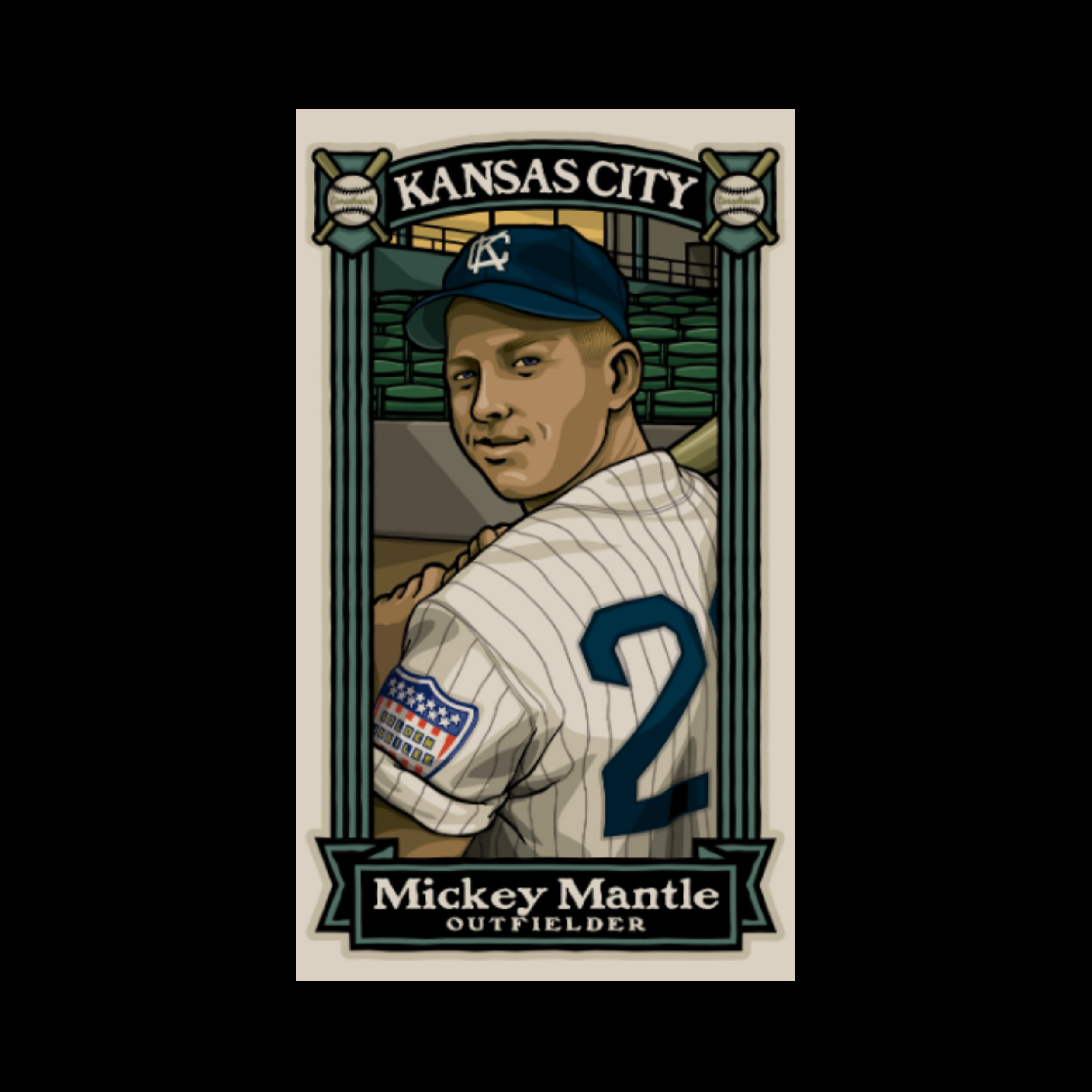
Mickey Mantle
Dan’s right fielder
Gary’s blog post on Mickey Mantle
Mickey Mantle’s SABR Biography
Buy Gary’s Mickey Mantle card booklet HERE.
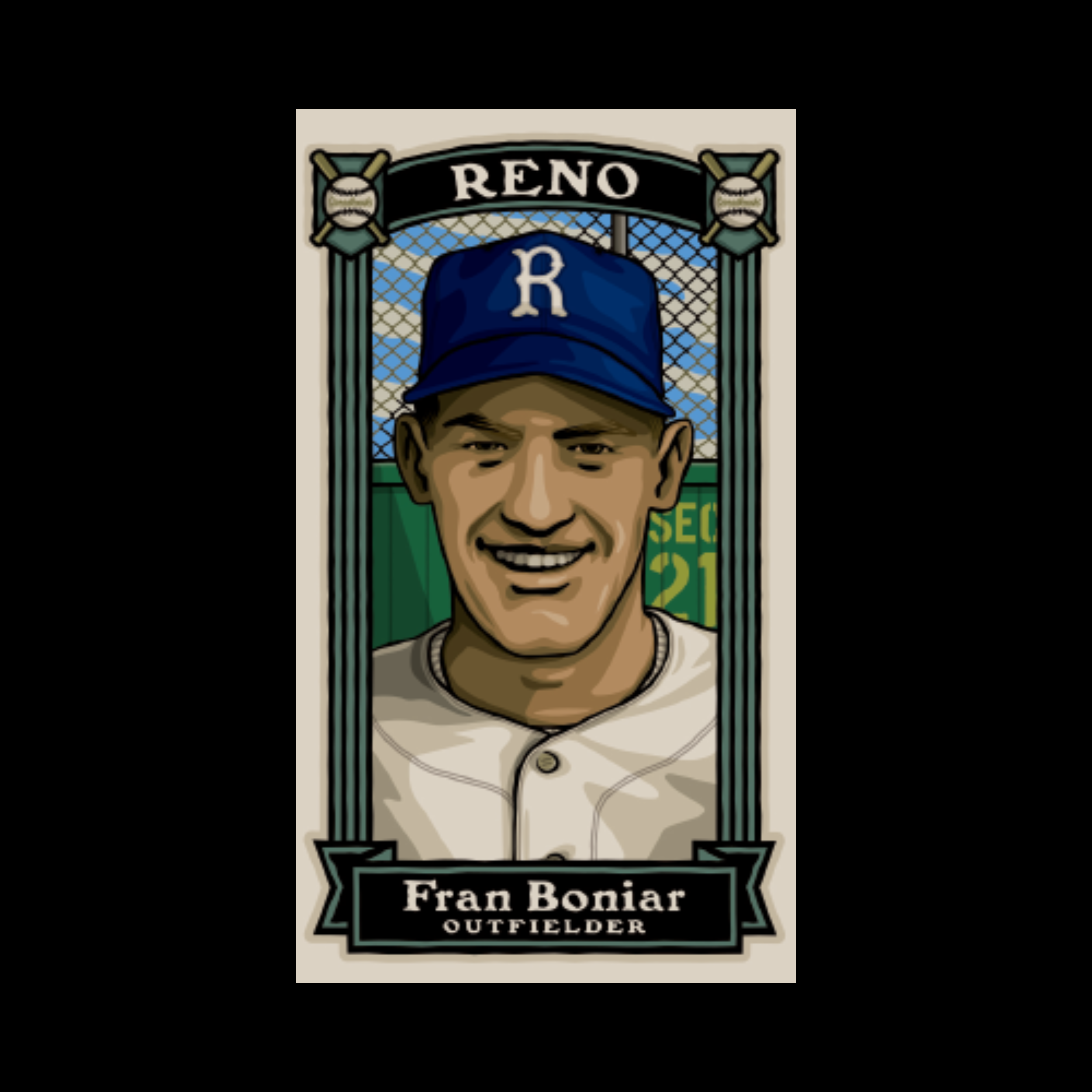
Fran Boniar
Gary’s right fielder
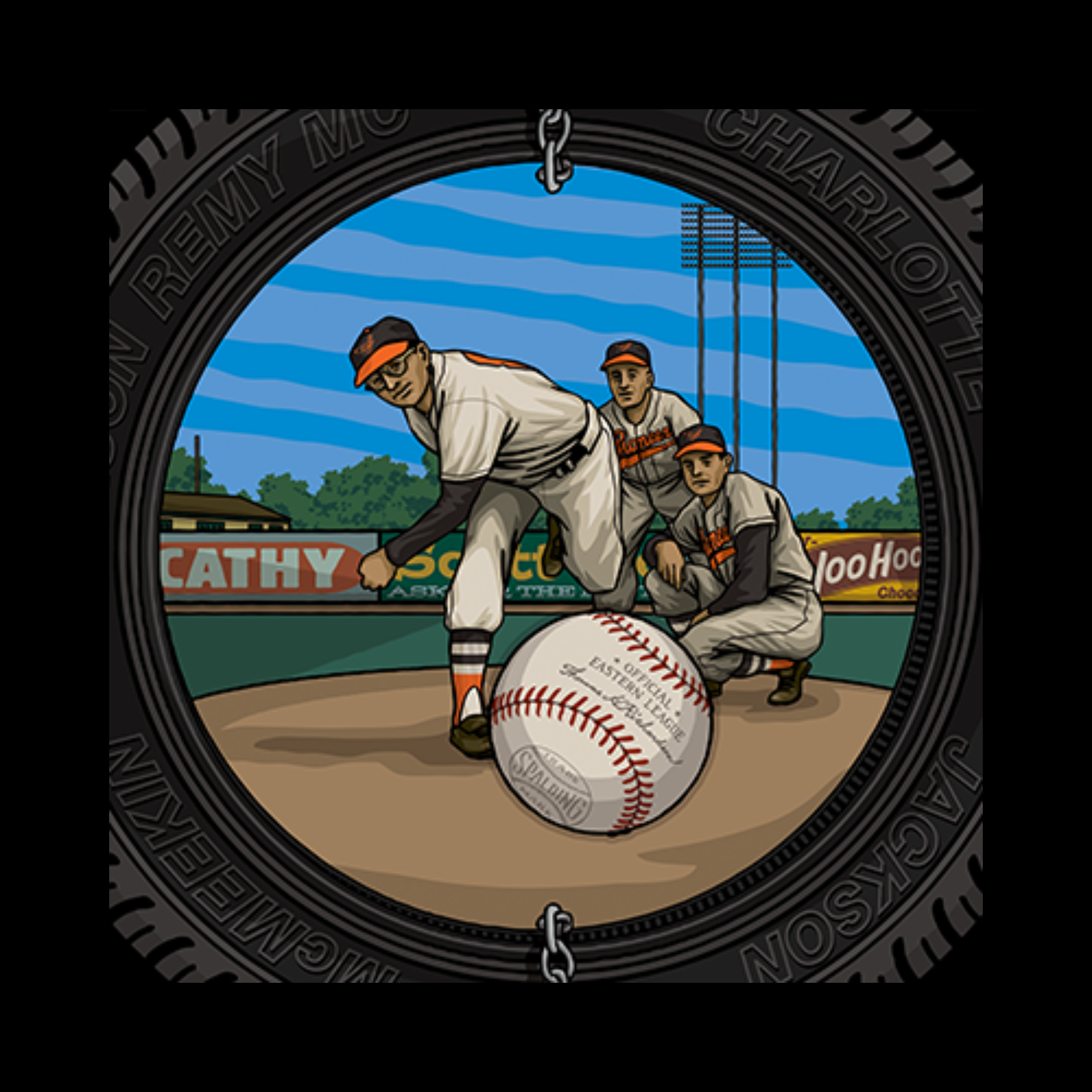
Steve Dalkowski
Gary’s blog post on Steve Dalkowski
Buy Gary’s Steve Dalkowski print HERE.
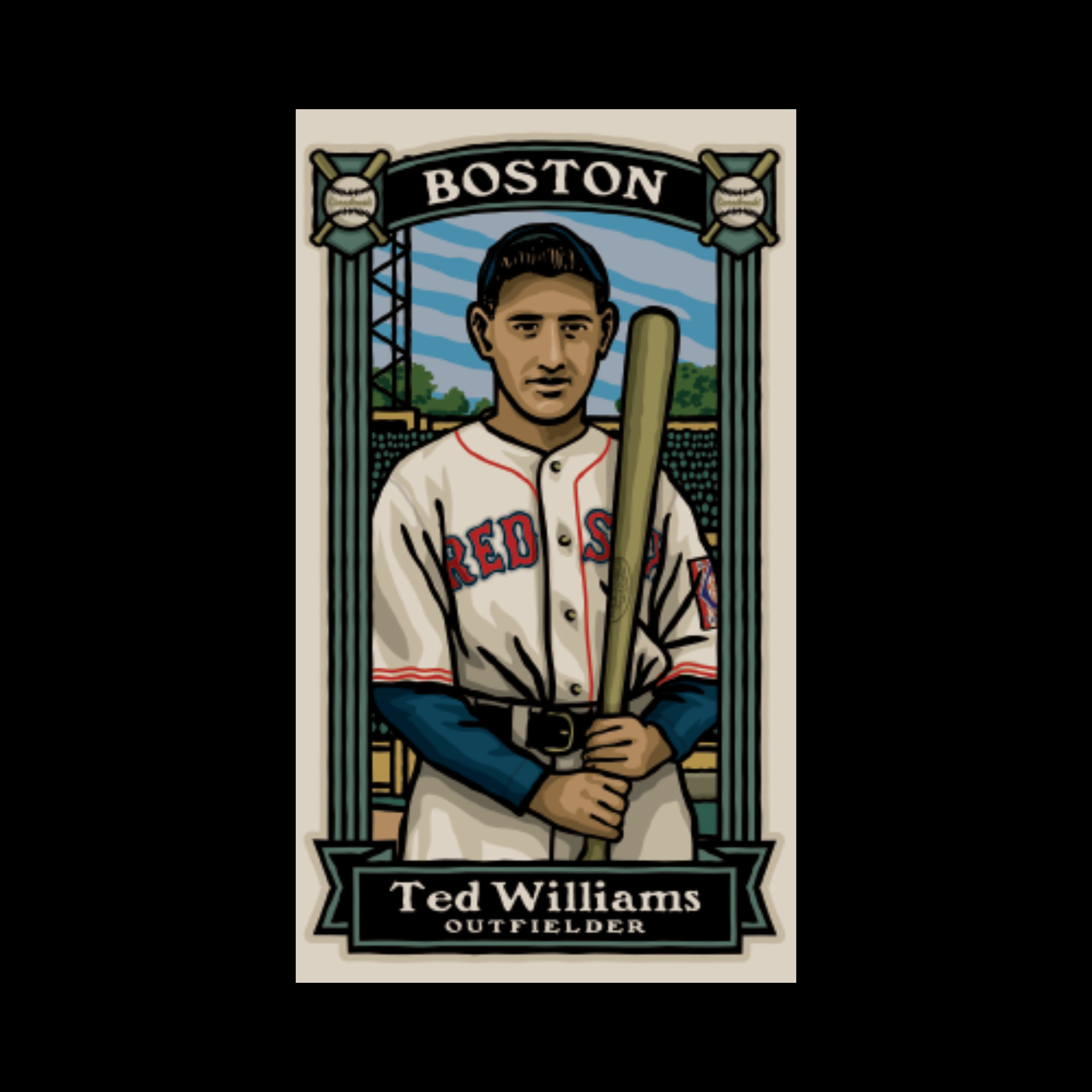
Ted Williams
Dan’s designated hitter
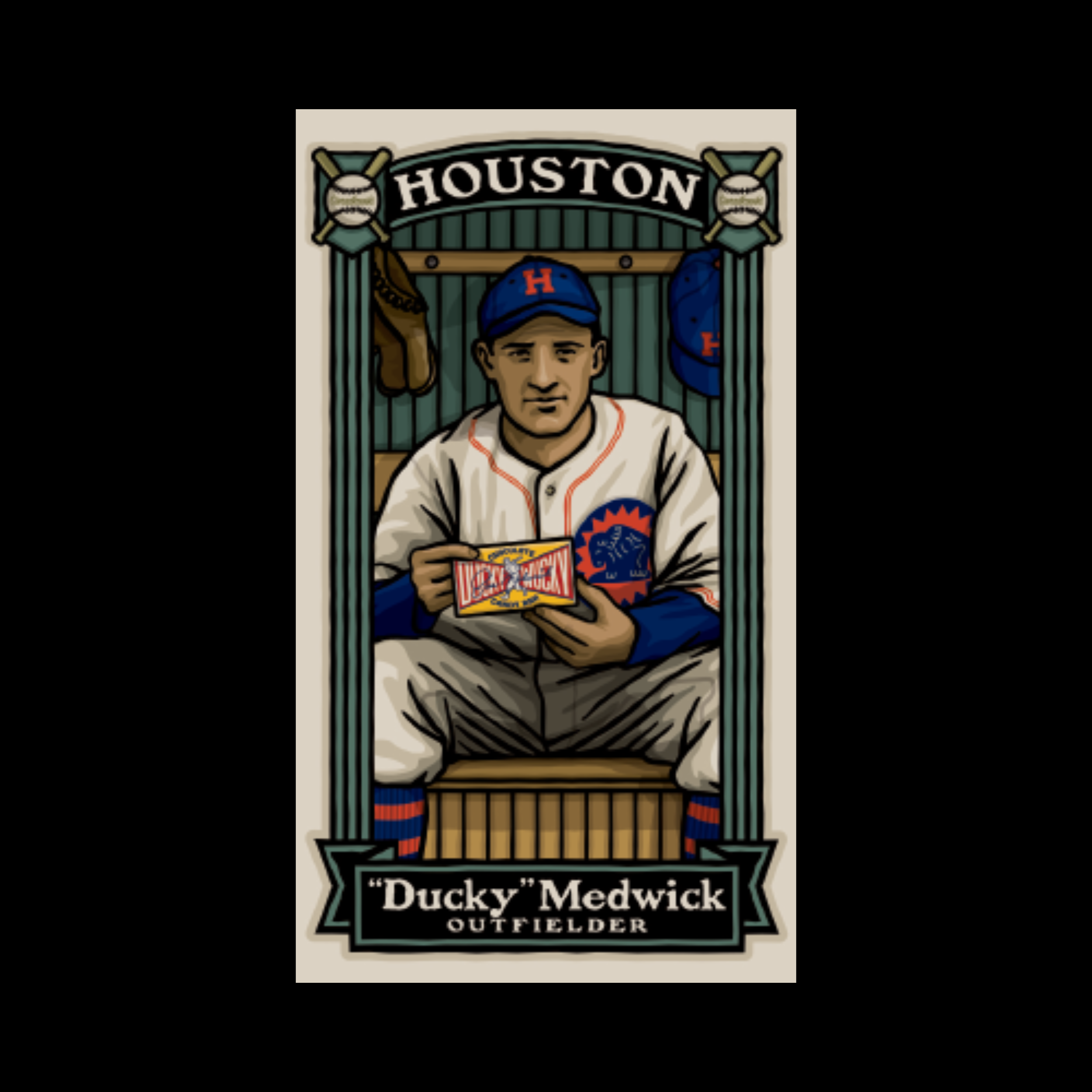
Joe “Ducky” Medwick
Gary’s designated hitter
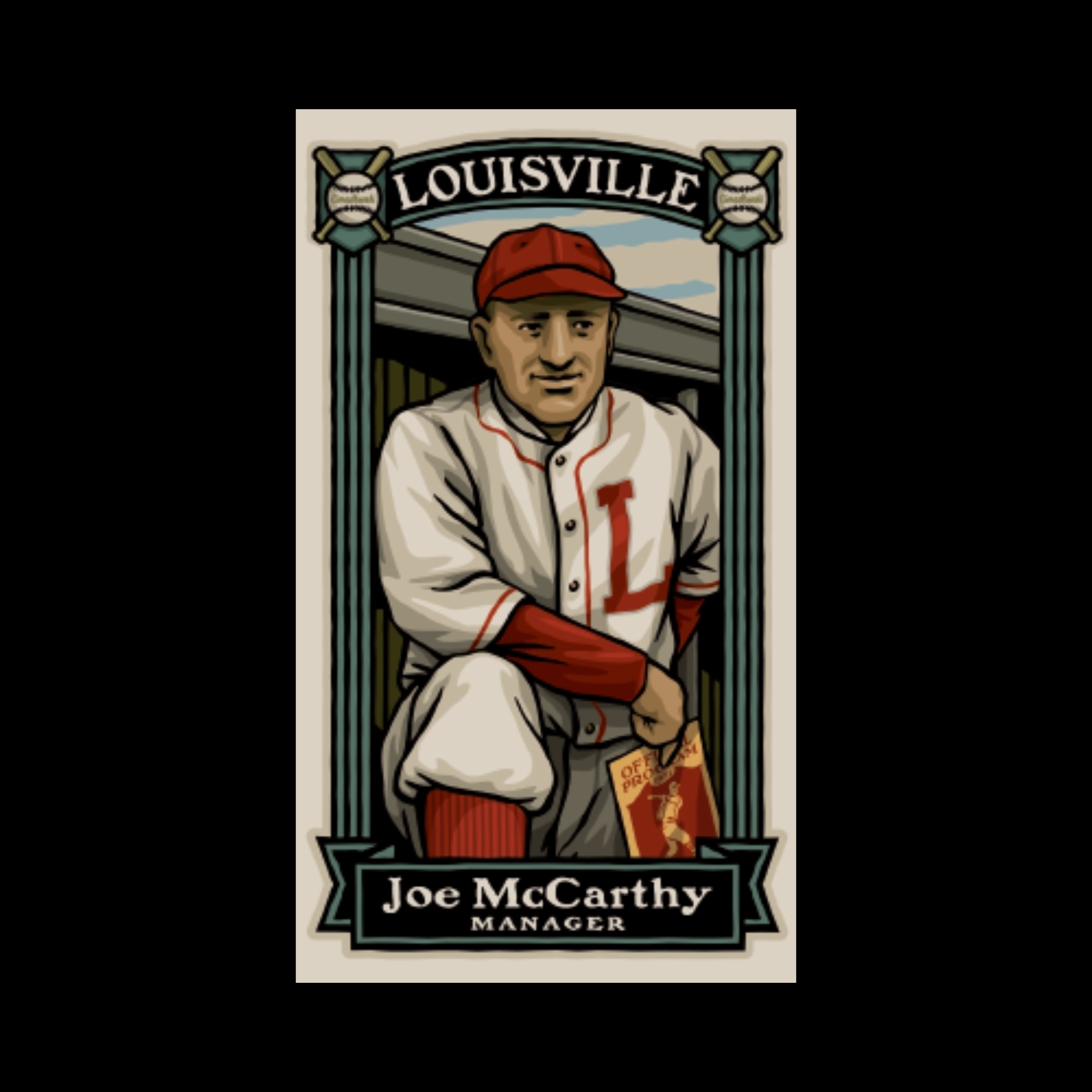
Joe McCarthy
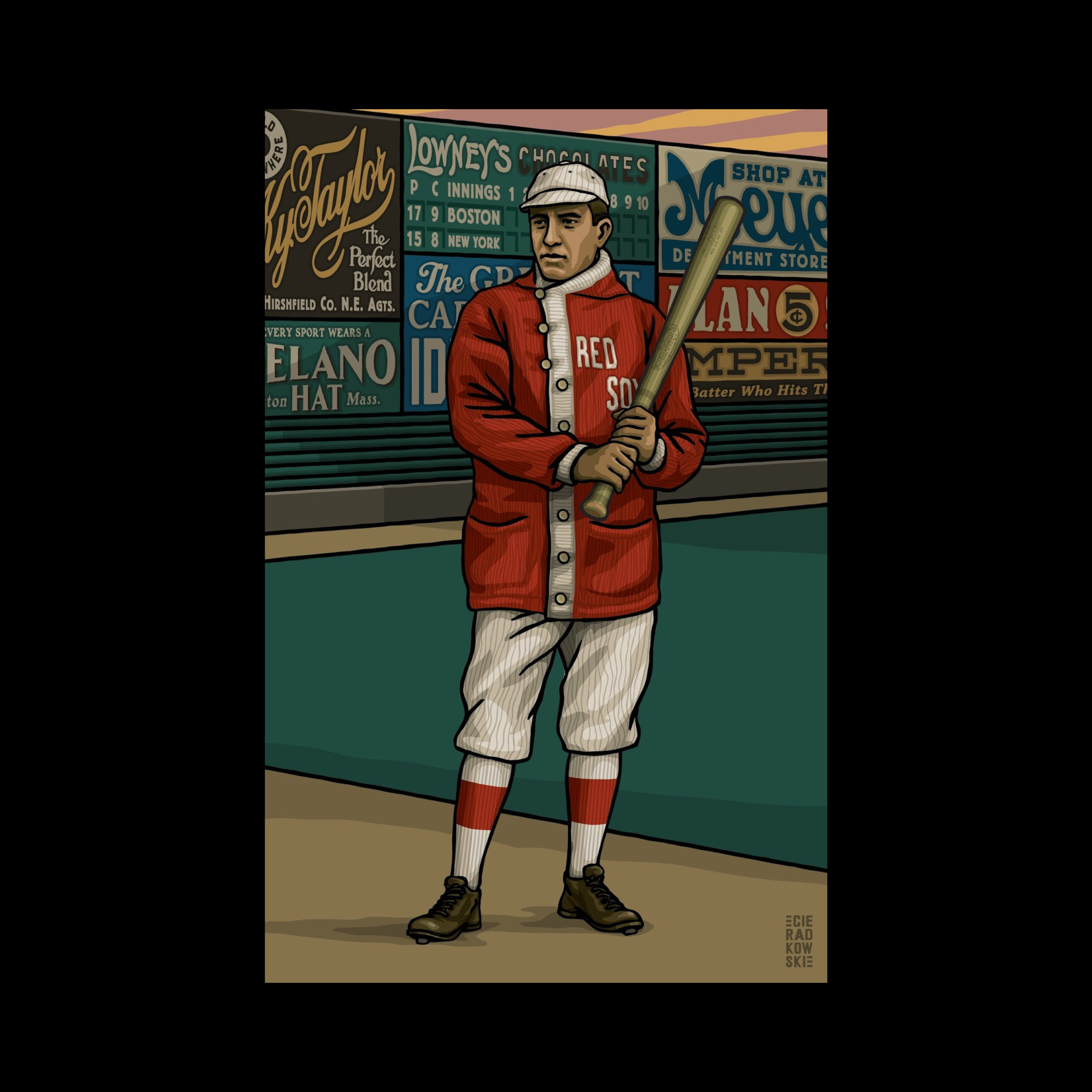
Tris Speaker
Tris would have been my mom’s manager, if she were building her fantasy team.
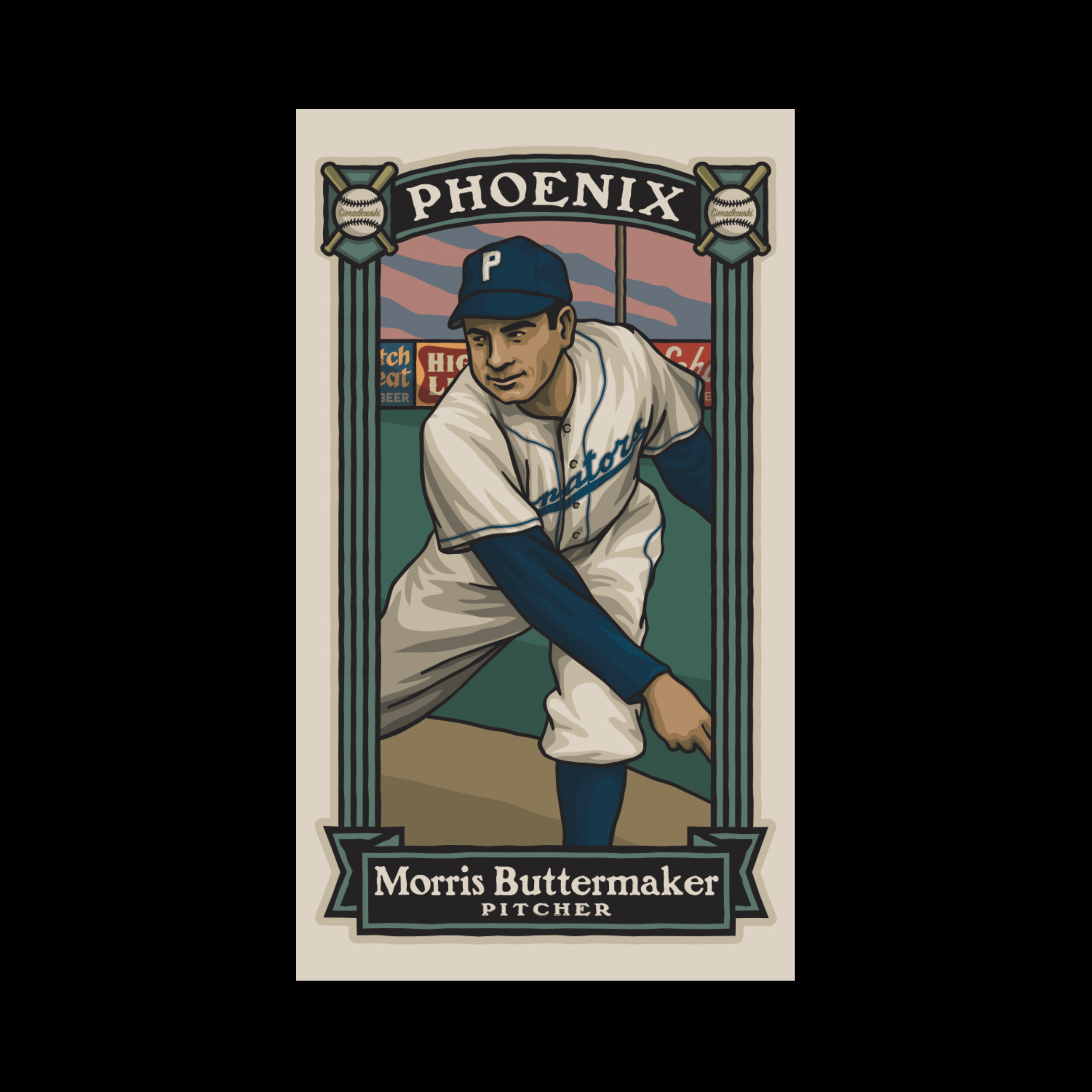
Morris Buttermaker
Gary’s manager
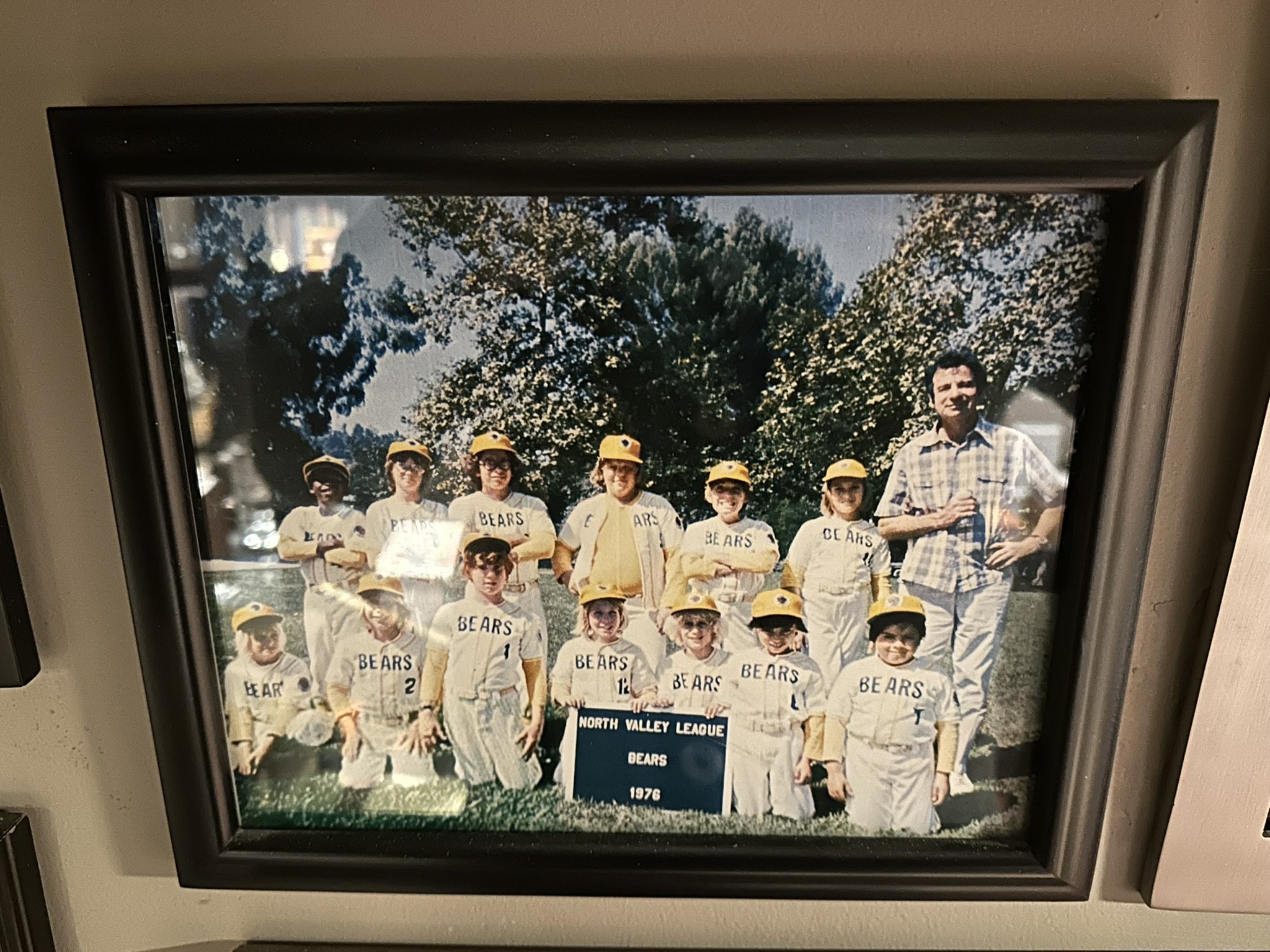
The Bad News Bears
Gary’s favorite baseball movie
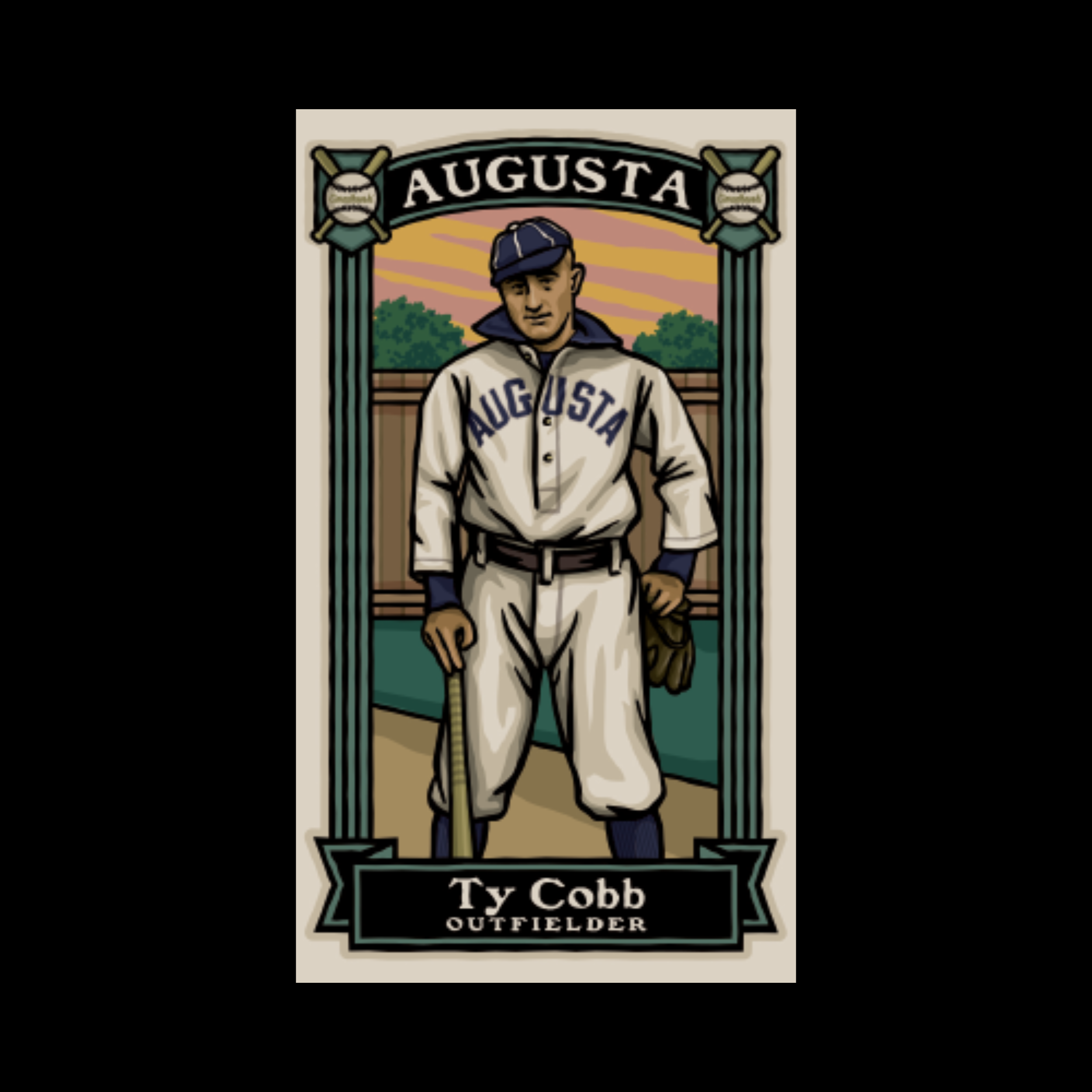
Ty Cobb
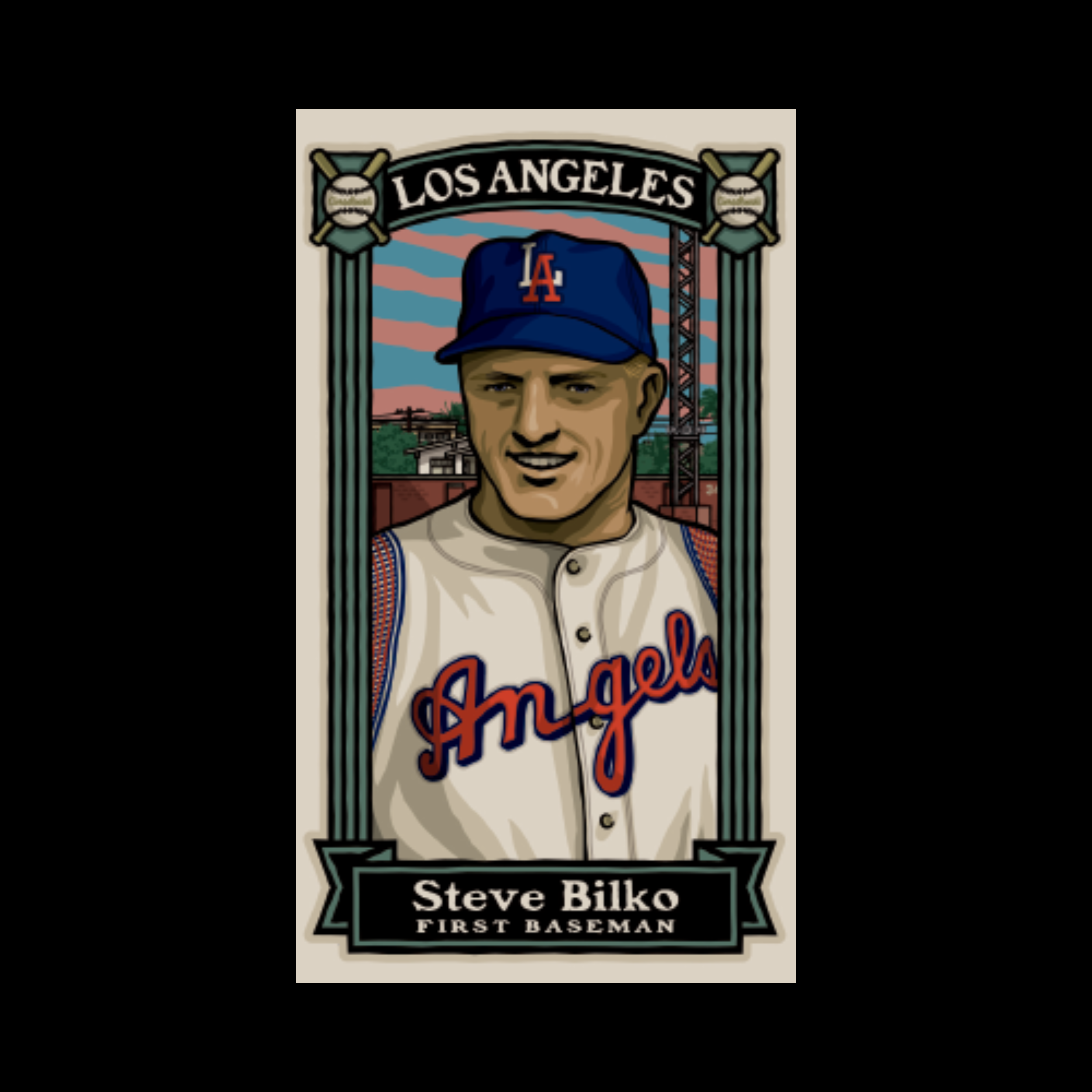
Steve Bilko
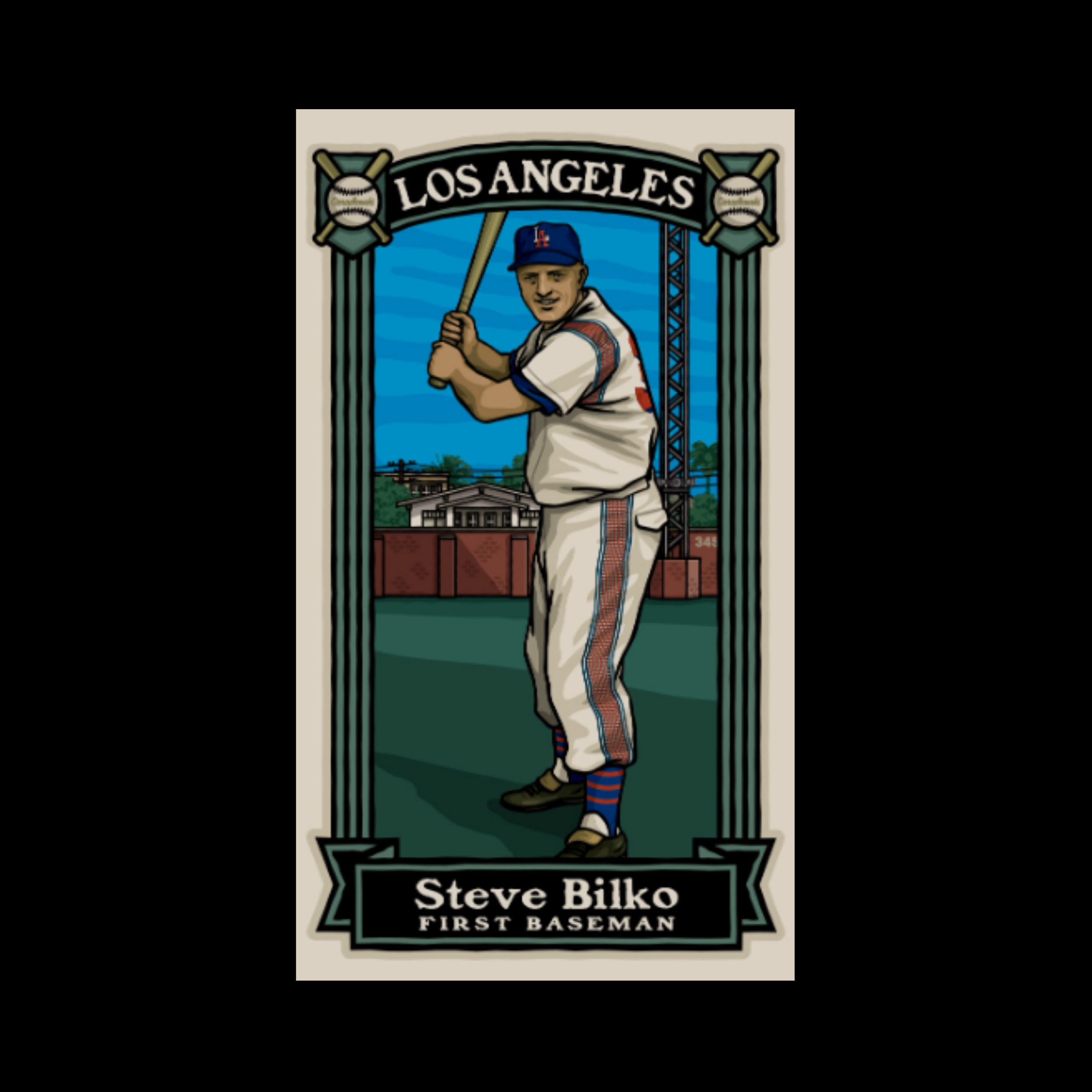
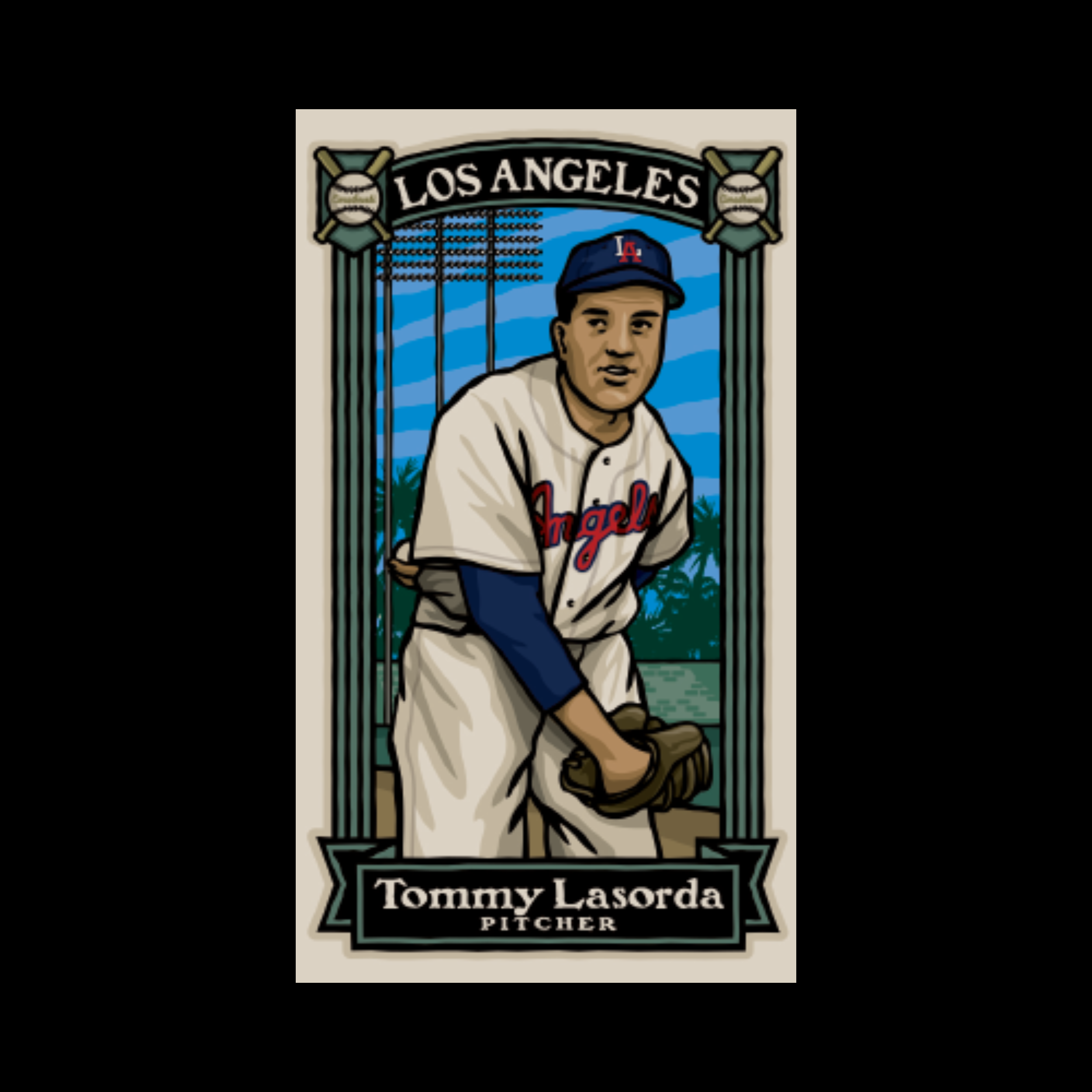
Tommy Lasorda
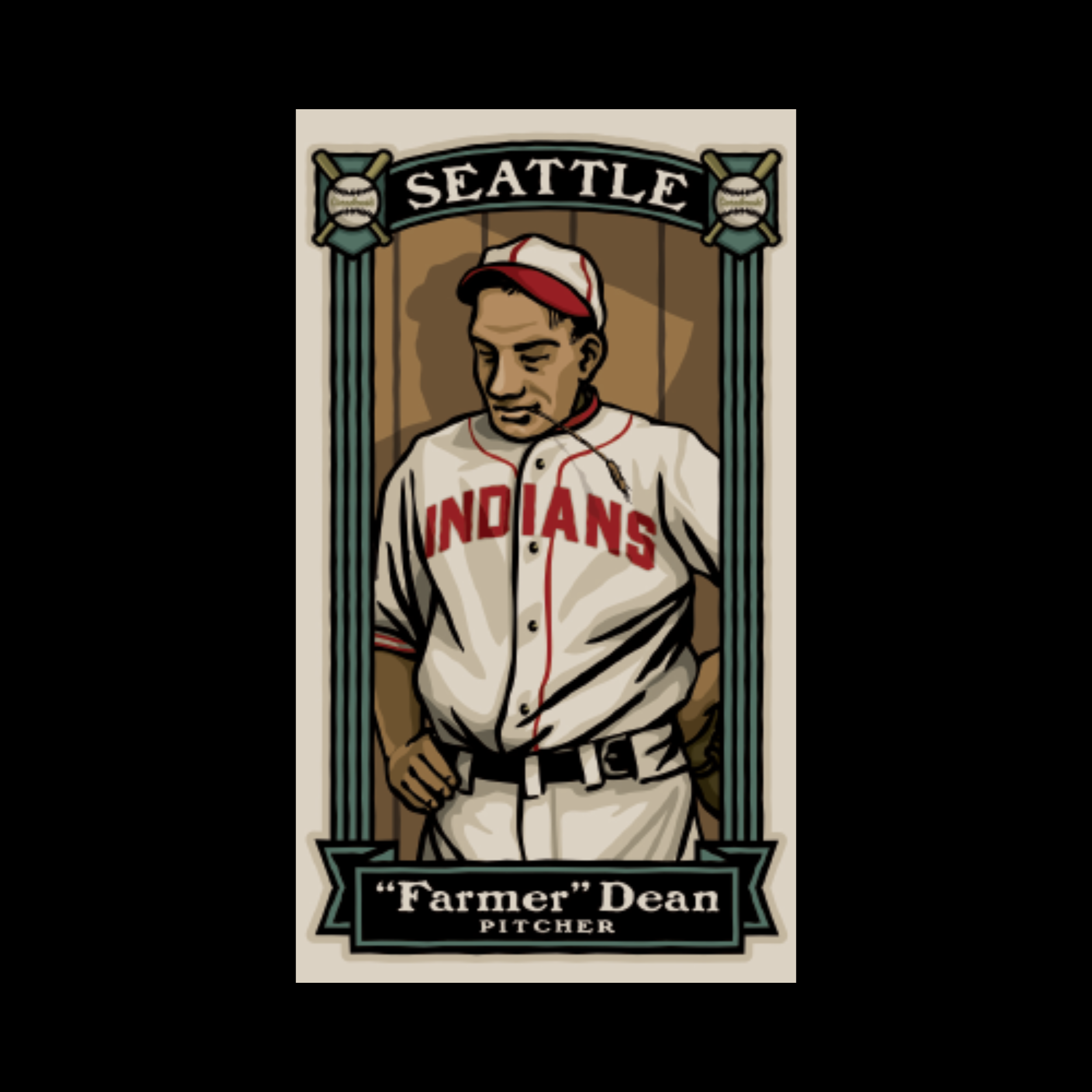
Farmer Dean
Gary’s pitching coach
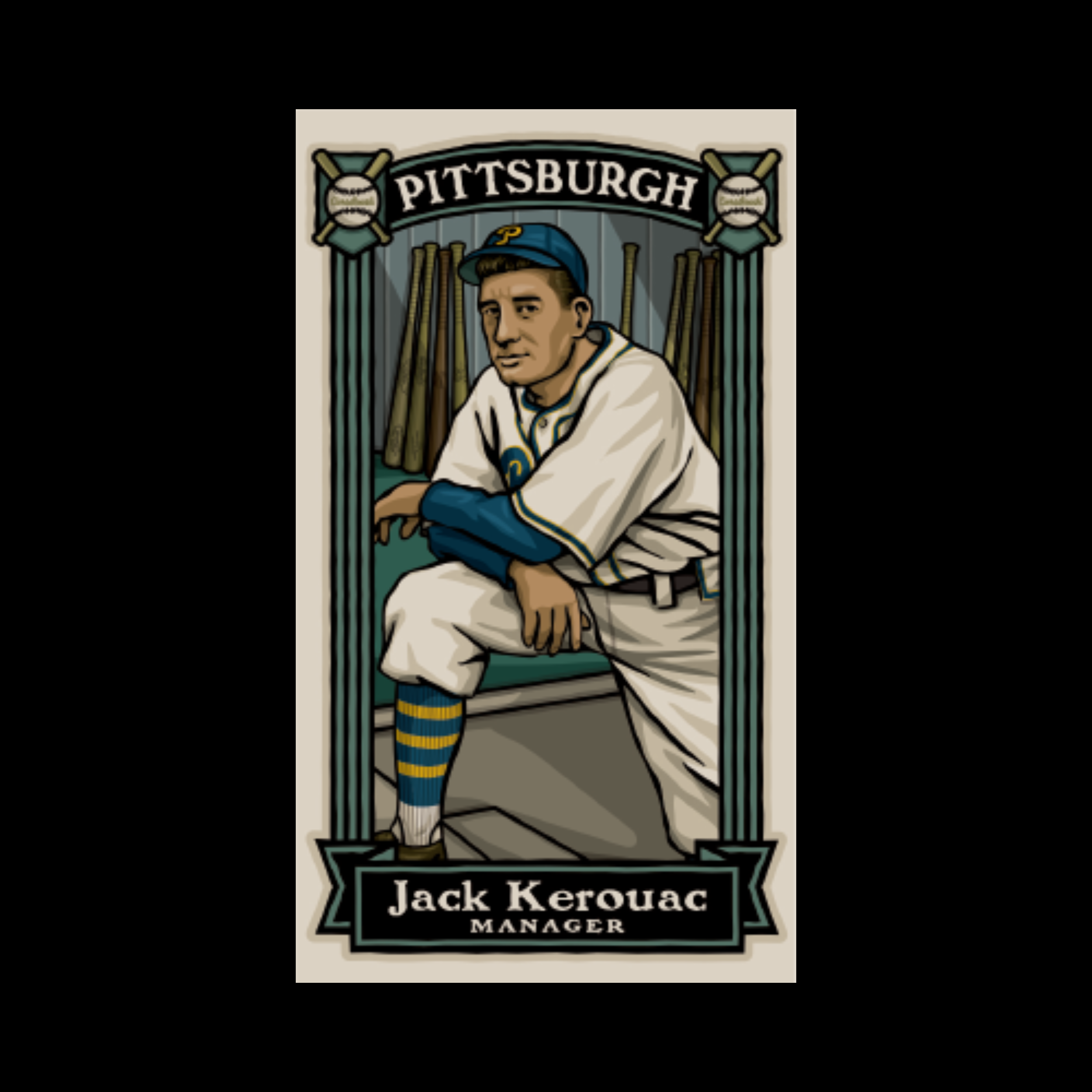
Jack Kerouac
Dan’s beat reporter
Gary’s blog post on Jack Kerouac
“Jack Kerouac: The Beat of Fantasy Baseball” by Jim Reisler
Buy Gary’s Jack Kerouac card booklet HERE.
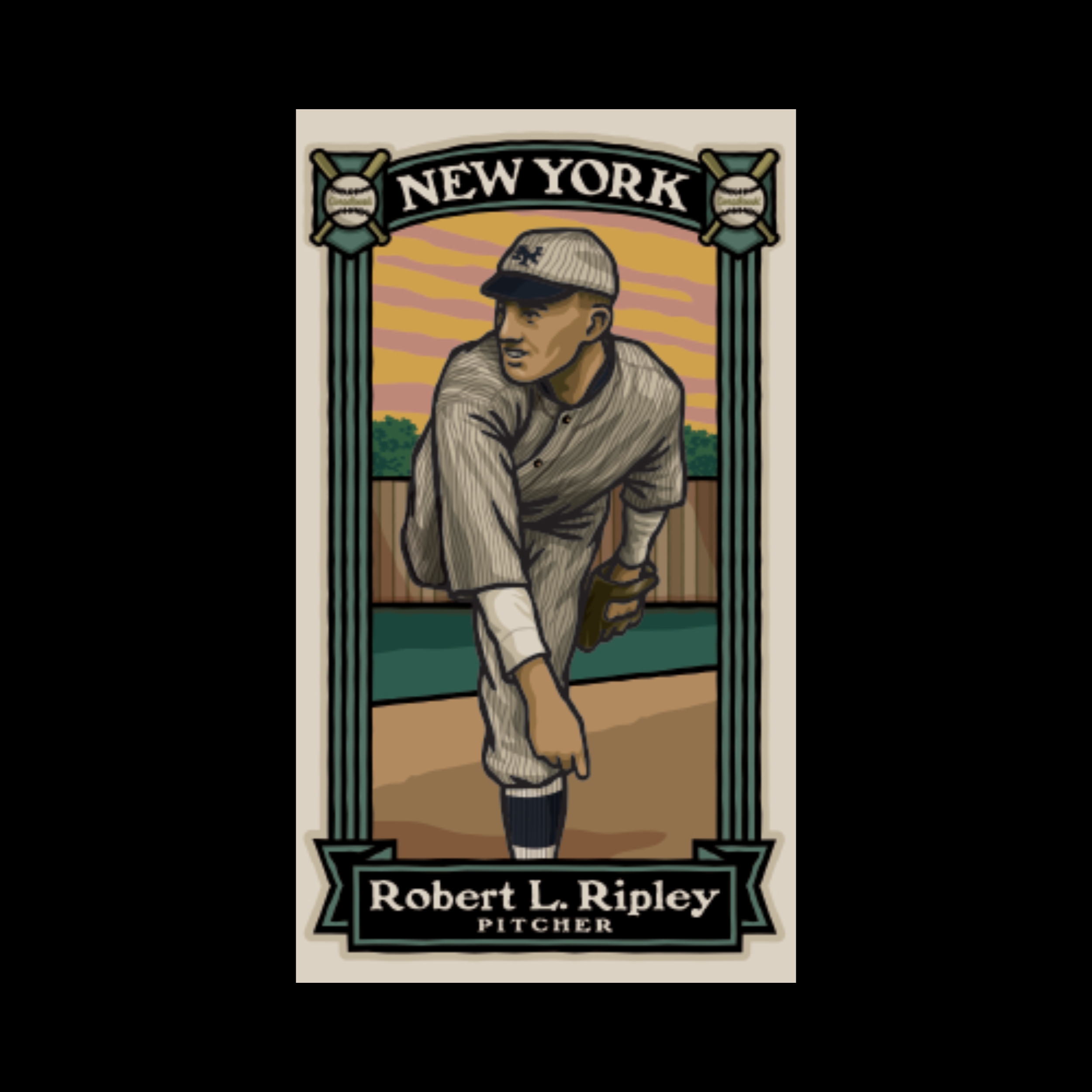
Robert L. Ripley
Gary’s beat reporter
Robert Ripley’s potential career as a baseball player ended because of an arm injury he sustained while trying out for the major leagues, and so he turned to his other main talent, drawing cartoons.
Beginning at age 16, Ripley held jobs as a sports cartoonist with several San Francisco newspapers, and he moved to New York City in 1913. There he drew cartoons for the New York Globe, and he originated his first “Believe It or Not!” cartoon for that paper’s issue of December 19, 1918; this cartoon portrayed nine oddities from the world of athletics.
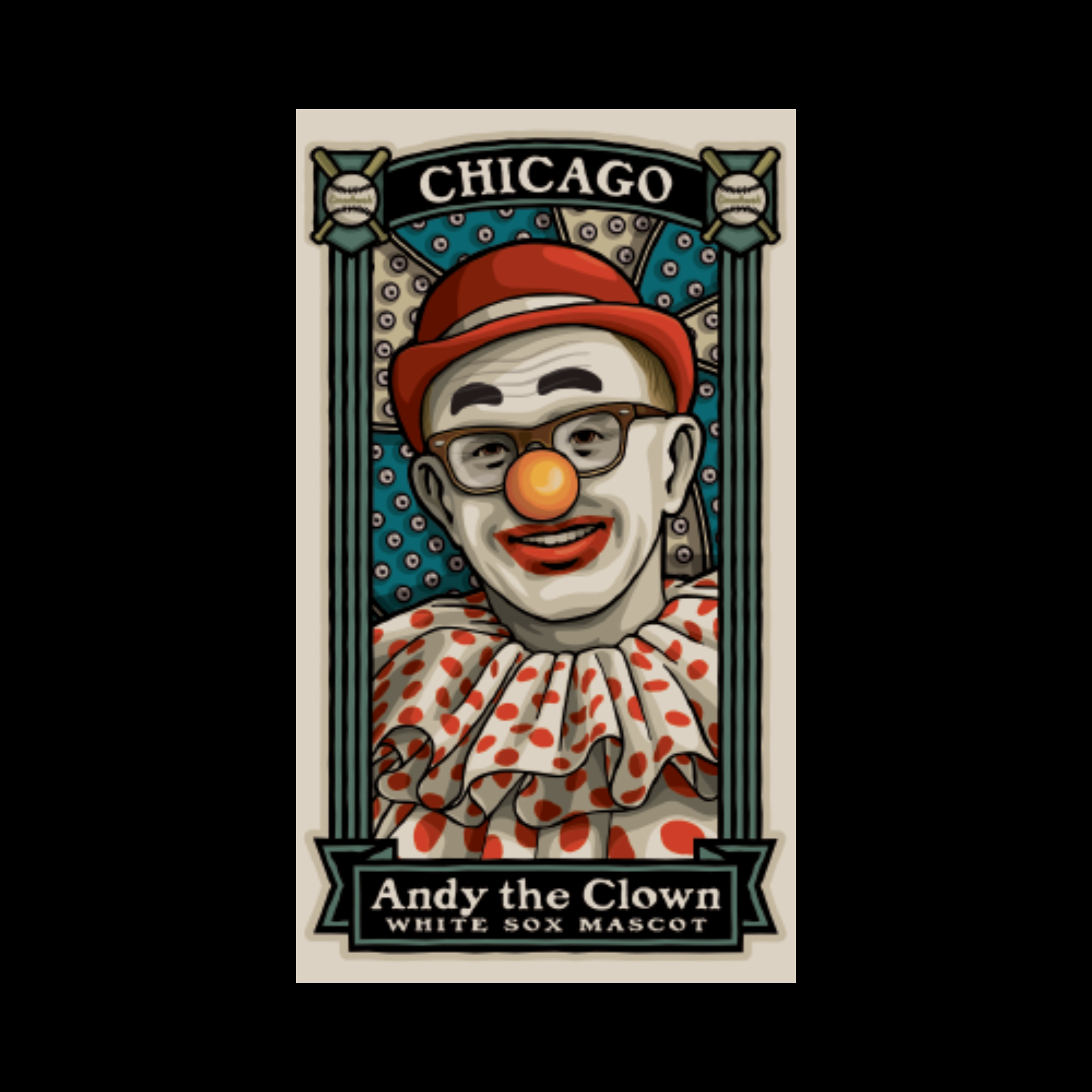
Andy The Clown
Dan’s number one fan
Andrew Rozdilsky Jr. was more commonly known as Andy The Clown, performing at White Sox games at the original Comiskey Park from 1960 to 1990.
Gary’s blog post on Andy The Clown
Buy Gary’s Andy The Clown card booklet HERE.
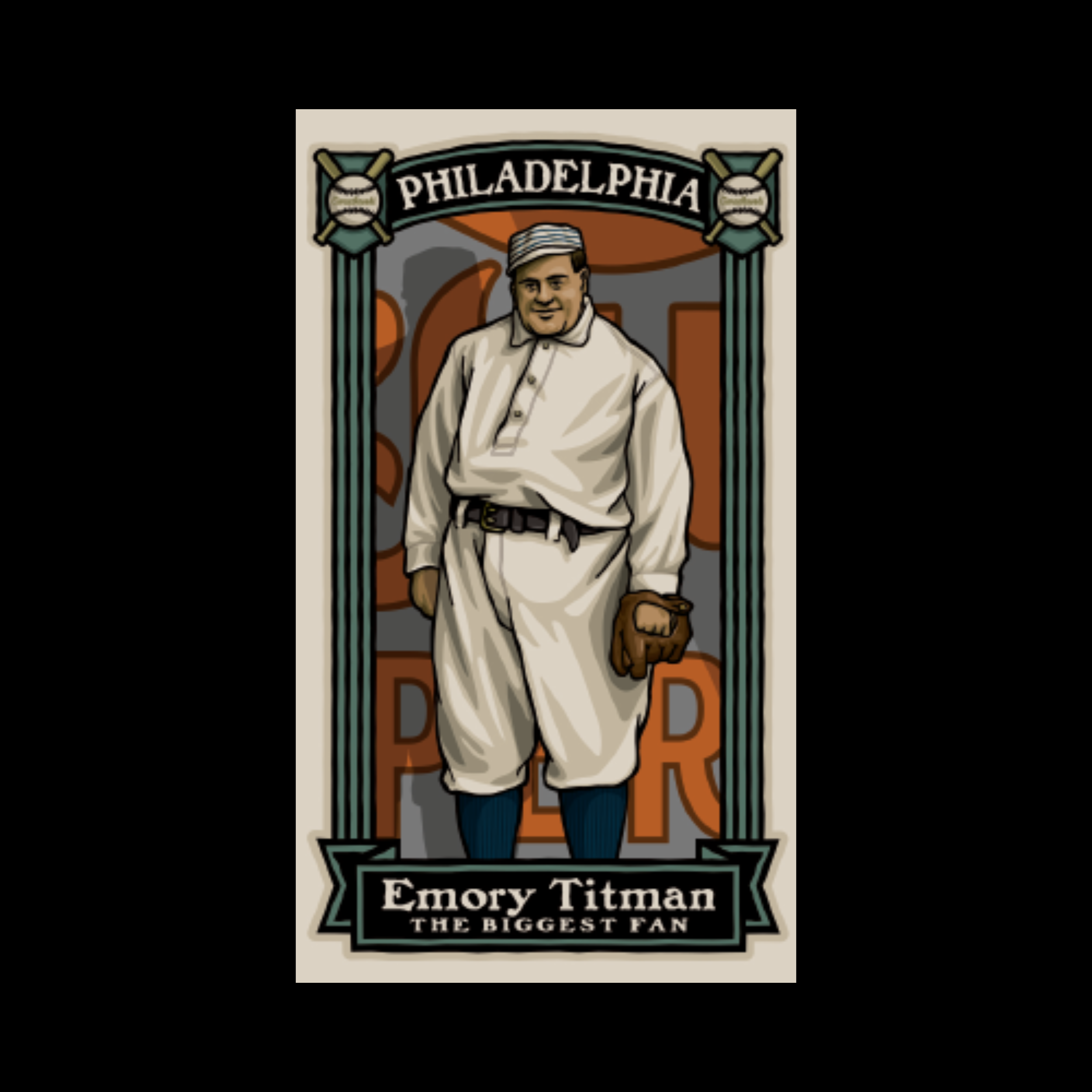
Emory Titman
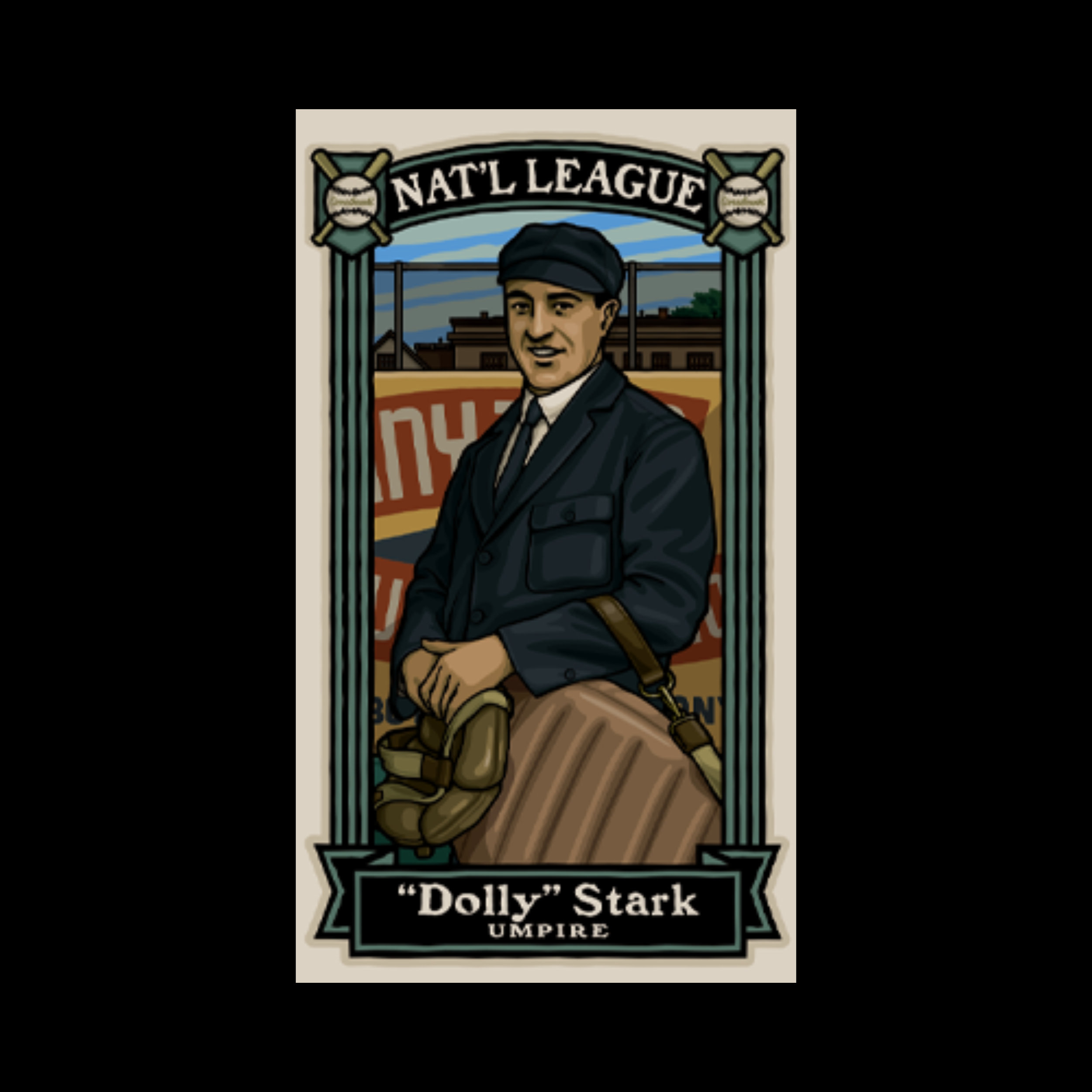
“Dolly” Stark
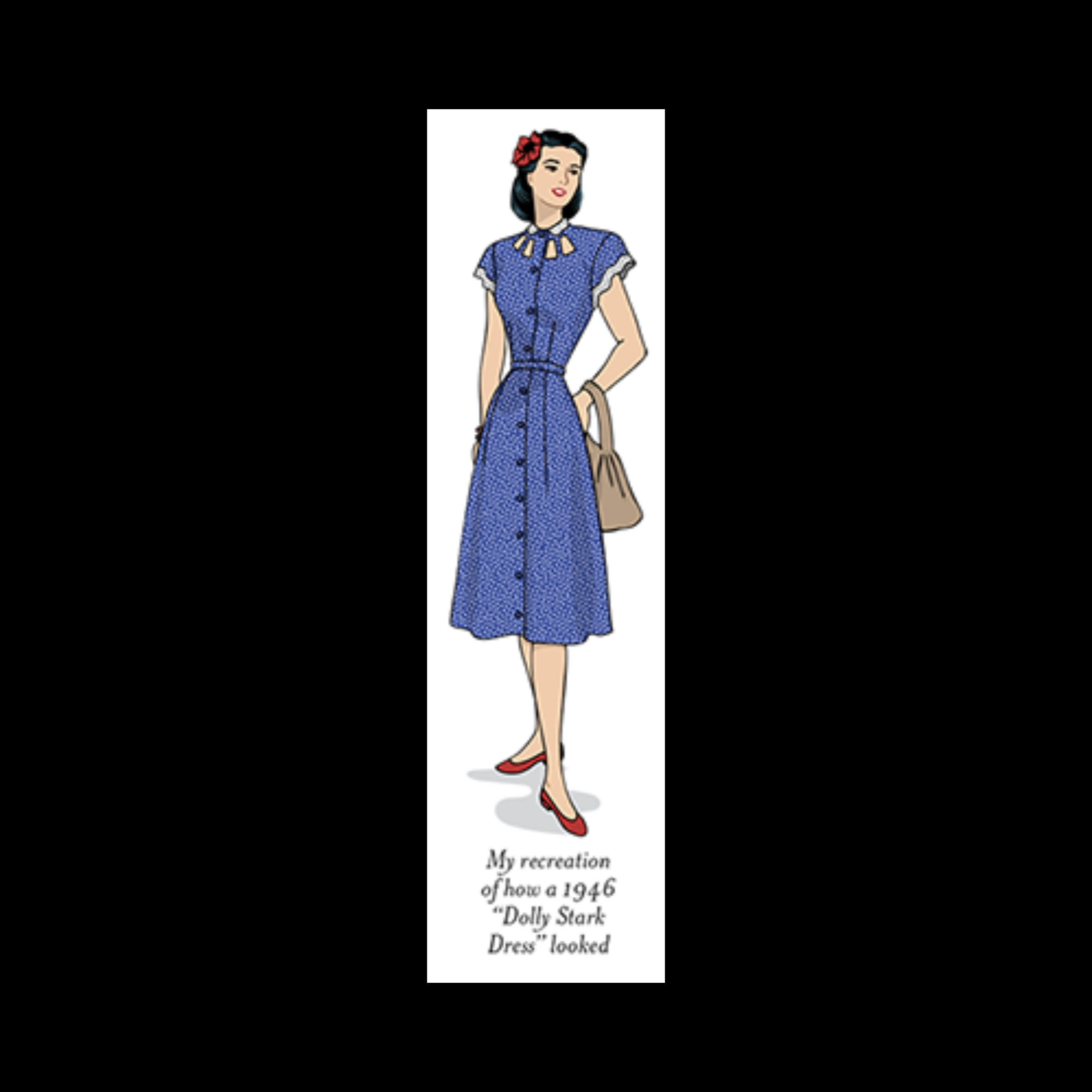
The Dolly Stark Dress
Gary’s fashion drawing of a Dolly Stark Dress brought what would have otherwise been a forgotten relic back to life.
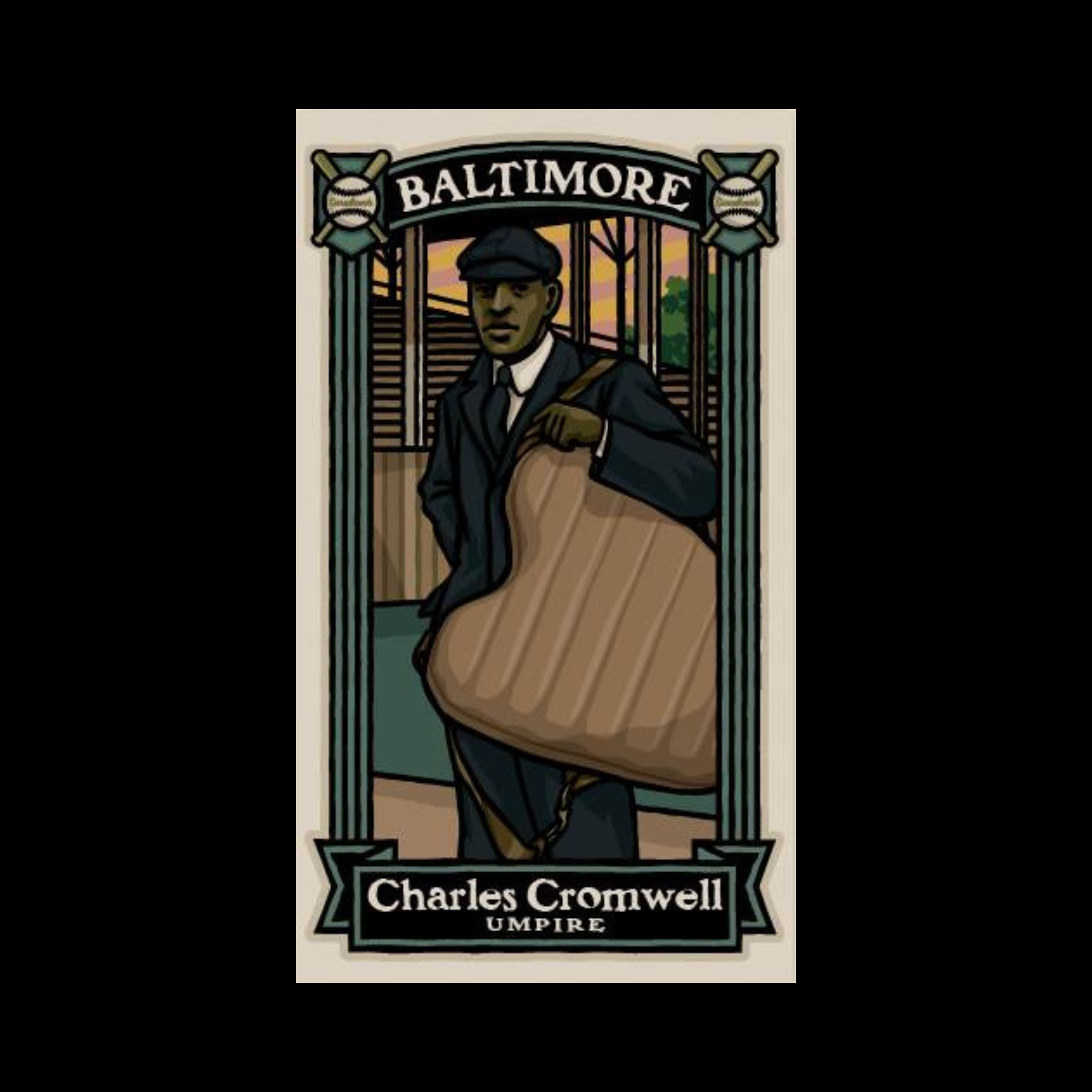
Charles “Square Deal” Cromwell
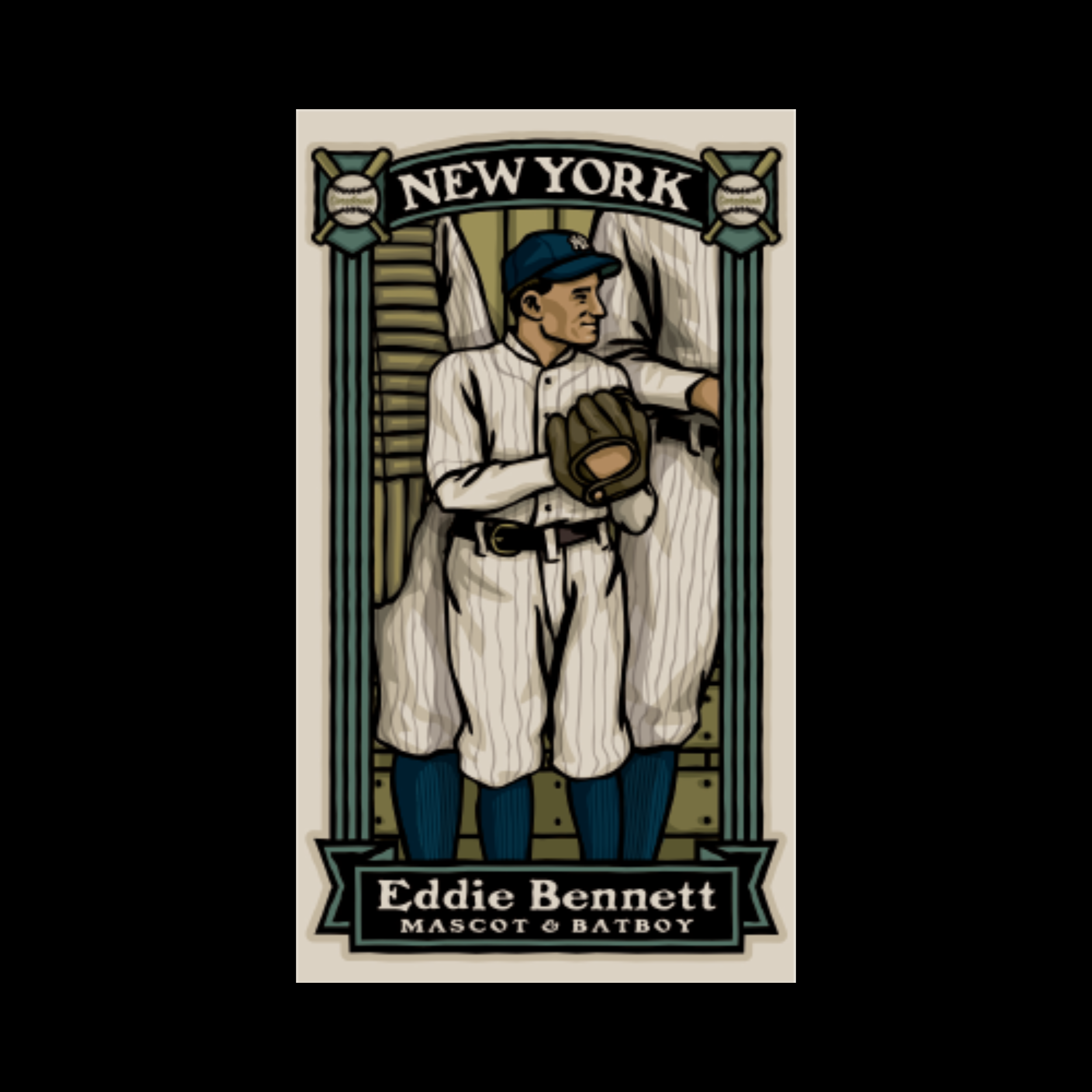
Eddie Bennett
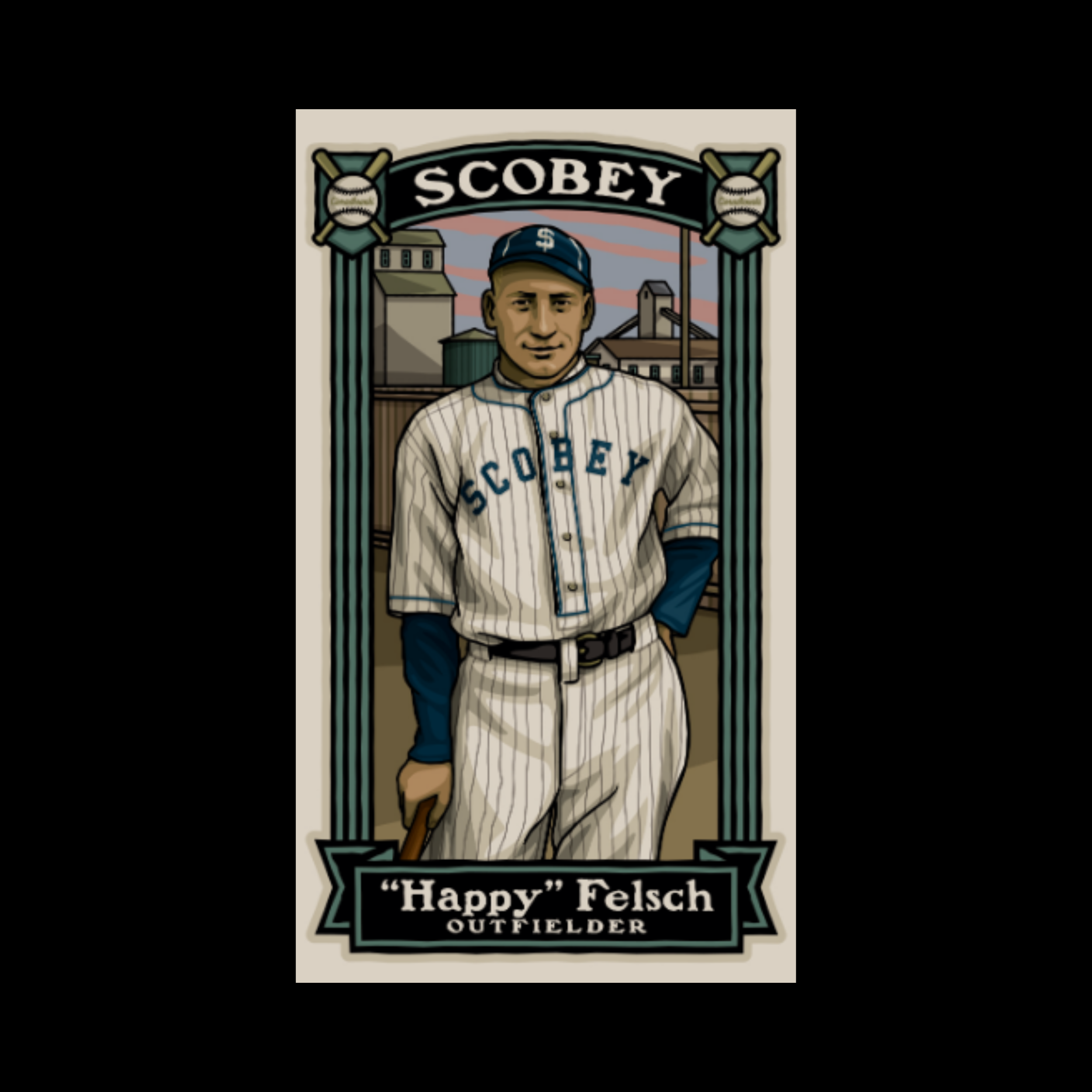
Happy Felsch
Gary’s blog post on Oscar “Happy” Felsch
Buy Gary’s After The Black Sox card set HERE.
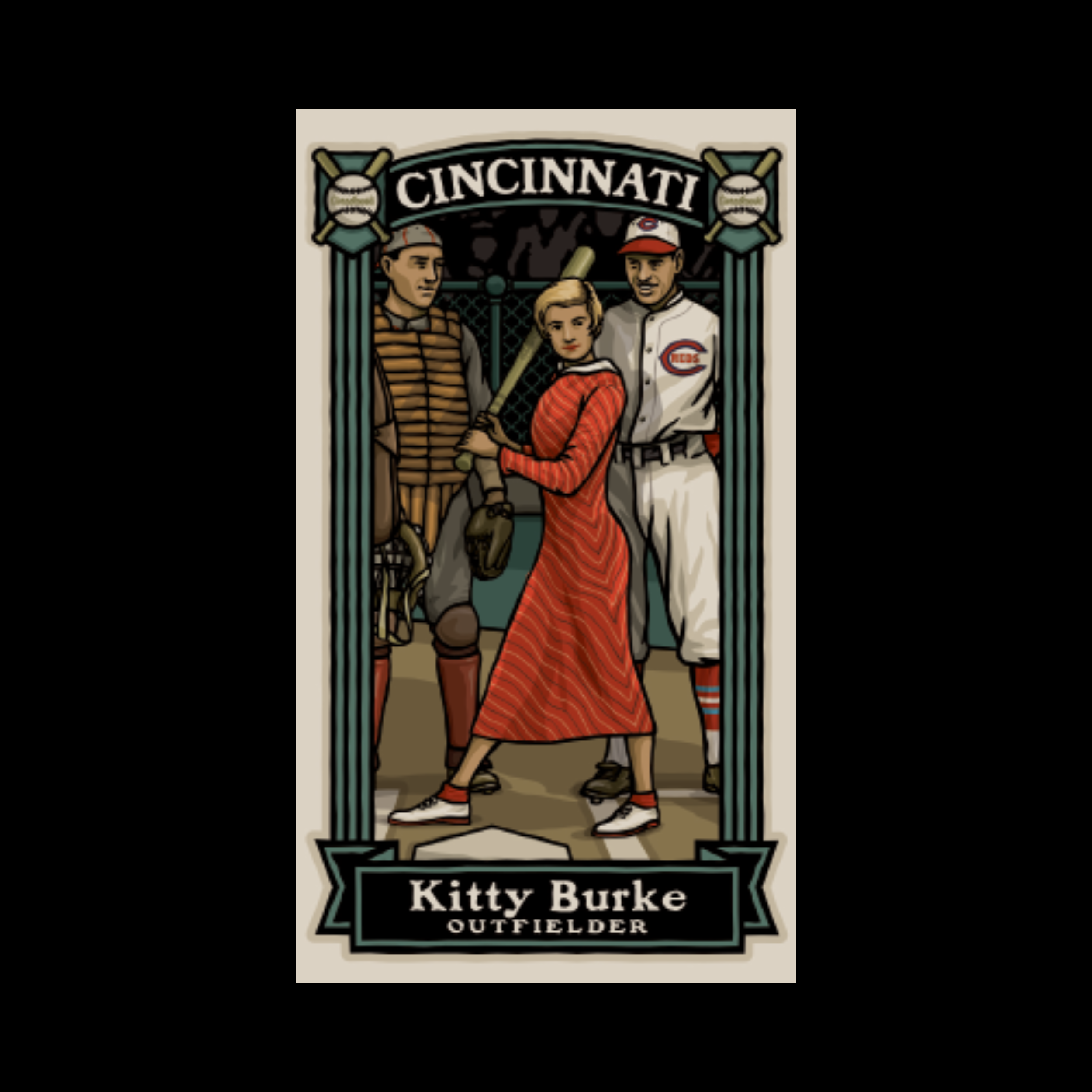
Kitty Burke
National Anthem Singer
“July 31, 1935: Kitty Burke comes to bat in Cincinnati” by Steven Wyder
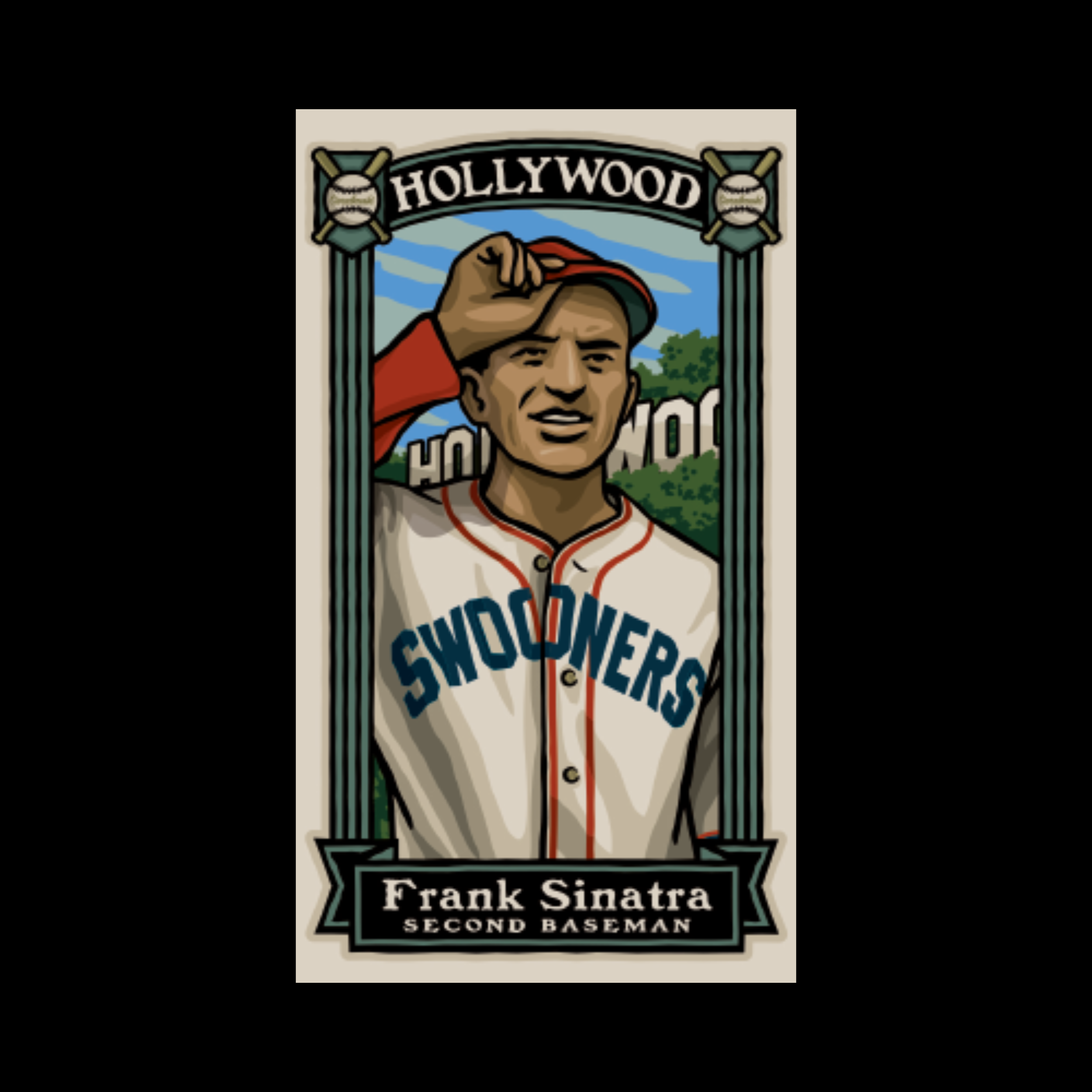
Frank Sinatra
7th Inning Stretch Singer
Why? Guess who starred in a 1949 Technicolor musical film produced in the Arthur Freed unit of MGM called … Take Me Out to the Ball Game!
You guessed it: Frank Sinatra, along with co-stars Esther Williams, Gene Kelly, Betty Garrett, Edward Arnold and Jules Munshin. The film was directed by Busby Berkeley.
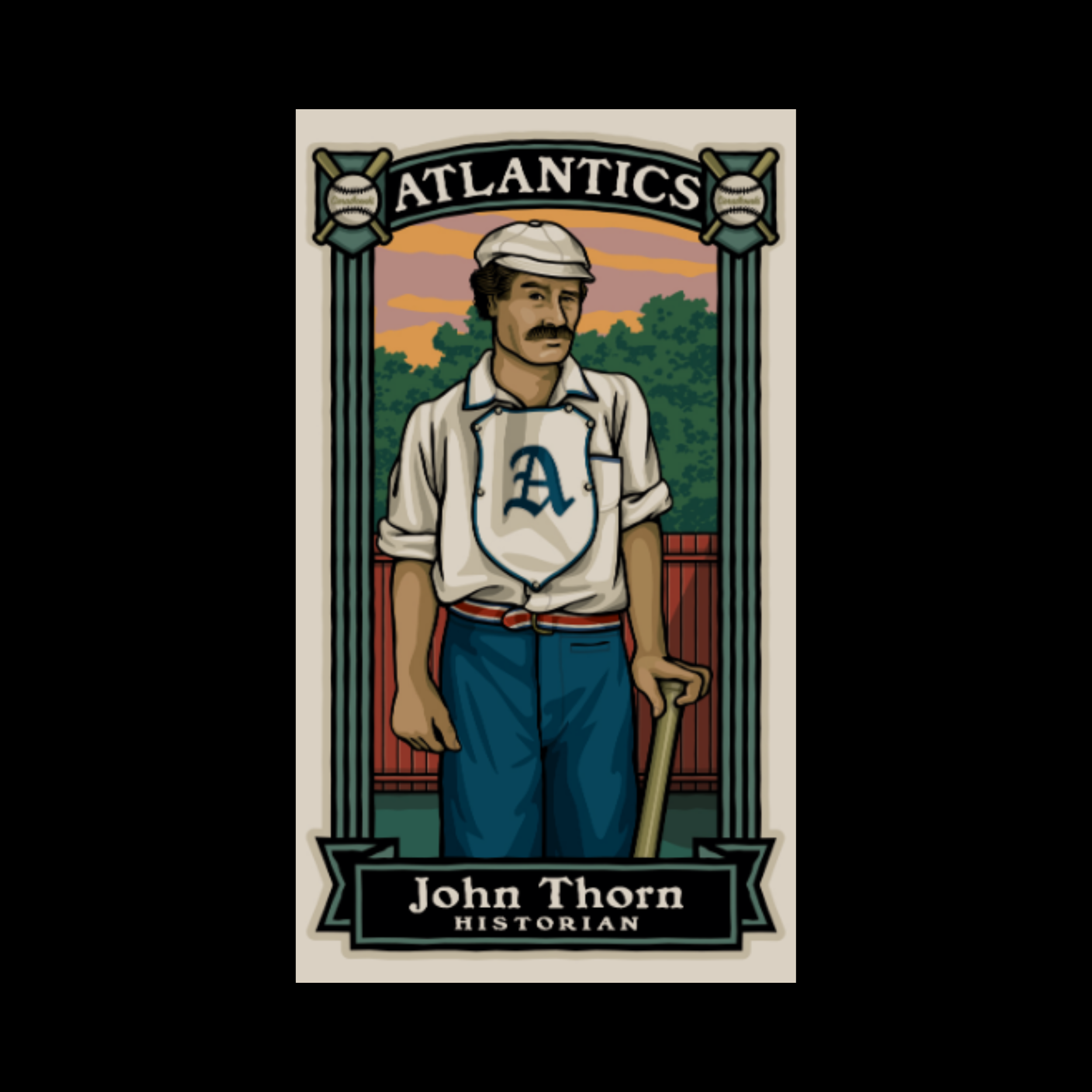
John Thorn
Play-by-play broadcaster
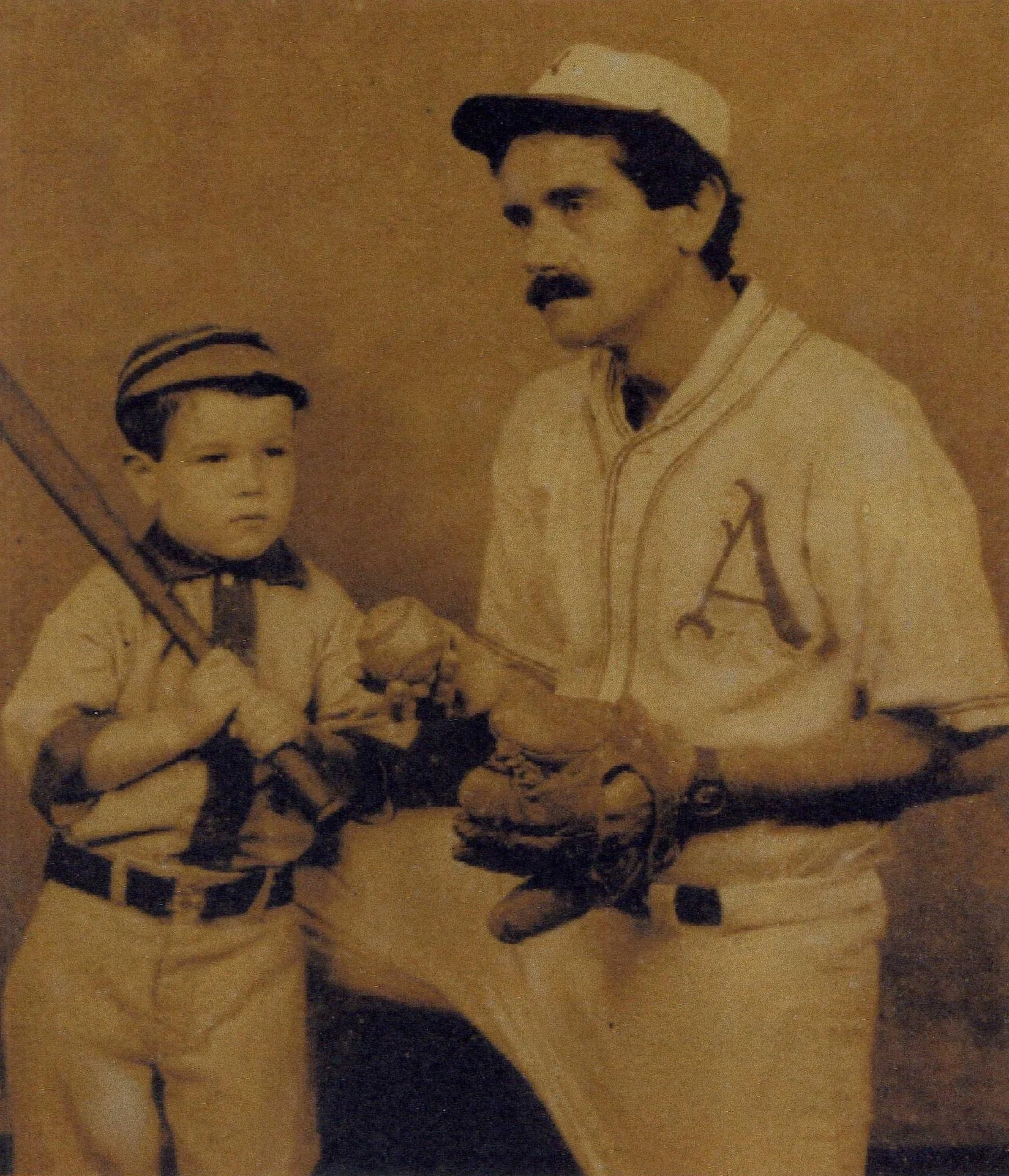
If you’re interested in seeing what baseball uniforms looked like in the early 1870s, click HERE.
John Thorn
John and his son, Mark, having some fun at Will Arlt’s “Old Clothes” section of The National Pastime store on Main Street in Cooperstown, circa 1989.
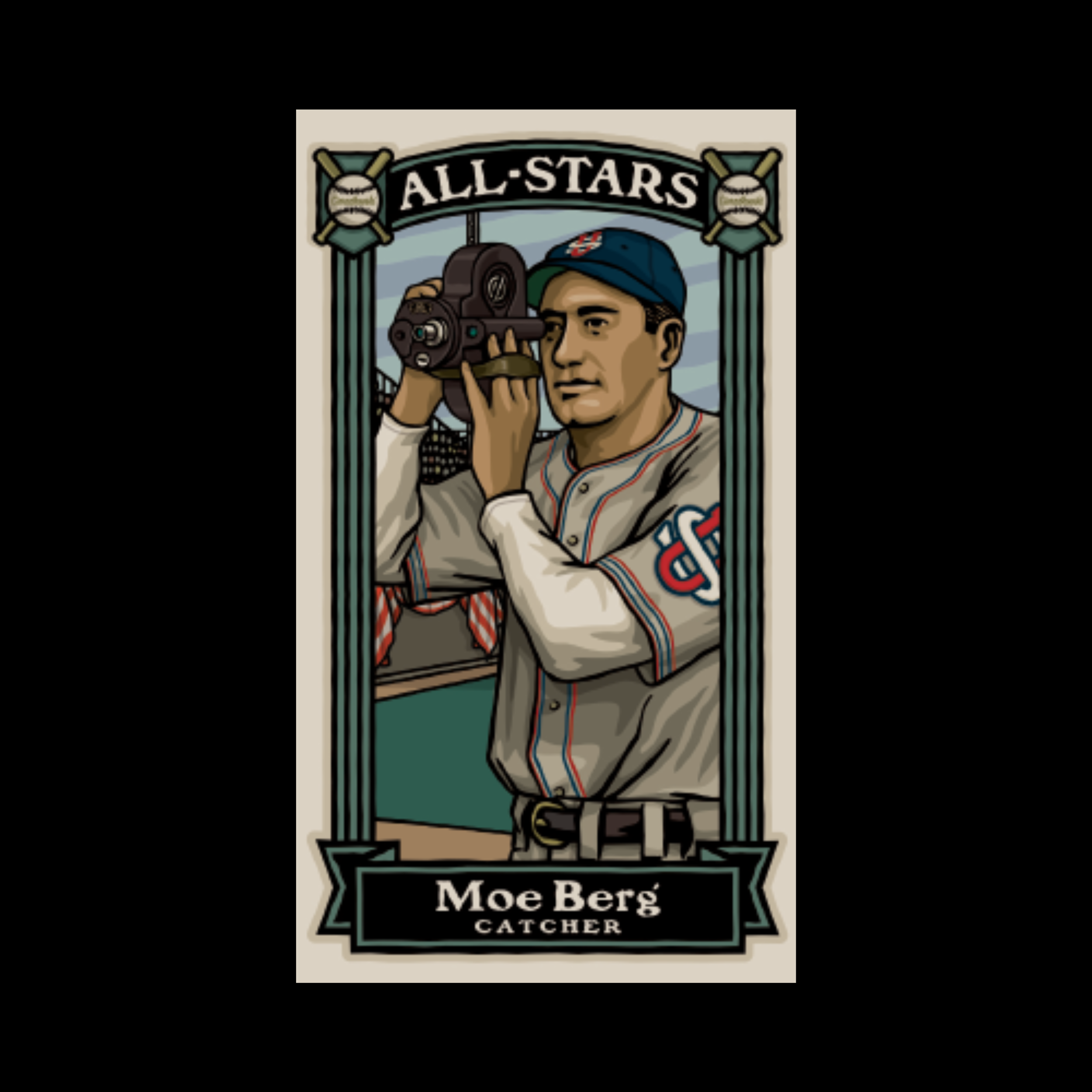
Moe Berg
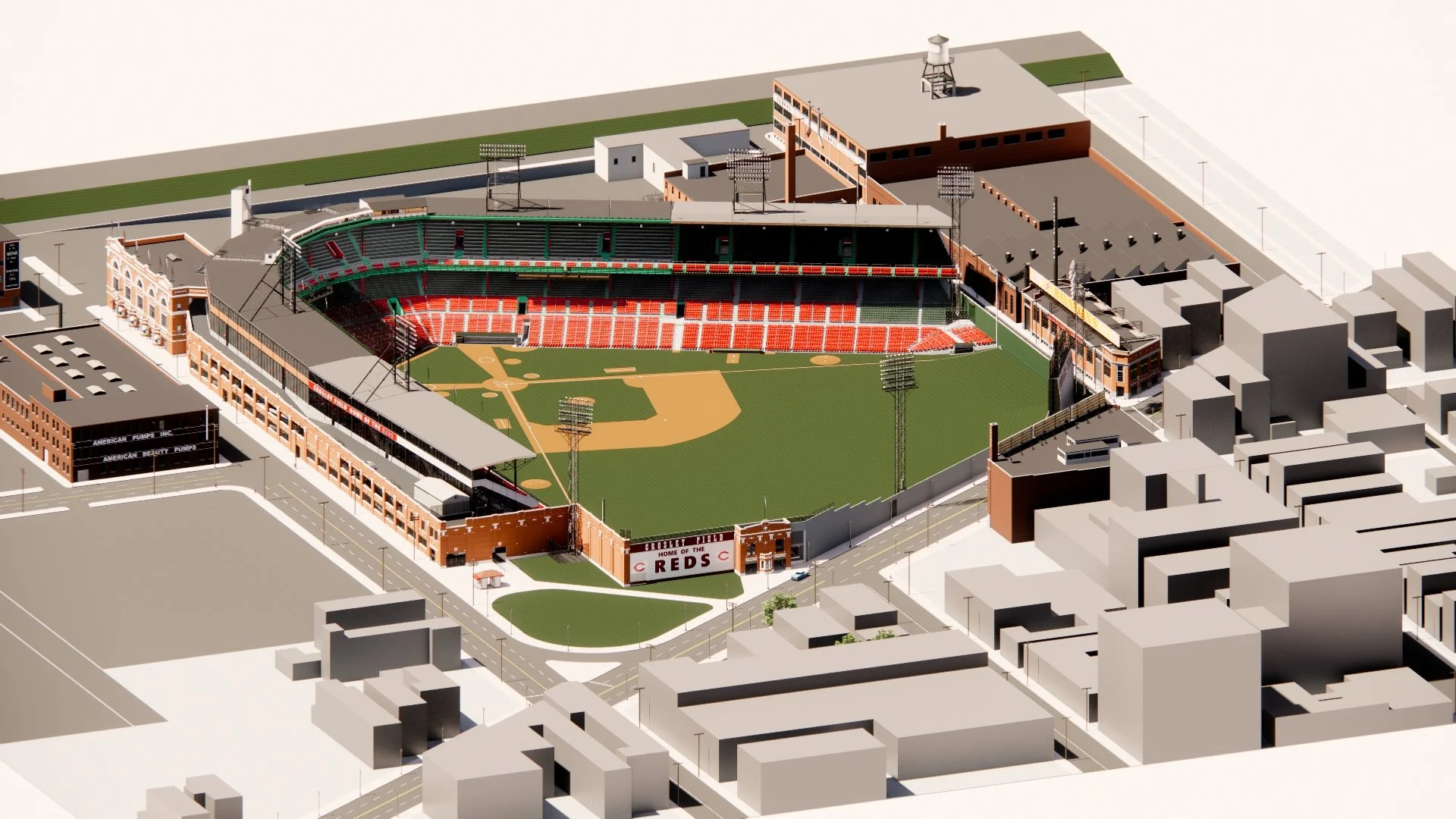
Crosley Field
This digital rendering of Cincinnati’s Crosley Field was created by architect Brian Powers of Bandbox Ballparks.
He was our guest for Episode 5 of Season 4. You can listen to that episode HERE.
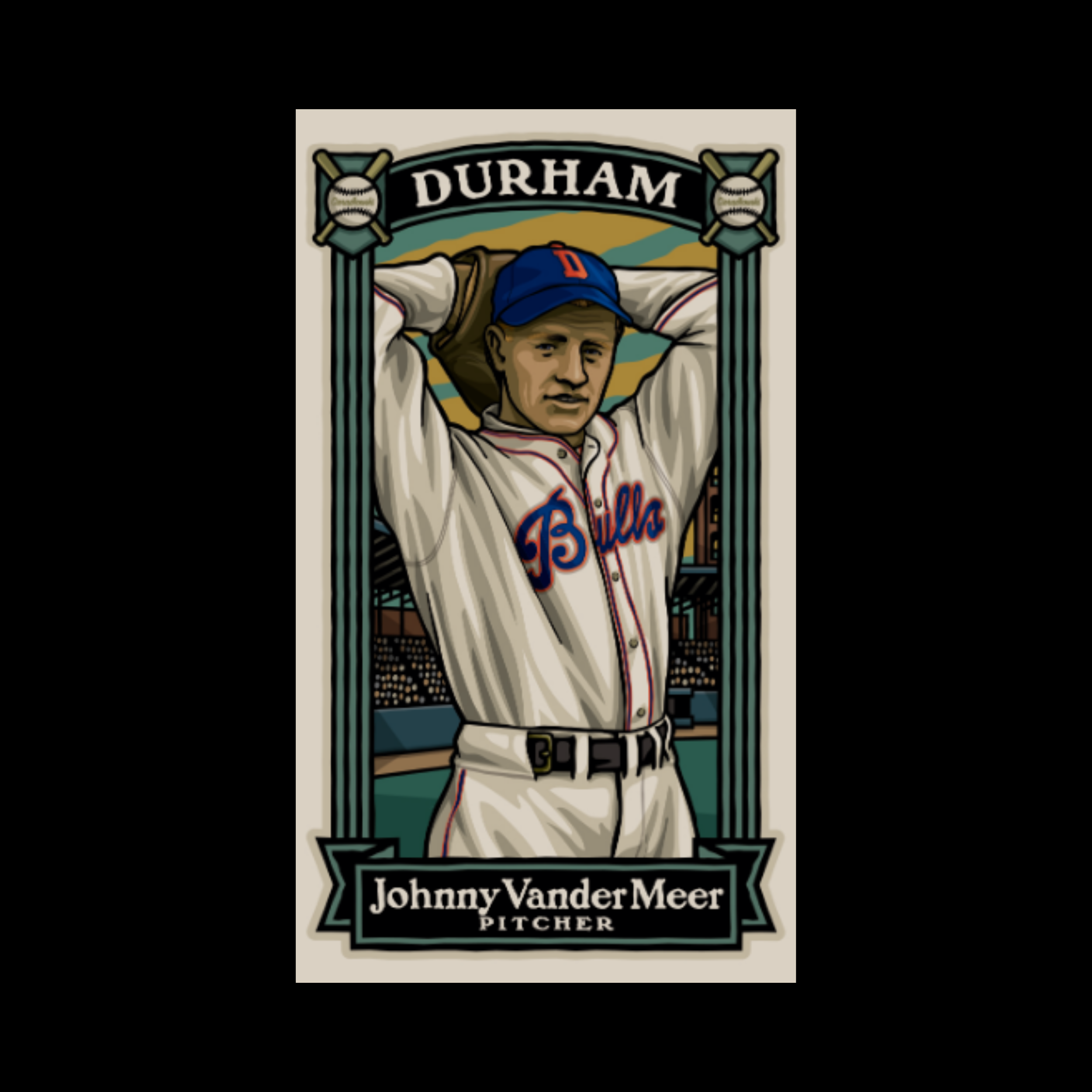
Johnny Vander Meer
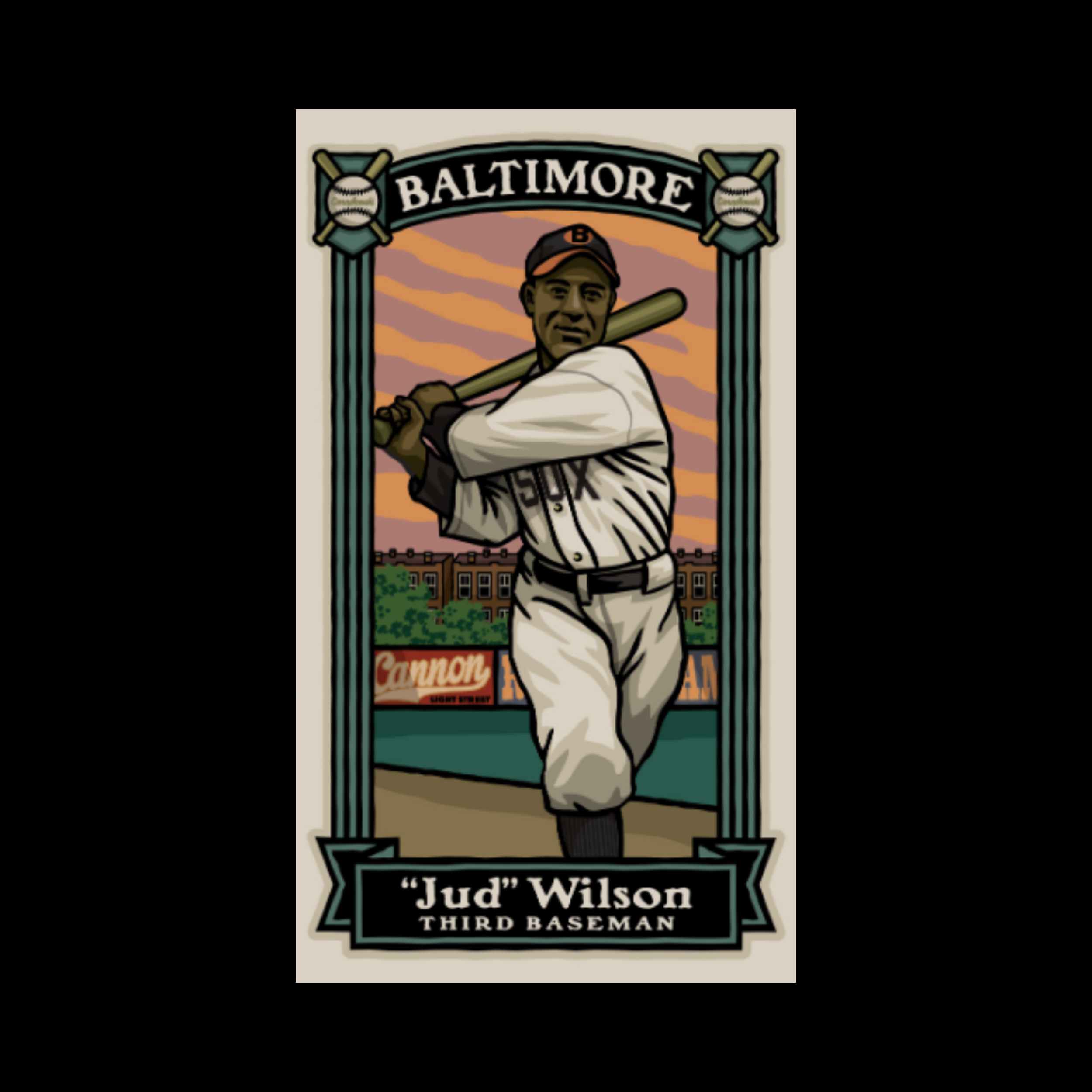
1933 East–West All-Star Game
The 1933 East–West All-Star Game at Comiskey Park was the first Negro League All-Star Game in history. It was an exciting game which featured a number of Hall of Famers, including Cool Papa Bell, Oscar Charleston, Biz Mackey, Josh Gibson, Judy Johnson, Turkey Stearnes, Willie Wells, Mule Suttles, Bill Foster, and Jud Wilson (seen here).
And those were just the guys who actually got into the game!
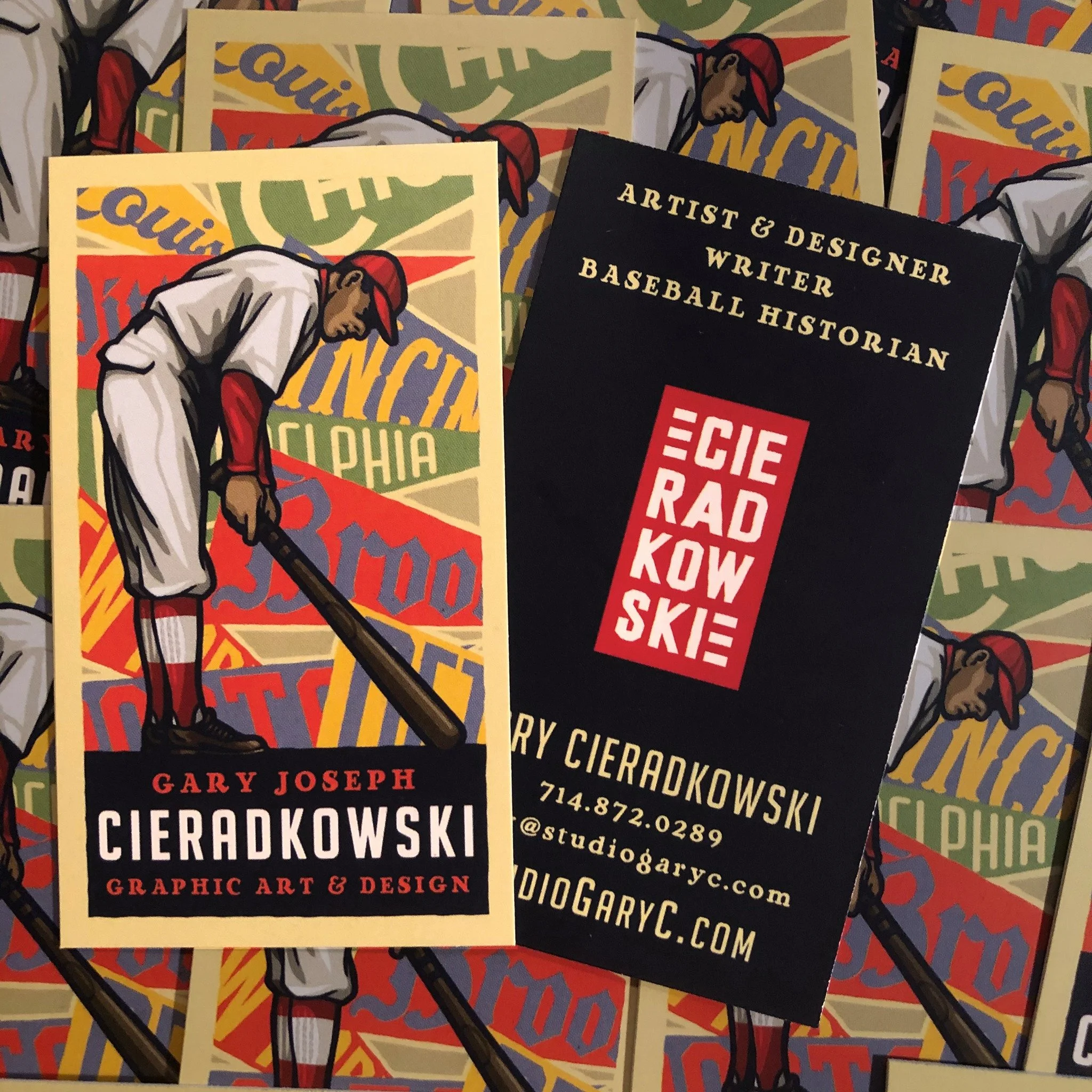
Follow Gary Online
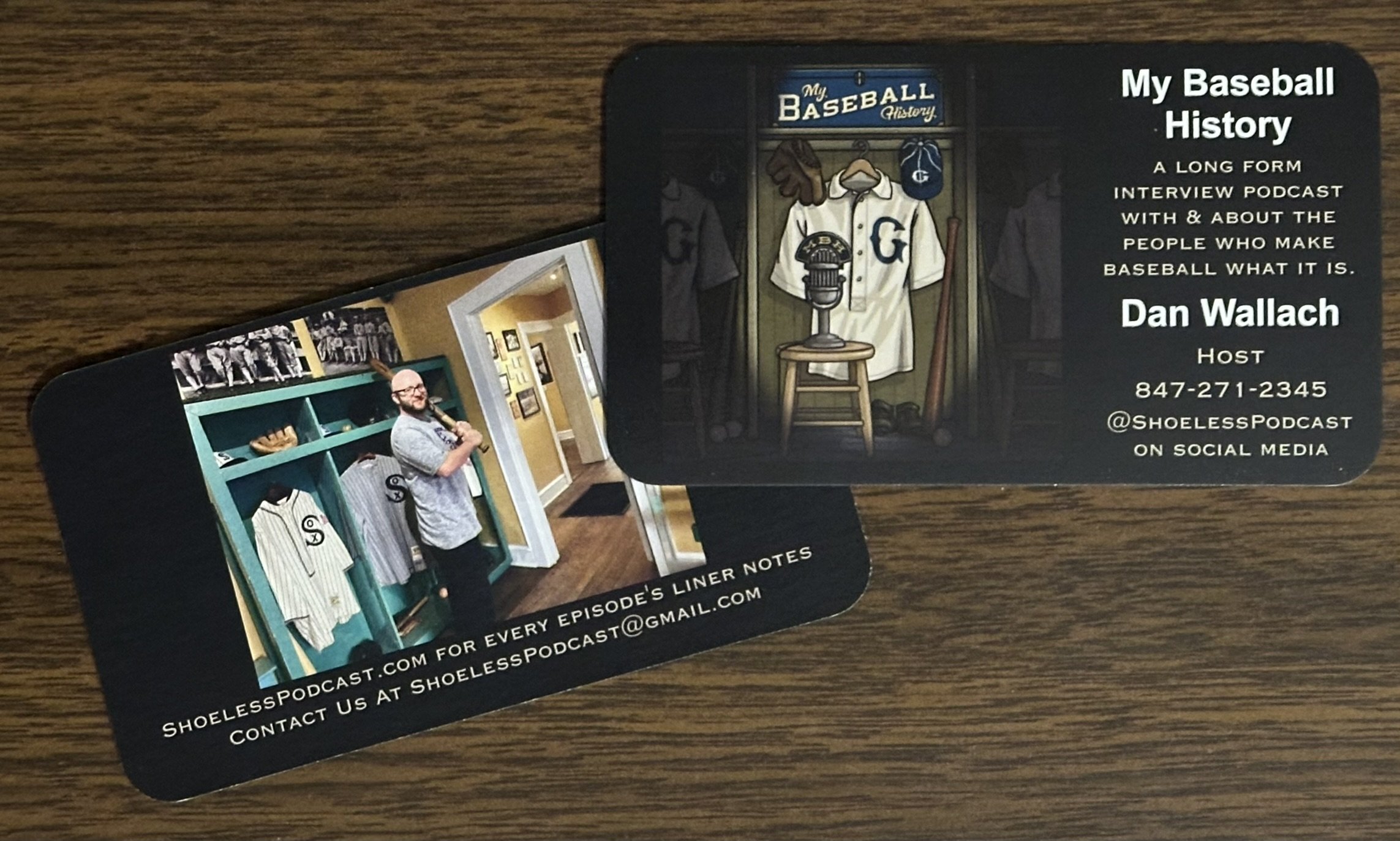
Instant Credibility
Gary’s artwork brought instant credibility to my podcast when people would see my business cards early on. Those who didn’t already know of Gary just saw really professional looking art and assumed I should actually be taken seriously. But those who knew Gary were like “you got Gary C to do your art?!” I still get that same reaction today.
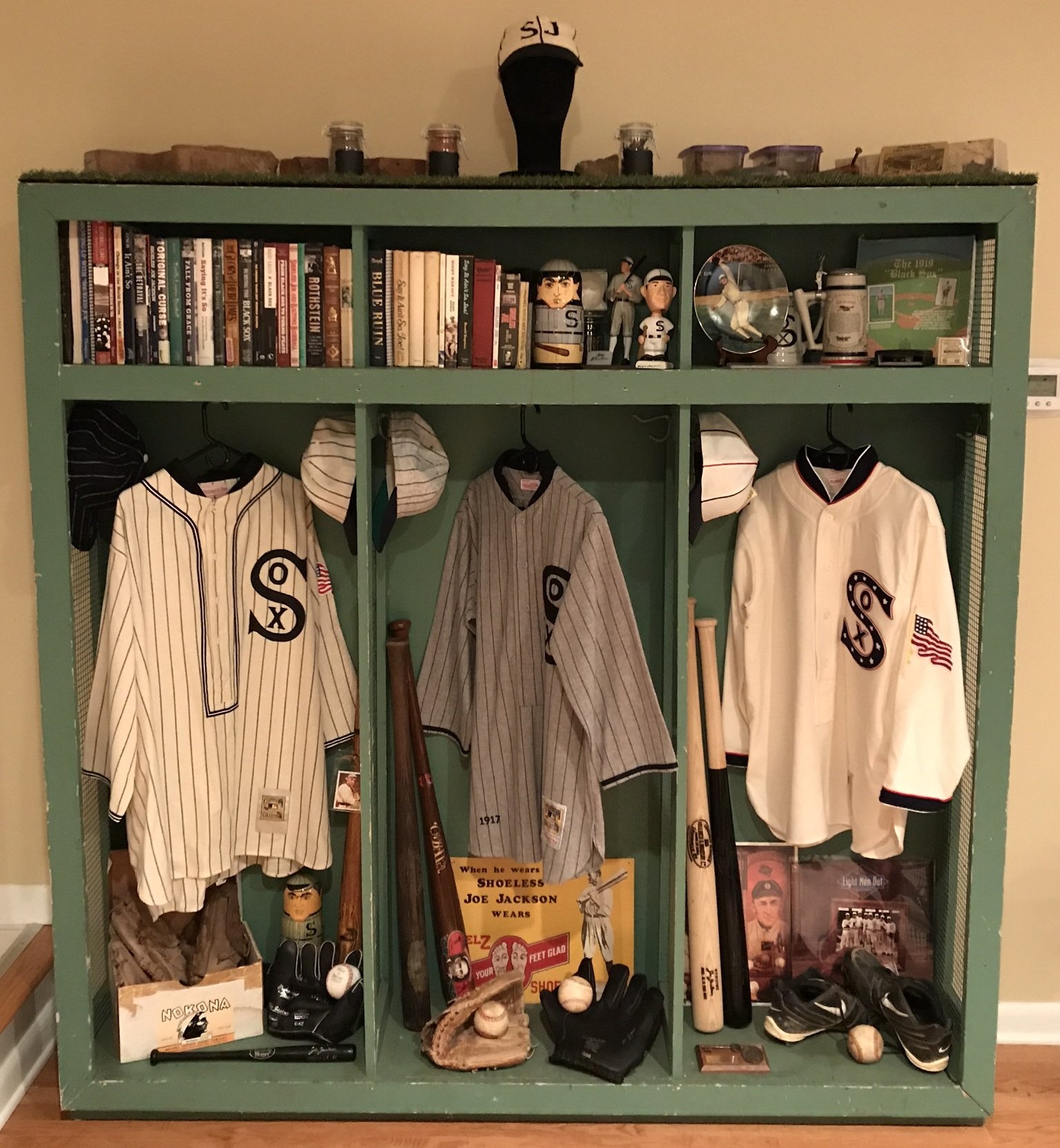
Living Room or Locker Room?
This old baseball locker was the first thing you saw when you walked in the front door of my house in Chicago. You can see it in the photo on my business card, as well. This style of vintage baseball locker served as inspiration for the show’s artwork.
These details from Gary’s creation have served as secondary logos, avatars, banner images, and email signatures, too.
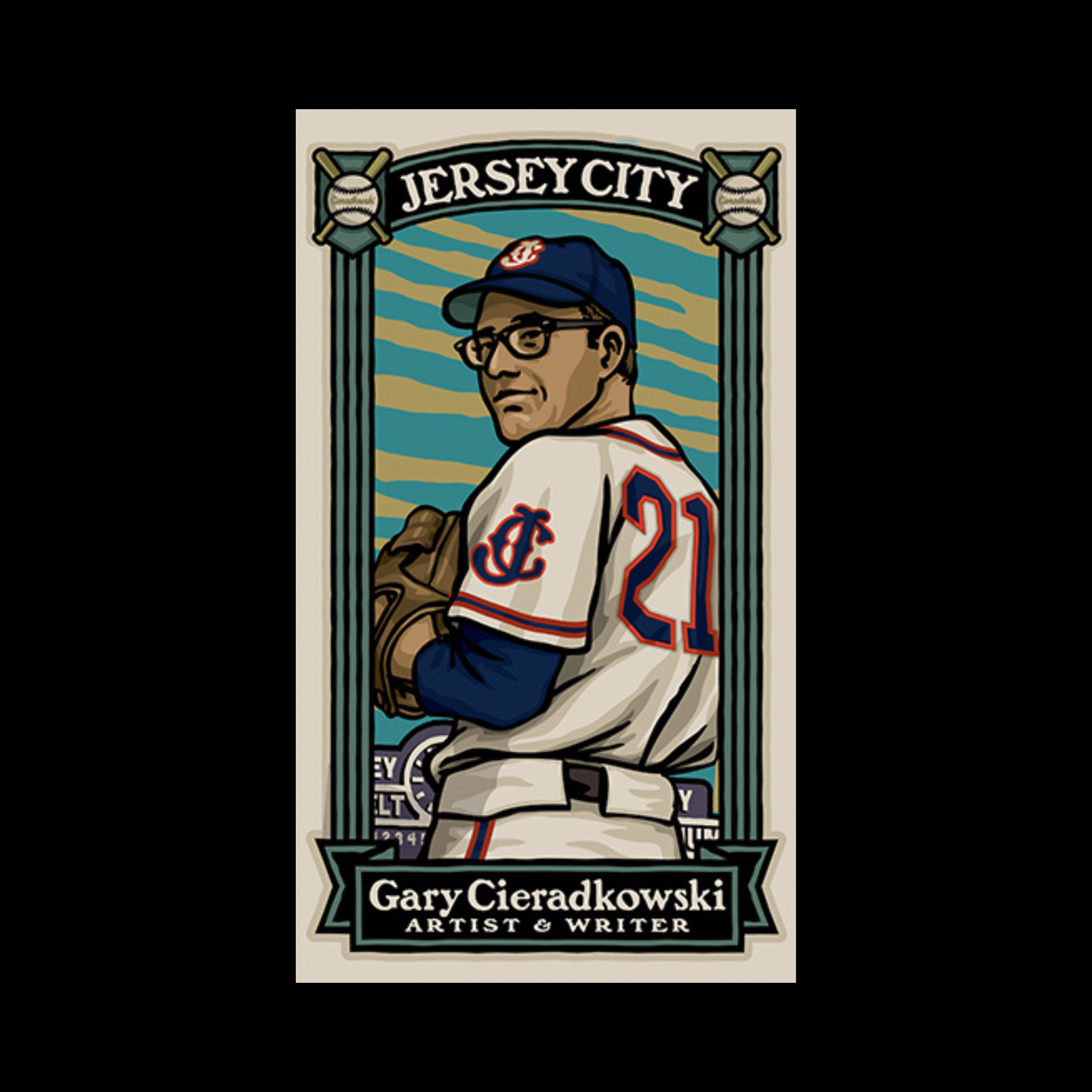
Gary Cieradkowski
Not just a brilliant artist and researcher, but a genuinely good person who, I am lucky to say, has become a friend over the years.
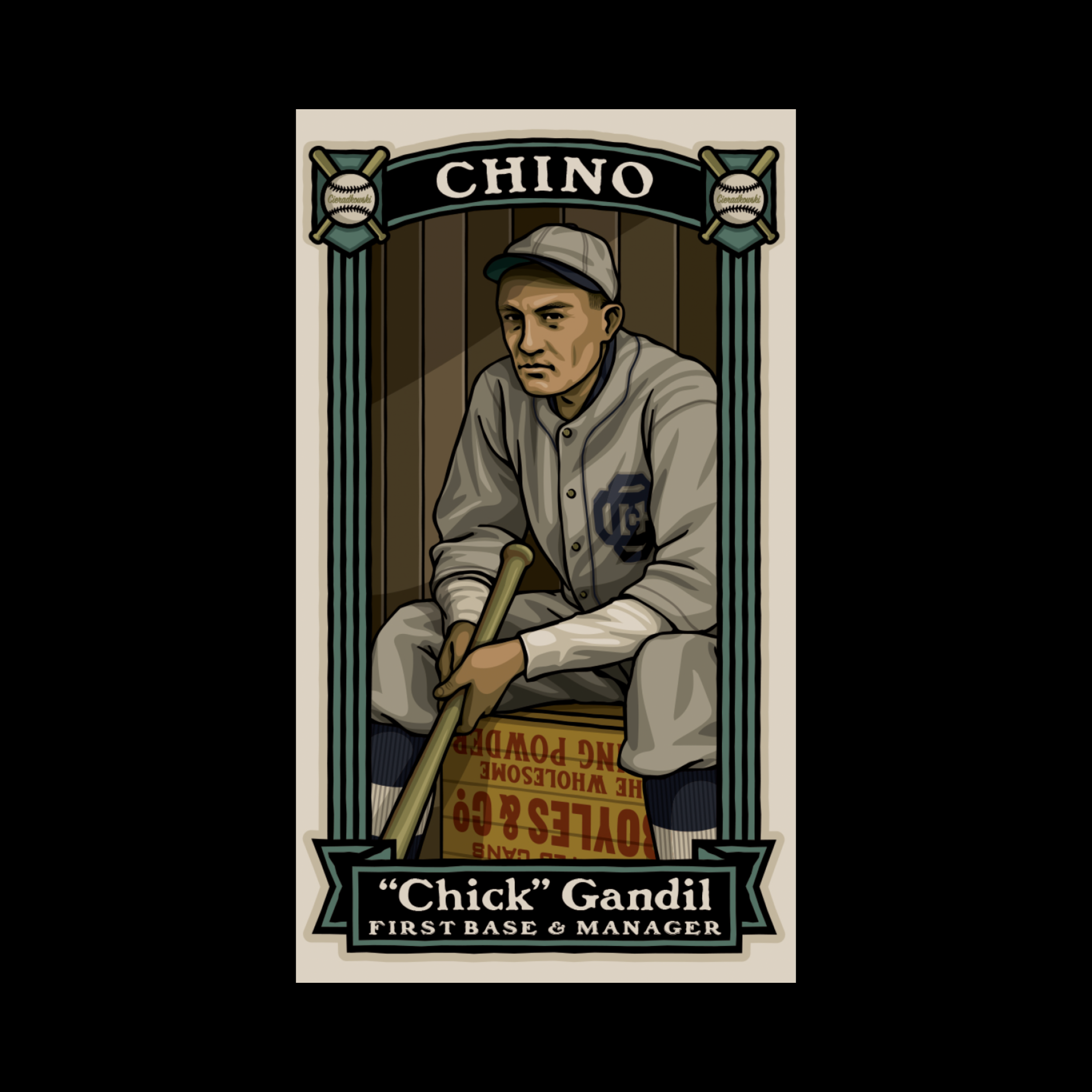
After The Black Sox Set
Can you tell how much I love this set from how often I’ve brought it up or how glowingly we talk about it all episode?
Gary’s blog post on Chick Gandil
Buy Gary’s After The Black Sox card set HERE.
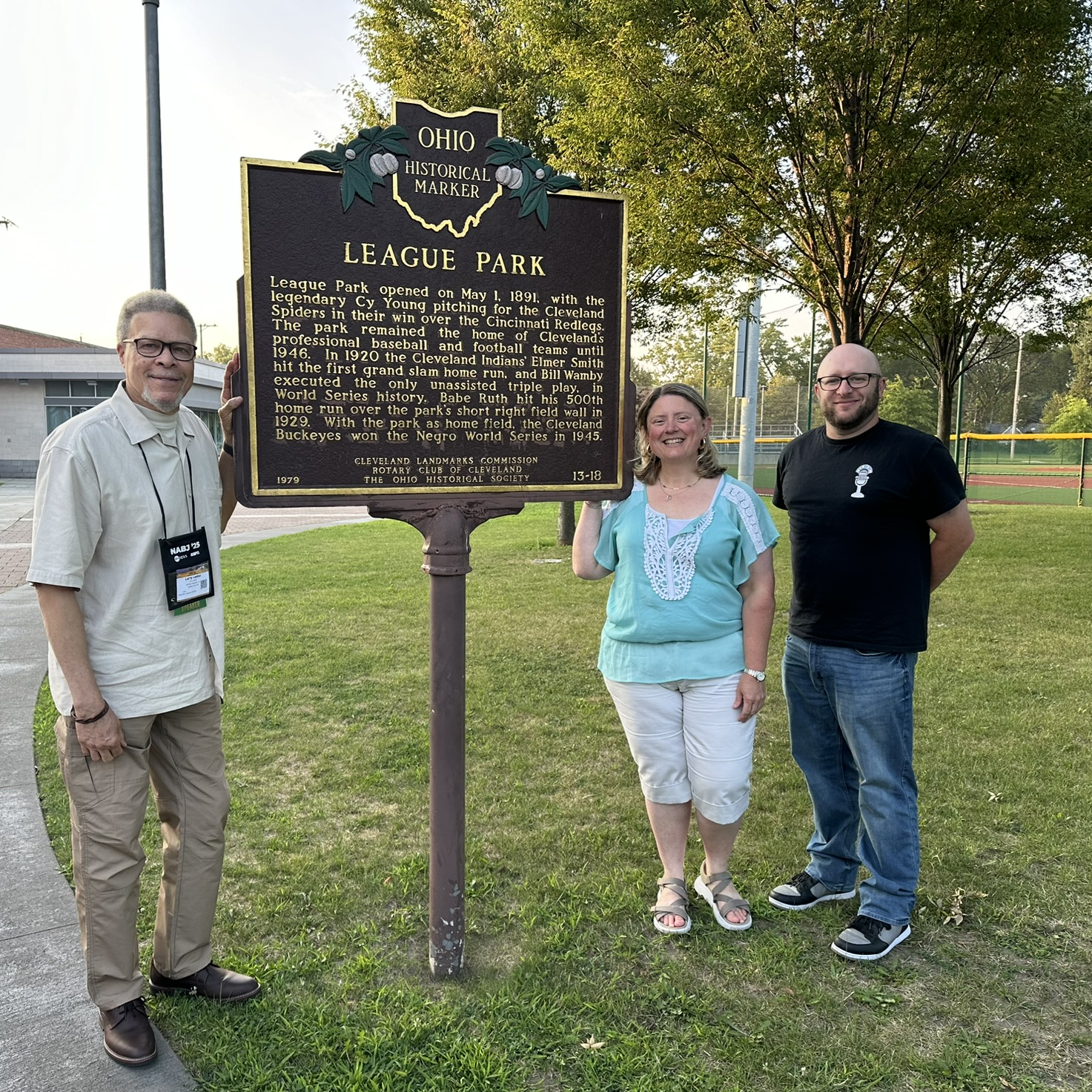
Larry Lester
Larry Lester is one of the world’s leading authorities on the Negro Leagues. He is a published author, public speaker, researcher, and historian.
He was our guest, along with fellow Negro Leagues researcher Stephanie Liscio, for Episode 1 of Season 5. You can listen to that episode HERE.
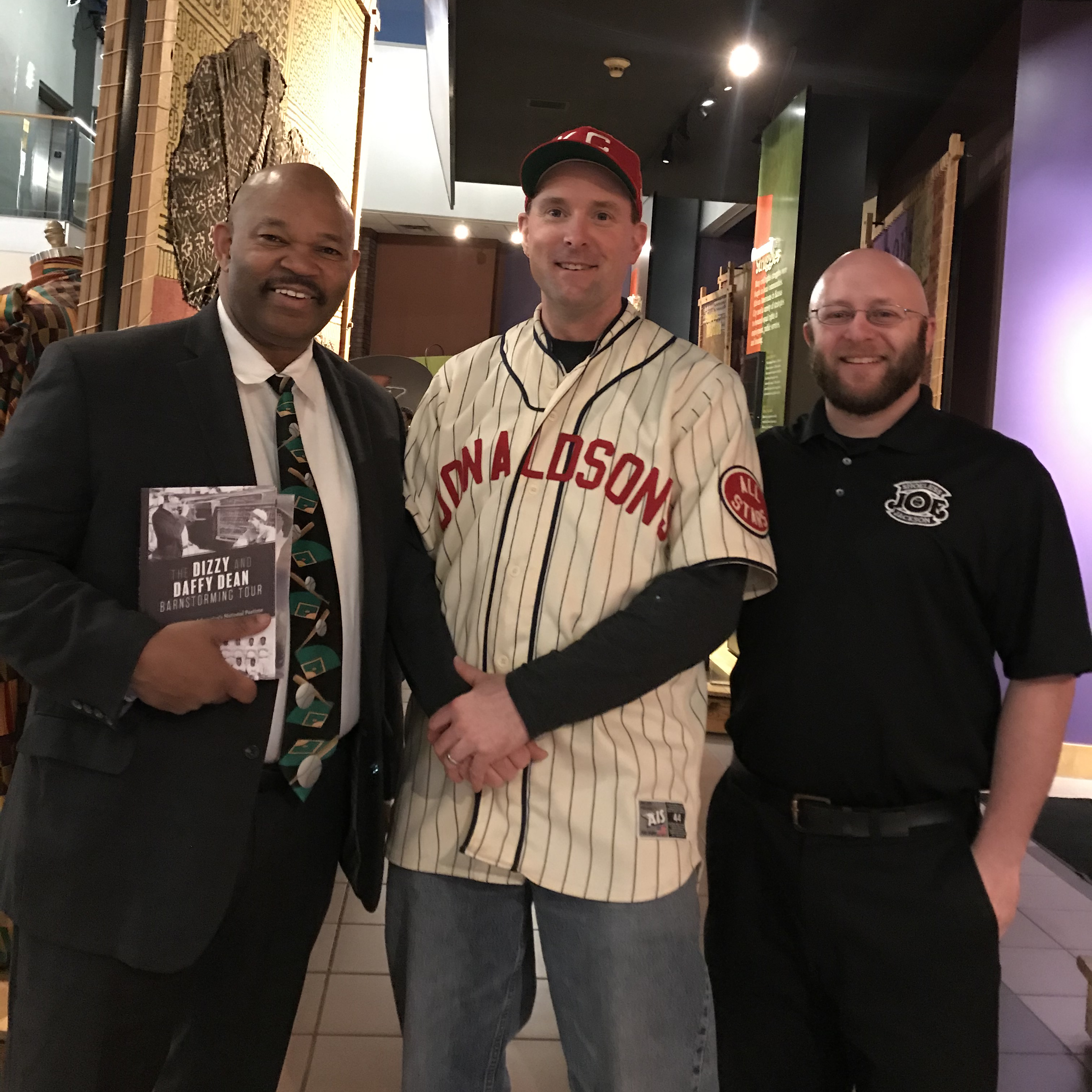
Phil S. Dixon
Phil S. Dixon is an author, public speaker, researcher and historian, focusing on the Negro Leagues for the past 40 years.
He was our guest for Episode 4 of Season 1. You can listen to that episode HERE.
Full Circle
It must be special for Gary to have grown up hearing stories from his grandfathers about watching the Newark Eagles play, and then to get paid to design artwork and logos and merchandise for that team for your job as an adult.
He Puts In The Time
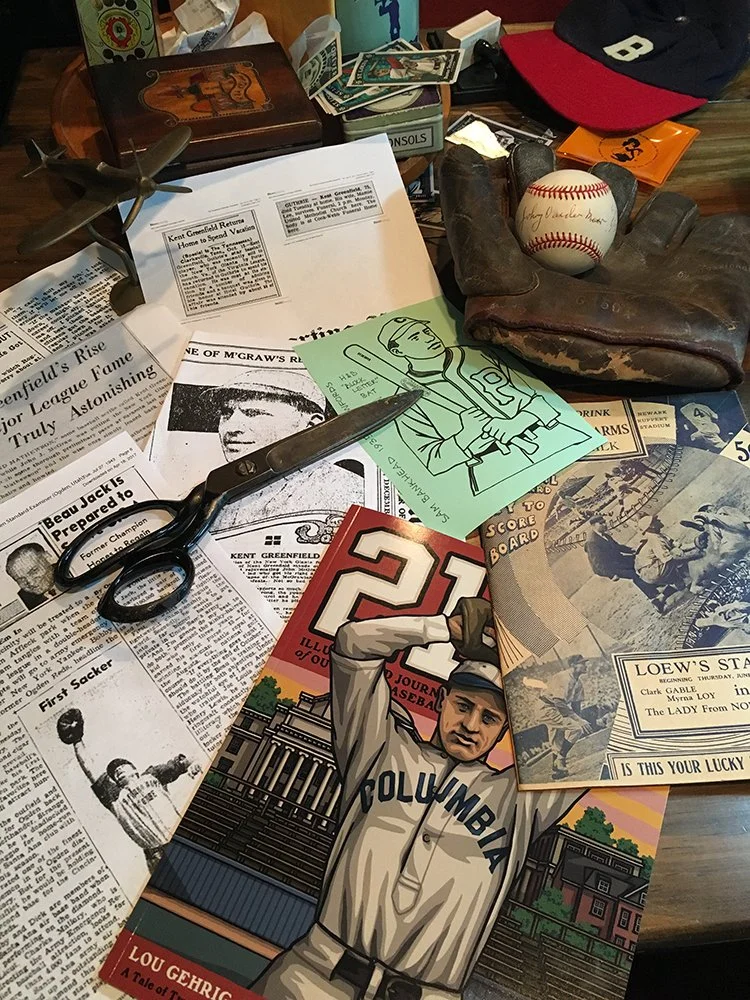
All those hours late at night, working when no one else is watching, struggling for years to find that one piece of evidence that’s going to unlock the story you’ve been chasing… it’s all worth it when you see the finished product in your hands.
The Research May Take Time…
… but it’s worth it when the end result is a story no one else has ever heard before.
Even if it sometimes takes decades of digging to be able to uncover and verify that story.
It’s clear that Gary is ready, willing, and able to do that research.
He Nails It With His Artwork
Hearing Gary talk about his choices was really interesting. From what team he chooses to depict a player with, to what pose he thinks suits them, and everything in between.
His artwork is an brilliant companion to his storytelling.
Gary’s Work
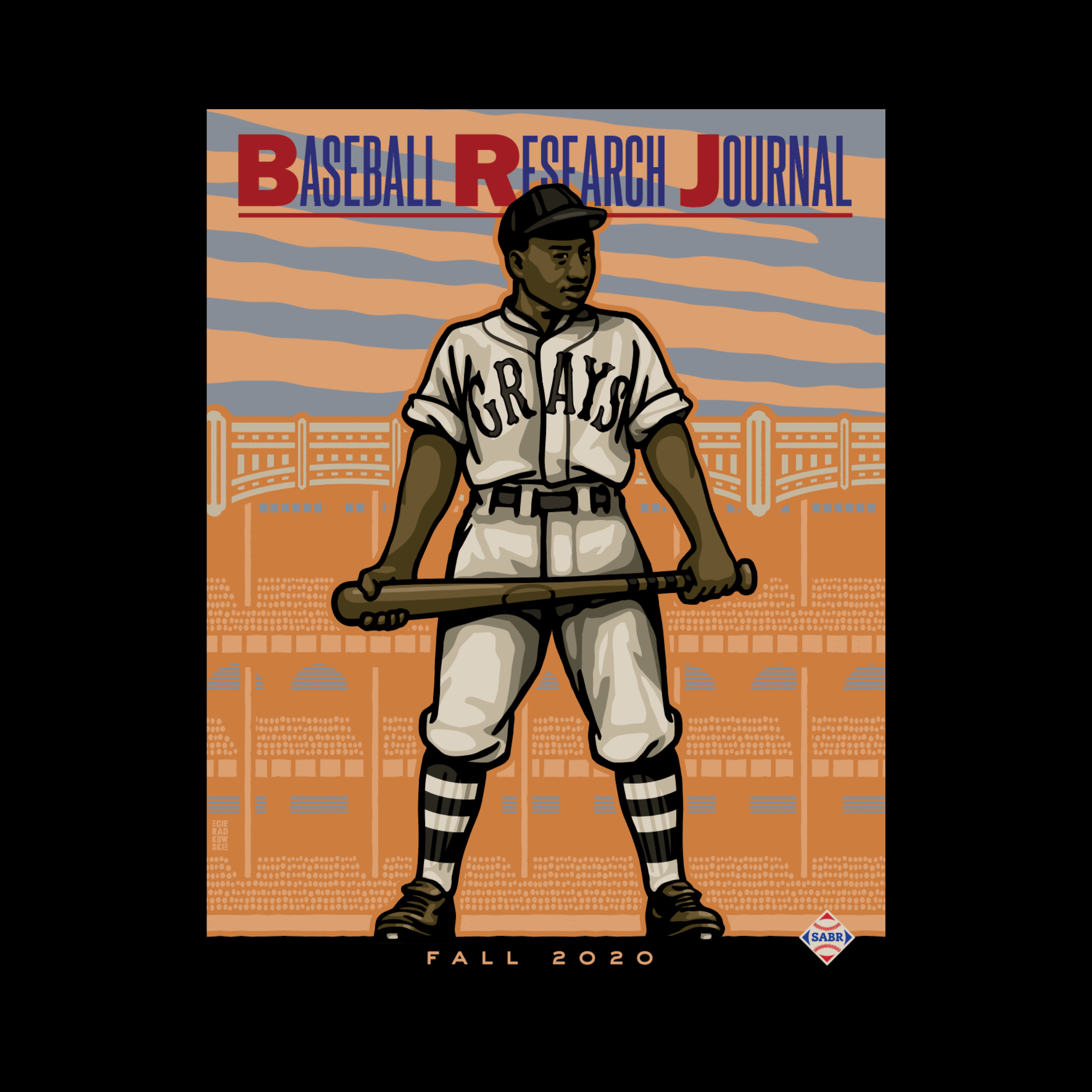
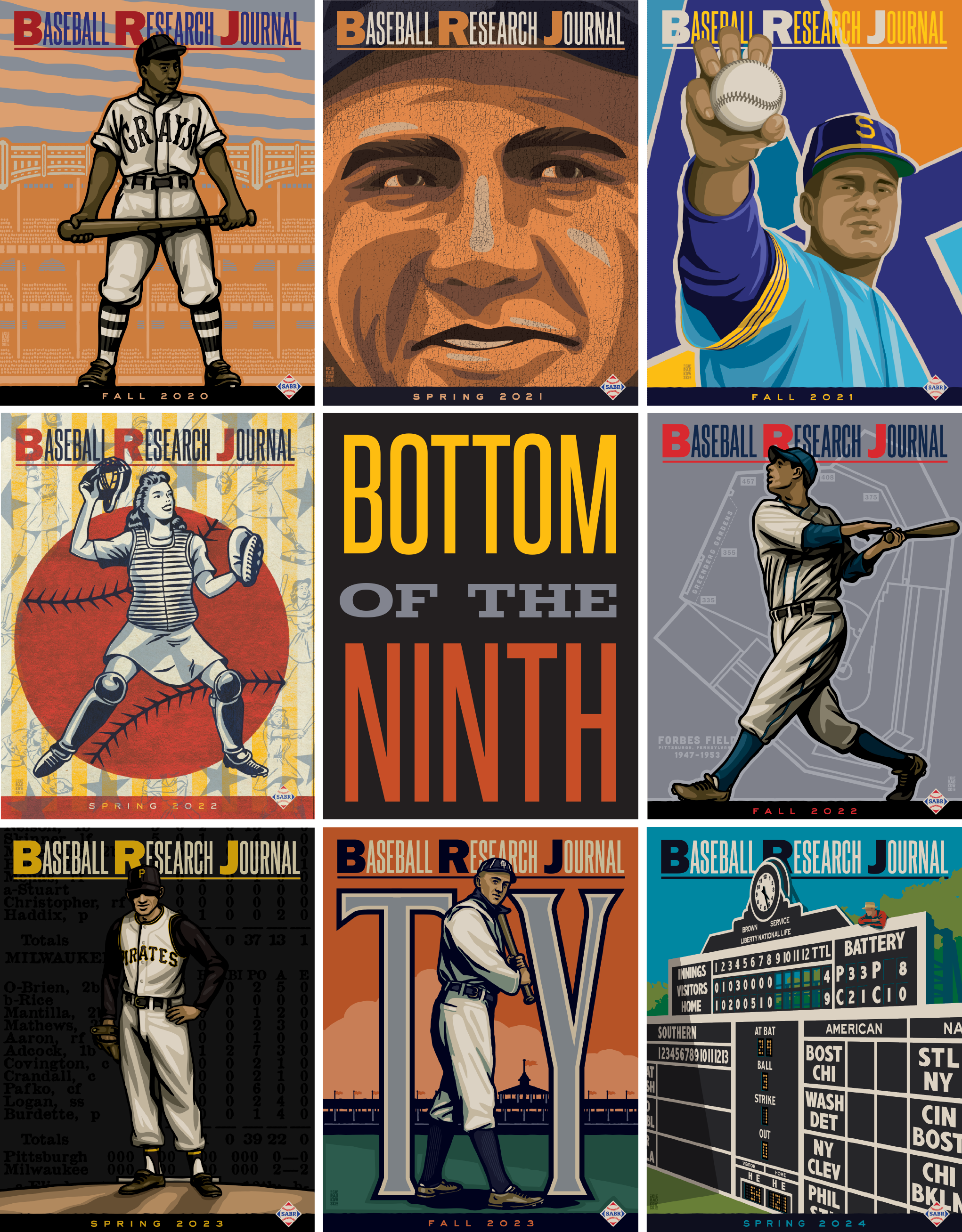
It’s fun to have collected so many of Gary’s pieces over the years, including many of these Baseball Research Journals, for which Gary created the cover artwork.
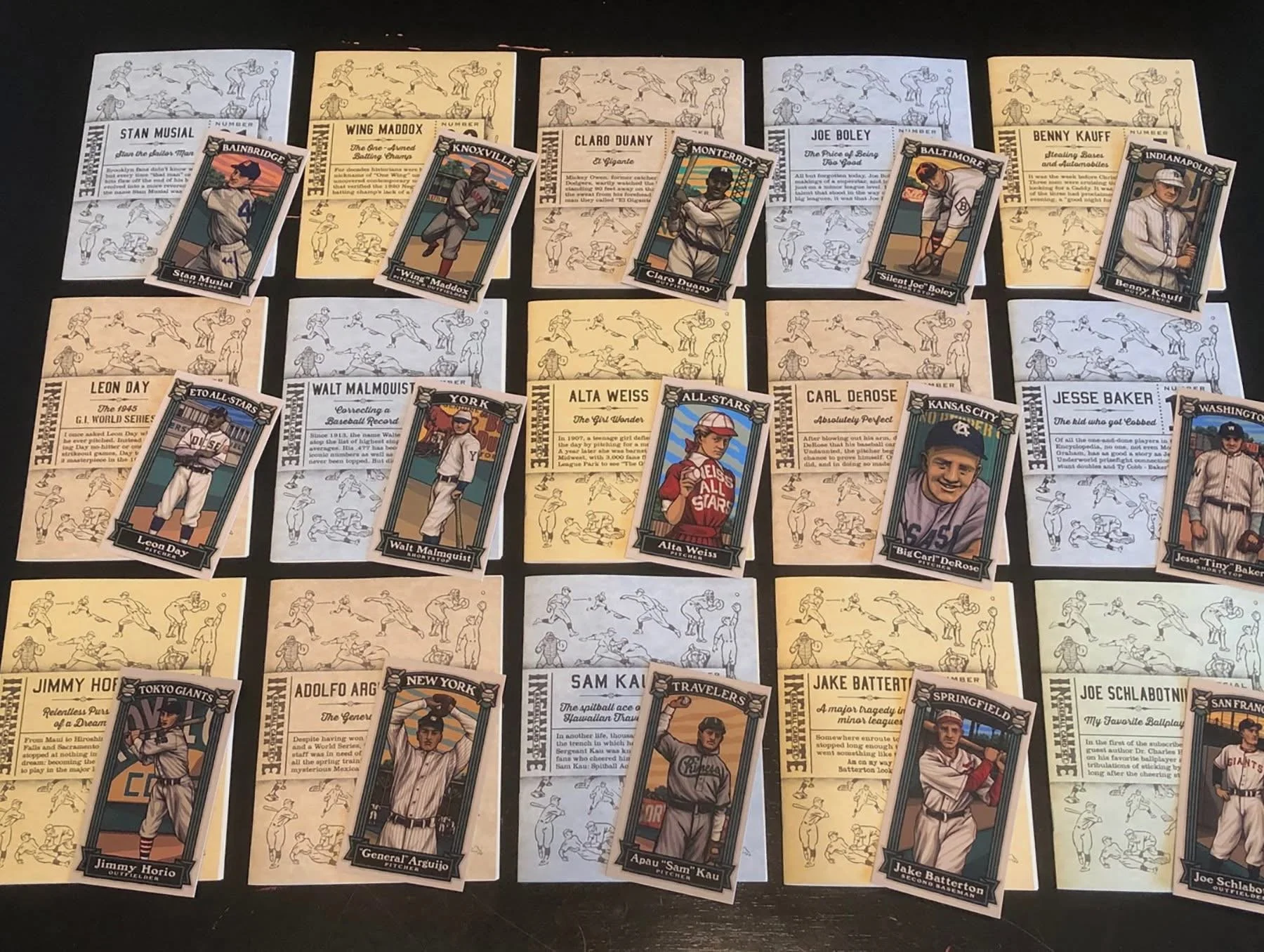
MBH Card Set
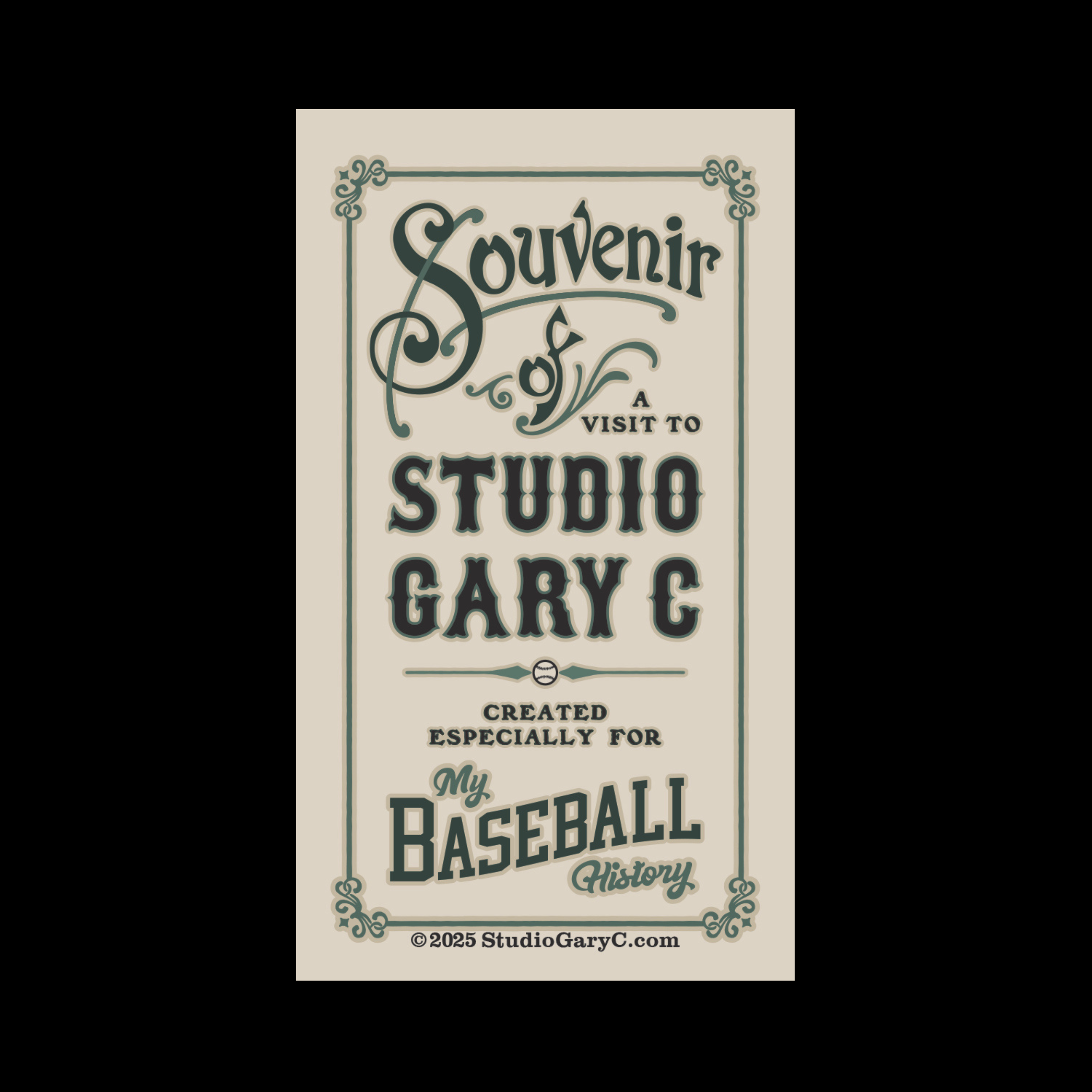
When Gary and I finished our interview, he handed me a stack of baseball cards which included one for every person we discussed in our interview.
It was totally unexpected, but it’s something I’ll cherish forever. They had Gary’s normal artwork and design on the front, and then this specially-created back to commemorate my visit to Kentucky.
St. Louis Cardinals Franchise History
Ed Wheatley is the vice president of the St. Louis chapter of the Society for American Baseball Research, an award-winning author of multiple baseball books, and an Emmy Award-winning filmmaker.
He was our guest for Episode 2 of Season 5, during which we spoke about the history of the Cardinals franchise dating all the way back to the 1800s. You can listen to that episode HERE.
Tom “Lefty” Glover
The excitement in Gary’s voice when he told the story of uncovering the truth about this player he had been trying to research for years was so evident. And this was hearing Gary tell that story years after he made that discovery. I can’t even imagine how excited he must have been in the actual moment.
Buy the Lefty Glover card booklet so you can read the entirety of Gary’s research HERE.
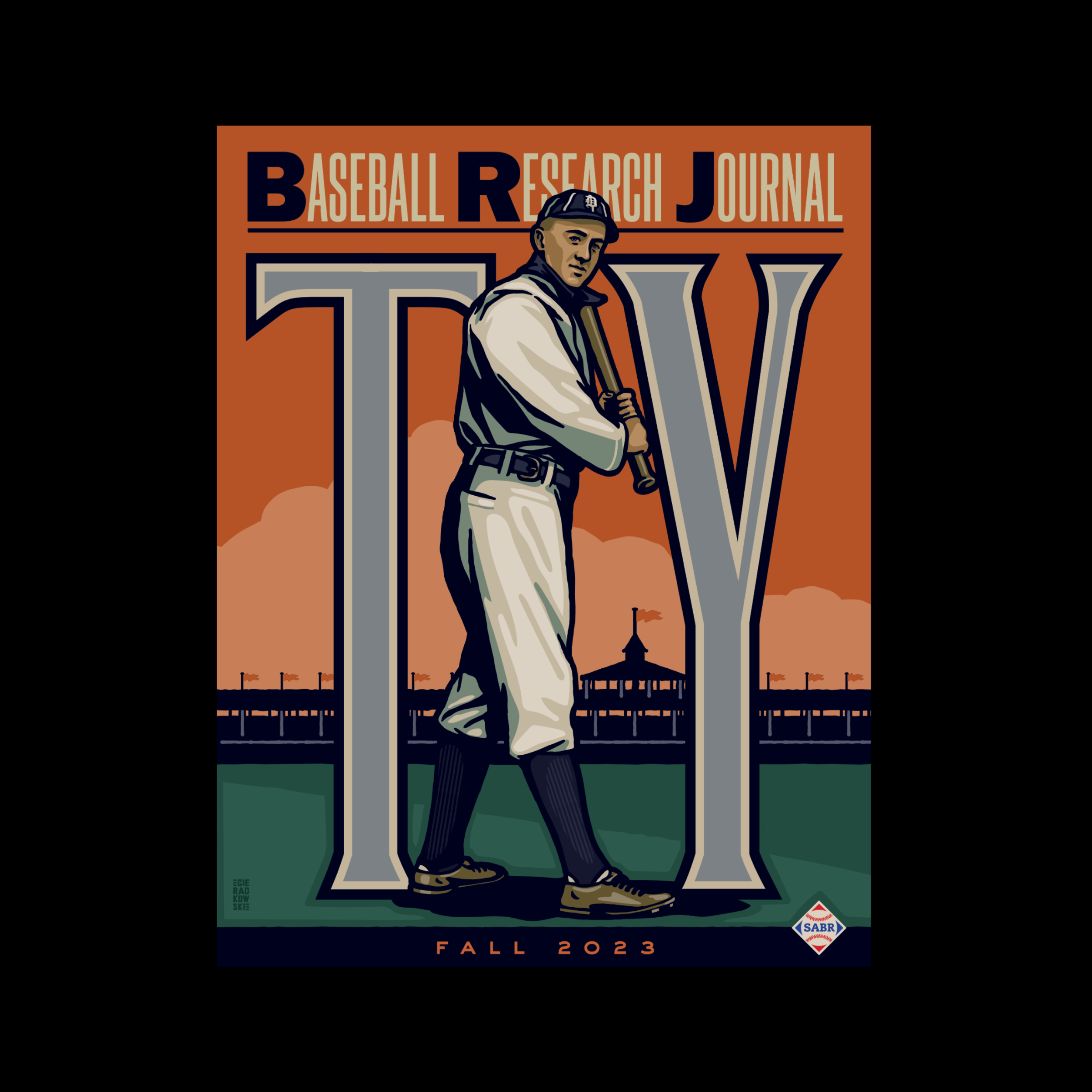
Ty Cobb
Grantland Rice and Ty Cobb had a long history, which apparently began (unknowingly to Rice) when Ty Cobb sent him a postcard claiming to be someone else, talking about how great this new kid Cobb is.
“Grantland Rice’s Legacy in the Deadball Era” by John McMurray
Ideal Cap Co.
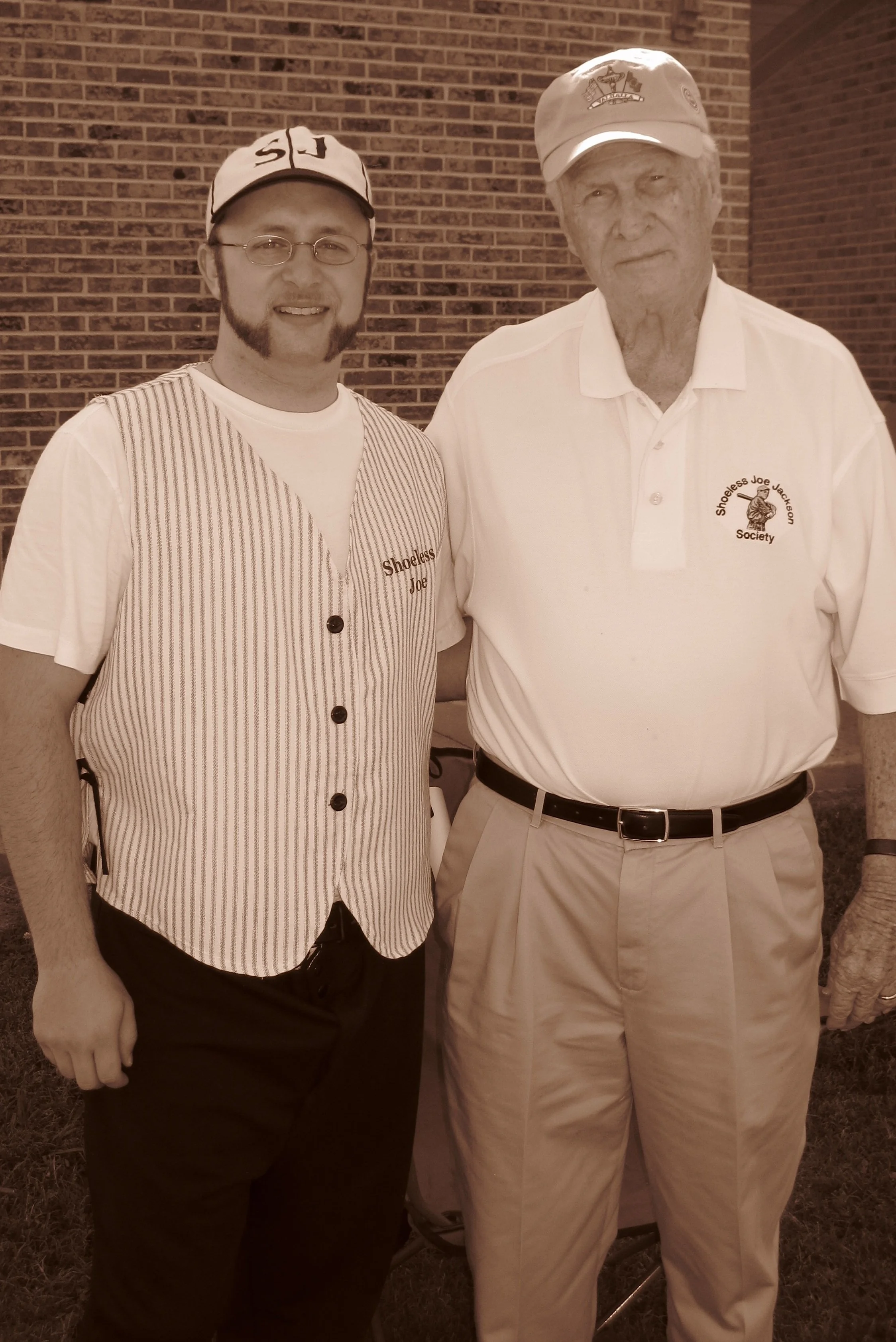
Will Arlt and Ideal Cap Co. made the hats we wore during the inaugural 1860s style vintage base ball game between the Shoeless Joe Jackson Museum and the Ty Cobb Museum, which was played in Greenville, South Carolina in 2009.
Here I am wearing that hat, standing with Joe Anders. Anders was Shoeless Joe’s protégé, and is widely regarded as one of the greatest players in the history of the textile leagues.
Joe Anders was inducted into the Greenville Baseball Hall of Fame in the Class of 1989.
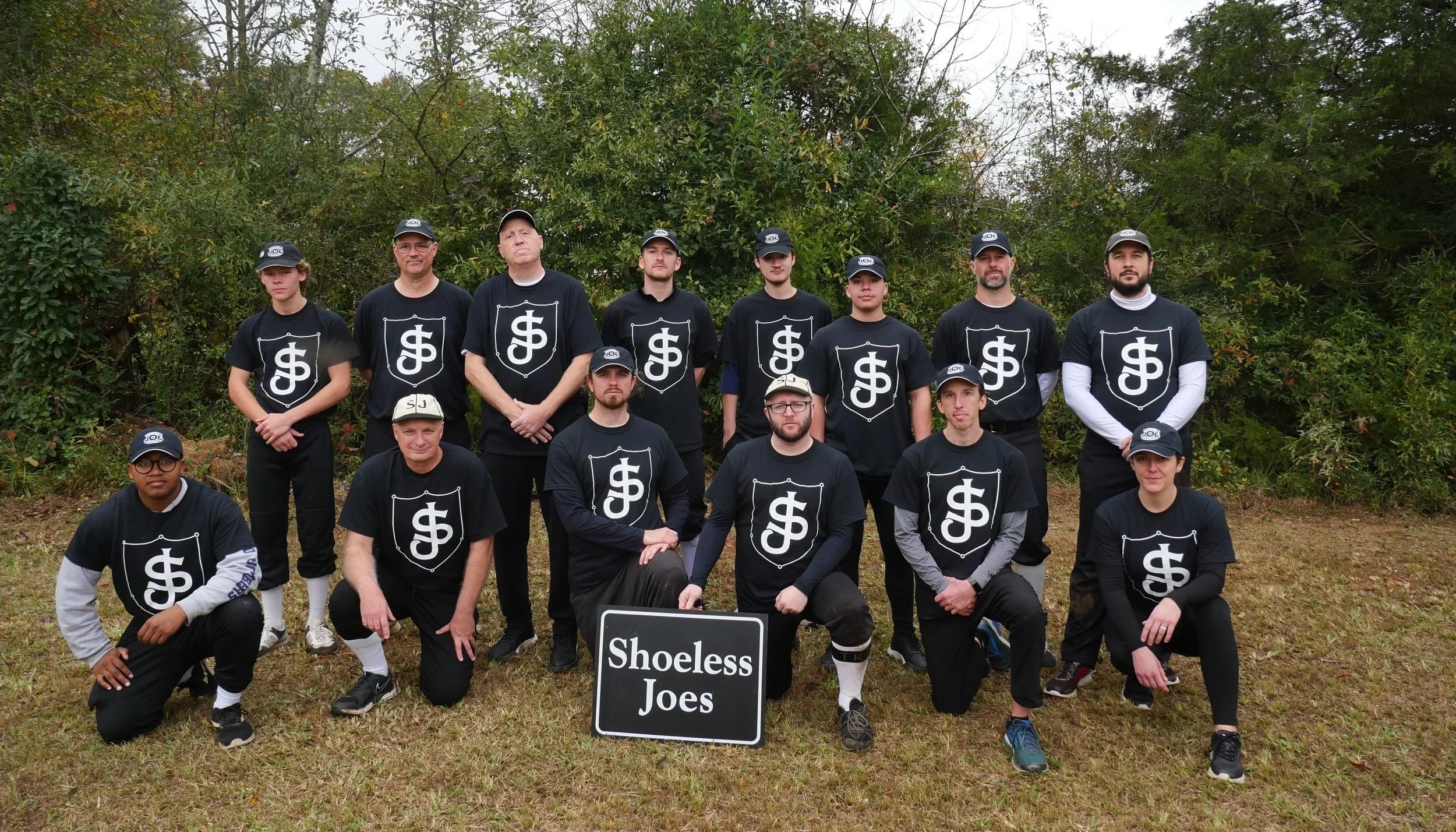
Those hats became a kind of badge of honor for the vintage players, since they were only available that first year. By 2021, which was the last year I played, only two of us from the inaugural game remained.
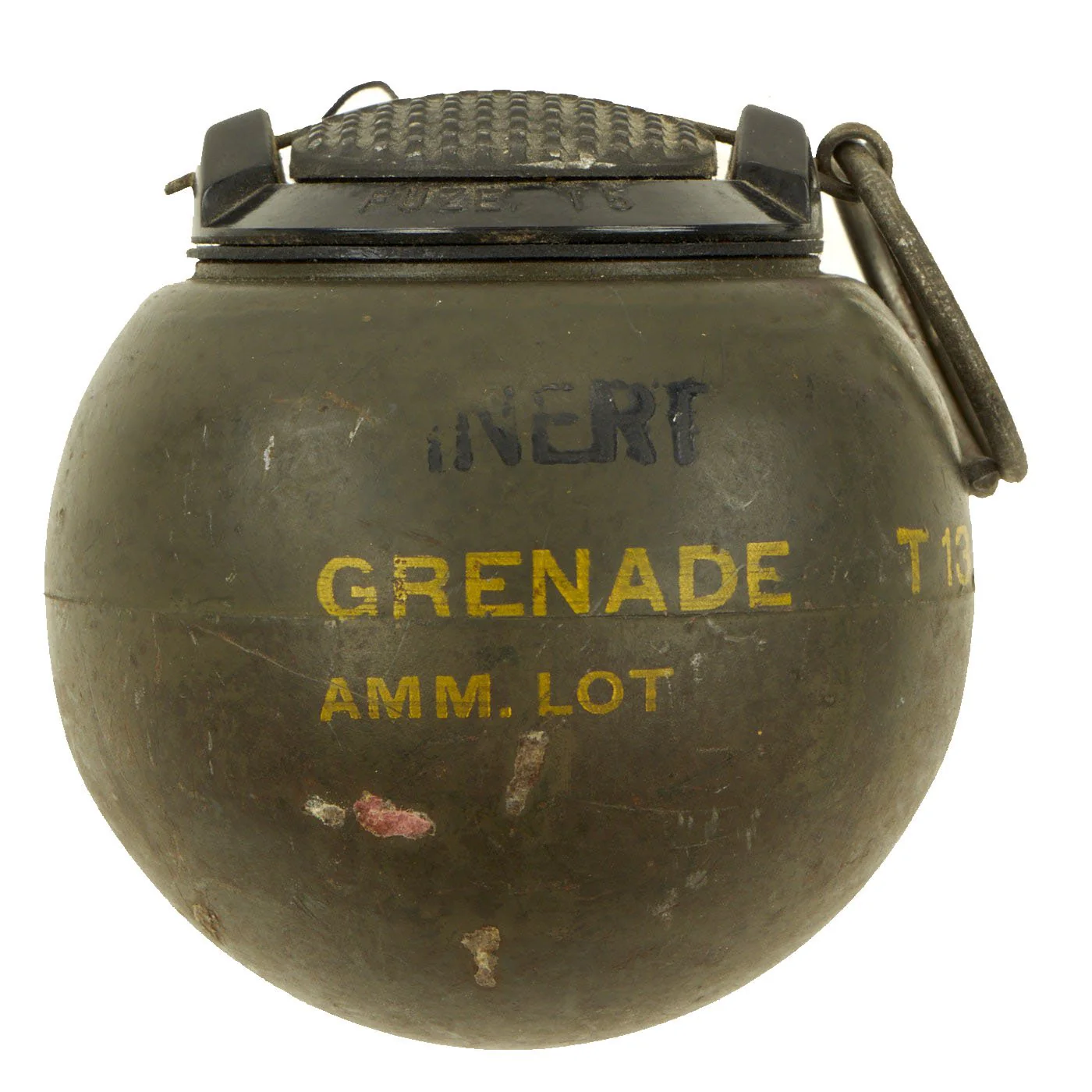
Baseball Grenade
The BEANO T-13 hand grenade was an experimental grenade developed by the Office of Strategic Services (which later became the CIA), with assistance from Eastman Kodak Corporation, in the later years of World War II.
The concept for the BEANO hand grenade was that a spherical grenade the size and weight of a common baseball would be effective in the hands of American troops. The designers believed that by emulating a baseball, any young American man should be able to properly throw the grenade with both accuracy and distance.
Bobby Richardson
Bobby Richardson is a Yankees legend who played second base for the team from 1955-1966, winning 5 Gold Glove Awards and being named to 8 All-Star teams. He is a 3-time World Series champion, and won the 1960 World Series MVP.
He was our guest for Episode 5 of Season 2. You can listen to that episode HERE.
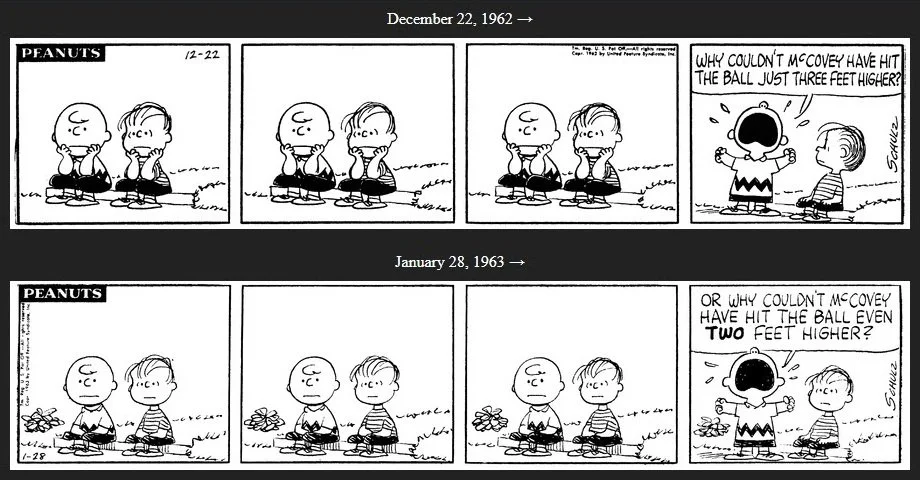
Bobby Richardson caught the screaming line drive hit by Willie McCovey with two outs in the bottom of the 9th inning of Game 7 of the 1962 World Series which would have scored two runs and given the Giants the Series victory had it gone over Richardson’s head. Charles Schultz never got over it.
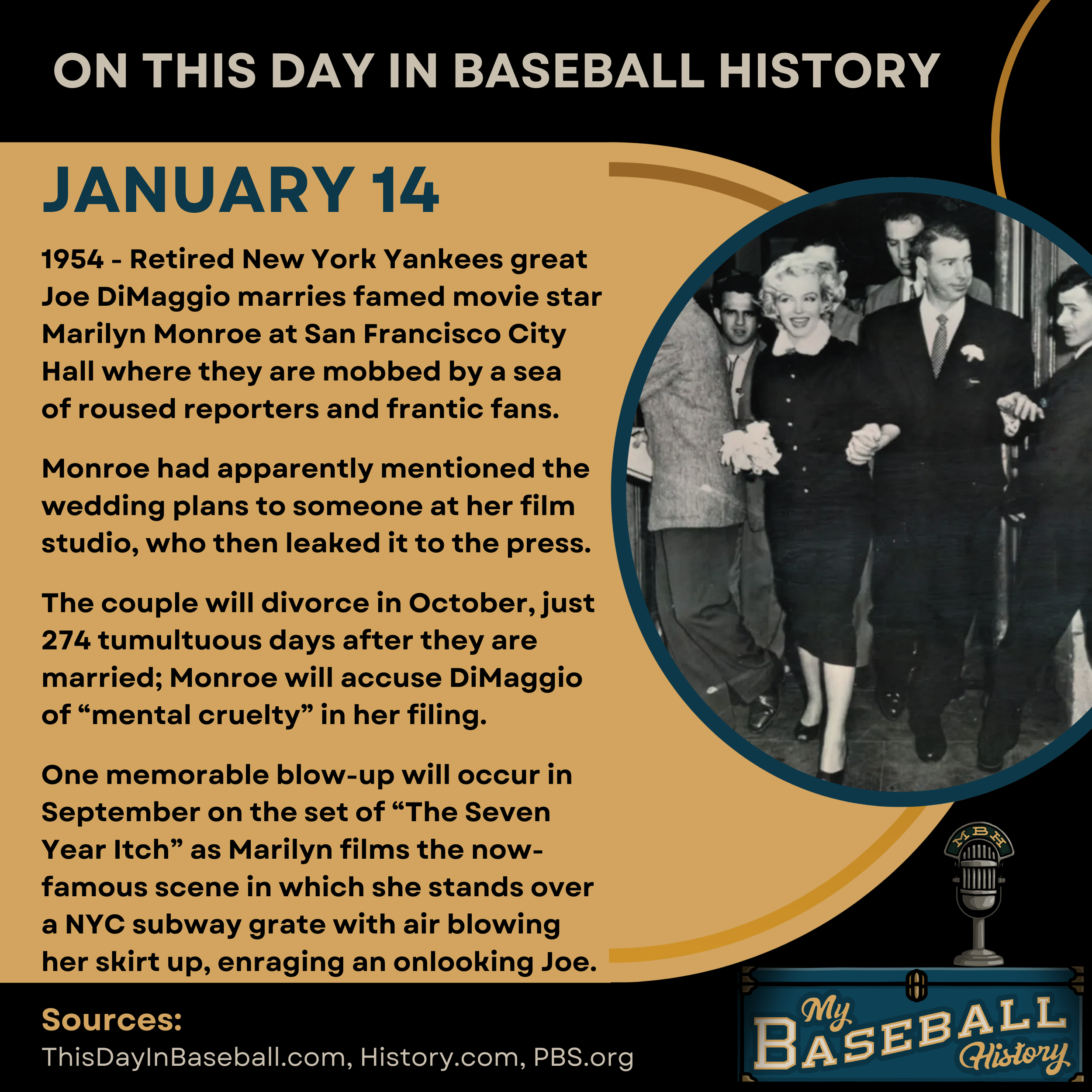
On This Date Posts
You’ve seen a handful of them throughout these liner notes, so you have an idea of the type of content you can expect every day if you aren’t already following My Baseball History on social media.
If you’d like to follow the show on your favorite platform, click one of the following links and it will take you right to our profile.
Join Our Email Newsletter
It’s free, and it’ll give you some bonus content throughout the month that you won’t get from the podcast episodes or by following any of our other social media platforms.
We put out new issues on the second Friday and the fourth Friday of every month. No more, no less.
Joe Jackson
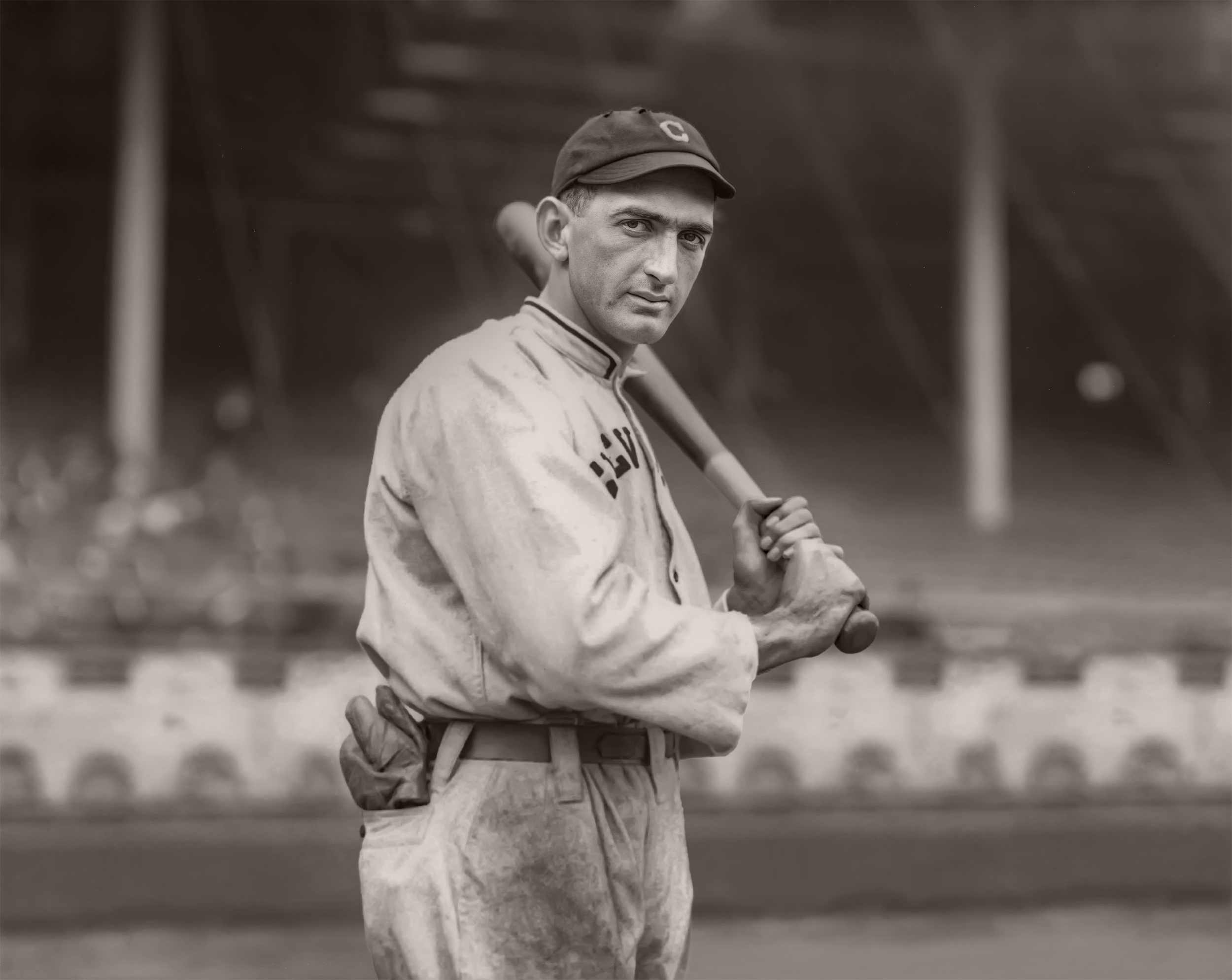
People often bemoan the fact that the Black Sox Scandal has kept Shoeless Joe Jackson out of the Hall of Fame. But, for most fans, that’s the end of their line of thinking. “Shoeless Joe doesn’t have a plaque because he was banned from baseball.”
While that is partially true, it’s a little more complicated than that. In fact, Joe has actually received Hall of Fame votes twice before, in 1936 and again in 1946, receiving two votes apiece in those years.
Ty Cobb and Joe Jackson
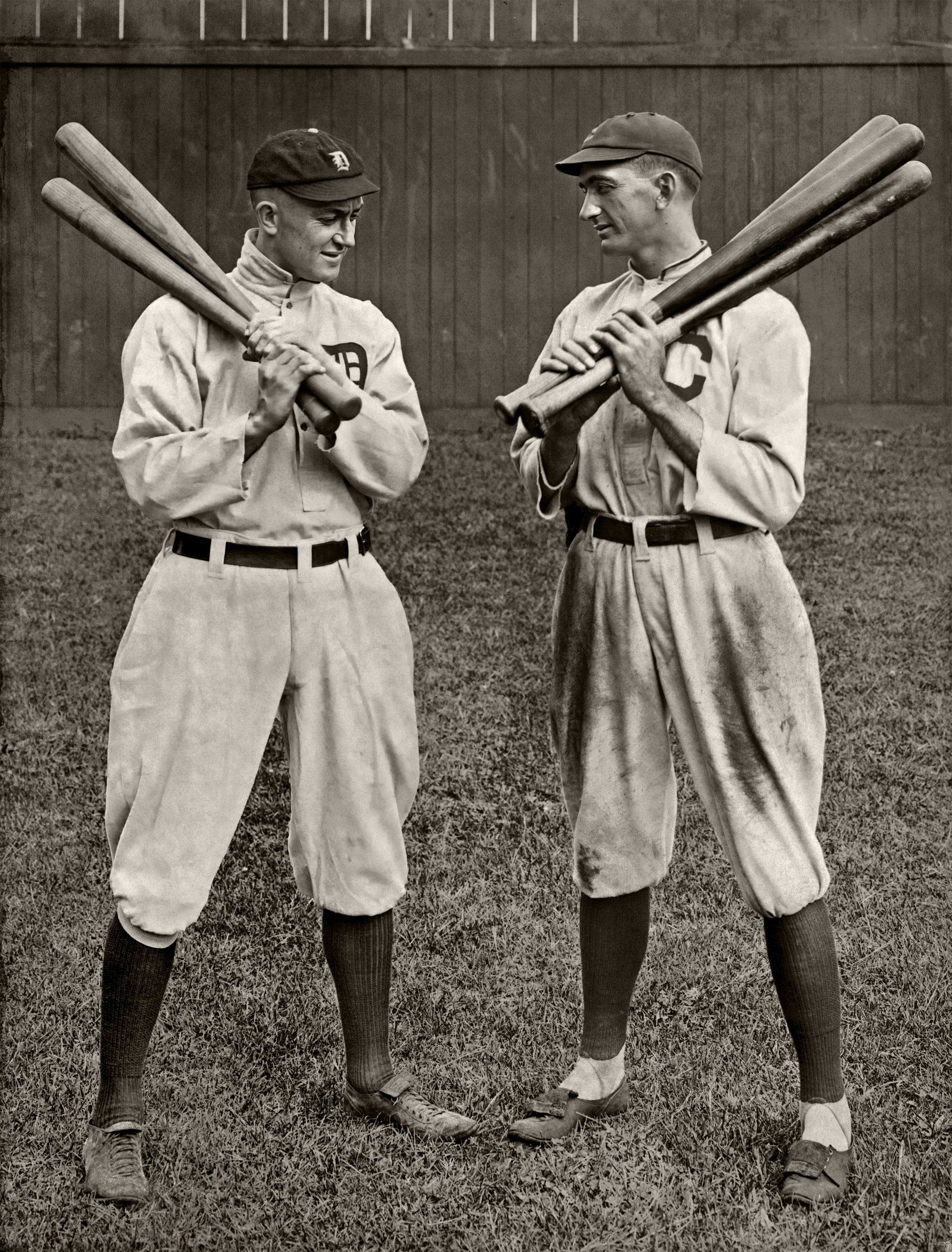
While Joe never won a batting title during his career, he is widely hailed as the greatest natural hitter in the history of the game. Ty Cobb, the man who singlehandedly kept Joe from winning three different batting titles in his playing days, praised Joe’s skills and ability for decades, even after Joe had passed away. One of the times he was quoted as saying, “I learned a lot, watching him... I don't think I ever saw a more perfect swing than [Joe’s].”
Consistently Great
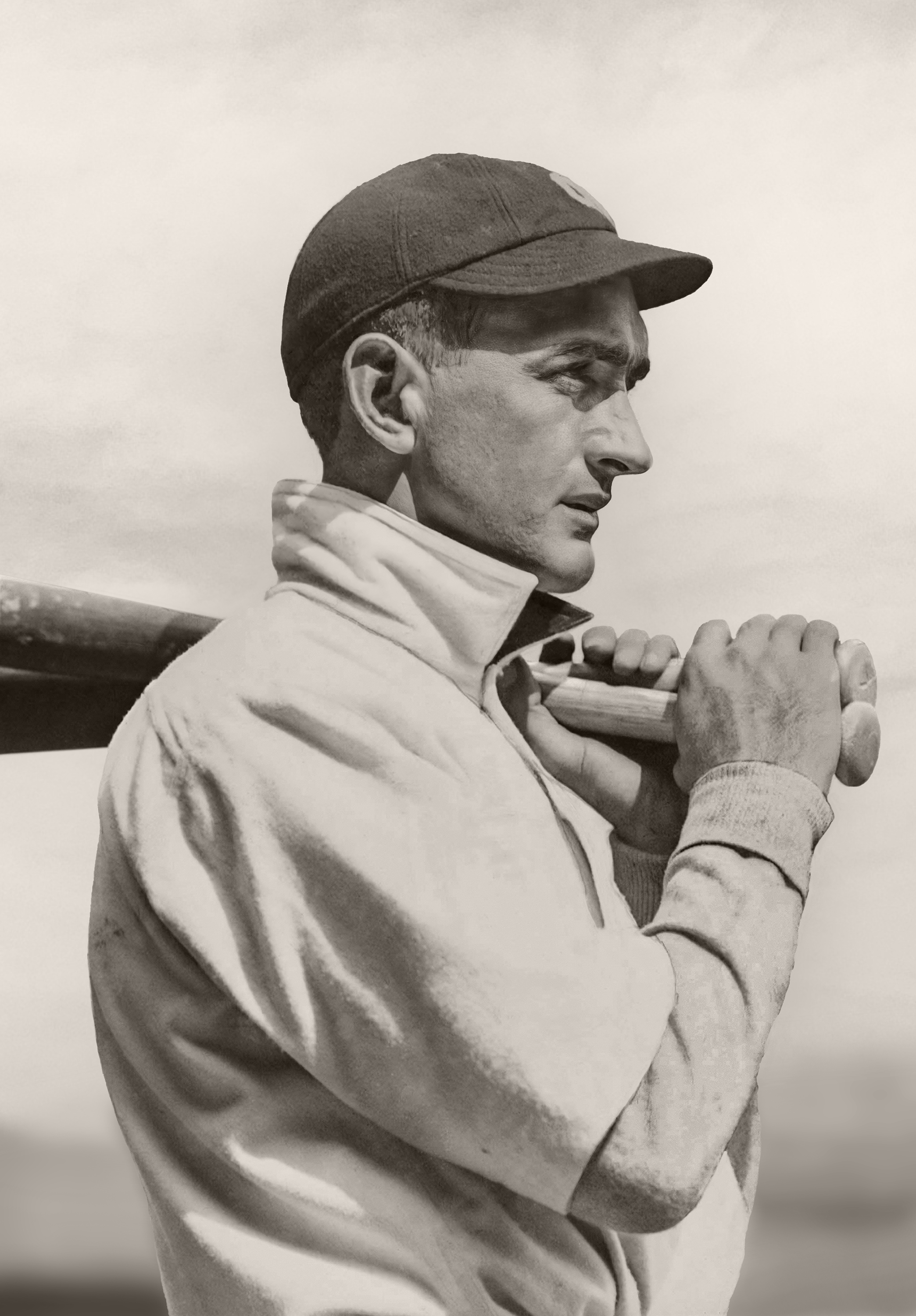
In the nine full seasons of Major League ball Joe actually played, he finished in the Top 4 in the batting race seven times, including three second-place finishes, two third-place finishes, and two fourth-place finishes.
His .356 career batting average stood third on the all-time list until recently, when requirements for the number of at bats needed by American League and National League batters to qualify for the all-time list increased to 5,000 after the inclusion of the Negro Leagues statistics into the Major League record books.
Joe’s 4,981 career at bats means he no longer qualifies, missing out by 19 at bats.
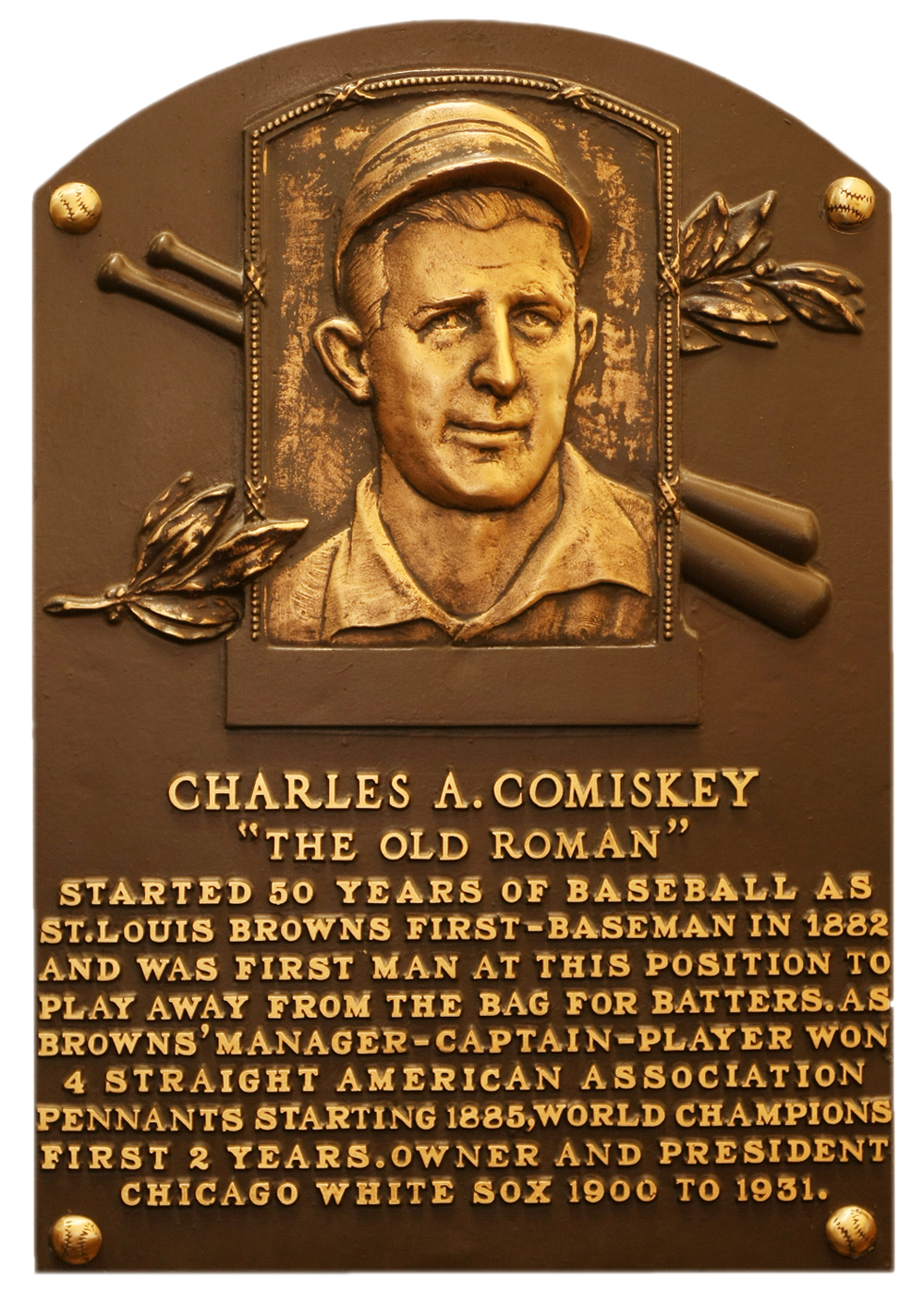
Charles Comiskey
In Charles Comiskey’s attempt to build a dynasty on the South Side of Chicago, he acquired Joe from Cleveland in August of 1915, just 8 months after he had acquired Eddie Collins from Connie Mack’s Philadelphia Athletics. With those two superstars in place, Comiskey had the foundation of a winning ball club for years to come.
Joe led the White Sox to the 1917 World Series title over the New York Giants before missing most of the 1918 season due to his military service in WWI. He returned to the Sox in 1919, when he batted .351 with 96 RBI and only 10 strikeouts in 139 games, putting an exclamation point on a fantastic regular season by hitting a walk-off single to clinch the American League pennant on September 24 against the St. Louis Browns.
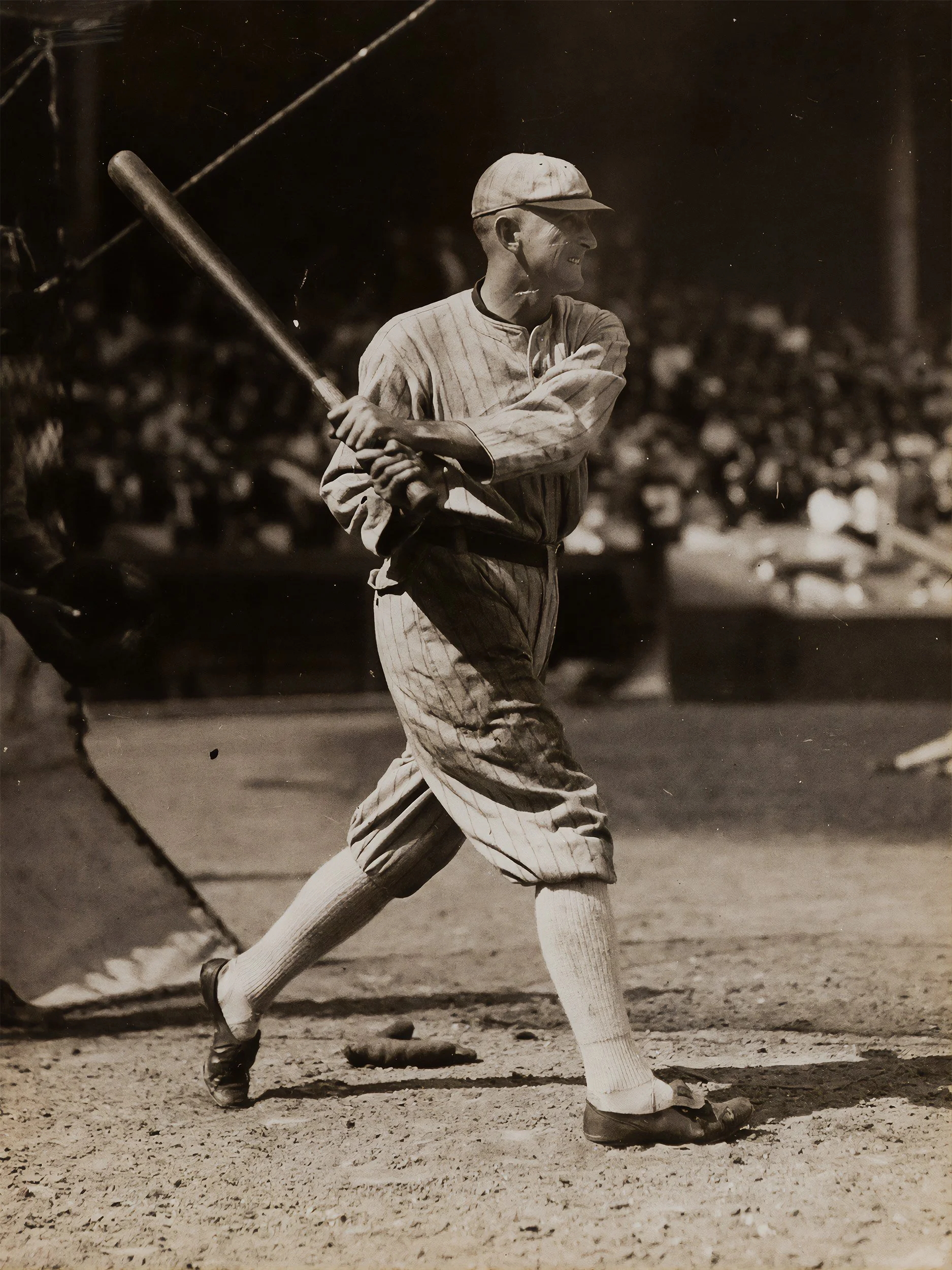
An Abrupt Ending
Unfortunately, Joe’s career ended abruptly and prematurely because of his involvement in the infamous Black Sox Scandal of the 1919 World Series. What most people fail to realize, however, is that Joe and his teammates had initially gone unpunished, and were allowed to play the 1920 season before the scandal fully broke.
With a week left to play in the 1920 regular season, the White Sox were a half game back from going to their third World Series in four seasons, with the only year they missed being the war-shortened 1918 season during which most of their roster was away for the war effort. The dynasty Charles Comiskey was attempting to build was undeniably real.
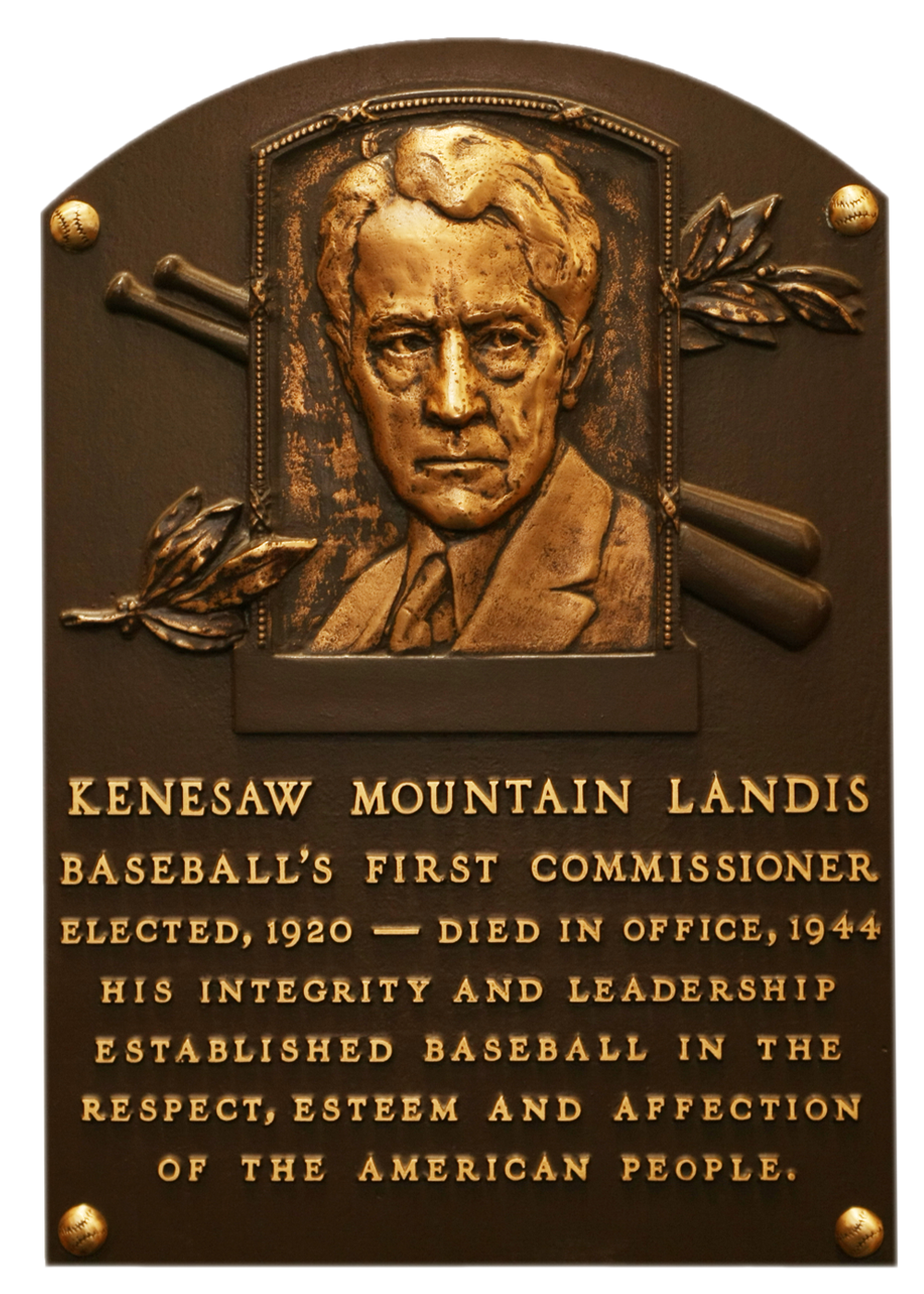
Kenesaw Mountain Landis
Joe was banned from the game, along with seven of his teammates, following the 1920 season, which was the first year of the live ball era.
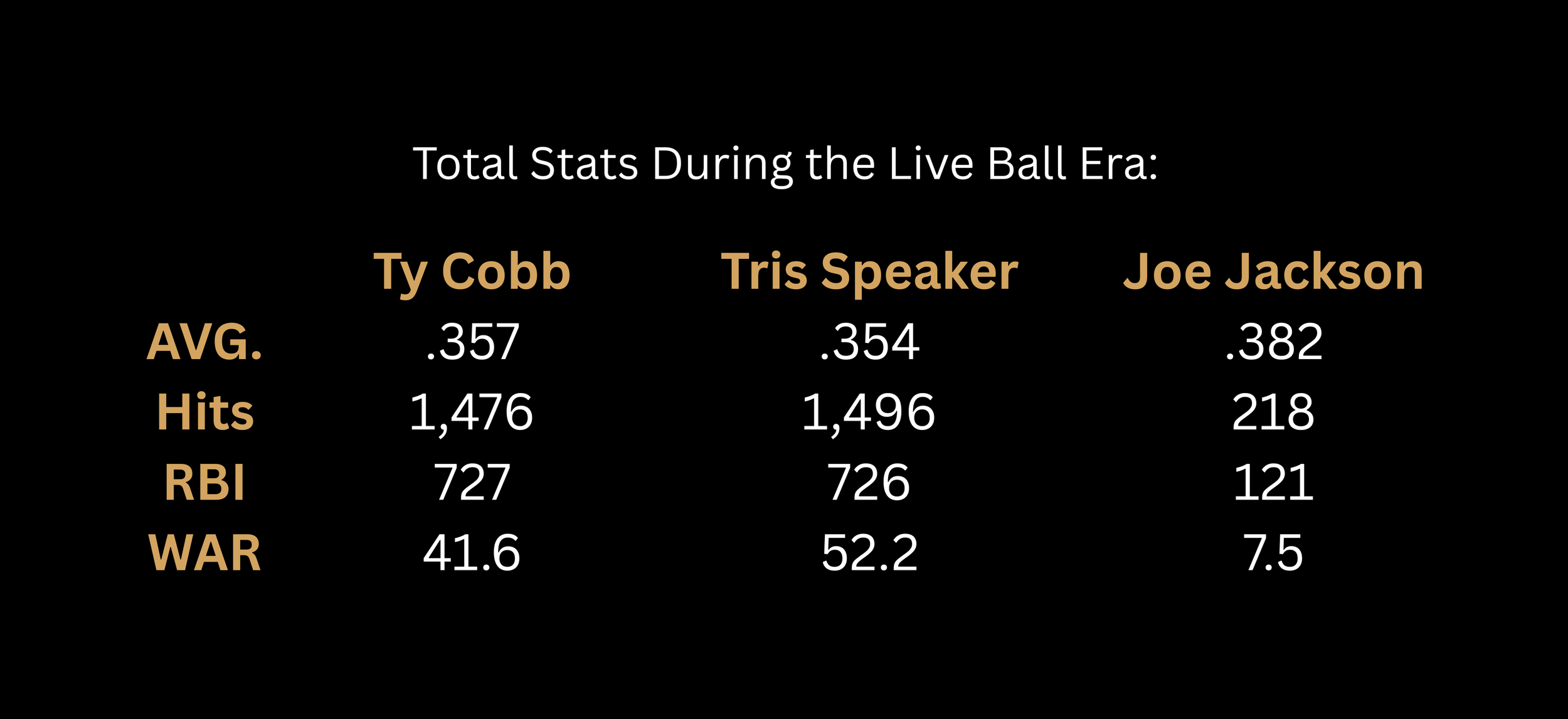
Joe had one of the best years of his career in 1920, setting career highs in home runs and RBI, driving in 121 runs and leading the league with 20 triples. His 218 hits made it the fourth time in his nine full seasons that he had 200 or more hits, and his .382 batting average was the third highest of his career.
But then, with one decision by Commissioner Kenesaw Mountain Landis, it all just… ended.
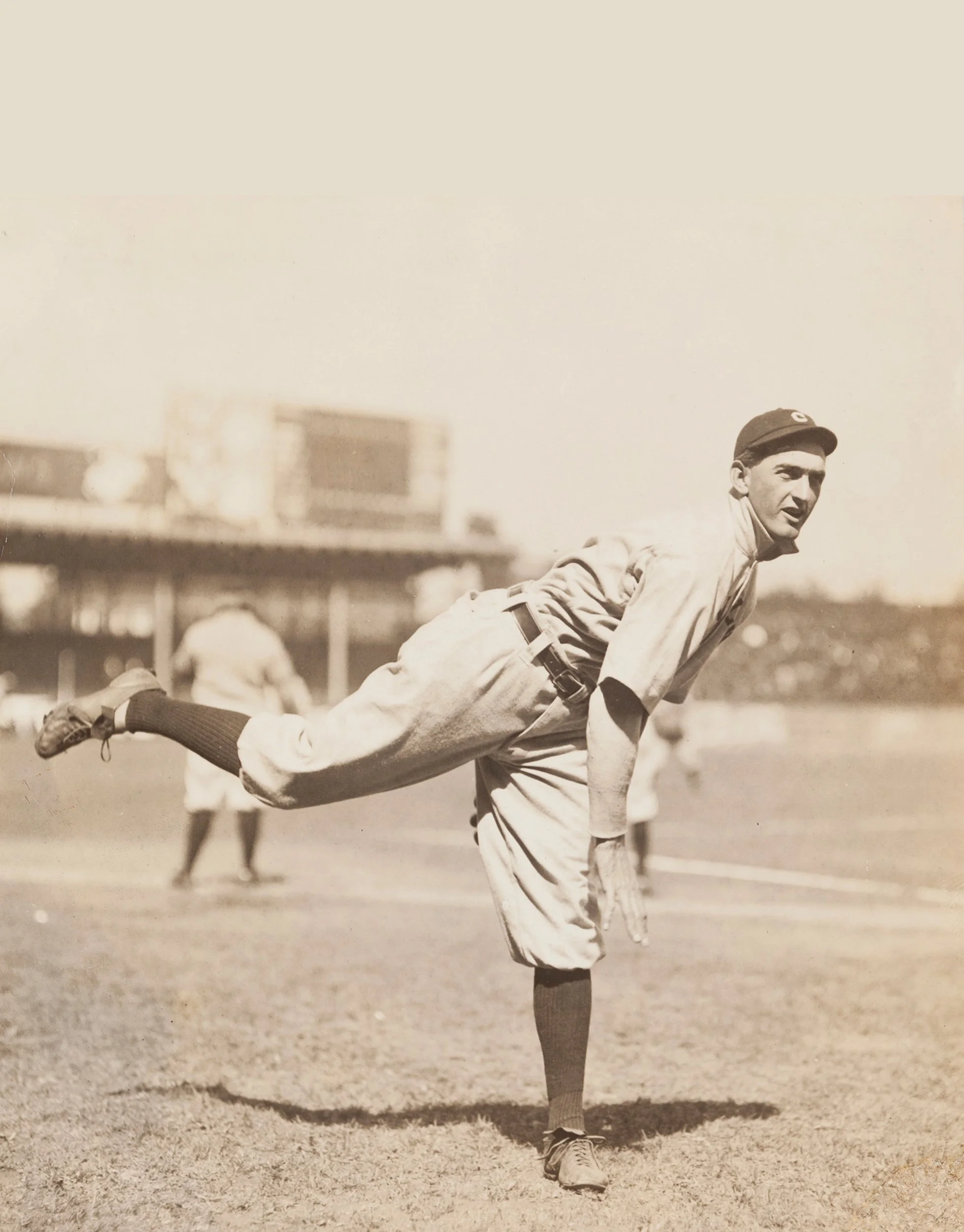
The Career That Could Have Been
1920 was Joe’s age-32 season, which sounds like he would be aging out of the game in modern times. But based on his career trajectory, and the careers of his direct contemporaries like Ty Cobb, Tris Speaker, and Rogers Hornsby, it is highly likely that Joe would have played into his 40s, had he not been banned by Commissioner Landis.
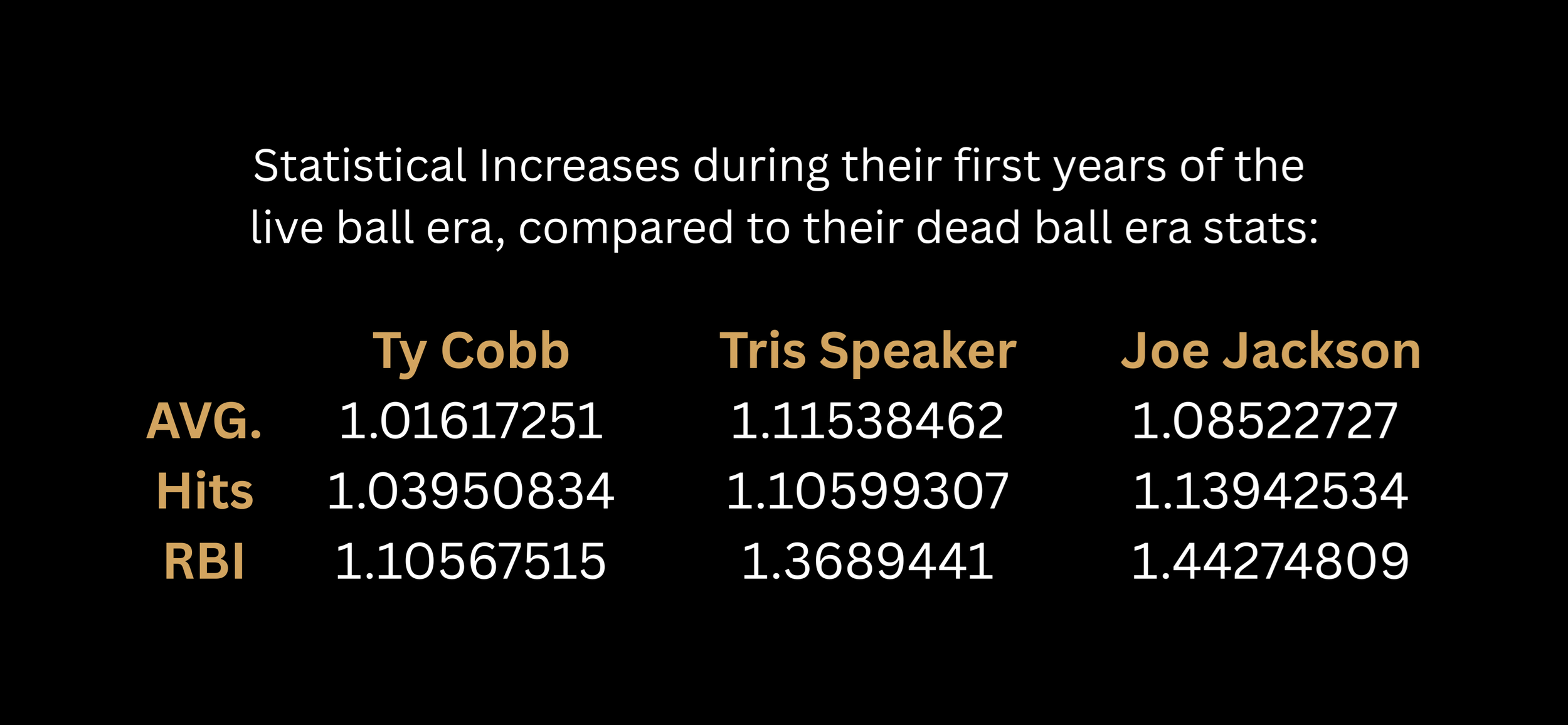
Who knows what the 1920s would have looked like if Joe was allowed to continue playing in the Majors?But when you look at the players I just mentioned, their production skyrocketed during the Live Ball Era compared to their Dead Ball stats, especially when it came to their batting averages and RBI totals.
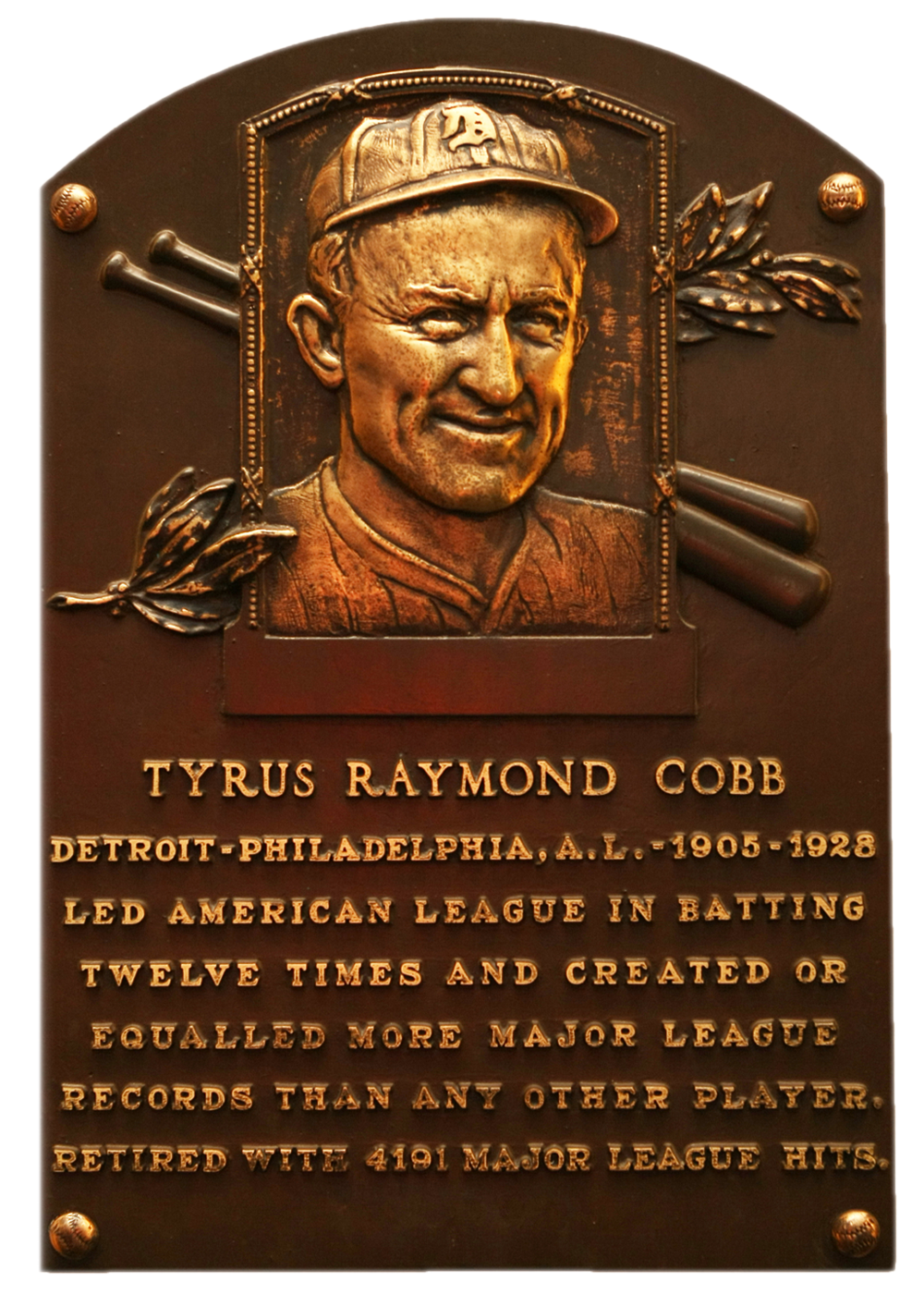
Ty Cobb
Ty Cobb batted .371 during his 15 seasons in the dead ball era, averaging 227.8 hits and 102.2 RBI per 162 games. 1920 was his age-33 season, just a year older than Joe.
Ty was coerced into an early retirement in 1926 due to his own betting scandal, when it came to light that he fixed a game and attempted to bet on it during the 1919 season, but came back to play in 1927 and 1928 with the Athletics, retiring after his age-41 season.
In his first three seasons of the live ball era, Cobb batted .377, averaging 236.8 hits and 113.0 RBI per 162, all significant increases from his dead ball numbers.
All told, in the nine seasons he played during the live ball era, Cobb batted .357, averaging 216.4 hits and 106.6 RBI per 162, and adding 41.6 WAR to bring his career total to 151.4, which is 6th all time.
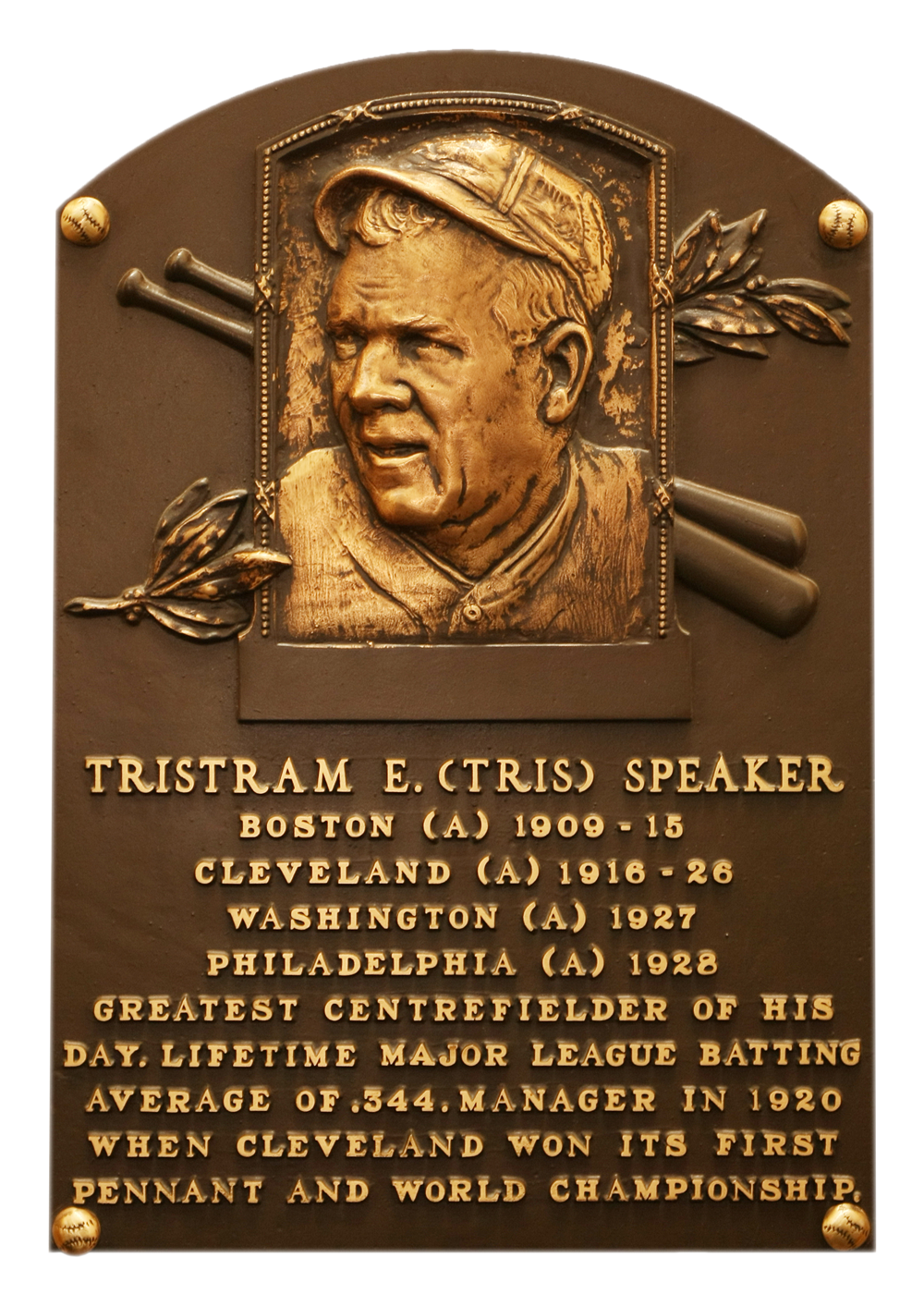
Tris Speaker
Tris Speaker batted .338 during his 13 seasons in the dead ball era, averaging 201.9 hits and 80.5 RBI per 162 games. 1920 was his age-32 season, the exact same as Joe.
Tris, funnily enough, was also coerced into an early retirement in 1926 due to that same betting scandal involving Ty Cobb (it is now known as the Dutch Leonard Affair).
He, like Cobb, came back to play in 1927 and 1928, retiring after his age-40 season. In his first four seasons of the live ball era, Speaker batted .377, averaging 223.3 hits and 110.2 RBI per 162, all massive jumps from his dead ball stats.
All told, in the nine seasons he played during the live ball era, Speaker batted .354, averaging 207.1 hits and 100.5 RBI per 162, and adding 52.2 WAR to bring his career total to 134.9, which is 9th all time.
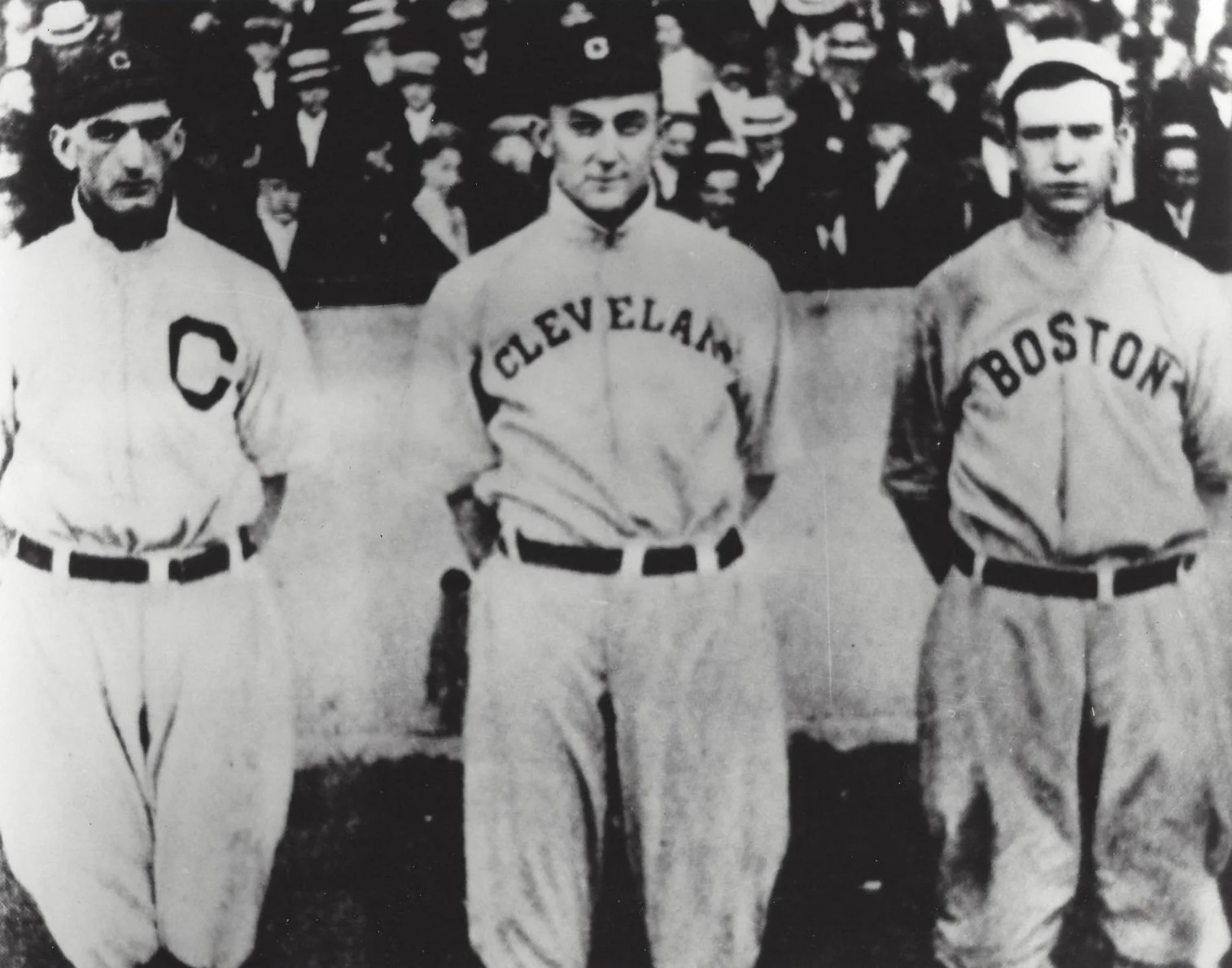
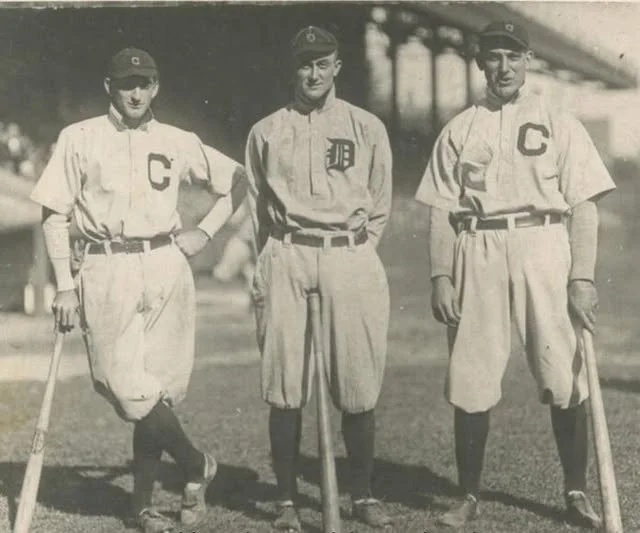
Joe, Ty, and Tris
Speaker once said about Joe, "I can't even remember him being in a batting slump. His swing was so perfect that there was little chance of it getting disorganized. He was the greatest natural hitter who ever lived."
This photo was taken at the Addie Joss benefit game at League Park in Cleveland in 1911.
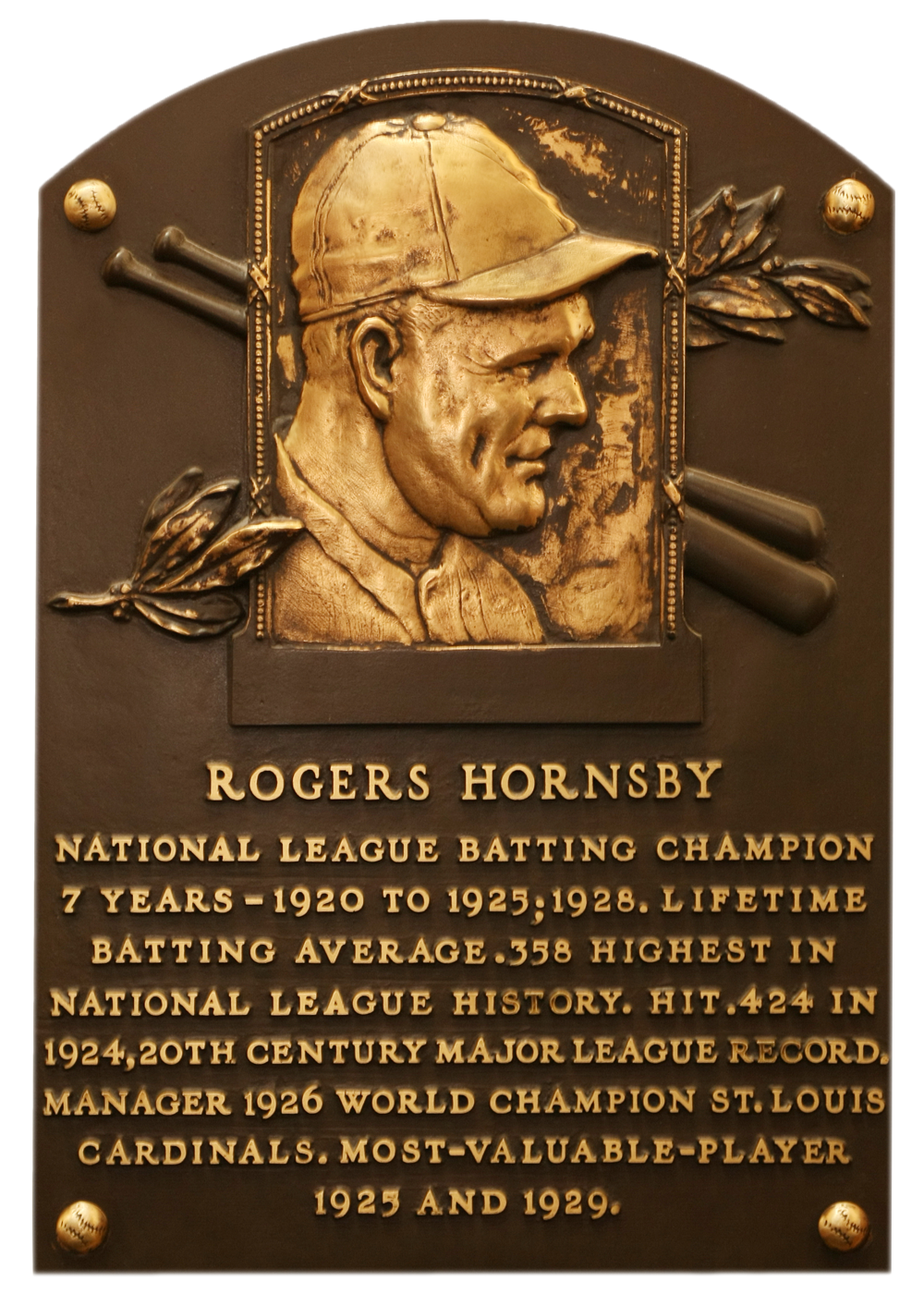
Rogers Hornsby
Rogers Hornsby batted .310 during his five seasons in the dead ball era, averaging 181.0 hits and 77.6 RBI per 162 games.
1920 was his age-24 season, eight years younger than Joe, meaning he was just about to enter his athletic prime when the live ball era began.
He went on to play through 1937, retiring after his age-41 season. In his first four seasons of the live ball era, Hornsby batted .389, averaging 248.7 hits and 130.7 RBI per 162, all astronomically higher than his dead ball stats.
All told, in the 18 seasons he played during the live ball era, Hornsby batted .374, averaging 219.6 hits and 125.3 RBI per 162, adding 100.8 WAR to bring his career total to 127.3, which is 12th all time.
35 Is The New 41
Due to the age difference, it’s not quite fair to compare Hornsby’s live ball production to theirs, or use it as a gauge to estimate what Joe would have done, had his career been able to play out naturally.
However, the point can still be made that, at that time in baseball history, players of their caliber continued their careers until they were in their 40s.
Like Cobb (center) and Speaker, Napoleon Lajoie (right) also retired at 41. Eddie Collins and Honus Wagner each retired at 43. If you were at that skill level, you played a long time back then.
Deadball Slugger
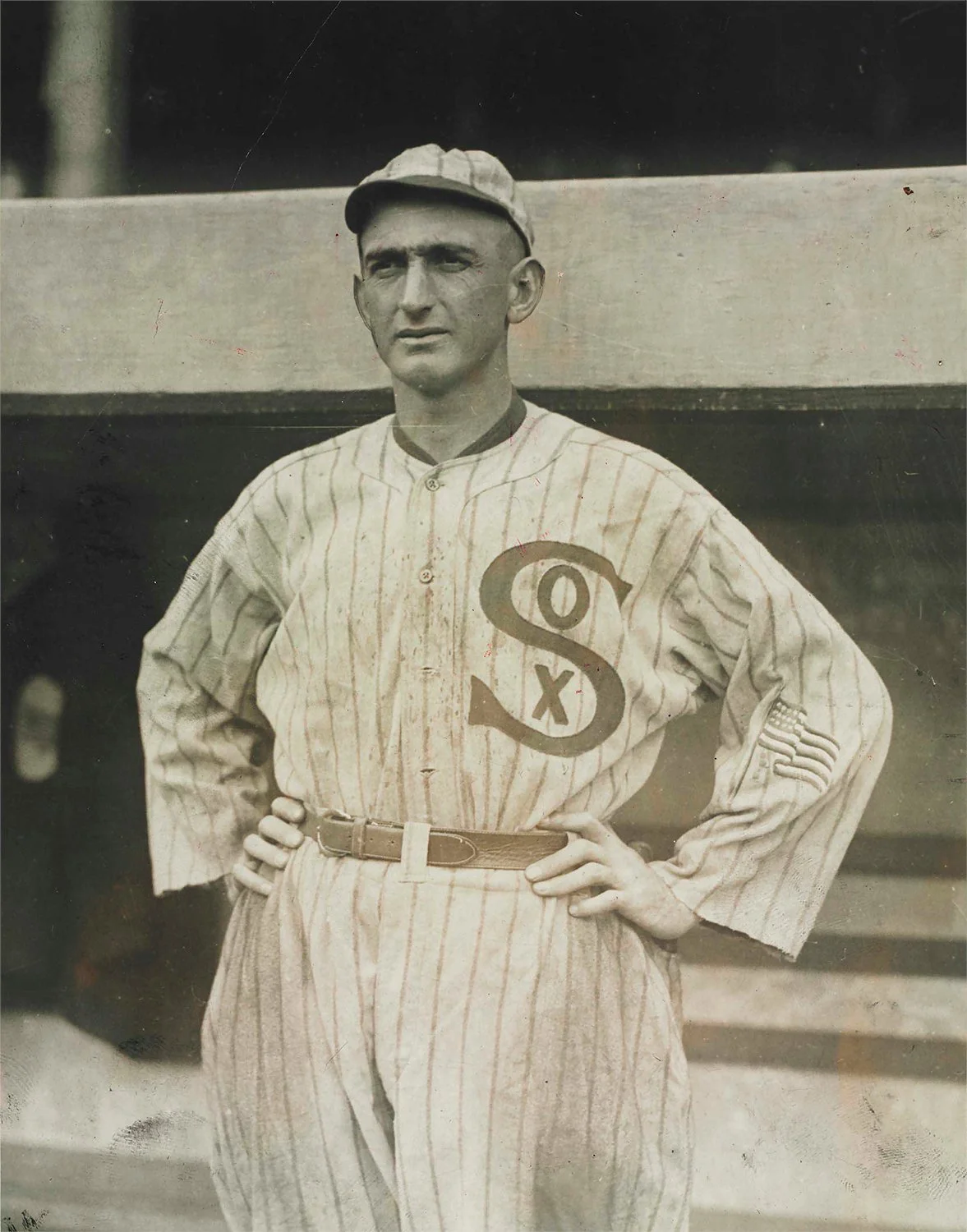
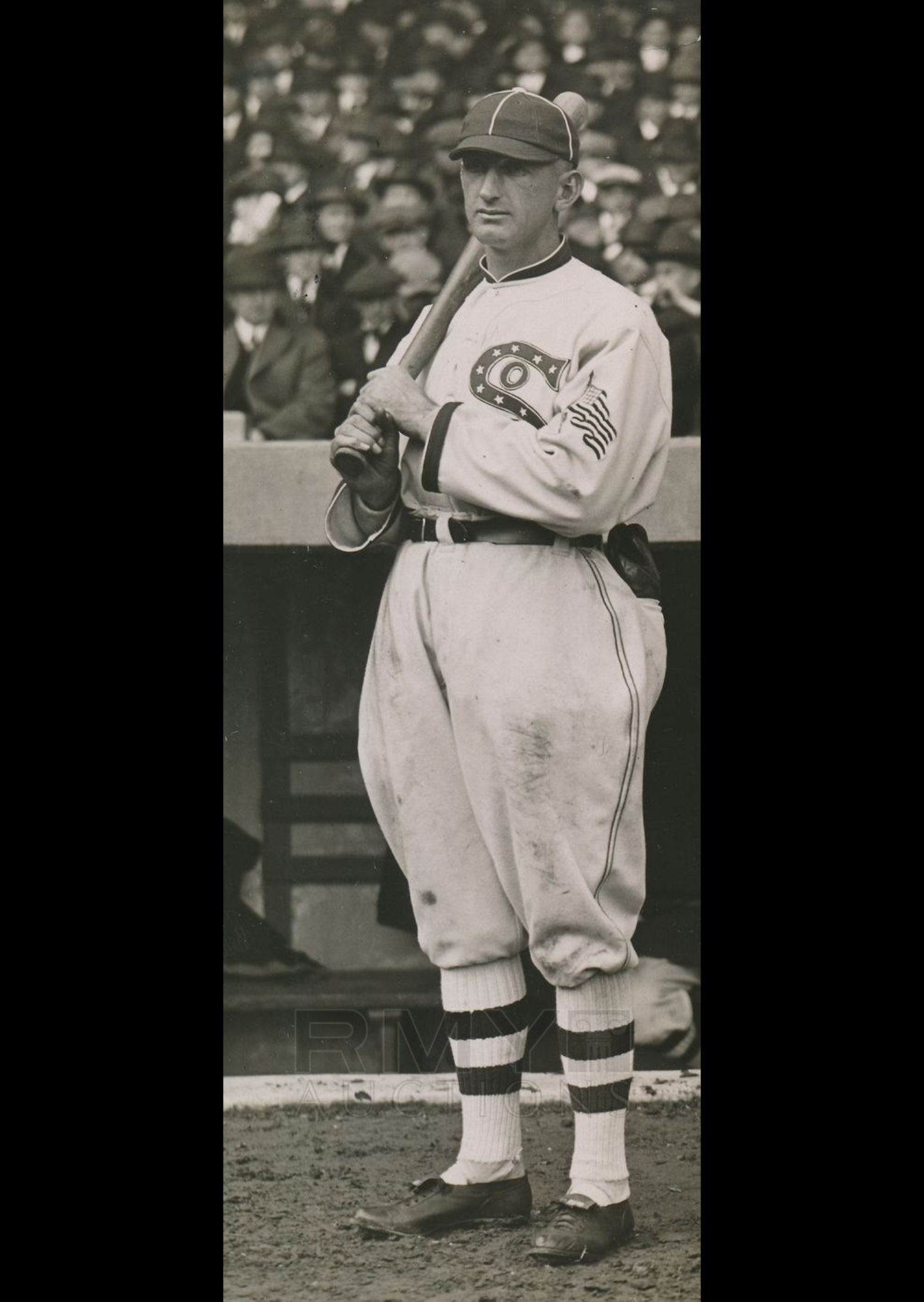
Joe batted .352 during his 12 seasons in the dead ball era, averaging 212.3 hits and 91.7 RBI per 162 games.
1920 was his age-32 season, meaning he most likely had another nine or ten full seasons left in him, had he not been banned.
In his only season of the live ball era, Jackson batted .382, and was on pace for 241.9 hits and 132.3 RBI per 162.
Those numbers are perfectly in line with the increases Hornsby and Cobb saw in their statistics, accounting for the fact that Joe only played one season in the live ball era and his stats would have most likely started to come slightly back down to earth in years 2-4, had he been allowed to play them.
How Many Hits?
Joe’s career ended with 1,772 hits. If he plays for another nine seasons and is able to retire after his age-41 season, we’re looking at an addition of somewhere in the neighborhood of 1,524 hits.
I’m basing that on Joe averaging 211 hits per 162 games, since Cobb averaged 216.4 and Speaker averaged 207.1 per 162 in their live ball careers.
I’m also assuming he plays an average of just 130 games per season (which is exactly what Speaker averaged in his live ball career), as opposed to the 142.8 games per season Joe had been averaging at the point, when his career ended.
That trajectory would have given Joe 3,296 career hits, which would put him 13th all time.
If he plays a tenth full year, retiring after his age-42 season, and picks up another 90 hits in that final season, that gives him 3,386 and moves him up to 10th all time today. Cobb is 2nd all time, Speaker is 5th, and Hornsby is 40th.
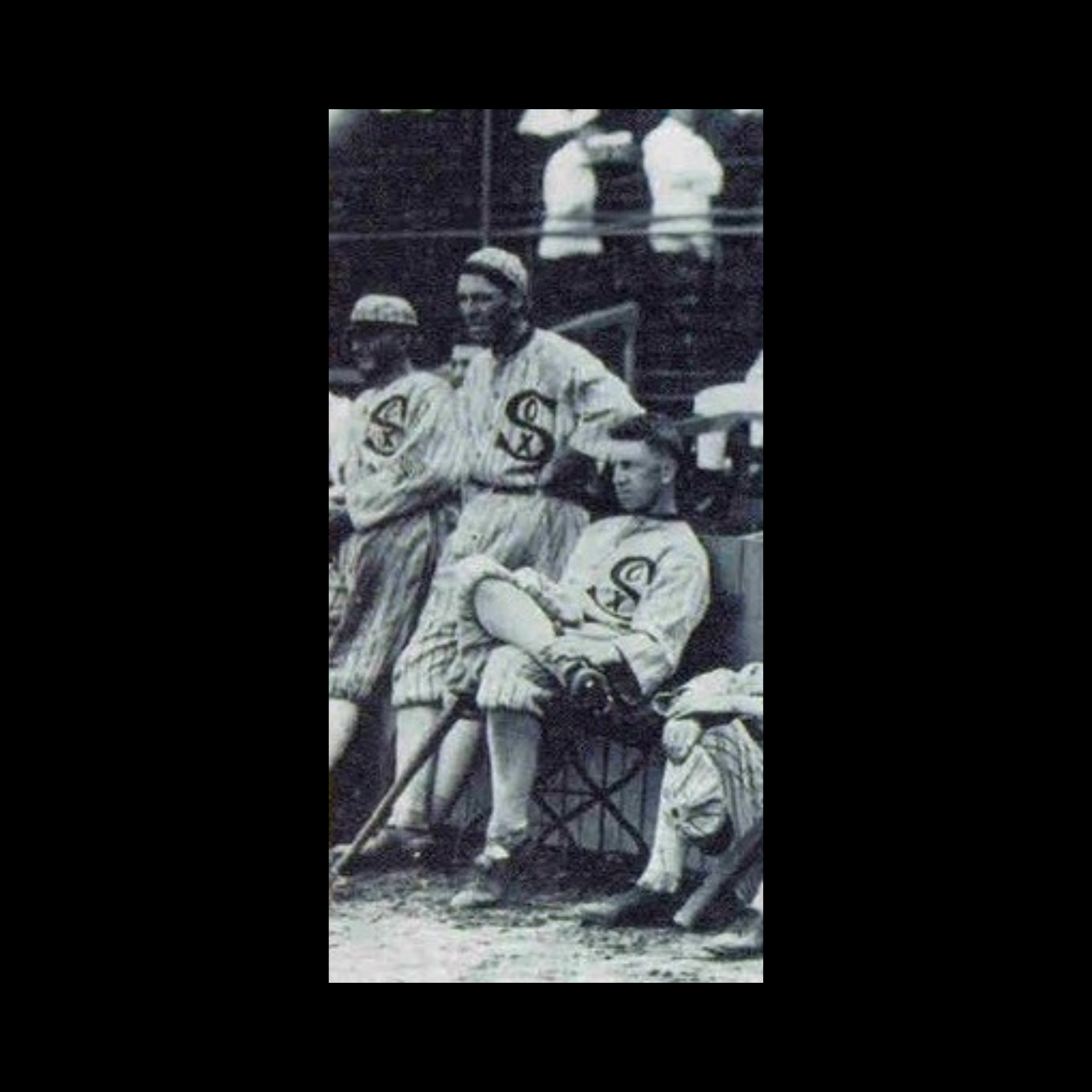
First Six With 3,000
As of today, there are 33 players in Major League Baseball history who have collected 3,000 hits.
At the time Joe would have crossed that threshold, which I project would have most likely been in late 1926, or possibly early 1927, he would have been just the seventh player in history with 3,000.
The only six ahead of him would have been Cap Anson in July of 1897, Honus Wagner in June of 1914, Napoleon Lajoie in September of 1914, Ty Cobb in August of 1921, Tris Speaker in May of 1925, and Eddie Collins (seated, Joe is far left) in June of 1925.
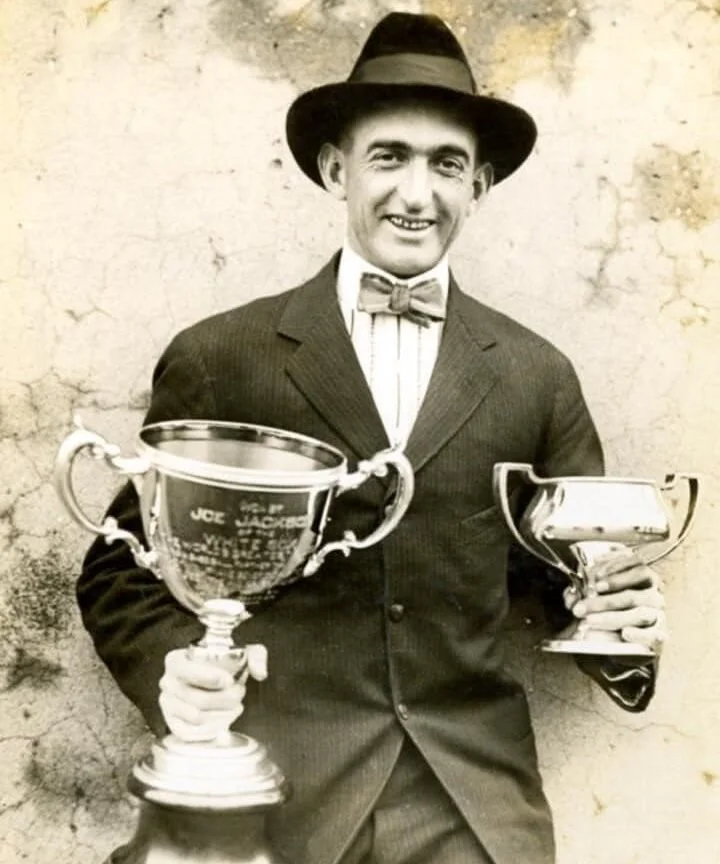
Runs Batted In
Joe’s career ended with 792 RBI. If he would have played for another nine seasons instead of being banned following the 1920 season, he would have added another roughly 748 RBI (assuming he splits the difference between Cobb and Speaker’s live ball season averages, like he did during their dead ball careers).
That would have given Joe 1,540 career RBI, which would put him tied for 49th all time. If he doesn’t retire until after his age-42 season, and picks up another 35 RBI, that gives him 1,575 and moves him up to 46th all time.
Cobb is 9th all time, Hornsby is tied for 42nd, and Speaker is 51st.
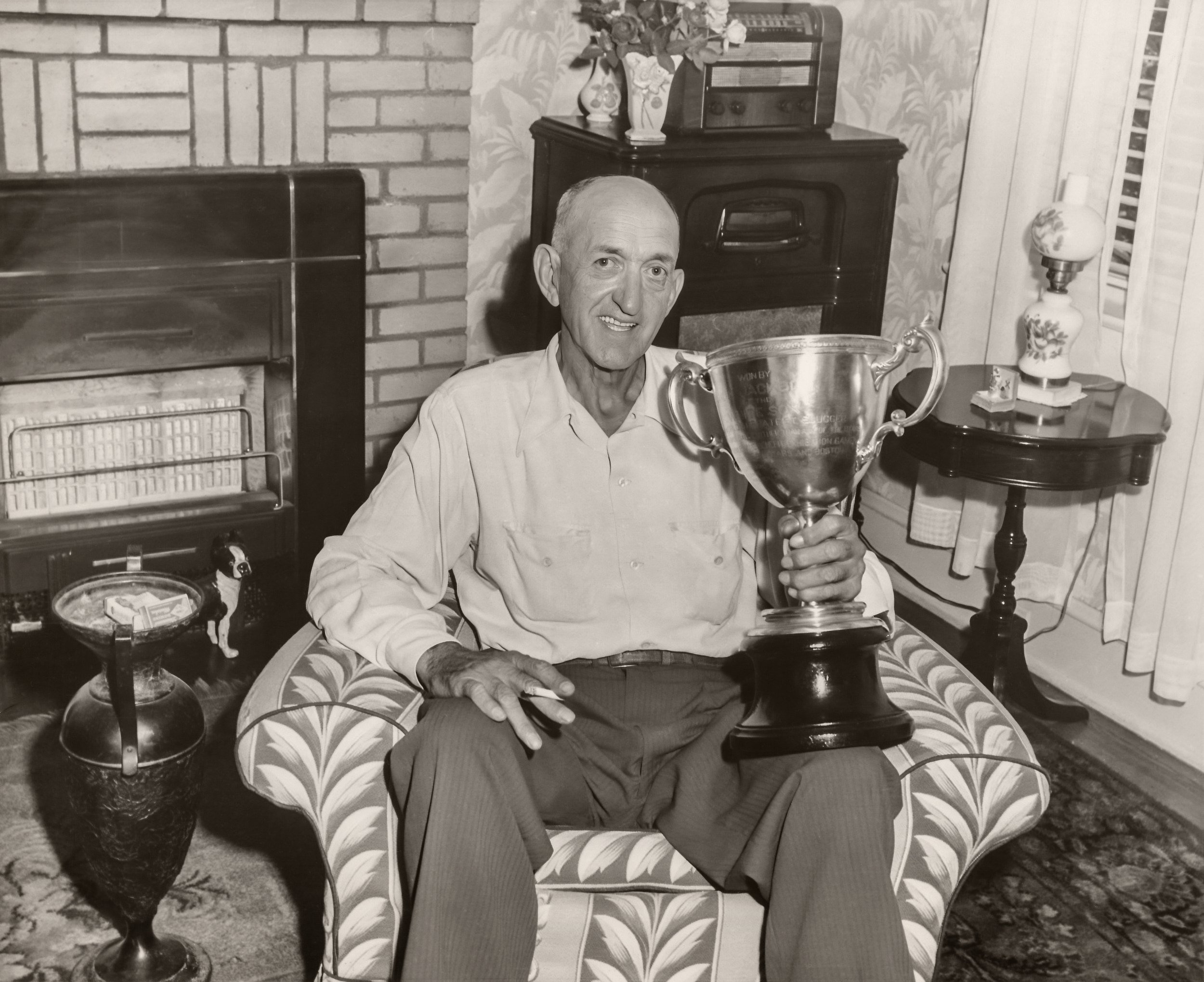
Wins Above Replacement
Joe’s career ended with 62.2 WAR. If he would have played for another nine seasons and added another 40.9 WAR, he would have ended his career with 103.1, which would be good for 29th all time, and 20th among position players.
Based on his actual numbers, and on the things his contemporaries said about him, it is clear that Joe was one of the greatest players who ever lived.
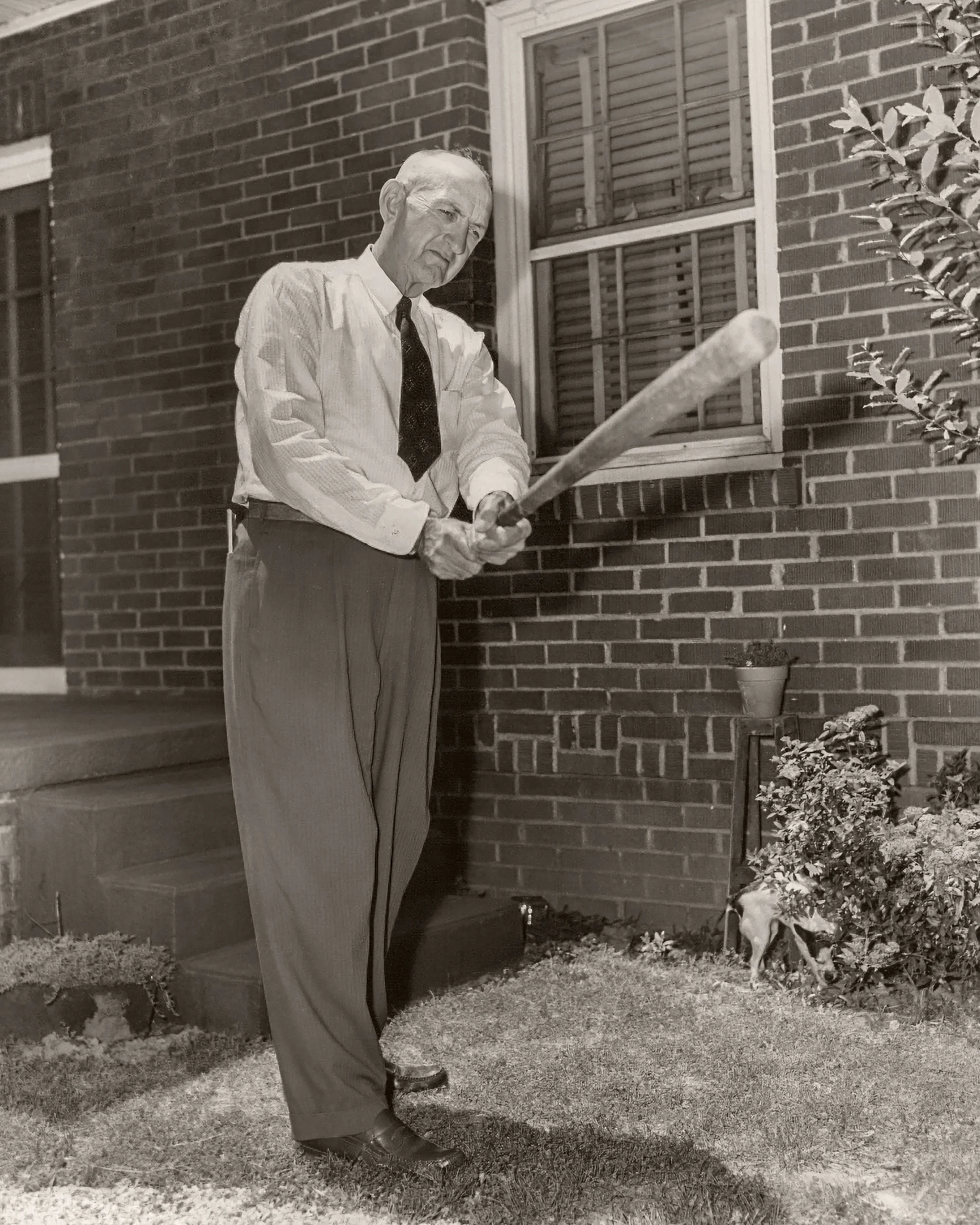
What Could Have Been?
But all of that aside, instead of feeling sorry for Joe that he was robbed of what could have been one of the all-time great careers and a surefire spot in the Hall of Fame, we should feel sorry for baseball.
Instead of the Yankees dominating the American League with six pennants in the 1920s, Joe Jackson and the White Sox dynasty that Charles Comiskey had built would have been New York’s heated rival for the duration of the decade.
The two would have spent the entire decade fighting for pennants and creating unforgettable moments.
The Greatest Natural Hitter Ever
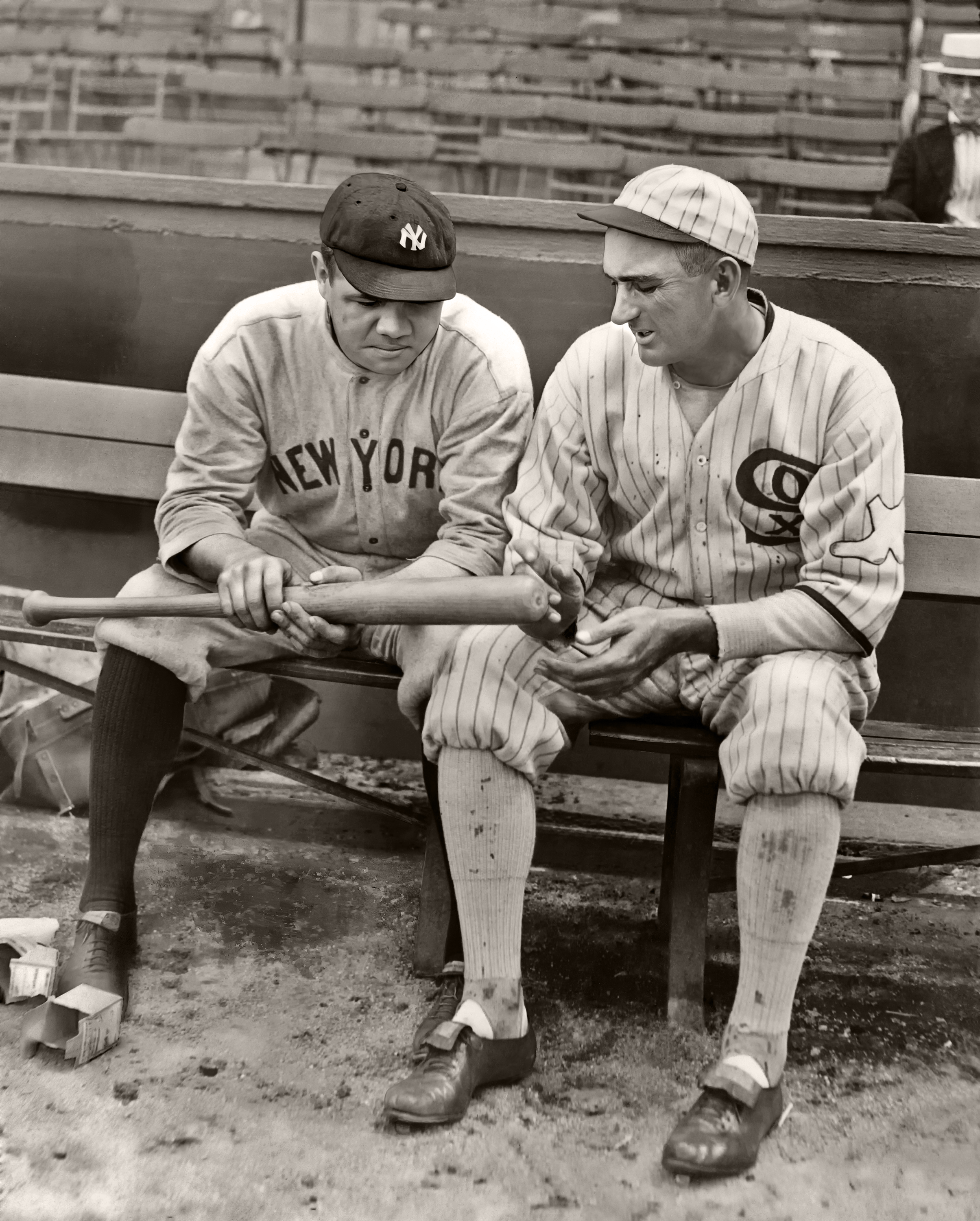
Babe Ruth said "I copied Jackson's batting style because I thought he was the greatest hitter I'd ever seen; the greatest natural hitter I ever saw. I still think the same way. He's the guy who made me a hitter."
Imagine what the 1920s would have looked like with those two going at it, head-to-head. It’s a shame that Joe wasn’t able to finish his career on his own terms.
We’ll never know what his true statistics would have looked like, had he been able to. But I can promise you this: he would absolutely have a plaque in Cooperstown, alongside all of his peers who called him the greatest.
Support My Baseball History
If you don’t have PayPal and want to send a donation through Venmo, Zelle, Cash App, or any other platform, email me at shoelesspodcast@gmail.com and I’ll send you directions for whichever method you prefer.
We appreciate you being here.
Special thanks to Gary Cieradkowski for allowing us to use the images from his amazing portfolio to illustrate the liner notes you just read. This page and this interview wouldn’t have been possible without his knowledge, creativity, and generosity.