
0505 - Bob Kendrick
Bob Kendrick is the President of the Negro Leagues Baseball Museum in Kansas City, Missouri. During our conversation, he referenced a handful of things and people upon which you may want to do more research. Consider this page to be your “liner notes” for the episode so you can follow along.
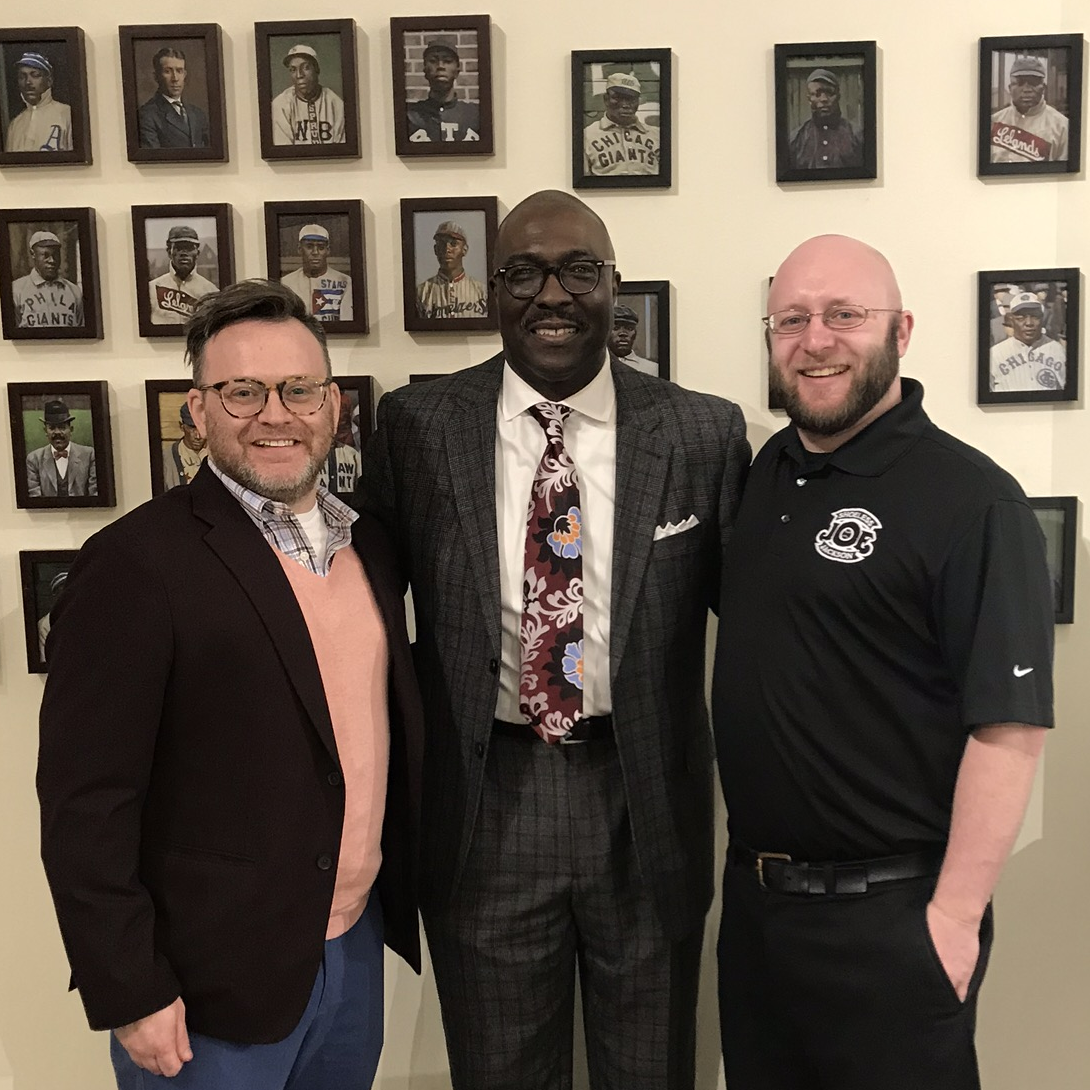
Graig Kreindler, Bob Kendrick, and me at the Negro Leagues Baseball Museum on February 13, 2020, the 100th anniversary of the formation of Rube Foster’s Negro National League in Kansas City.

Bob Kendrick
Bob Kendrick was named President of the Negro Leagues Baseball Museum in 2011. He is in the center of this photo with former Negro Leaguers Ulysses Hollimon and Jess Rogers along with DeMorris Smith (son of Hall of Famer, Hilton Smith).
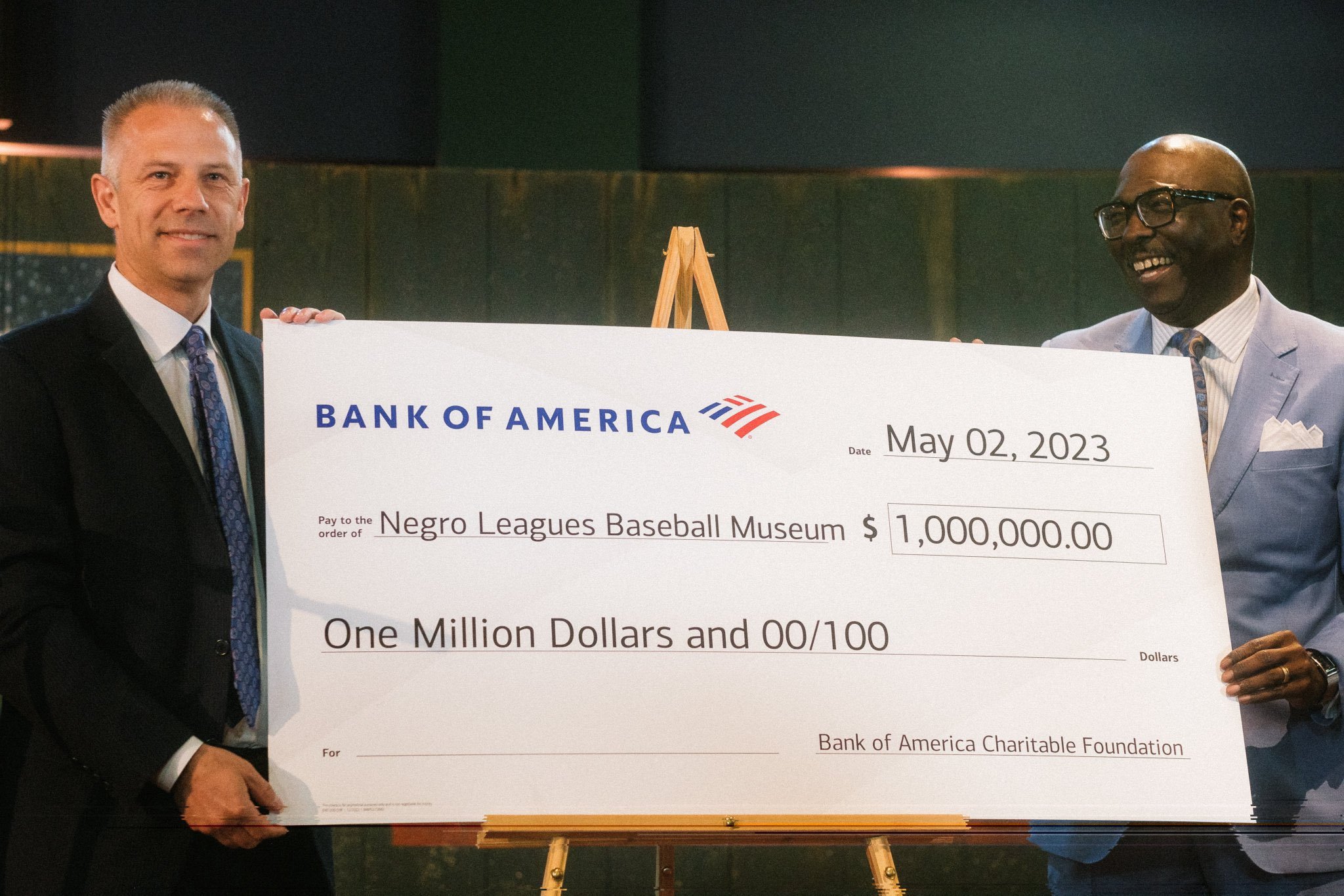
Fundraising Phenom
Bob’s leadership helped secure more than $15 million in financial support for the Negro Leagues Baseball Museum, and widespread national acclaim.
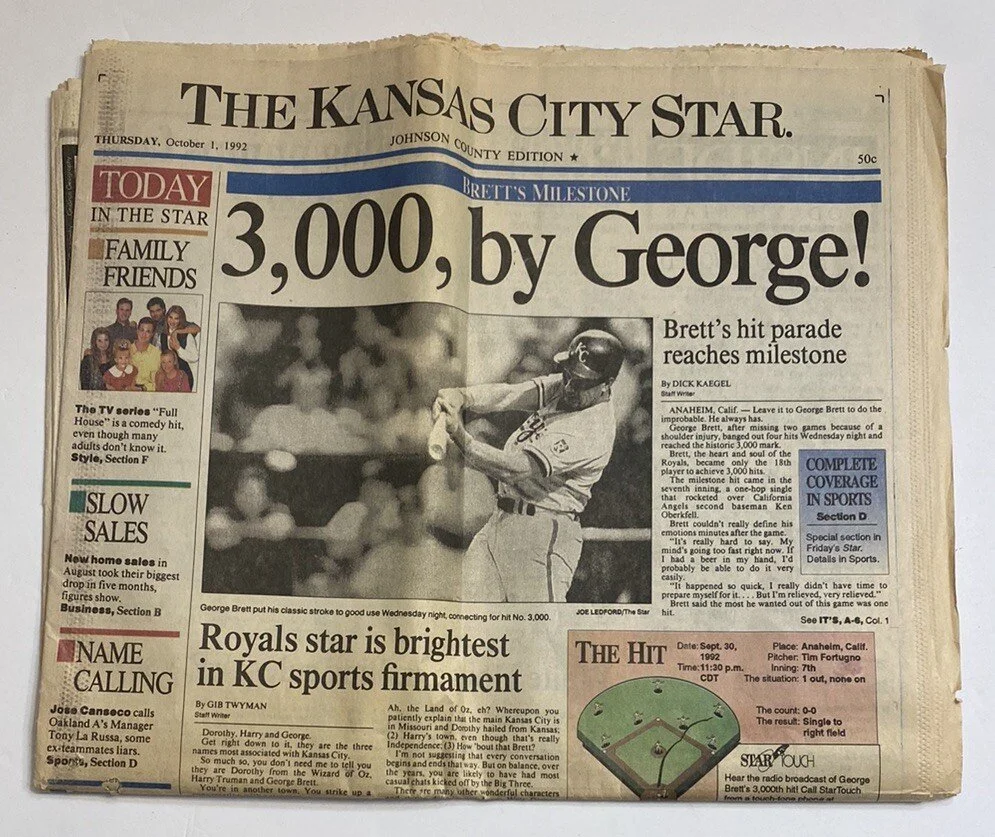
The Kansas City Star
Bob began his association with the Negro Leagues Baseball Museum as a volunteer during his 10-year newspaper career with The Kansas City Star.
As senior copywriter for The Star’s Promotions Department, Bob won, or was part of a creative team that won, numerous local and regional advertising and marketing awards.
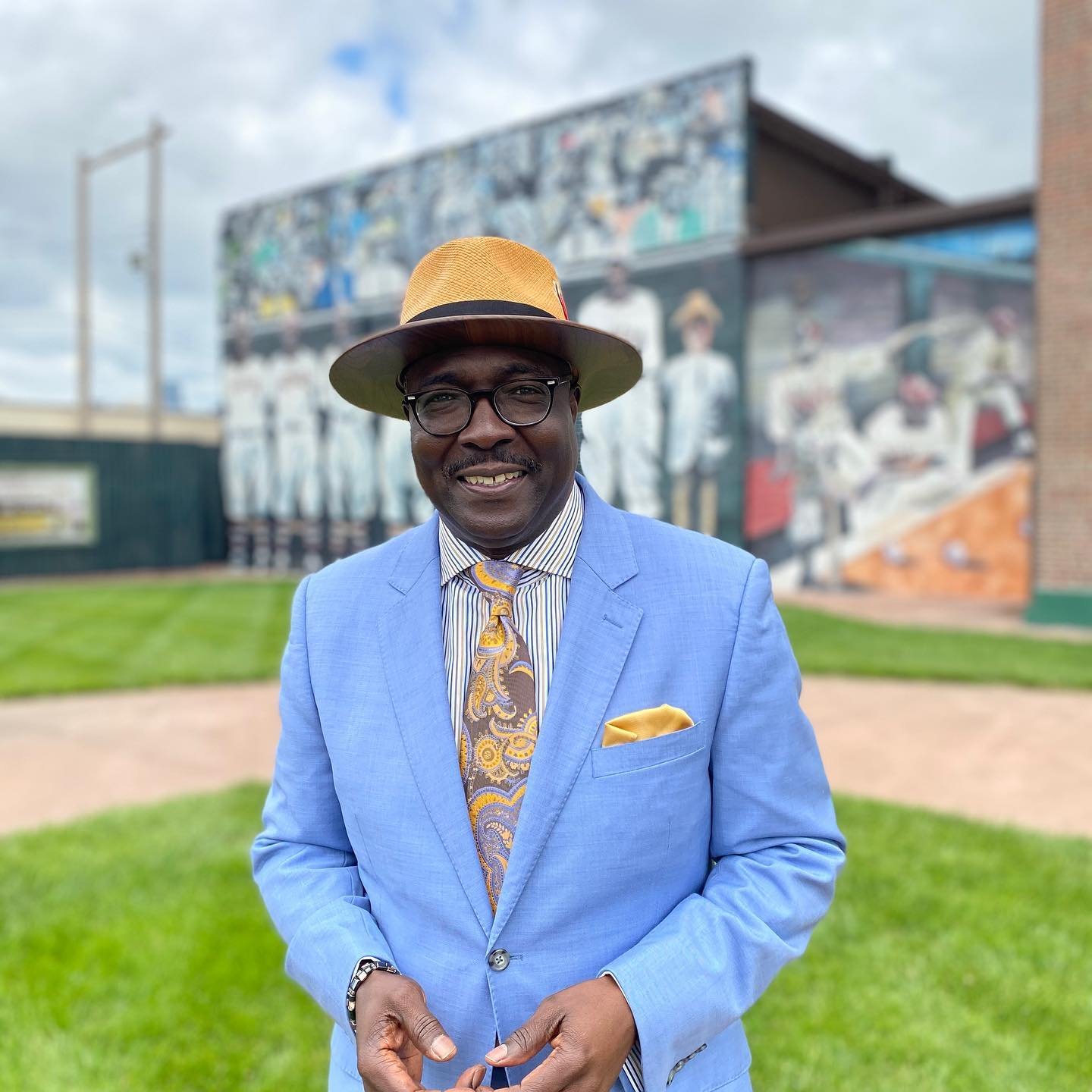
Pillar of the Community
Bob’s volunteer roots in the Kansas City community are deep and passionate. He has served on the boards of various Kansas City-area non-profit organizations and has worked with Kansas City youth for more than 20 years.
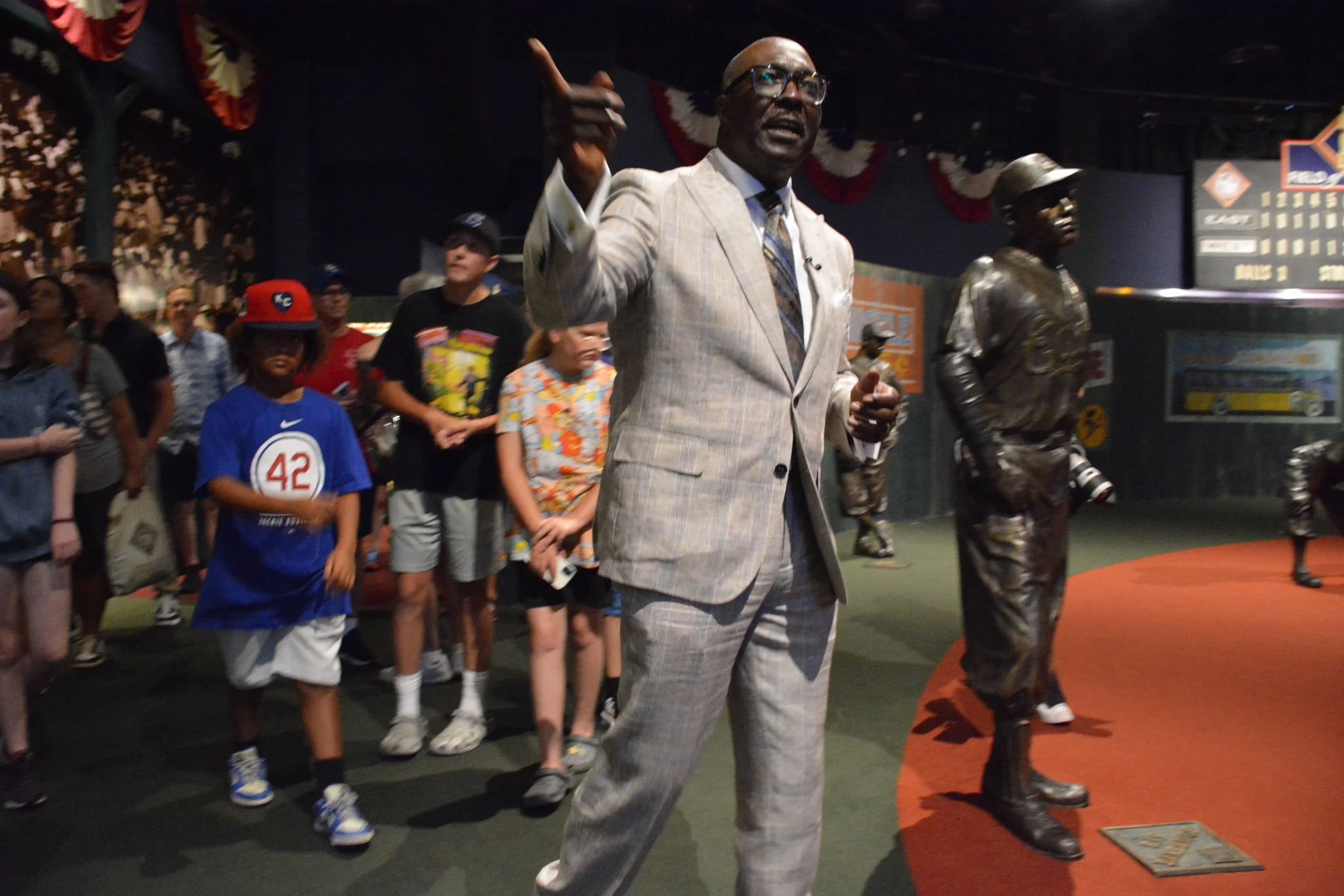
Guiding The Youth
Bob remains active in the community and spends a great deal of time in Kansas City classrooms giving motivational talks to area students and sharing the illustrious history of Negro Leagues Baseball with nearly 100 schools, social and civic groups annually.
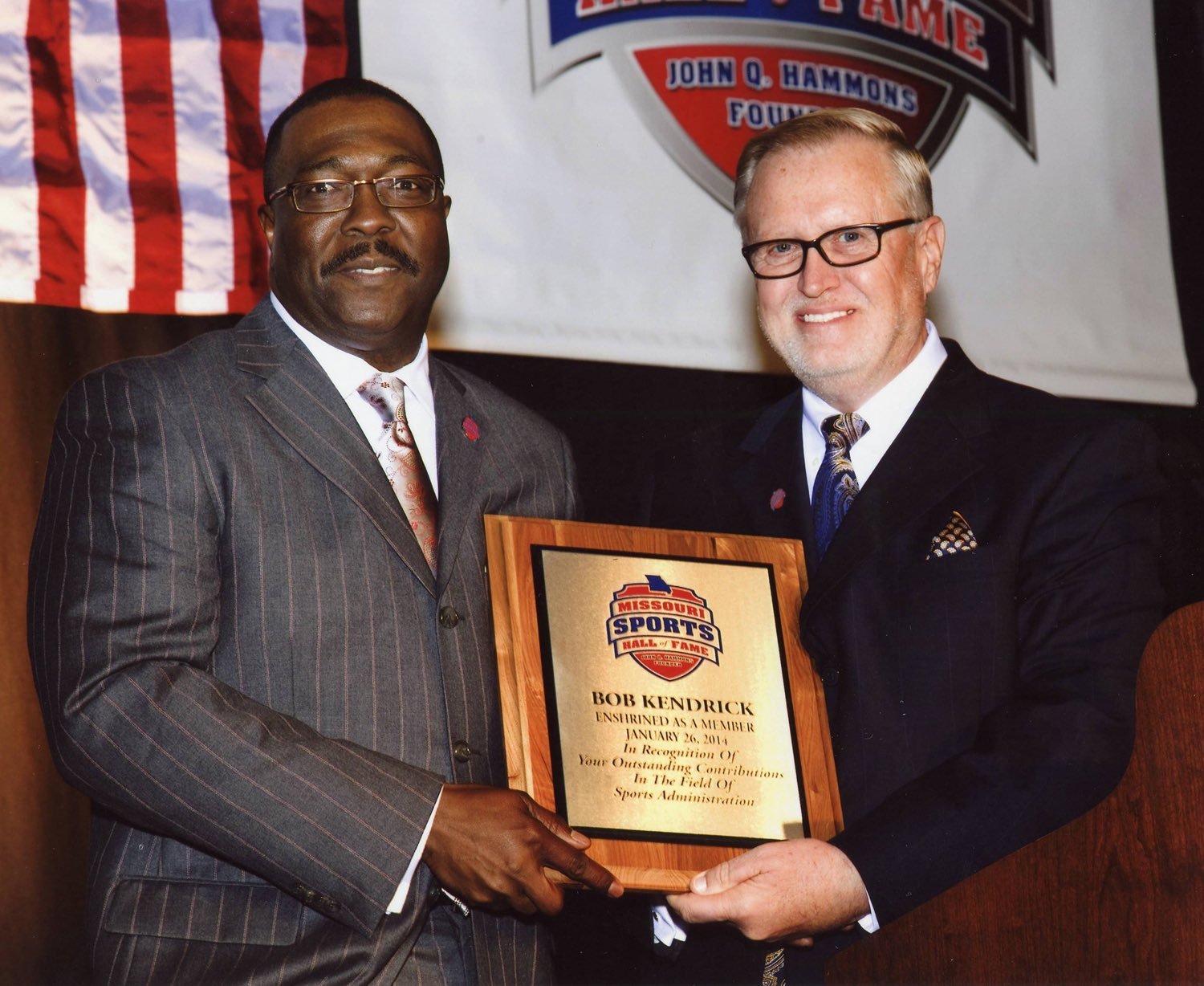
Missouri Sports Hall of Fame
Bob was inducted into the Missouri Sports Hall of Fame as a part of the Class of 2014 as a Sports Administrator, and while he doesn’t fashion himself to be a historian, Bob has become one of the leading authorities on the topic of Negro Leagues Baseball history and its connection to issues relating to sports, race and diversity.
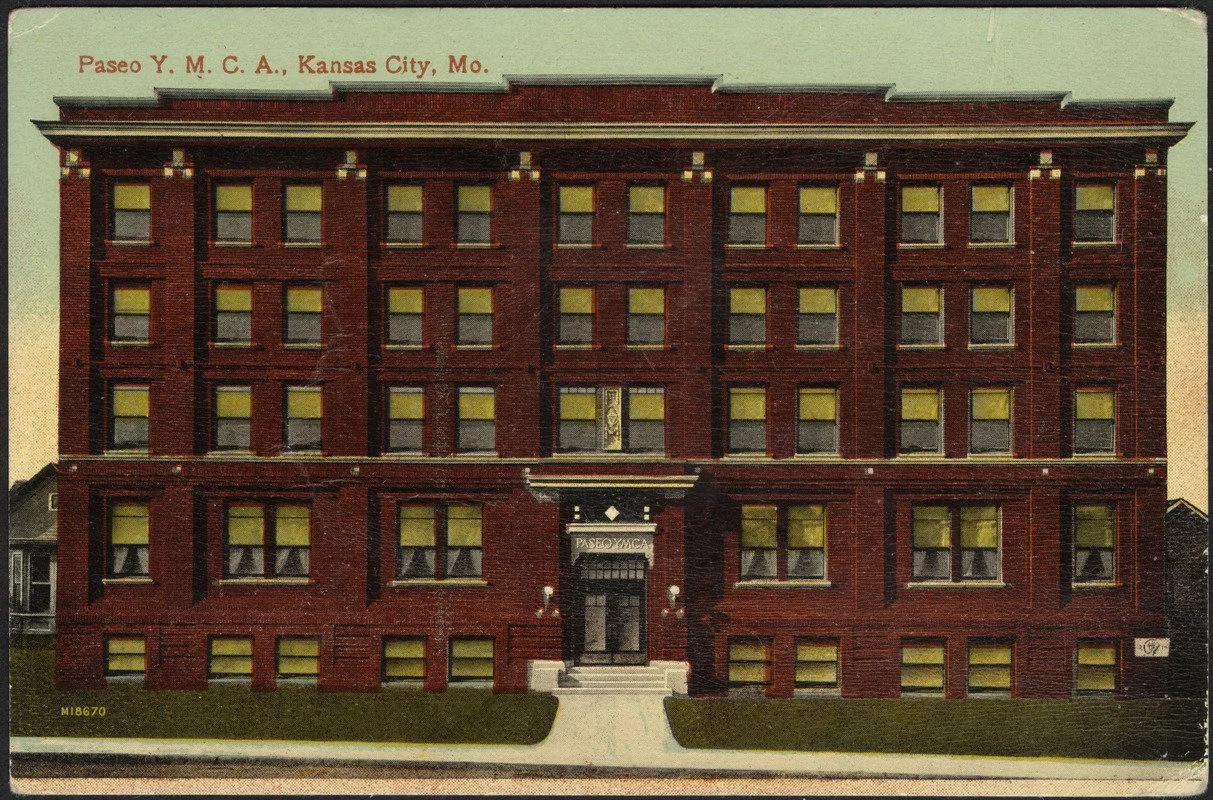
Paseo YMCA
The Negro Leagues Baseball Museum operates two blocks from the Paseo YMCA, where Andrew “Rube” Foster held a meeting on February 13, 1920 to officially establish his Negro National League.
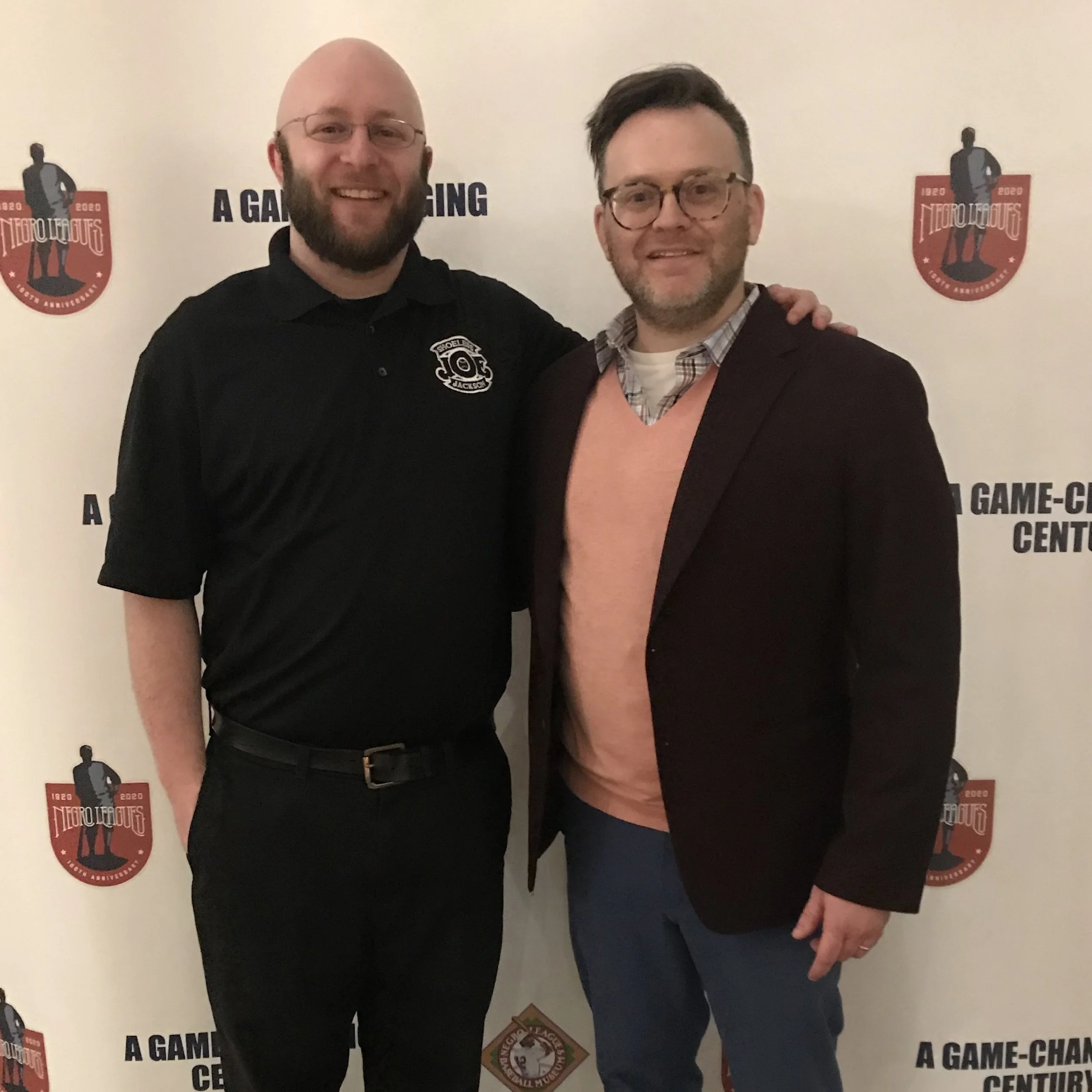
February 13, 2020
My favorite experience at the Negro Leagues Baseball Museum happened on February 13, 2020, the 100th anniversary of the league’s formation.
That night, Graig Kreindler had the grand opening of his Black Baseball in Living Color exhibit, which featured more than 200 hand-painted portraits.
Graig was our guest for Episode 3 of Season 1. You can listen to that episode HERE.
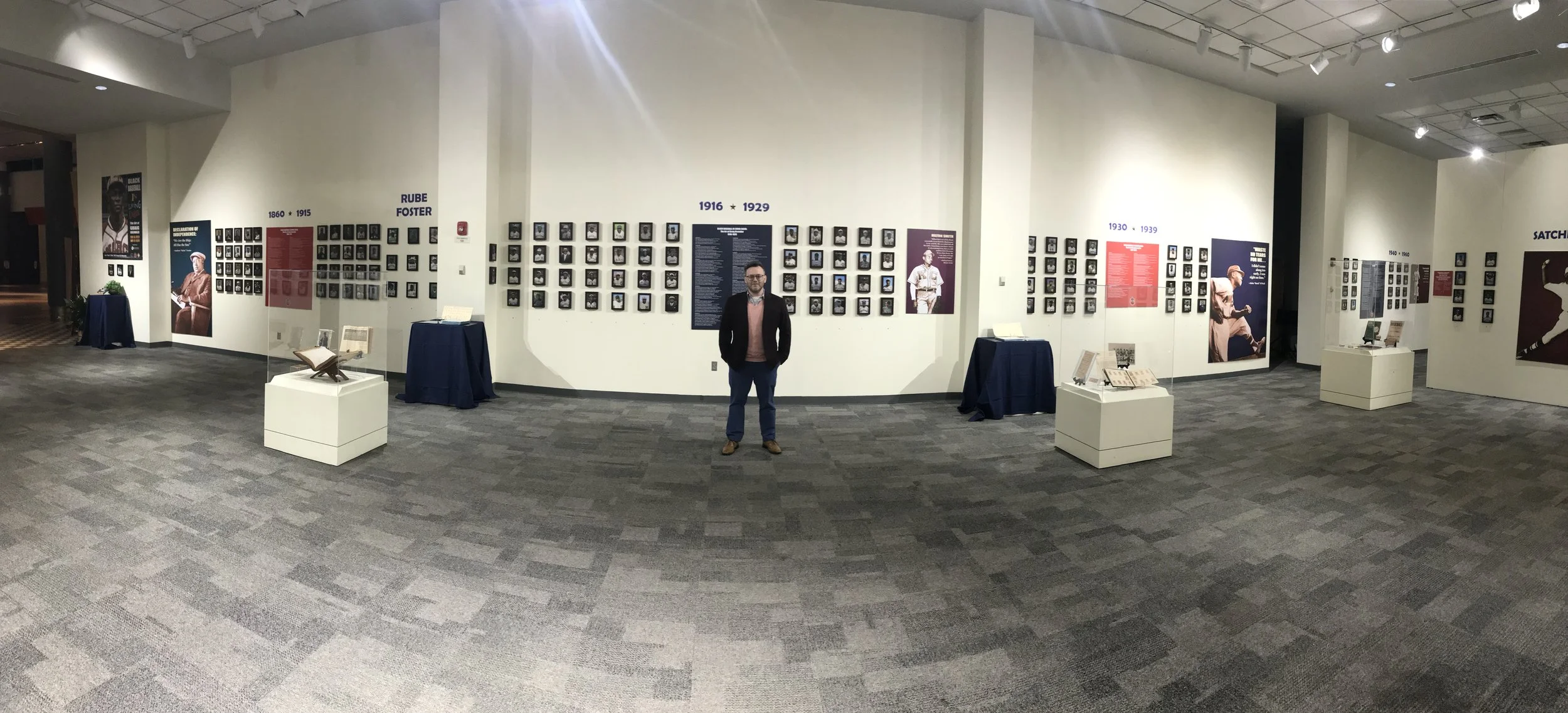
Graig spent three years researching the players, finding their photos, and hand painting the portraits for the exhibit.
Josée Tellier
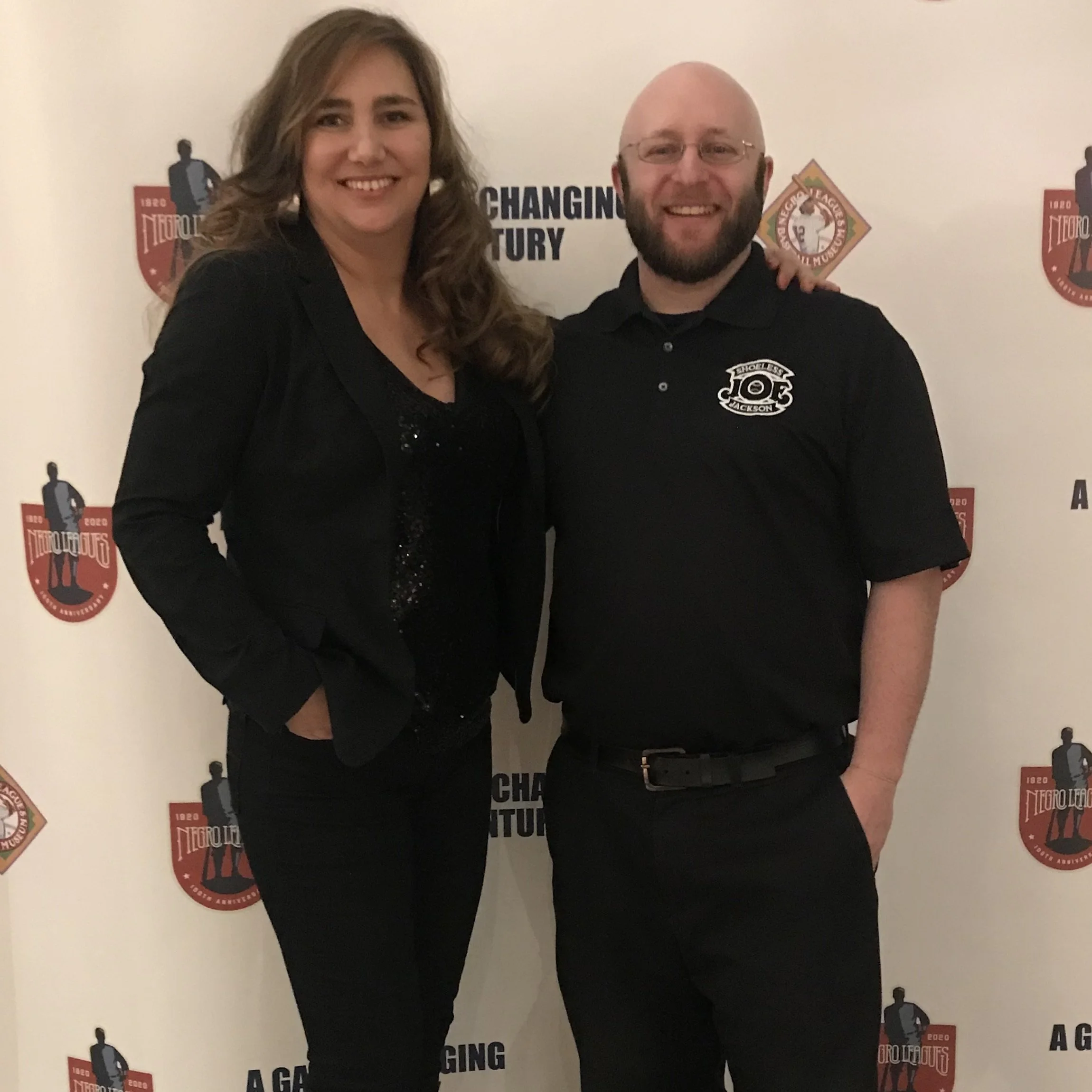
Josée Tellier is an illustrator and Expos connoisseur from Montréal. She flew down for Graig’s exhibit, as well, and the three of us spent a lot of time together that weekend.
Josée was our guest for Episode 8 of Season 2. You can listen to that episode HERE.
Hitting All The Spots
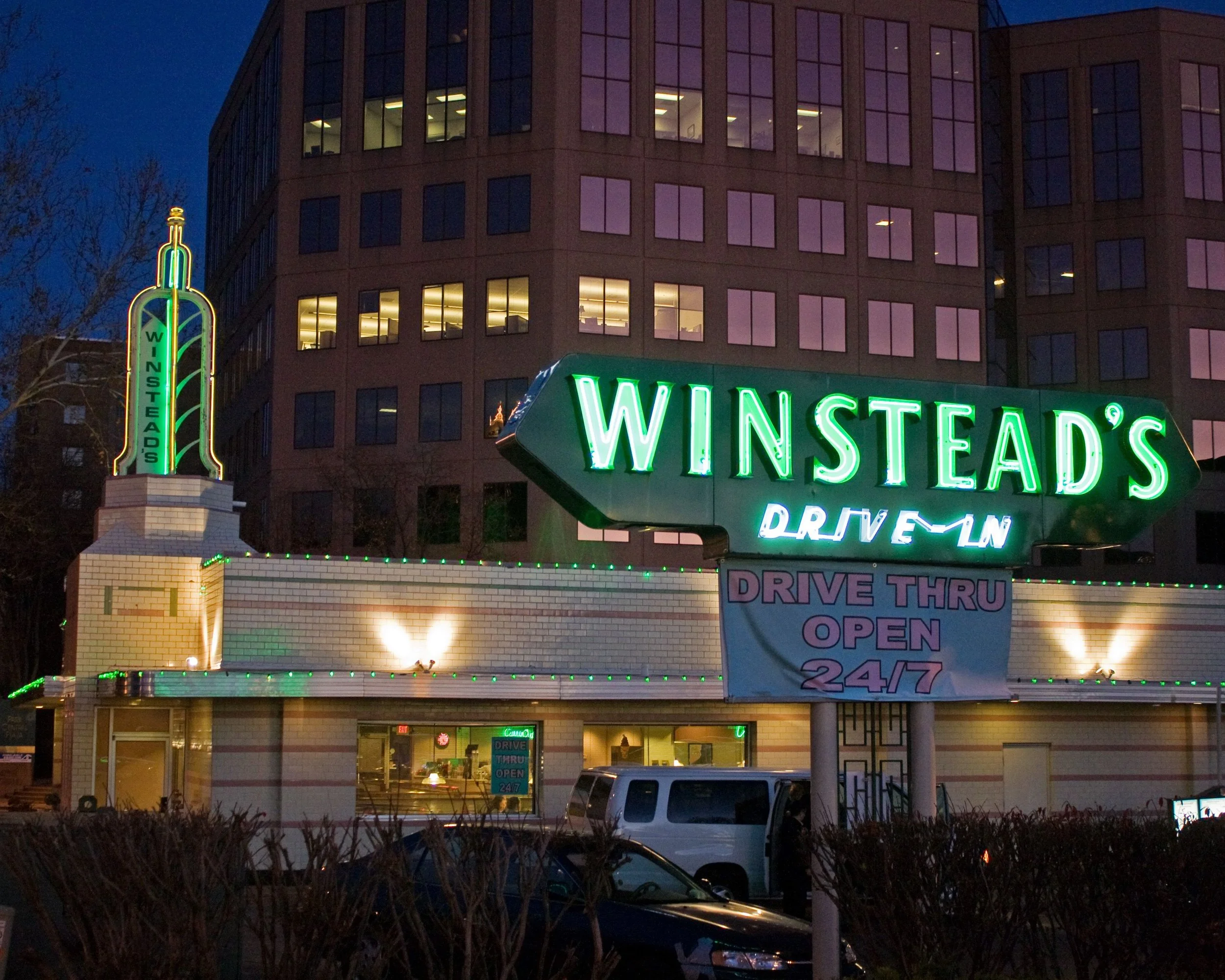
Graig, Josée, and I made sure to eat well that trip, getting barbecue at Gates and milkshakes at Winstead’s, in addition to spending hours inside the Negro Leagues Baseball Museum, of course.
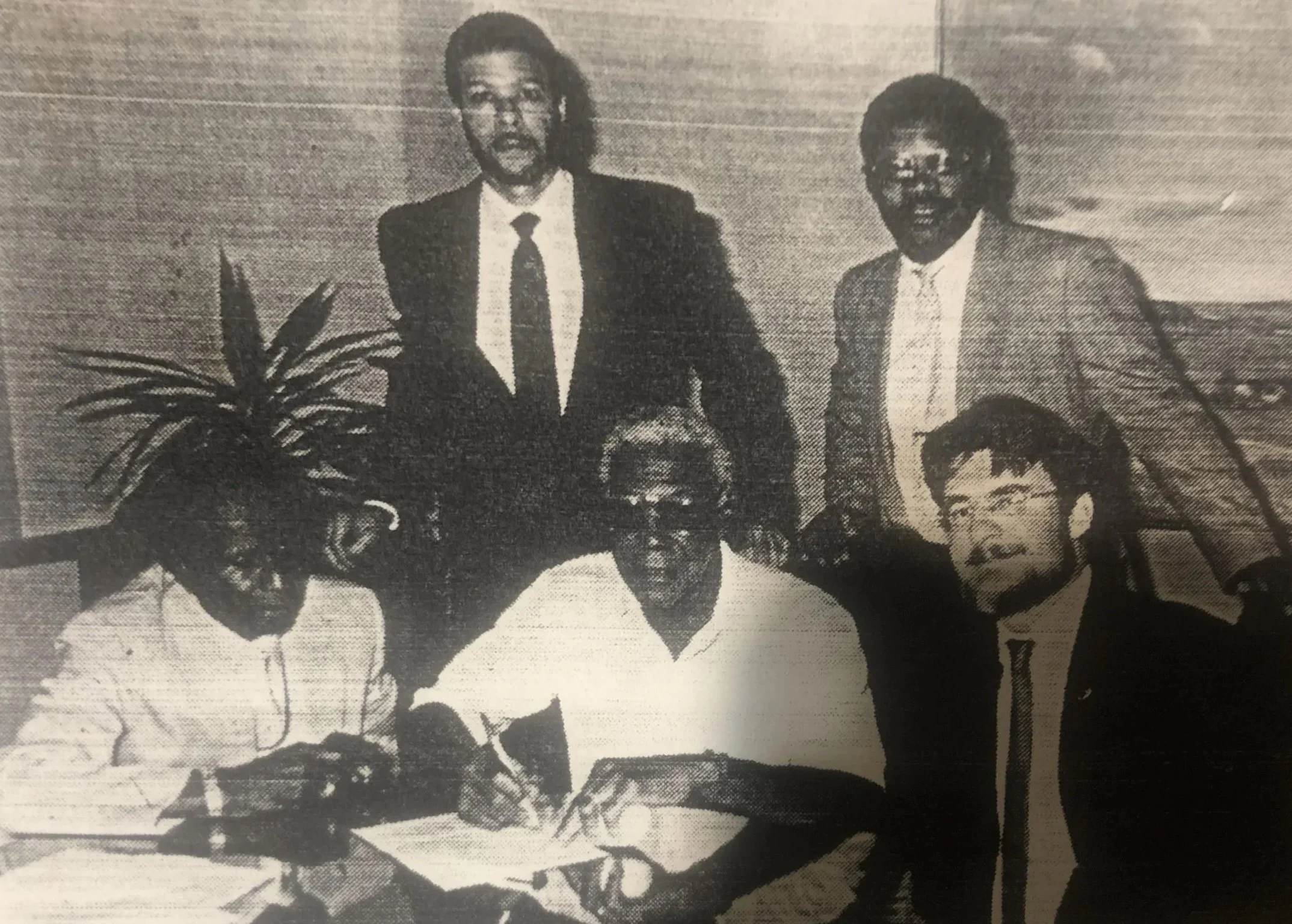
Negro Leagues Baseball Museum
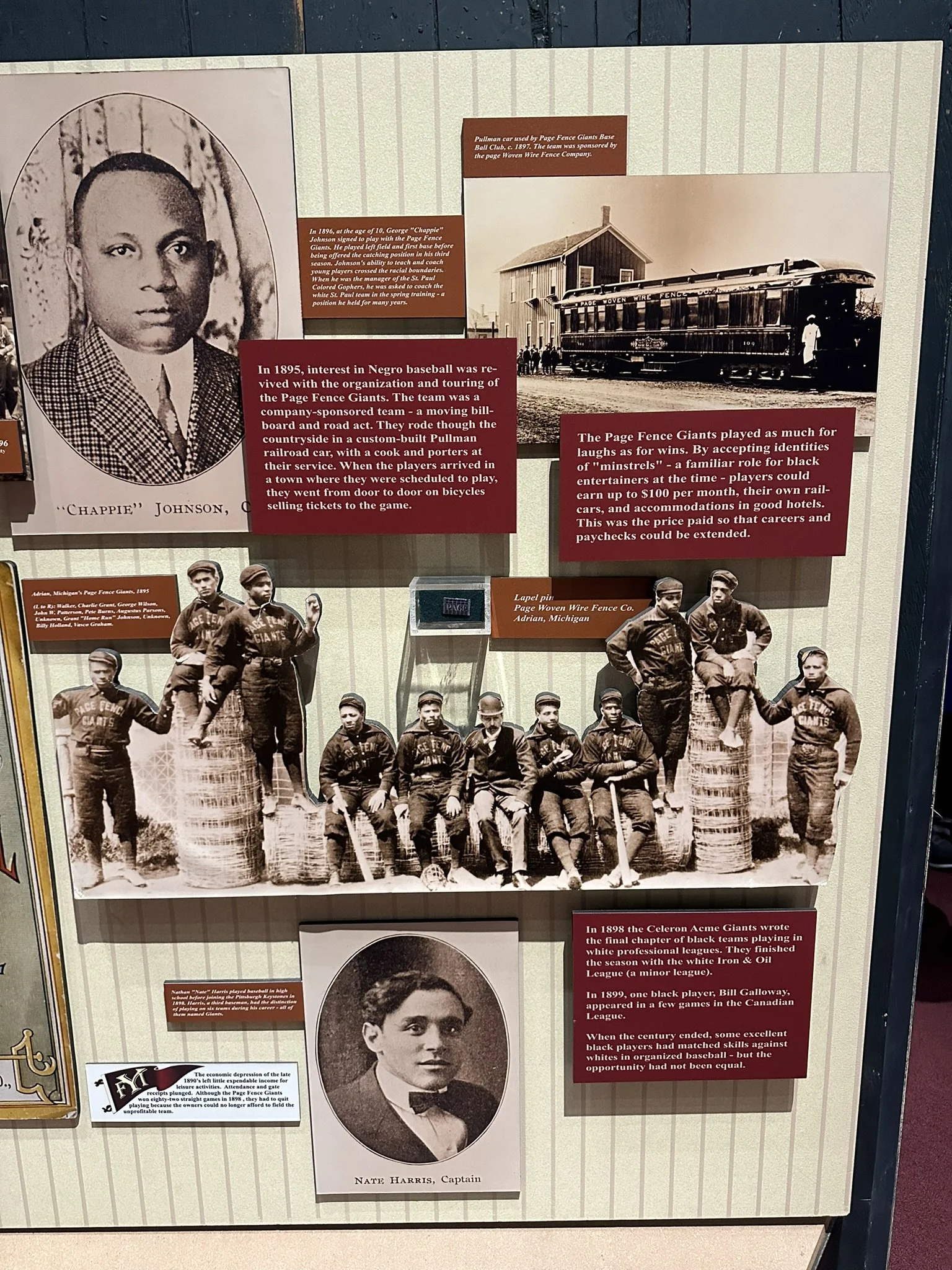
The NLBM was originally founded by a group of five men which included Kansas City Monarchs outfielder Alfred “Slick” Surratt (bottom left), Monarchs first baseman and manager John “Buck” O'Neil (bottom center), founder of the Black Archives of Mid-America Horace M. Peterson III, and friends of the show, researchers, historians, and authors Larry Lester (top left) and Phil S. Dixon (top right).
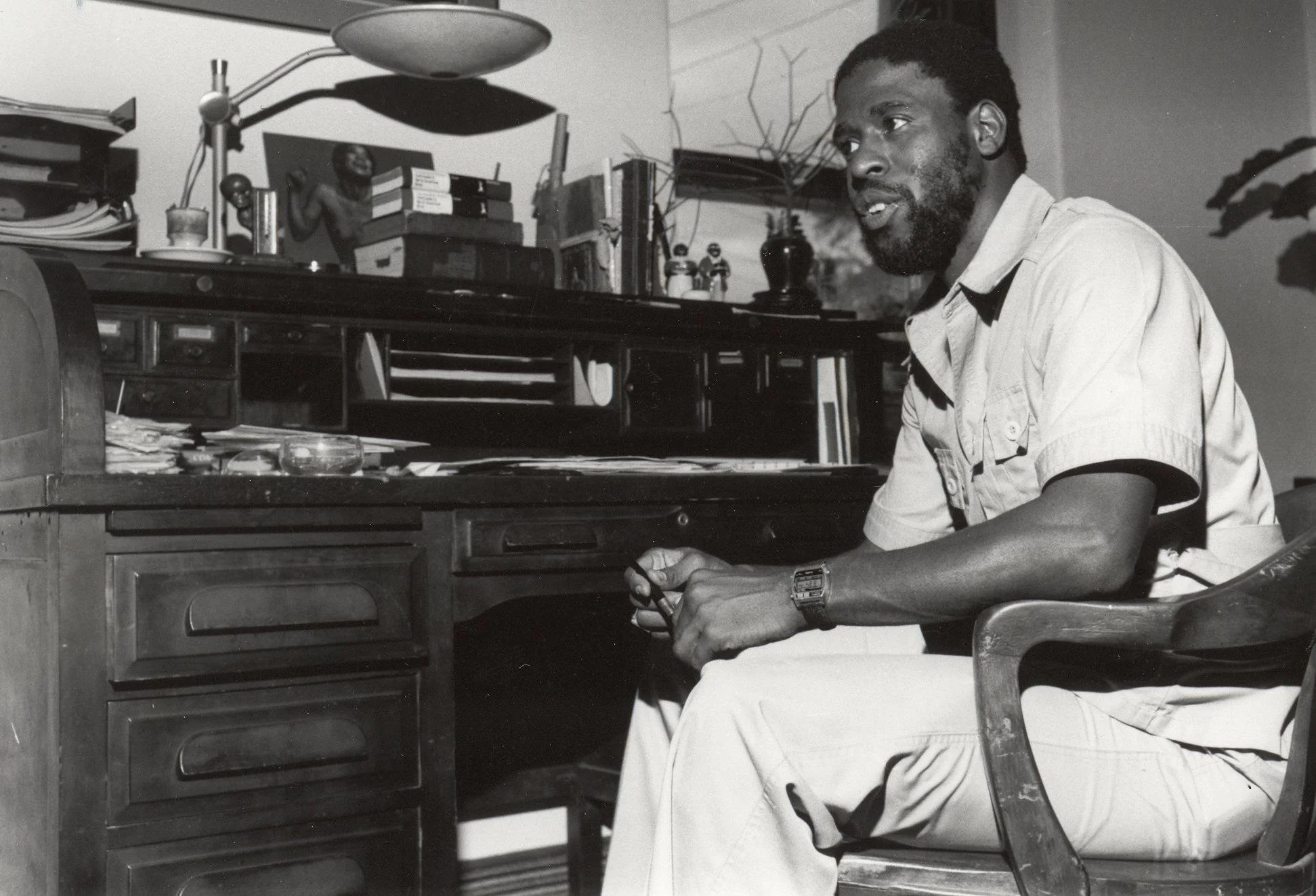
Horace M. Peterson III
Horace M. Peterson III was an archivist and historian. During his studies, he began to collect valuable artifacts and documents in an effort to preserve the history of African-Americans in the Midwest. These collections would form the beginning of the Black Archives of Mid-America, which Peterson founded in 1976 and would serve as its executive director.
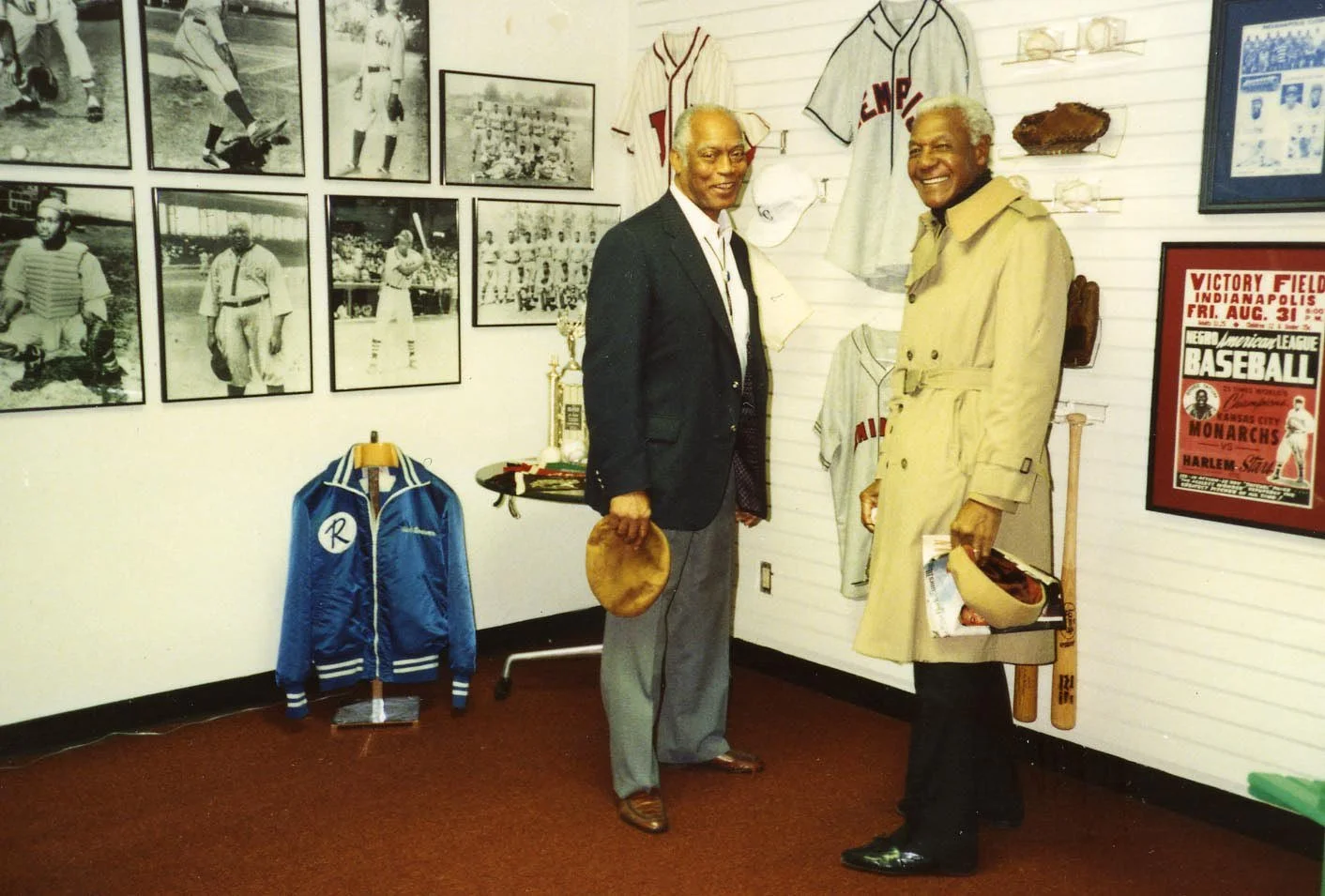
NLBM
The NLBM opened its doors to the public in a tiny, one-room office space in 1991 with a dream of building a permanent facility that would pay rightful tribute to America’s unsung baseball heroes.
Here, Monte Irvin (left) and Buck O’Neil stand in that little office.
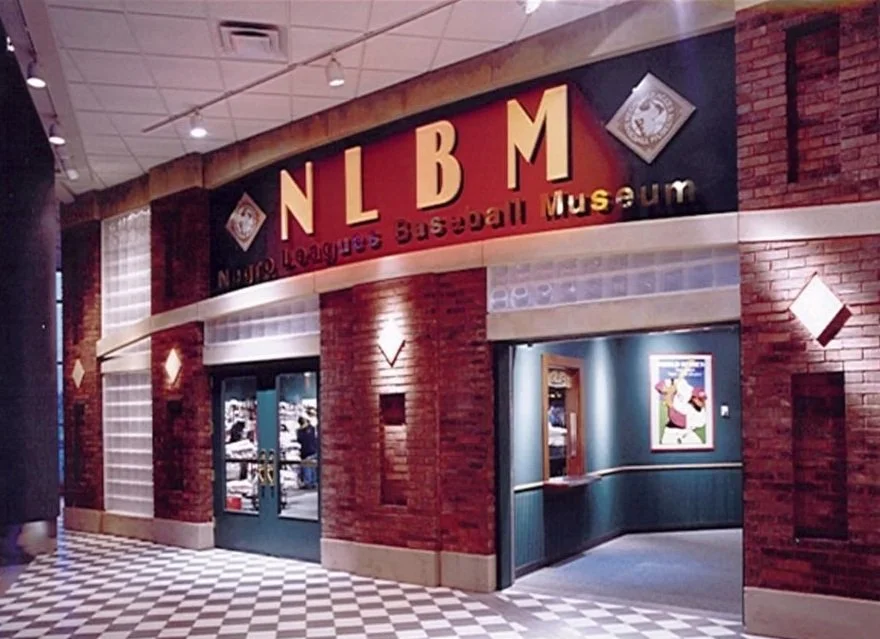
A New Facility
The NLBM moved from that single-room inside the Lincoln Building to a 2,000-square-foot space in 1994, before finally realizing their original dream in November of 1997 when the museum moved again, this time into its new 10,000 square-foot home inside a cultural complex known as the Museums at 18th & Vine, under the leadership of its late chairman, Buck O’Neil.
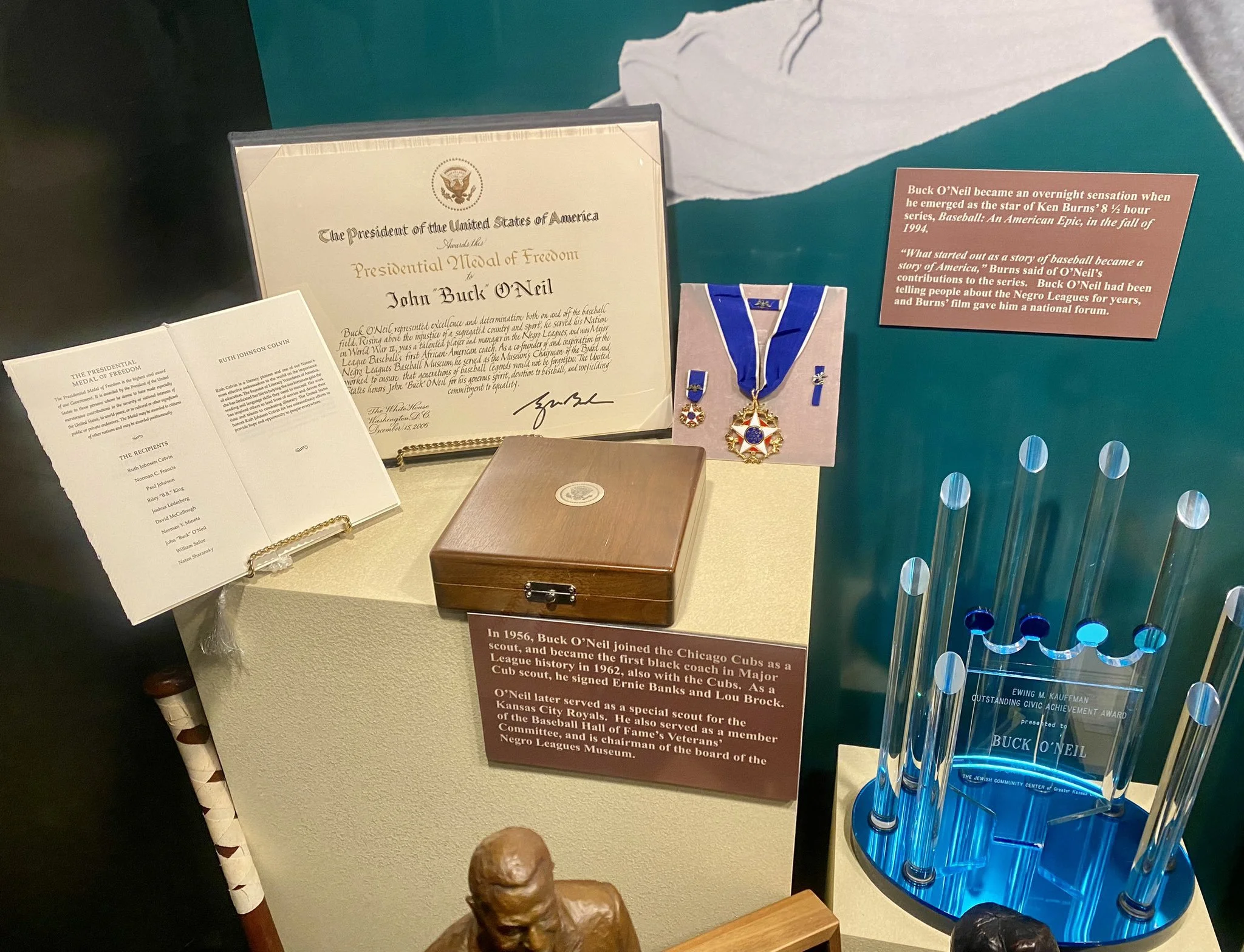
Buck O’Neil
On November 13, 2012, the family of Buck O'Neil donated two items to the museum in honor of what would have been Buck’s 101st birthday. His Presidential Medal of Freedom — awarded posthumously by President George W. Bush — was donated, as well as a miniature replica of the Buck O'Neil statue at the National Baseball Hall of Fame and Museum in Cooperstown, New York.
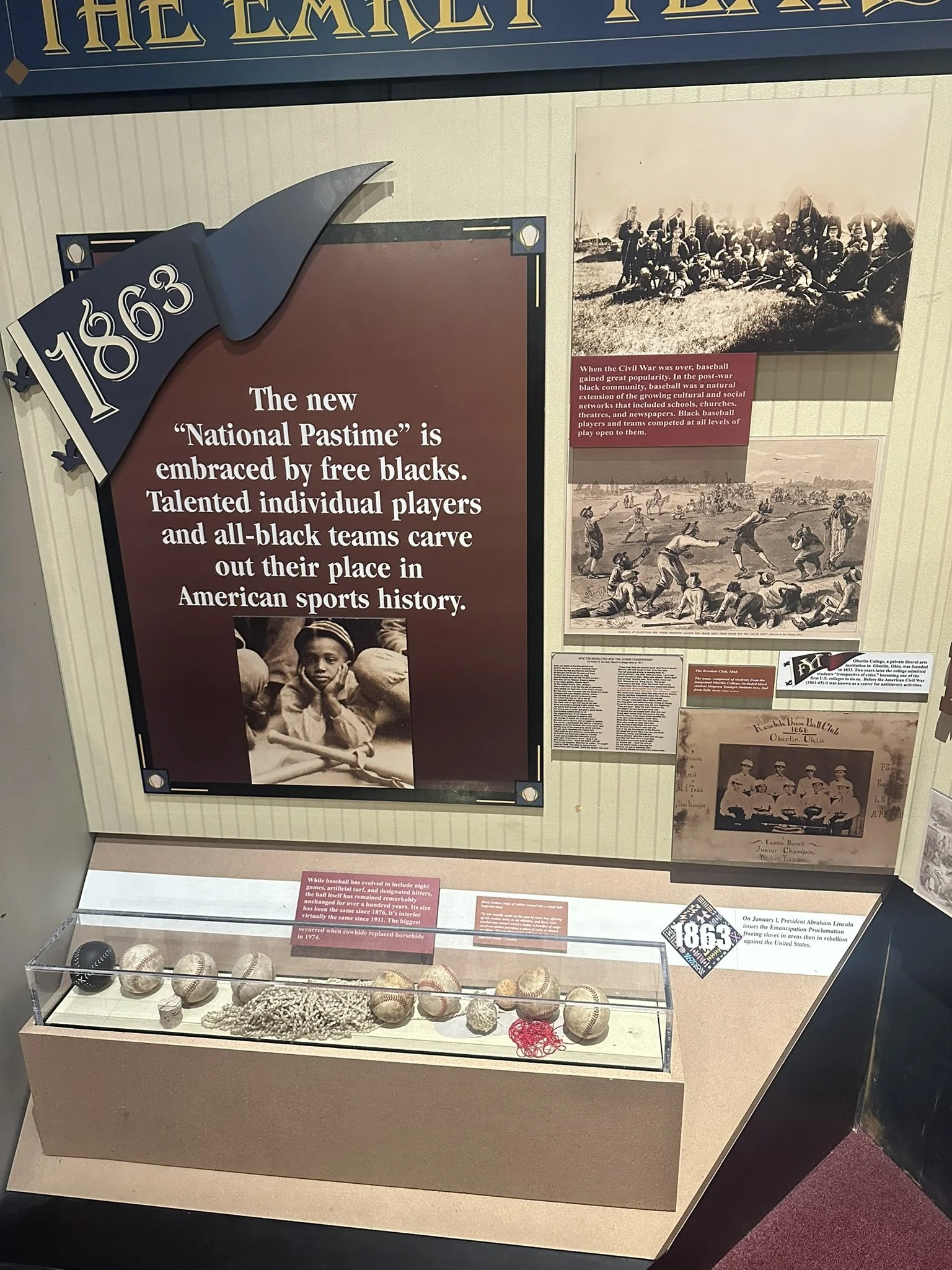
Timeline
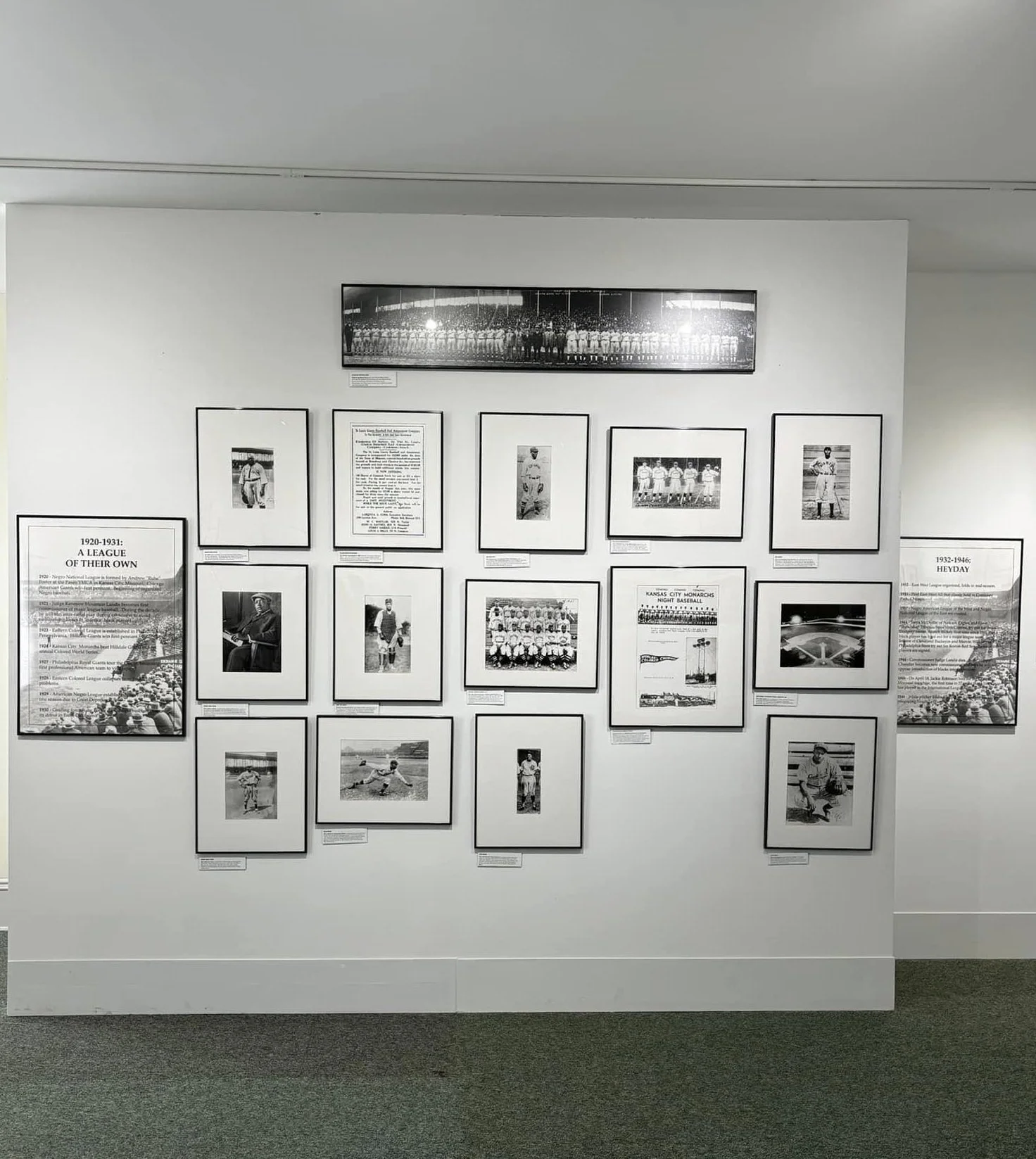
The Negro Leagues Baseball Museum chronologically charts the progress of the Negro leagues with informative placards and interactive exhibits. Its walls are lined with pictures of players, owners, and officials of Negro League baseball from the Negro National League of 1920 through the Negro American League which lasted until 1962, but the history they share at the museum dates back much earlier than that.
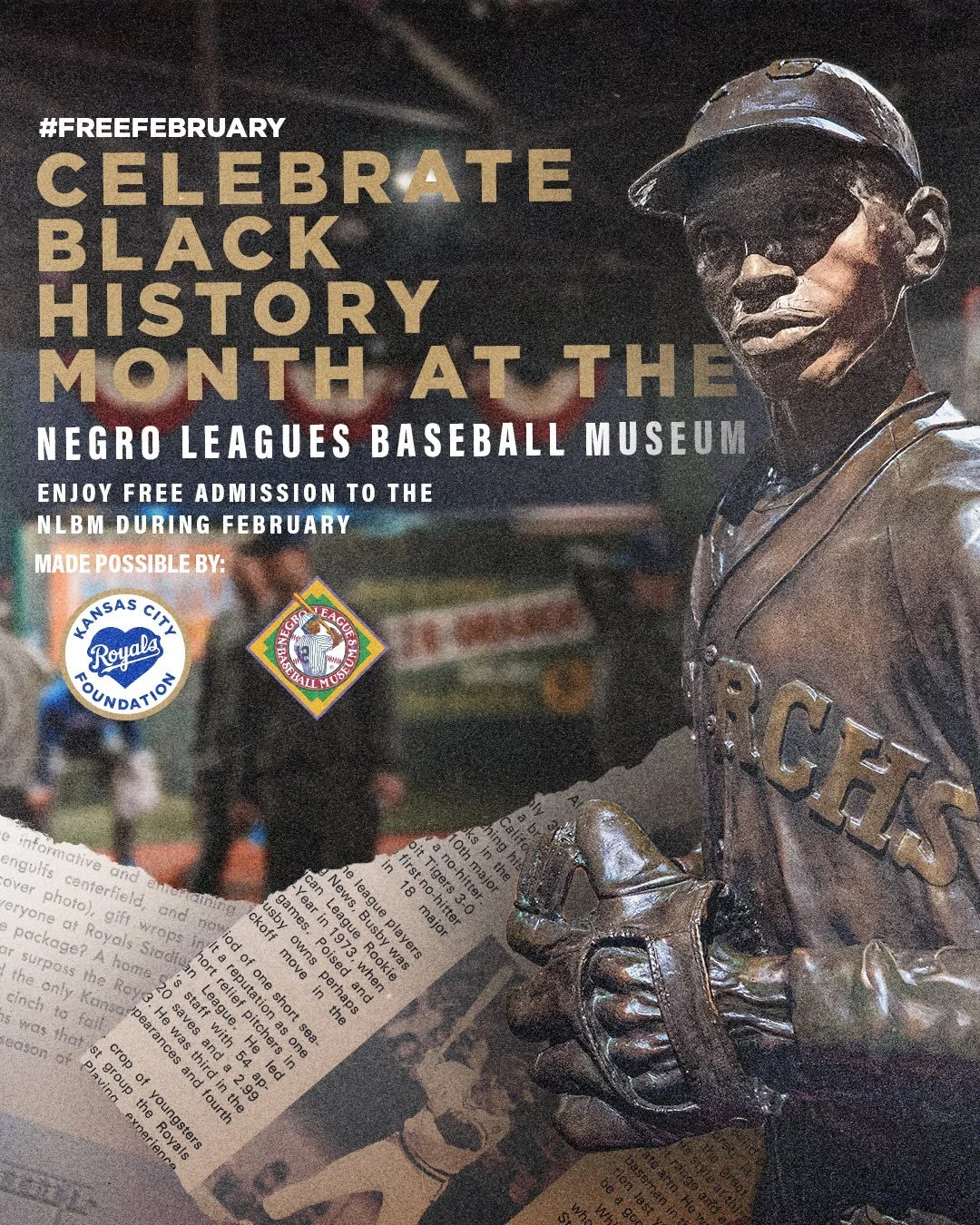
Free February
If you want to see the museum for yourself, there is no wrong time to plan your trip to Kansas City, but the month of February provides you with a really special opportunity.
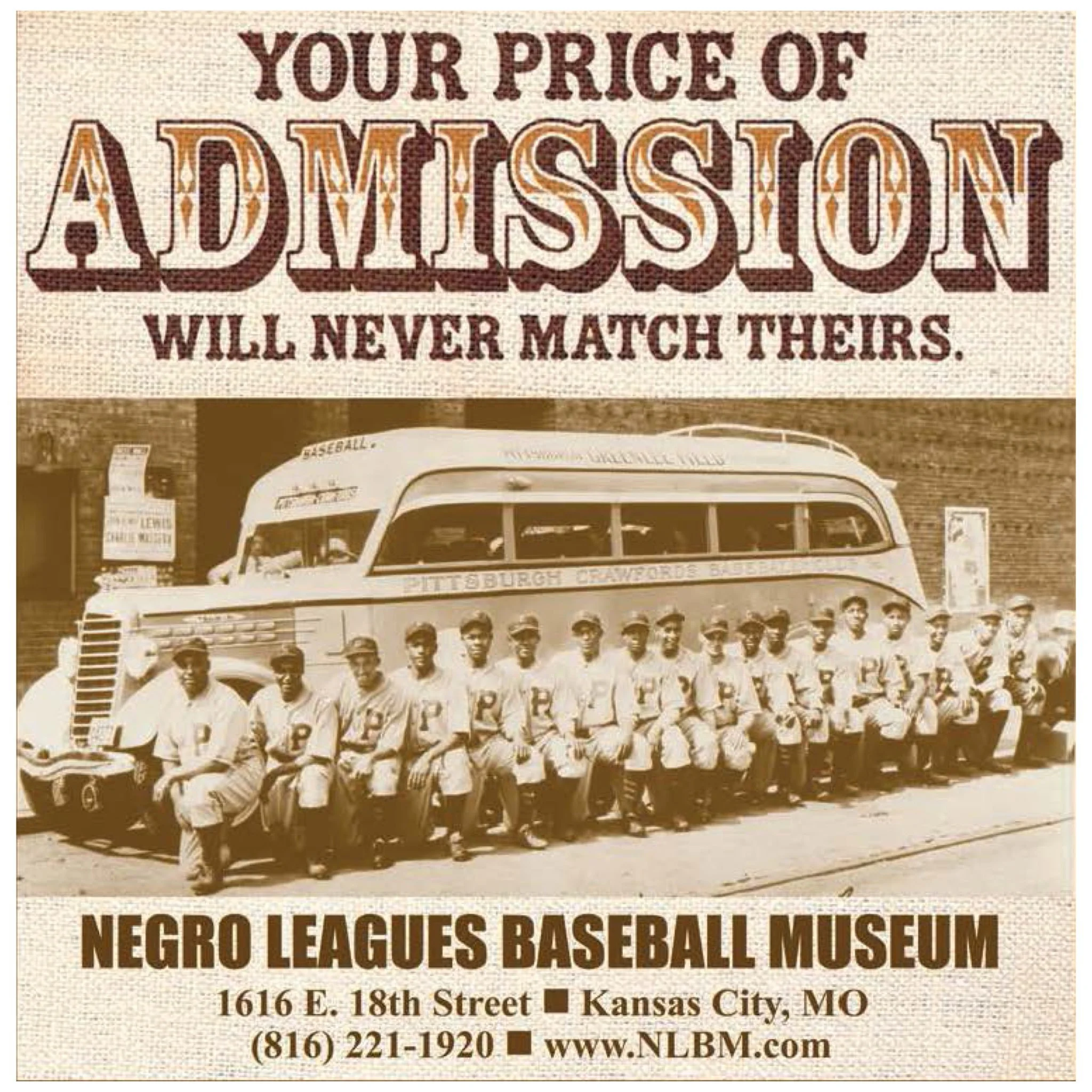
In 2026, for what is now the 5th consecutive year, the Kansas City Royals Foundation is making admission to the Negro Leagues Baseball Museum COMPLETELY FREE to all who visit during the month of February.
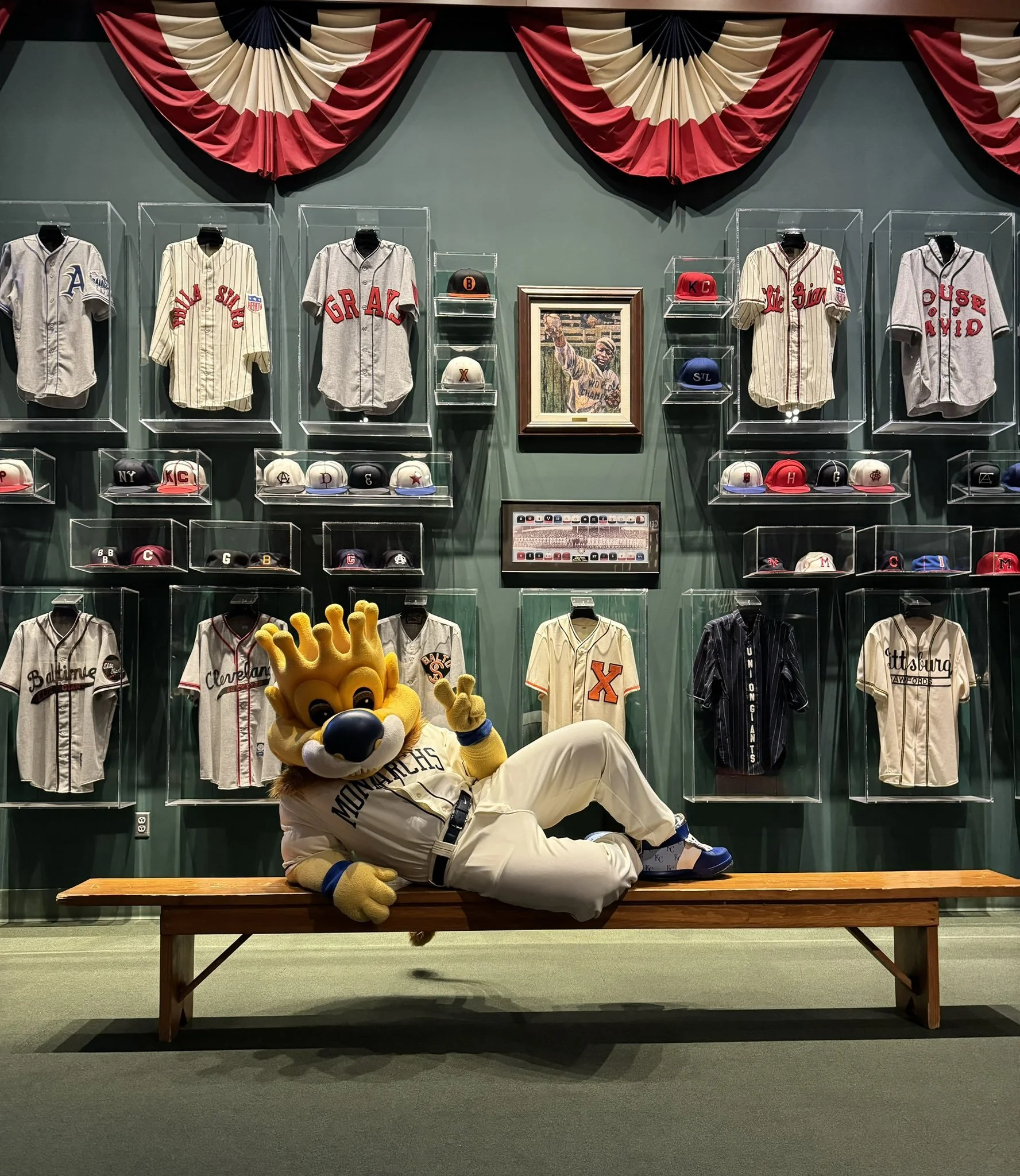
Proud Supporters
The Kansas City Royals began this tradition as a way to honor Black History Month in February and drive supporters to the museum, and it’s grown in support every year since.
The initiative is just one of several that the Royals do to support the museum throughout the calendar year.
Bob Kendrick
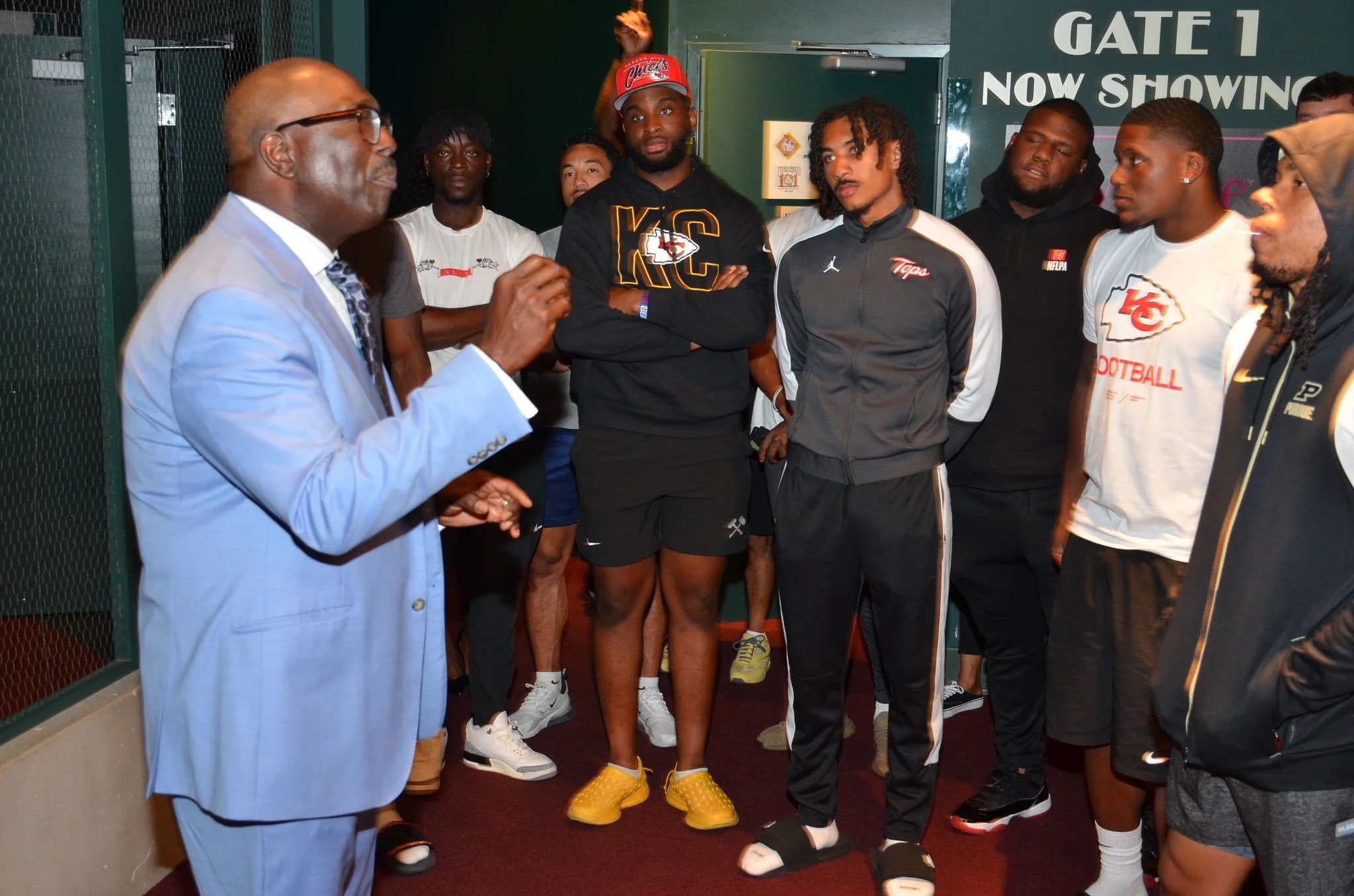
If you’re lucky, when you visit, you’ll have a chance to hear Bob Kendrick talk, like the Kansas City Chiefs were able to on this tour of the museum.
Just in case you’re not that lucky when you plan your own trip, I got Bob to share some great stories with us today.
Black Diamonds
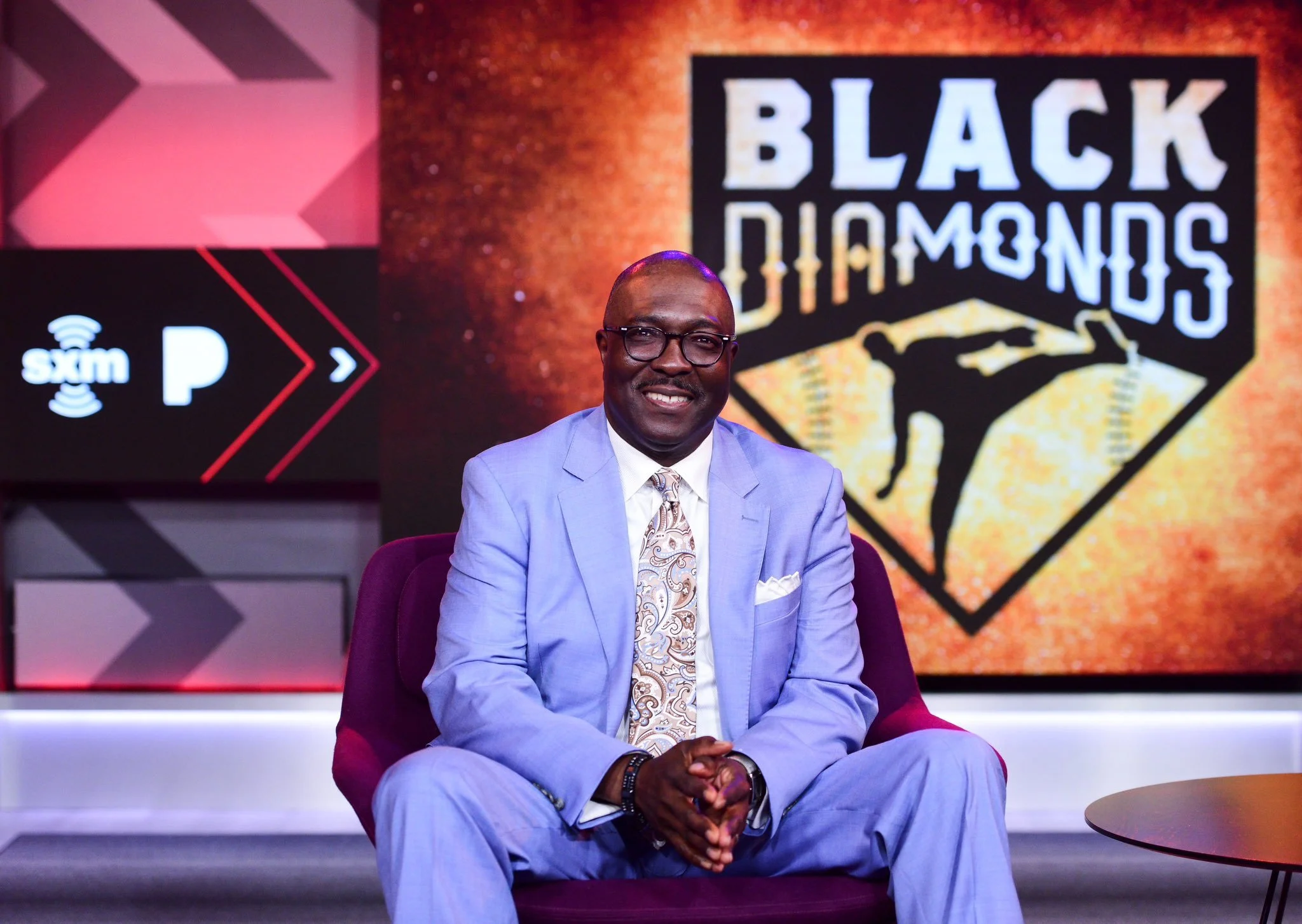
By the end of this episode, if you’re still craving more Negro Leagues stories from Bob, I highly recommend checking out his amazing podcast, Black Diamonds, which highlights the players, people, and events which shaped the Negro Leagues.
Listen on Apple Podcasts
Listen on Spotify
Basketball Star
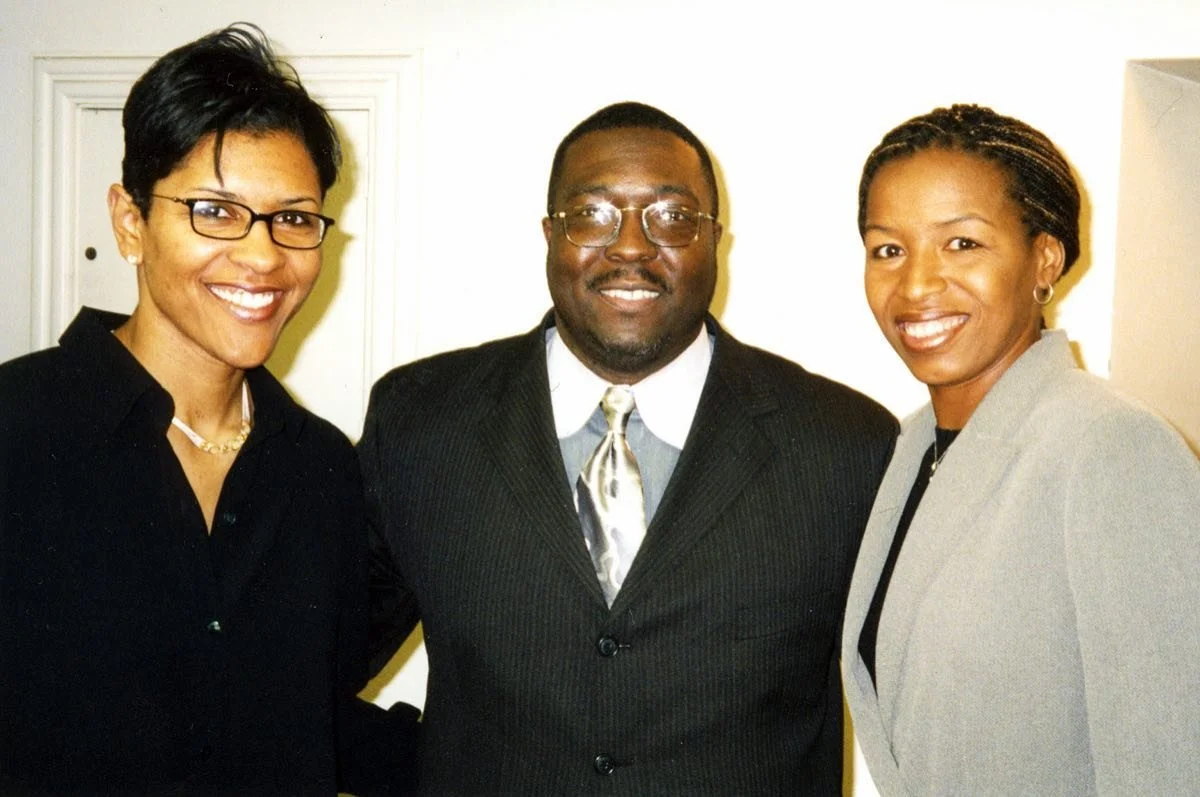
While injuries have kept him off the court for some time now, Bob received a basketball scholarship to attend Park College in Parkville, Missouri in 1980. Here he is with basketball legends Lynette Woodard (left) and Cynthia Cooper.
Cumberland Posey
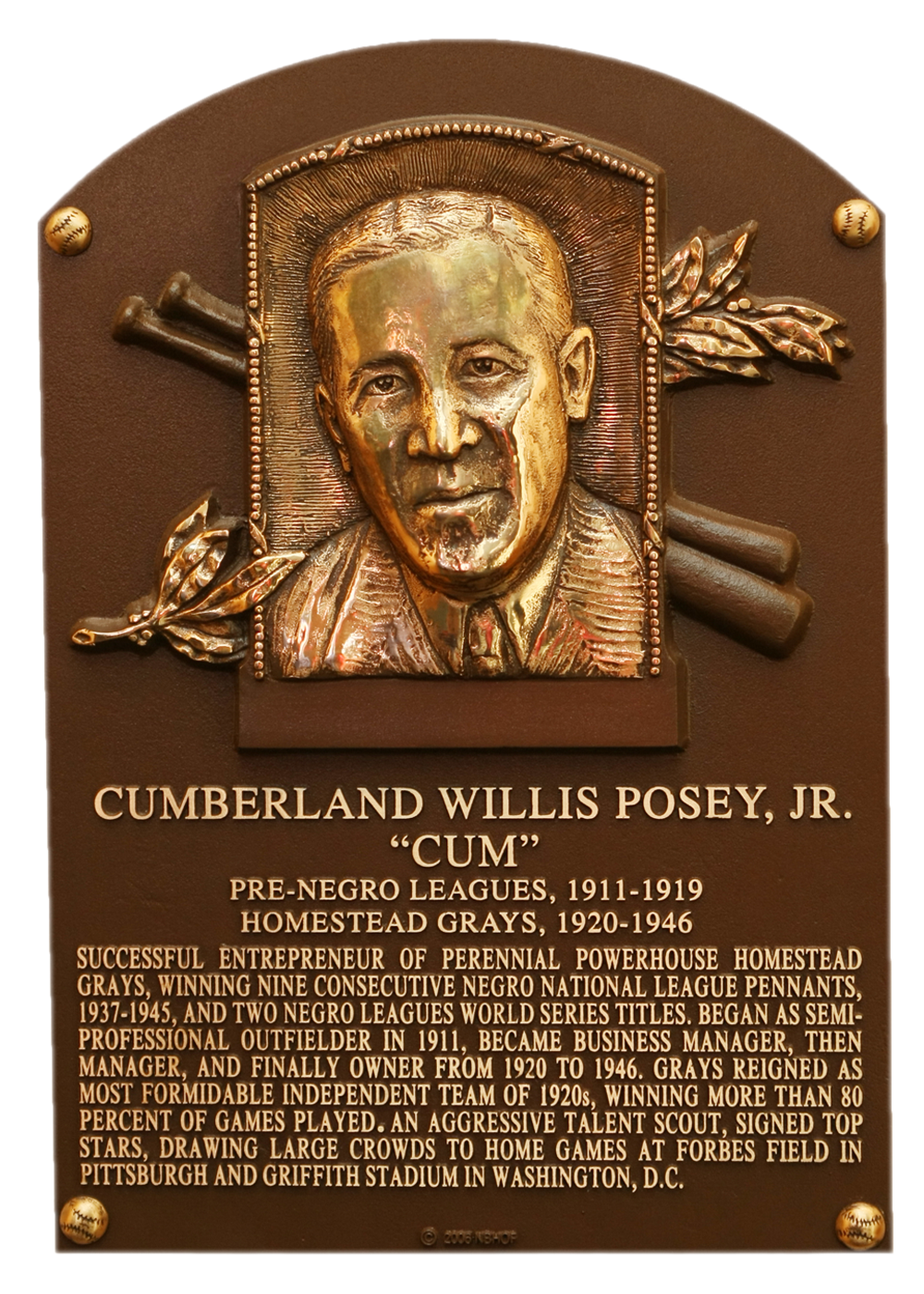
Cumberland Posey Jr. was the best African American basketball player of his time, playing from the early 1900s through the mid-1920s. He retired from basketball in the late 1920s to focus exclusively on the business of baseball and on his weekly sports column in the Pittsburgh Courier, "In The Sportive Realm."
In baseball, Posey played with the Homestead Grays in 1911, was manager by 1916, and became owner in the early 1920s. In a quarter-century running the team, he built it into one of the powerhouse franchises of black baseball, winning numerous pennants, including nine consecutively from 1937 to 1945.
He was elected to the Naismith Memorial Basketball Hall of Fame in 2016, and was elected to the Baseball Hall of Fame in 2006.
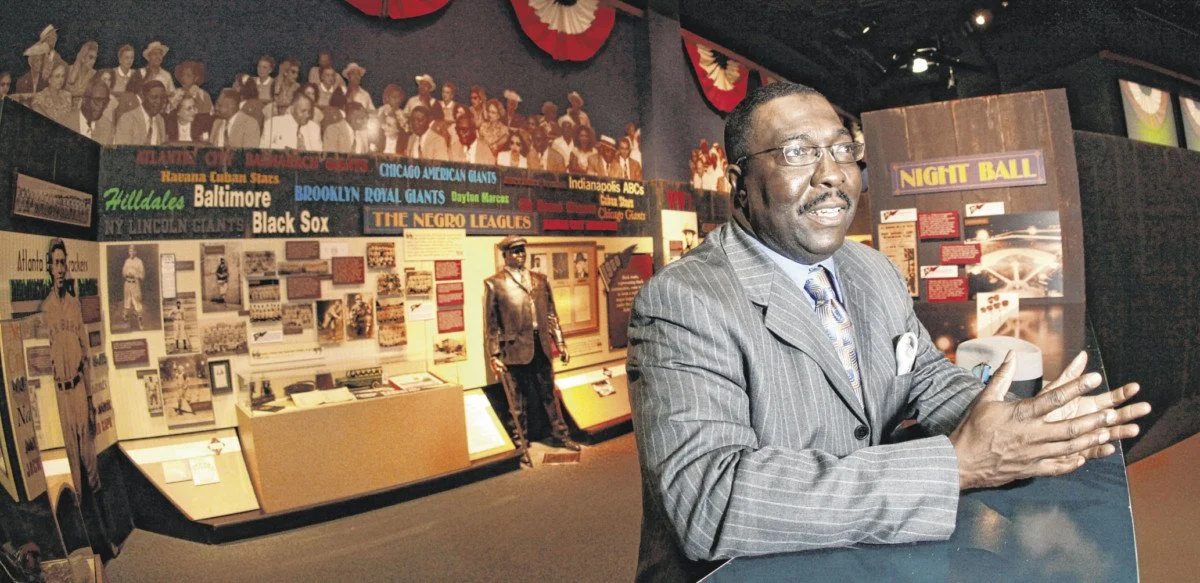
Volunteer
Bob’s association with the Negro Leagues Baseball Museum began as a volunteer in 1993 while he was working for the Kansas City Star. He immediately fell in love with the museum and its mission, and began taking on a larger role.
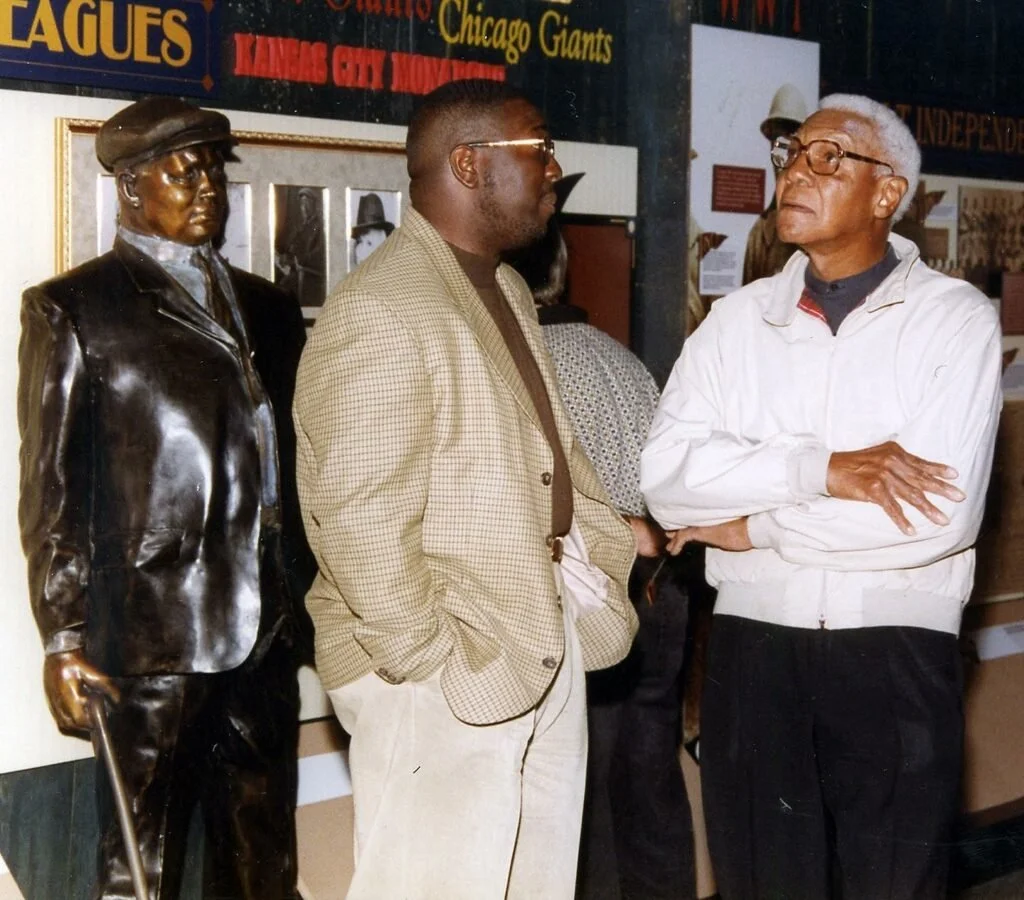
Buck O’Neil
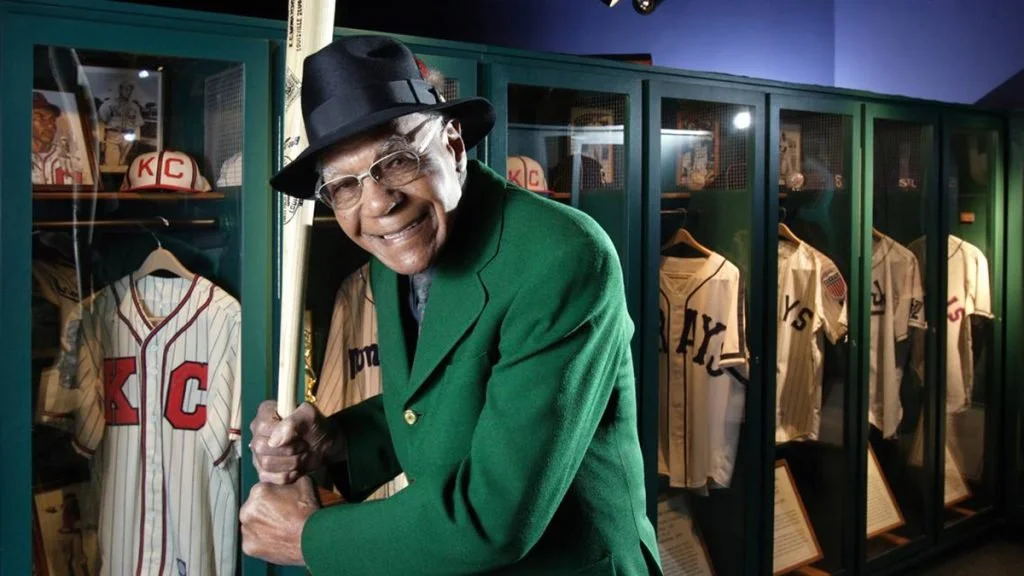
Bob’s passion for the Negro Leagues was largely influenced by his relationship with Buck O’Neil, who was one of the founders of the Negro Leagues Baseball Museum, and a constant presence at the museum while he was alive.
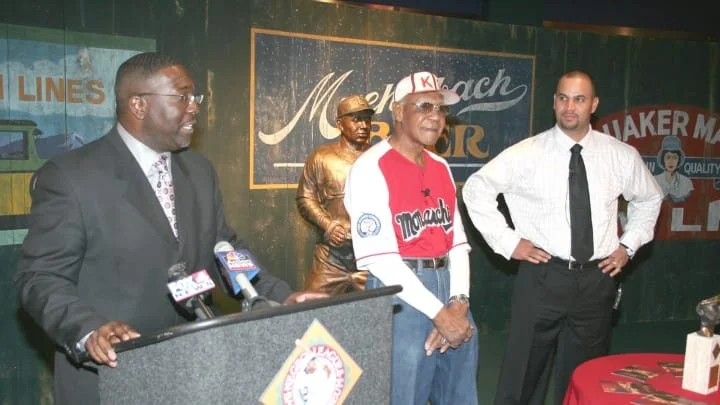
“Once You’re Bitten By The Buck Bug, It’s A Wrap!”
Bob says he just wanted to be on Buck’s team, and help him in any way that he could.
Here they are with Albert Pujols at the NLBM.
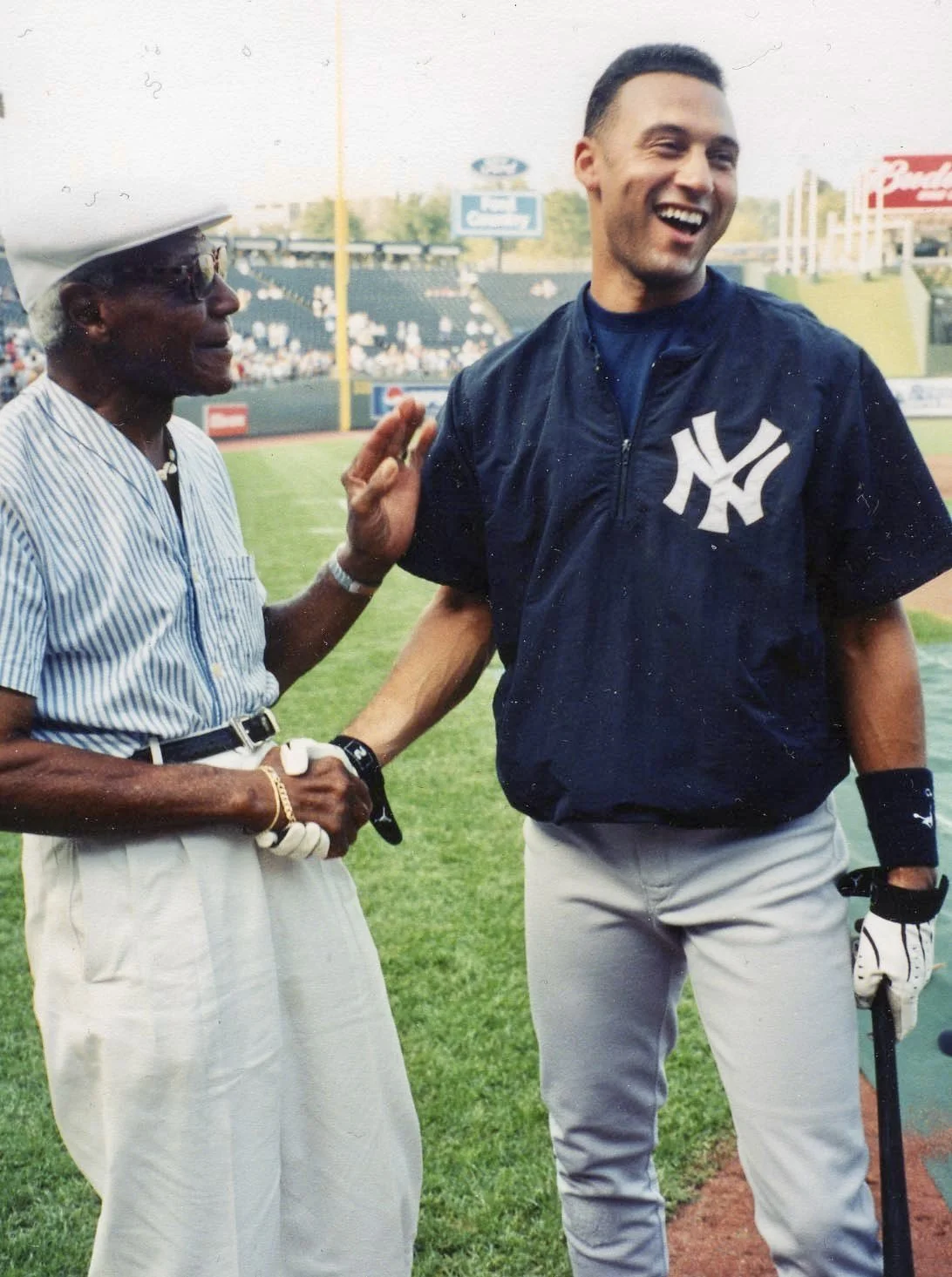
Love At First Sight
“I was no different than everybody else who met Buck for the first time,” Bob notes. “It was love at first sight!”
Here is Buck with Hall of Famer Derek Jeter.
A Civil Rights Institution
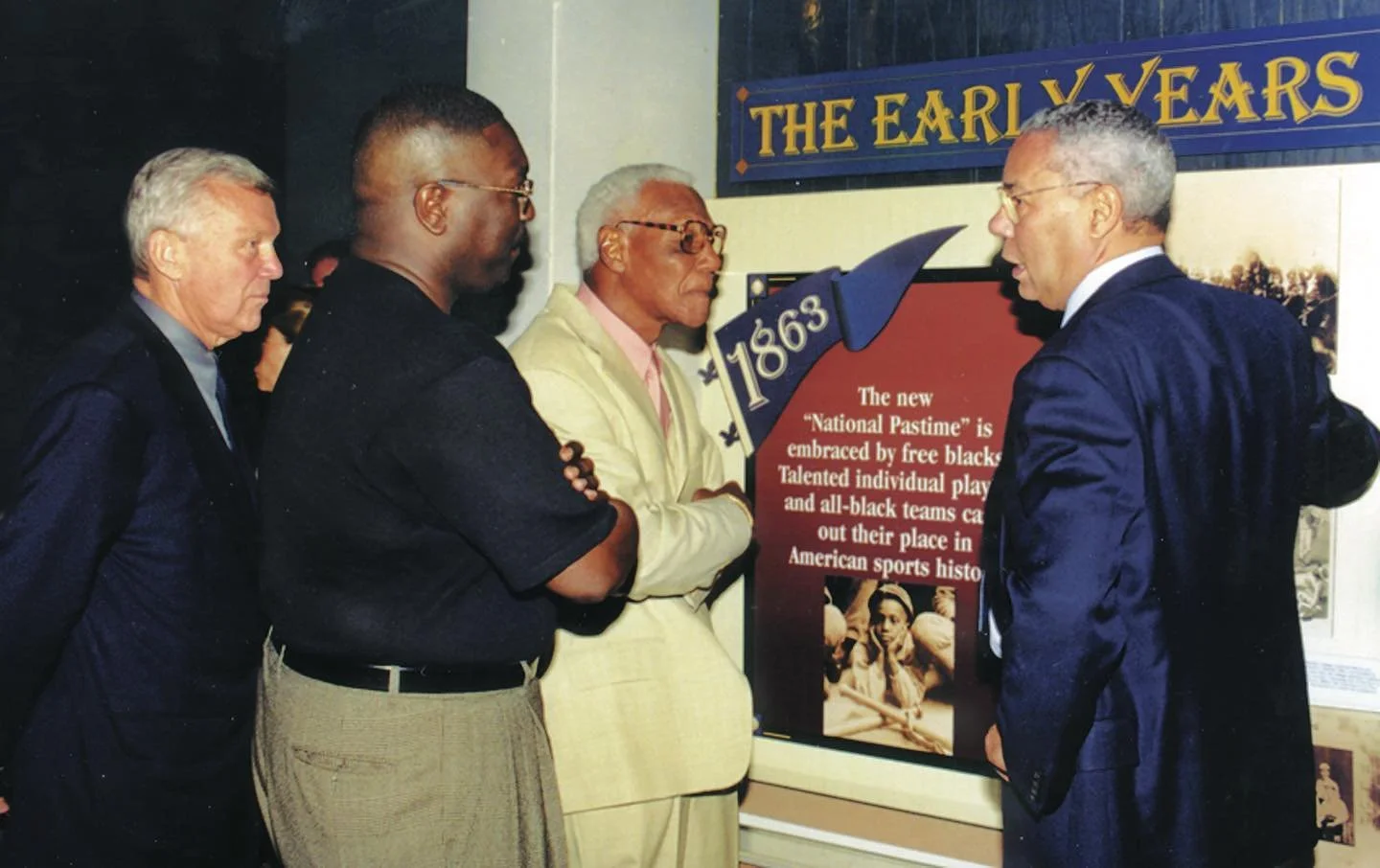
The Negro Leagues Baseball Museum is one of this country’s preeminent social justice Civil Rights institutions, it’s just seen through the lens of baseball.
Pictured here, left to right: Landon Rowland, Bob Kendrick, Buck O’Neil, and Colin Powell
Discover Greatness
The Negro Leagues Baseball Museum has created five uniquely different national traveling exhibitions that offer interesting and entertaining perspectives on the scope and magnitude of the professional Negro Baseball Leagues and their impact on the social advancement of America.
Negro Leagues Béisbol
Shades of Greatness
Buck O’Neil: Right On Time
Barrier Breakers: From Jackie To Pumpsie
If you would like to inquire about booking any of these traveling exhibits, you can do that HERE.
Buck’s Wisdom
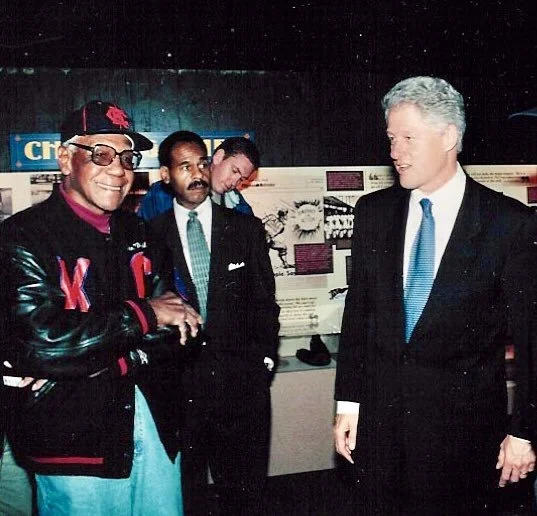
It was through Buck O’Neil’s infinite wisdom that the Negro Leagues Baseball Museum was established at Kansas City’s historic 18th & Vine Jazz District.
The museum’s financial success has allowed for a rebirth of the formerly thriving neighborhood, and has served as a catalyst to turn the area into a world-class tourist destination once again.
A New Facility
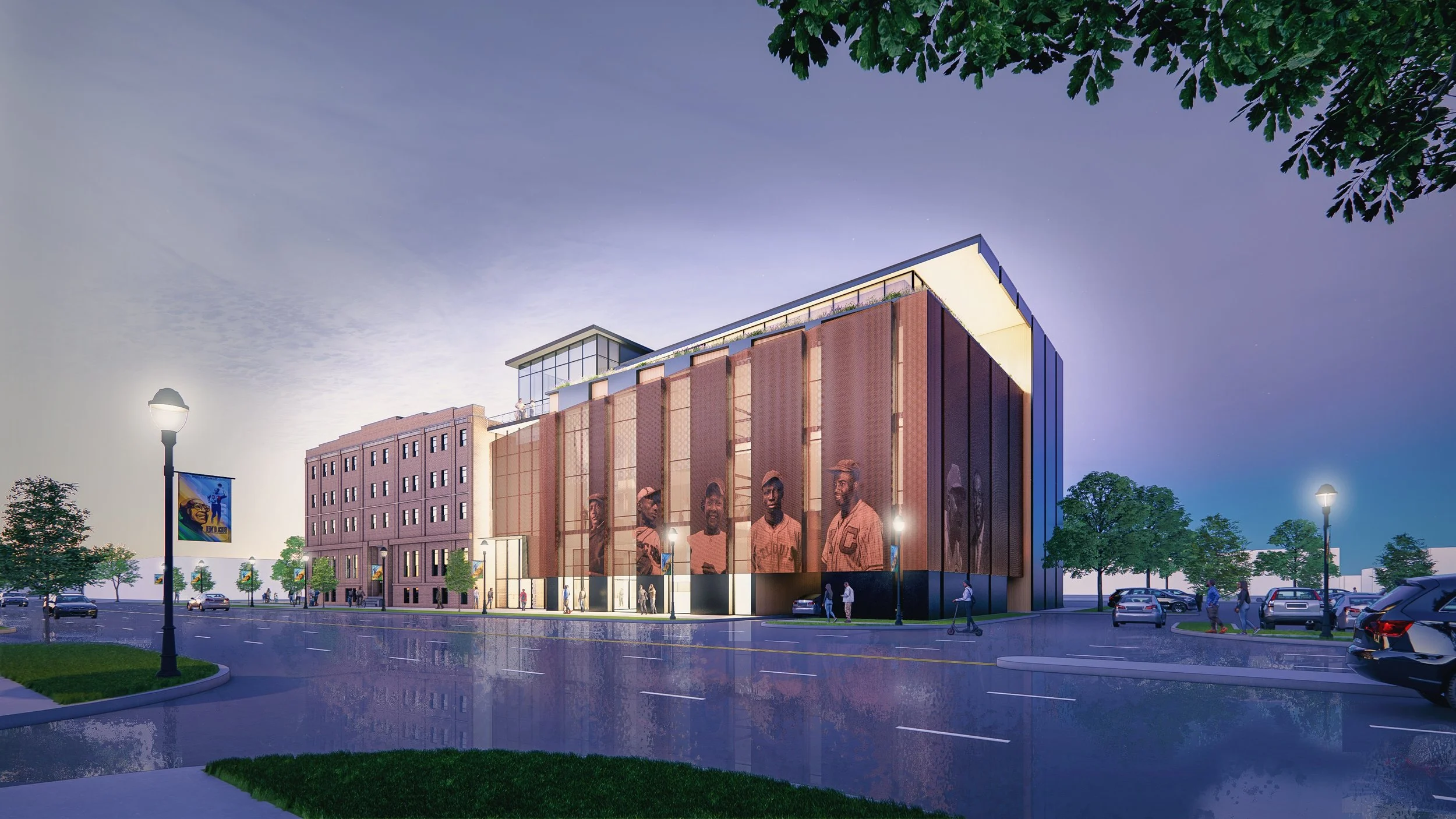
In May of 2023, the museum announced that it is fundraising for a new 30,000-square-foot facility and campus, including a seven-story hotel just north of the Paseo YMCA.
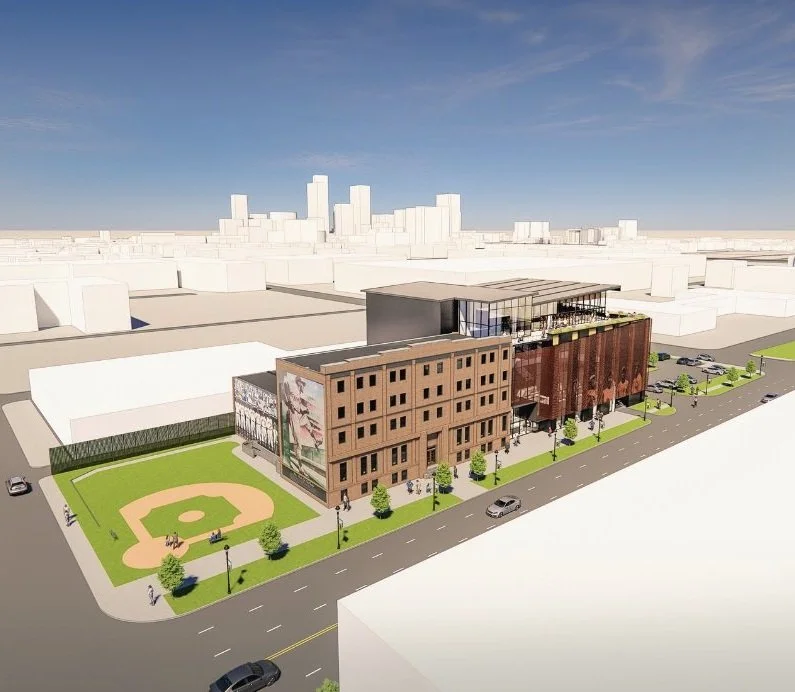
Buck O’Neil Education And Research Center
The YMCA building will become the Buck O’Neil Education and Research Center.
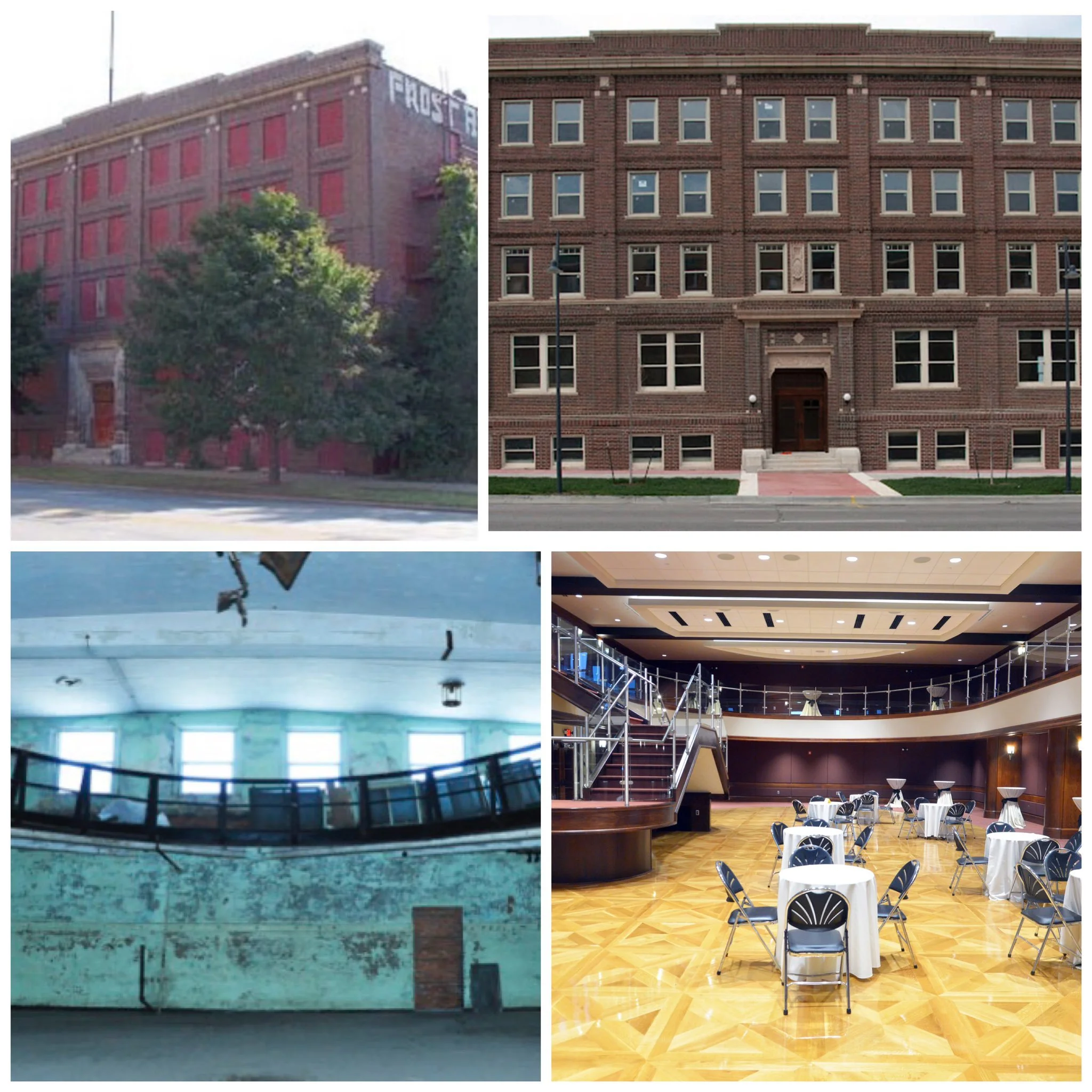
Paseo YMCA
Thanks to the help of the Negro Leagues Baseball Museum, the Paseo YMCA has undergone some major transformations in the past few decades. As the museum campus continues to be built nearby, it will continue to undergo even more wonderful changes.

A New Hotel
A 7-story hotel will be constructed as part of the museum’s plans, allowing for visitors from all over the world to enjoy the world’s first Negro Leagues campus.
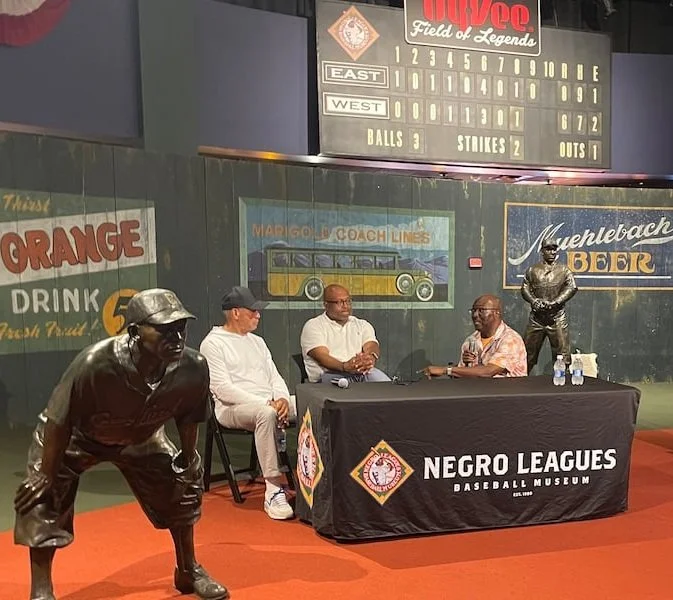
Reggie Jackson
Reggie Jackson is involved with the NLBM and is helping to make the museum’s new campus a reality.
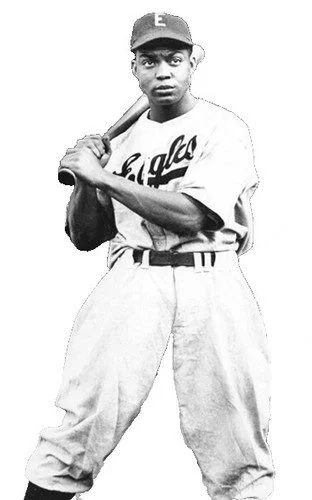
Martinez Jackson
Reggie Jackson’s father, Martinez Jackson, was half Puerto Rican and worked as a tailor. In addition to playing second base for the Newark Eagles of the Negro Leagues, he also drove the team bus and acted as their traveling secretary.
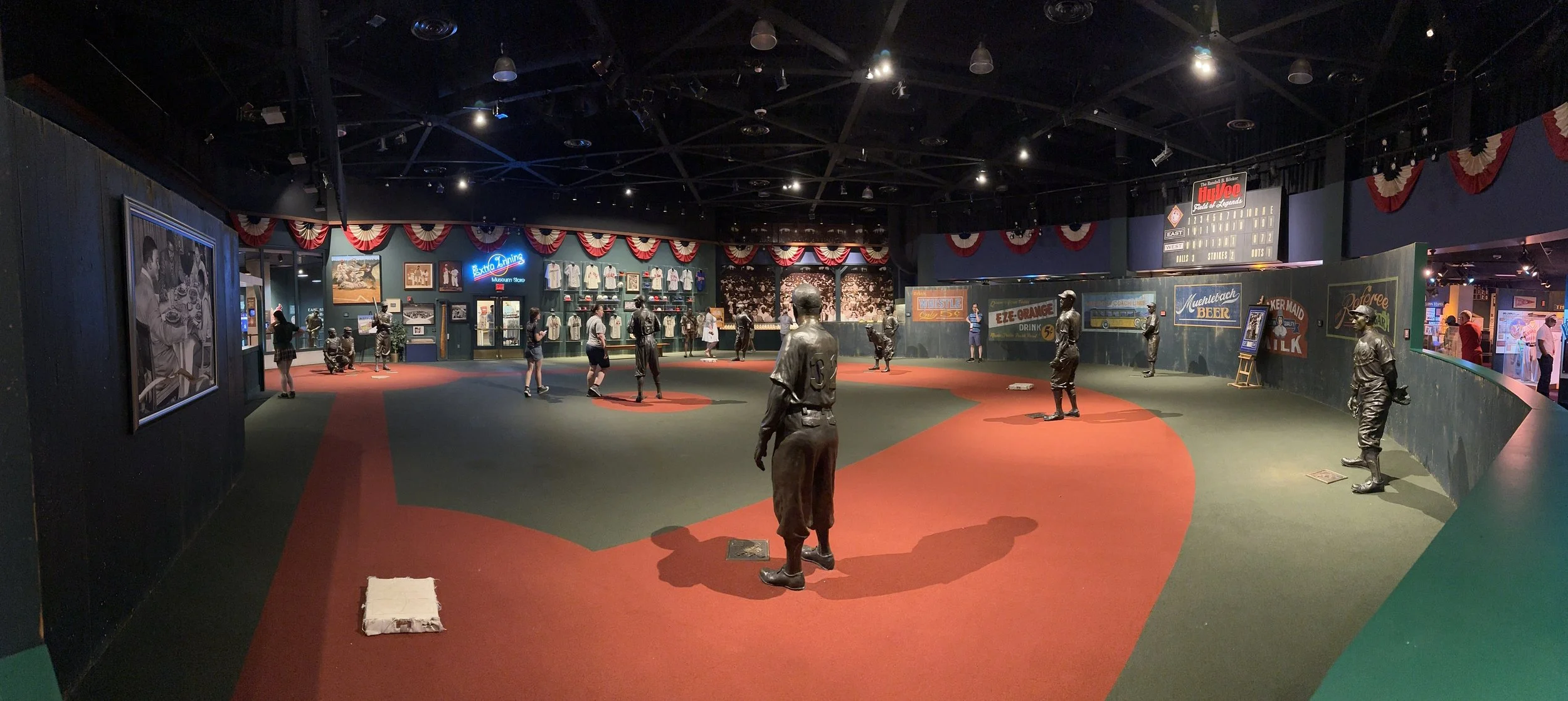
The Field of Legends allows visitors to walk onto a baseball diamond adorned by nearly life-sized bronze statues of thirteen larger-than-life figures from Negro league history.
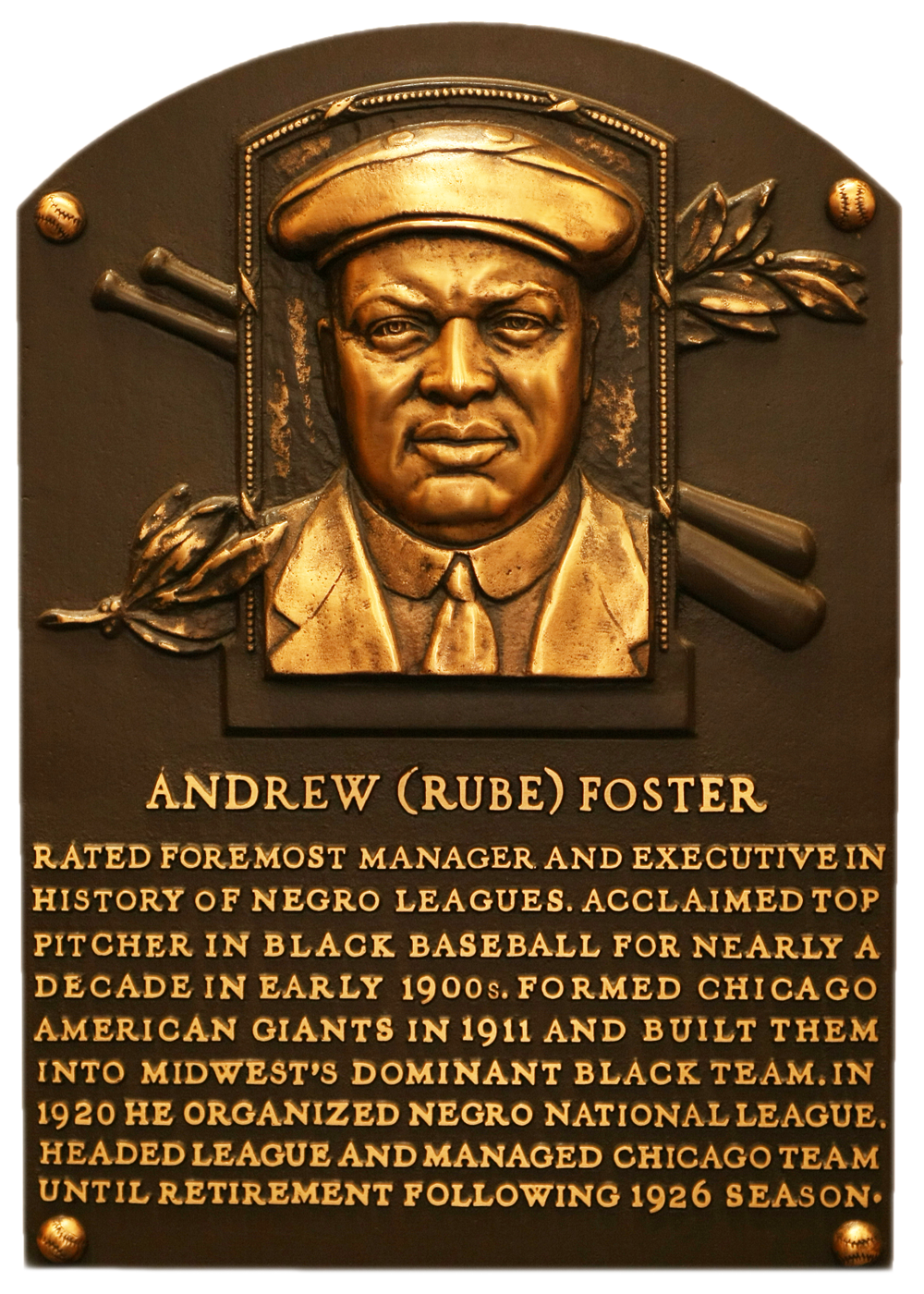
Owner - Rube Foster
Andrew “Rube” Foster was inducted into the National Baseball Hall of Fame as a part of the Class of 1981, becoming the first representative of the Negro Leagues elected as a pioneer or executive.
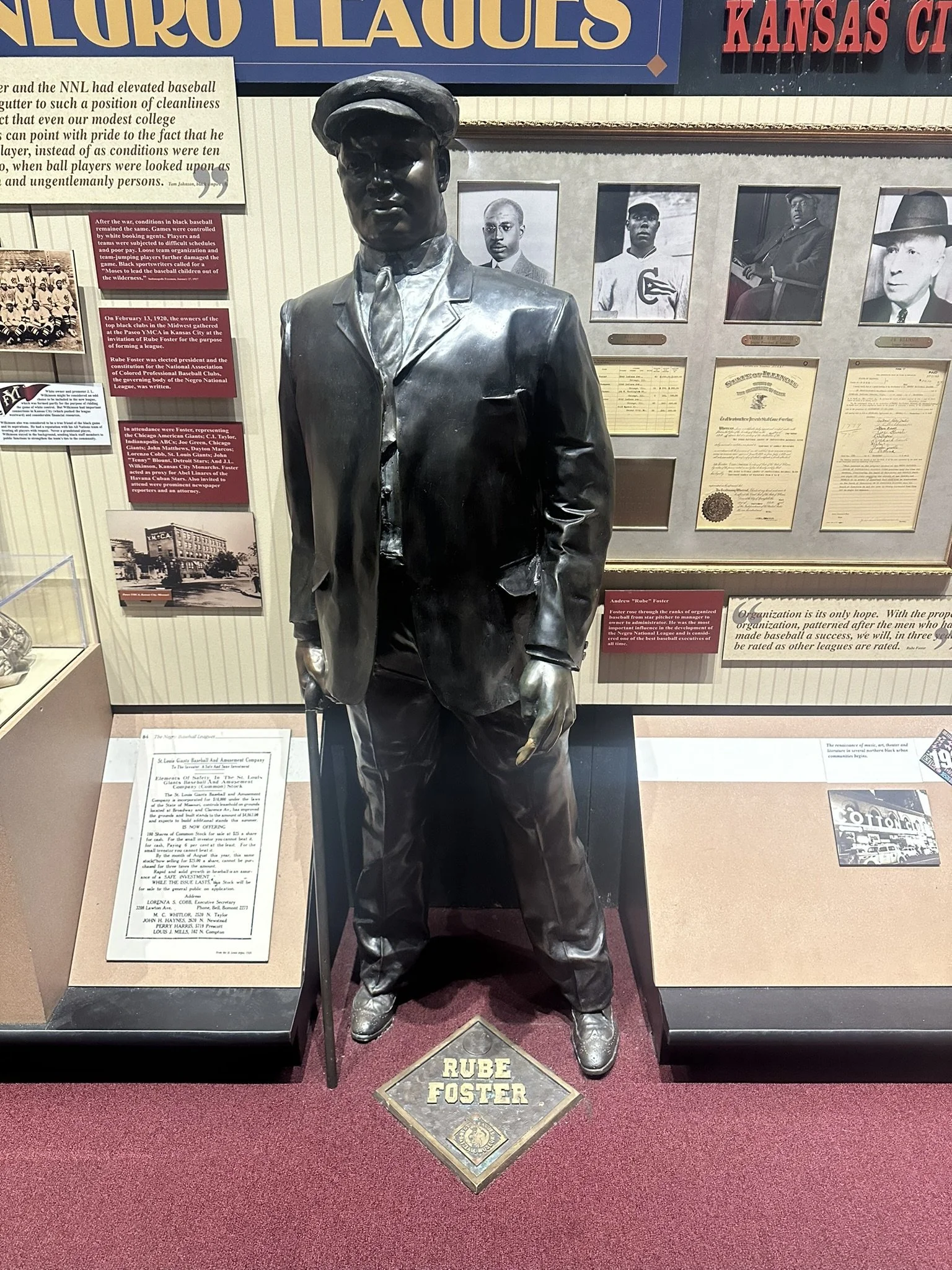
Rube’s Statue
Bob calls Rube Foster the most brilliant baseball mind the sport has ever seen. It’s hard to argue that claim, consider Rube was one of the greatest pitchers, one of the greatest managers, and one of the greatest executives in the history of the sport.
Add in the fact that he established an entire league which successfully ran from 1920 through his untimely death in 1930, then folded the following year in 1931, and you can see the impact Rube must have had.
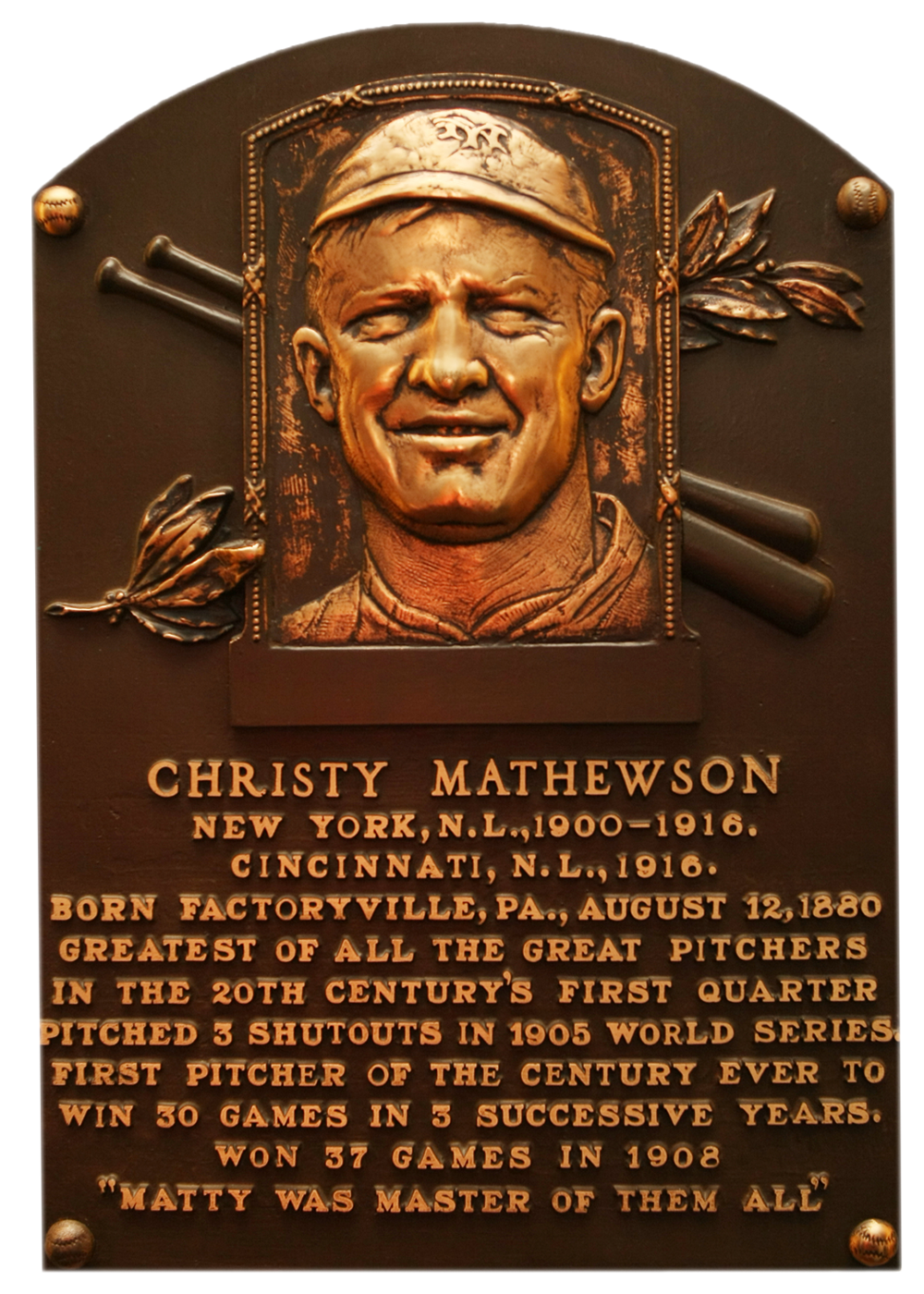
Christy Mathewson
There are stories out there that New York Giants Hall of Fame manager John McGraw snuck Rube Foster into the team’s training camp to teach pitcher Christy Mathewson how to throw the “fadeaway” pitch, which we know today to be called the screwball.
While there are many differing reports as to where Mathewson actually picked up the pitch, the fact remains that he used it to get himself all the way into the Hall of Fame.
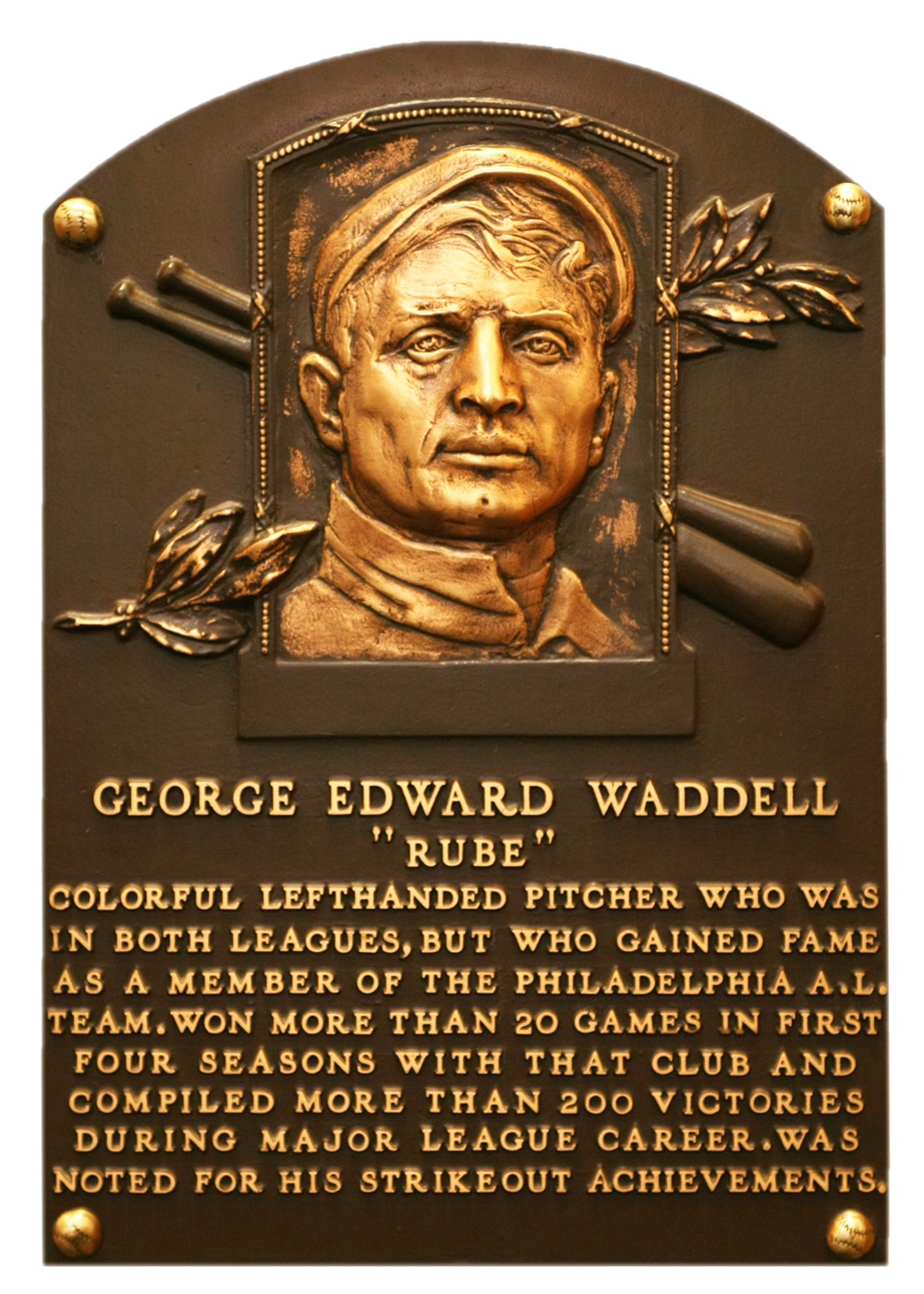
“Rube”
Andrew Foster earned the nickname “Rube” when he beat the great Rube Waddell in a head-to-head match up. From that point forward, Andrew Foster would be known as “Rube” as well.
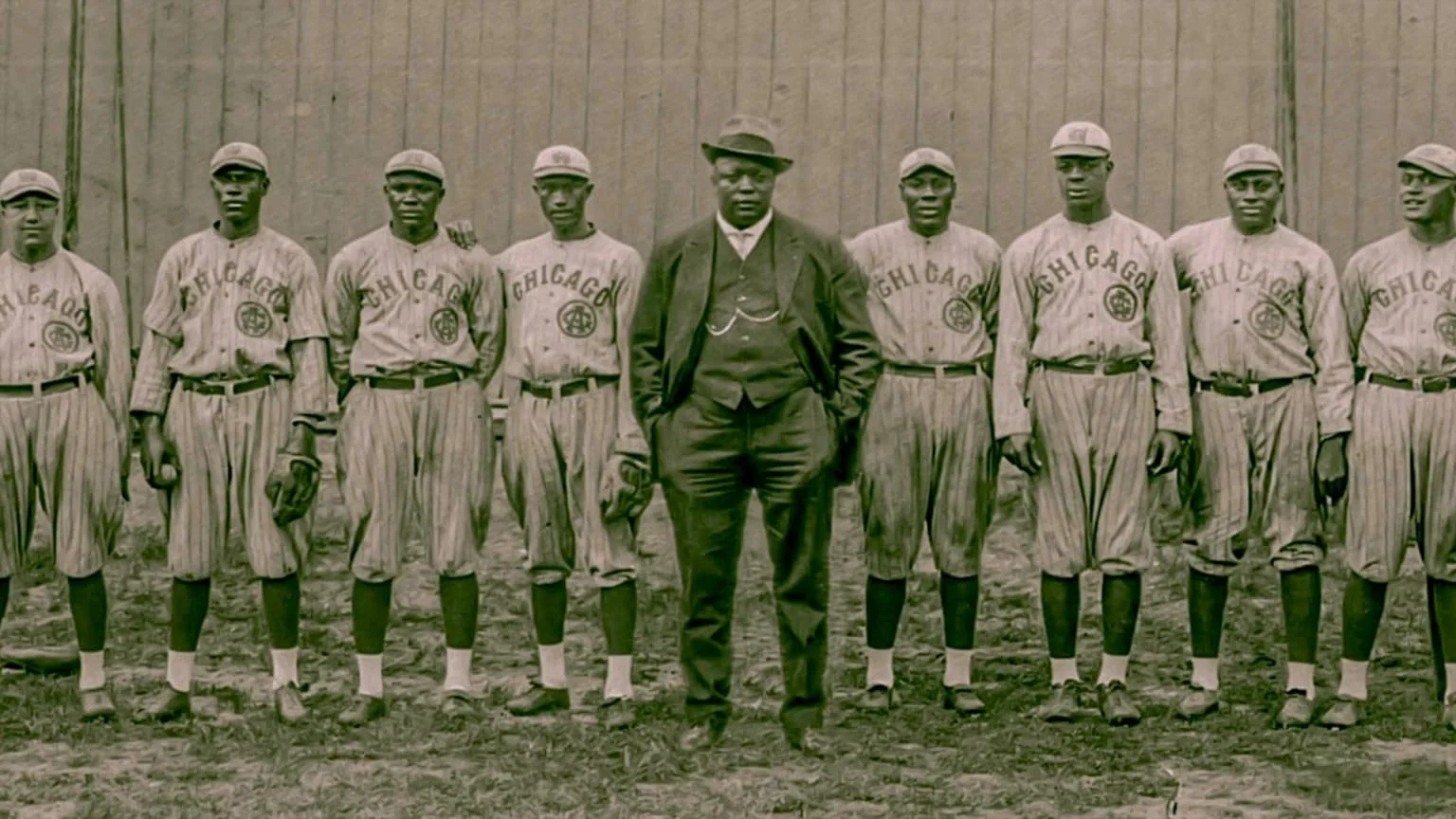
In seven seasons as manager of the Chicago American Giants, Rube Foster (center, wearing suit) led his team to a 336-195 record (.633 winning percentage), including three straight Negro National League pennants. His team never finished worse than 3rd in a league which had at least eight teams each year he managed.
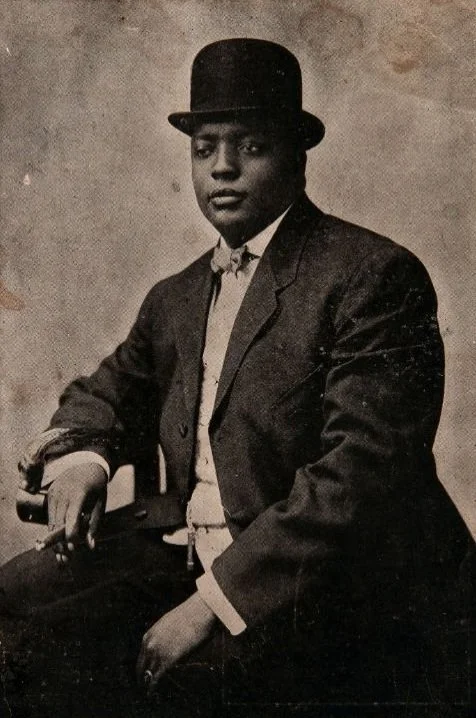
Strict, But With A Purpose
Foster would fine his players as much as $5 if they were ever tagged out standing up on the base paths, or if they could not properly lay down a bunt on demand.
In his 21 seasons as a manager in the multiple different leagues and for the multiple different teams which he managed, Foster had a combined record of 723-400 (.644 winning percentage).
The AL/NL manager with the highest career winning percentage for a career which has ended is Joe McCarthy, who had a .615 winning percentage over 24 big league seasons.
At the conclusion of the 2025 MLB season, Dave Roberts has a .618 winning percentage over 7 big league seasons as manager.
C.I. Taylor
Charles Isham “C.I.” Taylor was a second baseman, manager, and executive in the Negro Leagues. After serving in the 10th Cavalry during the Spanish–American War in the Philippines, Taylor attended Clark College in Atlanta, Georgia.
In 1914, Taylor became half-owner - along with Thomas Bowser - and manager of the Indianapolis ABCs. Over the next several seasons, he developed the team into a power rivaled only by Rube Foster's Chicago American Giants.
The Negro Leagues Baseball Museum awards The C.I. Taylor Legacy Award to the best manager each year.
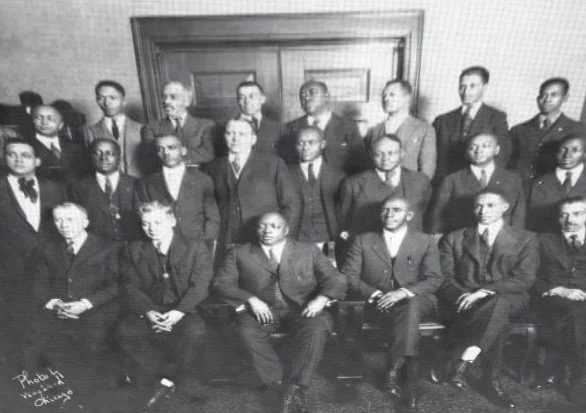
A Great Salesman
Not only was Rube Foster a brilliant baseball mind, but he also had to be a great salesman, convincing all of the other team owners to trust him and his vision enough to enter their teams into his Negro National League.
Foster (front row, 3rd from left) and the other NNL owners are seen here at a meeting in 1922.
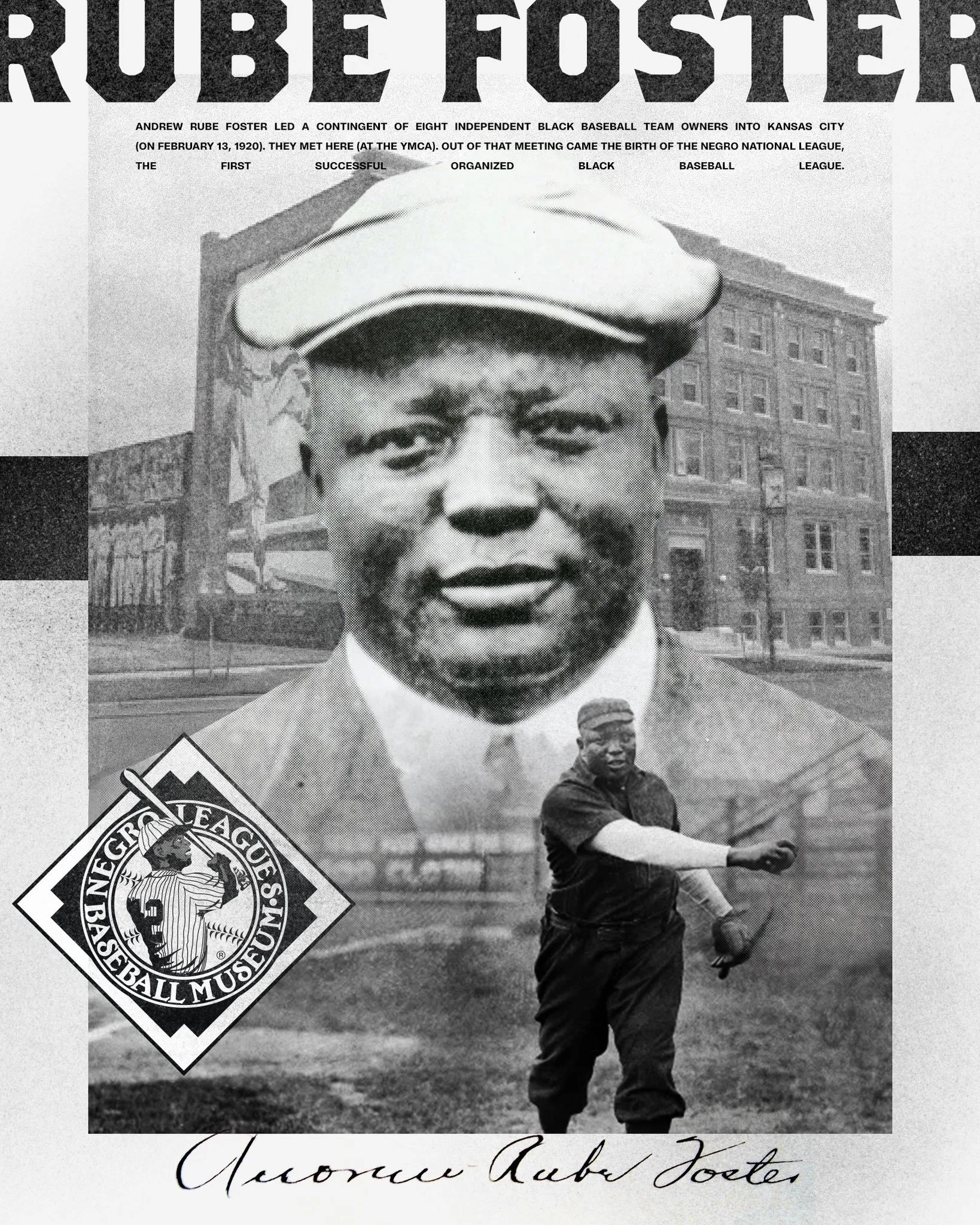
Paseo YMCA
Foster’s Negro National League officially came into existence on February 13, 1920 at a meeting with the other team owners held at the Paseo YMCA in Kansas City.
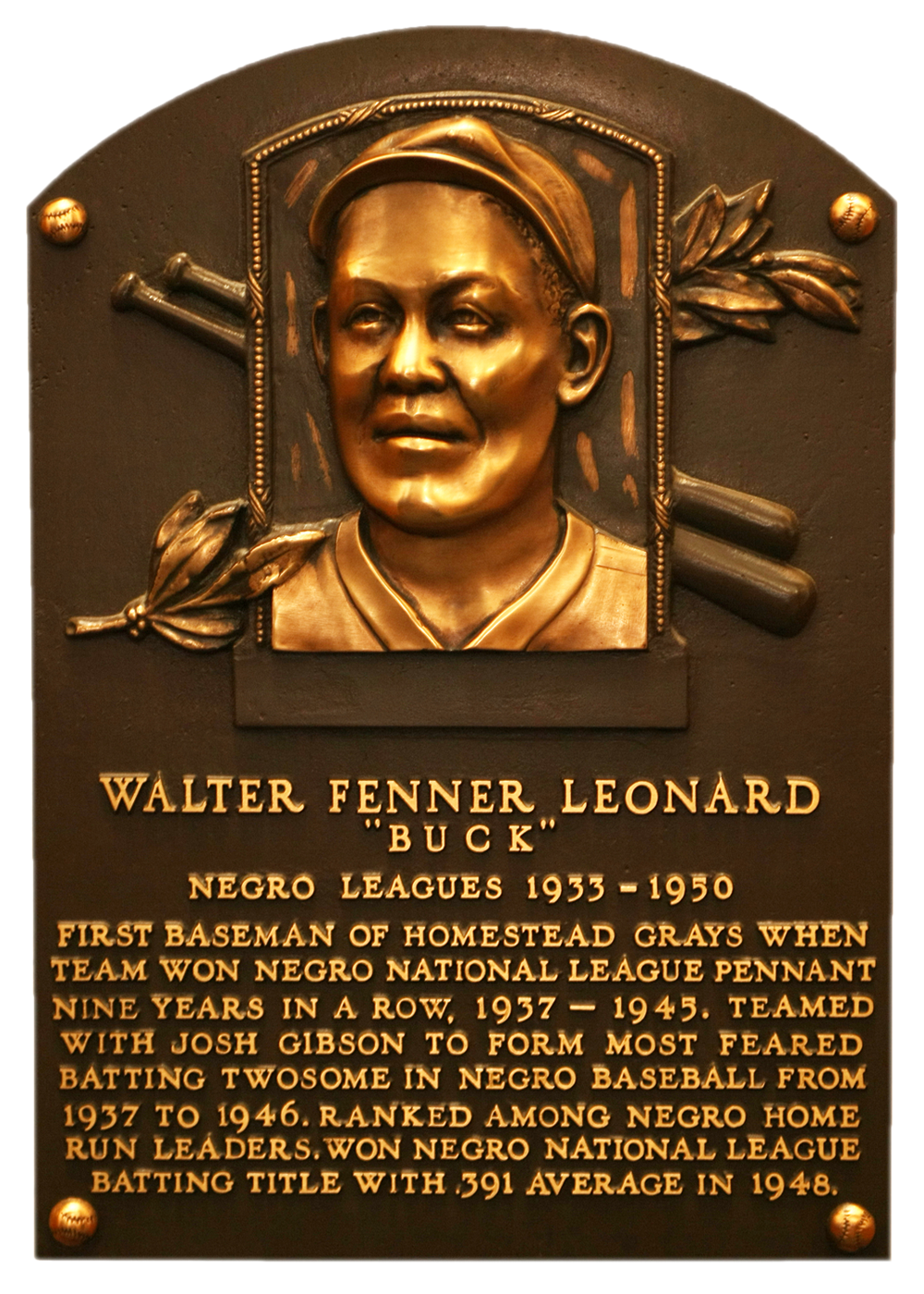
1B - Buck Leonard
Walter “Buck” Leonard was inducted into the National Baseball Hall of Fame as a part of the Class of 1972.
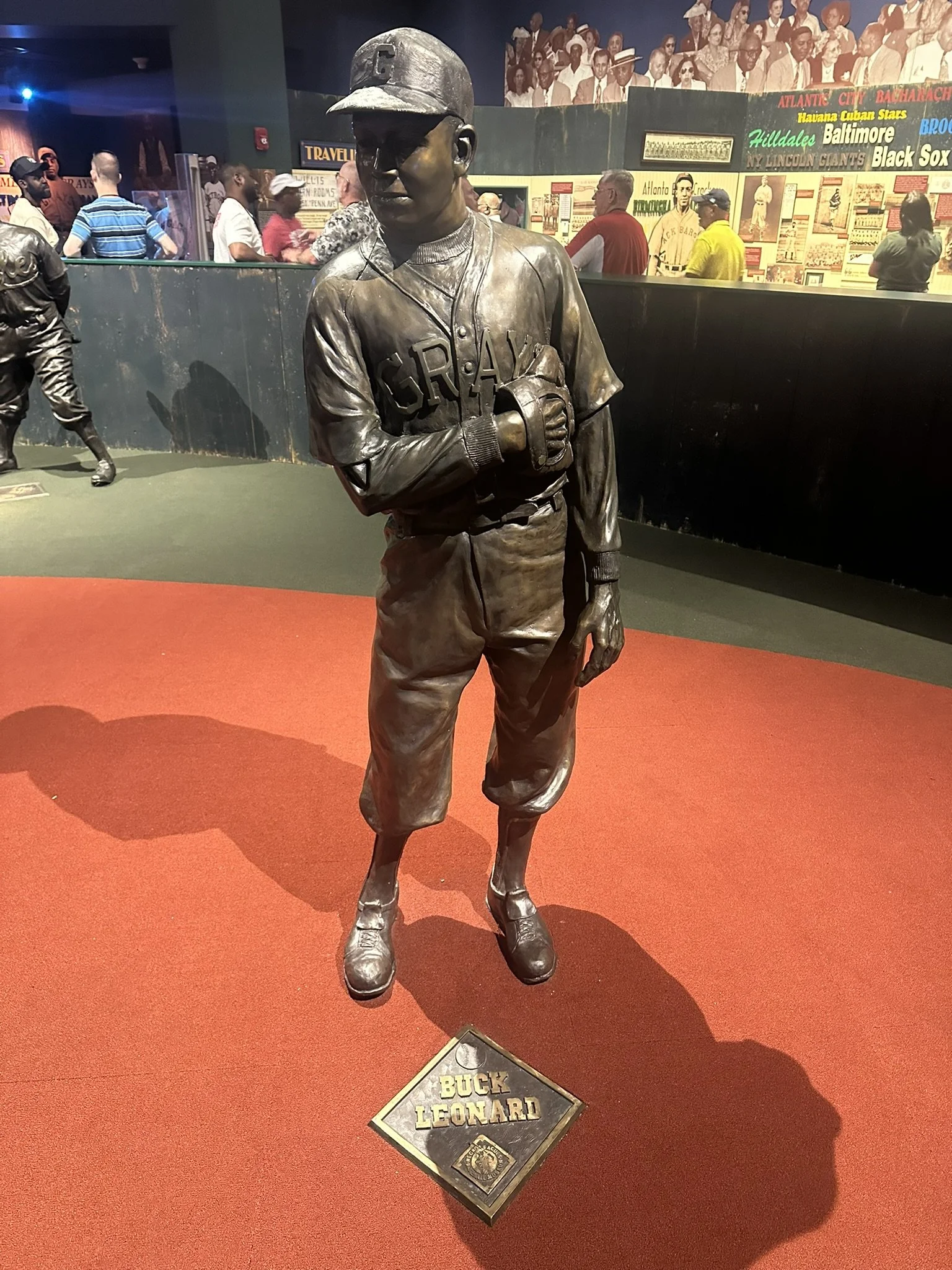
Buck’s Statue
Buck Leonard was one of the best pure hitters to play in the Negro Leagues. He was also a key part of the Homestead Grays dynasty of the 1930s and 1940s. He spent his entire 15-year career with the Homestead Grays, making his the longest term of service for a player with one team in Negro League history.
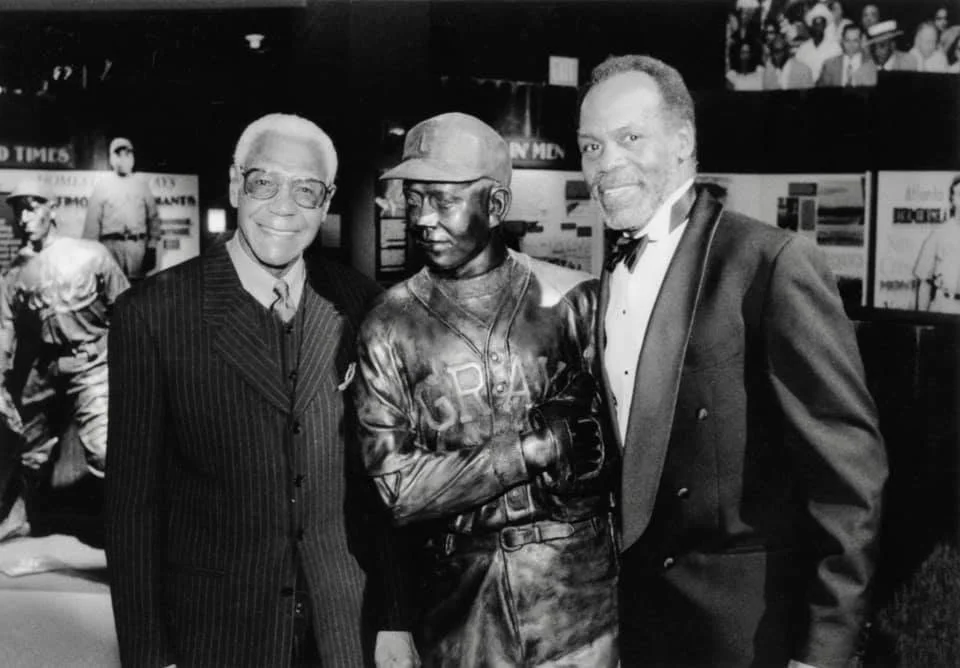
The Greatest Fastball Hitter Ever
Buck Leonard played in a league-record 11 East-West All-Star Games, and beginning in 1942, his Homestead Grays advanced to four consecutive Negro World Series, winning in 1943 and 1944.
Here, Buck O’Neil and Danny Glover stand with Leonard’s statue on the Field of Legends at the NLBM.
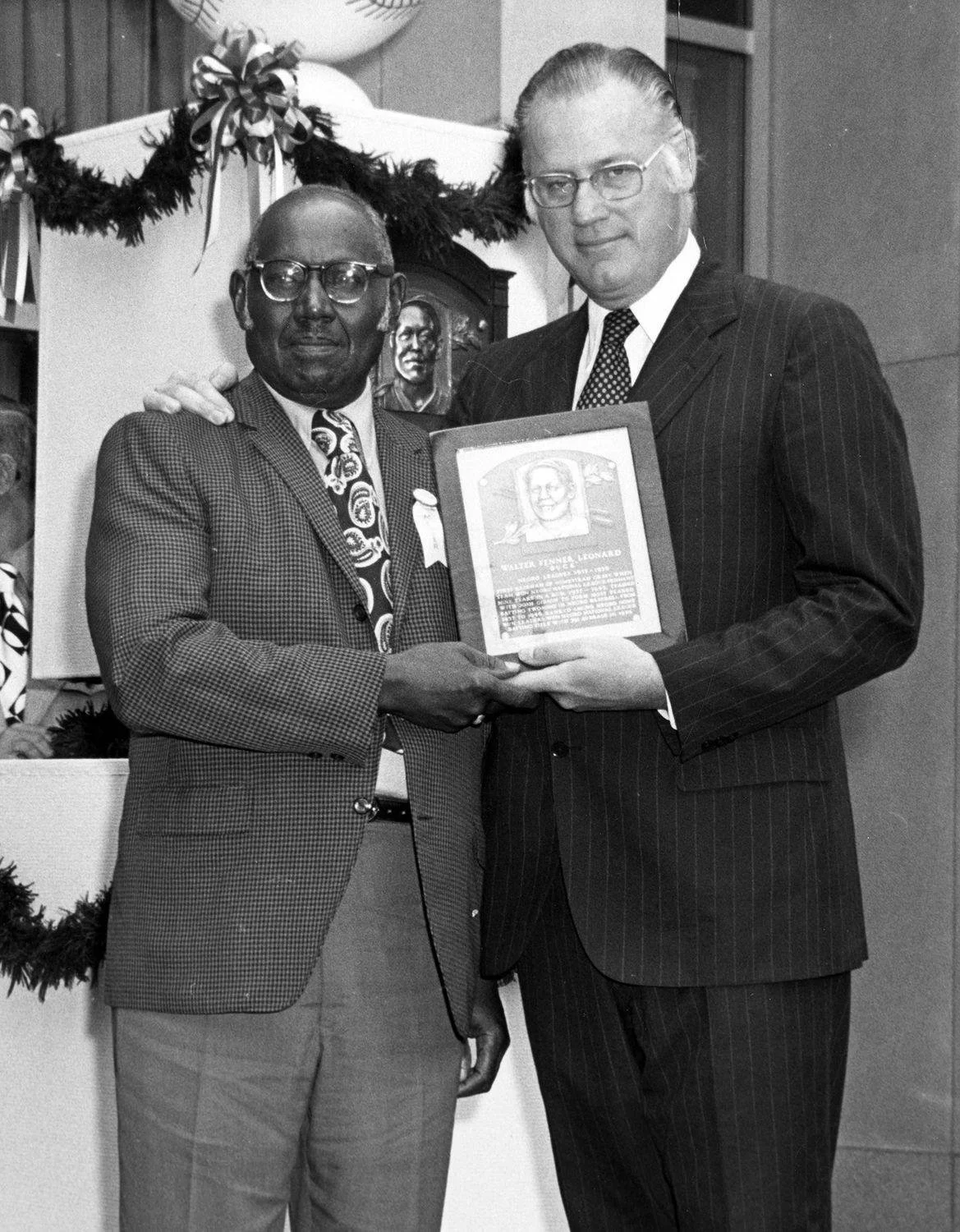
Offered A Contract
In 1952, with the color barrier broken, Buck was offered a major league contract, at the age of 45, but turned it down. He said, “I knew I was over the hill. I didn't try to fool myself.”
In 1971, Satchel Paige became the first player who primarily starred in the Negro Leagues to be inducted into the baseball Hall of Fame. The following year, in 1972, Buck Leonard was inducted with Josh Gibson.
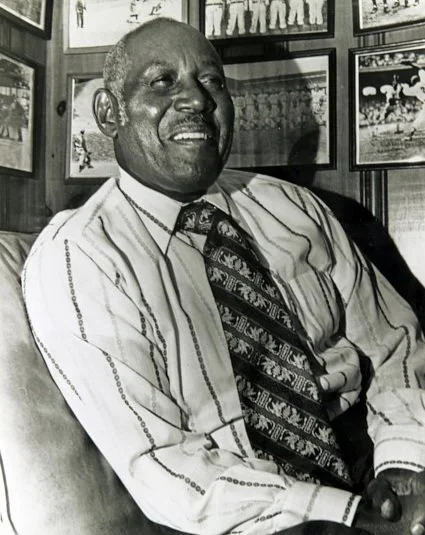
Education
Buck Leonard wasn't able to get a high school diploma until the age of 52, because his hometown didn't have a high school that allowed education for African Americans.
While it was not uncommon for white or Black ballplayers to not have been college-educated, nearly 40% of players in the Negro Leagues had some level of college education.
Less than 5% of white Major League players at the same time could say the same thing.
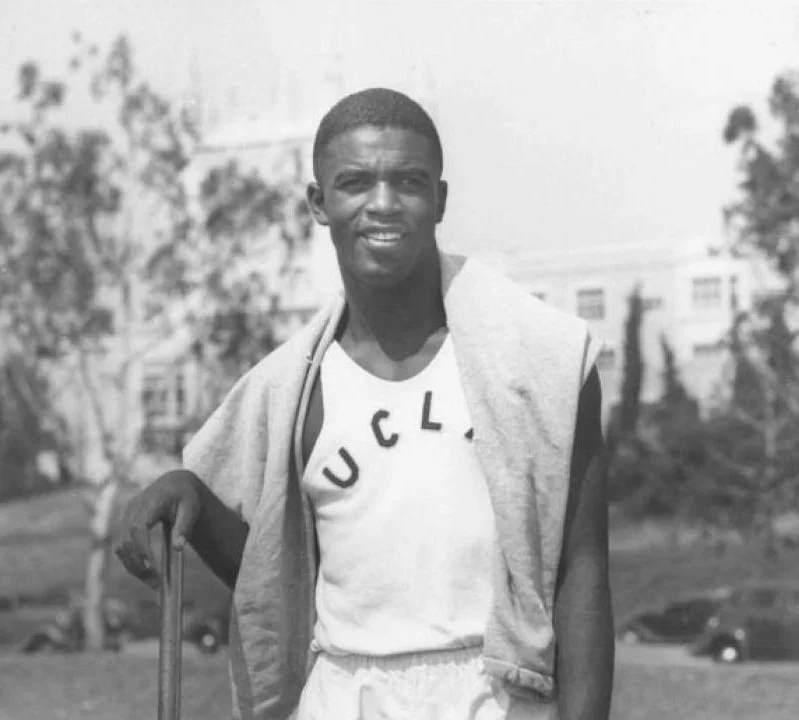
Jackie Robinson
In the fall of 1939, Jackie Robinson enrolled at UCLA, where the student population was less than 1% African American. There was not a single Black faculty member. He became the first Bruin at the Westwood campus to letter in four sports and was a genuine star in three of them - football, basketball and track. Baseball was his worst sport at UCLA.
In the spring of 1941, a few units short of completing his degree, Robinson withdrew from UCLA because, he said, his mother needed him to go to work.
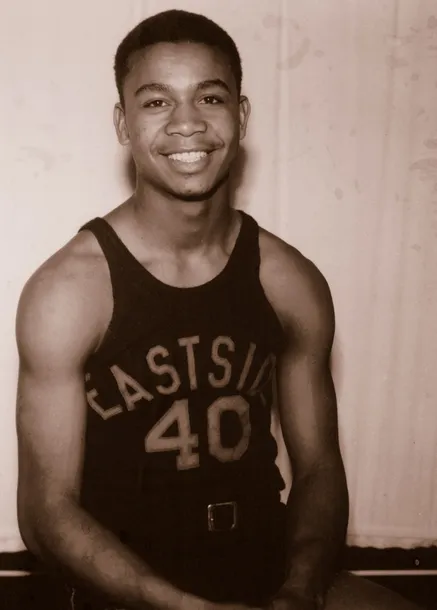
Larry Doby
A native of Camden, South Carolina, and three-sport all-state athlete while in high school in Paterson, New Jersey, Larry Doby accepted a basketball scholarship from Long Island University in Brooklyn.
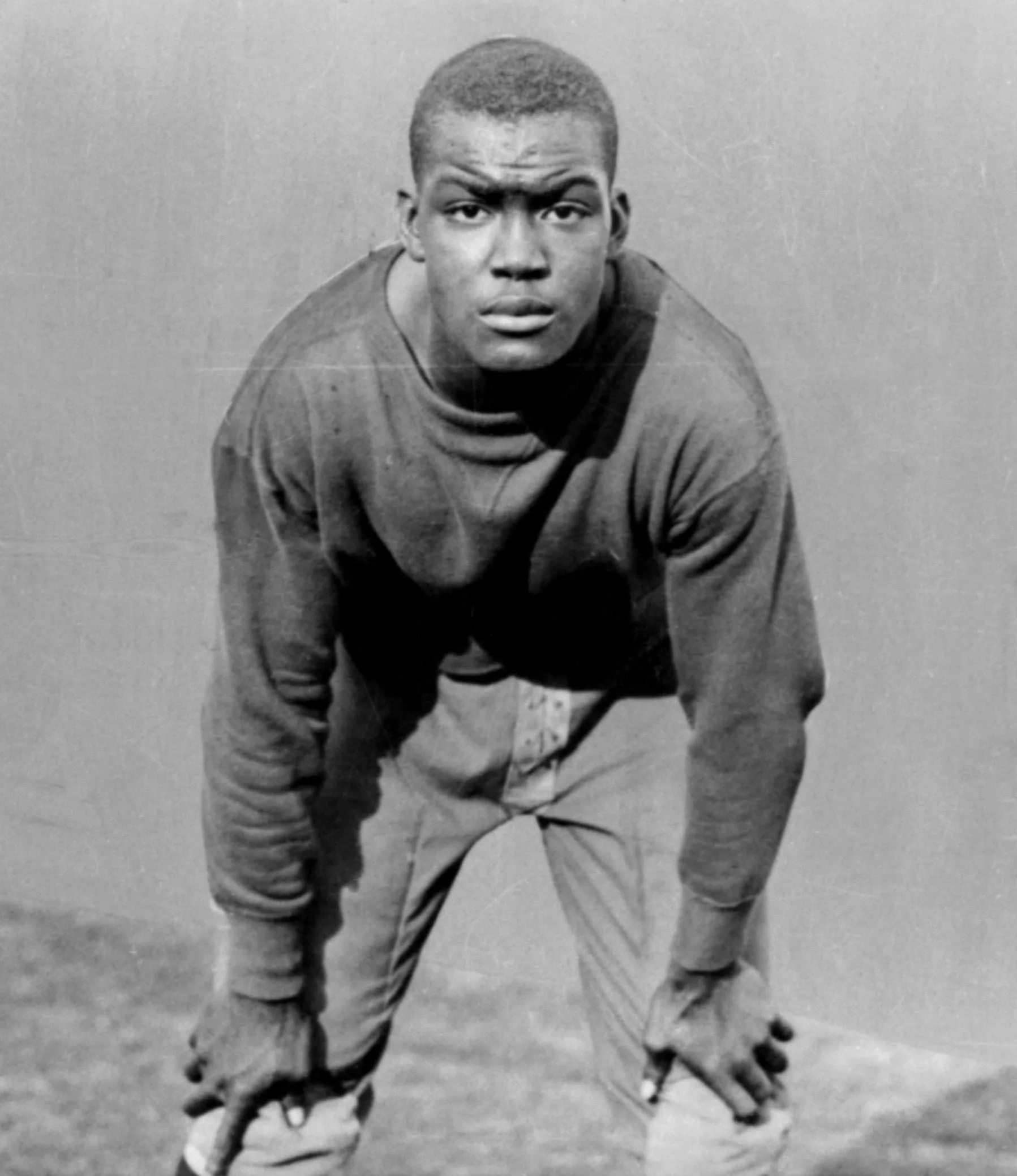
Monte Irvin
Monte Irvin grew up in New Jersey. At Orange High School, he starred in four sports, earning a total of 16 varsity letters and setting a state record in the javelin throw.
He was offered a football scholarship to the University of Michigan, but he had to turn it down because he did not have enough money to move to Ann Arbor. Instead, he attended Lincoln University in Pennsylvania and was a standout football player.
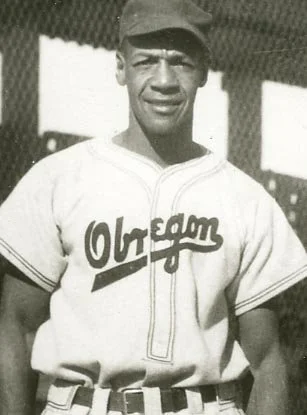
Buck O’Neil
Buck O’Neil grew up in the Newtown community in Sarasota, Florida. He worked the celery fields in Sarasota while his father ran a pool hall in Newtown. Buck was initially denied the opportunity to attend high school, thanks to racial segregation, as the entire state of Florida had only four high schools specifically for African Americans.
Eventually, Buck moved to Jacksonville with some relatives where he completed high school and two years of college courses at Edward Waters College.
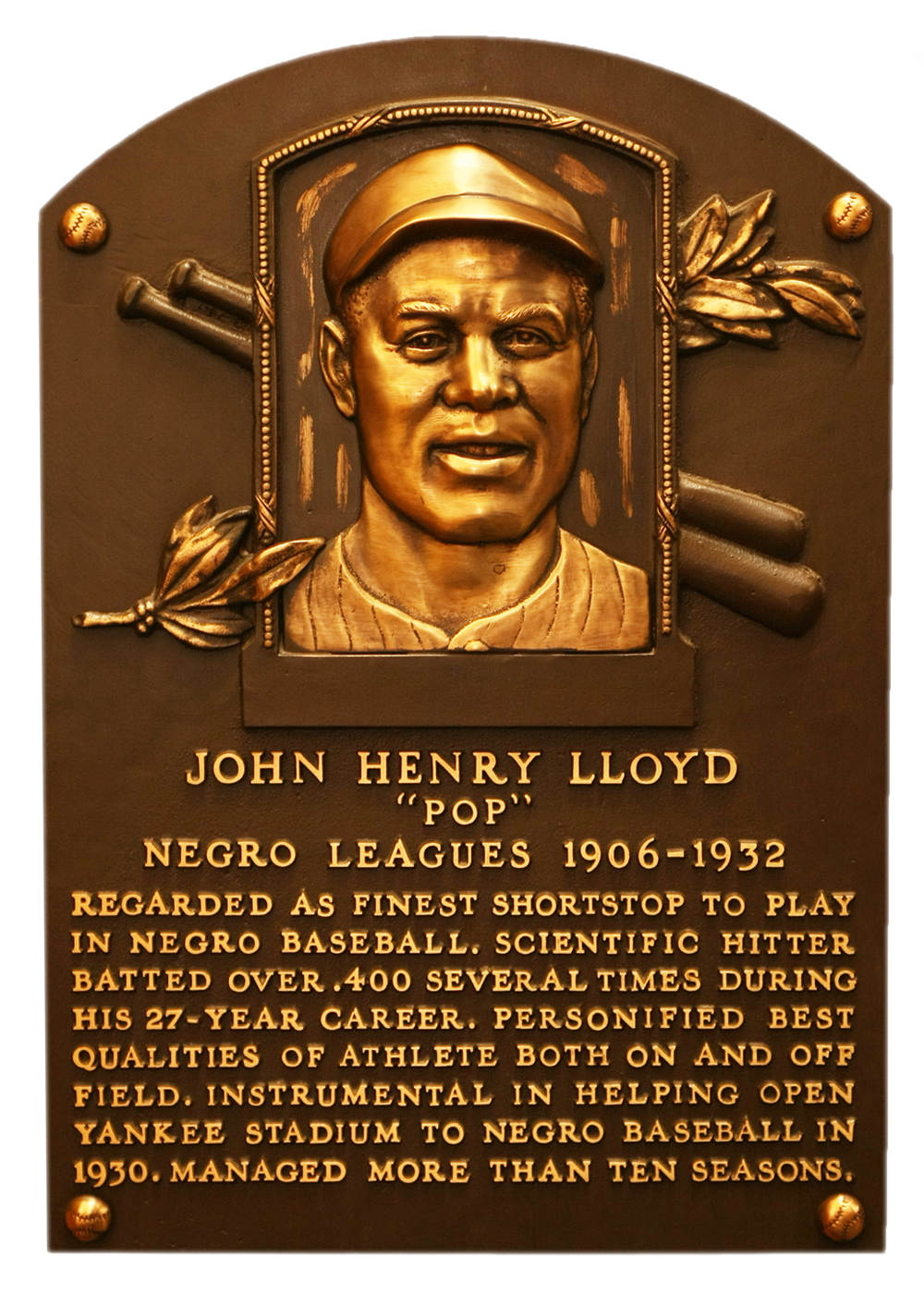
2B - Pop Lloyd
John Henry “Pop” Lloyd was inducted into the National Baseball Hall of Fame as a part of the Class of 1977.
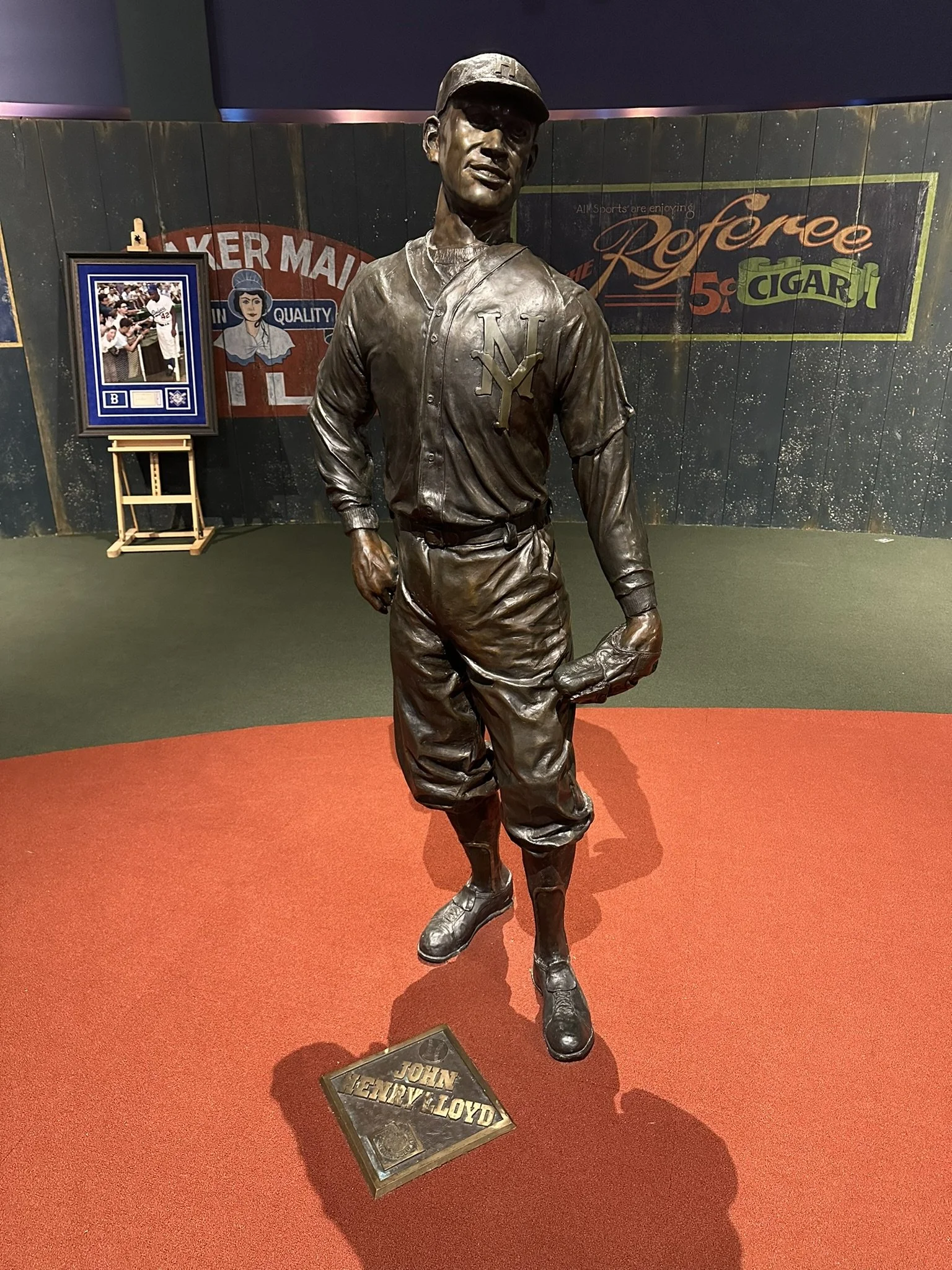
Pop’s Statue
Pop Lloyd was discovered on the sandlots of Jacksonville by Rube Foster, Harry Buckner, and Sol White.
Lloyd actually played more shortstop than second base, and was frequently compared to Honus Wagner, who said it was a compliment to be compared to Lloyd.
Babe Ruth said Pop Lloyd was the best player he'd ever seen.
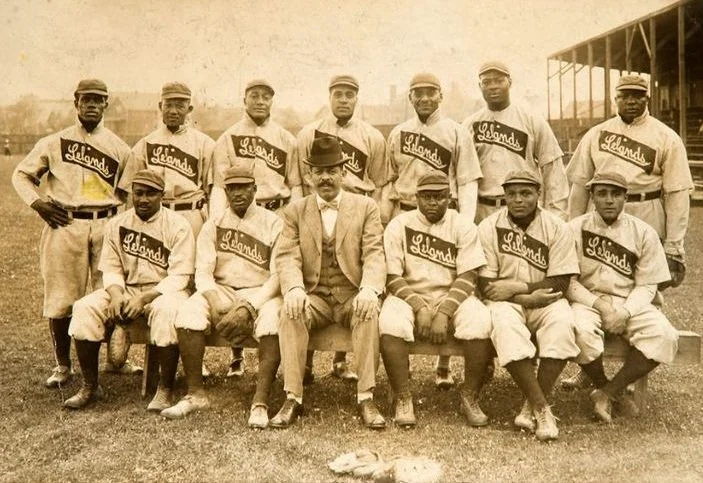
1910 Chicago Leland Giants
Lloyd was a part of the 1910 Chicago Leland Giants team who went 123-6.
Pictured here is the 1909 Chicago Leland Giants. Standing (L to R): Pete Hill, Andrew Payne, George Wright, Walter Ball, Charles Dougherty, Bill Gatewood, Rube Foster. Seated (L to R): Danger Talbert, Harry Moore, Frank Leland, Bobby Winston, Sam Strothers, Nate Harris.
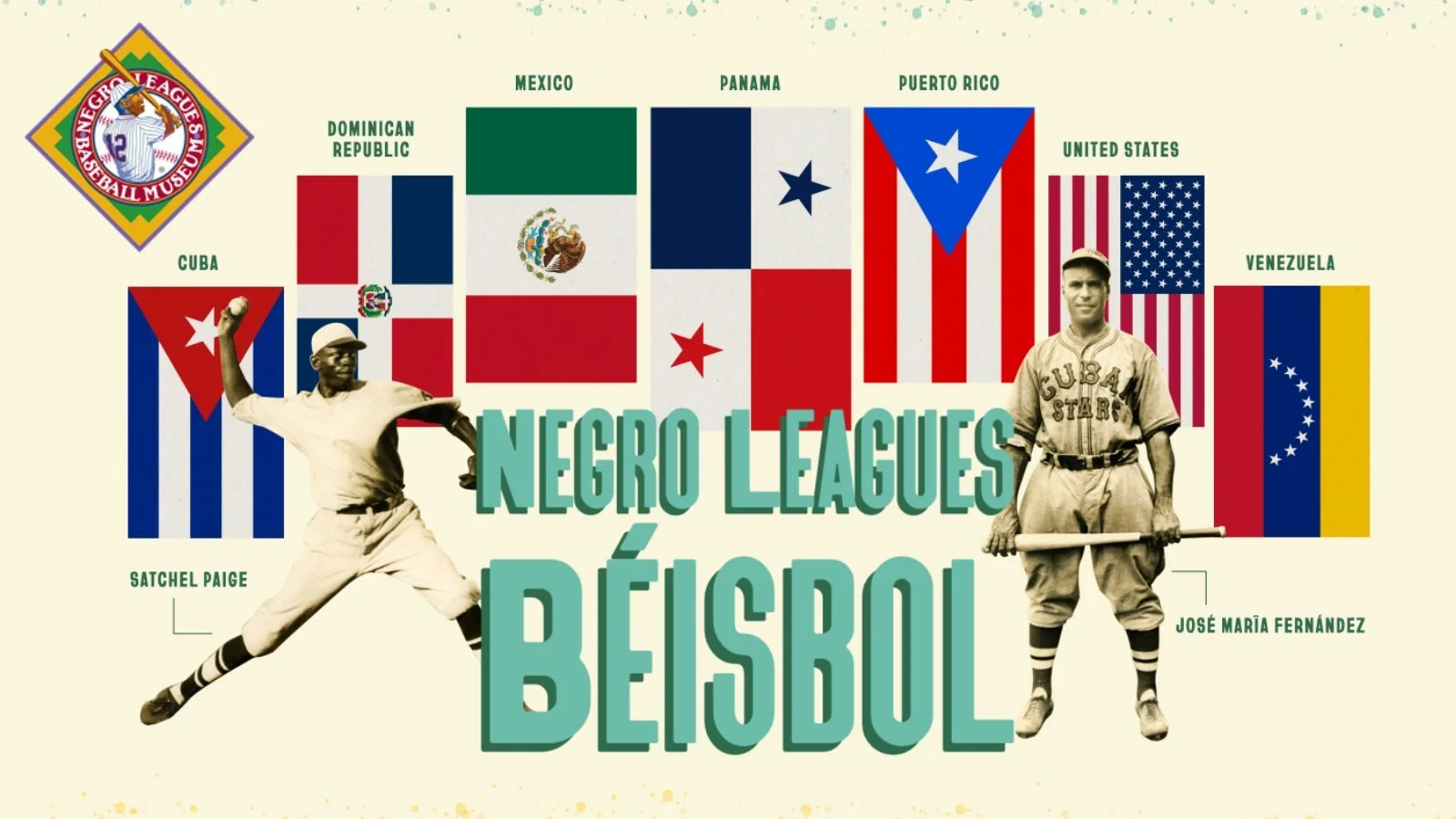
Lloyd played where the money was, whether that was in America or in Cuba. It was extremely common for Black baseball stars in the United States to be recruited to play in other countries where racial segregation and discrimination was far less severe than it was in America. In addition to the better treatment, oftentimes, those countries also paid better than what Black players would have made had they stayed in the US, anyway.
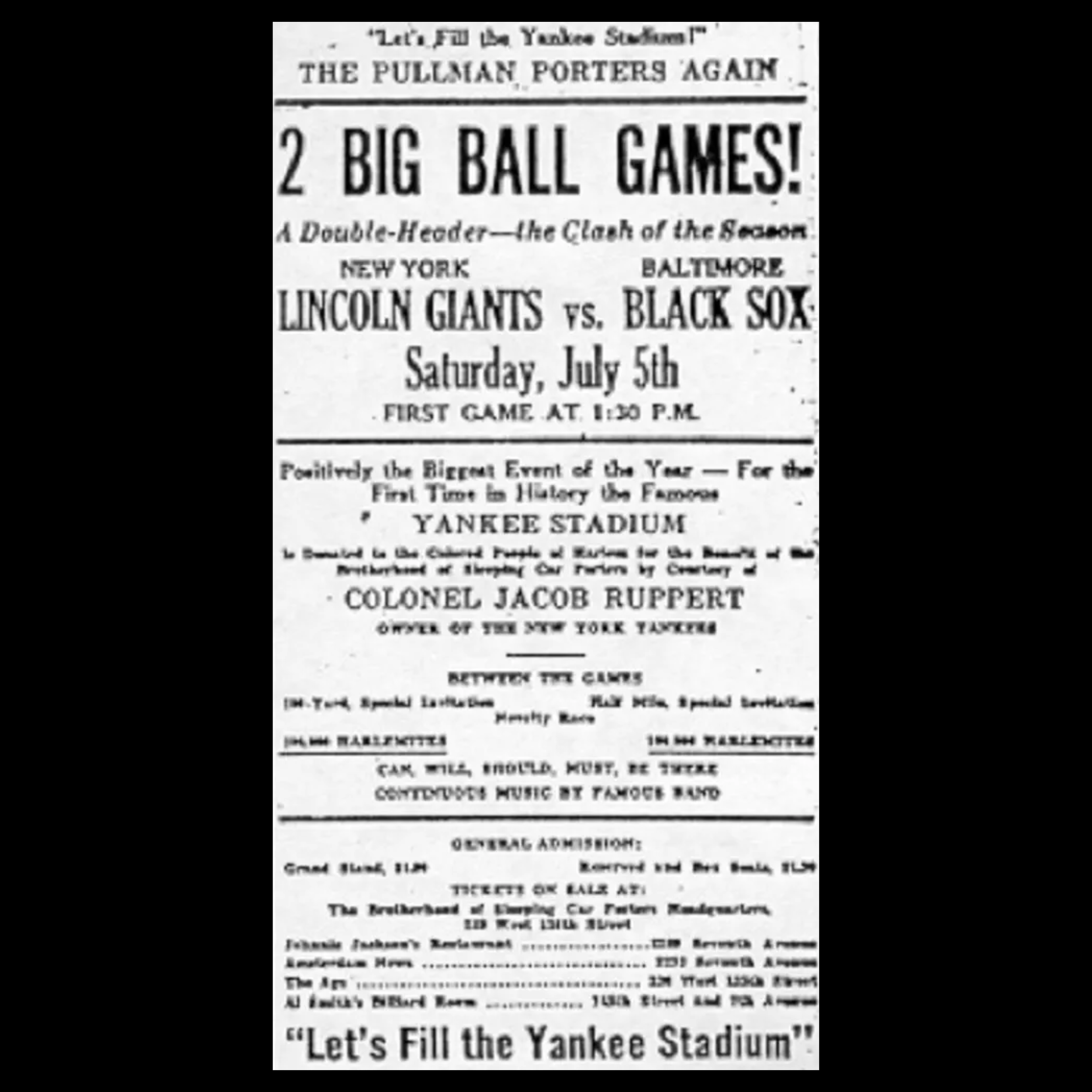
July 5, 1930
On July 5, 1930, Pop Lloyd played in the first ever game between two Black teams at Yankee Stadium when New York’s Lincoln Giants played a doubleheader against the Baltimore Black Sox.
Lloyd was the first baseman and manager of the Lincoln Giants, and, at age 46, was the team’s third-best hitter with a .381 average.
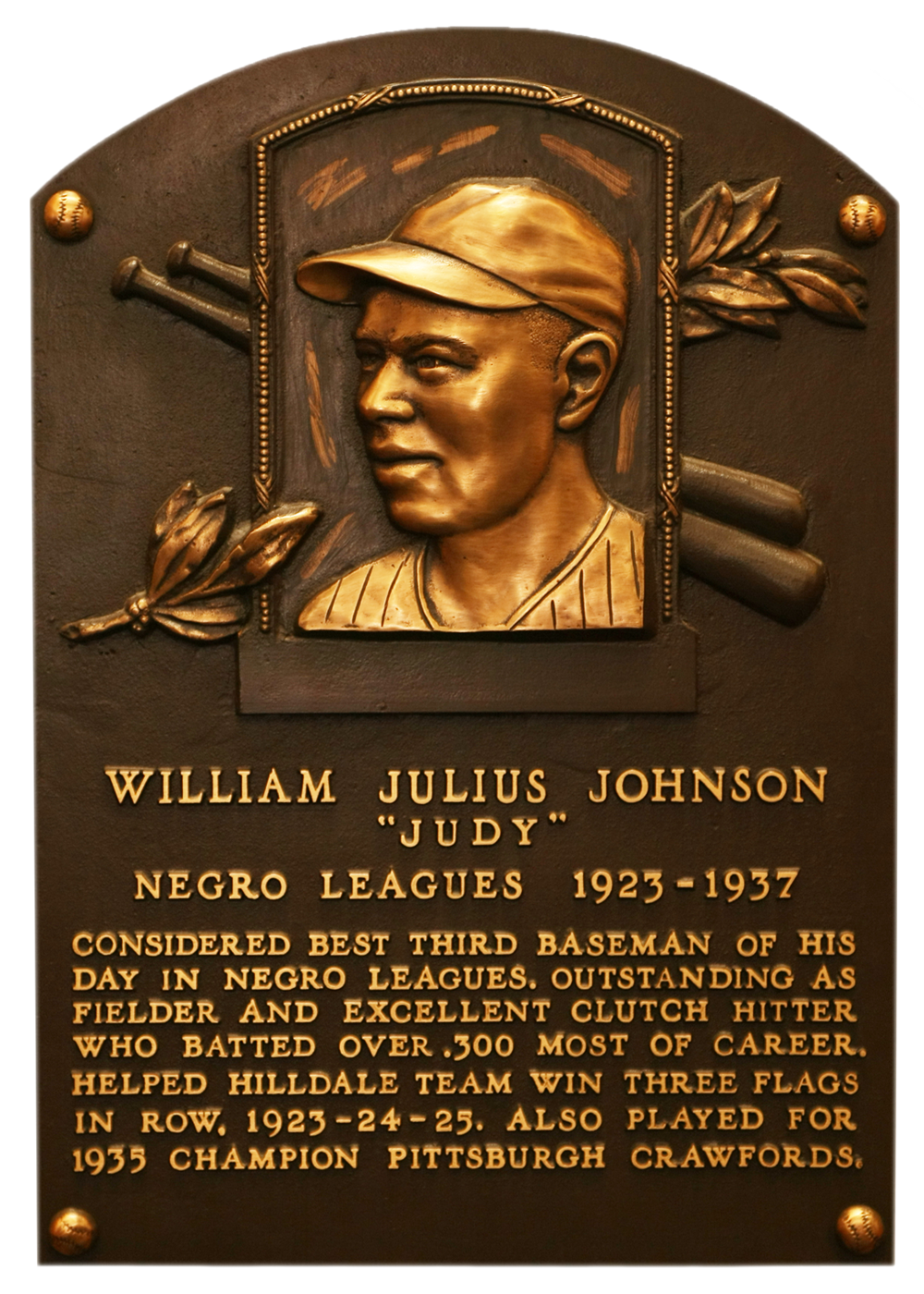
SS - Judy Johnson
Judy Johnson was inducted into the National Baseball Hall of Fame as a part of the Class of 1975.
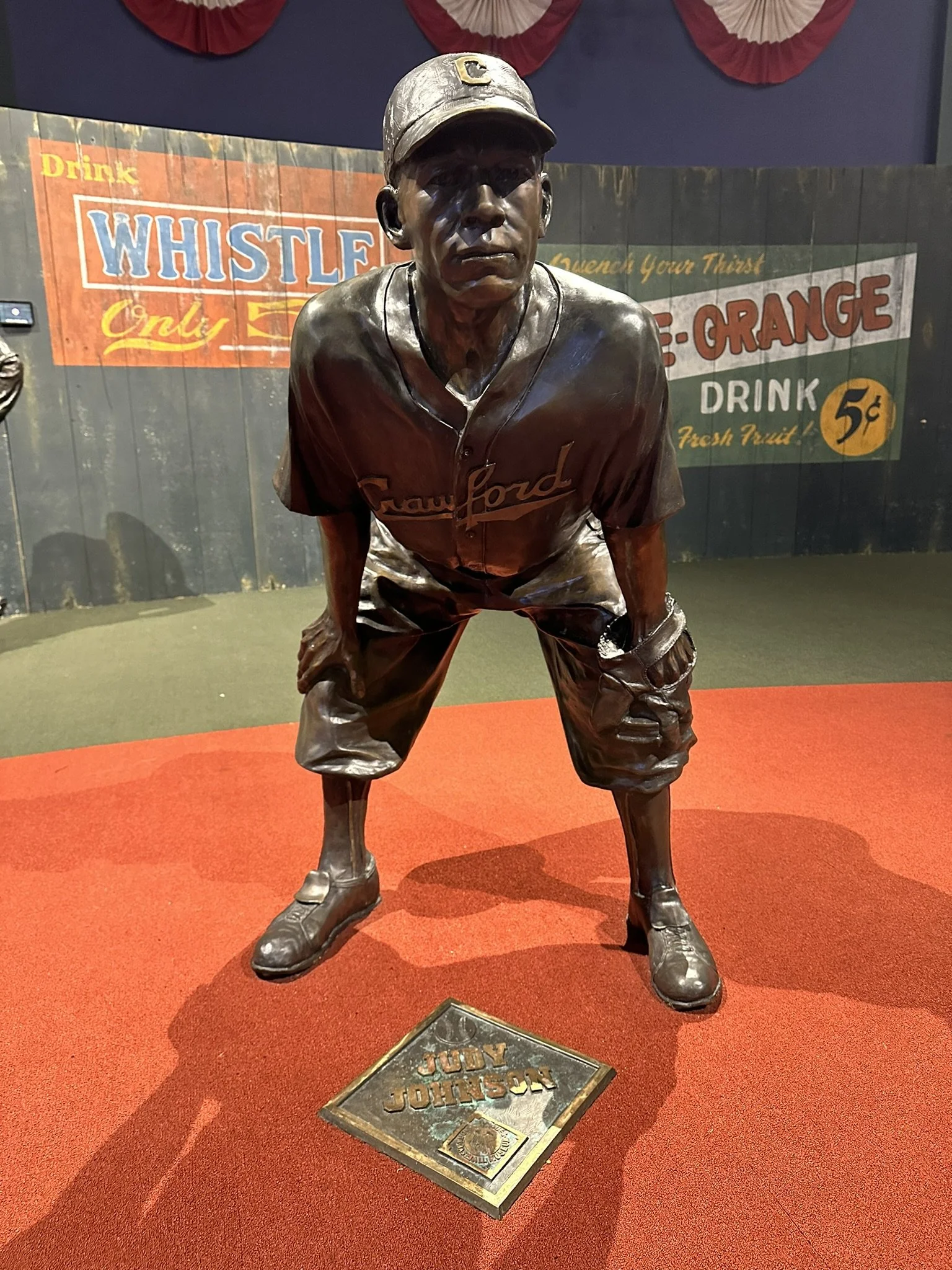
Judy’s Statue
William Julius Johnson got the nickname "Judy" because he resembled a Chicago American Giants player named Judy Gans. Johnson was the Negro League's top third baseman in the 1920s and 1930s, but his statue is at shortstop on the Field of Legends.
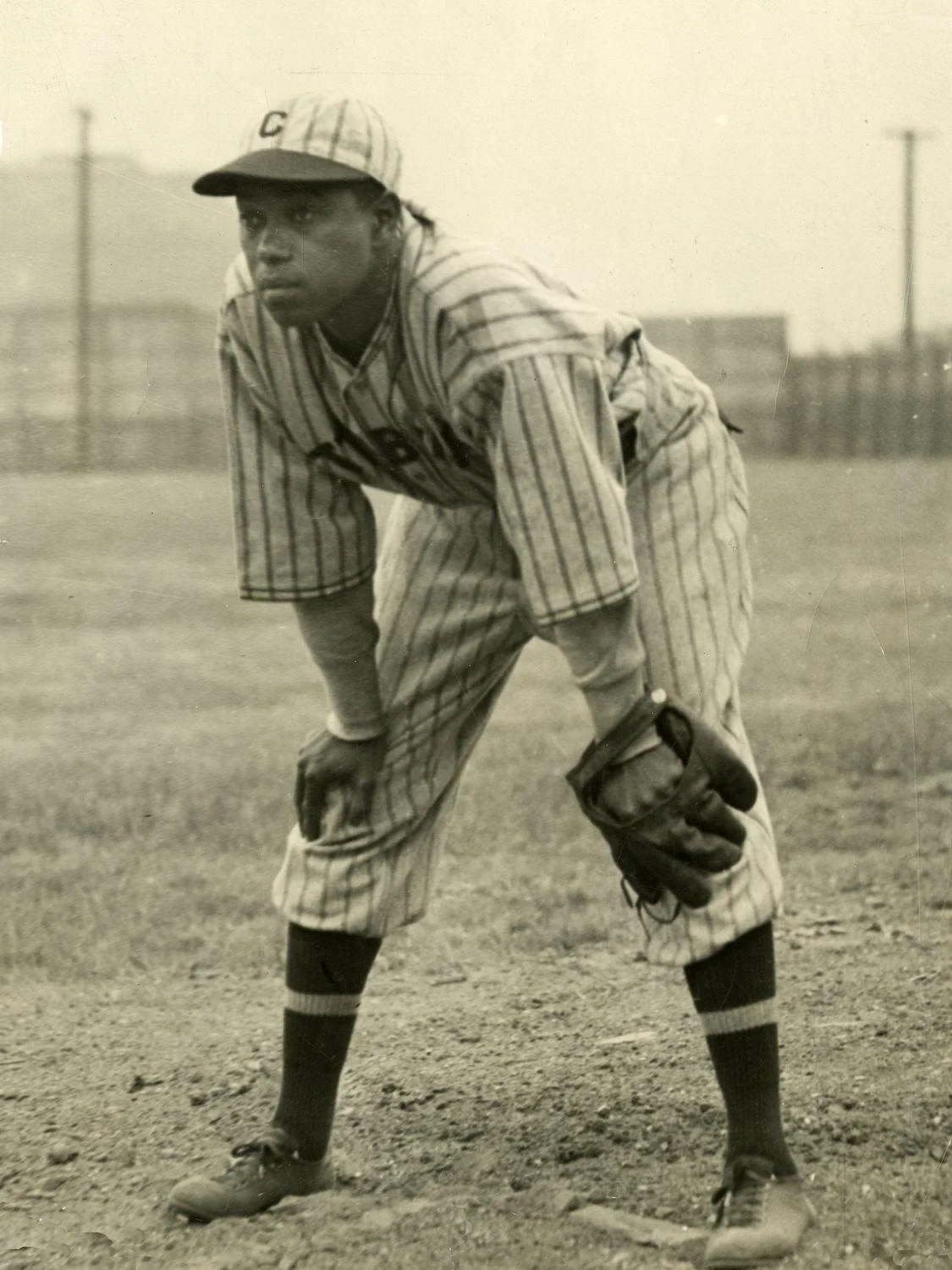
Judy Johnson
Because of his slick-fielding defensive abilities, he was known as "The Black Pie Traynor." He wasn't super fast, but he studied pitchers meticulously and used his knowledge to gain an advantage on the basepaths.
Former teammate and roommate Ted Page said, "Judy Johnson was the smartest third baseman I ever came across. A scientific ballplayer, he did everything with grace and poise."
Pittsburgh Crawfords
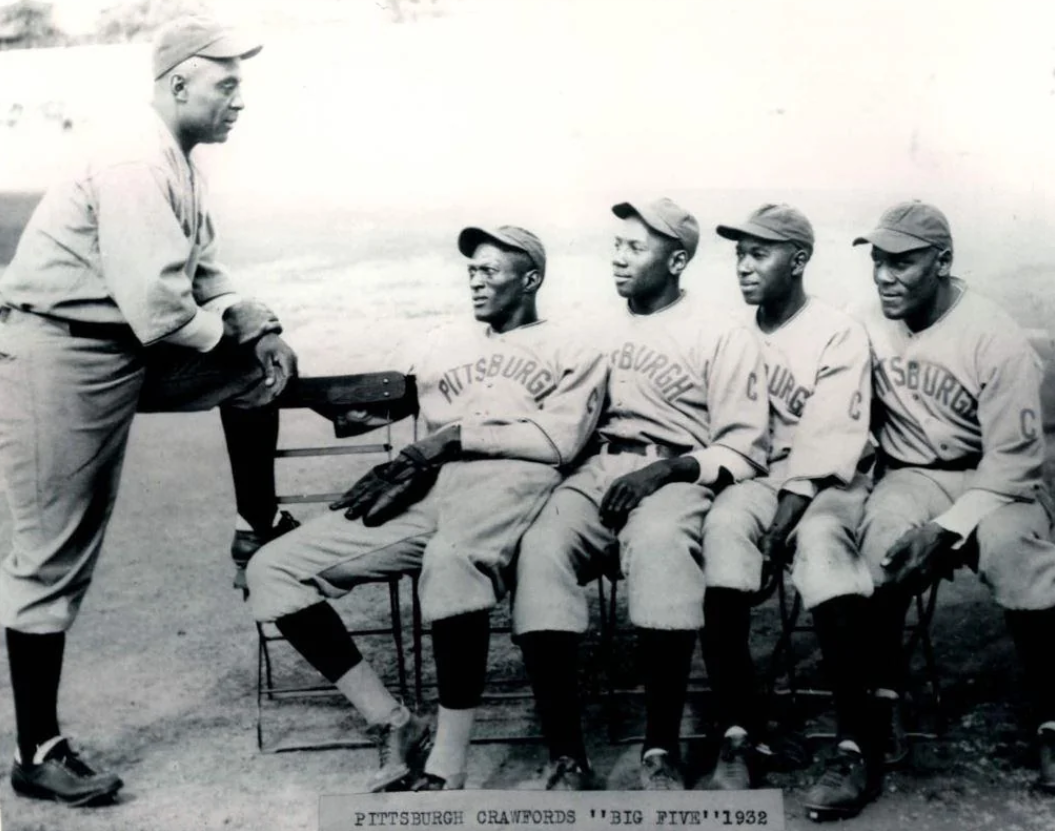
In one of the biggest trades in Negro League history, Josh Gibson and Judy Johnson were traded to the Homestead Grays for $2,500 and two journeymen players, Henry Spearman and Pepper Bassett, on March 20, 1937. Later, Judy Johnson was a manager, scout and coach.
Here, the Crawfords’ "Big Five" are pictured in 1932. (Left to Right): Oscar Charleston, Ted Page, Josh Gibson, Judy Johnson, and Jud Wilson.
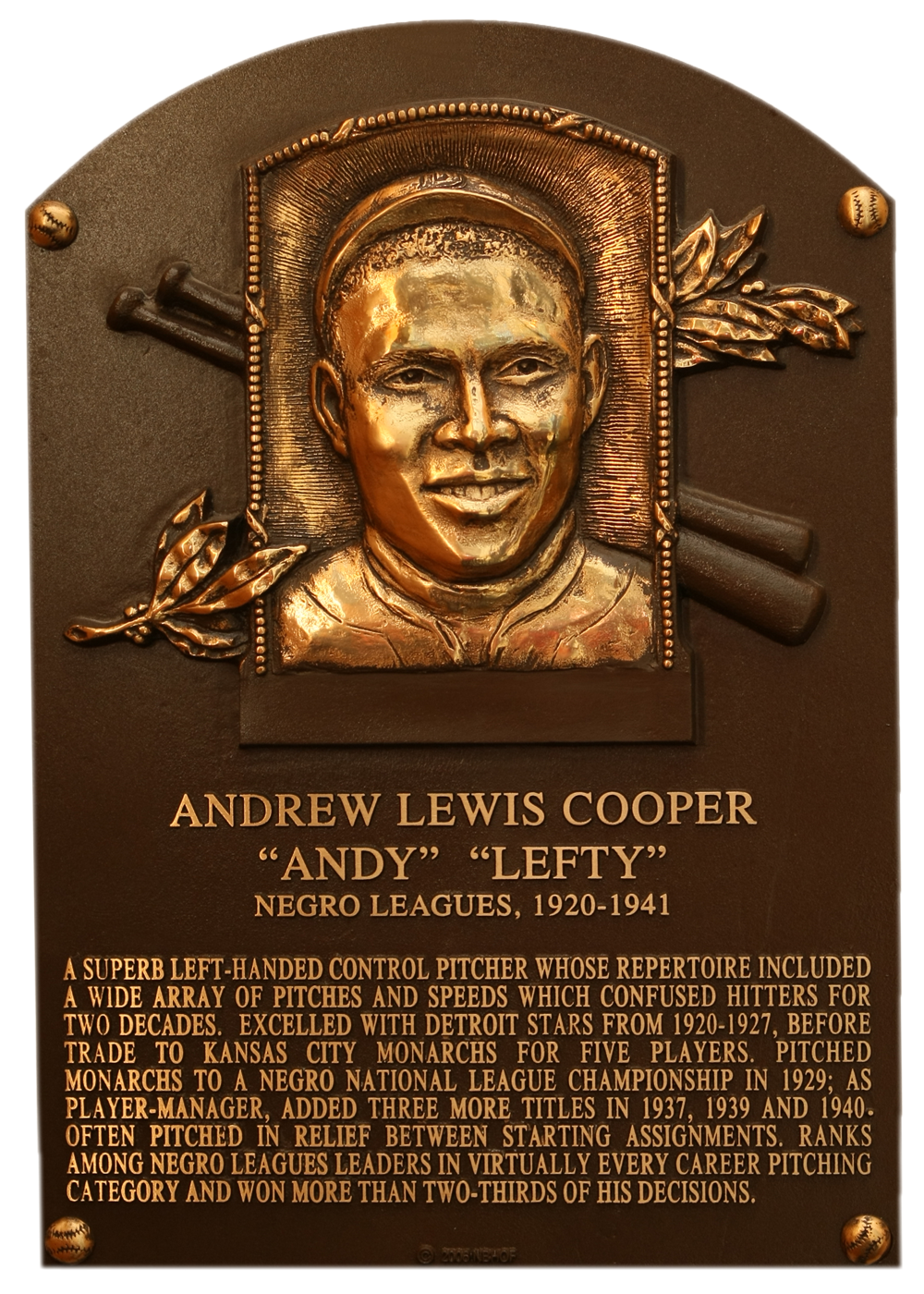
Andy Cooper
A top starting pitcher early in his career who became a valuable reliever in his final years on the diamond, Cooper was also an accomplished manager - leading the Monarchs to three pennants between 1937 and 1940 - and was responsible for the trade which brought Buck O’Neil to the Monarchs.
Included among Cooper’s many accolades and accomplishments during his playing days was a 43-inning stretch with the Stars in which he didn’t issue a base on balls, winning twice as many games as he lost with both the Stars and Monarchs, helping lead Kansas City to the Negro National League pennant in 1929 and pitching 17 innings in a 1937 playoff game against the Chicago American Giants.
Historian Dick Clark once said of Cooper: “In my estimation, the greatest Black pitcher ever to pitch for Detroit – that’s for the Stars or the Tigers.”
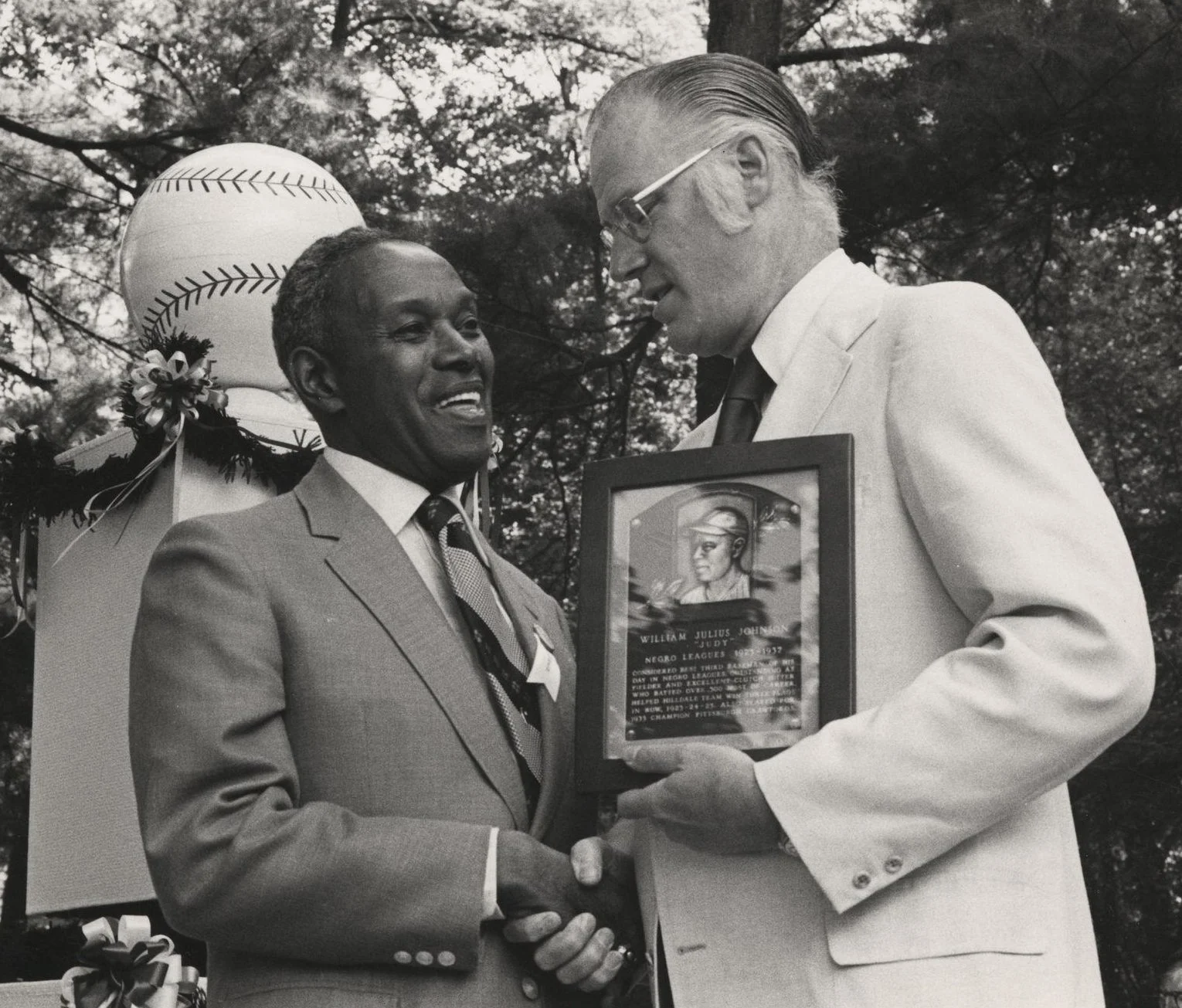
First Black Coach
Connie Mack once told him "if you were a white boy, you could name your own price."
Judy Johnson retired nine years before the integration of the major leagues, but in 1954, he became the first African American to coach in Major League Baseball.
He scouted and coached for the Philadelphia Athletics and Phillies.
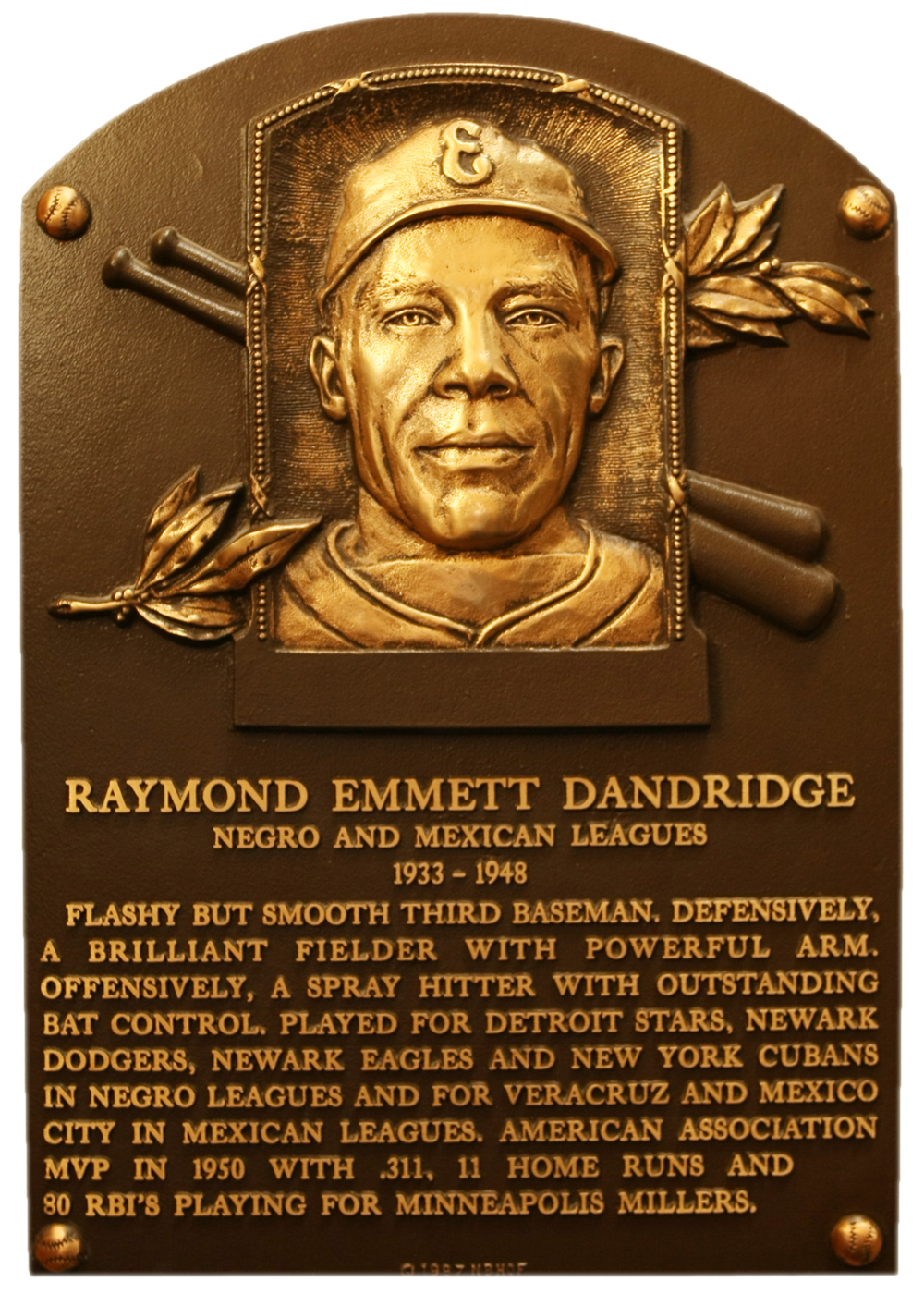
3B - Ray Dandridge
Ray Dandridge was inducted into the National Baseball Hall of Fame as a part of the Class of 1987.
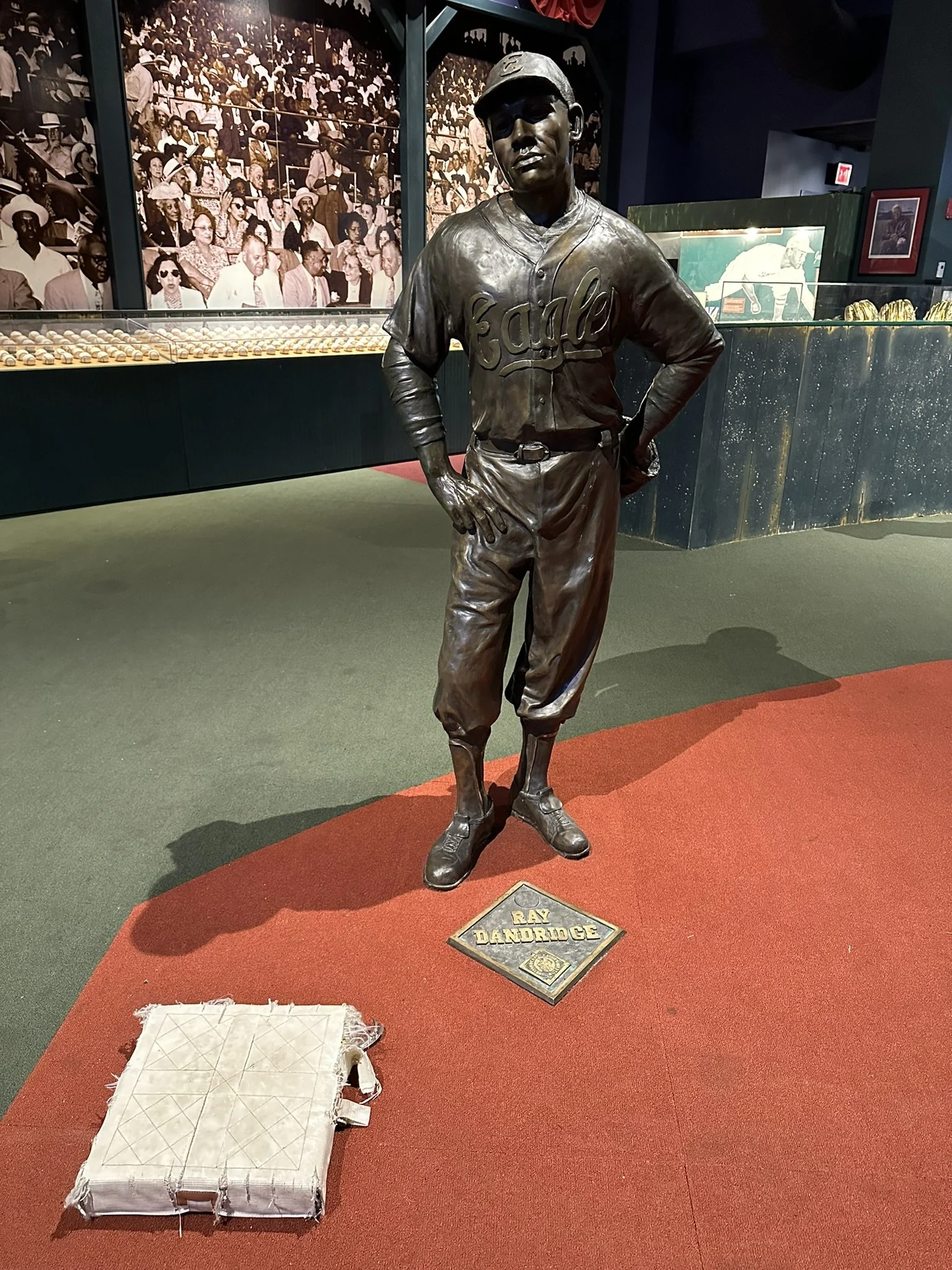
Ray’s Statue
Ray Dandridge grew up idolizing Judy Johnson, and some say he eventually became a better ballplayer than Johnson. Dandridge was a contact hitter who could hit to all fields, and a fancy fielder at third base who could also play shortstop, second base, and the outfield.
Dandridge signed his first professional contract at the age of 19 with the Detroit Stars in 1933, then moved on to the Newark Eagles the following year, where he'd play off and on for the next decade.
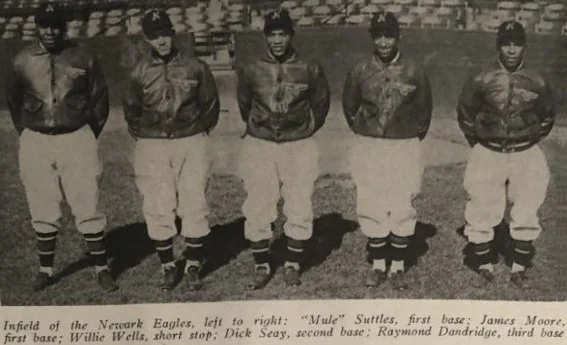
Ray Dandridge was a part of the Million Dollar Infield of the 1937 Newark Eagles, along with Willie Wells at short, Dick Seay and second, and Mule Suttles at first.
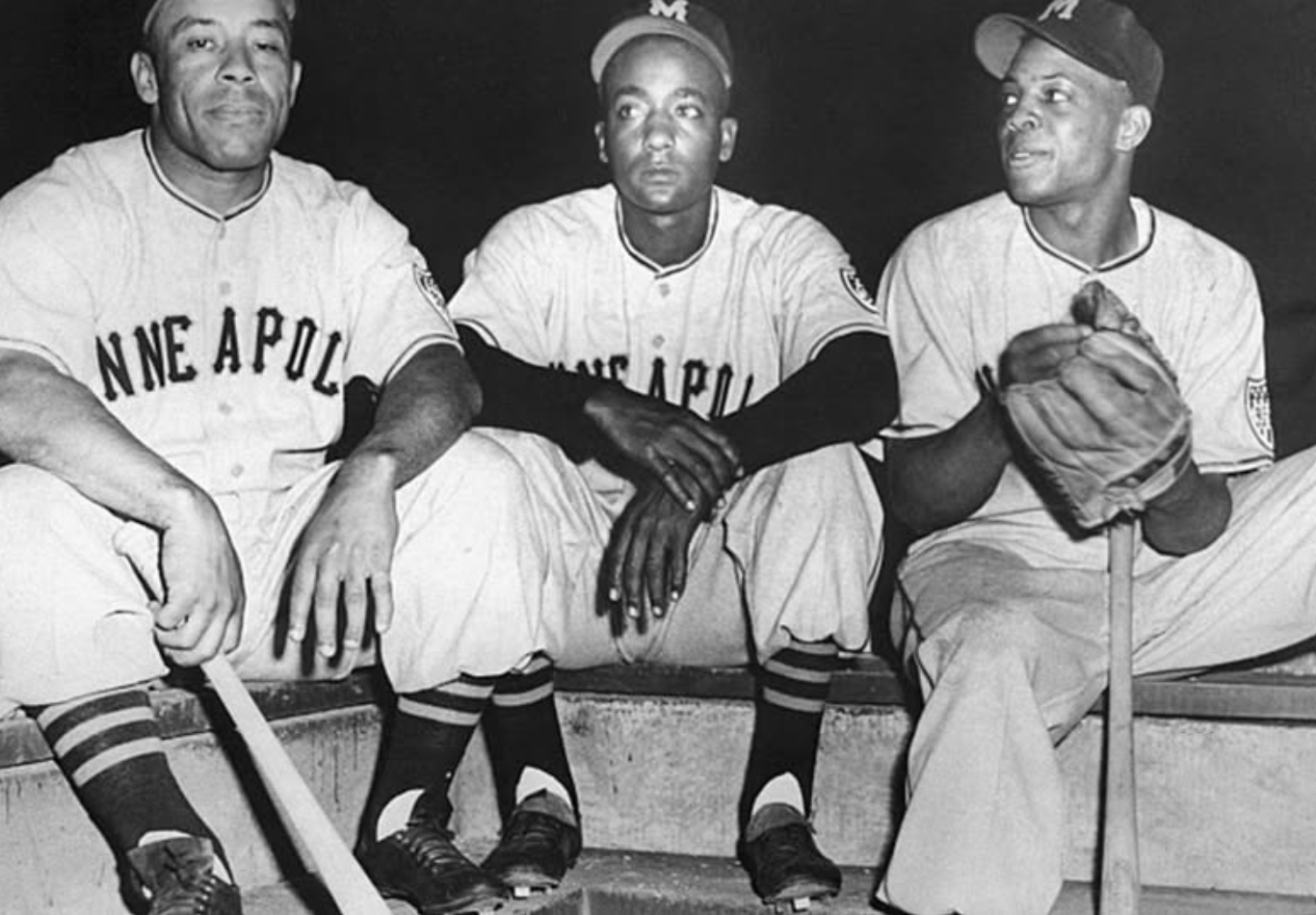
Minneapolis Millers
The Minneapolis Millers were the top AAA team for the New York Giants. Their 1951 team included (left to right) Ray Dandridge, Dave Barnhill, and Willie Mays, each of whom starred in the Negro Leagues prior to signing with the Giants. Both Dandridge and Mays would eventually be Hall of Famers.
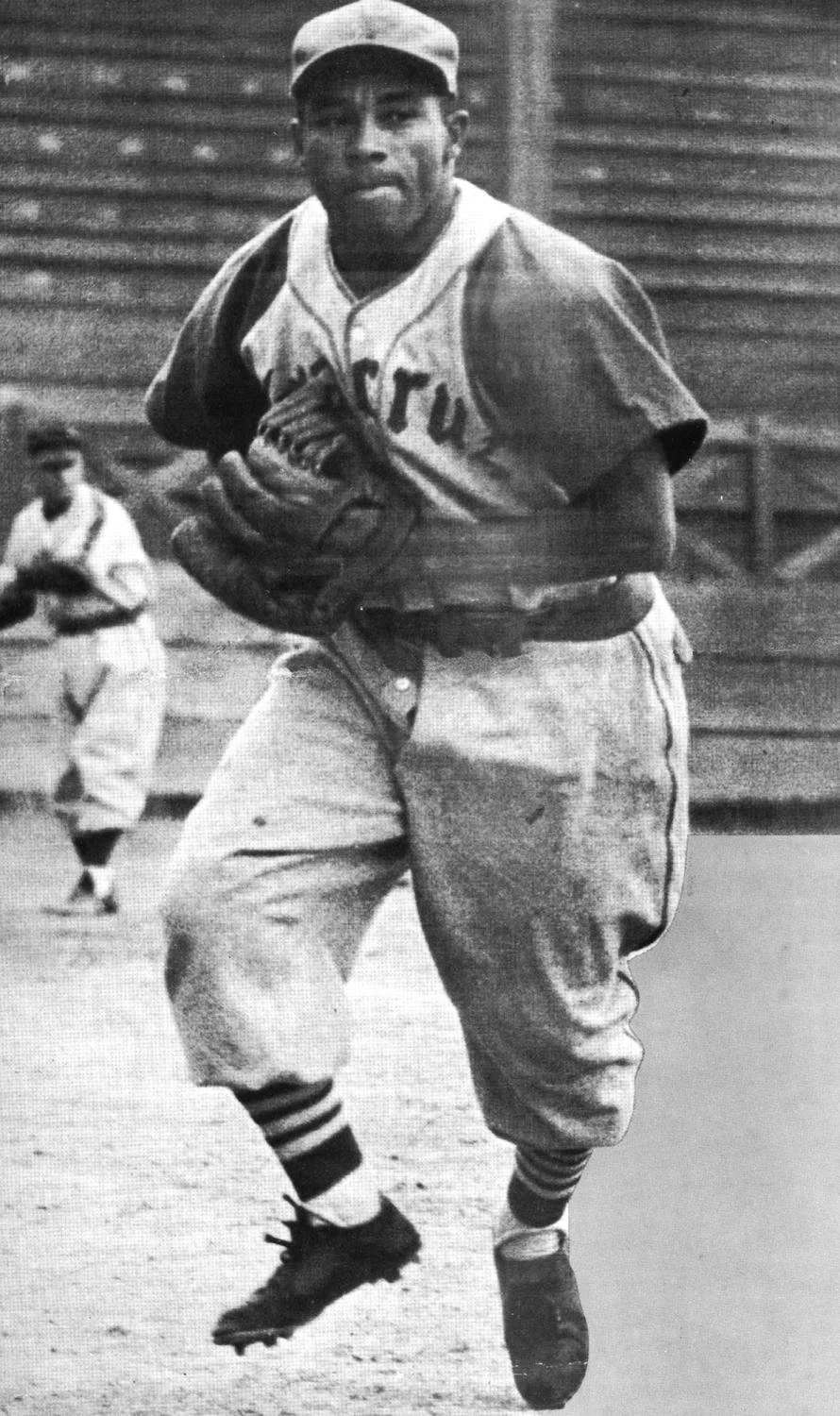
The Best Third Baseman To Never Play In The Major Leagues
Ray Dandridge also played for the New York Cubans and spent off seasons playing and managing in Cuba and Puerto Rico. He also played a year in Venezuela, and was one of the first to head to the Mexican League, where he spent most of the 1940s.
But that meant that he was a victim of Commissioner Happy Chandler's 5-year ban for players who played in that league, so even after Jackie Robinson broke the color barrier, Ray was ineligible to play in the newly-integrated Major Leagues.
Bob Kendrick calls Ray Dandridge the best third baseman to never play in the major leagues.
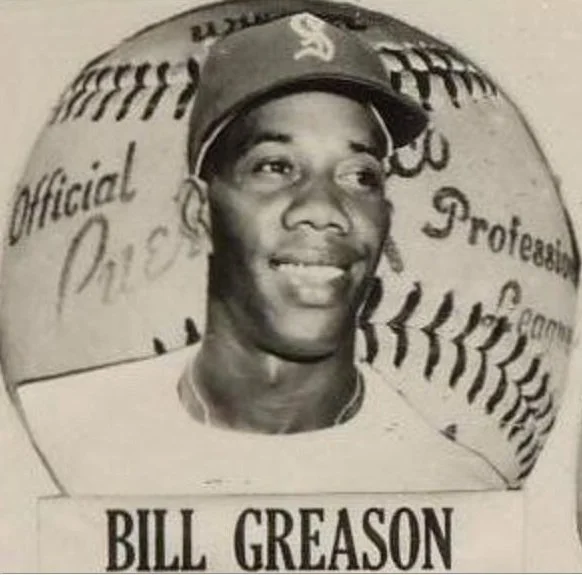
Bill Greason
Reverend Bill Greason once said, "Playing in the Negro Leagues was a struggle, but at the end of the day, you struggled together. If you made it to the majors, you struggled alone."
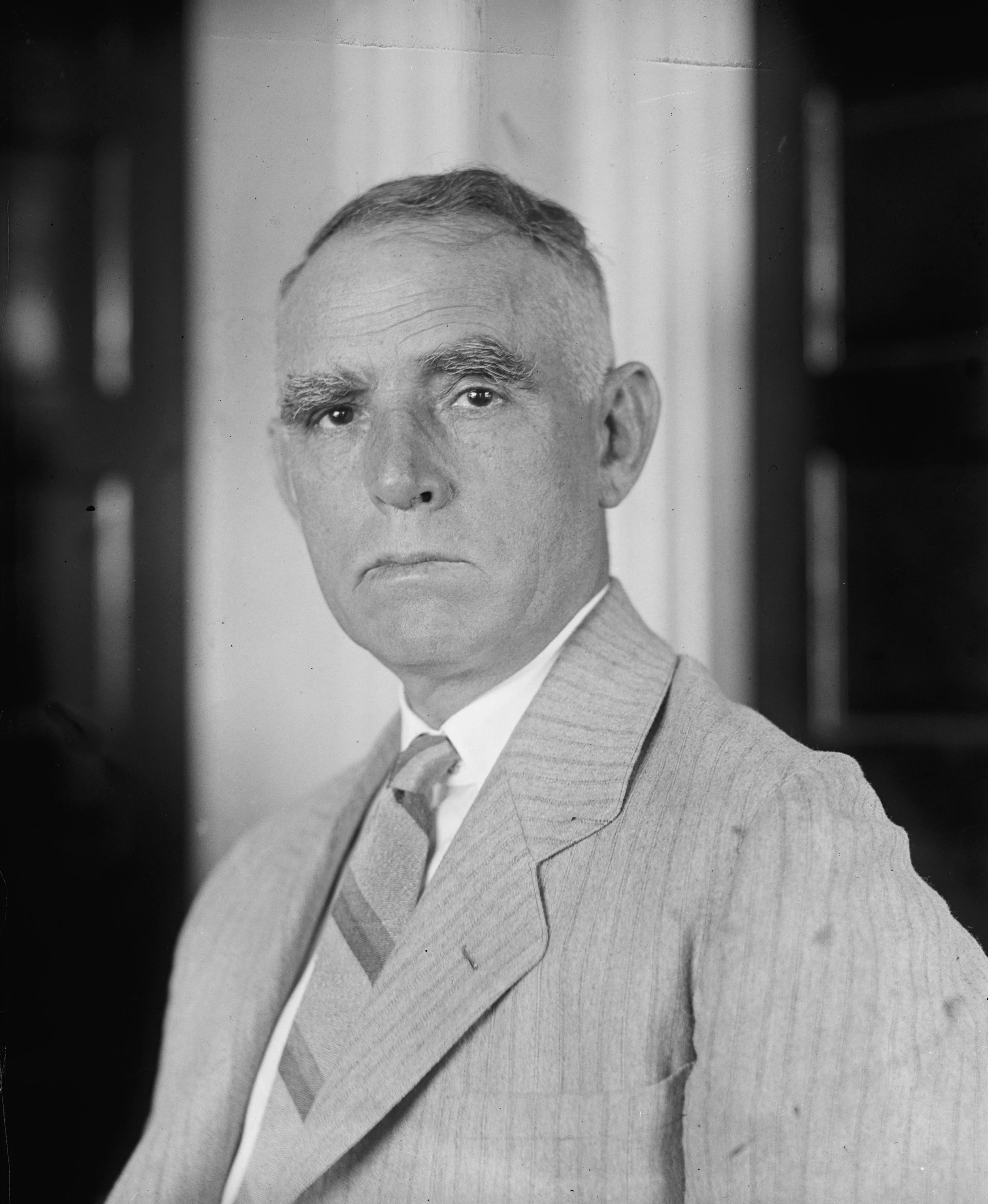
Clark Griffith
Clark Griffith began his MLB playing career with the St. Louis Browns (1891), Boston Reds (1891), and Chicago Colts/Orphans (1893–1900). He then served as player-manager for the Chicago White Stockings (1901–1902) and New York Highlanders (1903–1907).
Griffith retired as a player after the 1907 season, remaining manager of the Highlanders in 1908. He managed the Cincinnati Reds (1909–1911) and Washington Senators (1912–1920), making some appearances as a player with both teams.
Griffith owned the Senators from 1920 until his death in 1955, and was rumored to have seriously contemplated integrating the Senators before Branch Rickey signed Jackie Robinson to break baseball’s color barrier in 1945.
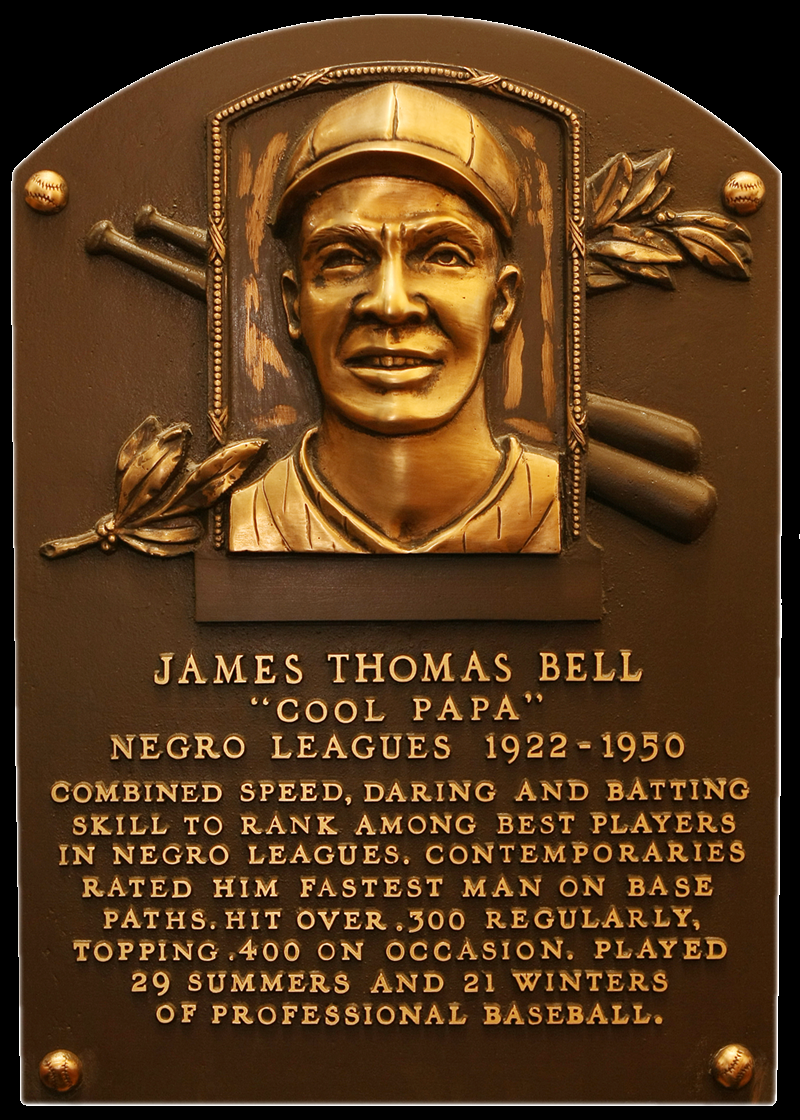
LF - “Cool Papa” Bell
Cool Papa Bell was inducted into the National Baseball Hall of Fame as a part of the Class of 1974.
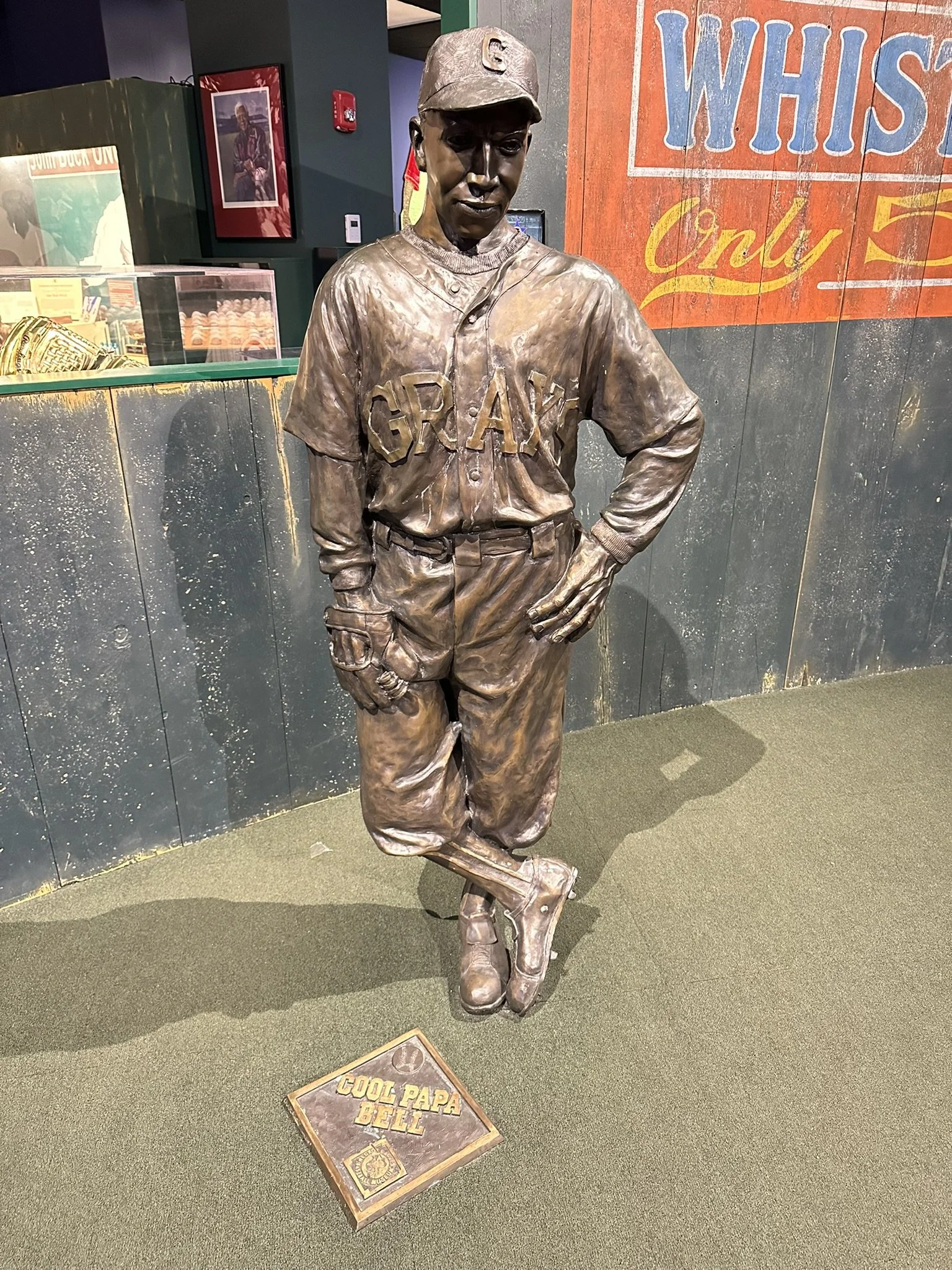
Cool Papa’s Statue
James Thomas “Cool Papa” Bell started with the St. Louis Stars as a pitcher, but he hurt his arm, so they moved him to the outfield.
The fastest man to ever play baseball, Bell was once timed circling the bases in 12 seconds flat.
For context, the fastest time recorded around the bases in Major League Baseball is 13.3 seconds, set by Evar Swanson in 1932 according to The Physics of Baseball.
In the modern StatCast era, Byron Buxton holds the record for the fastest home-to-home run, clocking in at 13.85 seconds in 2017.
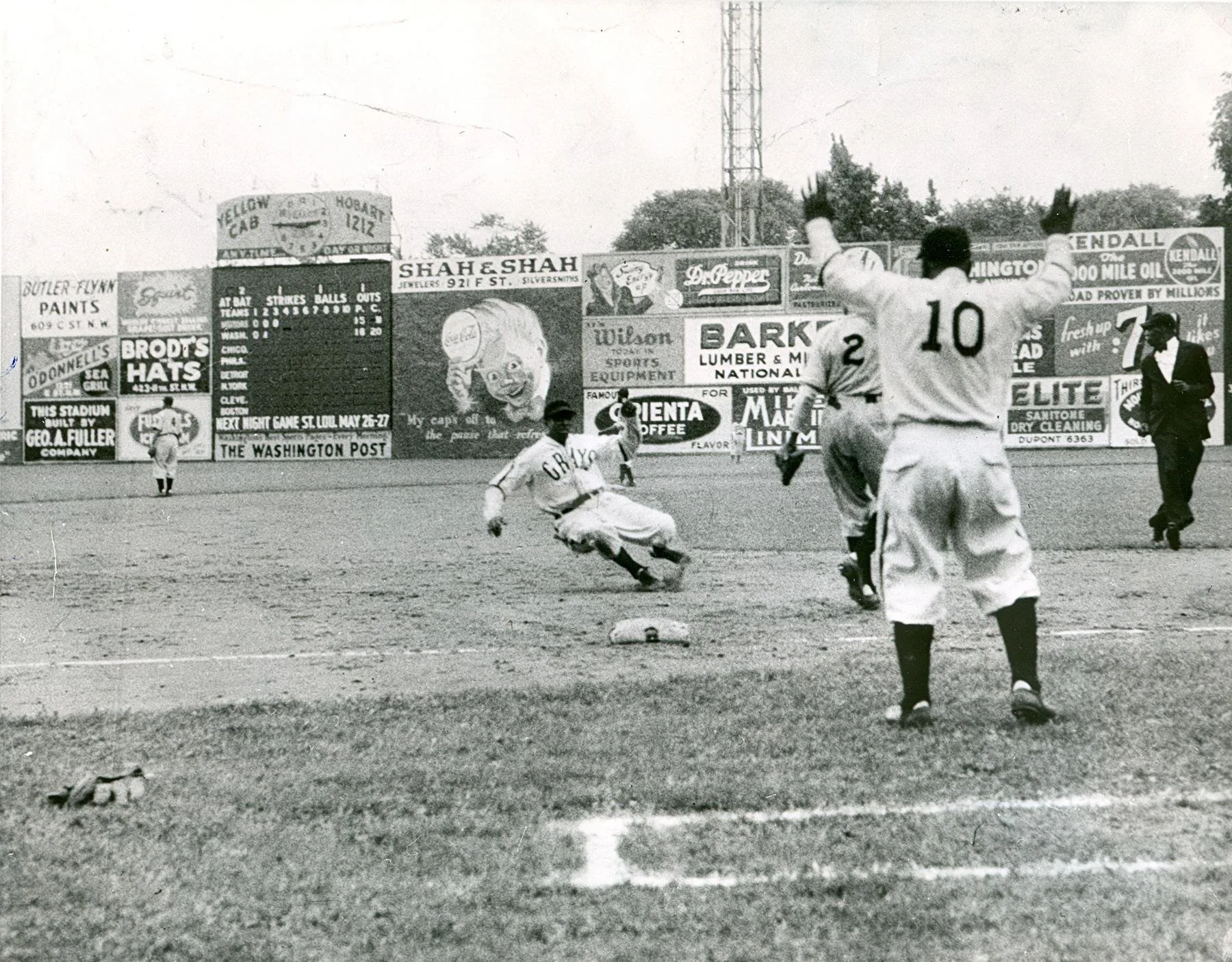
Cool Papa Bell of the Homestead Grays sliding into third base during the first game of a double-header against the Baltimore Elite Giants at Washington's Griffith Stadium on Negro National League Opening Day, May 16, 1943.
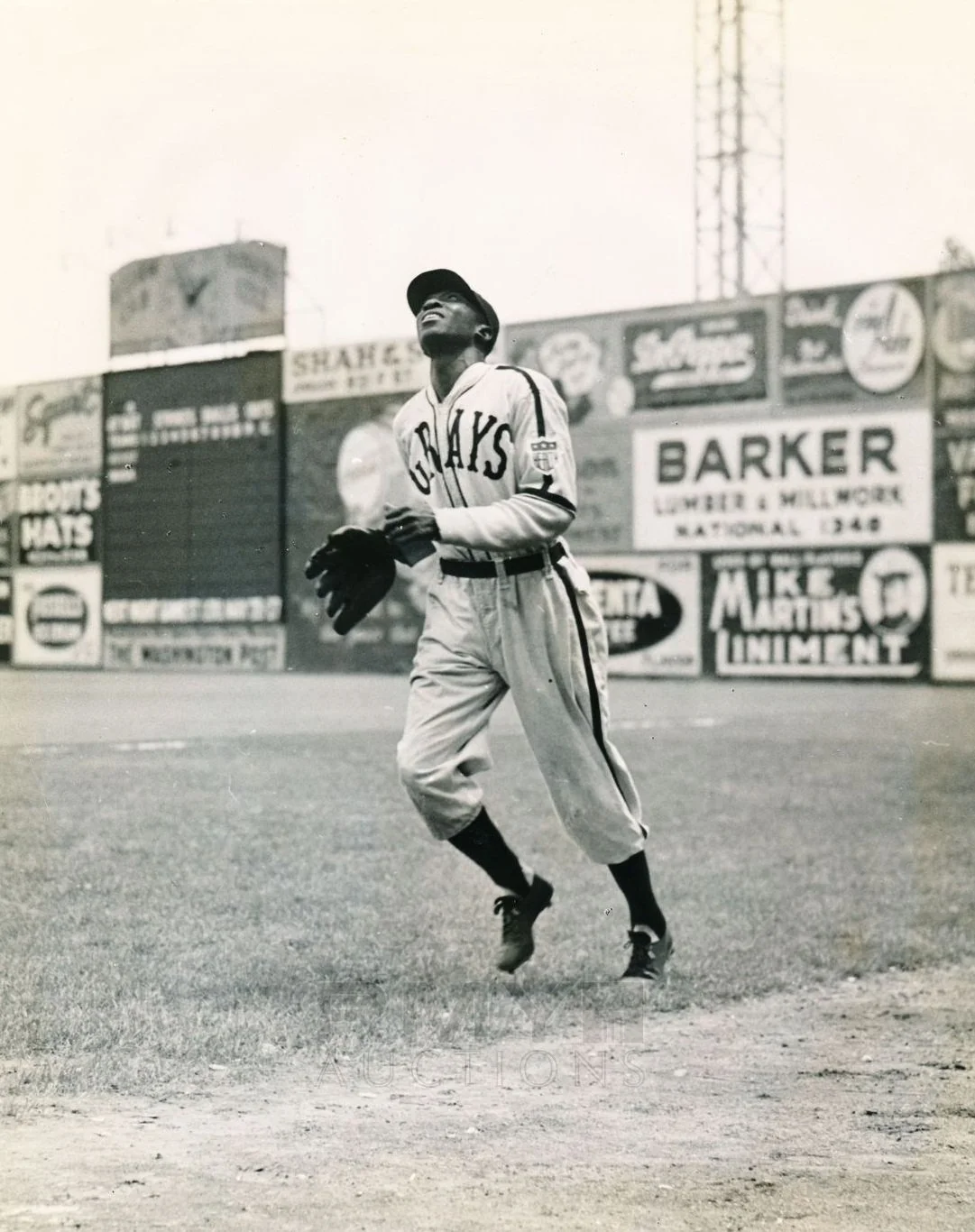
A Tall Tale?
Was Cool Papa Bell really faster than the speed of light? Satchel Paige says yes! He saw it with his own eyes.
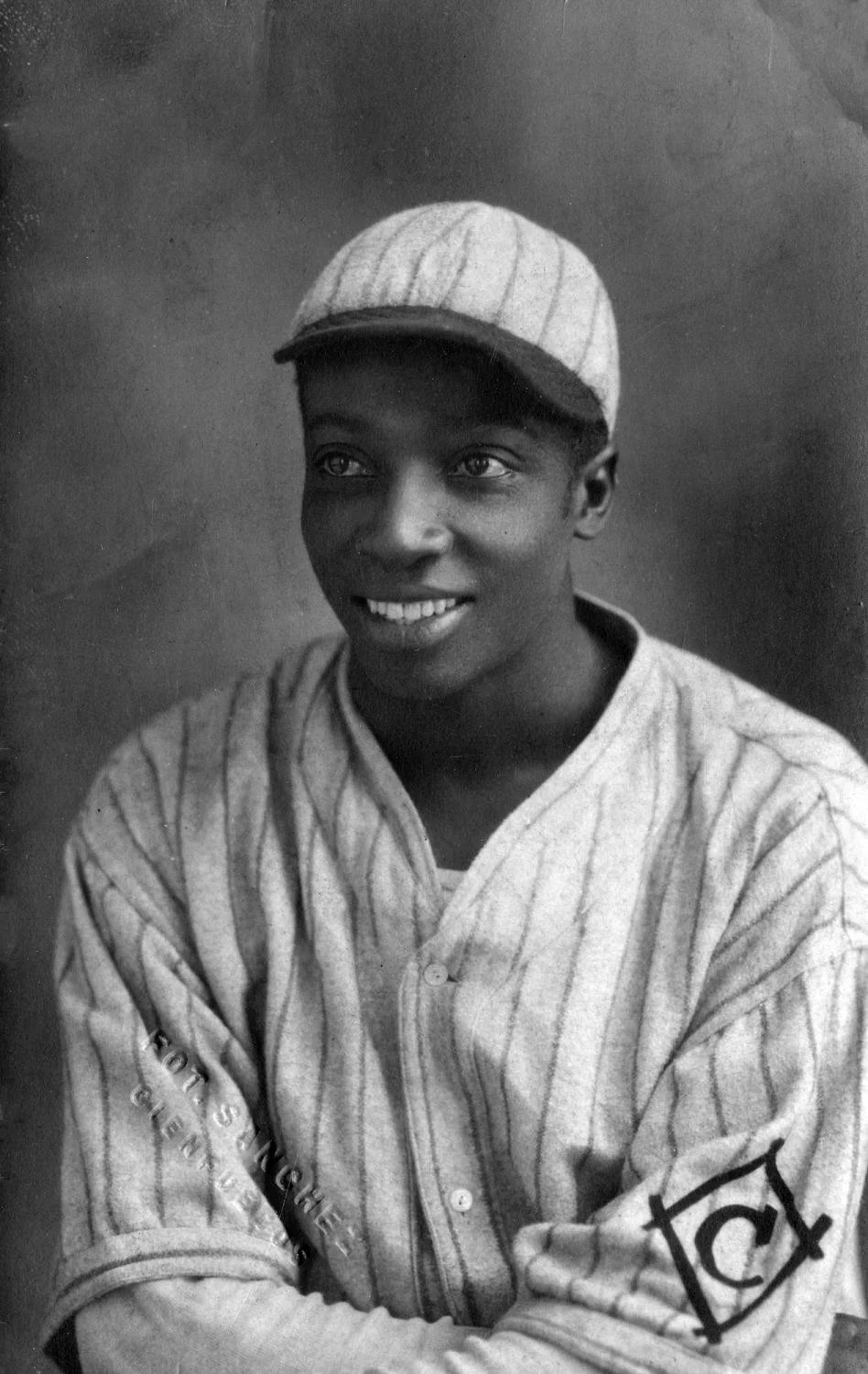
A Prolific Base Stealer
Cool Papa Bell wasn't just fast, though; he was smart. He watched the pitcher’s feet and was more careful with pitchers who had good moves.
If he took a big lead, it usually meant he wasn't stealing. But if he took a small lead, there was a good chance he was going.
Bell once stole 175 bases in a single season, (granted, they played 185-190 games, but still).
He once said, “I remember one time I got five hits and stole five bases, but none of it was written down because they forgot to bring the scorebook to the game that day.”
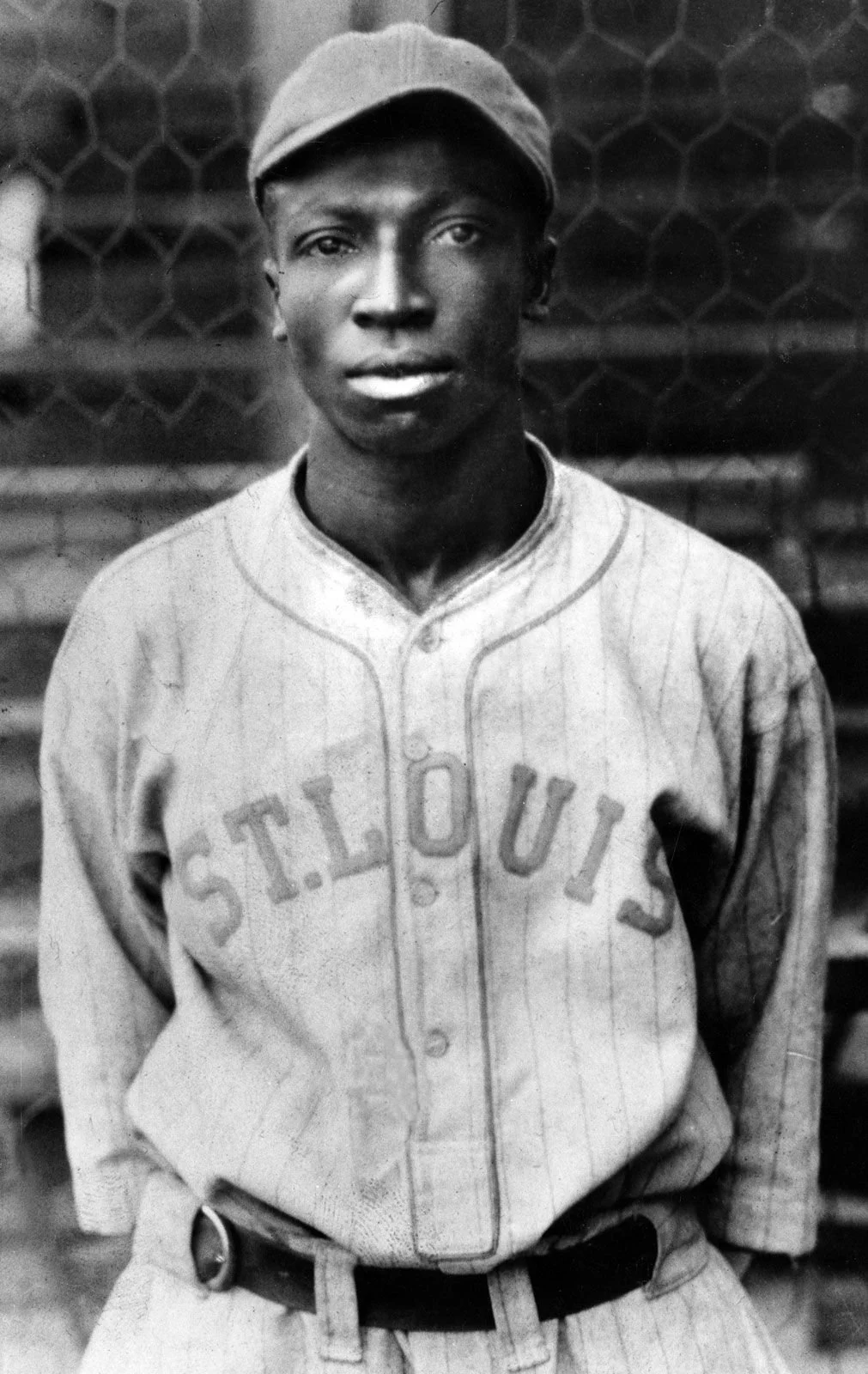
So Fast, He MUST Be Cheating… Right??
Cool Papa Bell was a great bunter, himself, but he also scored from first base on another player’s bunt TWO TIMES in his career.
On another occasion, he went from first to third so fast that the other team protested the game since they figured he had to have been cheating.
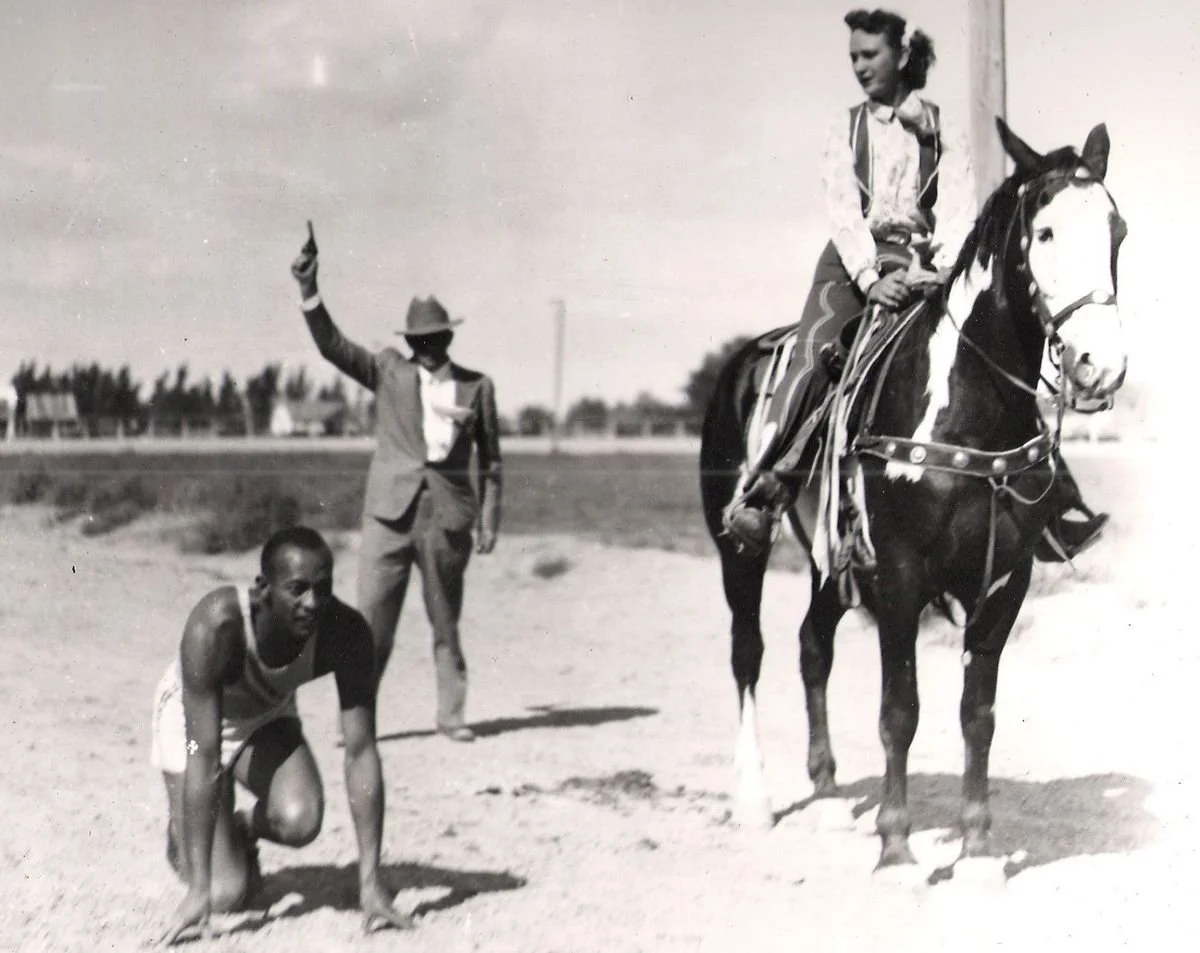
Jesse Owens
At the time, Jesse Owens was known as the fastest man in the world.
He would race against horses, but he refused to race against Cool Papa Bell.
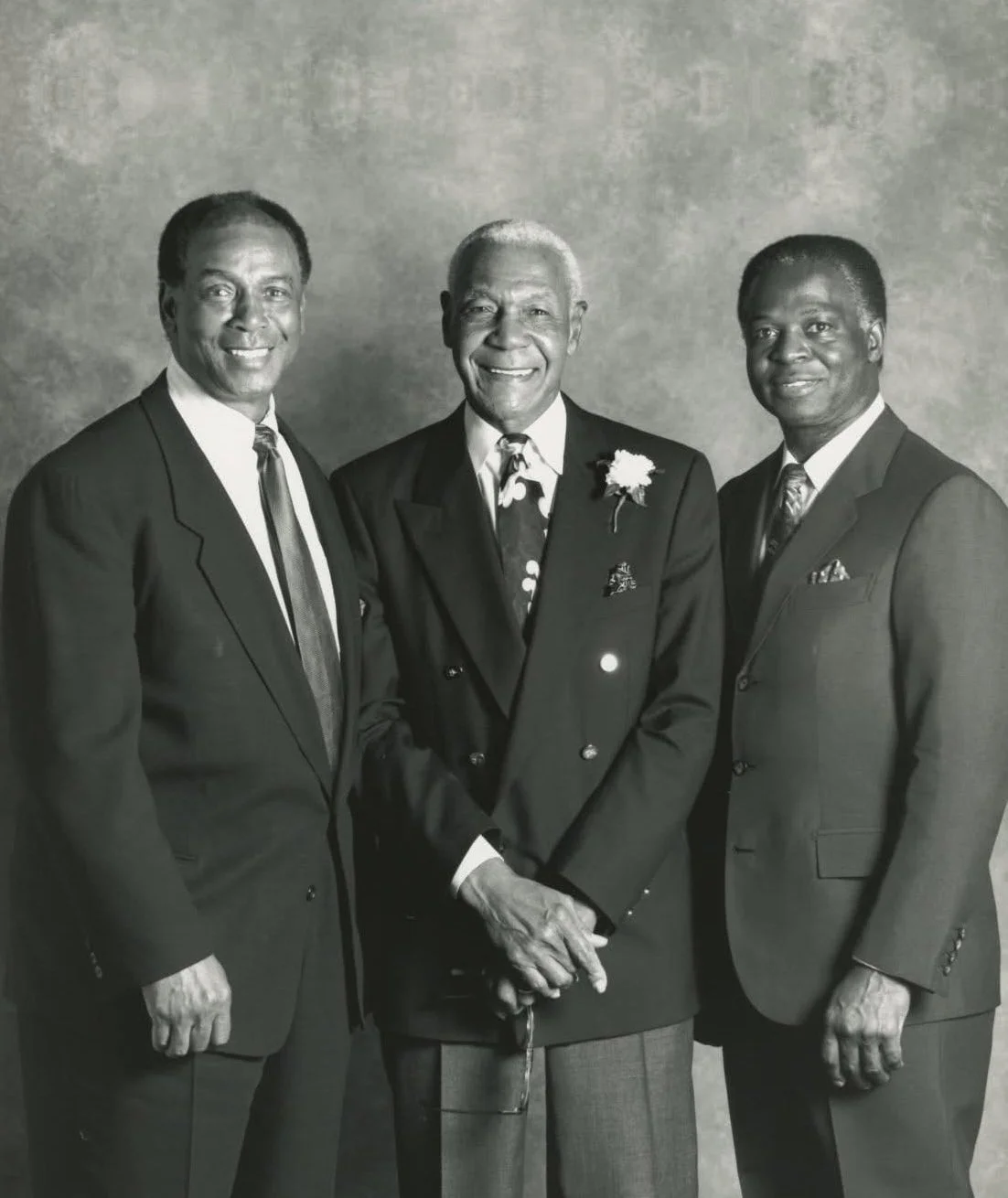
Ernie, Buck, & Lou
When Tom Baird sold the Kansas City Monarchs at the end of the 1955 season, Buck O'Neil resigned as manager and became a scout for the Chicago Cubs. He is credited for signing Hall of Famer Lou Brock to his first professional baseball contract.
Buck O'Neil is sometimes incorrectly credited with also having signed Hall of Famer Ernie Banks to his first contract, but “Mr. Cub” was actually scouted and signed to the Monarchs by Cool Papa Bell.
Banks played briefly for the Monarchs in 1950 and 1953, his play interrupted by Army duty. O'Neil was Banks' manager during those stints. Banks was signed to play for the Cubs more than two years before O'Neil joined them as a scout. O’Neil coached Banks in Chicago when he was named the first Black coach in the major leagues by the Cubs in 1962.
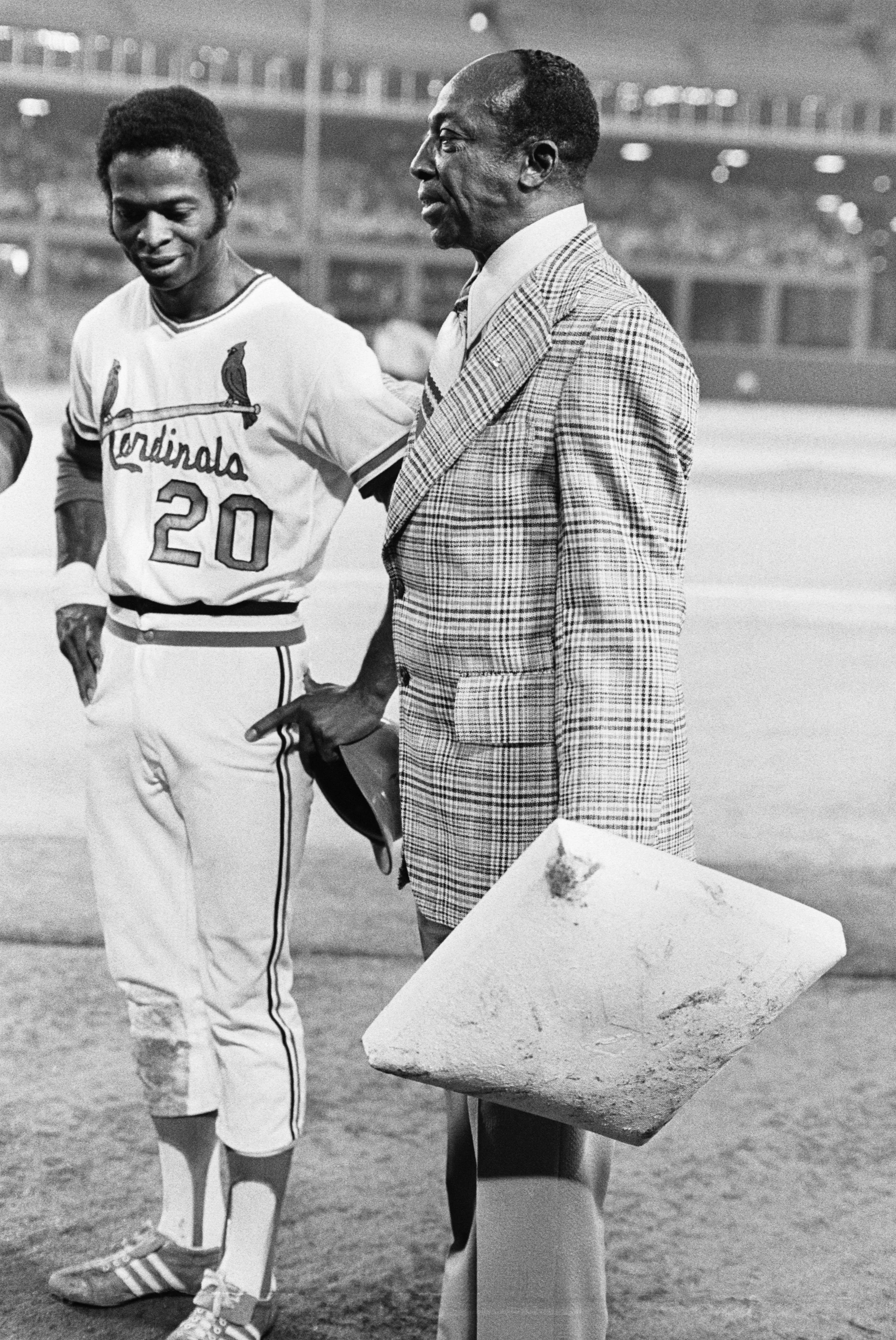
Lou Brock
Cool Papa also mentored Lou Brock, and was one of the first people who reached out to Brock when he was traded to St. Louis from the Cubs.
On September 10, 1974, Brock tied and broke Maury Wills’ single-season record by swiping his 104th and 105th bases of the year. Cool Papa was there to hand Lou the record-setting base, and said, “Lou, we’re going to give you this base. Because if we don’t give it to you, you’re going to steal it anyway!”
On August 29, 1977, Brock would steal his 893rd career base to break Ty Cobb’s all-time record.
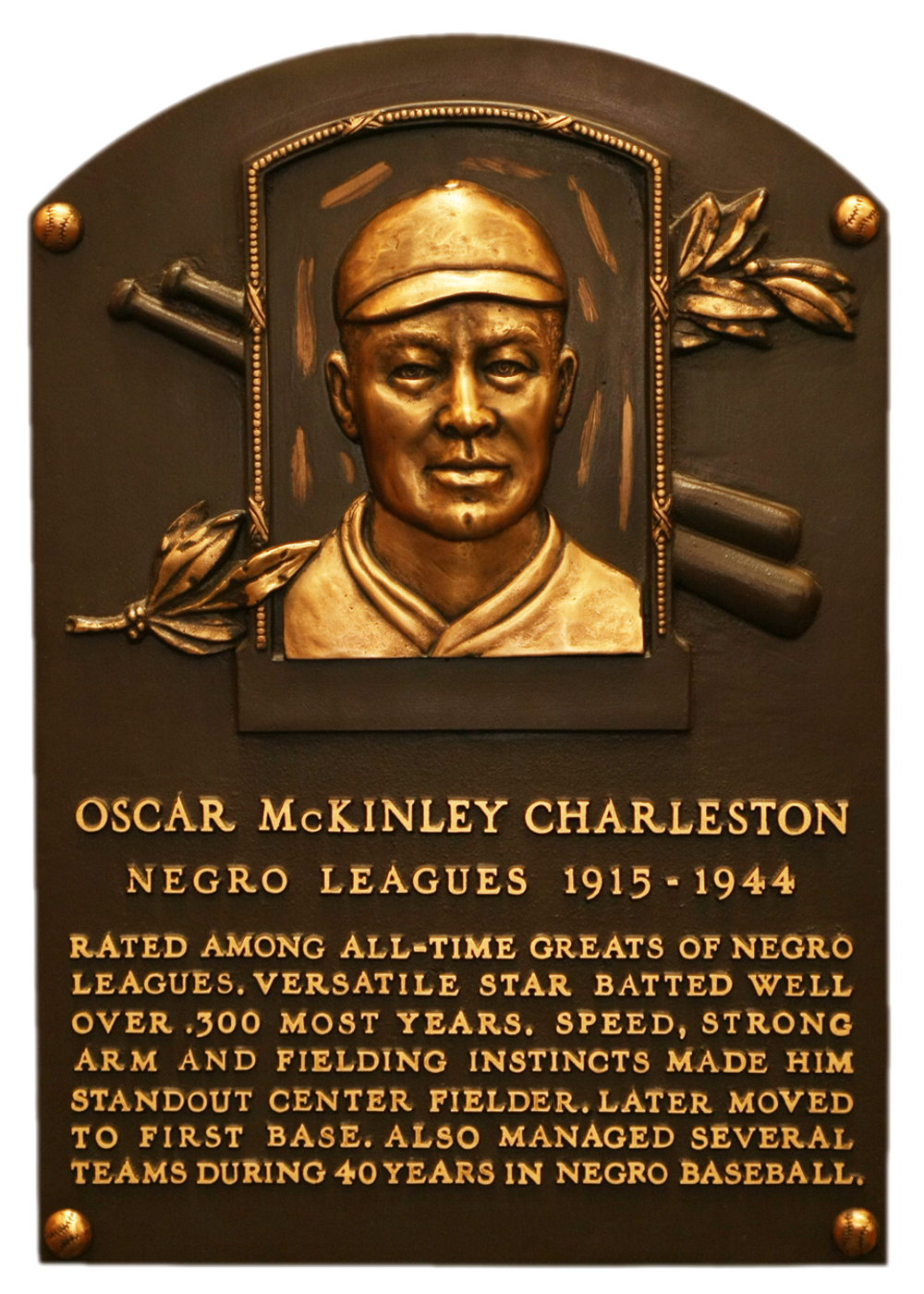
CF - Oscar Charleston
Oscar Charleston was inducted into the National Baseball Hall of Fame as a part of the Class of 1976.
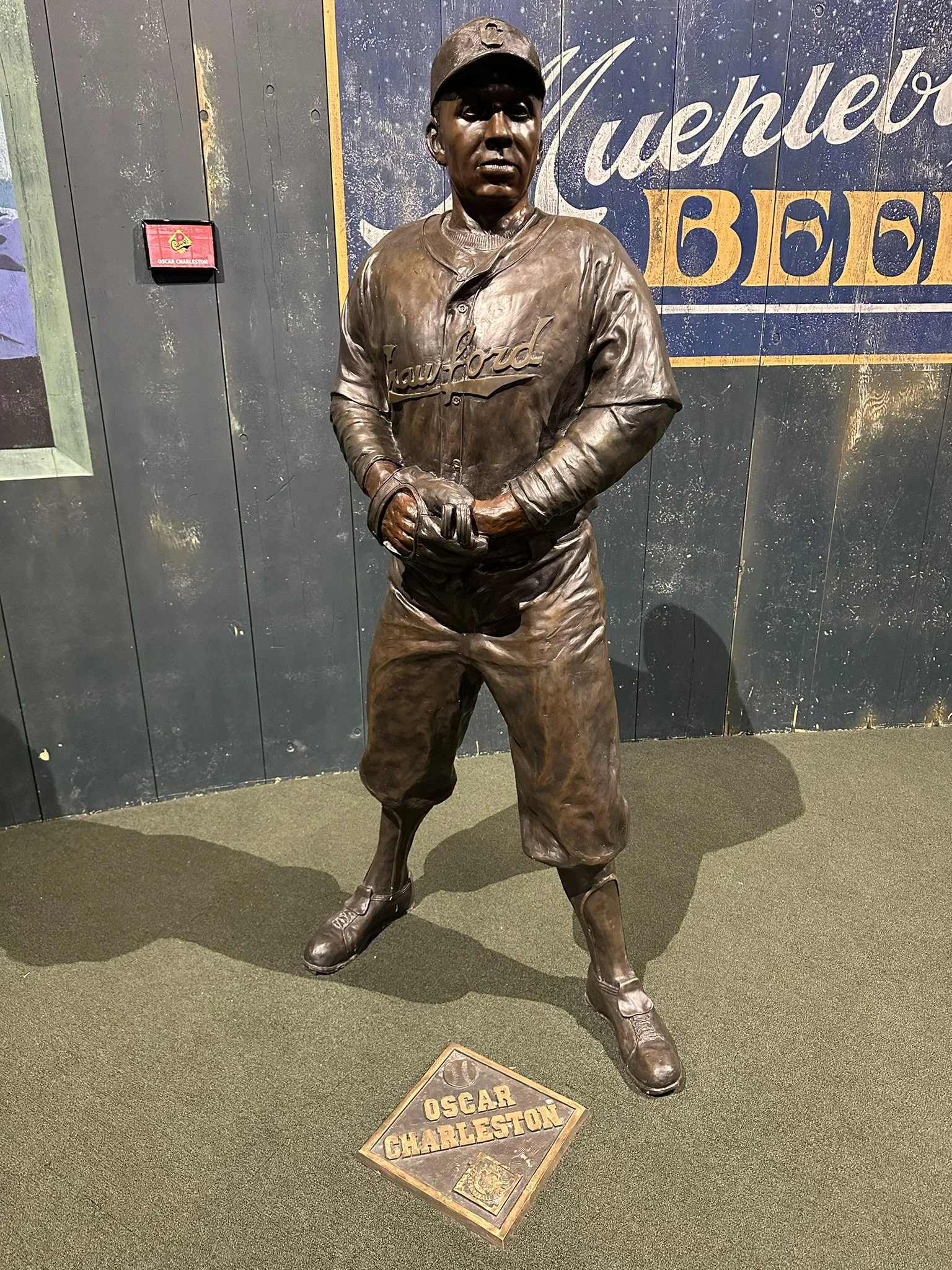
Oscar’s Statue
A powerful hitter who could hit to all fields and bunt, Oscar Charleston was also extremely fast on the base paths and in center field. He played a very shallow center, almost behind second base.
His great speed and instincts helped him outrun many batted balls, and he had a powerful arm. Coupled with his great natural ability was an aggressive demeanor and will to win.
Greatest Baseball Player Ever?
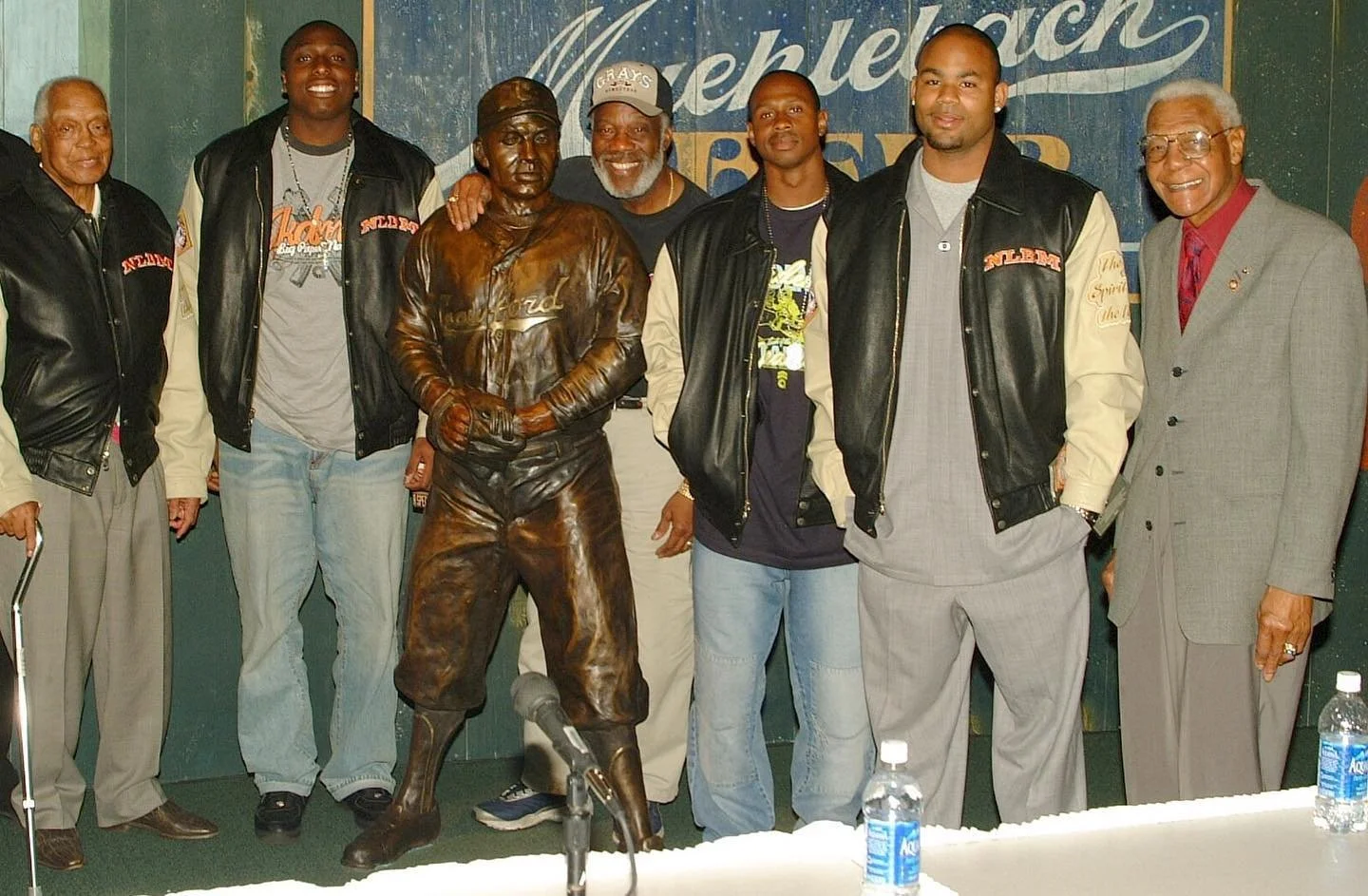
Buck O'Neil said that Willie Mays was the greatest major league player he ever saw, but called Oscar Charleston the greatest baseball player he ever saw.
Here, surrounding Oscar’s statue on the Field of Legends, is (left to right): Monte Irvin, Dontrelle Willis, Jim “Mudcat” Grant, Juan Pierre, Carl Crawford, and Buck O’Neil.
One Of The First NNL Superstars
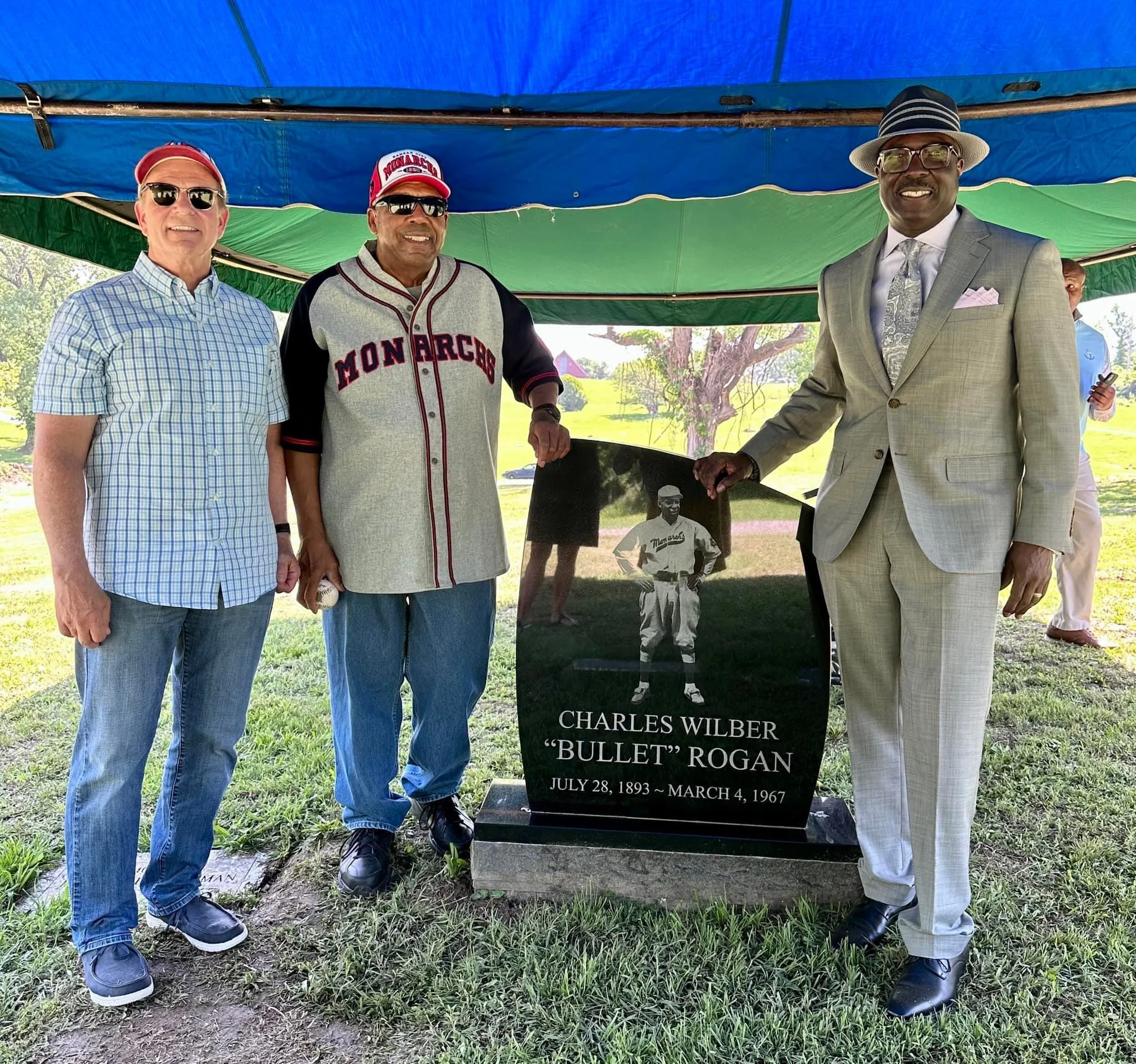
Bob calls Oscar Charleston one of the first two stars in Rube Foster’s Negro National League, which was a league filled with stars. But Bob says Oscar Charleston and Charles Wilber “Bullet” Rogan shined brighter than them all.
Oscar Charleston
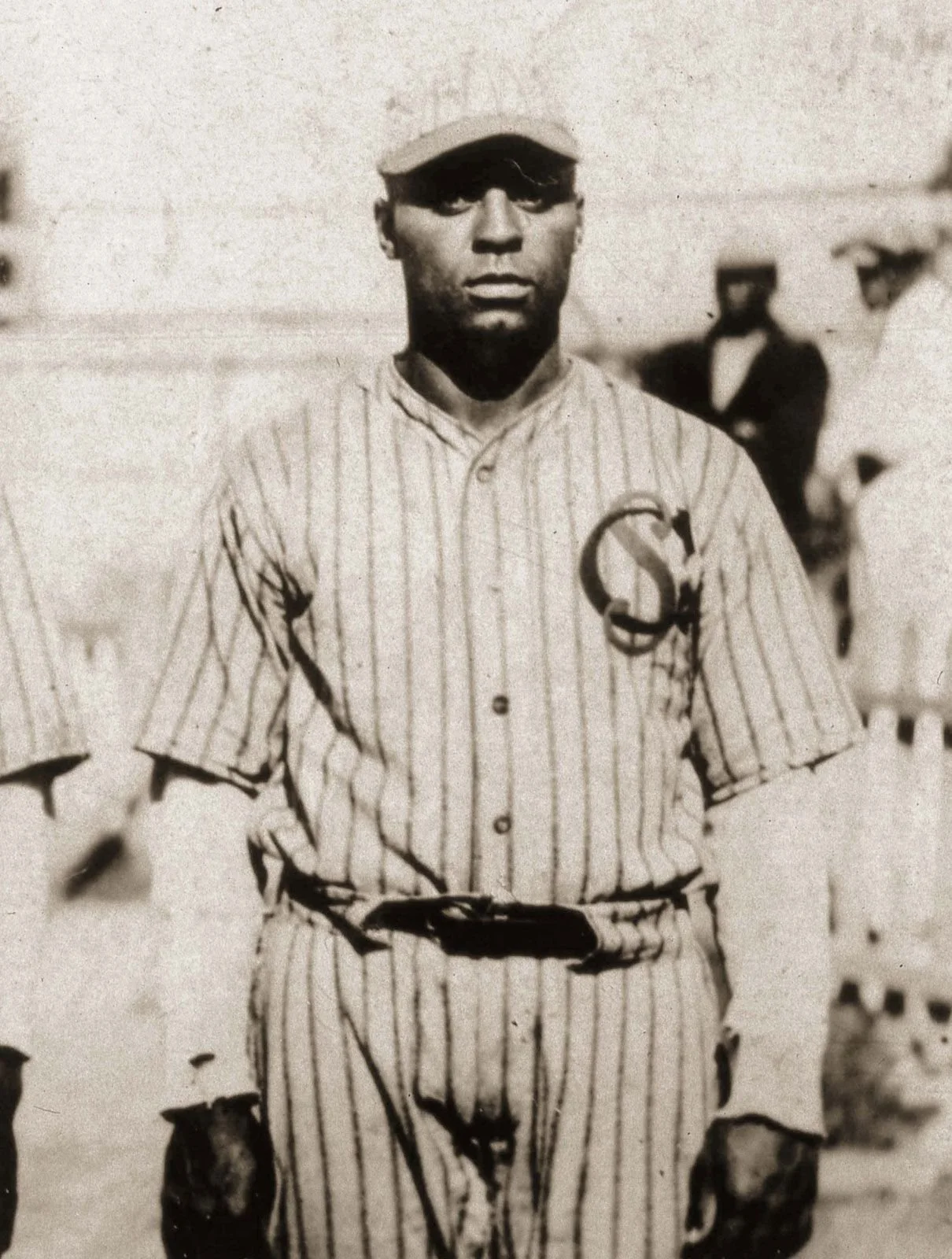
Oscar Charleston was said to have had the defensive prowess of Tris Speaker, the tenacity of Ty Cobb, and the power of Babe Ruth.
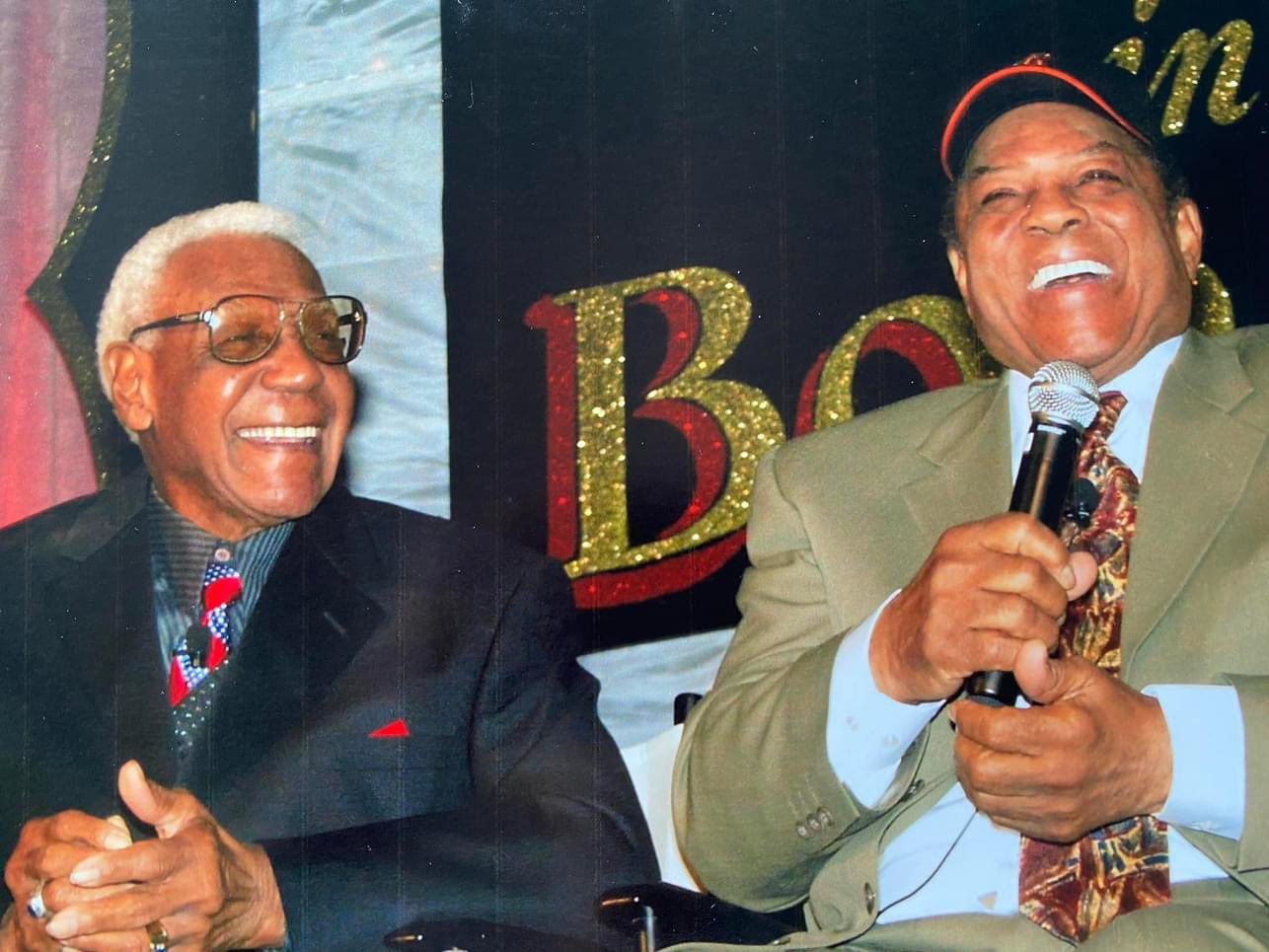
Willie Mays Before Willie Mays
When Willie Mays visited the Negro Leagues Baseball Museum for the first time and saw the statues on the Field of Legends, he turned to Buck O’Neil and asked who was the representative of his position in Center Field.
Buck responded by saying “Willie, that was you, before there ever was a you.”
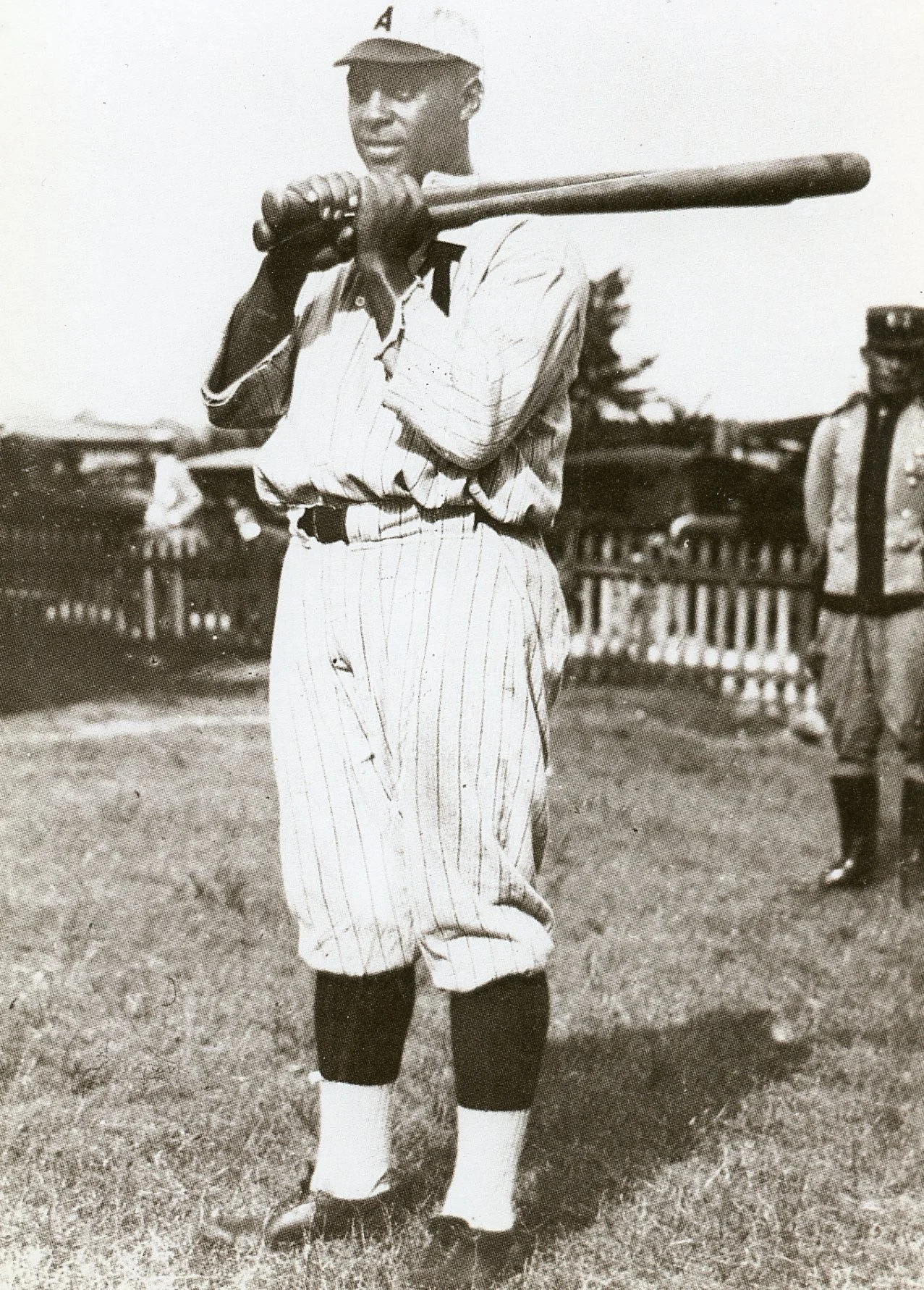
Best Seasons
Oscar Charleston’s finest season was likely 1925 when he hit .427 for the Harrisburg Giants, to go along with 20 home runs and 97 RBI. He won batting titles in the Eastern Colored League in 1924 and 1925.
But his 1931 season with the Homestead Grays was pretty good, too. He batted .346 with 58 doubles, 26 triples, and 19 home runs that year.
Depending on which all-time list you look at, Charleston ranks among the highest career batting averages in the history of the game.
He is listed in second place all-time HERE, and third place all-time HERE.
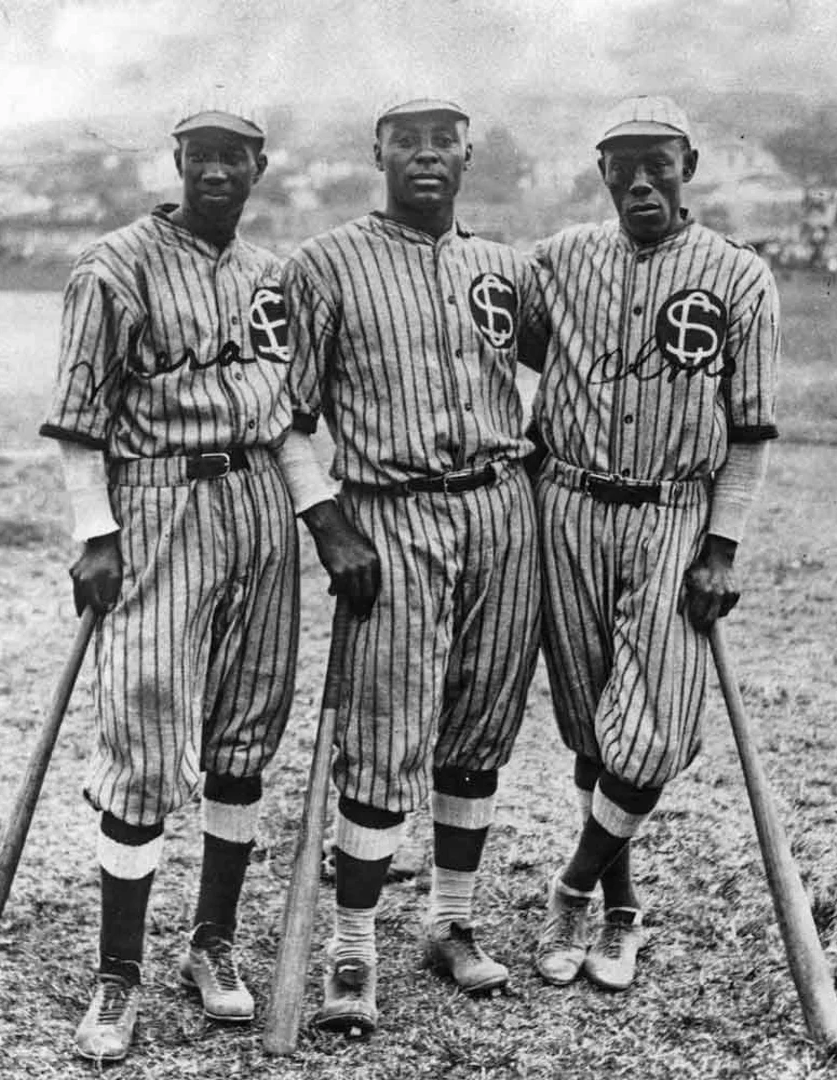
Cuban Star
In addition to his many years playing and managing Black baseball teams in America, Charleston also played nine seasons of winter ball, traveling the professional leagues in Cuba.
For the games which we have box scores from, his recorded batting average playing in the Cuban League was .361 over those nine seasons.
The Negro Leagues Baseball Museum owns Oscar Charleston’s personal scrapbook as part of their collection. The period in his life and career which is most often represented in that scrapbook is his time in Cuba.
Here, Pablo Mesa, Oscar Charleston, and Alejandro Oms are pictured while playing for Santa Clara in Cuba.
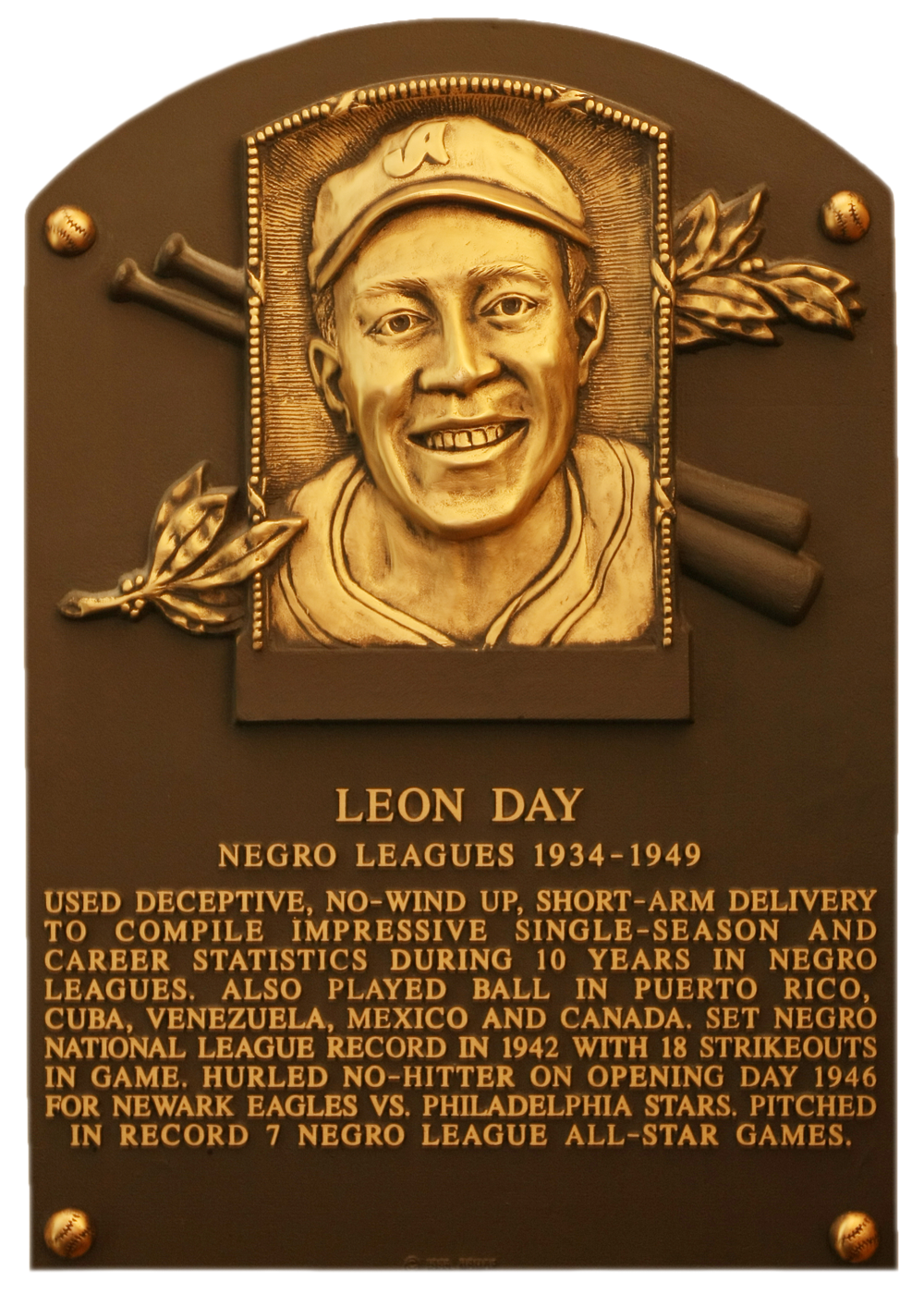
RF - Leon Day
Leon Day was inducted into the National Baseball Hall of Fame as a part of the Class of 1995.
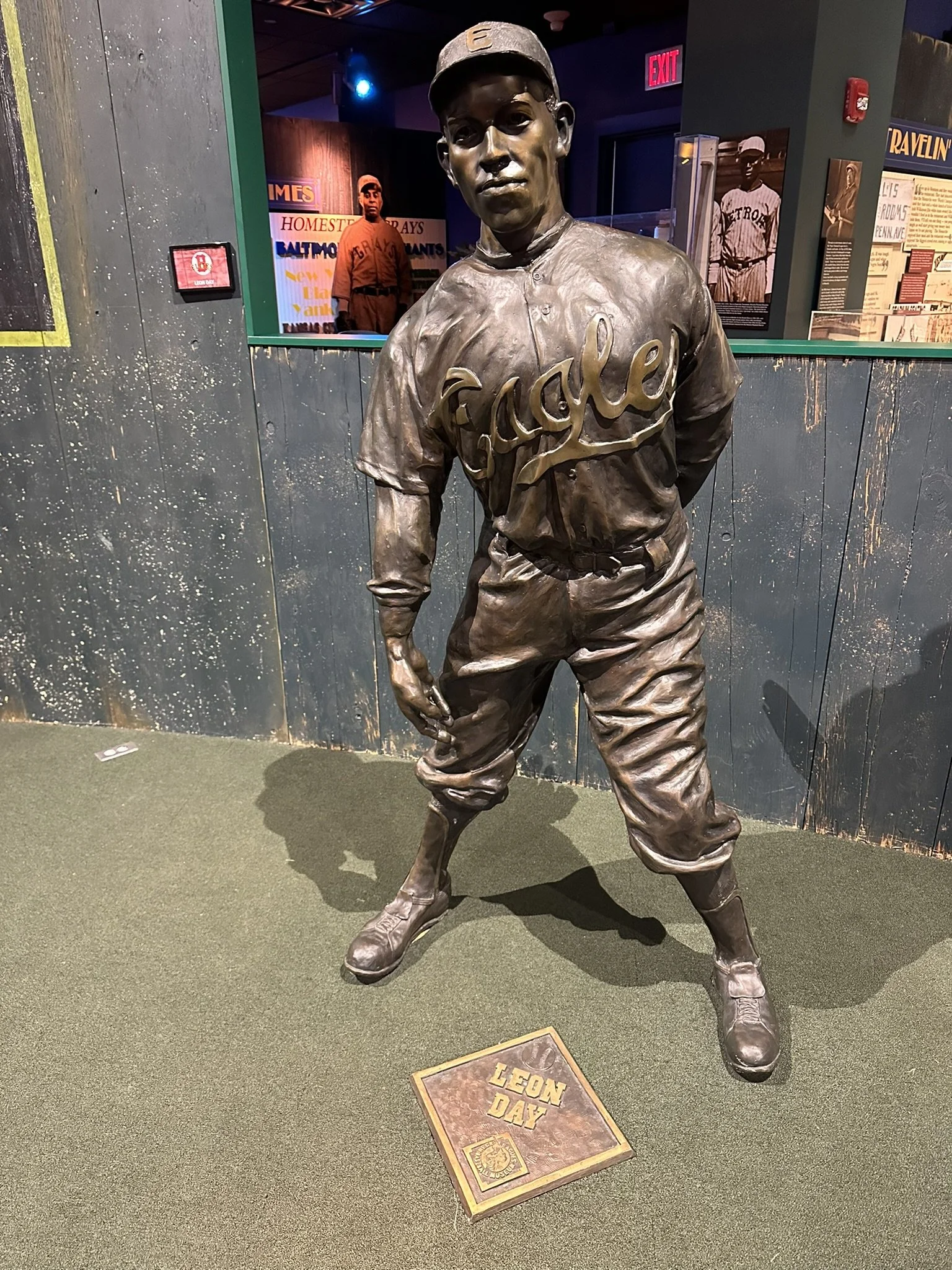
Leon’s Statue
A quiet, soft spoken and modest right-hander, Leon Day could play any position on the field besides catcher. His statue is in the outfield here at the museum, but he was a great, great pitcher with a deceptive fastball and a sharp curve.
Hall of Famer Monte Irvin said if you had seen Bob Gibson pitch, but you didn’t see Leon Day, then you saw Leon Day.
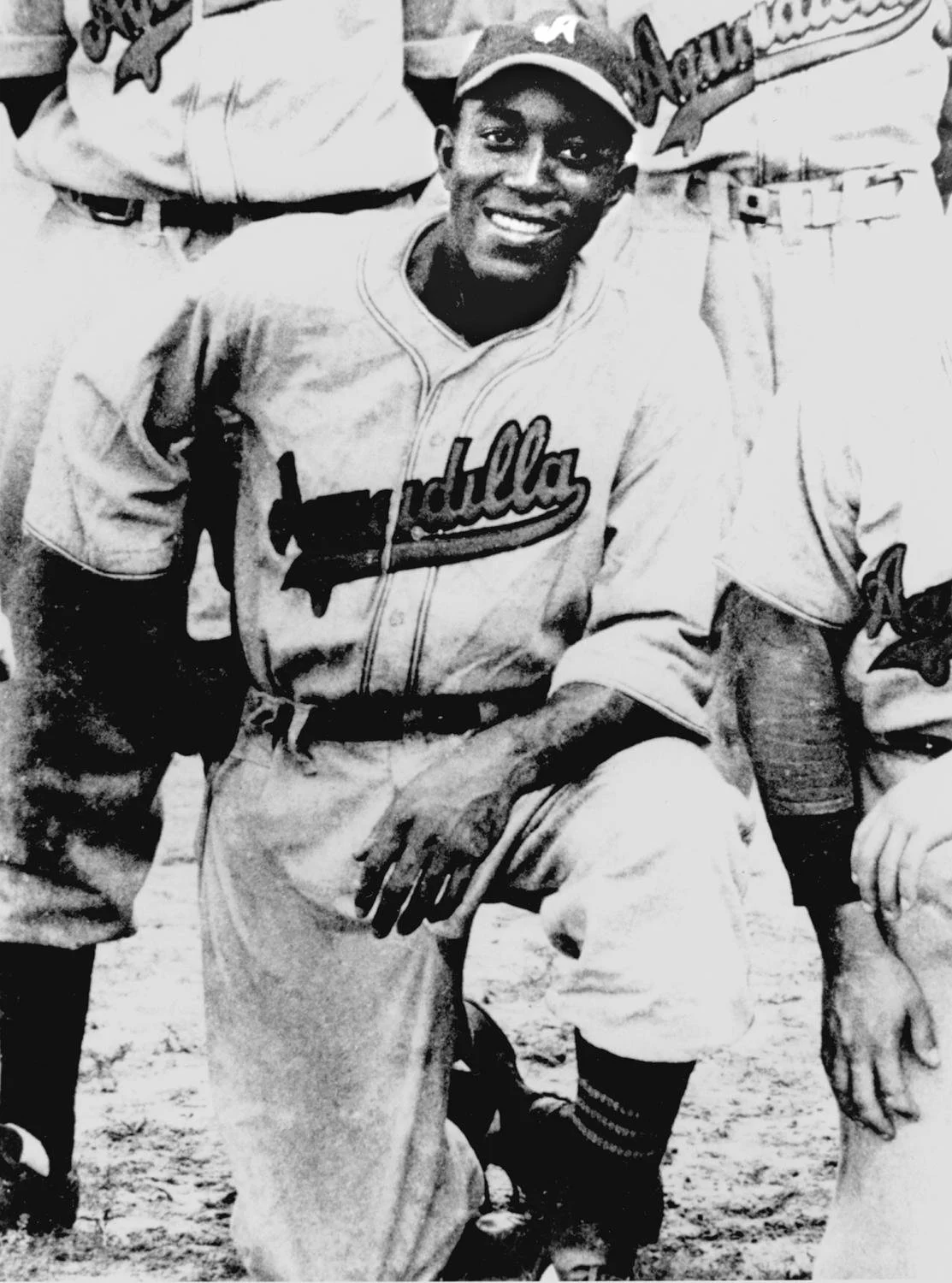
Leon Day
Buck O’Neil said that Leon Day was a better center fielder than he was a pitcher, and he’s in the National Baseball Hall of Fame as a pitcher.
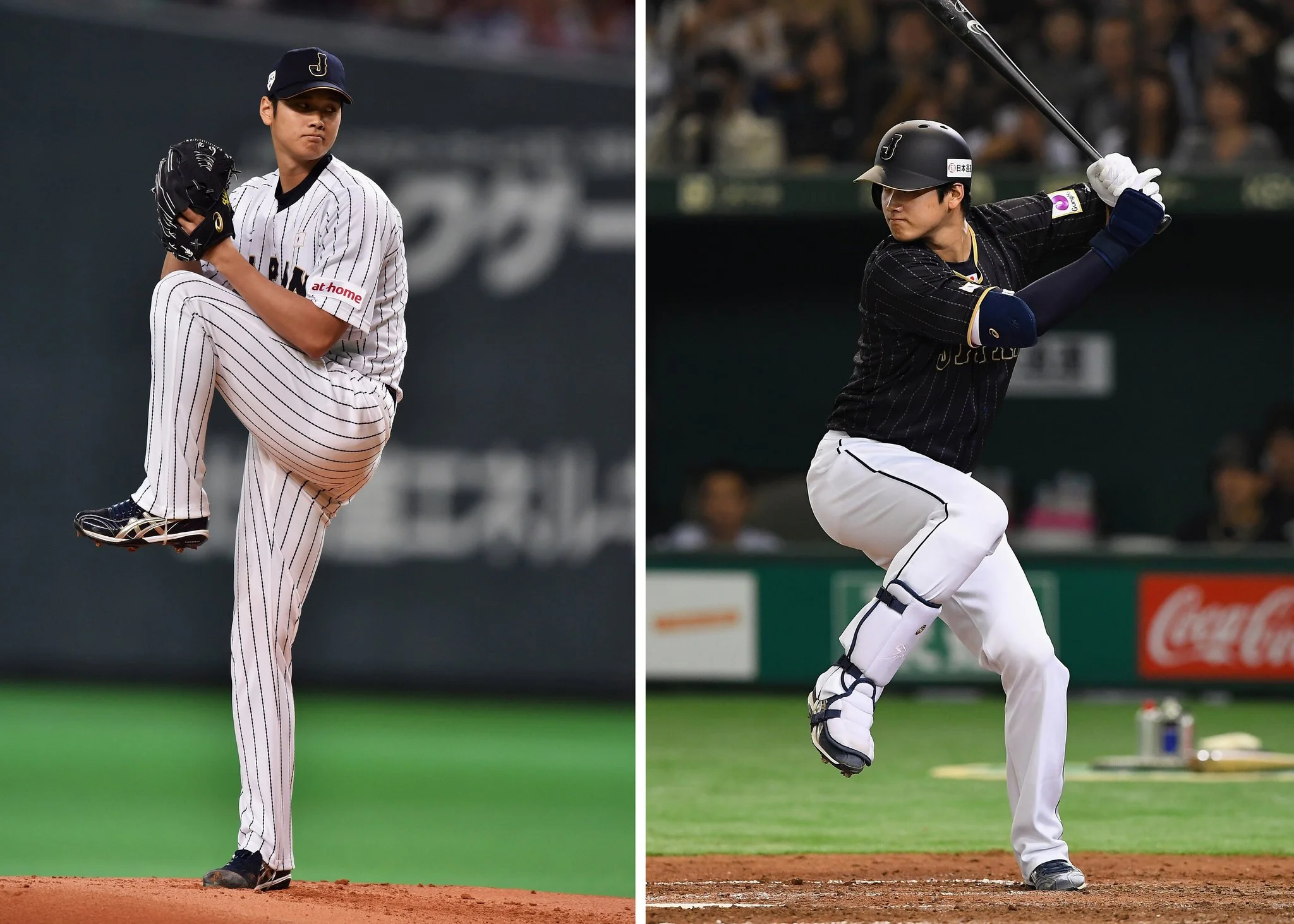
The emergence of Shohei Ohtani as an incredible two-way player has given Bob the opportunity to have a modern example to compare Leon Day to while he gives tours at the NLBM, especially to younger fans who are enamored with Ohtani.
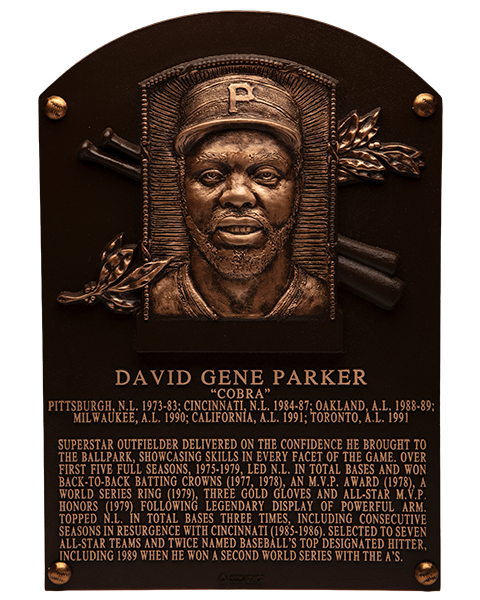
Dave Parker
Leon Day was the last Negro Leaguer to still be alive to learn that he was going to be inducted into the National Baseball Hall of Fame.
Unfortunately, like Dave Parker, who was inducted as a member of the Hall of Fame’s Class of 2025, Day passed away after learning he had been inducted, but before the date of his induction ceremony, so he wasn’t able to physically be there to receive his flowers from all of his adoring fans.
1942 East-West All-Star Game
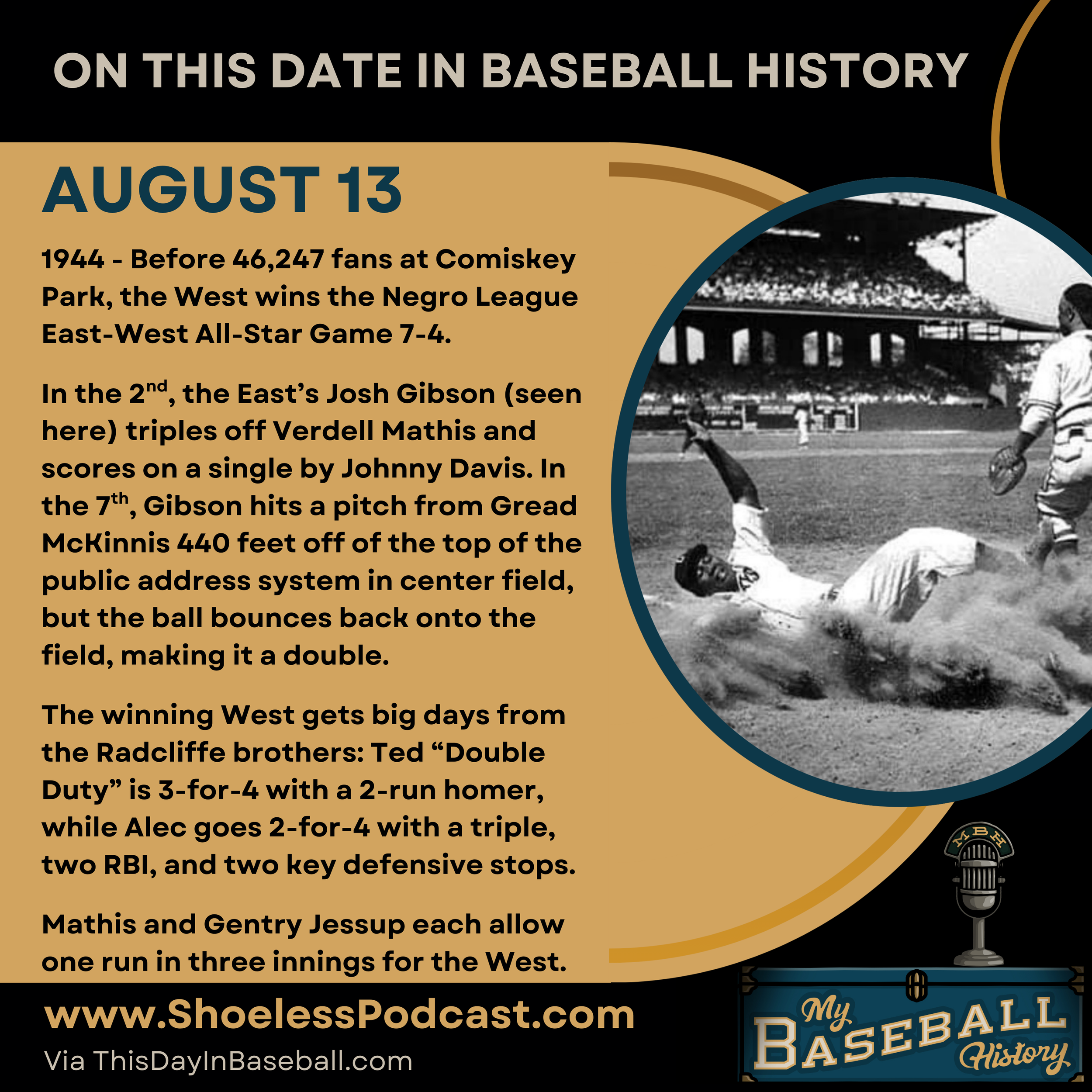
The West mounted a threat in the bottom of the 7th inning of the 1942 East-West All-Star Game against East pitcher Barney Brown, but Leon Day relieved him with two outs. Day retired all seven men he faced, striking out five, including fanning the side in the 9th inning, to preserve the East’s 5-2 win.
The Kansas City Monarchs won the 1942 Negro League World Series, although the Homestead Grays attempted to steal a game by bringing in Leon Day to pitch for them, as a ringer. When it was decided that the game wouldn’t count because Day hadn’t been on the team all year, the win he had earned was rescinded, and the Monarchs would go on to win the Series.
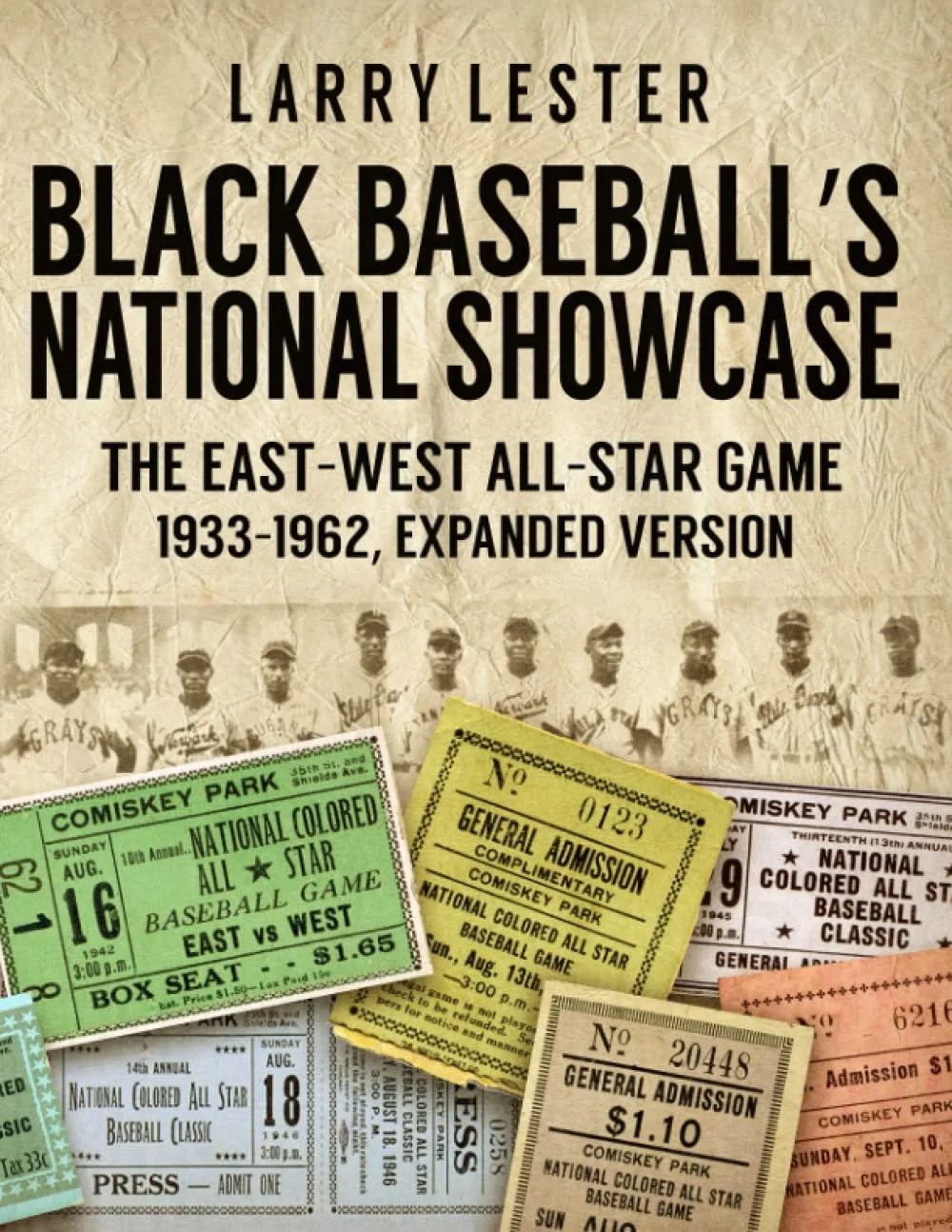
Buy Larry Lester’s incredible book on the history of the East-West All-Star Game HERE.
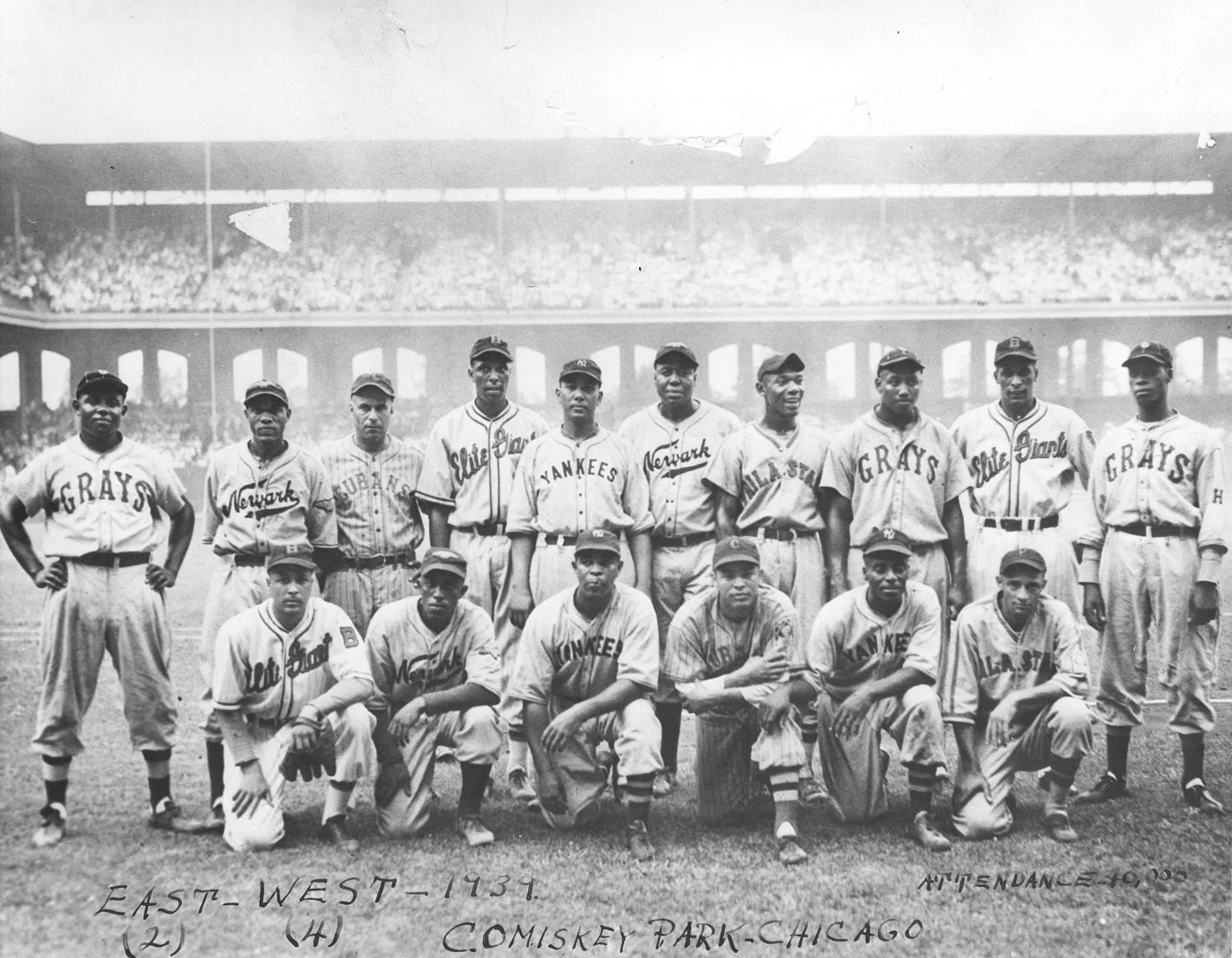
Players at the 1939 East-West All-Star Game at Comiskey Park in Chicago. Standing (L to R): Buck Leonard, Willie Wells, José Fernández, Sammy Hughes, George Scales, Mules Suttles, Pat Patterson, Josh Gibson, Bill Wright, Roy Partlow. Kneeling (L to R): Bill Byrd, Leon Day, Bill Holland, Condo Lopez, Goose Curry, Red Parnell. Day was on the short list with Josh Gibson and Willie Wells of players the Pittsburgh Pirates were considering signing to break the color barrier before the Dodgers signed Jackie Robinson.
Why Fight For A Country That Isn’t Fighting For You?
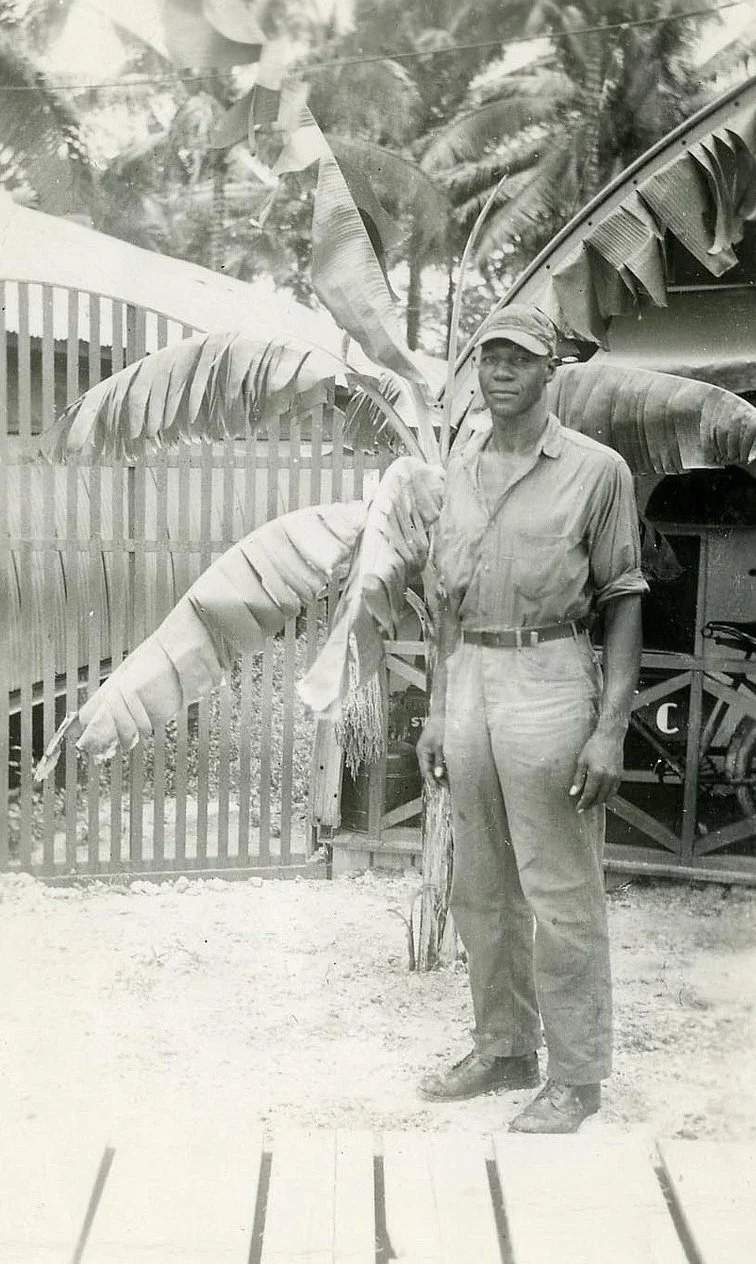
When Bob Kendrick asked Buck O’Neil that very question, Buck was very succinct, and very poignant: “Because we were American.”
However, Bob said the only time Buck’s otherwise cheery disposition ever became somewhat sullen was when Buck would talk about his time in the service. Buck couldn’t understand how foreign POWs would be treated better by white American soldiers, than those white American soldiers would treat Black American soldiers.
This photo shows Buck while he was stationed in Subic Bay in the Philippines during WWII.
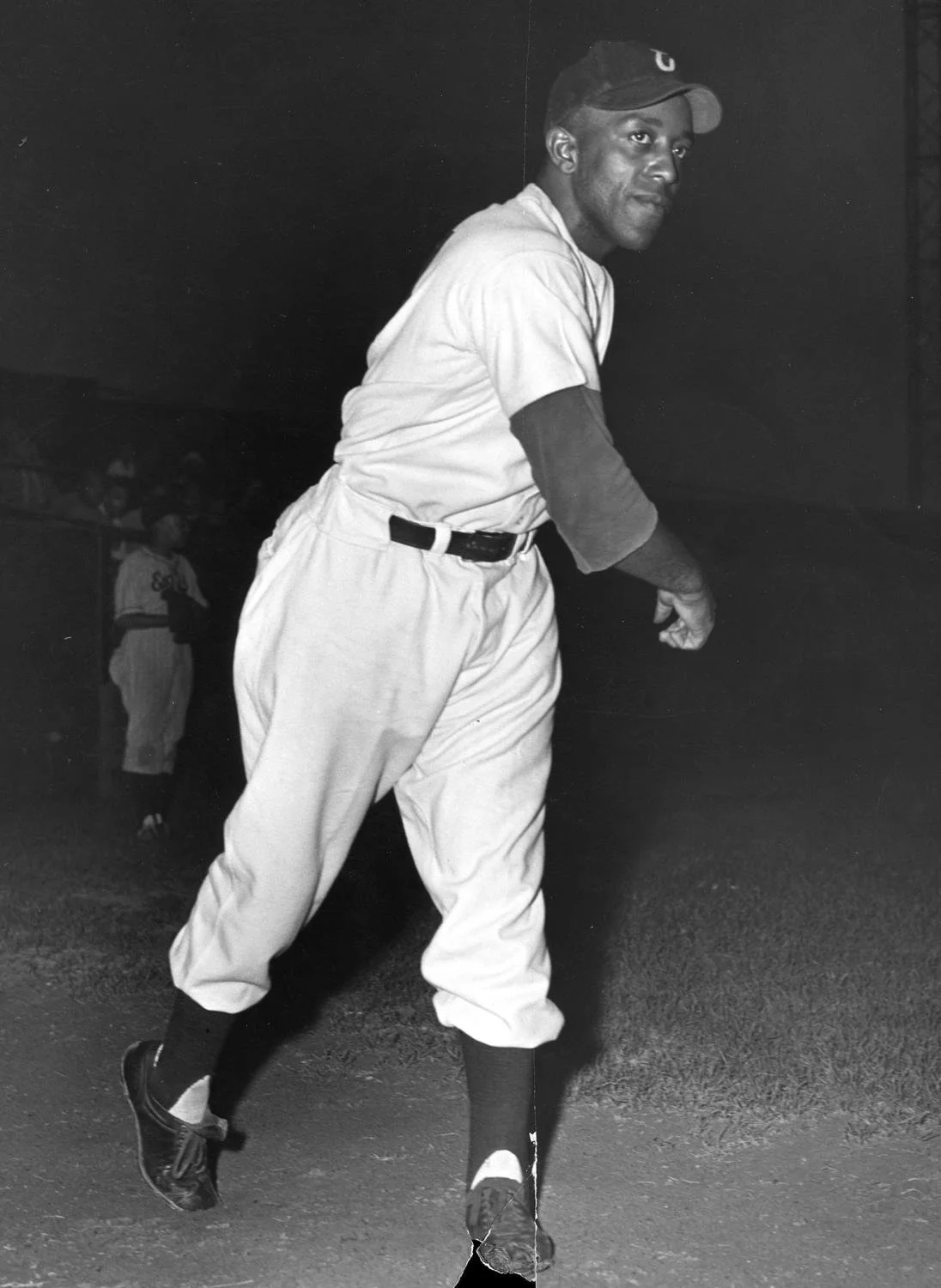
Opening Day No-Hitter
Leon Day’s first game back from his own stint in the military was May 5, 1946, when he was the starting pitcher for the Newark Eagles. It was Opening Day of the 1946 season, and the Eagles were facing the Philadelphia Stars.
In his first game since 1943, Leon threw a No Hitter.
Now, for years, we’ve been told that Bob Feller’s no-hitter against the White Sox on April 16, 1940 at Comiskey Park is the only Opening Day no-hitter in major league history.
But, since Major League Baseball now recognizes seven Negro leagues as major leagues for the period between 1920 and 1948, including the Negro National League, that means that Leon Day’s Opening Day No-Hitter should also be recognized…
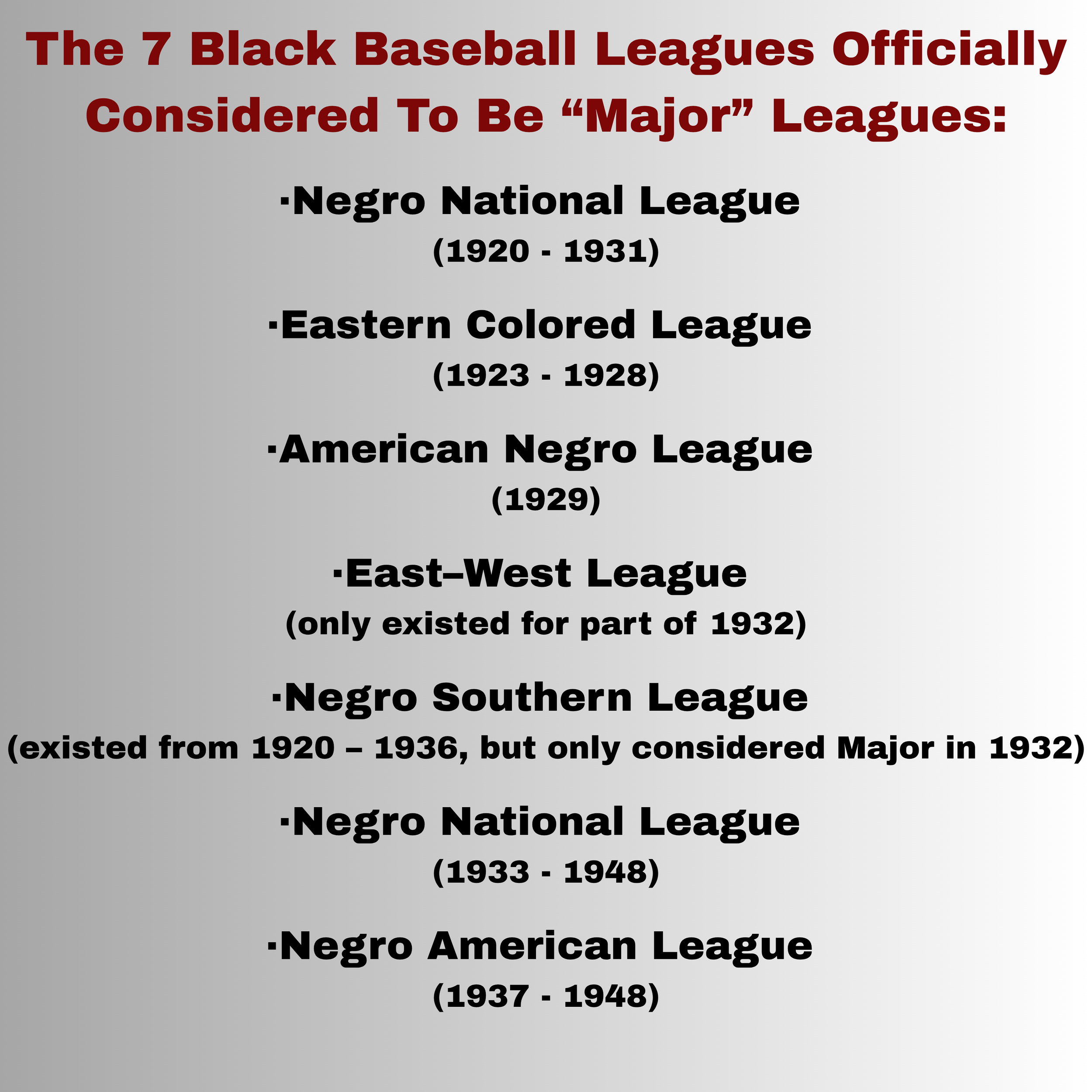
Major Leagues
The first Negro National League game was played May 2, 1920 between the Chicago American Giants and the Indianapolis ABCs, who won the game 4-2.
The ABCs were managed by C.I. Taylor, and Chicago was managed by Rube Foster. Both of them were Black, and… since Major League Baseball now recognizes seven Negro leagues as major leagues for the period between 1920 and 1948, including the Negro National League…
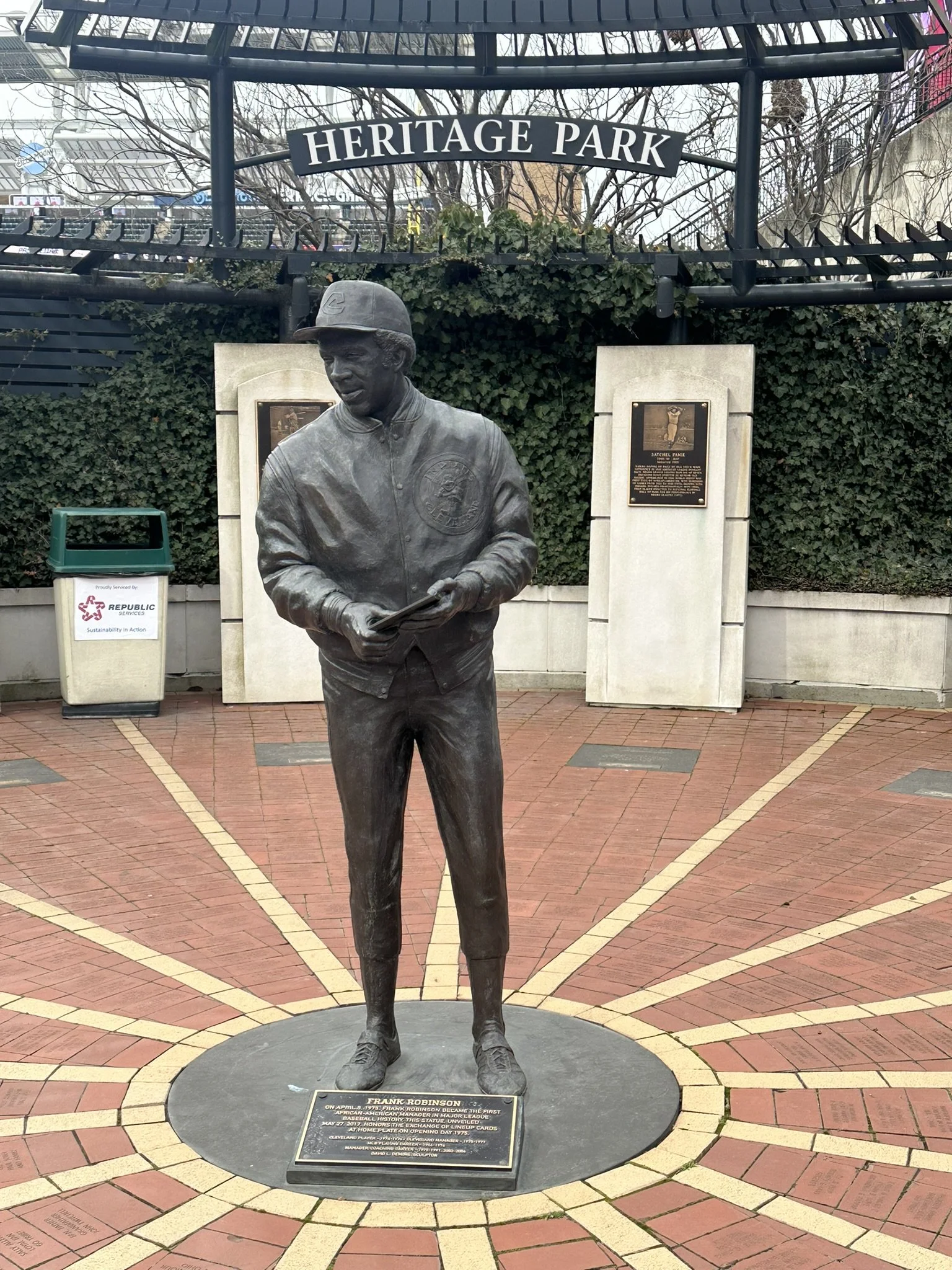
First Black Manager?
… that means that Frank Robinson did NOT become the first Black manager in Major League history when he was at the helm for the Cleveland Indians on April 8, 1975.
This statue at the center of Heritage Park in Cleveland’s Progressive Field celebrates the accomplishment, depicting Robinson handing the scorecard to the umpire before that game.
However, C.I. Taylor and Rube Foster had actually become the first Black managers in major league baseball, unknowingly, 55 years earlier.
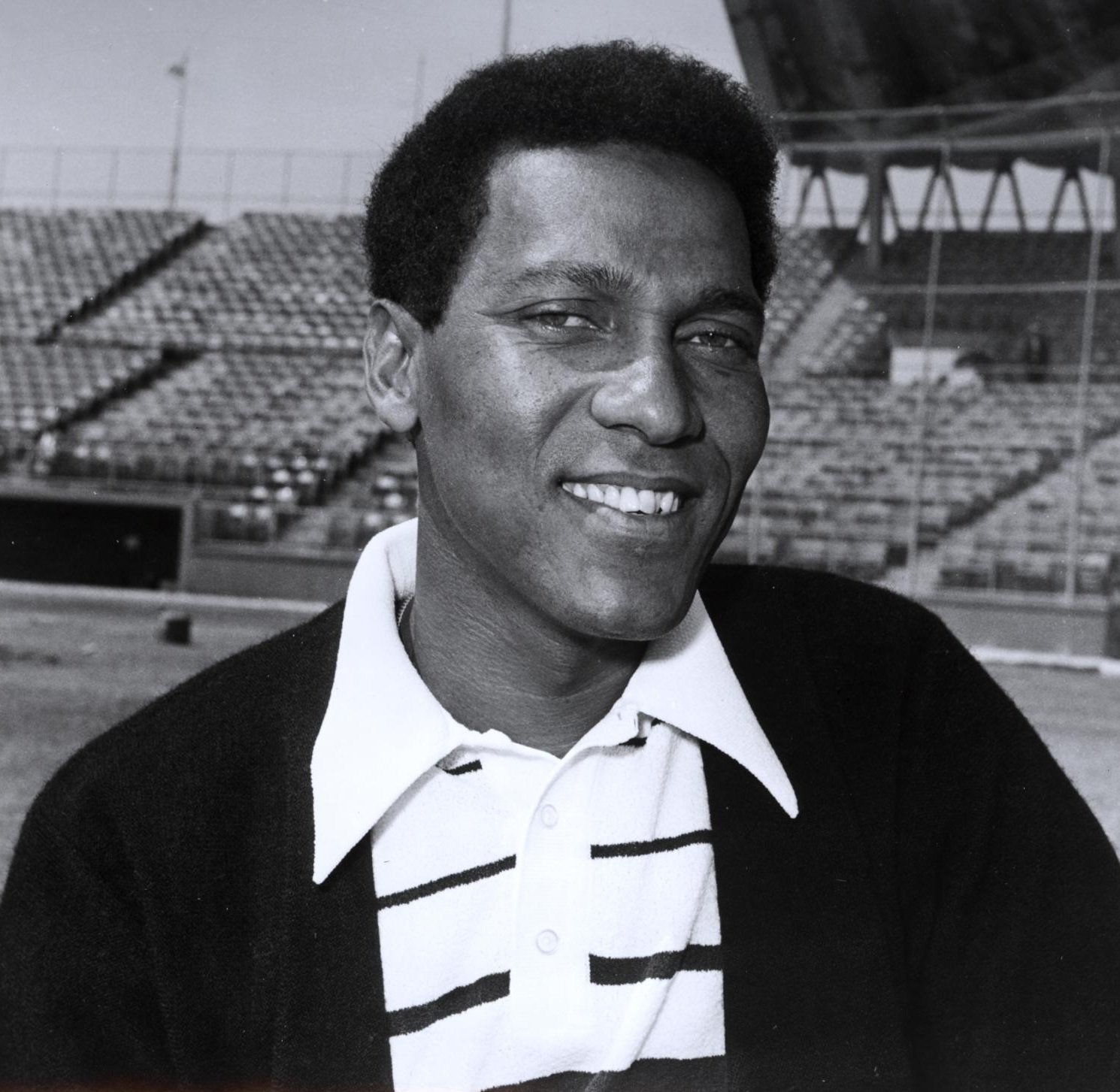
Bill Lucas
In 1976, businessman Ted Turner purchased the Atlanta Braves and quickly grew to like former Braves minor leaguer Bill Lucas, who had worked in the Braves front office since 1965. With the Braves mired in last place, some 30 games out of first in mid-September, Turner promoted Lucas to Vice President of Player Personnel. In essence, Turner made Lucas the team’s general manager, giving him ultimate responsibility for all player transactions.
The official job title did not recognize the significance of the moment, but Bill Lucas essentially became the first Black general manager in the history of either the National or American Leagues.
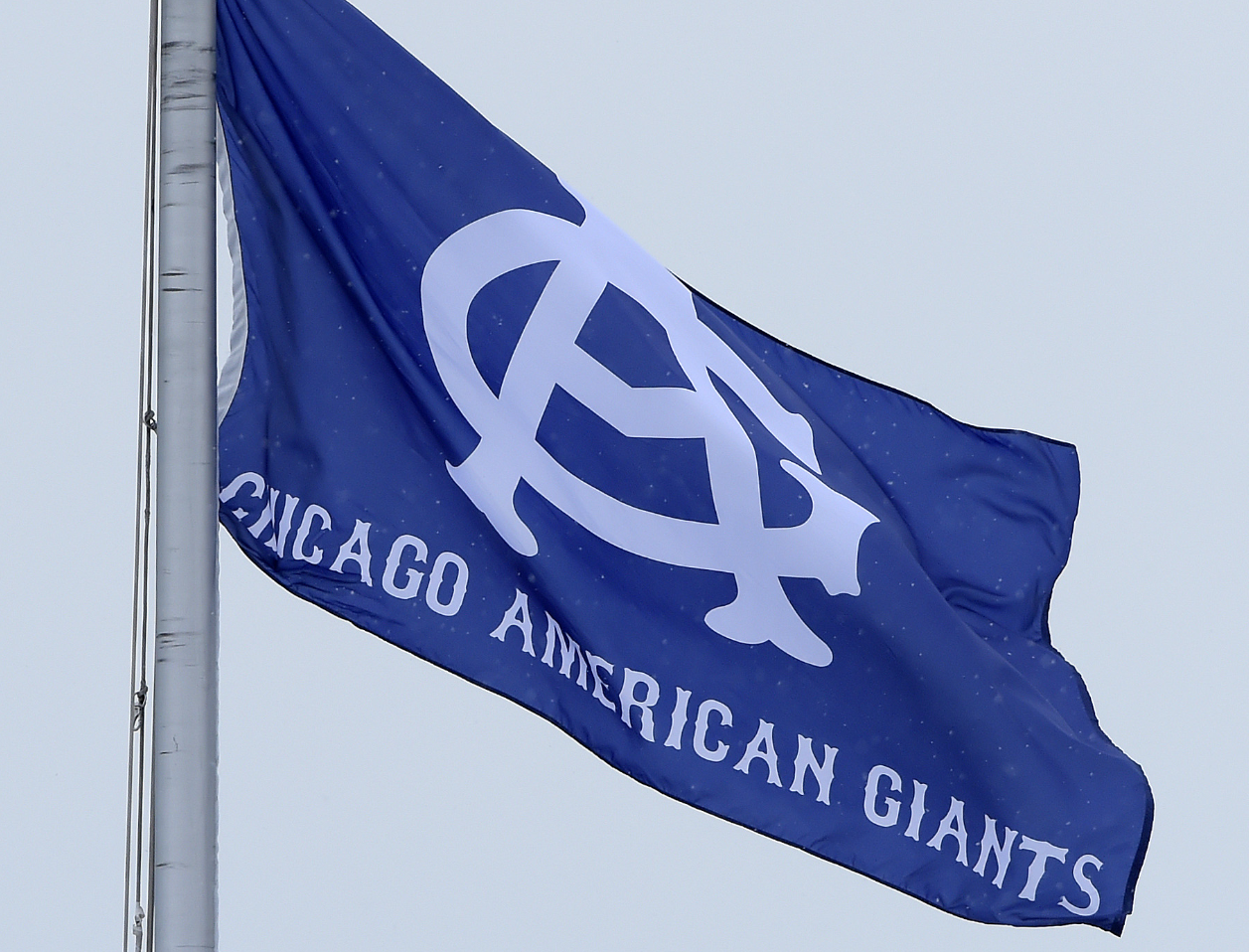
Negro League Flags in MLB Stadiums
Negro League teams winning the Negro League World Series... those count as official World Series wins now. So when people in Cleveland say the city has only seen two World Series winners, 1920 and 1948, that's no longer technically true. The Cleveland Buckeyes won the Negro League World Series in 1945. The White Sox fly this Chicago American Giants flag in their stadium to recognize the team.
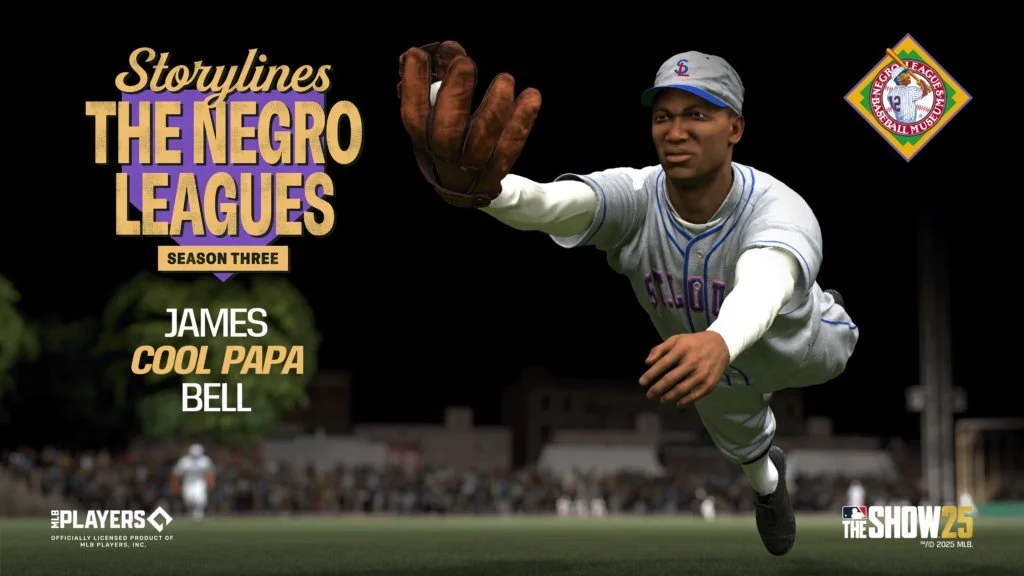
The inclusion of certain players in the video game series MLB The Show has introduced the Negro Leagues to a brand new generation of fans who might not have otherwise learned about them. Bob narrated the Negro League tales within the game, and has become a celebrity at the museum to fans who now know him from those stories.
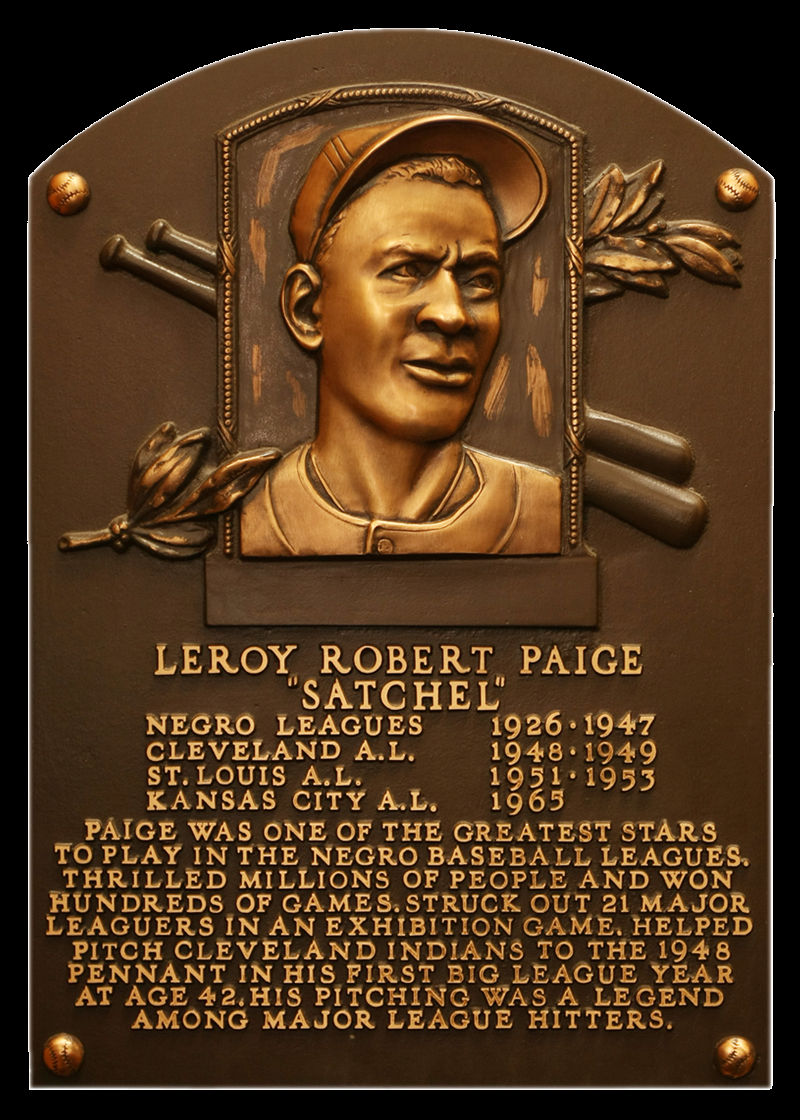
Pitcher - Satchel Paige
Satchel Paige was inducted into the National Baseball Hall of Fame as a part of the Class of 1971.
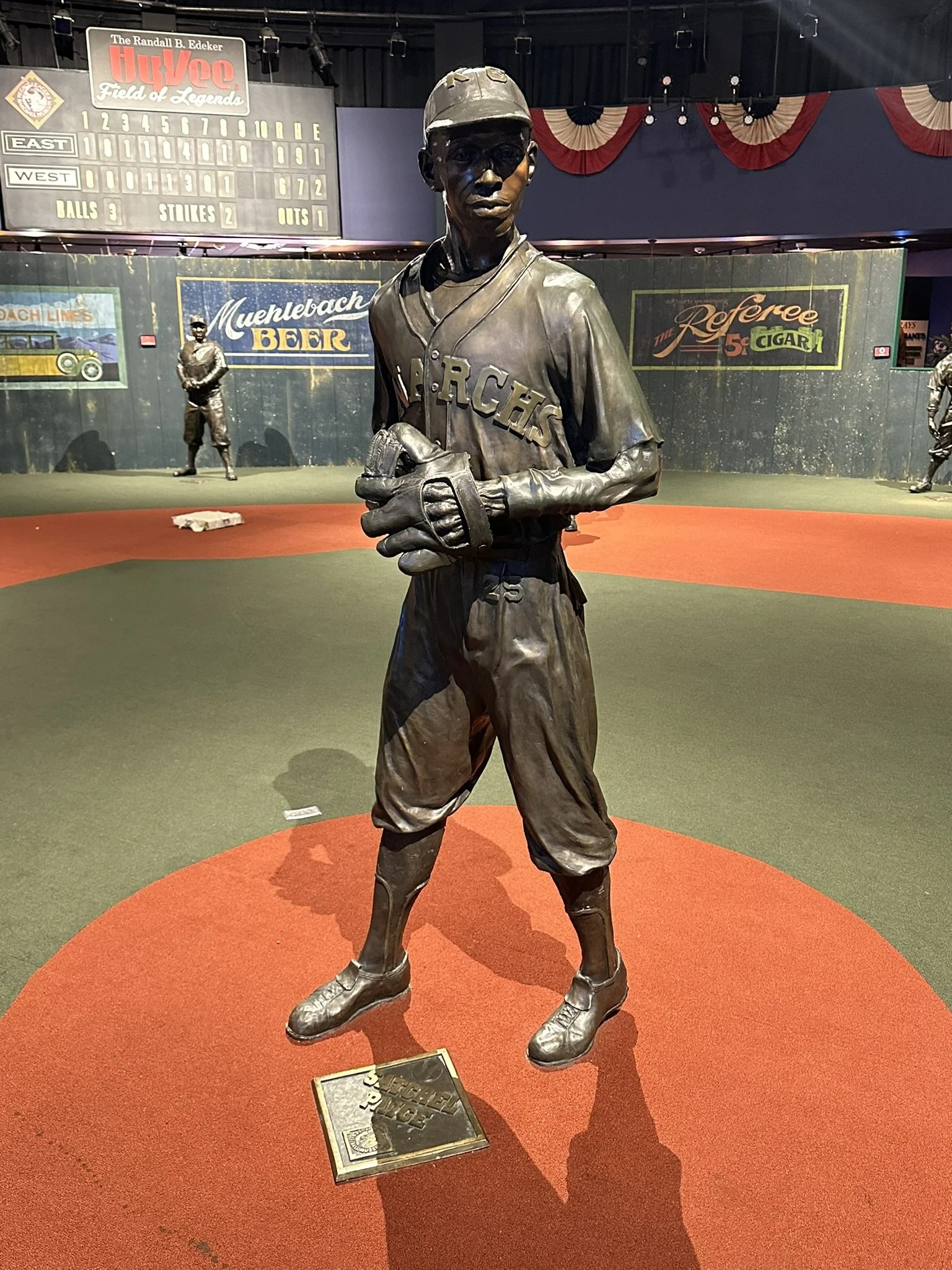
Satchel’s Statue
Satchel Paige may be the most famous baseball player who ever lived, excluding Babe Ruth. He also may be the most famous baseball player who ever lived, including Babe Ruth. But he is certainly the most famous Negro League player of all time.
If someone only knows the name of one player from Negro Leagues history, the name they know is almost always Satchel Paige.
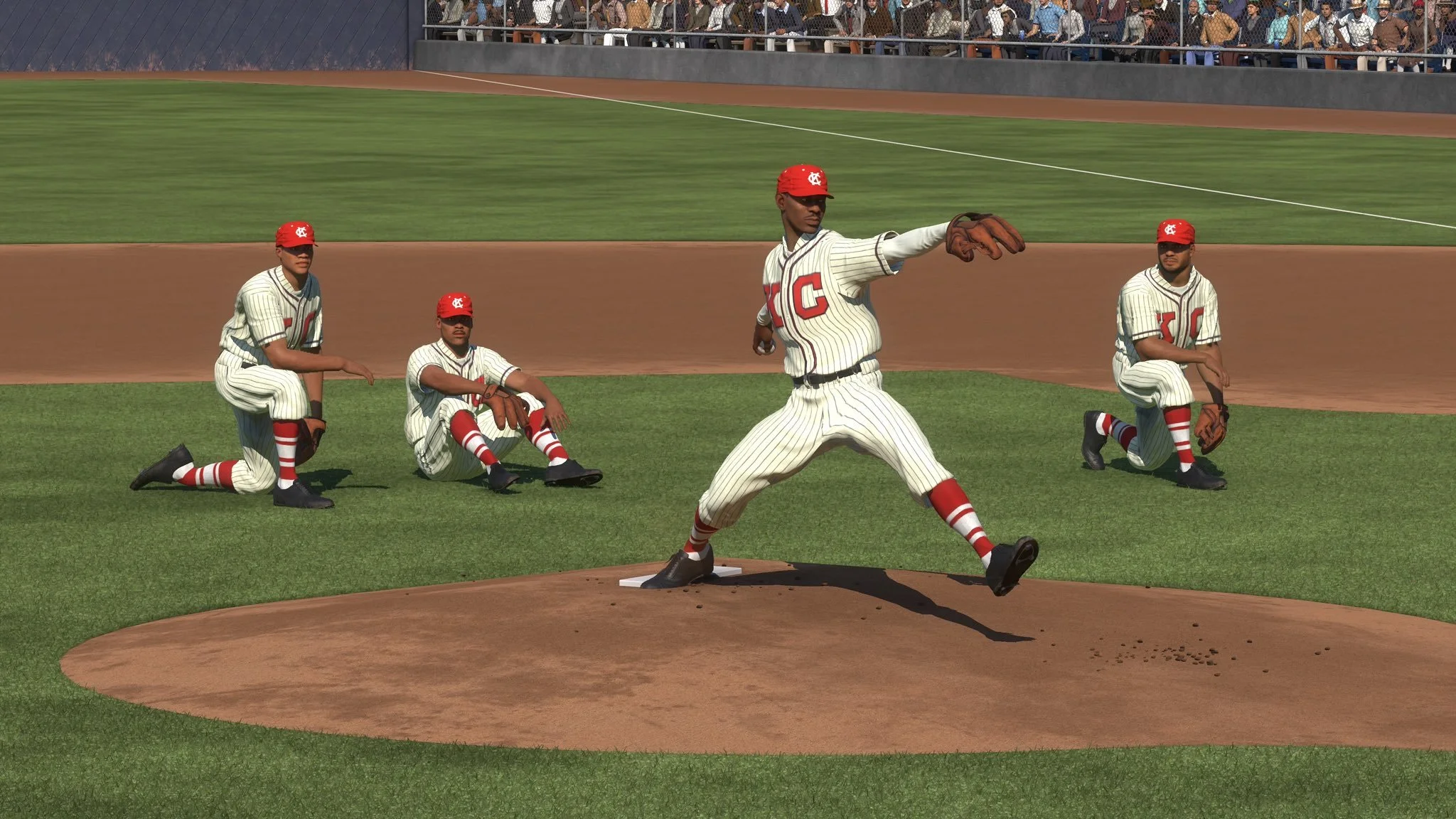
Bob’s favorite Satchel Paige story is one he got to tell in MLB The Show, depicted here.
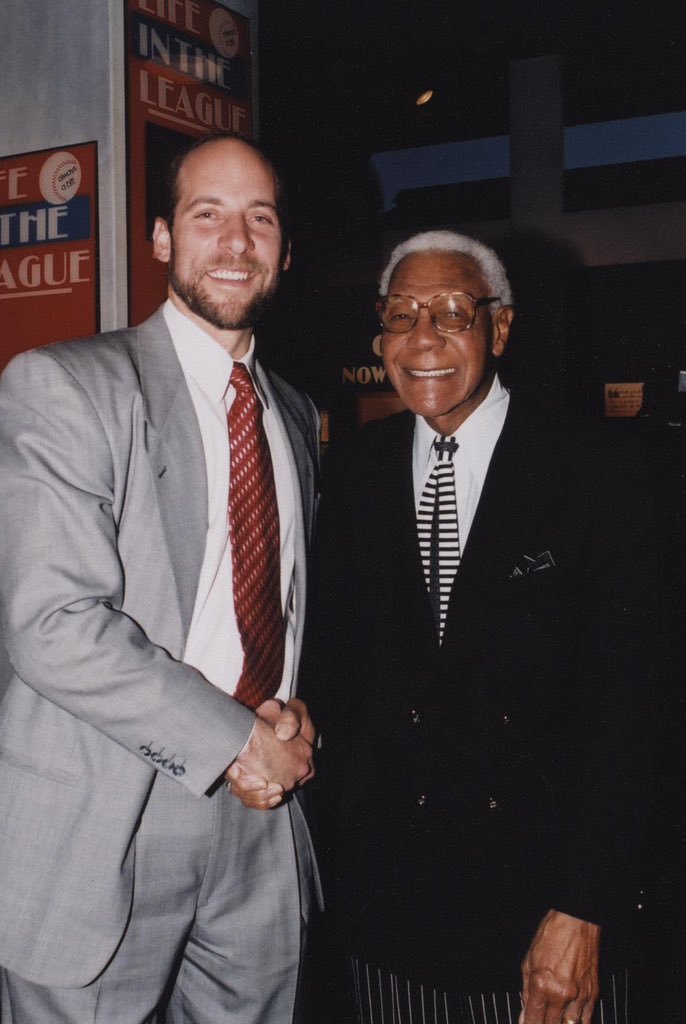
Buck’s Pick
Buck O’Neil spent his entire life in and around baseball. He saw hundreds of pitchers over the years. He even became friends with some of them.
But of all the pitchers he watched and got to know, there was only one who Buck would pick to start for him if he absolutely needed to get a win: Leroy “Satchel” Paige.
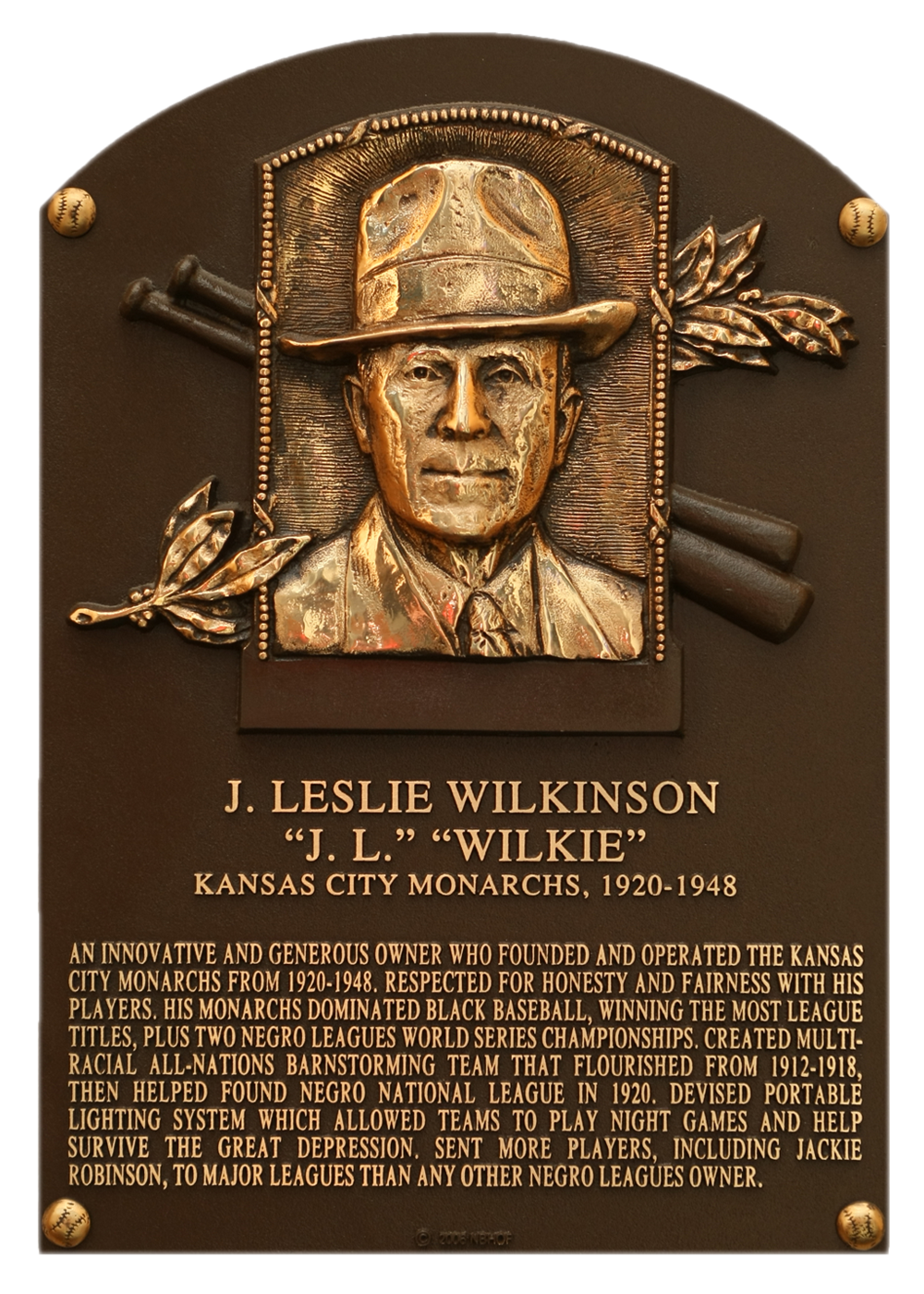
J. L. Wilkinson
In his prime, Satchel Paige’s fastball was clocked at 105 miles per hour. But in the late 1930s, Satchel developed arm problems for the first time. Kansas City Monarchs owner J. L. Wilkinson signed Paige to his “B” team, giving Paige time to heal.
Within a year, Paige’s shoulder had recovered and his fastball returned. As he aged, the control he once used to dazzle fans now became his primary weapon as a pitcher.
Integration in 1935
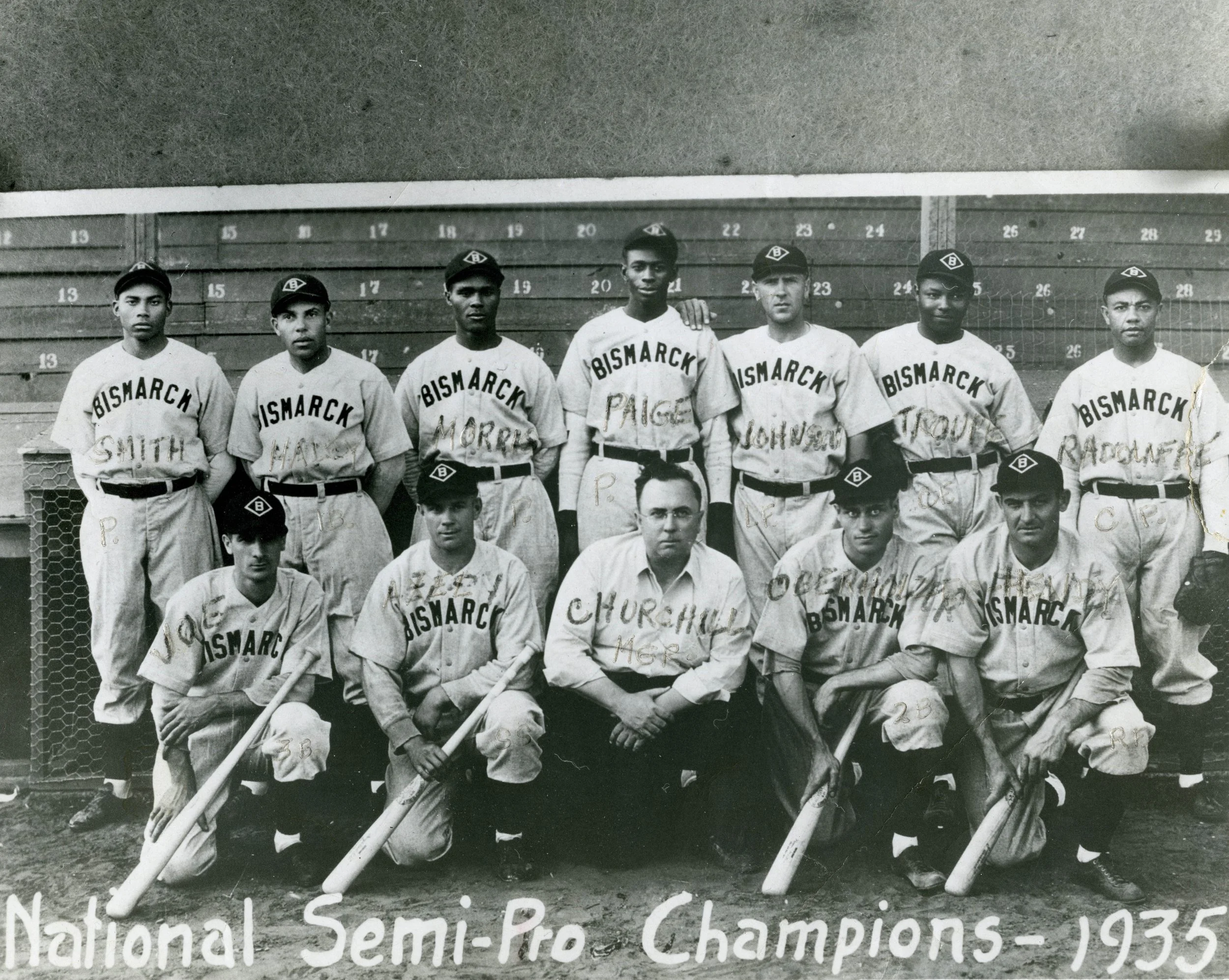
Satchel played on an integrated team in Bismarck, North Dakota in 1935, marking the first time since the 1800s that Black players and white players would be teammates on a semi-professional team. The team brought in a number of Negro League ringers, and absolutely dominated the competition.
Pictured here are kneeling (L to R): Joe Desiderato, Al Leary, Neil Churchill, Dan Oberholzer, and Ed Hendee. Standing (L to R): Hilton Smith, Red Haley, Barney Morris, Satchel Paige, Moose Johnson, Quincy Troupe, and Ted "Double Duty" Radcliffe.
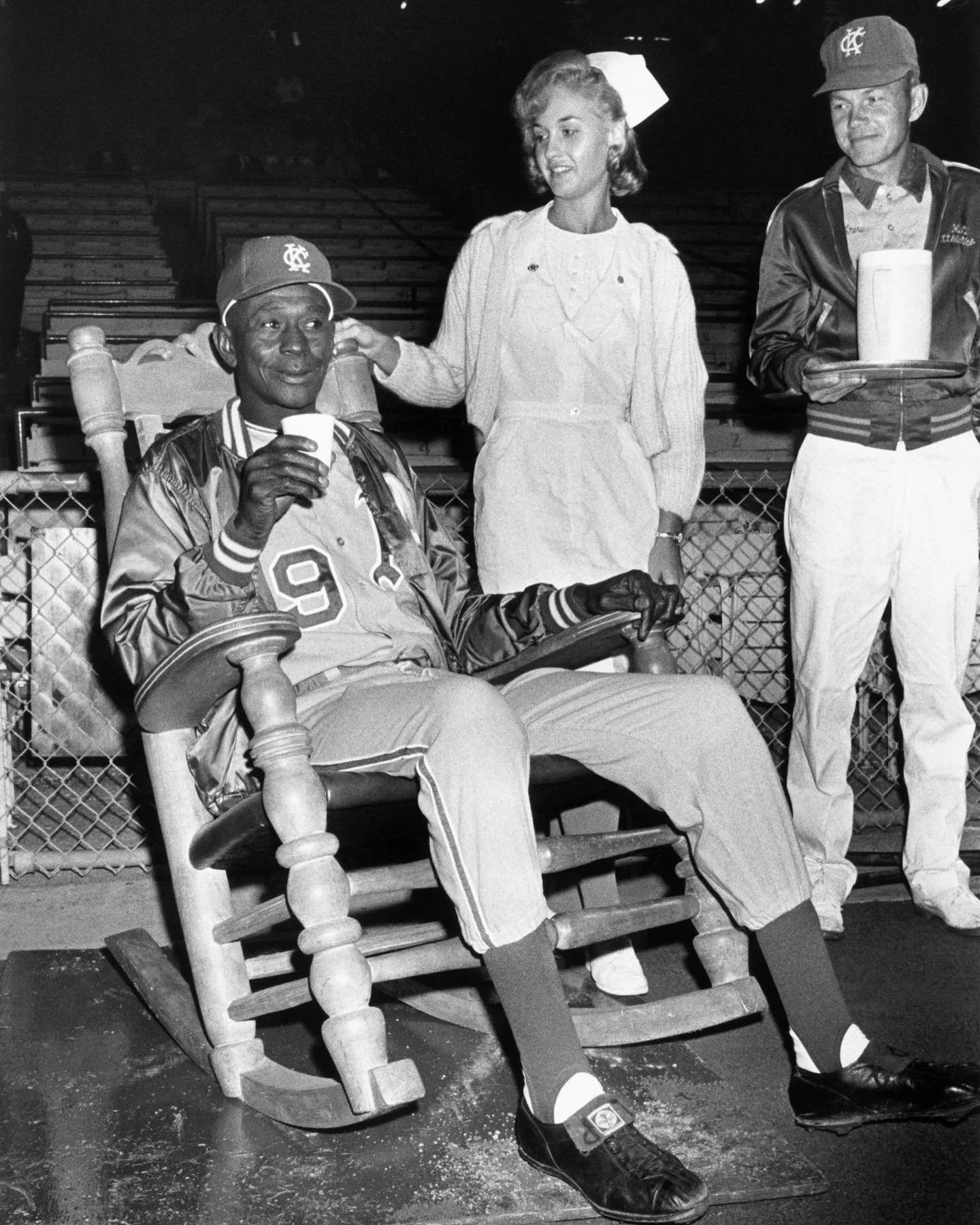
Too Old To Be The First?
Bob speculates that with the risk of a Black pitcher failing being much greater than a position player failing when transitioning from the Negro Leagues to the white Major Leagues, teams were too afraid to have Satchel Paige be the one to break the color barrier.
While he still had the capacity to be great, and he was certainly a showman - which meant he was possibly a huge draw when it came to selling tickets - some owners may have looked at him as more of a sideshow than a legitimate signing, and weren’t willing to put their own reputation on the line for someone they couldn’t be certain would succeed.
As Bob so succinctly puts it, “The first guy can’t fail. If the first guy fails, there is no second guy.”
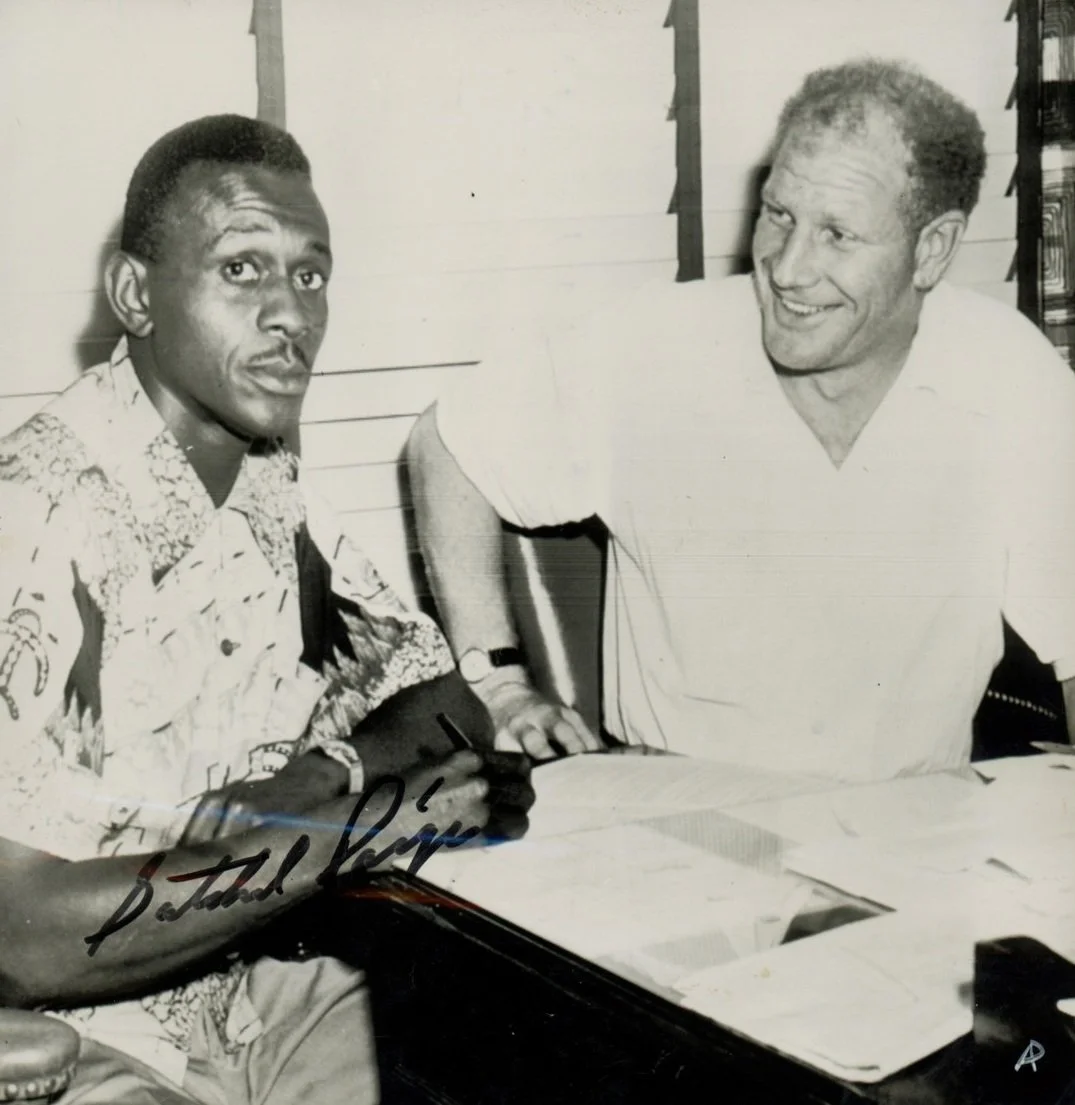
Willing To Take The Risk
Bill Veeck was willing to take the risk to sign Satchel in 1948. The team went on to set an attendance record that season, but whether it was 2.6 million (officially) or 3.4 million (unofficially) is up for debate.
More important than setting their franchise’s attendance record in the 1948 season, the team also won the World Series, thanks in large part to the contributions made by former Negro League stars Larry Doby and Satchel Paige.
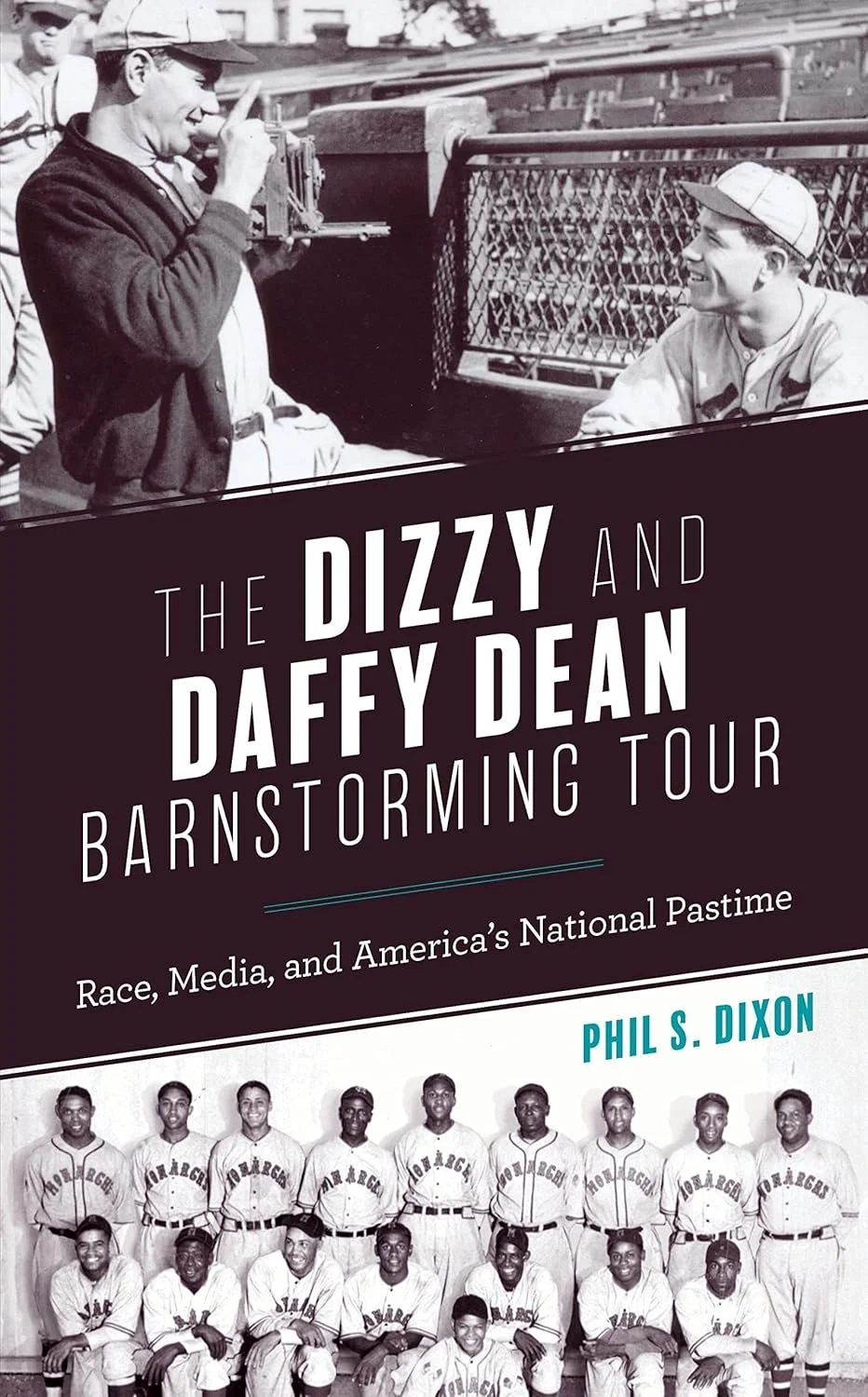
Dizzy Dean
In 1934, brothers Dizzy and Daffy Dean were stars of Major League Baseball’s regular season and World Series. Following their St. Louis Cardinals’ victory over the Detroit Tigers in Game Seven, Dizzy and Daffy went on a fourteen game barnstorming tour against Satchel Paige and the best African-American baseball players in the country.
Dizzy Dean’s Hall of Fame Biography
Buy Phil S. Dixon’s captivating book about that tour HERE.
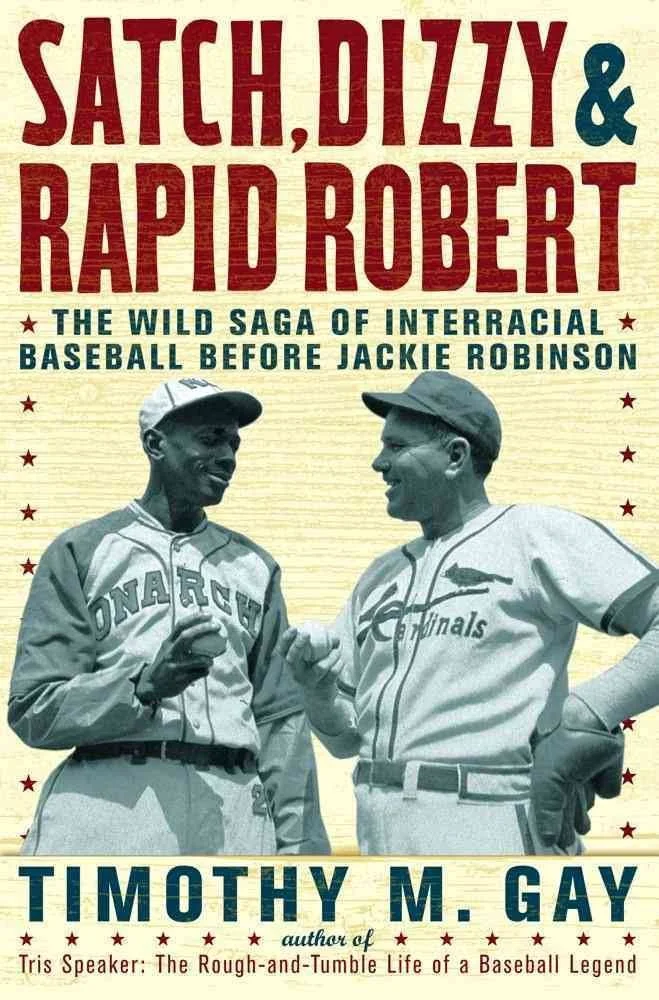
Bob Feller
After arm troubles sidelined Dizzy Dean, a new pitching phenom, Bob Feller — aka Rapid Robert —assembled his own teams to face Paige and other Black barnstormers.
By the time Paige became Feller’s rookie teammate on the Indians at age 42 in 1948, Satch and Feller had already barnstormed against each other for more than a decade. These often obscure contests helped hasten the end of Jim Crow baseball, paving the way for the game’s integration.
Bob Feller’s Hall of Fame Biography
Buy Timothy Gay’s book HERE.
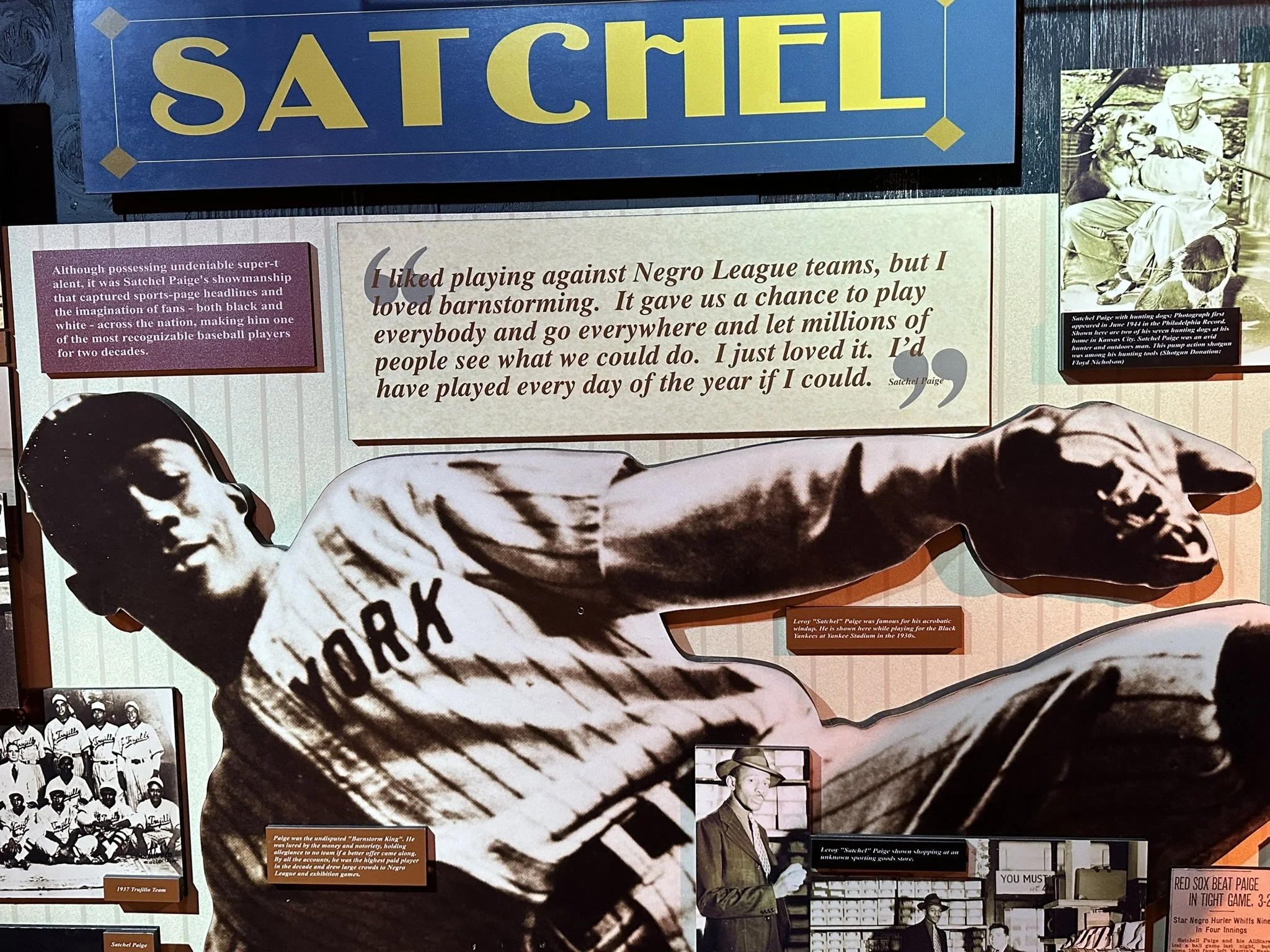
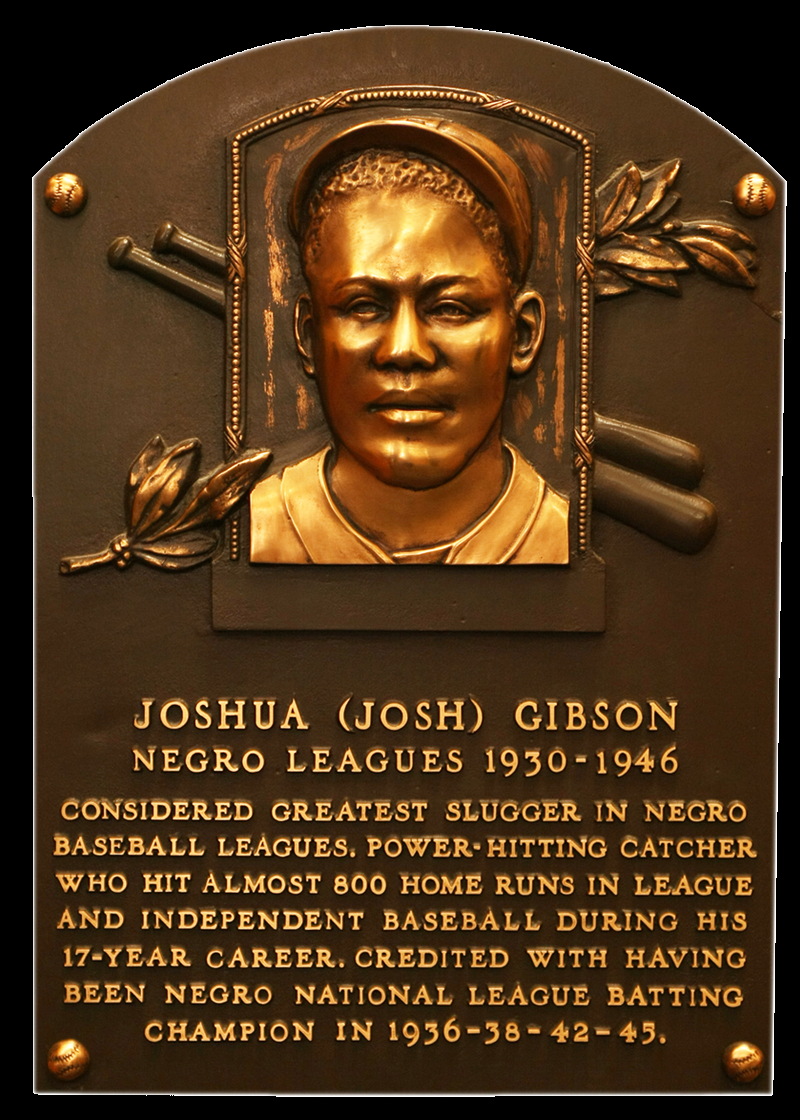
Catcher - Josh Gibson
Josh Gibson was inducted into the National Baseball Hall of Fame as a part of the Class of 1972.
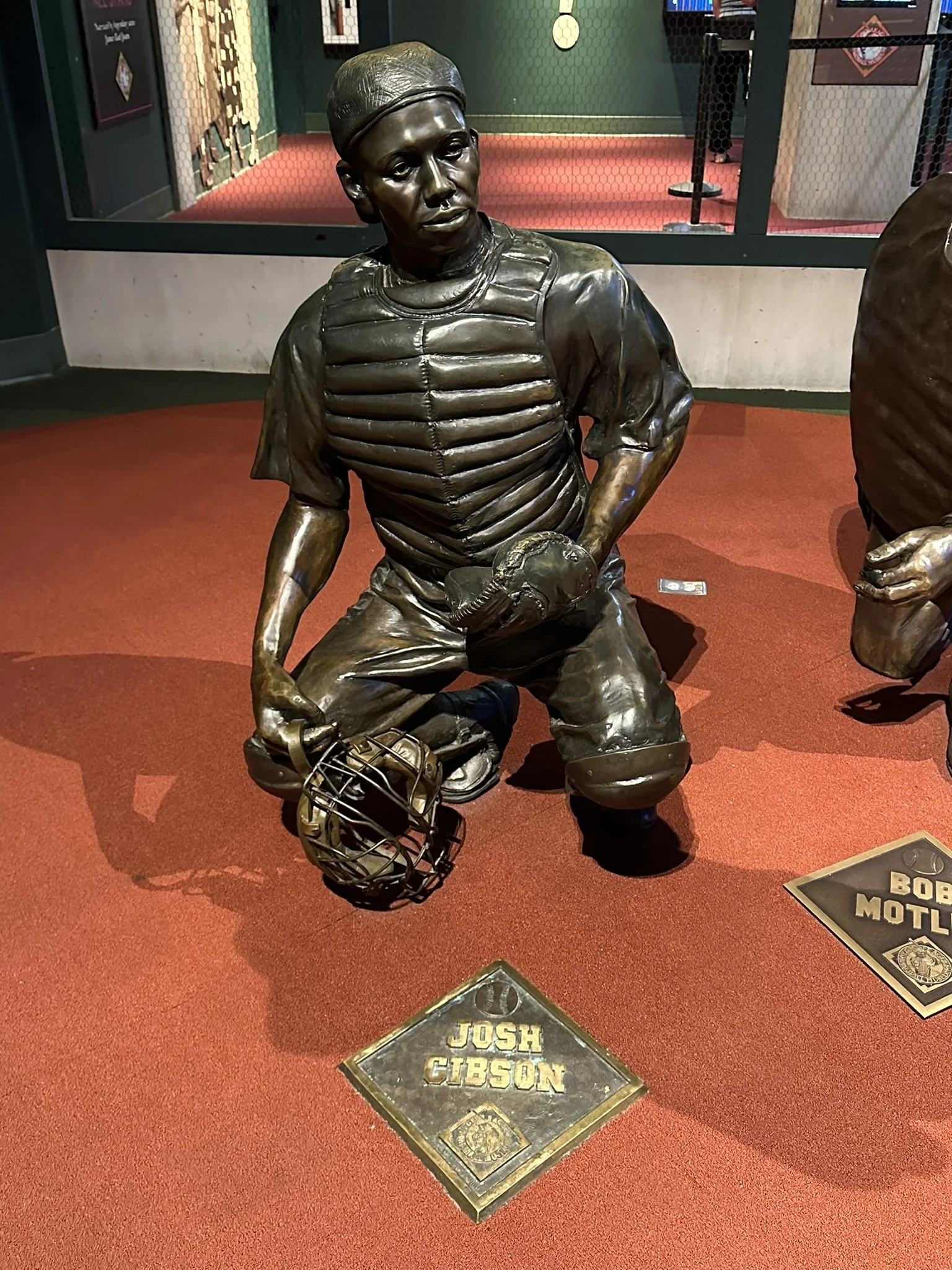
Josh’s Statue
The 6-1, 220-pound Josh Gibson was nearly indestructible behind the plate. He occasionally played left field or third base, but never for more than a game or two.
Gibson’s natural skills were immense. His powerful arm, quick release, and agility made base runners wary of trying to steal, even while he was still in his crouch.
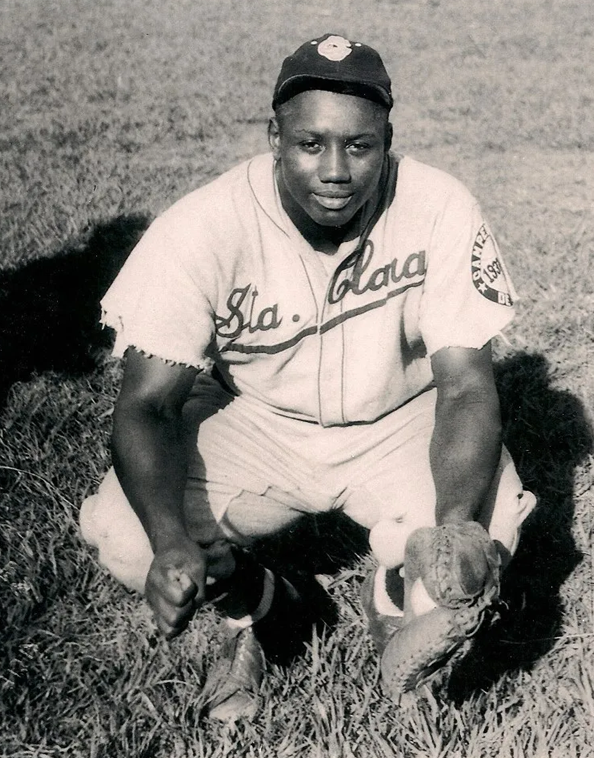
Defensive Stance
The statue of Josh Gibson at the NLBM purposely depicts him in his crouch to remind people that he was more than just a great power hitter. He was also a fantastic defensive catcher, who was always in complete control of his pitching staff.
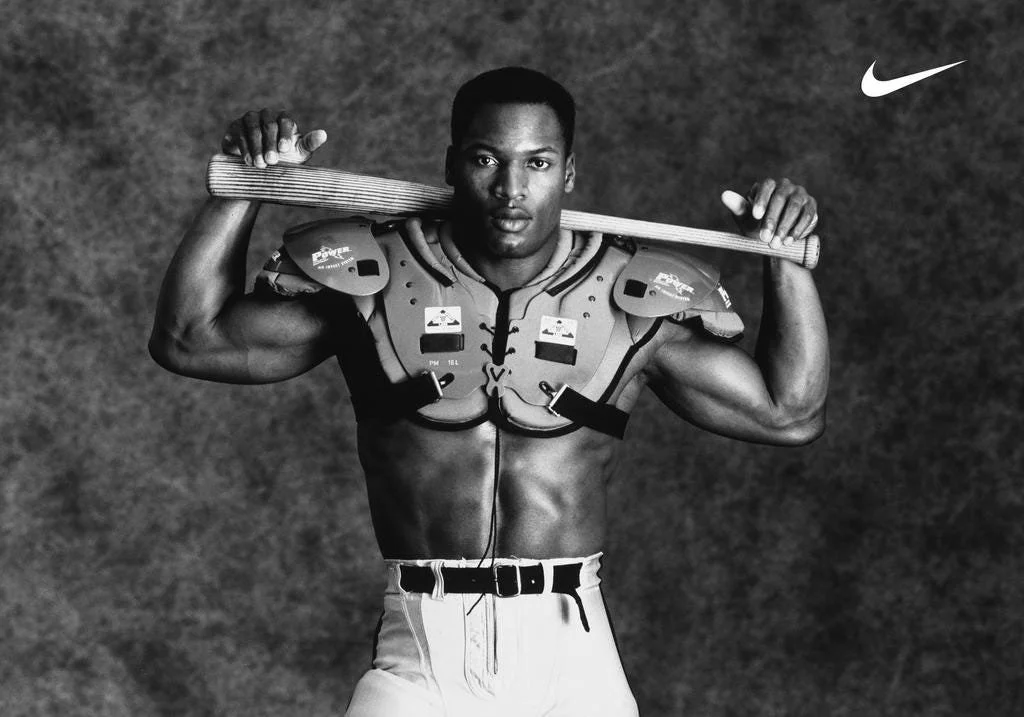
Bo Jackson
Imagine this body behind home plate, and that’s what you had with Josh Gibson from a physical standpoint.
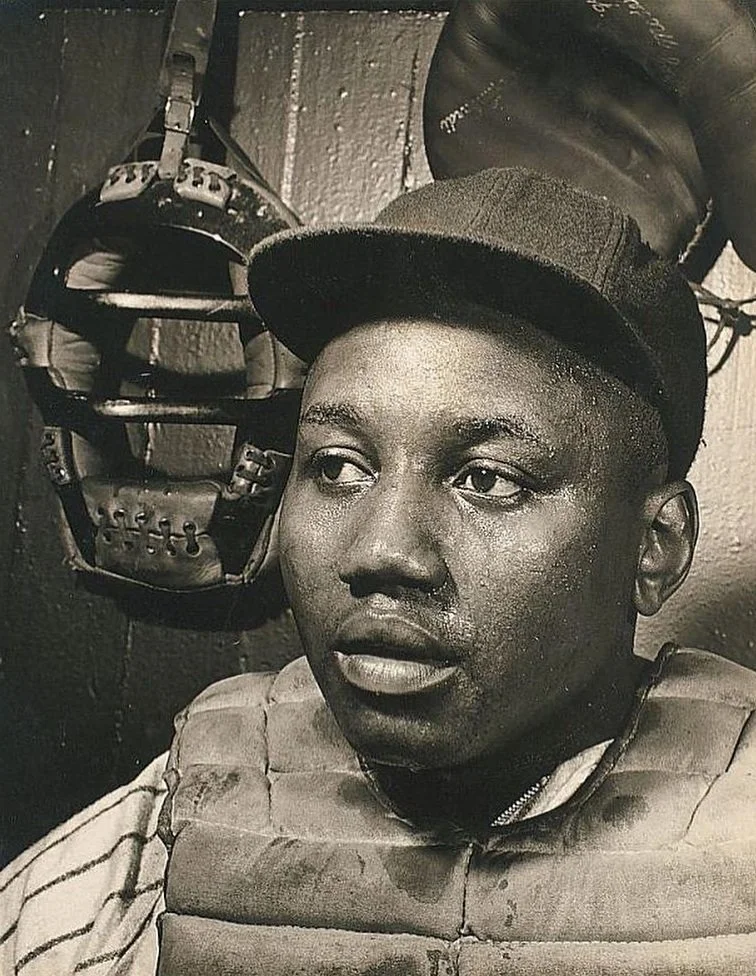
Josh Gibson
Buck O’Neil said Josh Gibson had the eyes of Ted Williams and the power of Babe Ruth rolled into one dynamic package.
Bob thinks Josh Gibson is the greatest combination of power and average that baseball has ever seen, and has routinely called Gibson the best ballplayer of all time.
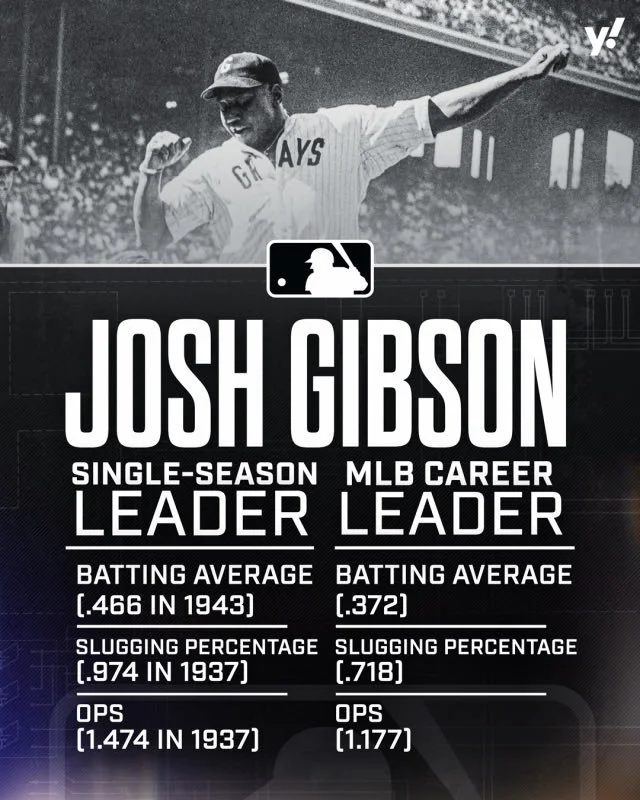
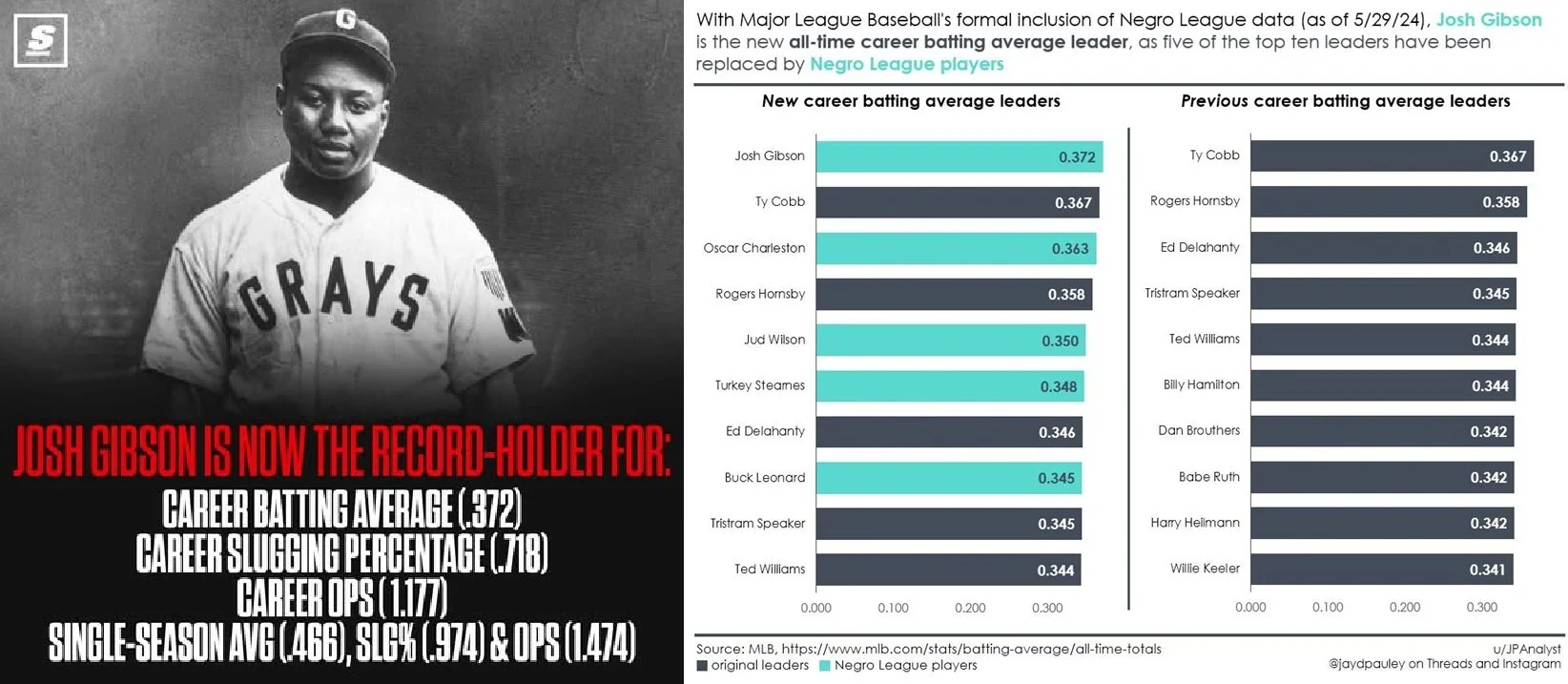
MLB’s All-Time Leader
Josh Gibson wasn’t just a great power hitter. He was a great hitter, with power.
Now that certain statistics from the Negro Leagues are officially entered into the record books of Major League Baseball, Josh Gibson has become the all-time leader in a number of categories.
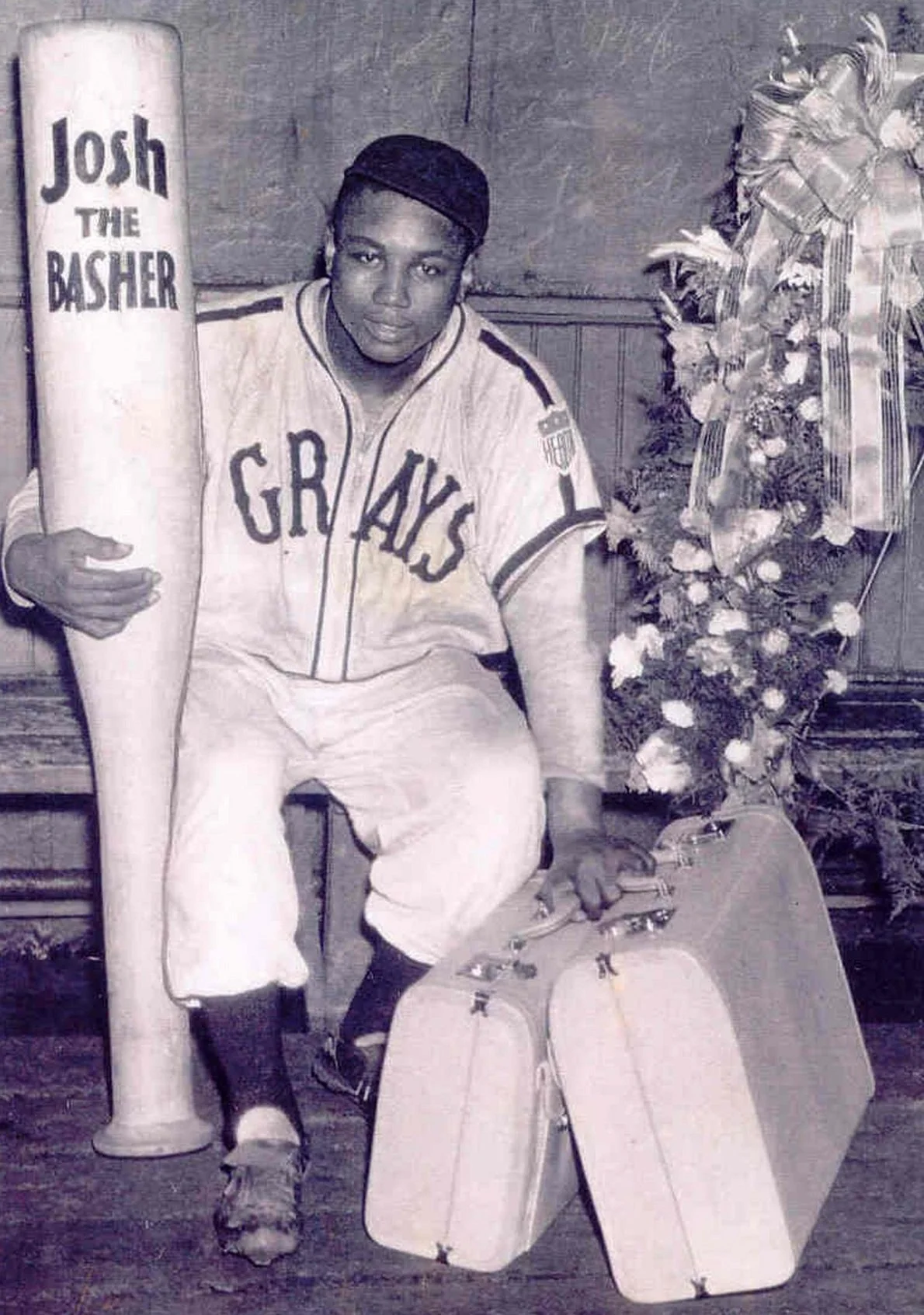
Josh The Basher
Josh Gibson was baseball’s Paul Bunyan, wielding a 41 inch, 40 ounce bat which he purportedly once used to hit a fair ball clean out of Yankee Stadium during a game – something no one else ever did. Not Mickey Mantle. Not Babe Ruth. Only Josh Gibson.
Gibson was famously quoted as saying “I don’t break bats; I wear them out.”
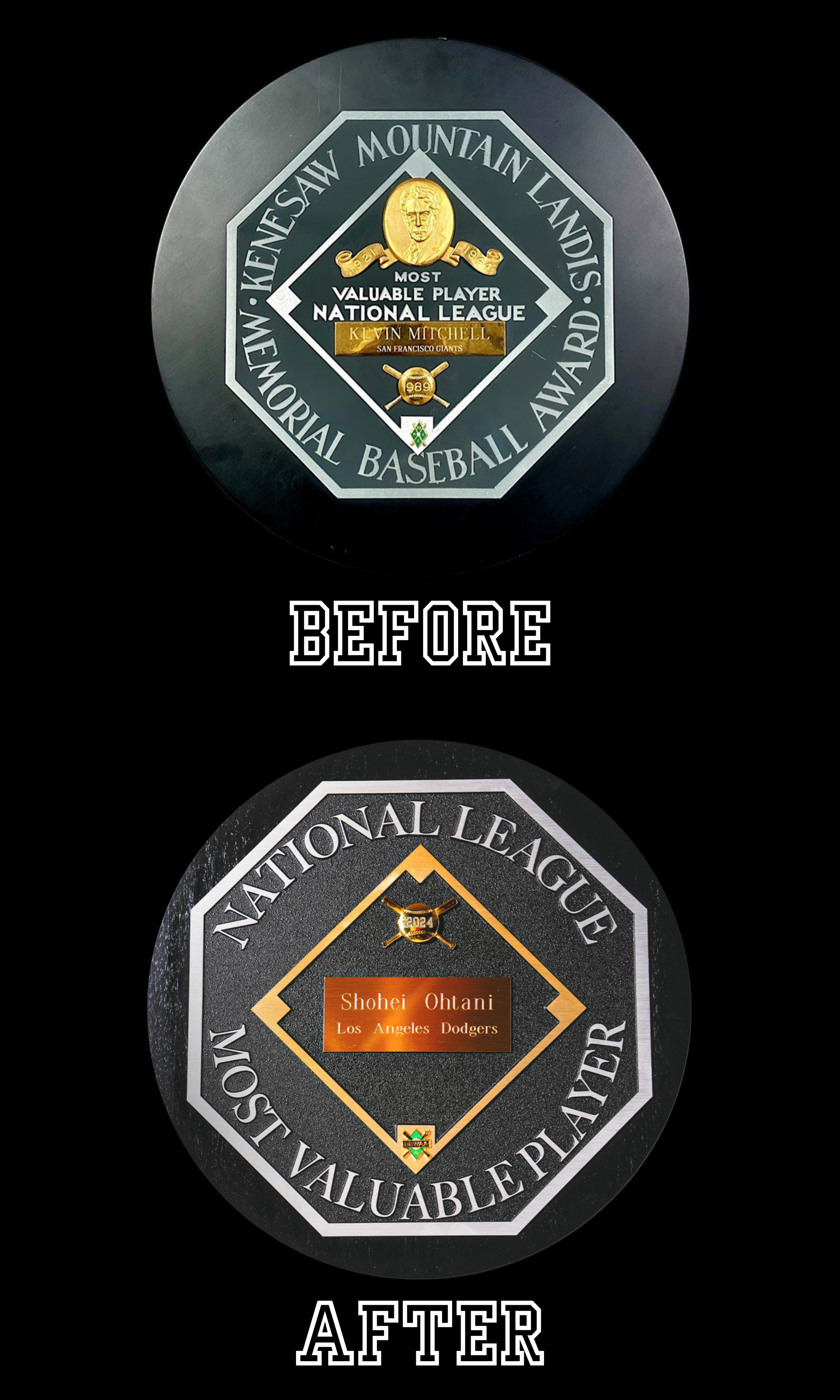
The MVP Trophy
There was a movement in 2020 to have Josh Gibson's name replace Commissioner Kenesaw Mountain Landis' name on the MVP trophy. Landis was MLB commissioner from 1920 until his death in 1944. During that time, no Black players played in the Major Leagues.
Former Braves star Terry Pendleton, as well as Hall of Famers Barry Larkin and Mike Schmidt, all told the Associated Press they support taking Landis' name off the award, with Larkin adding, "his name should not be represented on a plaque or award of honor, especially at this day and time. If his name was taken off, I would not be opposed to it at all."
While Landis’ name was removed by the Baseball Writers Association of America starting with the awards given out for the 2020 season, Gibson’s did not replace it. The BBWAA’s decision came after 89% of its membership voted for removal.
Greatest Teams Ever
When we talk about the greatest teams in baseball history, we talk about the 1927 Yankees, the 1902 Pittsburgh Pirates, the 1907 Chicago Cubs, or the 1929 Philadelphia Athletics. But there have been some unbelievably dominant Negro League teams who are on par with those great white Major League teams, who the average fan has usually not heard of:
1925 Kansas City Monarchs
1931 Homestead Grays
1935 Pittsburgh Crawfords
1942 Kansas City Monarchs
Three of those four teams have something in common: their catcher was Josh Gibson.
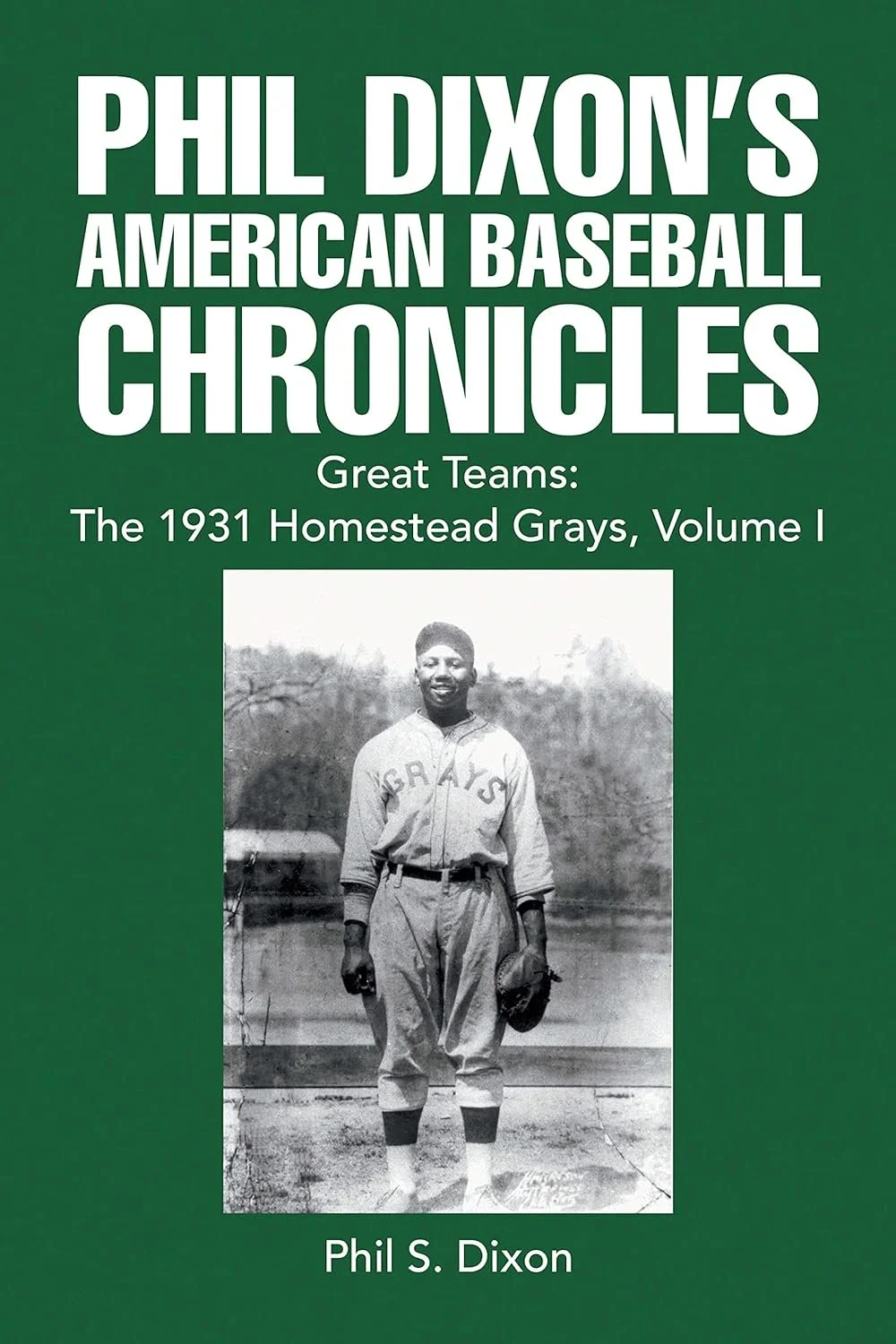
Buy Phil Dixon’s book on the 1931 Grays HERE.
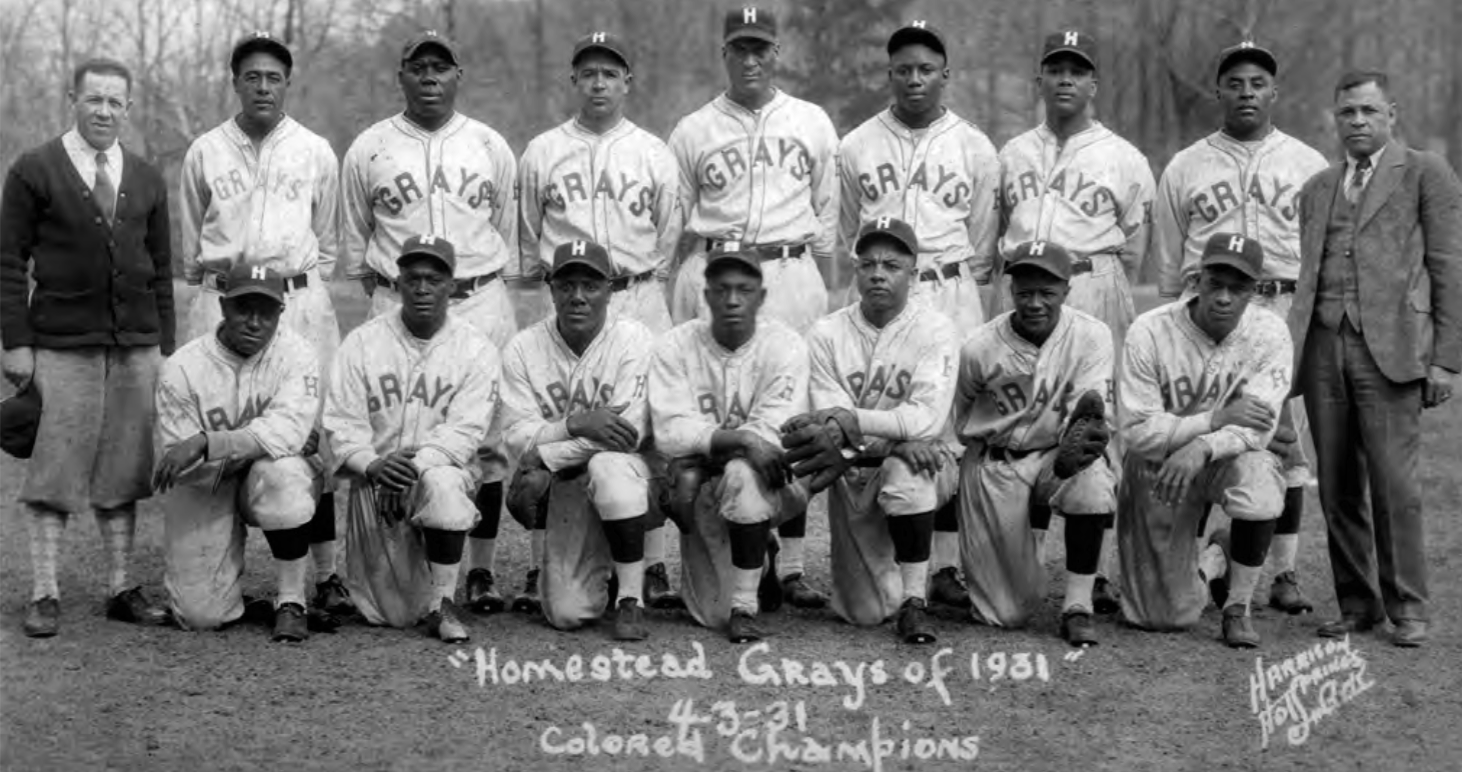
The 1931 Homestead Grays finished the season with a record of 143-29-2, according to Phil Dixon's research. They were outdrawing the Washington Senators in their own ballpark, which is why Clark Griffith, the owner of the Senators, was contemplating the idea of signing Josh Gibson to break the color barrier long before Branch Rickey signed Jackie Robinson. Standing (L to R): Cumberland Posey, owner; Bill Evans, SS-OF; Jasper Washington, 1B-3B; Ambrose Reid, OF-INF; Smokey Joe Williams, P; Josh Gibson, C; George Scales, 2B; Oscar Charleston, 1B; Charlie Williams, office. Kneeling (L to R): George Britt, P-C-OF-INF; Lefty Williams, P; Jud Wilson, 3B; Vic Harris, OF; Ted Radcliffe, P-C; Tex Burnett, C; Ted Page, OF.
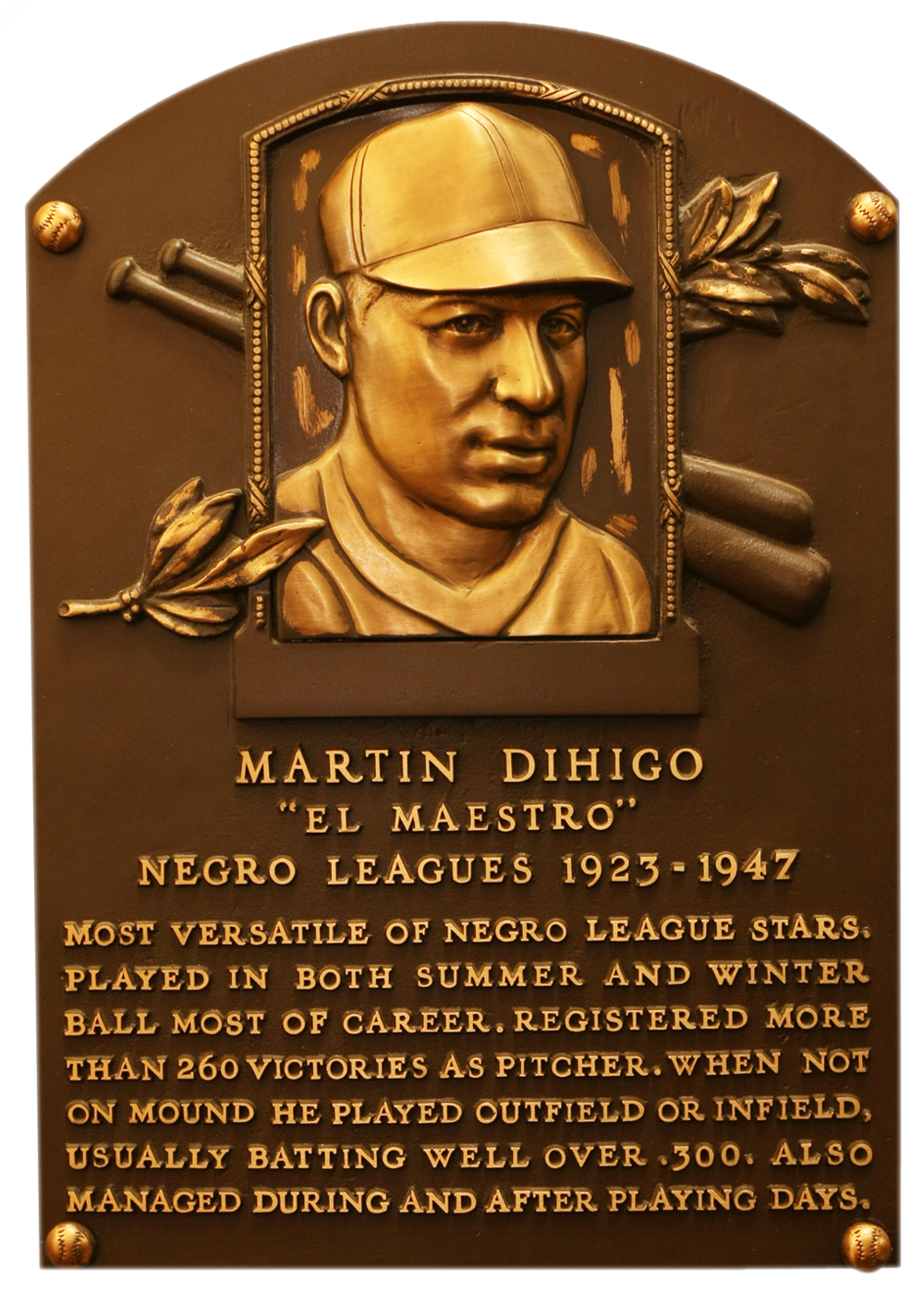
Batter - Martín Dihigo
Martín Dihigo was inducted into the National Baseball Hall of Fame as a part of the Class of 1977.
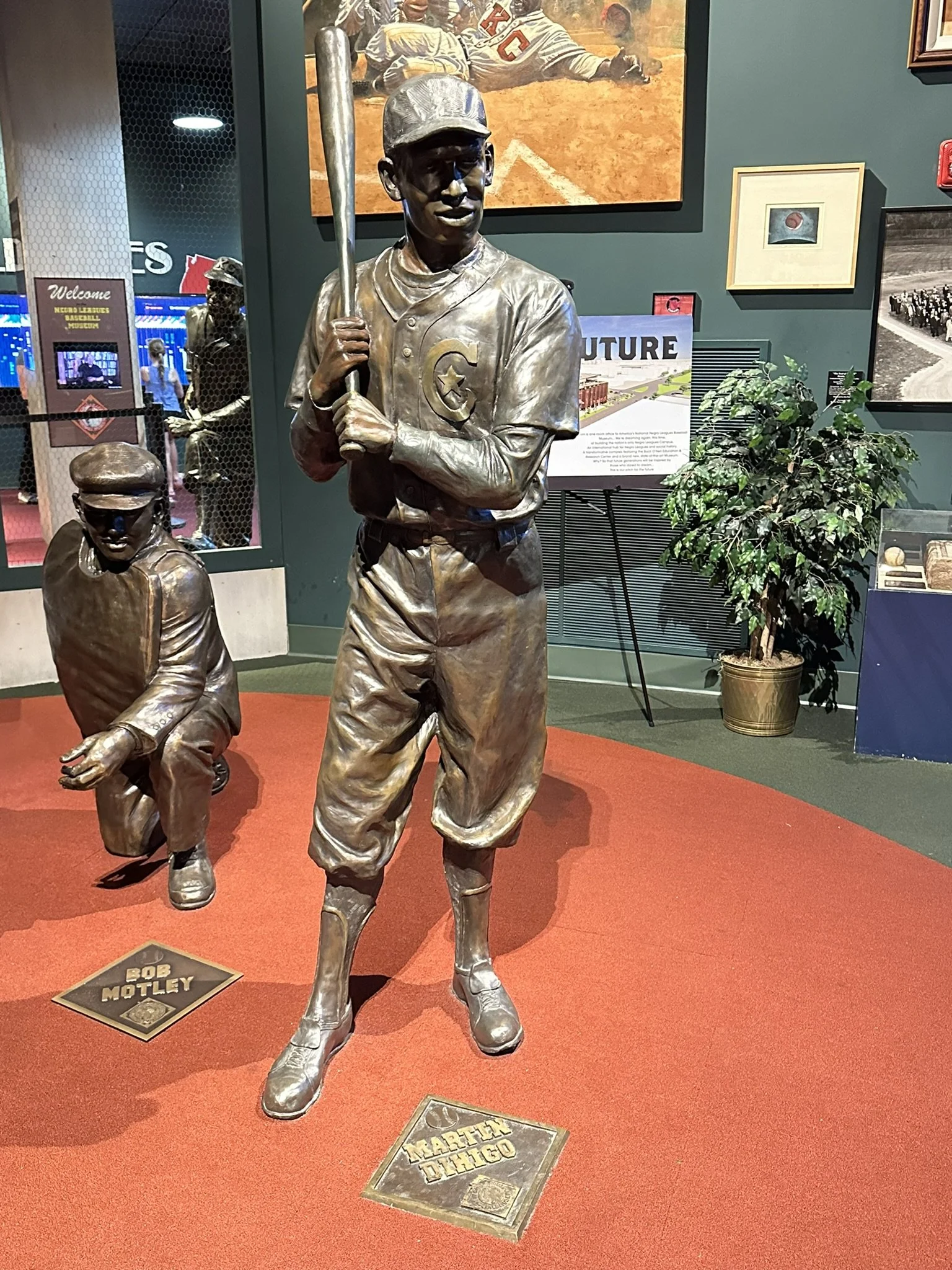
Martín’s Statue
Martín Dihigo was the best pitcher, he was the best base runner, he could play any position in the infield, and he had the best arm from the outfield. Some say his arm was better than Roberto Clemente's.
According to Bob, when the White Sox paid a visit to the Negro Leagues Baseball Museum in 2006, pitcher and Cuban native José Contreras was in awe upon seeing the statue of Dihigo in the Field of Legends.
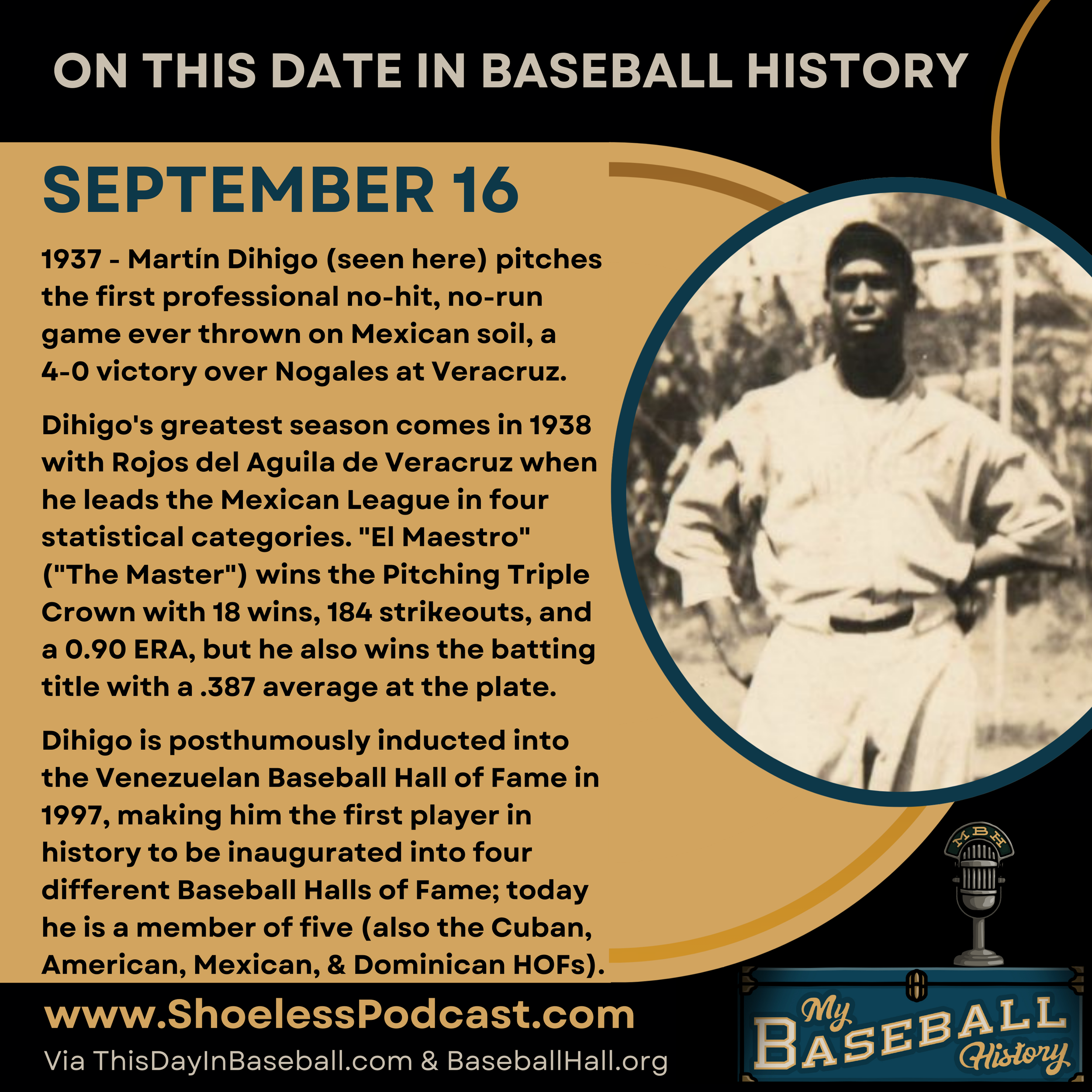
Multiple Halls of Fame
Martín Dihigo was the first Cuban-born inductee in the National Baseball Hall of Fame.
He is pictured here in Venezuela in 1932.
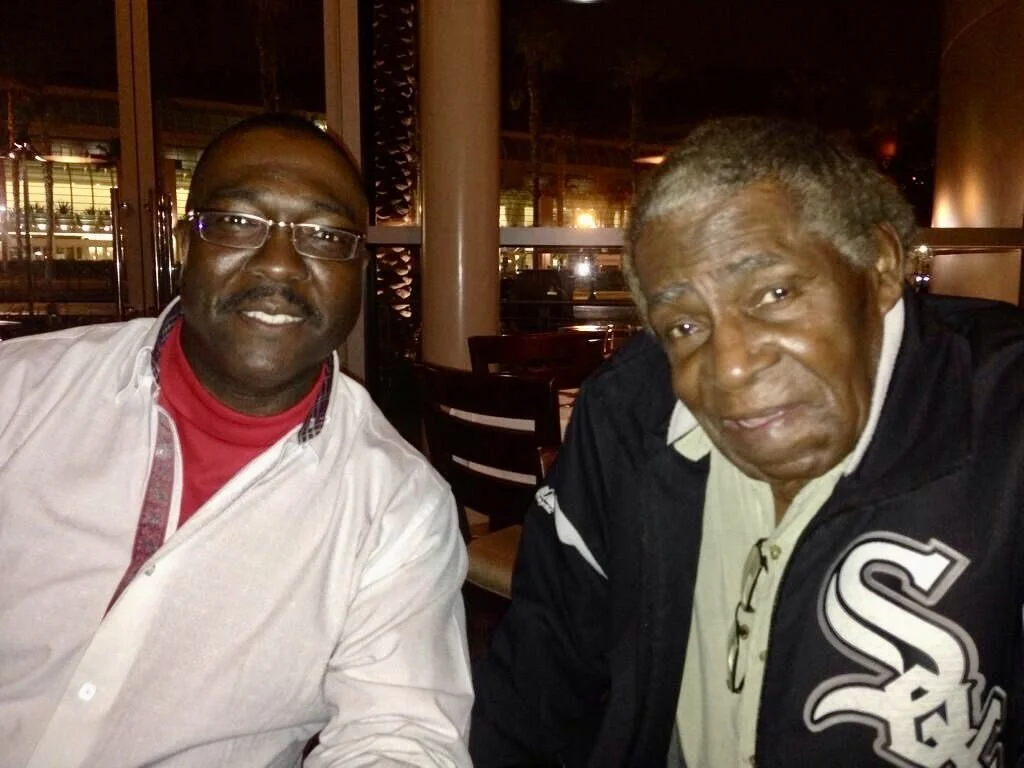
Minnie Miñoso
Martín Dihigo was a legend as a pitcher. A legend at the plate. The Babe Ruth of Cuba, and the idol of players like Minnie Miñoso who grew up in Cuba. Miñoso described him as "very elegant."
Minnie Miñoso was able to live out his dream of coming to America and playing in the major leagues, but Dihigo never got that chance.
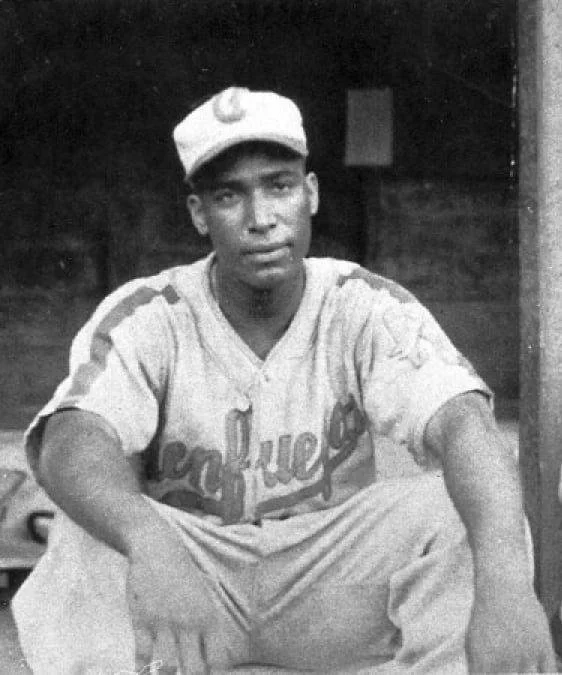
Martín Dihigo
On September 5, 1938, Satchel Paige and Martín Dihigo were both on the mound with the Mexican League pennant on the line. The game went into the 9th inning, tied at 1-1. Dihigo ended the game as a batter, hitting a walk off home run.
On a separate occasion, Dihigo once hit a 2-run home run off of Paige, and everyone in the stadium thought "oh wow, maybe Satchel Paige is hittable... but only if it's Martin Dihigo at the plate."
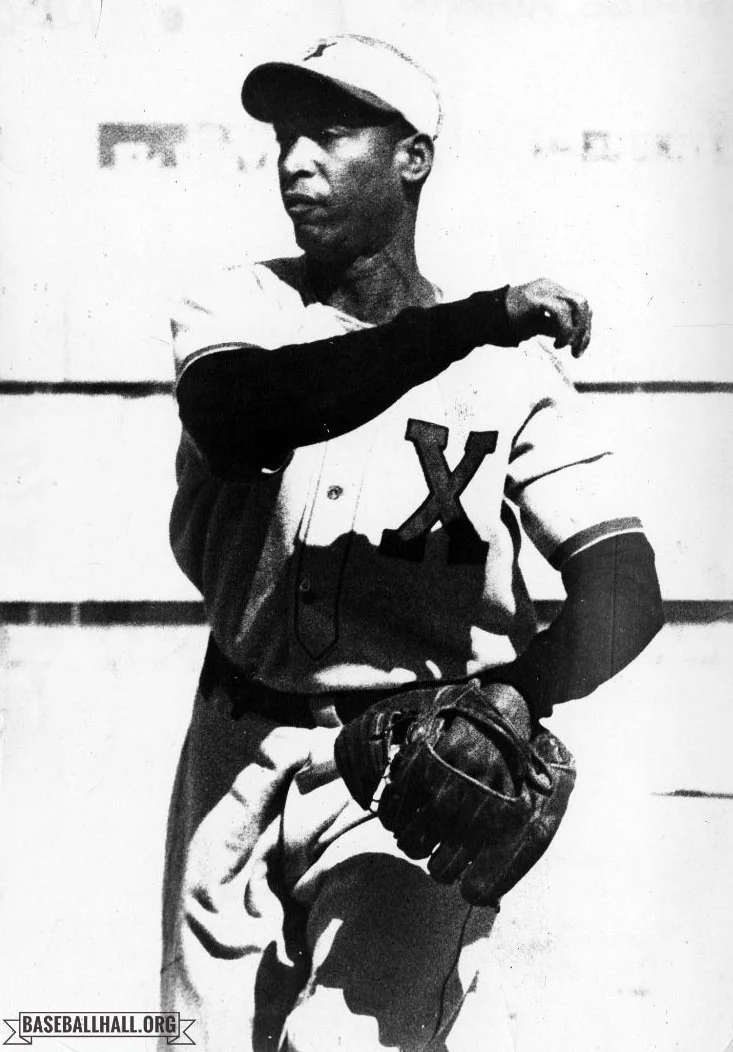
“El Maestro”
Dihigo’s best season came in 1938, when he went 19-2 and posted a 0.90 ERA for Rojos del Aguila de Veracruz of the Mexican League. He also won a batting title that season with his .387 average.
Monte Irvin called him "a beautiful ball player."
Judy Johnson saw him play, and said "this guy could do it all."
Roy Campanella said, “Dihigo was one of the greatest I ever saw. He was a tremendous hitter, had great power, could hit for an average, everything. I played against him in the Cuban winter league, in Mexico and in the Negro National League when he was with the New York Cubans."
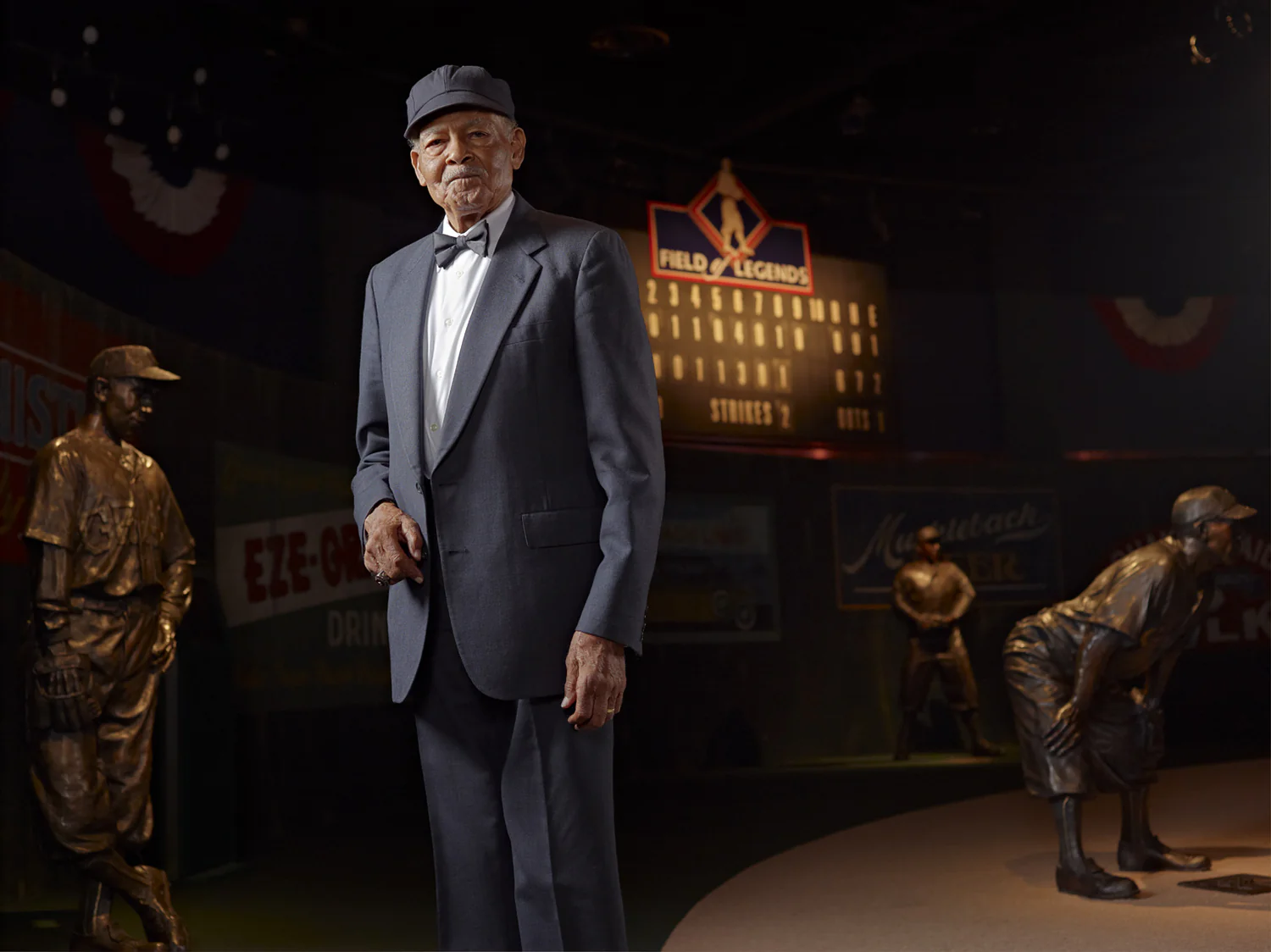
Umpire - Bob Motley
Bob Motley was the last surviving Negro League umpire, passing away in September of 2017.
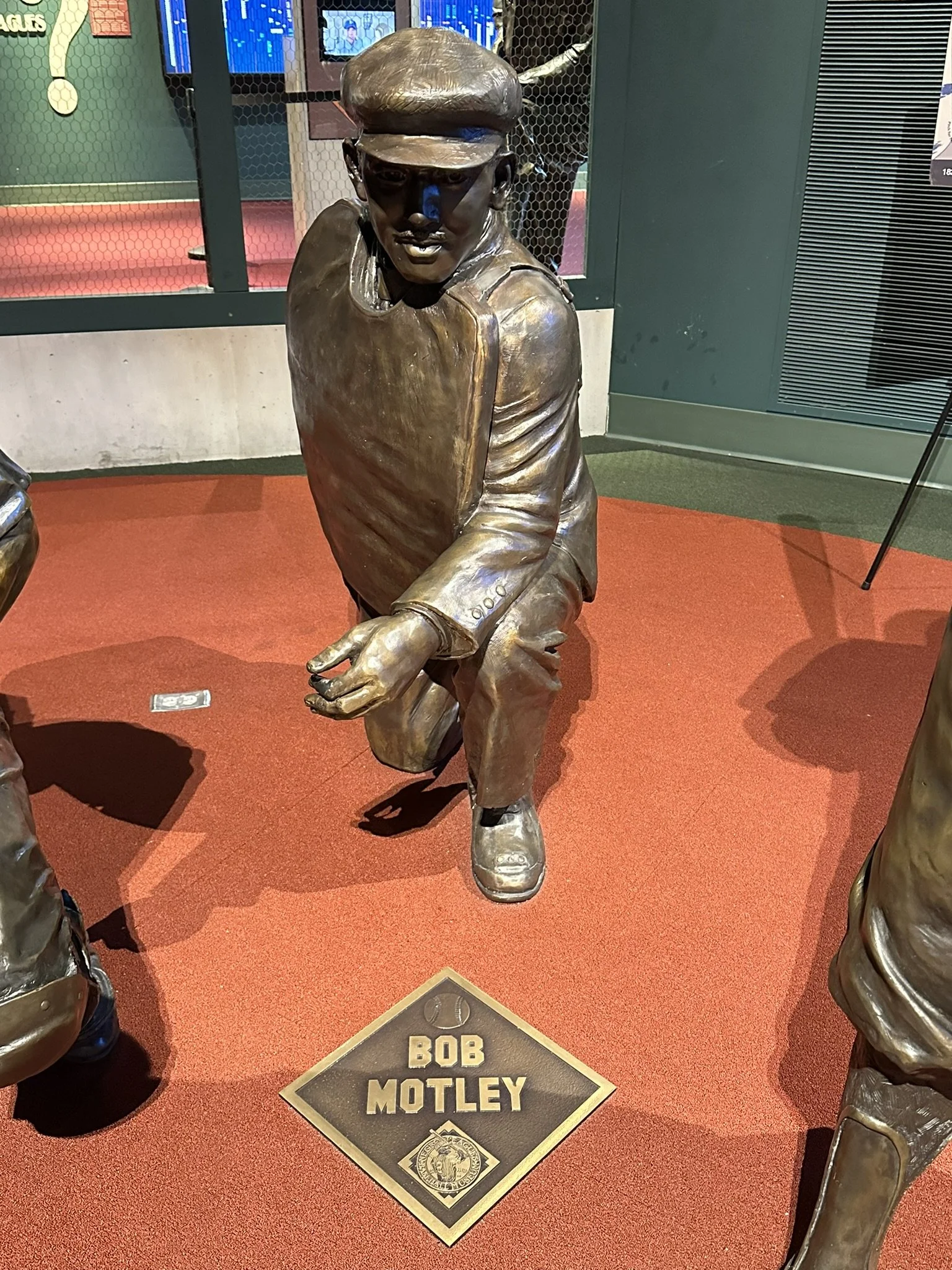
Bob’s Statue
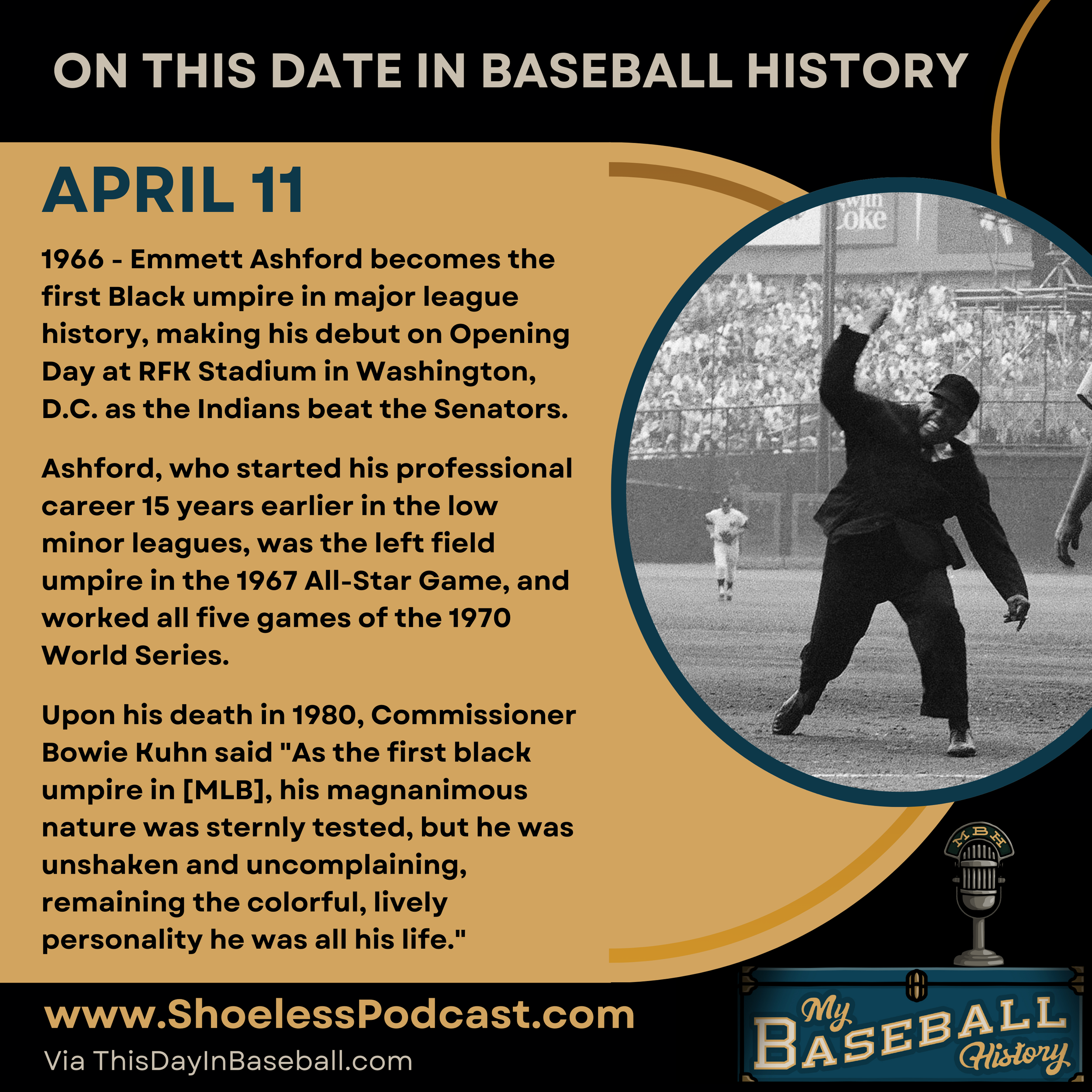
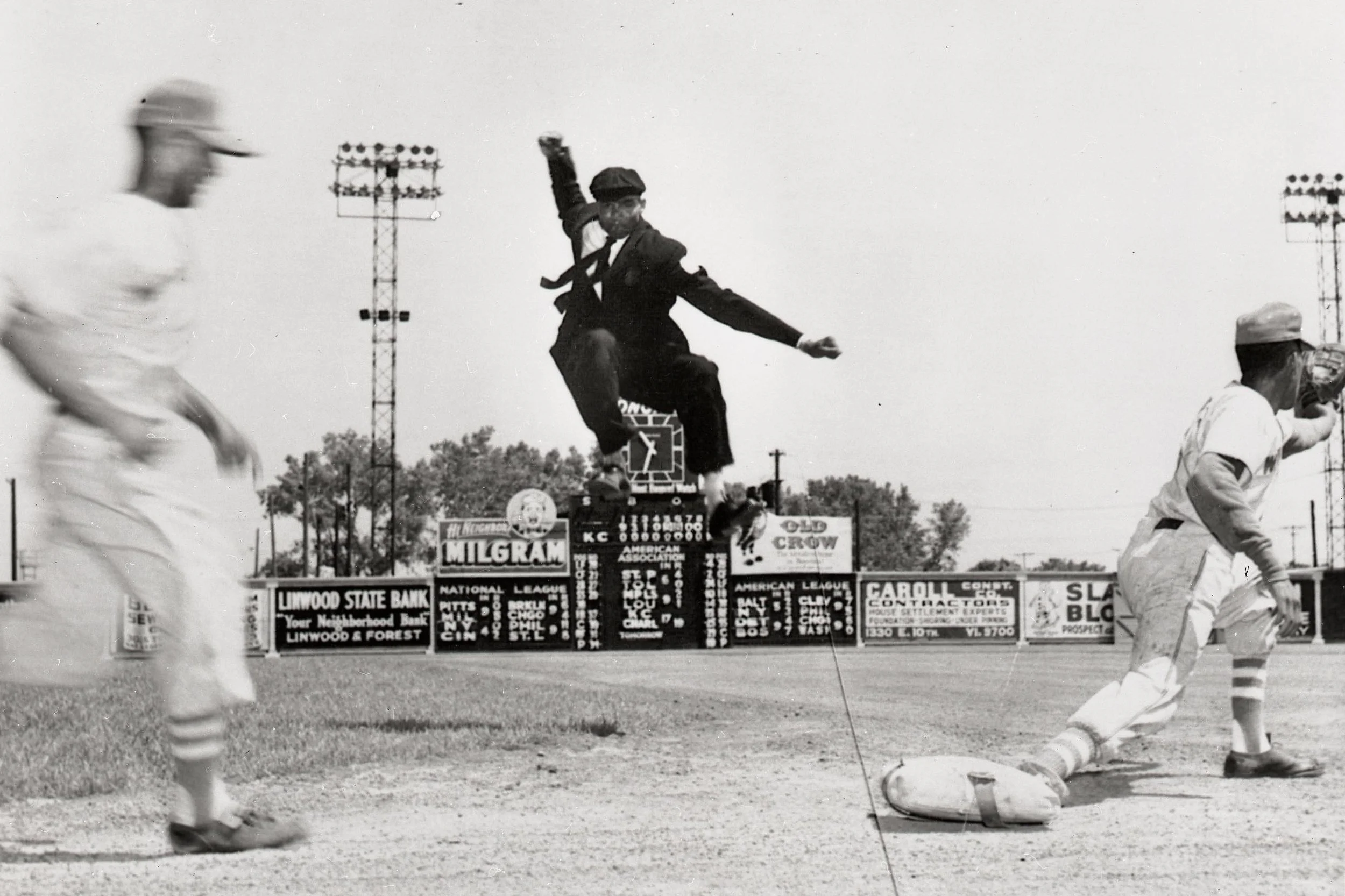
Motley worked as an umpire in the Negro Leagues from 1947 to 1958, but he also umpired in the Pacific Coast League, becoming the PCL's second Black umpire, following Emmett Ashford.
Memorable For Many Reasons
In addition to being a fantastic umpire, Bob Motley was well-known for his emphatic and often acrobatic calls.
Buck O’Neil
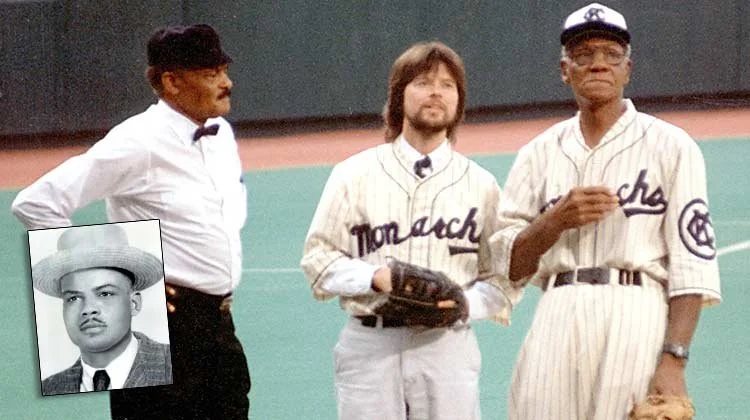
In his more than seven decades in baseball, Buck O’Neil was thrown out of just one game. The umpire who tossed him? Bob Motley.
The two are seen here, separated by Ken Burns.
Don Motley
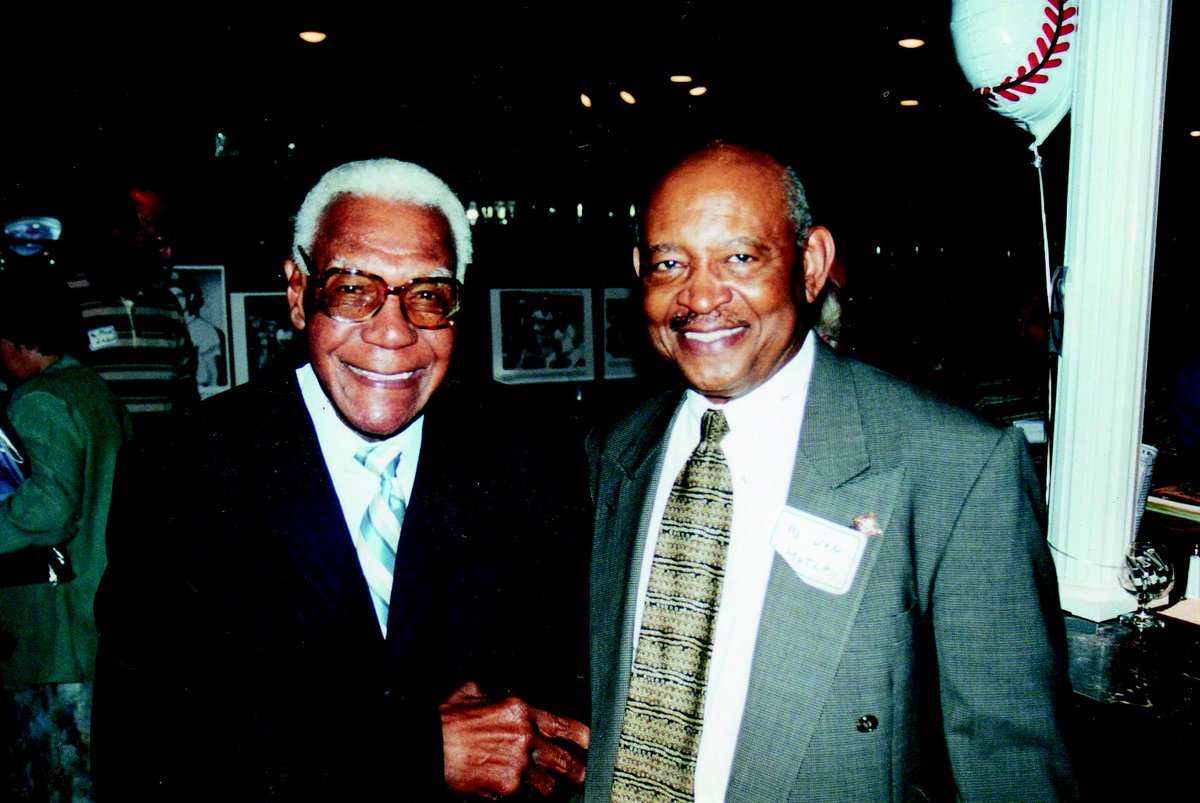
Bob Motley sometimes had a bit of a temper, and was even known to throw his brother, Don, out of NLBM board meetings, as the two were early supporters of the museum. Here is Bob’s brother, Don, with Buck O’Neil.
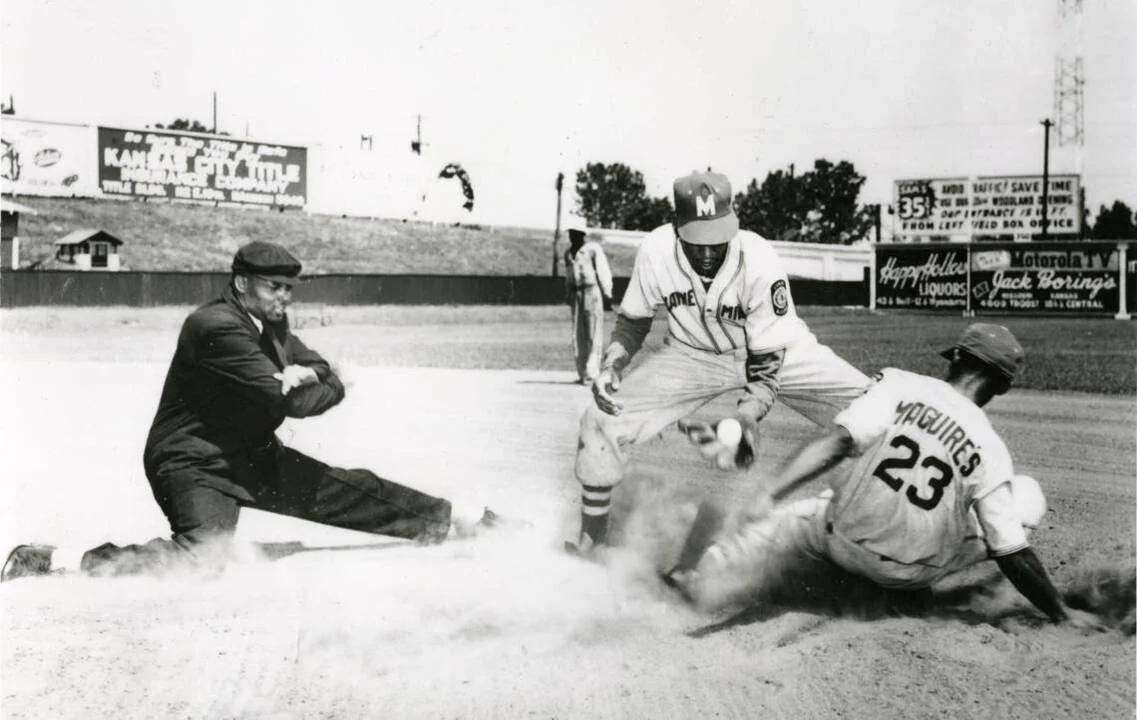
Roll With The Punches
Motley was awarded a Purple Heart after being shot in the foot in Okinawa during World War II. So when Hank Baylis of the Kansas City Monarchs tried to attack Bob Motley with a machete on the bus one day after a game, it was no big thing. He’d been there, done that.
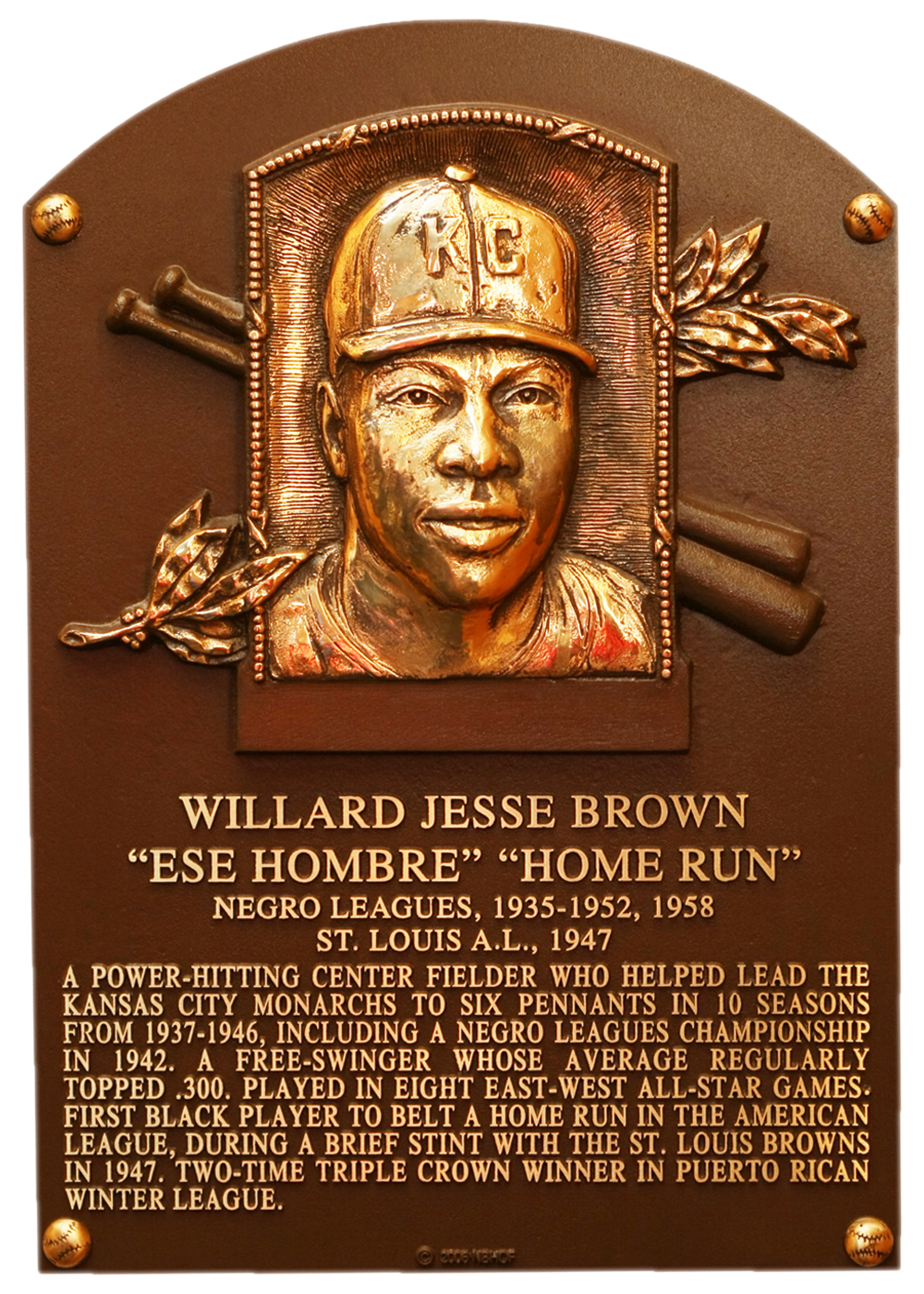
Willard “Home Run” Brown
Over the years, Bob Motley umpired Ernie Banks, Willie Mays, Satchel Paige, and Henry Aaron. But, according to Bob, the best player he ever umpired was Willard “Home Run” Brown.
The moniker was bestowed upon him, like many Negro Leagues nicknames were, by Josh Gibson.
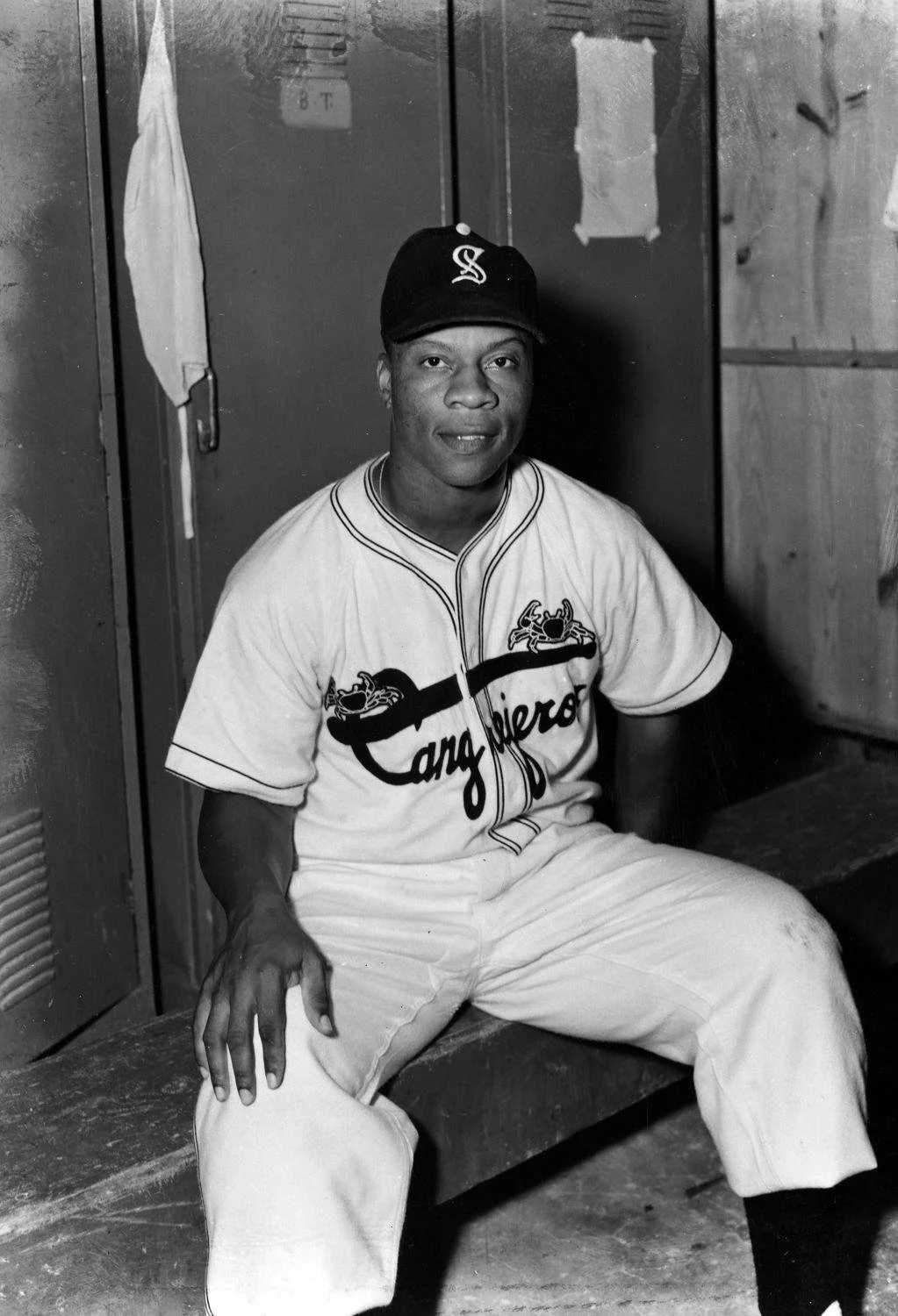
“Ese Hombre”
While playing in the Puerto Rican Winter League, Willard Brown became known as “Ese Hombre”, or “That Man” for his exceptional offense.
In just 60 games played during the 1947-48 Puerto Rican Winter League, Brown set the home run record of 27, a record which still stands today. That winter, while playing for Santurce, Brown hit an astounding .432 and drove in 86 runs in just 234 at-bats, winning the Triple Crown.
He won the Puerto Rican Winter League Triple Crown again during the 1949–1950 season, and also hit for the cycle once in his career.
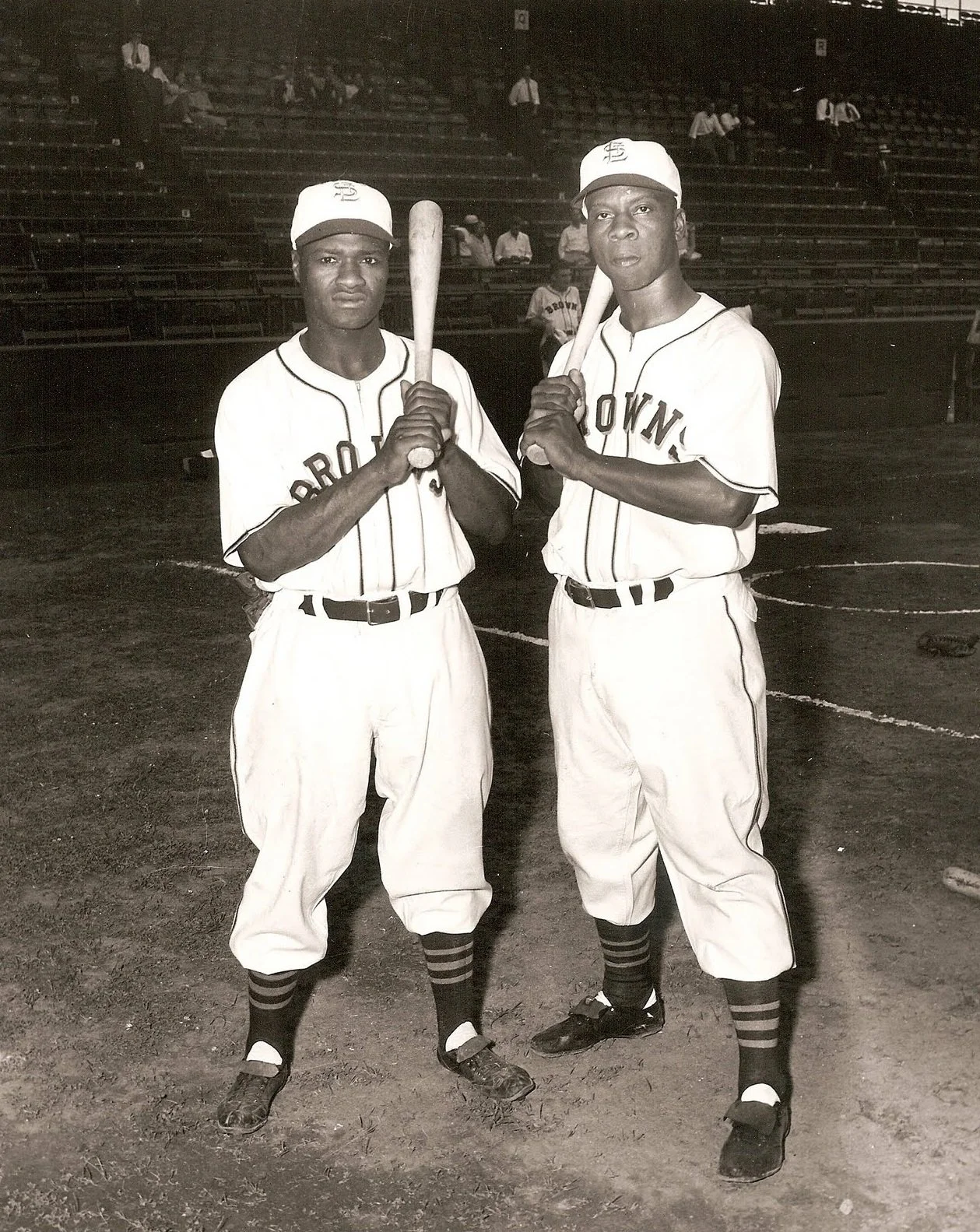
Black Teammates
Brown returned from his military service in 1946 and a year later, just a few months after Jackie Robinson broke Major League Baseball’s color barrier, the St. Louis Browns signed him and Monarchs teammate Hank Thompson. The two would become the first pair of Black teammates in AL/NL history.
The Associated Press reported that, of all the Black players signed in 1947, “Brown was considered to be the prize package of the lot, with only his age against him.” On August 13, 1947, Brown blasted the first home run ever hit by a Black player in the history of the American League.
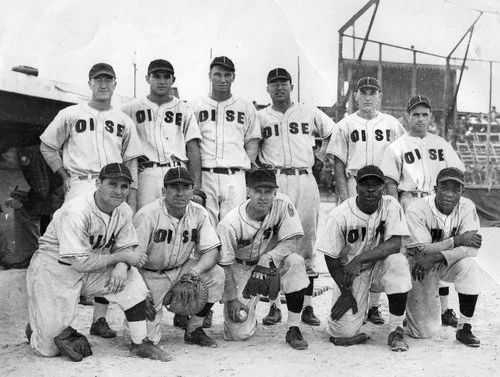
Oise All-Stars
Willard Brown stormed the beaches at Normandy, and was later teammates with Leon Day on the Oise All-Stars in France in 1945.
Oise beat General Patton’s 4th Army Red Circlers team for the European Theater Championship.
Brown is front row, second from right.
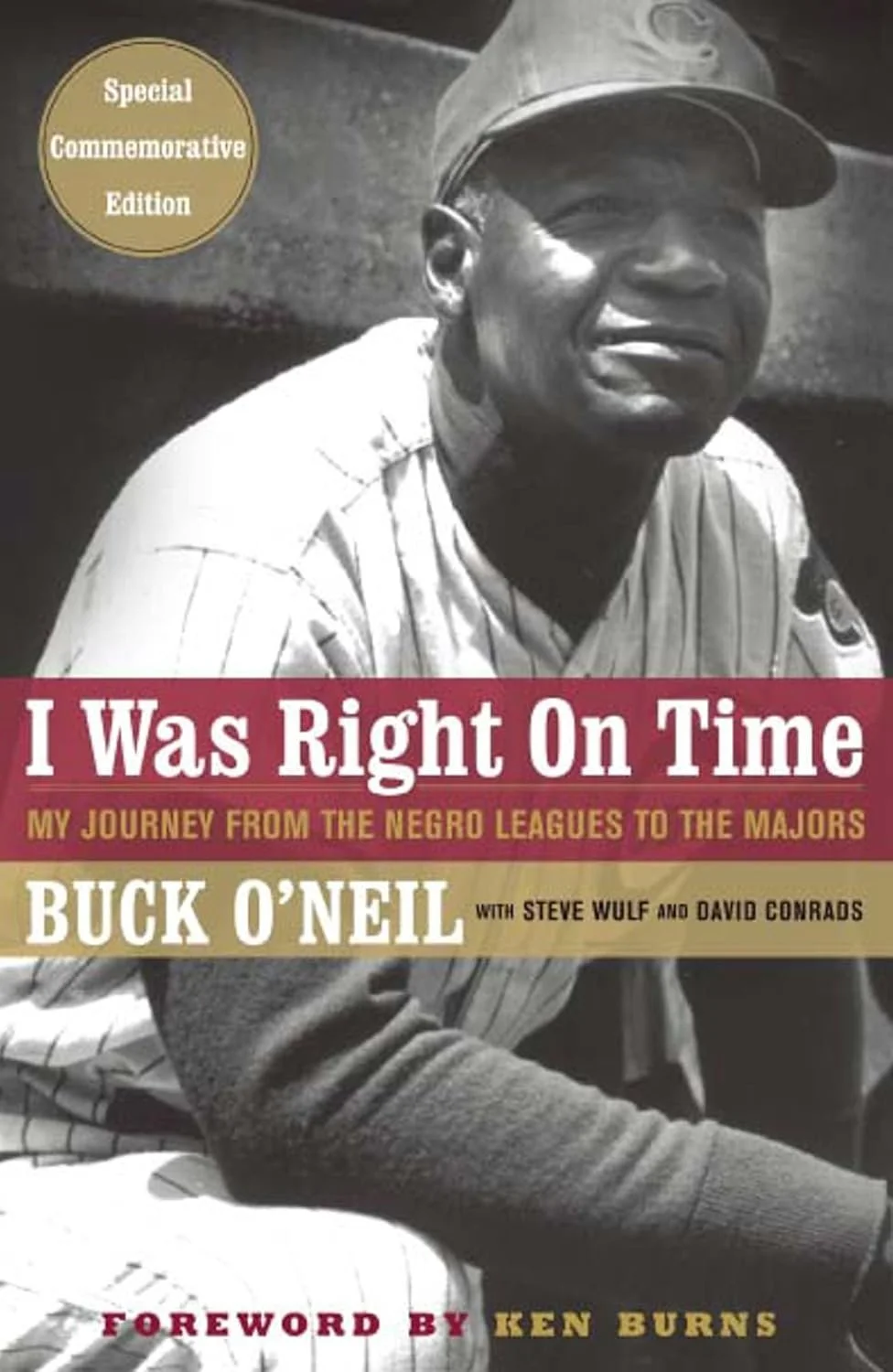
I Was Right On Time
In I Was Right on Time, Buck O’Neil charmingly recalls his days as a ballplayer and as a Black American in a racially divided country. From his barnstorming days with the likes of Satchel Paige and Josh Gibson, or to the day in 1962 when he became the first Black American coach in the major leagues, I Was Right On Time takes us on a trip not only through baseball’s past, but through America’s as well.
Buy I Was Right On Time HERE.
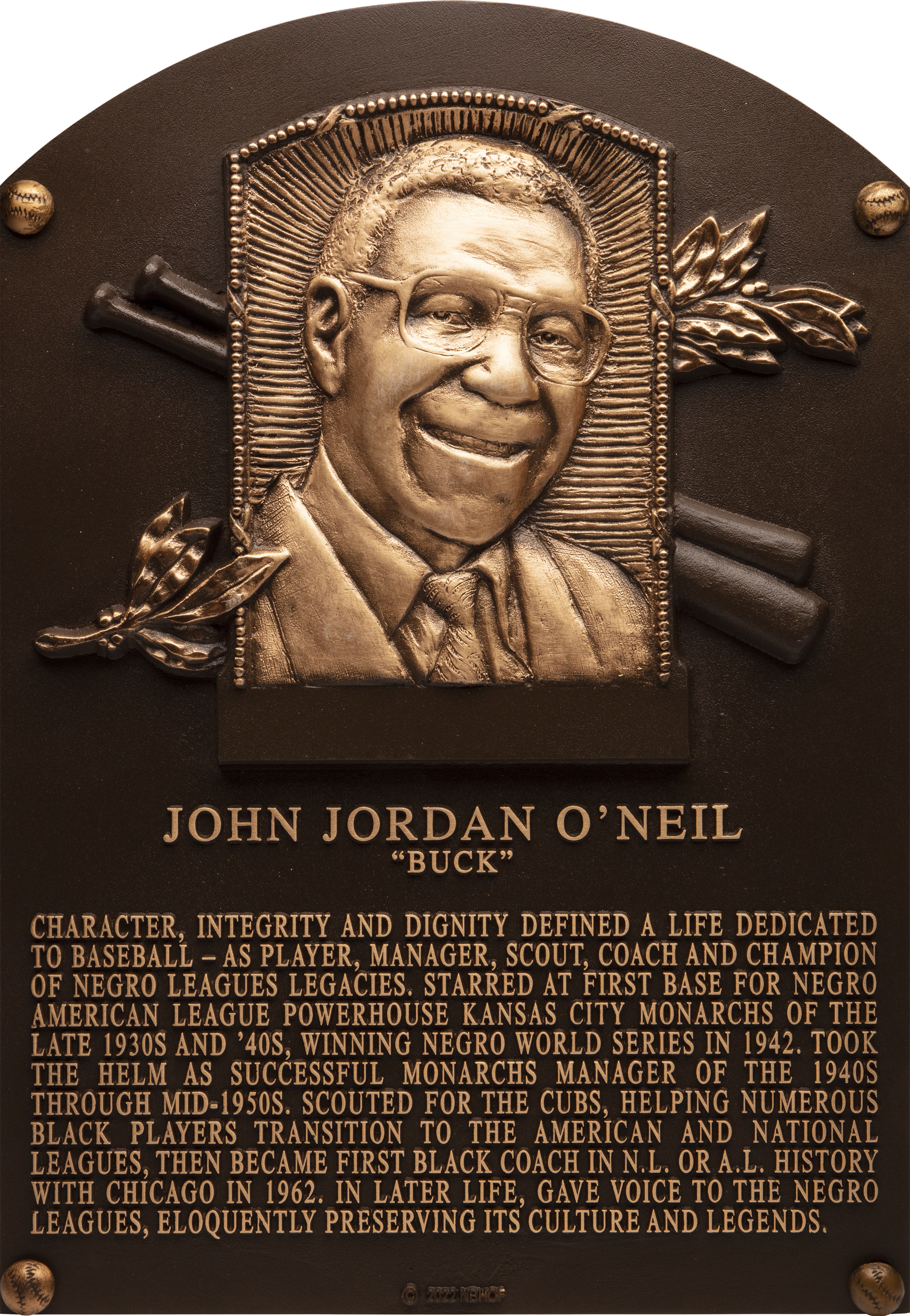
Manager - Buck O’Neil
Buck O’Neil was inducted into the National Baseball Hall of Fame as a part of the Class of 2022.
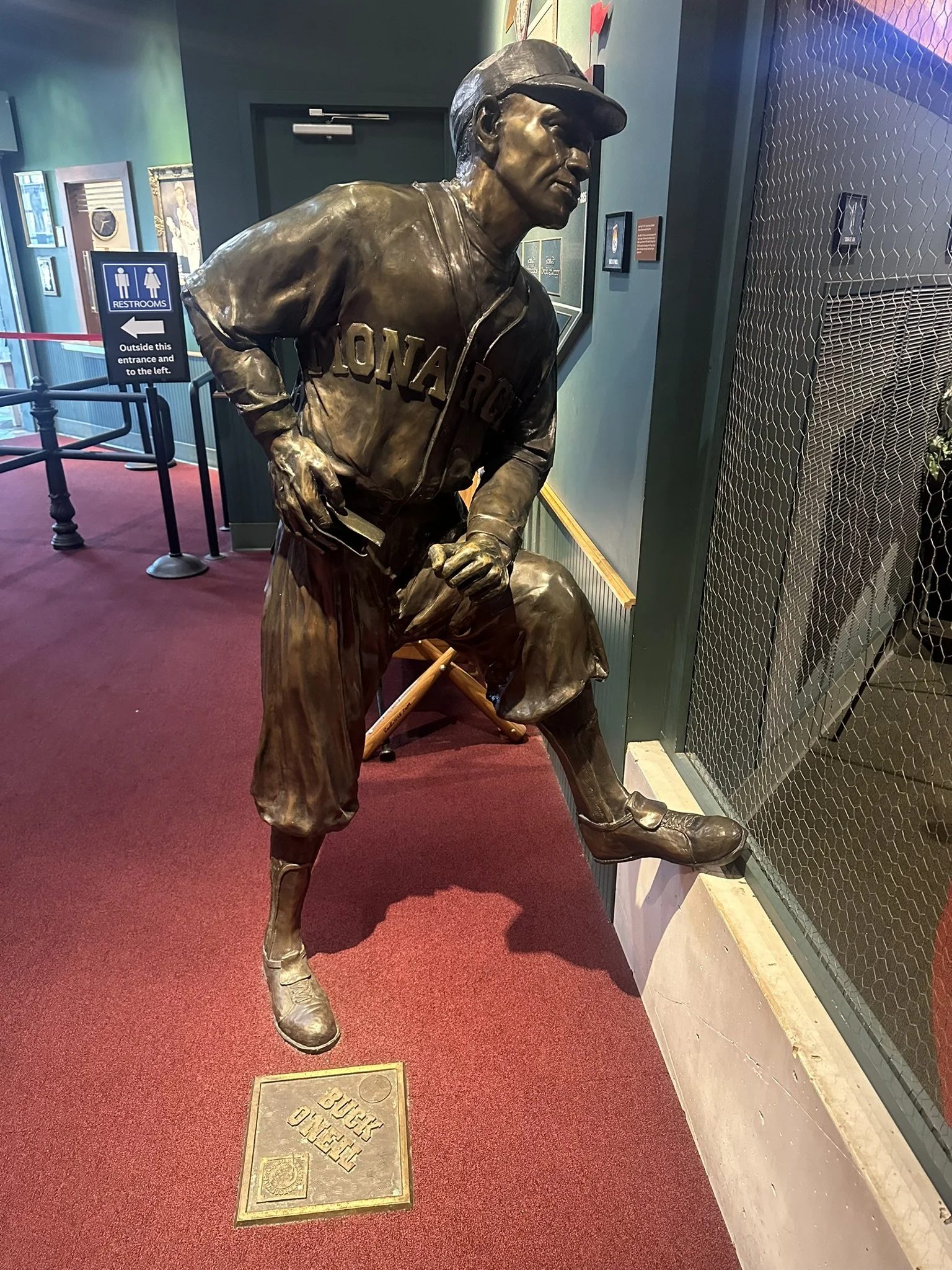
Buck’s Statue
John Jordan “Buck” O’Neil was a good player, and a great scout and coach after his playing career was over, but by far, the greatest impact he made was as an ambassador to the game.
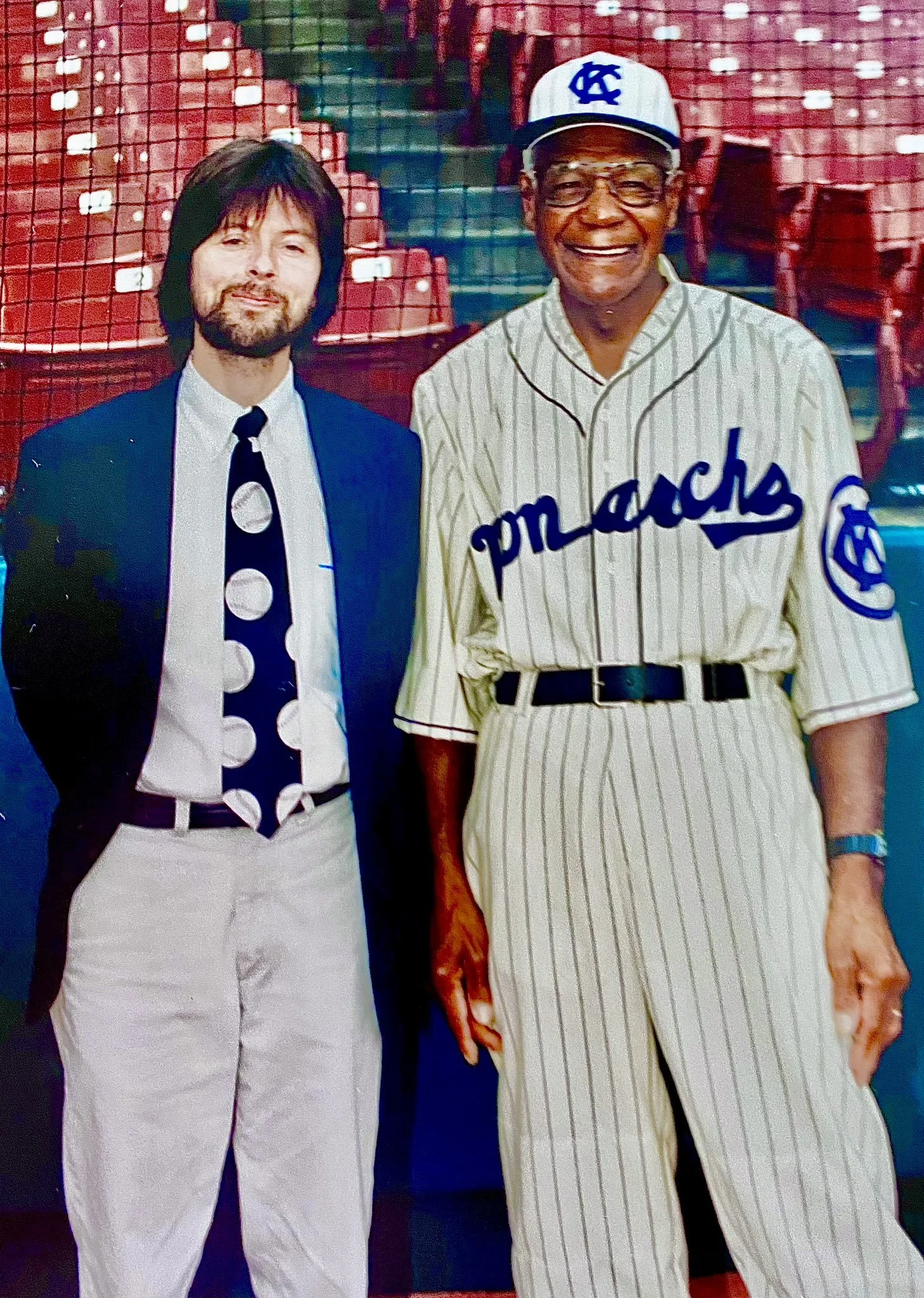
Ken Burns
Ken Burns launched Buck into another stratosphere when he included Buck in his 1994 Baseball documentary.
But that was just the beginning of a new chapter of life for Buck, as he took that popularity and parlayed it into incredible publicity and momentum for the Negro Leagues, and the Negro Leagues Baseball Museum doing late night talk show appearances on the Late Show with David Letterman, The Late Late Show with Tom Snyder, and at all sorts of public appearances and things like that.
Photo by Debbie Sauer
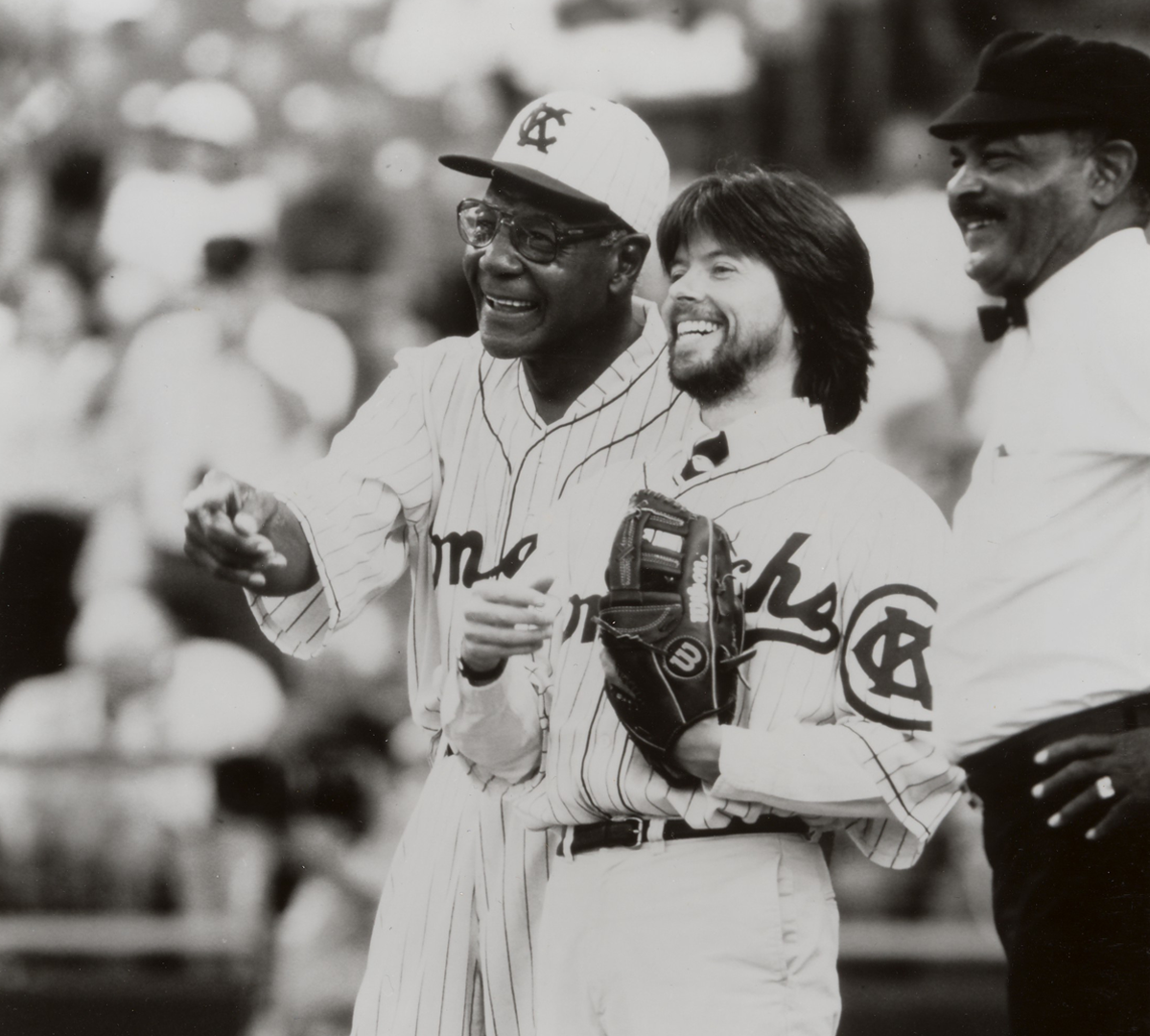
America Fell In Love
America fell in love with Buck when they saw him in Ken Burns’ Baseball documentary. He was this charming, gentle man.
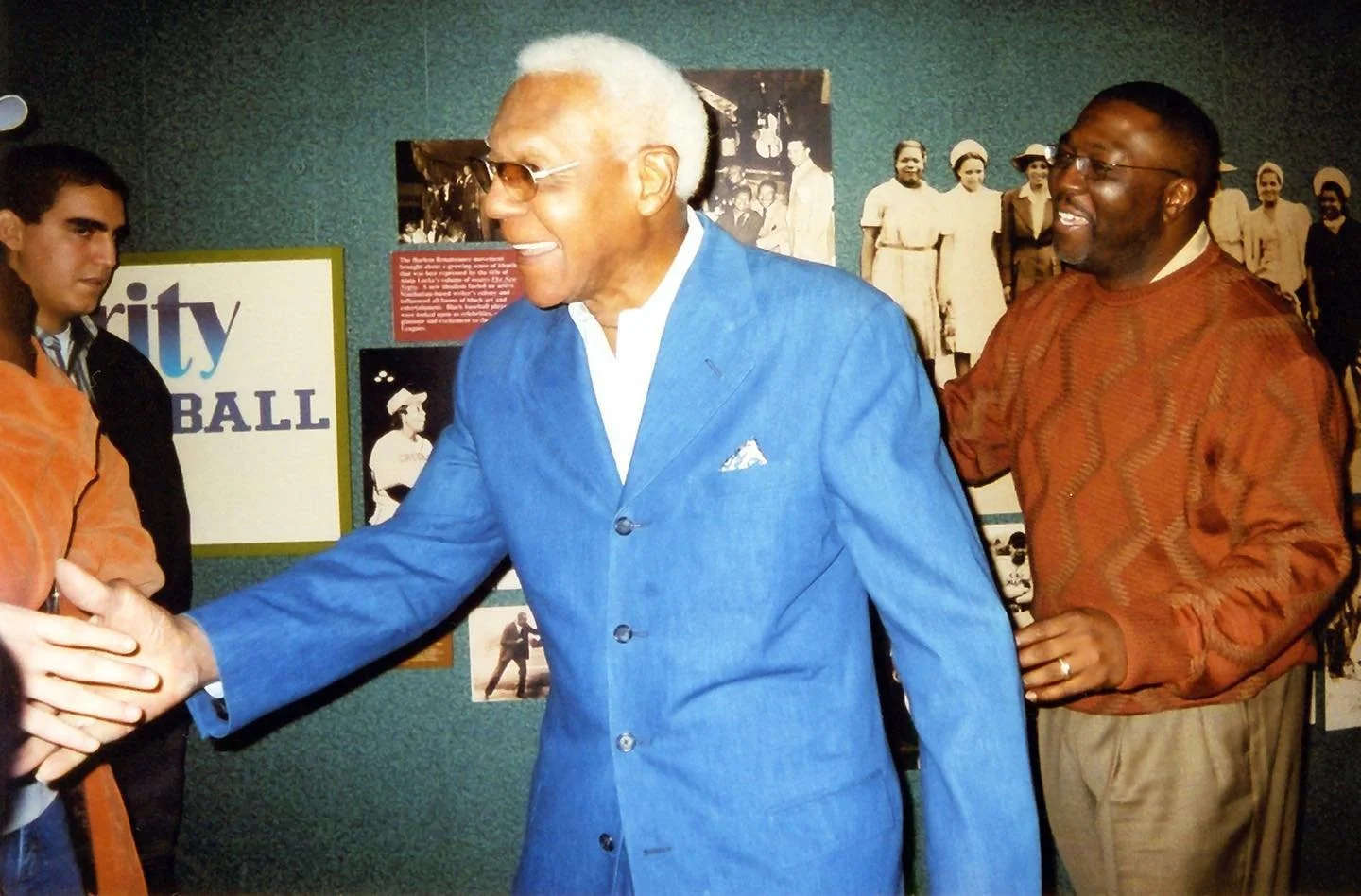
Hanging From The Hem Of His Garment
Where Buck left off, that’s where Bob has picked up.
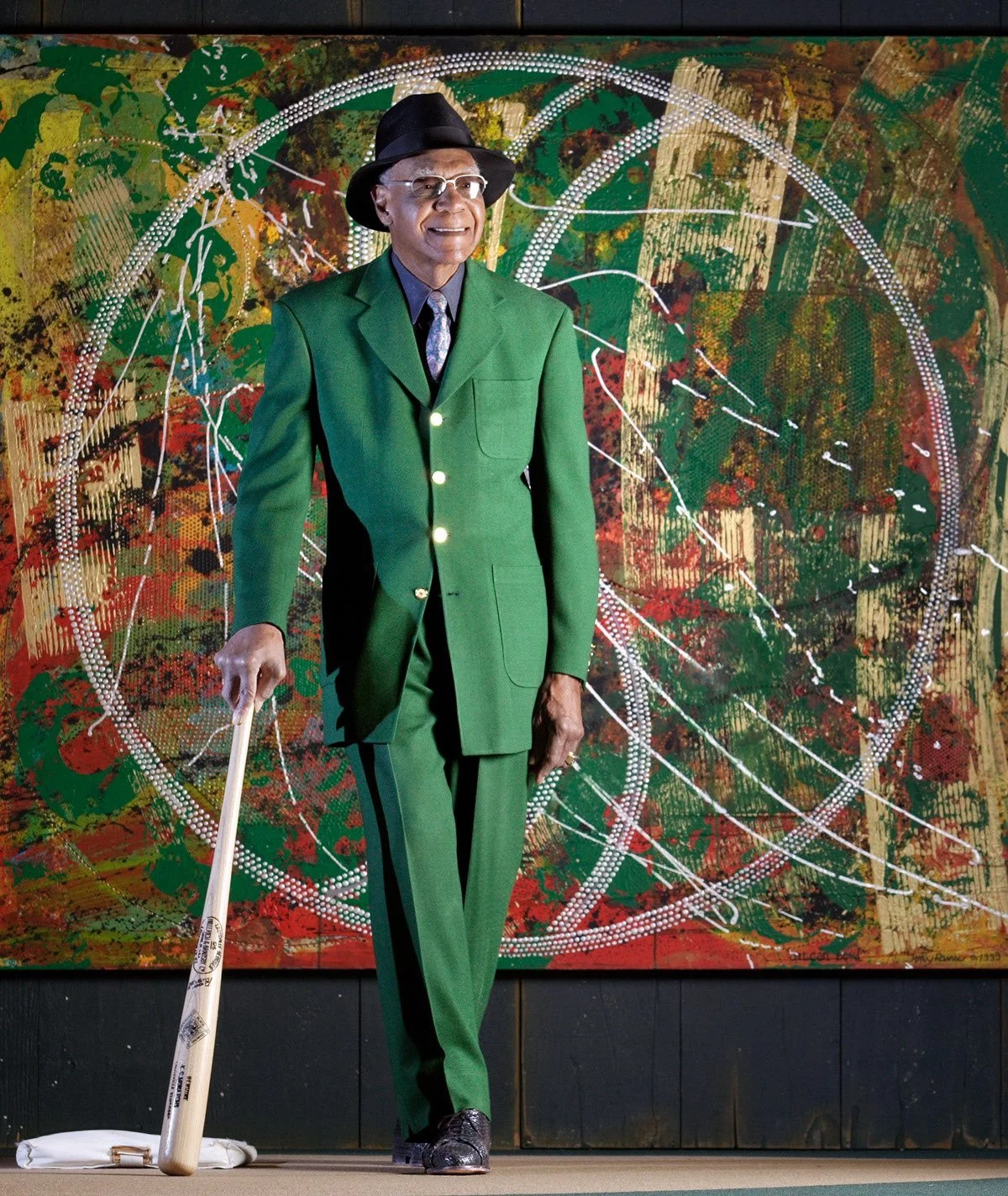
The Perfect Spokesman
Buck became the Pied Piper of the Negro Leagues, but telling stories about his teammates, opponents, friends, and memories was something he had already been doing for 40 years. People were just finally starting to listen.
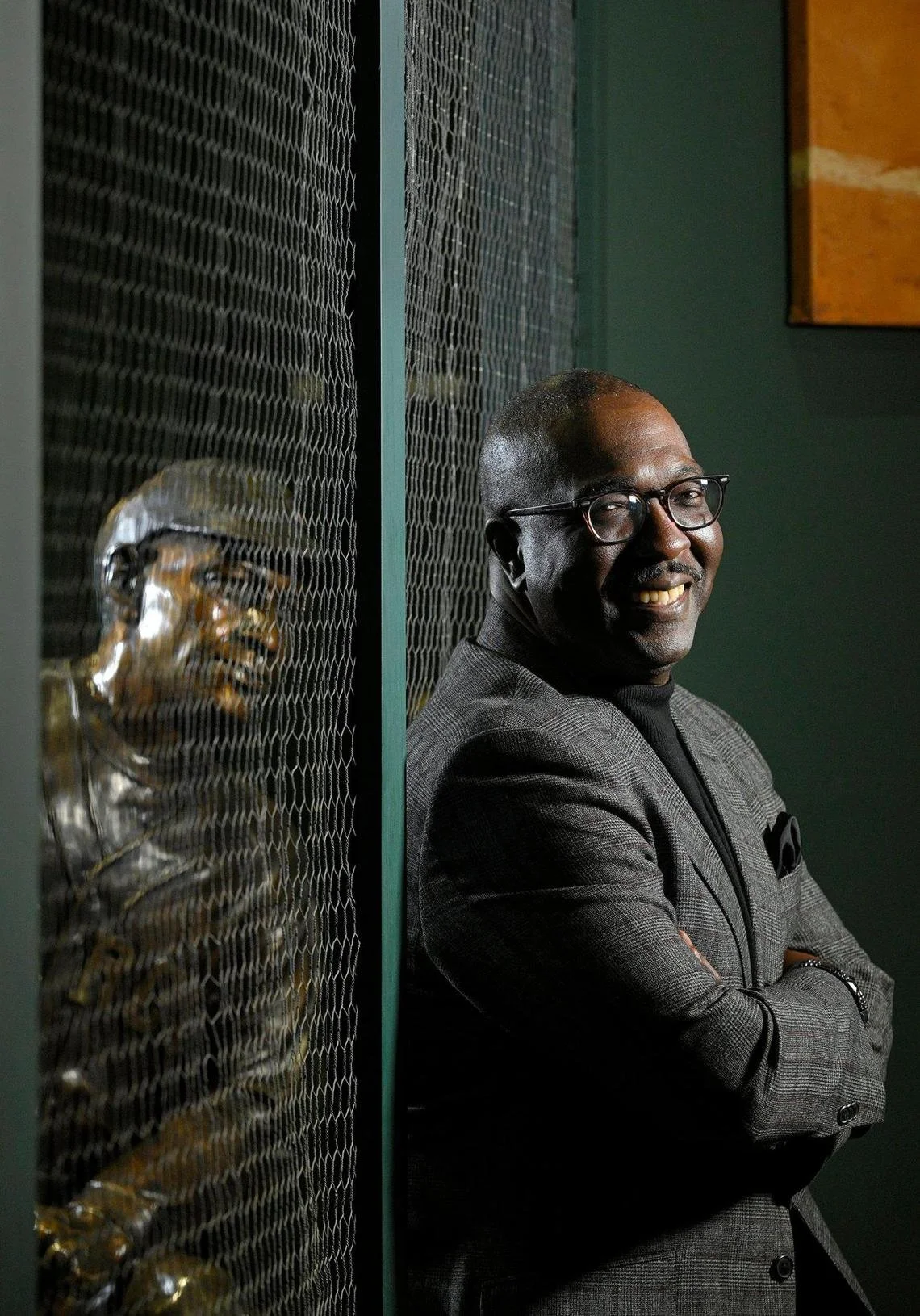
Taken The Baton
It may feel like Buck is always looking over Bob’s shoulder, but that’s not necessarily a bad thing, knowing Buck always had the best interest of the Negro Leagues, and of the museum, in mind.
It is now Bob’s responsibility to create a new generation of fans to learn about and fall in love with the Negro Leagues through these stories.
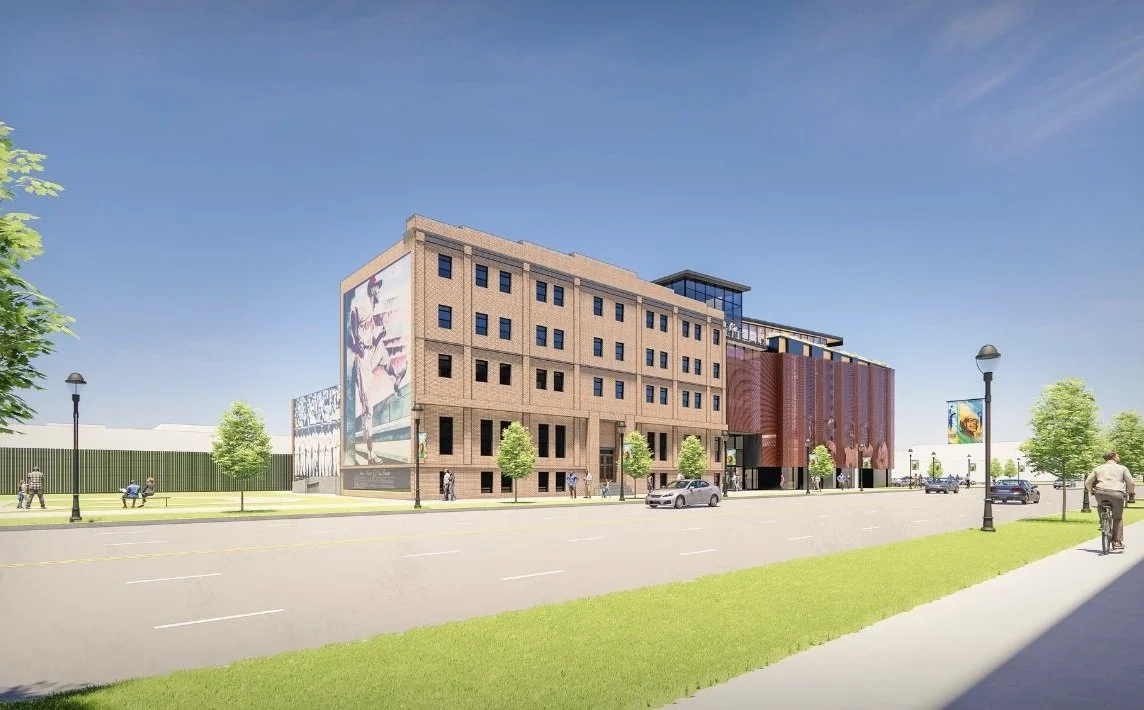
A New House For Buck
Bob calls the current museum “The House That Buck Built,” but says he looks forward to building Buck a new house.
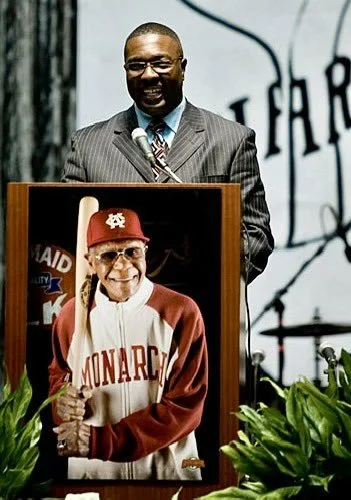
Buck O’Neil
Buck passed away on October 6, 2006, just a few months after learning he was not going to be inducted as a part of the 2006 Hall of Fame class.
Elections to the Baseball Hall of Fame for 2006 proceeded in keeping with rules enacted in 2001, augmented by a special election; the result was the largest class of inductees (18) in the Hall's history, including the first woman elected, Effa Manley.
On July 26, 2005, the Hall announced that its board of directors had approved a special election to be held in 2006, by the Committee on African-American Baseball, of Negro leagues and pre-Negro leagues candidates. The Committee selected 17 players and executives for induction.
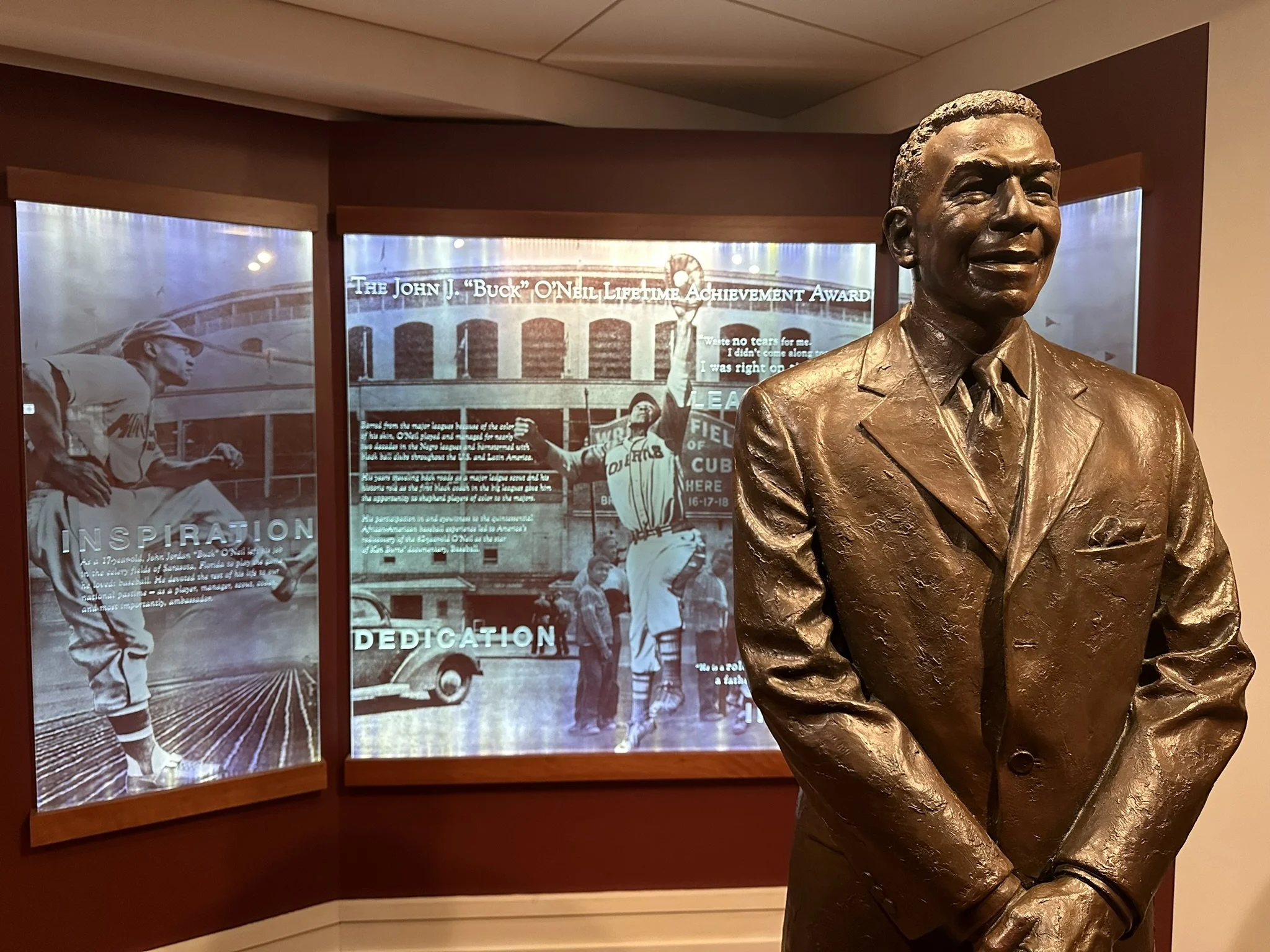
Honoring Buck
The Hall of Fame did many things in the 15 years between his passing and his eventual enshrinement to honor Buck, including the creation of the Buck O'Neil Lifetime Achievement Award in 2008.
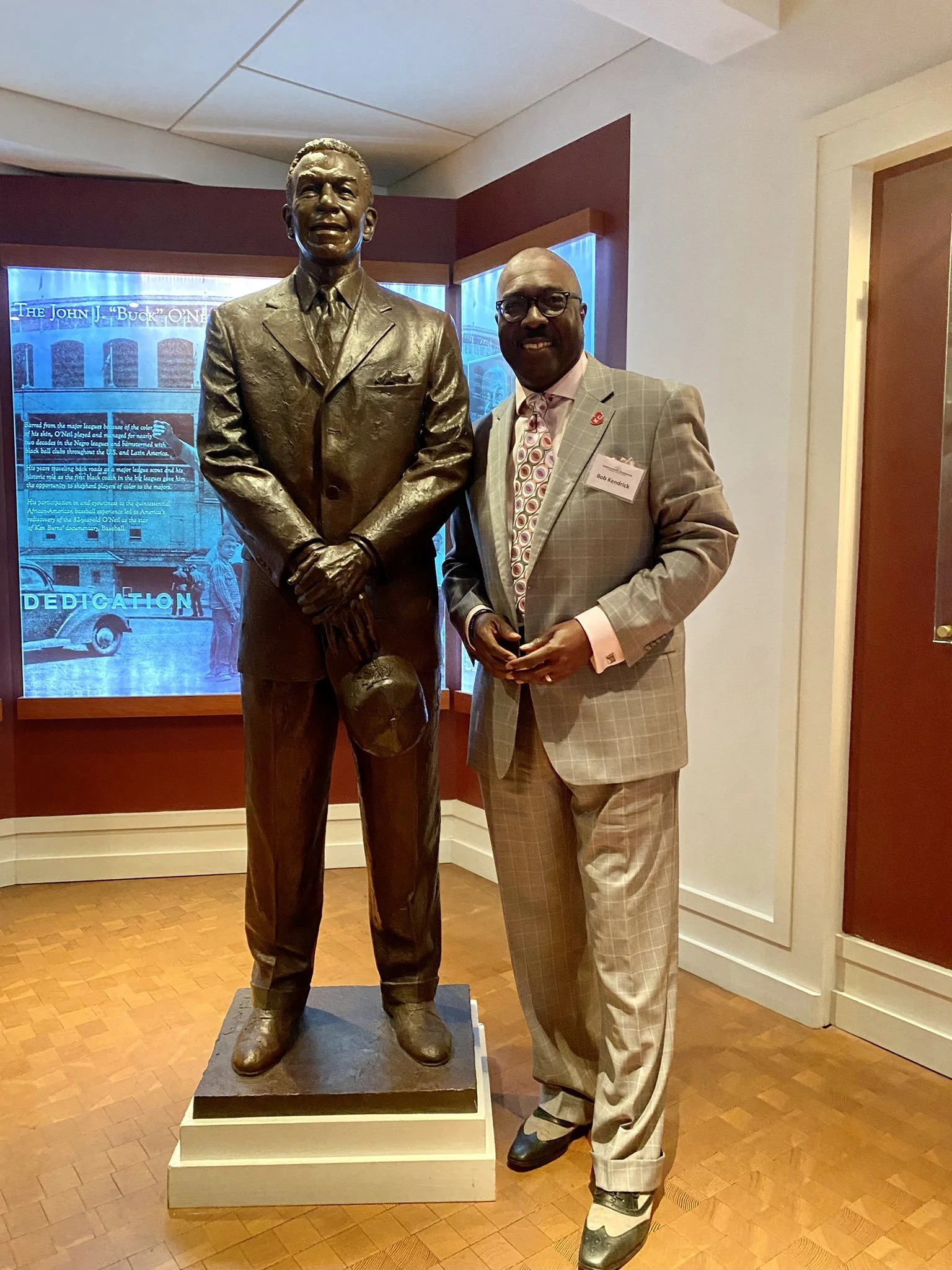
Life-Size Statue
A permanent, life-size bronze statue of O'Neil was dedicated in the museum that same year, accompanied by a list of award recipients and a plaque to educate museum visitors about Buck’s contributions to the game.
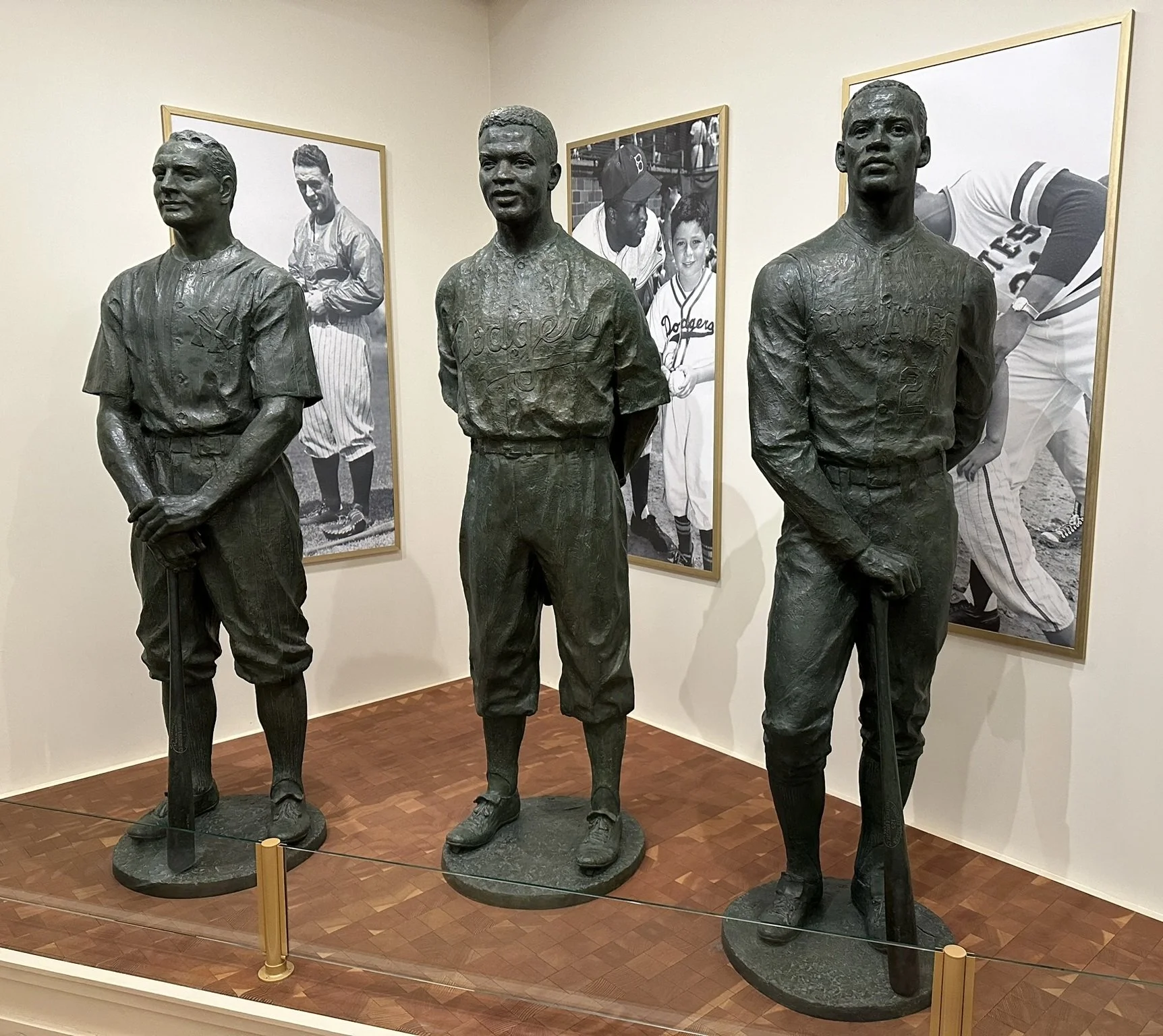
Elite Company
While having a statue inside the Hall of Fame puts Buck in some elite company, joining Lou Gehrig, Jackie Robinson, Roberto Clemente, and Henry Aaron, the Hall kind of has an unfortunate history of inducting people after their death so they aren’t around to get their flowers, despite years of people arguing on their behalf.
Not just Buck O'Neil, but Minnie Miñoso, Ron Santo, Dick Allen, and now the most recent example of Dave Parker.
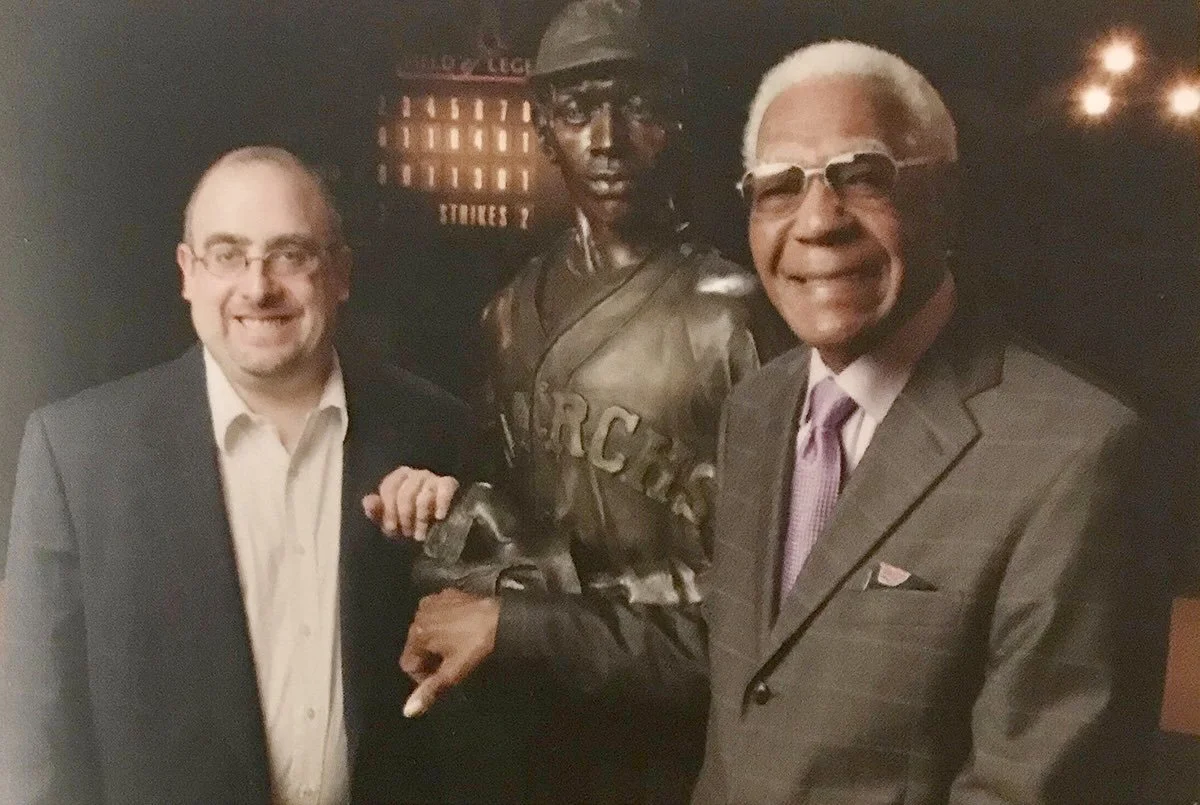
Joe Posnanski
Finding out Buck didn’t make it into the Hall of Fame in 2006 was more gut-wrenching for Bob and their mutual friend, Joe Posnanski, than it seemed to be for Buck.
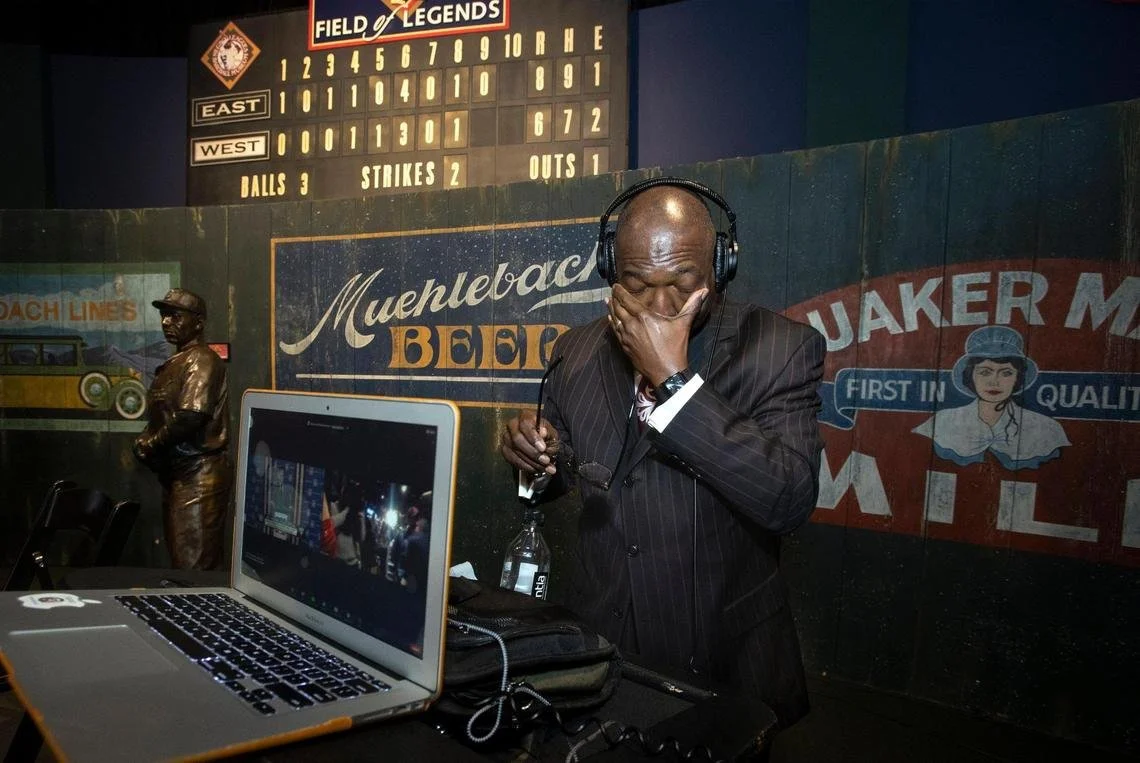
Sometimes There Is Crying In Baseball
Bob says that addressing the crowd of 300 people who were gathered on the Field of Legends at the NLBM anticipating a celebration, but having to tell them all that Buck O’Neil had actually not been inducted into the Hall of Fame, was the hardest speech he’s ever had to give in his life.
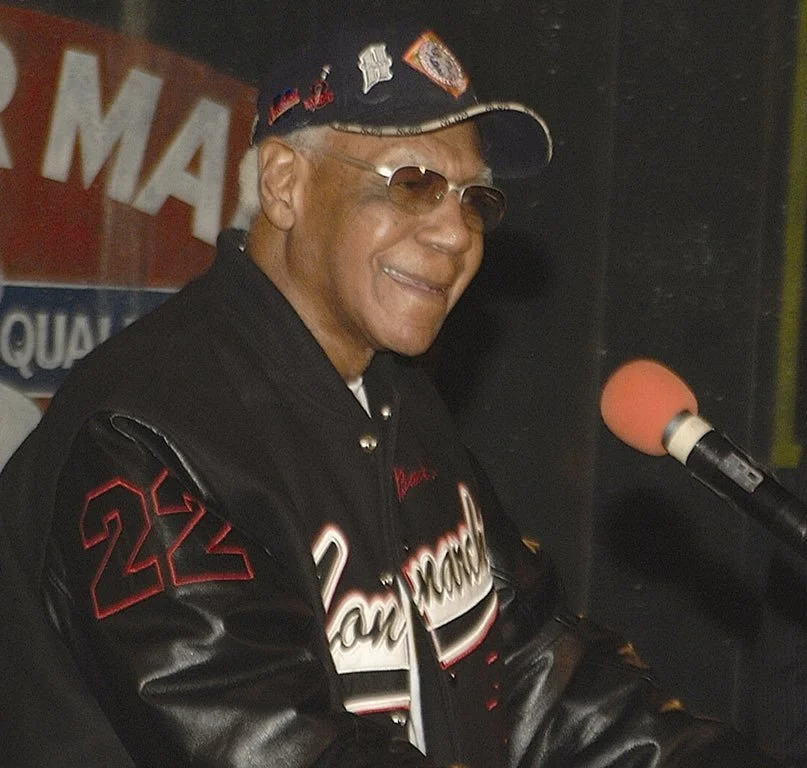
Concession Speech
While everybody else in the room was crying, Buck gave some perspective in the moment. He told the 300 people gathered there to celebrate his life and career not to be angry or bitter. Buck was glad he had an opportunity, and that’s all he could ever ask for.
“If I’m a Hall of Famer in your eyes, that’s all that matters to me.”

He Became Their Voice
Buck became the voice that Negro Leaguers - either living or passed - didn’t have.
Here, standing (L to R) is: Ulysses Hollimon, Connie Johnson, Woody Smallwood, Hank Mason, Jess Rogers, Buck O’Neil, and Jim LaMarque. Kneeling (L to R): Bob Motley, Doc Horn, Ken Burns, and Alfred “Slick” Surratt.
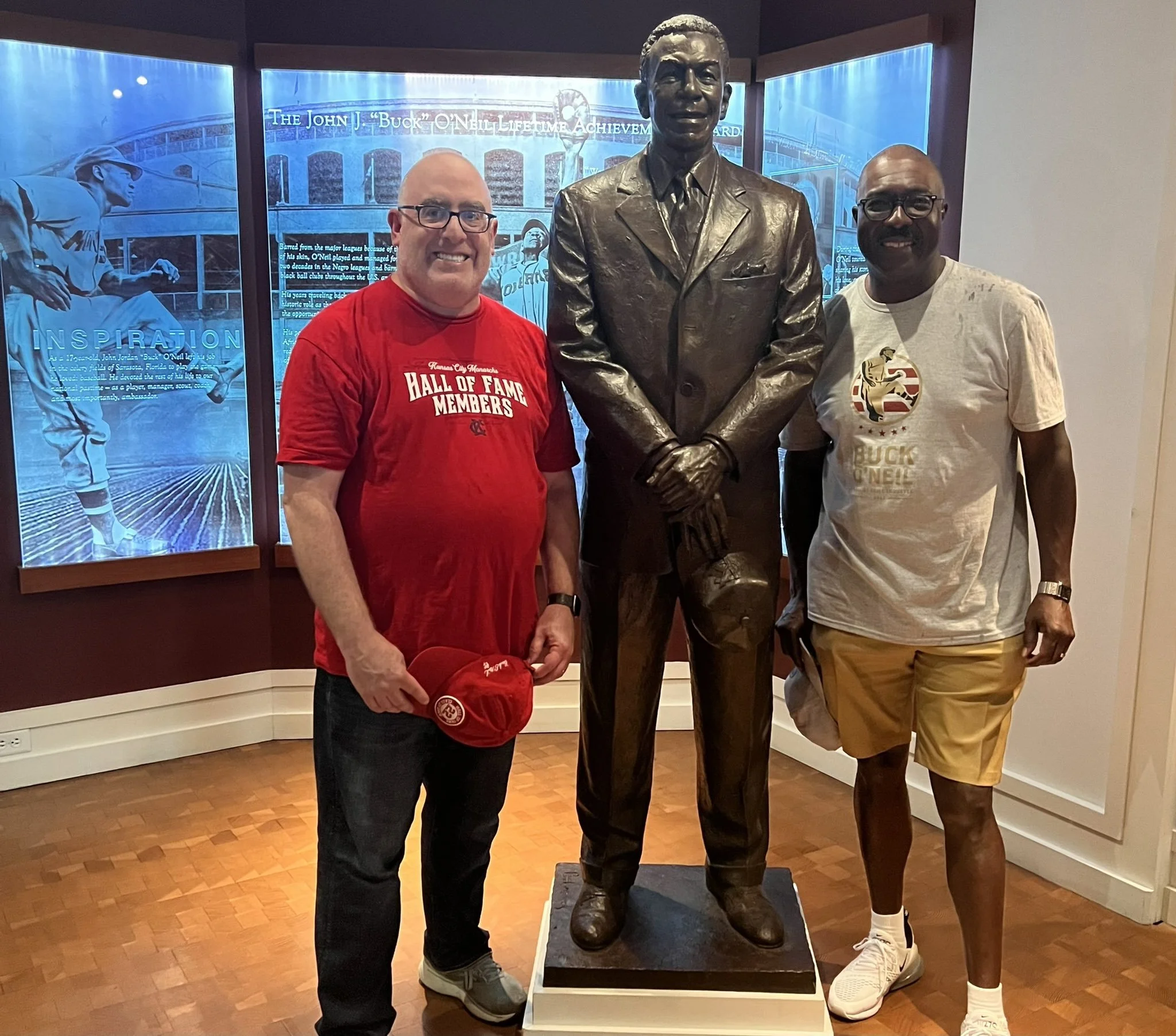
A Skeptical Start
Joe and Bob weren’t really sure how to feel when they went to Cooperstown for Buck’s Hall of Fame induction ceremony, knowing the opportunity for Buck to have been there, himself, had been missed.
Soon, though, the two realized Buck was there in spirit, and everybody just wanted to share their stories and memories with the two people they knew were Buck’s closest friends.
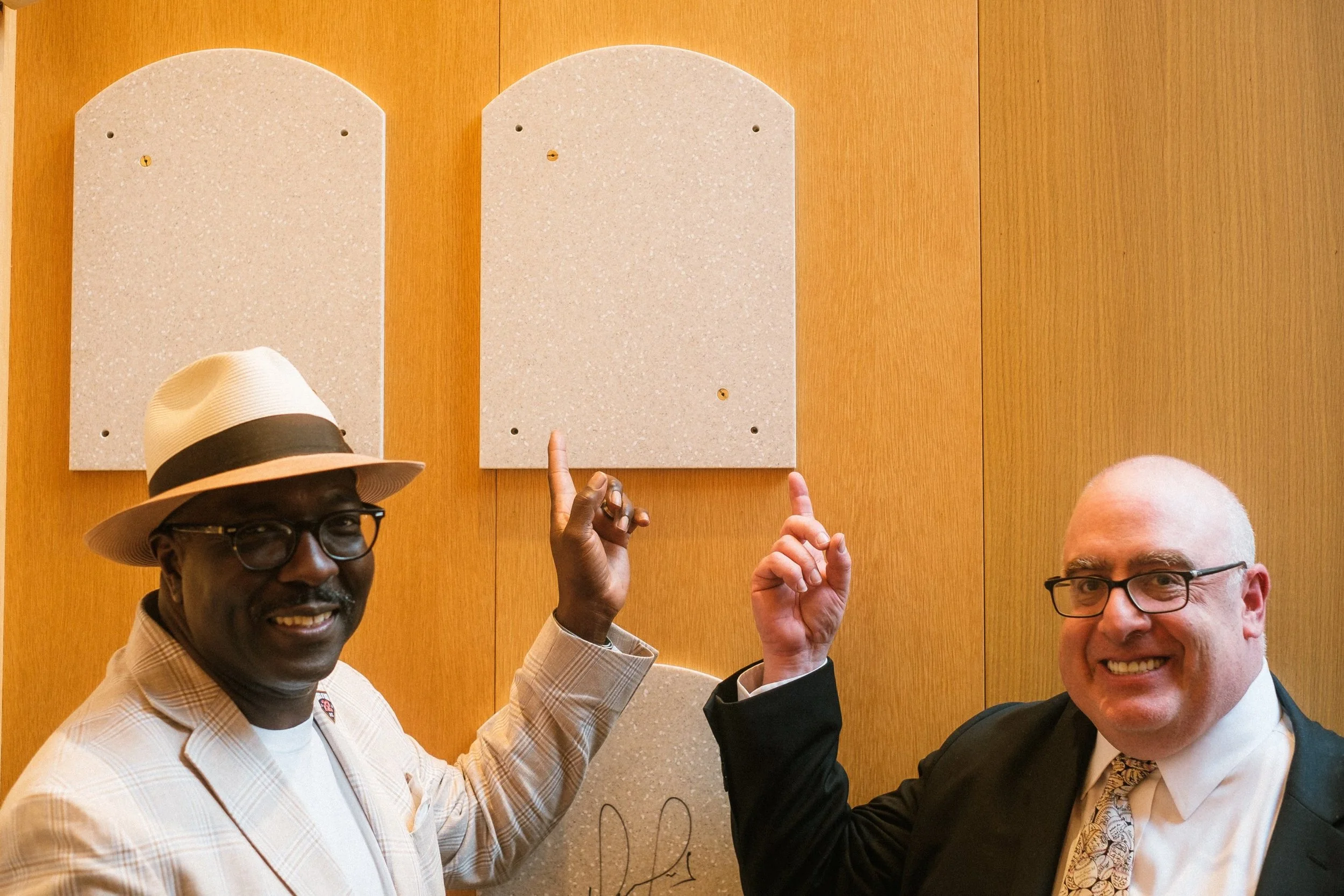
Before…
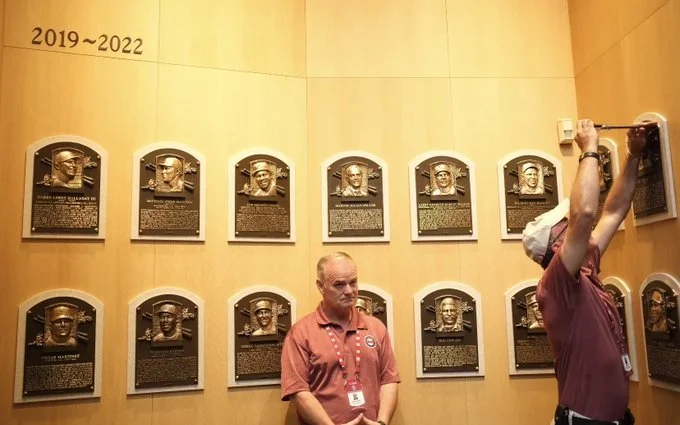
During…
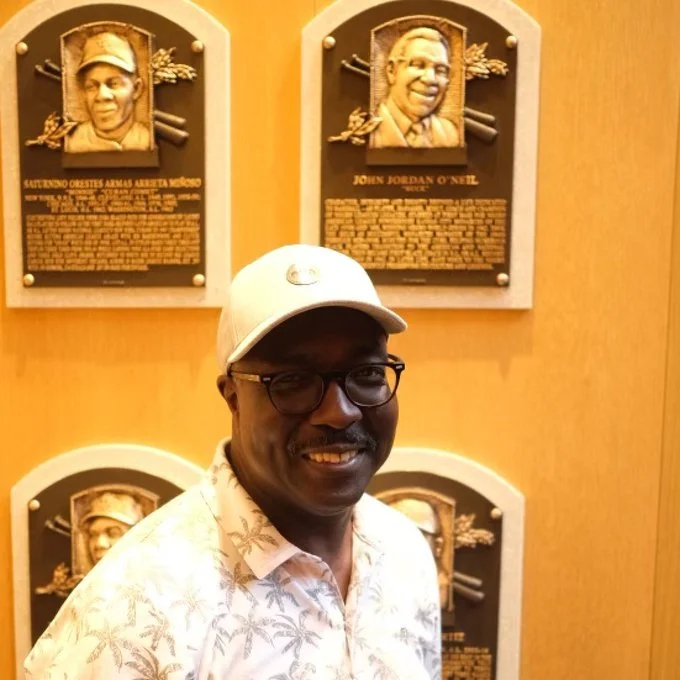
… And After
Looks much better this way, doesn’t it?
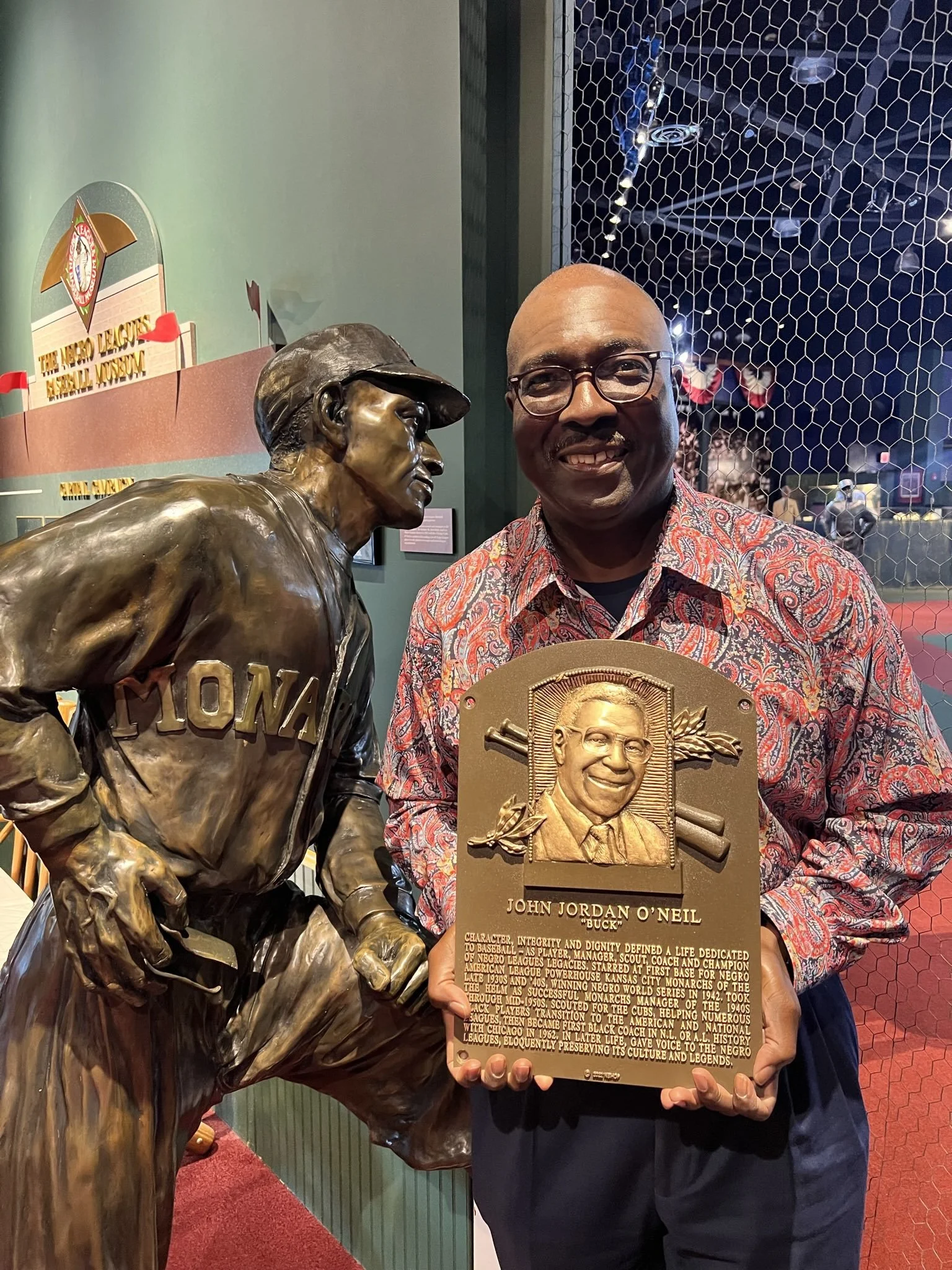
Buck’s Hall of Fame Speech
After Buck was posthumously inducted into the Hall of Fame and Bob was able to look back what he thought was Buck’s “concession speech” in 2006 from a different perspective, he realized that wasn’t a concession speech at all. That was Buck’s Hall of Fame speech.
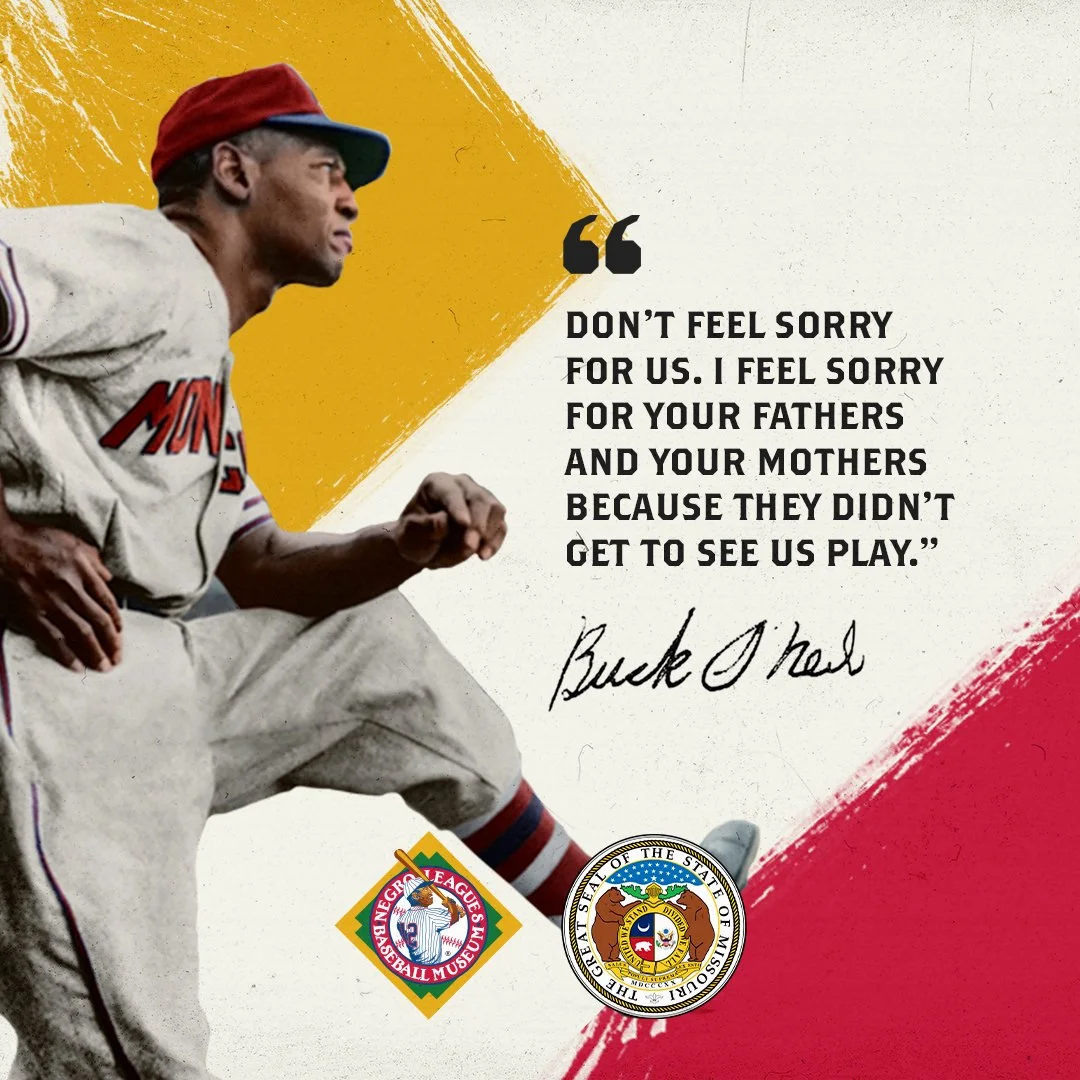
Always Teaching
Re-framing Buck’s “concession speech” in that positive way allowed Bob to let go of the anger he had been holding onto for 16 years, and taught him a valuable lesson. One which Buck had been trying to teach all along.
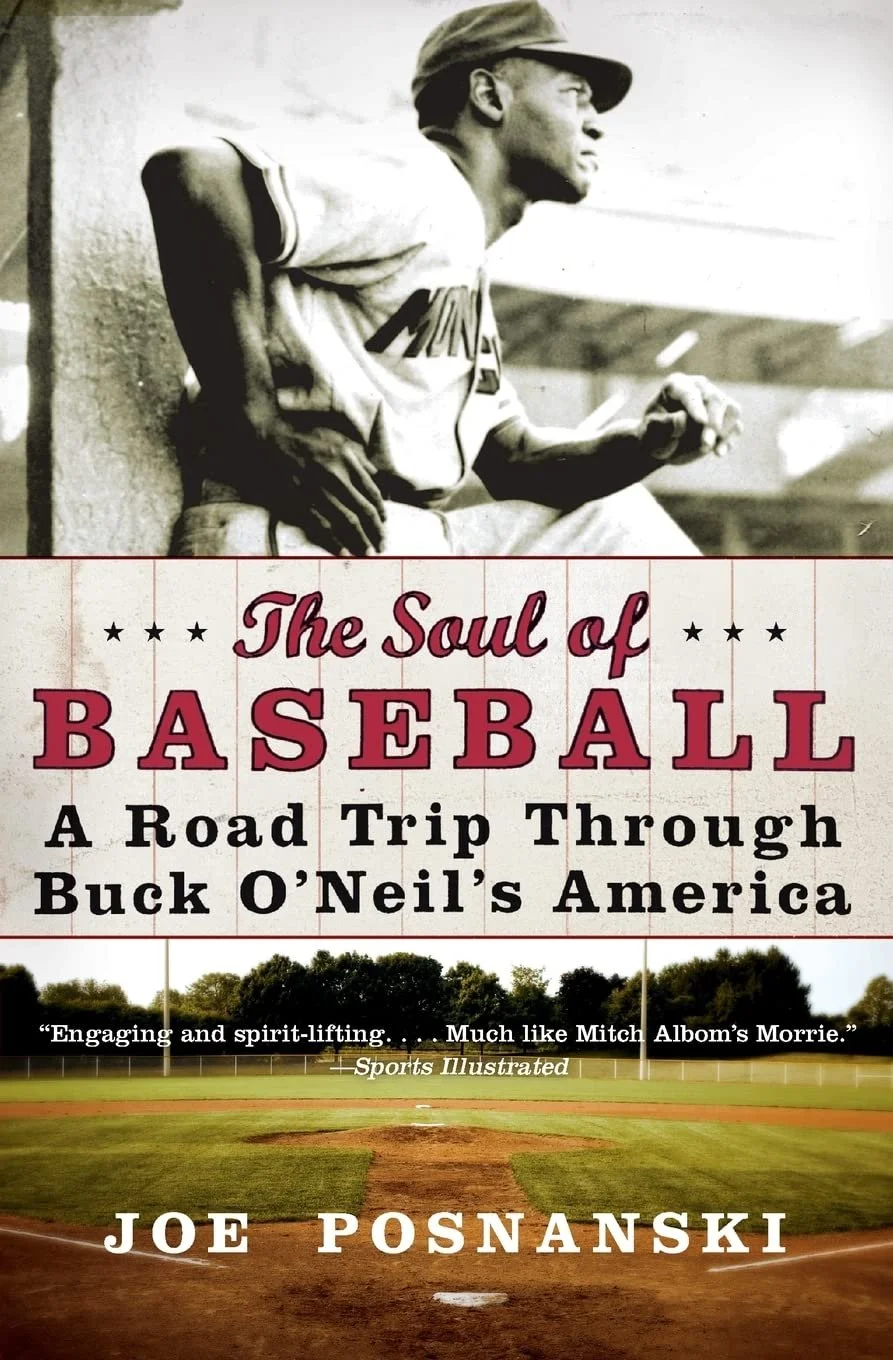
The Soul of Baseball
There were people writing about the hurt, the pain, and the bittersweet nature of the Negro Leagues, but Buck O’Neil told sports columnist Joe Posnanski that someone should be writing about the joy of the Negro Leagues, and how much fun they had.
When Buck asked Joe how he fell in love with baseball, that simple question eventually led the pair on a cross-country quest to recapture the love that first drew them to the game. At its heart is the story of 94-year-old Buck O’Neil — a man who truly played for the love of the game.
Posnanski’s book The Soul of Baseball: A Road Trip Through Buck O’Neil’s America – An Emotional Quest with the Beloved Negro League Champion and the First African-American Coach is an endearing step back in time to the days when the crack of a bat and the smokey notes of a midnight jam session were the sounds that brought the most joy to a man’s heart.
Buy The Soul of Baseball HERE.
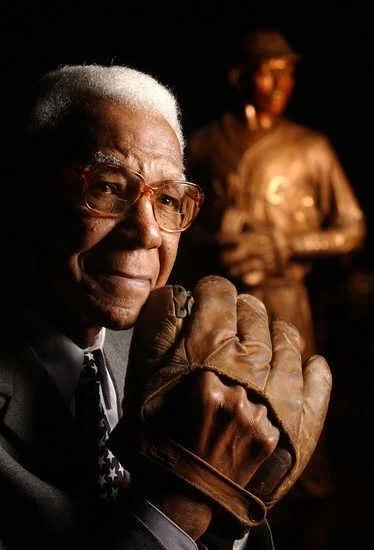
A Remarkable Lack of Bitterness
Joe Posnanski describes Buck as having a "remarkable lack of bitterness."
Buck once said, "In Havana (Cuba), I was a baseball player. When I got back here [to America], I was a Black baseball player."
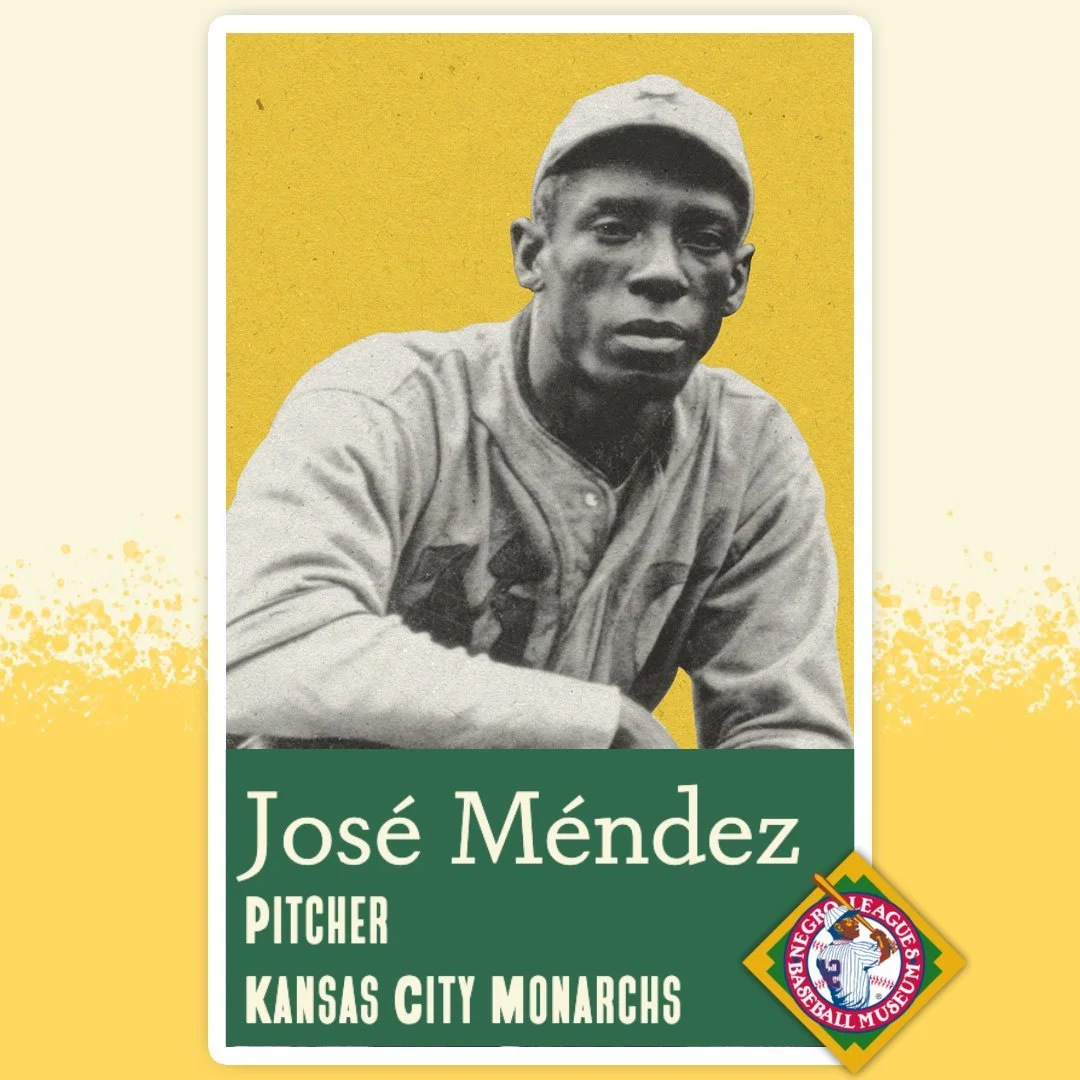
José Méndez
Cubans with darker skin were not allowed to play in the white major leagues. So many of them called the Negro Leagues home, like José Méndez, who was a bona fide star in Cuba, and came over to become player/manager for the Kansas City Monarchs.
Méndez was one of the players inducted into the Hall of Fame’s Class of 2006, while Buck was left on the outside, looking in.
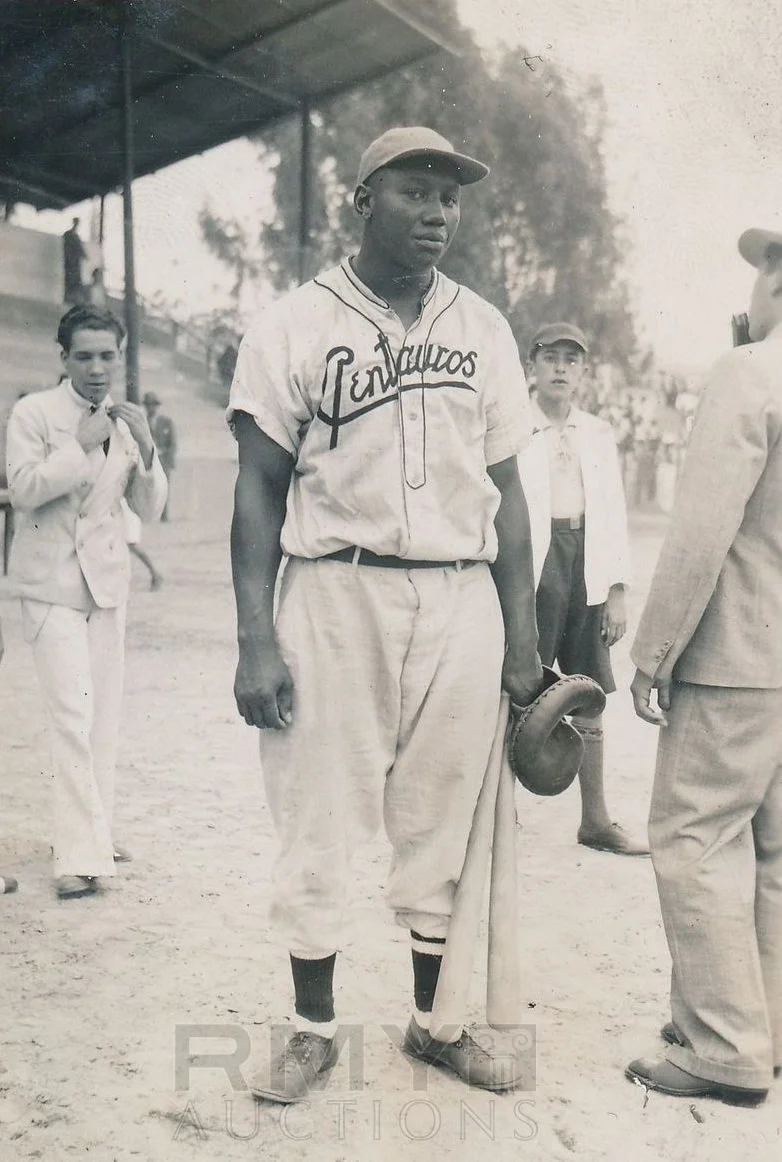
Multiple Teams, Multiple Countries
When you think of Babe Ruth, you think of the New York Yankees. When you think of Ty Cobb, you think of the Detroit Tigers. When you think of Ted Williams, you think of the Boston Red Sox.
But even the great Negro League players, or, maybe I should say, ESPECIALLY the great Negro League players, don't have that longevity with one team because they would be offered bigger pay days from another team, possibly in another country.
Here, Josh Gibson is photographed as a member of the Maracaibo Centauros of Venezuela in 1940. Gibson not only batted .480 while playing with the Centauros, but he’s said to have belted a home run that was estimated to have travelled 600 feet.
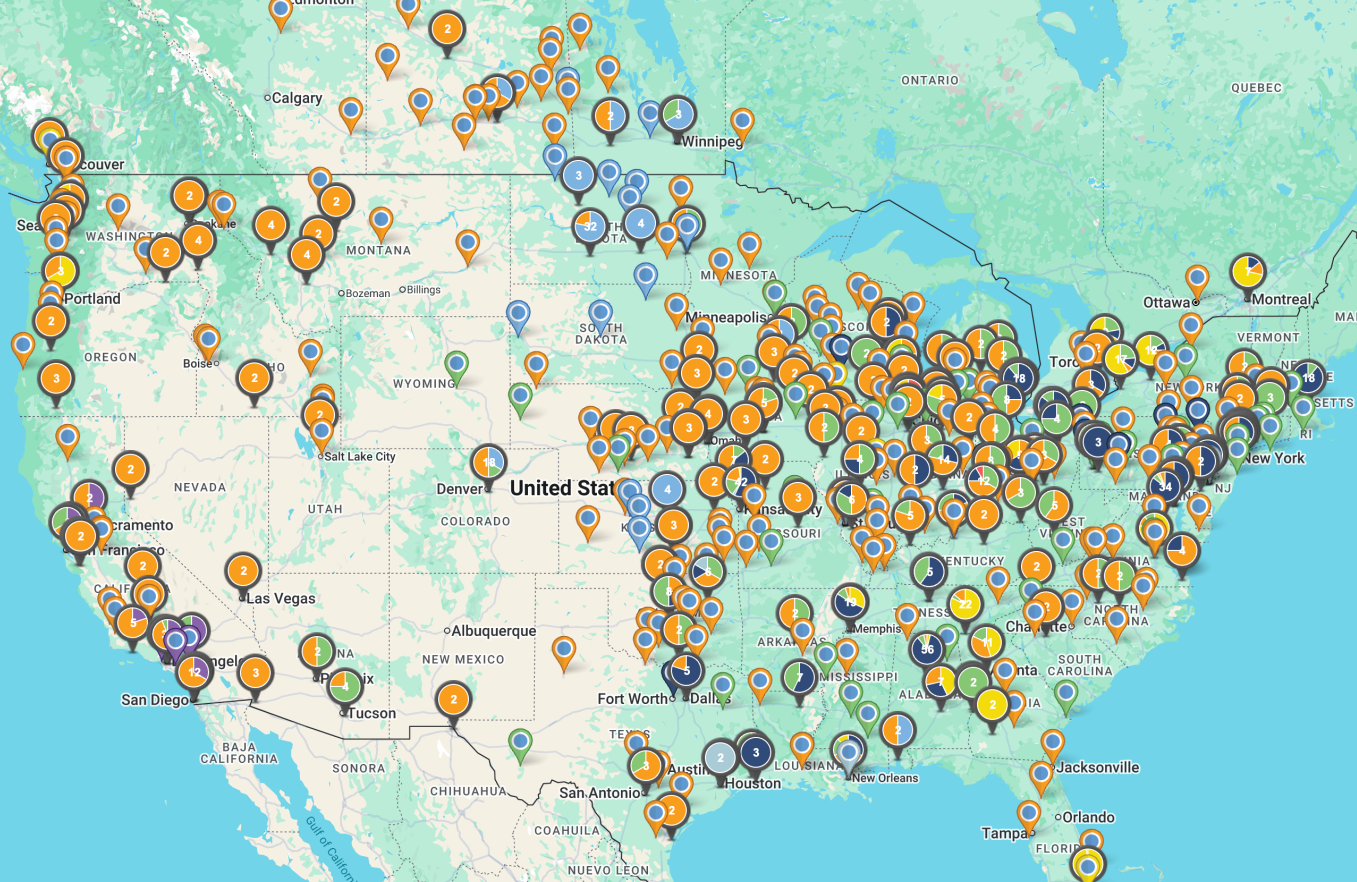
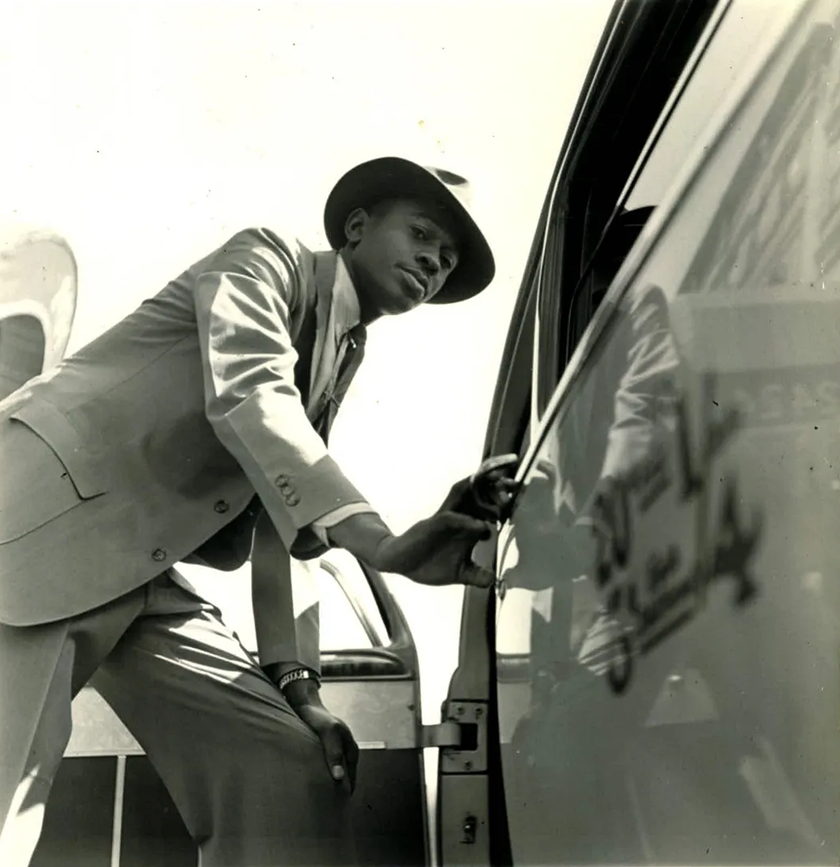
Always On The Move
From 1926 through 1977, from age 19 in Chattanooga, Tennessee, to old timers games in his late 60s, Satchel Paige pitched everywhere and forever.
He played for well over one hundred different teams in the more than 1,900 games that Mark has documented at this point.
And yes, maybe that helped more people learn about him because he was playing all over and in every town in the country, but that also meant that there wasn't a singular fan base who connected with him and could call him their own in the way that Yankees fans could with Lou Gehrig.
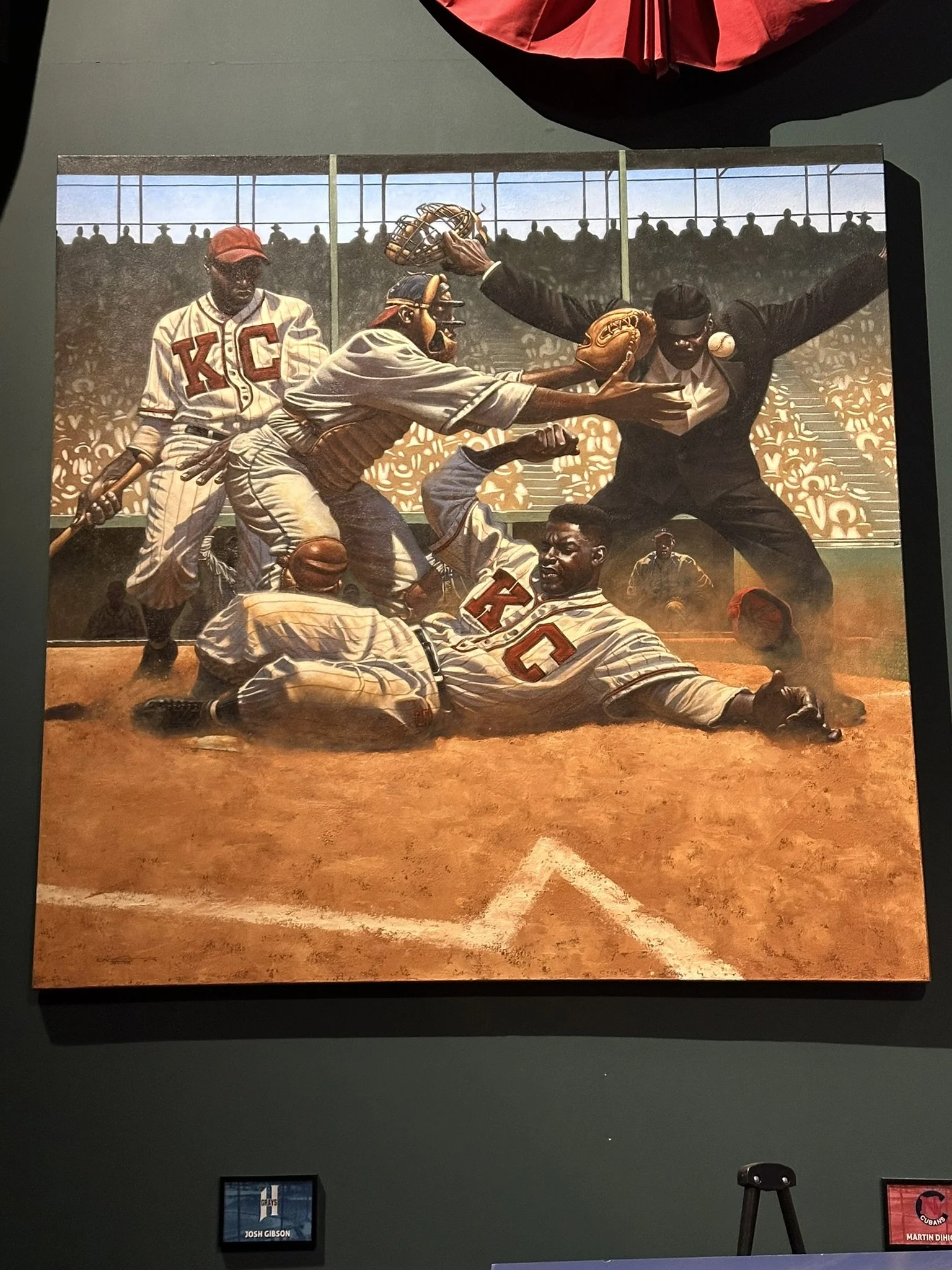
Larger Than Life
I’ve always wondered if one of the reasons some of these players and stories weren't accepted or are dismissed by naysayers is because they just sound so fantastical that people assumed they weren't true.
Everyone thought Babe Ruth was the greatest hitter who ever lived, and he finished with 714 home runs. But Josh Gibson is supposed to have hit well over 800, with some estimates putting the number closer to 1,000 when you include exhibition games and semi-pro competitions?
Cool Papa Bell got into bed before the light went out.
Satchel Paige calling his fielders in after intentionally walking the bases full, and then striking out the other team’s best hitter on three pitches to get out of the jam he purposely created for himself.
Those things all happened, but when you hear about them for the first time, they sound unbelievable. As in, not believable.
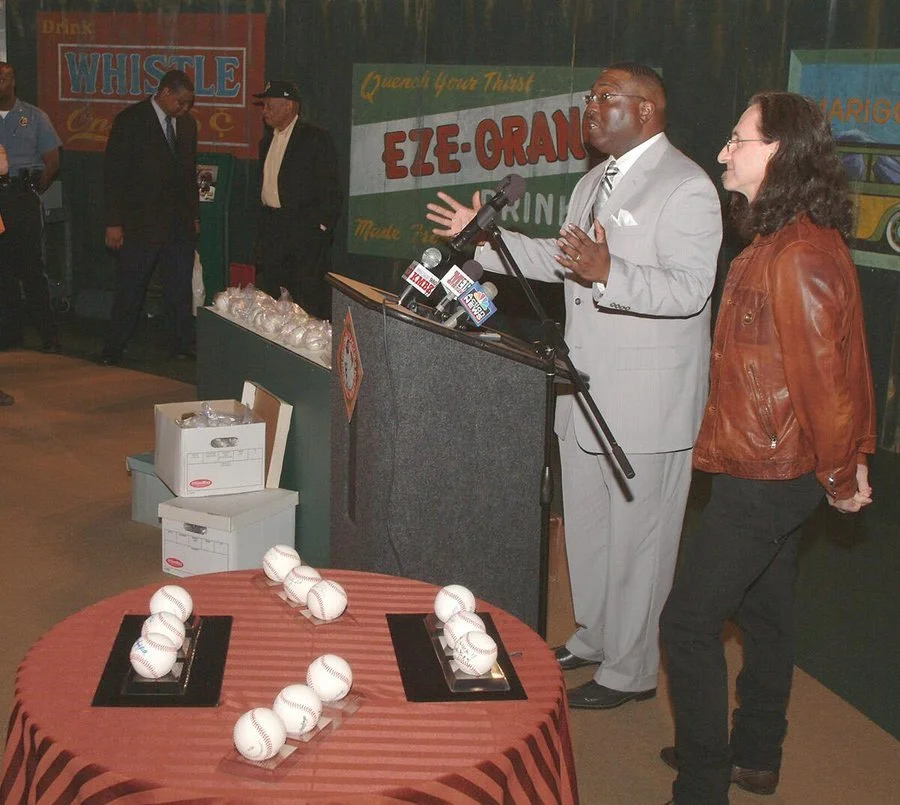
Geddy Lee
On June 6th, 2008, Geddy Lee of the rock band Rush donated 400 autographed baseballs to the museum which had been signed by African-American stars of the Negro Leagues.
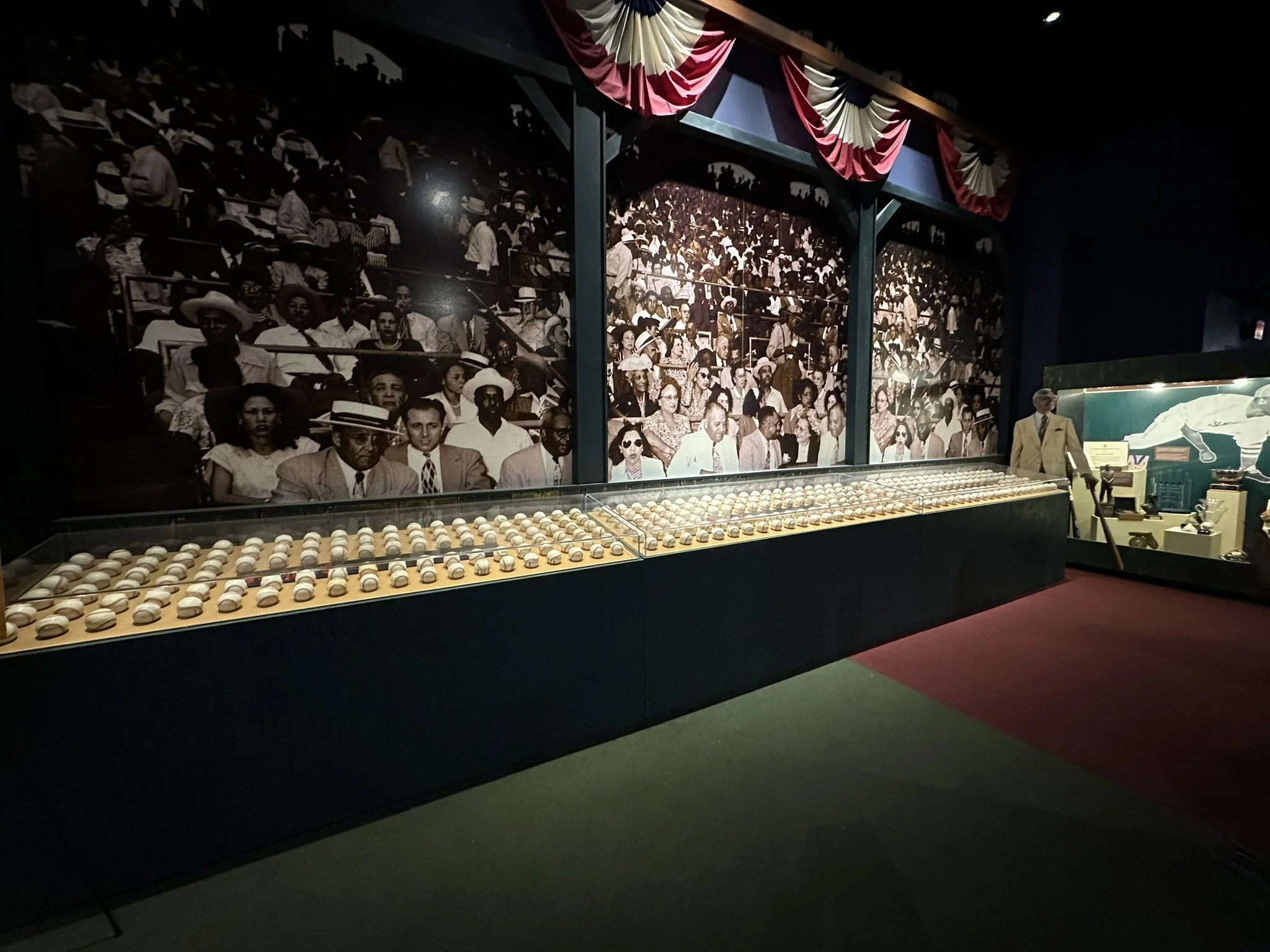
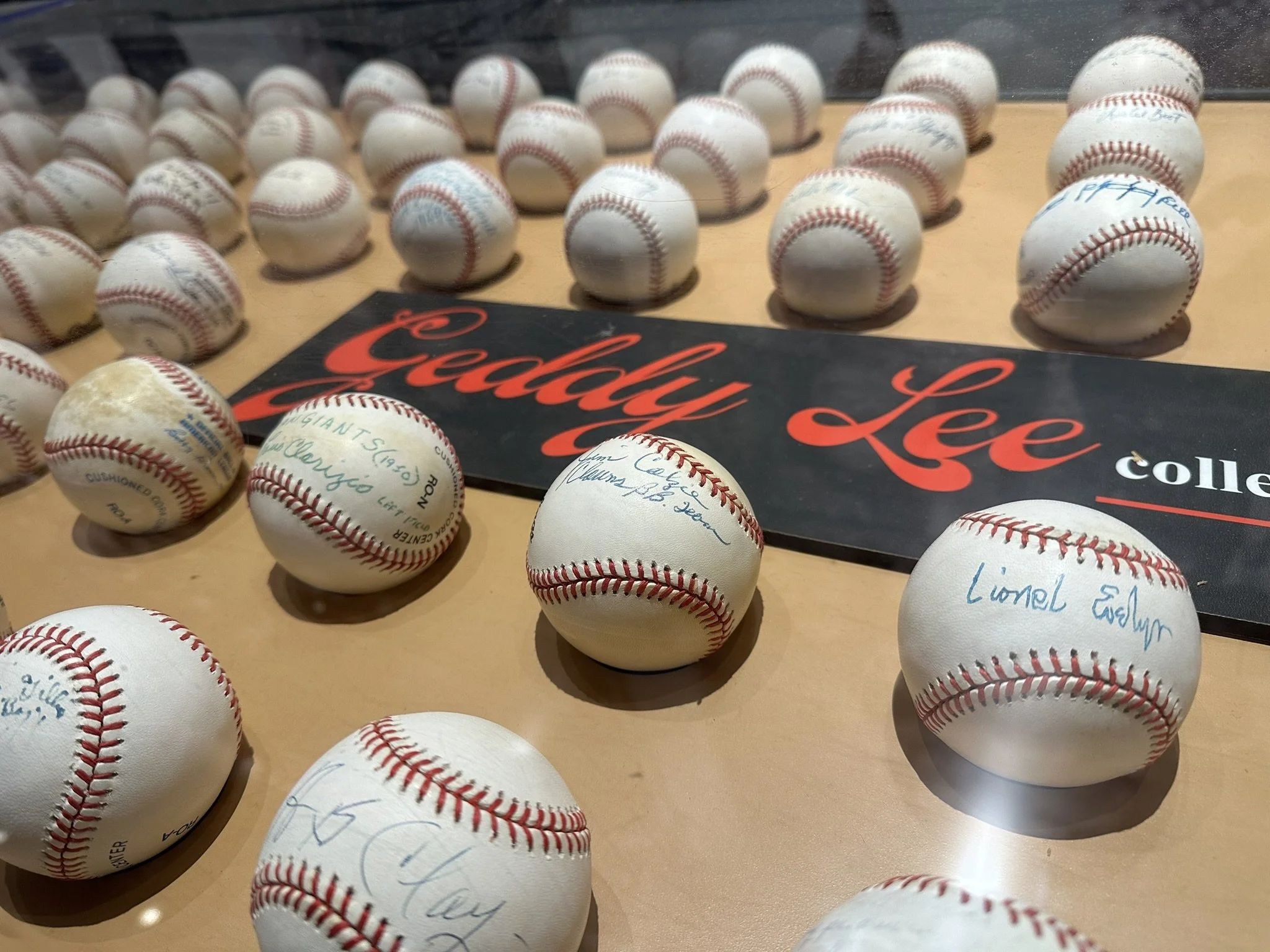
The Geddy Lee Collection
Bob said “I can’t say that I was a big Rush fan before… but I’m a Rush fan now!”
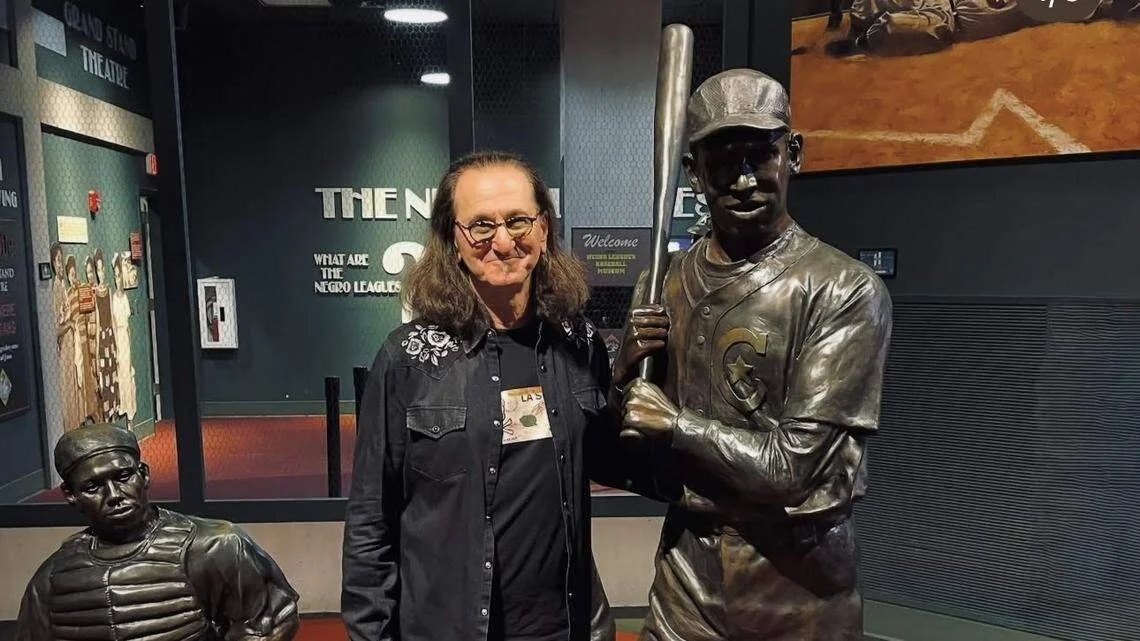
Geddy Lee with the Martín Dihigo and Josh Gibson statues on the Field of Legends at the NLBM.
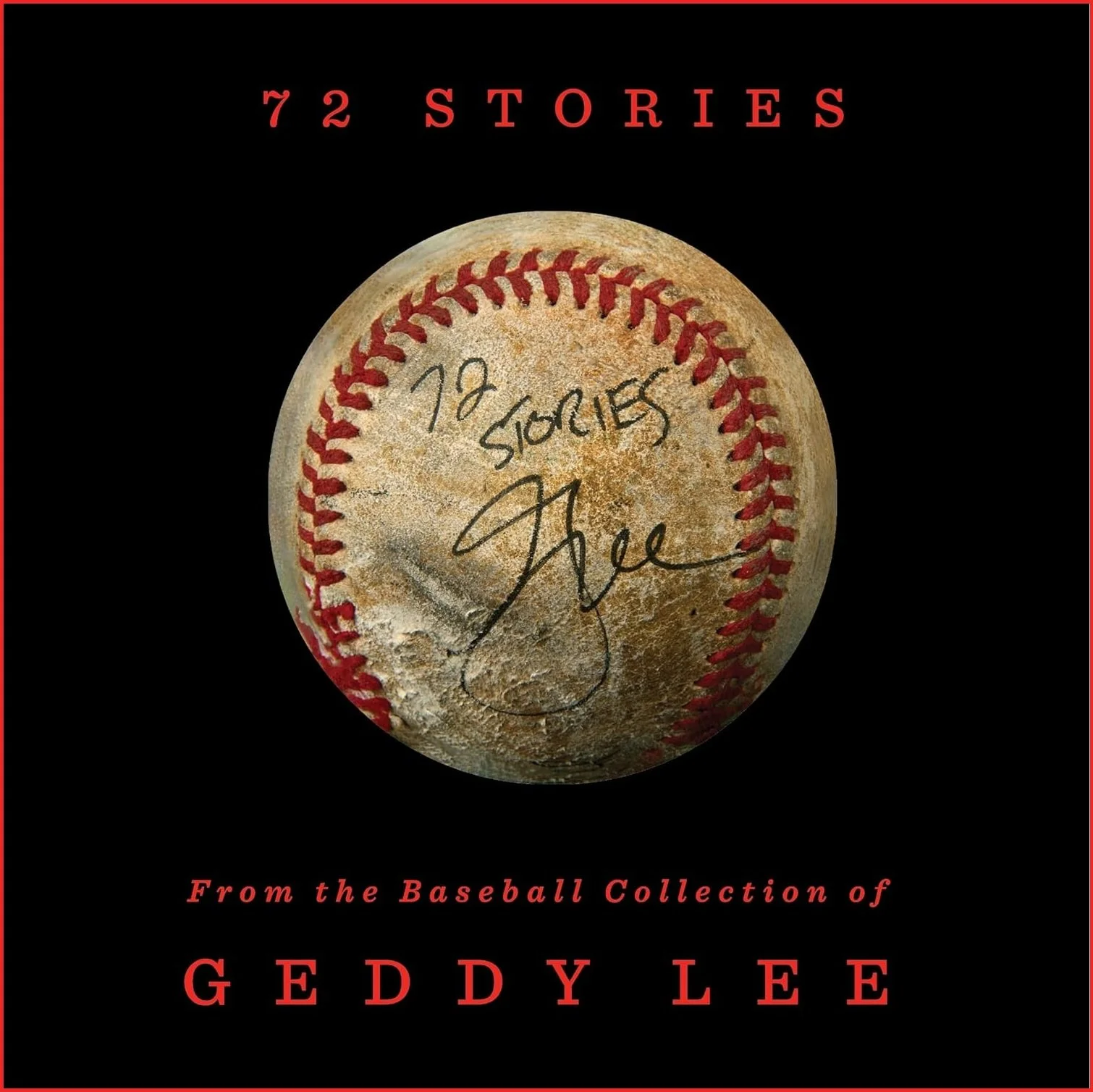
72 Stories: From the Baseball Collection of Geddy Lee
One of the greatest bass players of all time, Geddy Lee is also a self-proclaimed baseball geek who assembled a noted collection of baseballs signed by some of the game’s greatest players — selections from which he recently auctioned at Christie’s.
In 72 Stories: From the Baseball Collection of Geddy Lee, Geddy shares his love of the game and the stories behind some of his favorite baseballs and other items from his vast collection.
Buy 72 Stories HERE.
Make A Donation To The NLBM
The Negro Leagues Baseball Museum is a 501(c)3 nonprofit organization and all donations are tax-deductible.
Making a tax-deductible donation supports the Negro Leagues Baseball Museum exhibitions, annual events and educational programming.
If you have an artifact you would like to donate, or if you would like to make a monetary contribution, you can do that by clicking HERE.
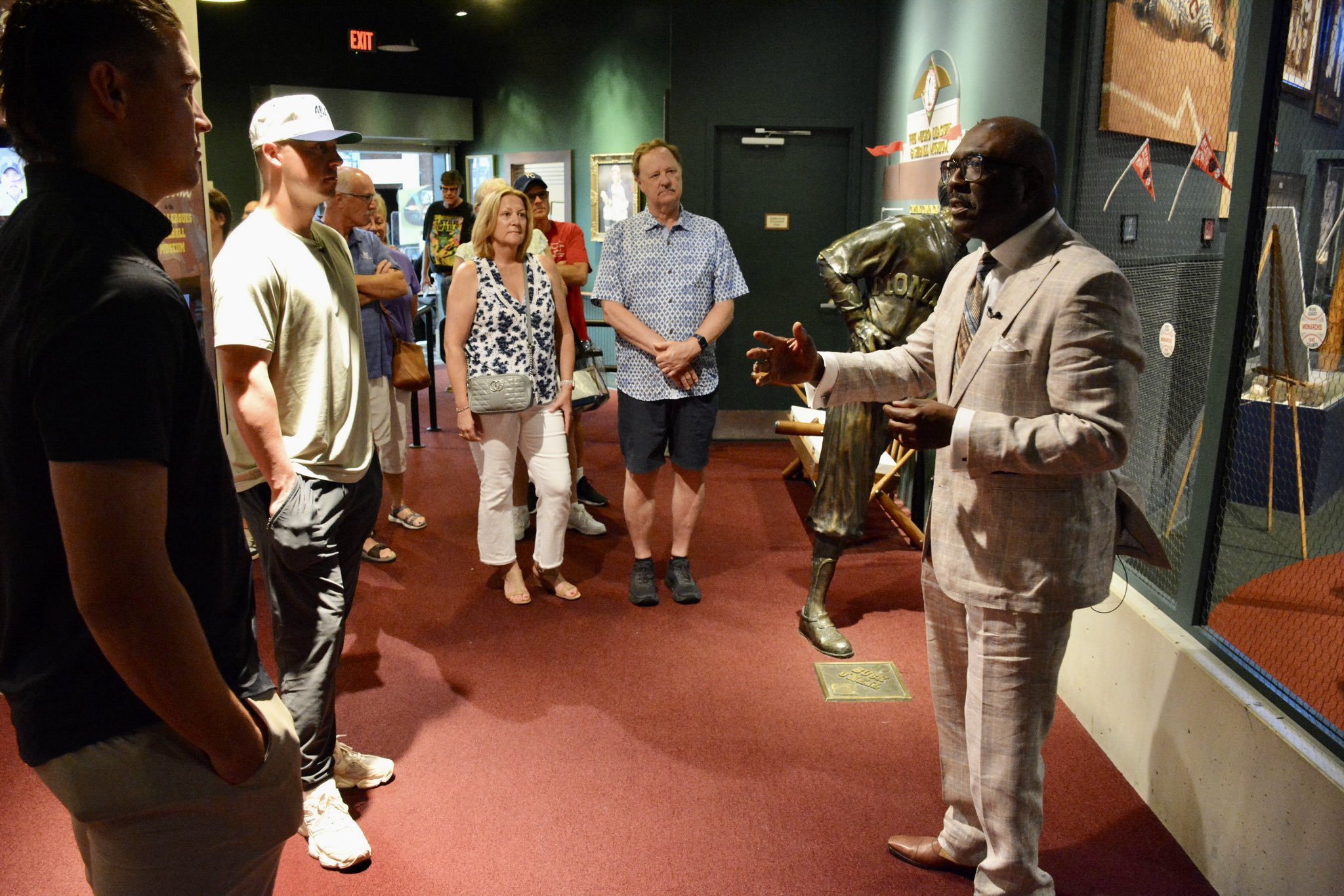
Everyone Is A Distinguished Guest
No matter how busy Bob’s schedule gets, he always makes time to come back to the museum so he can personally give tours and share his joy and knowledge with visitors.
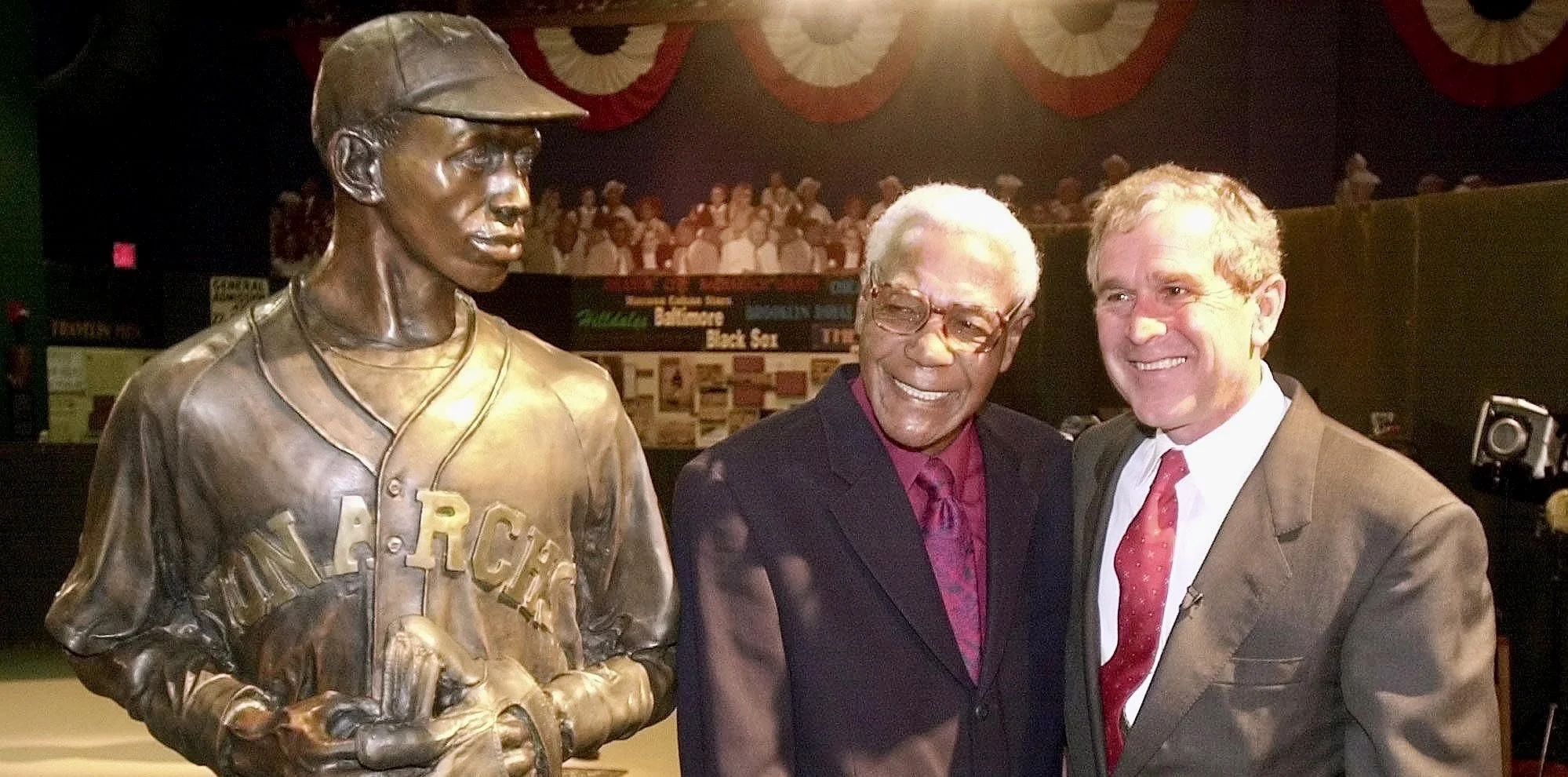
If Buck Could Do It…
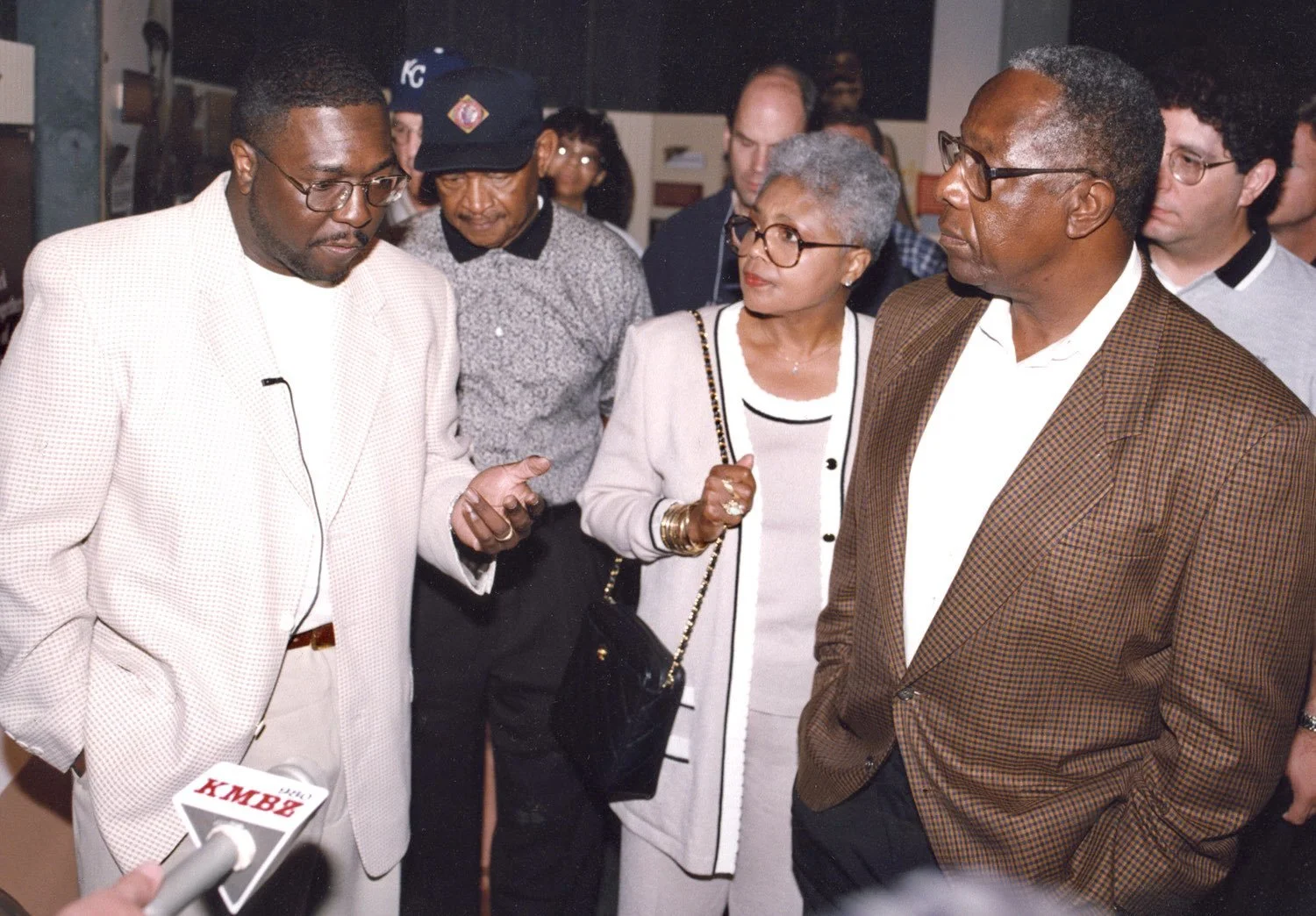
… Bob Can Do It, Too!
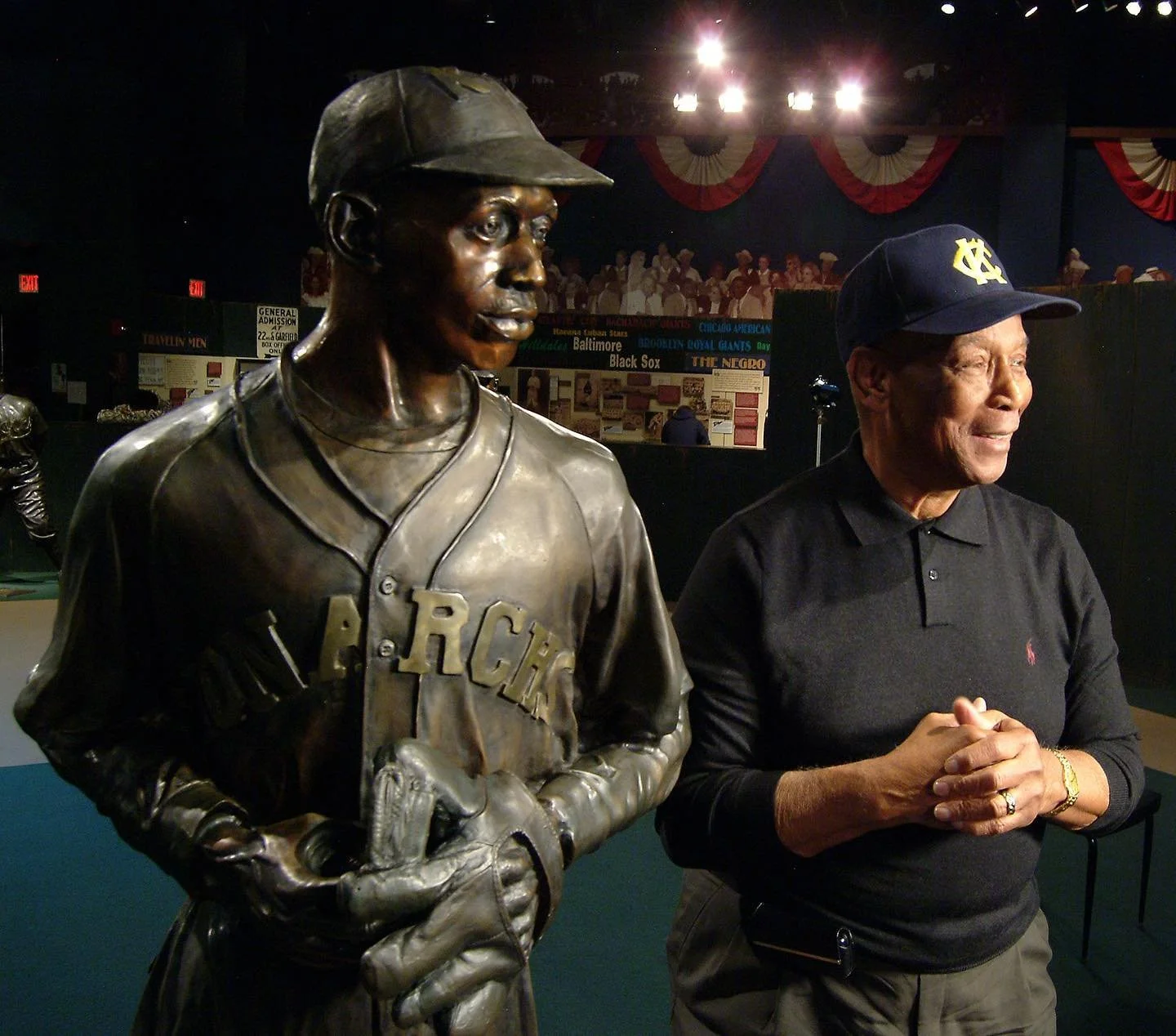
Ernie Banks
“Mr. Cub” with the Satchel Paige statue on the Field of Legends during one of Ernie Banks’ visits to the Negro Leagues Baseball Museum.
Plan Your Visit To The Negro Leagues Baseball Museum
1616 East 18th Street
Kansas City, MO 64108
Tuesday - Saturday, 10:00 am - 5:00 pm
Sunday, 12:00 pm - 5:00 pm
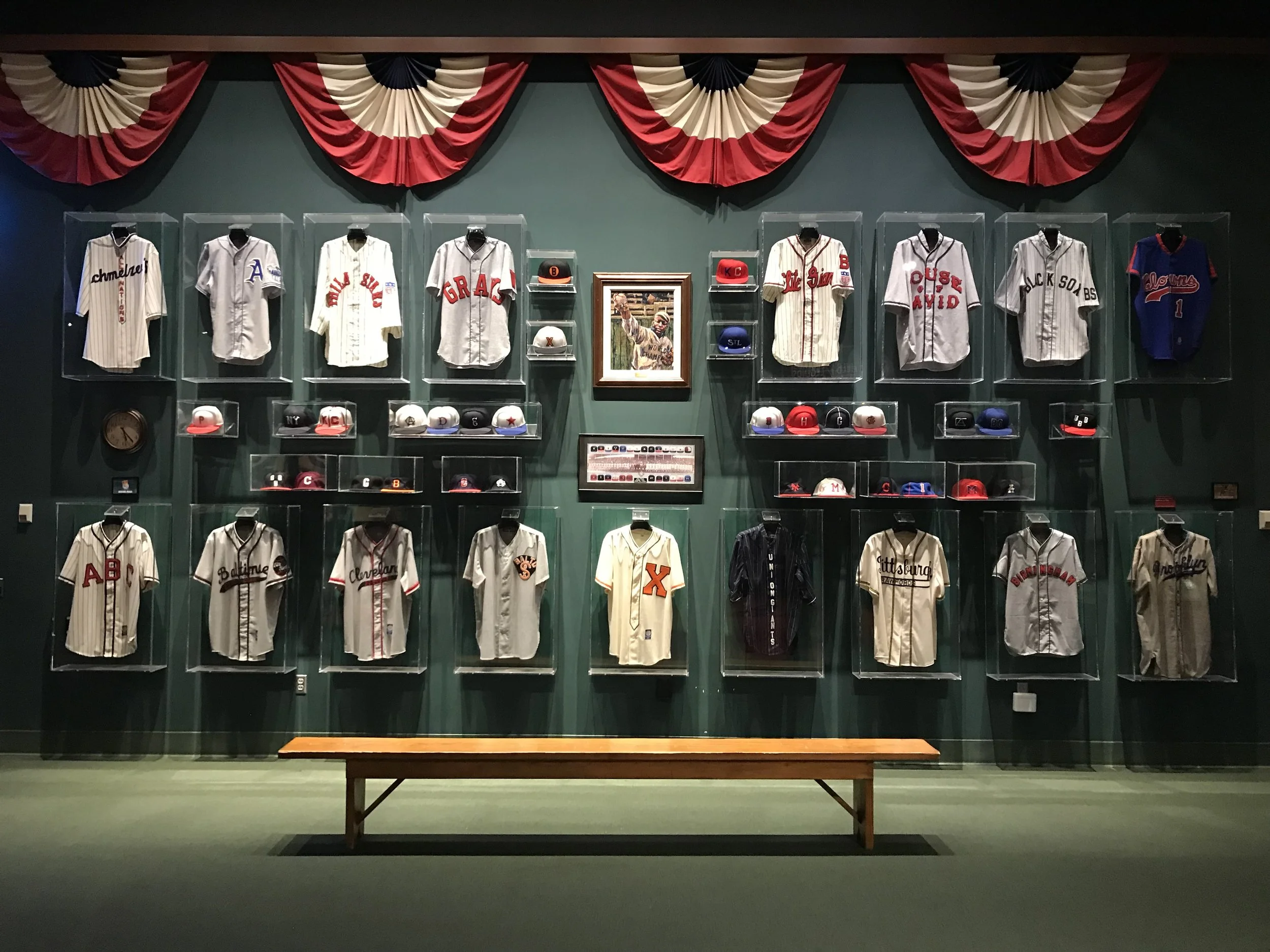
I took this photo at the NLBM during one of my first visits there.
Not Just A Baseball Museum
But a Civil Rights museum, told through the lens of baseball.
The Negro Leagues Baseball Museum is a place you should absolutely carve time out of your schedule to visit, if you are physically and financially able.
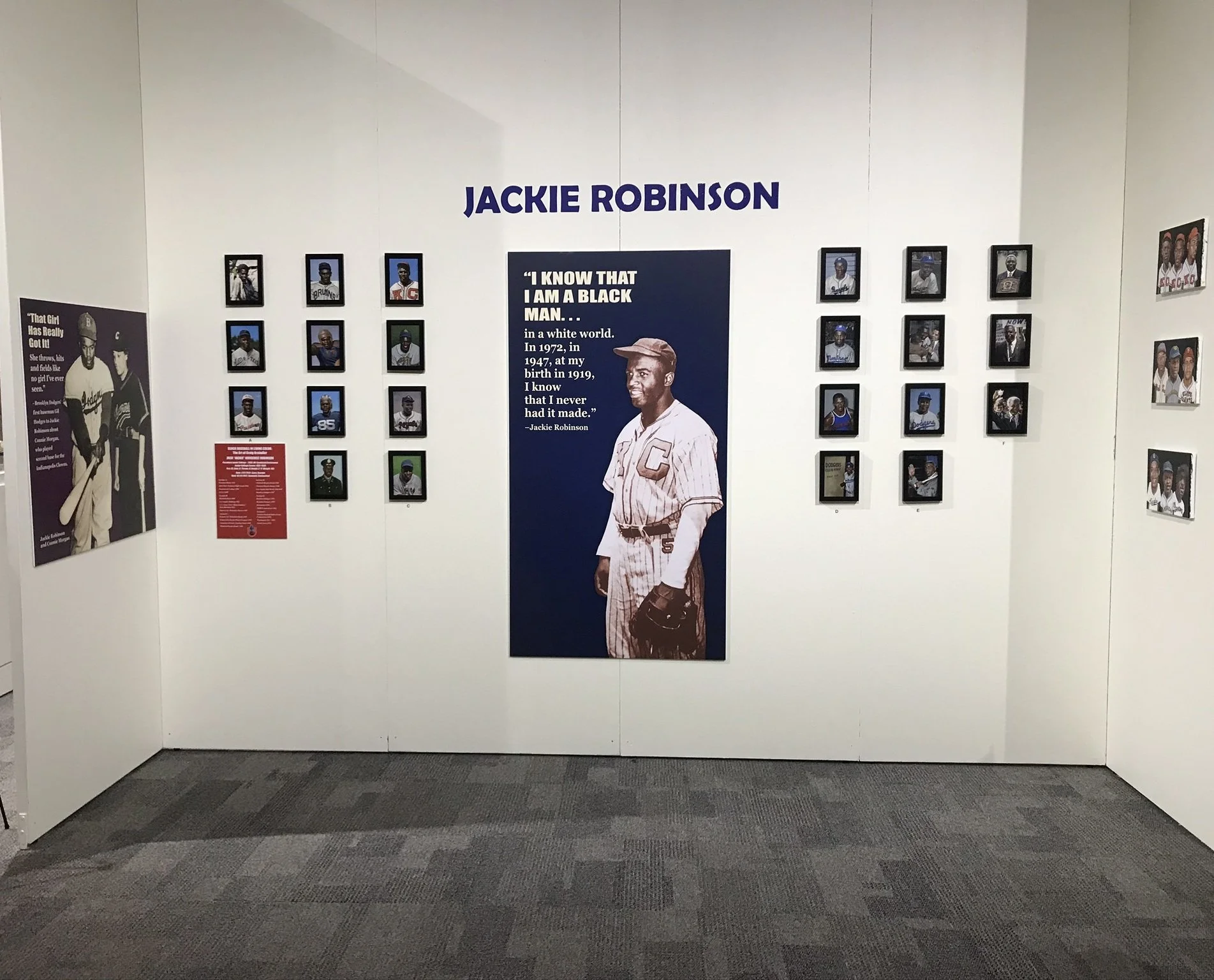
Graig Kreindler’s Art
Unfortunately, Graig’s exhibit “Black Baseball In Living Color” is no longer on display, but, to give you an idea of what it looked like when it was up, here is the section of Jackie Robinson portraits Graig painted for the show.
The combination of Graig’s work and the supplemental photo boards with quotes and captions and stories made it one of the most breathtaking and informative art exhibits I’ve ever seen in a museum.
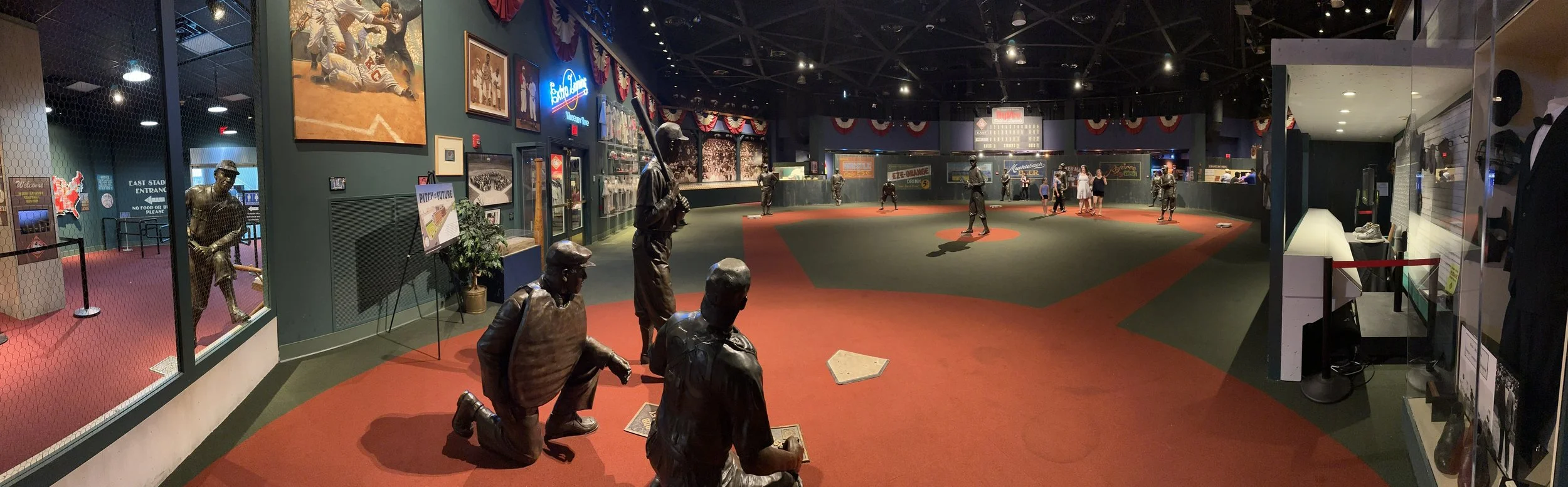
The Field of Legends at the Negro Leagues Baseball Museum
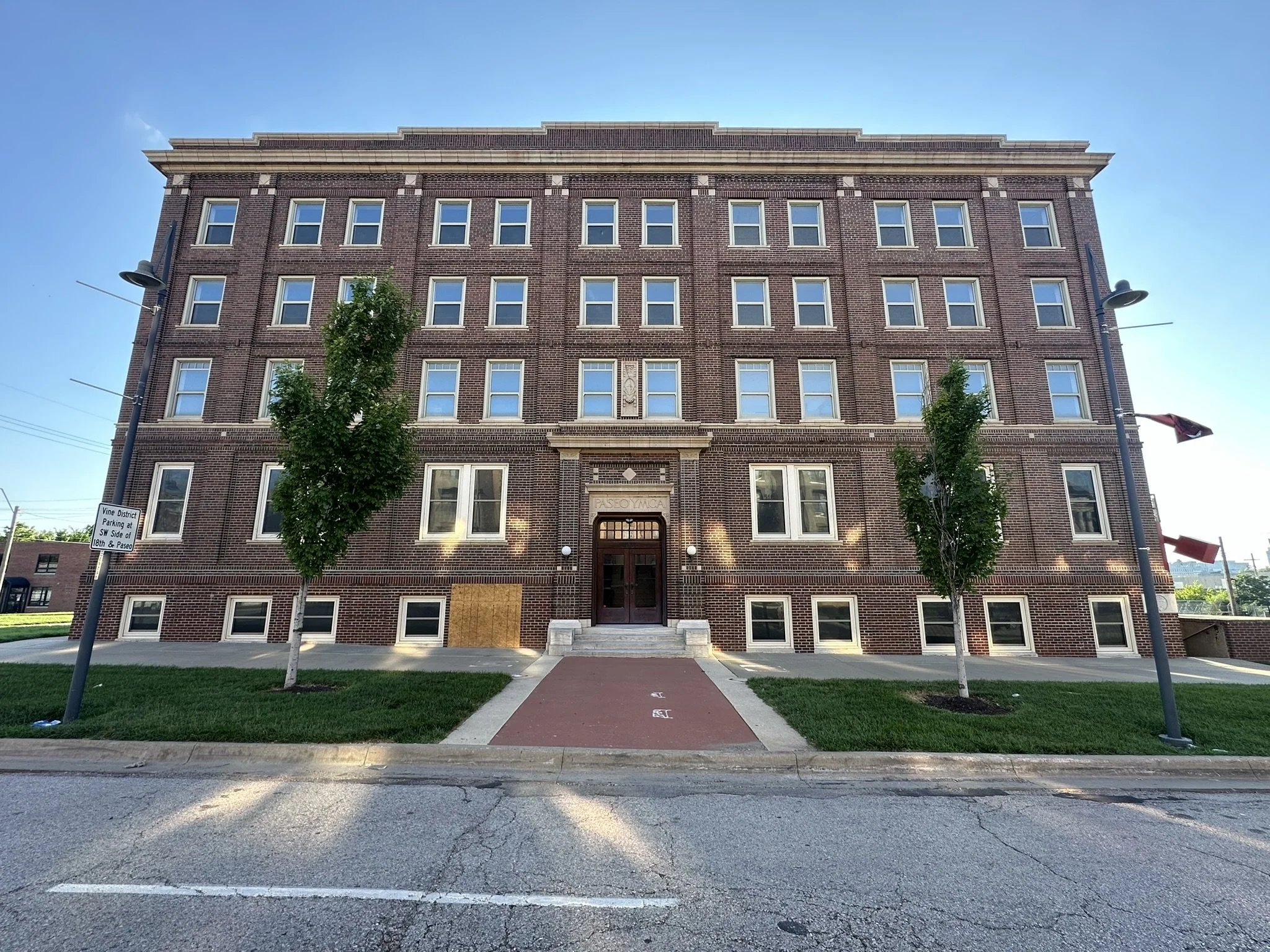
Paseo YMCA
The literal birthplace of the Negro Leagues, and the future home of the Negro Leagues Baseball Museum.
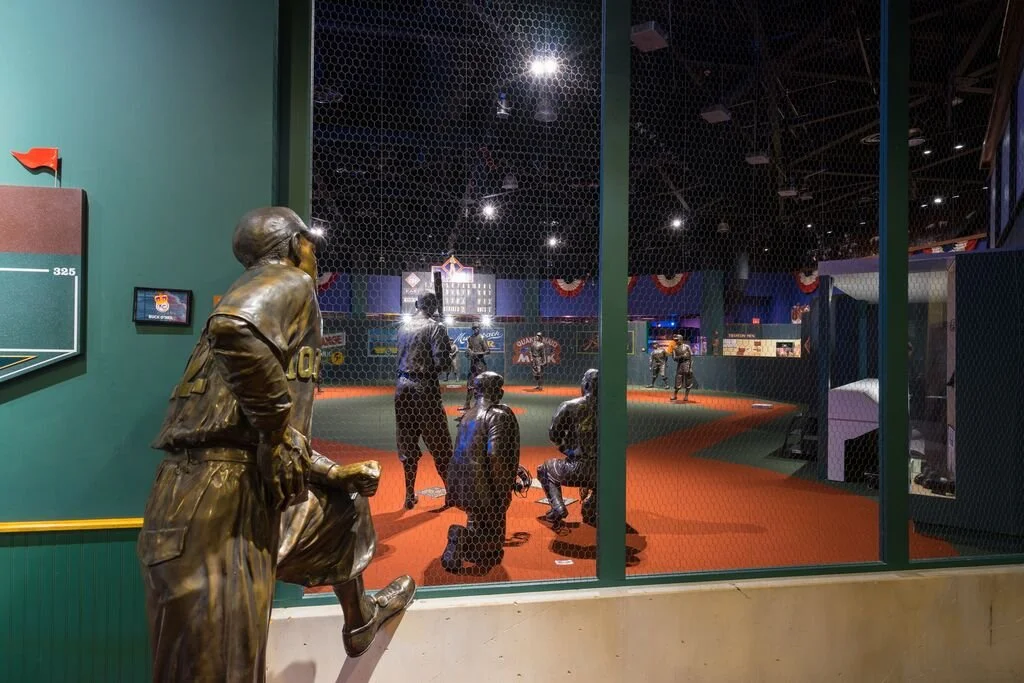
Sneak Peak
This is your view as you walk through the turnstiles of the museum. You can briefly view the statues on the Field of Legends through the chicken wire fence, but the only one you get a good, up-close look at is Buck O’Neil’s.
Then, you walk through the rest of the museum until the grand reveal at the end.
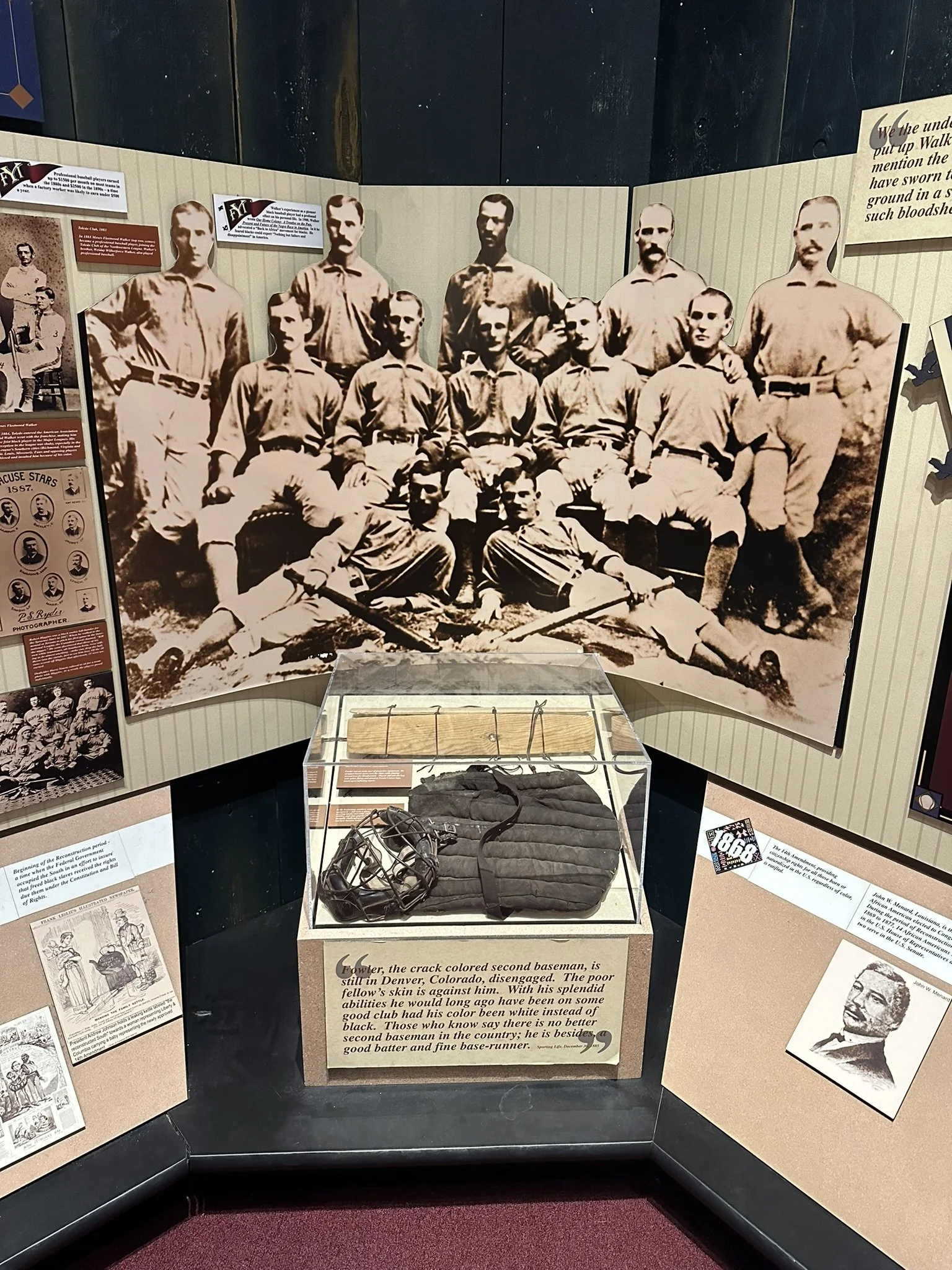
Timeline
The layout of the museum really puts into perspective just how discriminated against Black players, and Black people in general, have been in America through the years.
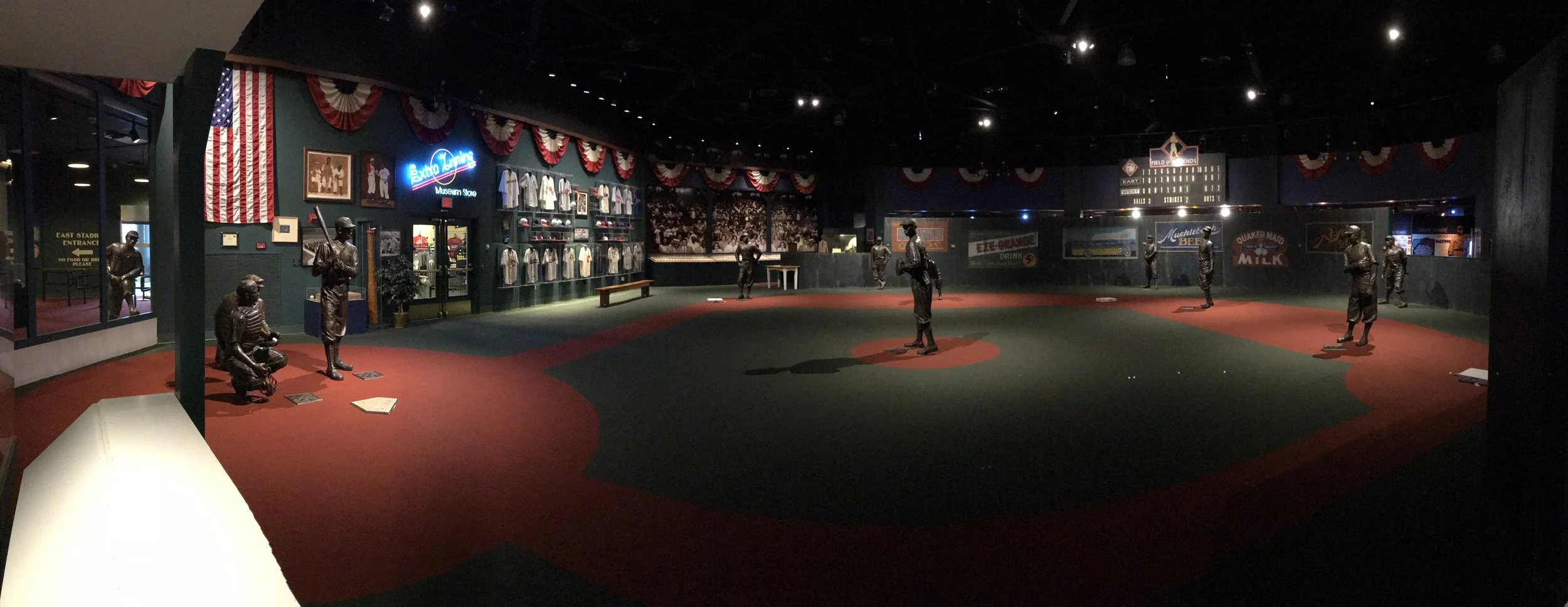
Being at the museum at a time when no one else was walking amongst the statues in the Field of Legends made for an unforgettable experience.
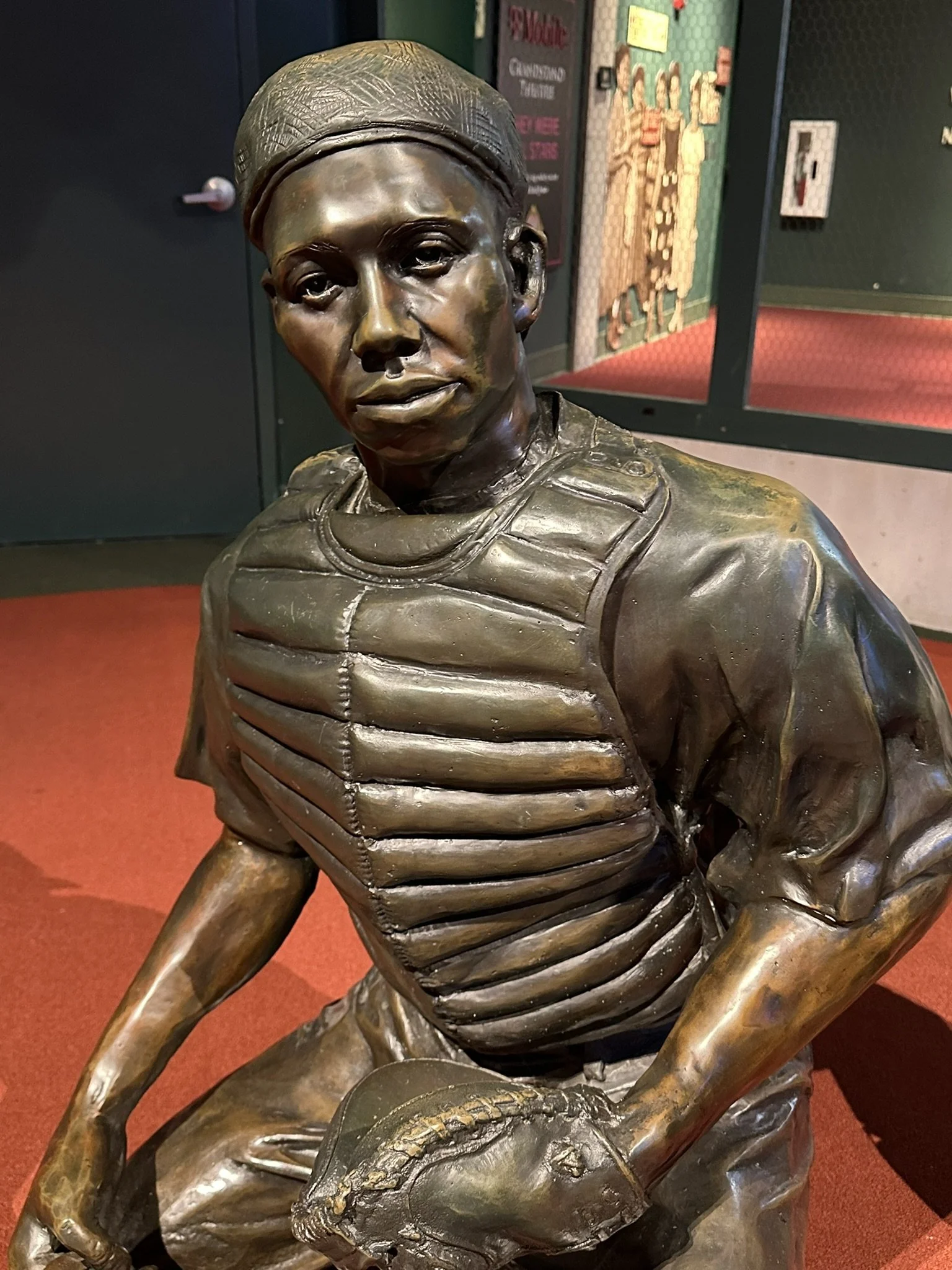
Josh Gibson
Standing in the outfield and looking in to home plate to see Josh Gibson is surreal.
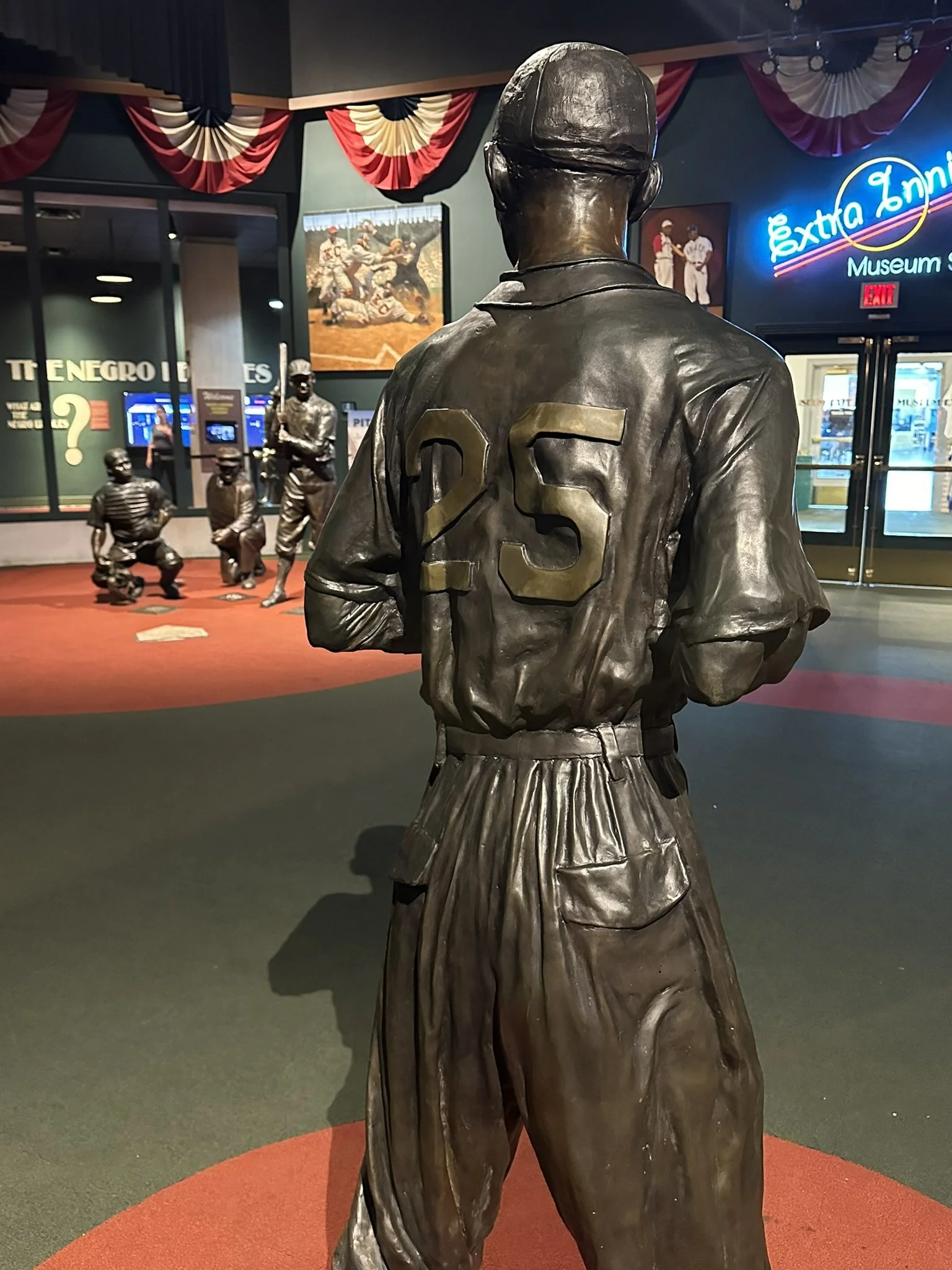
Satchel Paige
Standing at the rubber, or even slightly behind the mound, to see Satchel Paige’s perspective and be next to his statue gives you goosebumps…
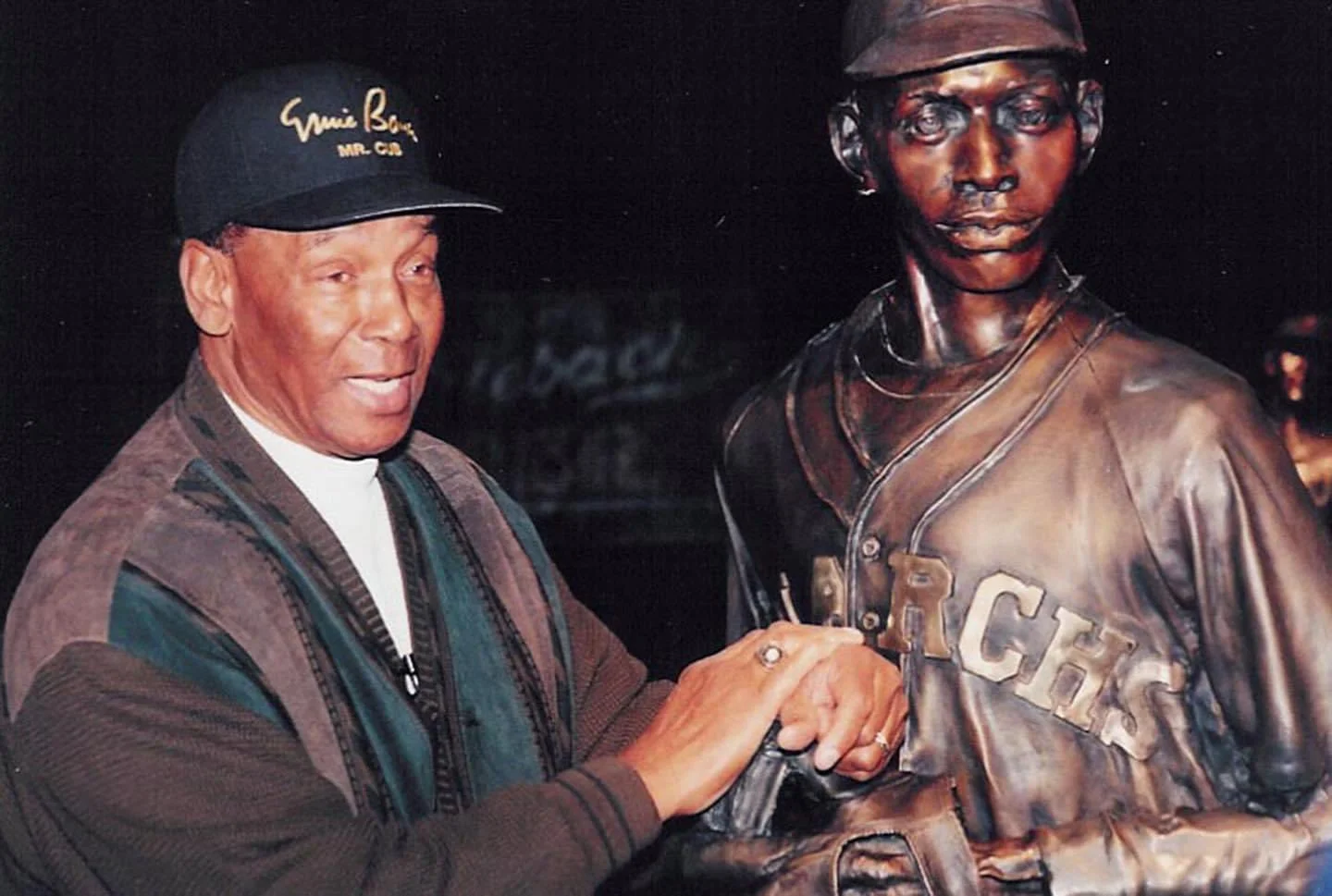
… especially when you consider how many other incredible people have stood in that exact same spot.
Also, I promise you, this is a different picture of Ernie Banks from an entirely different visit with Satchel’s statue. He’s wearing different hats in the two photos, and he is definitely younger in this one. But that just goes to show you how powerful these statues are. Even Ernie Banks always made it a point to go see and go touch Satchel when he would visit the NLBM.
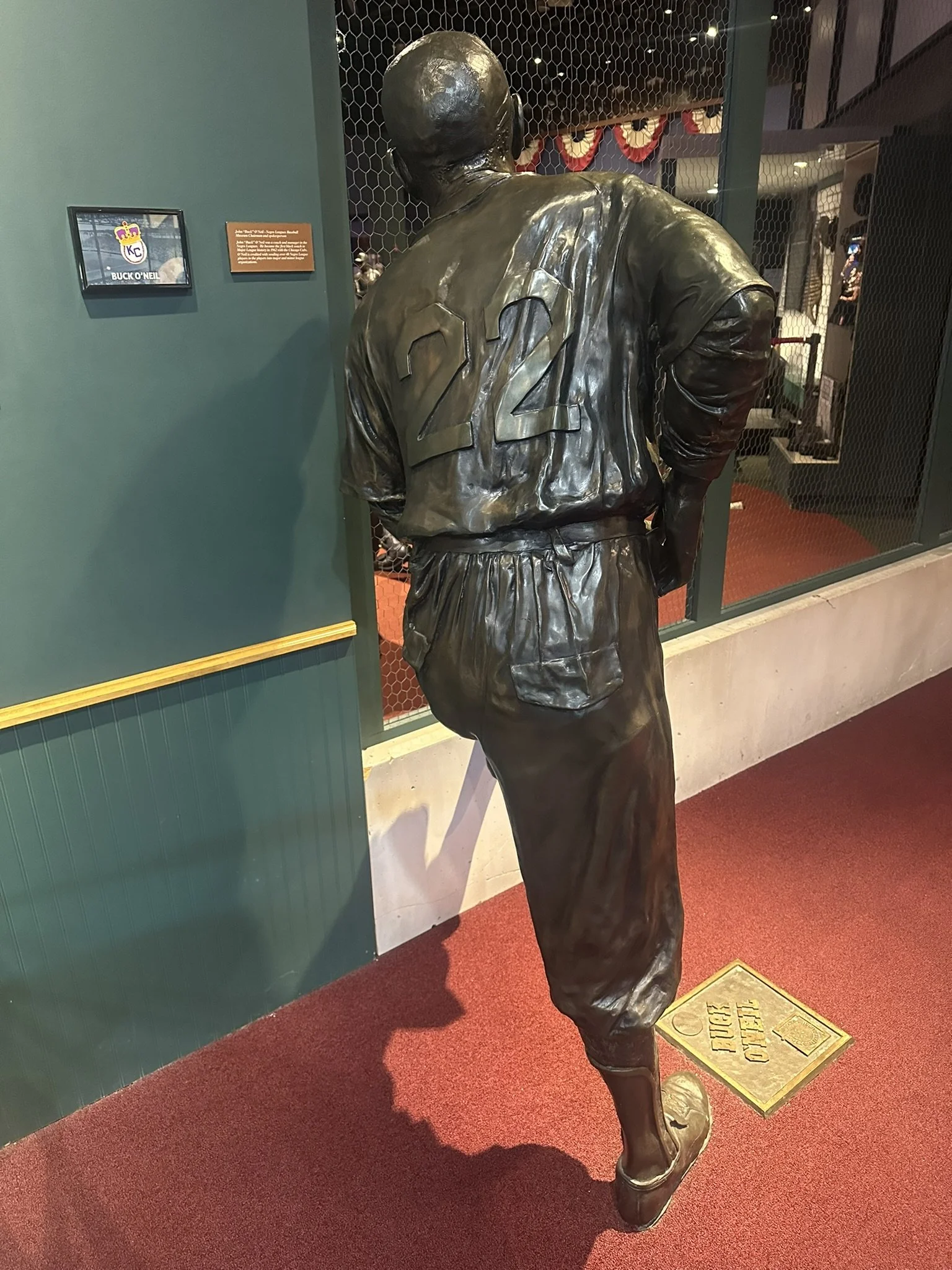
Buck O’Neil
The placement of this statue is, thankfully, less poignant today than it was before 2022, with Buck on the outside, looking in. But the symbolism is still incredibly strong.
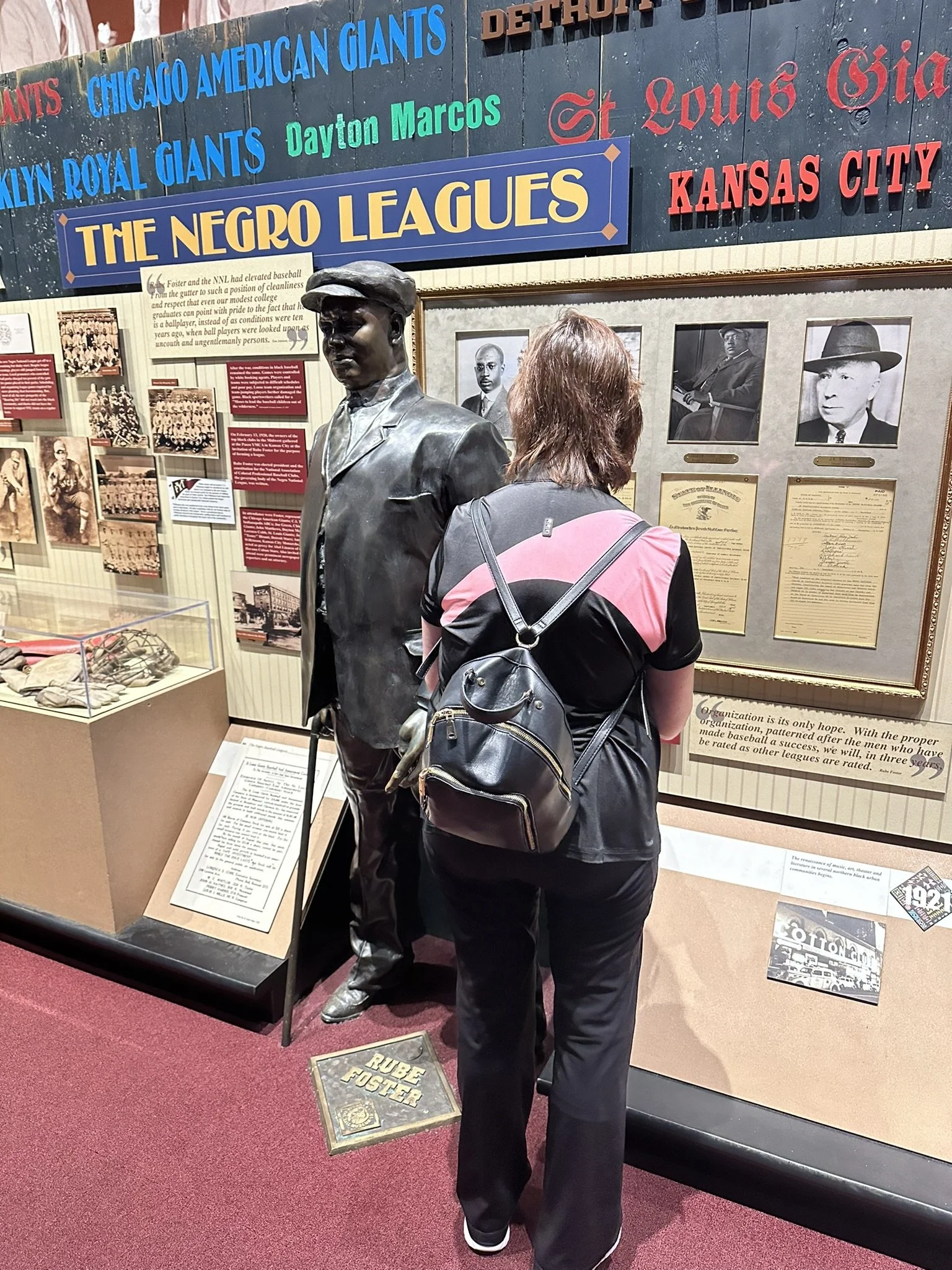
Rube Foster
Standing next to a life-size statue of somebody is impactful.
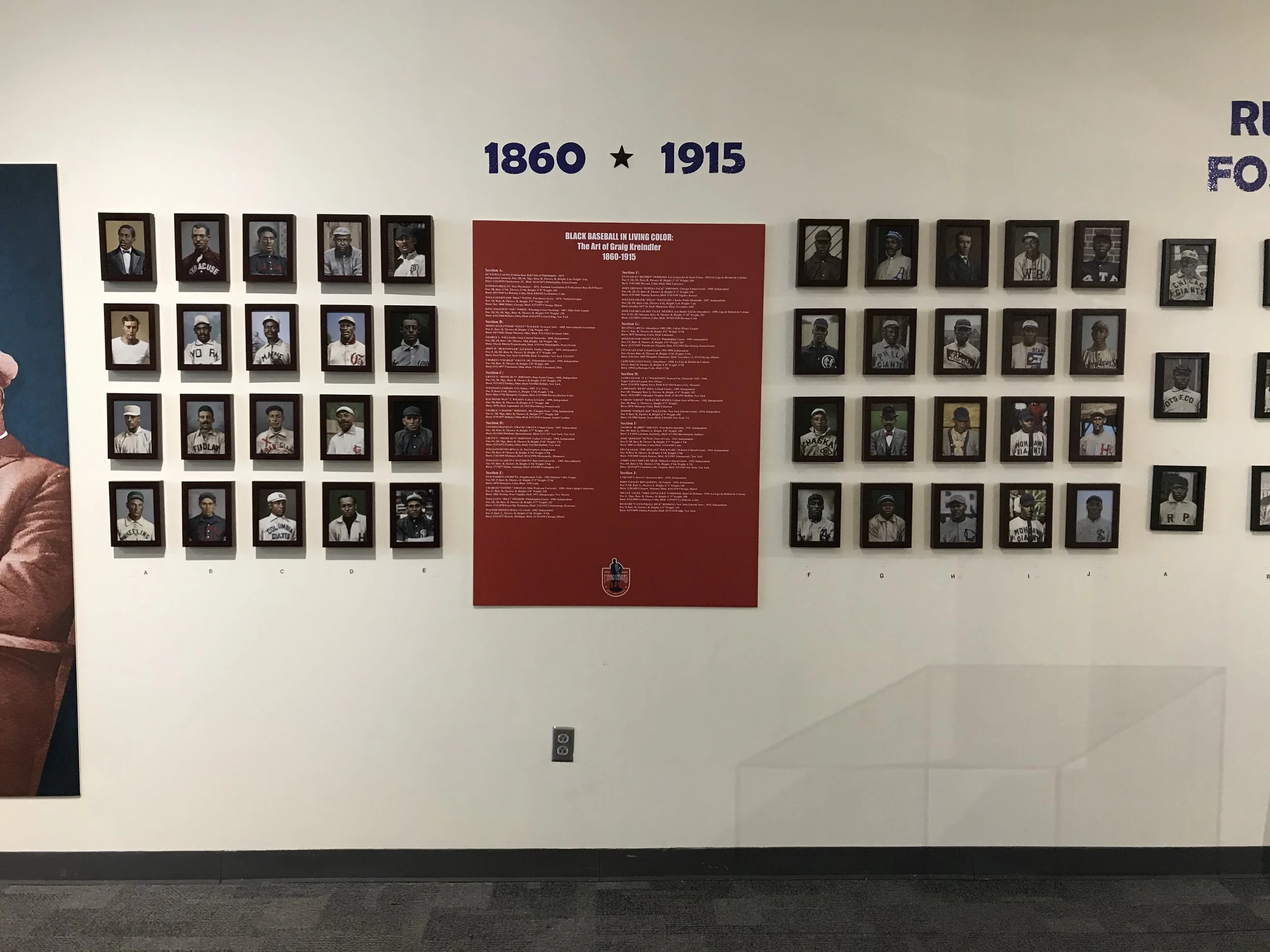
Graig ended up painting a total of 239 portraits for this exhibit, an exercise which took him three years. To see them all in one place is something I will never forget.
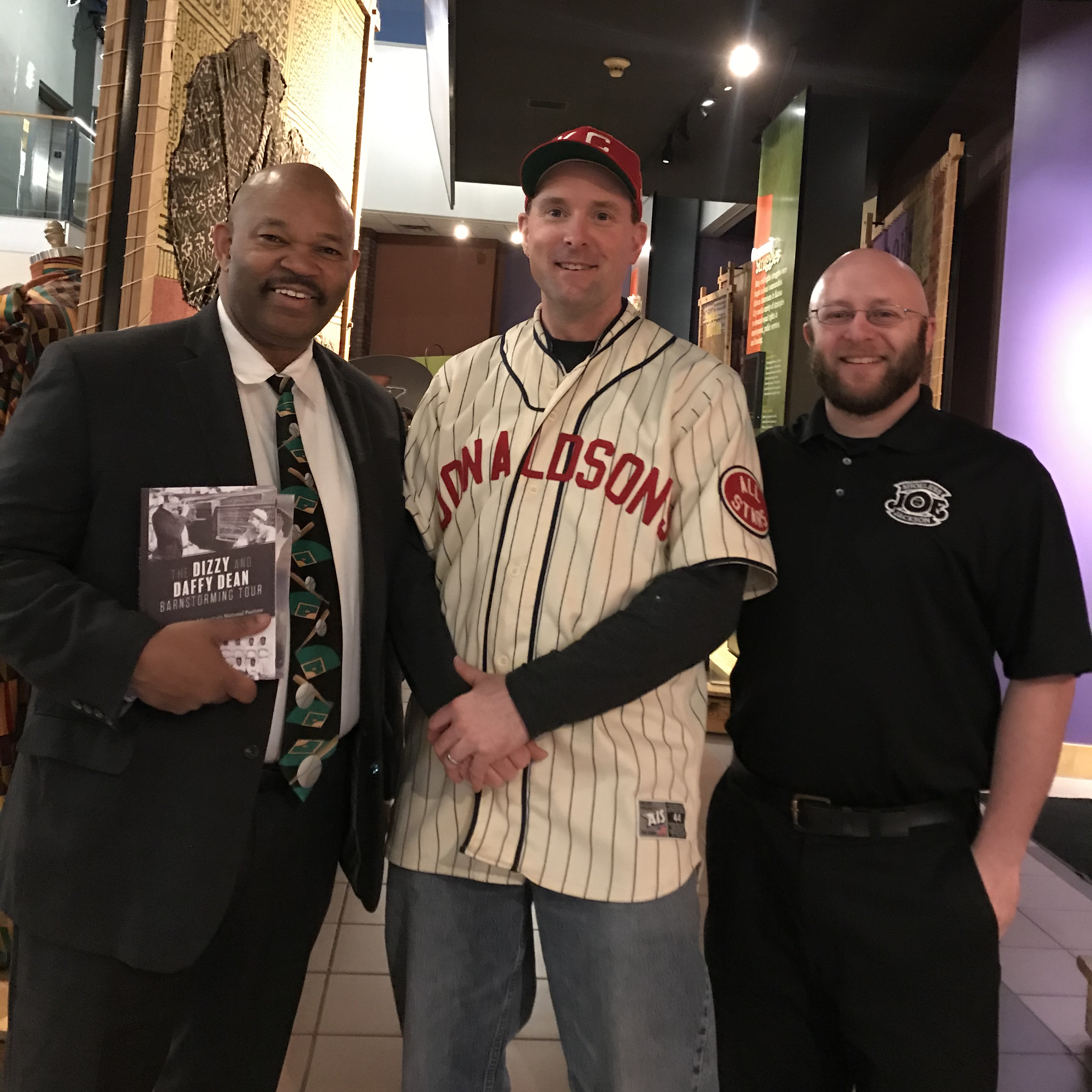
Phil S. Dixon
Phil S. Dixon is an author, public speaker, researcher and historian, focusing on the Negro Leagues for the past 40 years.
He was our guest for Episode 4 of Season 1. You can listen to that episode HERE.
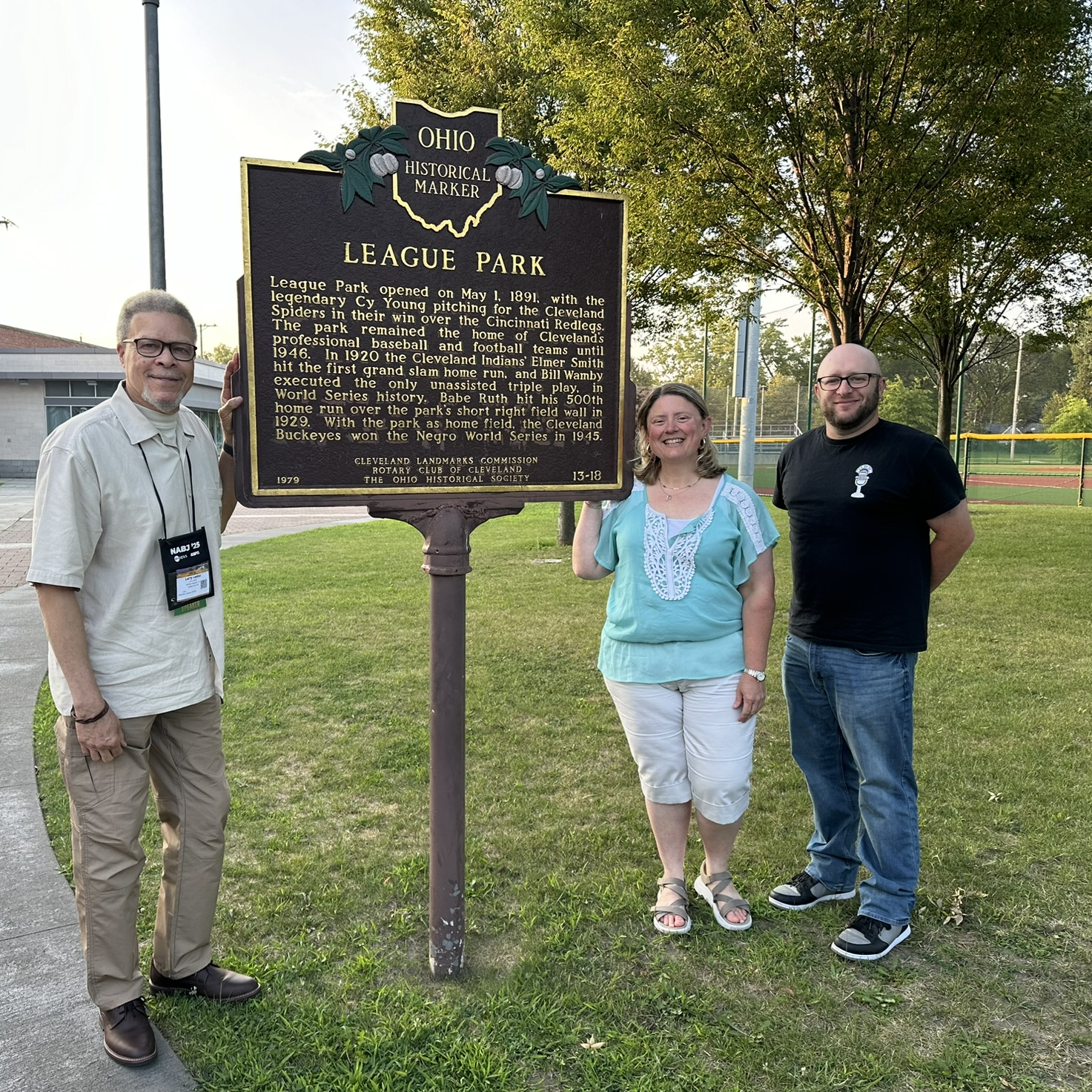
Larry Lester
Larry Lester is one of the world’s leading authorities on the Negro Leagues, and is one of the five original founders of the NLBM. He is a published author, public speaker, researcher, and historian.
He was our guest, along with fellow Negro Leagues researcher Stephanie Liscio, for Episode 1 of Season 5. You can listen to that episode HERE.
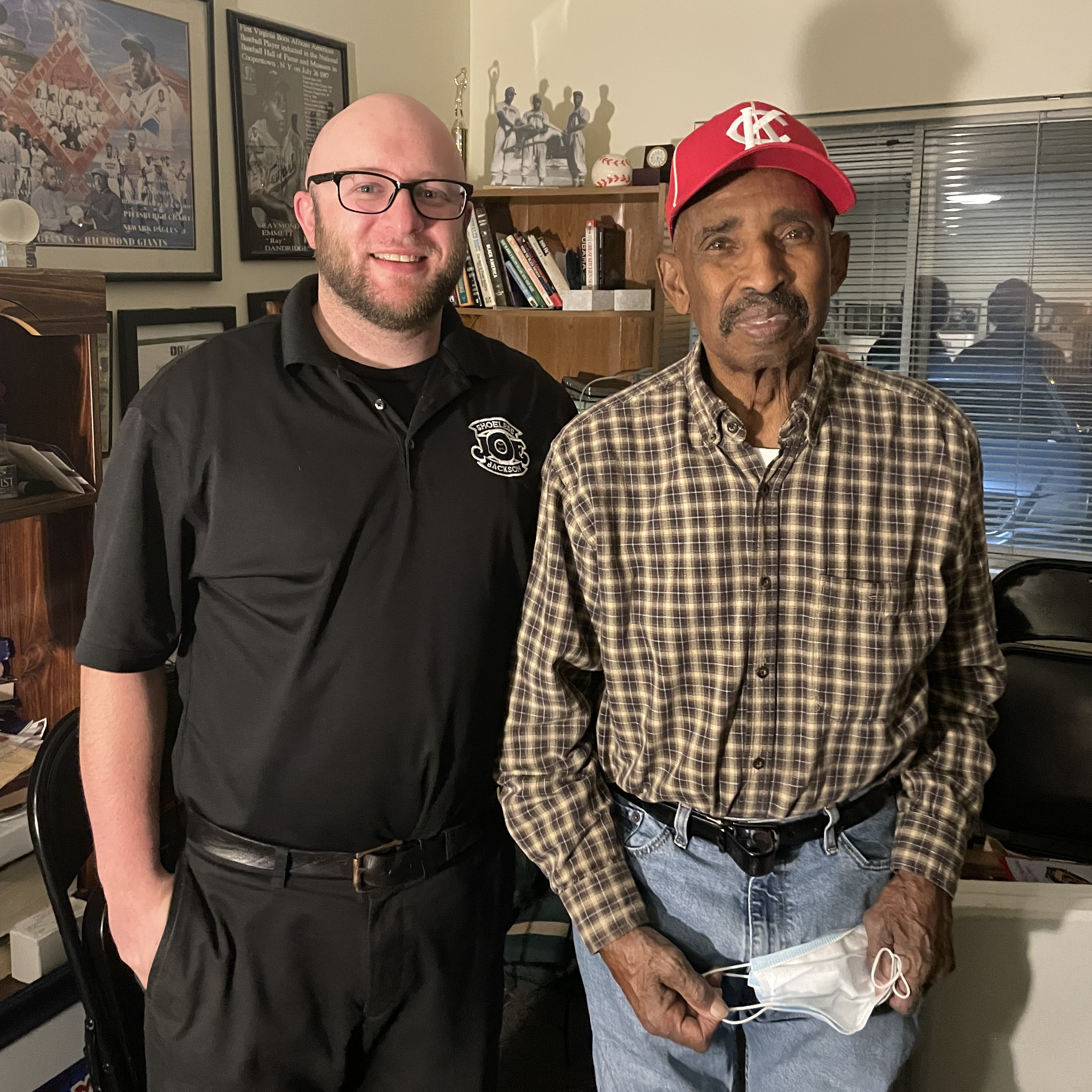
Sam Allen
Sam Allen is a former Negro League player who spent time as a member of the Kansas City Monarchs, the Raleigh Tigers, and the Memphis Red Sox. He led the Negro American League in runs scored in 1957, helping the Monarchs win the championship.
Sam was our guest for Episode 2 of Season 3. You can listen to that episode HERE.
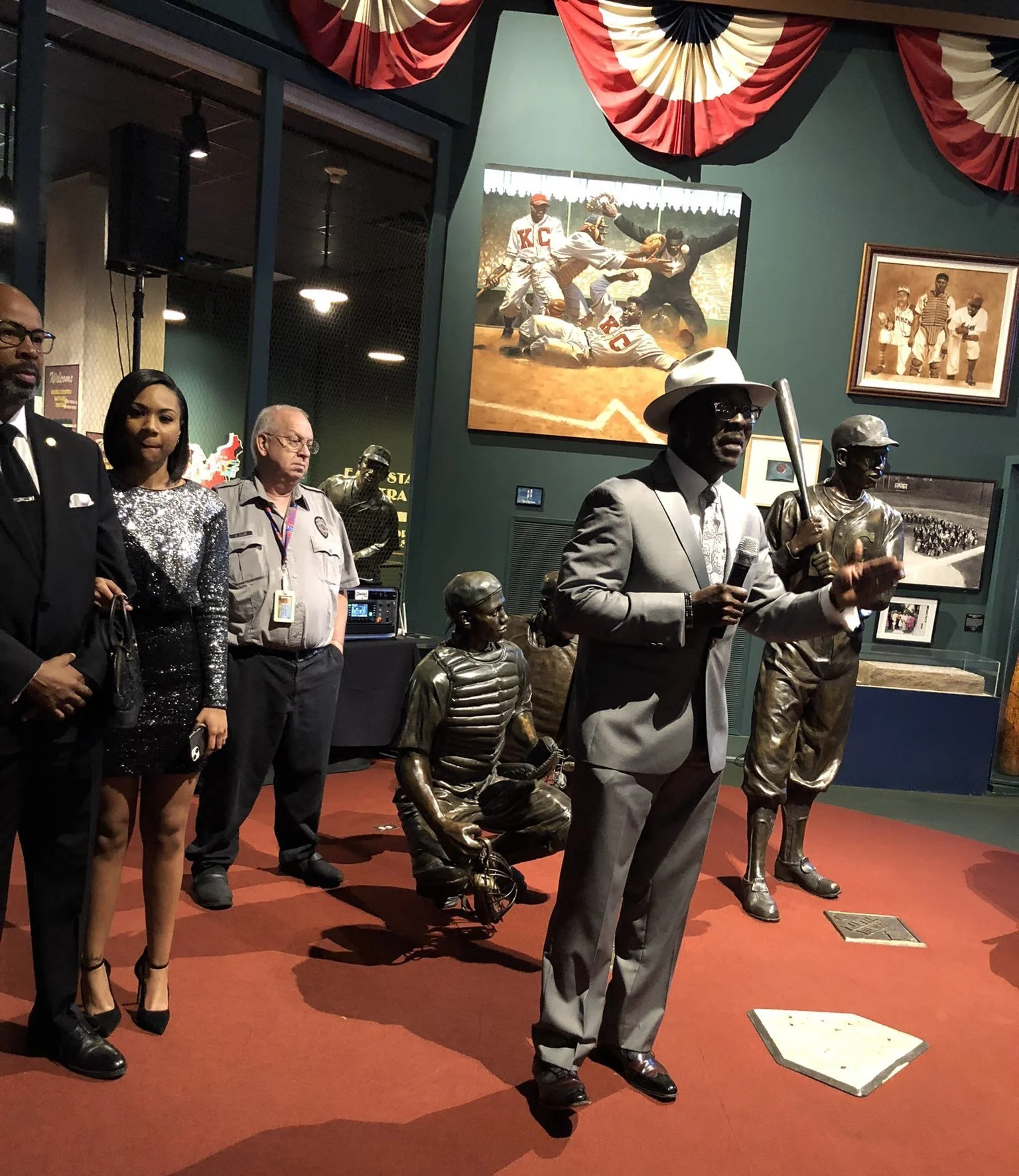
In His Element
Letting Bob Kendrick be in his element and just sit back and tell stories of these men whose stories he knows so well has been on my list of “Must Record” episodes since I started this podcast.
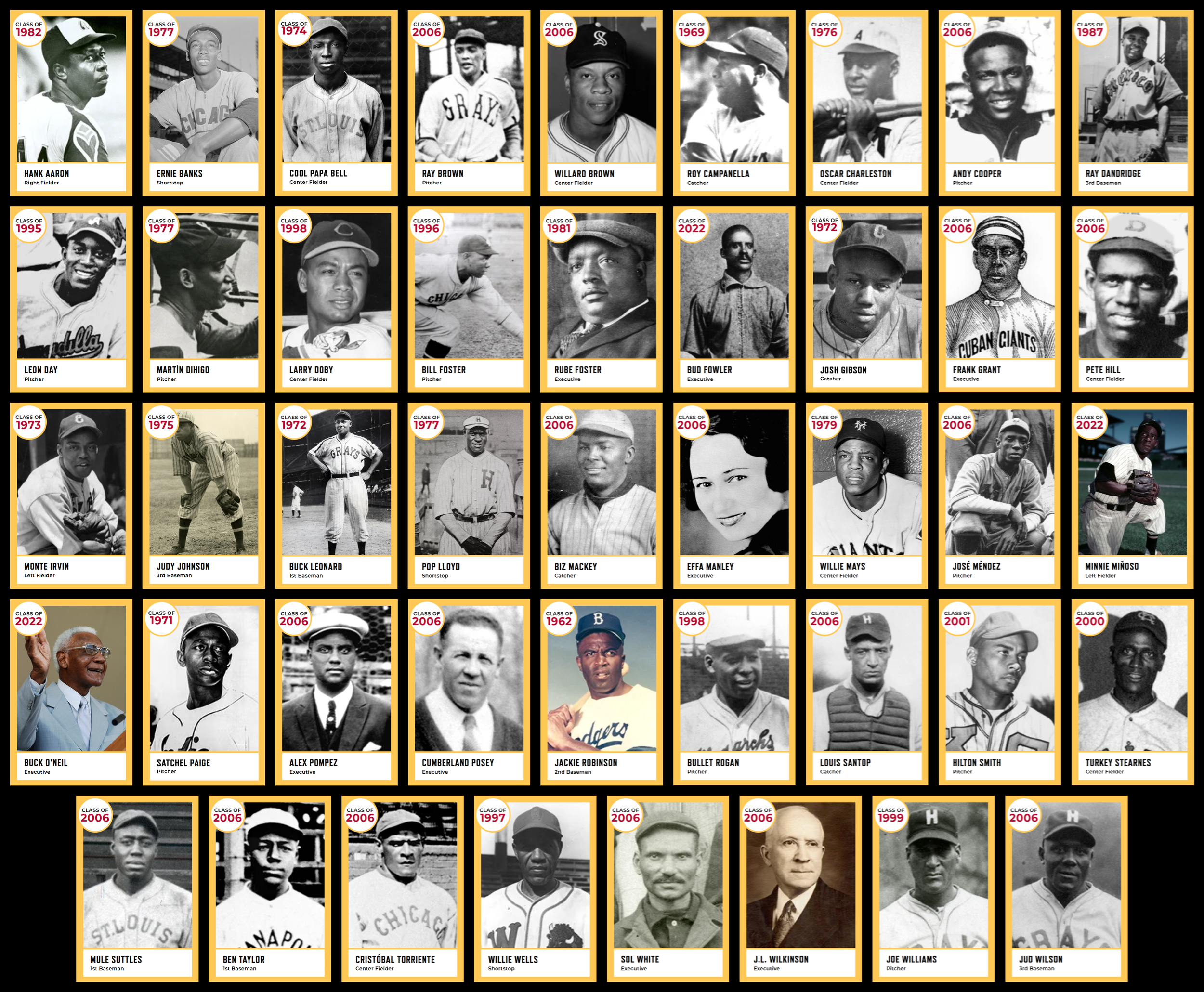
While some of the names you heard in this episode are surely ones you’ve heard before, there are almost certainly a number of names of Black baseball and Negro League representatives who have been inducted into the Hall of Fame whose names are less familiar. The 44 people shown above all have direct ties to the Negro Leagues and/or Black baseball, and they are all inducted in the National Baseball Hall of Fame.
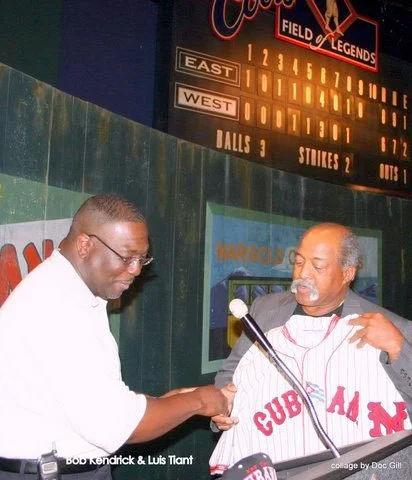
Firsthand Knowledge
Bob has been lucky enough over these past 3+ decades to have met and heard stories directly from a significant number of prominent figures, as they relate to the Negro Leagues.
Those firsthand experiences only serve to enhance his stories.
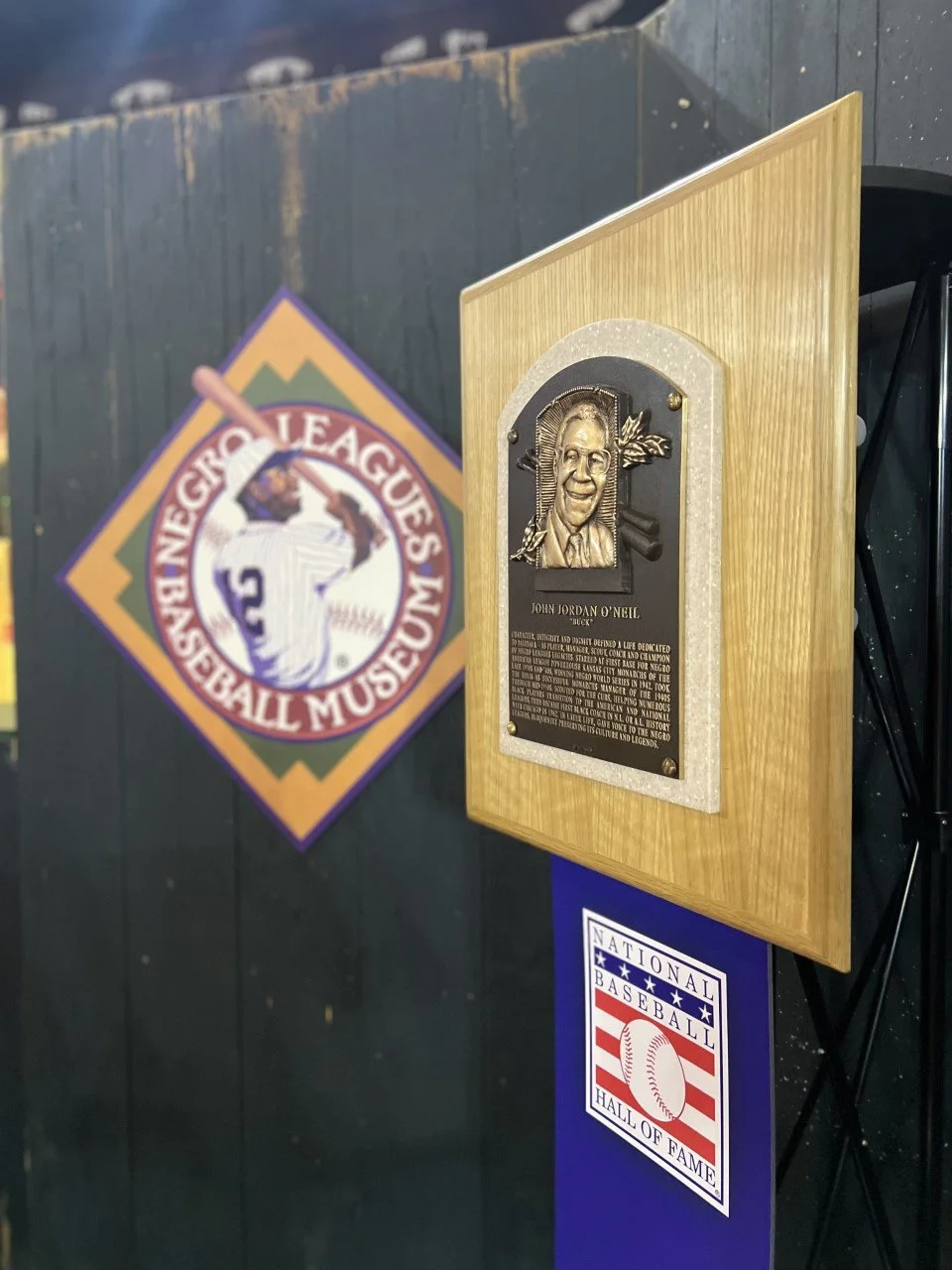
Heartbreaking
There is absolutely no reason Buck O’Neil shouldn’t have been in this photo, too.
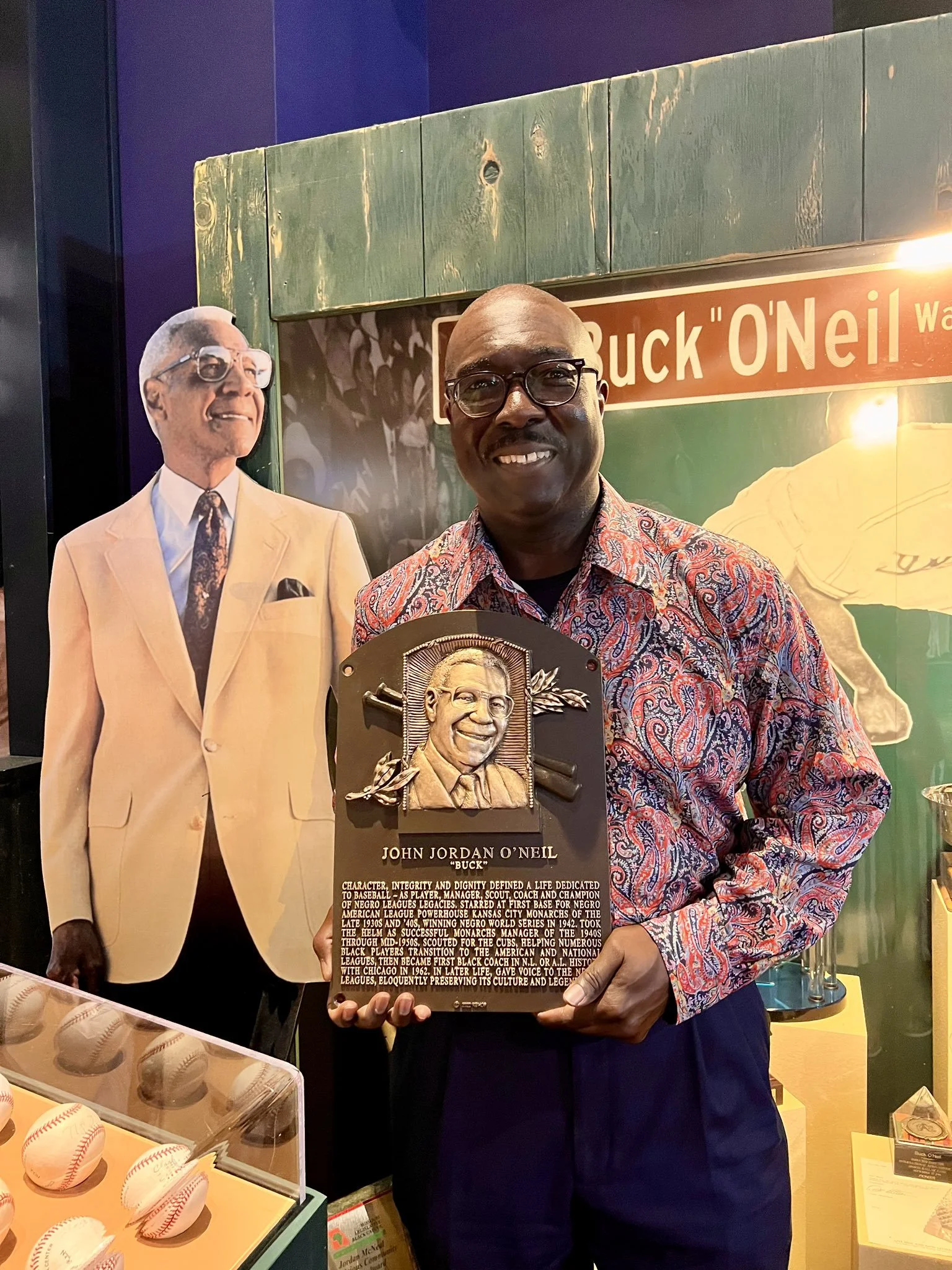
Better Late Than Never?
When fans and historians look back 50 years from now, Buck’s name will be included among the other Hall of Famers as if it has been there all along.
Those of us who were alive to watch how things played out in real time, however, will know that it could have all been handled so much better.
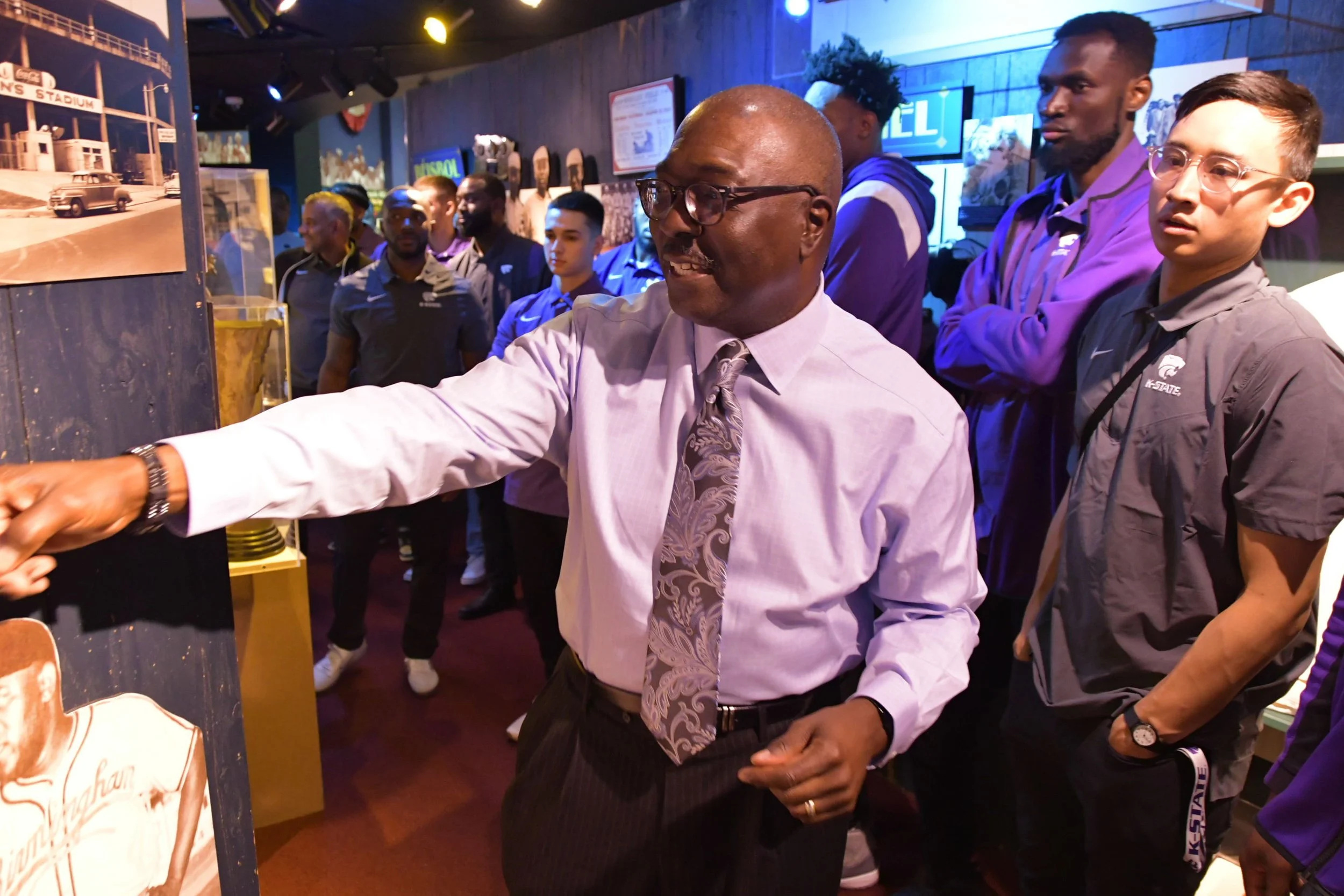
Always Enthusiastic
Bob’s ability to always have the same high level of enthusiasm while telling stories he has told literally over a thousand times is truly a skill very few have.
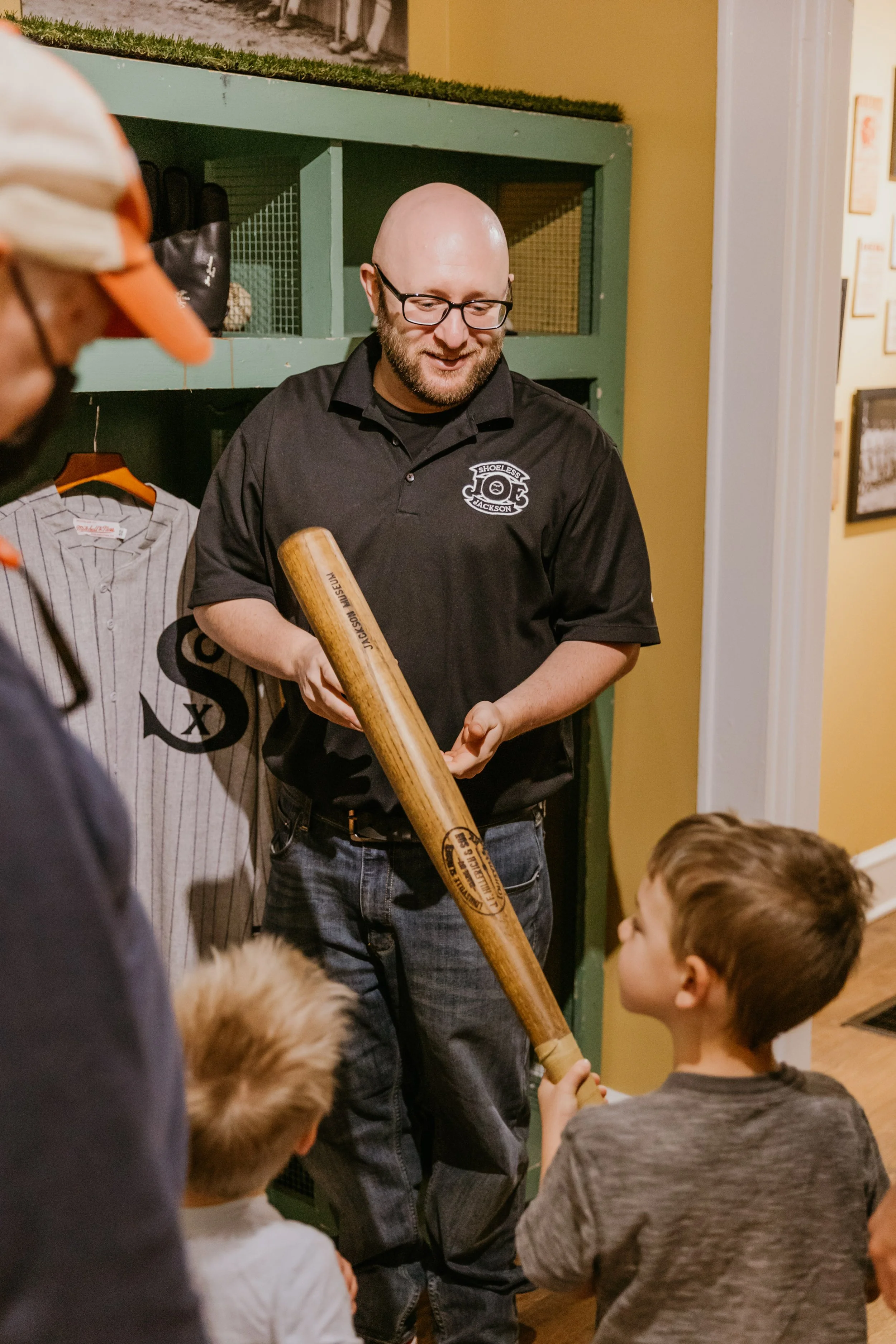
Trust Me
I’m speaking from experience, having run a baseball museum and personally given hundreds of tours to people of all ages, all knowledge levels, and all levels of caring. Some tours are not as easy as others.
What Bob Kendrick has is special.
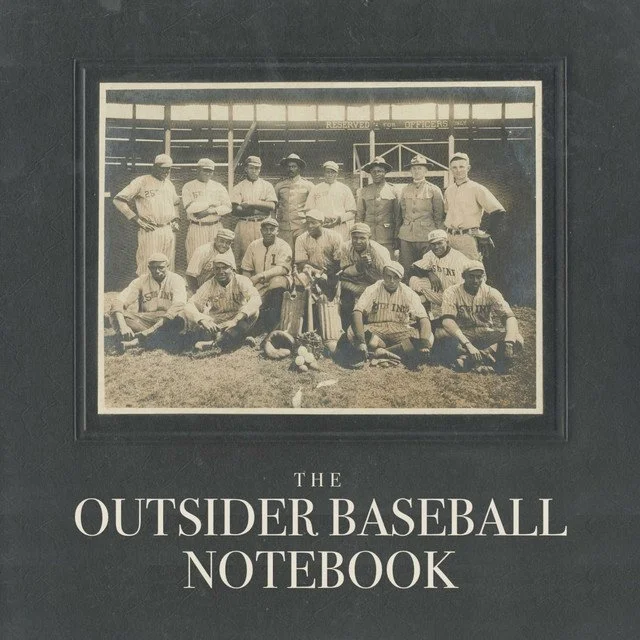
The Outsider Baseball Notebook
Adam Darowski of Baseball-Reference.com has a couple really great podcasts, but The Outsider Baseball Notebook was particularly interesting to me, and I think it will be to you, too.
Listen on Apple Podcasts
Listen on Spotify
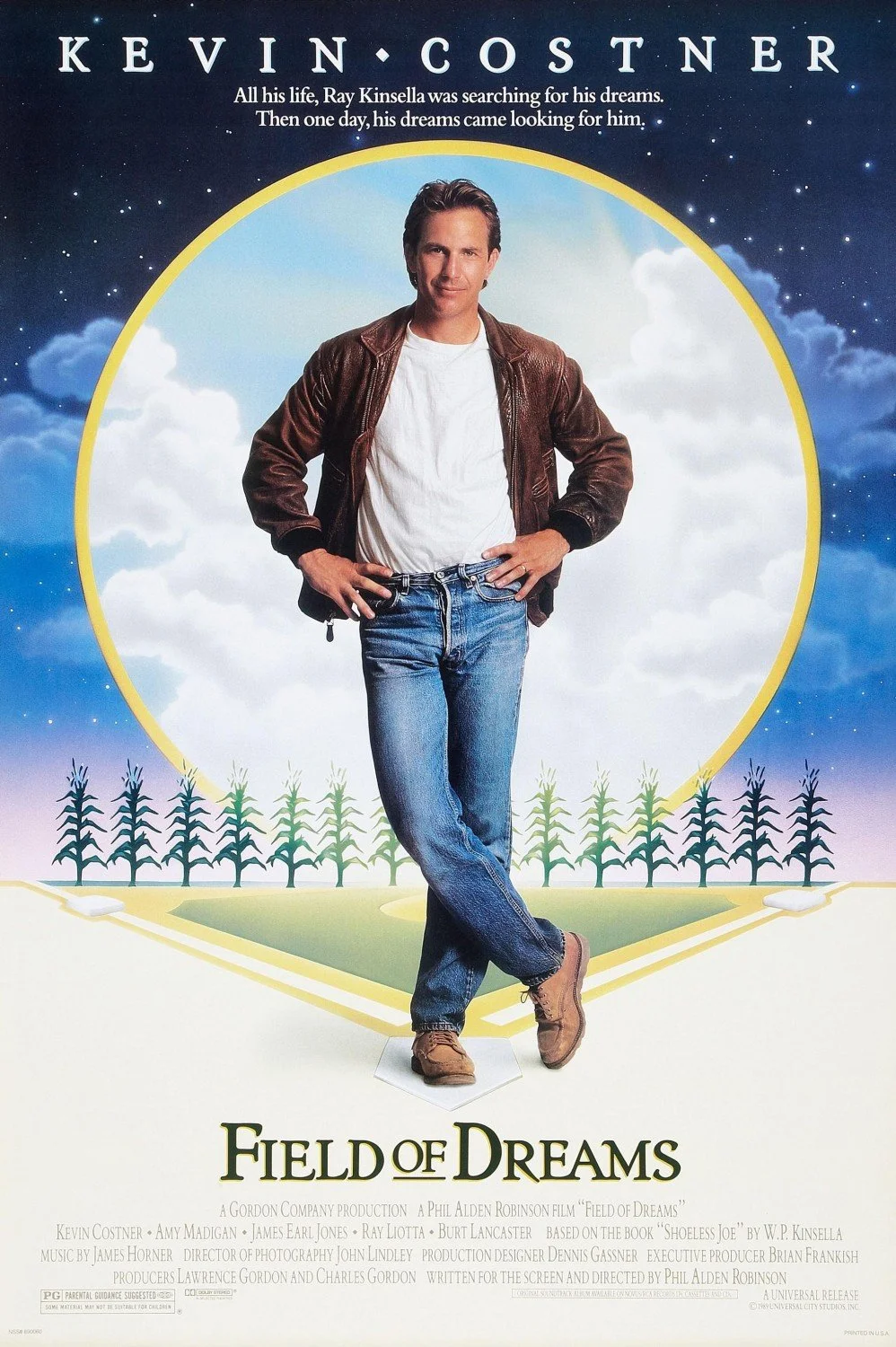
Field of Dreams
"If you build it, he will come." With these words, Iowa farmer Ray Kinsella (Kevin Costner) is inspired by a voice he can't ignore to pursue a dream he can hardly believe.
Supported by his wife Annie (Amy Madigan), Ray begins the quest by turning his ordinary cornfield into a place where dreams can come true. Along the way he meets reclusive activist Terence Mann (James Earl Jones), the mysterious "Doc" Graham (Burt Lancaster) and even the legendary "Shoeless Joe" Jackson (Ray Liotta).
A heartwarming experience that has moved critics and audiences like no other film of this generation, Field of Dreams is a glowing tribute to all who dare to dream.
Buy the DVD HERE.
Buy the Blu-ray HERE.
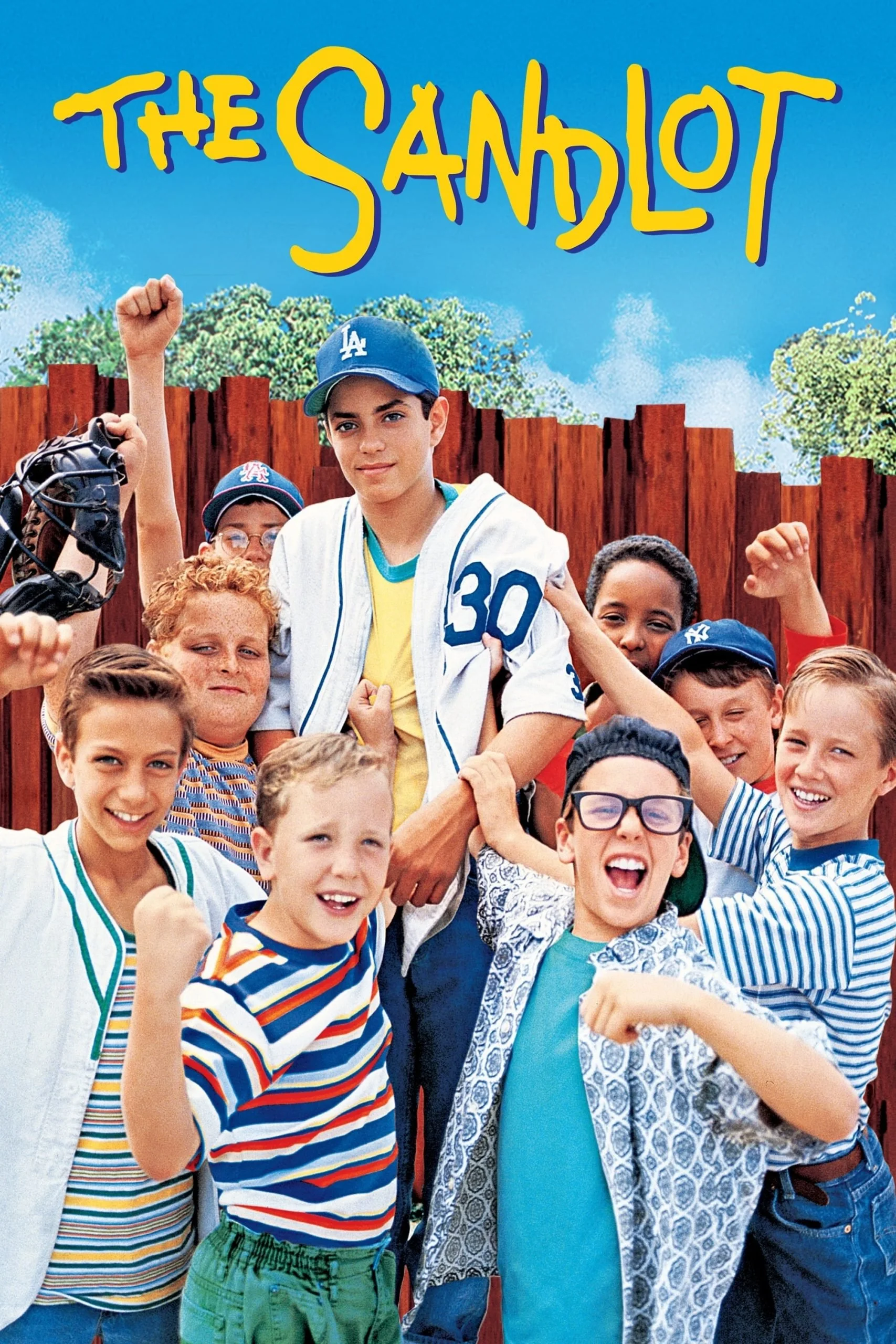
The Sandlot
When Scottie Smalls (Thomas Guiry) moves to a new neighborhood, he manages to make friends with a group of kids who play baseball at the sandlot.
Together, they go on a series of funny and touching adventures. The boys run into trouble when Smalls borrows a ball from his stepdad that gets hit over a fence, only later realizing the significance of that ball having been signed by Babe Ruth.
Buy the DVD HERE.
Buy the Blu-ray HERE.
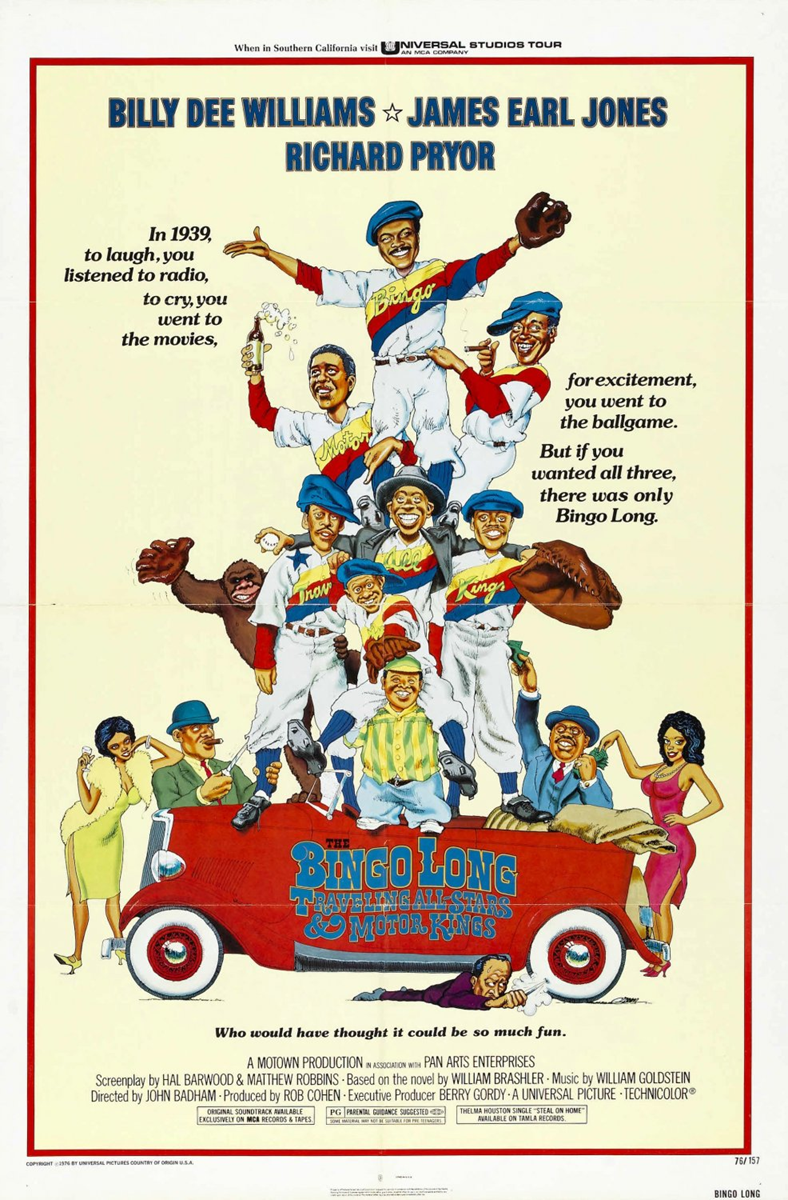
The Bingo Long Traveling All Stars & Motor Kings
In the world of 1930s Negro League baseball, a spirited team of renegade players travels around the Midwest looking for that one big score.
Richard Pryor, Billy Dee Williams and James Earl Jones star as three barnstorming ballplayers who take on prejudice and their own League's unfair rules while stealing cars, food and home base — anything to prove that they're the best team around.
It's a showdown of brains over booby traps and sportsmanship over racial segregation as Bingo Long's All-Stars swing their way to a winning season.
The 1976 movie is loosely based on the story of the Indianapolis Clowns.
Buy the book HERE.
Buy the DVD HERE.
Buy the Blu-ray HERE.
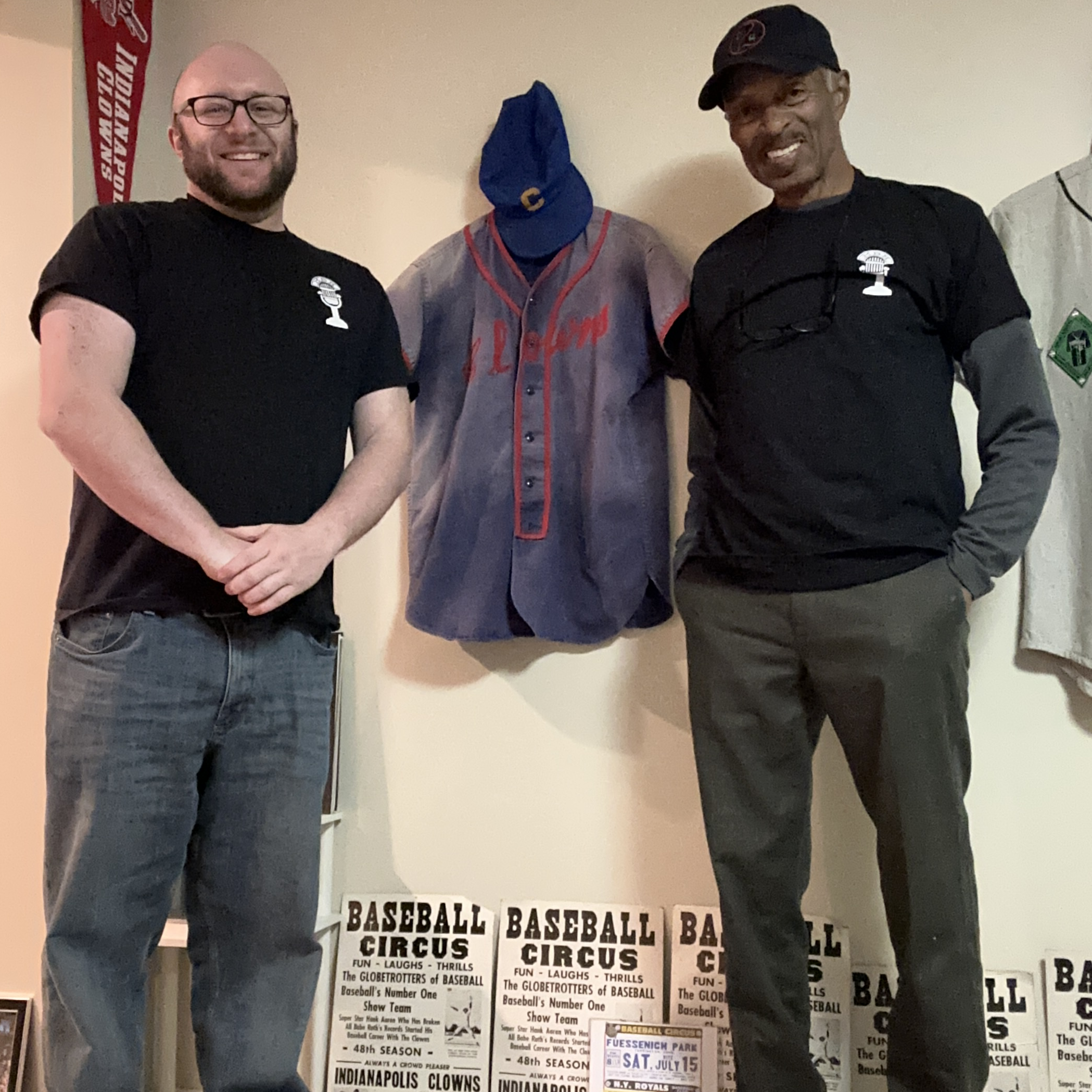
Jay Valentine
Jay Valentine patrolled center field in 1977 and 1978 for the Indianapolis Clowns, the last of the Negro League baseball teams.
Jay was our guest for Episode 6 of Season 4. You can listen to that episode HERE.
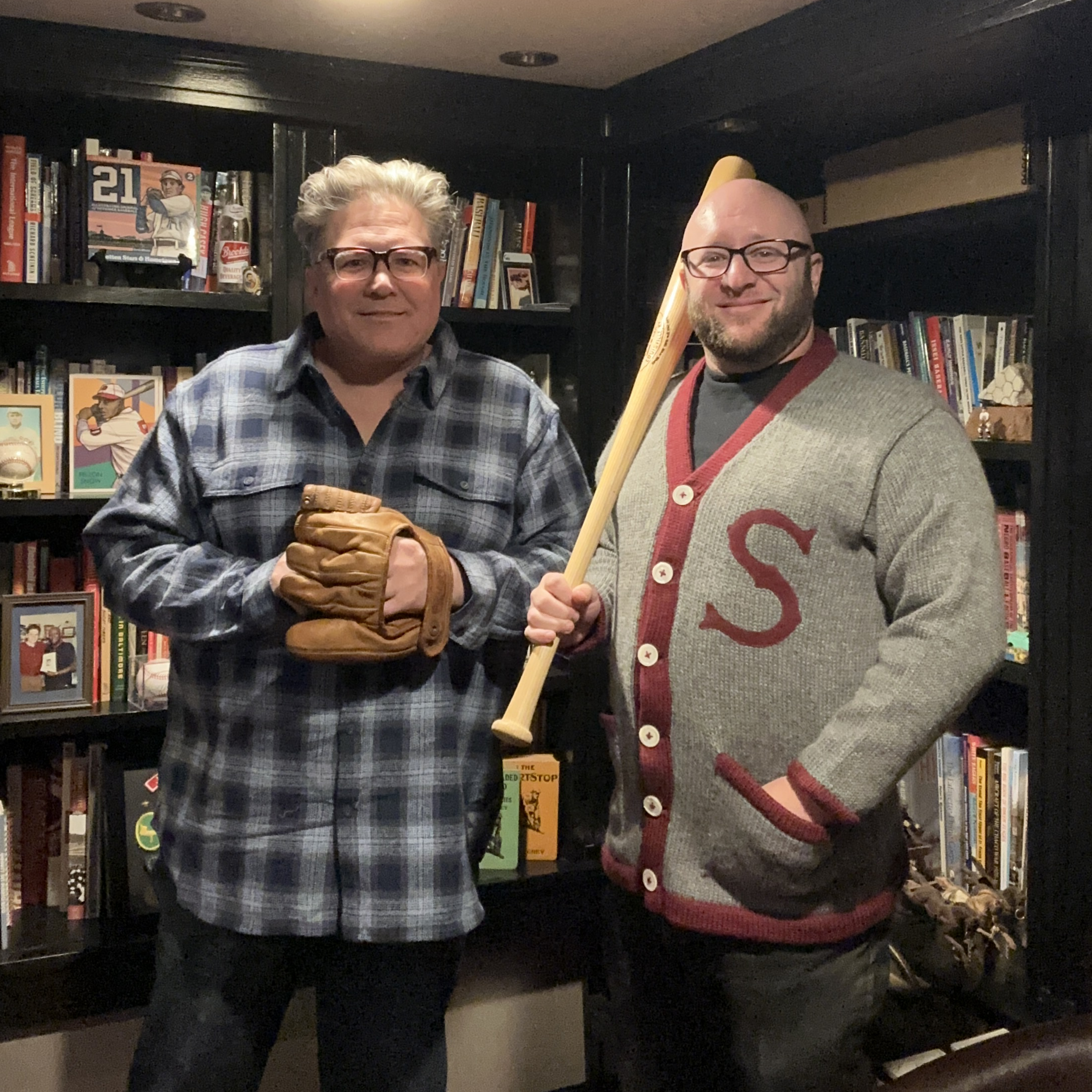
Gary Cieradkowski
Gary Cieradkowski is a renowned baseball historian, researcher, author, and artist.
Gary was our guest for Episode 4 of Season 5. You can listen to that episode HERE.
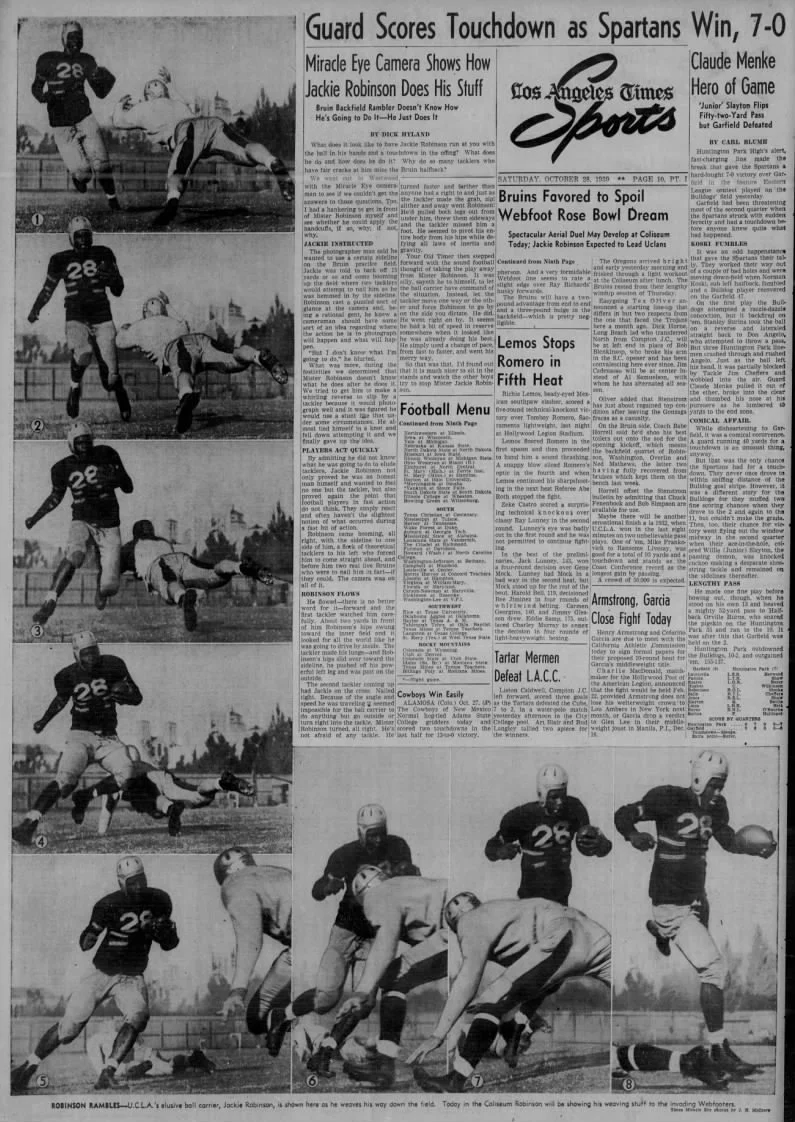
Already A Star
Jackie Robinson was already a well-known college football star before breaking the color barrier of Major League Baseball.
While that may seem insignificant today, at the time, college football was one of the biggest sports in the country, and a much bigger deal than the NFL even was.
For Jackie to have been on front pages of newspapers across the country for his athletic prowess was no small feat.
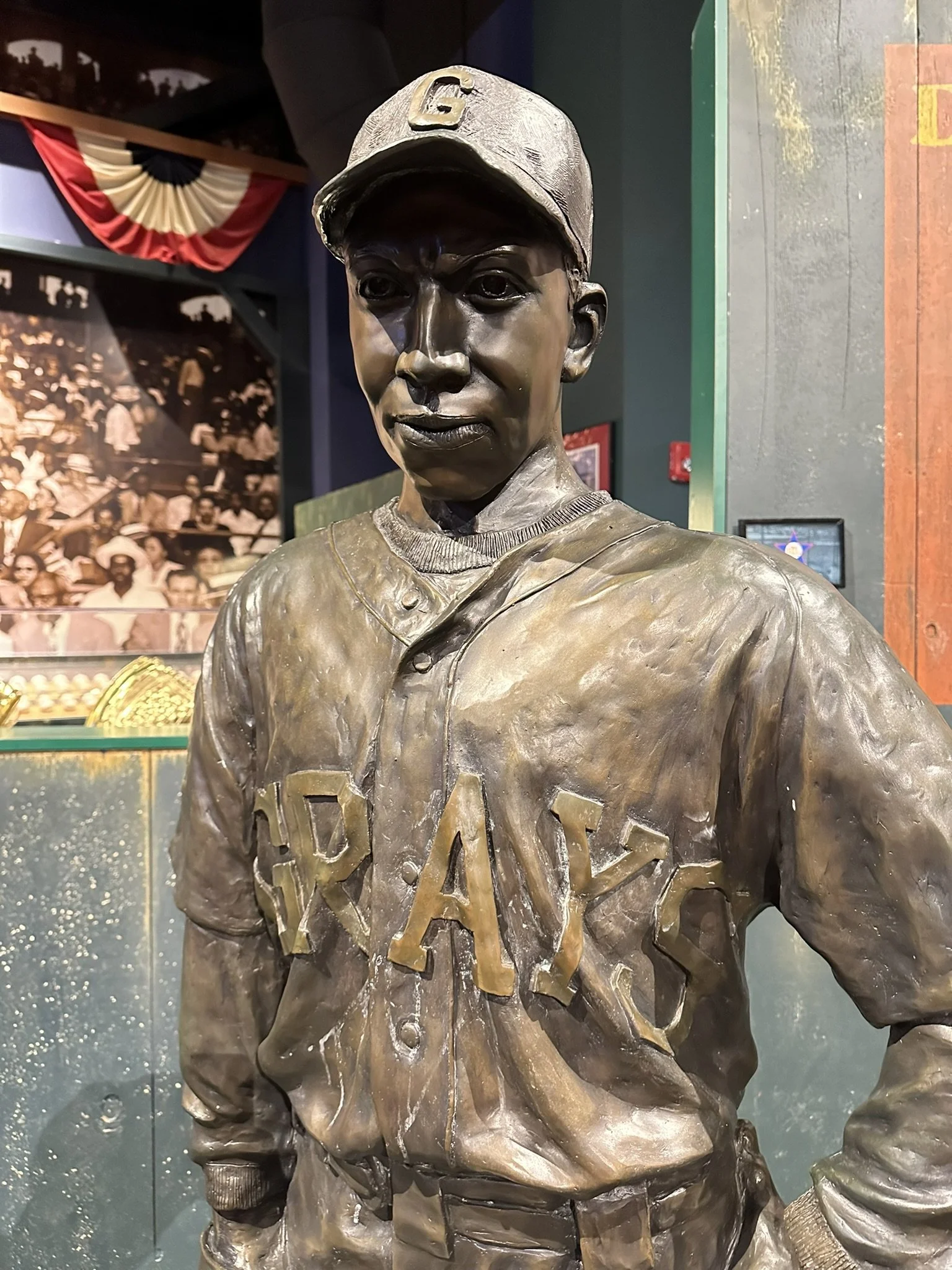
Cool Papa Bell
Bell’s Hall of Fame plaque notes that he played 29 summers and 21 winters of professional baseball.
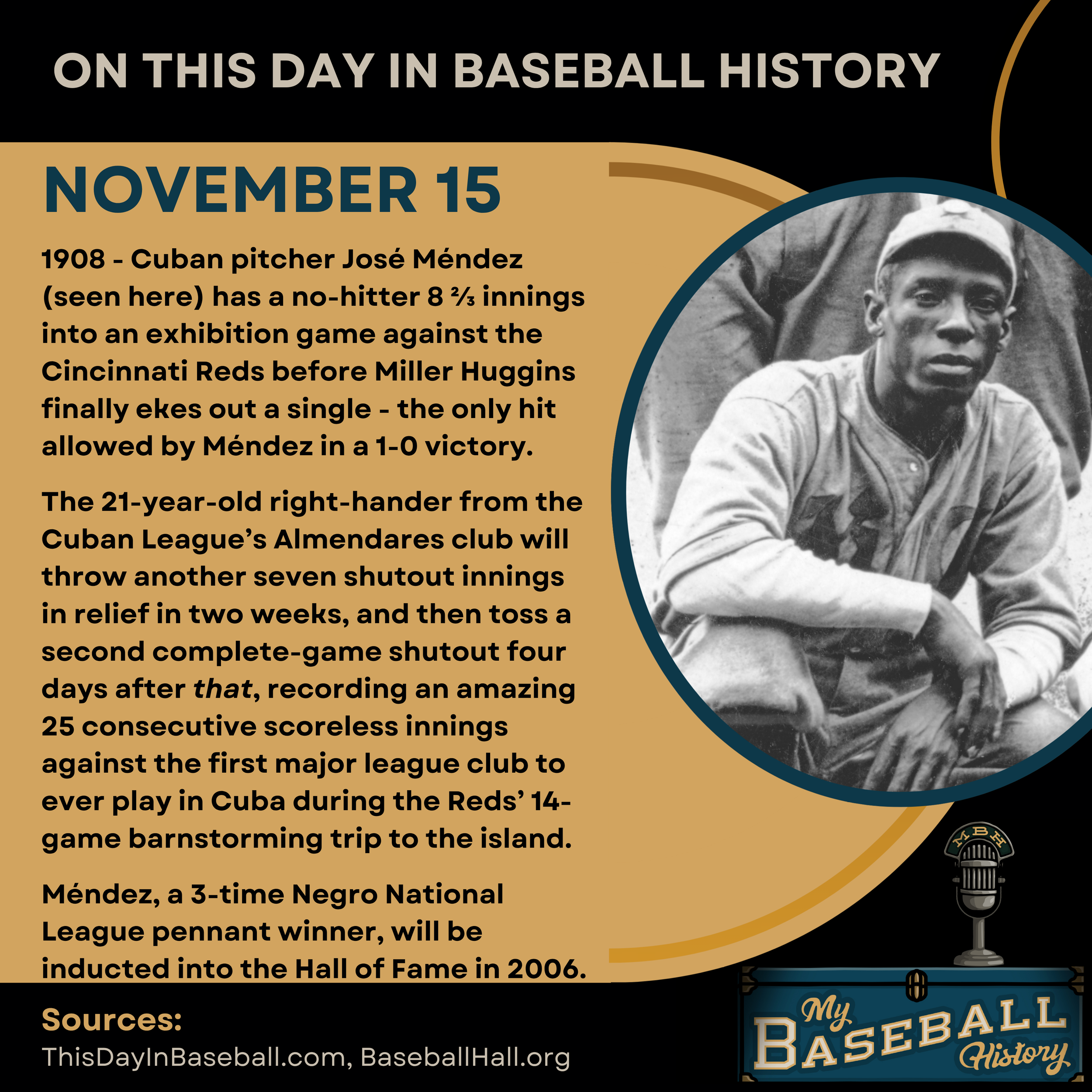
Not Just The Summers
Negro Leaguers often played ball in America in the summers, but then went to Latin American countries in the winters to continue playing year-round.
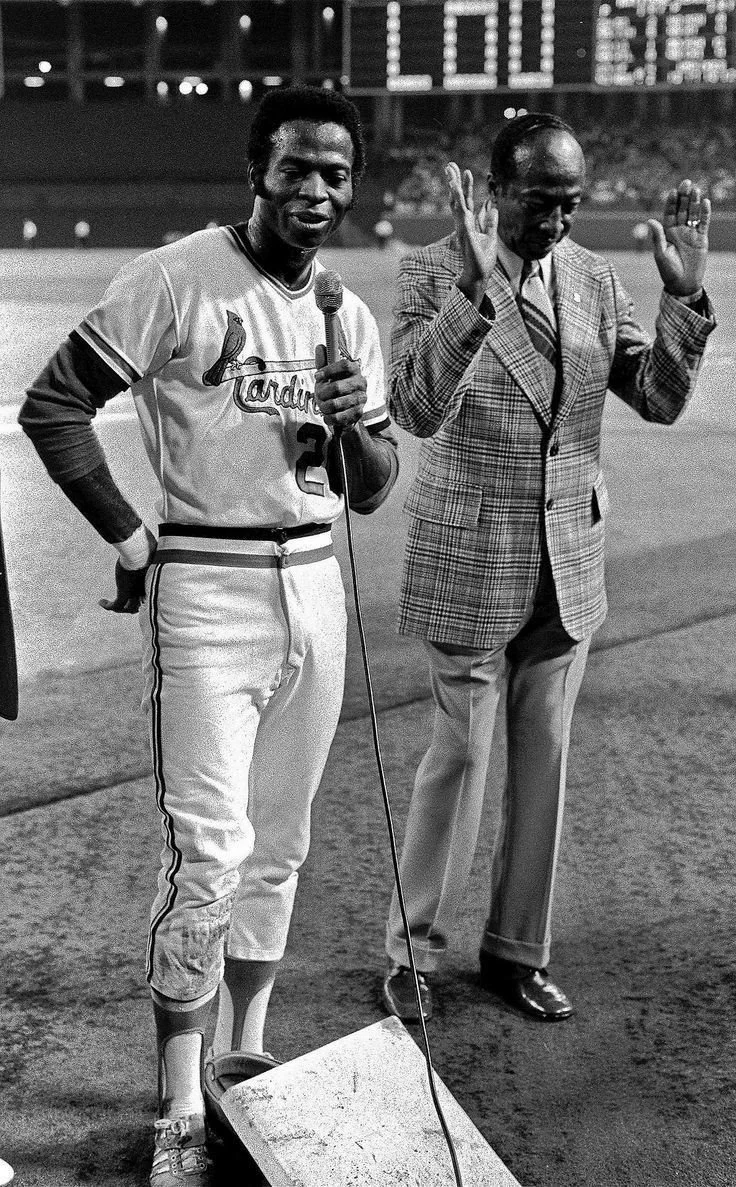
Cool Papa Bell & Lou Brock
How special must it have been for Lou Brock to have gotten that call from Cool Papa Bell when he got to St. Louis?
As Bob said during the interview, Brock said “I knew him, I just didn’t think he knew me!”
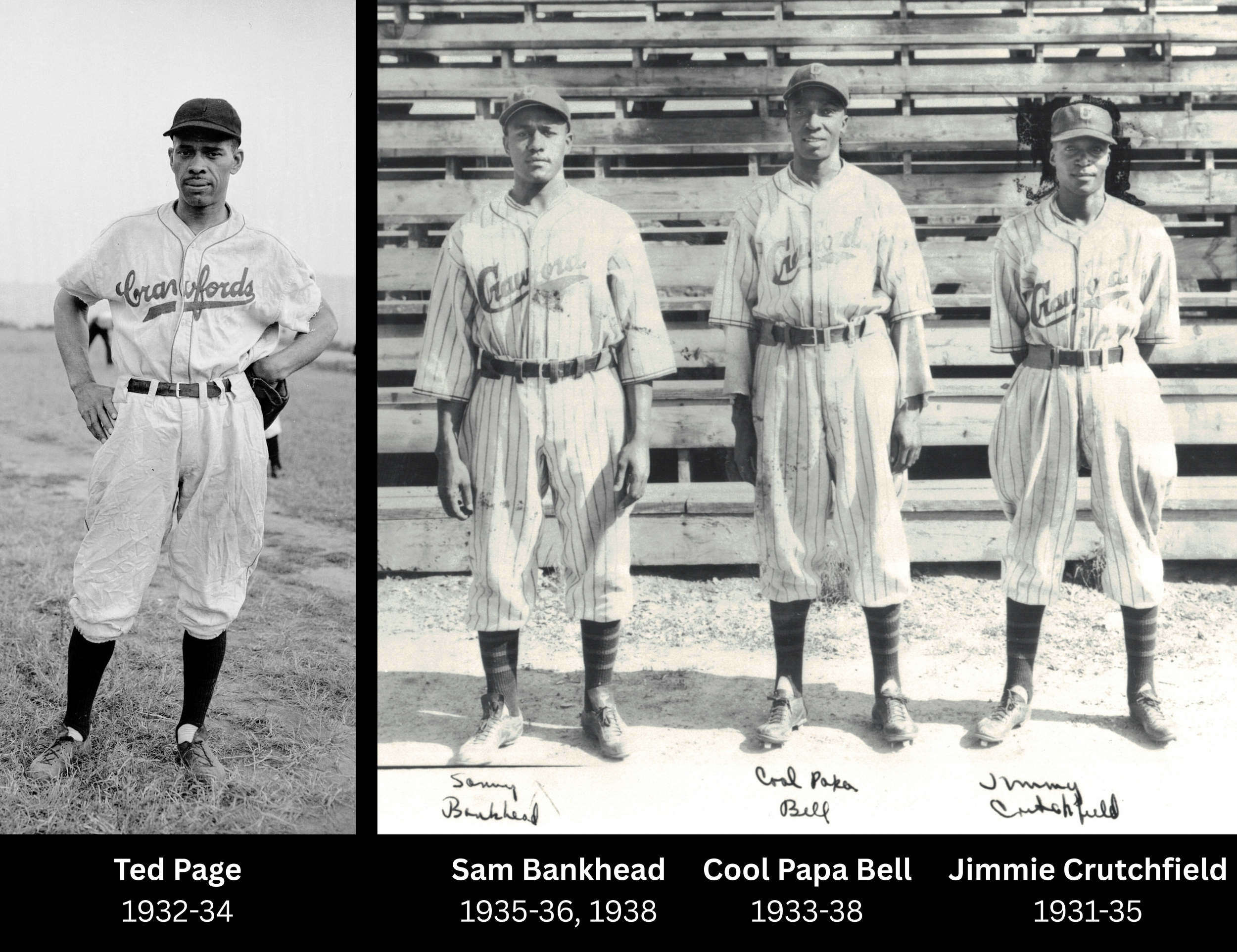
Pittsburgh Crawfords outfielders, and the years they spent with the team
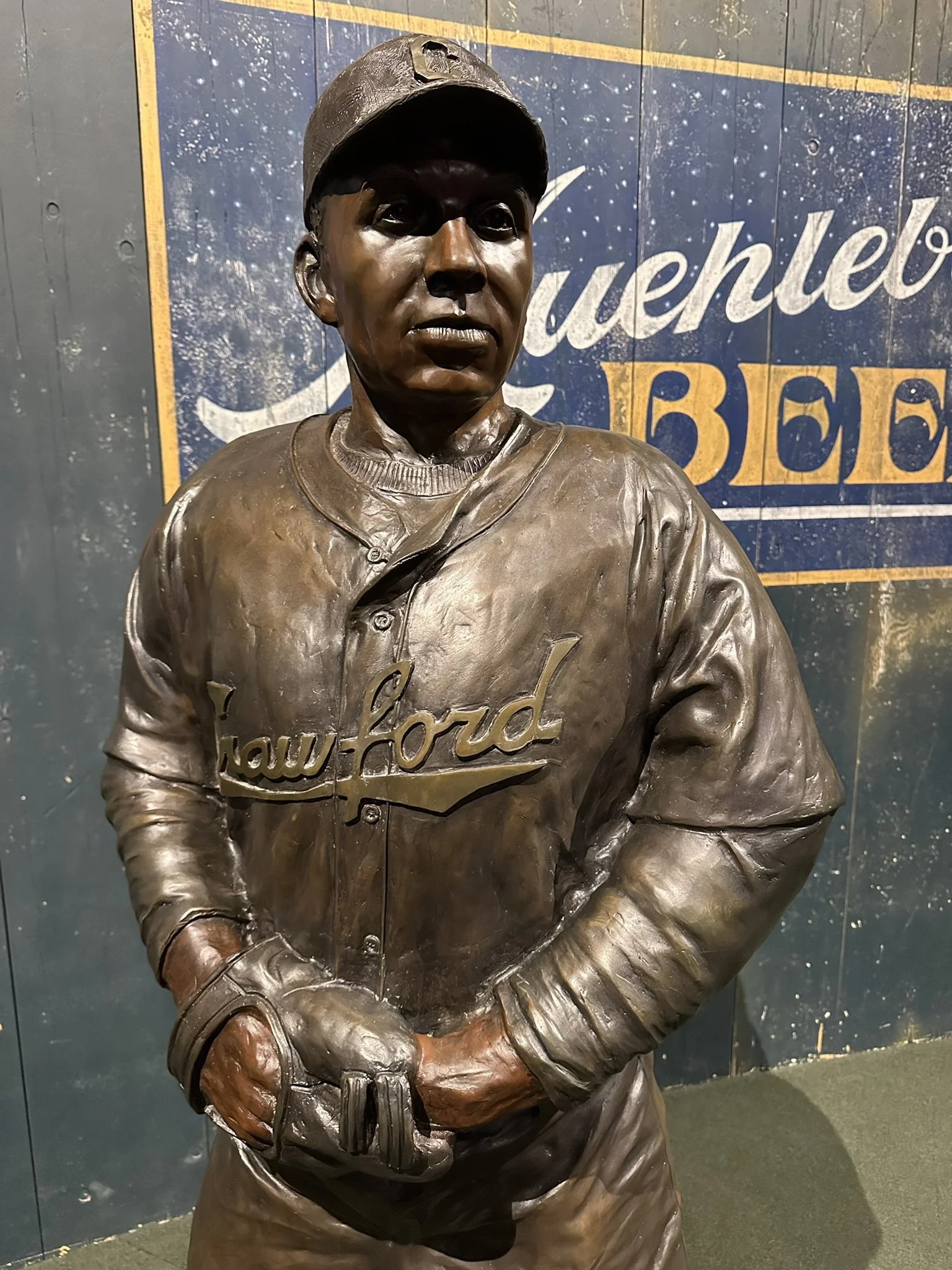
Oscar Charleston
How would you like the three people you’re compared to on the baseball field be Tris Speaker, Ty Cobb, and Babe Ruth?
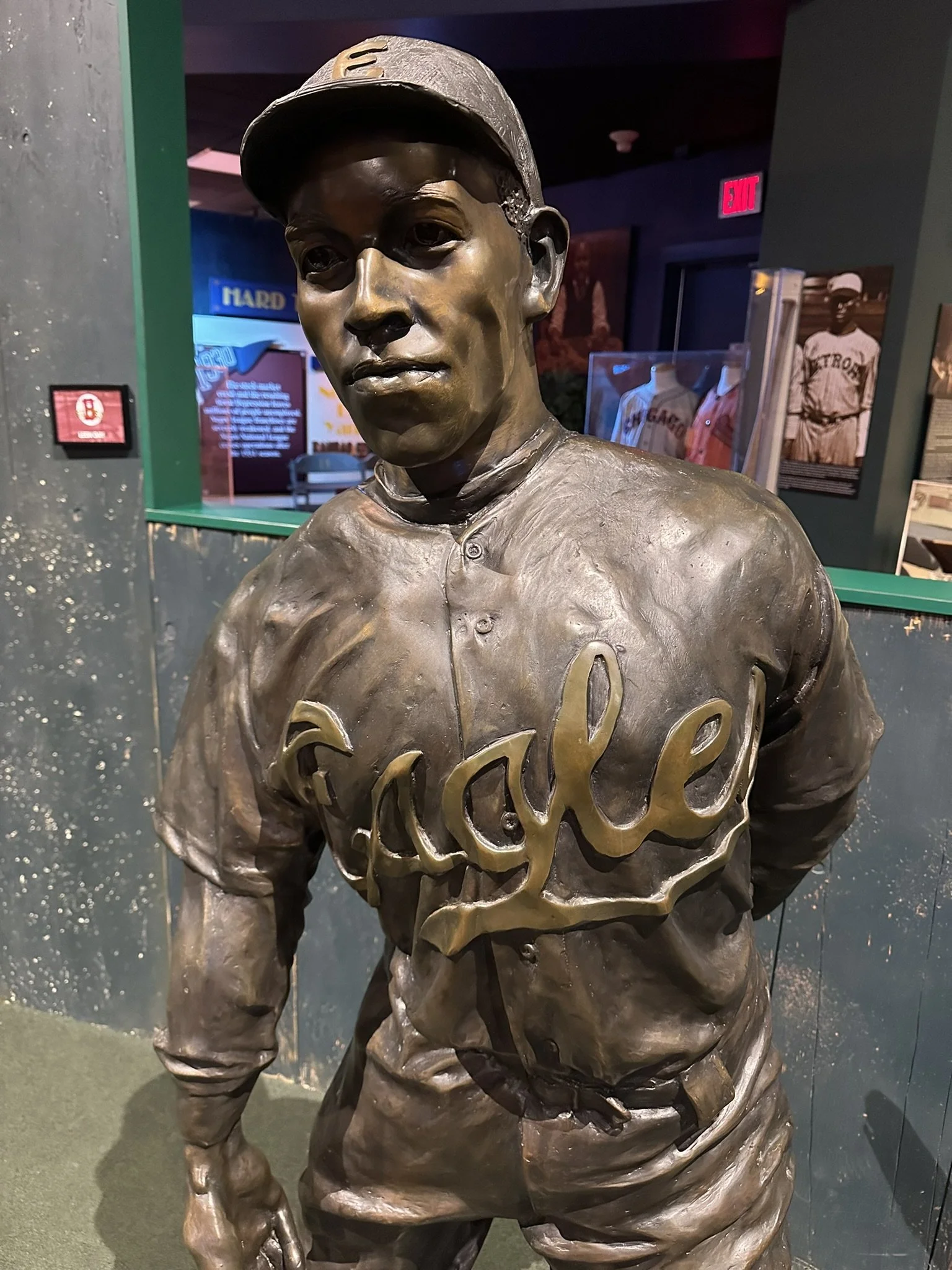
Leon Day
Besides catcher, Day could play any position on the field, and play it well.
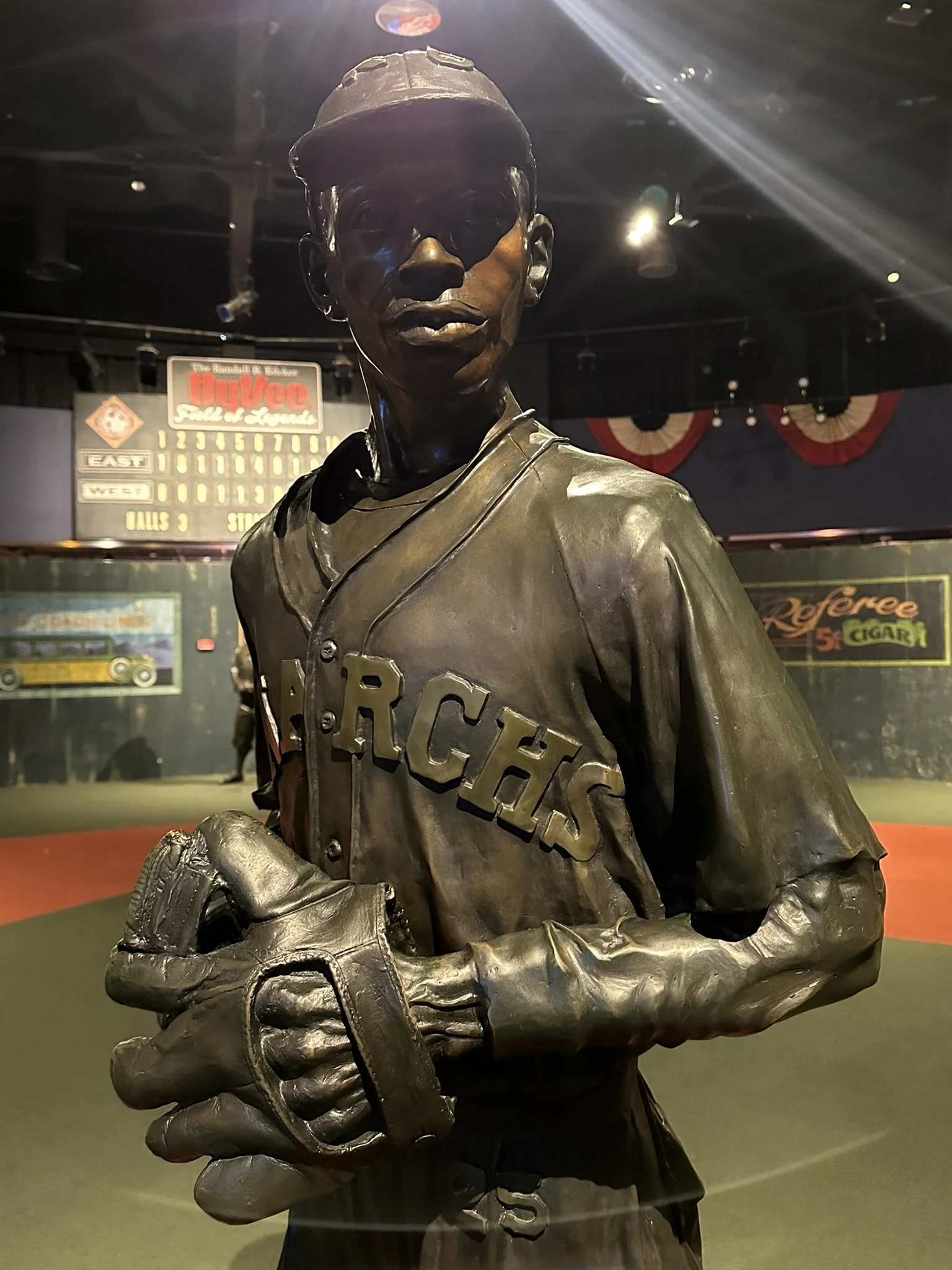
Satchel Paige
If you want to be the best for FIFTY YEARS, you have to treat it like a job and take it seriously.
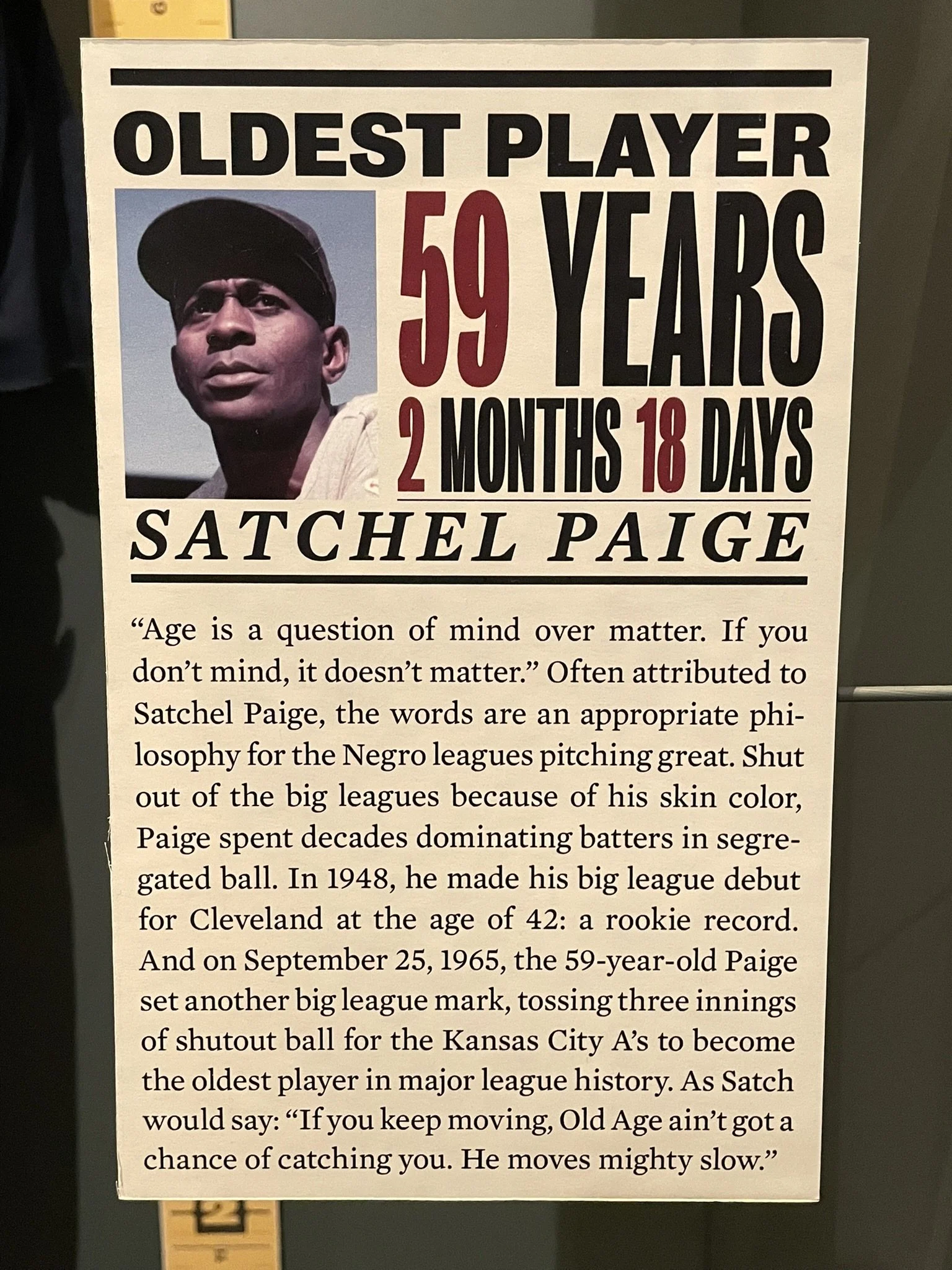
“Age Is A Question Of Mind Over Matter.
If you don’t mind, it doesn’t matter.”
- Satchel Paige

A Towering Presence
Satchel Paige and Dave Barnhill of the New York Cuban Stars shake hands before a 1942 game at Yankee Stadium.
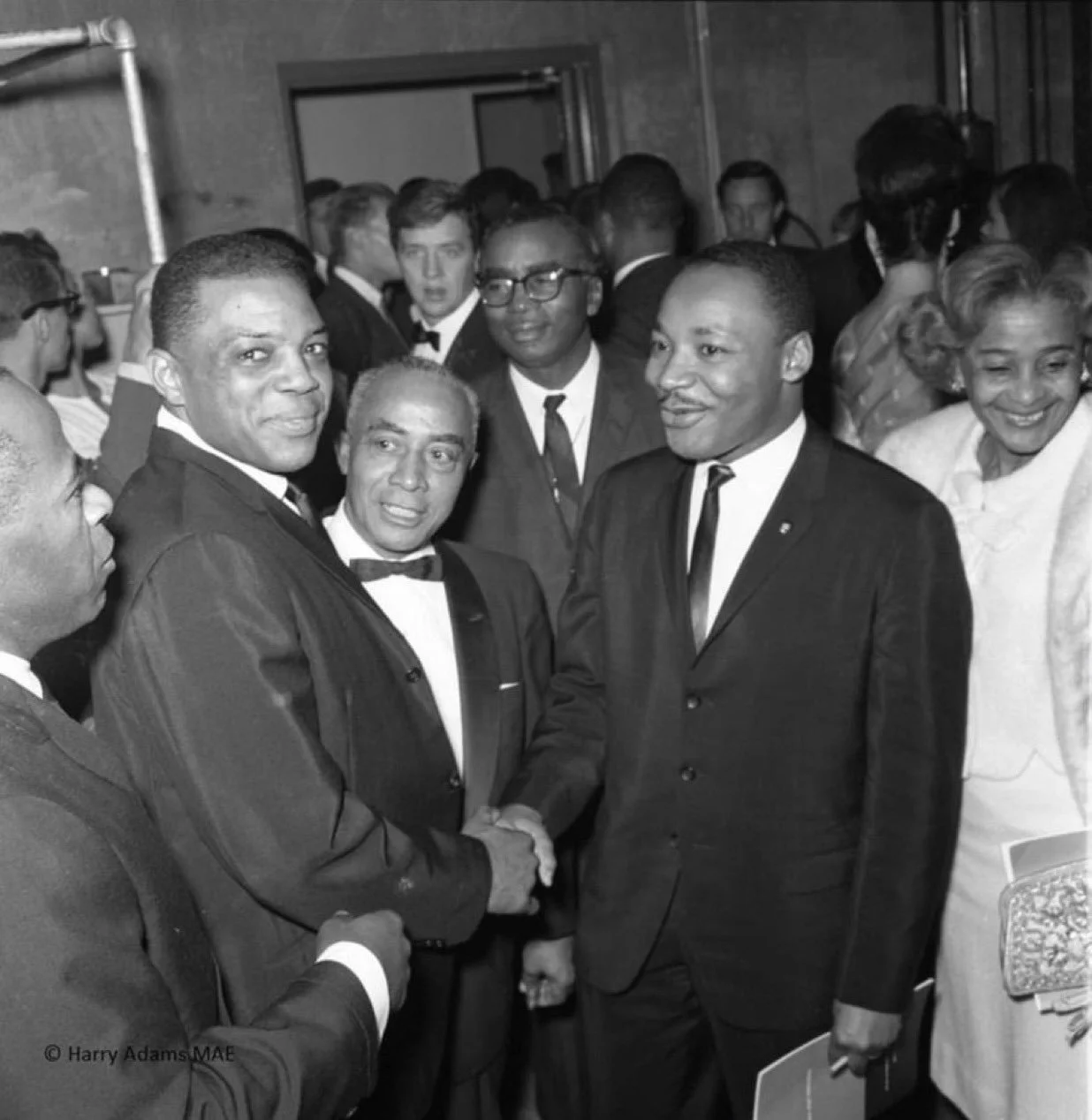
Baseball History Is American History
The two have been intertwined for nearly 200 years now. You can track everything from the progress of the Civil Rights movement, to the economy, to how people feel about societal issues or the government, all by paying attention to baseball.
Here, Willie Mays shakes hands with Martin Luther King, Jr. at the Stars for Freedom benefit concert on December 6, 1963 at the Santa Monica Civic Auditorium in Los Angeles.
The fundraiser gala was conceived by Sammy Davis Jr. to benefit SCLS, CORE and the NAACP. Councilman Gilbert Lindsay (third from left) and Mrs. Ethel Bradley (first right) look on.
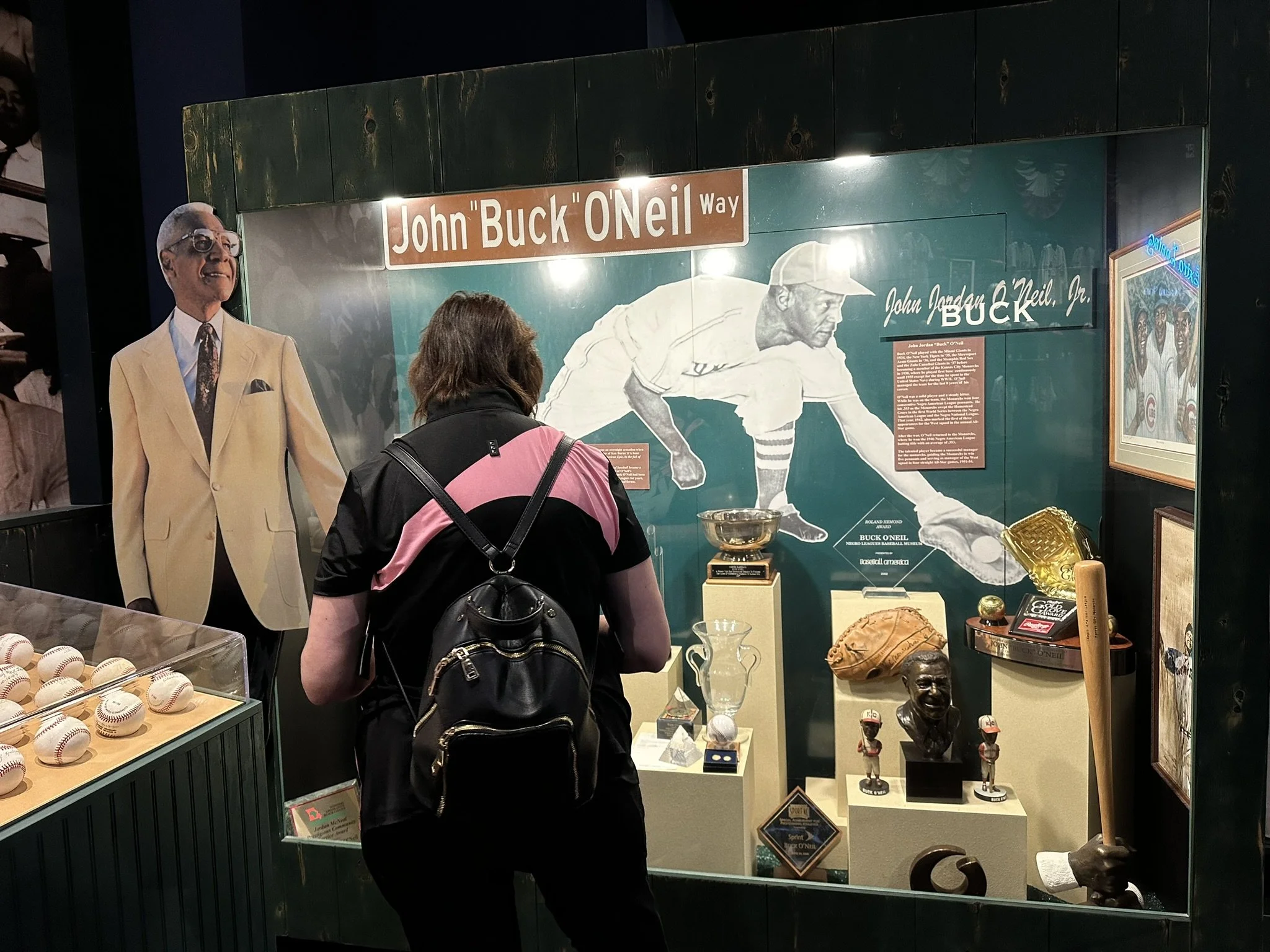
Time With Buck
The amount of time we were lucky enough to spend inside the museum still didn’t quite seem like enough.
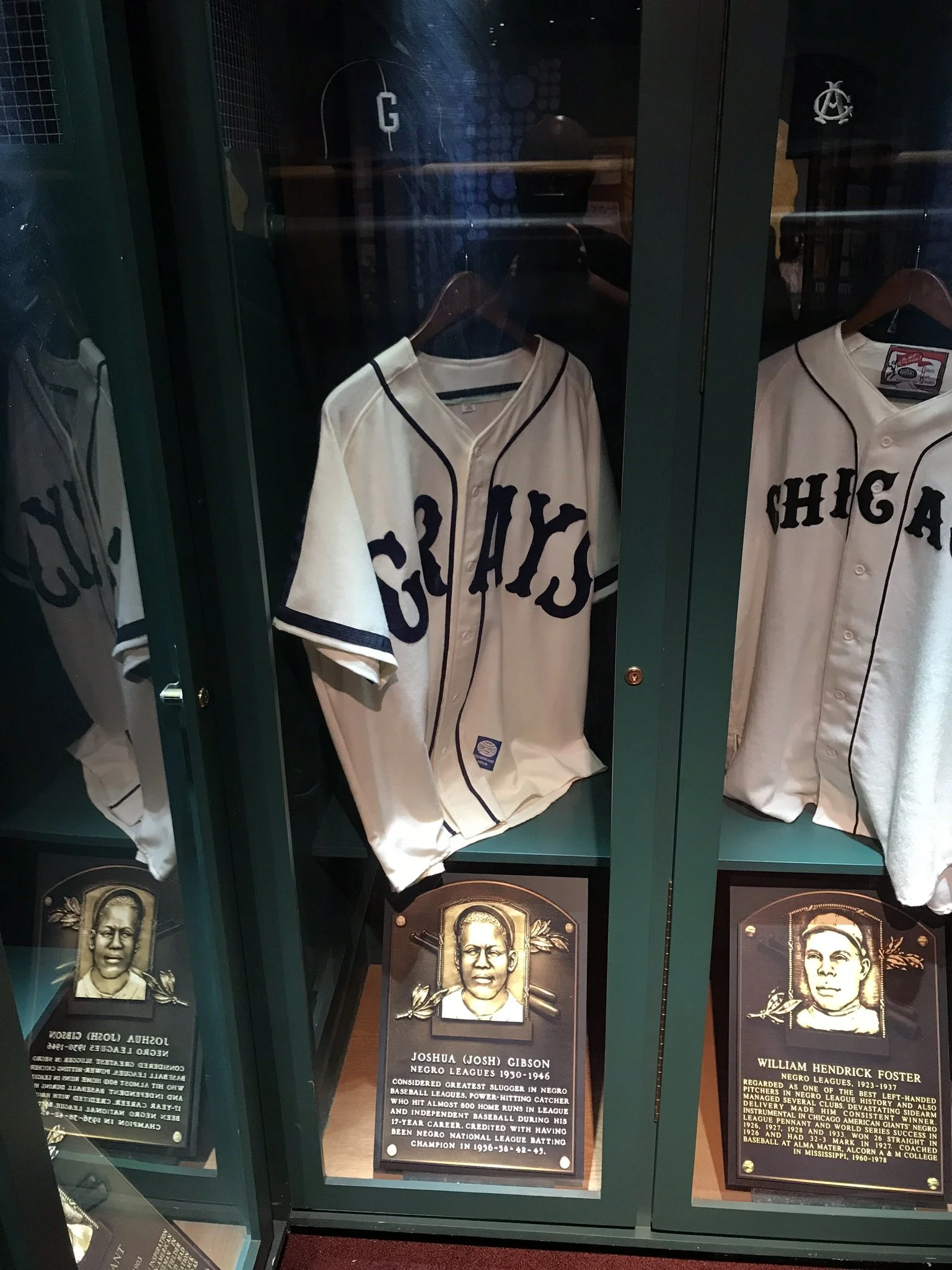
Lockers
Connecting the exhibits portion of the NLBMto the Field of Legends portion is a beautifully laid out locker room area, with high quality replicas of the many uniforms worn by Negro Leaguers who have been inducted into the Hall of Fame.
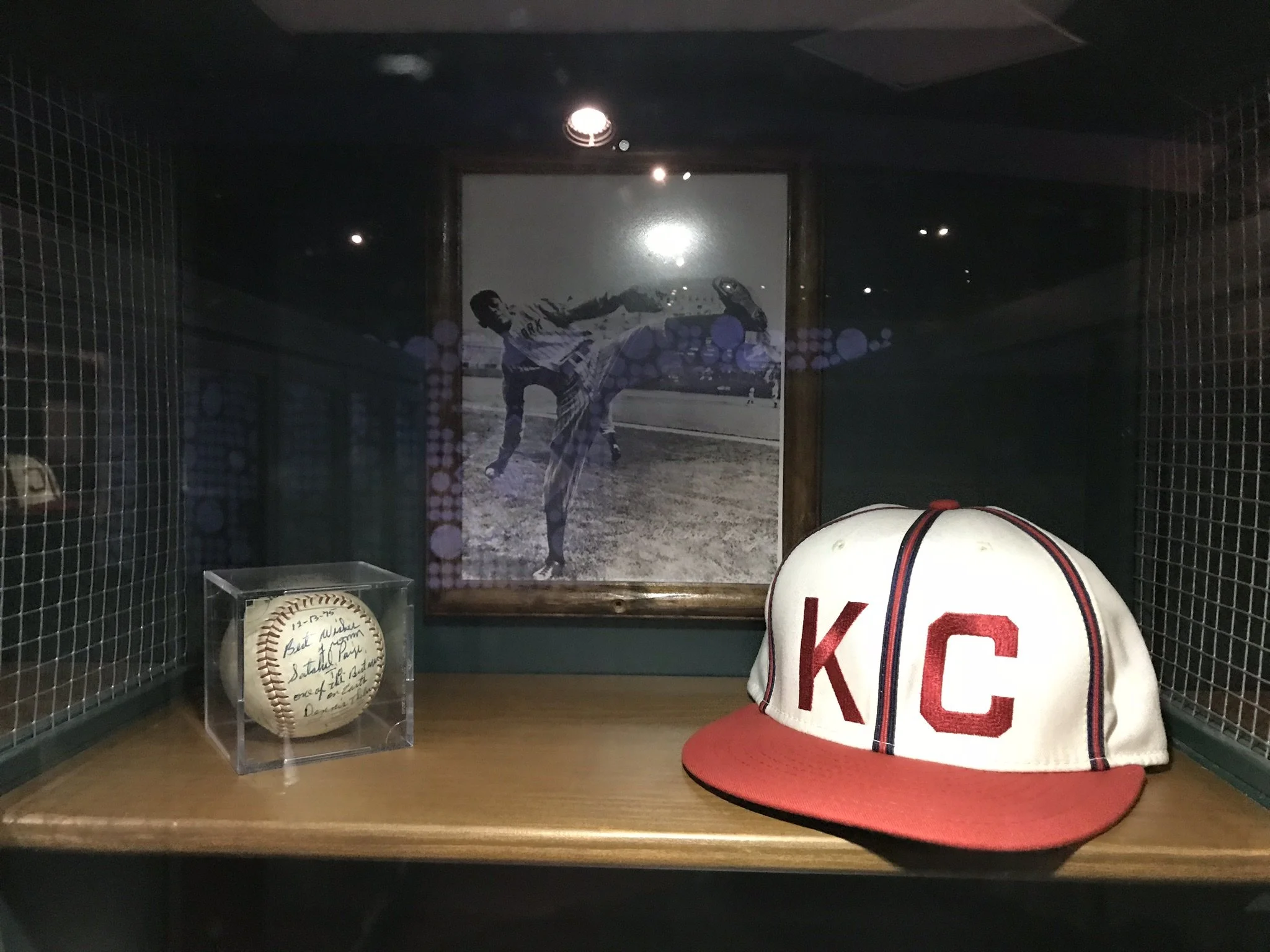
Top Of The Lockers
Each locker has the matching hat in the top shelf area, as well as any relevant artifacts relating to the player being honored. In this instance, a baseball with Satchel Paige’s autograph on it.
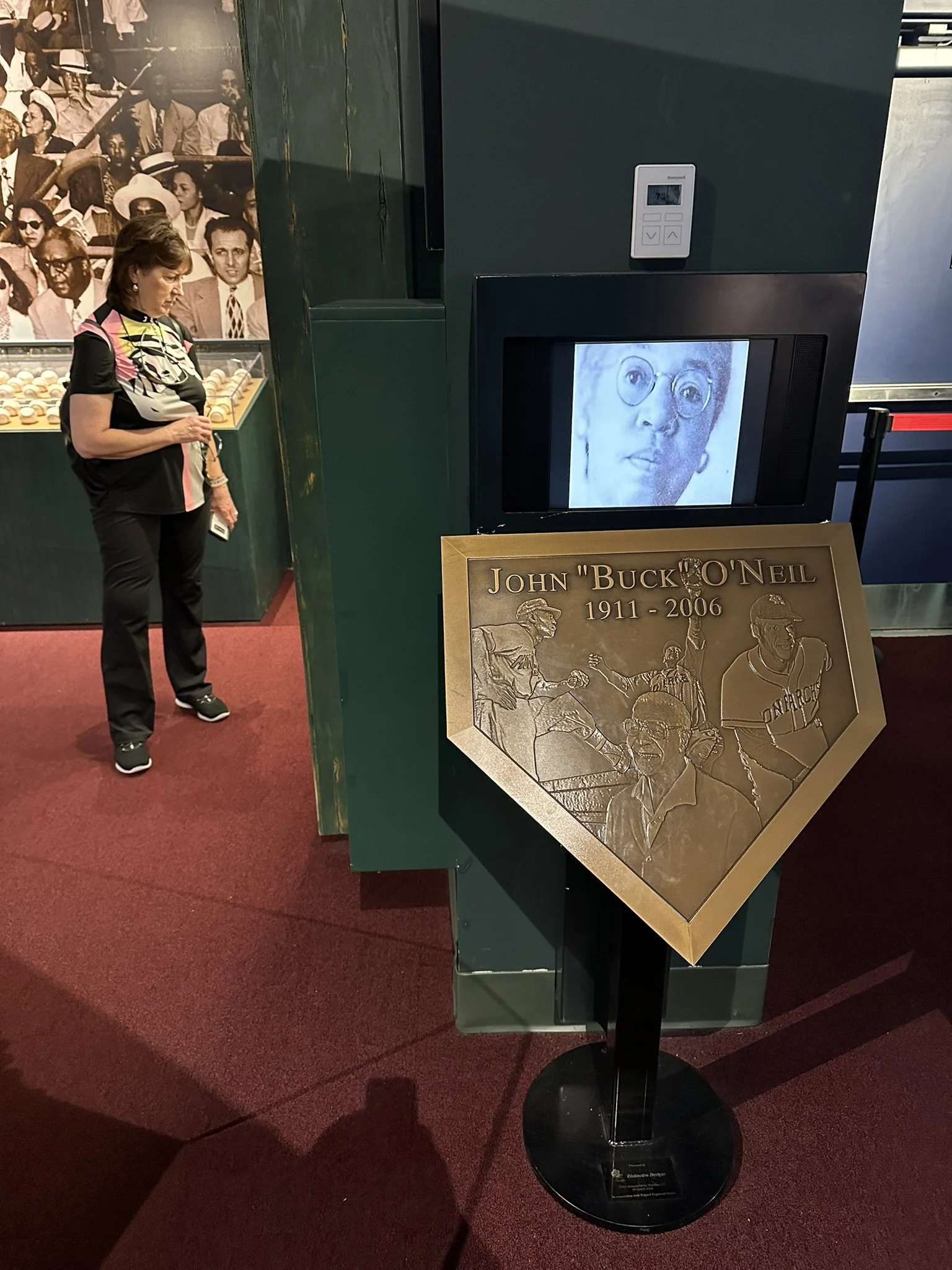
Geddy Lee Collection
You can see the case peeking out behind my mom, who is transfixed by the Buck O’Neil case just before the Field of Legends.
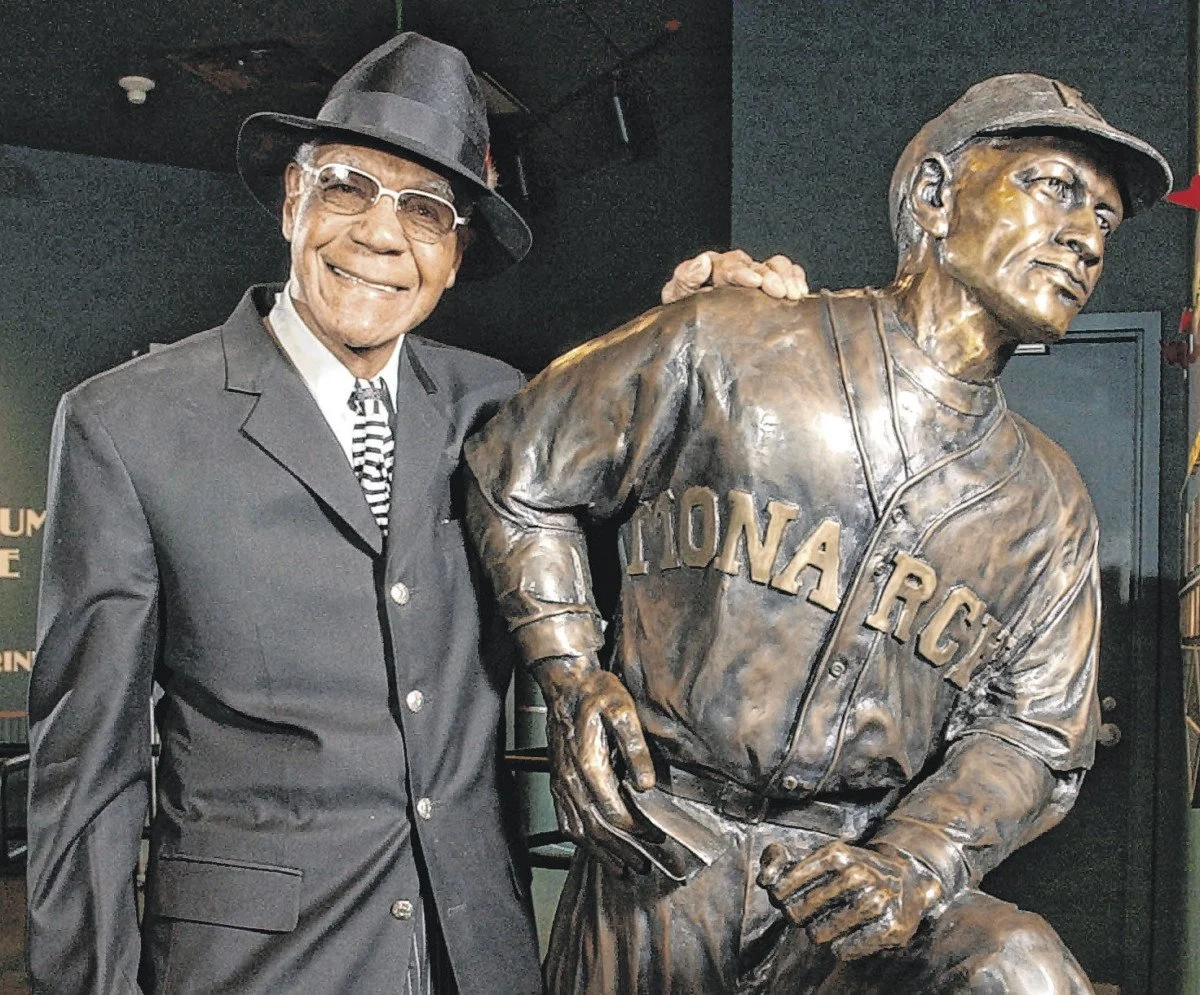
Buck O’Neil
It’s a shame neither of us ever got to meet him in person, but it was very special for both my mom and me to be inside the NLBM, knowing we were spending time in a place where Buck also spent so much time.
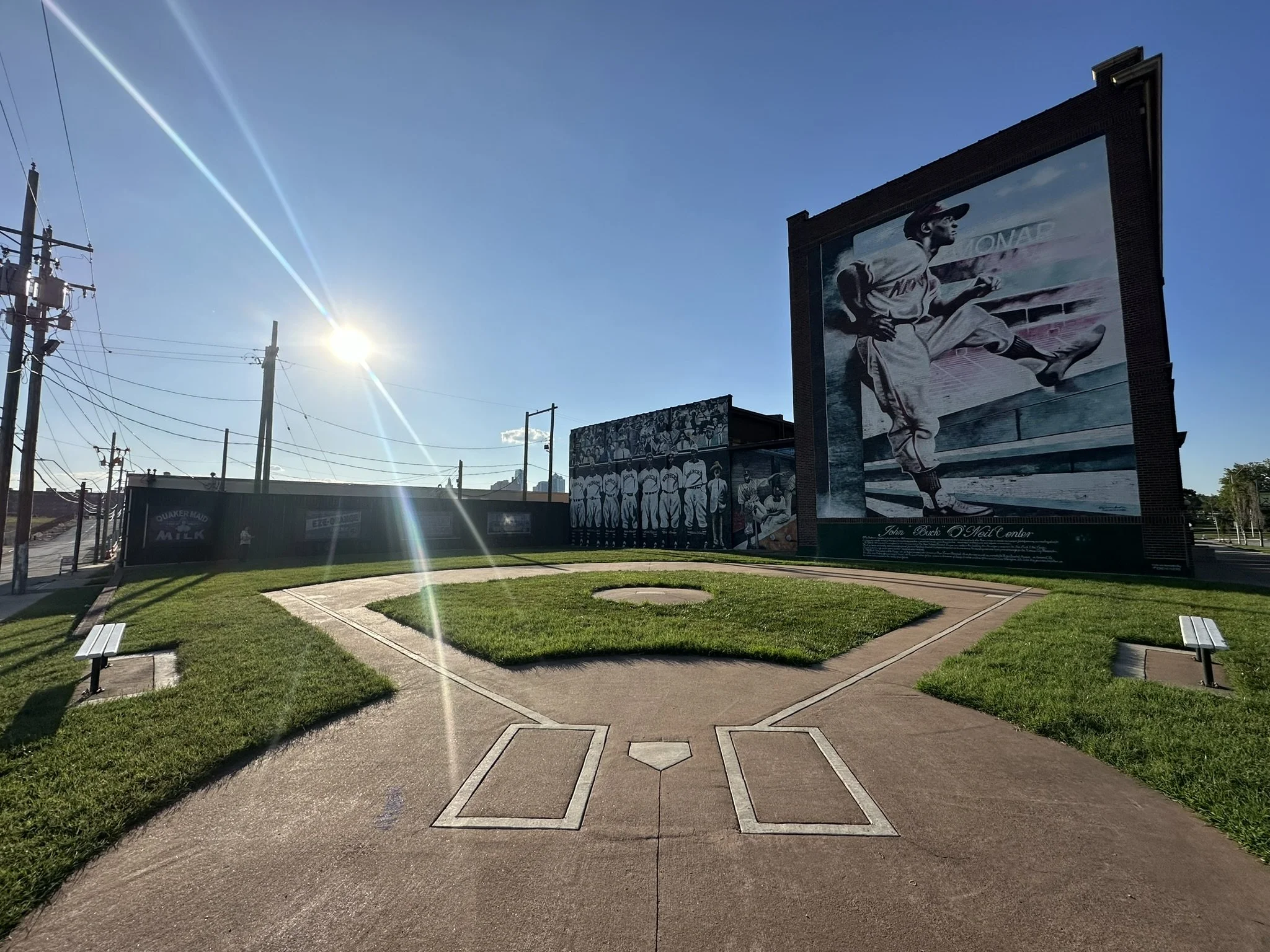
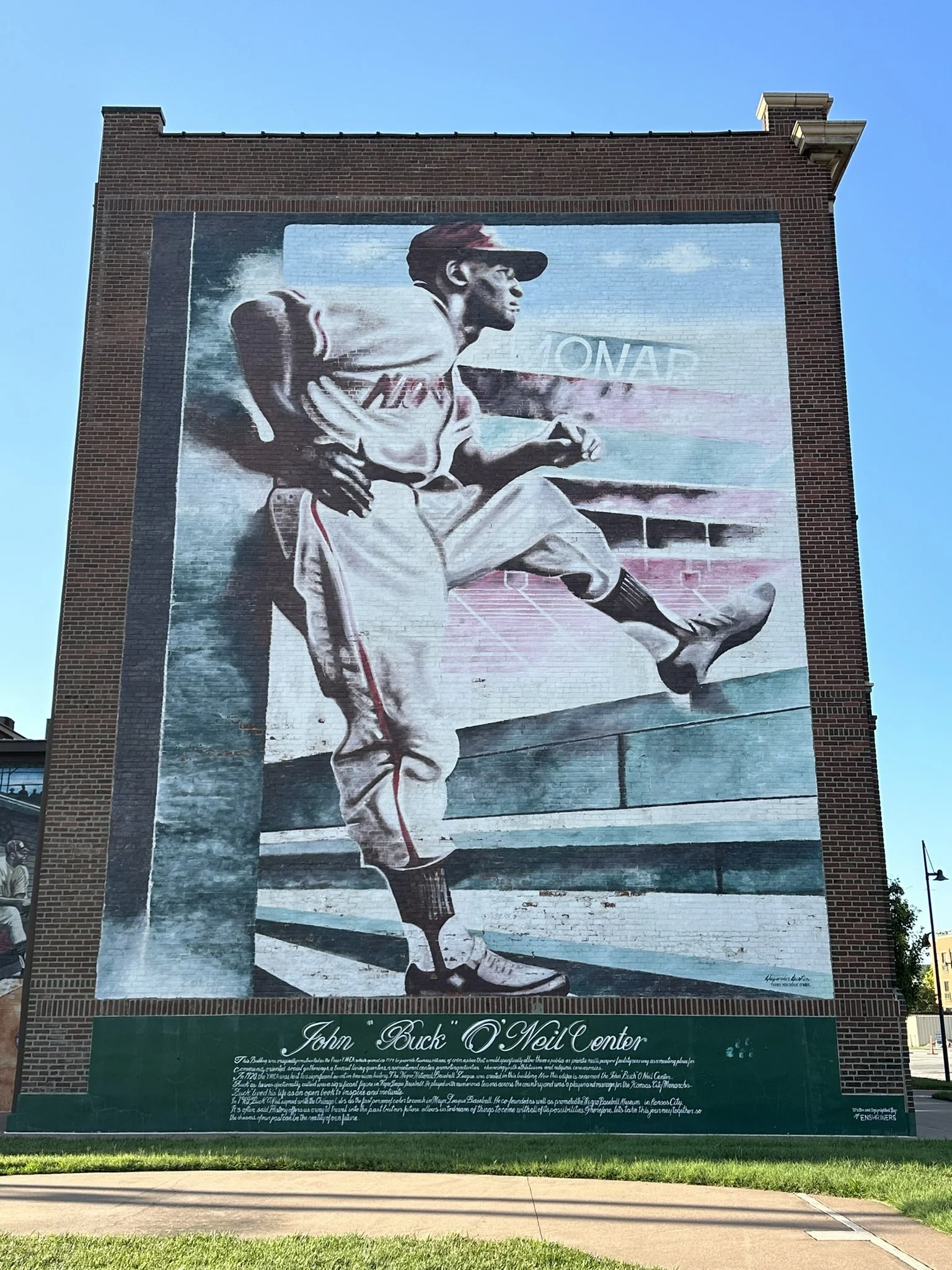
The writing underneath Buck’s 5-story mural reads:
John “Buck” O’Neil Center
This building was originally constructed as the Paseo YMCA which opened in 1914 to provide Kansas Citians of color a place that would specifically allow them a public or private multi-purpose facility serving as a meeting place for community oriented social gatherings, a transit living quarters, a recreational center promoting activities enhancing youth athleticism and religious ceremonies.
In 1920, the YMCA was host to a significant event in American history. The Negro National Baseball League was created in this building. Now this edifice is renamed the John “Buck” O’Neil Center.
“Buck,” as he was affectionately called, was a significant figure in Negro League baseball. He played with numerous teams across the country and was a player and manager for the Kansas City Monarchs.
“Buck” lived his life as an open book to inspire and motivate.
In 1962, “Buck” O’Neil signed with the Chicago Cubs as the first person of color to coach in Major League Baseball. He co-founded as well as promoted the Negro Baseball Museum in Kansas City.
It’s often said, History offers us a way to travel into the past but our future allows us to dream of things to come with all of its possibilities. Therefore, let’s take this journey together so the dreams of our past can be the reality of our future.
Marjorie Adams
Marjorie Adams’ great-grandfather, Doc Adams, wrote The Laws of Base Ball in 1857 which set many of the primary rules of the sport which are still followed to this day. He also invented the position of Shortstop during his playing career.
Marjorie was our guest for Episode 2 of Season 2. You can listen to that episode HERE.
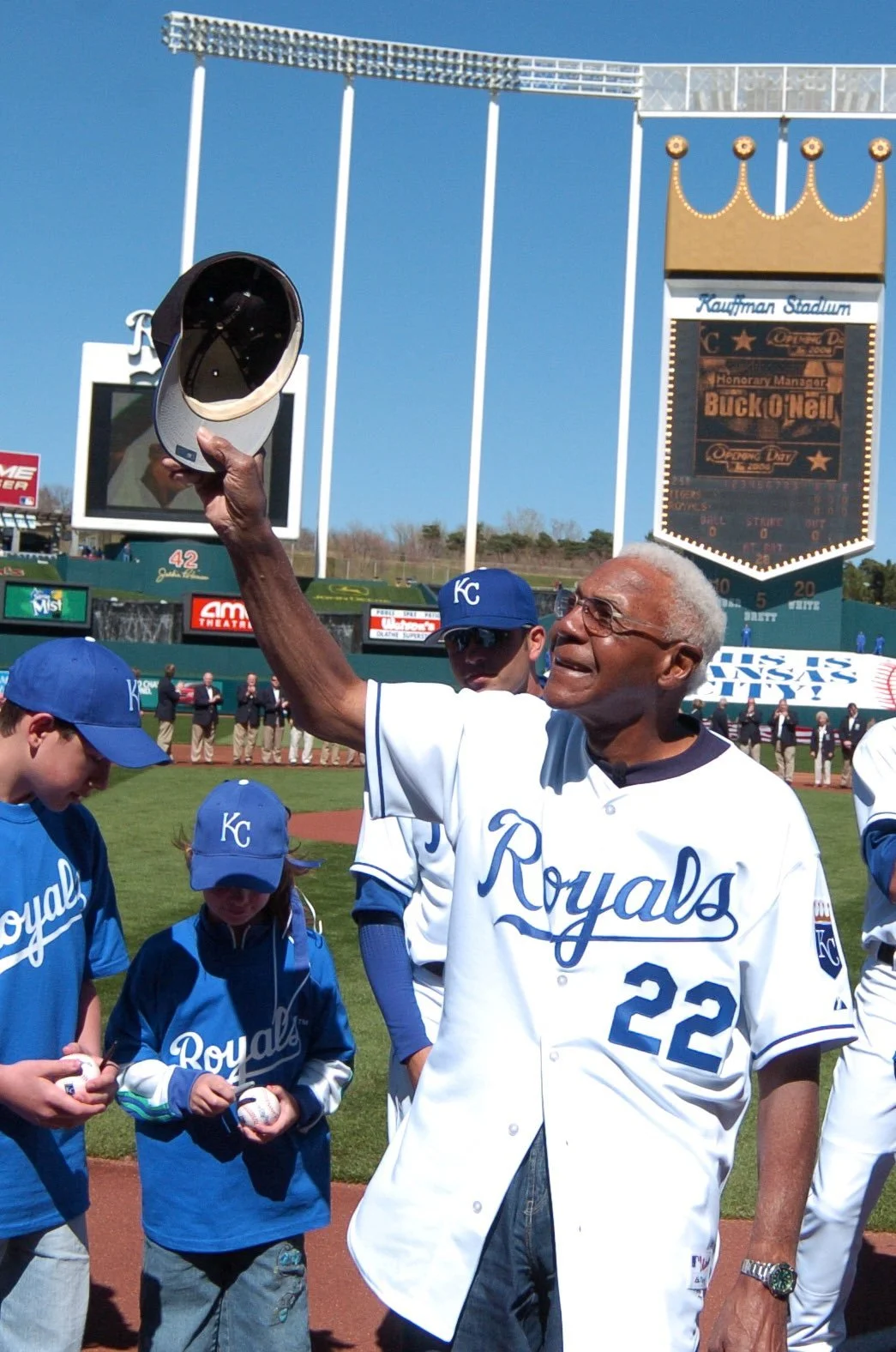
Royalty In His Own Right
While he may not have been inducted into the Hall of Fame while he was still alive, Buck O’Neil was very much aware of how loved he was before he passed.
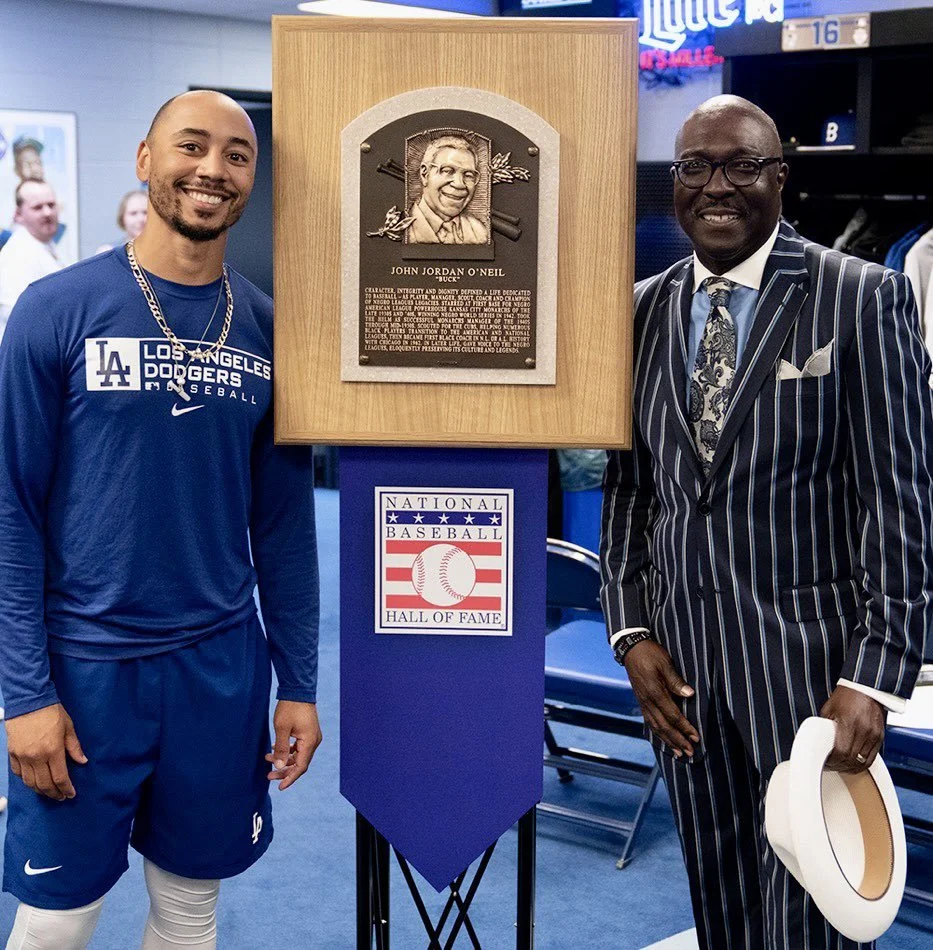
Still Loved To This Day
Buck is still so loved that it is special for people to even stand next to his Hall of Fame plaque, like Mookie Betts, who is well on his way to having a plaque of his own one day.
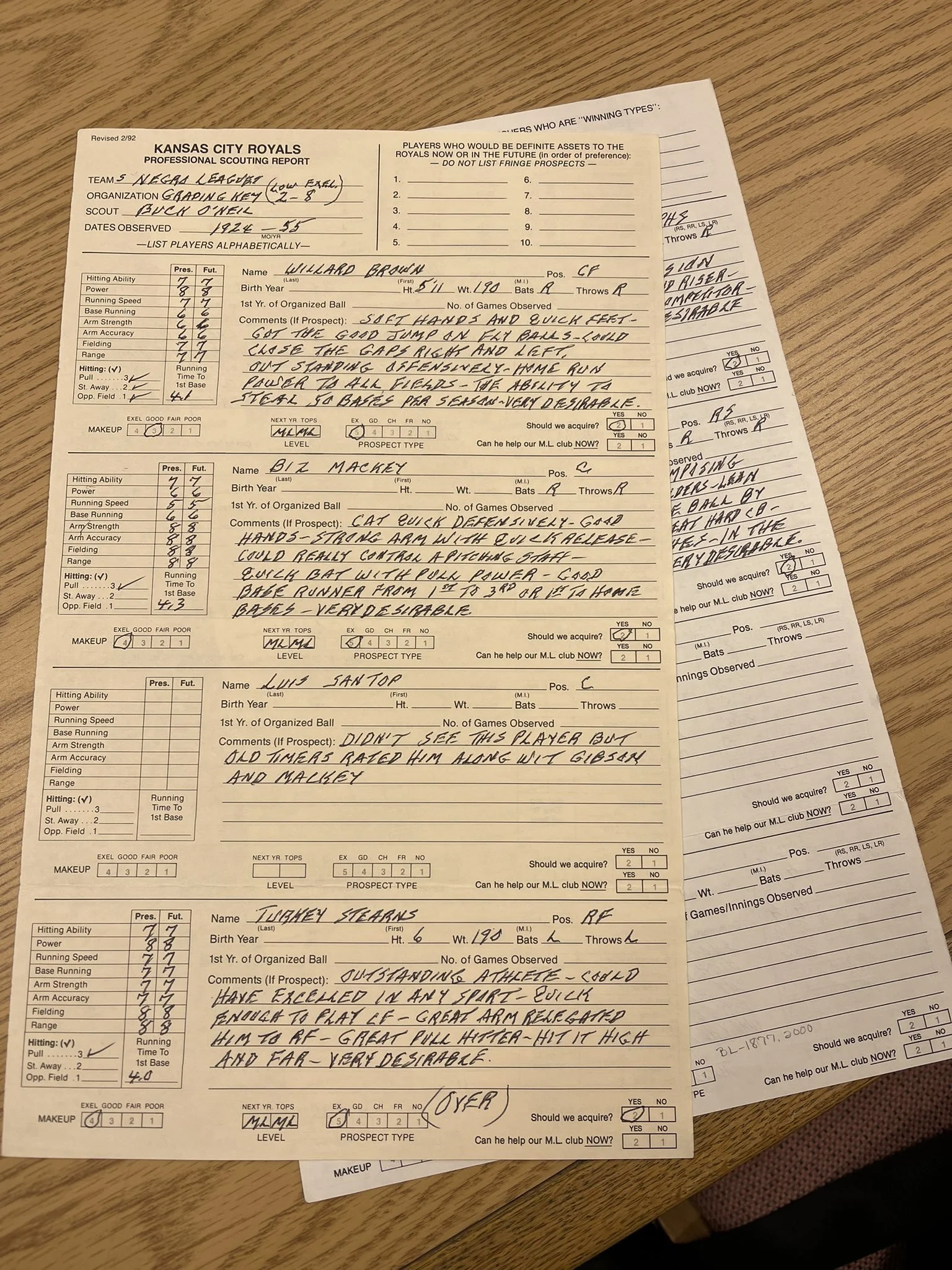
A Baseball Lifer
As Joe Posnanski writes:
“In the 1990s — I’m going to guess 1993 or 1994 — the Hall of Fame came to Buck and asked him to do scouting reports on Negro leaguers he thought belonged in the Hall of Fame. And he did 11 of them.
All 11 are now in the Hall of Fame — well, 12 if you count the author, Buck himself.”
You can read Joe’s entire article on them HERE.
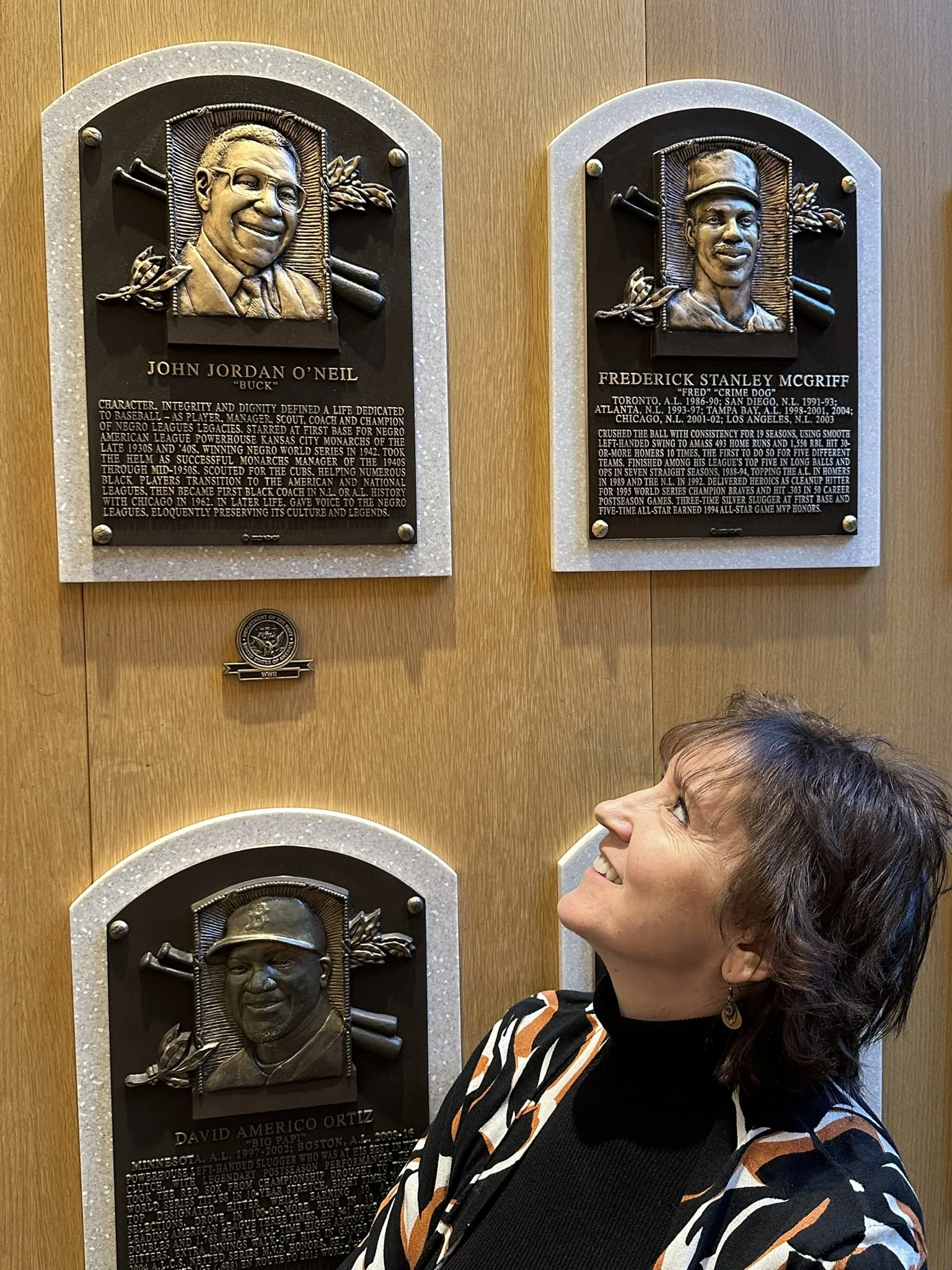
Buck’s HOF Plaque
One of the very first plaques my mom had on her list of ones she wanted to be sure to see when we visited the Hall of Fame was Buck O’Neil’s.
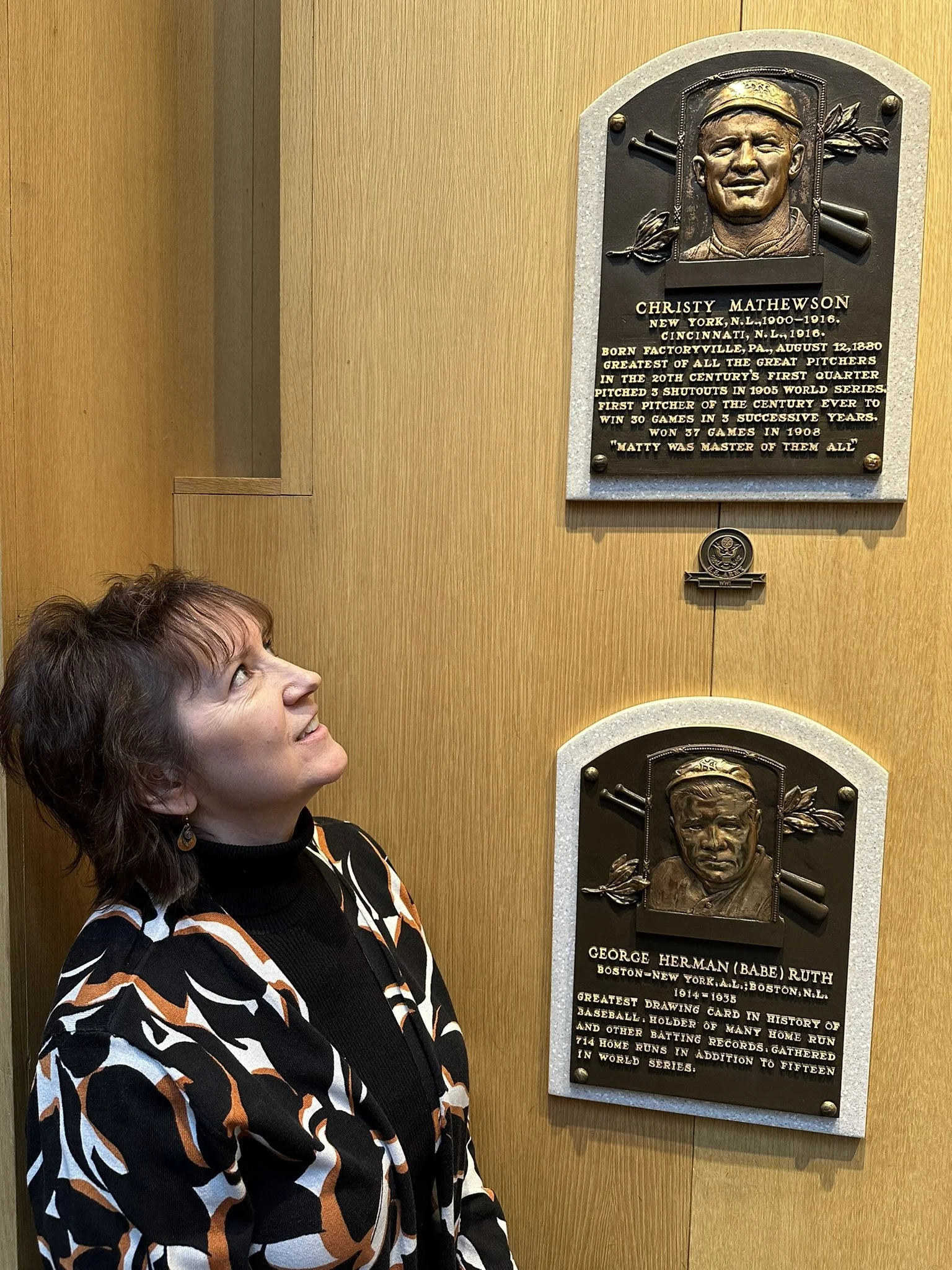
Christy Mathewson
If my mom could recreate with any baseball player the same year-long road trip Joe Posnanski took with Buck O’Neil which resulted in a book, she would choose to have Christy Mathewson with her, and Charles Conlon in the back seat to photograph the whole thing.
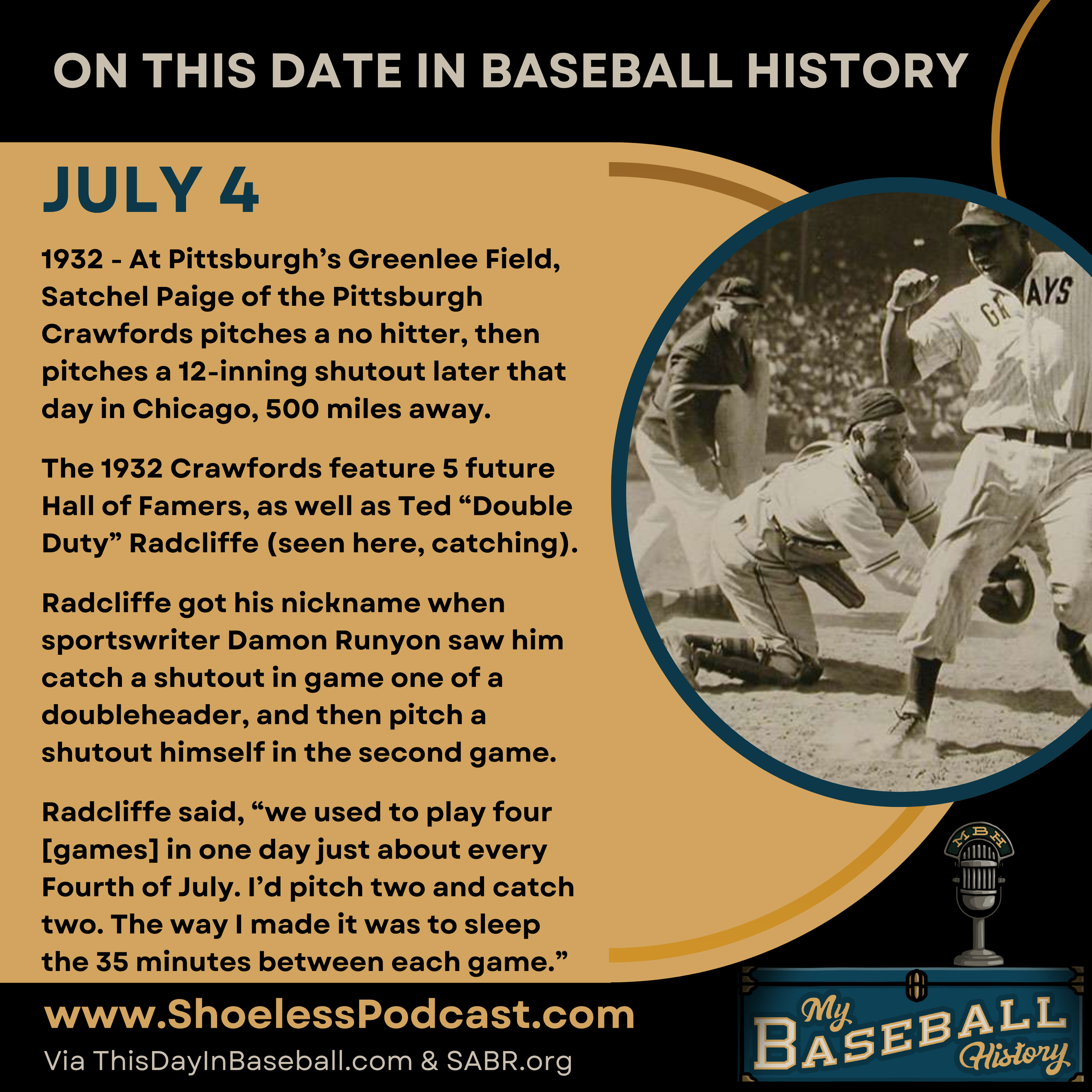
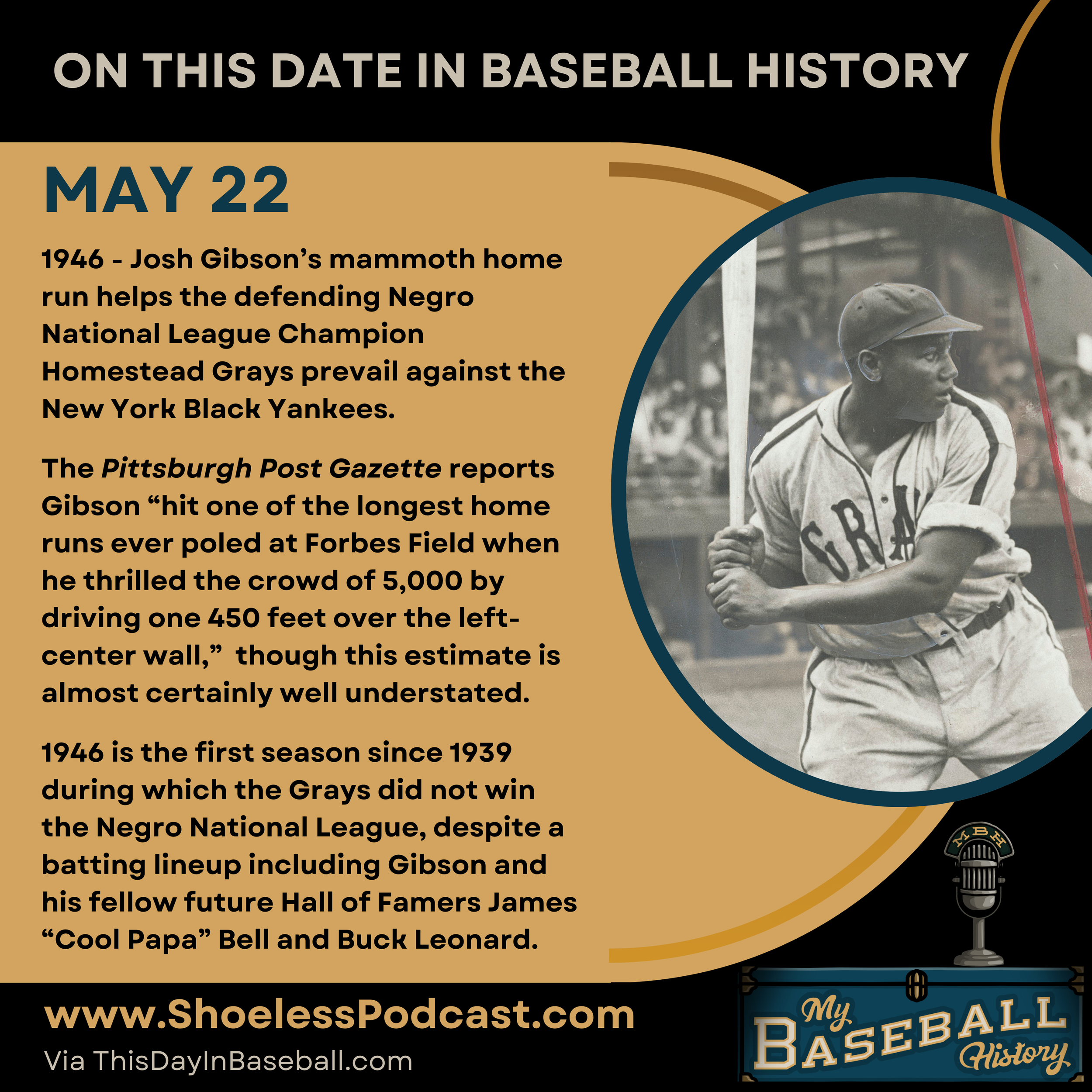
On This Date Posts
You’ve seen a handful of them throughout these liner notes, so you have an idea of the type of content you can expect every day if you aren’t already following My Baseball History on social media.
If you’d like to follow the show on your favorite platform, click one of the following links and it will take you right to our profile.
Join Our Email Newsletter
It’s free, and it’ll give you some bonus content throughout the month that you won’t get from the podcast episodes or by following any of our other social media platforms.
We put out new issues on the second Friday and the fourth Friday of every month. No more, no less.
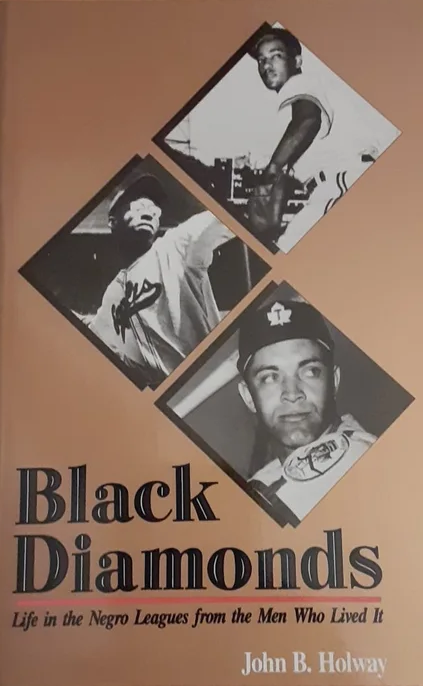
Giveaway Contest Prize
Want to win a copy of John B. Holway’s incredible book, Black Diamonds: Life In The Negro Leagues From The Men Who Lived It, which is an oral history featuring interviews with a dozen former Negro Leaguers, including, among others, Chet Brewer, Willard “Home Run” Brown, and John “Buck” O’Neil?
Of course you do.
Follow us on twitter HERE or on bluesky HERE for your chance to win.
Don’t want to risk not winning the contest? You can buy your own copy HERE.
John B. Holway
As Peter Warren writes: John Holway was a pioneer in researching baseball in the Negro Leagues and Japan, which earned him acclaim as a recipient of two of the Society for American Baseball Research’s most prestigious awards.
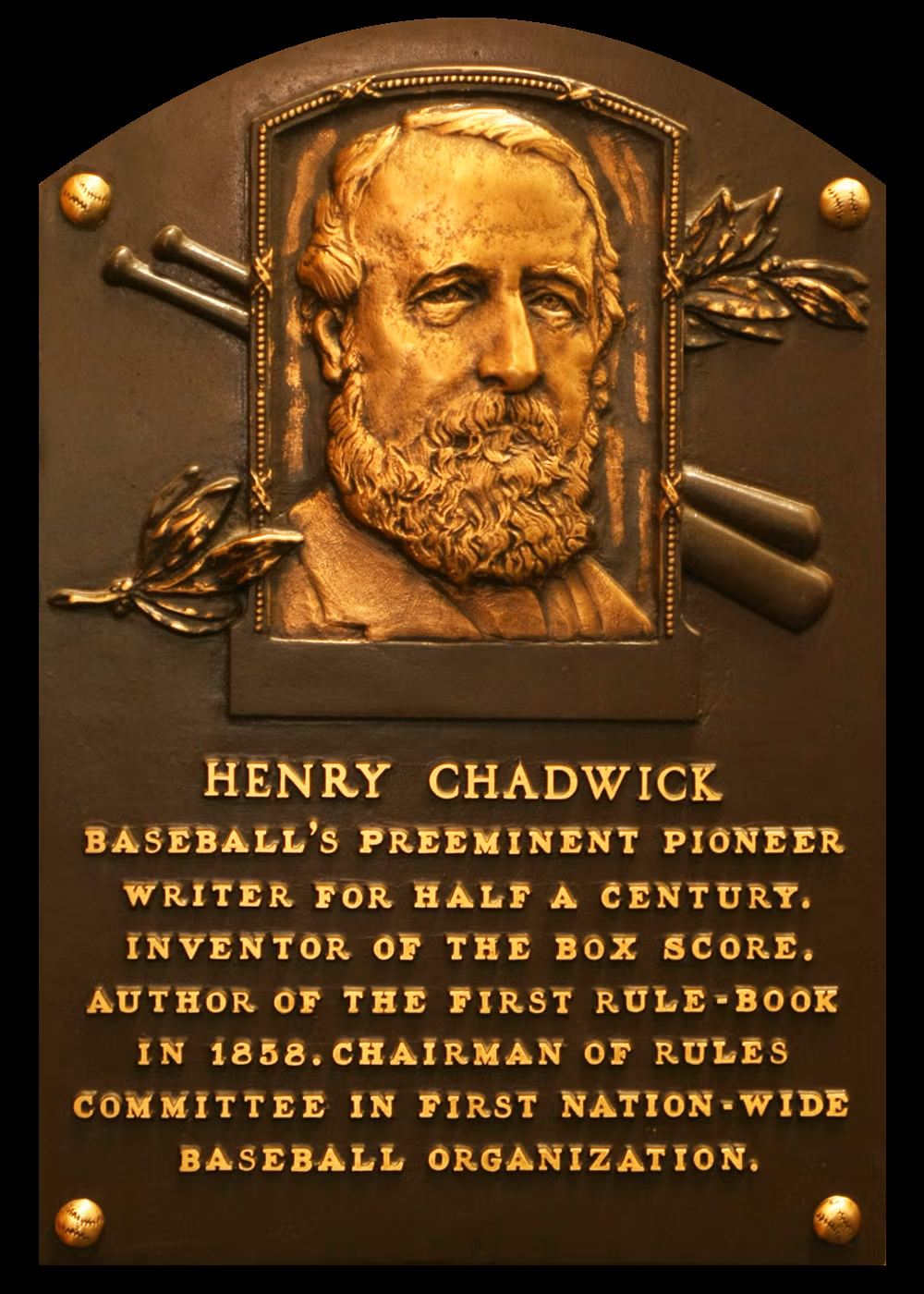
Henry Chadwick Award
In 2011, he won SABR’s Henry Chadwick Award, which was established in November 2009 to honor baseball’s great researchers for their invaluable contributions to making baseball the game that links America’s present with its past.
Since 2010 when the award was given out for the first time, there have been a total of 68 historians, statisticians, analysts, and archivists to have received it, from early 20th century names like J.G. Taylor Spink and F.C. Lane, to more contemporary names like Mark Armour and Gary Ashwill.
Bob Davids Award
In 1990, John Holway also won the Bob Davids Award, which honors SABR members whose contributions to SABR and baseball reflect the ingenuity, integrity, and self-sacrifice of the founder and past president of the Society for American Baseball Research, L. Robert “Bob” Davids.
The Bob Davids Award is considered SABR’s highest honor and is awarded each year at the annual convention. It was established by the Board of Directors in 1985, which means there have now been 41 recipients. People like Bill Nowlin (seen here, with the award), Leslie Heaphy, and the official historian of Major League Baseball, John Thorn, to friends of the show Stew Thornley and Larry Lester, who won in back-to-back years in 2016 and 2017, respectively.
Stew was our guest for Episode 9 of Season 3. You can listen to that episode HERE.
Eight Decades
Speaking of John Thorn, in 2011, he wrote this:
“John Holway has been researching baseball since 1944. Few, if any, may boast longer or more noteworthy contributions to baseball research.” Because of Holway, Thorn wrote, knowledge and understanding of the Negro Leagues grew exponentially.
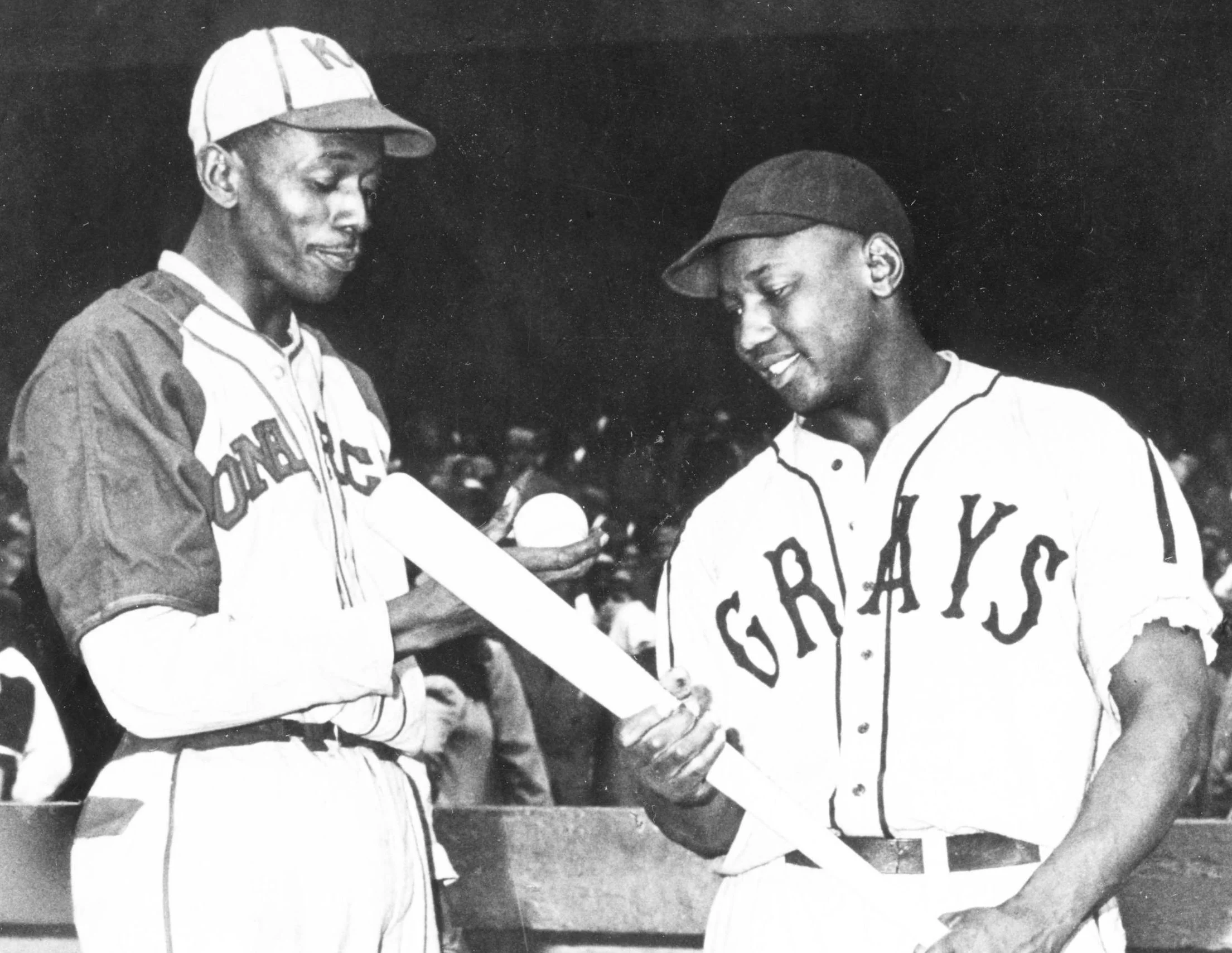
Where It All Began
Back to Peter Warren, who writes:
Holway’s contributions to Negro Leagues research were influential for generations of future scholars. His interest in Black baseball began in 1945, when, as a teenager, he attended a game between the Kansas City Monarchs and Homestead Grays at Griffith Stadium in Washington, DC.
Holway recalled the matchup between two all-time greats in a May, 2020 SABR Oral History interview conducted by Bill Nowlin.
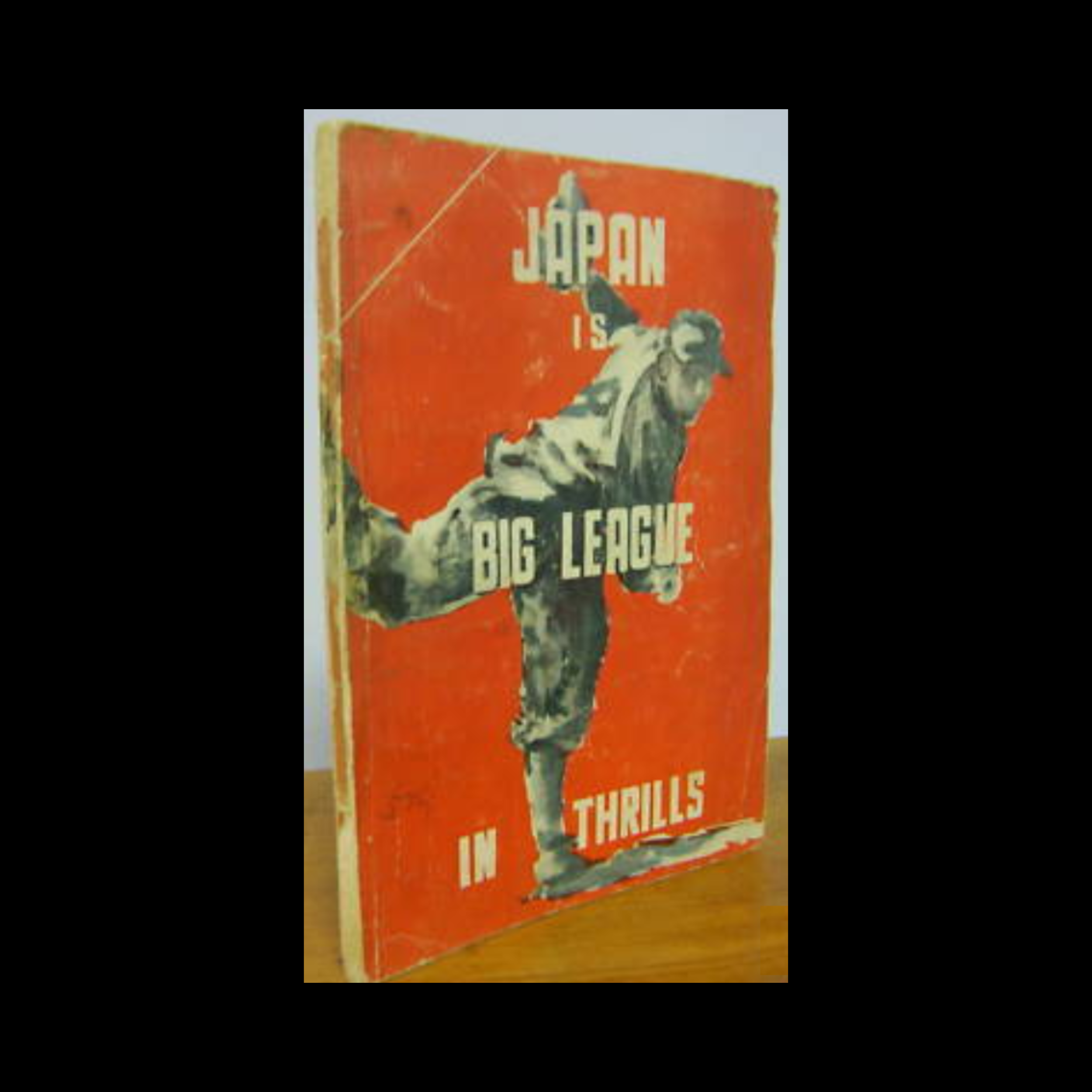
Japan
That experience prompted a lifetime of research and writing. After graduating from the University of Iowa, Holway served as a first lieutenant in the US Army during the Korean War. He was wounded, which earned him a Purple Heart, and was sent to Japan for the duration of his service, retiring as a colonel. He remained in Tokyo after the conflict ended, where he met Motoko Mori; the two married in 1954.
He also became a big fan of Japanese baseball while abroad. In 1954, he published the first book ever written in English on the sport in Japan: Japan Is Big League In Thrills.
Sumo
Holway also wrote the first English-language book on sumo wrestling, Sumo, in 1955 before returning to the United States.
Holway decided to write a story on slugging catcher Josh Gibson, which appeared in the Washington Post and other syndicated newspapers in 1970.
Holway started making calls to people who knew Gibson, and soon he began traveling across the country to interview many then-living Negro League stars, including Satchel Paige, Buck Leonard, and Cool Papa Bell.
You can buy a copy of the very rare Sumo HERE.
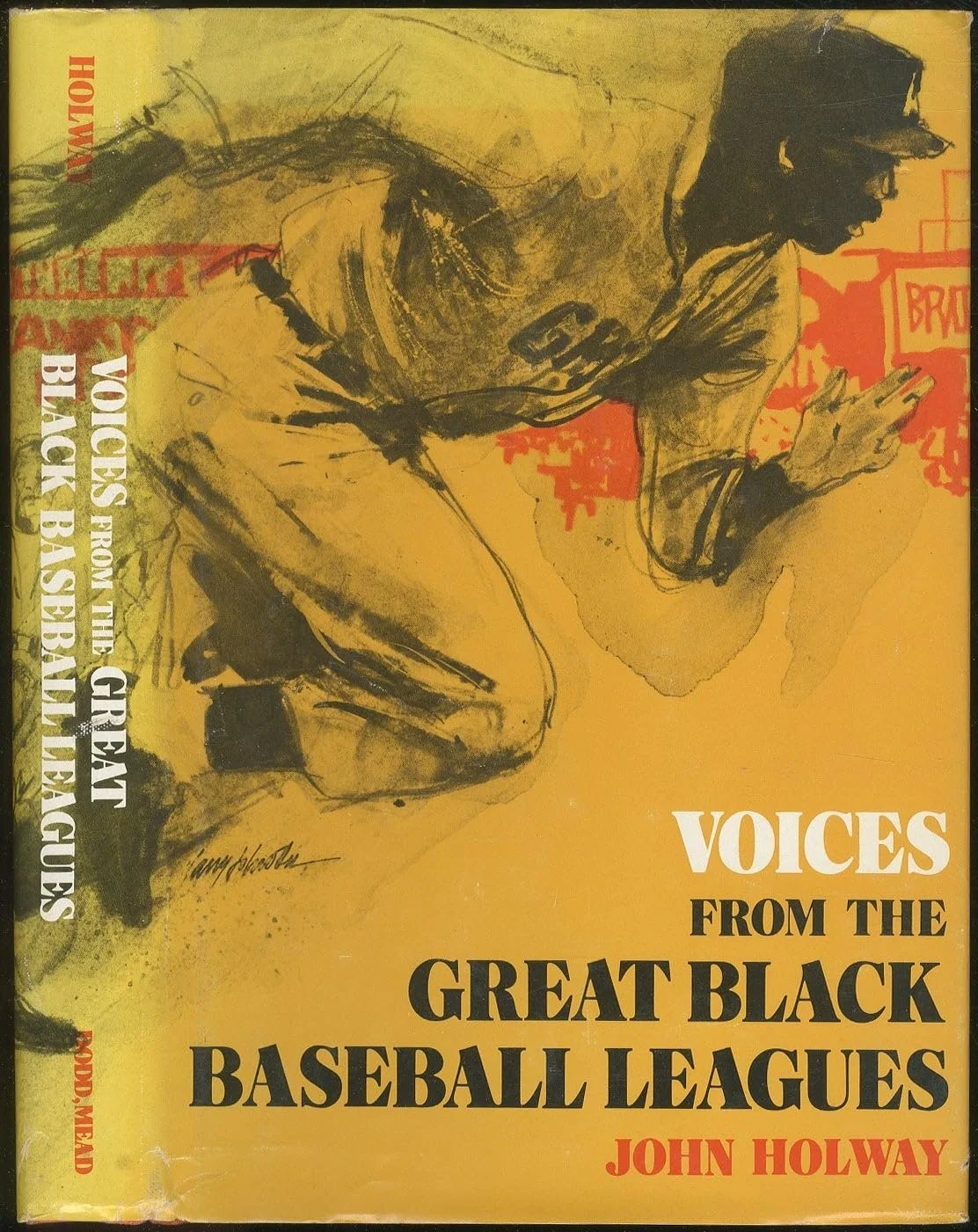
Not A Mere Footnote
Those interviews formed the basis of his groundbreaking 1975 book, Voices From the Great Black Baseball Leagues, which brought the history and impact of the Negro Leagues to a wider audience.
“From what I had stumbled on by accident was a virtually unexplored continent,” he wrote in the book’s introduction. “The world of black baseball history was not a mere footnote to baseball history — it was fully half of baseball history.”
Buy a 1st edition hardcover copy HERE.
Buy a paperback copy HERE.
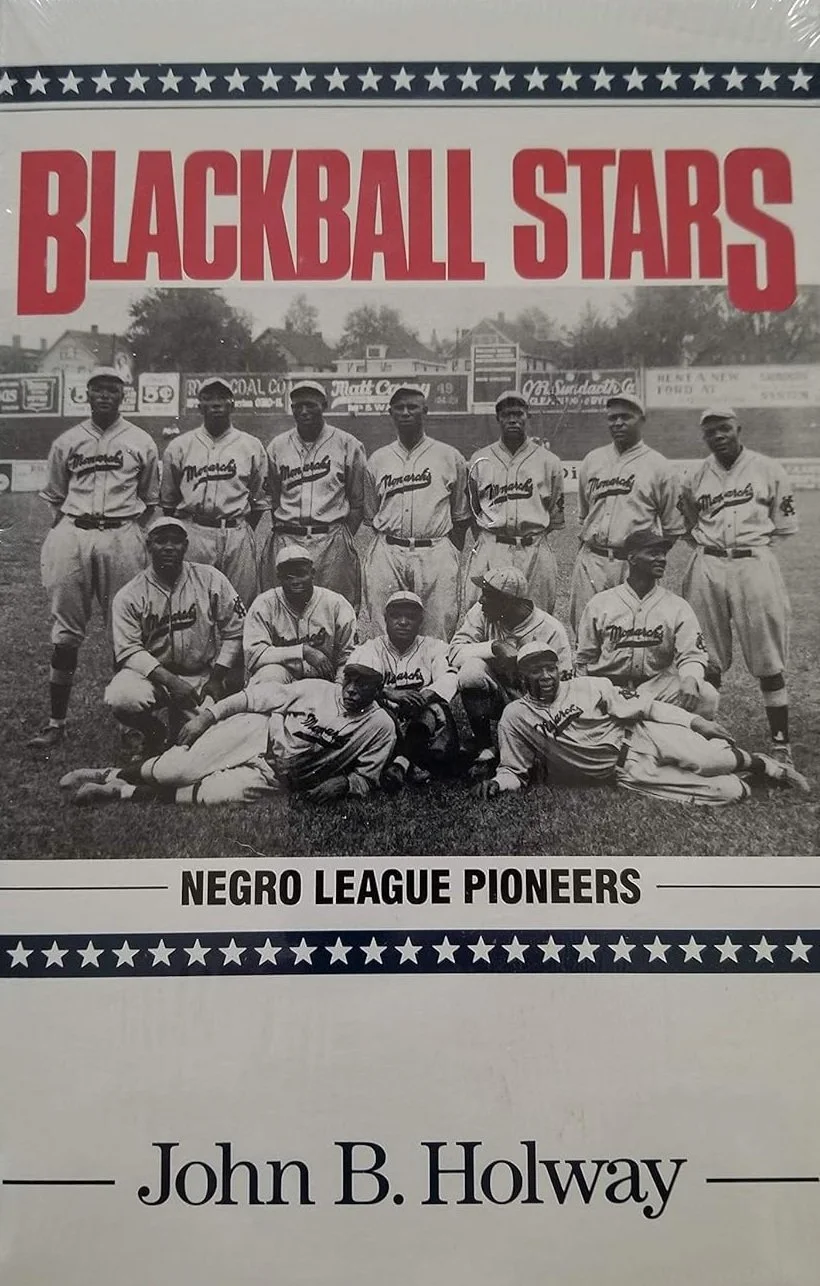
Holway’s Other Titles
Holway’s research helped bring the stories of the Negro Leagues into the mainstream, and he continued writing articles and books on the subject for the rest of his life.
Buy Blackball Stars: Negro League Pioneers, which received the 1988 CASEY Award for the best baseball book of the year, HERE.
Buy The Complete Book of the Negro Leagues HERE.
Buy Josh Gibson HERE.
Buy Josh and Satch HERE.
Buy Ted Williams: The Last .400 Hitter HERE.
Buy Ted The Kid HERE.
Buy The Baseball Astrologer: And Other Weird Tales HERE.
Buy Red Tails Black Wings: The Men of America's Black Air Force HERE.
Buy Red Tails: An Oral History of the Tuskegee Airmen HERE.
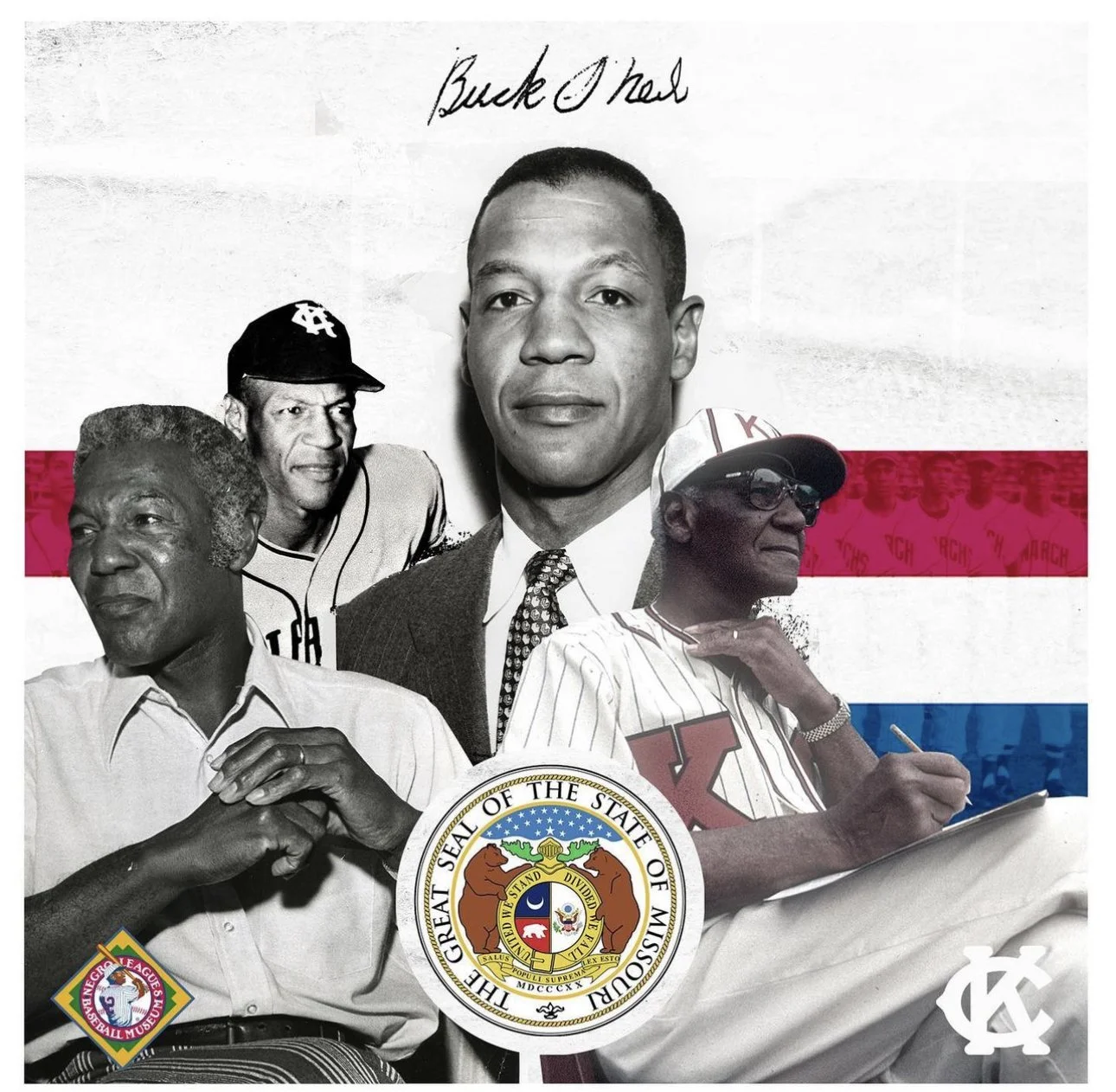
Everything Happens For A Reason
It was through books with John Holway and Steve Wulf that led to Buck O’Neil’s appearance in the Ken Burns baseball documentary.
The success of that documentary helped bring attention to the Negro Leagues and the Negro Leagues Baseball Museum. It’s not a stretch to say that that’s one of the reasons we were able to talk with Bob Kendrick for this interview today.
Buy Black Diamonds: Life in the Negro Leagues from the Men Who Lived It by John B. Holway HERE.
Buy I Was Right On Time by Buck O’Neil and Steve Wulf HERE.
Oral Histories
After eight decades of researching, writing, documenting, and archiving, John Bartlett Holway passed away on December 5, 2024, at the age of 95.
If you’re a fan of Lawrence Ritter’s brilliant book The Glory Of Their Times, or other oral history style books like that, you’re going to love the work of John Holway.
There’s a very real chance this episode doesn’t exist without him.
Buy The Glory of Their Times: The Story of the Early Days of Baseball Told by the Men Who Played It by Lawrence Ritter HERE.
Support My Baseball History
If you don’t have PayPal and want to send a donation through Venmo, Zelle, Cash App, or any other platform, email me at shoelesspodcast@gmail.com and I’ll send you directions for whichever method you prefer.
We appreciate you being here.