
0507 - Maybelle Blair
Maybelle Blair is a women’s baseball pioneer who is a former player in the All-American Girls Professional Baseball League with the Peoria Redwings. During our conversation, she referenced a handful of things and people upon which you may want to do more research. Consider this page to be your “liner notes” for the episode so you can follow along.
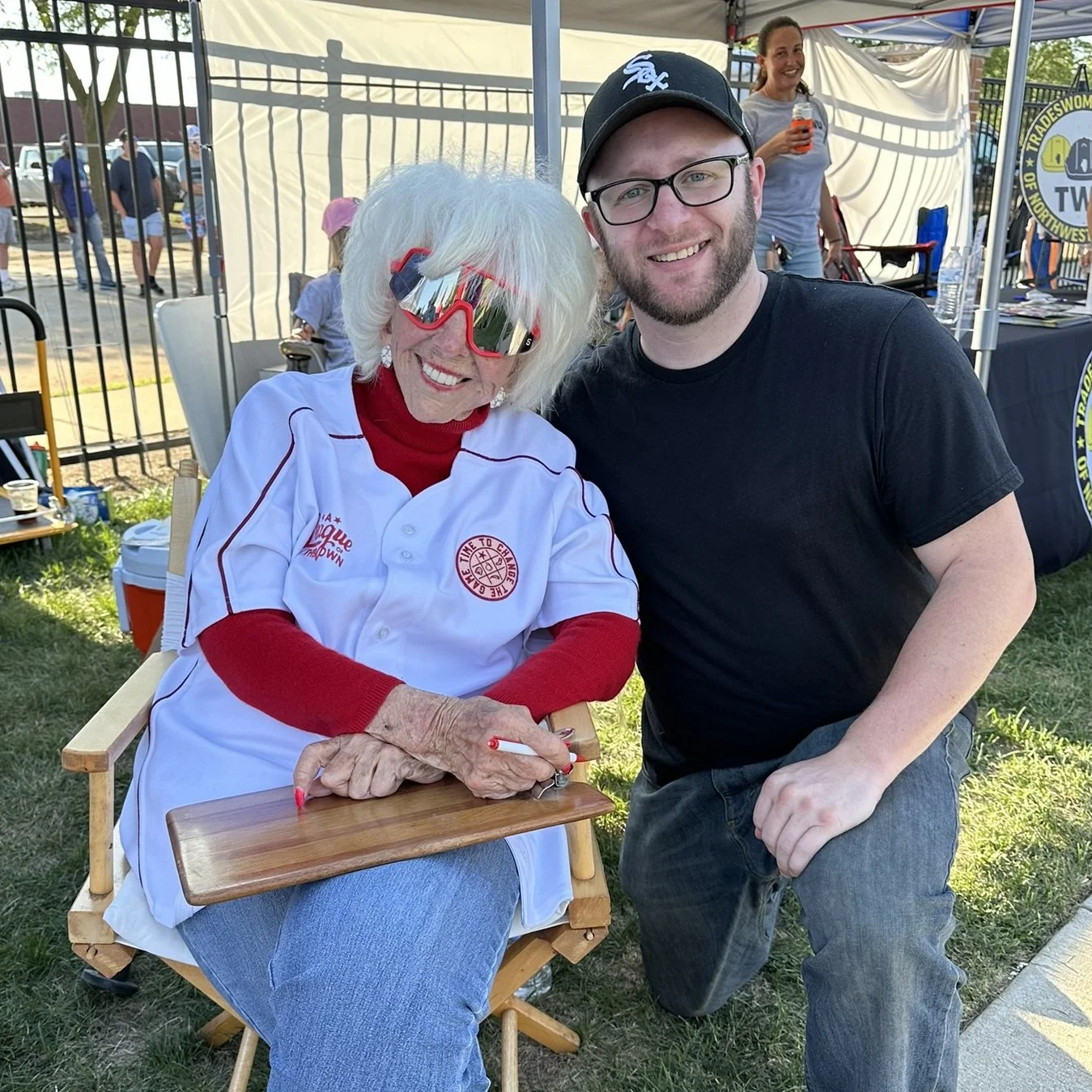
Maybelle Blair and I at Beyer Stadium in Rockford, Illinois
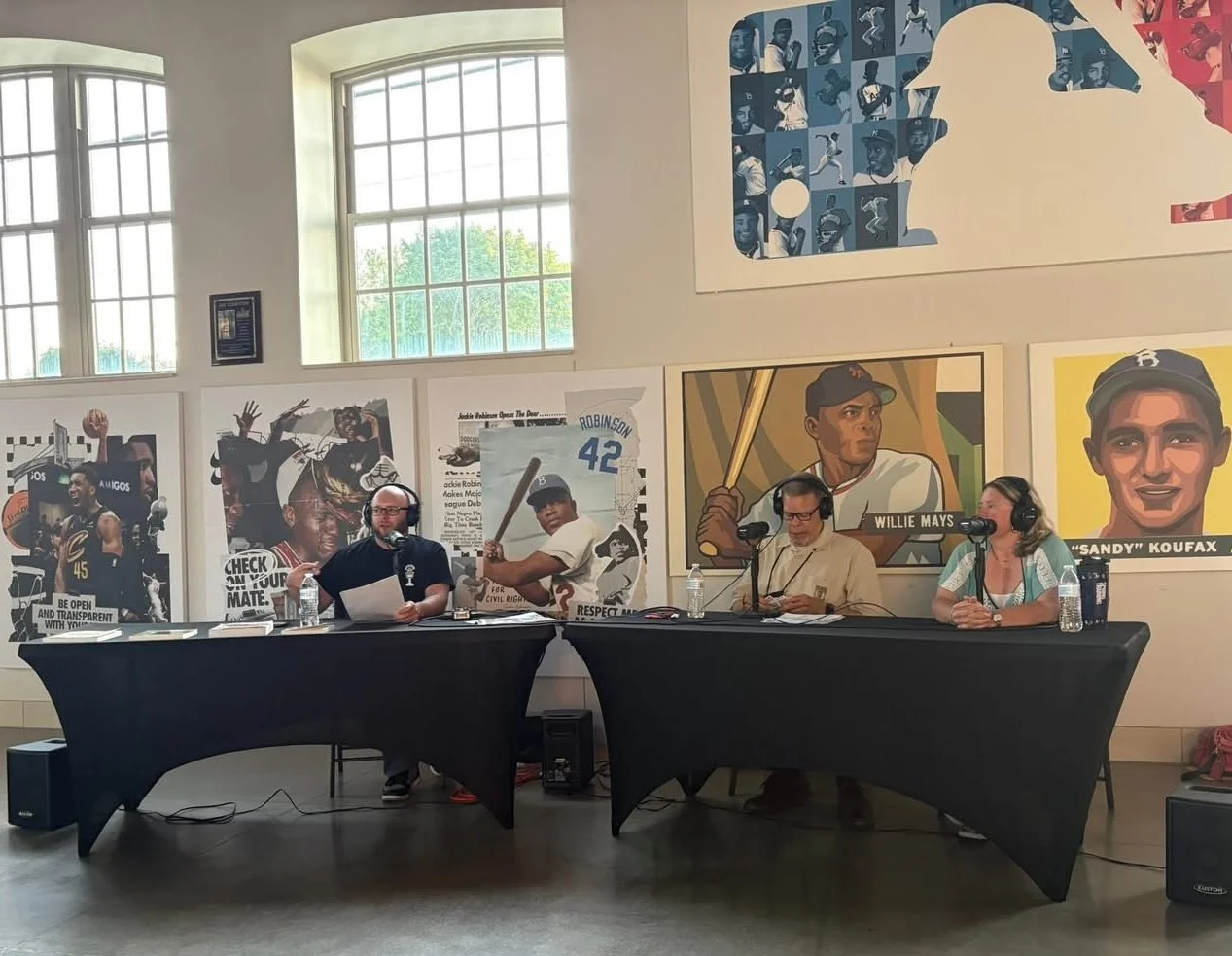
Live Taping of MBH
Jay Wigley has been a longtime listener and supporter of My Baseball History. Even though he lives in Knoxville, Tennessee, he made the trip to Cleveland in the summer of 2025 to be in attendance for the live taping I hosted at League Park which turned into the episode with Larry Lester and Stephanie Liscio.
If you haven’t already heard that discussion, whose primary focus was the Negro Leagues in the 1940s, you can listen to it by clicking HERE.
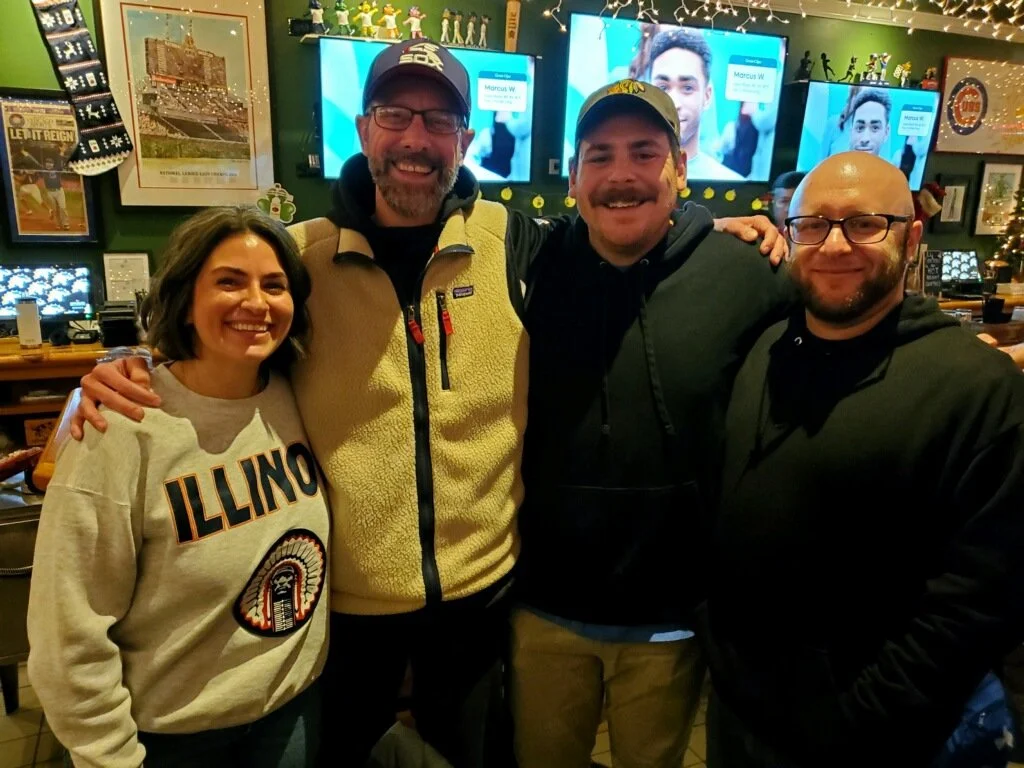
Yak-Zie’s
Jay told me he has even used recommendations I’ve made on the podcast while he’s been traveling, making it a point to go visit Yak-Zie’s, the bar I used to work at, when he was in Wrigleyville for a Cubs game.
If this is a new recommendation for you, ask for Leah (she’s on the left) and make sure you get the wings.
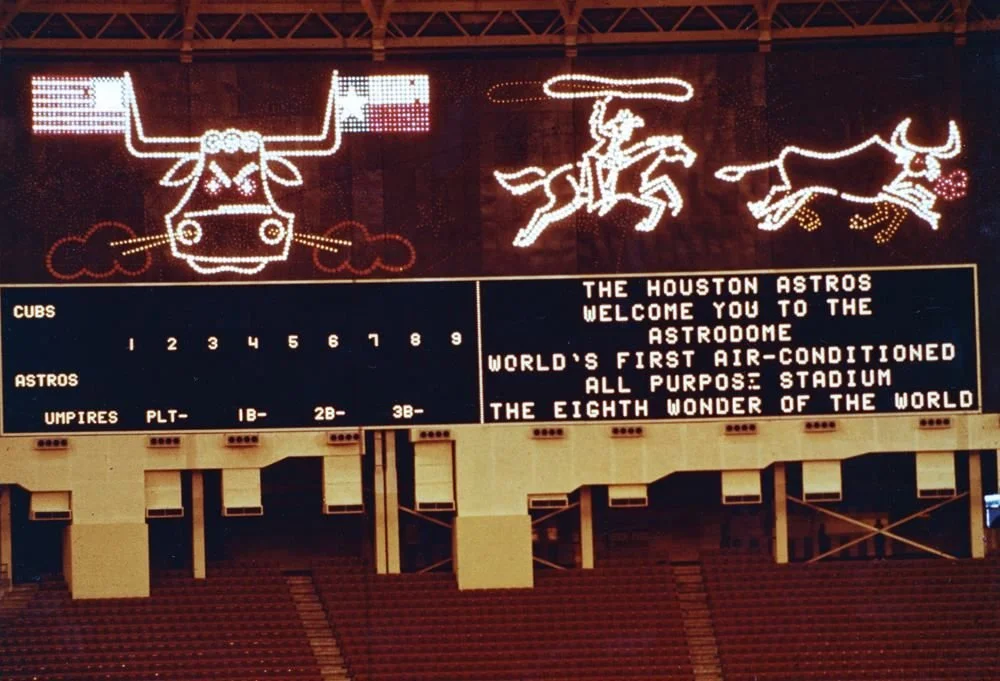
Astrodome Scoreboard
Jay’s earliest baseball memory is of the scoreboard animations at the Astrodome in the summer of 1972, and he first discovered Retrosheet in 1996. He wondered how such a thing was even possible. After spending years researching and writing his book, now he knows.
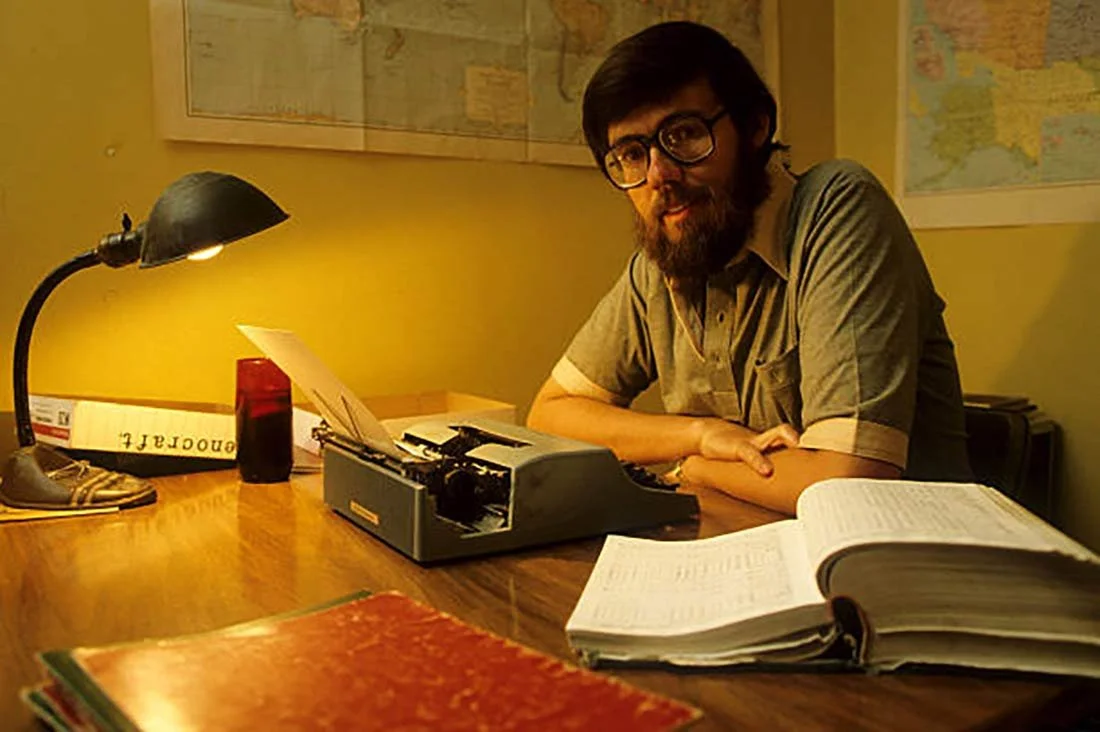
Project Scoresheet
Building on momentum begun by Bill James' Project Scoresheet in 1984, Dr. David Smith, a biology professor at the University of Delaware, brought together a host of like-minded individuals to compile an accessible database of statistical information previously unavailable to the general public.
Retrosheet
Dave Smith founded Retrosheet in 1989, with the box scores of 7,000 games in his Delaware basement, but more than 130,000 others were scattered across the country — moldering in team archives, or stacked in sportswriters' attics, each of them at risk of being thrown away forever.
Retrosheet had no funding. No institutional support. It was just one fan with an impossible vision: to save baseball's history before it disappeared.
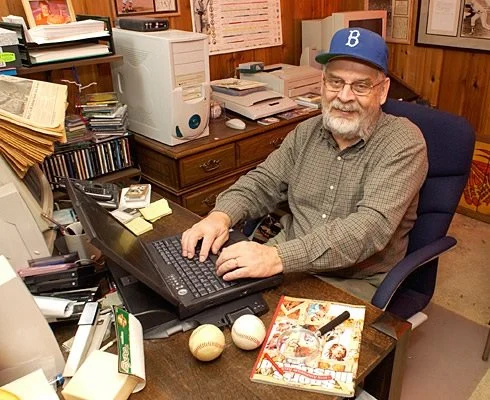
Dave Smith
Dave Smith recruited a volunteer army that tracked down scorebooks, decoded Allan Roth's revolutionary 1950s stat sheets, and digitized millions of plays — all while refusing to charge a dime.
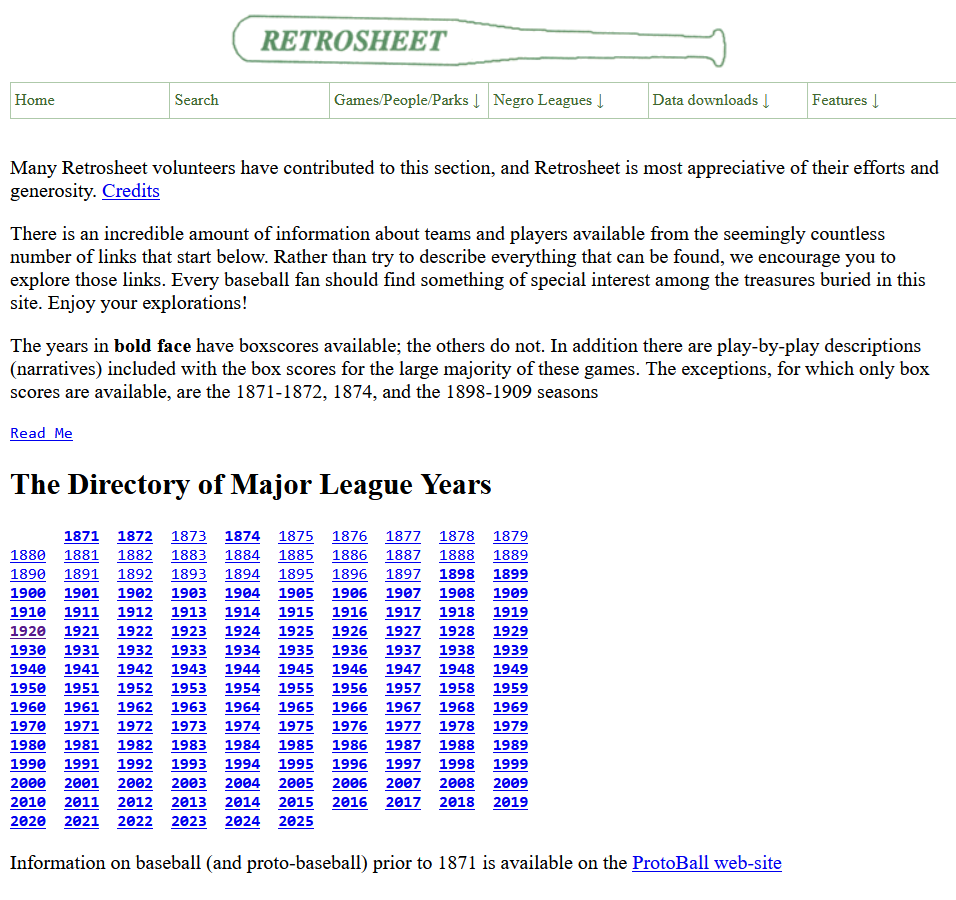
Retrosheet serves as a crucial resource for baseball research, offering data in various formats and reconstructing "deduced games" when information is incomplete. Their data is the foundation of nearly every bit of baseball analysis published since the early 2000s, and it’s the backbone of your favorite websites, like Baseball Reference and Fangraphs.
Retrosheet
Retrosheet is a 501(c)(3) nonprofit organization whose website currently features box scores of MLB games from 1906 to the present, and play-by-play narratives for almost every contest since the 1930s.
It also includes scores from all major league games played since the 1871 season, which was the inception of organized professional baseball, as well as every All-Star Game, every postseason game, every World Series game, and even the East-West All-Star Games and World Series games of the Negro leagues.
Every play. Every game. Every season. For the first time in baseball history, it all exists in one place — and it's free for anyone to use.
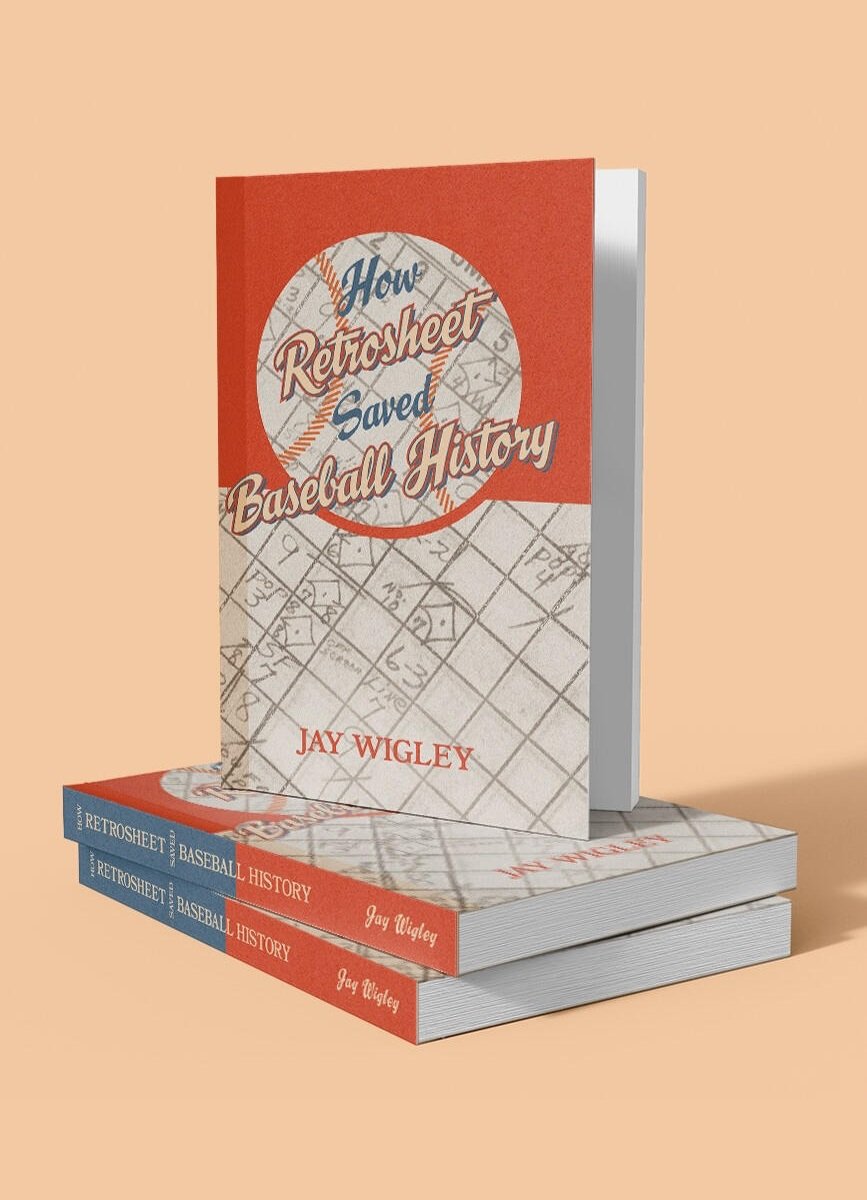
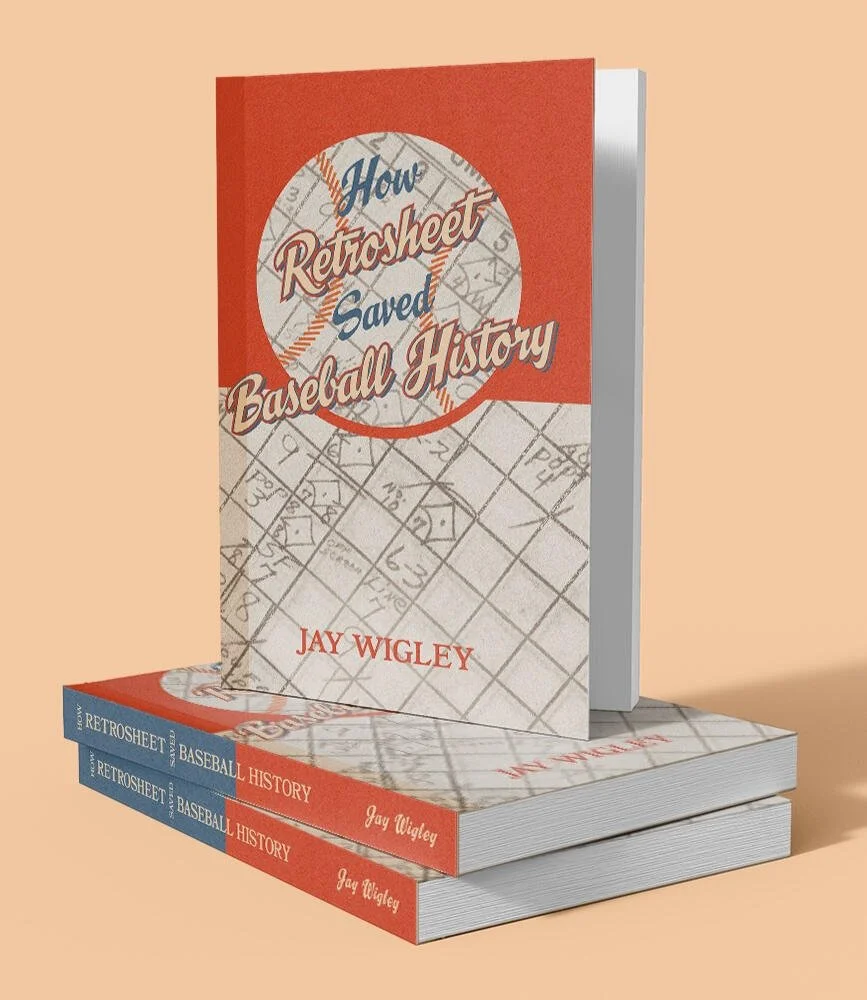
How Retrosheet Saved Baseball History
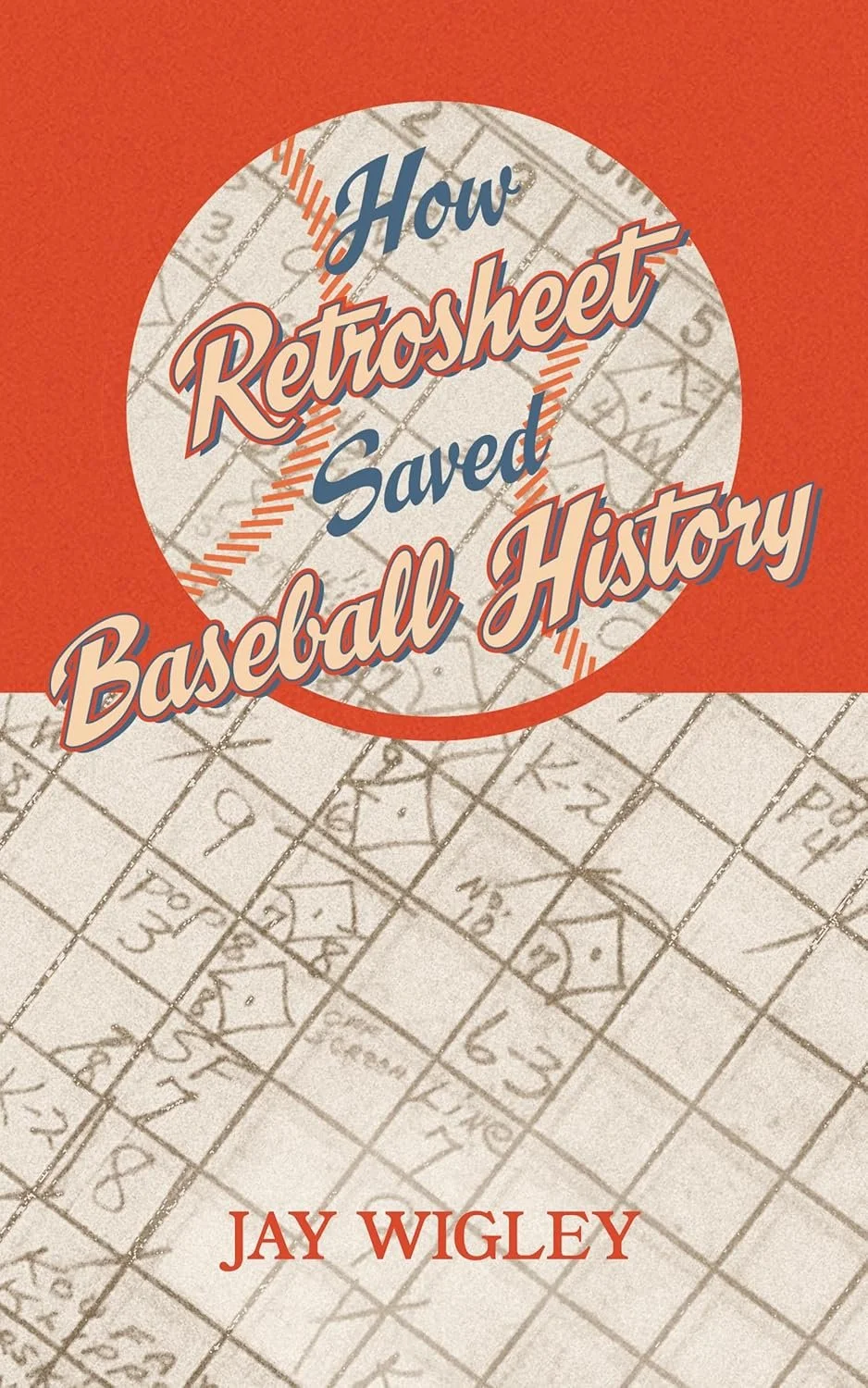
How Retrosheet Saved Baseball History is a story of people, not data. It’s a story of dreams, not calculators or algebraic equations. It is not a book of stats or analysis. It is a book which explains for the first time how “a group of fans” created a public resource previously unavailable anywhere. A work of mammoth proportions.
How Retrosheet Saved Baseball History is the story of how baseball's greatest preservation challenge became its most democratic achievement — and how it connected you to every game ever played.
Buy it from Amazon HERE.
Buy it from Barnes & Noble HERE.
Buy it from Bookshop.org HERE.
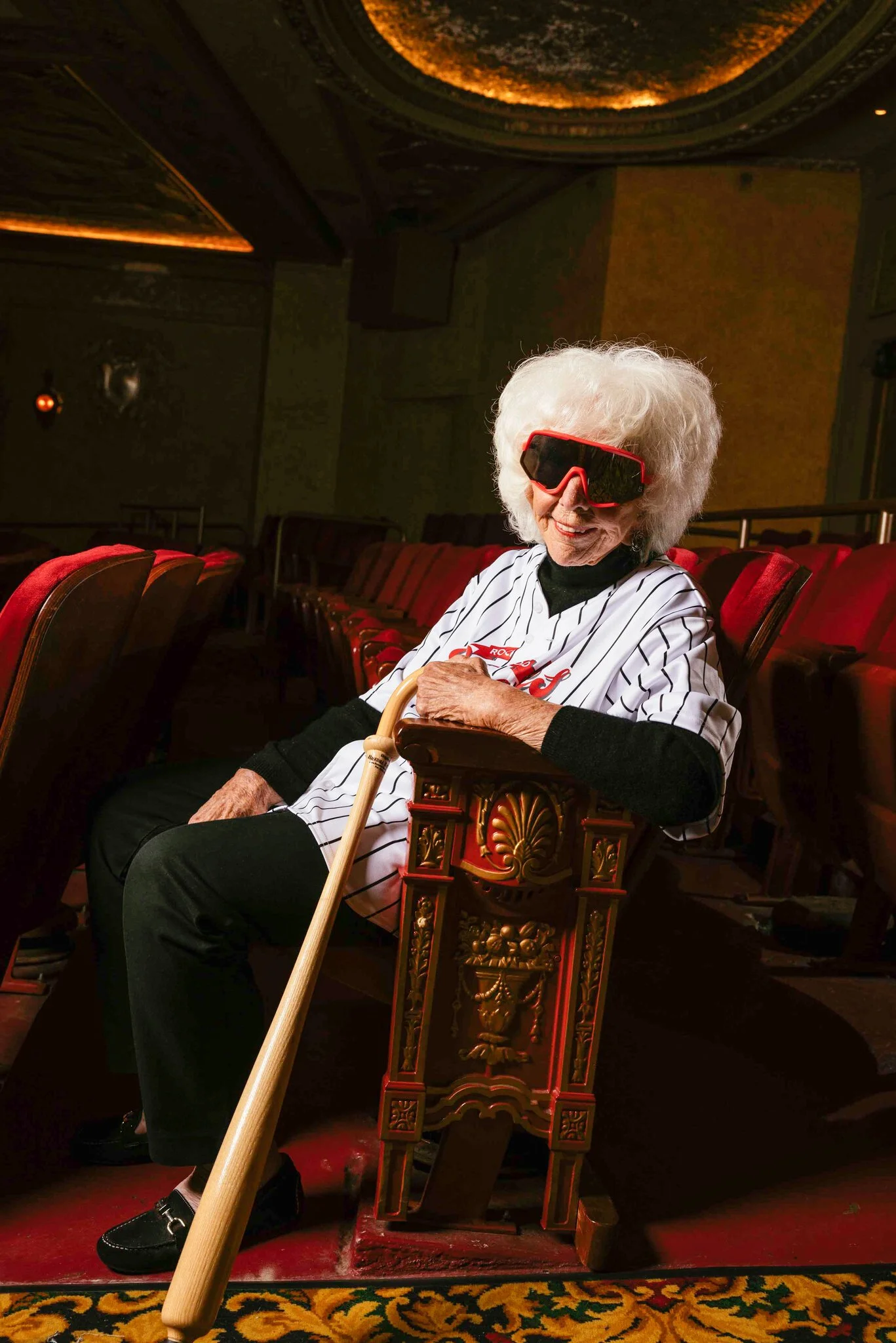
Maybelle Blair
Maybelle Blair is a women’s baseball pioneer who is a former player in the All-American Girls Professional Baseball League with the Peoria Redwings.
Maybelle Blair played in Chicago's National Girls Baseball League for the Cardinals in 1947 and was already an accomplished softball player before joining the All-American Girls Professional Baseball League's Peoria Redwings during the first part of the 1948 season. After an injury sidelined her, she returned to the NGBL's Cardinals team during the last part of the 1948 season.
Photo courtesy of Taylor Glascock / The New York Times
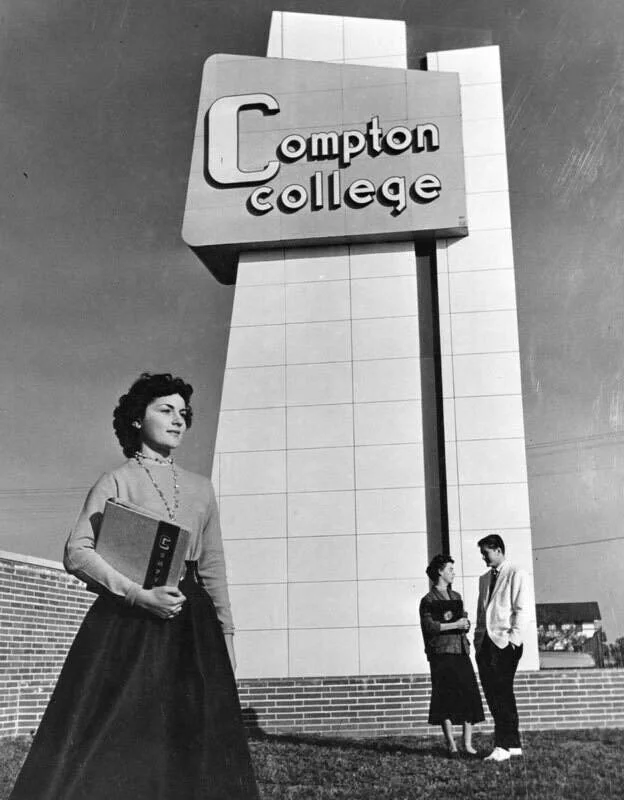
Compton Junior College
Maybelle then moved to California, where she attended Compton Junior College before enrolling at the Los Angeles School of Physiotherapy.
After working at a treatment center in LA, she changed fields and began a 37-year career at Northrop Corporation in California.
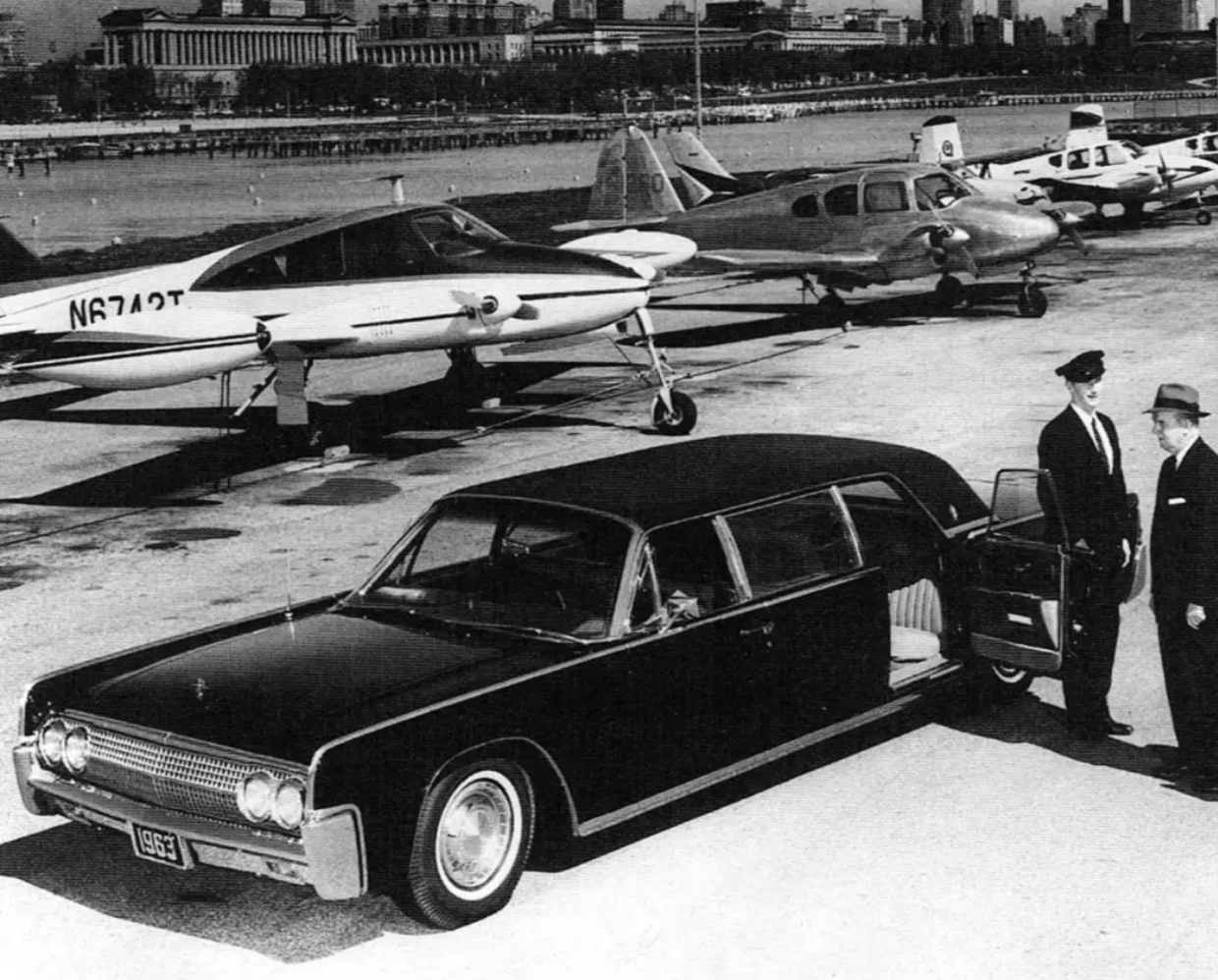
Northrop
Maybelle started at Northrop as a chauffeur, but ended up as one of only three female managers, and was the corporation’s first female director of transportation.
After her retirement, Maybelle became the Vice President of Center for Extended Learning for Seniors, which is an educational travel tours program provider for Elderhostel.
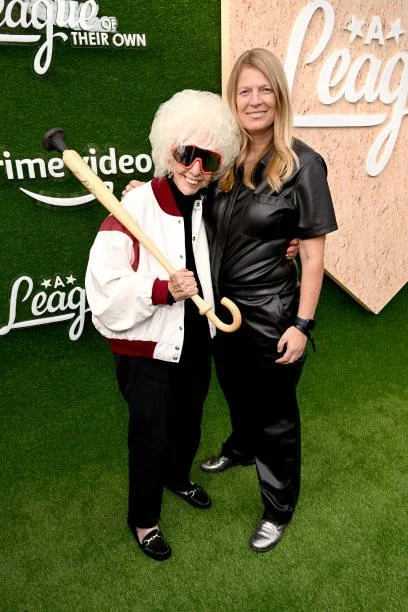
Justine Siegal
Even though her playing days have been over for decades, Maybelle’s presence in baseball has remained constant.
She is a huge advocate of Major League Baseball’s annual Trailblazers Series and has helped support Justine Siegal, who is the co-founder of the new Women’s Pro Baseball League, and the founder of Baseball For All, which is a national nonprofit dedicated to building gender equity for girls in baseball by providing access to opportunities to play, coach, and lead.
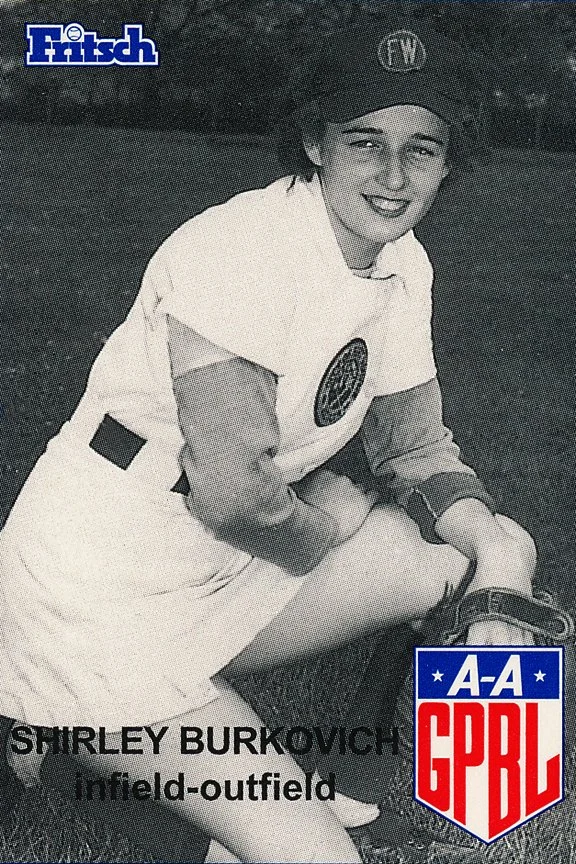
Shirley Burkovich
For years, Maybelle served on the All-American Girls Professional Baseball League Players Association Board of Directors and was Chair of its Fundraising Committee.
Maybelle co-chaired five annual player reunions in the Palm Springs area along with her close friend, the late Shirley Burkovich, who played three seasons in the AAGPBL from 1949 through 1951.
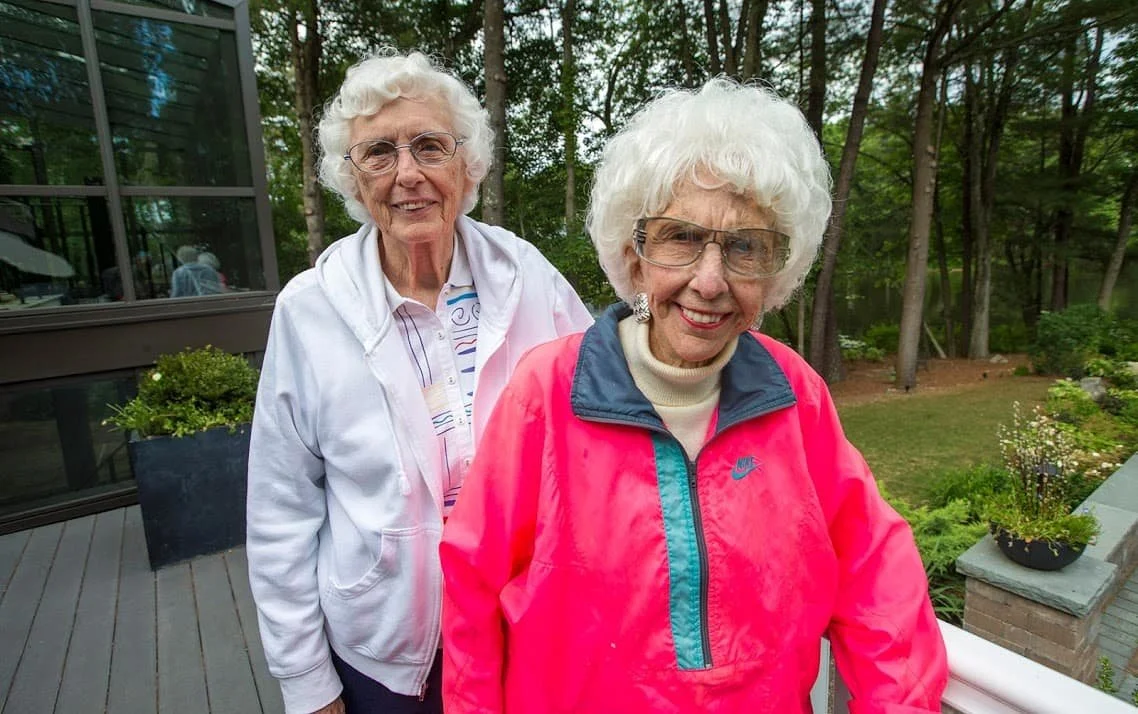
Shirley Burkovich
It’s a shame I missed the chance to sit down with Shirley to do an episode, because she had some incredible stories from her own career, which, at different points, saw her play every position on the field besides catcher.
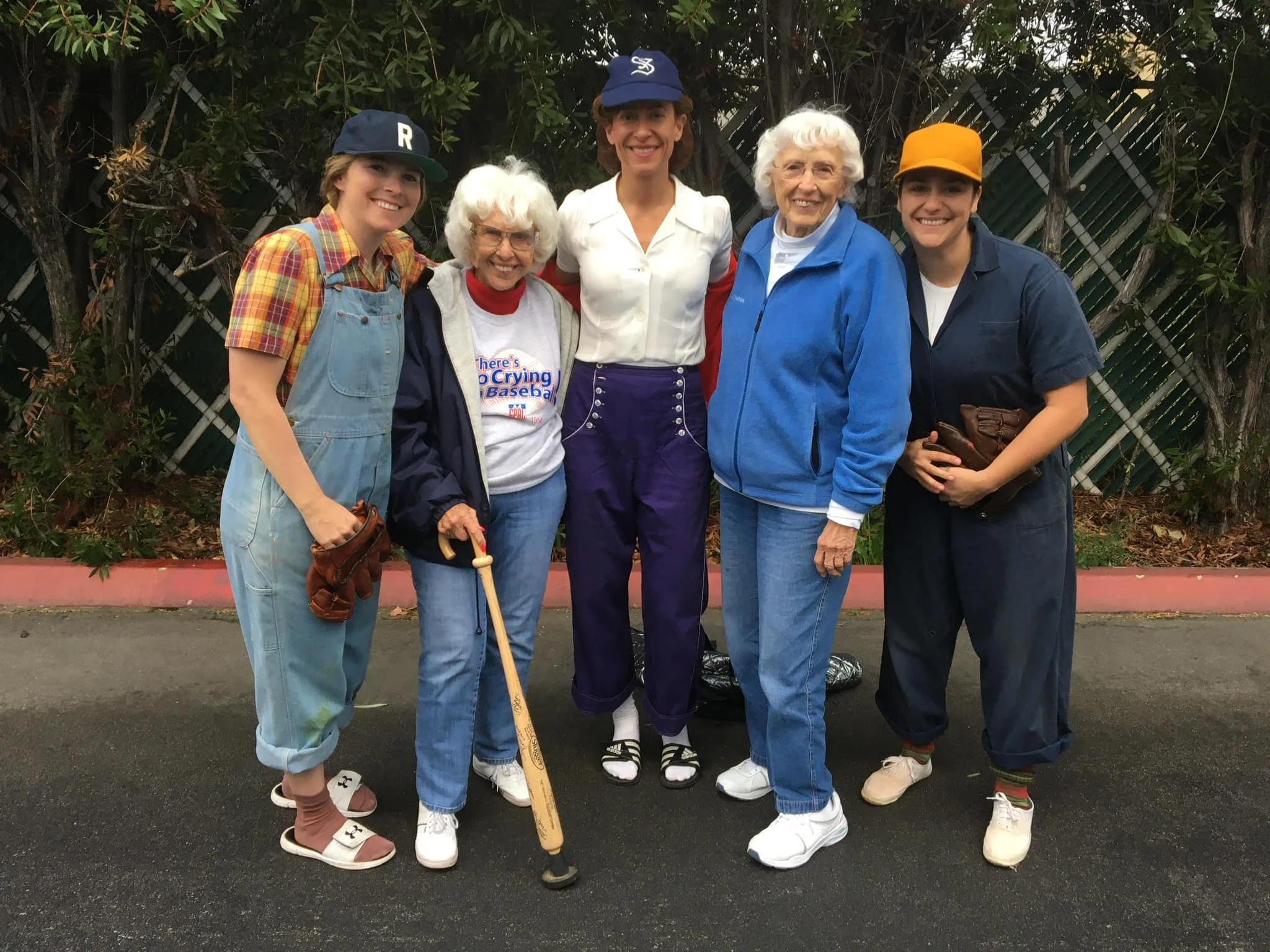
A League of Their Own
Together, Maybelle and Shirley were advisors for the Amazon Prime series, A League of Their Own, even making a cameo in the episodic adaptation of the iconic Penny Marshall film from 1992.
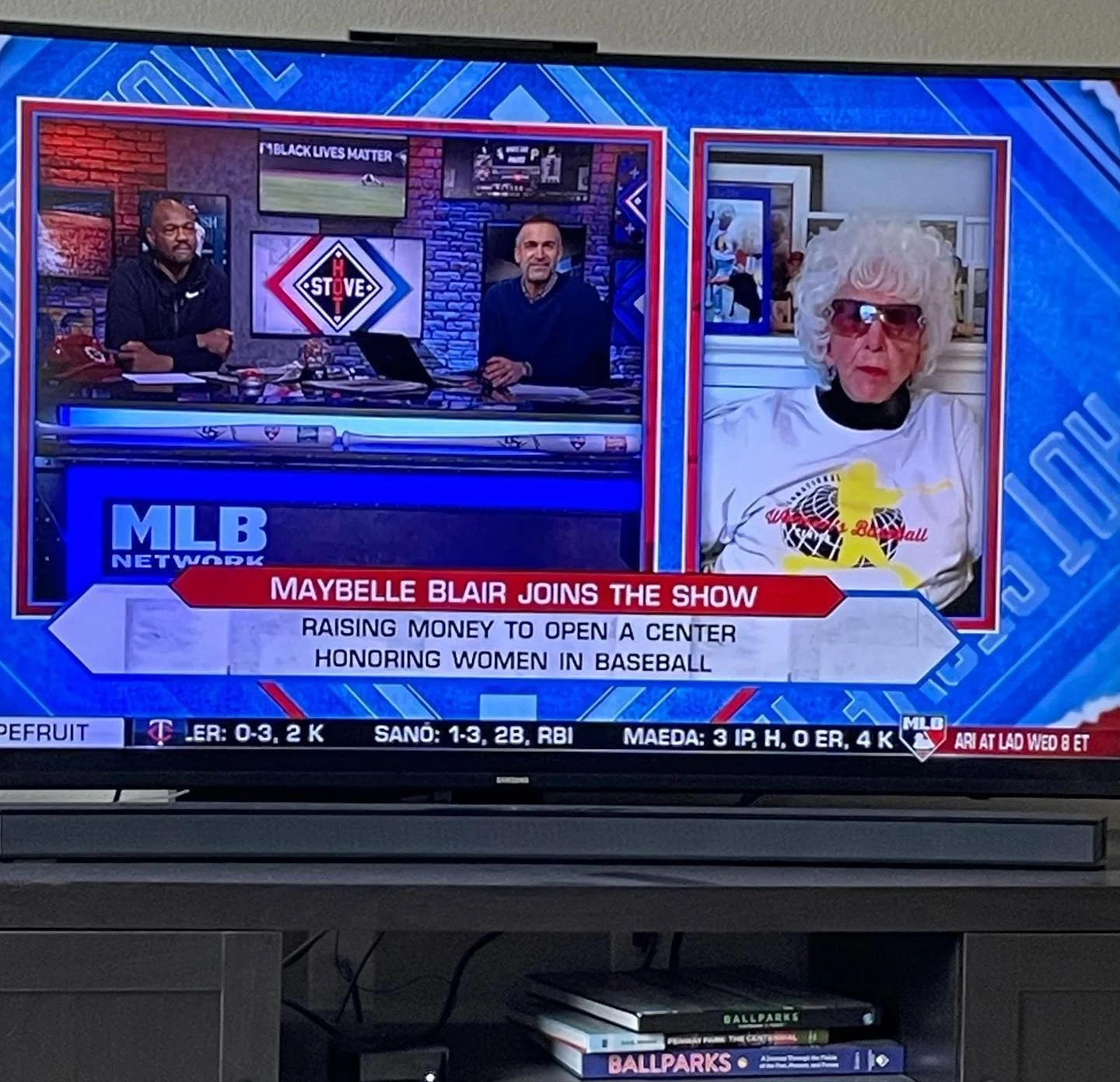
IWBC
Maybelle is a Founding Director Emeritus of Rockford, Illinois’ International Women’s Baseball Center, whose mission is to protect, preserve, and promote all aspects of women’s baseball, both on and off the field.
Even at 99 years old, Maybelle is still actively involved in fundraising and publicity efforts for the IWBC, and for the AAGPBL reunions.
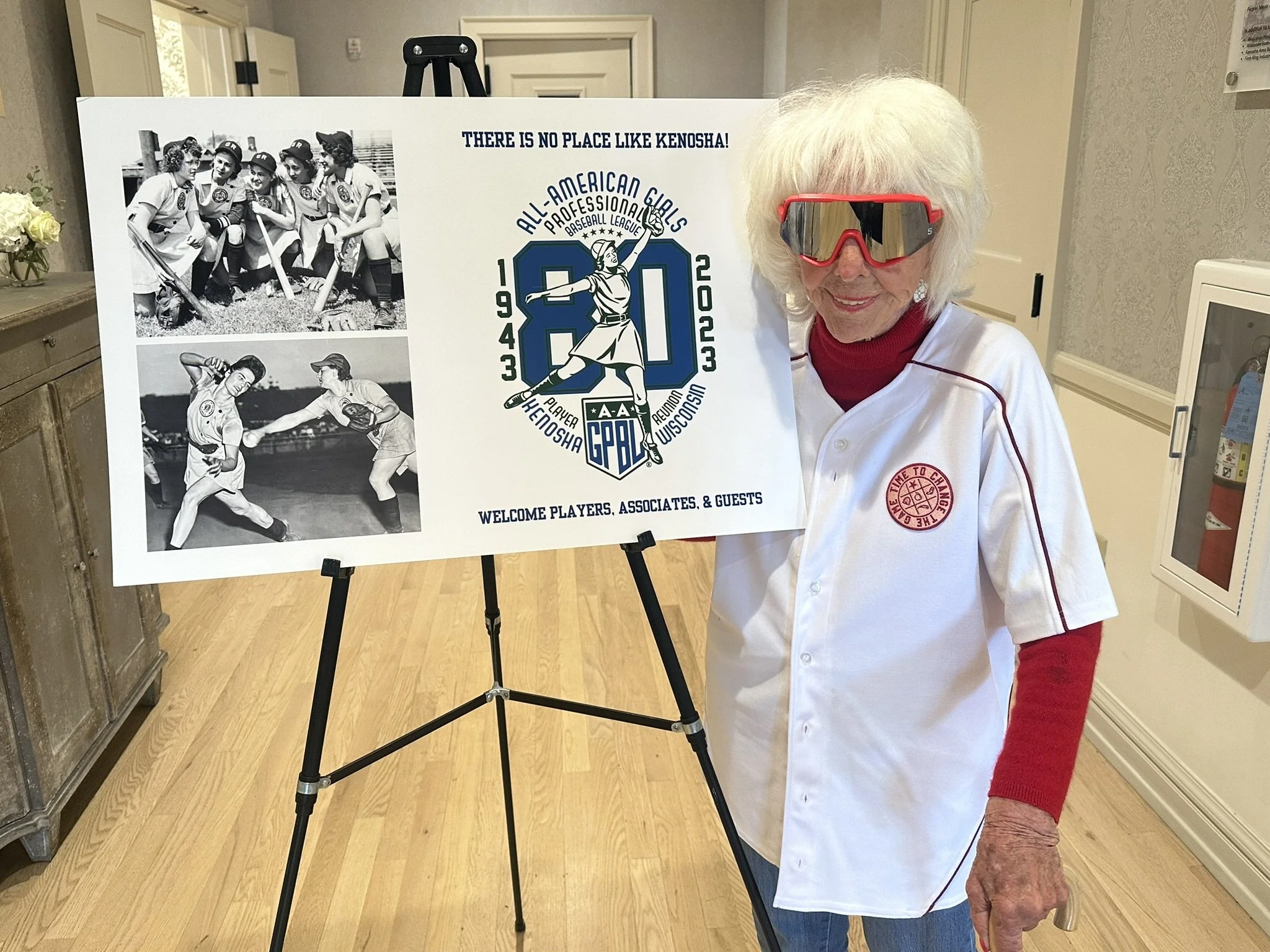
80th AAGPBL Reunion
In fact, that is when and where Maybelle and I met and recorded this interview: at the 2023 reunion in Kenosha, Wisconsin.
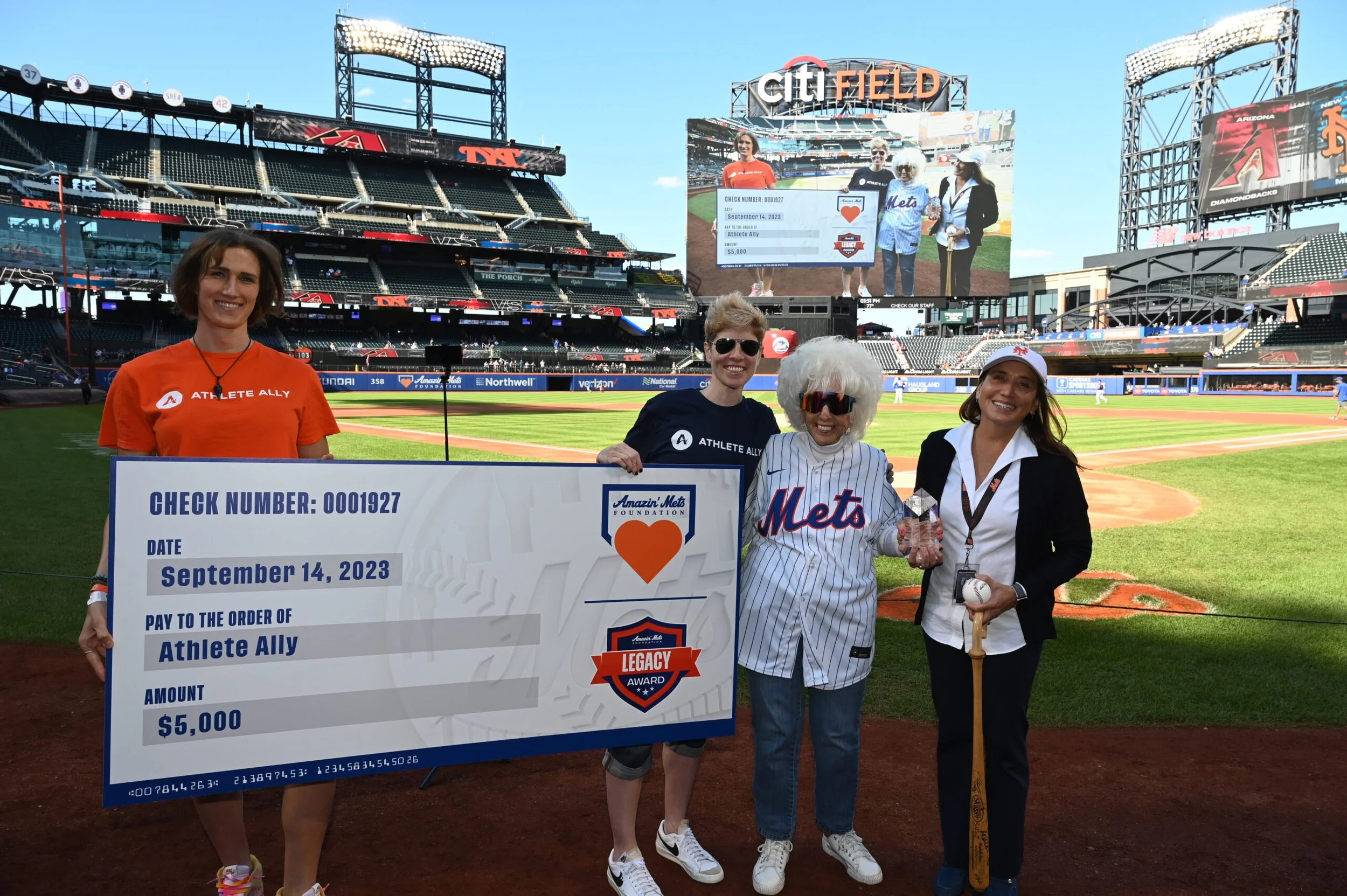
Amazin’ Mets Foundation Legacy Award
Also in 2023, Maybelle earned the inaugural Amazin’ Mets Foundation Legacy Award, which is given annually to celebrate the people and organizations in the baseball community that are making a difference.
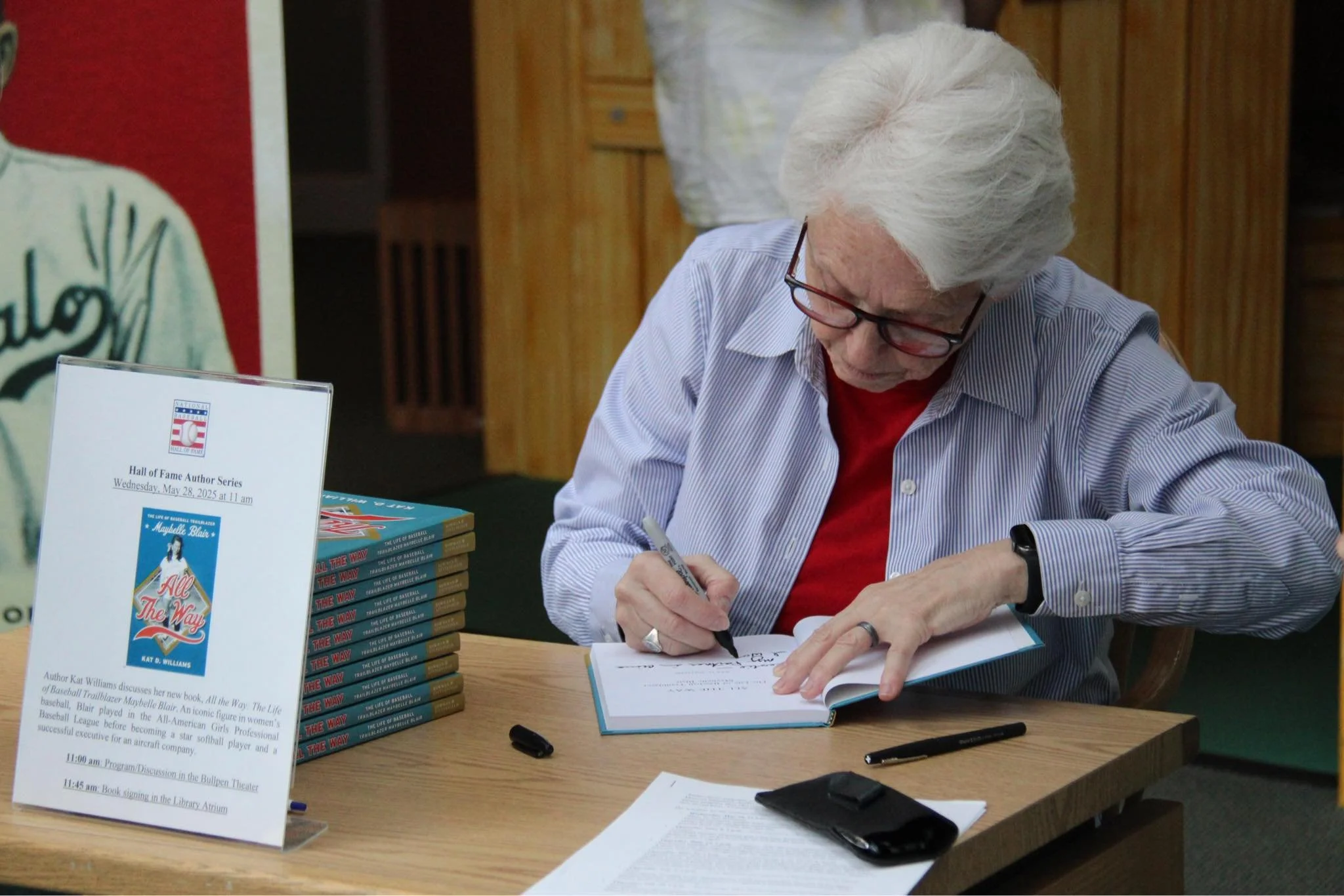
All The Way
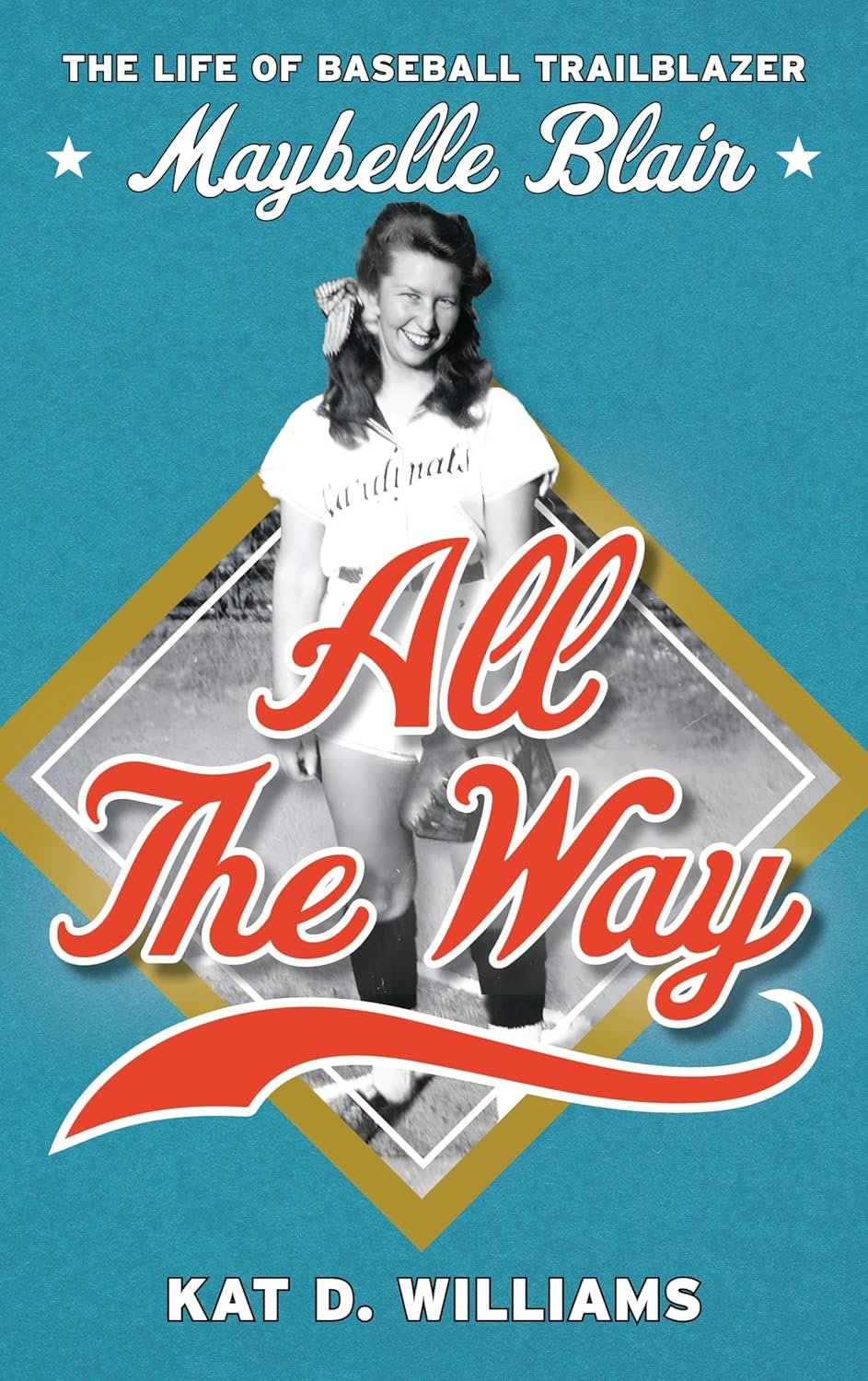
In March of 2025, author and professor Kat D. Williams published a biography about Maybelle called All the Way: The Life of Baseball Trailblazer Maybelle Blair.
Today, Maybelle Blair is the honorary chair of the Women’s Pro Baseball League.
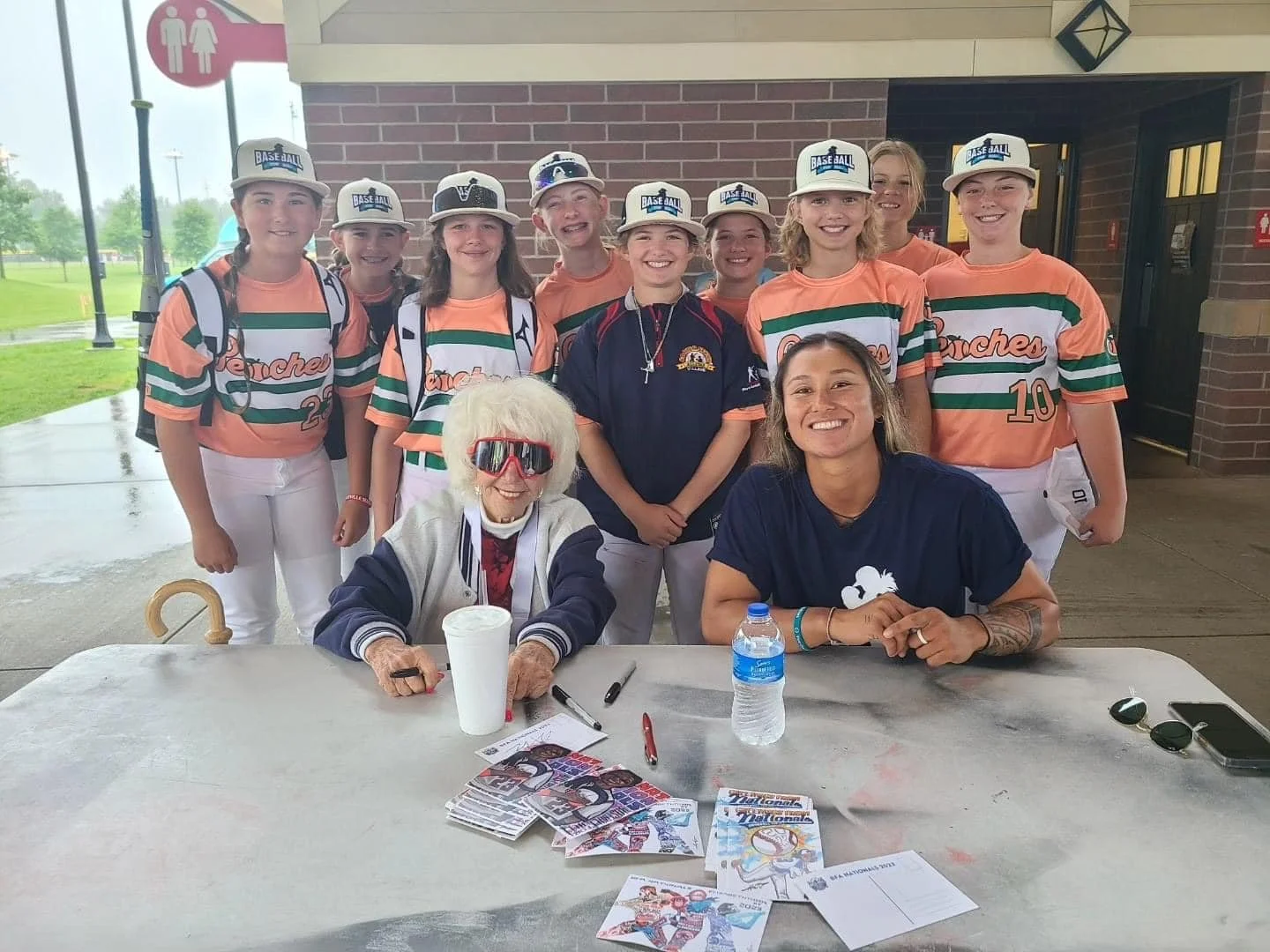
Breaking Down Barriers
Maybelle Blair’s entire life has been about baseball — women’s baseball. About playing it, preserving its history, and making it accessible to everyone.
Maybelle has broken down barriers for women in the sport, and continues to be a mentor for young girls who seek opportunities to play.
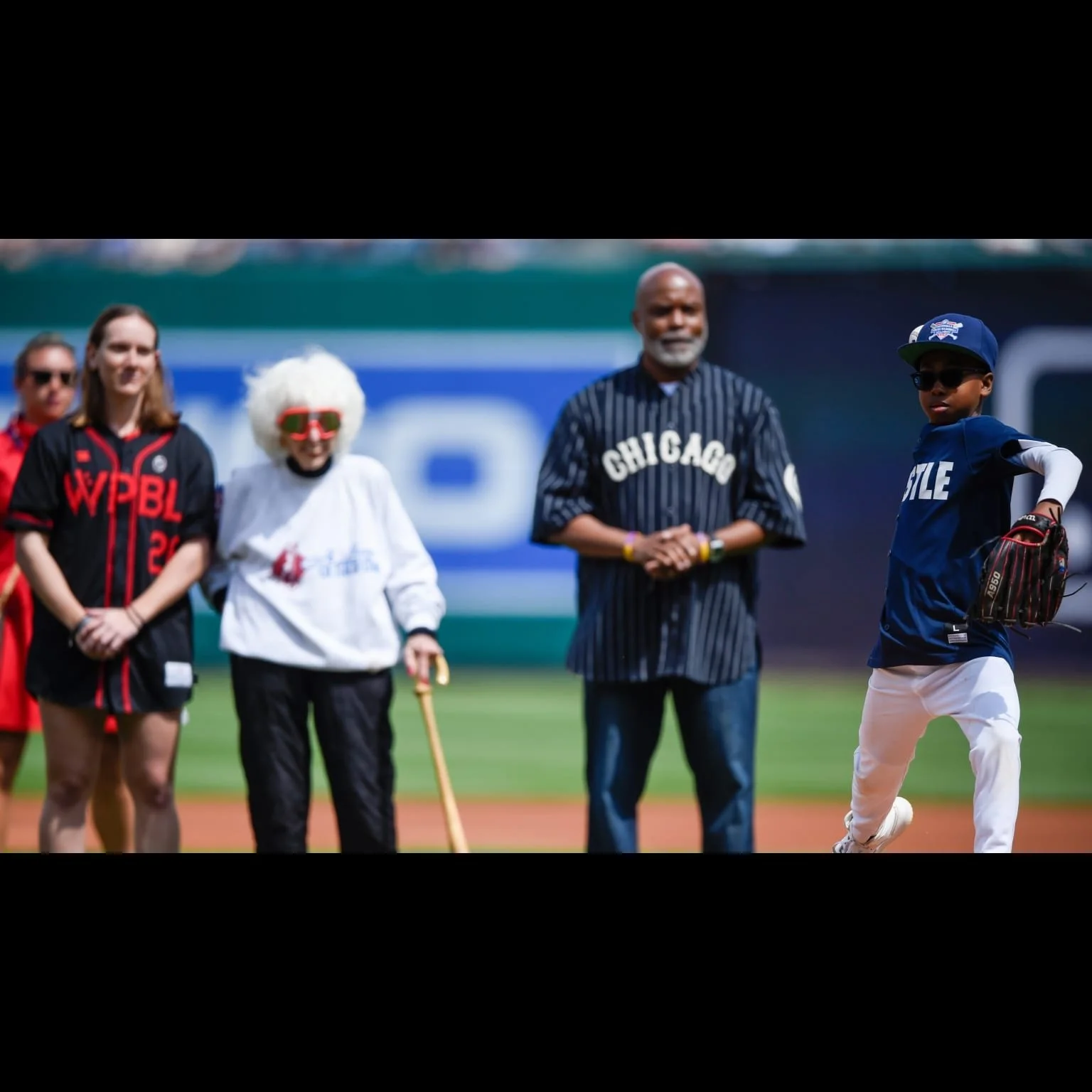
First Pitch
Just last week, the Washington Nationals invited Maybelle to participate in the first pitch ceremony for their 2026 home opener against the Los Angeles Dodgers.
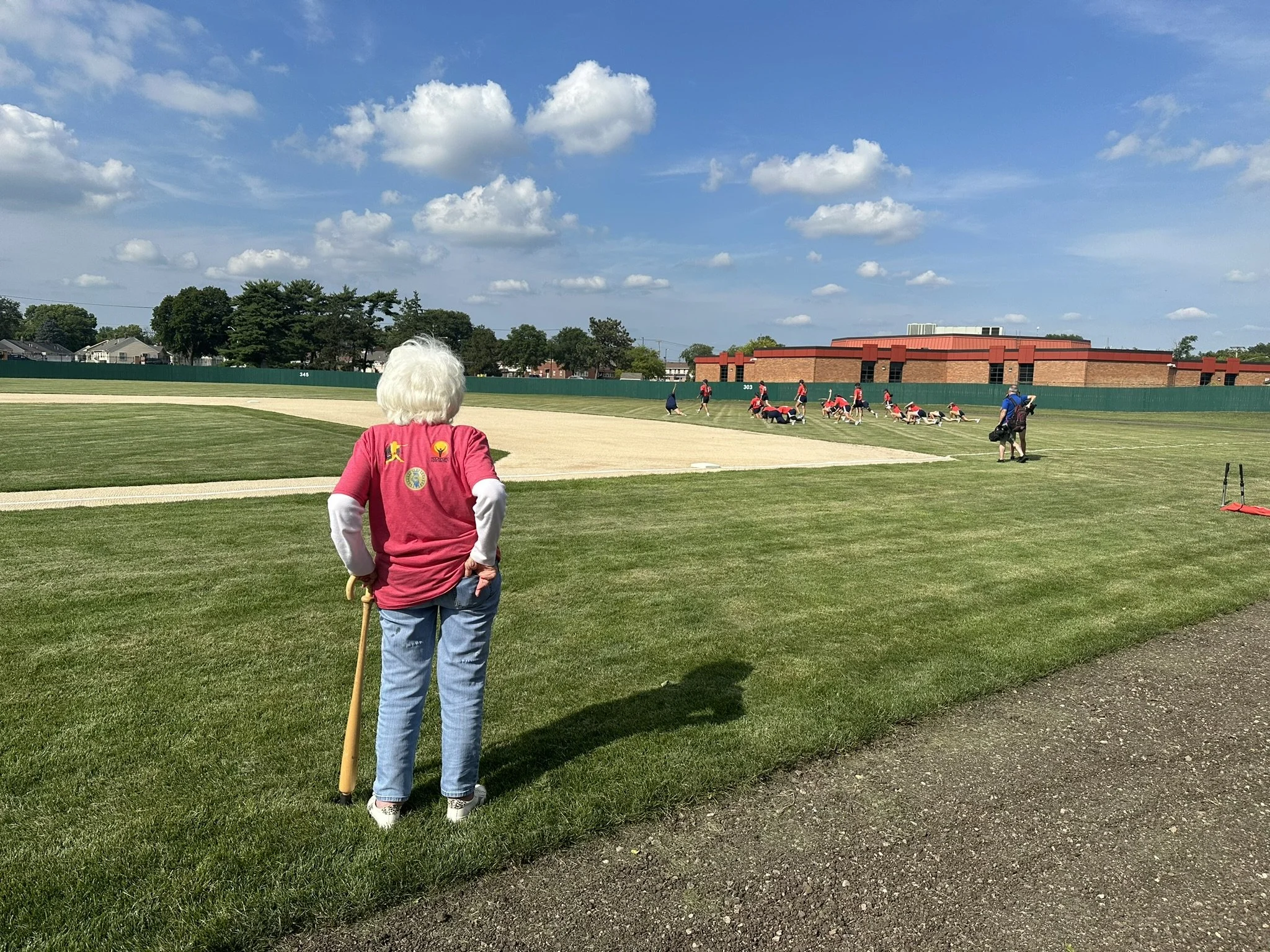
Here, Skylar Kaplan, Maybelle Blair and William Douglas “Doug” Foster, Jr. (the grand-nephew of Andrew Rube Foster and grandson of William Hendrick Foster) watch as Nationals Youth Academy athlete Tre throws out the first pitch.
Maybelle’s Legacy
As Maybelle likes to say, as long as she’s still on this side of the dirt, baseball is going to be her life.
Her legacy will live far beyond her playing days because the impact she’s made for women in baseball will never be forgotten.
Maybelle Blair Park
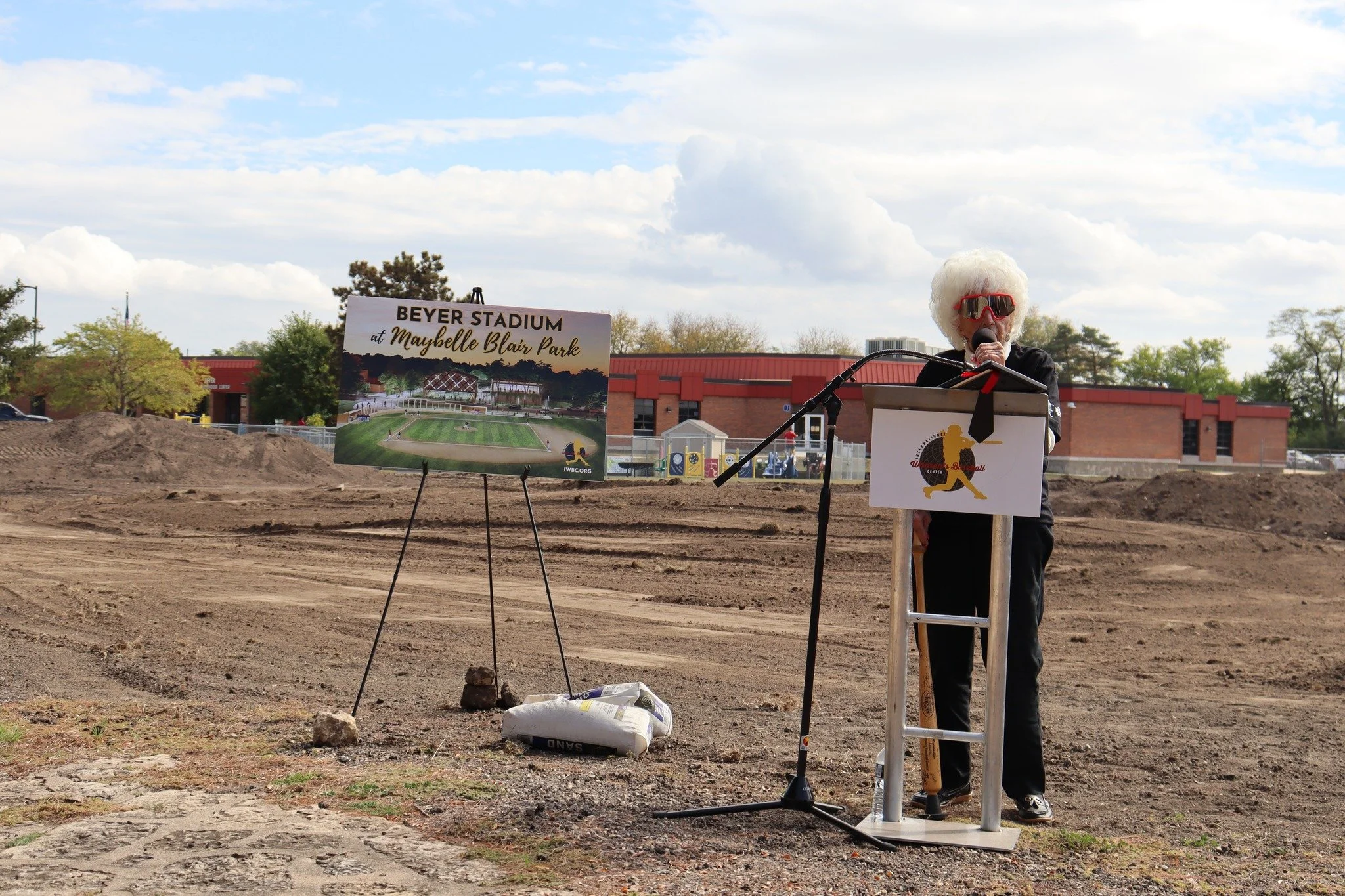
One way we can be absolutely sure of that? In October of 2025, it was announced that as a part of the project which will see a $31 million transformation over the next five years of Beyer Stadium in Rockford, Illinois, the longtime home of the Rockford Peaches, the green space just north of the stadium was renamed Maybelle Blair Park.
Three-Phase Project
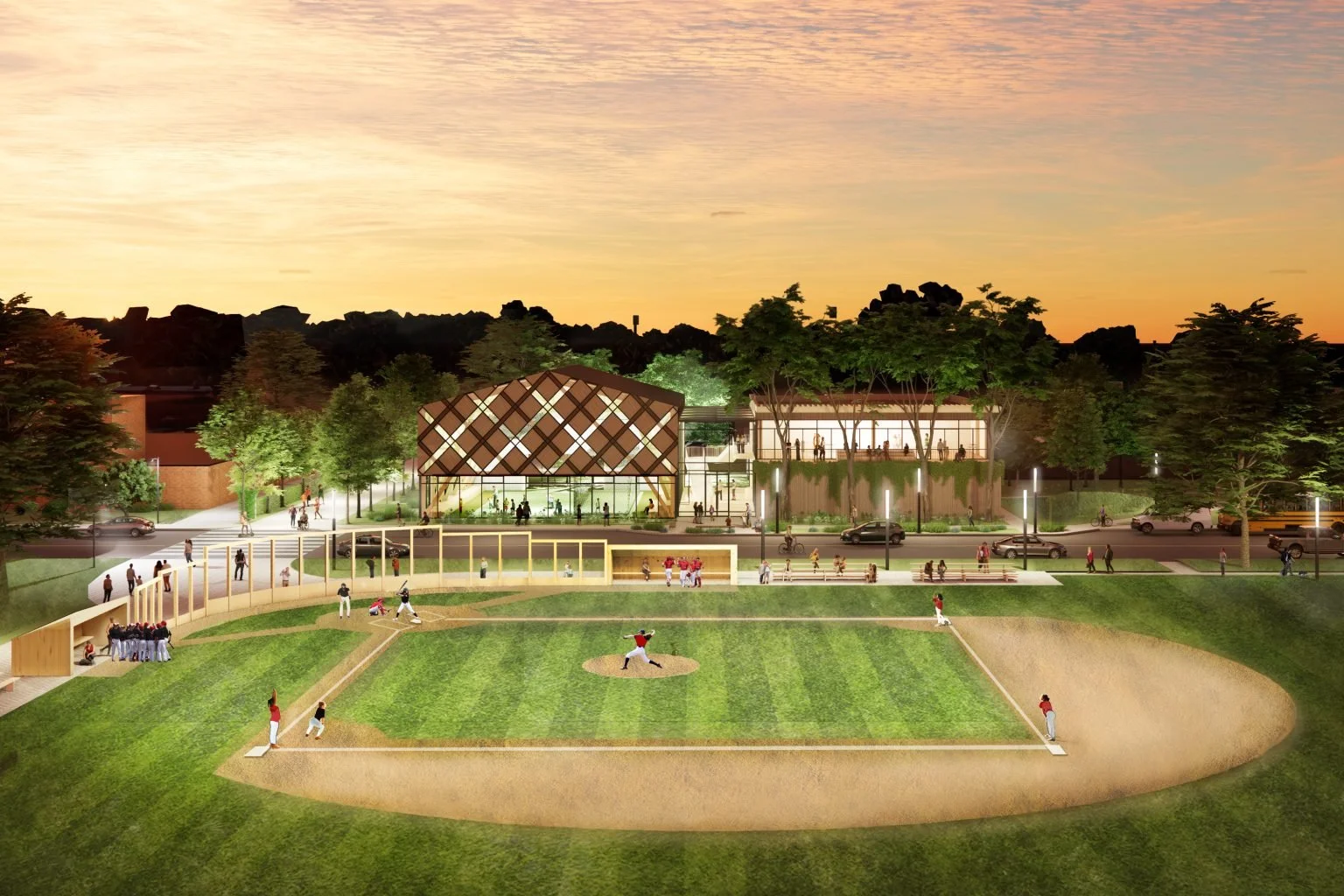
The goal of the three-phase project led by the IWBC is to restore and modernize the century-old stadium while honoring its deep connection to the history of women’s baseball.
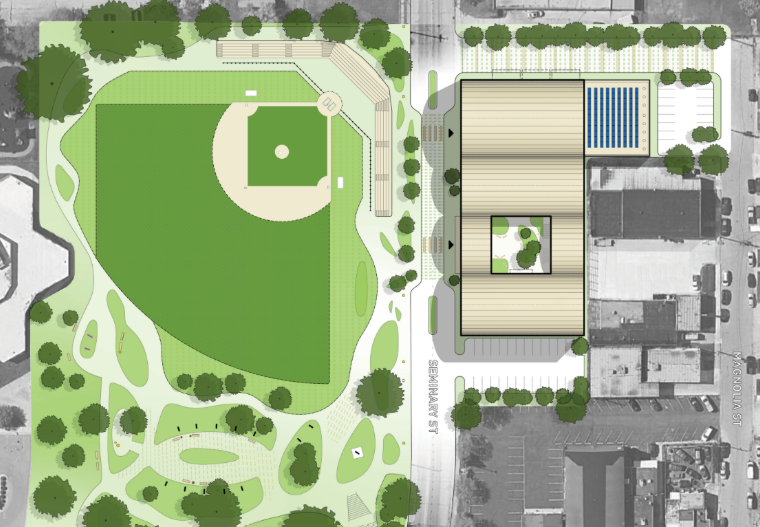
Phase one is the renovation of Beyer and the creation of Maybelle Blair Park, will feature the Women’s Baseball Gallery, a major outdoor exhibit consisting of commemorative pylons honoring the most significant achievements in the history of women’s baseball.
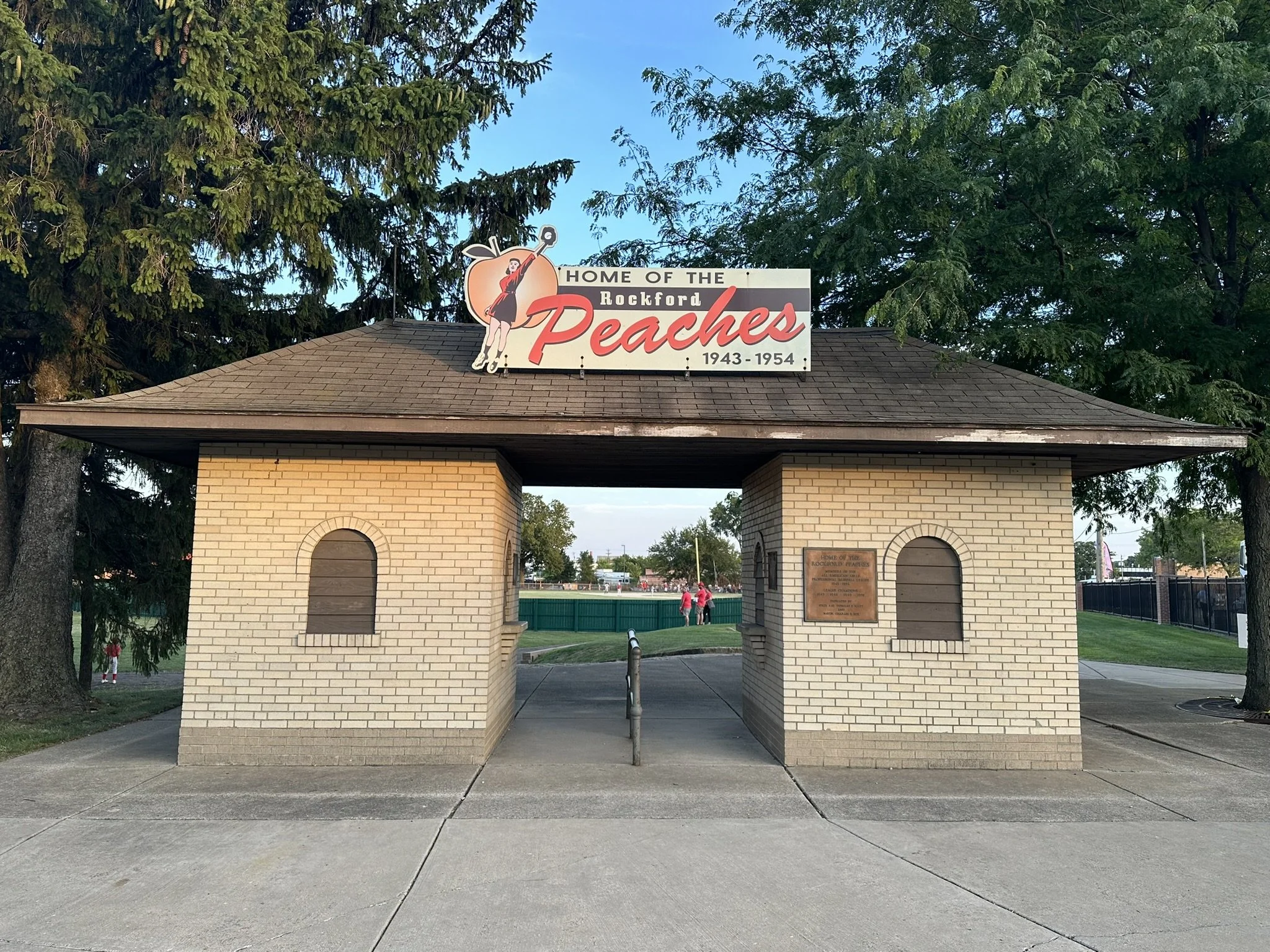
Main Entrance Ticket Booth
Phase one will also include the restoration of the historic main entrance ticket booth, and visitor-friendly walking paths and recreation areas.
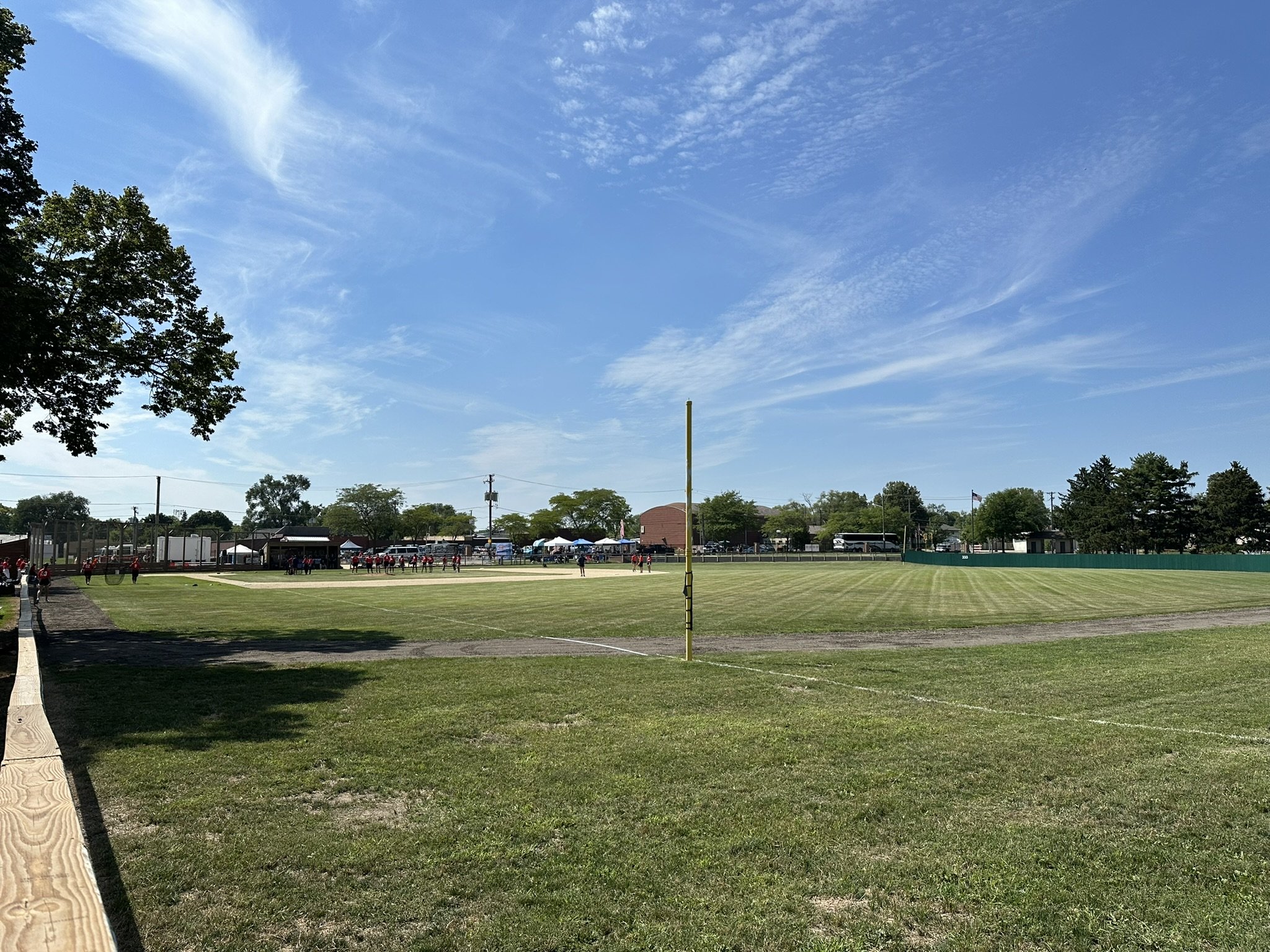
Beyer Stadium Renovations
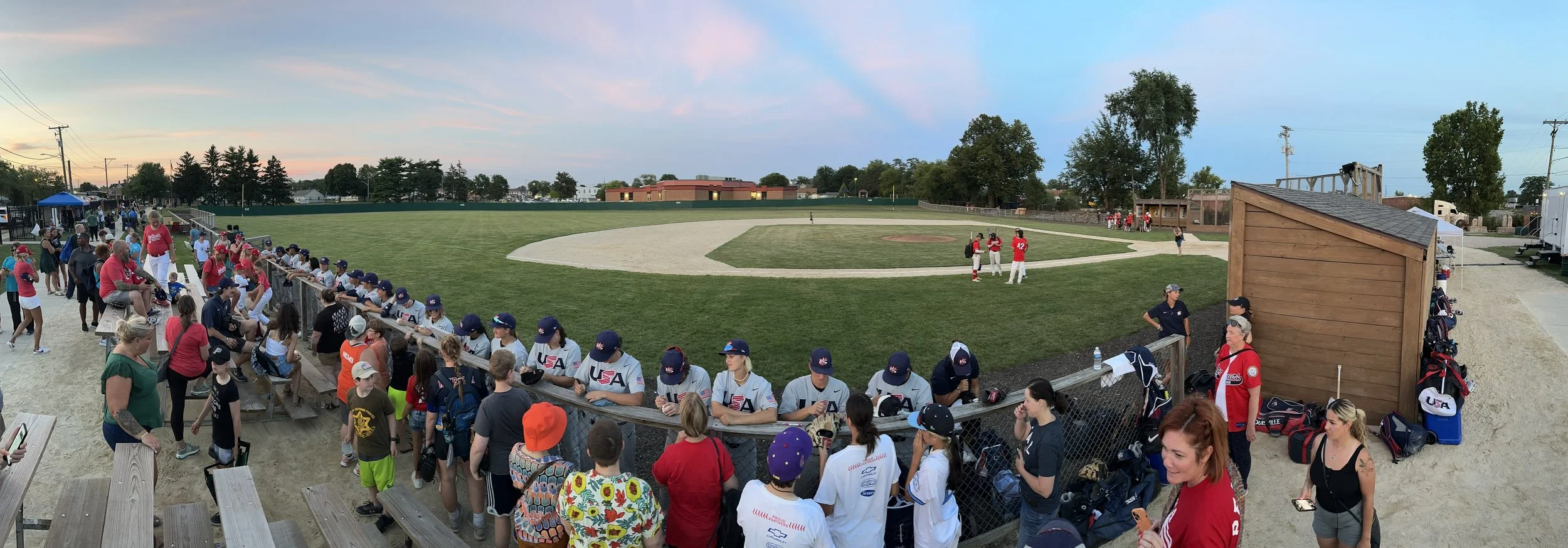
The first round of Beyer Stadium renovations includes new Bleachers, new restrooms, field regrading and sodding, irrigation, electrical upgrades, dugout upgrades, a scoreboard, foul poles, batting cages, pitching areas, and a new Press Box.
Phase Two
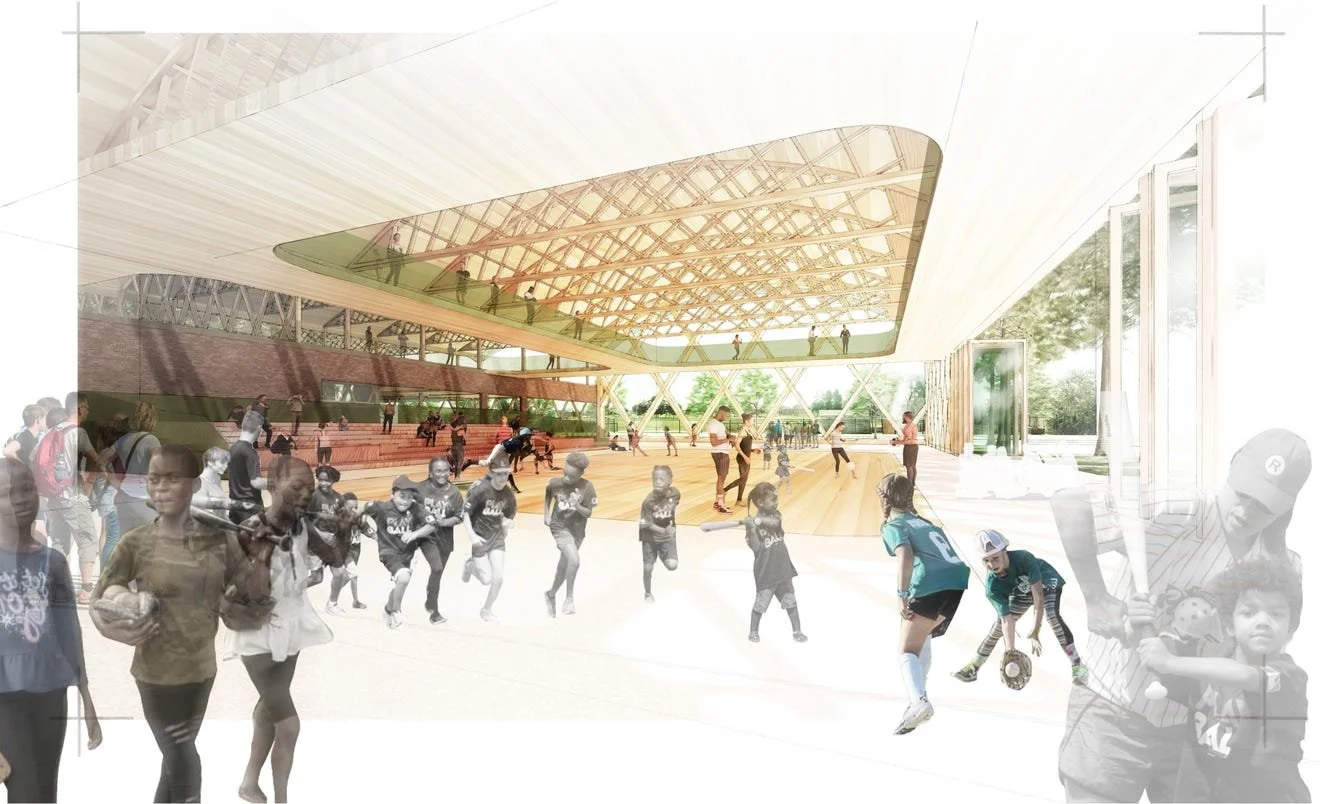
Phase two will be construction of the museum and education center, projected to cost $22.8 million. That facility will provide a space for exhibitions and youth programs.
Phase Three
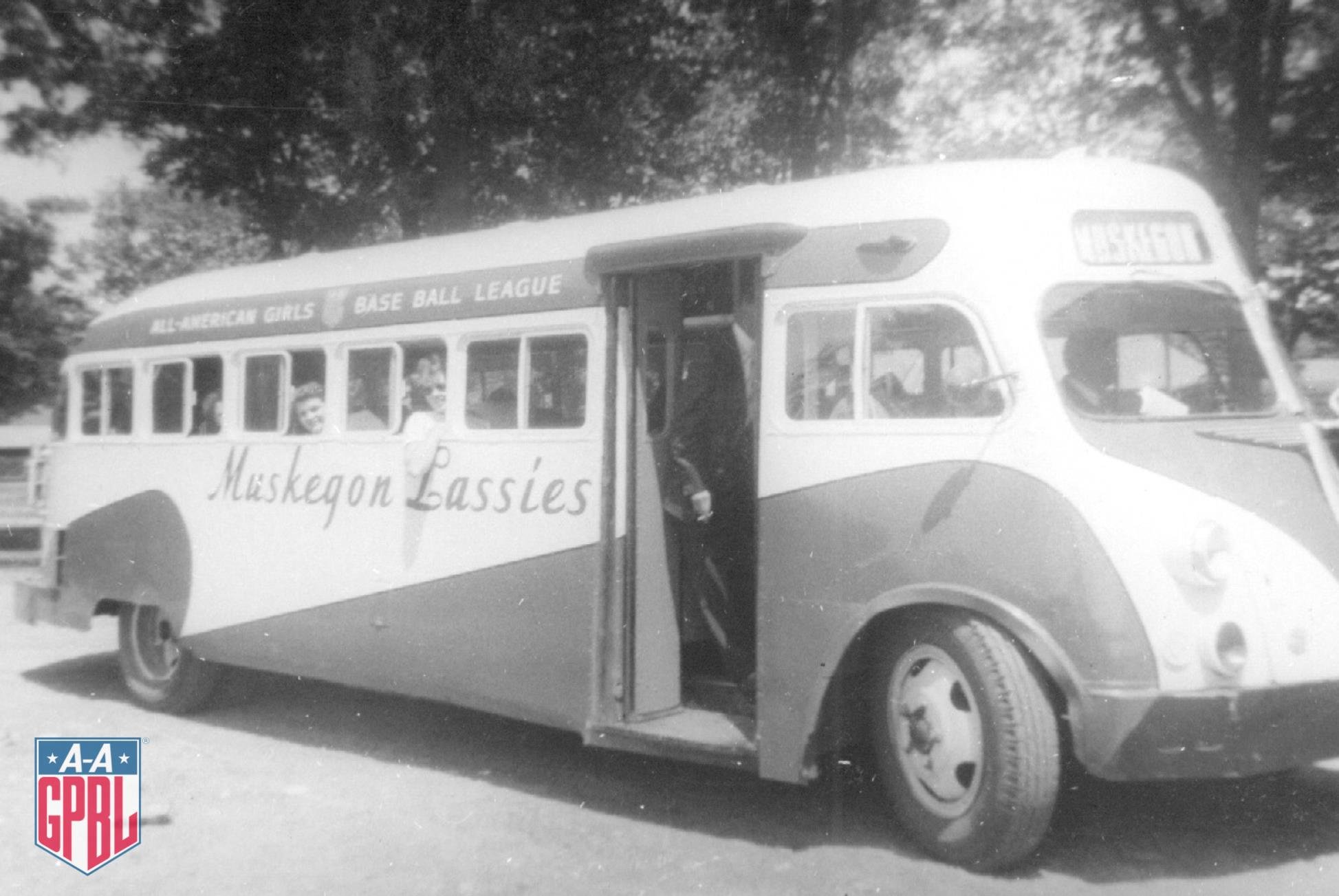
Phase Three, which is projected to cost $3 million, covers the artifacts and exhibits built inside the museum hall, highlighted by a restored Rockford Peaches World War II era team bus.
Ange Armato
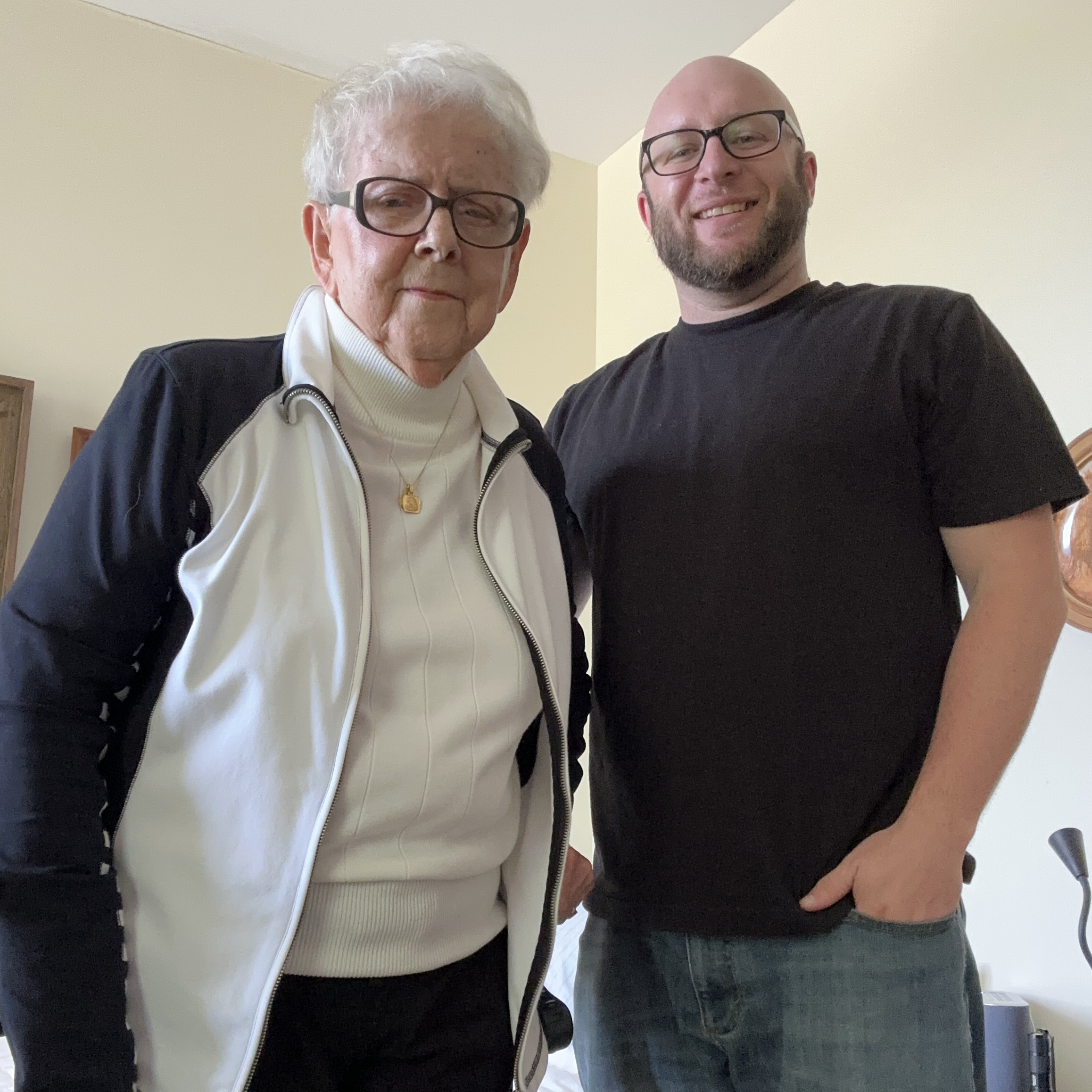
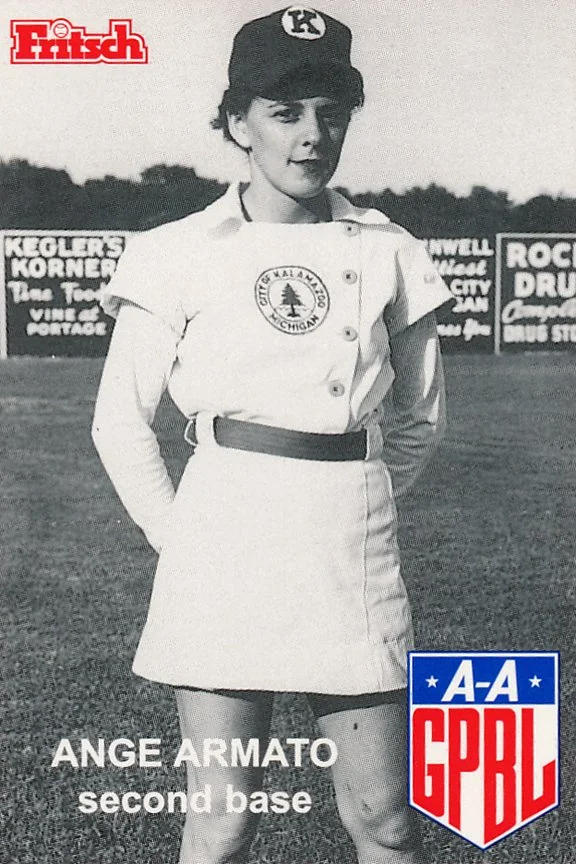
By the end of this episode, if you’re still craving more stories about the All-American Girls Professional Baseball League told by a former player, dive into the My Baseball History archives and listen to Episode 7 of Season 3 with Ange Armato, who spent time playing with both the Rockford Peaches and the Kalamazoo Lassies.
You can listen to that episode HERE.
Ange Armato
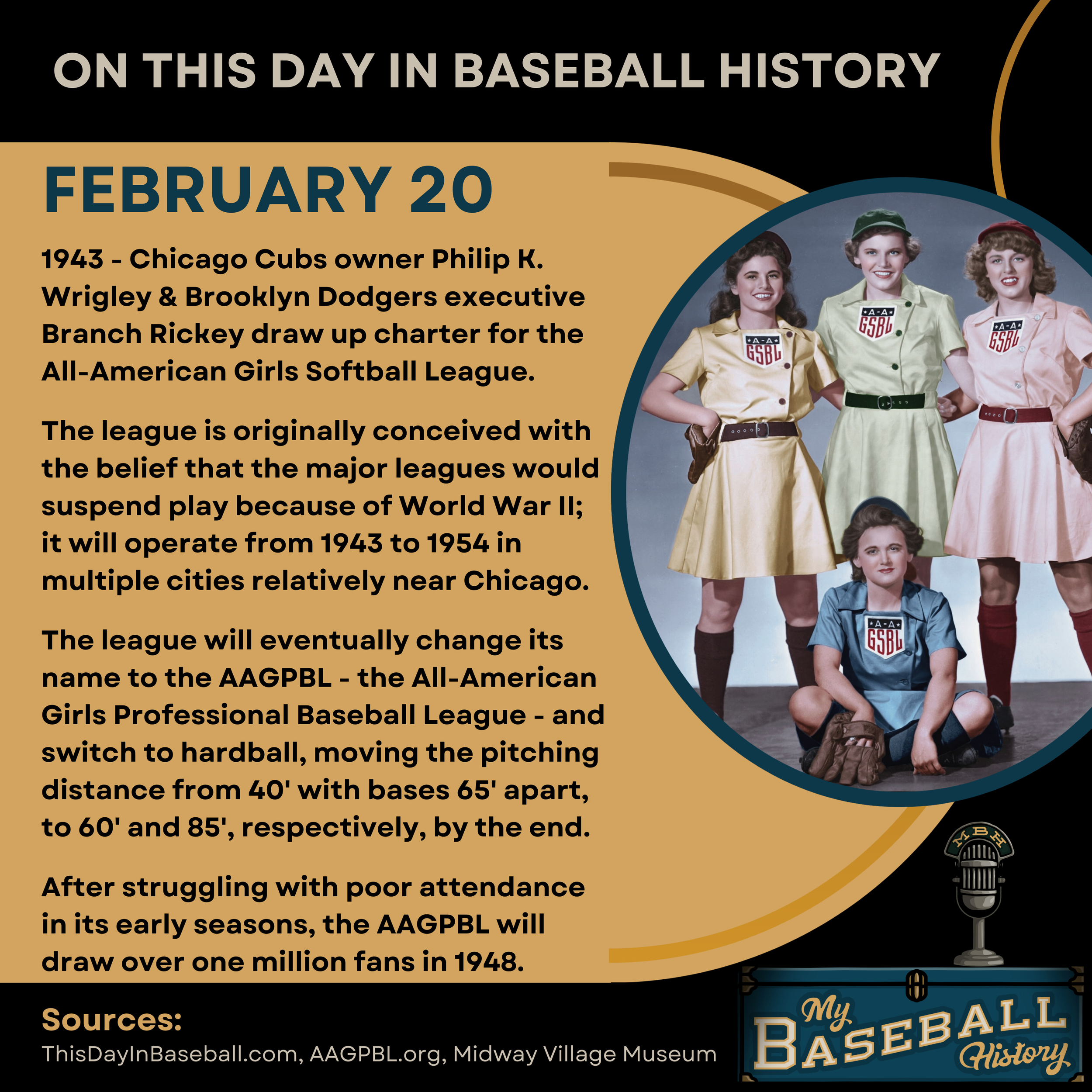
Among many other topics, Ange Armato and I reviewed how the League went through a number of different sets of rules, field dimensions, and equipment sizes and regulations throughout its history, starting out more closely resembling softball before slowly evolving into authentic baseball.
We also discussed the names and accolades of some of the league’s best players, many of whom Ange either played with or against.
Follow along with the liner notes as you listen to that episode HERE.
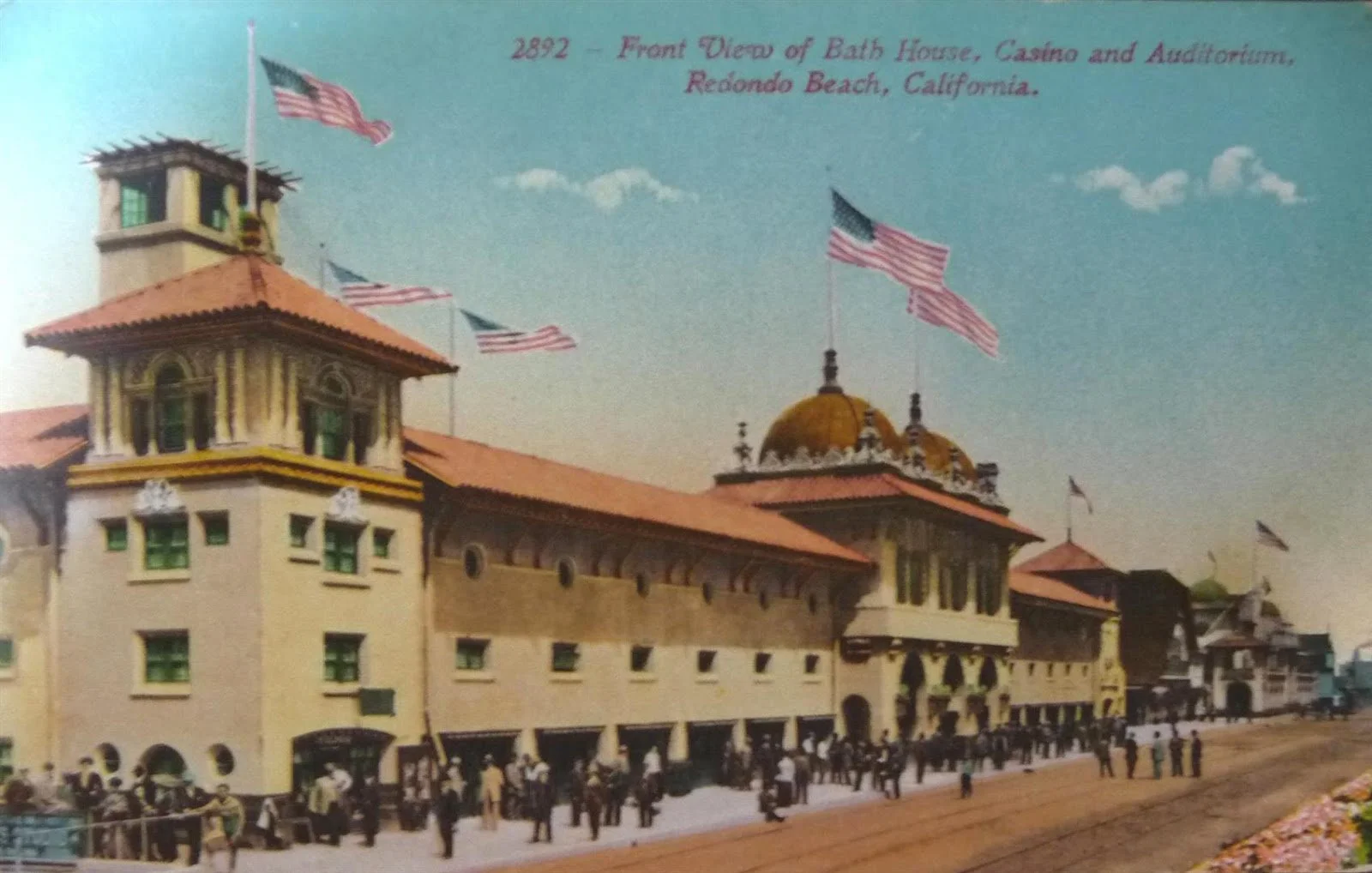
Redondo Beach
Maybelle was born in Redondo Beach, California on January 16th, 1927, but her parents were both born in Texas.
Maybelle’s mother was part Irish and part Native American, and she was the best female athlete in the county of Hamilton, Texas. She loved baseball, too, and rode horseback side saddle.
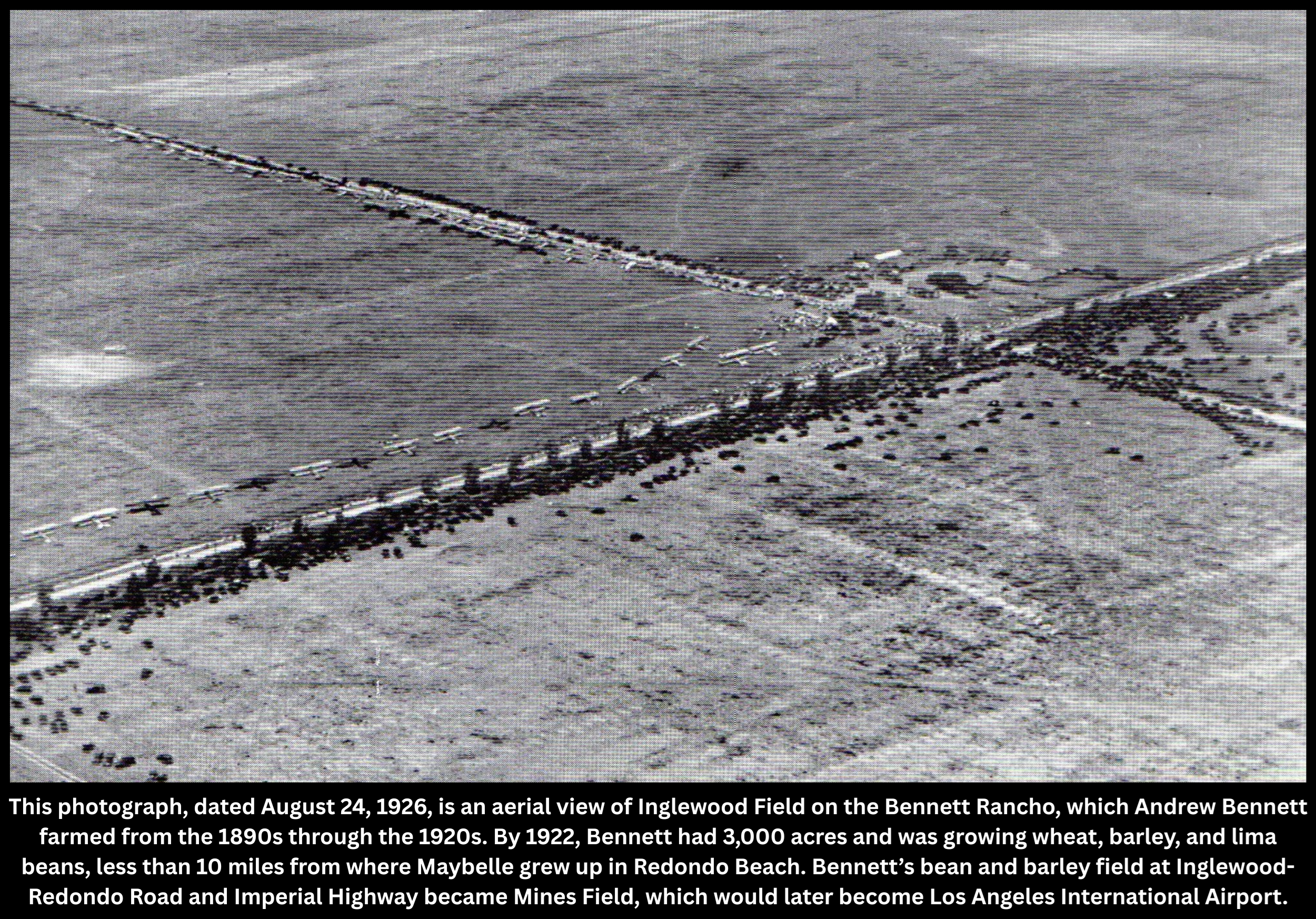
Bean Fields
Maybelle’s father was part of an athletic family, who made up the Blair Nine, a team of traveling ballplayers in Texas. Maybelle also looked up to her brother, Tommy, who was a great ballplayer, too, before the war.
Unfortunately, Redondo was full of bean fields, which made finding a suitable area to play ball a challenge.
Photo courtesy of Los Angeles World Airports Photo Archives
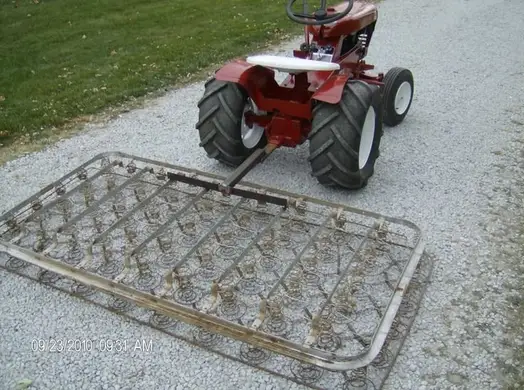
Make Do With What You’ve Got
To continue to be able to play ball in Redondo, where the terrain was full of bean fields, the Blairs created a makeshift baseball field, using Maybelle to weigh down a box spring to drag the dirt.
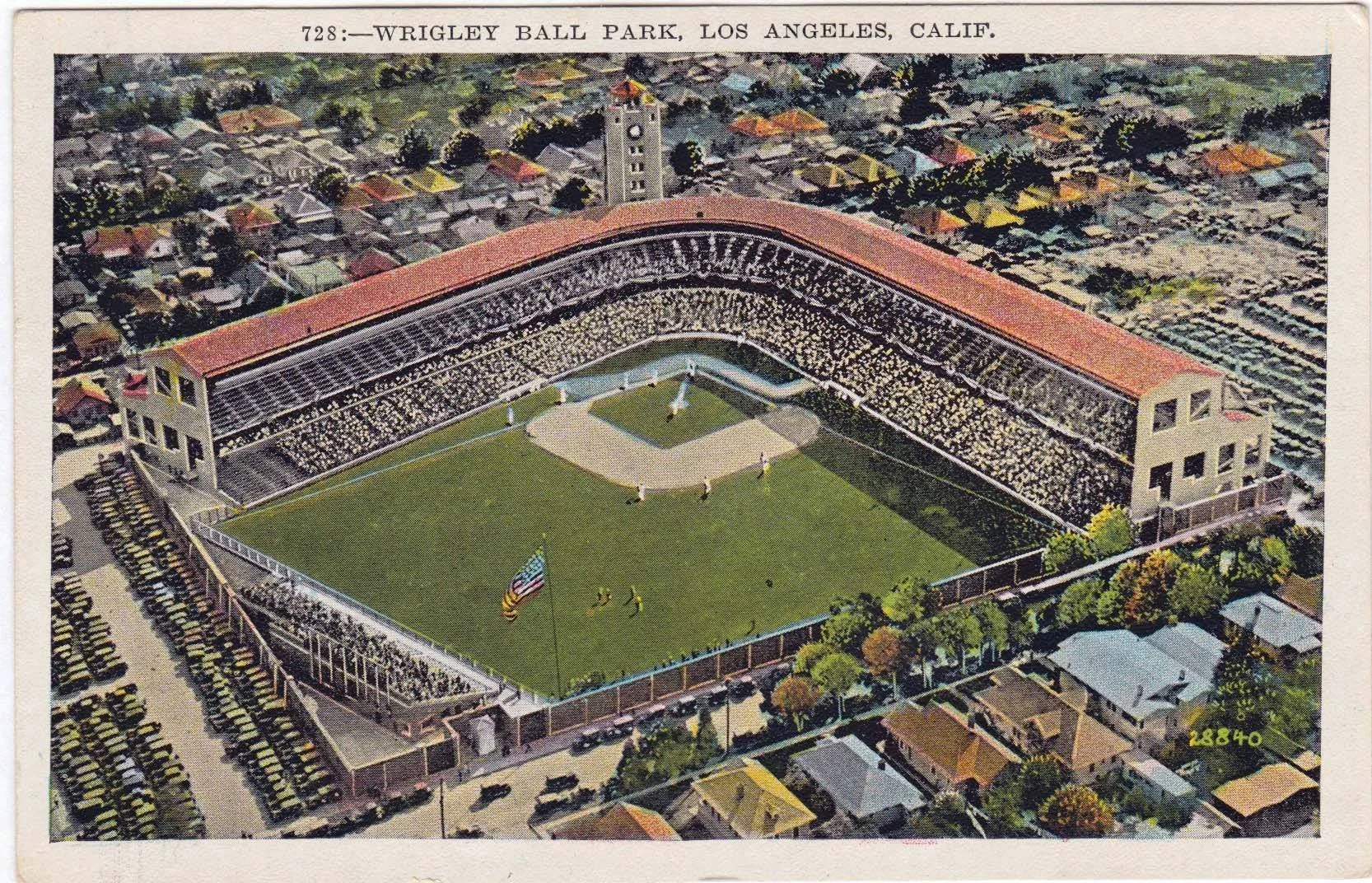
Wrigley Field
Once a week, Maybelle would go to a ballgame at Wrigley Field (not the one in Chicago… the one in Los Angeles) to watch the minor league Angels play.
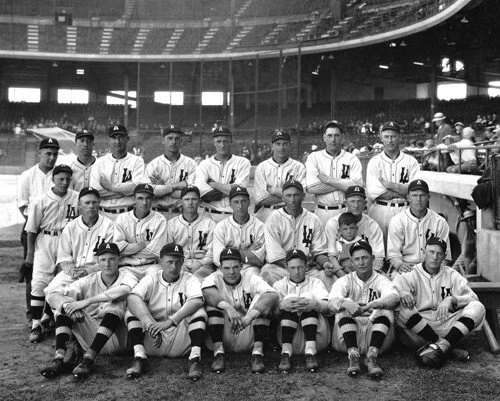
Los Angeles Angels
Maybelle fondly remembers going to watch the Pacific Coast League’s Los Angeles Angels, who were a farm club for the Chicago Cubs at the time.
If the choice was between spending her last dollar on food, or spending her last dollar on tickets to go see an Angels game, Maybelle would be at Wrigley Field to see her boys play every time.
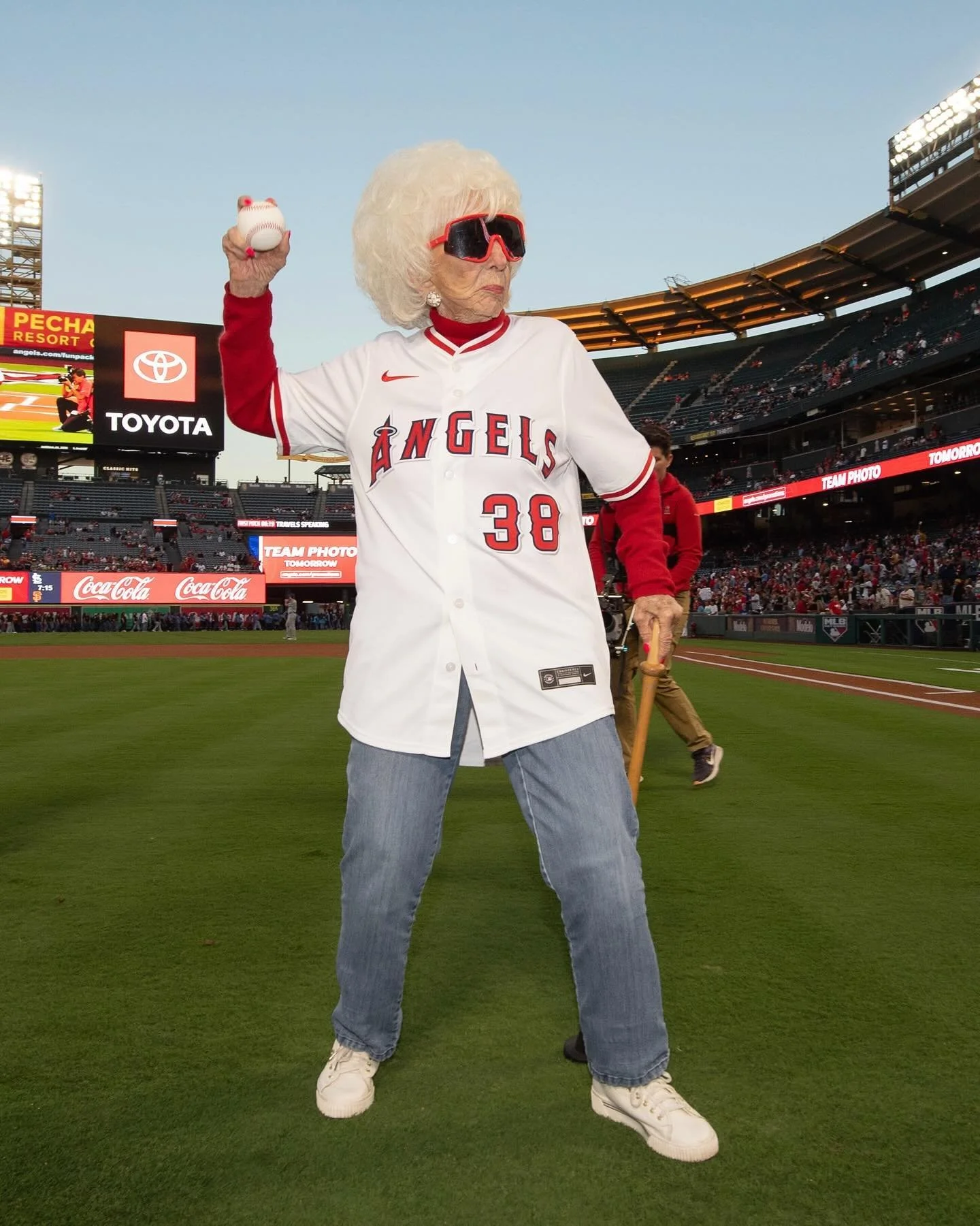
Full Circle
On September 27, 2024, more than 80 years after she saw her first Pacific Coast League Los Angeles Angels game, Maybelle would throw out the first pitch at a Los Angeles Angels MLB game.
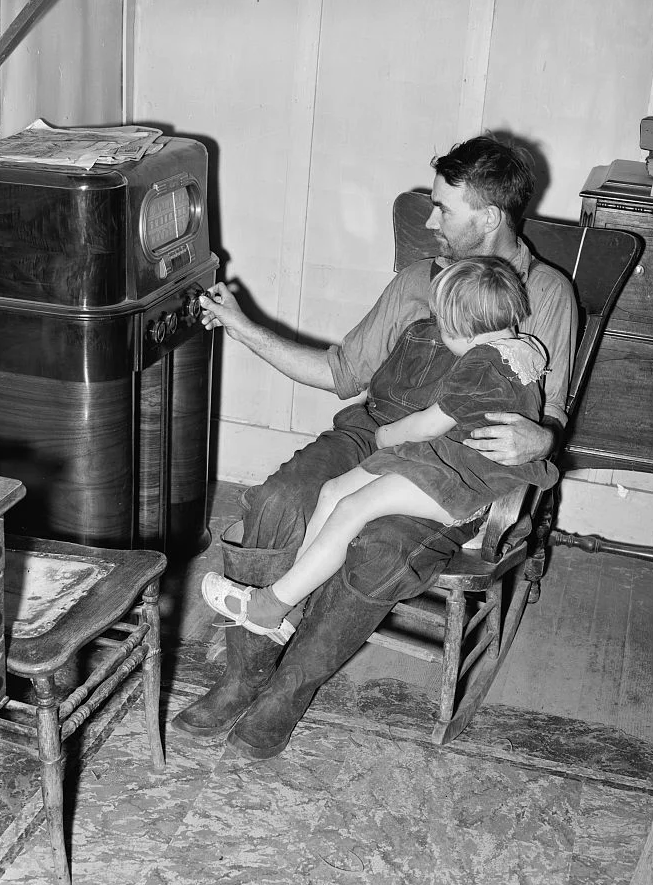
Born Into Baseball
Maybelle would sit and listen to baseball games on the radio as a young girl, and knew how to keep score of a game by the time she was 7 years old.
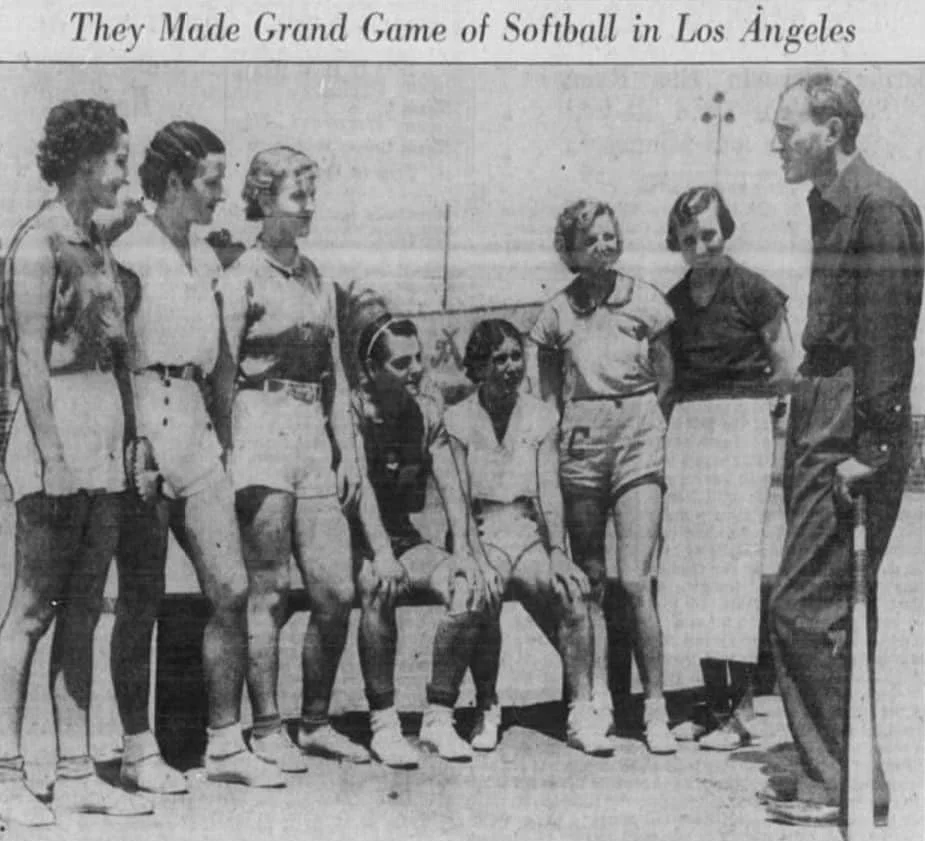
Softball
After the manager of the local Chaney’s department store in Hawthorne, California, asked her to join the team, Maybelle started playing organized softball on a local industrial team when she was about 12 years old.
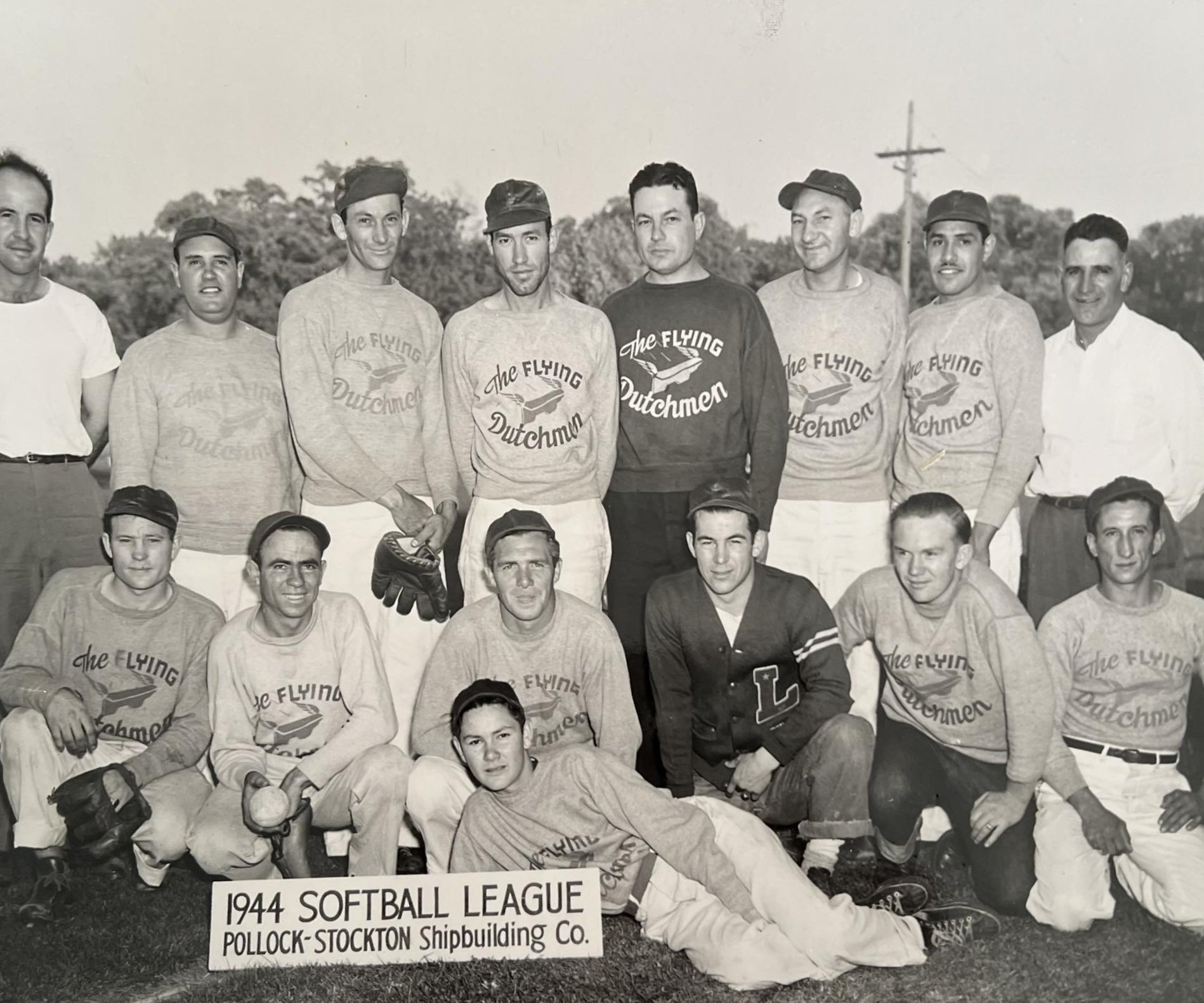
Then, while she was still in high school some time around 1942 or 1943, there was a semipro softball league which formed in Burbank, California.
Pasadena Ramblers
Maybelle started playing with the Pasadena Ramblers (not to be confused with the famous Phoenix Ramblers) in a traveling softball league in 1943, and played with them during the war and until 1946.
The Ramblers used to play teams of service men at all of the forts and all of the army bases for servicemen from northern California all the way down to San Diego.
Coronado Island
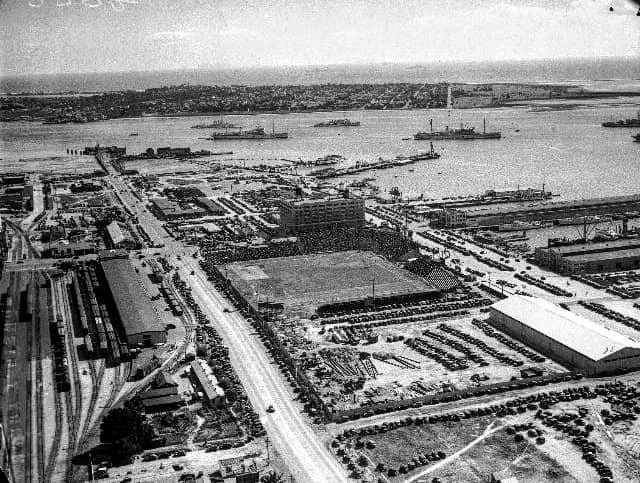
San Diego’s Lane Field, with Coronado Island in the background across the bay.
Maybelle played on Coronado during the war, and remembers a particular game when the German prisoners were razzing the male US Army team, who was losing to Maybelle’s all-female team.
G.A.A.
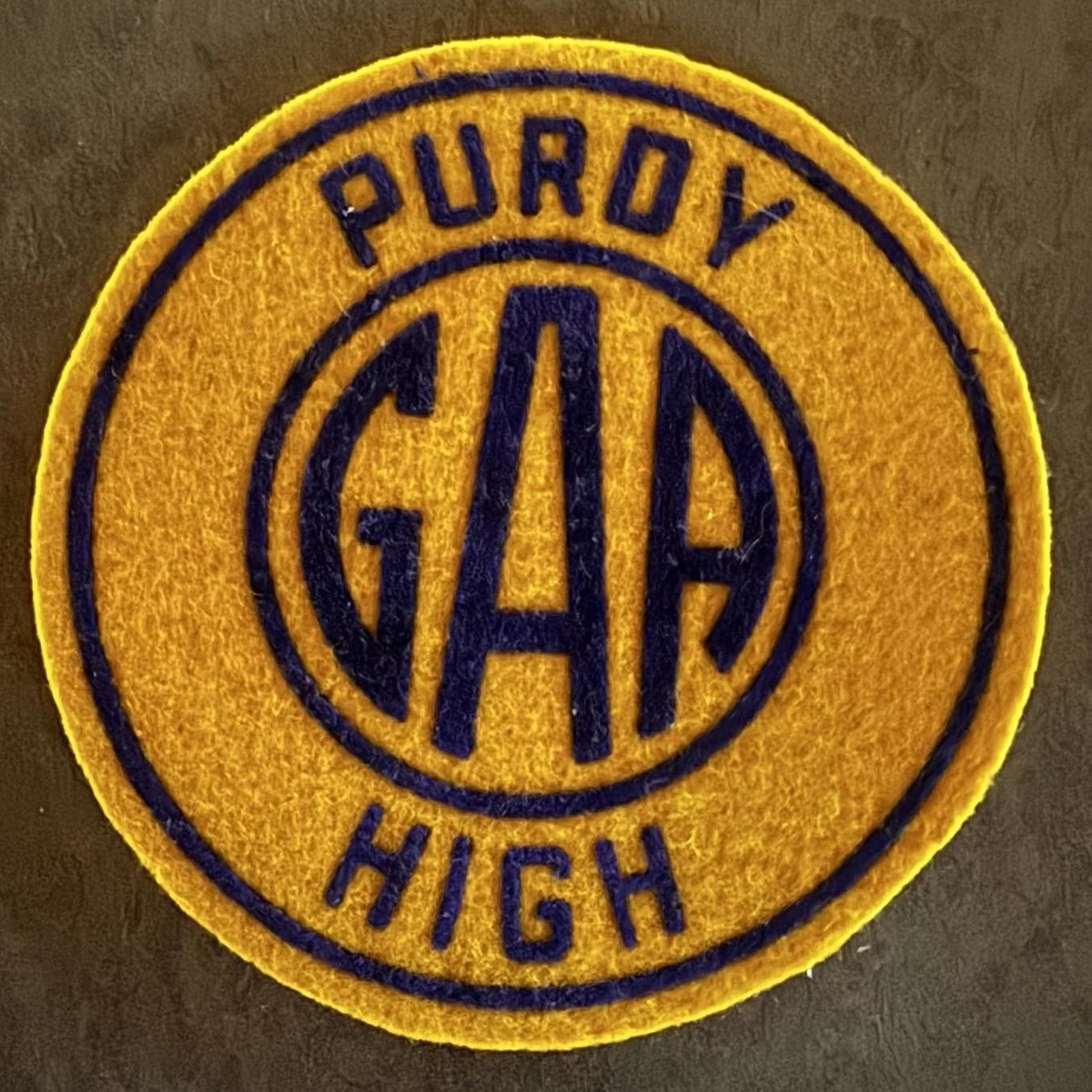
1920 marked the beginning of the Girls Athletic Association (G.A.A.) in California, which included activities like volleyball, dance, tennis, bowling, archery, softball, and other sports and activities.
Northrop Aircraft Softball
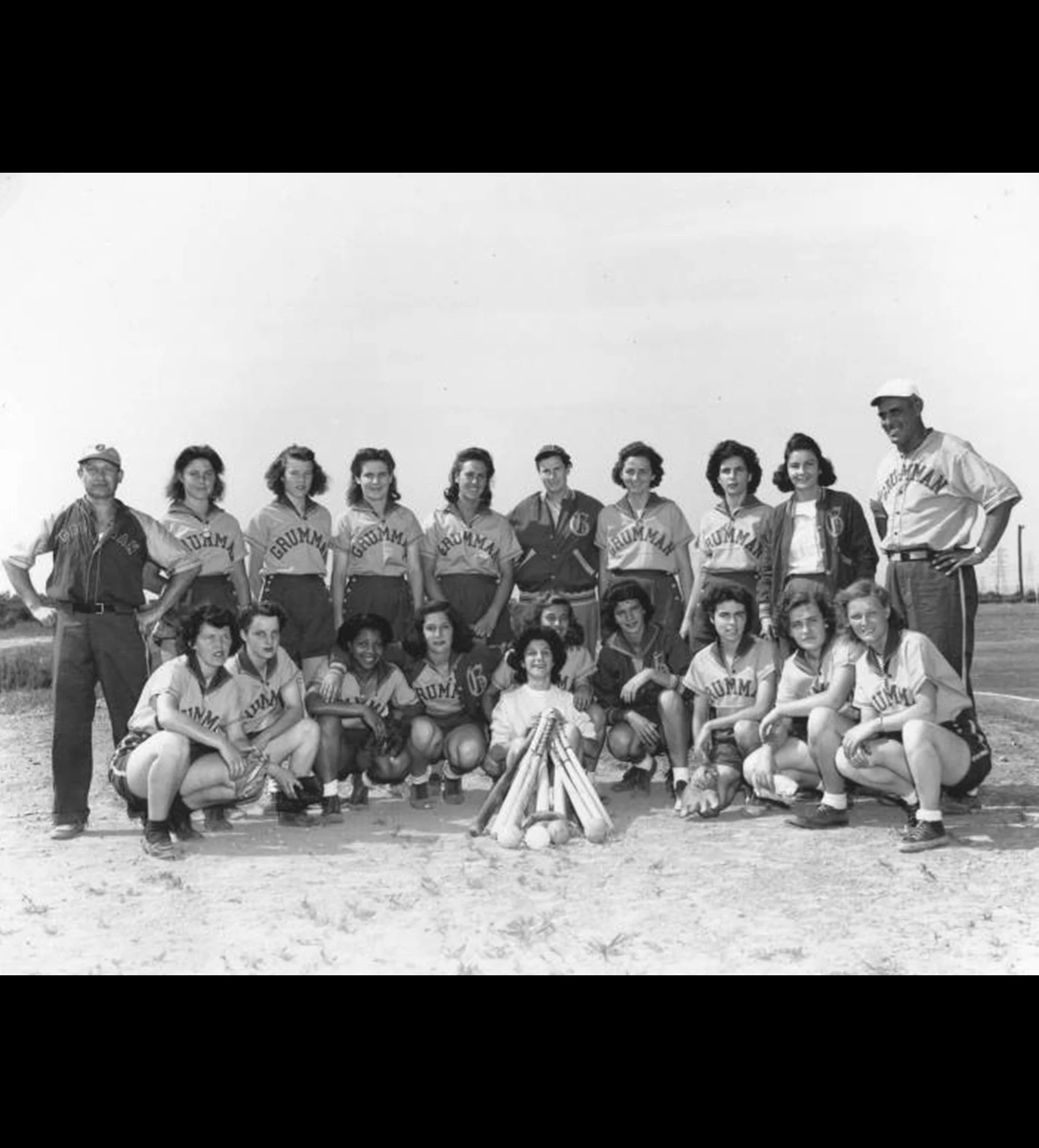
During WWII, Grumman encouraged employee softball teams - both men’s and women’s - as a way to boost morale and build community during long wartime shifts.
This 1943 photo shows the Grumman Women’s Softball Team—factory workers based in Bethpage, Long Island, NY, who built military aircraft by day and played ball after hours. They were known for hard-hitting, strong pitching, and fair play. The same persistence they brought to the field, they brought to the production line.
Photo courtesy of the Cradle of Aviation Museum
Going To Chicago
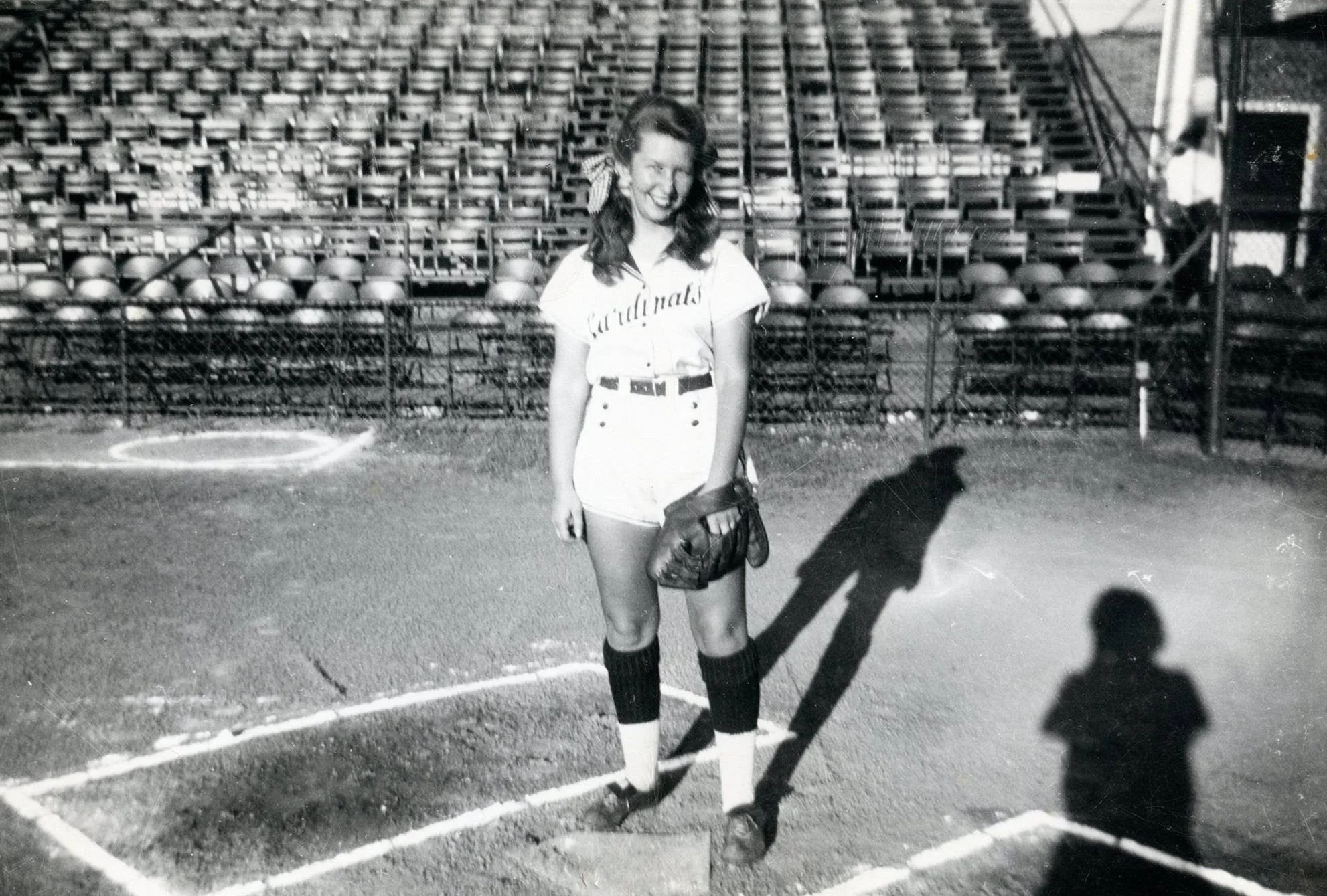
Maybelle’s parents were skeptical about letting her go to Chicago to play softball until the man who was scouting Maybelle assured her mom that Maybelle would be making $55 per week to play.
$55 in 1947 is the equivalent to a little more than $805 in 2026. And that was every week, which meant Maybelle was going to be earning more than her father, George.
Equipment
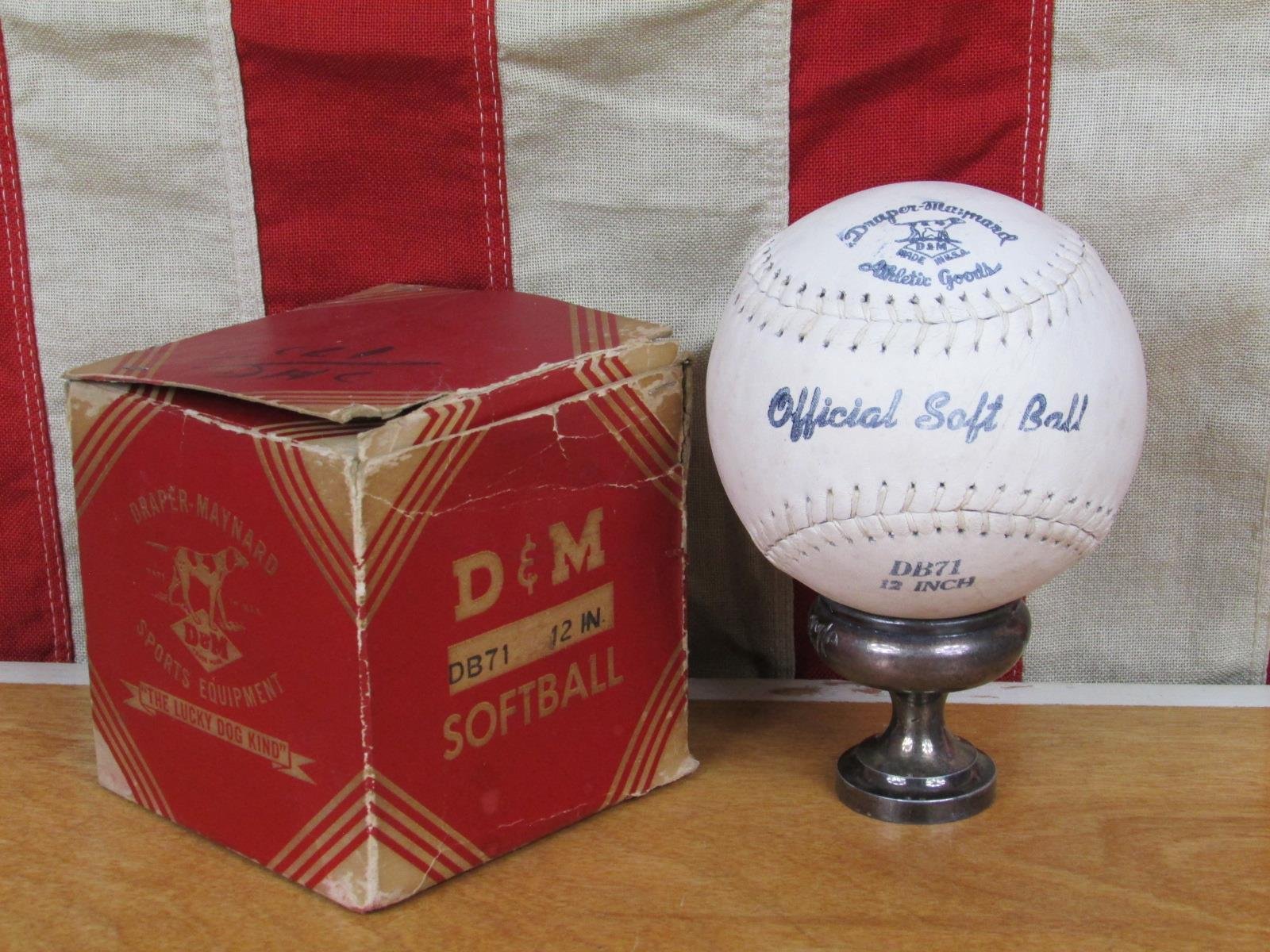
Maybelle was most likely playing with a 12-inch softball, which was the standard softball size at the time, especially in leagues which used a glove. The bats were made of wood, but were most likely regulation baseball bats, not the longer and thinner softball-specific bats.
In The Field
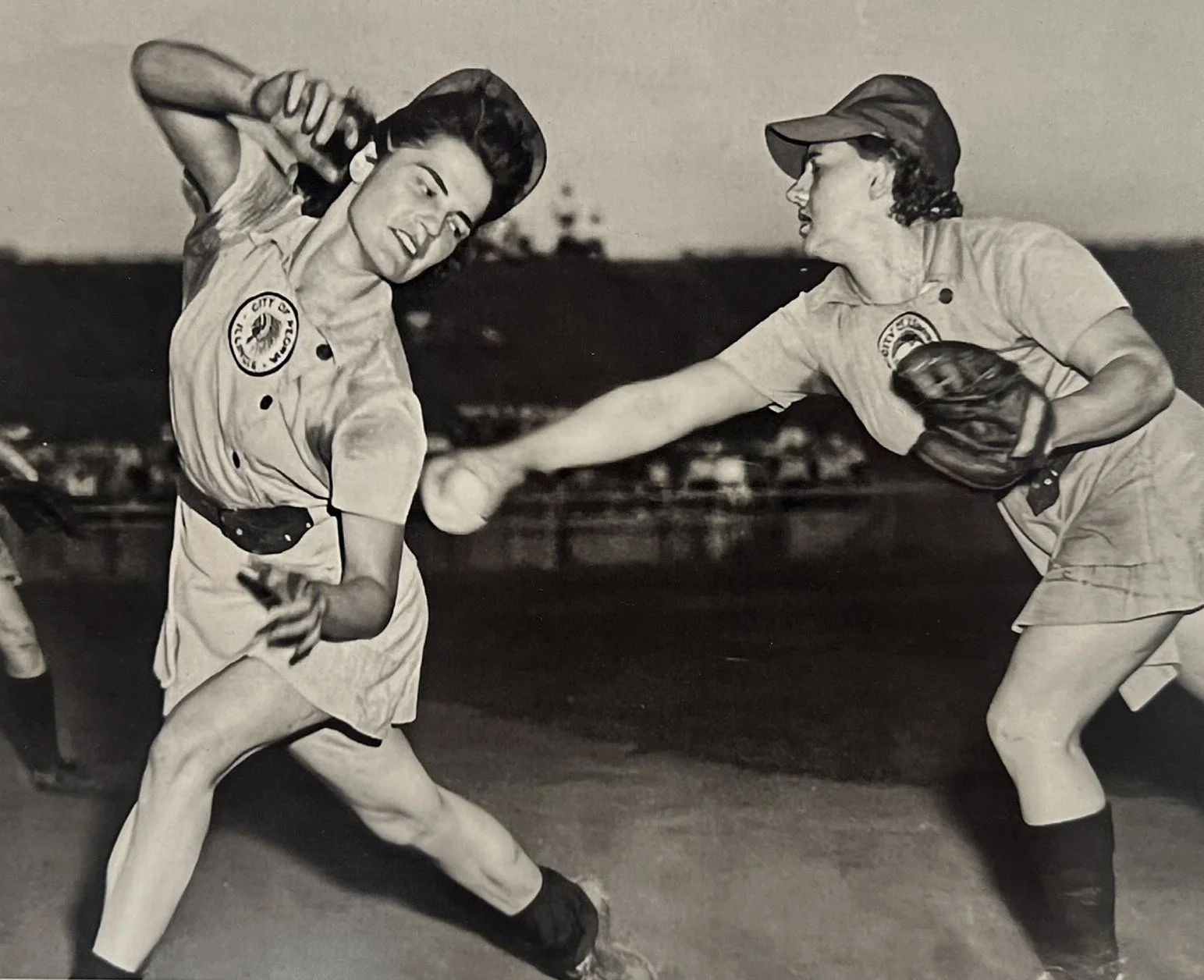
Maybelle was primarily a second baseman when she played softball, though she played a little bit of third base, as well, because that is what her older brother played, and she wanted to emulate him. However, Maybelle was versatile enough to also play the outfield, when needed.
Turning Two
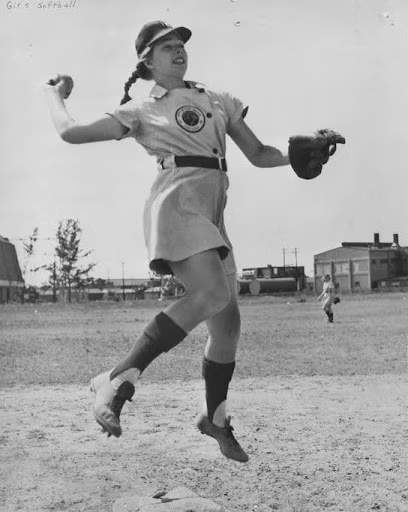
As a middle infielder, one of Maybelle’s favorite things to do during a game was to turn double plays. She enjoyed the artistry and athleticism of avoiding the runner while still making the play.
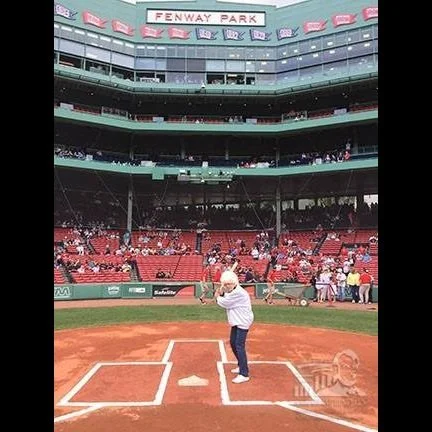
Heart Of The Order
Maybelle would generally bat third, fifth, or sixth in the batting order. While she wasn’t a home run hitter, her line drives made her a threat at the plate.
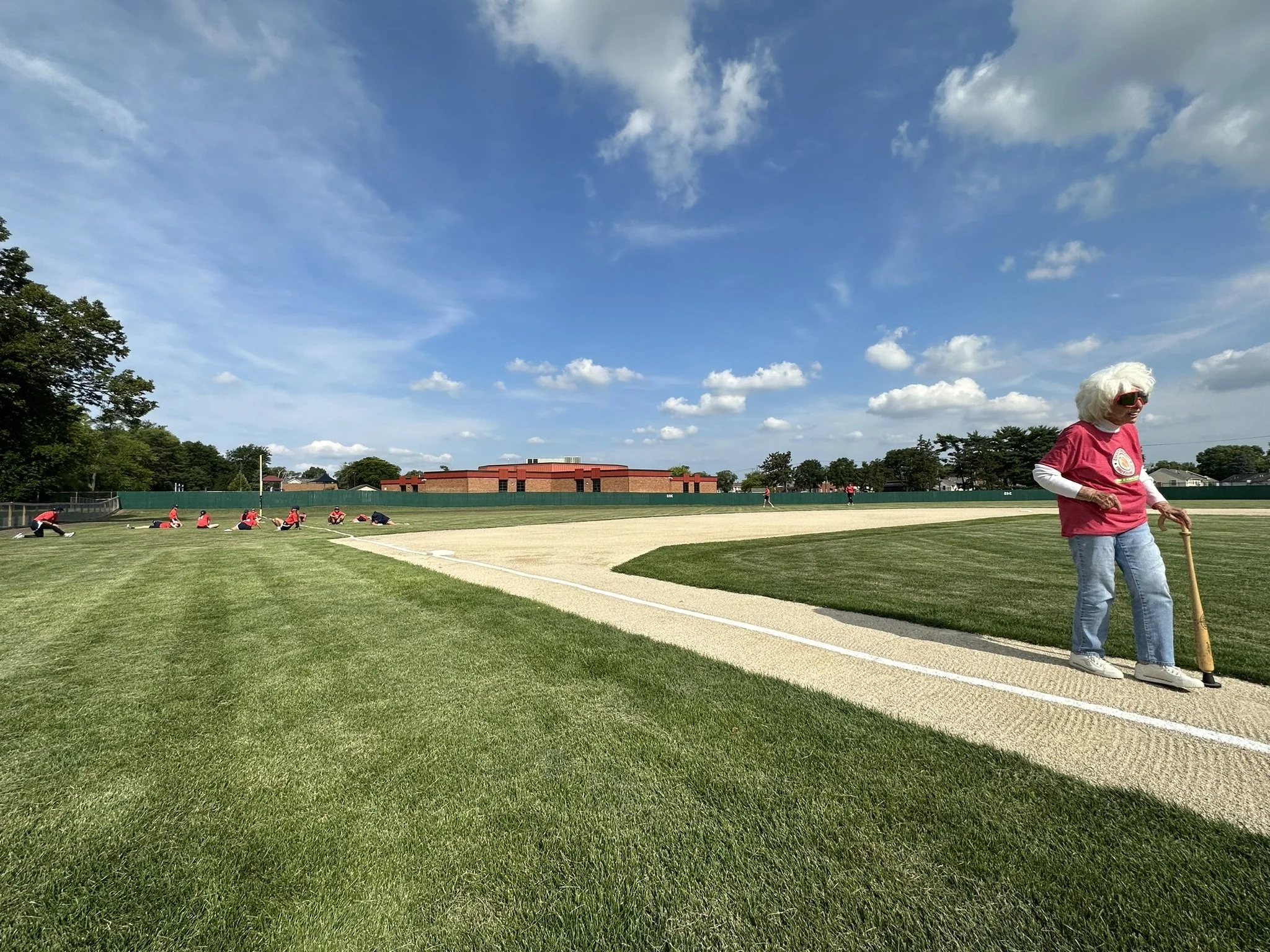
On The Basepaths
When asked if she was a good base stealer during her softball playing days, Maybelle’s answer was succinct: “No.”
It’s much harder to steal bases in softball than it is in baseball.

Sliding Hazards
Sophie “The Flint Flash” Kurys slides as Pauline “Pinky” Pirok tries to apply the tag in this action shot during a game between the Racine Belles and the South Bend Blue Sox on September 14, 1947. Despite the fact that the AAGPBL uniforms offered little to no protection for a player sliding in the dirt, Sophie did it often, and was great at it.
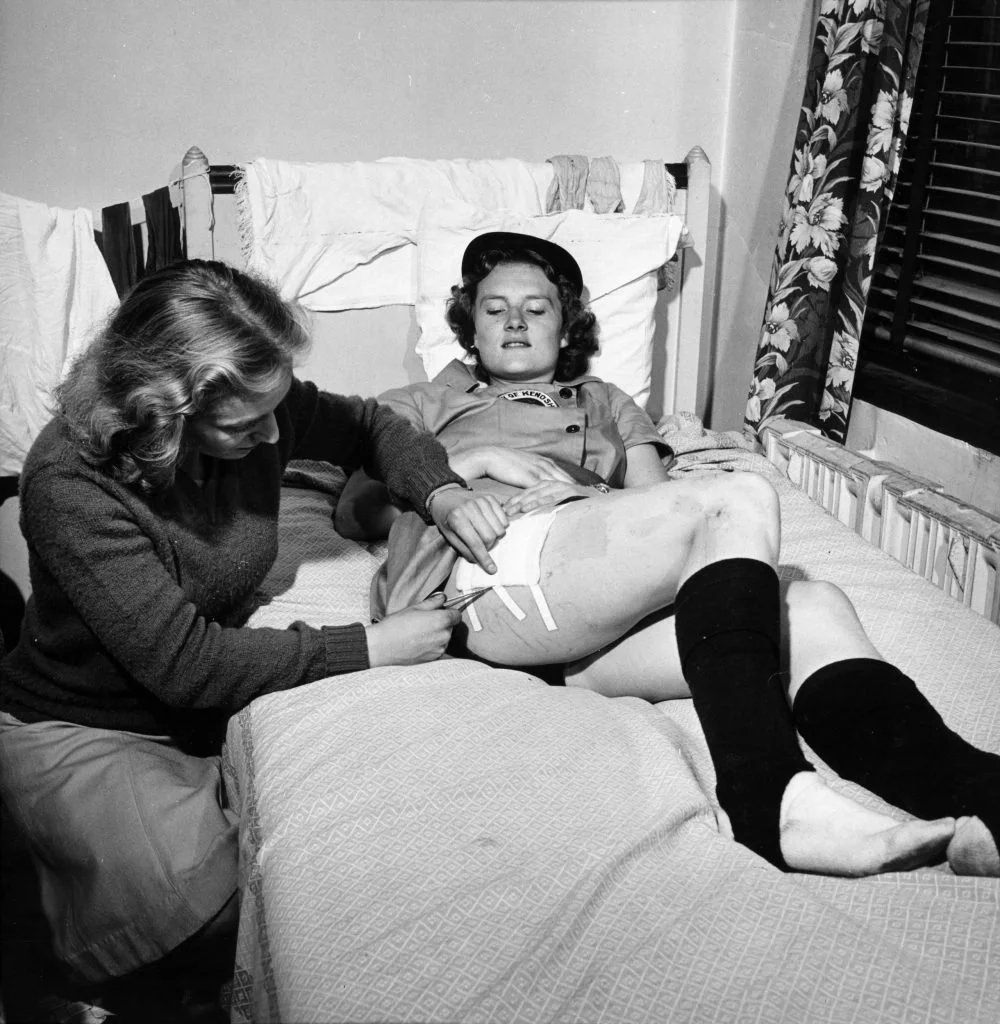
More Sliding Hazards
'All The Way' Faye Dancer recalled her experience in the AAGPBL: 'The guys would look at our short skirts, then look at our legs and wonder how we could slide without taking all the hide off ourselves. Well, we did take the hide off ourselves. I loved to slide.’
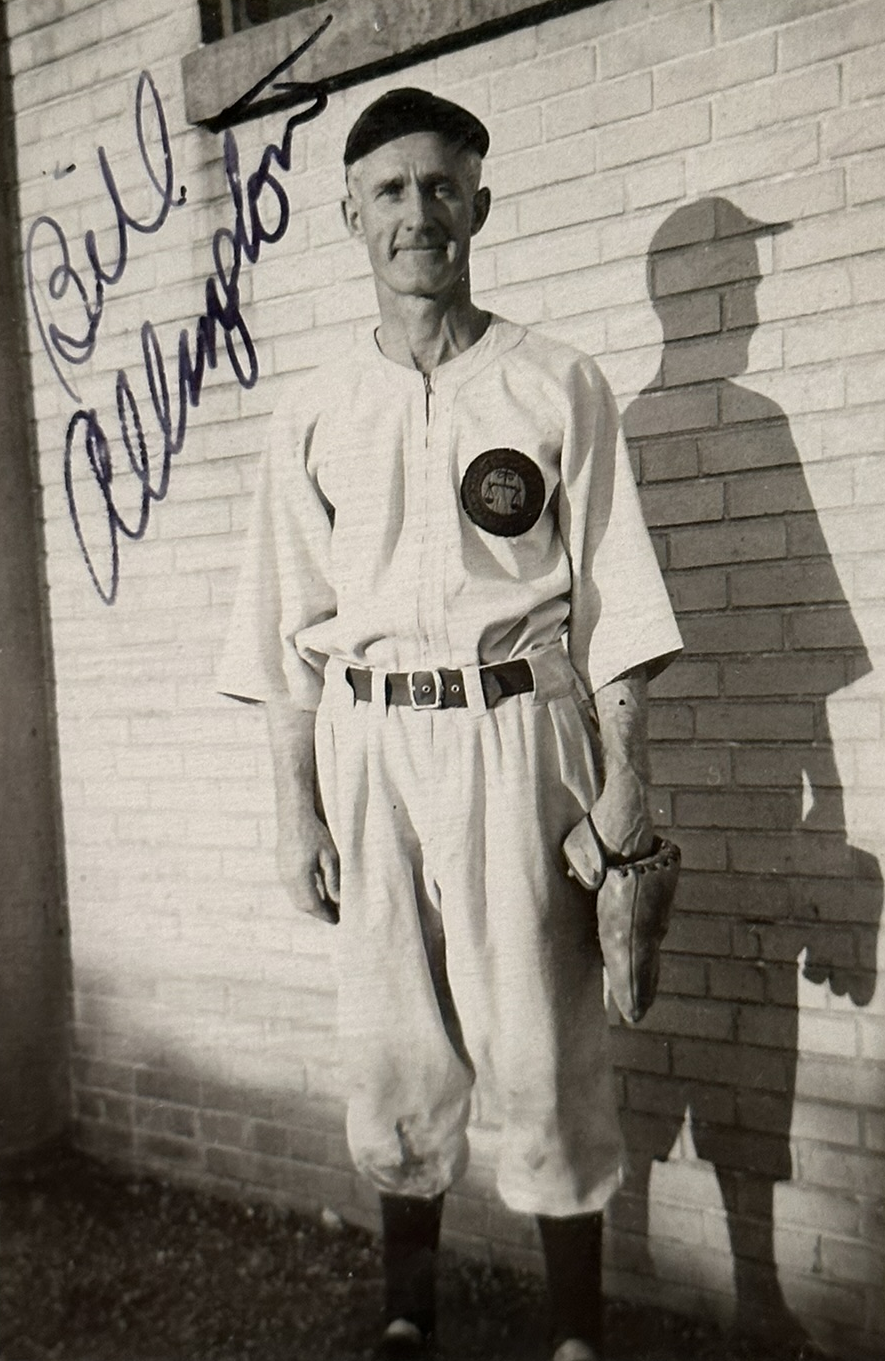
Bill Allington
Bill Allington spent 31 years in baseball as a player (15), coach (4) and manager (12). He started his professional career as an outfielder, playing from 1926 through 1940 with ten teams in four different leagues.
Following his playing career, Allington coached in the minors from 1941 to 1944, before landing in the AAGPBL, to become the most successful manager in the league's history. With Allington at the helm, the Rockford Peaches reached the playoff six times, winning the Title in 1945 and in consecutive years from 1948 to 1950. Allington later managed the Fort Wayne Daisies in 1953 and 1954, leading them to the league’s best record in both seasons.
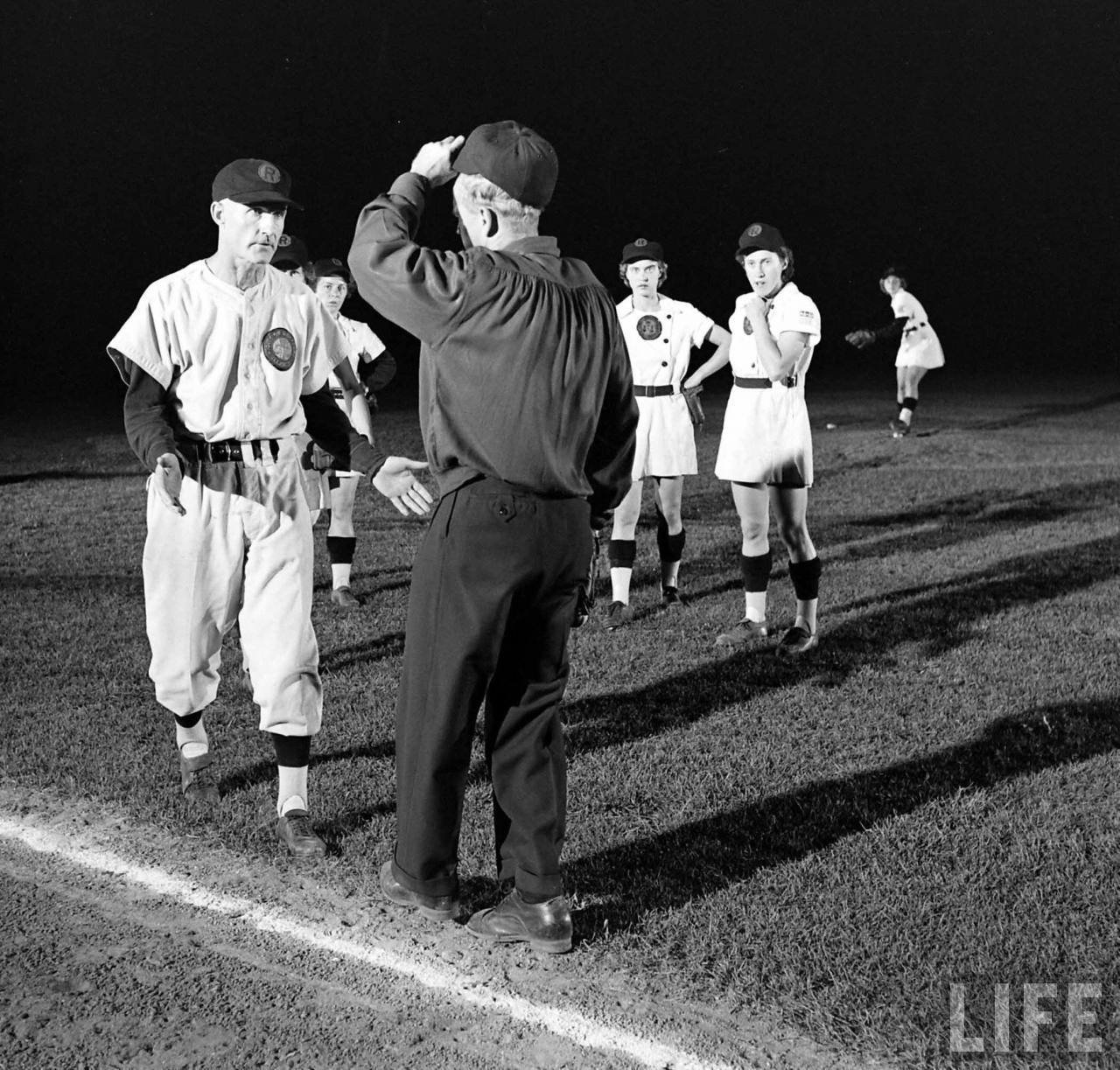
California Roots
Managers were usually men who had played professional baseball, but Allington was actually a fast pitch softball coach in California when he became aware of the League. Many of his California Sate Championship players came East with Bill when he accepted a managerial position with the League.
He expected maximum effort from his players, but he also required that they intimately know the rules of the game. It wasn’t unusual for Bill to give his players pop quizzes about the game during bus rides to away games.
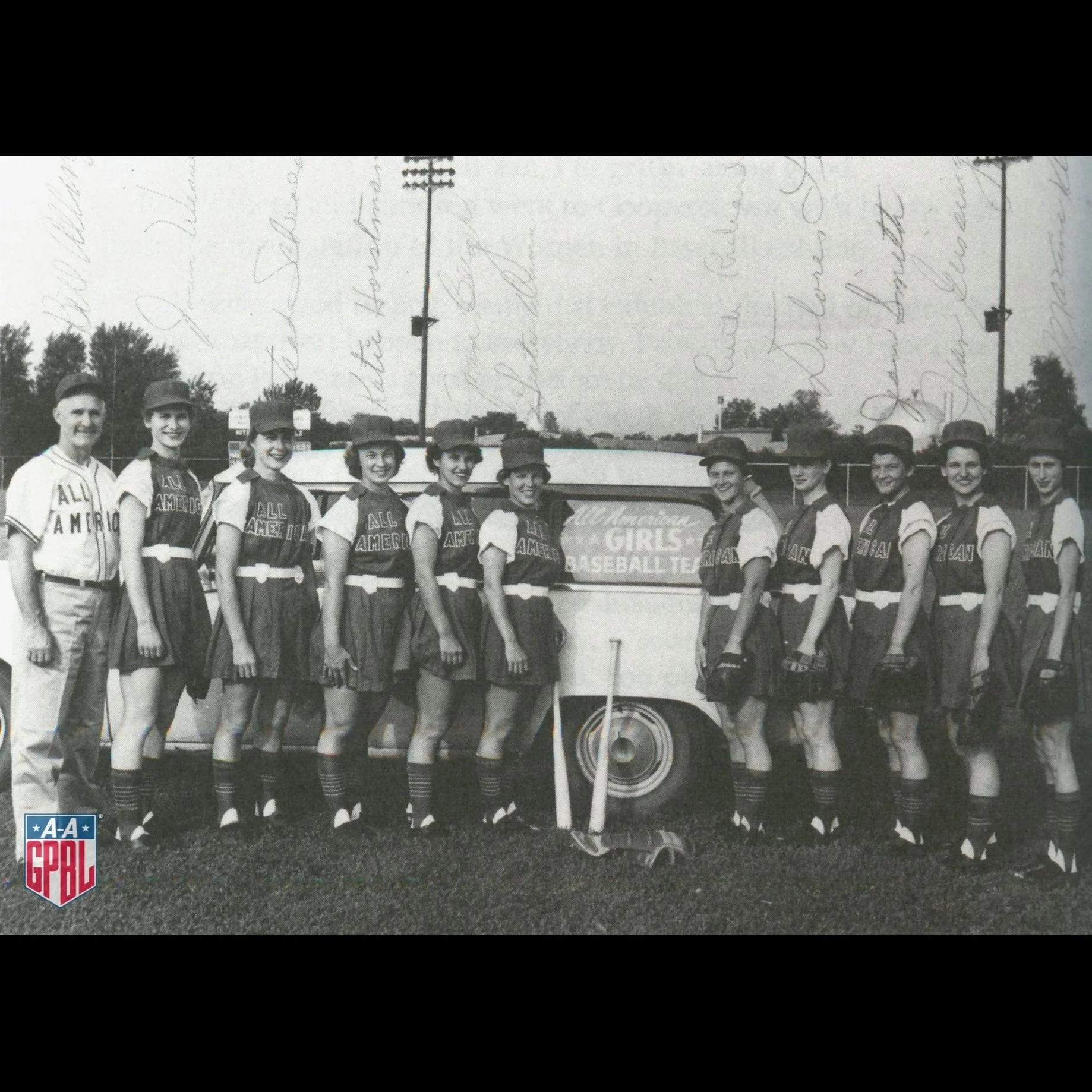
Bill Allington's All Stars
Allington organized “Allington’s All Stars,” made up of some of the best players from the league. They toured & played exhibition games against men’s teams coast to coast from 1955-1958. They even traveled north into Canada, and south into Mexico.
Pictured here (left to right): Allington, Jo Weaver, Dottie Schroeder, Kate Horstman, Joan Berger, Gertie Dunn, Ruth Richard, Delores Lee, Jean Smith, Jean Geissinger, and Maxine Kline.
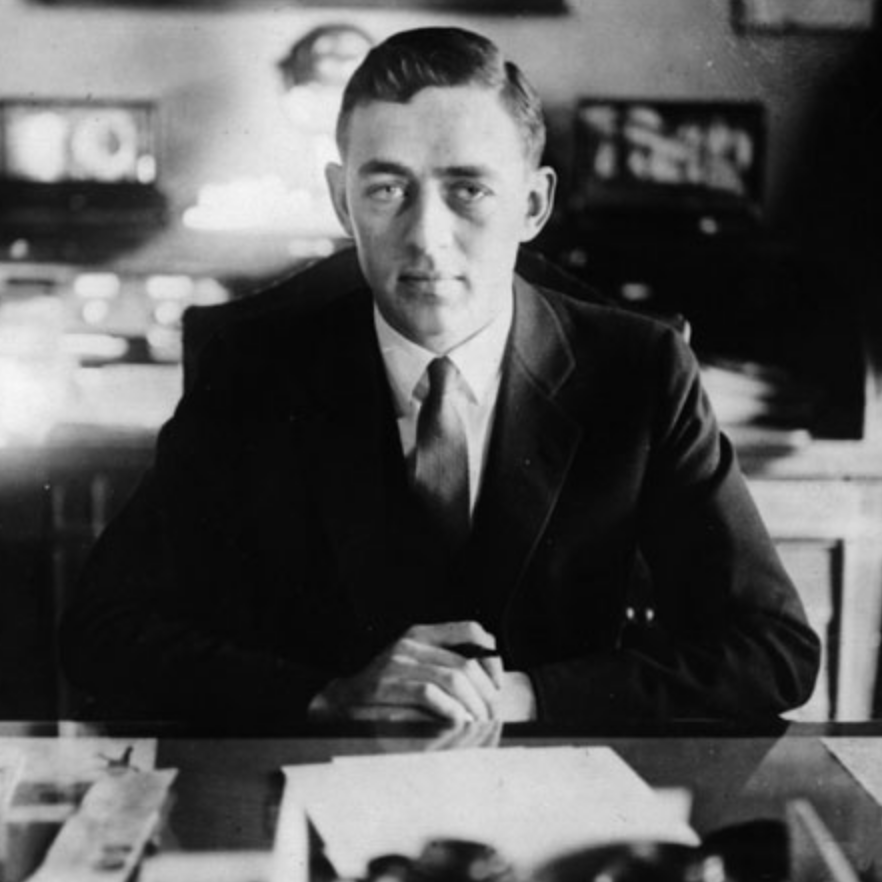
Philip K. Wrigley
The AAGPBL was founded by Philip K. Wrigley in 1943. It was the first professional women’s sports league in the United States. Over 600 women played in the league during its 11-year run through 1954.
Wrigley purposely placed teams in manufacturing cities that were beleaguered by the war effort on the home front. At the beginning of every game, the Star Spangled Banner was played while the girls formed a 'V' for victory in remembrance of the men at war.
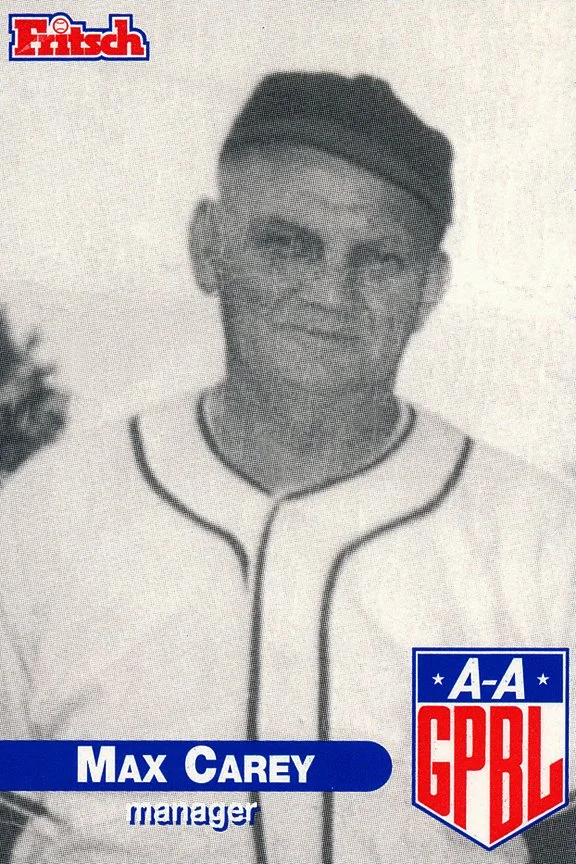
Max Carey
Before joining the AAGPBL, Max “Scoops” Carey had a Hall of Fame career in major league baseball, and in 1931 and 1932 he managed the Brooklyn Dodgers.
After spending one year managing the AAGPBL's Milwaukee Chicks in 1944, Carey was moved into the league's front office as President.
During his tenure as league president, from 1944 to 1949, Carey developed and organized the scouting system from the league to cover the United States and Canada, including scouting Maybelle Blair, who was sure to hide her leg injuries from Carey so she would be accepted into the league.
He brought a wealth of baseball knowledge and connections to the league. In 1950, he returned to the dugout to manage the Daisies for two seasons.
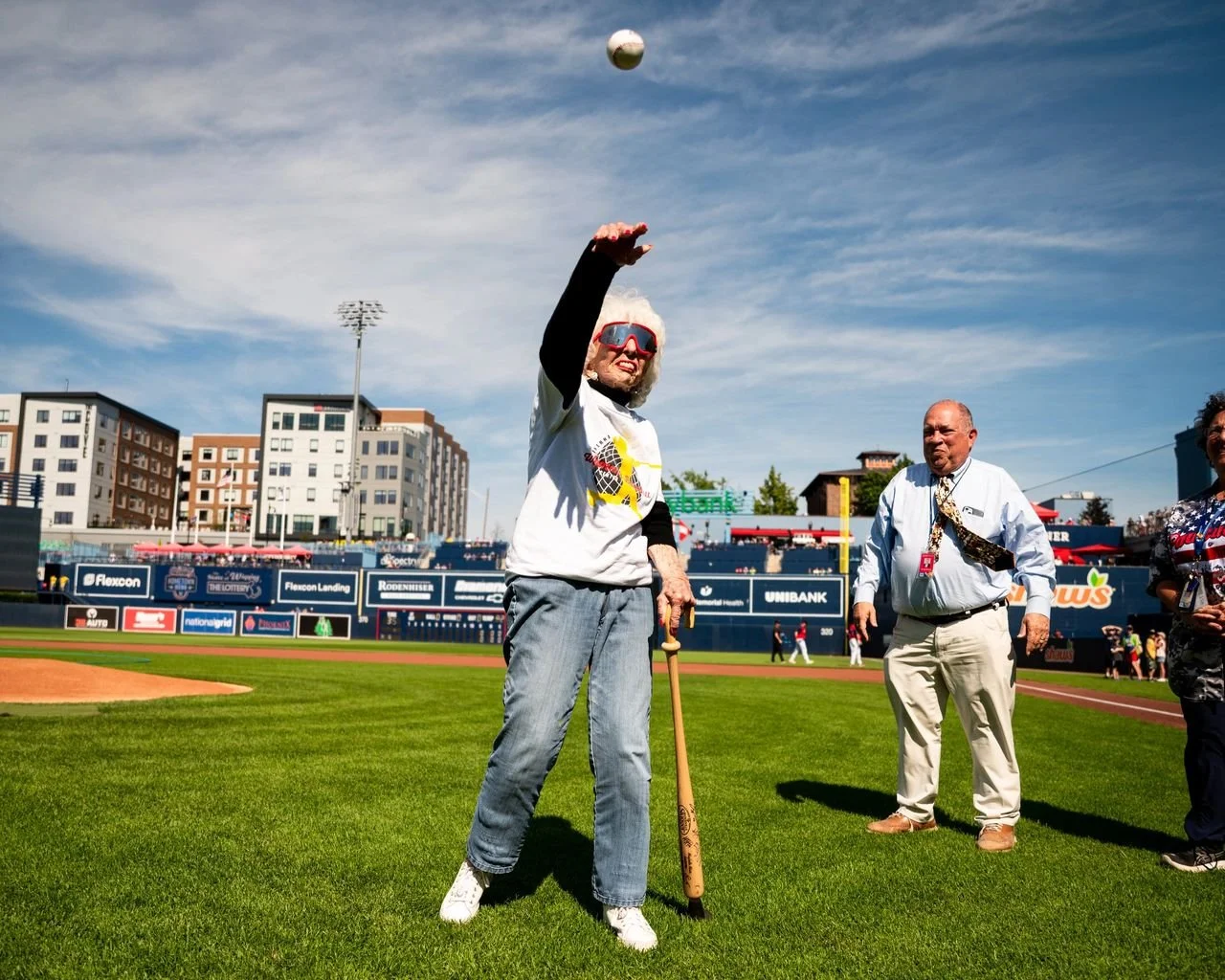
Strong Arm
Maybelle’s strong arm was enough to gain her acceptance into the AAGPBL. Unfortunately, once she made it to the mound and her opponents realized she couldn’t move off the mound to field her position, the jig was up.
Due to her leg injuries, which have persisted all her life, Maybelle pitched in only one game during her AAGPBL career. But she still has a strong arm.
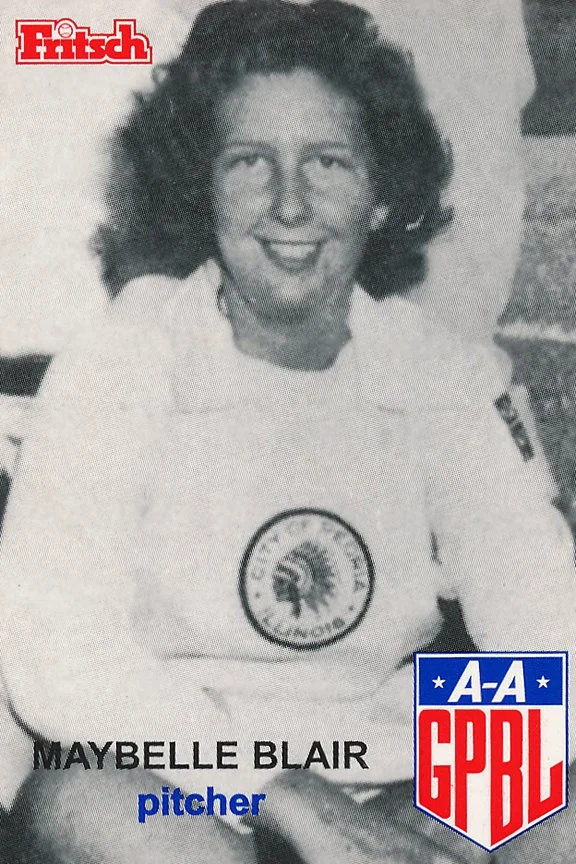
Peoria Redwings
Maybelle was sent to Peoria to be a member of the Redwings. She had no say in where she was sent or what team she would play for.
Cubans in Peoria
Maybelle’s roommate on the Peoria Redwings was a Cuban woman named Gloria “Baby Face” Ruiz.
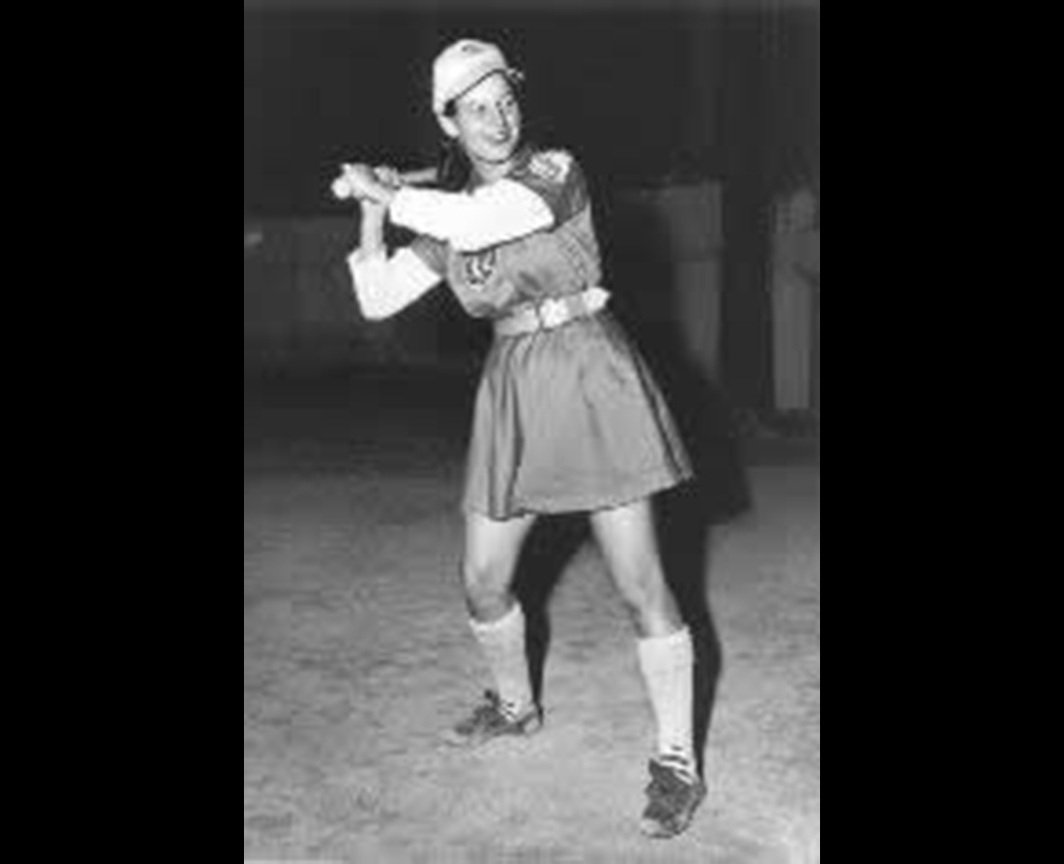
But the Redwings also had two other Cuban players: Luisa Gallego and Georgiana Rios (seen here).
Gallego also played for the South Bend Blue Sox and the Springfield Sallies during her time in the league. Rios also spent time with the Fort Wayne Daisies.
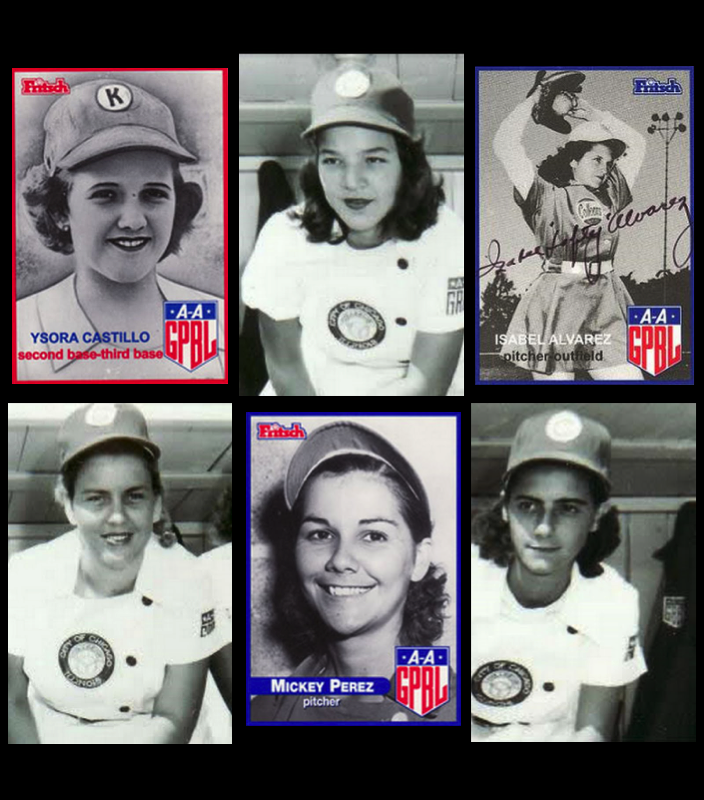
Cubans in the AAGPBL
Since there were no Black players allowed in the AAGPBL, “the closest the All-American Girls Professional Baseball League ever came to integration was the signing of a few light-skinned Cuban players.”
Given the racial tension which minority athletes experienced in Major League Baseball, it could be assumed this small handful of Cuban women experienced similar discrimination. Interestingly, quite the opposite was true.
Clockwise from top left: Ysora Castillo-Kinney, Mirtha Marrero, Isabel Alvarez, Luisa Gallego, Migdalia “Mickey” Perez, and Gloria Ruiz.
Photo collage courtesy of Ceasar Brioso
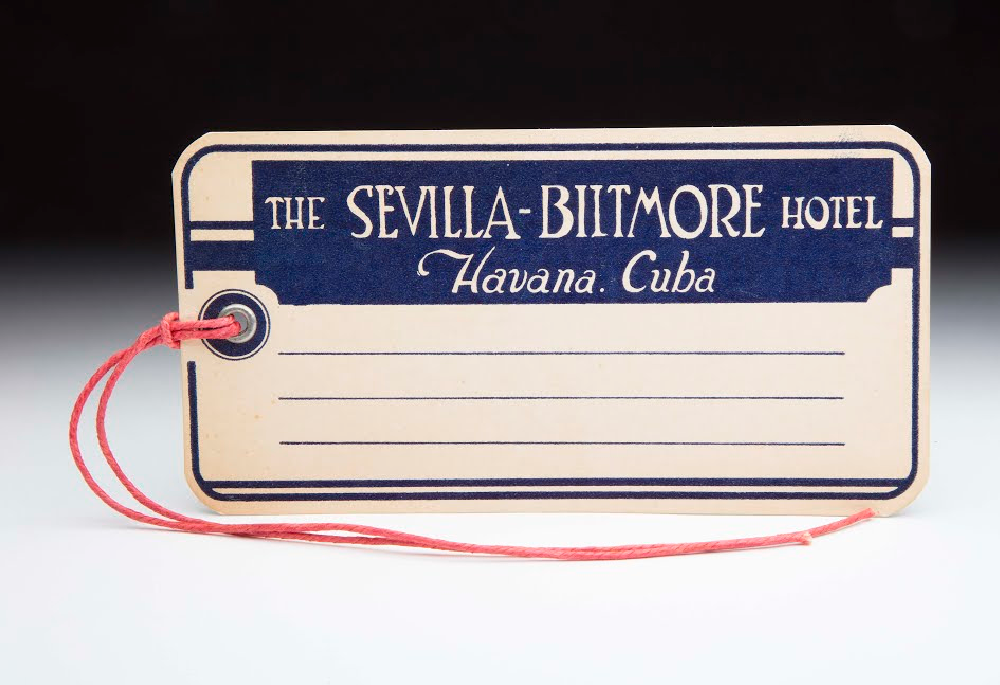
When the AAGPBL traveled to Cuba in 1947, the women stayed in the Sevilla-Biltmore Hotel in Havana. The women played games against the local Cubanas, a woman’s baseball team, and drew larger crowds than the Brooklyn Dodgers, who had spent Spring Training in Cuba prior to the AAGPBL’s arrival.
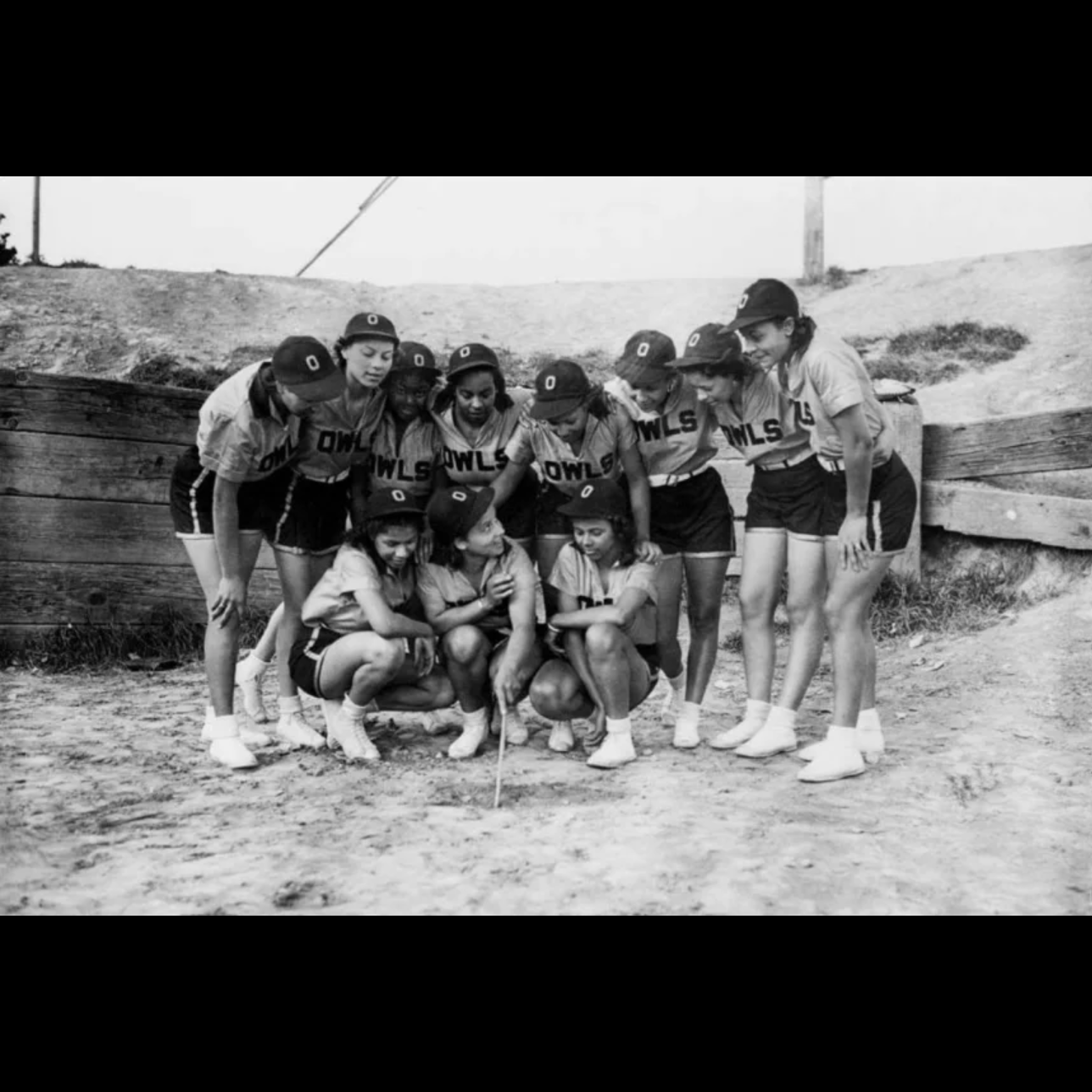
The Owls Club
In 1938, the Owls Club, a group of talented Black women in Seattle, won the first-ever Black women’s professional softball championship. The next year, behind left-handed pitcher Lillian Brown’s dominant performance — where she struck out 12 Manette batters — the team, then renamed the Brown Bombers, won the championship again.
But there were Black softball teams all over the country in the 1940s, including in California, where Maybelle was able to see their greatness firsthand.
Photo courtesy of the Museum of History & Industry - Al Smith Collection
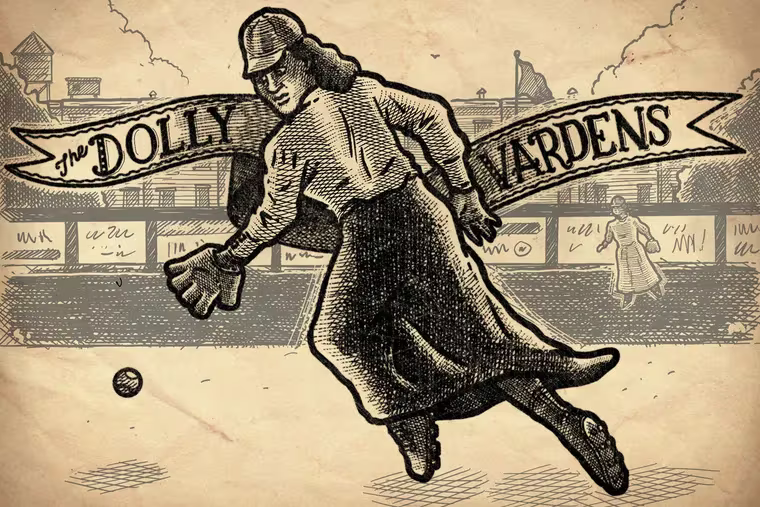
The Dolly Vardens
Black women have been playing baseball since at least the second half of the 19th century, when a semi-pro team called the Dolly Vardens played around the Philadelphia area.
The team was assembled by barber-turned-sports entrepreneur John Lang in the 1880s, with newspaper confirmation of games as early as May of 1883.
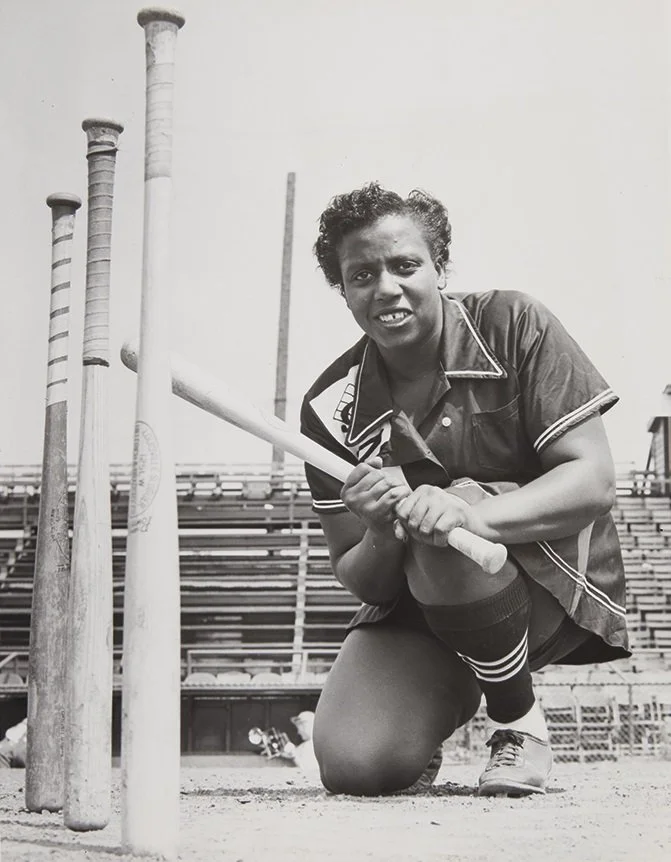
Betty Chapman
Betty Chapman became the first female African-American professional softball player when she signed as an outfielder for the Music Maids of the National Girls Baseball League in 1951.
Chapman had two RBI in her debut game July 18, 1951, and scored the game-winning run in the team’s game four days later. She was given the nickname “Miss Minnie Minoso” in an article that came out 10 days after her debut, when her batting average was still over .500.
Despite Chapman’s success, over the four remaining years of the league, very few other African American players were signed.
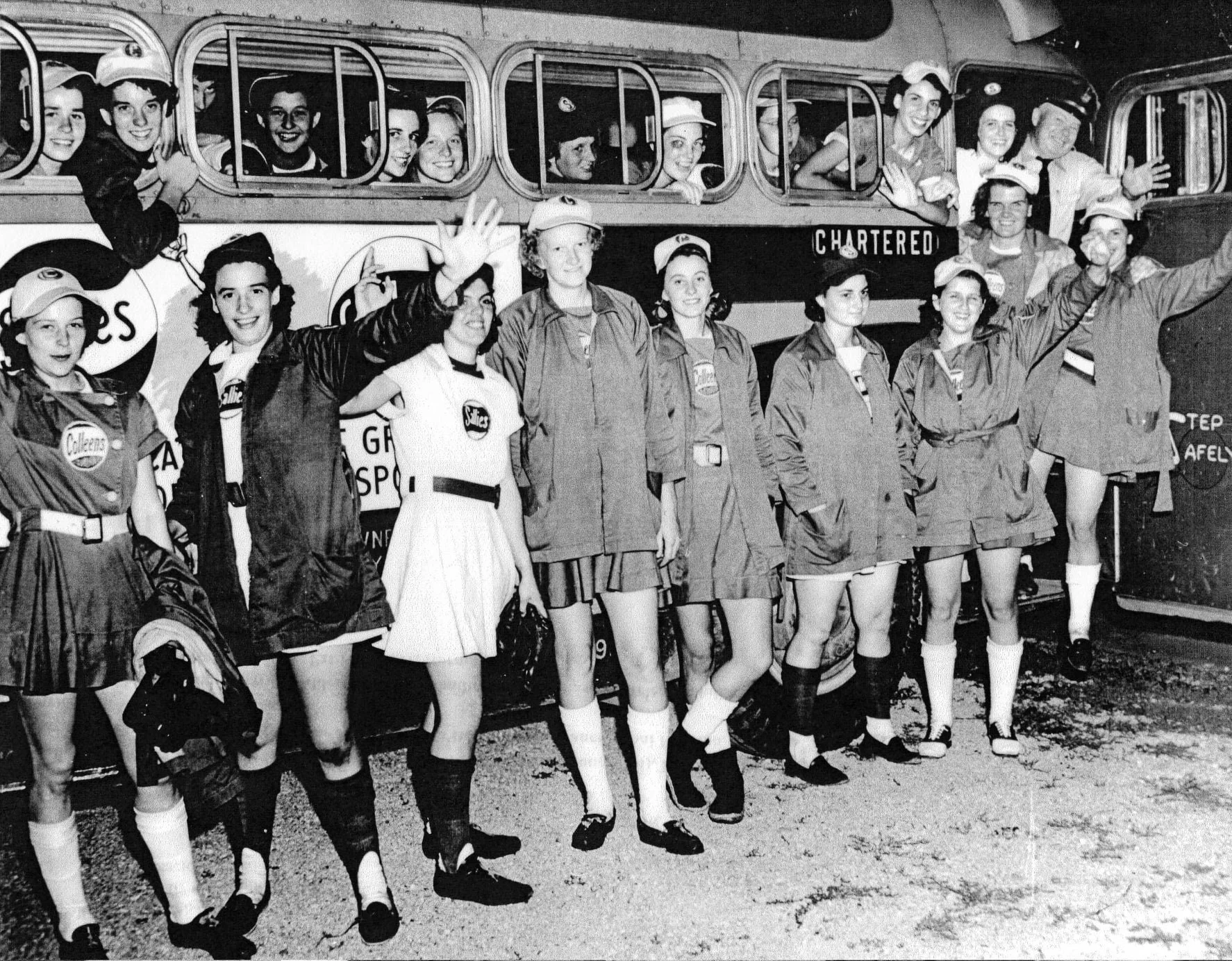
Passing The Time
Maybelle said one of the most common ways for the players to pass the time, especially on long bus rides, was to play cards. Maybelle wasn’t a good poker player when she joined the team, and the money she imagined she would be sending home to her family was often lost in card games to her teammates.
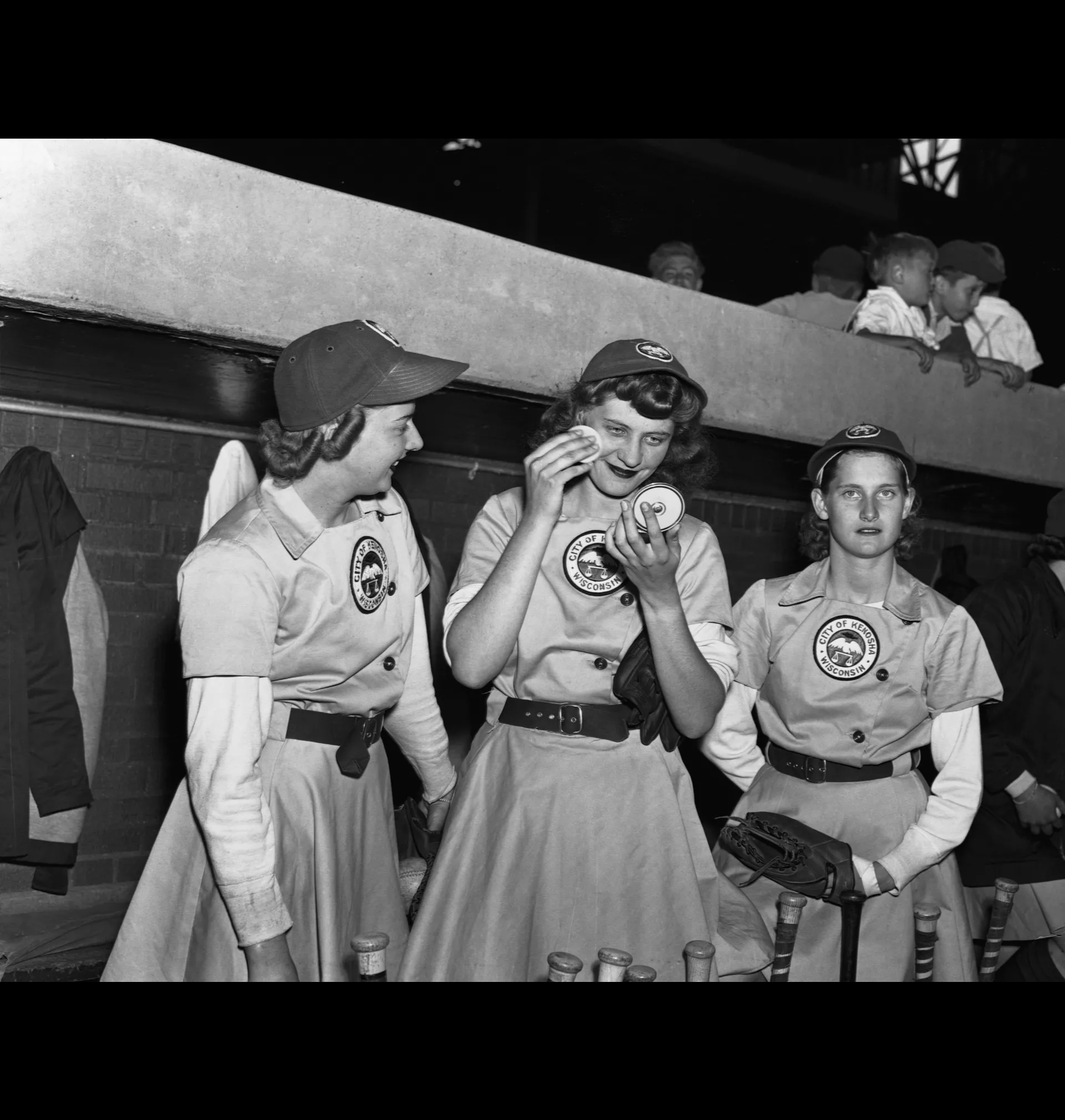
“Feminine Looks”
One of the requirements for women playing in the All-American Girls Professional Baseball League was for them to maintain their "feminine looks."
The very first entry in the Rules of Conduct reads:
”ALWAYS appear in feminine attire when not actively engaged in practice or playing ball. This regulation continues through the playoffs for all, even though your team is not participating. AT NO TIME MAY A PLAYER APPEAR IN THE STANDS IN HER UNIFORM, OR WEAR SLACKS OR SHORTS IN PUBLIC.”
In this photo, Elise Harney, pitcher for the Kenosha Comets, refreshes her makeup between innings as teammate Janice O'Hara and another player look on.
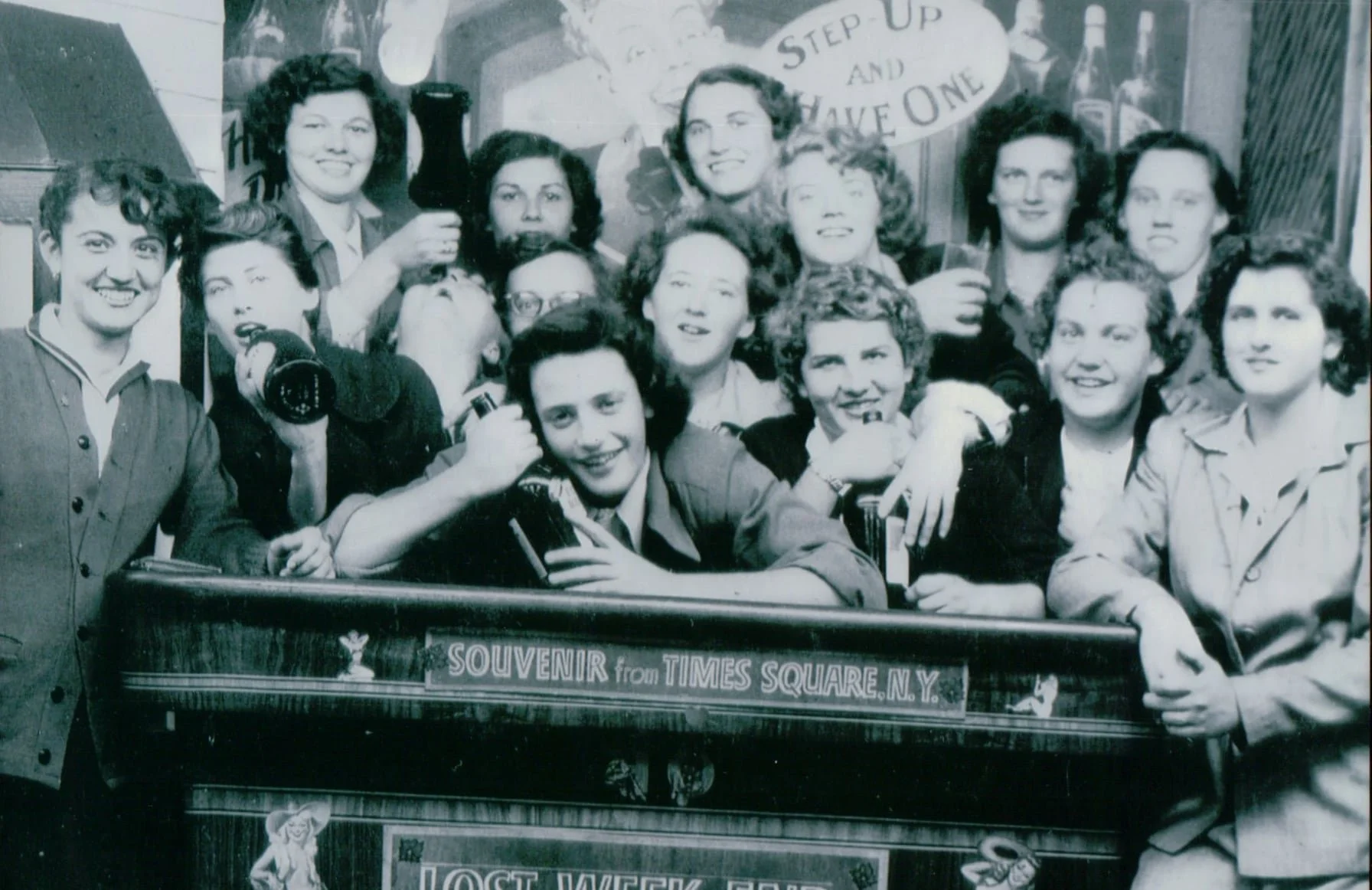
Breaking The Rules
Fines of FIVE DOLLARS for the first offense, TEN DOLLARS for the second offense, and SUSPENSION for the third offense were automatically imposed for breaking any of the League’s rules as outlined by the code of conduct. Most players followed the rules rather than risk being thrown out of the league, but “most” does not mean “ALL.”
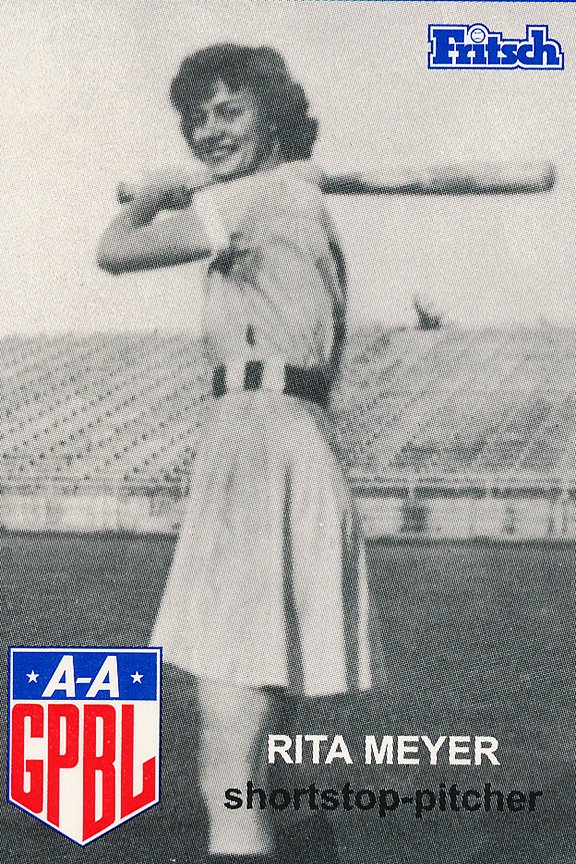
Rita “Slats” Meyer
The first person Maybelle mentioned when I asked her about specific great players during her time in the AAGPBL was Rita (Meyer) Moellering.
At one point during her time in the league, four seasons from 1946 to 1949, Rita excelled so well at shortstop with her hard, bullet throws that she became a pitcher.
She only pitched during the 1947 season, and, since she had no formal training or coaching, there was no special form to her motion. She just threw like she did when she threw runners out at short.
Her hard throws struck batters out in the box just as much as they put them out on the base paths. Rita struck out 56 batters in 1947 and accumulated a 3.12 ERA in 75 innings pitched.
Rita often found herself batting in key places in the lineup because of her ability to drive in runs, and 1948 would be the best year of her career. She led the league with 68 RBI, racking up 12 doubles and 106 hits with a .232 average in 122 games.
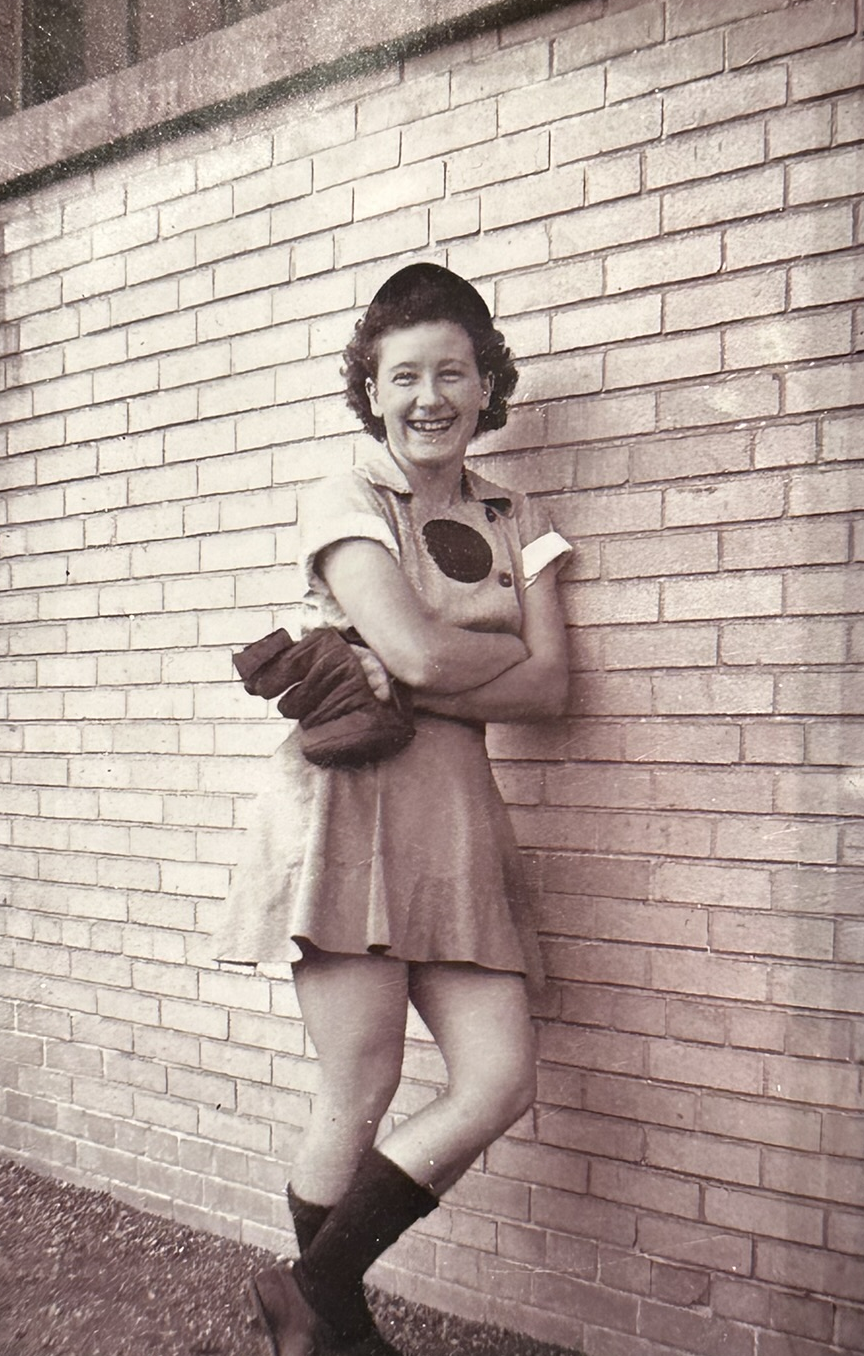
Dorothy Doyle
Dorothy “Snookie” Harrell (eventually Snookie Doyle) was a smooth-fielding Shortstop who played with the Rockford Peaches from 1944 to 1952. She was a 5-time All-Star who collected 667 hits and stole 229 bases in her career.
After eight seasons in the league, Snookie moved on to softball, playing with teams in Phoenix, Portland, and Los Angeles. At the end of her softball career, she even served as manager of the champion Orange Lionettes.
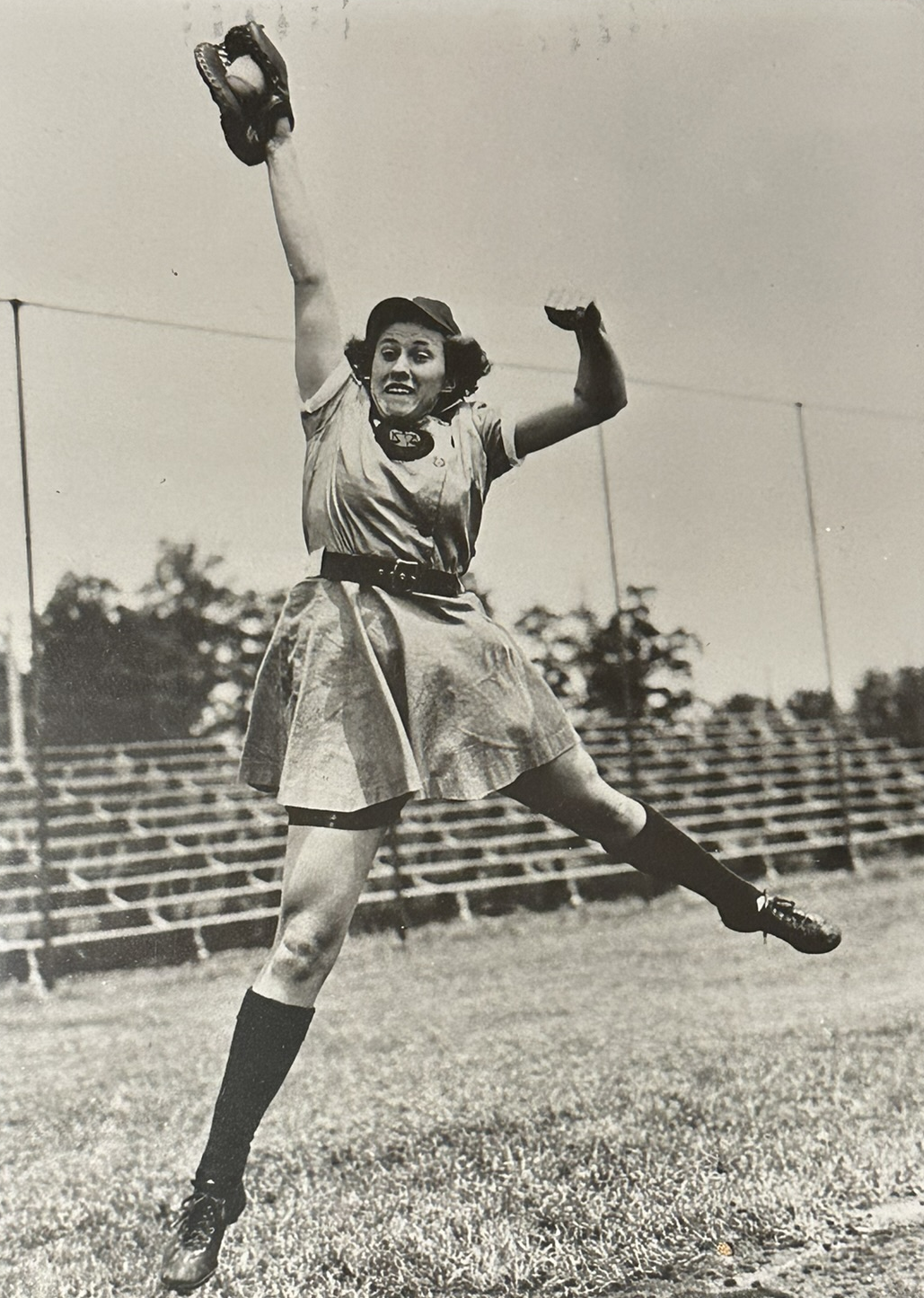
Dottie Kamenshek
Dorothy Kamenshek played 10 seasons in the league, all of them with the Rockford Peaches. She is the league’s all-time leader in hits and total bases, and was named an All-Star all 7 seasons when All-Star teams were named.
She won two batting titles, hitting .345 in her best season. In 3,736 at bats in her career, she struck out a total of 81 times. She was so good that at one point, she was recruited by a men's team from Fort Lauderdale, Florida, but she believed they only wanted her for publicity so she turned down the offer.
Dottie Kamenshek’s AAGPBL Profile
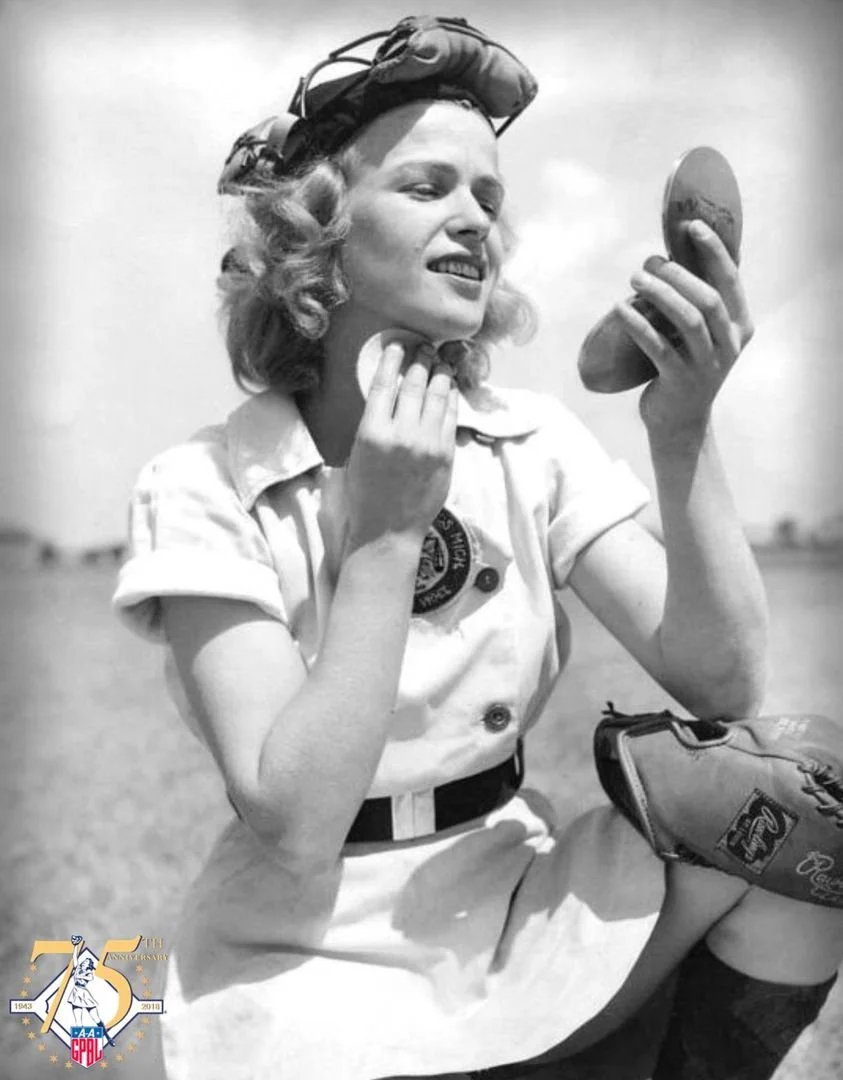
Tex Lessing
Women were selected for their skilled play, but the player also needed to fit what was seen by marketers as a “wholesome, feminine ideal.”
In this photo, Grand Rapids Chicks catcher Ruth "Tex" Lessing is adjusting her makeup during spring training in Opa-Locka, Florida in 1948.
Lessing has been considered as one of the best defensive catchers in AAGPBL history. Respected for her solid skills behind home plate, including a strong and accurate arm, she set several all-time and single-season records before suffering a career-ending shoulder injury that forced her to retire prematurely.
Lessing also was renowned for her fiery and competitive spirit. In 1947, she was fined $100 for punching an umpire after he made a call she disapproved. In response, a collection taken up by fanatics netted more than $2000. She paid the fine and gave the rest of the money to charity.
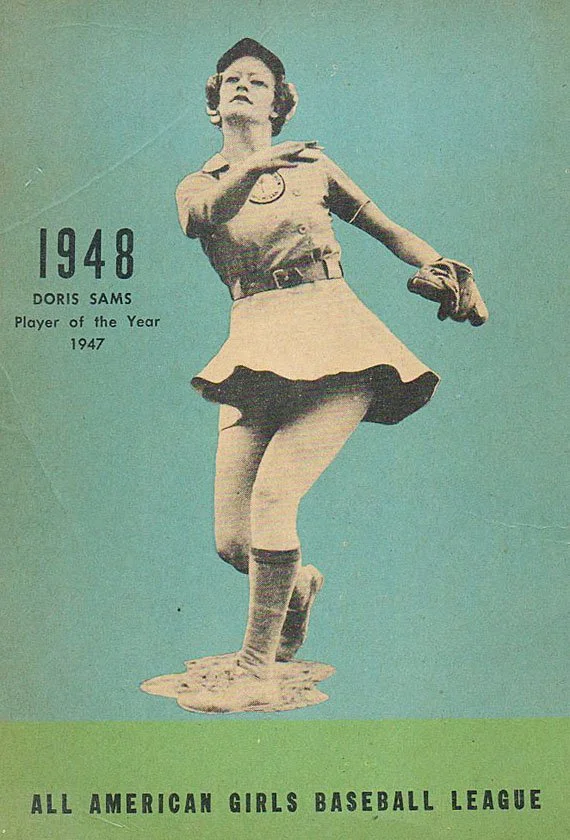
Doris Sams
Doris Jane "Sammye" Sams was an outfielder and pitcher who played from 1946 through 1953.
By the time her final season ended in 1953, Sams’ career average of .290 was good enough to be the league’s sixth highest lifetime mark. She also set a new league home run mark with 12 in 1952.
Following the 1947 season, Sammye’s second year, she was selected as the league’s Player of the Year. A pitcher turned outfielder, she was named to the All-Star team at both positions. No other player in the twelve-year history of the AAGPBL accomplished that feat. Sams was a gifted all-around athlete. Not only did the tall right-hander pitch a perfect game for the Muskegon Lassies on August 18, 1947, defeating the Fort Wayne Daisies, 2-0, but she batted .280, the third highest average among the league’s regulars, and contributed 41 RBIs.
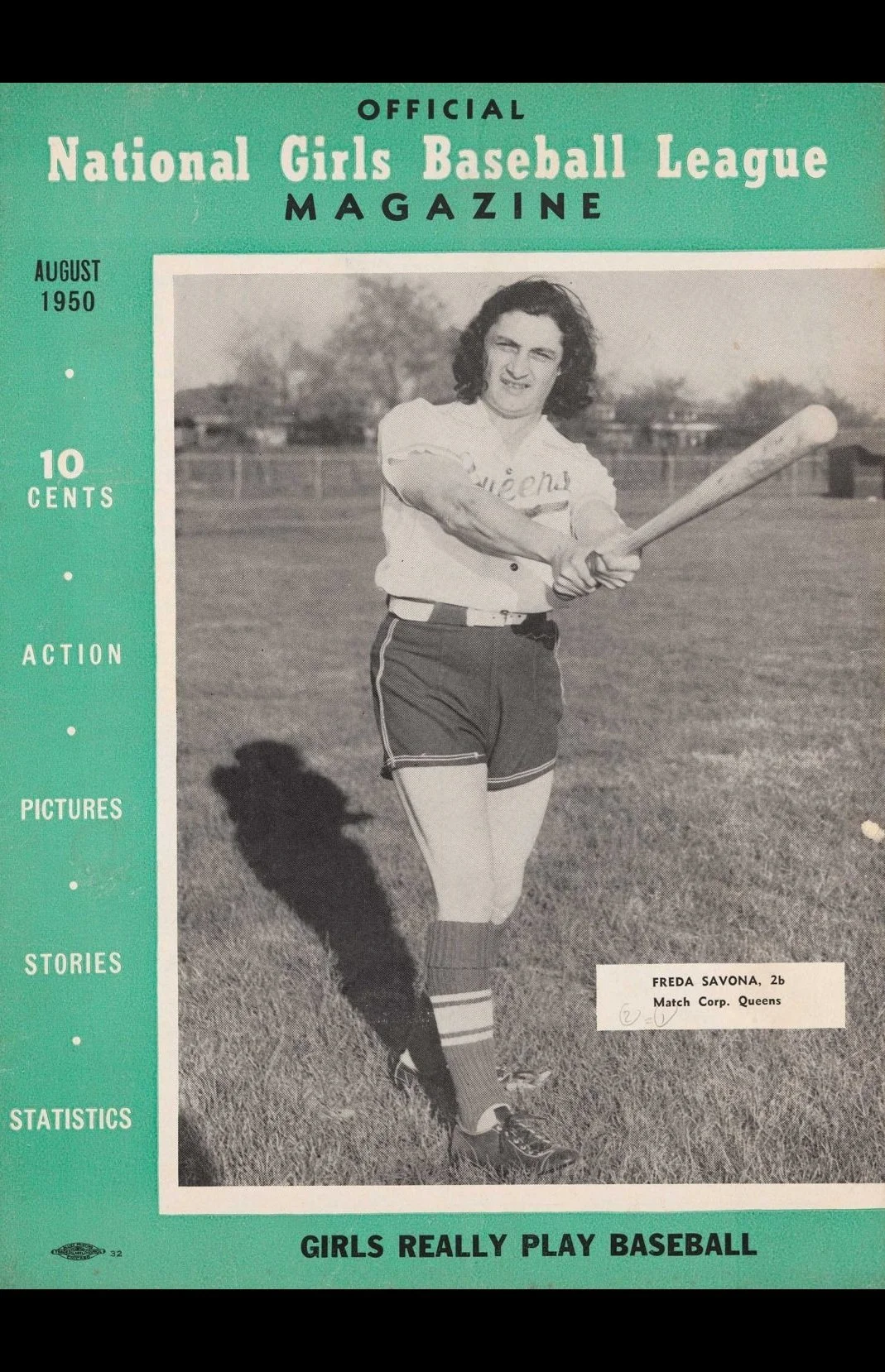
Freda Savona
Freda Savona was considered one of the best—if not the best—player in women’s major fast pitch history. ASA National Softball Hall of Famer Kay Rich said: “Freda Savona was the absolute best woman player in the history of the game and probably the premier woman athlete of her time. She had all the skills–unusual speed, great arm, devastating bat power for average and distance, tremendous fielding range and agility. She was aggressive, daring, highly competitive and the complete player.”
She, and her younger sister, Olympia, played for the world champion New Orleans Jax at the time Philip K. Wrigley was setting up the AAGSL.
Neither Savona signed with Wrigley’s league, although both were extolled in a 1942 League scouting report, which noted that Freda had “the greatest set of softball brains ever owned by a girl softball player,” according to the scout.
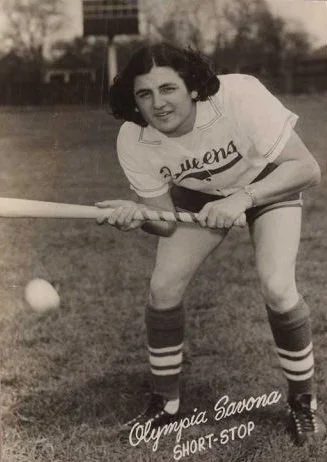
Olympia Savona
The Savona sisters were also teammates on several softball and basketball teams in the 1930s and 1940s, and the duo won several amatuer and professional titles throughout their illustrious careers.
Olympia was described in a 1942 Saturday Evening Post article by Robert M. Yoder as “built like a football halfback,” but still “frail compared to Miss Freda.”
The Savona sisters were prime examples of softball players who were negatively perceived as overly masculine. The AAGPBL never offered the sisters a place in the league, despite their being so talented that, in the same 1942 article, Yoder also claimed that “had the flighty little genes produced a Luigi and Giovanni instead of an Olympia and Frieda, the name ‘Savona’ might be as well-known as ‘DiMaggio.’”
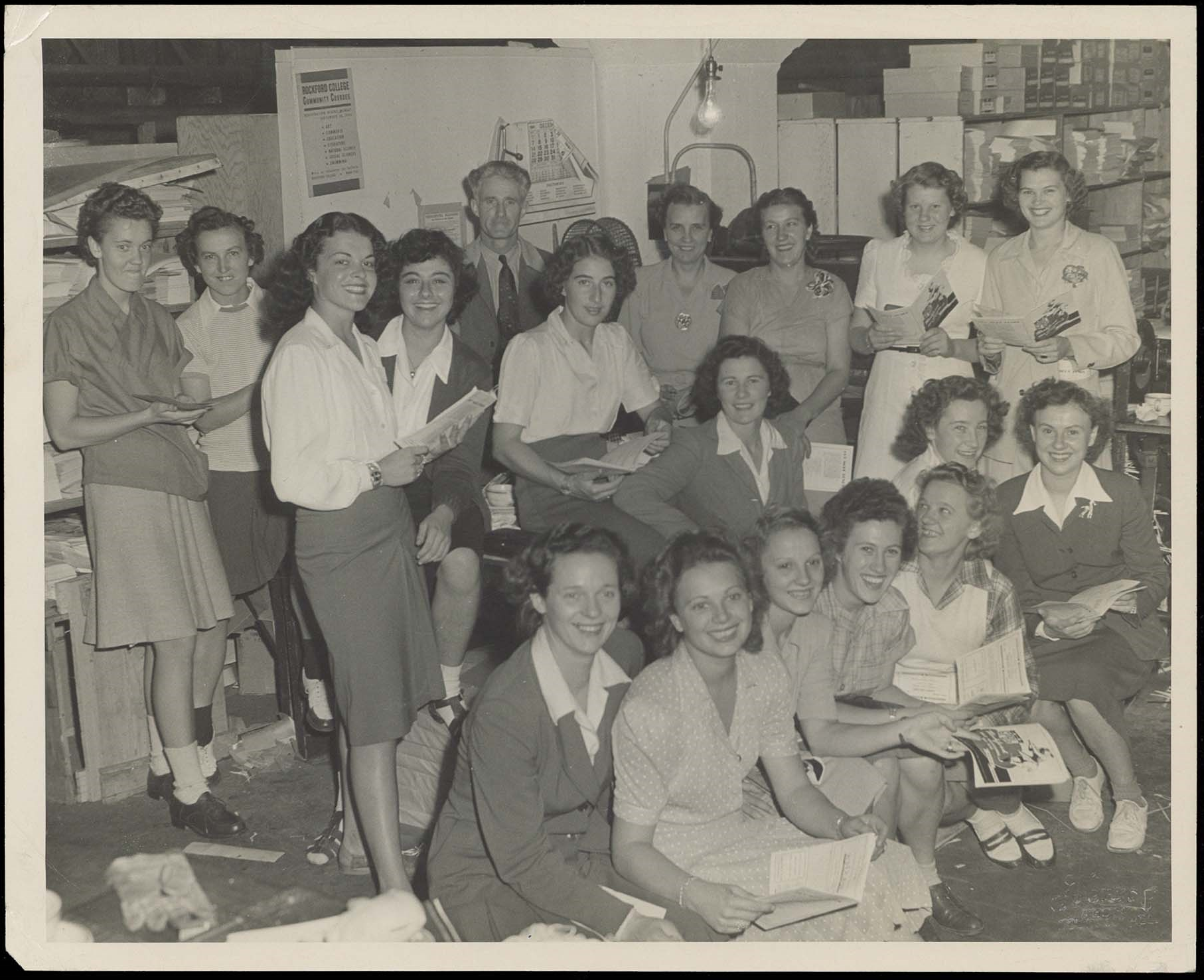
Off-season Jobs
Maybelle said the most common jobs for players in the AAGPBL to have during the off-seasons or after their playing careers were either a nurse, a teacher, or a secretary. However, to make ends meet, the girls would take any job they could get. Maybelle, for example, spent some time working as a soda jerk.
Here, the 1945 Rockford Peaches are dressed in their civilian clothes at Rockford College.
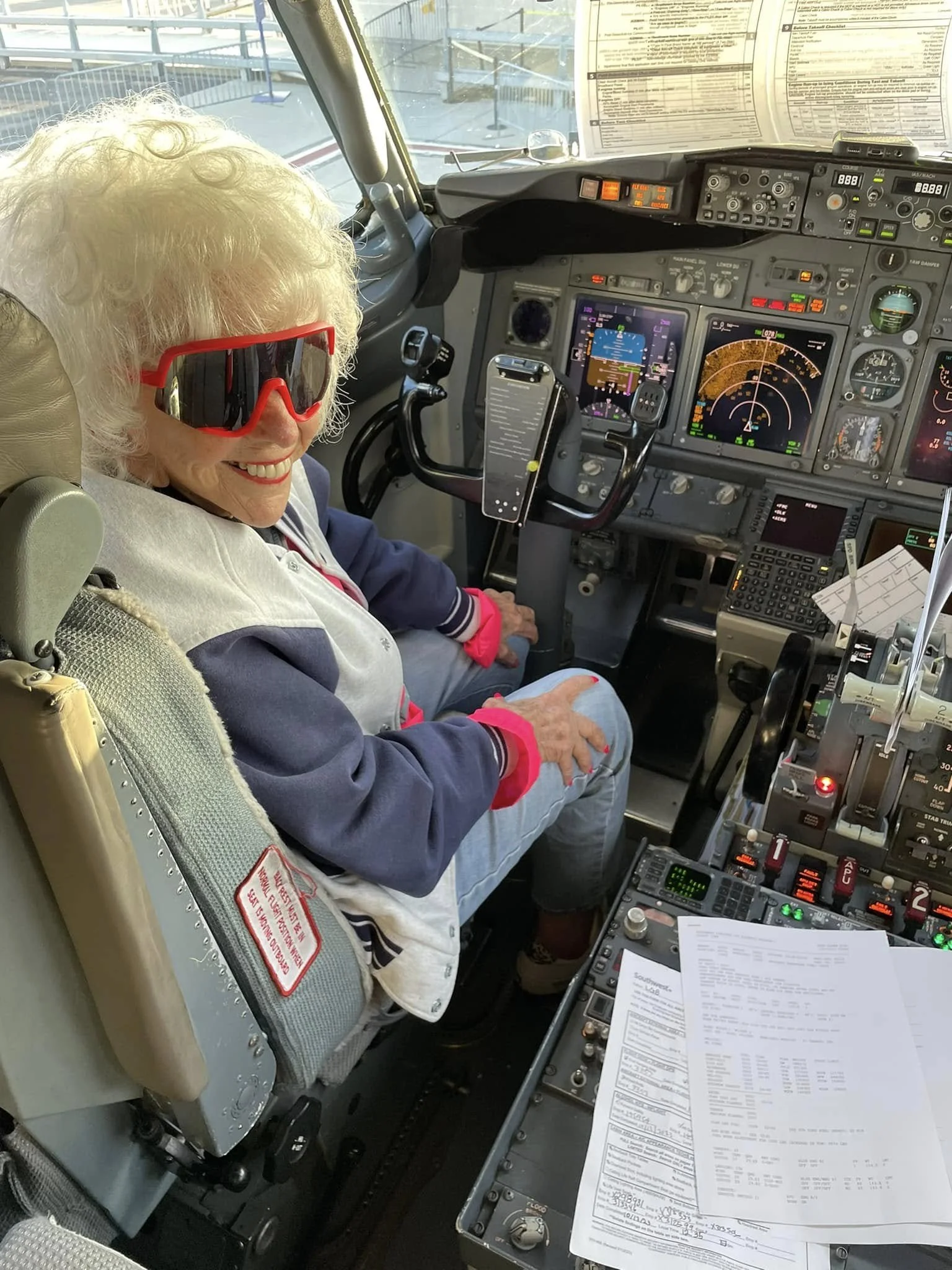
Northrop
After her leg injuries ended her 1948 season prematurely, Maybelle got a great opportunity at Northrop Aircraft that off-season. She was left with a choice to make: do I try to heal up in time for next season so I can continue my career, or do I just pursue this incredible opportunity that anyone would be lucky to have?
Maybelle said it was an easier decision than you’d think. For whatever reason, she understood that baseball wasn’t going to last, and Northrop was too good of an opportunity to pass up, especially considering how hard it was for women to break into that field.
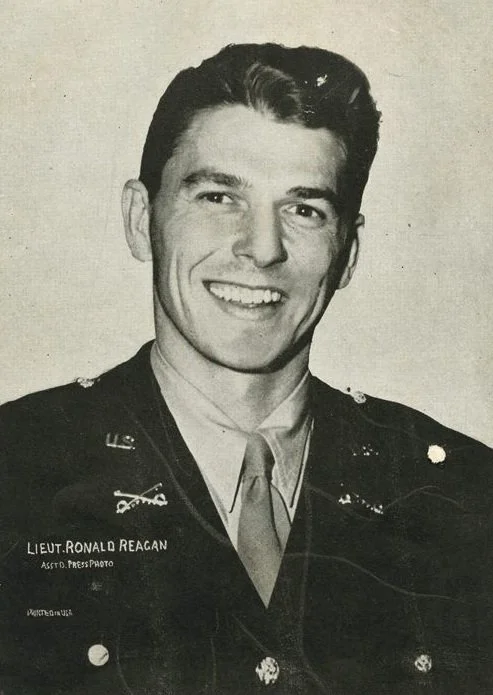
Ronald Reagan
Maybelle started out as a courier, driving generals and presidents and heads of states all over. The most famous person she ever acted as chauffeur for was Ronald Reagan.
Reagan came to Northrop because they were rolling out the new F-5 aircraft, a supersonic light fighter aircraft initially designed as a privately funded project in the late 1950s.
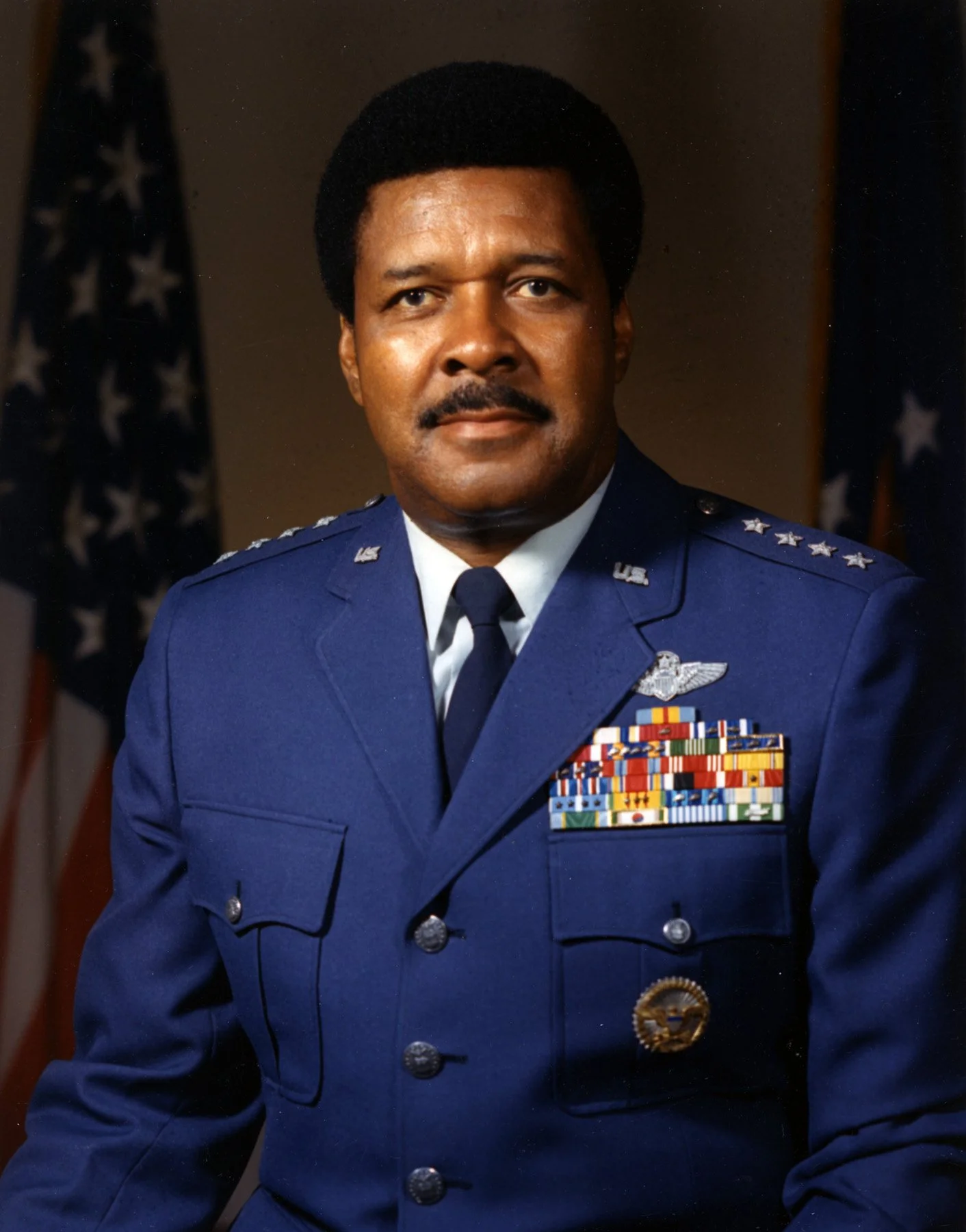
Chappie James
Daniel "Chappie" James, Jr. was a fighter pilot in the U.S. Air Force who, in 1975, became the first African American to reach the rank of four-star general in the United States Armed Forces.
James attended the famous Tuskegee Institute and instructed African American pilots during WWII.
He flew combat missions during the Korean War and Vietnam War, and received the Defense Distinguished Service Medal, two Air Force Distinguished Service Medals, two Legions of Merit, three Distinguished Flying Crosses, a Meritorious Service Medal, and fourteen Air Medals.
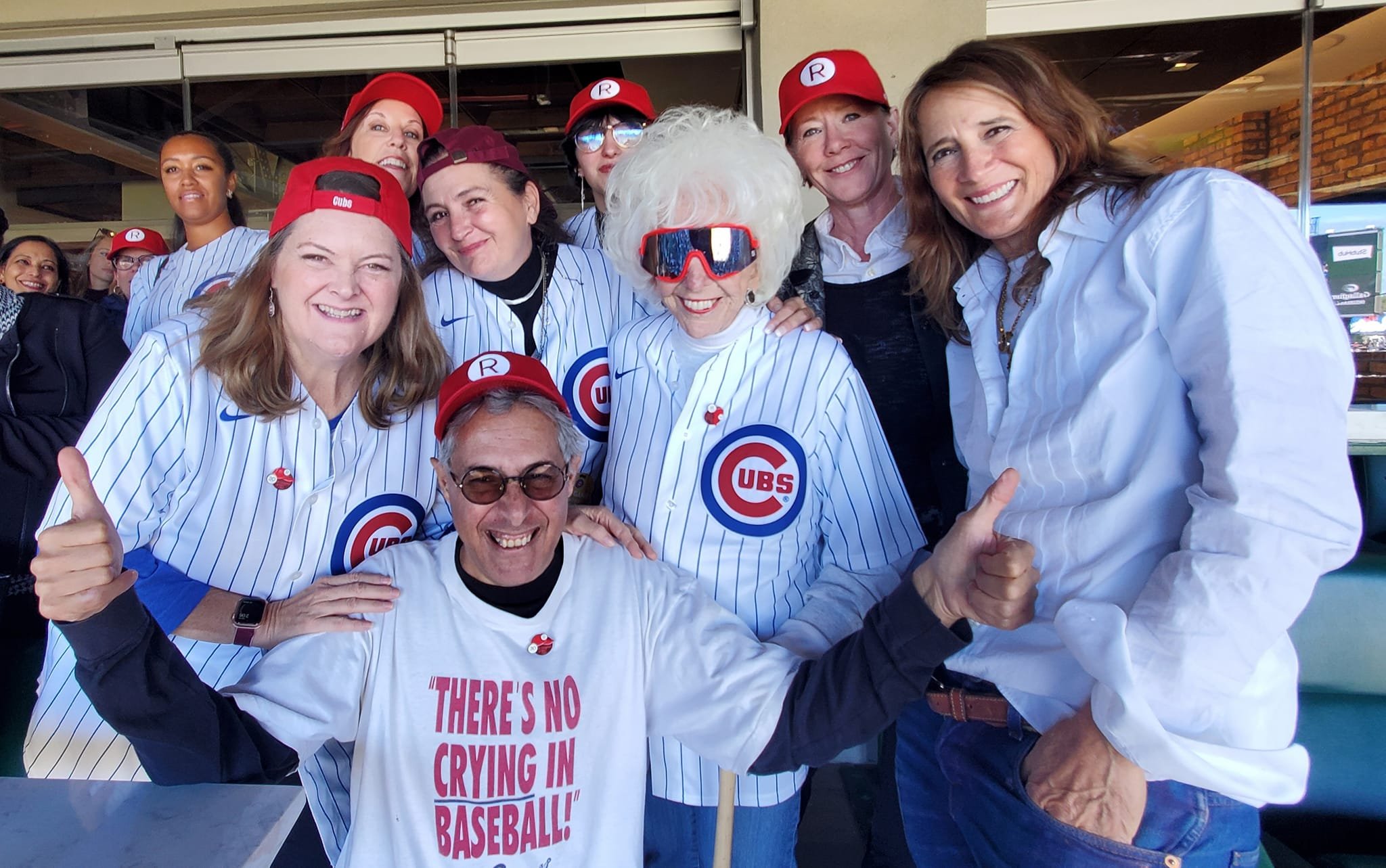
A League of Their Own
Until A League of Their Own was released, the AAGPBL was almost entirely forgotten by the general public.
Here, Maybelle takes in a Cubs game with some of the cast of the 1992 film, which is the highest-grossing baseball movie of all time.
What Was It All For?
To Maybelle, this was a question that never even entered her head. It didn’t matter to her if she would be remembered, or if the league would be remembered, years down the road. It was a great time in her life, and she had fun while it lasted.
“It was a dream that I never even had, [and it] came true.”
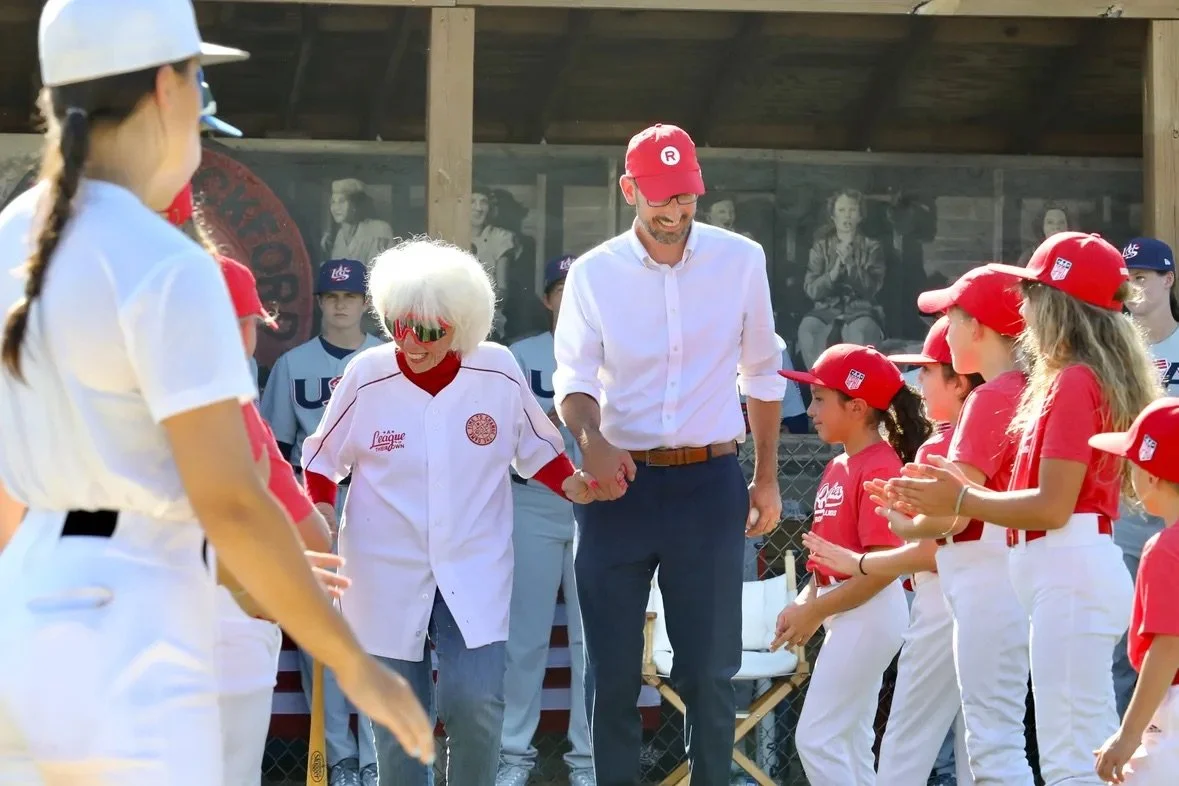
Maybelle thinks the biggest lessons sports can teach young people (not just girls and women) are how to get along with people, and how to win and lose gracefully.
Coming Out
At the 2022 Tribeca Flim Festival, Maybelle made pretty big news by coming out, publicly announcing that she was gay for the first time in her life.
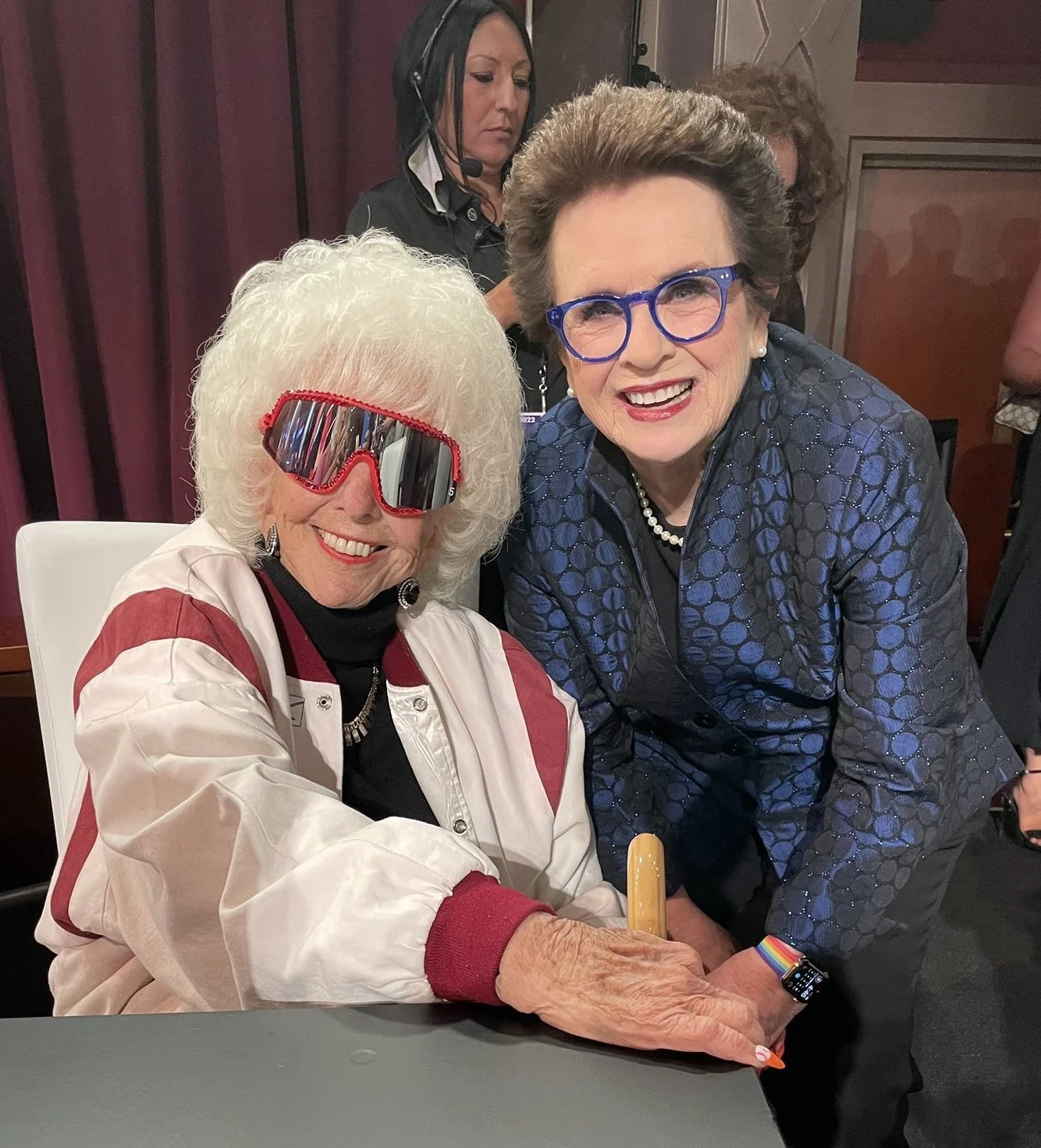
Here is Maybelle with sports icon Billie Jean King at the 2022 ESPY Awards. King is one of the greatest, most accomplished, and most decorated tennis players in history.
King is also an advocate of gender equality and has long been a pioneer for equality and social justice. In 1981, she became the first prominent female professional athlete to come out.

A Burden They Carried Alone
Maybelle said it was a scary time to be gay in America. You didn’t know what your family would think of you, you didn’t know if you would lose your job, you didn’t know if you would be ostracized from your community.
As if being more than a thousand miles from home as a teenager wasn’t hard enough, to have to live with a secret on top on that must not have been easy.
Representation Matters
Having movies and TV shows like A League of Their Own, having professional sports leagues like the WNBA, or the WPBL, or the NWSL, or the PWHL, or Unrivaled… or even having easy access to watching women’s college sports or the Olympics and seeing female athletes not only competing, but succeeding, is a way to create the next generation of fearless, independent, strong-willed women.
Whether they go into athletics or not, seeing that women can achieve anything and that they are encouraged to participate, and allowed to fail, is empowering.
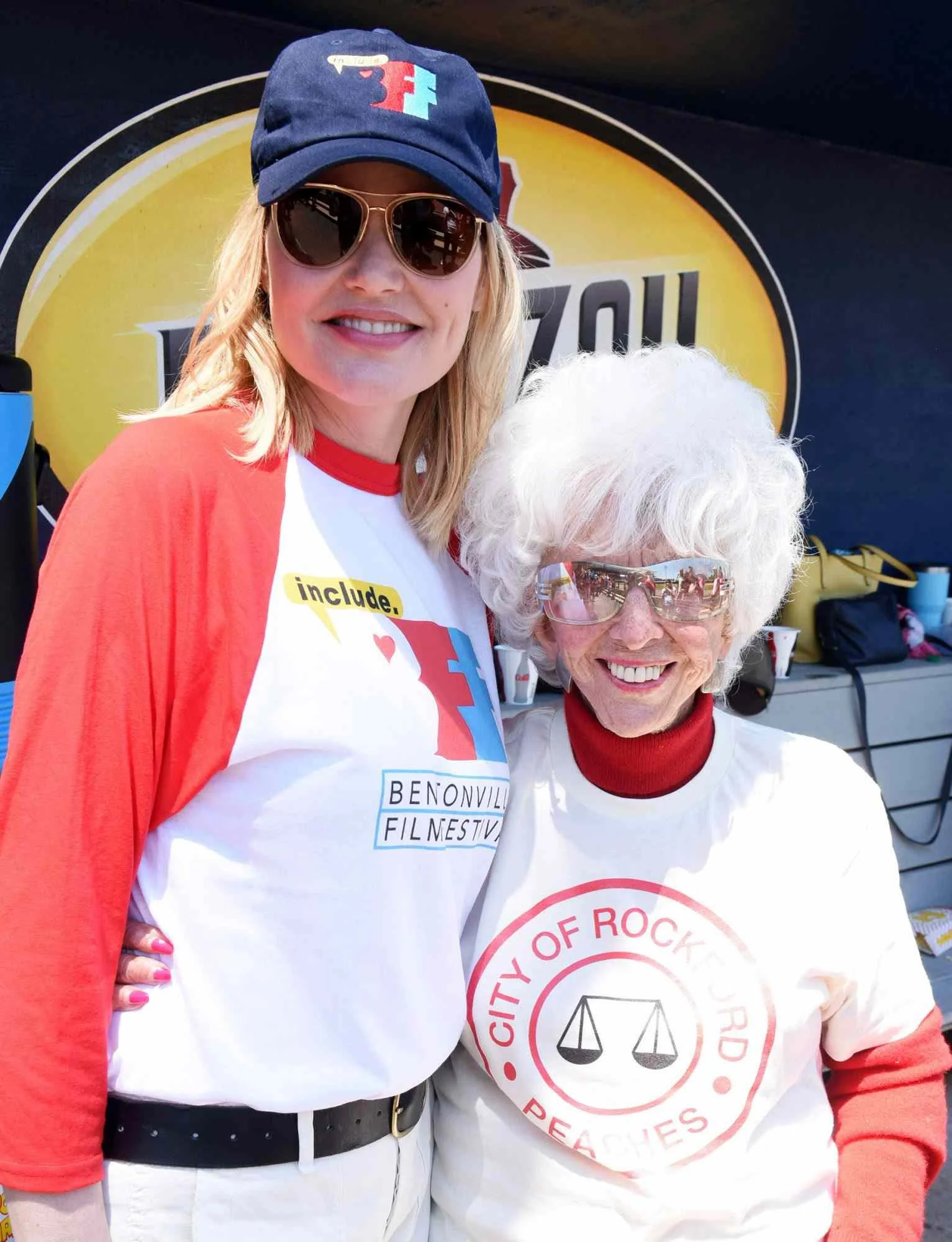
Here, Maybelle shares a moment with Geena Davis, who played Dottie in the 1992 film A League of Their Own.
Women Know Sports, Too!
Maybelle concedes that women are usually not physically able to compete directly with men athletically because of the way they are built, but that doesn’t stop women from knowing the games, being passionate about the sport, or being talented or competitive in their own rights.
It’s important that women are given the chance to have leagues of their own so they can have the same experiences that men are afforded by participating in sports leagues of their own.
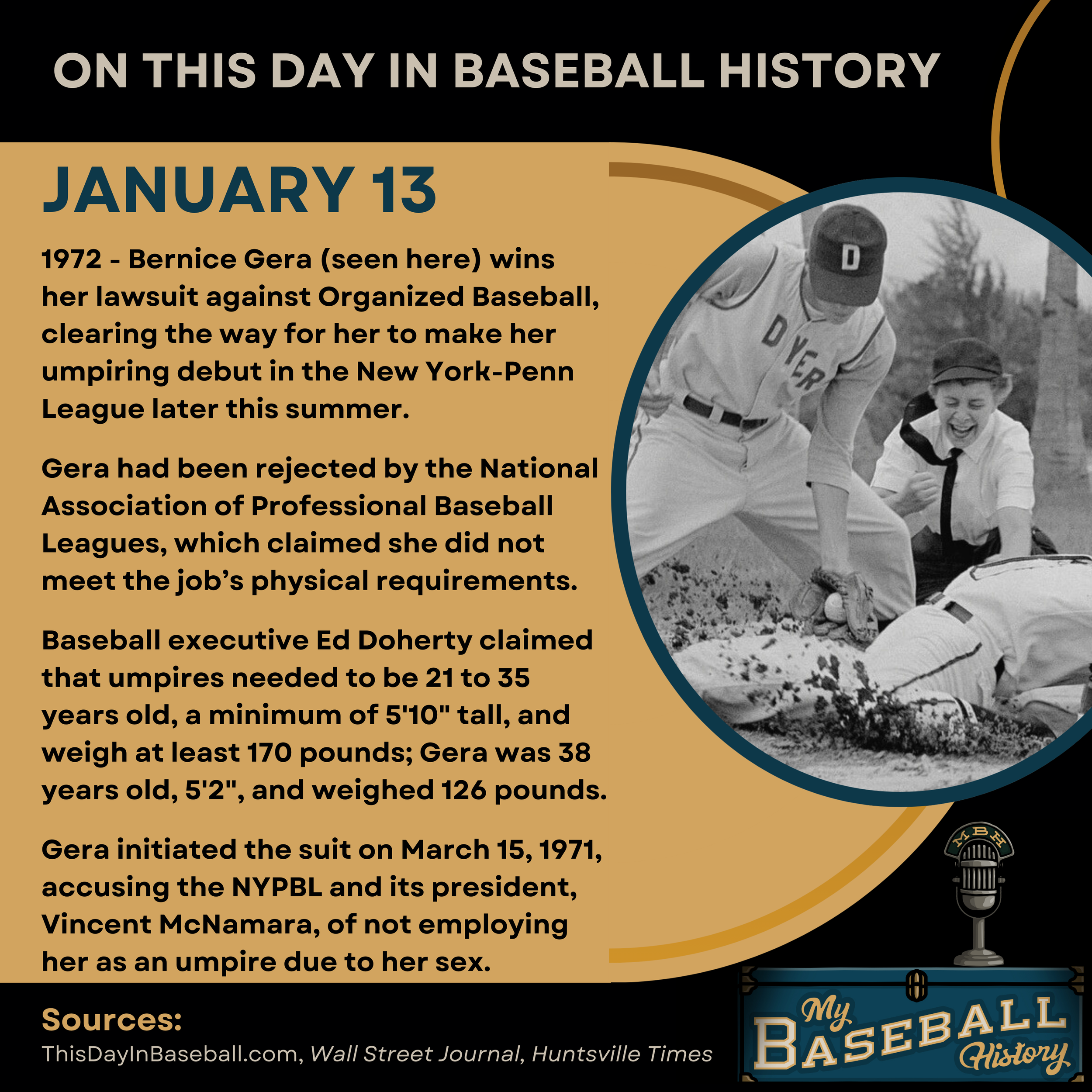
Umpires
There are female umpires and referees in basketball and football, so the fact that it took so long for a female umpire to rise through the ranks in baseball (let alone the fact that there has only been one, as of 2026, to actually make it to the highest level) is alarming.
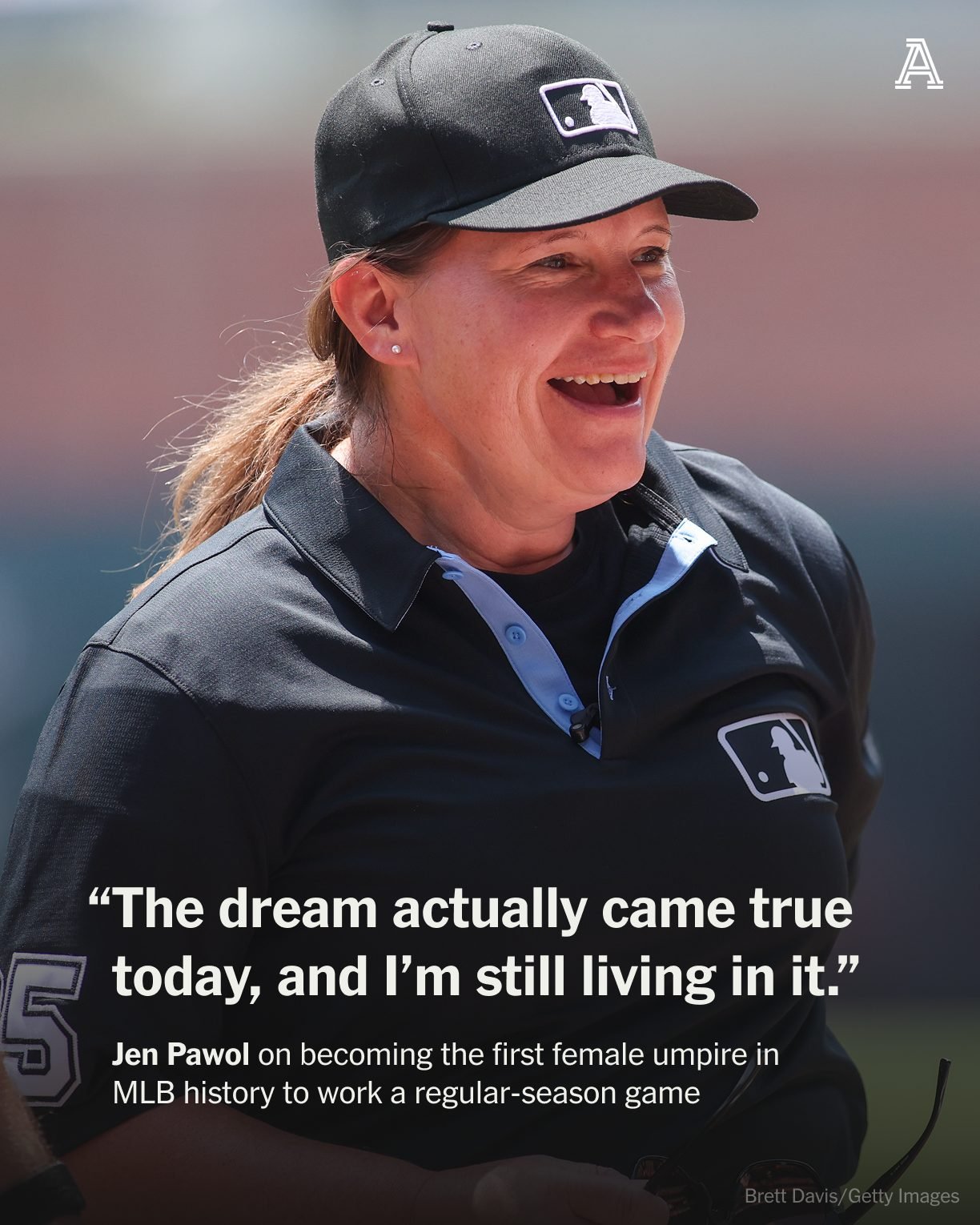
Jen Pawol
Maybelle and I recorded this interview on August 5, 2023 in Kenosha, Wisconsin. Almost exactly two years later, Jen Pawol became the first female Major League Baseball umpire when she debuted on August 9, 2025. She is the seventh woman to work as a professional baseball umpire.
Pawol appeared as the first base umpire in the first game of a doubleheader between the Miami Marlins and Atlanta Braves at Truist Park in Atlanta, joining crew chief Chris Guccione at second base, Chad Whitson at third and David Rackley at home plate. She was third base umpire in the second game of the doubleheader.
She continued as an umpire on Sunday, August 10, becoming the first female home plate umpire in a regular-season MLB game, in another game between the Atlanta Braves and the Miami Marlins.
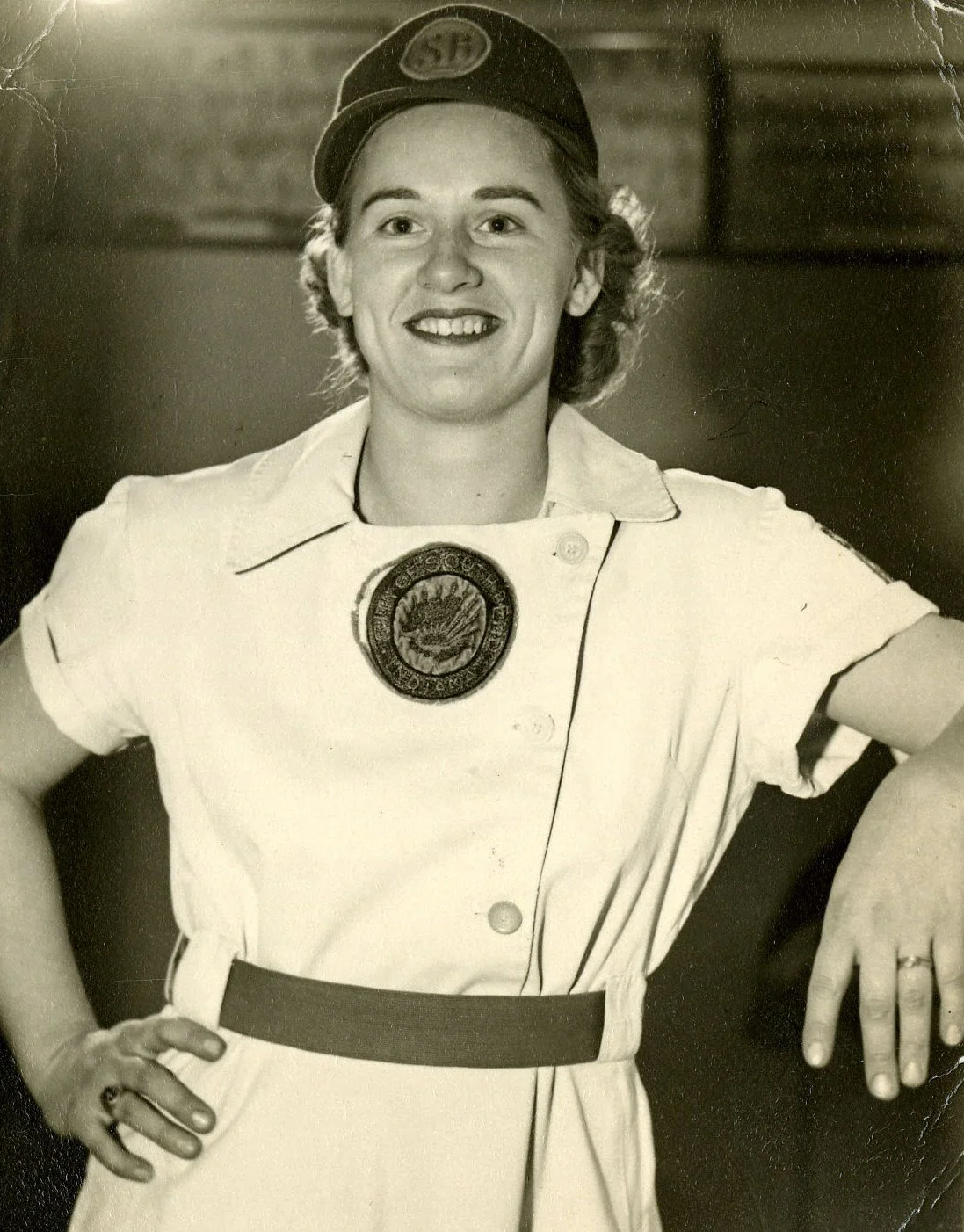
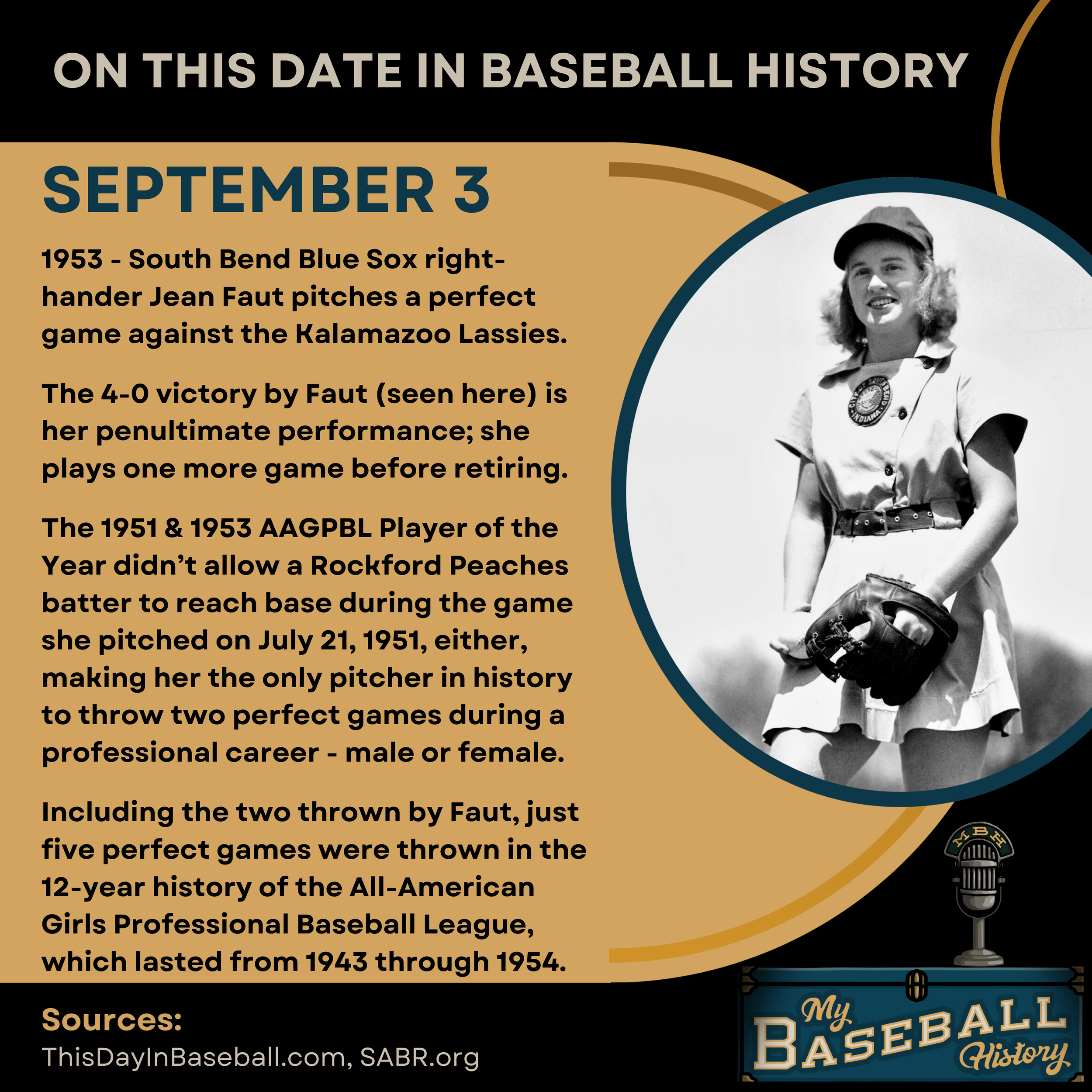
Jean Faut
Jean Faut played from 1946 to 1953 for the South Bend Blue Sox. She led the Blue Sox to championships in 1951 and 1952, and was a four-time All-Star with South Bend.
She’s the league’s all-time leader in ERA, with a 1.23 career mark, and second in career wins with 140. She was a three-time 20-game winner who threw two career no-hitters, and two of the AAGPBL’s five perfect games in league history.
She won two out of the ten Player of the Year Awards given in the history of the league, and is just one of two two-time winners of the award.
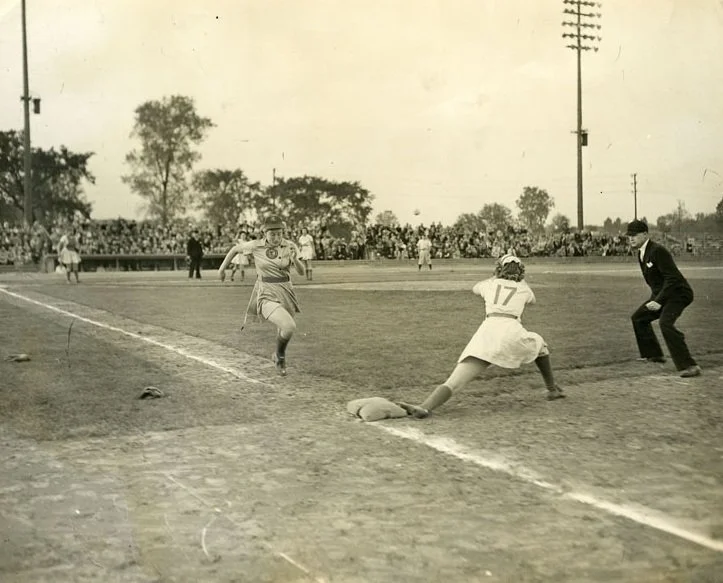
Two-Way Player
When most people hear Jean Faut’s name, they think of the great pitcher who was the AAGPBL’s Pitching Champion in 1950, 1952, and 1953.
But she was also a skilled hitter, who was the league’s Batting Champion in 1949.
In this photo, Jean Faut hits in her first career AAGPBL at bat with the South Bend Blue Sox during the opening game of the 1946 season against the Fort Wayne Daisies.
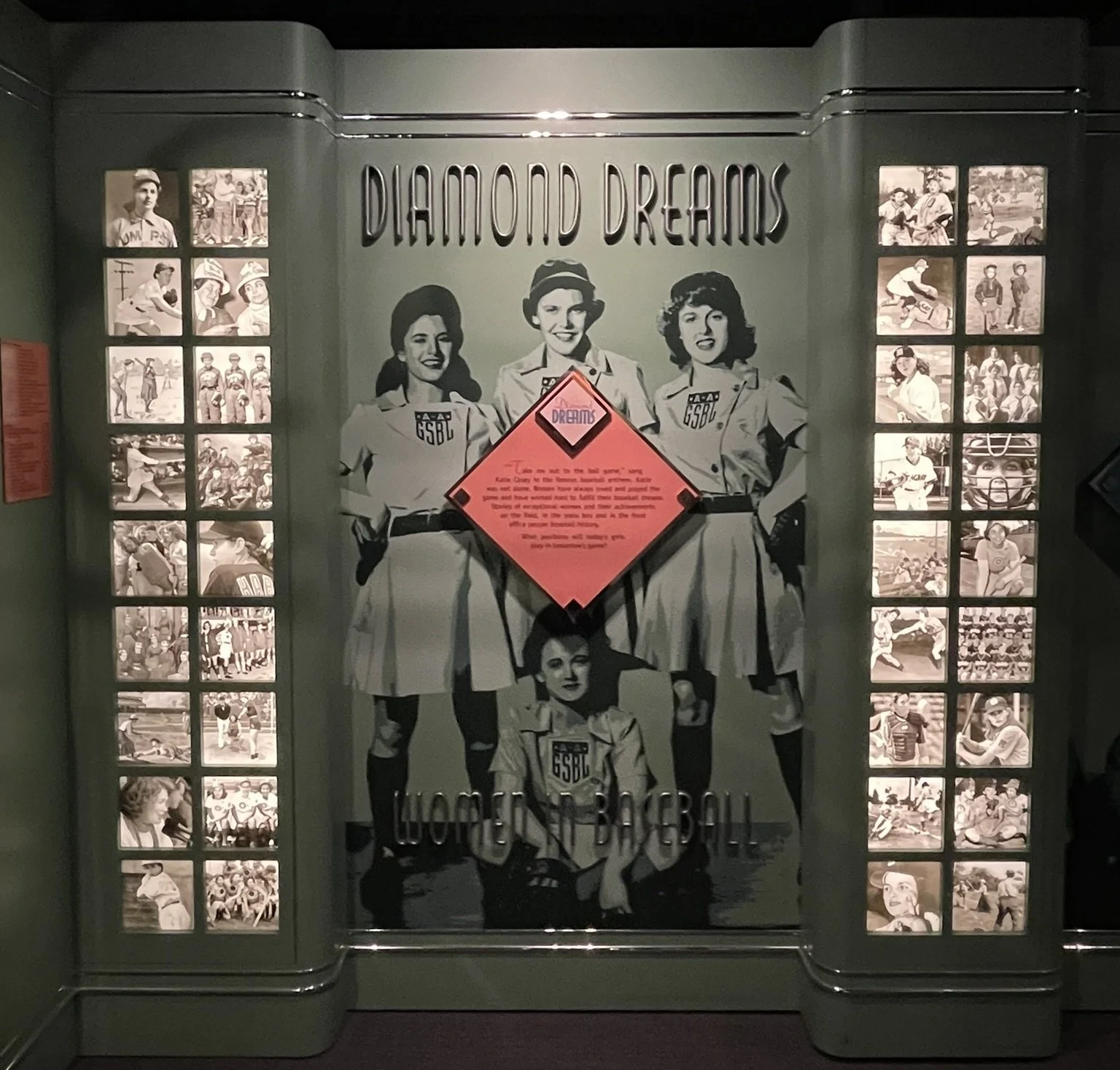
We’re All For One!
We’re One For All! We’re All-American!
That was the thought process of nearly all of the players, making it fitting that the entire league was recognized in the National Baseball Hall of Fame and Museum, and not specific star players.
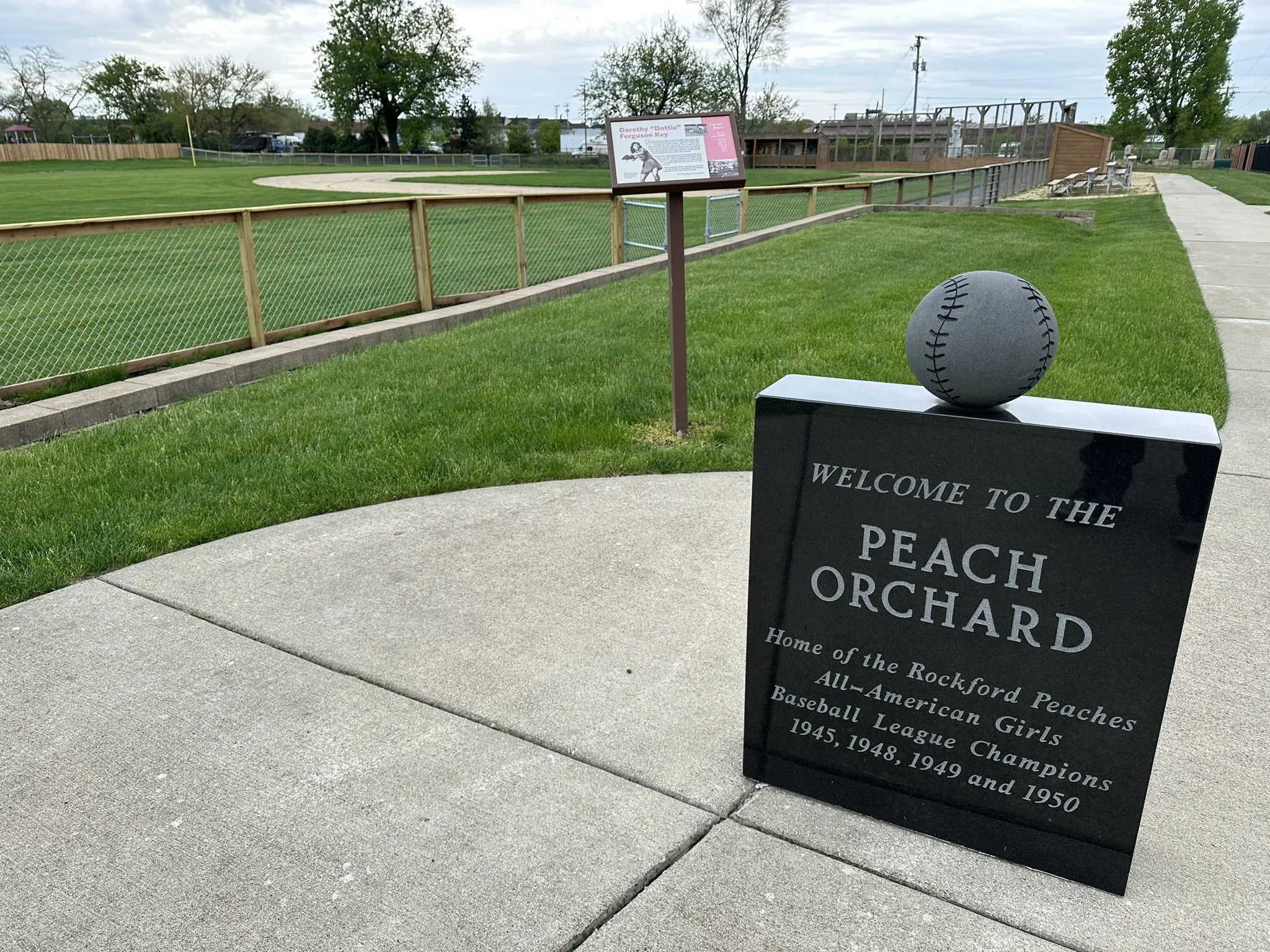
Rockford, Illinois
Located 90 minutes northwest of Chicago, Rockford was the home of the legendary Rockford Peaches in the All-American Girls Professional Baseball League. It was also home to the Rockford Citys, one of the first professional baseball teams in the late 19th century.
Maybelle calls it “the Cradle of Women's Baseball."

Now, Maybelle and the IWBC are trying to raise money to build a women’s baseball center fitting of the name.
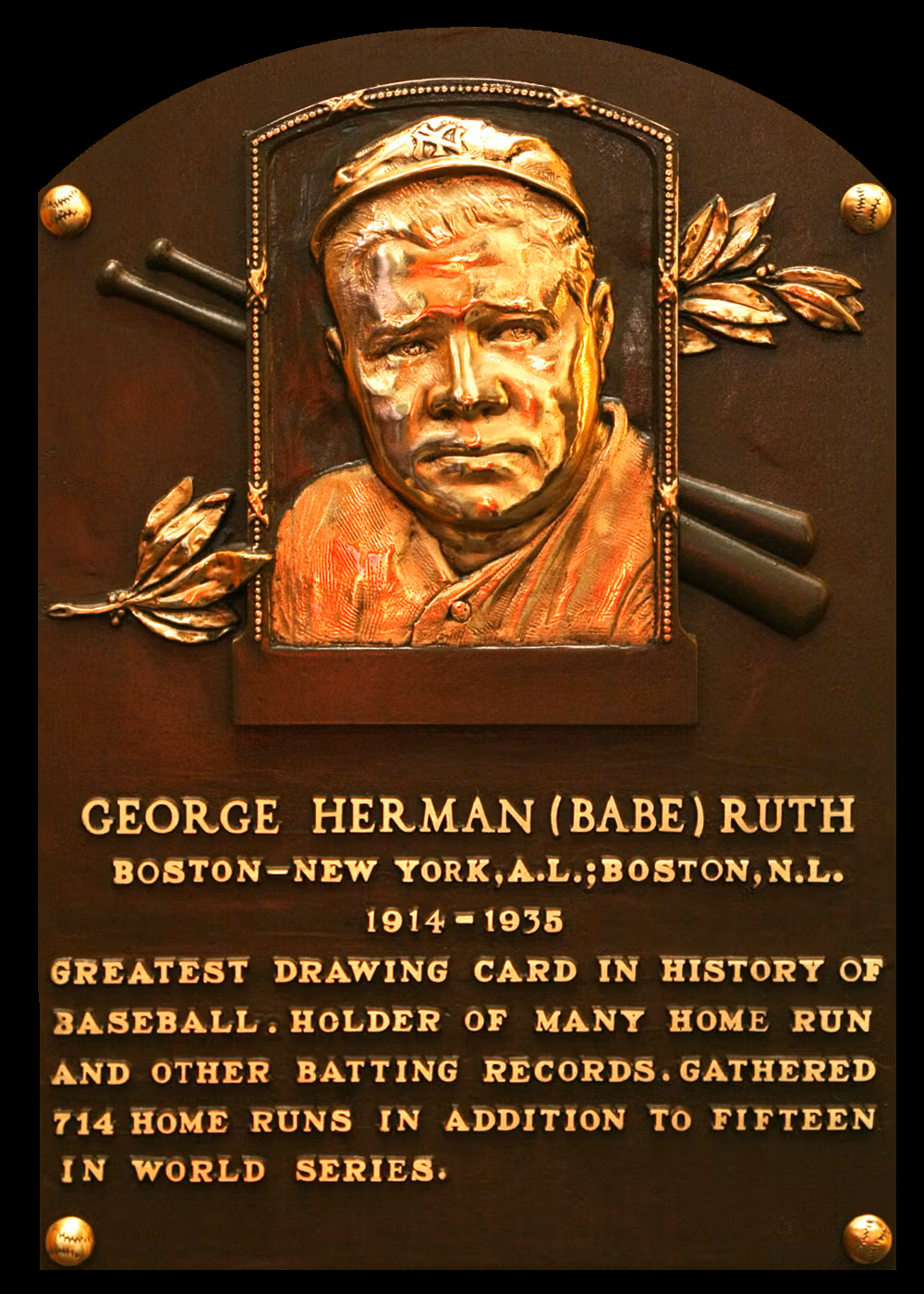
Hard To Compare
Maybelle says she doesn’t have a problem with individual players from the AAGPBL not being inducted into the National Baseball Hall of Fame, because they technically weren’t playing baseball for the first few years of the league.
Once the league did make the official switch to baseball, the league didn’t last long enough for any individual players to have accumulated the stats and accolades necessary in Maybelle’s eyes to compare with players like Babe Ruth, who played for 10+ years and put up numbers that are hard to fathom.
Instead, Maybelle wants to have a women’s Hall of Fame, which can rightfully honor the great female players from throughout history, and that’s what she hopes will eventually be built in Rockford, Illinois.
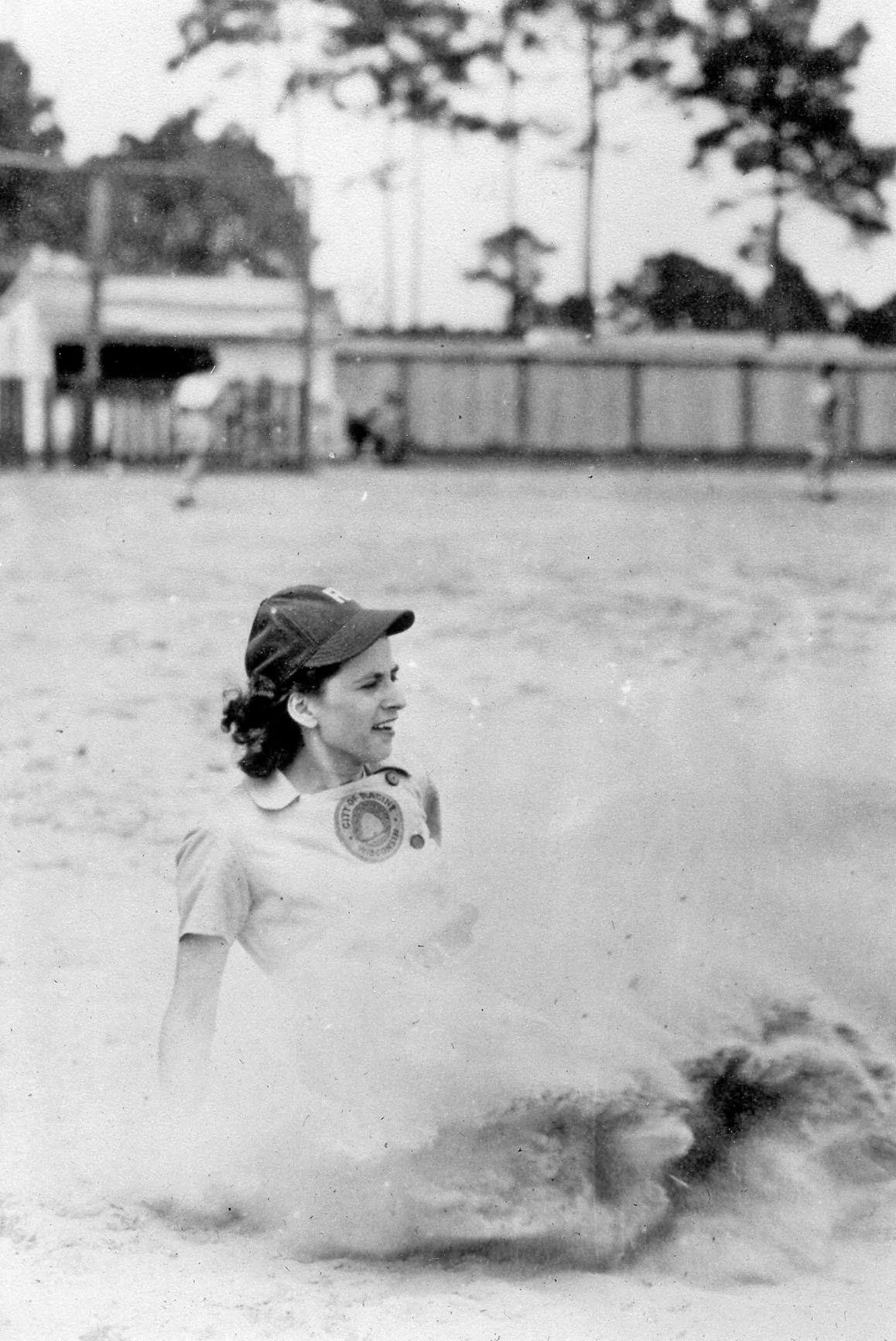
Sophie Kurys
Sophie Kurys played from 1943 to 1952, mostly as a second baseman for the Racine Belles. In 1946, Sophie was the Player of the Year. She hit .286, but she stole 201 bases out of 203 attempts!
She scored 119 runs, walked 93 times, and had a fielding percentage of .973 at second base. She led all players in the playoffs in hitting, stolen bases, and runs scored.
Soph was the real deal, and was an all-star year in and year out. She was, without a doubt, one of the greatest team players developed in the league. She also had two incredible nicknames: “The Flint Flash” and “Tina Cobb.”
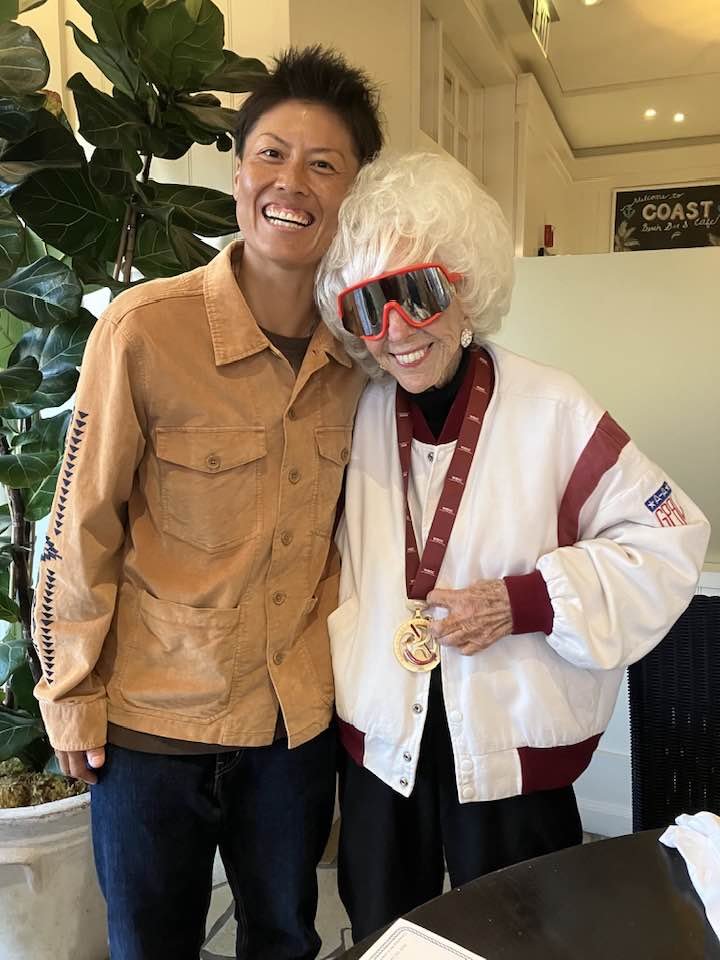
Ayami Sato
Ayami Sato is a pitcher for the Japan women’s national baseball team, with which she has won six gold medals at the Women's Baseball World Cup.
Sato is considered by many to be the best female pitcher, and by some the best female baseball player in the world, with the ability to throw nearly 80 mph.
Sato has won six gold medals for her home country, and she is the only women's baseball player to have won three consecutive World Cup MVP awards.
IWBC
Maybelle thinks the best way to grow the women’s game is by supporting the mission of the International Women’s Baseball Center in Rockford, Illinois. The IWBC supports all women in baseball, past, present, and future, by honoring the trailblazers of the sport who broke barriers and opened a path to the diamond for all of us.
Your contribution will help preserve the history of women in baseball and secure its future for girls and women across the globe.
If you are willing and able, you can donate to IWBC’s cause by clicking HERE.
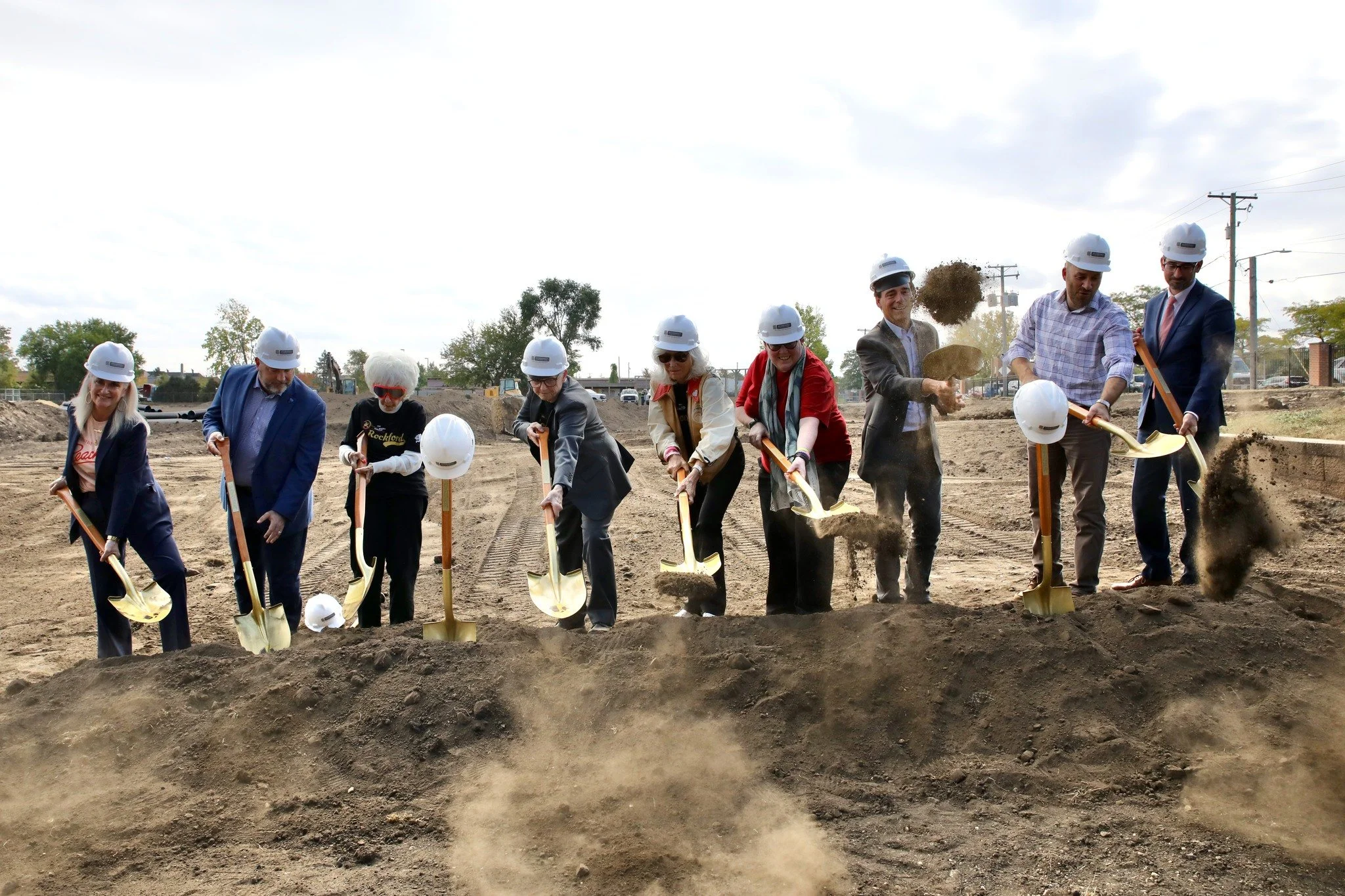
While the IWBC has broken ground, there is still a mountain of work ahead of them. Every dollar helps them reach their goal.
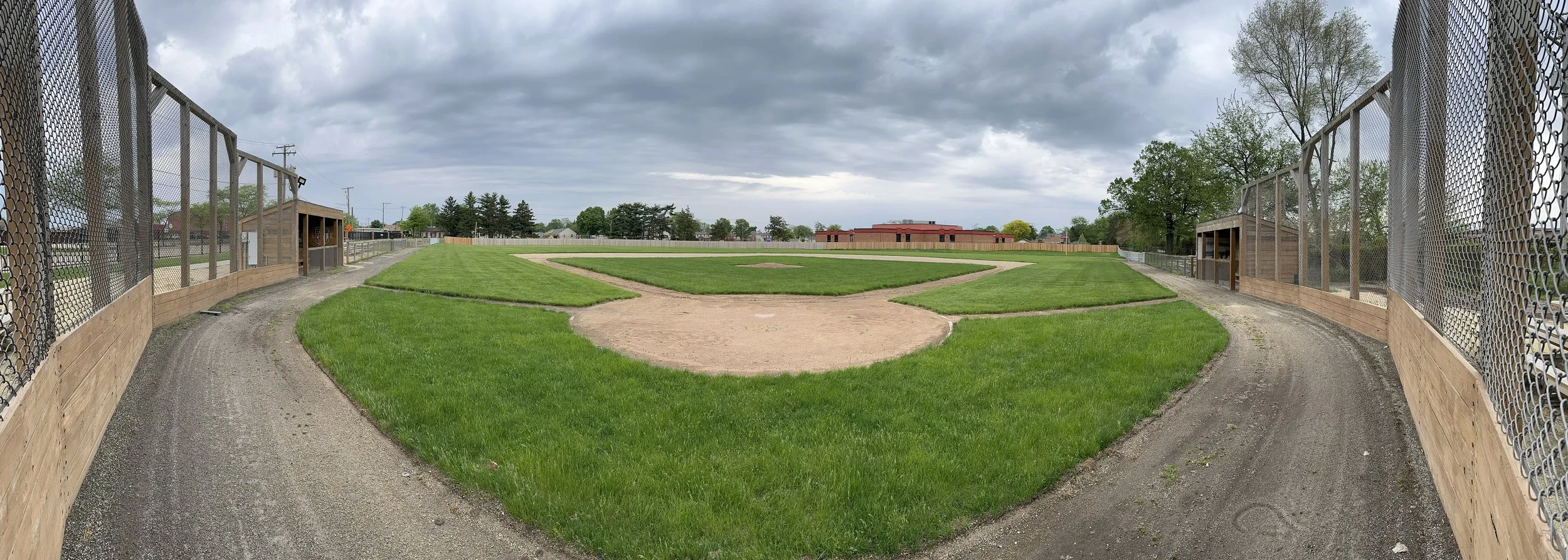
My mom and I actually spent Mother’s Day 2023 in Rockford, Illinois, going to Beyer Stadium and the Midway Village Museum to see all of the Rockford Peaches-related things.
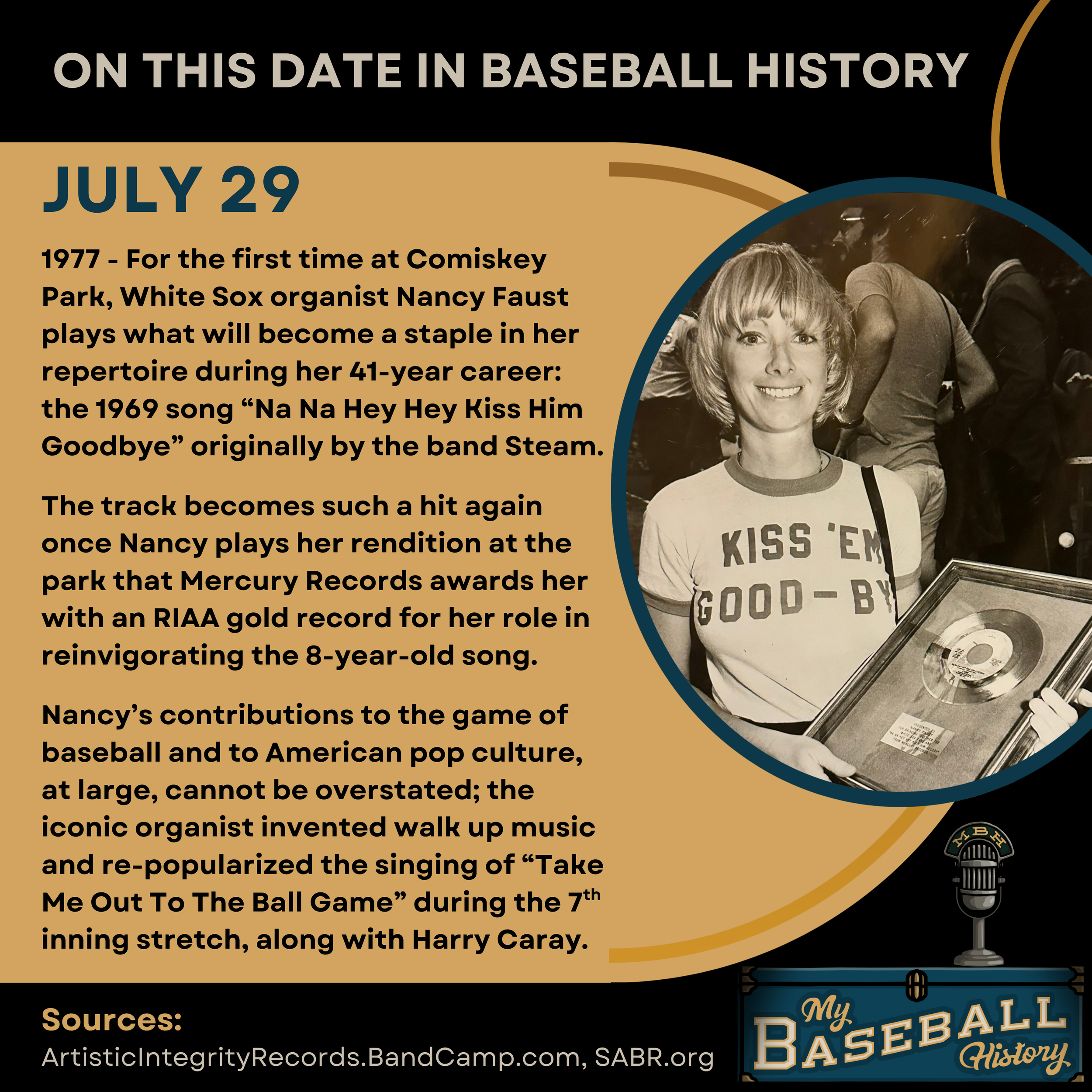
Nancy Faust
One of the best parts about going to White Sox games growing up was being able to hear Nancy Faust play the organ throughout the game.
My mom and I were legitimately more sad when she announced her retirement than we’ve been for nearly any player announcing theirs.
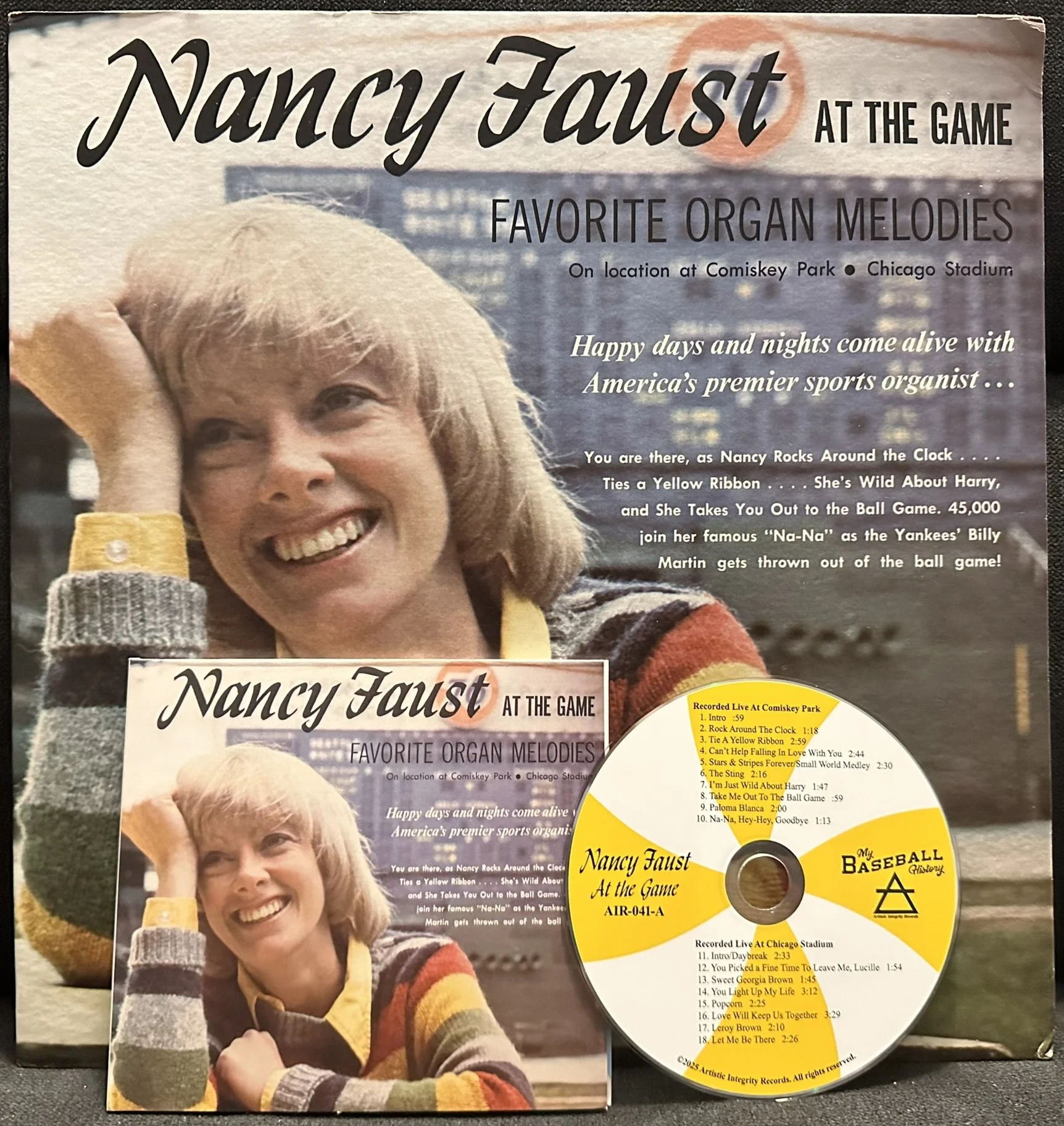
“Nancy Faust At The Game”
My Baseball History and Artistic Integrity Records are thrilled to announce the release of legendary organist Nancy Faust’s 1978 debut album, available digitally and on compact disc for the first time ever!
The official release date was July 29, 2025 - the 48th anniversary of Nancy playing “Na Na Hey Hey Kiss Him Goodbye” at Comiskey Park for the first time.
CDs are available autographed by Nancy, or unsigned.
Order “Nancy Faust At The Game” on CD by clicking HERE.
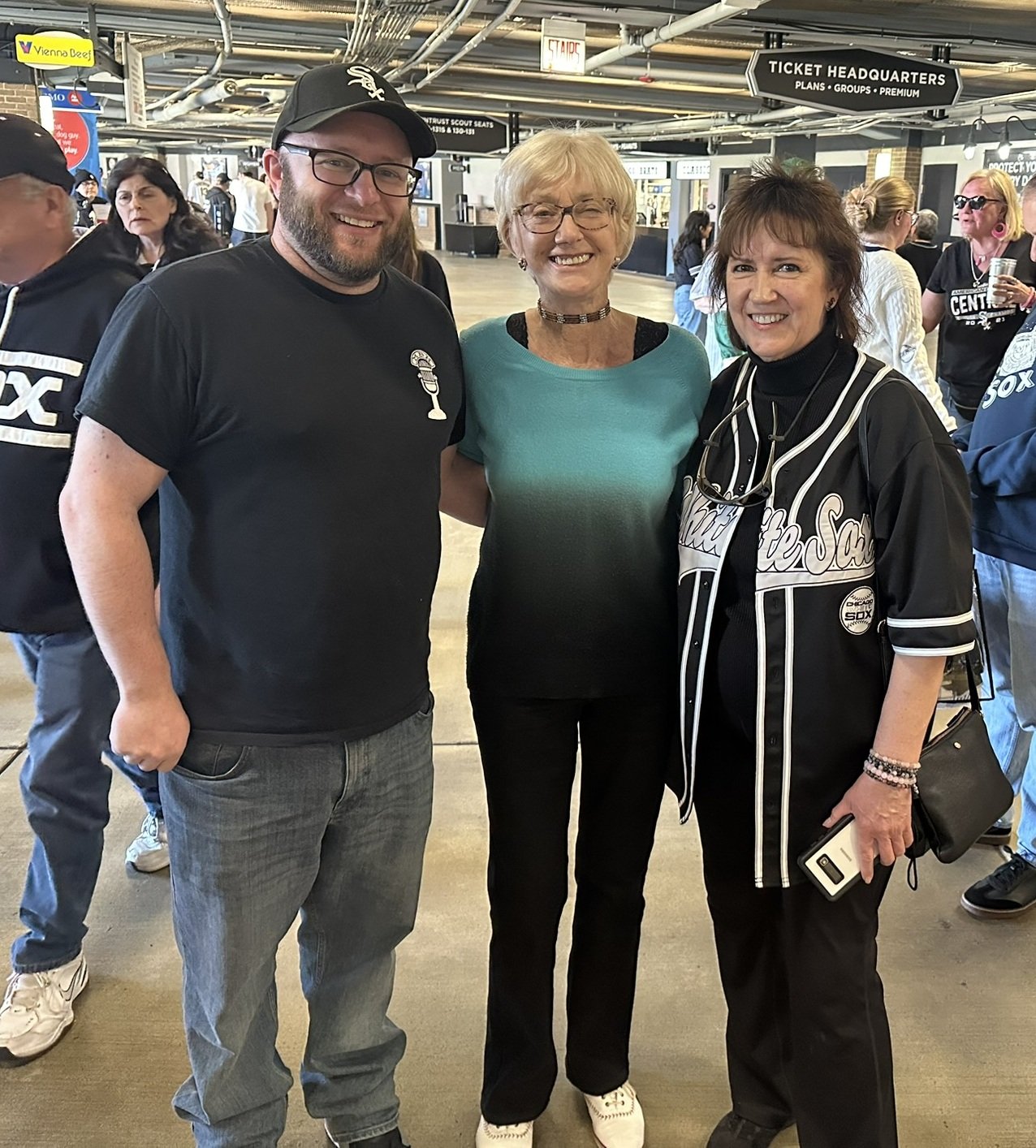
Mother’s Day 2025
When it was announced that Nancy would be coming back to the South Side to play at a select number of White Sox home games during the 2025 season, my mom and I knew we would be making the trip at some point.
When Nancy’s first game back fell on Mother’s Day, it was our sign that we had to be at that particular game.
Nancy was our guest on Episode 1 of Season 4 of My Baseball History. You can listen to that episode HERE.
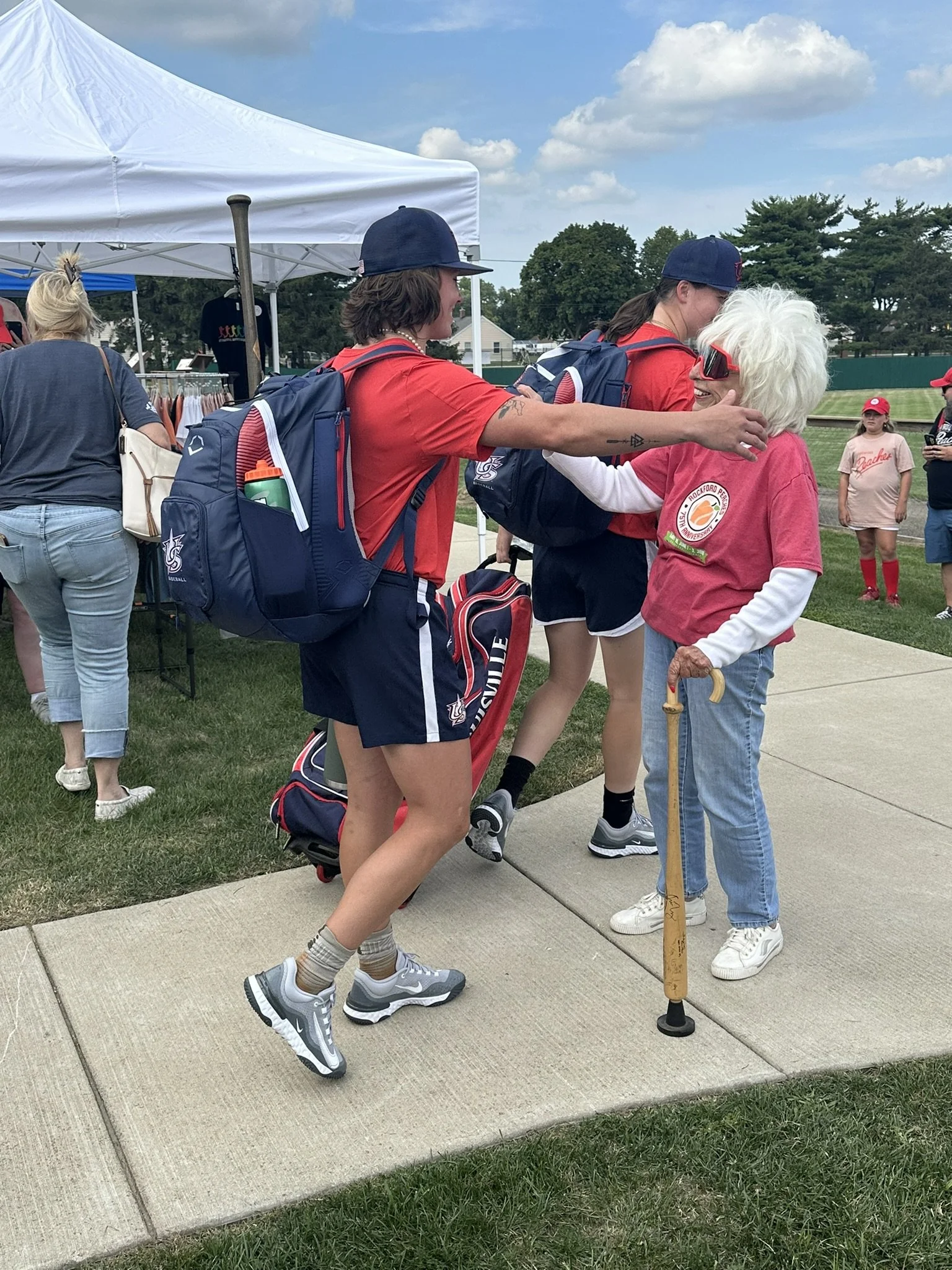
WPBL
Maybelle and I didn’t discuss any specifics about the Women’s Pro Baseball League because when she and I recorded this interview, that league had not yet been announced.
However, Maybelle has ties to many of the players in the league, including Ashton Lansdell, who was selected 7th overall in the 1st round of the inaugural WPBL draft by Los Angeles.
Ashton is a member of the US Women’s National Baseball Team, helping to win the Gold medal at the 2019 COPABE Pan-American Games, and Silver at the 2024 Women’s Baseball World Cup. She has also played for the Savannah Bananas and the Party Animals, and has participated in MLB Home Run Derby X competitions all over the world.
Ashton was our guest on Episode 3 of Season 4 of My Baseball History. You can listen to that episode HERE.
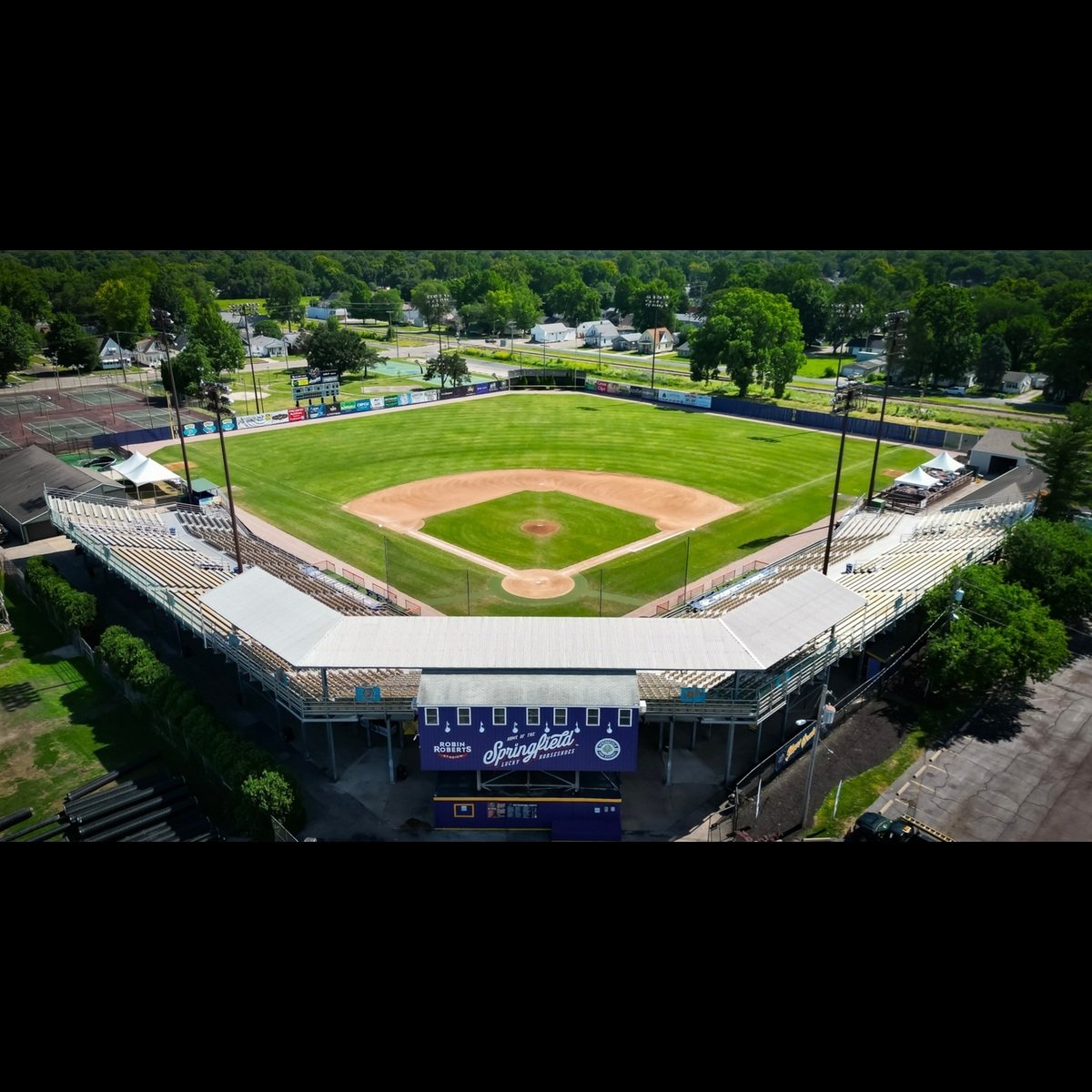
Robin Roberts Stadium
Robin Roberts Stadium in Springfield, Illinois originally opened in 1928 as Reservoir Stadium (whose name, at the time, referenced the water reservoir located on what is now Lanphier High School). The stadium was renovated in 1977 and it currently holds 5,200 people.
The stadium will serve as the neutral venue for all games played during the inaugural season of the Women's Pro Baseball League, which begins August 1, 2026, and will run through mid-September.
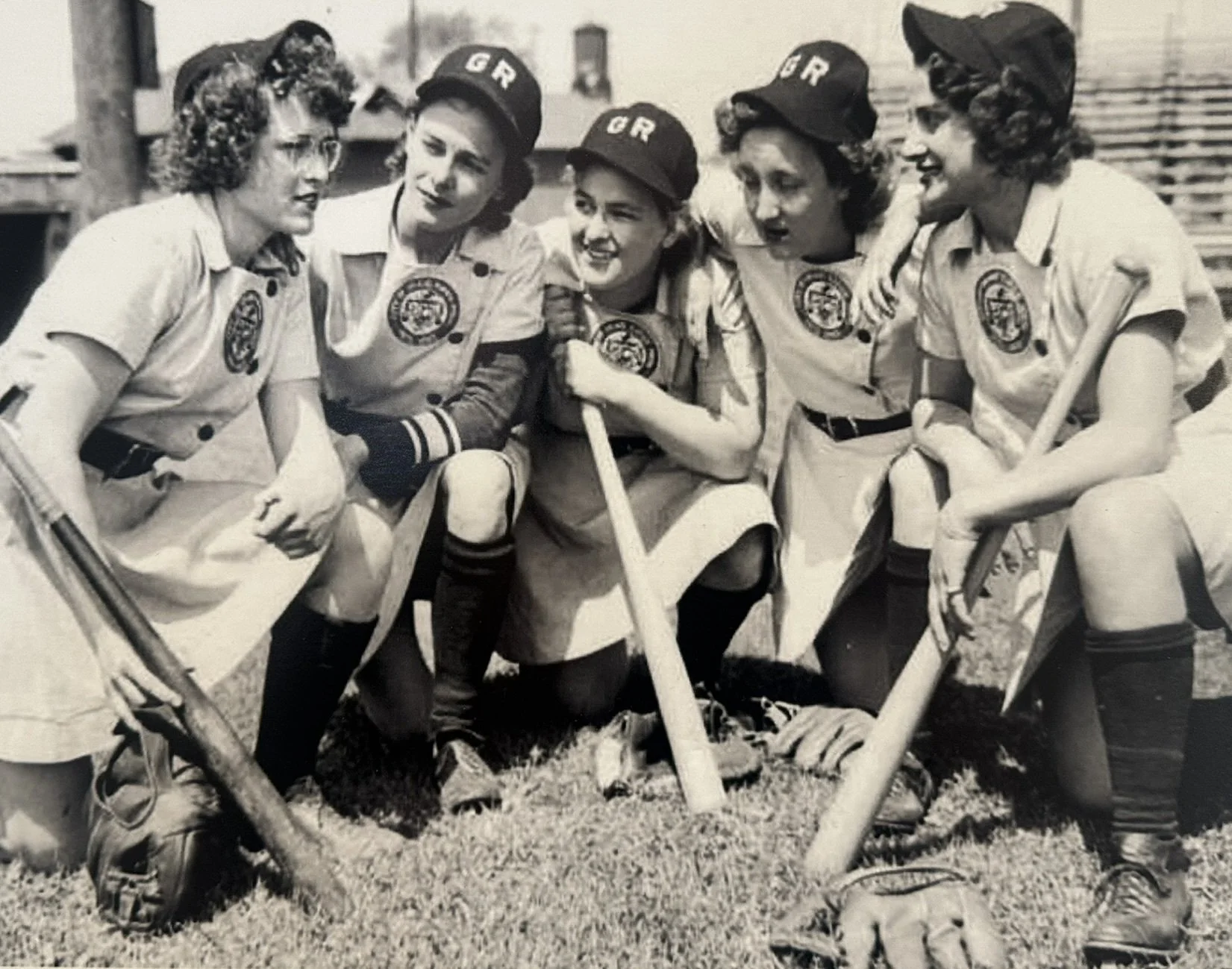
Other Pro Women’s Baseball Leagues To Have Existed In The U.S.
All-American Girls Professional Baseball League (1943-1954)
National Girls Baseball League (1944-1954)
International Girls Baseball League (1952-1953)
Ladies Professional Baseball League (1997-1998)
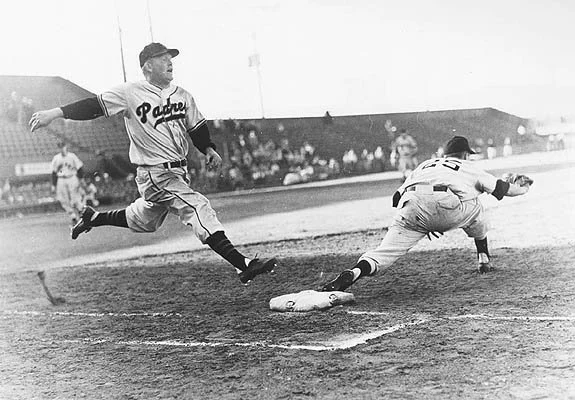
Pacific Coast League
Maybelle mentioned seeing the Los Angeles Angels and San Diego Padres play when she was a little girl, but Major League teams by those names did not exist yet. Maybelle was talking about the franchises in the Pacific Coast League.
“The Pacific Coast League And What Might Have Been” by John Bauer
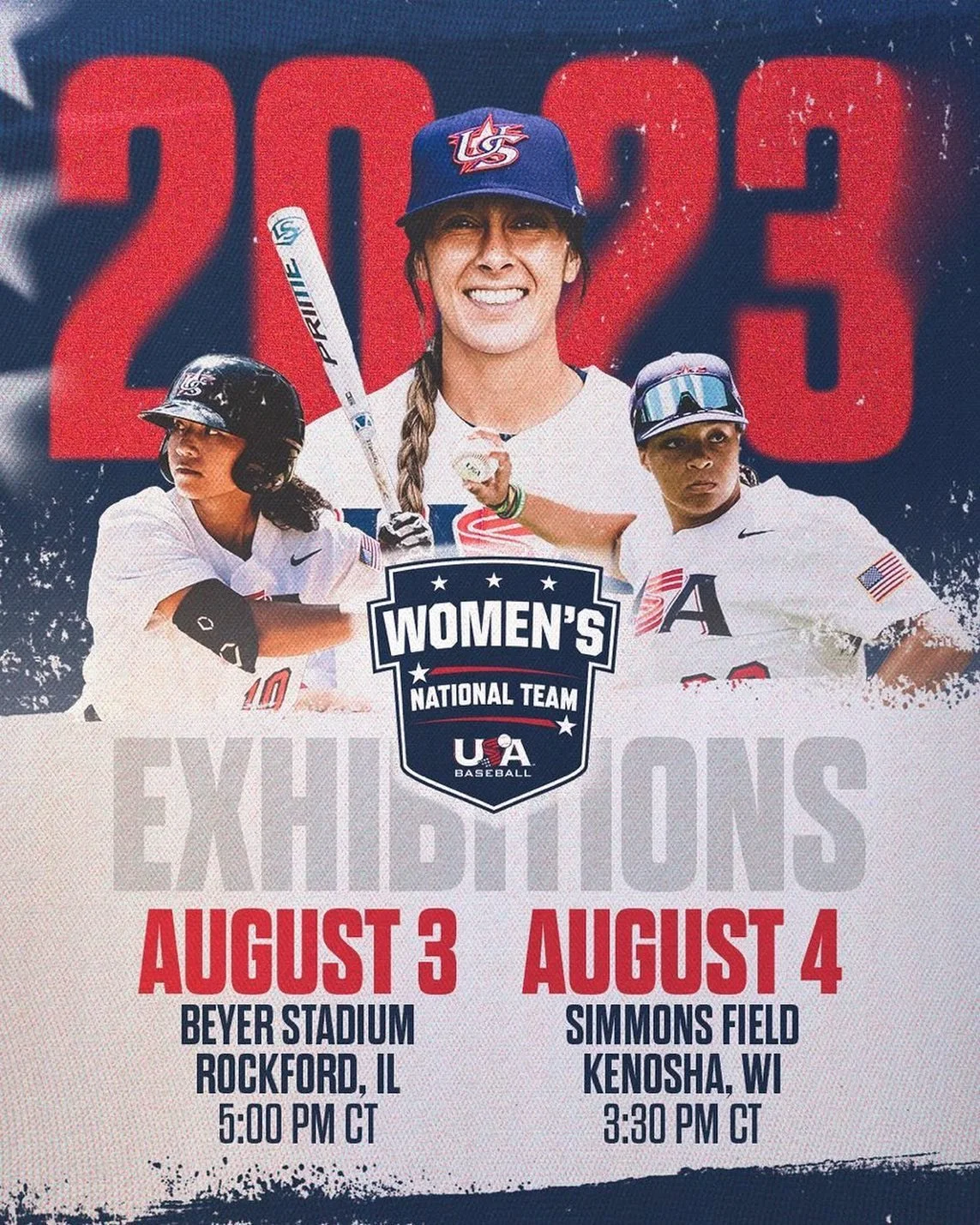
Where I Met Maybelle
I interviewed Ashton Lansdell the evening of August 4 after the USWNT game, and then interviewed Maybelle the morning of August 5, before the 80th anniversary reunion for the AAGPBL in Kenosha.
Being able to watch the women’s team play both games in two historic stadiums was an incredible experience. I’d have left that weekend with memories for a lifetime even without the interviews. But to have been able to sit down with both Ashton and Maybelle made for a weekend I will always be grateful to have had.
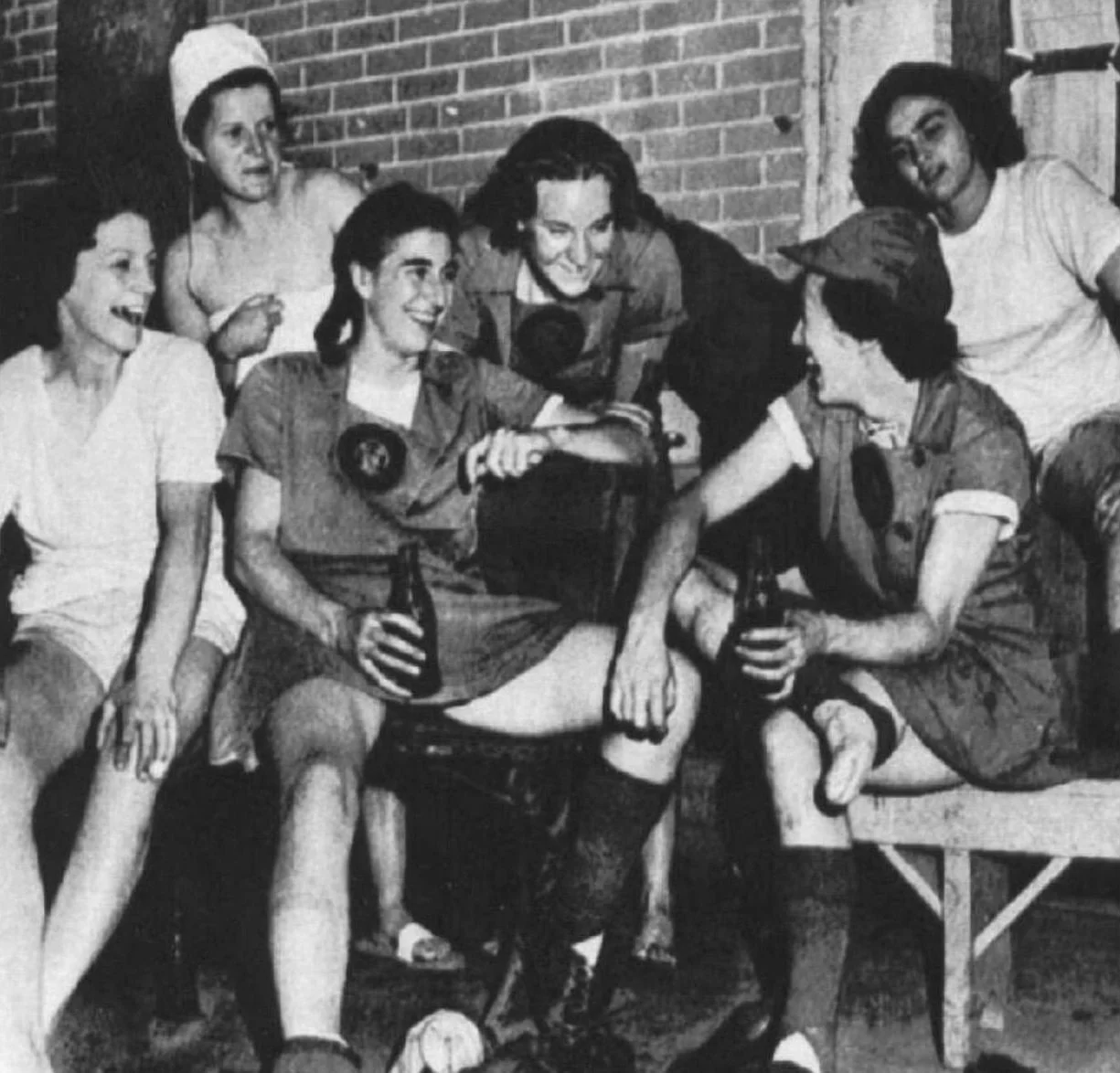
“Is There Anything I Can Bring For You, Maybelle?”
“Peach flavored beer.”
“Okay, I’m on it.”
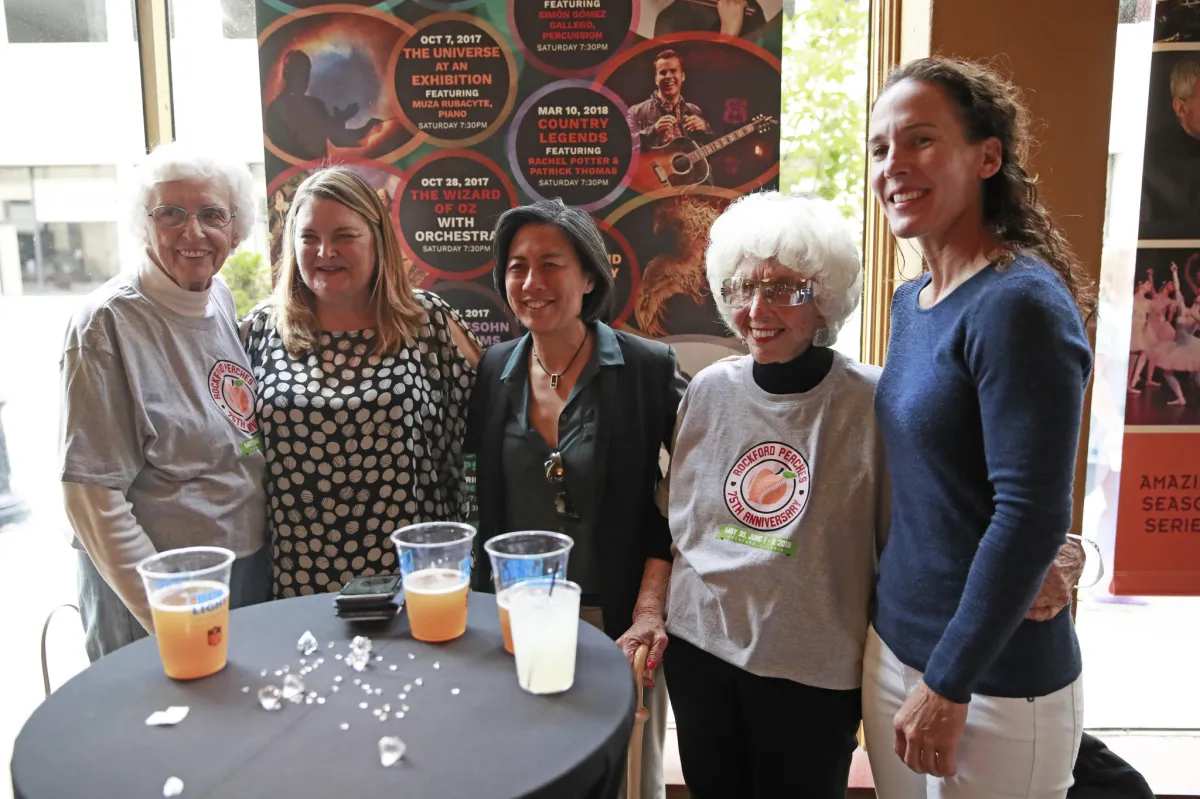
Not Maybelle’s First Beer
Some true icons in women’s baseball history.
Left to right: Shirley Burkovich, Megan Cavanaugh, Kim Ng, Maybelle Blair, and Ila Borders
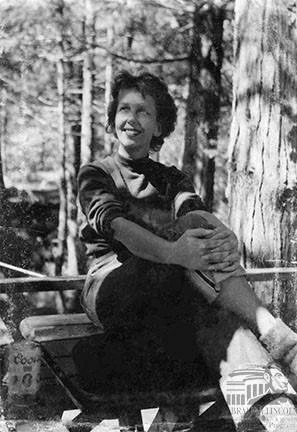
A Life Well Lived
It was an honor to sit down with Maybelle and have her recount stories from her near-century on this planet.
Here she is, pictured in the 1940s.
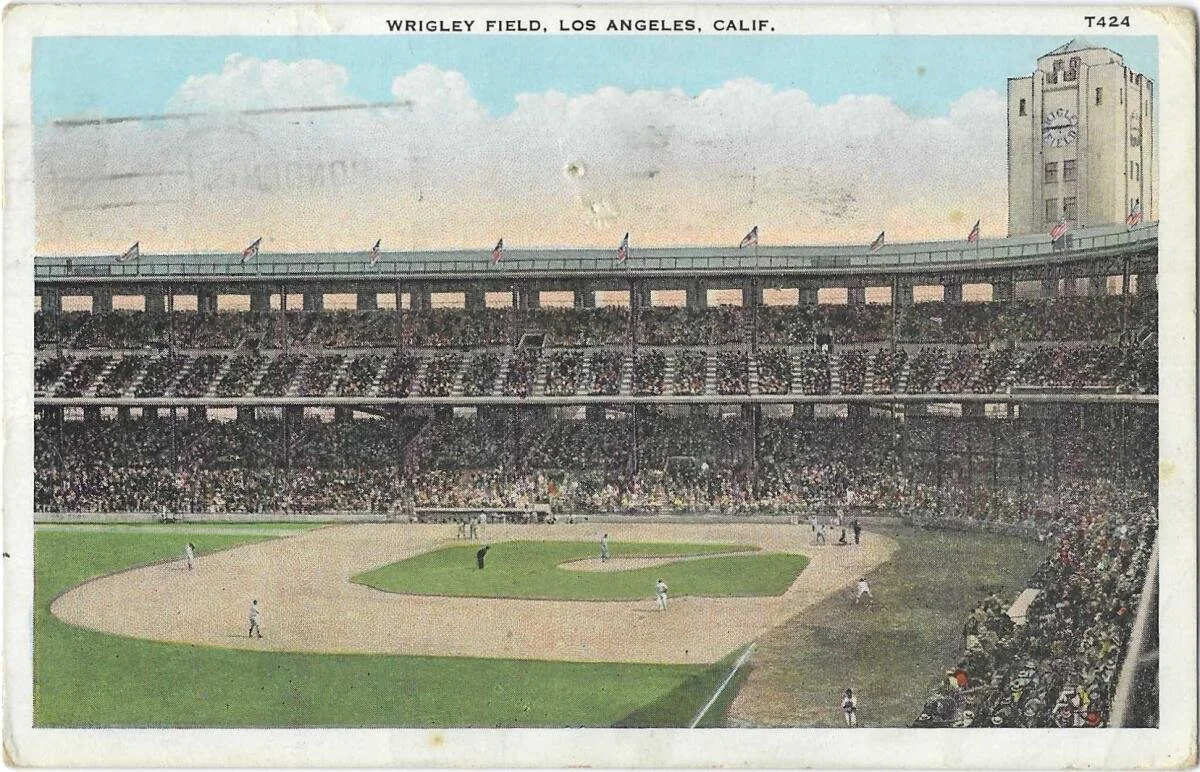
Wrigley Field, LA
Maybelle, my mom, and I all went to games at Wrigley Field when we were growing up. The Wrigley Field my mom and I went to is in Chicago. Maybelle’s Wrigley Field was in Los Angeles.
I spoke with the official historian of Chicago’s Wrigley Field, Brian Bernardoni, for Episode 6 of Season 1. You can listen to that episode HERE.
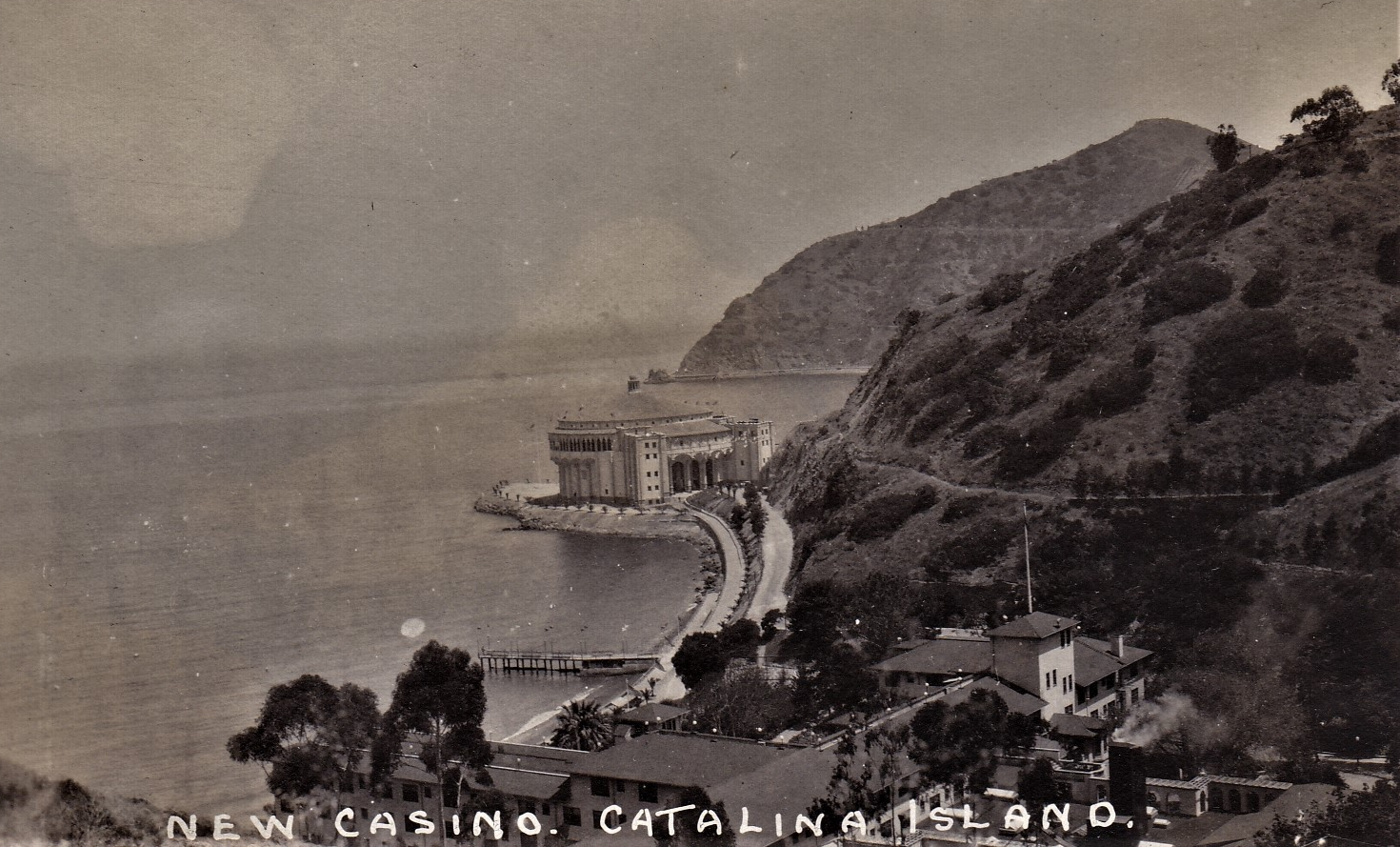
Catalina Island Casino
The casino was owned by Philip K. Wrigley. Ramps were installed in the casino to quickly get 6,000 people from the third floor ballroom down to the ground floor in case of an emergency. He took inspiration from the ramps at Wrigley Field, which he also owned at the time.
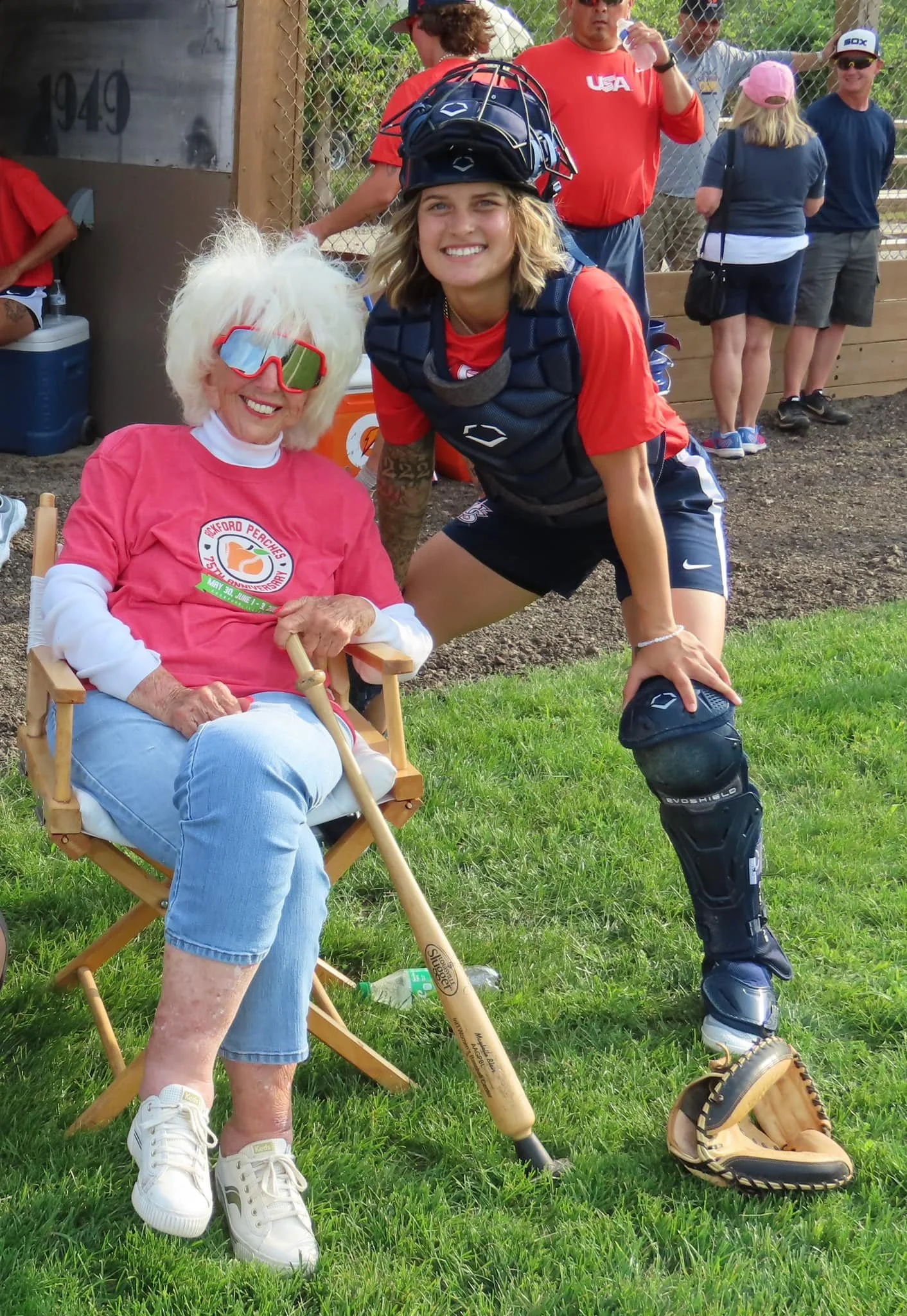
Denae Benites
Denae Benites, from Las Vegas, Nevada, is a standout catcher and four-time USA Baseball Women’s National Team athlete, earning gold at the 2019 Pan American Championships and silver at the 2024 World Cup Finals.
A trailblazer as the only girl to play varsity baseball in Las Vegas, she also excelled in varsity flag football, earning three MVP awards.
Denae was drafted 6th overall in the 1st round of the inaugural WPBL draft by New York.
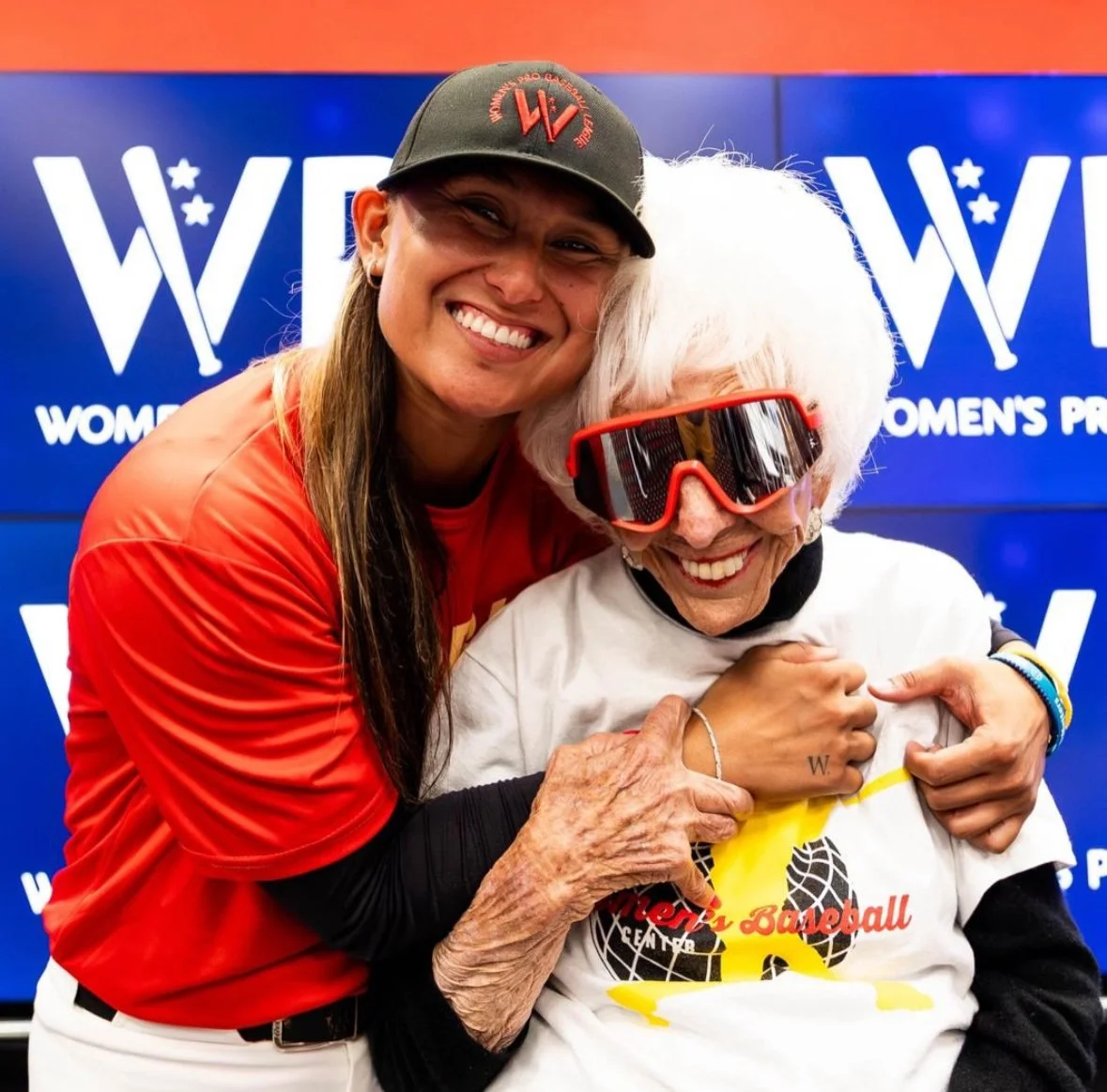
Kelsie Whitmore
Kelsie Whitmore of Temecula, California, is a standout two-way player and pitcher for the Savannah Bananas. A Cal State Fullerton alumna, she made history as the first woman to play in an MLB Partner League and was named 2022 USA Baseball Sportswoman of the Year.
Kelsie was drafted 1st overall in the 1st round of the inaugural WPBL draft by San Francisco.
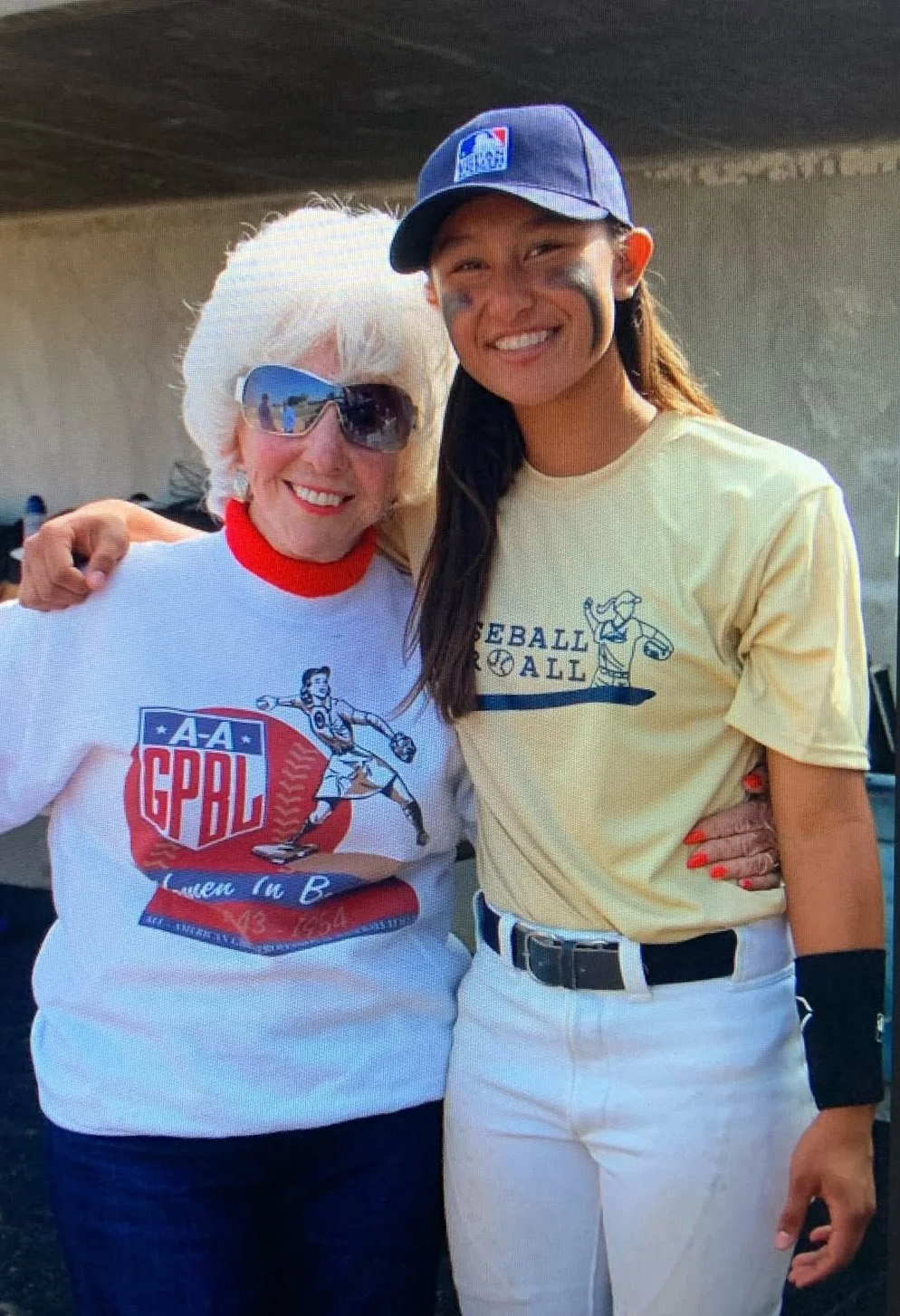
Longtime Friends
Kelsie has been posting pictures on social media of her and Maybelle for years, just proving that Maybelle has not only been a constant presence in women’s baseball for decades, but that she has had her finger on its pulse, and has an eye for talent.
This photo is from 2011, when Kelsie was just 13 years old. But Maybelle could already see that she was going to be a star.
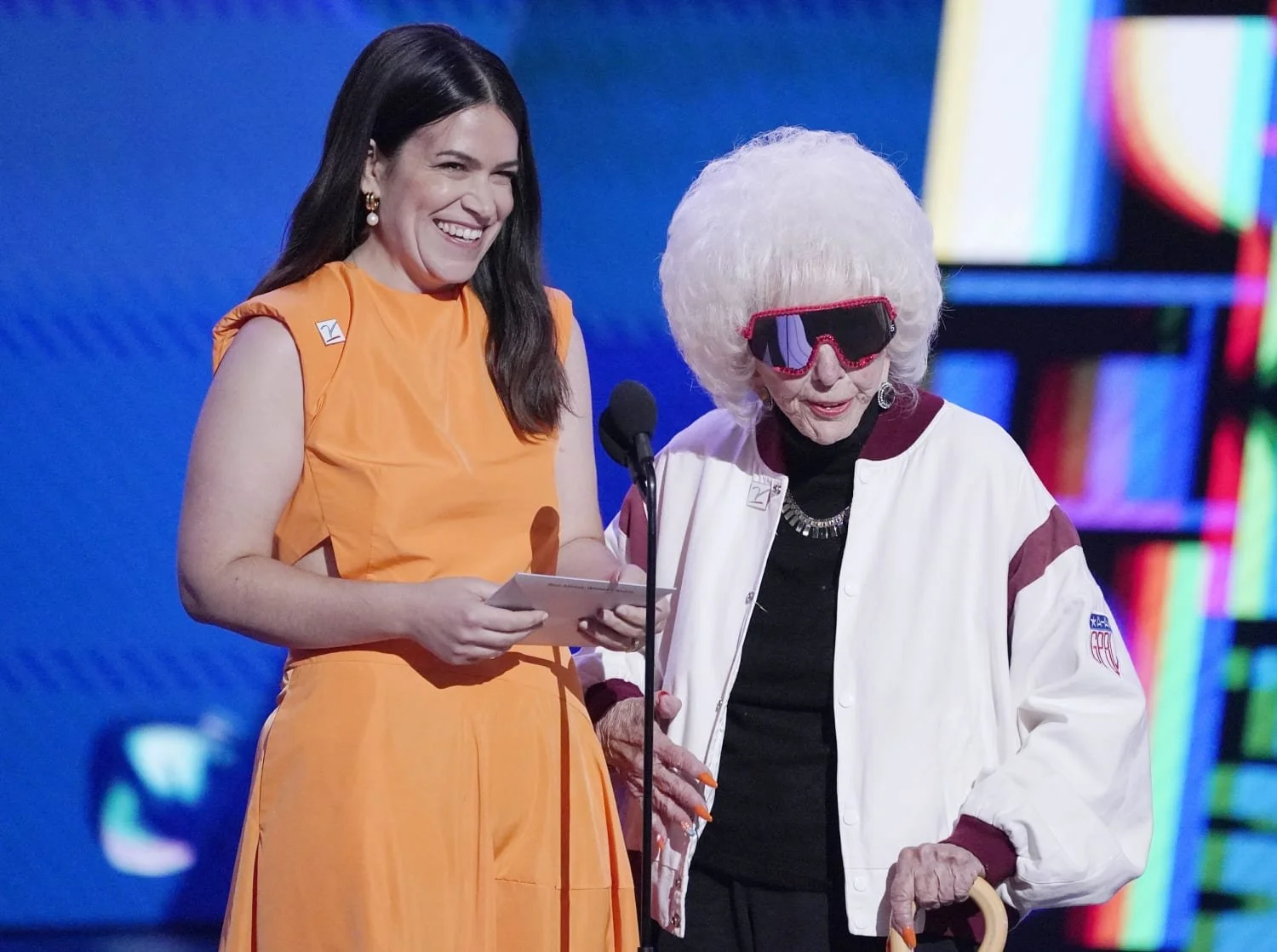
Maybelle, The Jet-setter
Maybelle is seemingly ALWAYS on the move, traveling enough to make someone one-third her age tired. Here she is at the 2022 ESPY Awards in Hollywood, California, with Abbi Jacobson of the Amazon Prime series A League of Their Own.
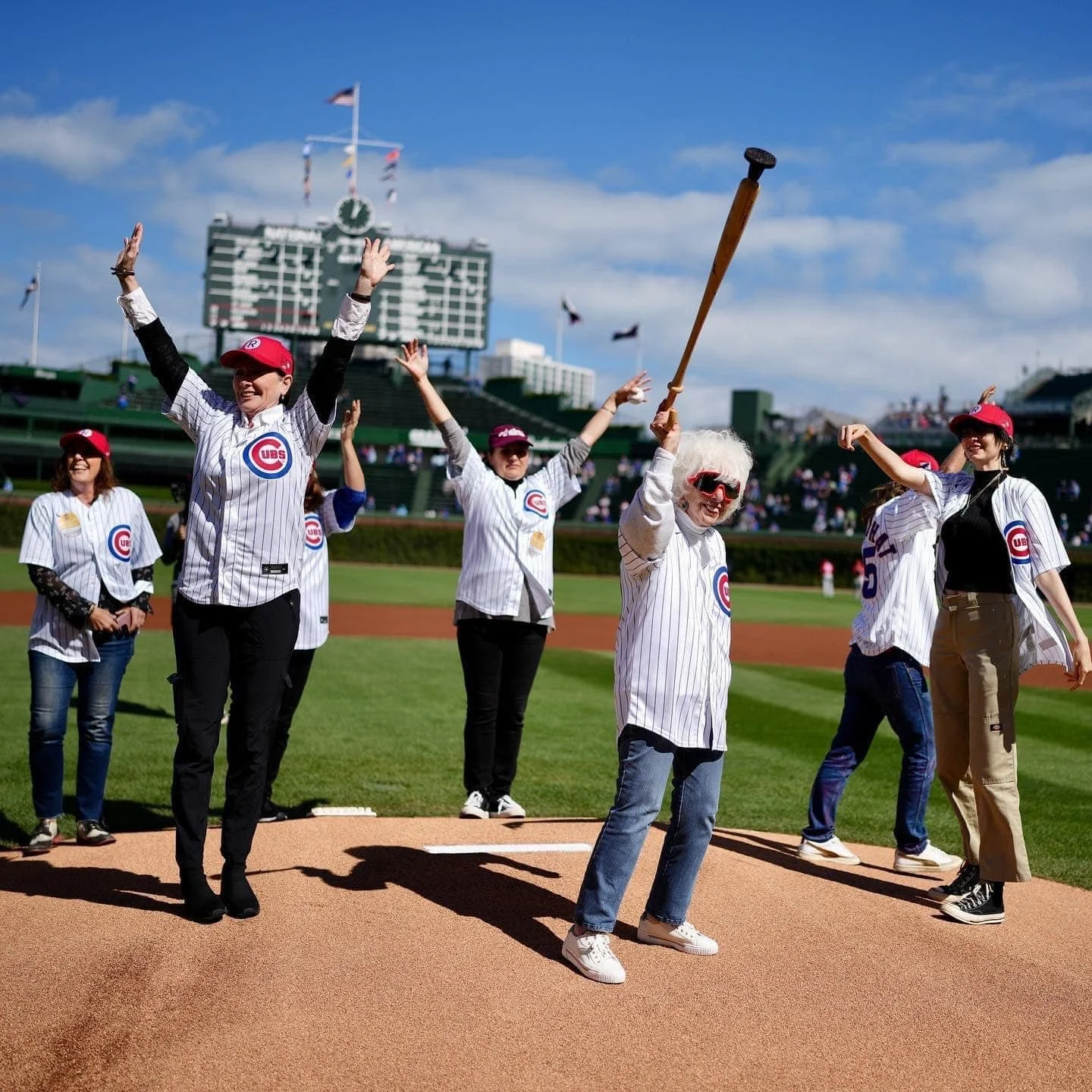
Maybelle In Chicago
Here is Maybelle at Wrigley Field (the Chicago version) with some of the cast members of the 1992 film, A League of Their Own.
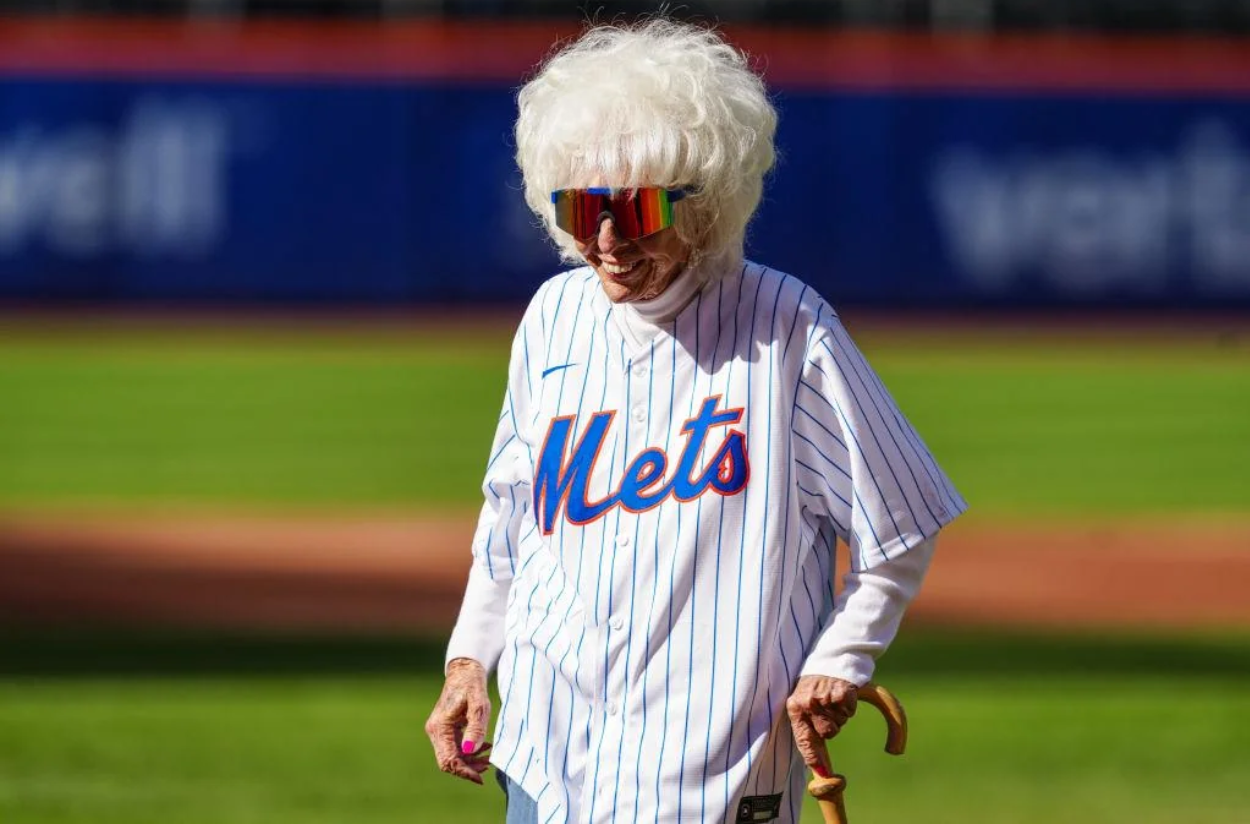
Maybelle in NY
Here is Maybelle at Citi Field in New York.
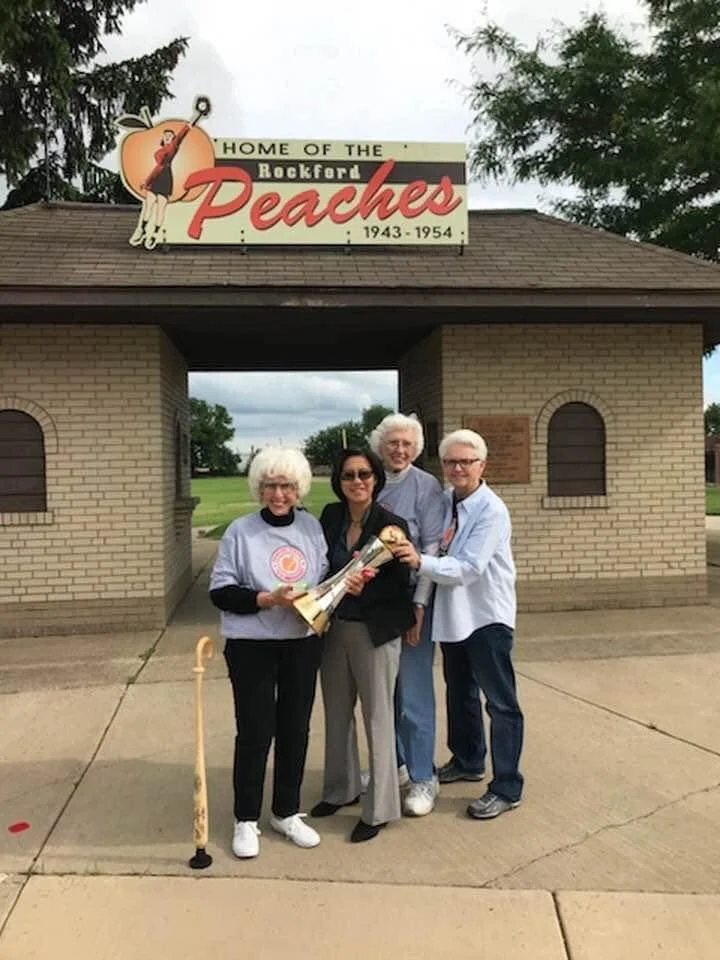
Maybelle in Rockford, IL
Here is Maybelle with (left to right) Kim Ng, Shirley Burkovich, and Kat Williams at Beyer Stadium’s main entrance ticket booth in Rockford, Illinois.
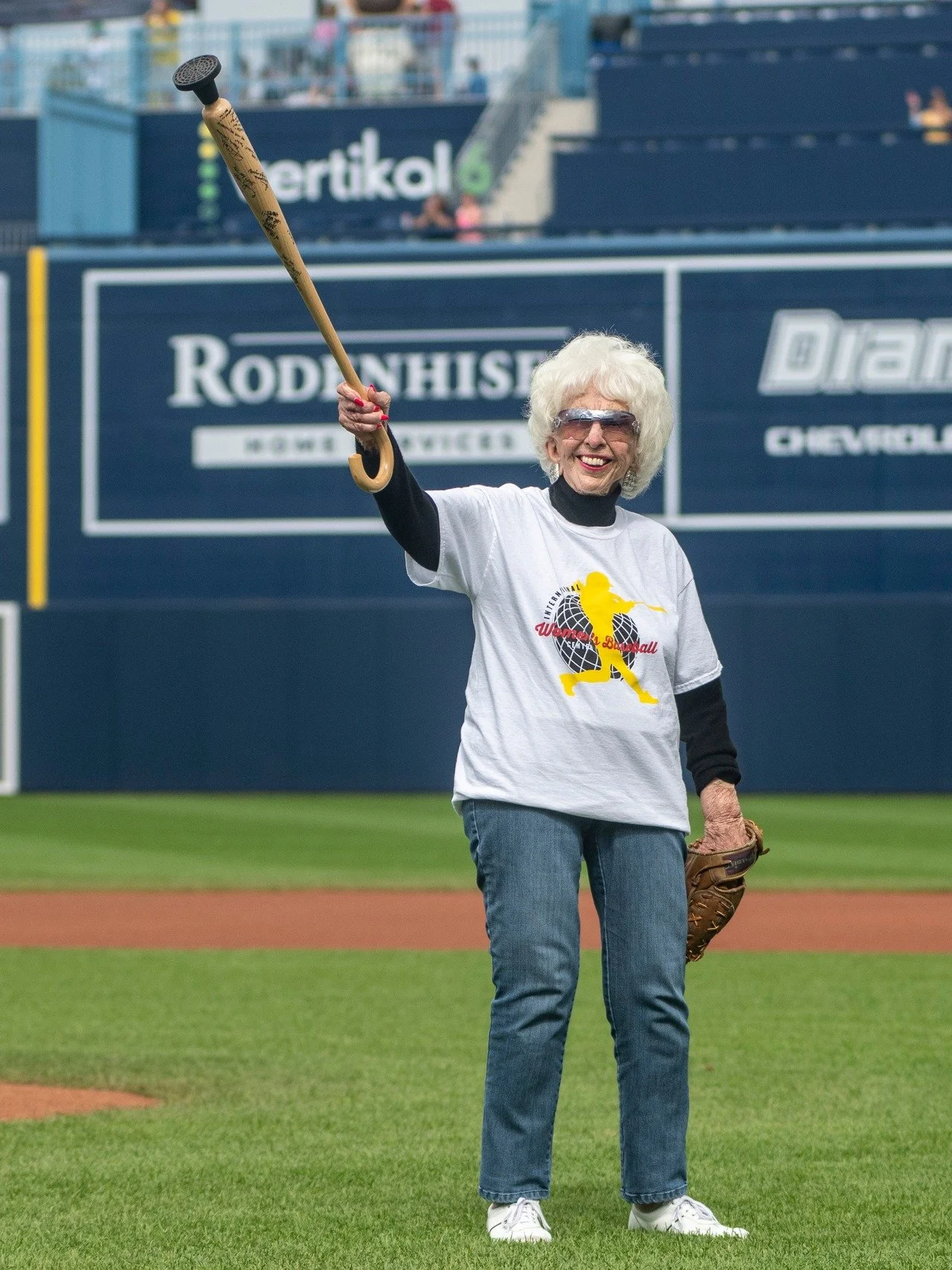
Maybelle in MA
Here is Maybelle at Polar Park in Worcester, Massachusetts, home of the WooSox.
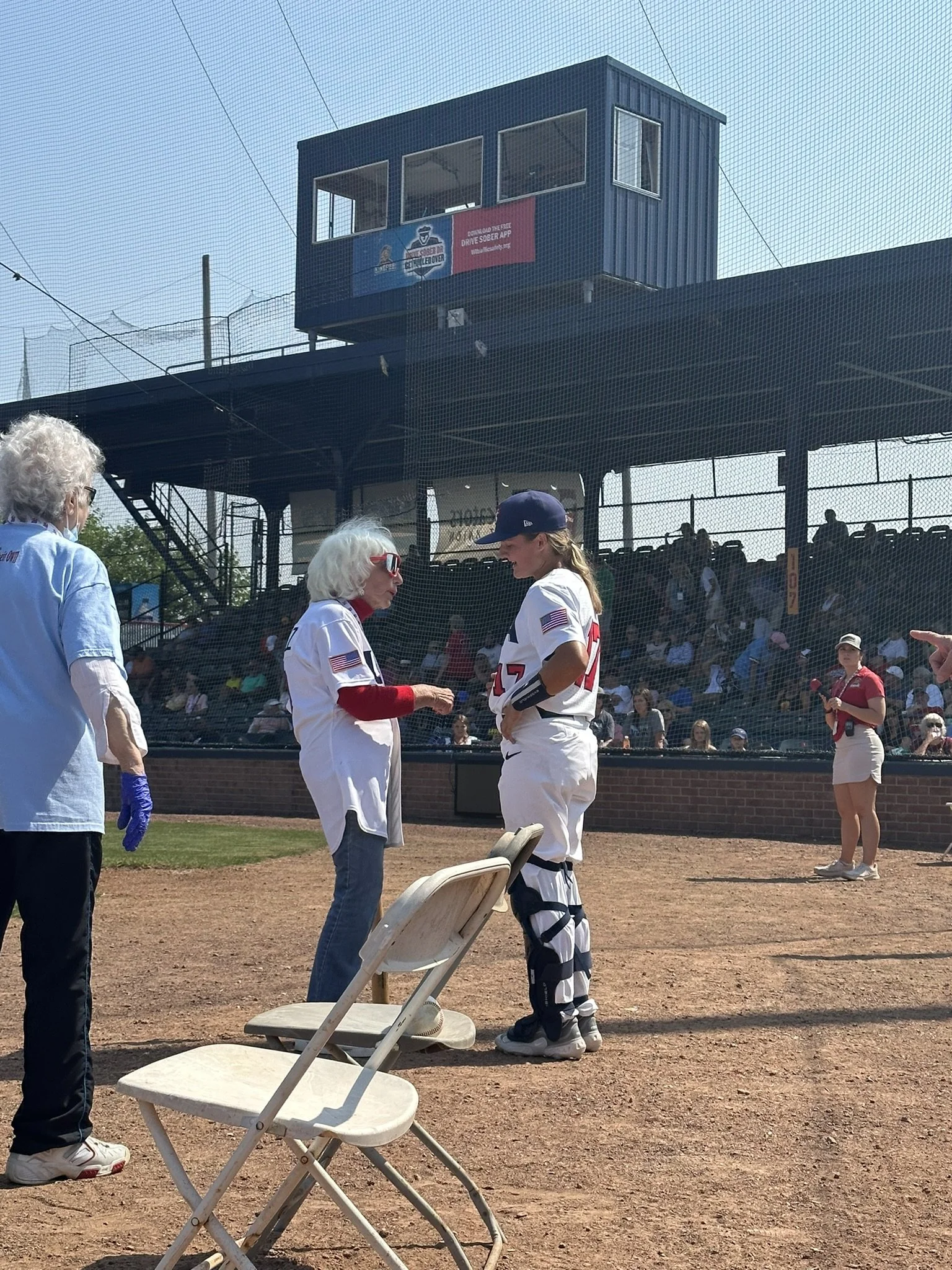
Maybelle in WI
Here is Maybelle at Simmons Field in Kenosha, Wisconsin.
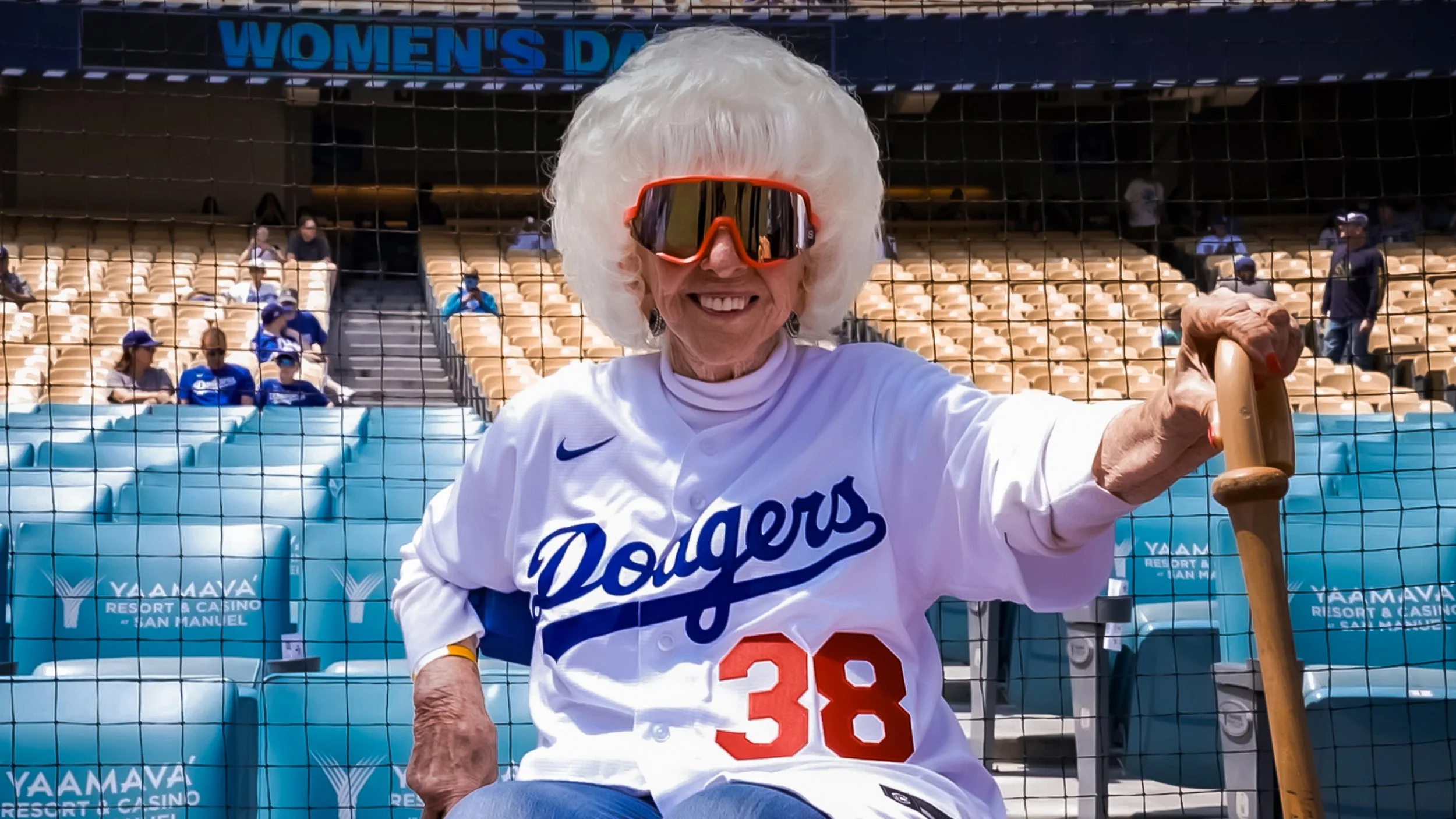
Maybelle in CA
Here is Maybelle at Dodger Stadium in Los Angeles, California.
I’m exhausted just finding all of these pictures of Maybelle. I’m not even 40 years old, and I didn’t have to do the traveling. I don’t know how she does it.
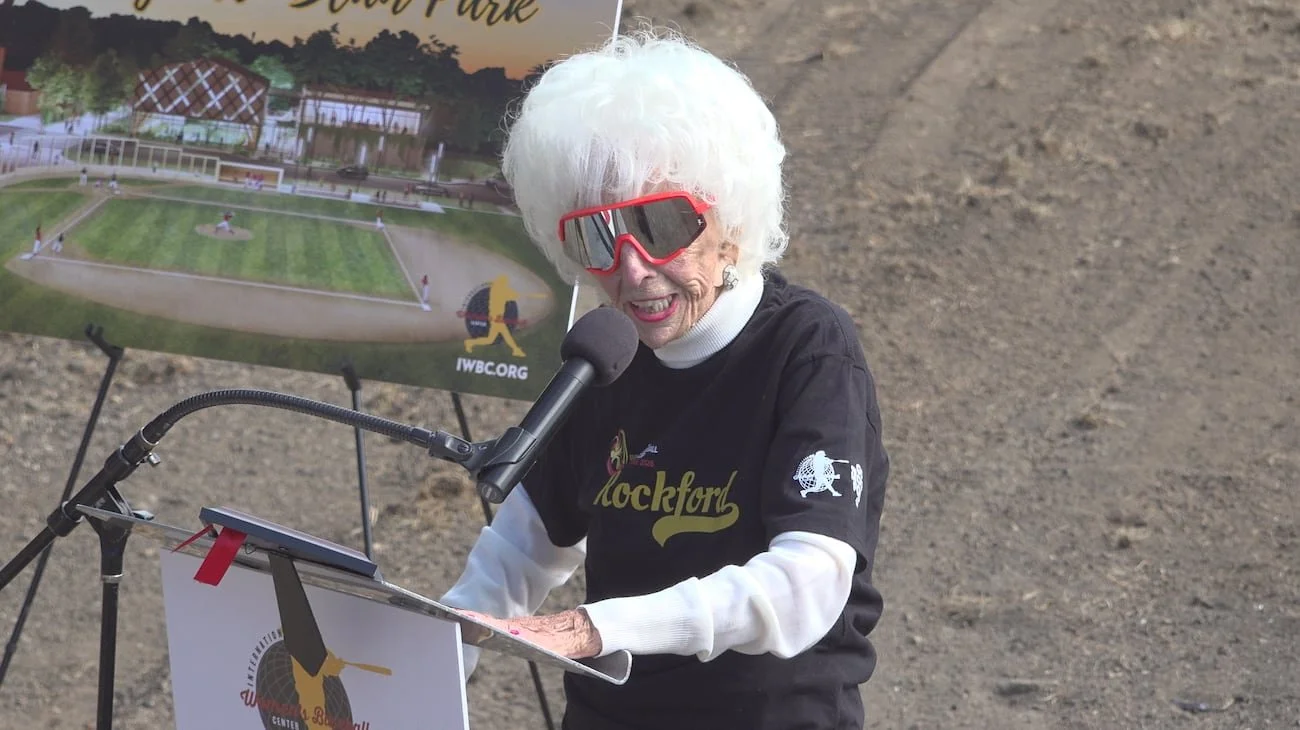
IWBC
Maybelle is always raising money for the IWBC in Rockford, and can often be found at events either in Rockford, or appearing on the IWBC’s behalf somewhere else in the country.
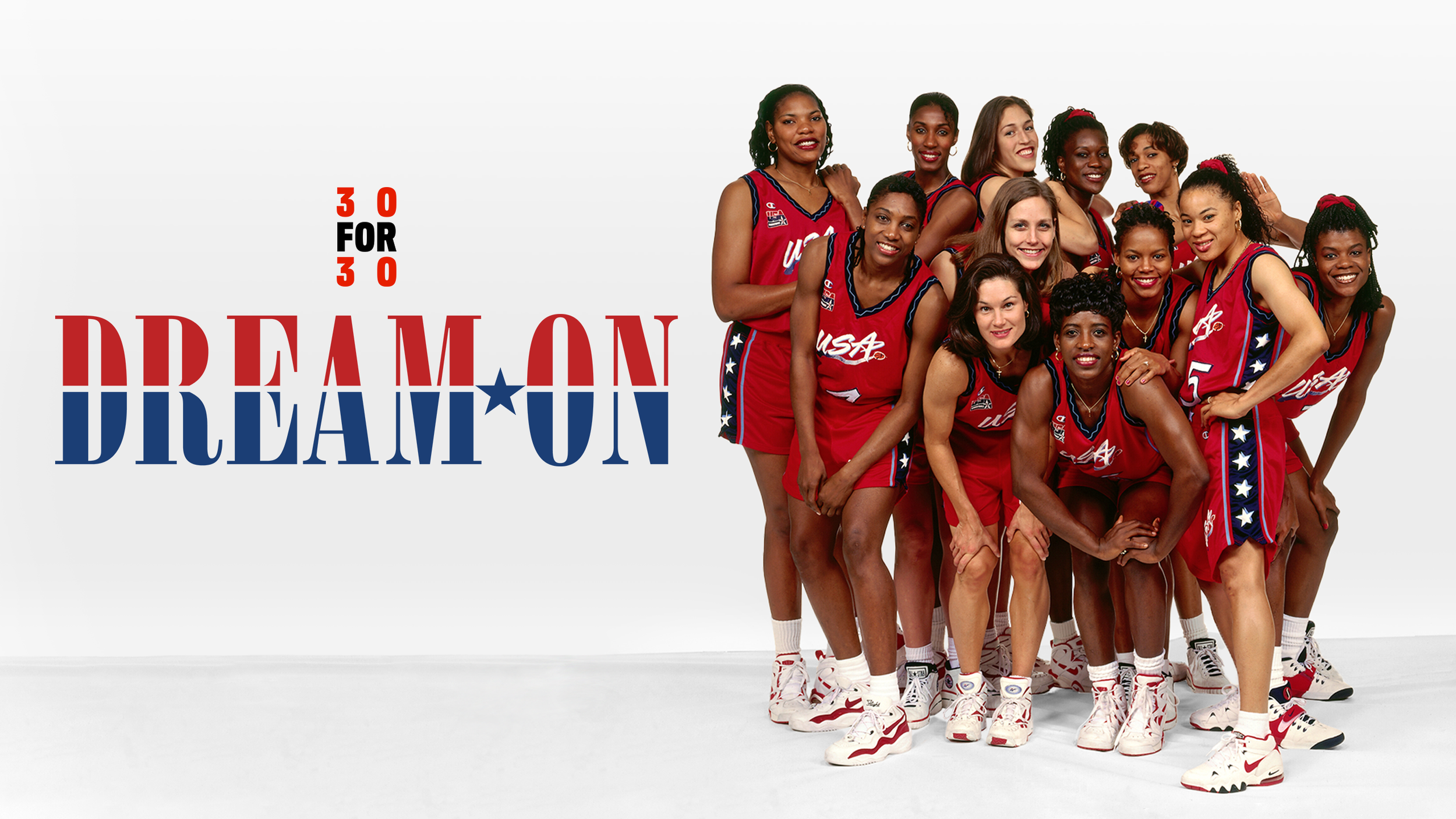
The 1996 US Women’s Olympic Basketball team captured the hearts of many sports fans in America, and proved that it wasn’t only men who could be a Dream Team.
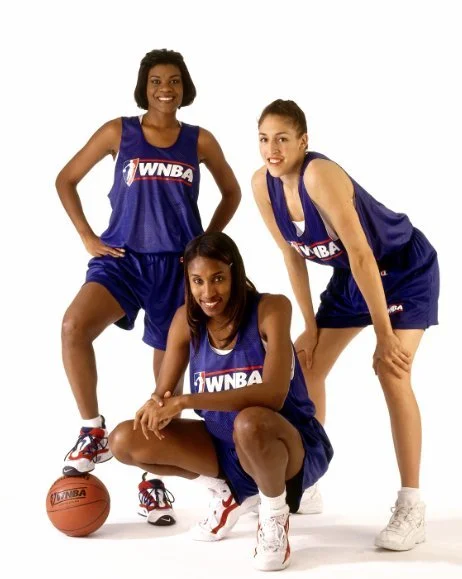
“We Got Next”
The WNBA capitalized on the popularity of women’s sports - and, particularly, women’s basketball - when it tipped off in 1997, shortly after the 1996 Summer Olympics in Atlanta had produced a gold medal for the US women, led by Sheryl Swoopes, Rebecca Lobo, and Lisa Leslie (seen here).
The US Women’s National Soccer team kept the momentum going by winning the 1999 FIFA Women’s World Cup in dramatic fashion, beating China 5-4 in penalty kicks, thanks to the Cup-clinching goal by Brandi Chastain.
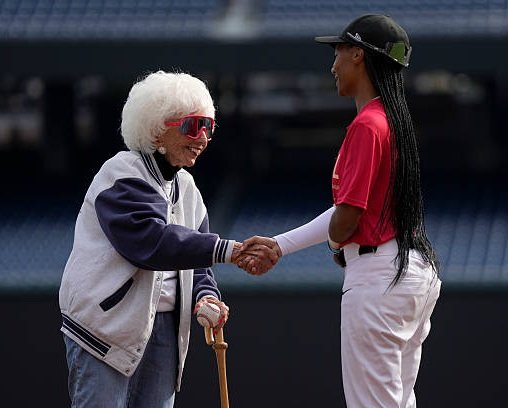
Mo’ne Davis
Mo’ne Davis, from Philadelphia, Pennsylvania, is a standout player who earned degrees from Hampton University and Columbia University.
Now residing in Clementon, New Jersey, she is proud to be the third player from her Little League team to be drafted professionally, joining Scott Bandura and Jared Sprague-Lott.
Mo’ne was drafted 10th overall in the 1st round of the inaugural WPBL draft by Los Angeles.
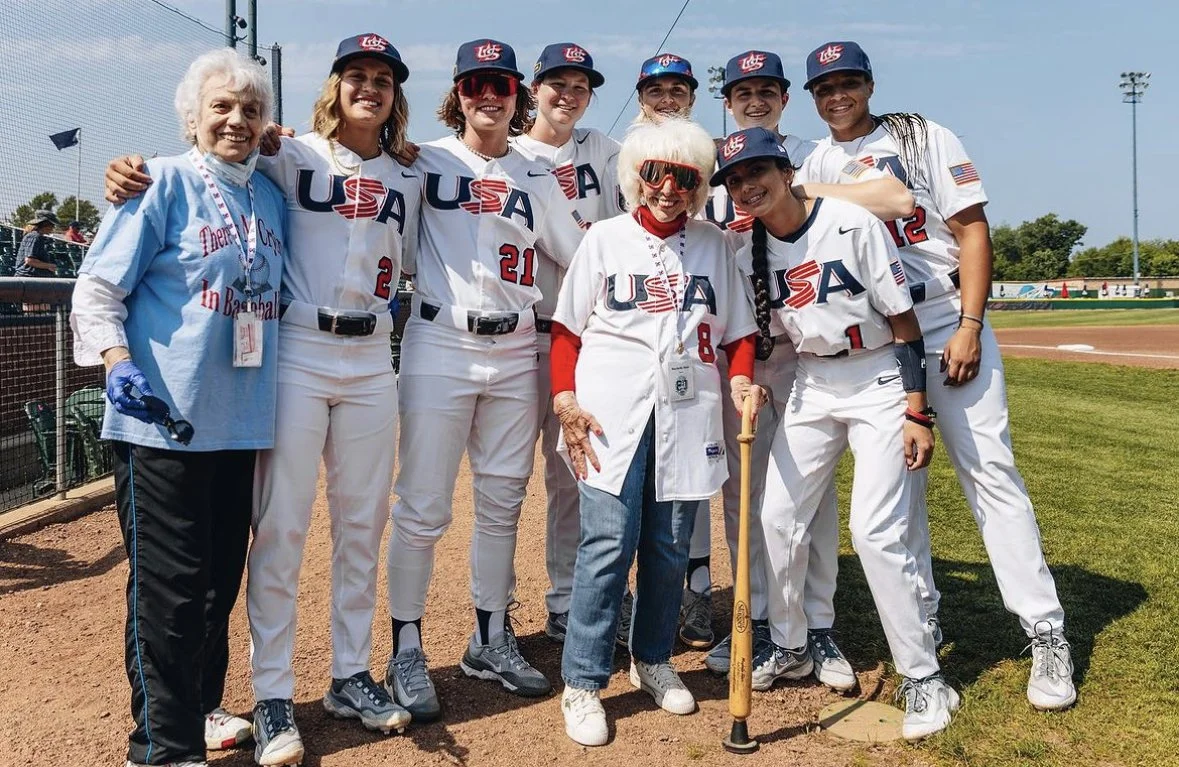
A Lot of Great Players
The WPBL has a lot of great players from all over the world, not just from the United States. There are Japanese players, Korean players, Canadian players, Australian players, Mexican players, players from the U.K., and more.
It is shaping up to be the first professional women’s baseball league in history whose rosters are made up of the greatest talent from all over the world.
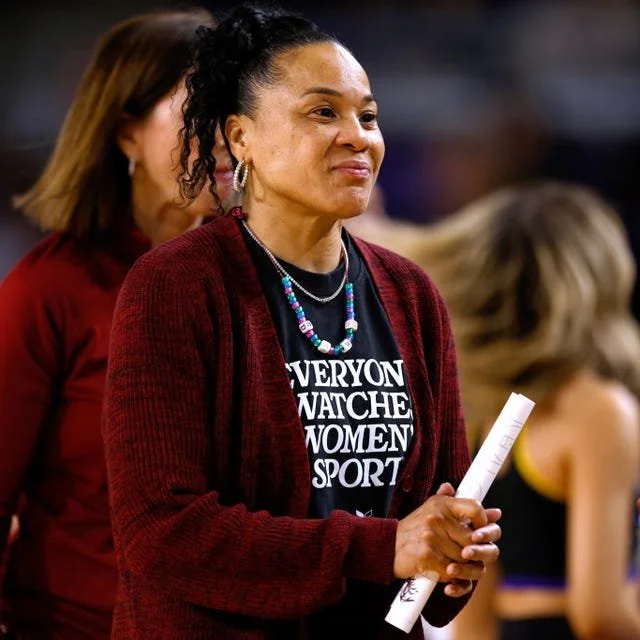
Dawn Staley
Dawn Staley is the head coach for the University of South Carolina women's basketball team, leading the Gamecocks to three National Championships. As a player, she was a point guard in college for the Virginia Cavaliers, then spent eight seasons in the WNBA, primarily with the Charlotte Sting.
Staley also played on the United States women's national basketball team, winning three Olympic gold medals (1996, 2000, and 2004), and was the head coach of the team that won gold at the 2021 Olympics. She is the only person to win the Naismith Award as both a player and a coach.
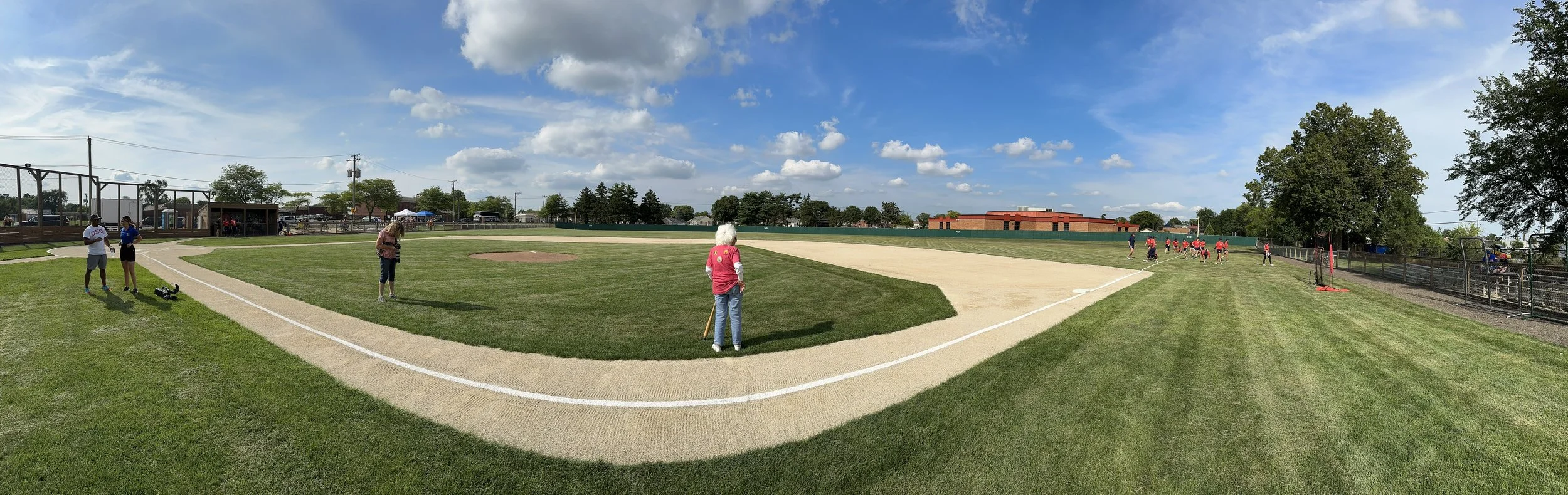
Beyer Stadium: History Lives Here.
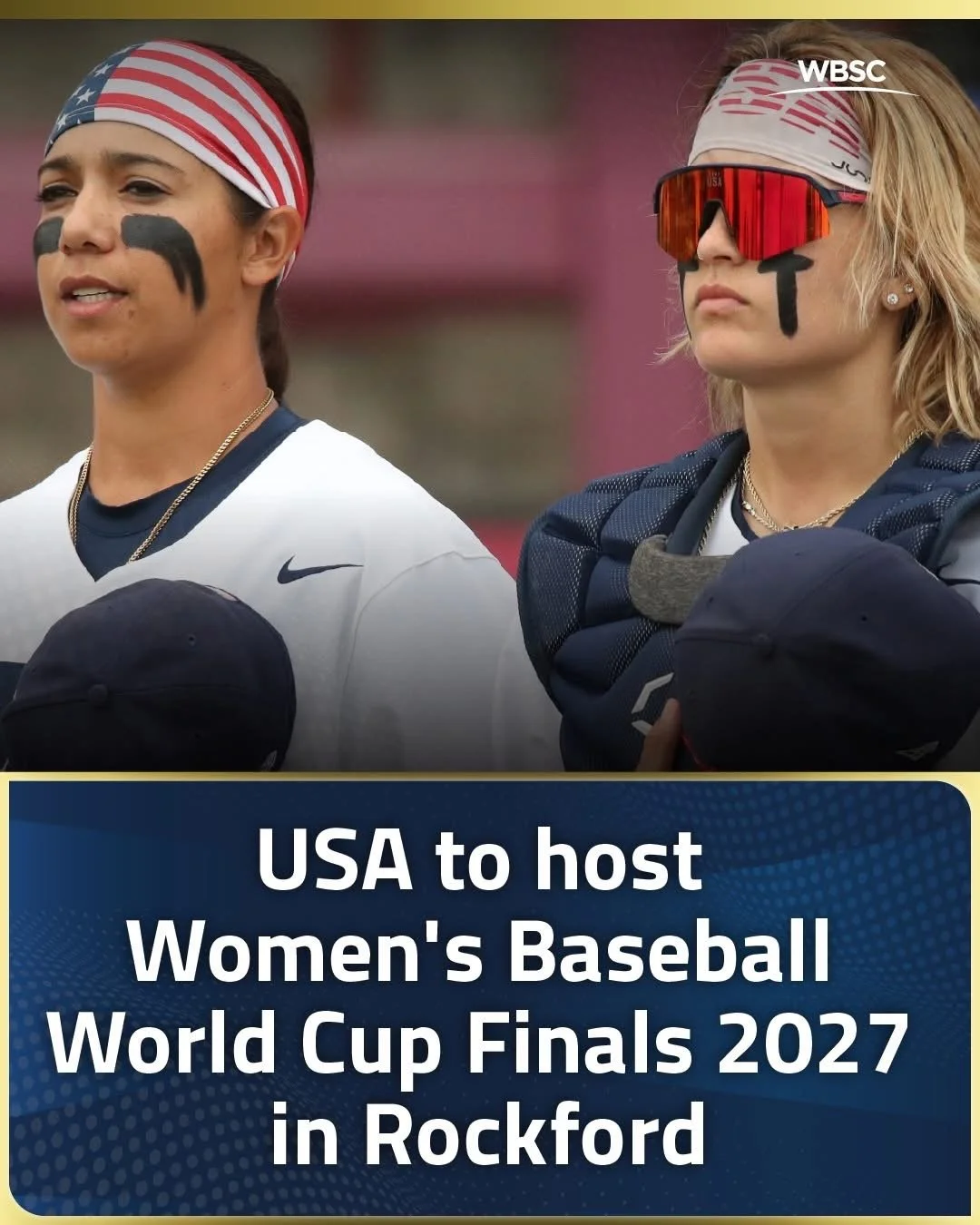
The Cradle Of Women’s Baseball
The World Baseball Softball Confederation (WBSC) is pleased to announce that the International Women's Baseball Center (IWBC) in Rockford, Illinois, has been appointed as the host of 10th edition of the WBSC Women's Baseball World Cup Finals 2027.
The six-team tournament, which follows the WBSC Women's Baseball World Cup Group Stage 2026, will take place from July 19 to 25.
The IWBC will also host one of the two Group Stage groups in Rockford from July 22 to 27, 2026.
The top two finishers of each Group Stage group, plus two Wild Cards, will advance to the Finals.
Read the full press release HERE.
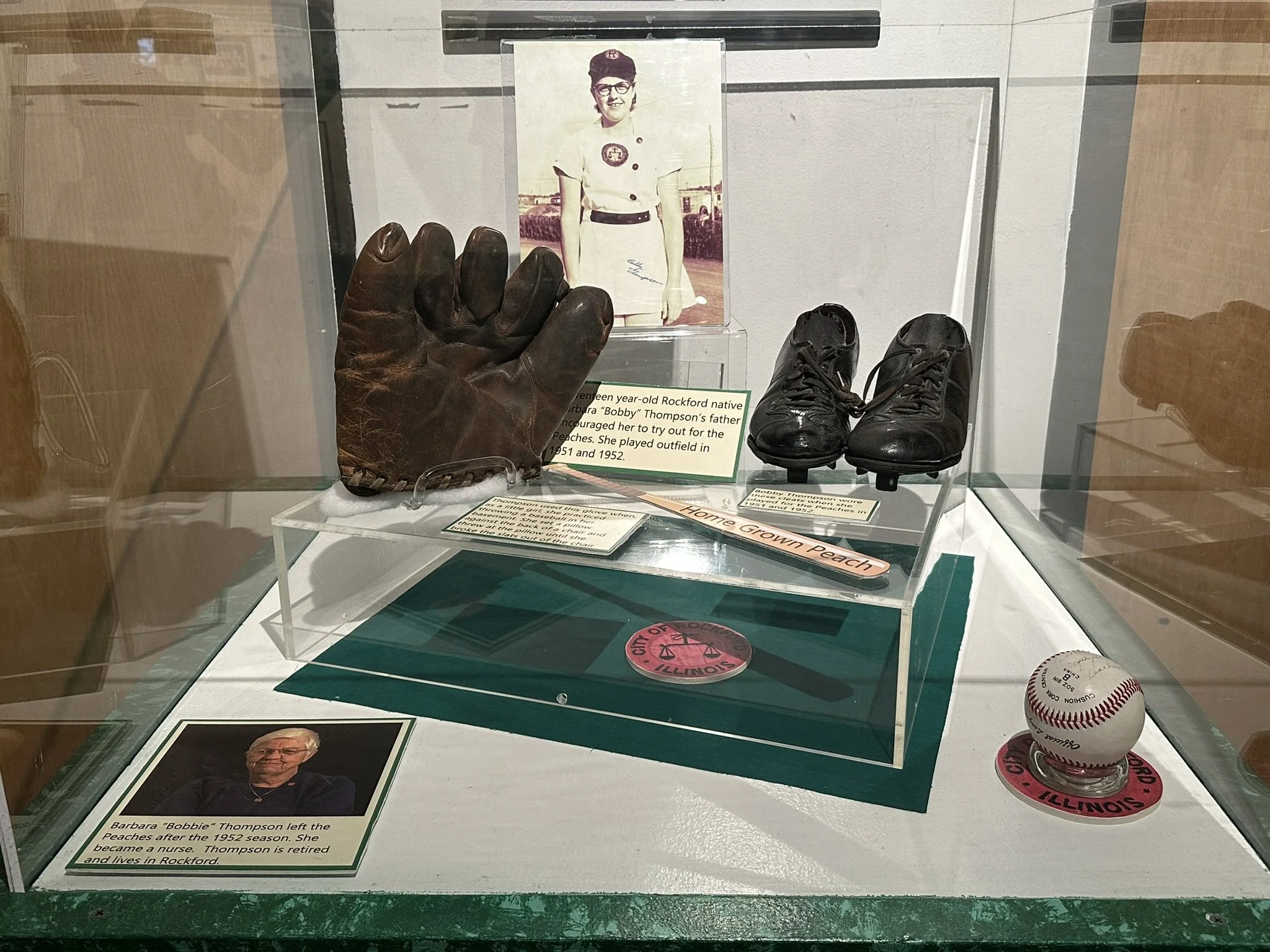
Midway Village Museum
After our stop at Beyer, my mom and I continued on to the Midway Village Museum in Rockford, which had even more exhibits and artifacts relating to the Rockford Peaches and the AAGPBL. It was a fantastic day, and we both highly recommend making both stops if you’re ever in the Rockford area.
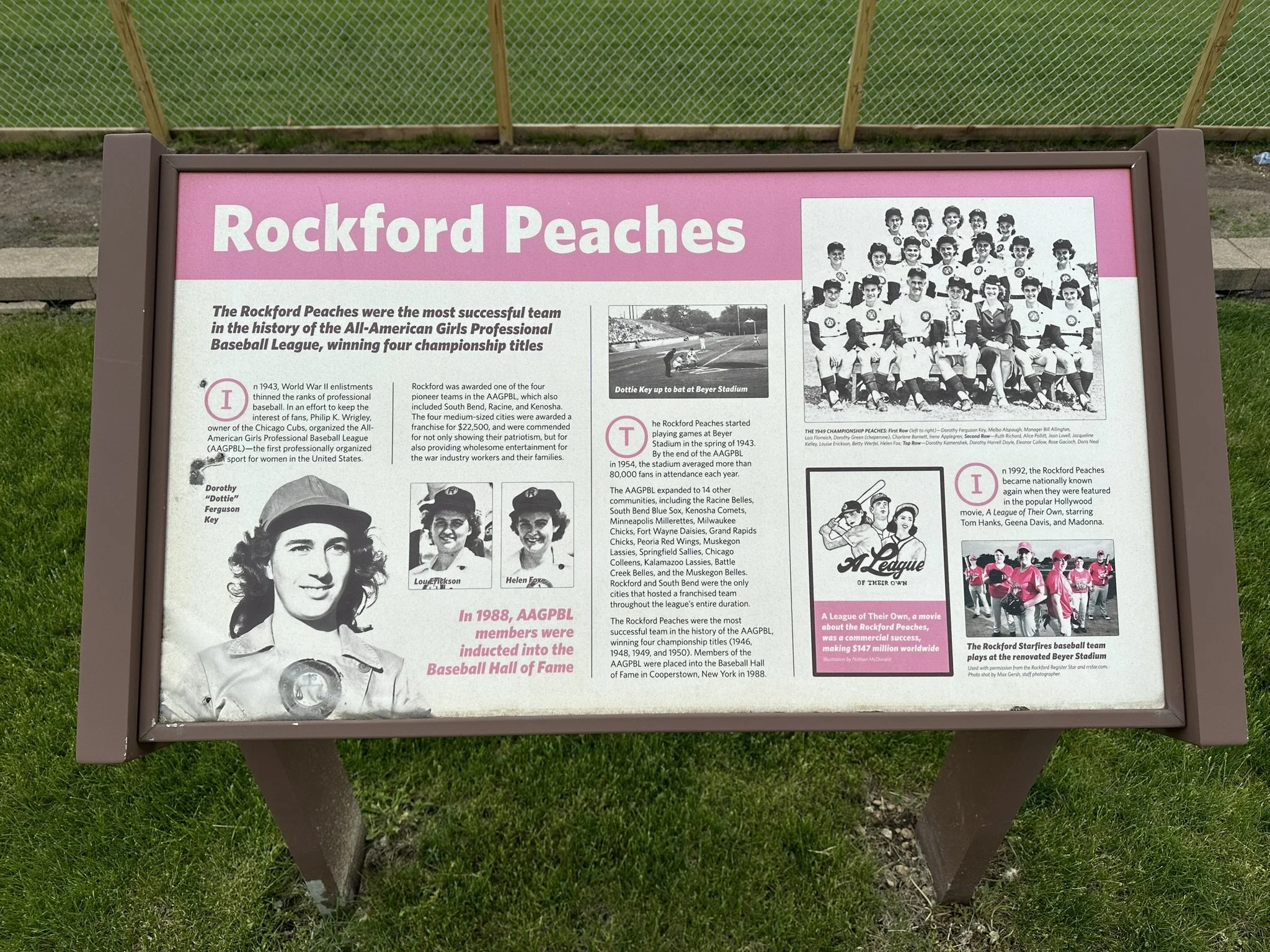
One of the many beautifully done info boards at Beyer Stadium in Rockford.
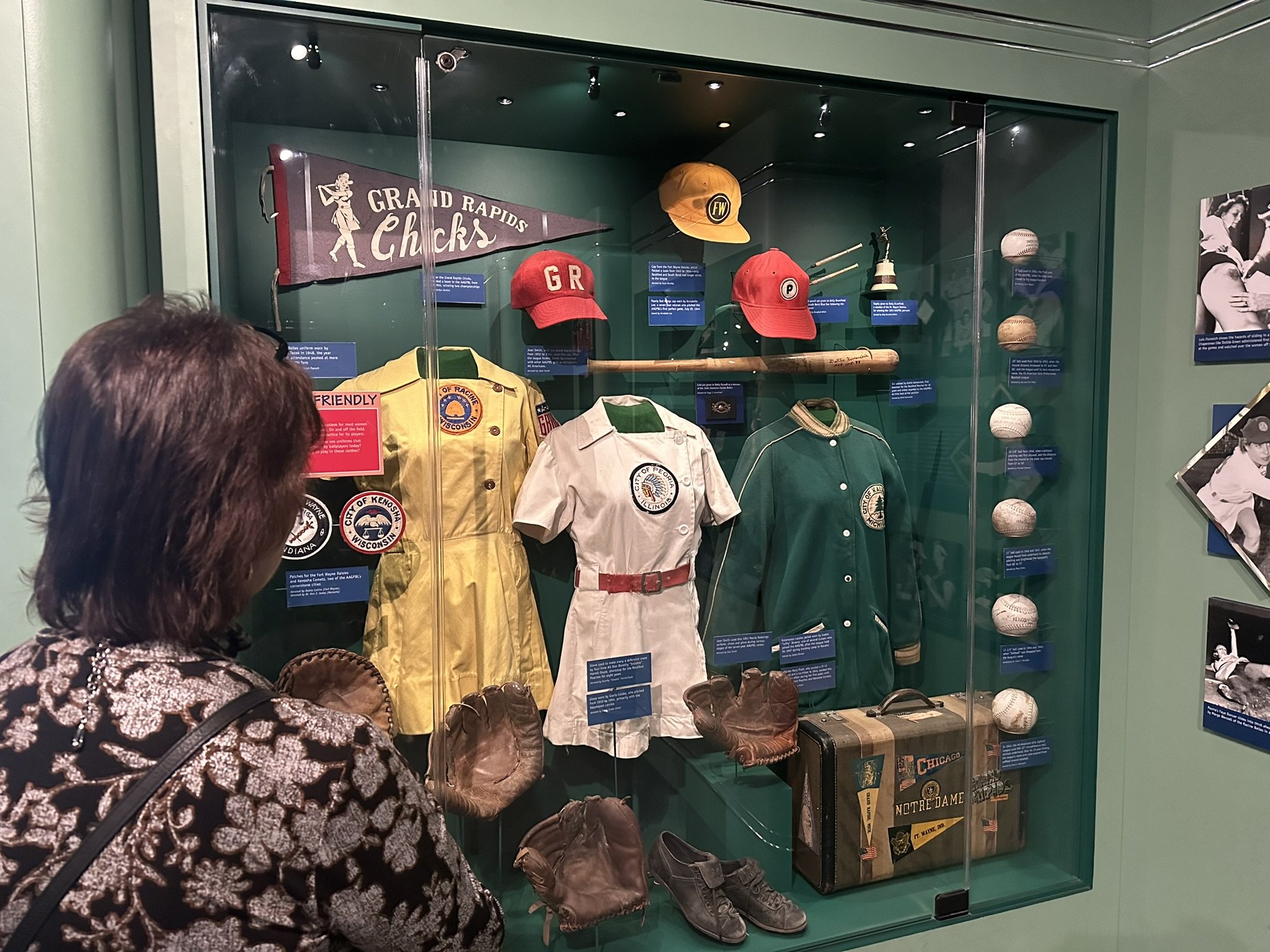
Women In Baseball at the Hall of Fame
Being able to see some of the game-worn uniforms from the AAGPBL in person, as well as game-used baseballs, and other equipment and artifacts, was truly special.
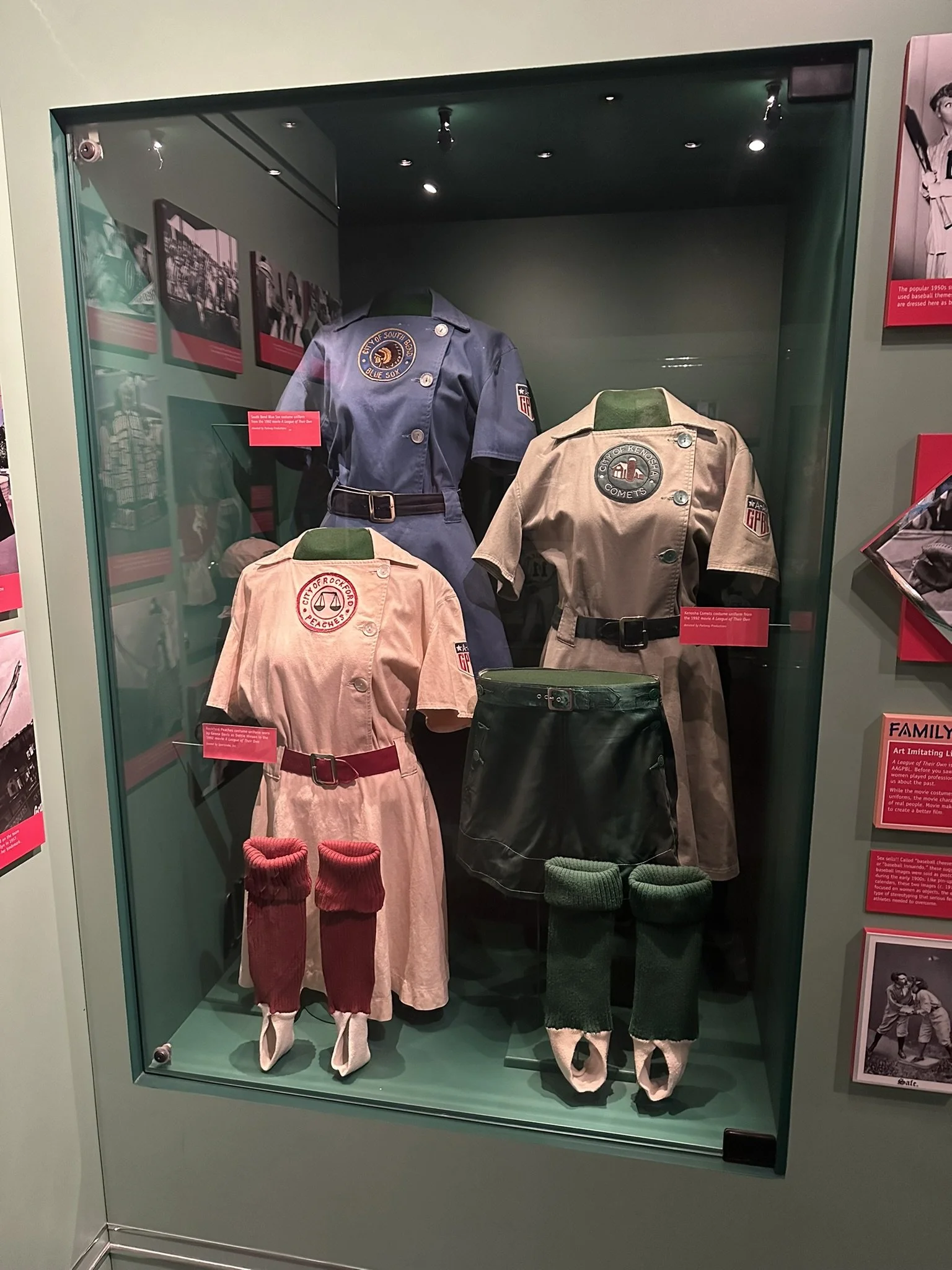
AAGPBL at the HOF
You really don’t appreciate how colorful these uniforms were until you see them in person. You can read about their colors in old newspaper archives or internet articles, but when all you see are black and white photos of them, it just doesn’t hit home.
Seeing them in person is powerful.
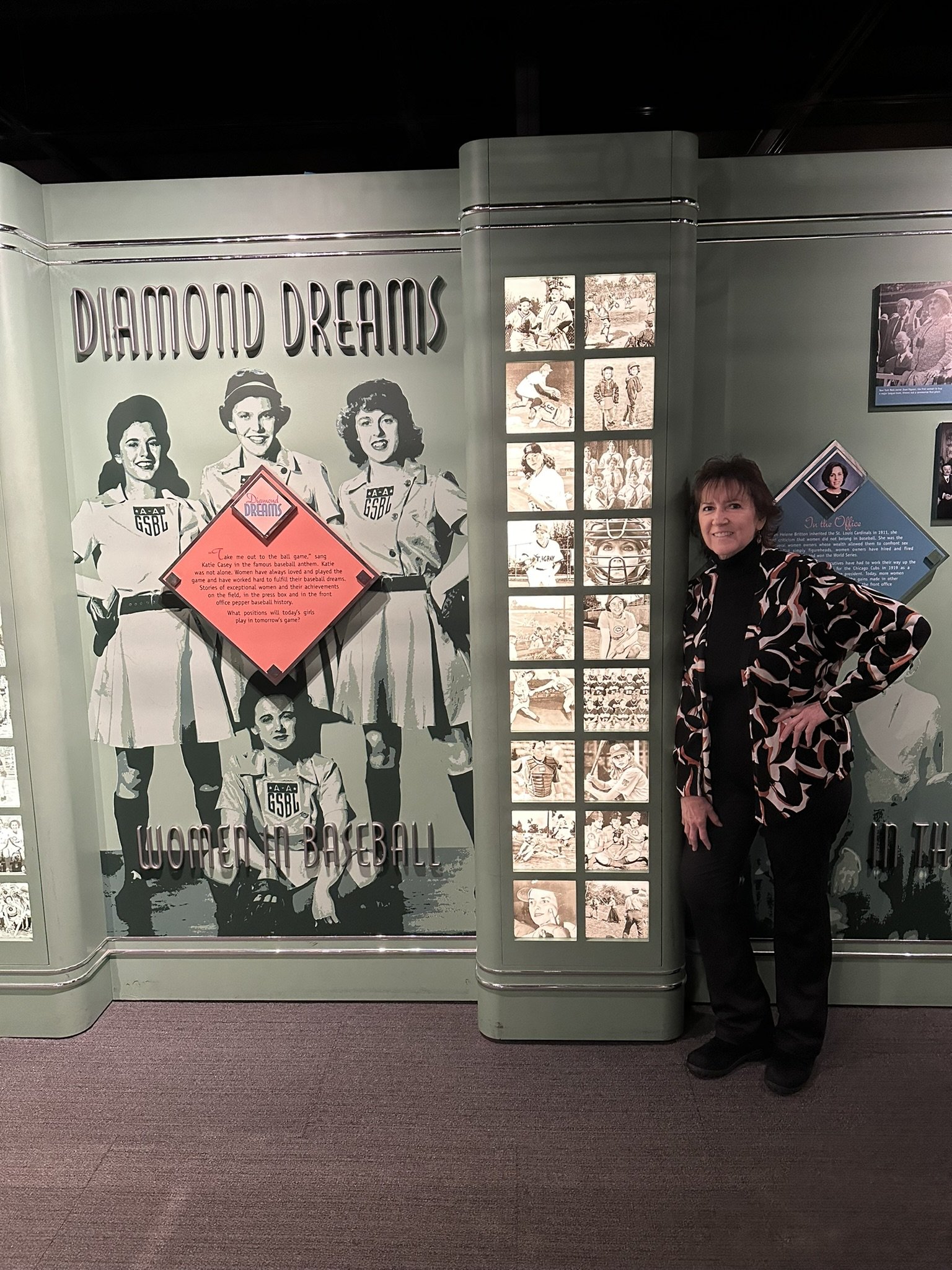
Perry Barber
Perry Barber is one of the nearly invisible number of ladies who have literally had the balls to go for baseball umpire-hood. She is an international umpire with 35 years of experience at all levels of amateur and professional baseball, including major league spring training, and logs 150-200 games per year.
Although she still plans on umping for some time, her focus shifted toward inspiring the next generation of women umpires. She is a board member of the International Women’s Baseball Center, Inc. and an advisor to Baseball for All.
Perry was our guest for Episode 6 of Season 2. You can listen to that episode HERE.
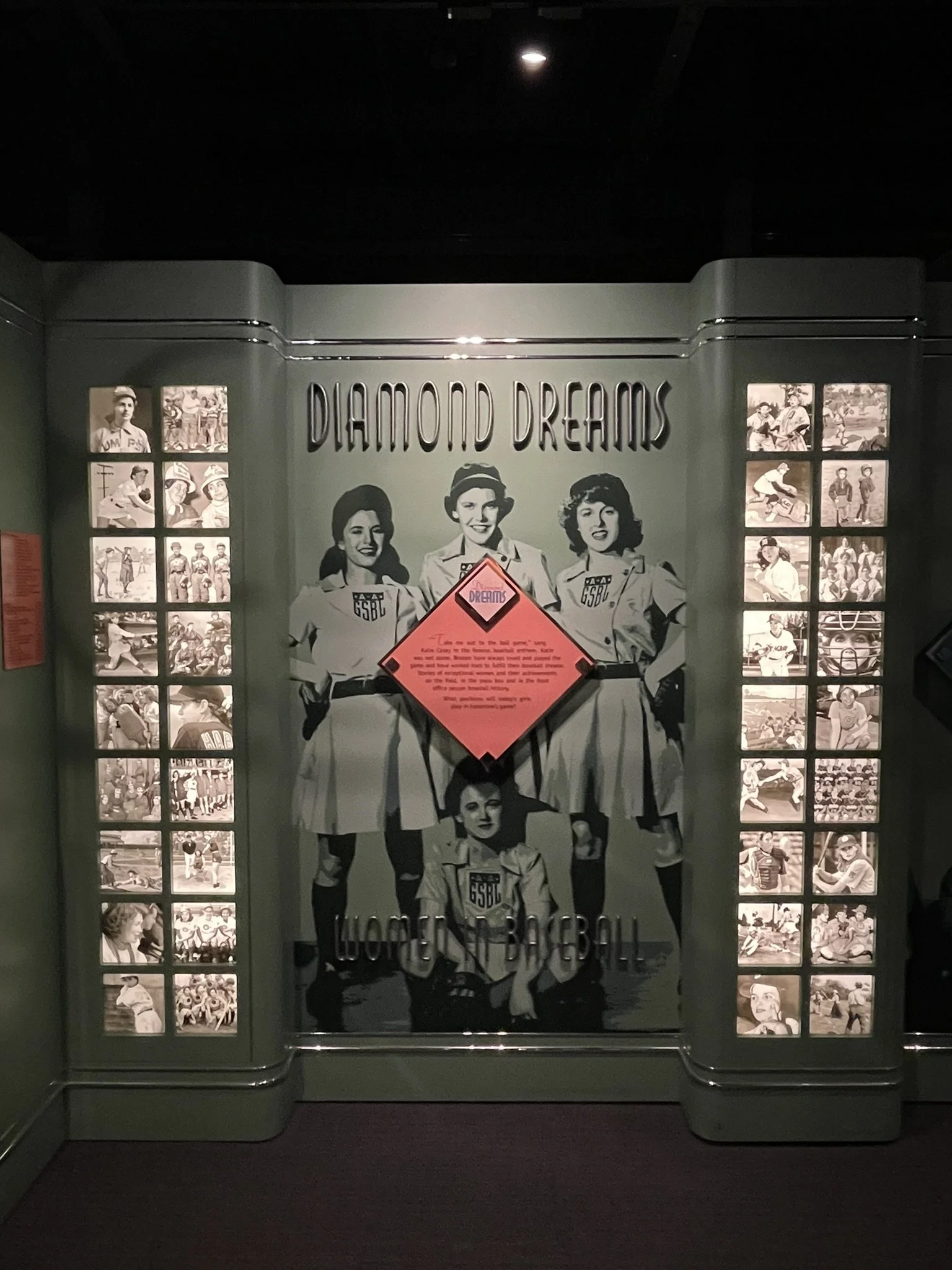
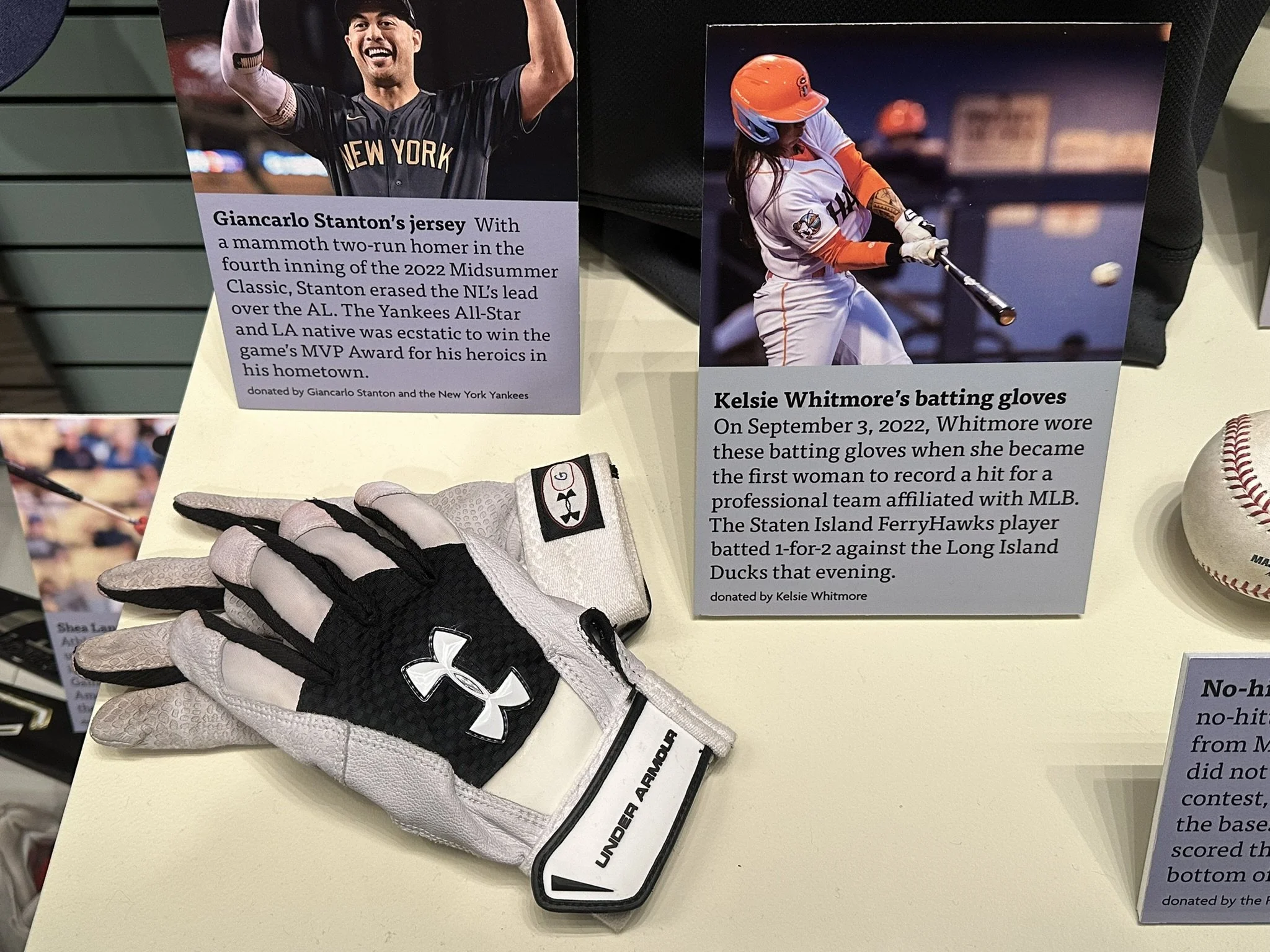
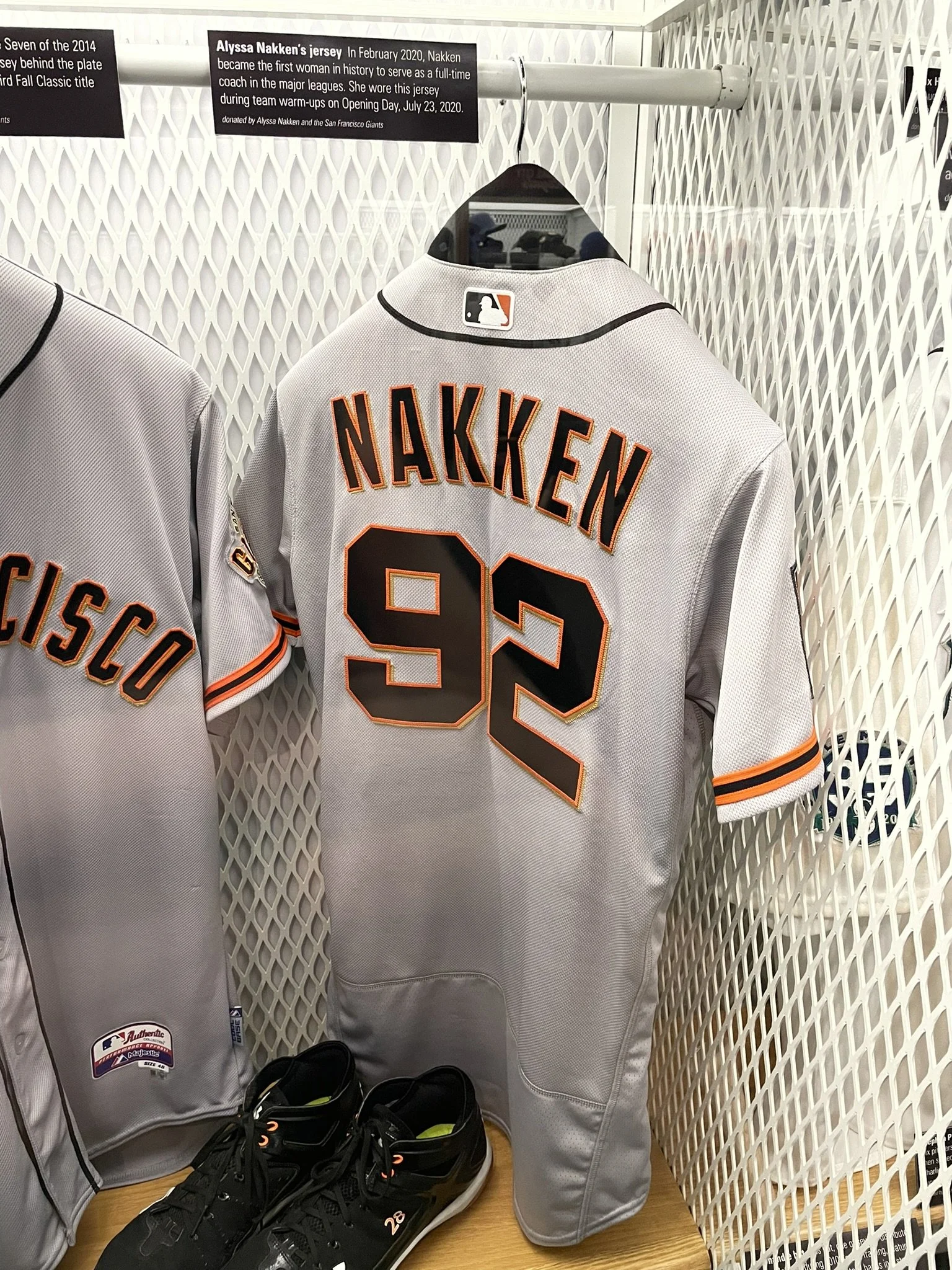
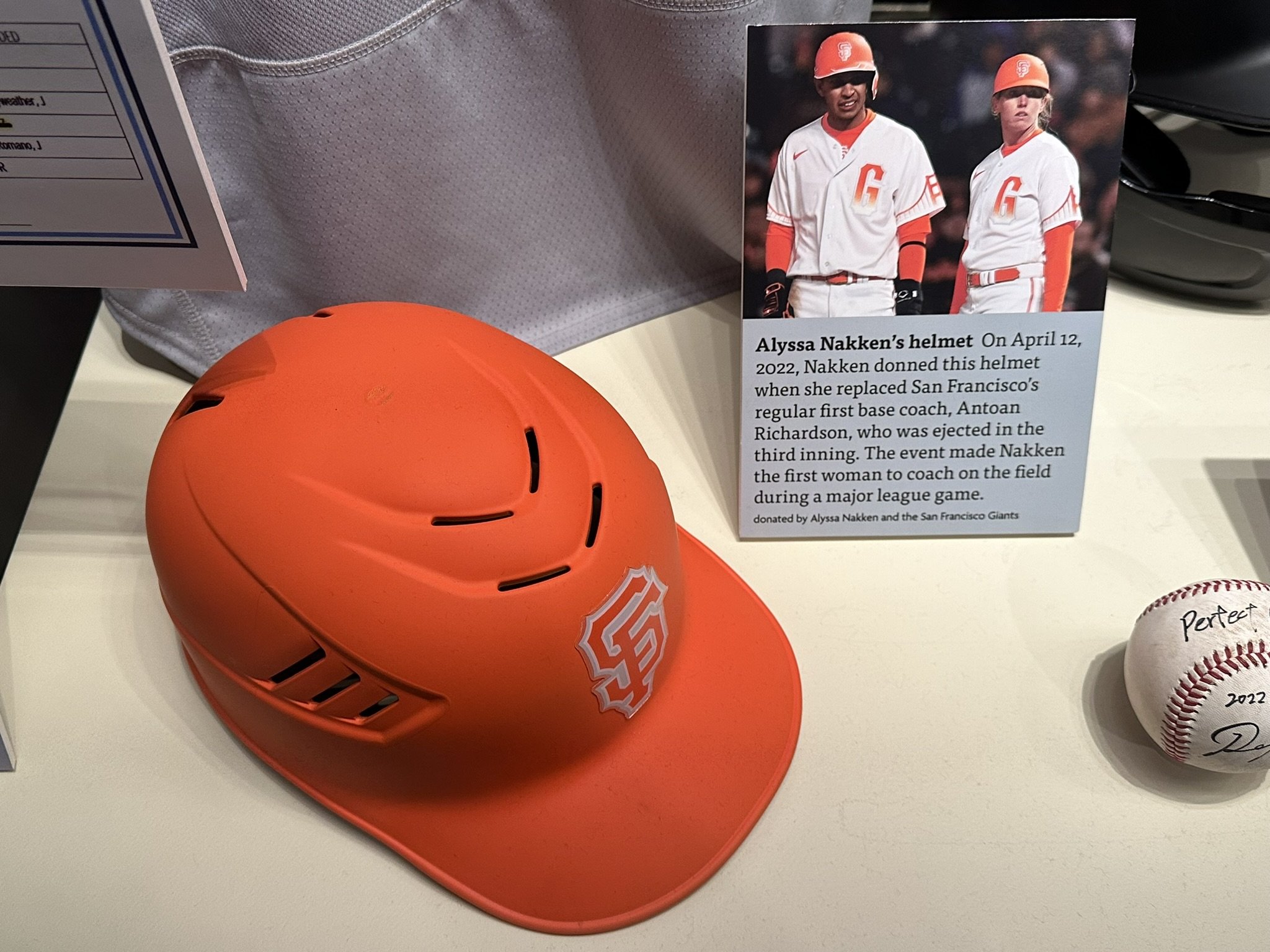
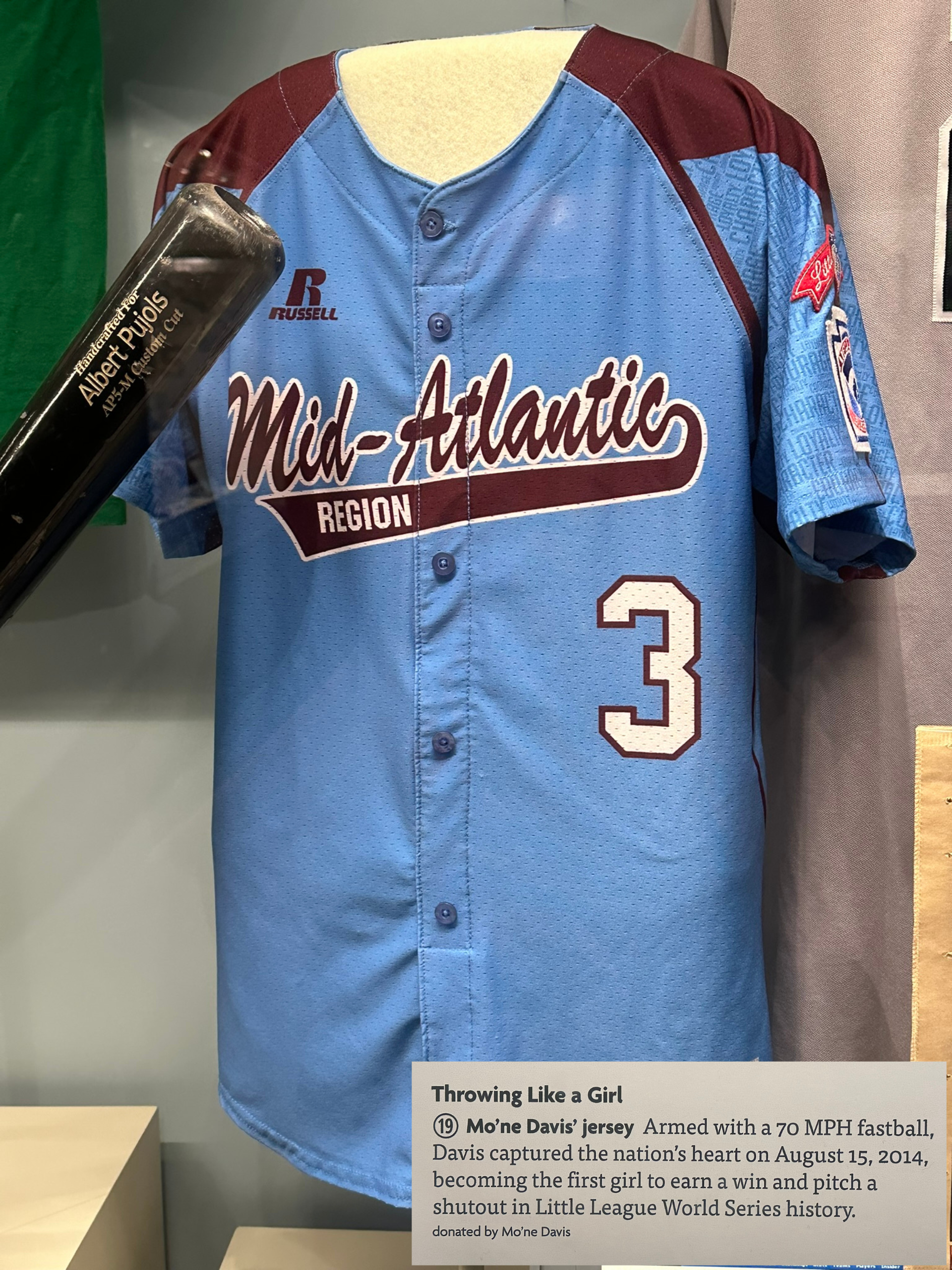
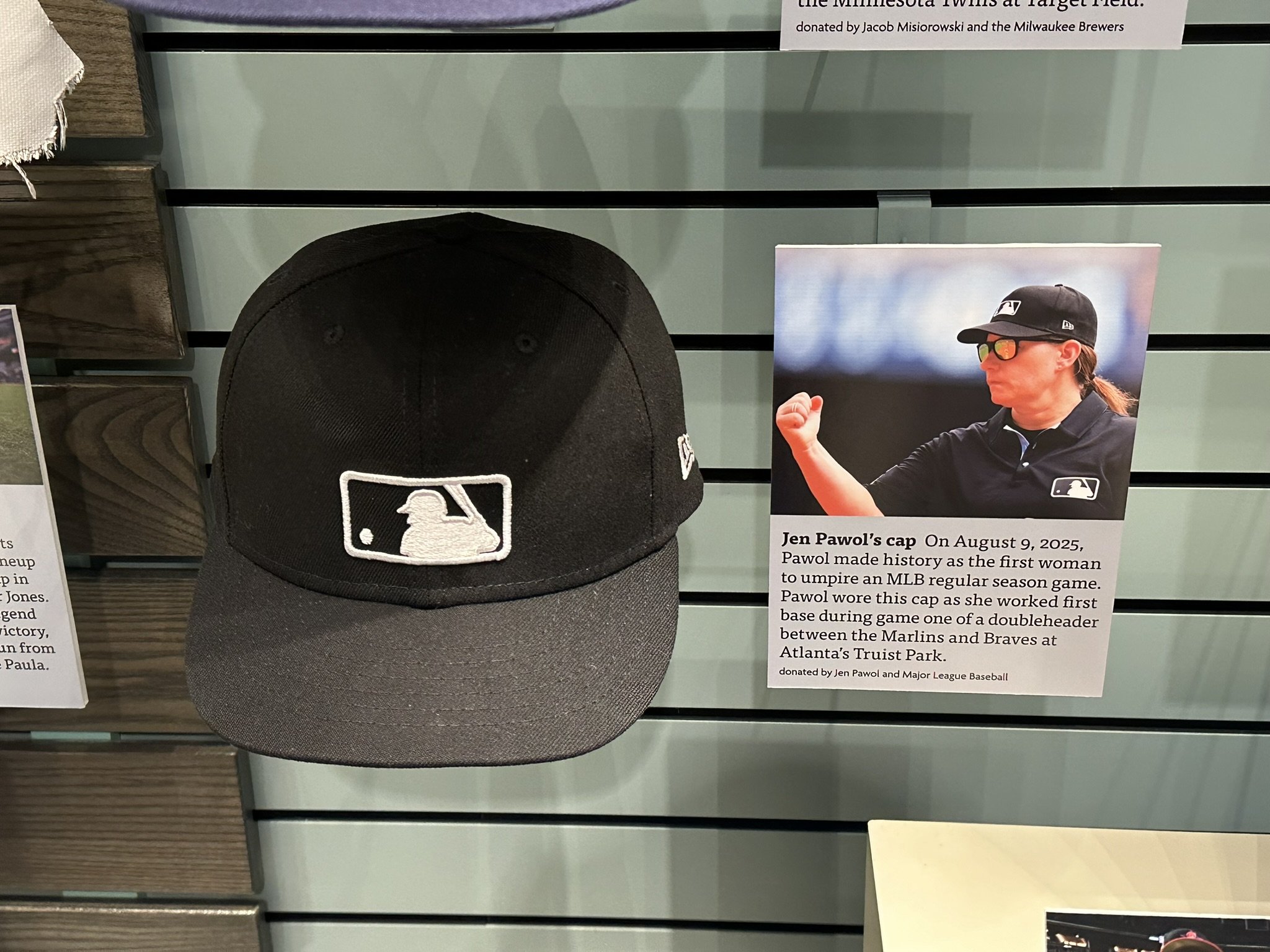
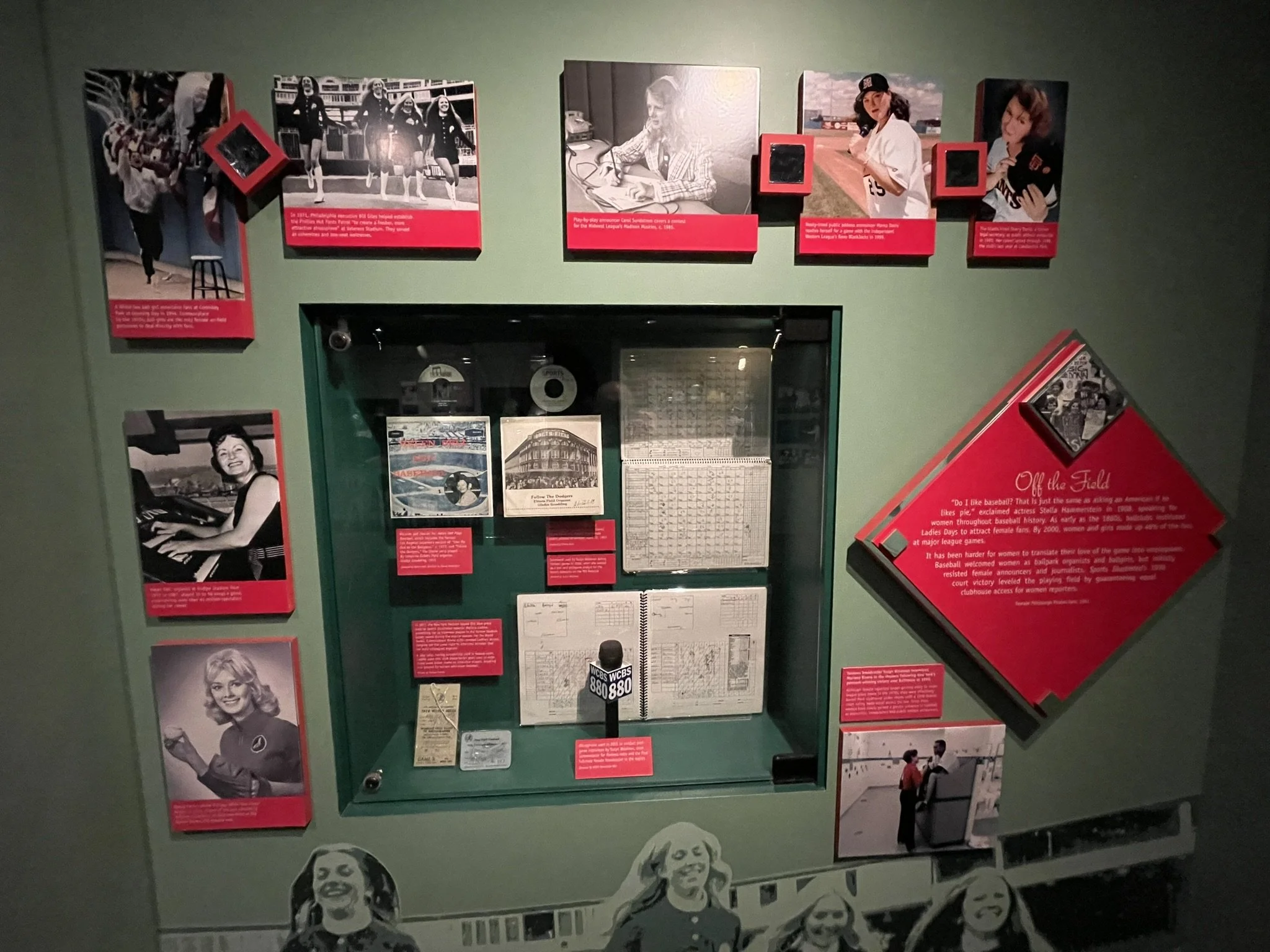
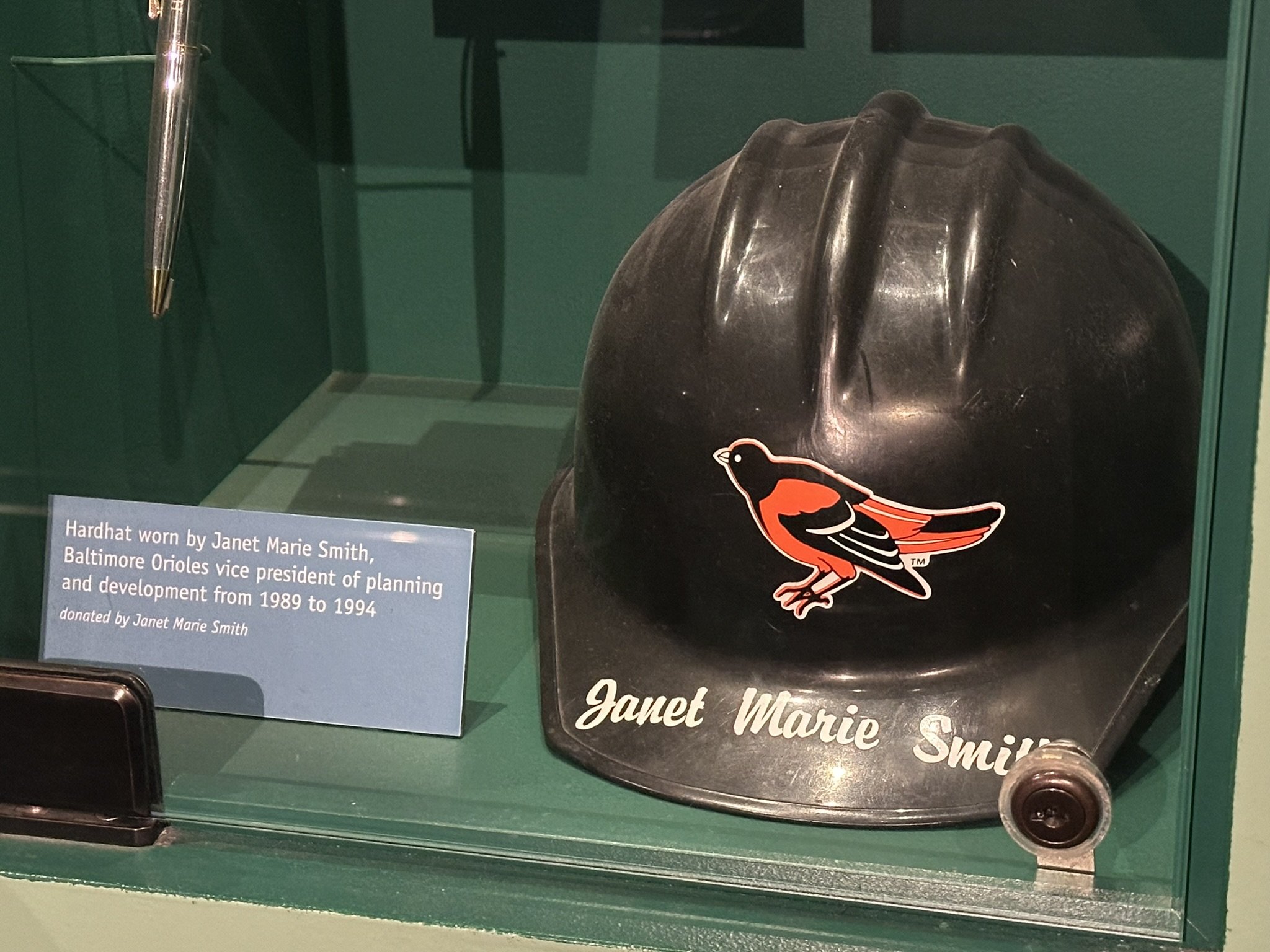
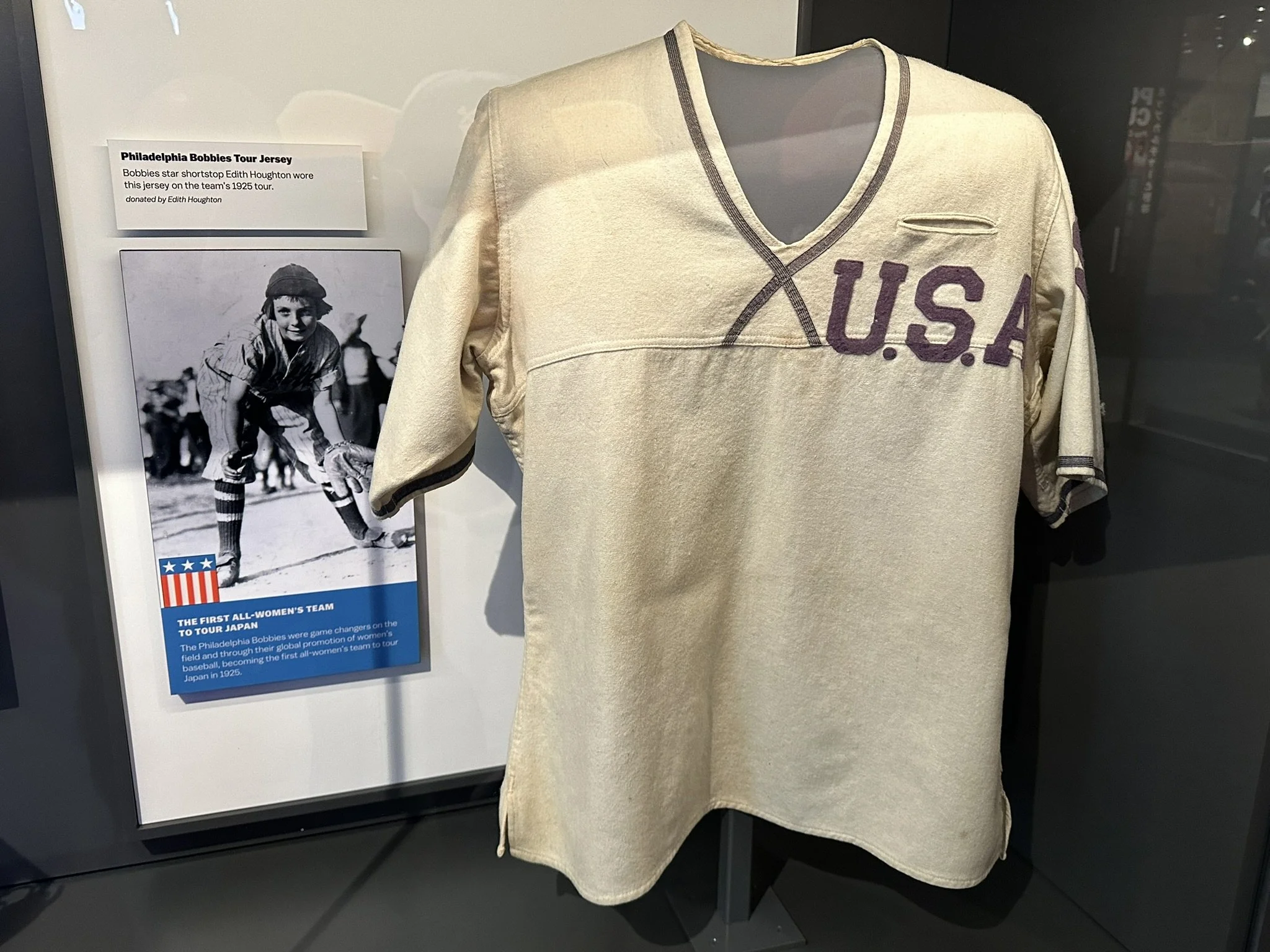
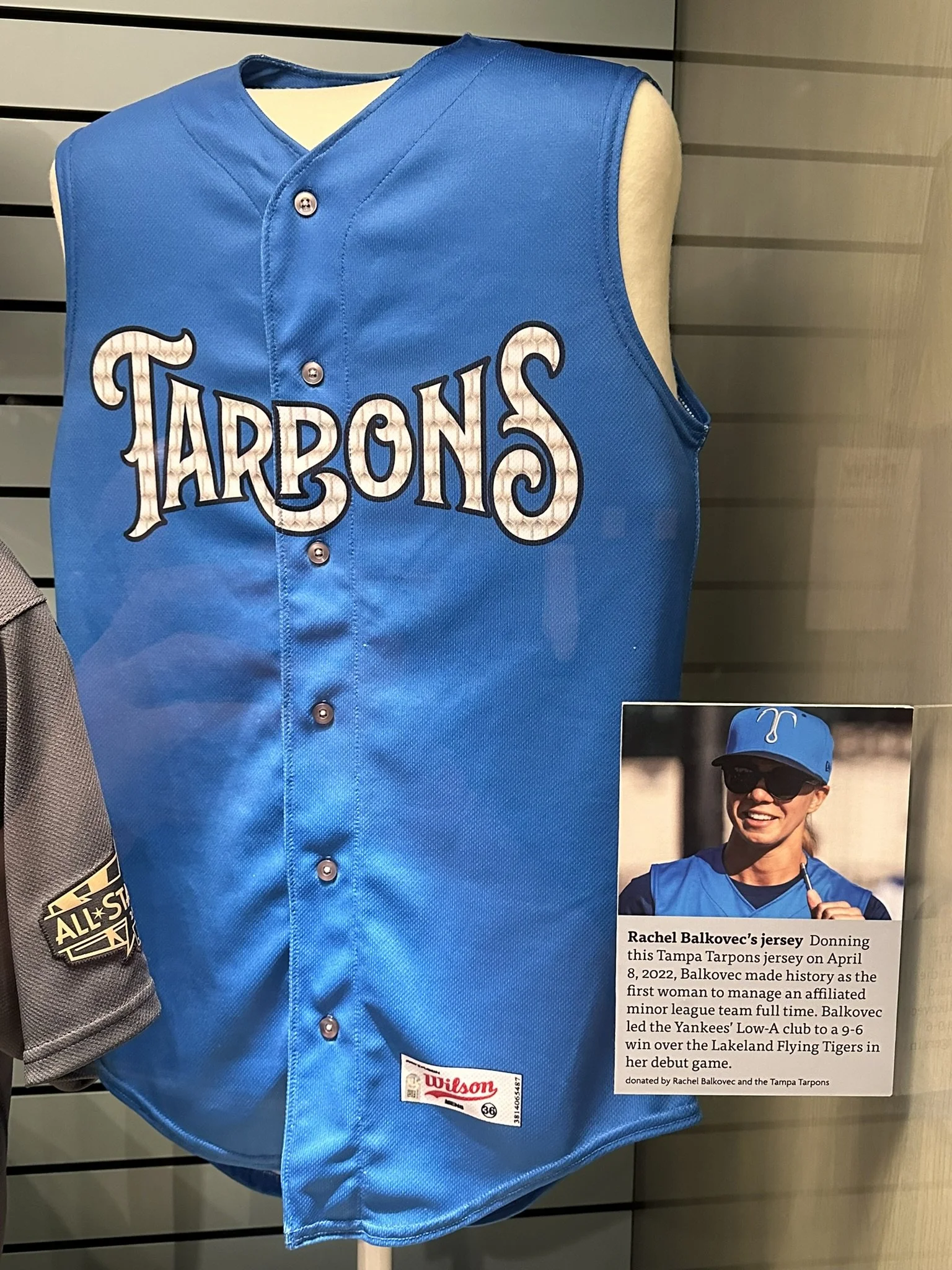
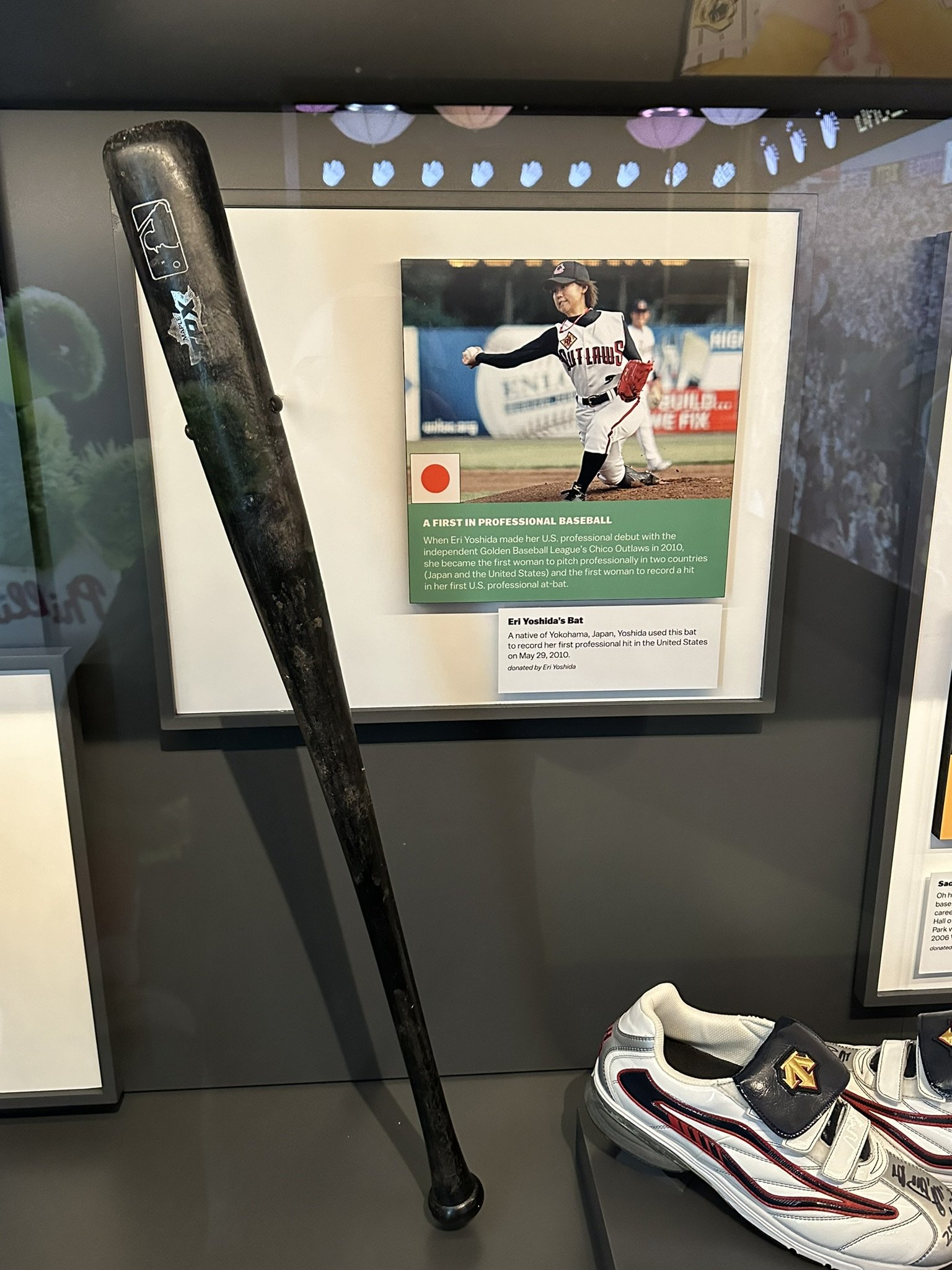
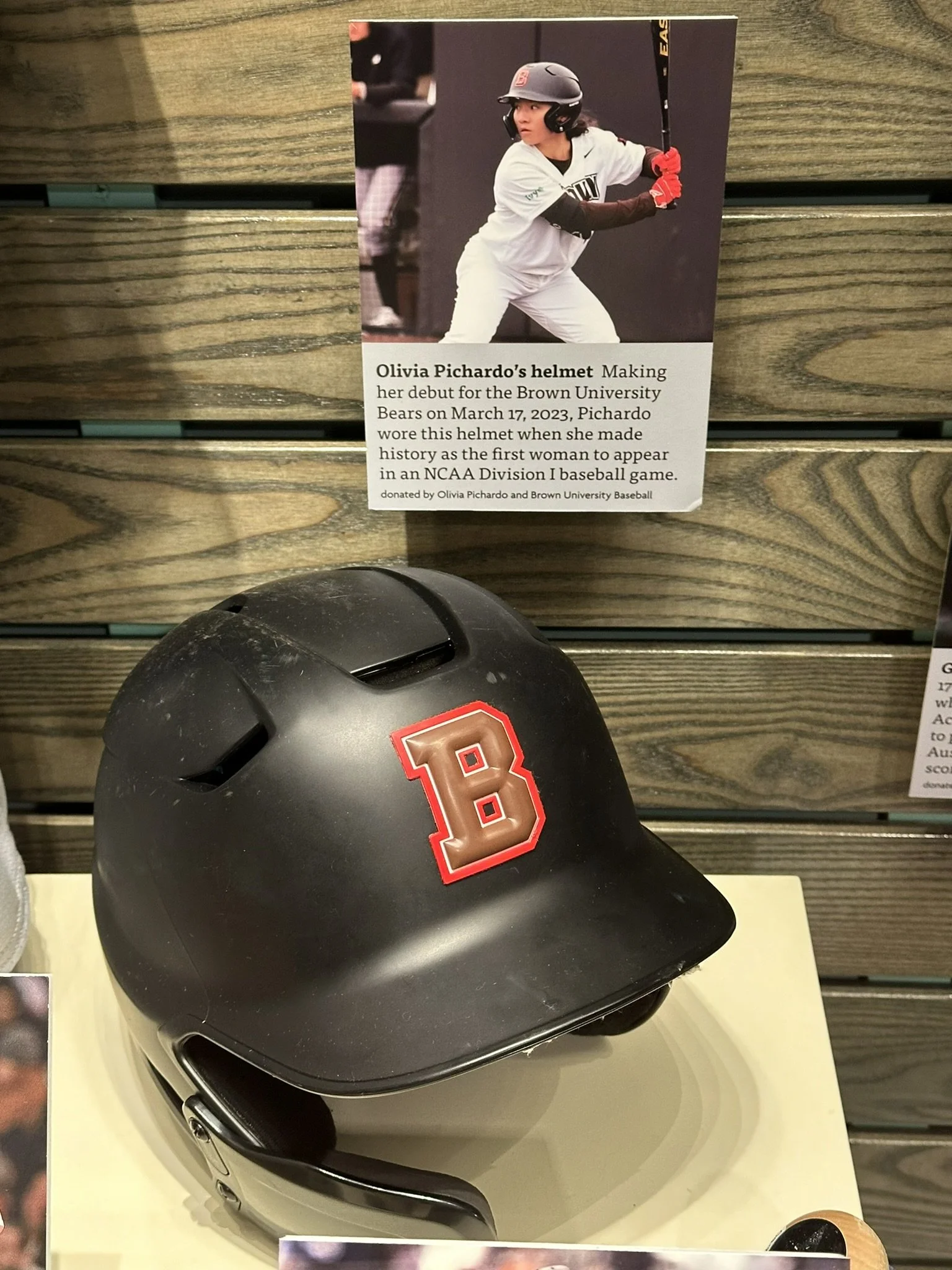
Use the left and right toggle arrows above to navigate through the carousel of images of women’s baseball artifacts at the Hall of Fame.
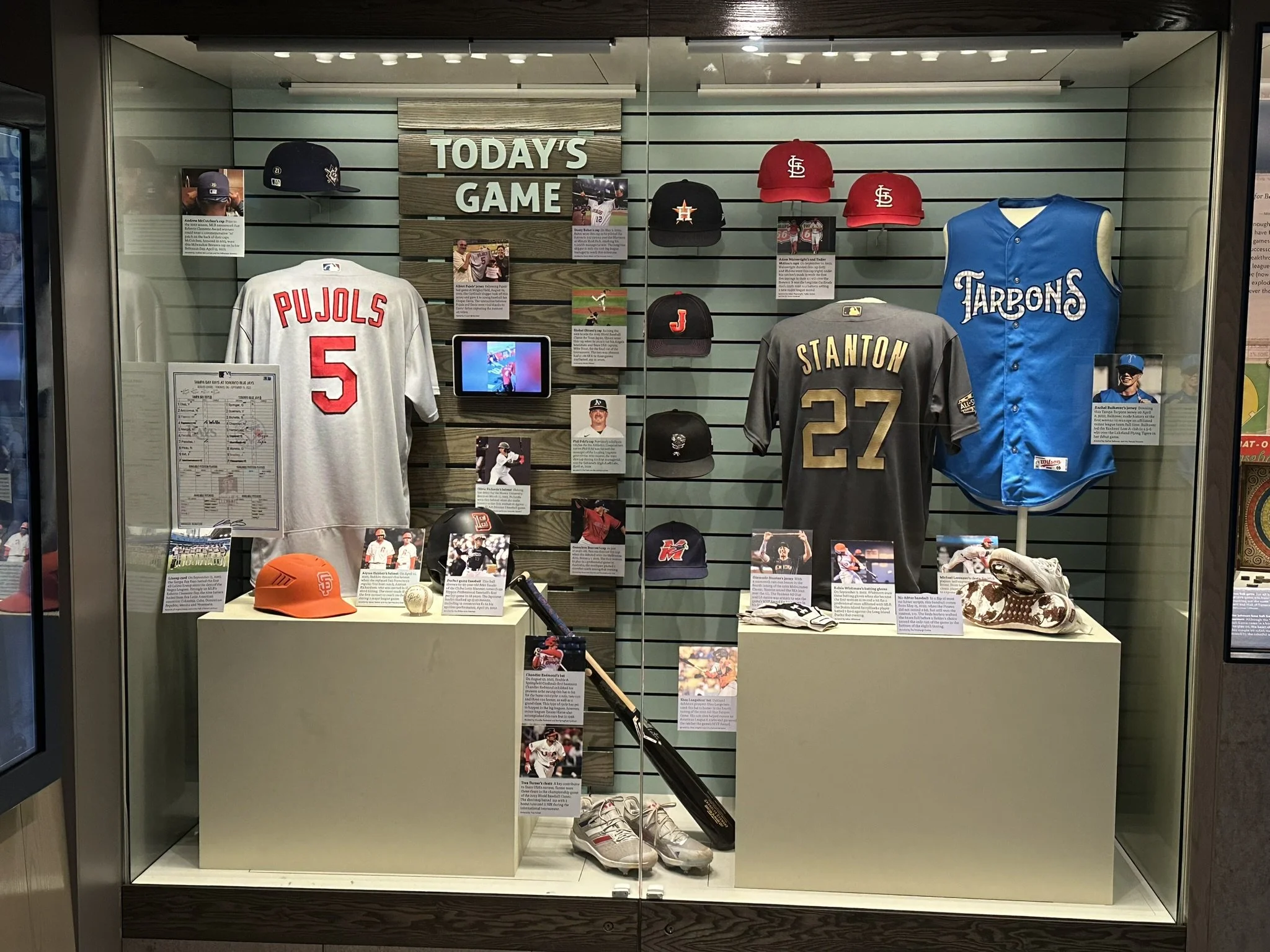
Today’s Game is a constantly-updating display on the third floor in the Hall of Fame. Seen in this version of the display (taken May 27, 2024) are four different items from the carousel above. Can you spot them all?
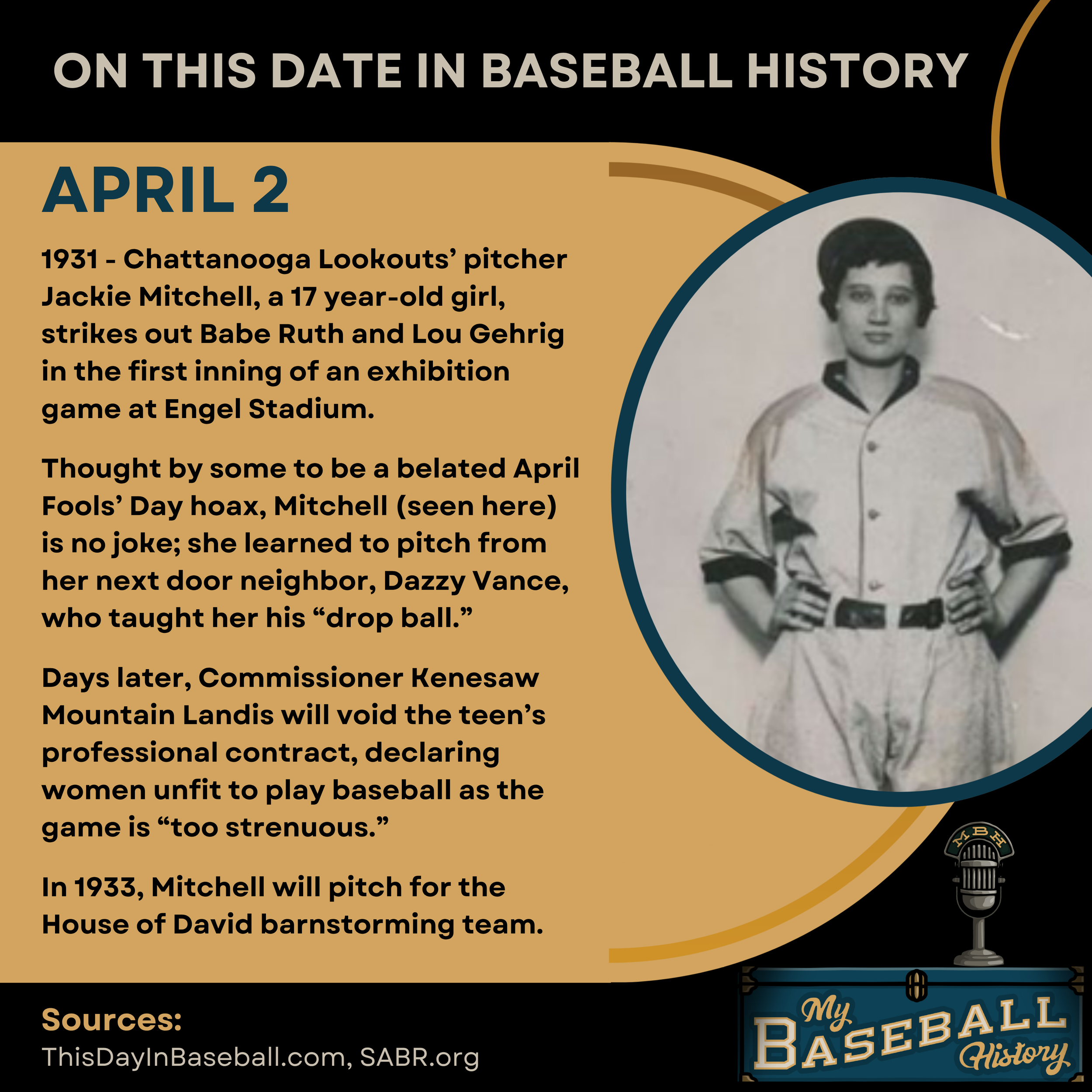
On This Date Posts
You’ve seen a handful of them throughout these liner notes, so you have an idea of the type of content you can expect every day if you aren’t already following My Baseball History on social media.
If you’d like to follow the show on your favorite platform, click one of the following links and it will take you right to our profile.

Join Our Email Newsletter
It’s free, and it’ll give you some bonus content throughout the month that you won’t get from the podcast episodes or by following any of our other social media platforms.
We put out new issues on the second Friday and the fourth Friday of every month. No more, no less.
How Retrosheet Saved Baseball History
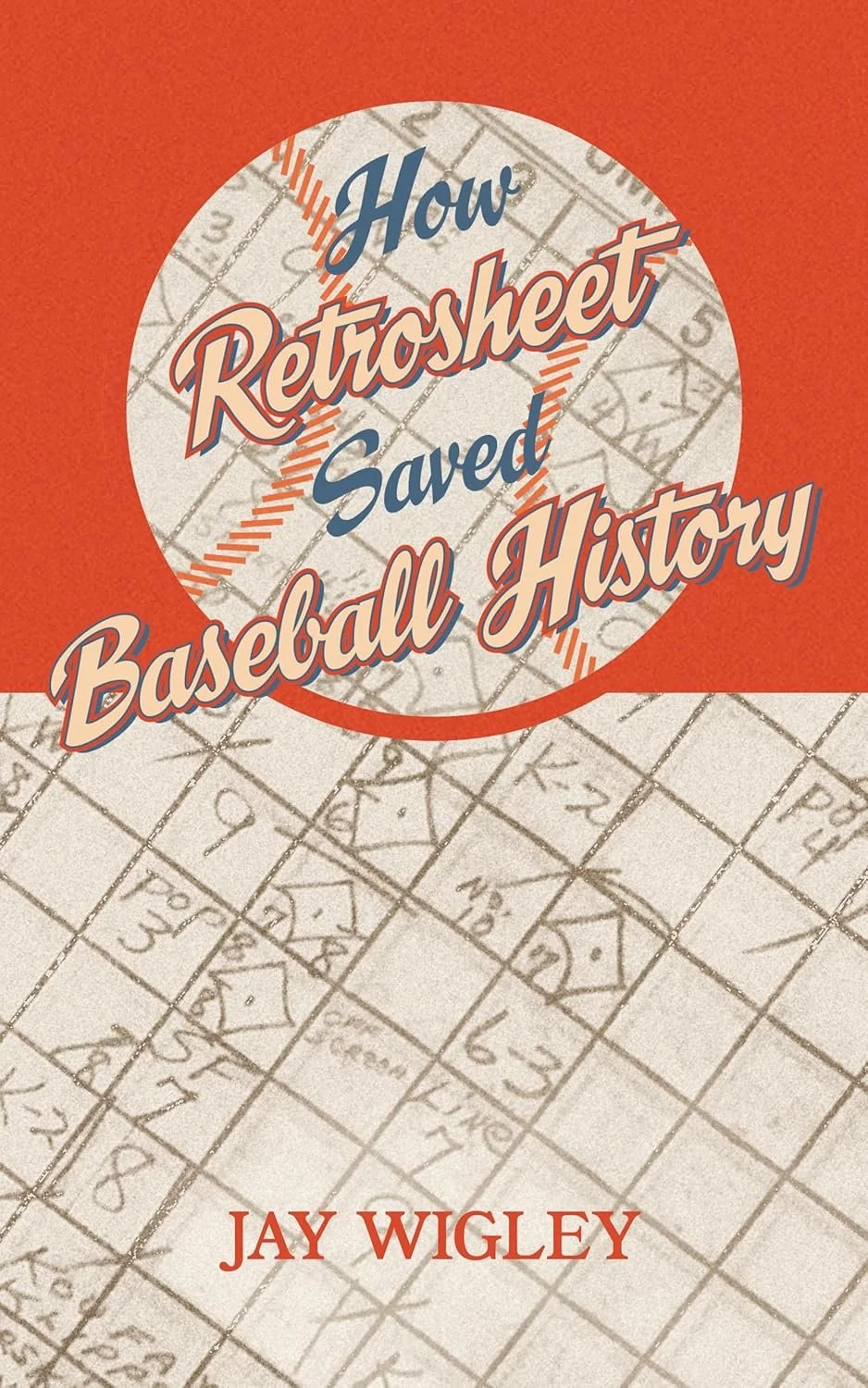
This episode was brought to you by author Jay Wigley and his new book, How Retrosheet Saved Baseball History.
Buy it from Amazon HERE.
Buy it from Barnes & Noble HERE.
Buy it from Bookshop.org HERE.
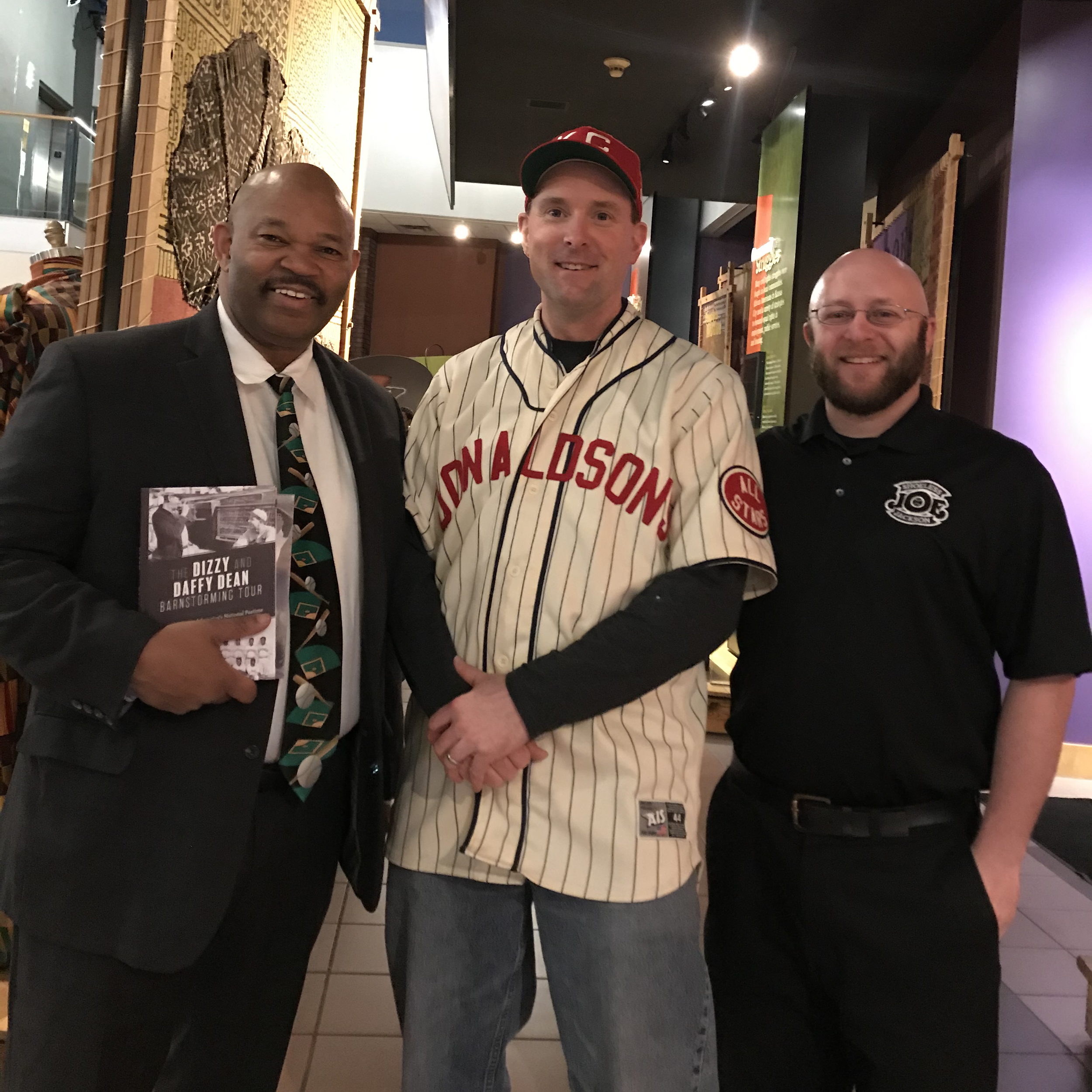
Phil S. Dixon
Phil S. Dixon is an author, public speaker, researcher and historian, focusing on the Negro Leagues for the past 40 years.
He was our guest for Episode 4 of Season 1. You can listen to that episode HERE.
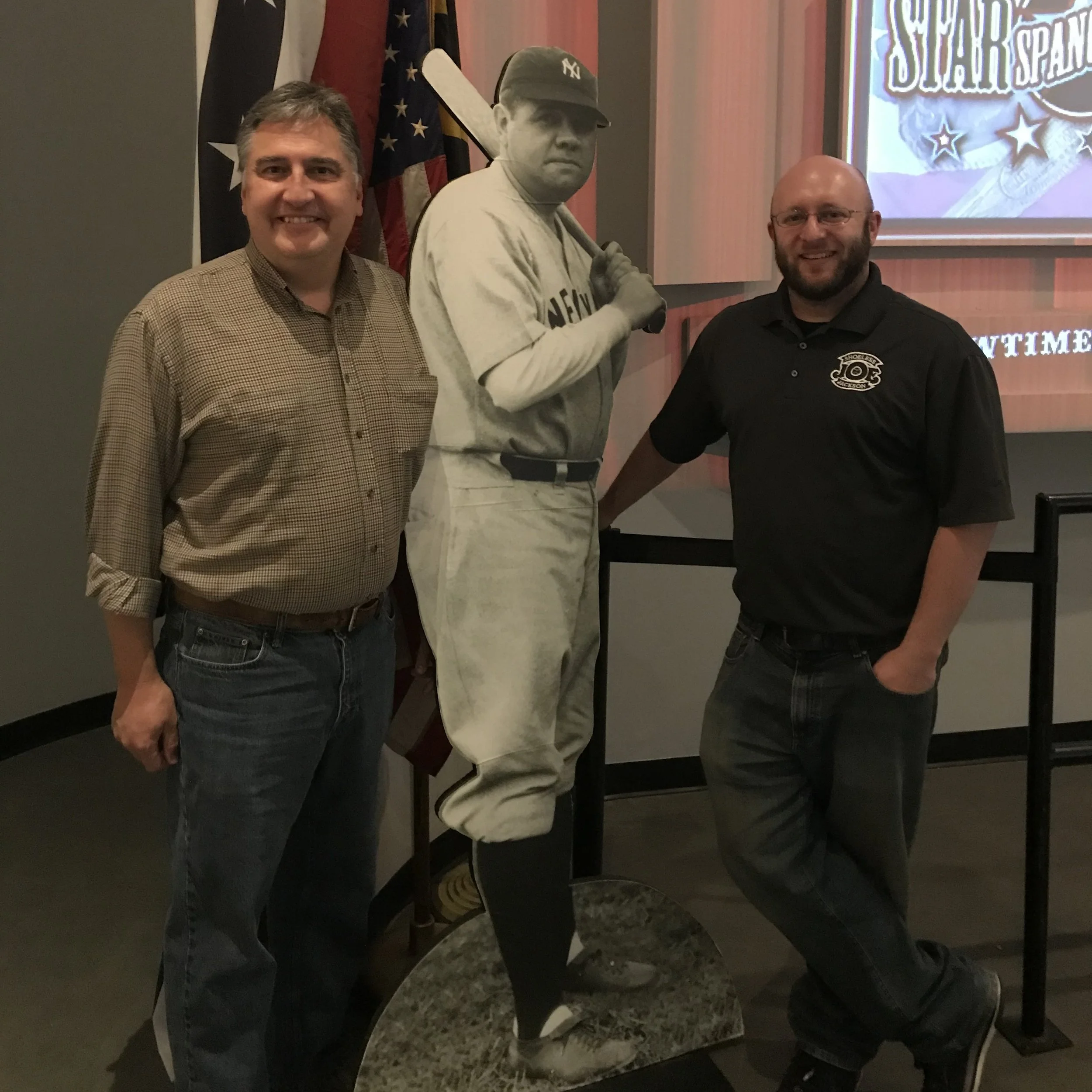
Shawn Herne
Shawn Herne is the Executive Director of the Babe Ruth Birthplace and Museum in Baltimore, Maryland.
He was our guest for Episode 3 of Season 2. You can listen to that episode HERE.
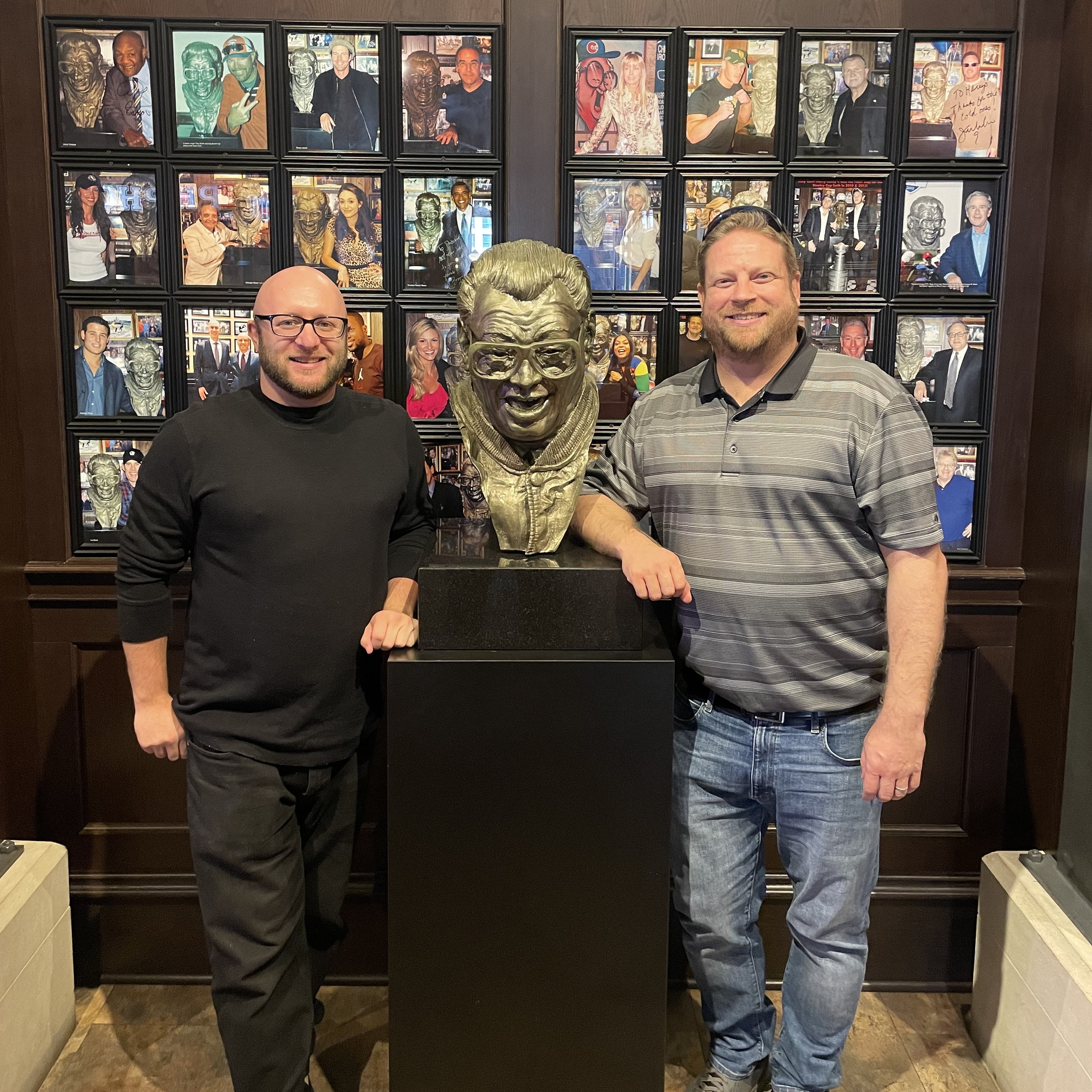
Jacob Pomrenke
Jacob Pomrenke is the Director of Editorial Content at the Society For American Baseball Research, and the chairman of the Black Sox Scandal Research Committee.
He was our guest for Episode 1 of Season 3. You can listen to that episode HERE.
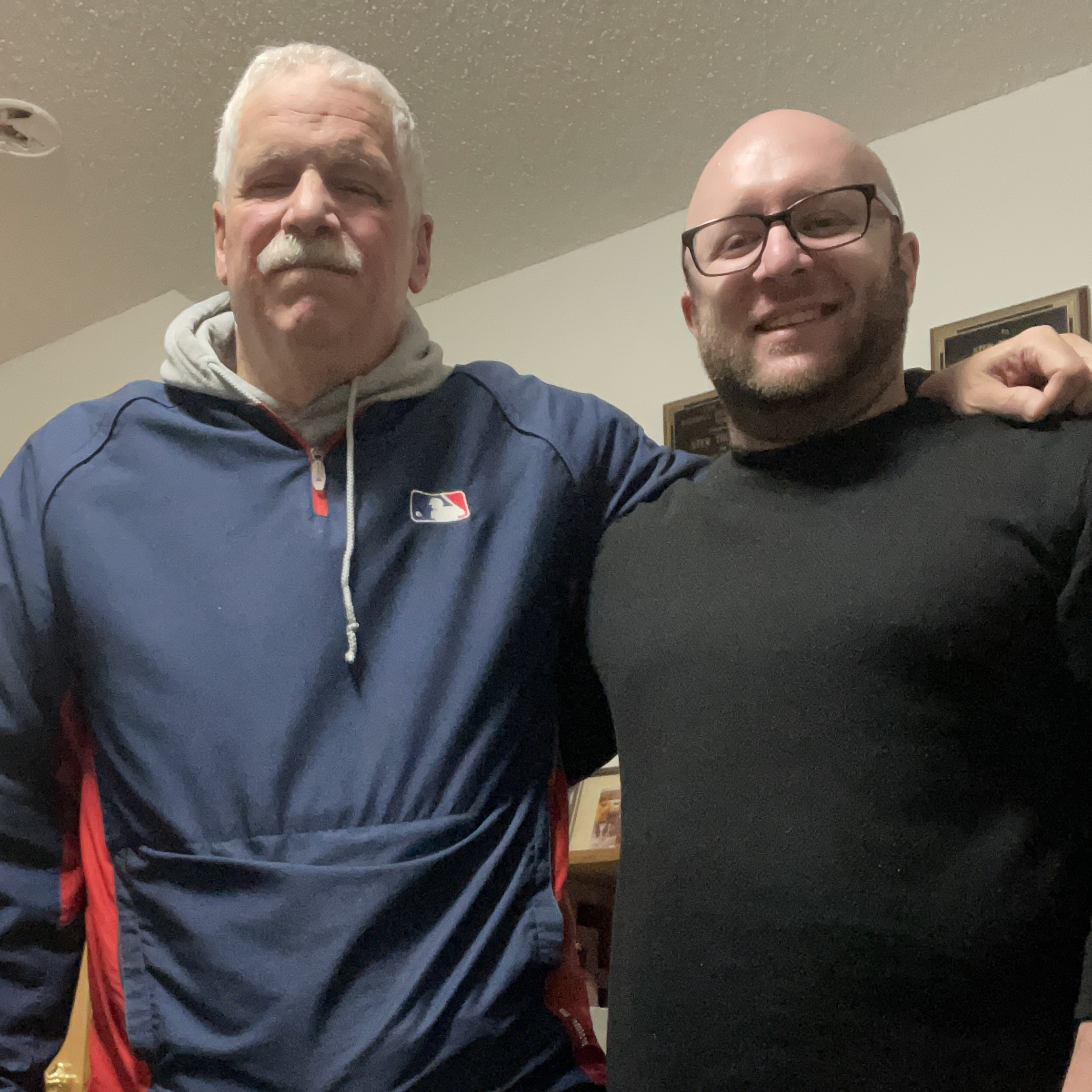
Stew Thornley
Stew Thornley is the official scorer for the Minnesota Twins, and the leading historian of Minnesota sports, including the St. Paul Saints.
He was our guest for Episode 9 of Season 3. You can listen to that episode HERE.
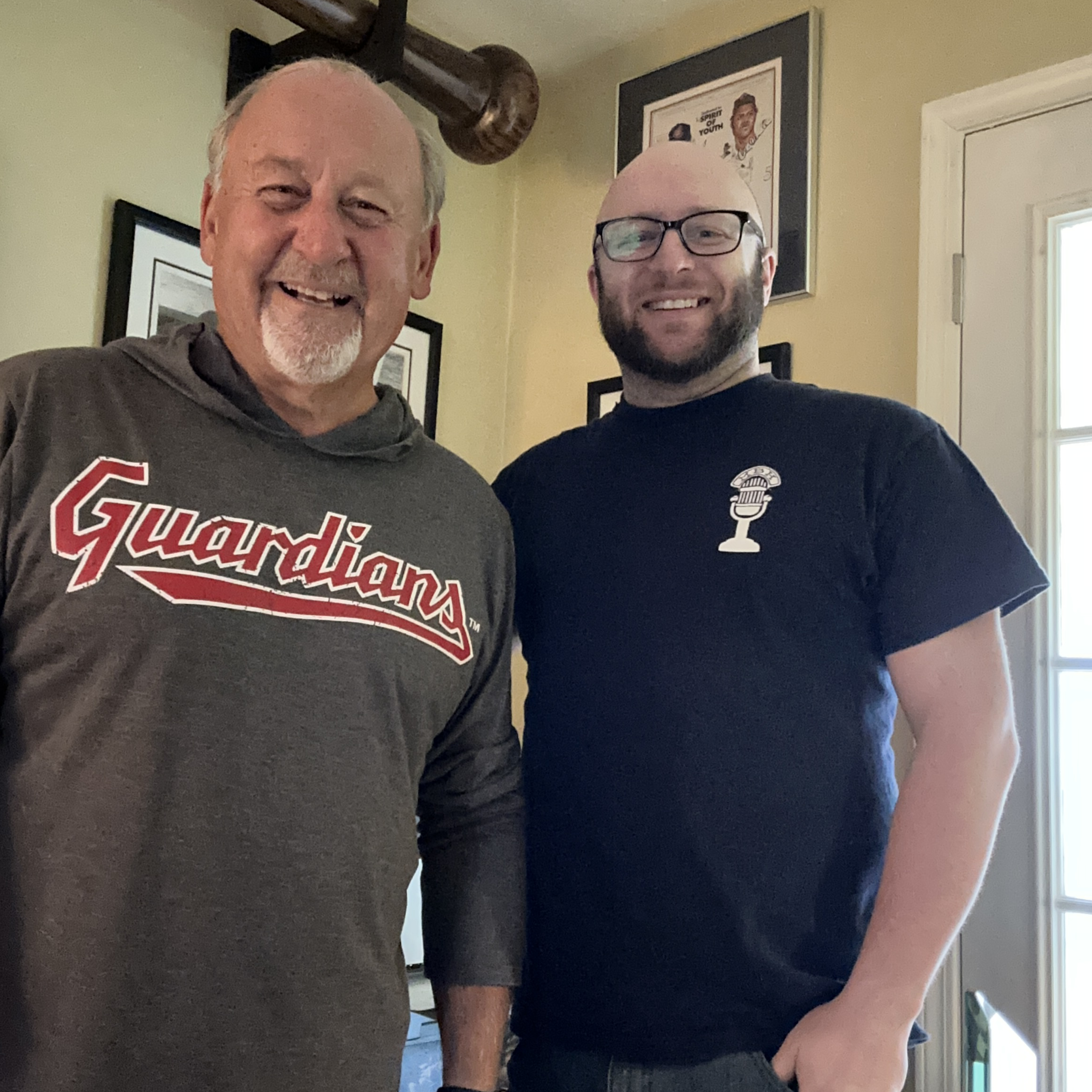
Bob DiBiasio
Bob DiBiasio is the Senior Vice President of Public Affairs for the Cleveland Guardians, and has been a public relations executive with Cleveland for all but one season since 1979.
He was our guest for Episode 8 of Season 4. You can listen to that episode HERE.
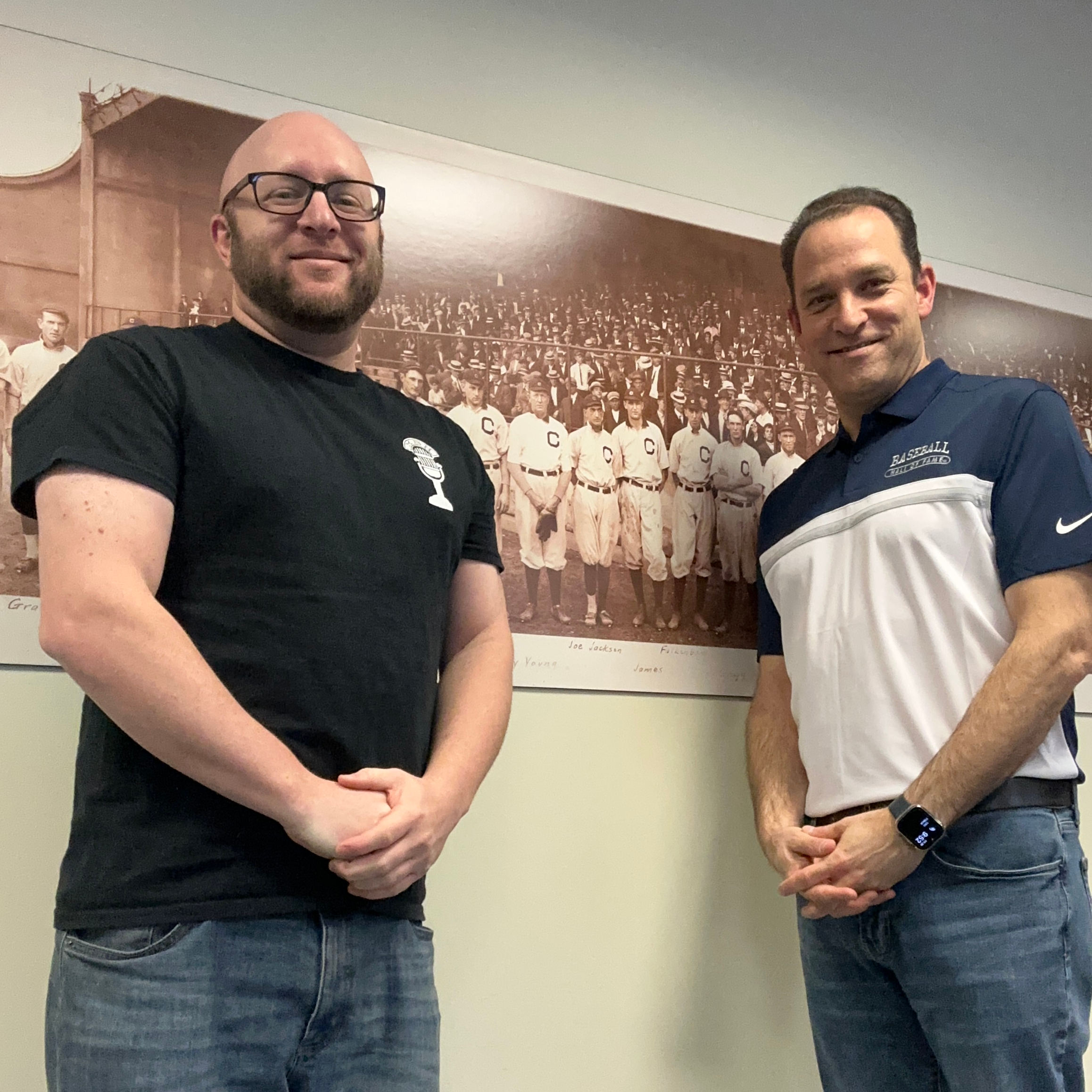
Josh Rawitch
Josh Rawitch is the President of the National Baseball Hall of Fame and Museum in Cooperstown, New York.
He was our guest for Episode 9 of Season 4. You can listen to that episode HERE.
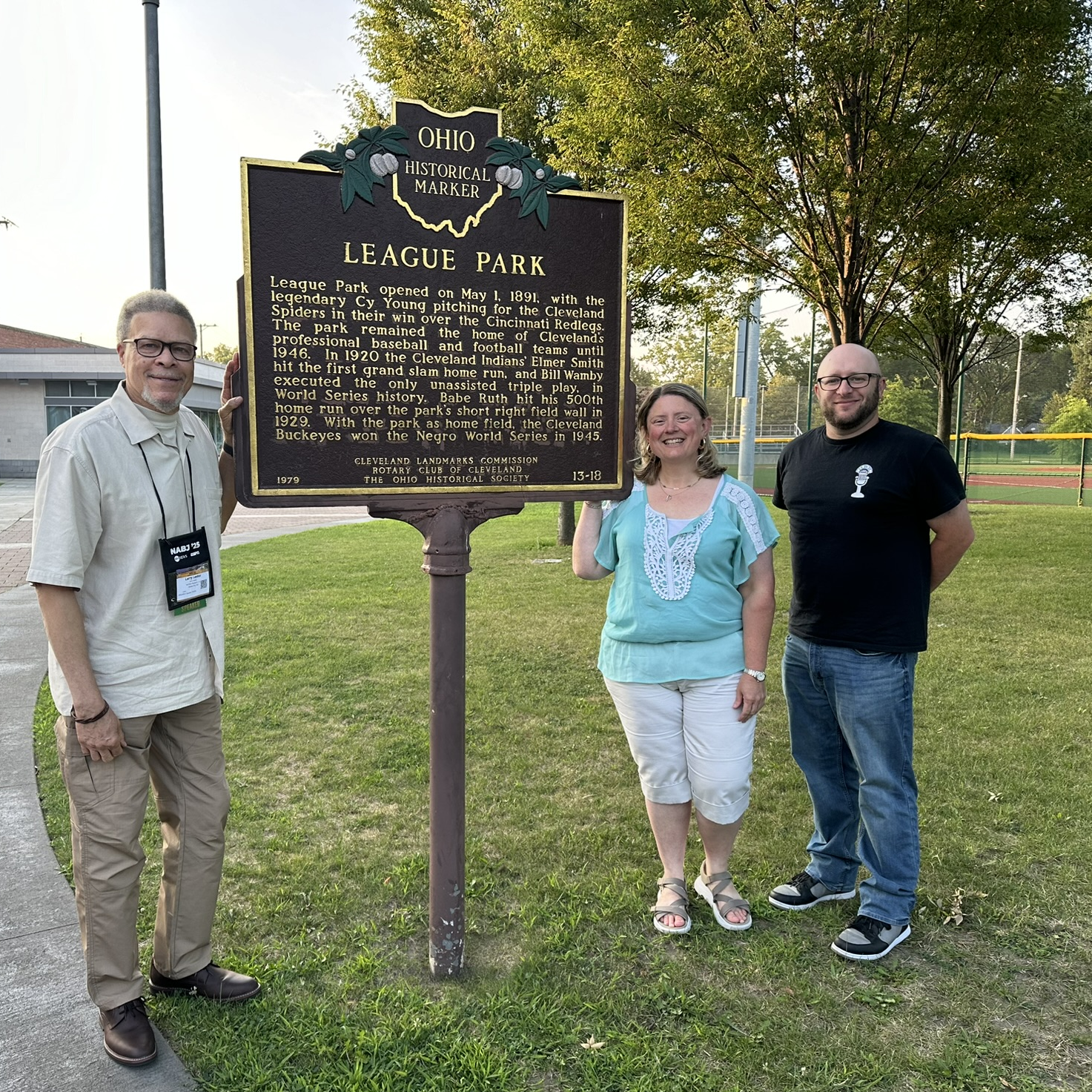
Larry Lester & Stephanie Liscio
Larry Lester is one of the world’s leading authorities on the Negro Leagues, and is one of the five original founders of the NLBM. He is a published author, public speaker, researcher, and historian.
He was our guest, along with fellow Negro Leagues researcher Stephanie Liscio, for Episode 1 of Season 5. You can listen to that episode HERE.
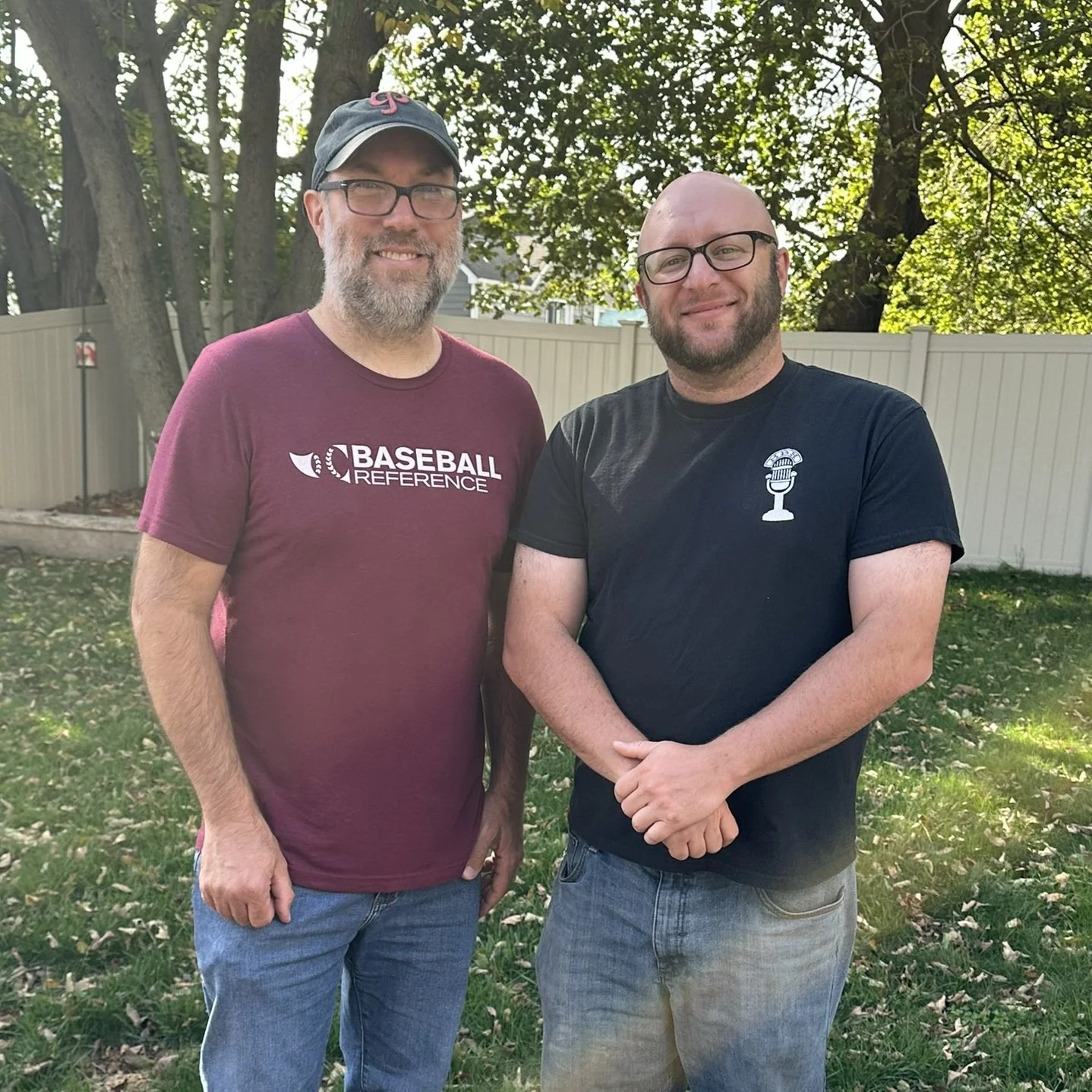
Adam Darowski
Adam Darowski is the Executive Director of Design at Sports Reference, and a Negro Leagues and Latin American baseball historian, focused on the intersection of statistical analysis and historical preservation.
He was our guest for Episode 6 of Season 5. You can listen to that episode HERE.
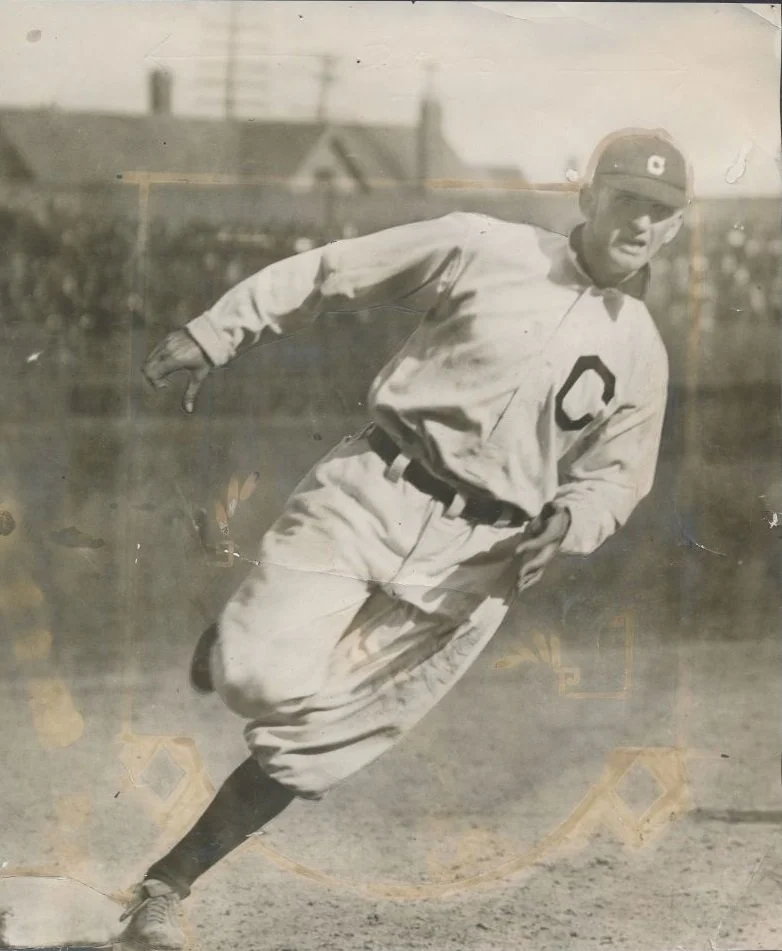
Retrosheet Research
On August 11, 1912, in a game between the Cleveland Naps and the New York Highlanders, Shoeless Joe Jackson became the sixth major leaguer — and the first in the American League — to steal home twice in one game.
In fact, Jackson had four steals that day. In the bottom of the 1st inning, after singling and eventually advancing to third base, Jackson stole home on an attempted double steal which saw teammate Art Griggs safely return to first base.
In the bottom of the 7th inning, after singling to center, Jackson stole second, then stole third. He and Griggs again attempted a double steal, and this time both legs were successful, with Griggs taking second base, and Jackson swiping home for the second time that day. The Naps would win 8-3.
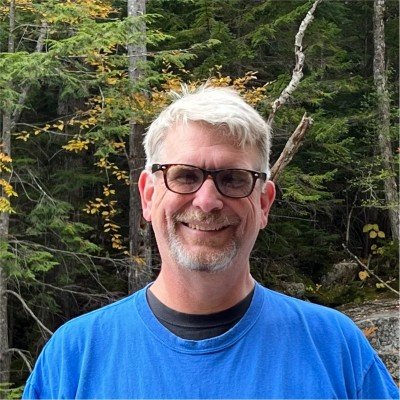
Tom Thress
Retrosheet is an all-volunteer organization which is always looking for more volunteers. If you would like to help with any of this work, you can reach out to Retrosheet's President, Tom Thress, by emailing him HERE.
Retrosheet.org
Another way to support the incredible work being done at Retrosheet is by making a donation, which you can do on their website by clicking HERE.
Remember, Retrosheet is funded entirely by donations, so if you can spare it, every bit helps.
If you would like to make a donation, the details of how to do so can be found HERE.
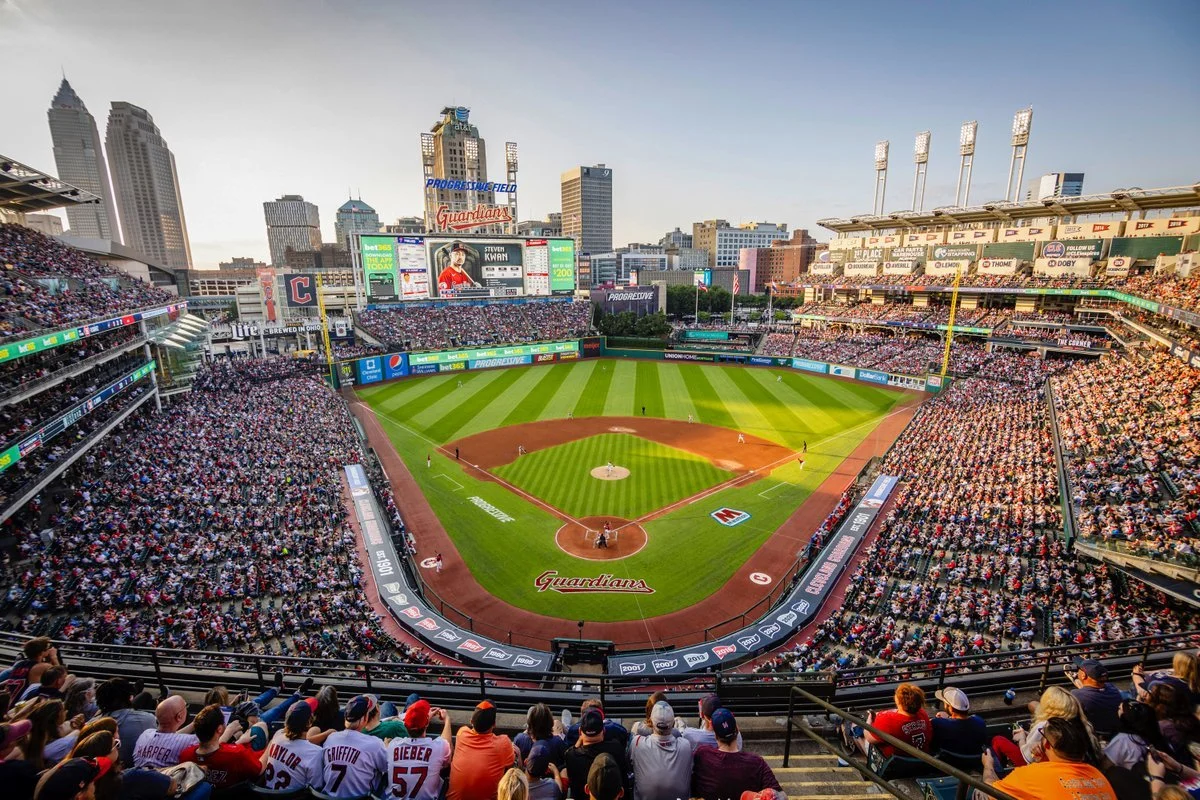
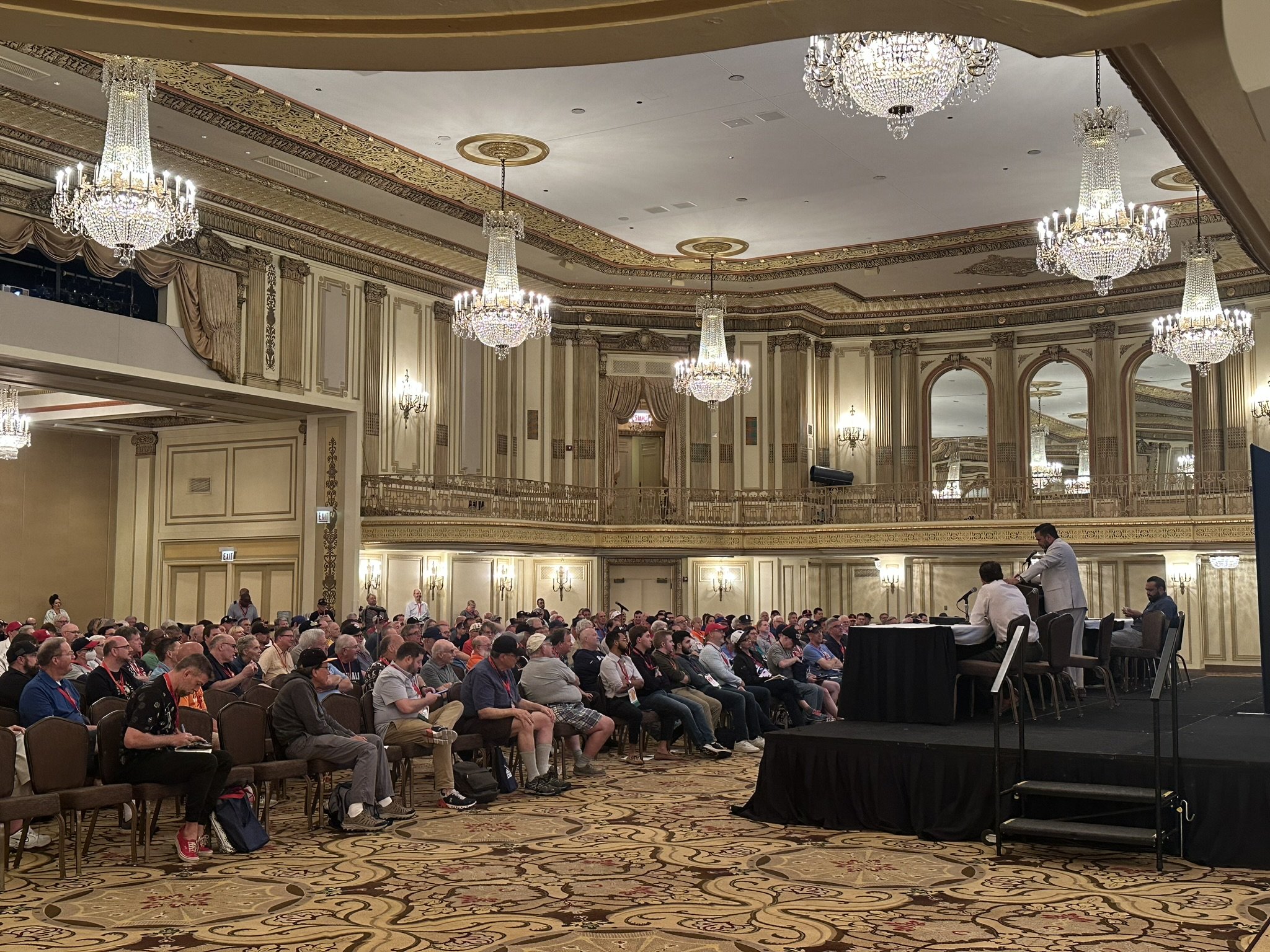
The Baseball Community May Feel Huge
If you go to a game, there might be tens of thousands of fans there.
SABR Conventions
Or if you go to the SABR convention in the summer, there will be several hundred.
(P.S. This summer, from July 29 through August 2, the convention is in Cleveland, and you should come because it’s going to be awesome and I will be there - if you consider that a bonus. If you haven’t registered for it yet, you can [and should] do that HERE.)
Six Degrees of Separation
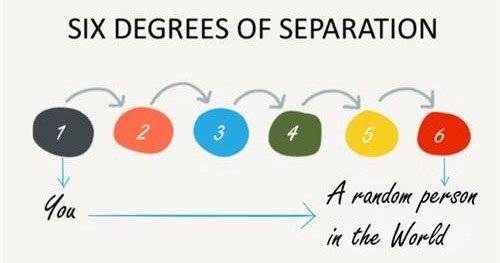
But, no matter how big the baseball community may feel, it’s like the six degrees of separation thing, where you’re really never more than a phone call or two away from being directly connected to the right person for whatever you’re trying to research.

See? Look how easy that was for me to get to Michael Jordan.
Sample Three Full Chapters… Free!
Right now, if you click HERE to go to Jay’s website, you can read three sample chapters, completely free.
Later this baseball season, the website will have additional materials not included in the book that you’ll want to see, too, so bookmark it and keep checking back, even after you buy a physical copy from one of the following places:
Buy it from Amazon HERE.
Buy it from Barnes & Noble HERE.
Buy it from Bookshop.org HERE.
Support My Baseball History
If you don’t have PayPal and want to send a donation through Venmo, Zelle, Cash App, or any other platform, email me at shoelesspodcast@gmail.com and I’ll send you directions for whichever method you prefer.
We appreciate you being here.