
0508 - Robert K. Fitts, part 1
Robert K. Fitts is an award-winning author and researcher whose focus is the history of baseball in Japan and Japanese baseball cards. During our conversation, he referenced a handful of things and people upon which you may want to do more research. Consider this page to be your “liner notes” for the episode so you can follow along.
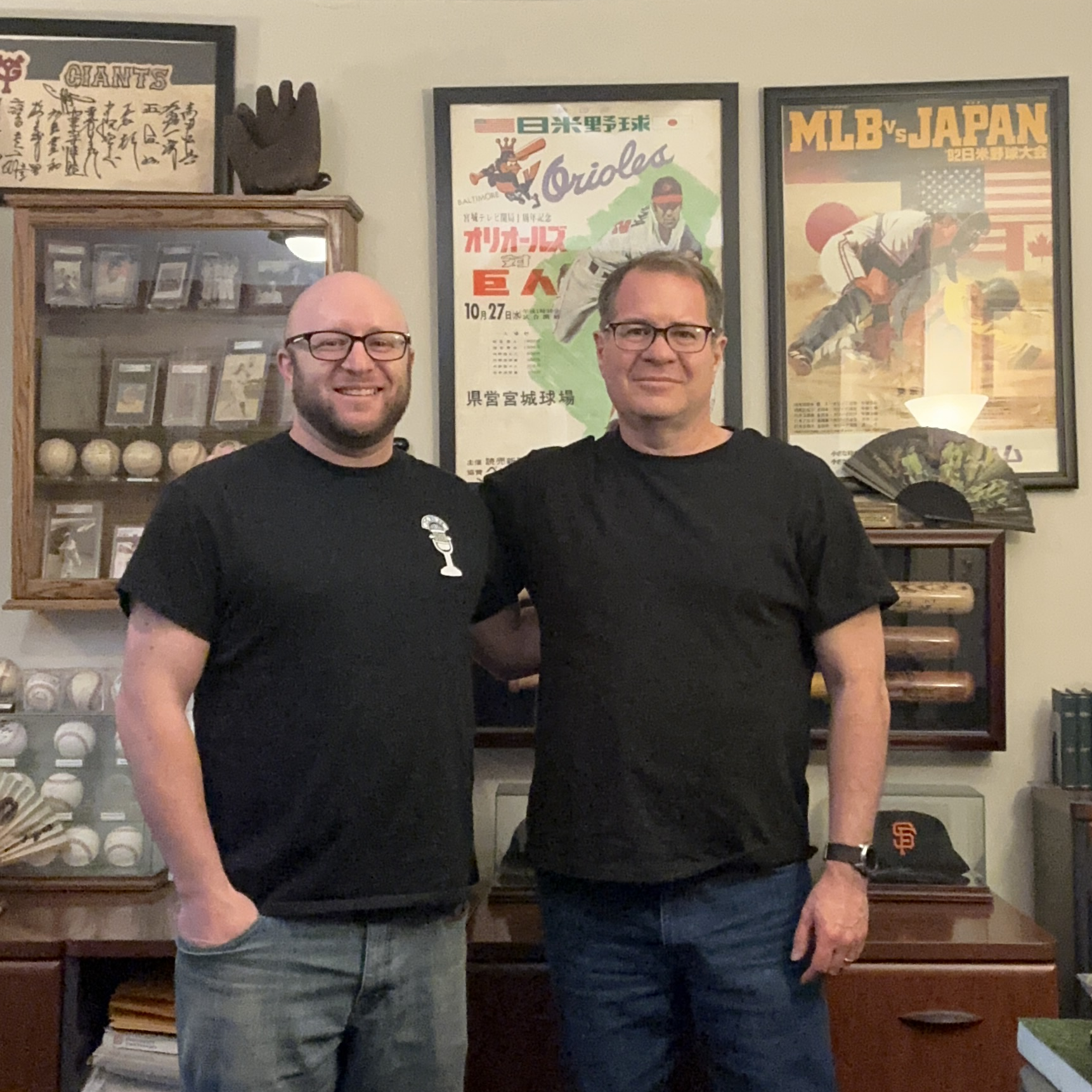
Me and Robert K. Fitts after recording our interview in his home in New York
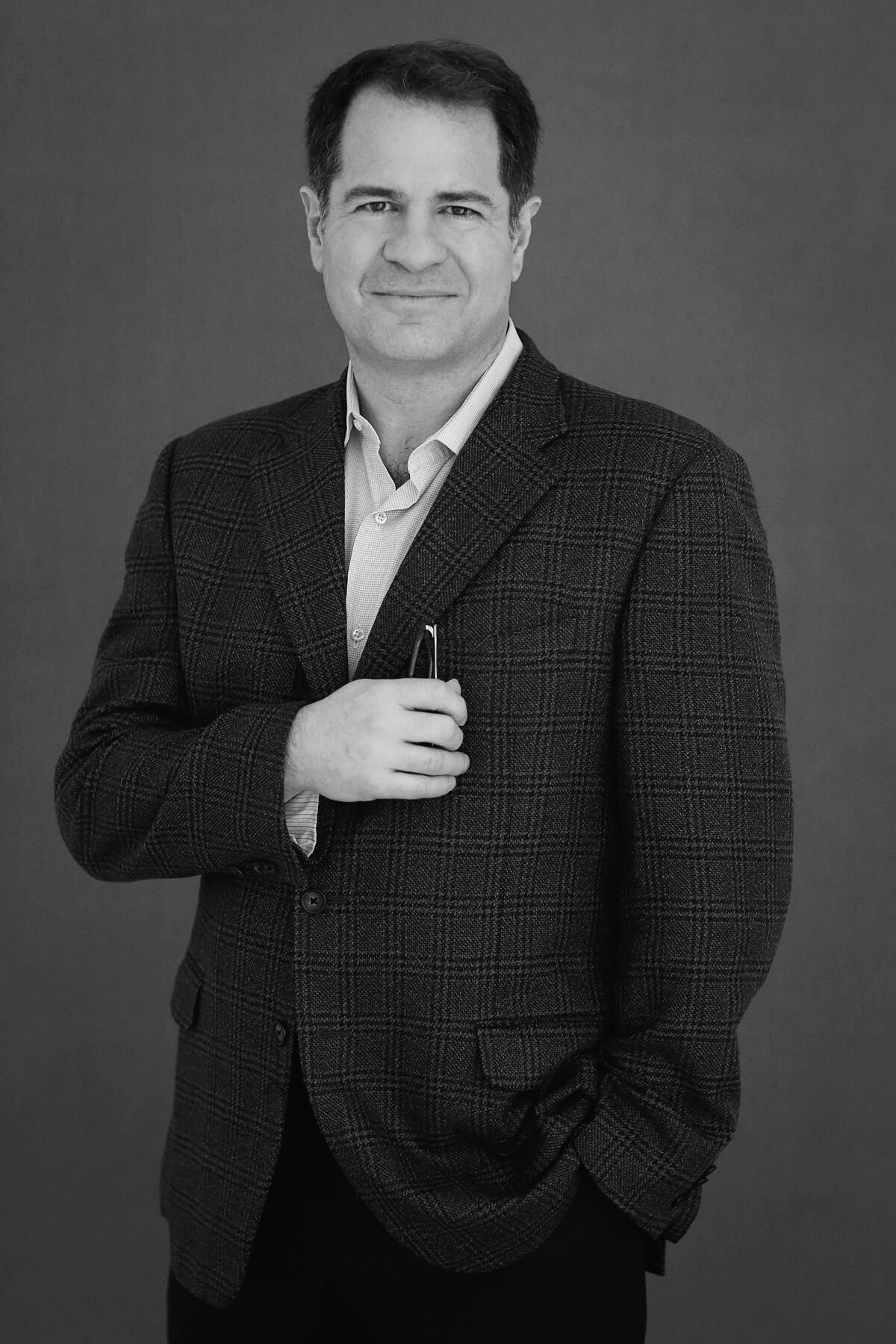
Robert K. Fitts
A former archaeologist with a Ph.D. from Brown University, Rob left academics behind to follow his passion - Japanese Baseball. While living in Tokyo in 1993 and 94, Rob began collecting Japanese Baseball cards.
He is now recognized as one of the leading experts in the field and has created the eBusiness Robs Japanese Cards, LLC.
You can visit his eBay store and buy some Japanese baseball cards of your own by clicking HERE.
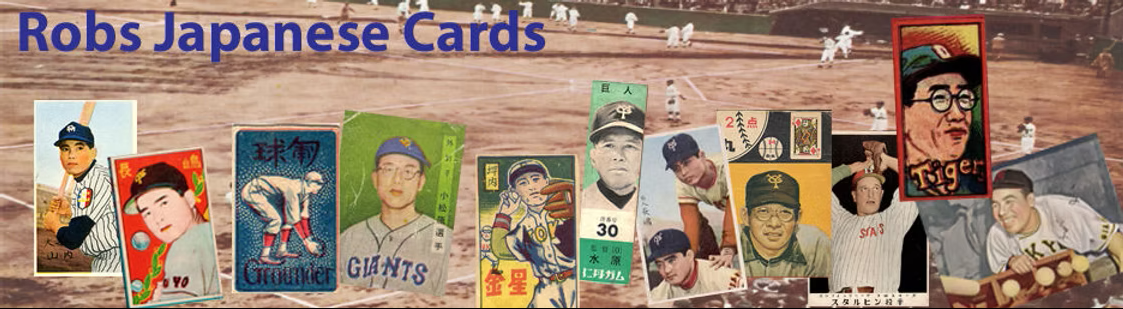
Visit Rob’s Japanese Cards eBay store by clicking HERE
SABR’s Asian Baseball Committee
An award-winning author and speaker, his articles have appeared in numerous magazines and websites, including Sports Collectors Digest, the Baseball Research Journal, the National Pastime, Nine, and on MLB.com.
Rob is the founder of the Society for American Baseball Research’s Asian Baseball Committee, which routinely publishes articles and essays studying the history and culture of Asian baseball.
You can check out the Asian Baseball Committee’s blog by clicking HERE.
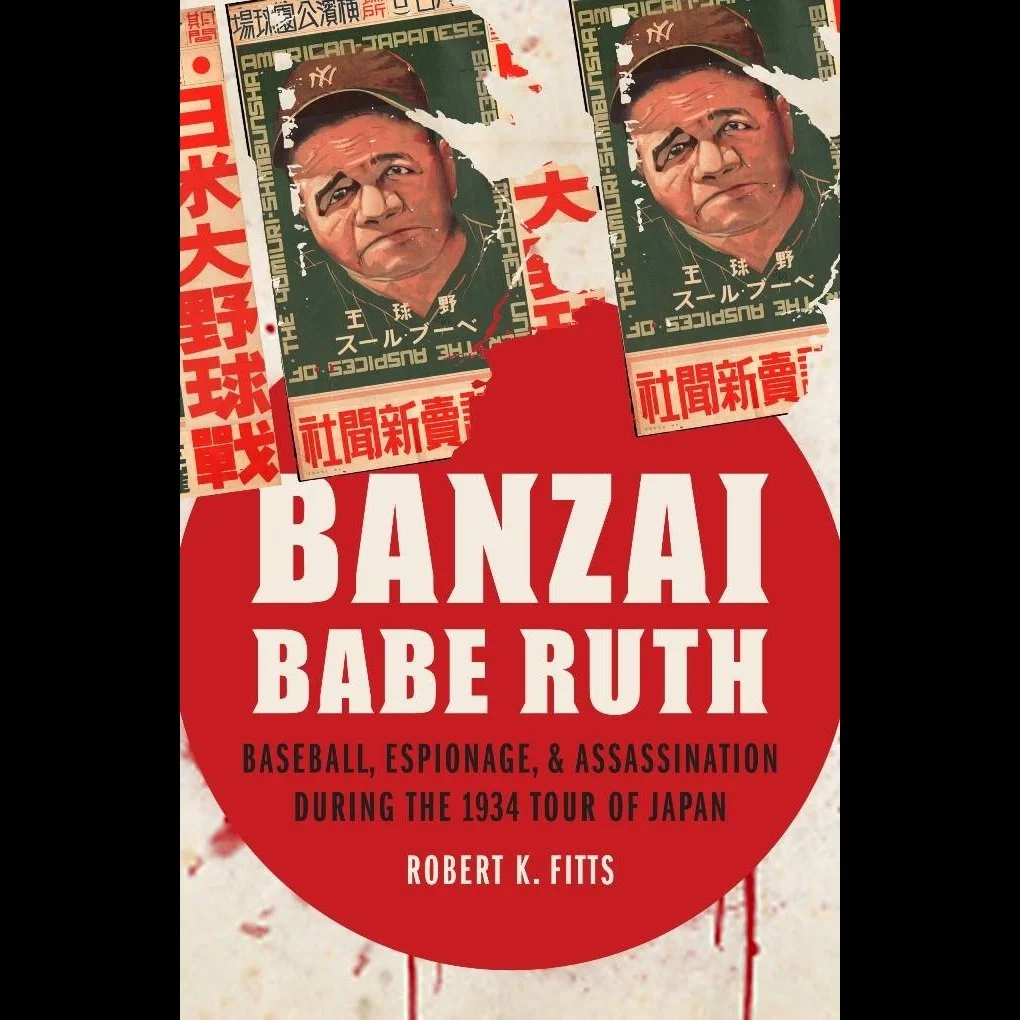
Banzai Babe Ruth
In 2025, Rob was the recipient of SABR’s Henry Chadwick Award for "outstanding, long-term contributions to the study of the game."
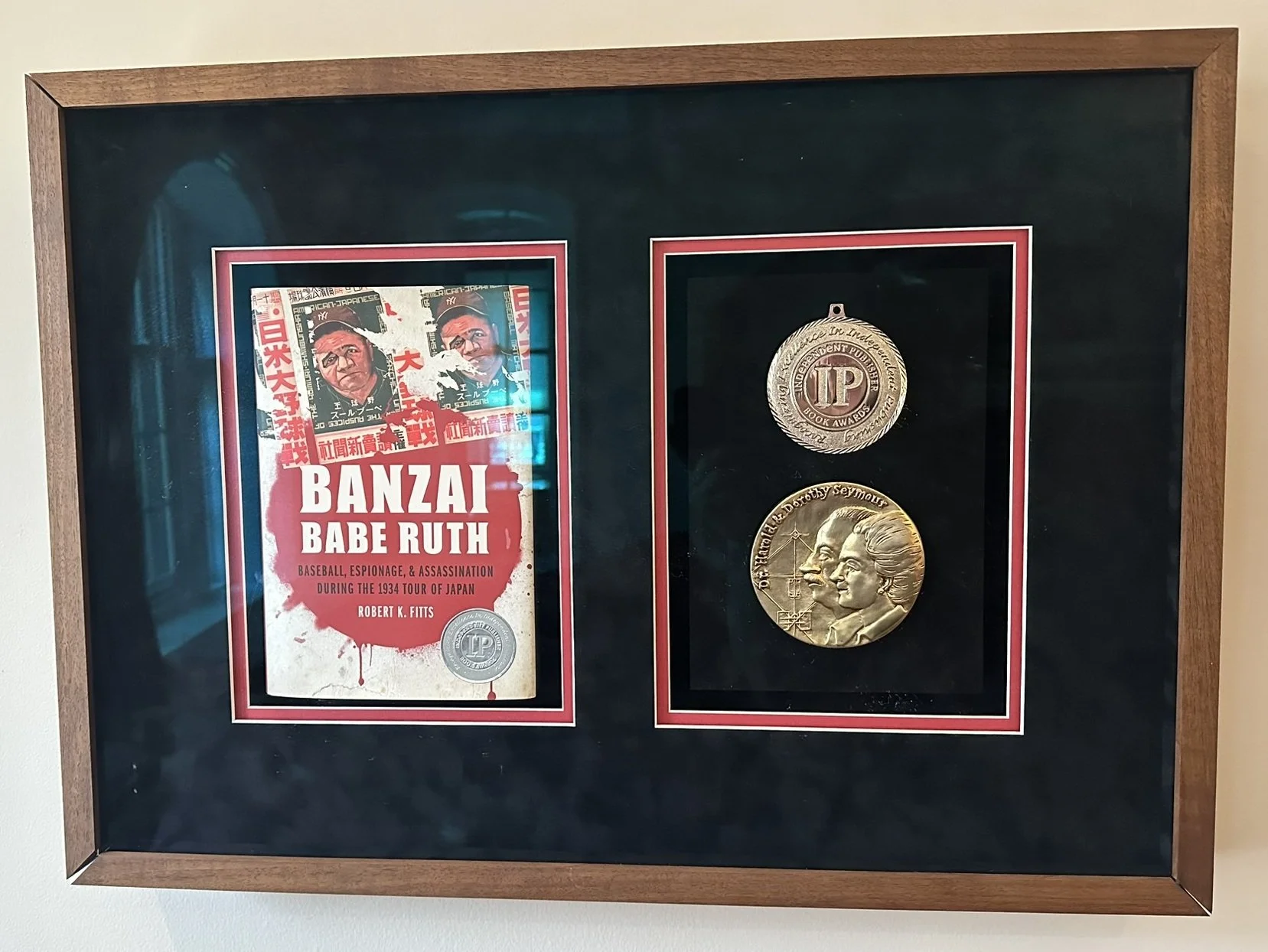
He won the 2013 Seymour Medal, awarded to the author of the Best Baseball Book of 2012, which was his Banzai Babe Ruth. He was the recipient of the 2019 and 2023 McFarland-SABR Baseball Research Awards, which honors the authors of the best articles on baseball history or biography completed or published during the preceding calendar year.
SABR Convention
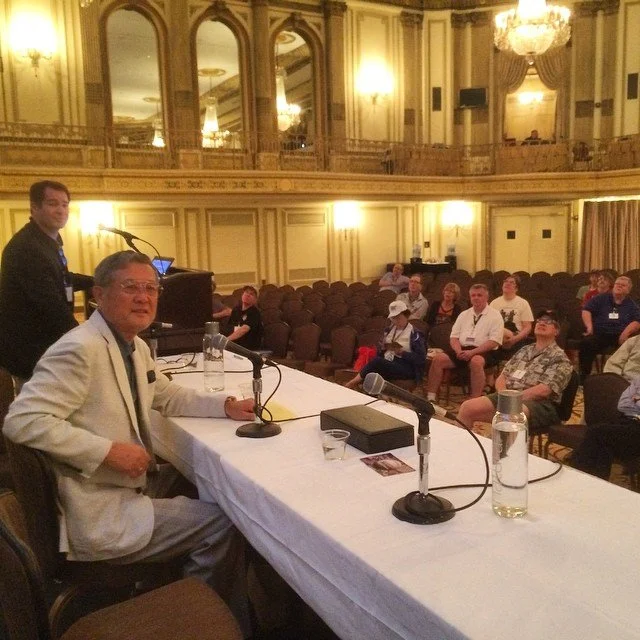
Rob earned the 2012 Doug Pappas Award for best oral research presentation at the Annual SABR Convention for his presentation titled “Murderers, Spies, and Ballplayers: The Untold Story of the 1934 All American Tour of Asia.”
He was the recipient of the 2006, 2021, 2023, and 2024 SABR Baseball Research Awards. He has been a two-time finalist for the Casey Award, given to the best baseball book of the year every year since 1983, and he is a two-time silver medalist at the Independent Publisher Book Awards.
Japanese American Association of NY
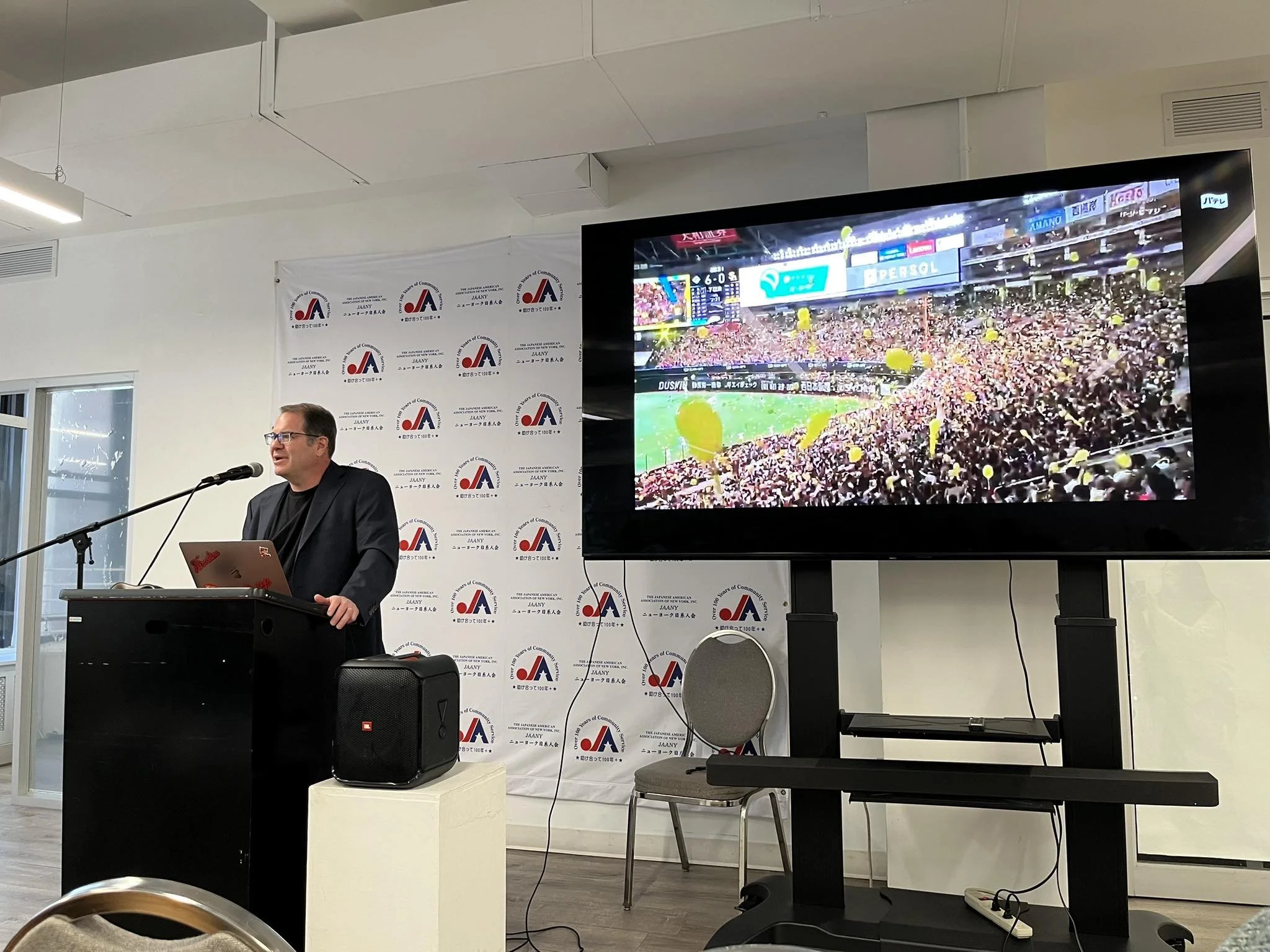
A popular speaker on the history of Japanese baseball, Rob has spoken at many venues including the Library of Congress, the Japan Embassy in Washington, D.C., the National Baseball Hall of Fame in Cooperstown, the Japan Society of New York, the Asia Society of New York, the Nine Baseball Conference, the American Club, Tokyo, and the Society for American Baseball Research Annual Convention.
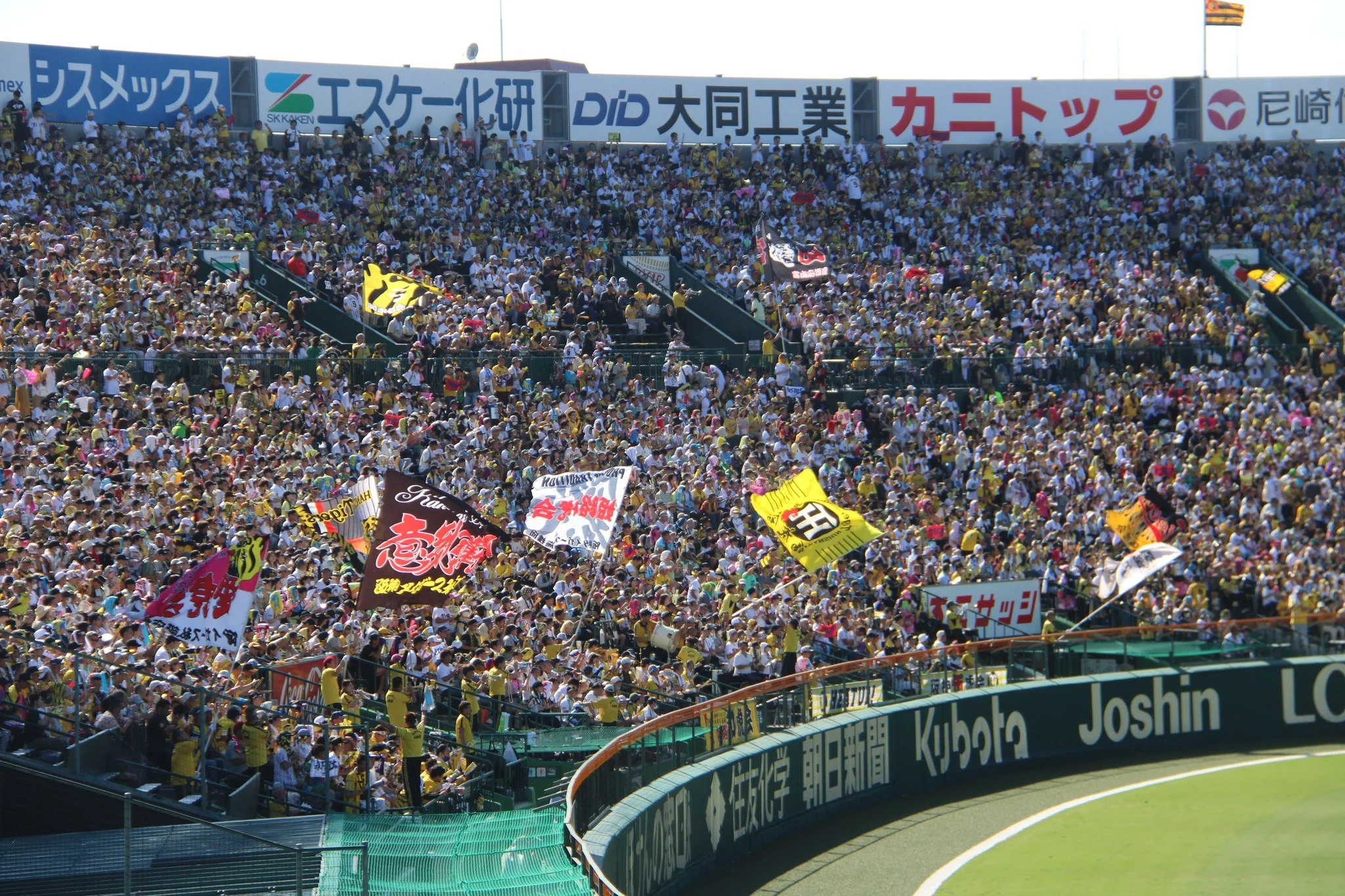
A First For MBH
This interview with Rob couldn’t be contained in one episode, so we’ve broken it up into two distinct parts that are almost exactly the same run time.
The first part (covered in these liner notes) will discuss the history of baseball in Japan. The next part will cover the modern game — basically, everything from 1964 to today, with a focus on the in-game experience in the Japanese ballpark, if you were going to go there today.
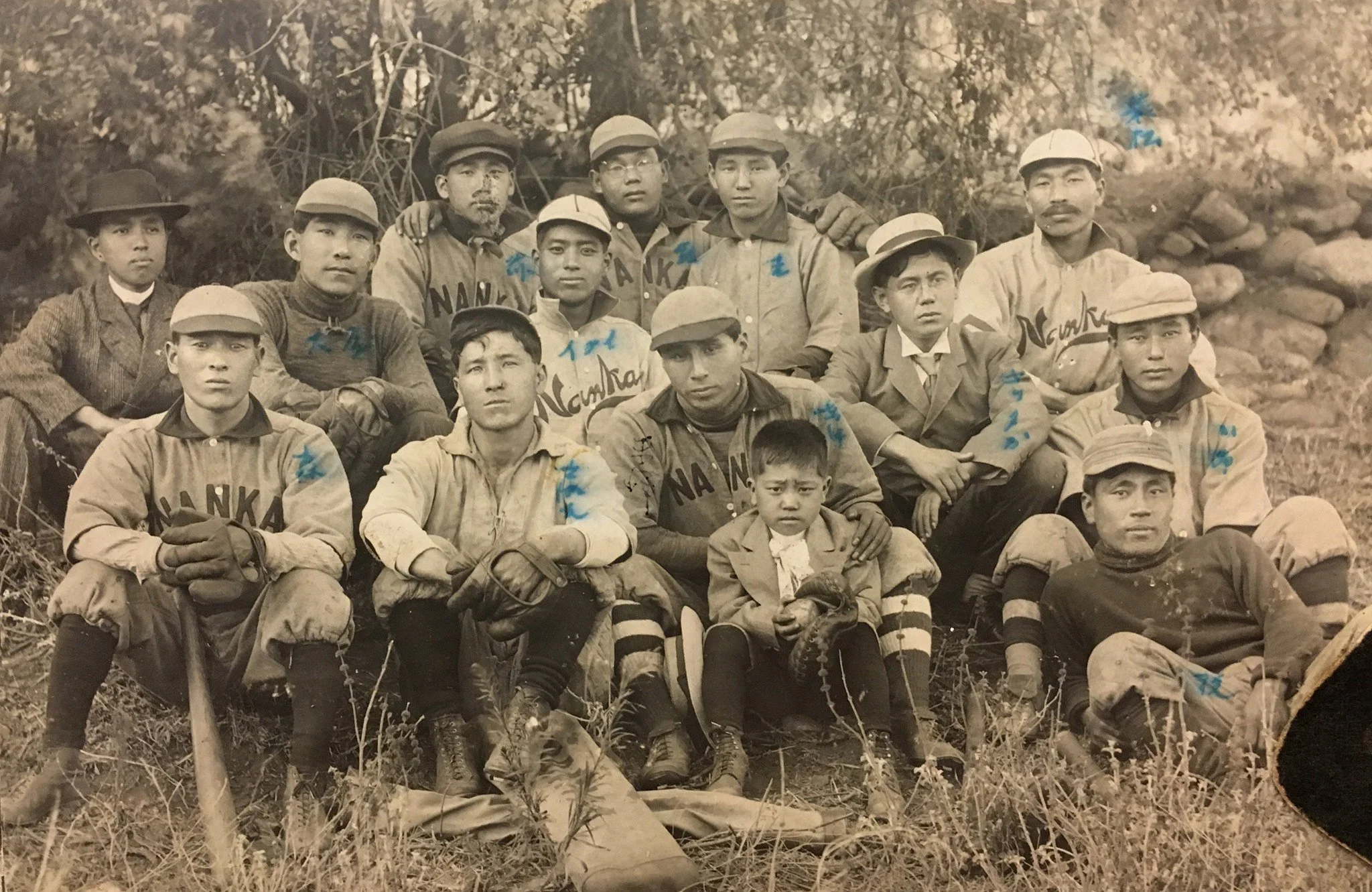
Why Two Parts?
We can’t possibly be well-informed enough to have a discussion about the modern game in Japan, to understand the nuance of it all, unless we first learn what came before it so we can truly understand how the Japanese game has evolved.
So, before we get to the modern day, we start at the beginning.
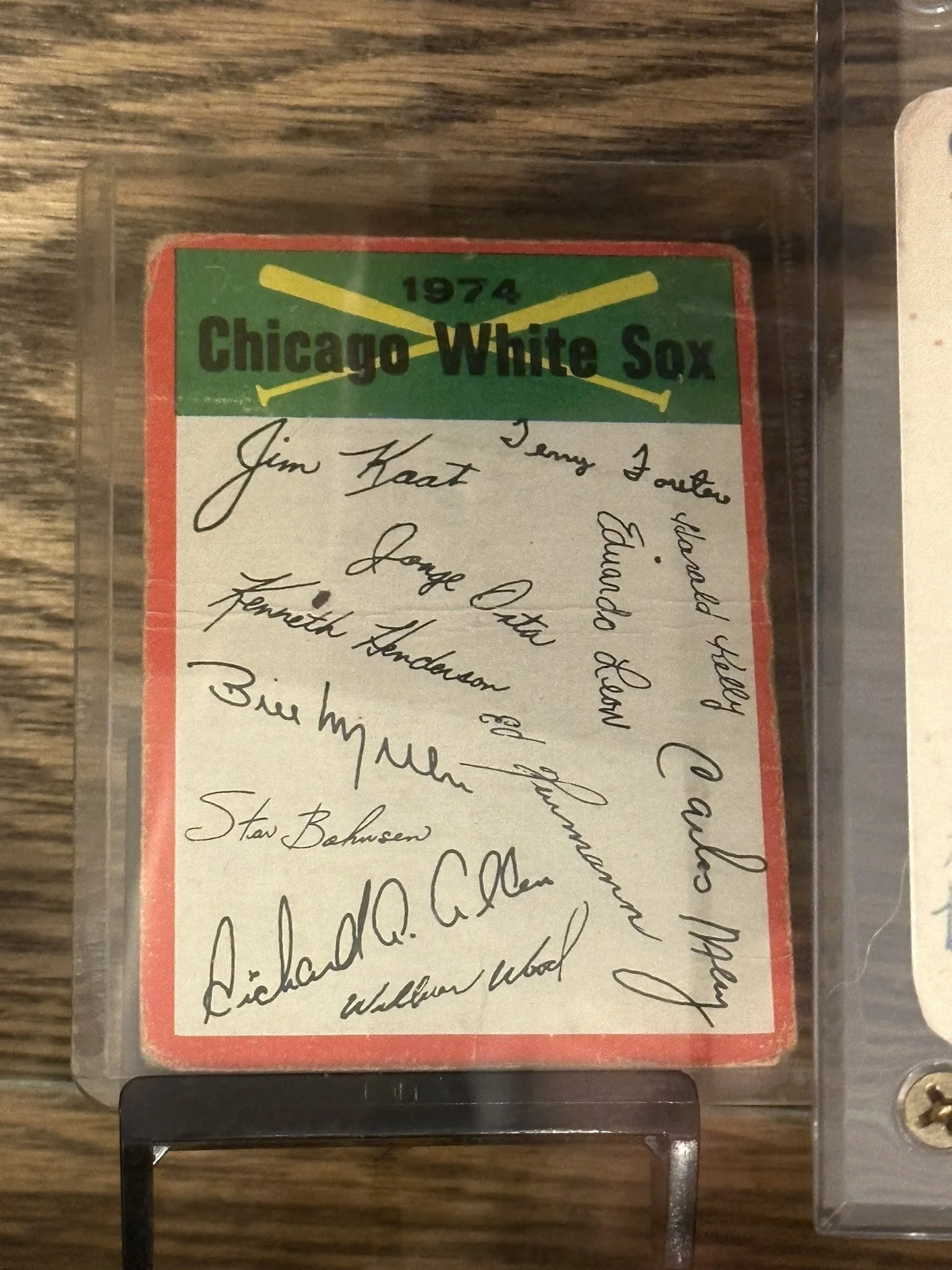
Rob’s Very First Baseball Card
When Rob was in 3rd grade in 1975, a student in his class came up with a game to win baseball cards.
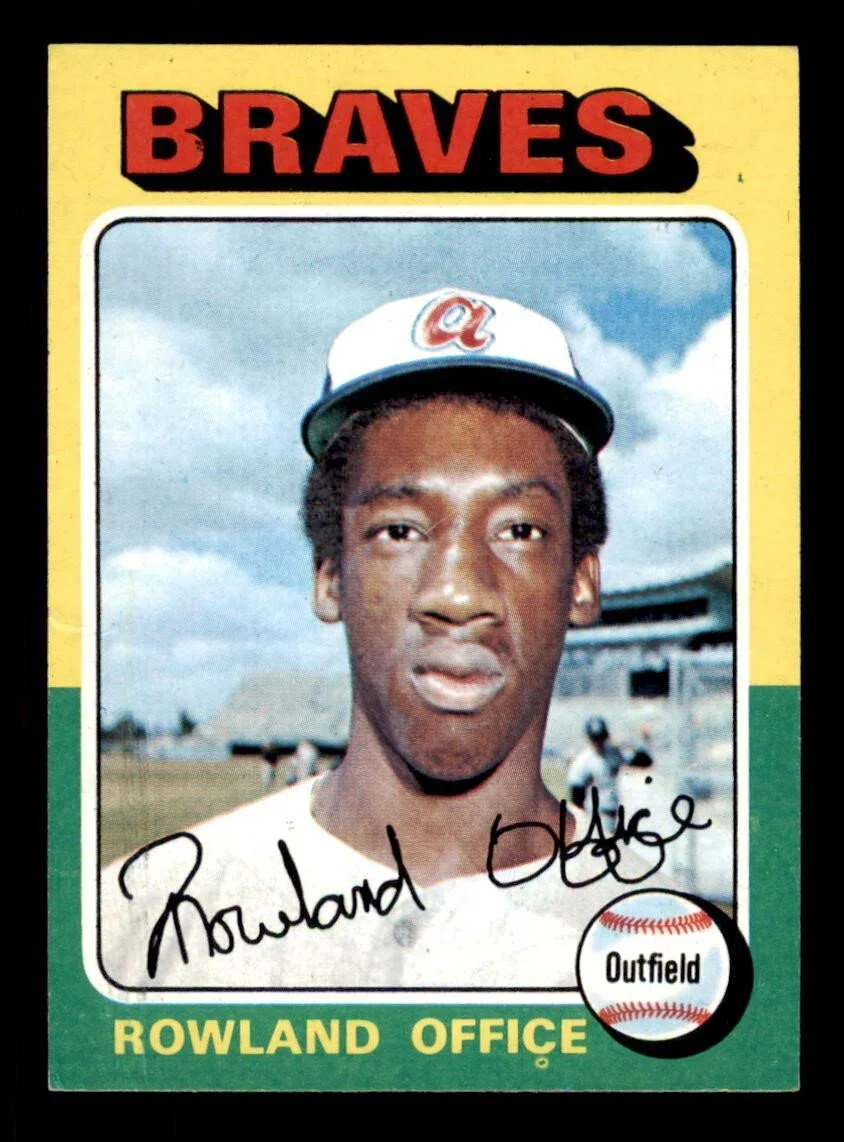
1975 Topps
The first set Rob completed was the 1975 Topps set, which he bought with his own money, one wax pack at a time. The final card he acquired to complete the set was this one, of Braves outfielder Rowland Office.
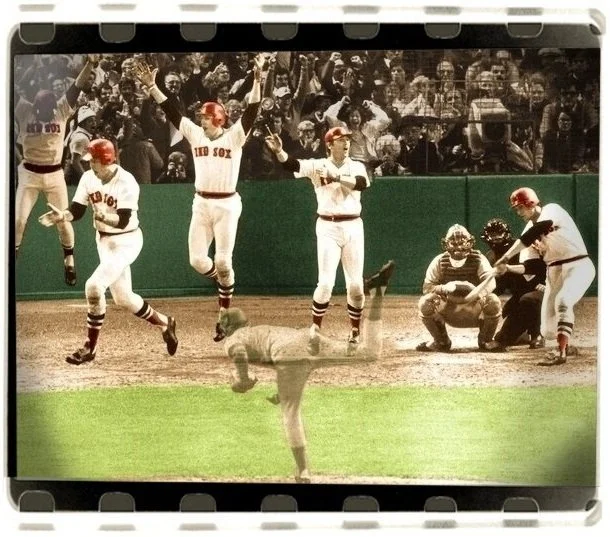
1975 World Series
The first time Rob remembers watching the World Series was an all-time classic: the 1975 World Series between the Reds and Red Sox.
Even though his family wasn’t super into sports, they watched that Series together.
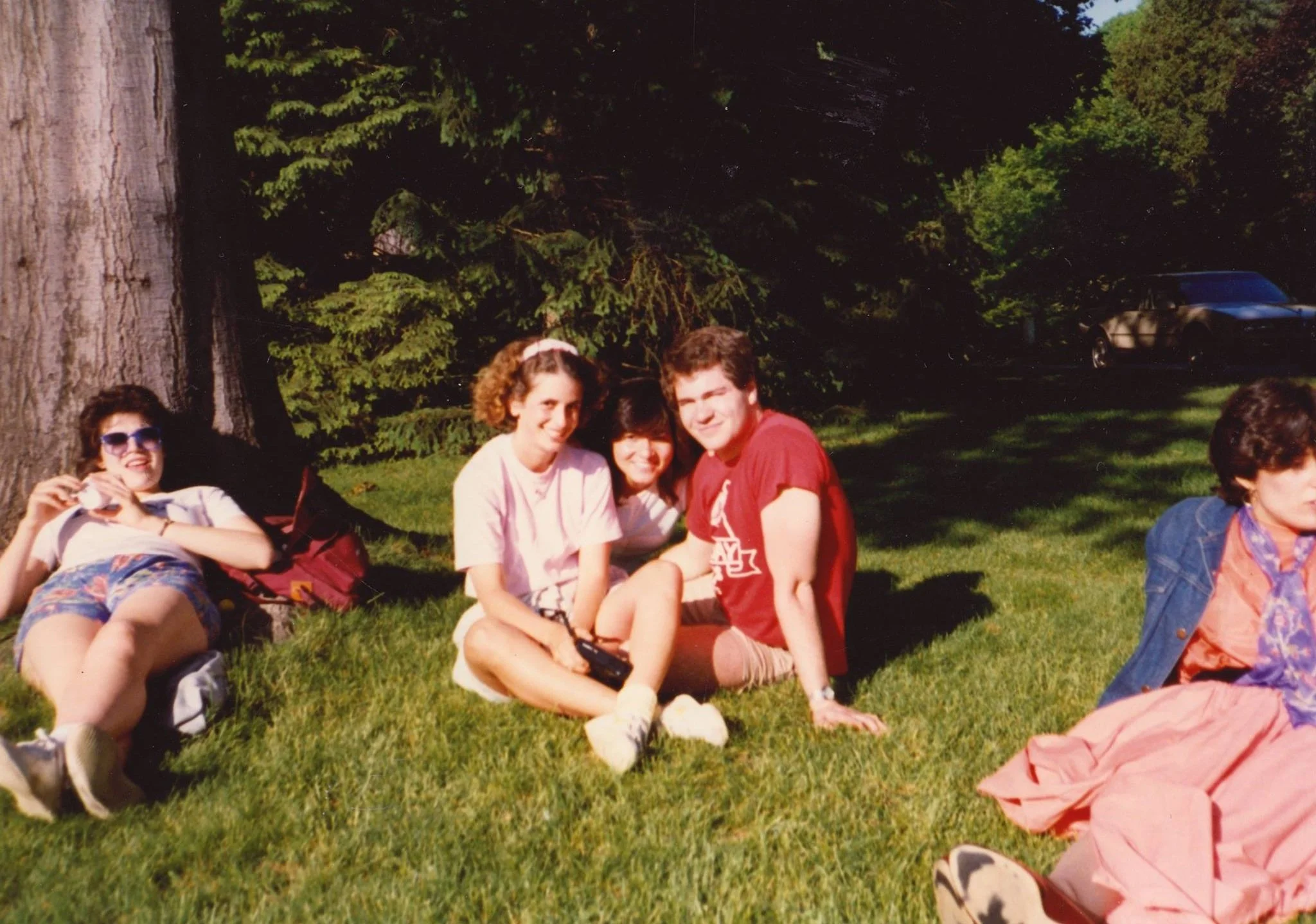
Penn
Rob grew up in Philadelphia, then attended the University of Pennsylvania and earned a doctorate degree in archaeology from Brown University. He wrote his dissertation on 18th century New England.
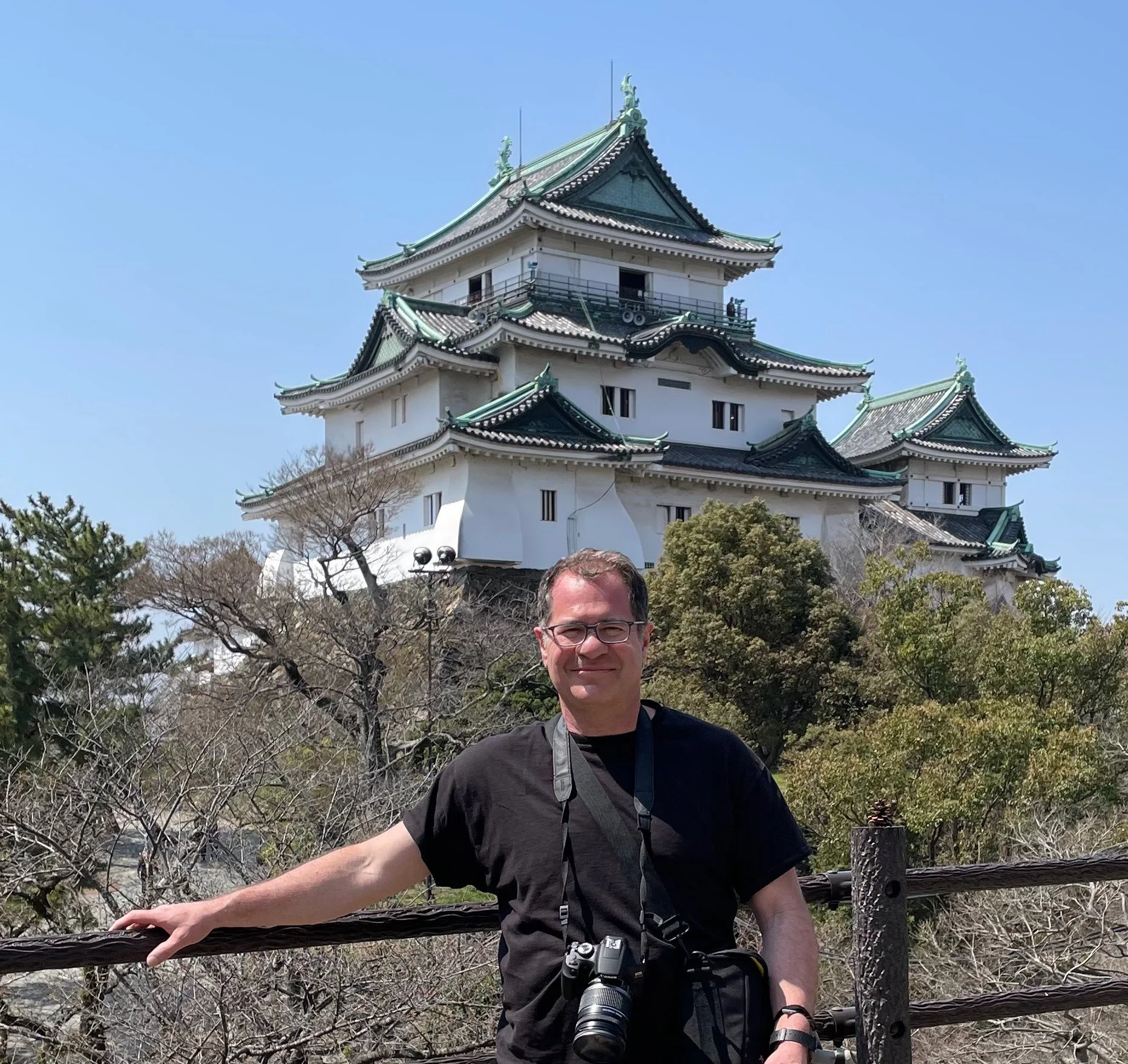
Japanese History
For someone with a background in history, Rob has never really been extremely interested in the history of Japan, as a whole. However, he has always been interested in their military history, and has made it a mission to visit as many castles as possible whenever he is there.
What really interests Rob is the transition from the closed society in the Tokugawa period, into when it was opened up by the American battleships coming into Japan in 1853.
Motoshi Fujita
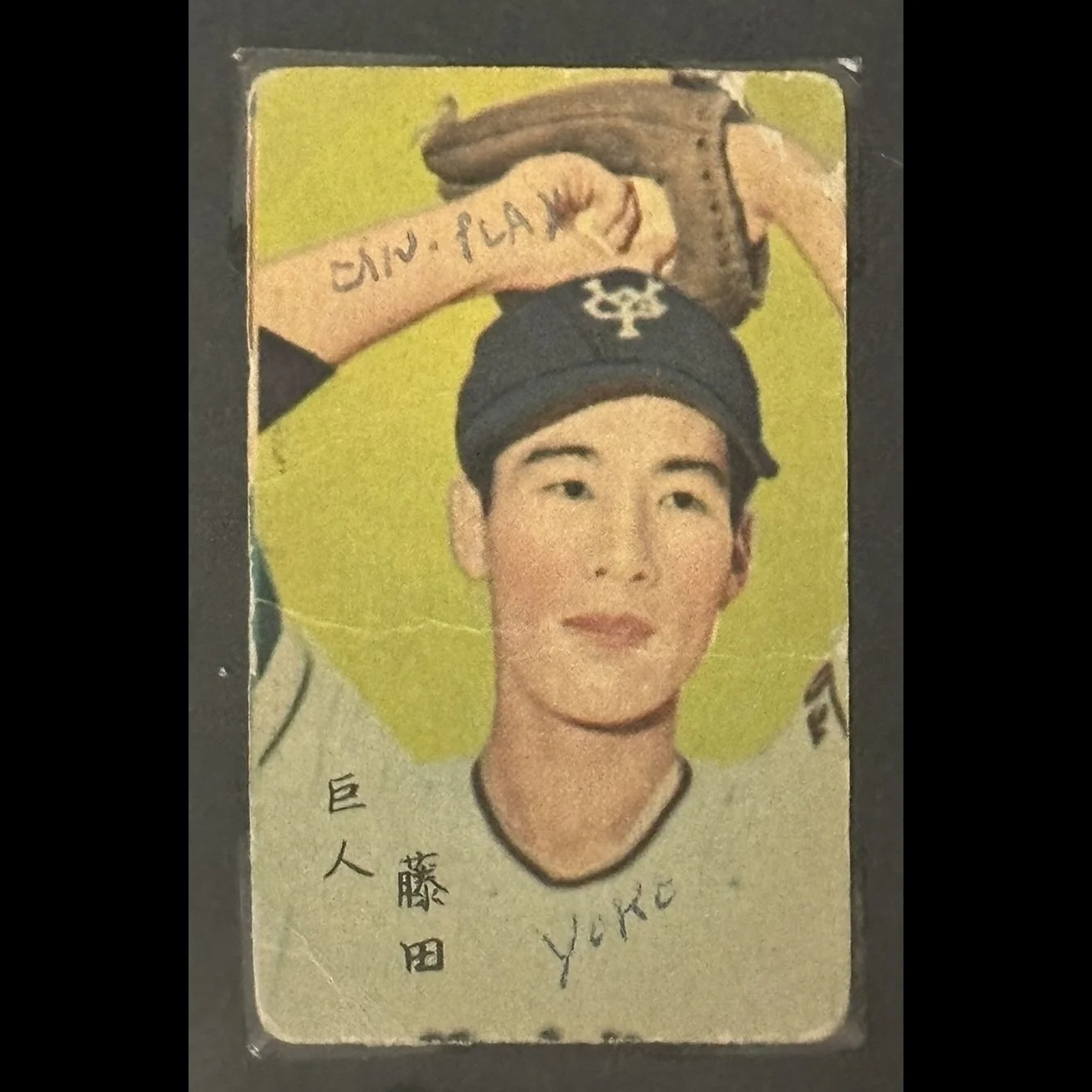
Motoshi Fujita spent his entire career with the Yomiuri Giants of Nippon Professional Baseball, winning two Japan Series titles as a player and two more as manager.
This card of Fujita was the first Japanese baseball card Rob ever owned.

Meiji Jingu Stadium
Rob saw his first Japanese baseball game at Meiji Jingu Stadium in Tokyo, literally an hour after getting off a 14-hour flight.
The game Rob saw that night between the Tokyo Yakult Swallows and the Hanshin Tigers changed the course of his life.

Meiji Jingu Stadium in 1934
Opened in 1926, Meiji Jingu Stadium is the second-oldest baseball stadium in Japan.
It is one of the few professional stadiums still in existence where Babe Ruth played (the only other ones are Wrigley Field in Chicago, Fenway Park in Boston, and Koshien Stadium in Hyōgo Prefecture, Japan).
Young And On A Budget
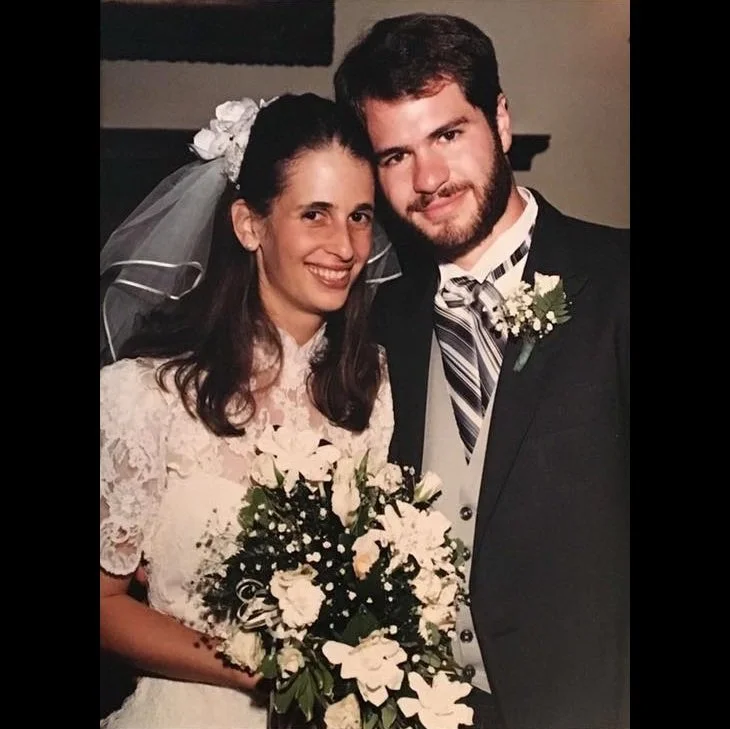
Rob was newly-married and living on a budget in a foreign country, but one of his passions was collecting baseball cards, which is how he was learning about the history of Japanese baseball. Luckily, he lived about a mile away from the only baseball card shop in Japan at the time (now there are more), and the owner of the shop spoke enough English so the two could communicate.
An Illustrated Introduction to Japanese Baseball Cards
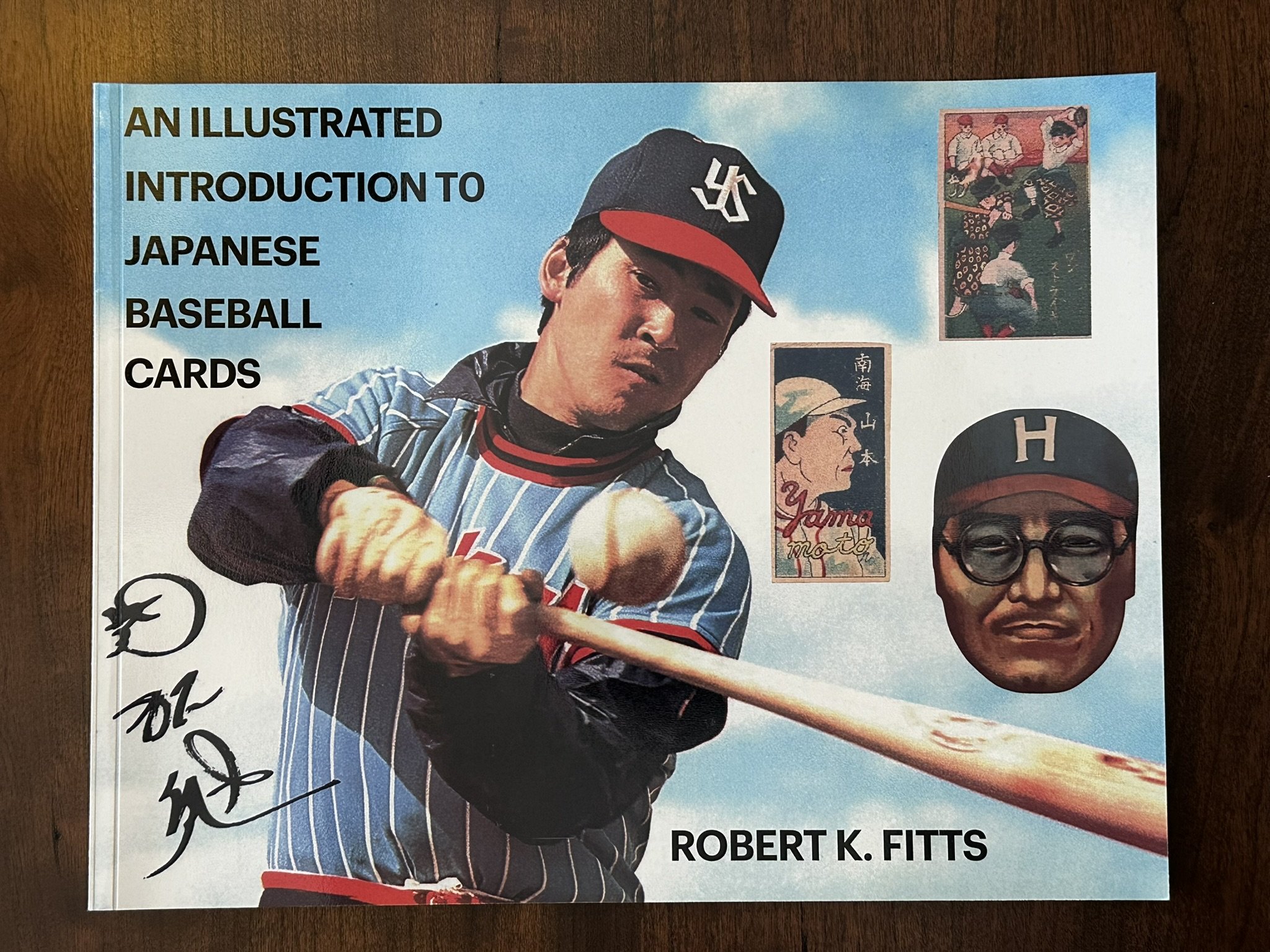
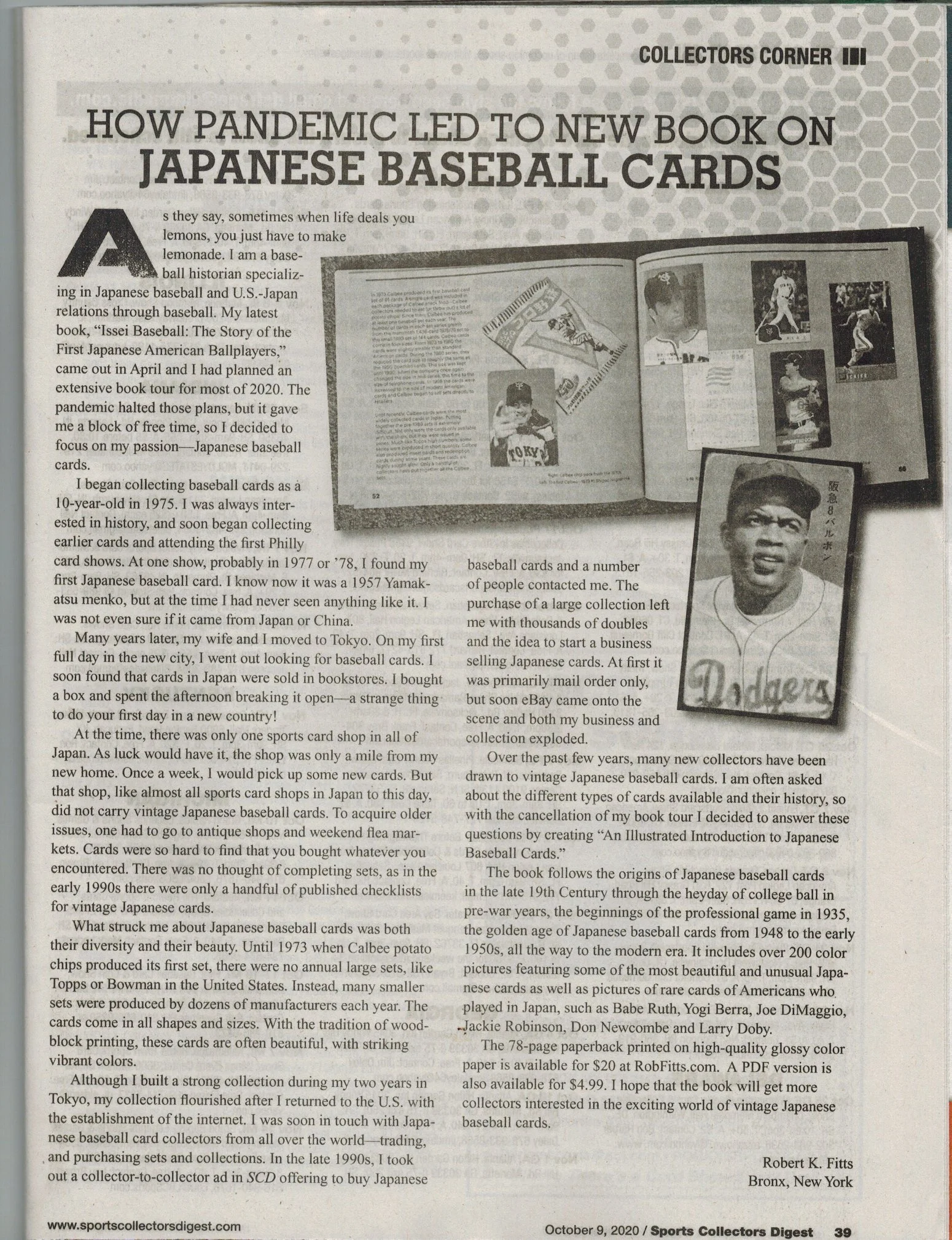
During the pandemic, Rob wrote a book called An Illustrated Introduction to Japanese Baseball Cards.
You can buy a copy HERE.
Japan Womens Baseball Association
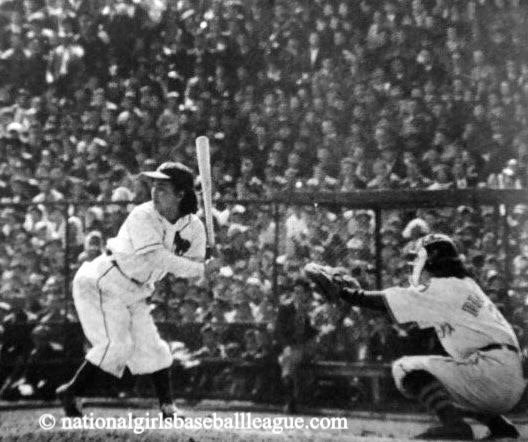
This 1950 photo shows a Japan Women's Baseball Association (JWBA) game between the Tokyo Romance Bluebirds and the Sankyo Red Sox, played at the old Korakuen Stadium. The Bluebirds won 14-2, by virtue of pitching by the “Iron-Armed Beauty” Masako Oshima.
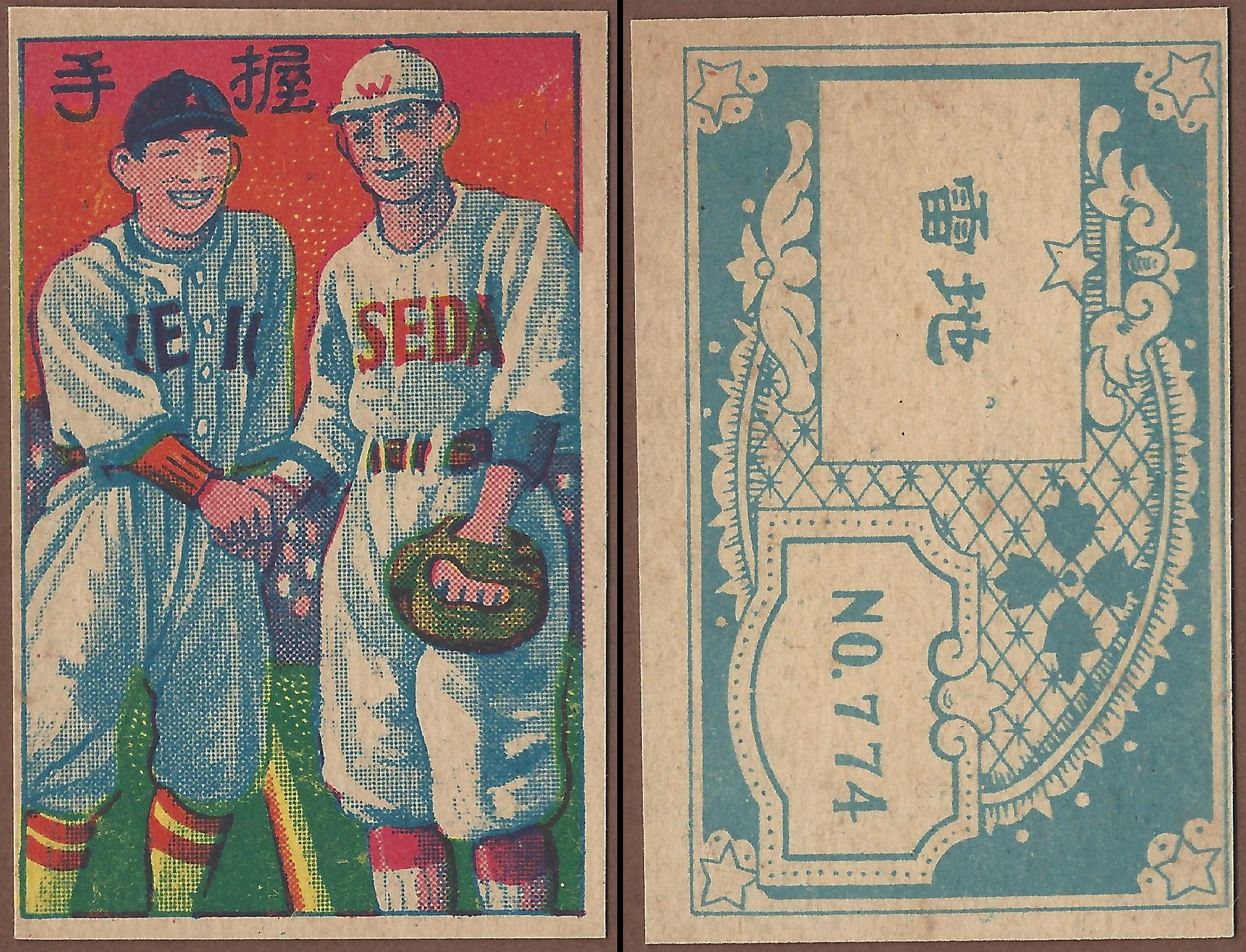
Early Japanese Cards
This card from 1926 shows players from Keio and Waseda University “Shaking Hands” #774, but the players are not named.
You can find many more similar examples on this amazing website.
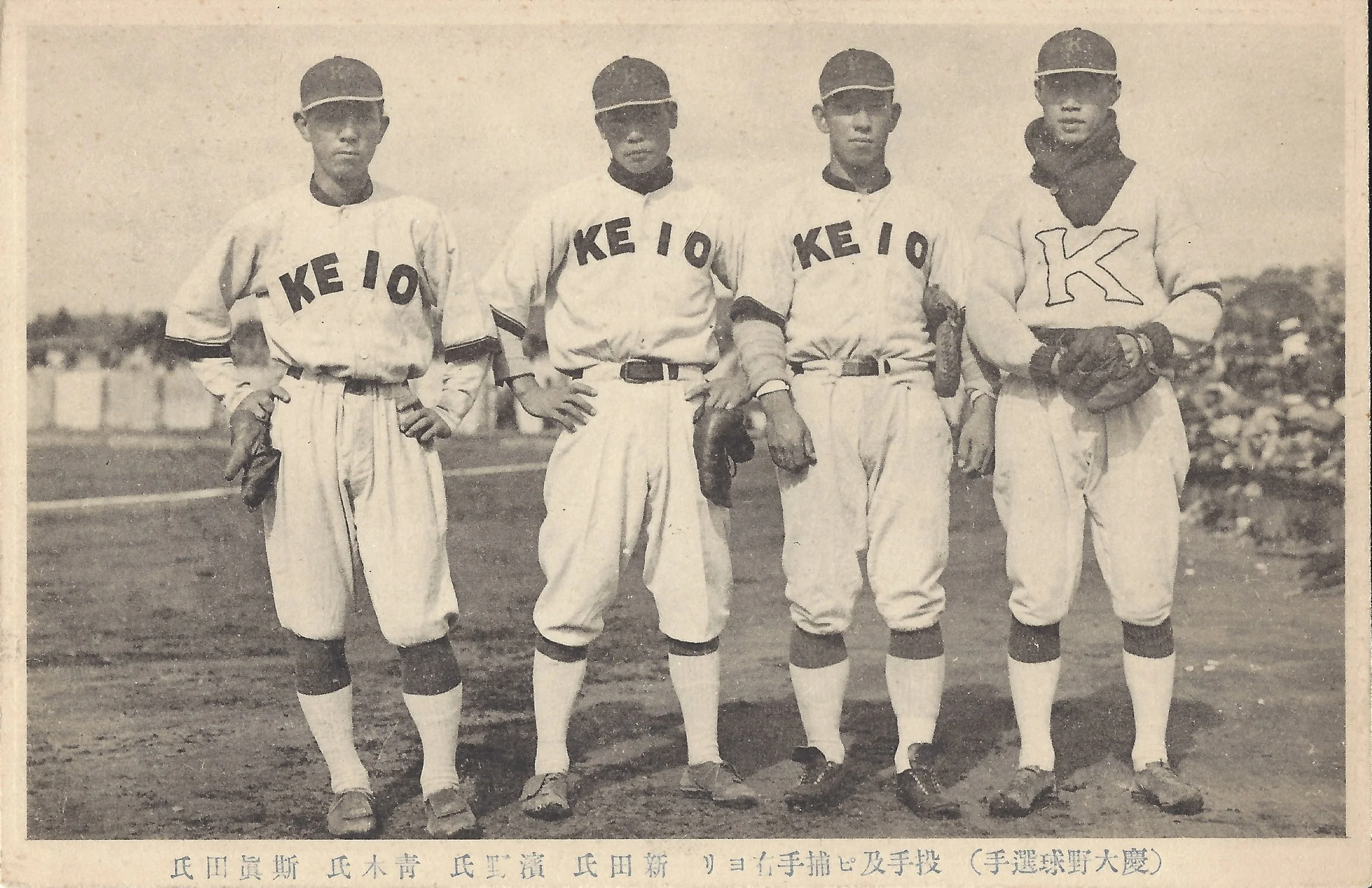
Postcards
This postcard shows players from the 1907 Keio University team, who have been identified. The players, right to left, are: Mr. Hitta, Mr. Hamano, Mr. Aoki, and Mr. Shimada.
You can find many more similar examples on this amazing website.
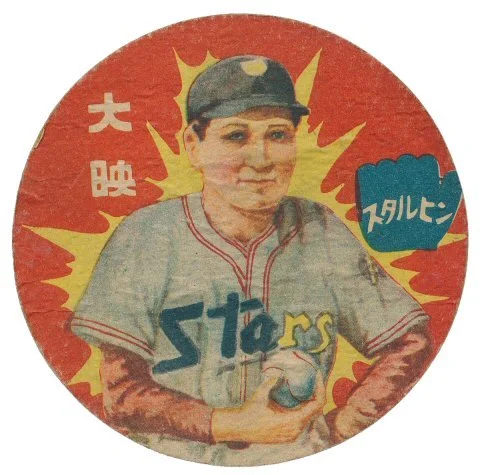
Menko
Menko is a Japanese card game played by two or more players. It is also the name of the type of cards used to play this game. Each player uses Menko cards made from thick paper or cardboard, printed on one or both sides with images from anime, manga, and other works.
A player's card is placed on the ground and the other player throws down his or her card, trying to flip the other player's card with a gust of wind or by striking his or her card against the other card. If he or she succeeds, he or she takes both cards. The player who takes all the cards, or the one with the most cards at the game's end, wins the game.
You can find many more similar examples on this amazing website.
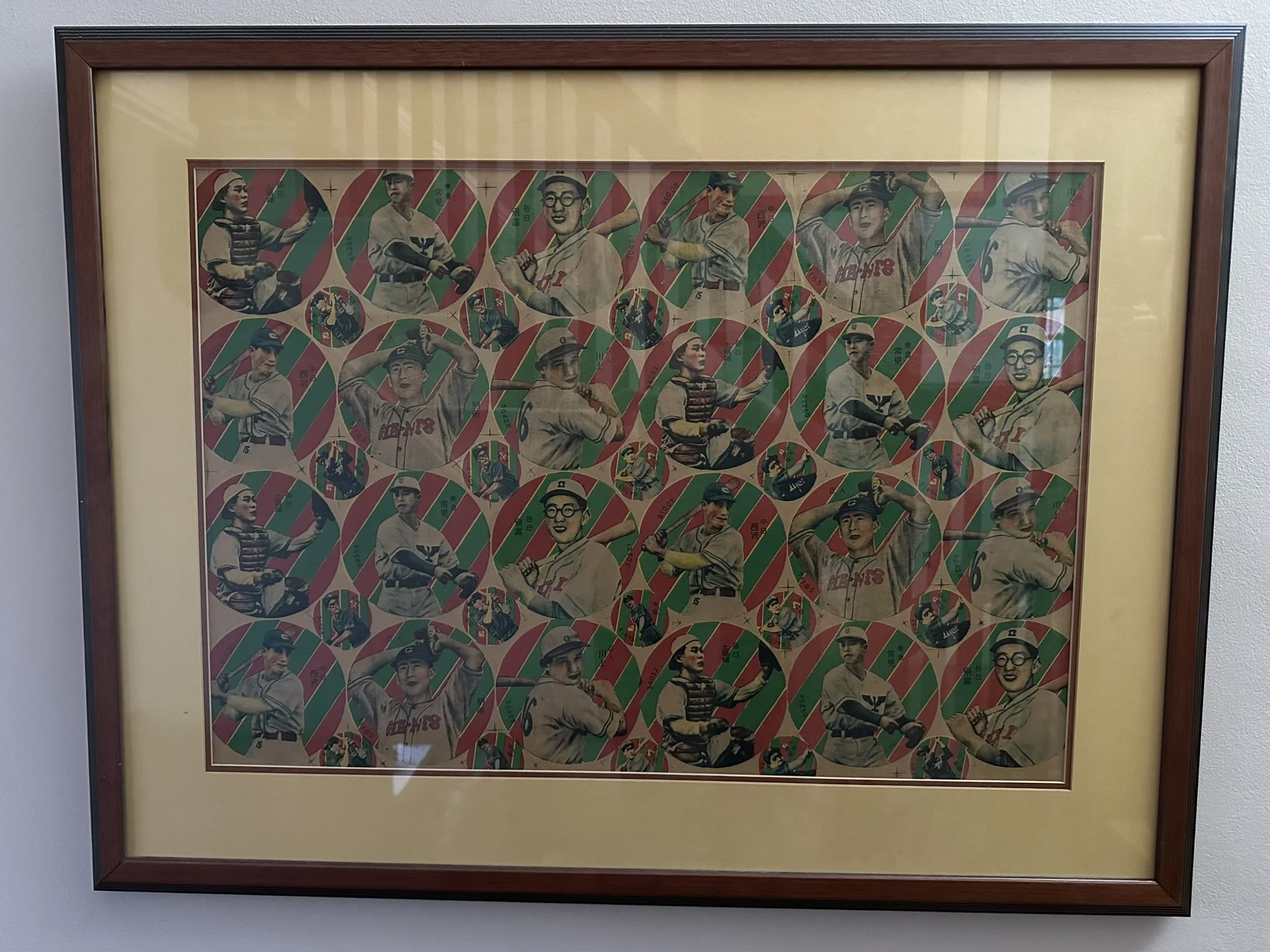
An uncut sheet of Menko.
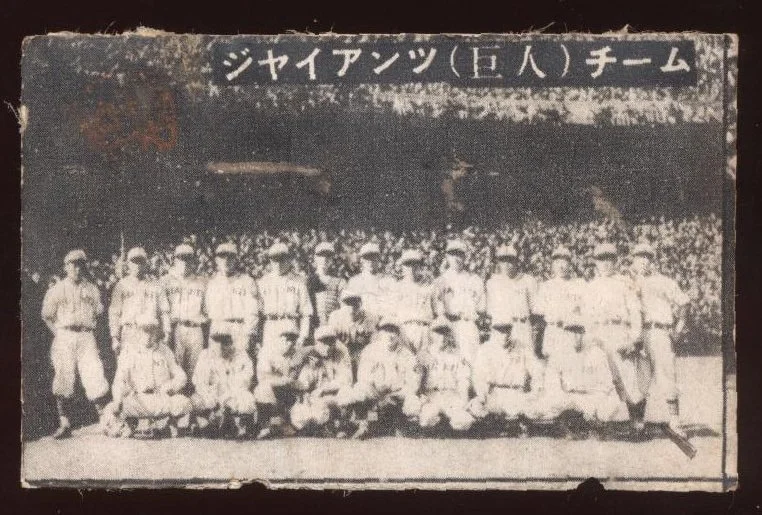
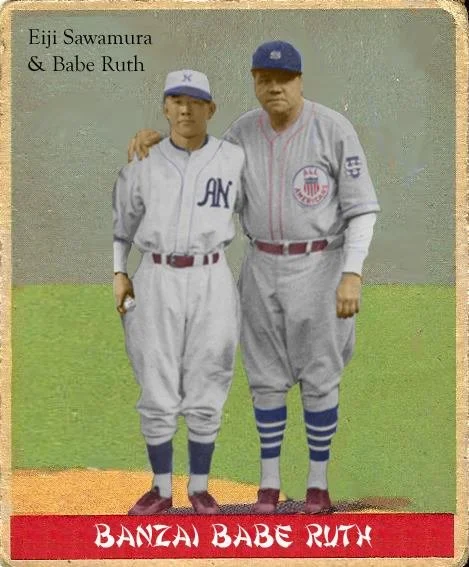
Japanese Baseball Card Holy Grails
If a period Eiji Sawamura card were ever to be discovered, it would likely be the most sought-after and expensive Japanese baseball card to exist. To date, no such card is known to exist.
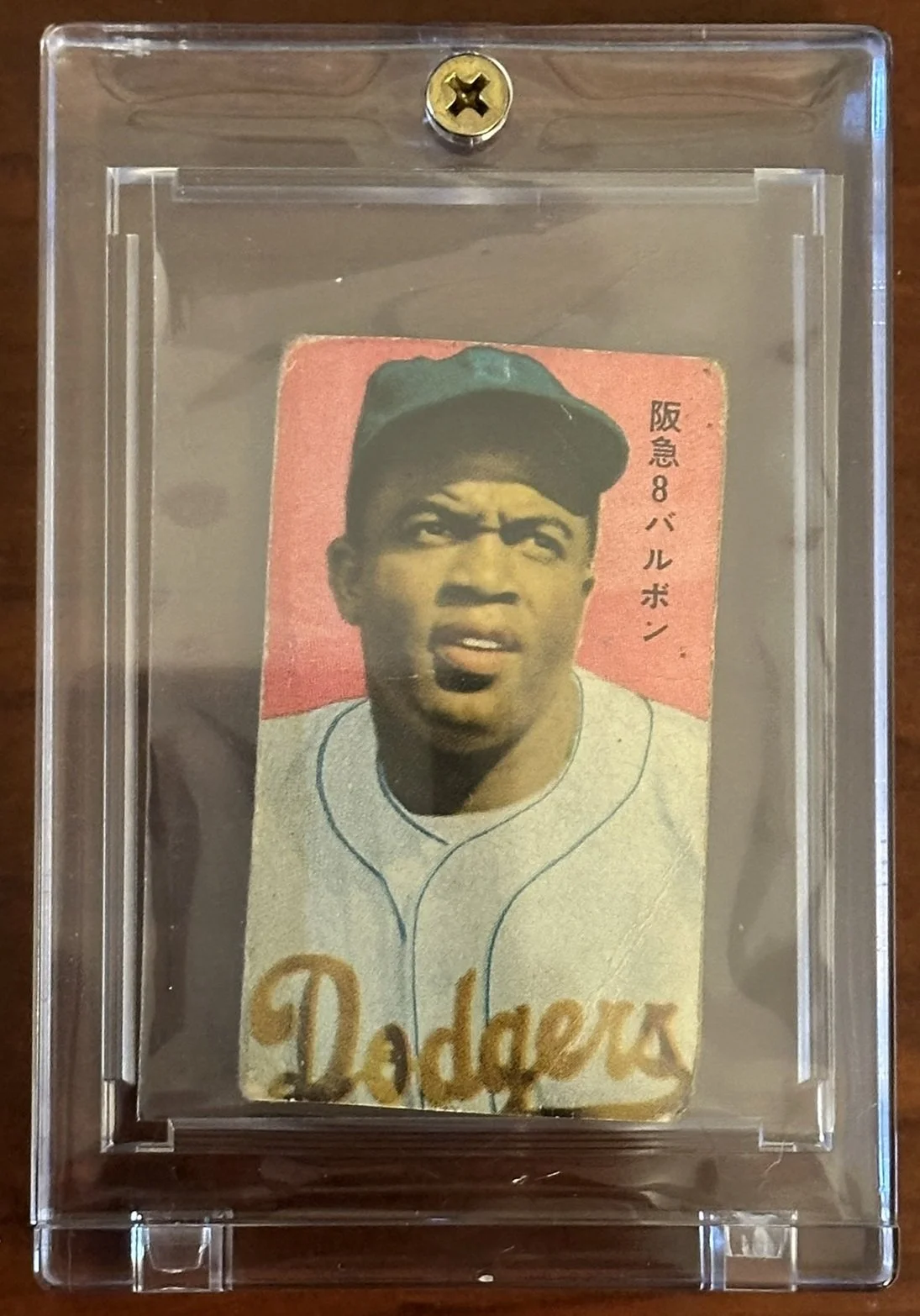
1958 Jackie Robinson Misprint
This 1958 Menko of Jackie Robinson is an error card, which makes it sought-after and therefore valuable.
What makes this an error card is the name printed in kanji (vertically, next to the image of Jackie) is supposed to be the name of the player depicted on the card.
The kanji characters on this example, however, are meant for Roberto “Chico” Barbon, not for Jackie Robinson.
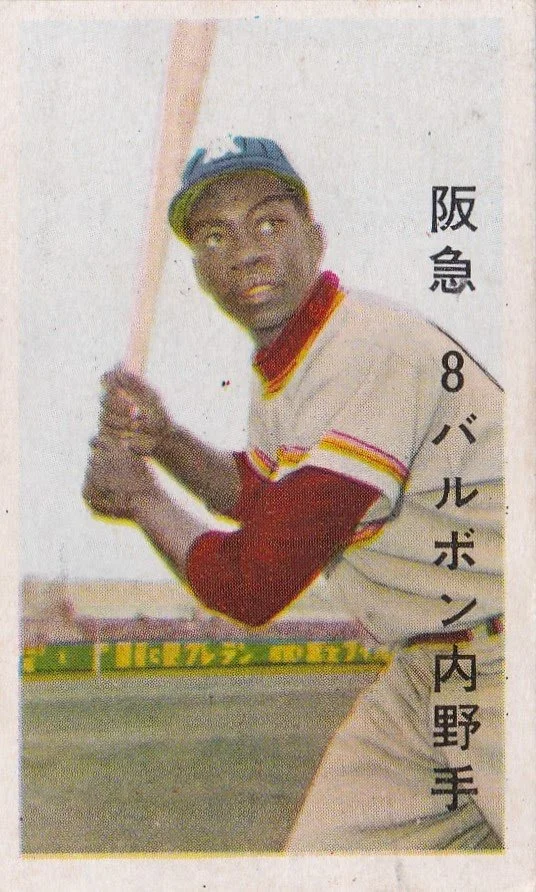
Chico Barbon
Roberto “Chico” Barbon, a stringy infielder from Cuba who joined the Hankyu Braves in 1955 at just 21 years old. Upon his debut, Barbon became NPB’s first Latin player.
Unlike other players of the time who joined the Braves and soon returned to the MLB pipeline, Barbon did return to play in the U.S. Instead he created his own path, becoming one of the most important foreign players in Japanese baseball history.
If you notice the kanji characters on this card (which correctly depicts Barbon) and compare it to the kanji on the card above (which incorrectly depicts Jackie Robinson), you will notice they are the same. That’s because these kanji characters identify Barbon.
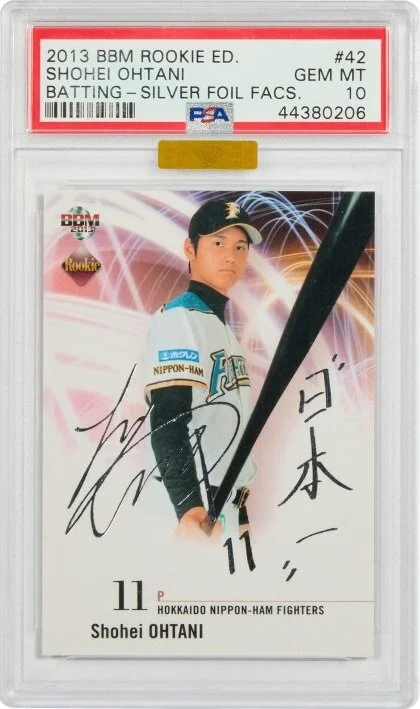
Shohei Ohtani
If Rob had a time machine, one card he would go back and buy is a signed Shohei Ohtani rookie card.
If you don’t have a time machine, but still want the card, you can buy this one HERE.
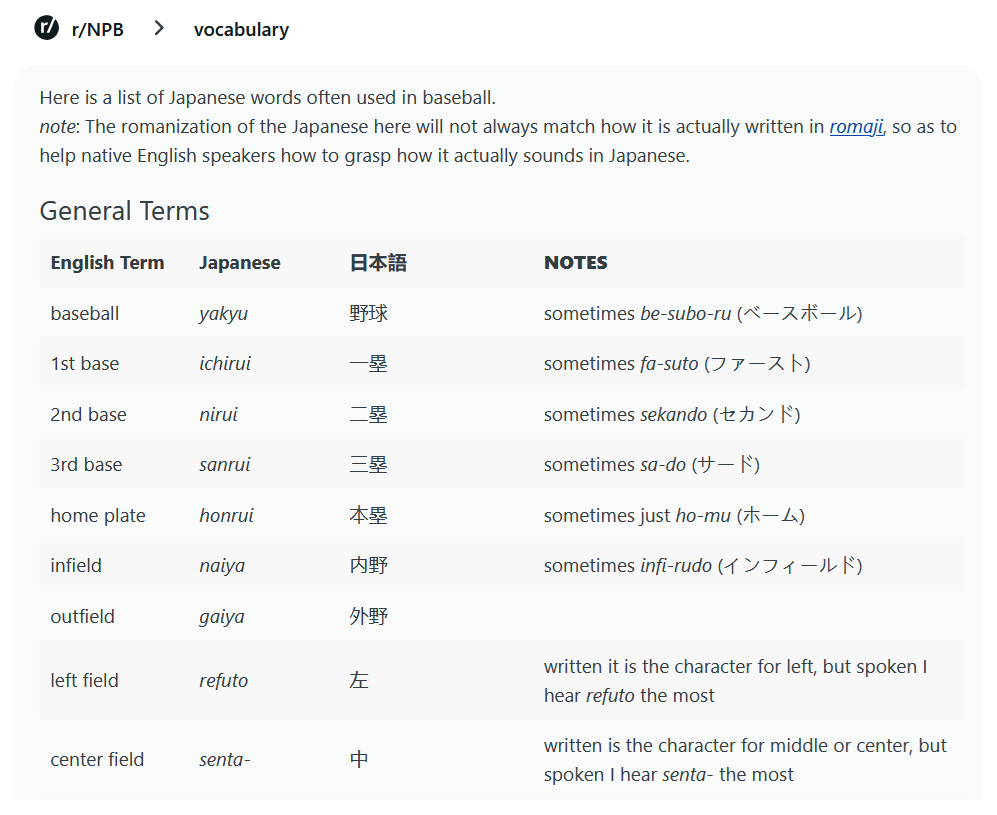
If you want to view the full reddit Japanese baseball glossary, click HERE.
Yakyū
In Japanese, baseball is commonly called yakyū (野球), combining the characters for field and ball.
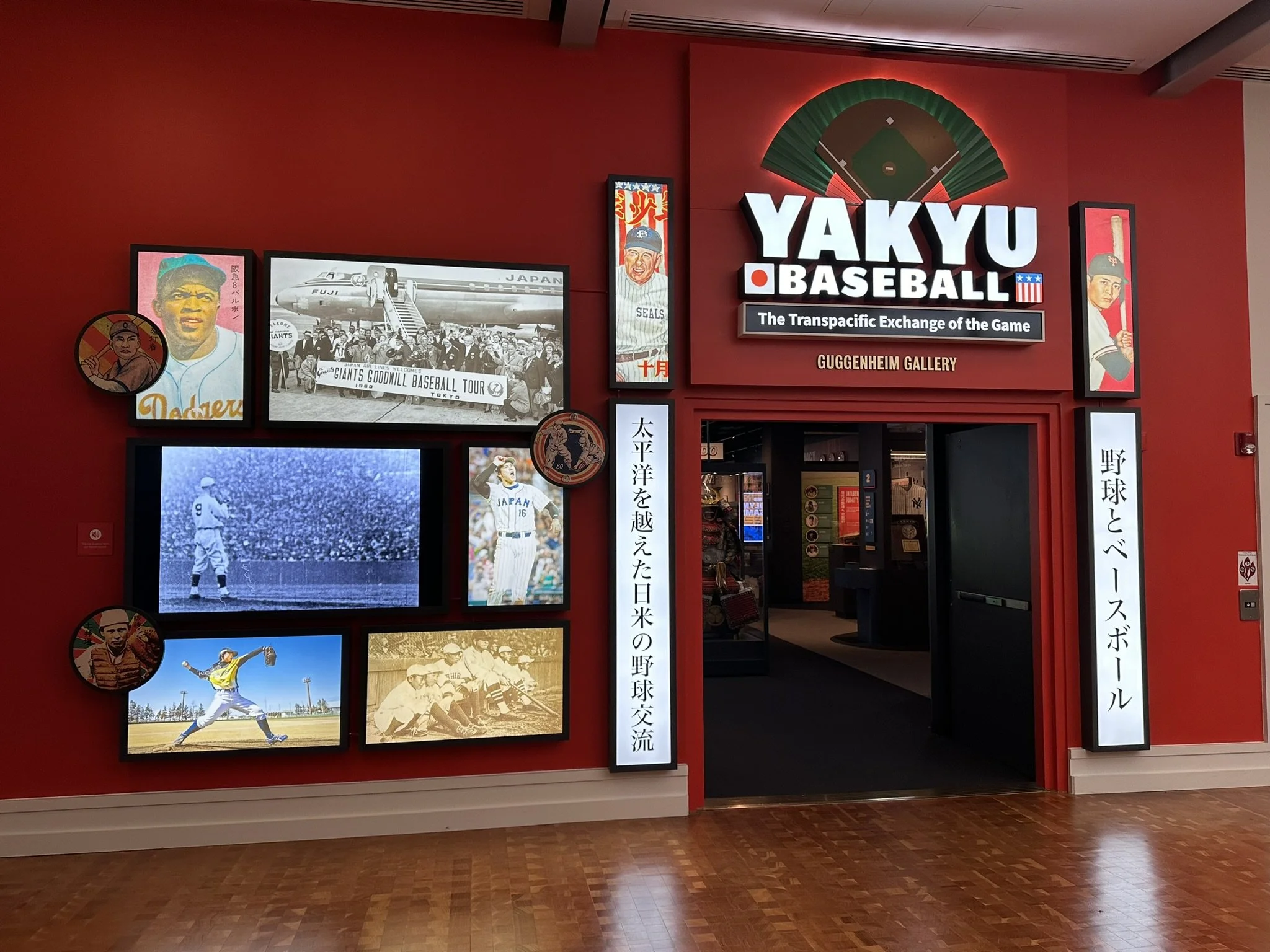
YAKYU | Baseball
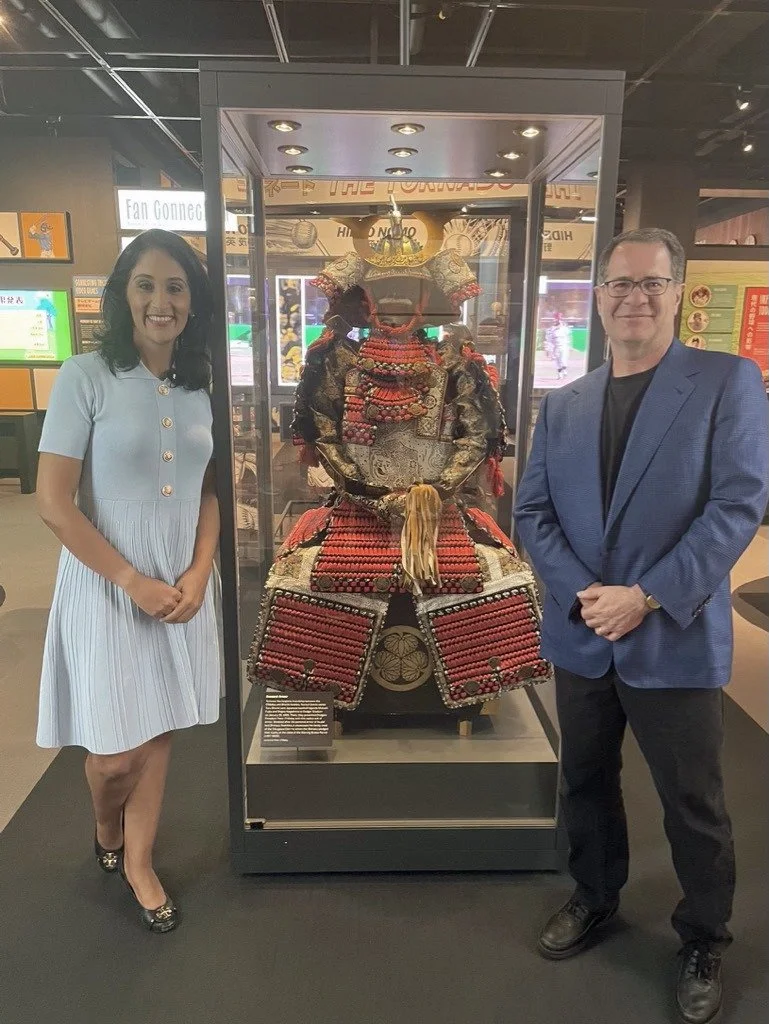
Rob has been a Curatorial Consultant for the National Baseball Hall of Fame in Cooperstown since 2024, and helped bring to life the YAKYU | Baseball exhibit which now resides on the third floor of the museum.
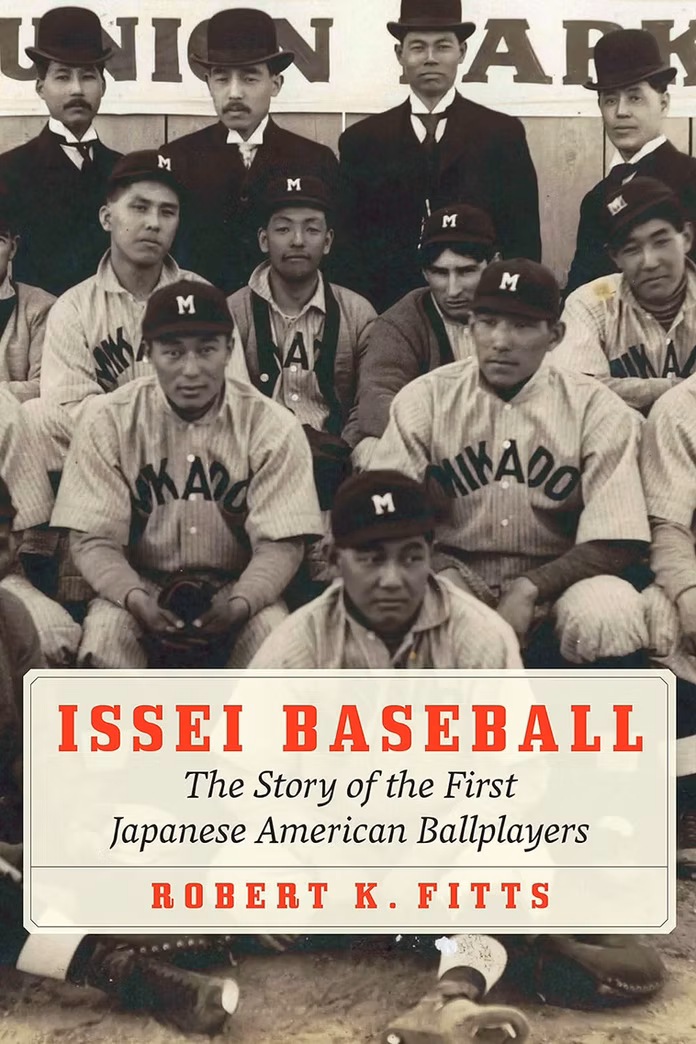
Issei
Rob wrote a book which came out in 2020 called Issei Baseball: The Story of the First Japanese American Ballplayers, which focuses on Japanese-American baseball, and the Japanese-American experience through baseball.
Issei ("first generation") are Japanese immigrants to countries in North America and South America. The term is used mostly by ethnic Japanese.
Issei are born in Japan; their children born in the new country are nisei (ni, "two", plus sei, "generation"); and their grandchildren are sansei (san, "three", plus sei, "generation").
You can buy a copy HERE.
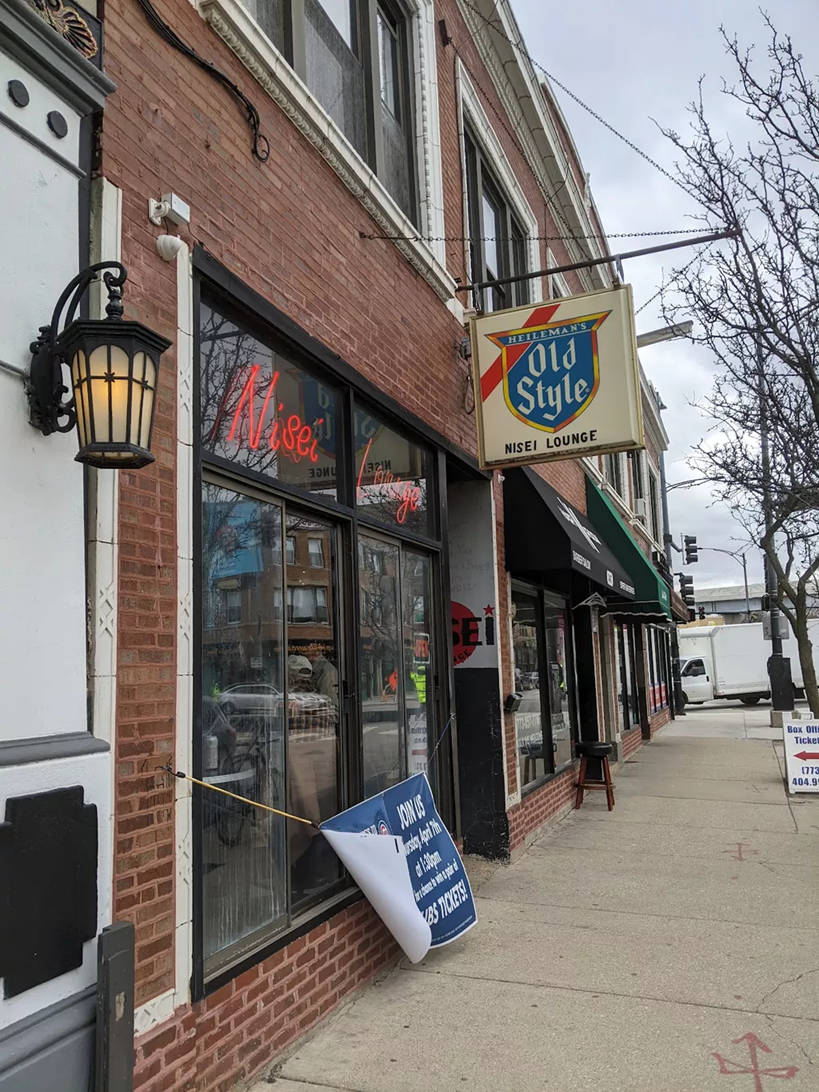
Nisei
Nisei ("second generation") is a term used in countries in North America and South America to specify the ethnically Japanese children born in the new country to Japanese-born immigrants.
Though nisei means "second-generation immigrant", it more specifically often refers to the children of the initial diaspora, occurring during the period of the Empire of Japan in the late 19th and early 20th centuries and overlapping in the U.S. with the G.I. and silent generations.
Founded by Japanese-Americans (hence, the "Nisei") in 1951, Nisei Lounge continues to welcome locals and travelers alike with unpretentious hospitality just a block away from Wrigley Field in Chicago.
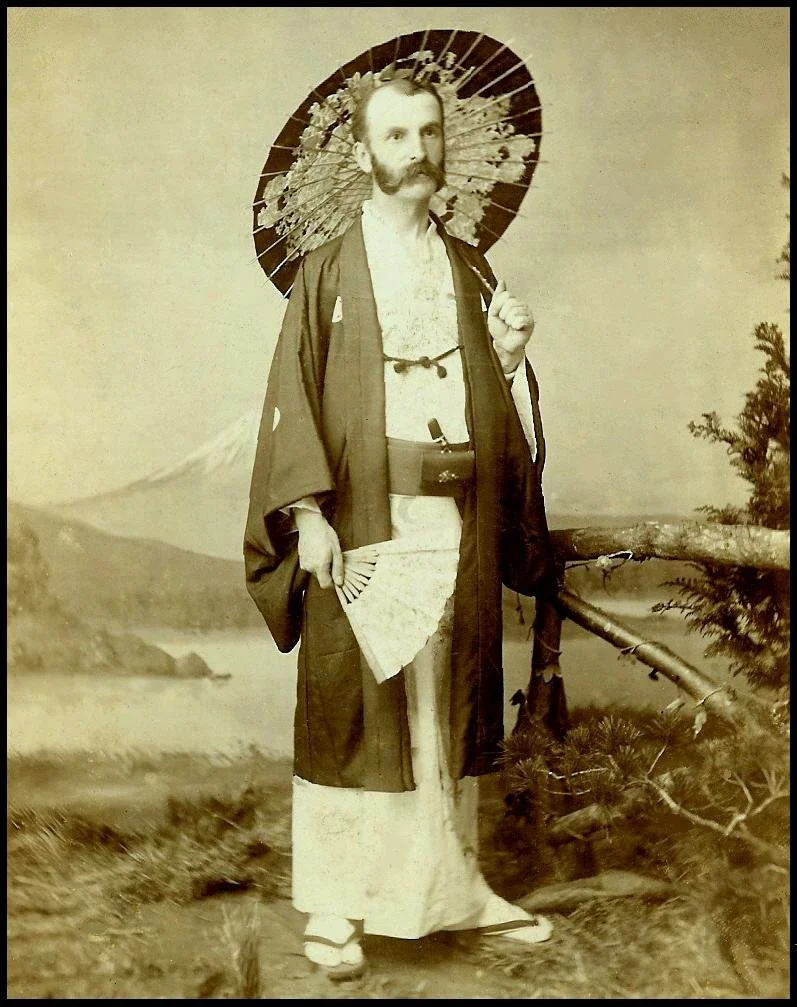
Gaijin
Gaijin ('outsider, alien') is a Japanese word for foreigners and non-Japanese citizens in Japan, specifically being applied to foreigners of non-Japanese ethnicity and those from the Japanese diaspora who are not Japanese citizens.
Some feel the word has come to have a negative or pejorative connotation, while other observers maintain it is neutral.
NPB
Nippon Professional Baseball is a professional baseball league and the highest level of baseball in Japan.
Locally, it is often called Puro Yakyū, meaning simply Professional Baseball; outside of Japan, NPB is often referred to as "Japanese baseball".
The Japanese Baseball League was the professional baseball league in Japan which operated from 1936 to 1949, before reorganizing in 1950 as Nippon Professional Baseball.
If you are trying to pick a team to root for, THIS GUIDE is a pretty fun read.
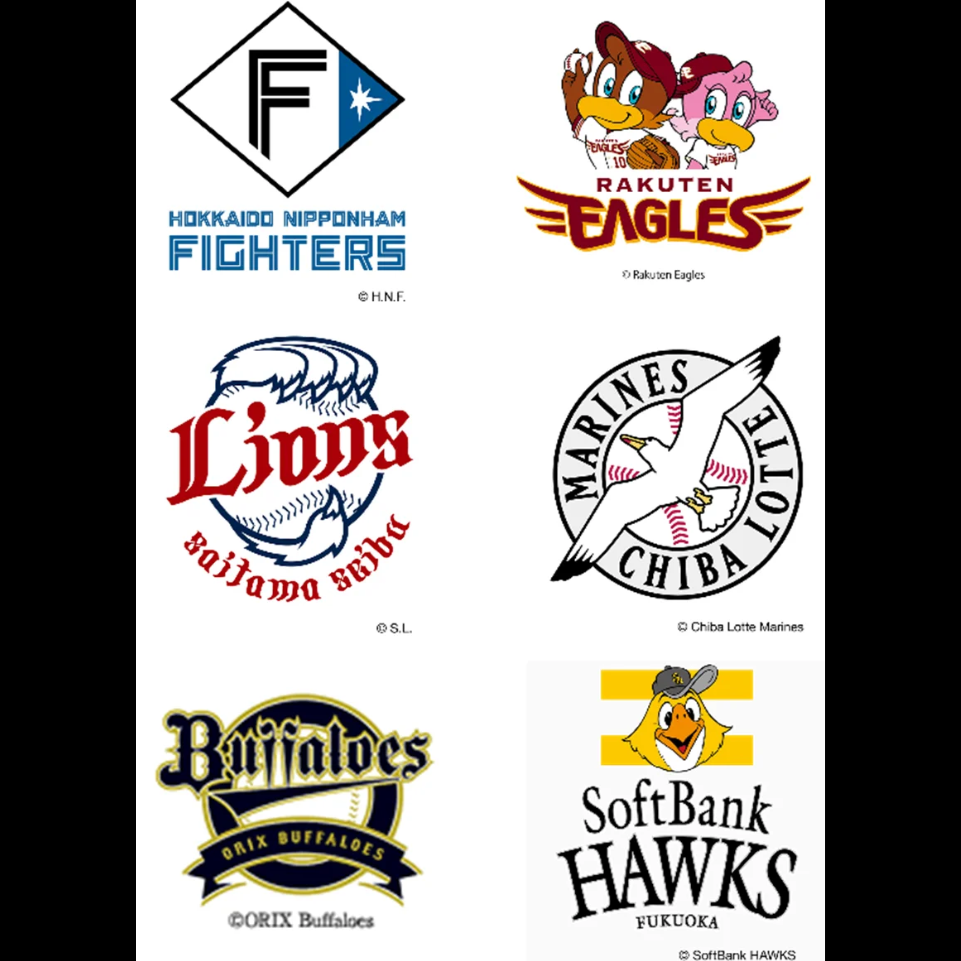
Pacific League
The Pacific League was founded as the Taiheiyo Baseball Union in 1949, with the name changing to its current form in 1980.
The circuit began with seven teams: four holdovers from the previous iteration, the Japanese Baseball League — the Hankyu Braves, the Nankai Hawks, the Daiei Stars, and the Tokyu Flyers — and three new teams — the Kintetsu Pearls, the Mainichi Orions, and the Nishitetsu Clippers.
In 1954, an eighth Pacific League team was founded, the Takahashi Unions, to increase the number of teams to eight.
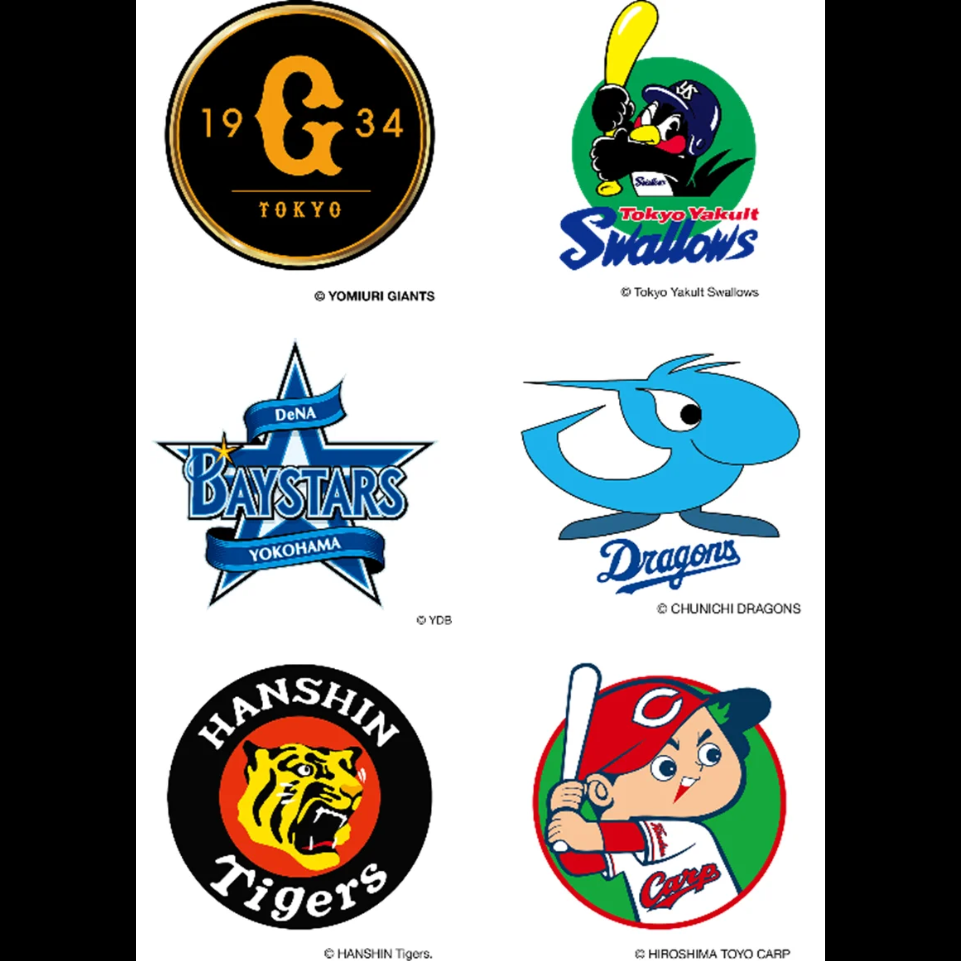
Central League
The Central League was founded in 1949 with eight teams: four holdovers from the previous Japanese Baseball League — the Chunichi Dragons, the Hanshin Tigers, the Yomiuri Giants, and the Shochiku Robins (formerly the Taiyō Robins) — and four new teams — the Hiroshima Carp, the Kokutetsu Swallows, the Nishi Nippon Pirates, and the Taiyō Whales.
The Nishi Nippon Pirates existed for one season — they placed sixth in 1950, and the following season merged with the also Fukuoka-based Nishitetsu Clippers of the Pacific League to form the Nishitetsu Lions, who then joined the Pacific League.
Unlike the Pacific League, the DH is not used during Central League home games, but the Central League has voted to adopt the DH beginning in 2027.
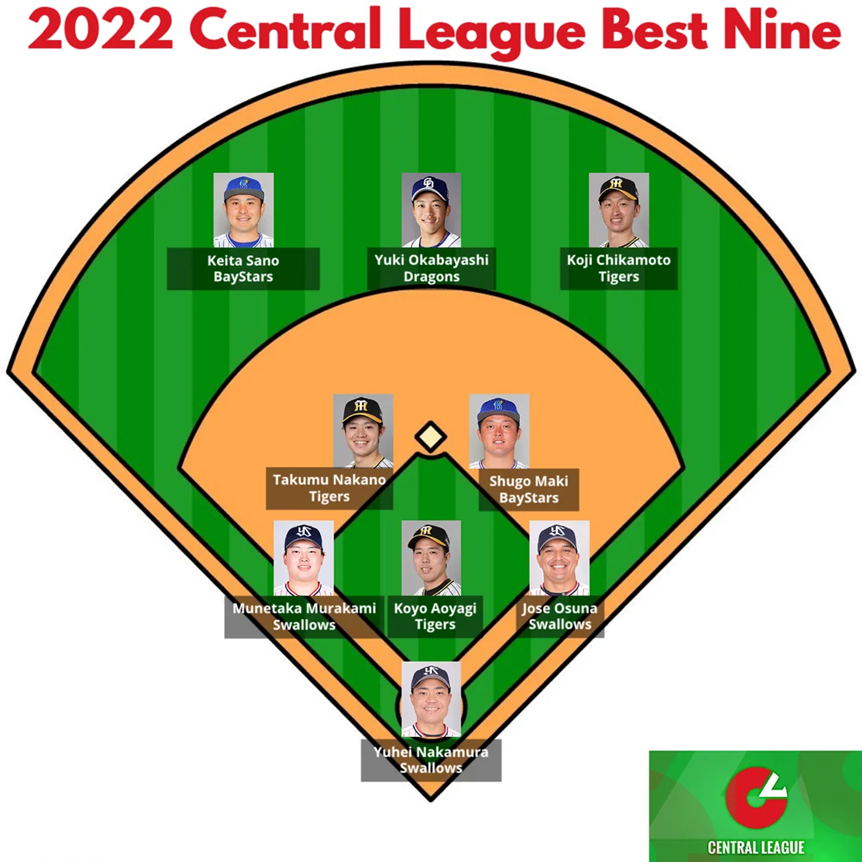
Best Nine Award
The Best Nine Award is an annual NPB honor bestowed upon the best players across the Central League and Pacific League at each position during the season. As determined by a pool of journalists, one player from each position, plus one for the designated hitter in the Pacific League since 1975, is selected for the honor.
While the Best Nine Award was first presented to players following the 1940 season, it was not until 1947 (after World War II) that it became an annual award. After the Japanese Baseball League was divided into Central and Pacific leagues in 1950, the award was presented to nine players from each league.
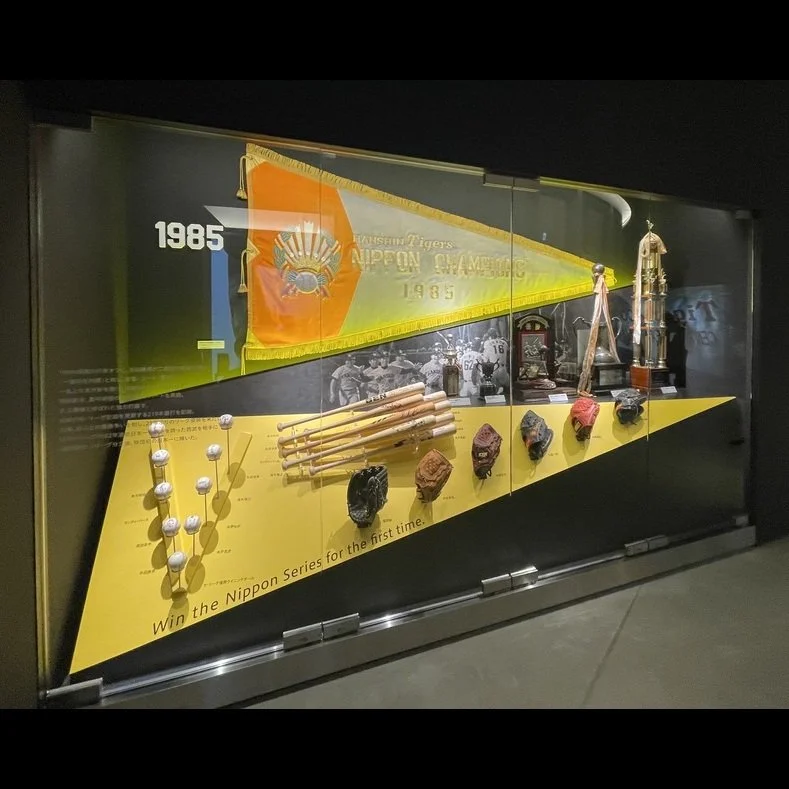
The Curse of the Colonel
The Curse of the Colonel is a Japanese urban legend that held that the ghost of the KFC founder, Colonel Sanders, placed a curse on the Hanshin Tigers baseball team because of the Colonel's anger over treatment of one of his store-front statues, which was thrown into the Dōtonbori River by Hanshin fans before their team's 1985 Central League pennant.
I am begging you to watch the video below.
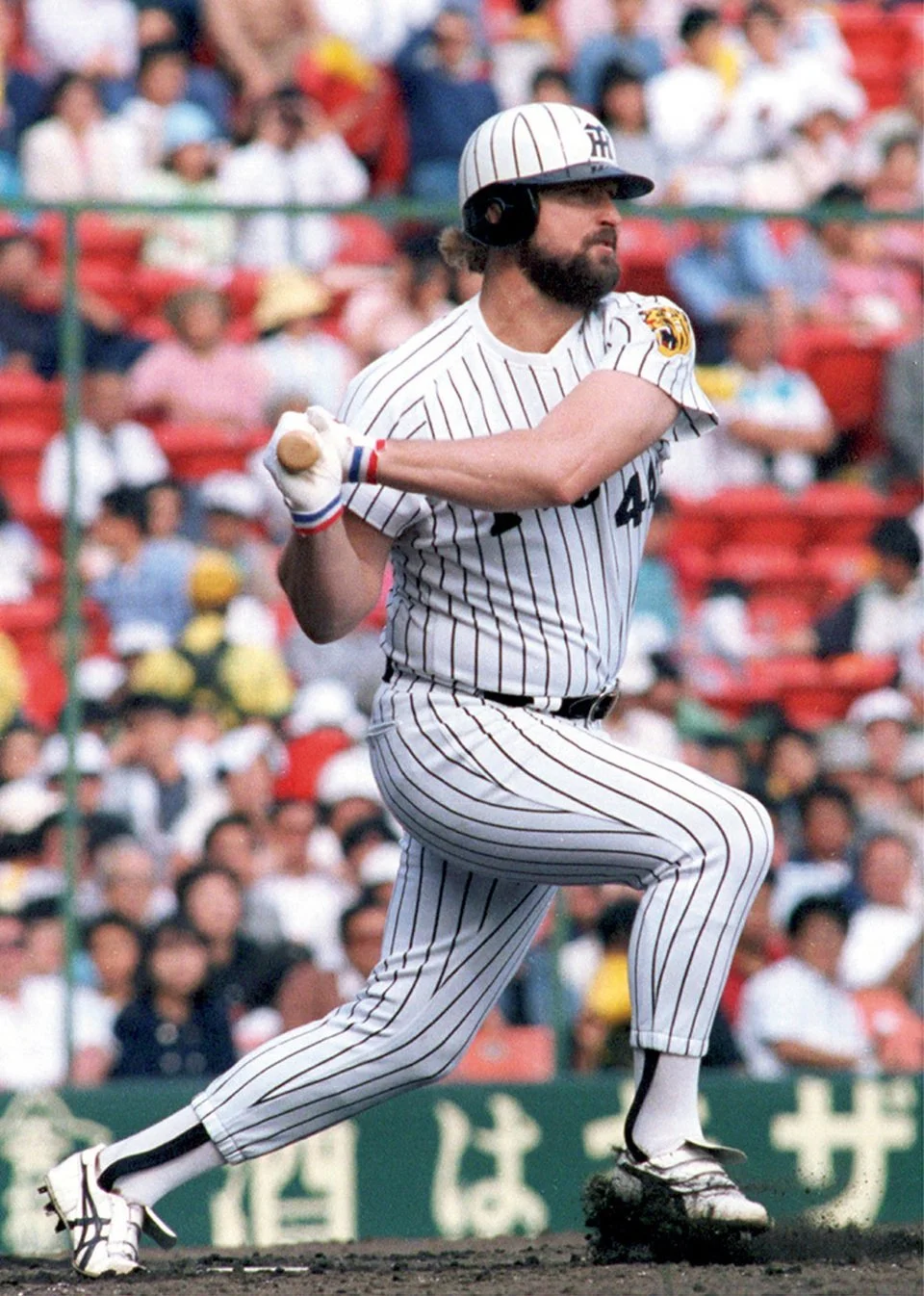
Randy Bass
Randy Bass joined the Hanshin Tigers, one of the most popular professional Japanese baseball clubs, based in Nishinomiya, Hyogo Prefecture, in 1983. Two years later, he posted a .350 batting average, bashed 54 home runs, and drove in 134 RBI to win the Triple Crown, leading the Tigers to their first Japan Series championship in franchise history.
Bass would go on to take the Triple Crown again the next year, when he blasted home runs in seven straight games, and his .389 batting average (in 1986) set a single-season record in Japanese baseball.
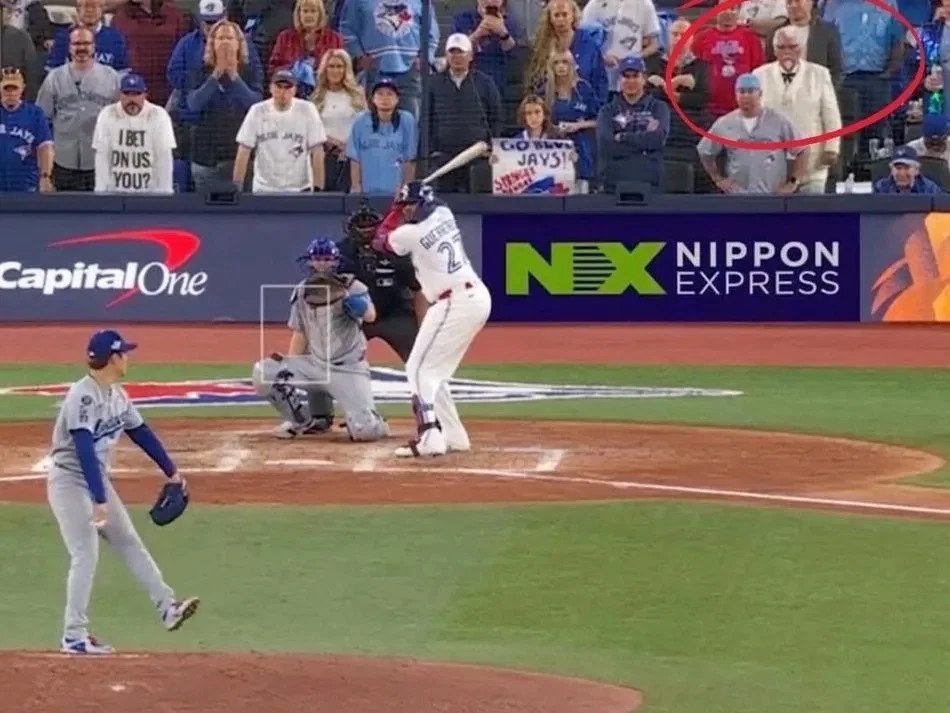
2025 World Series
While the Dodgers did have three players who came from NPB (Game 2 starter Yoshinobu Yamamoto, Shohei Ohtani, and closer Roki Sasaki), none played for the Hanshin Tigers, so social media speculation that the spectator dressed as the Colonel was there to intimidate the Japanese Dodgers doesn’t pass the smell test.
It was more likely a viral campaign by KFC Canada, which had the colonel all over its Instagram Story that night.
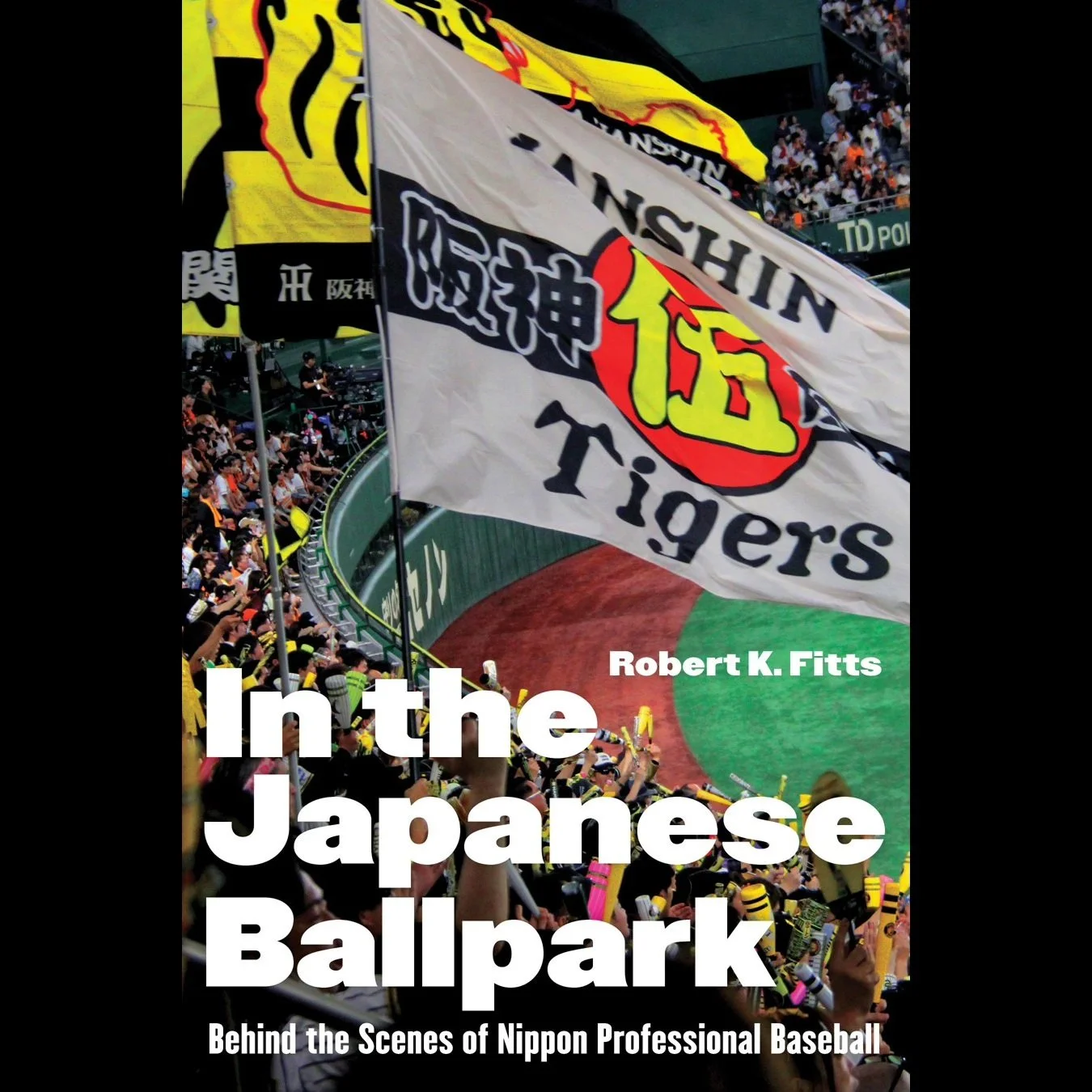
In The Japanese Ballpark
Rob’s latest book is fascinating, but we can’t possibly understand why everything he wrote is so interesting, or how things got to where they are today in the modern Japanese game, unless we learn what came before it. So that’s what this episode is going to be: us learning about the history of baseball in Japan.
Part two of this episode will be a discussion on the modern game, and the in-stadium experience if you go to a ballgame in Japan today.
If you want to buy a copy of Rob’s book, you can HERE.
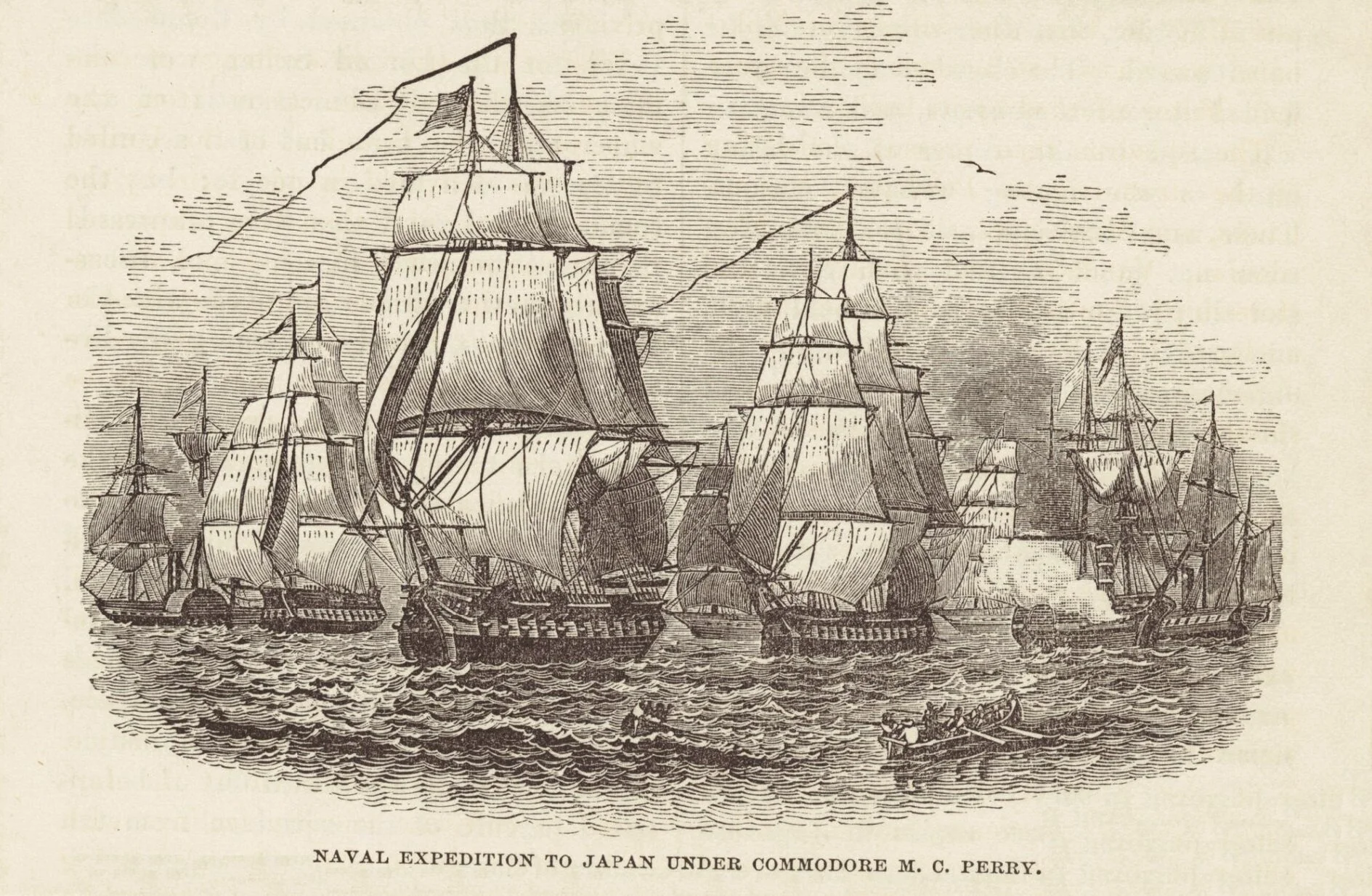
The Black Ships were the names given to the American warships arriving in Japan under the Perry Expedition in the 19th century.
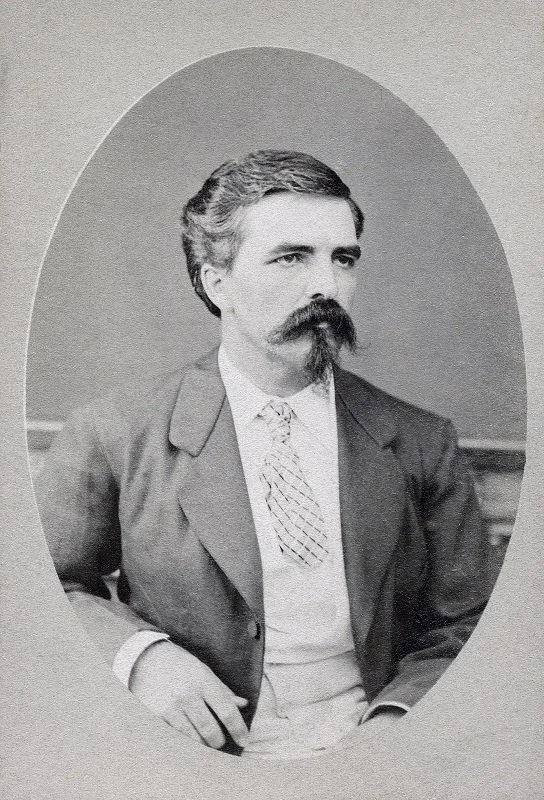
Horace Wilson
Horace Wilson was an American expatriate educator in late 19th-century Empire of Japan. He is one of the persons credited with introducing the sport of baseball to Japan.
After the US Civil War, he was hired by the Japanese government as a foreign adviser to assist in the modernization of the Japanese education system after the Meiji Restoration. He served as a professor of English at Kaisei Gakko, the forerunner of Tokyo Imperial University.
In either 1872 or 1873, Wilson decided that his students needed more physical exercise, and introduced them to the sport of baseball. Several weeks or months later, enough interest had developed for the school to sponsor a seven-inning game between the Japanese students and foreign instructors.
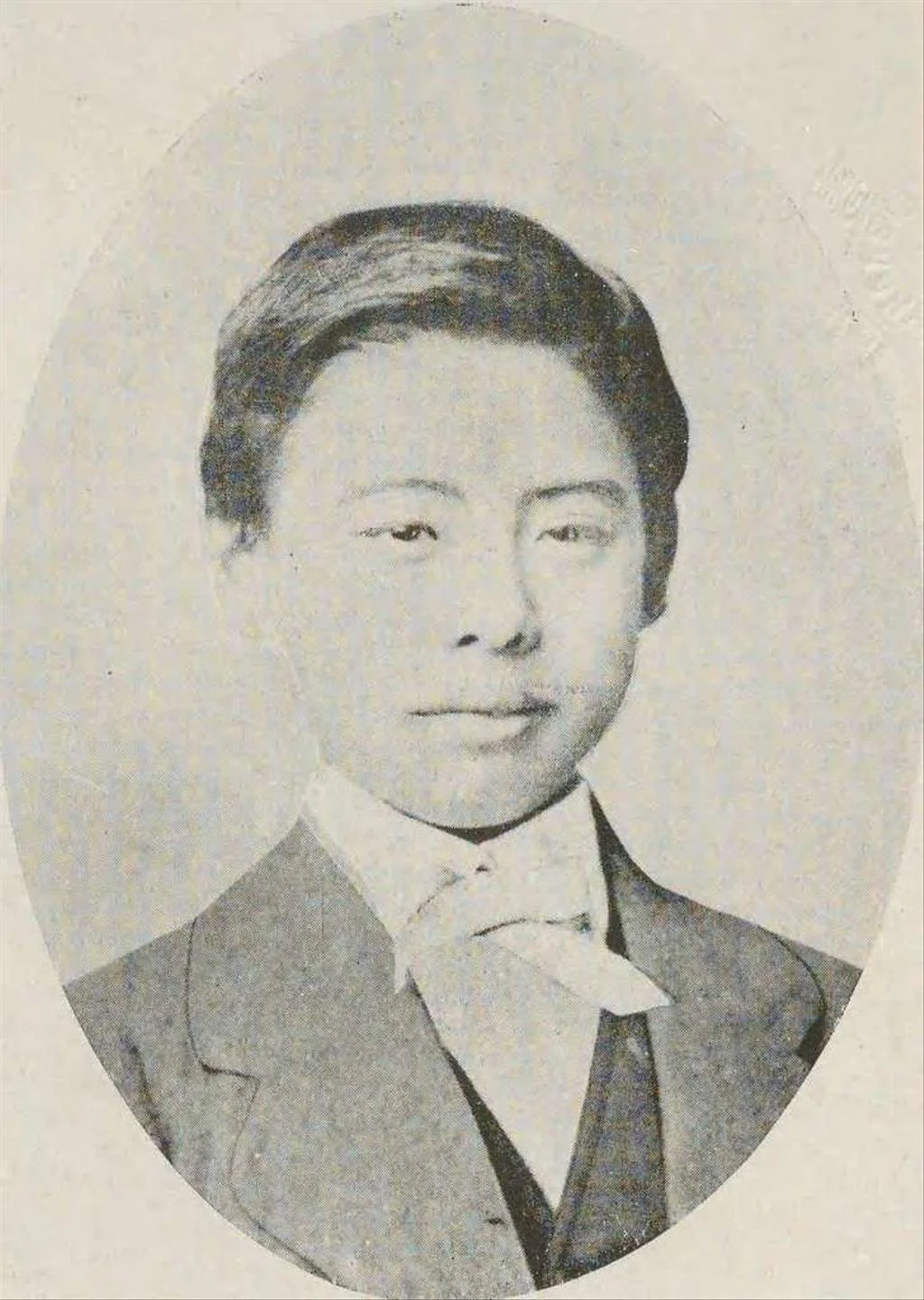
Hiroshi Hiraoka
Albert Bates, another American teacher at Kaitaku University in Tokyo, is said to have organized one of the earliest formal games in 1873.
Hiroshi Hiraoka, who is known as the father of Japanese baseball, had traveled to the United States in 1871 to study railway technology. He had become an ardent Red Sox fan as a student in Boston.
When Hiraoka returned to Japan in 1877, the railway engineer brought back baseball equipment and guidebooks along with his railroad knowledge, and established Japan’s first team, the Shimbashi Athletic Club Athletics, in 1878.
His players were railway engineers, station workers, and foreign technicians who used makeshift gloves and ran the bases wearing geta (wooden sandals).
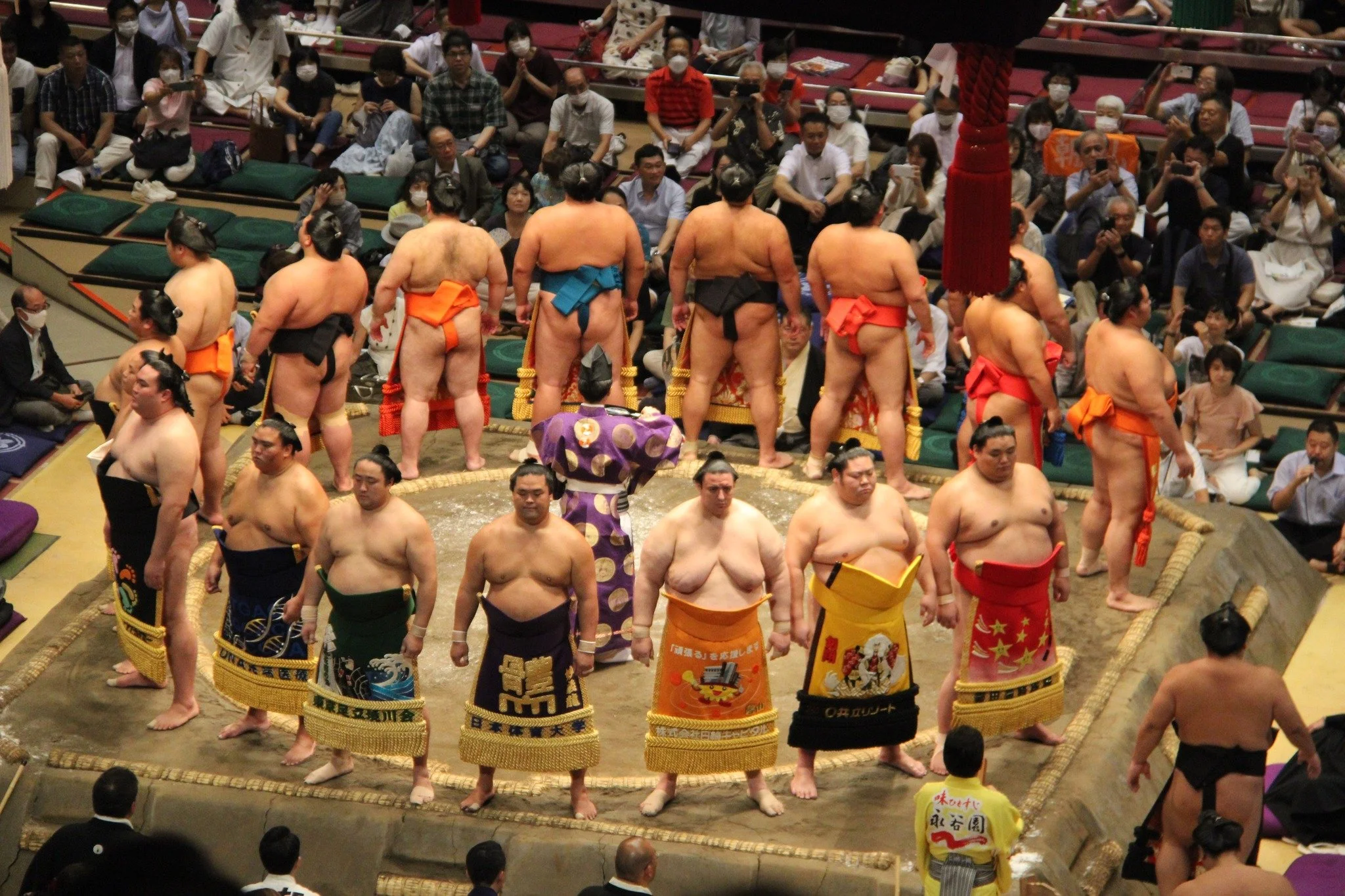
Sumo
The Shinto origins of sumo can easily be traced back through the centuries and many current sumo rituals are directly handed down from Shinto rituals. The Shinto religion has historically been used as a means to express Japanese nationalism and ethnic identity, especially prior to the end of World War II.
While the religious overtones are less obvious today, they do still exist.
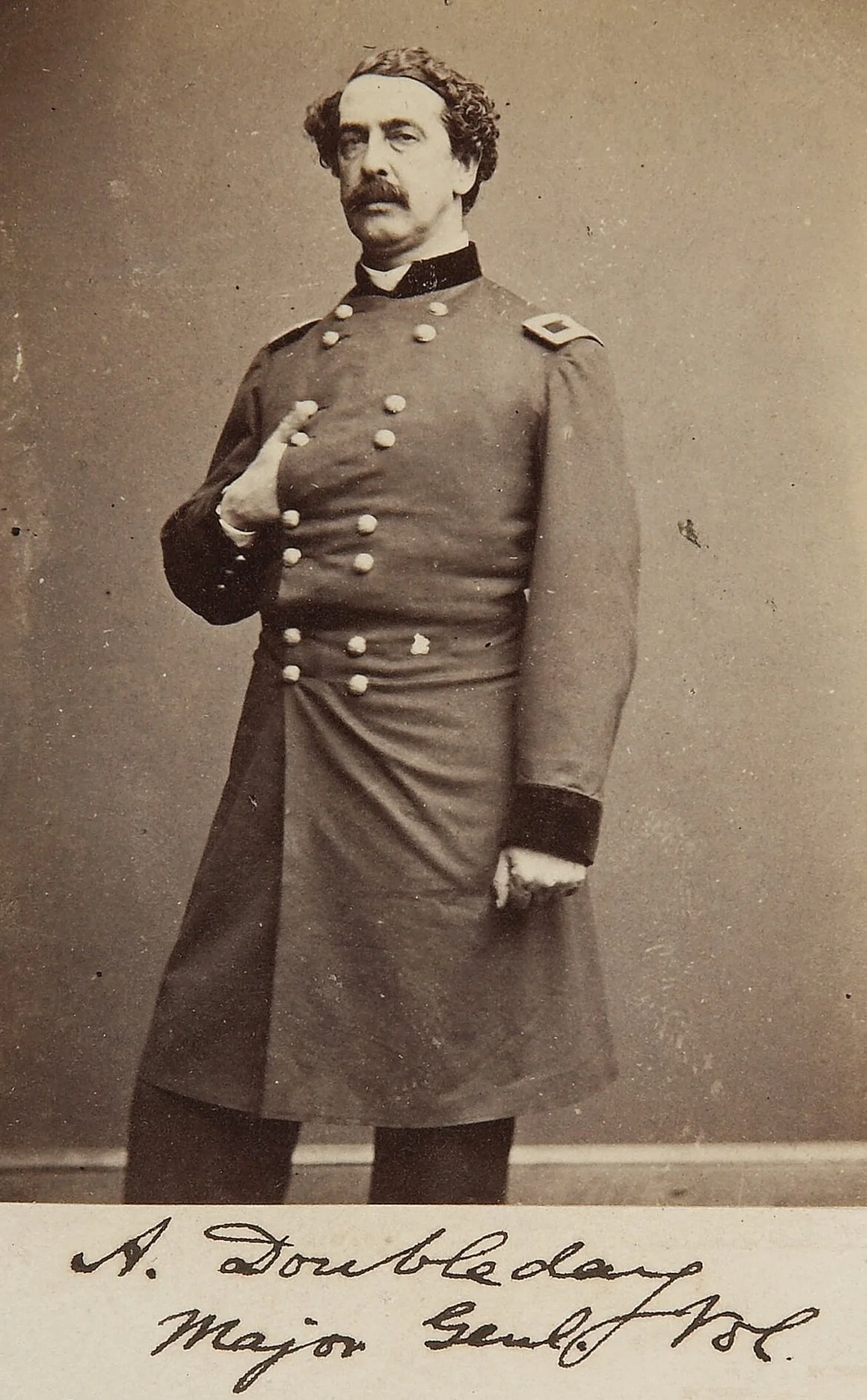
The Doubleday Myth
Abner Graves, a mining engineer, proclaimed that Abner Doubleday – a decorated Union Army officer who fired the first shot in defense of Fort Sumter at the start of the Civil War and later served at the Battle of Gettysburg – invented baseball in 1839 in Cooperstown.
That was good enough for the Spalding Commission, which came to its conclusion in 1907.
The Doubleday Myth is widely discredited among modern baseball historians. The recollections of Graves have been criticized because Graves was five years old in 1839, and 71 when he first made the Doubleday claims.
Although Spalding referred to Doubleday and Graves as "playmates" in his submission of evidence to the Mills Commission, Doubleday was more than a decade older than Graves, turning 20 in 1839.
In the years since, The Doubleday Myth has been refuted. Doubleday himself was at West Point in 1839.
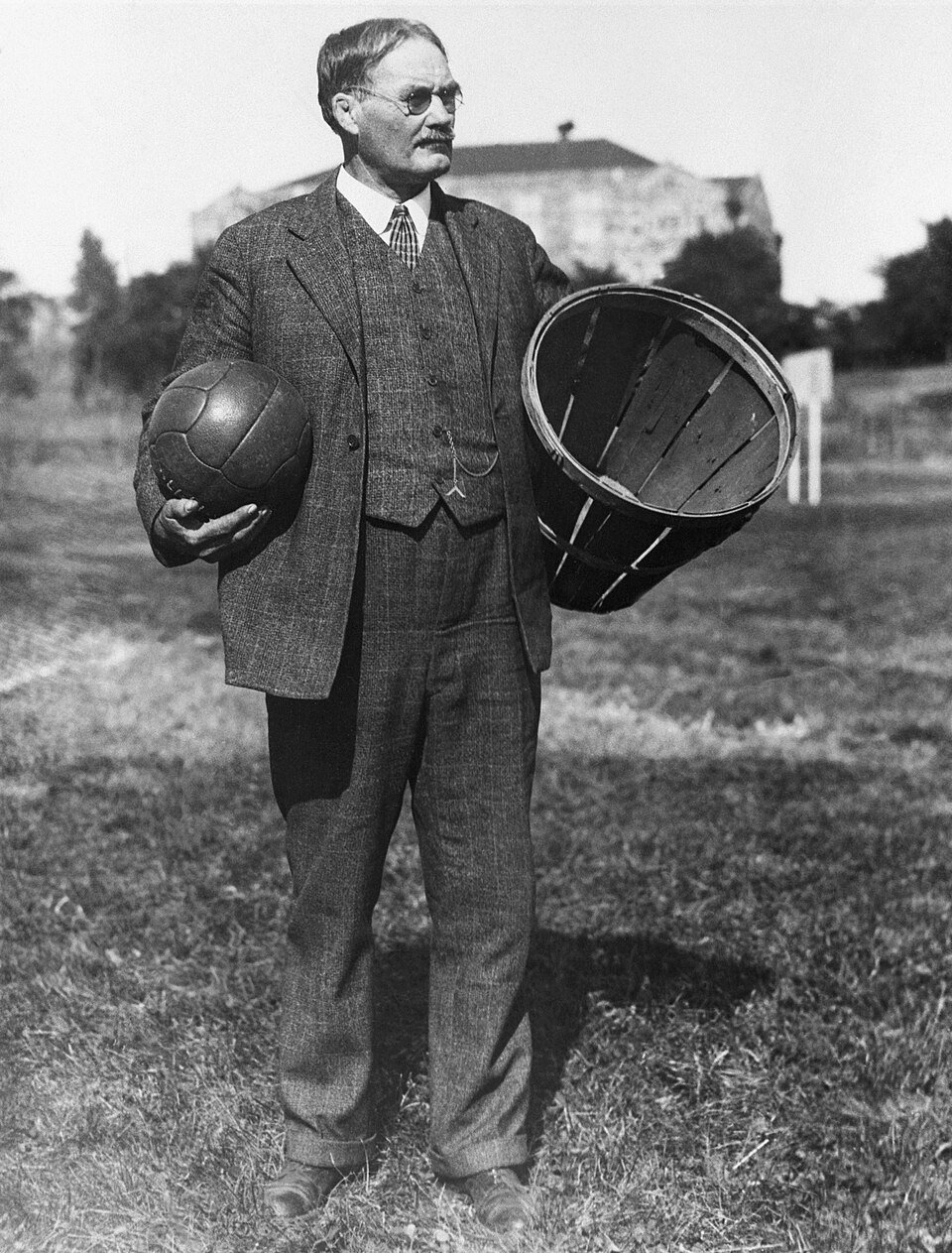
Dr. James Naismith
Dr. James Naismith was a Canadian-American physical educator, physician, Christian chaplain, and sports coach, best known as the inventor of the game of basketball.
Naismith studied and taught physical education at McGill University in Montreal until 1890, before moving later that year to Springfield, Massachusetts, where in 1891 he designed basketball while teaching at the International YMCA Training School.
First developing the game in Canada, he wrote the original basketball rule book after moving to the United States and founded the University of Kansas basketball program in 1898.
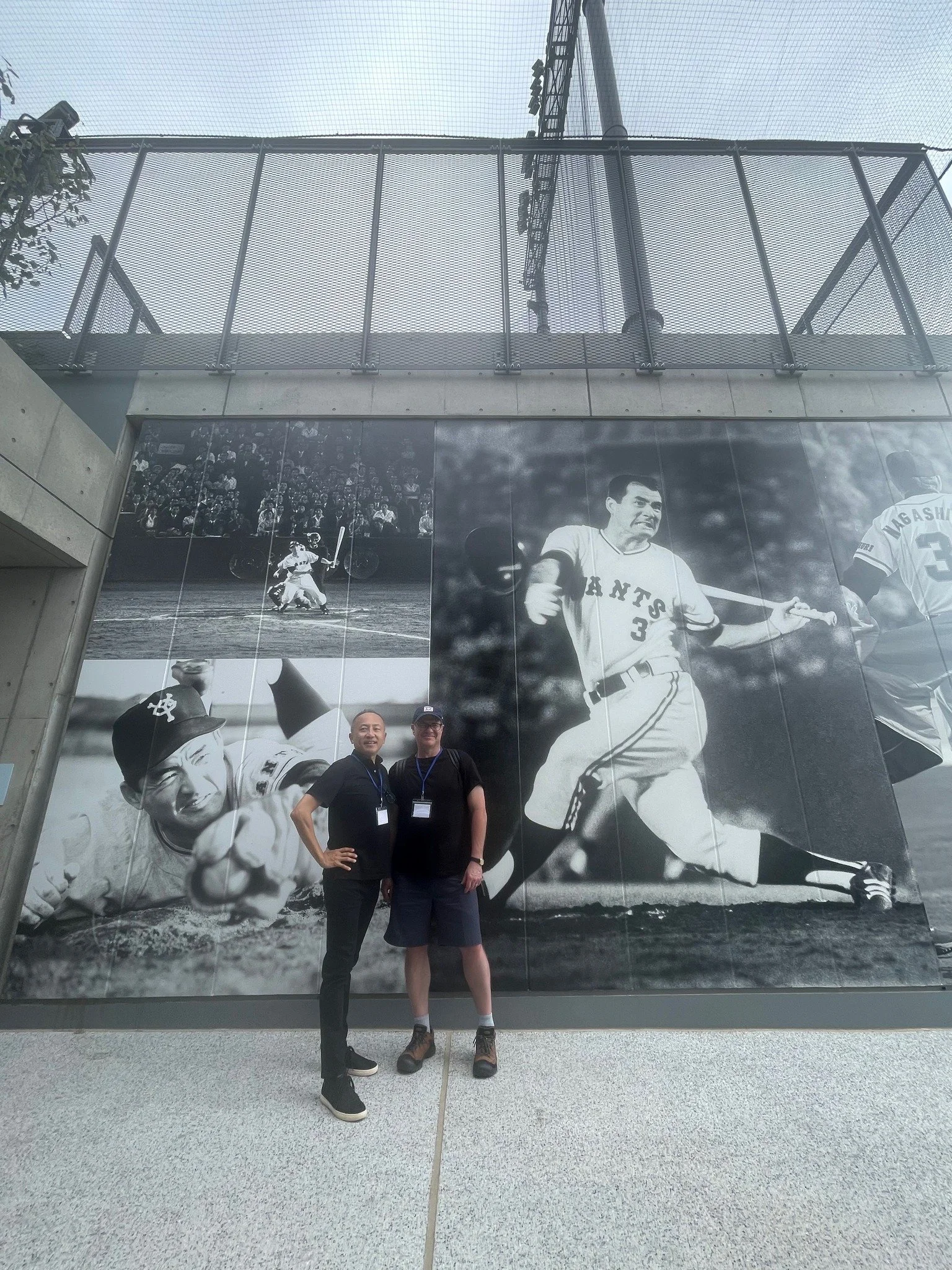
Nobby Ito
Nobuhisa "Nobby" Ito is the official historian of NPB. He says a group of sailors from the USS Colorado played baseball on the Kawaguchi Settlement, Osaka, on January 17, 1871, while they accompanied Admiral Rogers on a visit to Osaka Castle. They played against Japanese soldiers. This based on a reminiscence written long after.
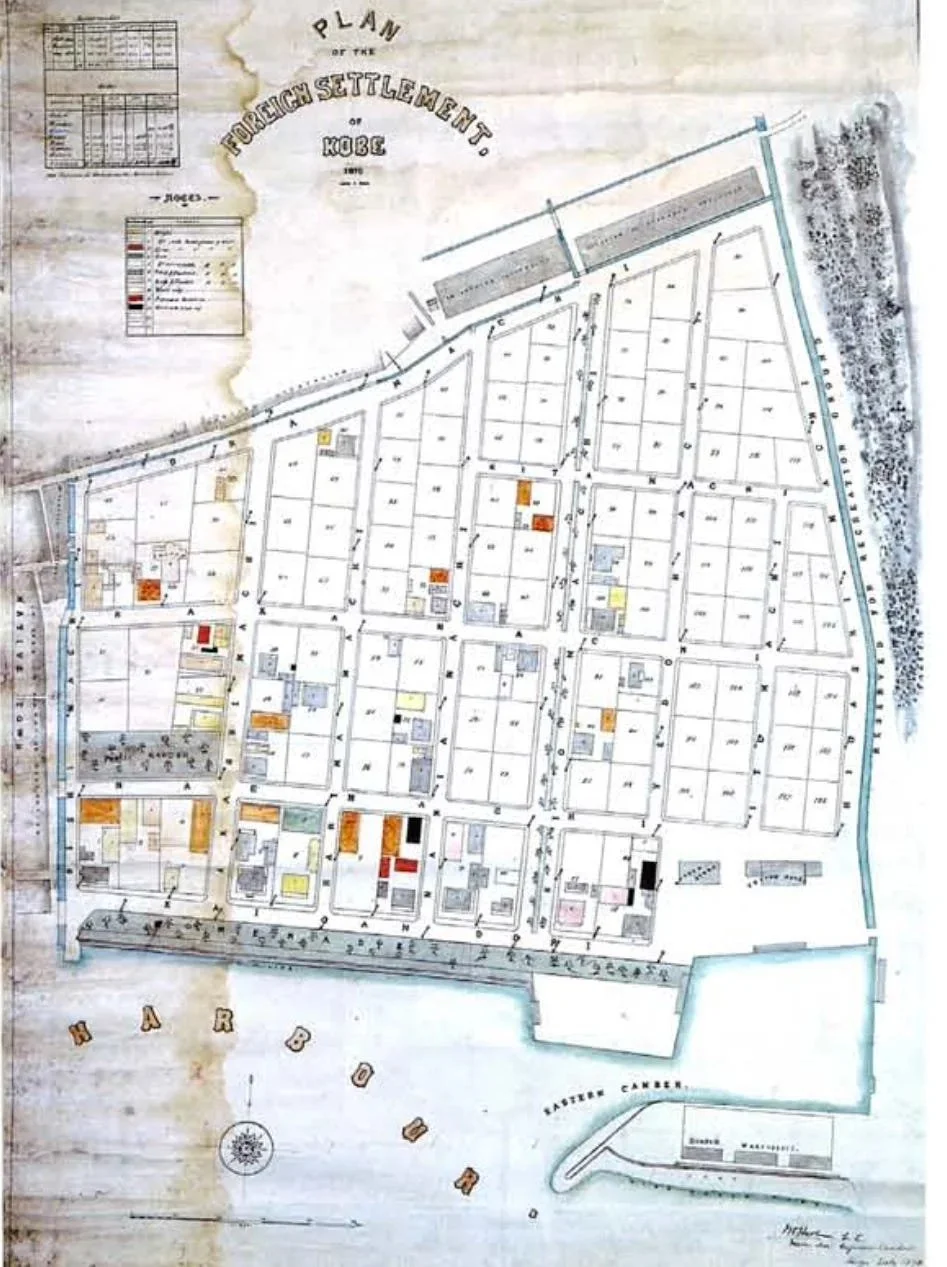
As Early As 1869?
As Robert Whiting writes, “in Kobe, on 4th August, 1869, about eighteen months after the port was opened, The Hiogo News reported: … one evening last week we saw as many as 7 or 8 men playing cricket and a still larger number playing baseball.”
“An 1870 plan of the Kobe Concession shows the location of the staked plots for sale and the approximate location of the ground used for cricket and baseball in July 1869… the ground was in the northeast corner of the concession and contained stakes marking the unsold lots, we can place the area just to the west of modern Kobe City Hall between Kyomachisuji Street on the west, Hanadokeisen Street on the north, Higashimachi-Suji Street on the east, and Kitamachi Street on the south.”
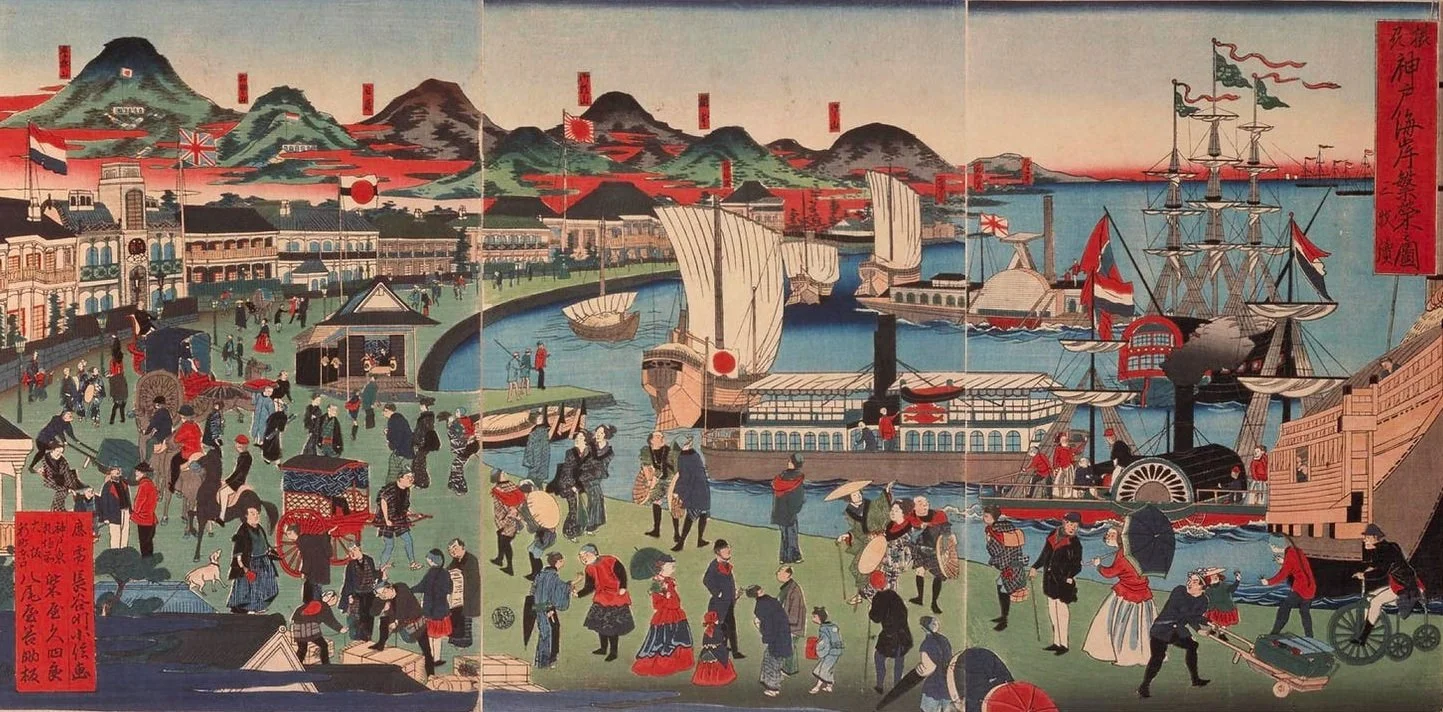
Kobe, Japan in 1871
Martial Arts Mentality
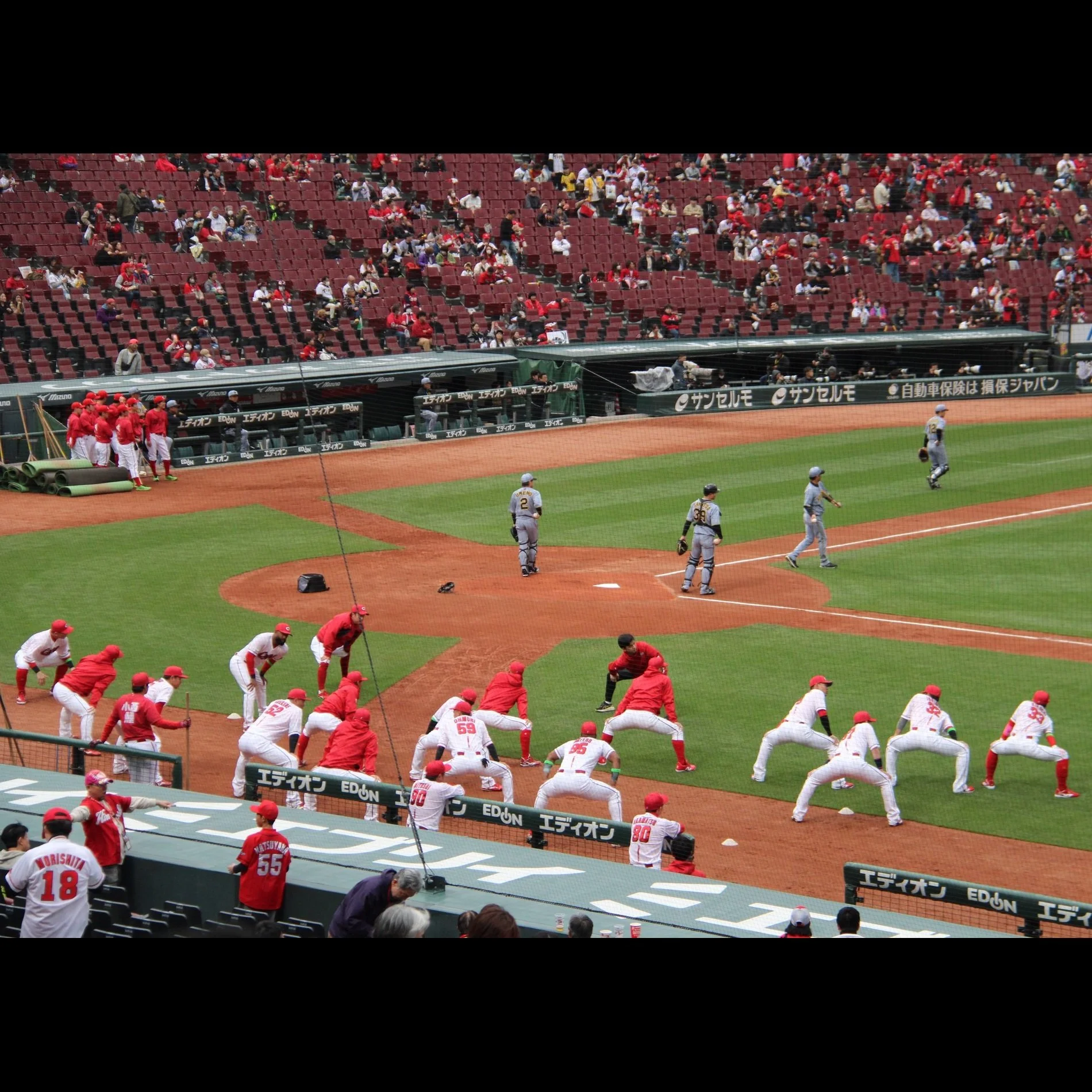
Rob says that, especially early on in Japan’s baseball history, school teams approached the sport with a martial arts mentality.
Before baseball, there were no team sports in Japan. All sports and activities were derived from the martial arts or the military, where you practice for two main reasons:
1. For absolute perfection, especially as it relates to form
2. To not only increase your skill level, but to increase your spirit
You Gotta Have Wa
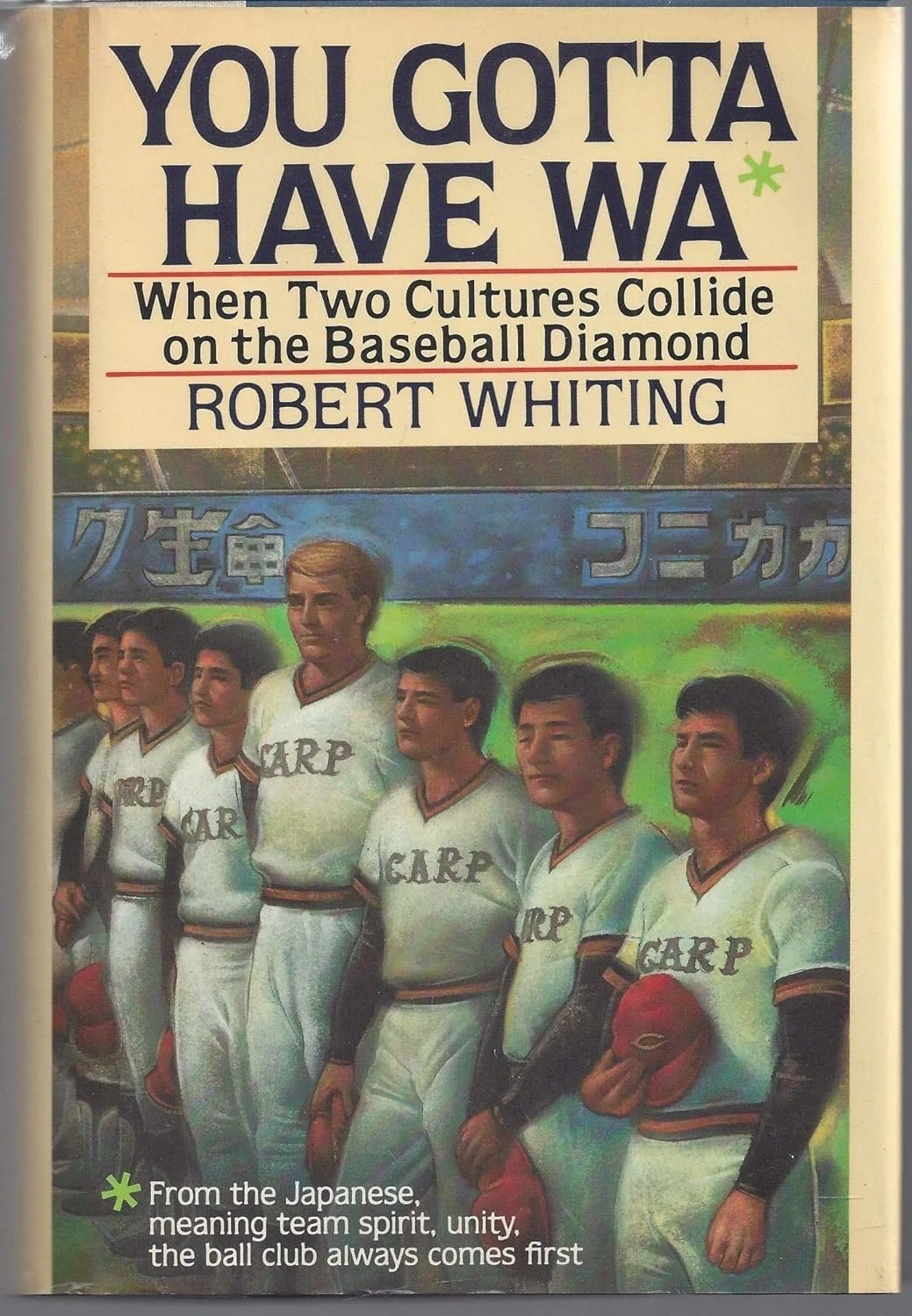
"Wa," Japanese for "team spirit," is the creed of Japanese baseball, played since the 1850s and professionally since 1935.
Robert Whiting, a long-time Japan resident, concentrates on the two pro leagues. The Japanese leagues, he reports, believe their severely coached game to be superior to the U.S. game. They discourage Japanese from entering U.S. leagues. A few Americans, usually older ones, have been accepted on Japanese teams, but they meet with resentment, criticism, and discrimination.
You Gotta Have Wa updates Whiting's earlier The Chrysanthemum and the Bat and contrasts with Sadaharu Oh and David Falkner's Sadaharu Oh. It is a revealing and disturbing account that is heartily recommended for adult and YA collections.
Buy a copy of Robert Whiting’s You Gotta Have Wa HERE.
Robert Whiting
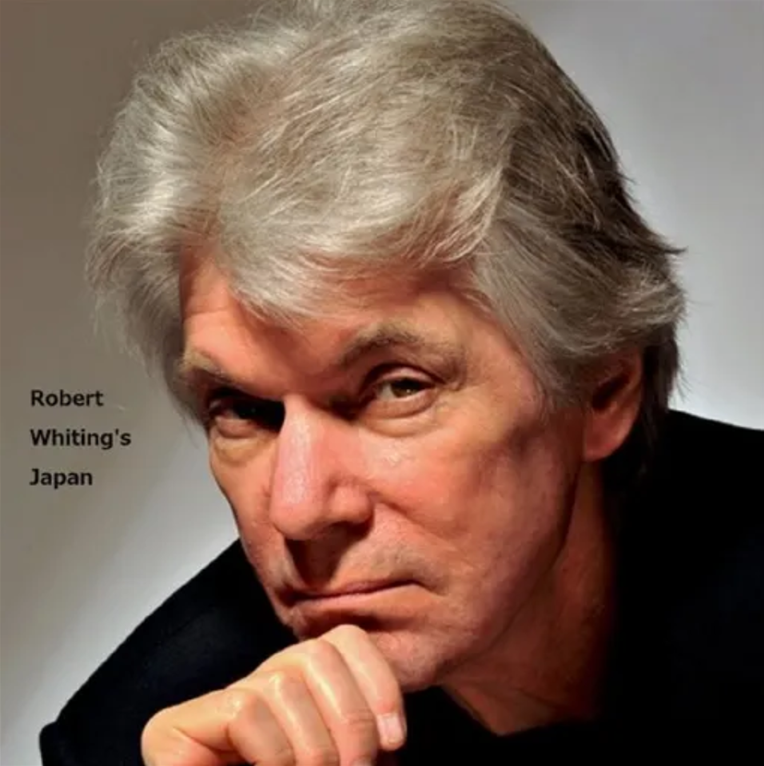
Robert Whiting first came to Japan with U.S. Air Force Intelligence in 1962 at the age of 19. You Gotta Have Wa was first published in 1989. Nearly 40 years later, Whiting is still writing.
You can read his work for free on his substack, titled Robert Whiting’s Japan, HERE.
Batting Style
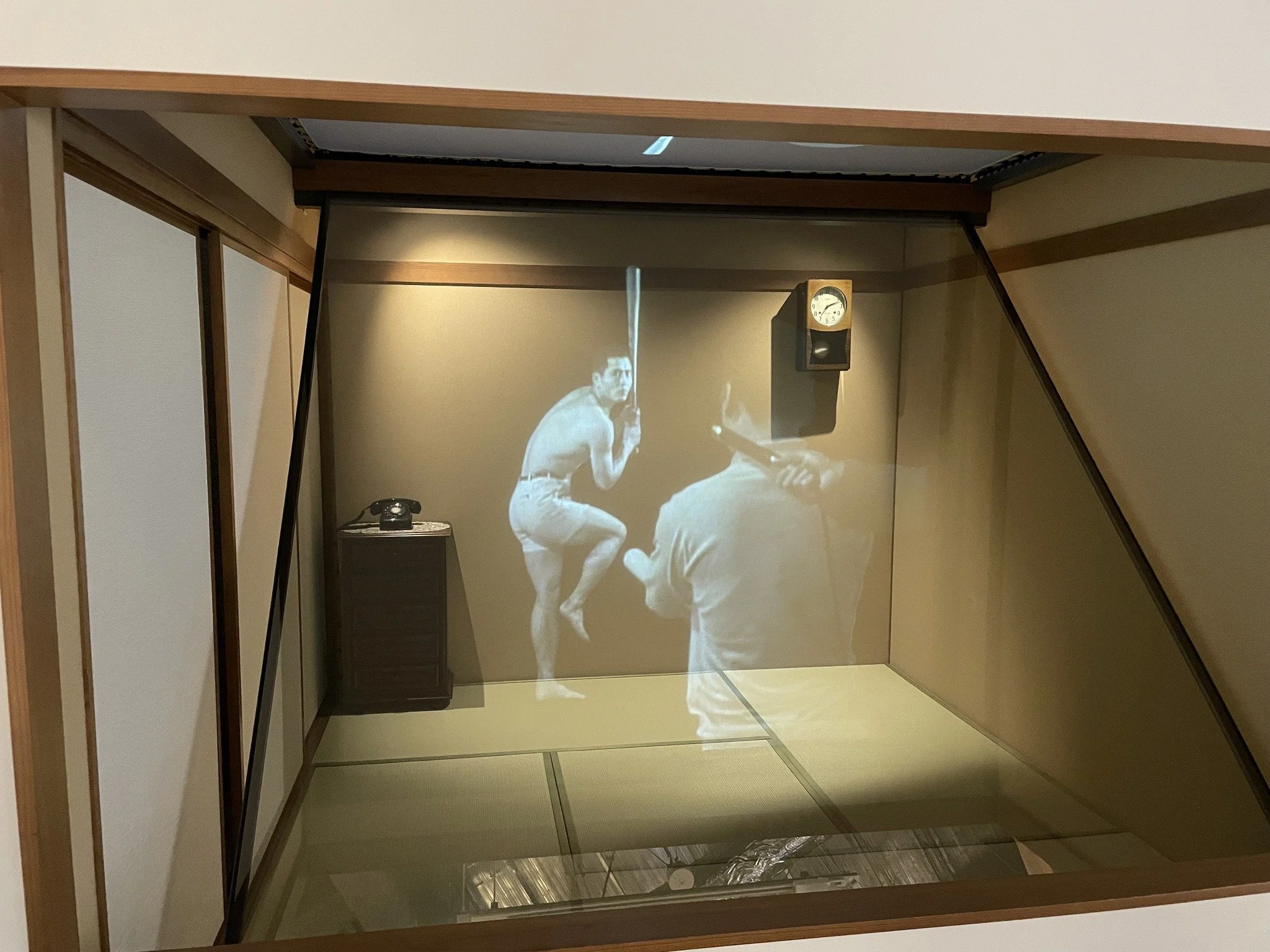
Many Japanese hitters lift their front leg higher than other countries' hitters, seemingly because they’re trying to load their weight into their back leg. In Japanese hitting instruction, loading the weight into back leg before the stride is thought to be a crucial basic for not only power production, but also as a timing adjustment against slow breaking balls.
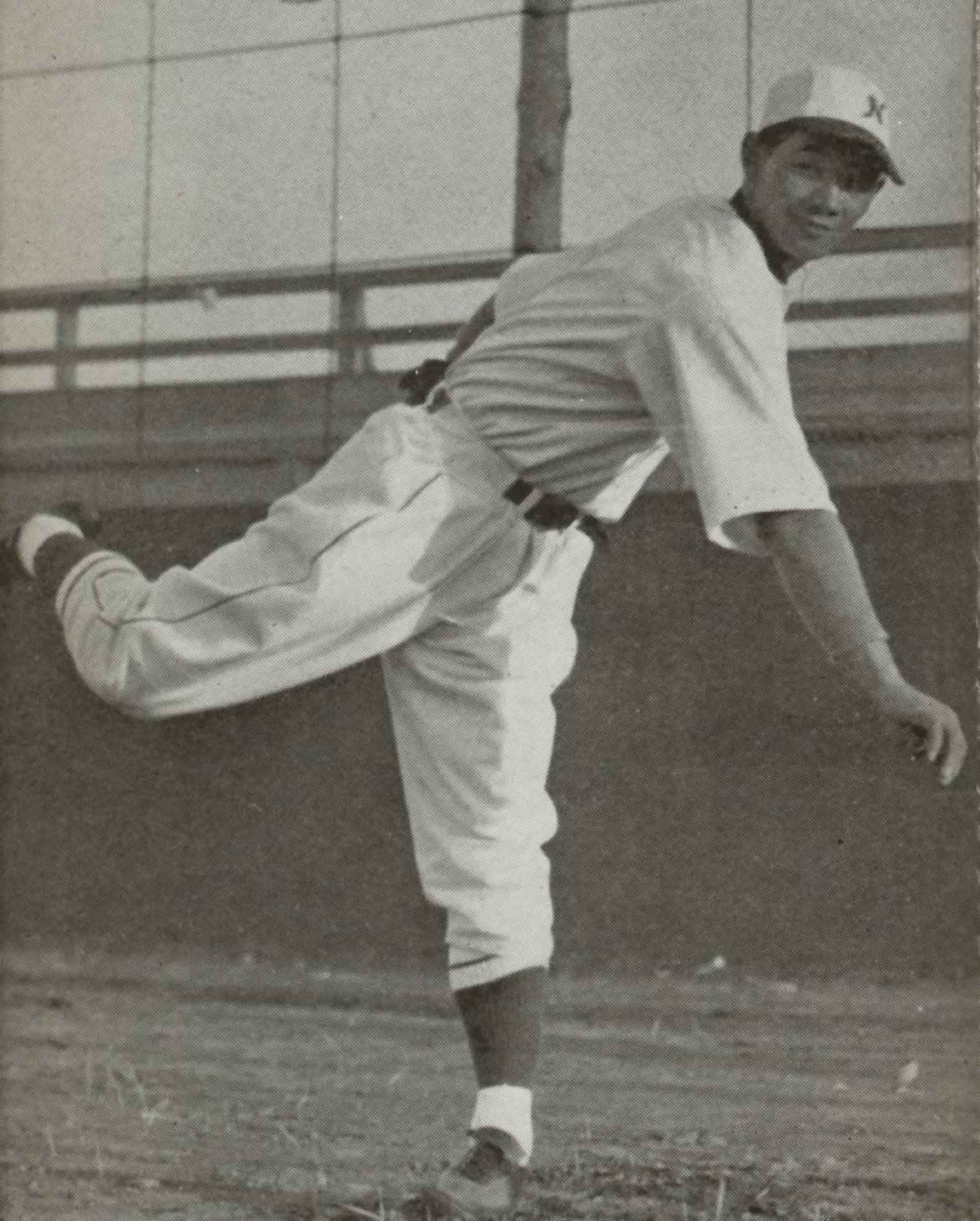
Pitching Mechanics
When it comes to throwing mechanics, Japanese pitchers seem to usually produce greater shoulder kinetics whereas American pitchers generate greater elbow kinetics.
Frank Herrmann, who is a Harvard grad who played four seasons for Cleveland and Philadelphia before going to Japan and playing in the NPB, said “I don’t see them training for power or quick twitch. They are more focused on throwing 100-pitch pens, running long distances, and taking a thousand ground balls, than they are in being explosive.”
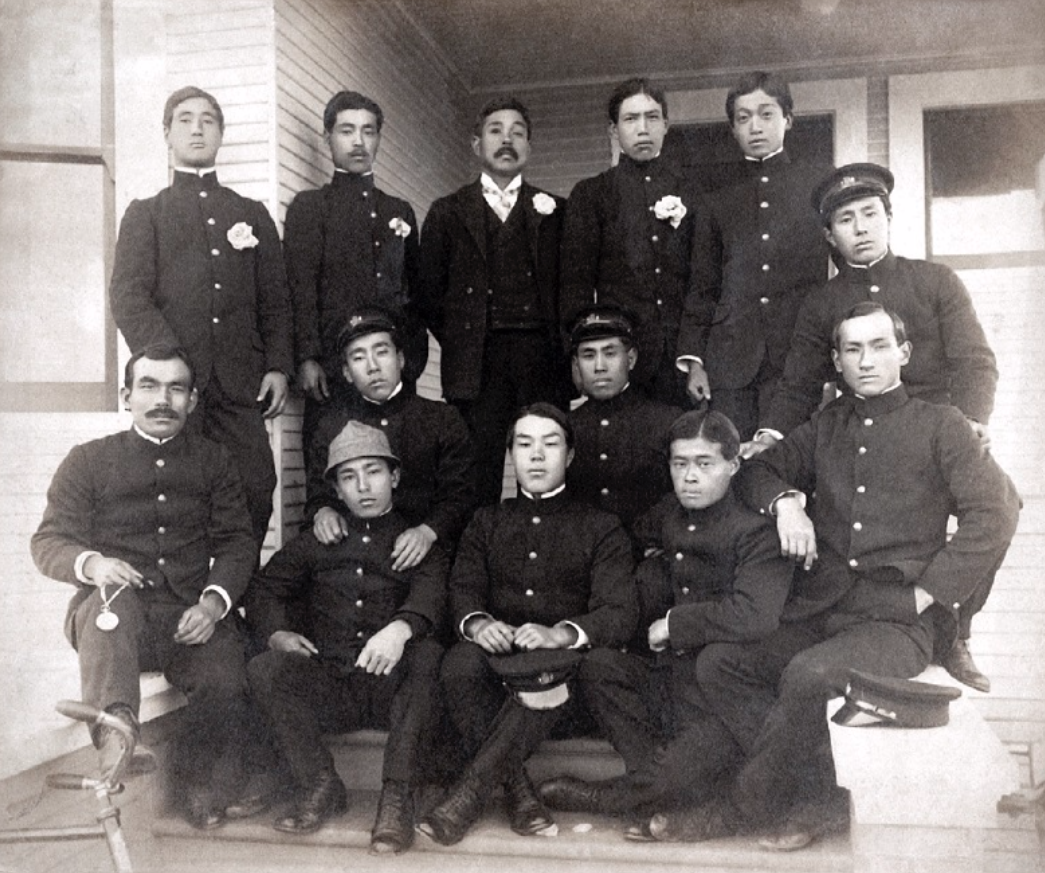
Waseda University
In 1905, the Tokyo-based Waseda University team became the first of many Japanese teams to travel to the United States. On April 16 of that year, the Waseda University baseball team played the Stanford baseball team in California.
Stanford beat Waseda 9-1. This game may have been the first formal event between Stanford and Waseda. Since then, Waseda and Stanford have engaged in numerous academic and research collaborations, student exchanges, and sporting events, and each has enrolled the other’s alumni in graduate and professional programs.
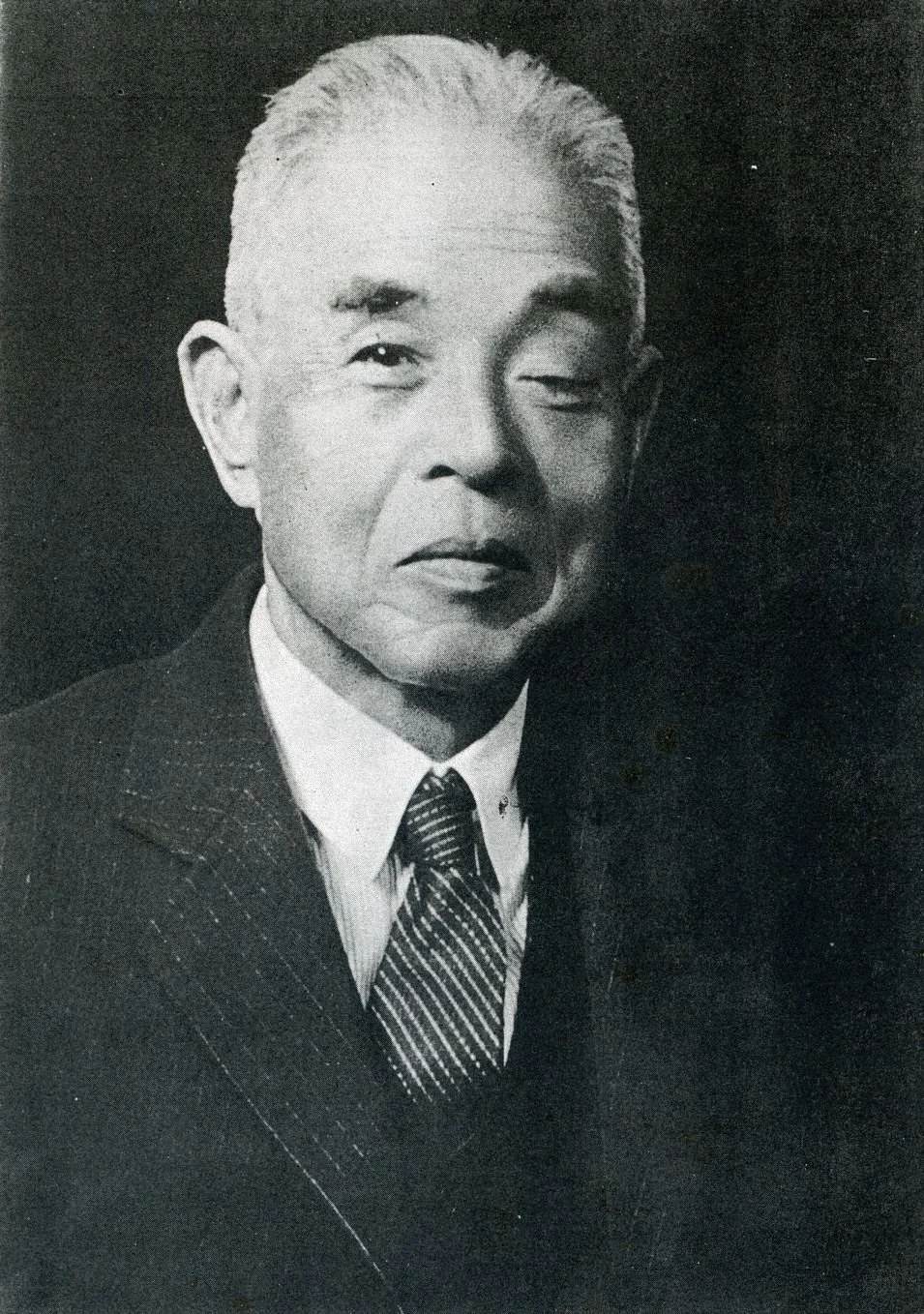
Isoo Abe
Isoo Abe is widely recognized as both the "Father of Japanese Baseball" and a pioneering figure in Japanese socialism.
A Christian socialist, professor, and politician, he established the first university baseball club at Waseda University in 1901 and promoted the sport as a tool for character building, international exchange, and social reform.
He believed that baseball could bring international peace. When he brought his team to America, his number one goal was to build bridges between America and Japan.
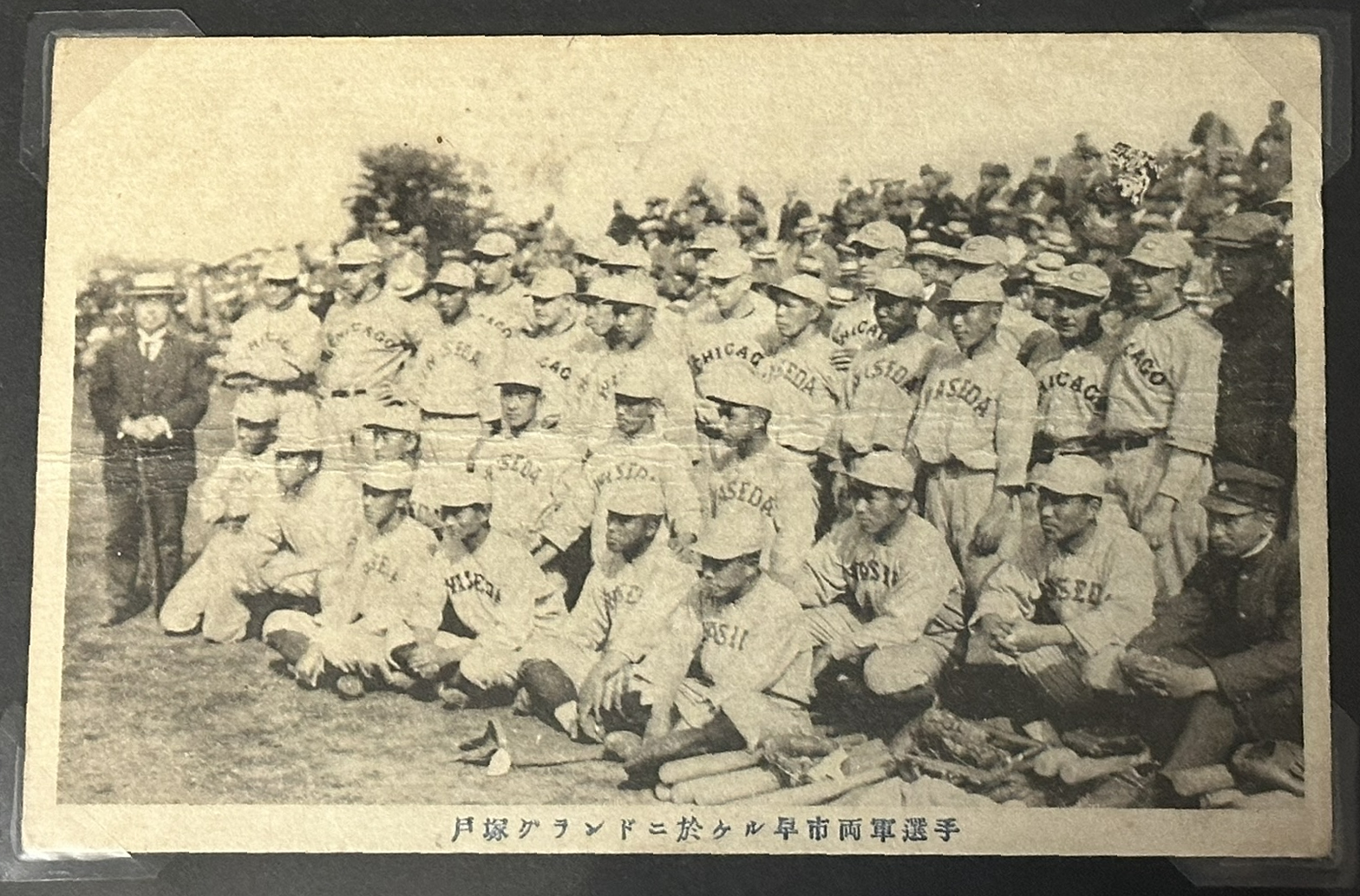
Abe is seen here on the left, wearing the suit, with his Waseda University baseball team and the Chicago White Sox.
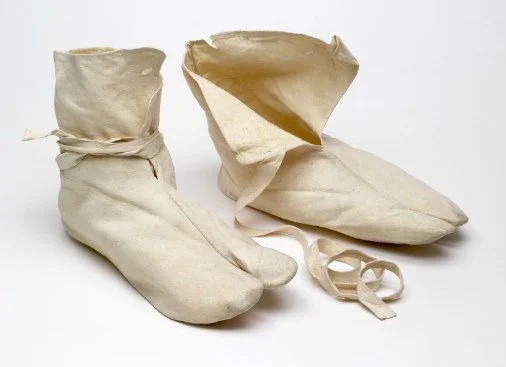
Tabi
Japanese tabi are usually understood today to be a kind of split-toed sock that is not meant to be worn alone outdoors, much like regular socks.
However, tabi were originally a kind of leather shoe made from an animal hide, as evidenced by historical usage and the earlier form of the word, tanbi, written 単皮, with the kanji literally signifying "single hide".
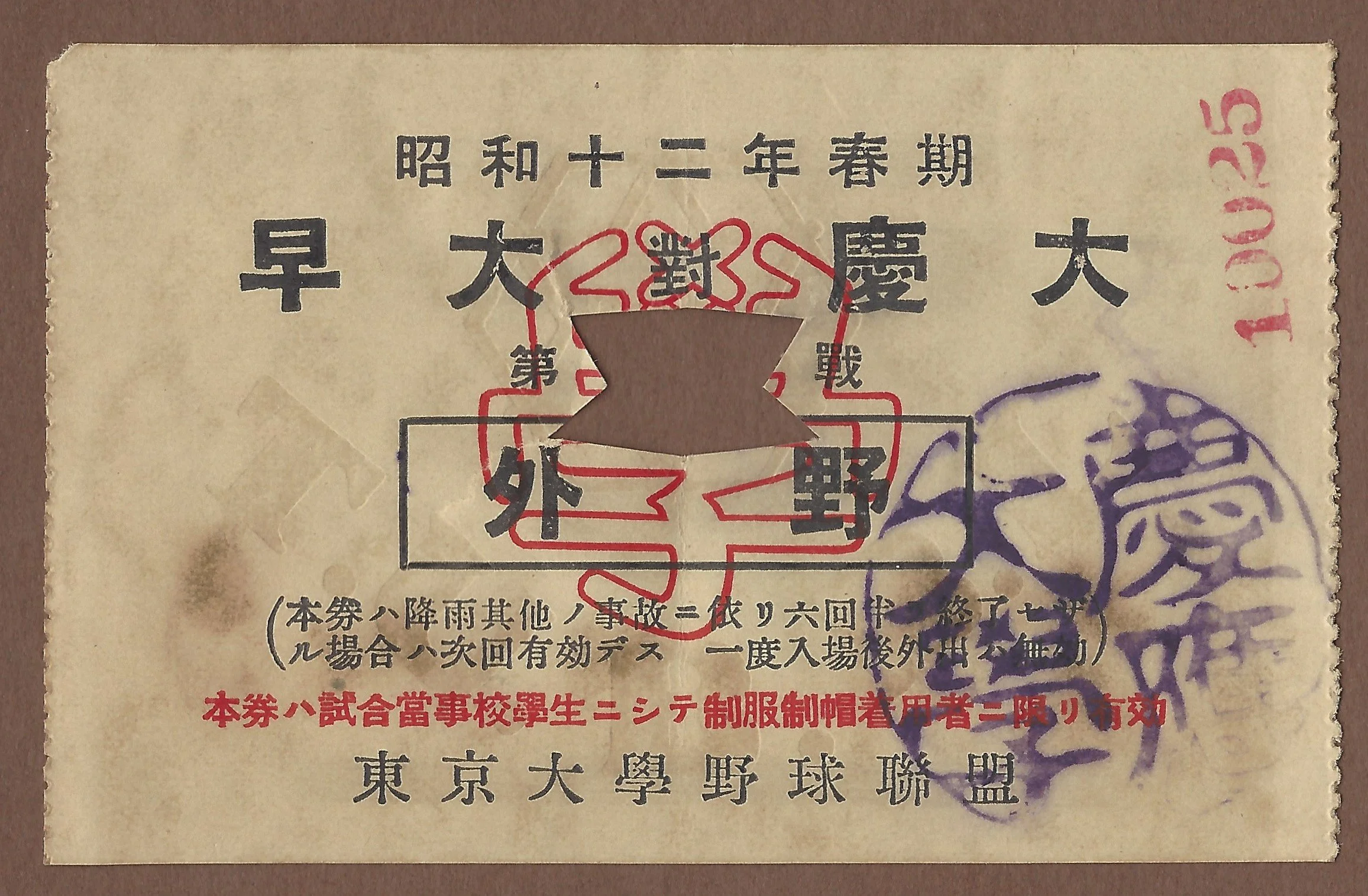
This ticket stub is from a 1937 game between Waseda University and Keio University
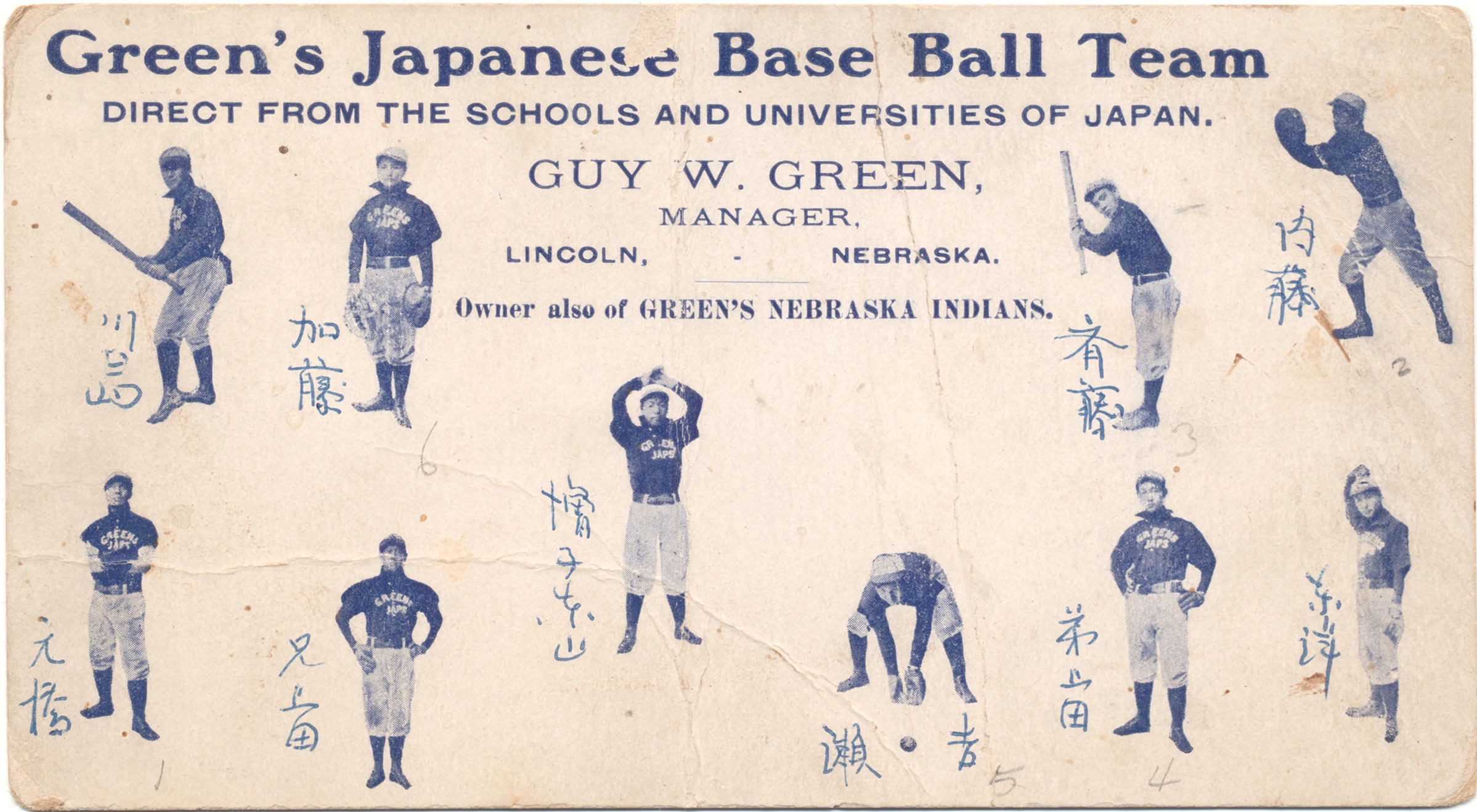
Guy Green’s Team
Guy Green's Japanese Baseball Team was a barnstorming team who played all across the American mid-west in 1906. They were the first Japanese professional baseball club on either side of the Pacific.
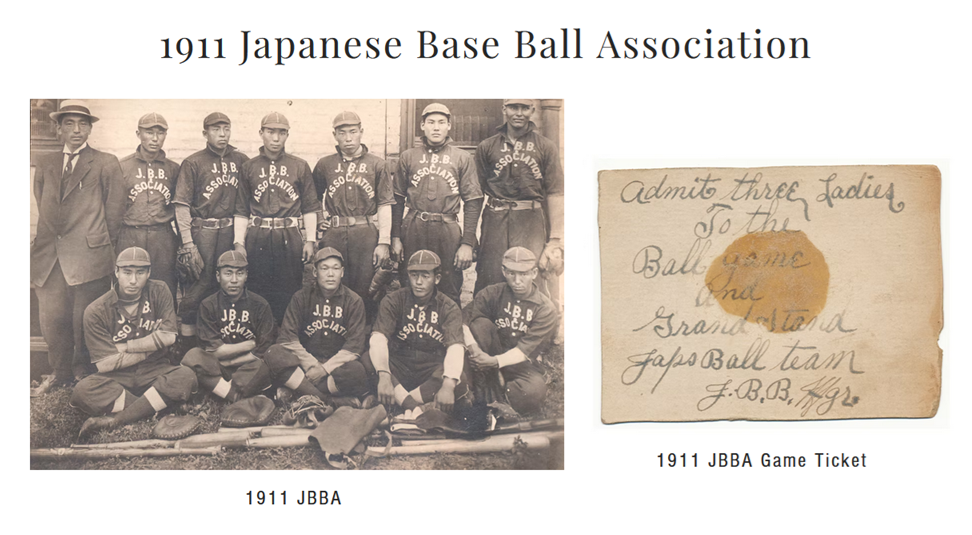
Check out some more photos from this team, including game action shots, HERE.
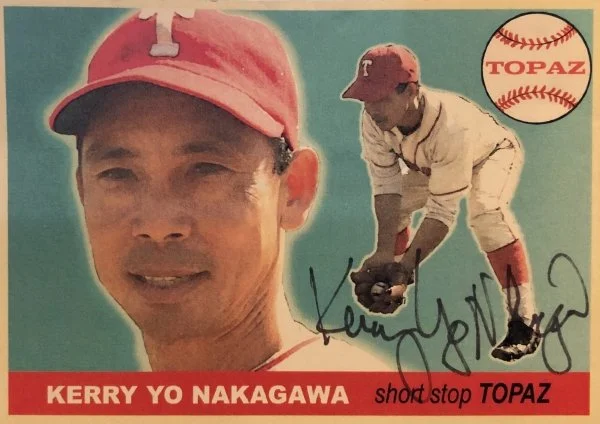
Kerry Yo Nakagawa
Kerry Yo Nakagawa, whose uncle “Johnny” Nakagawa played with Kenichi Zenimura during the Fresno Athletic Club’s tours of Japan in 1924, ‘27, and ‘37, first became involved in Japanese American baseball research when he realized he didn’t want the stories of important ballplayers like his Uncle Johnny and Zenimura to be forgotten over time.
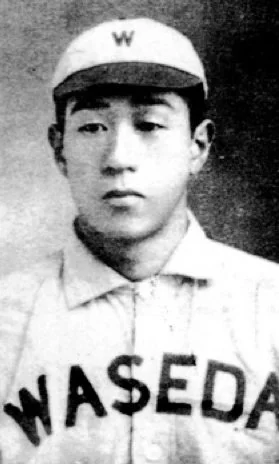
Goro Mikami
Goro Mikami, aka Jap Mikado, was the first known Japanese national to play professional baseball in the United States. He first played in the US in 1911 when Tokyo’s Waseda University club barnstormed the country. Two years later, Mikami returned to the U.S. as a graduate student at Knox College in Illinois.
He starred at shortstop there and was unanimously elected team captain after an impressive first season. After transferring to the University of Illinois, during the summers of 1915 and 1916 Mikami played for the professional All-Nations of New York, a team which also included Hawaiians, American Indians, African-Americans and others from such countries as the Philippines and China. With All-Nations he was billed as Jap Mikado.
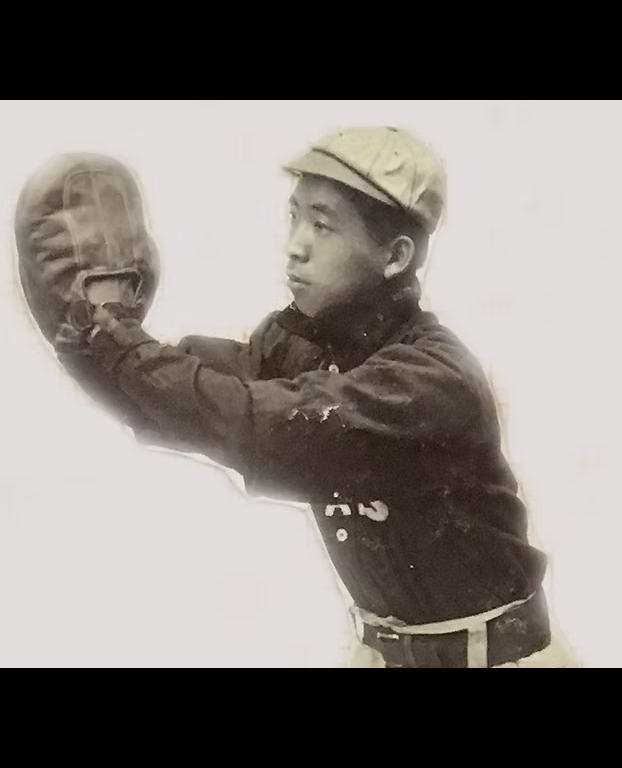
Naito
The starting lineup of Guy Green’s Japanese Base Ball Team featured five Japanese: Toyo Fujita, a writer for the Rafu Shimpo newspaper, at first base; Tetsusaburo Uyeda from Yamaguchi Prefecture at second; 21-year-old Ken Kitsuse from Kagoshima at short; and 21-year-old Umekichi “Kitty” Kawashima from Kanagawa and a man identified only as Naito (seen here) in the outfield.
Manager Dan Tobey and Nebraska Indian veteran Sandy Kissell shared the pitching duties and played outfield on their off days. Seguin, another member of the Nebraska Indians, was the catcher. Roy Dean Whitcomb, an 18-year-old Caucasian from Lincoln, usually played third base under the name Noisy, while a man known only as Doctor filled in as necessary.
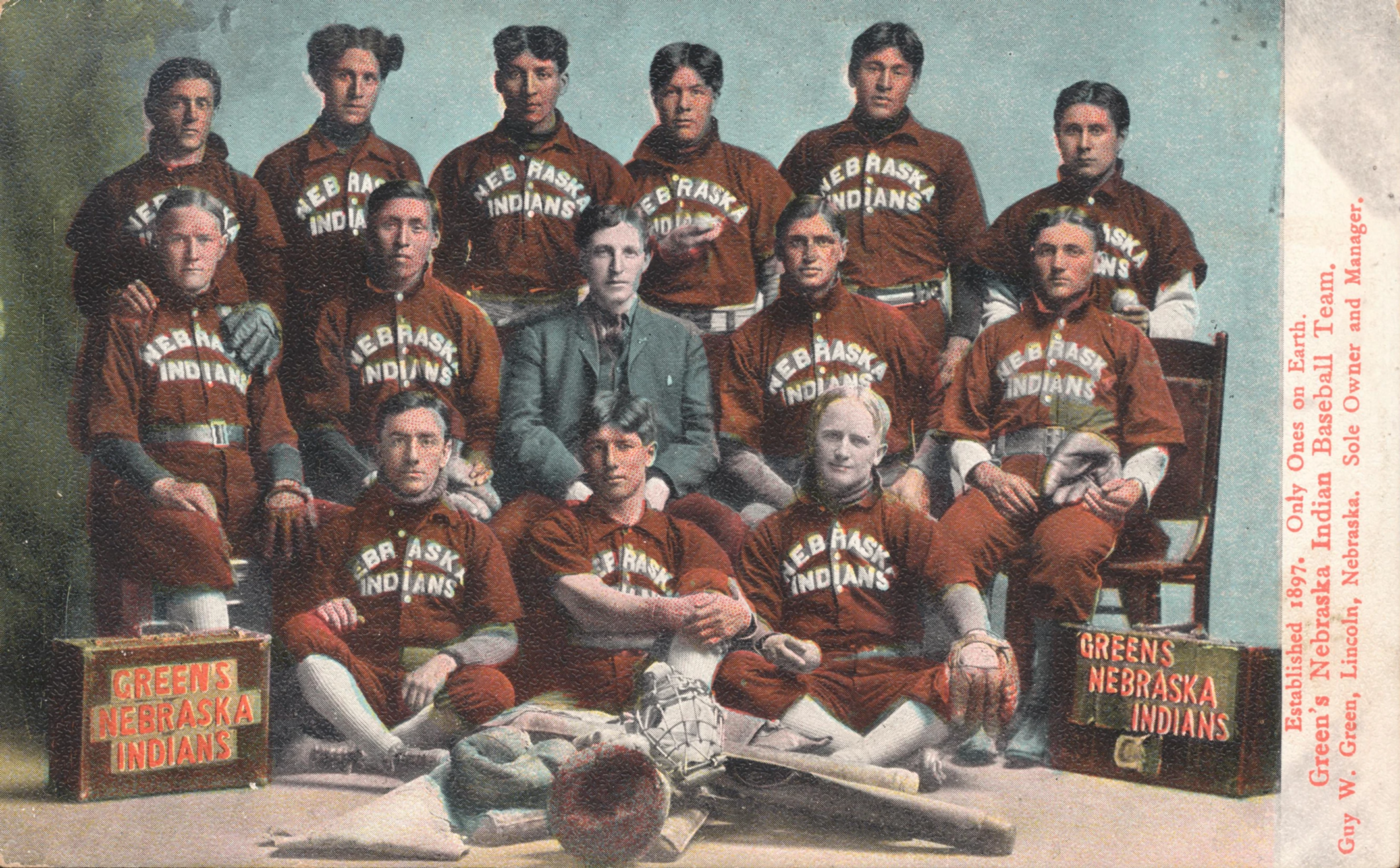
Guy Green (center, in the suit) and his “semi-pro” Nebraska Indians baseball team, circa 1905.
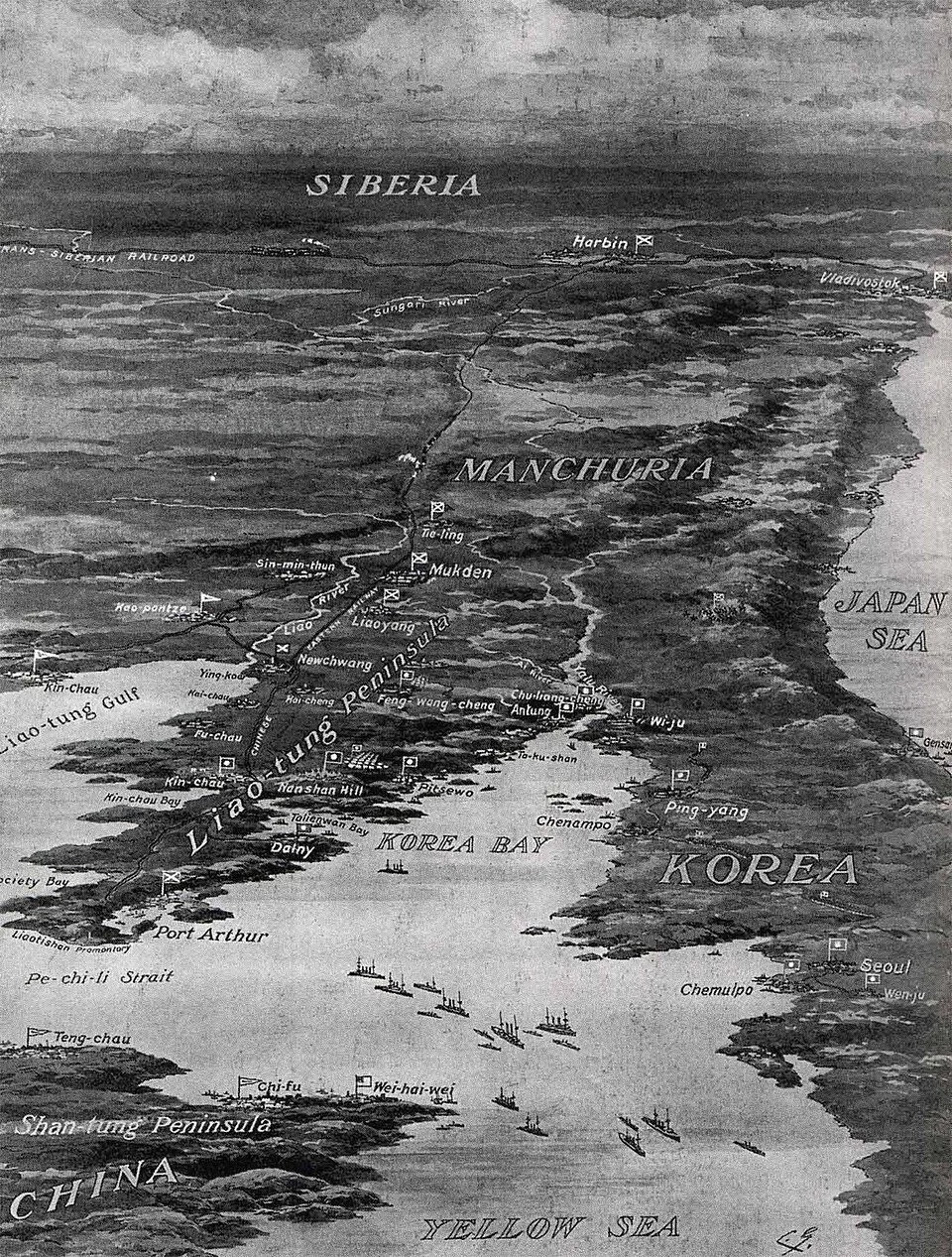
Russo-Japanese War
The Russo-Japanese War was fought between the Russian Empire and the Empire of Japan over rival imperial ambitions in Manchuria and the Korean Empire from February 8, 1904 to September 5, 1905.
The major land battles of the war were fought on the Liaodong Peninsula and near Mukden in Southern Manchuria, with naval battles taking place in the Yellow Sea and the Sea of Japan.
Russia had pursued an expansionist policy in Siberia and the Far East since the reign of Ivan the Terrible in the 16th century. Japan feared that Russia would impede its plans to establish a sphere of influence in mainland Asia, especially as Russia built the Trans-Siberian Railroad, began making inroads in Korea, and acquired a lease of the Liaodong Peninsula and Port Arthur from China in 1898.
Japan signed the Anglo-Japanese Alliance in 1902, and began offering to recognize Russia's dominance in Manchuria in exchange for recognition of Korea as part of Japan's sphere of influence. However, this was rejected by Russia.
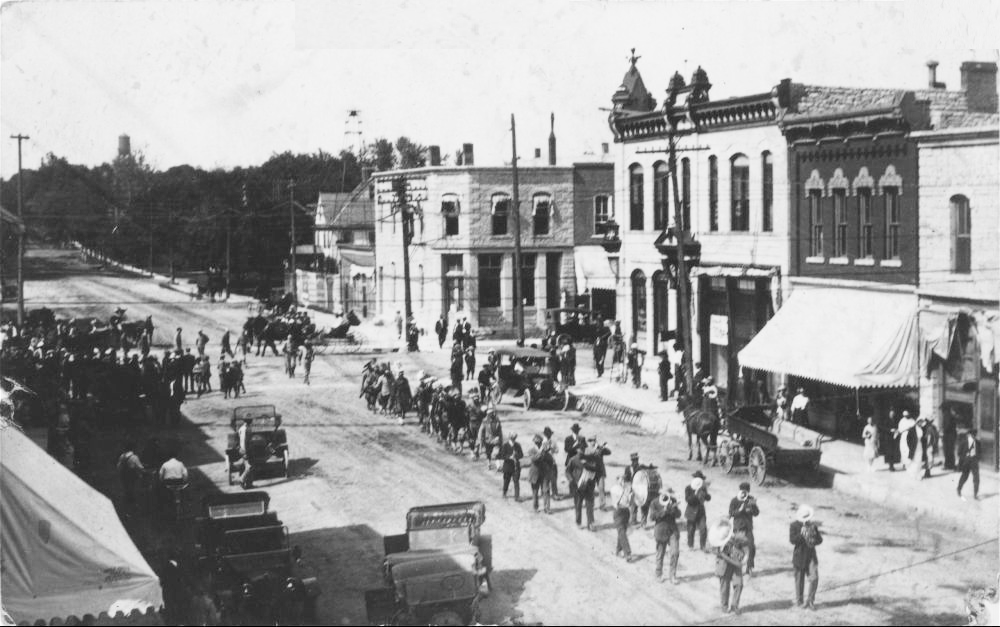
Frankfort, Kansas
Guy Green’s Japanese Base Ball Team parade in Frankfort, Kansas ahead of their first game on April 15, 1906.
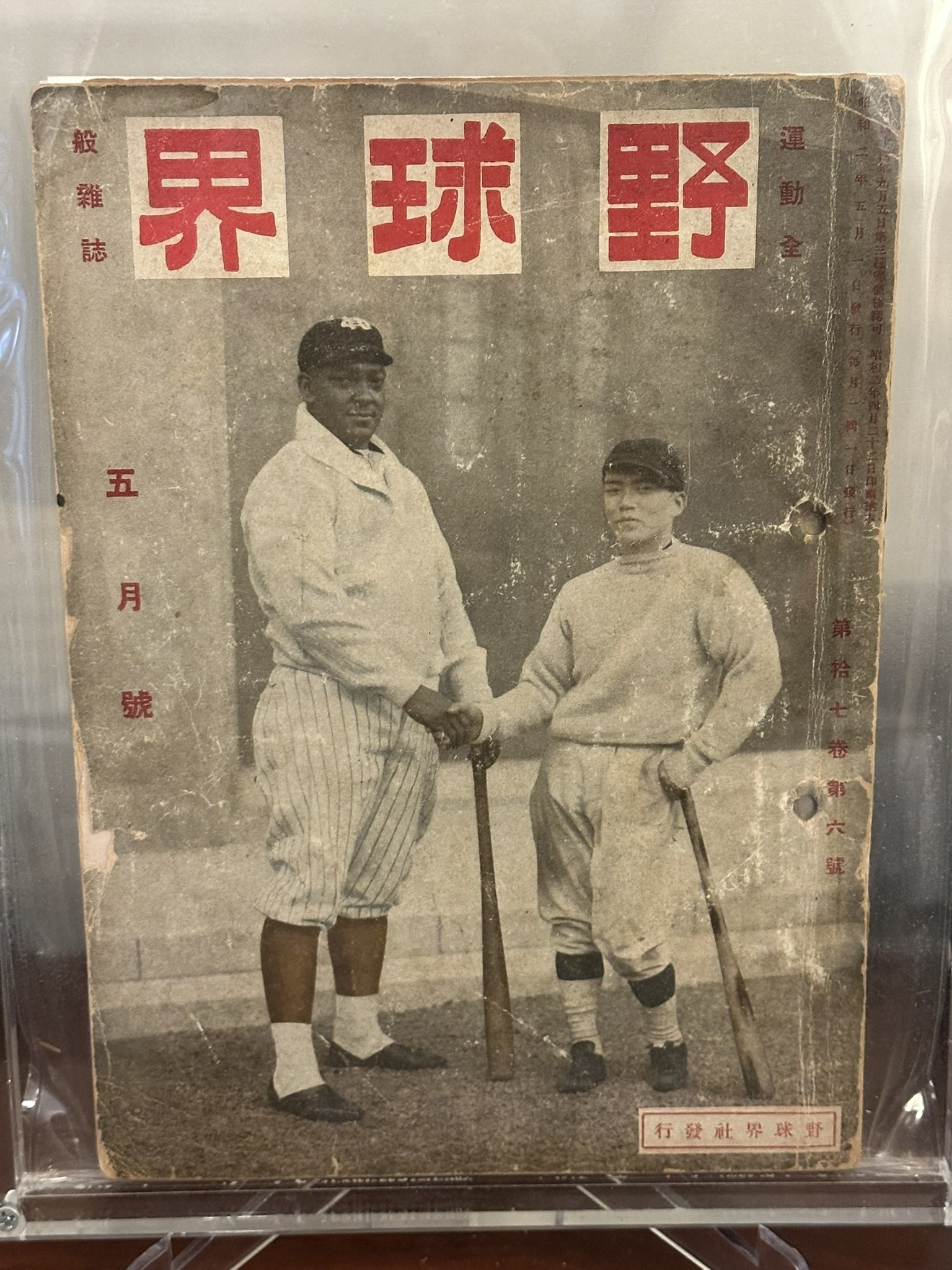
Philadelphia Royal Giants 1927 Trip To Japan
Before World War II, many American teams traveled to Japan to play, from university teams, to Major League teams, to All Star barnstorming teams, and even the Philadelphia Royal Giants of the Negro Leagues.
But with a 50+ year head start on the sport, and the fact that until the mid-1930s, baseball was primarily an amateur endeavor in Japan, the touring Americans played mostly lopsided games against university and amateur teams.
Pictured here is the cover of the May 1927 issue of Yakyukai depicting O’Neal Pullen and Shinji Hamazaki.
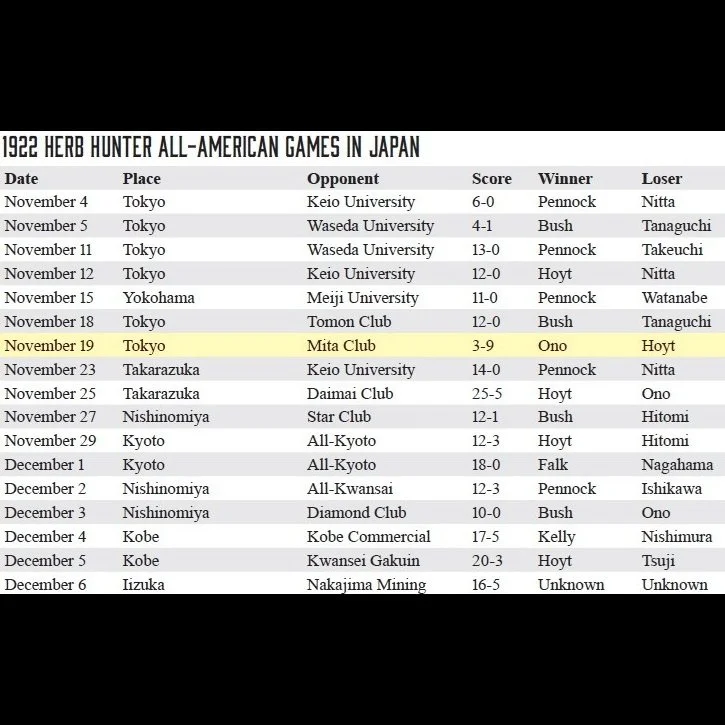
Lopsided Games
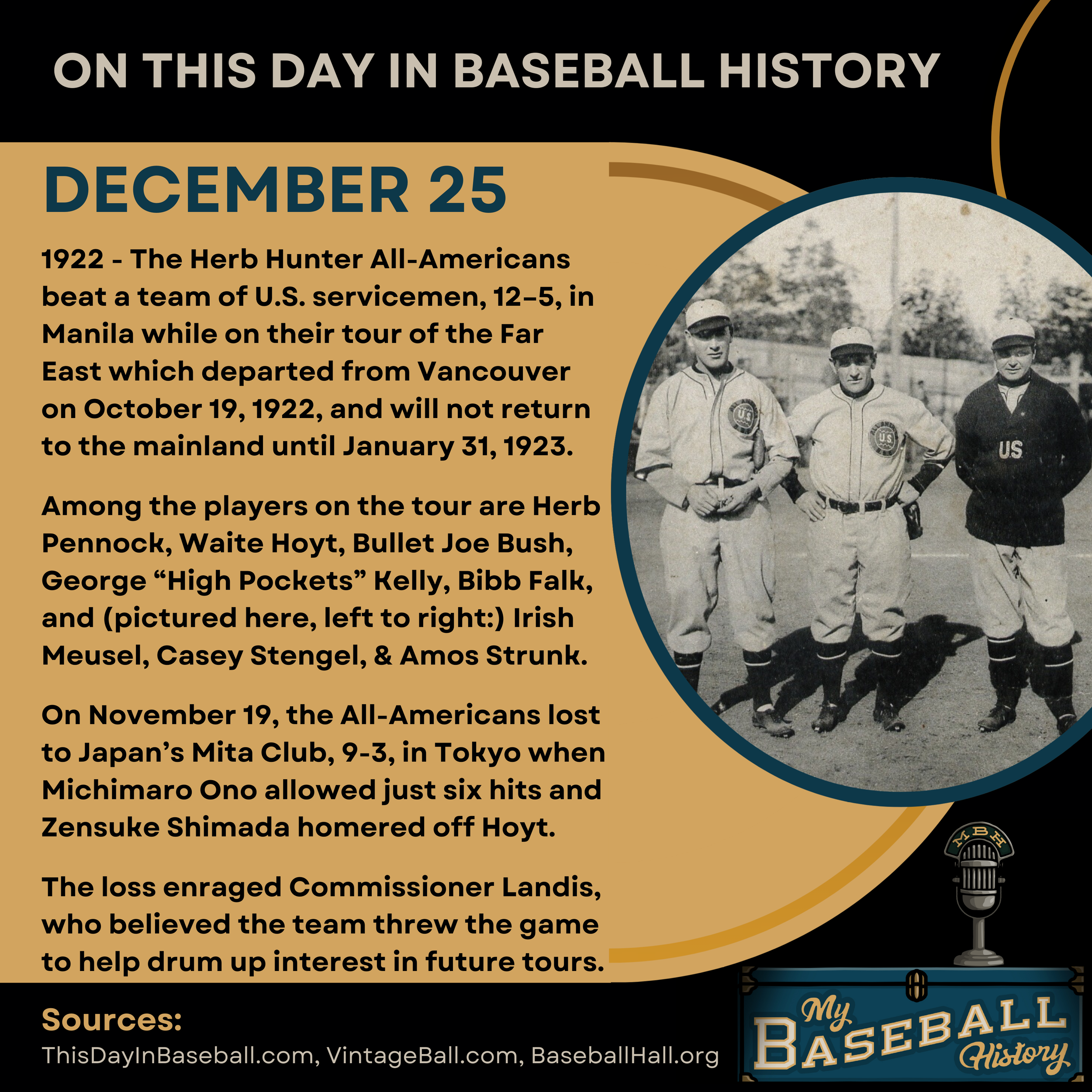
From 1908 to 1934, American professional teams won 87 out of the 88 games they played in Japan. Their one loss, which happened on November 19, 1922 during the Herb Hunter 1922 Tour of Japan, angered Kenesaw Mountain Landis so much that he accused pitcher Waite Hoyt of throwing the game and threatened to stop endorsing American teams' trips overseas.
1913-14 World Tour
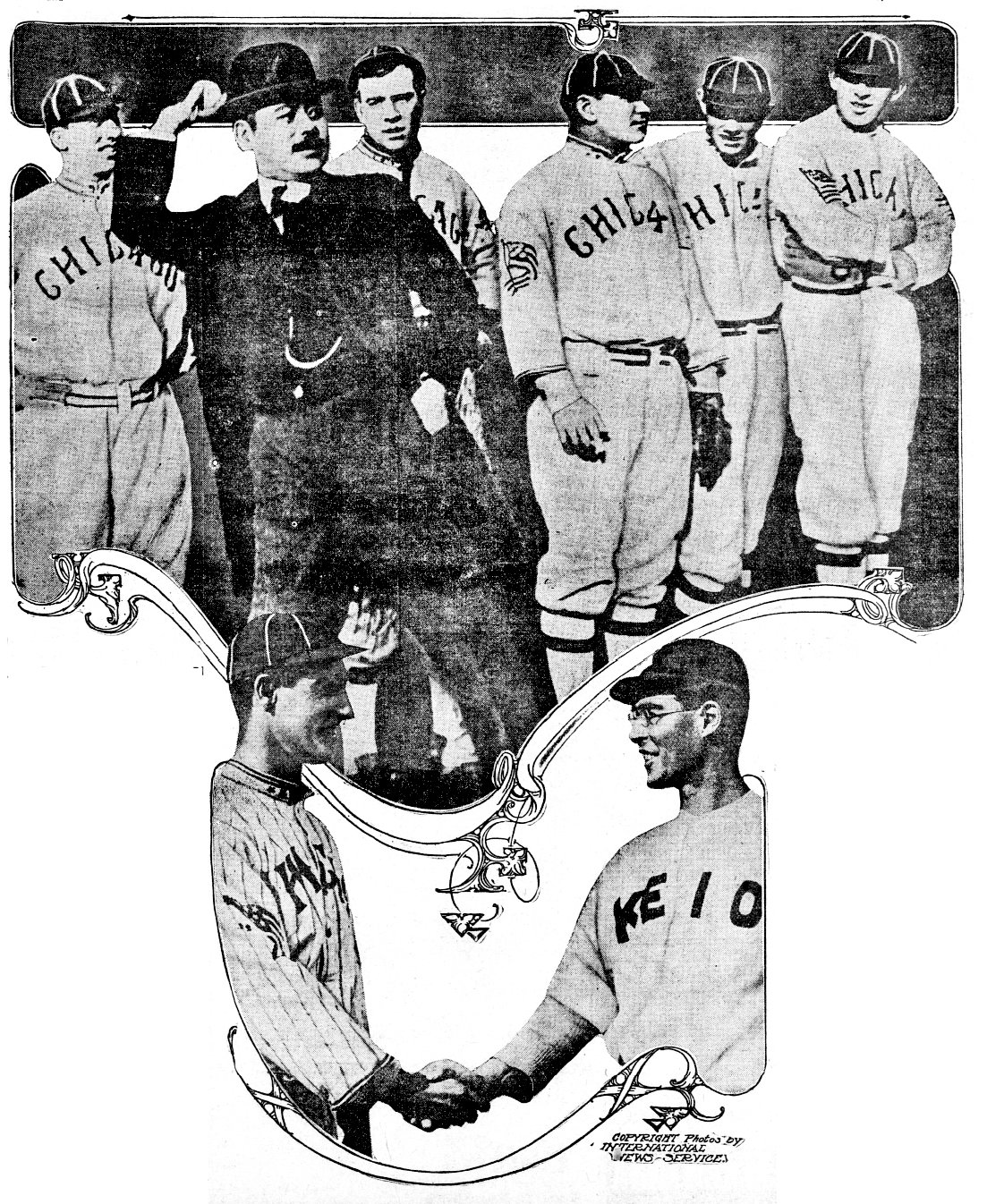
Prior to the arrival of the Giants and White Sox in December of 1913, only three American college squads and one professional team had traveled to Japan. The lone professional team, the Reach All-Americans, consisted mostly of minor-league players with a smattering of undistinguished major leaguers. McGraw and Comiskey’s clubs would showcase major-league stars to Japanese fans for the first time.
In the upper picture, the President of Keio University is shown pitching the first ball in the game between the American tourists and the Japanese nine. Manager Jim Callahan and several White Sox players appear in the background. In the lower picture, pitcher Jim Scott of the White Sox is shaking hands with Captain Sugase, the Keio pitcher.
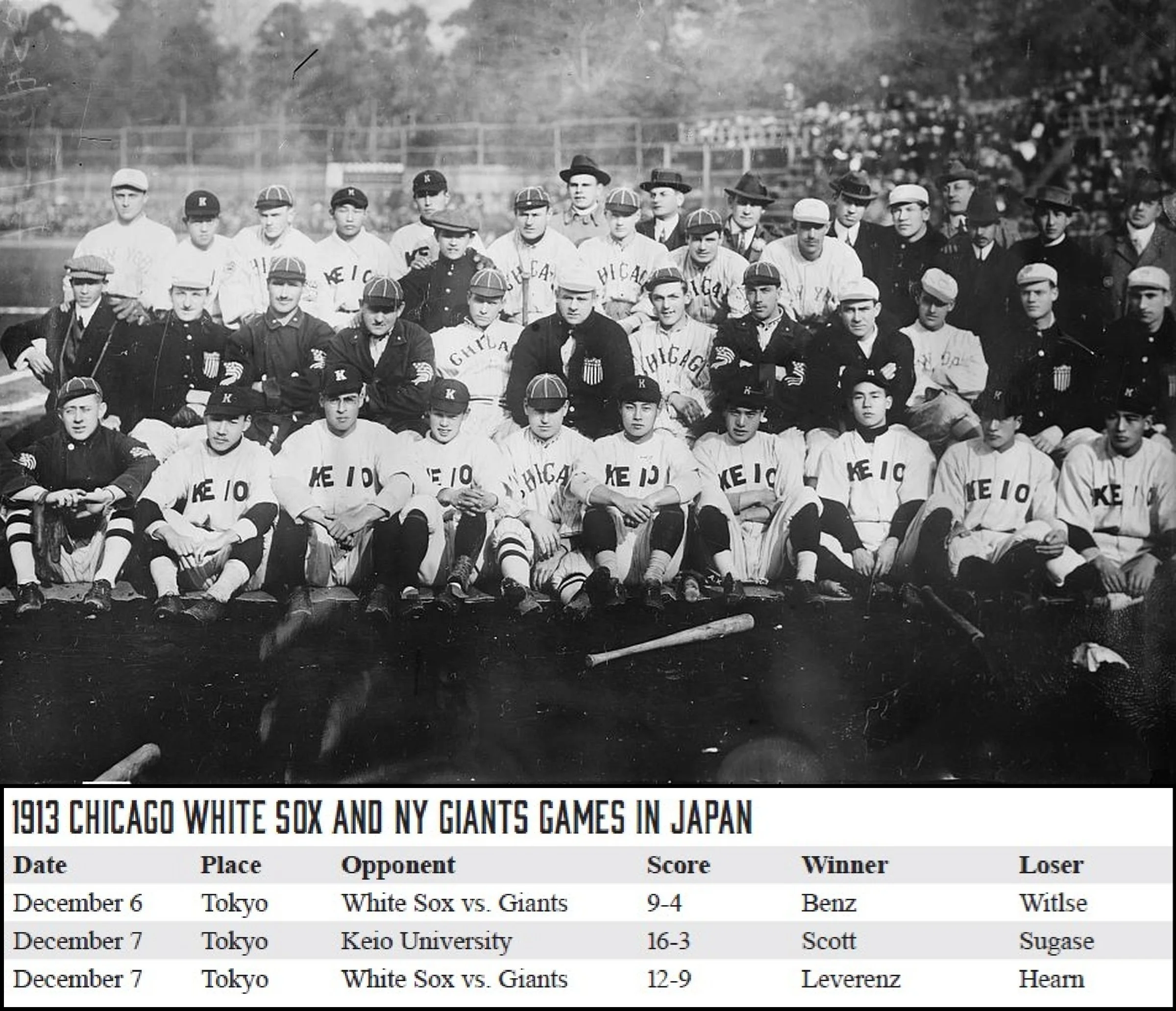
Members of the White Sox, Giants, and Keio University baseball teams on December 7, 1913.
Gene Doyle’s 1920 Tour of Japan
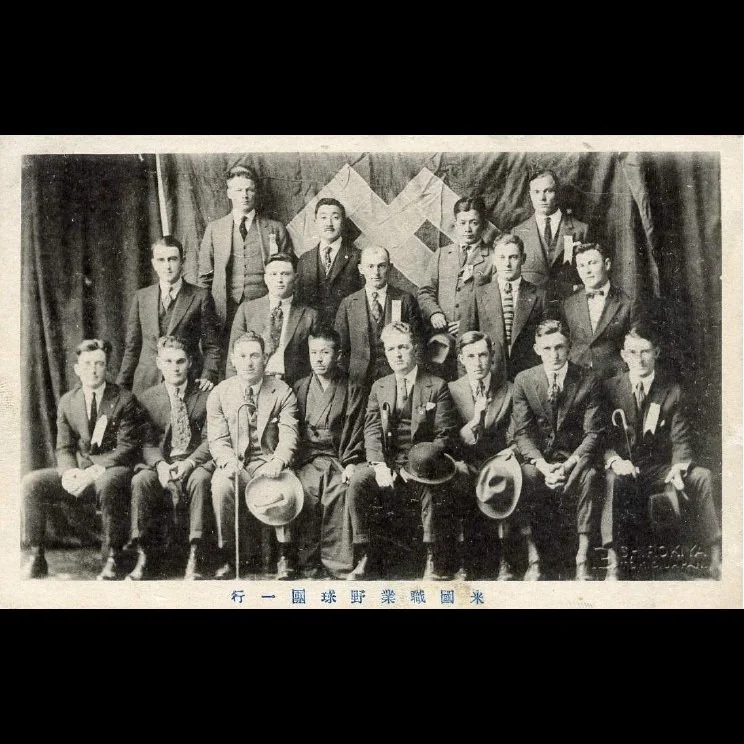
The 1920 tour was a lot of things all at once: a high profile, all-star tour that served as a diplomatic mission to engender positive relationships between two rising global powers, the United States and the Empire of Japan; a largely successful business enterprise planned and carried out by experienced entrepreneurs; and a debacle that saw a baseball tour with high hopes collapse in acrimony and accusations of skullduggery.
1934 Tour To Japan
The 1934 All-American Tour of Japan is the line of demarcation for baseball in Japan. There is a very clear shift from "before the tour" to "after the tour."
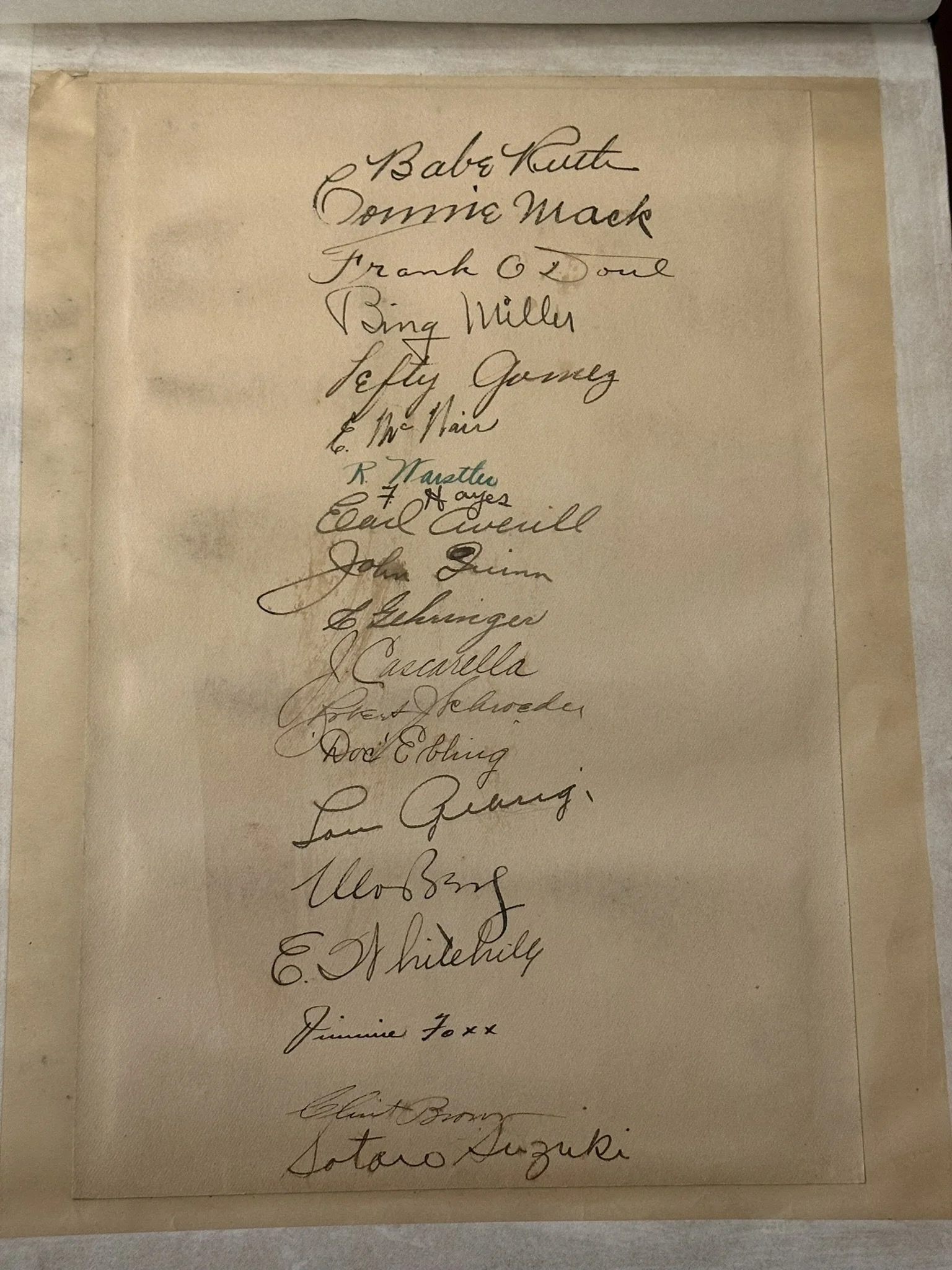
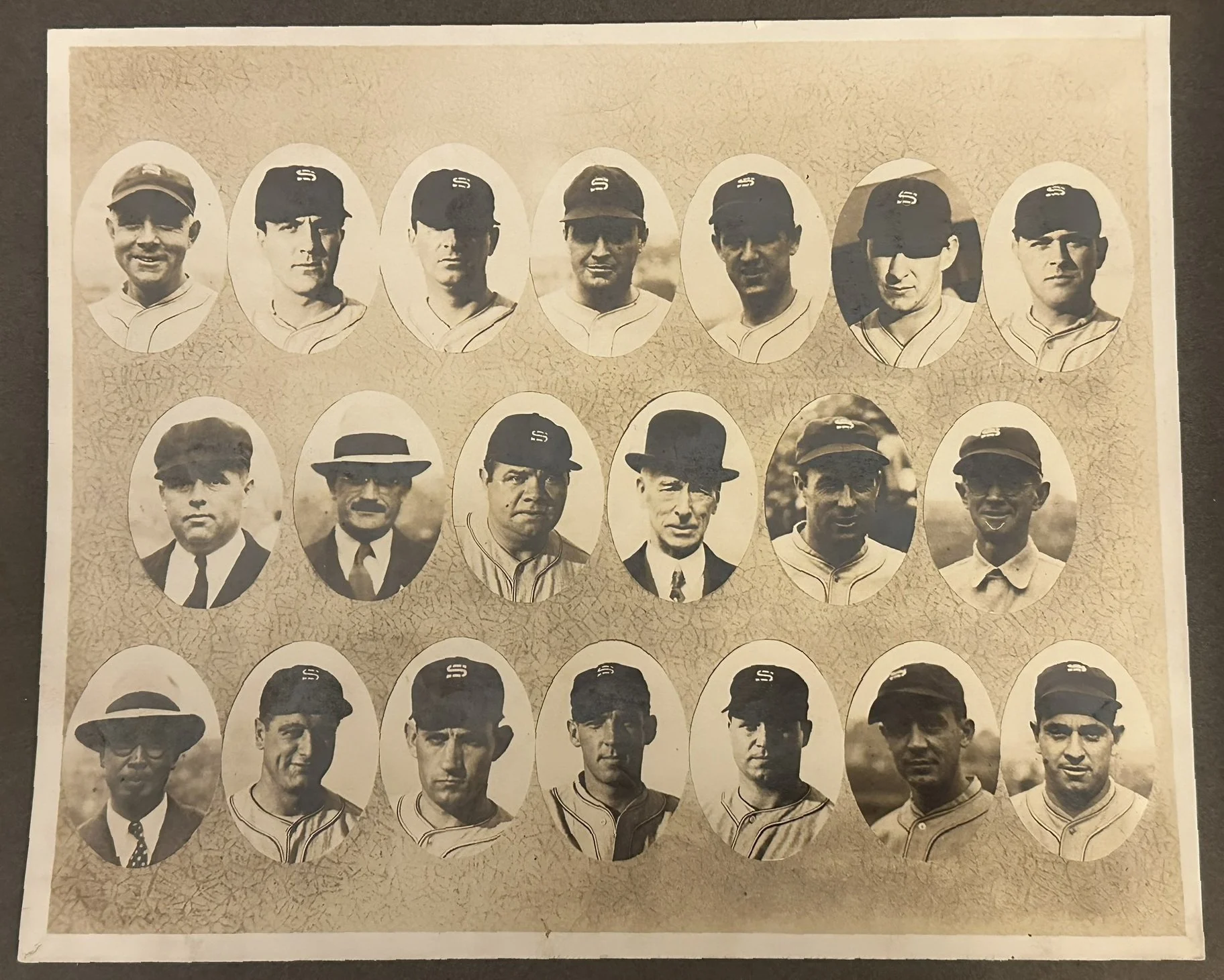
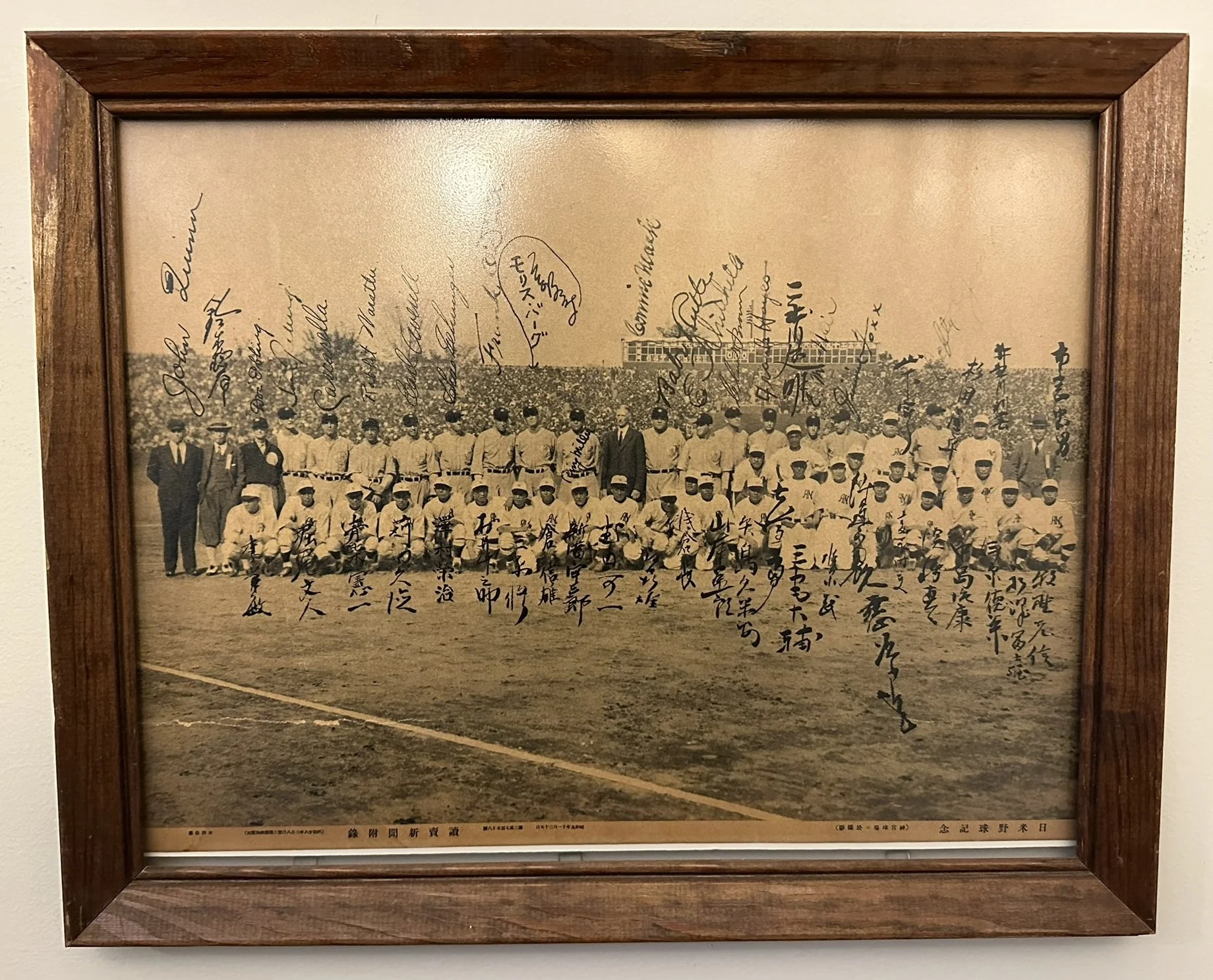
The US delegation included (top to bottom, on the signature sheet pictured here) Babe Ruth, Connie Mack, Frank “Lefty” O’Doul, Bing Miller, Lefty Gomez, Eric McNair, Harold Warstler, Frank Hayes, Earl Averill, John Quinn, Charlie Gehringer, Joe Cascarella, Robert J. Schroeder, Doc Ebling, Lou Gehrig, Moe Berg, Earl Whitehill, Jimmie Foxx, Clint Brown, and Sotaro Suzuki.
All players were from the American League, as the National League would not allow their players to participate.
Ruth, “still the most popular and famous athlete of his day” was the face of American baseball at the time.
Matsutarō Shōriki
The 1934 tour began not as a diplomatic mission but as a publicity stunt to attract readers to the Yomiuri Shimbun.
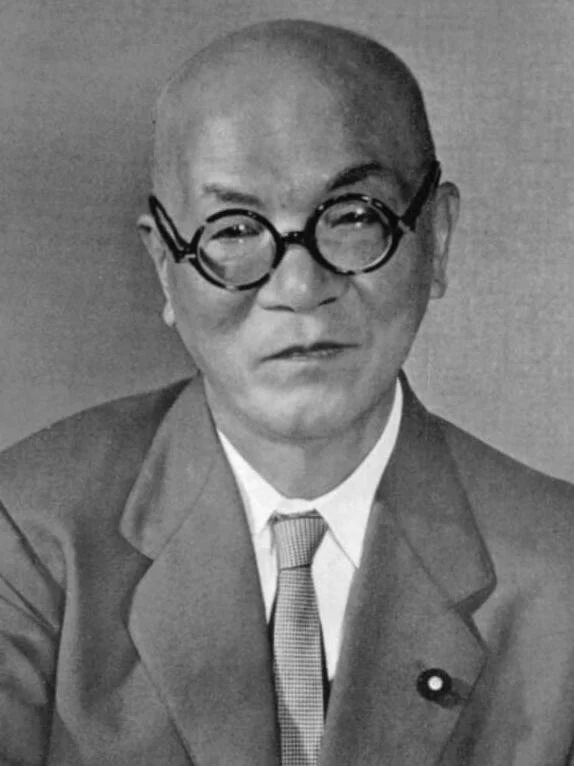
Matsutarō Shōriki had purchased the financially troubled newspaper in 1924 and quickly turned it into Tokyo’s third-largest daily by increasing its entertainment sections.
In 1931, Shōriki decided to bolster sports coverage by sponsoring a team of American all-stars to play in Japan.
1931 Tour
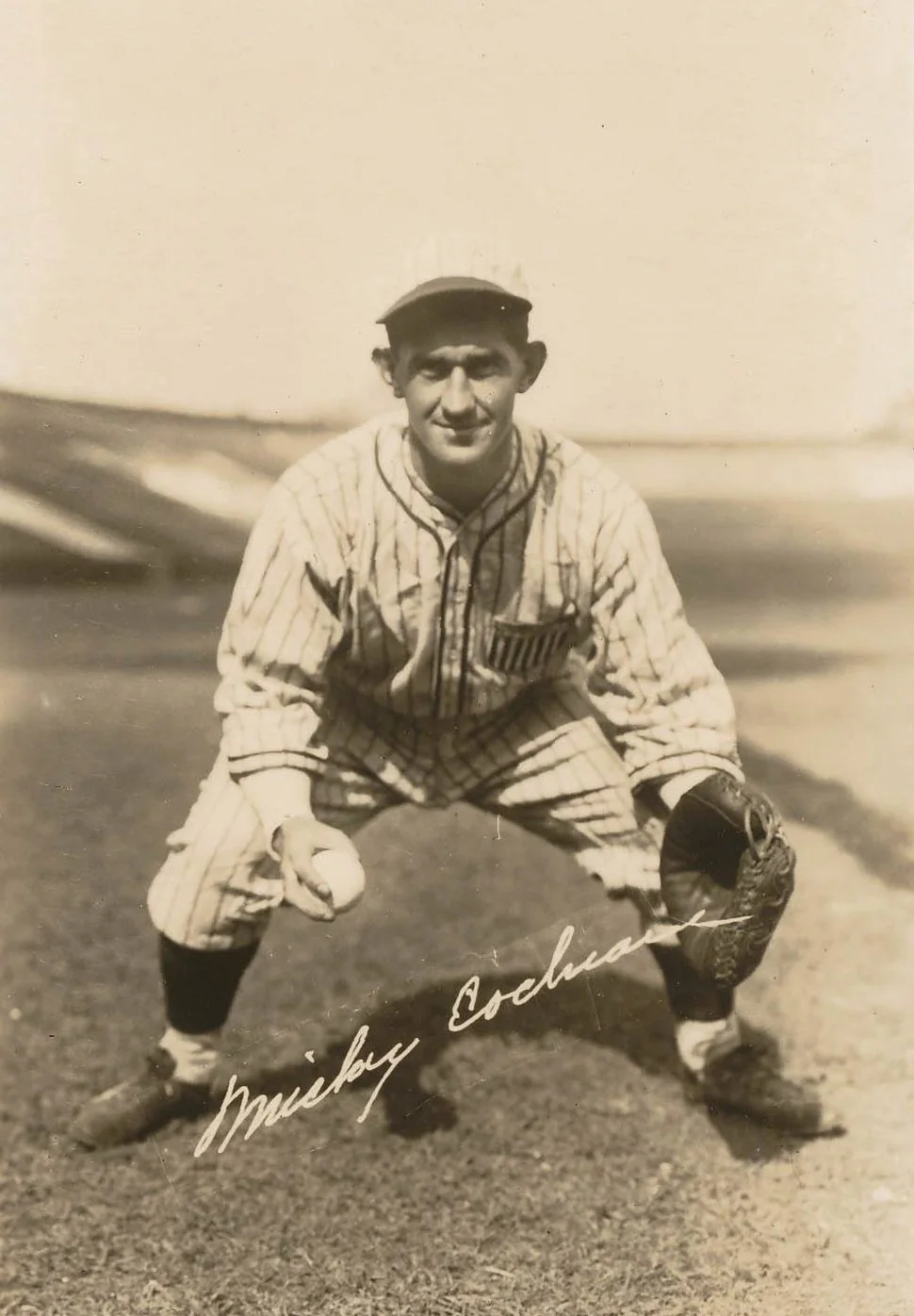
The 1931 team, which included Lou Gehrig, Mickey Cochrane (seen here), Lefty Grove, and four other future Hall of Famers, won each of the 17 games against Japanese university and amateur teams, and the newspaper’s circulation soared.
But Shōriki wasn’t satisfied. The major-league team had lacked the greatest drawing card in baseball — Babe Ruth.
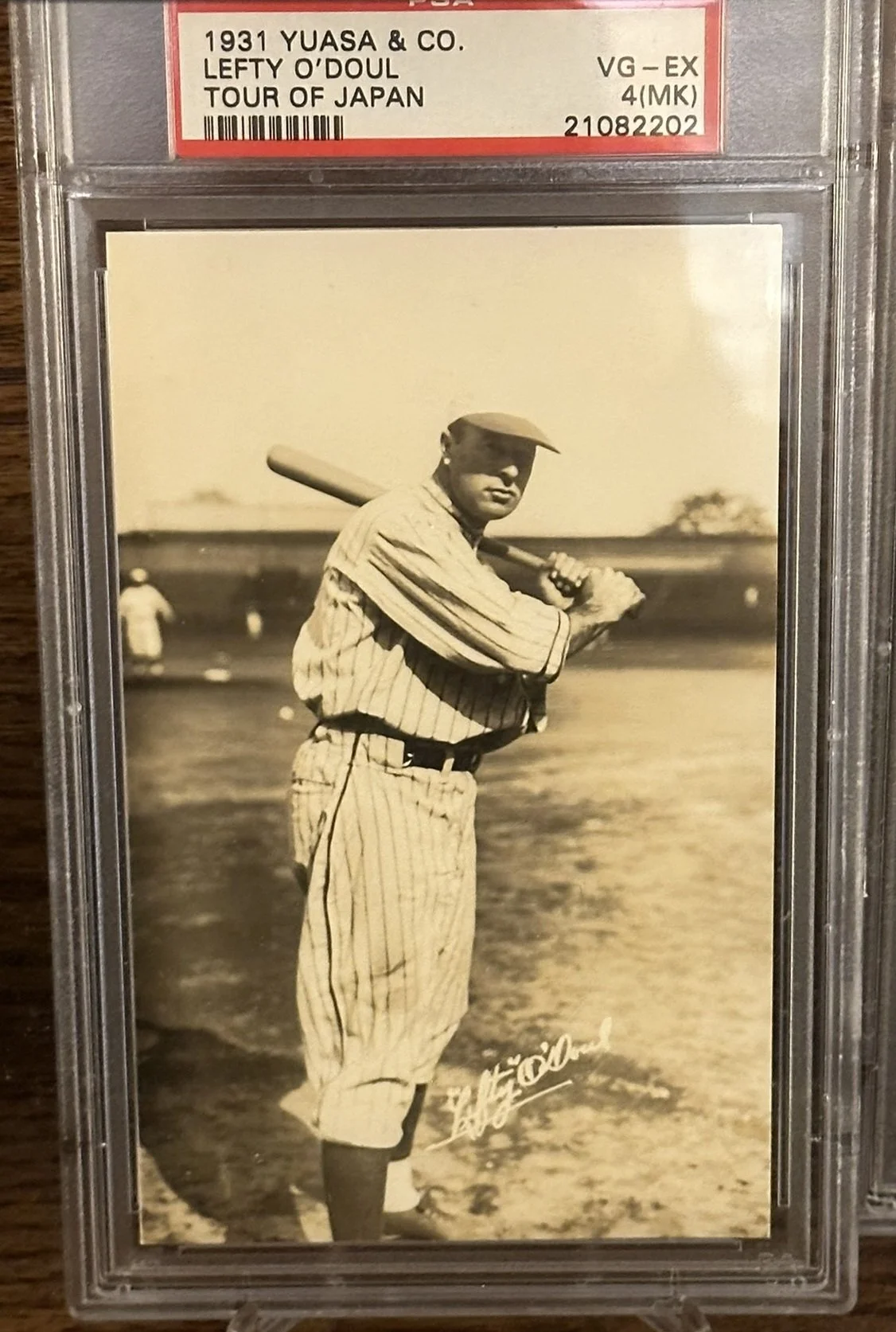
Lefty O’Doul
Frank “Lefty” O’Doul was known first as a pitcher and then as one of the game’s best hitters. In the majors, O’Doul won two batting titles and nearly hit .400 in 1929. He finished with a .349 career batting average, fourth-best in history.
After leaving the majors, he returned to the west coast and managed for more than 20 years, including 17 seasons for the San Francisco Seals, amassing more than 2,000 career wins, a total surpassed by only eight men in minor league history.
But O’Doul may have made his greatest contributions to baseball with his many trips to Japan. He trained countless Japanese in the skills of the game and fostered communication and interaction between those in the Japanese and American games both before and after the Second World War. He is also credited as one of the founders of Nippon Professional Baseball. For his efforts, O’Doul was the second American elected to the Japanese Baseball Hall of Fame.
This photo was a giveaway in Shōriki’s Yomiuri Shimbun, and is highly sought-after today in the collectibles market.
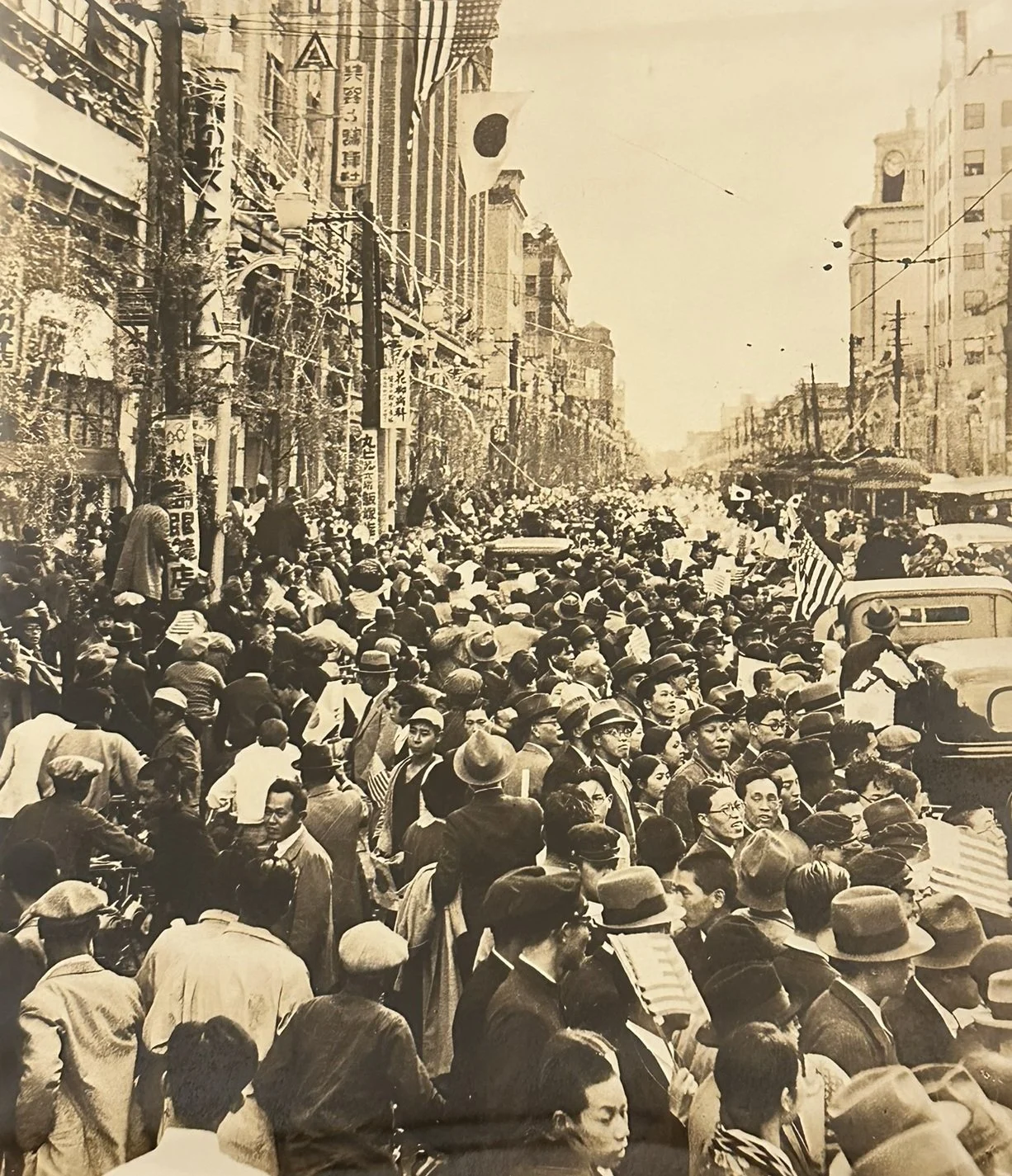
Half A Million People
The Japanese people went crazy for the American baseball players, but especially for Babe Ruth, who was already a well-known global superstar by 1934.
Some estimates say 500,000 people lined the streets of Tokyo to welcome the US team to Japan.
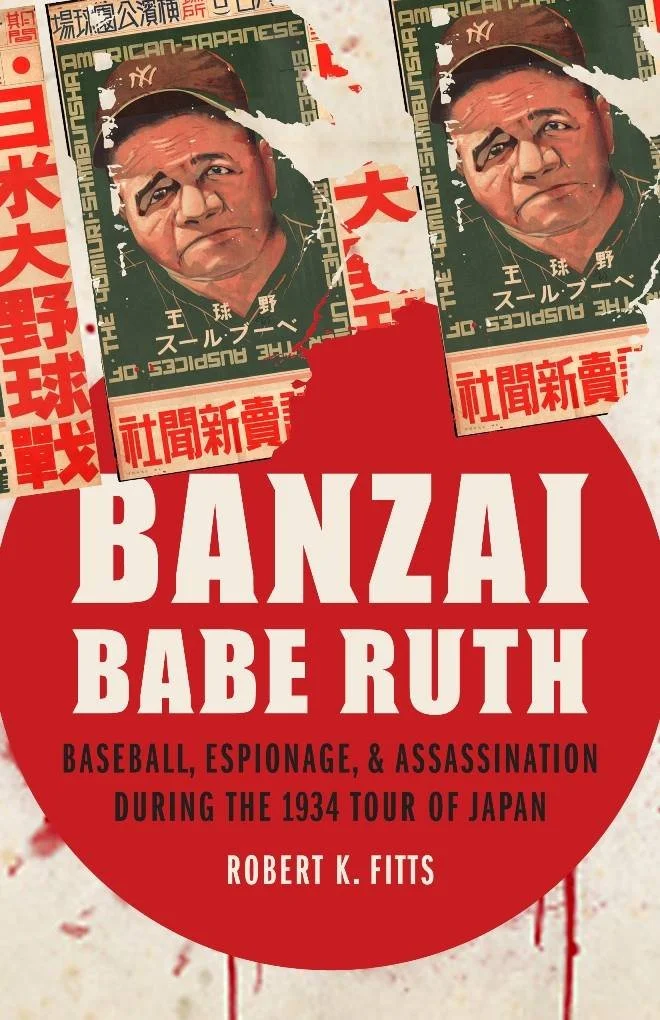
Banzai Babe Ruth
Hundreds of thousands of fans, many waiving Japanese and American flags, welcomed the team with shouts of “Banzai! Banzai Babe Ruth!” The All-Stars stayed for a month, playing 18 games, spawning professional baseball in Japan, and spreading goodwill.
Politicians on both sides of the Pacific hoped that the amity generated by the tour — and the two nations’ shared love of the game — could help heal their growing political differences. But the Babe and baseball could not overcome Japan’s growing nationalism, as a bloody coup d’état by young army officers and an assassination attempt by the ultranationalist War Gods Society jeopardized the tour’s success.
A tale of international intrigue, espionage, attempted murder, and — of course — baseball, Banzai Babe Ruth is the first detailed account of the doomed attempt to reconcile the United States and Japan through the 1934 All American baseball tour.
Buy a copy of Banzai Babe Ruth HERE.
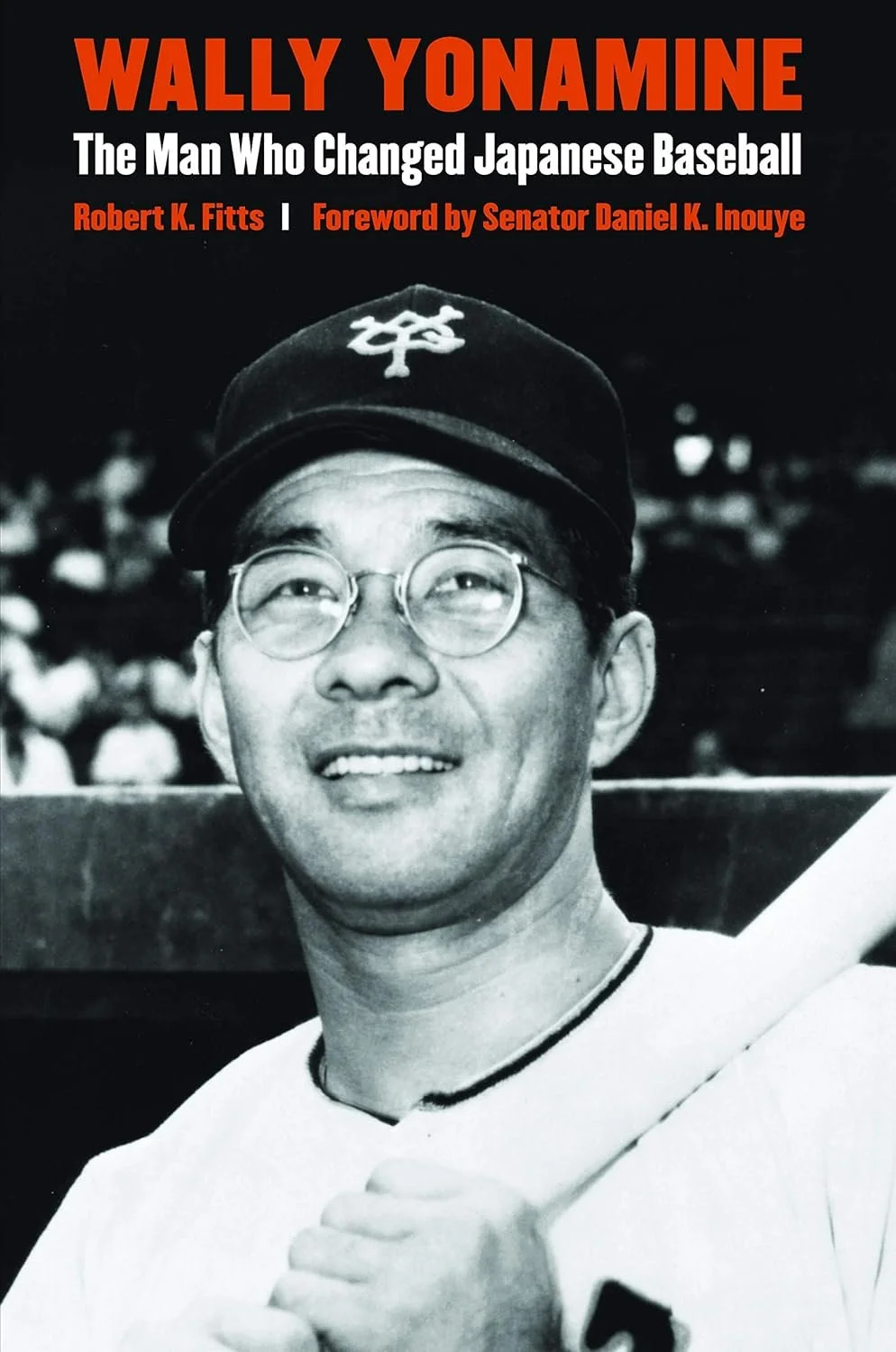
Wally Yonamine
Wally Yonamine was both the first Japanese American to play for an NFL franchise and the first American to play professional baseball in Japan after World War II.
Rob’s book about Wally is the unlikely story of how a shy young man from the sugar plantations of Maui overcame prejudice to integrate two professional sports in two countries.
Wally Yonamine’s Baseball Reference
Buy a copy of Wally Yonamine HERE.
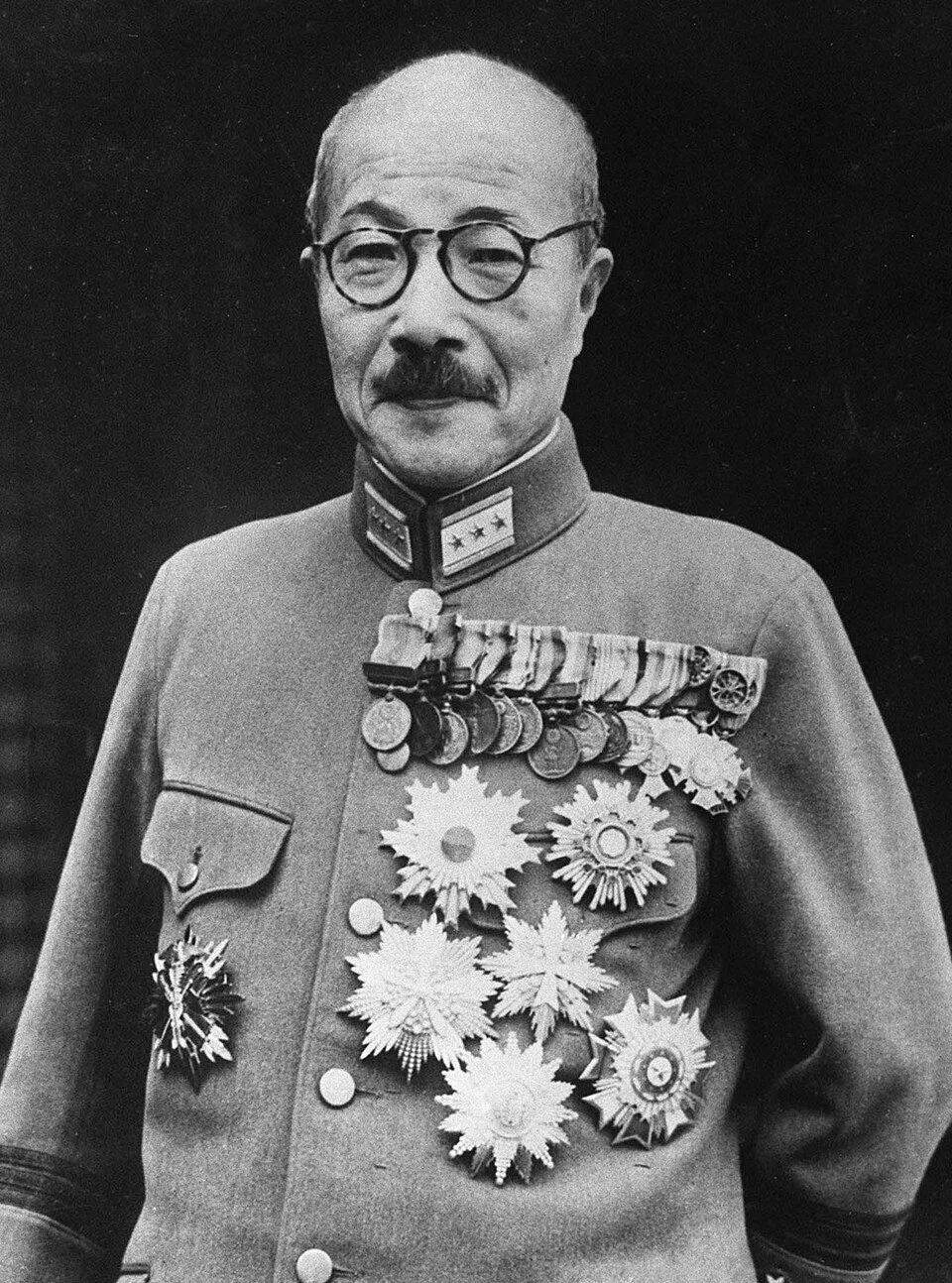
Hideki Tojo
Hideki Tojo was a Japanese military officer and politician who served as Prime Minister of Japan from 1941 to 1944 during World War II.
After serving as a military attaché in Germany, he rose to prominence in the 1930s as a member of the Tōseiha within the Imperial Japanese Army.
In 1937, as chief of staff of the Kwantung Army, he led operations during the Japanese invasion of China.
By 1940, he was appointed Minister of the Army, where he advocated a tripartite alliance with Nazi Germany and Fascist Italy. In October of 1941, he was appointed Prime Minister of Japan by Emperor Hirohito.
Tojo’s leadership was marked by widespread state violence and mass killings perpetrated in the name of Japanese nationalism.
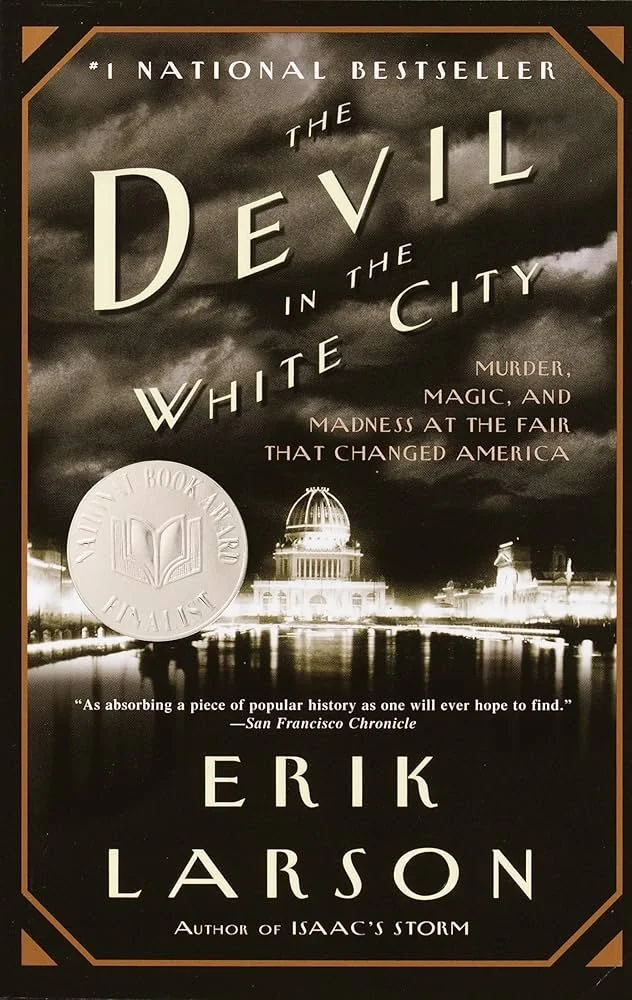
The Devil in the White City
The Devil in the White City by Erik Larson is a bestselling non-fiction book that intertwines the stories of two men during the 1893 Chicago World's Fair: architect Daniel H. Burnham, who built the fair's "White City," and serial killer H.H. Holmes, who used the fair to lure victims to his nearby "World's Fair Hotel" of horrors.
The book combines meticulous historical research with a thriller-like narrative, contrasting the wonder of the fair with the dark underbelly of the Gilded Age, and was a finalist for the National Book Award for Nonfiction.
Buy a copy of The Devil in the White City HERE.
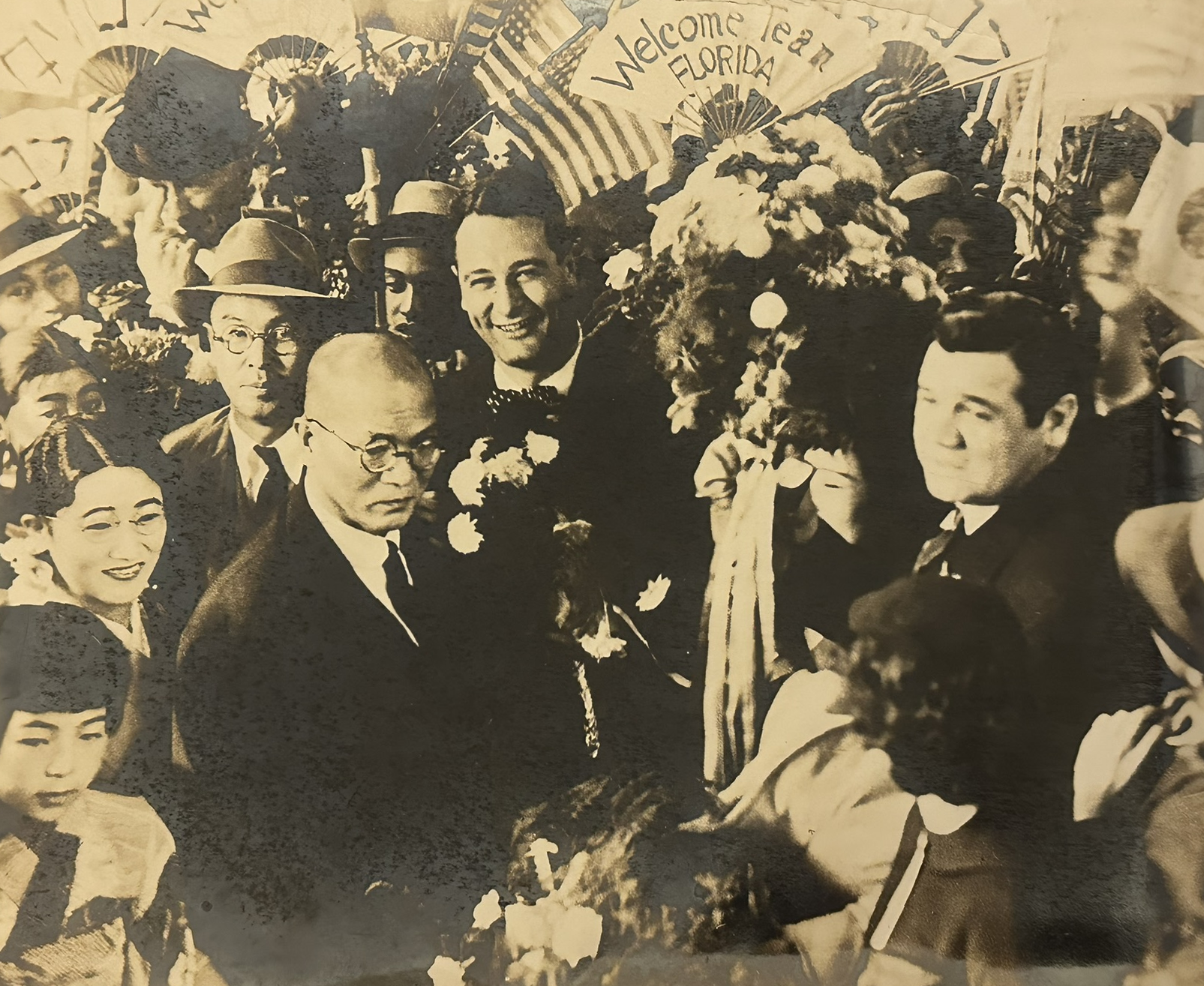
Babe, Lou, and Shōriki
Shōriki is just in front of Lou Gehrig here, with Babe Ruth off to the right.
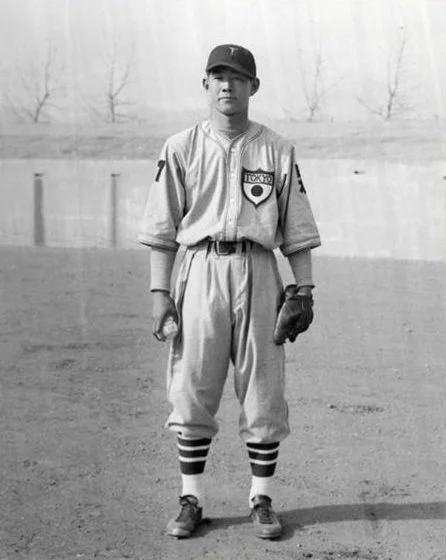
Eiji Sawamura
On November 20, 17-year-old Eiji Sawamura pitched 7 shutout innings before surrendering a home run to Lou Gehrig, losing the game 1-0.
Sawamura had a no-hitter through almost five innings, and by the time the game was over, he had struck out 9, including consecutive strikeouts of Charlie Gehringer, Babe Ruth, Lou Gehrig, and Jimmie Foxx.
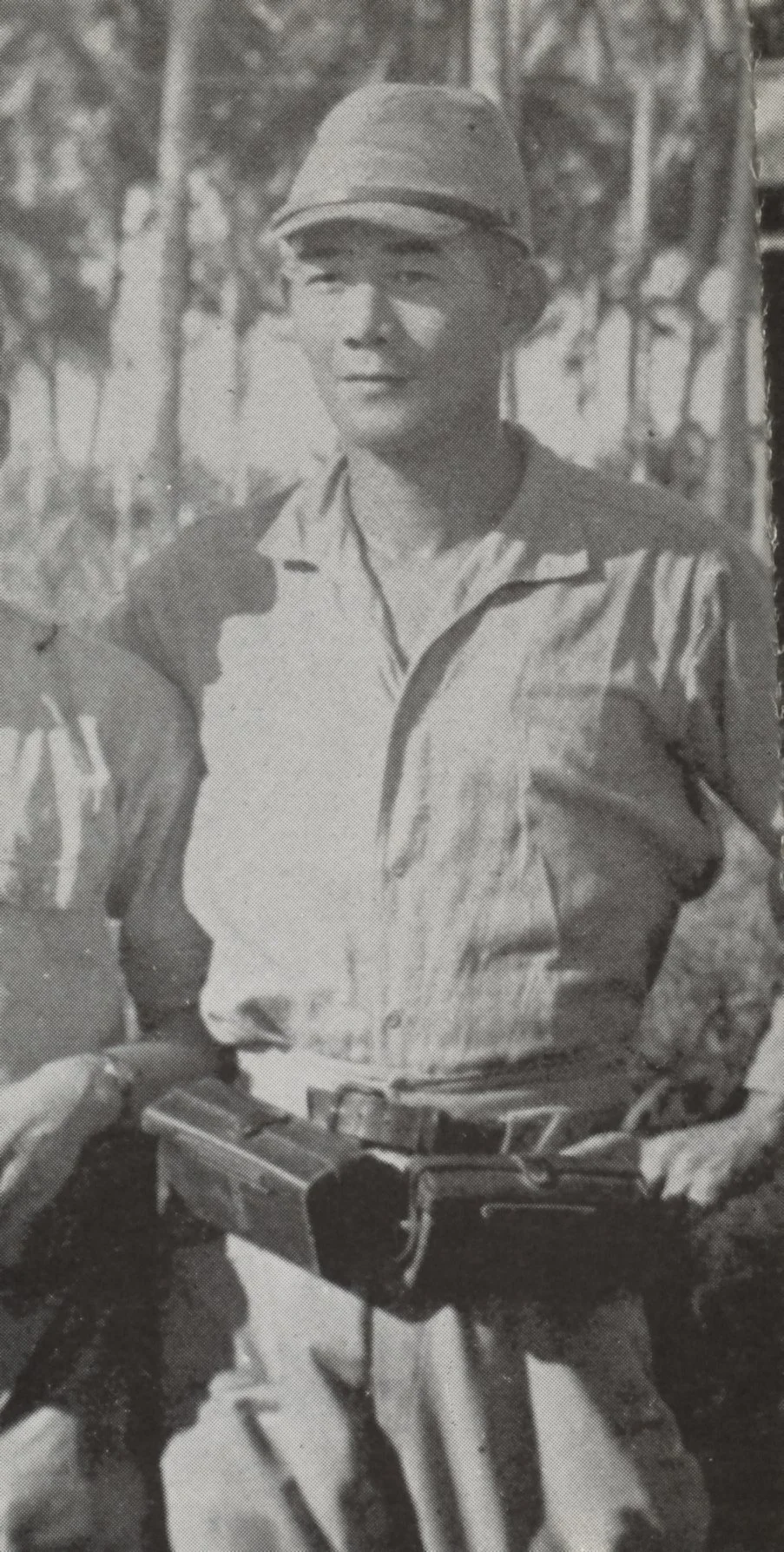
A Japanese Symbol
Because of his performance on the mound against Babe Ruth and the US team, Eiji Sawamura became a symbol for Japan that they had the ability to stand up to the super powers of the world.
Sawamura served three tours in the Japanese military. While in the army, articles are being published under his name which are very pro-Imperial Army, very pro-Japanese military, and very anti-American.
Sawamura was among soldiers of the 23rd Infantry Division boarded on the troop ship SS Hawaii Maru in early December of 1944, bound for Borneo via Japanese-occupied Manila in the Philippines.
At 0400 on December 2, 1944, the ship was torpedoed and sunk by USS Sea Devil off Yakushima, an island south of Kyushu. More than 2,000 soldiers and sailors were killed, with none surviving the sinking.
After his death, Sawamura’s status as a symbol of Japan shifted to that of what Japan lost during and because of the war. It becomes an anti-war message.
Sawamura was posthumously inducted into the Japanese Baseball Hall of Fame in 1959. The Sawamura Award, which is given to the best pitchers in the League since 1947, is named in his honor.

A memorial outside of the Tokyo Dome honoring Japanese professional ballplayers killed in WWII.
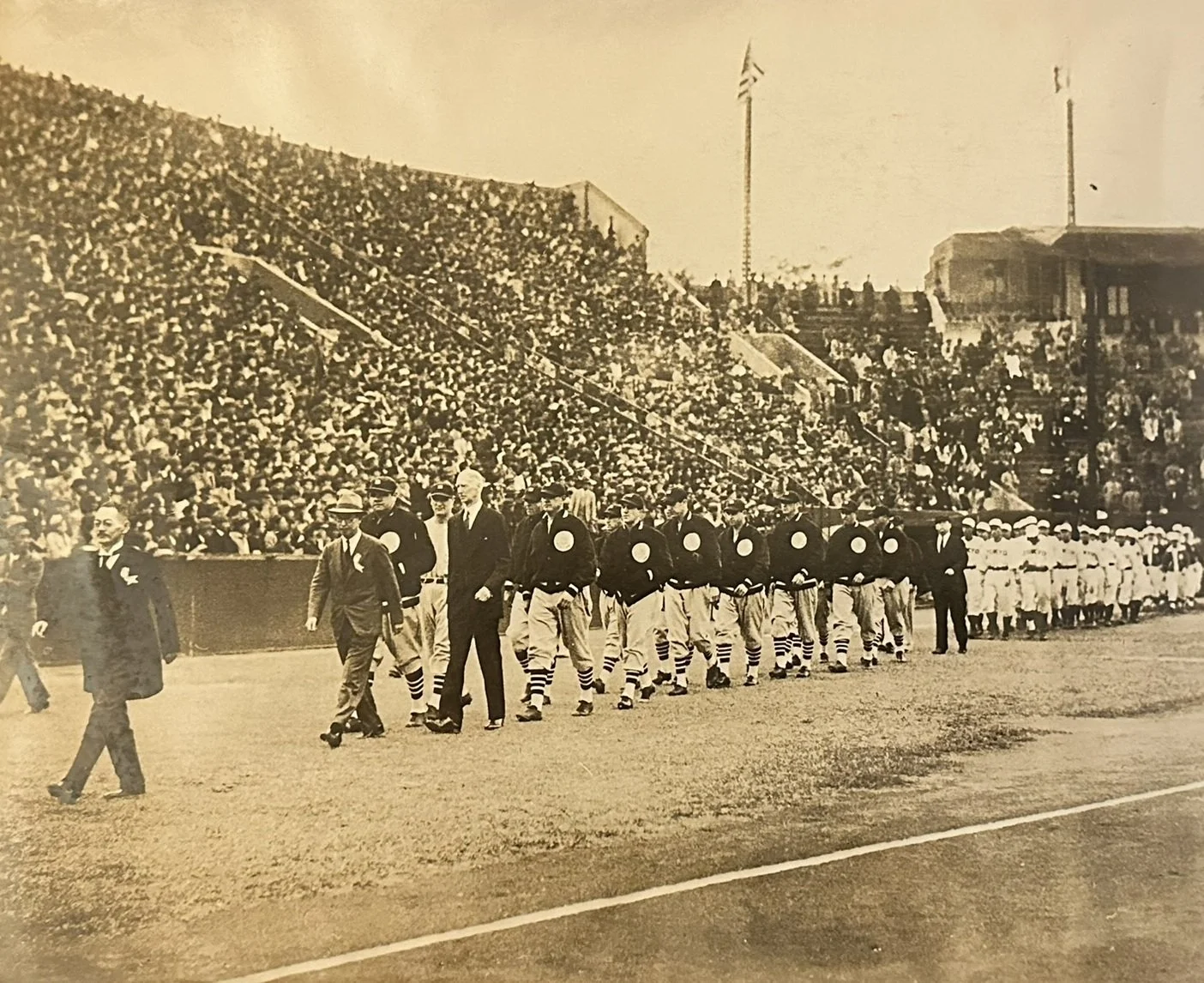
Sell-out Crowds
Not only were the games sold out, but there were overflow crowds waiting outside the gates in most cases, just hoping to catch a glimpse of the players (and, specifically, Babe Ruth) before and after the games.
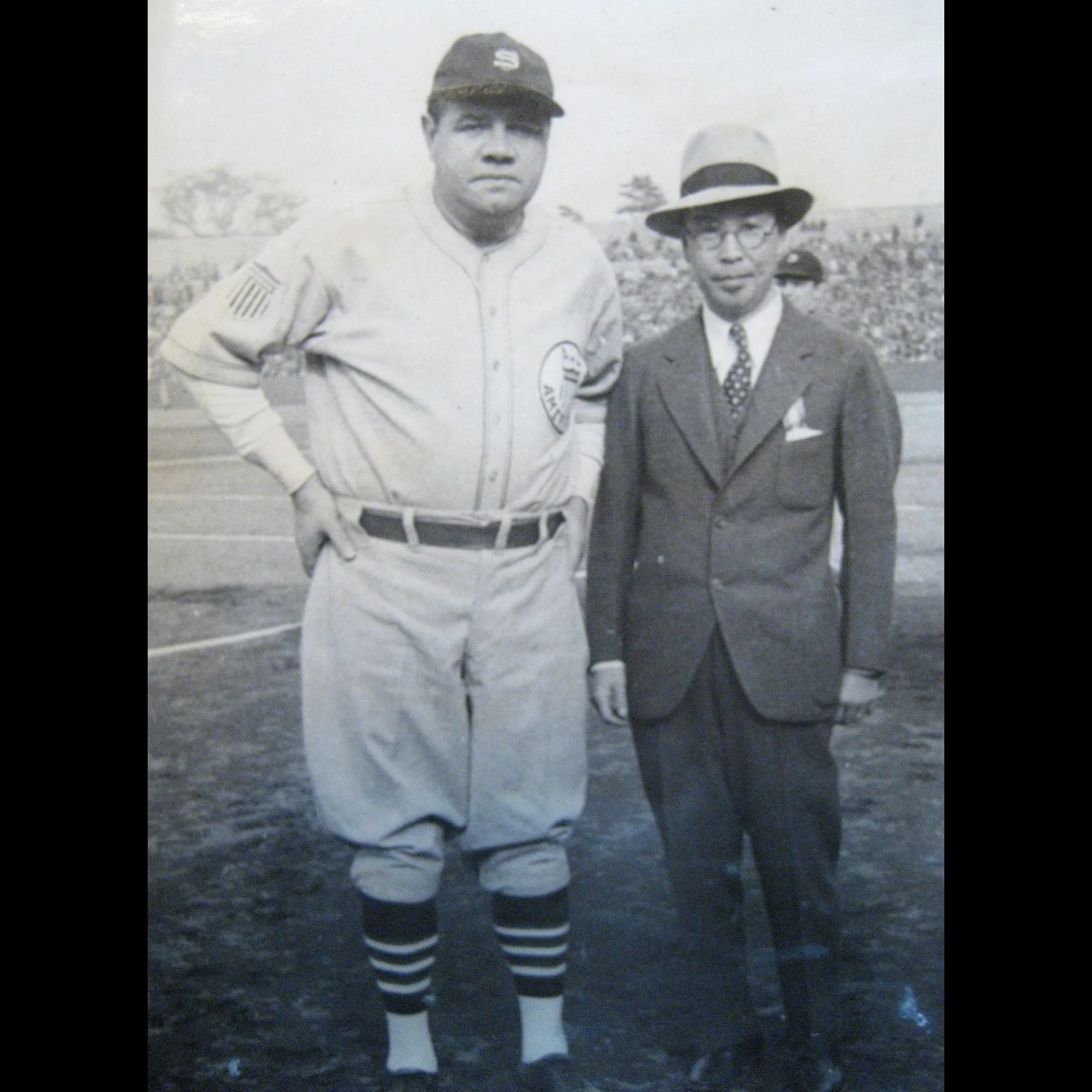
Sotaro Suzuki
Sotaro Suzuki was a highly-respected columnist in Yomiuri and a great fan and scholar of baseball. Yomiuri Shimbun owner Matsutarō Shōriki asked Suzuki to serve as his emissary in inviting star players and teams from the United States to travel to Japan and play exhibition games.
Suzuki arranged for a tour of major league All-Stars in 1931. That was a start, but Shoriki asked his confidant for more involvement from the major leagues in America.
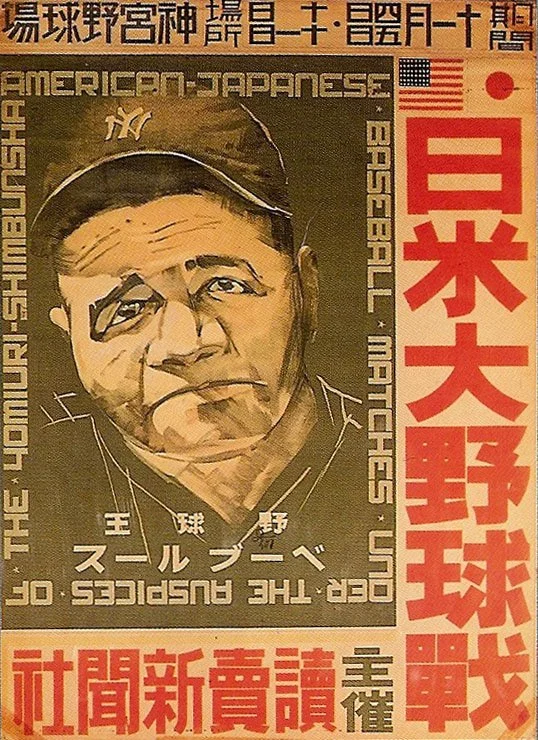
Babe’s Poster
Suzuki, who is essentially acting as the general manager of the American team, wanted to increase the visibility for Japan, so he traveled to New York to personally meet Babe Ruth, who he had heard was leaning toward not coming on the trip.
Suzuki showed the Babe a layout of a poster with Ruth’s larger-than-life face on it touting a tour in Japan.
He hooked the Babe with that mock poster and Suzuki then arranged the 1934 major league All-Star tour.
In 1968, Sotaro Suzuki was inducted to the Japanese Baseball Hall of Fame.
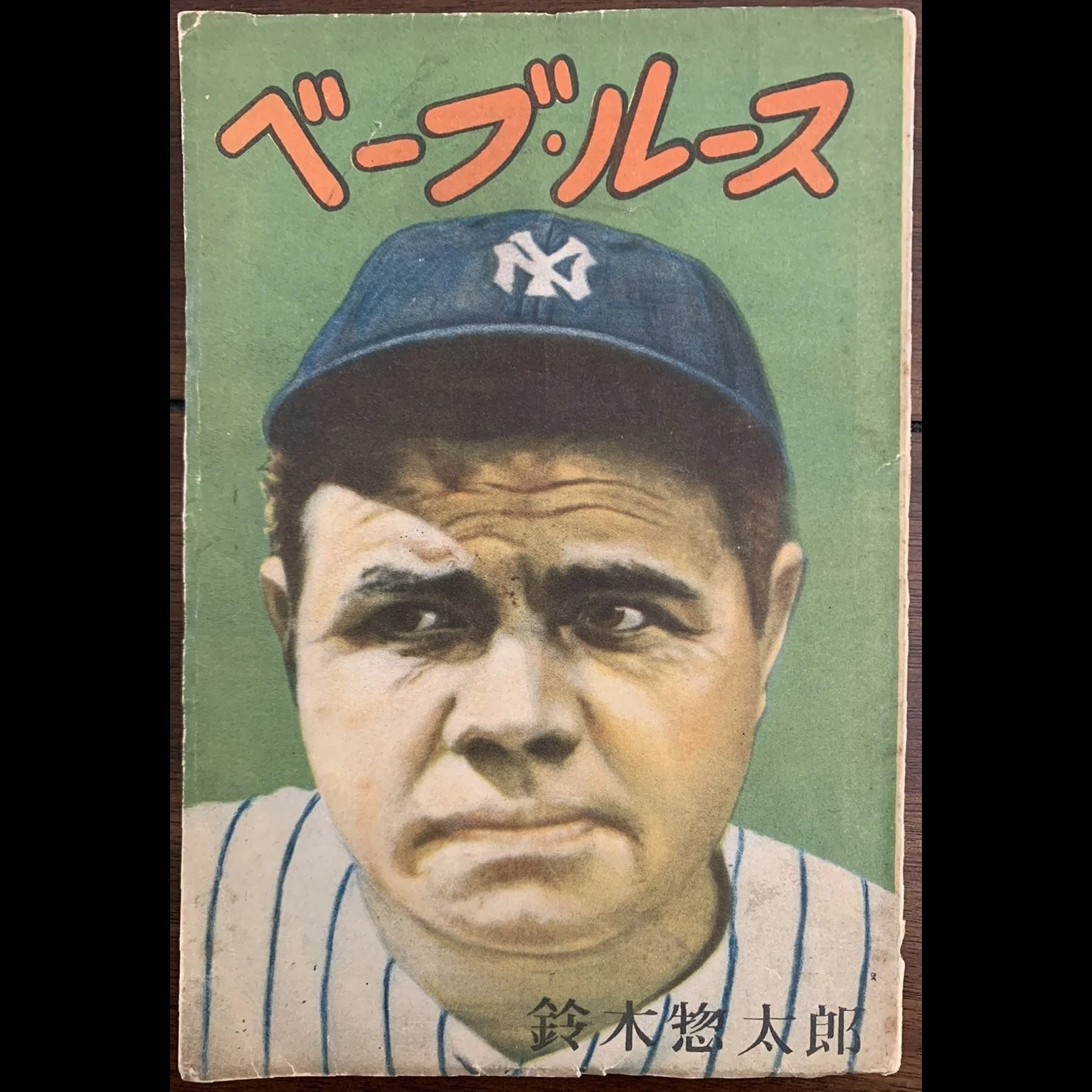
Lifelong Friends
Suzuki and Ruth remained friends, and in 1948, he published a biography about the Babe in Japanese.
If you want to own your own copy, you can buy one HERE.
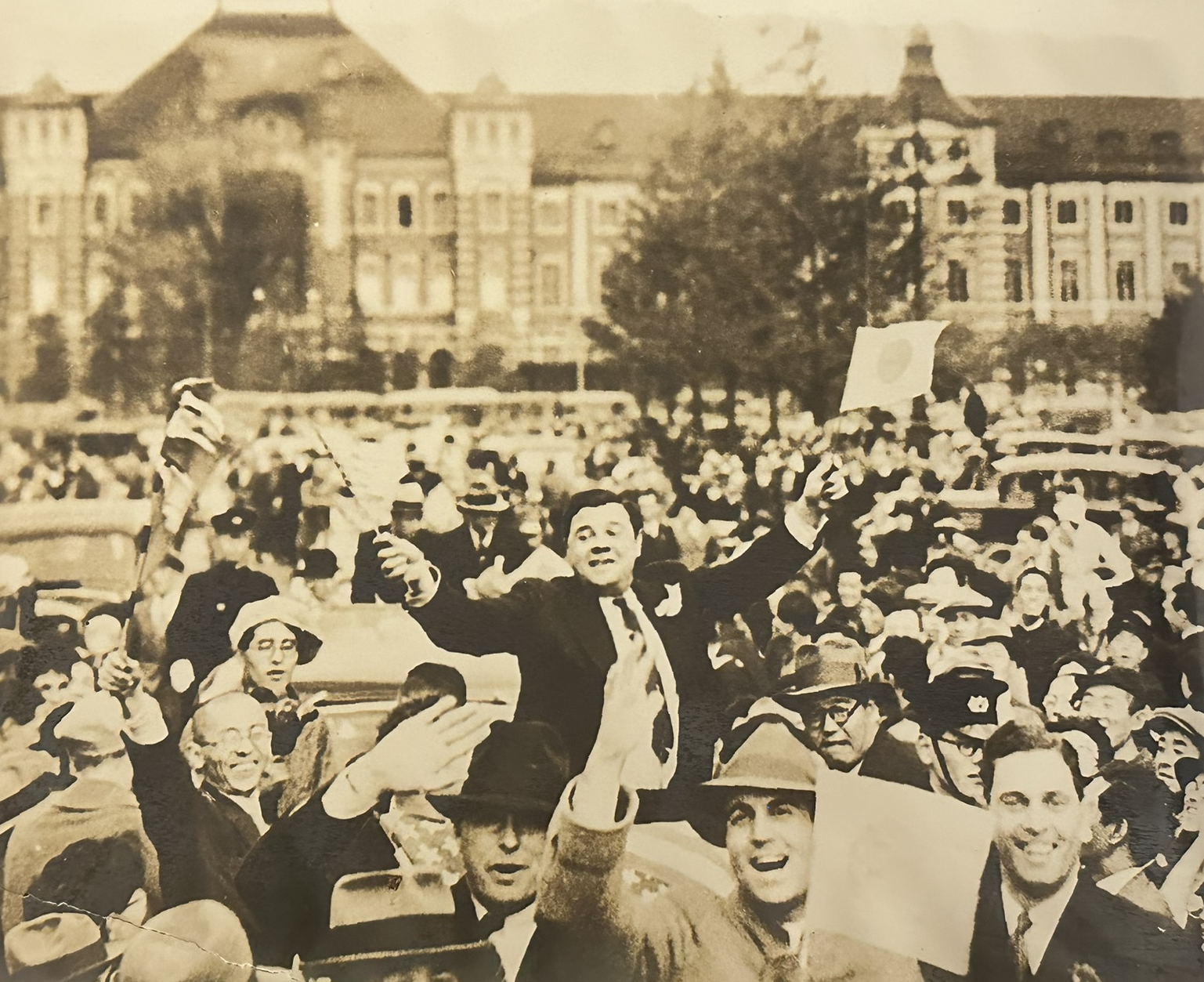
Babe Loved Japan
And Japan loved the Babe.
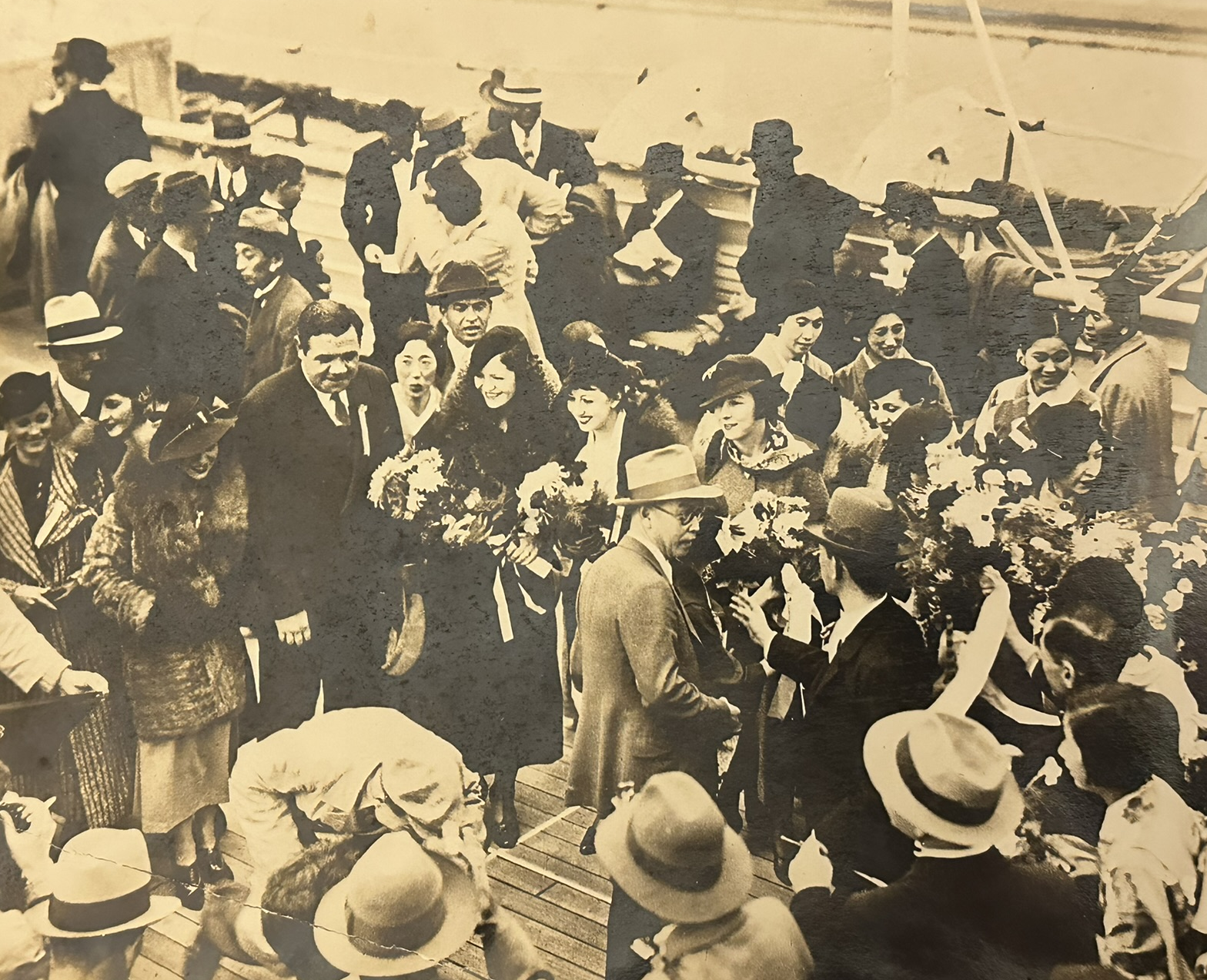
Babe’s Wife
Babe and his second wife, Claire, were married on April 17, 1929, and remained together until his death in 1948. She came with on the 1934 tour, which may have kept Babe from fully enjoying Japan in the ways he may have otherwise wished, but he still seemed to have a great time.
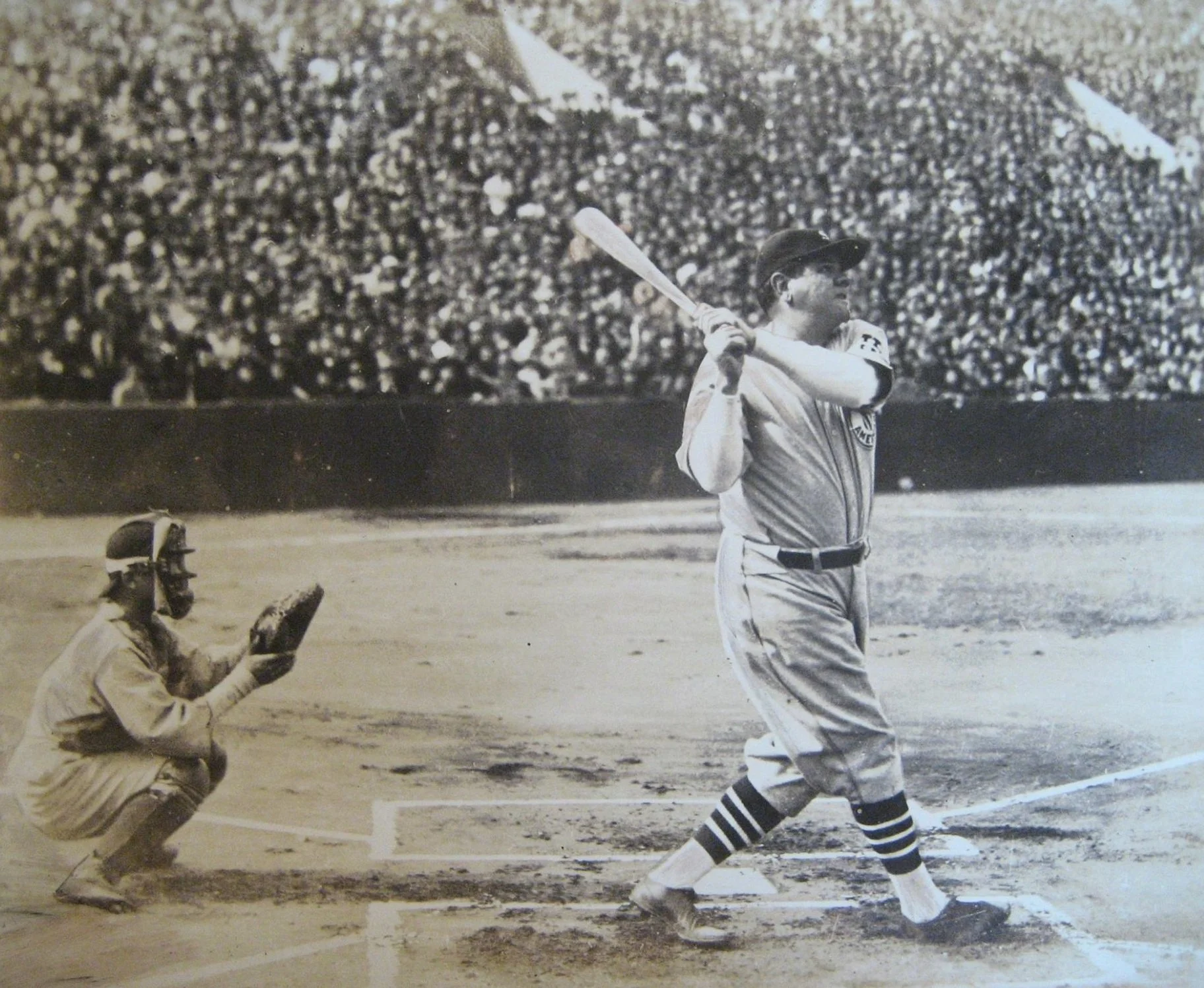
Babe Played Great
After parting ways very unceremoniously with the Yankees following the 1934 MLB season, Babe had a chip on his shoulder and was out to prove he could still be a great ballplayer.
In Japan, he did just that, by leading the US team in multiple offensive statistics, including home runs, RBI, runs scored, hits, and batting average (minimum 10 games played). He was also just one stolen base shy of leading the team in steals!
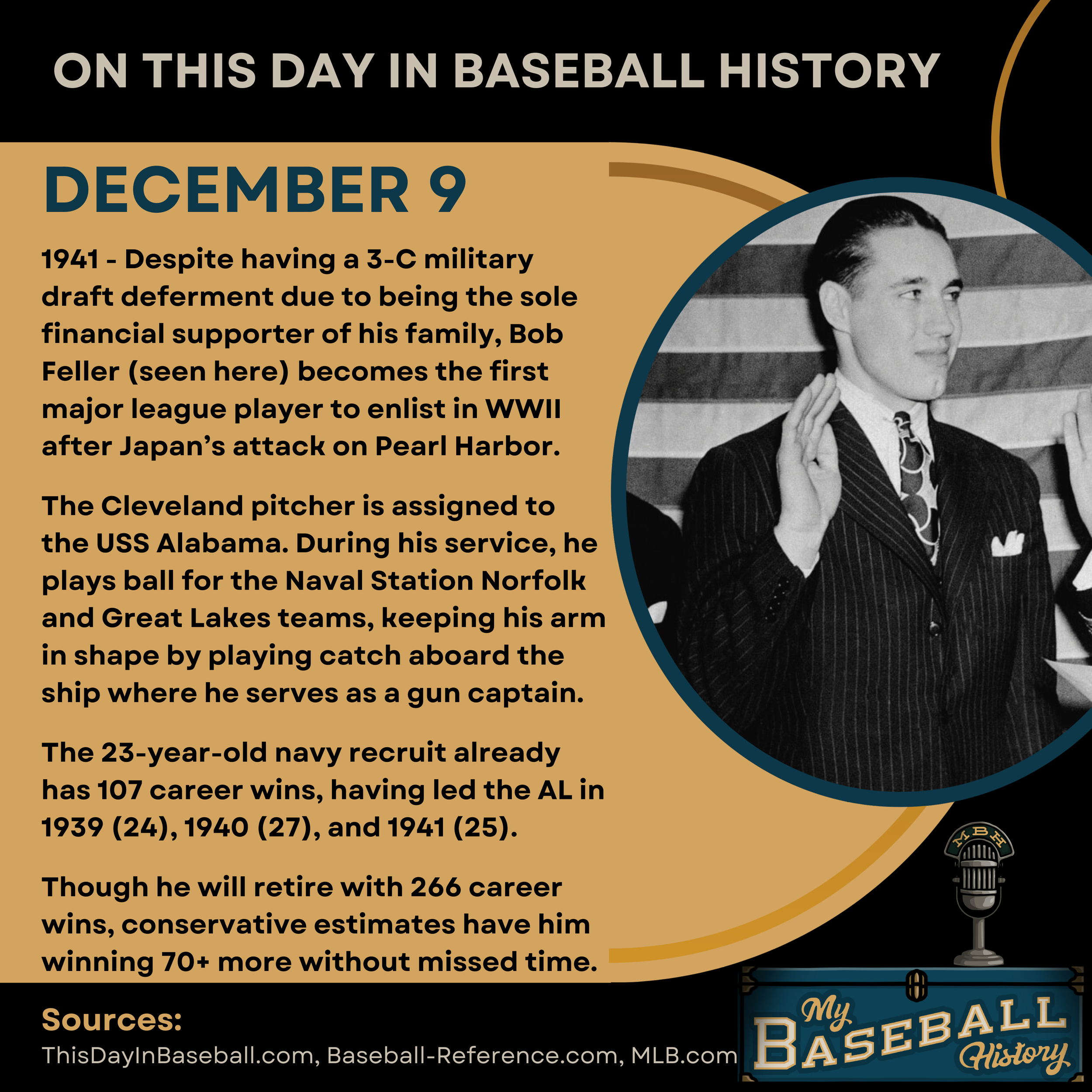
Pearl Harbor
Seven years after the 1934 tour, the Japanese bombed the American naval base in Pearl Harbor.
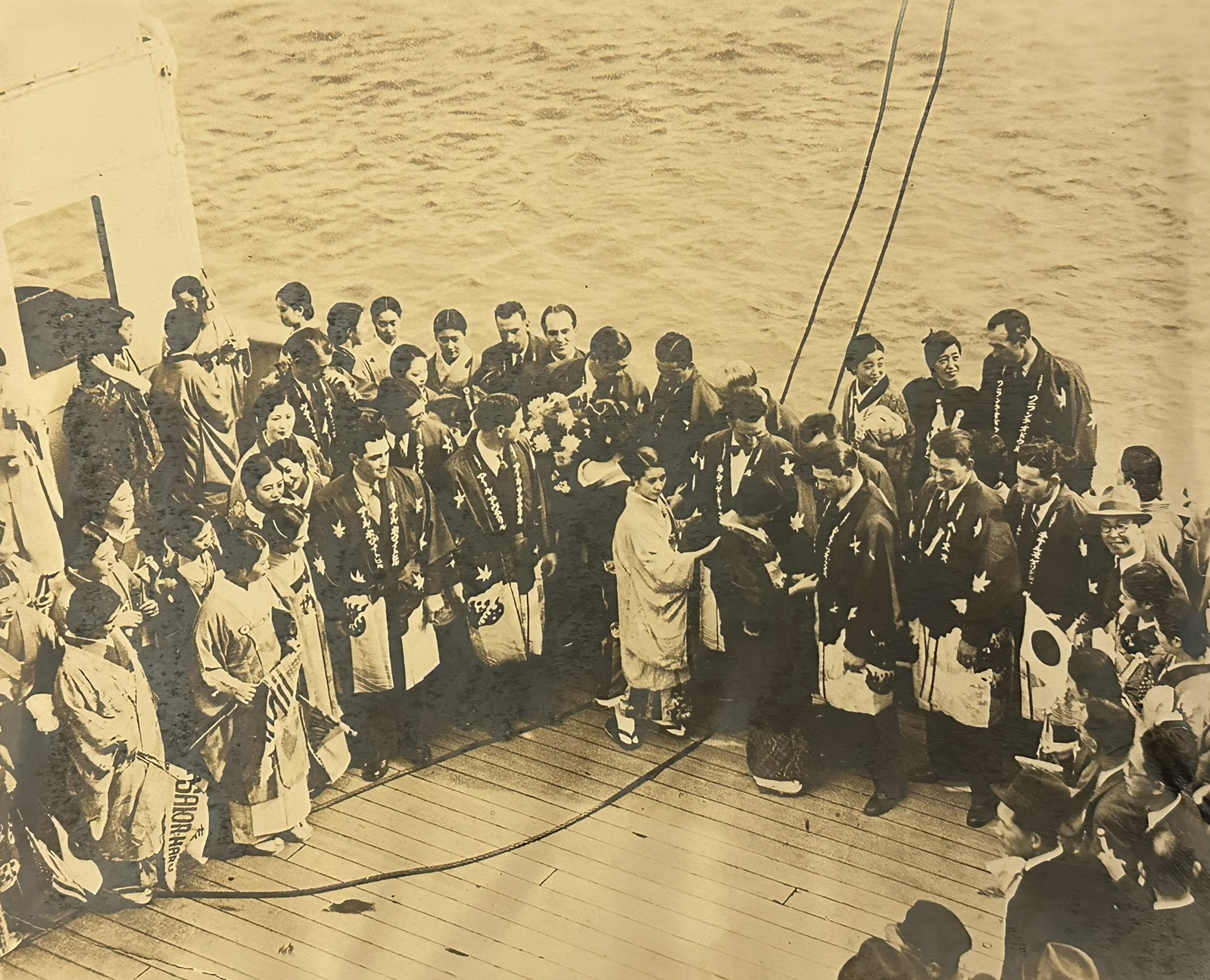
Ambassadors
Players from both America and Japan truly felt like the 1934 tour was enough to bring peace to the countries. Babe Ruth, Connie Mack, even the ambassador to Japan, all made statements saying they felt baseball truly brought everyone together.
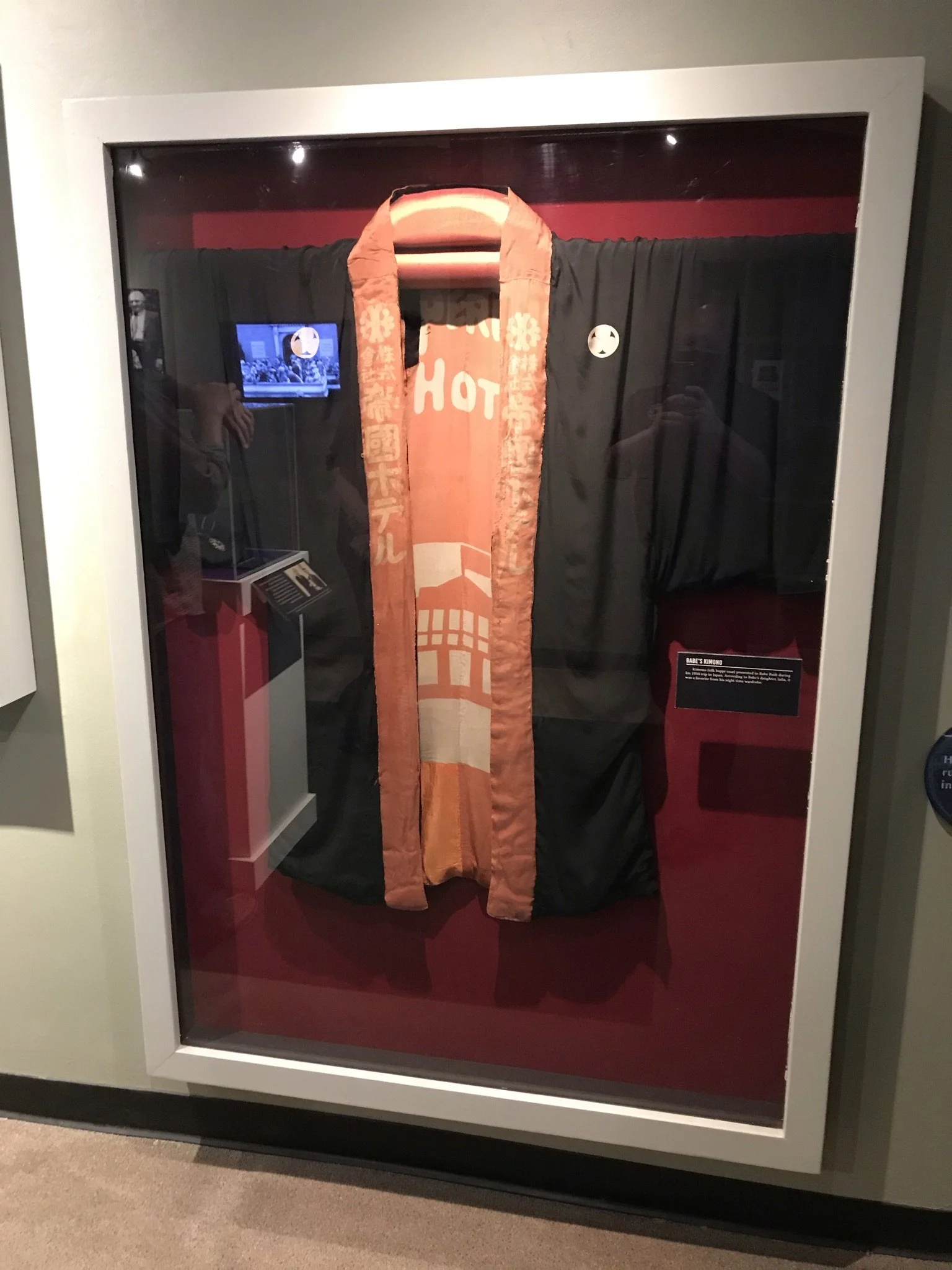
Babe’s Kimono
One of the Japanese pieces that was saved from Babe’s tantrum after he learned of the attack on Pearl Harbor was this kimono, which he got during the 1934 Tour.
It is on display at the Babe Ruth Birthplace and Museum in Baltimore.
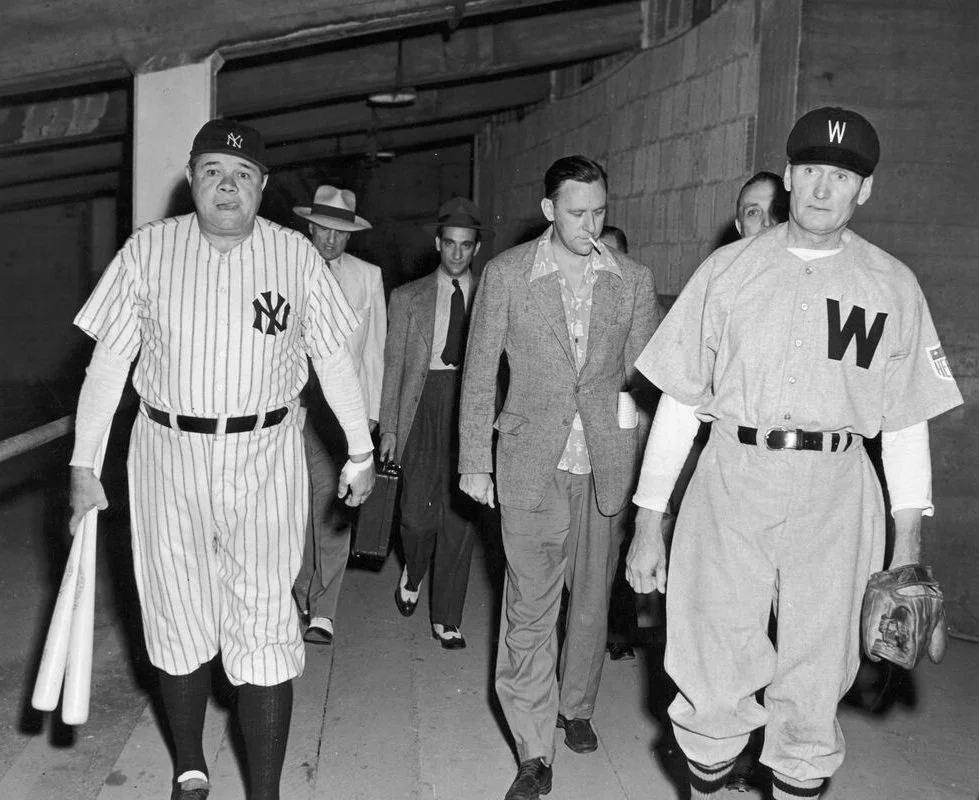
Babe’s War Bond Efforts
When the United States entered the war in December 1941, Babe Ruth was 46 years old. His playing career had ended six years before in 1935 and he had been out of organized baseball altogether since quitting his job as a Dodgers' coach at the end of the 1938 season.
Almost immediately, Ruth began appearing in golf tournaments and exhibition games to help raise money for the war effort.
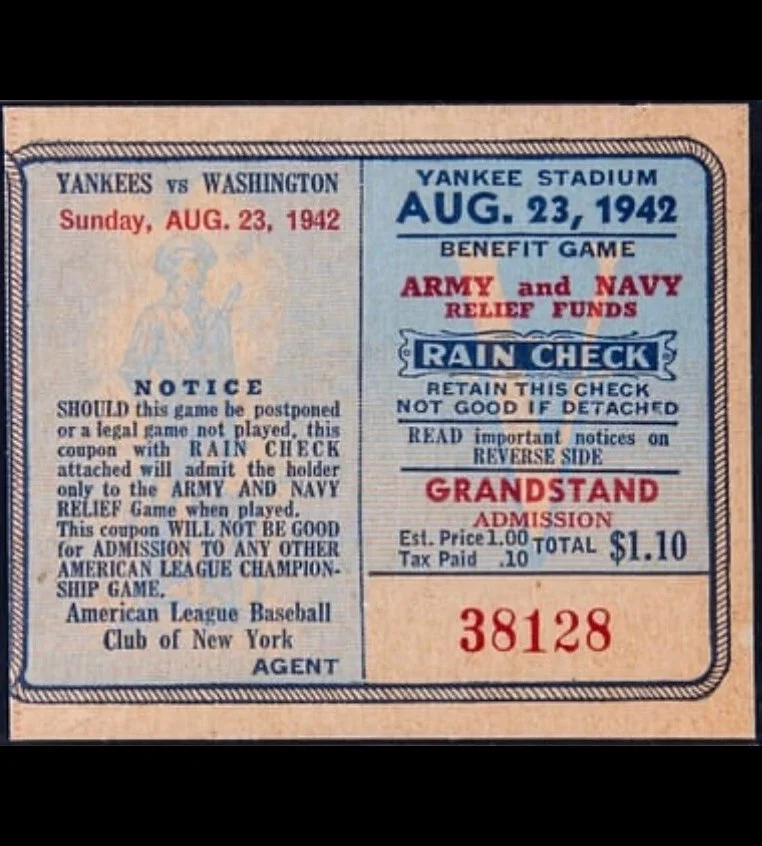
August 23, 1942
One of Ruth's first baseball-related fund-raising appearances was on August 23, 1942. Before 69,136 fans at Yankee Stadium, a 47-year-old Ruth donned Yankee pinstripes for the first time in seven years. He faced 54-year-old Walter Johnson, formerly of the Washington Senators, who threw 17 pitches to Ruth.
On the fifth pitch, Ruth hit a drive into the lower rightfield stands as the crowd thundered its approval. On the final pitch, Ruth hit a towering upper-deck shot that was just foul. He circled the bases doffing his cap and saluting the roaring crowd with every step. Ruth and Johnson then left the field together to a thunderous ovation.
$80,000 was raised for the Army-Navy relief fund.
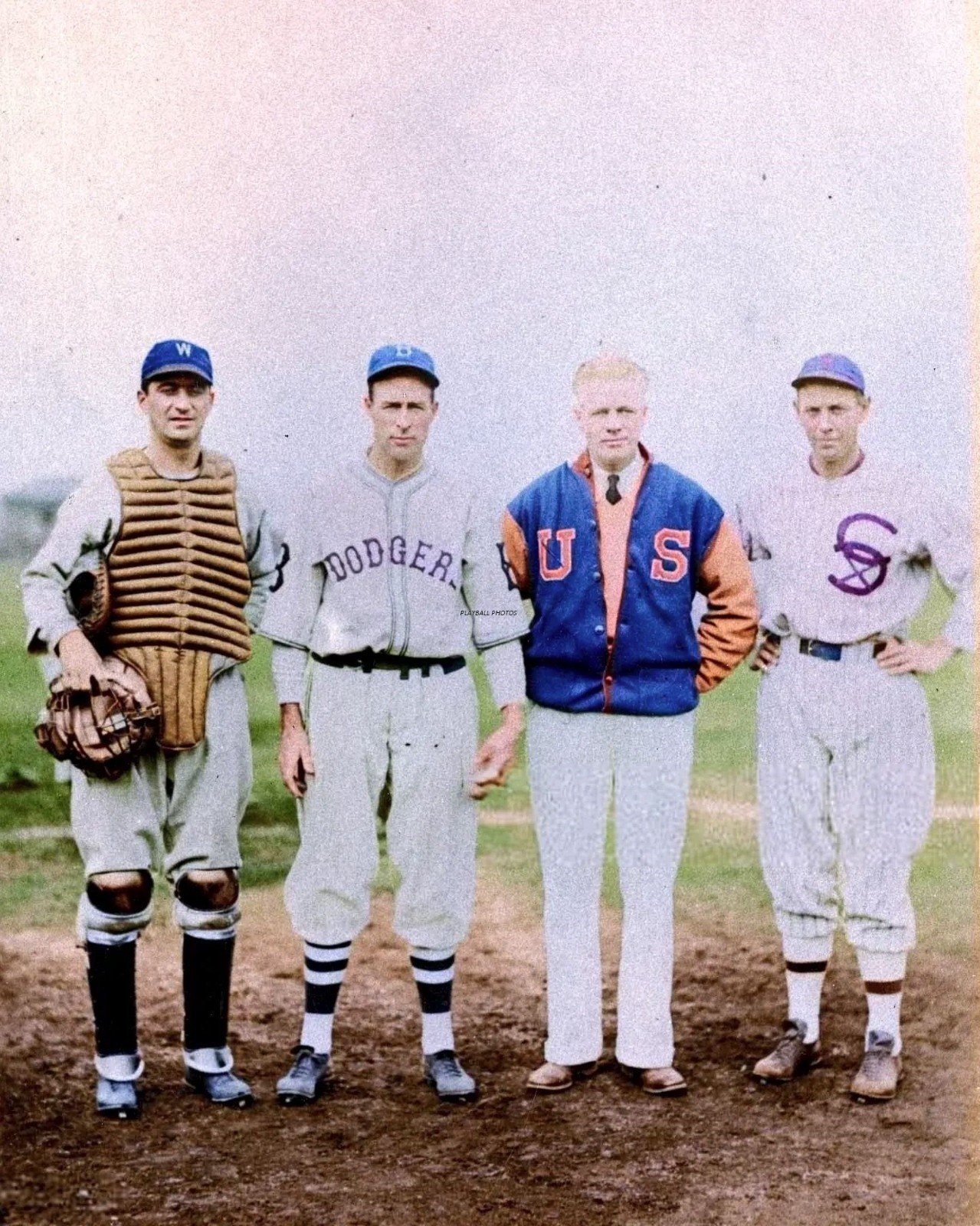
Ted Lyons
White Sox pitcher Ted Lyons vouched for Moe Berg as a catcher, despite Berg having little experience at the position. The recommendation extended Berg’s career. “In the years he was to catch me, I never waved off a sign,” Lyons said.
As the possibly apocryphal story goes, whenever Lyons allowed a runner to reach second base, Berg would stop flashing signs and he and Lyons would speak Greek to call the pitches.
The pair later joined Lefty O’Doul on a visit to Japan, where they coached young players and laid the foundation for baseball’s popularity in Asia. This photo shows (left to right) Berg, O'Doul, Herb Hunter manager of the 1932 tour to Japan, and Lyons at Rikkyo University in Tokyo.
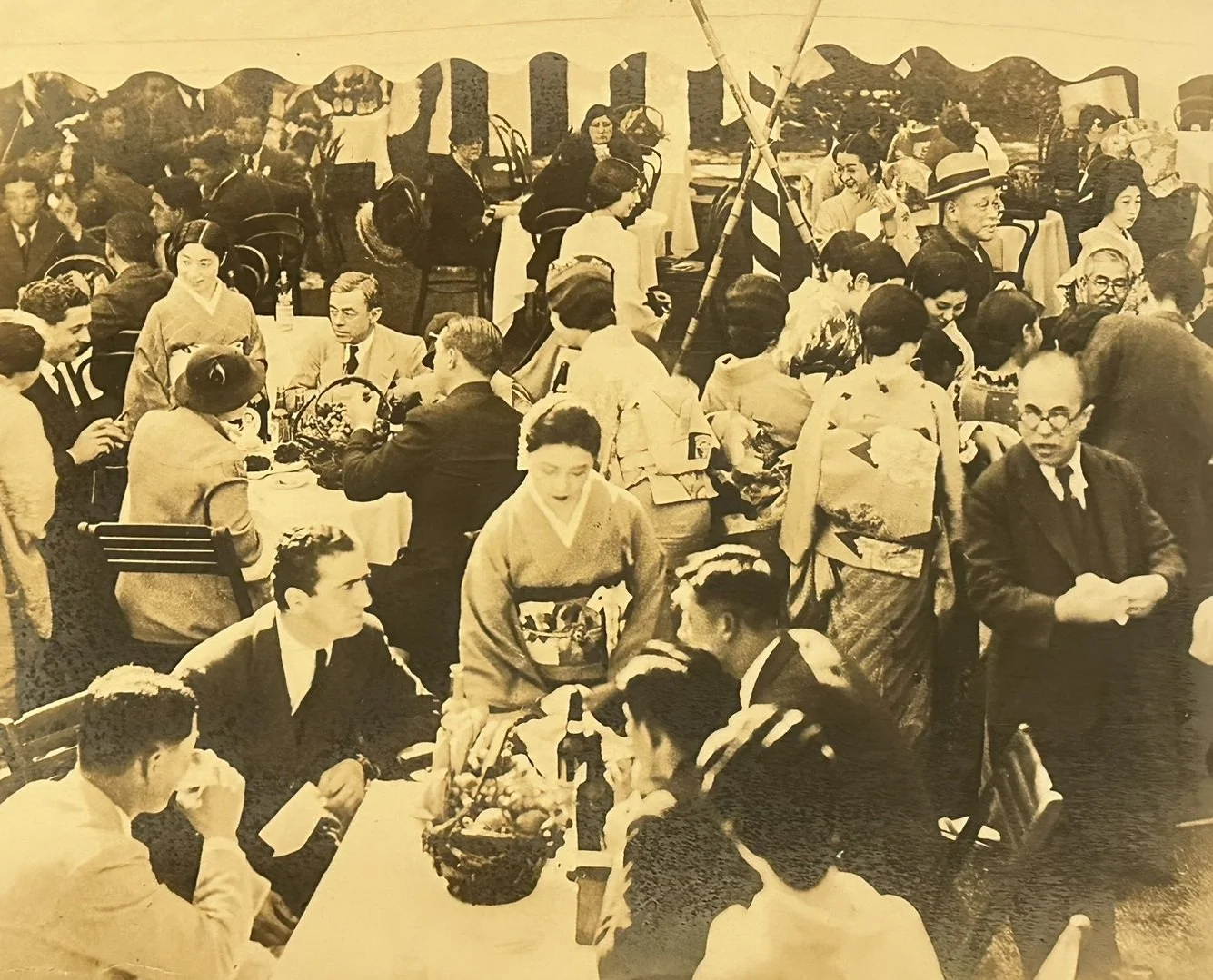
Moe Berg
Moe Berg had already been to Japan in 1932, so he knew what was in store for him if he chose to go with for the 1934 tour.
Here, Moe is seated on the left side of the table in the foreground, wearing the dark suit jacket.
Movie Camera
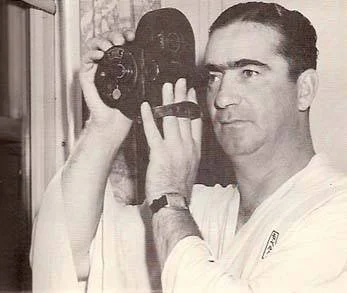
During the 1934 tour, Berg entered St. Luke’s Hospital carrying a bouquet of flowers intended for Ambassador Joseph Grew’s daughter (Mrs. Cecil Burton), who had recently given birth to a daughter. He introduced himself as a friend of Mrs. Burton but instead of going to her room went up to the roof and using a motion picture camera shot the skyline and other important parts of Tokyo.
He never visited Mrs. Burton. In 1942, General Jimmy Doolittle’s pilots viewed Berg’s photos before their famous raid on Tokyo in April 1942. However, the pictures were too old to be useful to the pilots.
The Catcher Was a Spy
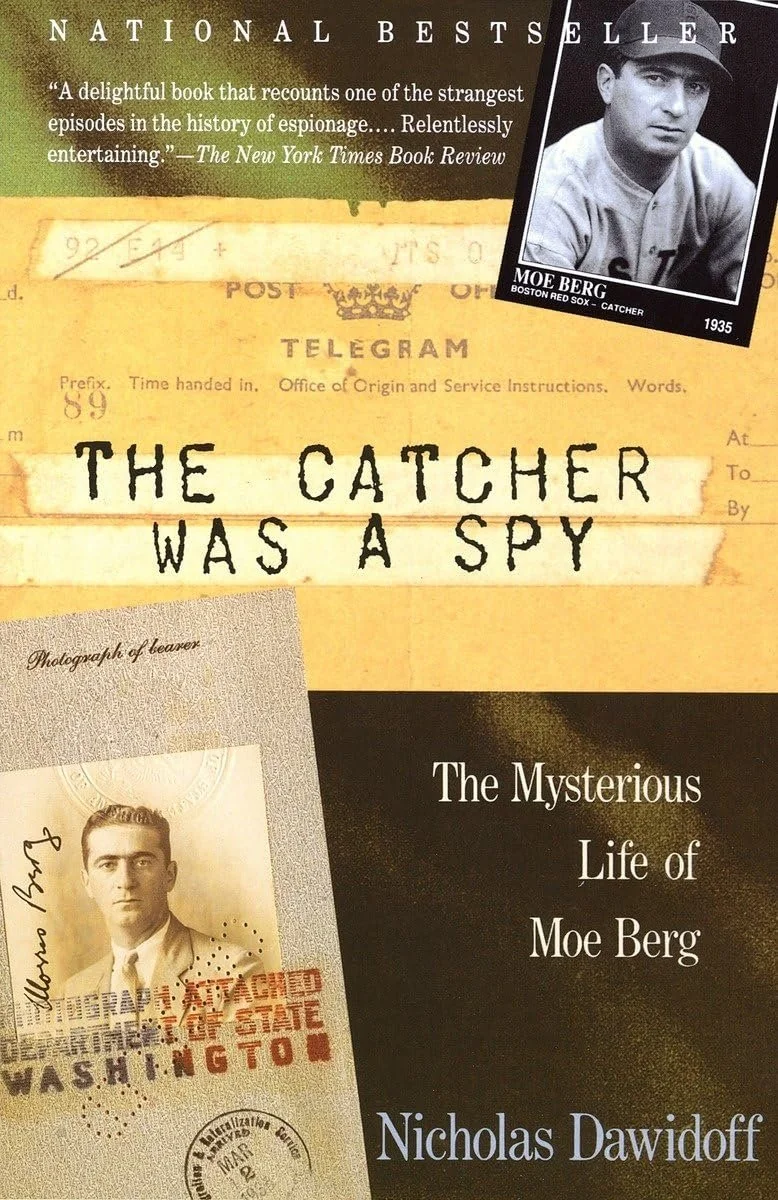
As Nicholas Dawidoff follows Moe Berg from his claustrophobic childhood through his glamorous (though equivocal) careers in sports and espionage and into the long, nomadic years during which he lived on the hospitality of such scattered acquaintances as Joe DiMaggio and Albert Einstein, he succeeds not only in establishing where Berg went, but who he was beneath his layers of carefully constructed cover.
As engrossing as a novel by John le Carré, The Catcher Was a Spy is a triumphant work of historical and psychological detection.
Buy a copy of The Catcher Was a Spy HERE.
The OSS
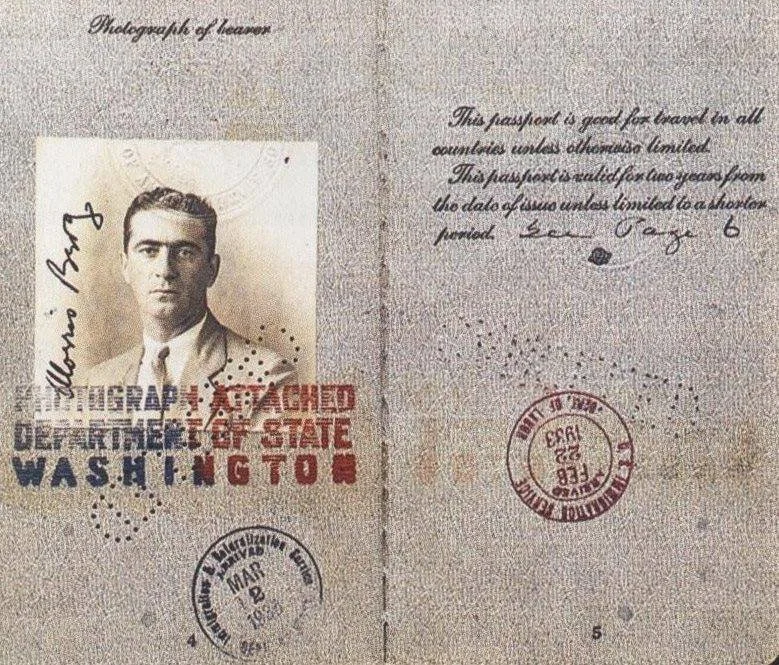
In August 1943, Moe Berg was recruited into the Office of Strategic Services (OSS), later to become the CIA, by General William (Wild Bill) Donovan, former commander of the Fighting Sixty-Ninth Regiment in World War I. Berg had just finished his tour of South American countries to secure cooperation between them and the United States in the war against the Axis.
Berg supposedly refused the Medal of Merit when he was told he could not explain to friends why he earned it. His sister accepted it after his death.
Yomiuri Giants
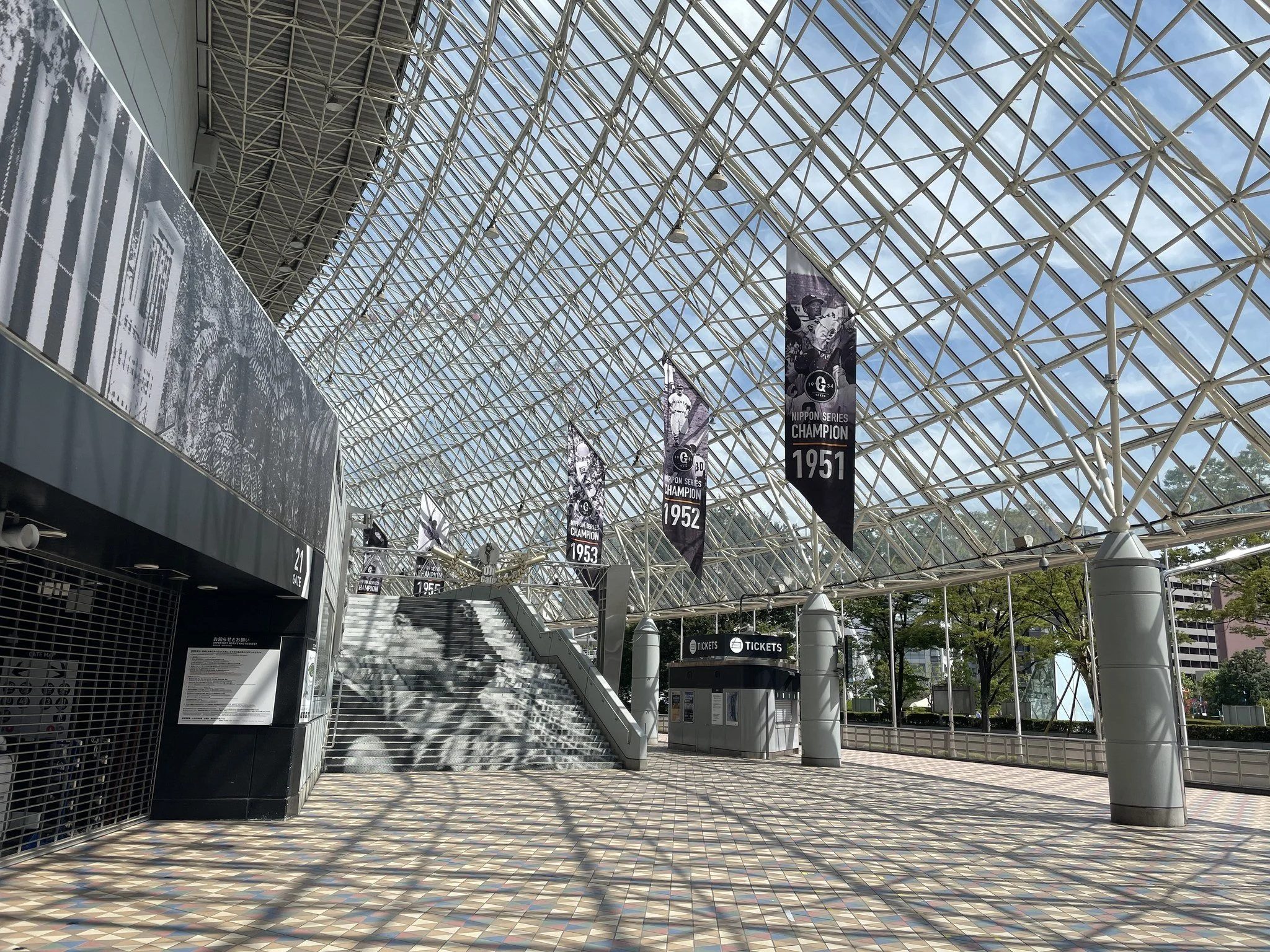
After the 1934 tour, instead of breaking up the Japanese team, Matsutarō Shōriki kept them together and created the Yomiuri Giants, who have been Japan's most successful and popular team.
The team has won 30 pennants and 20 championships since 1946, including 9 straight from 1965 to 1973. They have also produced some of the best players in Japanese baseball history.
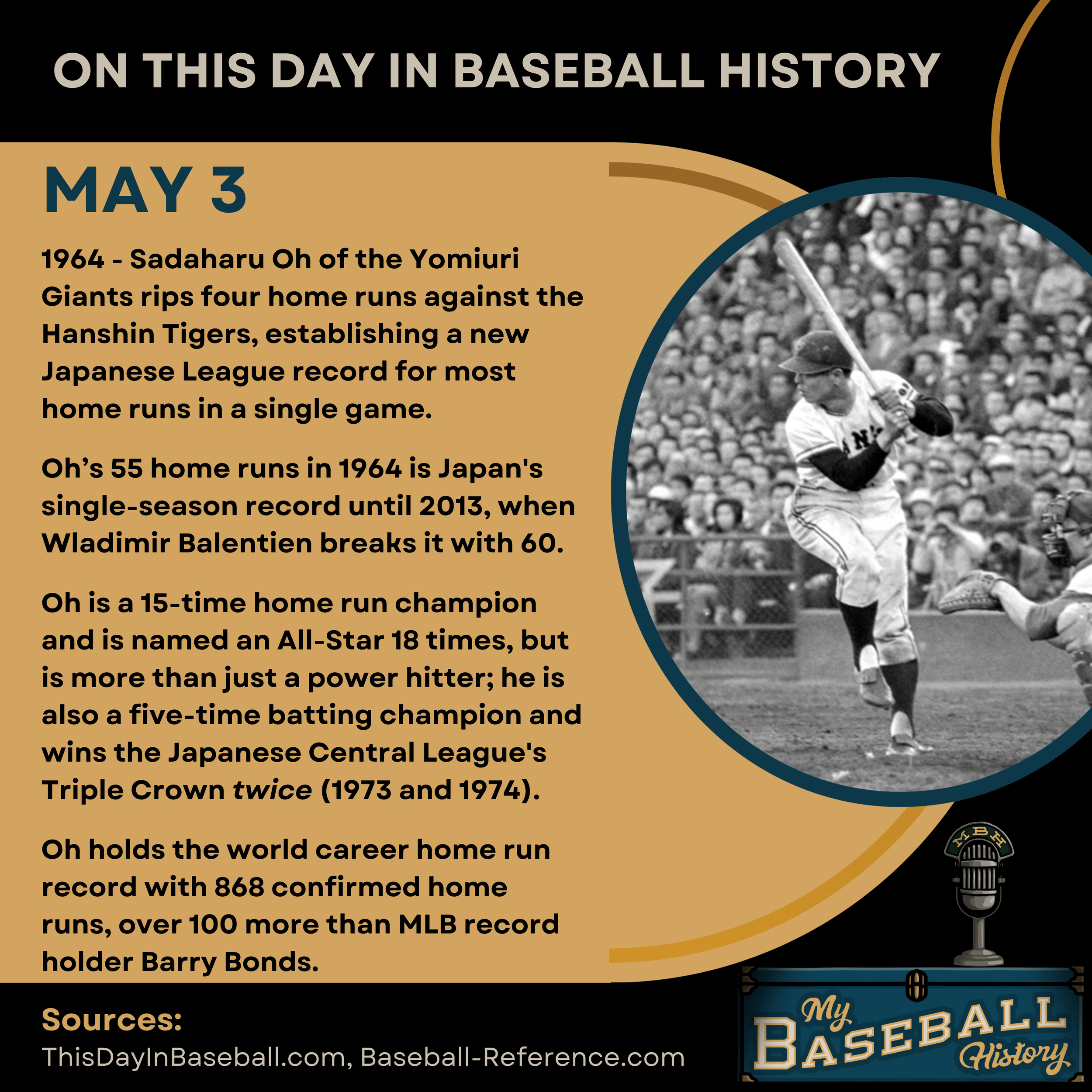
Sadaharu Oh
Sadaharu Oh made his professional debut on April 1, 1959. He started his career as a pitcher, but wasn’t very successful and transitioned to first base.
He holds the NPB record for the highest on base plus slugging percentage at 1.079 and is first all time in runs batted in at 2,170.
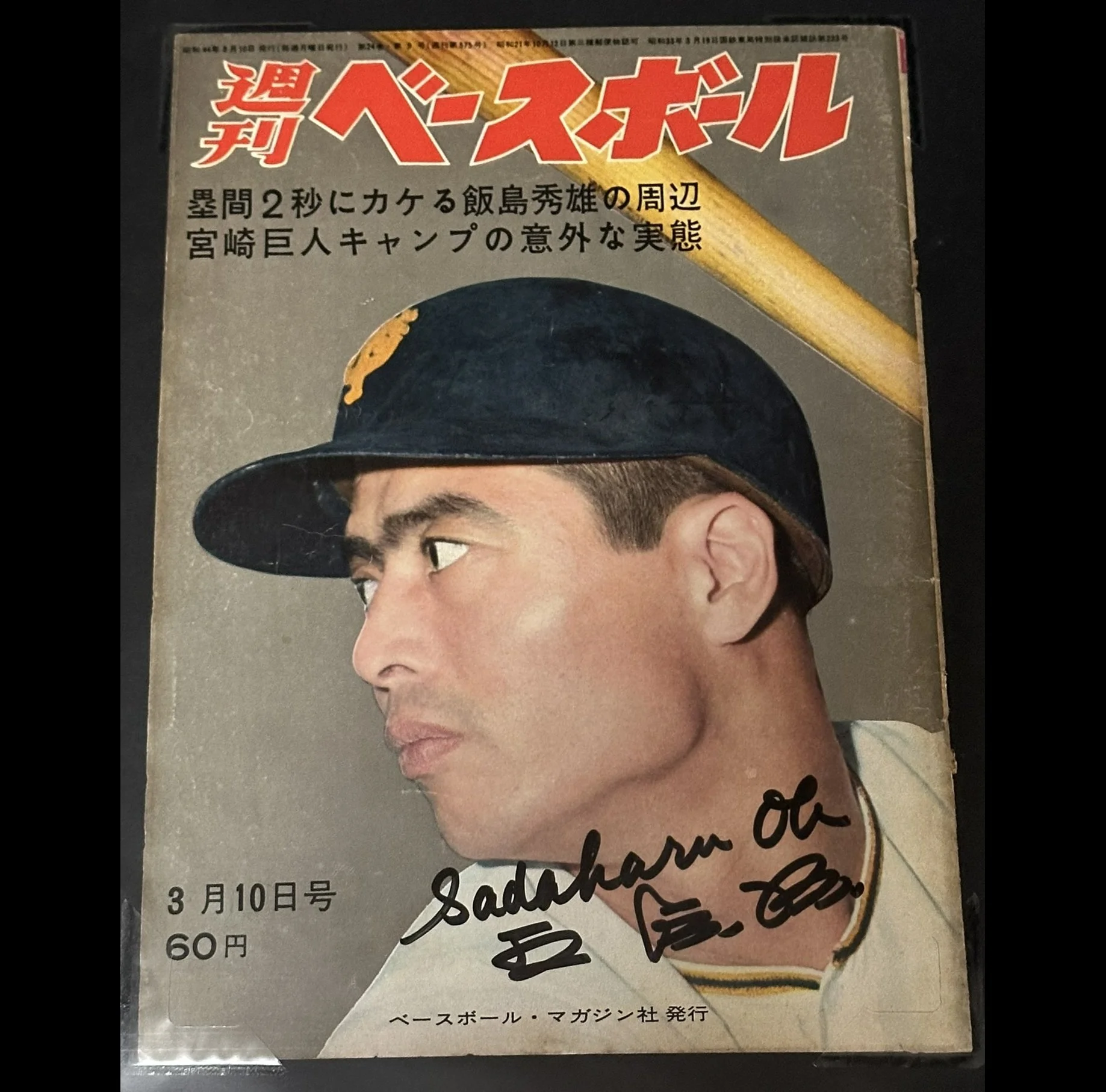
Sadaharu Oh
Oh's career home run total overshadows his all-around skill as a hitter (.301 career average, five batting titles, .446 on-base percentage).
His Yomiuri Giants won the Japan Series 11 times during Oh's 22 seasons. Oh was inducted into the Japanese Hall of Fame in 1994.
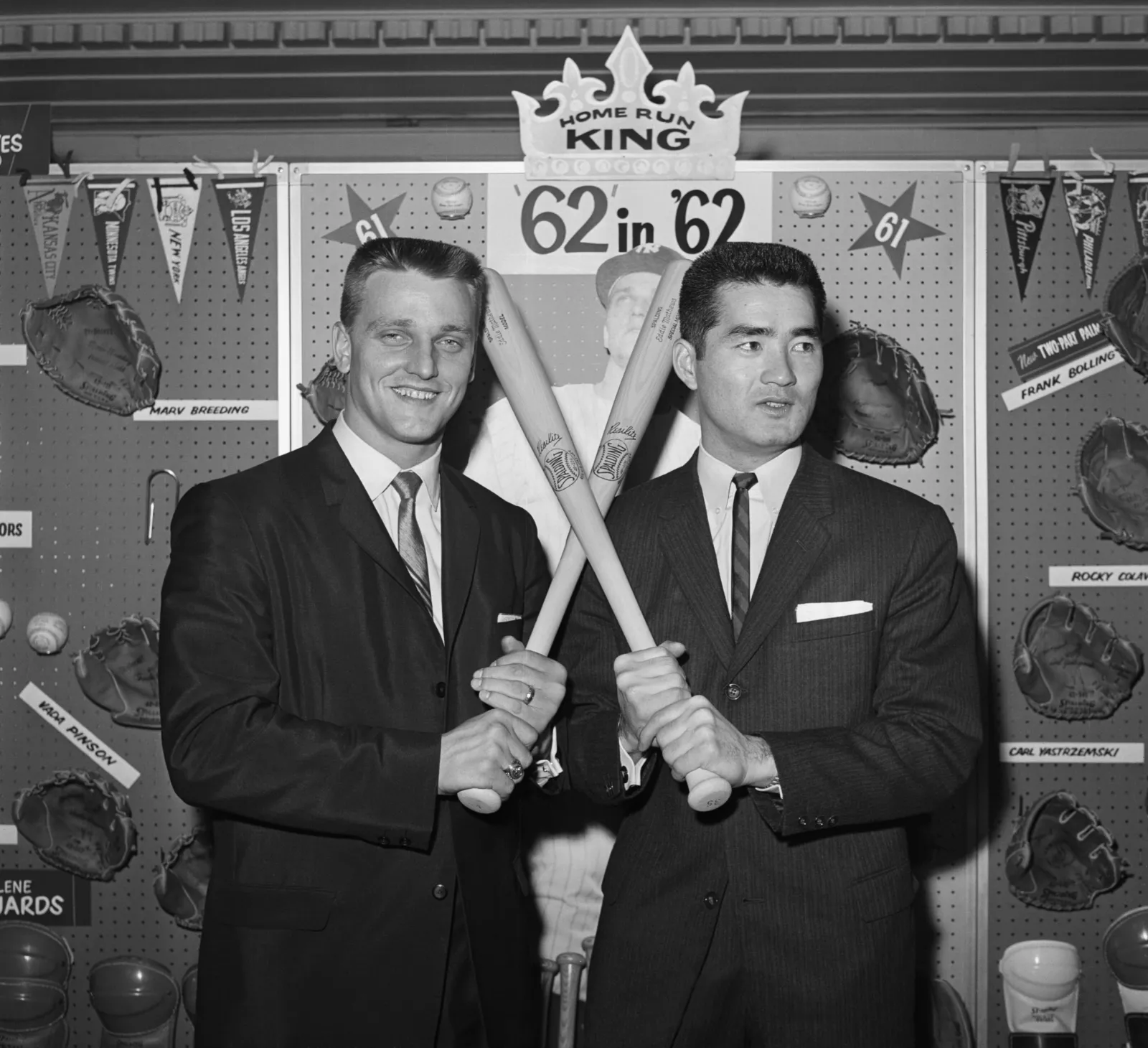
Shigeo Nagashima
From 1958-74, Shigeo Nagashima won 6 batting titles, ending his career with a .305 batting average, 444 home runs, and 2,471 hits – which is good for 9th all-time in Japan.
Nagashima hit at least 25 home runs in 12 different seasons.
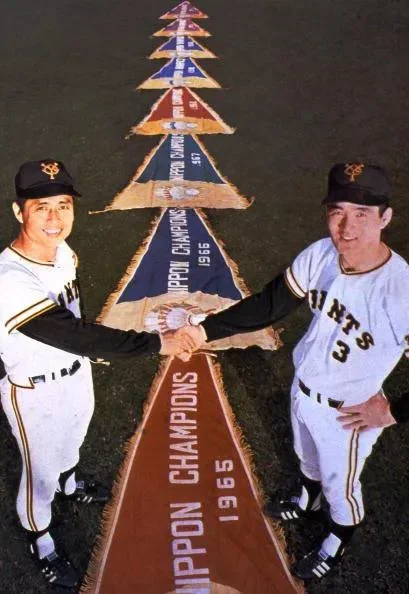
O-N Cannon
For much of his career, Shigeo Nagashima paired with Sadahura Oh to become the unstoppable dynamic duo of NPB.
The “O-N Cannon”, as they were called by fans, was just unfair. They can be compared to the crushing 3-4 combo of Babe Ruth and Lou Gehrig of the 1920’s and 30’s “Murderers’ Row” Yankees.
The MVP in the Central League was won by either Nagashima or Oh every single year from 1963-1971.
With Oh batting 3rd and Nagashima batting cleanup, the Giants absolutely dominated Japanese baseball in the 1960s and 1970s.
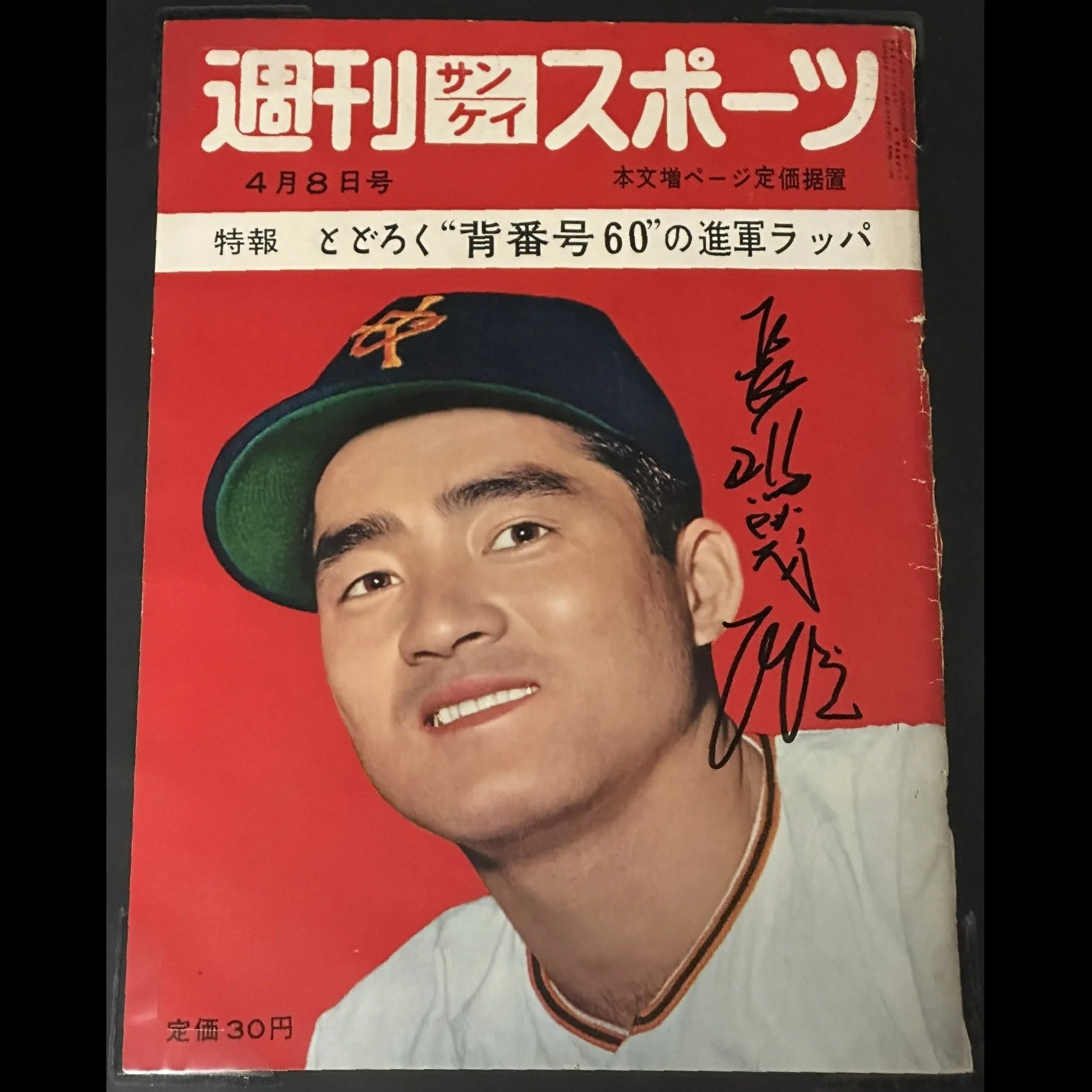
Shigeo Nagashima
Shigeo Nagashima’s teams won 11 Japan Series championships, including a ridiculous nine in a row.
Nagashima was the Japan Series MVP four times, and the League MVP five times.
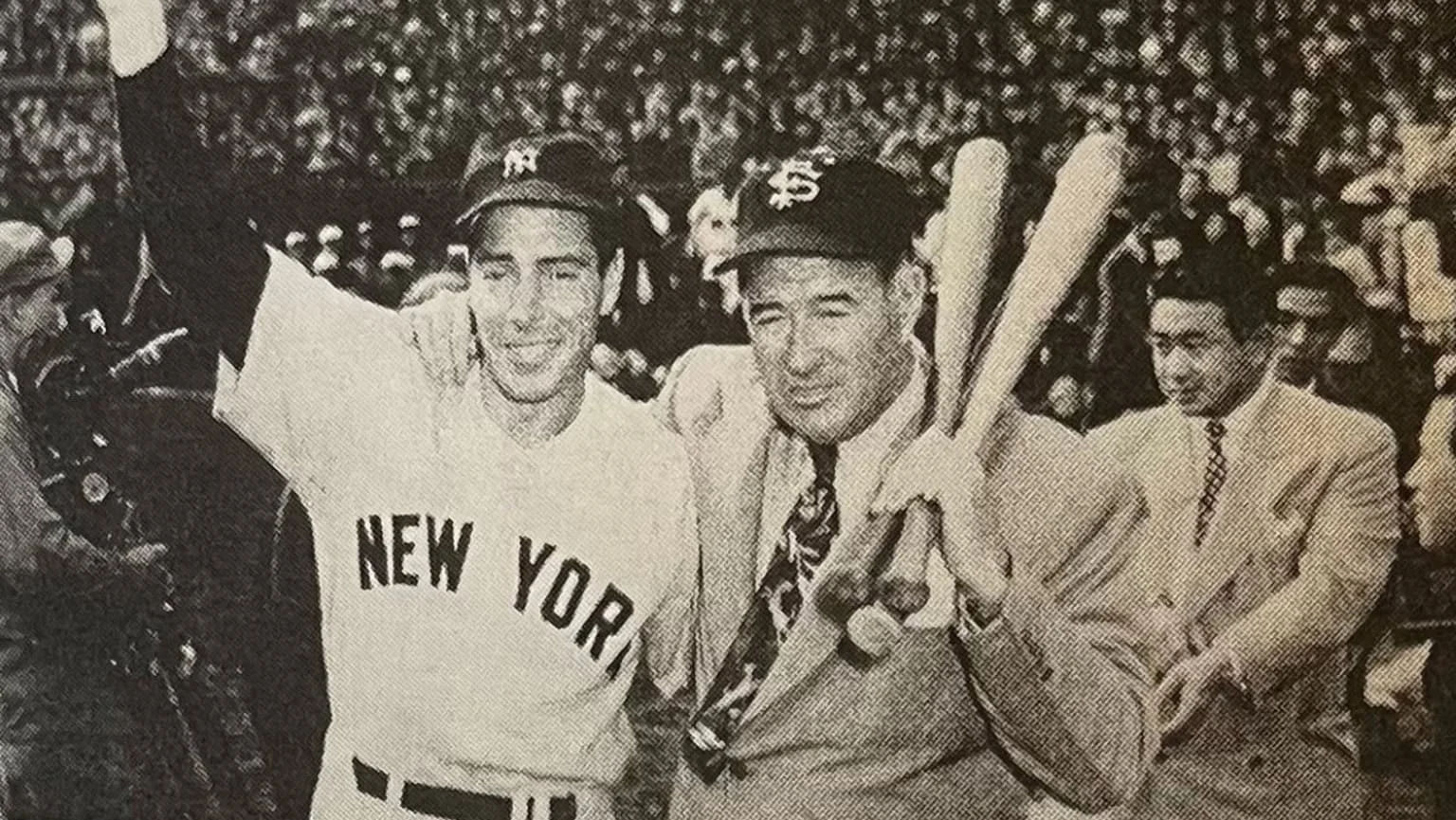
Cappy Harada
Tsuneo "Cappy" Harada was responsible for getting baseball back on track after WWII and bringing an American team over to boost morale of the Japanese people.
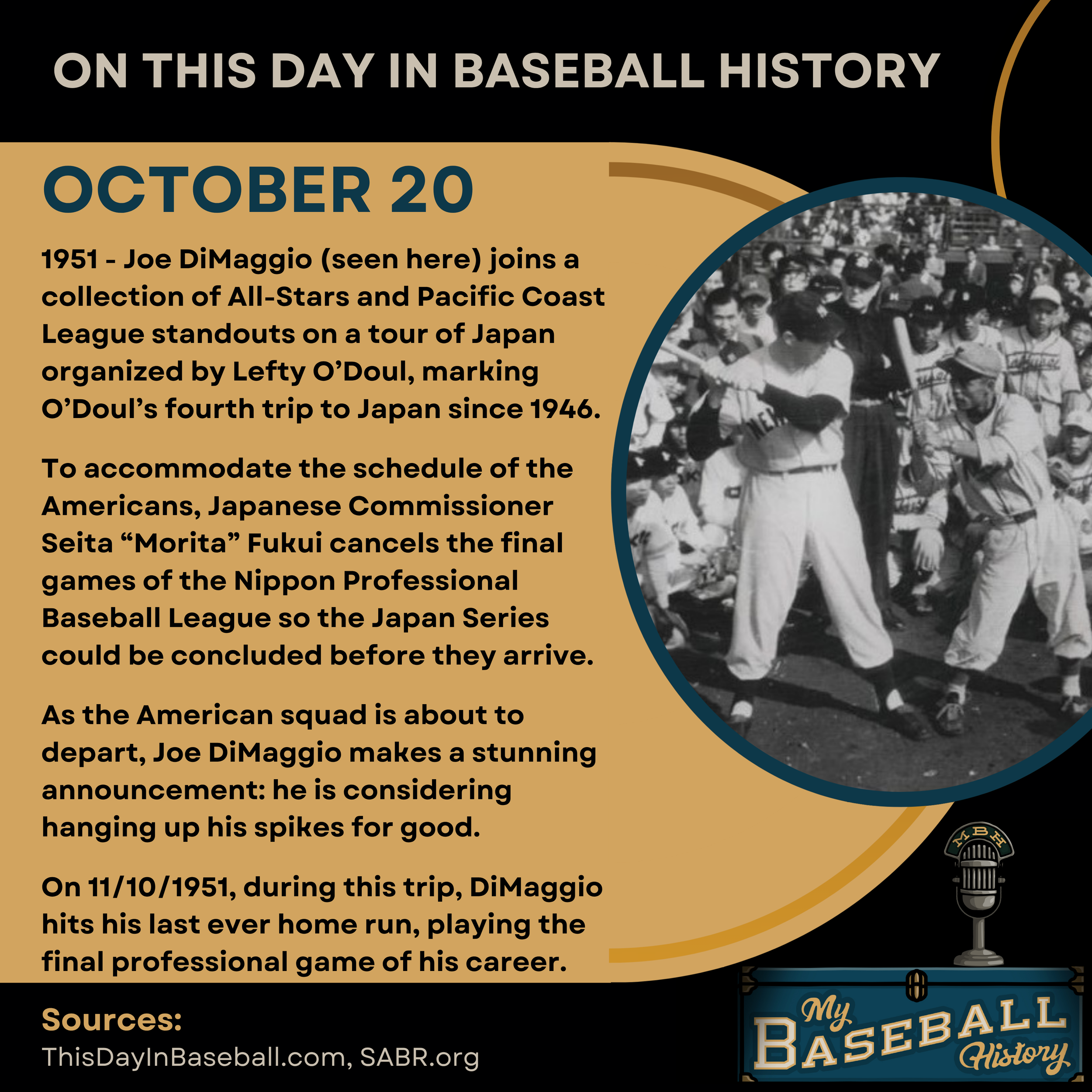
Here, Joe DiMaggio and Lefty O’Doul wave to a Japanese crowd in 1951. Harada is pictured just over O’Doul’s shoulder.
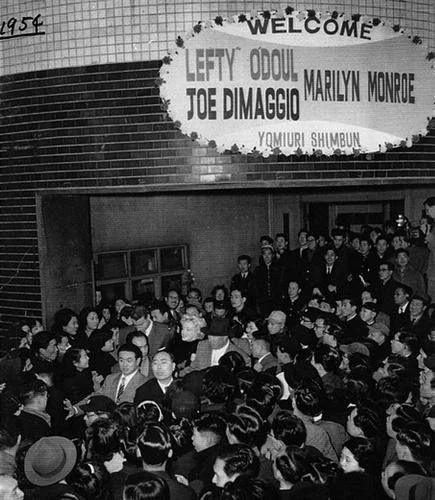
The Forrest Gump of Japanese Baseball
Cappy Harada was either there, or heavily involved behind the scenes, in so many truly significant moments and decisions in Japanese baseball history, but even just some crazy things like playing a part in Joe DiMaggio and Marilyn Monroe’s honeymoon.
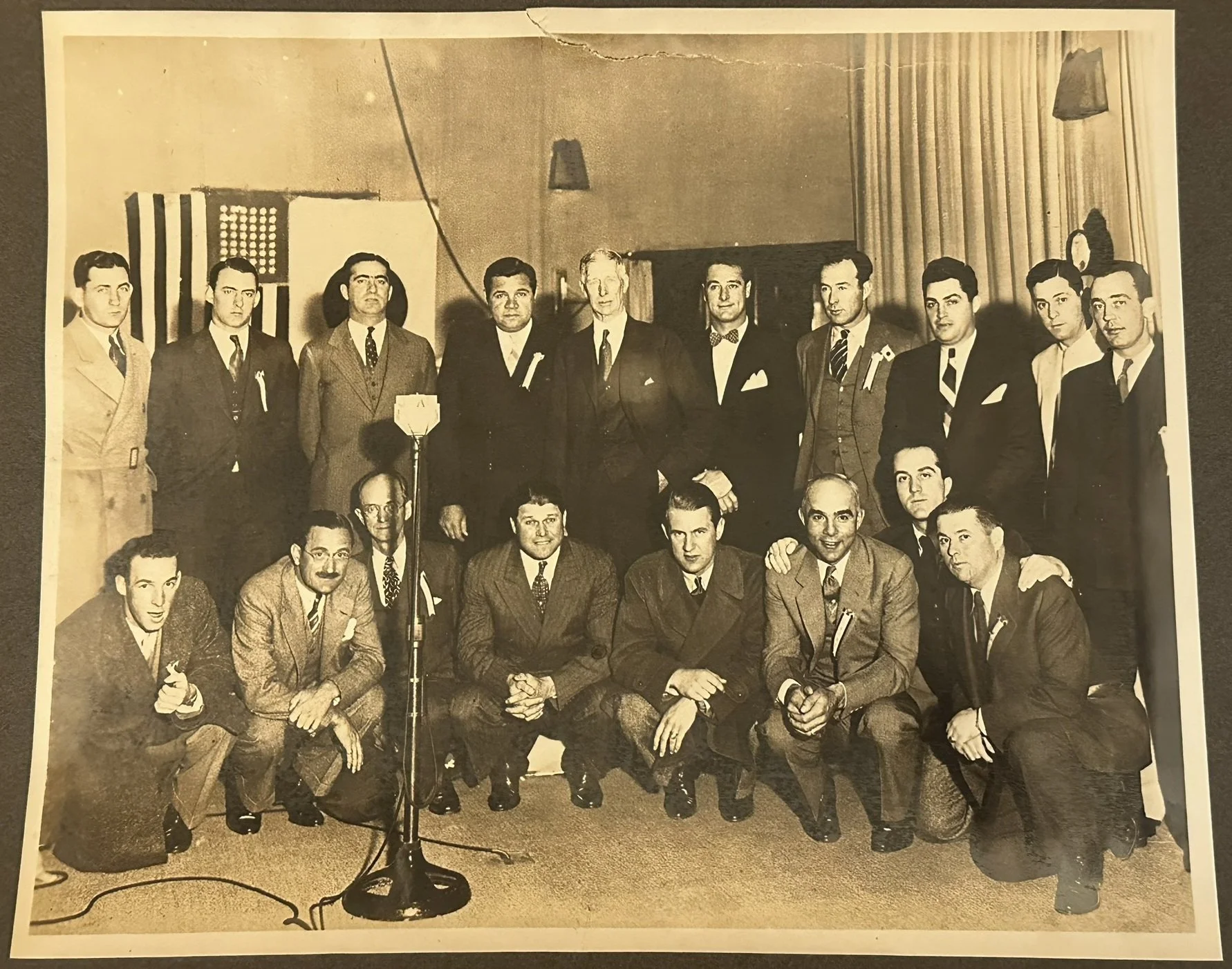
Lefty O’Doul in Japan on the 1934 Tour, standing to the right of Lou Gehrig (who is standing to the right of Connie Mack, who is standing to the right of Babe Ruth).
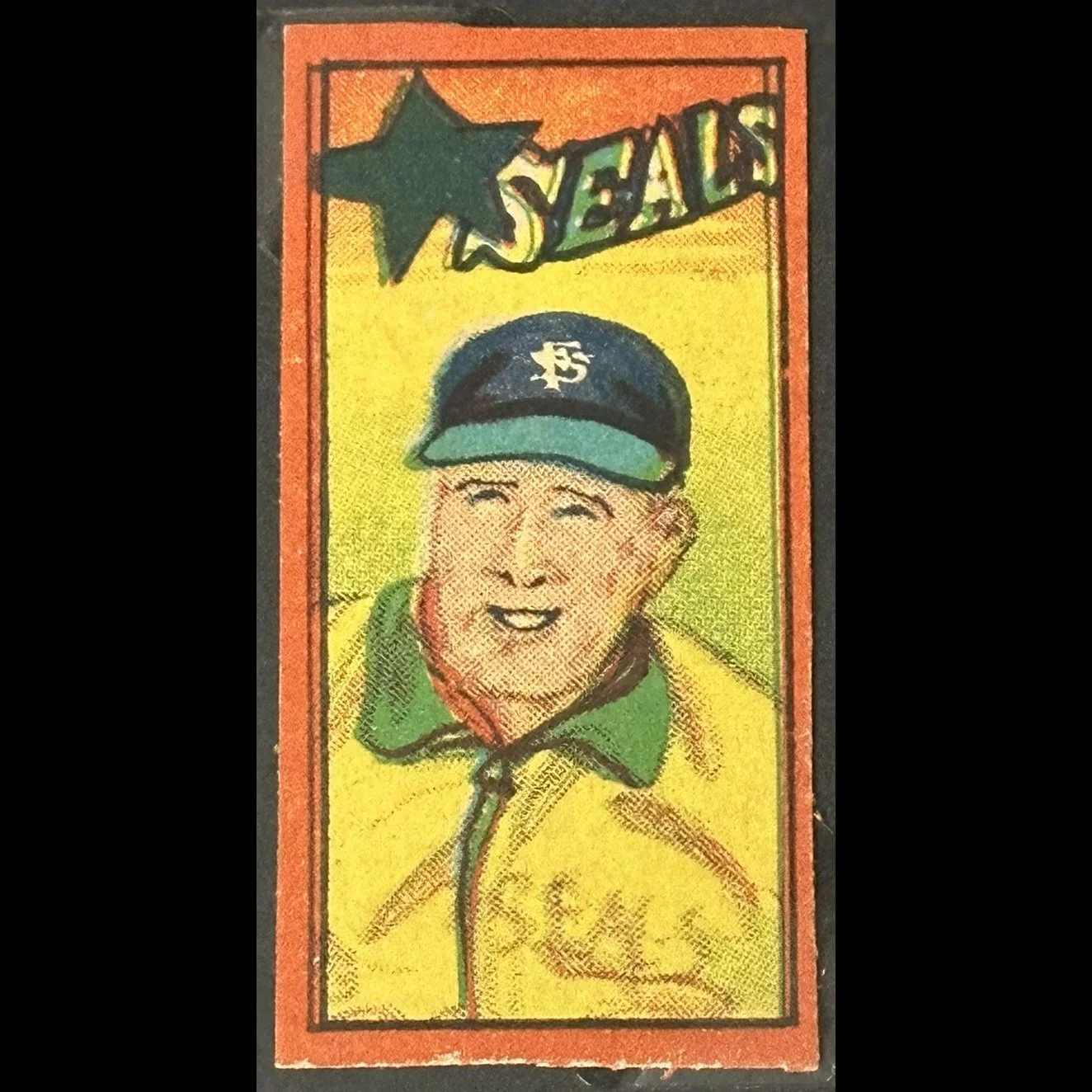
Lefty O’Doul
Lefty loved Japan, after having been multiple times before. In 1946, after the war, he paid his own way to travel back to Japan to check in on his old friends and see if there was any way he could help.
O’Doul was involved behind the scenes in reestablishing Japanese baseball after the war. At that time, he was managing the San Francisco Seals of the Pacific Coast League, so Cappy Harada asked if Lefty would bring the Seals over to play in Japan.
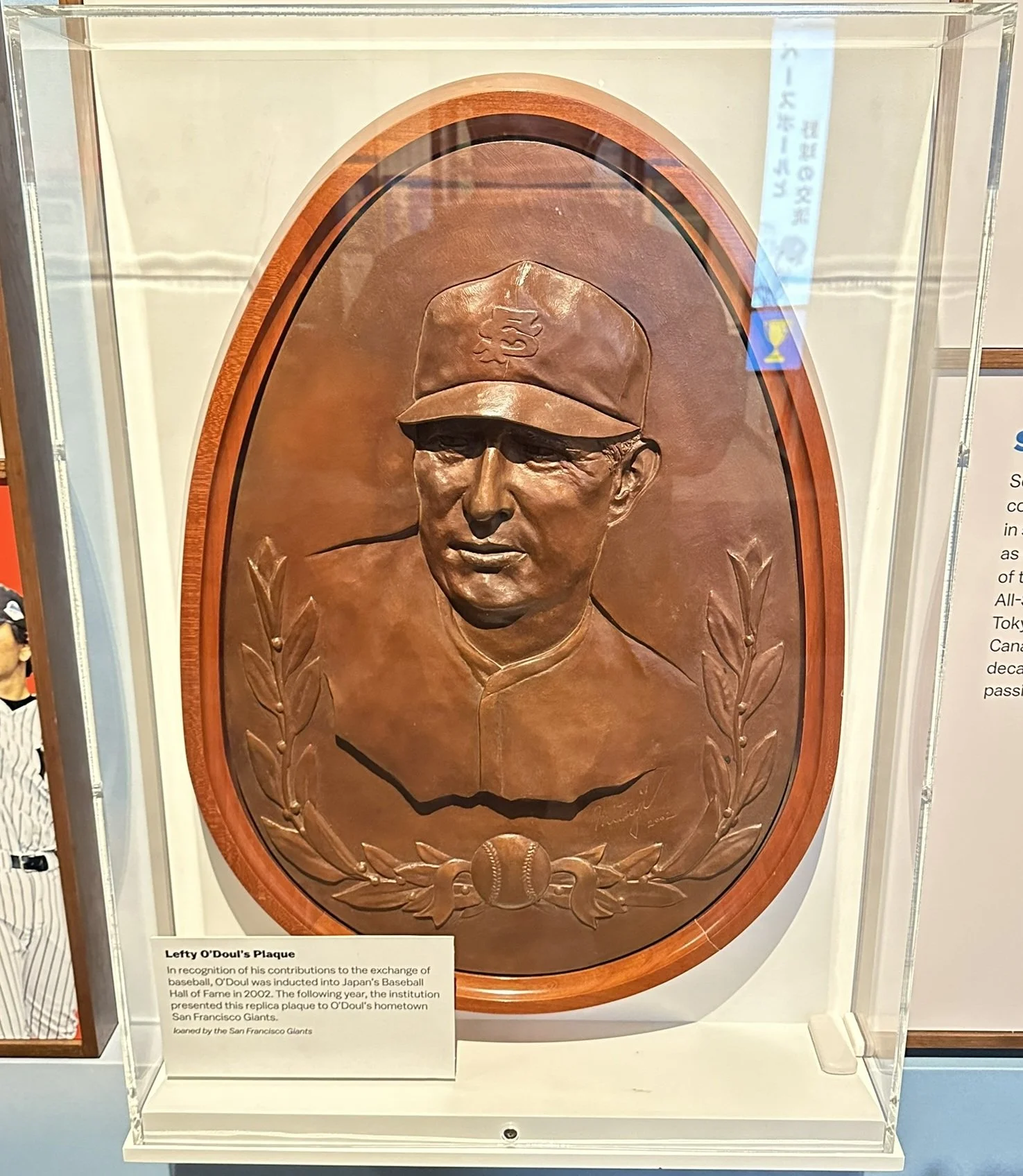
Goodwill Tours
O’Doul organized multiple goodwill tours in Japan, donating money to Japanese amateur baseball and teaching the youth how to play and enjoy the game.
For his efforts, Lefty became just the second American elected to the Japanese Baseball Hall of Fame.
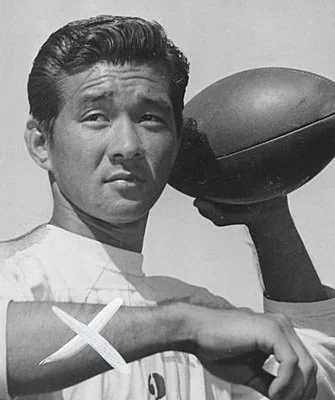
Wally Yonamine
In 1951, the Yomiuri Giants signed the first American player in Japanese baseball history, who is another person Rob has written a book about.
Wally Yonamine is a Hawaiian-born Japanese-American multi-sport athlete who was the first American baseball player to go to Japan after World War II. Prior to that, he played professional football for the San Francisco 49ers.
Wally Yonamine’s Pro Football Reference
Buy a copy of Rob’s book, Wally Yonamine, HERE.
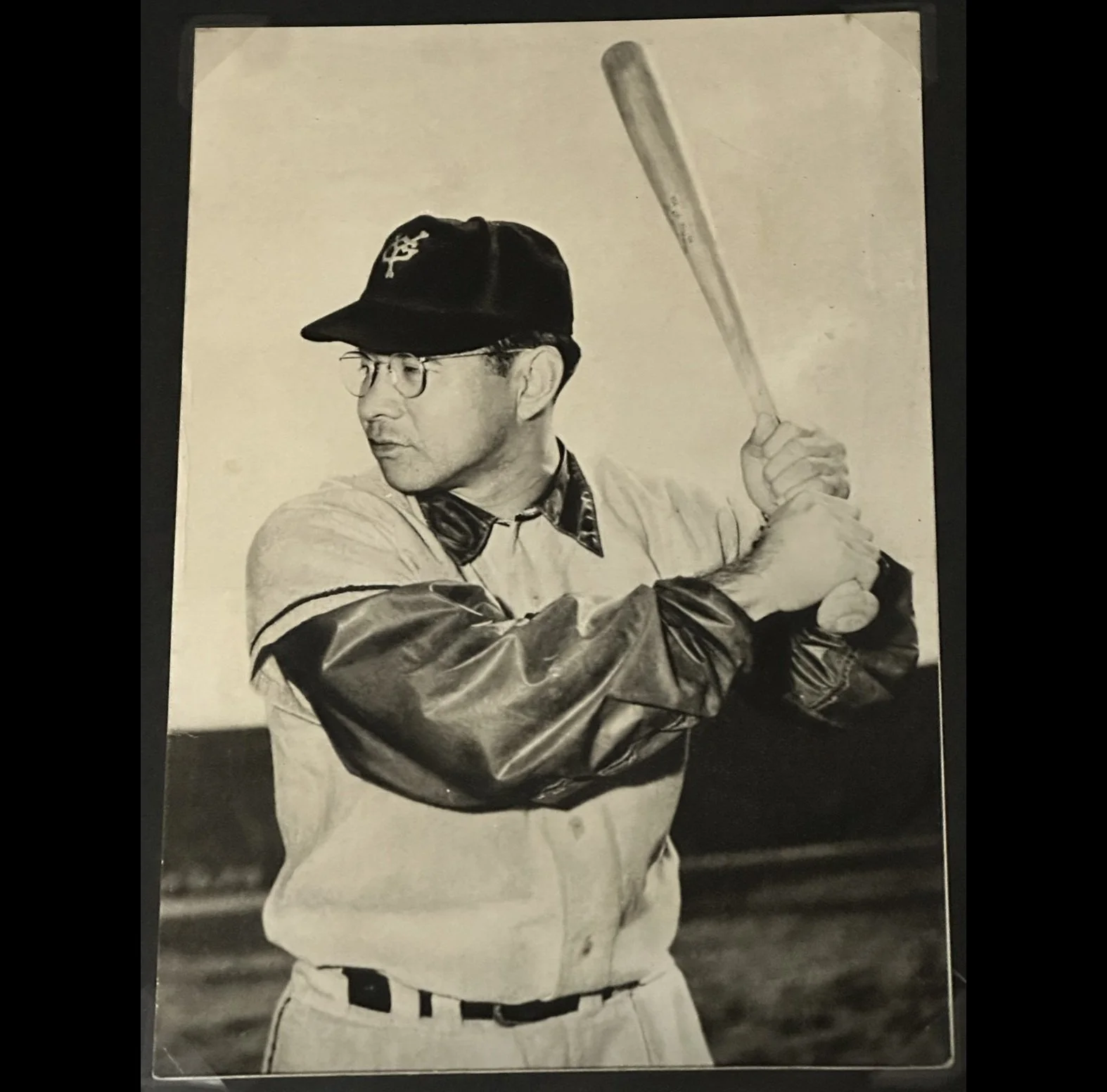
Wally Yonamine
Wally initially shocked the Japanese fans with his aggressive play, but soon his style helped transform how baseball was played in Japan.
His hustling style led to a .311 lifetime batting average, three batting titles, seven straight selections to the Best Nine team (1952–58), the 1957 Central League MVP award, and he was a member of four Japan Series Championship teams.
Yonamine was an outfielder from 1951-1962, most notably for the Yomiuri Giants, and then a coach or manager from 1963 through 1988 for a handful of teams, winning the Central League pennant in 1974 as manager of the Chunichi Dragons.
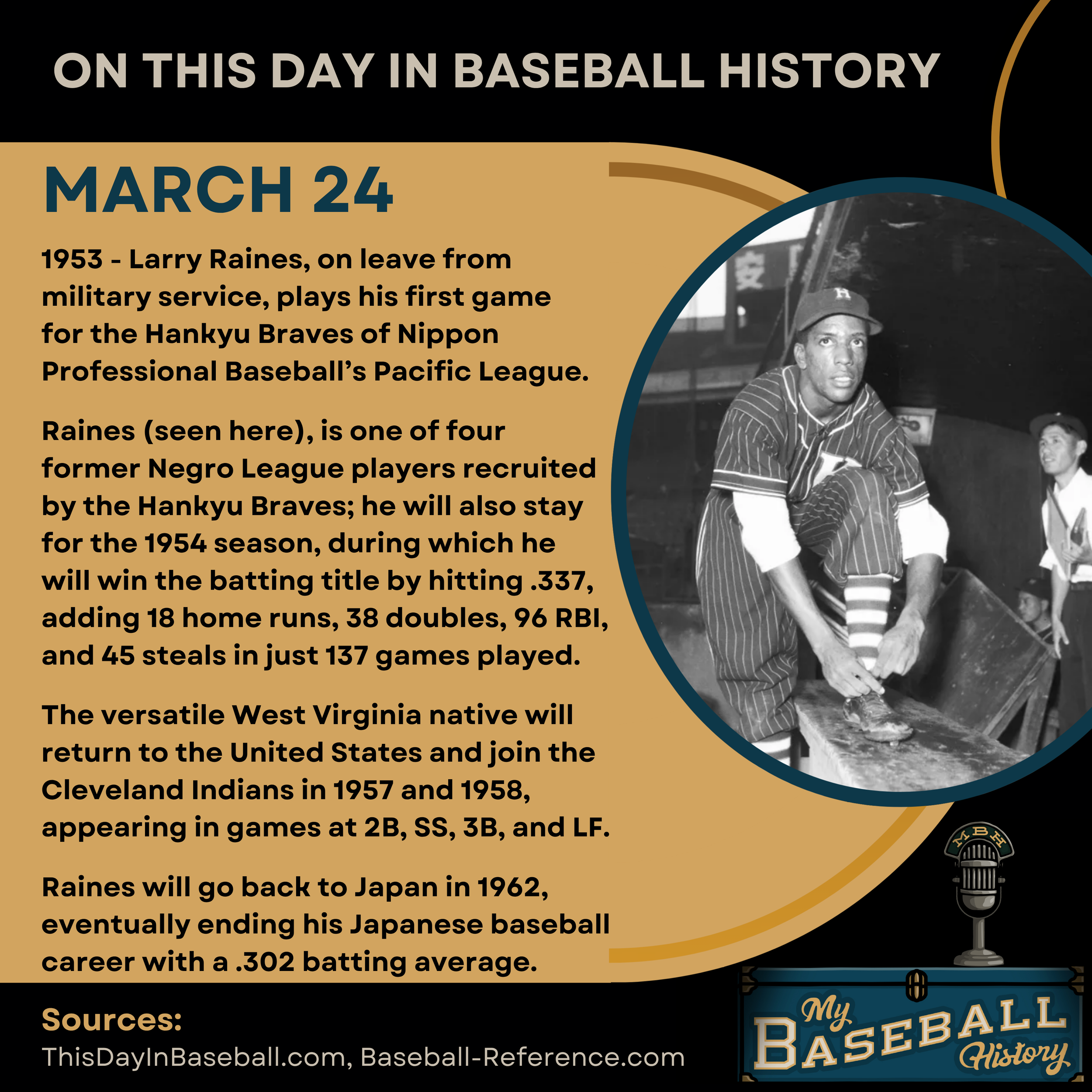
Negro Leaguers in Japan
In 1952, eleven foreigners joined the League. In 1953, thirteen more came over. Most of the early foreign players were Japanese-Americans, but not all of them. The Hankyu Braves, for example, recruited four former Negro League players.
The foreign players had an instant impact on Japanese baseball. To limit the effect foreign players would have on the Japanese league, they limited the number of foreign born players a team could have on their roster to just three.
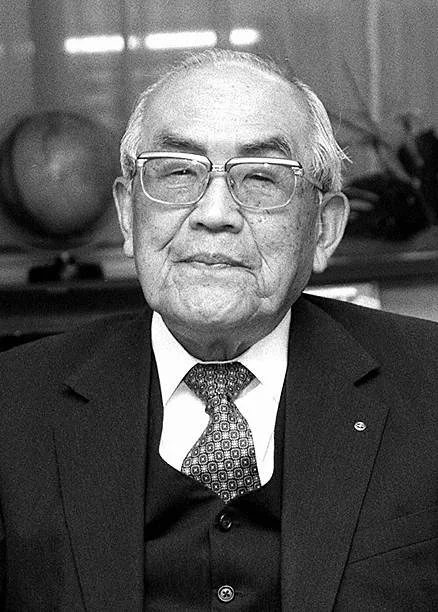
Takezo Shimoda
During the 1960s, teams started importing AAA players and former Major Leaguers, so the league reduced the number of foreign players allowed from three down to just two.
In the early 1980s, Takezo Shimoda, a former ambassador to the United States and Japan's one-time baseball commissioner (1979-1985), said Japan should “purify the game” of gaijin, making only Japanese players eligible.
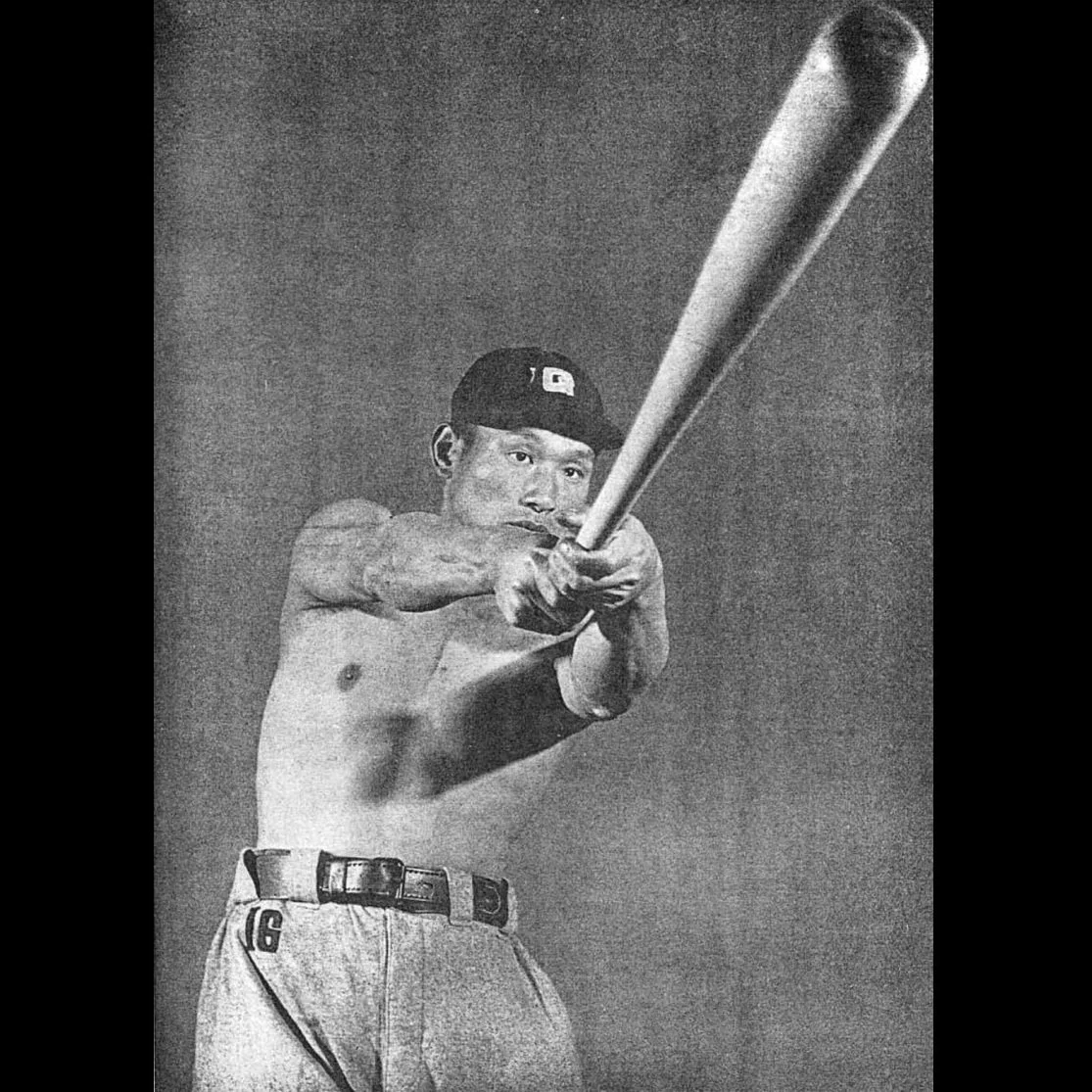
Tetsuharu Kawakami
Tetsuharu Kawakami, aka "The God of Batting", was known for his red bat. He won the batting title five times, had two home run crowns, three RBI titles, and had the most hits six times.
Kawakami was the first Japanese player to record 2,000 hits and was also an MVP three times.
As a manager, he led the Giants to nine straight championships from 1961 to 1974.
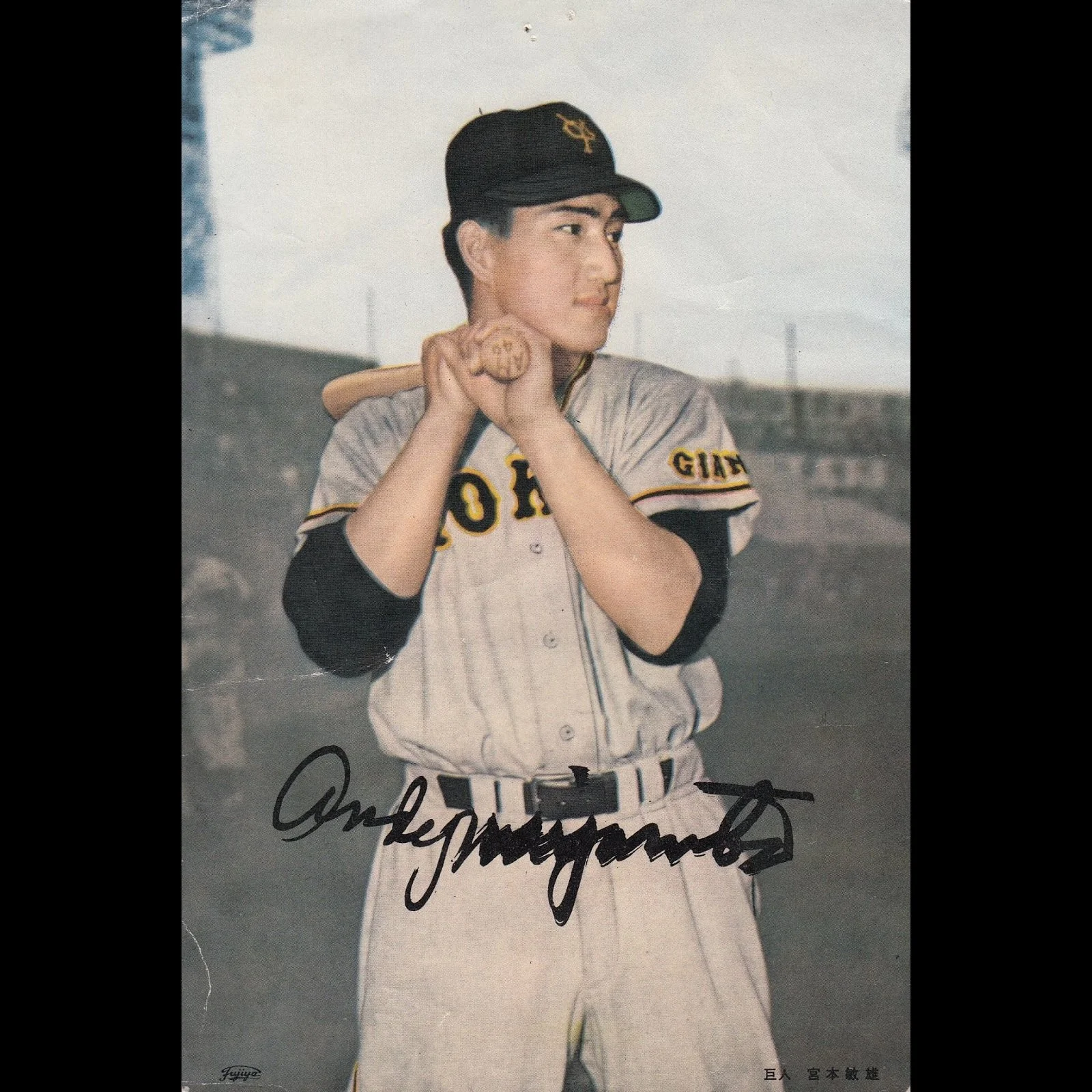
Andy Miyamoto
Toshio "Andy" Miyamoto was a nisei player with the Yomiuri Giants from 1955 to 1962 and the Kokutetsu Swallows from 1963 to 1964.
Miyamoto was a three time All-Star (1956-58), led the Central League in RBI in 1956 and 1957, and was MVP of the 1961 Nippon Series.
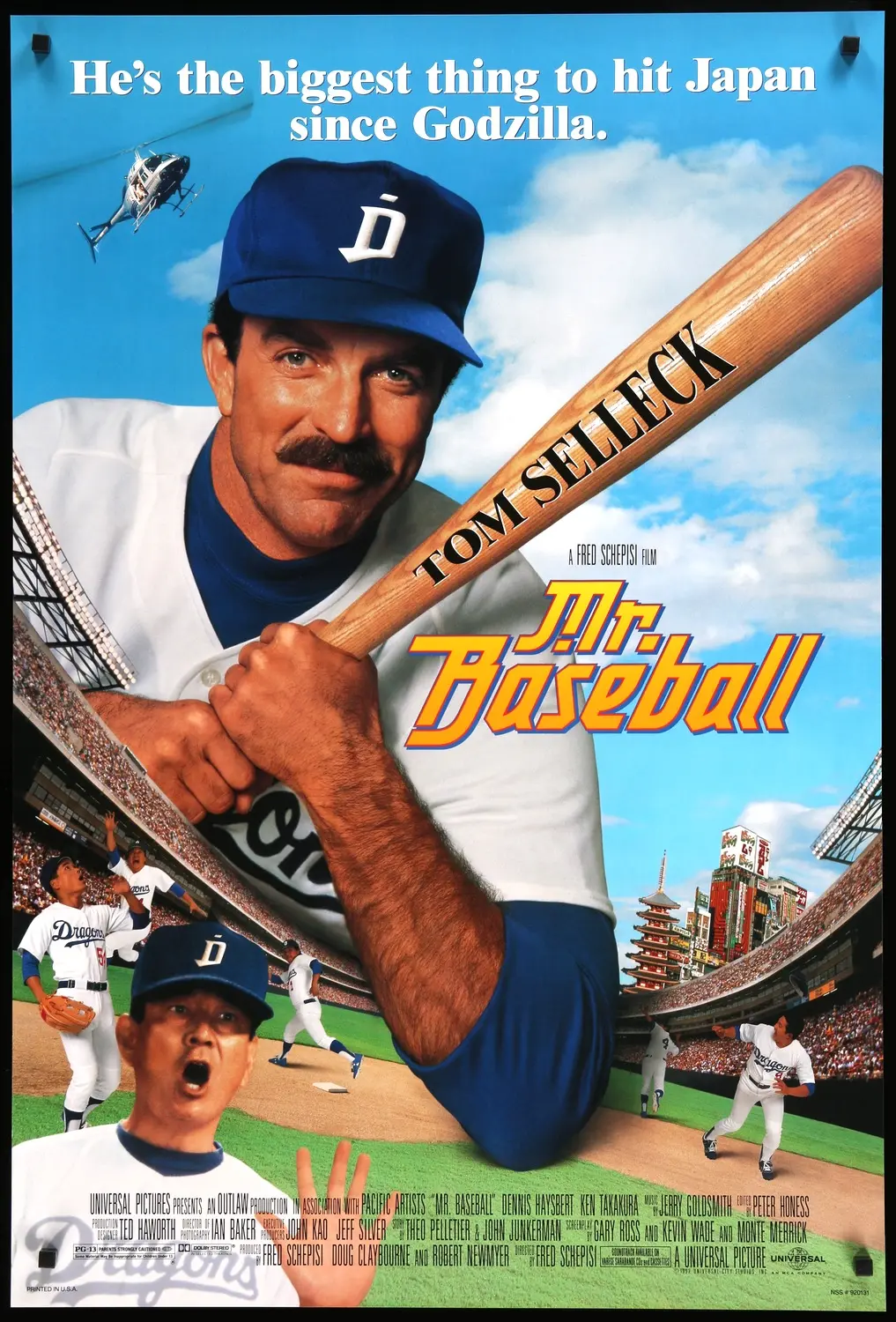
Mr. Baseball
In 1992’s Mr. Baseball, Tom Selleck plays an aging American baseball player who loses his roster spot and is traded to the Dragons. He falls in love with the manager’s daughter, and it’s a classic fish out of water story with some great baseball sequences.
To prepare for the role, the 6’4”, 200 pound Selleck spent three weeks training with the Detroit Tigers at their training camp in Lakeland, Florida. At the end of the camp, Tigers manager Sparky Anderson let Selleck take a live at-bat.
Selleck hit some foul balls, and with the count at 1-2, he struck out swinging on a knuckle-curve.
Buy a DVD copy of Mr. Baseball HERE.
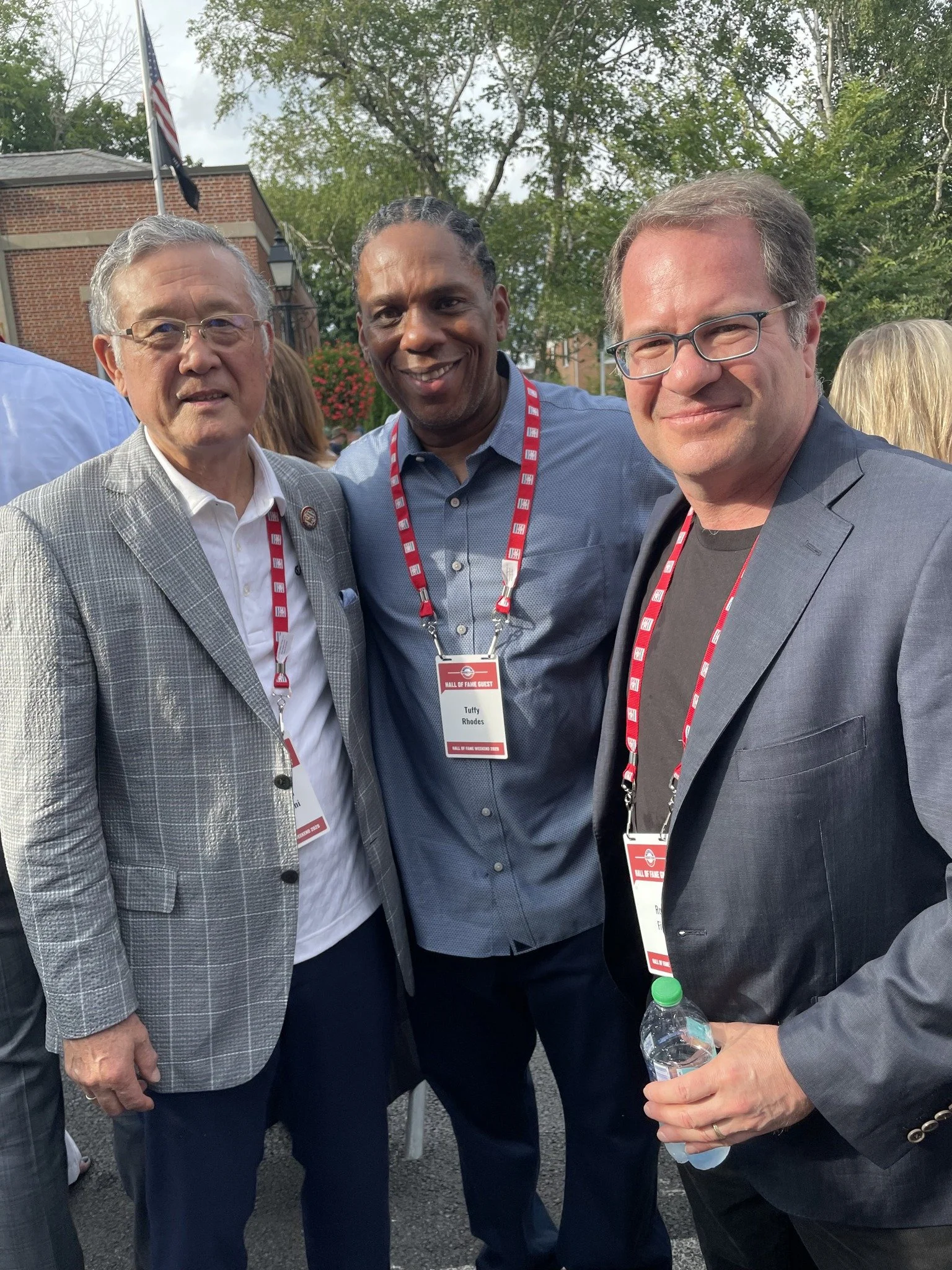
Tuffy Rhodes
Players like Greg “Boomer” Wells and Tuffy Rhodes have gone over to Japan and had very successful careers, and their success is often cited as what must be the low quality of play in Japan.
But there have been plenty of former Major Leaguers who have gone to Japan and failed, like Larry Doby, Joe Pepitone, Bill Madlock, and Jesse Barfield.
Here, Rob is photographed with Tuffy Rhodes (center) and Masanori “Mashi” Murakami, the first Japanese player in Major League Baseball (left).
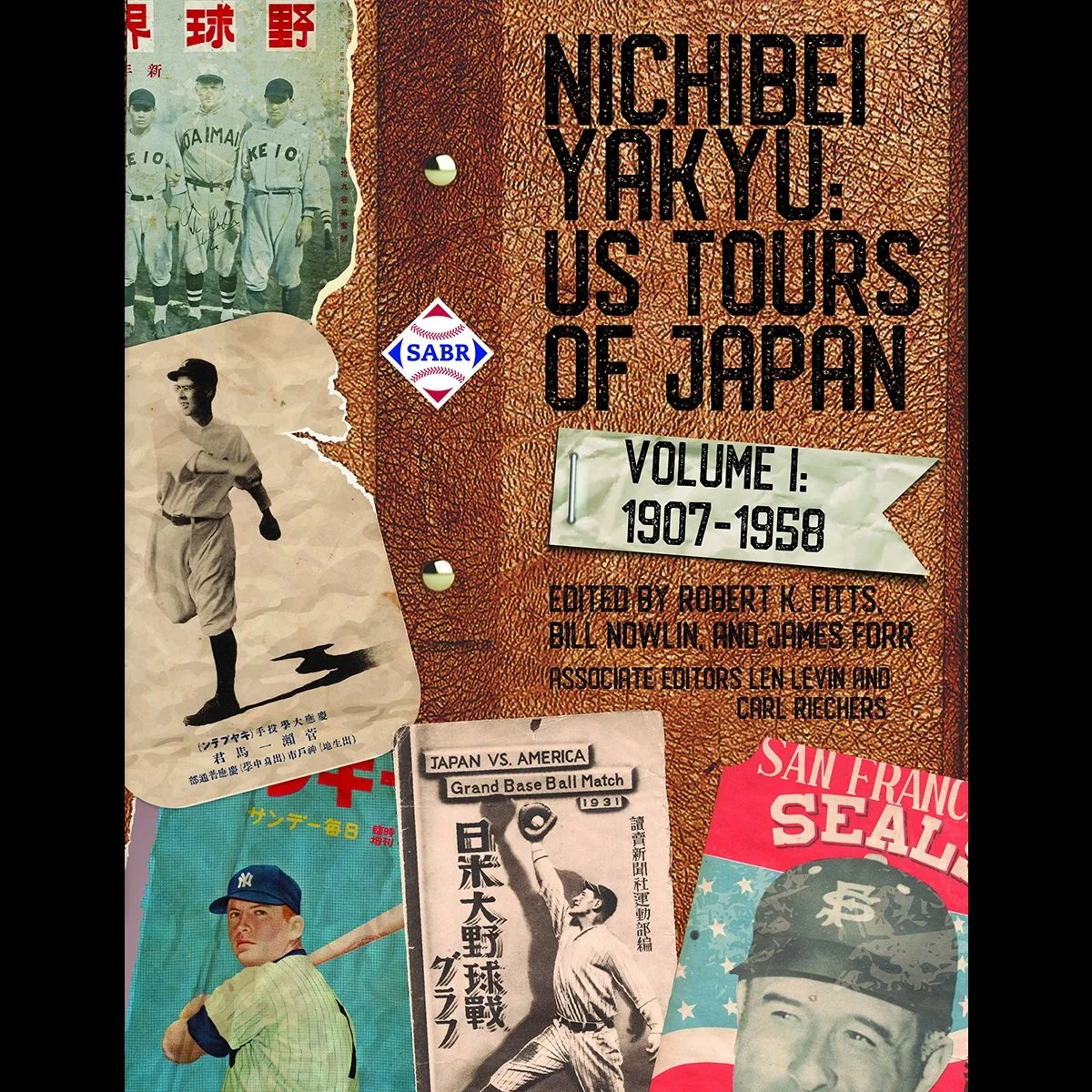
Nichibei Yakyu
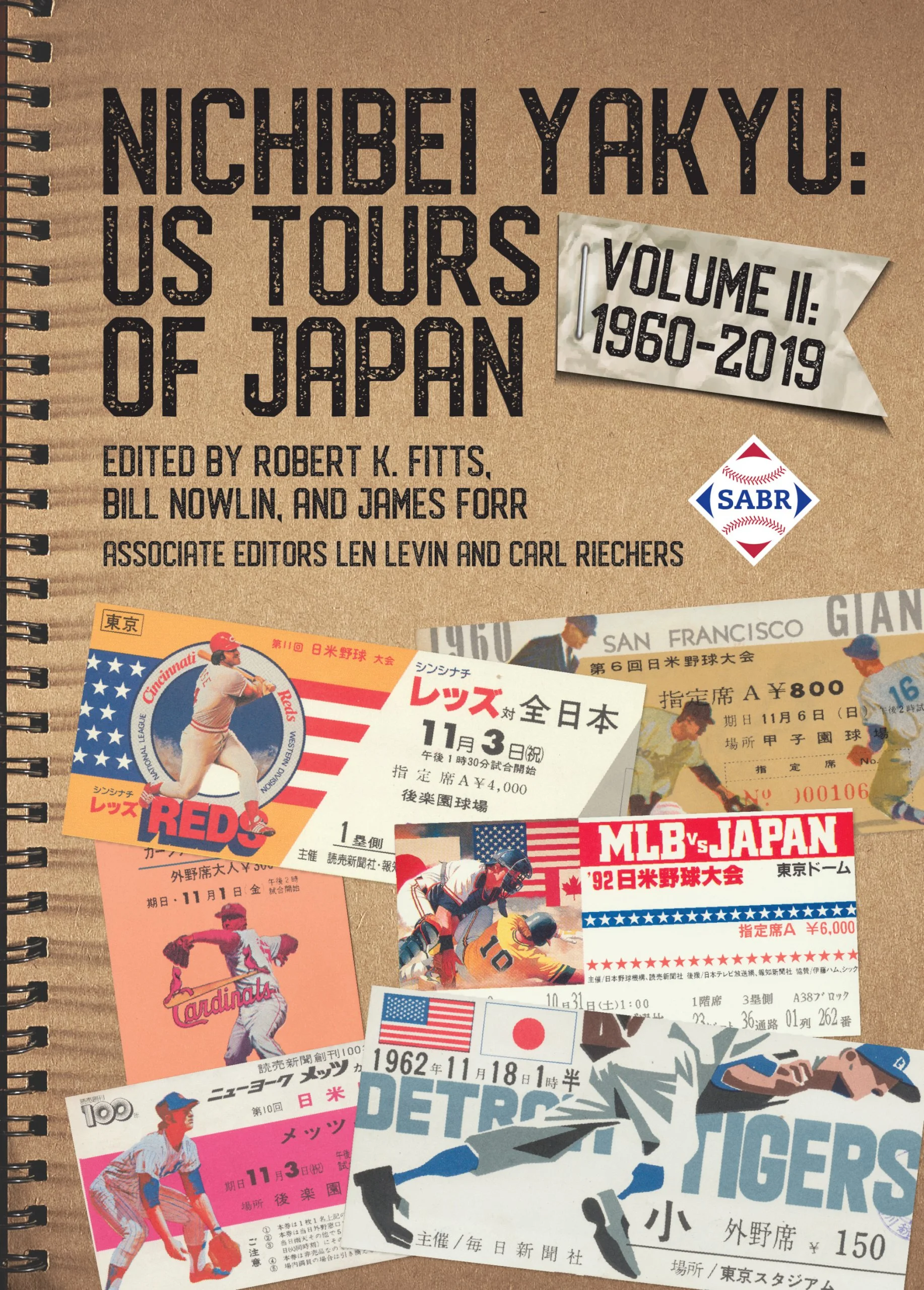
To celebrate the 150th anniversary of Japanese baseball, the Society for American Baseball Research published Nichibei Yakyu: US Tours of Japan, which is a two volume book which talks about the more than 100 baseball teams from the United States and Hawaii who have crossed the Pacific to play baseball in Japan. It's the first book written in English to focus on these international tours.
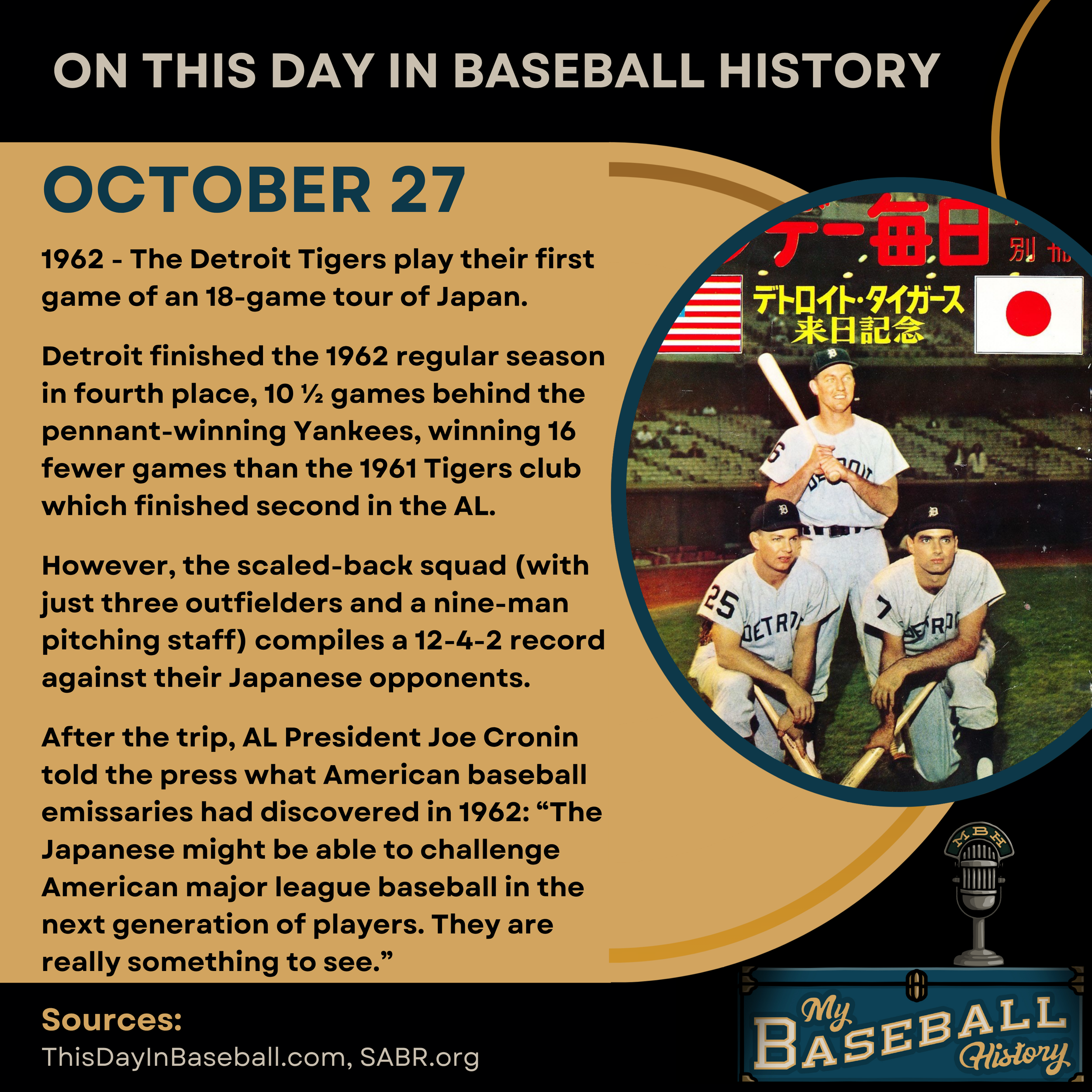
Foreign Exchange
Multiple major league teams made trips to Japan in the off-season or in the spring, including:
· New York Yankees in 1955
· Brooklyn Dodgers in 1956
· St. Louis Cardinals in 1958
· San Francisco Giants in 1960
· Detroit Tigers in 1962
· Los Angeles Dodgers in 1966
· St. Louis Cardinals in 1968
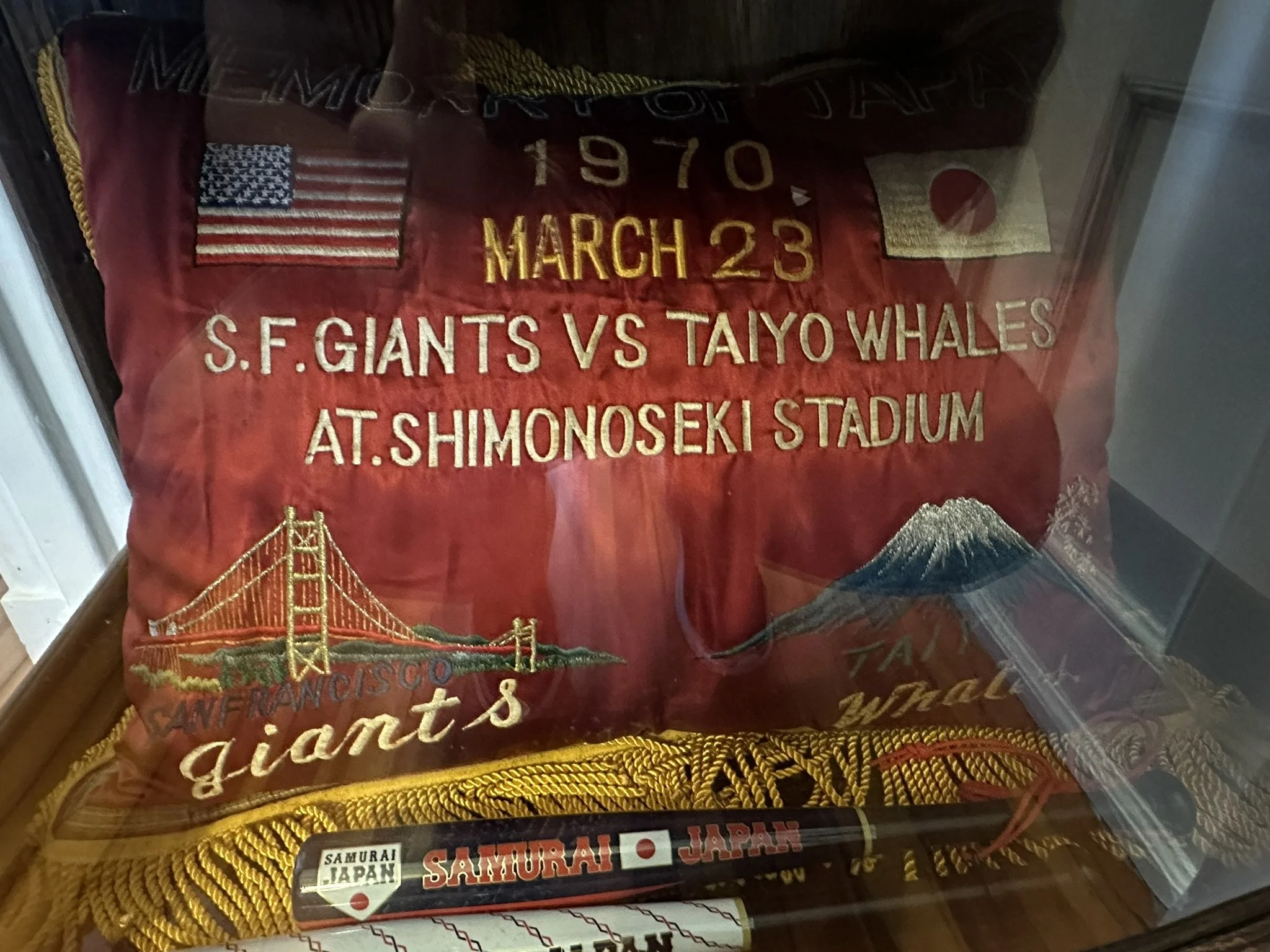
· San Francisco Giants in 1970
· Baltimore Orioles in 1971
· New York Mets in 1974
· Cincinnati Reds in 1978
· Kansas City Royals in 1981
· Baltimore Orioles in 1984
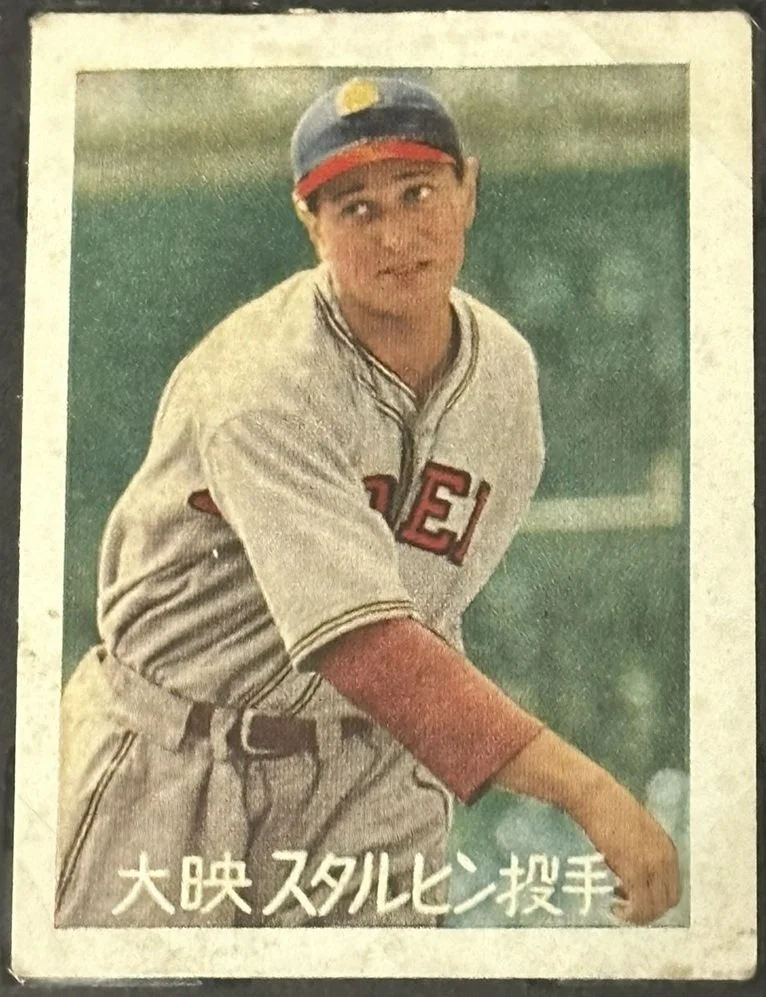
Victor Starffin
Born in Russia, Victor Starffin was nicknamed "The Blue-eyed Japanese". He had 83 career shut-outs, giving him the NPB record. He was 42-15 with a 1.73 ERA in 1939, starting 41 games, completing 38 of them and pitching 458.1 innings.
In 1940 though he went 38-12 with a 0.97 ERA in 436 innings, completing 41 of the 42 games he started.
He was actually put in a detention camp during WWII due to intense xenophobia, and died tragically in 1957 during a mysterious car accident.
Cappy Harada said he would pitch 5 or 6 days in a row, and that one time he pitched 40 innings straight!
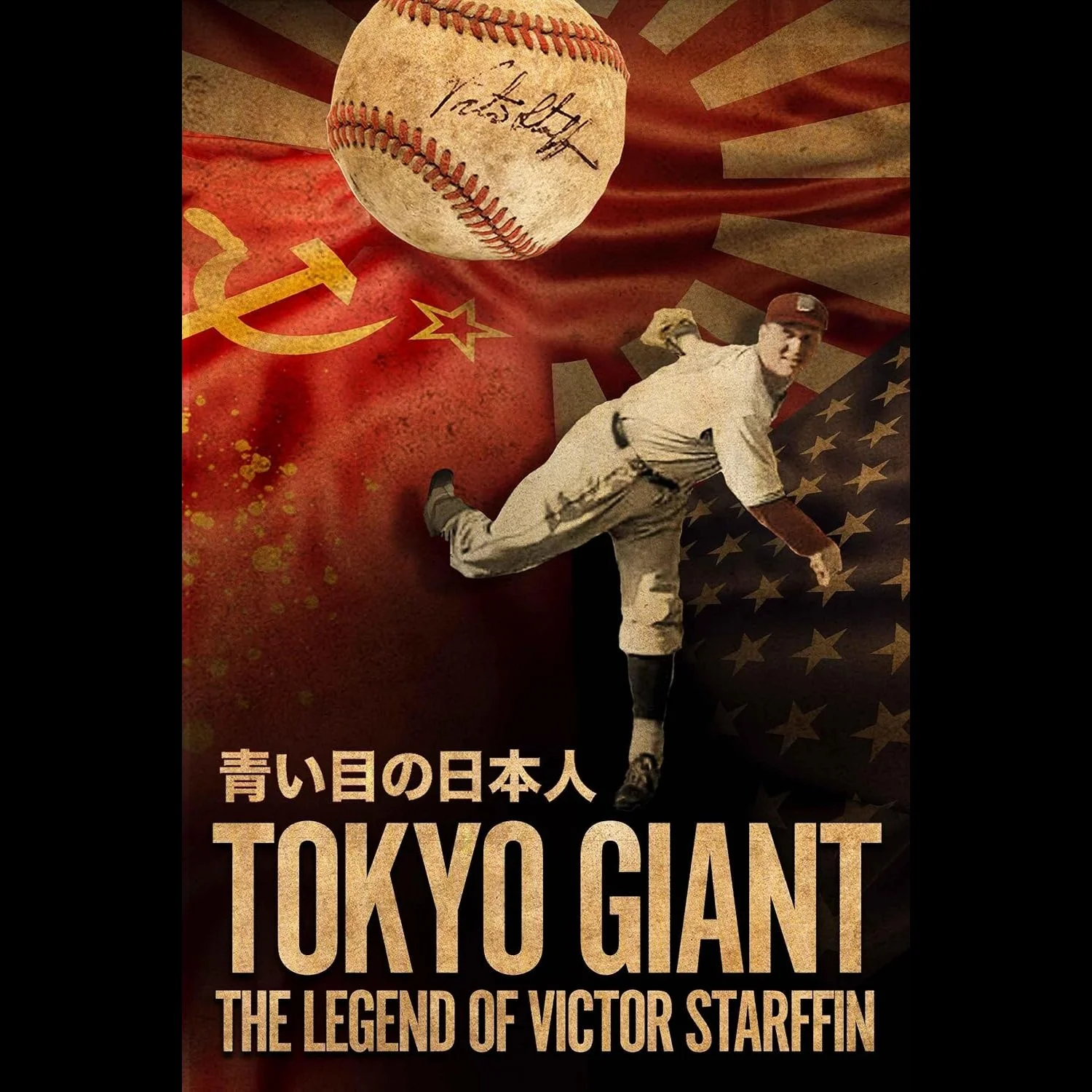
Tokyo Giant: The Legend of Victor Starffin
Watch the documentary about Victor Starffin on Amazon Prime Video HERE.
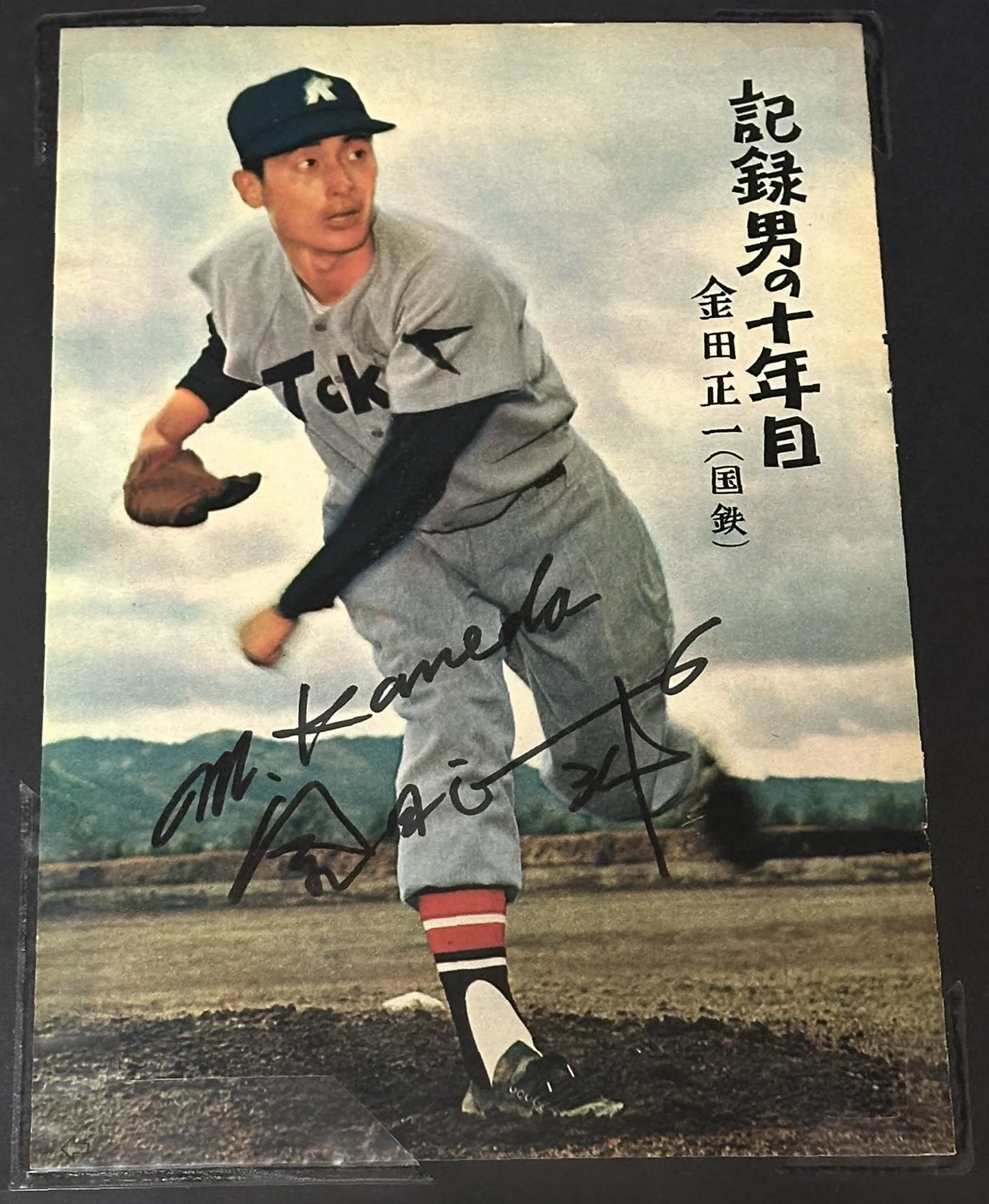
Masaichi Kaneda
Masaichi Kaneda debuted at 16 years old and pitched until he was 35. He was nicknamed, "The Emperor" due to his dominance on the mound.
Kaneda is the only player to win 400 games in NPB history, and he ended with exactly 400. What’s even more impressive is that he played for an absolutely terrible team for most of his career: the Swallows.
The Kokutetsu Swallows didn’t have a winning record for the entire decade of the 1950’s. Despite that, Kaneda won at least 20 games in 14 straight seasons from 1951 through 1964, and he led the NPB in strikeout 10 times. He also won three straight Eiji Sawamura Awards from 1956-1958.
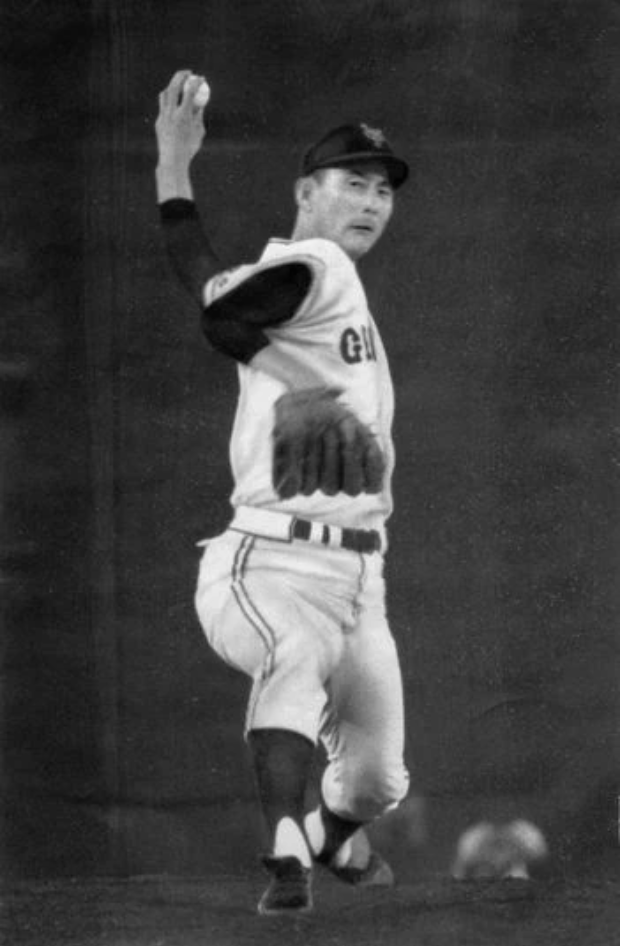
Masaichi Kaneda
Kaneda was a three-time ERA leader during his 19 seasons, and pitched two no hitters and a perfect game during the same season in 1957.
In 1965, he moved across Tokyo to the significantly better Giants and helped them win five Japan Series championships in a row until his retirement in 1969.
In addition to the NPB wins record of 400, Kaneda also holds the complete games record (365), strikeouts (4,490), innings record (5,526), and is only one shutout (82) behind Victor Starfinn for that record as well.
Kaneda was inducted into the Japanese Baseball Hall of Fame in 1988.
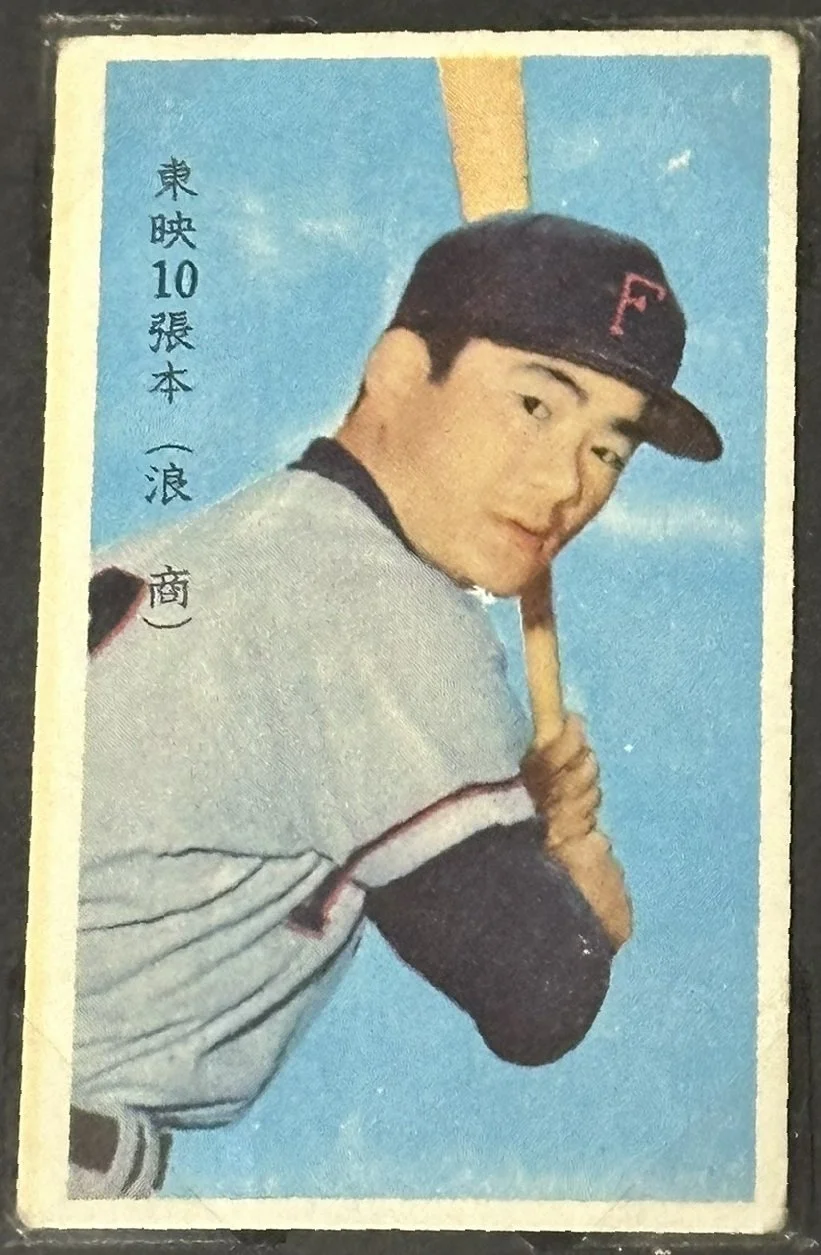
Isao Harimoto
Isao Harimoto has a fascinating story. When he was 4 years old he was in a terrible burn accident that left his 3 middle fingers on his dominant right hand basically useless.
A year later, at the age of 5, he survived the Hiroshima nuclear bomb, thanks to the fact that his childhood home was behind a hill that blocked most of the direct radiation, but he lost a sister who was in the blast zone. Harimoto has been identified as the only survivor of that incident to play professional baseball in Japan.
His family moved from Korea right before he was born. At the time, Japan was occupying Korea and they had feuds going back hundreds of years. Despite his efforts to integrate into Japanese society (like changing his birth name - Jang Hung - to a Japanese name), Koreans were considered lower in society, especially in his childhood.
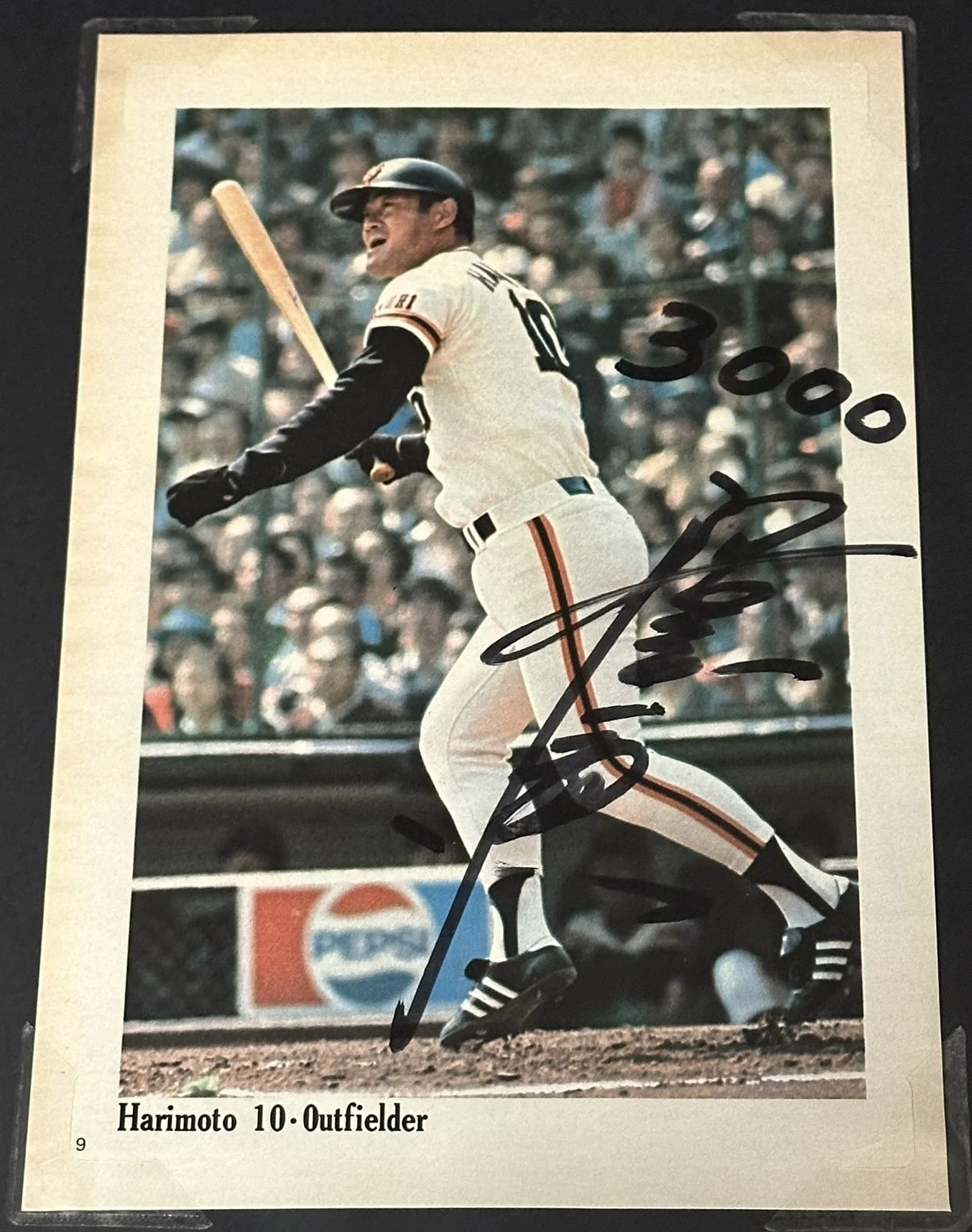
Isao Harimoto
Harimoto managed to teach himself how to become a left-handed batter and was the 1959 Pacific League Rookie of the Year and 1962 Pacific League MVP.
He went on to become the all-time NPB hits leader with 3,085 in his 22-year career which spanned from 1959 through 1981. In fact, no other player has been able to pass the 3,000 hit mark since him, and his 504 home runs are tied for 7th all-time.
He is one of only three professional baseball players in history with 3,000 hits, 500 home runs, and 300 steals, along with Willie Mays and Alex Rodriguez.
He was an 18-time All-Star from 1960 to 1964 and 1966 to 1978, a 16-time Best Nine Award Winner (1960-70, 1972-74, 1976, & 1977), and a seven-time batting champion (1961, 1967-70, 1972, & 1974).
His .319 career averages is one of the best in NPB history, and he was inducted into the Japanese Baseball Hall of Fame in 1990.
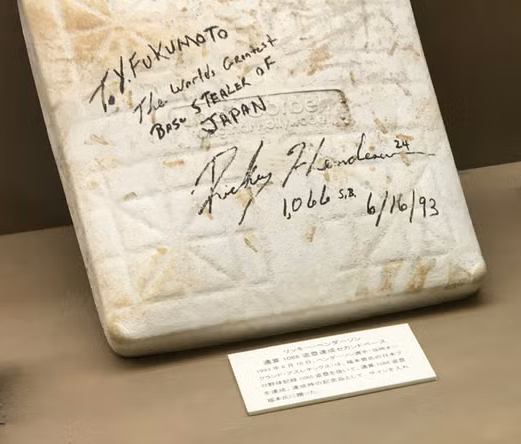
Yutaka Fukumoto
Yutaka Fukumoto is the Japanese Rickey Henderson. In fact, Rickey Henderson actually gave and signed the base that he stole to break Fukumoto's record of 1,065 career stolen bases. That base is now in the Japanese baseball Hall of Fame.
In 1972 Fukumoto stole 106 bases, and then went on to steal 95 and 94 the next two seasons.
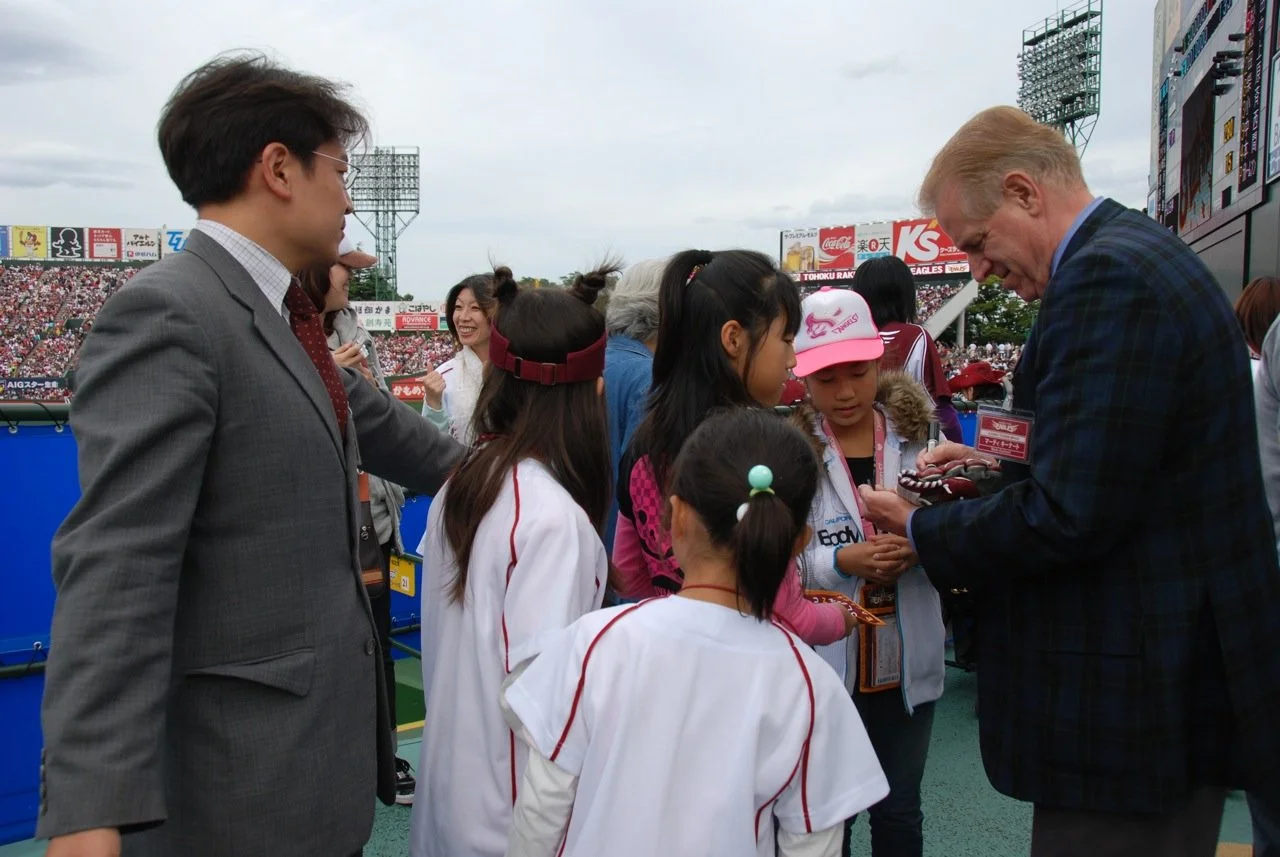
Marty Kuehnert
Marty Kuehnert was an American sports executive who was a senior advisor to the Japanese professional basketball team Sendai 89ers and Japanese professional baseball team Tohoku Rakuten Golden Eagles.
Kuehnert was also the team's first general manager and Nippon Professional Baseball's first foreign general manager.
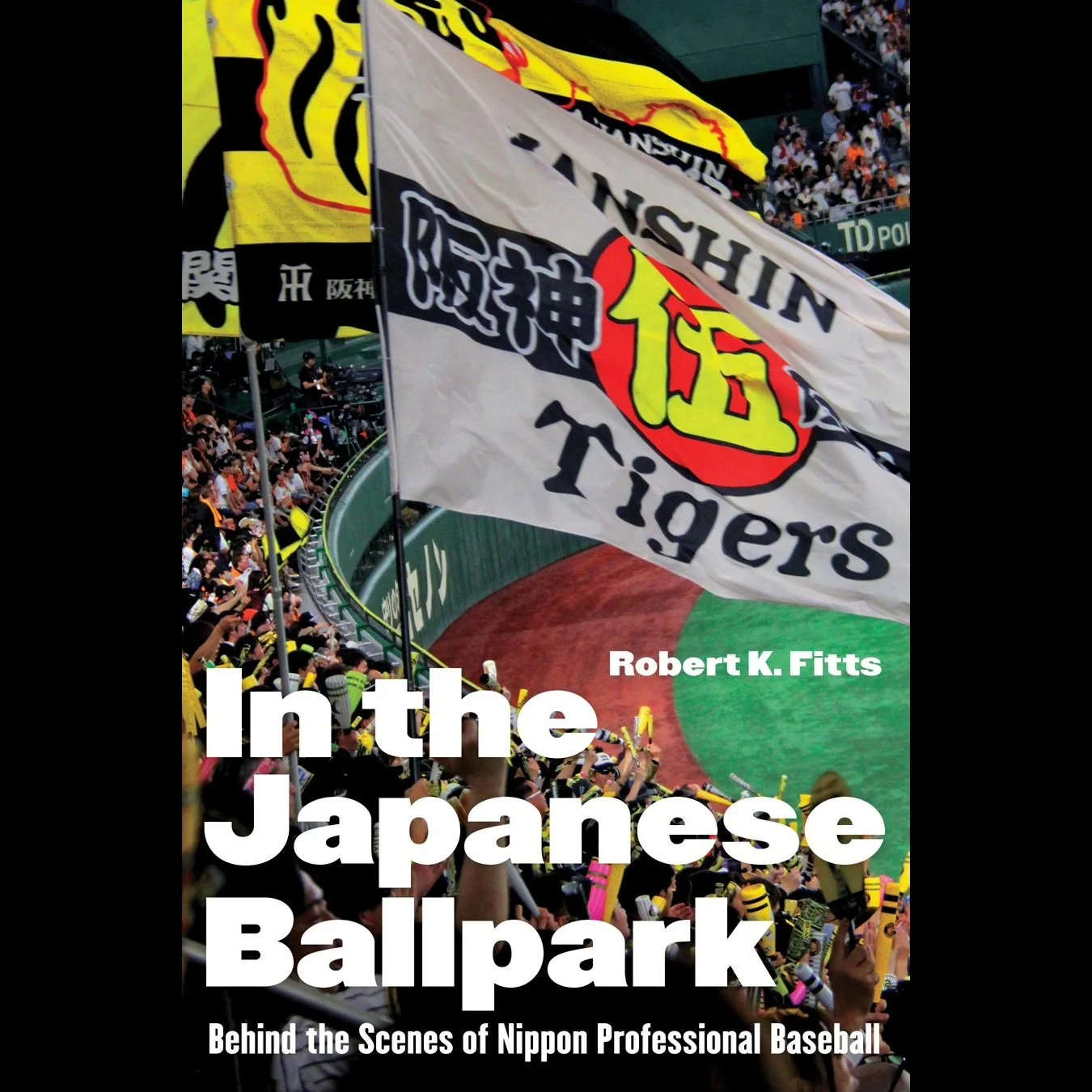
In The Japanese Ballpark

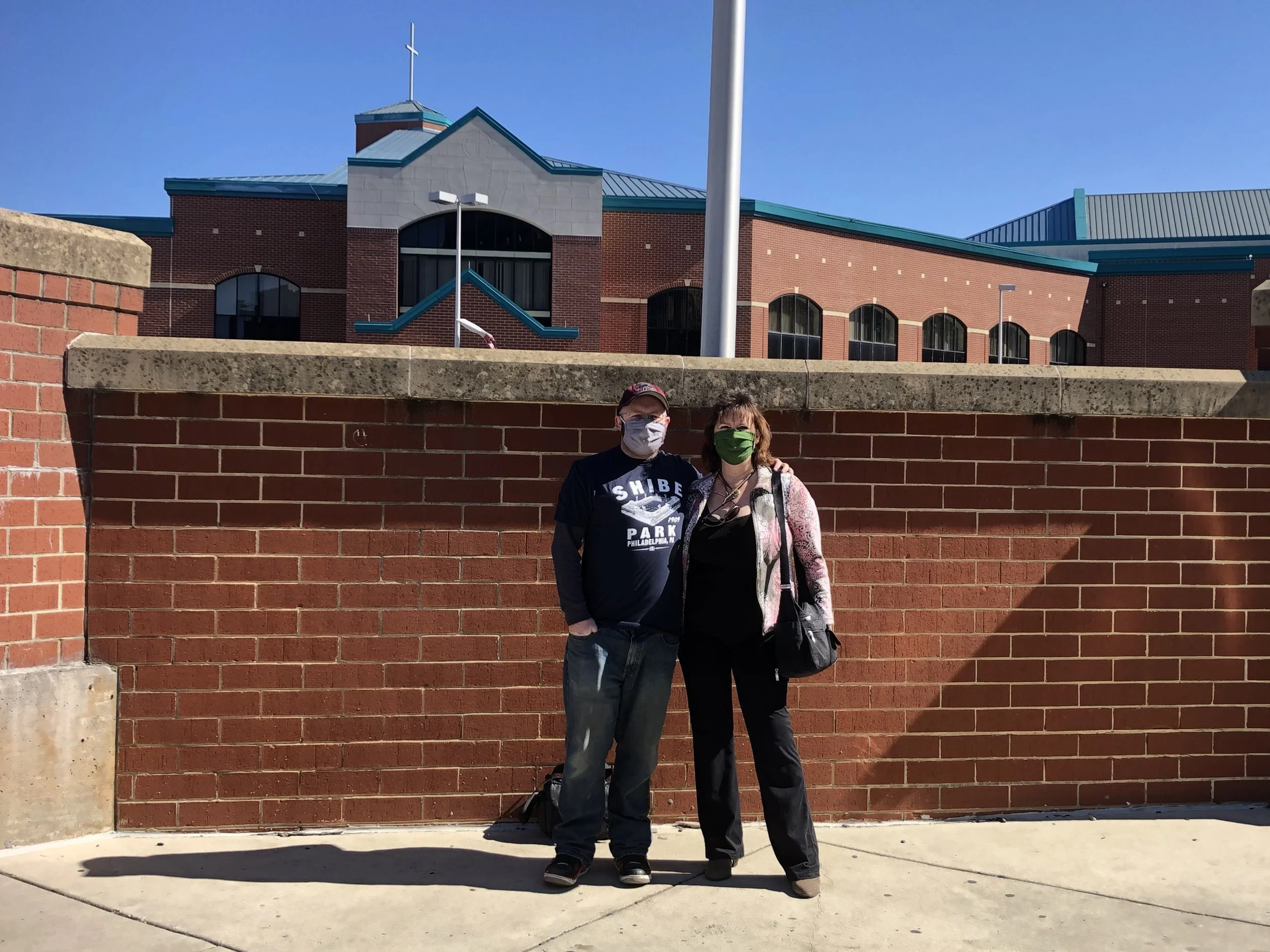
Shibe Park / Connie Mack Stadium
My mom and I visited the former site of Shibe Park (aka Connie Mack Stadium) in Philadelphia in October of 2020. We met our friend Ryan Lawrence there, who took this photo of us.
During that trip, I interviewed Alex Cheremeteff about the history of the Philadelphia Athletics. That interview turned into Episode 4 of Season 2 of My Baseball History, which you can listen to HERE.
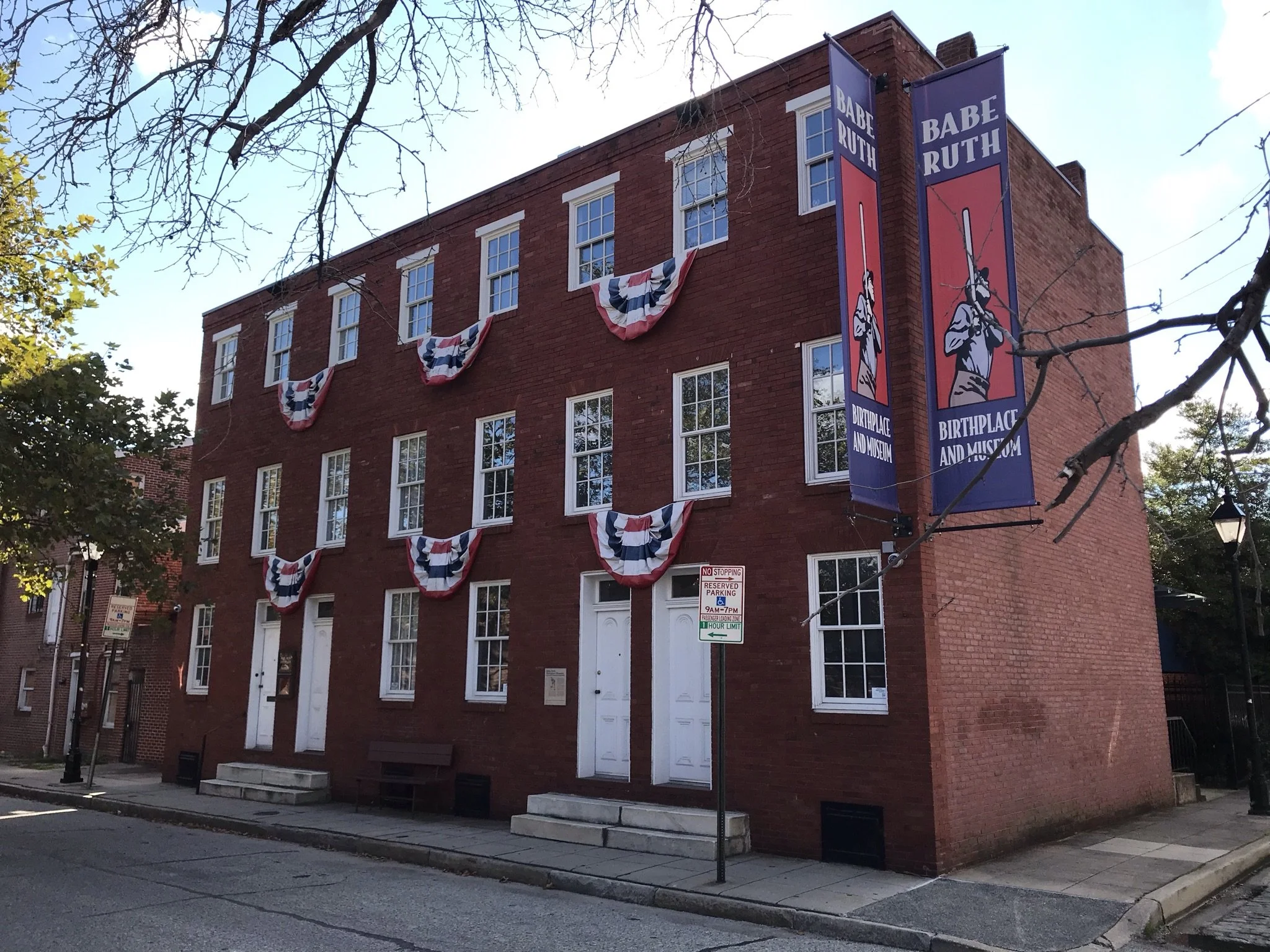
Babe Ruth Birthplace And Museum
Later that same trip, we visited the Babe Ruth Birthplace and Museum in Baltimore, where we saw a number of Babe’s personal belongings that he either bought or received as gifts in Japan during the 1934 Tour.
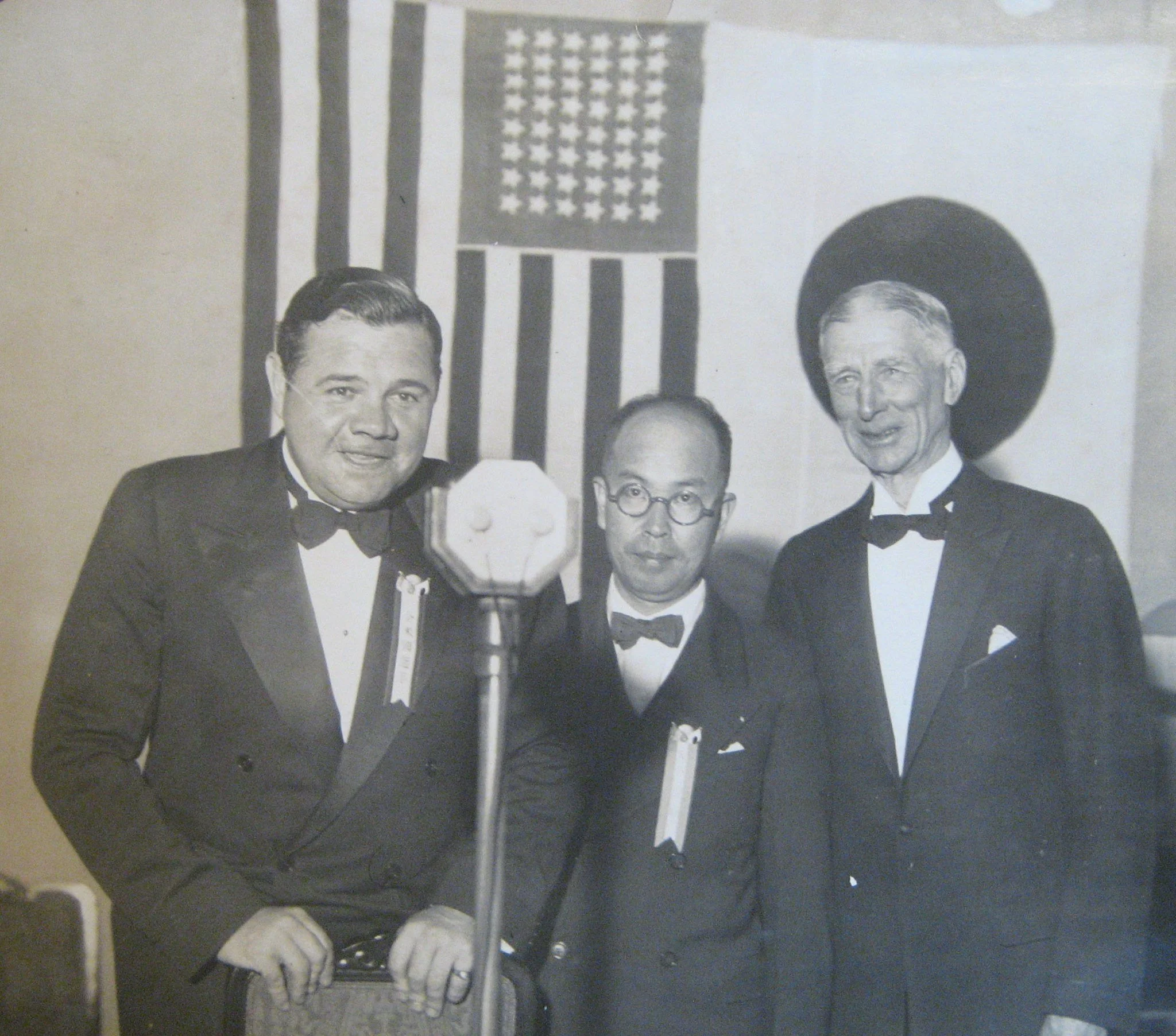
Babe and Connie
Here, the two baseball legends are photographed together during the 1934 Tour to Japan, along with Sotaro Suzuki.
Lefty and Cappy
Two men whose names and legacies will forever be linked. Their work and their friendship resulted in the building and re-building of Japanese professional baseball, both before and after World War II.
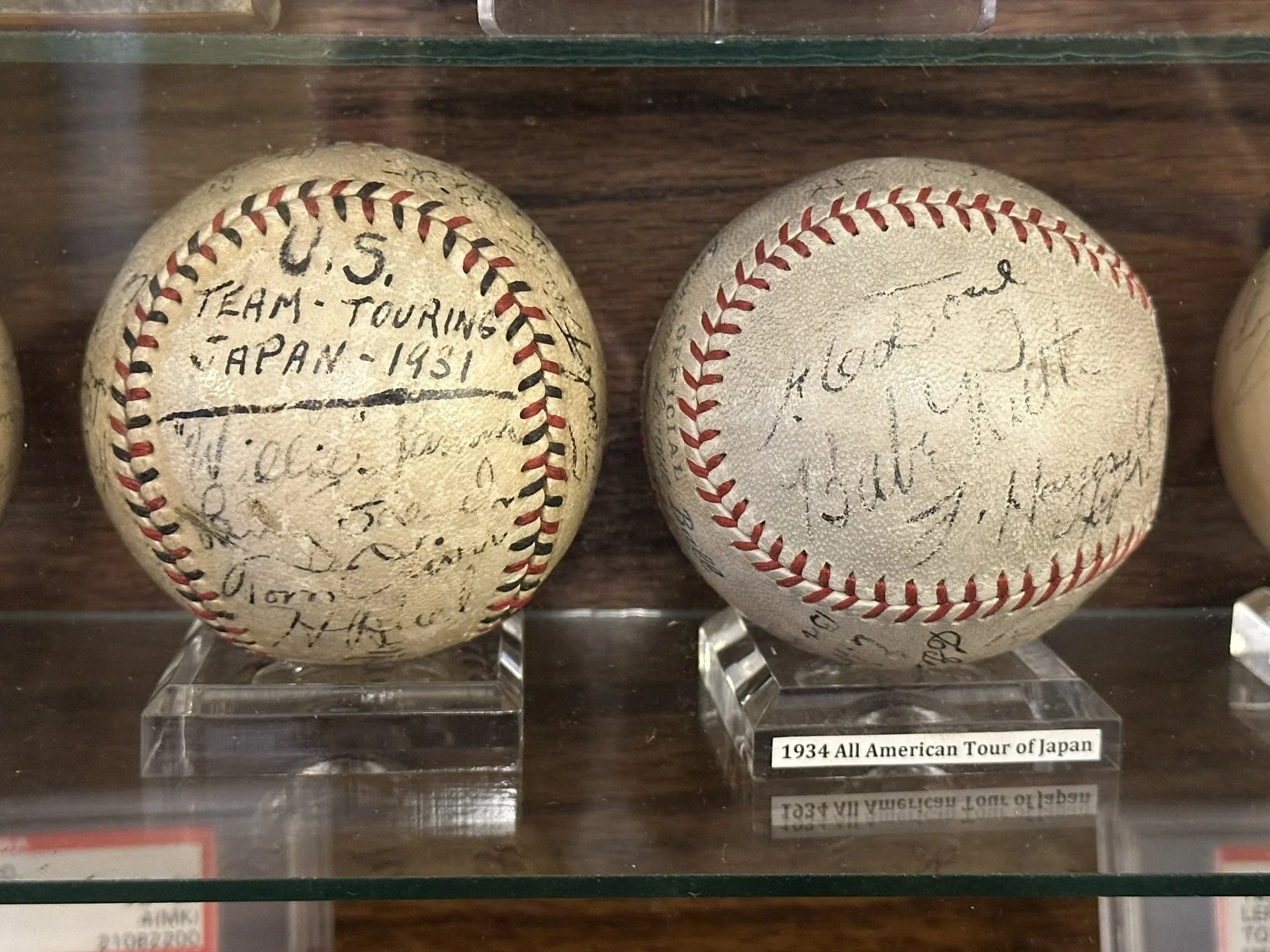
Many people mistakenly believe that baseball wasn’t introduced to Japan until after World War II. As you heard during his episode, that is clearly not the case.
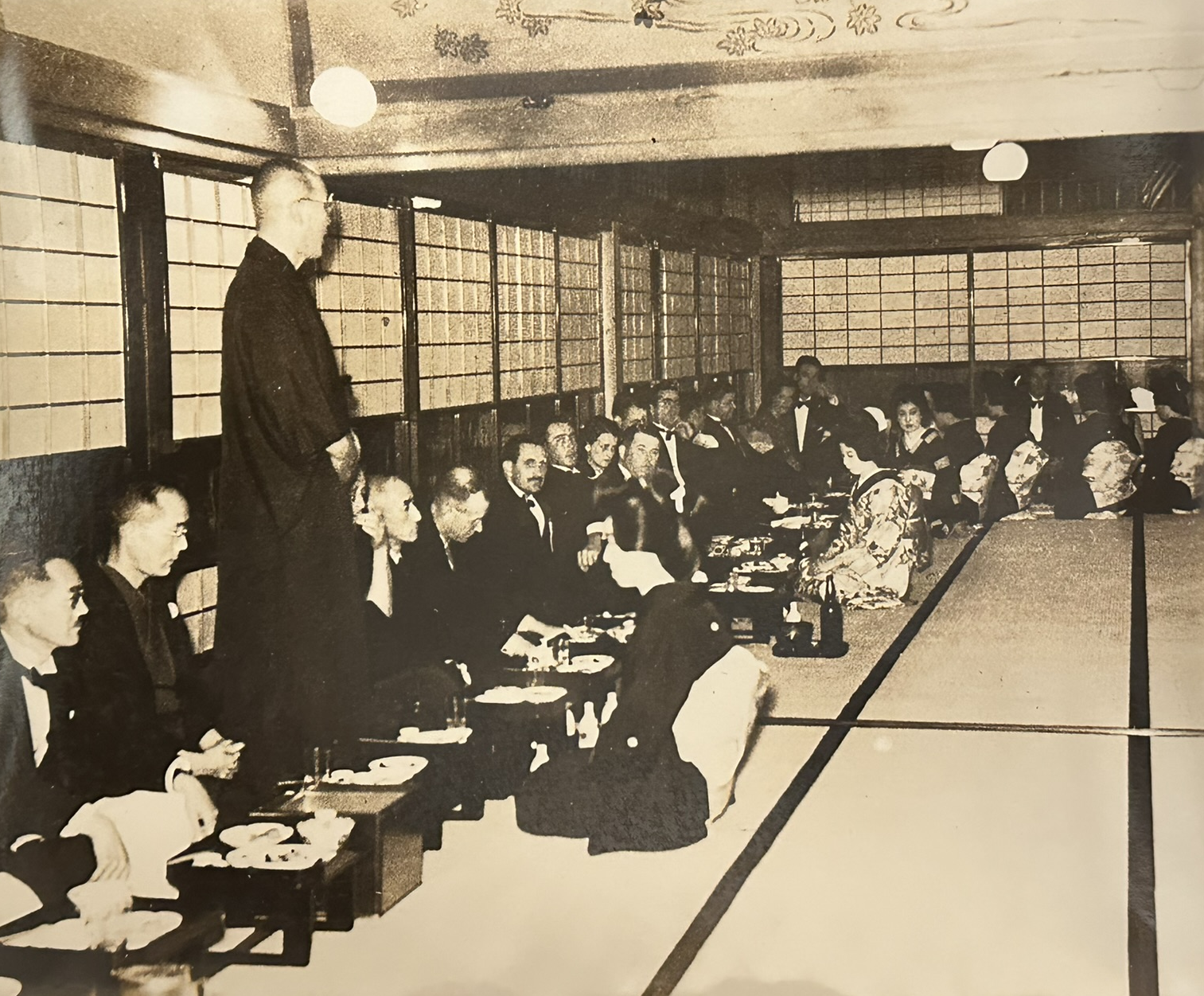
A Separate Culture
This photo, taken during the 1934 Tour of Japan, shows just how different the two cultures were at the time.
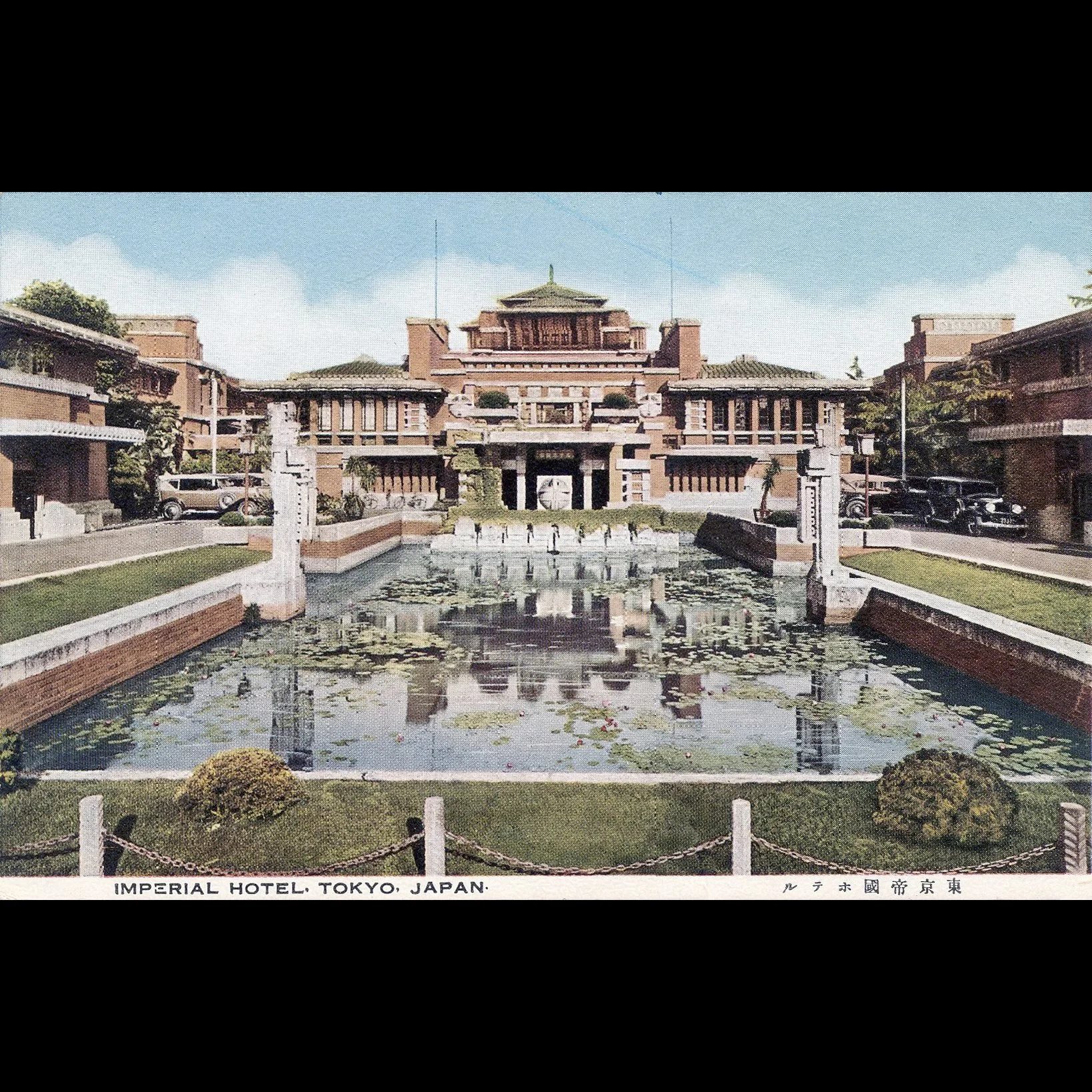
Frank Lloyd Wright
Frank Lloyd Wright had a profound, lifelong connection to Japan, describing it as "the most romantic, artistic, nature-inspired country on earth". He visited multiple times, lived there for years, and designed 14 projects in Japan, including the Imperial Hotel, which is actually where the players stayed while in Tokyo during the 1934 Tour.
Japanese architecture and art — specifically woodblock prints — deeply influenced his organic design principles, focusing on simplicity, nature, and, in his words, "the elimination of the insignificant".
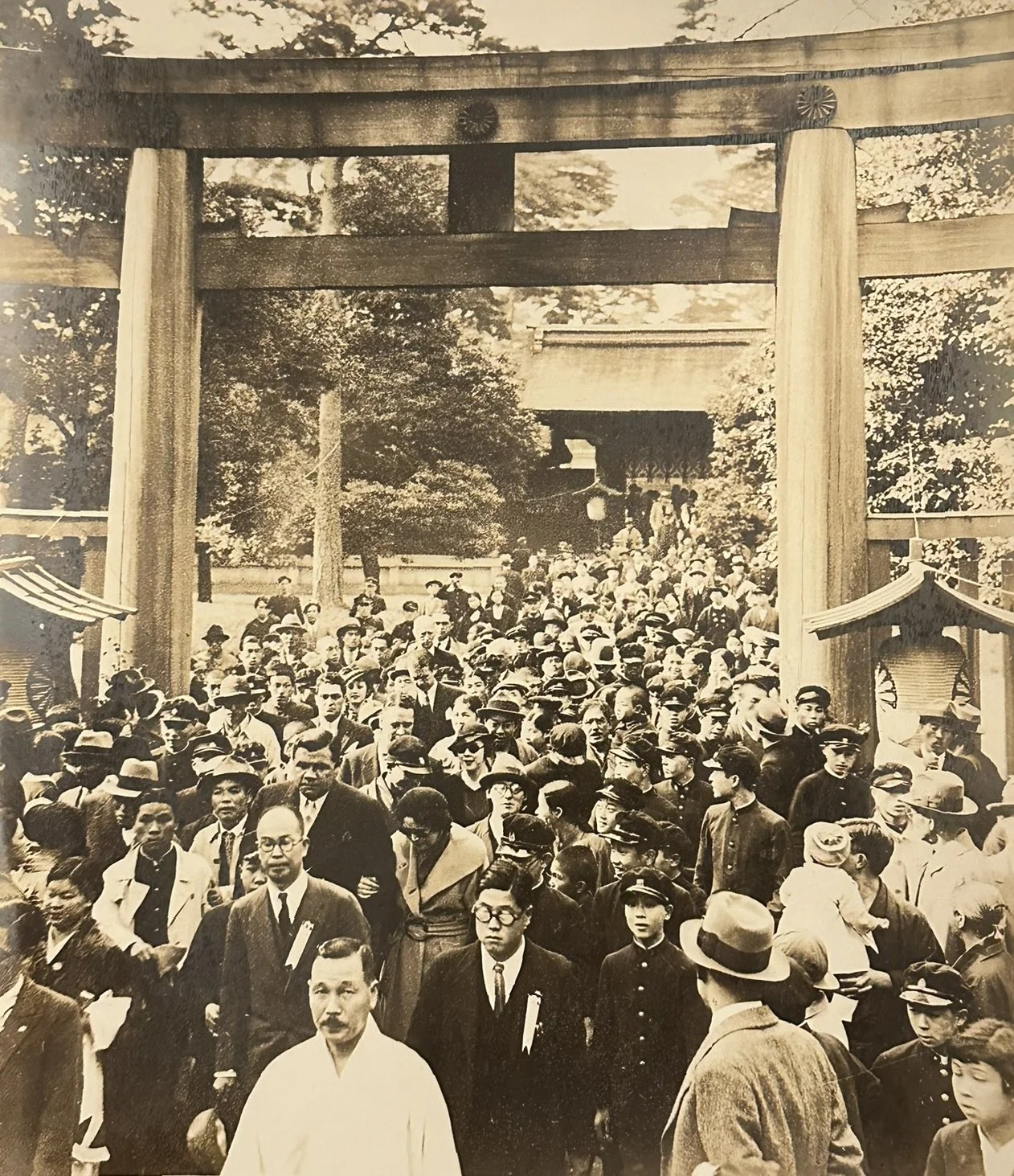
The American Impact
It’s hard to quantify the impact that 1934 Tour had on baseball in Japan, and possibly on Japan as a whole, but seeing pictures like this one start to give you a sense of just how excited the people were to see players like Babe Ruth with their own eyes.
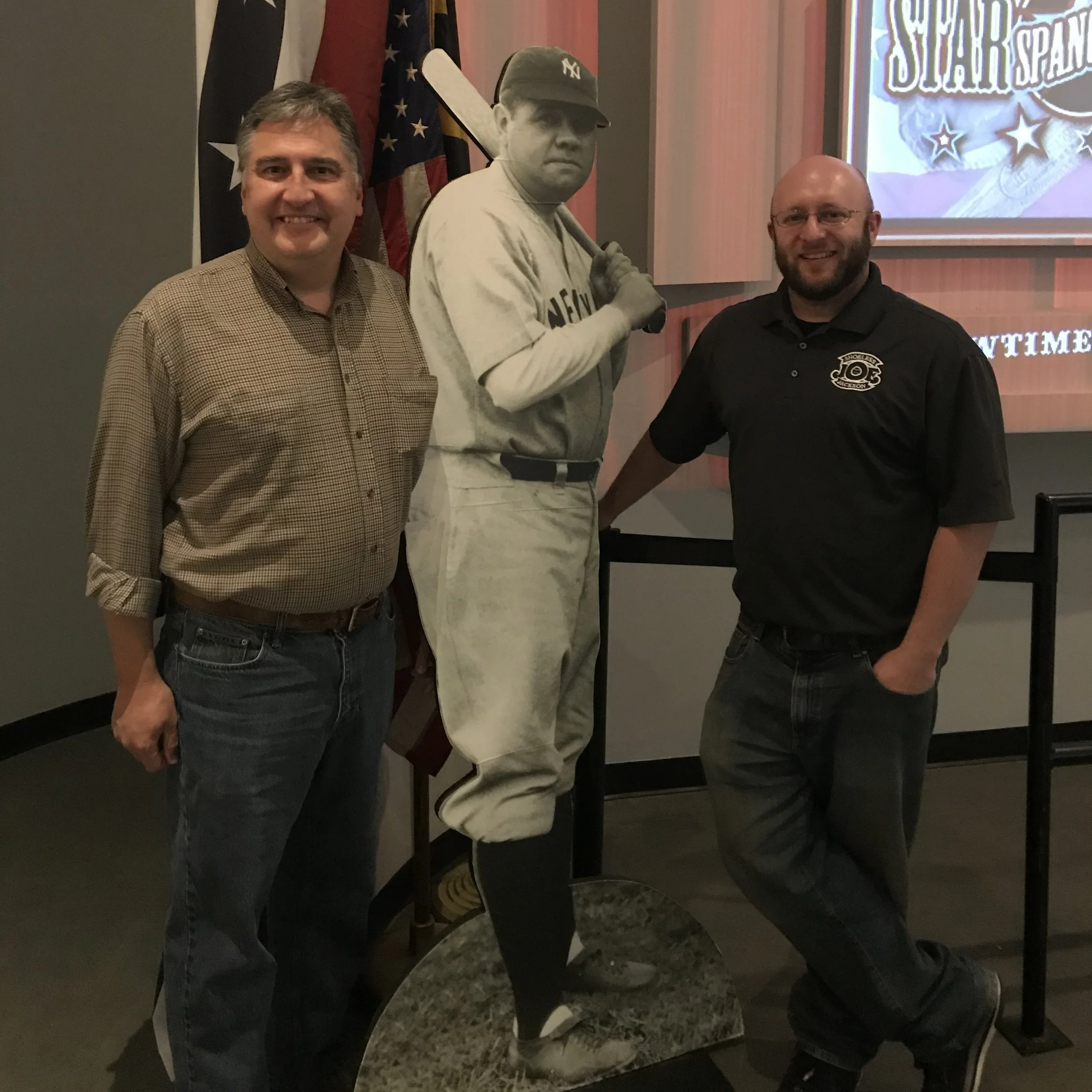
Shawn Herne
Shawn Herne is the Executive Director of the Babe Ruth Birthplace and Museum in Baltimore, Maryland.
He was our guest on Episode 3 of Season 2 of My Baseball History. You can listen to that episode HERE.
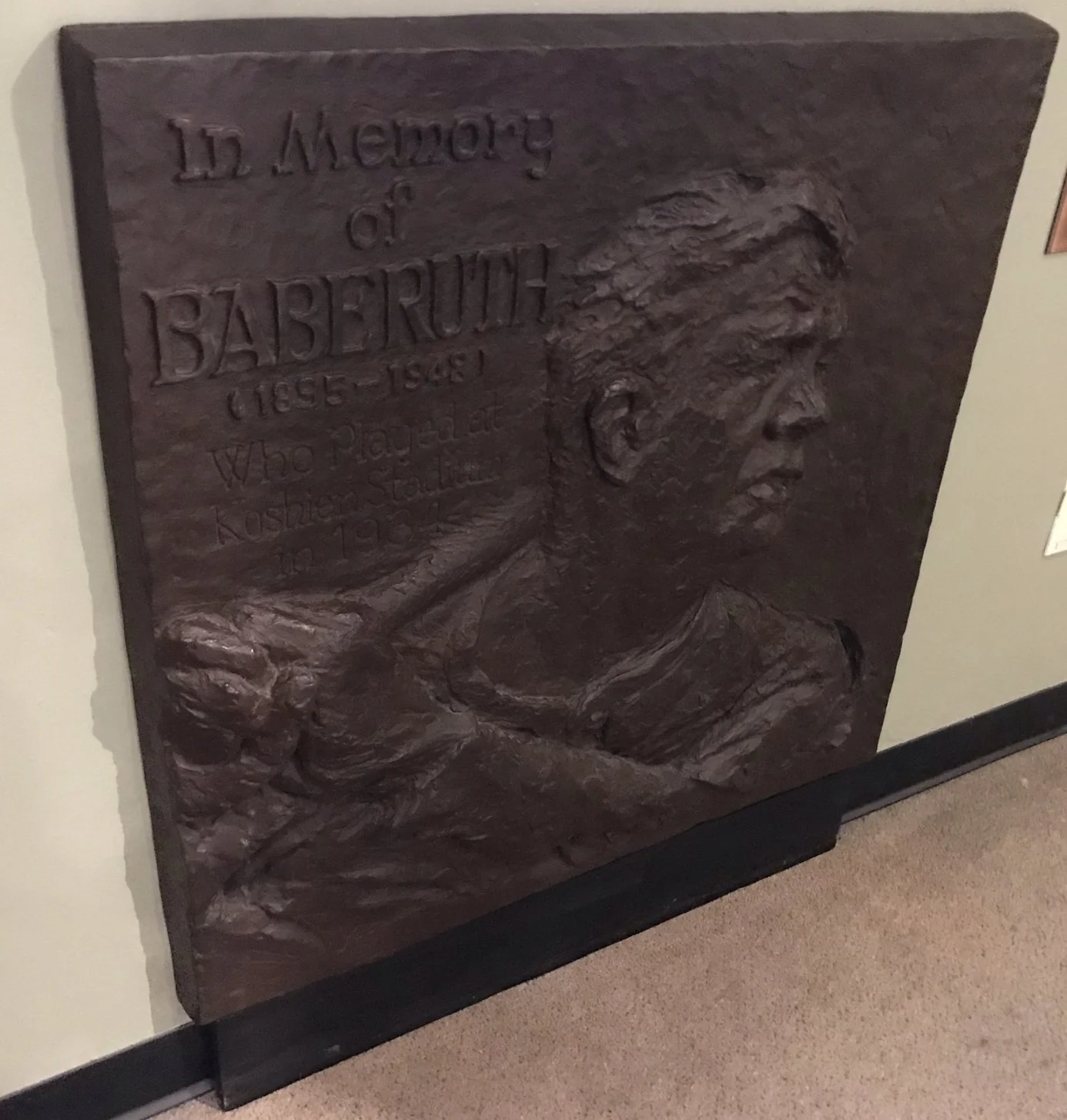
At The Museum
This is a replica of a sculpture from Hanshin Koshien Stadium, a baseball icon in Japan, and one of the stadiums where the Babe played during the 1934 Tour. Sculptor Yutaka Matsuoka was commissioned to create the piece to commemorate Ruth’s visit and friendship.
This plaque was presented by Hanshin Koshien Stadium and the Hanshin Tigers baseball team to celebrate the opening of Sports Legends at Camden Yards, and to recall the US-Japan baseball cultural exchange and friendship between the two countries started by the Babe, with hopes of building a stronger relationship through baseball.
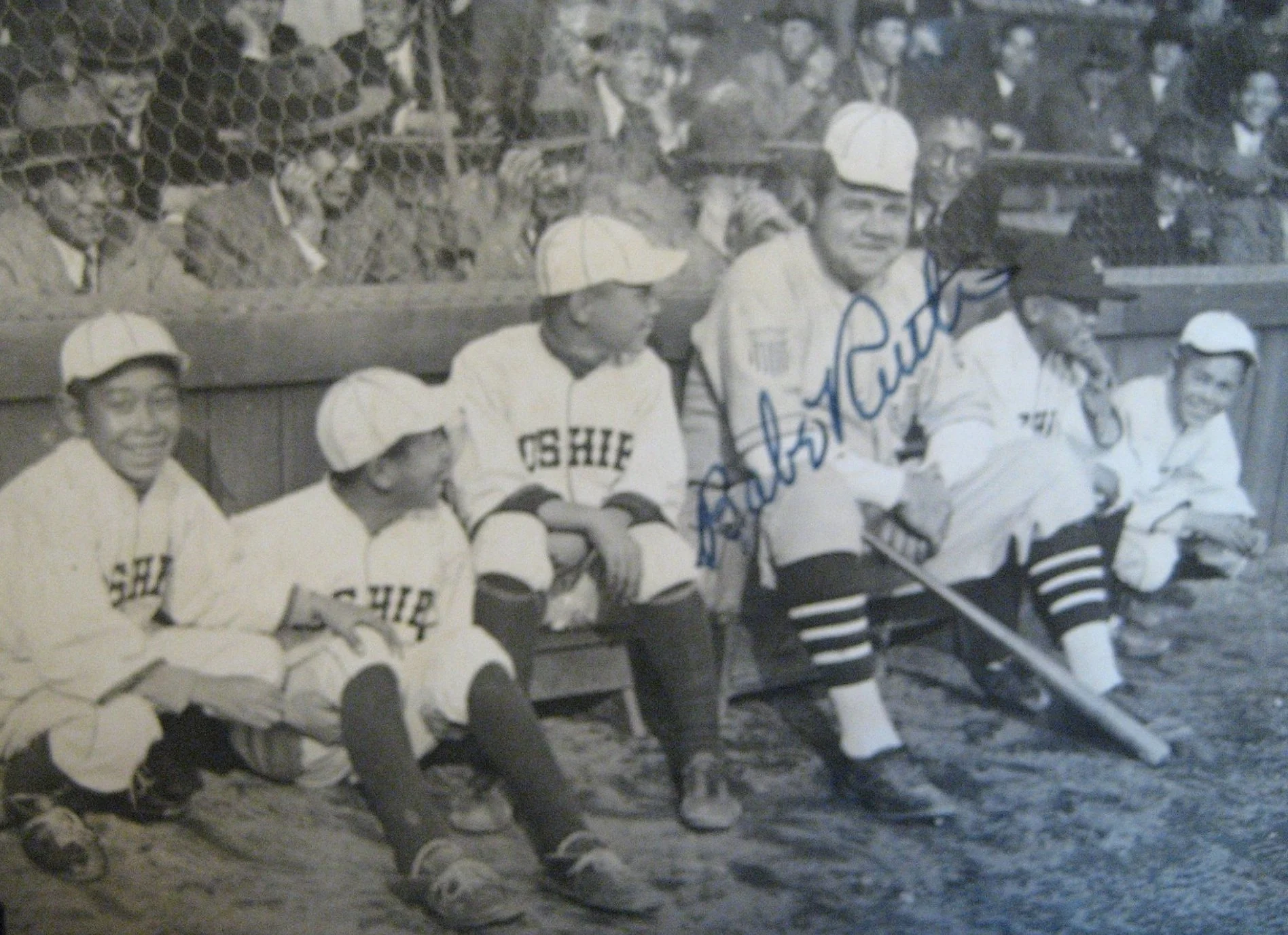
Babe Loved Japan
And Japan loved Babe.
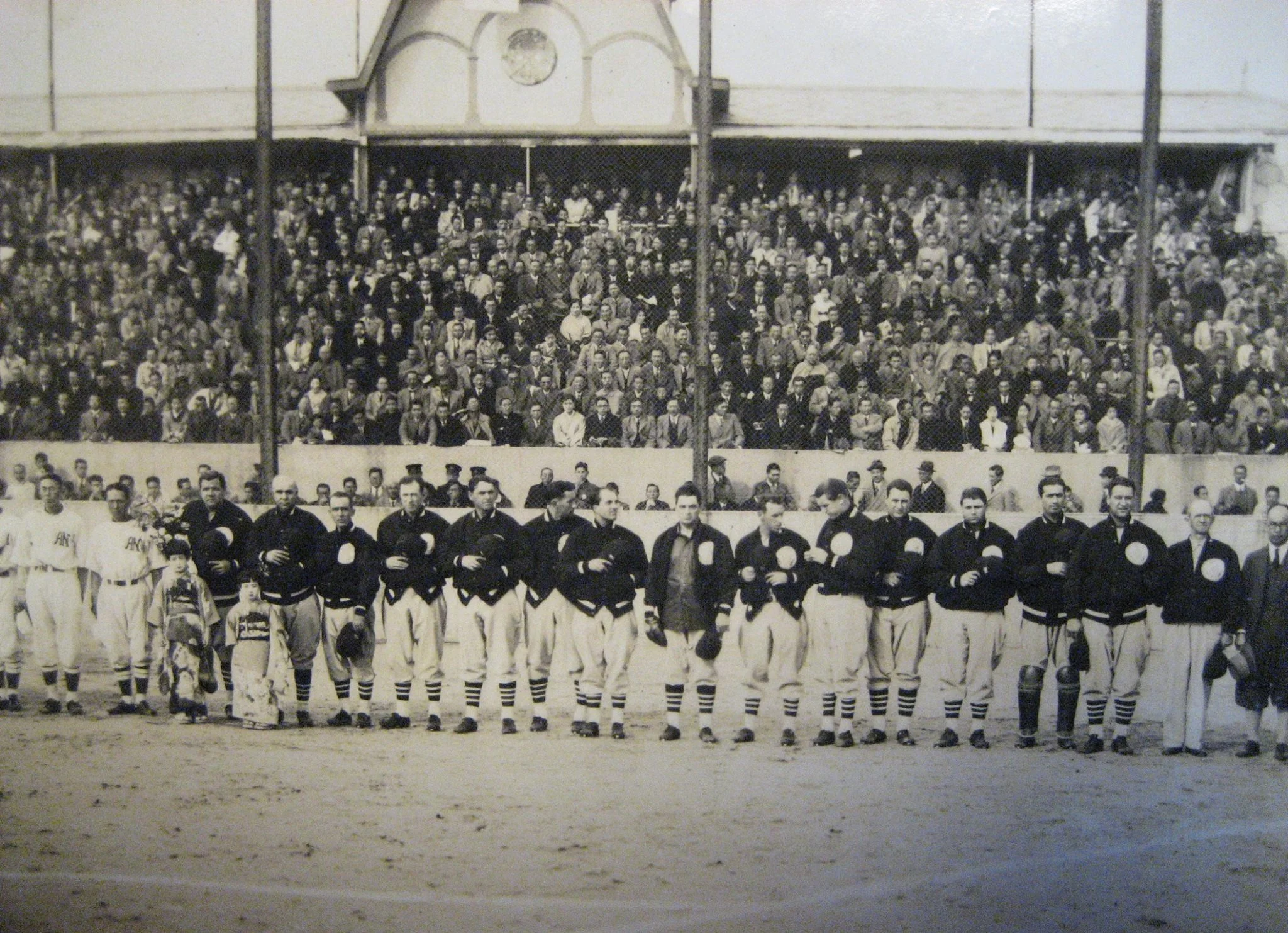
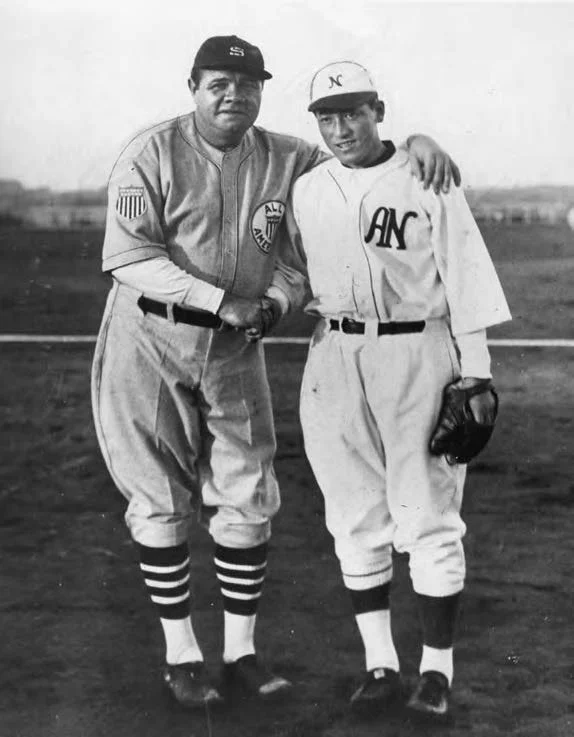
Building A Bridge
And that bridge is baseball.
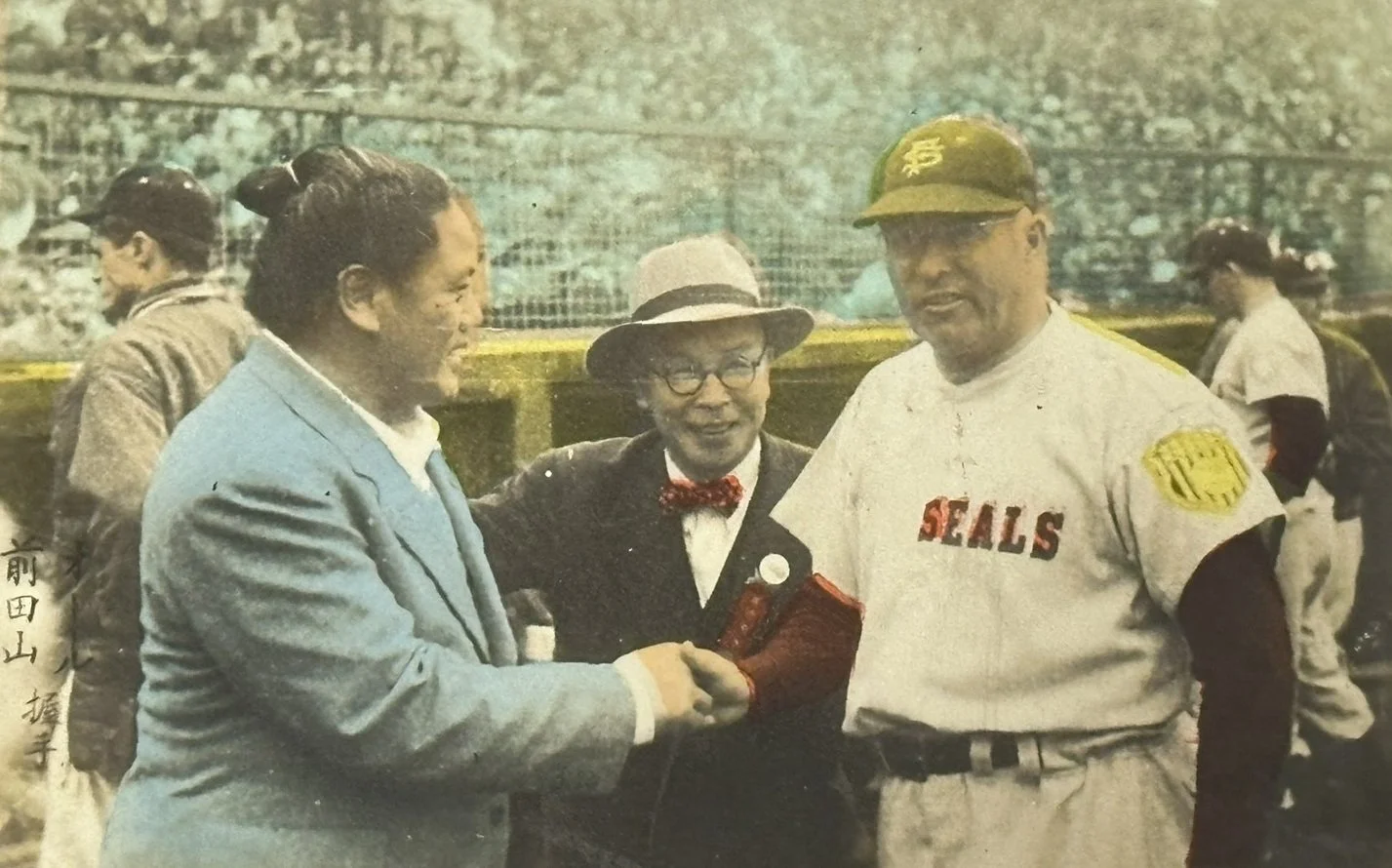
Lefty O’Doul
With Sotaro Suzuki immediately next to him wearing the hat and bow tie.
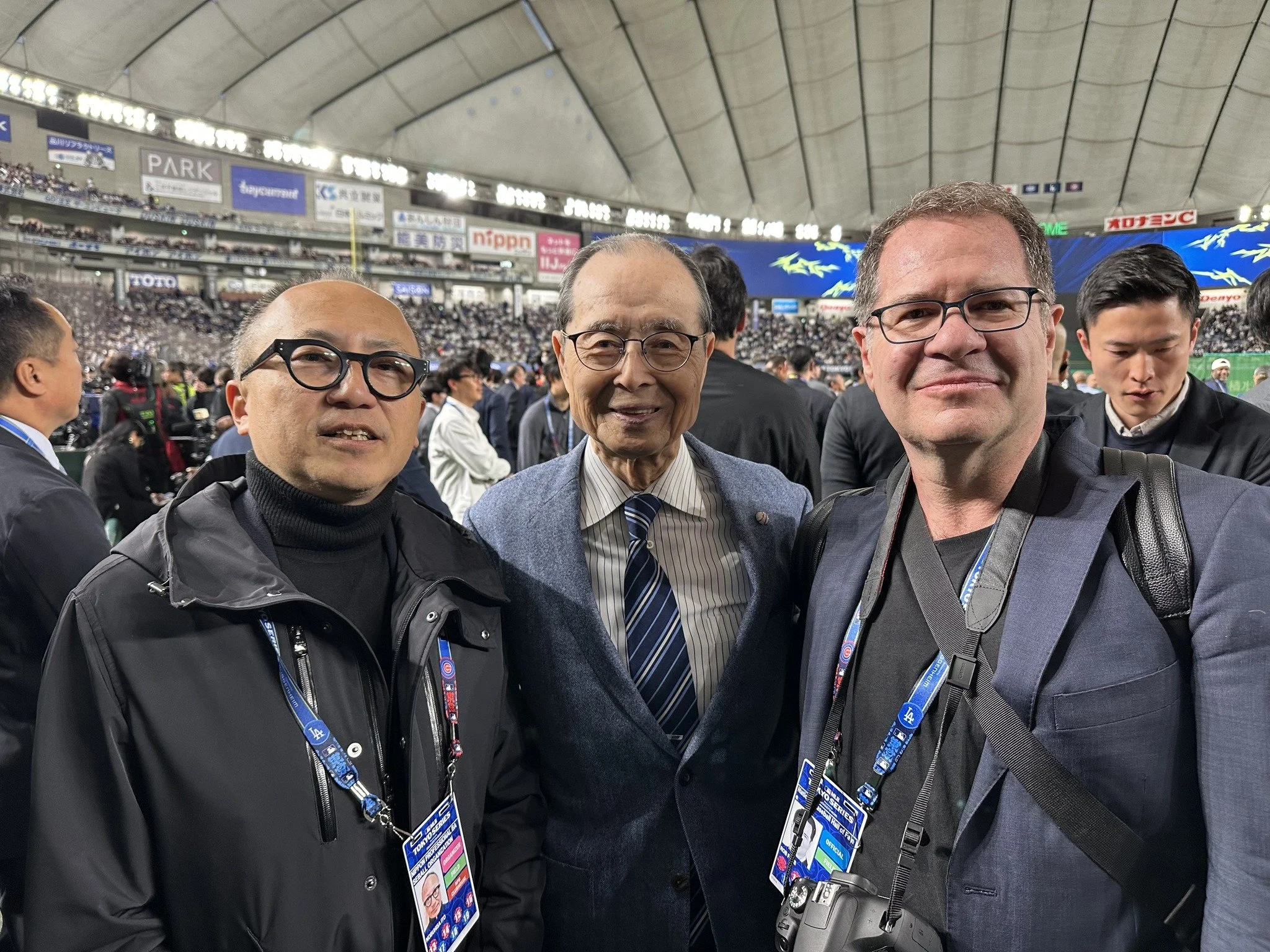
Rob Is Connected
Here he is standing next to Sadaharu Oh at the Tokyo Dome, with Nobby Ito standing next to Oh.
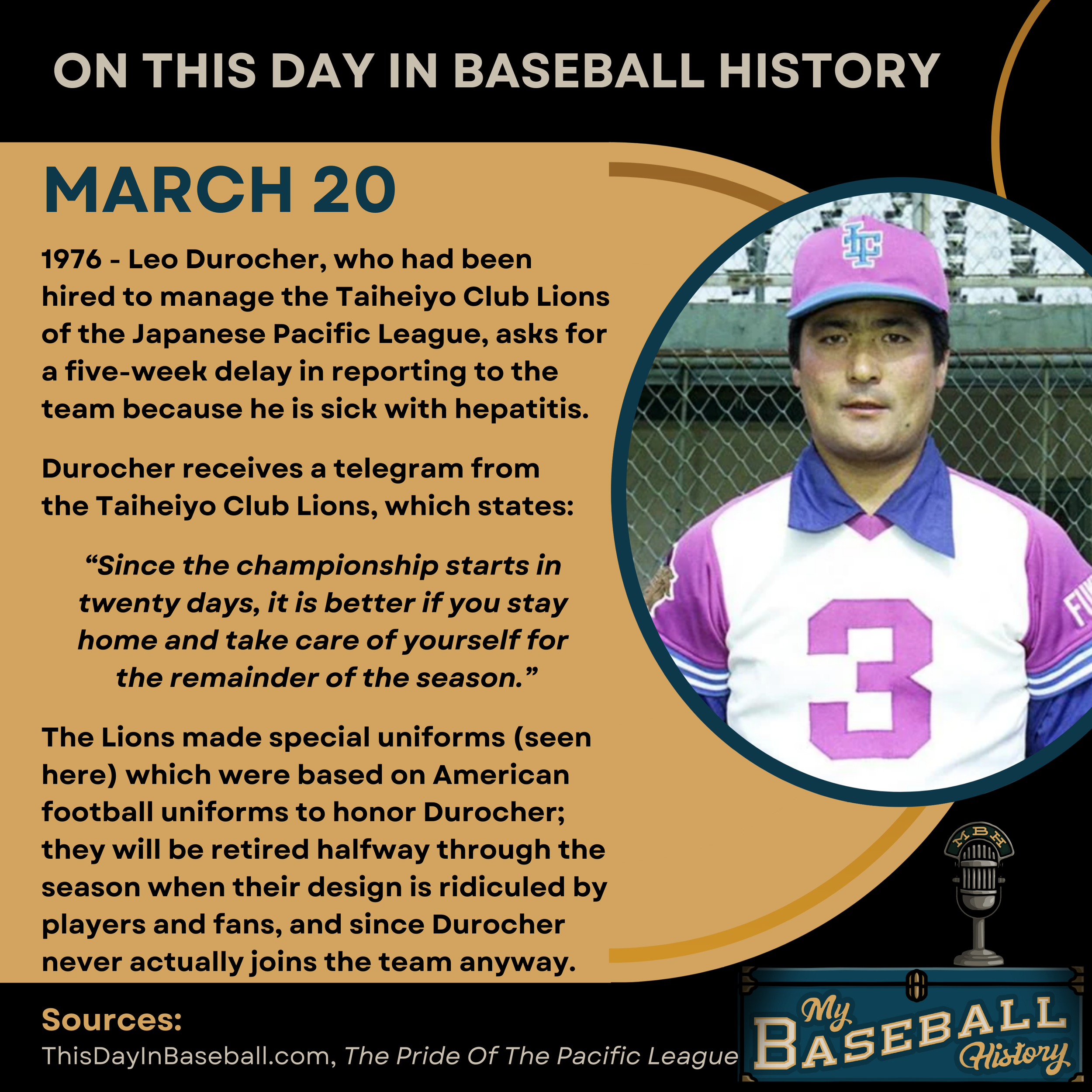
On This Day Posts
You’ve seen a handful of them throughout these liner notes, so you have an idea of the type of content you can expect every day if you aren’t already following My Baseball History on social media.
If you’d like to follow the show on your favorite platform, click one of the following links and it will take you right to our profile.
Join Our Email Newsletter
It’s free, and it’ll give you some bonus content throughout the month that you won’t get from the podcast episodes or by following any of our other social media platforms.
We put out new issues on the second Friday and the fourth Friday of every month. No more, no less.
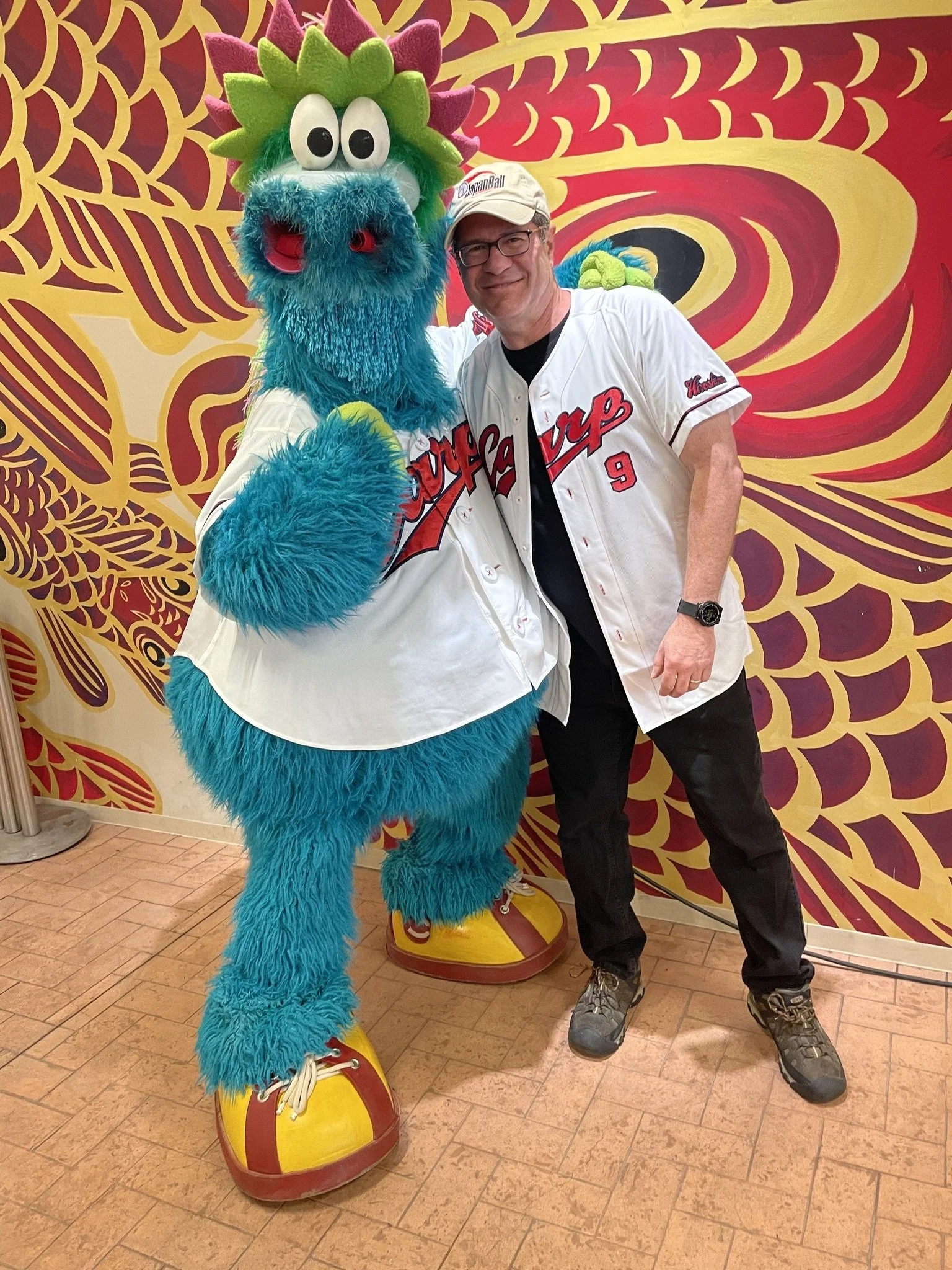
Giveaway Contest Prize
Part Two, Coming Soon…
If you enjoyed what you’ve heard so far today, stay tuned for the second part of this interview with Rob, which will go live on Wednesday, June 10th, 2026, and will be the final episode of Season 5 of My Baseball History.
Part Two will cover the modern game in Japan, basically everything from 1964 to today, with a focus on the in-game experience in the Japanese ballpark, if you were going to go there today.
Support My Baseball History
If you don’t have PayPal and want to send a donation through Venmo, Zelle, Cash App, or any other platform, email me at shoelesspodcast@gmail.com and I’ll send you directions for whichever method you prefer.
We appreciate you being here.
Many of the photos in these liner notes are courtesy of the Robert K. Fitts collection,
the National Baseball Hall of Fame, or the Japan Baseball Hall of Fame and Museum.