
0510 - Dan Wallach
Dan Wallach is the host of My Baseball History, and served as the Executive Director of the Shoeless Joe Jackson Museum and Baseball Library in Greenville, South Carolina from 2019-2022. During this episode, he referenced a handful of things and people upon which you may want to do more research. Consider this page to be your “liner notes” for the episode so you can follow along.
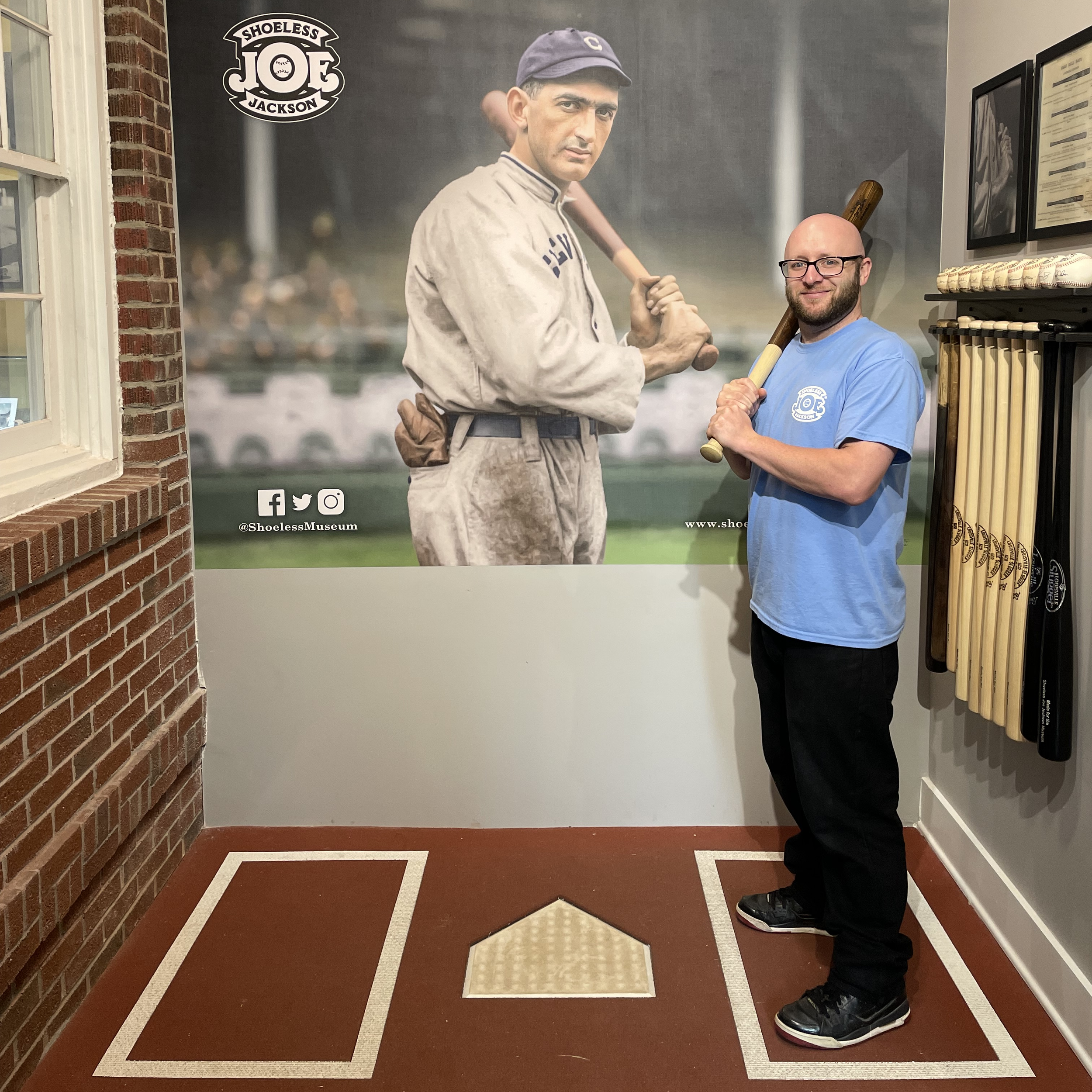
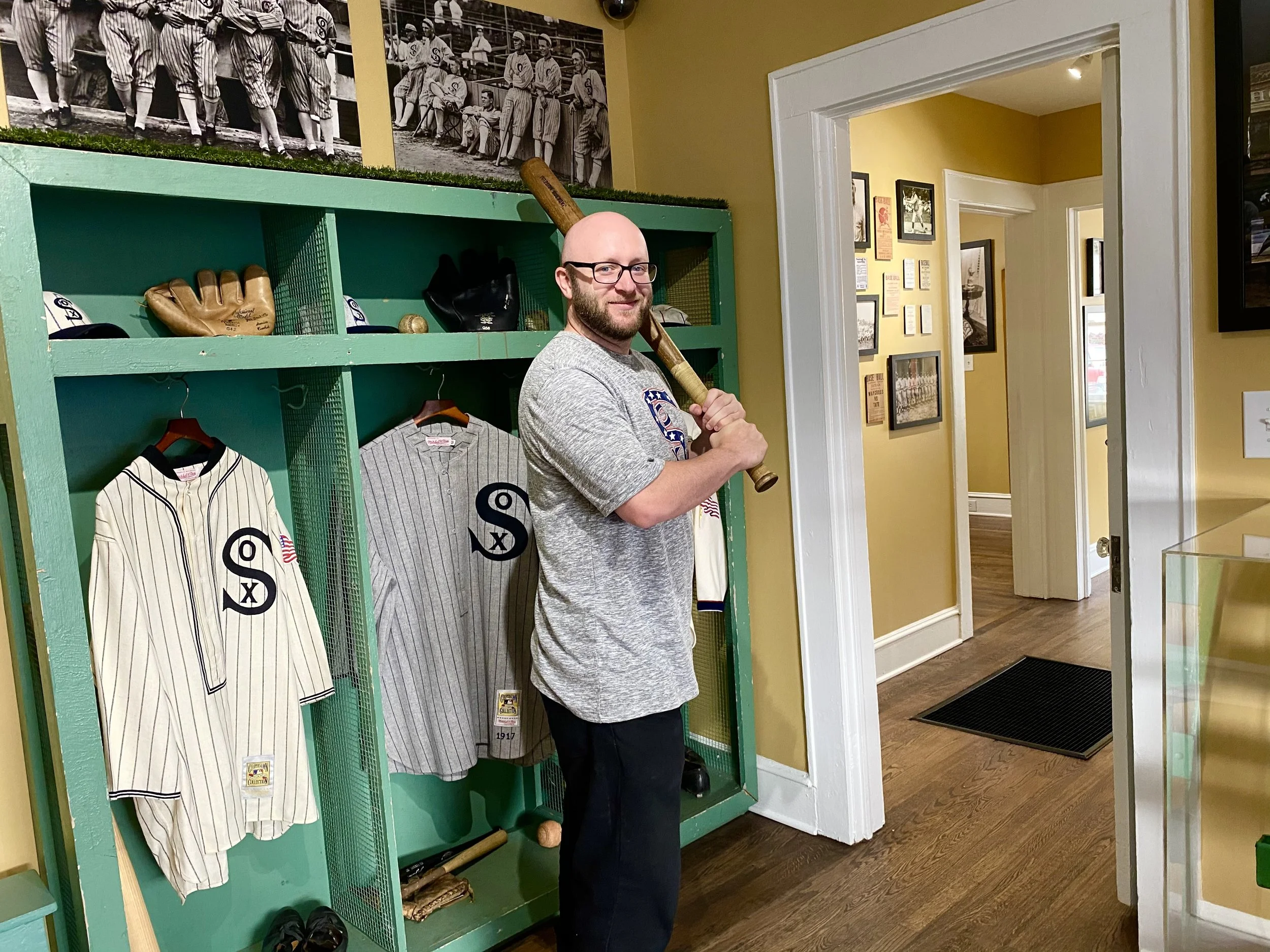
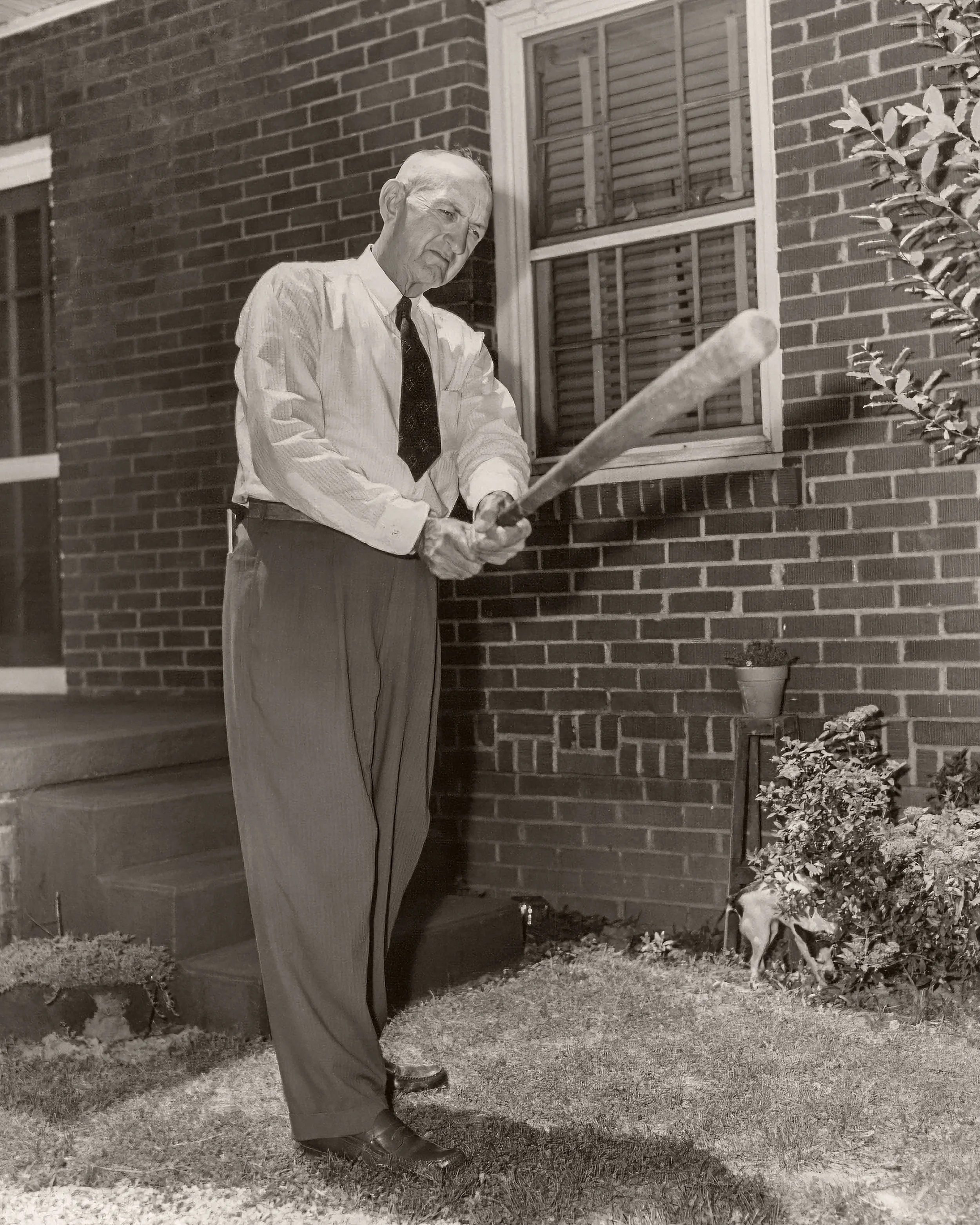
Dan Wallach holding Joe Jackson’s J13 model Louisville Slugger, which was 36 inches long and weighed 39 ounces.

Join Our Email Newsletter
It’s free, and it’ll give you some bonus content throughout the month that you won’t get from the podcast episodes or by following any of our other social media platforms.
We put out new issues on the second Friday and the fourth Friday of every month. No more, no less. And we’ll never sell your information to a third party.

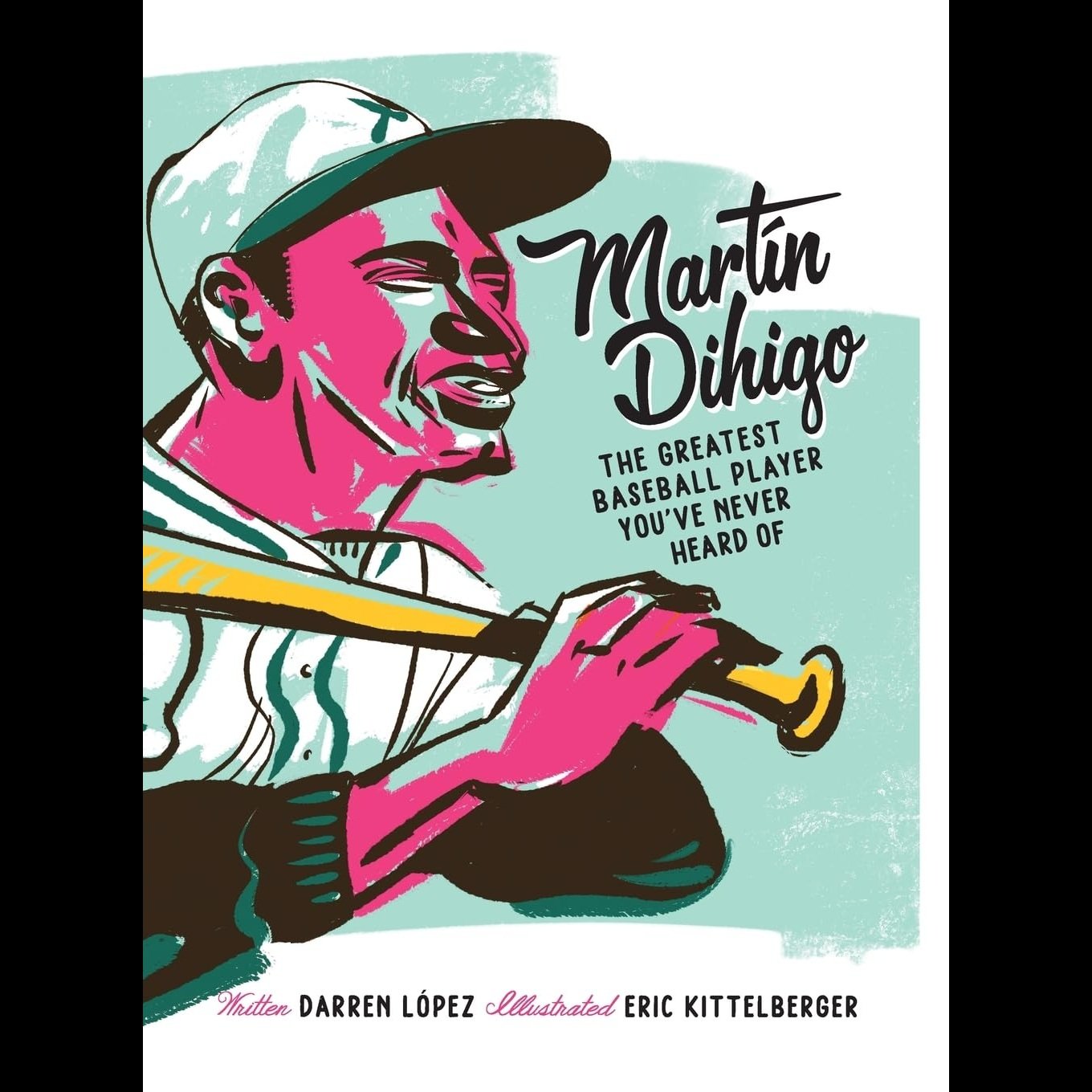
Martín Dihigo: The Greatest Baseball Player You've Never Heard Of
Eric was the illustrator for the book Martín Dihigo: The Greatest Baseball Player You've Never Heard Of, which was written by two-time International Latino Book Award winner, Darren López.
Buy a copy of the book HERE.
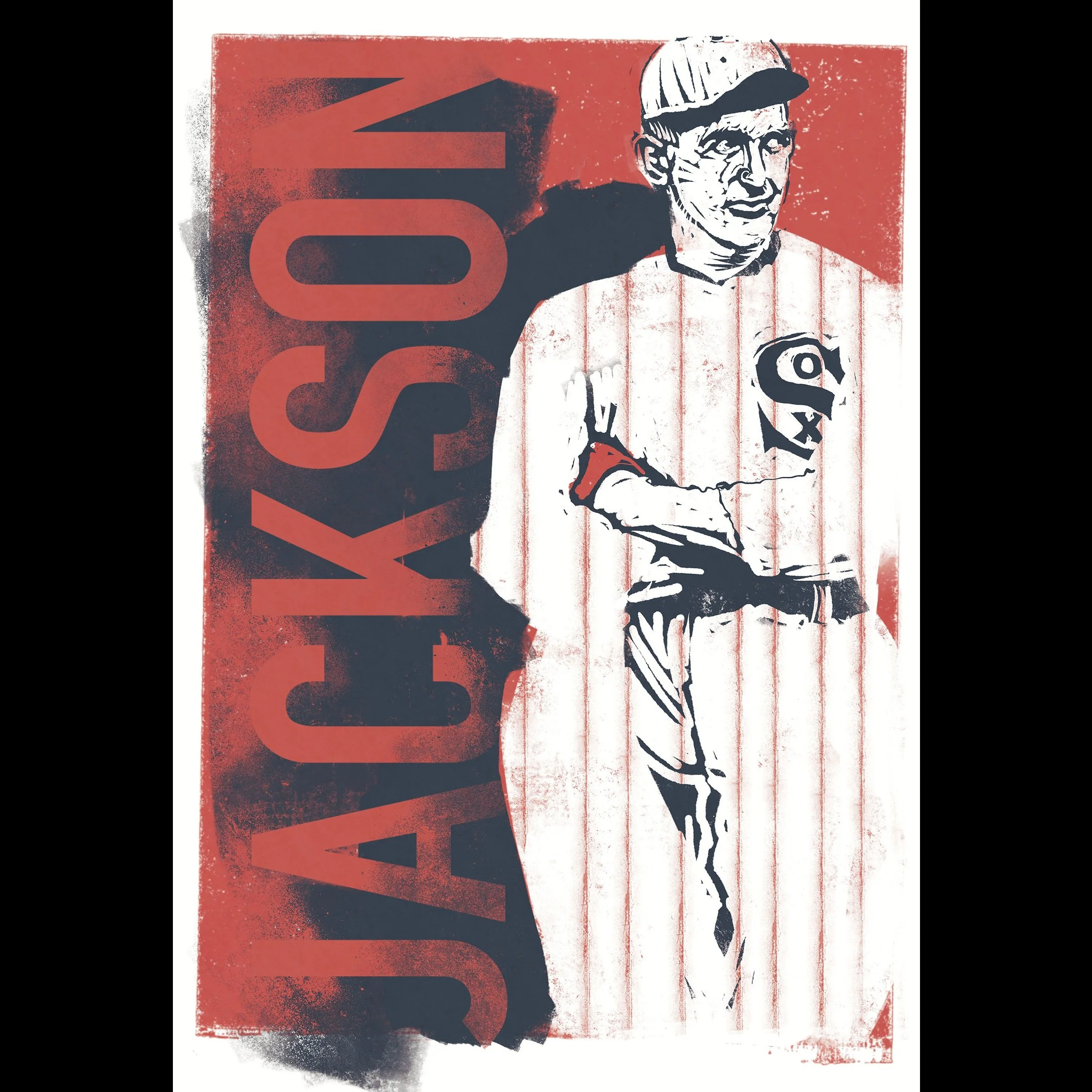
“This Day in Baseball History”
Eric posts a new graphic or illustration every single day on his Instagram feed, coinciding with something interesting which happened “This Day in Baseball History.”
Follow Eric on Instagram HERE.
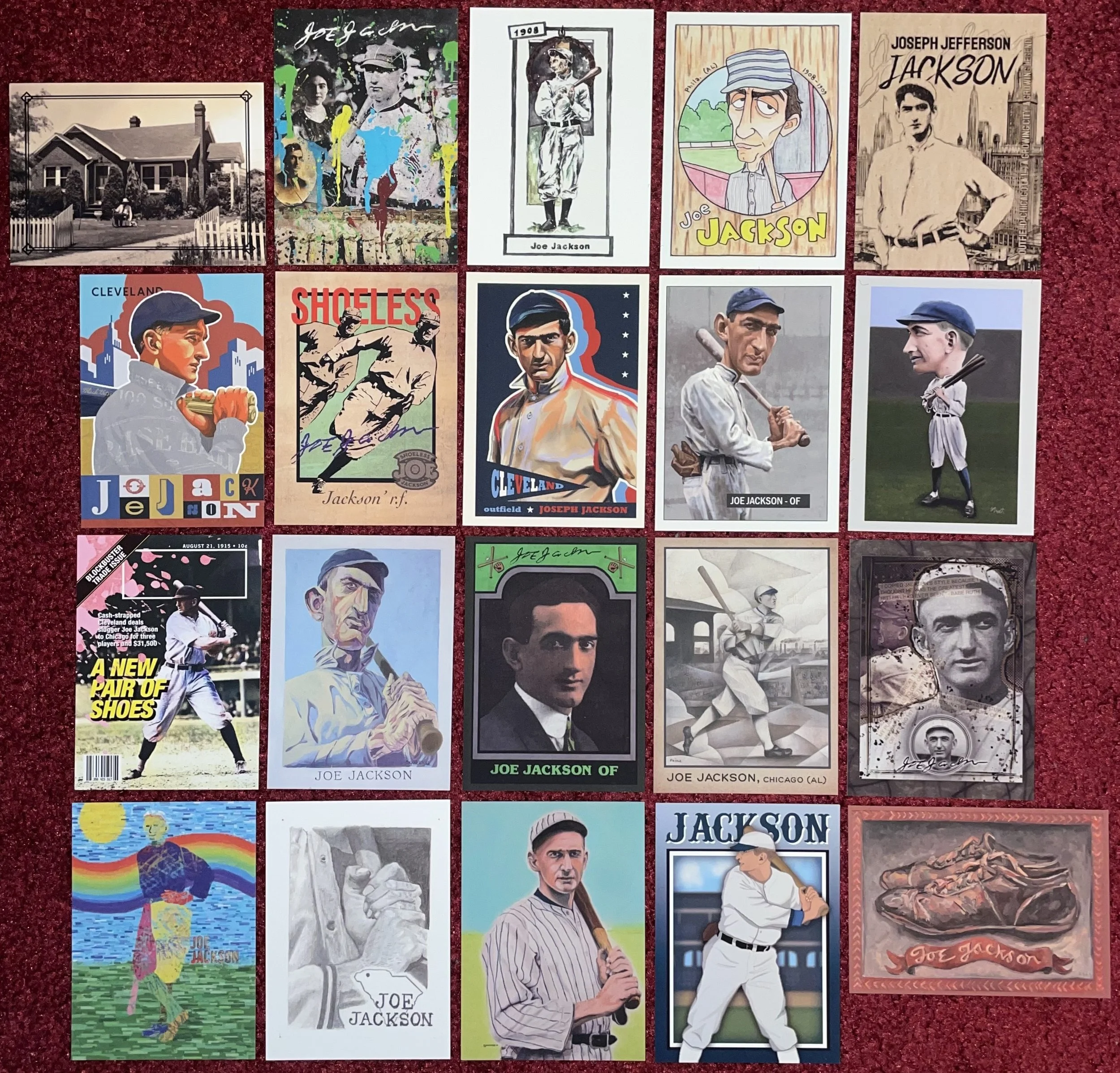
SJJM Card Art Set
I’ve followed Eric on social media for more than half a decade at this point, and we’ve actually worked together in the past, too.
When I was the Executive Director of the Shoeless Joe Jackson Museum in Greenville, South Carolina, I put together a collectible baseball card set which featured the artwork of 20 artists from all over the world, each of whom designed a unique card front to be included in the set.
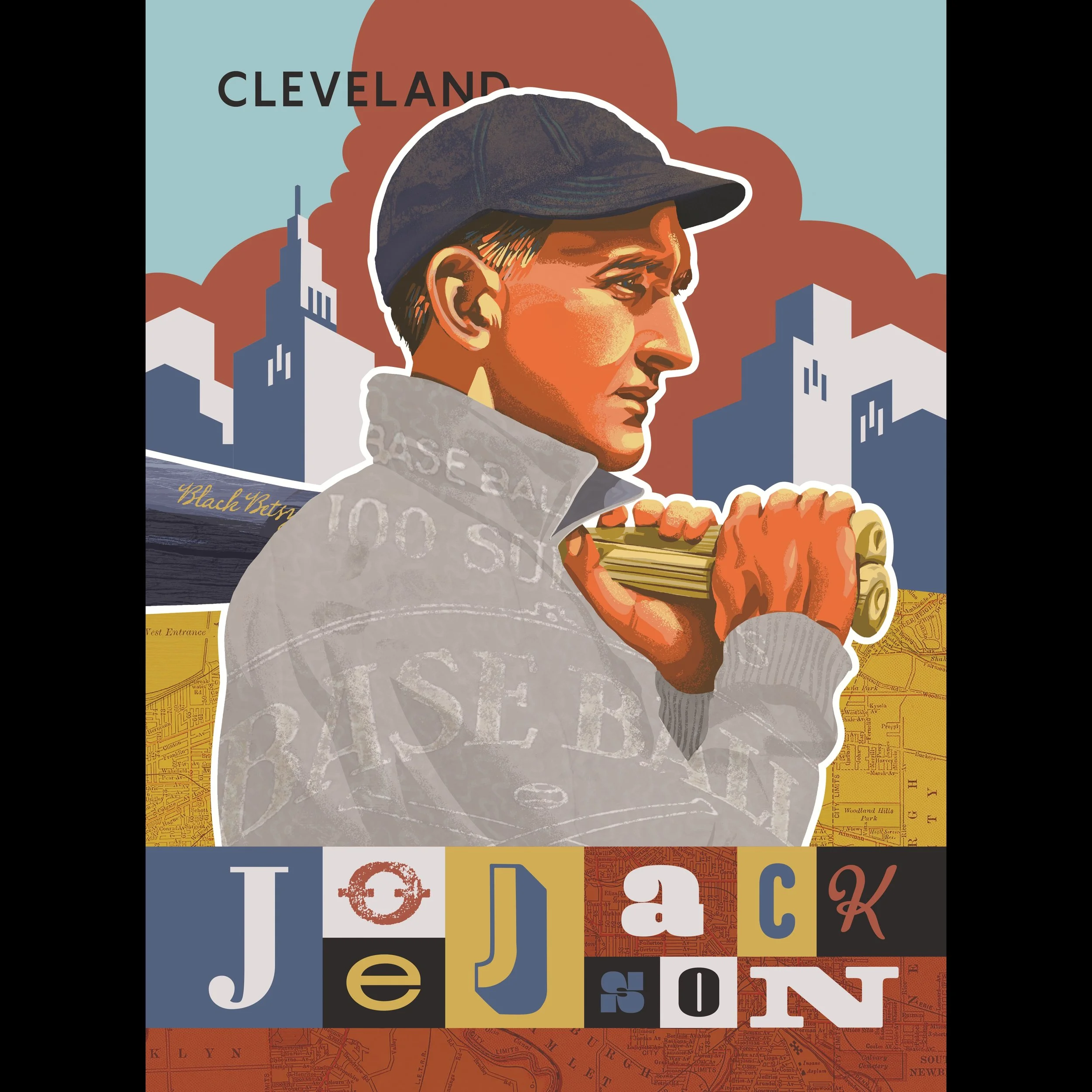
Eric’s Card
Eric’s card was gorgeous, like all of his work, and he was incredibly easy to work with.
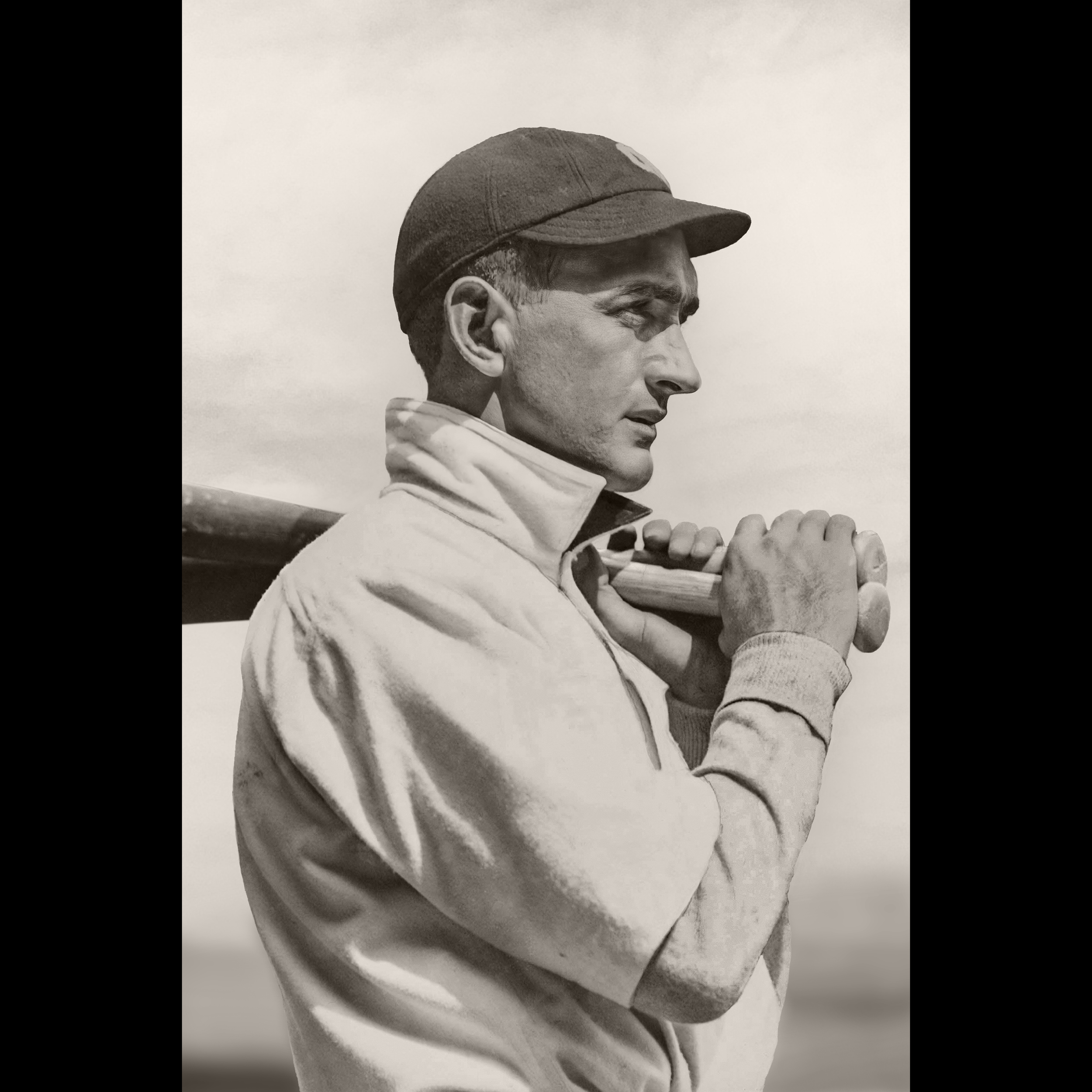
Louis Van Oeyen
Eric’s card was based on one of my favorite portraits ever taken of Joe: the one seen here, which was snapped by famed Cleveland photographer Louis Van Oeyen in 1910.
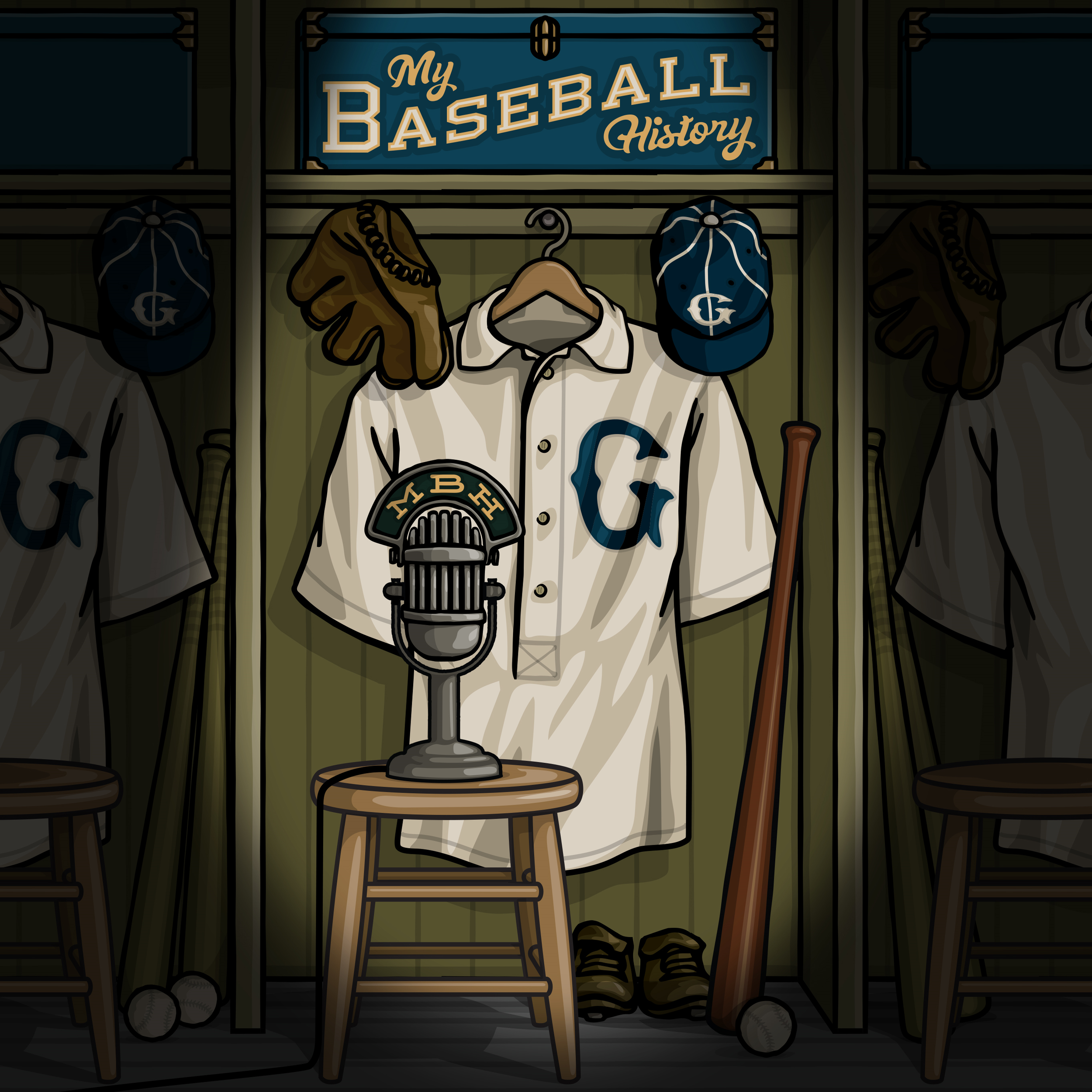
My Baseball History Artwork
I was lucky to have Gary Cieradkowski create the artwork for My Baseball History, which has gotten many, many compliments over the years.
You can read more about the process of designing this artwork by clicking through the photo carousel toward the bottom of THIS PAGE.
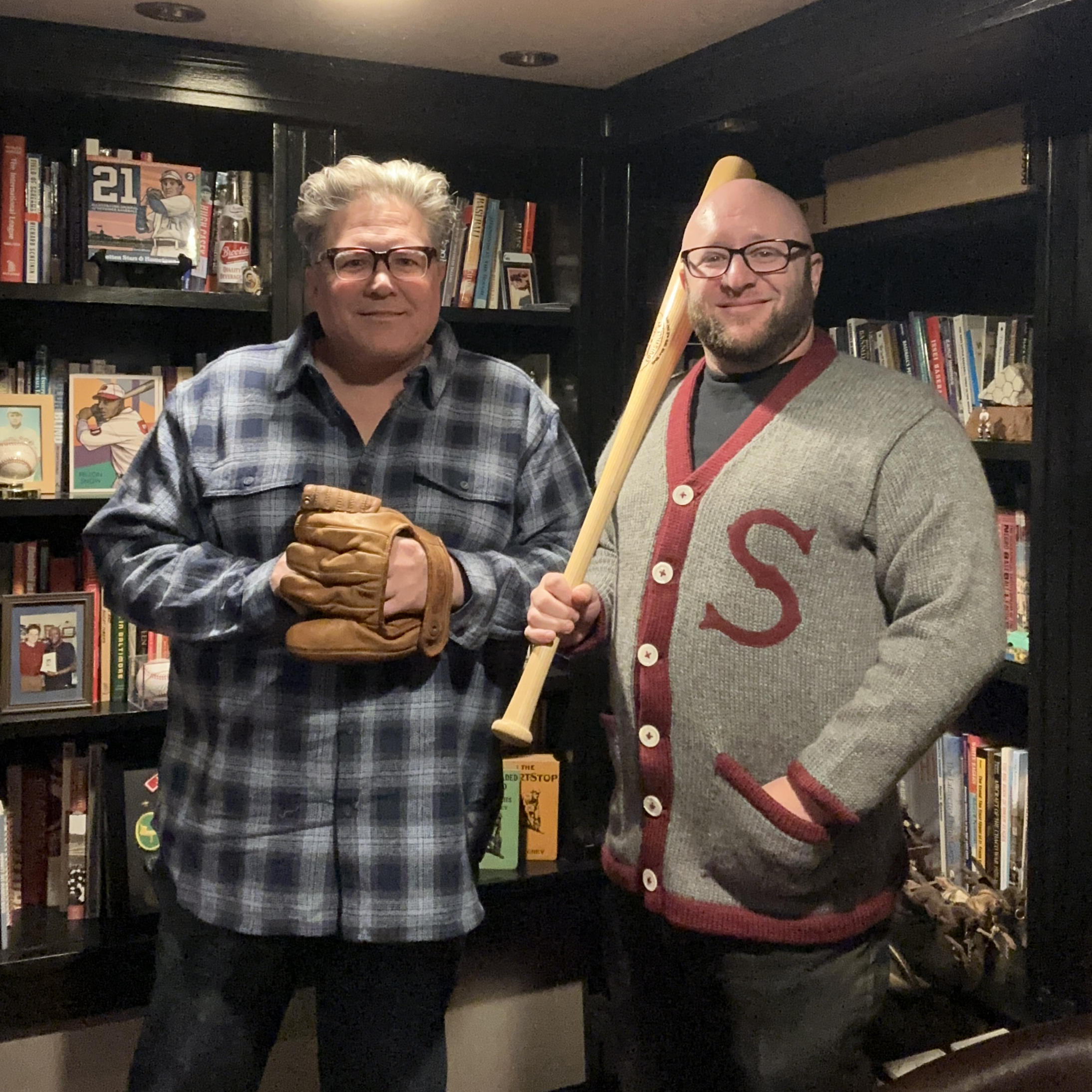
Gary Cieradkowski
Gary Cieradkowski is a renowned baseball historian, researcher, author, and artist. He was the recipient of SABR’s 2026 Jefferson Burdick Award, which honors individuals who have made significant contributions to the baseball card hobby.
He was our guest for Episode 4 of Season 5. You can listen to that episode HERE.
You can keep up with Gary at the following places:
The Shoeless Podcast Network
I have formed The Shoeless Podcast Network, of which My Baseball History will be the flagship show.
If you’re a fan of MBH, nothing will change for you. If you’re already following @ShoelessPodcast on your favorite social media platforms, you’ll still get all of the same great content you already do.
But now, if and when new shows are added to the network, whether they be newly-created shows, or existing shows which get absorbed under the umbrella of the Shoeless Podcast Network, I will also post pertinent updates about them there, too.

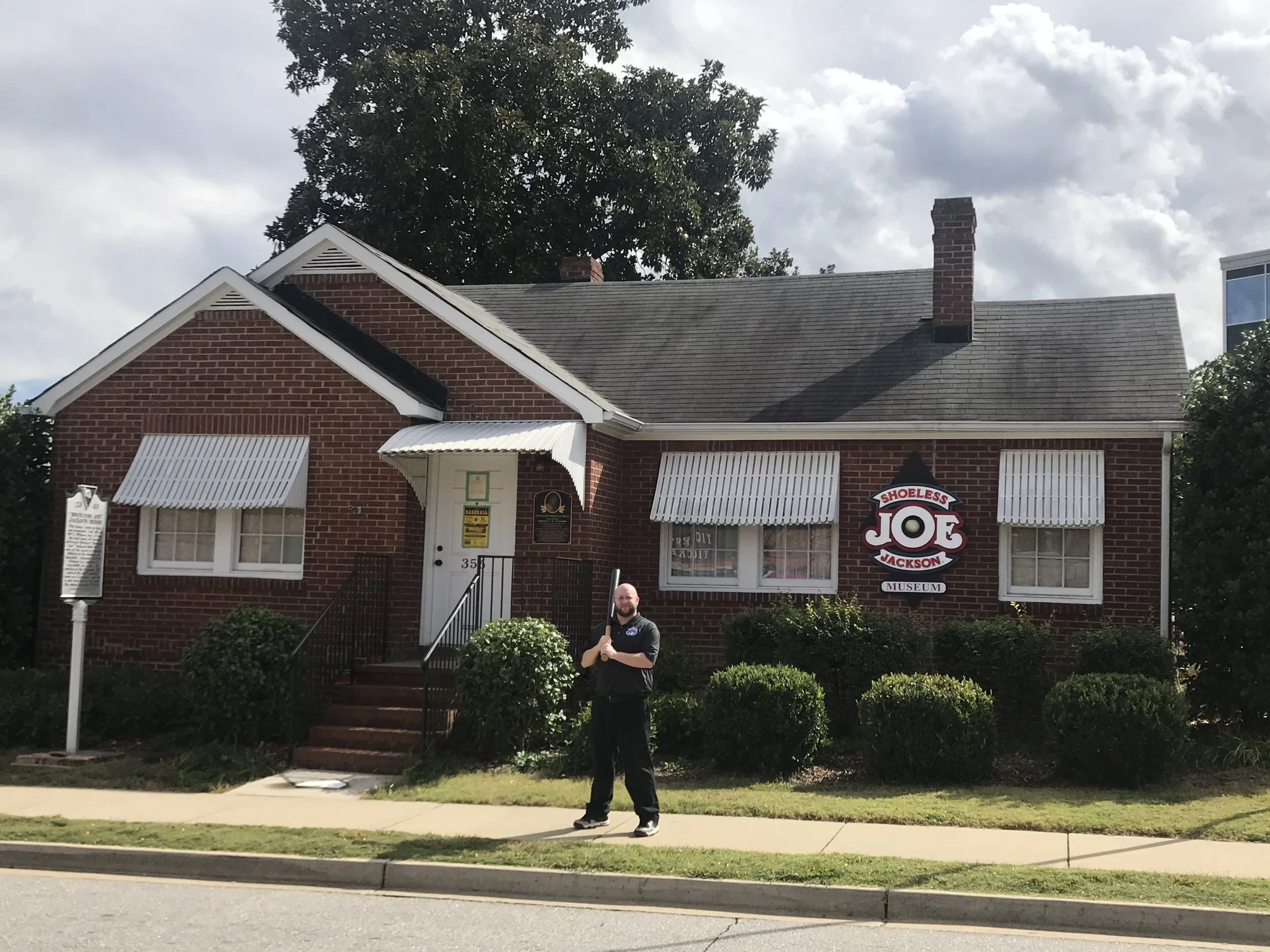
Despite my employment from 2019 through 2022 with an organization that bears Joe Jackson’s name, and an association with the museum that dates back to 2009, I have never pleaded – and I will never plead – Joe Jackson’s case for the Hall of Fame. I’ve always just let the words of the people who actually saw him play do that.
Frank Navin
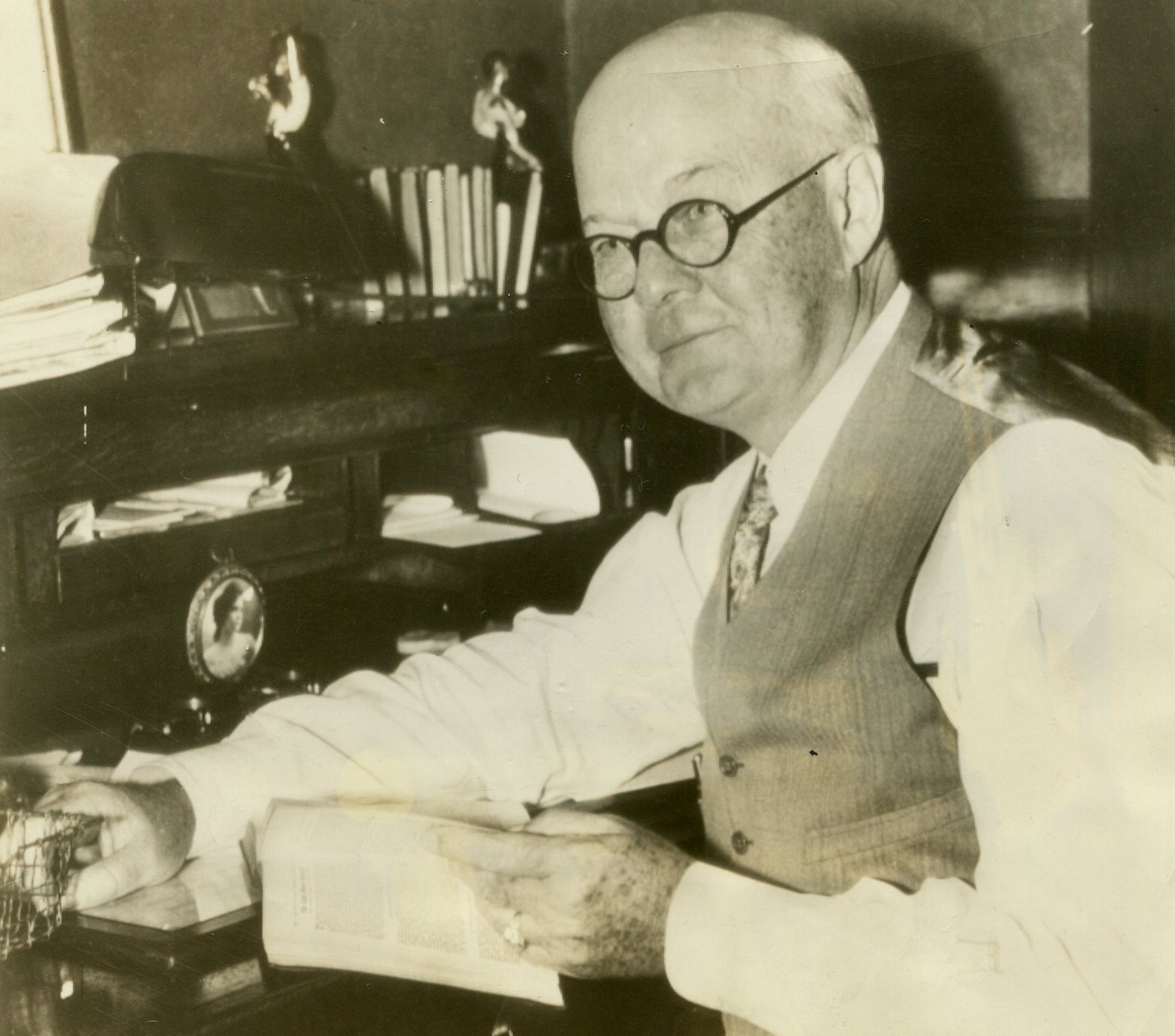
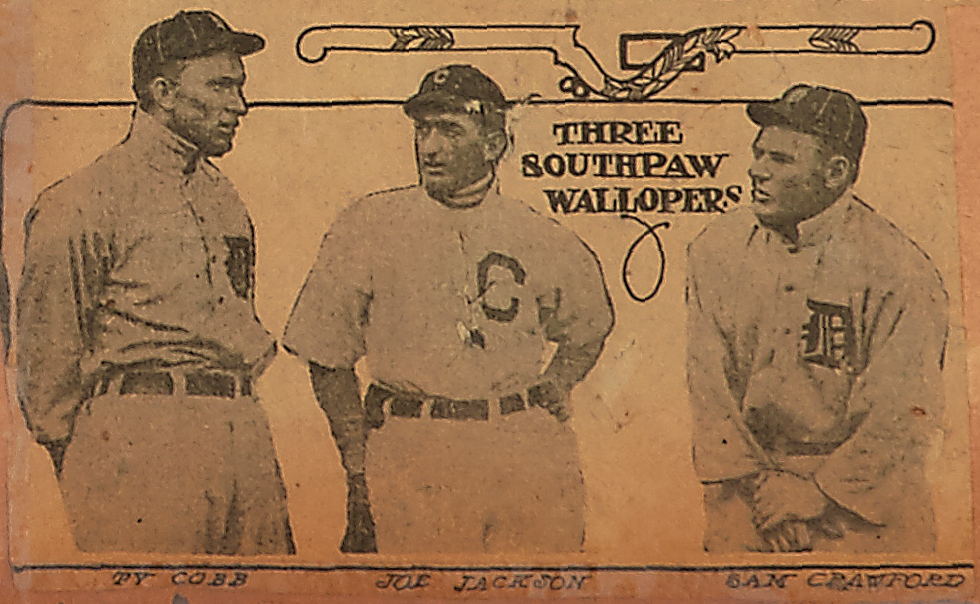
Frank Navin was the president and owner of the Detroit Tigers from 1908 to 1935.
In a February 1929 article in Baseball Magazine, Navin is quoted as saying, "In the matter of sheer natural ability, I believe Joe Jackson surpassed every outfielder that ever came to the major leagues."
George Moriarty
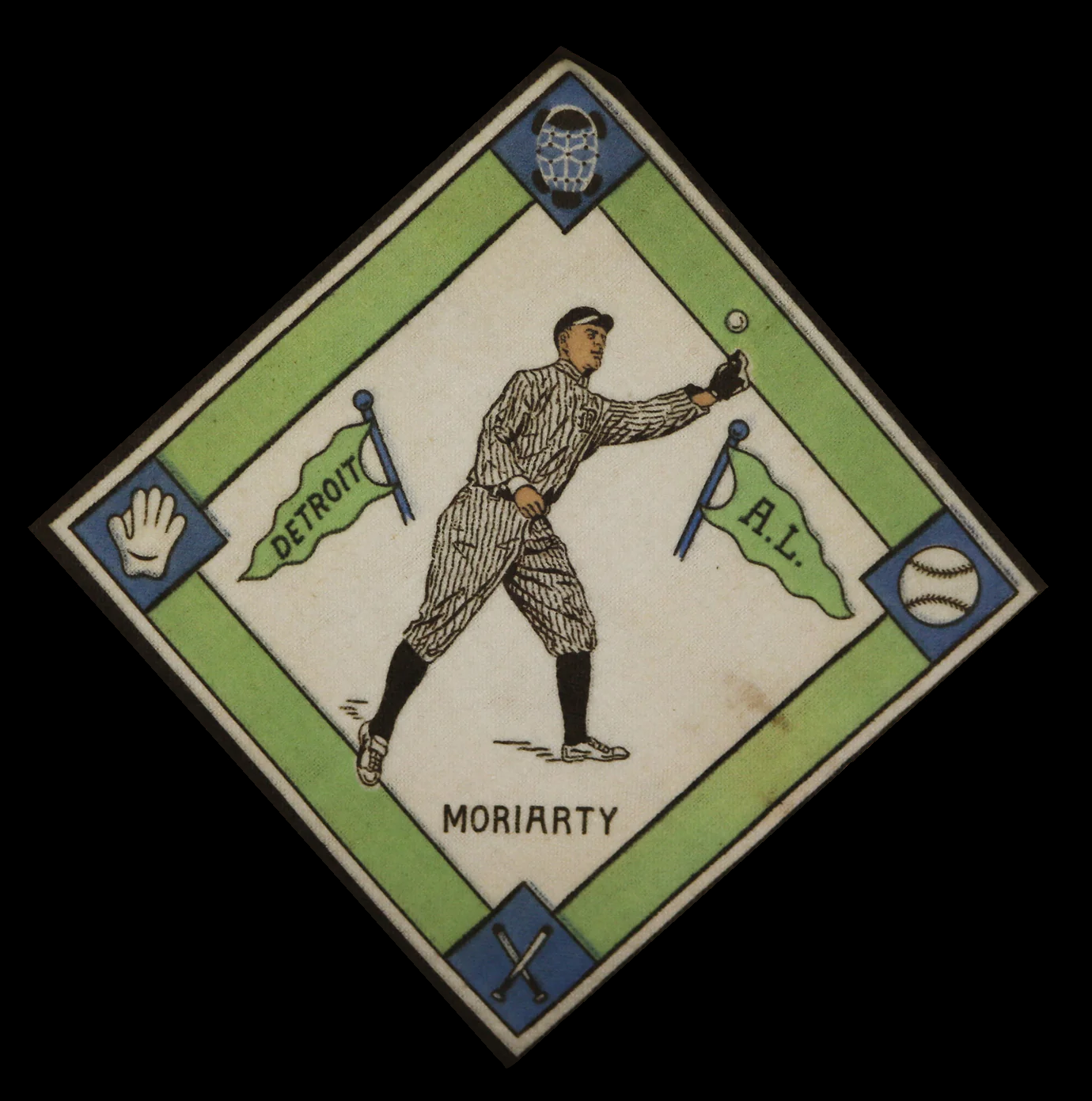
George Moriarty was a former player-turned-umpire who spent 40 years in baseball. Here’s what Moriarty had to say about Joe:
“Jackson's mechanical power was amazing. He was tall, and had a great natural eye which made him a potential batsman. He sprinted over the outfield territory with ease and grace in long strides, and rivaled Bob Meusel as a thrower.”
Tris Speaker
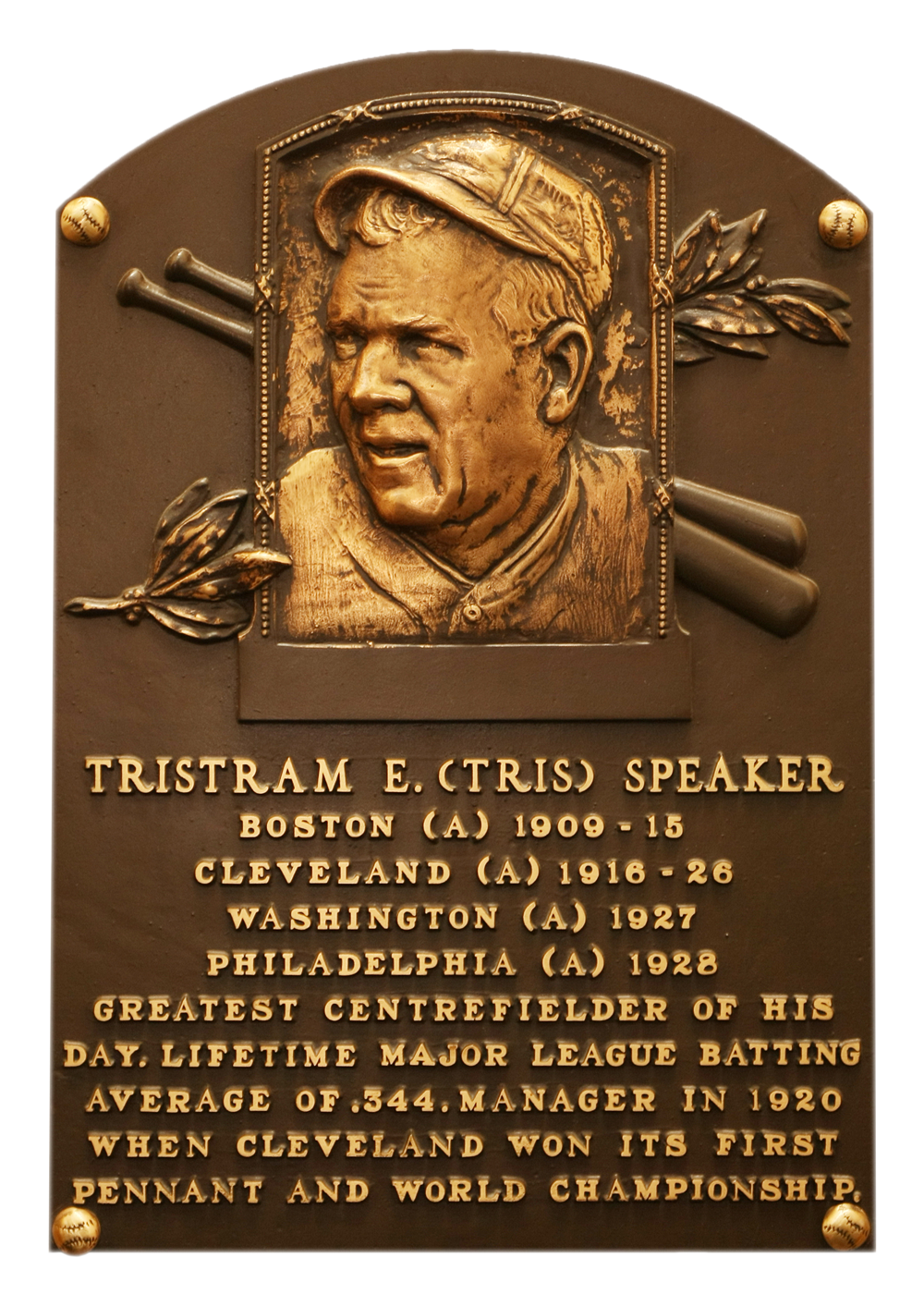
Here’s what Tris Speaker thought of Joe:
"You've heard it before, but let me say it again: Jackson was baseball's greatest natural hitter. You simply couldn't fool him… I can't even remember him being in a batting slump. His swing was so perfect that there was little chance of it getting disorganized. Ted Williams is a natural hitter too, but he lacks Jackson's style. [Joe Jackson] was the greatest natural hitter who ever lived."
Only four players in the history of the game have recorded more hits than Tris Speaker (3,514), who is still considered one of the greatest center fielders in baseball history.
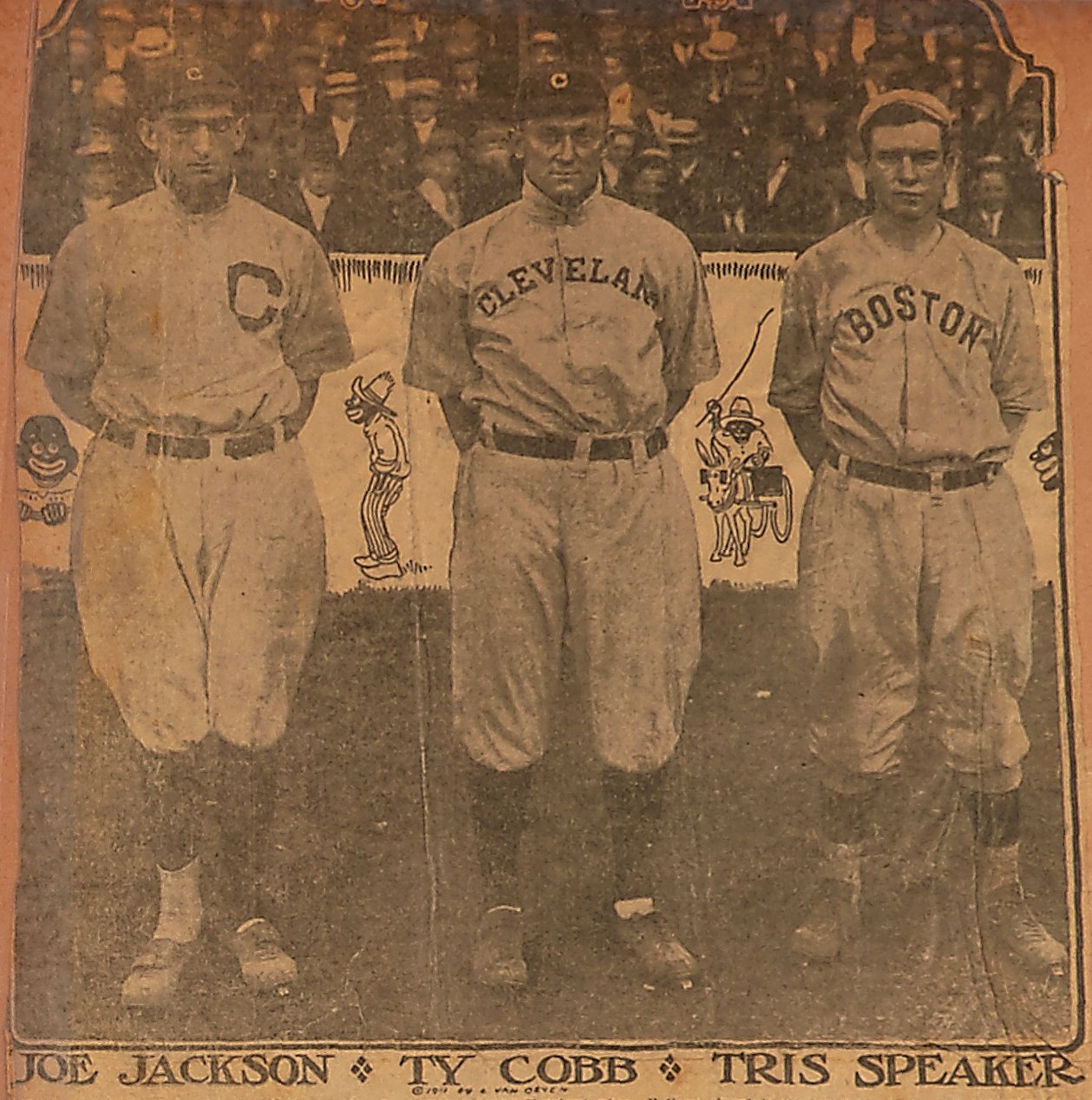
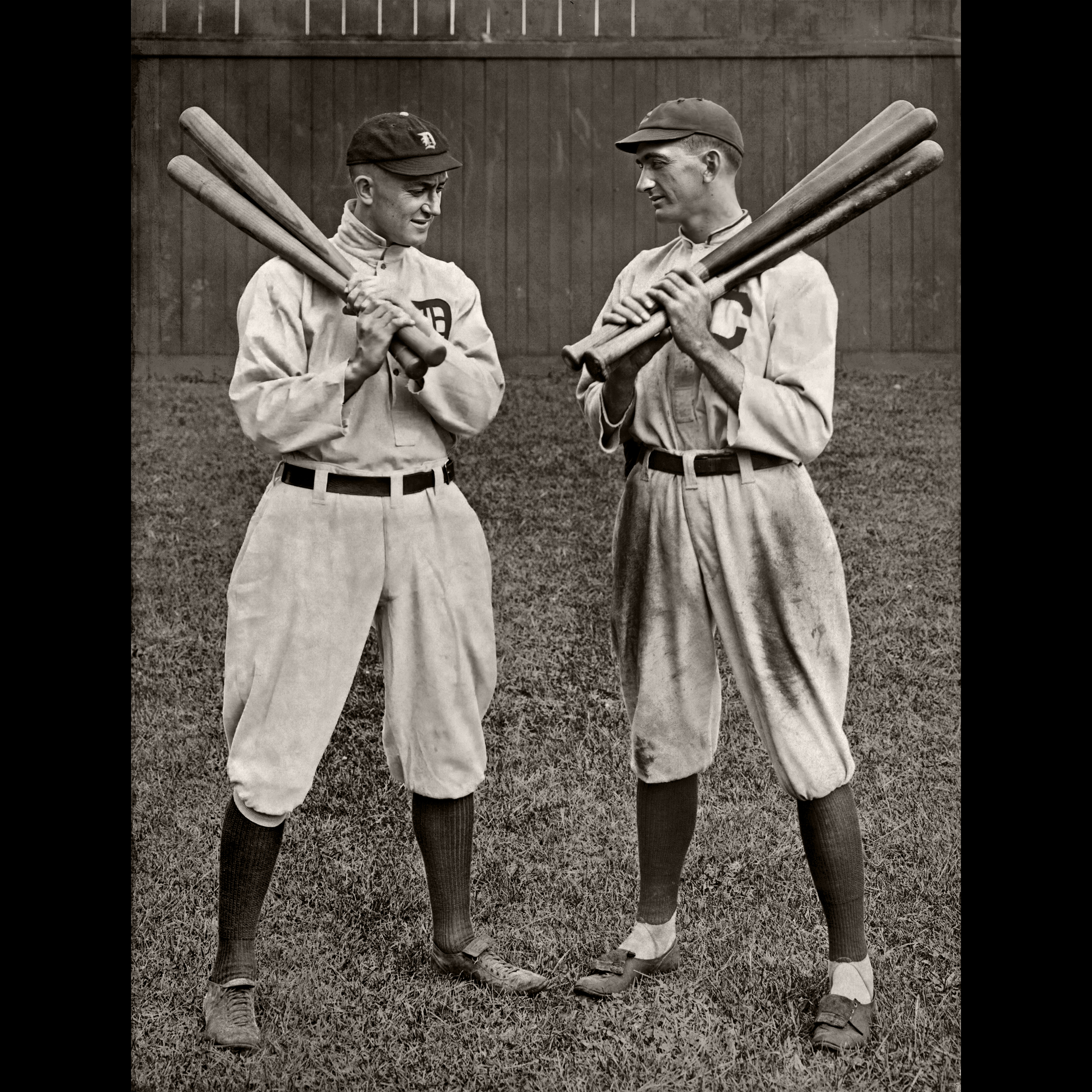
No, your eyes are not deceiving you. And, no, this isn’t AI or photoshopped. That is a genuine photo of Ty Cobb in a Cleveland uniform. This photo was taken July 24, 1911 at League Park in Cleveland at the Addie Joss benefit game. The Cleveland Naps hosted the best players from the rest of the American League, all of whom were supposed to wear the road uniform of whatever team they were on. Somehow, Ty’s road Tigers uniform didn’t end up in Cleveland, so he was forced to wear a Naps road uniform.
Why Not Plead Joe’s Case?
When people find out I used to run the Shoeless Joe Jackson Museum, they assume that I am dying to get Joe Jackson into the Hall of Fame. That’s not the case, for a number of reasons, which I will thoroughly discuss throughout this episode.
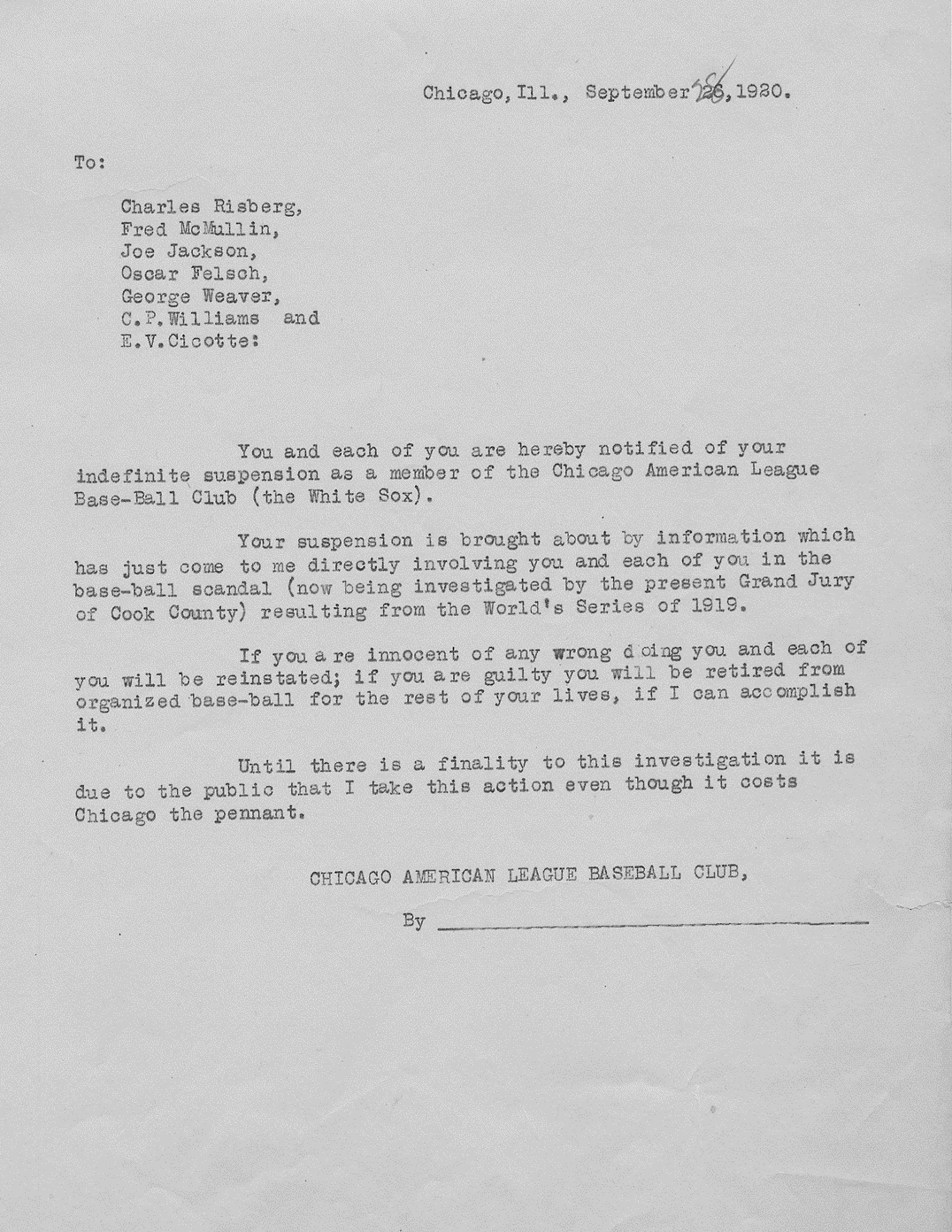
September 28, 1920
White Sox owner Charles Comiskey wrote a letter to each of the suspended “Black Sox” players on September 28, 1920, stating:
“If you are innocent of any wrong doing… each of you will be reinstated.”
Both Comiskey and Landis made it clear that if the jury found the players guilty, they would be banned for life.
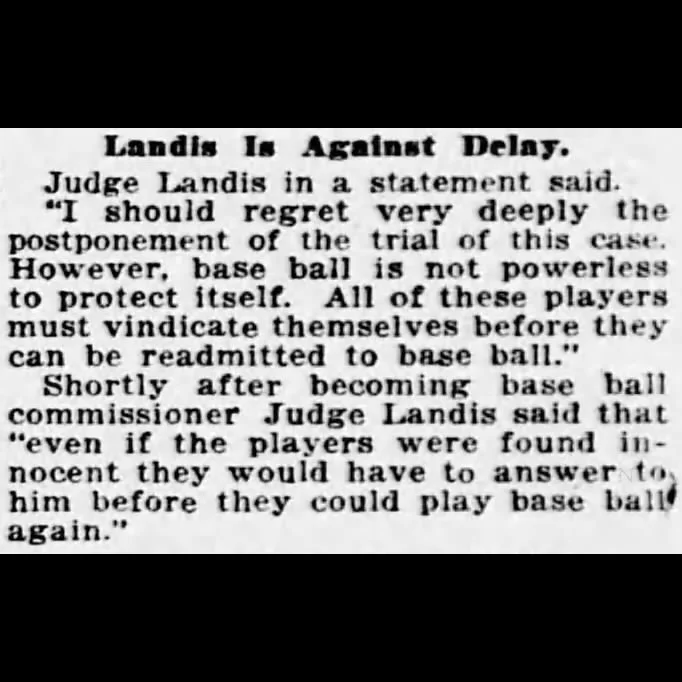
March 13, 1921
In March of 1921, Commissioner Landis was quoted in the Washington Evening Star, giving hope to Joe and his teammates with the possibility of a future in baseball, should things go their way in court:
“All of these players must vindicate themselves before they can be readmitted to base ball. Even if the players were found innocent, they would have to answer to [me] before they could play baseball again.”
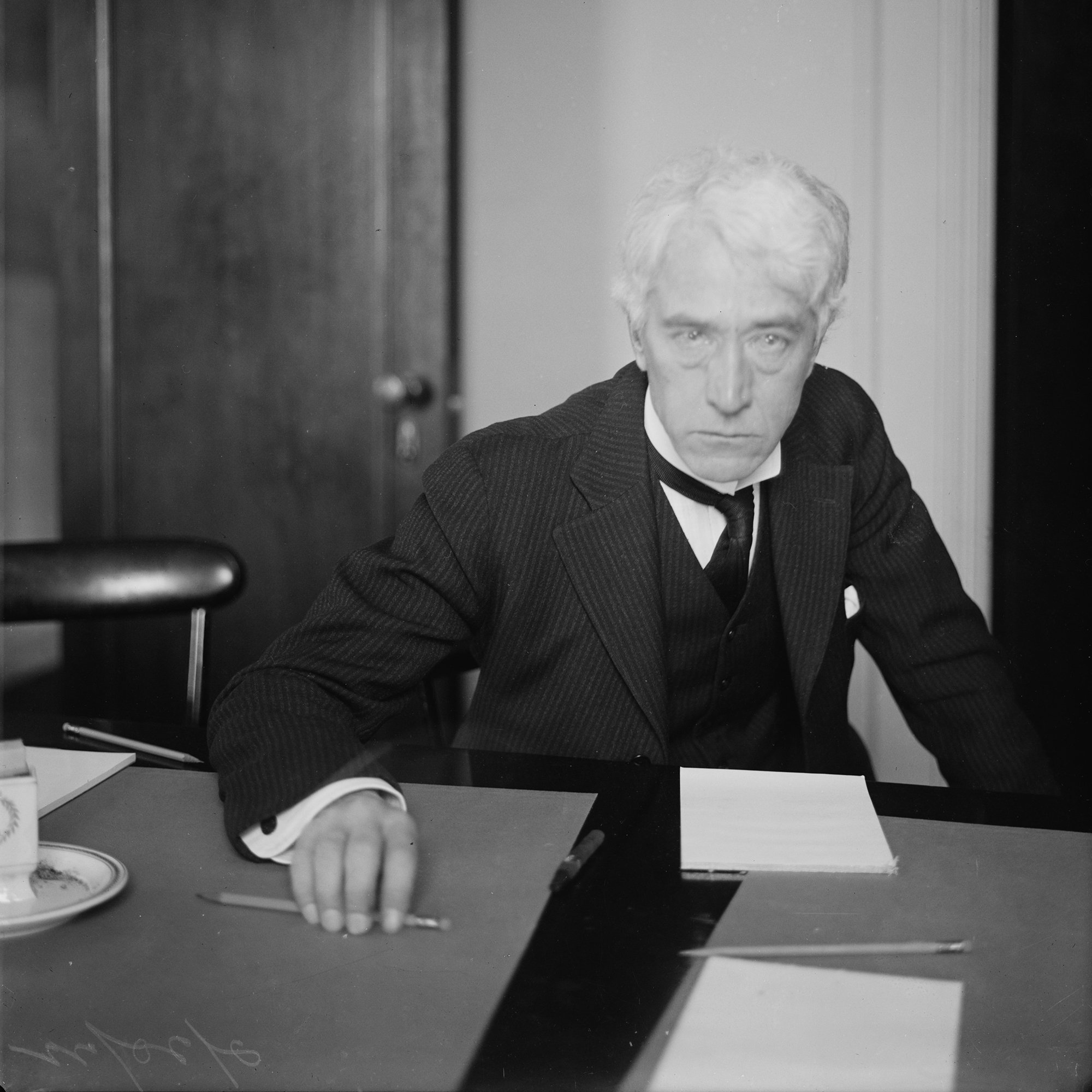
Commissioner Kenesaw Mountain Landis
Commissioner Landis knew that there were mounds of evidence against the players. From testimonies by some of the players, themselves, to interviews conducted with contemporary players and sportswriters, to statements by gamblers who were either directly or tangentially involved in the throwing of the 1919 World Series.
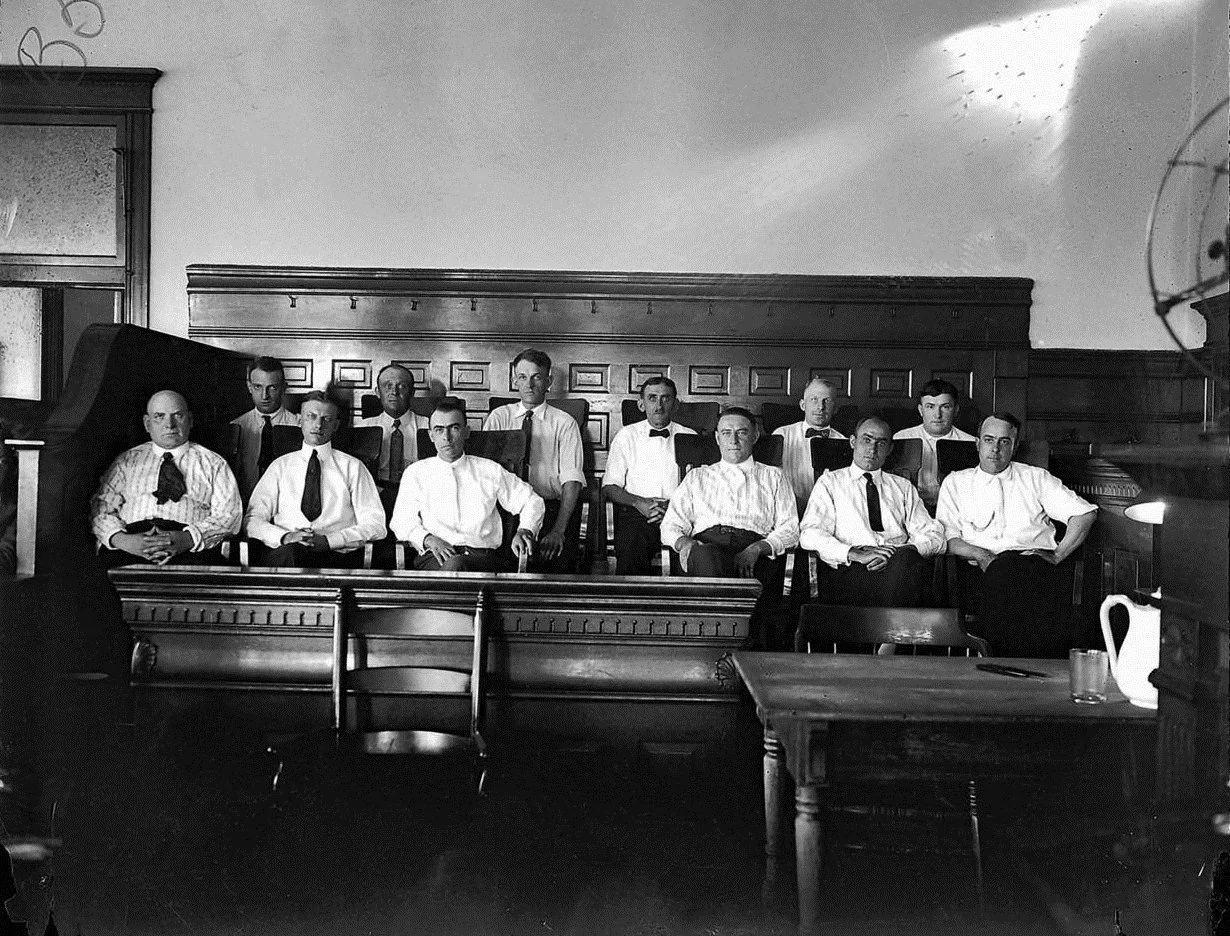
Black Sox Jury
Jury nullification occurs when jurors, despite believing a defendant is guilty beyond a reasonable doubt, return a "not guilty" verdict, often because they deem the law unjust, unfairly applied, or excessively harsh.
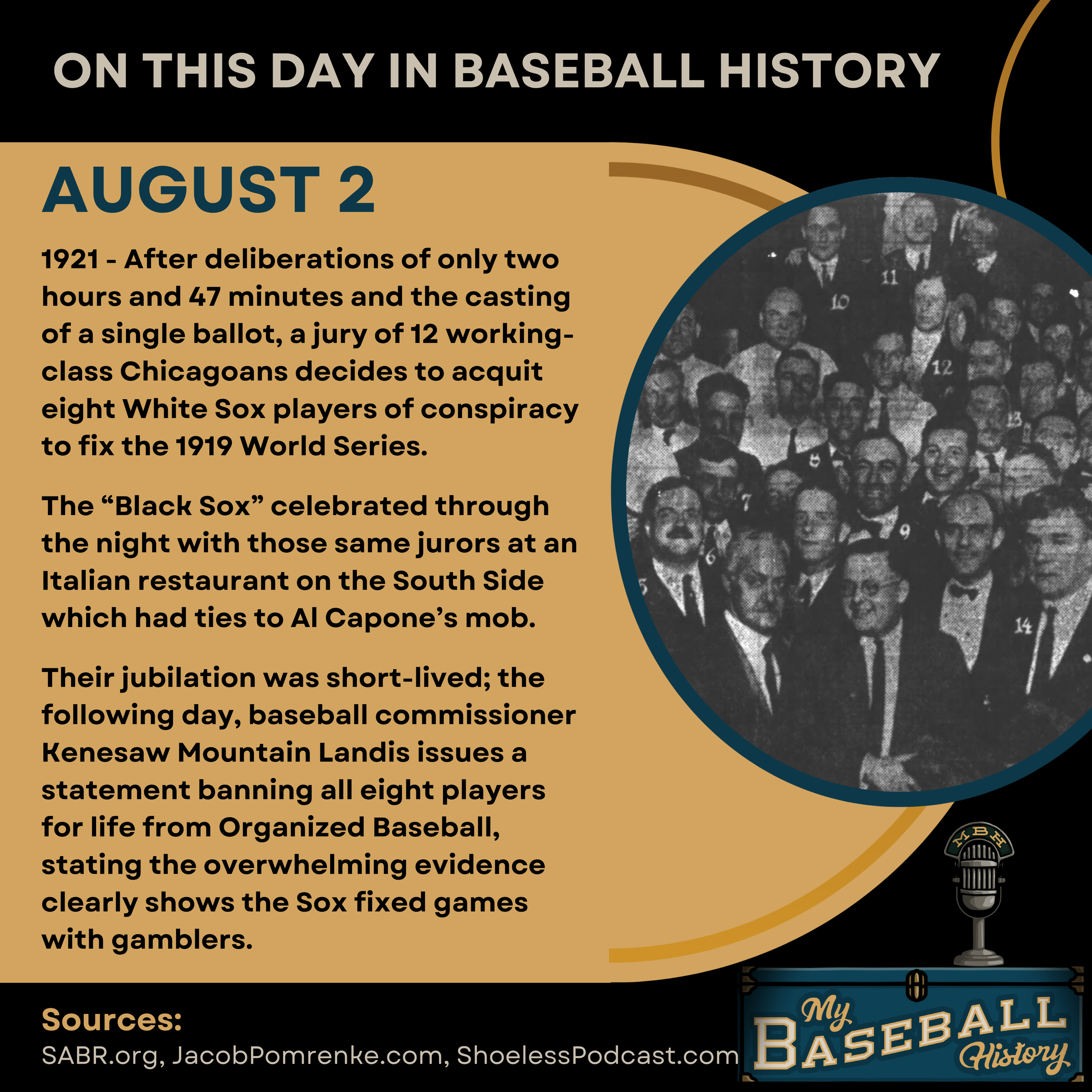
Game Fixing
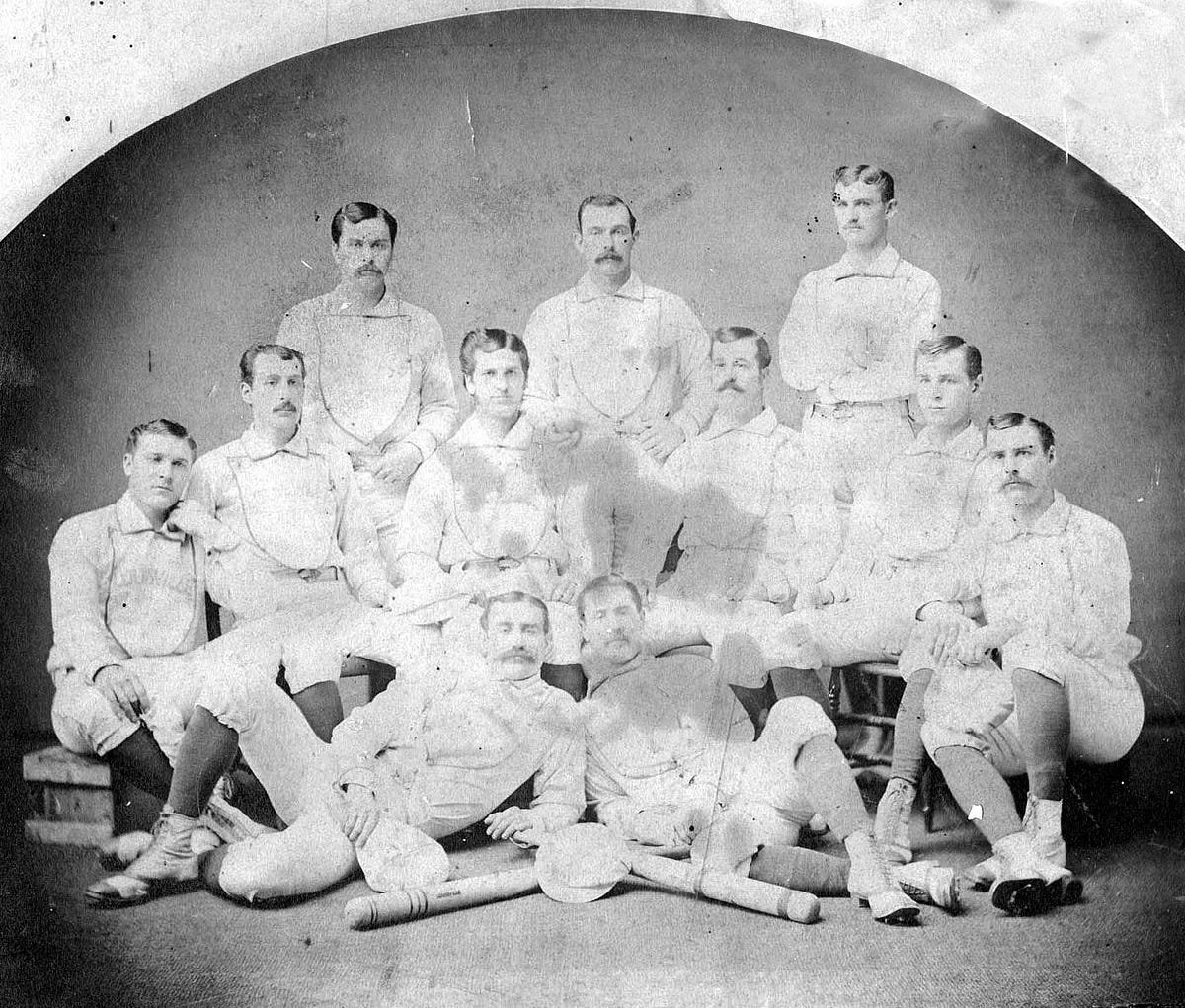
Baseball games were fixed by gamblers as early as 1865. The 1877 Louisville Grays (seen here) were the sport’s biggest scandal before the Chicago White Sox of 1919, but there were rumors of least four World Series having been influenced by game-fixers during the first 15 World Series which were played before that: the 1905 World Series, the 1912 World Series, the 1914 World Series, and the 1918 World Series.
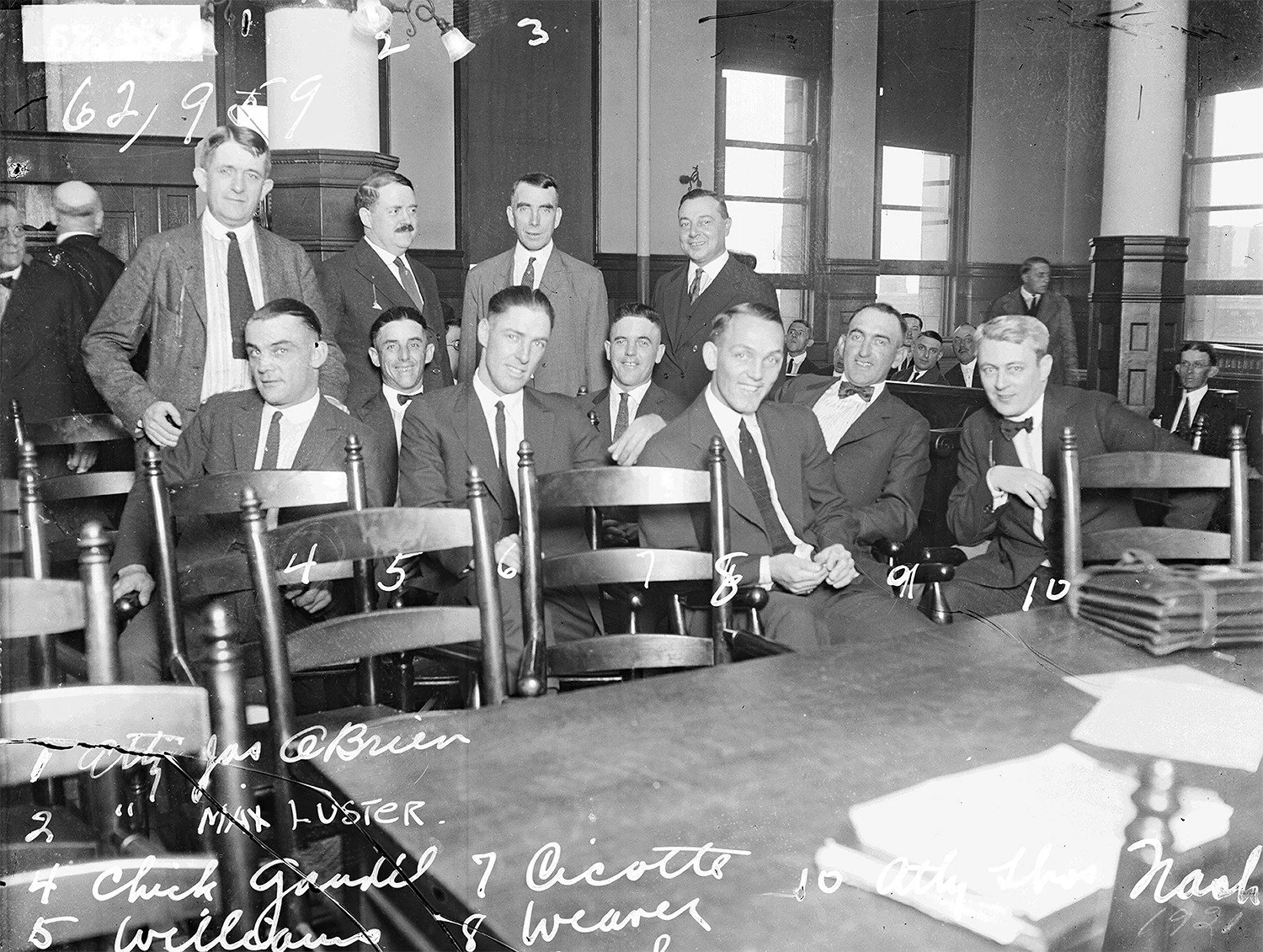
Black Sox
The Black Sox players felt so comfortable participating in a fix of the 1919 World Series is because so many players had done it before them and were never punished in any meaningful way, if they were even found out at all.
In 2019, SABR came out with their incredible Eight Myths Out project, debunking the Top 8 myths surrounding the Black Sox Scandal. Read it HERE.
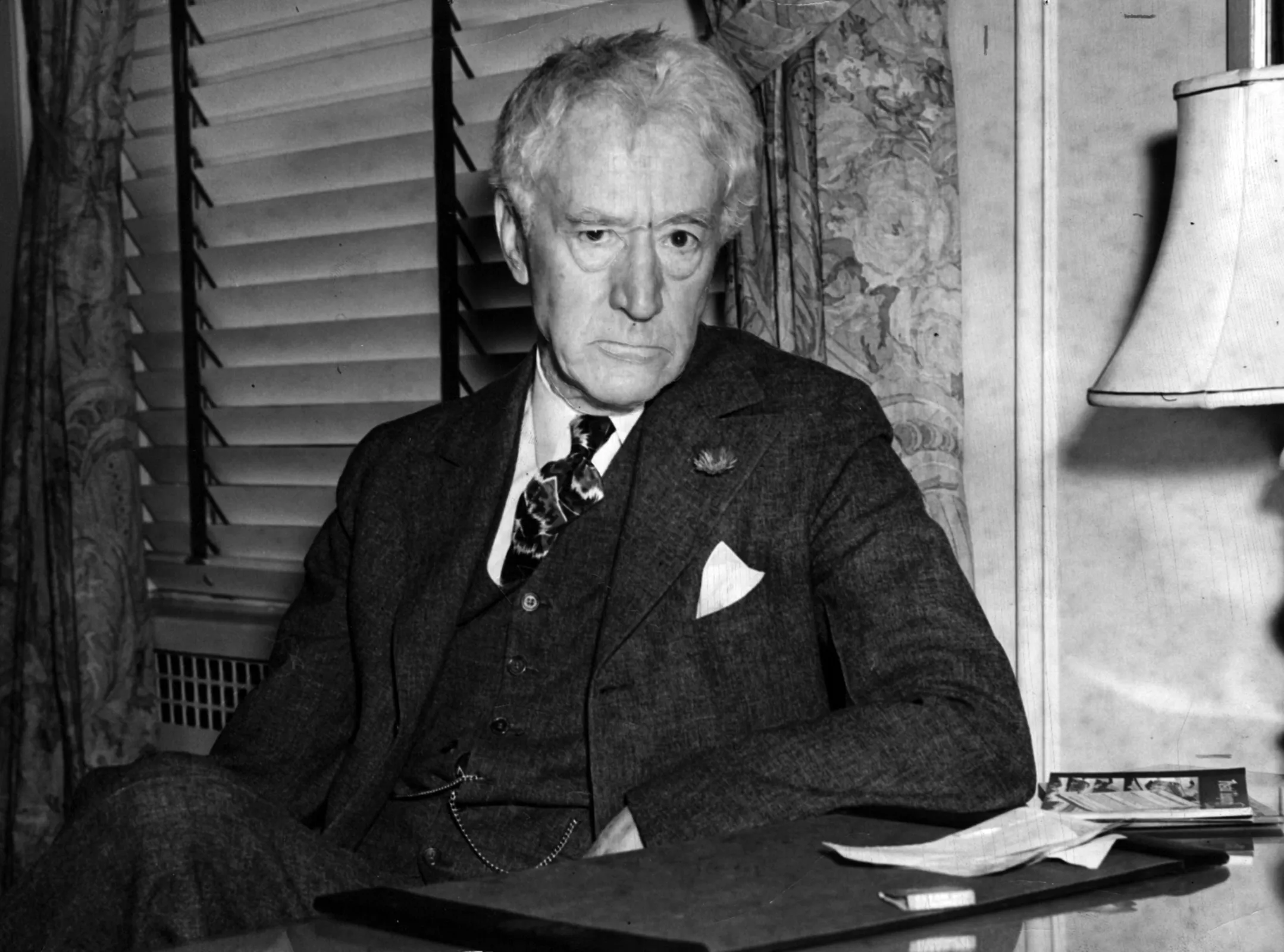
Commissioner Landis
Kenesaw Mountain Landis was brought on to be the Commissioner of baseball specifically to clean up the sport’s image. It was his goal to remove any association between baseball and gambling, and assure the public that players were always trying their best to win.
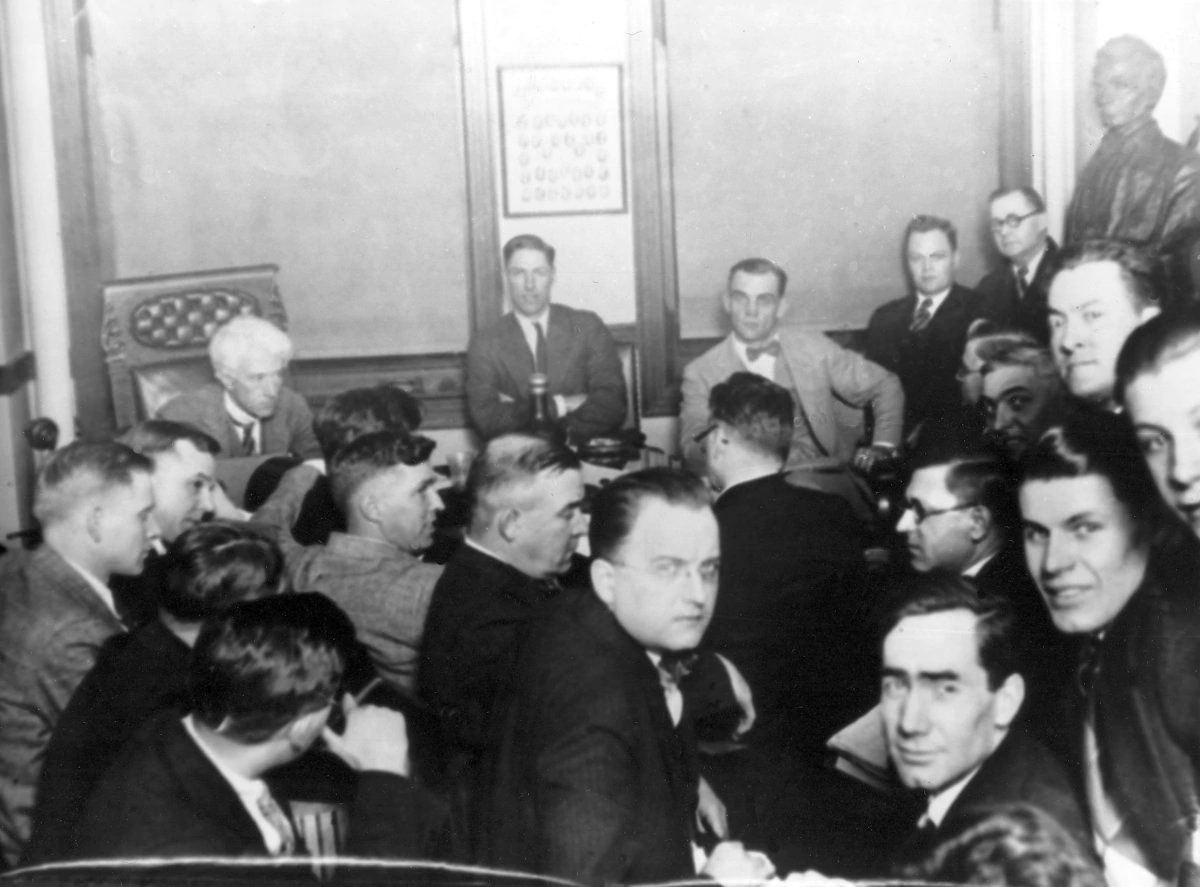
The Verdict
The jury in the Black Sox trial officially found the players not guilty on August 2, 1921. The very next day, on August 3, 1921, Commissioner Landis banned the eight players from organized baseball anyway. For life.
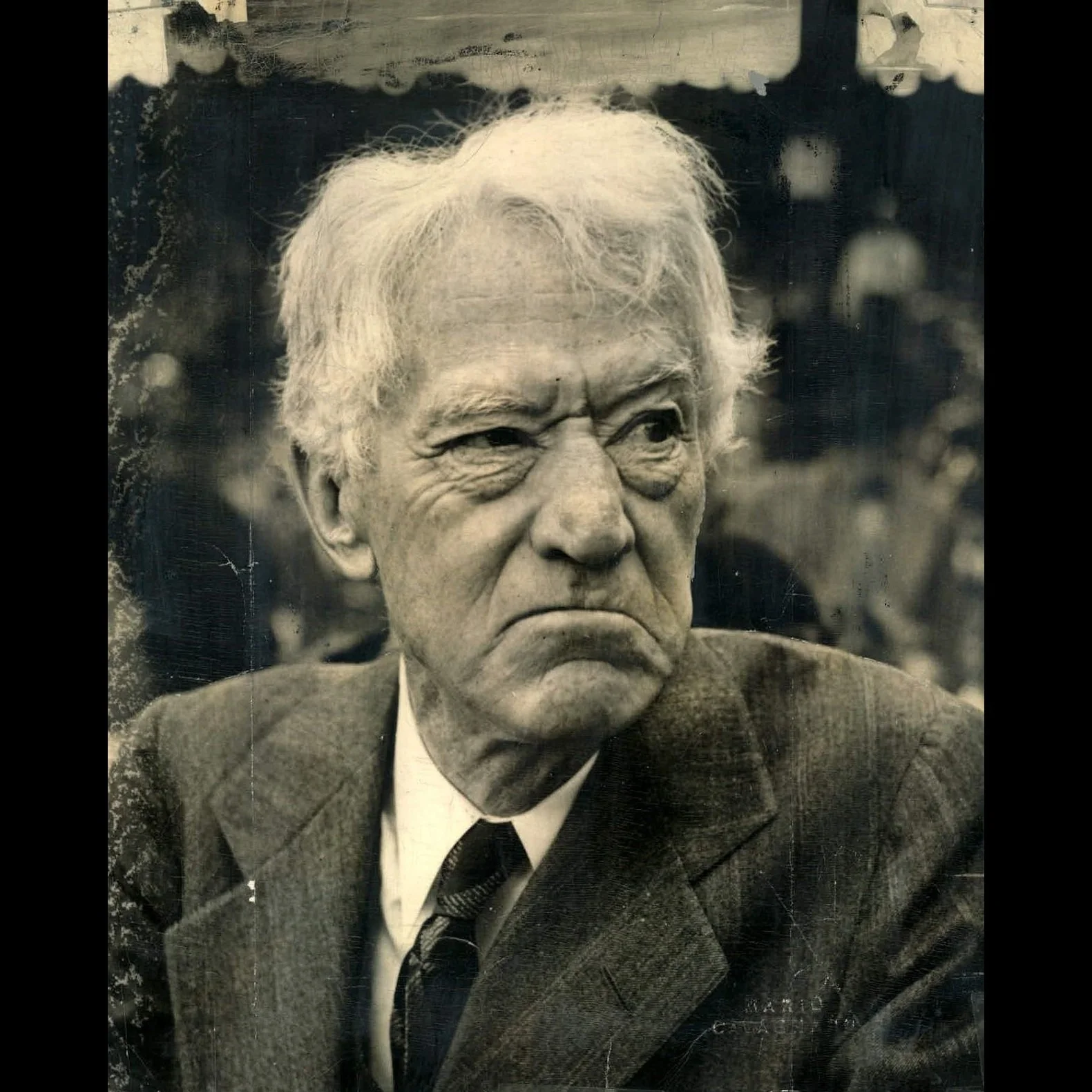
Harsh, But Necessary
Landis’ punishment was harsh, but he had to make a point to everybody in baseball that fixing games or gambling on the sport was a sure-fire way to ruin the rest of your career, and, potentially, your life.
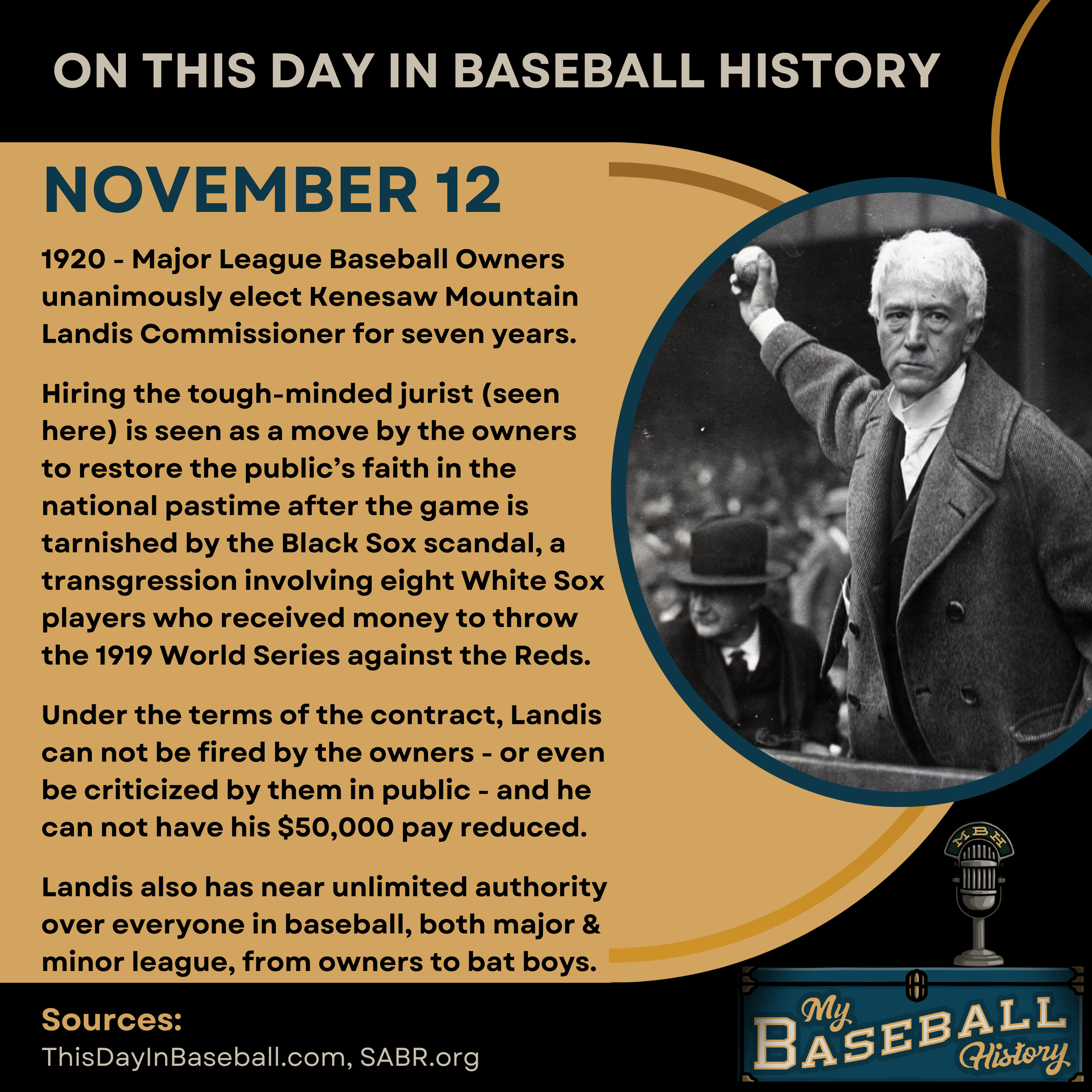
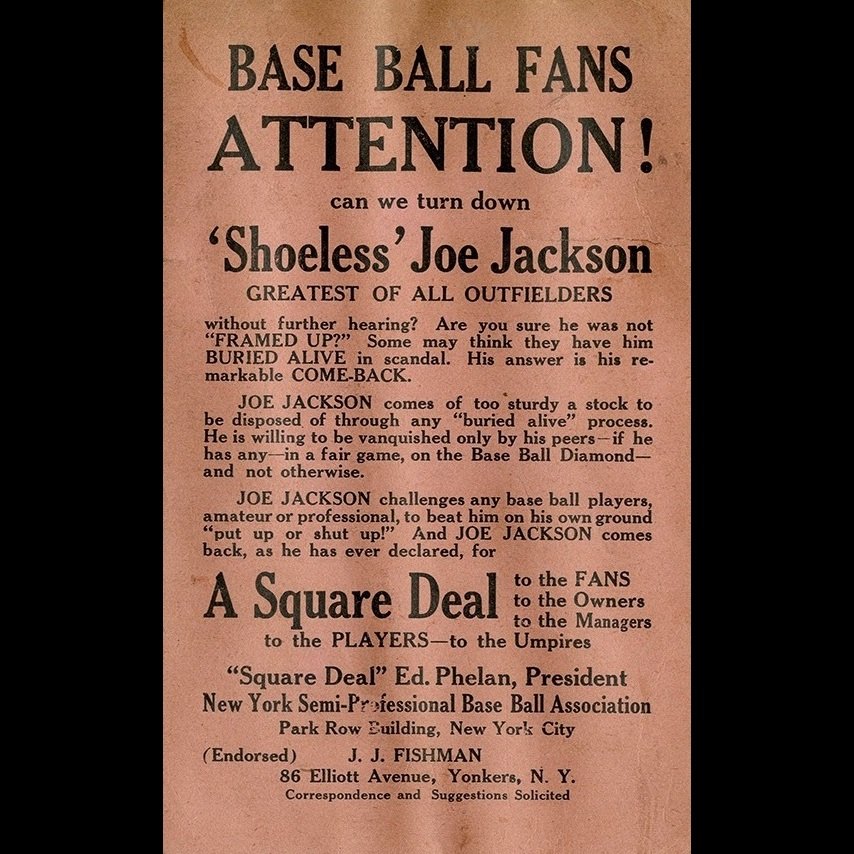
Eddie Phelan
In 1922, Eddie Phelan, a Manhattan cabaret owner and semipro baseball promoter, arranged for pickets outside the Polo Grounds and Ebbets Field and proposed having Jackson embark on a speaking tour to personally bring his case to the fans.
Phelan also began collecting signatures on a petition to Commissioner Landis, calling for Jackson’s vindication.

Americus, Georgia
In 1923, Joe batted .453 in 25 games and led the team from Americus, Georgia to victory in the league playoffs. The Americus team argued that the South Georgia League was independent and, thus, outside any restriction set by Commissioner Landis.
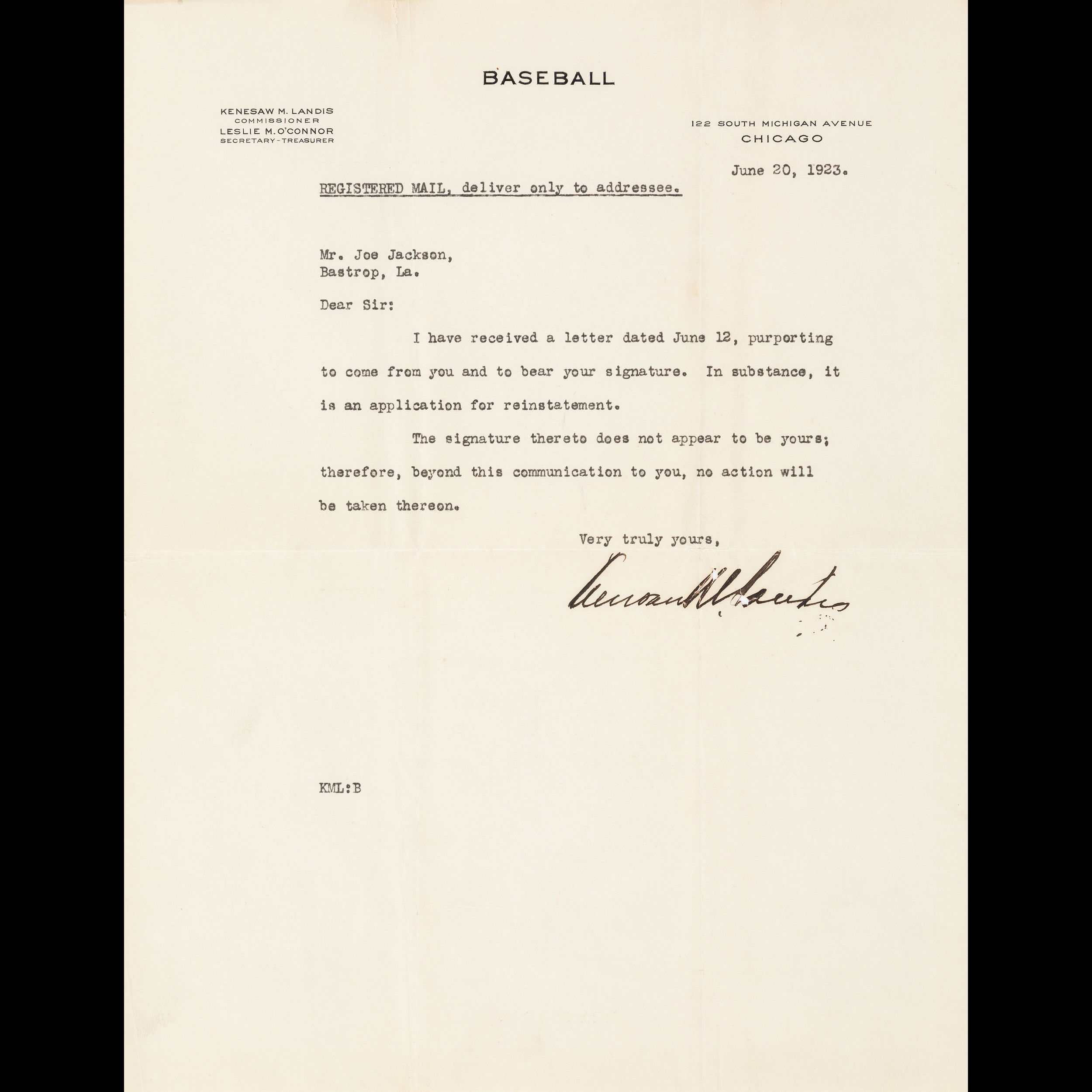
June 20, 1923 Letter
A letter from Commissioner Landis from June 20, 1923, told Joe:
“I have received a letter dated June 12, purporting to come from you and to bear your signature. In substance, it is an application for reinstatement. The signature thereto does not appear to be yours; therefore, beyond this communication to you, no action will be taken thereon.”
This was a clear, intentional slap in the face of Joe, who was illiterate, which Landis knew.
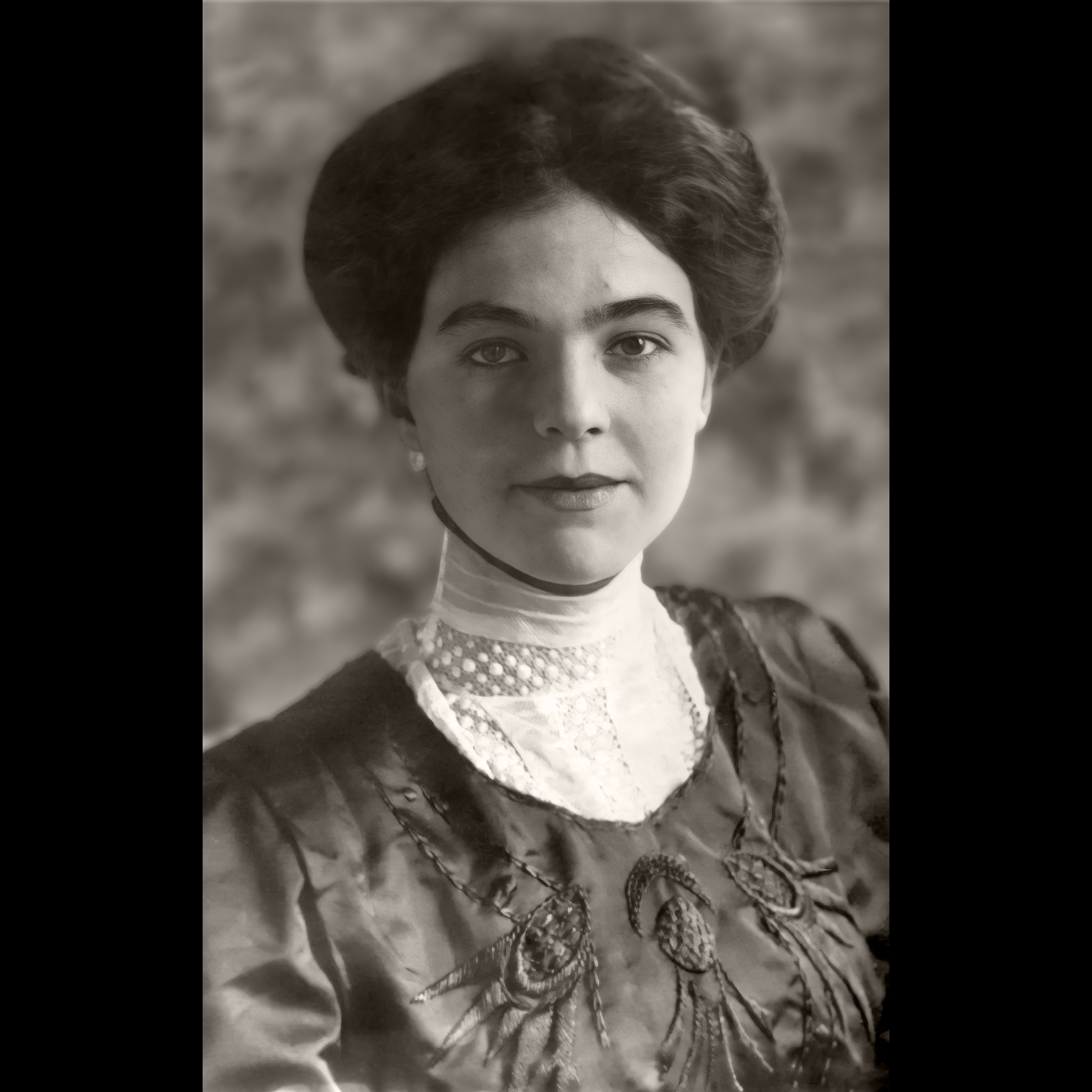
Joe’s Wife, Katie
Since Joe never learned how to read or write, Katie penned nearly all of Joe’s signatures on his behalf. This was common practice at the time for many functionally or fully illiterate people, and was widely accepted, even on legal documents.
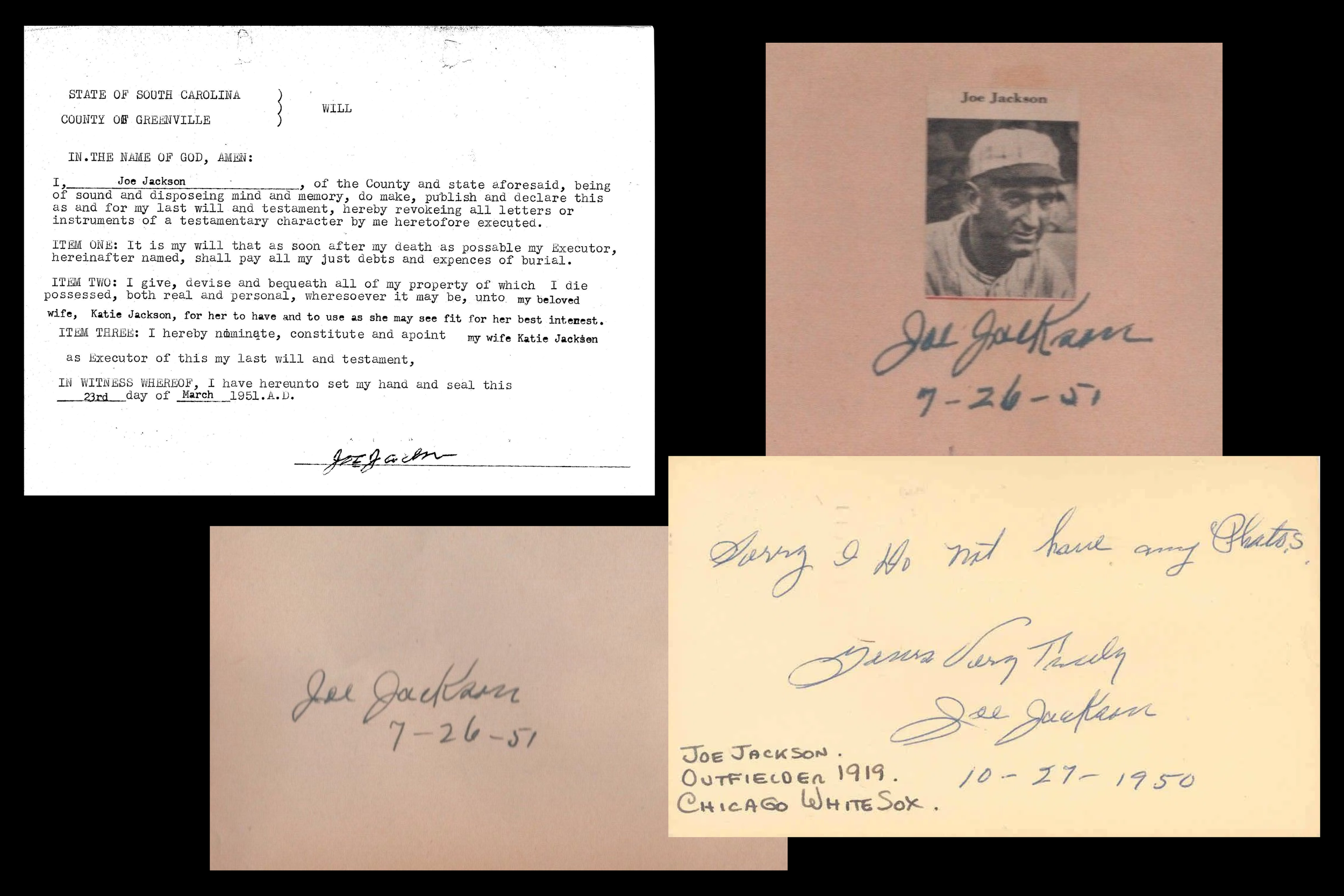
Joe’s actual signature appears on his last will (seen here, top left). Note the uppercase “E” in “Joe” in his version. The other three signatures seen here are all Katie’s writing, signing on Joe’s behalf. Note the distinct upper right arm of the “K” in “Jackson” in her version, and the fluidity of her penmanship.
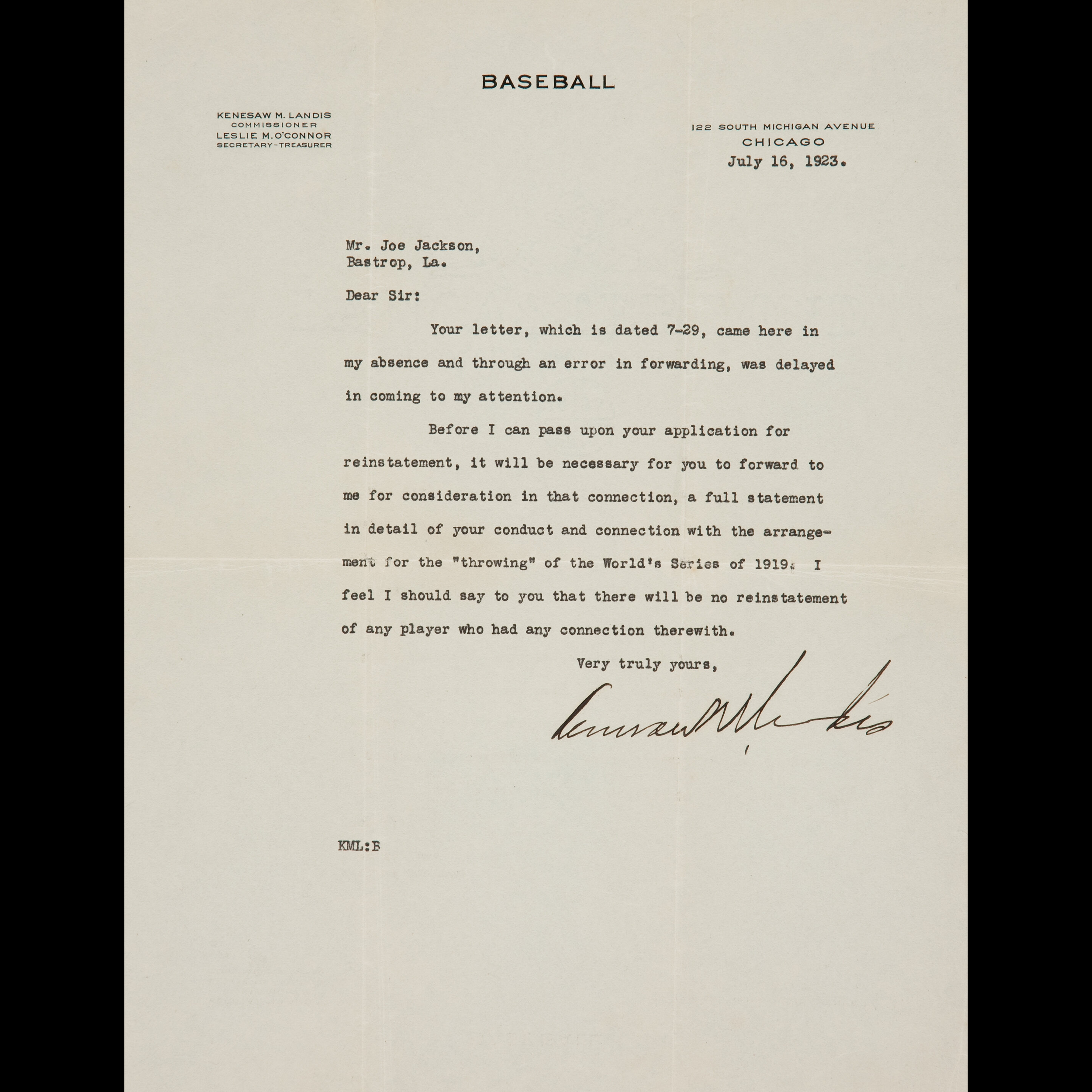
July 16, 1923 Letter
On July 16, 1923, Landis responds with another letter to Joe, saying:
“Before I can pass upon your application for reinstatement, it will be necessary for you to forward to me for consideration in that connection, a full statement in detail of your conduct and connection with the arrangement for the “throwing” of the World’s Series of 1919. I feel I should say to you that there will be no reinstatement of any player who had any connection therewith.”
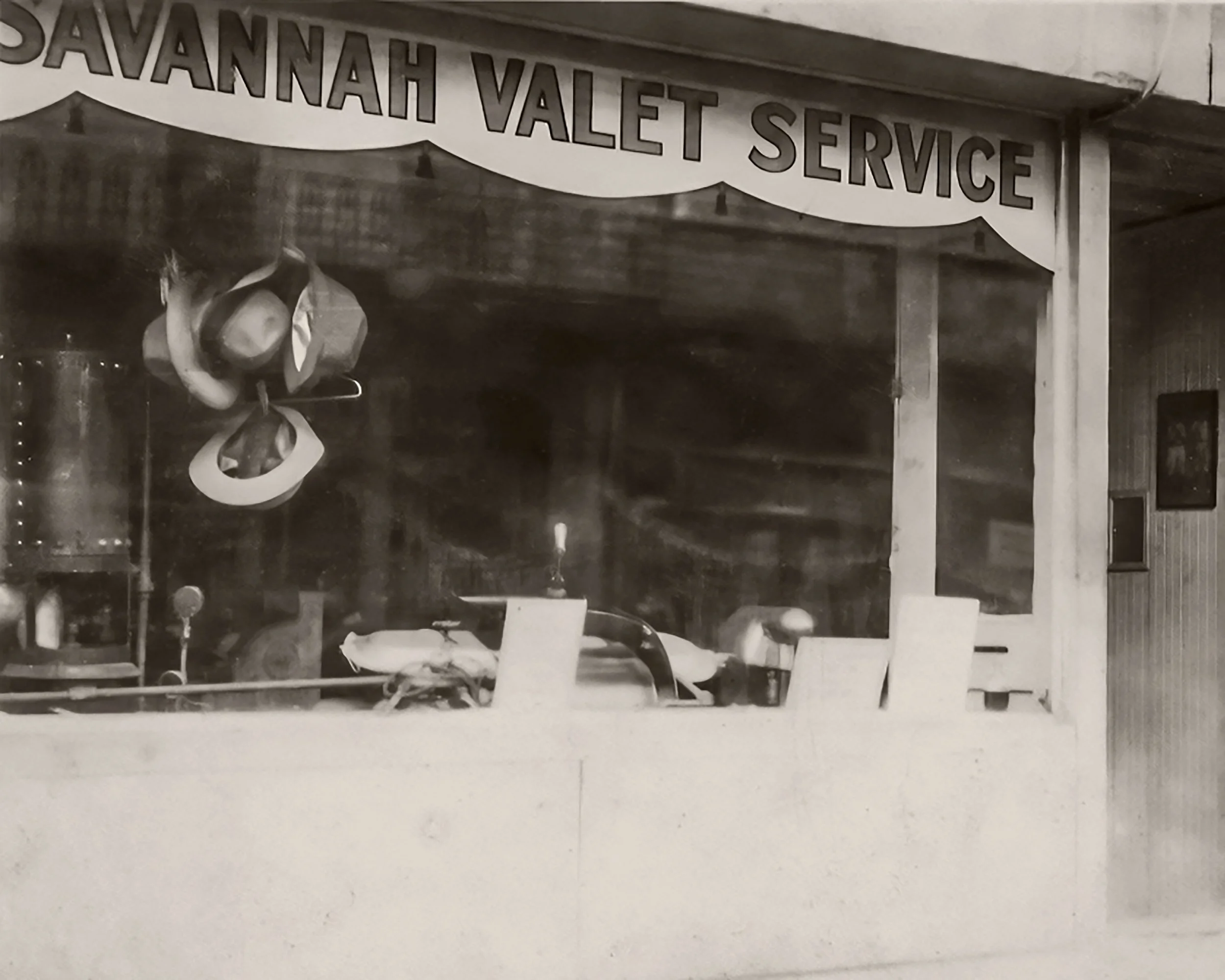
Savannah Valet Service
Joe and Katie were living in Savannah, Georgia and opened a dry cleaning business called the Savannah Valet Service.
Notice the framed photo hanging on the wall in the far right of this picture. If it doesn’t immediately look familiar to you, LOOK AT THIS.
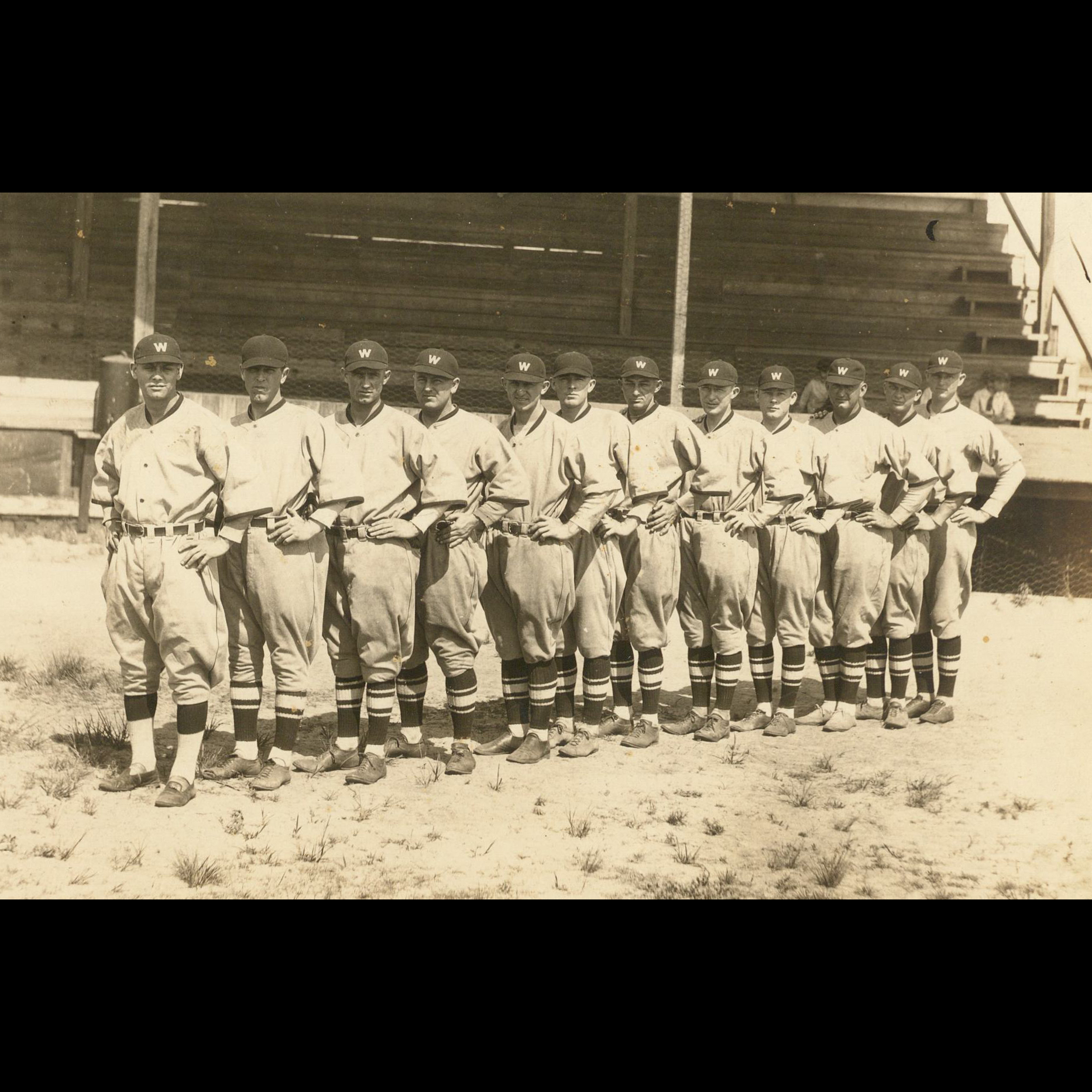
Waycross Coastliners
In 1924, Joe became the player-manager for a team from Waycross, Georgia. He was their starting center fielder, and led them to back-to-back Georgia Little World Series titles in 1924 and 1925.
Joe once said that the 1925 team pictured here was the best ball club he ever saw outside of the major leagues. In the 71 games with verified box scores from the 1925 season, Joe batted .488… at 38 years old.
He is third from the right in this photo.
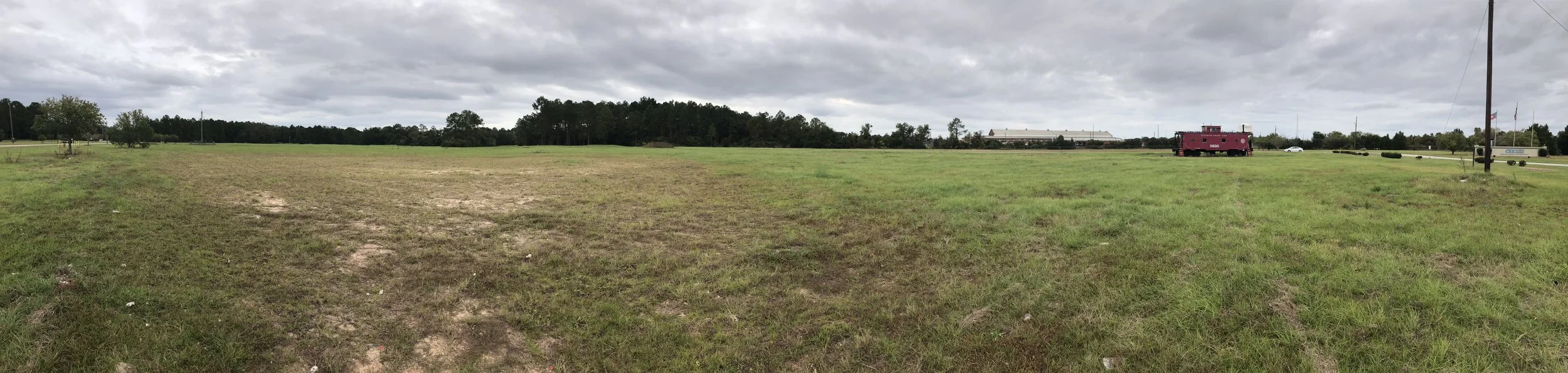
I took this photo of the location of the Waycross Coastliners home field during the years Joe played for the team.
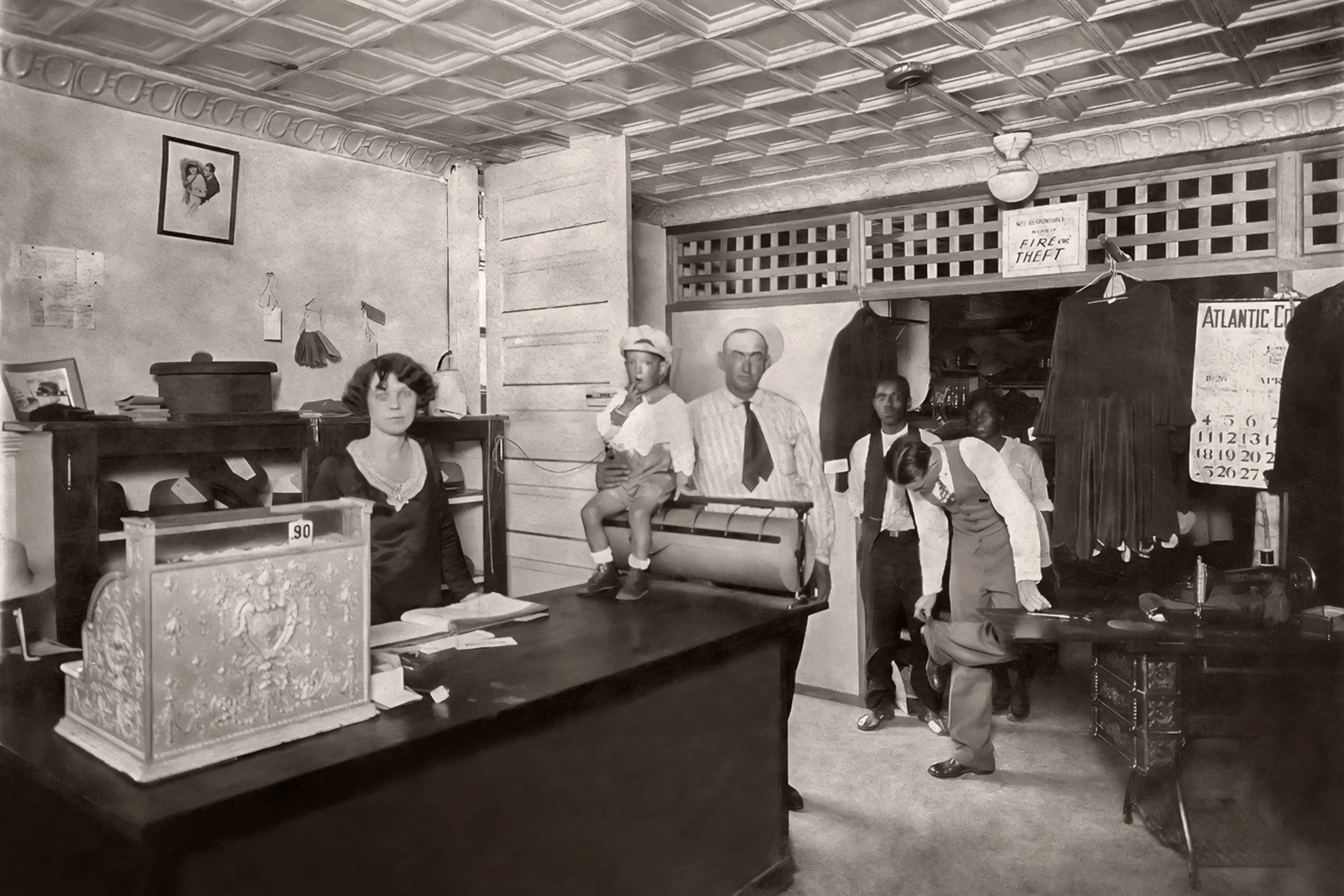
Savannah Valet Service
At it’s peak, Joe and Katie’s dry-cleaning business had at least two locations and at least 20 employees.
In 1932, they were getting ready to open a third location, but Joe’s mom got sick. Joe and Katie moved back to Greenville, South Carolina to take care of her, selling everything in Savannah before they left.
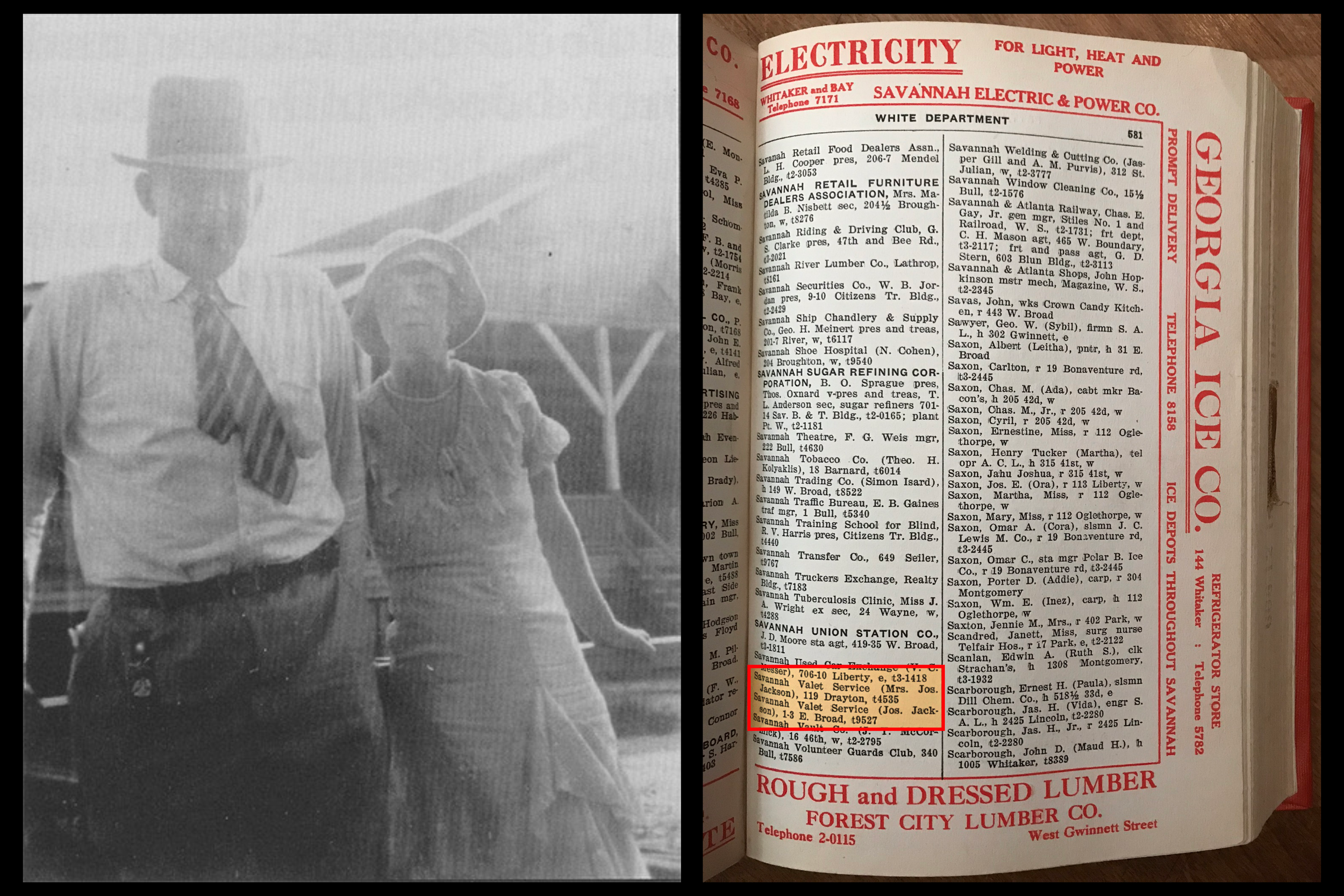
Joe and Katie in Savannah, Georgia, and their Savannah Valet Service locations listed in the directory
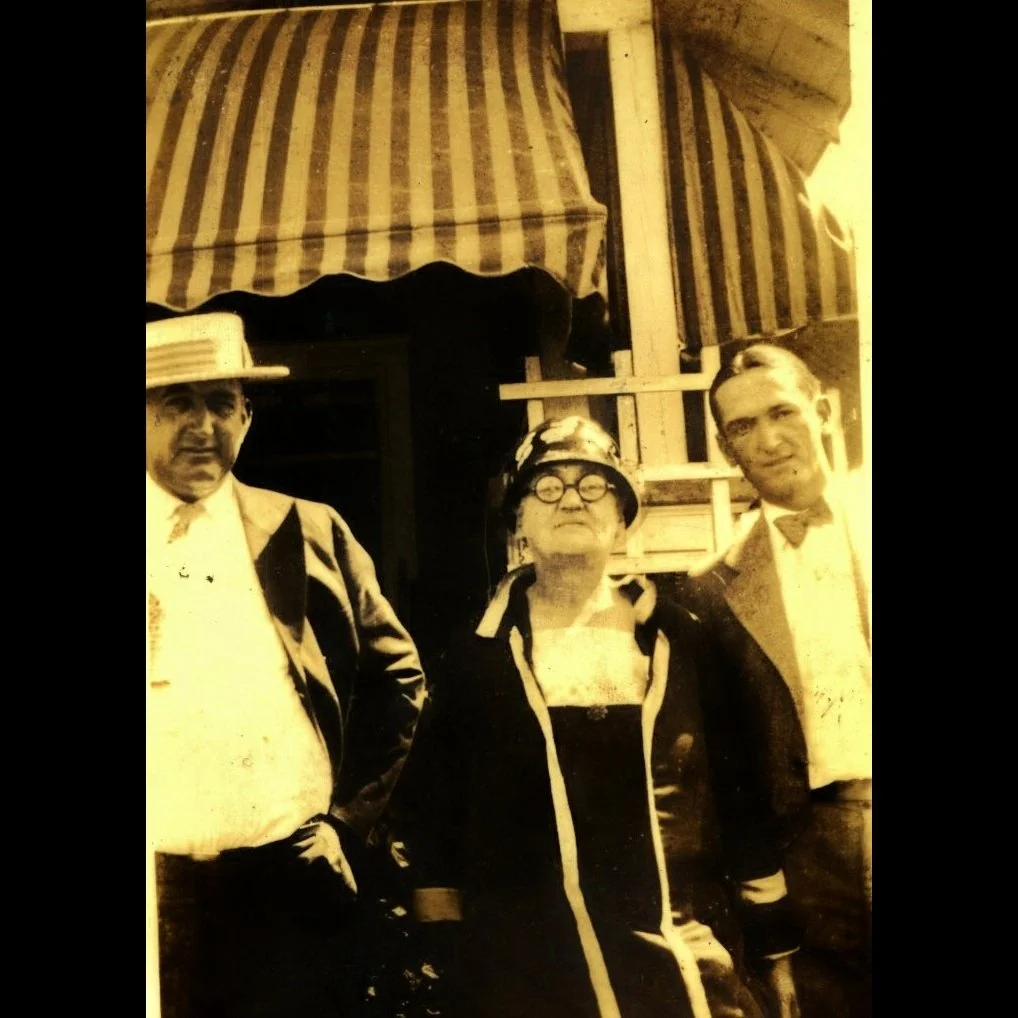
Family First
In 1932, Joe and Katie were getting ready to open a third location of the Savannah Valet Service, but Joe’s mother, Martha, got sick.
Joe and Katie moved back to Greenville, South Carolina to take care of Martha, selling everything in Savannah before they left.
Here, Joe (left) is seen with his mom, and his younger brother, Jerry (right).
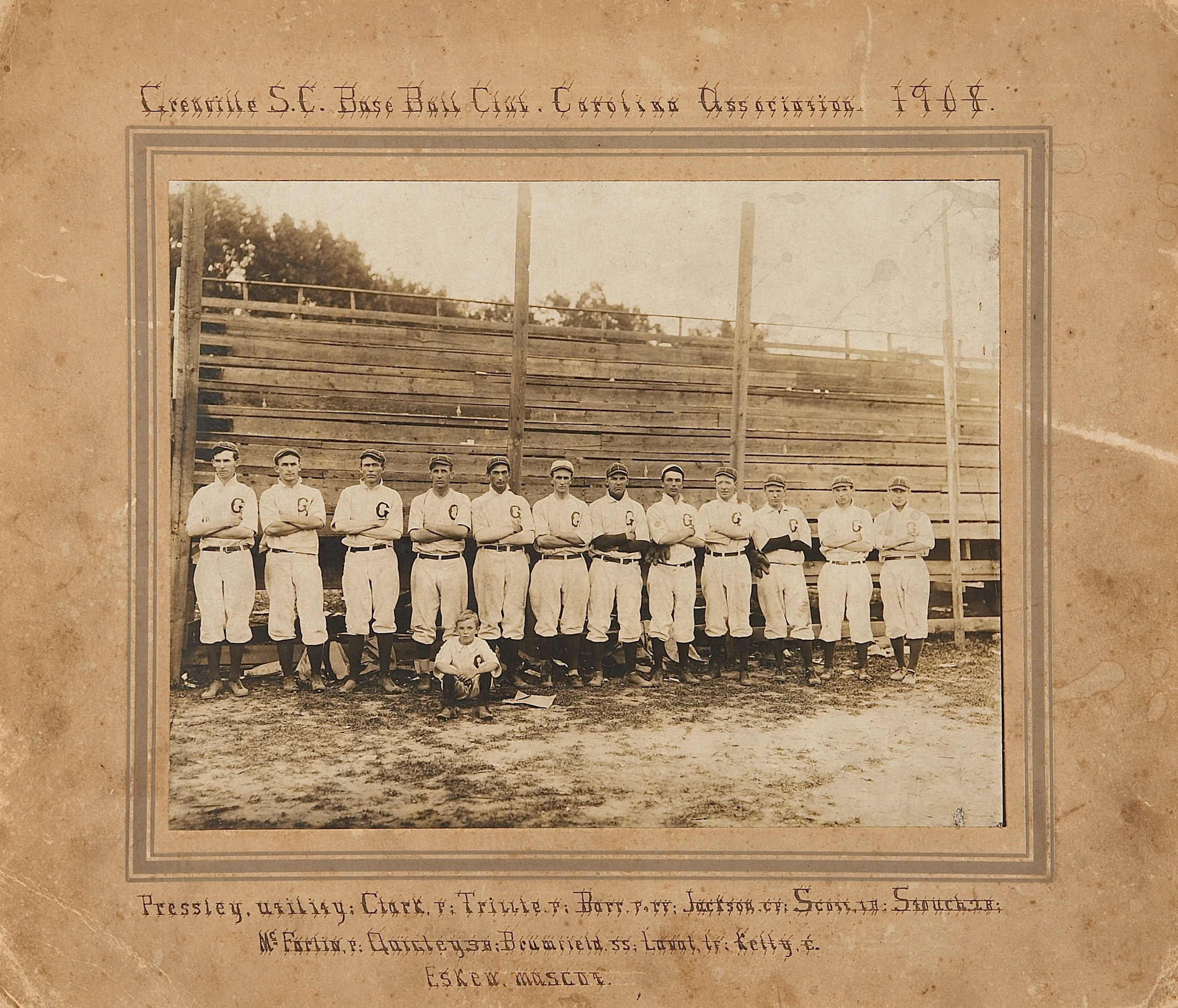
1908 Greenville Spinners
The Greenville Spinners were a Class D minor league team which Joe was playing for in South Carolina when he was discovered by one of Connie Mack’s Philadelphia Athletics scouts in 1908.
Joe hit .346 that season, winning the batting title in the Carolina Association at the age of 21, earning a salary of $75 a month. He is fifth from the left here.
June 6, 1908
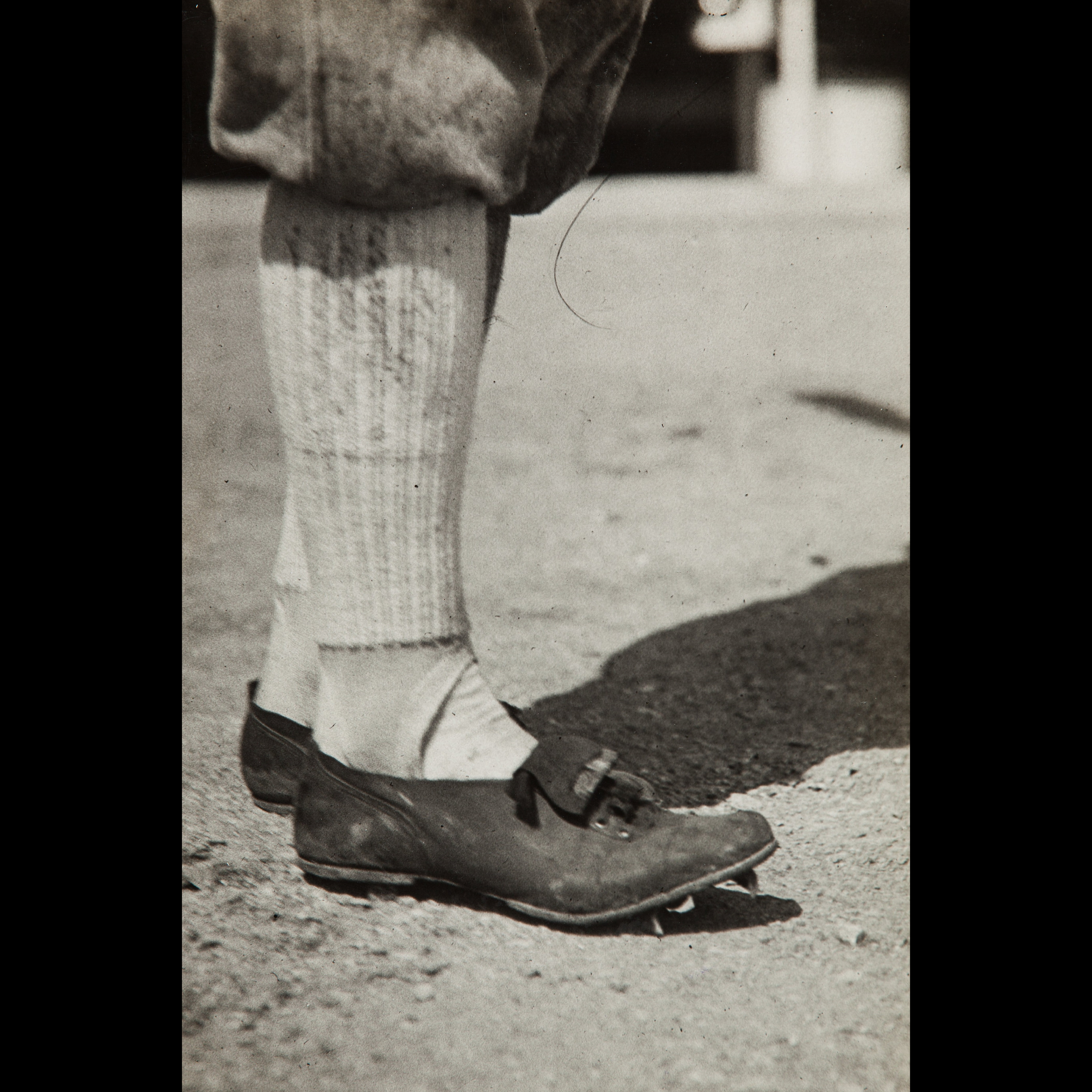
In anticipation of eventually becoming a major leaguer, Joe bought a new pair of cleats that he started trying to break in so by the time he did get the call, his shoes would be ready and he’d look like he belonged on a big league diamond.
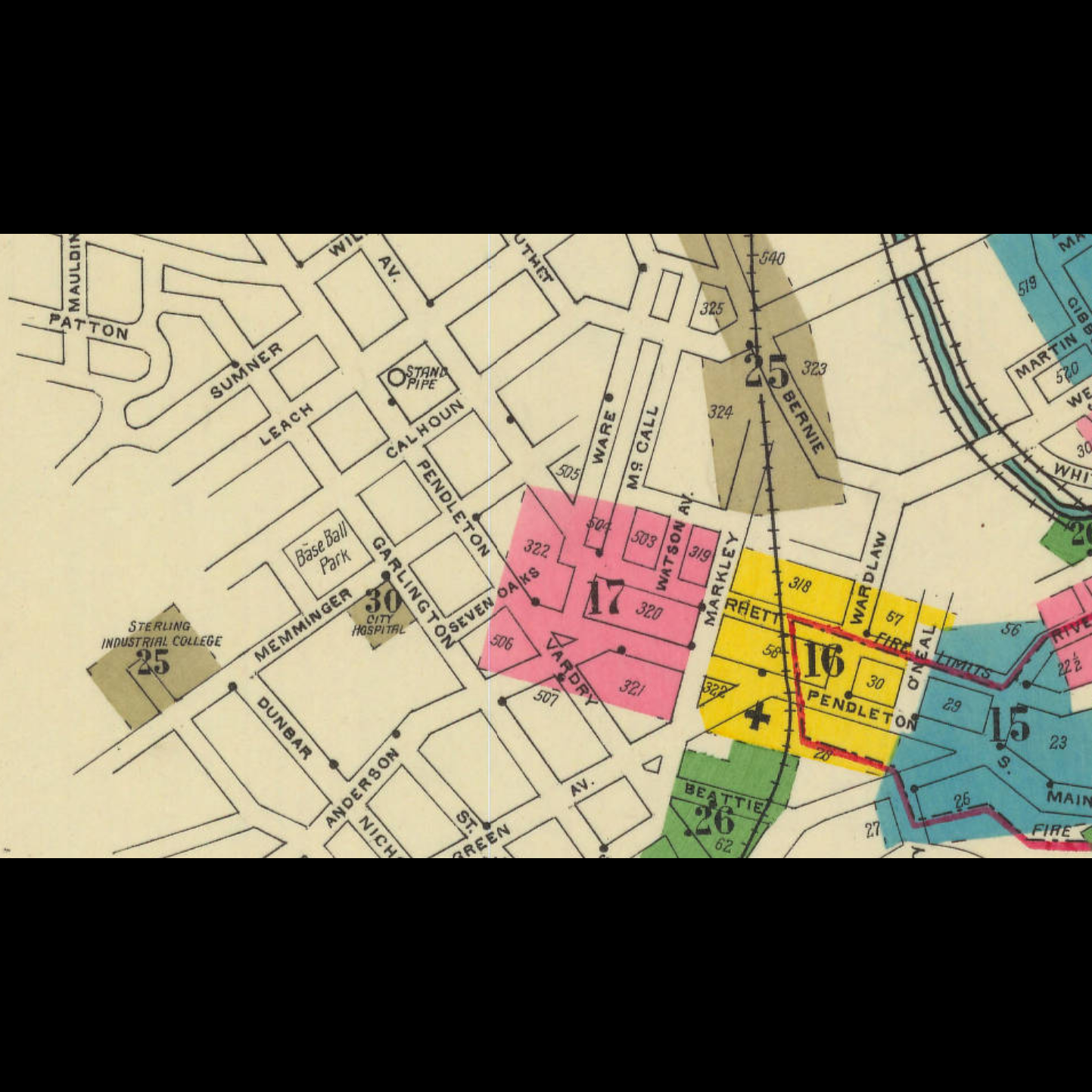
On Sunday, June 6, 1908, Joe’s Greenville Spinners were playing the Anderson Electricians at Greenville’s home field, Memminger Street Park. This 1913 Sanborn Insurance Map shows its location.
New Cleats
Wearing his new cleats that were not yet fully broken in, late in the game, Joe’s feet started to hurt. His manager wouldn’t let him sit out because Greenville was down by one run and they needed Joe’s bat in the lineup, still, and his defense in center field.
Joe took his shoes off, and went out to play center field in just his socks, which nobody seemed to notice.
Memminger Street Park
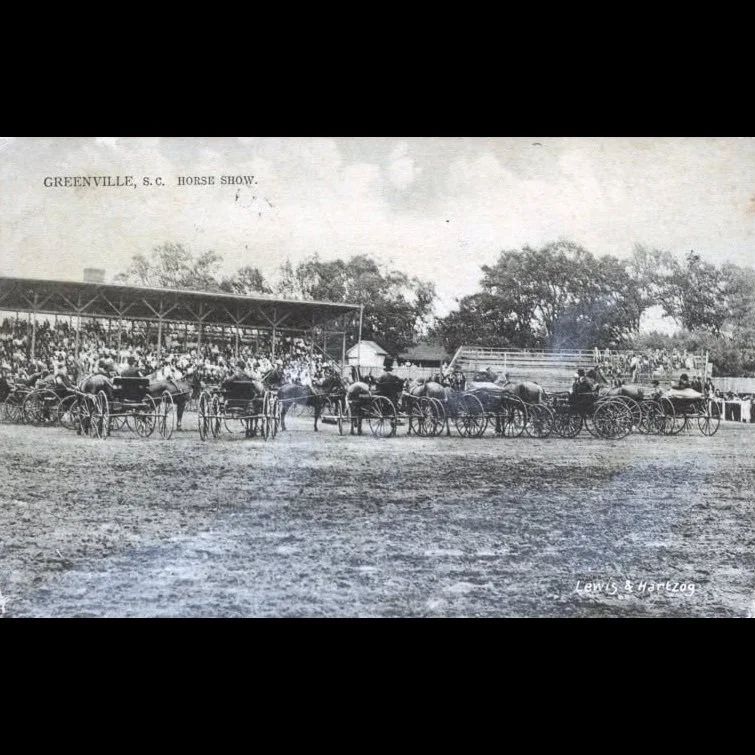
In the bottom half of the inning, Joe came up to bat. The Greenville newspapers the following day said that, in that at bat, Joe hit what was the longest home run in the history of Memminger Street Park.
In just his socks.
As he was rounding third base in his home run trot, an upset Anderson fan jumped up out of his seat and shouted “You Shoeless Son Of A *****!!”
Carter “Scoop” Latimer
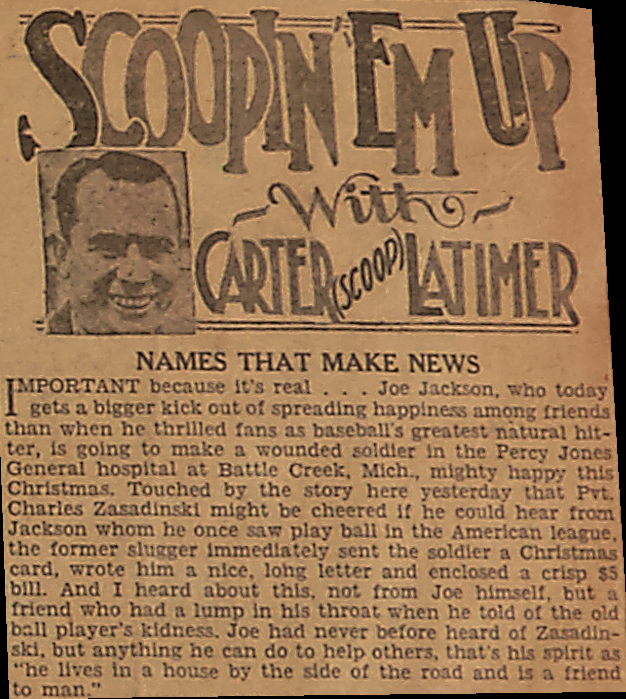
A famous Greenville sportswriter named Carter “Scoop” Latimer was in the crowd at Memminger Street Park that day. He heard the exchange, and it was in the local newspapers the next day.
By July 19, newspapers as far as Seattle, Washington, were writing about “The Shoeless Wonder” from South Carolina, making it out as if Joe played all of his games in his stocking feet, or even barefoot. But that wasn’t the case.
Joe played a few innings of one game in his entire life without shoes on. It just so happened that he did something incredible in those few innings, and his nickname — “Shoeless Joe” — stuck.
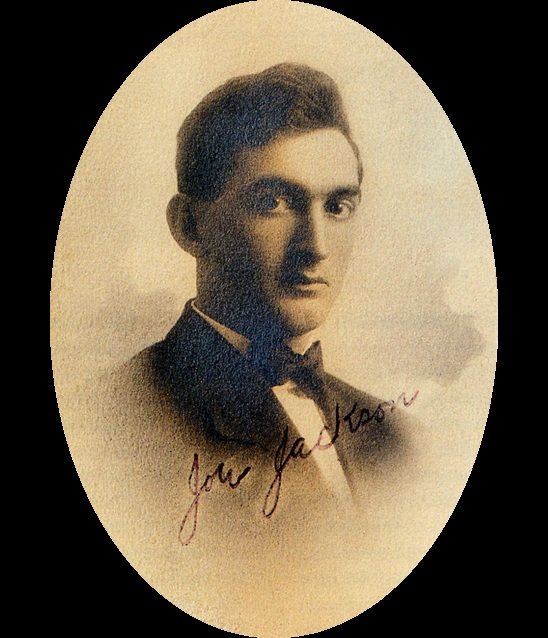
Joe Hated The Nickname
Joe hated that nickname, though, because he understood the connotation. That he was an uneducated southerner who didn’t have shoes, and couldn’t afford to buy any if he wanted them.
Joe spent the rest of his life doing whatever he could to prove that he wasn’t destitute, and in fact, he was quite the opposite.
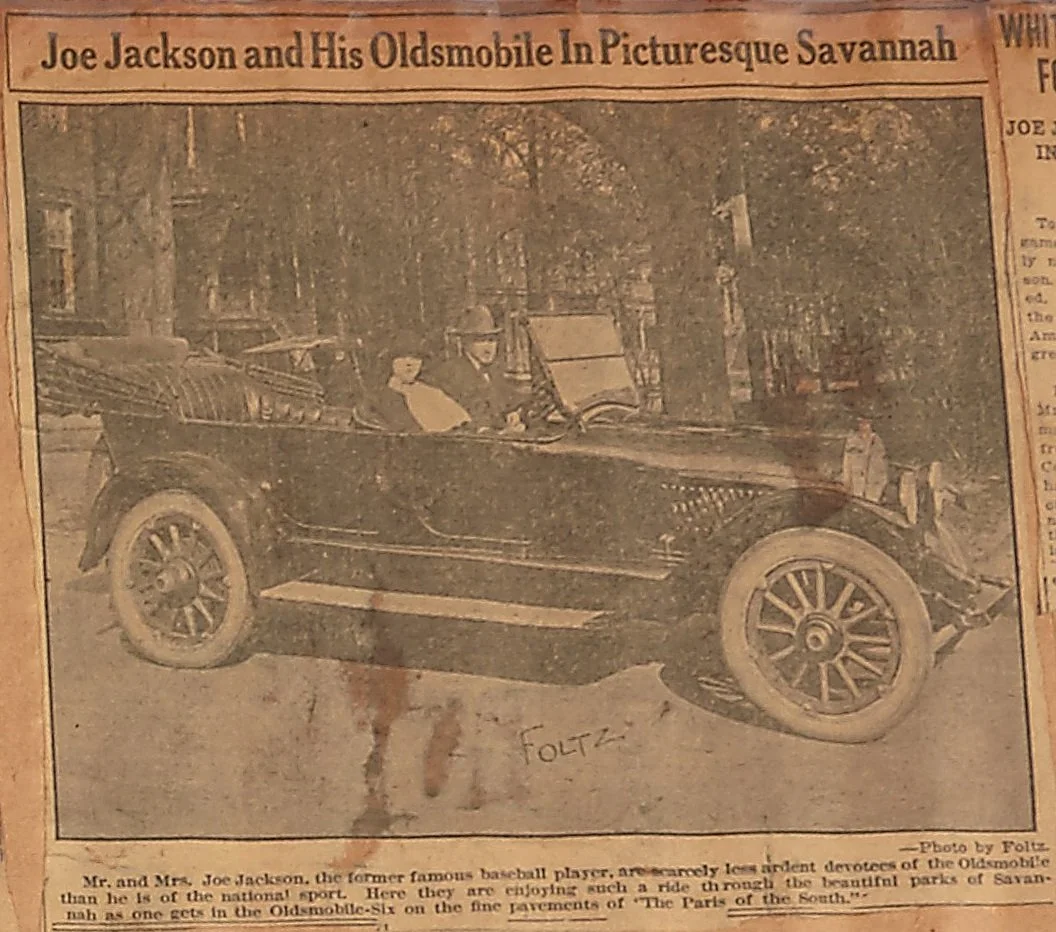
Overcompensating?
Joe would always drive big, expensive cars. He would dress to the nines off the field, always wearing beautiful suits, nice hats, and, of course, nice shoes.
He didn’t want people to think of him as “Shoeless Joe.” He just wanted to be Joe Jackson.
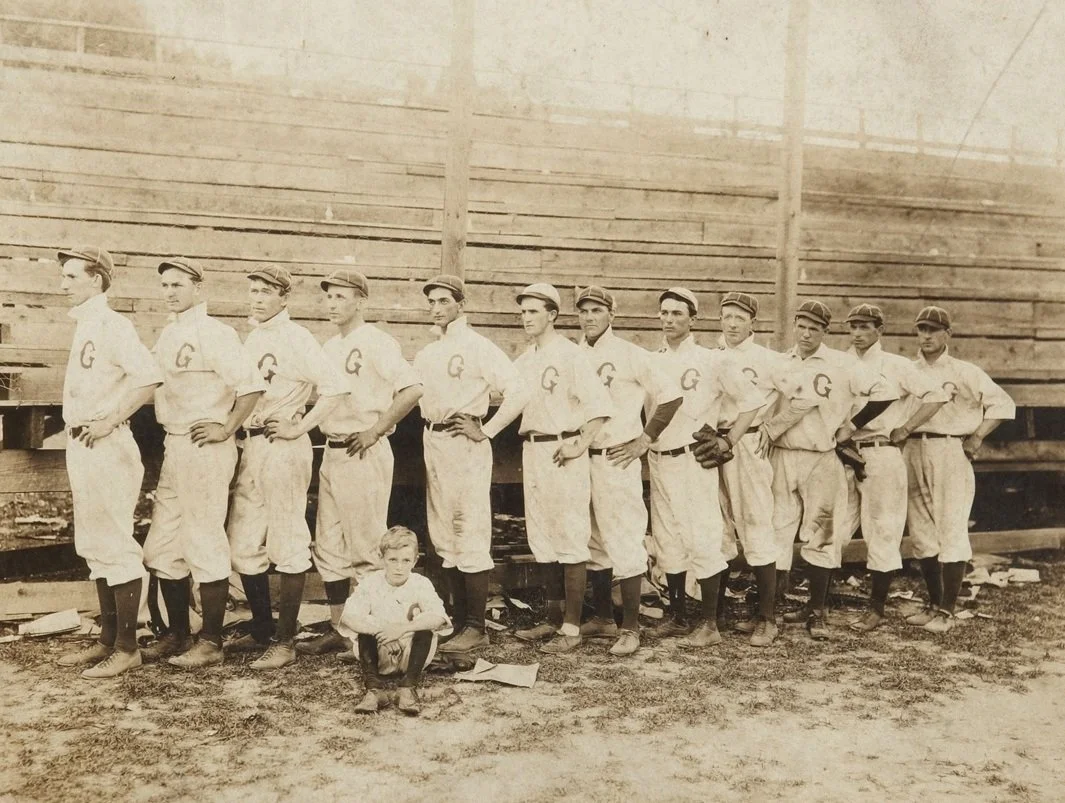
Greenville Spinners
In August of 1908, Joe’s contract was purchased by Connie Mack and the Philadelphia Athletics for $900 and he began his major league career.
Joe is fifth from the left here, with the 1908 team.
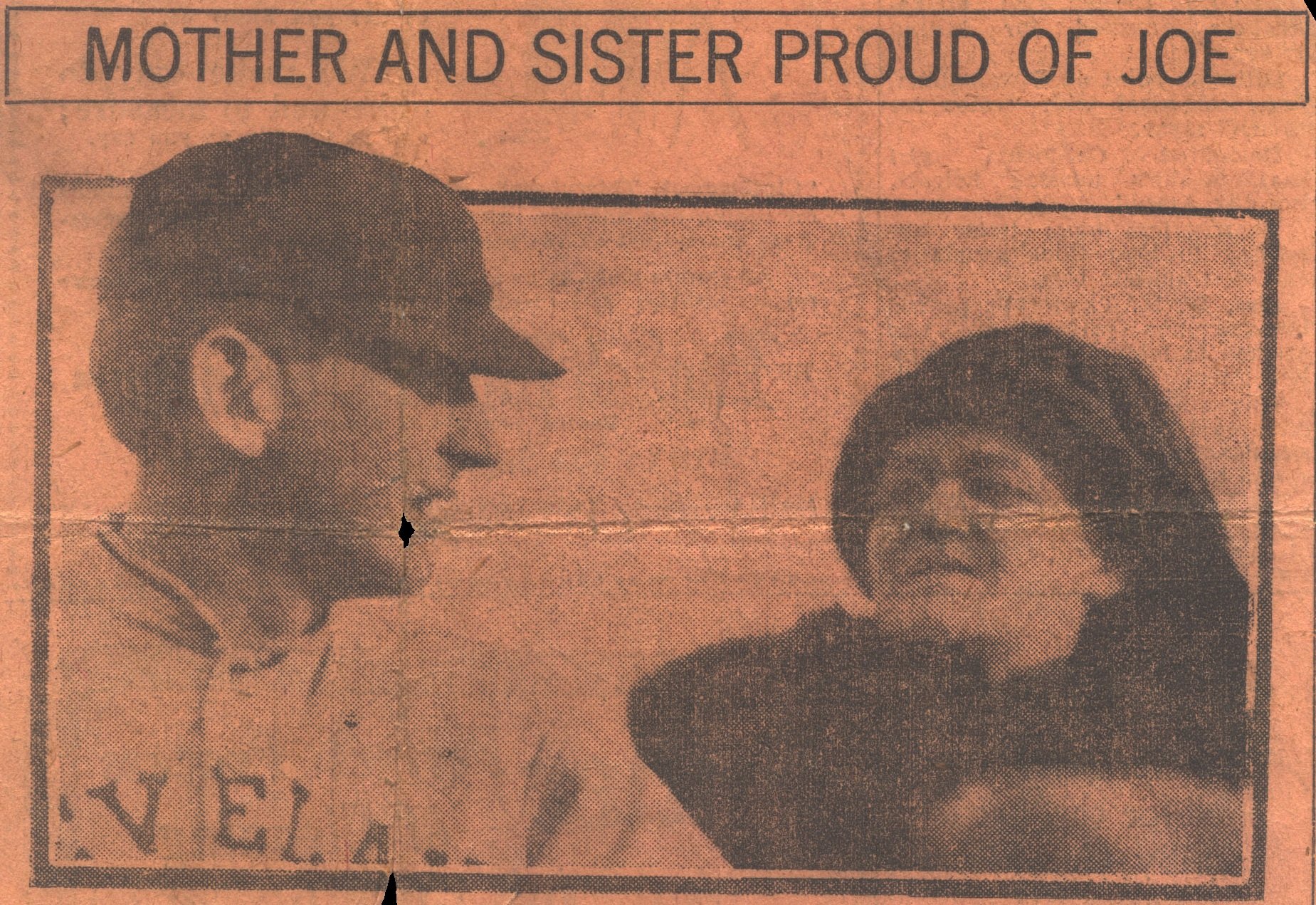
Making Mom Proud
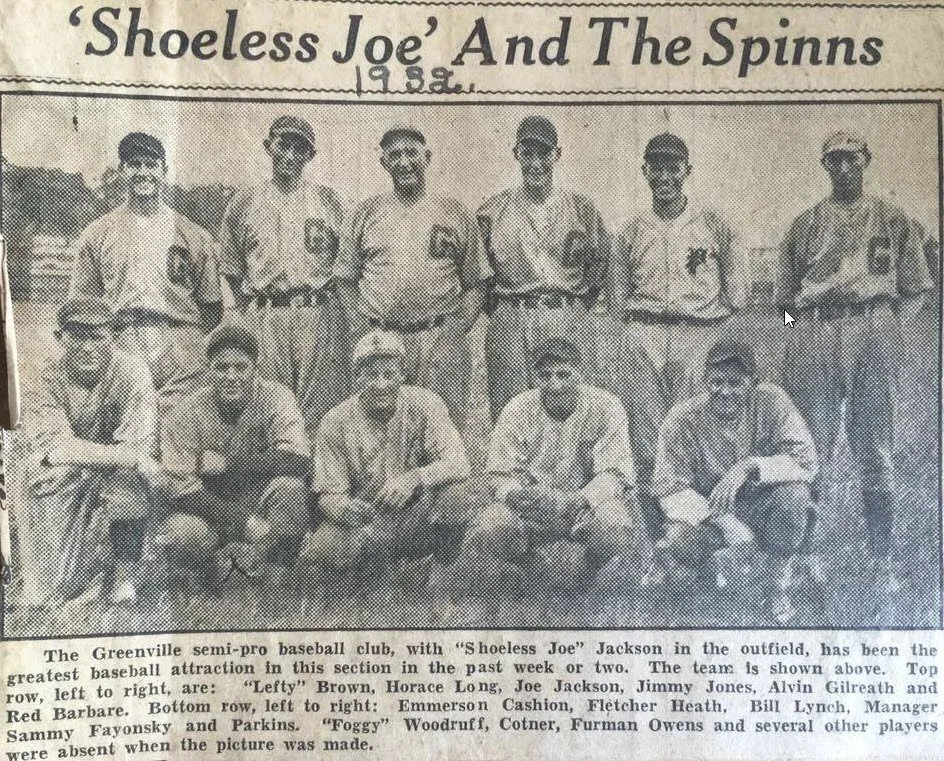
In 1932, when Joe moved back to South Carolina to take care of his mom, his old team, the Greenville Spinners, found out he was back in town. They offered Joe $100 a game to play with them again.
Here, Joe is seen with his mother circa 1913.
1932 Greenville Spinners
At the age of 45, Joe played 10 games between August 4th and August 24th. He batted .407 in those games, and hit at least one home run. Unfortunately, Joe’s mom passed away on August 25th, which ended his season as his focus turned to his family.
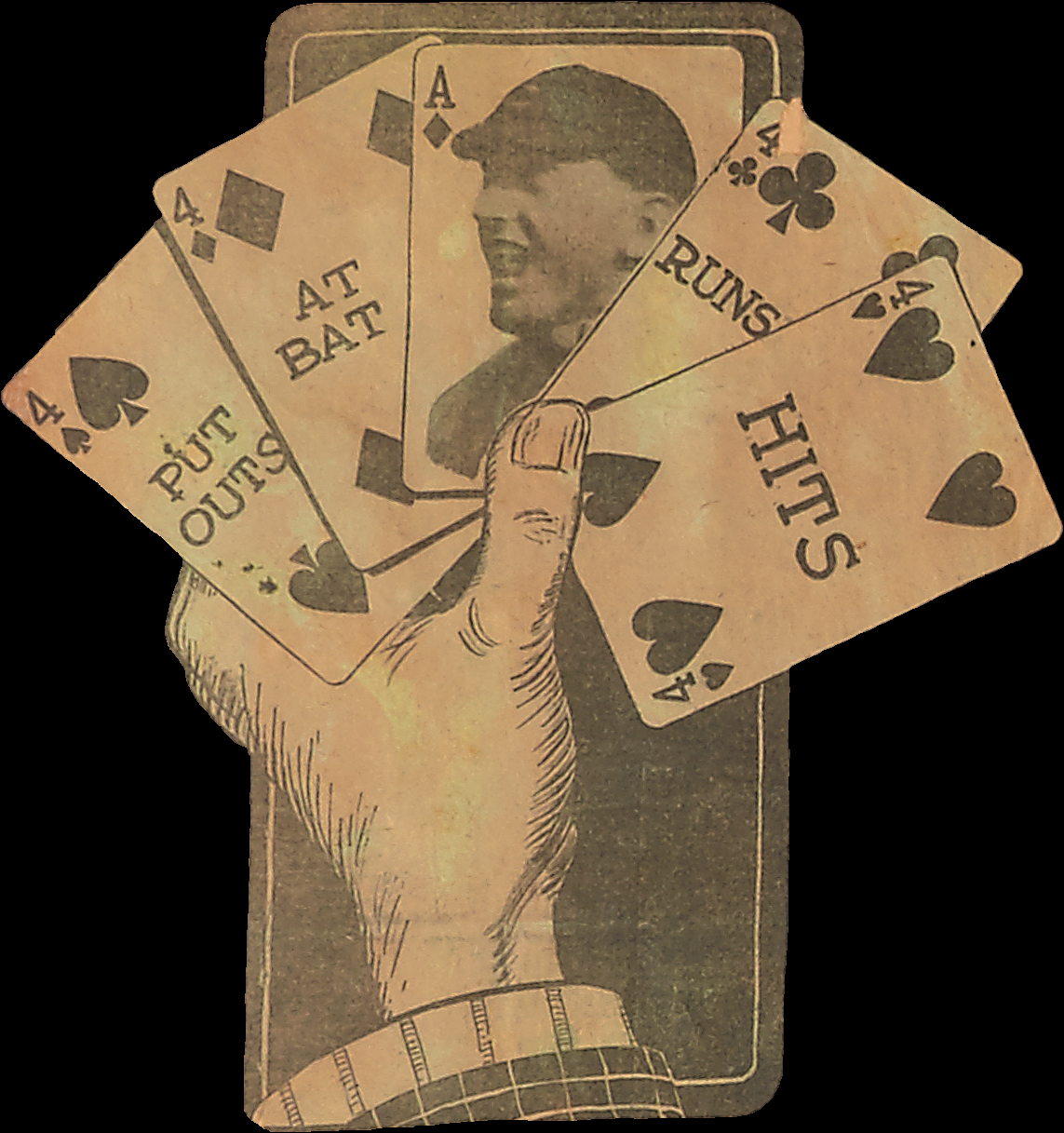
Joe Accepted The Cards He Was Dealt
After an August, 1932 reinstatement application from the mayor and some other politicos in Greenville on Joe’s behalf was denied, Joe vowed to never try again, and accepted his fate.
It sounds crazy, but in theory, there was still a chance that Joe could have made a return to Major League Baseball, even as late as 1932.
It was not wildly uncommon at that time for position players in Major League Baseball to play well into their 40s, with players like Eddie Collins playing continuously until he was 43 years old, and Cap Anson playing until he was 45.
A Proper Send-Off
Another semi-common practice of the day was for an old position player to return after a long hiatus – even just for one game – well in their late 40s.
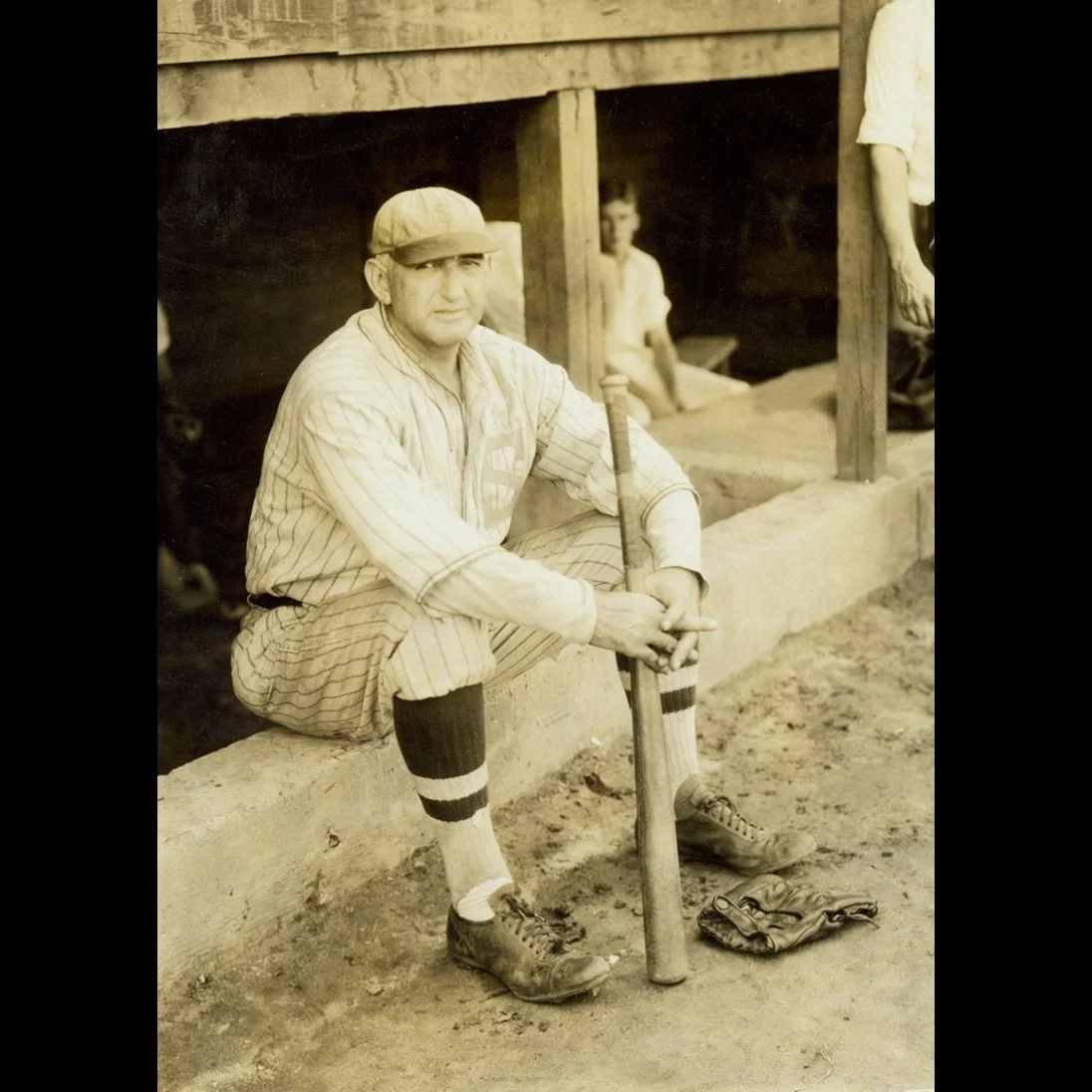
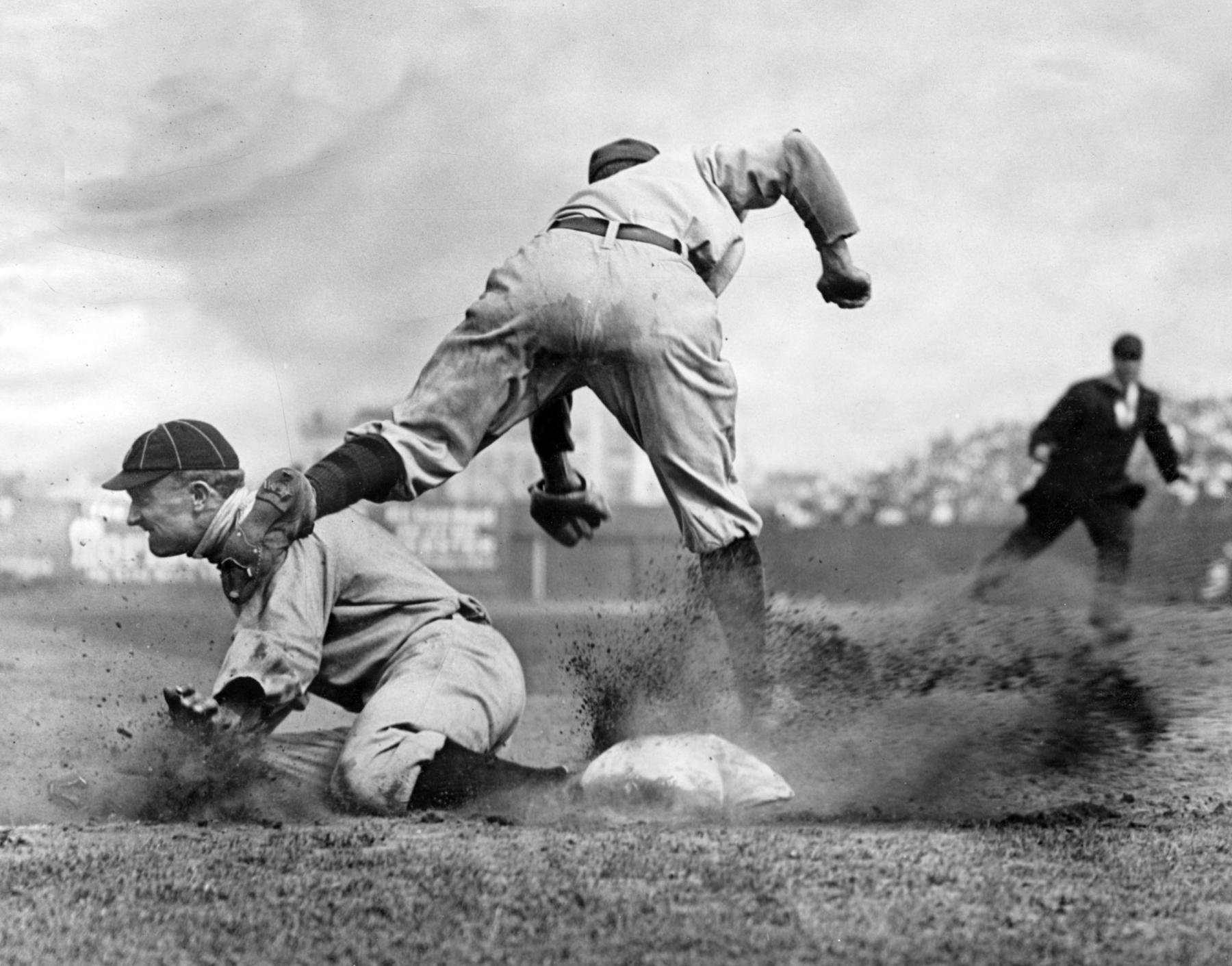
Hughie Jennings, Gabby Street, Jimmy Austin (seen here, attempting to tag Ty Cobb), and Johnny Evers all did that around this time, with the youngest between the four of them being 48 years and 77 days old at the time of their return to play one final career game. Check out the full list of oldest players to play a game in MLB history HERE.
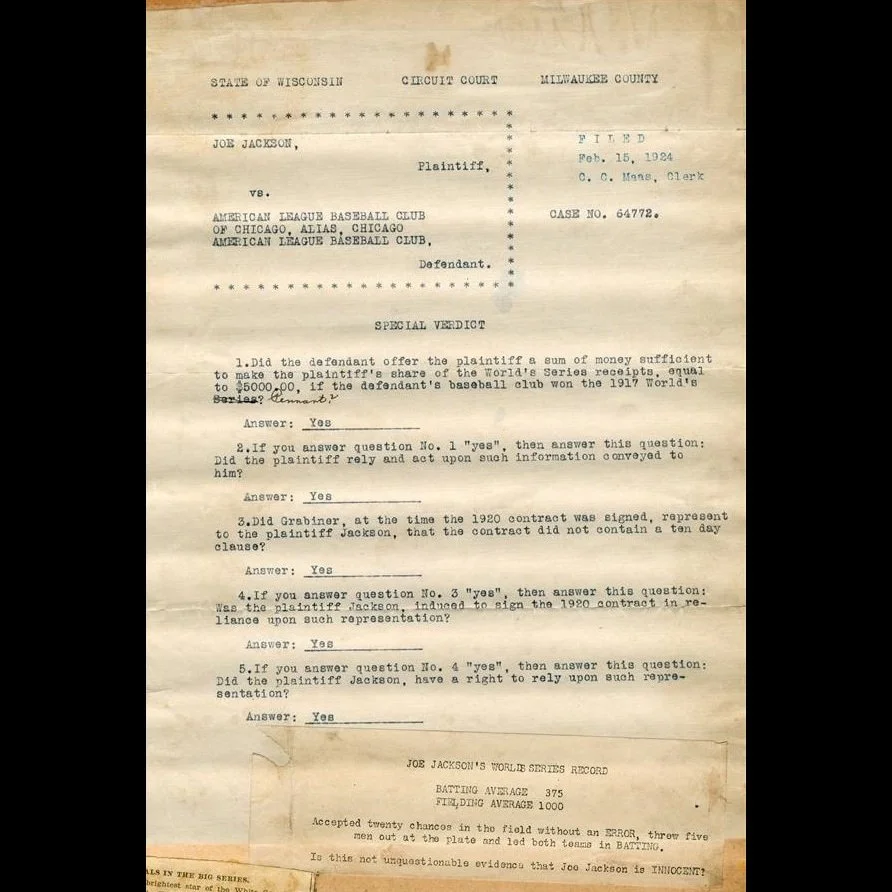
1924 Lawsuit
Joe may have burned his bridge to be a part of any White Sox reunions with Charles Comiskey when he and Black Sox teammate Oscar “Happy” Felsch sued the team in 1924 for the back pay which was owed to them following their banishment.
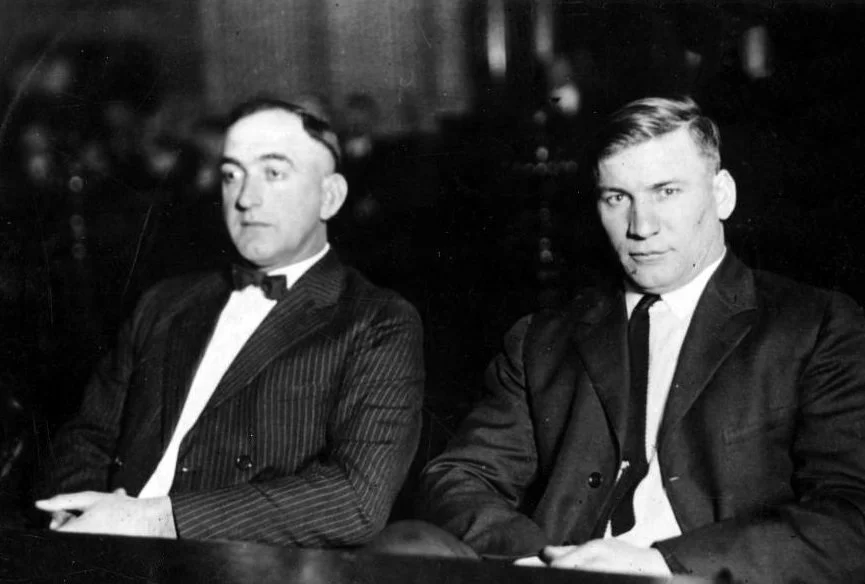
Joe and Happy Felsch during their 1924 trial
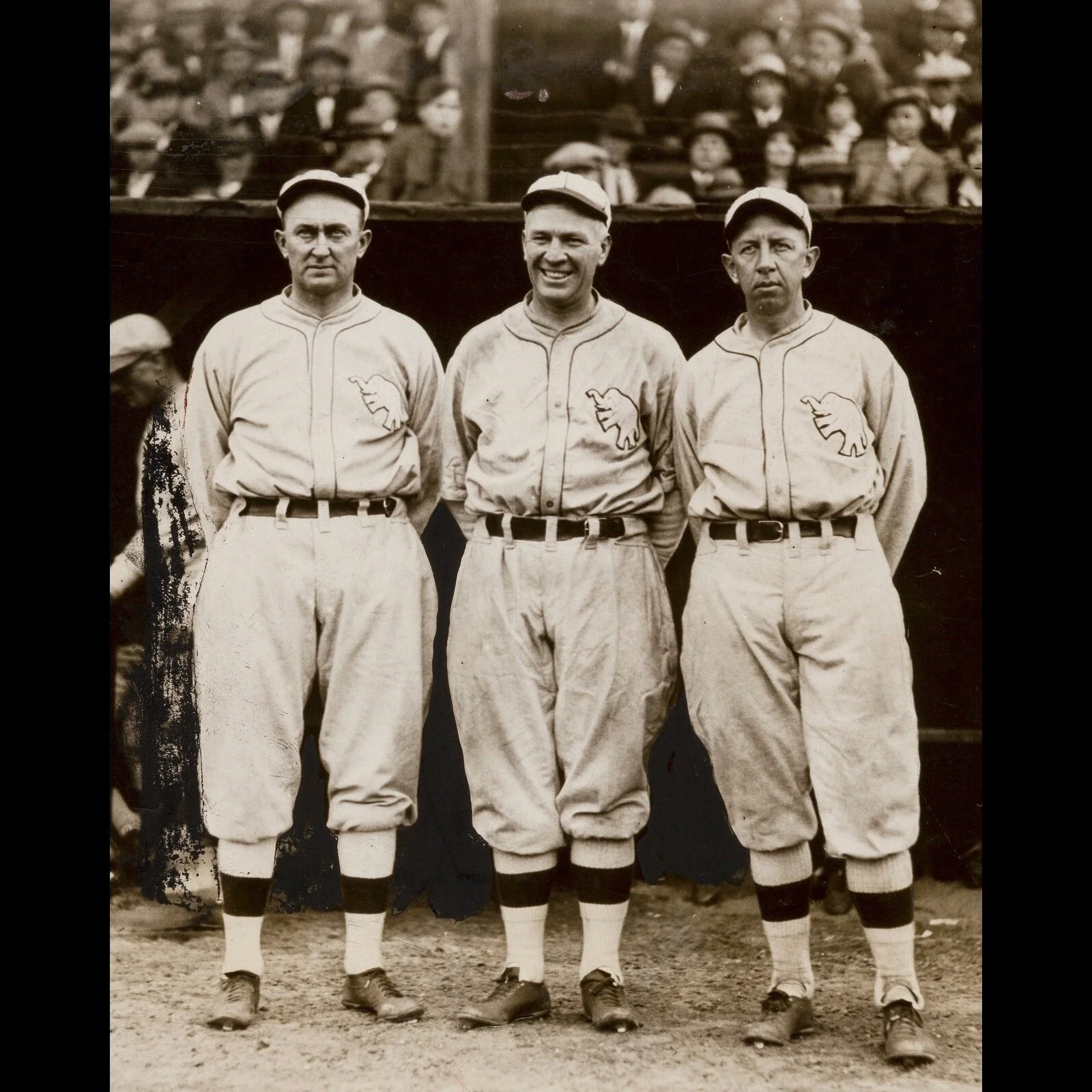
Connie Mack
Connie Mack clearly had tremendous reverence for the greats of the game, allowing players like (seen here, left to right) Ty Cobb, Tris Speaker, and Eddie Collins to come to the Athletics in their 40s to finish their careers, even if it meant overlooking some of the negative things they may have done or been associated with in their pasts.
A Soft Spot For Joe
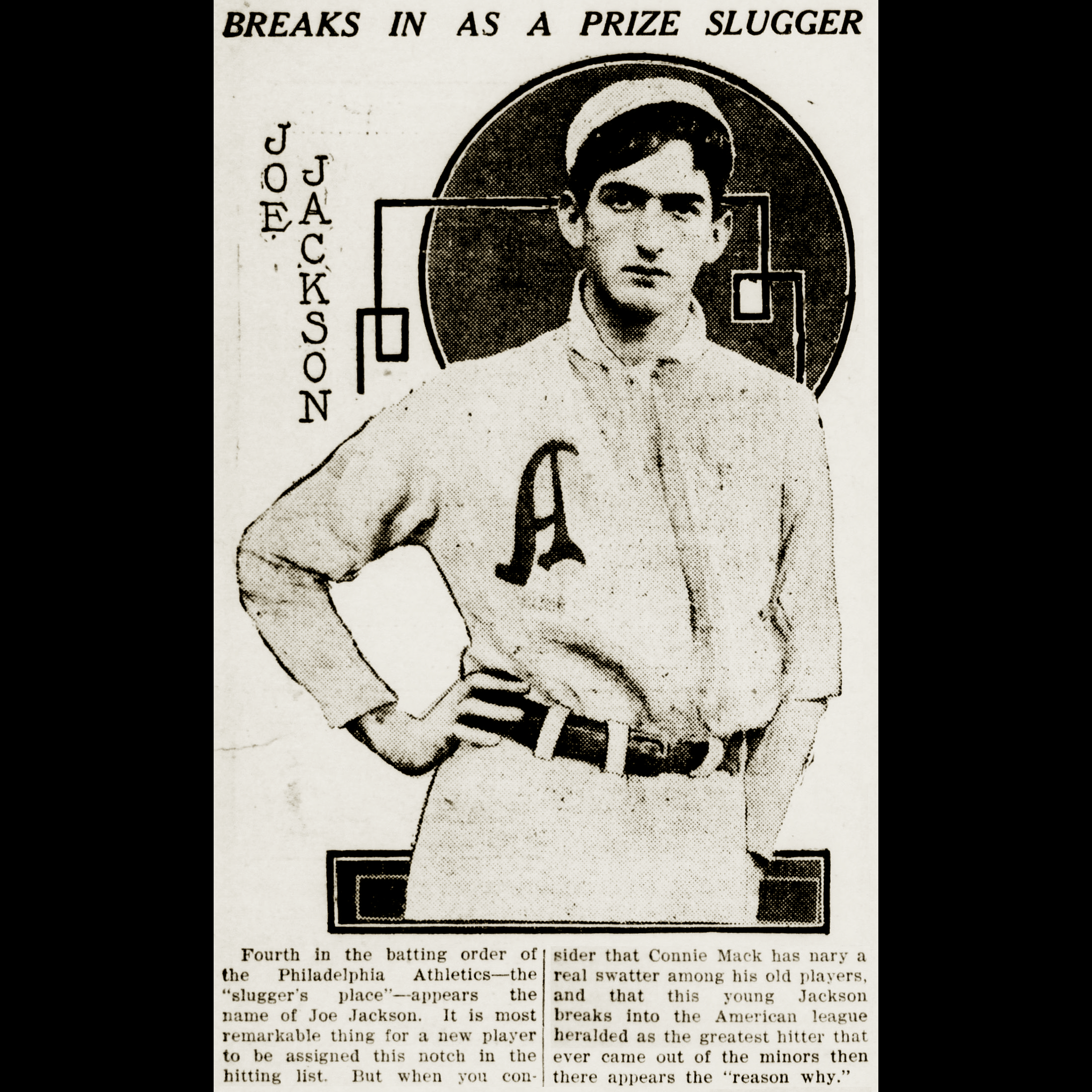
Connie Mack discovered Joe, and did everything in his power to make Joe’s transition to the Major Leagues a smooth one, despite Joe being so obviously out of his element on a team full of college-educated Northerners when he was from the cotton mills of South Carolina and never went to school a day in his life.
The Tall Tactician always had a soft spot for Joe. Mack once said, "Jackson's fall from grace is one of the real tragedies of baseball. I always thought he was more sinned against than sinning.”
The Hall of Fame
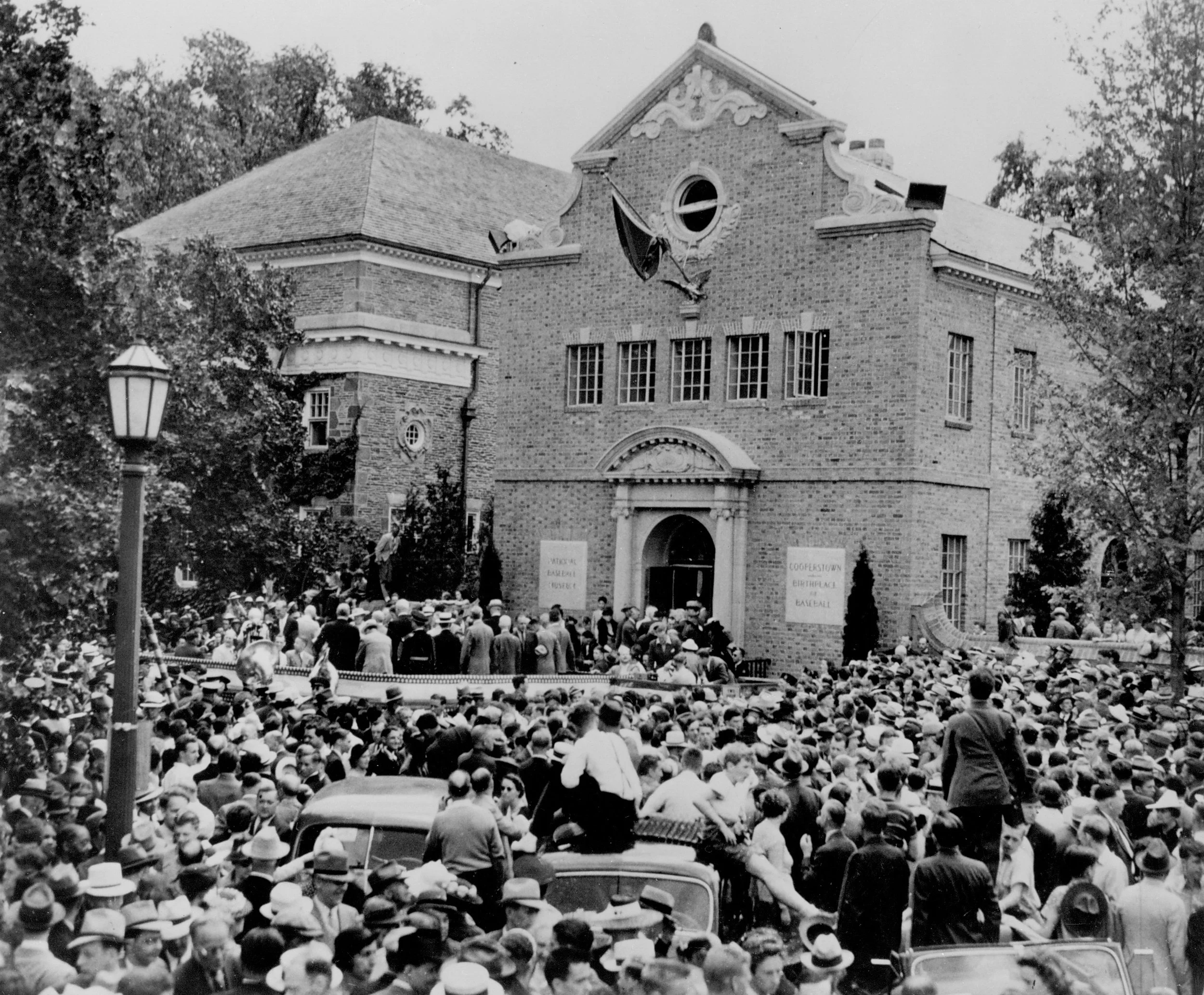
Even though it was established in 1936, by the time Joe passed away in December of 1951, the Hall of Fame had only inducted 60 people.
There had only been eight induction ceremonies at that point, and living Hall of Famers had only been present at six of those eight ceremonies.
Furman Bisher
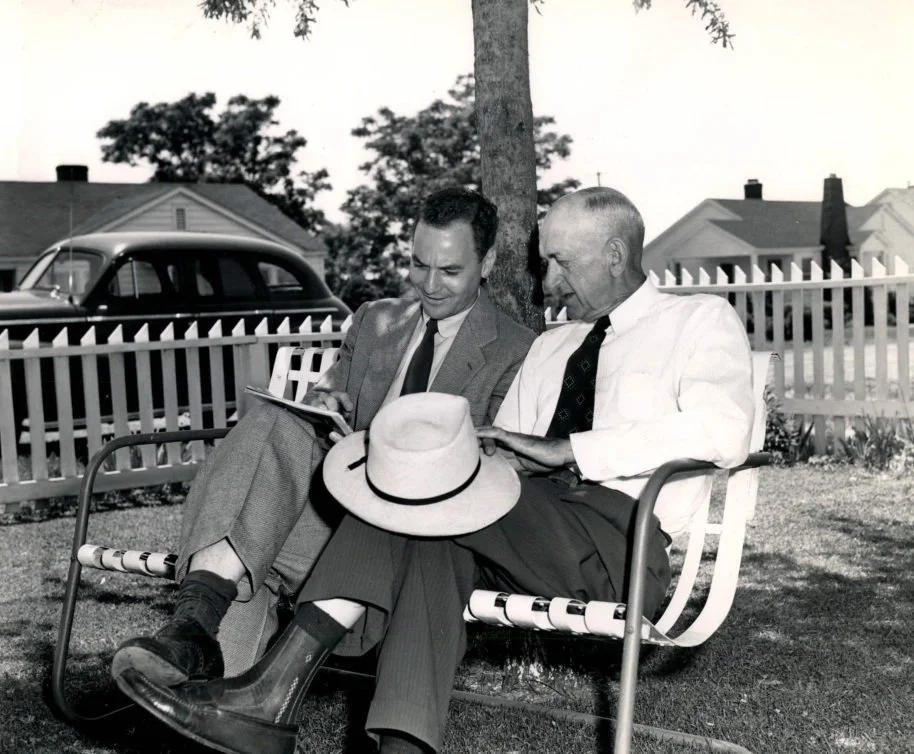
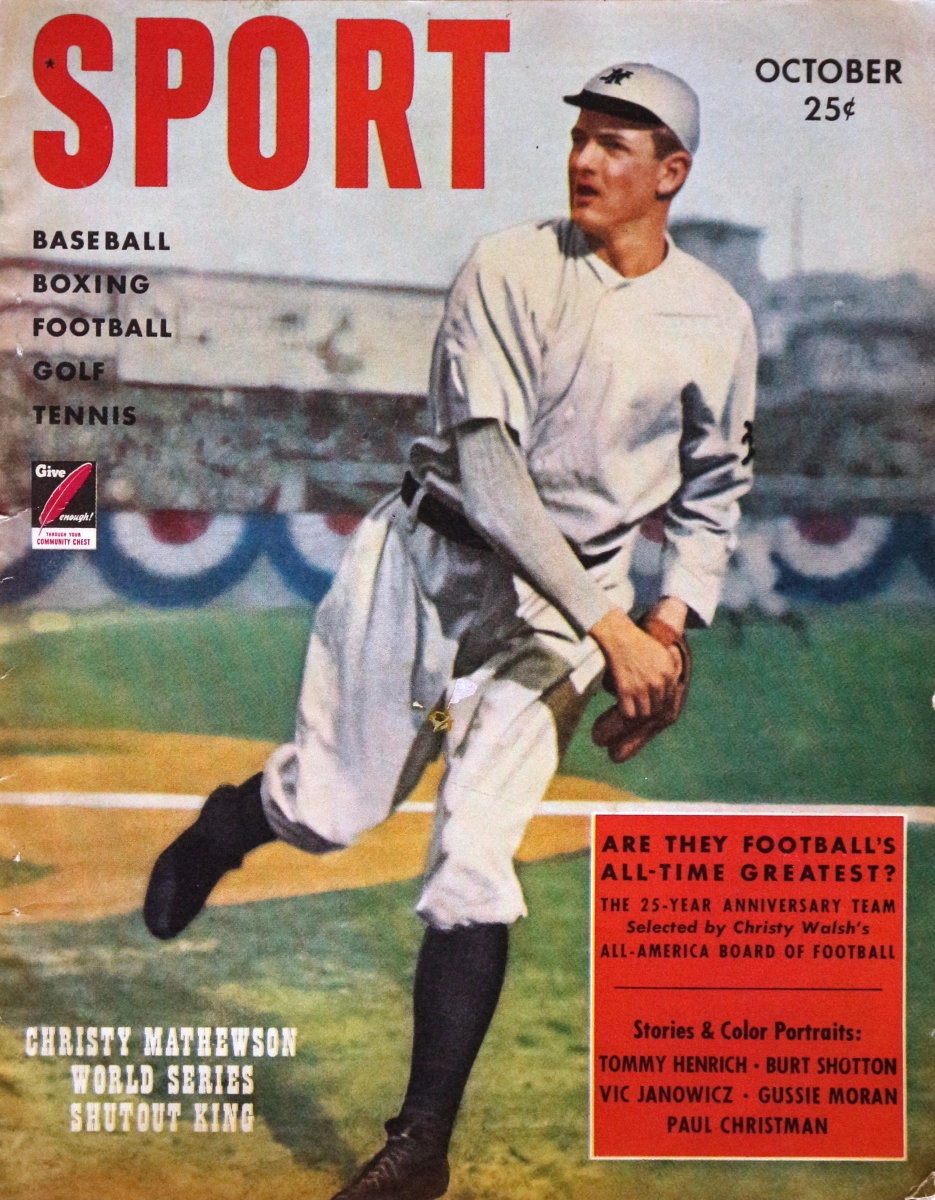
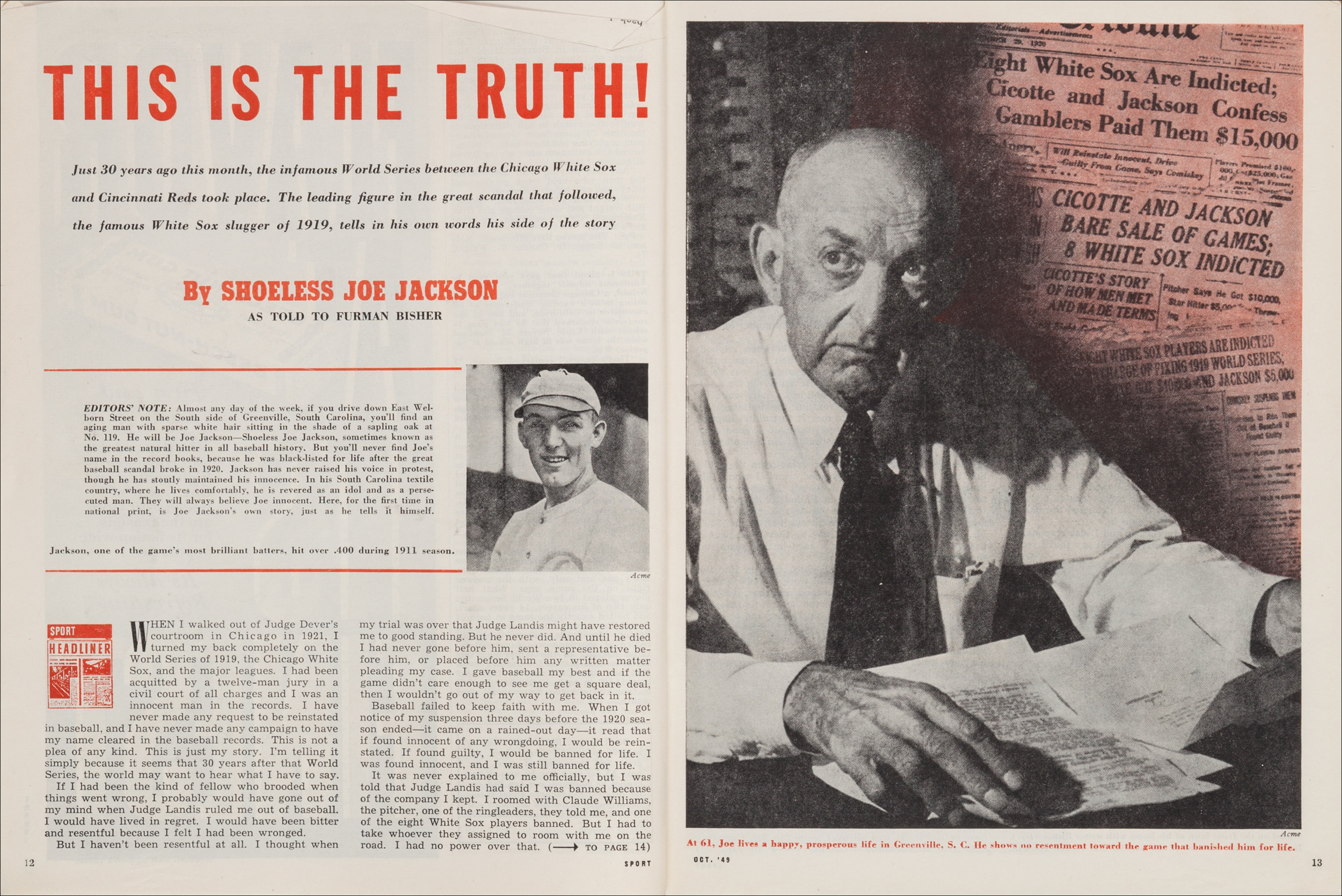
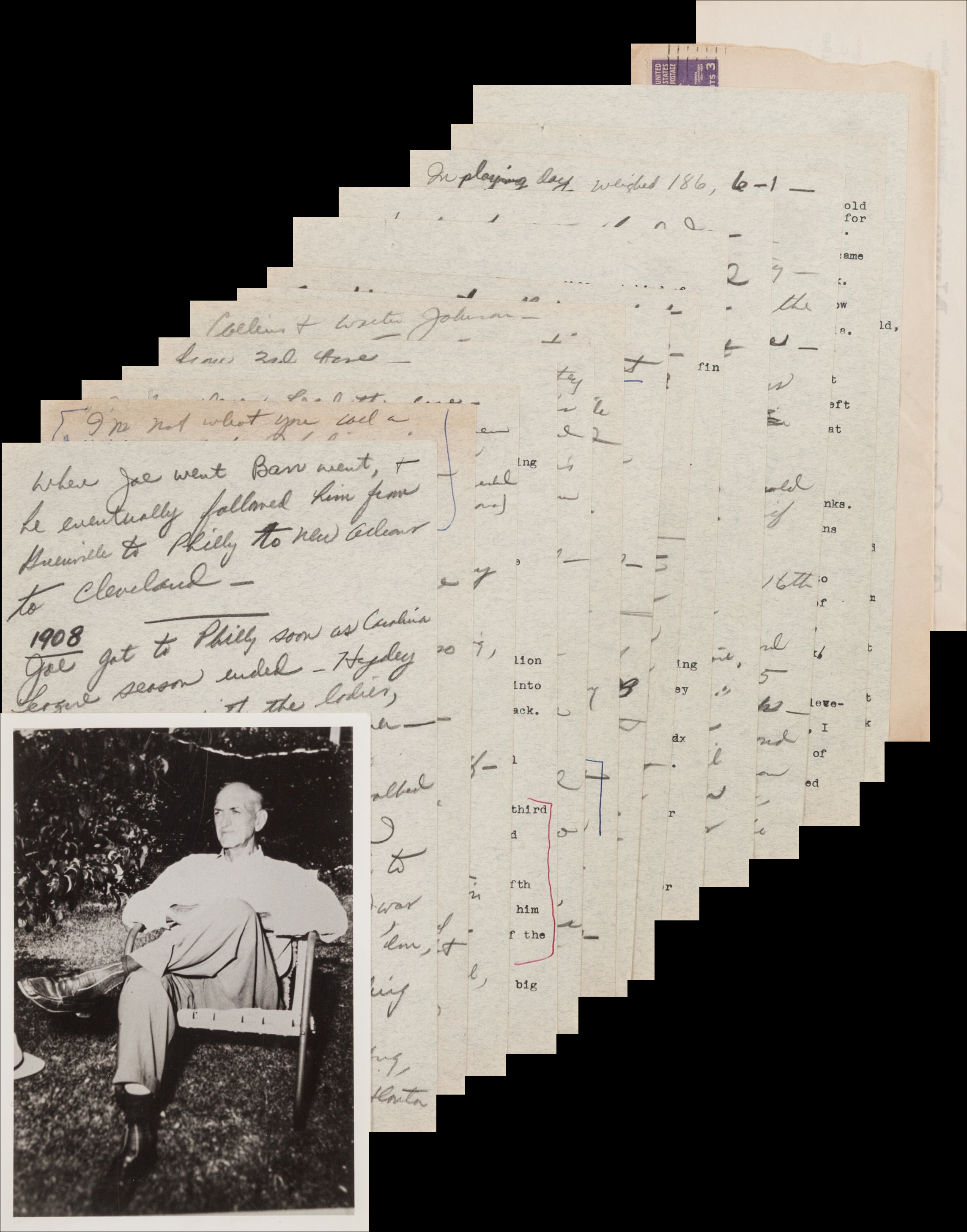
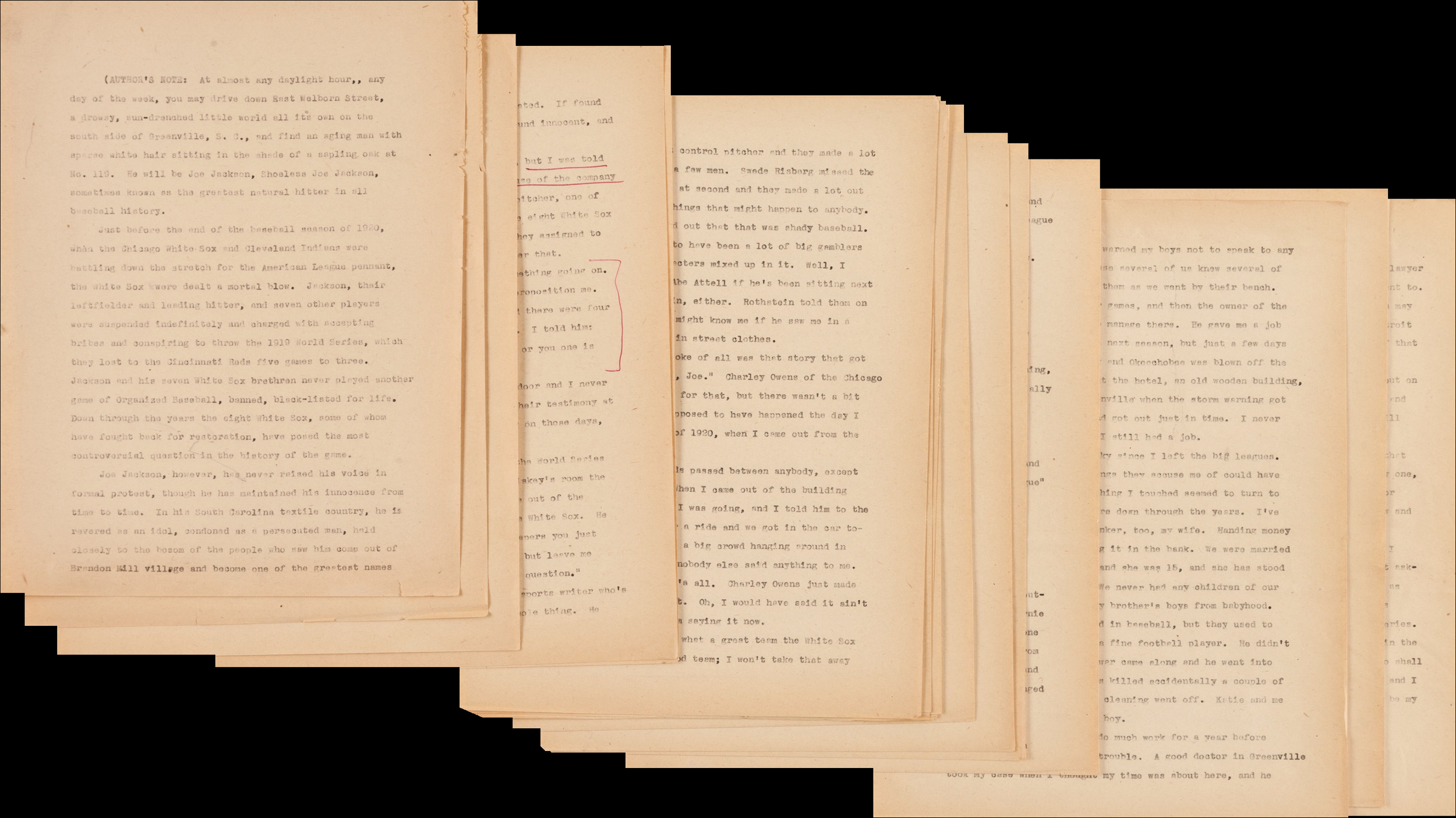
In Joe’s final major interview, which appeared in the October, 1949 issue of Sport Magazine, neither he nor journalist Furman Bisher even brought up the Hall of Fame.
Here, the two sit in Joe’s front yard in Greenville, South Carolina, while Bisher visits to write the piece.
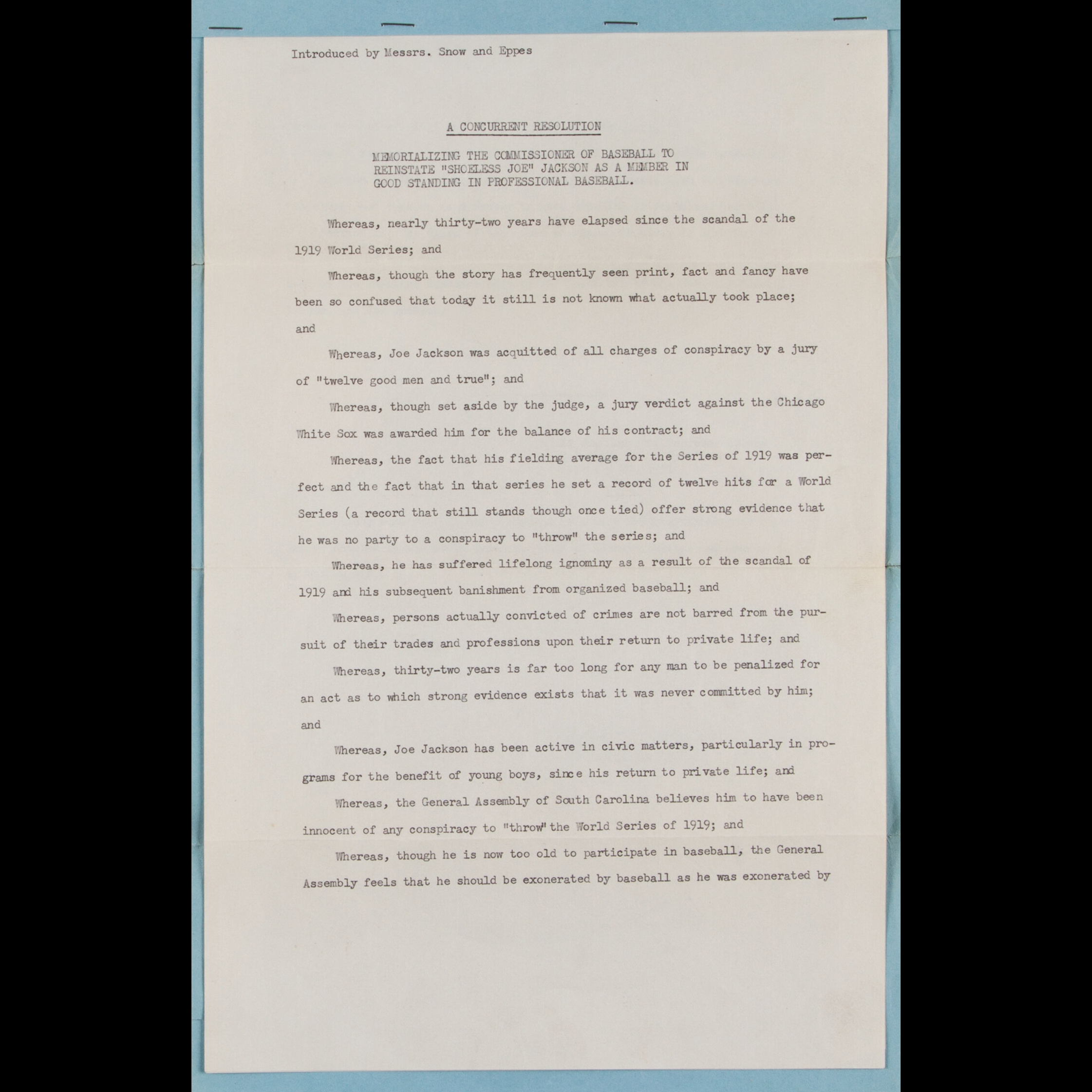
Fighting On Joe’s Behalf
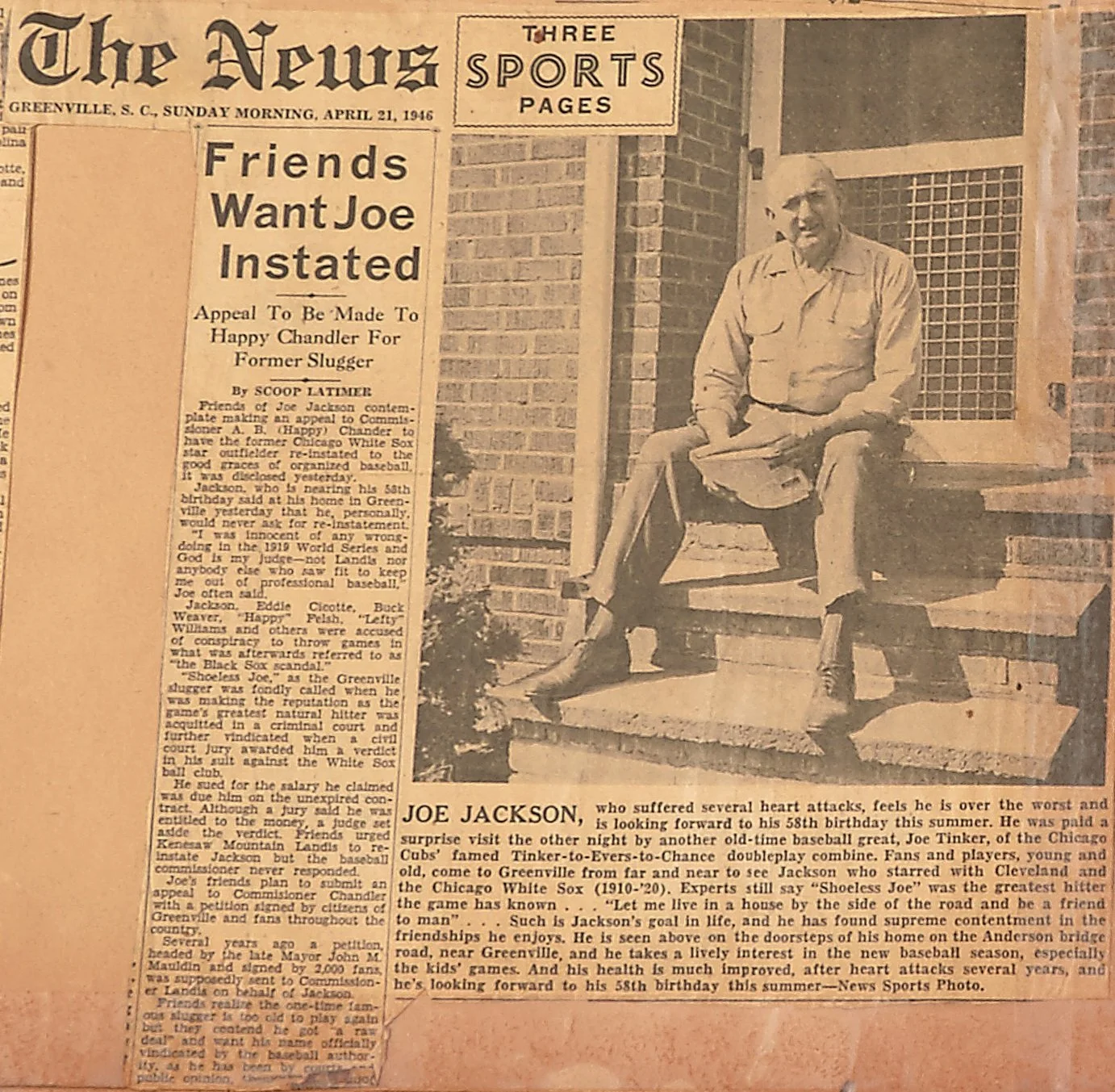
On February 21, 1951, the South Carolina House of Representatives introduced a resolution urging that Joe be reinstated into Major League Baseball, stating, among other things, that “persons actually convicted of crimes are not barred from the pursuit of their trades and professions upon their return to private life,” as a reason for baseball to clear Joe’s name.
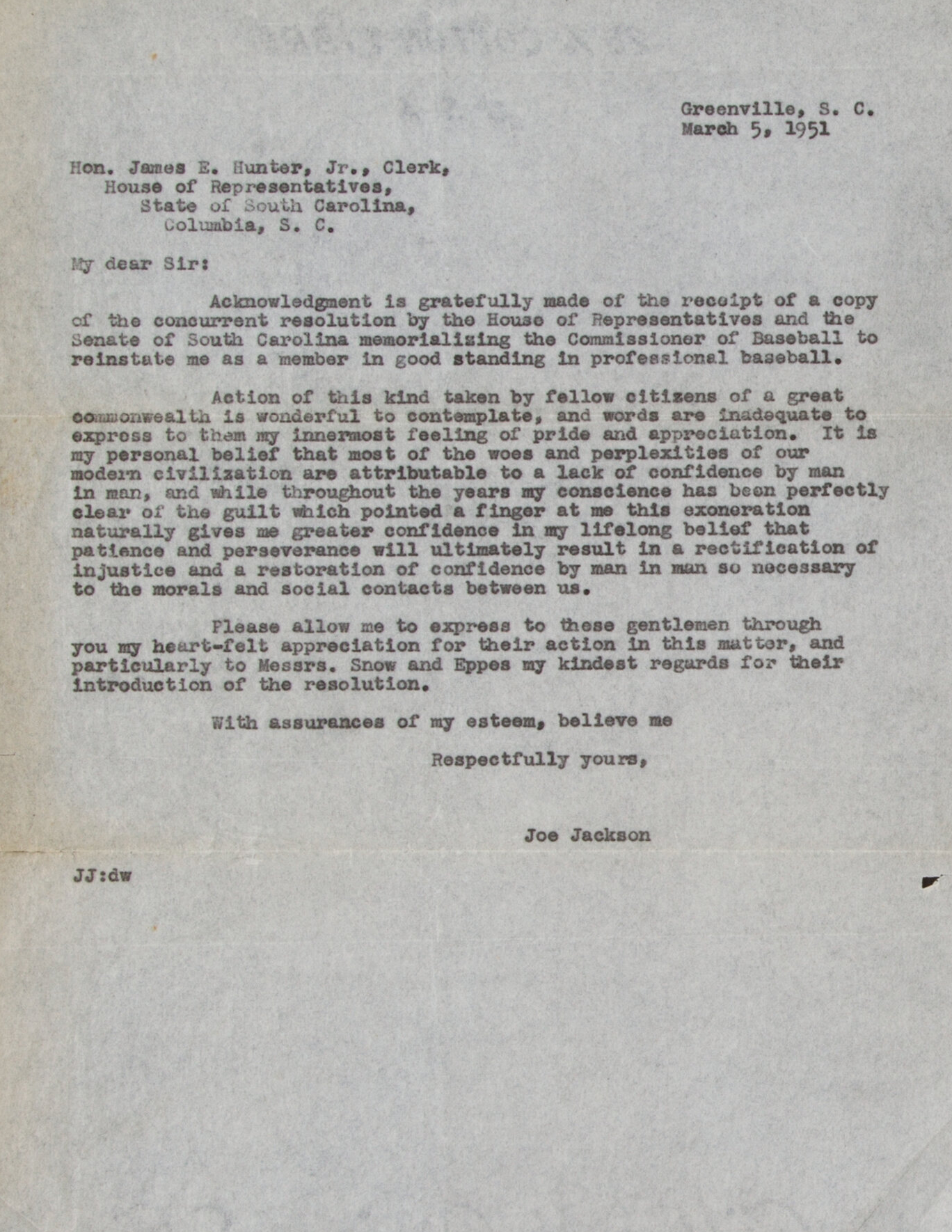
Joe’s response, when he learned of the efforts to have his named cleared in 1951
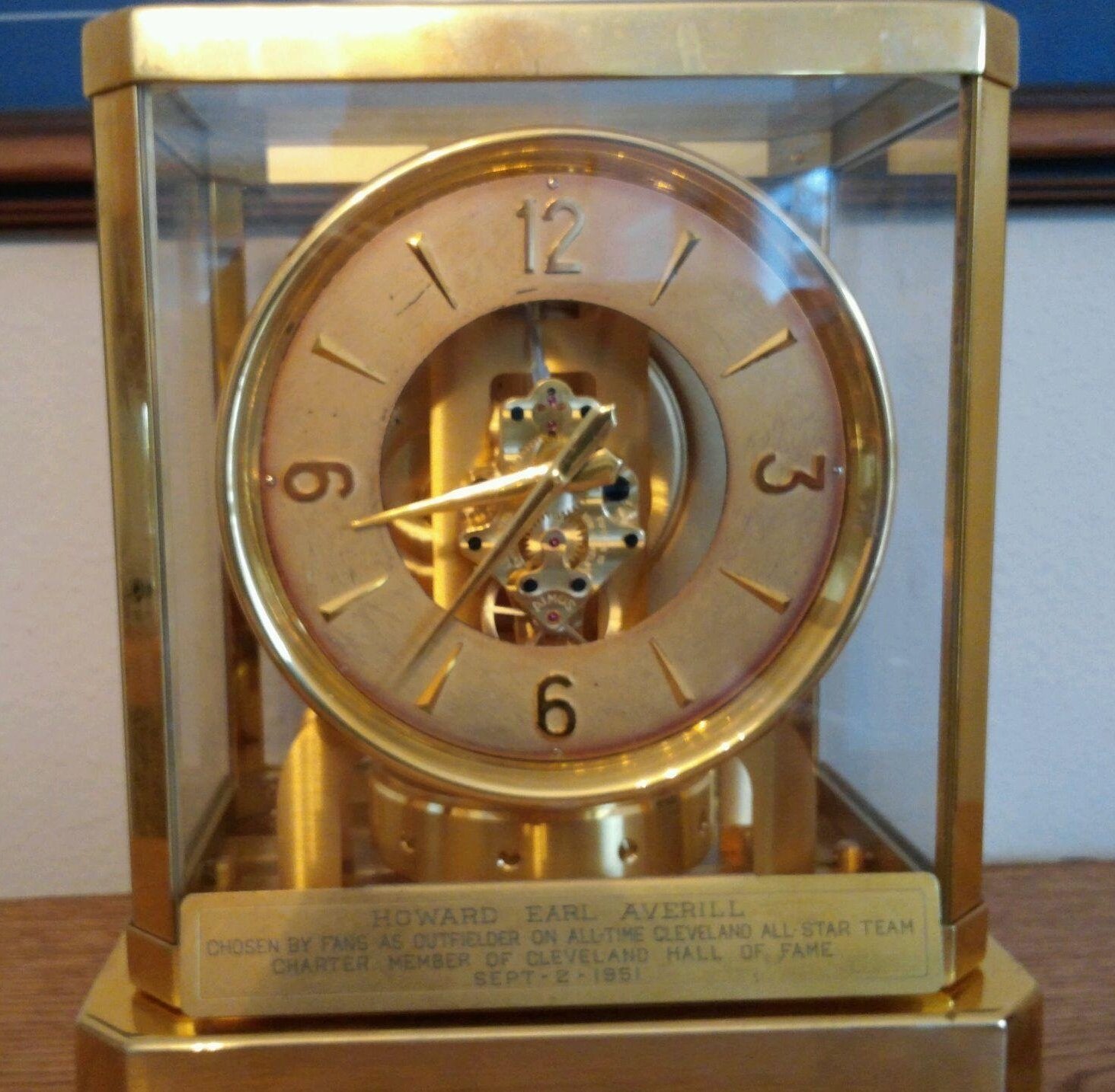
Cleveland Baseball Hall of Fame
In 1951, Joe was voted by the fans as one of the inaugural inductees into the Cleveland Baseball Hall of Fame, along with Cy Young, Tris Speaker, Napoleon Lajoie, Earl Averill, Mel Harder, Ken Keltner, Steve O’Neill, Joe Sewell, and Hal Trosky.
Each of the ten inductees received this Atmos clock by Jaeger-LeCoultre from the team as a token of their appreciation. Earl Averill’s is pictured here.
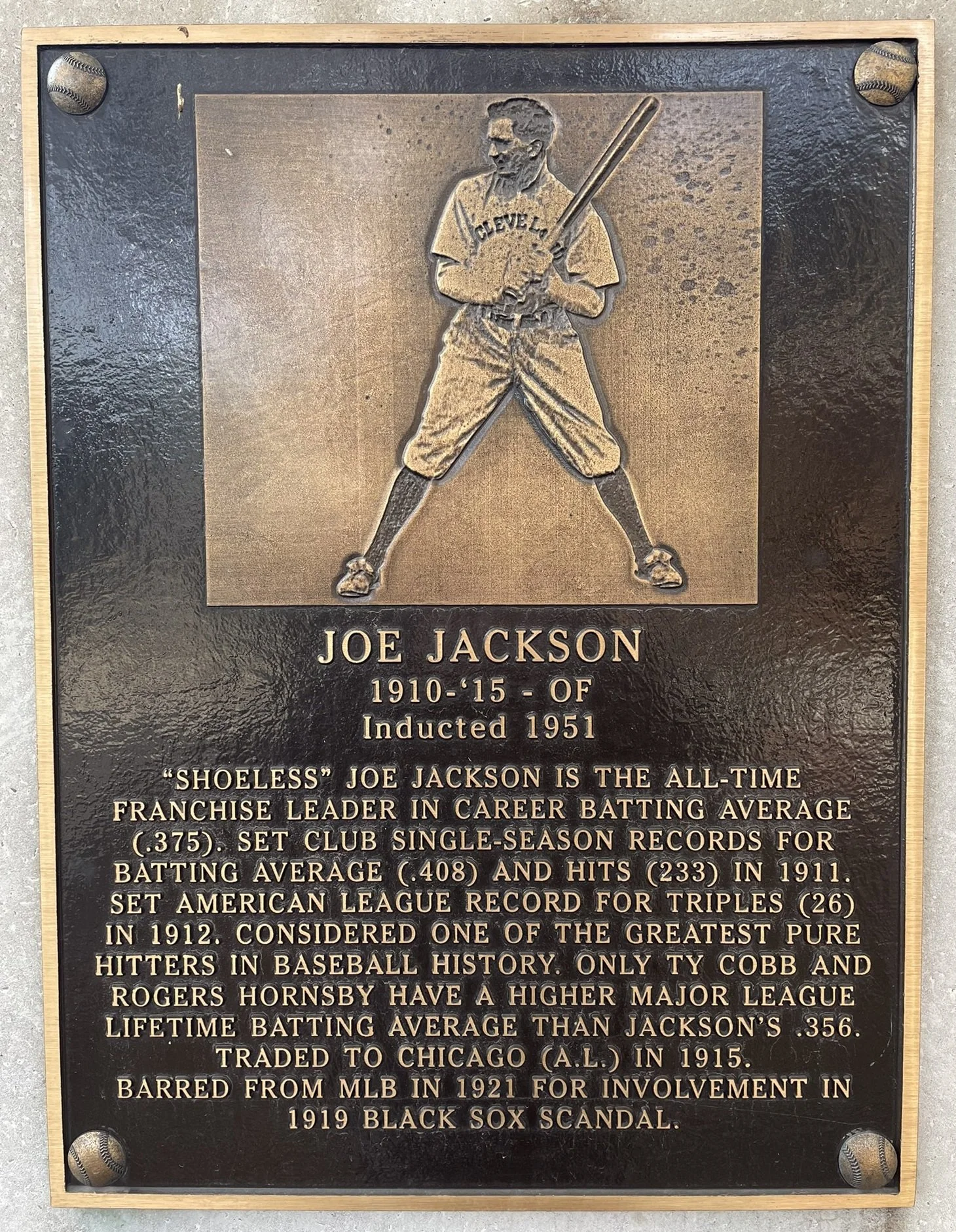
This plaque, commemorating Joe’s induction into the Cleveland Baseball Hall of Fame, is still on display at Progressive Field, where the Cleveland Guardians play their home games.
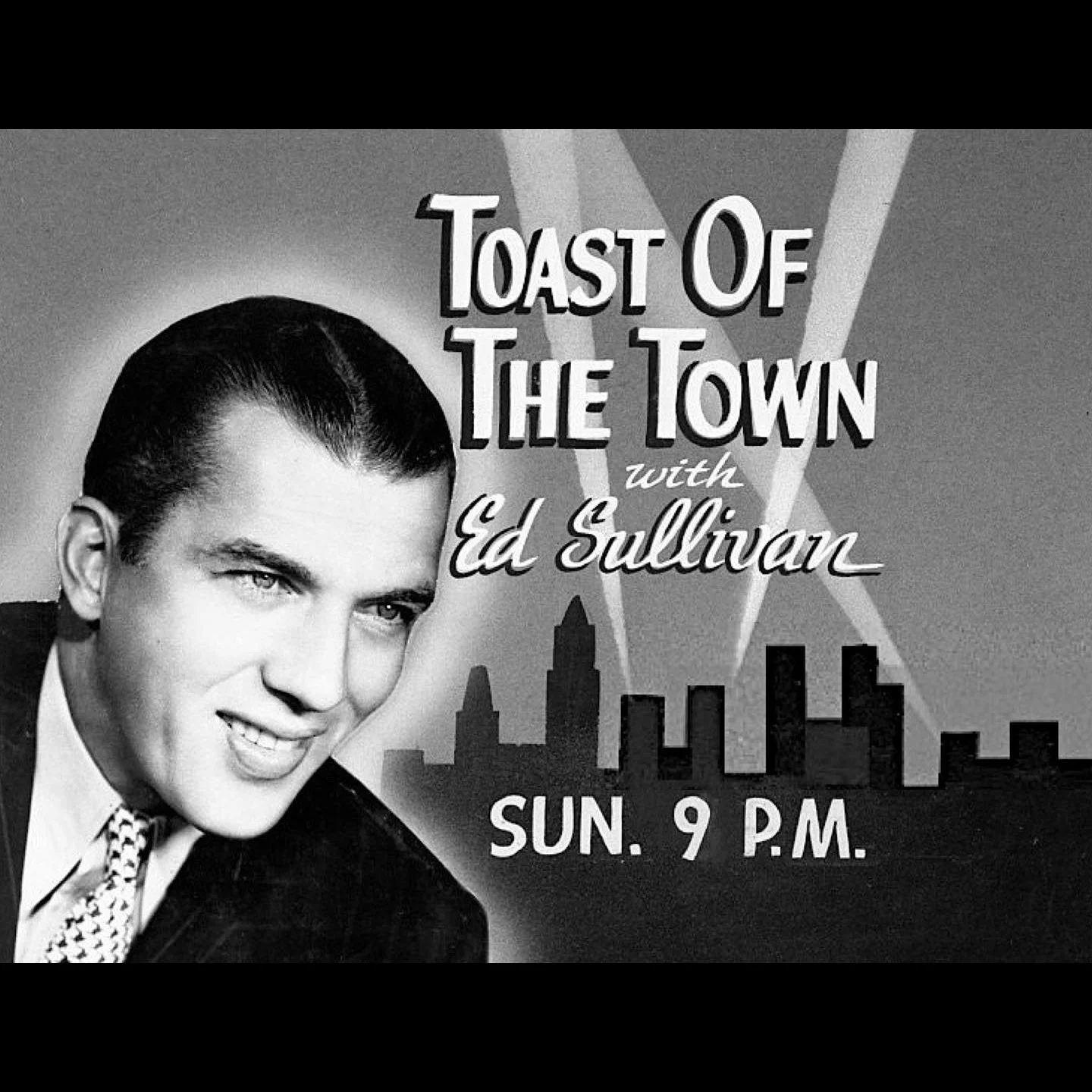
Toast Of The Town
As Jacob Pomrenke writes, “[Joe’s] selection generated headlines all over the country in 1951. He was invited to New York to appear on Ed Sullivan’s Toast of the Town TV program,” which would later be renamed The Ed Sullivan Show in 1955.
Joe was scheduled to appear on the show on December 16, 1951. Unfortunately, he passed away 11 days before his scheduled appearance from a heart attack in his home in Greenville.
The American masses never got the chance to see with their own eyes who Joe was as a man.
Unfortunate Timing
With Joe’s passing, the budding groundswell of support to have his name reinstated to the good graces of Organized Baseball died, too.
His death became another example in a series of unfortunately-timed efforts to either have Joe’s name cleared, to have him inducted into the Hall, or both.
In 1985, the newly-formed Shoeless Joe Jackson Society was able to secure legislation from both South Carolina and Louisiana urging Baseball to clear Joe's name.
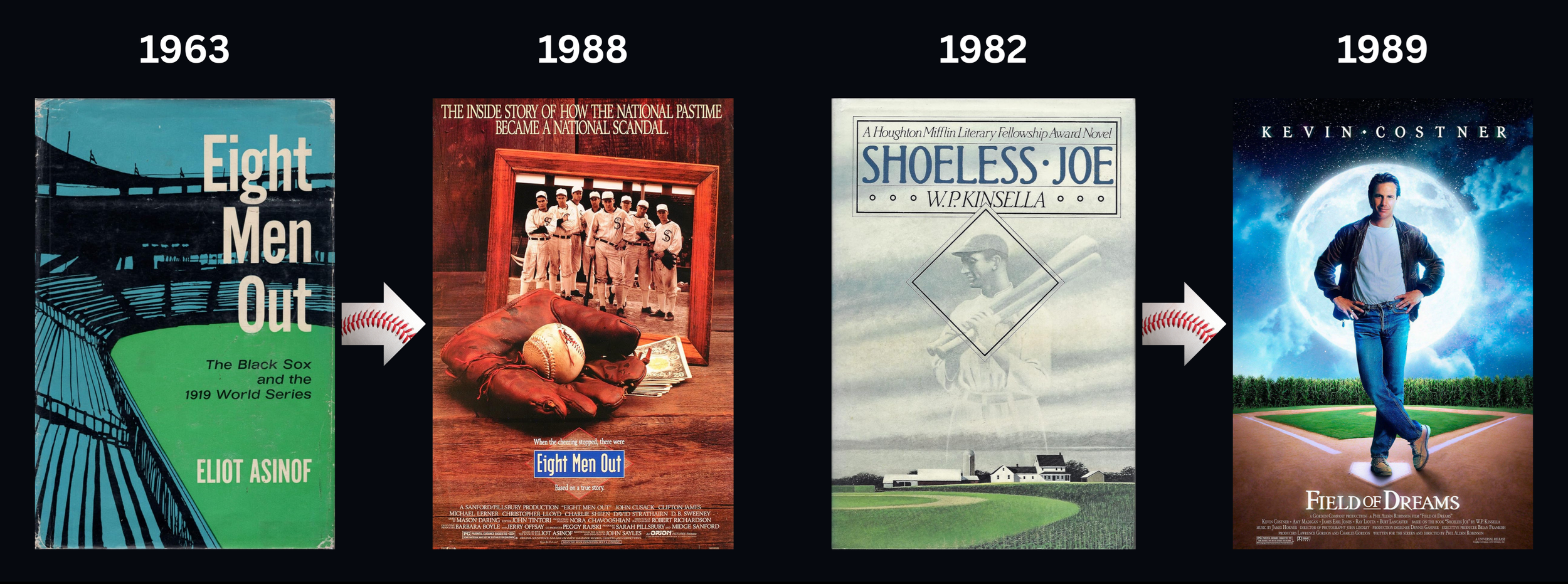
Thanks in large part to the theatrical releases of Eight Men Out and Field Of Dreams in the late 1980s, we see this major groundswell of support for Joe arise, this time from a new generation of fans who don’t understand how a “lifetime ban” is still being enforced for a man whose life ended in 1951.
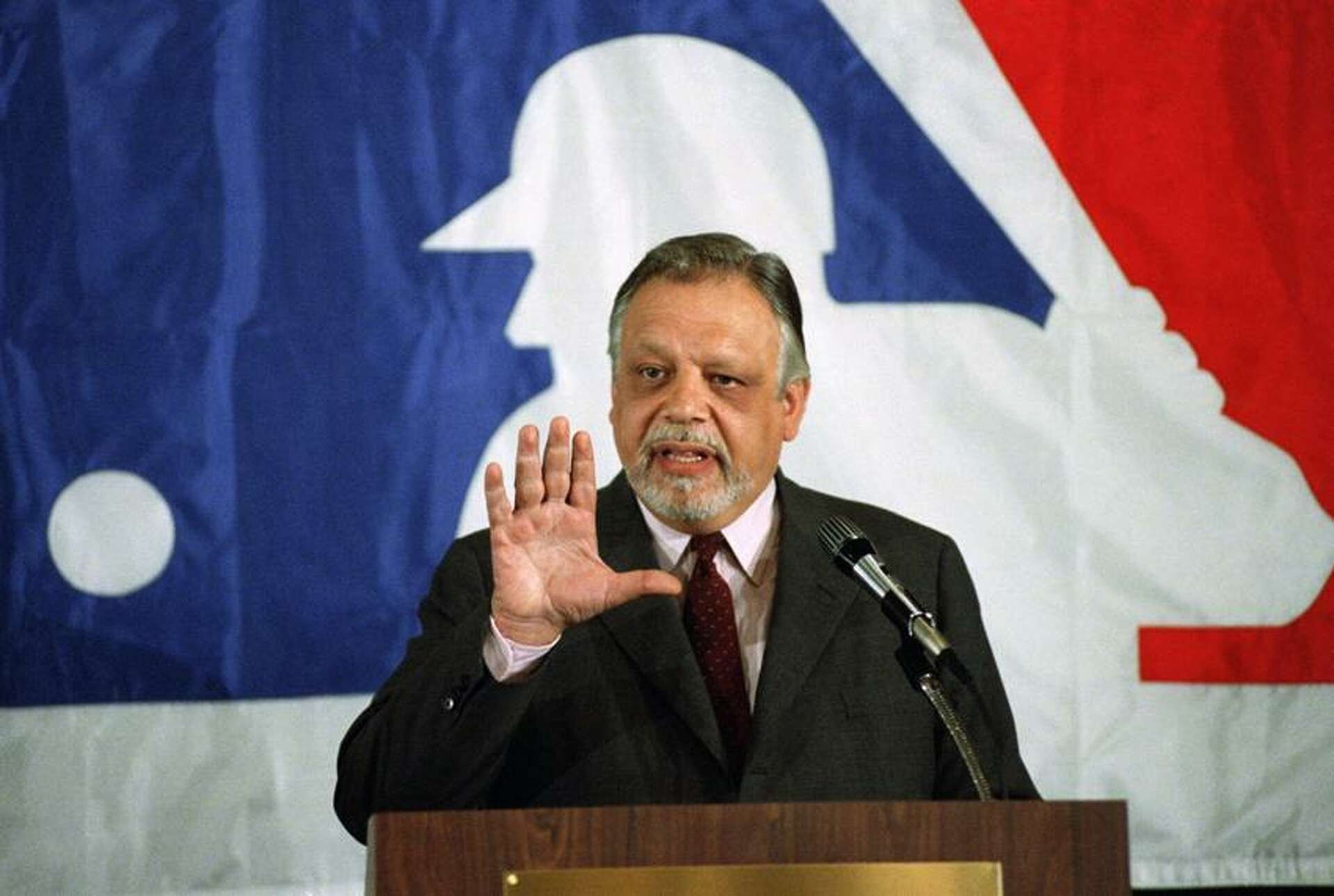
Bart Giamatti
Trying to capitalize on this major momentum, the South Carolina state Senate approved a resolution asking new baseball Commissioner Bart Giamatti to reinstate Shoeless Joe Jackson as a “member in good standing in organized baseball” in June of 1989.
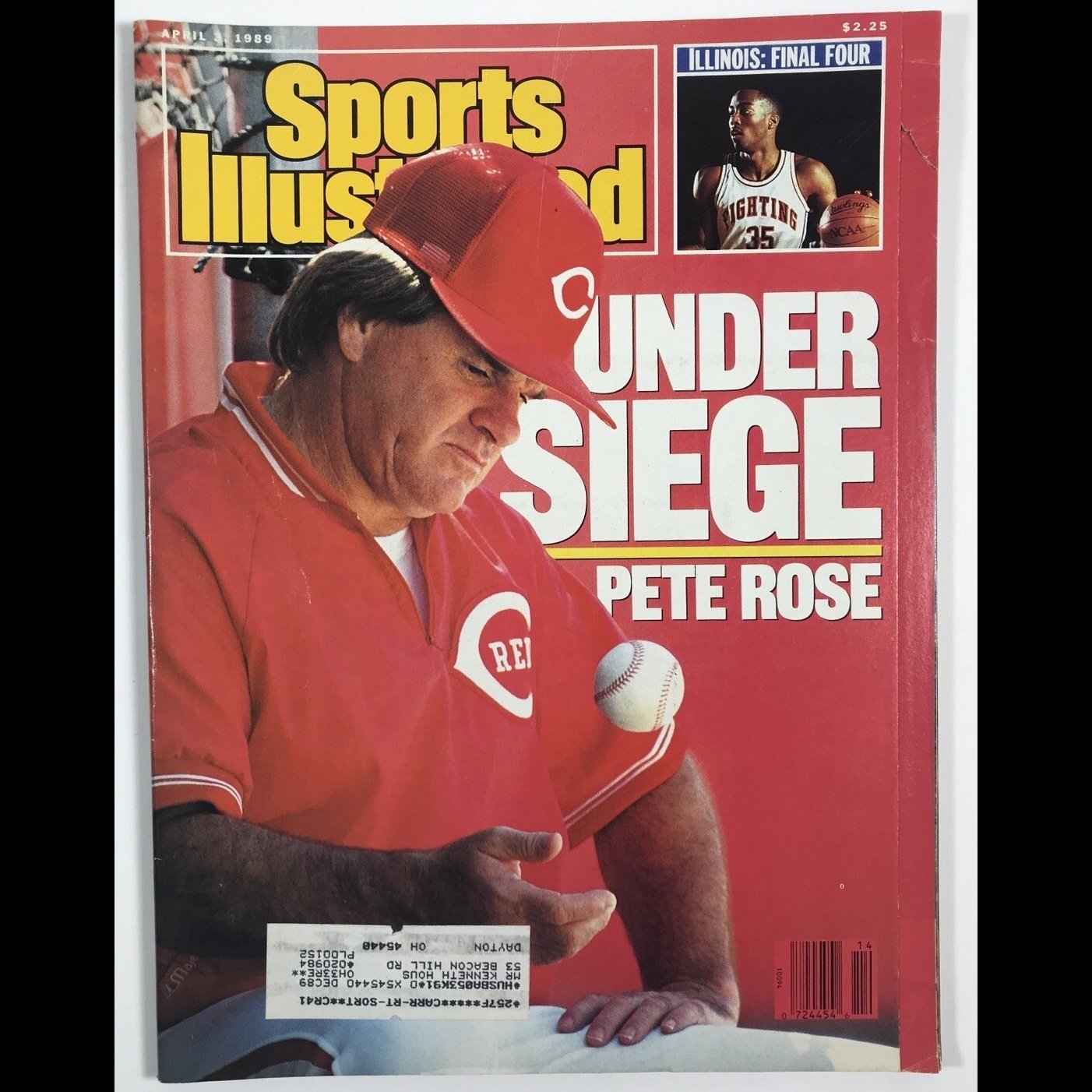
More Bad Timing
February 20, 1989 - Pete Rose is informally questioned by commissioner Peter Ueberroth
April 1, 1989 - Bart Giamatti assumes office as the seventh Commissioner of Baseball
April 3, 1989 - Sports Illustrated makes Pete Rose its cover story
April 4, 1989 - Lawyer John Dowd begins his investigation into Pete Rose
August 24, 1989 - Bart Giamatti announces that Pete Rose is banned for life from baseball for gambling
Take an in-depth look at the Pete Rose timeline of events HERE.
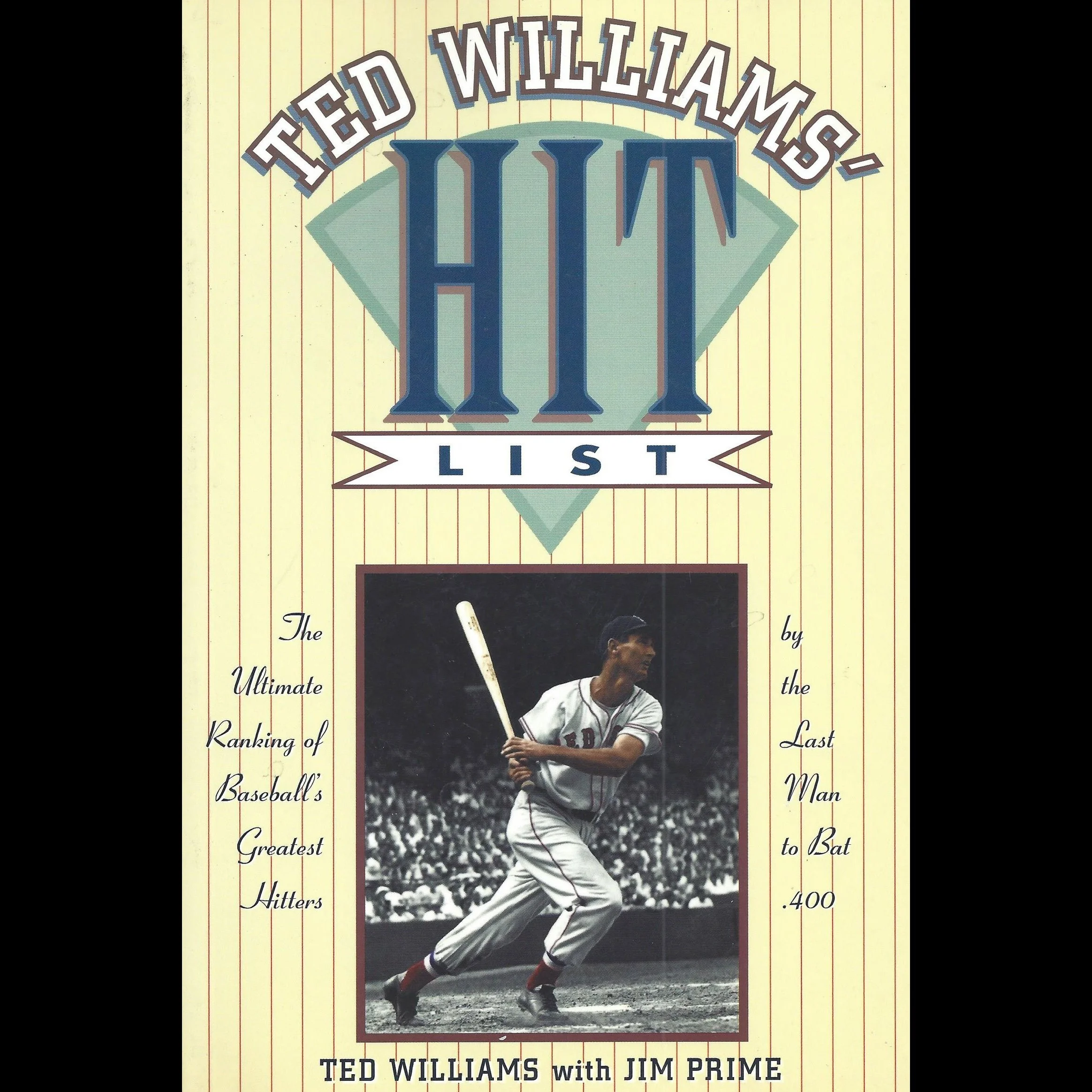
Ted Williams
Ted Williams, who many people believe is the greatest hitter who ever lived, first heard stories about Joe Jackson when he asked Red Sox General Manager Eddie Collins about Joe.
Collins, of course, was teammates with Joe in Chicago from 1915 to 1920. Ted said he was impressed by the reverence Collins had for Joe, and that it was something Ted never forgot.
Ted ranked Joe Jackson as the 8th greatest hitter of all time in his 1996 book, Ted Williams’ Hit List.
Buy a copy of the book HERE.
Making The Rounds
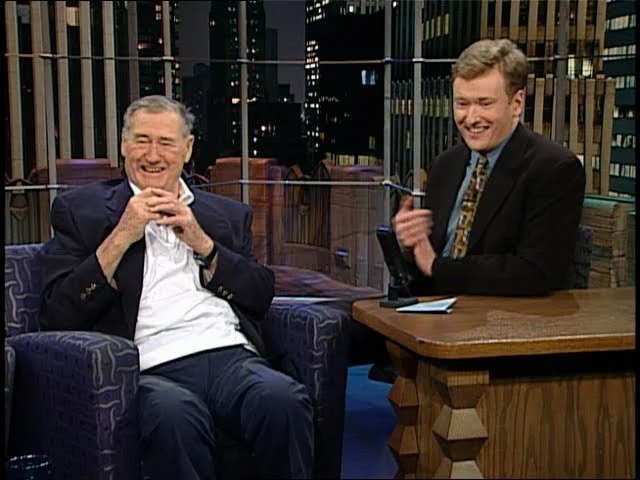
Ted Williams was making the talk show rounds, advocating for Joe on the January 20, 1998, episode of Late Night with Conan O'Brien, and he met with commissioner Bud Selig at the All-Star Game in Boston in July of 1999 to push for Joe's reinstatement. Hall of Famers Bob Feller, Yogi Berra, and Tommy Lasorda joined the effort, as well.
More Legislation
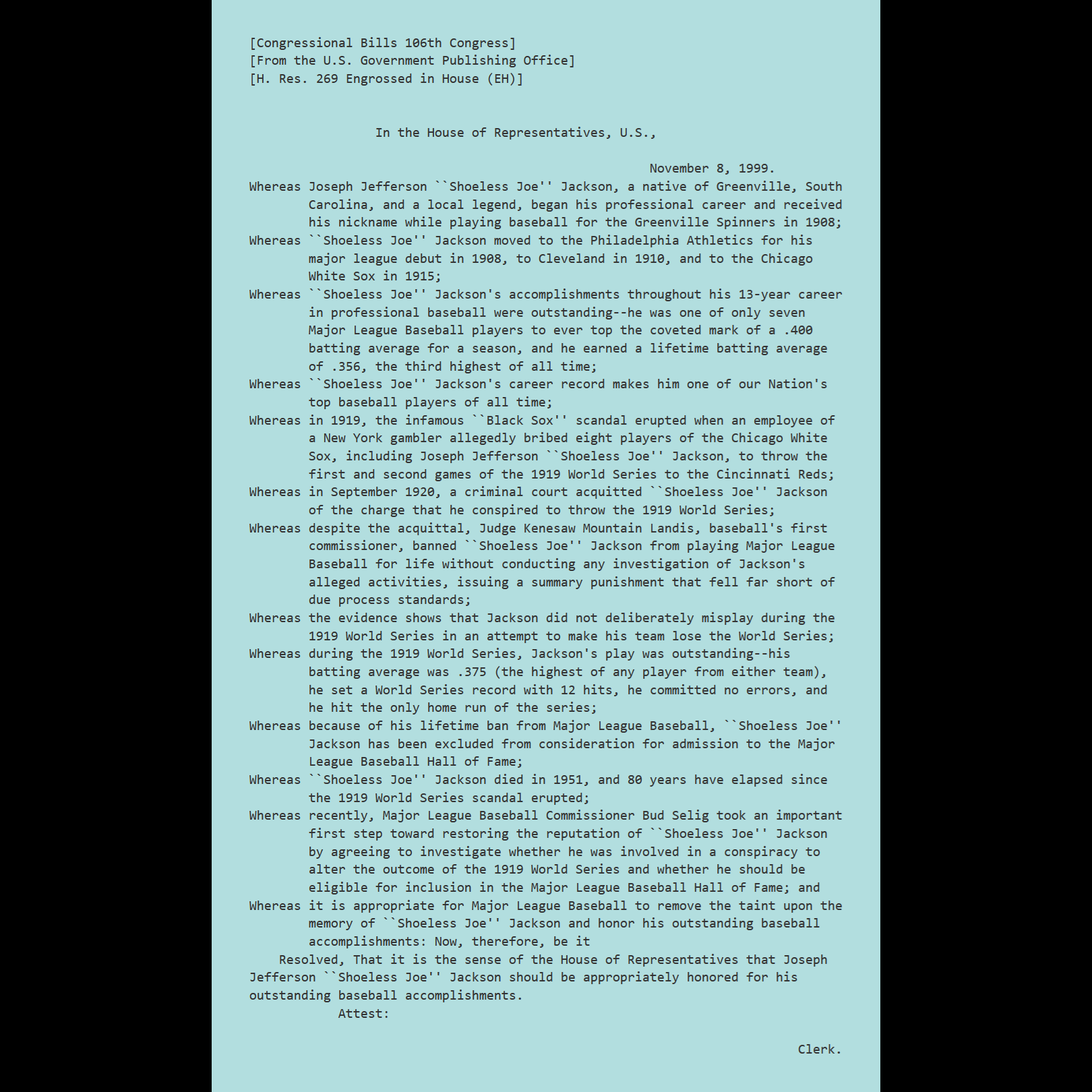
A formal review of the case was under way, spurred by Representative Jim DeMint of Greenville, South Carolina, who introduced a resolution in the House in July of 1999 calling for Jackson’s reputation to be restored, and Senator Tom Harkin of Iowa, who did the same earlier in the month in the Senate.
Harkin had become intrigued with the Shoeless Joe story after Field of Dreams was filmed in his state.

Rob Manfred
Rob Manfred officially started his role on January 25, 2015, and one of his first acts was to listen to Pete Rose make his case for why he should be reinstated.
Rose first told Manfred that he had stopped gambling, but then admitted he still wagered legally on sports, including baseball.
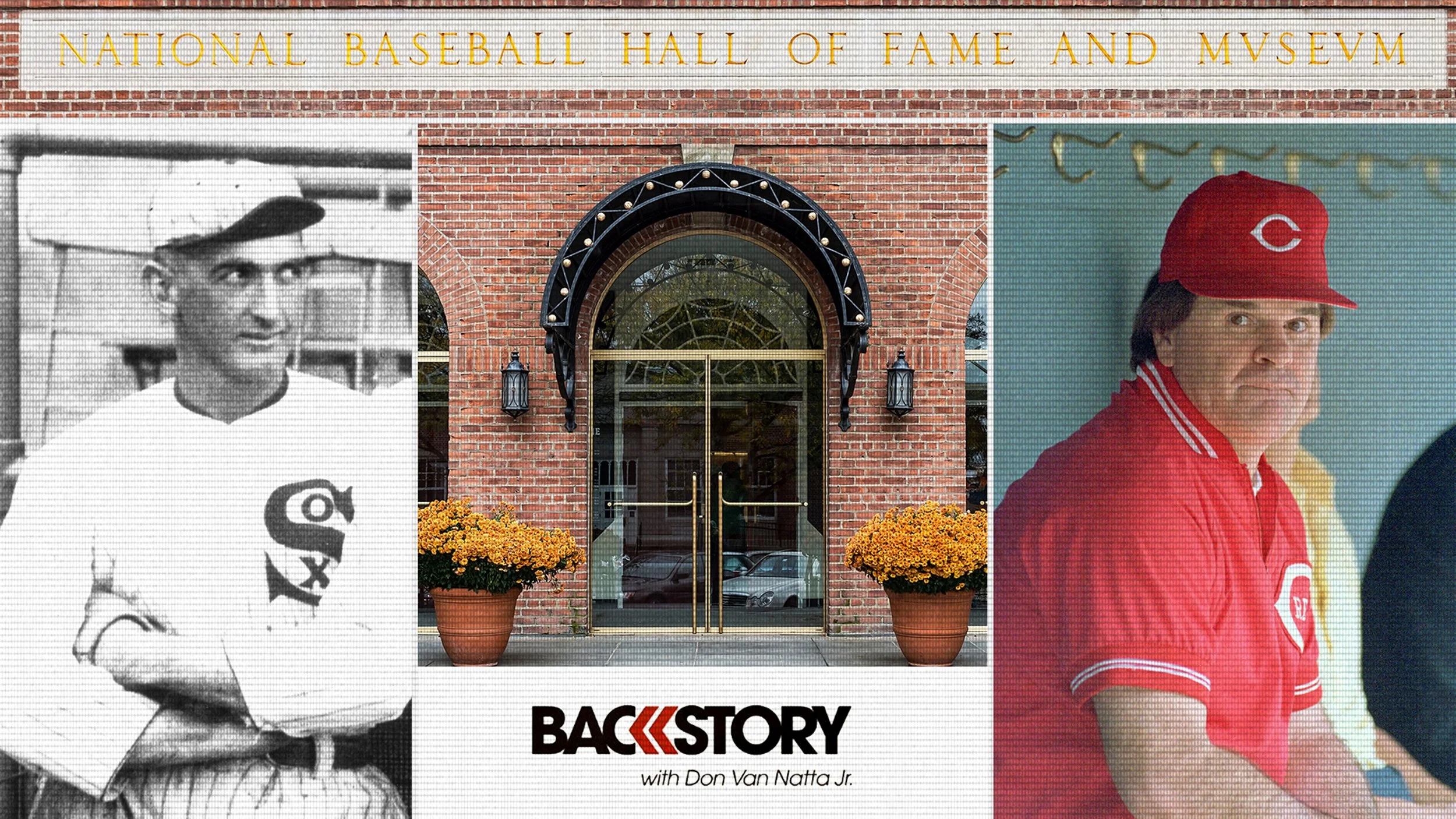
During the pandemic in 2020, an episode of the ESPN documentary series called “Backstory” by Don Van Natta aired with the title “Banned For Life*” which examined Major League Baseball’s punishments of both Pete Rose and Shoeless Joe Jackson. For the first time in decades, we got an official statement from Major League Baseball in regard to Joe’s status in the game. They said, on the record, that a player who has been banned for life is immediately removed from the ineligible list upon their death.
The Hall of Fame
Technically, the Hall of Fame and Major League Baseball are two totally separate entities.
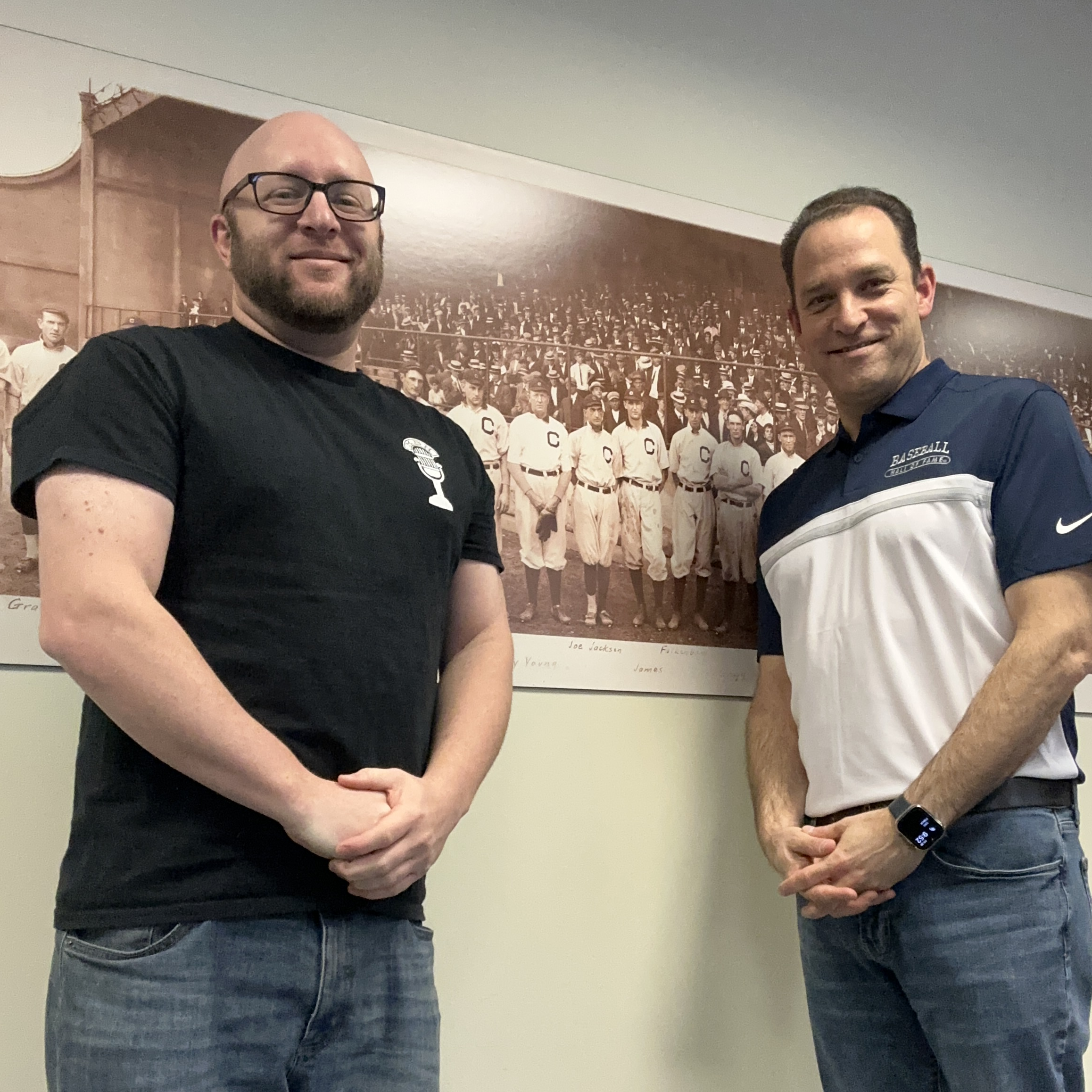
We heard about this and how that separation manifests itself during our episode with Josh Rawitch, who has been the President of the National Baseball Hall of Fame and Museum since 2021.
Josh was our guest for Episode 9 of Season 4. You can listen to that episode HERE.
Since Major League Baseball and the Hall of Fame are two totally separate entities, they can — and often do — operate completely independently from one another.
The Hall of Fame
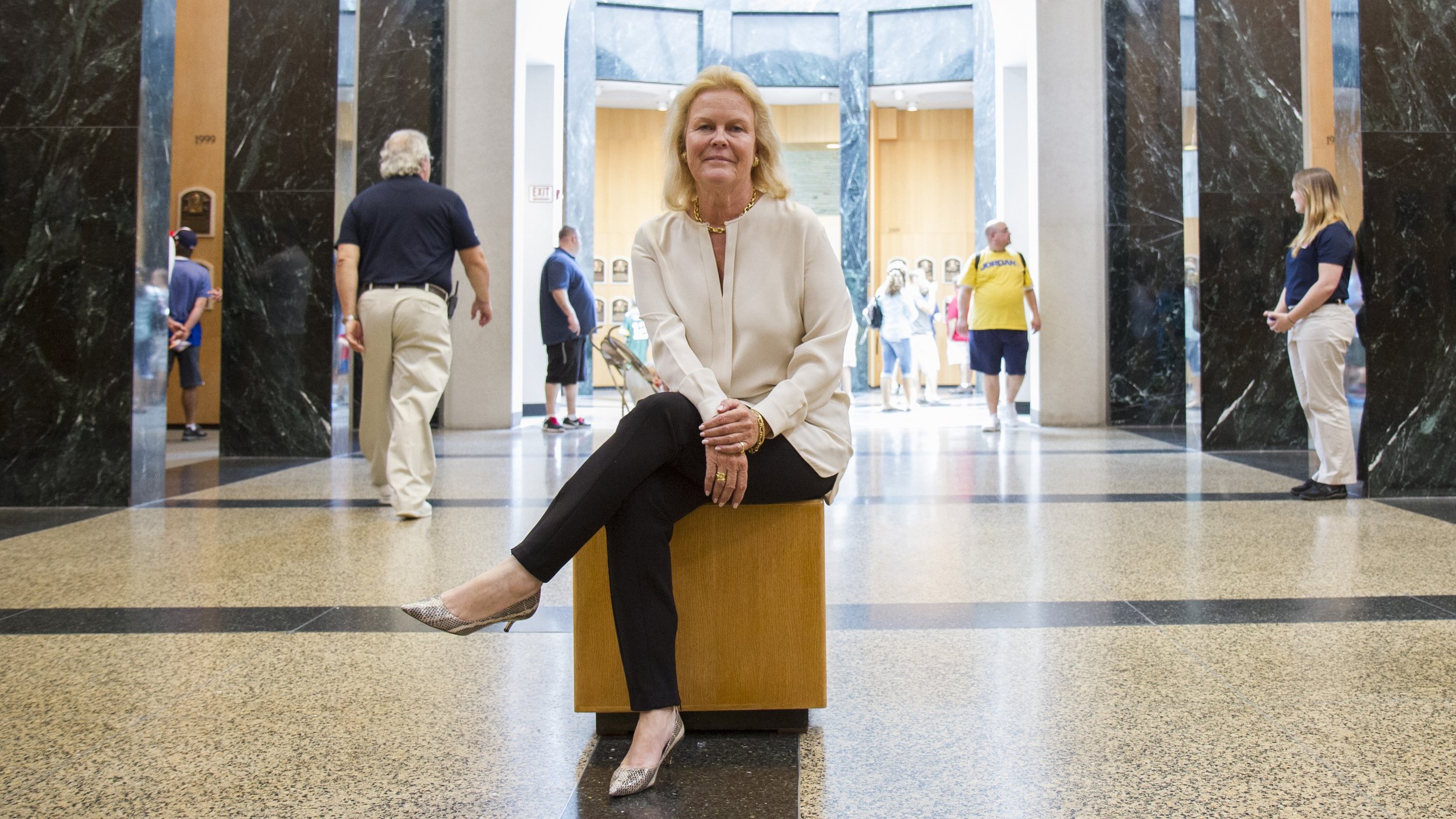
The National Baseball Hall of Fame is run by a private foundation, with a president (Jane Forbes Clark, seen here) and a board of directors, which happens to be made up mostly of former MLB players and executives.
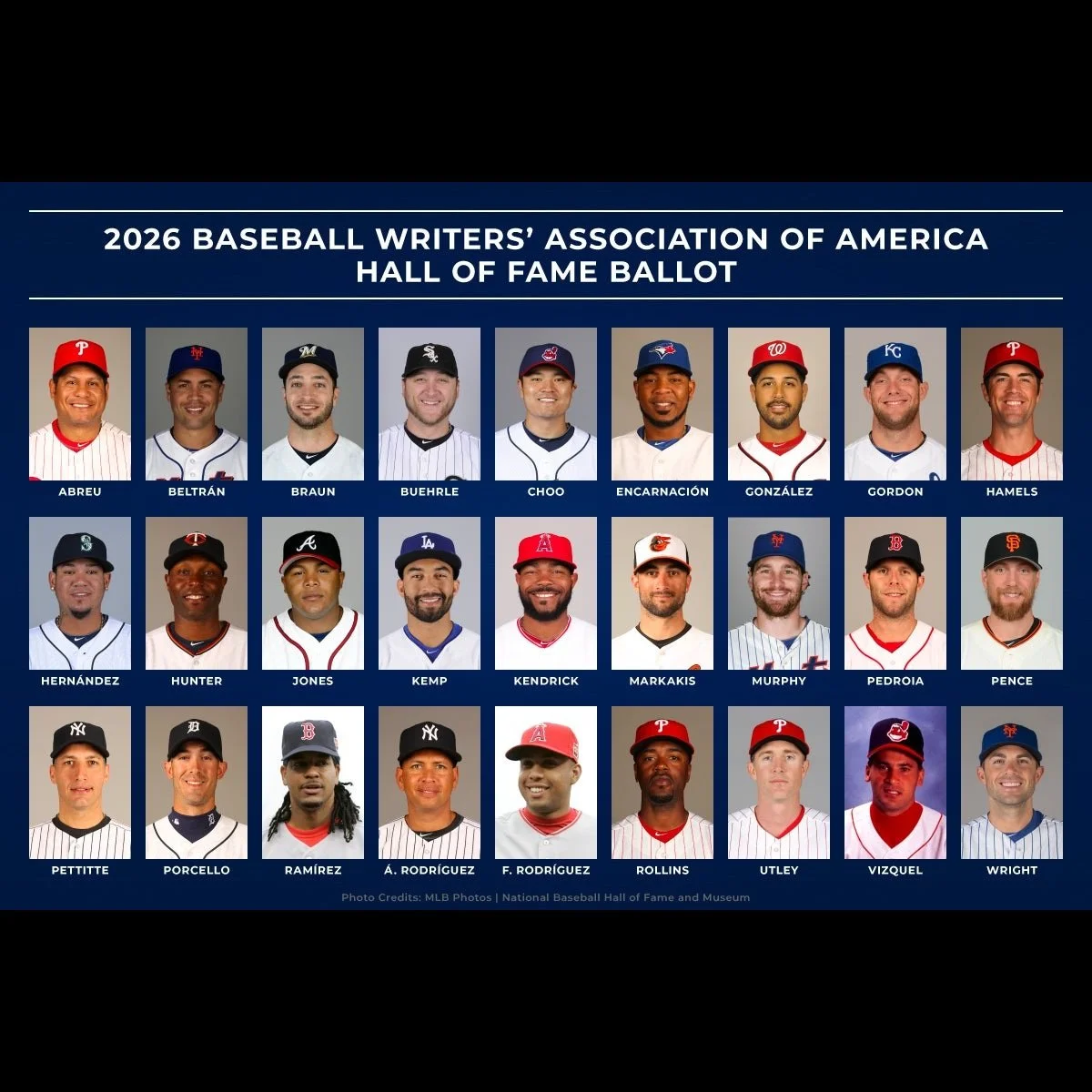
The Voting Process
The selection of inductees is conducted among members of the Baseball Writers’ Association of America, who cast ballots from a list of players who have been retired five or more years.
Veteran committees and era committees choose players from the more distant past for induction.
Major League Baseball has nothing to do with either process.
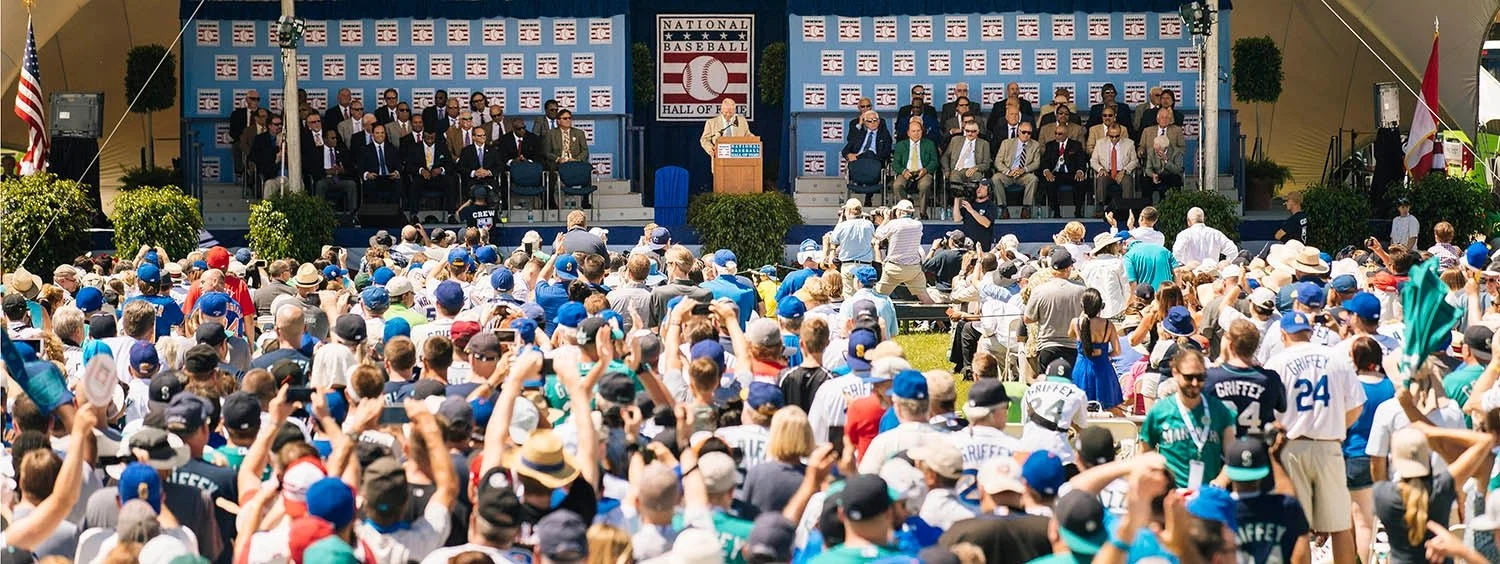
It has always been in the Hall of Fame’s best interest to operate in ways which they feel are in line with Major League Baseball, so they can continue to have the level of access that they want to have with players and teams. While it is technically the official stance of the Hall of Fame that no player on Major League Baseball’s ineligible list can be put on a Hall of Fame ballot, that is a choice they have made on their own. This means that it is also a choice that could be changed on their own… if they wanted it changed.
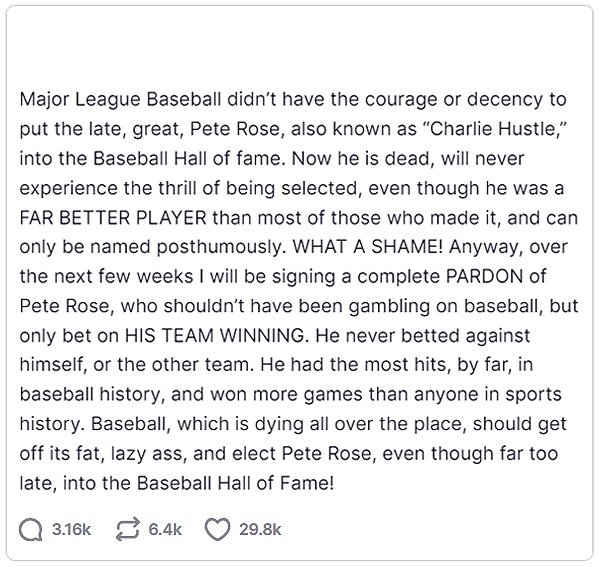
4/14/1941 - 9/30/2024
Pete’s death stirred up strong feelings for many members of the public.
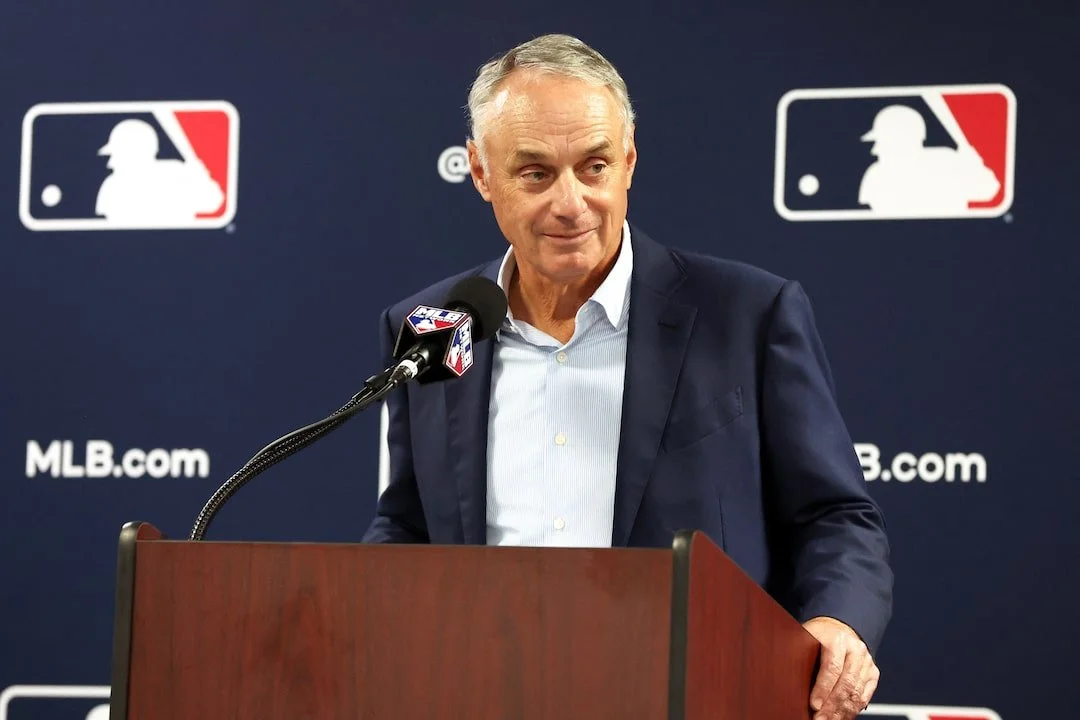
Rob Manfred
“It is hard to conceive of a penalty that has more deterrent effect than one that lasts a lifetime with no reprieve. Therefore, I have concluded that permanent ineligibility ends upon the passing of the disciplined individual, and Mr. Rose will be removed from the permanently ineligible list."
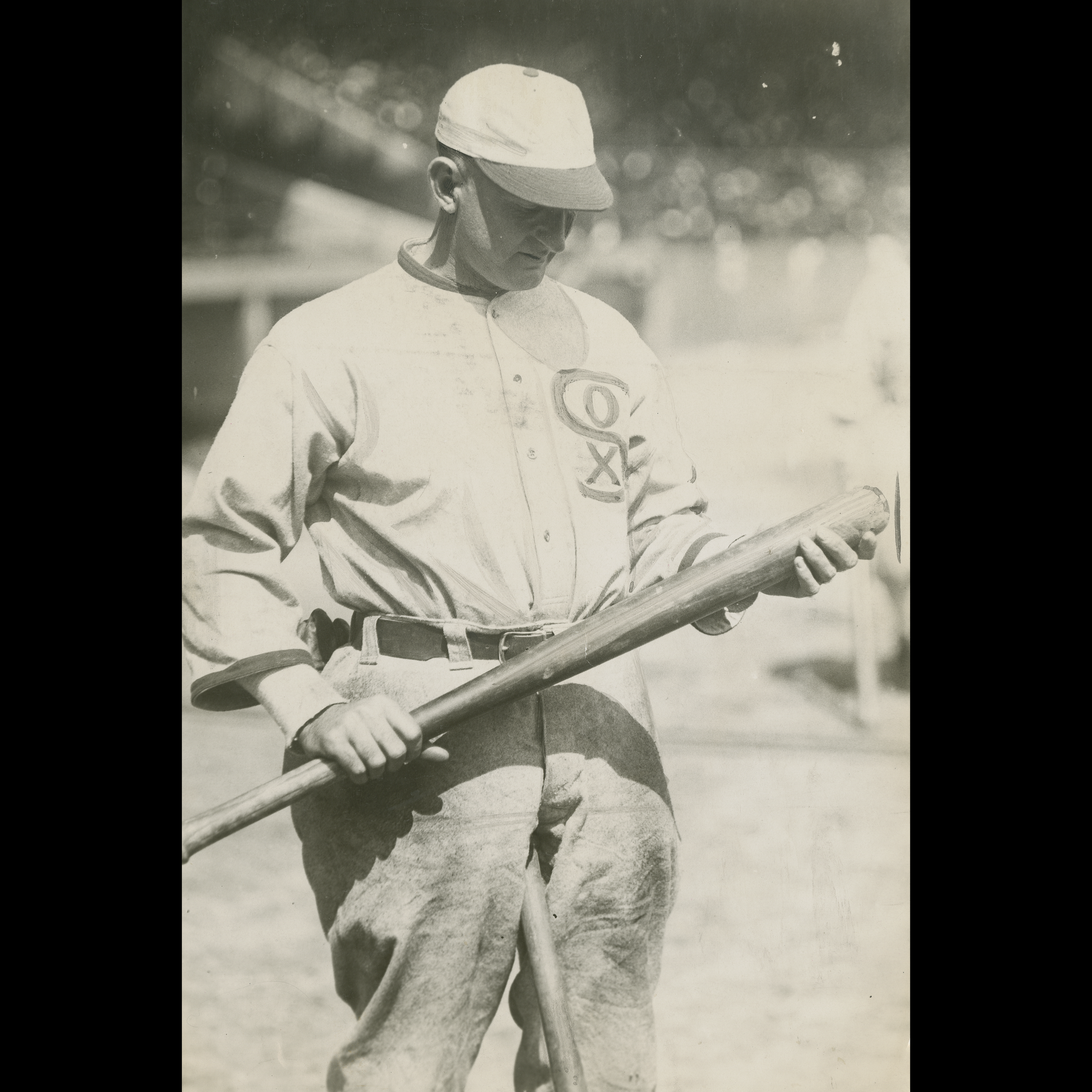
HOF Class of 2028?
Based on the Hall of Fame’s current rules for players who last played more than 15 years ago, the earliest either Joe Jackson or Pete Rose could even be considered by the Historical Overview Committee to be one of the eight names on the ballot to be voted on by the Classic Baseball Era Committee wouldn’t be until they meet in December of 2027.
Joe and Pete would each need to secure at least 12 of the 16 votes to earn induction to be enshrined as a part of the Hall of Fame’s Class of 2028.
That is the earliest possibility for either player as things stand right now.
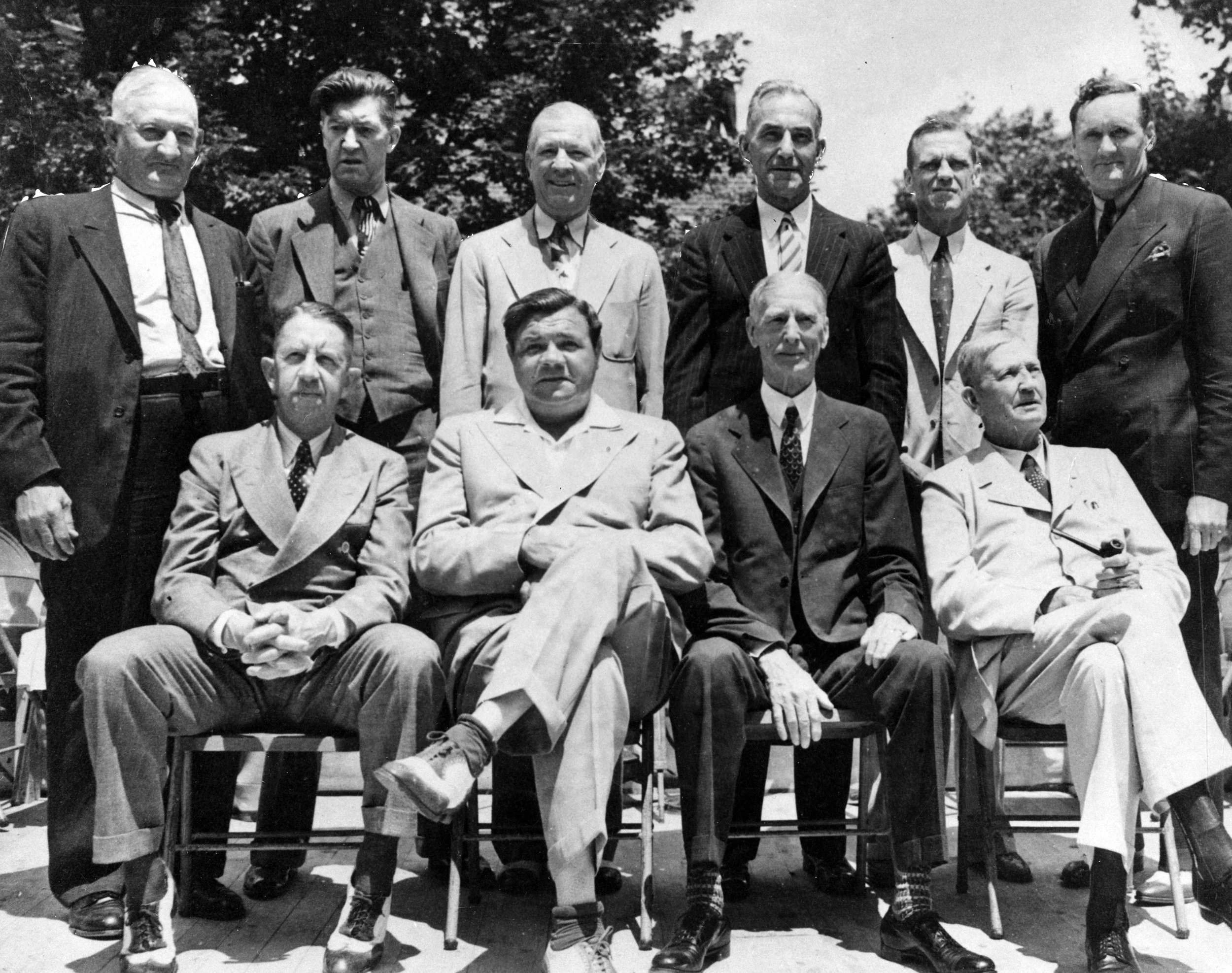
The Baseball Hall of Fame
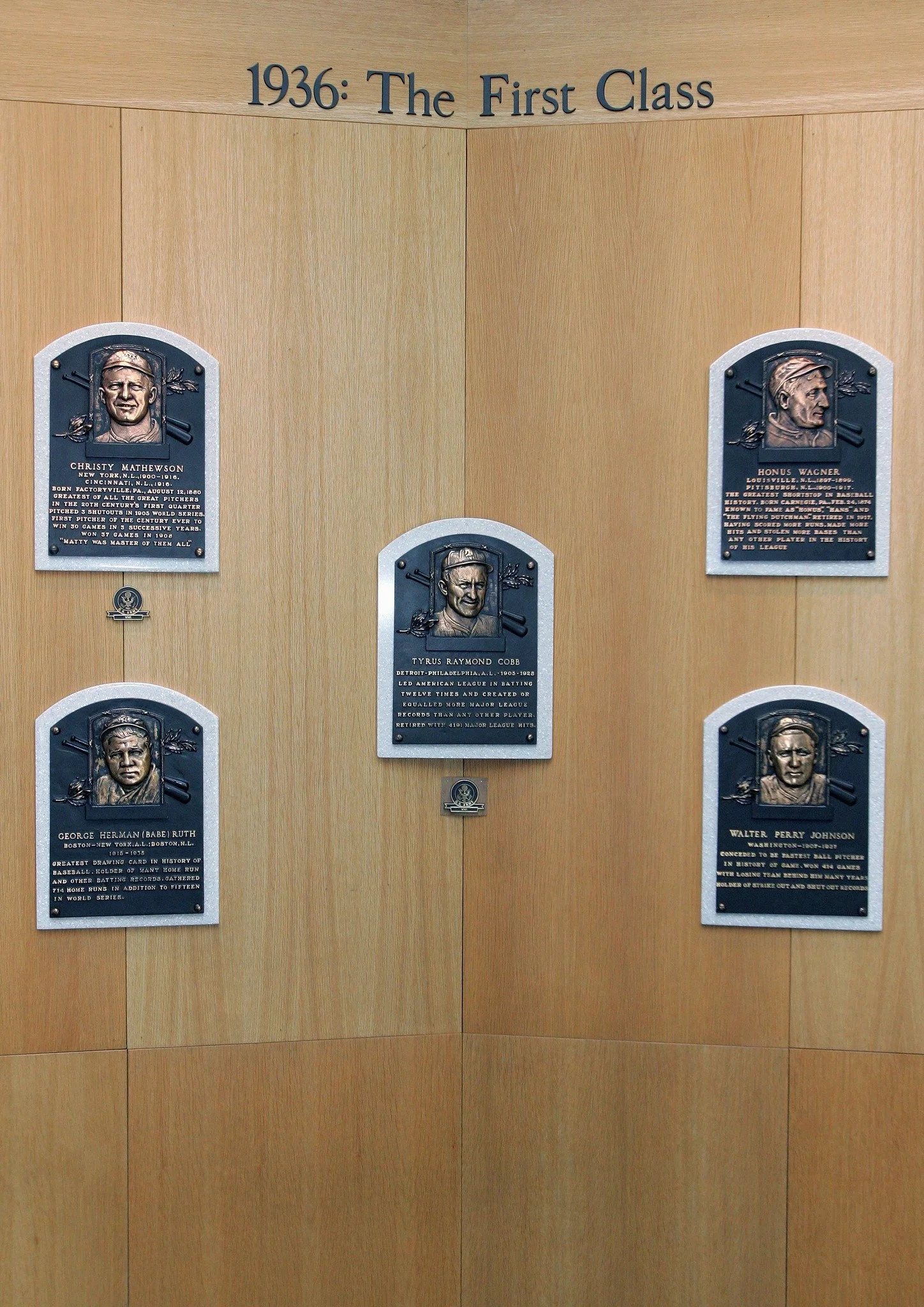
The first elections to select inductees to the Baseball Hall of Fame were held in 1936. Members of the Baseball Writers' Association of America were given authority to select individuals from the 20th century. A special Veterans Committee selected deserving individuals from the 19th century.
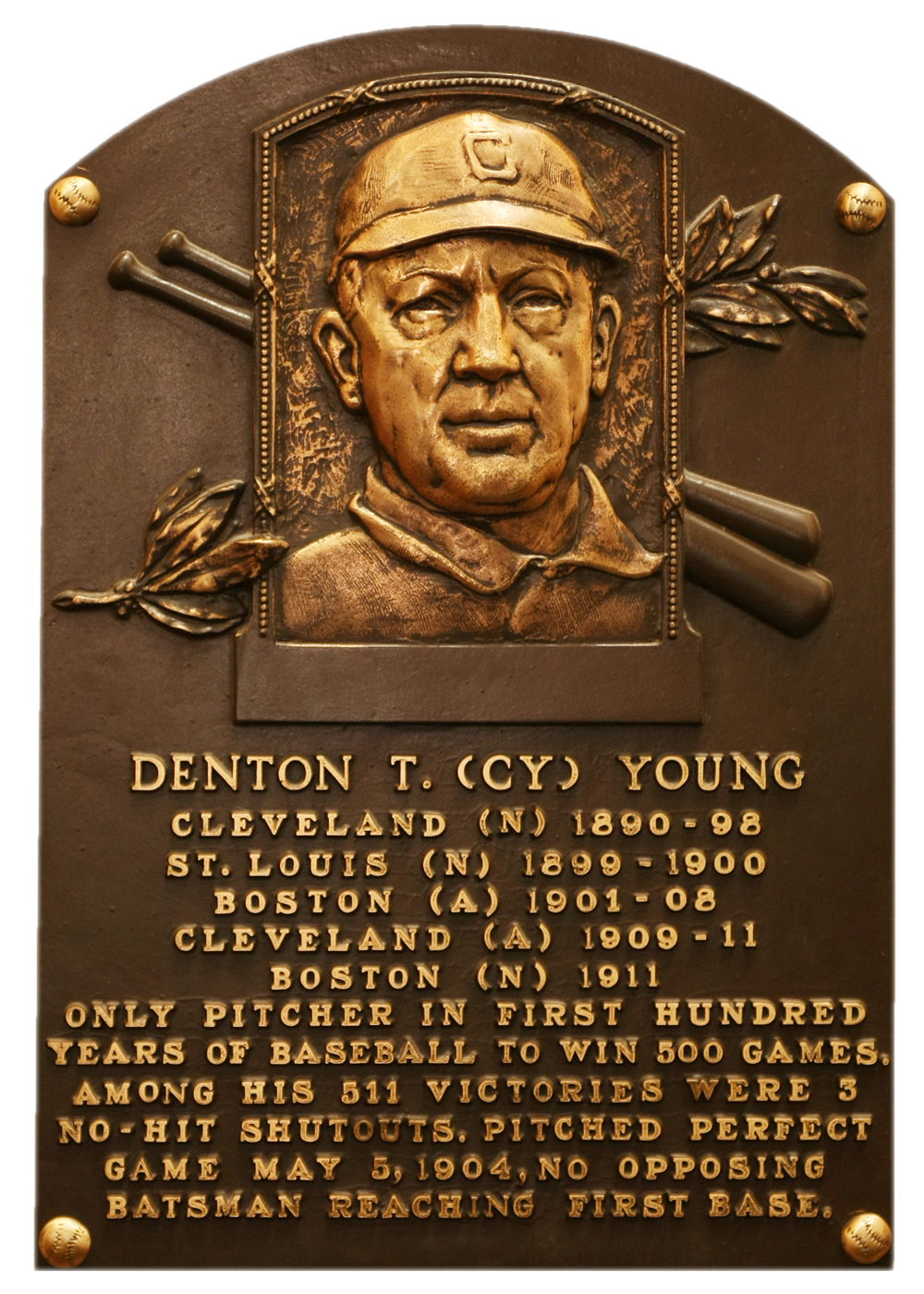
Class of 1936
The intent was for 15 honorees to be selected before the 1939 ceremonies — 10 from the 20th century, and 5 from the 19th century — and for additional players from both eras to be selected in later years.
Voters were given free rein to decide for themselves in which group a candidate belonged, with neither group knowing the outcome of the other election.
As a result, some candidates had their vote split between the elections, like, Cy Young, whose career was almost perfectly split between the 19th and 20th centuries.
Because he played from 1890 to 1911, Young finished 8th in the 20th century vote and 4th in the 19th century vote, meaning he wasn’t elected by either committee.
Young would be elected as a part of the Class of 1937.
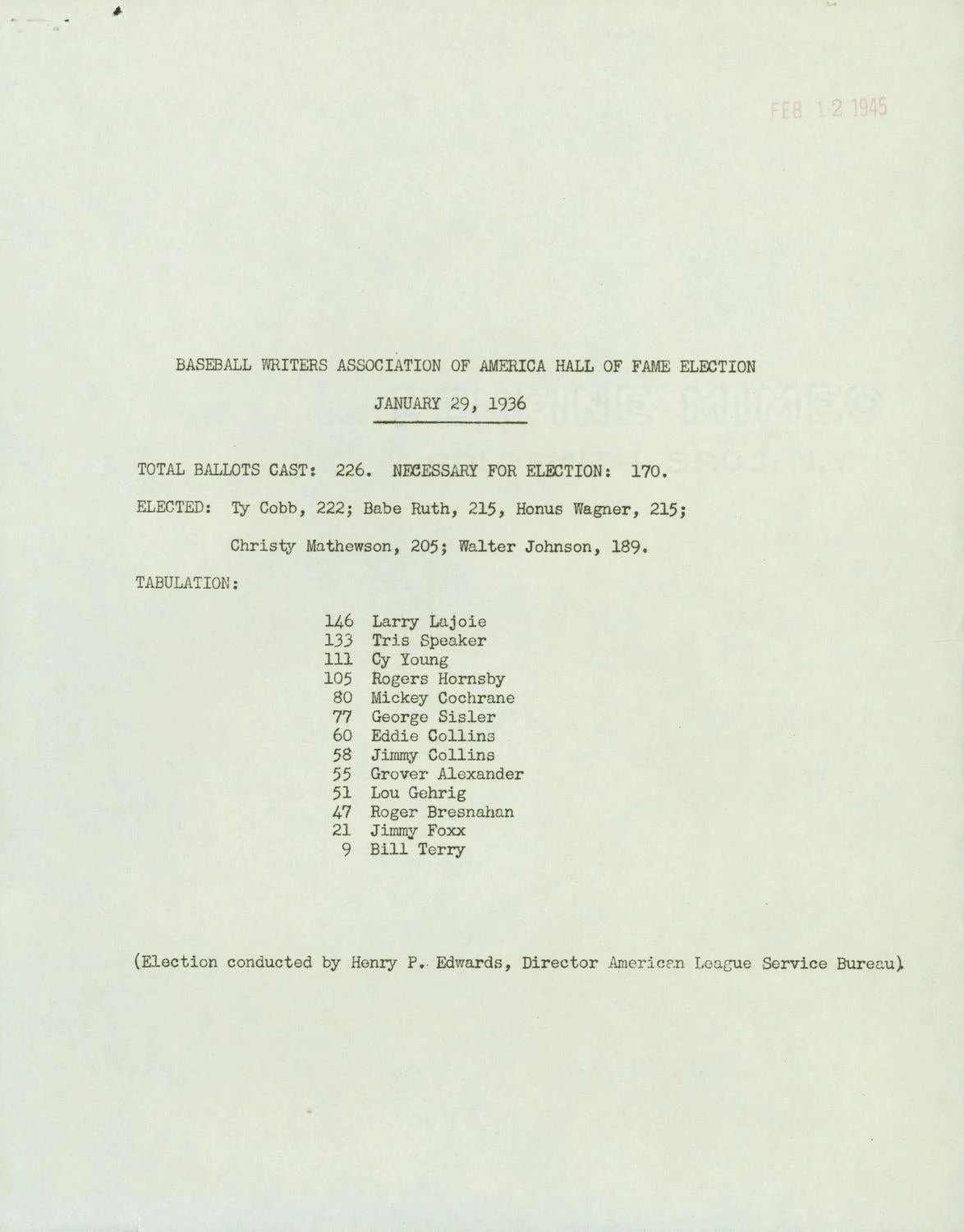
Insane Threshold
When you start a Hall of Fame from scratch, the threshold a player needs to pass for enshrinement is insane.
Potential inductees aren’t just going up against other potential inductees from their specific class; they’re going up against every single person who ever participated in the history of the sport.
So, players like Tris Speaker, Napoleon Lajoie, and Grover Cleveland “Pete” Alexander… were NOT First Ballot Hall of Famers.
Voting For Active Players
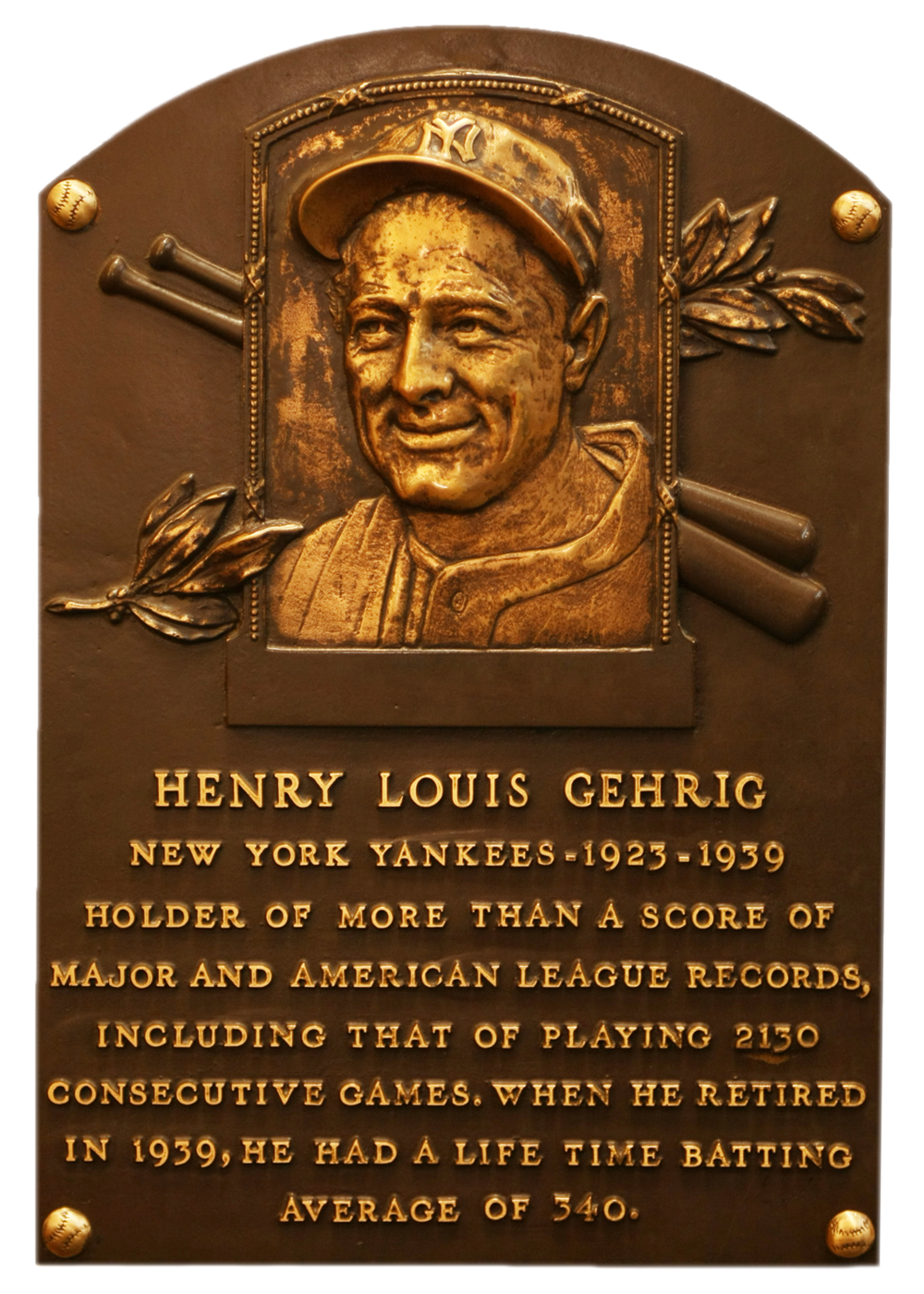
Unlike today, there was no prohibition on voting for active players, and a number of active players received votes, which is why players like Jimmie Foxx, or Rogers Hornsby, or Lou Gehrig did not end up getting elected on their first ballot. They received votes as active players as early as 1936, but not enough votes to make it in immediately.
In fact, more than 50 individuals who received votes but didn’t cross the 75% threshold needed for election on the 1939 ballot were later enshrined in the Hall of Fame. Some of them were still active players, but many were not.
First Ballot Hall of Famers
As of 2026, there have only been a total of 62 First Ballot Hall of Famers.
There were five elected for the Class of 1936, which makes sense, because that was the first election year ever, so everyone who made it in that year was a First Ballot Hall of Famer.
But the next First Ballot Hall of Famers weren’t elected until 1962, when Bob Feller and Jackie Robinson each got the call.
They were followed by Ted Williams in 1966, Stan Musial in 1969, Sandy Koufax in 1972, Warren Spahn in 1973, and Mickey Mantle in 1974. In the 20th century, there were only 34 First Ballot Hall of Famers, which, again, included FIVE in the very first Class of 1936.
Character Clause
That means that from 1937 through 1999, there were only 29 players elected to the Hall of Fame on their first try. To say that the Baseball Writers have long considered being a First Ballot Hall of Famer an honor is an understatement. And while the numbers have certainly increased in the 21st century, going from an average of one every two years or so in the 1900s, to now 28 in the first 27 years of the 2000s… giving a player that distinction is still something the writers don’t seem to take lightly.
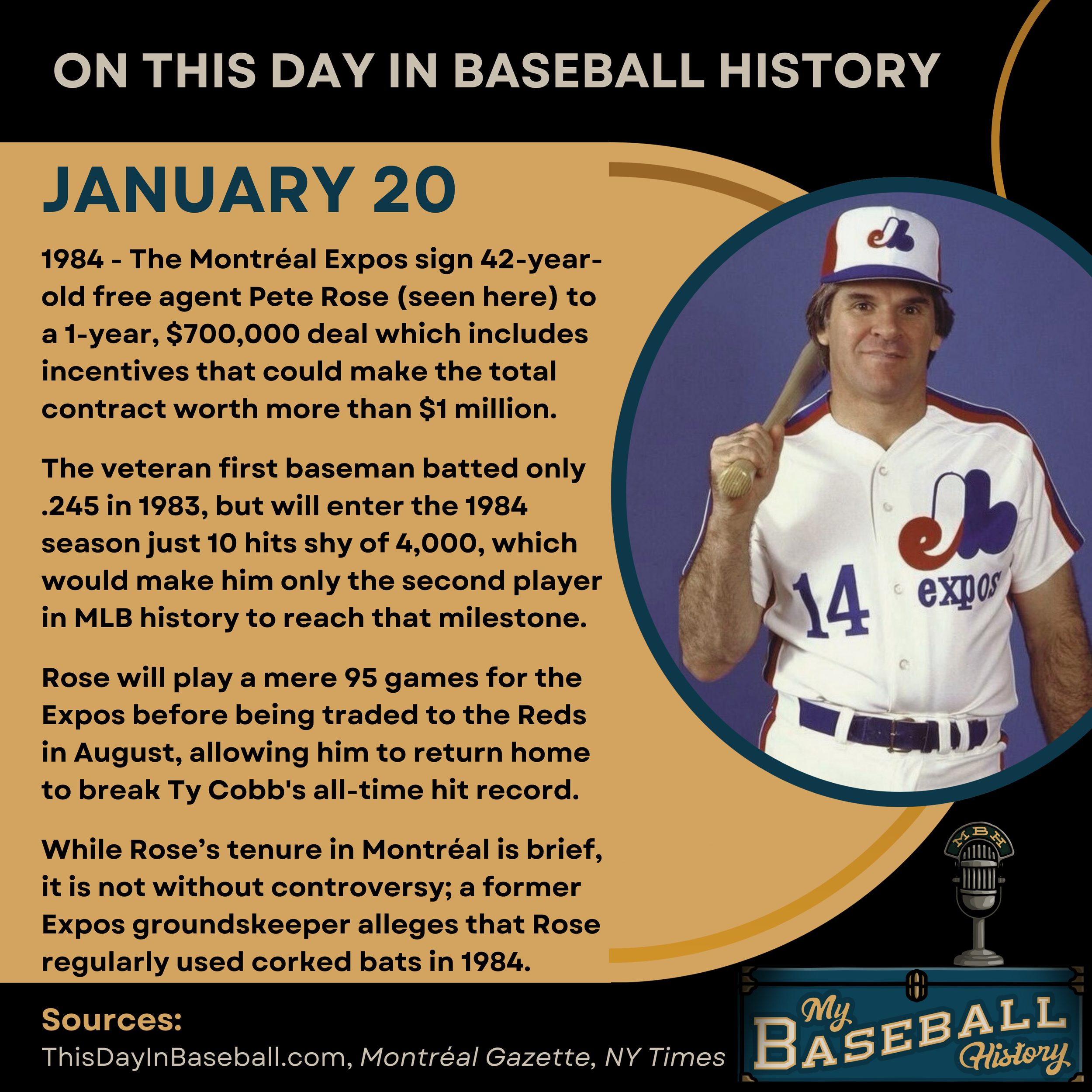
All that to say, there are some real “character clause” issues with giving Pete Rose a plaque, at all, let alone honoring him with the distinction of being a First Ballot Hall of Famer.
Pandora’s Box Is Open
The fact that Pete Rose’s next Hall of Fame ballot will be his first is what’s going to keep him from being inducted, in my opinion. But it gives the Hall of Fame voters an incredibly interesting opportunity to dip their toes into the Gambling Scandal waters.
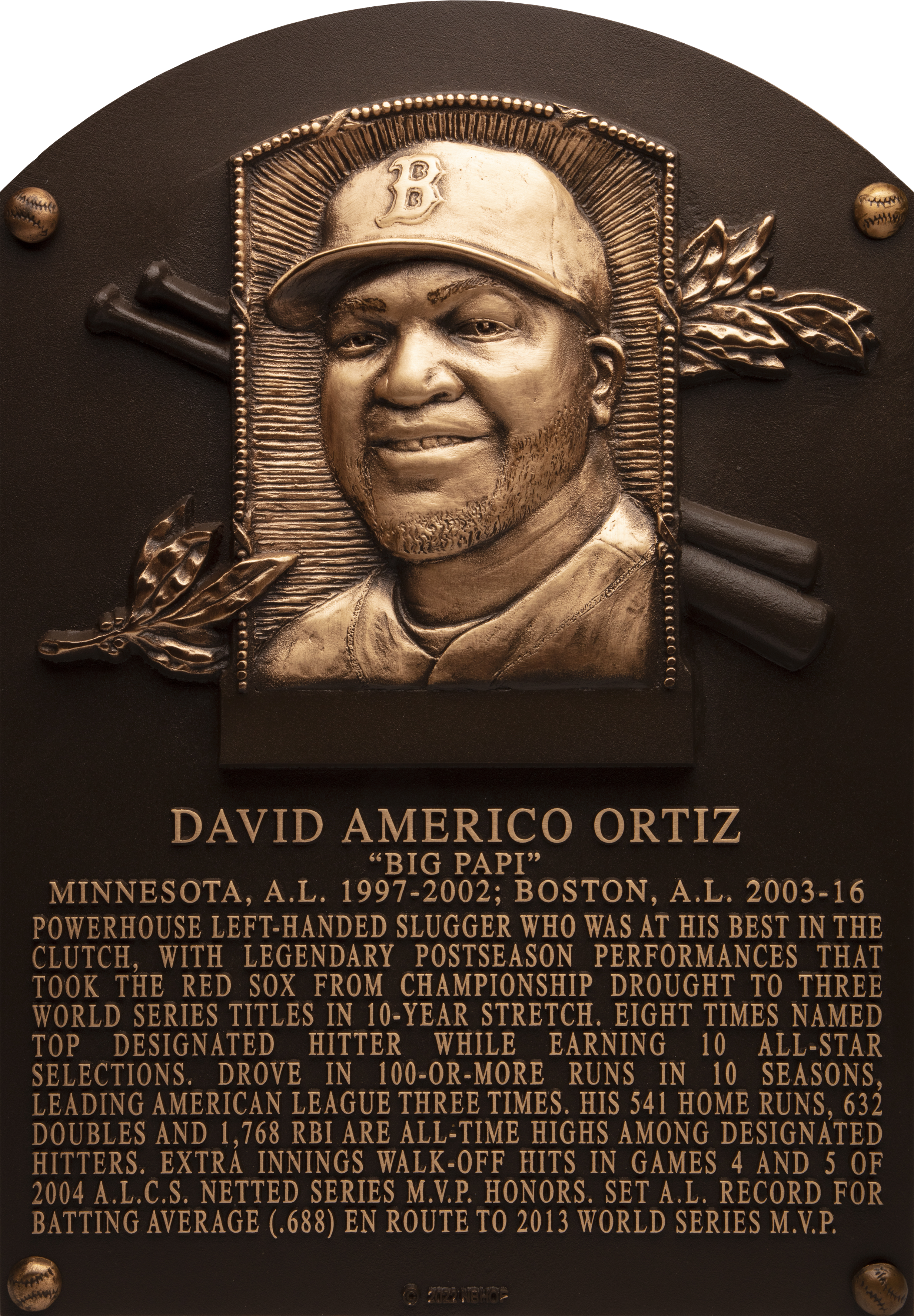
I was careful to use those words, instead of “cheating ballplayers” waters, because the lid of that Pandora’s box was blown clear off a long time ago, with the inductions of players like David Ortiz, Mike Piazza, Ivan Rodriguez, Jeff Bagwell, and Craig Biggio, who all have credible PED accusations tied to their names. But let’s assume those are all just allegations.
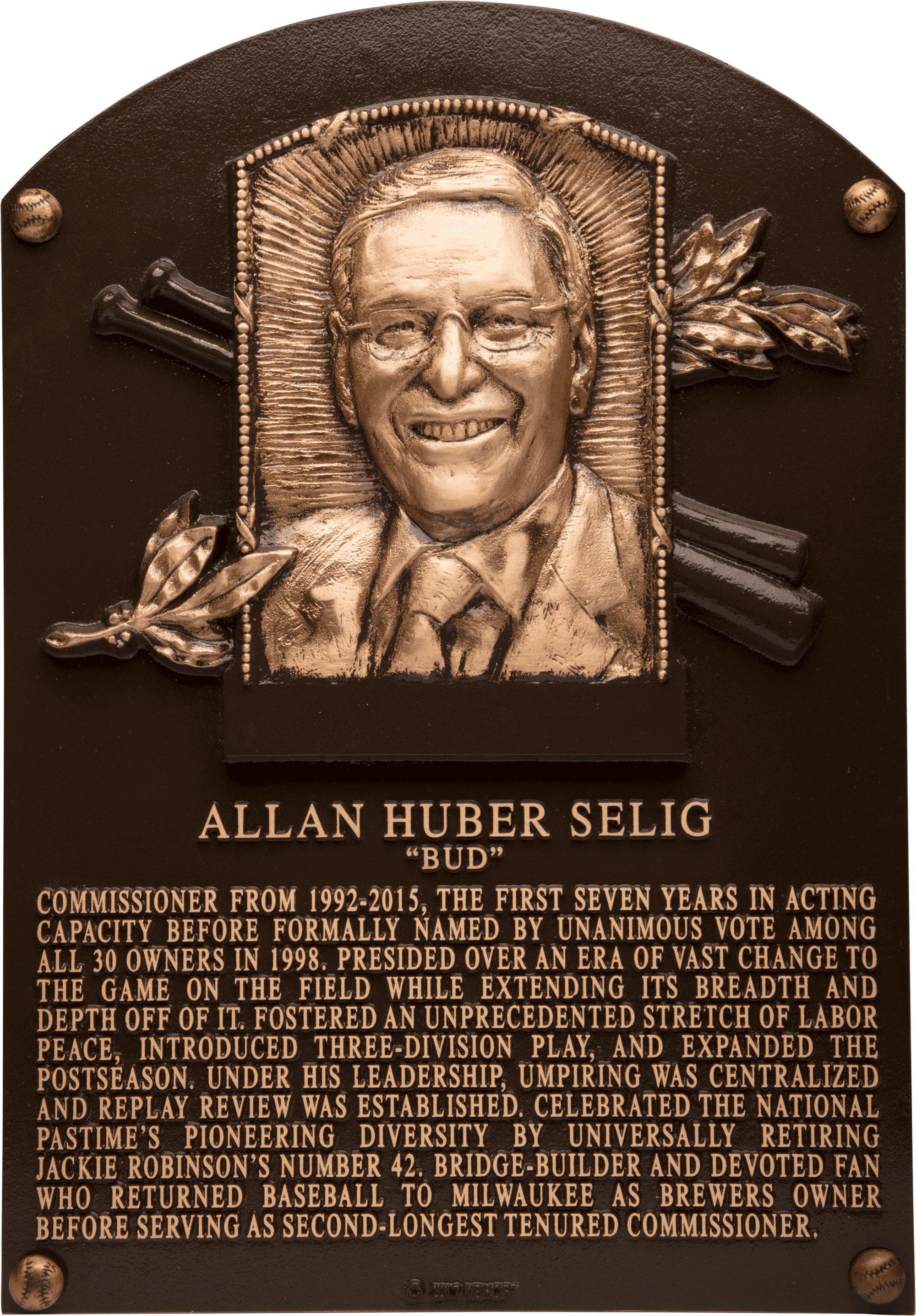
Bud Selig
Bud Selig was the Commissioner who oversaw Major League Baseball during the Steroids Era.
Either Selig knew this was going on and did nothing to stop it, or he didn’t know this was all happening under his nose.
I’ll let you decide for yourself which option is worse.
Bud Selig was inducted into the Hall of Fame as a part of the Class of 2017.
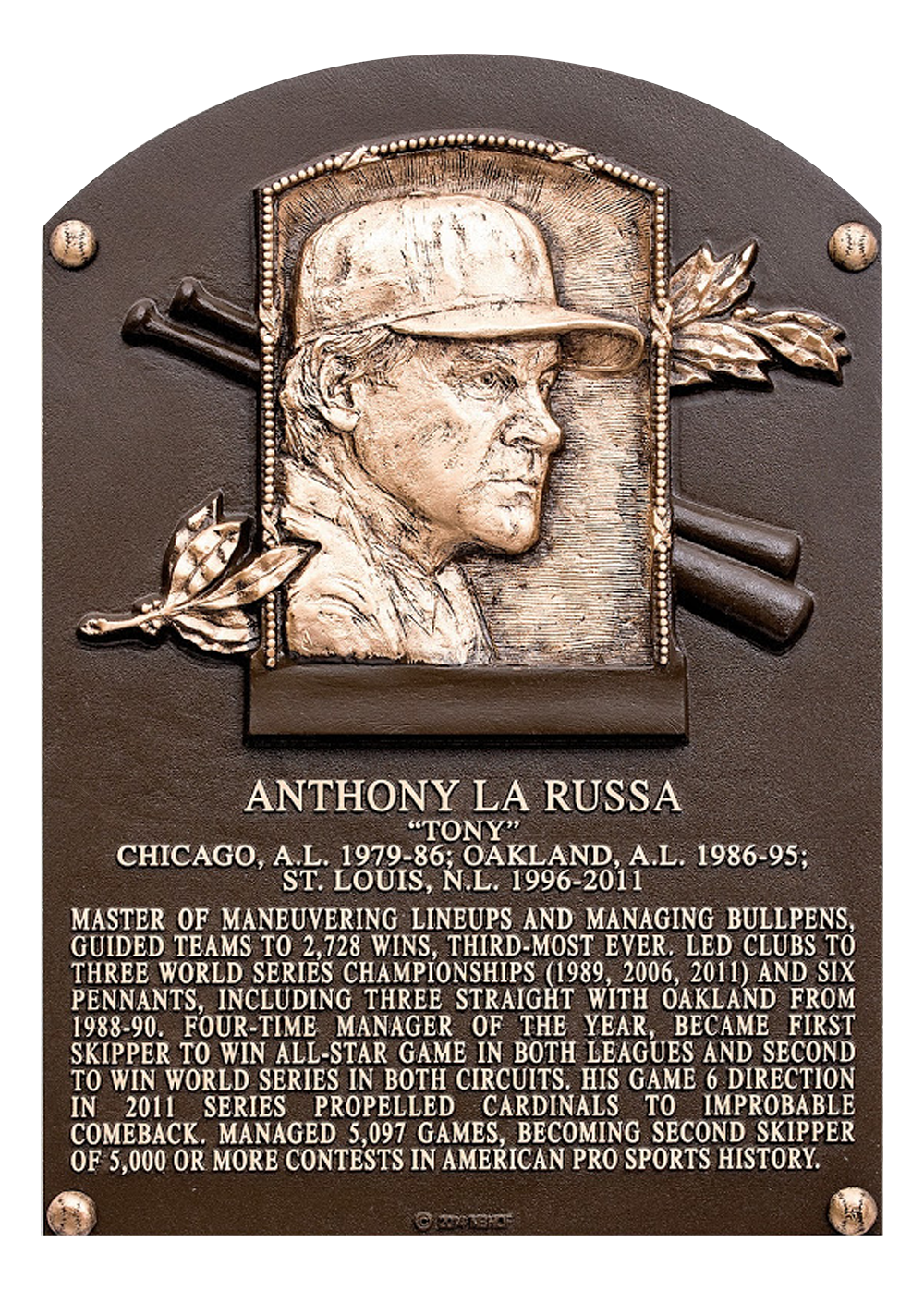
Tony La Russa
Tony La Russa has always publicly claimed ignorance when it comes to the use of steroids by players in the clubhouses he was paid millions of dollars to oversee for decades.
Tony La Russa was inducted into the Hall of Fame as a part of the Class of 2014.
Whether or not they deserve the benefit of the doubt, there is no way to absolutely prove that either Tony La Russa or Bud Selig knew players under their watch were abusing performance-enhancing drugs.
So, technically, the Hall of Fame has always had plausible deniability to electing cheaters and those who enabled that cheating. That is, until this most recent Class of 2026, which was announced in January of 2026.
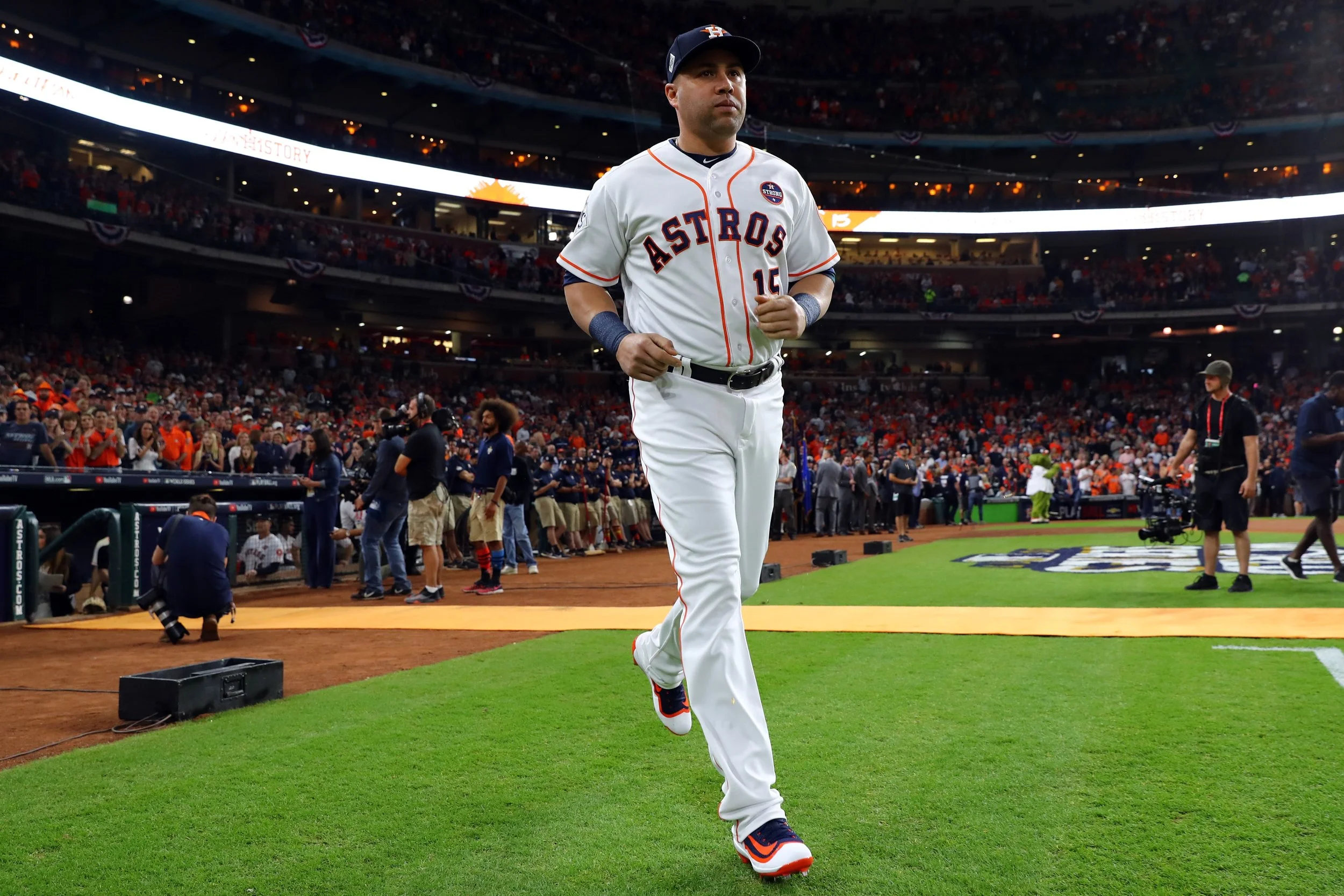
Carlos Beltrán
Carlos Beltrán who was the only player mentioned by name in the 2017 Houston Astros' sign-stealing scandal.
He was just inducted into the Hall of Fame as a part of the Class of 2026.
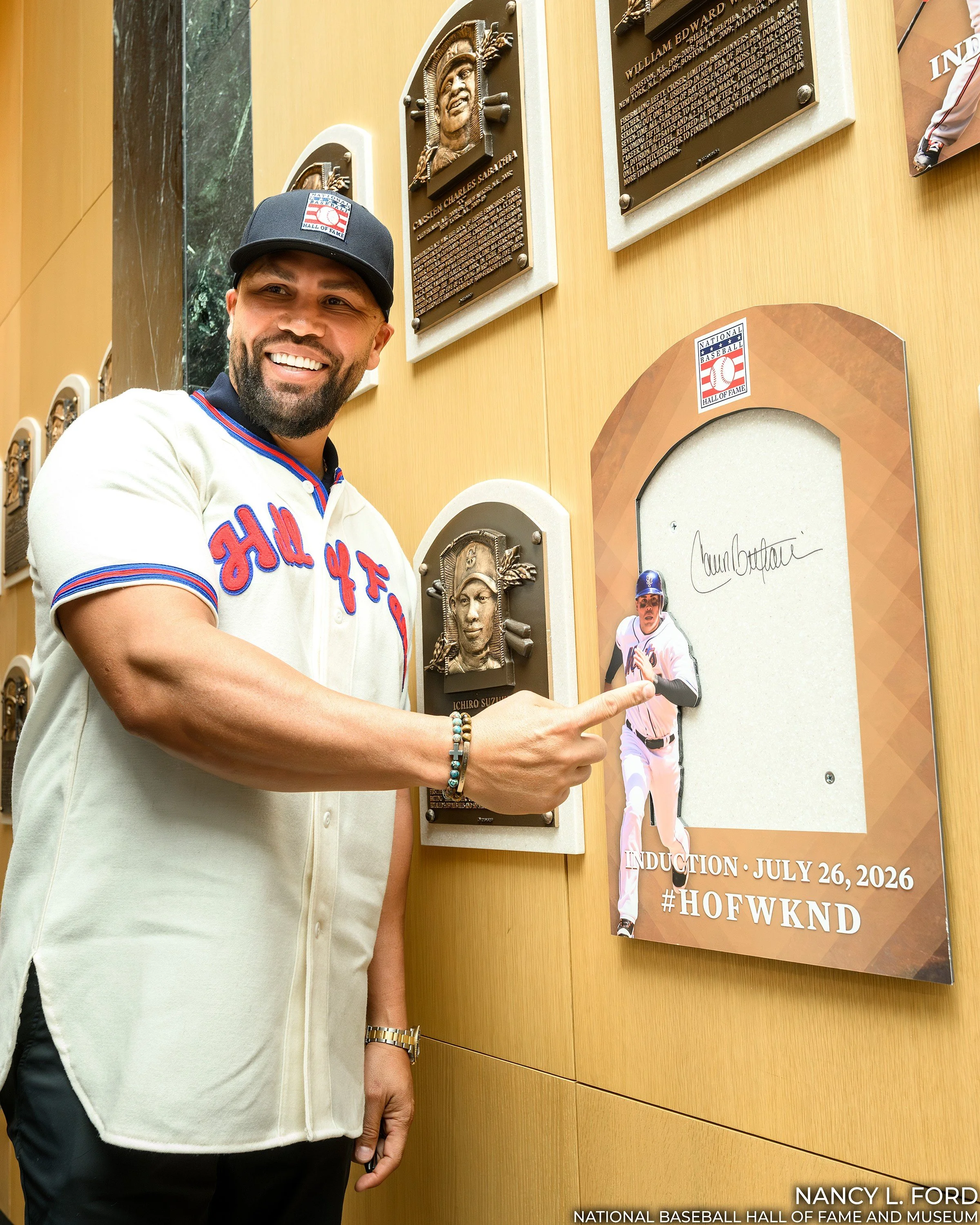
The Athletic
In November of 2019, The Athletic published a bombshell report claiming the Astros used electronics to steal signs during their World Series championship season in 2017.
Major League Baseball started an investigation, and according to their findings, two months into the 2017 season, Astros bench coach Alex Cora and a group of players – which included Beltrán – worked to create a system to steal signs.
One or more players would watch the live feed on a monitor behind the dugout, and decode the signs. The players initially experimented with clapping, whistling, and yelling, but determined banging a trash can with a bat was most effective.
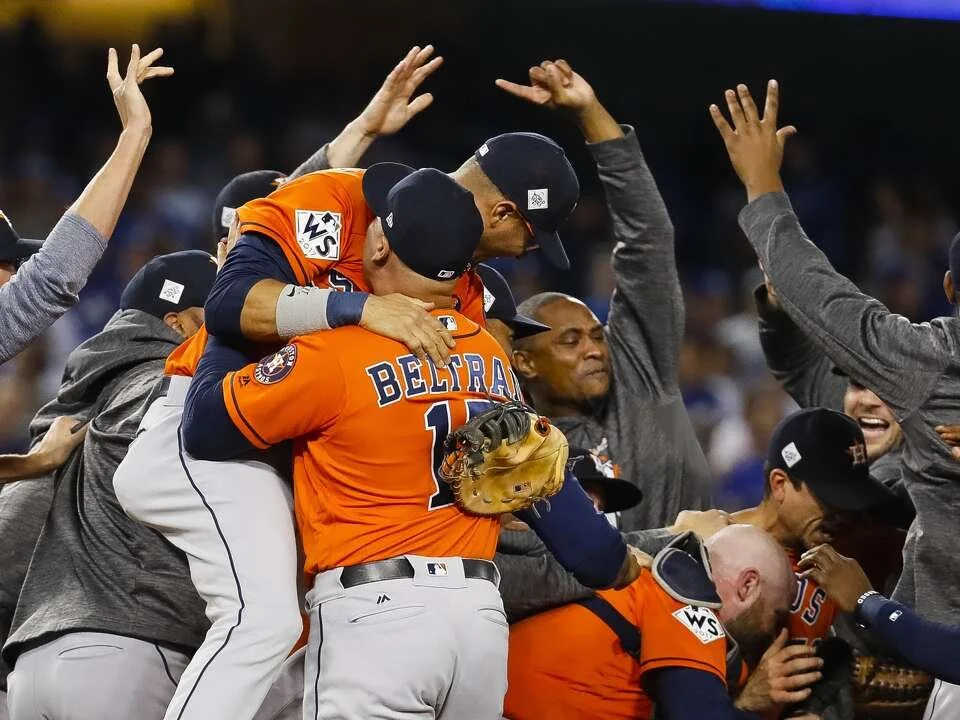
Carlos Beltrán
“It's easy to blame someone when they win."
- Leader of the clubhouse, and ringleader of the electronic sign-stealing system, Carlos Beltrán
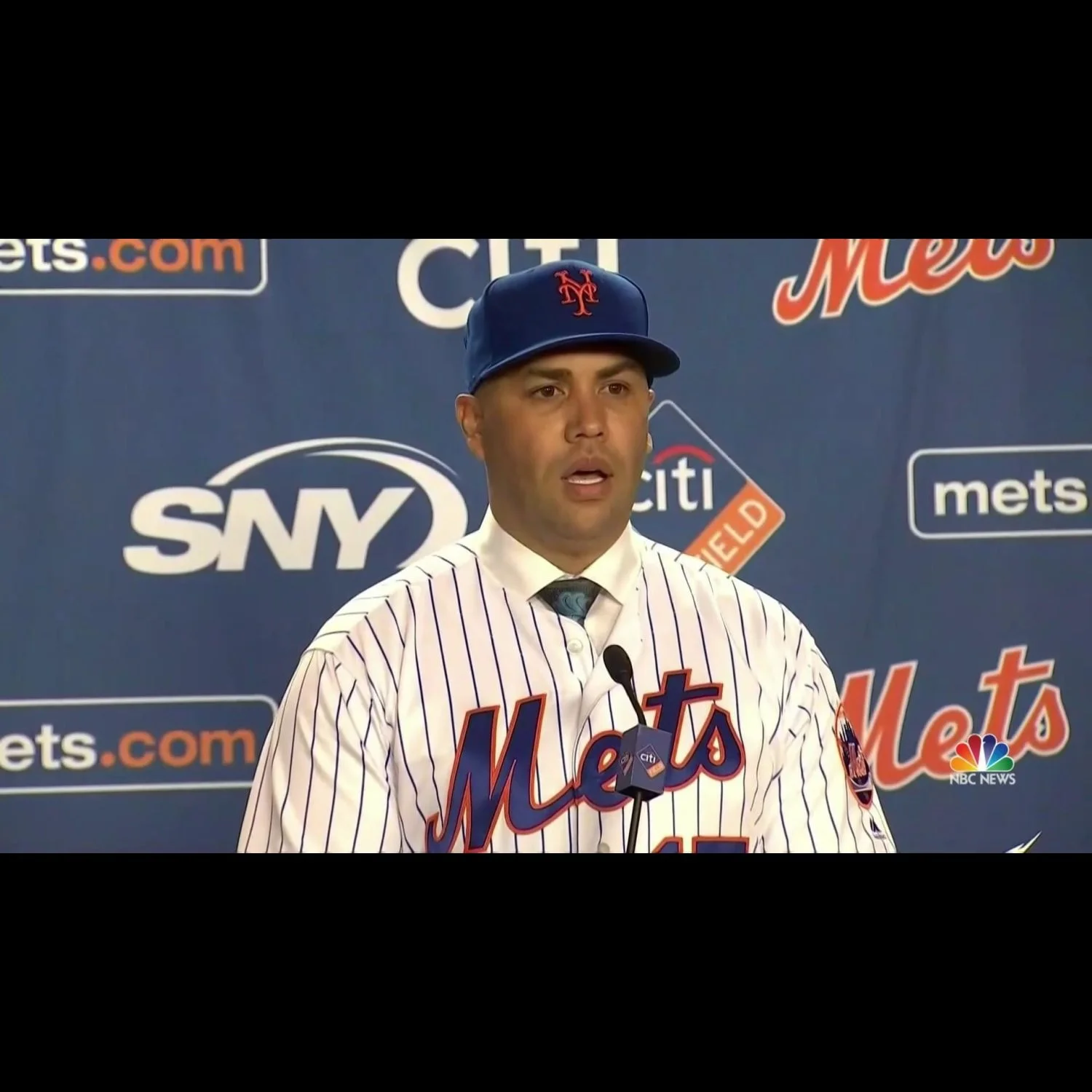
No Effect On His Playing Career
No consequences of this cheating scandal affected Beltrán’s playing career since he retired following the 2017 season.
He had been hired to manage the New York Mets in November of 2019, and was forced to part ways with the team in January of 2020 after the results of MLB's investigation were announced, having never managed a game for the Mets.

Mike Trout
Three-time American League MVP Mike Trout said:
"It's sad for baseball… They cheated. I don't agree with the punishments, the players not getting anything. It was a player-driven thing."
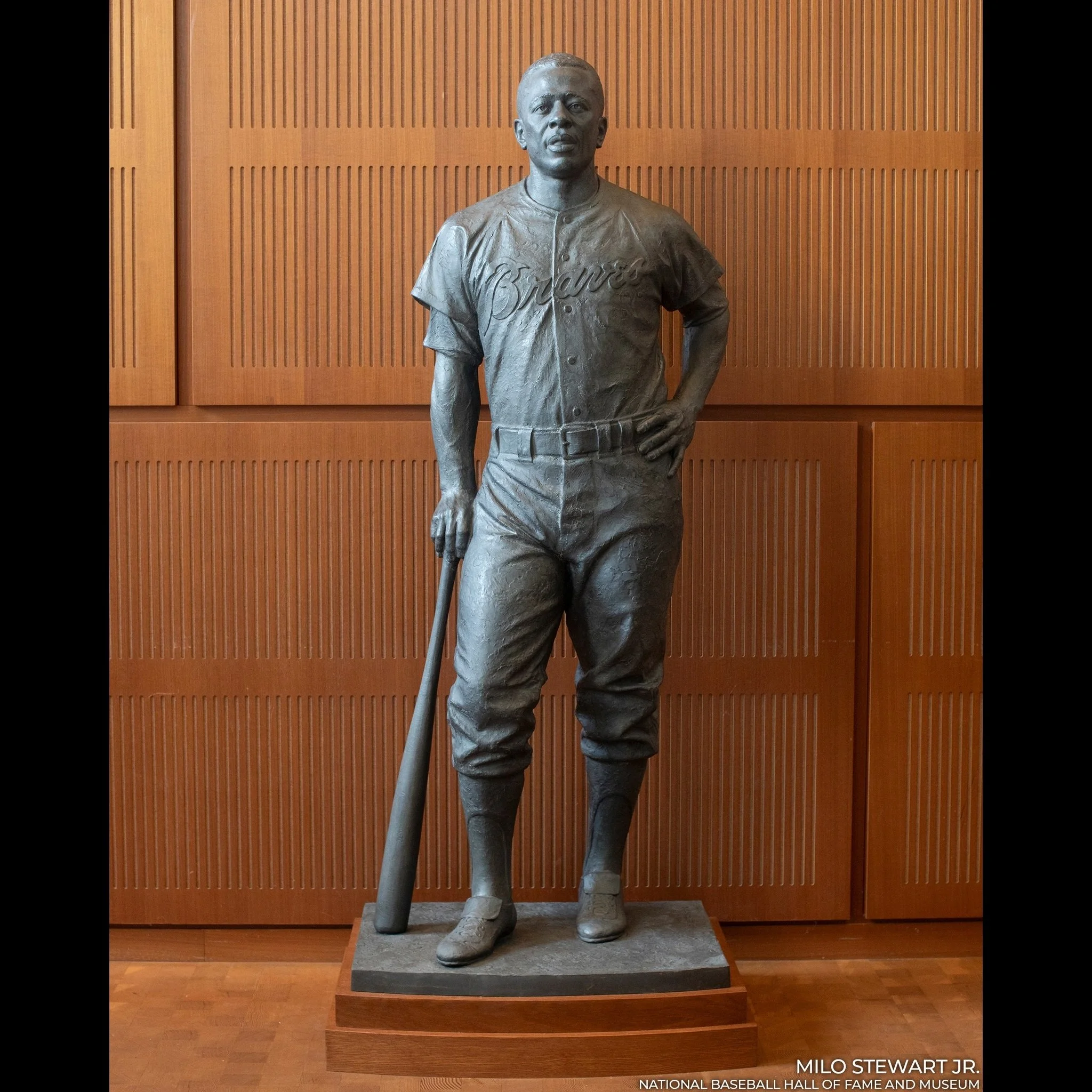
Henry Aaron
Hall of Famer Henry Aaron said the punishments, or lack thereof, did not fit the crime, adding:
"I think whoever did that should be out of baseball for the rest of their lives."
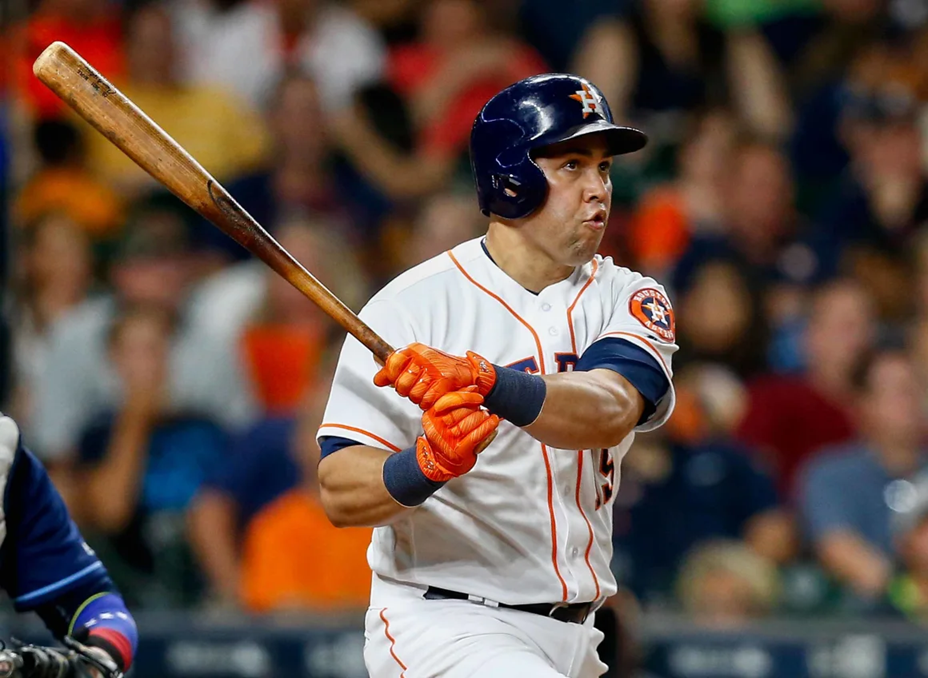
Carlos Beltrán
Carlos Beltrán hit 435 home runs and had 2,725 hits.
He is one of 39 players in baseball history to have more than 1,500 RBIs and 1,500 runs scored.
He's one of only eight players with both 300 home runs and 300 stolen bases, and he owns the highest career stolen base success rate in history among players with at least 200 attempts.
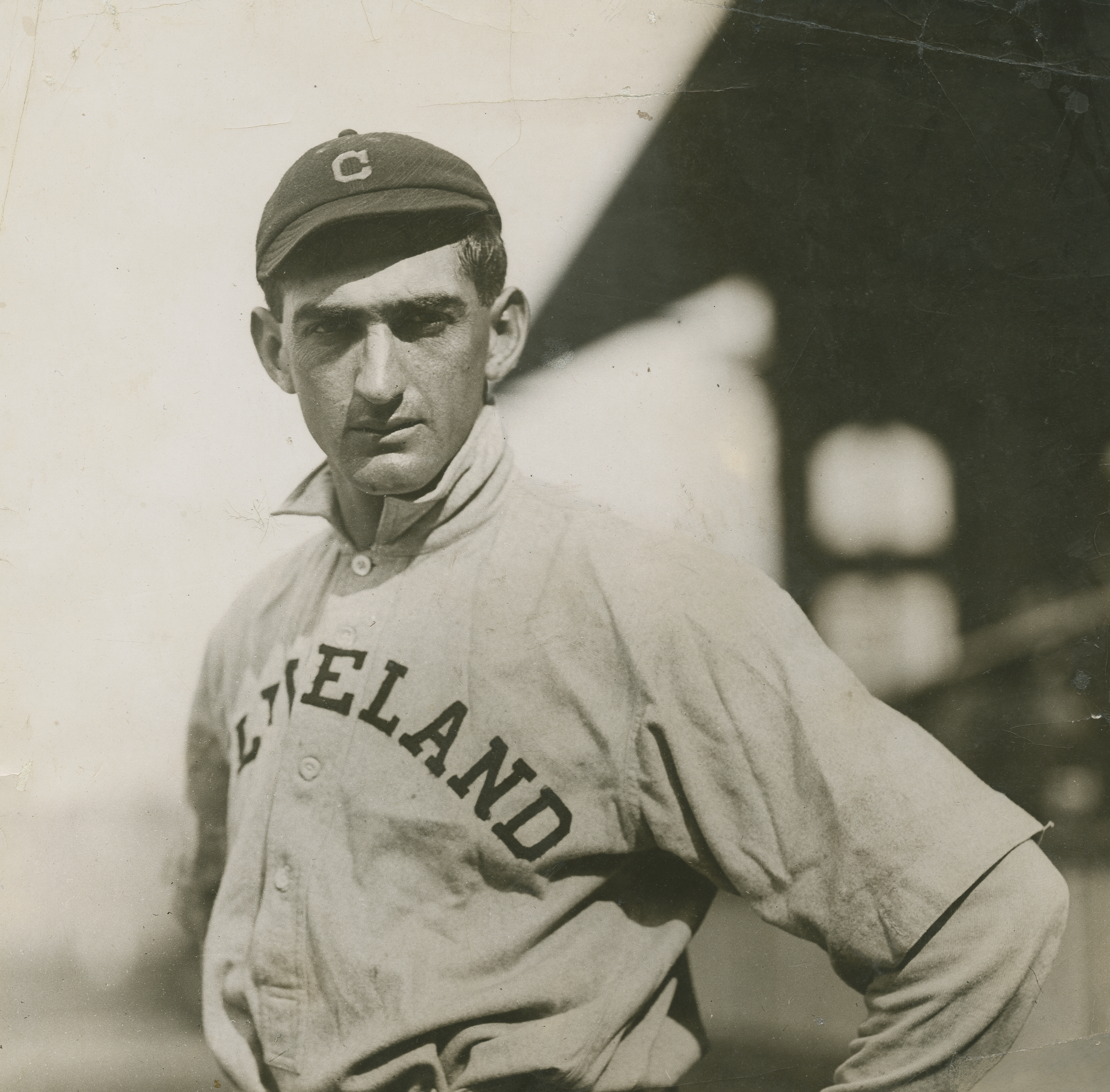
So, What’s Keeping Joe Out, Now?
The two major prevailing arguments for keeping Joe out of the Hall of Fame are, clearly, no longer relevant. He was banned for life, and his life is over.
And the reason he was banned was due to his alleged involvement with a team who was cheating the game.
Now we have 100% undeniable validation by the Hall of Fame voters, themselves, that that isn’t something that matters to them, either.
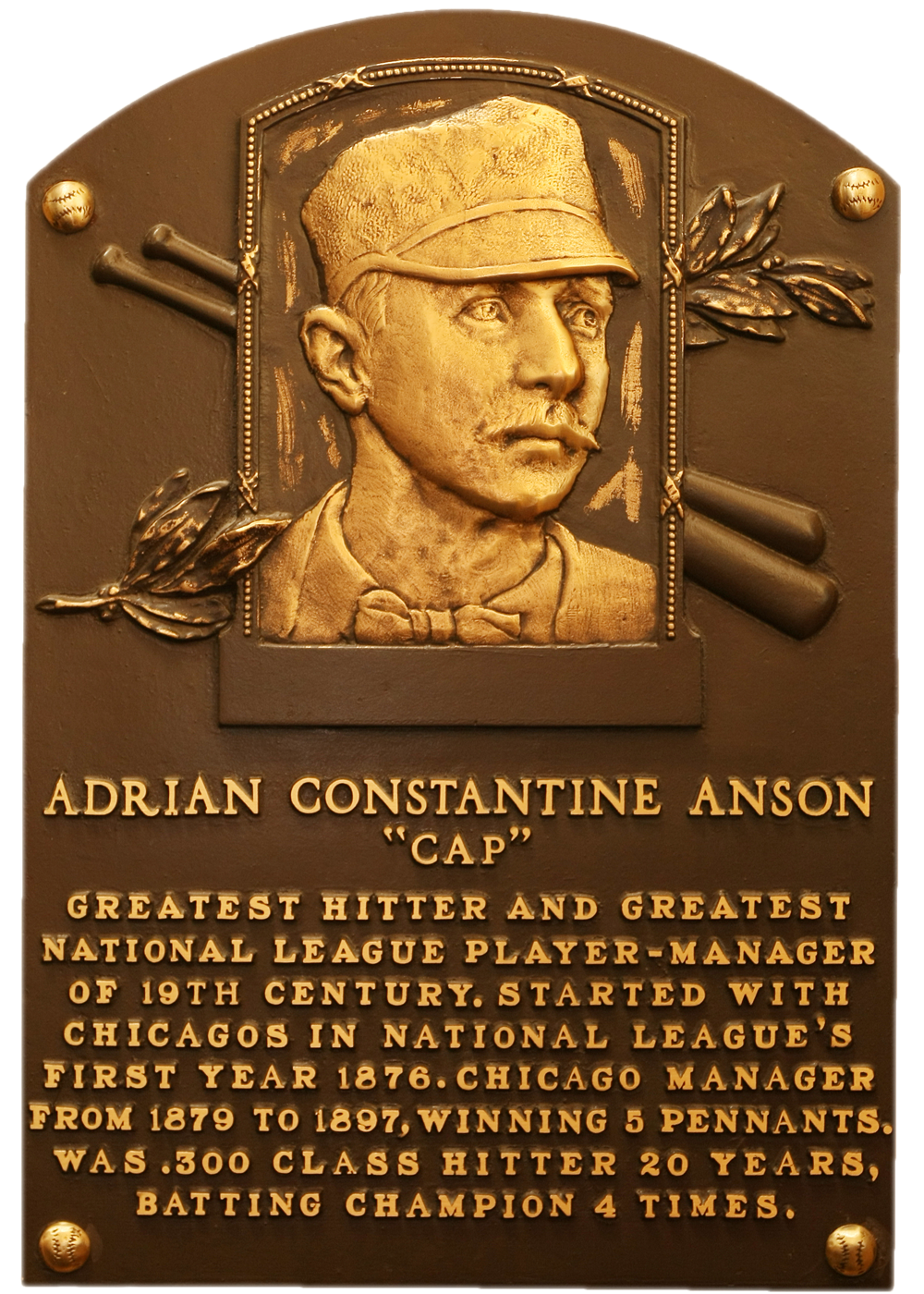
Adrian “Cap” Anson
It’s one thing for the Hall of Fame to kick somebody out, which is something that, as of today, has never happened.
If you want to go the character-clause route, the Hall of Fame could theoretically re-litigate the worthiness of notable racists Cap Anson, Tom Yawkey, or even Commissioner Kenesaw Mountain Landis, whose actions during their lifetime can be – and should be – viewed under very different lenses today.
Anson is widely credited as being the cause of baseball’s Color Line, dating back to his objection to sharing the field with Black players, specifically Moses Fleetwood Walker of the Toledo Blue Stockings on August 10, 1883.
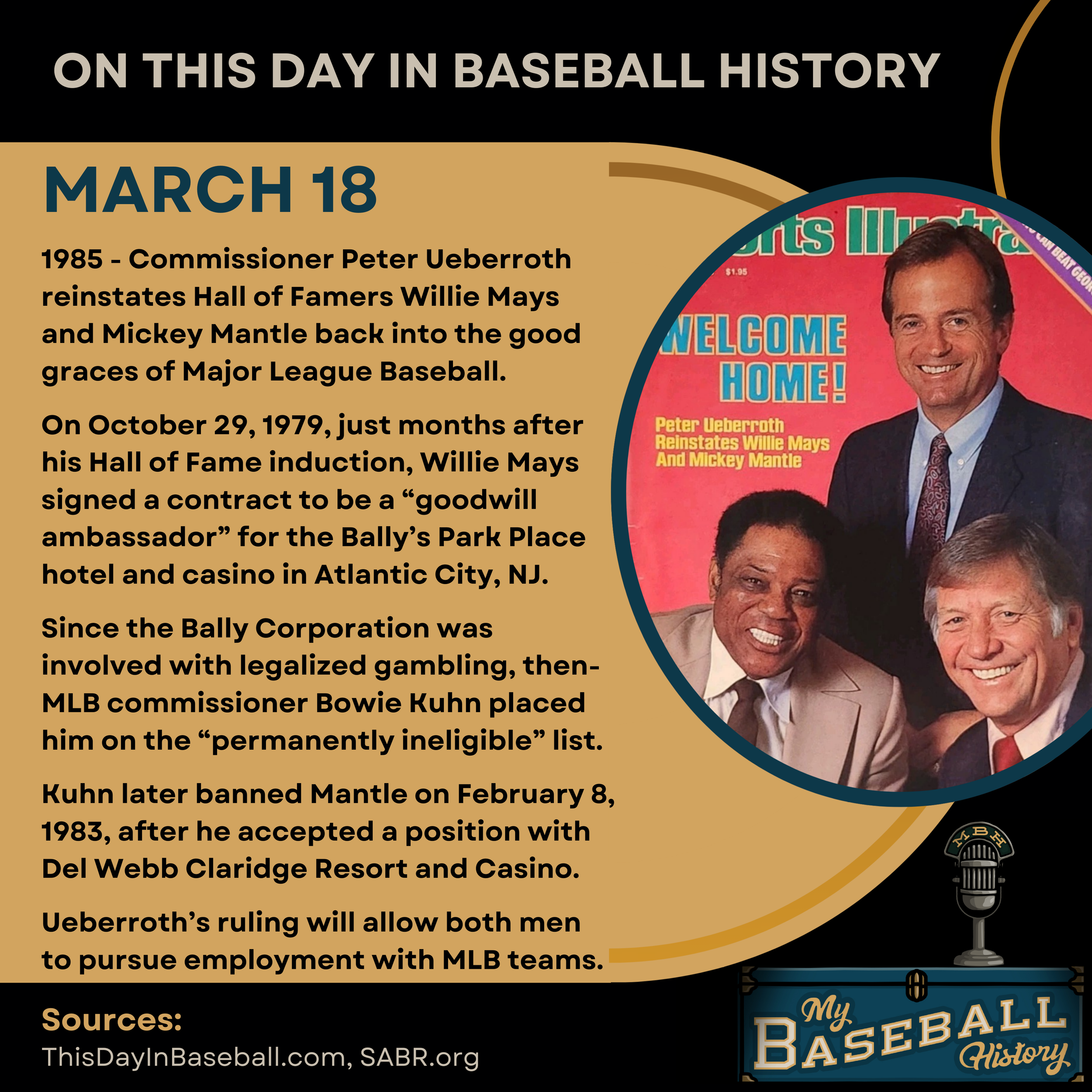
“Permanently Ineligible”?
Willie Mays and Mickey Mantle were both reinstated on March 18, 1985, by new Commissioner Peter Ueberroth.
This set the precedent that there is no such thing as a truly “permanent” ban, and that somebody who had been on the “permanently ineligible” list could be removed, even before they had died.
It let us know that everything is potentially reversible, under the right circumstances.
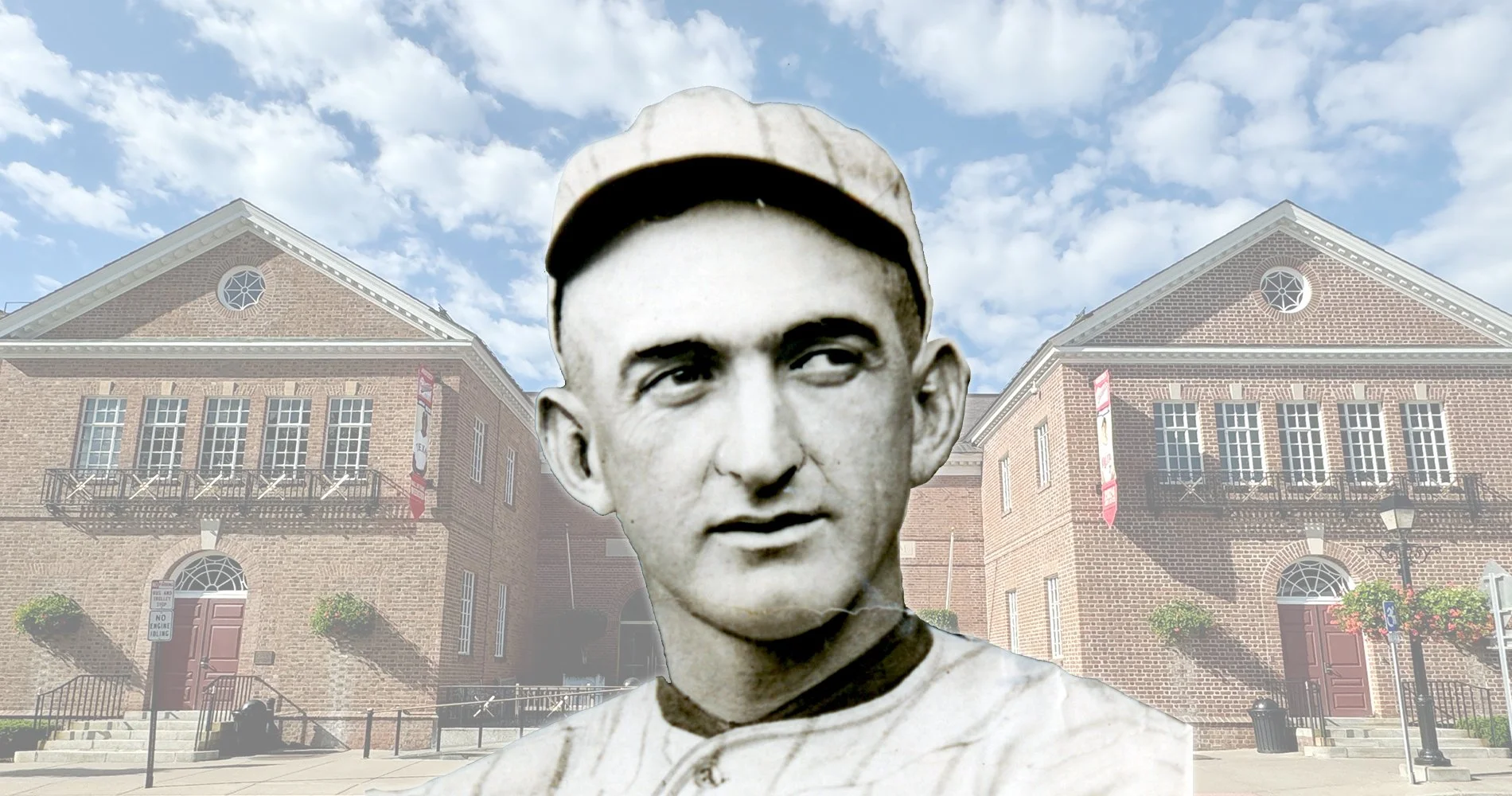
Does Joe Jackson Even Need The HOF?
In my opinion, Joe Jackson is more famous out of the Hall of Fame than he ever would be in it. The intrigue of his story is that he’s this Shakespearean tragedy, and that the wrong has never been righted.
Every year, with every Hall of Fame ballot and every induction ceremony, we are reminded that Joe is NOT in the Hall of Fame.
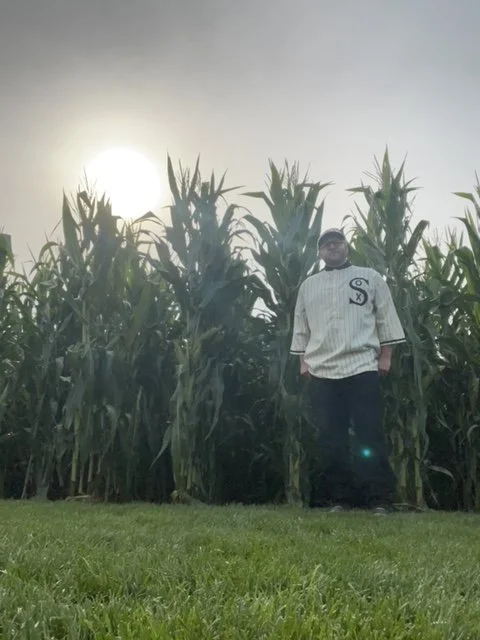
Every time they play a Major League Game at the Field of Dreams, Joe’s name comes up, his story is re-told, and a new generation of fans learns of his greatness.
Joe’s Contemporaries
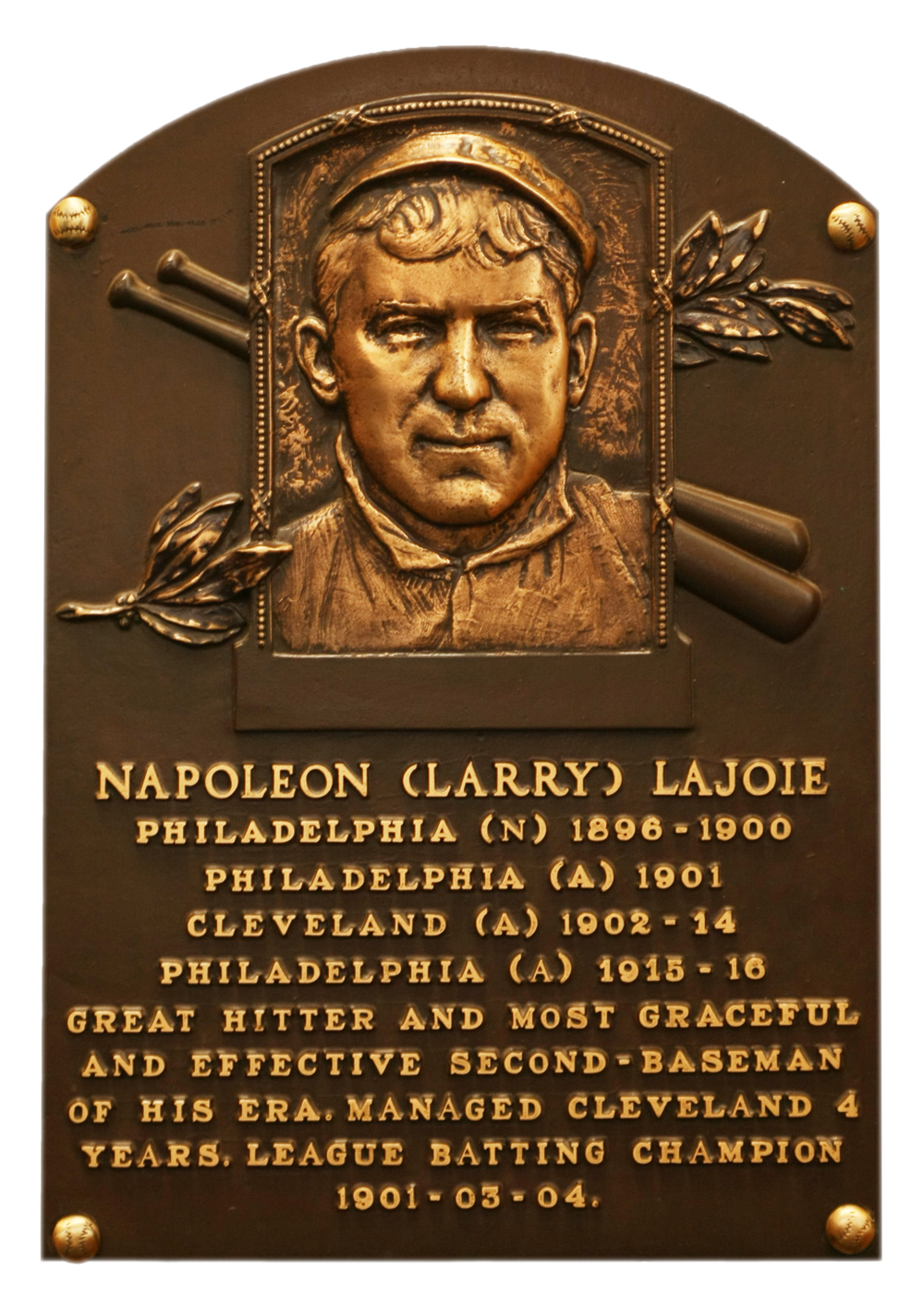
Joe’s contemporaries are rightfully enshrined in the Hall. Some of them have been for nearly 90 years now. But many of them are largely forgotten.
Do you really think the average fan can tell you anything about Rogers Hornsby? Or Eddie Collins? Or Napoleon Lajoie?
But Joe is different. And that is 100% due to the fact that he is NOT enshrined in the Hall of Fame.
Ty Cobb
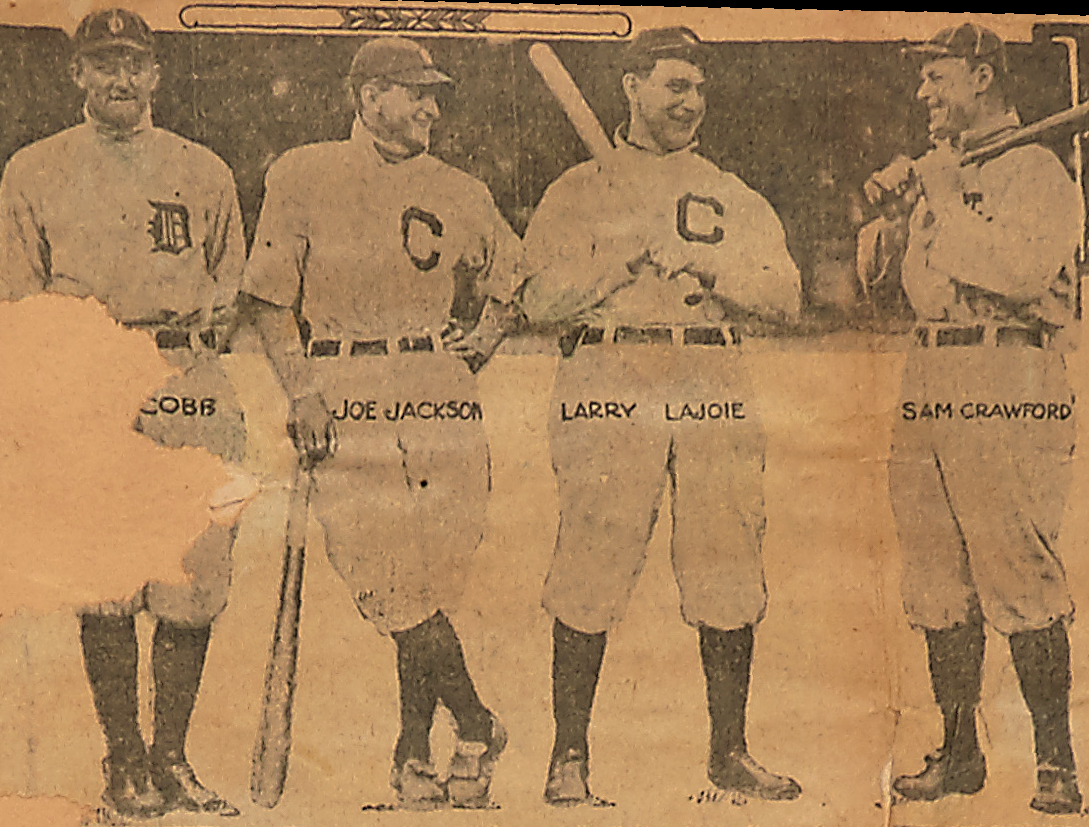
“Joe Jackson, the greatest natural hitter I ever saw… Jackson didn't play by the rules, he played instinctively. He always knew what to do… I learned a lot, watching him… I don't think I ever saw a more perfect swing than [his]."
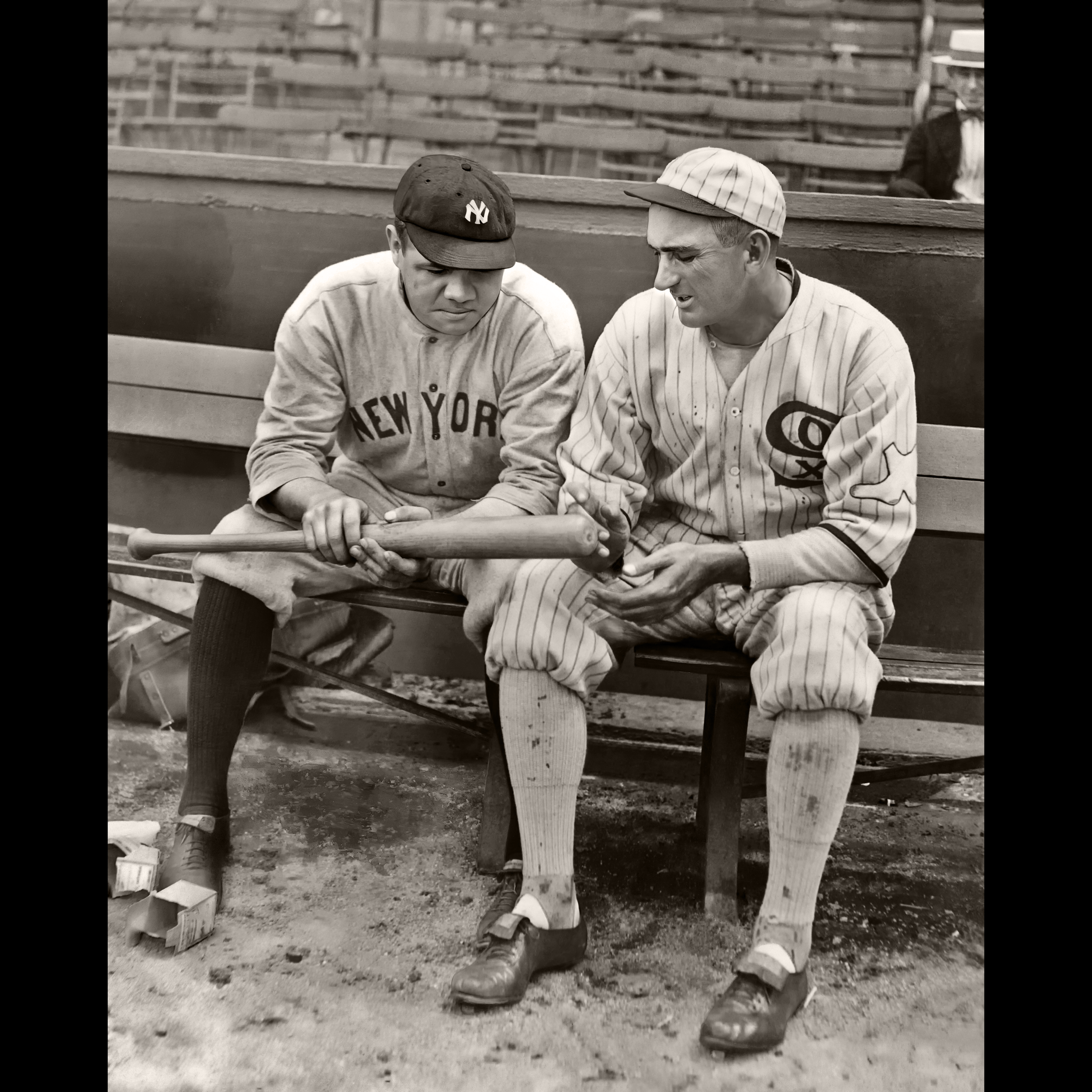
Babe Ruth
"I copied Jackson's batting style because I thought he was the greatest hitter I'd ever seen; the greatest natural hitter I ever saw. I still think the same way. He's the guy who made me a hitter."
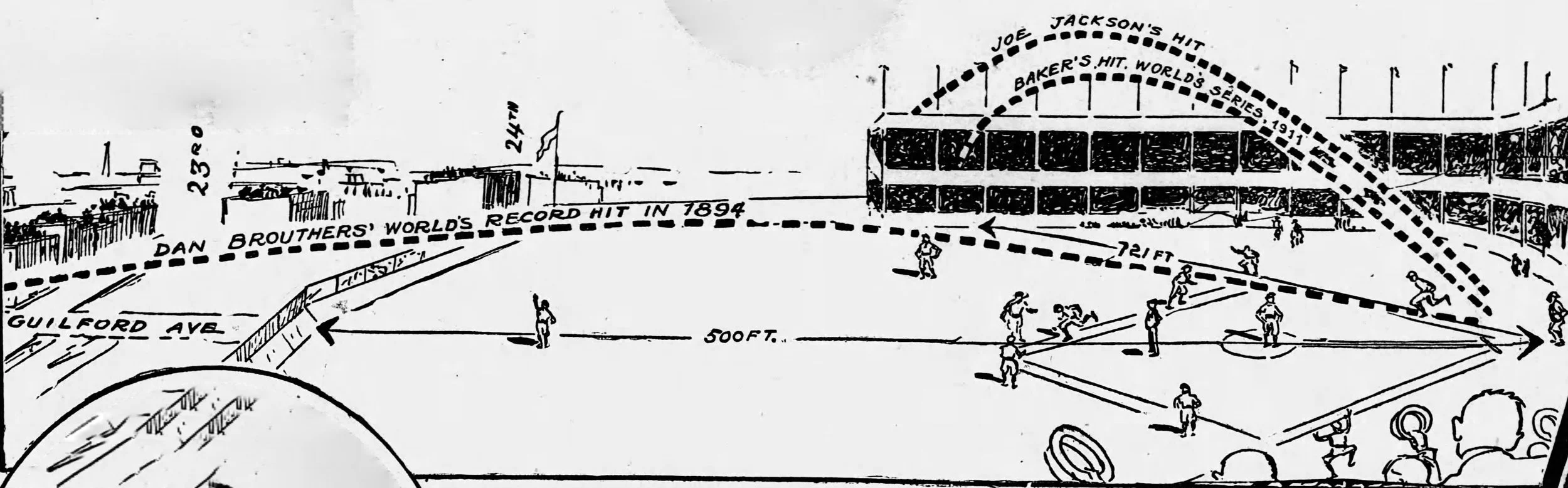
An artist’s rendition of Joe’s long home run at the Polo Grounds on June 4, 1913.
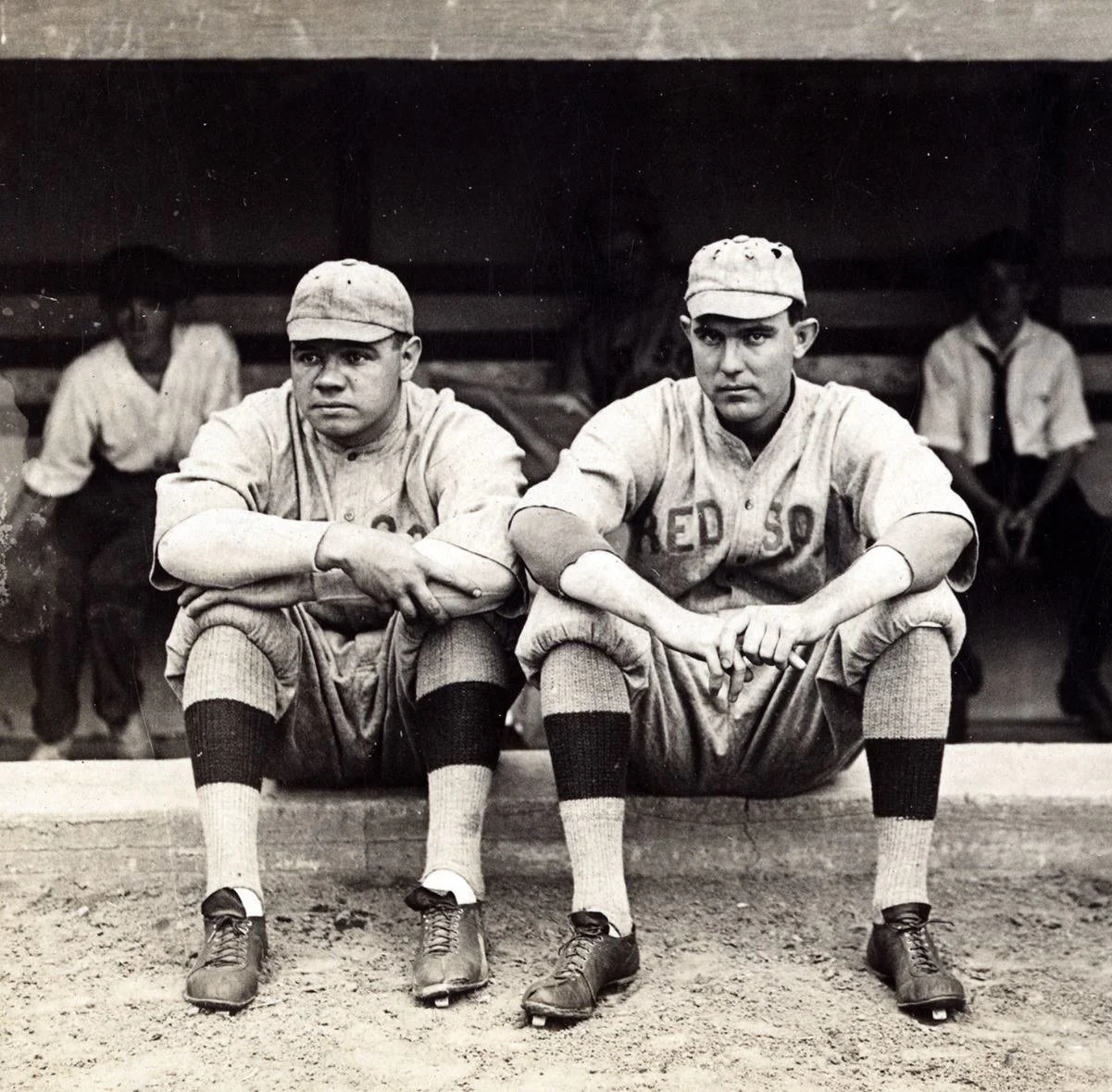
Ernie Shore
Ernie Shore was a two-time World Series champion who spent a great deal of his career in close proximity to one of the most powerful sluggers of all time. Shore (seen here, right) was teammates with Babe Ruth on the Red Sox from 1914 through 1917, and then again on the Yankees in 1919 and 1920.
About Joe Jackson, Shore said:
"Everything he hit was really blessed. He could break bones with his shots. Blindfold me and I could still tell you when Joe hit the ball. It had a special crack."
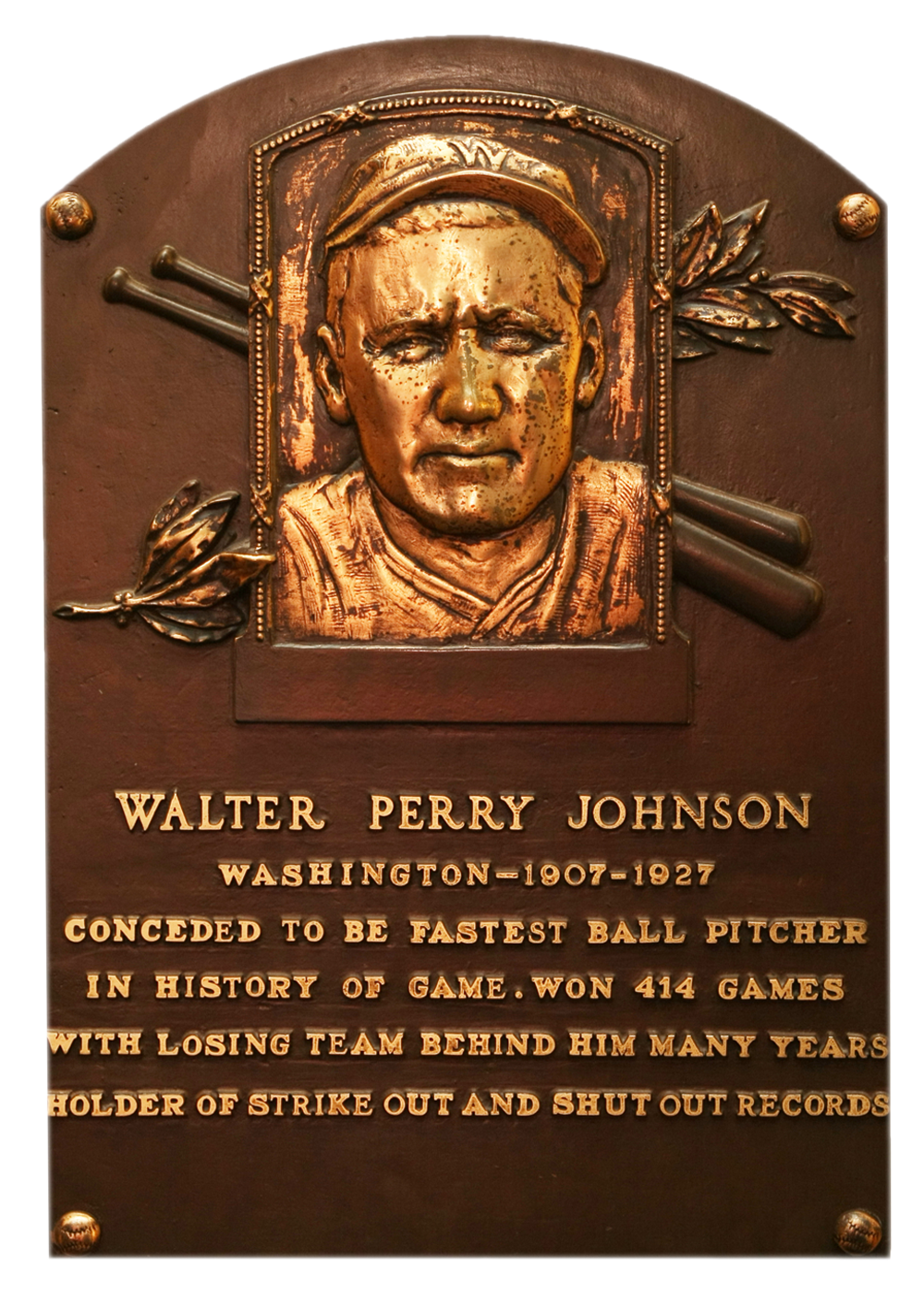
Walter Johnson
“I could throw my fast one past Cobb, Crawford and Lajoie and those fellows, but Jackson was always a puzzle.”
“There was a time when Ty [Cobb] was sore at me. That was when he was racing Joe for the [batting] championship. Joe was hitting me much better than Ty. Ty accused me of putting the ball over for Joe. That was foolish, though I guess he was sincere. The fault lay rather in Ty's system and Joe's superior hitting ability. If anything, I tried harder against Jackson, because he always seemed tougher.”
“Joe's career was cut short by the Black Sox scandal. But I shall never believe that he was a bad fellow at heart. He paid a heavy penalty.”
One Day Soon…
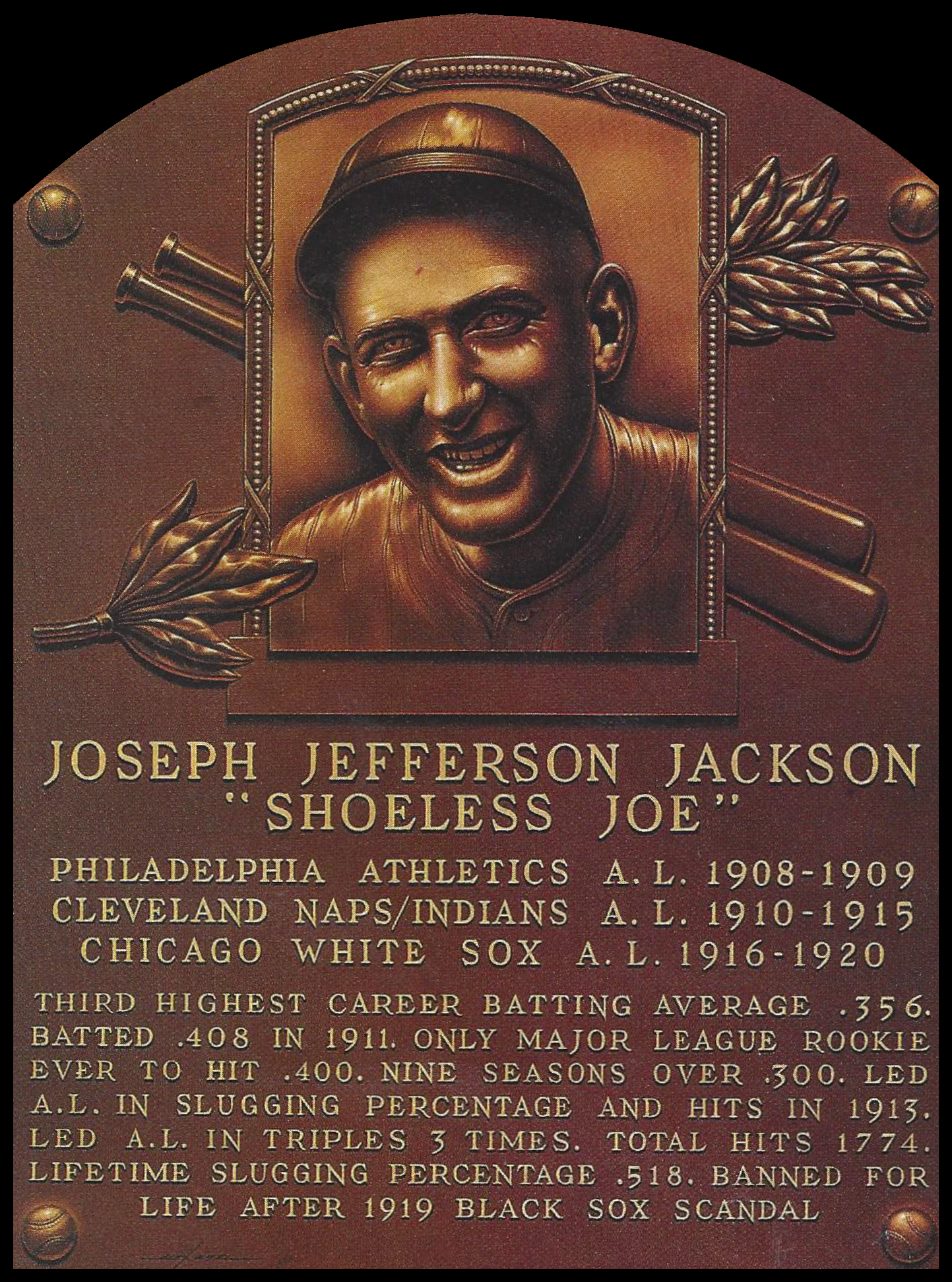
Joe Jackson earned his place in the Hall of Fame, among his contemporaries who all called him the greatest hitter who ever lived.
One day, probably sooner rather than later, Joe Jackson will have a plaque in Cooperstown. And when that day comes, I’ll be there for the induction ceremony. Even if I think he’s better off outside the Hall than in it.
Transitional Period
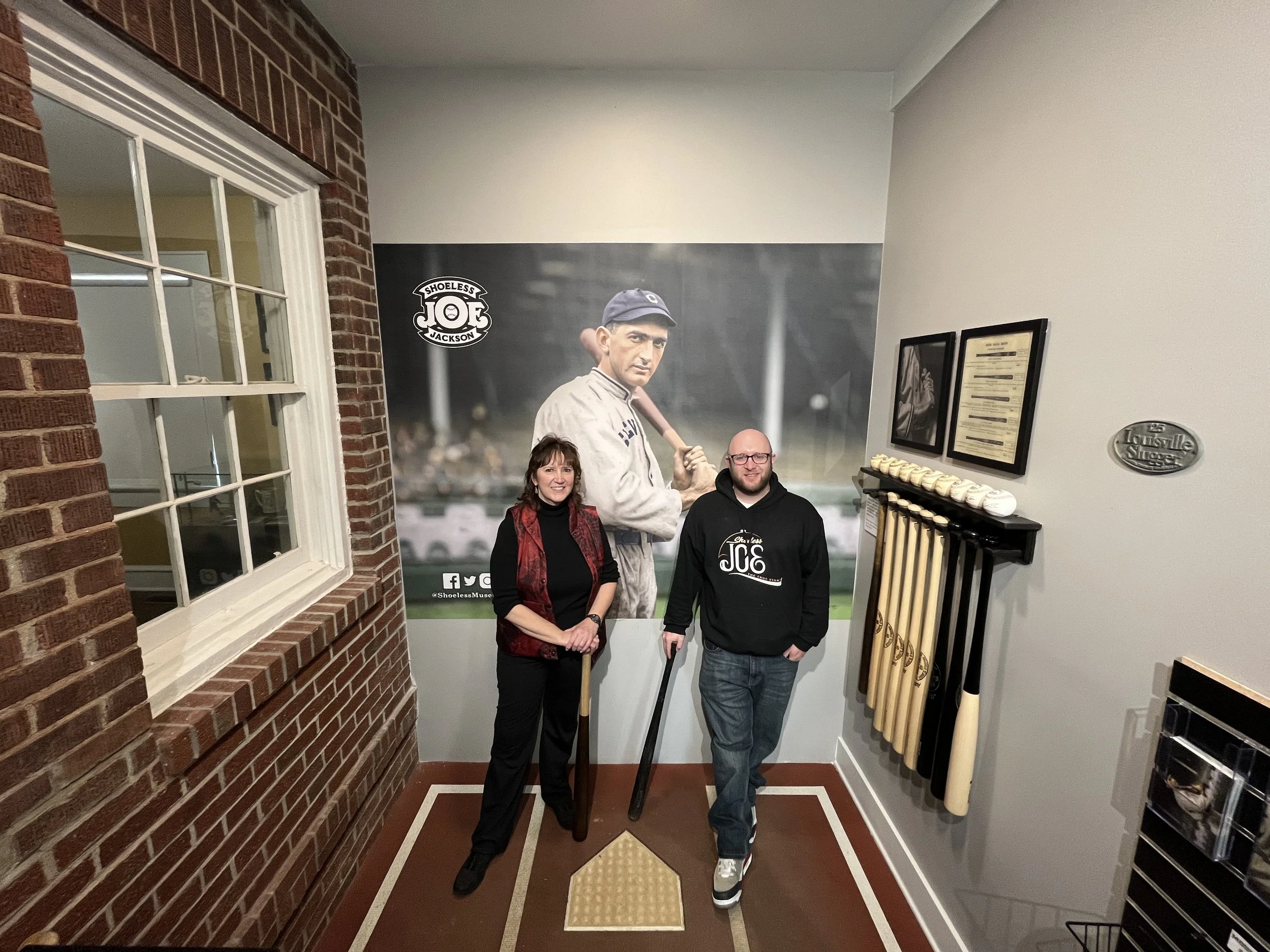
When I was asked to move to South Carolina to take over the Shoeless Joe Jackson Museum, it was in a transitional period for an organization which had been formed more than a decade earlier.
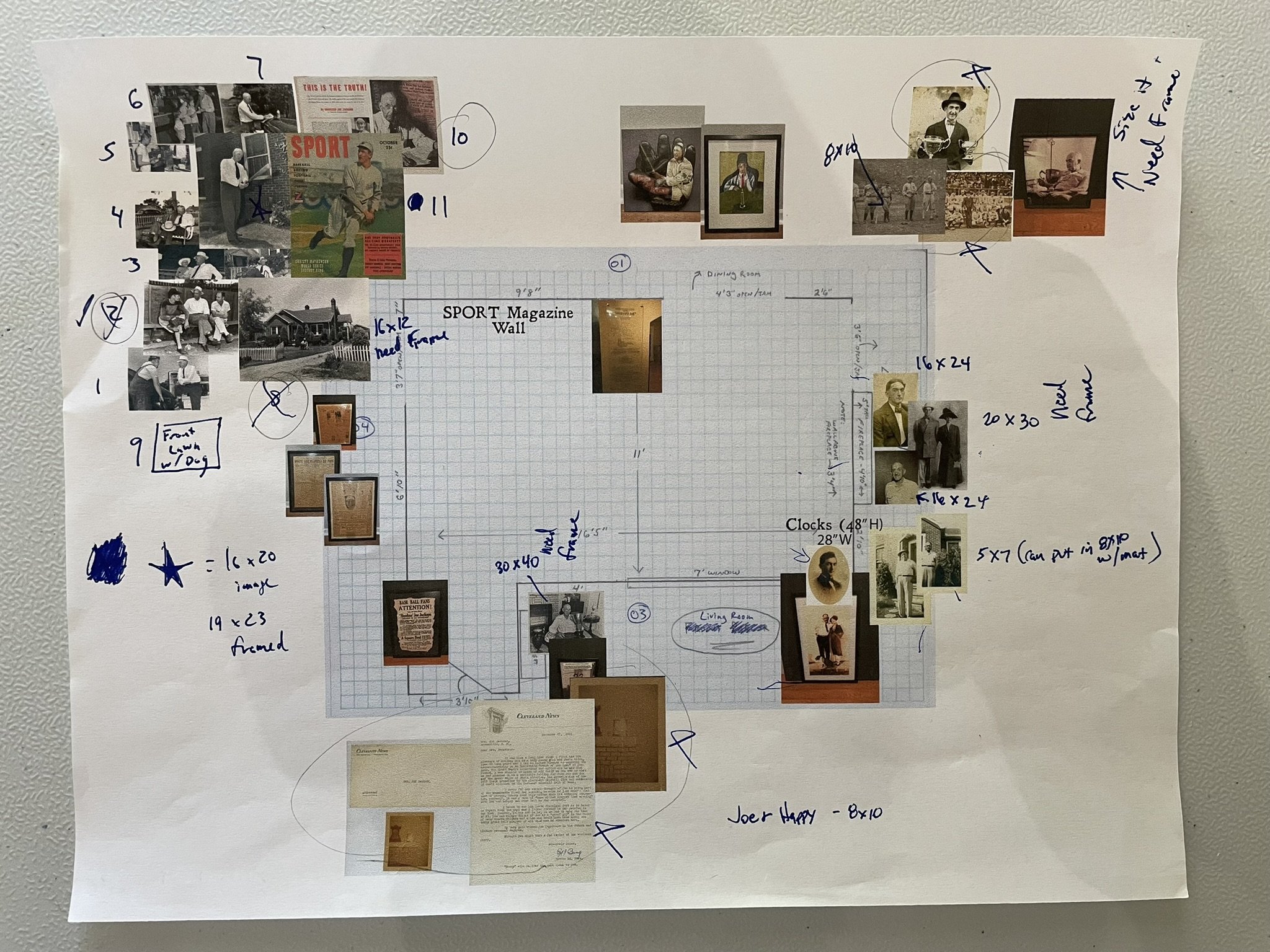
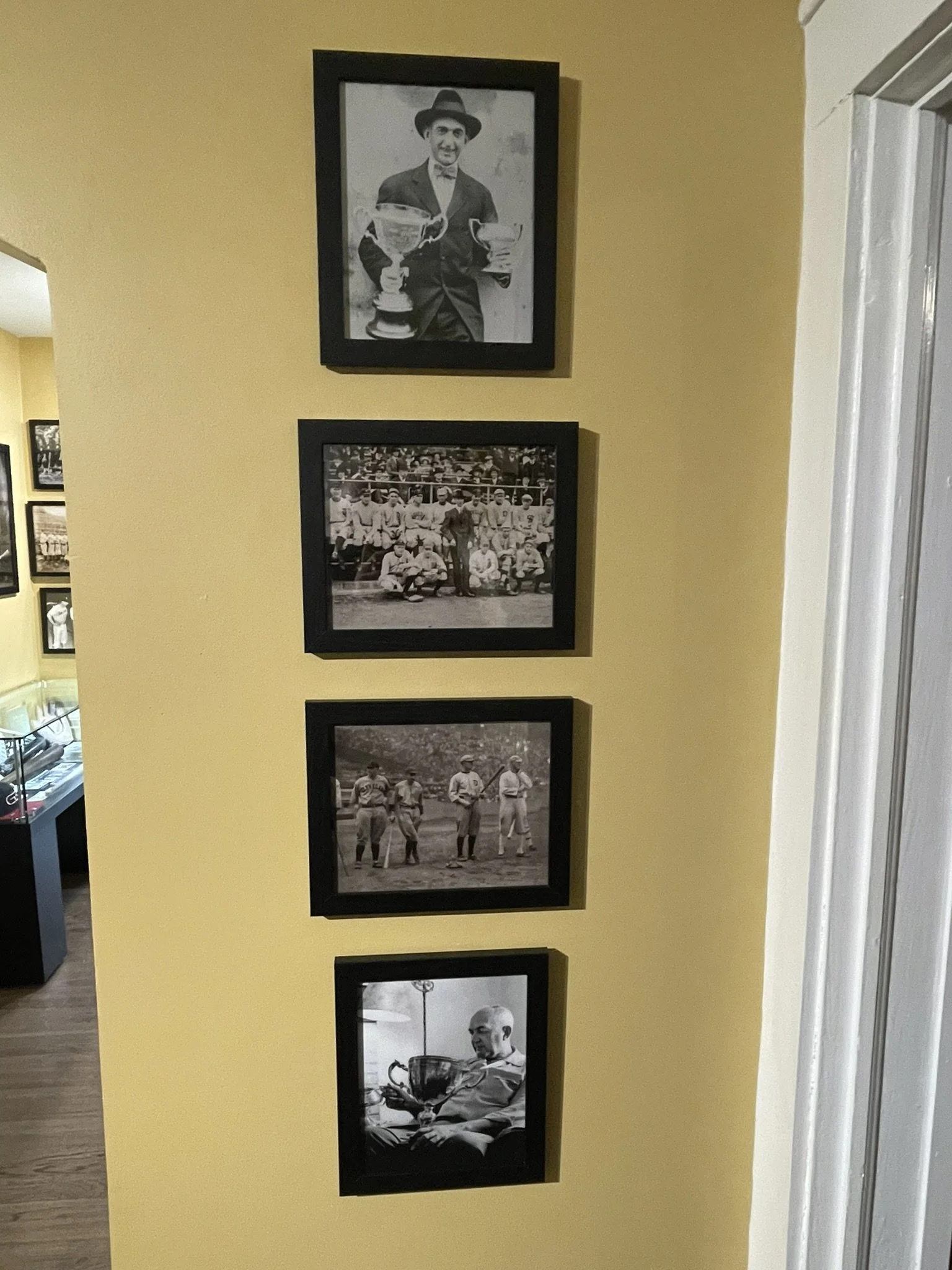
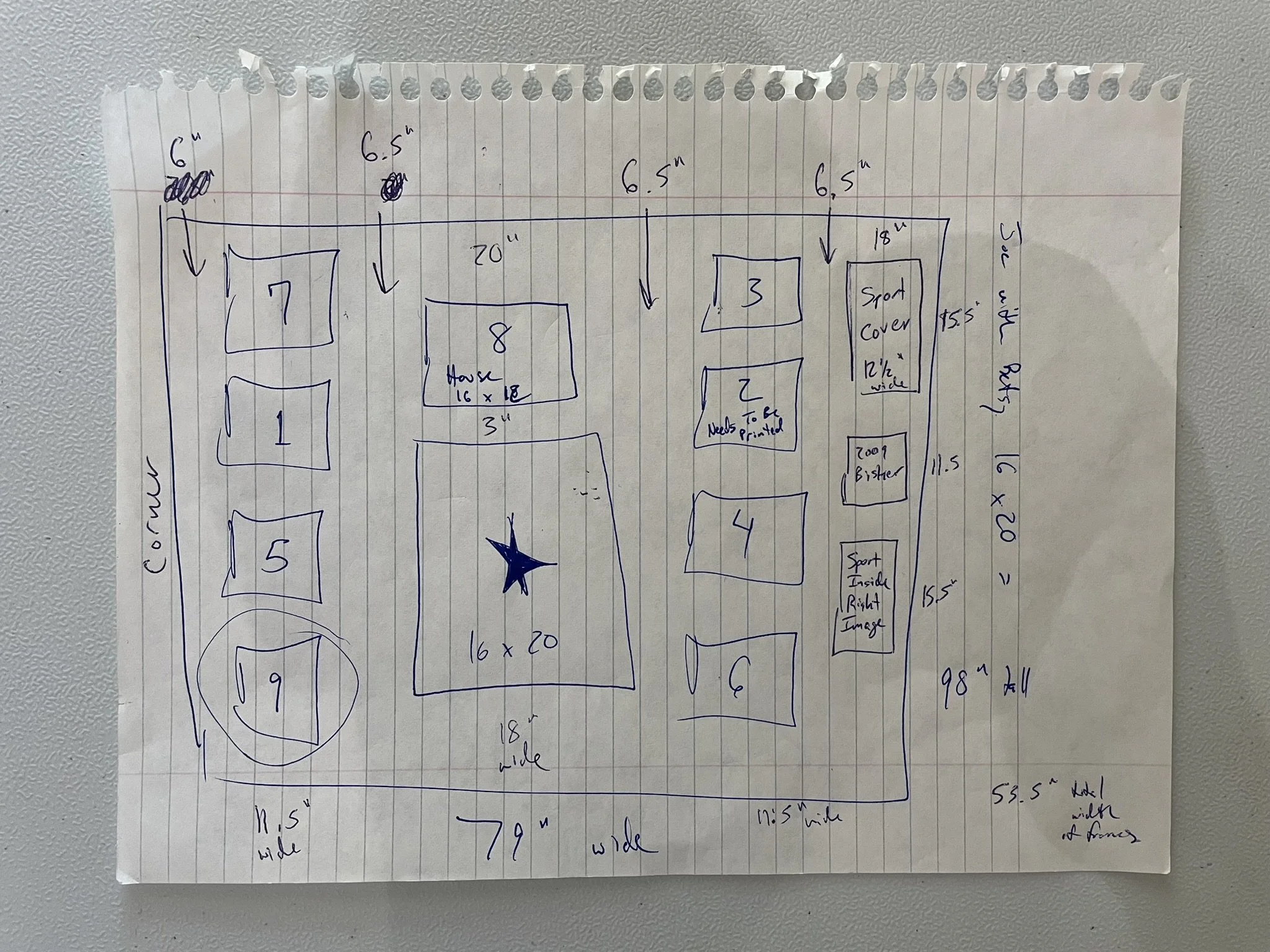
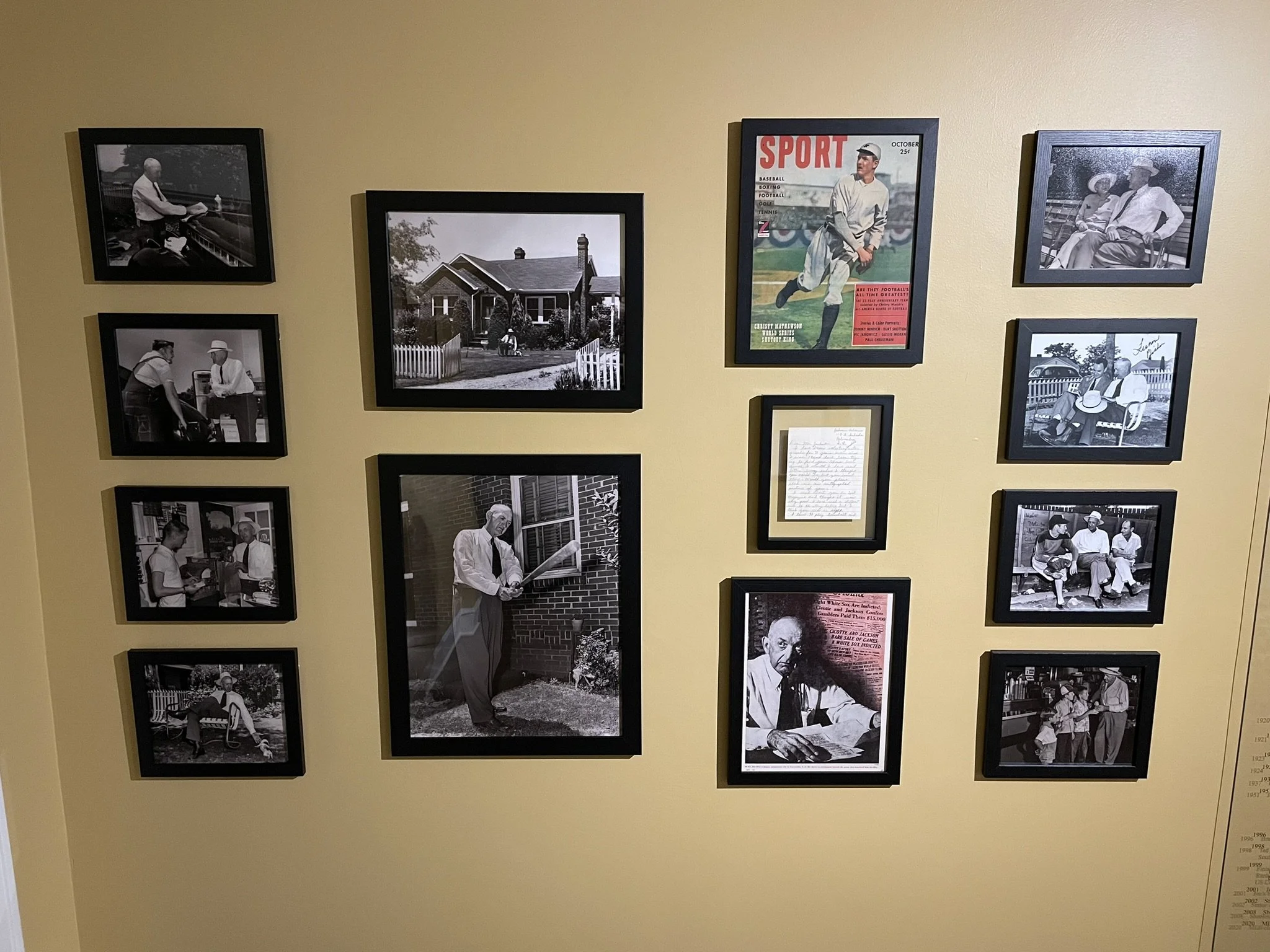
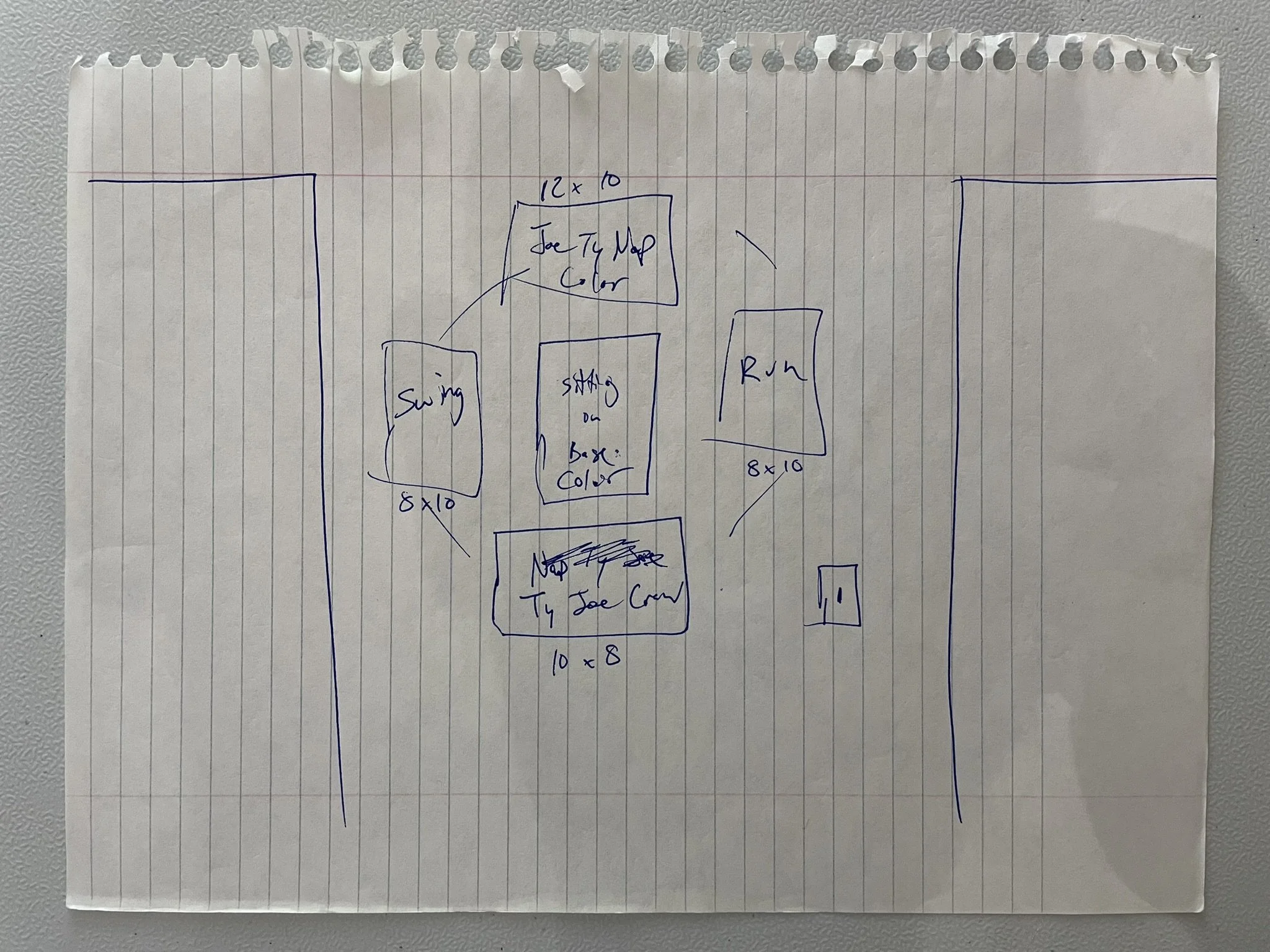
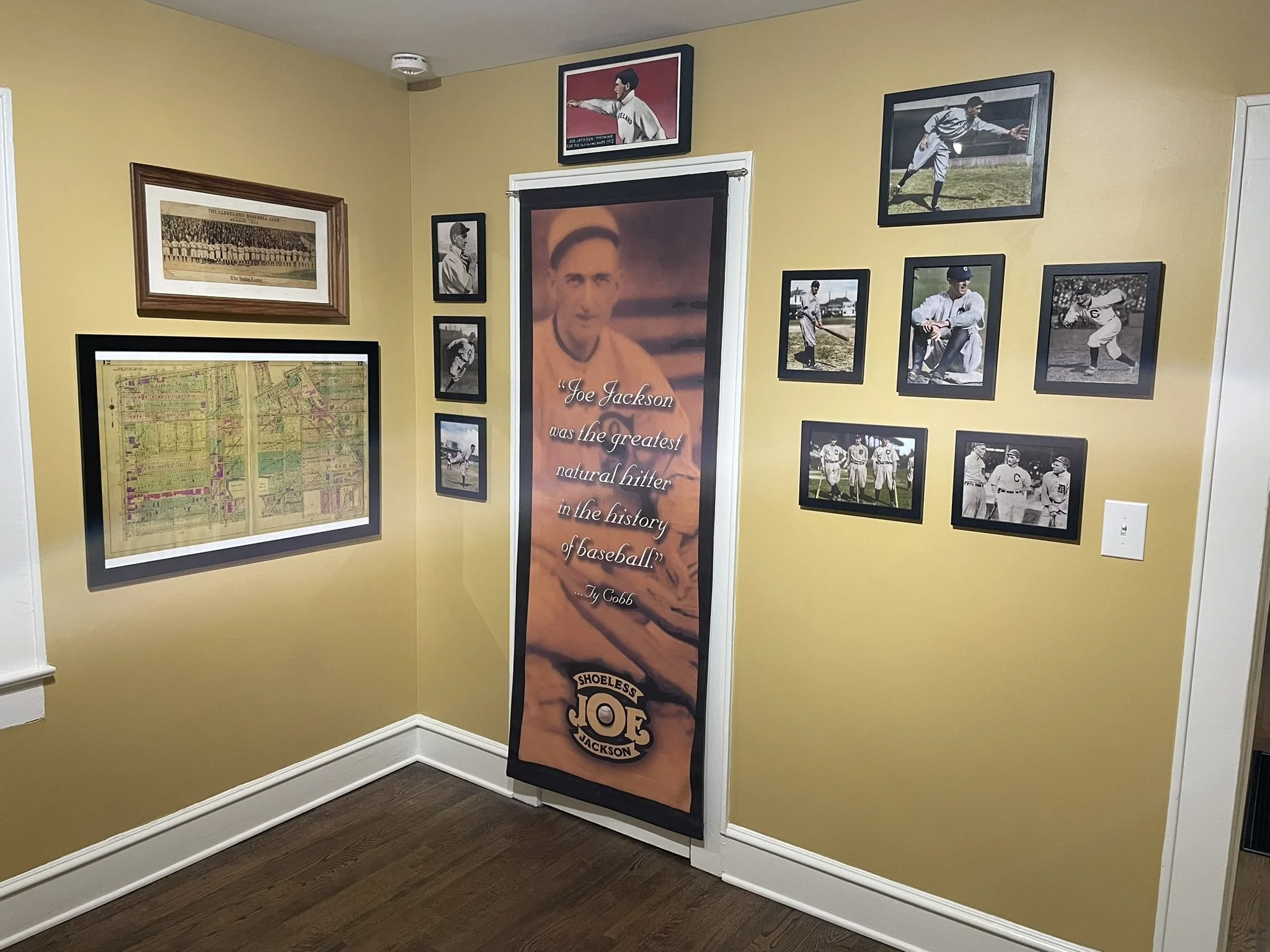
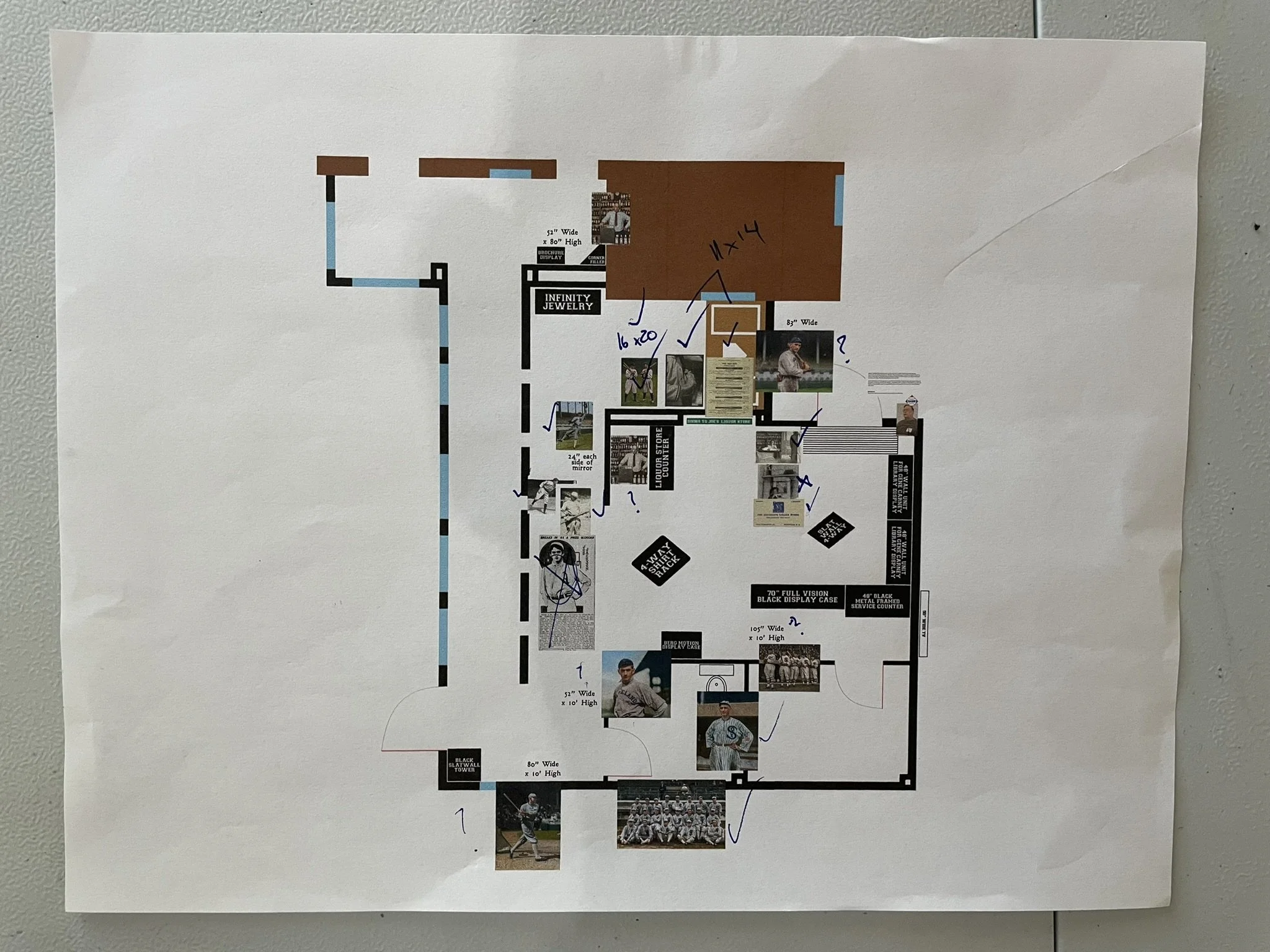
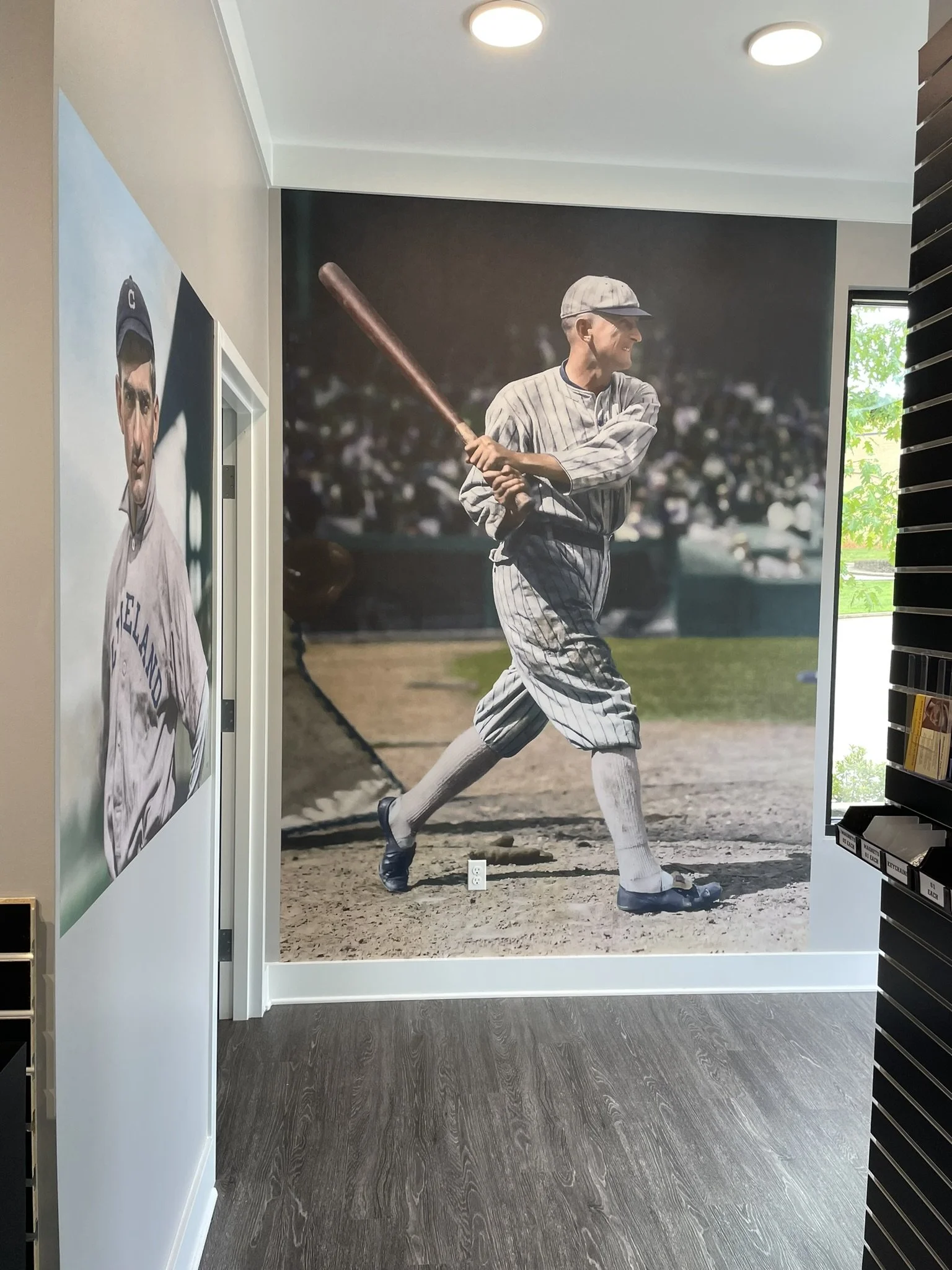
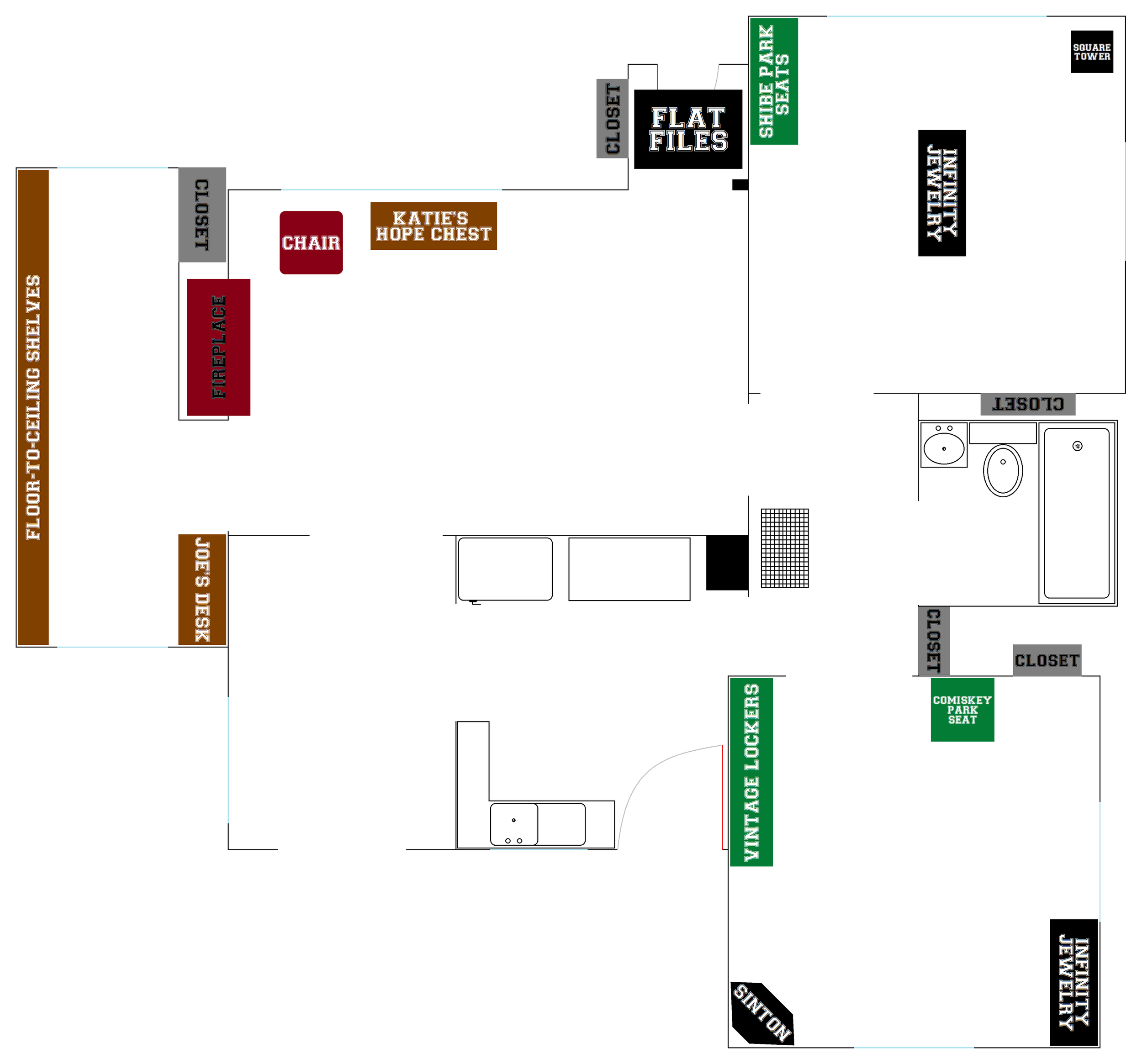
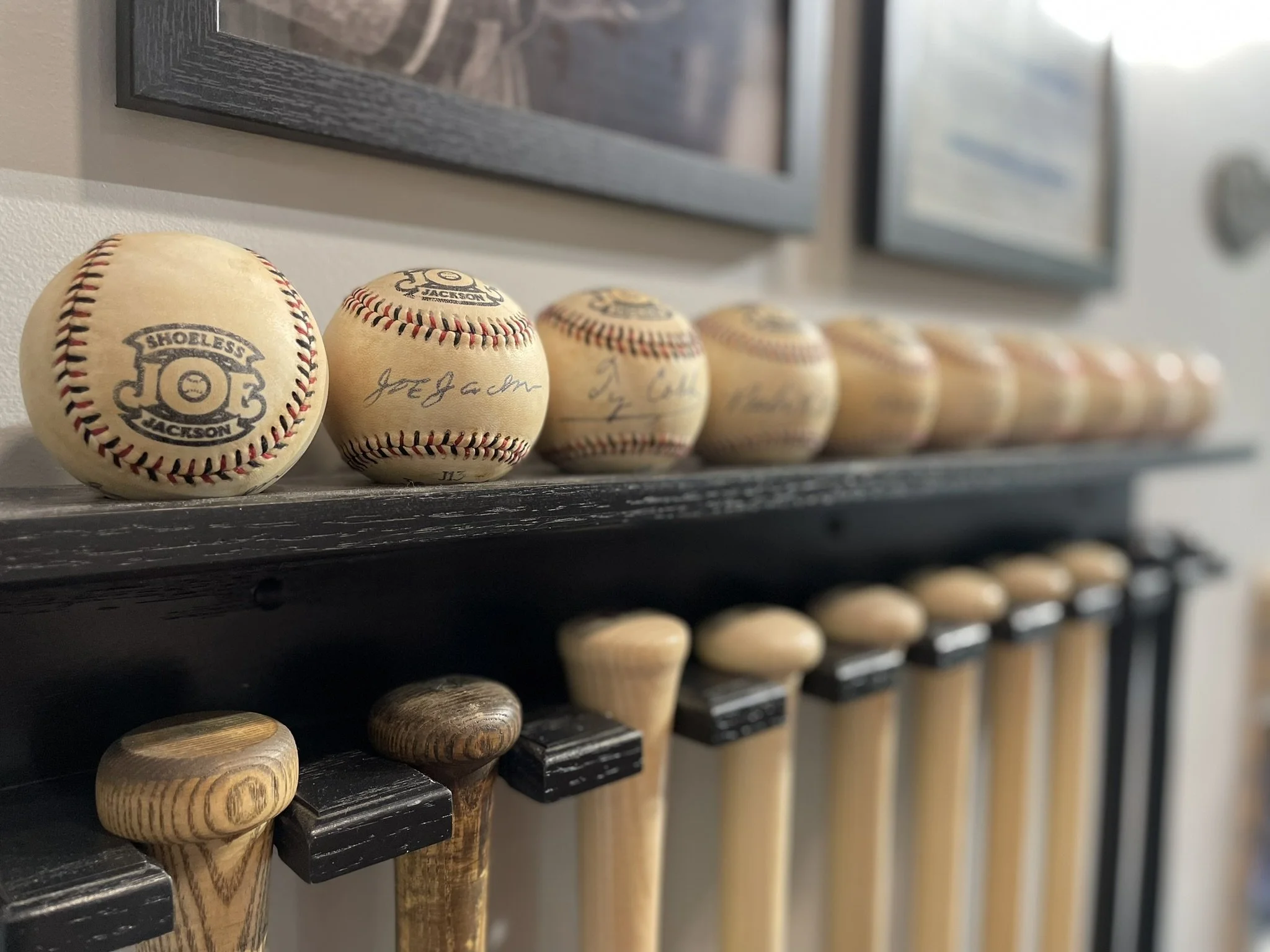
I completely emptied the museum, and re-imagined every square inch of the interior. From what items were worthy of being on display, to how the rooms would flow during the course of a tour, and even which stories were important to tell.
A Lifetime Of Research
Before I could make any informed decisions, I went through every piece of paper, in every filing cabinet and bankers box and storage unit that belonged to the museum. It took hundreds of hours of work, and a lifetime of research and knowledge to properly assess everything.
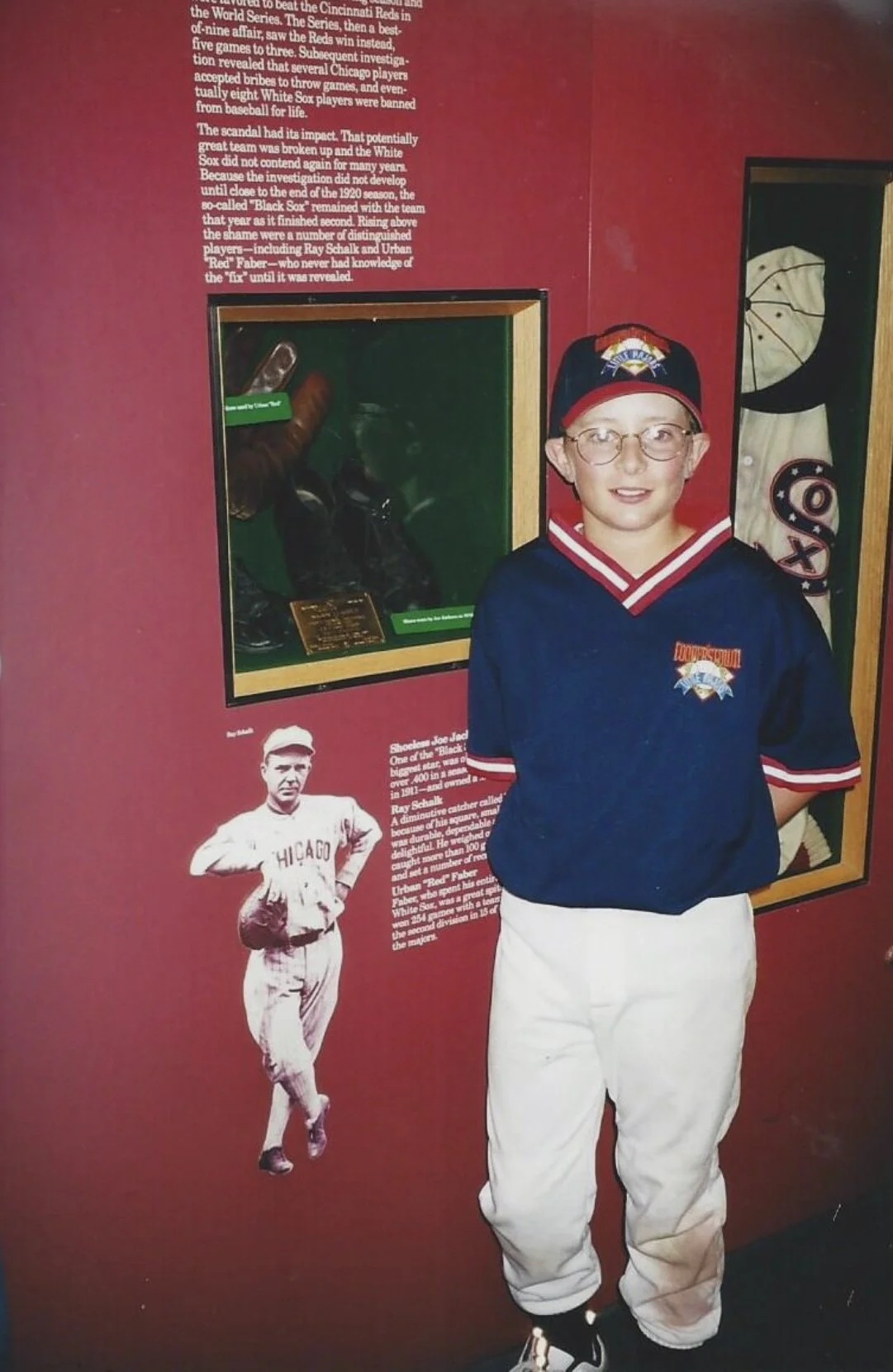
Here I am performing some of that research at the Hall of Fame in 1999 while in Cooperstown playing in a travel baseball tournament. I am standing in front of (what was thought, at the time, to be) Joe Jackson’s game-worn shoes.
A Difficult Task
What made it such a difficult task was trying to strike a balance between conveying his greatness on the baseball diamond, and telling the story of who Joe was as a person. Teaching visitors about the life he and his wife, Katie, led, and the businesses they ran, after his baseball career ended.
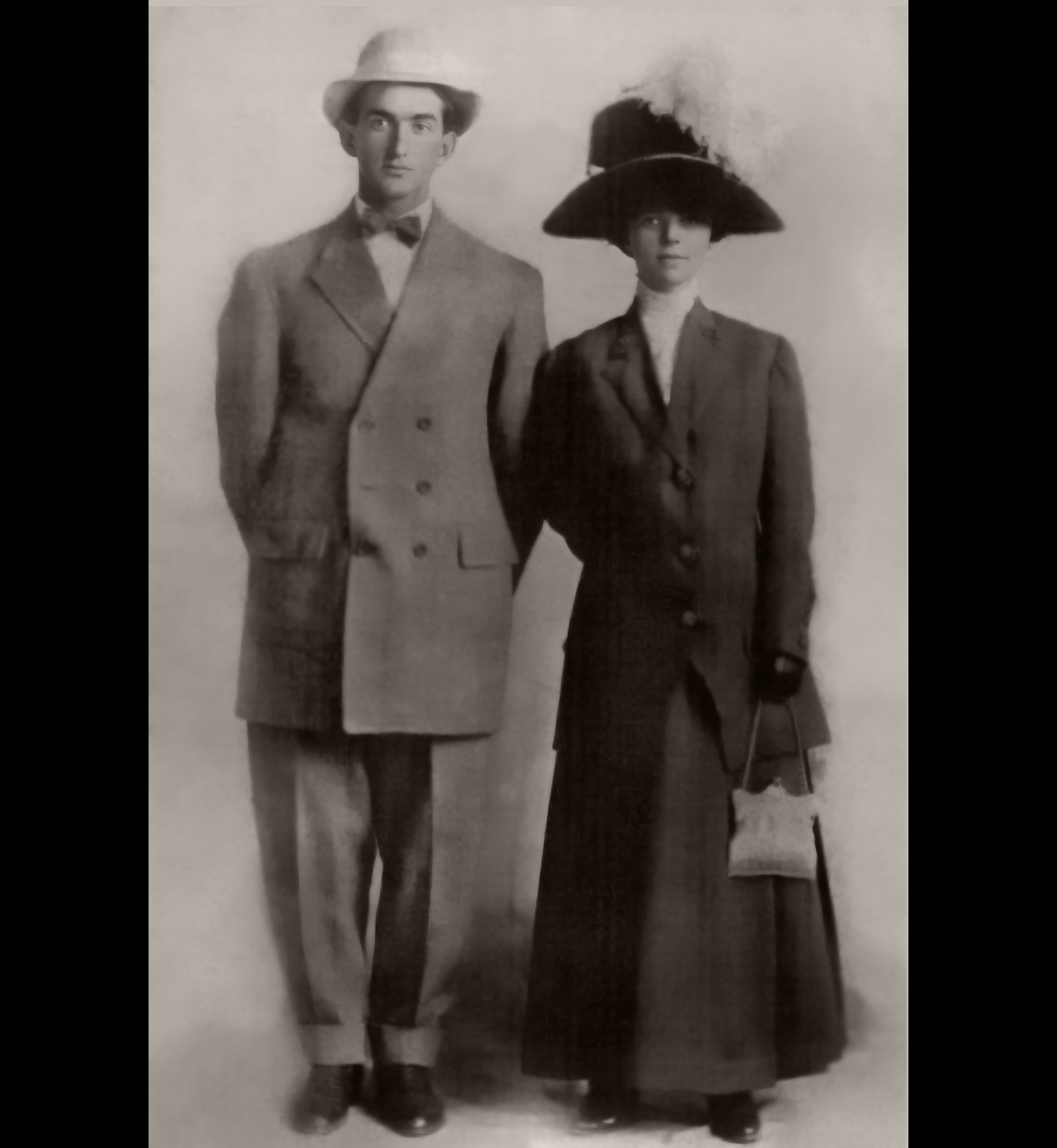
Here, Joe and Katie are photographed on their wedding day, July 19, 1908. As it would be told in the paper soon thereafter:
“The popular center fielder of the local team made the greatest home run of his career on Sunday. The home run was made on Cupid’s diamond and the victory was a fair young lady. On Sunday afternoon at 4:30 o'clock Joe was married to Miss Kate Wynn.”
Second-Hand Stories
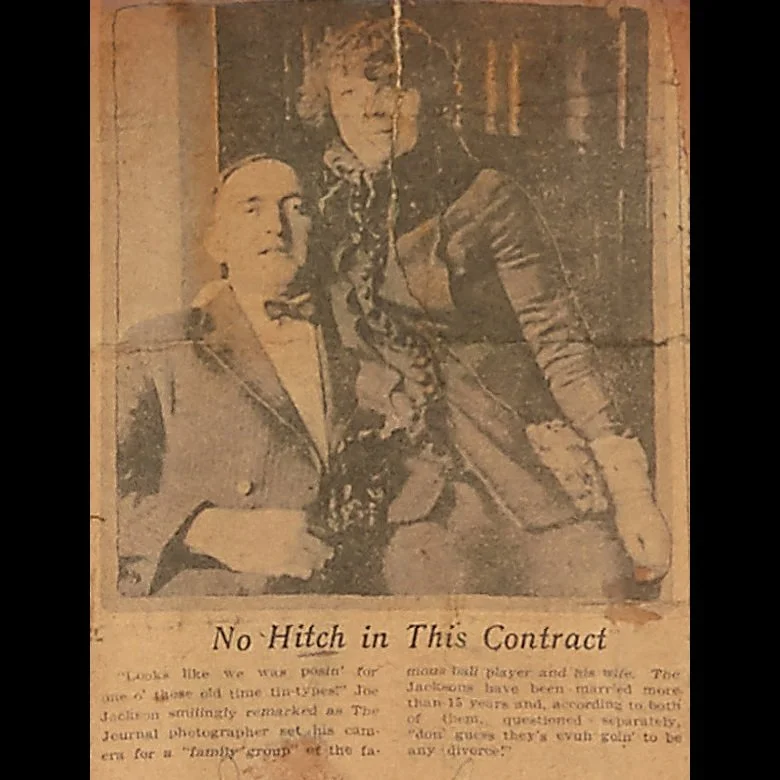
As someone who never knew Joe, and was too young to have met any of his siblings, or Katie, I had to rely on lots of second-hand stories, or things I’d read in newspaper articles from 75 years ago, which may or may not be accurate.
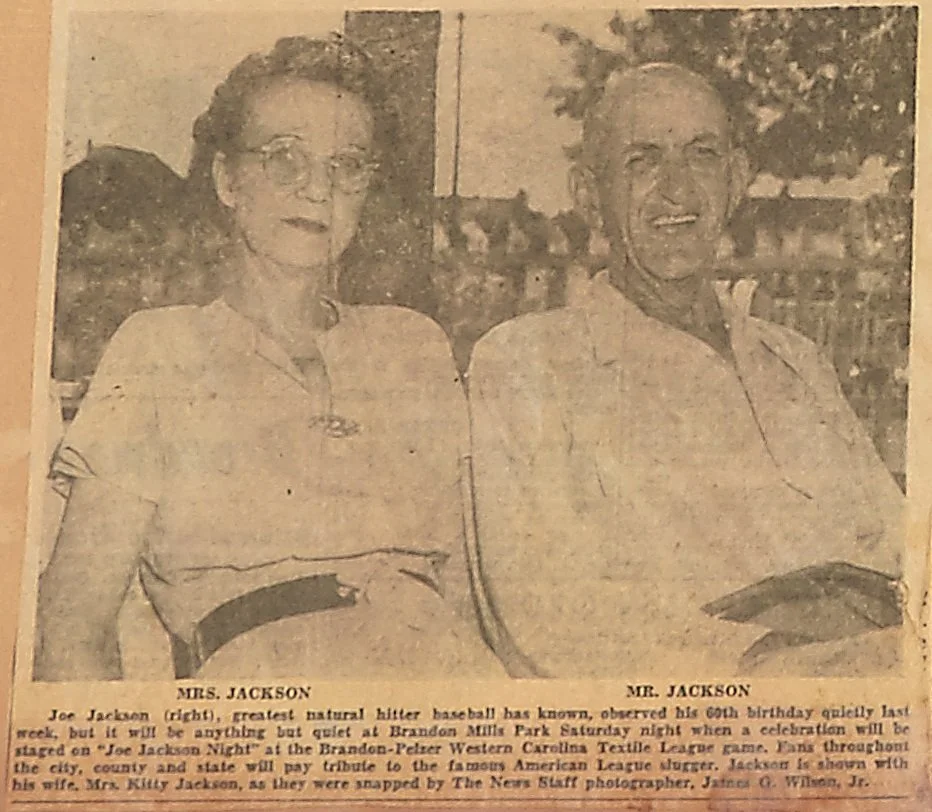
This photo of Joe and Katie appeared in a newspaper in 1923, for example.
119 E. Wilburn
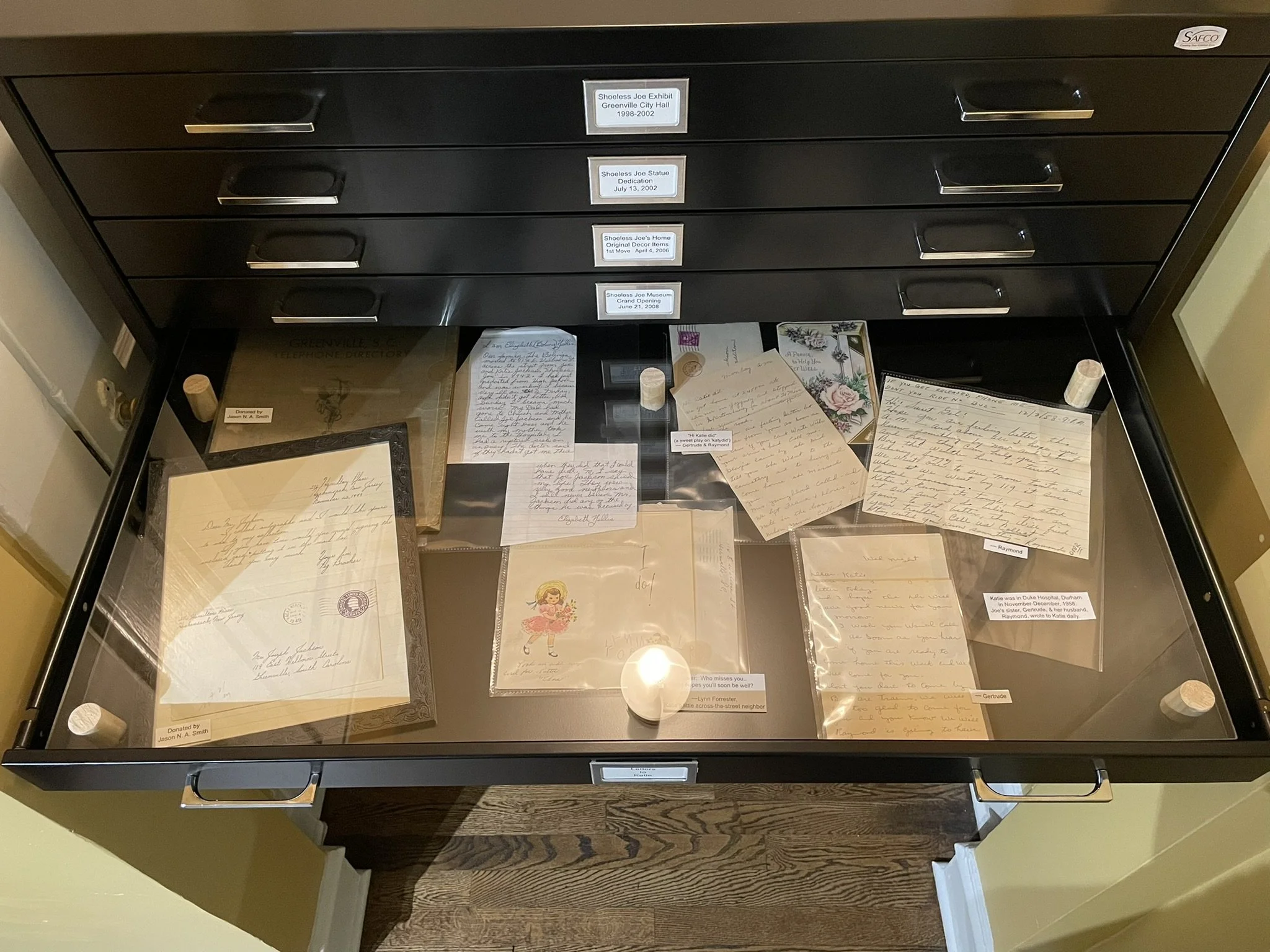
While I was performing my assessment of the museum’s archives and holdings, one of the pieces I found, tucked away in a box, was a handwritten note from a woman named Elizabeth "Lib" Boling, who lived across the street from Joe and Katie Jackson in Greenville, South Carolina, shortly after the Jacksons built the house that would eventually become the museum.
Who Joe Was, As A Man
Lib’s letter was the perfect embodiment of who Joe was, as a person. We’ve heard stories for 120 years now about what kind of ballplayer he was, but this was a firsthand account from someone with a legitimate connection to Joe, giving an insight as to who he was, off the field.
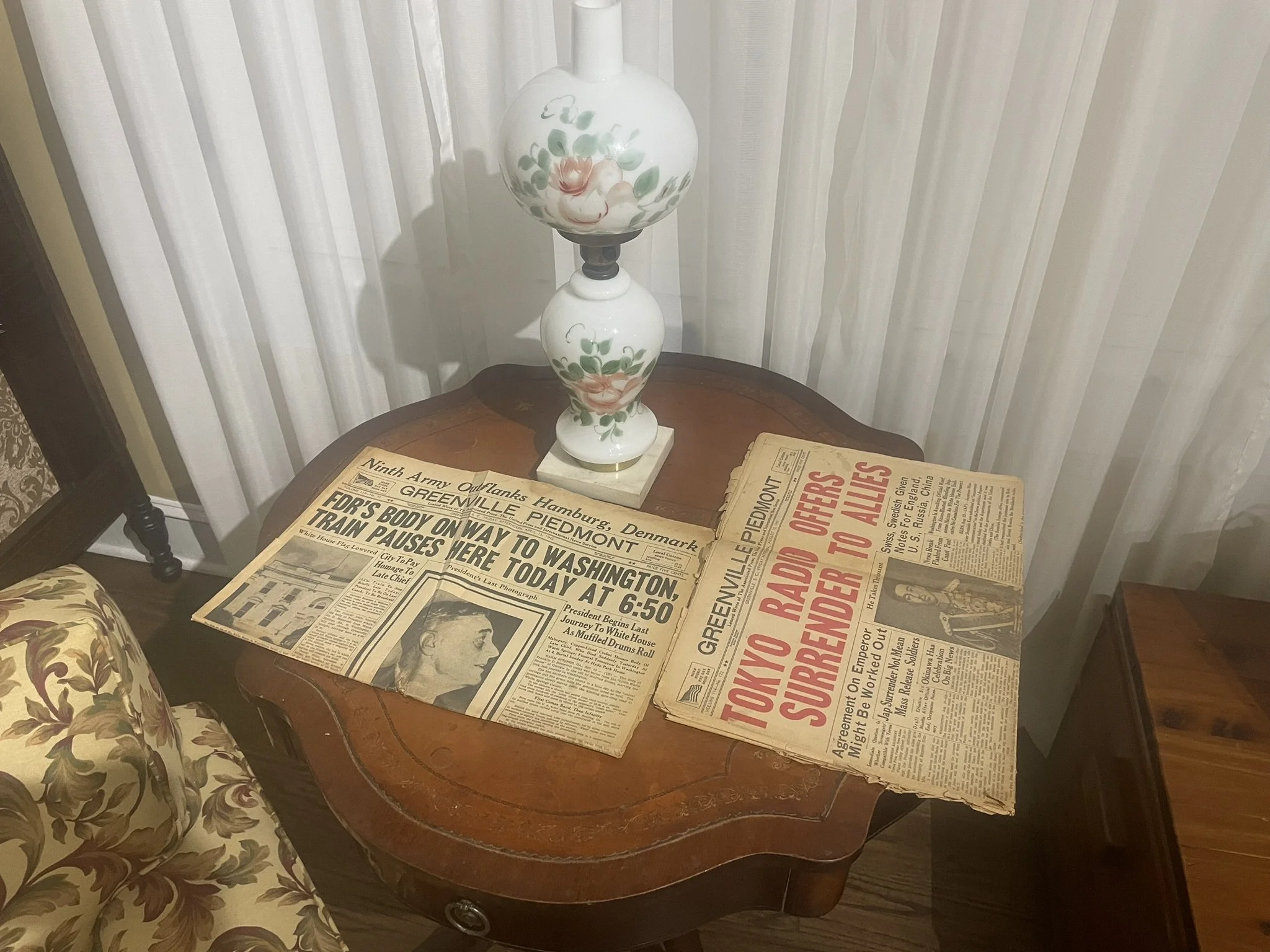
A Humble Man
The fact that this story had never been publicly told, that Joe never made a big deal about it, that he wasn’t heralded in The Greenville News or the Greenville Piedmont as a local hero, just gives further proof as to how humble Joe was as a man.
He didn’t seek out the limelight. But when the time came and someone was in need, Joe was there. Always. Not because he wanted people to think he was a hero. But because it was the right thing to do.
In late November of 2021, Elizabeth’s grandson, Jason Forister, reached out to me to tell me that same story about his grandmother, not knowing that I was in possession of this letter. Jason asked if I would like to meet his grandmother, who was still alive, and her brother, and see if they might have some more stories for me about what it was like to live across the street from Joe Jackson in the 1940s.
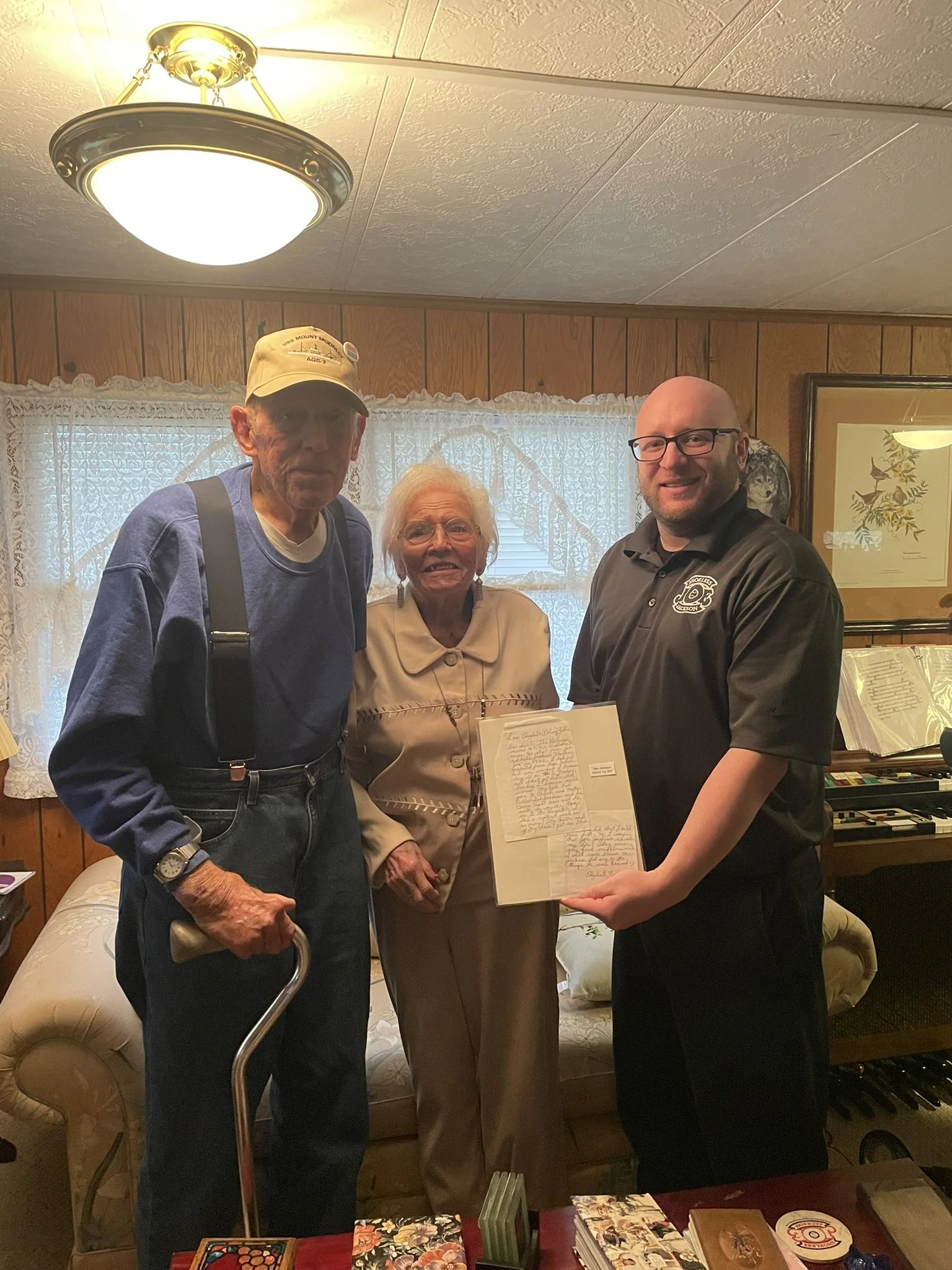
The Bolings
Tom Boling (born April 17, 1928) and his older sister, Elizabeth (born March 6, 1925), lived across the street from Joe and Katie Jackson.
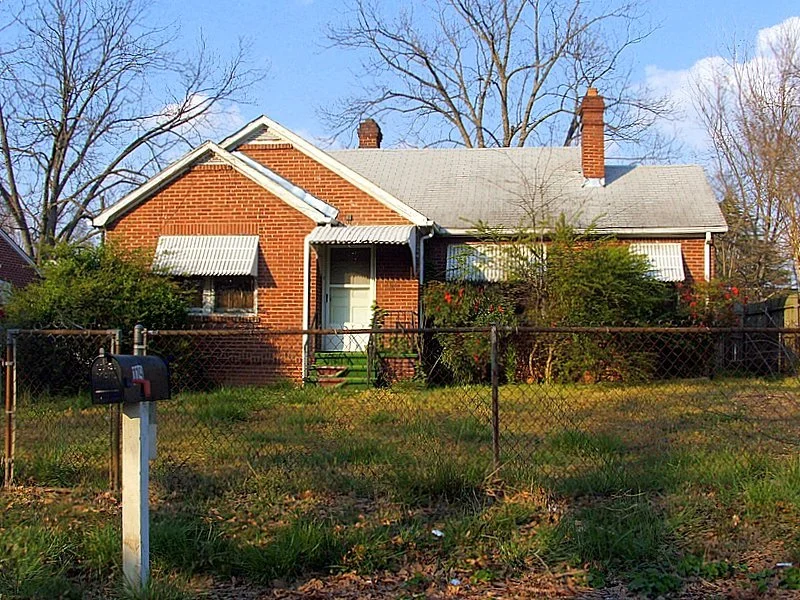
Joe and Katie lived at 119 E. Wilburn in Greenville, South Carolina. The Bolings moved in across the street at 118 E. Wilburn in 1942.
The three of us sat down, along with Elizabeth’s grandson, Jason, on December 7, 2021, to have record a conversation about what it was like to live in the same neighborhood as one of the greatest ballplayers of all time.
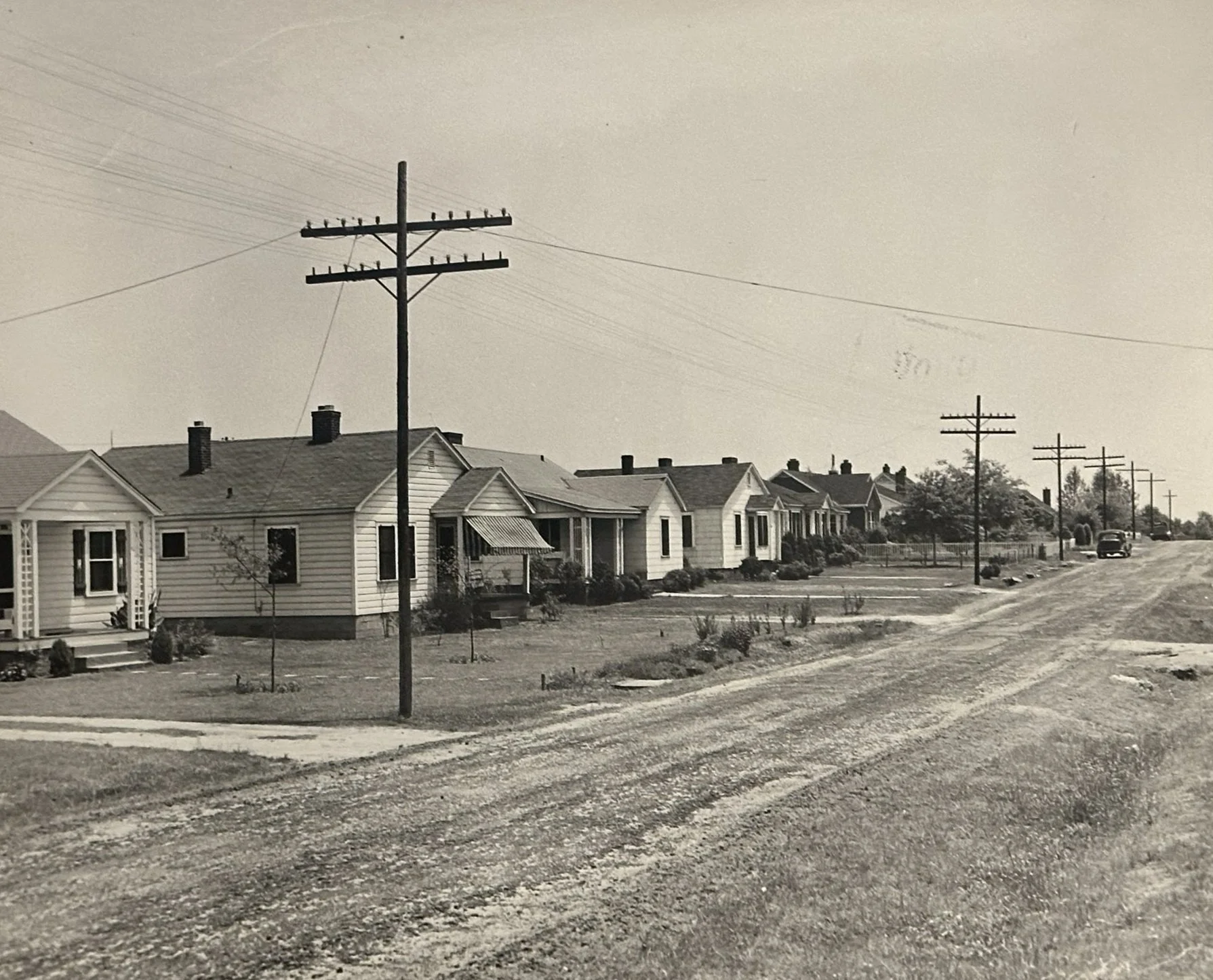
This is E. Wilburn Street in Greenville, South Carolina in the 1940s. Joe and Katie’s house is the brick house with the white fence down the way, with the car parked in front of it.
A New Development
The houses on E. Wilburn Street were all relatively new at the time the Bolings moved in. Joe and Katie Jackson built theirs in 1940 and moved into it in 1941.
Tom said he remembers that he and Lib’s father paid $3,200 (slightly more than $65,000 in 2026) for their recently-built home in 1942.
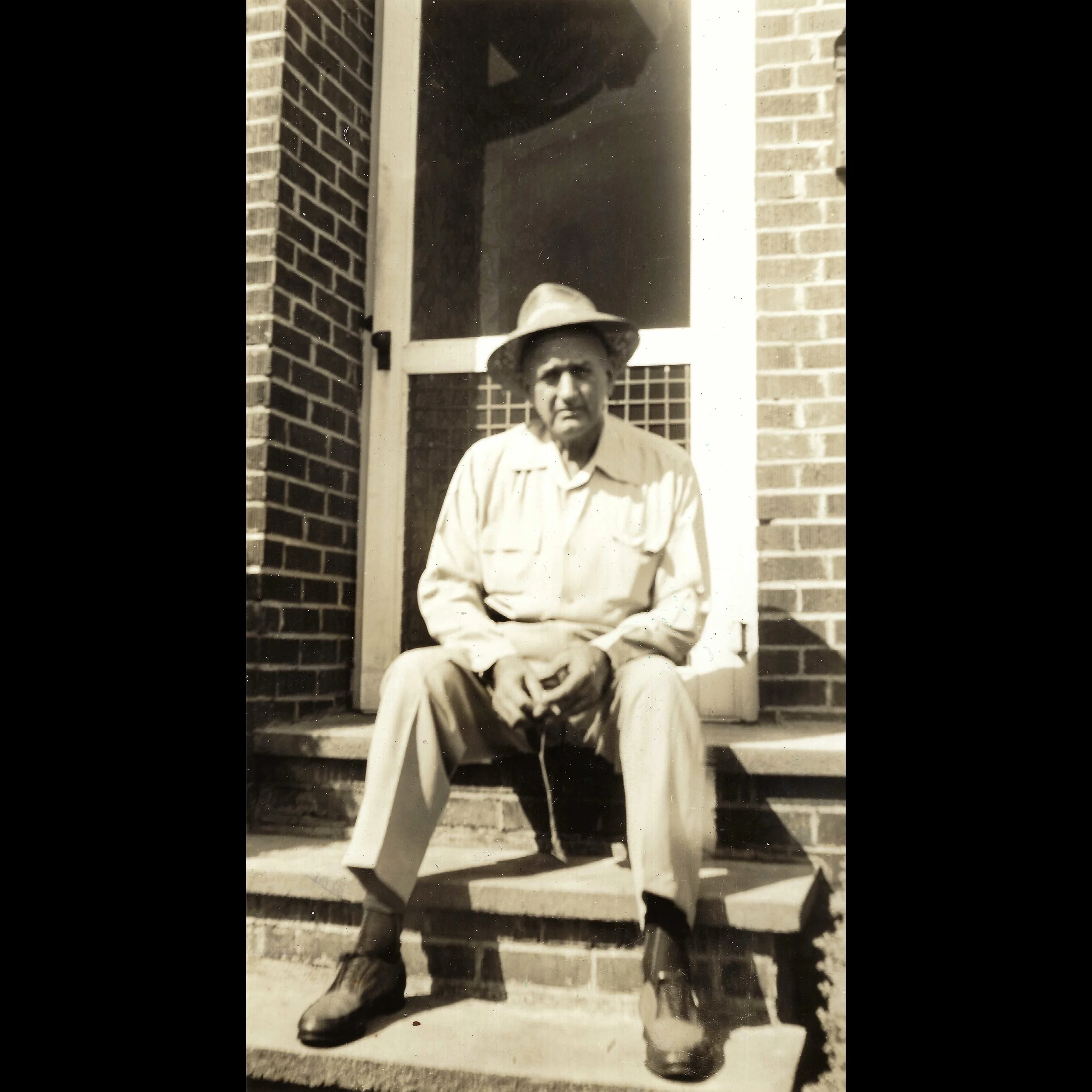
Here, Joe sits on his front porch some time in the 1940s.

Neighbors And Friends
First row: Evelyn Brock, Penny Forrester, Lajuana Boling, Jeannie Burroughs
Second row: Louise Coker, Katie Jackson
Third row: Annie Pearl McWhite Brown, Elizabeth Wood, Ethel McWhite
Fourth row (standing): Carolyn Boling [this is Tom’s wife], Vivian Lindsey holding her son Gary, Nell Shirley, Myrtis (Mertie) Hamby, Edna Forrester
Fifth row (all the way in back): Lillian Williams (who lived at 110 E. Wilburn)

Unassuming
Joe and Katie never bragged about Joe’s baseball career. While his neighbors were aware he used to play ball, most of them didn’t truly grasp that they were living so close to one of the all-time greats.
Here, Joe gives hitting pointers to some players from the Brandon Mill team, including his protégé, Joe Anders (far right), who was a great ballplayer in his own right.
Left to right: Ralph Harbin, Joe Jackson, manager and infielder Foster, Joe Anders
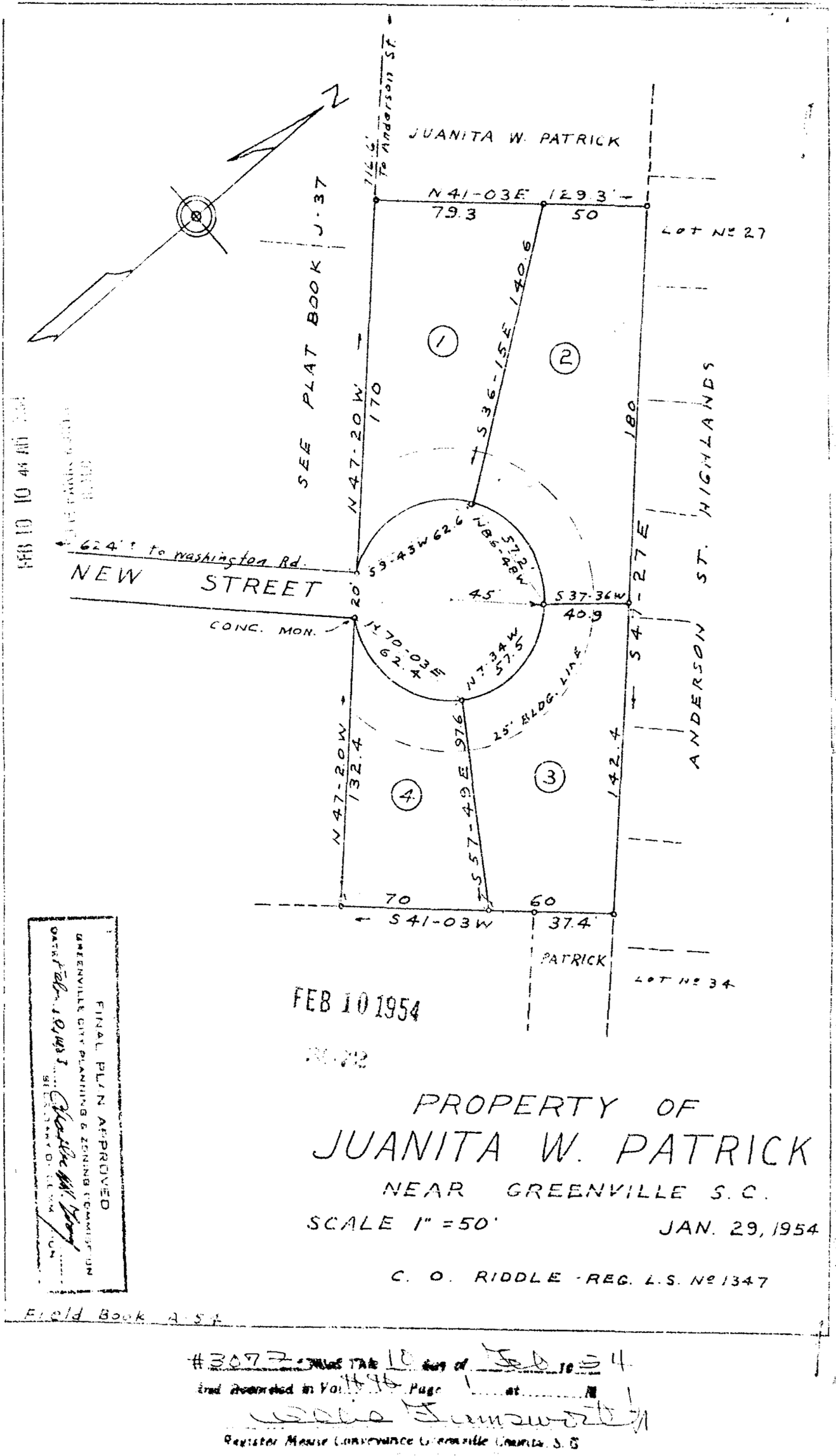
Mr. Patrick’s Field
William Franklin Patrick, Sr. lived on nearby Anderson Street and had 8-10 acres of land that ran behind all of the houses in the Jackson’s and Boling’s neighborhood on E. Wilburn.
The Patricks kept cows and other animals in the pasture, along with the barn, on that property.
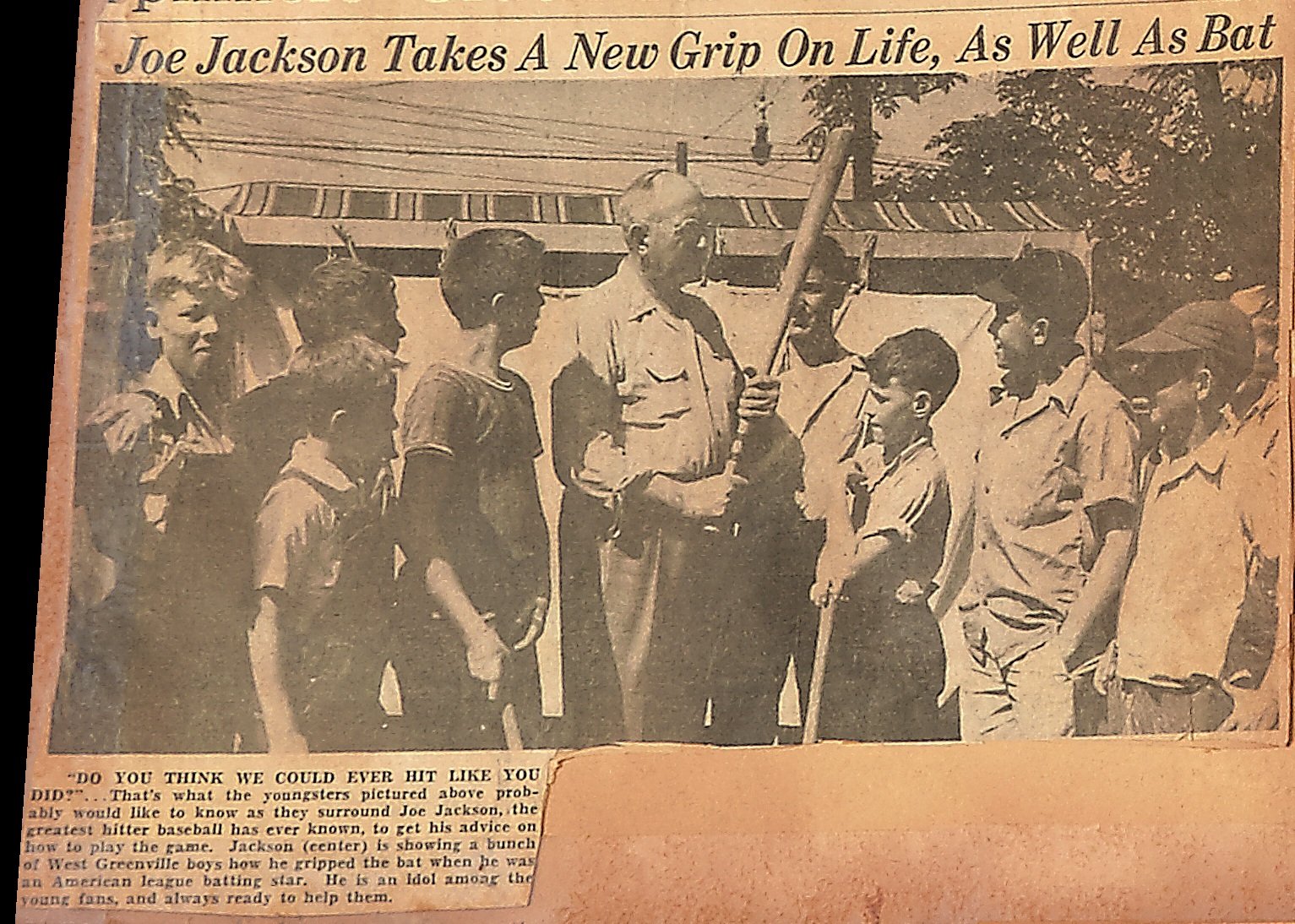
Teaching The Kids
On Saturday mornings, Katie would open the liquor store instead of Joe, because Joe would be down at Mr. Patrick’s field, teaching the young kids of the neighborhood how to play ball.
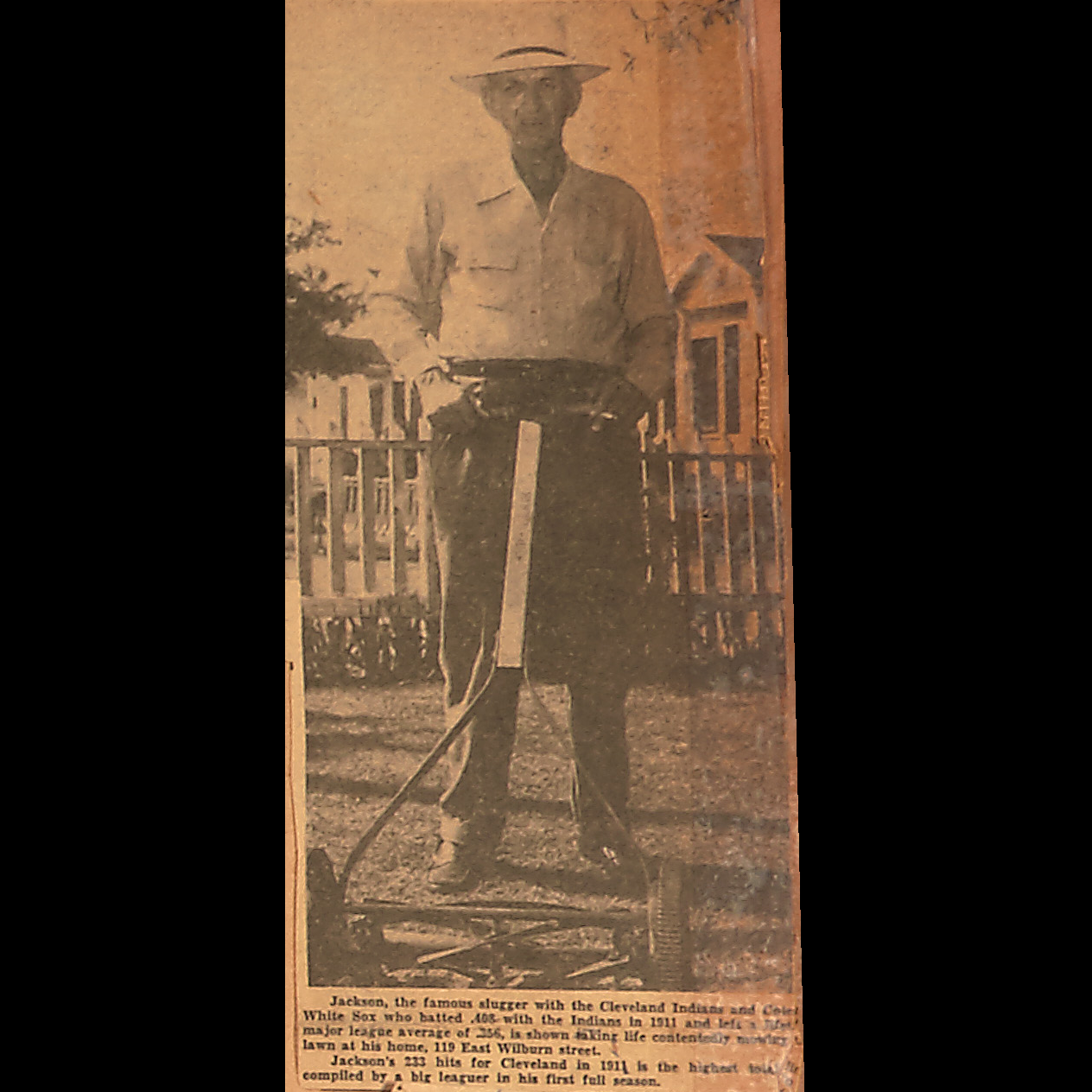
Joe Cut His Own Grass
This is a photo of Joe mowing his lawn which I came across in the July 25, 1948 issue of The Greenville News. I’m sure no one has seen this image in almost 80 years.
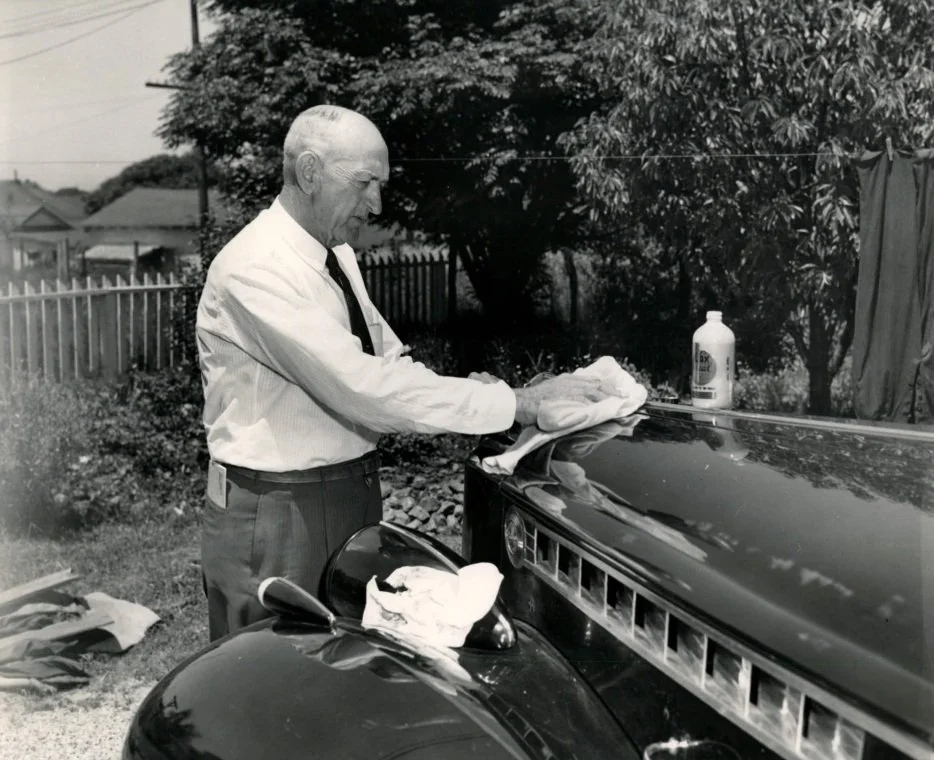
But Tom remembered that, despite his advanced age and somewhat declining health, Joe could still cut his grass.
It was at this moment that I knew Tom’s memory was better than he had let on.
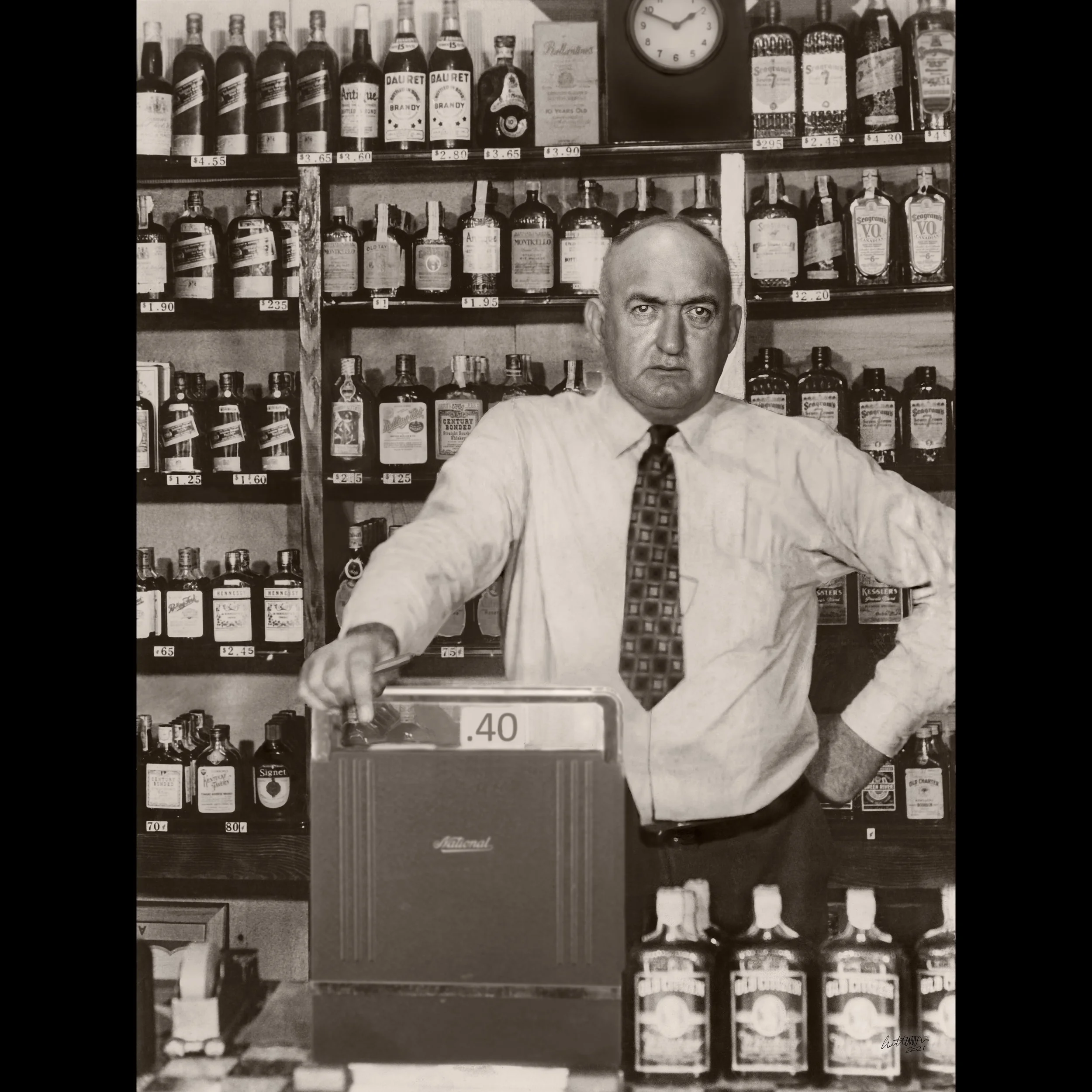
Joe Jackson’s Liquor Store
Joe and Katie operated Joe Jackson’s Liquor Store from about 1934 until about 1951. The store was located at 1262 Pendleton Street in West Greenville.
Tom said, despite some people in the community frowning at the idea of a liquor store, that morally, Joe was a nice guy who never said “anything out of the way.”
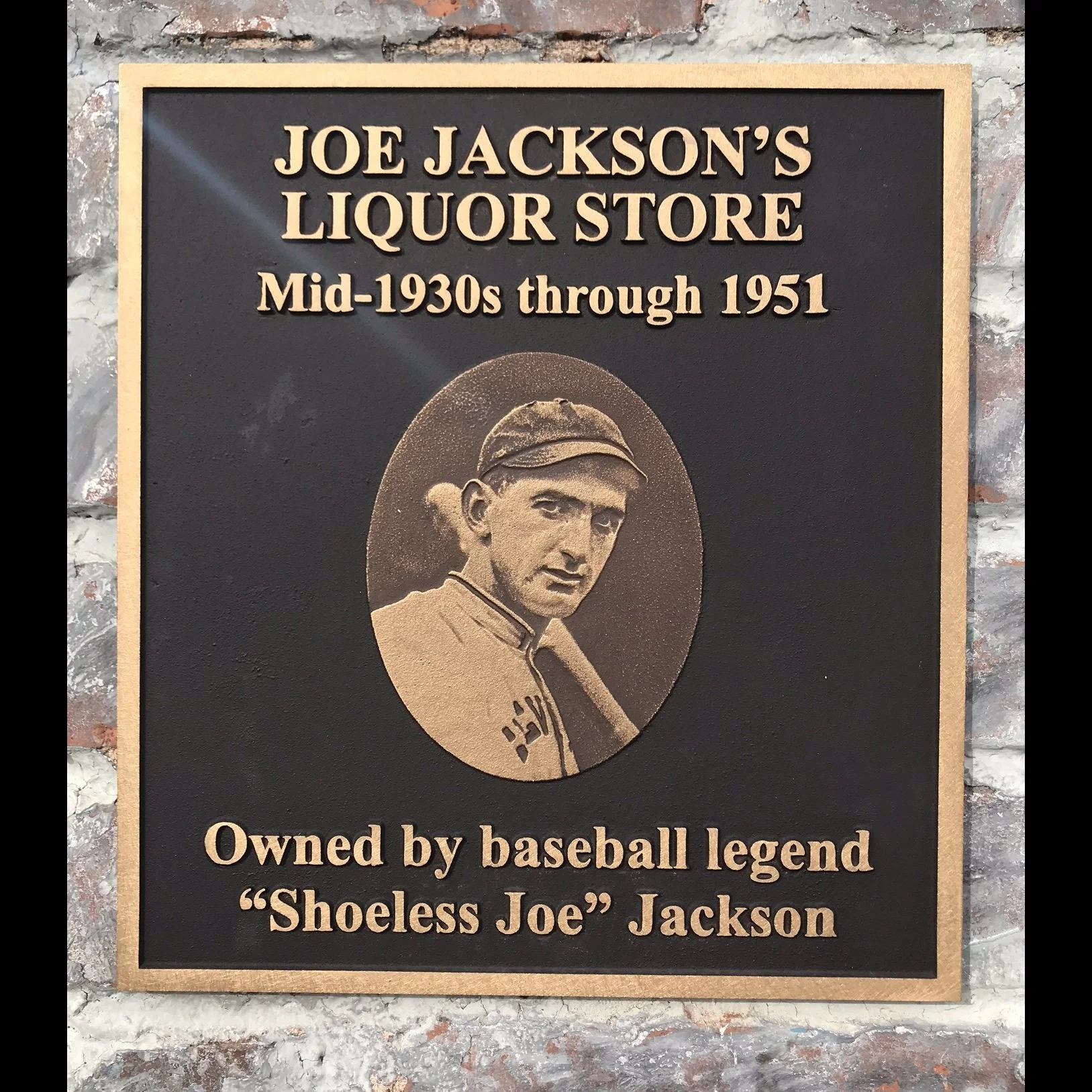
Joe’s Liquor Store Today
While it is no longer a liquor store, that building is still standing, and there is a plaque outside the front door commemorating the fact that Joe Jackson’s Liquor Store once occupied the storefront.

Neighborhood Kids
Pictured here (left to right) is the Nesbitt home, the Sutherland home, and finally Joe and Katie Jackson’s home (with the white awnings over the windows).
Allen Meaders is the little boy standing in the photo, which was taken in February of 1958. Joe had passed away by then, but Katie still lived there, and she would until she passed away in April of 1959.
Some other neighborhood kids included the Pennybakers, Tuffy Guerin, and sisters Penny and Lynn Forrester.
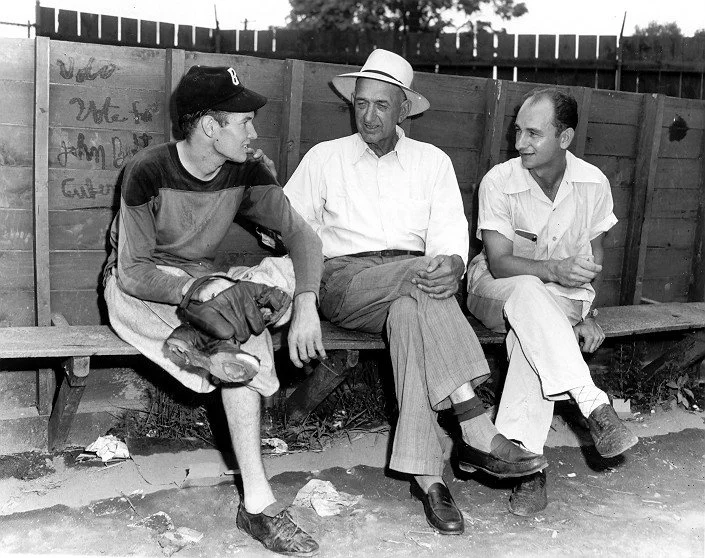
Joe Loved To Talk Baseball
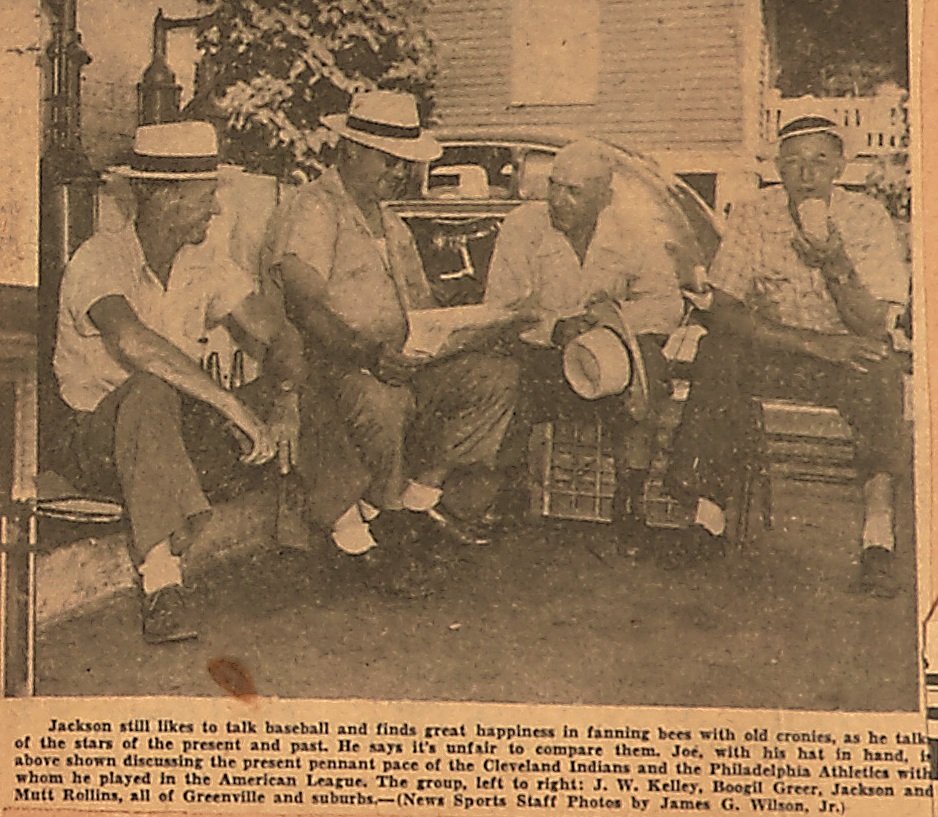
If a kid came to Joe Jackson’s Liquor Store, Joe wouldn’t let them inside because they were too young, but he would pull a stool or a chair outside so they could sit on the sidewalk together while they talked ball.
Left to right: pitcher Fred Byrd, Joe Jackson, Brandon Mill athletic director Ray Wynn.
Friendly Neighbors
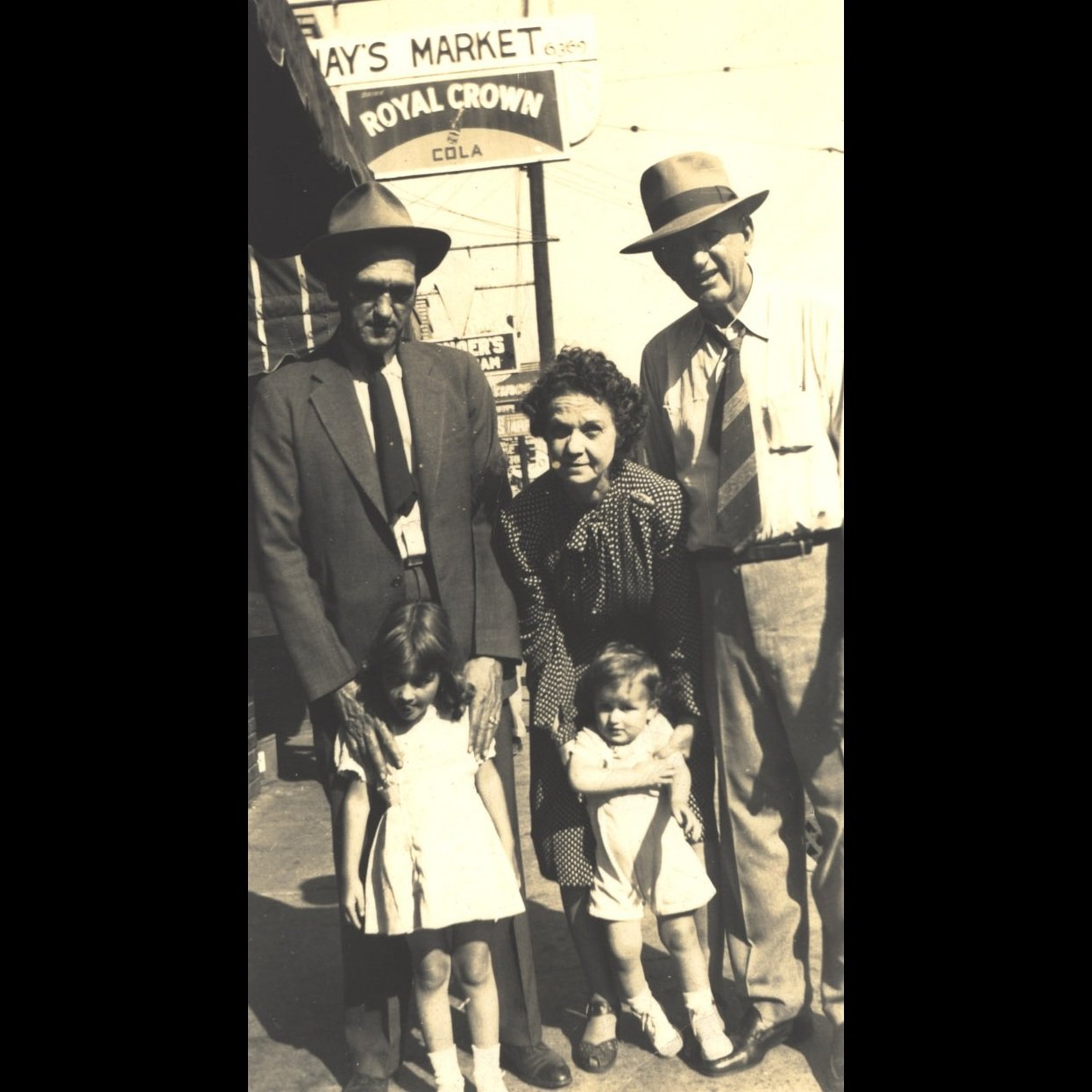
Joe and Katie never had any kids of their own, but they loved children. They loved sitting outside on their front lawn and watching the kids ride their bikes up and down the street.
Tom remembered that Katie would go shopping every weekend with his mother-in-law, and that they were great friends.
Tom had married Carolyn Burgess, who lived at the corner of E. Wilburn and Anderson Road. So Katie would go shopping with Carolyn’s mother, who lived right down the street.
Joe To The Rescue
One weekend in 1942, Elizabeth became incredibly ill and needed to be rushed to the hospital.
Since Joe had a car, Lib’s mother asked Joe if he could take them.
Joe ran across the street, carried Lib into his car, and drove them to the hospital where she underwent emergency surgery, saving her life.
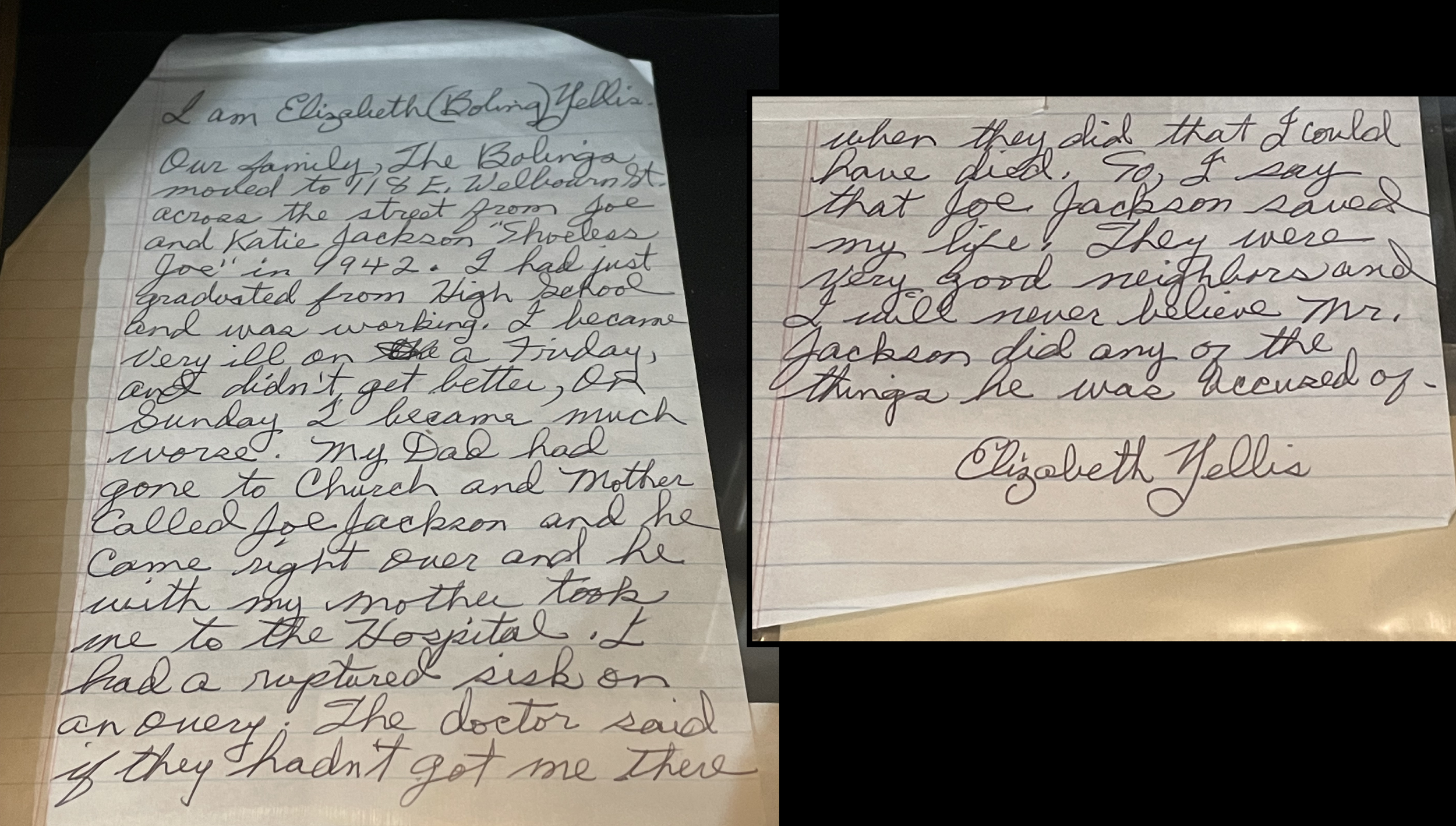
Elizabeth “Lib” Boling’s letter, detailing how Joe Jackson saved her life
Sitting And Talking
Elizabeth remembered sitting in the Jackson’s front yard with Joe and talking baseball, just like her brother, Tom, remembered.
Lib was the captain of her school’s baseball team, which gave her something to bond over with Joe other than the fact that he’d saved her life.
Joe’s Cars
Joe loved to drive nice, big, expensive cars, because he truly wanted to shed the image of being a poor southerner who couldn’t afford shoes, as he felt his nickname implied.
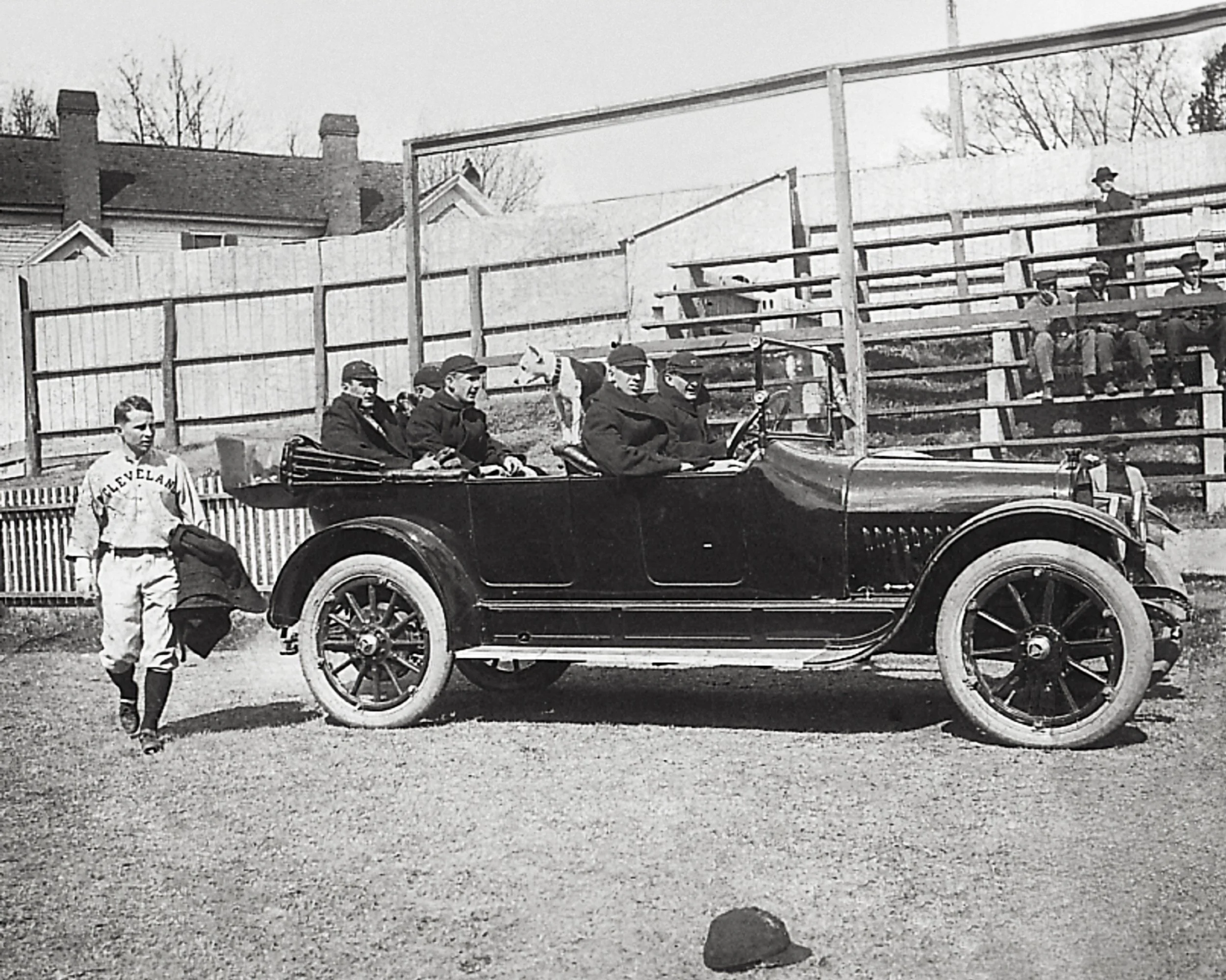
Here, Joe drives his Oldsmobile Eight Pacemaker at spring training with the Cleveland Naps.
Joe’s Cars
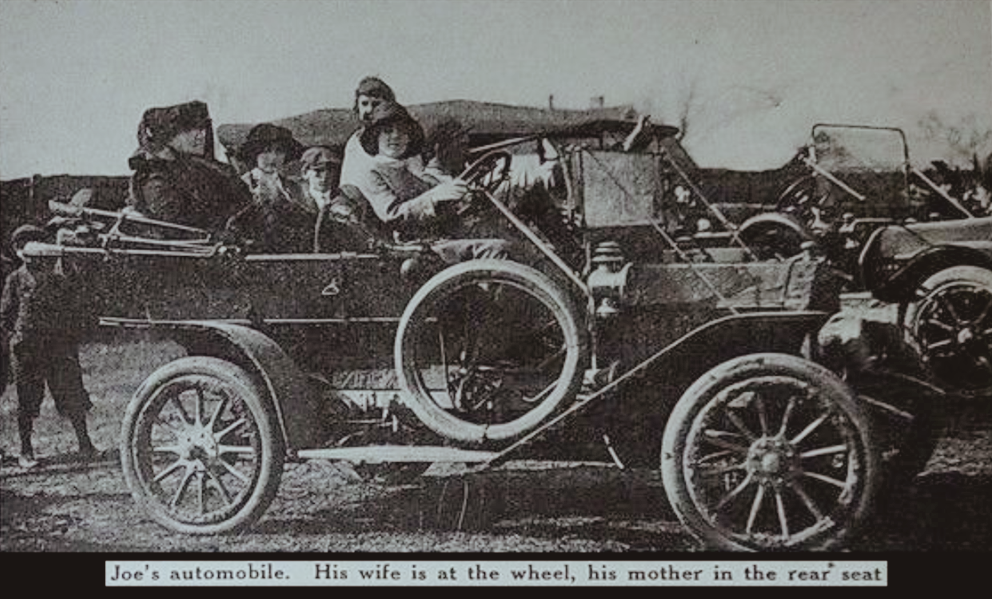
This image appeared in the March 1916 issue of Baseball Magazine, of which Joe is the cover story.
1940 Packard
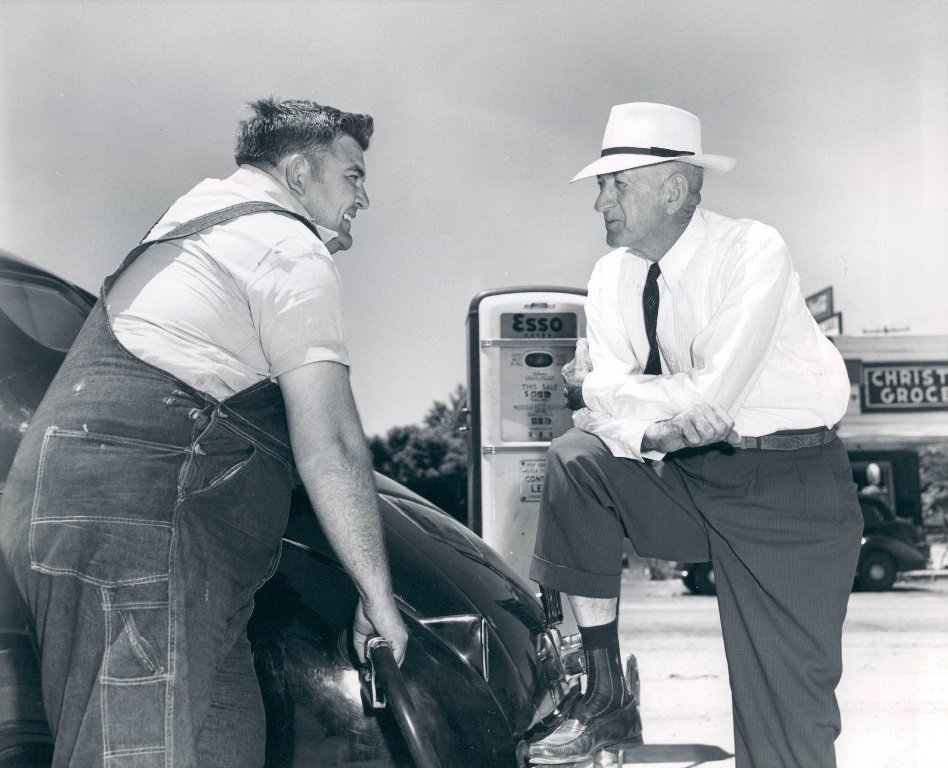
Joe had many beautiful cars throughout his life, but it seems as if his 1940 Packard may have been his favorite. He took great care of that car.
Coincidentally, Tom said he remembers driving a 1940 Packard, himself, as one of his first cars.
Beauty
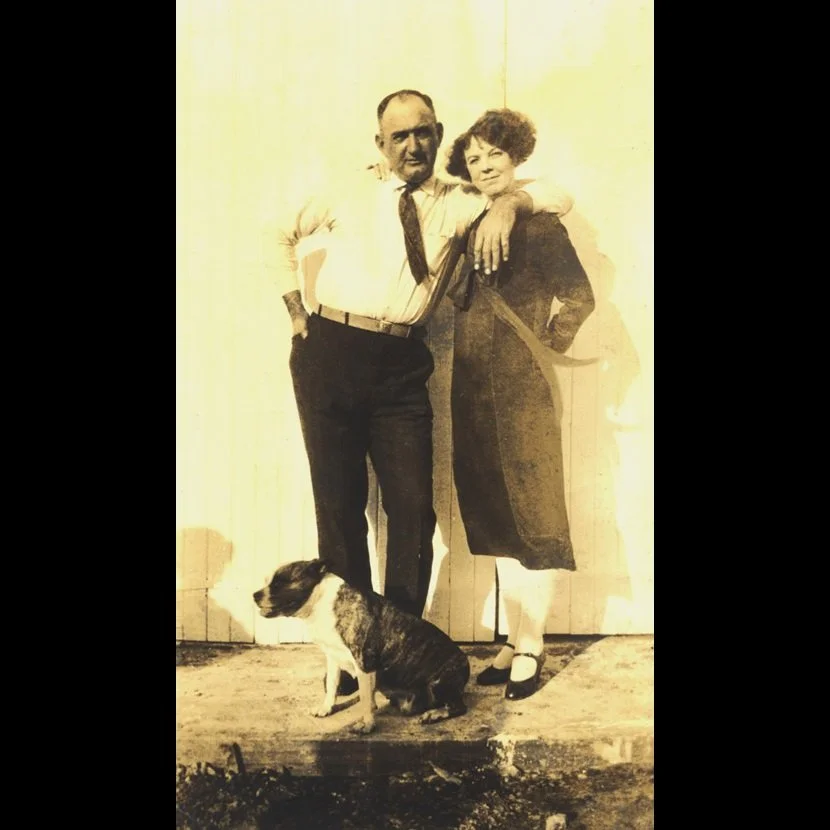
Joe and Katie frequently had dogs as pets throughout their later years in South Carolina. This photo shows them with their bulldog, Beauty. Beauty’s name was tongue-in-cheek, because, according to friends and family, it was the ugliest little thing you've ever seen.
This is one of my favorite pictures of Joe. Notice how big his hands are, too!
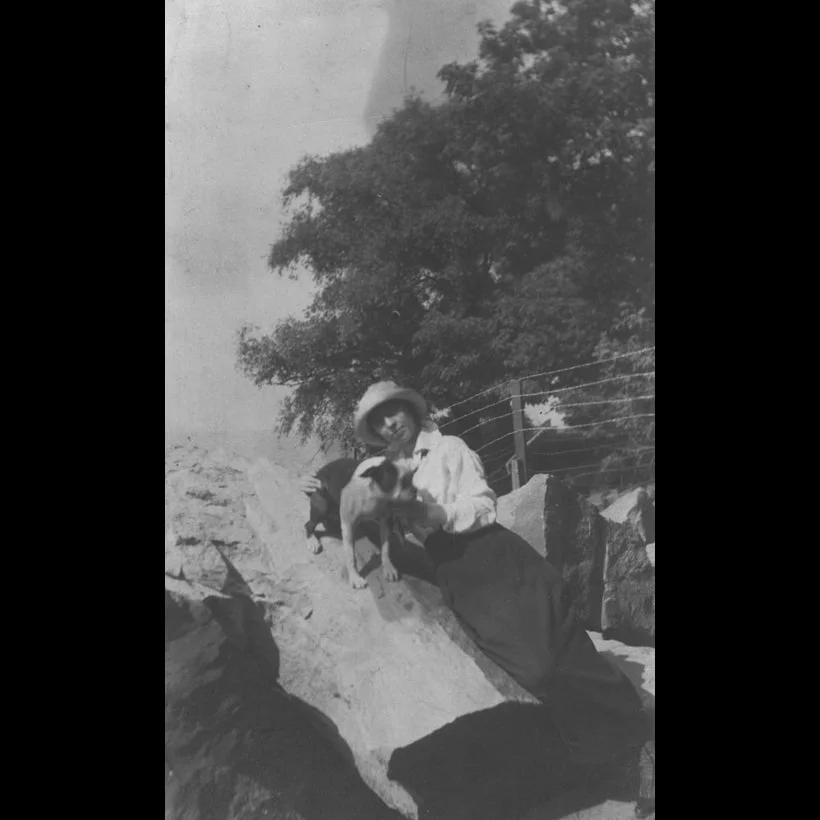
Katie and Beauty
Here, Katie takes Beauty for a nature walk.
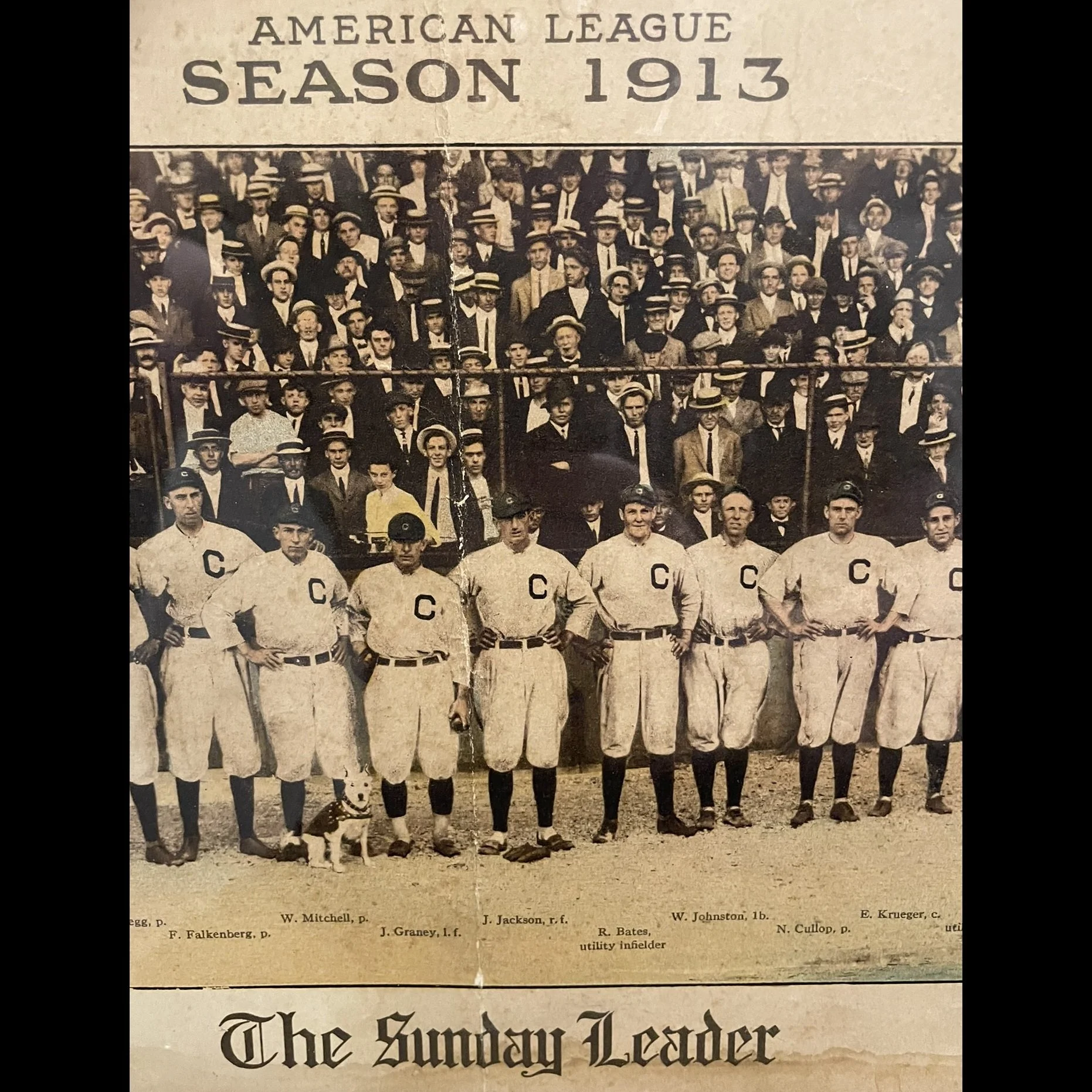
Even On The Baseball Diamond
Even when Joe was “at work” with his baseball teams, he would always try to find a way to be close to dogs, if possible.
Pictured in this 1913 Cleveland Naps team photo is Larry the dog, which belonged to unofficial team captain Jack Graney. Jack is to the right of Larry, and Joe to the right of Jack in this photo.
Larry was a Bull Terrier who could do tricks, play leapfrog with the players, and acted as on-field entertainment before games or in between innings on many occasions. He was a celebrity in his own right, beloved by fans and players alike.
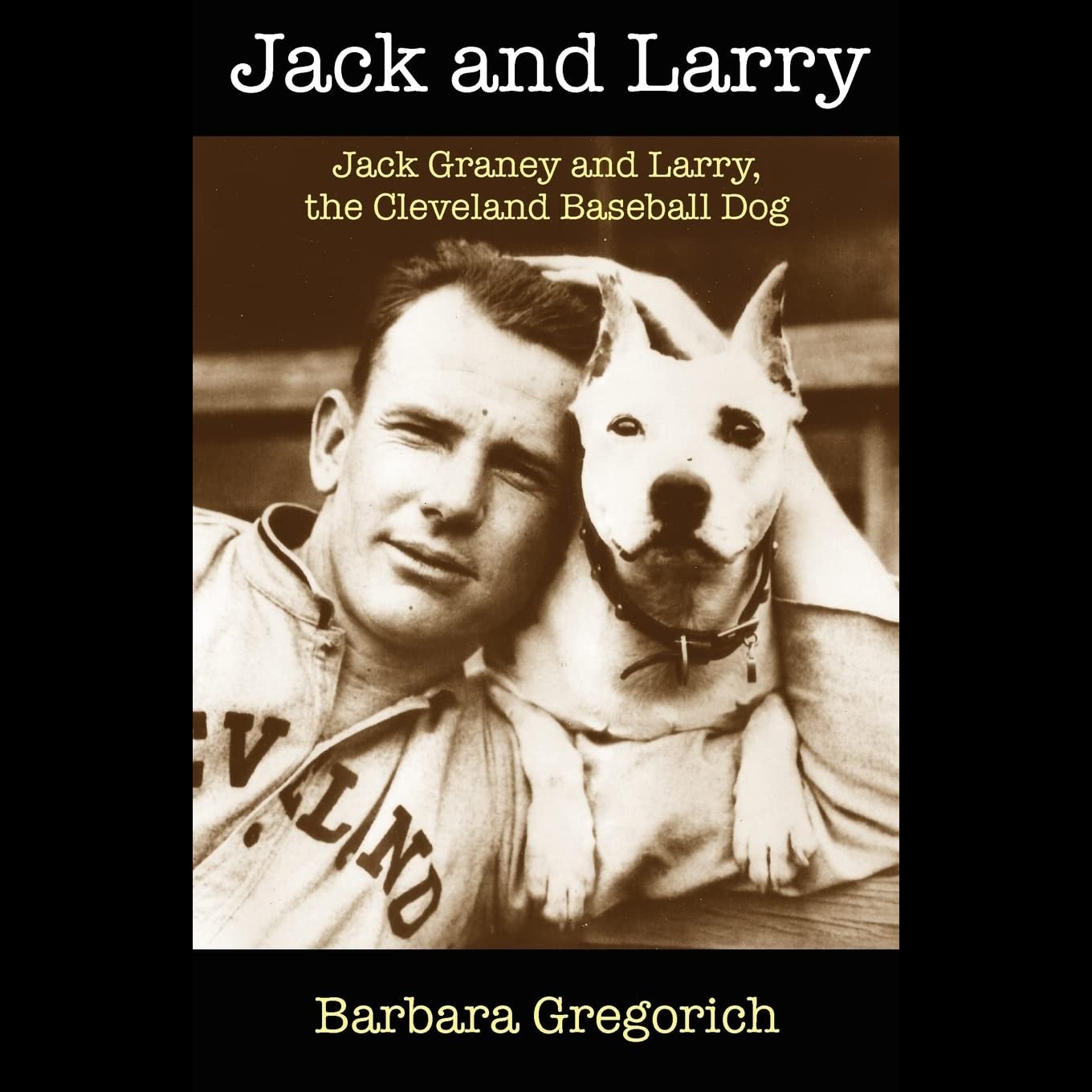
Jack And Larry
Barbara Gregorich — author of a book about Graney and his relationship with Larry — writes that Larry became the first dog to be formally introduced to a sitting U.S. president when he met Woodrow Wilson in 1914 ... and promptly chased a squirrel across the White House lawn.
Buy a copy of Jack And Larry HERE.
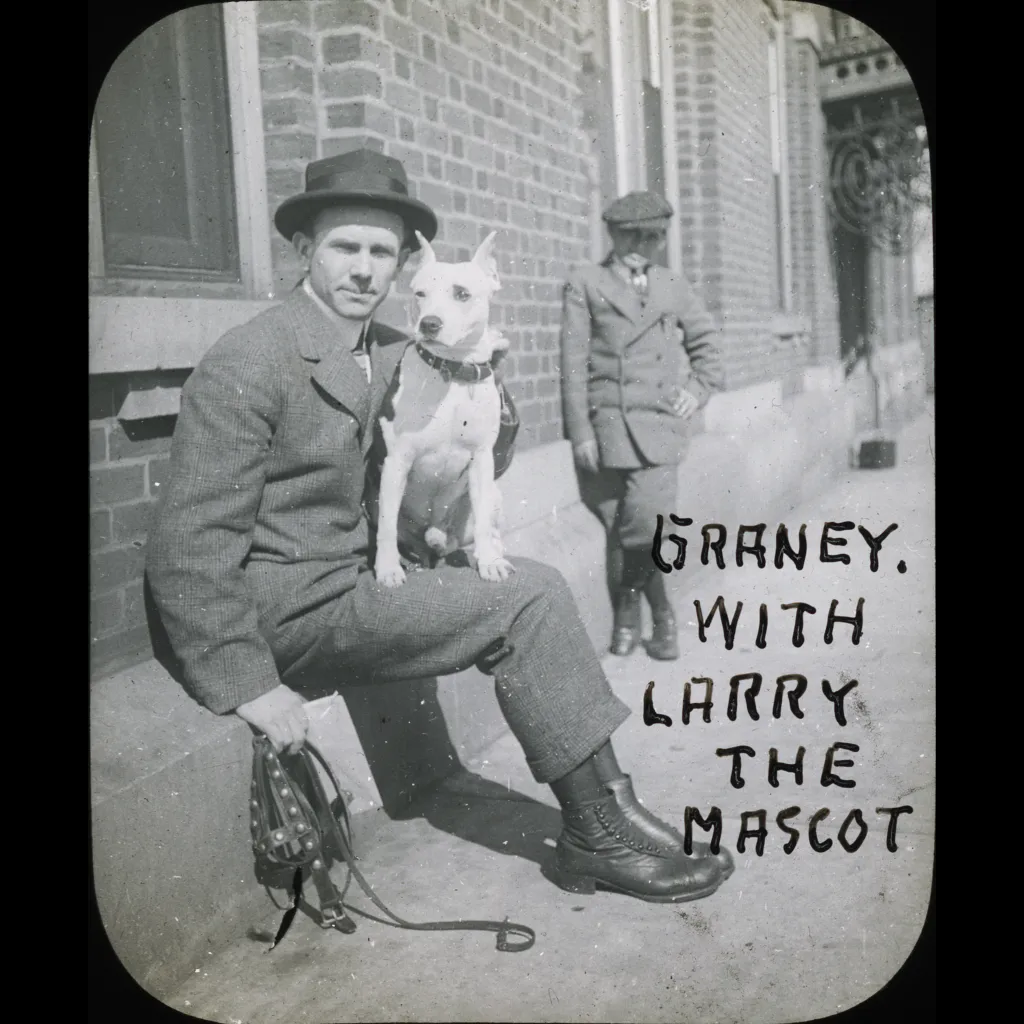
Larry The Dog
Here is a rarely seen image taken by photographer Frank W. Smith of Jack Graney with Larry in Athens, Georgia during Cleveland’s 1914 Spring Training.
One of the reasons Joe loved playing in Cleveland so much was because Larry was around the team on an everyday basis, so Joe could play with him.
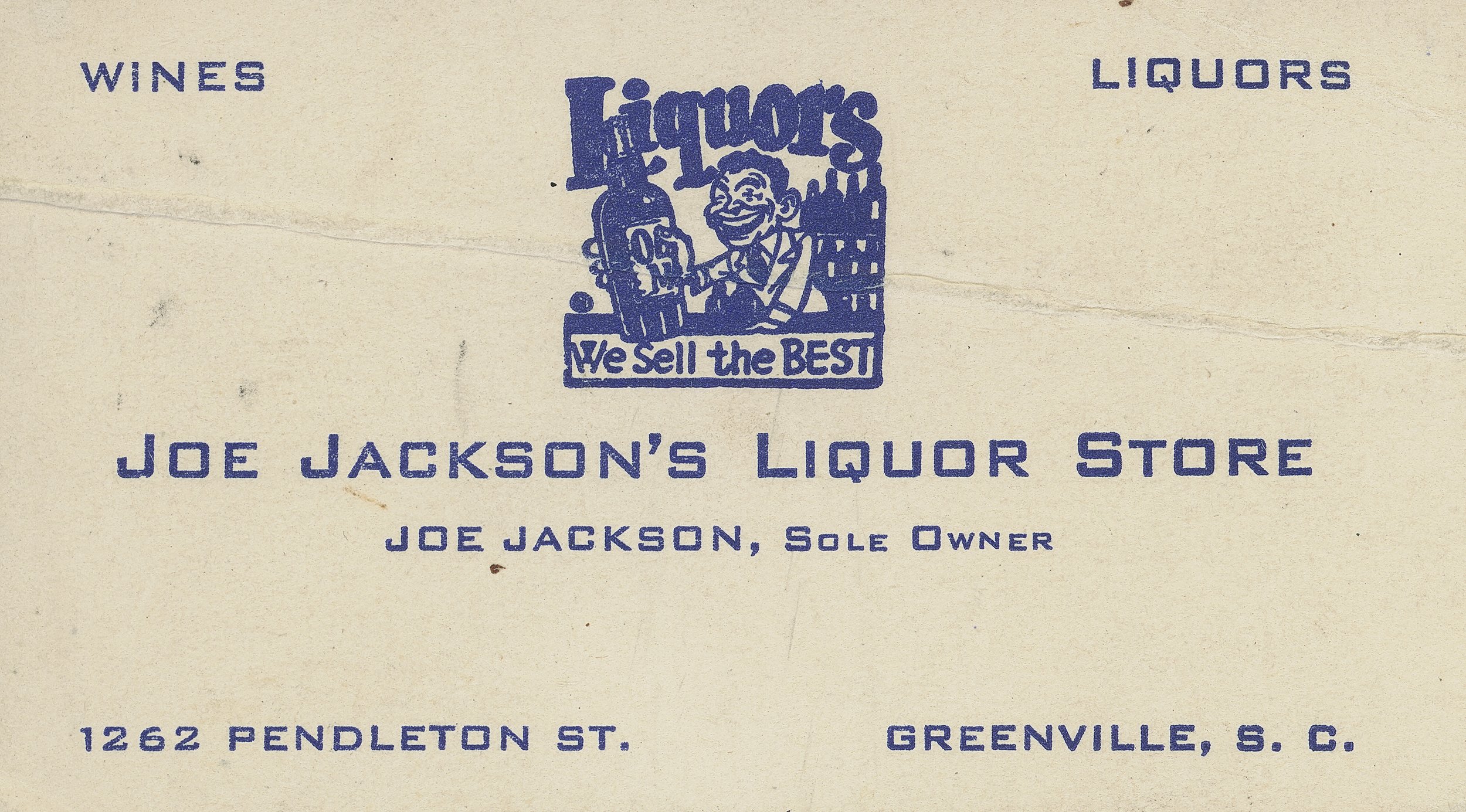
Joe would sometimes hand out these business cards from his liquor store. Very few surviving examples remain.
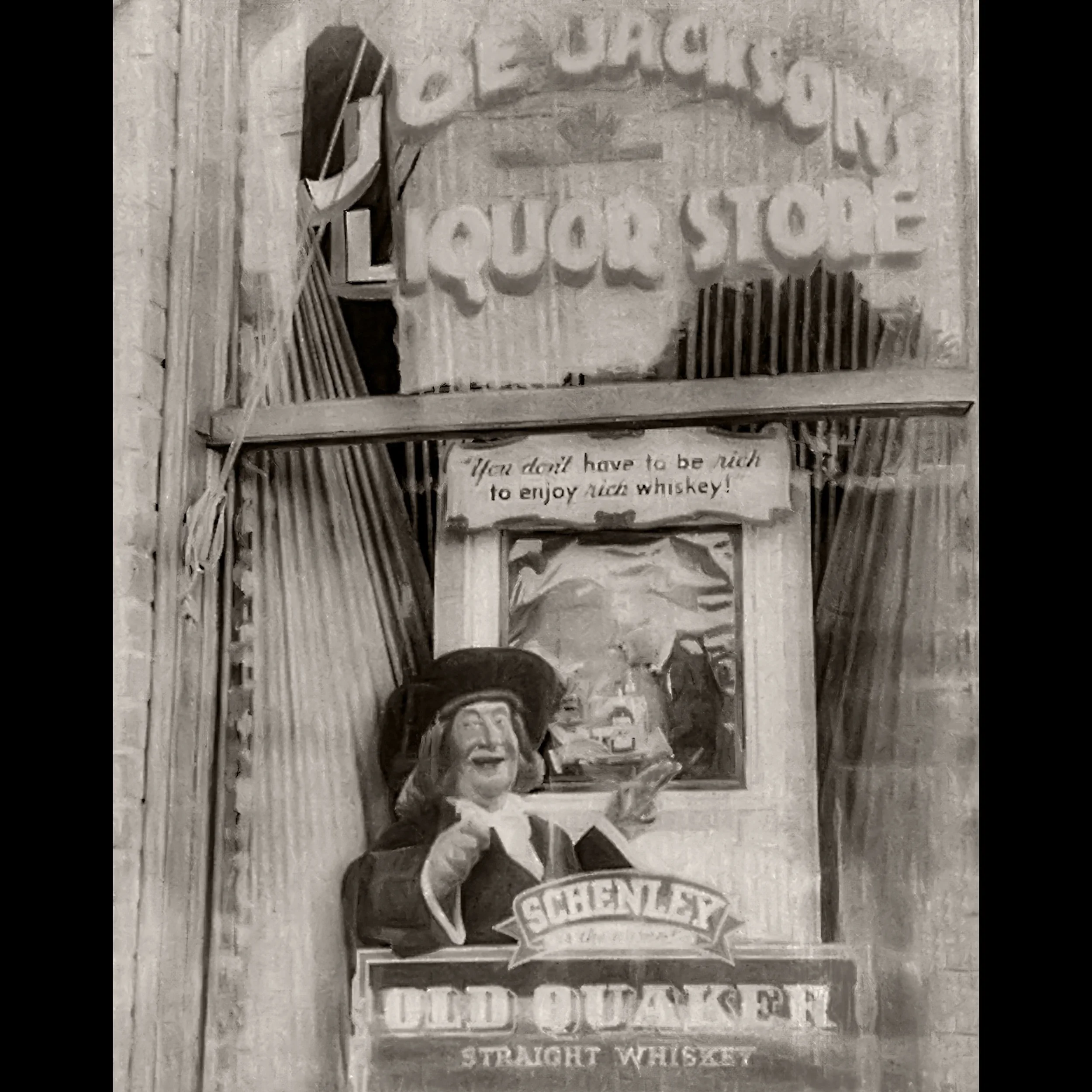
Joe Jackson’s Liquor Store
Like most mom-and-pop type stores of the day, Joe Jackson’s Liquor Store never truly had a legitimate logo. However, I felt that Joe and Katie running such a successful business and living their senior years in relative luxury due to all of the money they made was an important part of their story, and one which changed the narrative about Joe’s intelligence.
I made that story one we told at the museum, and we displayed the original doors from the liquor store in an exhibit where we sold t-shirts, shot glasses, and whiskey tumblers with this “Joe Jackson’s Liquor Store” painted text on them. They were… a hit.
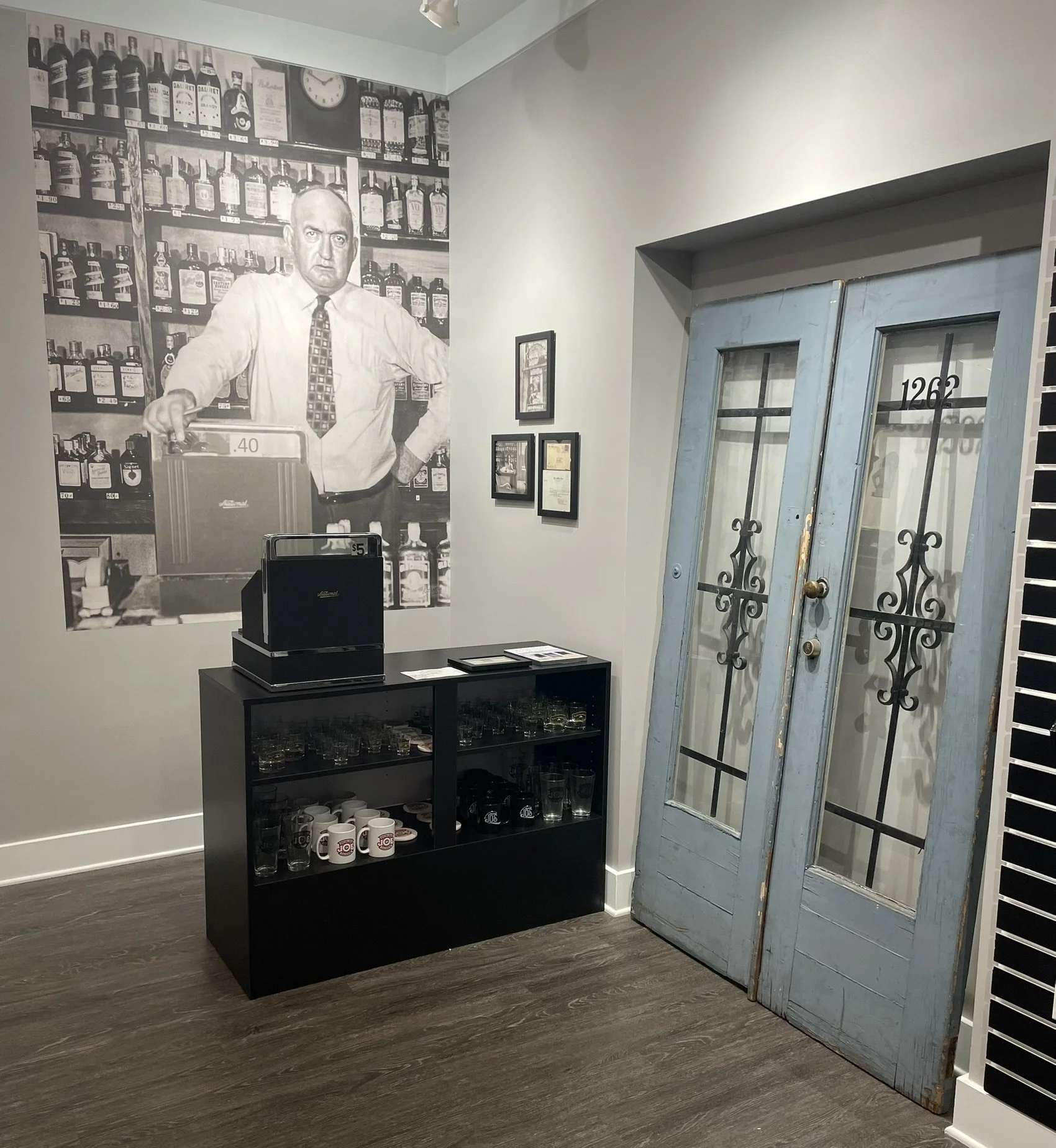
The original doors from Joe Jackson’s Liquor Store
Fan Favorite Photo Op
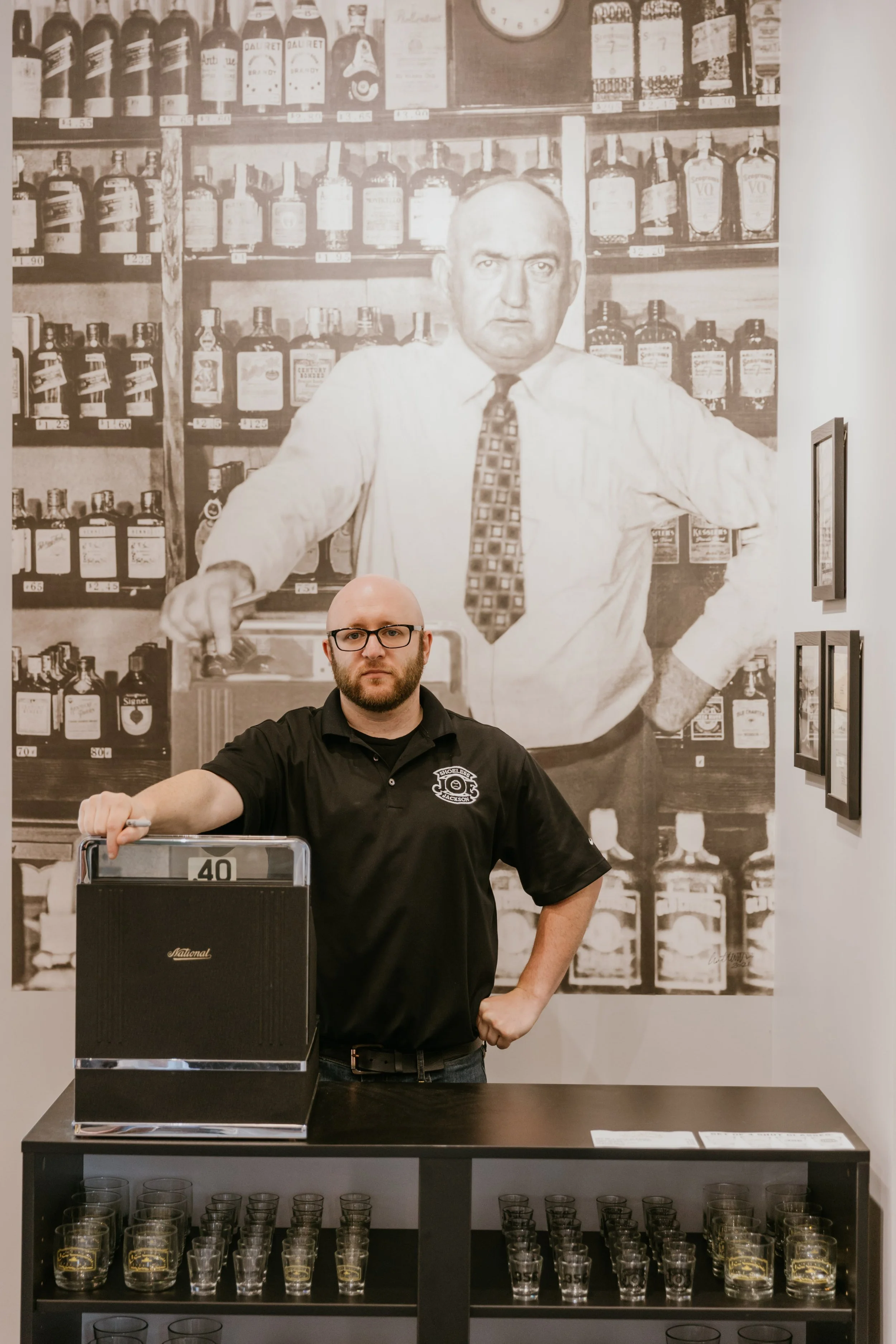
I also spent about a year and a half trying to figure out the exact make and model of the cash register Joe had on the counter in the picture I blew up and made the centerpiece of this exhibit. It turned out to be an extremely limited run, produced in the latter half of 1938 and the first few months of 1939, and then never again, as National Cash Register acquired a company and took over their production before phasing out this model.
Well, as you can see, I was able to track one down, and turned it into a photo op where visitors could stand behind the cash register and pose just like Joe, directly in front of the large photo of Joe doing the exact same thing. People loved it, and it was always a highlight of the tour for them.
You can see some of the shot glasses and whiskey tumblers on the shelves below. Cleveland artist Jeff Suntala helped digitize the image that had been painted on the front window of Joe’s liquor store so we could turn it into a logo fit for merchandise.
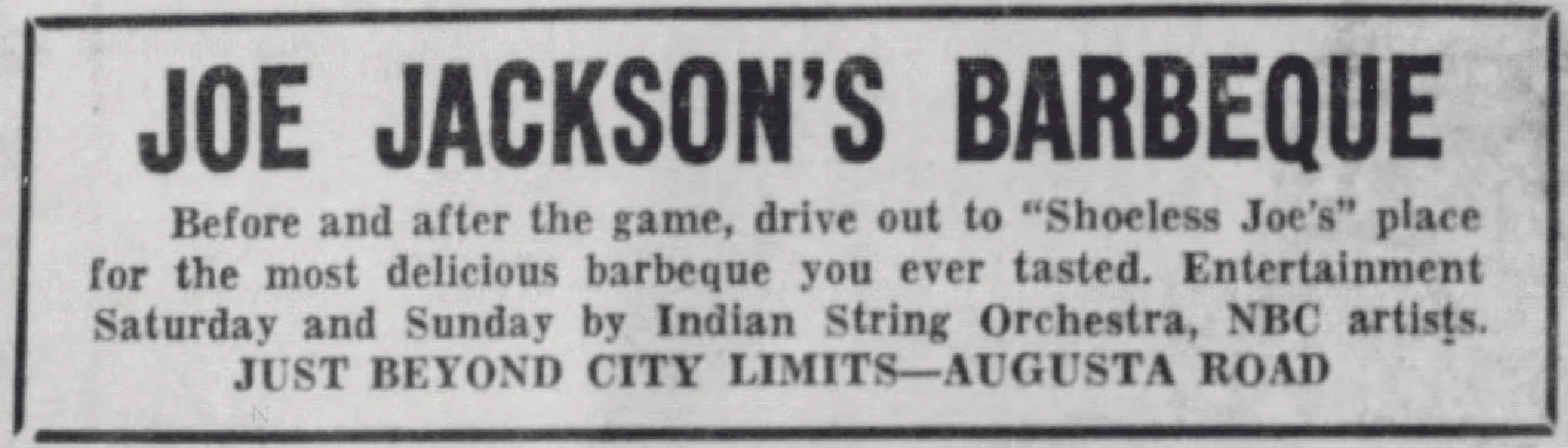
Originally, when they moved back to Greenville in August of 1932, Joe and Katie opened up a barbecue restaurant.
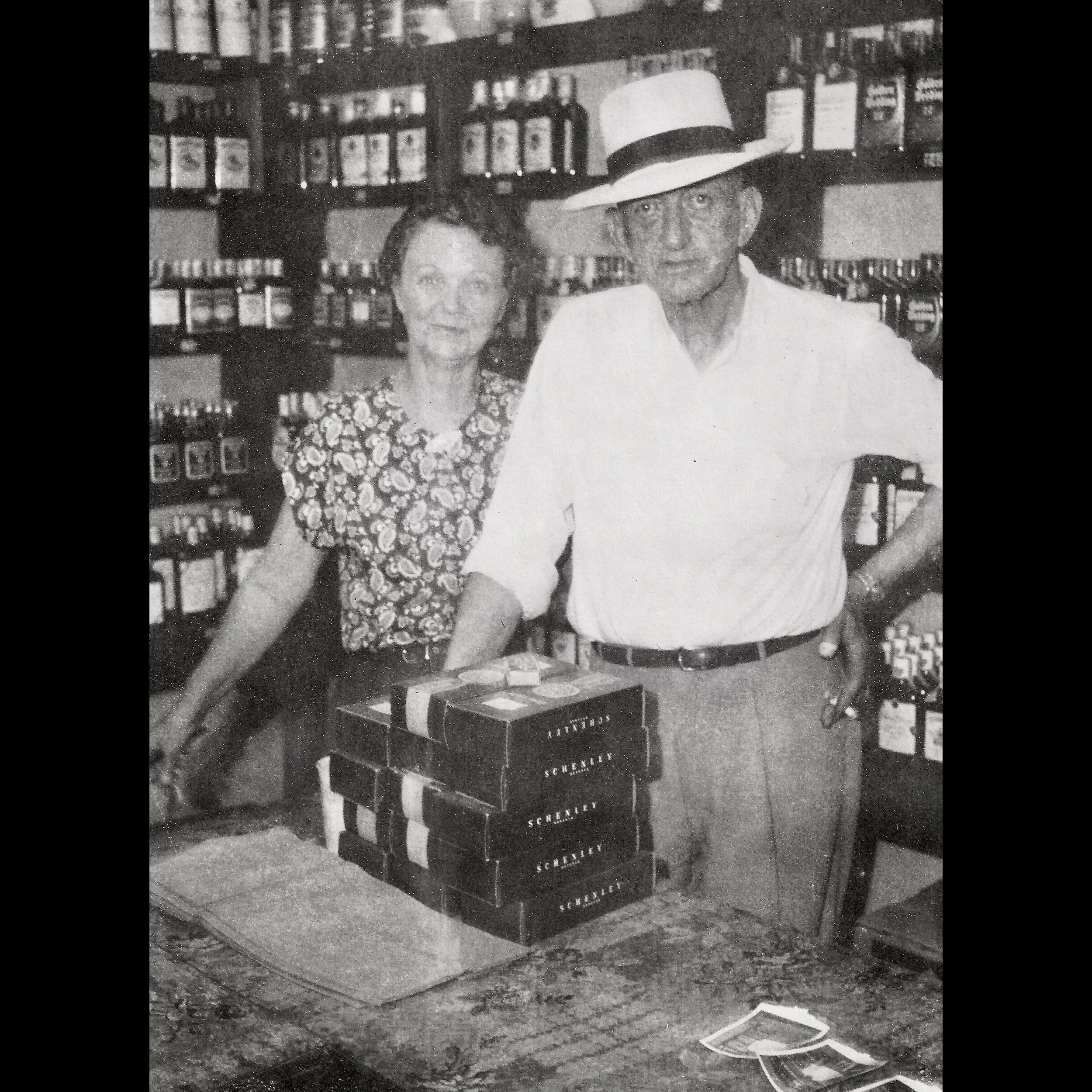
In It Together
The barbecue restaurant was short-lived. I have never been able to find out if they went out of business (this was shortly after the Great Depression, so that’s possible), or if they decided their money was better spent in the liquor business than the restaurant business, and they chose to get out to open the liquor store.
Regardless, they ran the liquor store from about 1934 until around 1950 or 1951. After a couple different heart attacks, Joe’s health was declining, and he passed away in December of 1951.
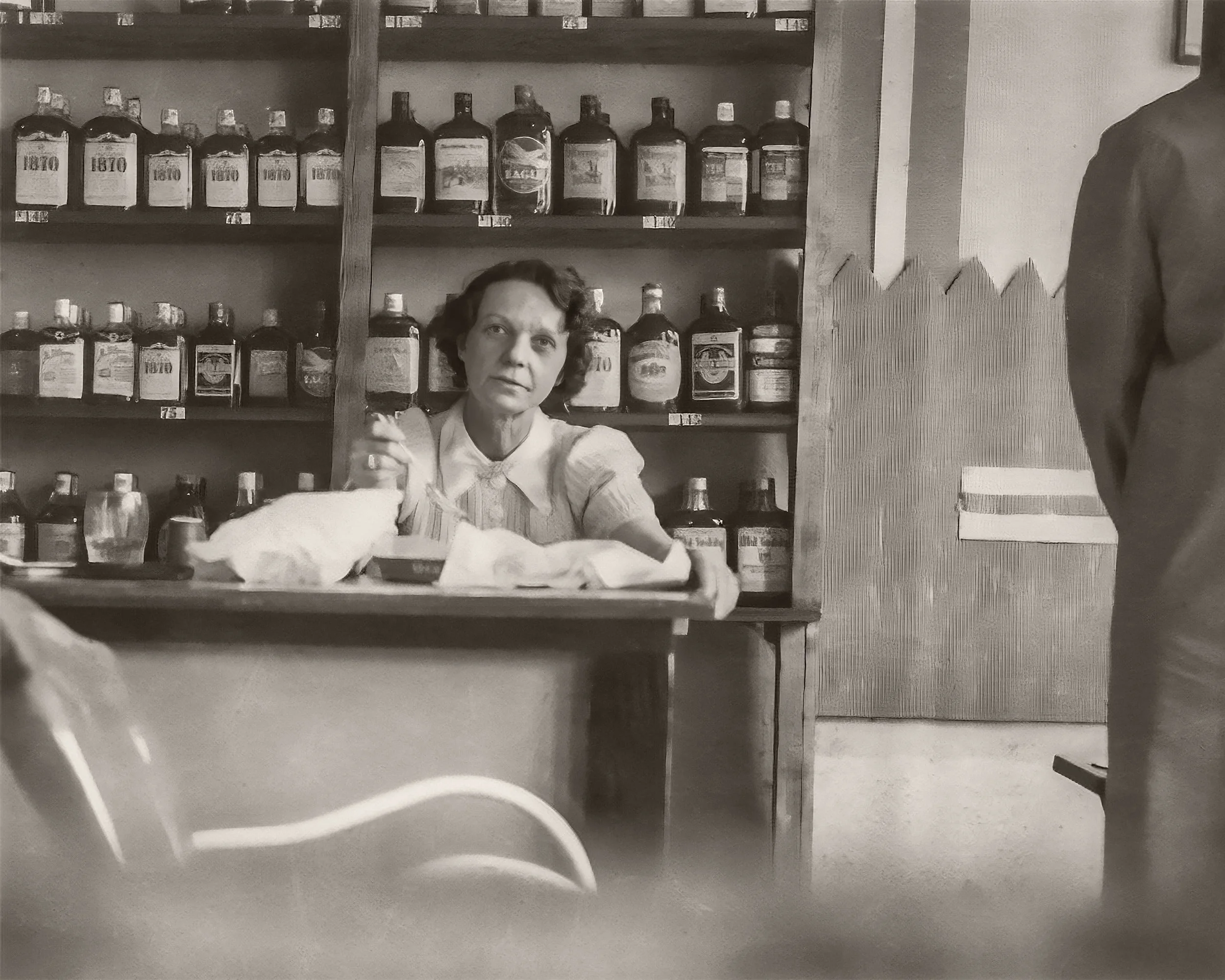
Katie Helped Run The Businesses
While Joe was good with mental math and most likely knew numbers well enough to run a cash register, his illiteracy made it understandably hard for him to keep the books.
Luckily, Katie was educated, so she is who really kept the businesses they owned throughout their lives running. A pool hall and cigar store in Chicago. The dry cleaners in Savannah. A barbecue restaurant and the liquor store in Greenville. All thanks to Katie.
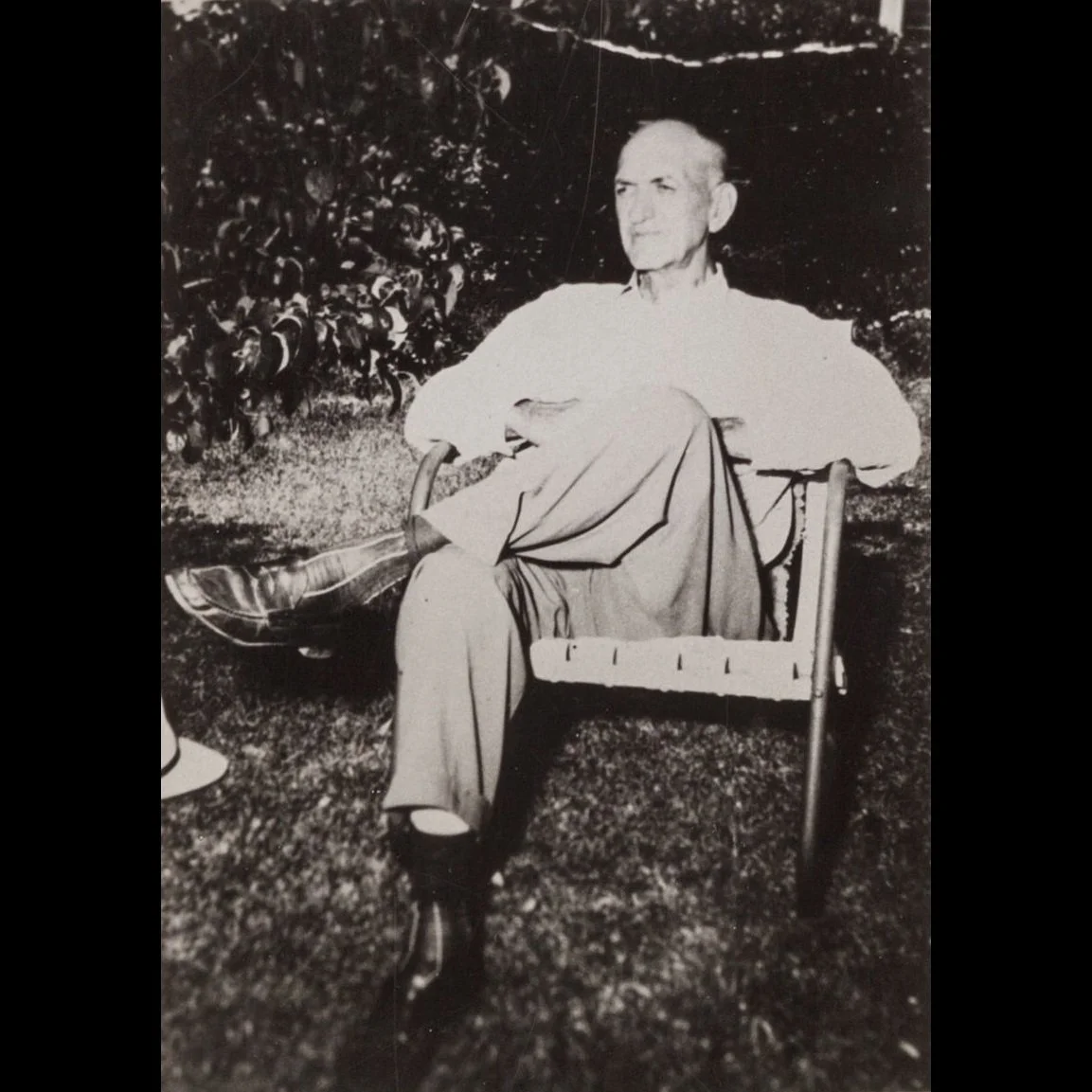
Joe’s Favorite Spot
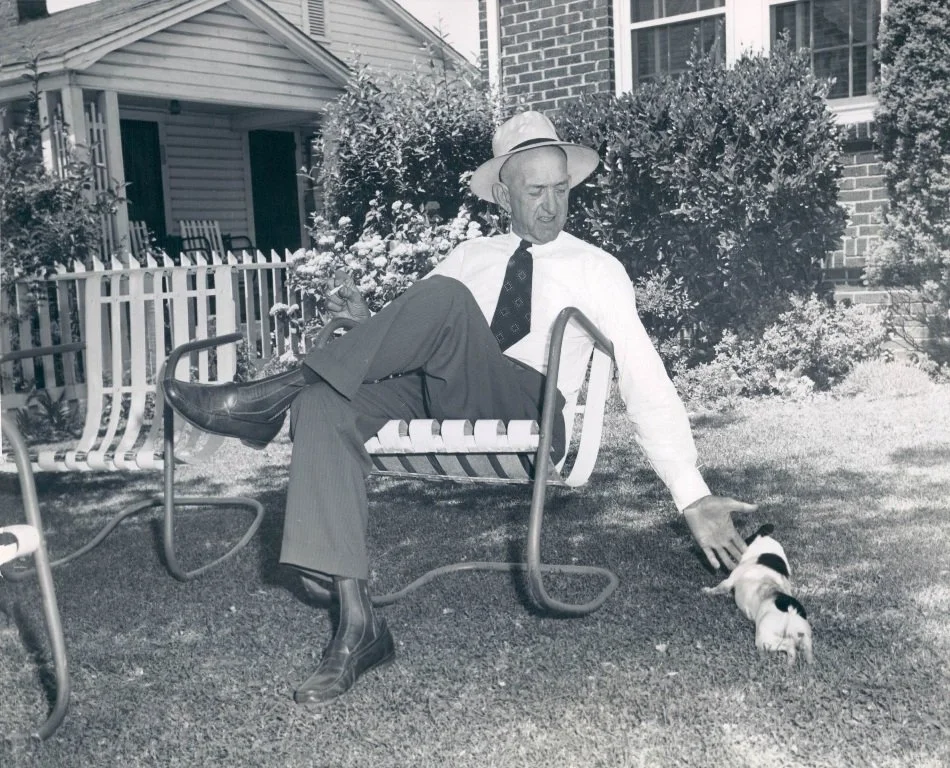
Joe loved to sit in his white lawn furniture and watch the neighborhood kids play, or visit with friends and neighbors who would come to see him and chat. Here he is in 1949, in his front lawn.
Even though he hadn’t been a part of Organized Baseball in 30 years, Joe still loved to talk about the game. That’s something that never left him.
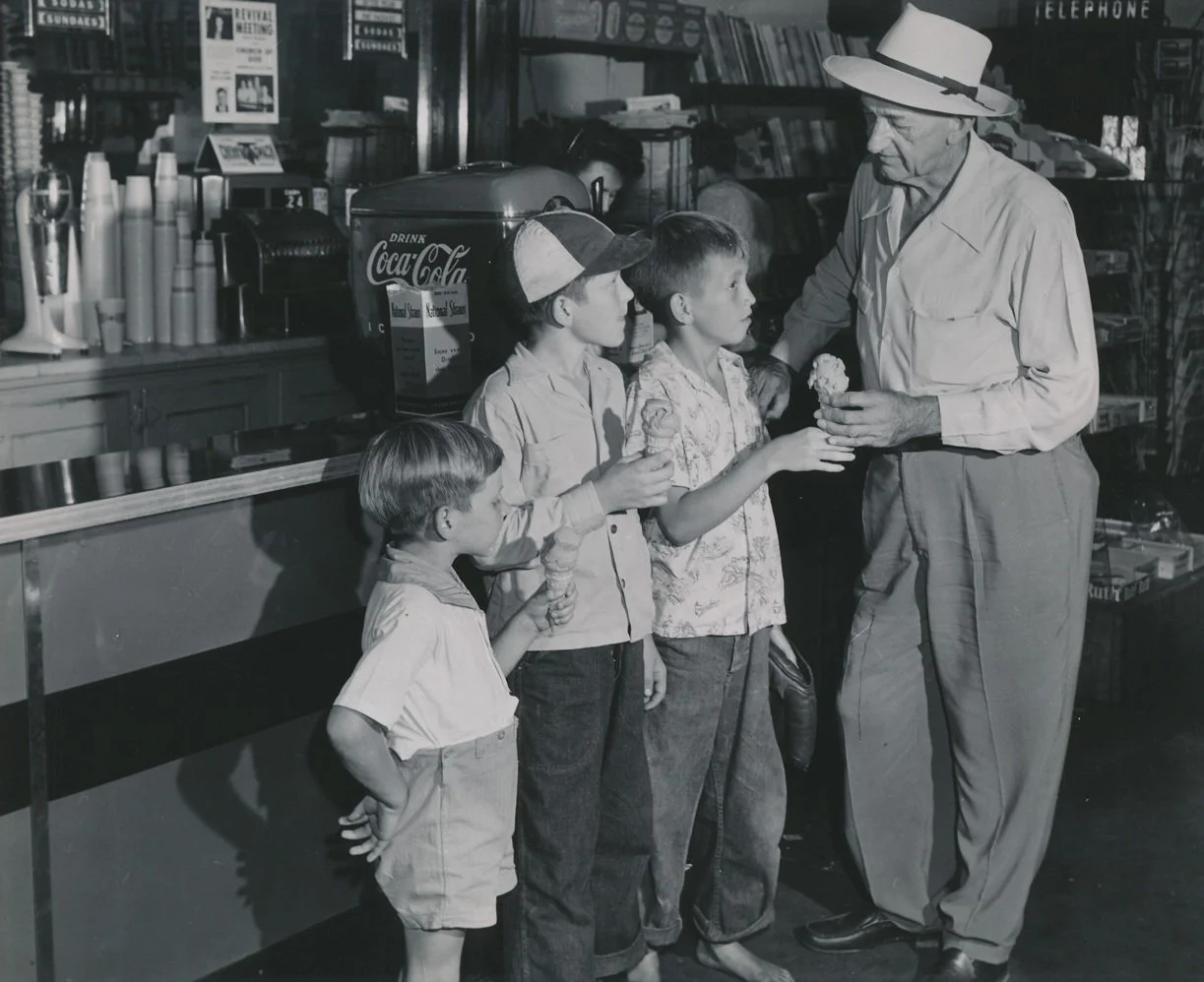
Friendly
Tom repeatedly described Joe (and Katie) as “honest” and “friendly,” and made it a point to reiterate how much Joe loved to talk to kids.
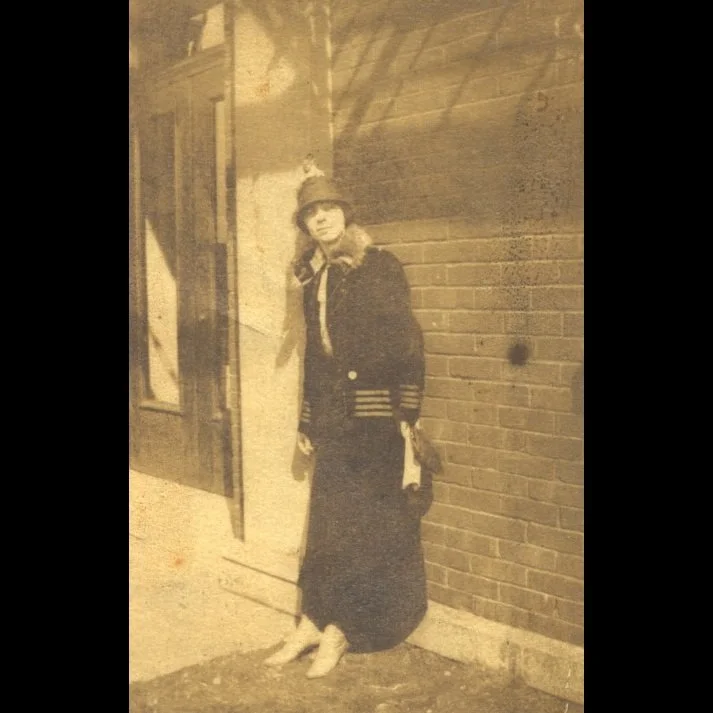
Katie Wynn Jackson
Some people felt like Katie was an intimidating woman, until you got to know her. Once you were on her good side, and she knew she could trust you, she was a kind, sweet woman with a great heart.
It is clear through all of the many, many stories I have heard about her over the years, that she was a loving, devoted wife, who would do anything for Joe.
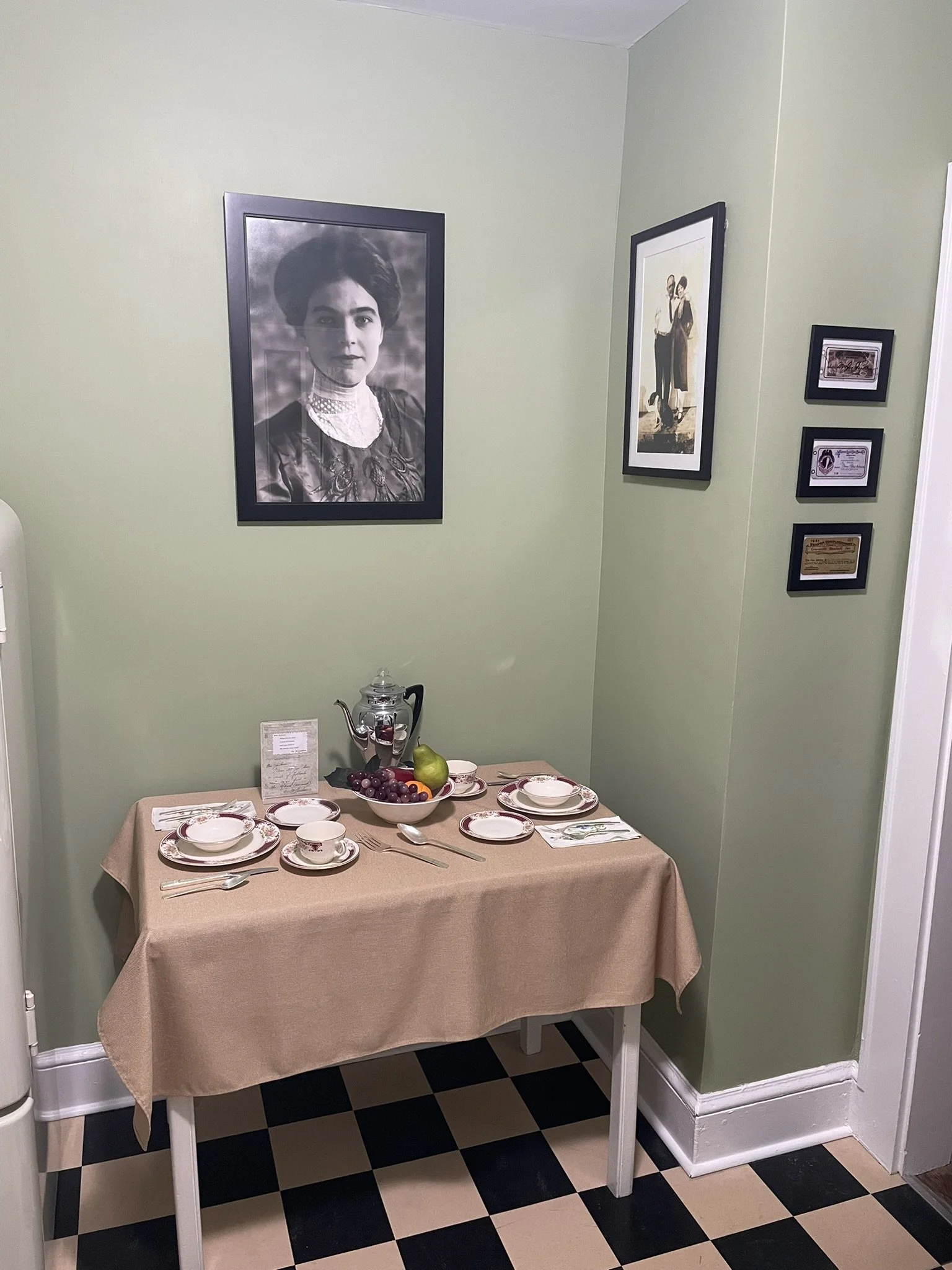
A Home Cooked Meal
Katie went to every home game his teams would play, and sit in the same seat every time so he could find her easily.
During the 7th inning stretch, no matter what the score was, Katie would leave to go home so that by the time Joe got back after the game, he would have a hot meal ready and waiting for him.
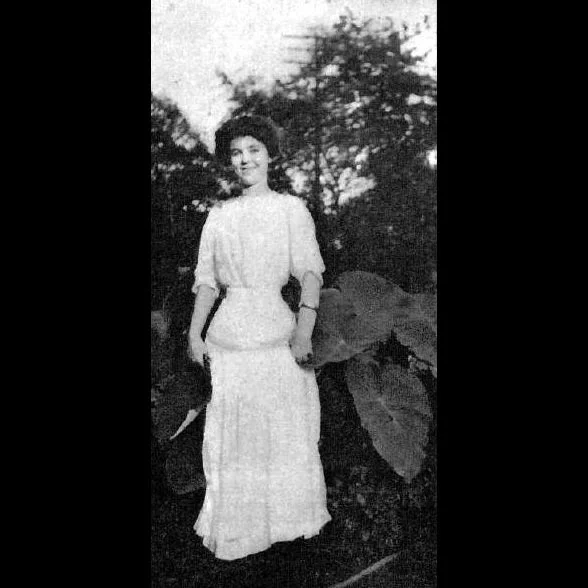
Gardening
Katie always loved flowers and nature. She and her best friend, Edna Forrester, were gardeners who had beautiful flowers, and spent much of their time doing what they could to make their yards more beautiful.
They each loved irises, and would travel to places ranging from Sumter, South Carolina all the way to Tennessee just to buy the particular type of iris rhizomes that they liked for their gardens.
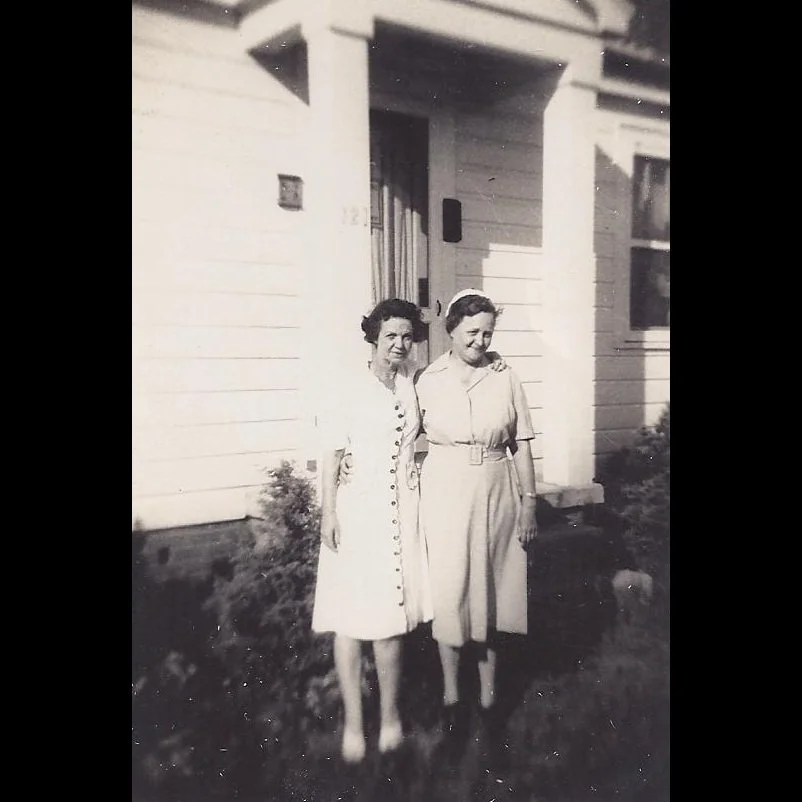
Katie and Edna Forrester
The Forresters (114 E. Wilburn) actually lived next door to the Bolings (118 E. Wilburn), despite the fact that the house numbers generally increased by two on E. Wilburn Street.
The reason for the jump in house numbers in their case is because the lots were so narrow, the Forresters and the Bolings decided to go in together and purchase the lot in between theirs. This made each of their lots 75 feet wide instead of 50 feet wide, and ensured that there would be no 116 E. Wilburn built between them.
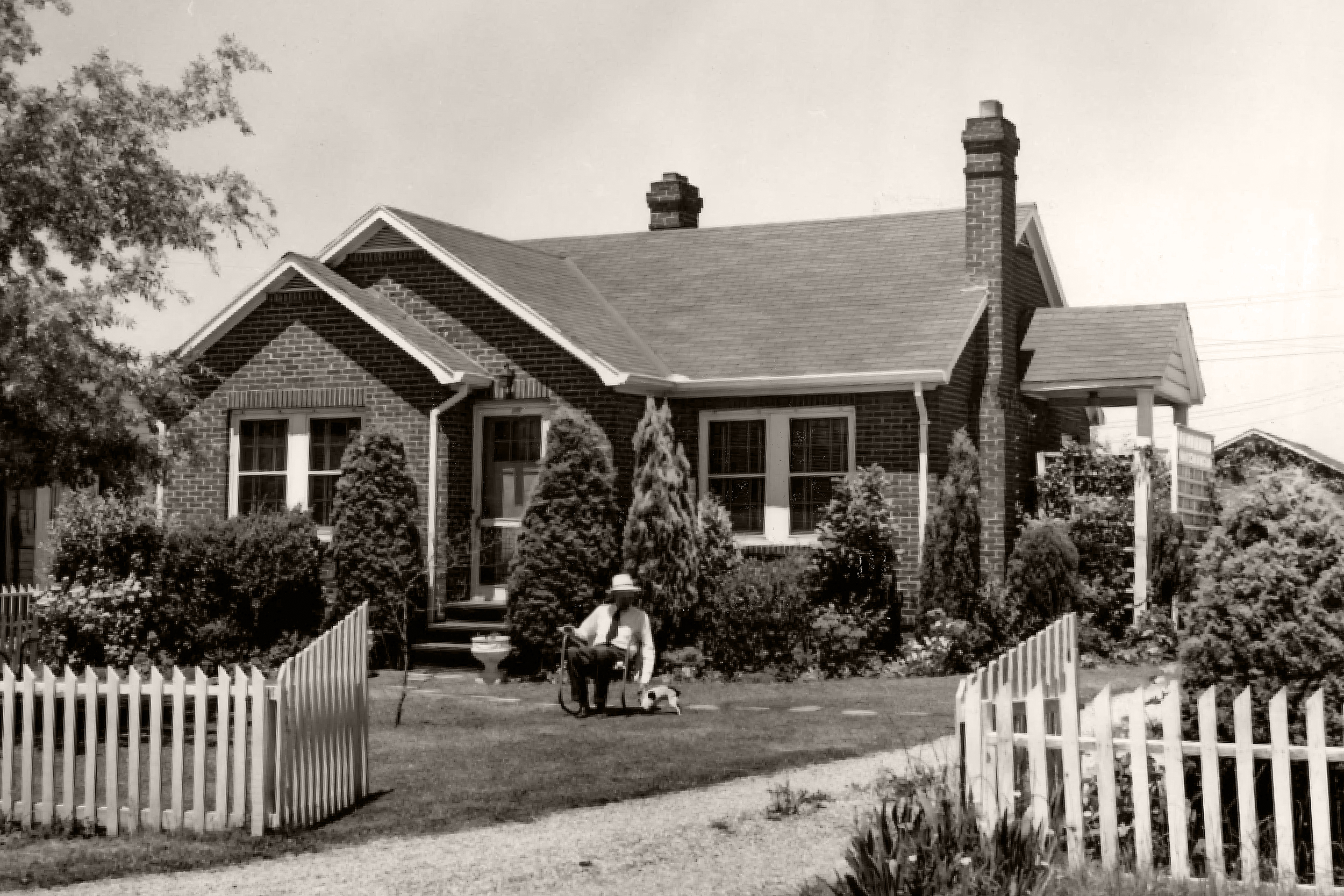
Joe Jackson sitting in his front yard, playing with his dog, in 1949
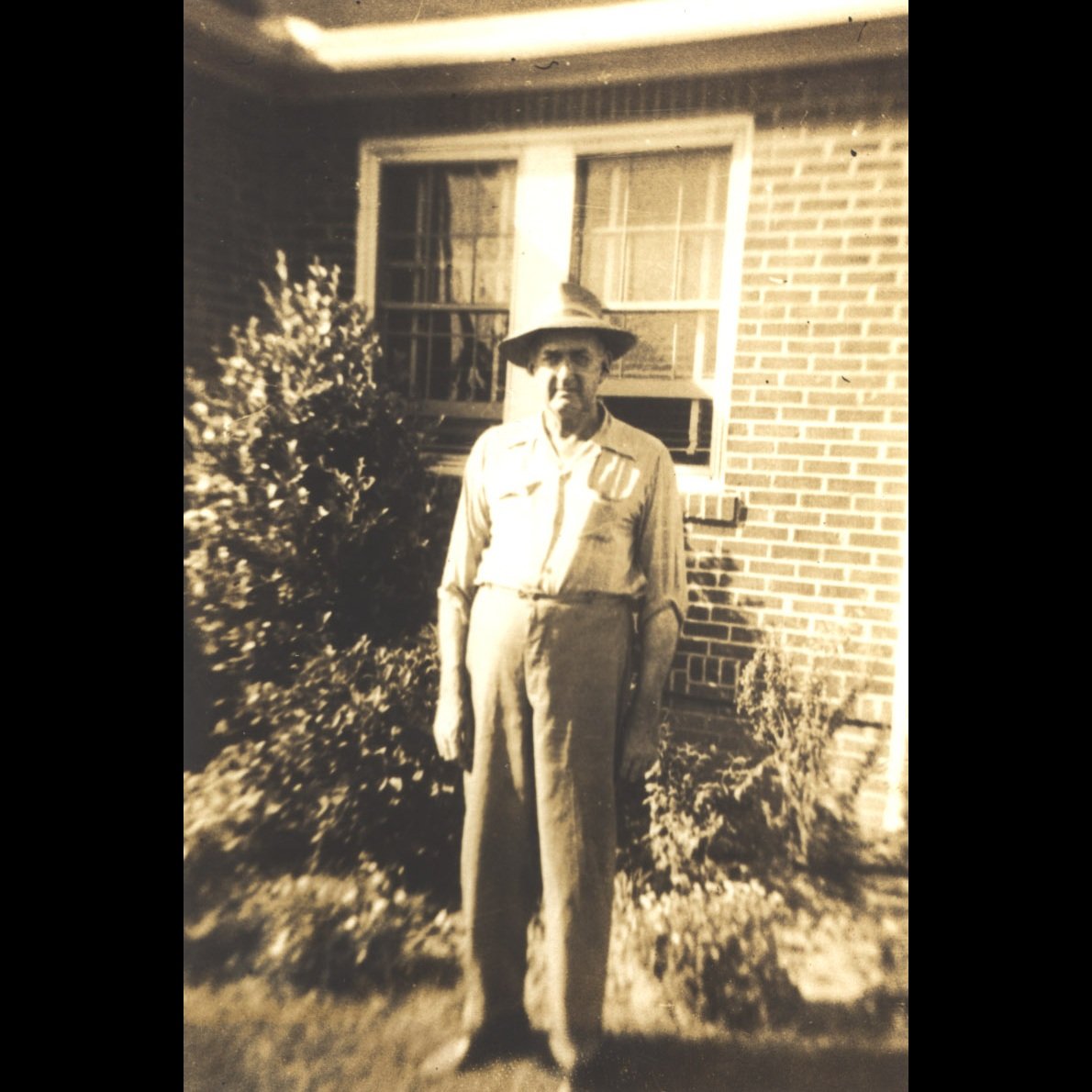
Joe Working In The Garden
Joe would help out with the landscaping and gardening, too. Here he is in the late 1940s doing just that.
A Beautiful Yard
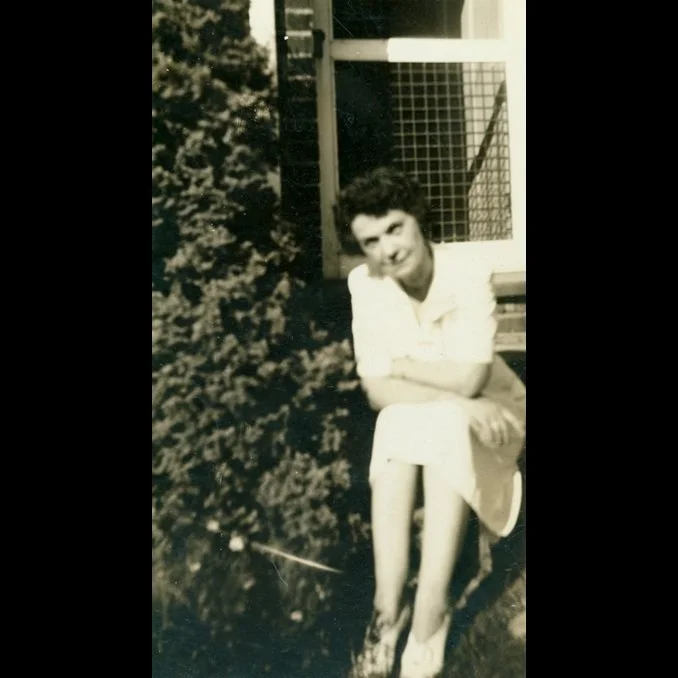
Katie, enjoying the fruits of her and Joe’s labor, sitting on the steps of their front porch in 1942.
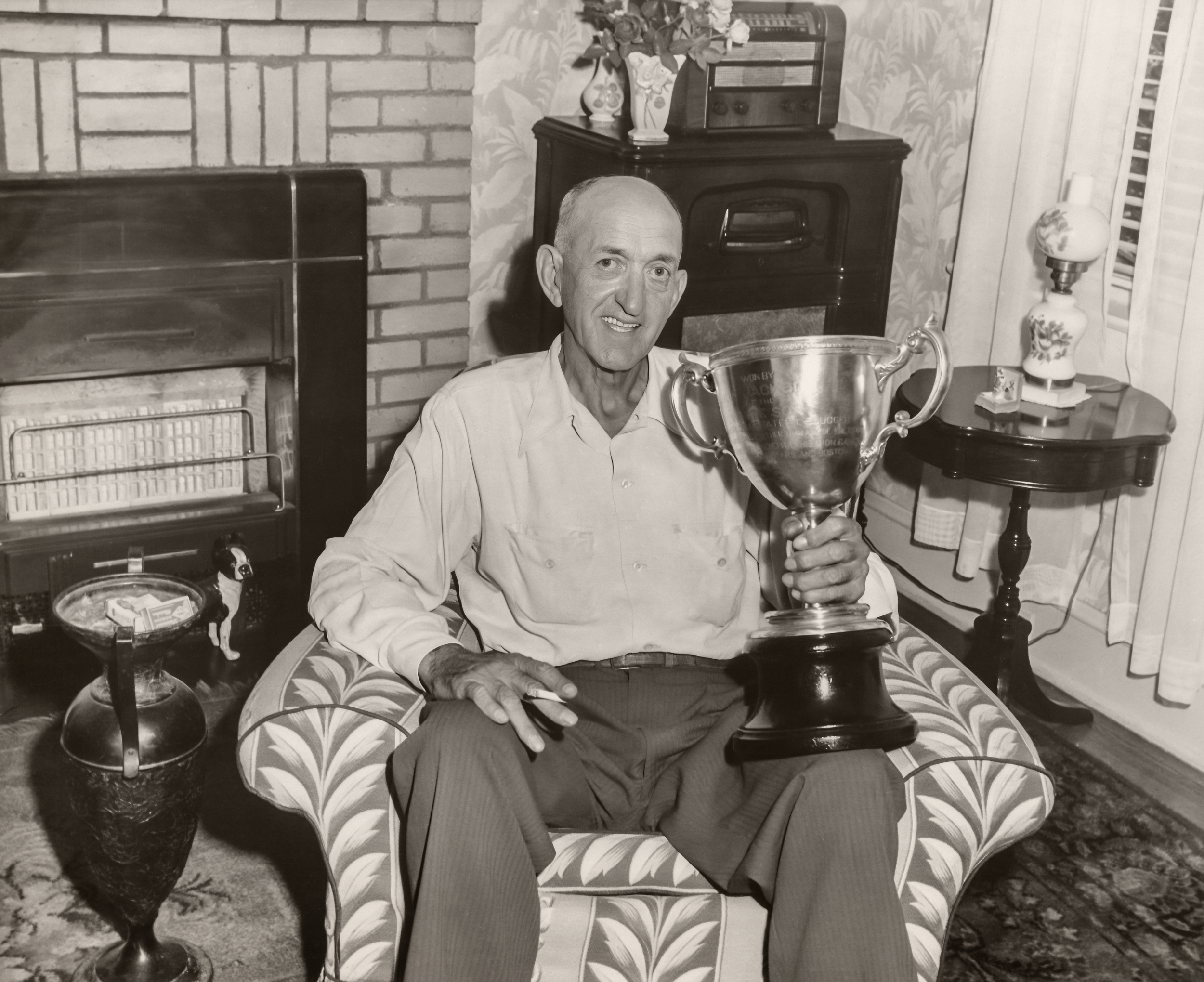
We really don’t have very many photos of the inside of Joe and Katie’s house from when they were living in it, so it was difficult to historically accurately recreate any rooms when I was redesigning the museum. However, we did have this image of Joe, sitting in his favorite chair in the living room, which gave us a great glimpse as to how this corner was decorated.
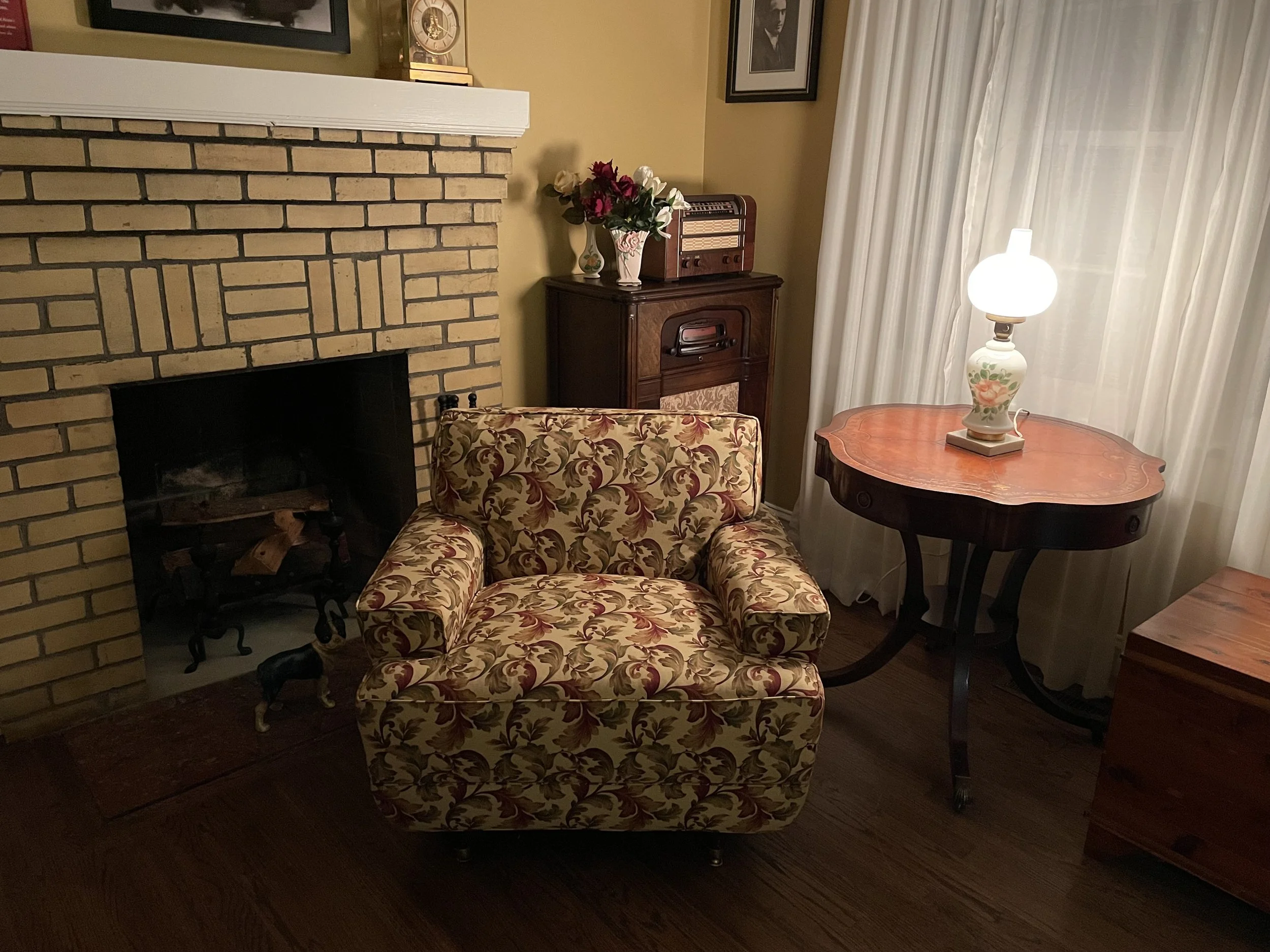
This was how it looked after I did my thing. The exact same make and model radios in the corner, flower vases on top of those radios, and even the little cast iron dog in front of the fireplace. I did my best to find a very similar lamp on top of the table, and the table, itself. That is Katie Jackson’s actual hope chest on the very right side of this picture.
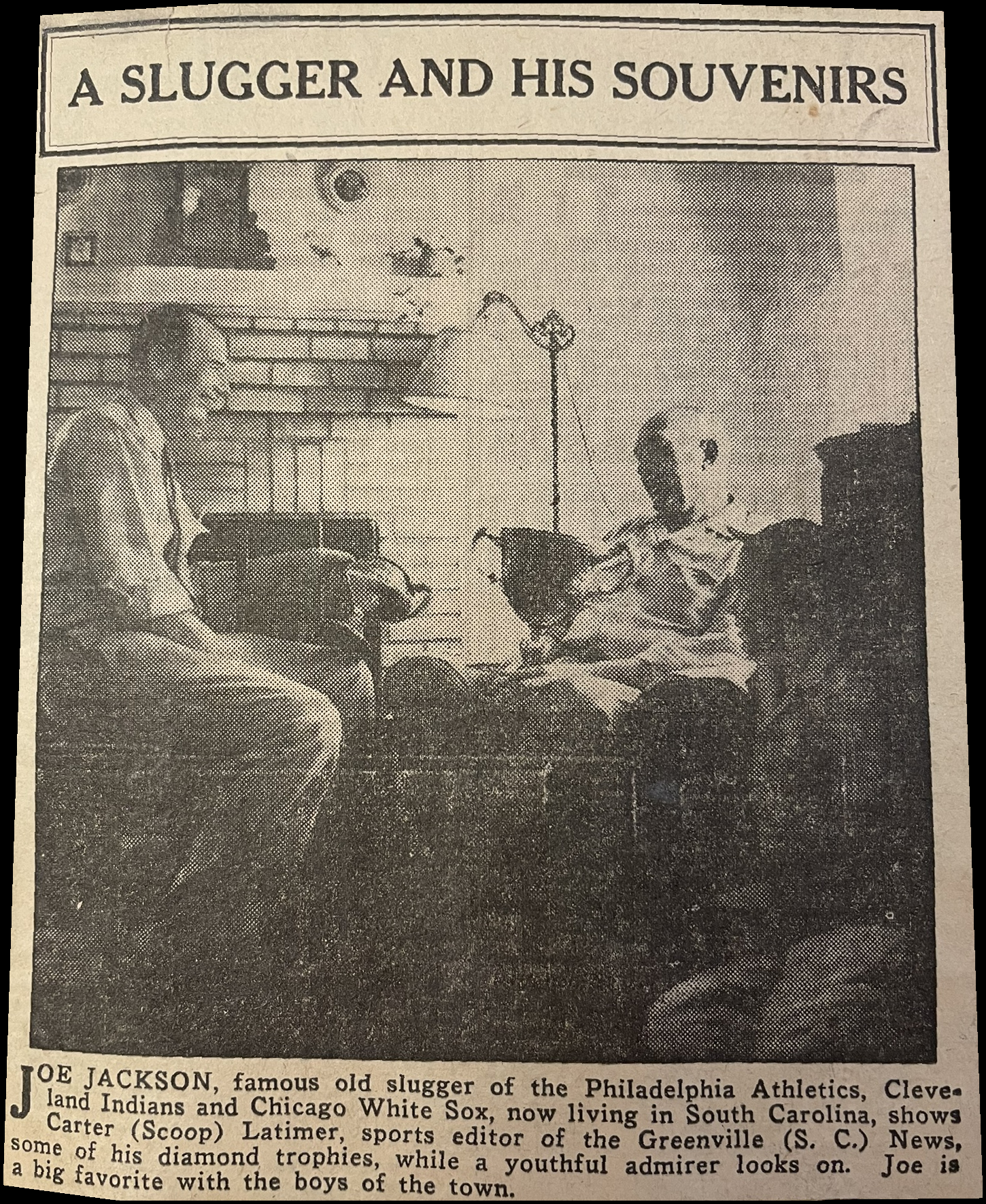
Joe’s Trophies
I have heard from many different people that Joe kept his trophies on the mantel of the fireplace. None of the pictures I’ve ever seen show the entire mantel — just the right edge of it — which means the trophies must have been on the left side of the mantel, next to the doorway which led into Joe’s office.
What we do see on the right side of the mantel in this photo here (taken in 1949) is a Cipango model clock from the William L. Gilbert Clock Company, produced in 1885.
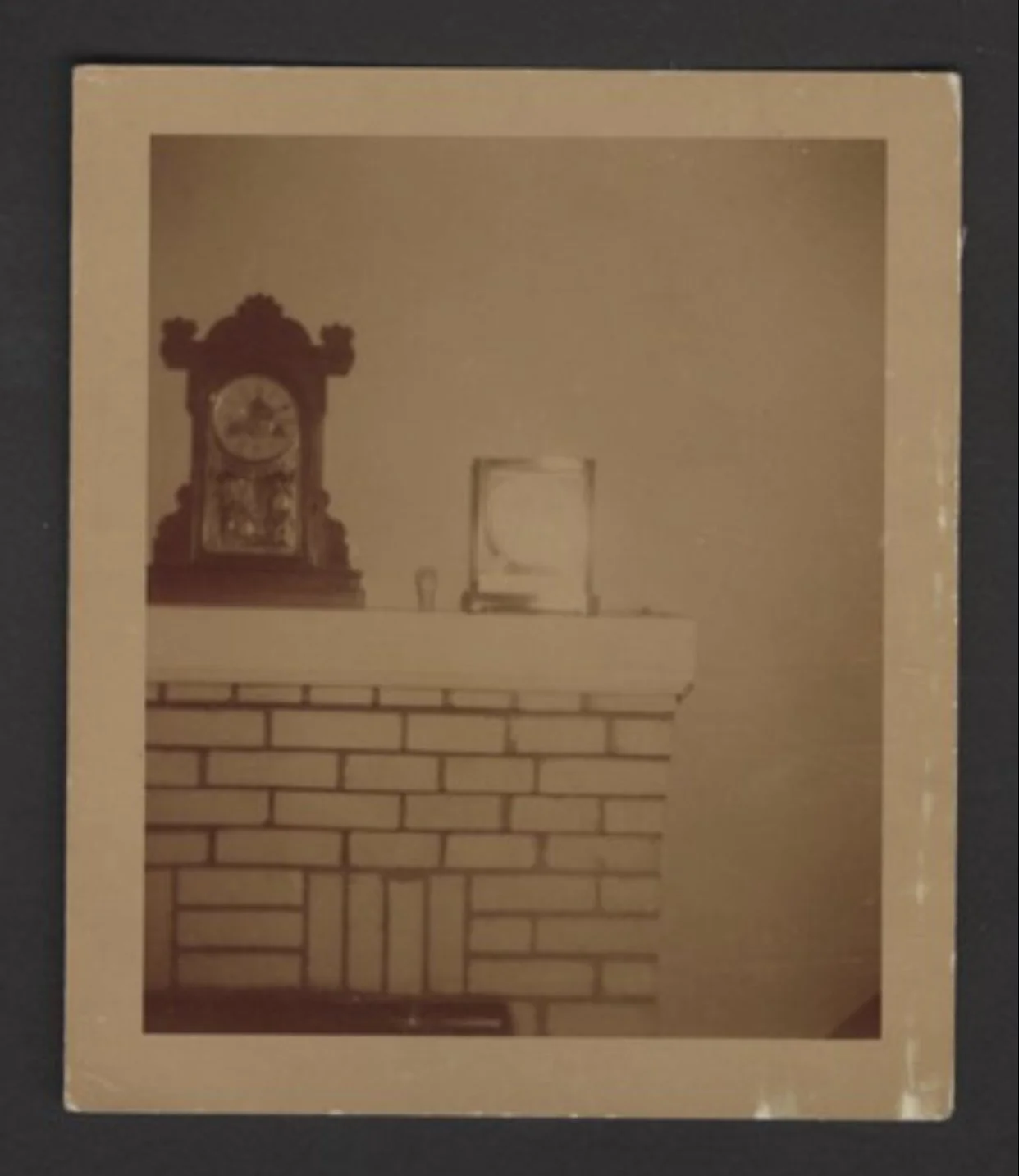
Clocks On The Mantel
We see that same clock in this Polaroid snapshot from after Joe’s passing. The gold clock is the one he received from the Cleveland Indians for being voted in by the fans as one of the 10 inaugural inductees of the Cleveland Baseball Hall of Fame.
The last photo above with Joe holding the trophy in the living room doesn’t show the gold clock on the mantel because Joe wouldn’t have received that clock yet.
I would also like you to know, that after nearly 40 years of writing and typing M-a-n-t-l-e because of Mickey Mantle, correctly spelling the word “mantel” is something I always have to actively think about.
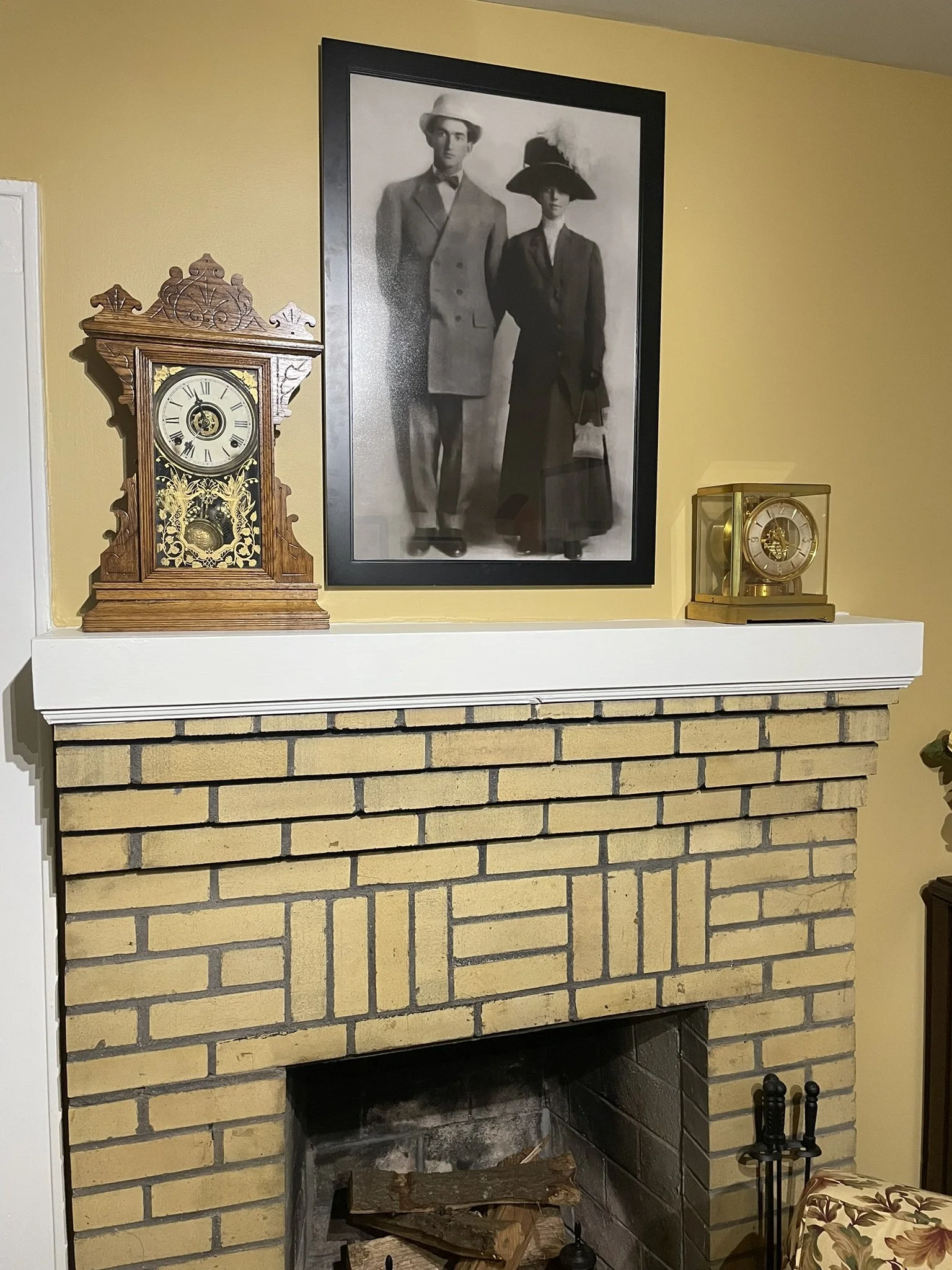
I Found The Clocks
It took a few years to find them, but I was able to track down the same make and model clocks that Joe and Katie had on their mantel, and convince their owners to donate them to the museum.
It was always my intention to have them placed on the right side of the mantel, just like Joe and Katie did, so I could display Joe’s trophies on the left side of the mantel…
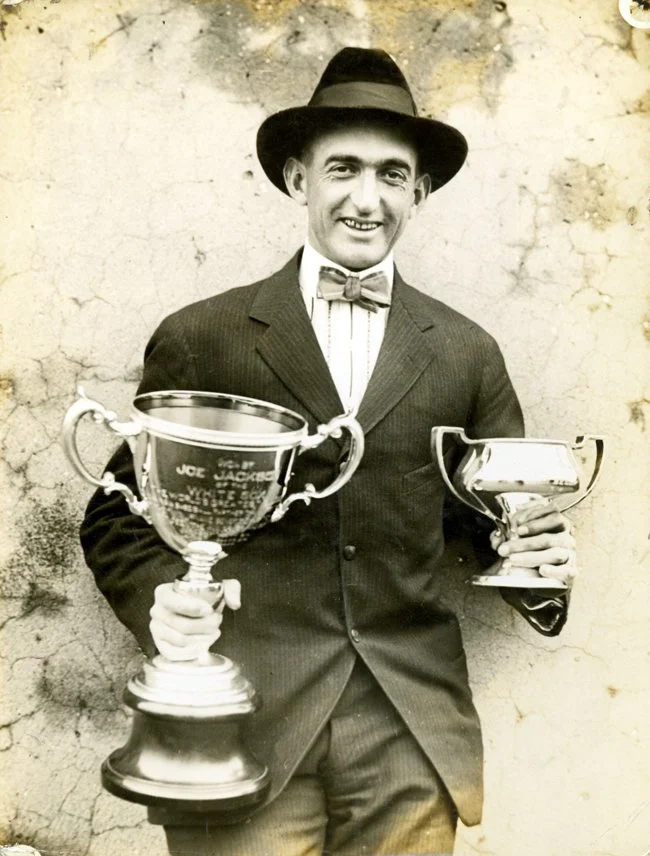
Joe’s Trophies
One of his most prized possessions, Joe won this big trophy for throwing a ball 396 feet, 8 inches at a skills competition on September 27, 1917. It was part of a benefit game played in honor of Tim Murnane.
The smaller trophy was given to him by a fan after a series against Detroit in 1914. The fan, Jean Bedini, came up to Joe and Ty Cobb before the series started and said “whichever of you two has the better hitting series, you’ll win this trophy.” Joe was proud to own that one, too, knowing he got the better of Ty that series.
I tracked down both of these trophies after their whereabouts had been unknown for decades. I held them in my hands, just as Joe is doing in this photo, and was in the process of acquiring them, but then I left the museum. About two years later, the trophies sold at auction.
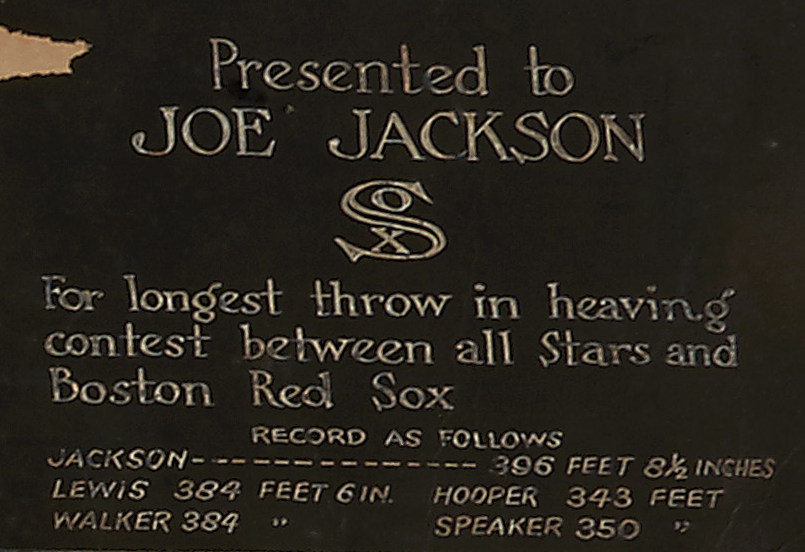
Engraving
This is what the engraving on the large trophy said. Despite winning the throwing contest, Joe was upset that he hadn’t crossed the 400-foot barrier — something he was known to regularly do in his younger days.
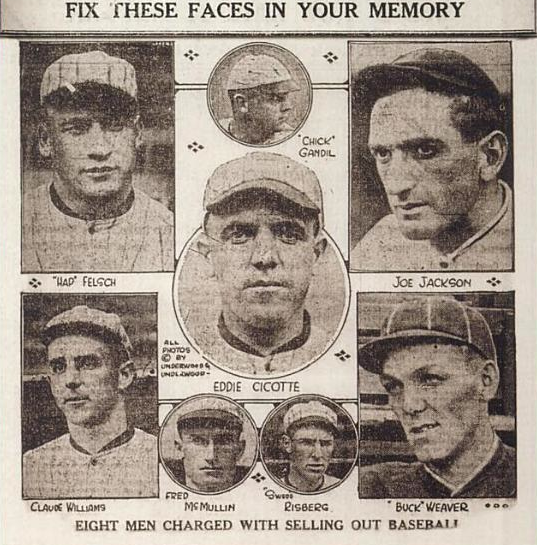
“He Just Wasn’t That Type Of Person"
“Nobody that really knew Joe believed that Joe had anything to do … with throwing that ball game.”
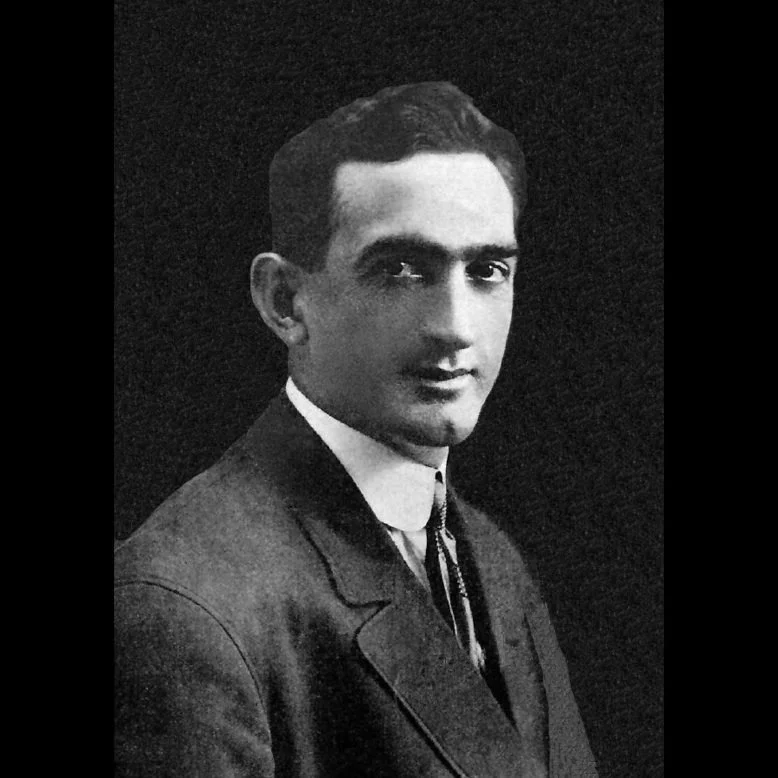
“He Was A Good Man”
The record books show us what kind of player Joe Jackson was, but it was clear after speaking with Elizabeth and Tom how they felt about Joe Jackson, the man.
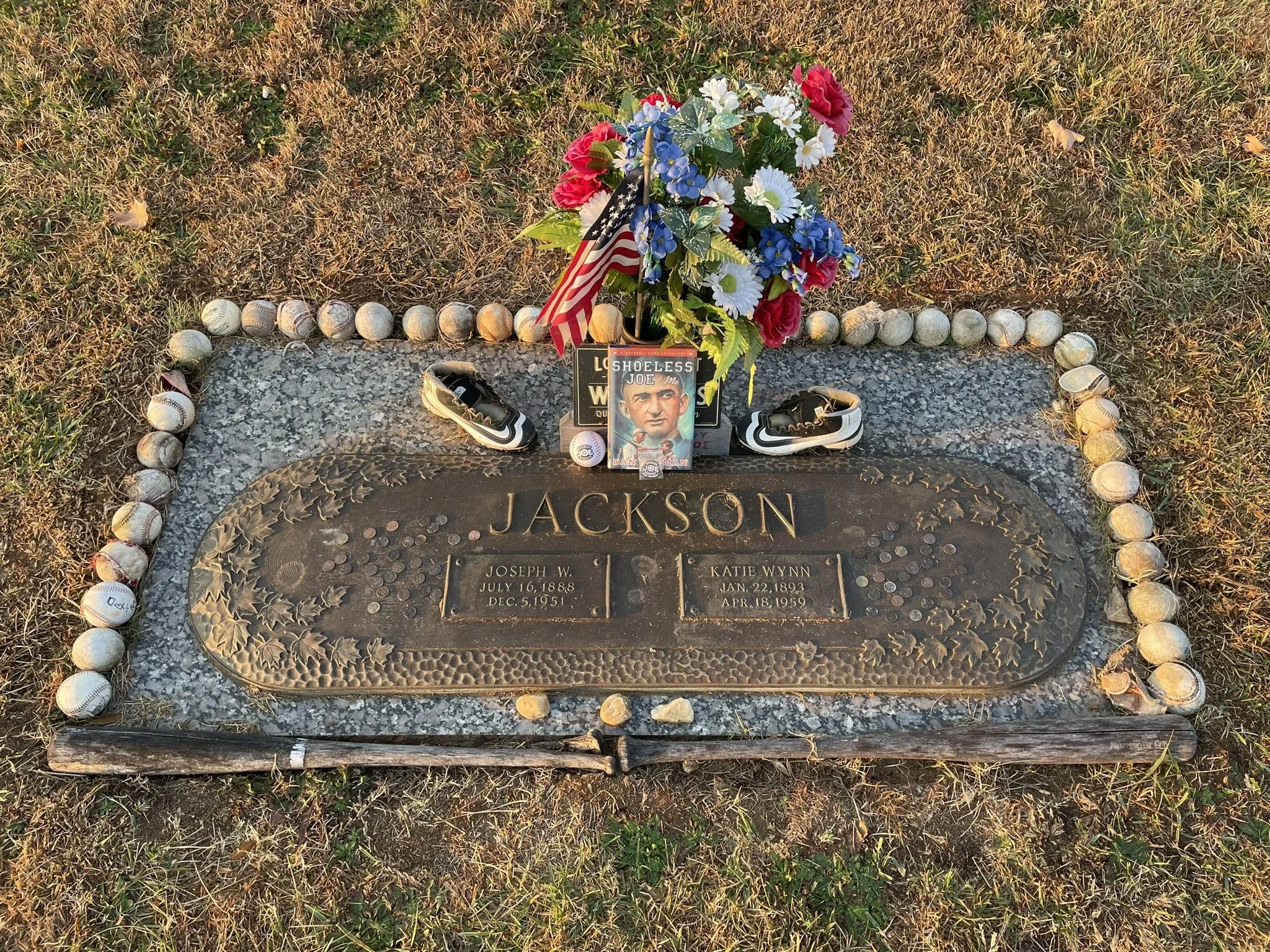
Joe and Katie are buried next to each other at Woodlawn Memorial Park, which is located at 1901 Wade Hampton Boulevard in Greenville, South Carolina. Their plot is located in Section V. Many fans leave baseballs, shoes, pennies, or even handwritten notes on Joe’s tombstone when visiting. If you plan to go to pay your respects, please remember to be considerate, as you should be when you visit anyone’s final resting place.

Join Our Email Newsletter
It’s free, and it’ll give you some bonus content throughout the month that you won’t get from the podcast episodes or by following any of our other social media platforms.
We put out new issues on the second Friday and the fourth Friday of every month. No more, no less.
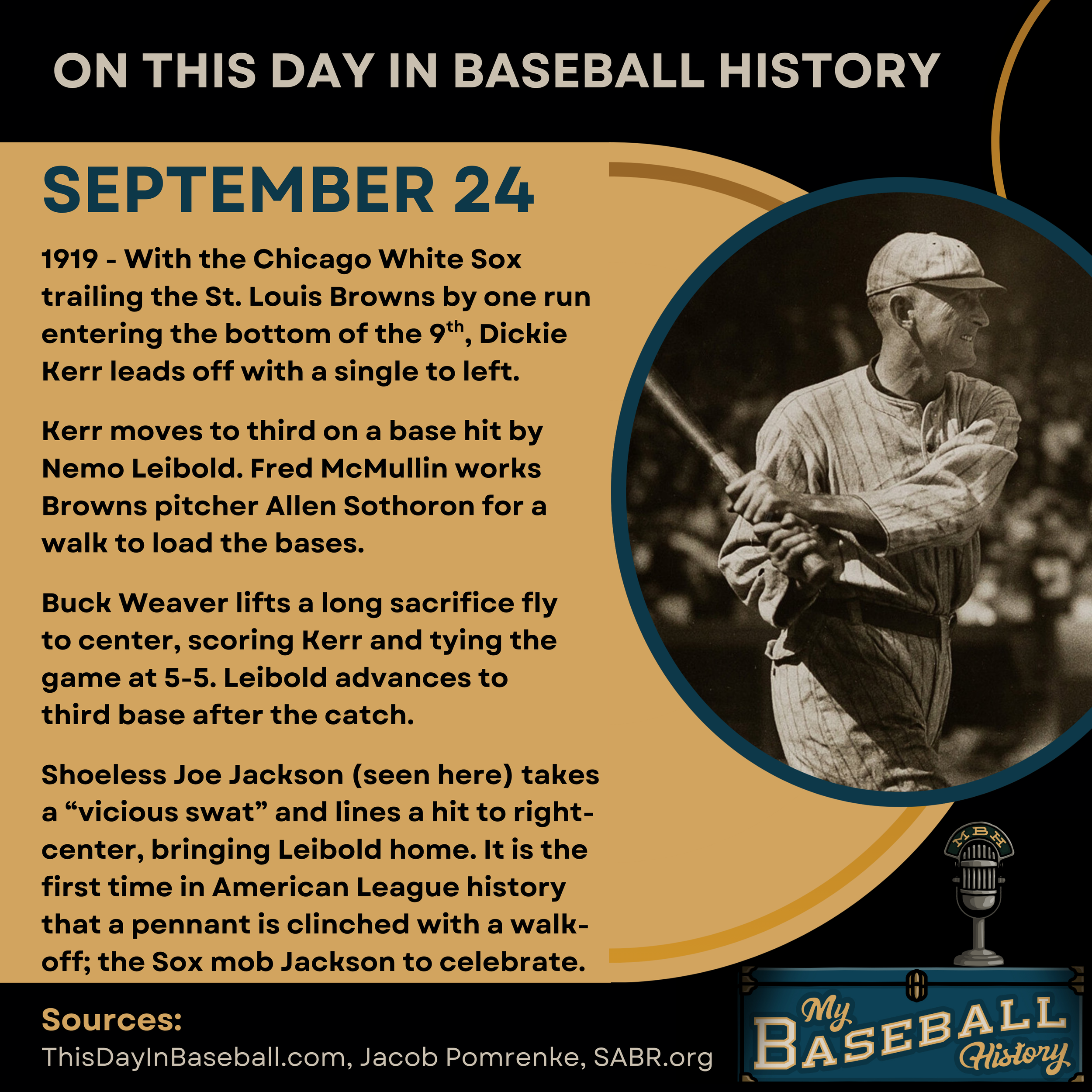
On This Day Posts
You’ve seen a handful of them throughout these liner notes, so you have an idea of the type of content you can expect every day if you aren’t already following The Shoeless Podcast Network on social media.
If you’d like to follow us on your favorite platform, click one of the following links and it will take you right to our profile.
Nancy Faust
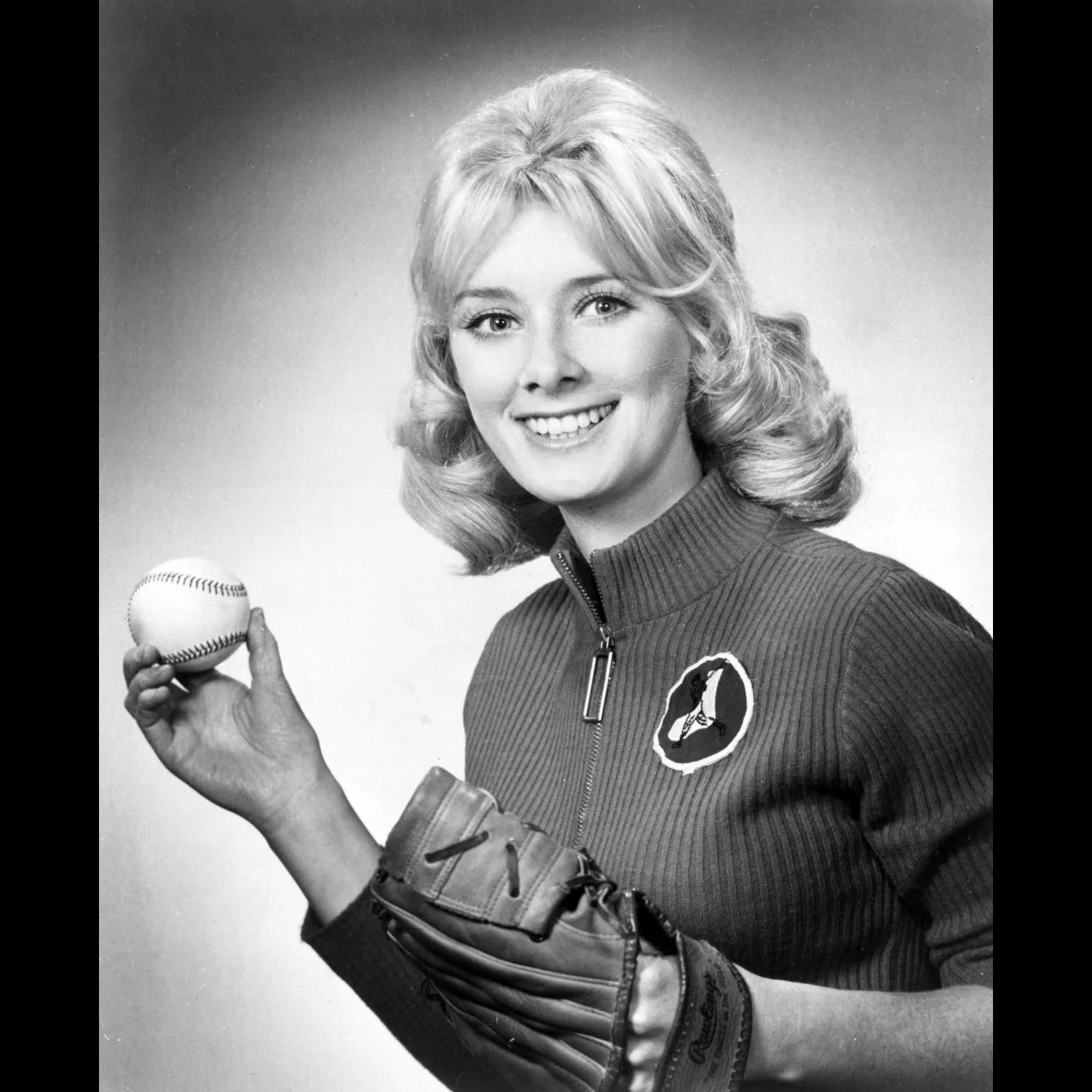
Nancy Faust is a legendary organist who played at Chicago White Sox games for 41 years, starting at the old Comiskey Park in 1970. She played at more than 3,000 games, not missing a single White Sox home game from 1983 through 2005, including the 2005 World Series, which the White Sox won.
Immediate Impact
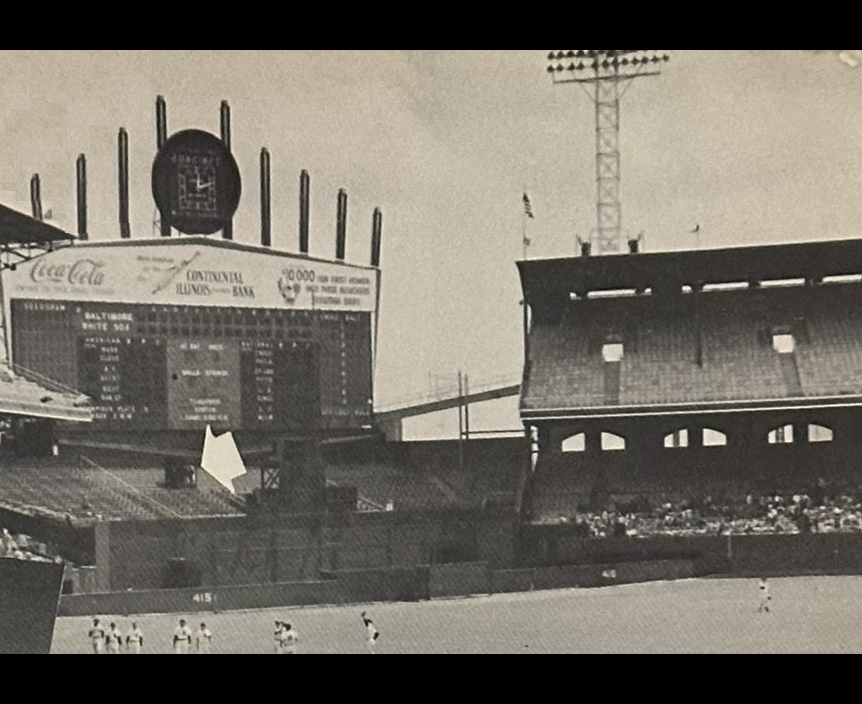
Almost immediately upon her arrival at her original perch in the center field bleachers of Old Comiskey, Nancy became arguably the first sports organist to include pop and rock themes while playing during games, straying away from an organist’s typical musical choices which usually dated to the 1960s or earlier.
At the beginning of her career, she was tasked with playing the song of each player’s birth state as the batter walked to plate.
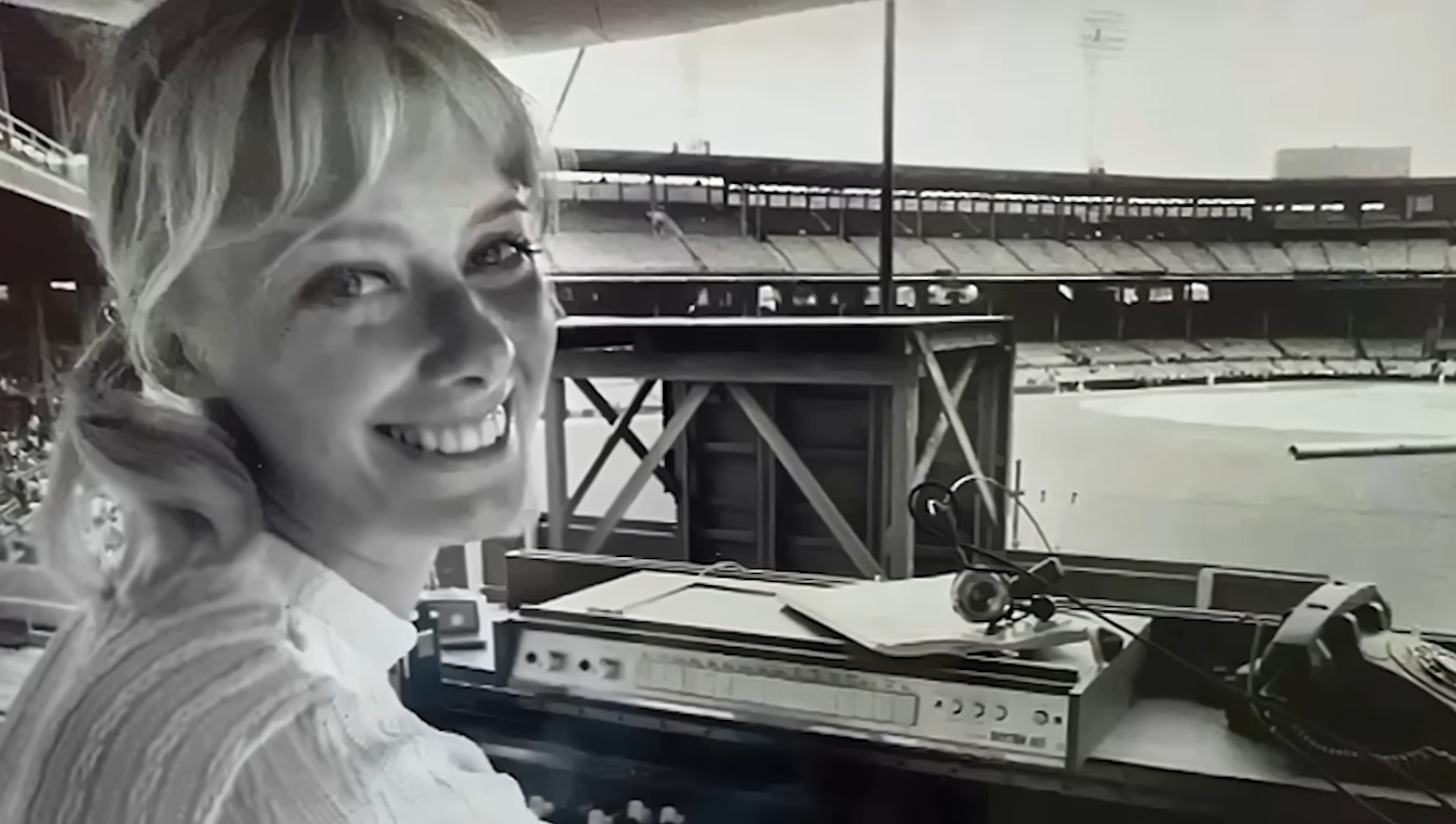
Nancy’s vantage point from that center field perch
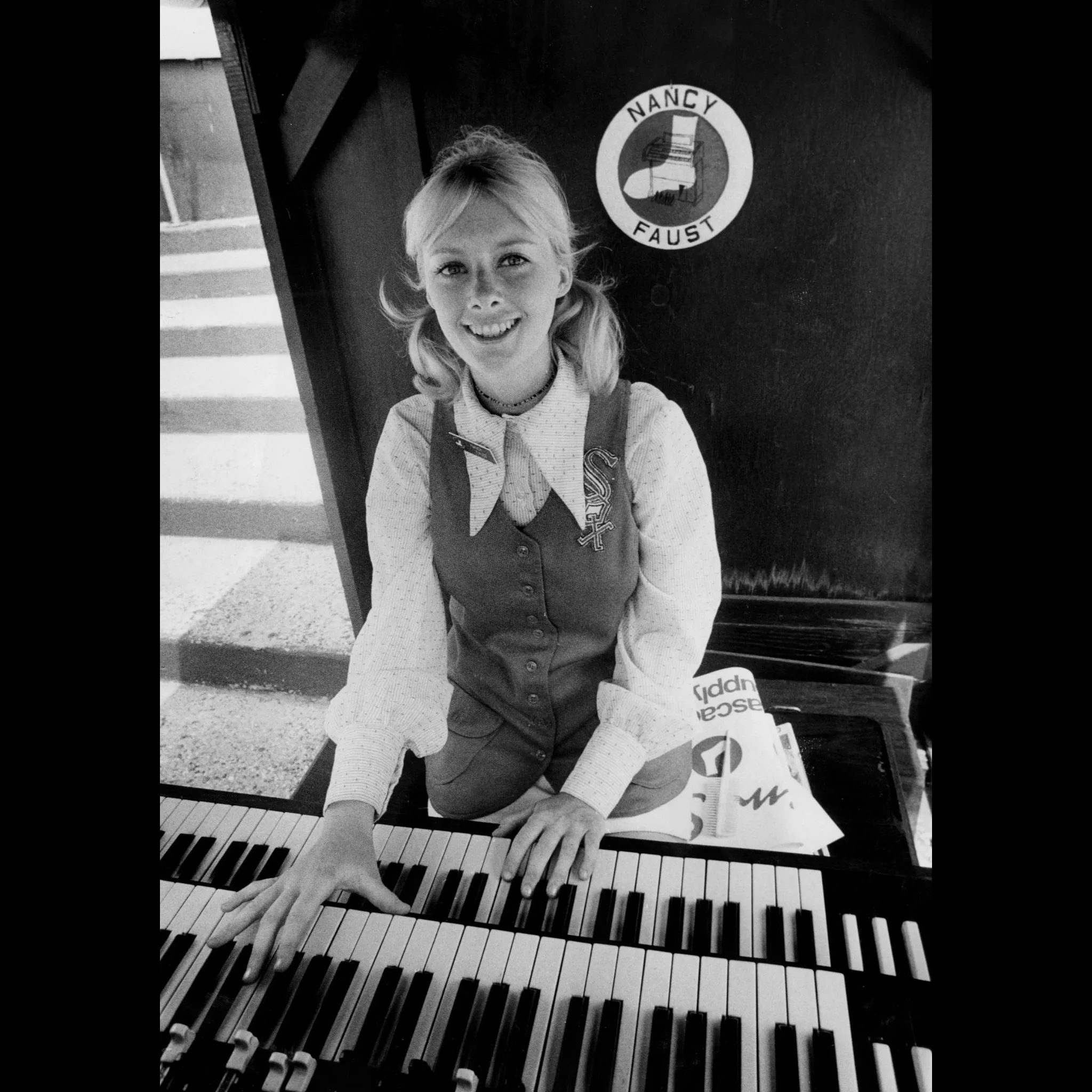
The Freedom To Play
But Nancy was also given freedom to play and respond to the crowds’ moods. In her second season as the team’s organist, her shyness waned.
She carried a radio out with her, and tied creative tunes from TV commercials or popular songs to the players and game situations, as well as to the conversations happening on the radio broadcast.
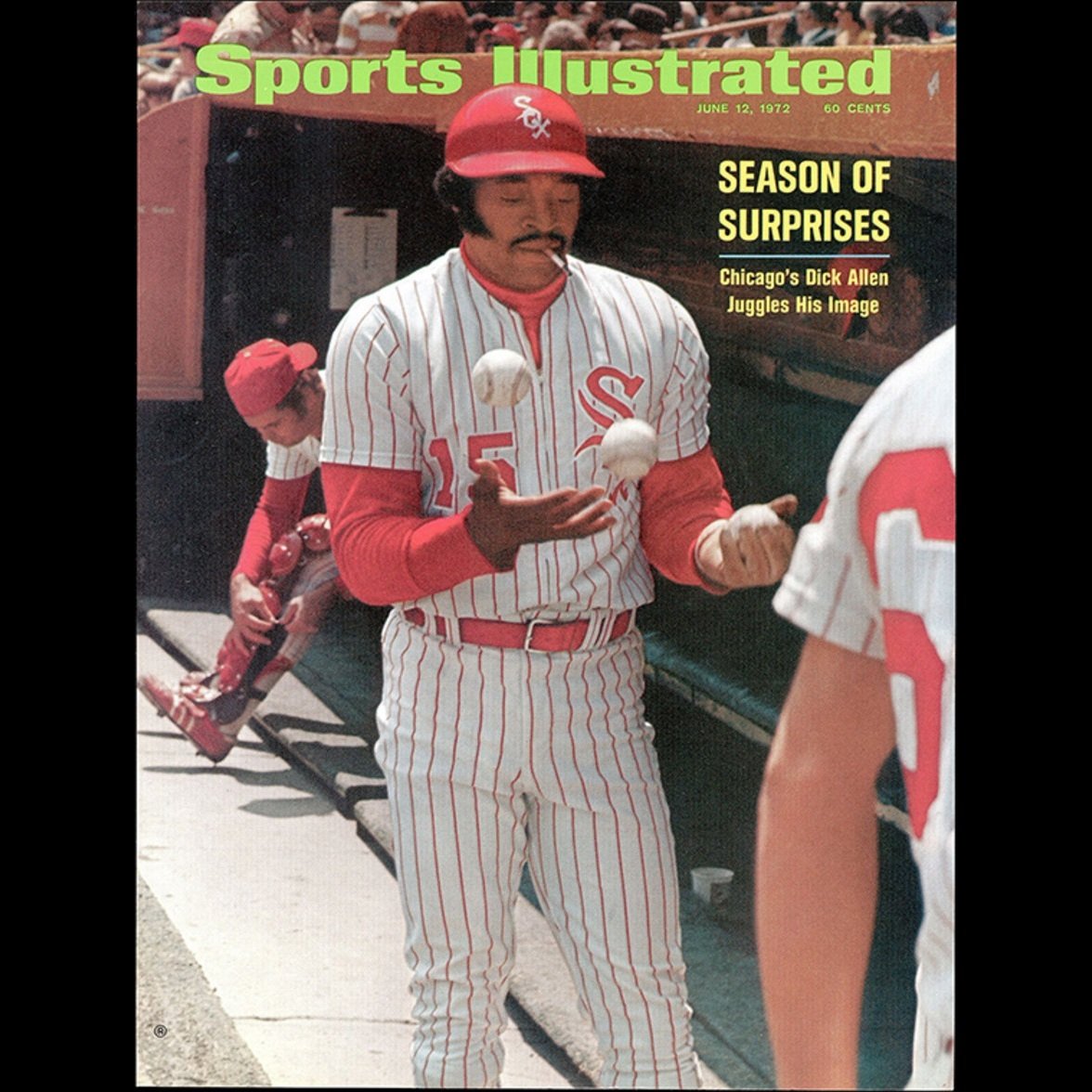
Inventor of Modern Walkup Music
Nancy swiftly made a name for herself due to her fast thinking, quick wit, sense of humor, and brilliant musicianship. Before long, Nancy, herself, became a major entertainment force, an attraction at the ballpark, and a fan favorite.
During the 1972 season, when eventual-MVP Dick Allen would come to the plate for the Sox, Nancy would play “Jesus Christ Superstar,” which has helped her to be credited as the inventor of modern walkup music.
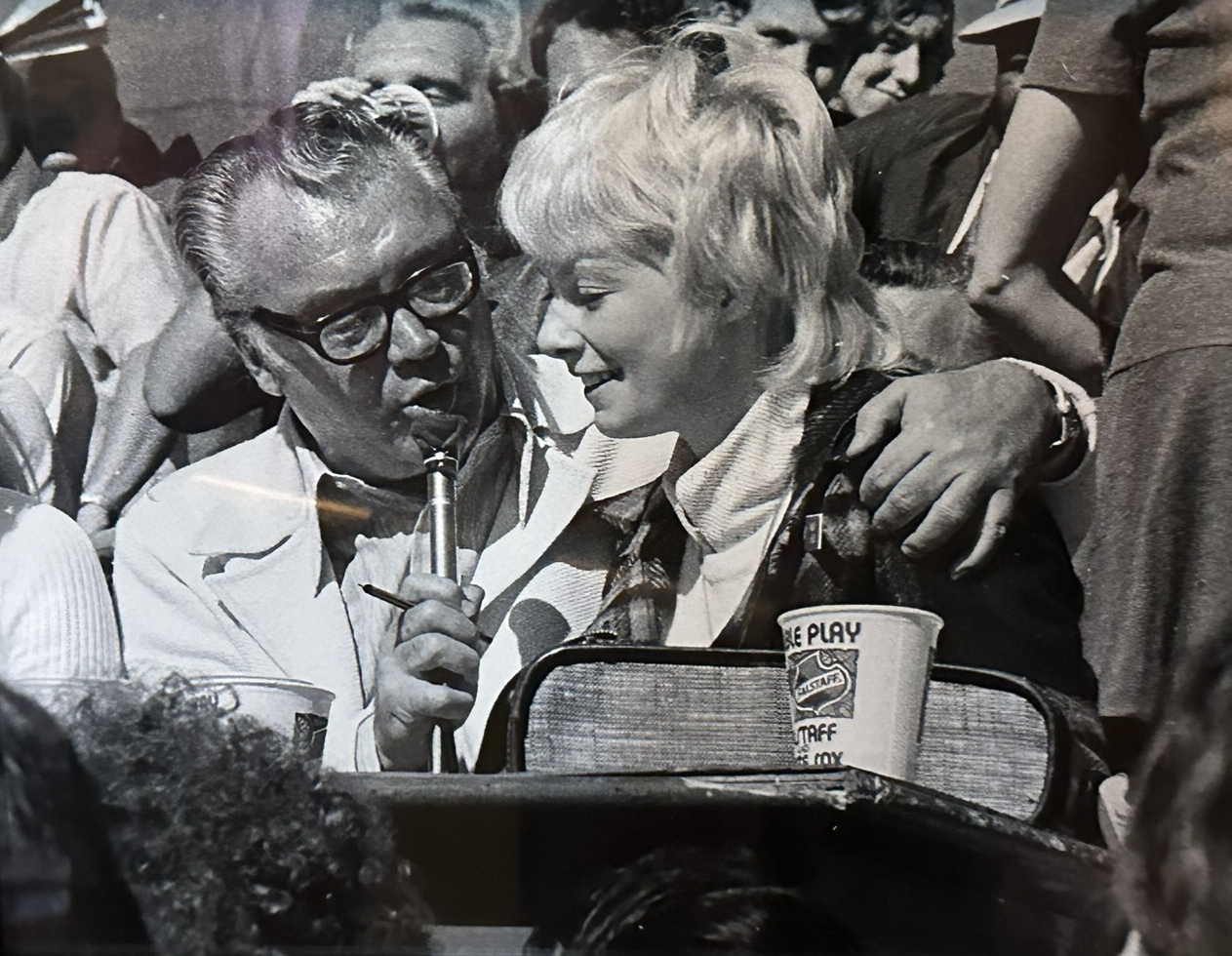
Harry Caray
Nancy and then-White Sox broadcaster Harry Caray took their fun little custom of playing and singing “Take Me Out To The Ballgame” and re-popularized it, turning it into a deeply-rooted tradition which is still practiced at nearly every level of baseball nationwide.
You’ll hear Nancy play it on the album as 45,443 fans sing along during the 7th inning stretch of the August 22, 1977 White Sox game against the Yankees.
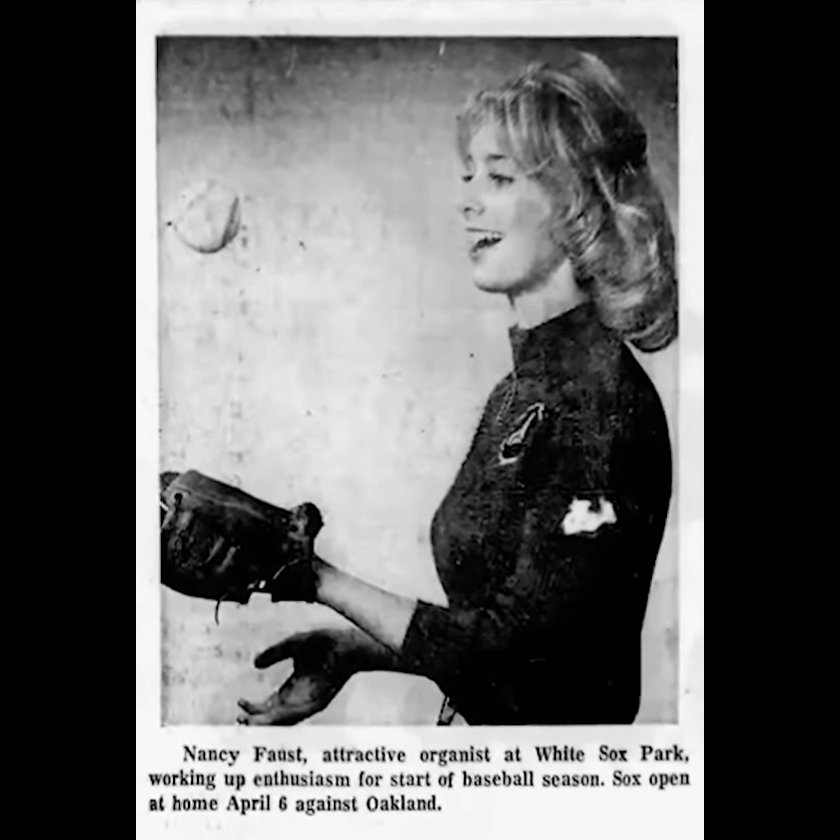
Starting Traditions
And you’ll hear the song “Na Na Hey Hey Kiss Him Goodbye”, which Nancy also helped to re-popularize when she played it for the first time at the White Sox game at Comiskey Park on July 29, 1977 after the Royals took out their pitcher.
The crowd erupted, sang along with her, and the song has remained a White Sox tradition ever since.
But really, if you’ve been to almost any sporting event in the past four and a half decades, you’ve surely heard the song used as a way to taunt the opposing team.
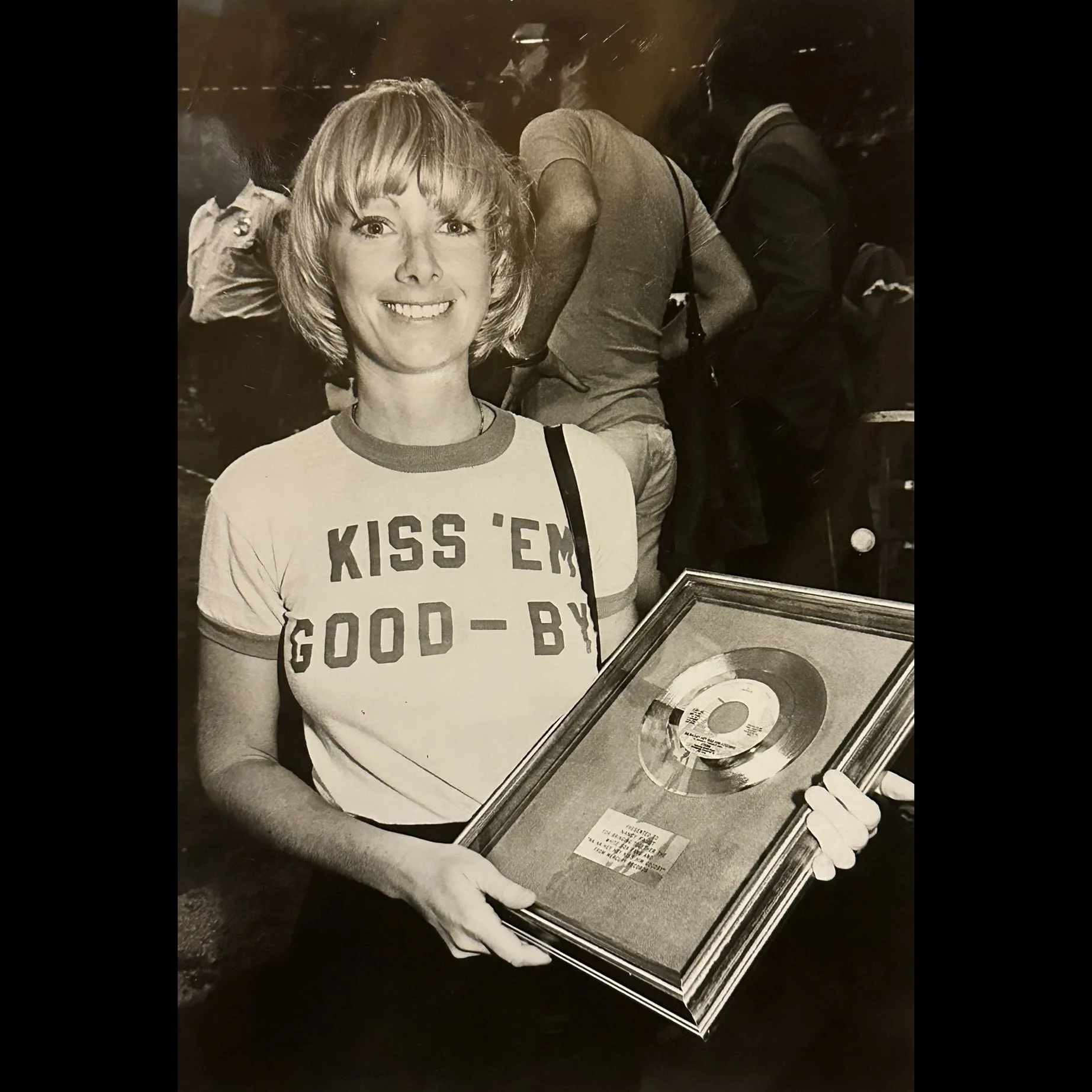
Gold Record
Nancy’s contributions to the in-stadium experience at sporting events cannot be overstated.
She has appeared on ABC's Good Morning America, and was written up in Sports Illustrated as baseball's "MVO, or Most Valuable Organist."
She was awarded an RIAA gold record from Mercury Records for her role in re-popularizing “Na Na Hey Hey Kiss Him Goodbye” by the band Steam, which originally came out in 1969, eight years before Nancy first played it on the South Side and made it a hit again.
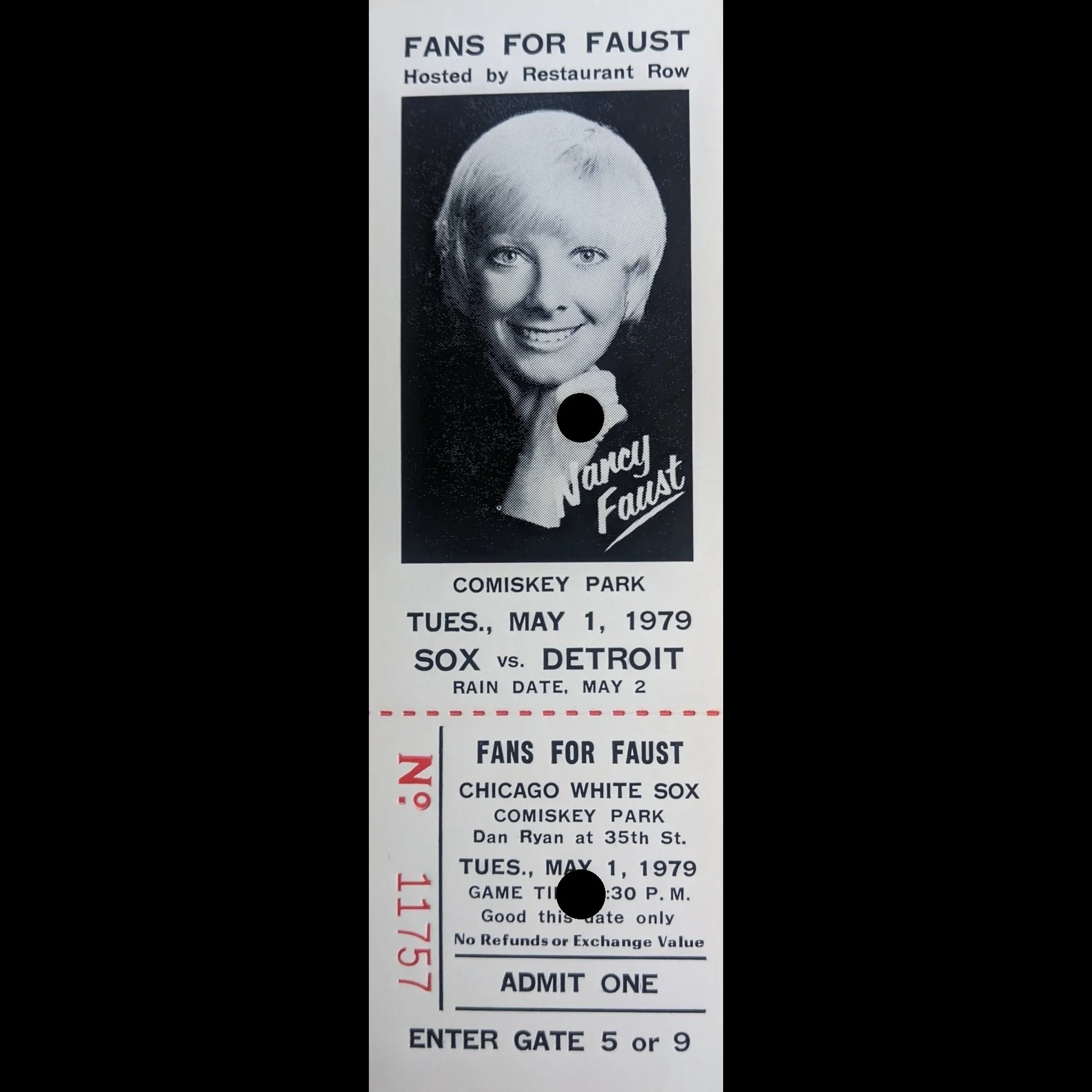
A Celebrated Icon
Nancy has been celebrated with multiple days at the ballpark specifically honoring her, and she was inducted into the Baseball Reliquary's Shrine of the Eternals in 2018.
Her talents and contribution to the game are even recognized in an exhibit at the National Baseball Hall of Fame in Cooperstown called "Women in Baseball."
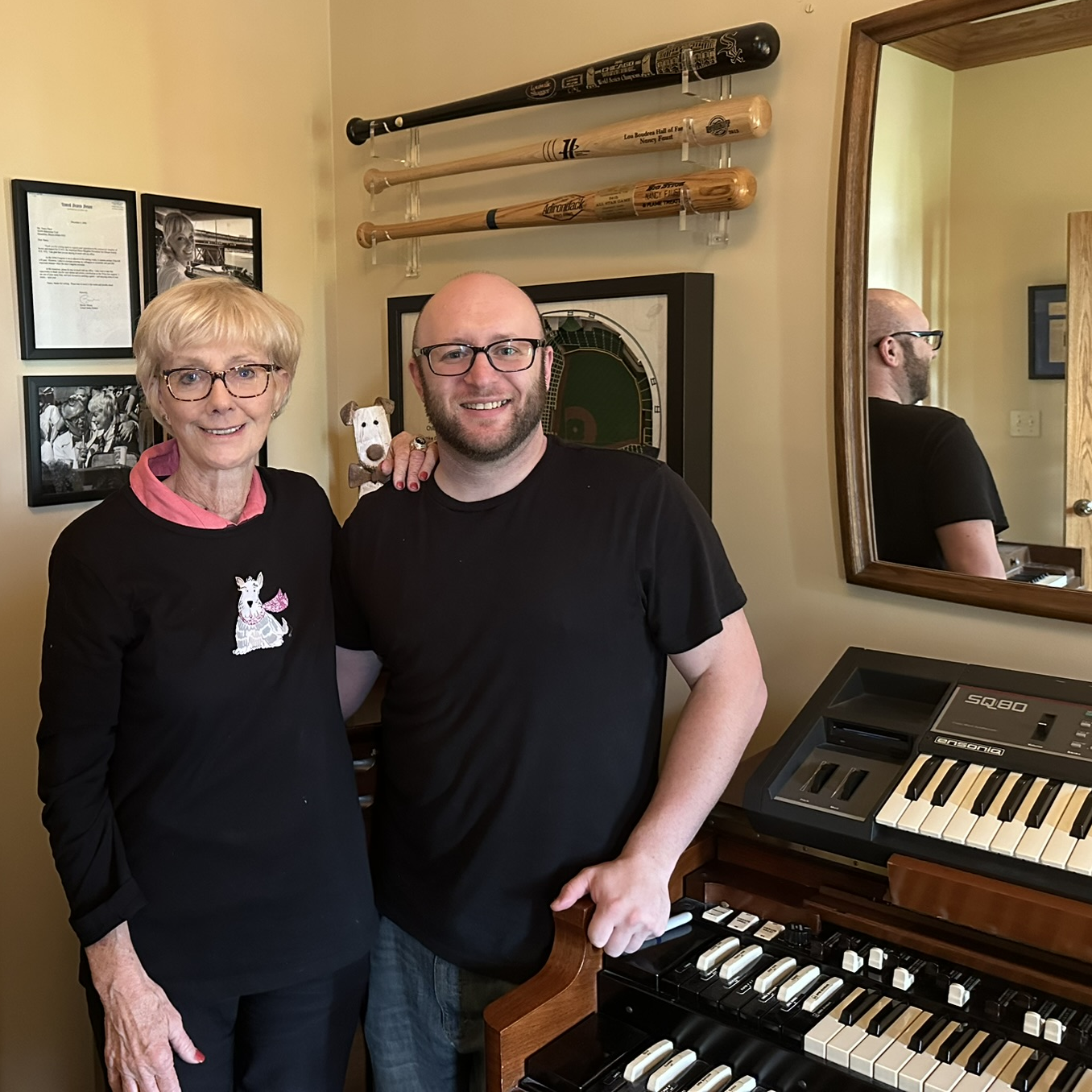
Friend Of The Show
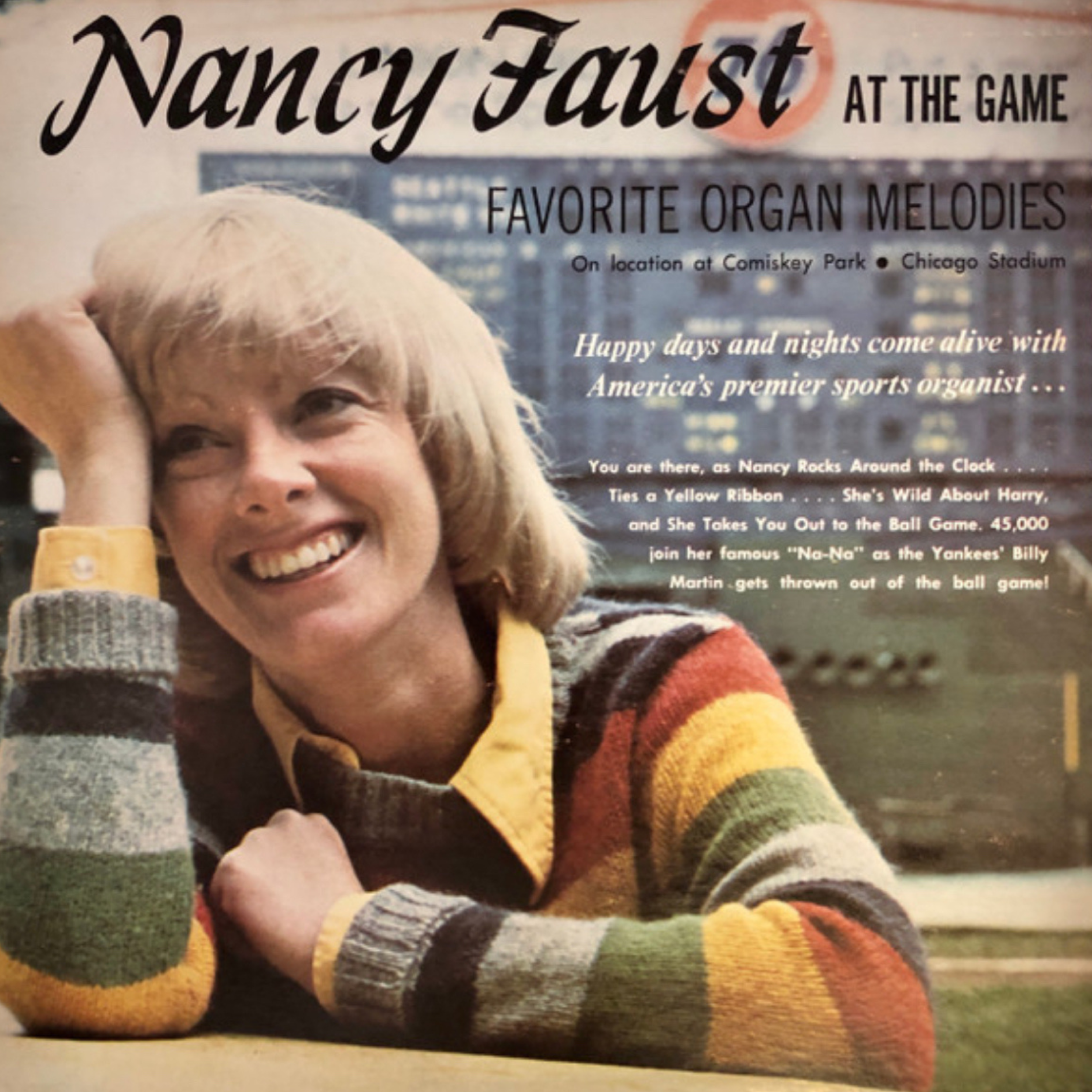
Nancy was our guest for Episode 1 of Season 4 of My Baseball History, and she and I worked together last year to re-release her debut album for the first time since its vinyl-only release in 1978. That’s right, it had been nearly 50 years since those songs were recorded, and, unless you had one of the few vinyl records which were originally pressed, you could never hear those songs.
If you’d like to hear her episode of My Baseball History, you can do that by clicking HERE.
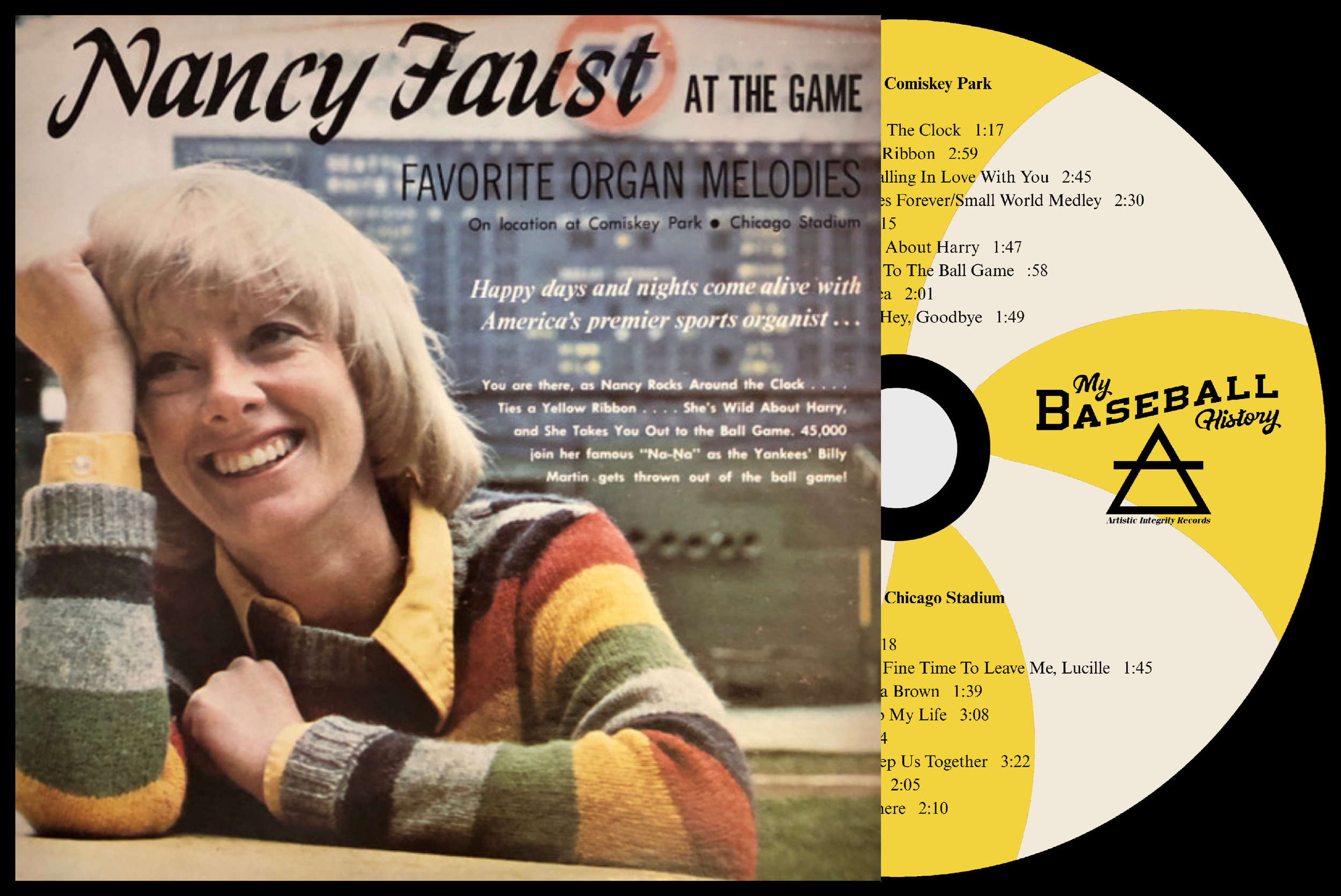
Buy A Copy Of “Nancy Faust At The Game”
If you share this episode to your social media following, you might get a signed copy of the CD for free!
If you don’t want to take your chances in the contest, you can buy either a regular copy of the CD, or one that has been signed by Nancy, by clicking HERE.
Support My Baseball History
If you don’t have PayPal and want to send a donation through Venmo, Zelle, Cash App, or any other platform, email me at shoelesspodcast@gmail.com and I’ll send you directions for whichever method you prefer.
We appreciate you being here.