0509 - Robert K. Fitts, part 2
Robert K. Fitts is an award-winning author and researcher whose focus is the history of baseball in Japan and Japanese baseball cards. During our conversation, he referenced a handful of things and people upon which you may want to do more research. Consider this page to be your “liner notes” for the episode so you can follow along.
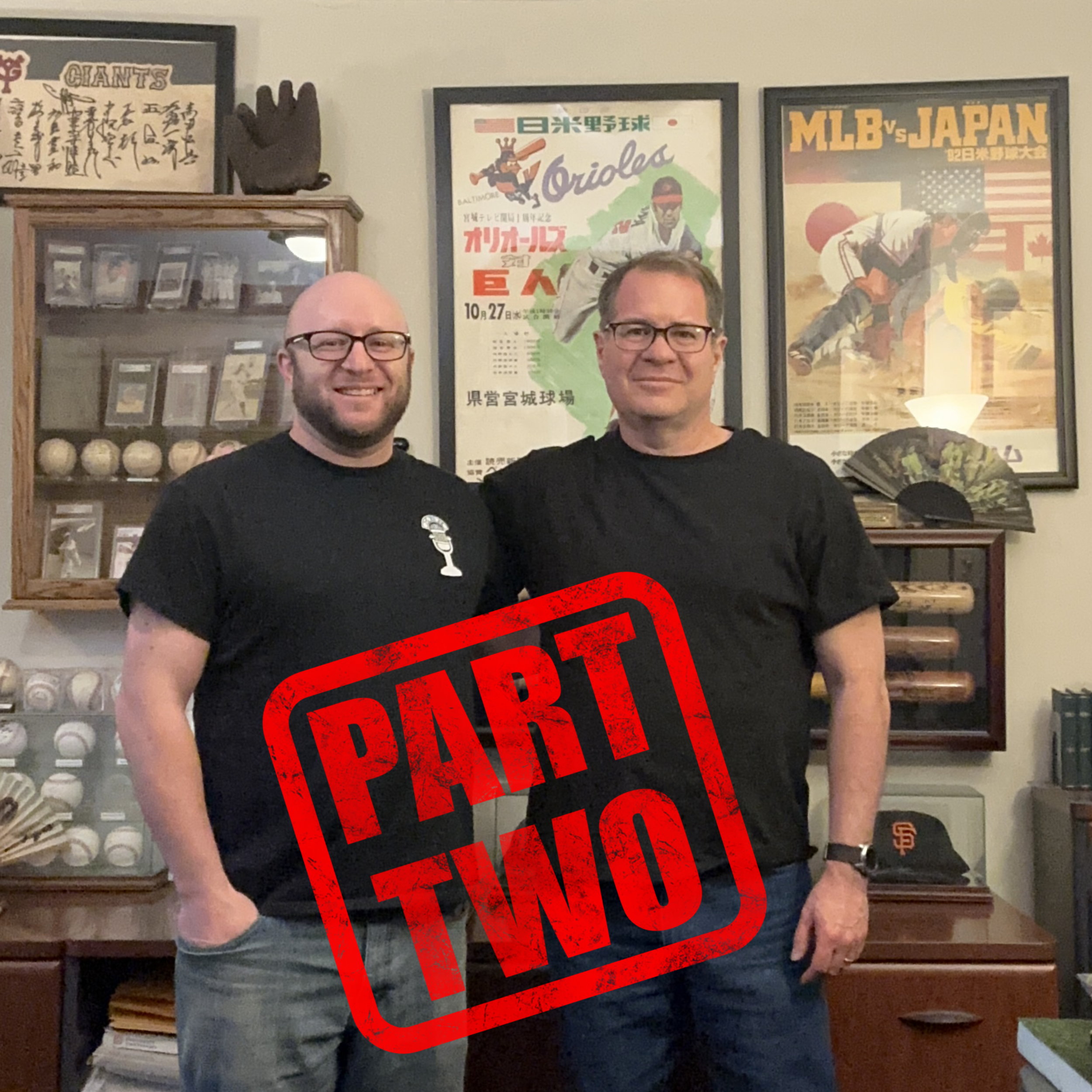
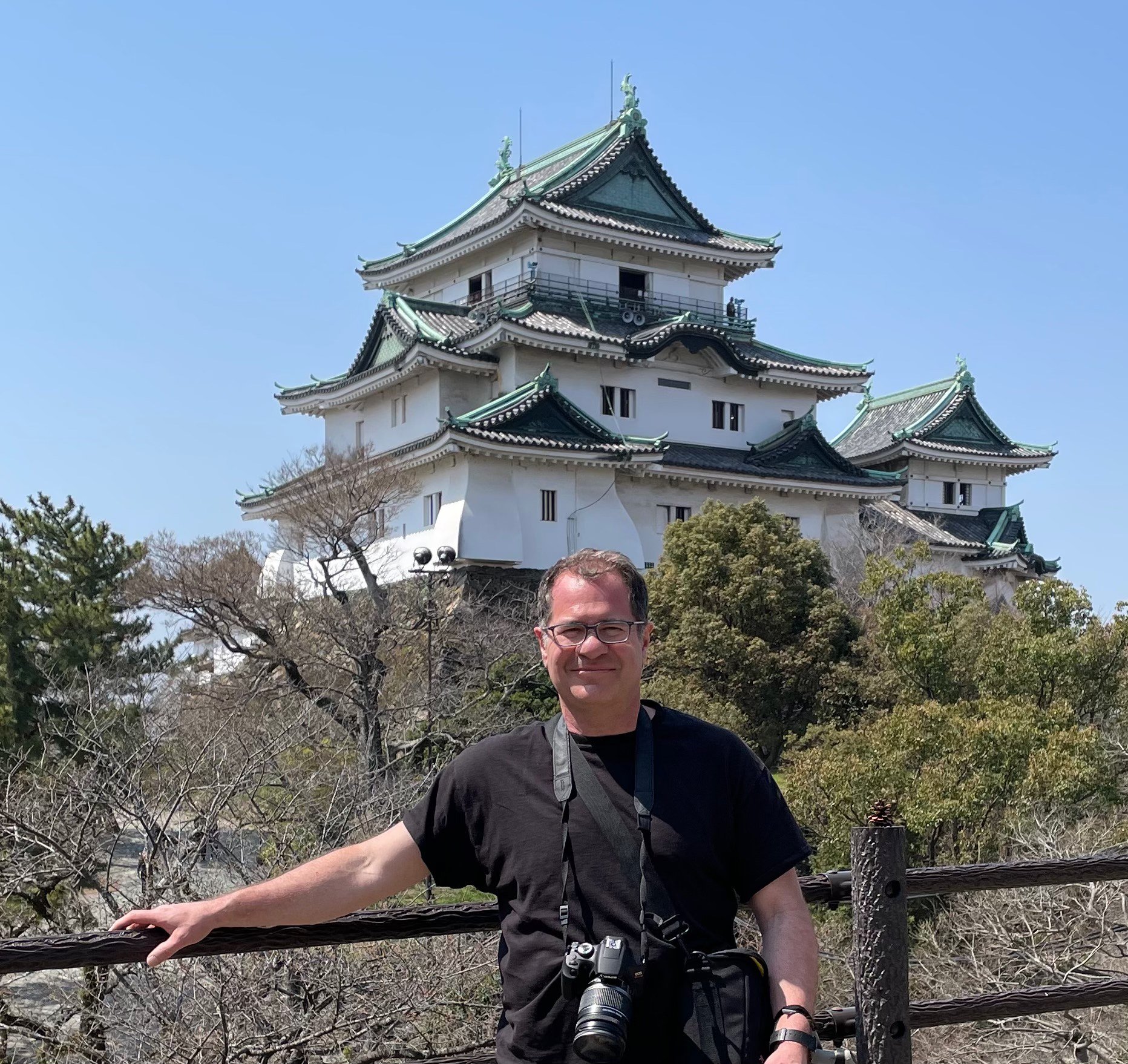
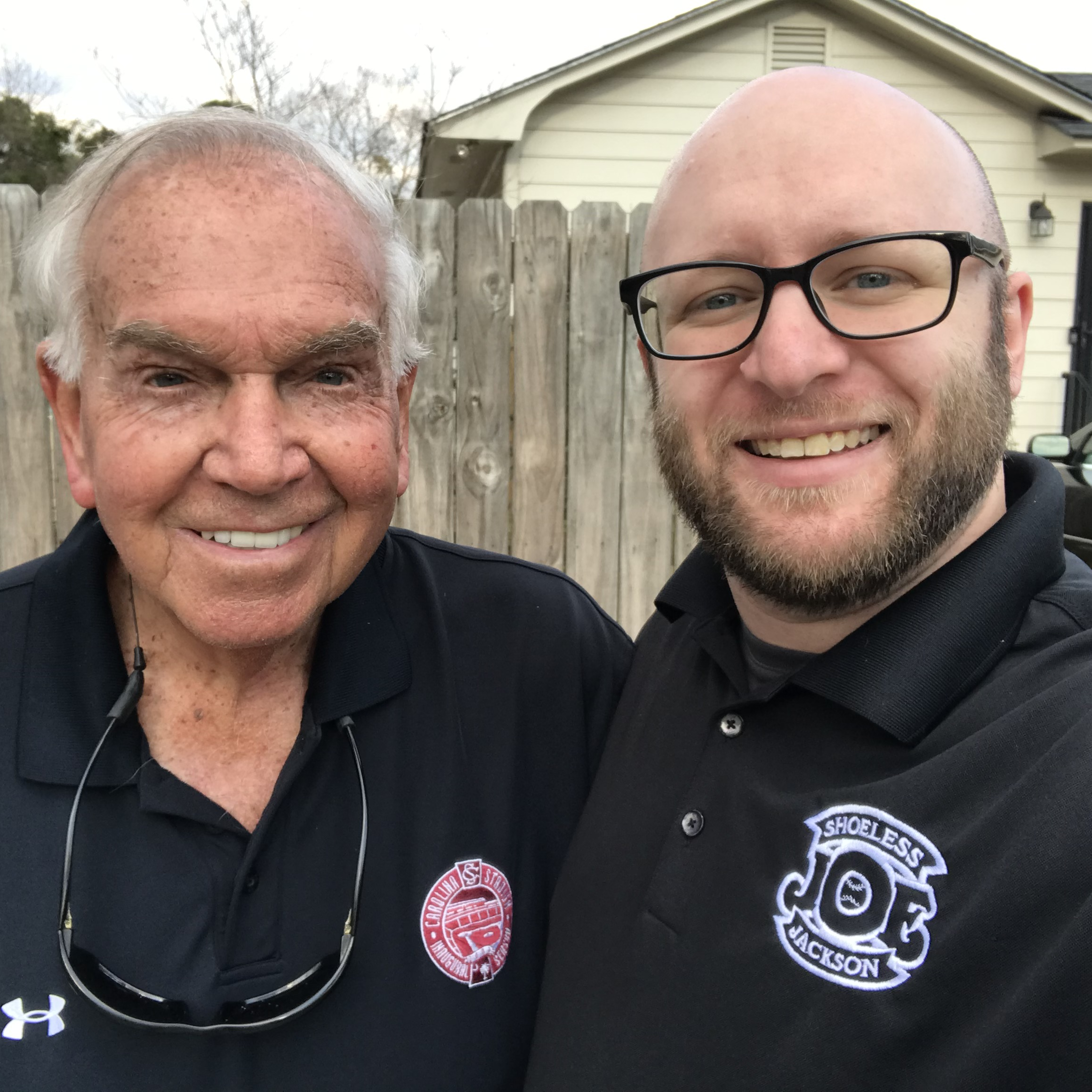
Me and Robert K. Fitts after recording our interview in his home in New York
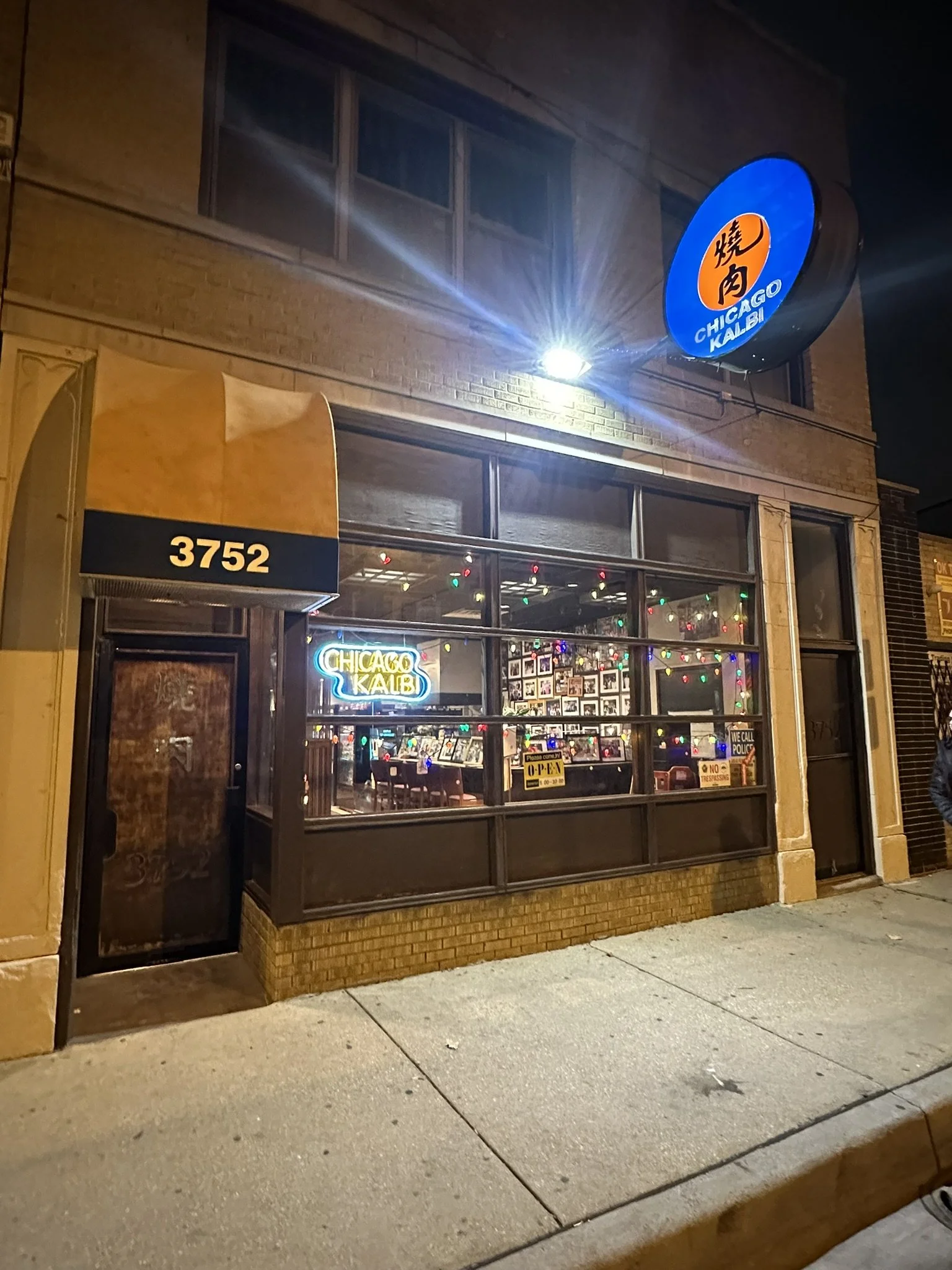
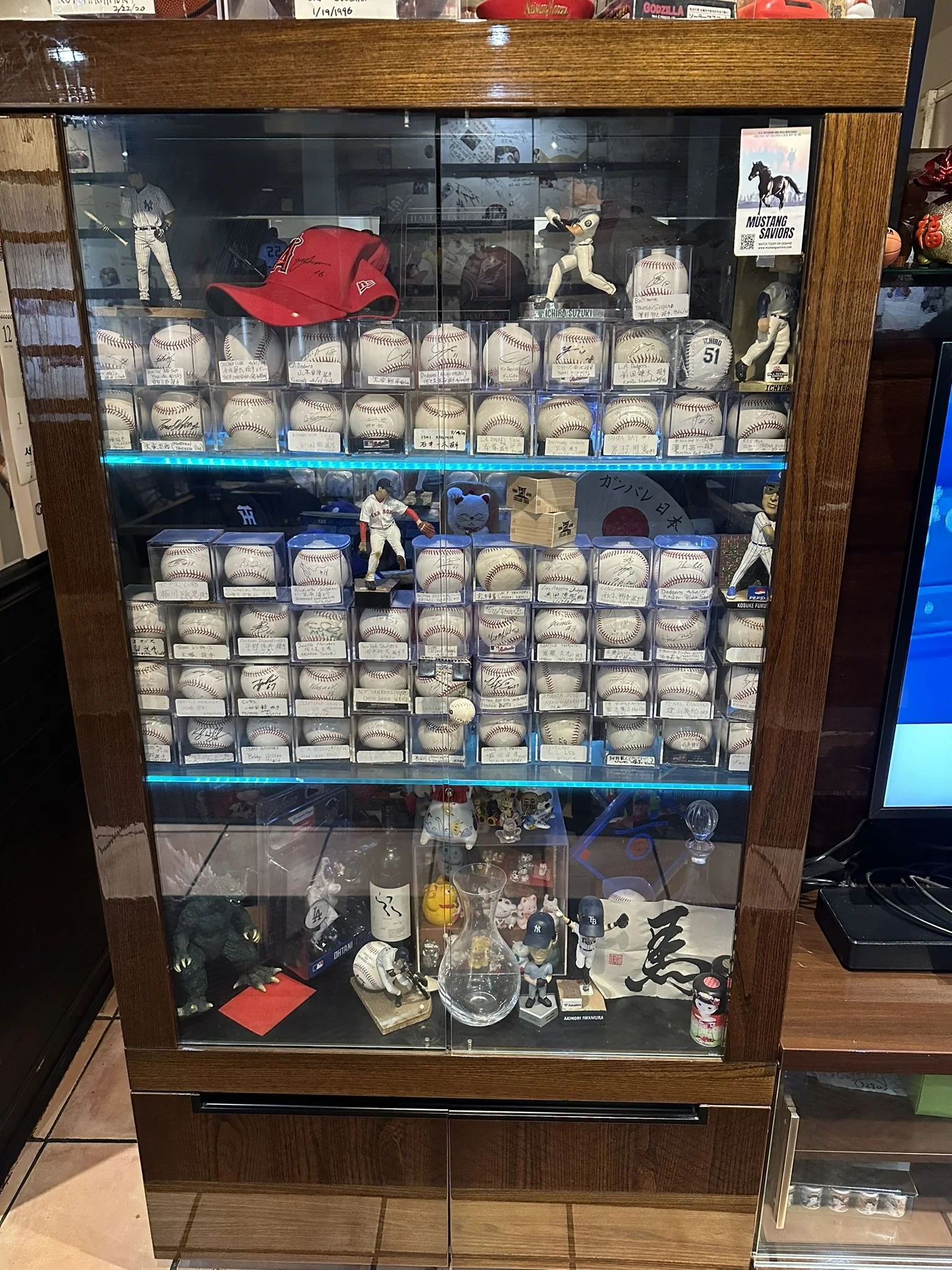
“The Go-To Spot For Visiting Baseball Megastars”
My friend David tipped me off to Chicago Kalbi a couple years ago when he saw an article about it in the Chicago Reader titled “This Japanese Restaurant Is The Go-To Spot For Visiting Baseball Megastars — Just Ask Ichiro And Ohtani.”
The article showed lots of pictures of the autographed baseballs and memorabilia which fill the restaurant after nearly 30 years of being visited by foreign MLB stars.
Chicago Kalbi opened in 1990, but it wasn’t discovered by baseball players until Takashi Kashiwada visited when he pitched for the New York Mets in 1997. Hideo Nomo followed in 1998 while he was in town with the Dodgers to play the Cubs, and Ichiro came shortly after that.
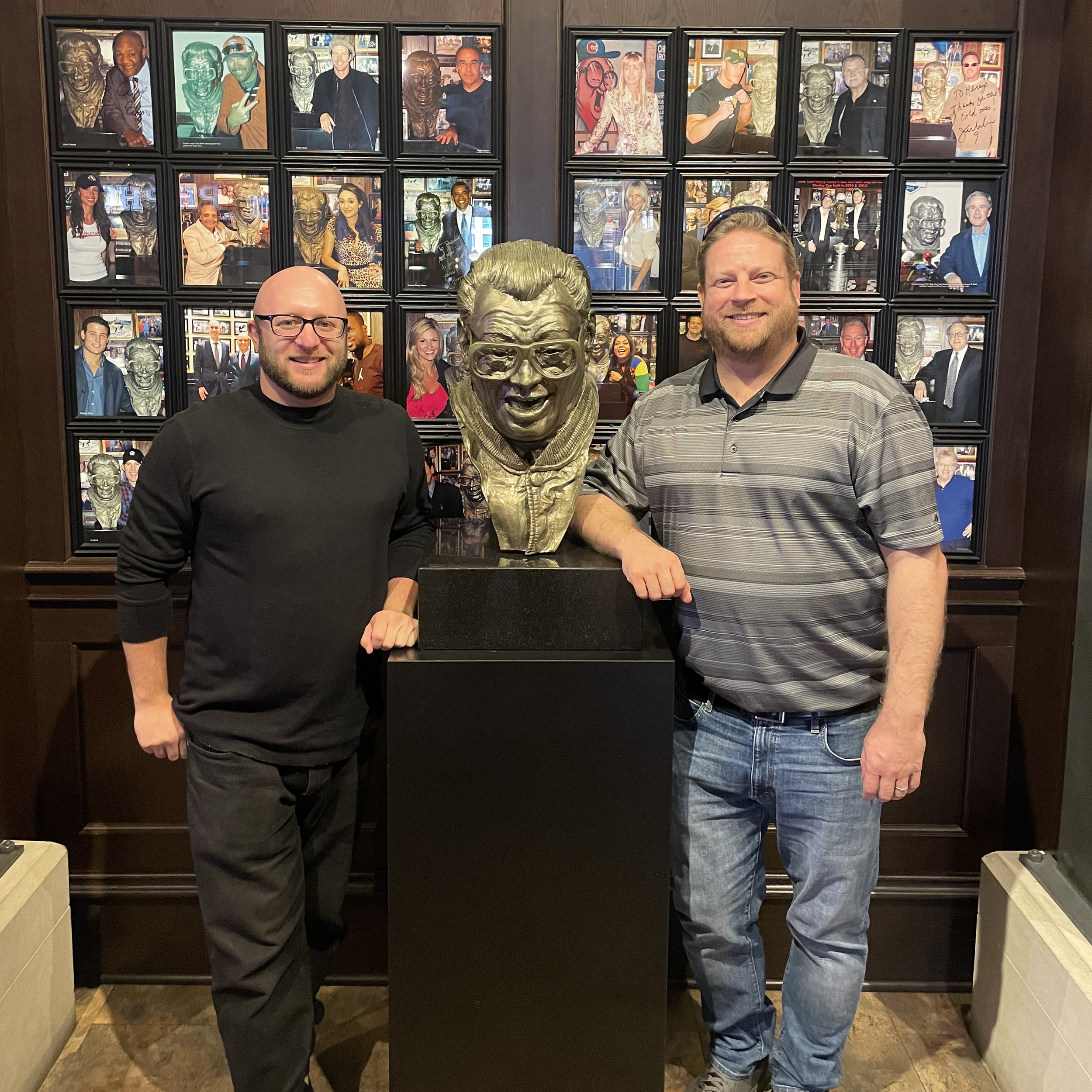
In Good Company
Ichiro played for 19 years, and every year of his career, he ate at Chicago Kalbi. According to the official historian of the Chicago Cubs, Ed Hartig, “In 2014, Ichiro and the Yankees played at Wrigley Field May 20 and 21 and on the South Side on May 22, 23, 24, and 25 — and Ichiro went to Chicago Kalbi every night for steak.” After going this past December with my friends Jacob and Tracy, I can see why.
Jacob Pomrenke is the Director of Editorial Content at SABR, and the chairman of the Black Sox Scandal Research Committee. He was our guest for Episode 1 of Season 3. You can listen to that episode HERE.
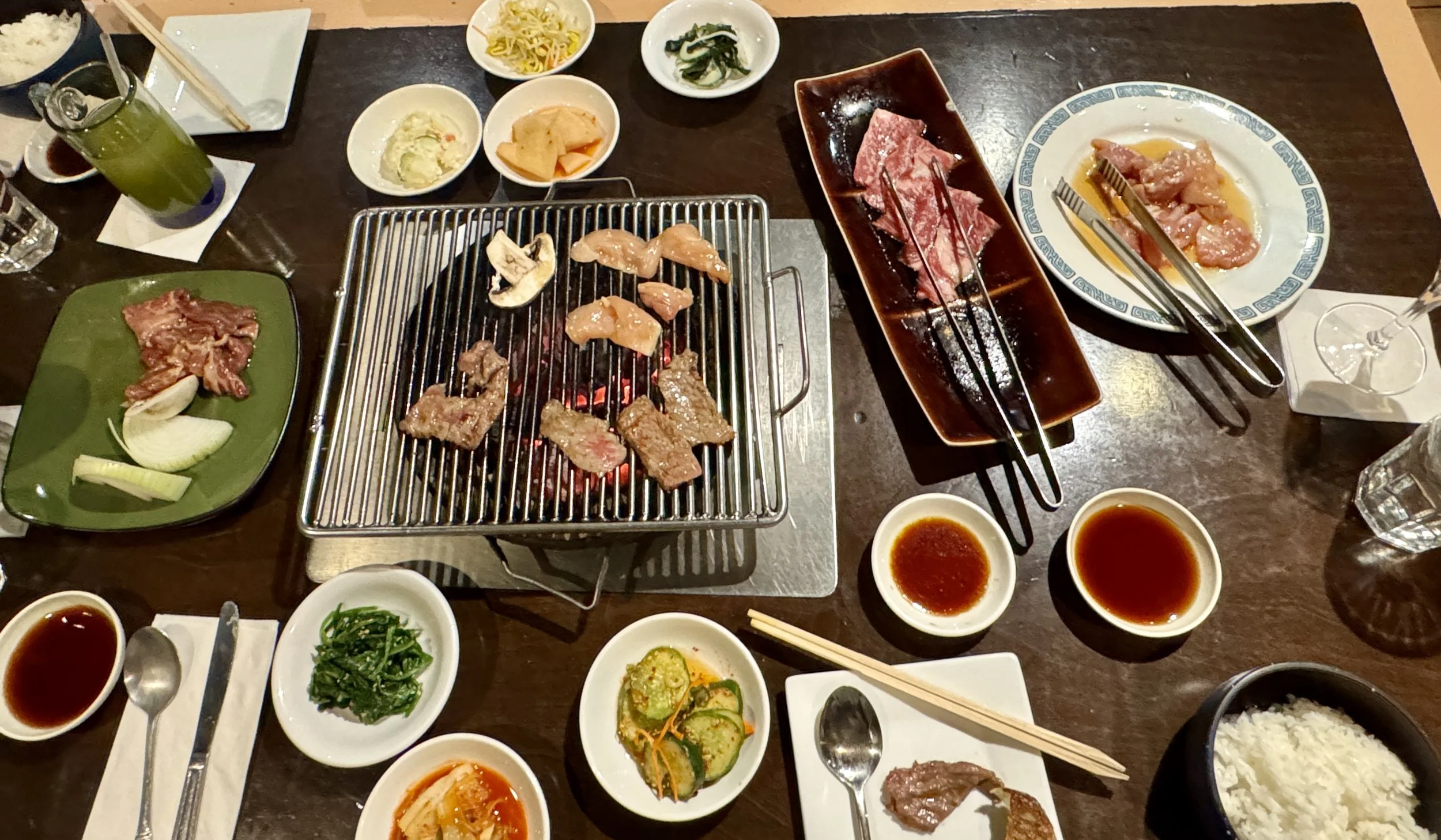
Yakiniku
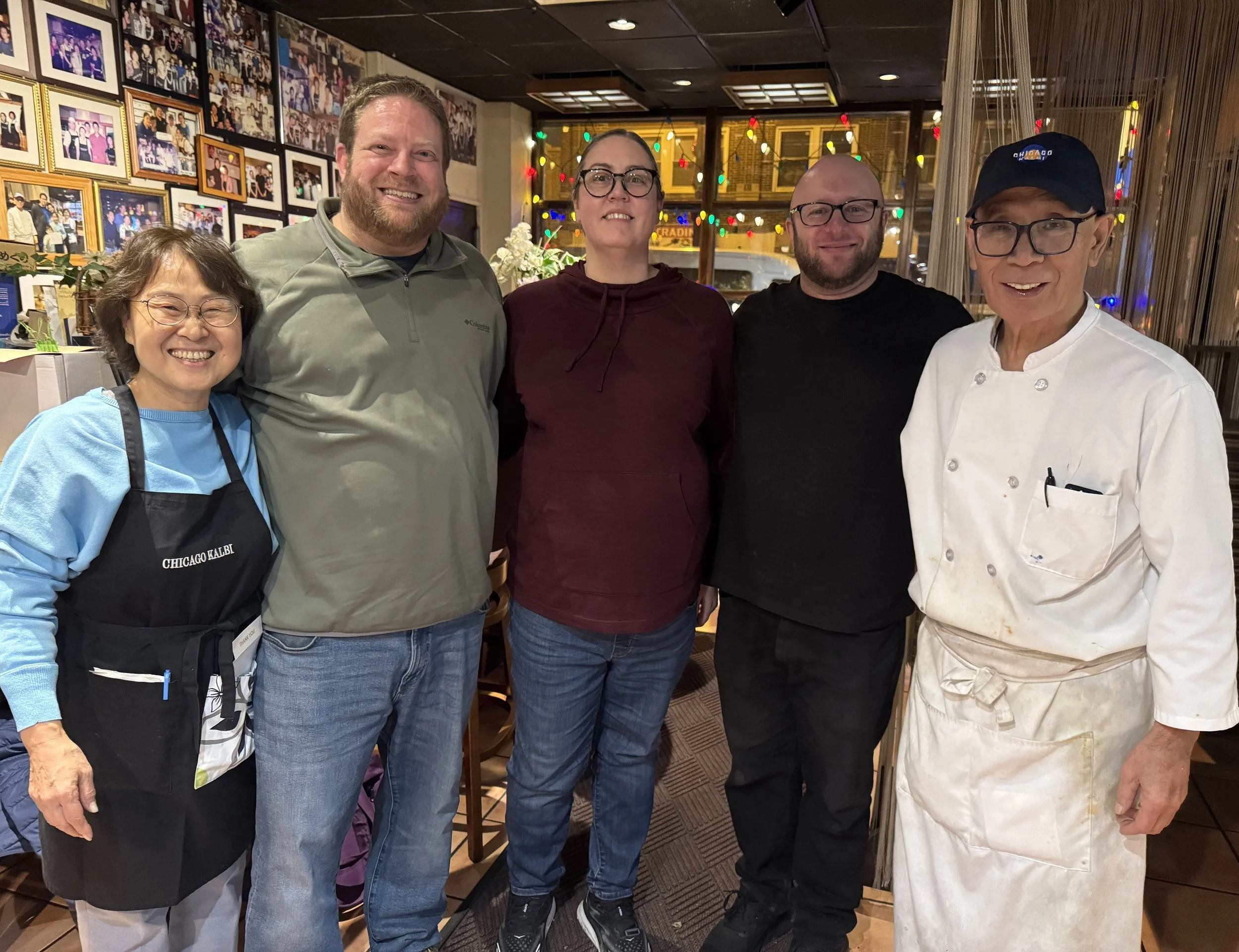
Chicago Kalbi specializes in Yakiniku, Japanese BBQ, with the highest quality ingredients such as Wagyu beef, imported from Japan, Kobe beef, Berkshire pork, Free-range chicken, and other premium ingredients. Using only a char coal grill at your table, Chef Tozuka brings exquisite taste to every meal. Every dish we ordered was incredible, and cooked to perfection, thanks to the fact that Jacob grilled at the table for us.
Incredible Hospitality
Even more than the food being sensational, the hospitality was even better. Every server, every busser, and even Chef Isao Tozuka (far right) and his wife Chiyo (far left) greeted us warmly throughout the night and made it a point to thank us for being there on Christmas. It was genuinely one of the five best meals of my life, and a place I am SURE I will visit again. Once you come, you won’t be surprised why world-famous athletes and celebrities have dined here, and why they keep coming back.
Robert K. Fitts
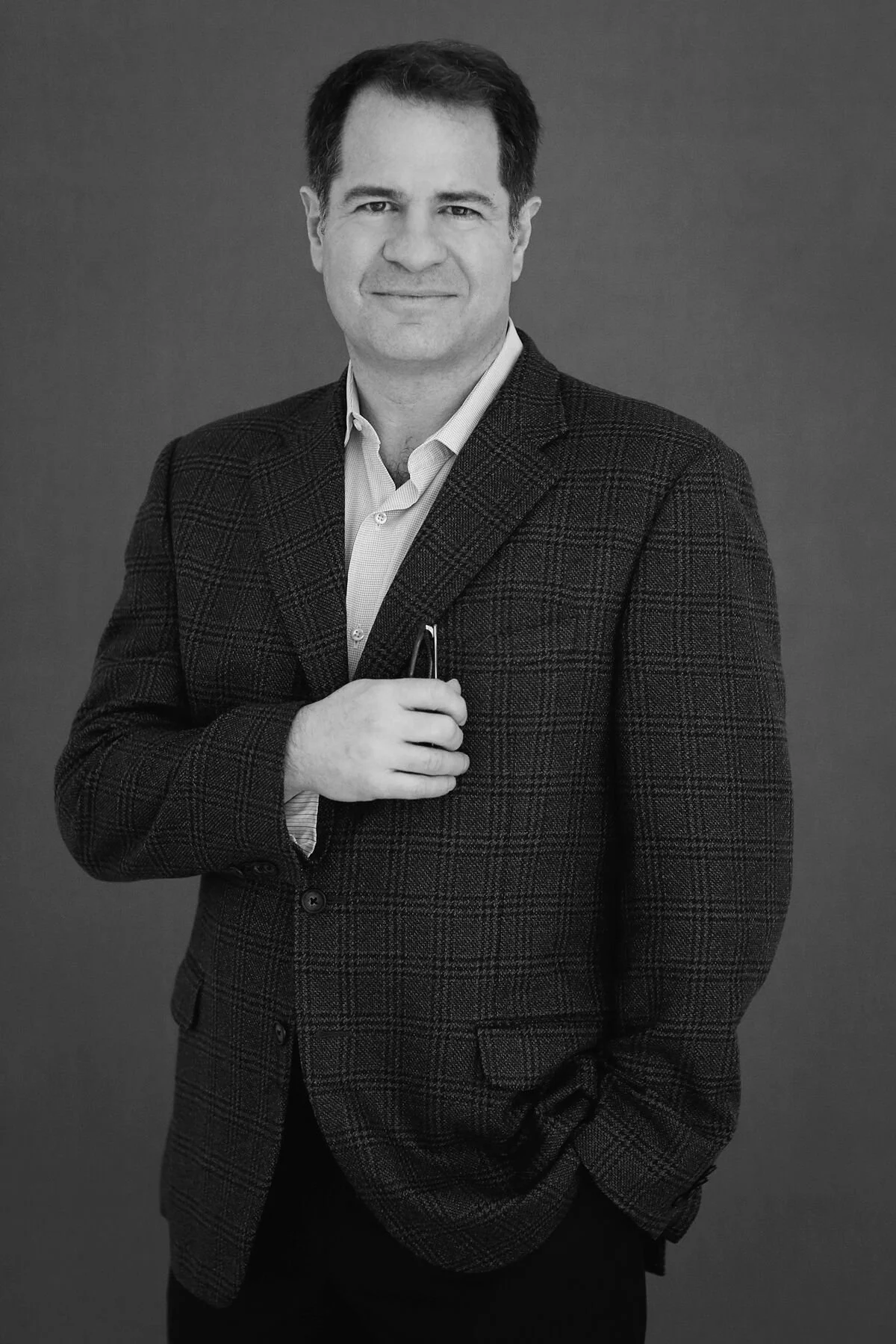
A former archaeologist with a Ph.D. from Brown University, Rob left academics behind to follow his passion - Japanese Baseball. While living in Tokyo in 1993 and 94, Rob began collecting Japanese Baseball cards.
He is now recognized as one of the leading experts in the field and has created the eBusiness Robs Japanese Cards, LLC.
You can visit his eBay store and buy some Japanese baseball cards of your own by clicking HERE.
Visit Rob’s Japanese Cards eBay store by clicking HERE
SABR’s Asian Baseball Committee
An award-winning author and speaker, his articles have appeared in numerous magazines and websites, including Sports Collectors Digest, the Baseball Research Journal, the National Pastime, Nine, and on MLB.com.
Rob is the founder of the Society for American Baseball Research’s Asian Baseball Committee, which routinely publishes articles and essays studying the history and culture of Asian baseball.
You can check out the Asian Baseball Committee’s blog by clicking HERE.
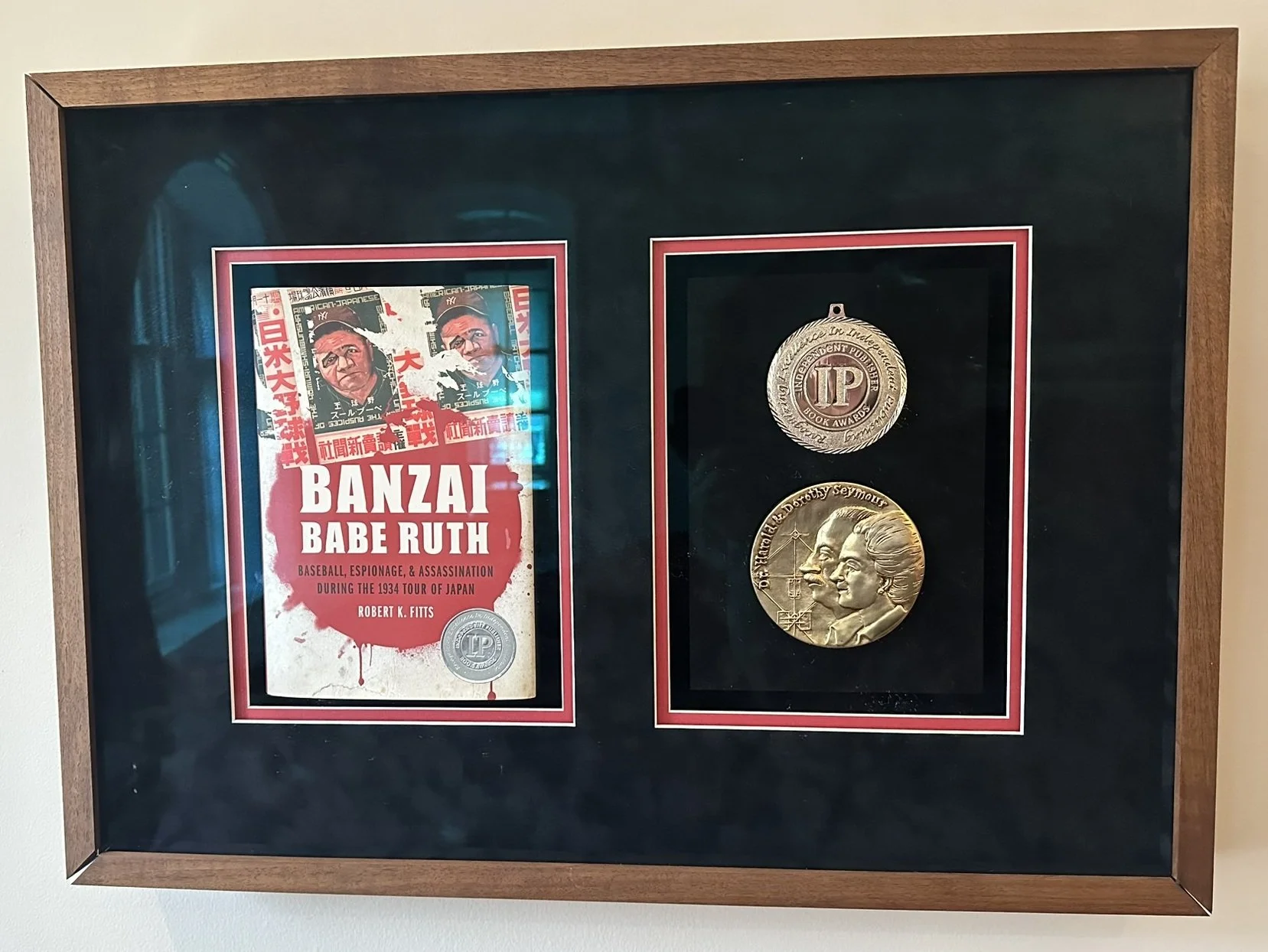
Banzai Babe Ruth
In 2025, Rob was the recipient of SABR’s Henry Chadwick Award for "outstanding, long-term contributions to the study of the game."
He won the 2013 Seymour Medal, awarded to the author of the Best Baseball Book of 2012, which was his Banzai Babe Ruth. He was the recipient of the 2019 and 2023 McFarland-SABR Baseball Research Awards, which honors the authors of the best articles on baseball history or biography completed or published during the preceding calendar year.
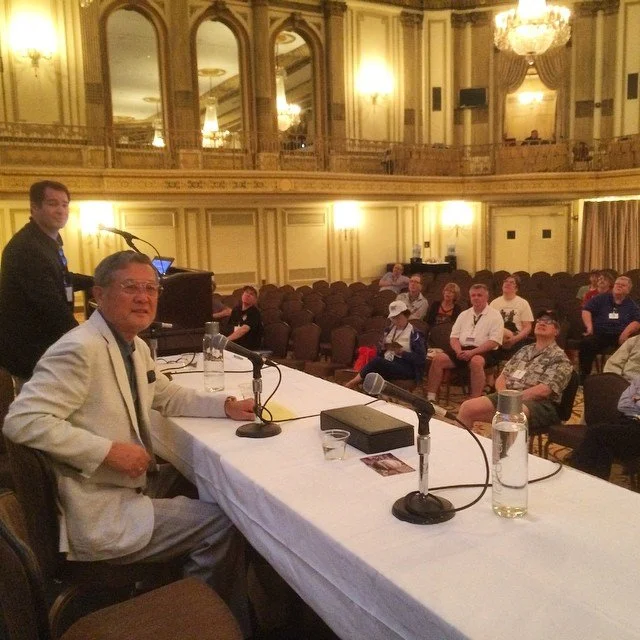
SABR Convention
Rob earned the 2012 Doug Pappas Award for best oral research presentation at the Annual SABR Convention for his presentation titled “Murderers, Spies, and Ballplayers: The Untold Story of the 1934 All American Tour of Asia.”
He was the recipient of the 2006, 2021, 2023, and 2024 SABR Baseball Research Awards. He has been a two-time finalist for the Casey Award, given to the best baseball book of the year every year since 1983, and he is a two-time silver medalist at the Independent Publisher Book Awards.

Japanese American Association of NY
A popular speaker on the history of Japanese baseball, Rob has spoken at many venues including the Library of Congress, the Japan Embassy in Washington, D.C., the National Baseball Hall of Fame in Cooperstown, the Japan Society of New York, the Asia Society of New York, the Nine Baseball Conference, the American Club, Tokyo, and the Society for American Baseball Research Annual Convention.
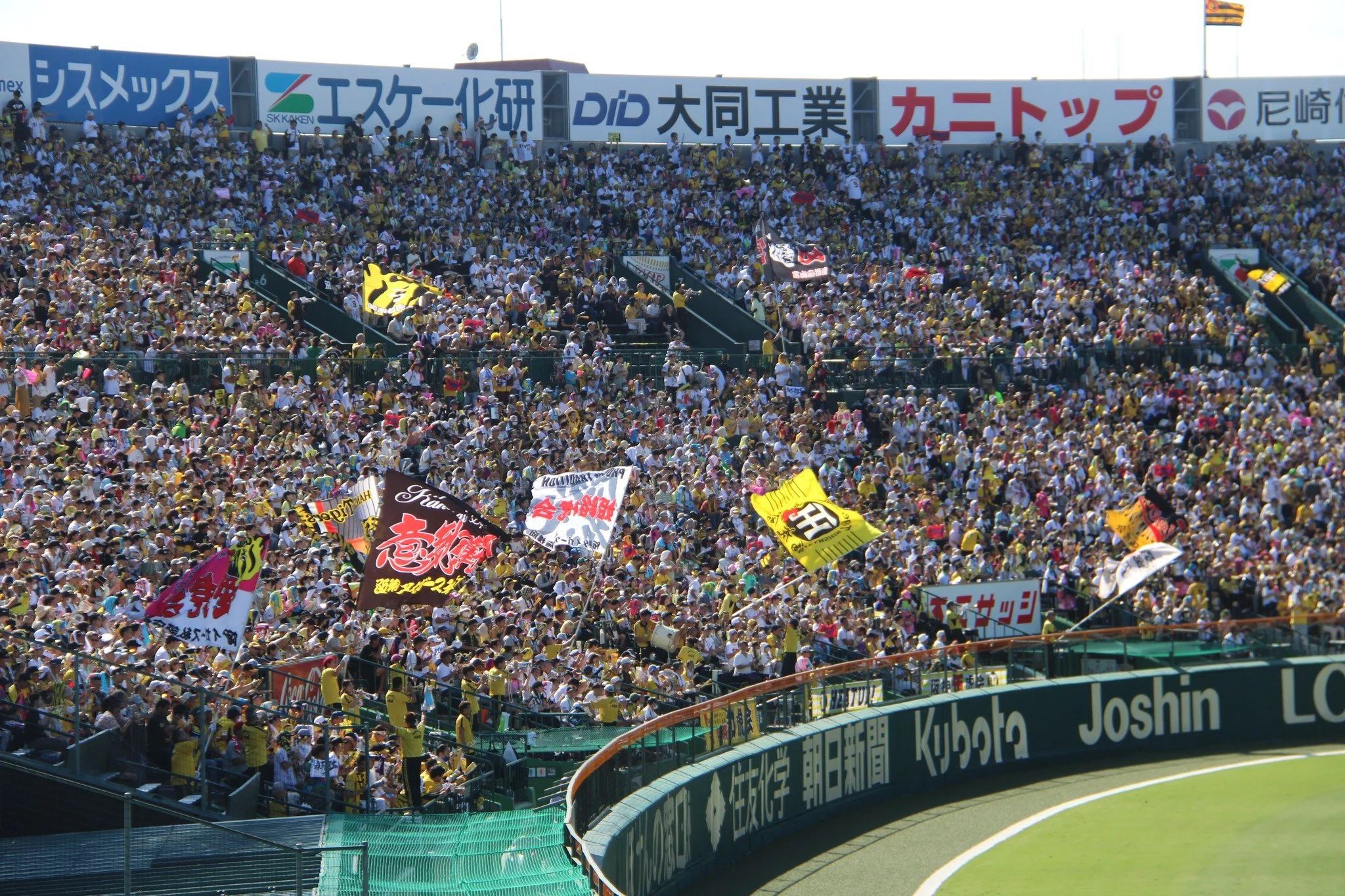
A First For MBH
This interview with Rob couldn’t be contained in one episode, so we’ve broken it up into two distinct parts that are almost exactly the same run time.
The first part discussed the history of baseball in Japan. The second part (covered in these liner notes) will cover the modern game — basically, everything from 1964 to today, with a focus on the in-game experience in the Japanese ballpark, if you were going to go there today.
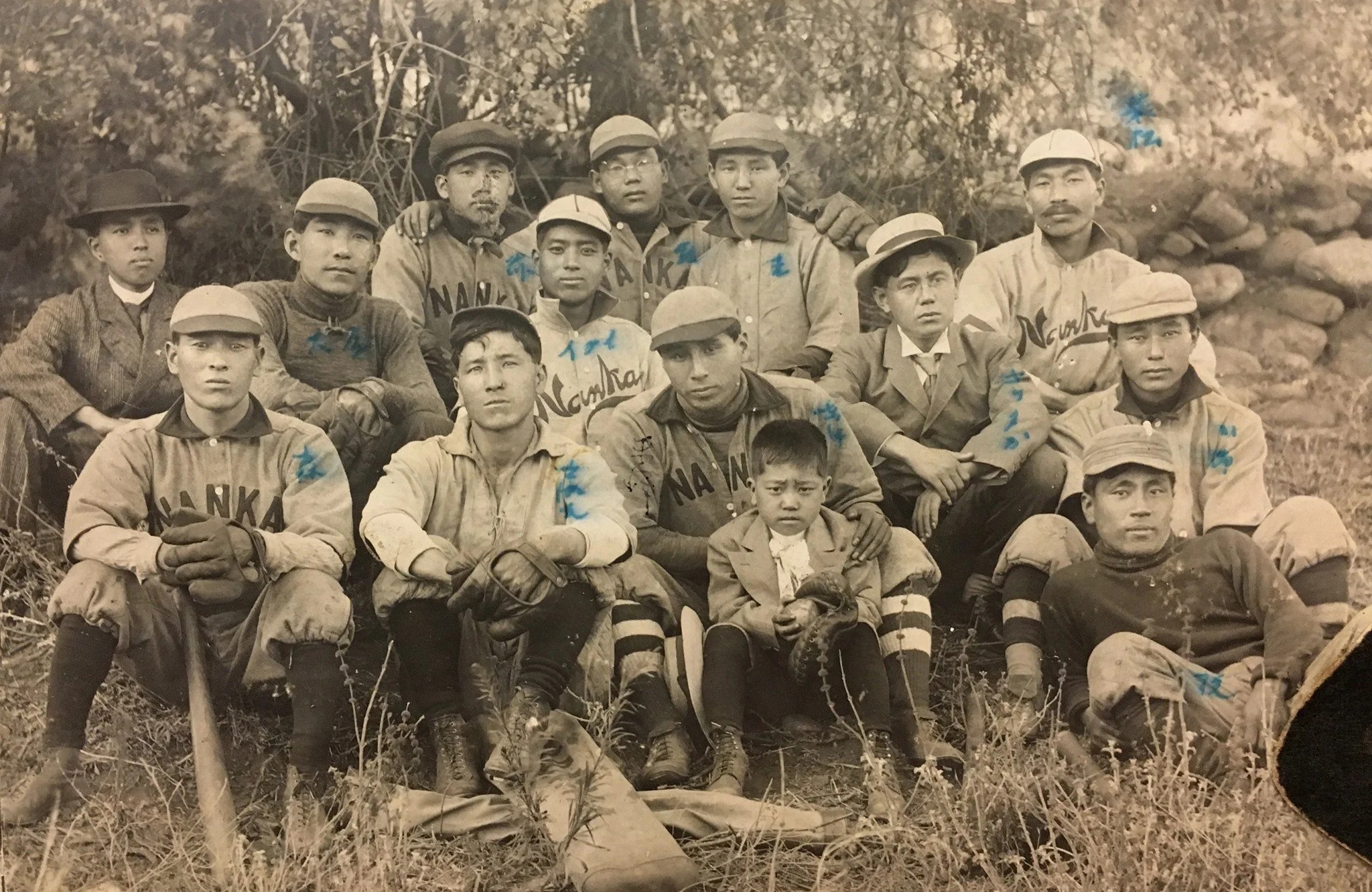
Why Two Parts?
I just felt like we couldn’t possibly be well-informed enough to have this part of the discussion, to understand the nuance of it all, unless we first learned what came before it so we could truly understand how the Japanese game has evolved.
If you have not yet listened to Part One of this interview with Rob, which was Episode 8 of Season 5 of My Baseball History, you can do that HERE.
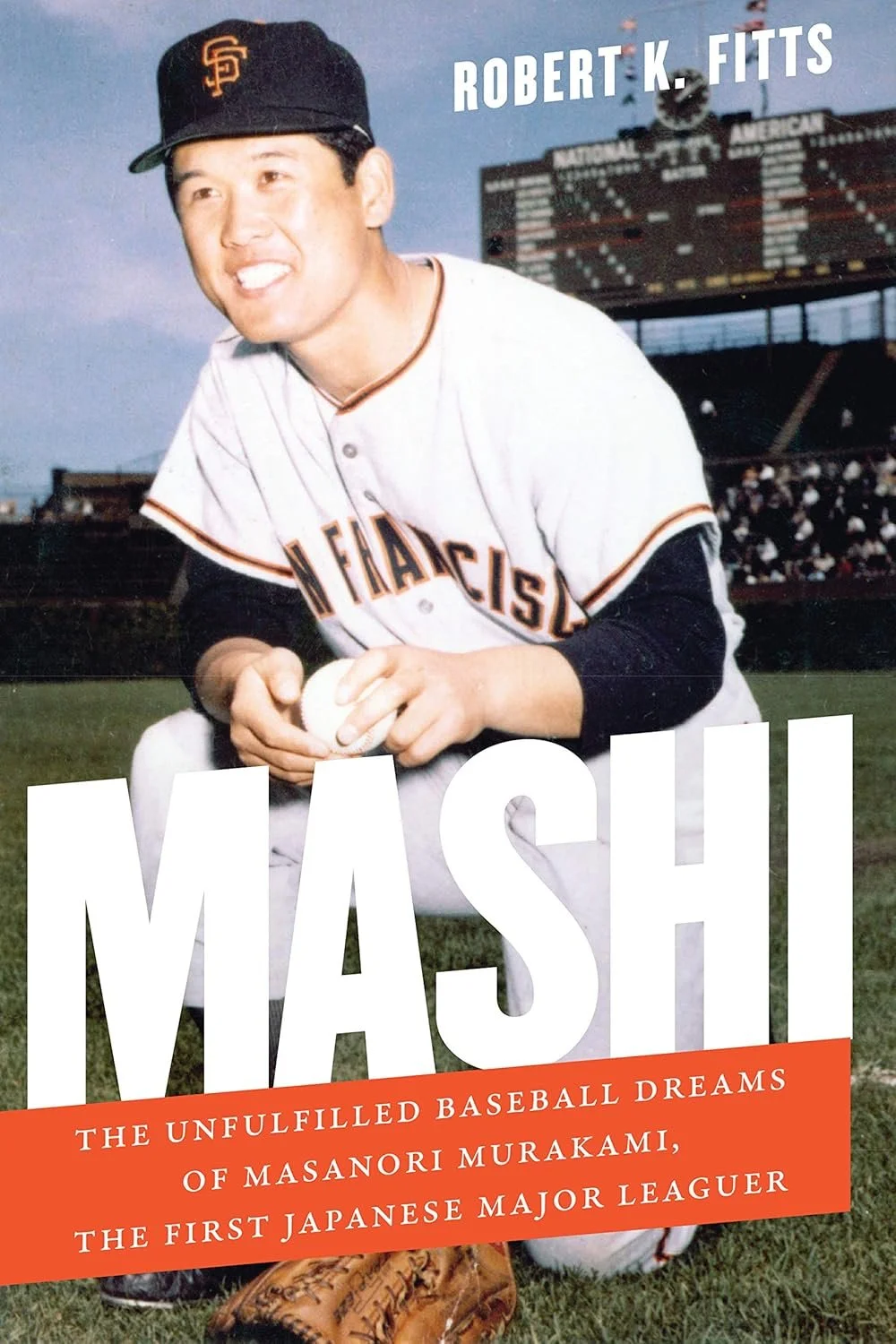
Masanori “Mashi” Murakami
One of Rob’s many books is about Masanori “Mashi” Murakami. Murakami was the first Japanese player to play for an MLB team.
He was a reliever for the San Francisco Giants, debuting at the age of 20 in 1964. In 1965, he struck out more than one batter per inning pitched, he posted an ERA under 4, and he earned eight saves.
Following this season, however, Murakami headed back to Japan to play for his previous team, the Nankai Hawks, due to contractual obligations. His success continued in Japan for another 17 years.
Masanori Murakami’s SABR Biography
You can buy a copy of Rob’s book HERE.
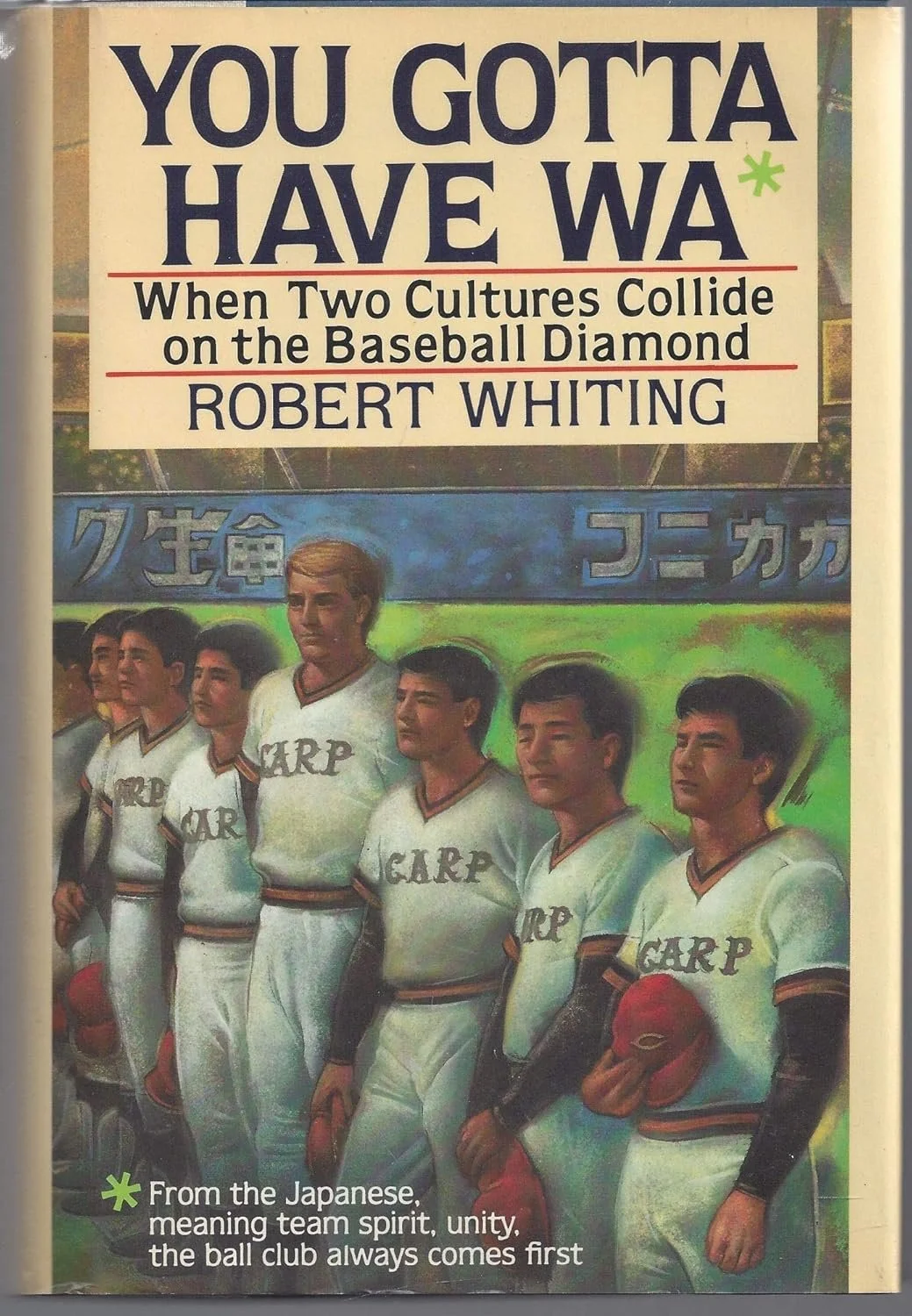
You Gotta Have Wa
"Wa," Japanese for "team spirit," is the creed of Japanese baseball, played since the 1850s and professionally since 1935.
Robert Whiting, a long-time Japan resident, concentrates on the two pro leagues. The Japanese leagues, he reports, believe their severely coached game to be superior to the U.S. game. They discourage Japanese from entering U.S. leagues. A few Americans, usually older ones, have been accepted on Japanese teams, but they meet with resentment, criticism, and discrimination.
You Gotta Have Wa updates Whiting's earlier The Chrysanthemum and the Bat and contrasts with Sadaharu Oh and David Falkner's Sadaharu Oh. It is a revealing and disturbing account that is heartily recommended for adult and YA collections.
Buy a copy of Robert Whiting’s You Gotta Have Wa HERE.
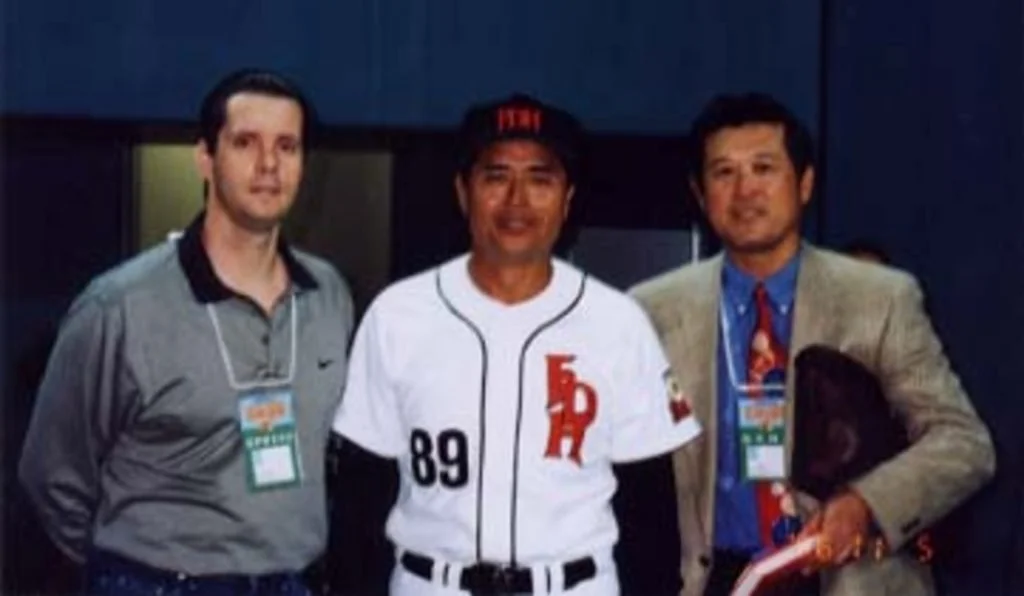
The American Baseball Community in Japan
Since he spoke some English, Mashi was entrenched in the American baseball community in Japan, which made him a great contact for Rob to have.
Pictured here from left: Jack Gallagher, Sadaharu Oh, and Mashi before a Nichibei Yakyu (MLB-NPB All-Star Series) game in November 1996 in Fukuoka.
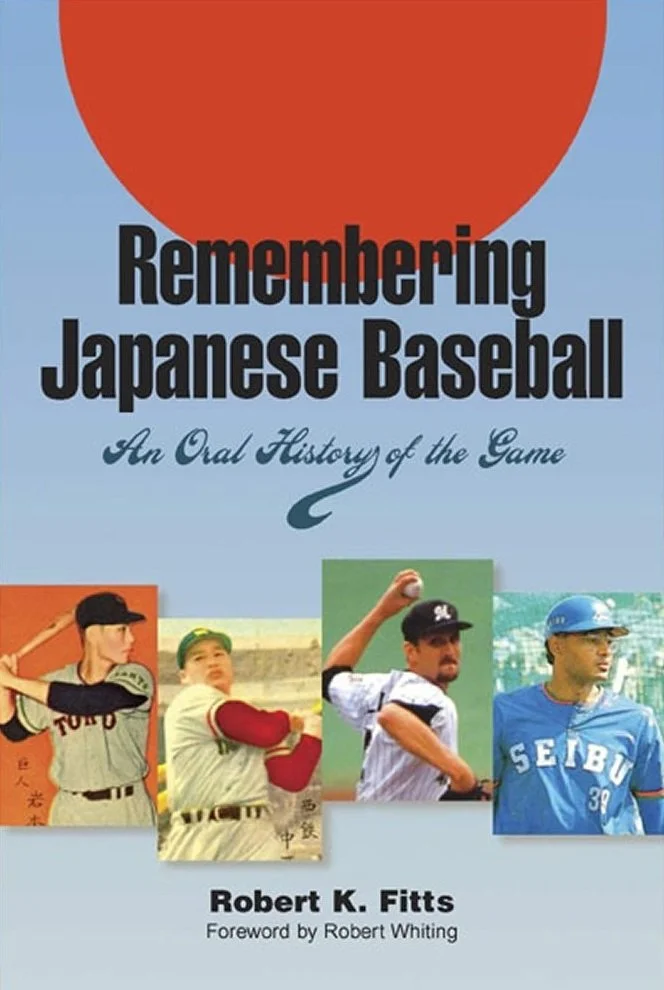
Remembering Japanese Baseball
Remembering Japanese Baseball: An Oral History of the Game transports us onto diamonds and into dugouts on the other side of the globe, where the vigorous sportsmanship of the game and the impassioned devotion of its fans transcend cultural and geographic borders and prove that baseball is fast becoming an international pastime.
An unparalleled introduction for an American audience, Remembering Japanese Baseball is augmented by photos of its 25 interviewees and a timeline marking milestone moments in the game’s Japanese history.
You can buy a copy of Rob’s book HERE.
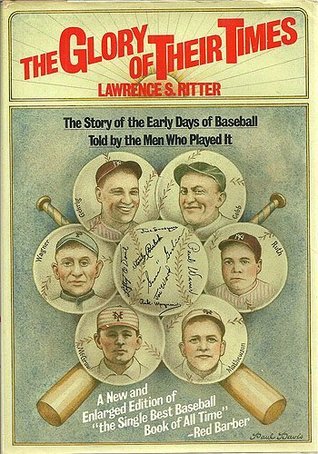
The Glory of Their Times
Rob based the concept for Remembering Japanese Baseball on the classic The Glory of Their Times: The Story of the Early Days of Baseball Told by the Men Who Played It, which was written by Lawrence Ritter.
Ritter was inspired by the death of Ty Cobb to preserve the oral histories of ballplayers, so, as a university professor, he used his summers to interview players from the turn of the century.
The audio recordings can be found online through the Library of Congress.
Buy a copy of Lawrence Ritter’s iconic The Glory of Their Times HERE.
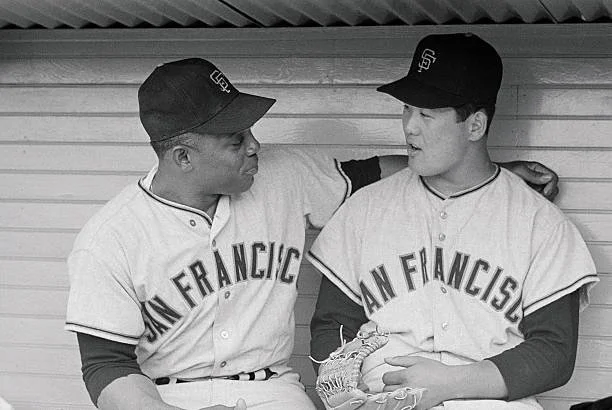
Mashi Loved The US
Despite his decision to return to Japan instead of continuing his career in Major League Baseball, Mashi loved the United States and did not want to leave.
Here he is with Willie Mays in 1965, which was a pretty good year for Willie.
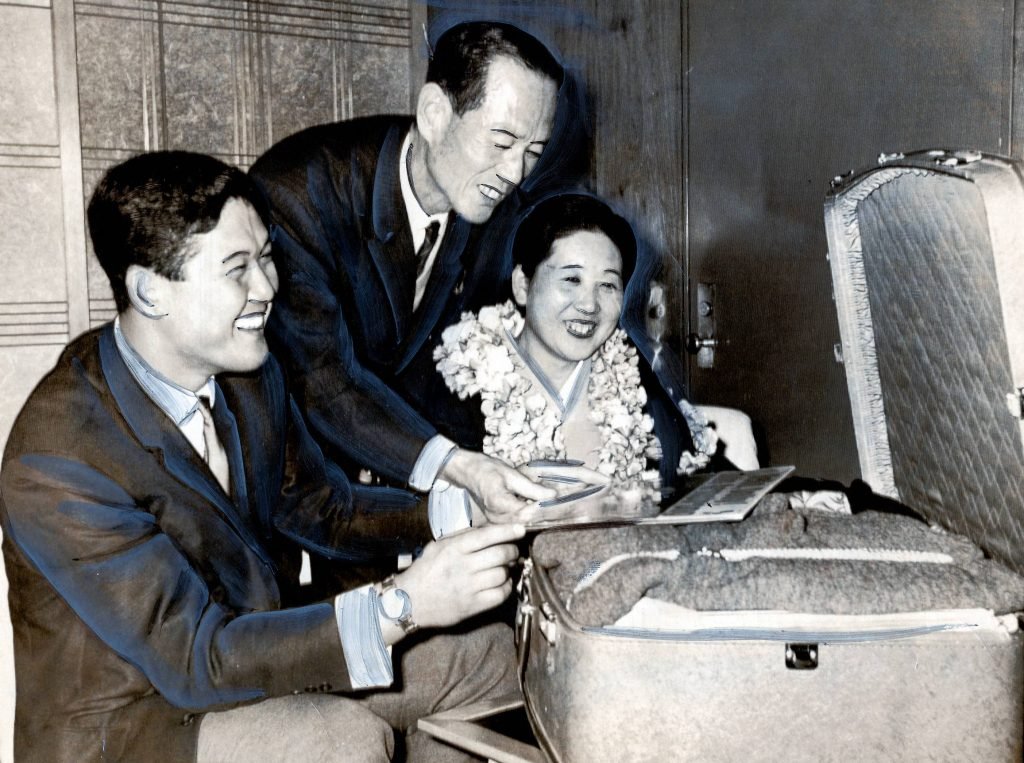
Forced To Go Back
In this photo, Masanori Murakami shows souvenirs to his parents at Haneda Airport after returning to Japan on December 16, 1964 after his first year in America.
Mashi would return to San Francisco for the 1965 season, but his strong feeling of obligation forced him to return back home to Japan after that.
Photo ⒸSANKEI
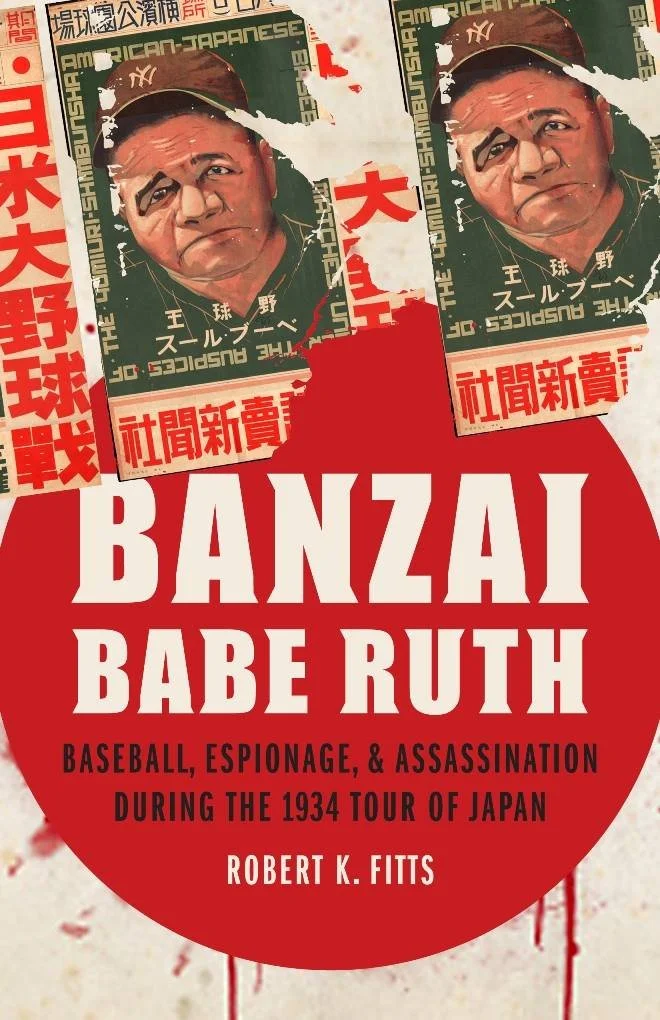
Banzai Babe Ruth
Politicians on both sides of the Pacific hoped that the amity generated by the 1934 US Tour of Japan — and the two nations’ shared love of the game — could help heal their growing political differences. But Babe Ruth and baseball could not overcome Japan’s growing nationalism, as a bloody coup d’état by young army officers and an assassination attempt by the ultranationalist War Gods Society jeopardized the tour’s success.
A tale of international intrigue, espionage, attempted murder, and — of course — baseball, Banzai Babe Ruth is the first detailed account of the doomed attempt to reconcile the United States and Japan through the 1934 All American baseball tour.
Buy a copy of Rob’s book HERE.
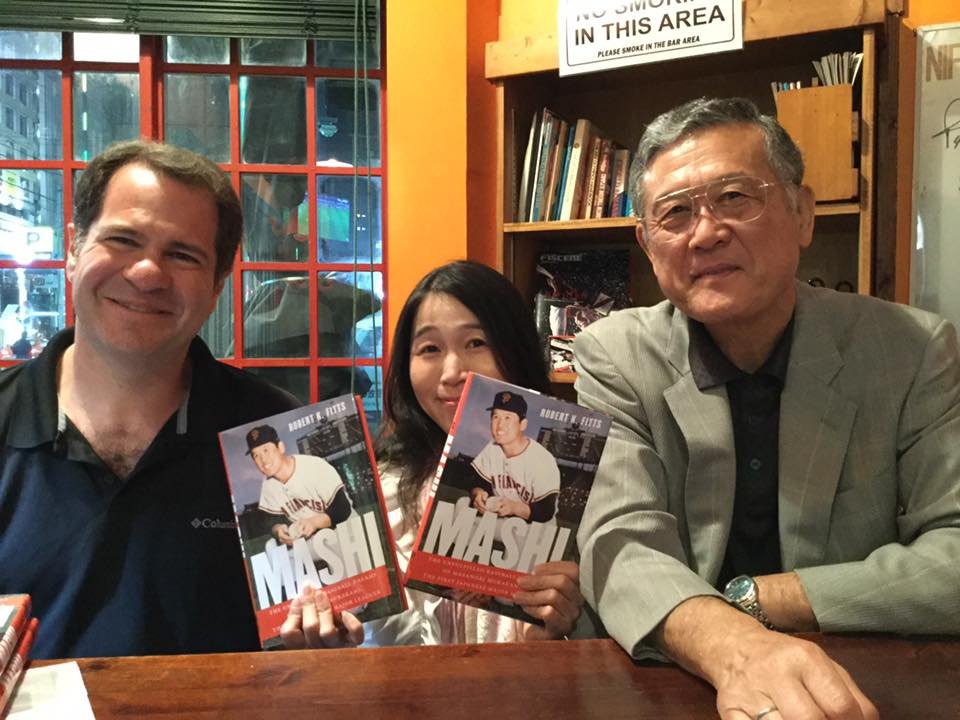
Still Friends
Rob has remained friends with Mashi after publishing the biography about him. Mashi usually comes back to visit the United States once a year and stays with Rob for a while during his trip.
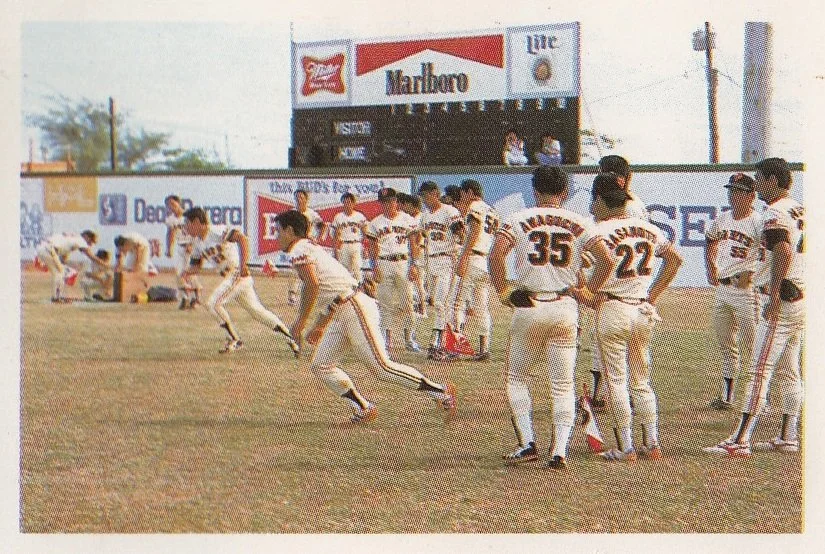
Rob says “American Spring Trainings are laughable compared to Japanese,” especially back in the 1980s and 1990s.
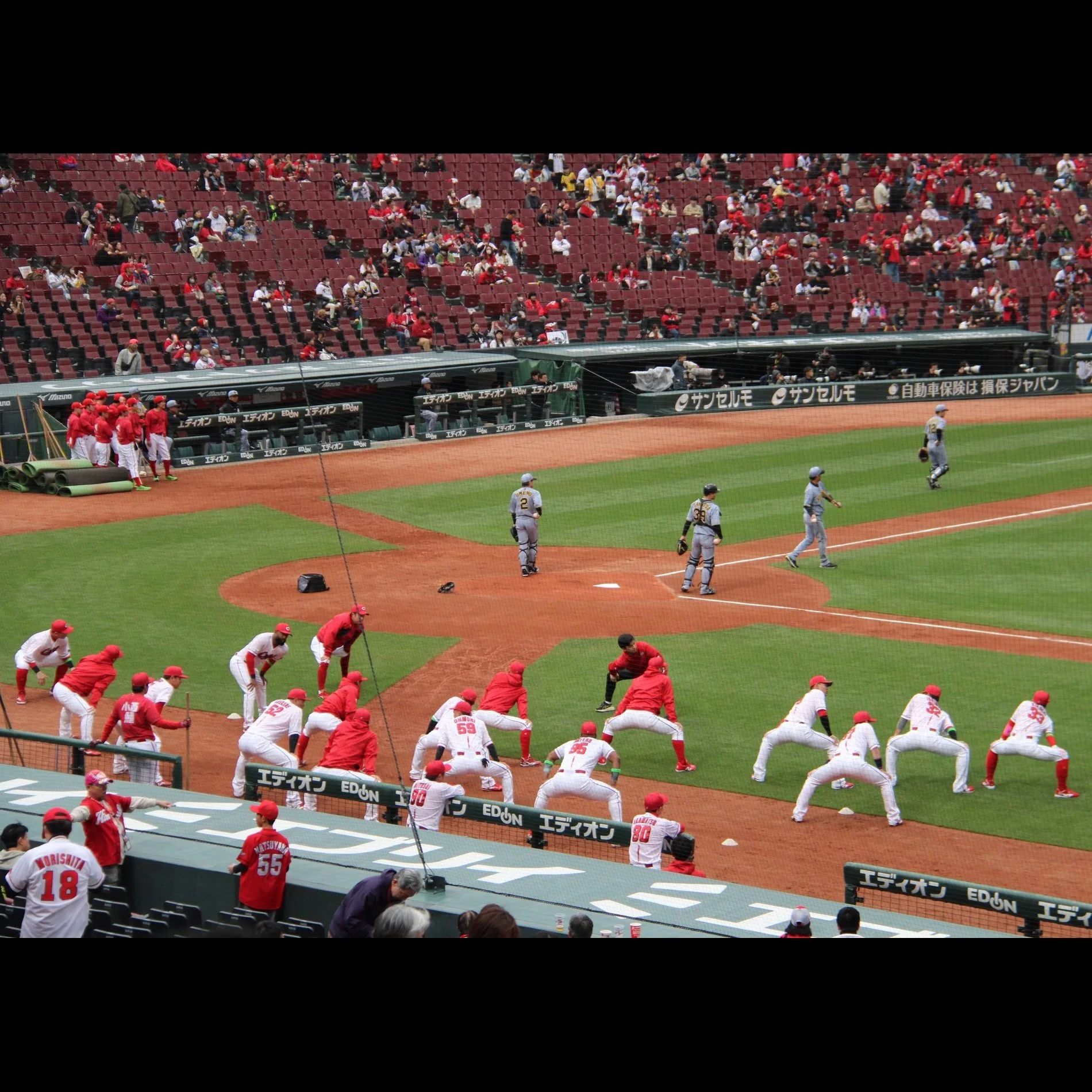
Martial Arts Mentality
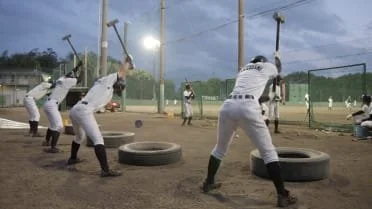
Rob says that, especially early on in Japan’s baseball history, school teams approached the sport with a martial arts mentality.
Before baseball, there were no team sports in Japan. All sports and activities were derived from the martial arts or the military, where you practice for two main reasons:
1. For absolute perfection, especially as it relates to form
2. To not only increase your skill level, but to increase your spirit
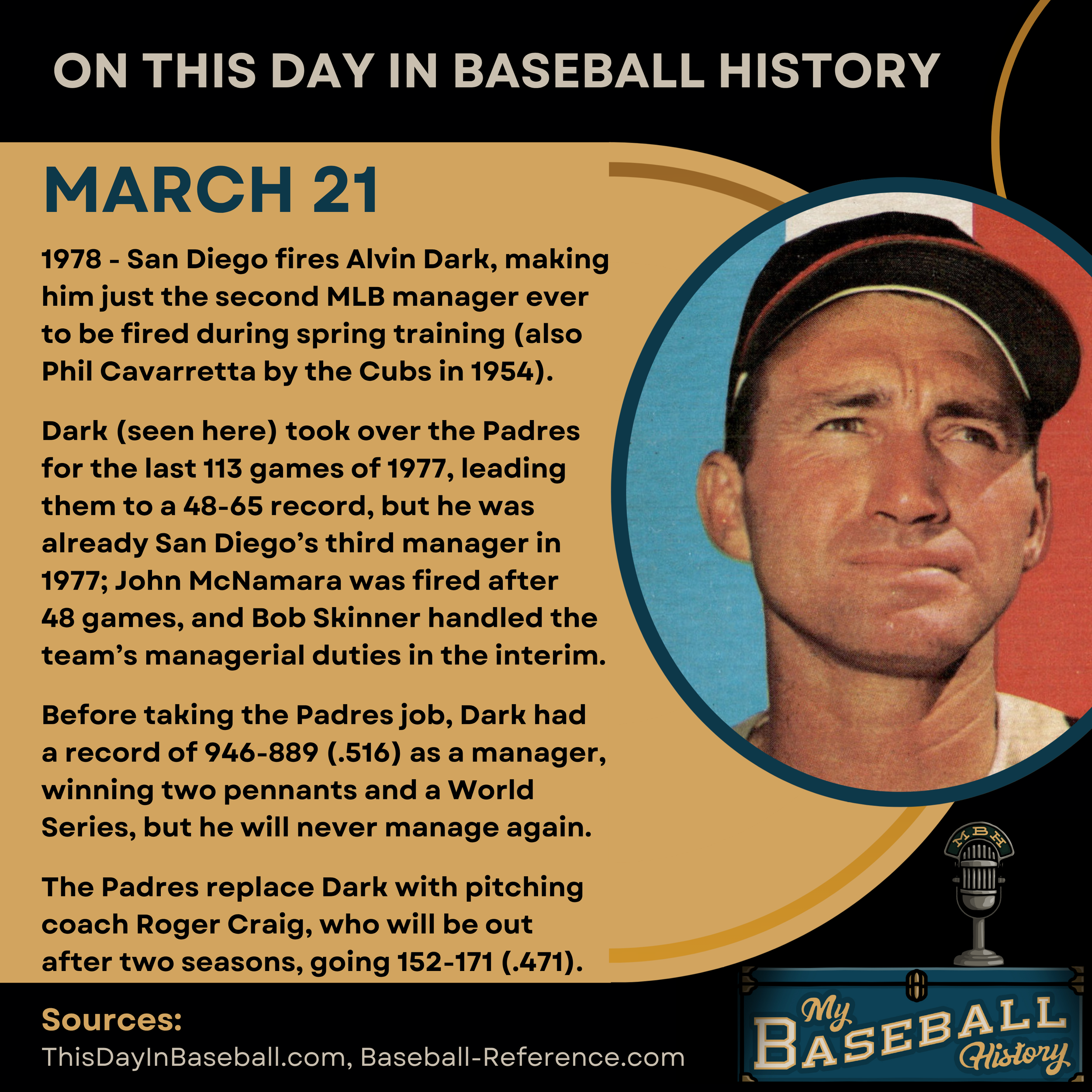
Did Mashi Face Racism In The US?
The San Francisco Giants almost had a team mutiny in 1964 because the Black and Latin players were so fed up with the way their manager, Alvin Dark, was speaking to them and treating them.
While Mashi didn’t have any issues with Alvin Dark, he did face some turmoil from teammates early in his minor league career, and fans in some cities (like Philadelphia) weren’t as kind to him as fans in others.
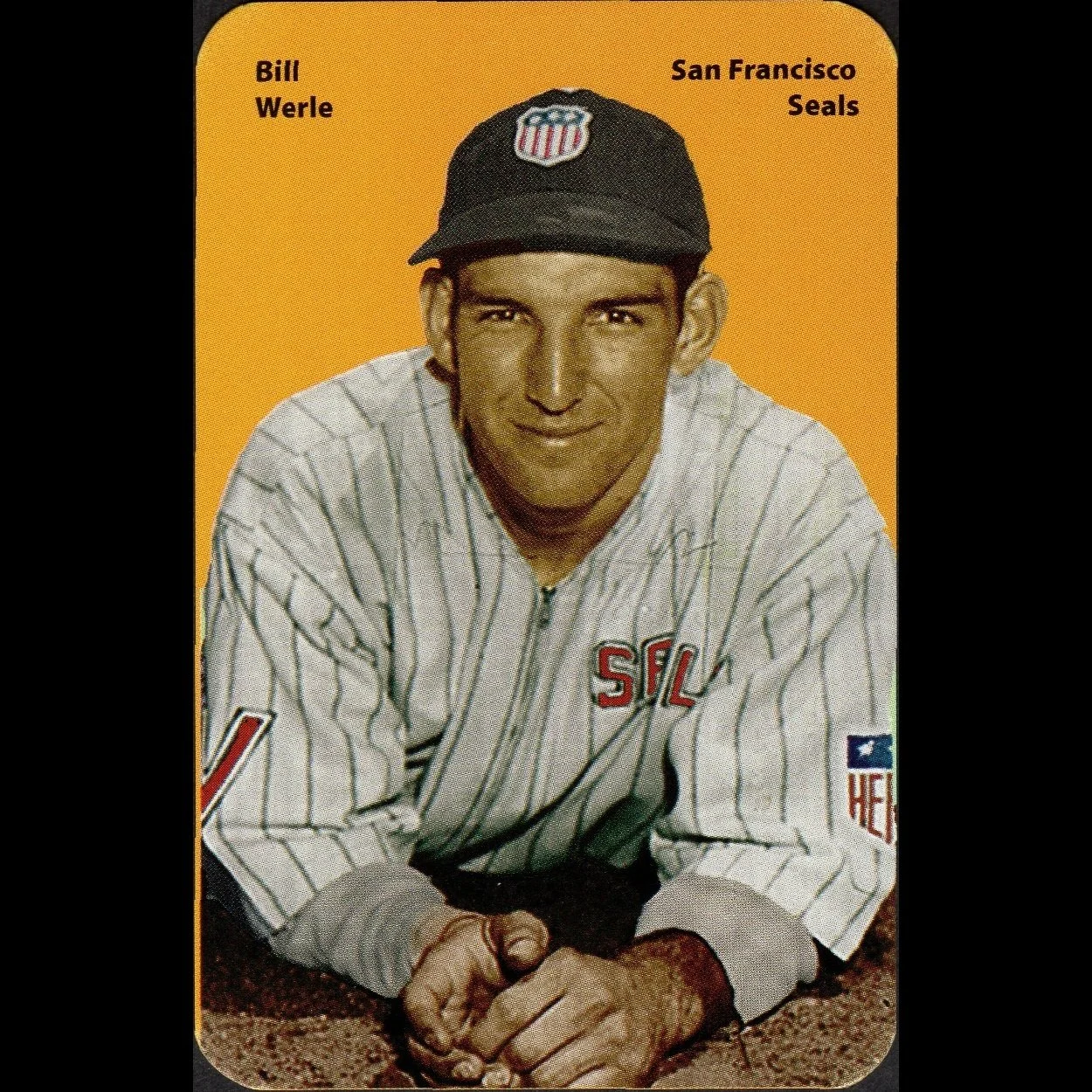
Bill Werle
Bill Werle resumed his minor-league managing career with Single-A Fresno in the SF Giants’ system in 1963. He also made his final appearance on the mound that year, retiring the only batter he faced.
Werle returned to Fresno as skipper in 1964 and managed Masanori Murakami. Rob said of Werle, “His handling of Murakami was superb.”
Werle had visited Japan twice with Lefty O’Doul and picked up a few phrases of Japanese. This, and his appreciation of Japan, itself, helped make Murakami and a pair of other Japanese players comfortable.
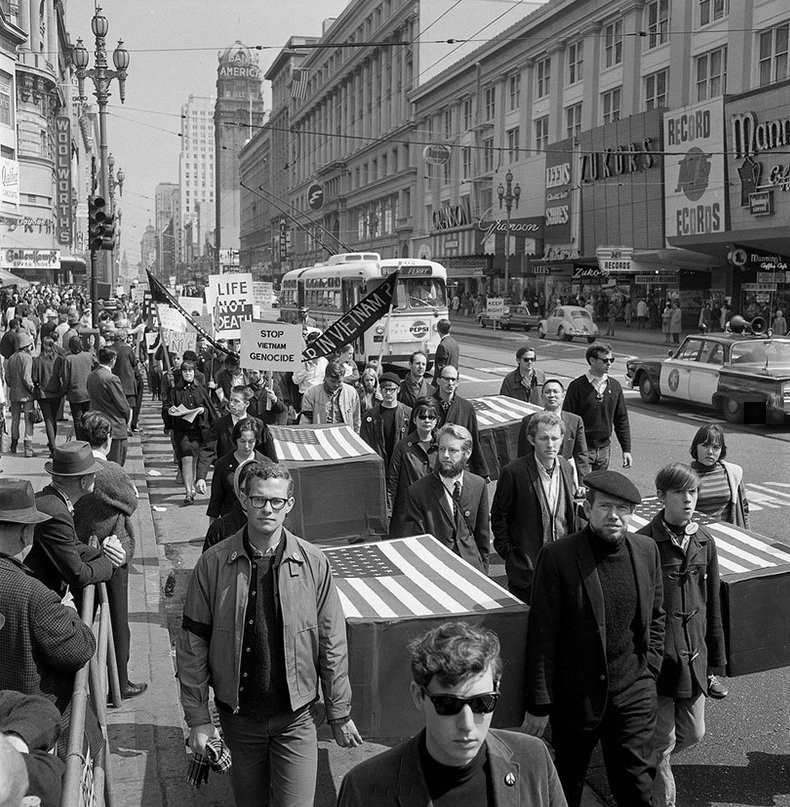
The Perfect City At The Perfect Time?
For Mashi to have been in San Francisco during the summer of 1965 was probably the best place he could have possibly been in America as a Japanese player in the Major Leagues.
The counterculture movement which is often synonymous with cultural liberalism started in the mid-1960s. Its two strongest epicenters were in the East Village in New York, and San Francisco.
The anti-Vietnam War march pictured here took place in 1965, and was one of many which were held in San Francisco and across the country.
Photo by Claudio Beagerie, courtesy San Francisco History Center, San Francisco Public Library
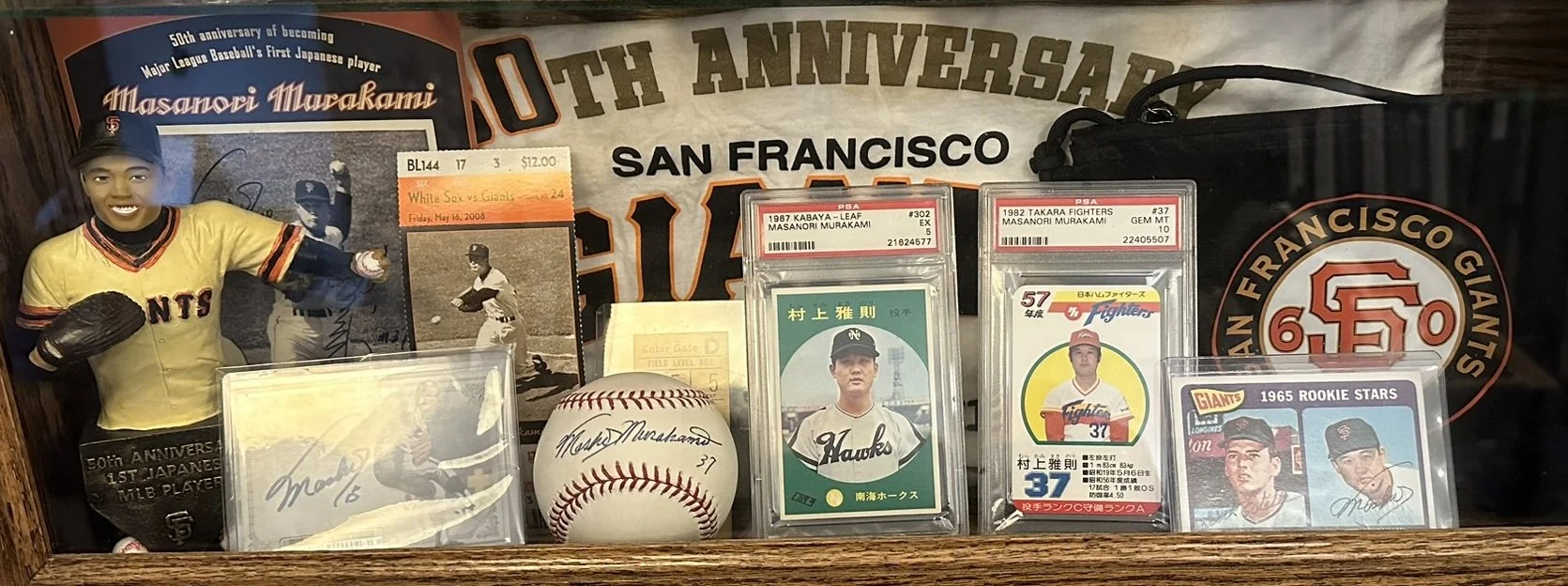
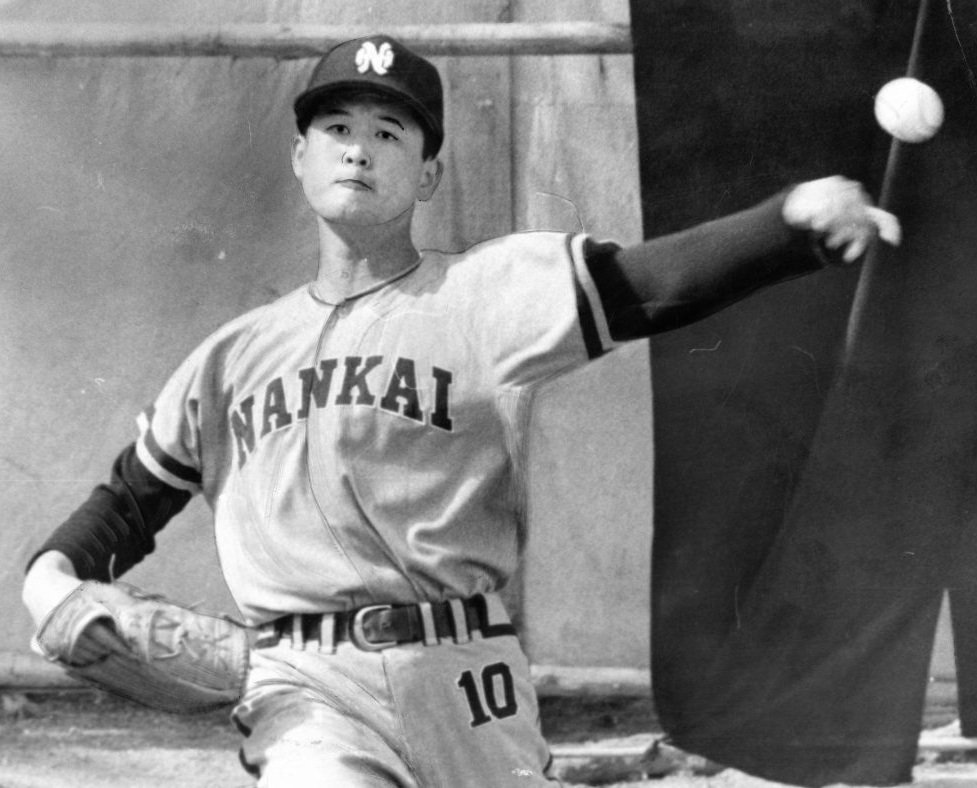
Back In Japan
Masanori Murakami went on to have a solid career in Japan, going 103-82 with a 3.64 ERA for the Nankai Hawks, the Hanshin Tigers, and the Nippon-Ham Fighters before retiring in 1982.
At the age of 38 in 1983, Murakami attempted to return to the Giants via a training camp invite. He pitched well in exhibition games, but was manager Frank Robinson’s final cut that spring.
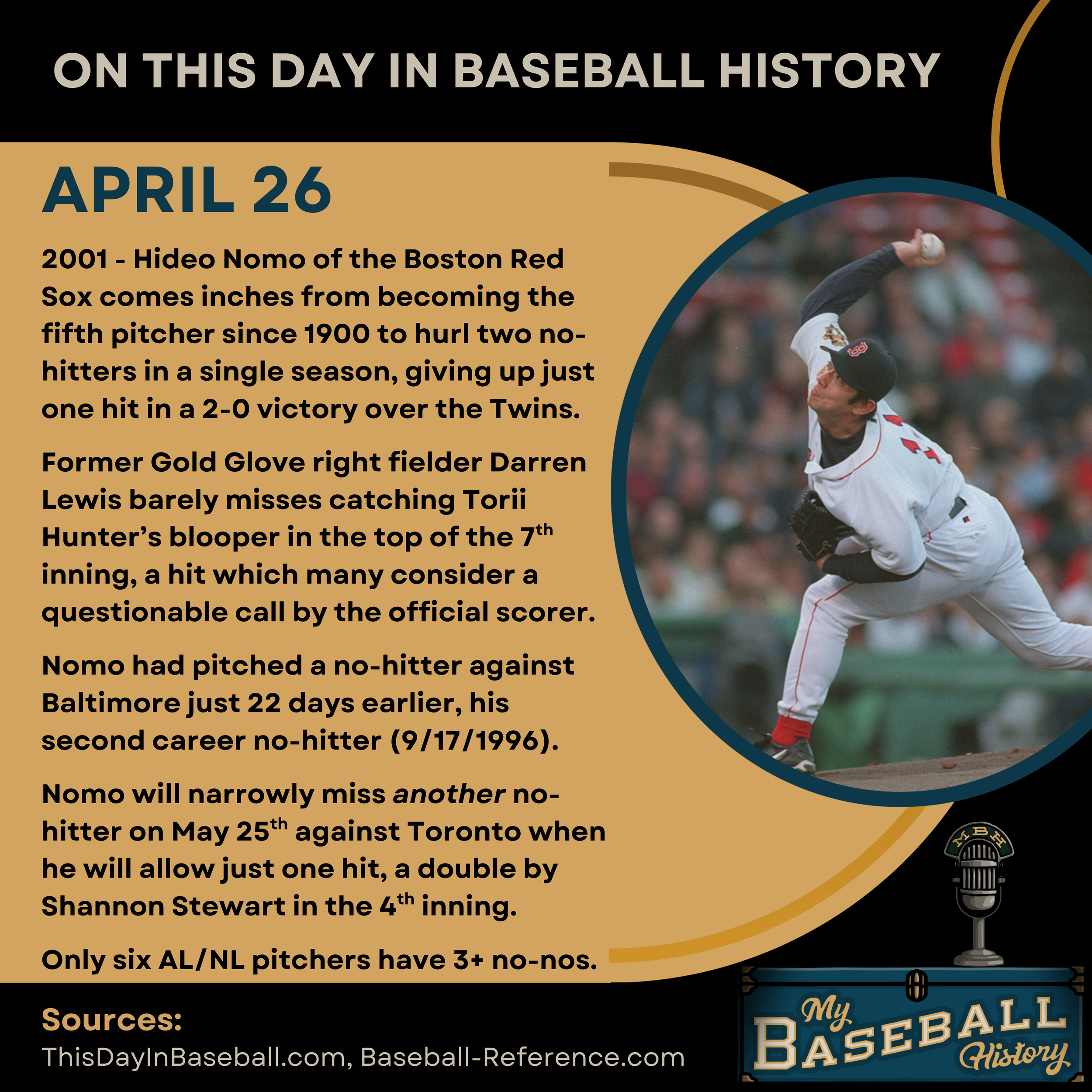
Hideo Nomo
Despite Masanori Murakami’s success on the field with the San Francisco Giants, it took another 30 years before the next Japanese player, Hideo Nomo, played for a Major League team.
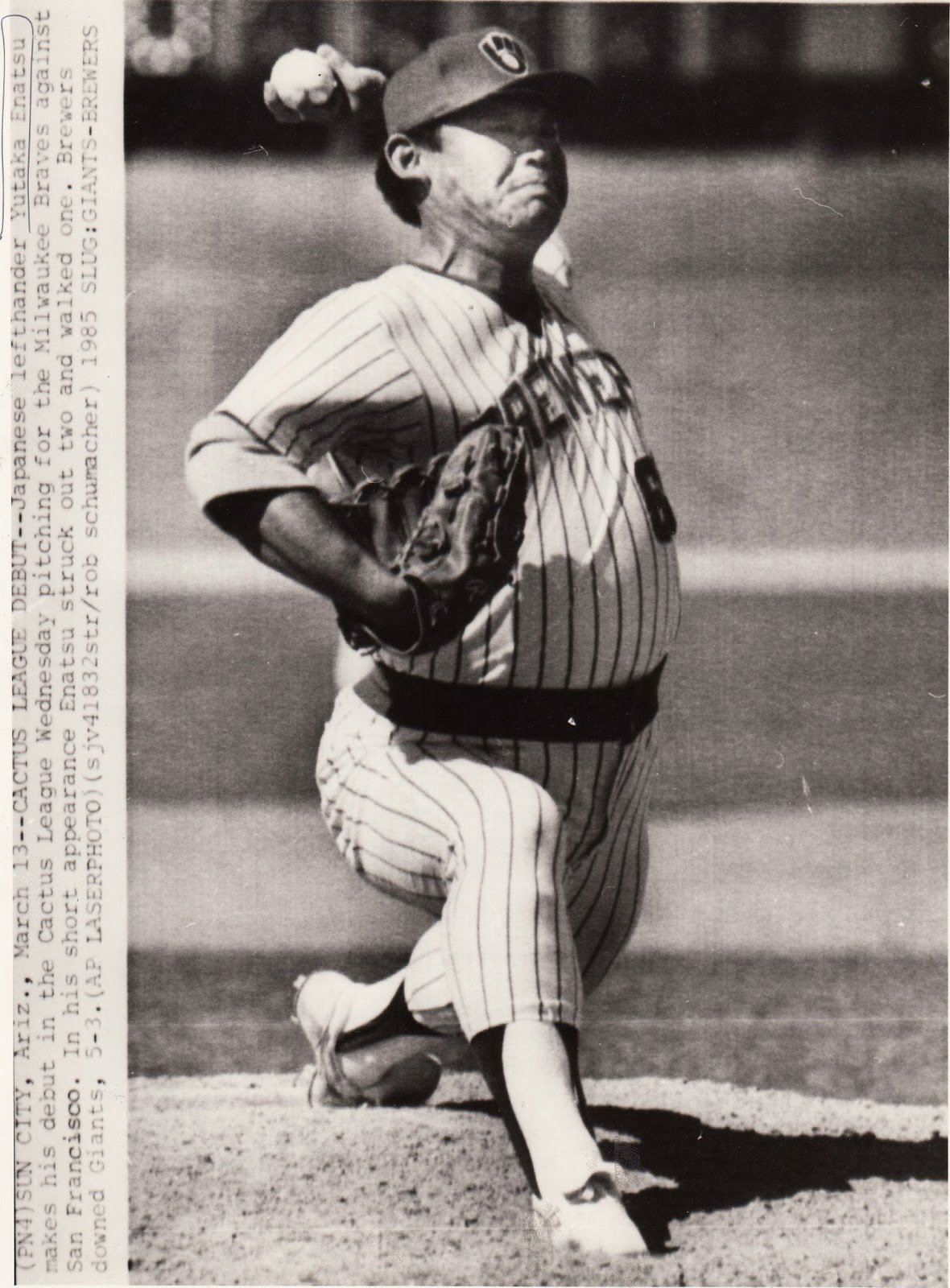
Yutaka Enatsu
Yutaka Enatsu is regarded as one of the best Japanese strikeout pitchers of all-time. In 1968, he recorded 401 strikeouts, which is still the world record.
A starting pitcher for the first part of his career, in 1977 he became a relief specialist, altogether accumulating 193 saves.
Enatsu joined the Milwaukee Brewers for spring training in 1985 at age 36 in an attempt to play Major League Baseball. He finished spring training with a 4.91 ERA in 11 innings and was among the team's final cuts (on April 3, 1985) before the season.
He ranks fifth all-time in NPB history for strikeouts with 2,987. He has the most strikeouts of any player not in the Japanese Baseball Hall of Fame.
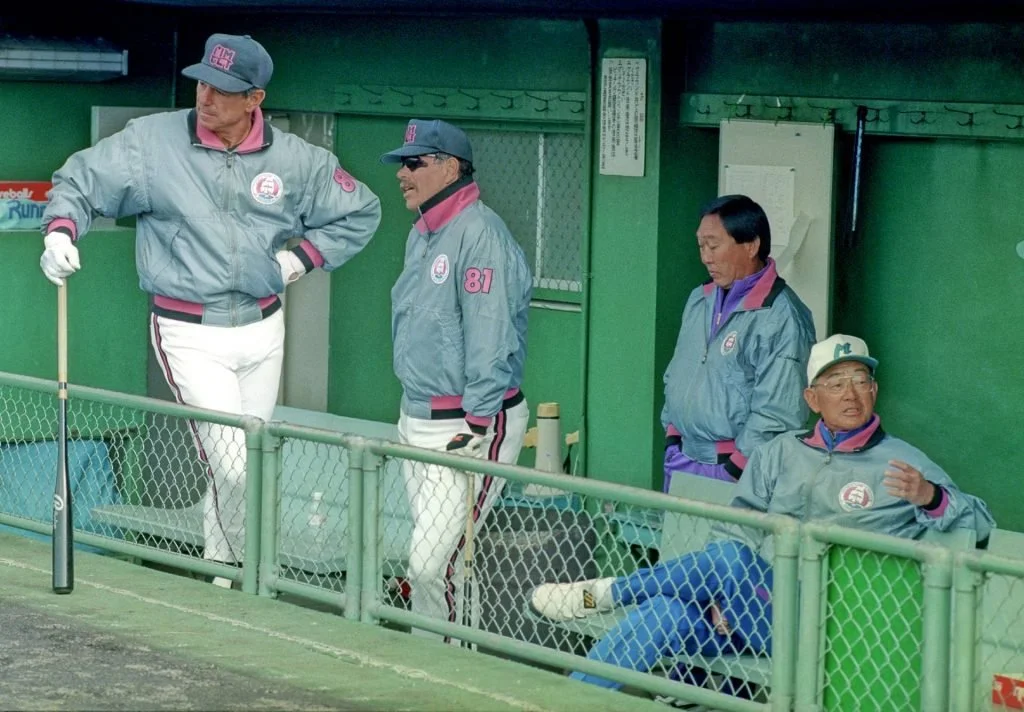
Bobby Valentine
The Japanese game used to be very traditional. Teams playing base to base, being very risk-averse. When Bobby Valentine came to Japan in 1995, he was one of the major factors which started to change the way Japanese teams approached the game.
Here, Chiba Lotte Marines manager Bobby Valentine (left) and general manager Tatsuro Hirooka (right) are seen at spring training in Kagoshima in 1995.
Photo ⒸSANKEI
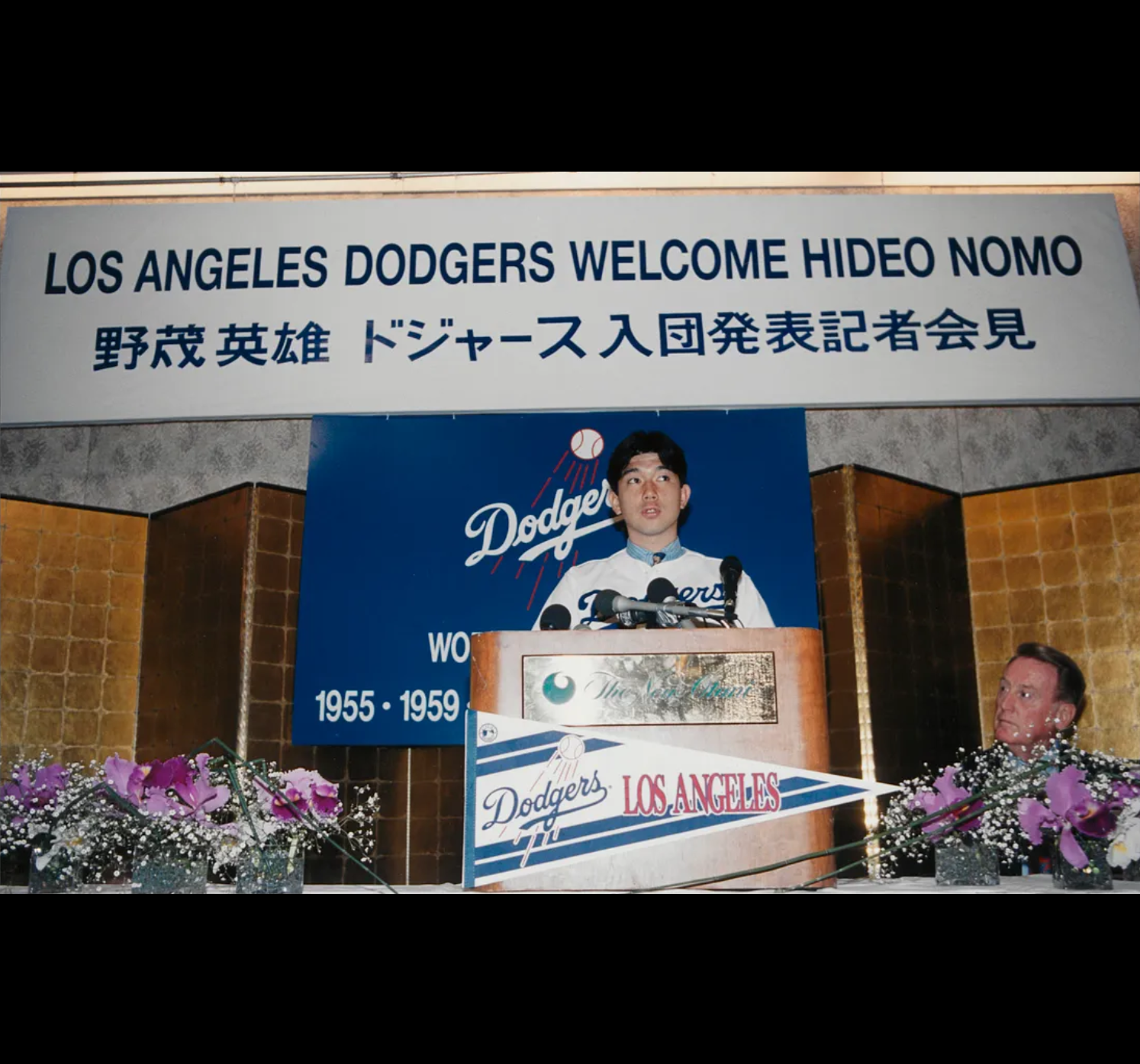
Nomo on TV
With Vin Scully looking on, Hideo Nomo speaks at his introductory news conference on February 13, 1995, at the New Otani Hotel after signing his historic contract with the Dodgers.
When Nomo came to the US, the games in which he started were broadcast on TV in Japan. Eventually many Dodgers games were televised, exposing Japanese fans and teams to seeing the American way of playing ball, which they began to adopt.
Photo courtesy of Jon SooHoo/Los Angeles Dodgers
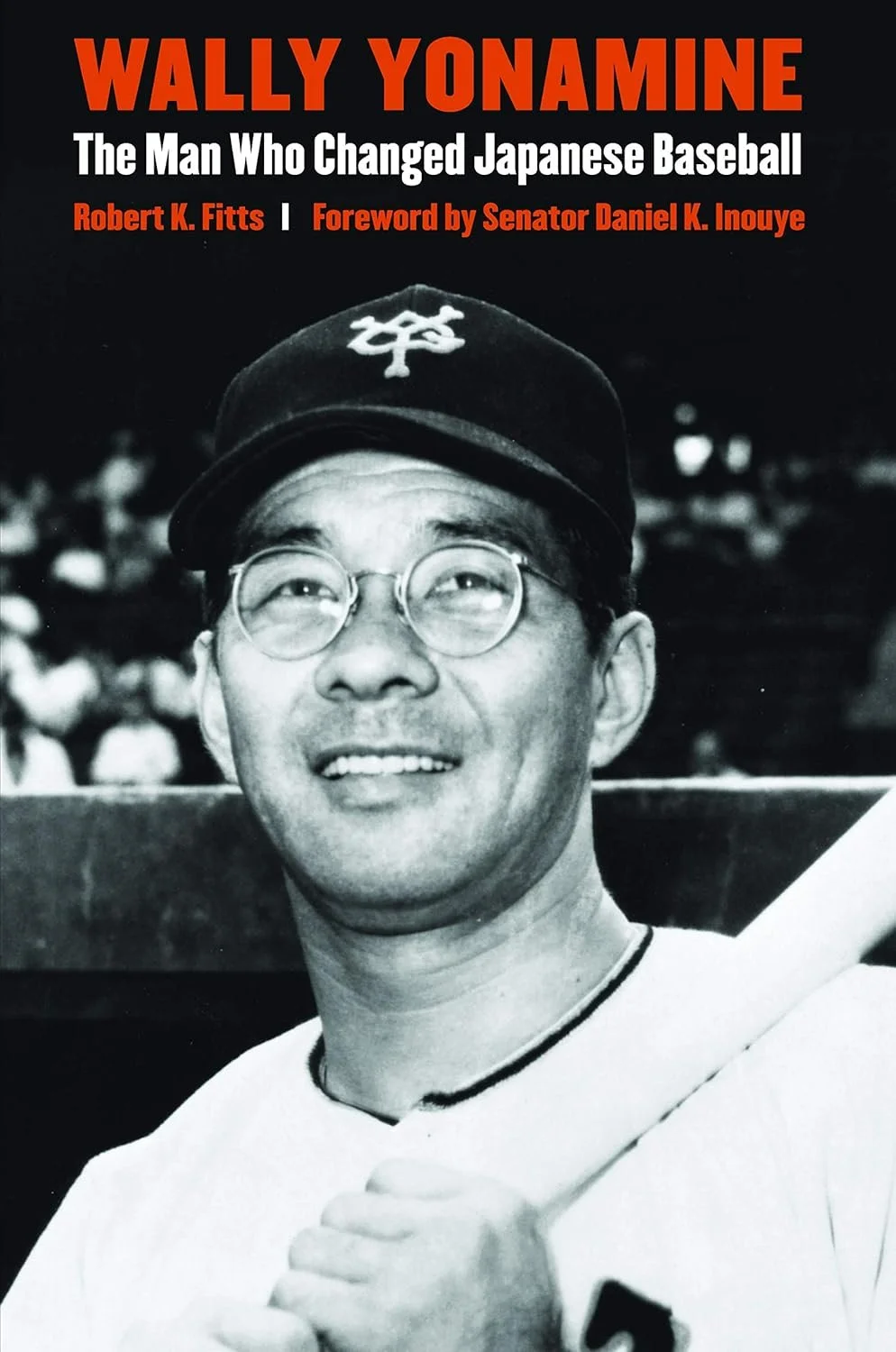
Wally Yonamine
Wally Yonamine was both the first Japanese American to play for an NFL franchise and the first American to play professional baseball in Japan after World War II.
Rob’s book about Wally is the unlikely story of how a shy young man from the sugar plantations of Maui overcame prejudice to integrate two professional sports in two countries.
Wally and his son, Paul, were instrumental in helping Rob get in touch with interview subjects when he was writing his book Remembering Japanese Baseball.
Wally Yonamine’s Baseball Reference
Buy a copy of Wally Yonamine HERE.
Buy a copy of Remembering Japanese Baseball HERE.
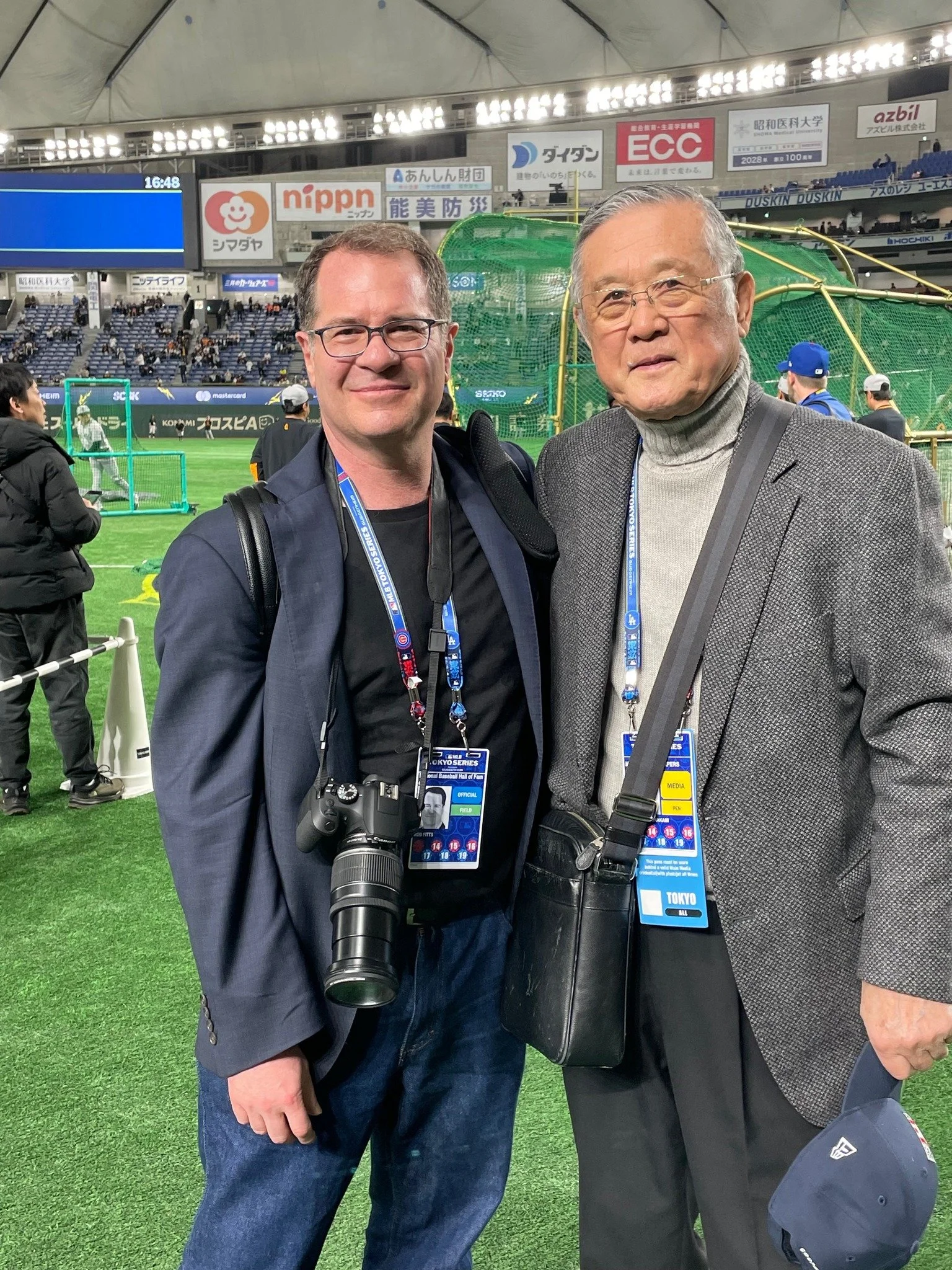
Hard To Get Access
Media is not allowed on the field in Japan, and are confined to designated press boxes adjacent to the field where they have to yell their questions to players and managers who will only get so close.
Journalists may be allowed in media rooms before and/or after games, but one-on-one interviews are not very common. All questions are subject to team approval, and many are supposed to be screened beforehand.
Rob has been lucky as a historian who is not actively covering the current game, players, or teams, in that he has been allowed to have access not granted to most other journalists and photographers.
Here, Rob and Mashi enjoy their privileged access on the field.
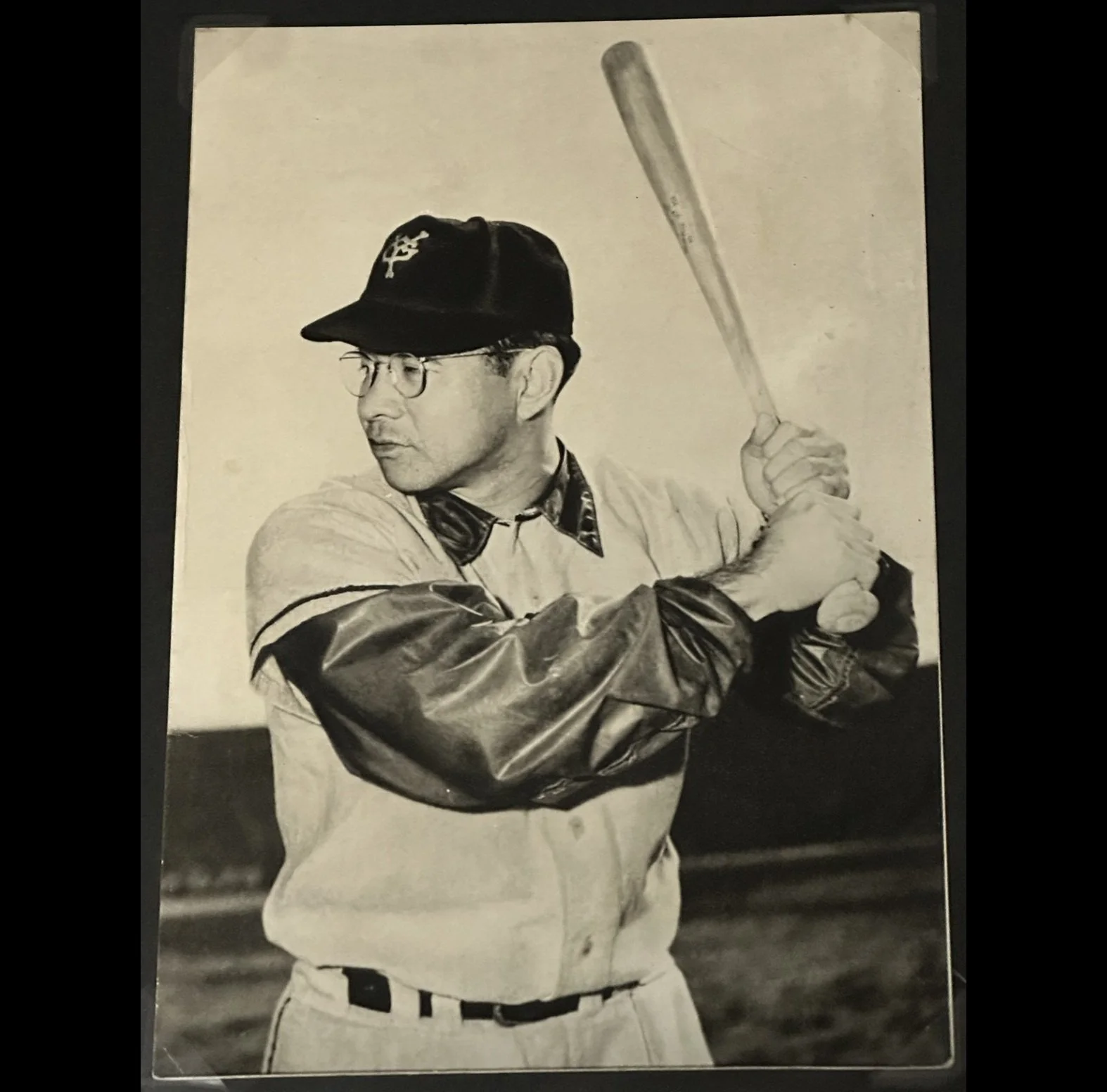
Wally Yonamine
Wally Yonamine initially shocked the Japanese fans with his aggressive play, but soon his style helped transform how baseball was played in Japan.
His hustling style led to a .311 lifetime batting average, three batting titles, seven straight selections to the Best Nine team (1952–58), the 1957 Central League MVP award, and he was a member of four Japan Series Championship teams.
Yonamine was an outfielder from 1951-1962, most notably for the Yomiuri Giants, and then a coach or manager from 1963 through 1988 for a handful of teams, winning the Central League pennant in 1974 as manager of the Chunichi Dragons.
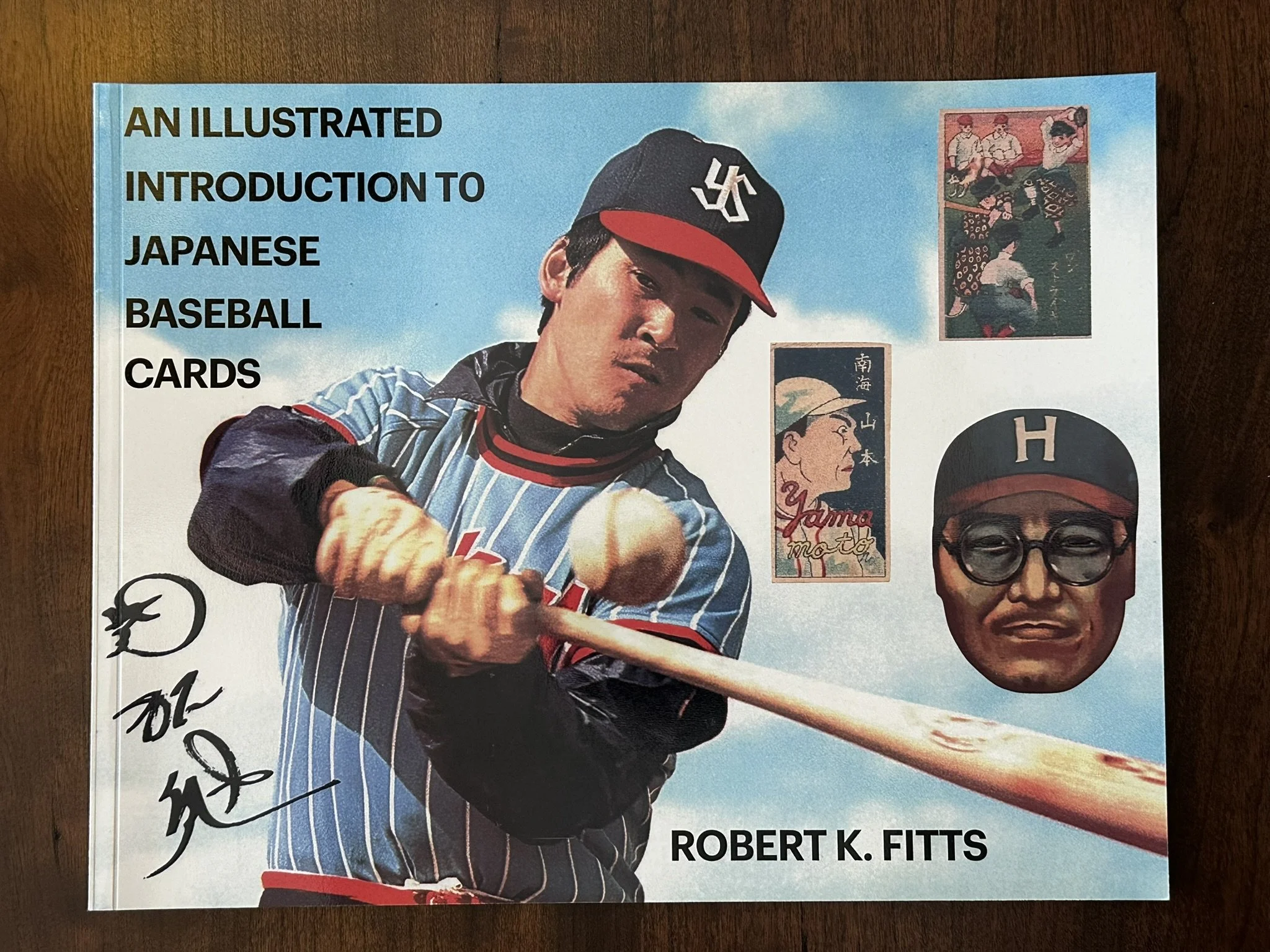
An Illustrated Introduction to Japanese Baseball Cards
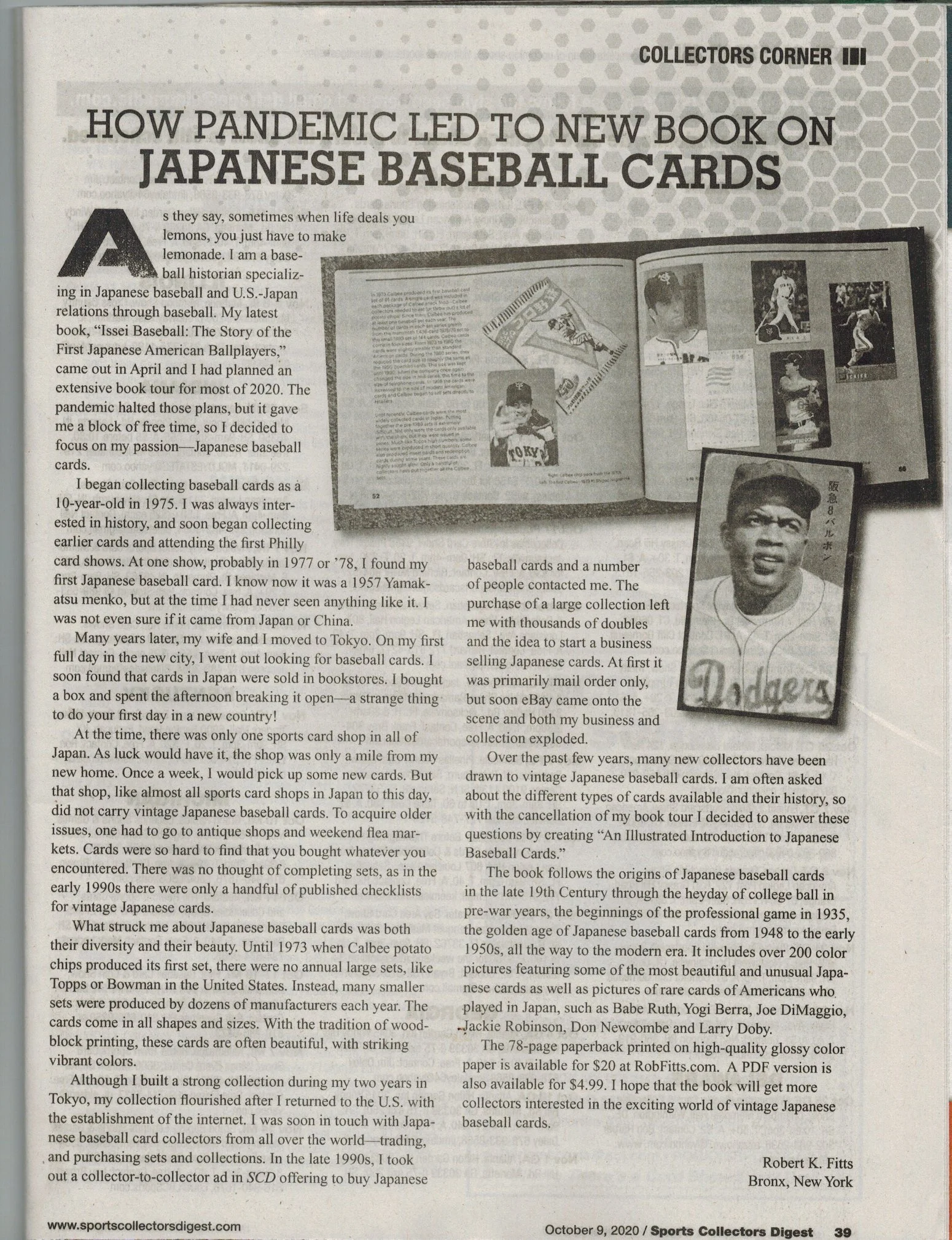
During the pandemic, Rob wrote a book called An Illustrated Introduction to Japanese Baseball Cards.
You can buy a copy HERE.
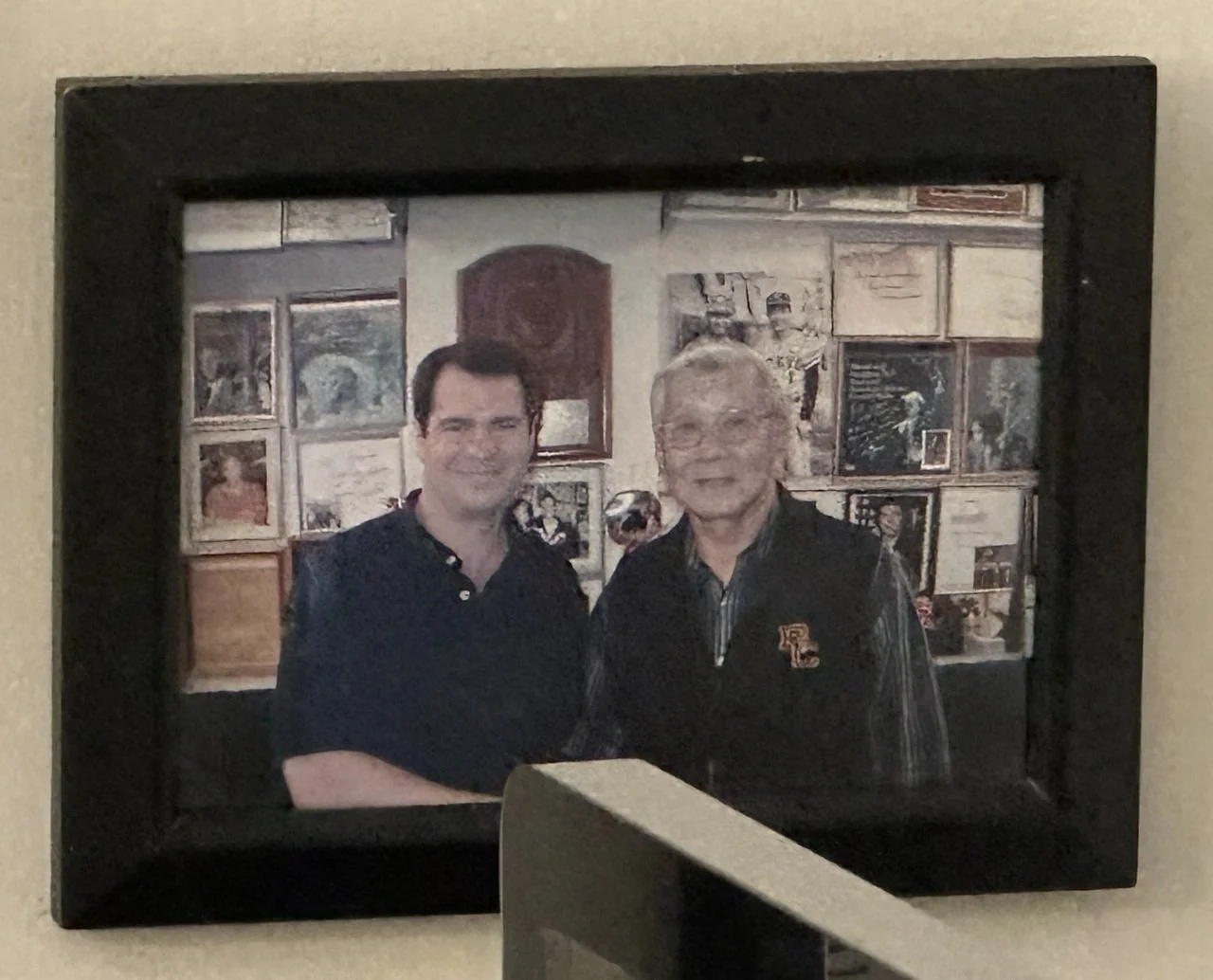
Rob Meets Wally
This picture, capturing the first time Rob met Wally Yonamine, is one of the very few photos Rob has hanging in his office which include himself. But that tells you how significant this moment was to Rob.

Meiji Jingu Stadium
Rob saw his first Japanese baseball game at Meiji Jingu Stadium in Tokyo, literally an hour after getting off a 14-hour flight in 1993.
The game Rob saw that night between the Tokyo Yakult Swallows and the Hanshin Tigers changed the course of his life.

Meiji Jingu Stadium in 1934
Opened in 1926, Meiji Jingu Stadium is the second-oldest baseball stadium in Japan.
It is one of the few professional stadiums still in existence where Babe Ruth played (the only other ones are Wrigley Field in Chicago, Fenway Park in Boston, and Koshien Stadium in Hyōgo Prefecture, Japan).
In The Japanese Ballpark
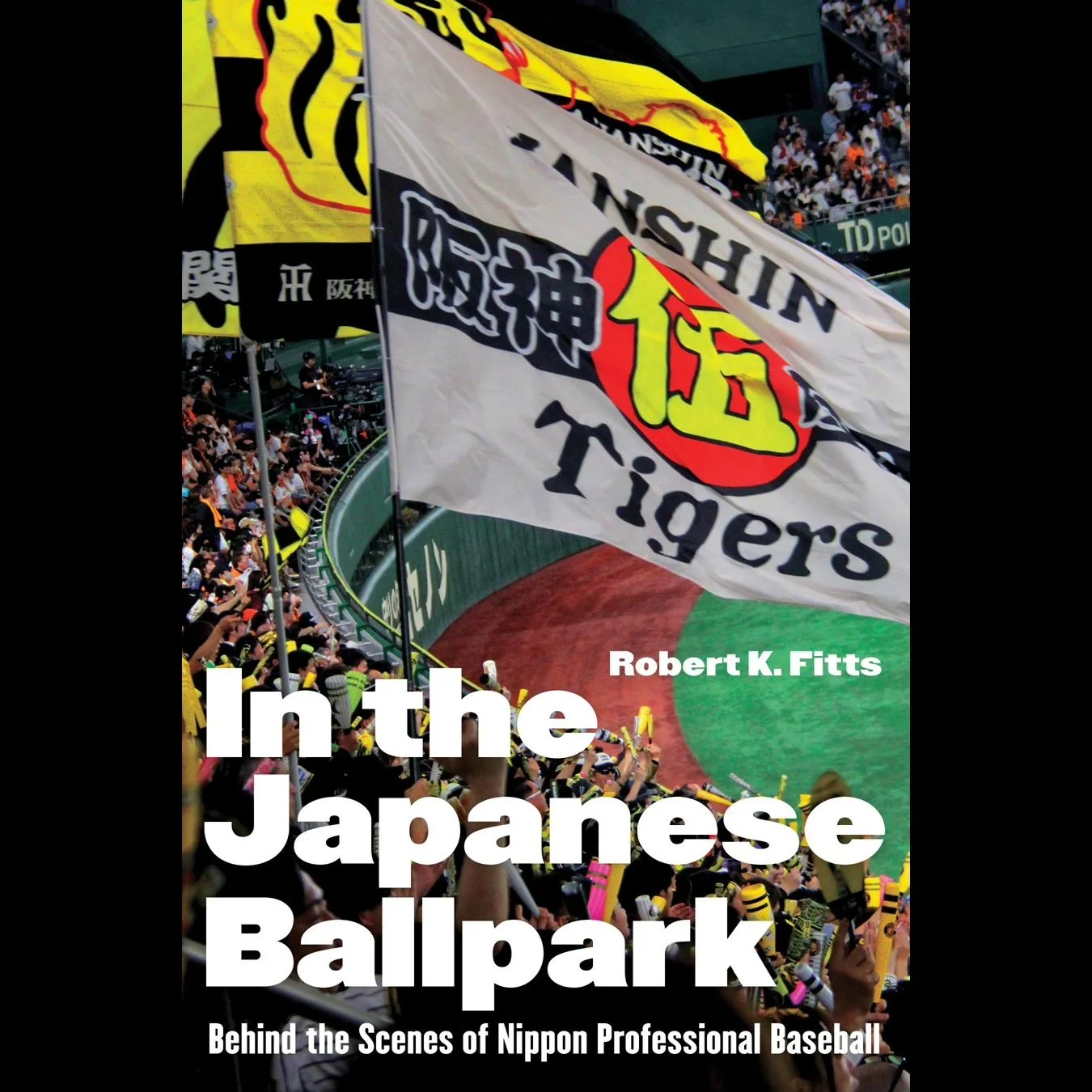
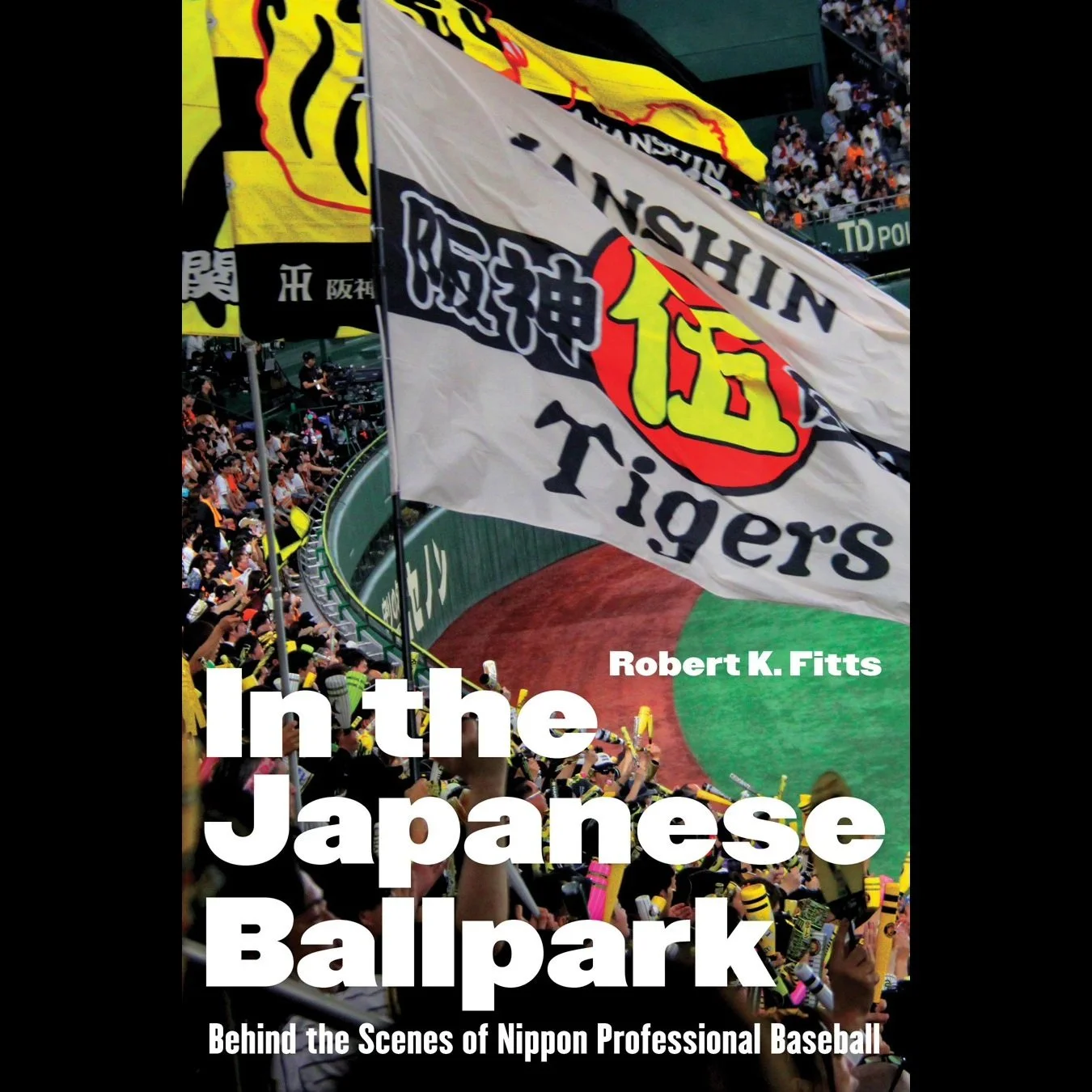
Rob’s latest book is fascinating. In it, he turns to the true experts, the people who play, oversee, promote, and watch the game, to find out what makes Japanese baseball special.
In the Japanese Ballpark features engaging interviews with twenty-six baseball personalities to provide a behind-the-scenes look at the game.
Buy a copy of In The Japanese Ballpark HERE.
Shane Barclay
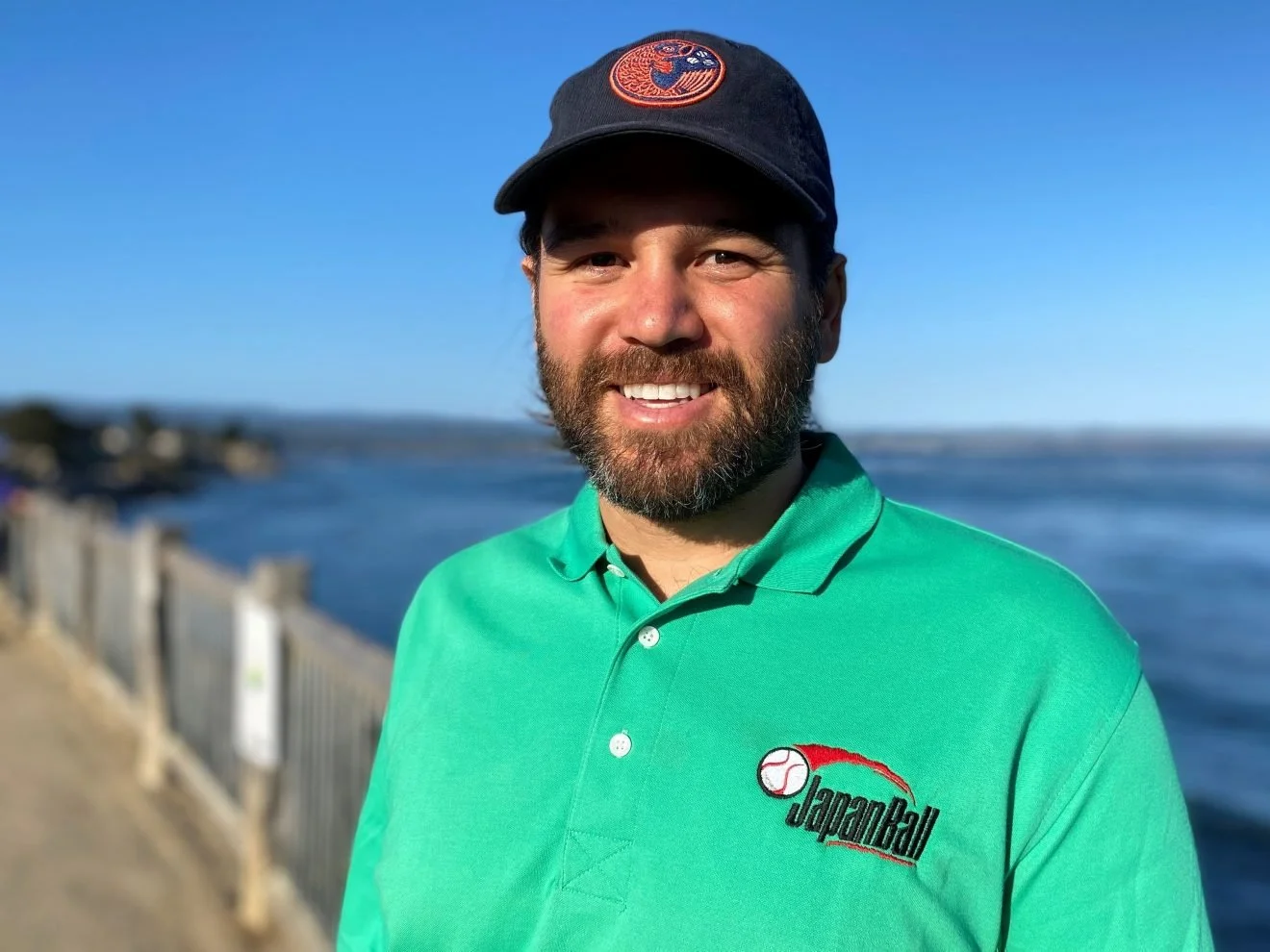
Founded in 1999 by Bob Bavasi, JapanBall has been the leader English-language Japanese baseball coverage and information for 25 years. Bob, who stepped aside in 2019 but remains a JapanBall consultant, and the current owner, Shane Barclay, have dedicated their professional lives to baseball. During their travels, they each fell in love with Japan and the Japanese version of the game.
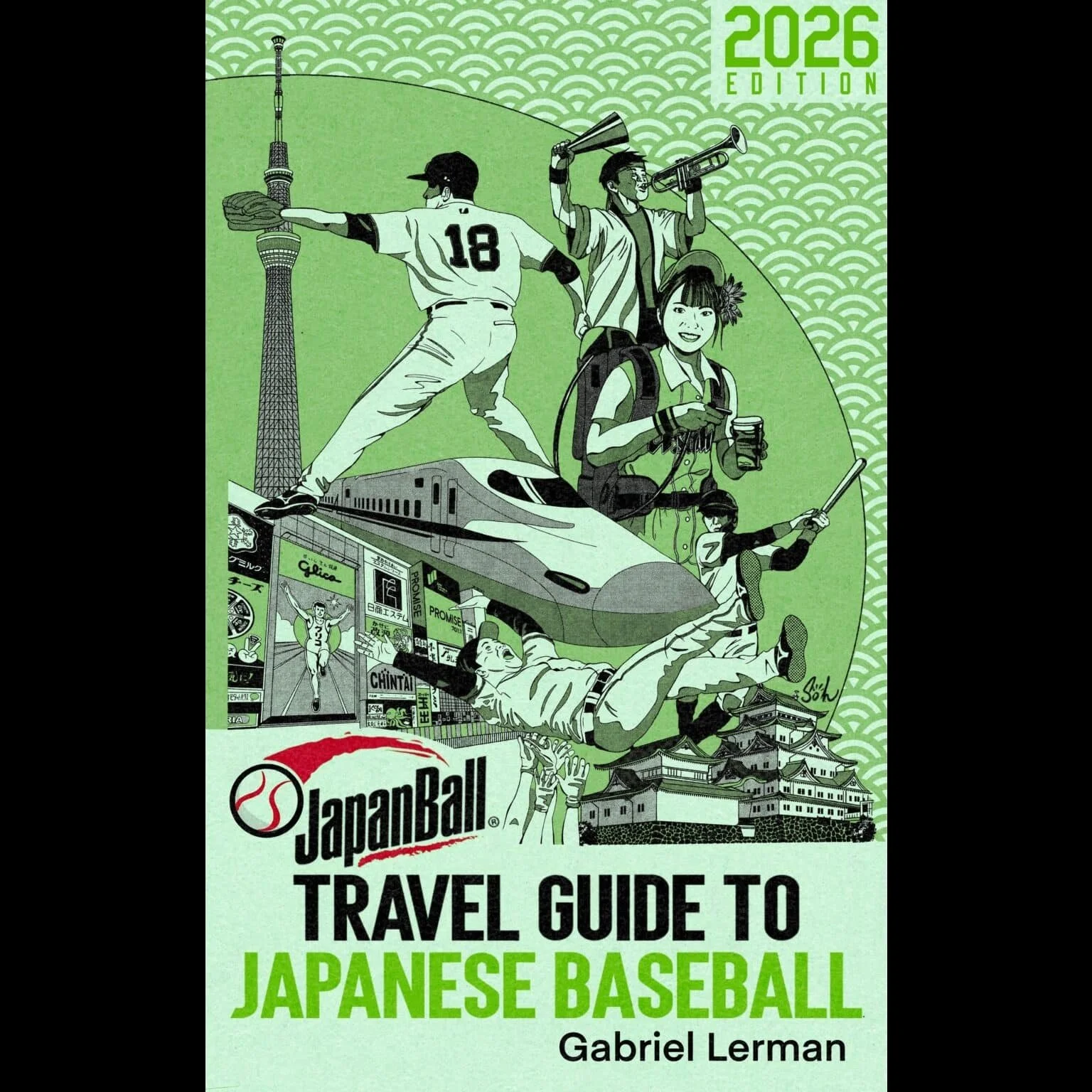
Travel Guide To Japanese Baseball
Thinking on going on a trip to see baseball in Japan?
Extra Innings Travel uses baseball as a vehicle to create memorable, fulfilling, and enlightening life experiences.
JapanBall is the premier source for Japanese baseball coverage in the English language.
Buy JapanBall’s Travel Guide To Japan HERE.
Beer Girls
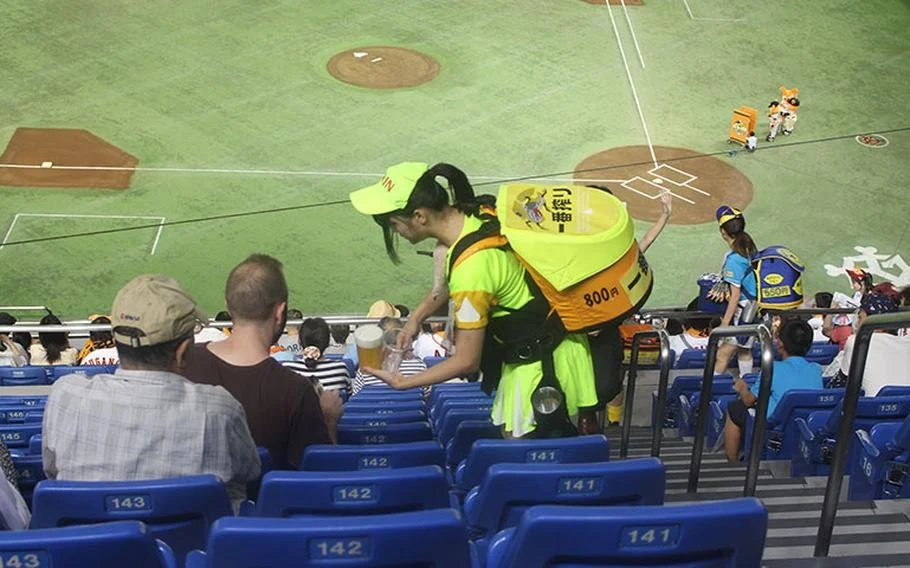
The beer vendors in Japan are not like the been vendors in the US. In Japan, they are young girls, dressed in (usually) bright colors to let their potential customers know which brand of beer they are selling.
The kegs on their backs are refrigerated, so the beer stays cold as they pour their customers a draft right on the spot.
New Idea For A Book
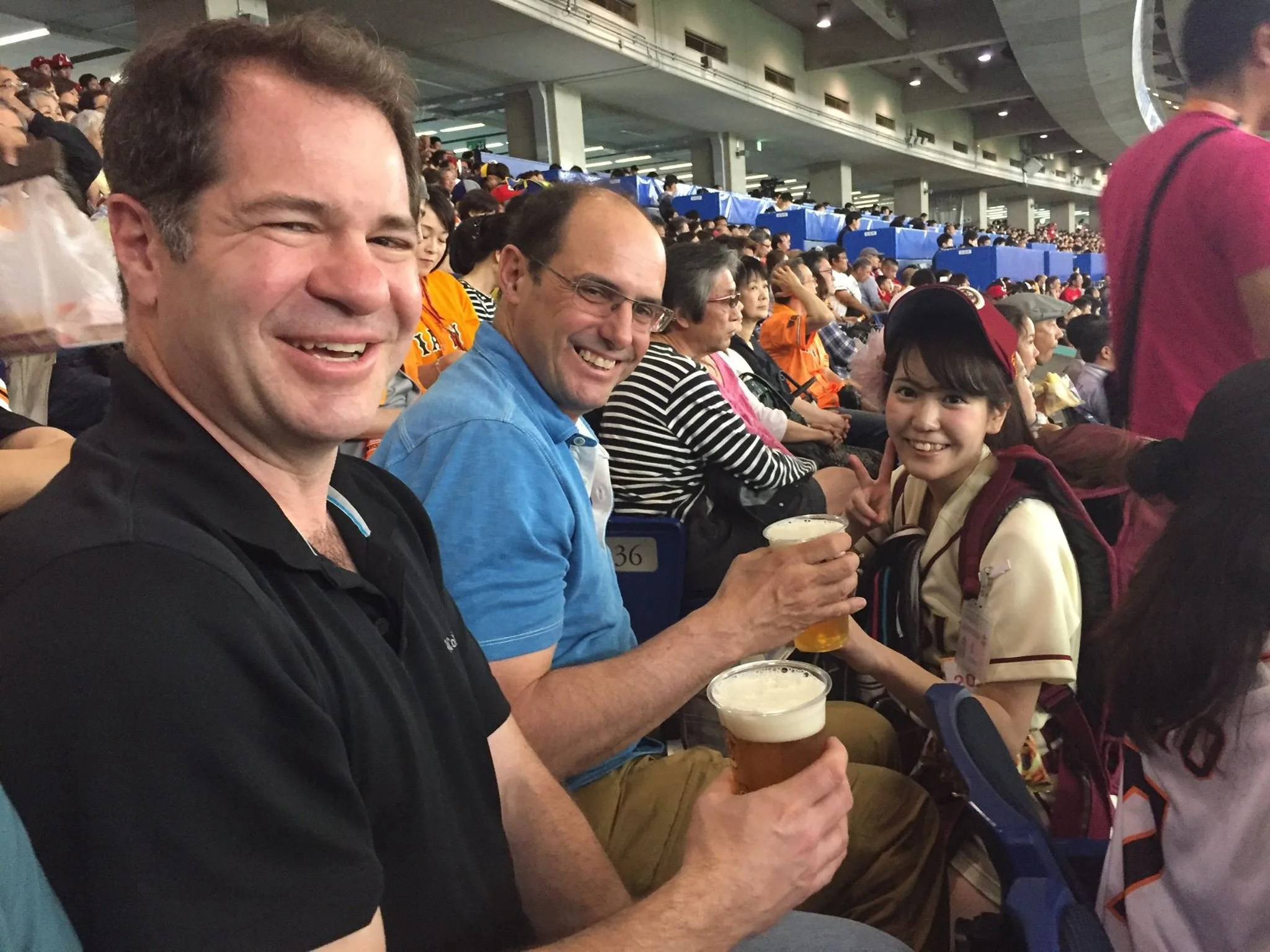
While watching the beer girls run up and down the steep steps in the Japanese ballpark, Rob knew he had a new idea for a book on his hands.
Robert Whiting
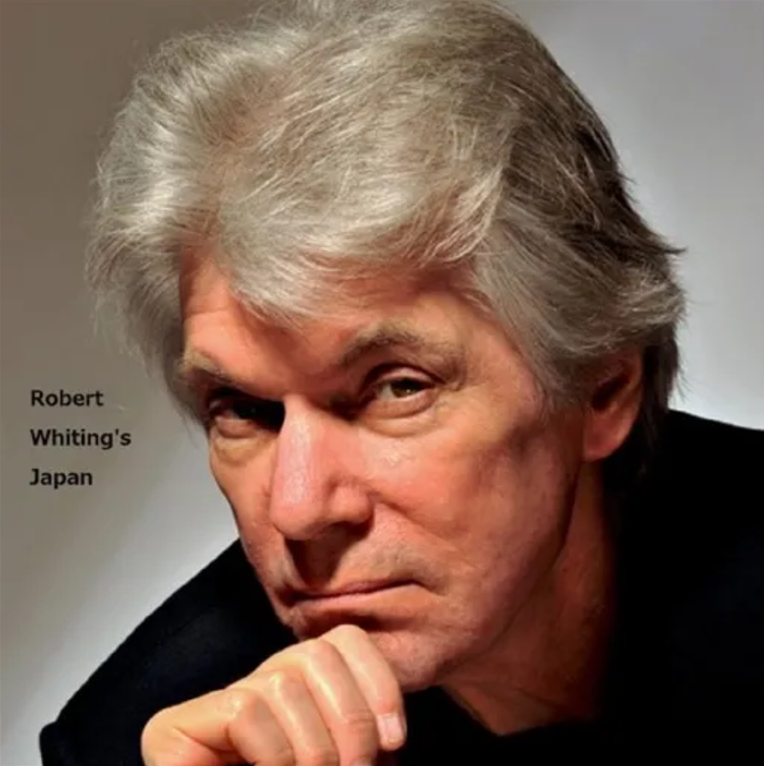
Robert Whiting first came to Japan with U.S. Air Force Intelligence in 1962 at the age of 19. You Gotta Have Wa was first published in 1989. Nearly 40 years later, Whiting is still writing.
You can read his work for free on his substack, titled Robert Whiting’s Japan, HERE.
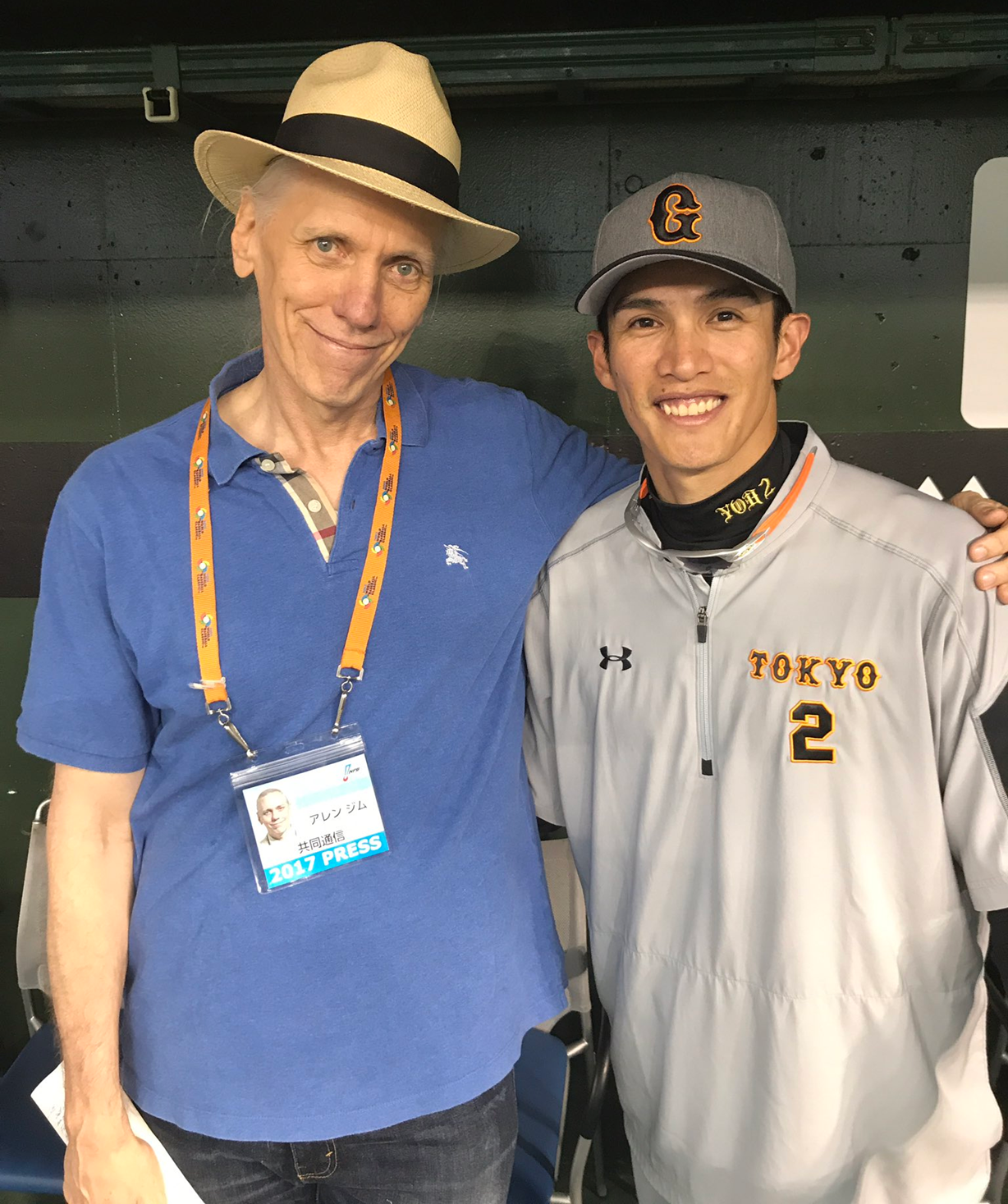
Jim Allen
Jim Allen studied Asian history at the University of California Santa Cruz. After graduating in 1984, he moved to Japan, where he has lived ever since, all while remaining a student of Japan’s history and culture.
Jim is a former baseball writer for the Daily Yomiuri and Kyodo News. He currently writes about baseball and gives guided history tours of Tokyo.
Here, Jim is pictured with Dai-Kang Yang, then of the Yomiuri Giants.
You can visit Jim’s old blog HERE.
You can visit Jim’s current website HERE.
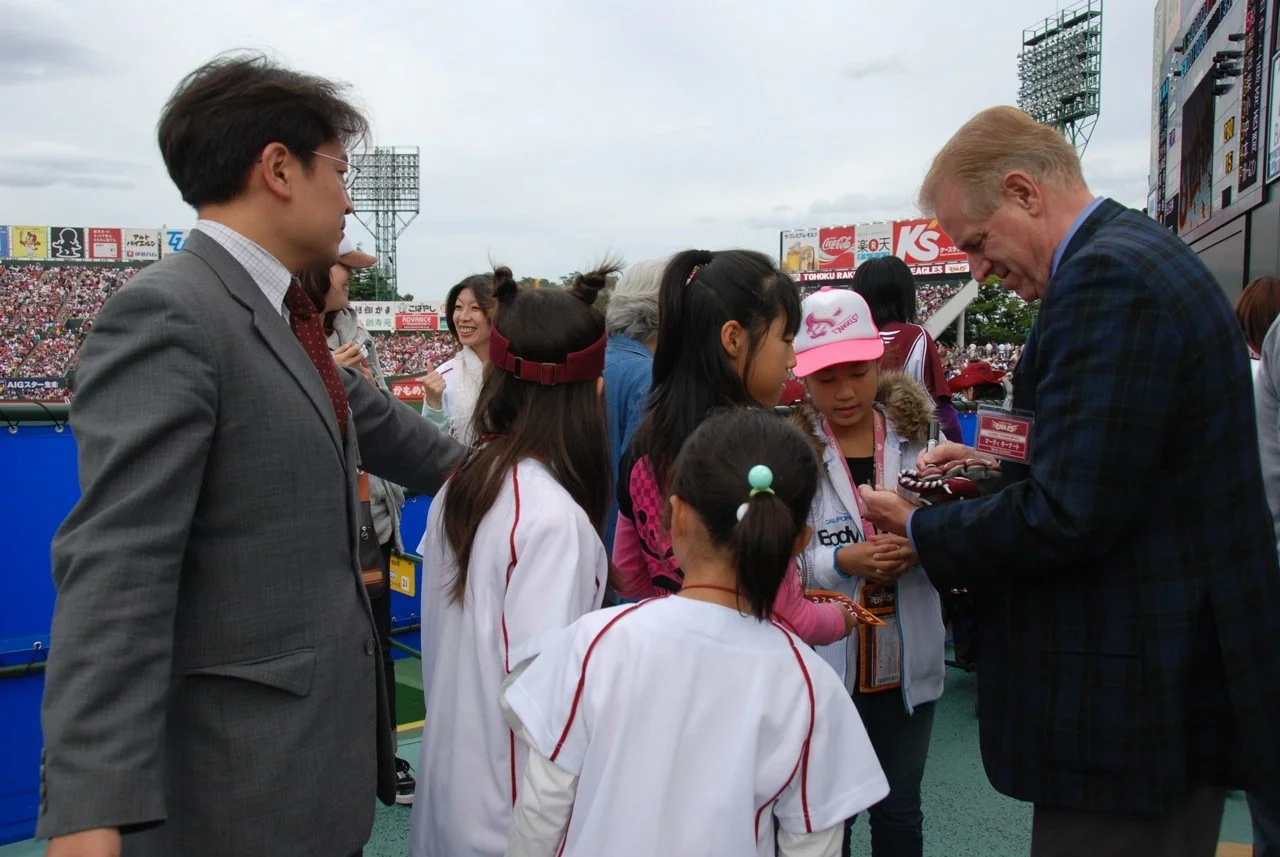
Marty Kuehnert
Marty Kuehnert was an American sports executive who was a senior advisor to the Japanese professional basketball team Sendai 89ers and Japanese professional baseball team Tohoku Rakuten Golden Eagles.
Kuehnert was also the team's first general manager and Nippon Professional Baseball's first foreign general manager.
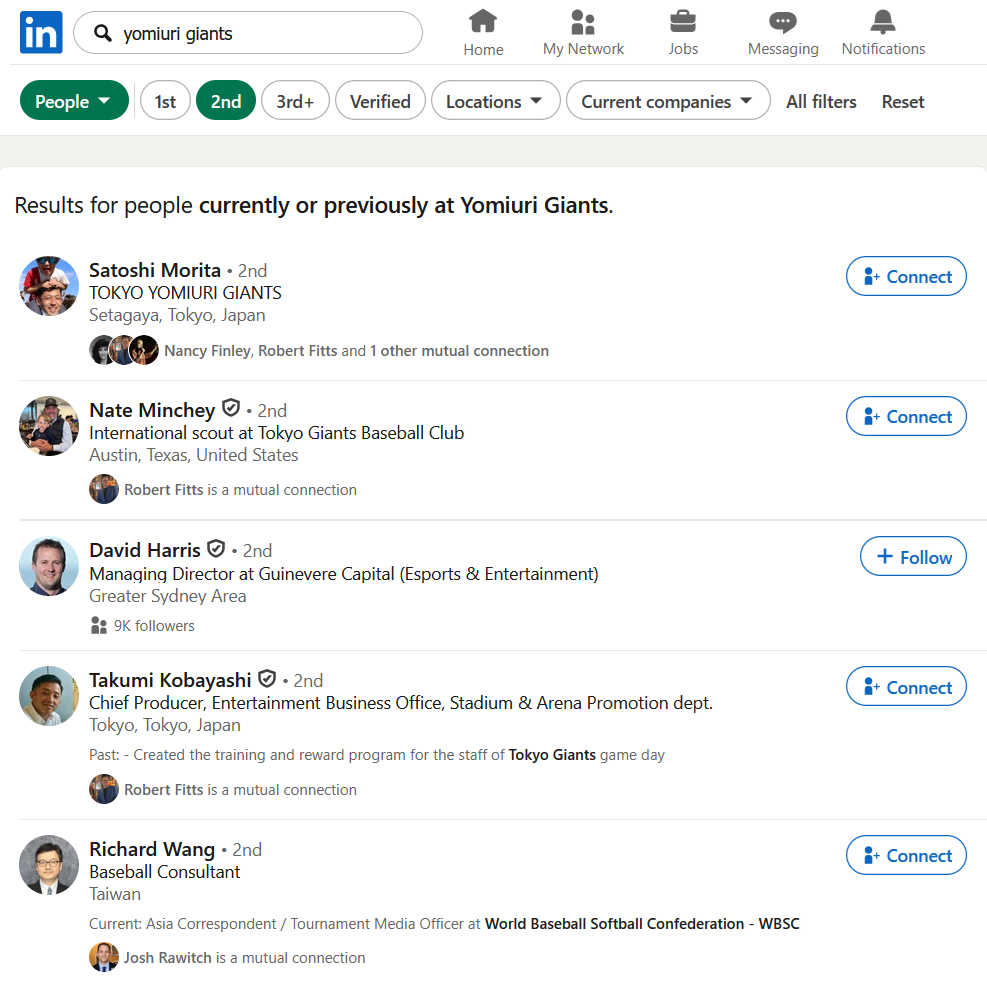
Believe it or not, Rob used LinkedIn as a way to help find potential interview subjects for his book. Since his ability to speak Japanese was limited, he searched for people on LinkedIn who had American schooling in their past, which most likely meant they would speak English well enough for them to communicate.
Rob then reached out to those people to secure interviews with them, or get their help in securing interviews with other people they felt might be a good fit for the project which turned into Rob’s book, In The Japanese Ballpark.
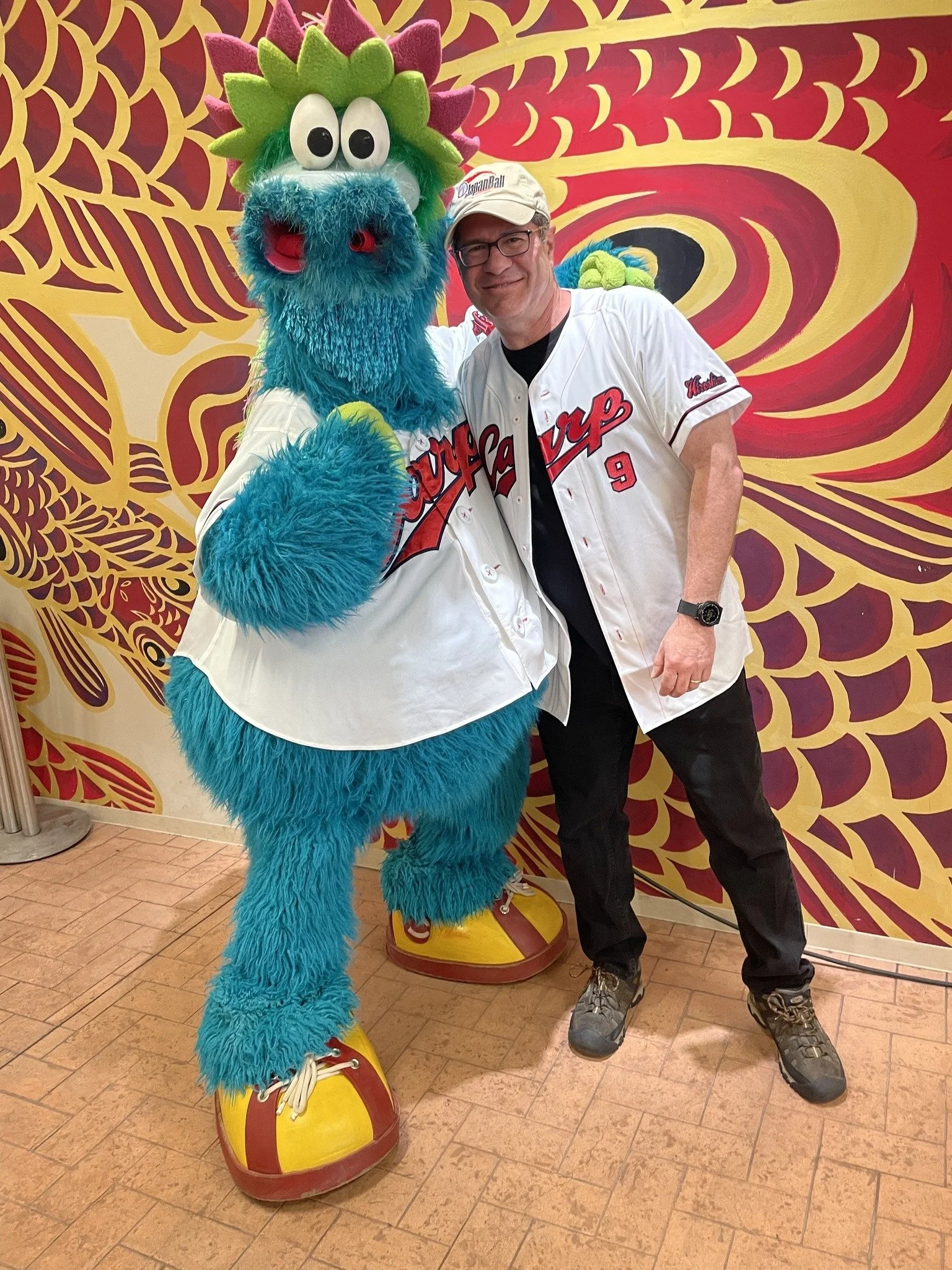
Challenges In Writing The Book
One of the bigger challenges Rob had while writing In The Japanese Ballpark was getting the type of interview he wanted out of a team’s mascot.
Since mascots are current employees of the teams, the team would have final approval over anything one of their employees said in the book, or what was written about them and their interview. But with the mascots, in particular, the teams were insistent on keeping the illusion of the mascot being a living being, and not a person inside a costume.
This insistence on adhering to the narrative made Rob’s job much harder in this instance.
Here, Rob poses with Slyly, the mascot for the Carp.
MLB Teams Marketing Their Japanese Players In Japan
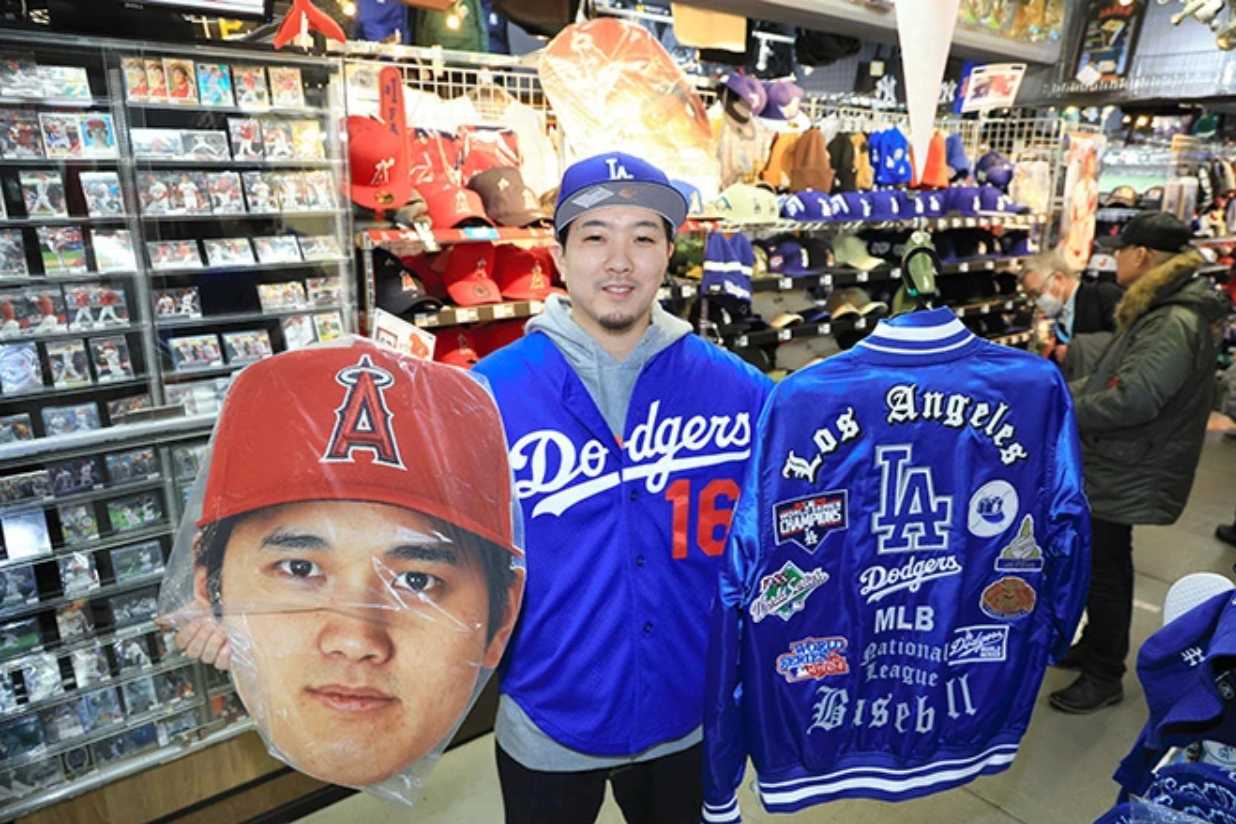
Much to Rob’s surprise, most Japanese interview subjects were incredibly supportive of Japanese players leaving NPB and going to MLB.
In fact, just hours after Shohei Ohtani's record-breaking deal hit the news, Dodger Blue became the hottest color in Japan.
Takahiro Ikeyama
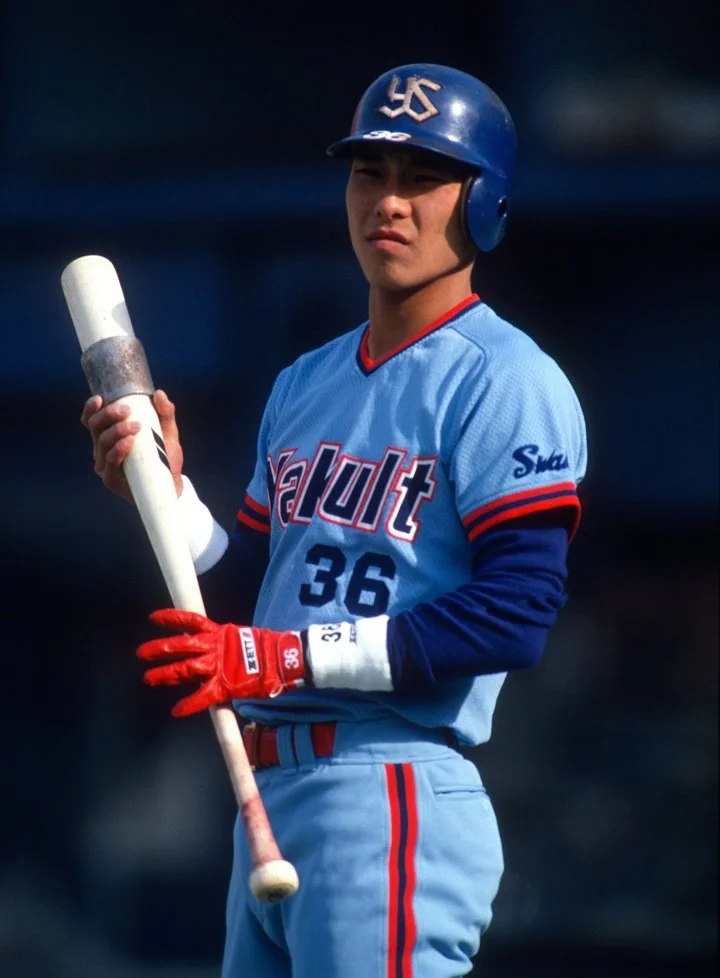
Takahiro Ikeyama was a slugging shortstop who played in NPB for the Yakult Swallows from 1984 to 2002.
Ikeyama was a five-time Central League Best Nine Award-winner and a seven-time NPB All-Star. He won the 1992 Central League Golden Glove Award.
Ikeyama was part of the Central League-champion Swallows team that lost the 1992 Japan Series to Seibu.
He was a member of the 1993, 1995, 1997, and 2001 Swallows squads that won the Japan Series those years.
Takoyaki
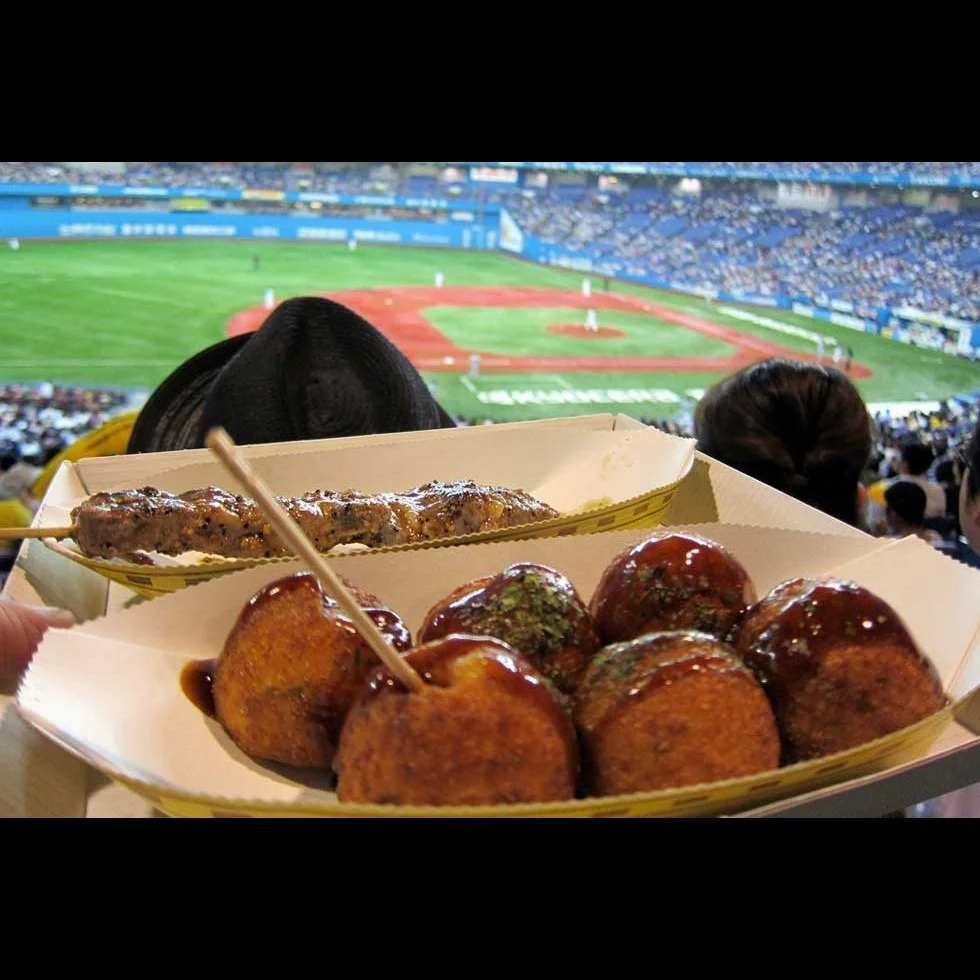
Takoyaki is a ball-shaped Japanese snack made of a wheat flour–based batter and cooked in a special molded pan. It is typically filled with minced or diced octopus (tako), tempura scraps (tenkasu), pickled ginger (beni shoga), and green onion (negi).
The balls are brushed with takoyaki sauce and mayonnaise, and then sprinkled with green laver (aonori) and shavings of dried bonito (katsuobushi).
Yaki, meaning 'to grill', is one of the cooking methods in Japanese cuisine and can be found in the names of other dishes in Japan such as okonomiyaki and ikayaki (other famous Osakan dishes).
Yakisoba
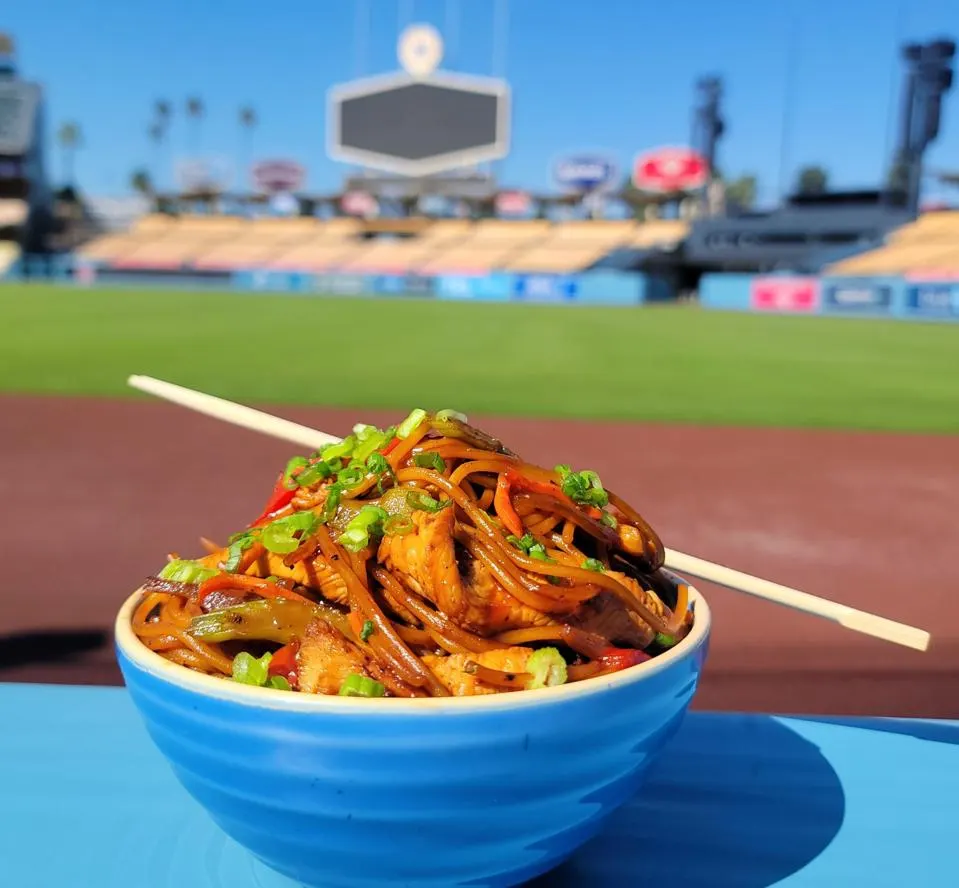
Yakisoba is a stir-fried Japanese noodle dish. Usually, soba noodles are made from buckwheat flour, but soba in yakisoba are Chinese-style noodles (chuuka men) made from wheat flour, typically flavored with a condiment similar to Worcestershire sauce. Yakisoba originated as a type of okonomiyaki.
In Japan, there are many shinise (long-established) yakisoba and okonomiyaki restaurants that have been serving the dish for a long time, and each region has its own unique "local gourmet" yakisoba.
The Los Angeles Dodgers have even added a yakisoba dish to their stadium offerings (seen here).
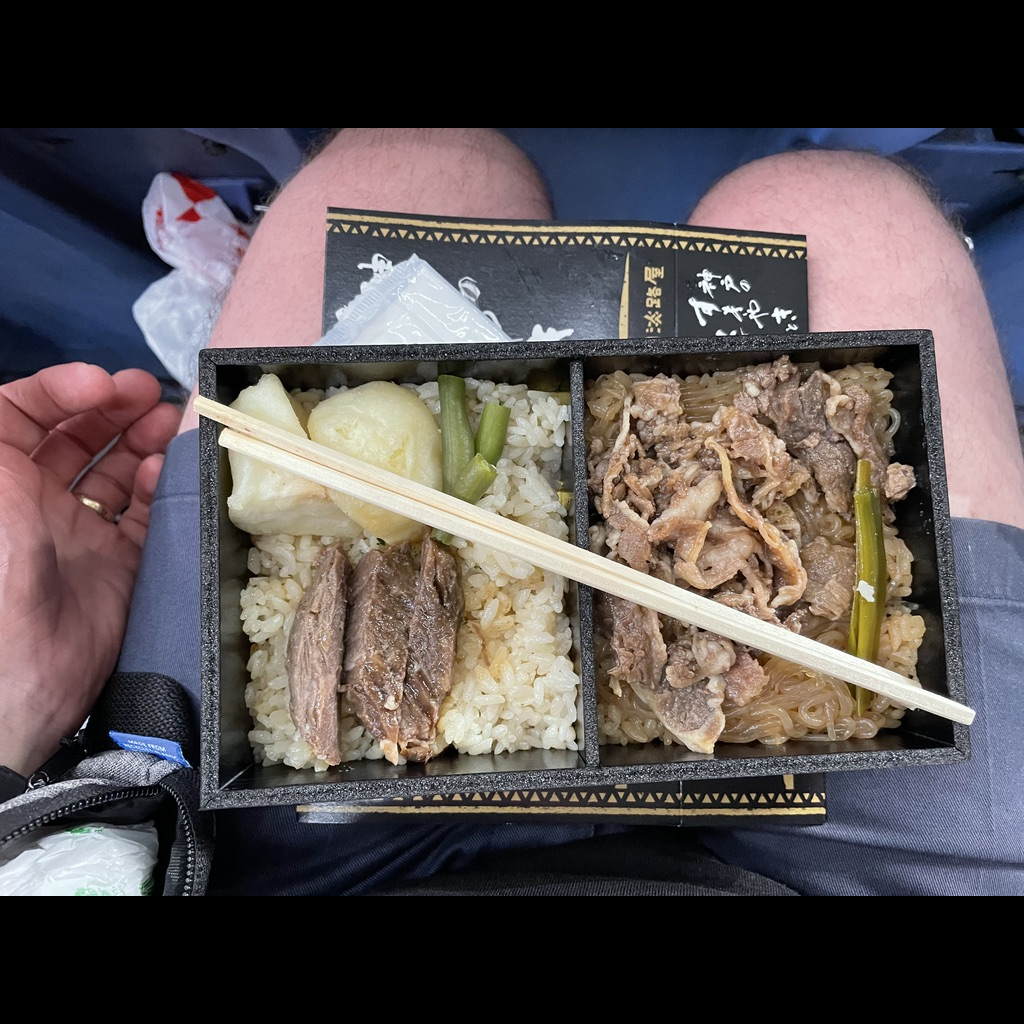
Bento Box
A bento is a single-portion meal packaged in a box with a lid (often a segmented box with different parts of the meal placed in different sections).
A traditional bento typically includes rice or noodles with fish or some other meat, often with pickled and cooked vegetables in a box.
Containers range from mass-produced disposable containers to hand-crafted lacquerware. Dividers are often used to separate ingredients or dishes, especially those with strong flavors, to avoid them affecting the taste of the rest of the meal.
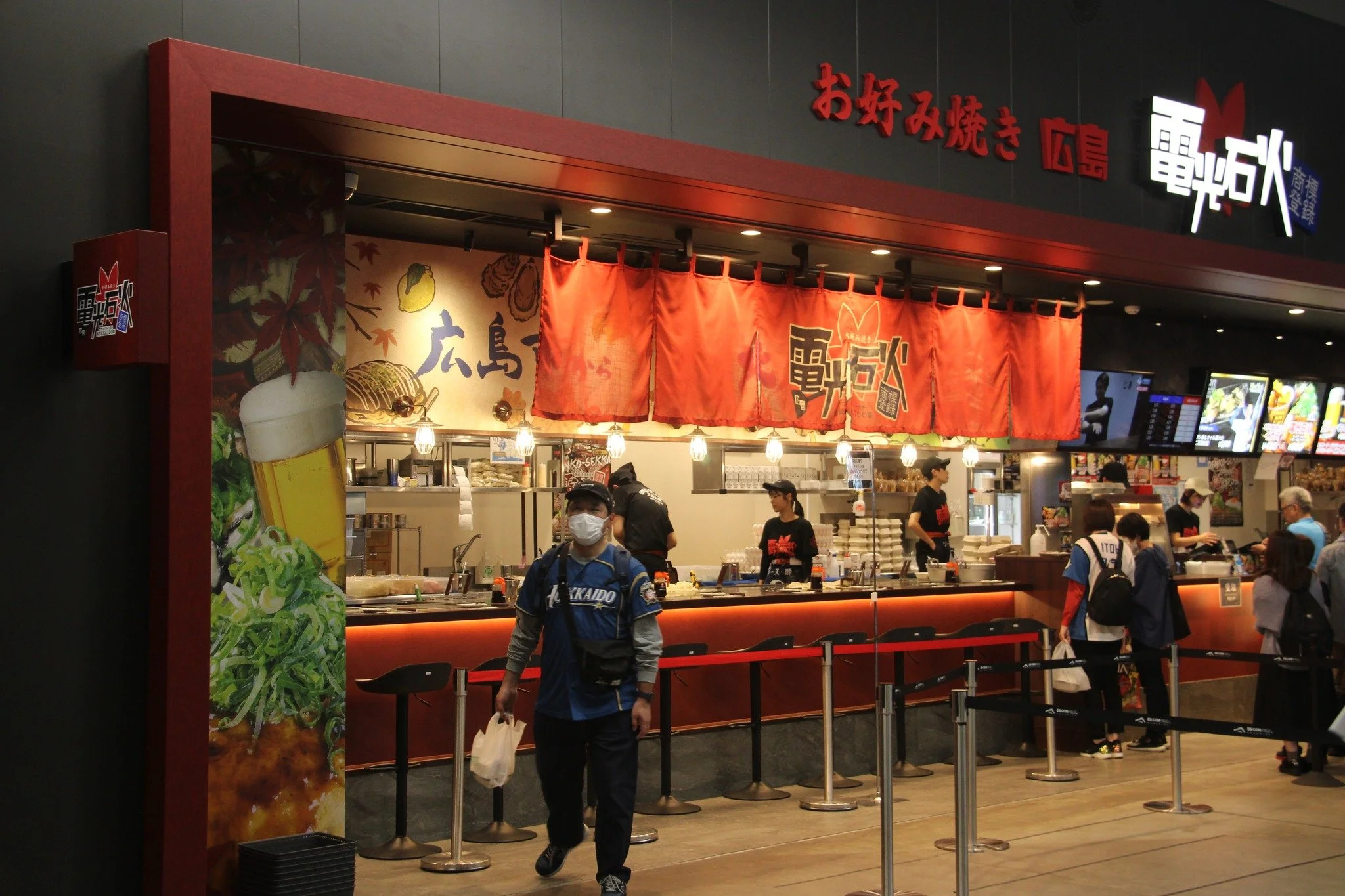
Concessions
Okonomiyaki at the ballpark. Here is a look at what other fans in the Japanese ballpark are eating.
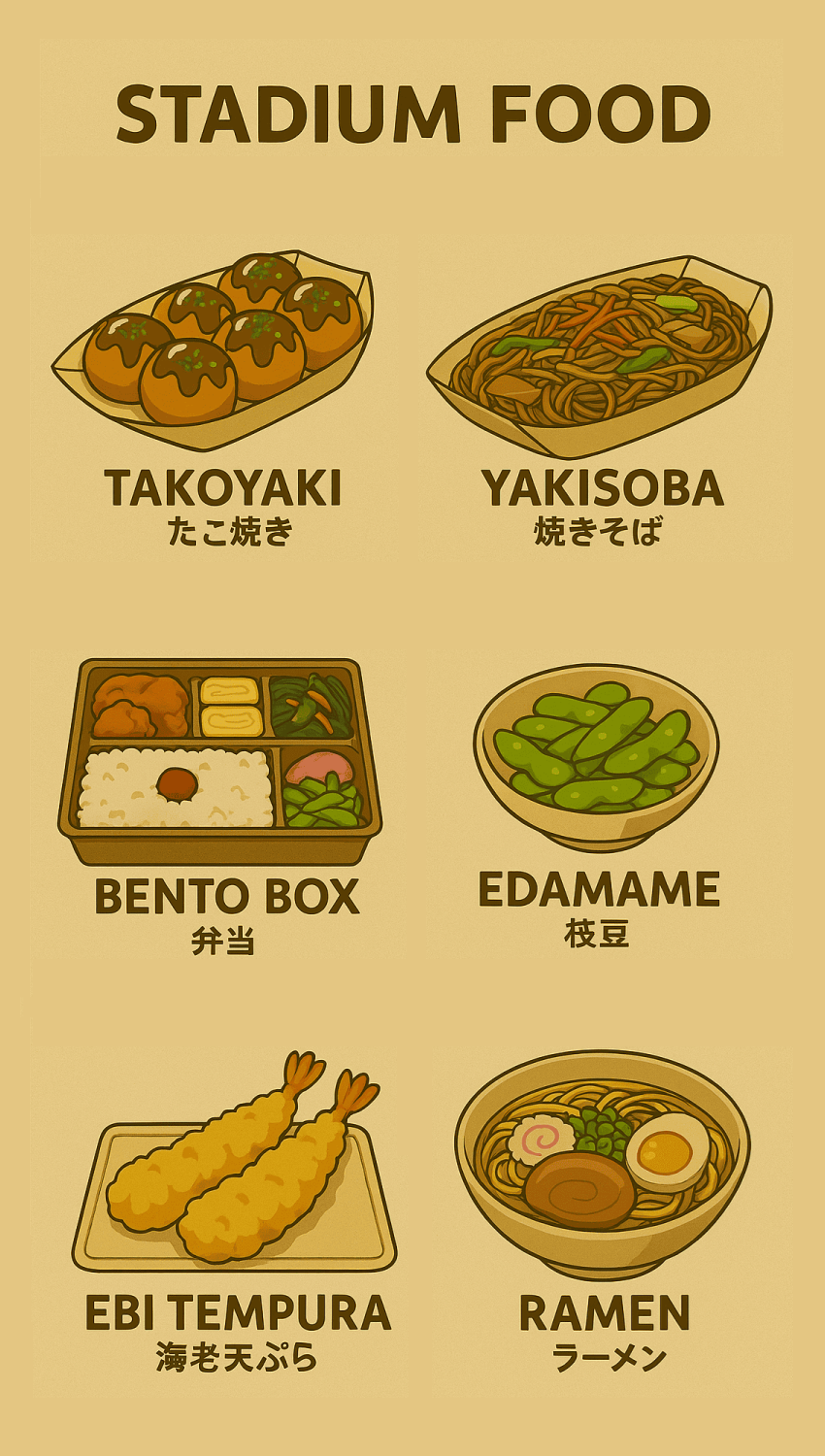
Typical Stadium Food In The Japanese Ballpark
Common Japanese concessions include:
Takoyaki (たこ焼き) – Golden, crispy octopus balls, served with savory sauce, mayo, and bonito flakes. A fan-favorite, especially at games in Osaka.
Yakisoba (焼きそば) – Stir-fried noodles with pork, cabbage, and a sweet-savory sauce, topped with pickled ginger. Common at ballparks across Japan.
Bento Box (弁当) – A pre-packaged meal featuring rice, meat, fish, or vegetables, often themed to the home team. Some stadiums even offer exclusive team-branded bento boxes.
Edamame (枝豆) – Lightly salted green soybeans, perfect for snacking. Often paired with a cold draft beer.
Ebi Tempura (海老天ぷら) – Crispy battered shrimp, deep-fried to perfection. Served with soy dipping sauce, and often found in stadium food stalls.
Ramen (ラーメン) – A hot bowl of noodles in rich broth, topped with chashu pork, scallions, and a soft-boiled egg. Some stadiums even offer regional ramen varieties.
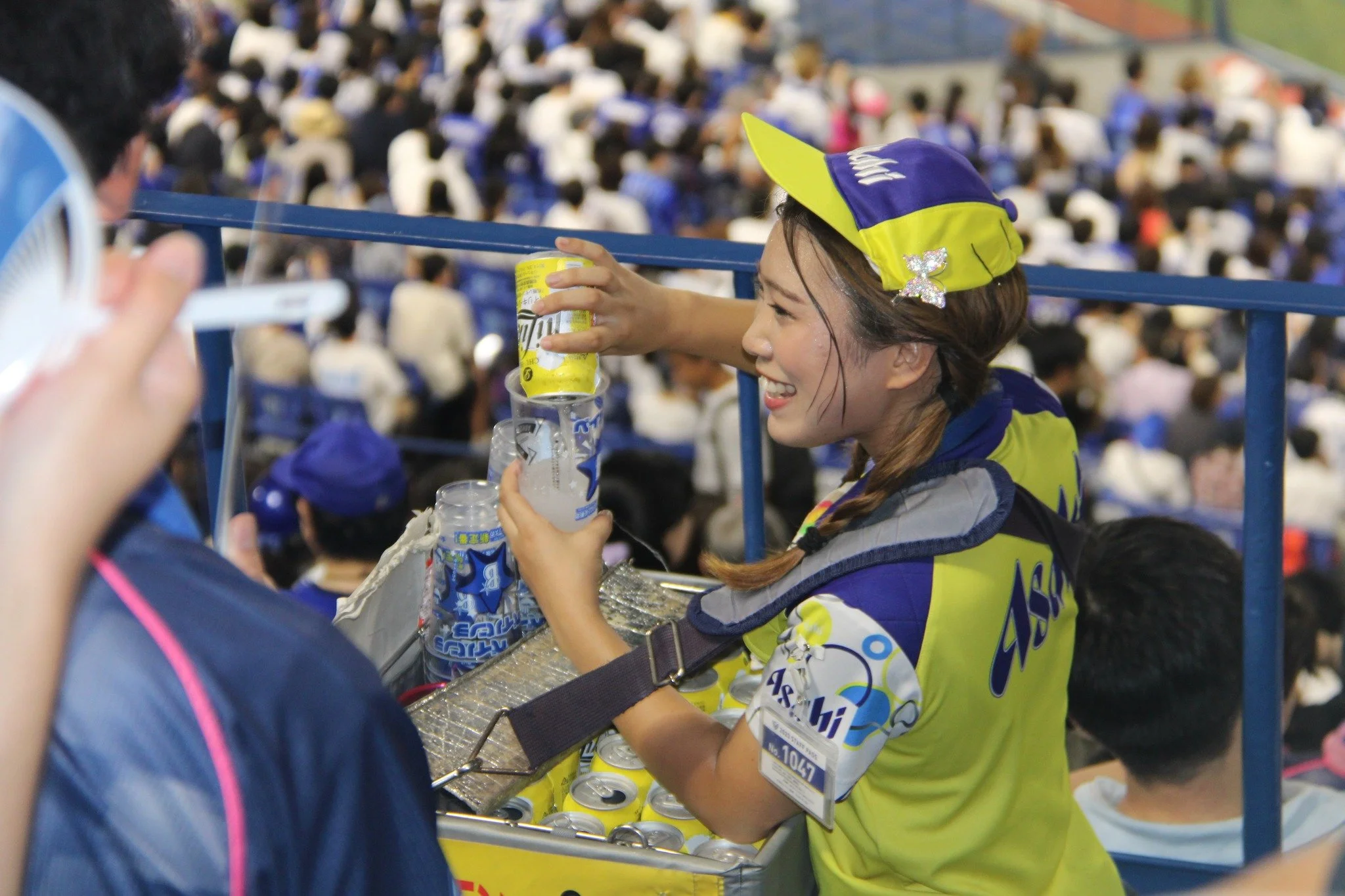
Beer Girls
Beer girls in Japanese ballparks can be as young as 16 years old. Some of them have become so popular that NPB has instituted a rule which says no fan may take a photo of any stadium employee, in an effort to protect their privacy and ensure their safety.
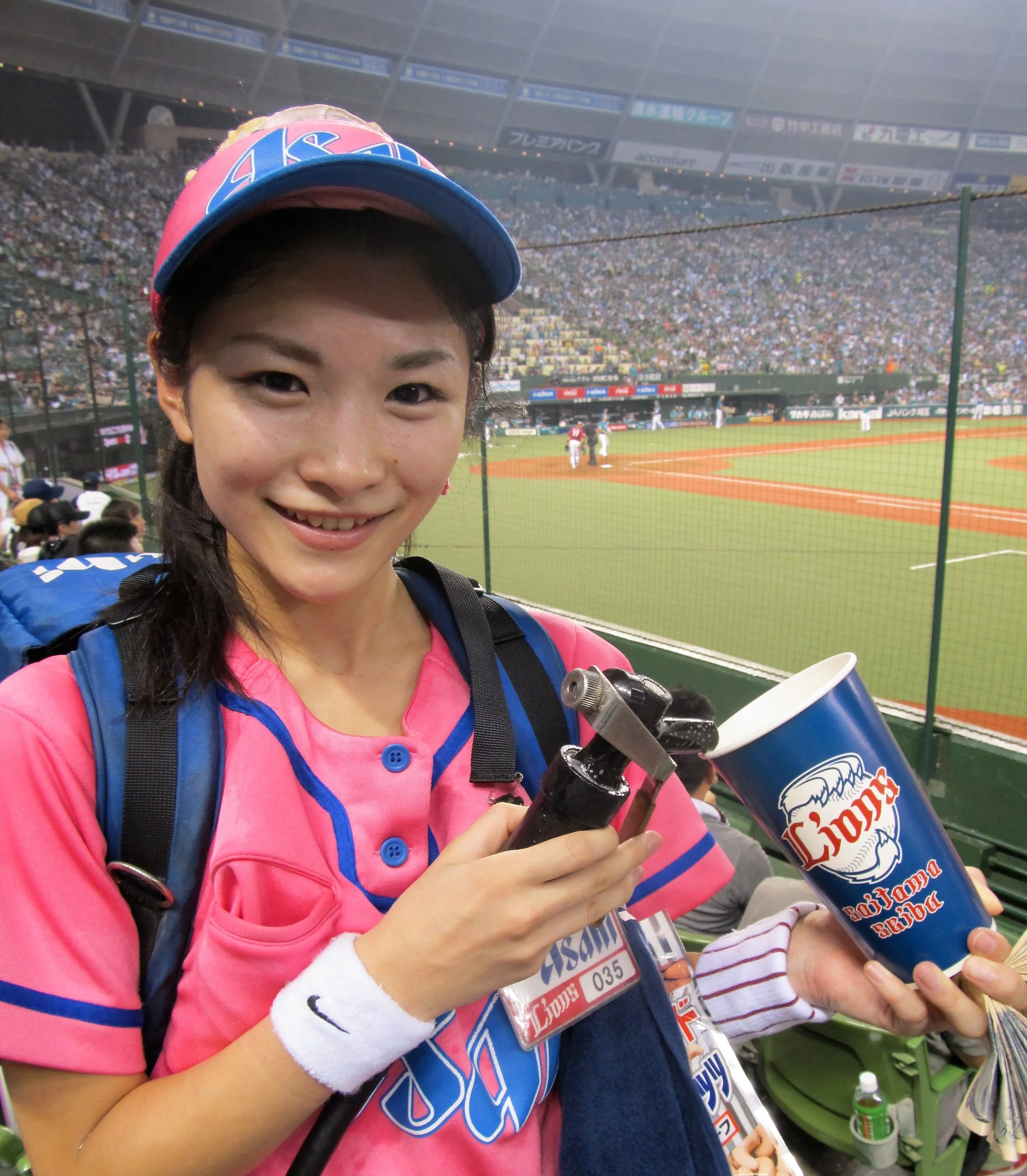
Minor Celebrities
The intai jiai (retirement game) is a significant event in Japanese pro baseball for long-time star players about to hang up their spikes and call it a career. It usually occurs at the end of a season after it has been announced the player is leaving the game and after league standings have been decided.
After a four-year career, then-22-year-old beer girl Misato Orikasa served up her last beers at Seibu Prince Dome as the Lions played their final games of the 2016 season, leaving many fans sad.
While beer girls are not featured on Japanese baseball cards, sometimes tickets to games will feature the photos of beer girls, which then become collectible to fans. Some beer girls use their fame to launch modeling careers, or promote their instagram.
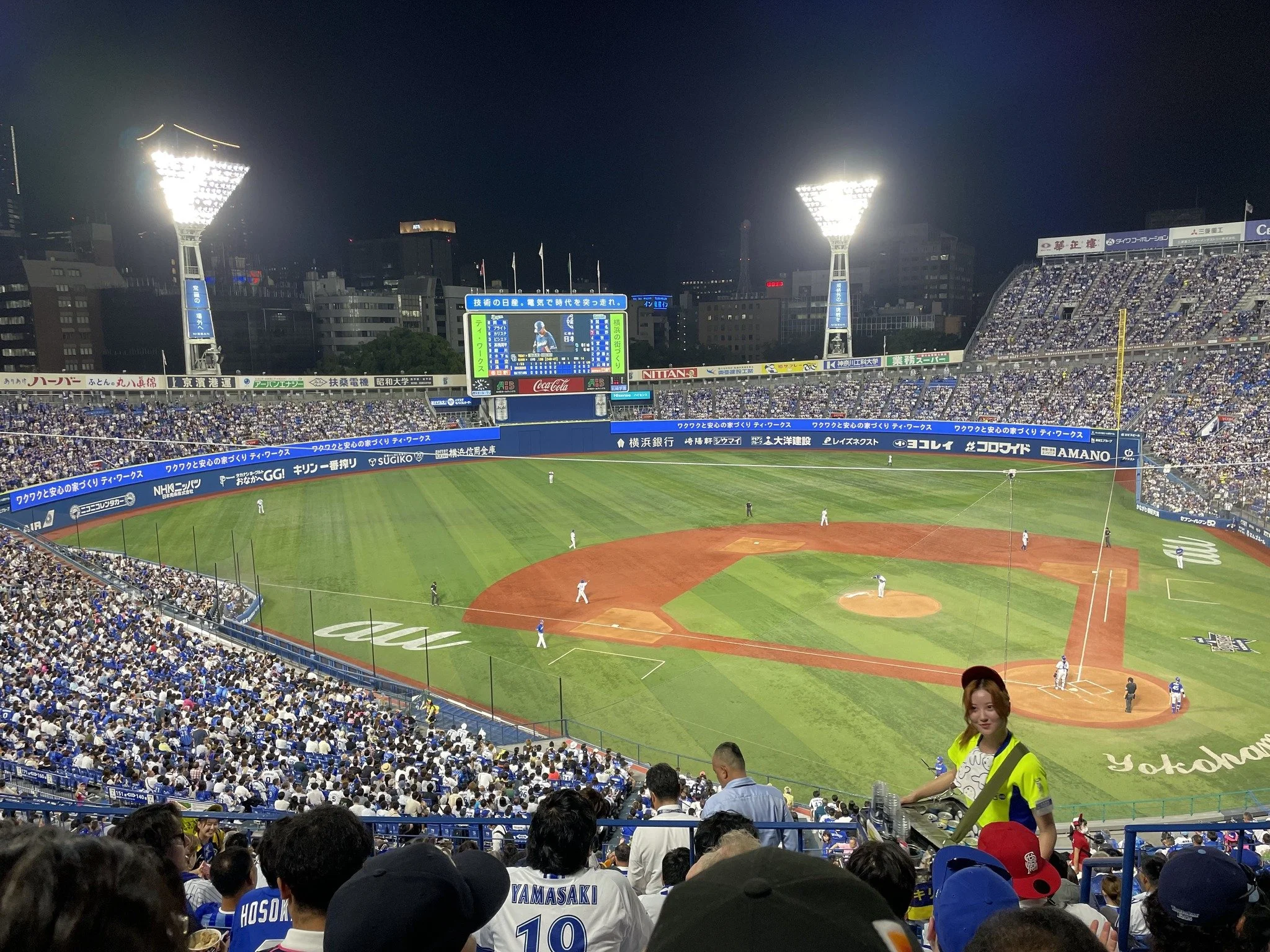
Yokohama Baystars Stadium
Although Rob is allowed to bring his camera into the stadium thanks to his media credentials, he still tries not to take any closeup portrait-style photos of any individual fans or workers inside the stadium.
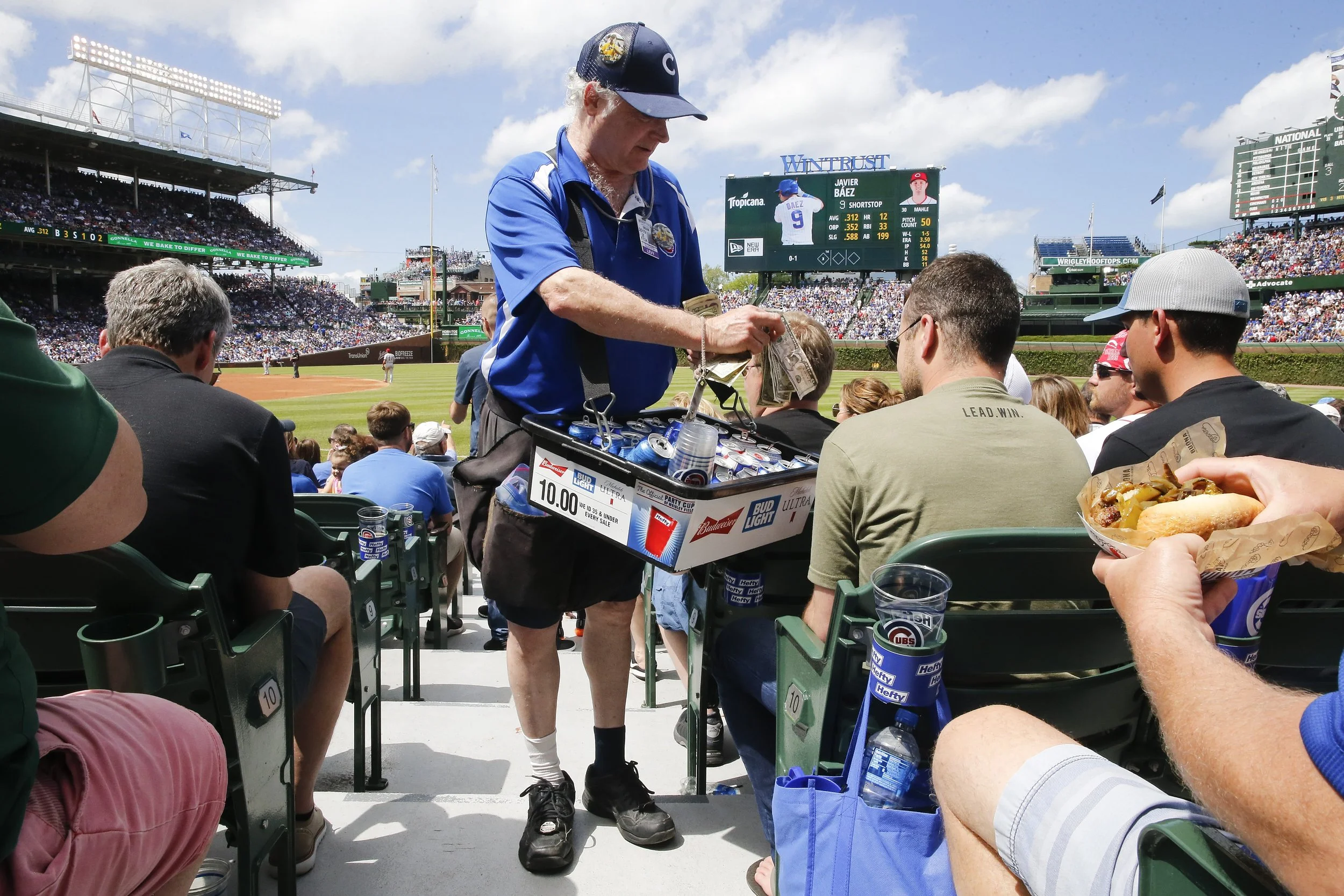
Wrigley Field
Growing up in Chicago and having bartended at Yak-Zies in Wrigleyville for five years, I am friends with a number of people who have been vendors in the Friendly Confines over the years.
Here, beer vendor Lloyd Rutzky makes a sale during a 2019 Cubs game.
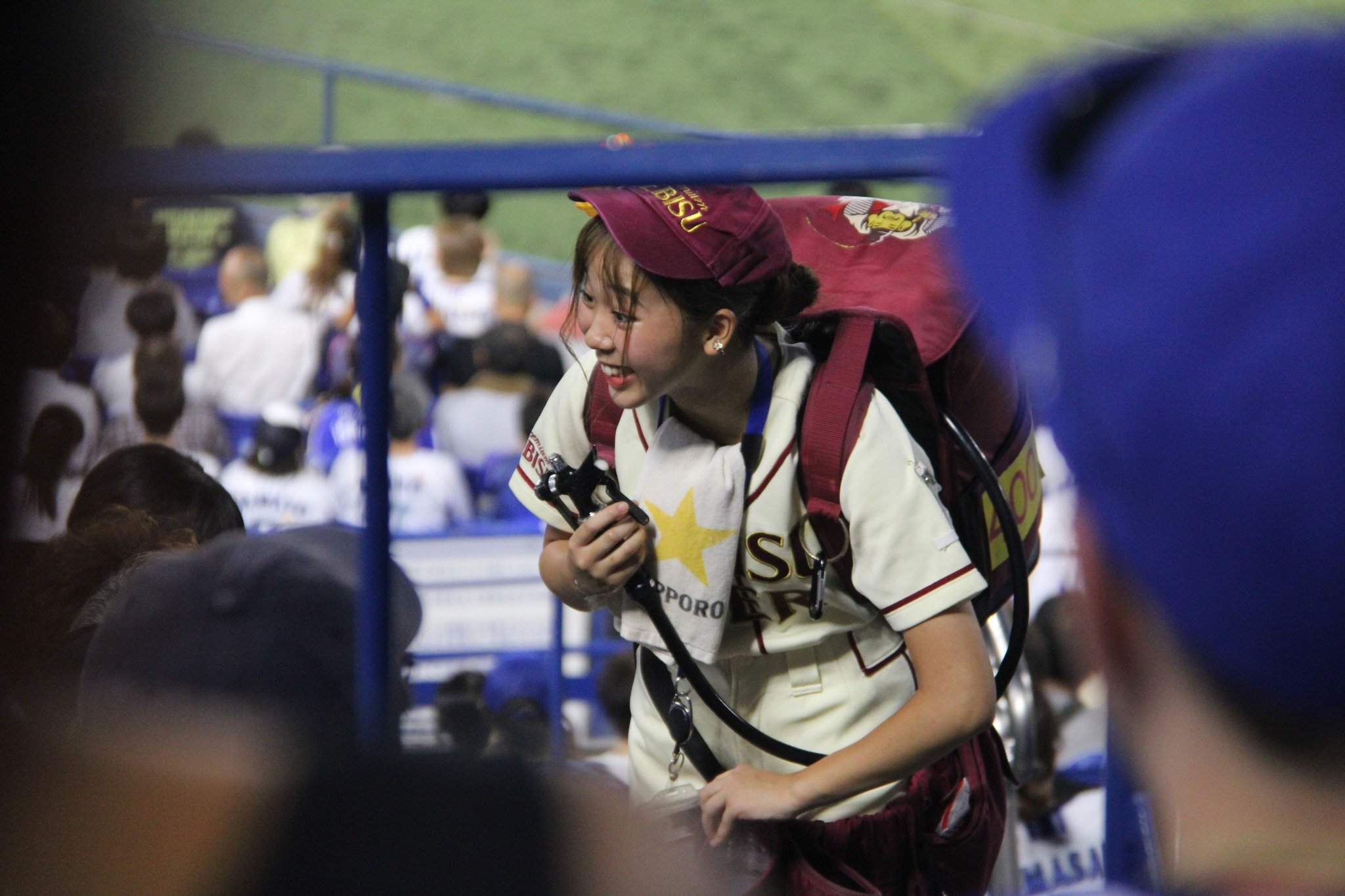
Making A Connection
A good beer girl will engage in small talk with her customers because she wants them to become repeat customers. If their experience is pleasant, they will be more likely to wait around for that same beer girl to come back again later in the game so they can buy from her, specifically, instead of from another beer girl passing through their section.
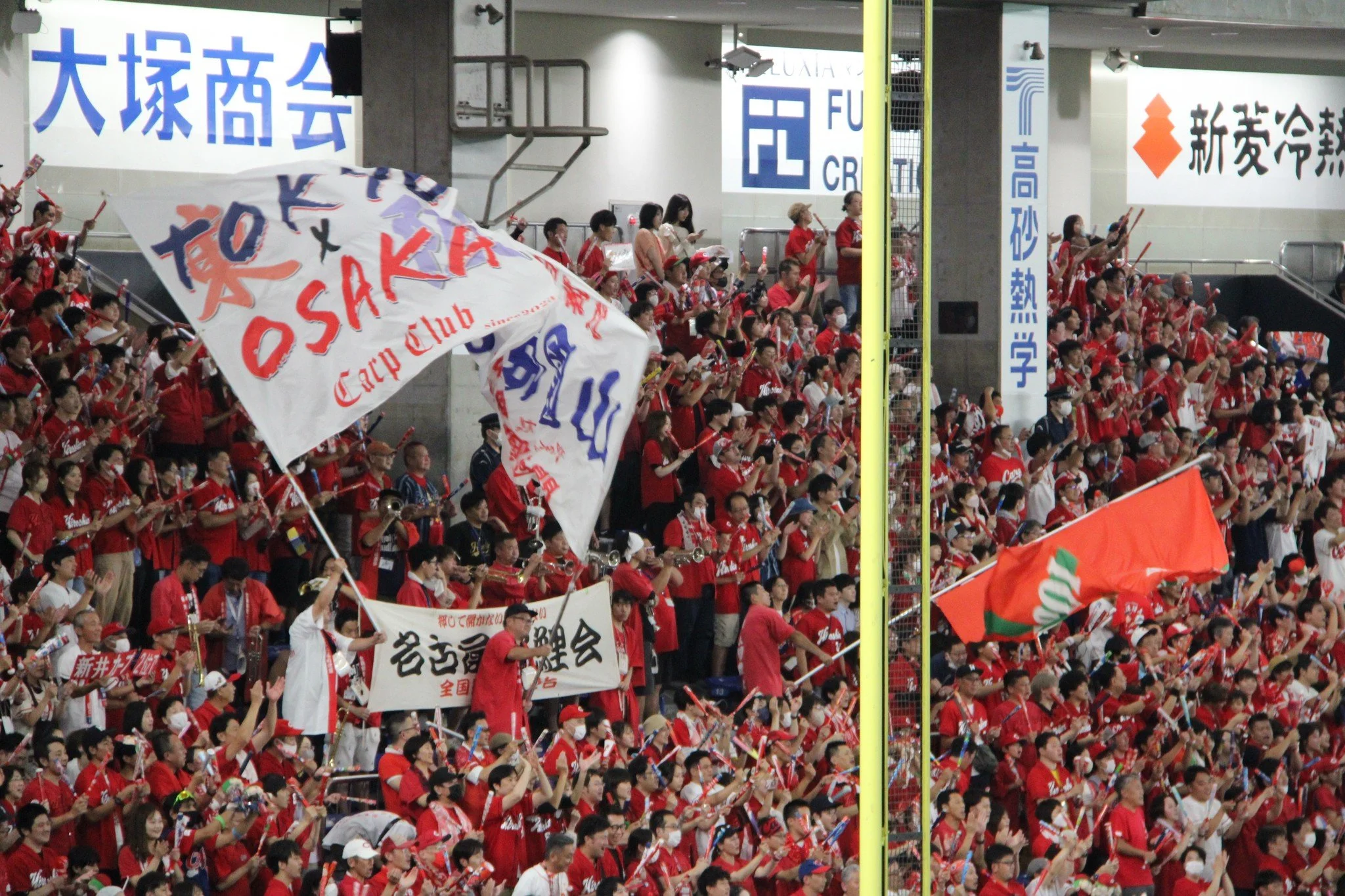
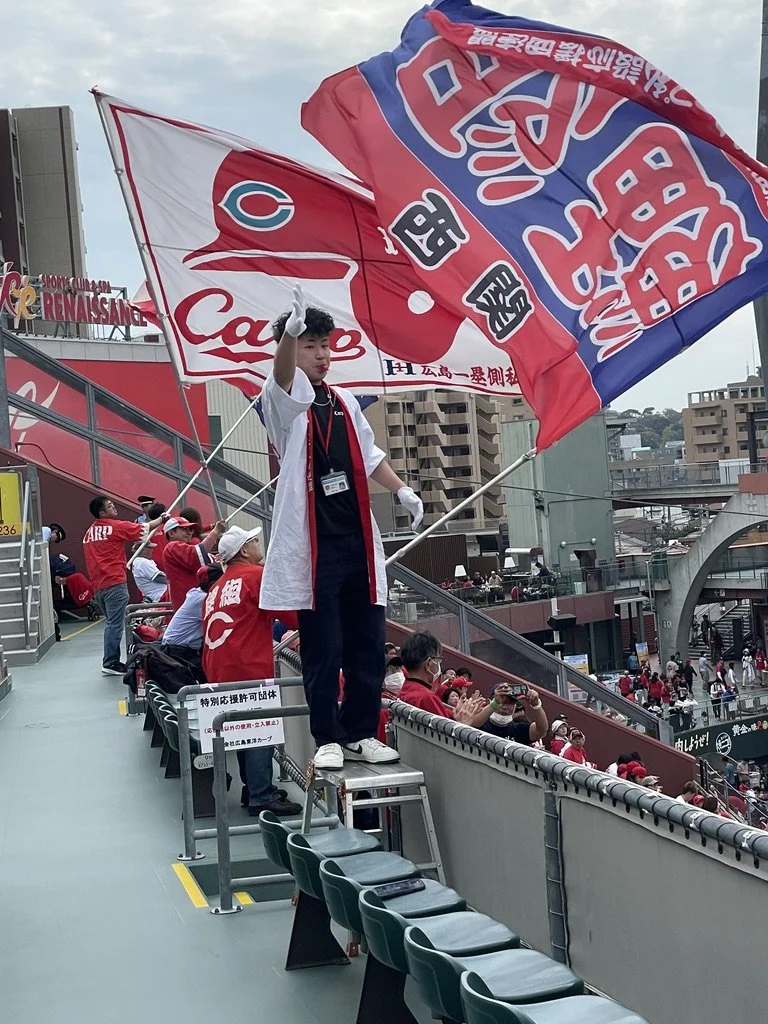
Ōendan
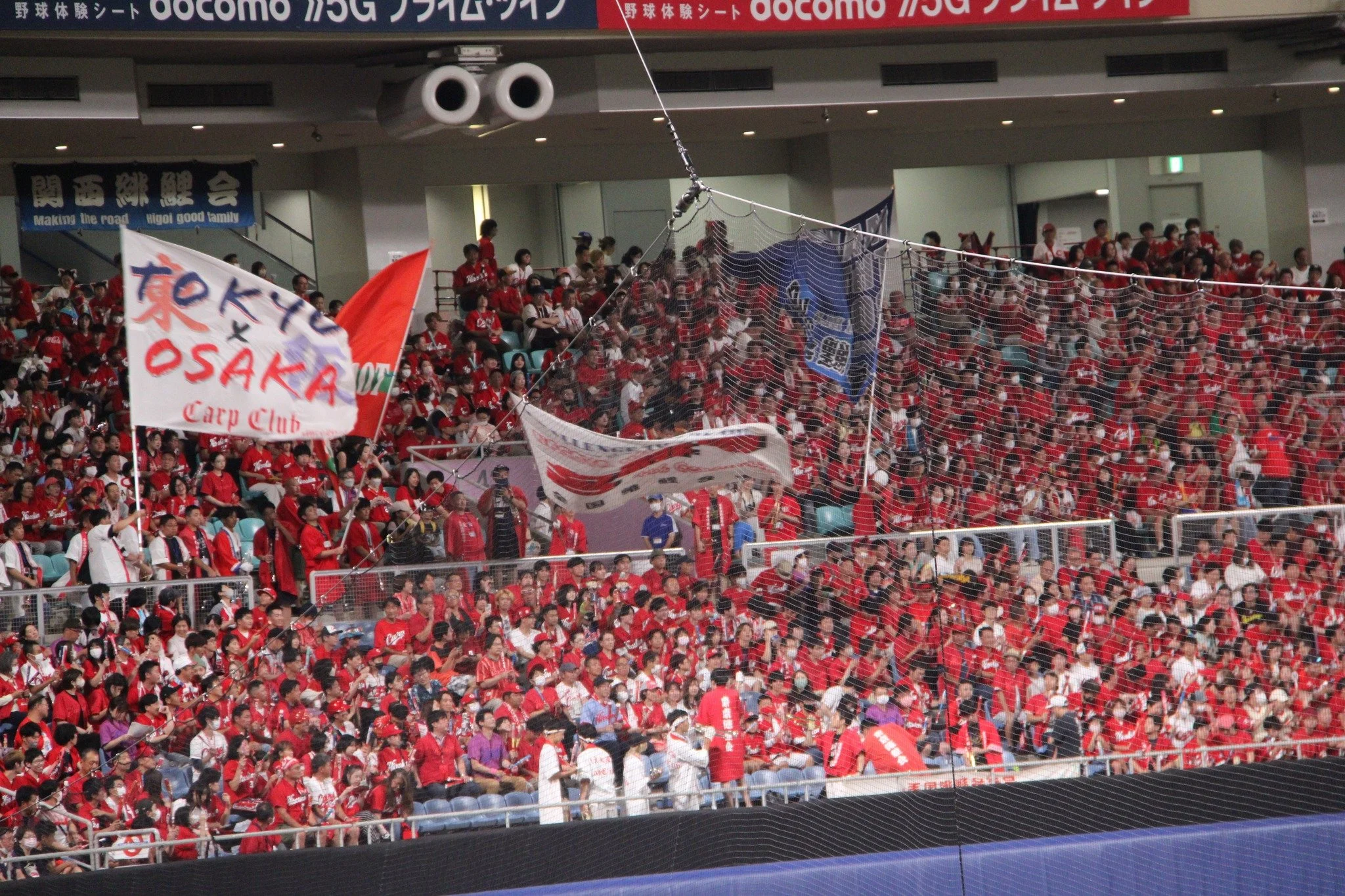
An ōendan is a Japanese sports rallying team similar in purpose and allegedly inspired by American cheerleading squads, but it relies more on making a lot of noise with brass drums or taiko drums, blowing horns and other items, waving flags and banners, and sometimes yelling through plastic megaphones in support of their sports team than on acrobatic moves (though some incorporate pom-pom girls).
In addition to cheering for their own teams, ōendan have been known to lead fans in cheers which tease and taunt the other team and its fans. This is usually done in the spirit of good competition, but fights have occasionally broken out if the taunting gets too heated.
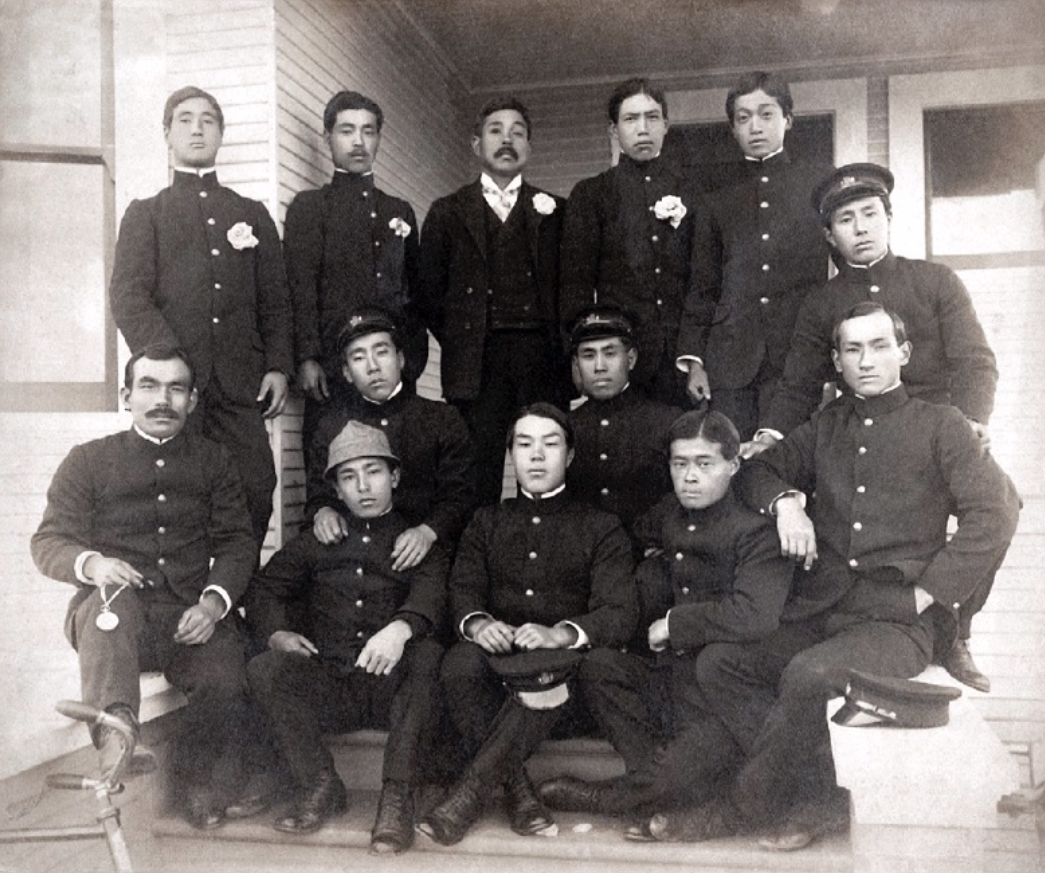
Waseda University
In 1905, the Tokyo-based Waseda University team became the first of many Japanese teams to travel to the United States. On April 16 of that year, the Waseda University baseball team played the Stanford baseball team in California.
Stanford beat Waseda 9-1. This game may have been the first formal event between Stanford and Waseda. Since then, Waseda and Stanford have engaged in numerous academic and research collaborations, student exchanges, and sporting events, and each has enrolled the other’s alumni in graduate and professional programs.
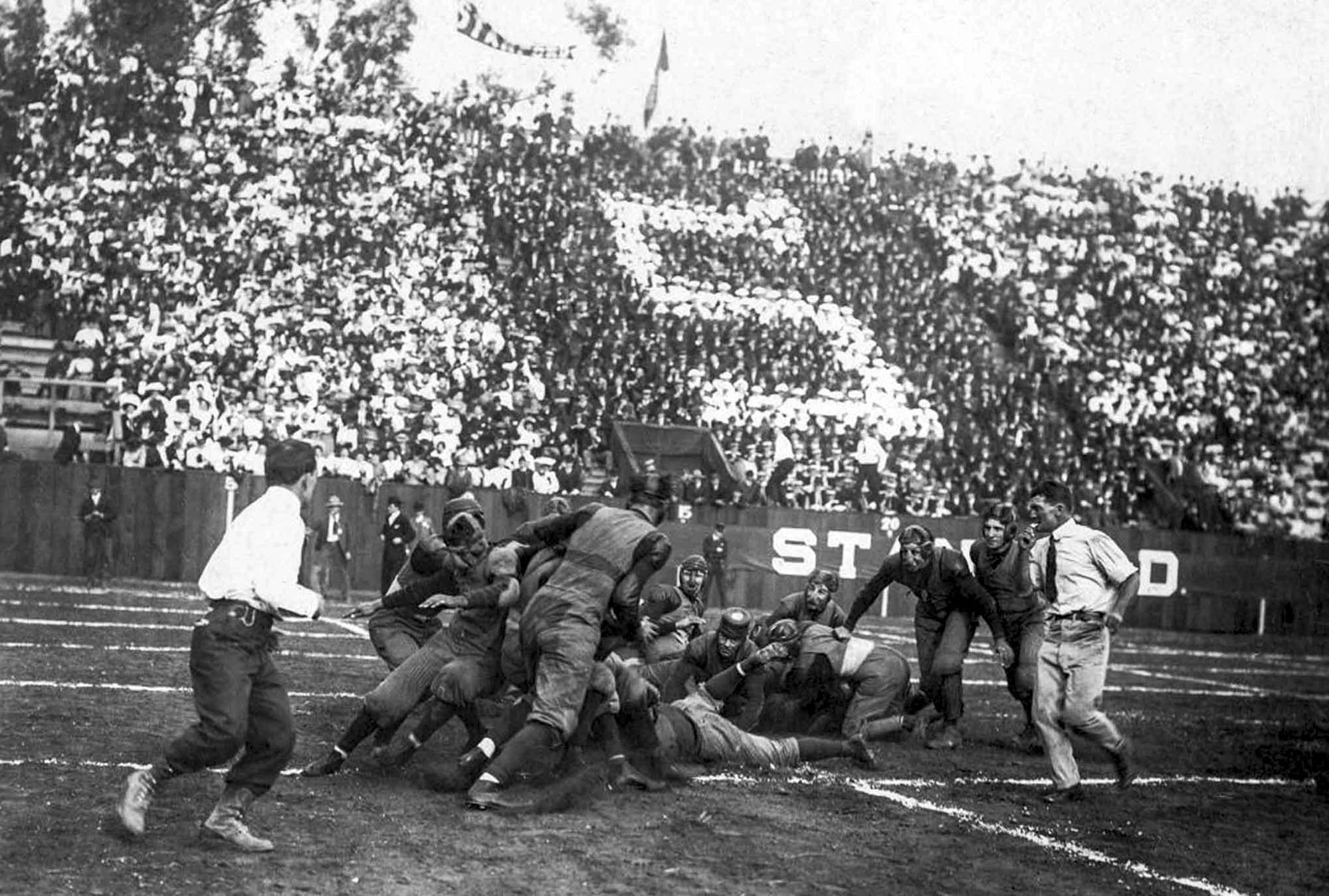
Stanford Football
While the Waseda University team was in the United States in 1905, they noticed that there were cheerleaders at the Stanford football games. When Waseda went back to Japan, they took that idea with them, and implemented it in their baseball games.
This photo was taken at the Big Game in 1905 between Cal and Stanford.
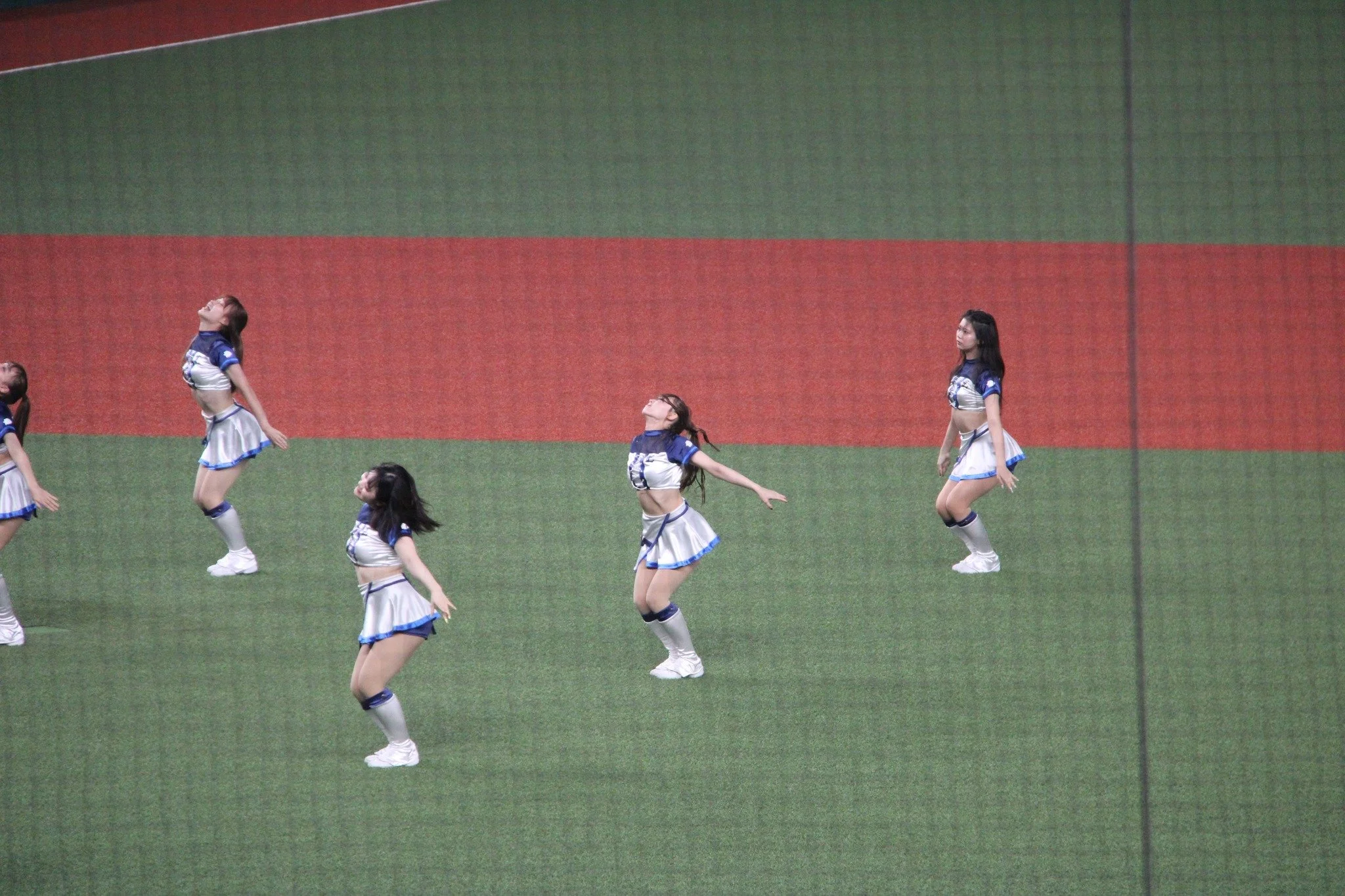
Cheerleaders
While there are uniformed cheerleaders employed by the teams, those people aren’t actually leading cheers for the fans. The cheering done by the fans is led by the ōendan.
The people who are actually called cheerleaders are more like dance teams from American sports teams, doing choreographed routines on the field, instead of asking the crowd to "Give me a B!”
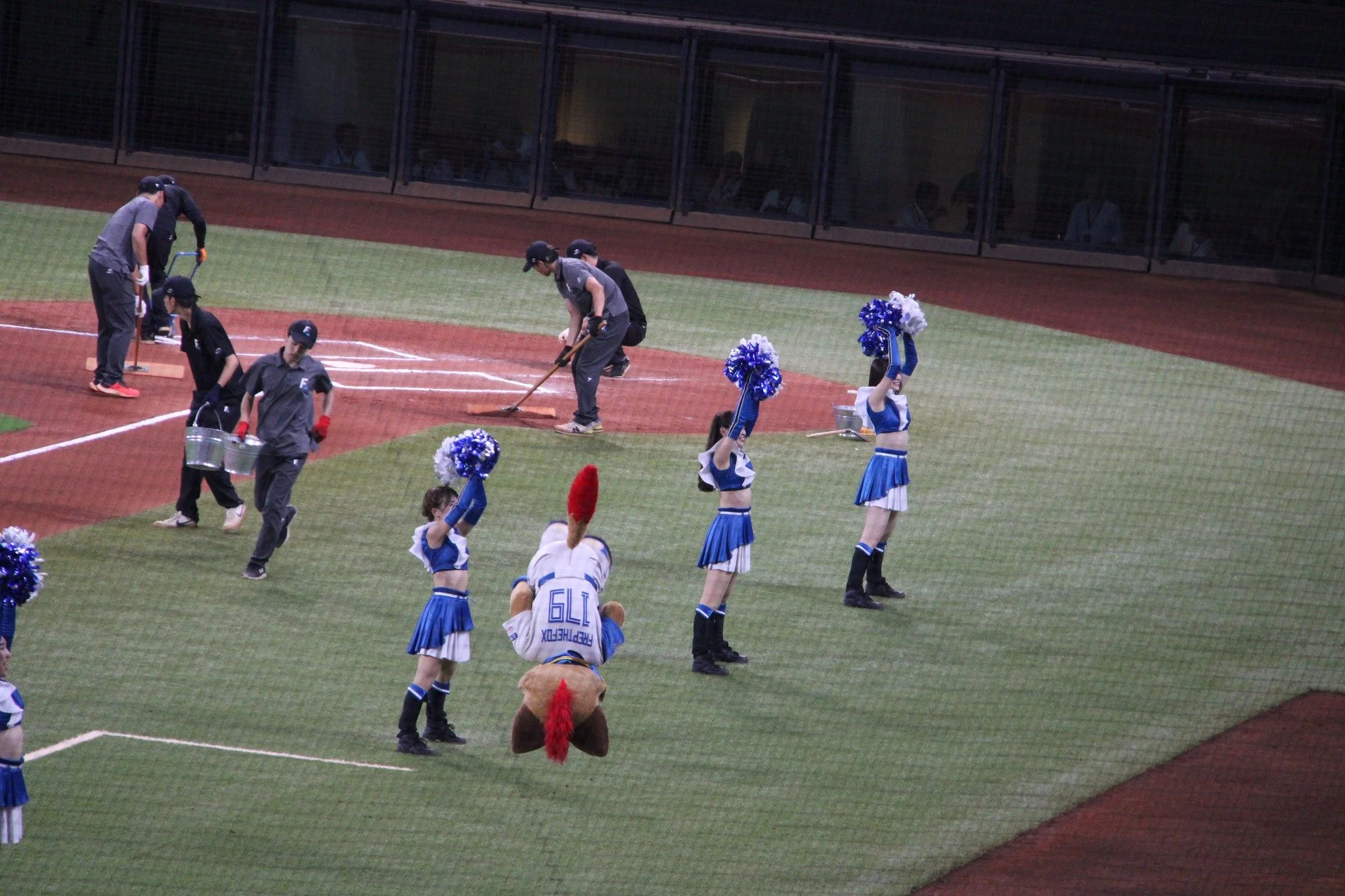
Sometimes the mascots get in on the dancing, too. Here, a mascot performs a backflip while the cheerleaders dance.
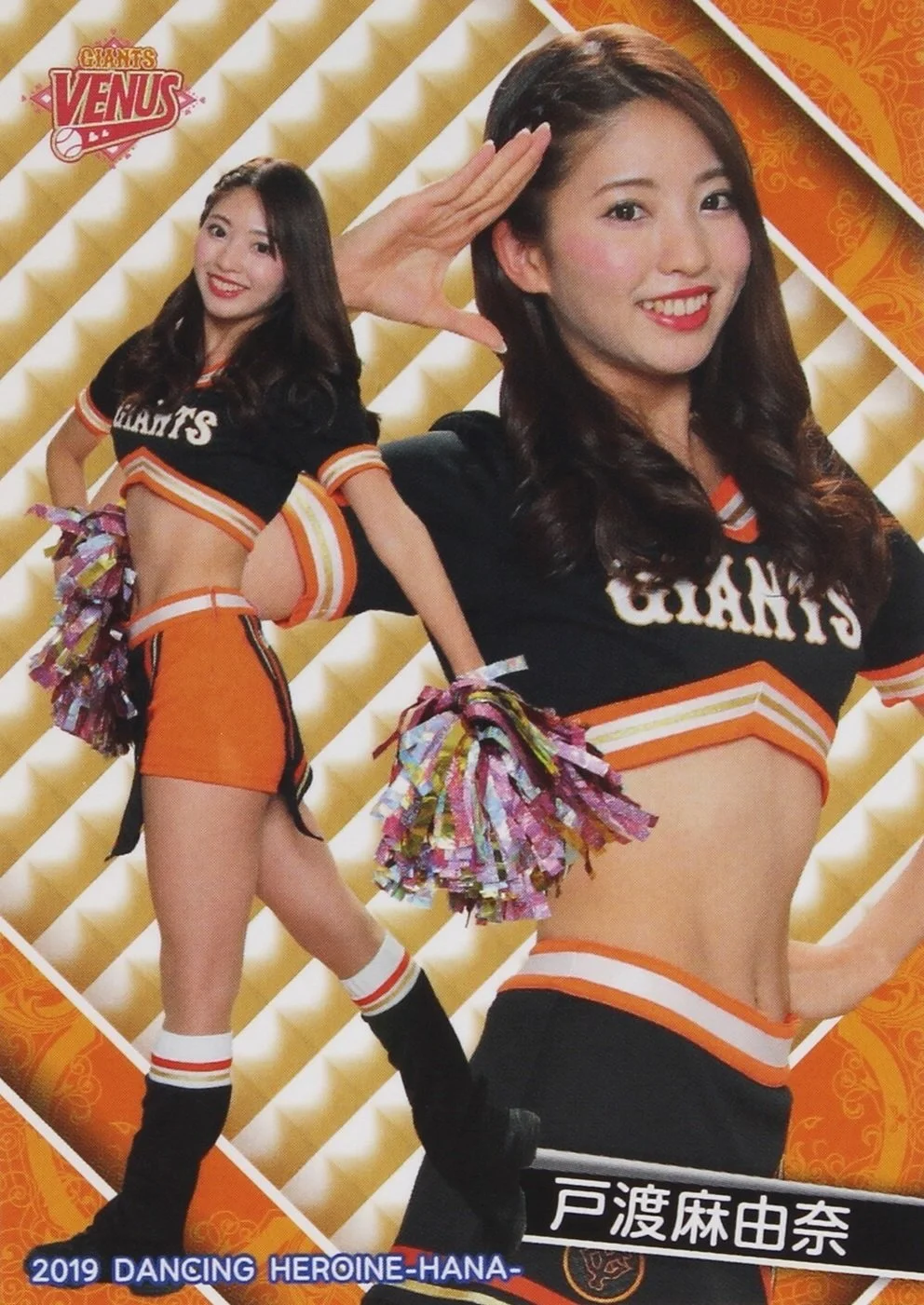
Trading Cards
Trading cards are not just reserved for the players in Japan! Cheerleaders have been featured on trading cards, as well.
When you consider the fact that the Laker Girls or the Dallas Cowboy Cheerleaders have become a part of the national consciousness over the years, and are culturally famous and relevant, selling things like calendars, or posters, or autographed photos, it makes sense that there would be an equivalent in Japan.
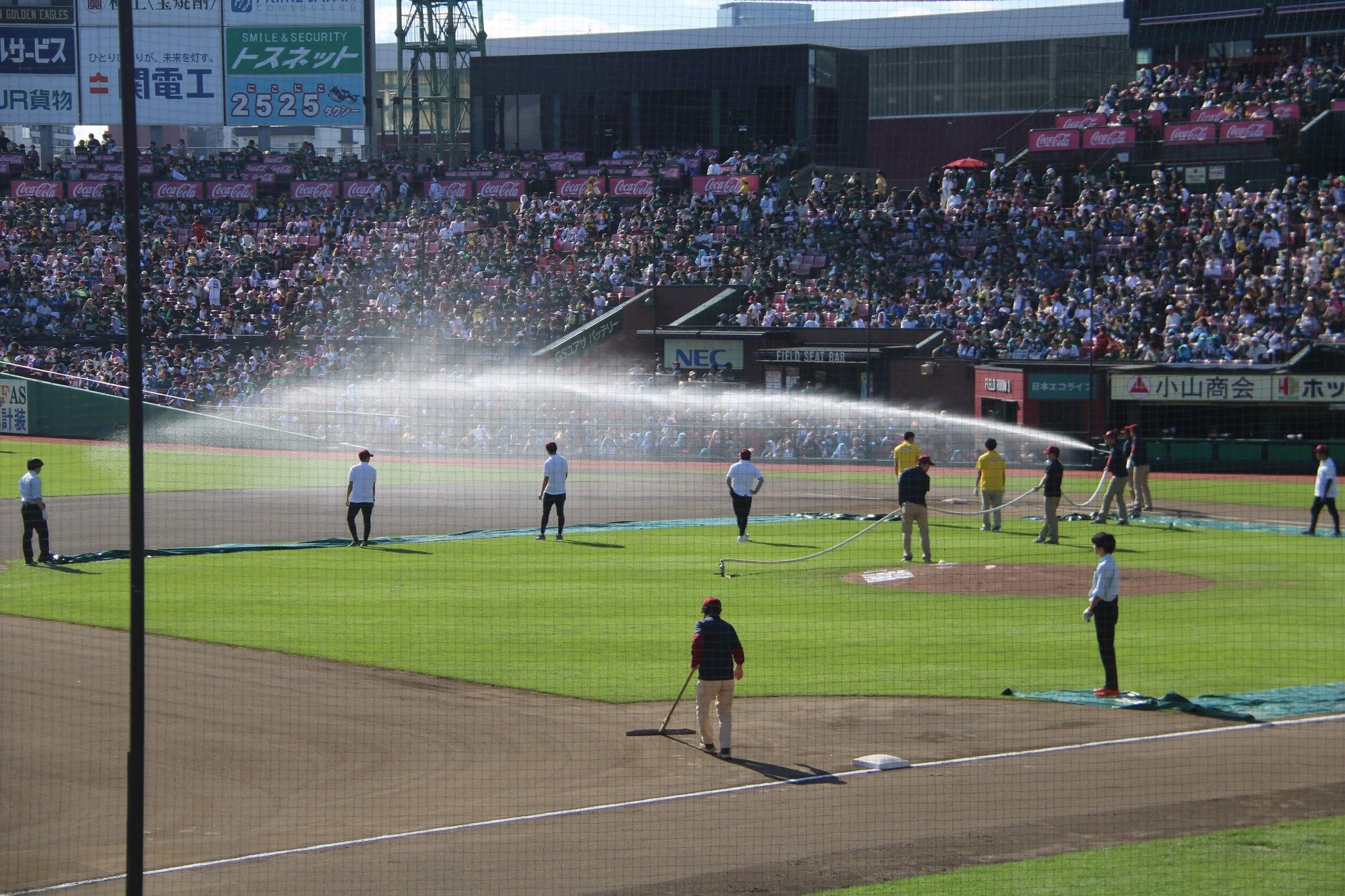
The Field Is Sacred
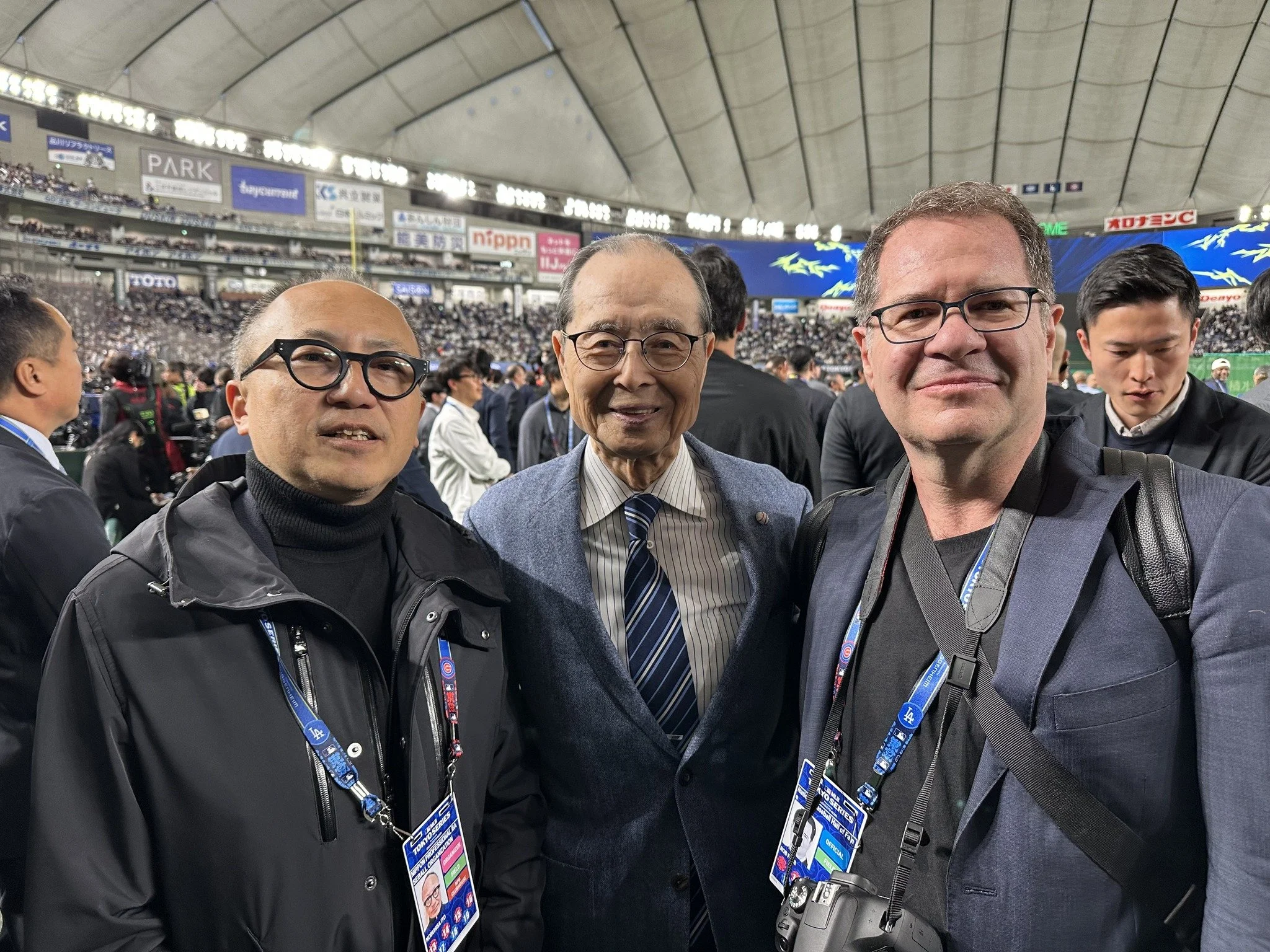
In Japan, if you’re not on the team, or an employee of the team (cheerleader, coach, grounds crew, etc.), you’re generally not allowed on the field.
That usually means the press isn’t allowed on the field, or VIPs who have paid a lot for great seats, or random people throwing out ceremonial first pitches.
The Exception To The Rule
If the event is big enough, and/or if you know the right people, anything is possible. Here, Rob is standing next to Sadaharu Oh on the field at the Tokyo Dome, with Nobby Ito standing next to Oh.
Civic Pride
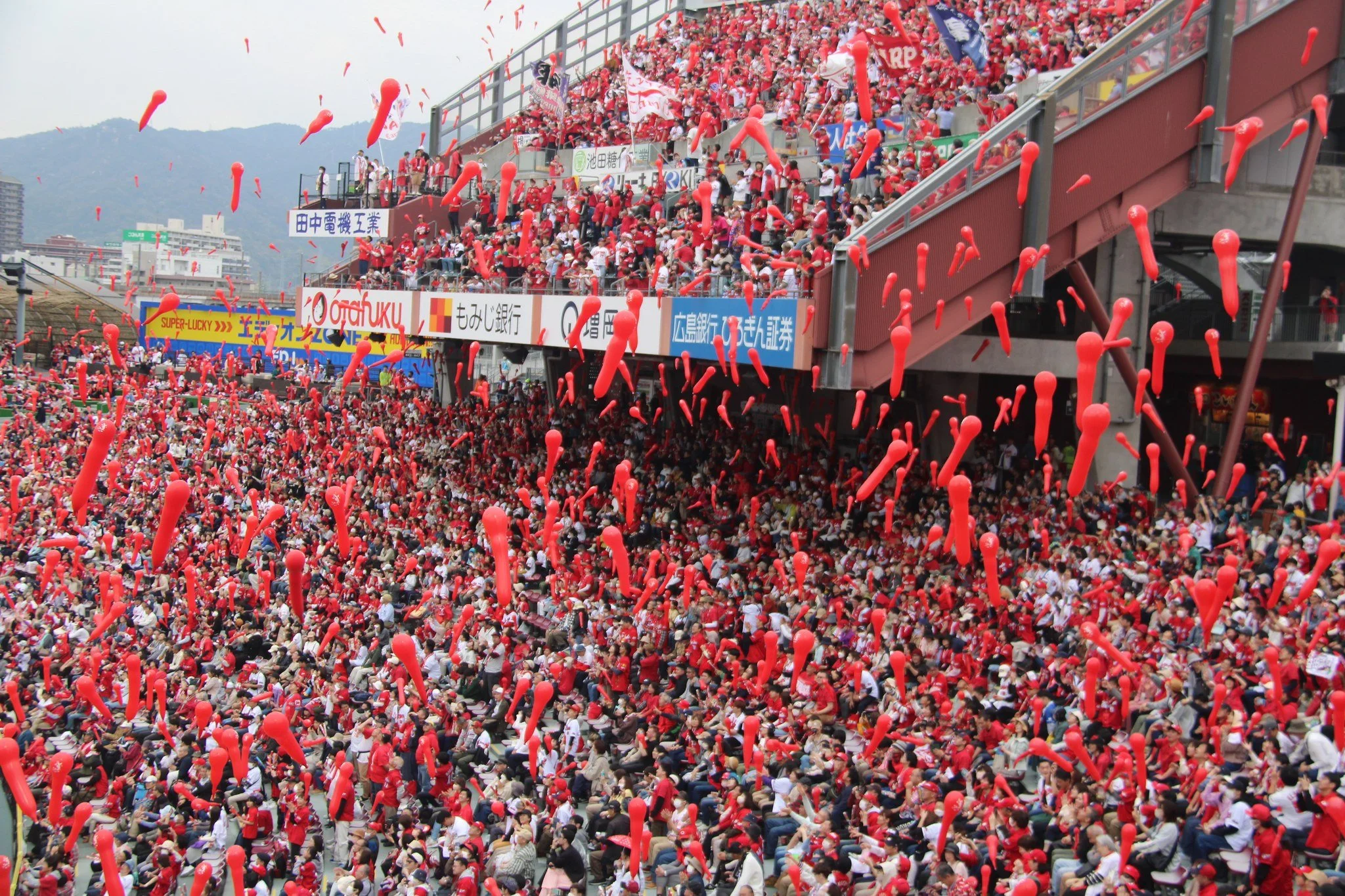
Rob says one of his favorite atmospheres at a Japanese ballpark is that of the Hiroshima Carp’s stadium, because of the civic pride that the people of Hiroshima so clearly have.
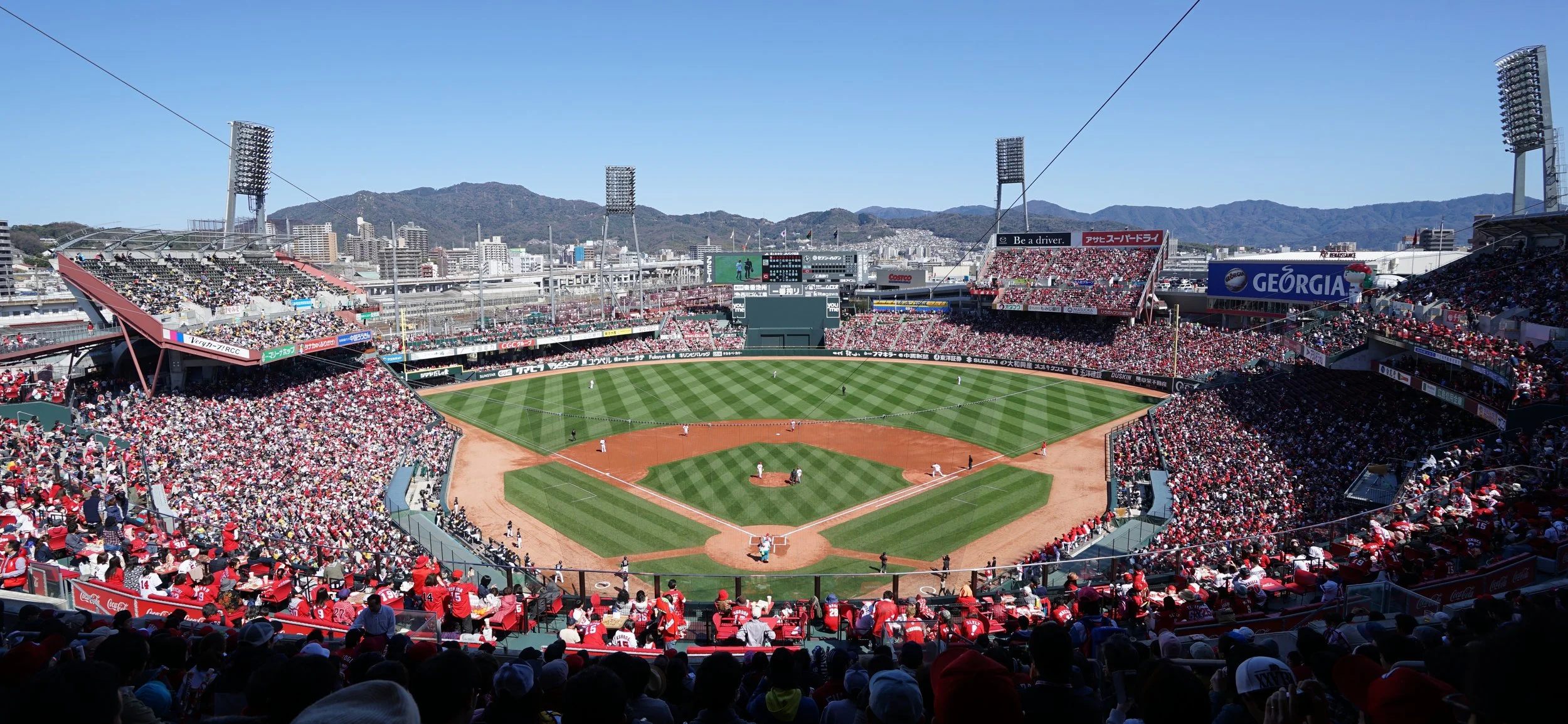
New Hiroshima Municipal Stadium, home of the Hiroshima Toyo Carp of the Japanese Central League
Japanese Industrial League
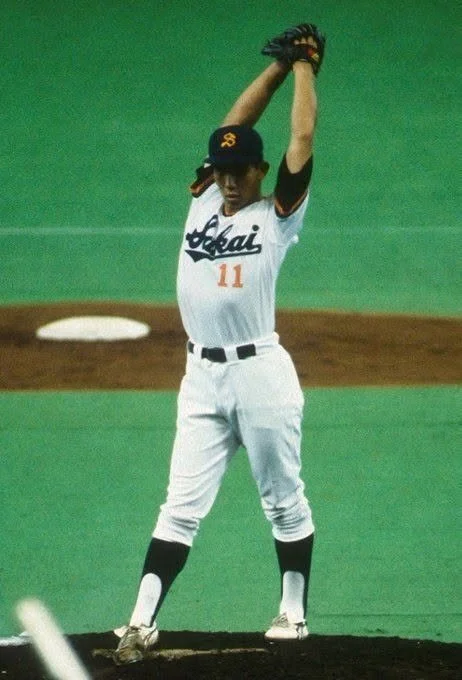
Hideo Nomo began his post-high school baseball career playing for Shin-Nittetsu Sakai, an Industrial League team representing Nippon Steel's Sakai branch in Osaka, Japan.
Nomo joined the team in 1988 after not being selected in the Nippon Professional Baseball draft due to concerns about his control.
While with Nippon Steel Sakai, Nomo honed his forkball grip, even sleeping with a tennis ball taped between his fingers for practice.
Iconic Moments
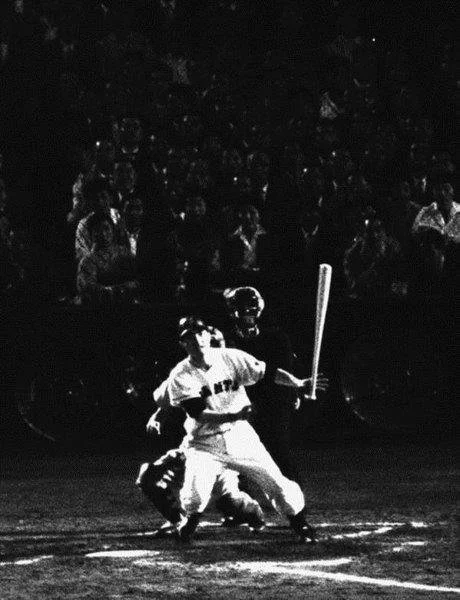
From 1958-74, Shigeo Nagashima won 6 batting titles, ending his career with a .305 batting average, 444 home runs, and 2,471 hits – which is good for 9th all-time in Japan.
This photo shows Nagashima hitting the most famous home run in Japanese history.
This was a 1959 contest known simply as the “Emperor’s Game,” a contest which was billed as the first professional baseball game attended by Emperor Hirohito and Empress Nagako.
As such, the crowd’s attention was divided between the diamond and the skybox, where the royals looked down on the action. According to Rob, “For many of the players, performing in front of the Emperor was more significant than playing in the Japan Series.”
Museum of Hanshin Koshien Stadium
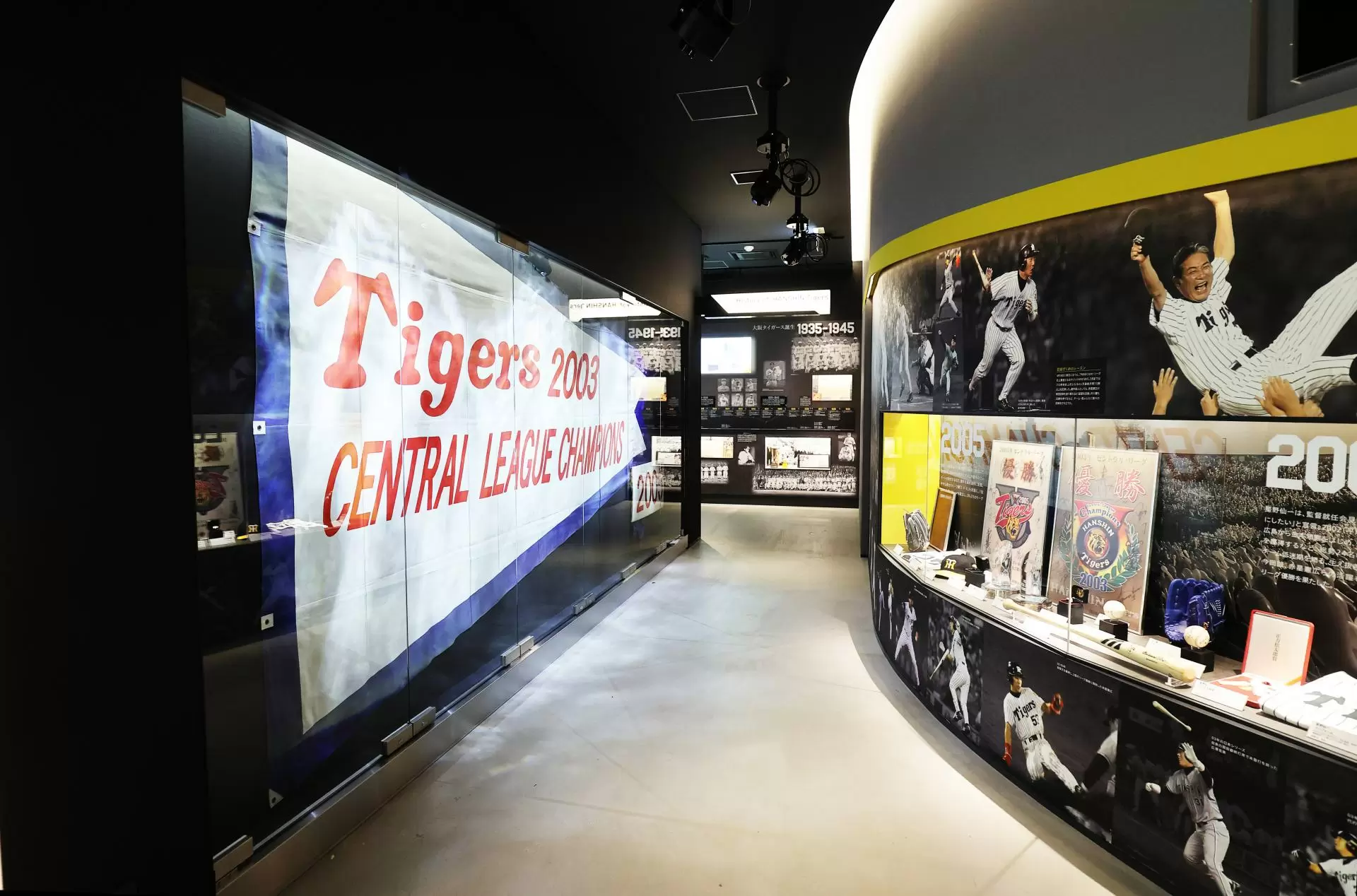
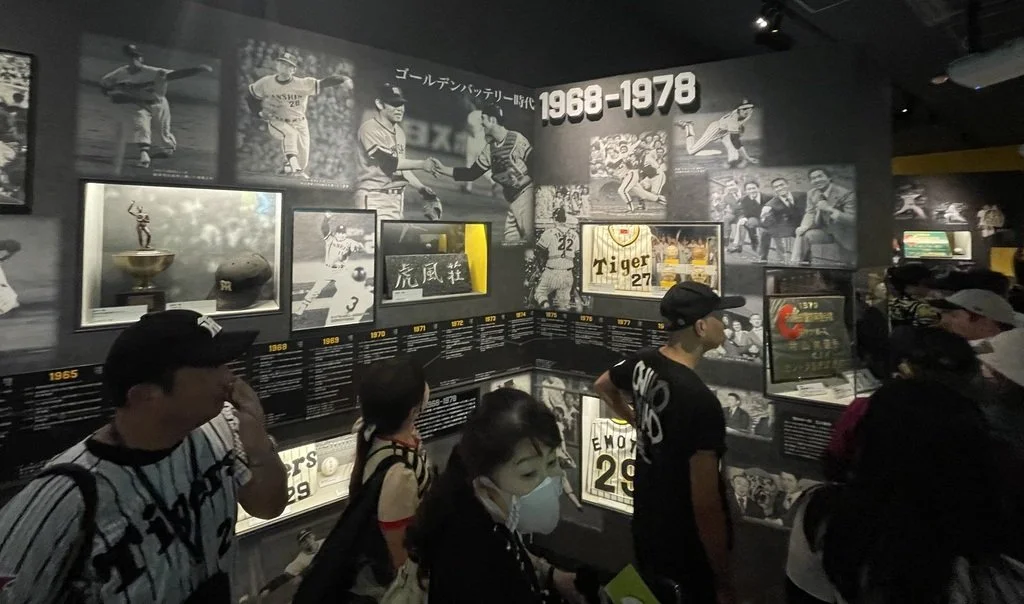
The newly revamped Museum of Hanshin Koshien Stadium is the perfect place where you can experience the countless dramatic episodes that have unfolded on the Tigers’ hallowed field, while learning about the rich tradition of high school baseball and of the Hanshin Tigers.
Eras in Japanese Baseball History
Similar to how the American game can be broken up into specific eras, Rob feels like the Japanese game can be split into easily-digestible segments, too:
19th Century
Early 20th Century (Waseda and Keio Universities)
The Professionalization of Amateur Baseball in the 1930s
The Professional Leagues
Post-WWII
The Yomiuri Giants 1960s “O-N Cannon” Dynasty
Post-Giants Dynasty which saw the emergence of the Carp, the Braves, and the Fighters
Dominance by Foreign Players in the 1980s and 1990s
The Americanization of the Japanese Game after the Nomo / Valentine Foreign Exchanges
The Ichiro Era
The Ohtani Era
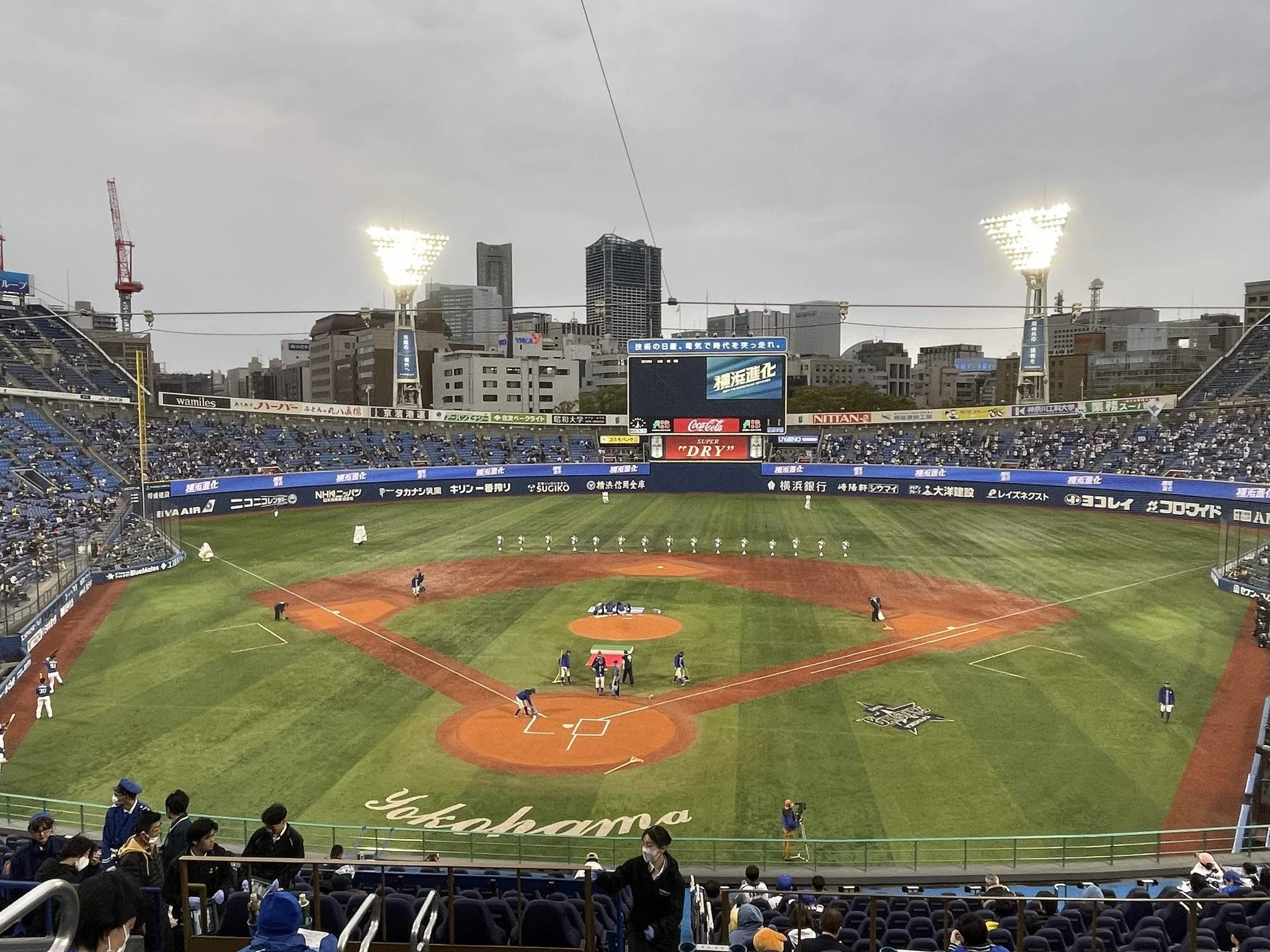
Most stadiums in Japan have perfectly symmetrical outfield dimensions, as you can see here at Yokohama Stadium.
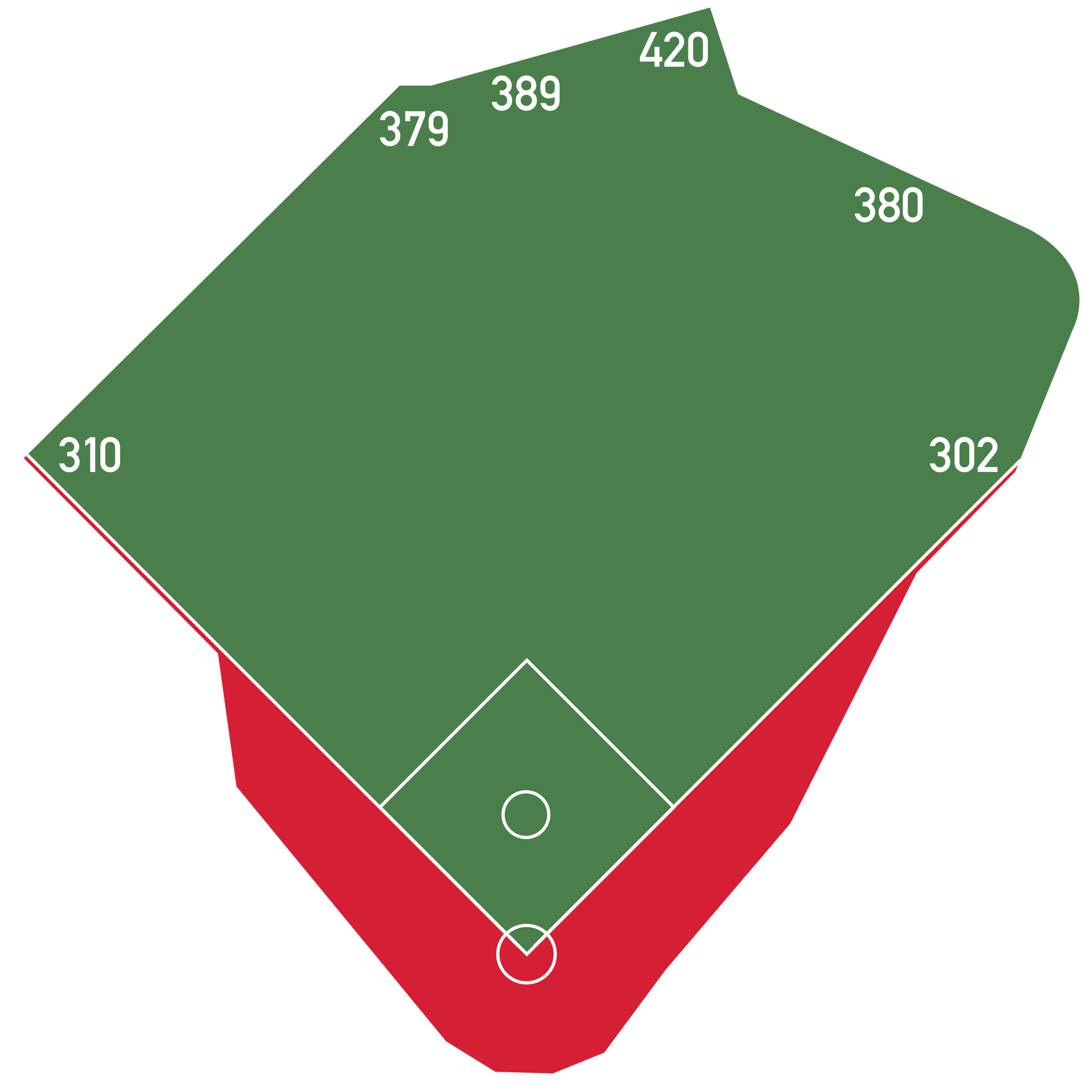
American Ballparks
The dimensions and angles at American ballparks have much more variation, implementing angles and nooks and crannies to make the field unique, even if modern ballparks do so purposely instead of organically, like it used to be done.
The field dimensions at some ballparks are so iconic that I don’t even need to tell you which American ballpark these dimensions belong to, and you know exactly which team plays their home games here.
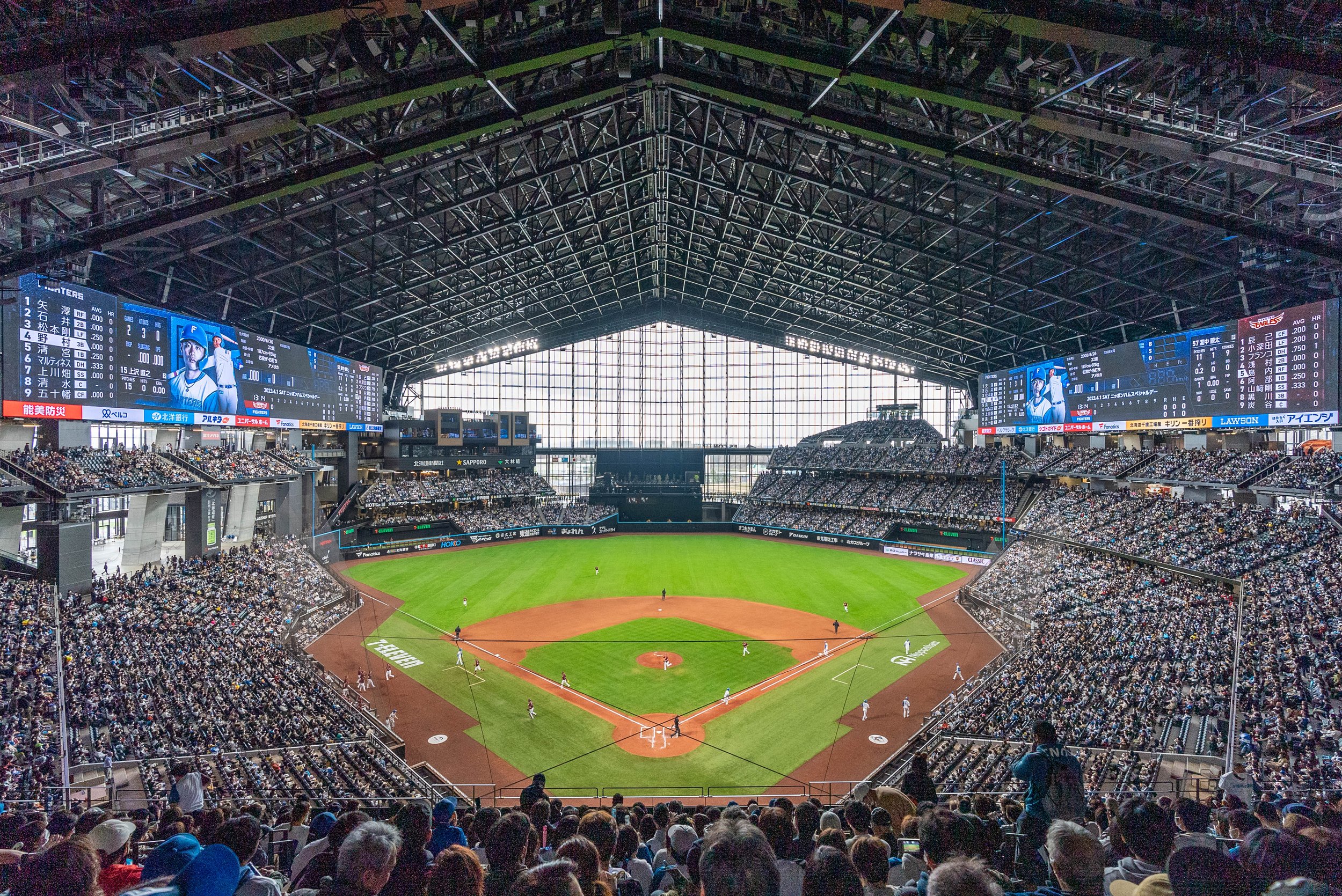
Es Con Field Hokkaido, located in Kitahiroshima, Hokkaido, is owned by and operated by Nippon Ham, and is the home field for the Hokkaido Nippon-Ham Fighters. Opened in 2023, it does have some angled walls, which create nooks and crannies.
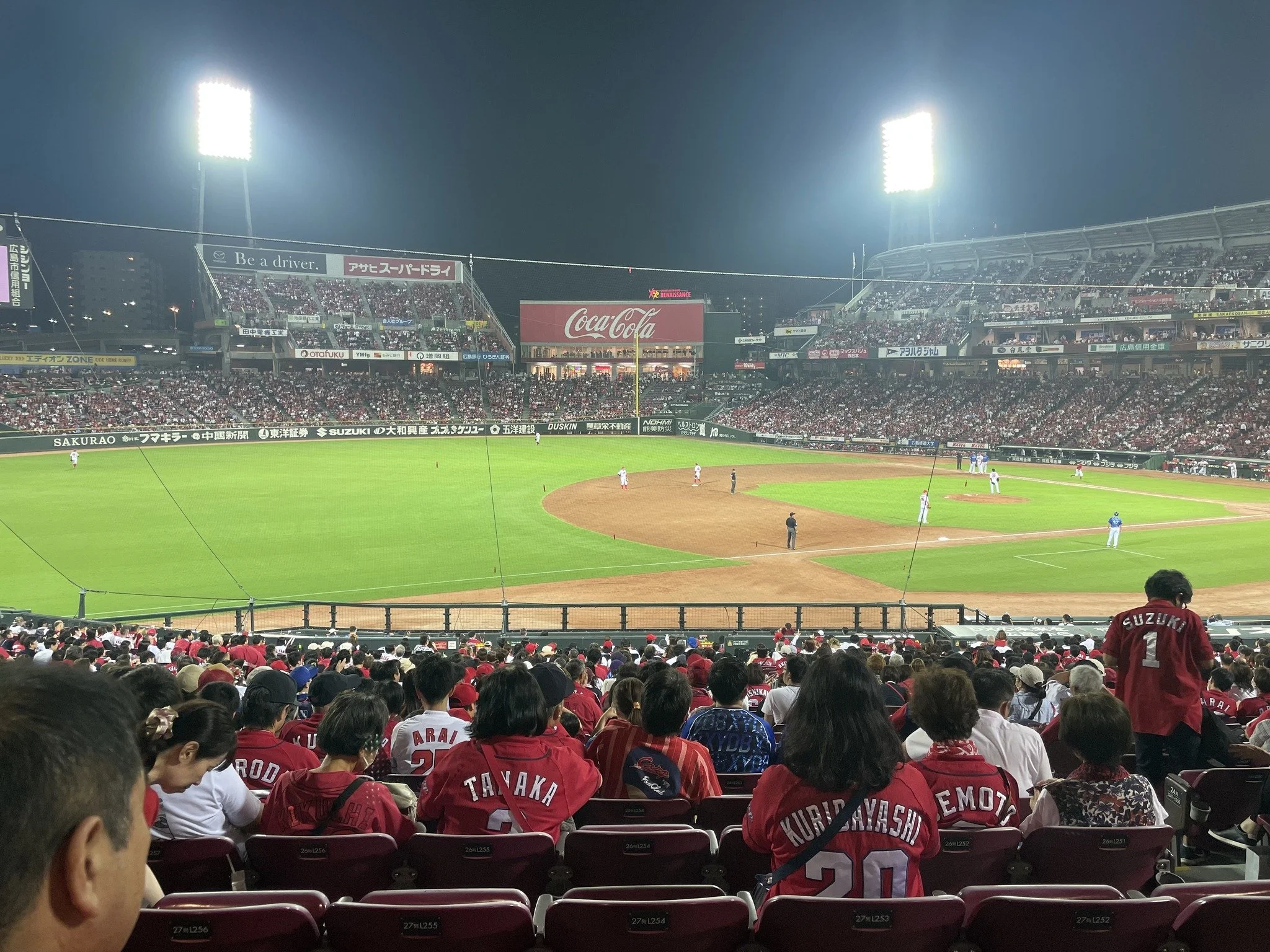
The protective netting at Mazda Zoom-Zoom Stadium Hiroshima extends far beyond the bases and into the outfield, protecting fans from line drive foul balls, and separating the fans from the players to ensure everyone’s safety.
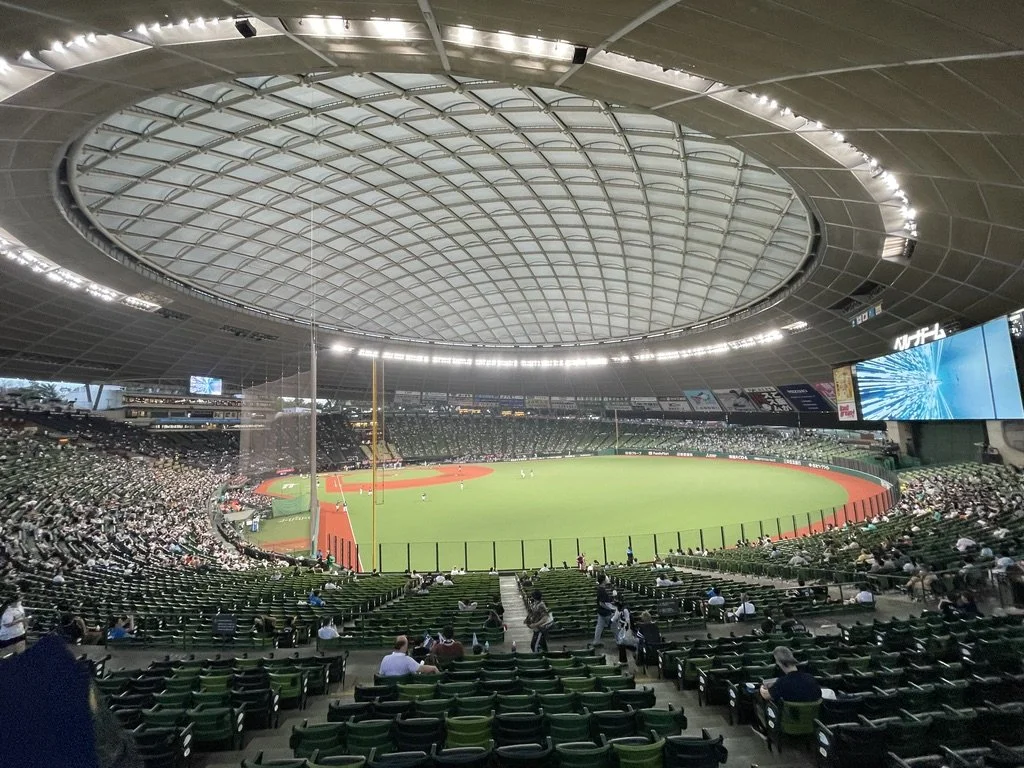
The protective netting at the Belluna Dome in Tokorozawa, Saitama, home of the Saitama Seibu Lions, extends all the way to the foul poles.
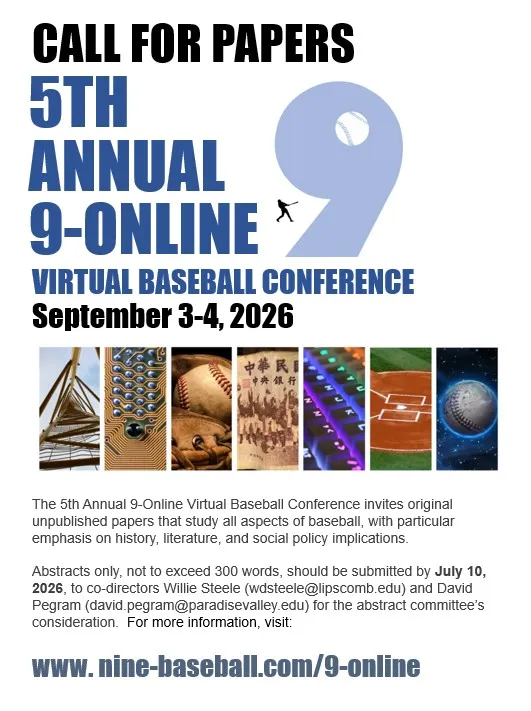
NINE
NINE studies all historical aspects of baseball, centering on the societal and cultural implications of the game wherever in the world it is played.
The journal features articles, essays, book reviews, biographies, oral history, and short fiction pieces.
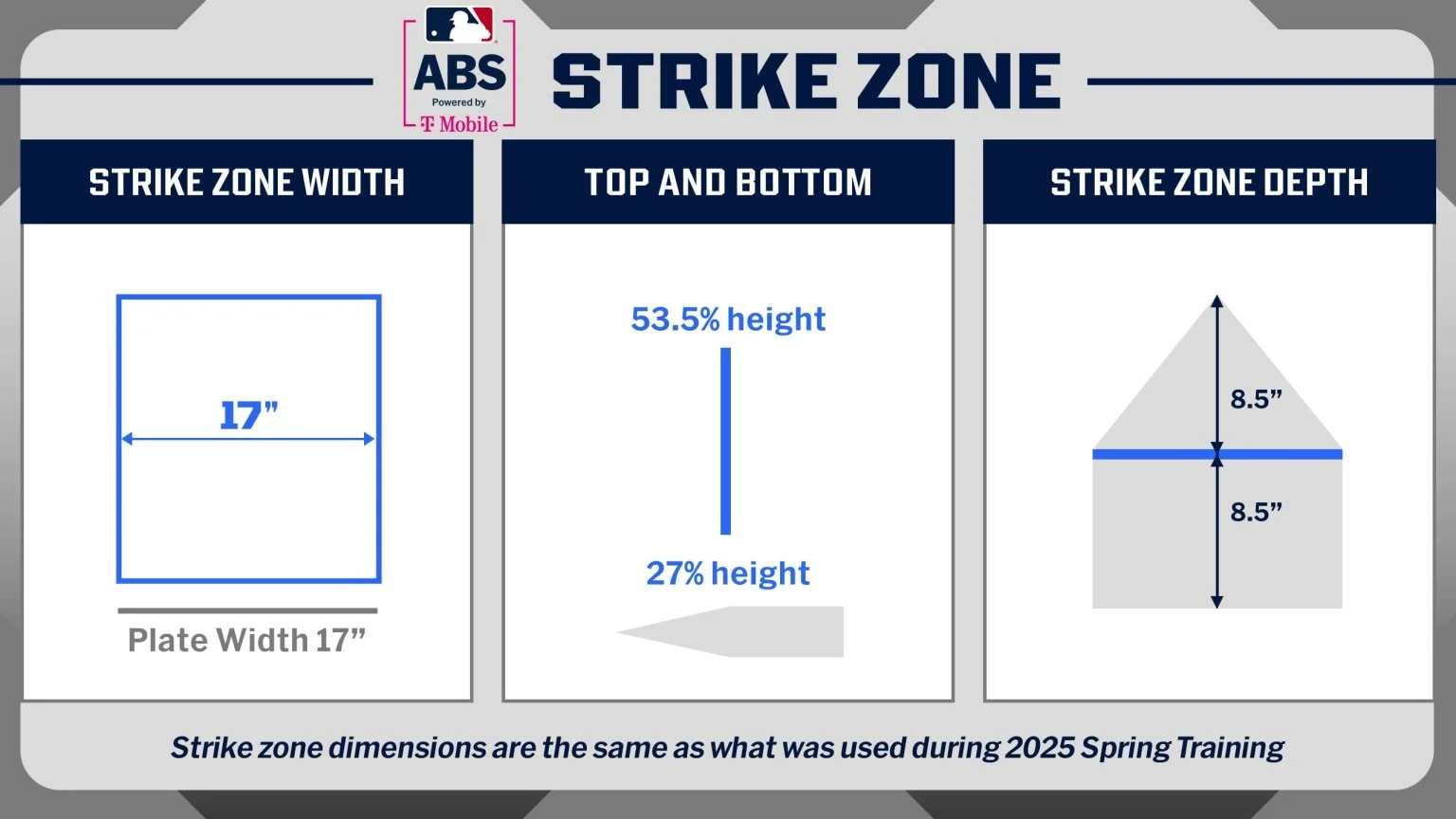
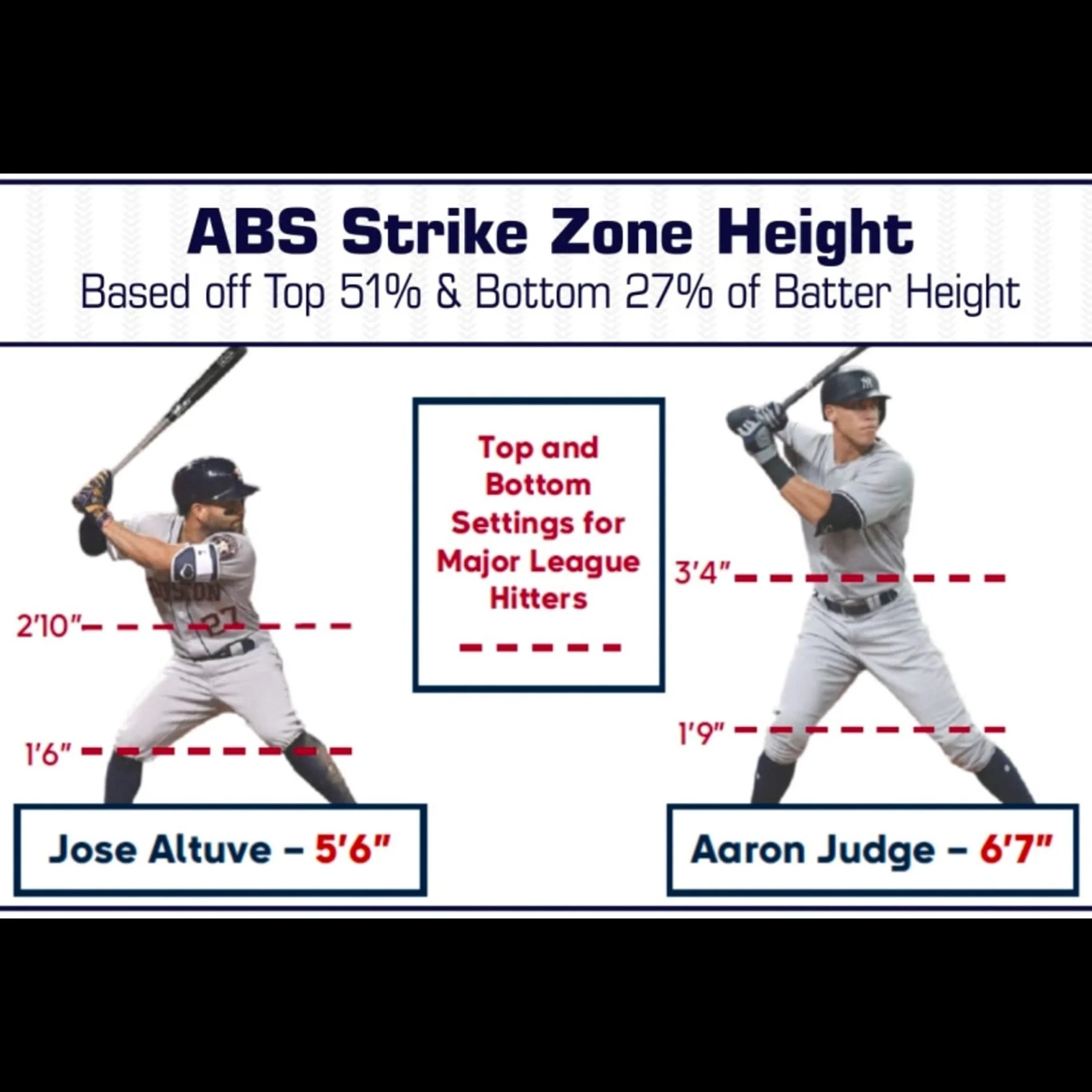
While the plate is three-dimensional, the spot where a pitch is measured to determine whether it be called a ball or a strike by the ABS (Automated Ball-Strike) system is two-dimensional — a straight line directly across home plate at the point where it starts to narrow.
Why Size Matters
While the width of the strike zone will not change from batter to batter (it is always 17 inches, the exact width of the widest part of home plate), the newly-implemented ABS strike zone is vertically different for every player.
The bottom of the strike zone is 27% of the batter’s height, while the top of the strike zone is 53.5% of the batter’s height. This is why many players’ listed heights changed this season, shrinking six different players in MLB 3” each in their official listings.
48 MLB players lost two inches compared to their listed heights in 2025, and 171 lost one inch. Meanwhile, 45 hitters gained one inch, and two hitters gained two inches of height in MLB's effort to institute the most accurate strike zones possible.
Skip to 1:45 to see the pitch Rob is specifically referencing during our interview. Be ready to be infuriated on the DR’s behalf.
Natsuo Yamazaki
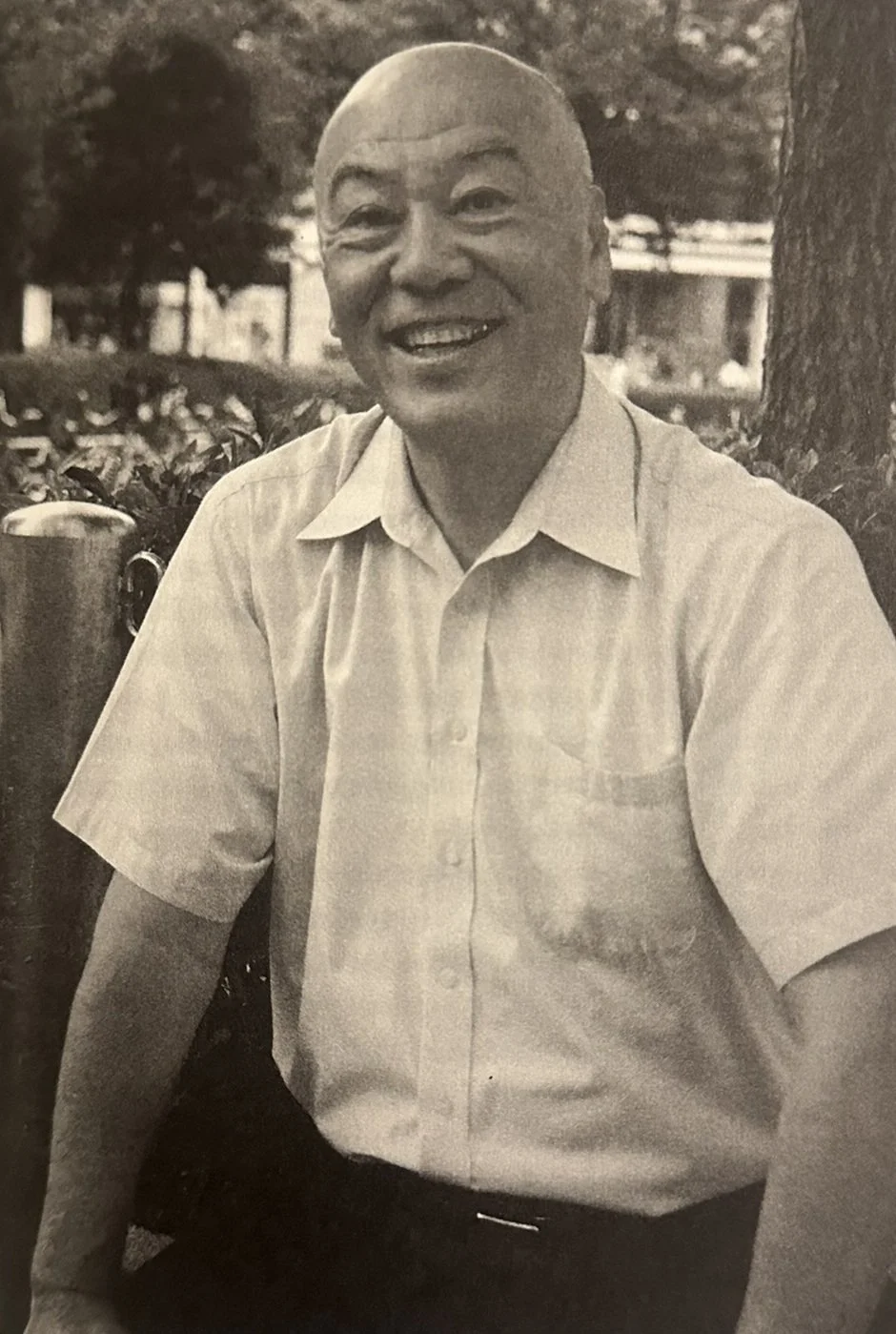
Natsuo Yamazaki was an NPB umpire from 1988 until 2010. He officiated 1,451 league games. His 17 ejections are the most handed out by any NPB umpire in history.
17 ejections in 1,451 games is just one ejection every 85.35 games, meaning if Yamazaki ejected two people in the same season, that was an above-average aggressive season for him.
National League umpire Bill Klem holds the all-time Major League Baseball record for the most career ejections by an umpire, having tossed 358 players, managers, and coaches during his 37-year career.
Klem’s total of 5,375 games umpired was the all-time record from the time he retired until he was passed by Joe West in 2021. 358 ejections in 5,375 games is one ejection every 15.01 games, meaning the Hall of Fame umpire was ejecting an average of about 10 people a season, every season, for nearly four decades. Quite a difference in philosophy.
Emperor In Attendance
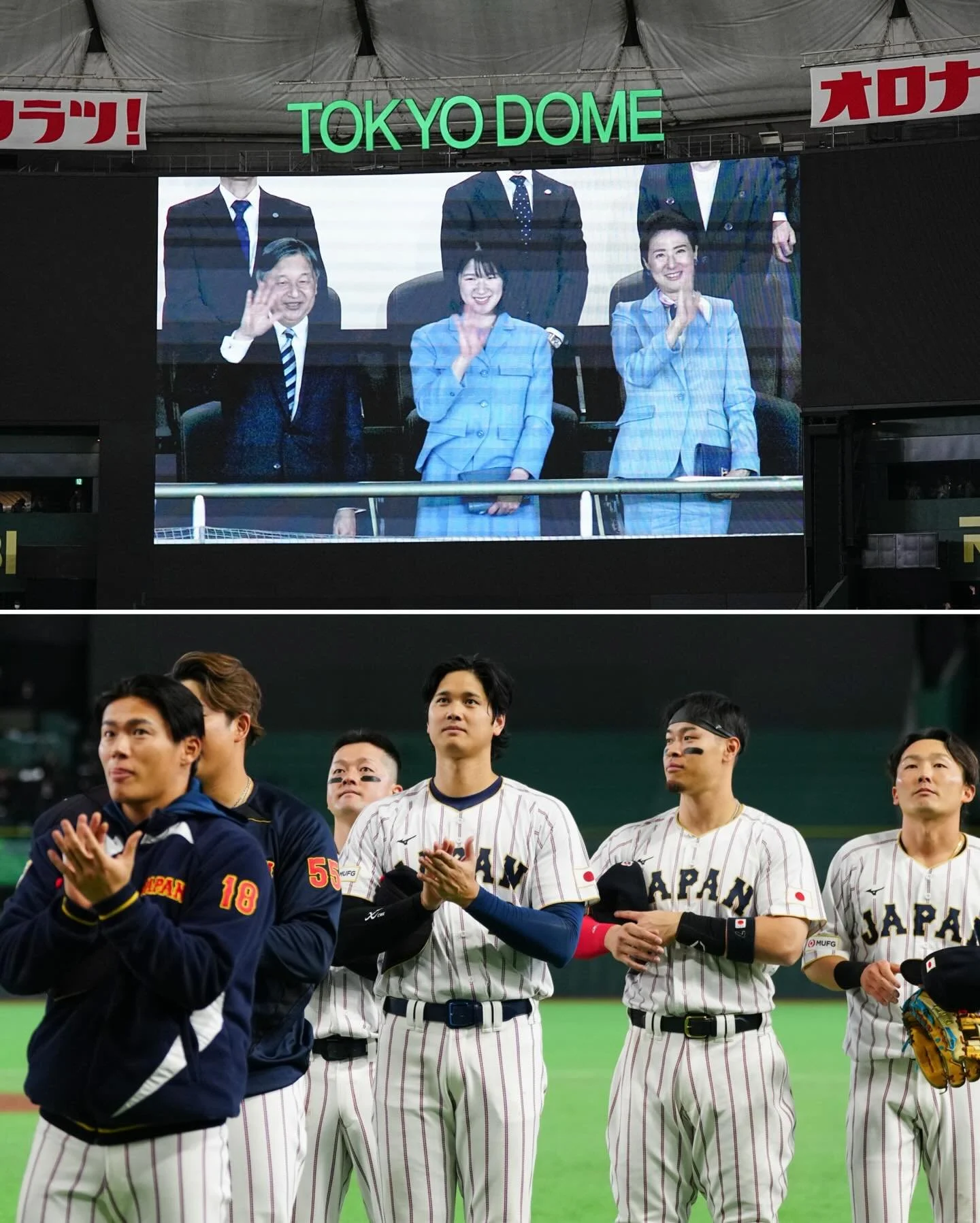
March 8, 2026, at the World Baseball Classic, marked the first time in nearly 60 years that the sitting emperor of Japan attended a pro baseball game.
On November 6, 1966, Emperor Hirohito —who is the current emperor Naruhito’s grandfather — attended an exhibition game between the Los Angeles Dodgers and a team of Japanese All-Stars, which Japan won, 11-3.
The posthumous name for Emperor Hirohito is Emperor Shōwa, and he reigned from 1926 until 1989. The first pro game attended by an emperor was when Emperor Shōwa and his wife, Empress Kojun Nagako, watched a game between the Yomiuri Giants and the Hanshin Tigers at Korakuen Stadium in Tokyo in July of 1959 that ended with that famous Shigeo Nagashima walkoff home run.
Martial Arts Approach?
The new manager of the Chiba Lotte Marines has said he’s going to return to Shōwa-era style practices.
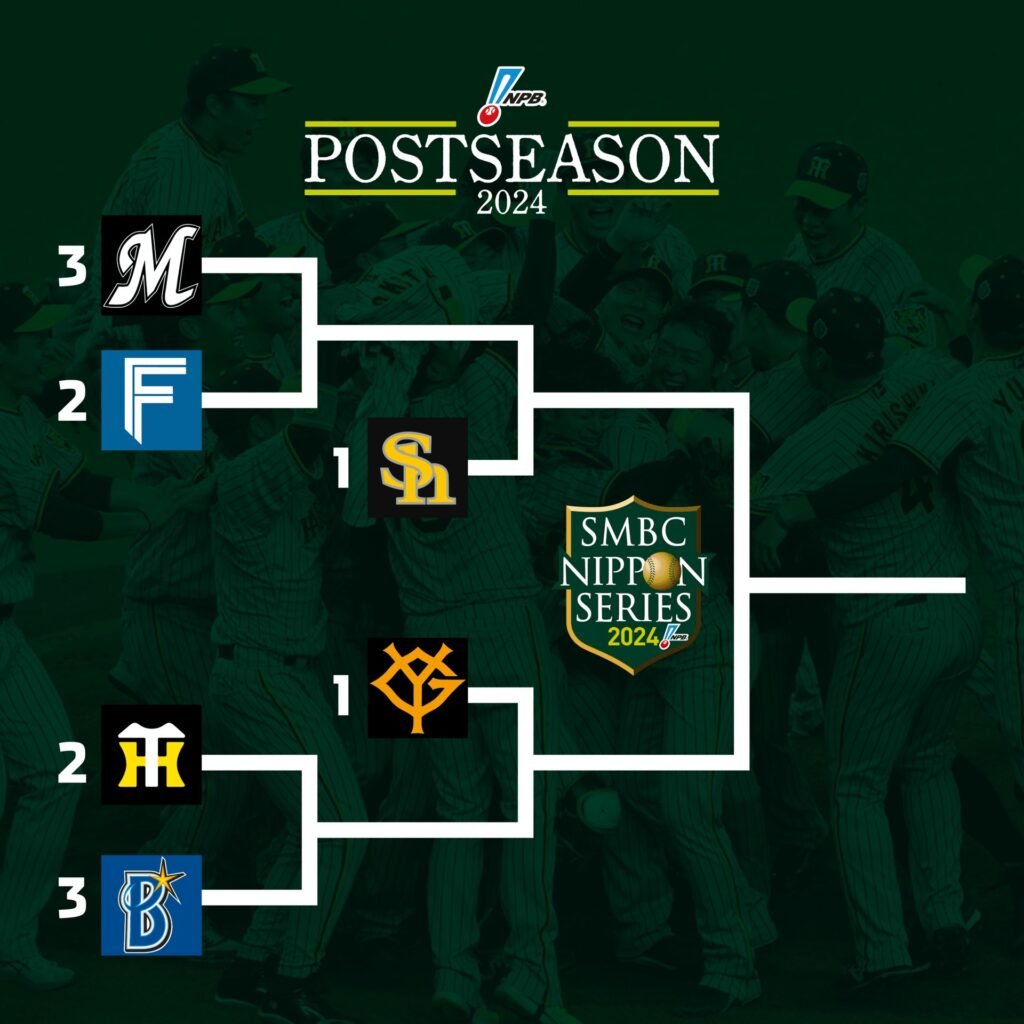
NPB Playoffs
Three teams from the Pacific League make the playoffs each year, as well as three teams from the Central League. The #1 seed from each league gets a first round bye, which could potentially mean that from the date of their last regular season game, to the date of their first playoff game, could be nearly a month apart. If they are a dome team who didn’t have many rainouts, the last couple weeks of the season will see them sitting at home… waiting.
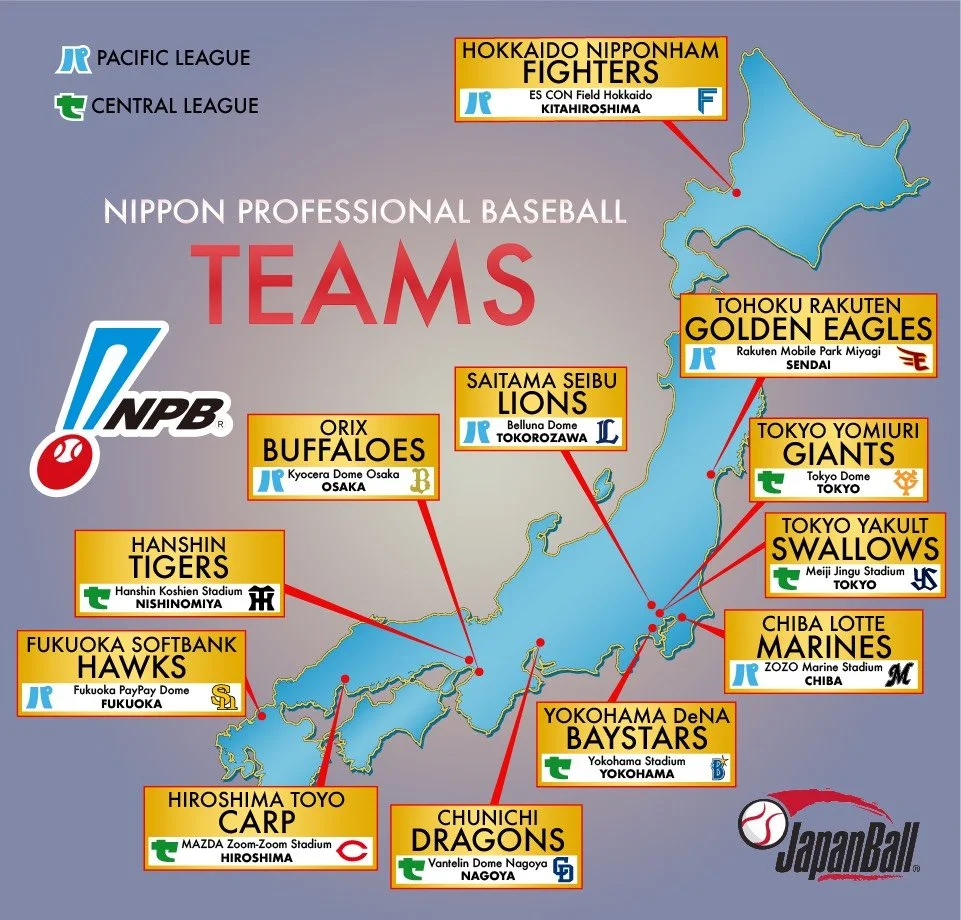
Travel
Most teams travel from series to series by way of the bullet train. If a trip is close, or to travel from the hotel to the stadium, teams may travel by bus, as well.
However, as you can see in the map, Hokkaido is a detached island, the second-largest and northernmost of Japan's four main islands. Teams will travel by airplane to play the Nippon-Ham Fighters.
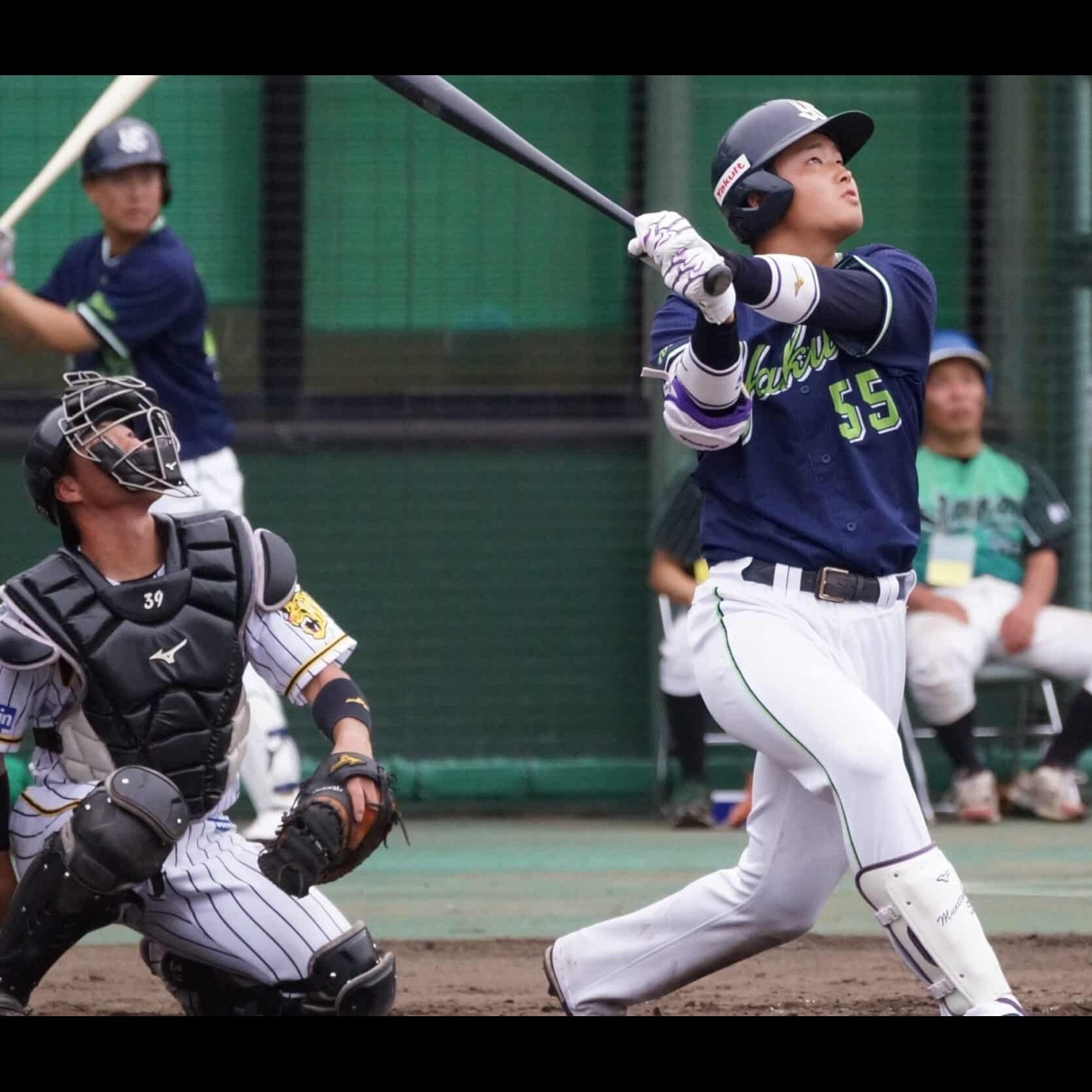
Japan’s Minor Leagues
In 1954, the six teams of the Central League agreed to form their own minor league — the Shin Nippon League — as a complement to the already extant Kansai Farm League, which began play in 1952.
Both minor leagues decided to join forces with Nippon Professional Baseball in 1955, and the 14 farm teams of the Central League and Pacific League were split up to create the Eastern League and the Western League, each with seven teams.
Today, the Eastern League is owned and managed by the Central League, with each of the eight teams generally playing an 80-game schedule every year.
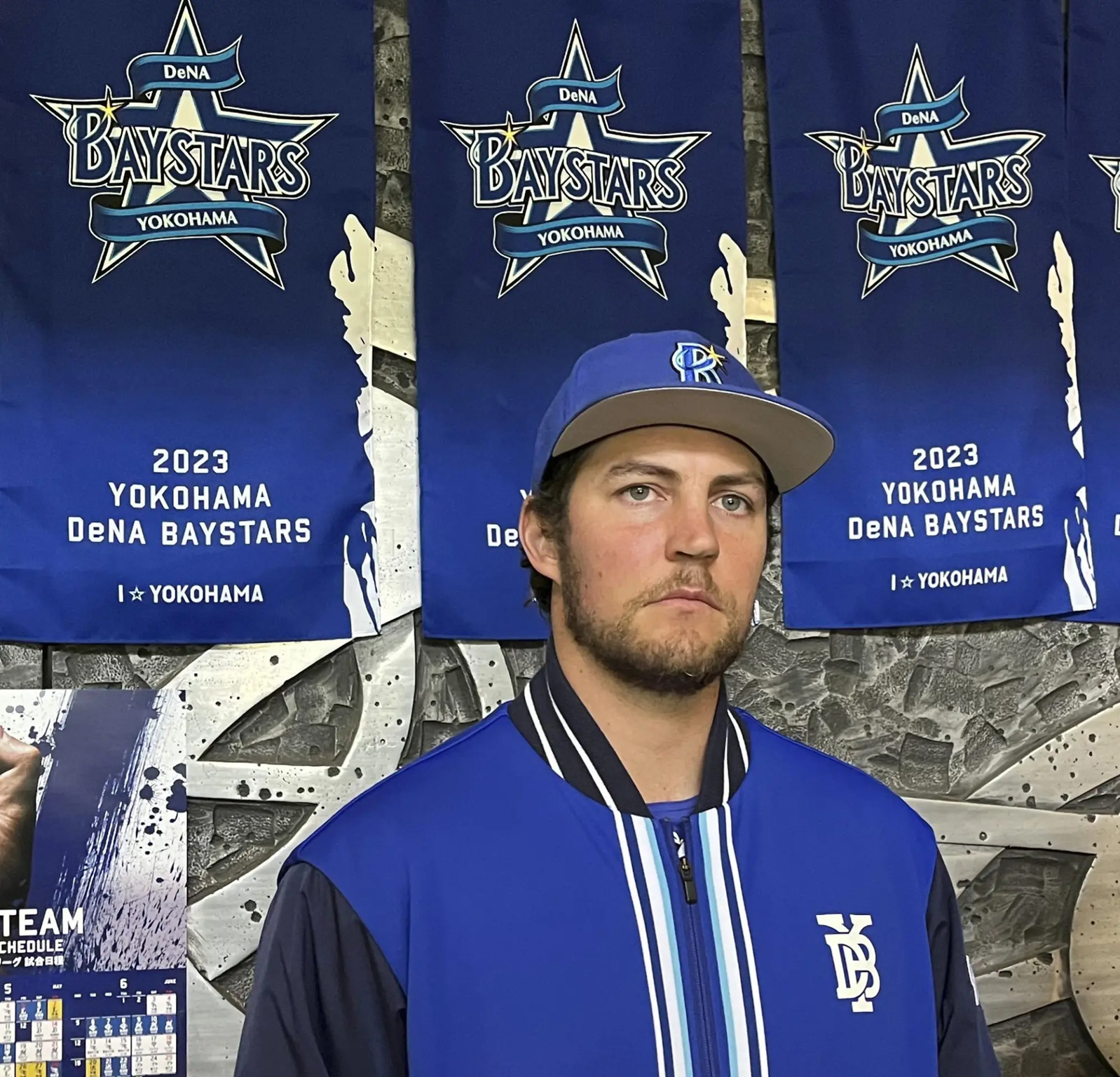
Level of Play
Because you have no Rookie ball in Japan, you have no A ball, no AA ball, etc., everybody who isn’t on an NPB roster is thrown down in the minor leagues. That means you have players straight out of high school, straight out of college, and sometimes straight out of the industrial leagues or the Baseball Challenge League. As such, the level of play in Japan’s minor leagues is far below that of a major league.
In 21 games for the Yokohama DeNA BayStars in 2025, Trevor Bauer went 4 and 10 with a 4.51 ERA. Glean from that what you will.
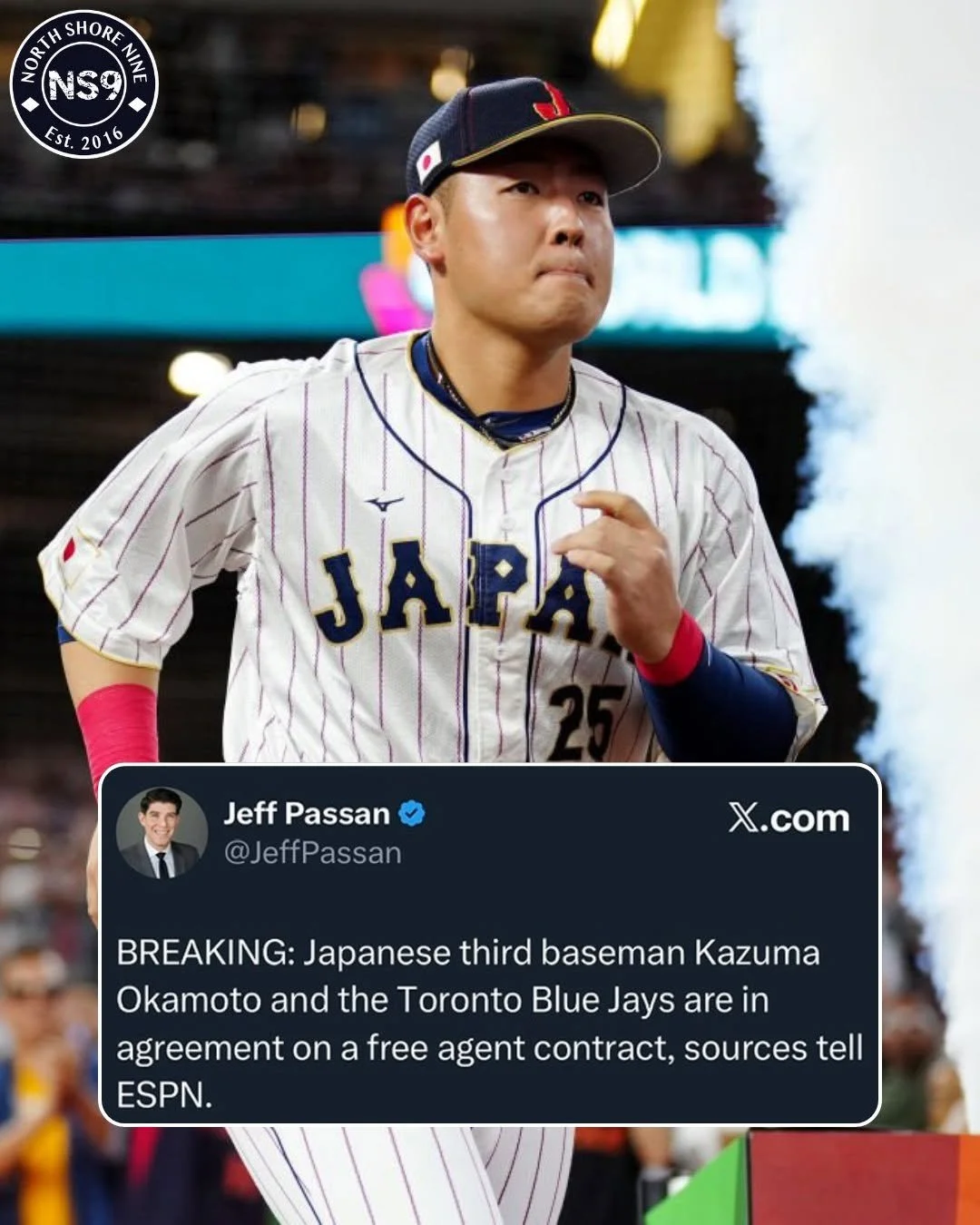
Free Agency
Players that accrue nine years of service time in Japan's Nippon Professional Baseball or the Korea Baseball Organization are considered free agents. Such players are eligible to pursue opportunities in any league, including Major League Baseball, without being subjected to the Korean or Japanese posting systems.
Clubs are able to offer any dollar amount they wish to such players, as they are not subject to international amateur free agency spending restrictions. International players younger than 25 can sign minor-league contracts only.
Kazuma Okamoto had a stretch of six straight years during which he hit at least 30 home runs in NPB, with the final of those seasons being a 41-HR campaign in 2023.
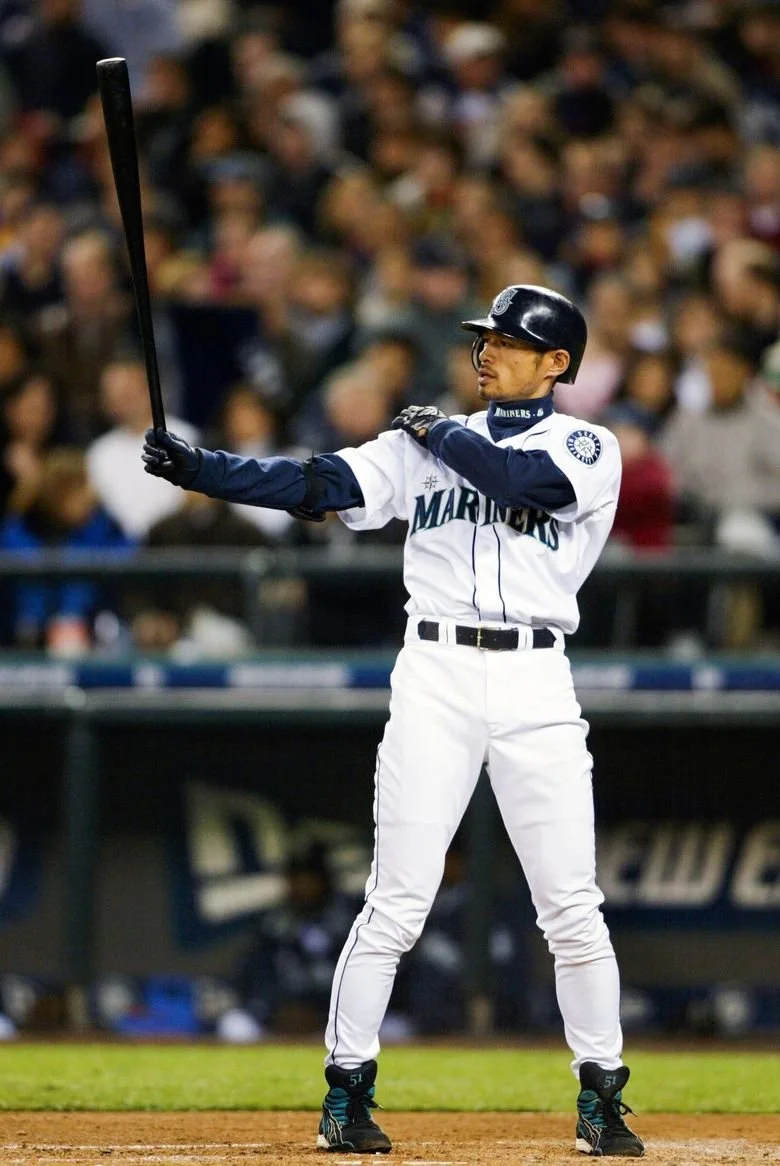
Posting System
Players from Japan's NPB who do not have the requisite nine years of professional experience to gain international free agency can request to be "posted" for Major League clubs.
Under posting rules that were instituted in the 2018-19 offseason, the "release fee" -- an amount that an NPB club must receive in the event an agreement is reached between a posted player and a Major League club -- depends on the guaranteed value of the contract a posted player signs with a Major League club.
All 30 MLB clubs have 45 days to negotiate with a player after he is posted. If no agreement is reached in that timeframe, the player returns to his NPB club for the coming season. He cannot be posted again until the following offseason.
In 2001, Ichiro Suzuki became the first Japanese-born position player to be posted and signed to an MLB club. He ended up having a pretty decent Major League career.
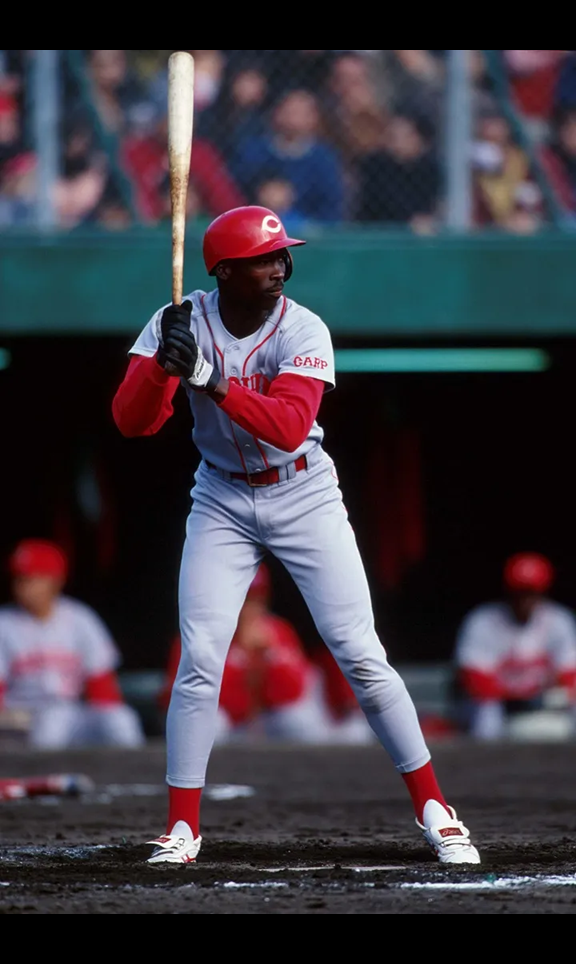
Alfonso Soriano
As a 21-year-old in 1997, Alfonso Soriano appeared in nine games for the Hiroshima Toyo Carp, hitting a dismal .118 (2-19). Soriano disliked the intense Japanese practice schedule, and the Carp denied him a salary increase from $45,000 (the league's minimum) to $180,000 per year, but he was unable to leave the Carp in 1998 due to contract restrictions.
Like Hideo Nomo and Hideki Irabu before him, Soriano hired Don Nomura to help his situation. After first attempting to void Soriano's NPB contract by unsuccessfully arguing that the player was legally a minor when he signed it, Nomura advised him to simply retire from NPB and pursue a career in MLB.
This prompted Carp executives to file an injunction against Soriano and send letters to MLB teams demanding that they cease all negotiations with him. NPB officials claimed that, after the Nomo case, they had privately amended the Player Contract to give NPB teams the right to prohibit a player from signing a new contract anywhere after voluntarily retiring. Since MLB officials were not consulted and they did not agree to any changes, MLB Commissioner Bud Selig declared that MLB would recognize Soriano as a free agent July 13, 1998. The Carp backed down.
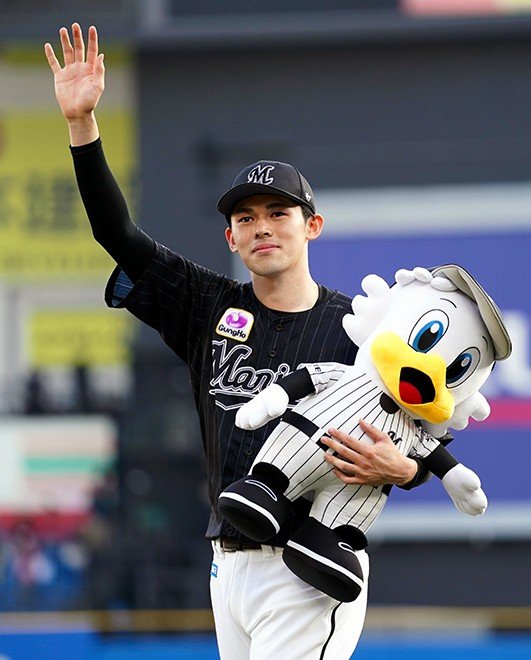
Rōki Sasaki
Rōki Sasaki made his NPB debut in 2021 for the Chiba Lotte Marines and signed with the Los Angeles Dodgers on January 22, 2025.
There is speculation that Sasaki had signed a secret contract with the Marines which was ambiguously worded as to the timeline upon which he would be posted. Sasaki forced the Marines’ hand, and they eventually backed down from their position and posted him.
The contract Sasaki signed with the Dodgers featured a $6.5 million signing bonus, but because he was under the age of 25 at the time, regulations required that he had to sign a minor league deal.
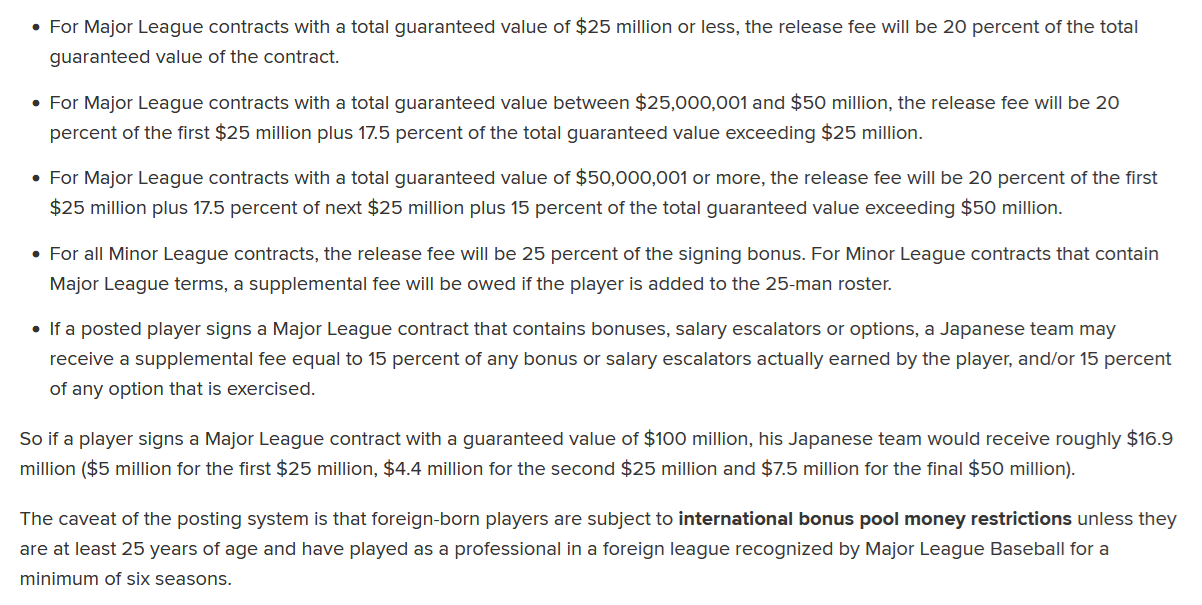
Posting fees, explained. To read the complete rules about the Japanese Posting System, click HERE.
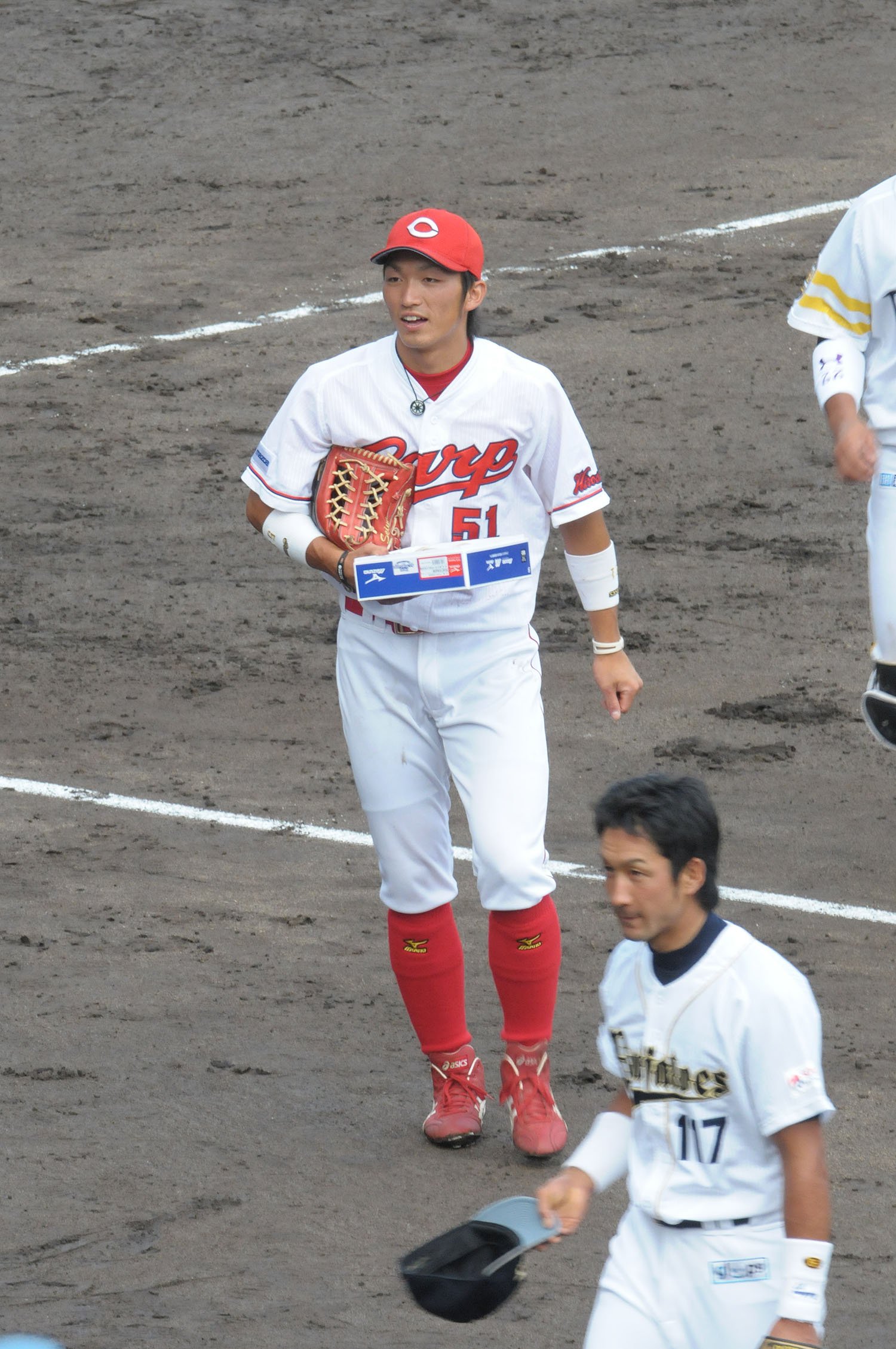
Hiroshima Toyo Carp
The Hiroshima Toyo Carp were founded in 1949, four years after the atomic bombing of Hiroshima. The team struggled to find success in their early years and faced serious financial issues, but narrowly escaped merger and contraction plans through the fundraising of Hiroshima citizens and fans. The team found stability over the next two decades, eventually rising to their first Central League pennant in 1975, and winning the 1979 Japan Series. In appreciation of their emergence alongside the reconstruction of Hiroshima, the Carp are regarded "as a symbol of Hiroshima's recovery".
In modern times, the team has the longest championship drought in NPB. They have not won the Japan Series since 1984, and are the only NPB team to not win a Japan Series in the 21st century. They are known for being great at developing prospects, but not being able to re-sign them once their ability reaches a level which demands a rich contract. Seiya Suzuki, for example, left the Carp after 2021, his sixth straight Best Nine Award-winning season, to sign with the Chicago Cubs.
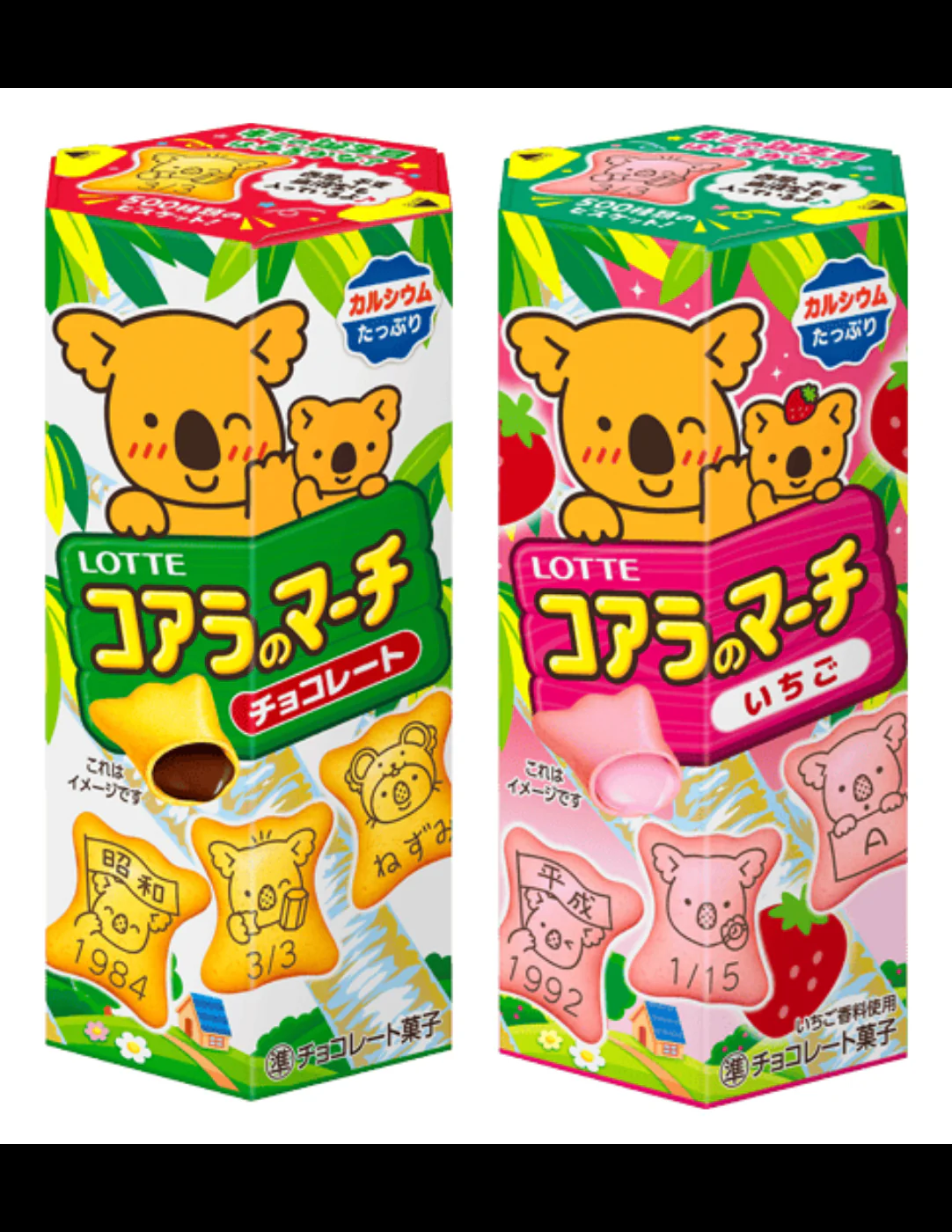
NPB Teams & Their Parent Companies
NPB team management presumes parent company backing. All 12 teams belong to corporate groups, with standalone profitability difficult for most. This structure is highly unusual among the world's professional sports leagues.
MLB requires teams to operate as profitable independent businesses, with owners pursuing franchise value maximization as investors.
In NPB, by contrast, team ownership functions as a form of advertising expenditure for their parent companies - tolerating billions of yen in annual losses in exchange for brand exposure and enhanced corporate image.
Although often a South Korean international confectionery company, Lotte originated in post-World War II Japan. Currently, it is the third-largest chewing gum manufacturer in the world.
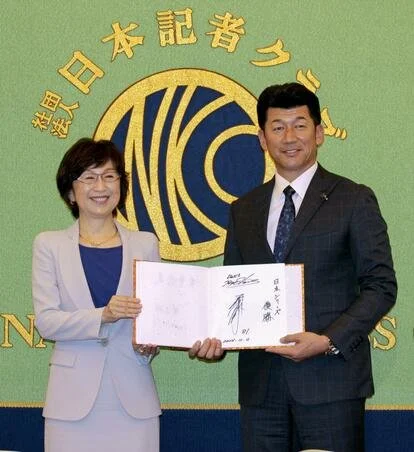
Tomoko Namba
Tomoko Namba is the owner of the Yokohama DeNA BayStars. She is the only female owner in all of NPB.
In 1999, she founded DeNA, one of Japan's largest mobile social network and mobile game companies. She transitioned from CEO to Executive Chairman of DeNA in 2011 to focus on her family and personal life.
In 2021, she was appointed vice-chair of the Japan Business Foundation, becoming the first woman to hold that post in its 75-year history.
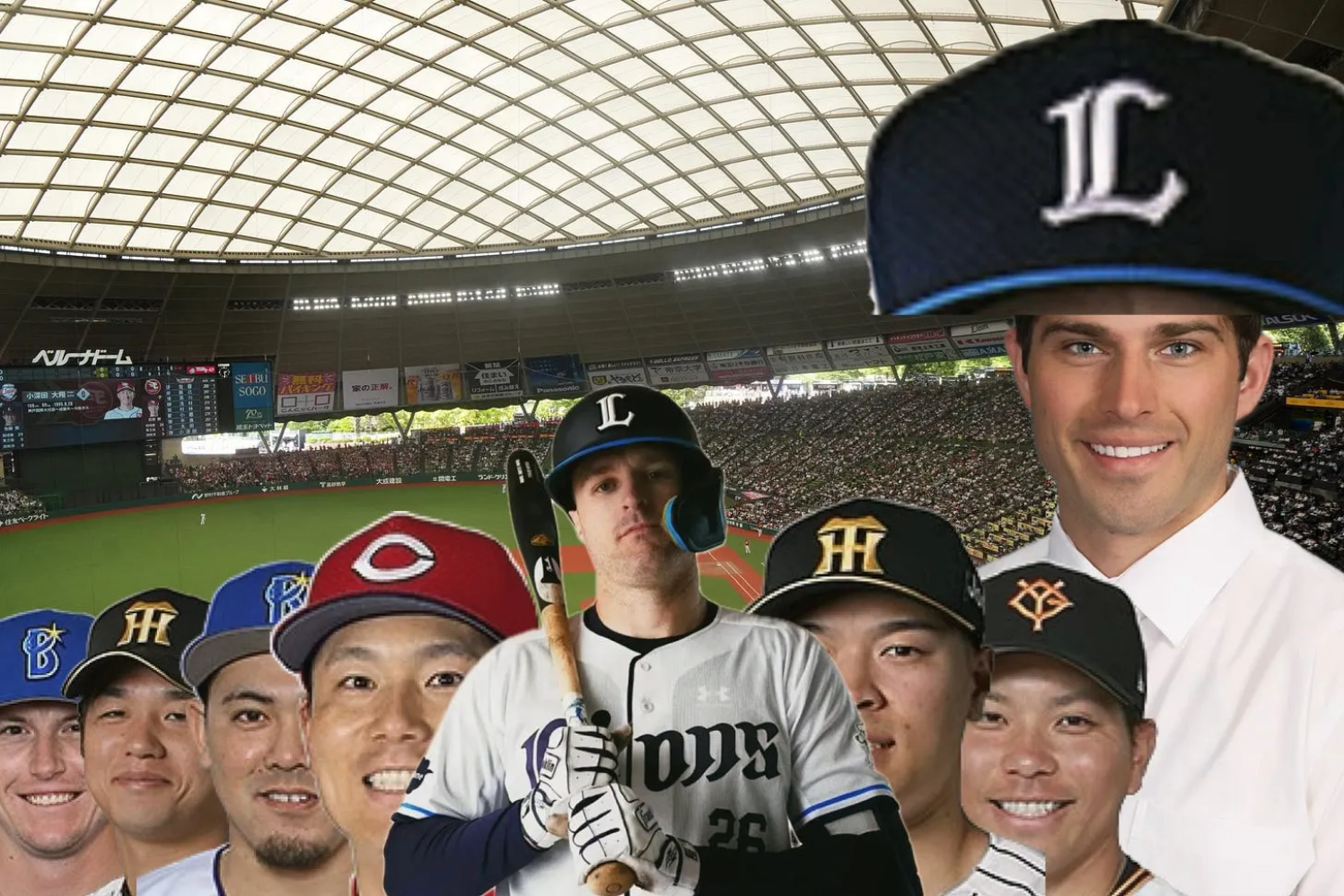
NPB Salary Evaluators
While we don’t have access to the spreadsheets that the official NPB salary evaluators use, I would imagine their trains of thought follow pretty closely to what Chris Bzozowski recently wrote about for Medium.
Read his in-depth breakdown HERE.
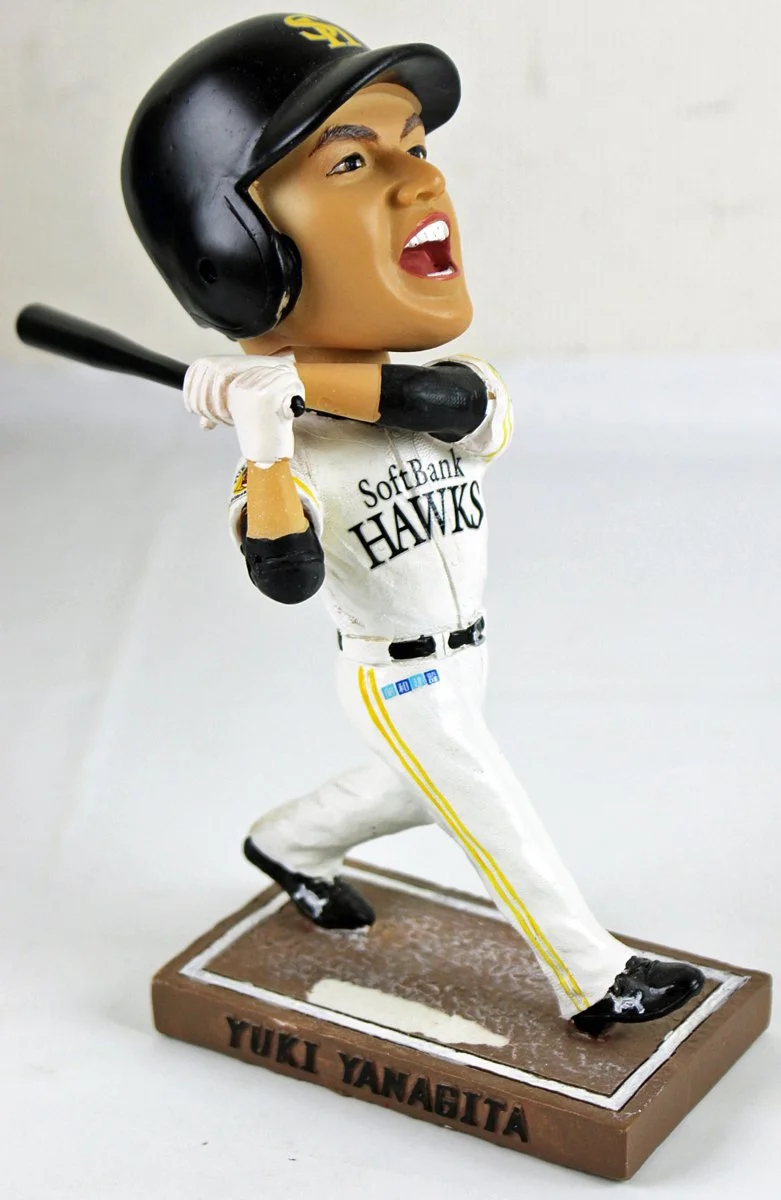
Fukuoka SoftBank Hawks
Founded on February 22, 1938, as the Nankai Club, they were the first Kansai team to play in Osaka proper. The team went through a few name changes before settling on Nankai Hawks in 1947, eventually changing ownership in 1988 and moving to Fukuoka in 1989. The team subsequently became known as the Fukuoka Daiei Hawks until 2005, when they were purchased by SoftBank Group, becoming the Fukuoka SoftBank Hawks.
The Hawks are often regarded as one of the most successful franchises in Pacific League and the richest in all of baseball under the ownership of SoftBank Group, with the second most wins in all of Japanese sports, trailing only the Yomiuri Giants. The Hawks have played in the Japan Series 22 times, winning 12 of them (including 10 since 1999).
Their best players are superstar outfielder Yuki Yanagita, veteran hitter Kensuke Kondoh, and dominant ace pitchers Livan Moinelo and Kohei Arihara.
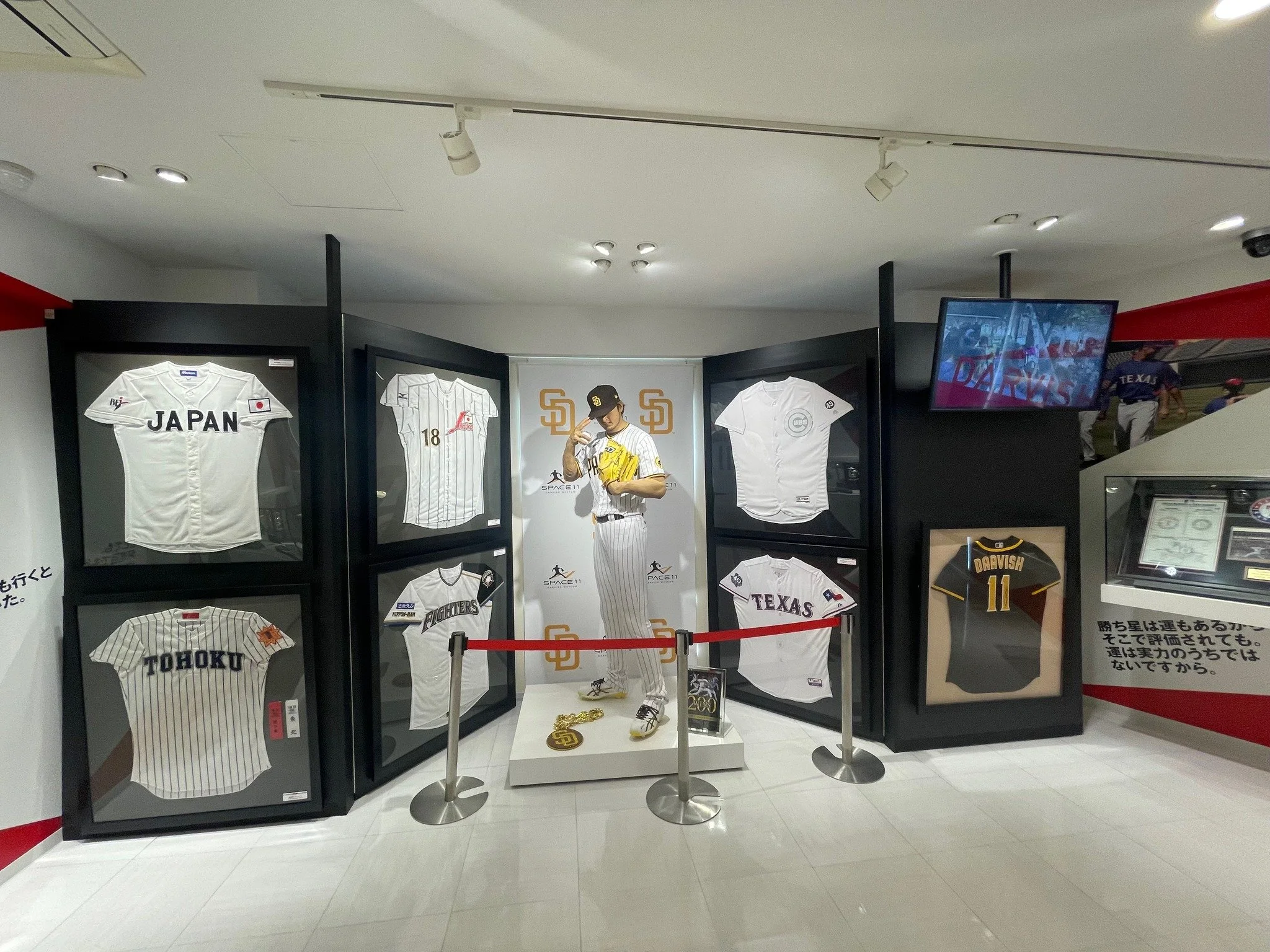
Which MLB Teams Did Japanese Fans Care About Before 1995?
It’s very easy to understand how and why the average Japanese fan would be a fan of Shohei Ohtani, or follow the Dodgers. Or why you might have a generation of Japanese Mariners fans because of Ichiro. Or how they might be fans of Yu Darvish and Yuki Matsui, and root for the Padres. Or of Seiya Suzuki, so they’re Cubs fans.
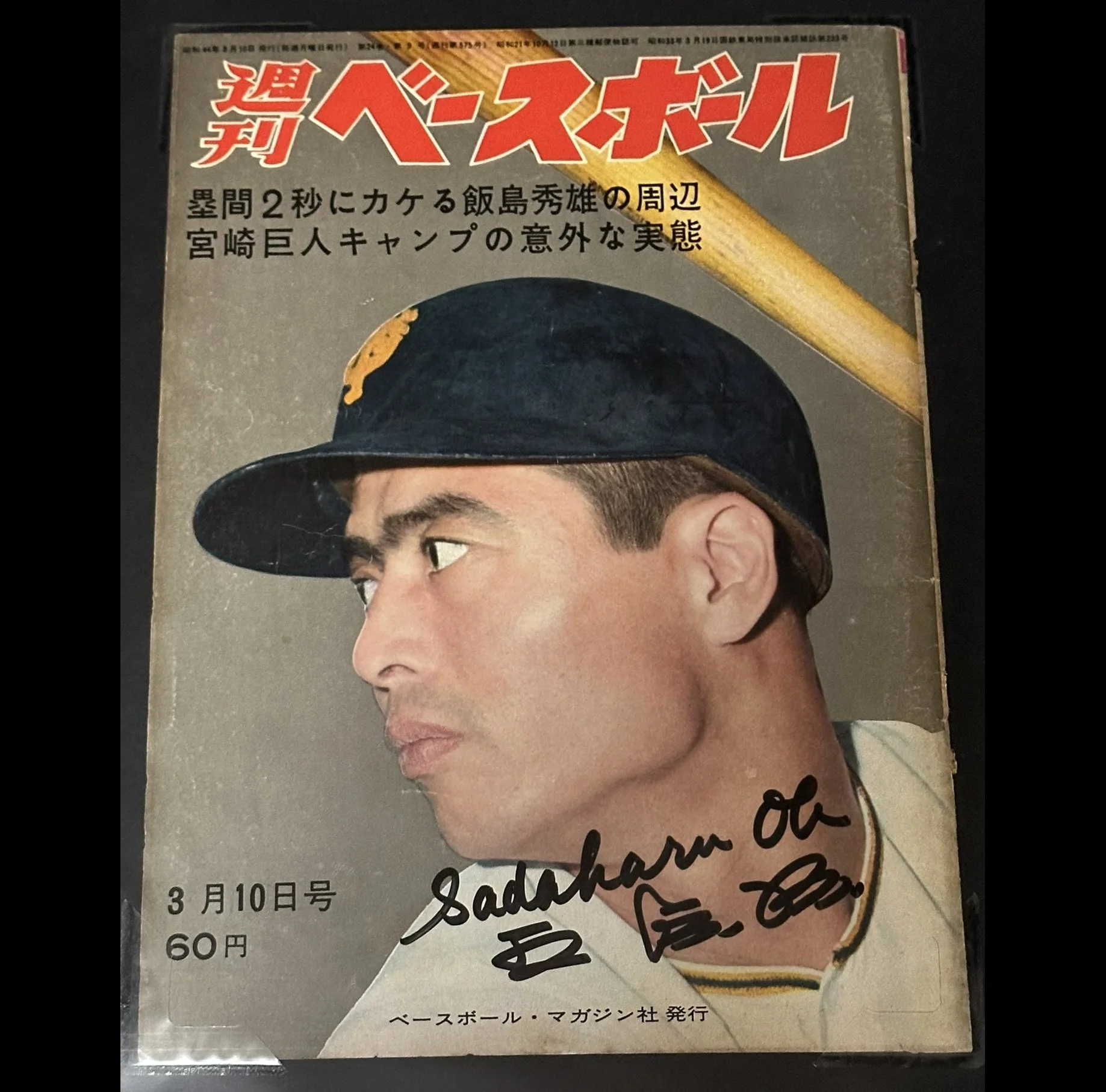
Japanese Baseball Magazines
There have been baseball magazines published weekly in Japan for decades. In the back of the issues will often be an MLB Roundup, which will tell the reader what happened in the days and weeks leading up to publication.
They will often have features of MLB players, sometimes including interviews taken from US sources, but translated into Japanese.
Sotaro Suzuki
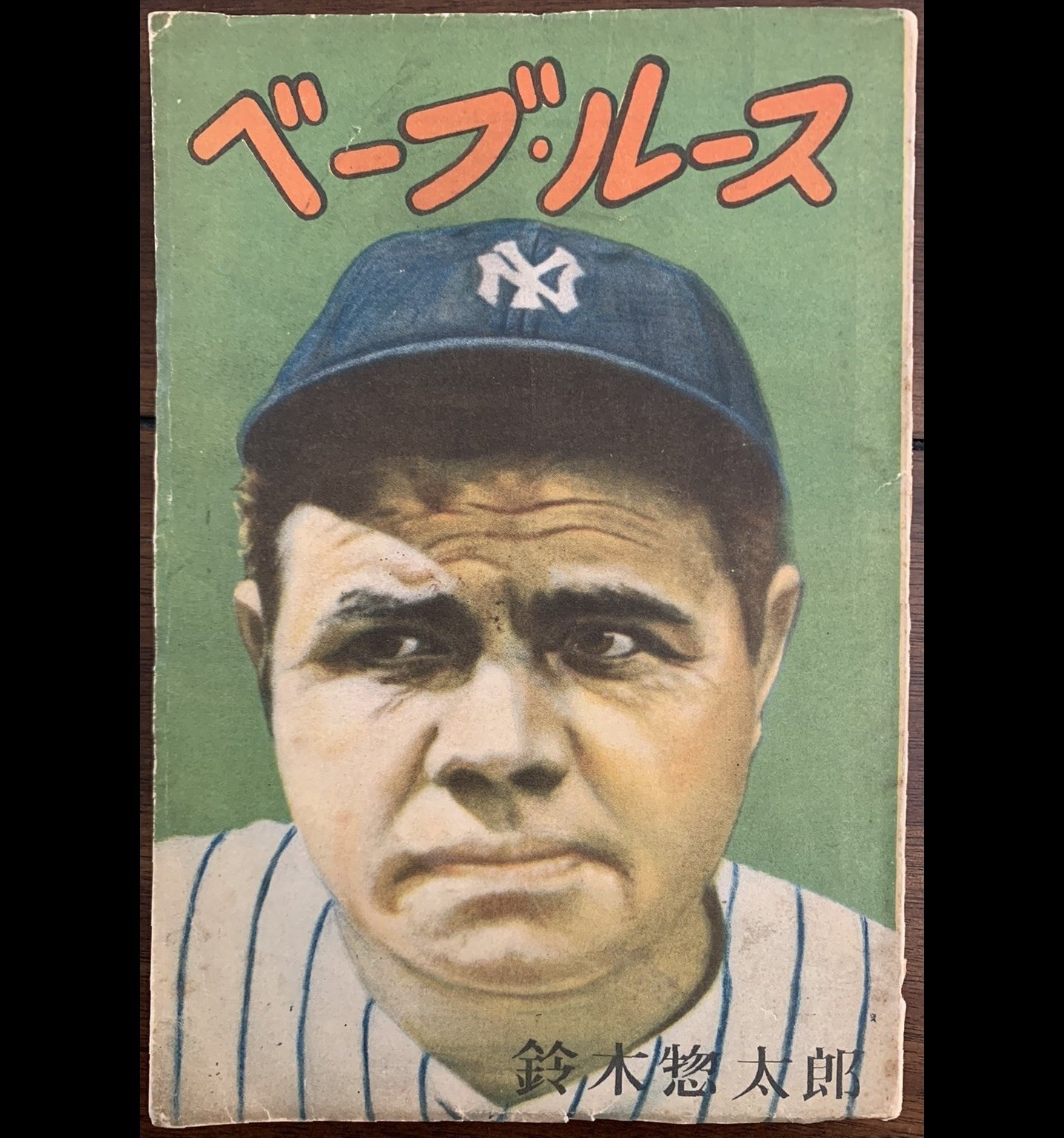
Sotaro Suzuki was a highly-respected columnist in Yomiuri and a great fan and scholar of baseball. Yomiuri Shimbun owner Matsutarō Shōriki asked Suzuki to serve as his emissary in inviting star players and teams from the United States to travel to Japan and play exhibition games, and Suzuki arranged for a tour of major league All-Stars in 1931.
In 1934, he convinced Babe Ruth to come to Japan in what is now one of the most famous baseball tours of all time. Suzuki and Ruth remained friends, and in 1948, Sotaro published this biography about the Babe in Japanese.
If you want to own your own copy, you can buy one HERE.
MLB Magazines in Japan
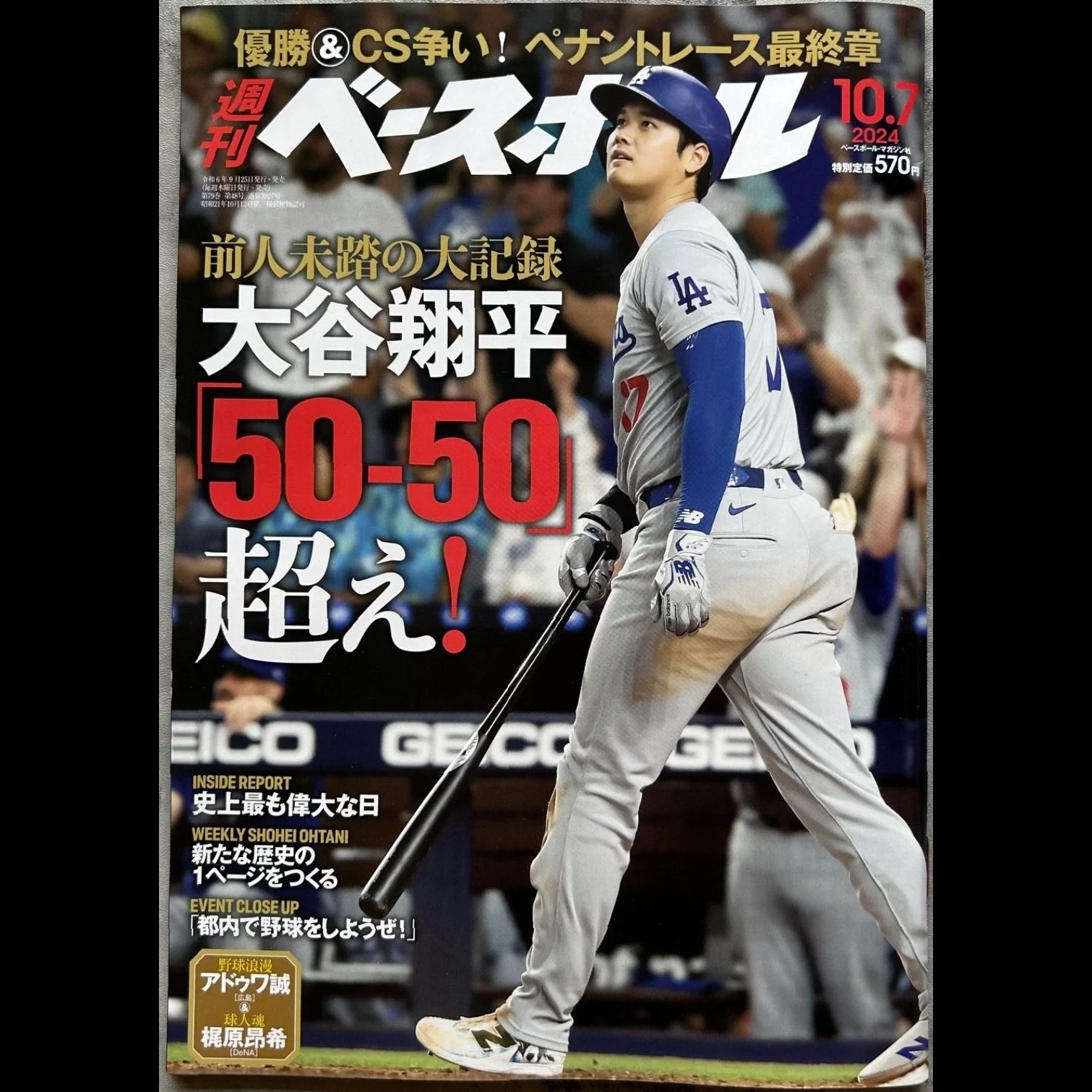
Since the late 1980s/early 1990s, there have been weekly magazines published in Japanese which are solely focused on Major League Baseball.
Rintaro Sasaki
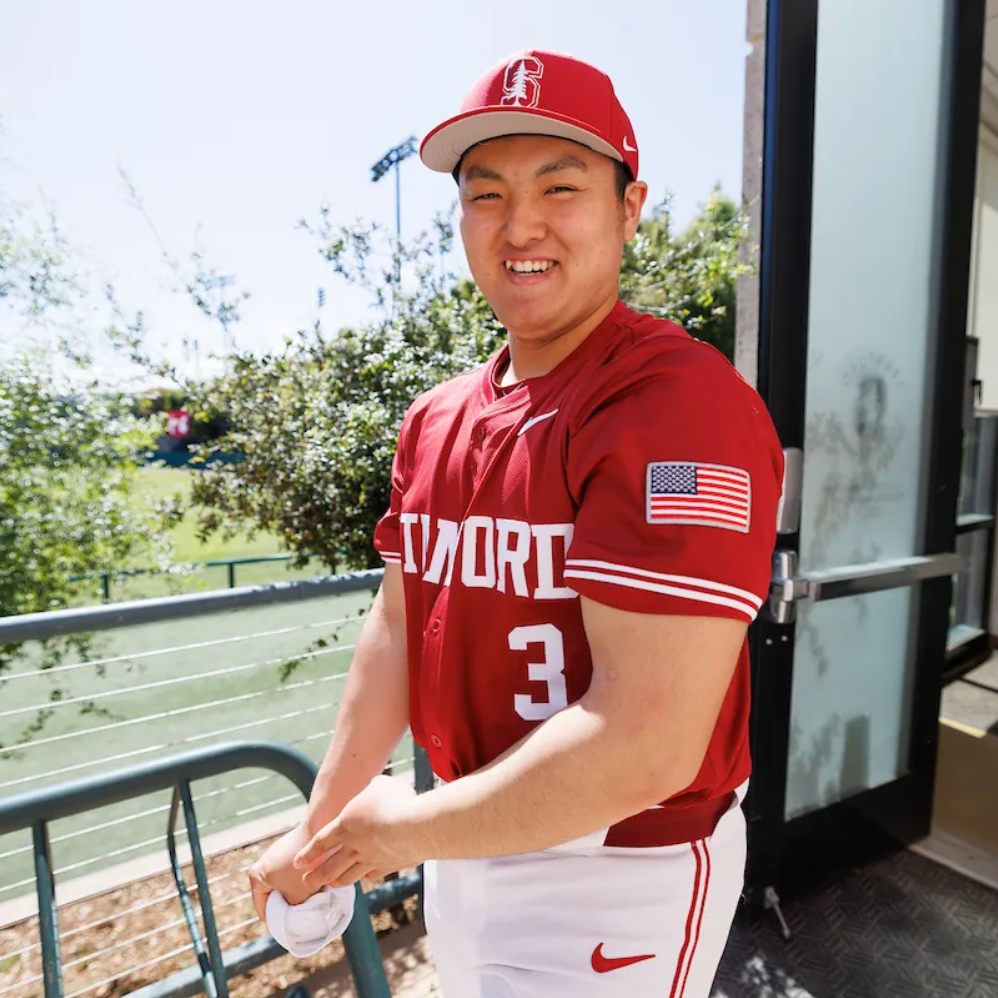
Rintaro Sasaki broke the Japanese national record when he tallied 140 home runs during his career at Hanamaki Higashi High School, which also produced megastar Shohei Ohtani. Sasaki quickly became the top-rated high school player in Japan, and the projected top pick in the the NPB draft.
However, Sasaki decided not to register for the NPB draft, instead opting to come to the U.S. to play college baseball at Stanford. It is rare for a prospect of his caliber to forego professional baseball in Japan, but for Sasaki, the reason was simple: “My ultimate goal is to play Major League Baseball here,” Sasaki said through interpreter Junpei Tomonaga.
NPB Attendance
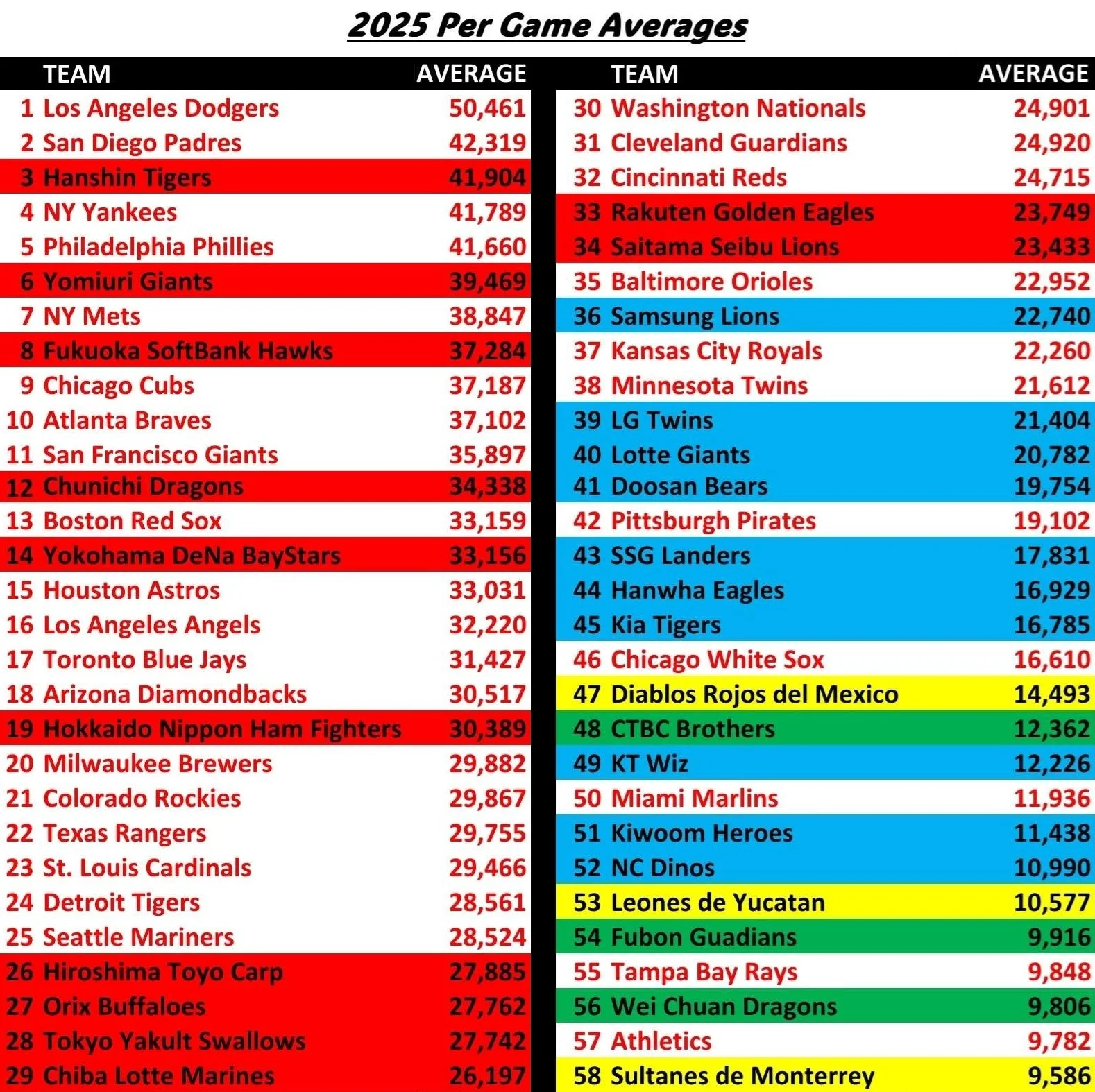
Robert Kiyoshi Shadlow put together this enlightening spreadsheet showing the per game attendance averages across all professional baseball leagues.
Additionally, according to NPB_Reddit on twitter, through September 30, the total NPB attendance for the 2025 season was 26,742,631, which was the highest total ever recorded, and 60,916 more than in 2024. The average game attendance was 31,536, an increase of 465 from 2024’s average.
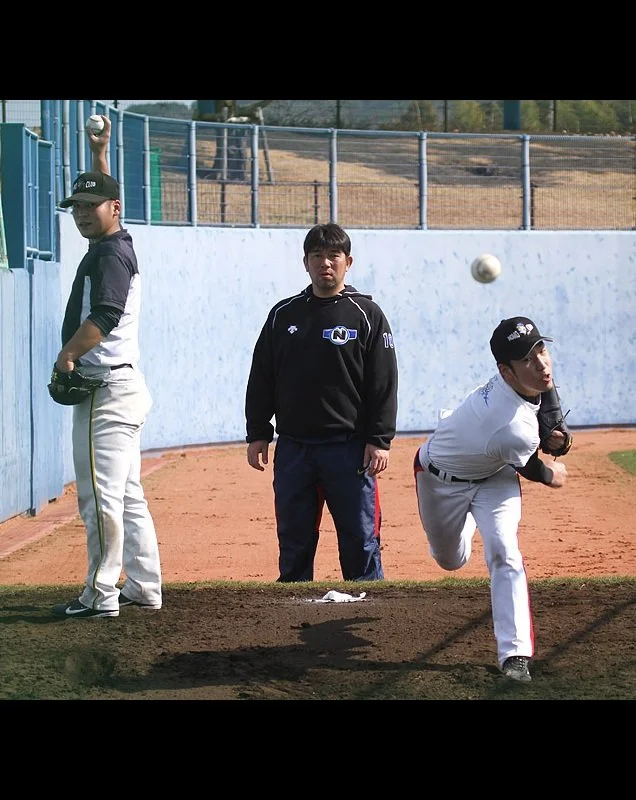
Giving Back to the Baseball Community
In July of 2003, Nomo Hideo, who at the time played for the Los Angeles Dodgers, founded an amateur baseball team in Japan called Nomo Baseball Club.
With the amount of support provided by companies to their corporate teams dwindling, amateur and semipro players were facing an increasingly tough situation. Hoping to give these players some encouragement, Nomo supplied the funds for the new team, himself, in what could be described as a gesture of putting something back into the world of baseball. His 2003 salary was $7.75 milion.
Nomo would play in MLB through the 2005 season, then attempt a comeback in 2008 with the Royals. By his retirement, he had earned more than $37 million from his MLB salaries in 12 seasons of play.
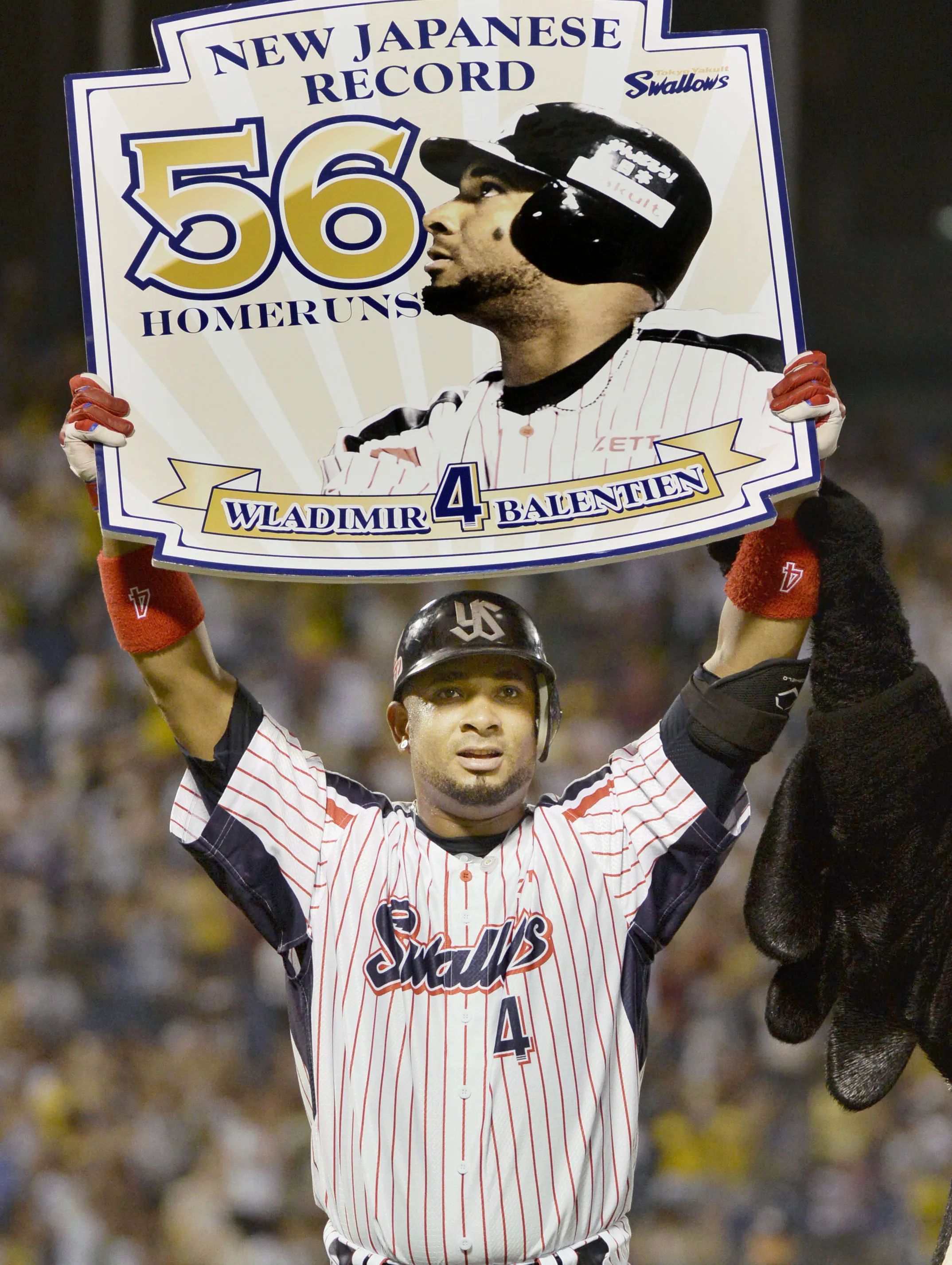
Wladimir Balentien
Before former Major Leaguer Wladimir Balentien shattered Japanese baseball's single-season home run record in 2013, there had been a number of instances when a player was approaching the record which was set by Sadaharu Oh in 1964, but opposing pitchers would not allow it to be broken.
Randy Bass was one home run shy going into the final game of 1985, but faced the Yomiuri Giants, who were managed by Sadaharu Oh, himself, and Bass was walked four times so he couldn’t break the record. Tuffy Rhodes in 2001 and Alex Cabrera in 2002 faced similar experiences.
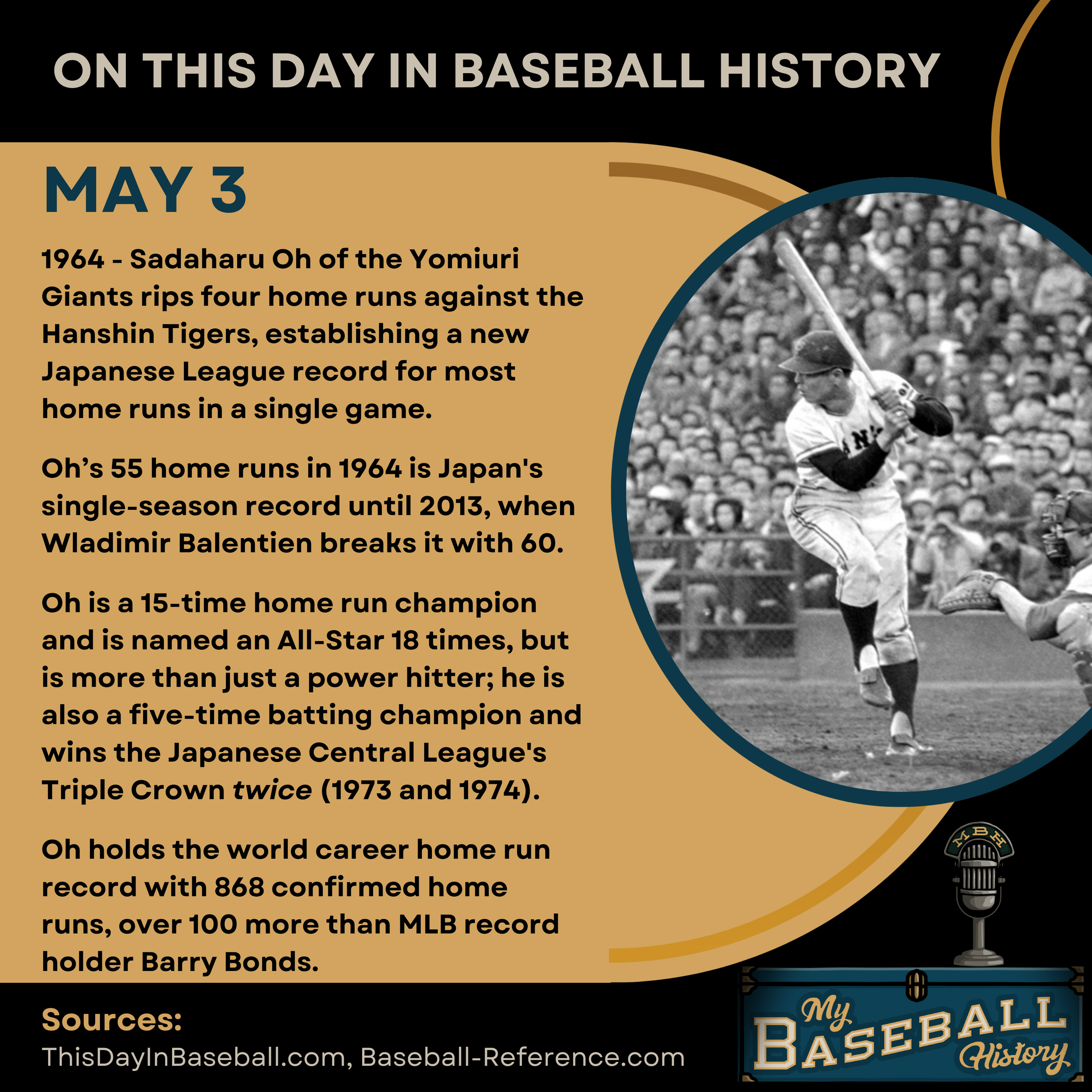
Sadaharu Oh
It’s interesting that Japanese players and teams would go to such lengths to keep a foreigner from breaking Oh’s record, when most Japanese people didn’t really consider Oh to be “one of them” anyway, since he was half-Chinese.
Oh's father was from China and immigrated to Japan in 1922. His mother was a Japanese native. Sadaharu was born in Japan in 1940, but his father being Chinese overrode that for many Japanese people.
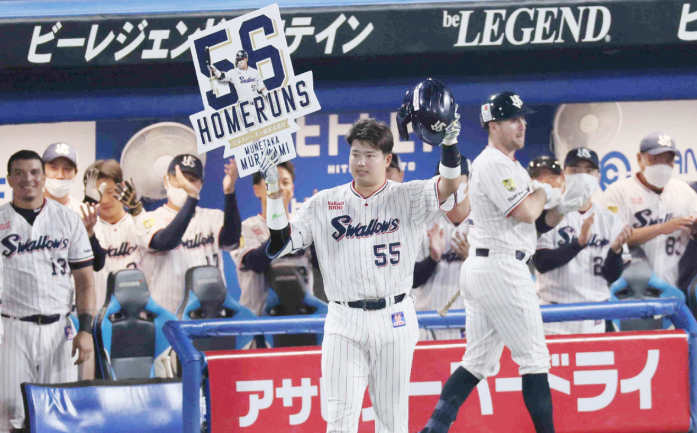
Munetaka Murakami
Although Munetaka Murakami fell four home runs shy of even tying Wladimir Balentien’s Japanese single-season home run record of 60, when he hit his 56th (and final) home run of the season in 2022, he was celebrated as if he had broken the record. In a way, to many Japanese, he had, by hitting one more home run than Sadaharu Oh had hit in 1964. But that’s not how records work.
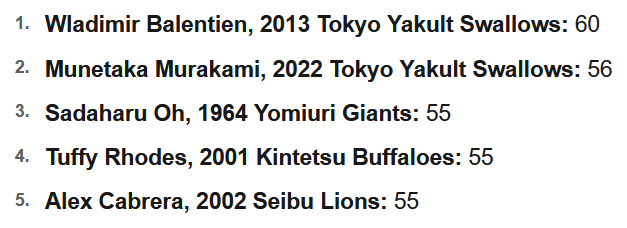
The Top-5 single season home run totals in Japanese baseball history
A Reverence For Baseball History
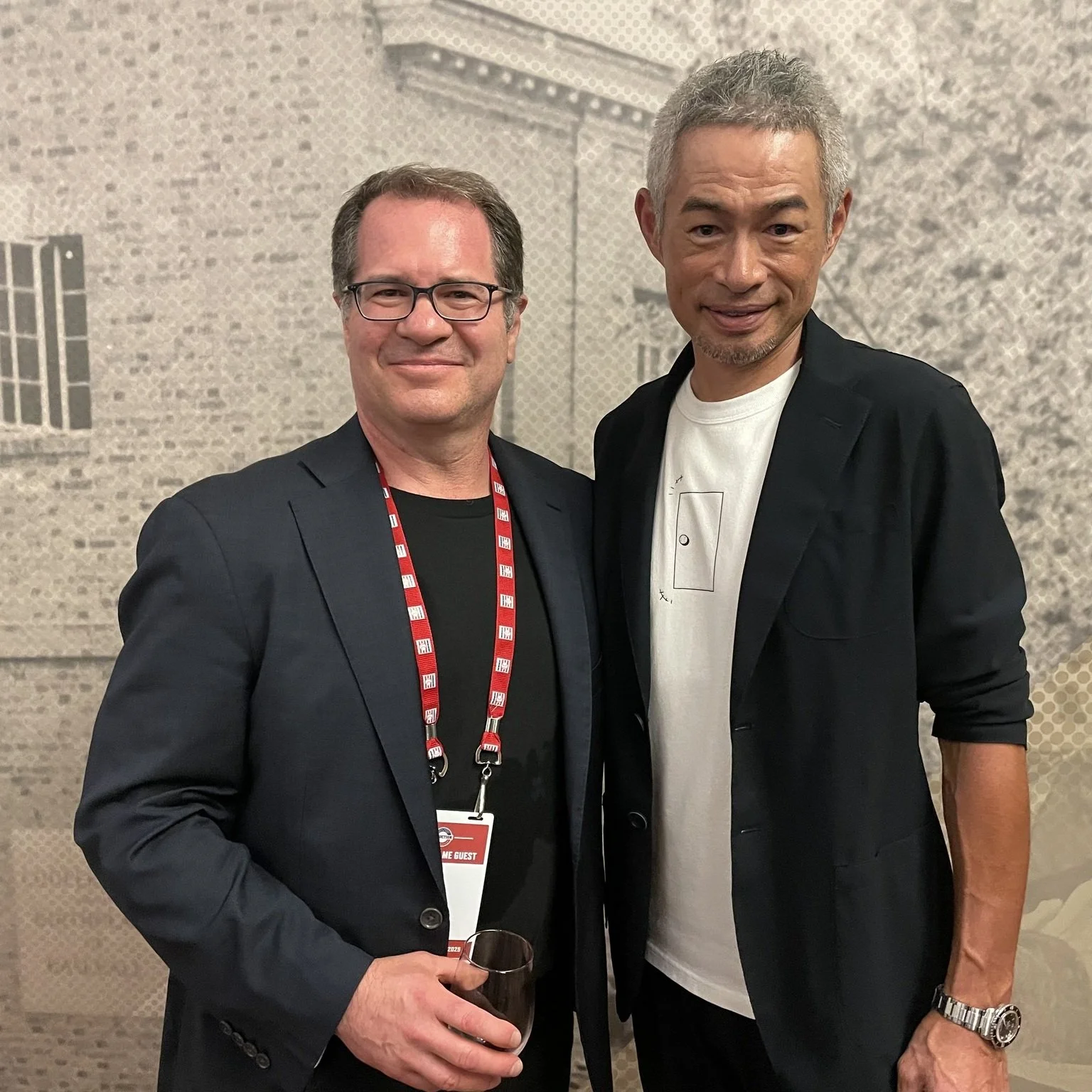
In 2016, Ichiro made the largest-ever donation to the Negro Leagues Baseball Museum in Kansas City by an active player.
We also learned from Josh Rawitch, the President of the National Baseball Hall of Fame and Museum in Cooperstown, that no active player had ever visited the Hall of Fame more often than Ichiro did during his playing career.
Josh was our guest on Episode 9 of Season 4 of My Baseball History. You can listen to that episode HERE.
Racism
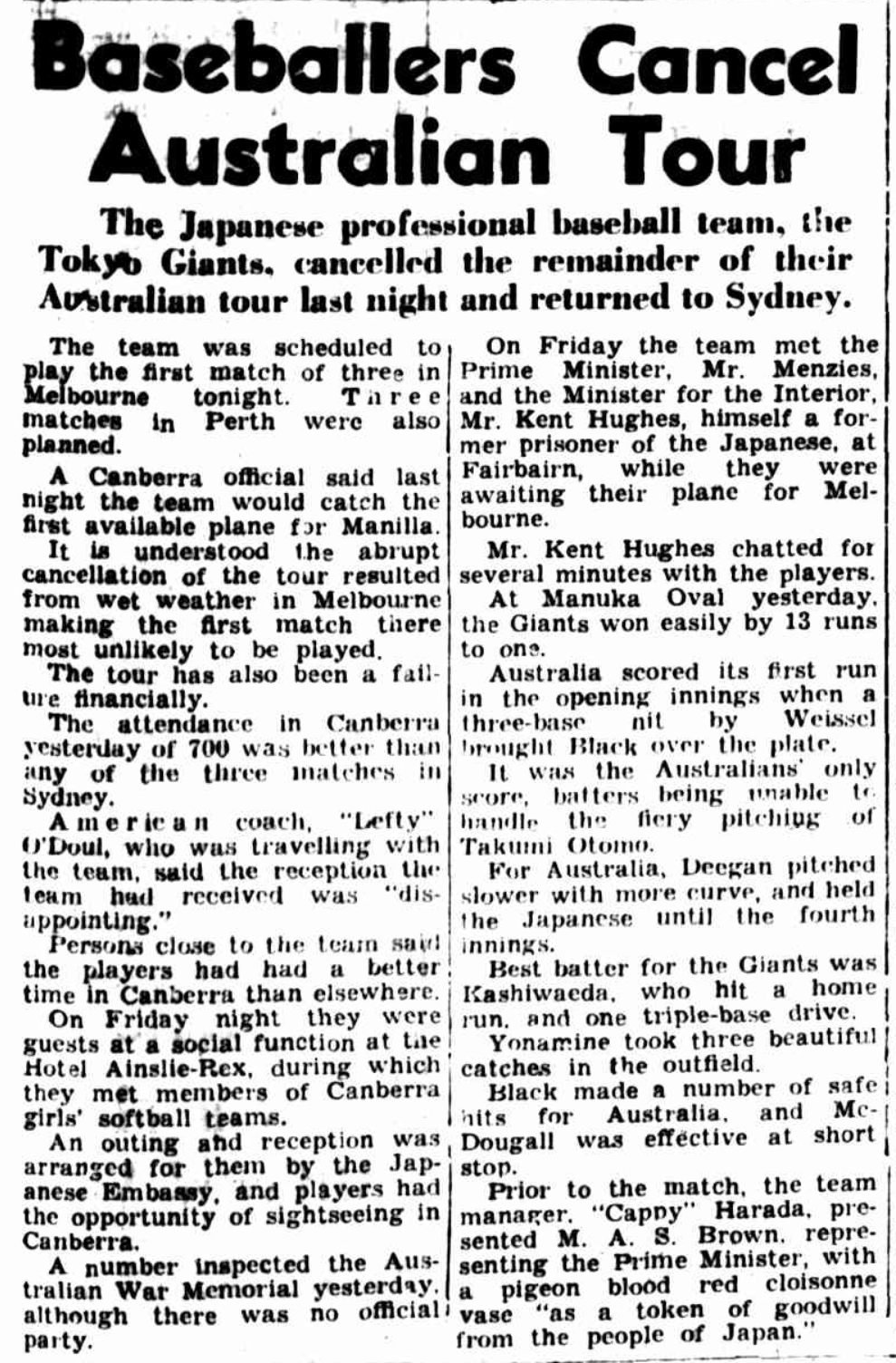
It’s interesting that there is that racism coming from Japanese people, when Japanese players and people have faced racism, themselves, in many countries.
Cappy Harada talks about what his team had to endure when they went on a goodwill trip to Australia. This article from November of 1954, talks about that trip and some of the difficulties they faced.
Pitch Types
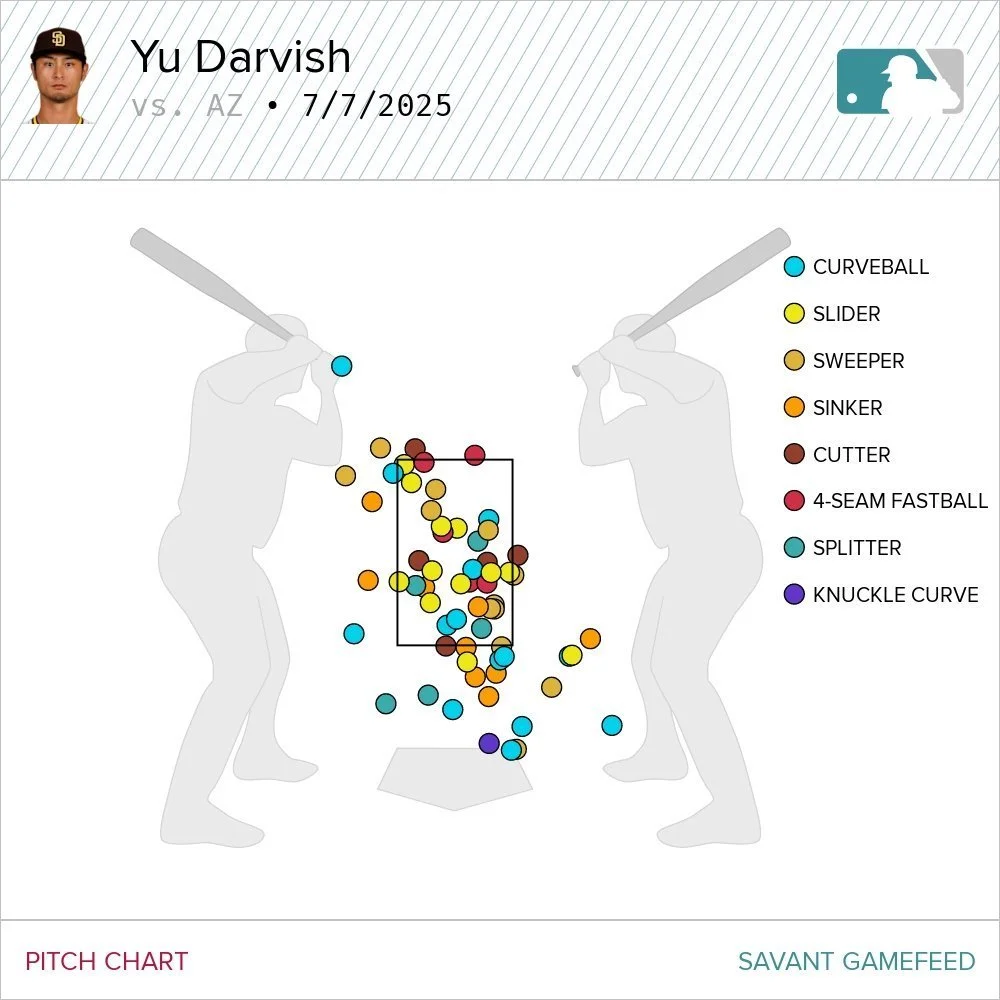
Japanese pitchers seem to rely much less on overpowering speed, and much more on control, accuracy, and having a variety of pitches. It seems like a lot of Japanese pitchers have at least 4 or 5 different pitches in their arsenal, if not more.
For example, Yu Darvish threw 63 pitches in his start on July 7, 2025, leaning heavily on the curveball (22% usage), sweeper (19%), and slider (also 19%). Statcast had Darvish at eight different pitch types in the start, though, and everything except the knuckle-curve was thrown at least five times in terms of raw pitch count.
Using A Different Ball
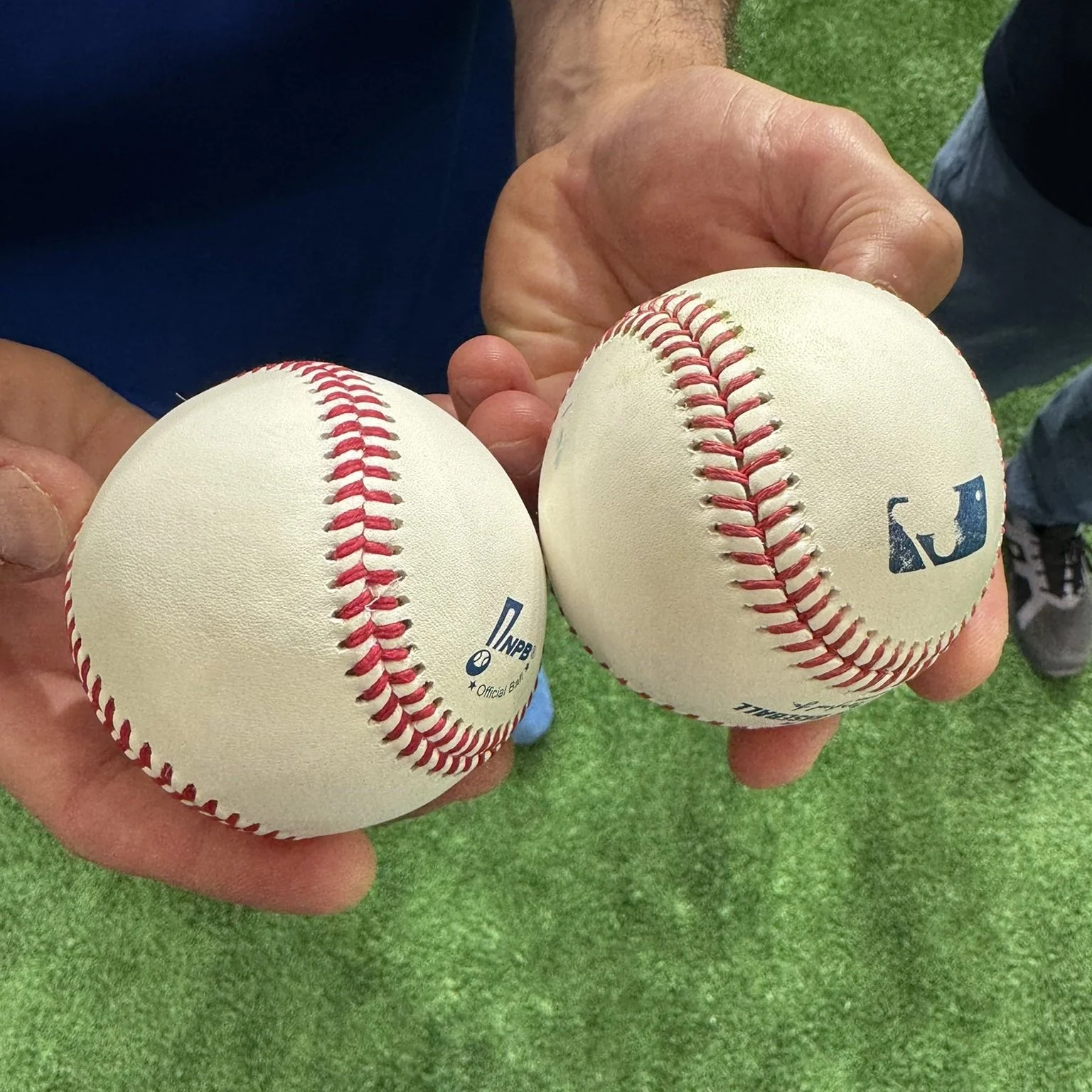
The Japanese ball (seen here, on the left) is slightly smaller, slightly lighter, and somewhat tackier than the MLB ball (seen here, on the right).
The Japanese ball has smaller seams and a tighter wind, which generally provides pitchers with a better grip and more control over breaking pitches.
Ryōzō Katō
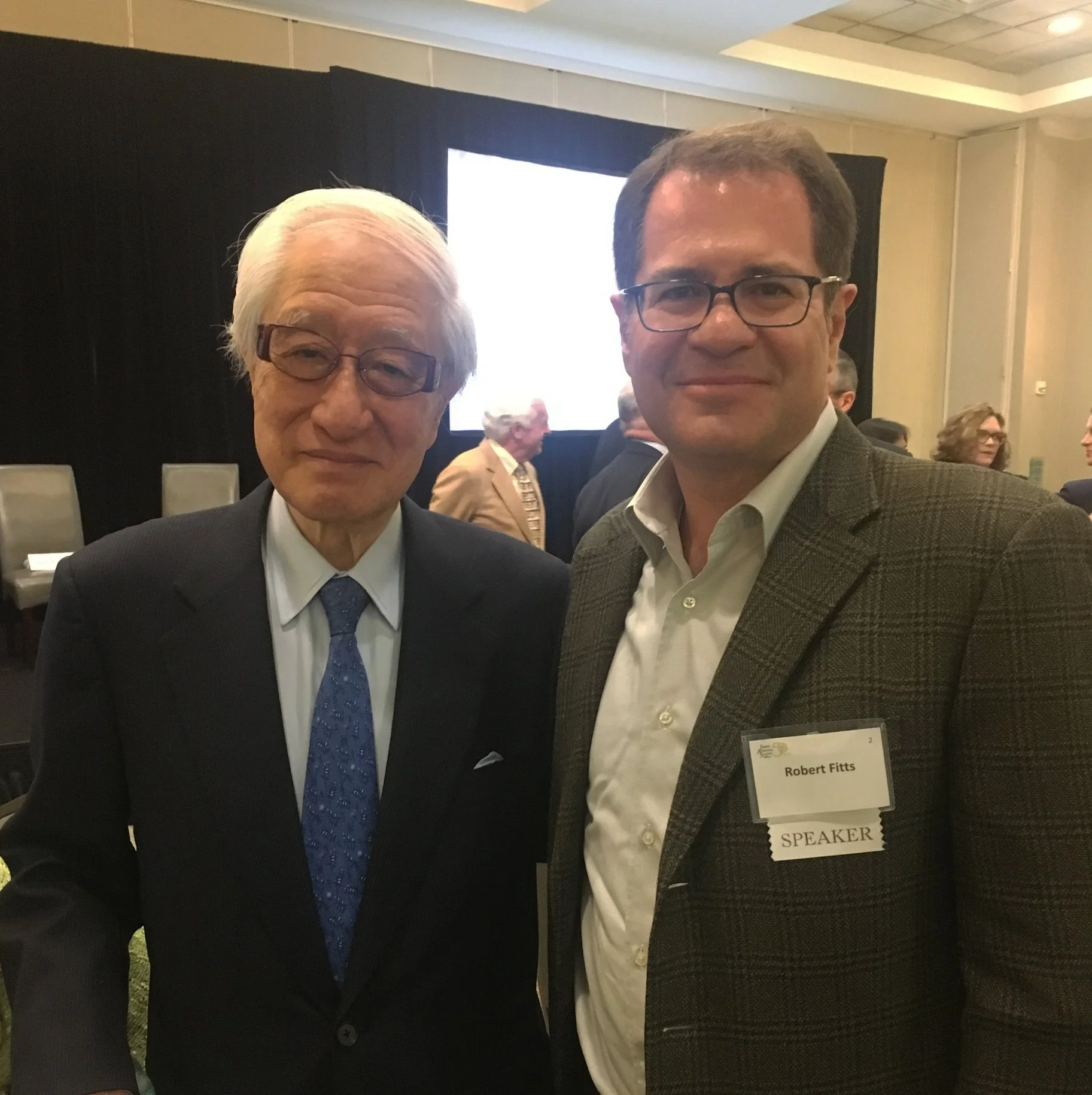
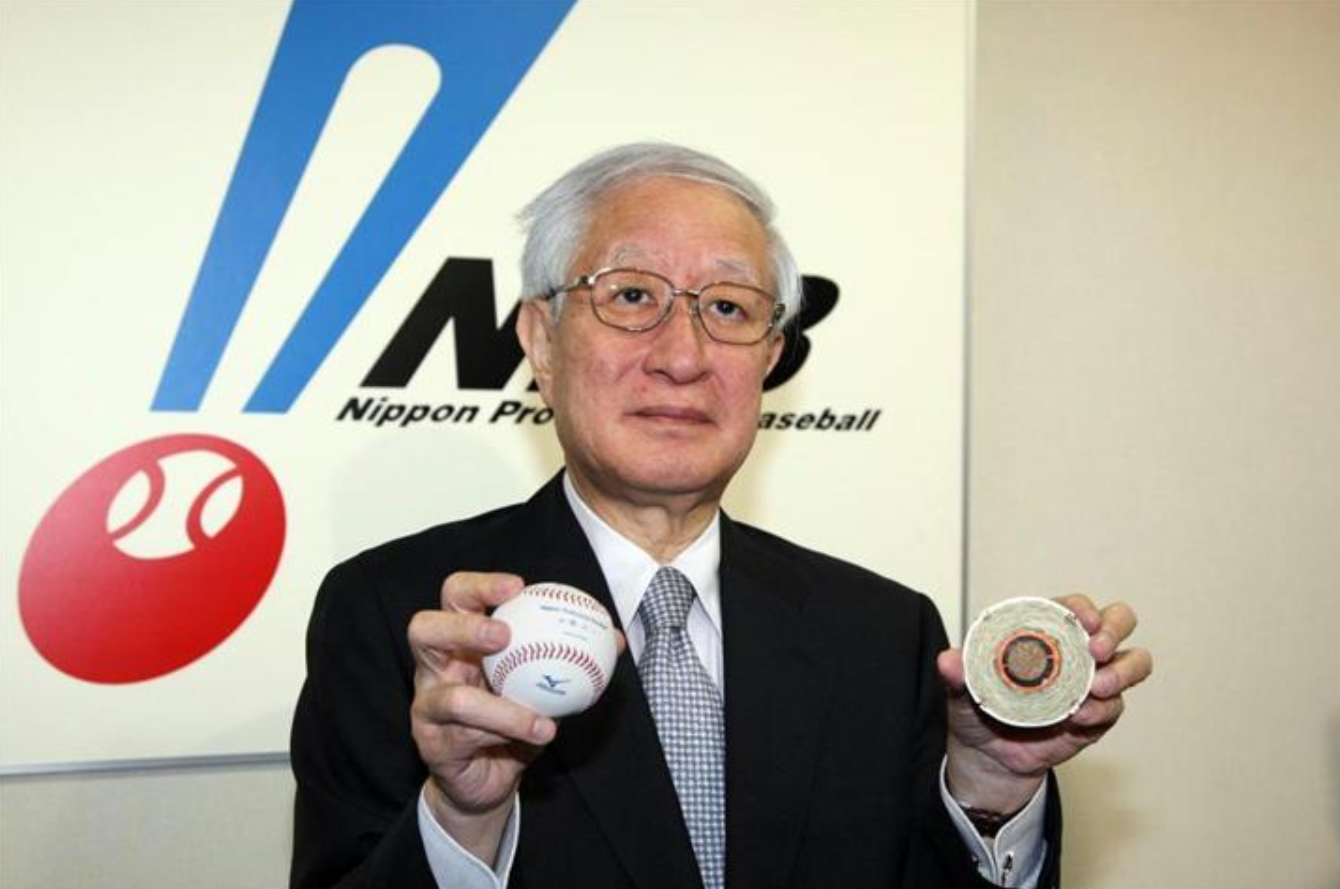
Ryōzō Katō is a Japanese lawyer and diplomat who served as the Japanese Ambassador to the United States from 2001 to 2008, and then as the Commissioner of Nippon Professional Baseball from 2008 to 2013.
Resignation
Ryōzō Katō resigned in 2013 after it was found that the baseballs used during the 2013 Nippon Professional Baseball season were "juiced" in secret, though Kato claimed to not know about the change.
Not A Scandal Unique To Japanese Baseballs
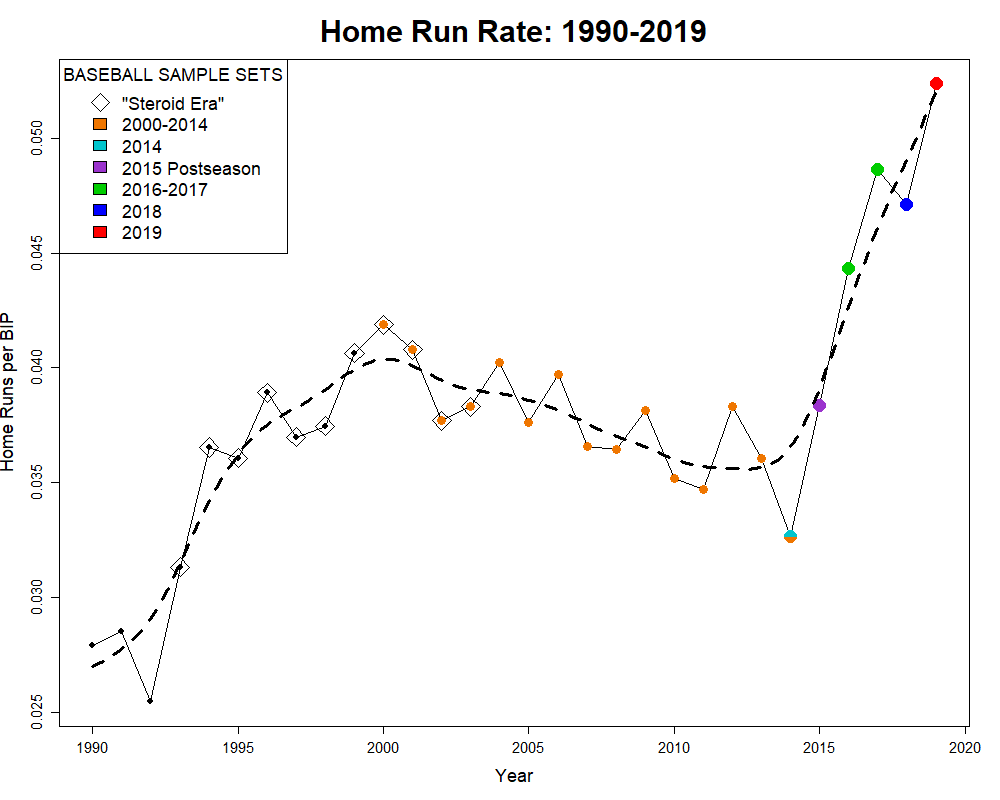
Dr. Meredith Wills has been studying MLB’s baseballs for years, tracking which balls are being used in games during the season, during playoff games, or during marquee matchups on nationally televised games.
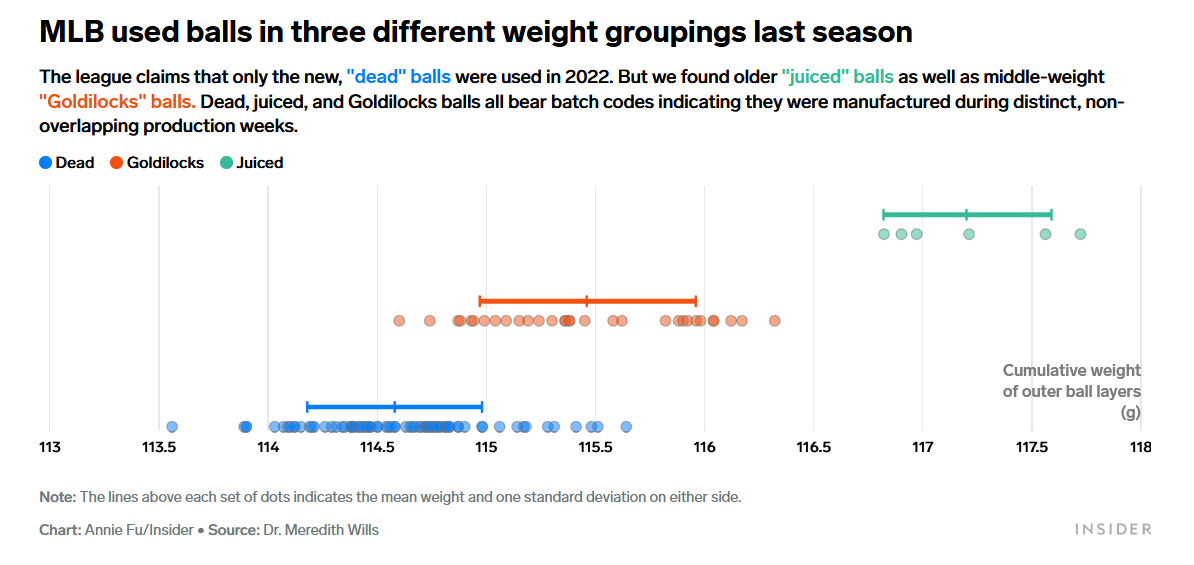
From a study of baseballs used during the 2022 MLB season done by Dr. Meredith Wills.
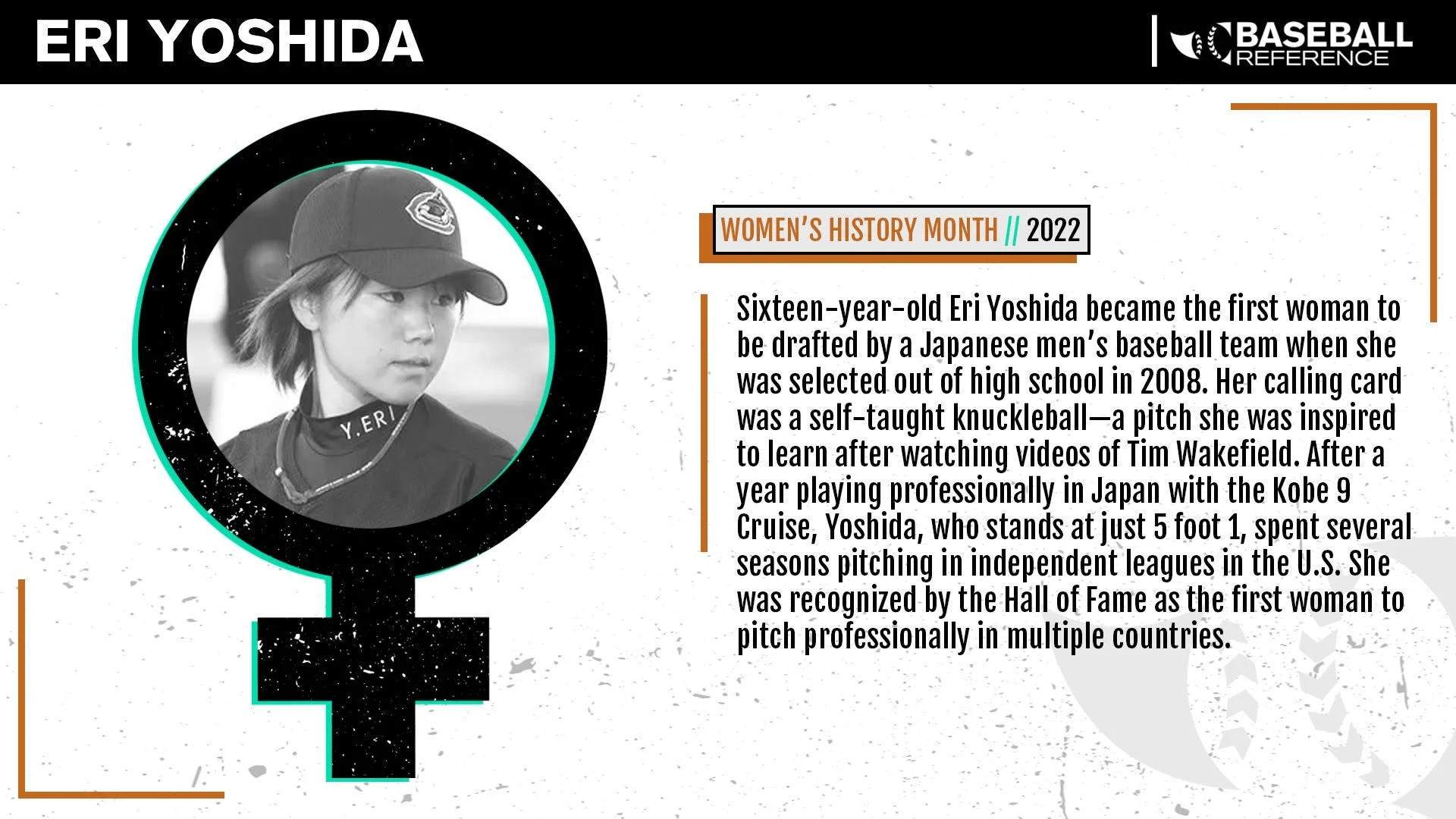
Women’s Baseball
It seems like a significant amount of time, attention, and money is spent on the women’s game in Japan, as well, especially compared to how much is spent on the women’s game here in America, all things considered. The Japan women's national baseball team, also known as Madonna Japan or Samurai Japan, is currently ranked first in the world by the World Baseball Softball Confederation.
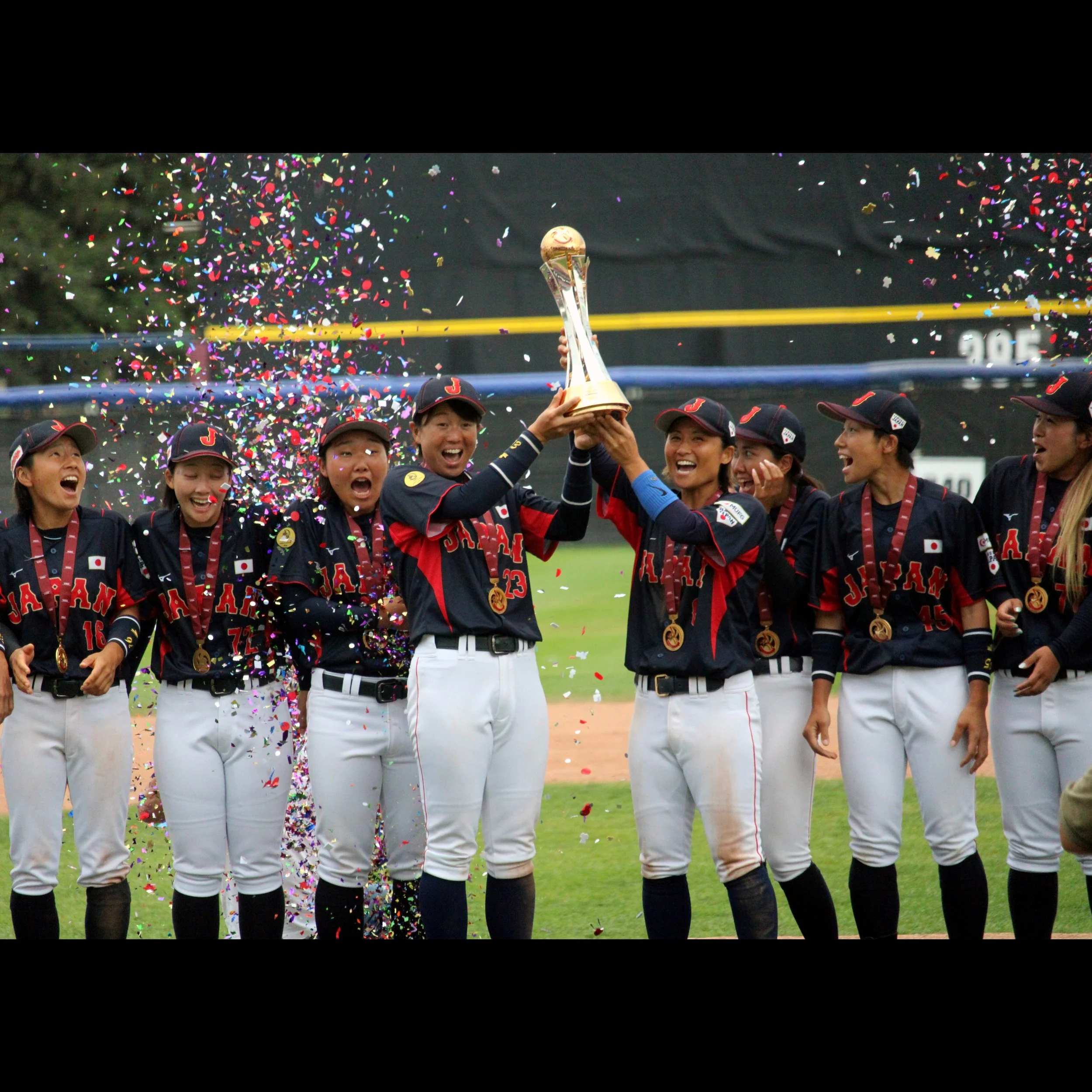
Women’s Baseball
Madonna Japan won the 2024 Women's Baseball World Cup, which was their seventh consecutive title in the top international tournament there is. But they haven’t just won; they’ve dominated. The team won 39 consecutive games in the tournament from 2012 to 2024.
Japan has also won all three continental Women's Asian Cups, held from 2017 to 2023. However, the Japan Women's Baseball League, which was founded in 2009, officially folded in 2021, after having held its final season in 2019.
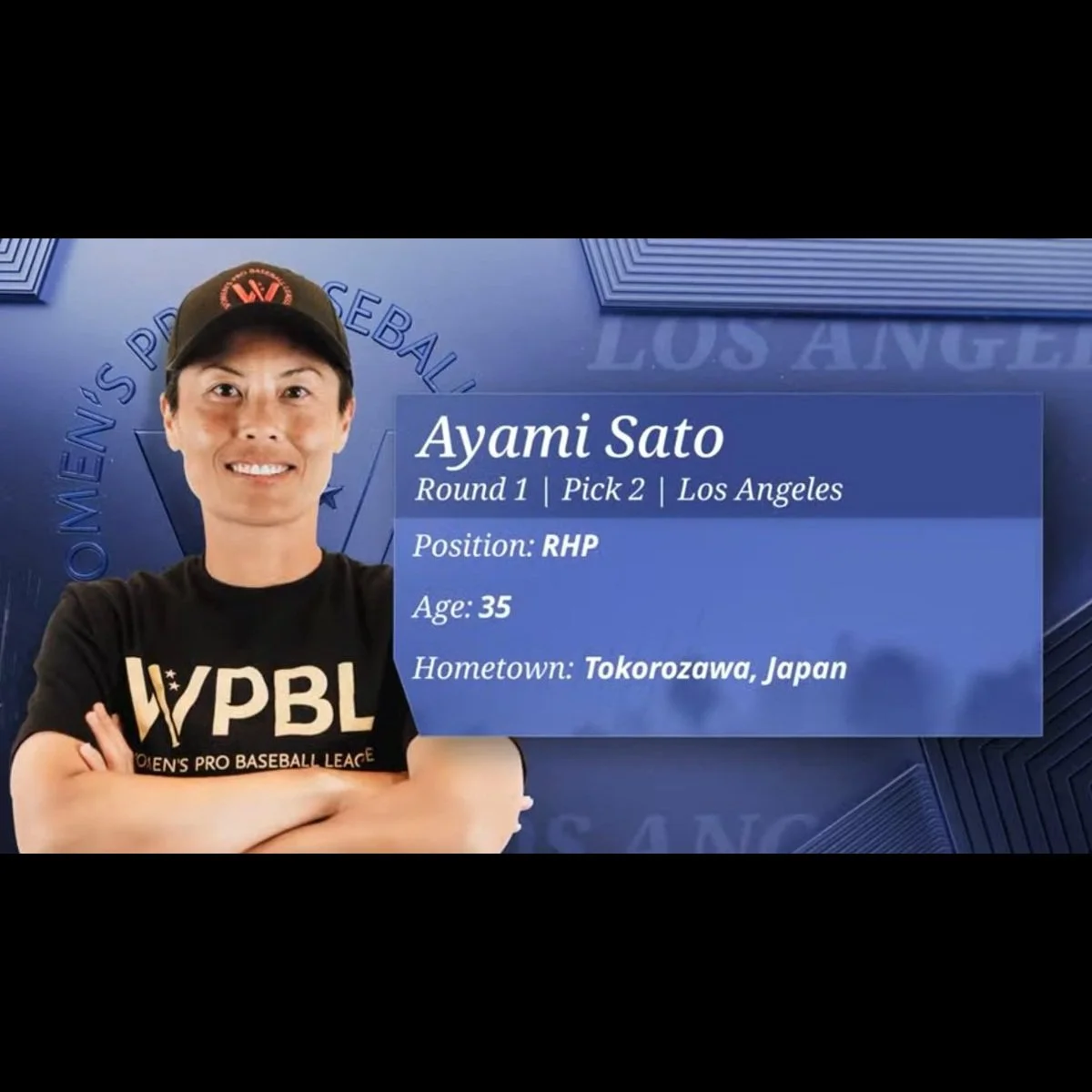
Japanese in the WPBL
Five Japanese players were selected in the first 2 rounds of the Women’s Pro Baseball League Draft. In fact, six of the first 42 picks were Japanese:
Ayami Sato – RHP – Round 1, Pick 2 (L.A.)
Ayaka Yamamoto – 3B – Round 2, Pick 4 (S.F.)
Emi Saiki – SS – Round 2, Pick 6 (L.A.)
Natsuki Yonetani – LF – Round 2, Pick 7 (N.Y.)
Suzuka Yamamoto – SS – Round 2, Pick 16 (Boston)
Suzu Narasaki – CF – Round 3, Pick 2 (L.A.)
Philadelphia Bobbies
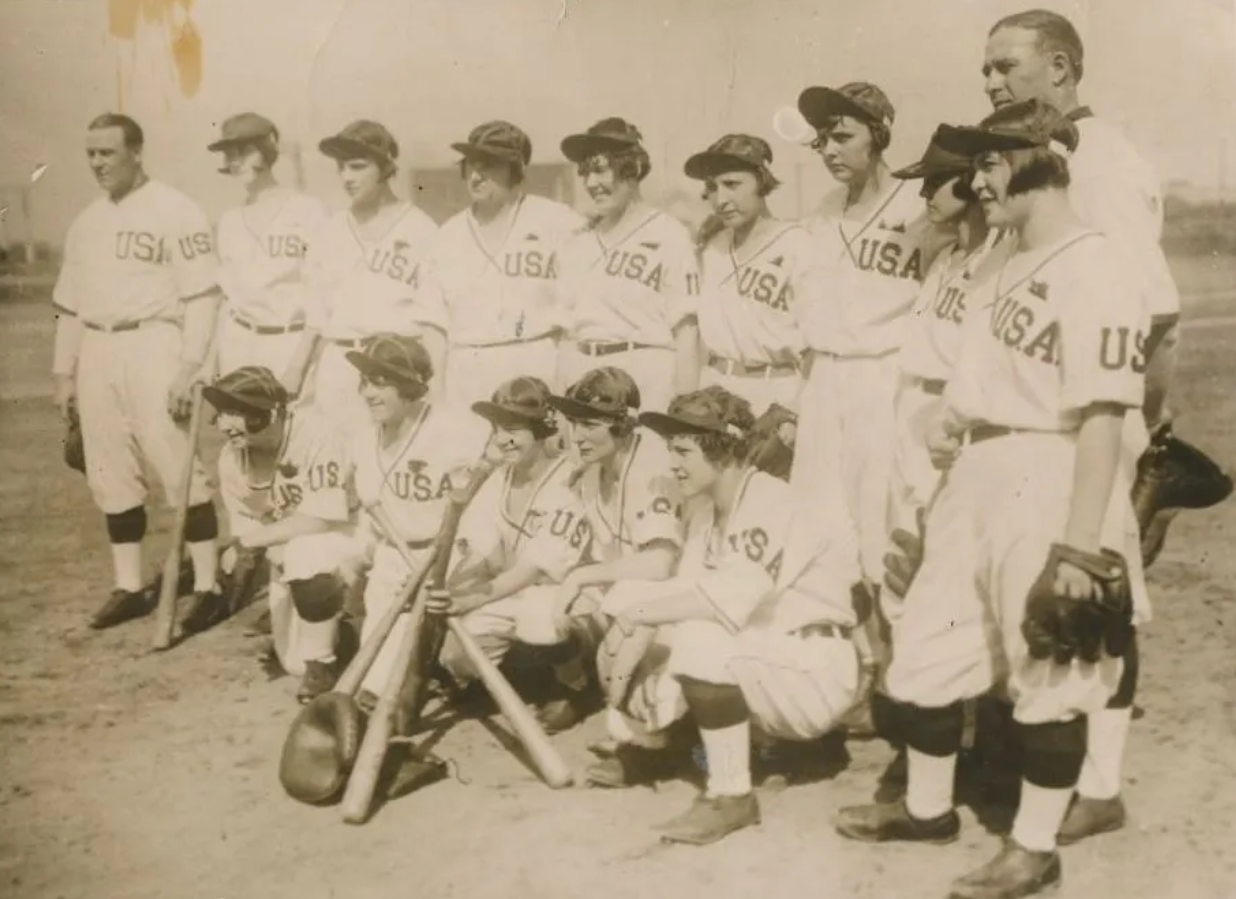
The Philadelphia Bobbies were an all-female baseball team who went on a barnstorming tour of Japan in 1925.
The Bobbies, named for the popular 1920s haircut “the bob,” were formed in 1922 by Mary O’Gara. The team was made up of young women from around Philadelphia.
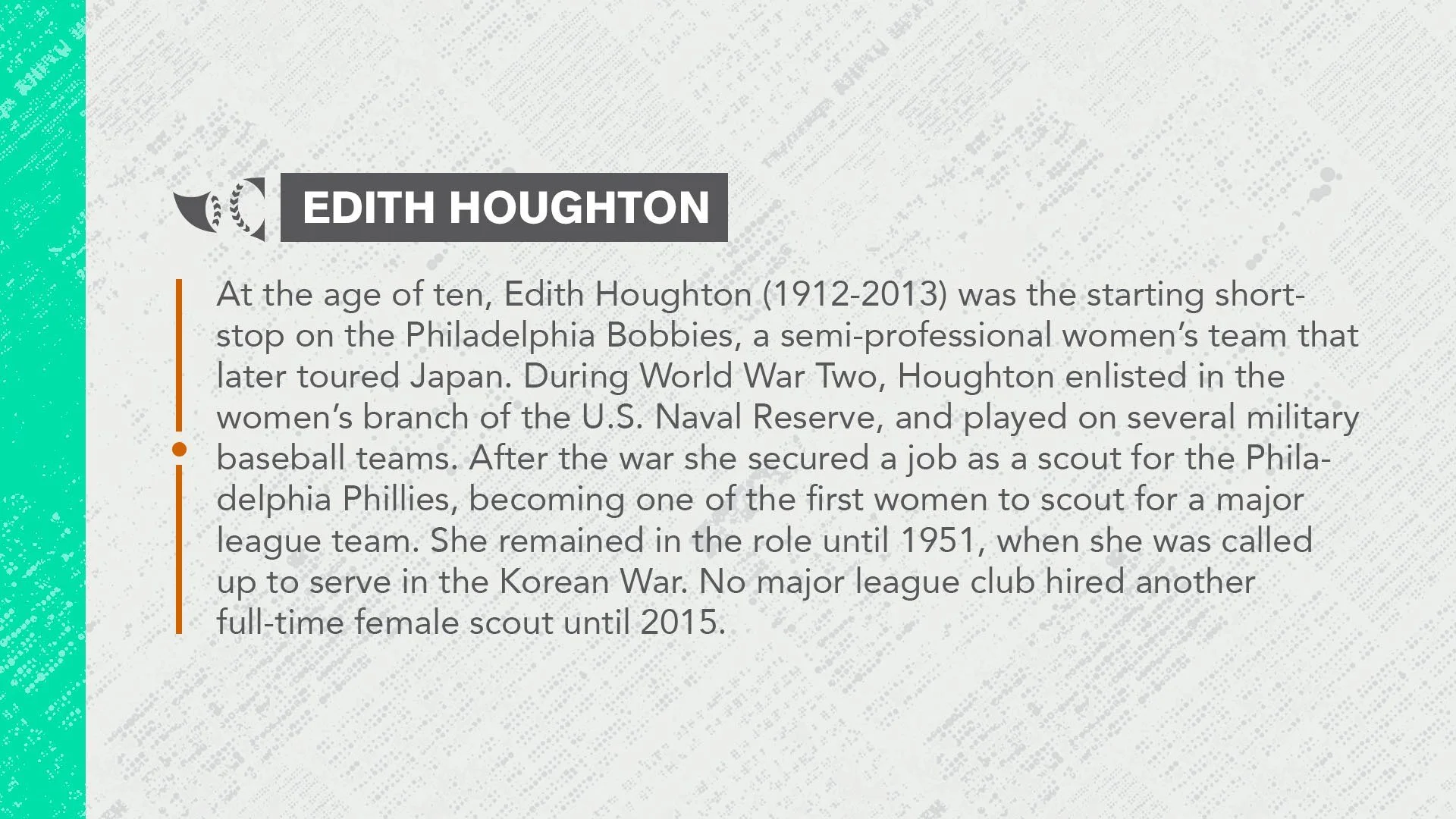
Leona Kearns is pictured at the top left, and Edith Houghton is seated at center.
Leona Kearns
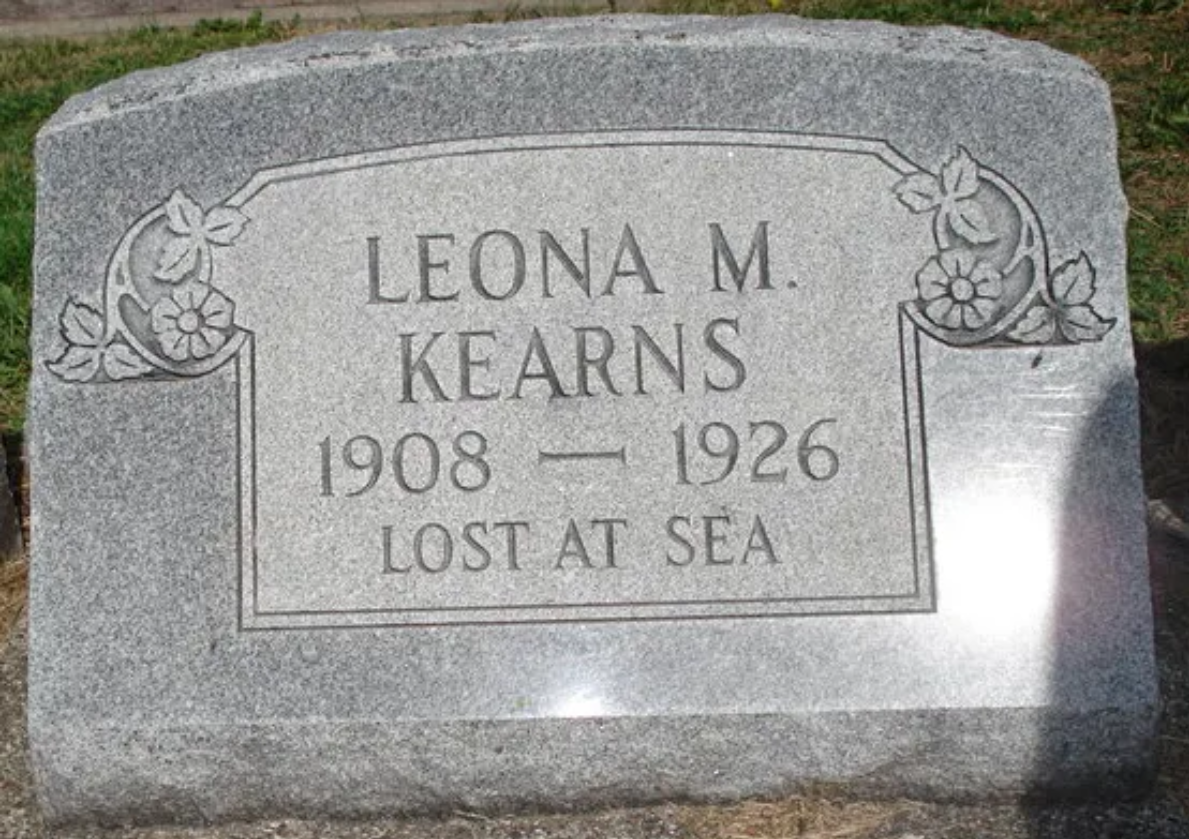
Born on March 22, 1908, Leona Mae Kearns grew up swimming, skating, and biking. But her real passion was baseball. At 14 she was good enough to pitch and play first base on the men’s town team.
“Buy Ohtani”
If Rob had an opportunity to give the 1993 version of himself one piece of advice based on the knowledge he has today, he says he would decline that opportunity.
I think he should have used that opportunity to tell himself “buy Ohtani.”
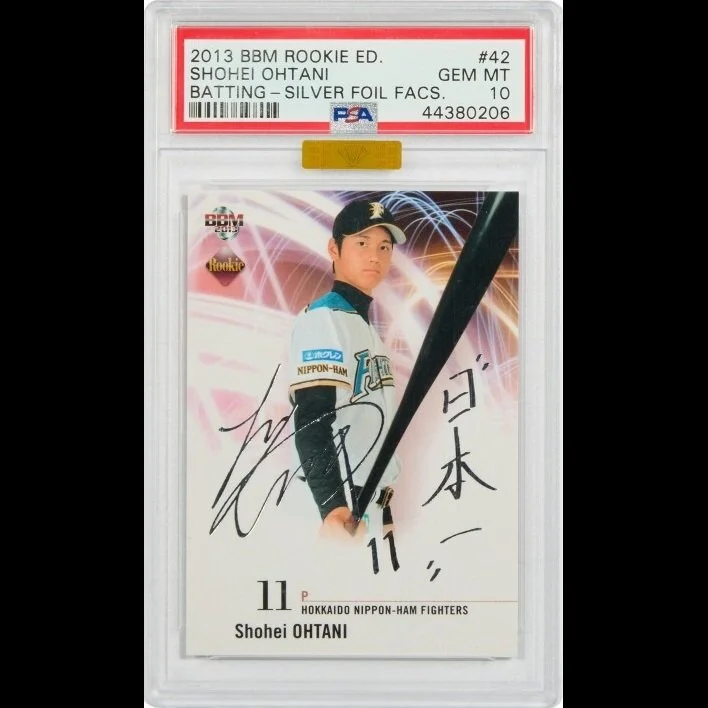
This autographed Shohei rookie card was available for a significantly lower price in 2013 that it was available for in 2026.
Rob’s Time Machine Game
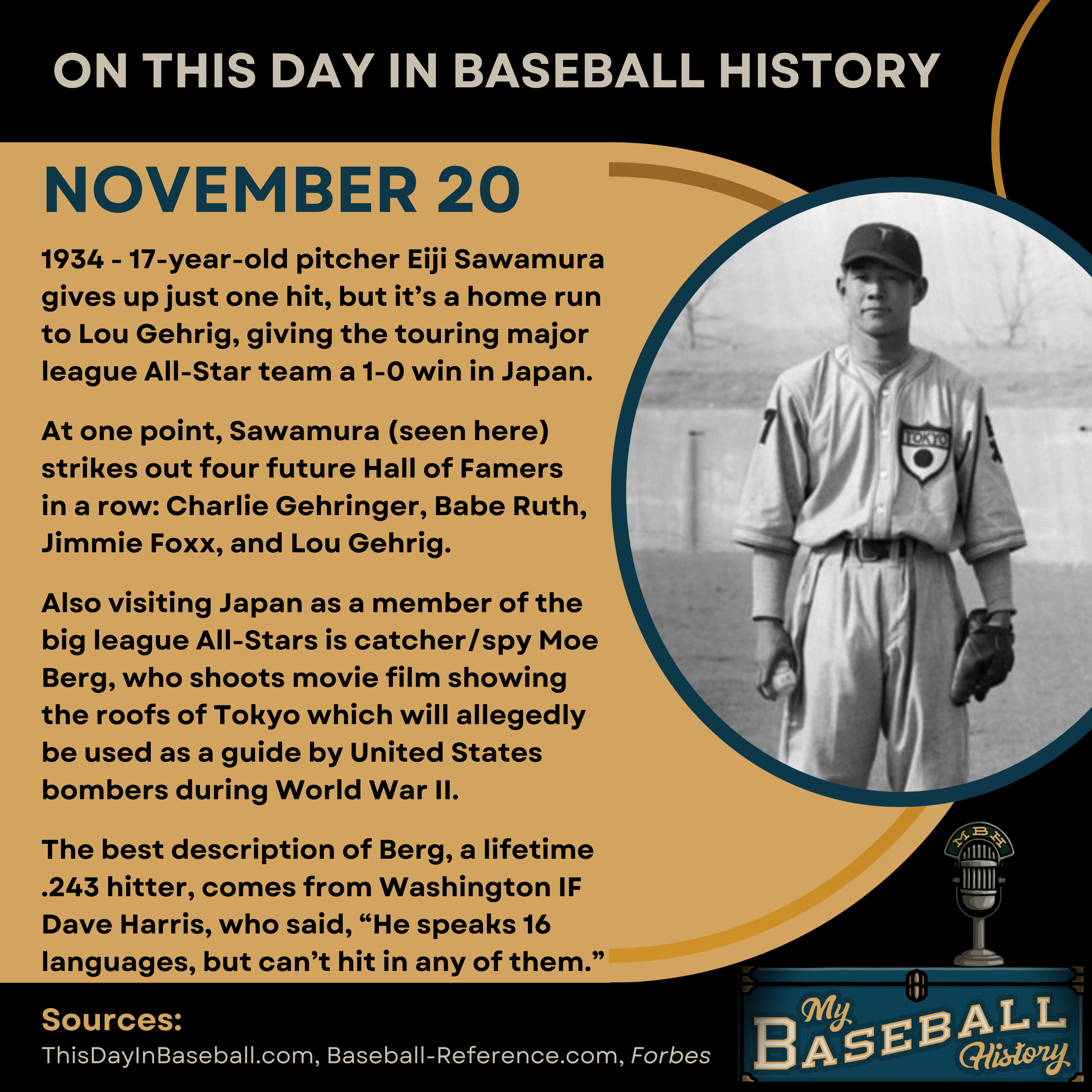
We spoke extensively about Eiji Sawamura in part one of this episode (which you can listen to HERE), and about this specific game and what it meant to the people of Japan.
If Rob had a time machine and could go back to watch one game in the history of baseball in Japan, it would be this electric performance by the 17-year-old Sawamura against some of the best competition in the world at the time.
He just wouldn’t want to be sitting behind home plate to watch it.
Where Should The Average Fan Go From Here?
If you enjoyed this two-part episode with Rob, and now you’re hooked on Japanese baseball and want to learn even more, Rob has a few suggestions as to where you should go from here.
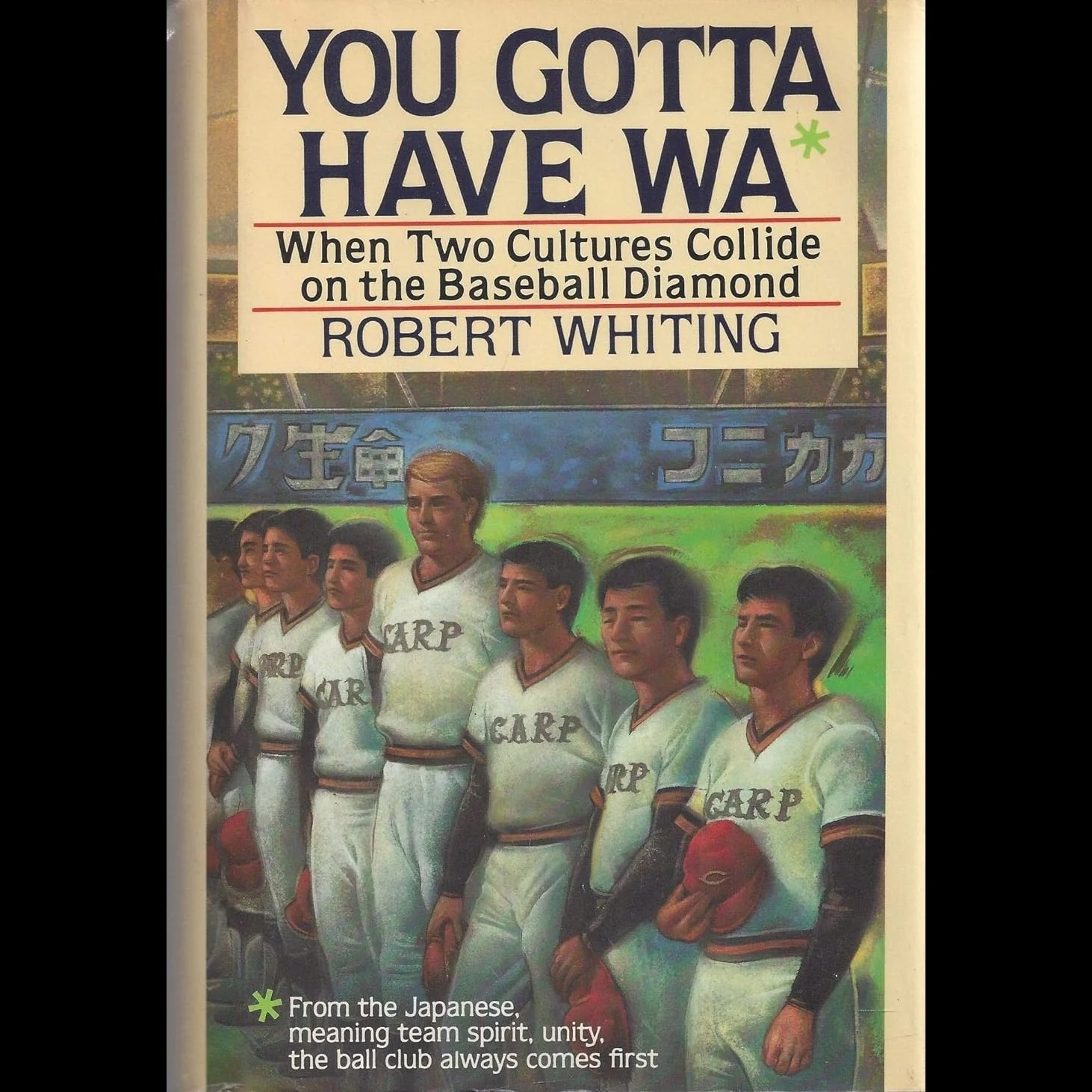
If you are interested in some of the major differences between baseball in the US and baseball in Japan, check out You Gotta Have Wa by Robert Whiting.
While it is slightly dated because it was written in 1989, it is still great, and a strong historical piece.
Buy a copy of Whiting’s You Gotta Have Wa HERE.
Banzai Babe Ruth
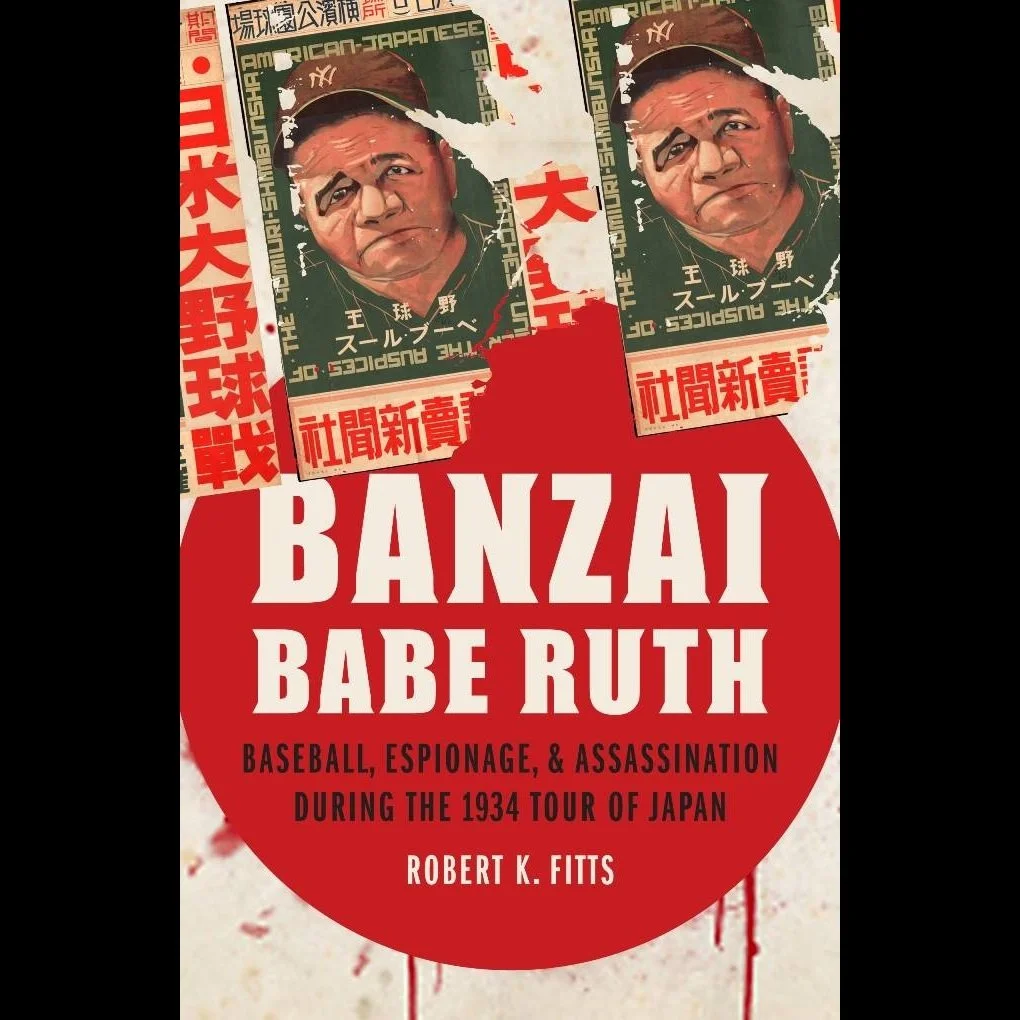
While Rob’s book Banzai Babe Ruth does give some historical context about baseball in Japan, it is really only focused on the 1934 tour, and not the greater history of Japanese baseball before or after that tour.
A tale of international intrigue, espionage, attempted murder, and — of course — baseball, Banzai Babe Ruth is the first detailed account of the doomed attempt to reconcile the United States and Japan through the 1934 All American baseball tour.
Buy a copy of Banzai Babe Ruth HERE.
The Chrysanthemum and the Bat
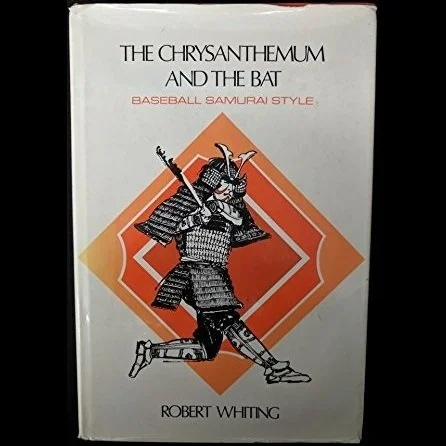
The Chrysanthemum and the Bat by Robert Whiting was published in 1977, so while it is a good introduction to Japanese baseball, and while it does point out the cultural differences, strategies, and attitudes between the US and Japan within the shared game, it, too, is slightly dated at this point.
Its title is a play on THIS 1969 BOOK by Ruth Benedict.
Buy a copy of Robert Whiting’s The Chrysanthemum and the Bat HERE.
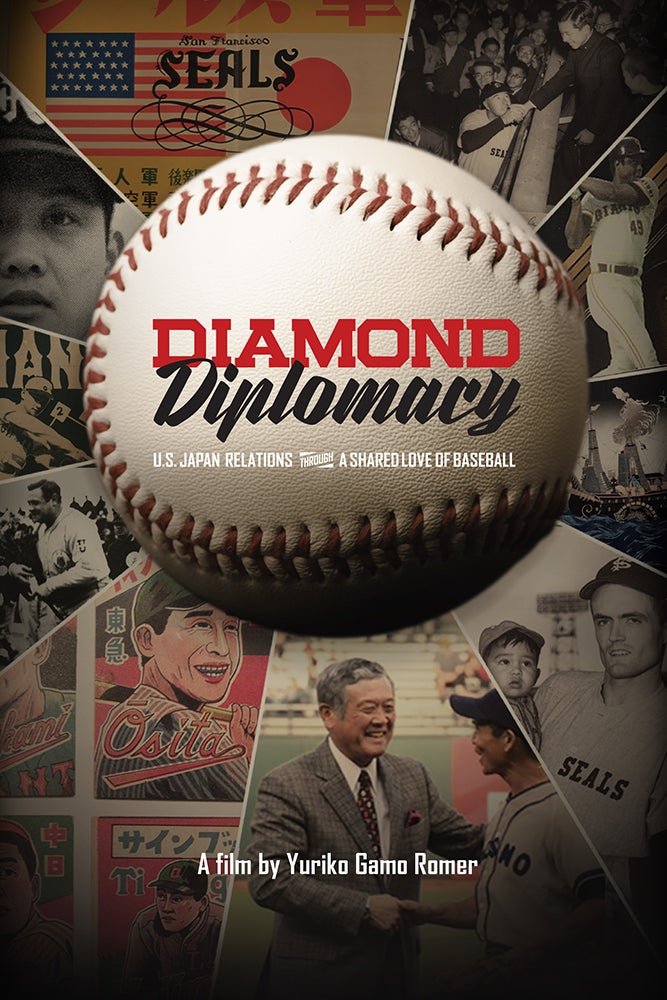
Diamond Diplomacy
Diamond Diplomacy is a 2025 film by director Yuriko Gamo Romer. It explores the long and complex relationship between the U.S. and Japan through the shared love of baseball, revealing a moving diplomatic history that spans generations.
Romer's story is structured around the stories of two former players, Masanori “Mashi” Murakami and Warren Cromartie, but features a cross-cultural lineup of baseball legends, including Babe Ruth, Joe DiMaggio, Ichiro Suzuki, and Shohei Ohtani.
It weaves through key points in history while examining subjects like racism, international relations, and the influence of sports on society, while making a powerful case for sports as a conduit for international healing, connection, and resilience.
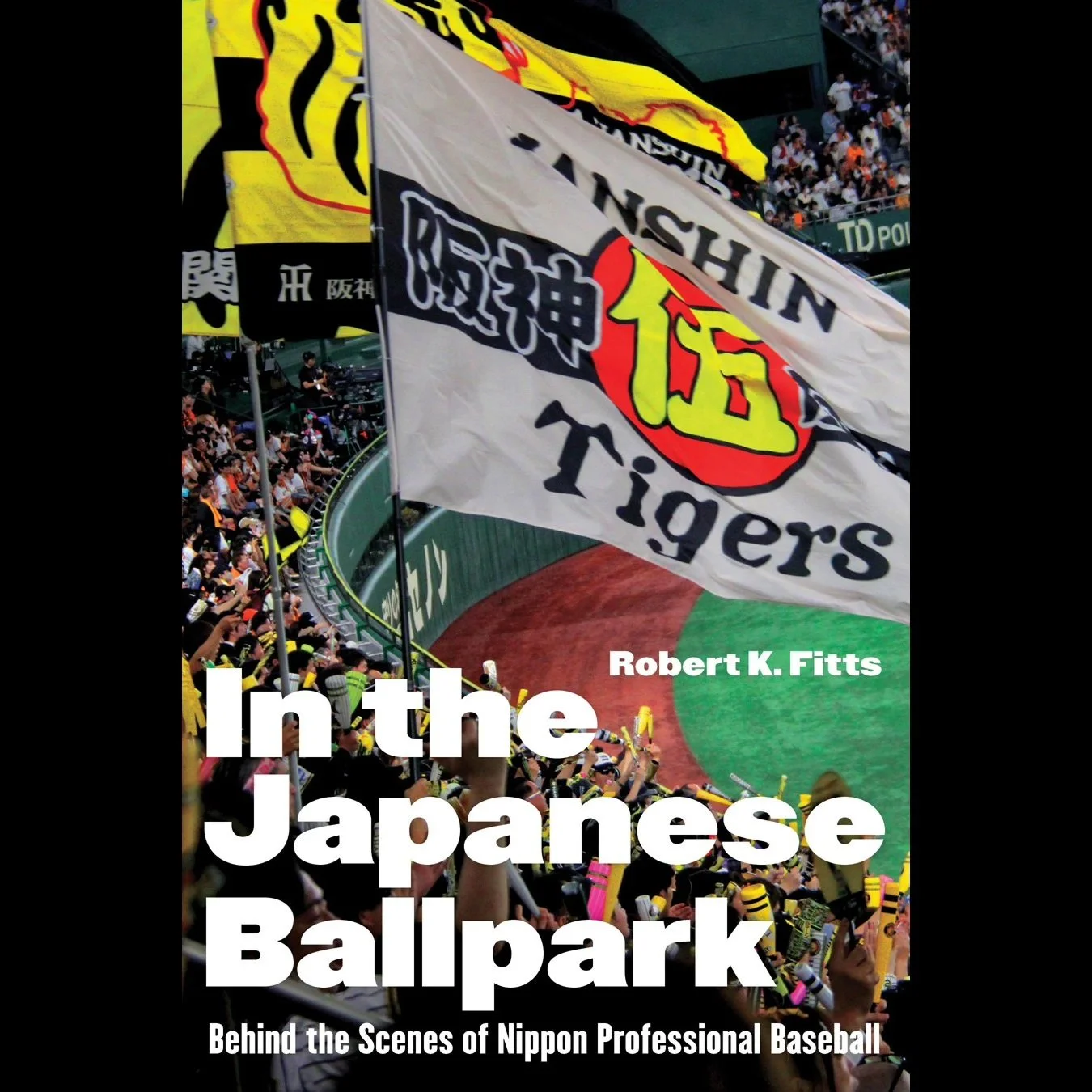
In The Japanese Ballpark
SABR Asian Baseball Committee
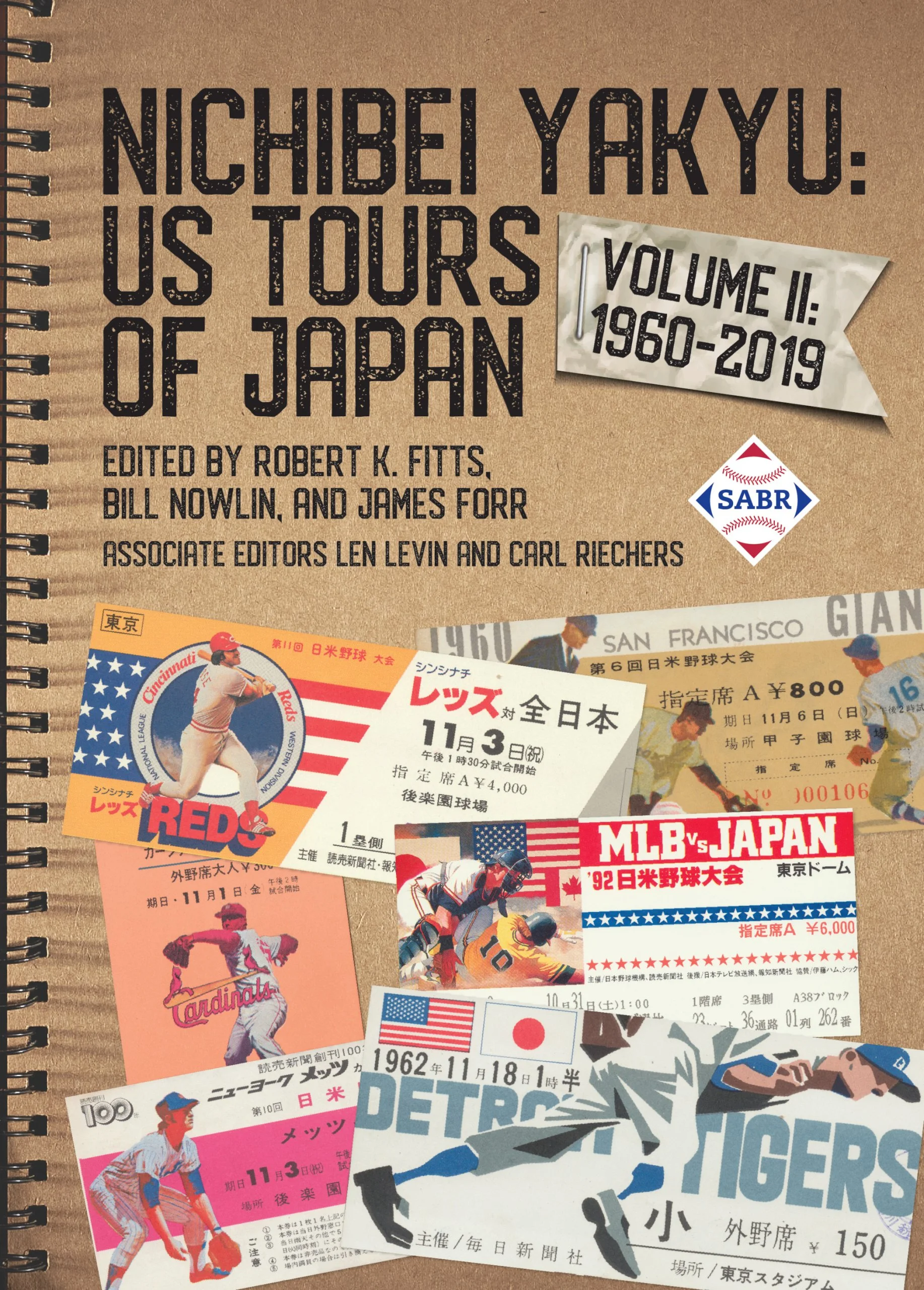
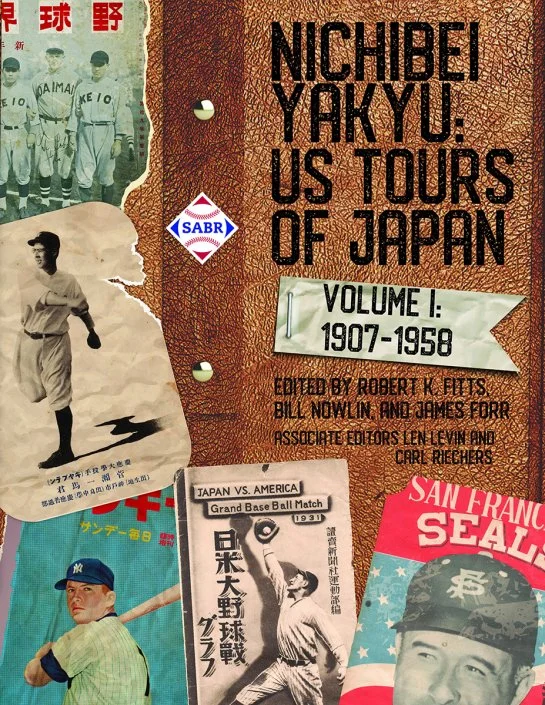
To celebrate the 150th anniversary of Japanese baseball, the Society for American Baseball Research published Nichibei Yakyu: US Tours of Japan, which is a two volume book which talks about the more than 100 baseball teams from the United States and Hawaii who have crossed the Pacific to play baseball in Japan. It's the first book written in English to focus on these international tours.
Check out the SABR Asian Baseball Committee Blog, which frequently publishes articles, by clicking HERE
Buy Nichibei Yakyu: US Tours of Japan, Volume 1: 1907-1958 by clicking HERE
Buy Nichibei Yakyu: US Tours of Japan, Volume 2: 1960-2019 by clicking HERE
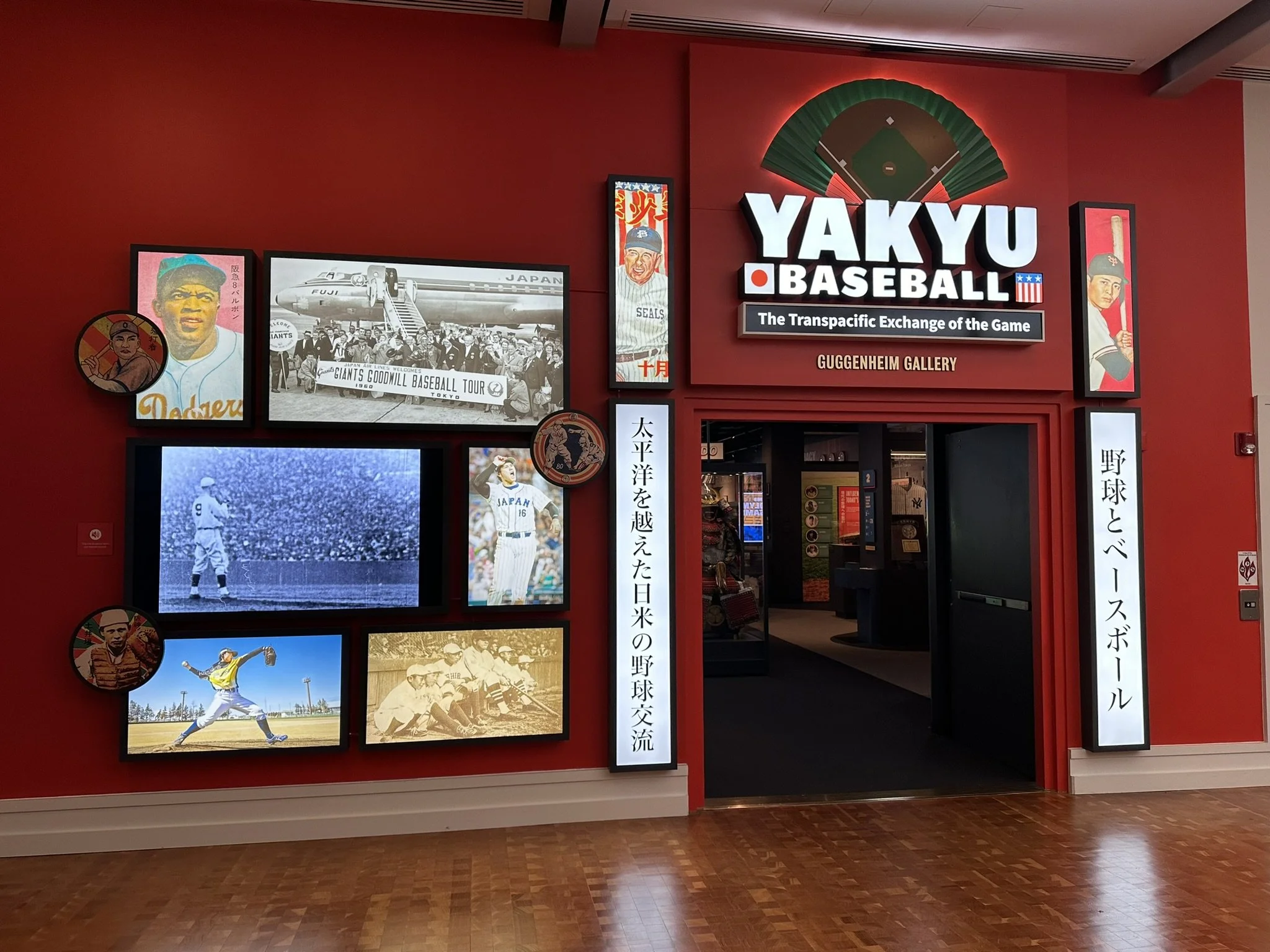
YAKYU | Baseball
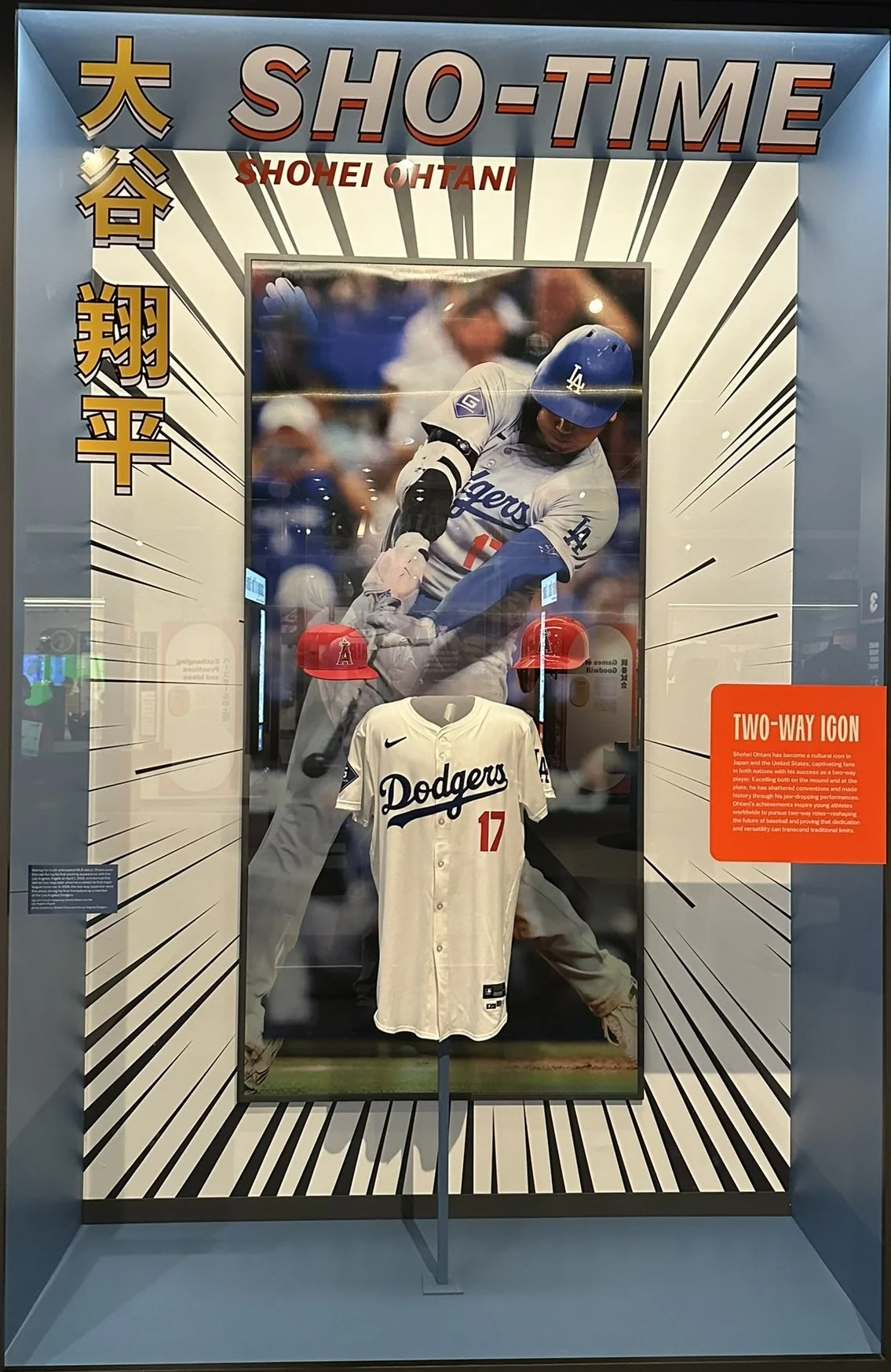
Rob has been a Curatorial Consultant for the National Baseball Hall of Fame in Cooperstown since 2024, and helped bring to life the YAKYU | Baseball exhibit which now resides on the third floor of the museum.
If you can’t make it to Cooperstown to see it for yourself, check out the Hall of Fame’s website HERE
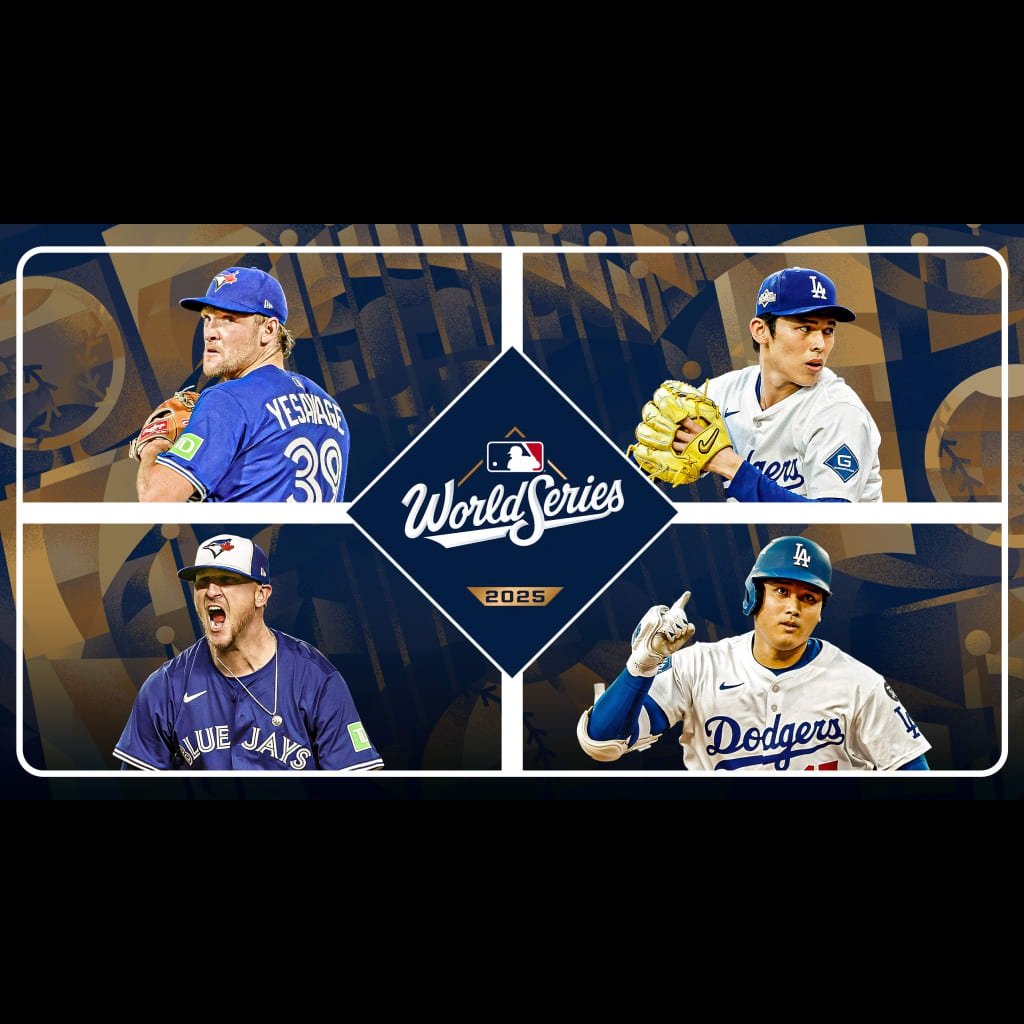
2025 World Series
My mom and I watched every pitch of the 2025 World Series together. When the Blue Jays won Game 4, tying the Series at two games apiece and assuring that the teams would return to Toronto for at least a sixth game, I turned to my mom to make sure she had a valid passport, knowing we were only about a 4 hour drive away from seeing a potential World Series-clinching game in person.
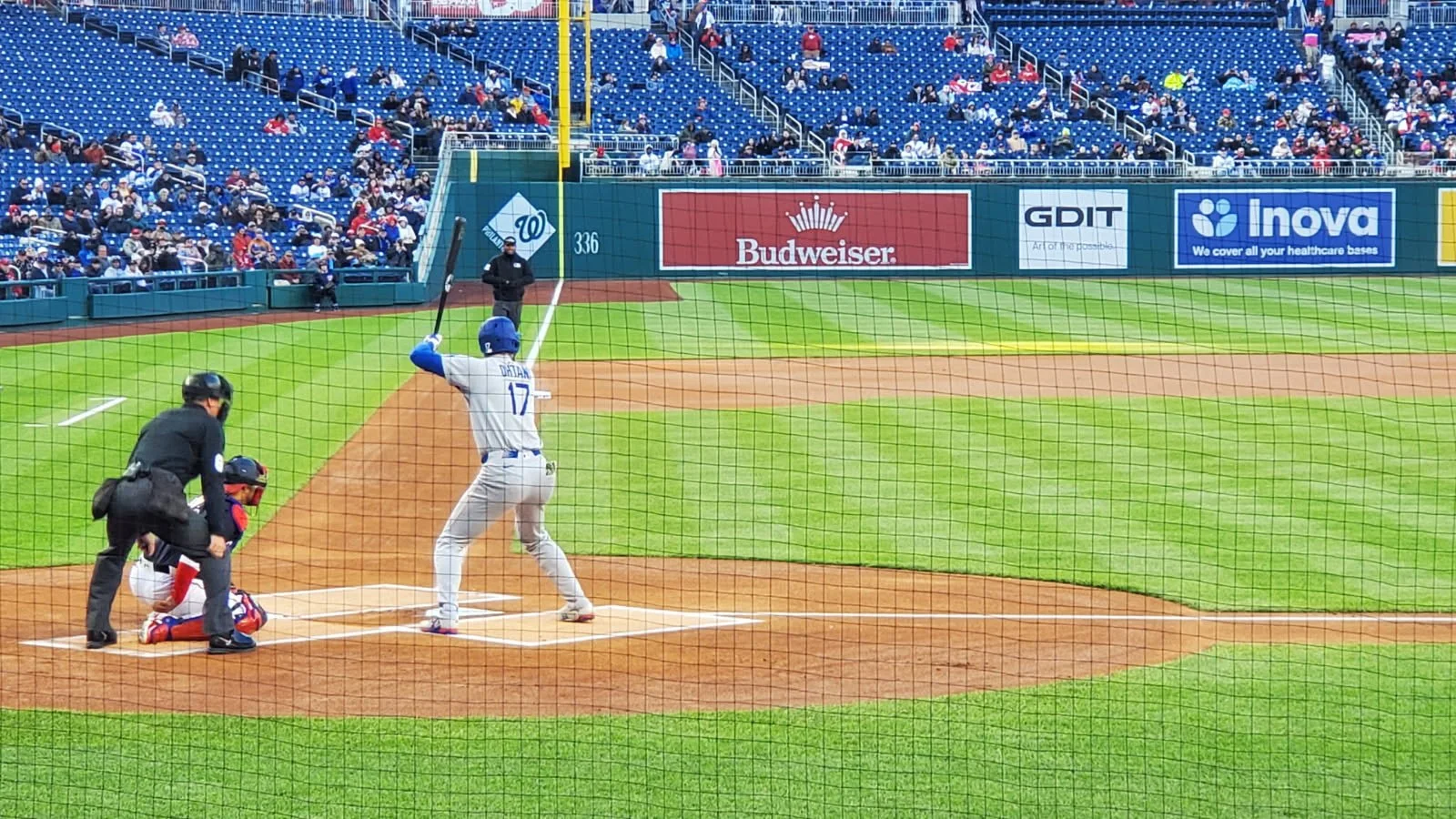
My mom had pretty decent seats when she went to the Nationals game on April 8, 2025 to see the Dodgers play.
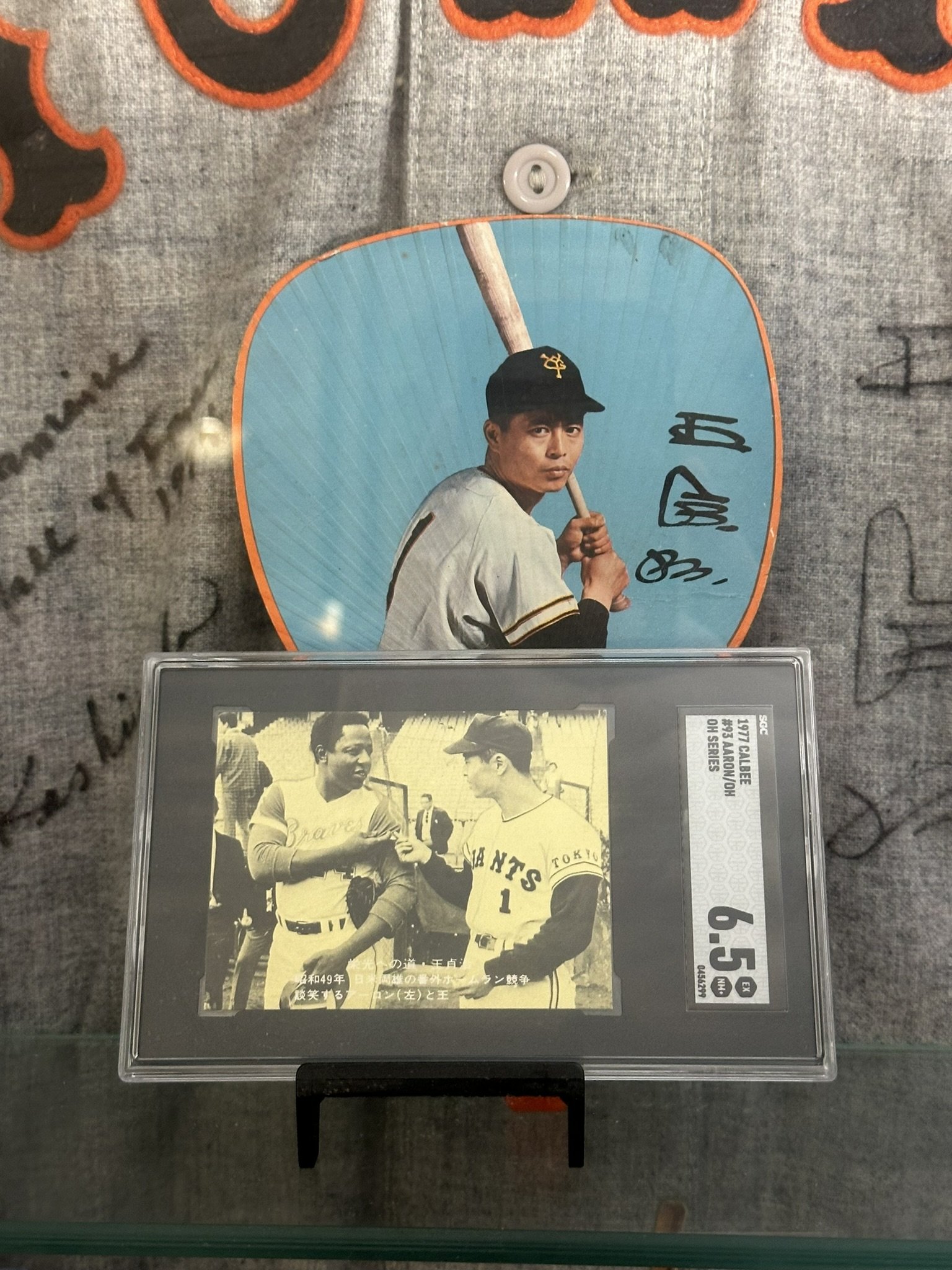
I Know I Ask A Lot Of My Guests…
… but if I didn’t, there’s no way I would be able to get so much back from them, and share that all with you.
But trust me when I say that I am aware of how uncommon it is the way I create this podcast, and navigate the interview process.
The fact that every single one of my guests over five full seasons has been cool with it is not lost on me.
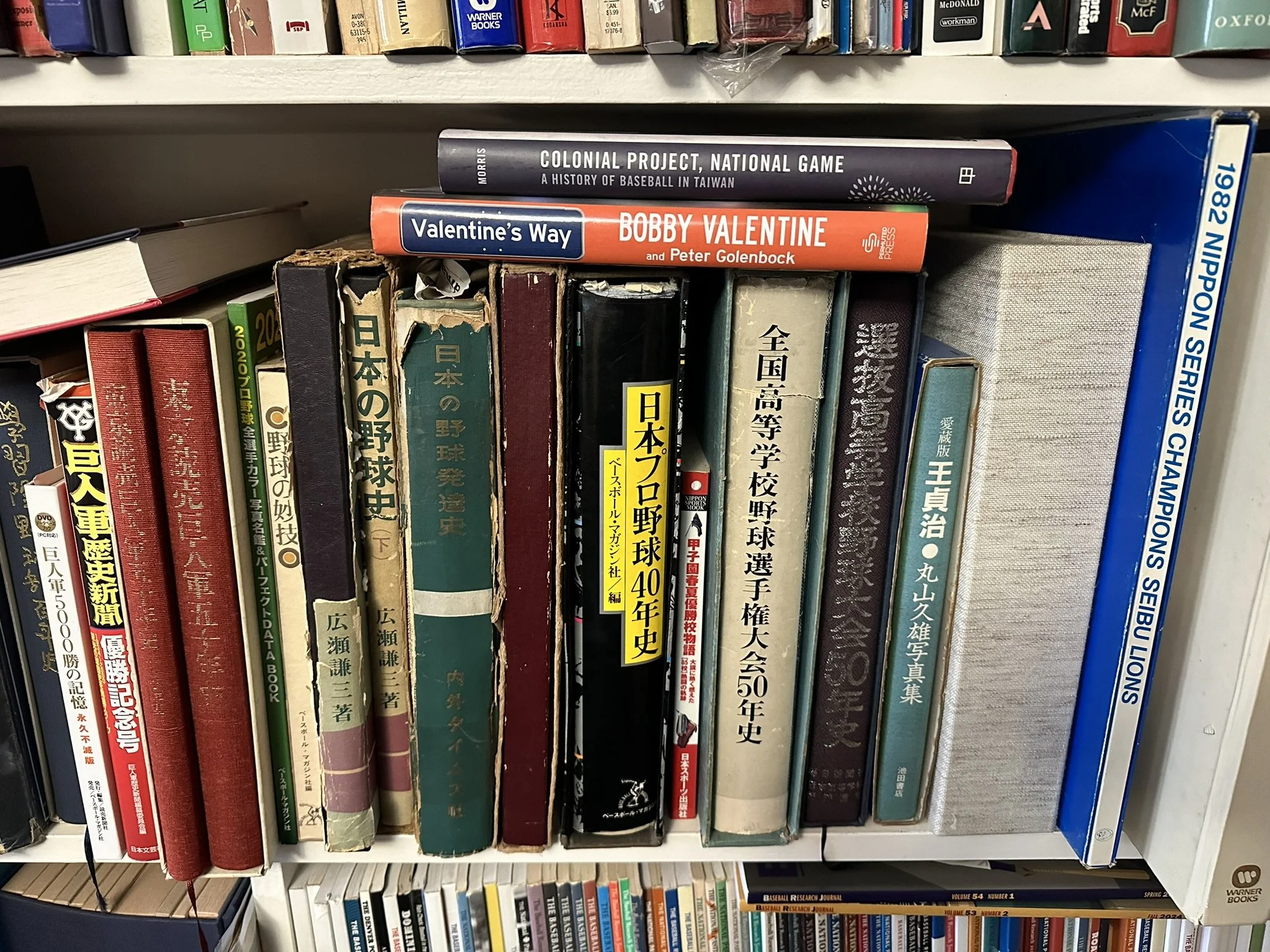
Some of the books on Rob’s many packed-to-the-brim bookshelves.
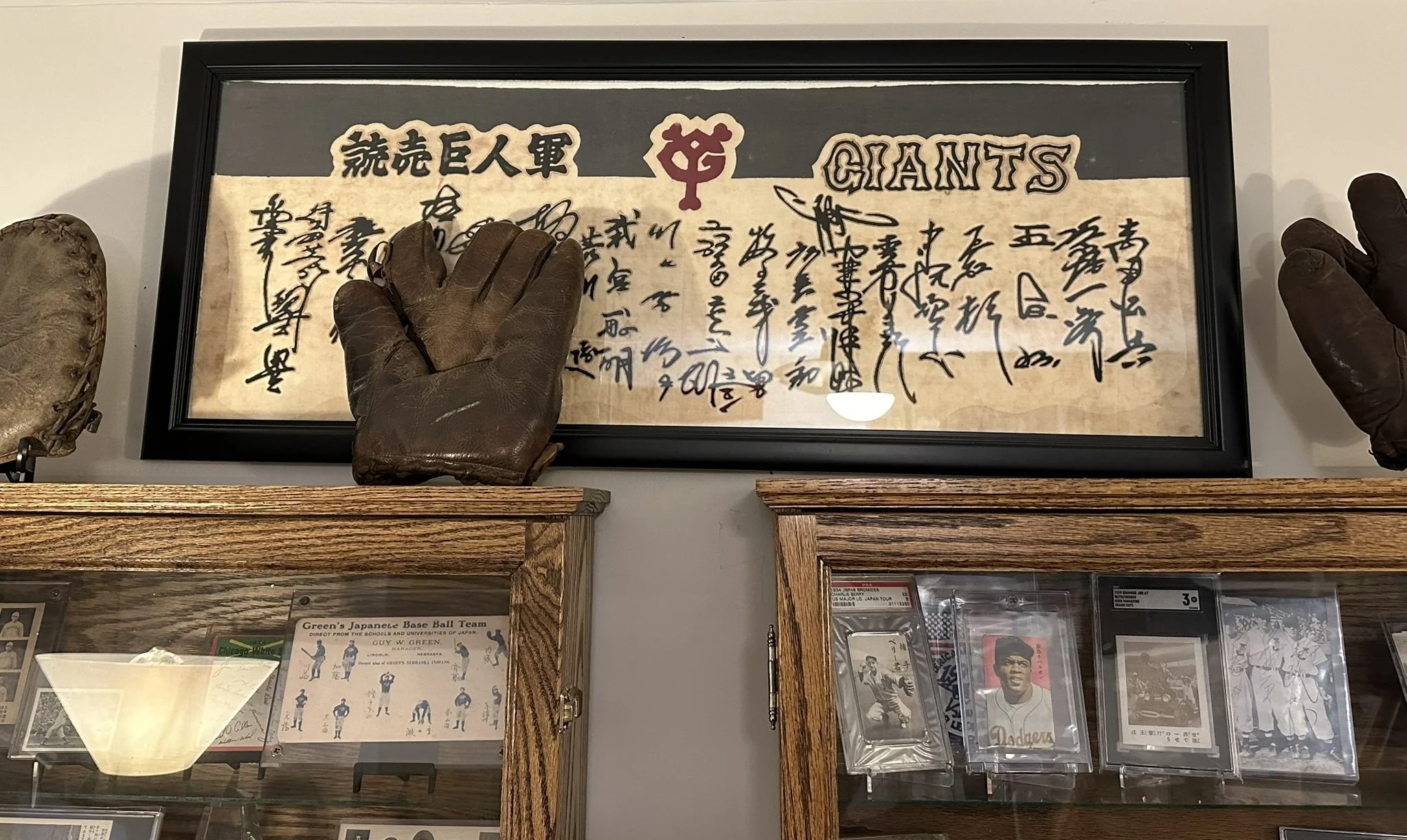
Some of the other cards, framed pieces, and memorabilia in Rob’s office. A truly museum-worthy collection.
Bobby Richardson
Bobby Richardson is a Yankees legend who played second base for the team from 1955-1966, and was teammates with Mickey Mantle every year he played.
Bobby was an 8-time All-Star, a 5-time Gold Glove Award winner, a 3-time World Series champion, and the 1960 World Series MVP.
He was our guest on Episode 5 of Season 2, which you can listen to HERE.
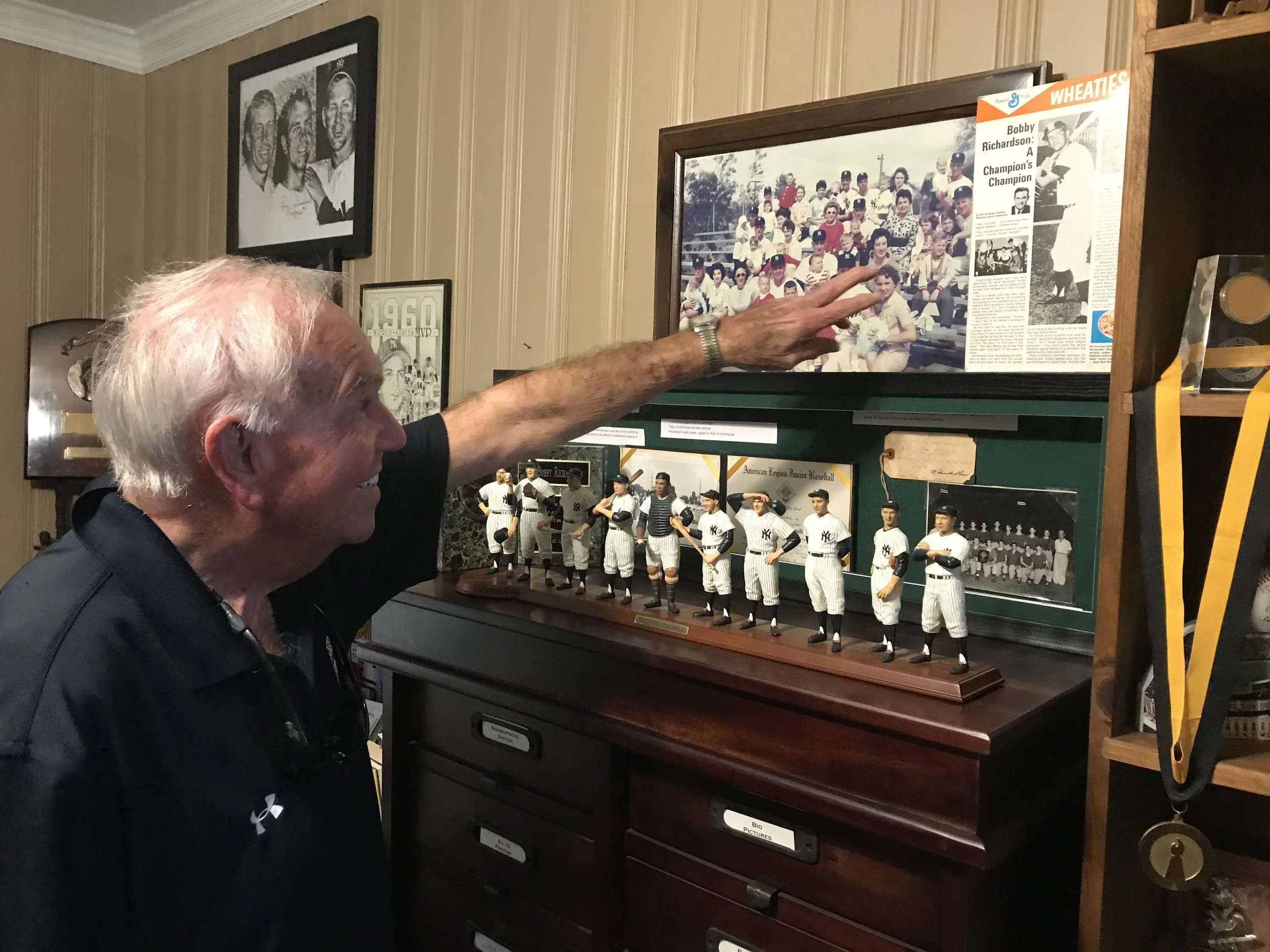
After my interview with Bobby at his home in South Carolina, he asked me to hang out after so he could show me around his office and tell me about the mementos he’s kept from his career. He really had to twist my arm to get me to agree, but after about 0.2 seconds of some deep thought, I said yes.
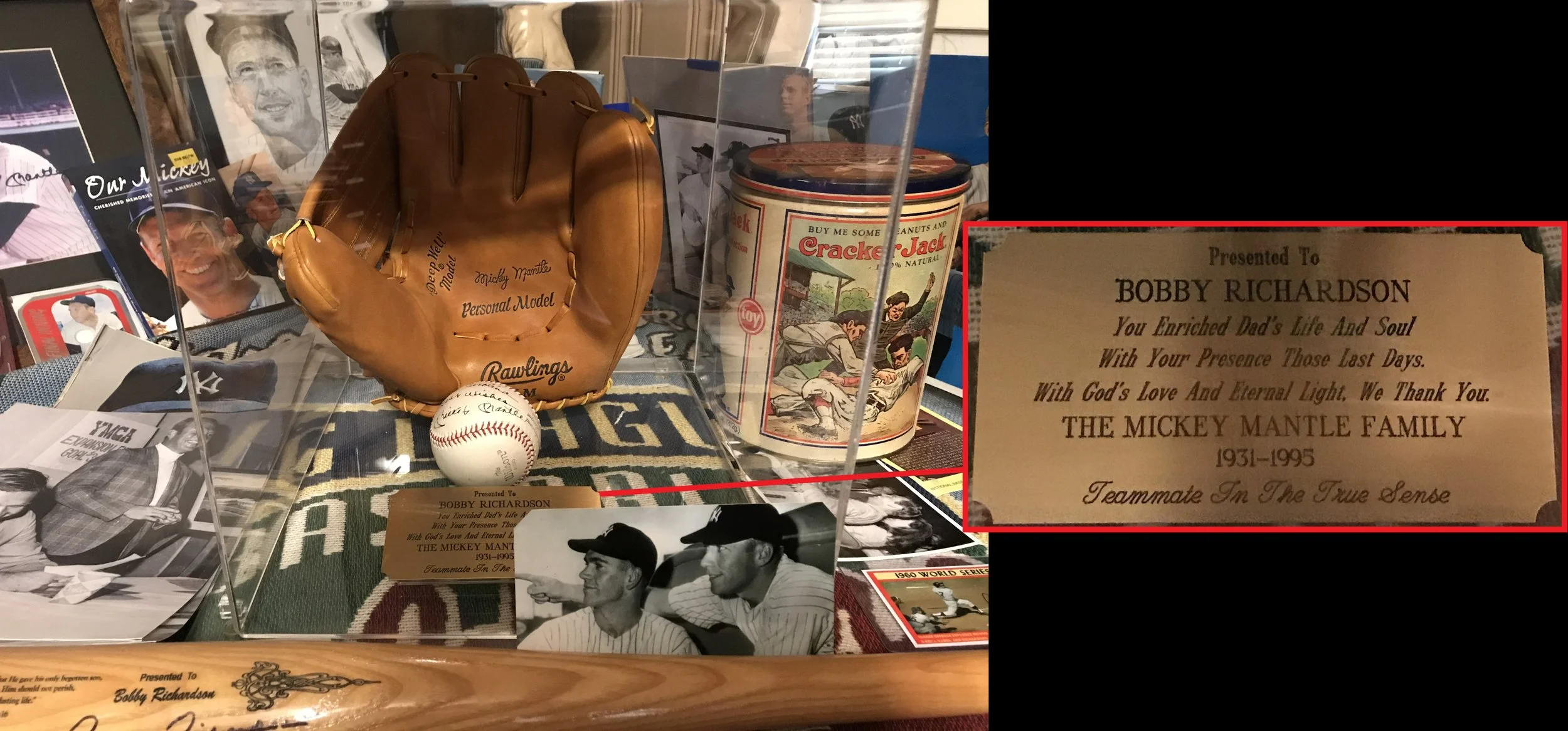
One of the pieces Bobby has from Mickey and the Mantle family, who he became very close with over the years.
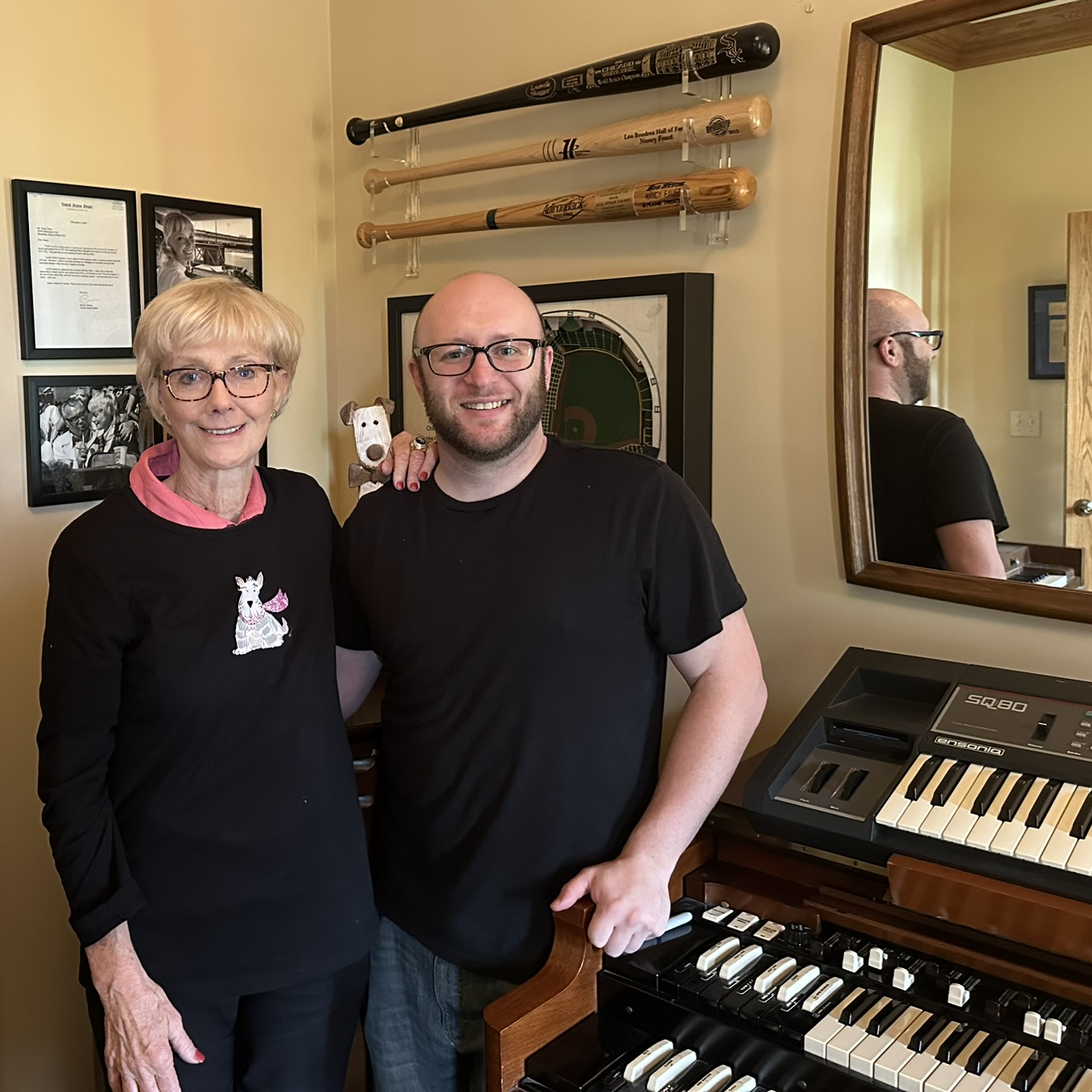
Nancy Faust
Nancy Faust is a legendary sports organist who played at White Sox games for 41 years, and is credited for inventing modern walkup music as we know it when she played “Jesus Christ Superstar” when Dick Allen came to the plate for the Sox throughout the 1972 season.
Together with Harry Caray, she also re-popularized the singing of “Take Me Out To The Ballgame” during the 7th inning stretch. Nancy’s contribution to the in-stadium experience cannot be overstated.
Nancy was our guest for Episode 1 of Season 4. You can listen to that episode HERE.
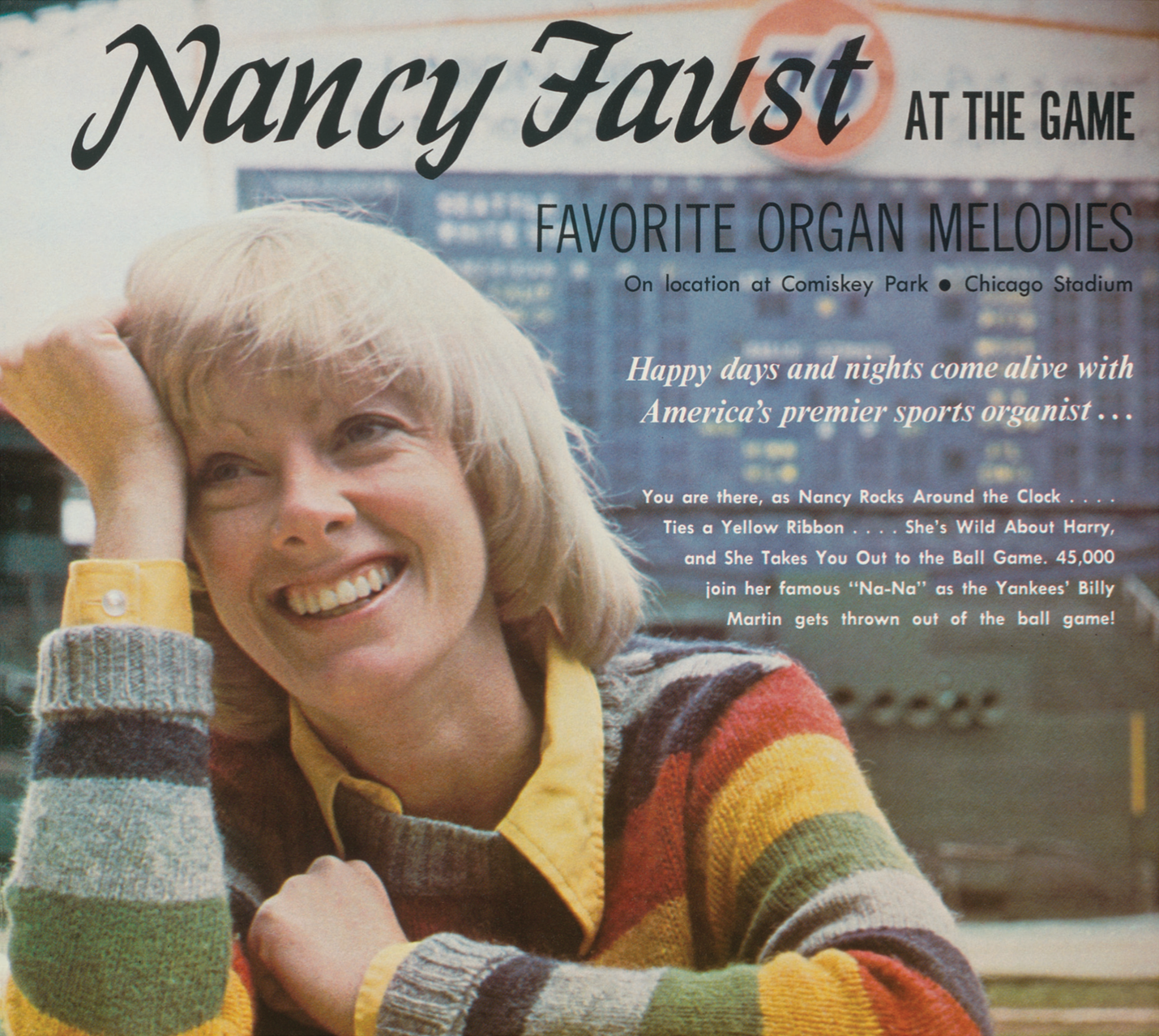
“Nancy Faust At The Game”
After our interview, Nancy asked me to stick around and eat cheese and crackers on her porch.
We have become such good friends that she trusted me to re-release her 1978 debut album “Nancy Faust At The Game” in 2025. We painstakingly restored and remastered the audio from the original vinyl release. The songs are available for the first time in nearly 50 years thanks to Artistic Integrity Records.
You can buy a CD copy either signed by Nancy or unsigned HERE.
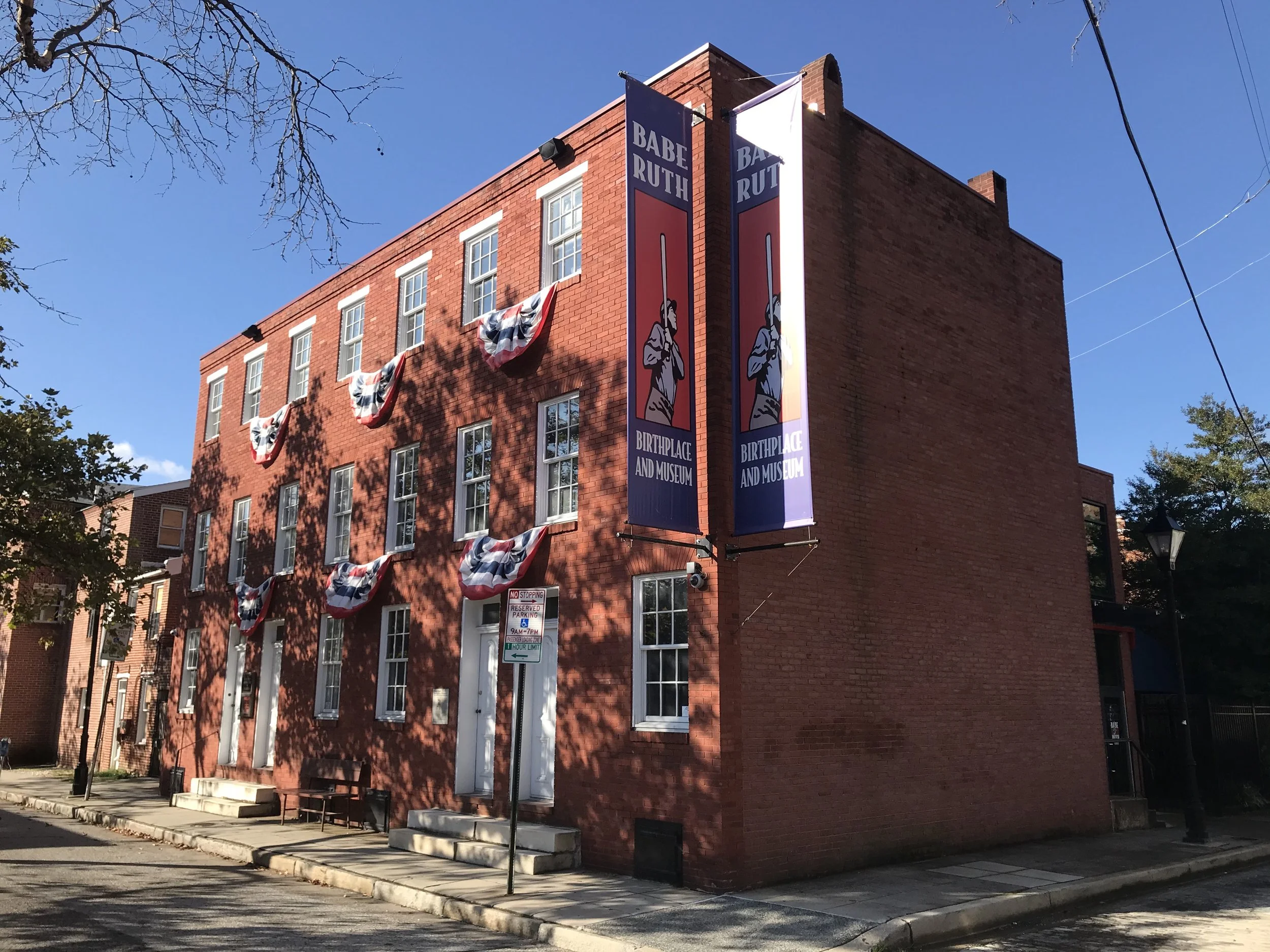
Babe Ruth Birthplace And Museum
In October of 2020, my mom and I visited the Babe Ruth Birthplace and Museum in Baltimore, where we saw many personal belongings that Babe bought or received as gifts in Japan during the 1934 Tour.
While we were there, I interviewed Shawn Herne, who is the Executive Director of the museum, about his job, and … you know… about Babe Ruth. That interview turned into Episode 3 of Season 2 of My Baseball History, which you can listen to HERE.
Unique Experiences
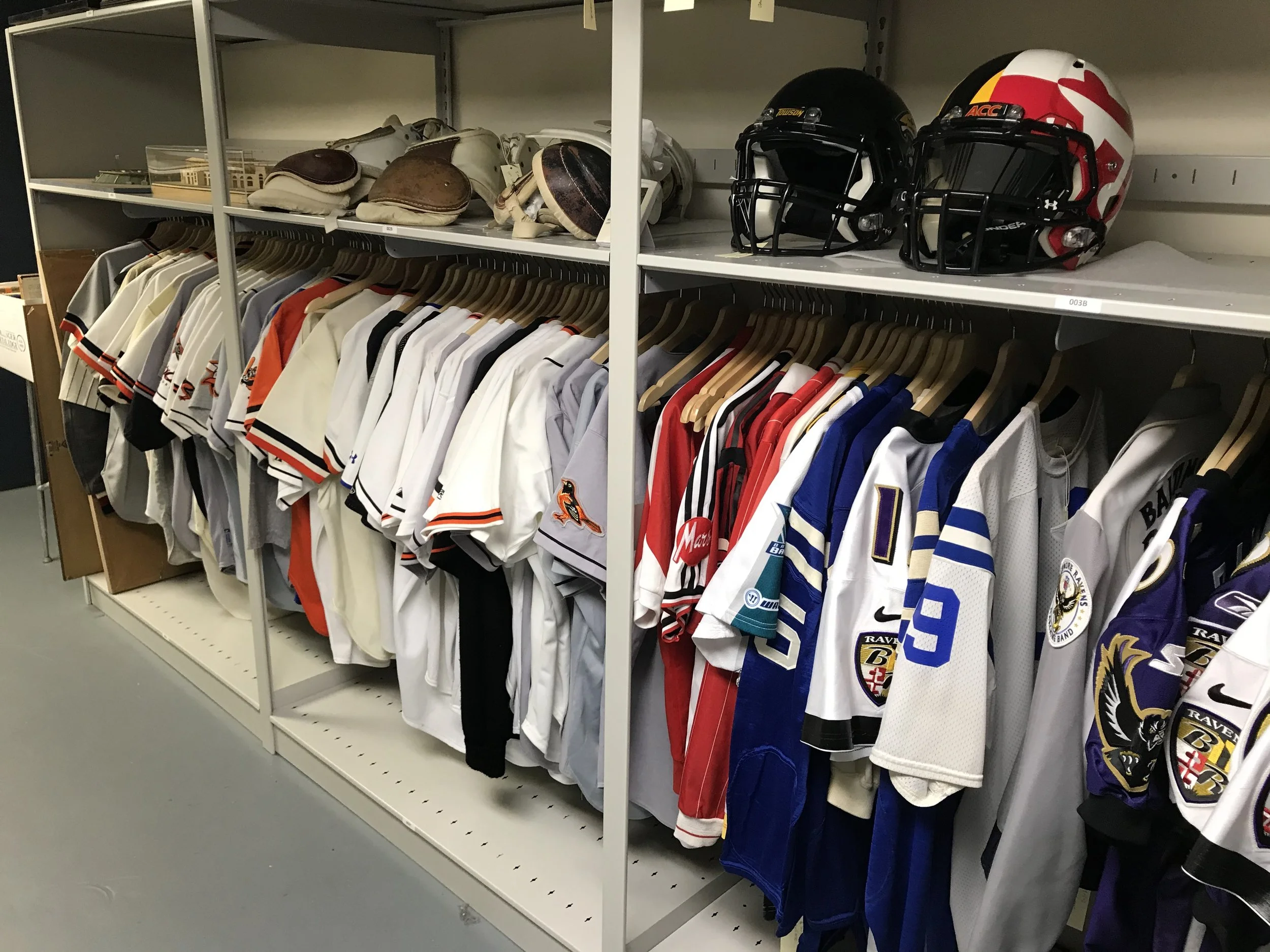
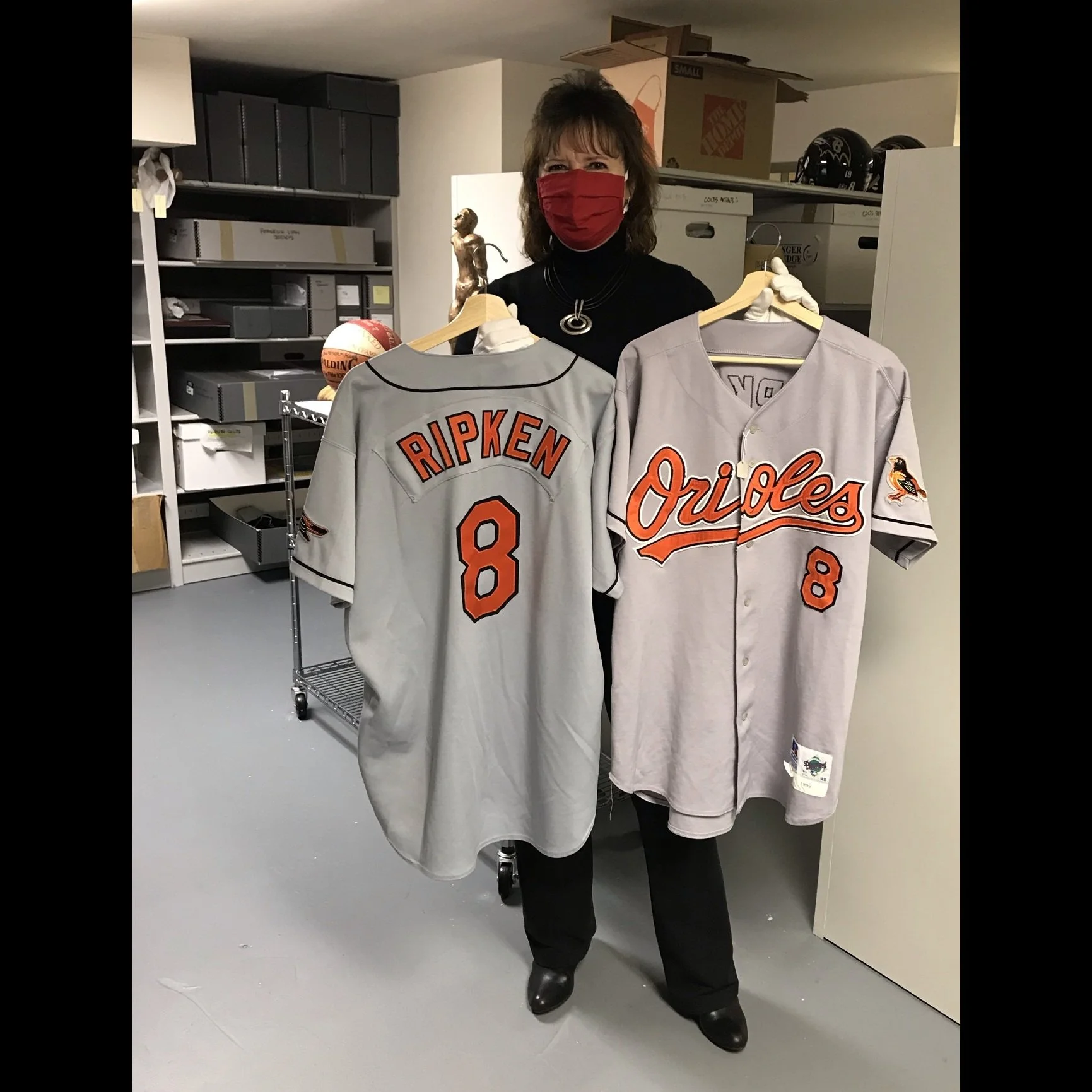
After the interview, Shawn took my mom and I on a behind-the-scenes tour of everything else that is housed in the building, but not on display for the general public.
Needless to say, it was a pretty wonderful day.
Mr. Baseball
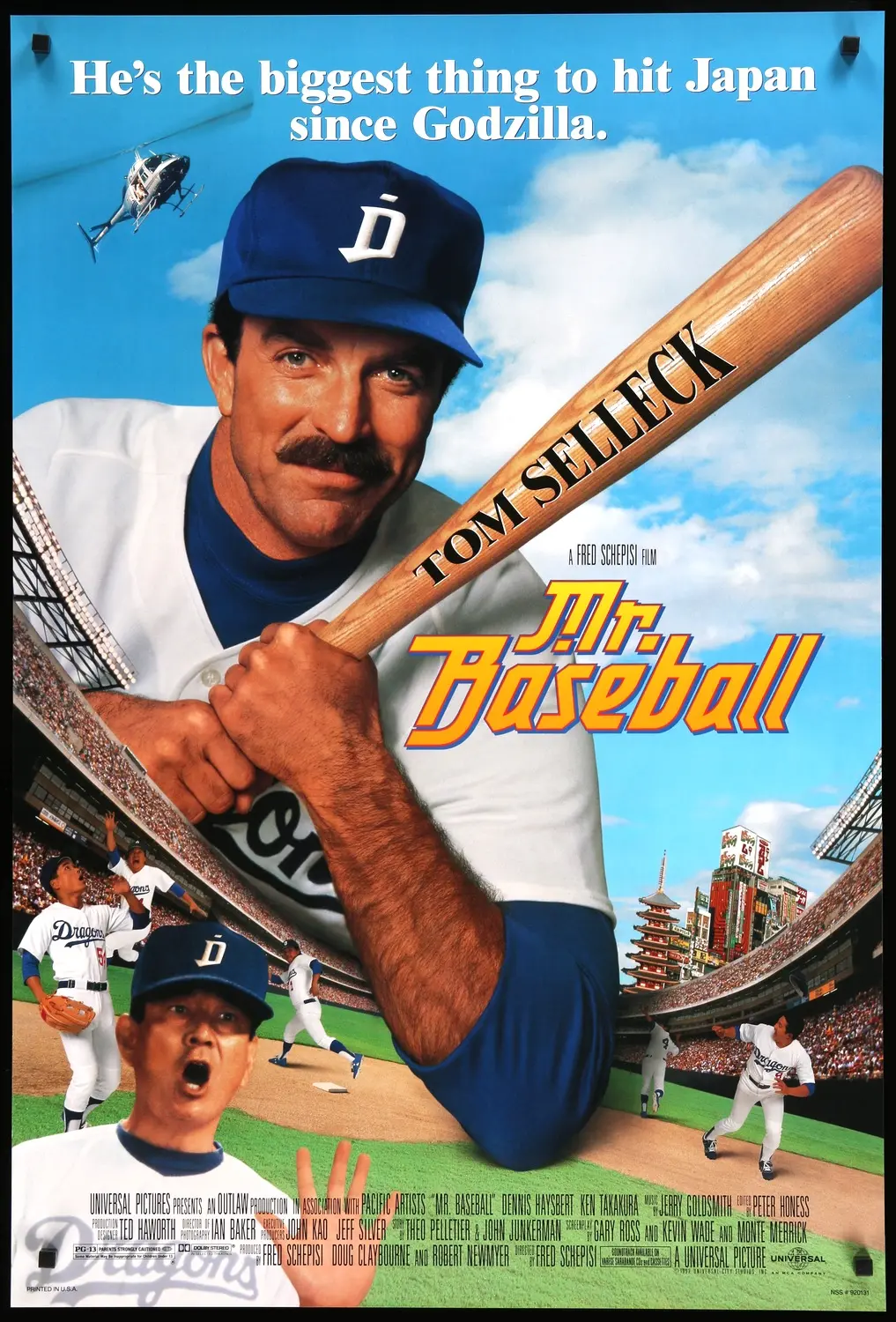
In 1992’s Mr. Baseball, Tom Selleck plays an aging American baseball player who loses his roster spot and is traded to the Dragons. He falls in love with the manager’s daughter, and it’s a classic fish out of water story with some great baseball sequences.
To prepare for the role, the 6’4”, 200 pound Selleck spent three weeks training with the Detroit Tigers at their training camp in Lakeland, Florida. At the end of the camp, Tigers manager Sparky Anderson let Selleck take a live at-bat.
Selleck hit some foul balls, and with the count at 1-2, he struck out swinging on a knuckle-curve.
Buy a DVD copy of Mr. Baseball HERE.
Ball Four
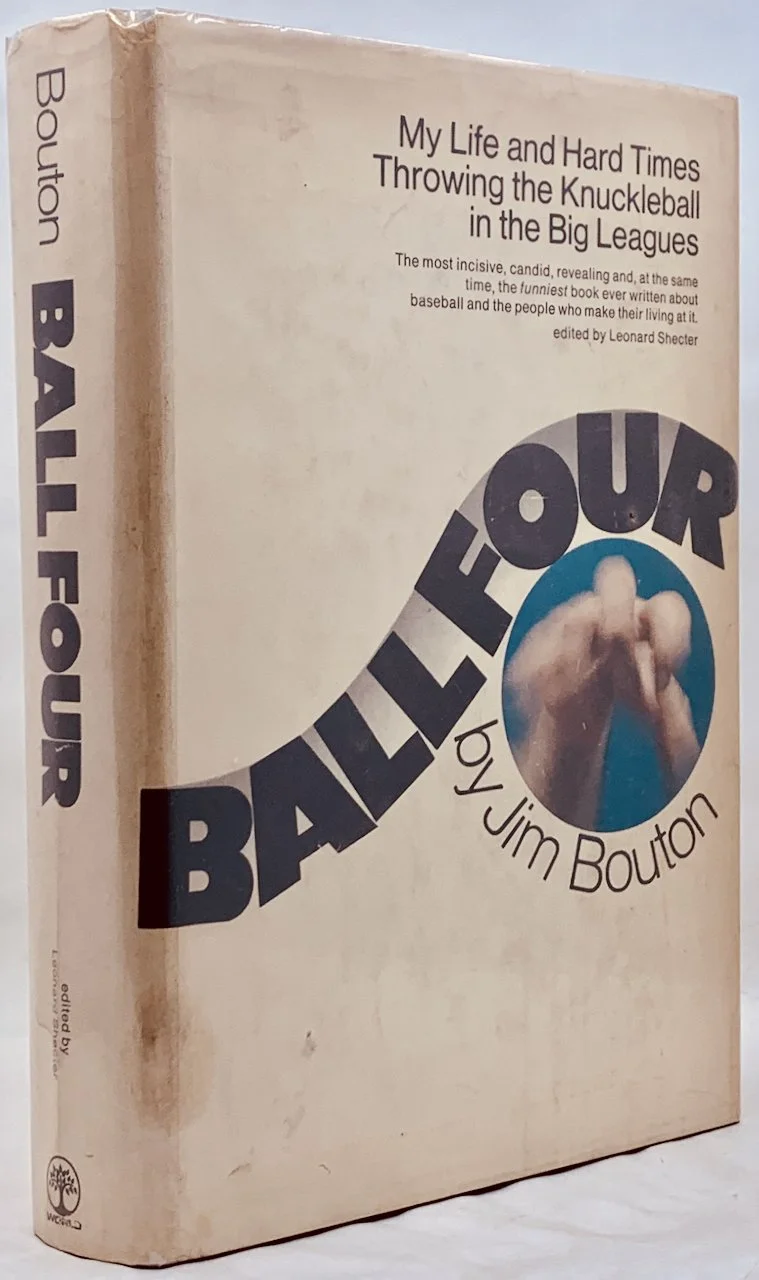
First published in 1970, Ball Four: My Life and Hard Times Throwing the Knuckleball in the Big Leagues was written by Jim Bouton and edited by Leonard Shecter.
The book is a diary of Bouton's 1969 season, spent with the Seattle Pilots and then the Houston Astros following a late-season trade. Bouton also recounts much of his earlier baseball career, spent mainly with the New York Yankees.
The book was controversial for divulging many unflattering facts about the sport and its players; baseball commissioner Bowie Kuhn attempted to discredit it and label it as detrimental to the sport.
It is considered a landmark in American sports literature, and was the only sports-themed book included on the New York Public Library's 1996 list of Books of the Century, under the category "Popular Culture & Mass Entertainment". It was also included on Time's list of the 100 greatest non-fiction books published since the magazine's founding in 1923.
Buy a copy of Jim Bouton’s Ball Four HERE.
Part One
I would be surprised if you’ve made it this far in the liner notes for Part Two if you haven’t listened to Part One of this episode yet, but just in case…
If you want to listen to Part One of this interview with Rob where we discuss the history of baseball in Japan dating back to the 1860s and running up until about 1964, CLICK HERE.
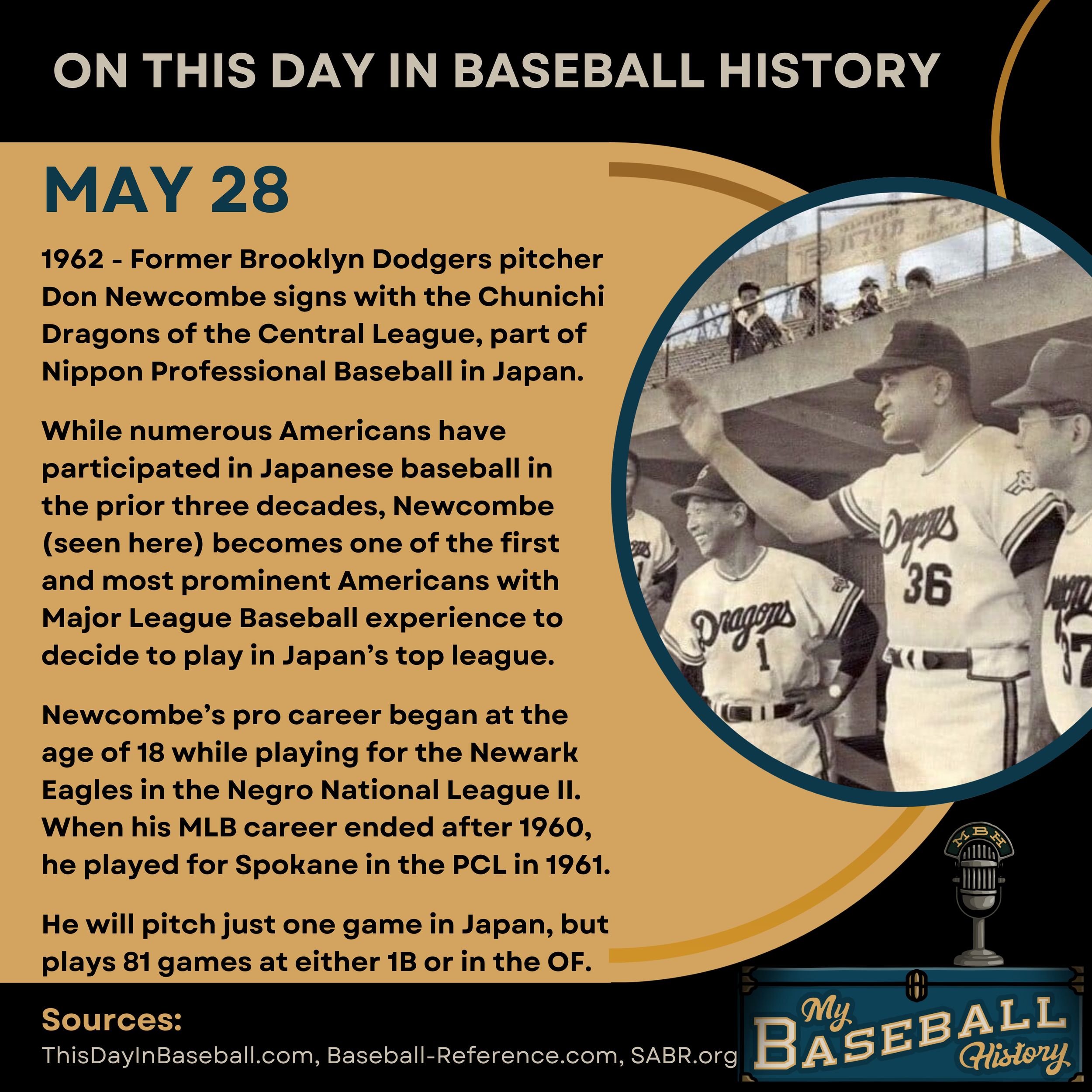
On This Day Posts
You’ve seen a handful of them throughout these liner notes, so you have an idea of the type of content you can expect every day if you aren’t already following My Baseball History on social media.
If you’d like to follow the show on your favorite platform, click one of the following links and it will take you right to our profile.
Join Our Email Newsletter
It’s free, and it’ll give you some bonus content throughout the month that you won’t get from the podcast episodes or by following any of our other social media platforms.
We put out new issues on the second Friday and the fourth Friday of every month. No more, no less.
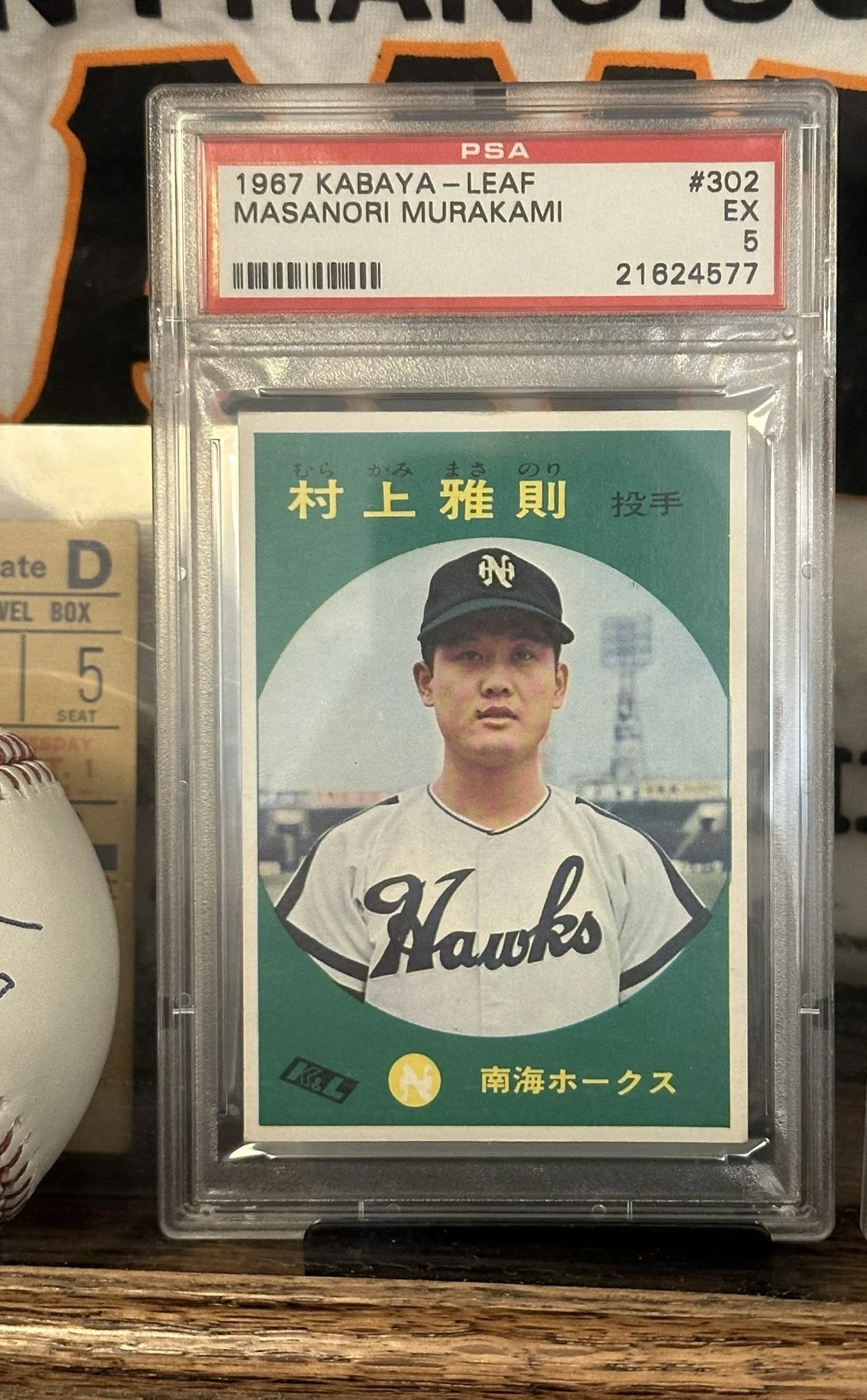
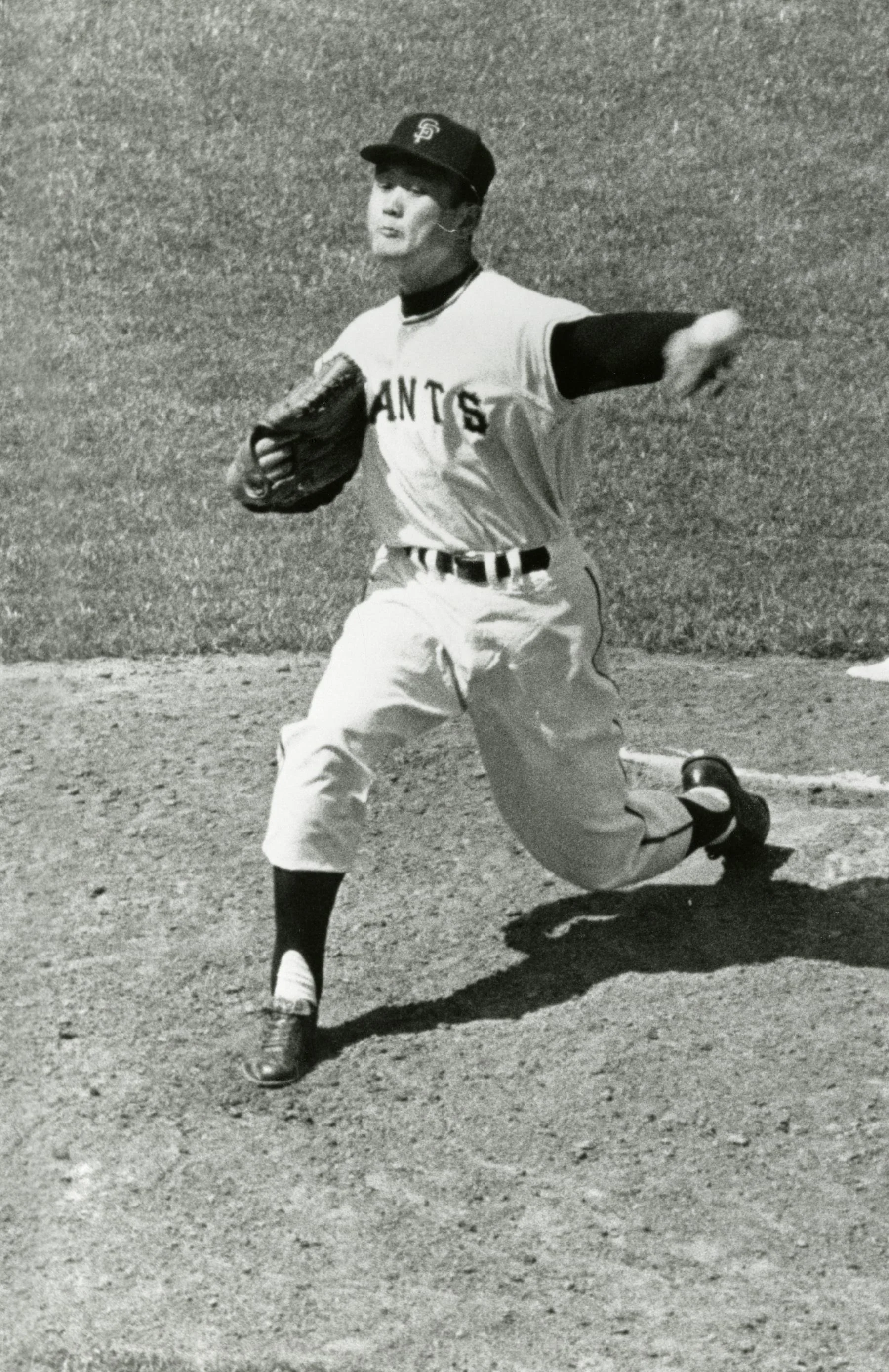
Masanori Murakami
Masanori Murakami who played in the United States in 1964 and 1965. But it wasn’t just Mashi who signed with the San Francisco Giants as part of that… for lack of a better term … foreign exchange.
On February 23, 1964, the San Francisco Giants acquired Murakami, third baseman Tatsuhiko Tanaka, and catcher Hiroshi Takahashi on a player development deal with the Nankai Hawks, who owned rights to all three players.
The trio were the first Japanese natives ever to play for American major league teams, and all three were originally assigned to the Magic Valley Cowboys of the Pioneer League.
Although none of the three were considered top prospects, Murakami confounded everyone by reaching the major leagues in September of 1964 after having an outstanding season in the minors.
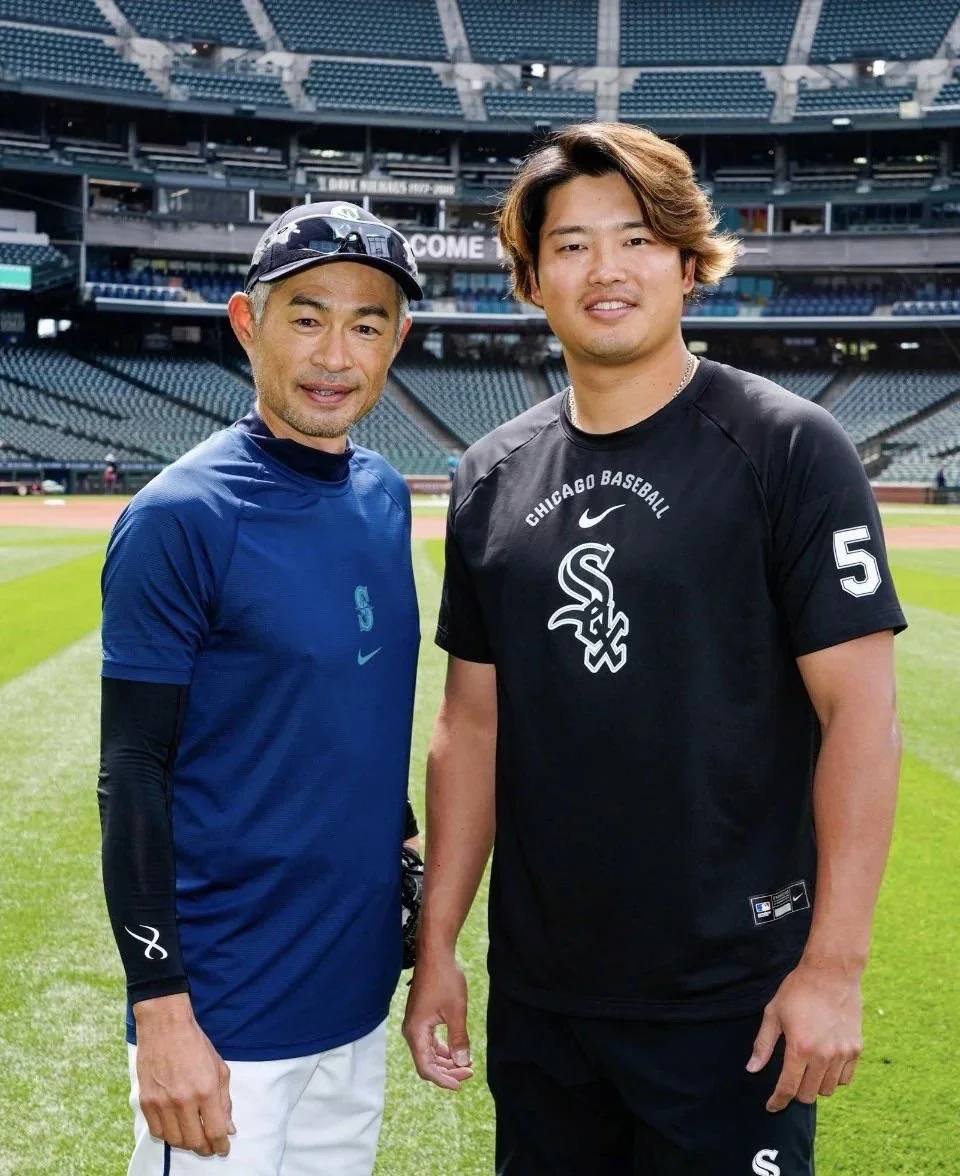
Munetaka Murakami
If you’ve been wondering this whole time if Masanori Murakami and current Chicago White Sox rookie Munetaka Murakami are related, as great of a story as that would be, they do not share a familial relationship.
Before his hamstring injury, the White Sox Murakami was having an unprecedented rookie season, for a player born in any country. But putting up huge offensive numbers, and hitting lots of home runs, is nothing new for Munetaka.
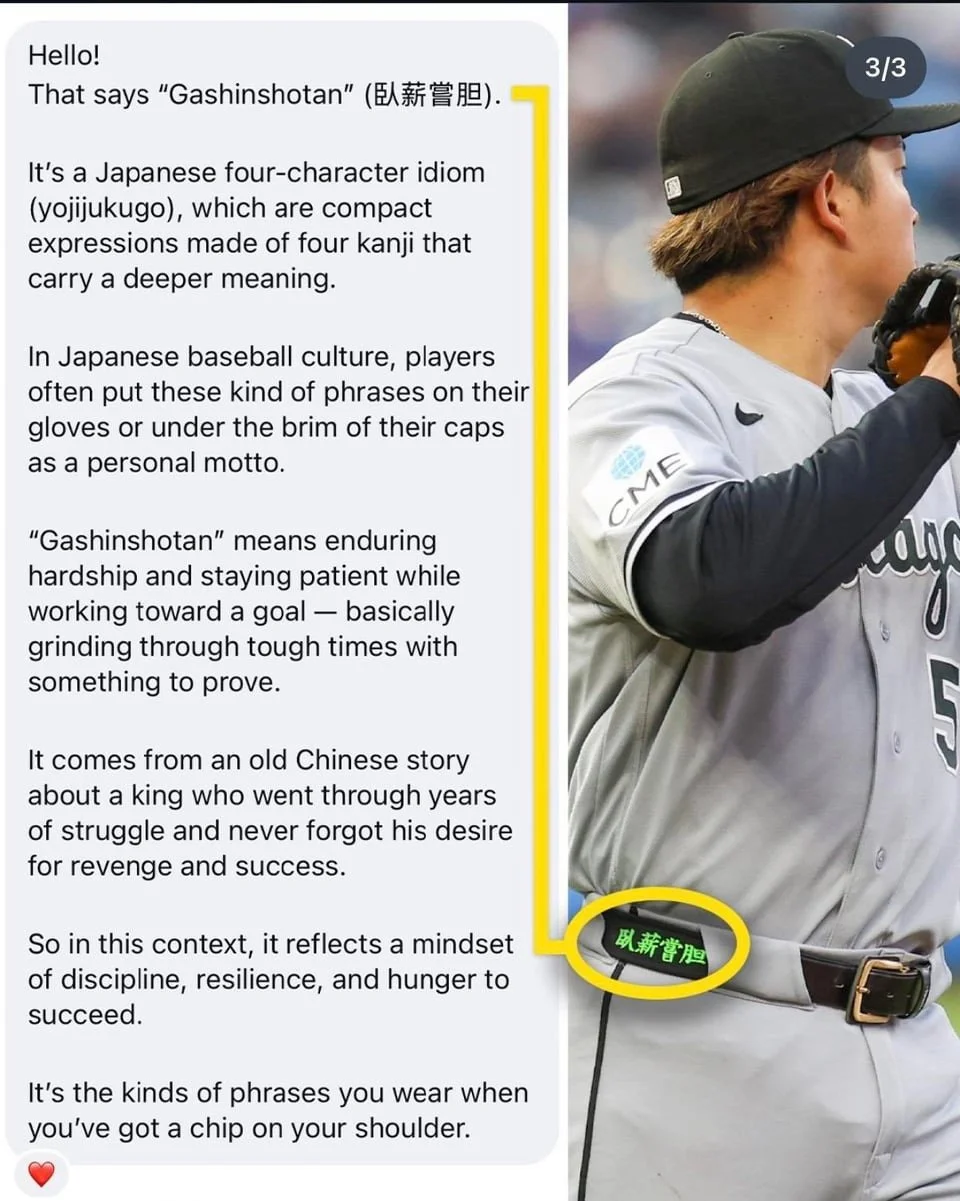
Perseverance Through Hardship
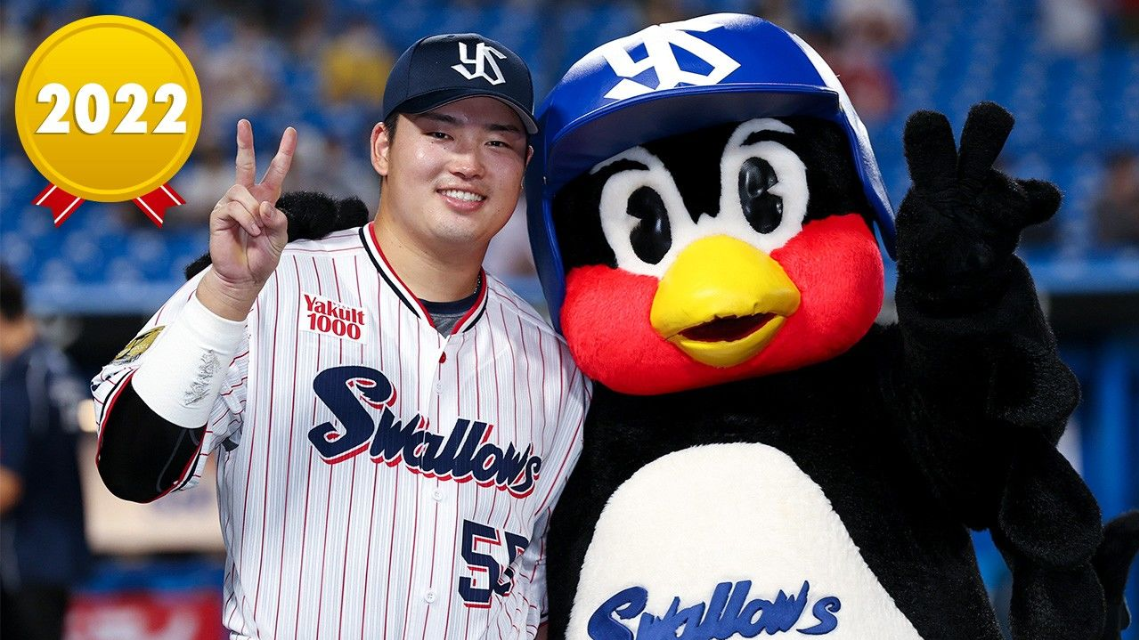
Murakami was the MVP of NPB’s Central League in 2021 and 2022, he won the Triple Crown in 2022, and on October 3rd of 2022, he hit his 56th home run of the season, breaking Sadaharu Oh's record for the most home runs hit in a single season by a Japanese-born player.
Munetaka’s nickname — "Murakami-sama" — was given to him by Japanese fans because his feats at the plate could only be done by a kami-sama, or “god.” His nickname was Japan's word of the year for 2022.
Mashi
Back to the other Murakami… Masanori.
Mashi’s contractual situation caused quite a bit of trepidation for both Major League teams and NPB teams, as they questioned whether all of the stress, confusion, and complications surrounding each league’s reserve clause was worth it.
In fact, Commissioner Ford Frick said in early February of 1965 that unless the Nankai Hawks honored the San Francisco Giants contract, all other baseball agreements between America and Japanese might as well be dropped. He also said that that stance could also be applied to further postseason trips to Japan by American teams.
Mashi was begrudgingly allowed to play the 1965 season for San Francisco, but he returned to Japan after the season and it would be 30 years before another Japanese player came to the Major Leagues.
St. Louis Browns
However, there were American players who had been playing in Japan for more than a decade by that point.
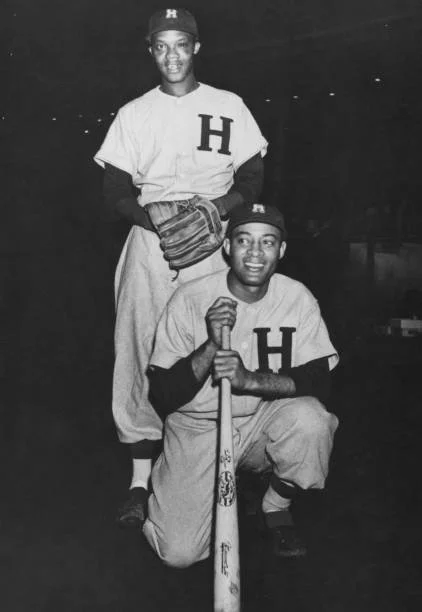
On April 28, 1952, the St. Louis Browns became the first major league organization to loan or sell players to a team outside of the United States when they “lent” two African-American minor leaguers, infielder John Britton (seen here, nealing) and pitcher Jimmie Newberry (standing), to the Hankyu Braves of the Pacific League.
Abe Saperstein, the owner and coach of the world-famous Harlem Globetrotters, negotiated the lease.
Jimmy Bonner had become the first Black player in Japanese baseball history all the way back in 1936!
Larry Raines
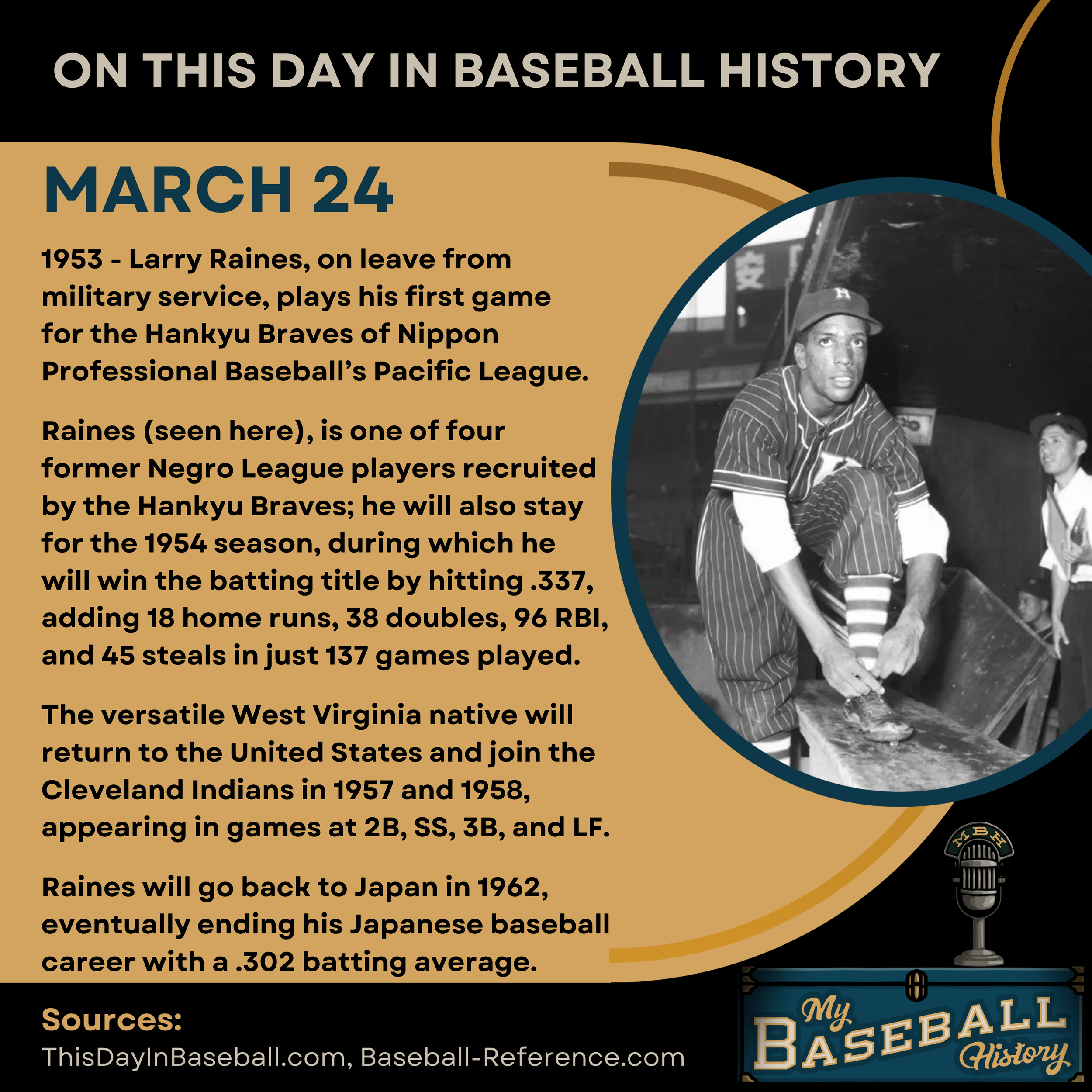
Larry Raines is recognized for having been the first ballplayer to perform professionally in Minor League Baseball, Negro league baseball, Japanese baseball, and in the major leagues.
In 1952, he topped the East–West All-Star Game poll with a total of 24,583 votes and started at shortstop for the Western Division at Comiskey Park.
Raines died in 1978 in Lansing, Michigan, at the age of 47.
Wally Yonamine
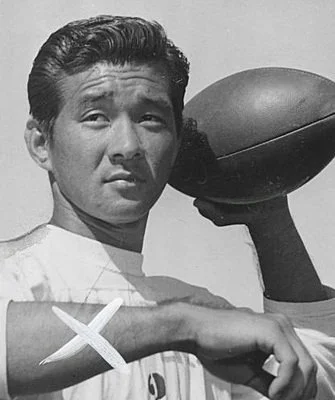
During this episode, Rob mentioned Wally Yonamine, who was a standout football player who eventually chose baseball and had a really nice career.
Wally Yonamine was a Hawaiian-born Japanese-American multi-sport athlete who was the first American baseball player to go to Japan after World War II. Prior to that, he played professional football for the San Francisco 49ers.
Wally Yonamine’s Pro Football Reference
Buy a copy of Rob’s book, Wally Yonamine, HERE.
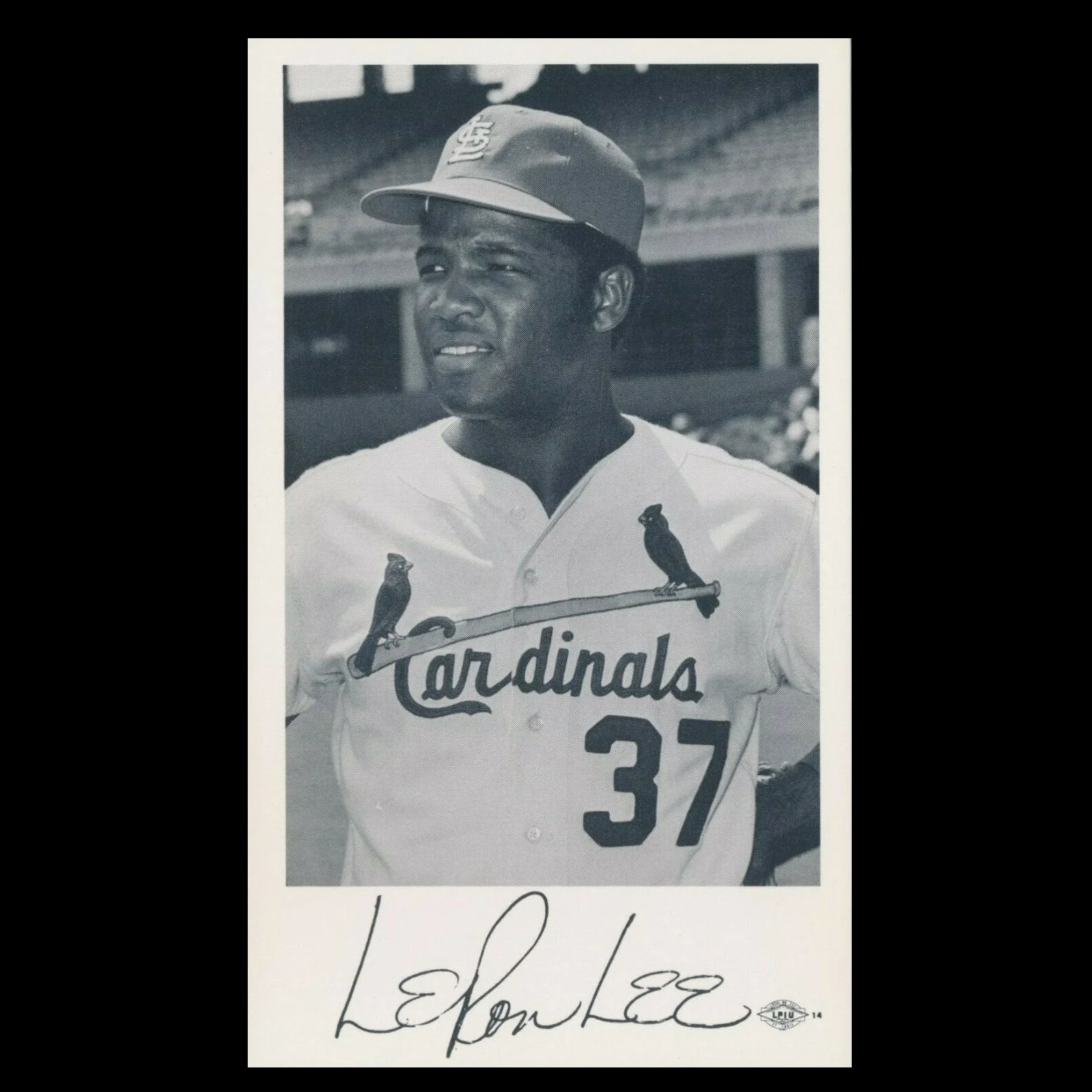
LeRon Lee
We can say the same thing about another American-born player, named LeRon Lee, who was the oldest of six children. He graduated from Grant Union High School in Sacramento, California with 36 football scholarship offers from major four-year universities.
Instead of going down the football path, he chose baseball when he was drafted by the St. Louis Cardinals with the 7th overall pick in the 1st round of the 1966 MLB June Amateur Draft as an 18-year-old.
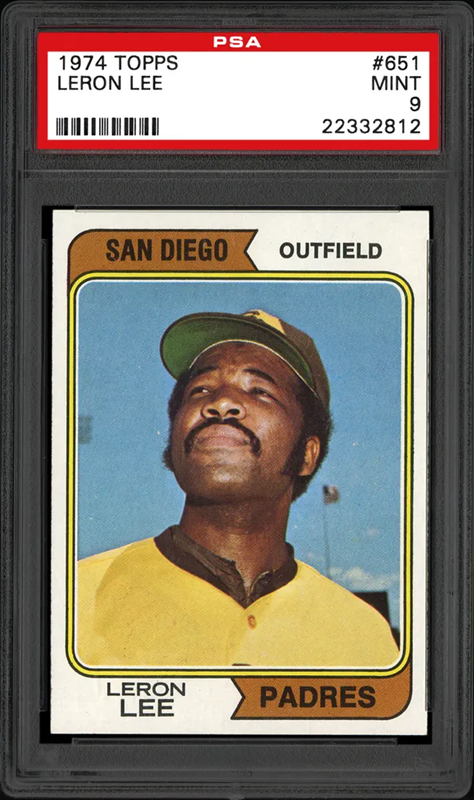
Hits Off HOFers
LeRon made his MLB debut on September 5, 1969 with the Cardinals, and spent eight seasons in the major leagues with St. Louis, the LA Dodgers, the Cleveland Indians and the San Diego Padres.
His best season in the big leagues came in 1972 for the Padres, when he batted exactly .300 in 101 games, accumulating 3.0 Wins Above Replacement. He had thirty four multi- hit games, including six three-hit games that season. On July 4th of that year, LeRon singled with one out in the ninth inning to break up a no-hitter by Tom Seaver of the Mets.
That wasn’t LeRon’s first big hit off a future Hall of Famer, though. His first career home run came on April 22, 1970 at Wrigley Field off of future Hall of Famer Ferguson Jenkins.
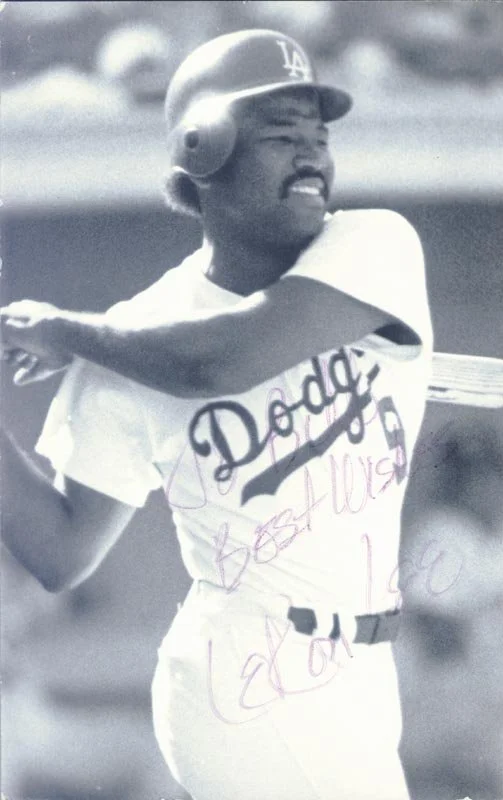
A Difficult Decision
After a little more than a season in Cleveland, LeRon signed as a free agent with the Dodgers midway through the 1975 season, and played with Los Angeles that year and in 1976. The Dodgers finished 2nd in the NL West in each of those seasons, but LeRon only got a combined total of 85 at bats, most of them coming as a pinch hitter, in those two years with Los Angeles.
Following the 1976 season, LeRon made a decision not many 28-year-old Major League Baseball players had ever made before: he went overseas to continue his career in Japan’s NPB.
Before LeRon’s arrival, foreign players mostly played in Japan when their careers were winding down, but LeRon revolutionized the Japanese view of foreign players by playing in Japan during his prime, raising the standard for all foreign players thereafter.
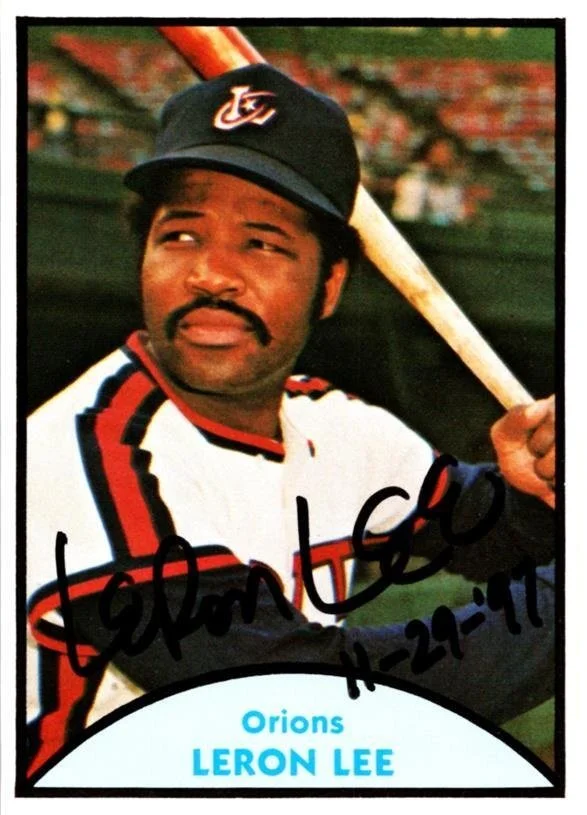
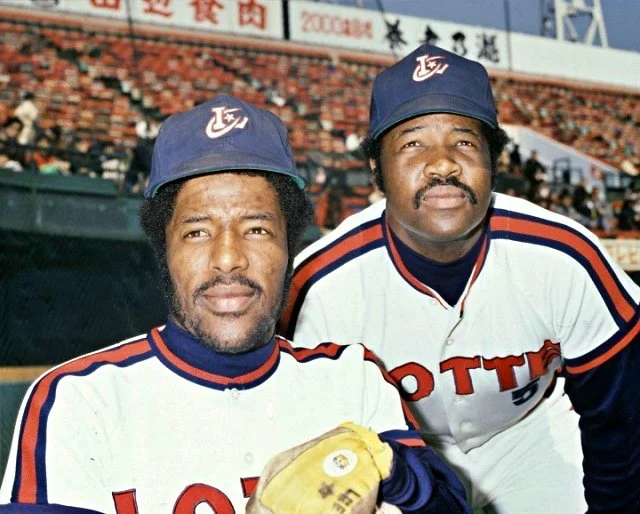
Lotte Orions
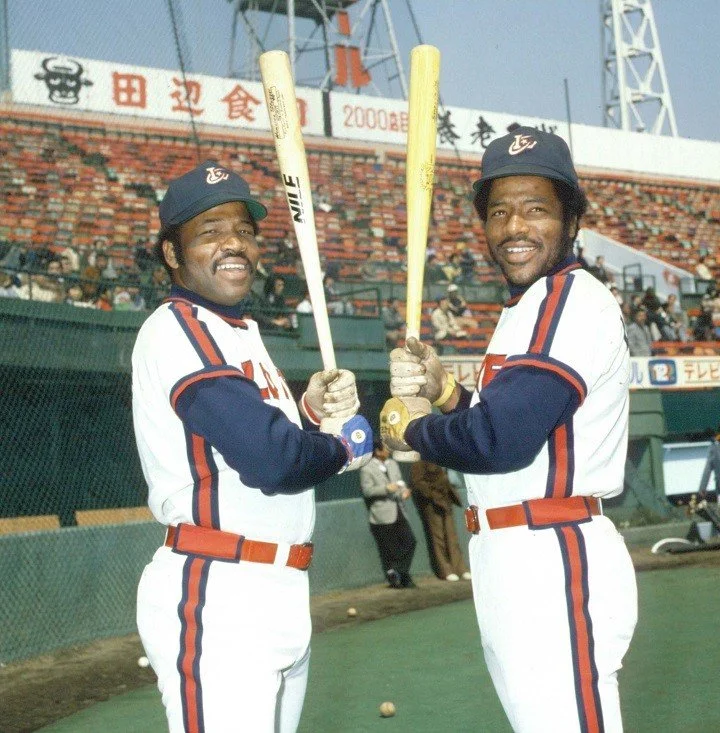
LeRon Lee played eleven seasons for the Lotte Orions, for whom he was a four-time All-Star and a four-time Best Nine Award-winner from 1977 through 1987.
LeRon led the league in home runs and RBI in his first season, and was enjoying his time and his success in Japan so much that after that season, he invited one of his younger brothers, Leon Lee, to come play in Japan with him.
Immediate Impact
Leon had been selected in the ninth round of the 1971 draft by the St. Louis Cardinals, but after having spent seven years in the Cardinals' minor league system, he had yet to play in a Major League Baseball game. So he accepted LeRon’s invitation, and joined his brother in Japan in 1978.
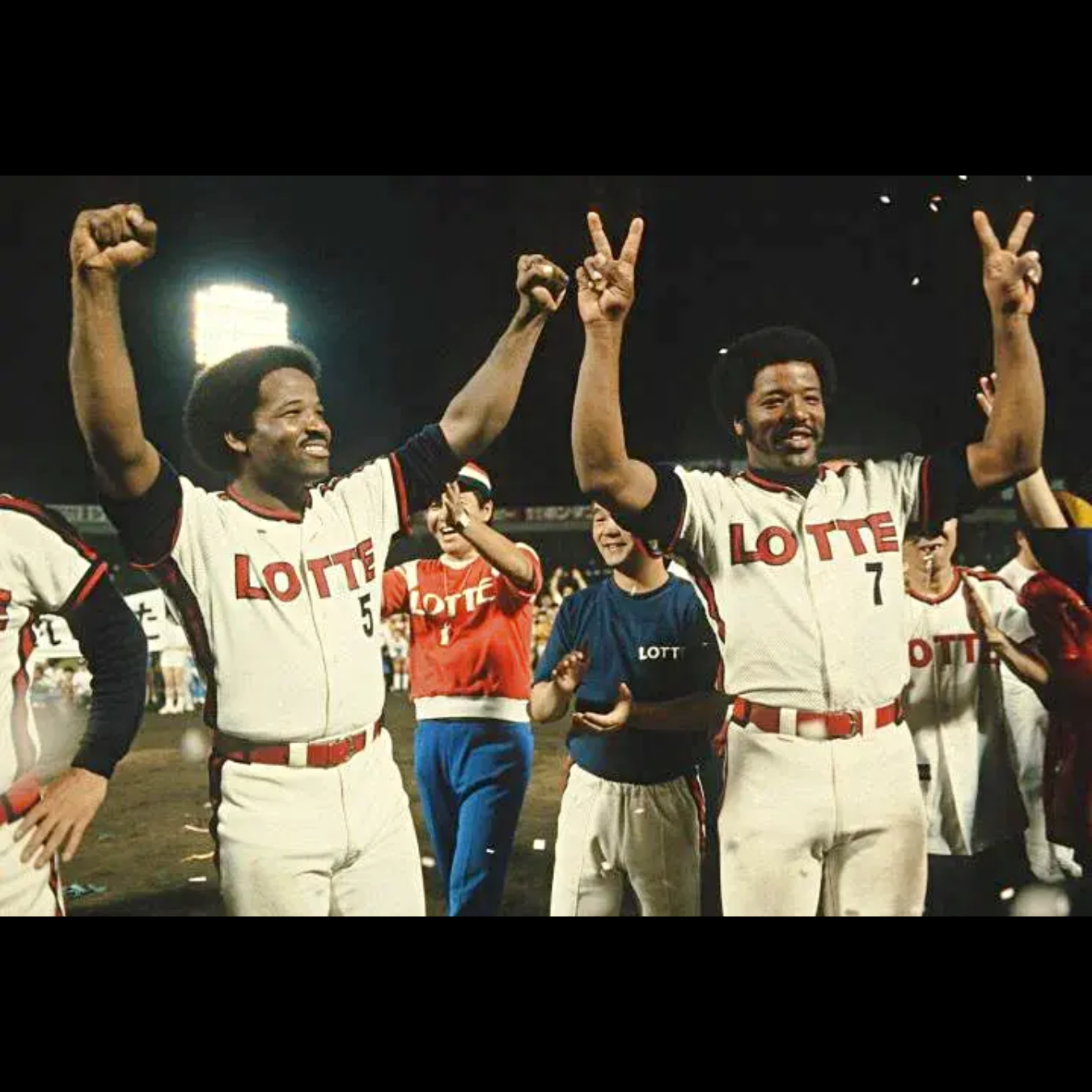
The brothers immediately formed an integral part of a feared lineup for the Orions. Leon played five seasons alongside his older brother, hitting 41 home runs and driving in 116 runs in 1980. His .340 batting average that year was the second-highest in the Pacific League, behind LeRon, who won the batting title with a .358 average.
Great Hitters
LeRon didn’t just have a high average that season, though. From his retirement to early 2018, LeRon actually held the Japanese record for highest career batting average of all time, among players with more than 4,000 at bats, by batting .320 over the course of his entire career. That record has since been eclipsed by Norichika Aoki.
As recently as 2018, the Top 4 spots on that all-time list were LeRon Lee number one, Boomer Wells in second place with a .317 career average, Wally Yonamine in third with a .311 career average, and Leon Lee in fourth, with a .308 career average.
A Family Affair
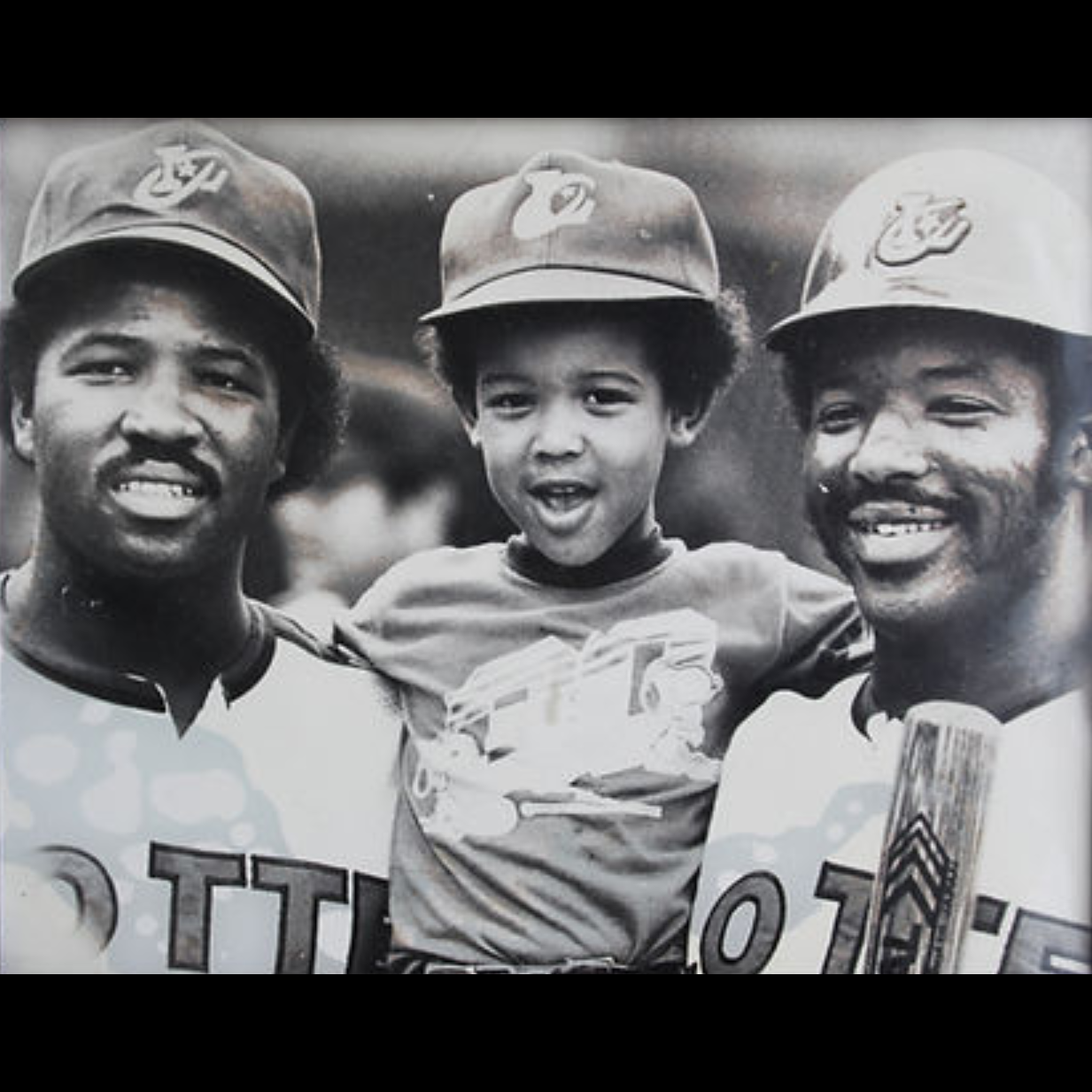
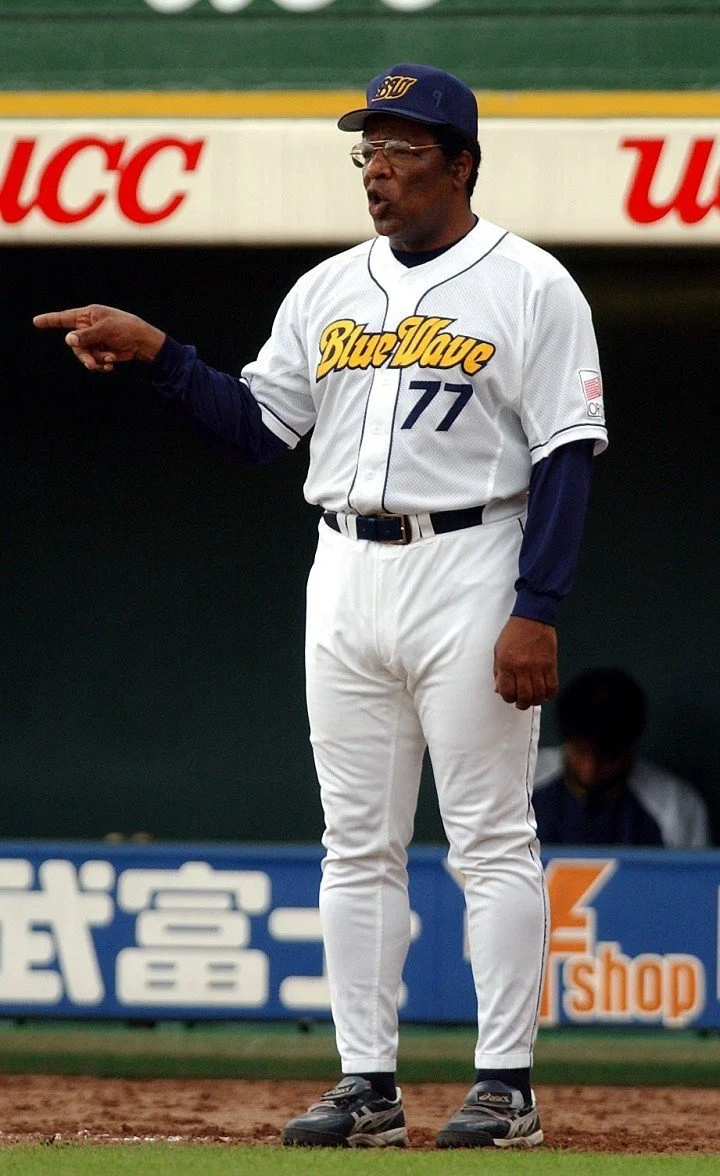
Leon’s experience in Japan helped him become the Pacific Rim scout for the Chicago Cubs in 1998. After the 2002 MLB season, Lee left the Cubs and returned to Japan to serve as the Orix BlueWave's hitting coach for the 2003 NPB season.
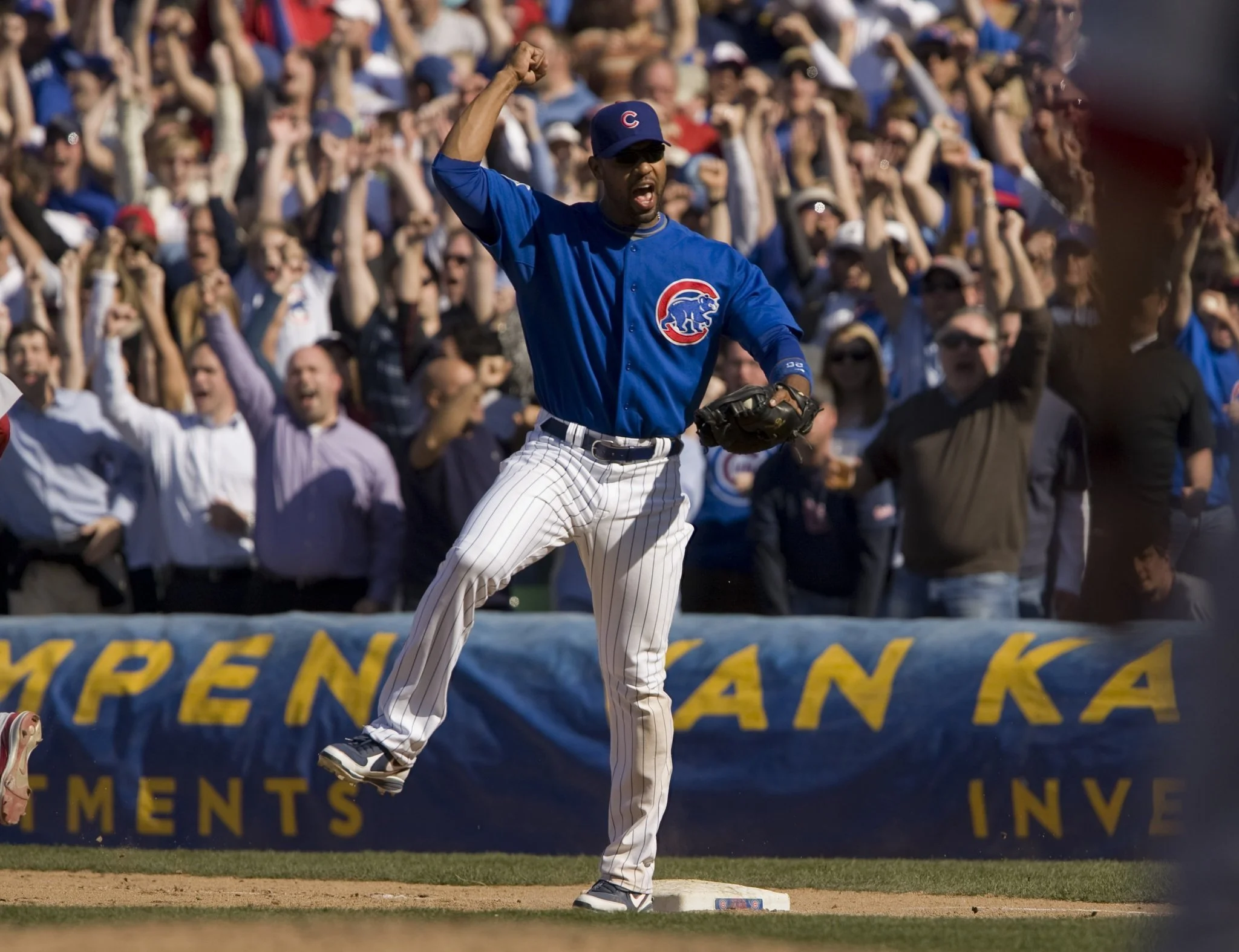
In late November following the 2003 season, the Chicago Cubs made a trade with the Florida Marlins, who had broken their hearts just 41 days earlier by defeating them in Game 7 of the NL Championship Series. The star the Cubs landed in the deal? Leon’s son, and LeRon’s nephew, Derrek Lee.
Derrek Lee
Derrek Lee batted .298 in just over six full seasons with the Cubs. He was named to two All-Star teams, won two Gold Gloves, one Silver Slugger, and finished Top-10 in MVP voting twice in his tenure in Chicago.
Breaking Barriers
But back to Derrek’s dad, Leon, who we just said, had been brought on to be the hitting coach for the Orix BlueWave for the 2003 NPB season.
Well, their manager, Hiromichi Ishige was fired in April, and Leon was promoted to become the team’s manager, making him the first African-American manager in Japanese baseball history.
The following month, on May 17, 2003, the BlueWave faced the Nippon Ham Fighters, who were managed by another American, Trey Hillman, marking the first time in 28 years that a game in Japan was being played between two teams with American managers.
Intertwined
These stories may not be as well-known to us as stories about Willie Mays or Honus Wagner or Satchel Paige, but the more you pull the threads, the more you start to see that the baseball histories of Japan and the United States are far more intertwined than most of us realize.
Support My Baseball History
If you don’t have PayPal and want to send a donation through Venmo, Zelle, Cash App, or any other platform, email me at shoelesspodcast@gmail.com and I’ll send you directions for whichever method you prefer.
We appreciate you being here.
Many of the photos in these liner notes are courtesy of the Robert K. Fitts collection,
the National Baseball Hall of Fame, the Japan Baseball Hall of Fame and Museum,
or from Shane Barclay’s incredible website, JapanBall.com. Thank you to everyone.